

FEDERAL COURT OF AUSTRALIA
C A Henschke & Co v Rosemount Estates Pty Ltd [1999] FCA 1561
TRADE MARKS - infringement - deceptively similar - Hill of Gold - Hill of Grace.
TRADE PRACTICES -whether release of wine under and by reference to the words Hill of Gold likely to mislead or deceive - relevant section of the public - nature and extent of the reputation of Hill of Grace - whether the words Hill of Gold on a wine label would cause relevant consumers to associate the two wines - whether conduct that the producer of Hill of Gold intends to engage in would cause such an association.
EVIDENCE - expert evidence - admissibility and/or weight of wine critic, wine retailer, restaurateur and academic evidence as to reputation and association - whether wine market a "specialised market".
TRADE MARKS - claim for non-use of Hill of Gold mark - whether applicant a "person aggrieved" - cross-claim for non-use of Hill of Grace mark - whether an "authorised user" made "authorised use" of the mark - whether use was made "under the control of" owner - onus - discretion of Court not to remove - public policy.
Trade Marks Act 1995 (Cth), s 7, s 8, s 8(1), s 8(2), s 8(3), s 8(4), s 8(5), s 10, s 92, s 92(4)(b), s 100(1)(c), s 101(3), s 120(1)
Trade Practices Act 1974 (Cth), s 52, s 53, s 53(a), s 53(c), s 53(d)
Evidence Act 1995 (Cth), s 79, s 80, s 135
Parkdale Custom Built Furniture Pty Ltd v Puxu Pty Ltd (1982) 149 CLR 191 referred
Shell Company of Australia Ltd v Esso Standard Oil (Australia) Ltd (1963) 109 CLR 407 applied
Australian Woollen Mills Ltd v F S Walton & Co Ltd (1937) 58 CLR 641 applied
de Cordova v Vick Chemical Coy (1951) 68 RPC 103 referred
Re Pianotist Co's Application (1906) 23 RPC 774 referred
Re Broadhead's Application (1950) 67 RPC 209 referred
Re Harrods Ltd (1934) 52 RPC 65 referred
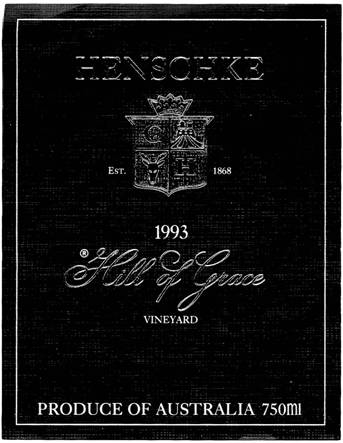
Coca Cola Co of Canada Ltd v Pepsi Cola of Canada Ltd [1942] 1 All ER 615 referred
Penfolds Wines (NZ) v Leo Buring Pty Ltd (1983) 31 IPR 233 referred
New South Wales Dairy Corporation v Murray Goulburn Co-Operative Company (1989) 14 IPR 26 referred
Polaroid Corporation v Sole N Pty Ltd [1981] 1 NSWLR 491 referred
Murray Goulburn Co-operative Company Ltd v New South Wales Dairy Corporation (1990) 16 IPR 289 referred
Yves St Laurent Parfums v Louden Cosmetics Ltd (1997) 39 IPR 11 distinguished
Interlego AG v Croner Trading Pty Ltd (1992) 111 ALR 577 discussed
Browne v Dunn (1893) 6 R 67 referred
HG v R (1999) 160 ALR 554 referred
GE Trademark [1973] RPC 297 referred
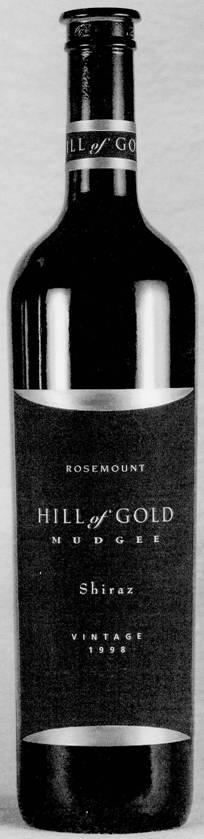
Polaroid Corporation v Hannaford & Burton Ltd [1974] 1 NZLR 368 referred
Pepsi Seven-Up Bottlers Perth Pty Ltd v Federal Commissioner of Taxation (1995) 132 ALR 632 referred
Quick v Stoland (1998) 157 ALR 615 referred
Ancher, Mortlock, Murray & Woolley Pty Ltd v Hooker Homes Pty Ltd [1971] 2 NSWLR 278 referred
Clark v Ryan (1960) 103 CLR 486 applied
Equity Access Pty Ltd v Westpac Banking Corporation (1989) 16 IPR 431 followed
Ritz Hotel Ltd v Charles of the Ritz Ltd (1988) 15 NSWLR 158 referred
Pacific Dunlop Ltd v Hogan (1989) 23 FCR 553 referred
Burica Pty Ltd v Tops to Bottoms (Australia) Pty Ltd (1997) 39 IPR 447 referred
Kraft Foods Inc v Gaines Pet Foods Corporation (1996) 34 IPR 198 referred
McHattan v Australian Specialised Vehicle Systems Pty Ltd [1996] 481 FCA 1 referred
Paragon Shoes Pty Ltd v Paragini Distributors (NSW) Pty Ltd (1988) 13 IPR 323 referred
C A HENSCHKE & CO AND ORS v ROSEMOUNT ESTATES PTY LTD
S 50 of 1999
FINN J
11 NOVEMBER 1999
CANBERRA (HEARD IN ADELAIDE)
| IN THE FEDERAL COURT OF AUSTRALIA |
|
| S 50 of 1999 |
| BETWEEN: | C A HENSCHKE & CO First Applicant
DORIS ELVIRA HENSCHKE and CHRISTINE ANN STEVENS (as executors in the Estate of the late Cyril Alfred Henschke) Second Applicants
|
| AND: | ROSEMOUNT ESTATES PTY LTD Respondent
|
| DATE OF ORDER: | |
| WHERE MADE: |
THE COURT ORDERS THAT:
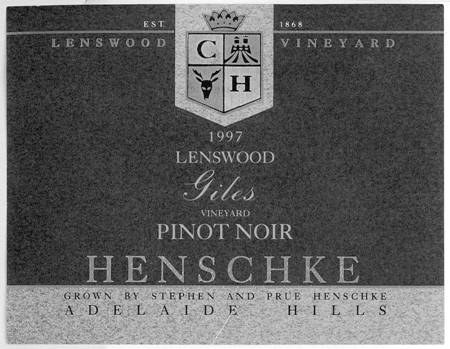
1. the parties within seven days bring in agreed minutes of orders that will give effect to these reasons in relation to the trade mark infringement and trade practices claims and in default of agreement, the respondent do so;
2. the applicants file and serve written submissions relating to whether they are "persons aggrieved" for the purposes of their non-use claim;
3. the cross-claim be dismissed.
Note: Settlement and entry of orders is dealt with in Order 36 of the Federal Court Rules.
| IN THE FEDERAL COURT OF AUSTRALIA |
|
| S 50 of 1999 |
| BETWEEN: | Applicant
DORIS ELVIRA HENSCHKE and CHRISTINE ANN STEVENS (as executors in the Estate of the late Cyril Alfred Henschke) Second Applicants
|
| AND: | Respondent
|
| JUDGE: | |
| DATE: | |
| PLACE: |
REASONS FOR JUDGMENT
1 This is an unfortunate proceeding. It reflects as much a clash of traditions and of values and visions for the wine industry as it does conflicting claims of right. The protagonists are well known and respected producers of wine. The applicants, collectively, are the registered proprietors and/or users of the trade mark, Hill of Grace. The respondent intends to release a wine bearing the designation Hill of Gold. That intended usage is the cause of the parties' conflict.
The Claims and Cross-Claim
2 The first applicant is a partnership of two members of the Henschke family, Doris Henschke and Stephen Henschke, and of two Henschke family companies. The partnership is a producer of wine under the partnership name, Stephen Henschke being both the winemaker for, and managing partner of, the partnership. The partnership has produced and sold wines from various vineyards in South Australia, but most notably, since 1958, a shiraz wine from a small vineyard bearing the name of Hill of Grace.
3 The second applicants, Doris Henschke and Christine Stevens, are the executors of the estate of Cyril Alfred Henschke. It is in that capacity that they are the registered proprietors of the Hill of Grace trade mark, that trade mark (No 244411) comprising the words Hill of Grace in class 33 in respect of wines, spirits and liqueurs.
4 Save where it is necessary to differentiate, I will for convenience refer to the applicants collectively as "the Henschkes". I should also indicate the relationship of the various family members. Cyril and Doris Henschke are the parents of Stephen Henschke and Christine Stevens. Their third child, Paul, is a shareholder in the company-members of the Henschke partnership, but is not a party to these proceedings as such. Cyril Henschke was an original member of the partnership. His death occurred in 1979.
5 The respondent, Rosemount Estates Pty Ltd ("Rosemount"), is likewise a wine producer. The company was founded in 1969 and later began producing wines in the Upper Hunter Valley of New South Wales. It has since diversified its vineyards to Mudgee and Orange in New South Wales and to South Australia. It is now a large wine producer. By volume of sales and revenue it could well constitute the largest family owned wine company in Australia.
6 In acquiring land for viticulture in the Mudgee region Rosemount acquired a winery that had borne the name Hill of Gold and that previously had produced wines under a trade mark and brand name that incorporated the words Hill of Gold. In December 1996 Rosemount acquired that trade mark (No 333055) from its registered owner. This mark, which is a composite of the above words and a device, is represented pictorially later in these reasons.
7 Rosemount now intends to release wine under a label bearing (inter alia) the words Hill of Gold, though not the associated device that is part of the Hill of Gold trade mark.
8 Against the above background I can now refer to the various claims made in this proceeding. They are fourfold.
9 1. The Henschkes allege that Rosemount's use of the words Hill of Gold on its proposed wine infringes their Hill of Grace trade mark in that Rosemount's use of those words as a trade mark is deceptively similar to the Hill of Grace mark for the purposes of s 120(1) of the Trade Marks Act 1995 (Cth) ("the TM Act").
10 2. The Henschkes claim as well that the conduct of Rosemount in producing and selling Hill of Gold wines would constitute conduct likely to mislead or deceive members in breach of s 52 and s 53(a), (c) and (d) of the Trade Practices Act 1974 (Cth) ("the TP Act"). Specifically it is claimed that as a result of Rosemount's conduct members of the public are likely (i) to mistake Hill of Gold wine for Hill of Grace wine; and/or (ii) falsely to associate Hill of Gold wine with Hill of Grace wine; and/or (iii) mistakenly to assume that Hill of Gold wine is produced by, or has the sponsorship or approval of, or that its producer is somehow affiliated with, the producer of Hill of Grace.
11 3. Distinctly, the Henschkes seek an order that the Hill of Gold trade mark be removed from the Trade Marks Register on the grounds of non-use under s 92 of the TM Act.
12 4. By way of cross-claim Rosemount seeks a like order to have the Hill of Grace mark removed from the Register for non-use. The basis of that claim is the alleged lack of authorised use by the Henschke partnership of the Hill of Grace mark: see TM Act, ss 7, 8.
13 As each of these claims involves differing factual issues it will be necessary to preface consideration of each specifically with a narrative of the evidence particular to that claim. The following factual narrative is of more general character.
14 Before turning to that narrative there is one additional pleading matter to which it is necessary to refer. On 23 September the applicants were given leave to amend their statement of claim to include a claim that the conduct threatened by the respondent in releasing Hill of Gold wines would be engaged in outside of Australia as well as within Australia. It was directed that issues raised by the amendment were to be determined separately from those raised before me in this proceeding. Accordingly the various claims to be considered by me do not exhaust those made against the respondent.
Factual Background and Setting
15 (i) The Hill of Grace vineyard was originally planted almost 140 years ago near the town now known as Keyneton, by early German settlers of South Australia who were ancestors of the Henschkes. The name, Hill of Grace, is derived from the German word "Gnadenberg" and is the name of the Lutheran Church built in 1860 across the road from the vineyard.
16 (ii) The shiraz Hill of Grace wine was first produced in its current style by Cyril Henschke in 1958 using vines over 100 years old. Being a single vineyard wine of small acreage, only small quantities of this wine are produced and sold. After an early period in which a label of black markings on a white background was used, in 1969 the current white (or silver) over black label was adopted. It is in the following form:
17 (iii) In 1974 a Peter Edwards purchased a property at Mudgee in New South Wales. He planted a vineyard and established a winery there that he later named Hill of Gold. He settled on that name as a possible translation of "Côte d'Or" of the Burgundy region of France. From 1979 to 1986 Mr Edwards made wines under the Hill of Gold name these being primarily of the cabernet sauvignon and pinot noir varieties. In 1979 he obtained a trade mark registration (No 333055) for the Hill of Gold name and accompanying design. It was in the following form:

By way of explanation, the device below the words consists, it seems, of a rounded mound (or sun) with a bunch of grapes superimposed on it. Mr Edwards sold the Hill of Gold property in 1988. In 1996 he sold his trade mark to Rosemount, Rosemount by that time having acquired property in the Mudgee region including the Hill of Gold property itself.
18 (iv) Cyril Henschke apparently became aware of the Hill of Gold vineyard before his death in 1979 and mentioned his concern at the name to Stephen Henschke. In the late 1980s Stephen Henschke took a series of measures which, according to his first affidavit in this proceeding, were designed to protect Hill of Grace against others who might seek to take advantage of its reputation. To that end registration was secured of the trade marks Hill of Content, Hill of Grapesand Hill of Roses. More recently, I would interpolate, registration has been sought of the words "Hill of". In 1989 an approach was made to Mr Edwards to acquire the Hill of Gold mark. Though a meeting was held, and Stephen Henschke believed that an "informal agreement" had been reached, no agreement actually was entered into. Though the subject of some conflicting evidence in this proceeding, the conclusion of no agreement is not presently in contest.
19 (v) The founder of Rosemount in 1968 was Robert Oatley. At that time his business was in the coffee and cocoa industry in Papua New Guinea. He disposed of that business to the government of that country by which time Rosemount had begun to exhibit its first vintages from the Rosemount vineyard in the Upper Hunter Valley. The grazing property that became the vineyard was called Rosemount. When the Oatley family decided to produce their own wines, they decided as well to use and register the name Rosemount for their wines to reflect the original name of the property.
20 (vi) The company enjoyed early and sustained success as a wine producer. It now produces some number of wines, several of exceptional quality. It distributes widely both in the United Kingdom and the United States. It currently owns a total of approximately 3,200 acres of land planted with wine.
21 (vii) Several reasons informed Rosemount's decision to develop vineyards at Mudgee. According to Mr Oatley the company wished to respond to the increasing demand for quality red wine but did not consider the Upper Hunter to offer ideal conditions for this. Additionally the company had been involved in protracted but unsuccessful litigation to avert the construction of an open-cut coal mine near its Rosemount property. Mr Oatley knew of Mudgee as a viticultural region; he had considered establishing a vineyard there 15 years earlier; he had been buying red wine grapes from a producer there (who coincidentally then owned the Hill of Gold property) and the company purchased part of his property ("the Mountain Blue block") in 1995. Later that year Rosemount purchased the producer's remaining block that included the Hill of Gold winery. It has continued to expand its ownership of land in Mudgee and now owns a total of 4,800 acres in the region.
22 (viii) Having purchased the Hill of Gold property Rosemount acquired Mr Edwards' trade mark in December 1996. In July 1997 Stephen Henschke was informed by his solicitors that the Hill of Gold mark had been assigned to Rosemount. Thereafter followed communications and correspondence between Stephen Henschke and Ian Oatley (a director of Rosemount and son of the founder), Robert Oatley, Chris Hancock (managing director of Rosemount) and Keith Lambert (from August 1998 the Chief Executive Officer of Rosemount). Stephen Henschke's object was to secure the non-use by Rosemount of the Hill of Gold name because of his concerns for the reputation of the Hill of Grace wine. While there is some dispute as to the detail of these communications, there is no need in these proceedings to resolve the differences. Save for the following references to several documents on which the applicants place considerable reliance, all that need be said of Stephen Henschke's communications is that they were unavailing.
23 (ix) On 4 August 1997 Ian Oatley prepared the following memorandum to Mr Lambert which he copied (inter alia) to his father and to Mr Hancock. It reads:
"Stephen Henschke telephoned to discuss our intention concerning the vineyard and registered trade mark "Hill of Gold". He is seeking to protect his very valuable asset "Hill of Grace" from similarly described wines.
He indicated that he had a "verbal" agreement with Mr Peter Edwards that Hill of Gold would not be passed on to anyone but himself and that that agreement preceded Peter Edwards' ownership.
There is a legal skirmish between a Hunter producer who is seeking registration of Hill of Hope, and it would seem our position may well impact upon the outcome.
If we decide to protect our position, it may encourage other detractors, however if we submit to Henschke it would be consistent with protecting the values inherent with trade mark regulations.
Recommendation One
Treat Henschke as a competitor and pursue our own brand development. This would produce a valuable product line.
Recommendation Two
Treat Henschke with the respect he probably deserves and allow Hill of Grace its iconic status to be unchallenged. This would stand us in good stead within the industry and its many commentators."
24 (x) On the following day Mr Hancock sent a handwritten facsimile to Ian Oatley. It read:
"1. Hill of Gold is a long standing Brand name. If Henschke had pre-emptive rights to the name why then did he not act on them.
2. Hill of Grace is a Red wine from the Barossa/Eden region. Hill of Gold is a white wine from Mudgee. The is no intent of "passing off".
3. Hill of Hope has more problems than Hill of Gold because of similarity of meaning to Grace (?religious context) - even though I understand that the owners name is Hope.
4. Hill of Gold is too good a name to give up on the back of Henschke's protest - although I understand his position. We probably need to clearly explain the genesis of the name (releases/labels etc).
5. With respect to attitude of commentators etc - the bona fides of the brand plus the quality of the product will clarify that issue.
6. Unless there is a serious threat of recrimination by the trade and/or critics I would be inclined to hold our ground - we have a defensible position. You may want to consider giving Henschke some assurances eg dissimilar packaging, No Red wine as Hill of Gold.
Unfortunately with the proliferation of wine brands and names this problem is ongoing and examples abound eg Diamond device and the word 'Diamond', Cloudy Bay and Cloud Valley, The Range and Grange.
On balance I am inclined to support progressing Hill of Gold at the same time giving some recognition to Henschkes sensitivities ie keeping our distance from anything that could be misconstrued as running off the reputation of Hill of Grace."
25 (xi) The decision actually to produce wine under the Hill of Gold name was taken in late 1997 after Mr Lambert had returned from a business trip to the United States. He considered there was a need for a new product with another brand; he discussed this need with Robert Oatley and in that discussion Robert Oatley suggest a new line of wines from Mudgee using the name Hill of Gold. Mr Oatley made quite clear both in his affidavit and in cross-examination that he rejected from the beginning any suggestion that Rosemount could be said to be trading off the Hill of Grace name. He could see no cause for concern in Rosemount's use of the name. It was his evidence, additionally, that when Rosemount acquired new vineyard property in a region, its policy wherever appropriate had been to use existing names of the vineyards or features of the area as the name of wines sourced from that region. In his view, Hill of Gold was an appropriate name for wine and a good one for a product from Mudgee because the Mudgee area was a very substantial gold mining one in the past and the name captured that gold mining heritage.
26 (xii) Instructions for the development of a Hill of Gold label were given in early 1998. They resulted in a number of proposals being prepared and rejected before the company finally settled the labels for, variously, chardonnay, shiraz, and cabernet sauvignon wines. An illustrative label is set out below. Though common in their features these labels differ in their colours. For present purposes it is sufficient to say that while in each instance the arc at the top and bottom of the label is gold, the body of the label is white for the chardonnay, red for the shiraz and black for the cabernet sauvignon. There are parallel colourings for the "necklace" on the neck of the bottle. The shiraz label is as follows. For convenience it is reproduced as affixed to the proposed bottle for the wine:
27 (xiii) In 1996 a Michael Hope founded the Hill of Hope vineyard in the Hunter Valley. His company obtained registration of the trade mark Hill of Hope and began producing and marketing a wine under the name Hill of Hope. Stephen Henschke became aware of this development in 1997 and instructed his solicitors to take steps to prevent Michael Hope from using the Hill of Hope mark on the grounds of alleged infringement of the Hill of Grace mark. In July 1999 under an agreement between Mr Hope and one of the Henschke companies, the Hill of Hope mark was assigned to the company. That company is now the registered proprietor of the mark. Hill of Hope wines, nonetheless, were available for purchase in Sydney as late as 30 September 1999 and may still remain so.
28 (xiv) It was noted above that the Henschkes registered the marks Hill of Content, Hill of Roses and Hill of Grapes in the late 1980s. The registration of those marks was inadvertently allowed to lapse. In 1997 a further registration of Hill of Roses was obtained. In October 1997 a company, Pacific Vision (Aust) Pty Ltd, applied to register the trade mark Hill of Content in relation to goods in class 33 (this includes wine). The Henschkes have lodged a notice of opposition to the application and that matter is currently before the Registrar of Trade Marks.
29 (xv) There are over 1000 wine producers in Australia using over 16,000 brands. The use of words describing topographical features in those labels - hill, ridge, creek, flat, valley etc - is widespread. By way of illustration, Mr Lambert in his affidavit made the following references:
"For example, James Halliday's Wine Companion 2000 edition refers to the following Australian wineries and wines which use the term "Hill":, Ashton Hills, Ashworths Hill, Brewery Hill Winery, Brindabella Hills, Burge Family Olive Hill, Candlebark Hill, Catherine Hill, Chalk Hill, Chapel Hill, Chestnut Hill, Clarendon Hills Winery, Clover Hill, Coldstream Hills, Fern Hill Estate, Gembrook Hill, Grosset Polish Hill Riesling, Grove Hill, Hamilton the Hills Chardonnay, Hayshed Hill, Henschke Hill of Grace, Henschke Green's Hill Riesling, Hill of Hope, Hill-Smith Estate, Hillside Pinot Noir, Hillstowe, Home Hill, Hoppers Hill Vineyards, Howarth's Pycnantha Hill, Hungerford Hill, Jackson's Hill, Jasper Hill, Knight Granite Hills, Kongwak Hills Winery, Lark Hill, Lawson Hill, Lyre Bird Hill, Martins Hill Wines, Montgomery's Hill, Oliverhill, Orlando Centenary Hill Shiraz, Paulett Polish Hill River Riesling, Peacock Hill Vineyard, Penfolds Koonunga Hill, Penny's Hill Vineyards, Red Hill Estate, Reg Drayton Polbolkin Hills, Sand Hills vineyard, Scotchman's Hill, Sevenhill Cellars, Somerset Hill Wines, Surveyor's Hill Winery, Storton Hill Riesling, Tatachilla Adelaide Hills Sauvignon Blanc, The Clare Essentials Polish Hill River Vineyard Riesling, Thistle Hill, Thornhill, Tipperary Hill Estate, Trafford Hill Vineyard, Vasse Felix Forest Hill Riesling, Virgin Hills, Whispering Hills, Wilmot Hills Vineyard, Woodonga Hill, Yarra Burn Bastard Hill Pinot Noir, Yarra Valley Hills.
James Halliday's Wine companion 2000 edition also refers to the following wineries and wines using the term Mount or Mountain: Bald Mountain, Henschke's Mount Edelstone, McWilliams Mount Pleasant, Mount Alexander Vineyard, Mount Anakie Wines, Mount Avoca Vineyard, Mount Beckworth, Mount Charlie Winery, Mount Duneed, Mount Gisborne Wines, Mount Helen, Mount Horrocks, Mount Hurtle, Mount Ida, Mount Langi Ghiran Vineyards, Mount Macedon, Mount Mary, Mount Prior Vineyard, Mount Tamborine Winery, Mount Trio Vineyard, Mount View Estate, Mount Vincent Mead, Mount William Winery, Mountadam, Mountain Creek Wines, Mountford, Mountilford, Mountview Wines, Plantaganet Mount Barker, Rosemount, Sandalford Mount Barker Margaret River Shiraz.
Similarly, this publication also refers to several Ridges: Barambah Ridge, Barossa Ridge Wine Estate, Briar Ridge, Cathcart Ridge Estate, Cobawridge Frankland Estate, Gloucester Ridge, Granite Ridge, Heathfield Ridge, Hunter Ridge, Indigo Ridge, Ironbark Ridge Vineyard, Isolation Ridge, Lindemans Limestone Ridge, Main Ridge Estate, Oak Ridge Estate, Orlando Russet Ridge Coonawarra Cabernet Shiraz Merlot, Orlando Jacaranda Ridge Cabernet Sauvignon, Stone Ridge, Tamar Ridge, Tarwin Ridge, Treen Ridge Estate, Windy Ridge Vineyard, Yarra Ridge."
Of the many "hill" brands or marks, only five use the "Hill of" formula: Hill of Grace, Hill of Hope, Hill of Roses, Hill of Gold and Hill of Content. The first three of these belong to the Henschkes and the last, as I have indicated, is the subject of a contested application.
30 (xvi) In relation to the wines actually marketed both under the Hill of Gold label up to 1987 and under Mr Hope's Hill of Hope label, no evidence has been brought forward of any actual association or confusion of these wines with the Hill of Grace wine.
The Trade Mark Infringement Claim
1. The Statutory Setting
31 Section 120(1) of the TM Act provides:
"120(1) A person infringes a registered trade mark if the person uses as a trade mark a sign that is substantially identical with, or deceptively similar to, the trade mark in relation to goods or services in respect of which the trade mark is registered."
The applicants in this proceeding are relying upon the marks being deceptively similar, not substantially identical. "Deceptively similar" is defined in s 10 as follows:
"10 For the purposes of this Act, a trade mark is taken to be "deceptively similar" to another trade mark if it so nearly resembles that other trade mark that is likely to deceive or cause confusion."
2. Factual Setting
32 Apart from the matters referred to in the Factual Background and Setting above the applicants have sought to rely upon the opinion evidence of some number of experts. For reasons I give when considering the TP Act claim, I do not consider that any of this evidence can safely be used or else given weight or, in the case of Professor Lockshin, accepted, in the infringement case or in the TP Act claim notwithstanding the differing proofs required for the two types of case: see Parkdale Custom Built Furniture Pty Ltd v Puxu Pty Ltd (1982) 149 CLR 191 at 209-210 - if it can or should be used at all. I would note in particular that I have completely disregarded what I will later refer to as the "Hutton survey".
3. Submissions and Conclusions
33 There is not any significant disagreement between the parties as to the criteria to be applied to determine whether the Hill of Gold mark is deceptively similar to the Hill of Grace mark. For the purpose of indicating how the comparison should be made reference, predictably, was made to the judgments of Windeyer J in Shell Company of Australia Ltd v Esso Standard Oil (Australia) Ltd (1963) 109 CLR 407 at 415 and of Dixon and McTiernan JJ in Australian Woollen Mills Ltd v F S Walton & Co Ltd (1937) 58 CLR 641 at 658. For present purposes I need only repeat that that comparison is not by way of side by side examination of the marks but rather is between (a) the impression based on recollection of the Hill of Grace mark that persons of ordinary intelligence and memory would have; and (b) the impressions those persons would derive from the Hill of Gold mark.
34 The likely deception or confusion to be caused on which the applicants rely is that Rosemount's use of its mark will cause potential customers to believe that the Hill of Gold wine is in some way associated with the applicants' Hill of Grace wine. The essential feature (or features) of both marks, the applicants submit, is (i) the unusual syntax of the words "Hill of"; or (ii) those words followed by a word beginning with the consonant "G" (or else a "G" word that conveys a like sentiment or feeling to "Grace"). It is in the use by Rosemount of that essential feature that occasions the confusion, hence the infringement: on "essential features" see de Cordova v Vick Chemical Coy (1951) 68 RPC 103 at 105-106.
35 The signposts suggested by the case law and relied upon by the applicants to lead me to their conclusion are (i) when comparing names one must judge them by look and sound: Re Pianotist Co's Application (1906) 23 RPC 774 at 777; and by the idea they convey: Re Broadhead's Application (1950) 67 RPC 209 at 215; (ii) one must take account of the way in which the mark is likely to be referred to or heard: Re Harrods Ltd (1934) 52 RPC 65; (iii) particular attention ought be paid to the first part of a name for generally the first word or syllable provides the most important means of distinguishing marks: cf Coca Cola Co of Canada Ltd v Pepsi Cola of Canada Ltd [1942] 1 All ER 615 at 618; Penfolds Wines (NZ) v Leo Buring Pty Ltd (1983) 31 IPR 233 at 236; save where the initial word or syllable is both common to the marks and is common to the trade or is commonly used by a number of trade mark proprietors, in which case the emphasis is to fall on other portions of the mark as a means of distinguishing them.
36 Before turning to an evaluation of the evidence, it is particularly important in the infringement case to emphasise, as the parties accept, that the reputation of the Hill of Grace wine and such magnetism as it may in consequence exert do not provide a proper or available basis for proving an association between Hill of Gold and Hill of Grace. The comparison is between the marks themselves, ignoring extraneous circumstances: see Shanahan, Australian Law of Trade Marks and Passing Off (2nd Ed), 338-339; New South Wales Dairy Corporation v Murray Goulburn Co-Operative Company (1989) 14 IPR 26 at 67; and see Polaroid Corporation v Sole N Pty Ltd [1981] 1 NSWLR 491. This said, reputation as will be seen looms large in the TP Act claim.
37 The decision whether the use of the Hill of Gold mark is likely to deceive or cause confusion is in the end a question of impression and common sense: Murray Goulburn Co-operative Company Ltd v New South Wales Dairy Corporation (1990) 16 IPR 289 at 296. For my own part I am not satisfied that a case of deceptive similarity has been made out. I cannot accept that the essential features claimed by the applicants for their mark - ie "Hill of … " or "Hill of G … " - can accurately so be claimed by them. Before giving my reasons why I have reached this conclusion I should emphasise that this is not a case where, there being an established family of "Hill of" marks, the association alleged is with that family as such.
38 While conceding that the use of the word "hill" is common in the industry, the Henschkes seek to differentiate their mark from that commonplace usage by pointing to the fact that the common usage is of the word "hill" preceded by another word so as to constitute ordinarily a place name, eg Ashton Hills, Chapel Hill, etc. In contrast the Henschke mark uses the "unusual syntax" of "Hill of … " and that usage is restricted to only five marks, three of which belong to the Henschkes, and one of which, Hill of Content, is presently the subject of objection. In consequence, it is said, the "Hill of" marks cannot be said to have fairly extensive use in the wine market. Save for such residual presence as there may be of Michael Hope's Hill of Hope wines in the market, a customer is not, Hill of Grace apart, going to find any "Hill of" wine other than Hill of Gold in a market of over 16,000 brands. This combined with the likely effect both of the unusual "Hill of" syntax and of their being the first words of the mark, is a likely cause of confusion as the impression based on recollection that the person of ordinary intelligence and memory would have of the Hill of Grace mark is likely to be of the words "Hill of" or "Hill of G … ".
39 Apart from the purely factual matters pointed to by the applicants relating to the market and the usage of the word "hill" in it, there is little in their submission I am able to accept. Far from the point of focus in the Hill of Grace mark being its opening words "Hill of", the focus in my view is, if not with the totality of the name, then with the word "Grace". The language structure of the mark uses a device - noun, preposition "of" and noun - that channels attention to "Grace" in a more emphatic way than would be the case if the words "Grace Hill" had been used. Attention is focussed thus upon the particular attribute of the Hill - ie Grace - in the same way that "Hill of Beans" or "Hill of Goannas" draws attention respectively to the attribute "Beans" or "Goannas". Standing alone "Hill of" invites a question. It does not suggest such an answer as to cause confusion. "Hill of" conveys no more than the reference to a particular but common topographical feature "Hill" to which, through the use of "of", a distinctive attribute (metaphorical or otherwise) is to be assigned - albeit attention is drawn to the attribute, as the respondent submits, in a powerful way. It is the particular, distinctive attribute that both engages attention and gives content to the "Hill of" formula.
40 In my view it is most unlikely that the impression based on recollection of the Hill of Grace mark would be the words "Hill of" followed by some other word. I should add my view in this is reinforced by the aural effect of the mark when spoken. This again gives emphasis to "Grace" through the combination of the long "a" vowel sound and the combination of consonants surrounding it. The words "of Grace", it seems to me, are of the essence of what some number of wine writers in the articles exhibited in this proceeding refer to as "one of the world's loveliest wine names".
41 Because I am satisfied that the impression based on recollection that was imperfect would be some noun followed by "of Grace", it does not seem to me that the paucity of "Hill of" marks tells in the applicants' favour. There would, though, be an interesting question on which it is unnecessary to express a view, if an alleged infringing mark used the words "House of Grace" or "Field of Grace".
42 Having accepted that the part of the mark that "conveys the information in a crowded market" is "Gold" versus "Grace", the remaining issue is whether there is substance in the alternate submission of the applicants that the common "Hill of G … " in both marks is sufficient to be likely to cause confusion. Put in so bald a form it is clear that it could not. One need only refer to Hill of Goannas, Hill of Goats, etc to appreciate that whatever the recollected impression of the Hill of Grace mark, that impression is not at all likely to encompass for infringement purposes any and all nouns beginning with the letter "G".
43 The applicants have in the alternative submitted that a G-word that conveys a similar feeling or flavour to "Grace" - that is sympathetic to "Grace" - will suffice and "Gold" is such a word. The respondent has submitted in contrast that (i) Hill of Grace and Hill of Gold have entirely different connotations; (ii) the words "Grace" and "Gold" have entirely different meanings; and (iii) the marks are different visually, aurally and semantically.
44 While not accepting that the gulf between Hill of Grace and Hill of Gold is quite as wide as the respondent submits - "Gold" in this setting could refer to the colour or aura of the "Hill" - I, nonetheless, am in general agreement with the respondent's submission. I would be reluctant in any event to find a likelihood of confusion being caused simply by a suggested feeling generated for whatever reason by the evocation of a G-word that is alleged to have the flavour of, or to be akin to, what is suggested by Grace. I am not satisfied that, to the person of ordinary intelligence and imagination, Gold would be such a word in any event even when considered as a metaphor. And I am far from satisfied in this particular setting that a monopoly in the use of words should turn on so opaque a measure, notwithstanding the significance that can properly be attributed to imperfect memory and visual and aural associations: cf Yves St Laurent Parfums v Louden Cosmetics Ltd (1997) 39 IPR 11 at 15.
45 Accordingly I reject the infringement claim that is before me. In so doing I should indicate that I do not consider that the memoranda of Ian Oatley of 4 August 1997 and of Chris Hancock of 5 August 1997 (both set out above) throw any useful light on this question. While those memoranda betray value systems, sympathies and attitudes, they do not address trade mark infringement as such. Their purposes are different, though I acknowledge that Ian Oatley in his memorandum does make reference to "protecting the values inherent with trade mark regulations".
The Trade Practices Act Claim
1. Introductory Comment
46 In addition to the factual material referred to above, there is a significant amount of evidence to which it is necessary to refer before outlining the Henschkes' claim in detail. Much of that evidence is allegedly expert evidence that relates both to the reputation that the Hill of Grace wine enjoys, and to the likelihood of consumers being misled or deceived by the Hill of Gold label. Objection has been taken to much of this evidence. I will deal with it separately from the other additional factual material as it is necessary to make rulings upon its admissibility.
47 It should, perhaps, also be emphasised that the shape of some of the evidence put forward in this matter reflects the fact that it was prepared in anticipation of interlocutory proceedings that were not pursued once the possibility of an early trial was held out. Relatedly, the Henschkes have not sought to rely upon survey evidence. The difficulties in conducting an appropriate survey in the time available and in accordance with this Court's Practice Note 11 were pointed to in explanation of this. The expert evidence adduced, though put forward as such, was in some sense to serve as a surrogate for a survey of consumer knowledge and propensities.
2. Additional Factual Material
48 I will here continue the practice of referring to the Henschkes' wine simply as Hill of Grace though there is a large issue in this part of the case as to whether such reputation as the wine enjoys is enjoyed by a wine known as "Henschke Hill of Grace".
49 (i) As earlier indicated Hill of Grace is a single vineyard wine of quite small production the major part of which is sold in Australia. In the last decade the market price of the wine has increased dramatically. The recommended price of the latest release (the 1994 vintage) was in the $170 range. The demand for this wine is such that it is in effect pre-sold through a process of allocations made to particular wine merchants, restaurants, etc and in small quantities. Such now is the value attributed to the wine that in common with, for example, Penfolds Grange, a secondary market has developed for it in which it is treated as a commodity to be bought and sold rather than as a wine to be consumed.
50 (ii) Given its price and method of distribution, very few consumers of wine are likely ever to buy or to taste Hill of Grace. Equally it is most unlikely that ordinary consumers will ever see the wine "on the shelf" in a retail outlet. Retailers who have been able to secure an allocation will ordinarily make special provision for the wine's storage for sale.
51 (iii) The Rosemount Hill of Gold range of wines is scheduled for release in Australia, the United States and the United Kingdom in January 2000. In the domestic market its projected pricing is in the $20-$25 range. By comparison with Hill of Grace, the Hill of Gold range - limited initially to chardonnay, shiraz and cabernet sauvignon - will be relatively large in volume. It is intended to be premium wine. All three varieties have won gold medals at 1999 wine shows. Rosemount's first Mudgee wine, Mountain Blue Shiraz Cabernet Sauvignon has been an outstanding success. It was released in 1996 (the 1994 vintage). The evidence suggests it initially retailed at near $20+ a bottle. The latest release is around $50 a bottle.
52 (iv) In common with other ranges of Rosemount wine, the Hill of Gold will be marketed widely in Australia and will take its place on the shelves of retail outlets.
53 (v) When the Hill of Gold label was being developed there was considerable debate as to whether the Rosemount name should appear on it. The company's Australian and United Kingdom groups considered it should; the United States group, that it should not. It was Mr Lambert's evidence that it was agreed ultimately to retain the name to provide an immediate indication of quality and to attract custom. The name was considered to be important to ensure the launch success of the range. While there remains the possibility that the name might be removed in the future - and documentary evidence in instructions to label designers refers to this contingency - it is likewise Mr Lambert's evidence that to do so would be a fairly difficult decision for which there would have to be a reason. Mr Lambert accepted that in the promotion of Hill of Gold, Rosemount would be the secondary branding not the primary branding.
(vi) The Hill of Gold label and bottle have been illustrated earlier. The bottle to be used for the wines is what is described as a reverse tapered flange bottle. Henry Dawson-Damer, a marketing executive with Rosemount responsible for the design of packaging for new products, has stated in evidence that he is unaware of any other Australian wine that is currently sold in a bottle similar to the Hill of Gold bottle. It is intended additionally to use either a B cap or a wax cap - either about the size of a five cent piece - on the top of the cork, having a design of a crossed miner's pick and shovel, surrounded by two concentric circles with the words "Hill of Gold Mudgee" written between the circumference of the inner and outer circles. On the neck of the bottle is a "necklace" containing the words "Hill of Gold".
54 (vi) The Henschke range of wines has two distinct label types. The older and characteristic label is of the design type used for Hill of Grace. It need not be reproduced here again. The newer label introduces other design features. It is as follows:
The only matter I would draw attention to is the prominent place of the family name "Henschke" on both styles of label.
55 (vii) The Rosemount range of wines is more diverse in its label designs for its various groups of wine. The size and the prominence in presentation of the Rosemount name varies from label group to label group.
56 (viii) A significant body of documentary evidence embodying searches made of newspapers and particularly wine magazines was tendered by the applicants. The object of this was to indicate both the regularity and the tone in which reference is made to the Hill of Grace wine and over time. There is, as will be seen, a dispute as between the parties as to whether the reputation of Hill of Grace is referable to that name as such or to the name "Henschke Hill of Grace". For the purposes of the TP Act claim the newspaper search references are more significant than those of magazines and particularly wine magazines, given their respective likely readerships. The figures given below relate to the number of times over the period specified in the applicants' newspaper search that, first, the words Henschke Hill of Grace are referred to in an article and, secondly, the words Hill of Grace alone are used and then whether the name Henschke also appears in the same article. The following table deals with 181 articles revealed by the search. It is a simplified variant upon that prepared by the applicants at my request. The figures given are acquiesced in by the respondent.
"SUMMARY OF ARTICLES
There are 181 articles.
104 from The Advertiser (SA):1986 ®
· 51 refer to Henschke Hill of Grace
· 53 refer to Hill of Grace of which 21 make no reference to Henschke
14 from The Sunday Mail (SA): 1988 ®
· 10 refer to Henschke Hill of Grace
· 4 refer to Hill of Grace of which 2 make no reference to Henschke
6 from the Messenger (SA): 1988 ®
· 3 refer to Henschke Hill of Grace
· 3 refer to Hill of Grace of which 2 make no reference to Henschke
5 from The News (SA): 1989-1992
· 5 refer to Henschke Hill of Grace
· 0 refer to Hill of Grace
9 from The Herald Sun (Vic): 1995 ®
· 8 refer to Henschke Hill of Grace
· 1 refers to Hill of Grace and this makes no reference to Henschke
13 from The Sunday Herald Sun (Vic):1995 ®
· 8 refer to Henschke Hill of Grace
· 5 refer to Hill of Grace of which 2 make no reference to Henschke
21 from The Australian (Aust): 1995 ®
· 10 refer to Henschke Hill of Grace
· 11 refer to Hill of Grace of which 5 make no reference to Henschke
9 from The Weekend Australian (Aust): 1995 ®
· 6 refer to Henschke Hill of Grace
· 3 refer to Hill of Grace of which none make no reference to Henschke"
Aggregated by place of publication the result of these figures is as follows:
"129 from SA Newspapers
· 69 refer to Henschke Hill of Grace
· 60 refer to Hill of Grace of which 25 make no reference to Henschke
22 from Victorian newspapers
· 16 refer to Henschke Hill of Grace
· 6 refer to Hill of Grace of which 3 make no reference to Henschke
30 from Australian newspapers
· 16 refer to Henschke Hill of Grace
· 14 refer to Hill of Grace of which 5 make no reference to Henschke"
While no comparable tabulation has been attempted of the usages in wine magazine articles tendered, an impressionistic survey of those included in the tender bundle suggests relatively similar patterns of reference to those in the newspapers.
57 (ix) As will be seen, the suggestion is made by witnesses brought forward by the applicants that confusion as to the association between the two wines could occur when they are listed together on wine lists. No wine lists were tendered by the applicants. Some number were put in by the respondent - including those of restaurateurs who gave evidence for the applicants. In every such wine list the applicants' wine was described as "Henschke Hill of Grace".
58 (x) While both Mr Lambert and Mr Oatley attributed some level of reputation to Mudgee as a wine producing area each accepted that it did not have the reputation in the Australian community of the older, established regions. Mr Oatley in particular accepted that it needed to be given a much higher profile.
The Expert Evidence
59 The expert evidence called by each side consisted of three groups of experts: the first were persons with academic training and experience in what, for preliminary purposes, I will describe as marketing and the making of consumer choices; the second were wine writers; and the third were wine retailers and restaurateurs. Though the respondent adduced evidence to match that of the applicants, it nonetheless objected to the admission of almost all such evidence. While specific grounds of objection were advanced (which I note below), there is in my view justice in the general criticism made of the process engaged in as being essentially one of compurgation.
60 The general character of the objections made is (i) that the evidence is not admissible opinion evidence either because of lack of proof of appropriate expertise to found the opinion or because the subject matter of the opinion evidence to the extent that it goes to the likelihood of deception or confusion is inadmissible in any event - as to the latter of these, reliance was placed upon observations of Gummow J in Interlego AG v Croner Trading Pty Ltd (1992) 111 ALR 577 at 616-618; and (ii) that even if admissible it is of such character as should be excluded under s 135 of the Evidence Act 1995 (Cth).
61 I should add that in anticipation of the rulings on the objections being made in these reasons, the parties agreed to the course of cross-examining only one each of the wine critic and the retailer experts from this group and of not taking any Browne v Dunn (1893) 6 R 67 point in relation to the non-examination of the other wine critics, etc. Both academic experts were cross-examined.
The Admissibility/Weight to be Given the Wine Critic, Restaurateur and Retailer Evidence
62 It will be necessary for me to consider separately the evidence of the academic experts. Here I confine myself to the wine critic, restaurateur and retailer evidence. To illustrate the difficulty this evidence poses I set out the terms in their entirely of one affidavit that represents one extreme form of the evidence alleged to be objectionable. In fairness to the deponent I should indicate that this affidavit was prepared simply for the interlocutory application but was nonetheless read in this proceeding. It is the affidavit of Francis James Halliday and it states:
"1. I am presently employed as Group Winemaker - Regional Wineries with Southcorp Wines. However, under the terms of my employment I am able to continue a wine writing, wine judging and wine consulting career which has spanned over 30 years. Attached and marked "A" is a copy of my curriculum vitae.
2. I am, and have been since the early 1960s, familiar with Henschke's Hill of Grace wine, having tasted it and read and written about it on a number of occasions.
3. Hill of Grace wine has a fine reputation amongst Australian wines because of its consistently high quality over many years of production and because that production is strictly limited to a single vineyard site. There is no question that Hill of Grace has reached the status of an Australian wine icon and deservedly so.
4. I understand that Rosemount is proposing to launch a wine brand of the name Hill of Gold.
5. Because of the similarity in the names, and on the basis of my experience in the wine industry, I consider that some sections of the wine market are likely to confuse or associate the proposed Hill of Gold wine with Hill of Grace. I think that there is particularly a risk that the products will be confused or regarded as associated with each other on wine lists and by overseas investors and other similarly "uninformed" participants in the wine market."
63 Of the affidavits that were later filed by the Henschkes' experts, I would refer to two others as being representative of the type of evidence sought to be adduced. The first is that of Walter Bourke, director of Walter's Wine Bar in Melbourne and Brisbane and a person who has had extensive experience over 21 years in the food and beverage industry as a leading chef, restaurateur and wine collector. I would draw attention to the following paragraphs of his affidavit:
"11. In my experience Hill of Grace is recognised by a very large proportion of customers as a benchmark wine for quality and consistency from vintage to vintage. In the days before mass marketing its reputation was established on the basis of its excellence and consistency.
…
17. Based on my experience of the industry and consumers, I believe that a real potential exists for consumers to make assumptions about connections between Henschke's Hill of Grace and any wine sold under the label Hill of Gold. In particular I believe from my experience that many consumers are likely to believe that either they come from a common source or that Hill of Gold will be a wine of quality because of their knowledge of the high reputation for quality of Hill of Grace wines."
18. In a restaurant situation many customers with an average knowledge of Australian wine who would be selecting a wine from a wine list are likely, in my opinion, to mistakenly assume that there was such a connection with either the producer and/or quality of the Hill of Grace wine due to the similarity in the names of the two products.
…
20. Based on my experience of the industry and consumers, I believe that many consumers would assume such a connection between the well known Hill of Grace wine and a wine sold under the label Hill of Gold, whether or not they know the identity of the producer of either wine. Indeed it has been my experience that consumers, particularly those, the majority, who drink wine socially but are not especially knowledgeable about it, are not familiar with the producers of many well known Australian wines. This is particularly so in recent years when many well known brands have been bought and sold by very large public companies. In my opinion this has increased the risk of consumers believing there is a "family" association between these two wines simply because they share the words "Hill of … ". This risk is, in my opinion, increased by the common use of the "G …"."
64 The other affidavit is that of Peter Forrestal, a well-known wine writer, columnist, magazine editor and wine judge. He was asked by the Henschkes' solicitors to address the following questions:
"9.1 What is the reputation of Hill of Grace (both as to quality and as to how well known it is)?
9.2 Given your experience in the wine industry do you believe that consumers would mistakenly assume or believe that a wine sold under the trade mark Hill of Gold is the same as or associated with Hill of Grace or Henschke?
9.3 If so, in what circumstances do you believe that consumers would be so mistaken?
9.4 Given your knowledge of the wine industry do you believe that consumers would be confused as to whether a wine sold under the trade mark Hill of Gold is the same as or associated with Hill of Grace or Henschke?
9.5 If so, in what circumstances do you believe that consumers would be so confused?"
65 Having indicated that Hill of Grace's reputation is "second only to that of Grange", Mr Forrestal deposed (inter alia) that:
"12. Because of the strong similarity between the two names, I do believe that a proportion of wine consumers, both in Australia and overseas, would mistake any wine called Hill of Gold for Hill of Grace, or mistakenly associate Hill of Gold wine with Hill of Grace.
13. The majority of Australian and many overseas wine consumers will have heard of Hill of Grace and would know of its reputation as a wine of excellent quality. A small percentage of these are 'sophisticated' wine consumers who are well informed about wine and would be unlikely to mistake Hill of Gold for Hill of Grace or mistakenly associate the two products. However, I believe that a large proportion of wine consumers do not share this depth of knowledge about wine. It is among these consumers that I believe the two products would be mistaken or (more commonly) mistakenly associated.
…
15. I consider it highly likely that uniformed [sic] wine consumers will mistakenly associate the two products. Partly because of the very strength of the reputation of Hill of Grace, I believe that use of such a similar name like Hill of Gold will strongly remind consumers of Hill of Grace or the qualities it is generally associated with. To avoid that kind of association in my view requires a sophistication which a significant proportion of consumers do not have. When such 'unsophisticated' wine consumers see a wine (such as the proposed Hill of Gold wine) with a name which is so similar to a wine of high quality (such as Hill of Grace), they will be attracted to it and more likely to purchase it, either directly mistaking it for the high quality wine, or by assuming an association with the high quality wine. I think that the look and sound of Hill of Gold and Hill of Grace are so similar that a significant number of wine consumers will associate them in this way."
66 Mr Forrestal was one of the applicants' experts who was cross-examined. He enlarged on the experience he had referred to in his affidavit by indicating he ran wine tastings, did talk back radio and had done internet chat shows. He expressed the view that Hill of Grace is "virtually part of the vernacular" and he said this was illustrated by the reference to it in Douglas Kennedy's novel, The Job - a very rare phenomenon for a wine, he stated. He equally suggested that in his view "a lot more people were aware of Hill of Grace than of Henschke Hill of Grace".
67 Before considering the objections to such evidence as the above represents, it is necessary to refer as well to an aspect of the evidence of Associate Professor Lockshin, the academic expert called by the applicants. In his second affidavit responding to the evidence of the respondent's academic expert, Dr Hall, the Professor stated:
"17. Hall makes the point in paragraphs 17(c), 26 and 32 of his affidavit that the wine market is a cluttered one and that accordingly consumers, in his view, would be more inclined to differentiate between similar names by referring to price, wine style or location of source. I agree that the wine market is extremely cluttered. Because of the unique nature of wine, the fact that there are tens of thousands of brands in the world and hundreds of companies making and branding wine, the category of 'wine' does not behave like other categories of typical fast moving consumer goods, for instance soft drinks and breakfast cereals. This means that the discipline of studying wine consumer behaviour is unique and, though ascribing to the same basic principles of marketing, wine marketers must interpret those principles in light of the way wine is different from other consumer goods."
I note this paragraph in anticipation of the submission considered below that, in light of the Professor's opinion, the wine market is a "special market".
The Objections
68 The opinions expressed by the experts are on two matters, first, the reputation of Hill of Grace and/or Henschke Hill of Grace and, secondly, whether consumers would be likely to mistakenly assume or believe that, or be confused as to whether, a wine sold under the Hill of Gold mark is the same as or is associated with Hill of Grace.
69 As to the first of these matters, reputation, I am prepared to accept that, for present purposes, these experts are able to venture opinions on facets of the wine's reputation especially as to quality. What I am far less inclined to accept is that, whatever their specialised knowledge based on experience might be: cf Evidence Act 1995, s 79; that knowledge would enable or qualify them relevantly to express opinions on the reputation of the wine amongst the segment of the wine consuming public with which this case is concerned ("uninvolved consumers": see below). Because I have not had each expert examined because of the agreement of the parties referred to earlier, I do not consider that I should simply exclude the evidence of any of the experts on reputation on the ground that the specialised knowledge requirement is not, for s 79 of the Evidence Act purposes, relevantly foundational of the particular opinion expressed: see HG v R (1999) 160 ALR 554 at 562-563. While in the case of some of the experts (eg Mr Halliday and Mr Polese - a restaurateur) a case could, in any event, be made for excluding their evidence under s 135 of the Evidence Act because it is unilluminatingly cryptic, the course I intend to take is to admit the evidence on reputation but to attribute little if any weight to it save where, in the case of a particular expert, I indicate to the contrary when considering reputation later in these reasons. The general character of the evidence itself invites this course.
70 As to the opinions ventured on the issue of mistake, confusion etc resulting from the names a somewhat different issue presents itself. The respondent has submitted that this evidence is simply inadmissible. Reliance was placed upon the observations of Gummow J (with whom Black CJ and Lockhart J agreed) in Interlego, above, at 617-618 on the admissibility of "consumer evidence" in cases of the present variety. His Honour observed (inter alia):
"Secondly, the question whether a mark or get up so nearly resembles another as to be deceptive or likely to deceive is a question for the tribunal of fact and is not a matter for any witness to decide: Kerly, supra, p 425. The issue of whether consumers have been or are likely to be deceived was described by Lord Diplock as a "jury question": GE Trademark [1973] RPC 297.
…
Thirdly, evidence of consumers and retailers as to the likelihood of deception will be critical if a special market is involved.
…
Fifthly, … evidence as to the habits of purchasers does not include evidence of prospective purchasers that they would be deceived, or evidence of retailers that purchasers would be deceived."
This, it is said, is a case of the second and fifth propositions.
71 The applicants had submitted in contrast, relying upon Professor Lockshin's evidence, that the wine market is relevantly a "special market" and that the experts' opinions are admissible in consequence under the third proposition above. I have referred above to the essence of the Professor's evidence in this regard.
72 I am unable to agree with the applicants in this. The difference between the ordinary rule relating to evidence of deception or likely deception and the "specialised market" rule was, as Gummow J acknowledged, explained by Lord Diplock in GE Trademark, above, at 321-322:
" … where goods are of a kind which are not normally sold to the general public for consumption or domestic use but are sold in specialised markets consisting of persons engaged in a particular trade, evidence of persons accustomed to dealing in that market as to the likelihood of deception or confusion is essential. A judge, though he must use his common sense in assessing the credibility and probative value of that evidence is not entitled to supplement any deficiency in evidence of this kind by giving effect to his own subjective view as to whether or not he himself would be likely to be deceived or confused. In the instant case this would apply to the large industrial electrical machinery sold under the Rondel Mark. But where goods are sold to the general public for consumption or domestic use, the question whether such buyers would be likely to be deceived or confused by the use of the trade mark is a "jury question". By that I mean that if the issue had now, as formerly, to be tried by a jury, who as members of the general public would themselves be potential buyers of the goods, they would be required not only to consider any evidence of other members of the public which had been adduced, but also to use their own common sense and to consider whether they would themselves be likely to be deceived or confused.
The question does not cease to be a "jury question" when the issue is tried by a judge alone or on appeal by a plurality of judges. The judge's approach to the question should be the same as that of a jury. He, too, would be a potential buyer of the goods. He should, of course, be alert to the danger of allowing his own idiosyncratic knowledge or temperament to influence his decision, but the whole of his training in the practice of the law should have accustomed him to this, and this should provide the safety which in the case of a jury is provided by their number. That in issues of this kind judges are entitled to give effect to their own opinions as to the likelihood of deception or confusion and, in doing so, are not confined to the evidence of witnesses called at the trial is well established by the decisions of this House itself."
See also Polaroid Corporation v Hannaford & Burton Ltd [1974] 1 NZLR 368 at 378.
73 While the wine purchasing market may be special in the sense that it has unusual features (eg over 16,000 brands and over 1000 producers), it is not "specialised" in the sense that participants therein have and are to be expected to have a particular knowledge, skill or experience that the general public relevantly does not. The wine market is one in which the general public participates directly: wine is sold to the public for consumption. In Lord Diplock's sense it is a market in which a judge "would be a potential buyer". A market is not to be made a "specialised" one merely because a feature (or features) within it differentiates it in some way from other consumer markets. Such a feature could probably be identified for many consumer markets. I would have to say in the present case, that the process of differentiation suggested by the applicants seemed to owe more both to the understandable desire to accentuate whatever differences were in fact available and to the scholars' desire to emphasise the distinguishing characteristics of their particular field of interest, than to the identification of a specialisation based upon differences of moment and substance. I should indicate that I do not regard Dr Hall's acceptance that the study of wine marketing is a specialist area of expertise is in any way inconsistent with the above conclusion. It merely means that a person with that expertise may be able to be of assistance to the Court in explaining behaviour in that market. It does not make the market itself a "specialised market".
74 Alternatively the applicants have submitted that the expert evidence is admissible despite the decision in Interlego because of the changes since wrought by the Evidence Act 1995, and particularly by s 80, upon the circumstances in which expert testimony may be proffered: see the discussion in Pepsi Seven-Up Bottlers Perth Pty Ltd v Federal Commissioner of Taxation (1995) 132 ALR 632 at 642-643. Expert opinion is no longer inadmissible only because it is about a fact in issue or an ultimate issue or is about a matter of common knowledge. Underlying the fifth principle referred to by Gummow J in Interlego, it is said, is the old ultimate issue rule which s 80 has now abolished. Accordingly it is said it is now a sufficient basis for the admissibility of expert evidence that a judge might receive some assistance from the opinion expressed even if on an ultimate issue: Quick v Stoland (1998) 157 ALR 615 at 625-626; see also Ancher, Mortlock, Murray & Woolley Pty Ltd v Hooker Homes Pty Ltd [1971] 2 NSWLR 278 at 286.
75 Given the view I take of the opinion evidence in question it is unnecessary for me to express a view on the applicants' submission though for present purposes I am prepared to assume its correctness. To the extent that the experts express an opinion of the likelihood of an association being made by the relevant section of the wine purchasing public (see below) in consequence of the shared words in the brand names of the two wines, I am not satisfied that, save possibly for Mr Forrestal, they have been shown to possess a specialised knowledge based on experience that would allow them to venture that opinion. In saying this I am not in any way doubting the particular respective experience of each in aspects of the wine industry. What I am questioning is their demonstrated possession of such specialised knowledge of consumer decision-making processes in this market as would admit of their expressing the particular opinion they have. Their experience would, at least in some cases, indicate a knowledge of the fact of actual mistake or confusion arising where there has been a particularly close similarity in brand names (eg Moss Wood and Moss Brothers; Karrivale and Karriview; Wyndham Estate Bin 555 and Eden Valley TR 222). What it does not adequately suggest is a knowledge based on an experience of the factors that may be causative of, and the conditions that create the likelihood of, mistake or confusion in the decision-making of uninvolved wine purchasers as could found the opinion ventured: cf Clark v Ryan (1960) 103 CLR 486. At best some number of the opinions on mistake and confusion seem based on no more than conjecture or intuition. These experts in my view are being used to argue the applicants' case: Clark v Ryan, at 491.
76 Several of the experts suggest that the confusion in question is likely to occur with wine lists, with two experts - Mr Bourke and Mr Forrestal - suggesting that the manner of presentation of names on wine lists doing nothing to prevent such an association being made. No wine lists were tendered by the applicants which might demonstrate this. The respondent, though, has tendered some number of wine lists including from restaurants of experts relied on by the applicants. In all such lists the Henschkes' Hill of Grace wine is unmistakably and distinctively identified. If in the future Hill of Gold is to appear on such lists it seems to me that, if an association is likely to be made by a consumer, it will not be because of the manner of presentation of the wine lists themselves but because of an association made for other reasons.
77 With the possible exception of Mr Forrestal, I am not satisfied (a) that these experts have the specialised knowledge to give an opinion on the likelihood of mistake, confusion, etc; or (b) that, in any event, their actual opinions are ones from which I might receive some assistance. Accordingly, Mr Forrestal apart, I do not admit their evidence insofar as it relates to the issue of mistake, deception etc caused by the Hill of Gold name. Even if admissible, and I here include Mr Forrestal, I have grave doubts that any weight could or can be attributed to this body of evidence. The opinions represent little more - if that - than a general statement of practical experience and then a conclusion by way of assertion on the issue in this case. The conclusion in my view merely invites further question. As Mr Shavin QC for the applicants acknowledged, to the extent the detailed processes of thought by which each reached their conclusions are not set out, there is an element of uncertainty as to how much reliance can be placed on them. I agree but would go much further. Without significant elaboration its reliability must be open to question - the more so when one has regard to the evidence of the academic experts, Professor Lockshin and Dr Hall, on the complex of factors affecting the making of consumer purchasing decisions.
78 Having ruled the applicants' expert evidence (a) on reputation admissible but to be accorded little weight unless otherwise indicated in a particular instance; and (b) on the issue of mistake, etc, inadmissible or else of little weight, I make like rulings for like reasons in relation to the same type of expert evidence adduced in response by the respondent. However, in respect of one of the respondent's experts, I will make a partial departure from these rulings. This relates to the evidence of Mr Watkins insofar as it relates to his own experience and to his business' classification of wine for the Australian market (ie paras 1-20 and Annexure A of his Affidavit). I take this course as aspects of this evidence, which is unrelated to the issues of reputation and mistake, has been drawn upon by the parties in the course of this proceeding.
Mr Watkins
79 Mr Watkins is managing director of Liquorland Pty Ltd. The Liquorland Group is, apparently, Australia's largest liquor retailer. In referring to his company's system of wine classification he described wines retailing for $18-$20 and above as "premium wines" and those at $35 and above, as "super premium". This division is consistent with that used by the parties in this proceeding. He also indicated that, though running 46 Vintage Cellar stores offering premium wines, the Group through its Liquorland stores is directed at the mainstream of the market. It is his evidence that the vast majority of wines in Australia sell for below $15 a bottle. In the case of the Liquorland Group, including Vintage Cellars, 87% of sales were below that figure.
Professor Lockshin and Dr Hall
80 I am satisfied that both Professor Lockshin and Dr Hall are properly qualified to give expert opinion evidence concerning consumer decision-making processes. Professor Lockshin is a co-director of the Wine Marketing Research Centre at the University of South Australia. He has specialised in studying the behaviour of consumers in relation to wine purchasing. Dr Hall, whose doctoral studies were in psychology, has had extensive academic and business experience in marketing including studies examining the ways consumers react to brands, logos, labels, etc. He did not profess to having a particular expertise in relation to wine as a consumer good.
(a) Professor Lockshin
81 Much in his evidence is at the centre of the way in which the applicants put their case.
82 (i) The distinction he drew between "uninvolved" and "involved" wine consumers is of such significance in this matter as to warrant it being set out verbatim:
"From my studies of consumers of wine, I believe that there are broadly two categories of wine consumers. There are those who are "involved" in wine, by which I mean those who take a real interest in, and have some knowledge of, the wine that they are purchasing, and those who are not so involved. From my research I believe that these involved wine consumers form a minority of wine consumers, not only in Australia but also in the United Kingdom and the United States and elsewhere, although this group often buys and consumes much more wine per person than the other group.
In my experience, the involved consumer typically will read the label and the fine print, will enquire of the retailer, or read commentaries as to qualities or characteristics of the wine and will generally have reasonably detailed knowledge about the wine they are purchasing. In a restaurant, such a consumer will draw upon their knowledge and experience or have an informed discussion with the wine waiter.
The uninvolved consumer, by contrast, is one who has less sophisticated wine selection criteria. These consumers form a substantial majority of wine consumers. Typically he or she will be guided primarily by price. In my experience, these consumers will also respond to certain 'triggers' or 'cues'."
In cross-examination Professor Lockshin added that the price level at which the uninvolved consumer tended to buy was, roughly, in the $10-$12 range for everyday use but then moving up one or two ranges for special occasion purchases.
83 (ii) In relation to cues he referred to a joint study he had recently made involving the random telephone interview of 233 respondents, the results of which he says confirm findings by others published in the literature. The following list of cues indicate in order of frequency of reference by respondents, the cues that influenced them in choosing wines.
". Previously tasted wine;
. Price;
. type (that is style of wine);
. brand;
. label or packaging;
. the availability of the wine;
. its alcoholic content;
. region;
. age; and
. colour."
It was accepted that this did not provide an exhaustive list of influences on purchasers: the occasion for which a purchase is made and the set up of a retail outlet, for example, were others. As to the order of priority suggested by the above, Professor Lockshin's later study on the significance of region as a "cue" suggests, in my view, that some caution needs to be exercised in attributing particular significance to the precise place in the above hierarchy of some of the cues mentioned. He described the influencing affect of cues in the following way:
"In my experience, more commonly what happens is that upon seeing a wine label in a shop or a brand on a restaurant wine list, the consumer will experience a response which, if positive enough, will cause him or her to purchase the wine. There might be something about the label, the brand, the colour the geographic origin or the style of the wine that causes the consumer to associate the wine positively or negatively with certain qualities, of ten attributed to another wine or another winemaker. This approach by consumers is reinforced by the practice of some wine producers to market their wines under a 'halo' or an 'umbrella' brand so that the reputation of their premium wines helps to sell their lesser wines. For instance, Penfolds' wines are sold under the brand "Penfolds", with the individual wines being distinguished by secondary brands, albeit ones of great significance such as "Grange"."
84 (iii) Professor Lockshin purported to give evidence on the reputation of the Hill of Grace wine. He indicated that although most wine consumers in Australia have not tasted the wine because of its price and small volume of production, let alone physically held or even seen an actual bottle of it, from his own "research" and because of the great deal of media coverage given it, he believes "that most wine consumers know its name and know of its reputation as an exceptionally fine wine". The research appeared to relate primarily to conclusions derived from student comment and from his dealings with the public when doing interviews.
85 (iv) Hill of Grace he said is associated with the highest quality in wine. In selecting wine, uninvolved wine consumers in particular place a high value on "safety" - that is they look for quality assurance. And that value is accentuated with brand proliferation. Wine consumers also are aware that most wine producers market ranges of wines of various quality. He then suggests that the Hill of Gold association with Hill of Grace could be made in the following way:
"In the context of "Hill of Grace", I am aware that the words "Hill of … " are not used in relation to any major wine sold in Australia. As a consequence of the reputation of the "Hill of Grace" wine I believe that the words "Hill of …" will give many wine consumers, particularly uninvolved ones, a signal that the wine in relation to which they are used is in some way associated with "Hill of Grace". They may not believe that it is the same wine, although very uninvolved consumers may be mislead into this belief if the next word utilises the common consonant "G" as in "Gold", but, in my opinion, it is highly likely that a significant number of consumers will believe that, because they know of the extraordinary reputation of "Hill of Grace" wines, "Hill of Gold" or other "Hill of … " wines will at least share a common heritage of "quality" or "safety" even if it is at a different level to that achieved by "Hill of Grace". "
In consequence the Professor expressed the opinion that the words "Hill of" on the Hill of Gold wine label would cause a uninvolved consumer to believe there was a positive association between that label and Hill of Grace and that association would cause many consumers to purchase the Hill of Gold. As he put it "Hill of" is a unique cue in the wine industry; it is "the cue that most consumers recognise. If you would say "Hill of" they would say "Grace"."
86 (v) A survey of 93 people concerning Hill of Content wine conducted by a Mr Hutton, an analyst with PricewaterhouseCoopers, at two wine shops in South Australia recorded results that Professor Lockshin said were entirely consistent with the expectations he had of wine consumers' behaviour in relation to wines with the prefix "Hill of". Those results were recorded in a statutory declaration of Mr Hutton annexed to the Professor's second affidavit. I would note the following paragraphs of that declaration:
"2. I was instructed by Finlaysons to conduct a survey of customers at two wine shops asking the following questions:
(a) "What do you think of Hill of Content wine? Do you know anything about the wine's quality?"
(b) "Where do you think it comes from and who would make it?"
3. I might add that I understand that the second question was supposed simply to be, "Do you know anything about the wine?", but in the event I asked the questions as formulated in paragraph 2 above."
…
6. In response to the question "Where do you think it comes from and who would make it?":
(a) 71 respondents could not offer a suggestion as to where the wine came from or who made it;
(b) 8 respondents suggested that Hill of Content came from one of the following regions: Clare, Barossa, Coonawarra or Southern Vales; and
(c) 4 respondents said:
"I've heard of Hill of Grace".
(d) The remaining 10 respondents made the following comments:
"Is it the same people that make Hill of Grace?"
"Is it connected with Hill of Grace?"
"What about Hill of Grace? Sorry don't know."
"I've heard of Hill of Grace. Henschke's. Am I right?"
"It's not made by the same people as Hill of Grace is it?"
"Is it the Hill of Grace. Henschke's?"
"Is it associated with Hill of Grace? No idea."
"Hill of Grace, Hill of Content? No idea"
"Hill of Grace, yes. Hill of Content, no"
"It might be made by the same people as Hill of Grace. Henschke."
As I later indicate, I am unprepared to attribute any particular weight to the Hutton survey results.
87 (vi) Professor Lockshin agreed with the view of Dr Hall that consumer decision-making is "a very complex 'black box'". He suggested "noninvolved" consumers do not read labels in detail and cognitively. They simply form an impression. Likewise in making a wine purchasing decision they do not engage in the cognitive processing of information. Rather they take the "peripheral route" which is taking a broad view and making a judgment without reference to thinking about different cues. Equally he accepted that the information uninvolved consumers acquire concerning wines comes from advertisements (eg on the back of buses), from what they see in the liquor store, experience in tasting a wine, etc: "they don't actively search for information".
(b) Dr Hall
88 Dr Hall's affidavit evidence is essentially in response to Professor Lockshin's first affidavit. He expressed the view that it was not easy to predict what part of a brand name or label causes people to react or to recall the name or label. He likewise took the view that it was "extremely risky" to assume the particular cues consumers would respond to when viewing the words Hill of Grace or Hill of Gold. He suggested that in the absence of empirical evidence the assumption made by Professor Lockshin about association and about the reputation of Hill of Grace with noninvolved consumers could not be accepted. He readily accepted in cross-examination that he could not give an expert opinion on wine purchase decisions specifically. He was not an expert in the wine industry. He nonetheless believed he could express opinions on confusion in labels as the arguments including Professor Lockshin in his view, were presented in terms of general marketing theory.
89 Dr Hall accepted that if the words "Hill of" actually had a "strong linkage" with connotations of quality, it could act as a cue in relation to a label not seen before that the wine concerned was a wine of quality.
90 In relation to the Hutton survey he expressed a number of concerns both in relation to the form of the actual question asked (ie "Where do you think it comes from and who would make it?") and in the interpretation of the results. In relation to the 10 respondents who asked questions, or sought information or made some conjecture, that did not suggest to him confusion on their part. They could well have been involved consumers in any event.
Submissions
91 As in the TM Act case there is no difference of substance between the parties as to the general principles to be applied in a case of this variety under s 52 of the TP Act. In common with other judges of this Court I adopt Hill J's convenient exposition of those principles in Equity Access Pty Ltd v Westpac Banking Corporation (1989) 16 IPR 431 at 440-442.
"1. For conduct to be misleading or deceptive the conduct must convey in all the circumstances of the case a misrepresentation: Taco Bell at 202. In the present case the misrepresentation on the part of the respondents is said to be that the financial product advertised and marketed by each of them is the product of the applicant or that there is some business relationship between the applicant and each of the respondents or that the applicant has endorsed the respective product of the respondents.
2. There will, however, be no contravention of s 52(1) of the Act unless error or misconception results from the conduct of the corporation and not from other circumstances for which the corporation is not responsible: Puxu per Gibbs CJ at (CLR) 6 and per Mason J at (CLR) 15; Global Sportsman Pty Ltd v Mirror Newspapers Ltd (1984) 55 ALR 25 at 34.
3. Conduct will be likely to mislead or deceive if there is a "real or not remote chance or possibility" of misleading or deception regardless of whether it is less or more than 50 per cent: Global Sportsman at 34. The question of whether conduct is misleading or deceptive or likely to mislead or deceive is an objective question which the court must determine for itself. Hence evidence that persons in the relevant class have been misled will, although admissible, not to determinative. In some cases however such evidence will be very persuasive: Puxu per Gibbs CJ at (CLR) 198-9.
4. Conduct of a corporation causing mere confusion or uncertainty in the minds of the public in the sense that they may be caused to wonder whether two products may have come from the same source is not necessarily coextensive with misleading or deceptive conduct: Puxu at (CLR) 100; Bridge Stockbrokers Ltd v Bridges (1984) 5 IPR 81; 57 ALR 401 at 413 per Lockhart J. Since actual deception need not be shown the court must consider whether a reasonably significant number of potential purchasers would be likely to be misled or deceived: Weitmann v Katies Ltd (1977) 29 FLR 336 at 343. The test in passing off cases is usually expressed as being whether a "substantial number of persons likely to become purchasers … are liable to be deceived by the defendant's use of the name. On the other hand it is not necessary to show that all, or substantially all, persons in the market associate the name with the plaintiff's goods, if this can be shown of a substantial proportion of persons who are probably purchasers of the goods of the kind in question" (per Wilberforce J, as he then was, in Norman Kark Publications Ltd v Odhams Press Ltd [1962] RPC 163 at 168 and see Saville Perfumery Ltd v June Perfect Ltd (1941) 58 RPC 147 at 175-6; 10th Cantanae Pty Ltd v Shoshana Pty Ltd (1987) 10 IPR 289; 79 ALR 299 at 315 per Gummow J).
5. In a case such as the present the applicant must establish that it has acquired the relevant reputation in the name, that is to say that the name had become distinctive of the applicant's business in a particular country or geographical area: Sheraton Corporation of America v Sheraton Motels Ltd [1964] RPC 202; BM Auto Sales Pty Ltd v Budget Rent A Car System Pty Ltd (1976) 12 ALR 363. However, at least in some circumstances, very slight activities may be found to be sufficient to establish that a name has become distinctive of a person's business in a particular country: Miki Shoko Co Ltd v Merv Brown Pty Ltd (1987) ATPR 40-858.
6. Section 52 is not confined to conduct which is intended to mislead or deceive: Puxu per Gibbs CJ at (CLR) 197 and a corporation which acts honestly and reasonably may none the less engage in conduct that is likely to mislead or deceive: Yorke v Lucas (1985) 61 ALR 307 at 309.
In Taco Bell, supra, at 202-3 Deane and Fitzgerald JJ set out four guidelines for the application of s 52 to cases such as the present where the misrepresentation is not express. Their Honours said:
"First, it is necessary to identify the relevant section (or sections) of the public (which may be the public at large) by reference to whom the question of whether conduct is, or is likely to be, misleading or deceptive falls to be tested …
"Second, once the relevant section of the public is established, the matter is to be considered by reference to all who come within it, 'including the astute and the gullible, the intelligent and the not so intelligent, the well educated as well as the poorly educated, men and women of various ages pursuing a variety of vocations …
"Thirdly, evidence that some person has in fact formed an erroneous conclusion is admissible and may be persuasive but is not essential. Such evidence does not itself conclusively establish that conduct is misleading or deceptive or likely to mislead or deceive. The court must determine that question of itself. The test is objective.
"Finally, it is necessary to enquire why proven misconception has arisen: Hornsby Building Information Centre v Sydney Building Information Centre (18 ALR at 647; 147 CLR at 228). The fundamental importance of this principle is that it is only by this investigation that the evidence of those who are shown to have been led into error can be evaluated and it can be determined whether they are confused because of misleading or deceptive conduct on the part of the respondent"."
92 I should emphasise at the outset that the applicants' s 52 case is focussed on whether Rosemount's conduct in releasing a wine under and by reference to the words Hill of Gold is likely tomislead or deceive.
93 Of the various TP Act claims made, that based on the likelihood of deception resulting in Hill of Gold wine actually being mistaken for Hill of Grace was only lightly pressed - and properly so. As will be apparent from the view I take of the other claims, this is the least tenable and does not warrant consideration independent of the others.
94 As I understand it, the substance of the Henschkes' s 52 complaint is, put shortly, as follows:
95 (i) the relevant section of the public likely to be misled or deceived is that of the "uninvolved wine consumer" as that term is used by Professor Lockshin;
96 (ii) the name Hill of Grace has a wide reputation amongst involved and uninvolved consumers alike as a wine of exceptional quality;
97 (iii) the uninvolved consumer relies upon cues in making wine purchases and given (a) the exceptional reputation of Hill of Grace; (b) there are over 16,000 brands in the market; (c) the only significant "Hill of" wine the consumer would see on the shelves would be Hill of Gold; and (d) the uninvolved consumer looks for security in making a purchase, then the primary cue on the Rosemount product, which is Hill of Gold, would, via "Hill of", be likely to suggest an association or affiliation with Hill of Grace; and
98 (iv) notwithstanding that the respective wines are of different prices and are made in different geographic areas, they are nonetheless associated with a "common origin of quality" and the public is aware of such brand extension by wine producers.
99 It will be necessary to deal with the substance of these submissions in some detail. I should state at the outset, though, that I do not consider that the applicants' case has been made out.
1. The Relevant Section of the Public
100 The applicants accept that those consumers described by Professor Lockshin in his evidence as "involved" wine consumers would, in virtue of their knowledge of wine generally, and of Hill of Grace in particular, be unlikely to be misled or deceived by such representation as Rosemount would make by marketing the Hill of Gold wine in the manner (labelling, etc) proposed. For this reason they relate their claim to the "uninvolved" consumer. That makes up a substantial majority of wine consumers.
101 Accepting that this apparent dichotomy in fact represents a spectrum of consumers, there are nonetheless difficulties posed by Professor Lockshin's classification on his own evidence and these difficulties bear on two aspects of the applicants' case. The uninvolved wine consumer is the consumer who (a) does not actively search for wine information and typically acquires information from what is seen in the liquor store, advertisements, etc; (b) both learns about wine and makes purchasing decisions by a "peripheral" not cognitive process; and (c) purchases wine for everyday use in the $10-$12 range, but moves up one or two ranges for special occasion purchases. The third of these - purchase price - is consistent with Mr Watkins' evidence that within his Liquorland Group, 87% of bottles sold are for below $15.
102 The difficulties these characteristics raise for the applicants' case - and they are focussed on in the respondent's submissions - relate, first, to such knowledge as uninvolved consumers would be likely to have of the reputation of Hill of Grace, and, secondly, to whether they are likely to be purchasers of the respondent's Hill of Gold wine given it is to be priced in the $20-$25 range (ie it is a premium wine). I will return to these matters below.
2. Reputation
103 The divergence between the parties on this central matter is evident in the pleadings. The applicants assert that Hill of Grace wine is known by that name to both the wine trade and the wine consuming public as signifying wine of "exceptional unsurpassed quality" produced by the Henschke partnership or by the Henschke family. The respondent, for its part, admits in its defence that the shiraz wine marketed under the name "Henschke Hill of Grace" and under the Henschke label is known to (i) wine critics, (ii) wine writers, (iii) wine wholesalers, distributors and retailers, and (iv) a section of the wine consuming public as a high quality, very expensive wine produced from a single source and available on a limited basis. In other words, the parties diverge on what are the words that have the reputation (Henschke Hill of Grace or Hill of Grace) and among whom it does enjoy that reputation.
104 The name characteristically given the wine as a matter of ordinary usage is not a subject on which the applicants' wine critic, etc experts have given much in the way of useful evidence. Some of the respondent's witnesses, understandably, has focussed on the significance of the Henschke name in referring to the wine in a way that the applicants' experts in the main have not. The probable explanation for the latters' omission in this regard is the form of the questions asked of them by the applicants' solicitors (set out earlier) that described the wine as Hill of Grace.
105 I refer again below to the evidence tendered relating to references to the wine in the print media. As will be seen it suggests variable usages to describe the wine and its provenance, with the linking of the Henschke name, immediately or mediately, to it being the predominant one. In light of that evidence, it is reasonable in my view to infer that those who have heard of the wine may know and refer to it as (i) Henschke Hill of Grace with or without knowledge that Henschke is the producer's name; (ii) as Hill of Grace but as an abbreviation of the former; or (iii) as Hill of Grace without knowledge or memory of any association it may have with the Henschke name.
106 I labour the nomenclature issue for this reason. On the evidence before me such are both the limited availability and the methods of marketing of the wine, that few consumers are likely to have direct experience of the wine and of its label and bottle presentation. Their knowledge of it will come, ordinarily, from what is read or heard of it.
107 To establish a knowledge of the reputation of Hill of Grace amongst the wine consuming public generally the evidence relied upon by the applicants is, first, the newspaper and magazine articles tendered, secondly, Professor Lockshin's evidence on reputation and with it the Hutton survey and, thirdly, the expert wine writers, etc. As to the third of these I give little weight to the opinions proffered save in relation to Mr Forrestal from whom I have derived some limited assistance.
108 Considering the above categories of evidence in turn, of the print media material put in evidence that contained in the newspaper articles is of the greater significance given my concern is with reputation amongst uninvolved consumers. While the number of such articles may seem voluminous, it is necessary to bear in mind the respective periods of time over which they have appeared to put that volume in perspective: see the table above. For my own part, I consider they do not provide the overwhelming evidence of the relevant reputation that the applicants suggest. First, a quite significant proportion of the newspaper references is to Henschke's Hill of Grace or to Hill of Grace in a way that is associated with the Henschke name. Even in South Australia, the Hill of Grace alone references only touch about 20 per cent. Secondly, if uninvolved consumers acquired information about wine solely in the fashion Professor Lockshin suggests there must be a very real question whether such consumers would have read and/or have taken any interest in, and/or have any memory of, the newspaper articles and of the reputation for the wine they communicated. Nonetheless, as I will indicate below, there is sufficient in the newspapers when considered with other evidence to suggest with some misgivings that, on the balance of probabilities, there is a segment of uninvolved wine consumers that is aware of the wine's exceptional reputation and that within that segment is a proportion (not large) that ascribes that reputation to Hill of Grace wine as such without the immediate or close association of the Henschke name.
109 As to the Lockshin evidence, the 'research and experience' the Professor relied upon for his opinion that "most wine consumers" know Hill of Grace's name and reputation, is not convincing. At best it had an empirical basis founded, not on systematic research on the subject in question, but on apparently adventitious communications made to the Professor. The Hutton survey to which Professor Lockshin makes reference is of little utility on the question of knowledge of the Hill of Grace reputation. Fourteen of 93 persons surveyed referred in one way or another to Hill of Grace in response to a question concerning Hill of Content wine. In other words the reputation of Hill of Grace arose only obliquely and was not itself in issue. Additionally, what that skeletal survey does not disclose is whether any, and if so how many, of that fourteen were uninvolved consumers. Professor Lockshin in cross-examination conceded that the consumers involved in the Hutton survey at the two wine stores in question were likely to be more involved consumers "on a percentage basis".
110 As to the applicants' wine critic etc experts, while they may well be able to give an opinion of the reputation Hill of Grace enjoys for quality, I am not satisfied as I have indicated that, Mr Forrestal apart, any weight ought be attributed to their opinion on the reputation of Hill of Grace among wine consumers generally (including noninvolved consumers).
111 Mr Forrestal's evidence was, in my view, of some assistance. The diverse experience to which he referred in cross-examination related in part to his dealings with people in varying settings who were interested in wine but who had a "pretty unsophisticated understanding" of it. While I would significantly discount his opinion that "the majority of Australian … consumers will have heard of Hill of Grace and would know of its reputation as a wine of excellent quality", I am prepared to accept that on the spectrum of involved to uninvolved consumers there is a segment of consumers who, though not involved in Professor Lockshin's sense, are nonetheless sufficiently interested and informed to be aware of the reputation enjoyed by Hill of Grace. Mr Forrestal's evidence is both suggestive of, and consistent with, this. I consider it likely that the major proportion of this segment would know that reputation by reference to, or association with, the Henschke name but that a minor proportion would know it by reference to Hill of Grace alone. I should add, as I earlier foreshadowed, that it is this segment on the wine consuming spectrum of uninvolved consumers who are likely to have read of that reputation in the print media.
112 I am in consequence prepared to find, albeit with some misgivings in the absence of more direct evidence on the matter, that there is a segment of the uninvolved wine consuming public (the minor proportion of the segment referred to above) that knows the Hill of Grace name as such and its reputation for quality. No more so than Professor Lockshin's "involved consumer" category, this segment to which I refer is probably not likely to be a particularly large percentage of the wine consuming public.
113 For completeness, I should add of Mr Forrestal's evidence that I am not prepared to accept that Hill of Grace is virtually part of the vernacular. It may be, as Mr Forrestal says, that in the novel The Job a central character tries in a Melbourne restaurant to impress a young woman by ordering the last bottle of Hill of Grace. But I am unwilling to conclude from this literary reference (I accept such references are rare) that the writer chose the particular wine because most of his readers would know it instantly. Rather I suspect it was chosen not only because some would know of it, but, also as importantly, because the name itself is a marvellously evocative one.
3. Association
114 For the purposes of the ensuing discussion I am prepared to assume that the primary cue (in Professor Lockshin's terms) that a Hill of Gold wine would present to an uninvolved consumer via its label is the words Hill of Gold. I later consider the correctness of this assumption.
115 The steps involved in the applicants' claim that, knowing of Hill of Grace and its exceptional reputation, an uninvolved consumer would associate Hill of Gold with it are as follows:
116 (i) the wine market, with over 16,000 brands, is one inherently that generates a sense of ignorance in the consumer;
117 (ii) an uninvolved consumer looks for security - seeks safety - in a purchasing decision in such a market and hence looks for cues that will provide this - in an acknowledged mixed metaphor, Mr Shavin QC put the matter thus: in a fog that is the sea of brands, the cue is the shining light;
118 (iii) the only "Hill of" wine such a consumer will see on the wine shelf (Hill of Grace is not likely to be there) is Hill of Gold - there will not be another half a dozen "Hill of" wines; and
119 (iv) in this setting and knowing both the Hill of Grace reputation and that wines of various quality are often marketed by way of brand extension under a common or similar name, it is likely that an uninvolved consumer will believe that Hill of Gold or other "Hill of" wines will at least share a common heritage of "quality" or "safety" even if the wine itself is at a different price level to that of Hill of Grace.
120 The evidence relied upon in support of this is, essentially, Professor Lockshin's, supported itself by the Hutton survey. I have already indicated that even if the evidence of the wine experts etc (excluding Mr Forrestal) was admissible, I would give little weight to it on the issue of the likelihood of deception (or, in the TM Act case, of confusion). And I have taken a like view of Mr Forrestal's evidence on this issue.
121 The Hutton survey is at best equivocal. First, of the ten of 93 persons surveyed who made reference to Hill of Grace by way of question or comment in response to the survey question, not one made a positive and unquestioning association between the wines in question. At best the survey-respondents demonstrated an awareness of Hill of Grace and a questioning as to whether there might be an association. They did not, without more, make an assumption that there was an association. Secondly, for present purposes, there may well be cause for some reserve with the survey. I would give weight to Dr Hall's opinion in this. He considered that there may be reason for doubt about the way in which the questions might have been presented and the context in which they actually were asked: cf Ritz Hotel Ltd v Charles of the Ritz Ltd (1988) 15 NSWLR 158 at 213-214. More importantly, as I earlier indicated, the respondents to the survey who demonstrated an awareness of Hill of Grace were, even on Professor Lochshin's evidence, likely to be more involved consumers on a percentage basis.
122 As to Professor Lochshin's evidence on the likelihood of an association being made, I find it unconvincing. I do not consider that the words Hill of Gold are such that a wine bearing them prominently on its label is likely to be mistaken directly for Hill of Grace wine as such, unless that mistake is entirely self-induced. The very factors that give Hill of Grace the reputation for quality and exclusivity that it enjoys suggest why this is so. Professor Lochshin's opinion did not strongly suggest otherwise. Rather his opinion focussed on the association an uninvolved consumer would be likely to make between the two wines.
123 It is the steps in that process of association that I am unable to accept. Both Professor Lockshin and Dr Hall agree that consumer decision-making is a complex "black box". In the case of the uninvolved consumer it does not, on Professor Lockshin's evidence, involve a cognitive process. To adapt a line from Joseph Conrad, it would appear to take place "in a warm mental fog". But even in this decision-making setting I am not satisfied that the Hill of Grace reputation and the words "Hill of" (or "Hill of G …") are capable of carrying the burden of association asked of them.
124 With its over 16,000 brands the Australian wine market, in its crowdedness, has in all likelihood an inherent capacity to cause confusion. Both experts accept that in such a market consumers will be influenced by cues that are taken as indicators that the wine they are to purchase is of an acceptable standard.
125 Professor Lockshin's view is that, in the purchase of a Hill of Gold wine, the primary cue would be the words Hill of Gold themselves. For the purposes of then making the association with Hill of Grace he refers variously (i) to the process of brand extension by wine producers whereby a name or get-up is used by a producer across a range of wines of varying quality and he says most wine consumers are aware of this; and (ii) to the use of "Hill of" under the shadow of Hill of Grace's reputation.
126 As I indicated earlier in these reasons, the Henschke partnership does not make and market a family of "Hill of" wines. It does not in this fashion practise brand extension, though it does market a significant range of wines under a label prominently bearing the name Henschke and using only two label types. If then the consumer is to rely upon the process of brand extension as an element in the making of the association, that can only be a consequence of an assumption (made without knowledge of a "Hill of" wine other than Hill of Grace) that Hill of Gold is an example of extension of the Hill of Grace "brand" signalled by the use of "Hill of" or "Hill of G".
127 For my own part, and putting reputation aside, I can see no acceptable bases for making the assumption of association on such a brand extension basis alone. Notwithstanding the paucity of usages of "Hill of" in the wine market, it would take significant proof to show such ordinary words as "Hill of" had so become distinctive of Henschke products as to make their use by another likely to mislead or deceive.
128 Does the reputation of Hill of Grace make the difference? I cannot accept it does. Professor Lockshin's evidence of the reputation of Hill of Grace is summed up in his observation in cross-examination that: "If you would say "Hill of", [consumers] would say "Grace"." But Rosemount's label does not say merely "Hill of". It says Hill of Gold. If then it is a different "Hill of", why the association? It is at this point Professor Lockshin engages in prediction. Uninvolved consumers will not read the whole Hill of Gold label; they will take in the "whole concept" but importantly the cue "Hill of". Because this is associated by them with Hill of Grace both because of its reputation for exceptional quality and because of their desire for security, they will be misled into making the association.
129 I entertain great doubt about this suggested process of making an association. In his evidence in cross-examination Stephen Henschke indicated that his concern was with the use of the word "of" between "Hill" and another word that gives the impression of Hill of Grace. As with Professor Lockshin and Mr Henschke, I accept that "of" is a distinctive element in the name. But what I am unable to accept is that uninvolved consumers in looking at the name Hill of Grace or Hill of Gold, would be likely as of course to focus on and be influenced by the "Hill of"part of the name rather than on the "of Grace" or "of Gold" part (when they did not focus on the totality of the name). I do not accept on the balance of probabilities that the Hill of Grace reputation would (a) so tip the balance in favour of "Hill of" as a matter of focus and weight for the purposes (b) of allowing an association based on reputation and security to be made.
130 Notwithstanding that Dr Hall both disclaimed specific expertise in the wine market and accepted he had no particular expertise in the hierarchy of cues in wine decision-making, I prefer his evidence to Professor Lockshin's in the following regard. His doctorate as I have indicated was in psychology, his particular interest being in understanding the way people see and interpret things. Professor Lockshin's doctorate was not. Dr Hall indicated in his affidavit when considering the paragraph (para 17) of the Professor's affidavit where the process of association is described (ie via the signal "Hill of") - it is set out earlier - that psychological research evidence suggests that how people read "and the result of that reading" is a far more complex procedure than Professor Lockshin describes. Importantly, given his questioning of Professor Lockshin's view of how consumers process and interpret written symbols, he observed that there is no empirical evidence in the Professor's affidavit to support the view that when consumers examine the phrase Hill of Grace the aspect they focus on is "Hill of". And yet the "common origin of quality" association rests on that assumption. I should add that I do not regard Professor Lockshin's second affidavit (subsequent to Dr Hall's) and the Hutton survey as materially affecting this evidence.
131 While I do not for present purposes rely upon Dr Hall's opinion as to how a consumer would read the Rosemount Hill of Gold label, his reservations on the critical process of linkage - of association - suggested by Professor Lockshin are reservations I share. With the greatest of respect, for my own part I consider the Professor's reasoning in this to be conjectural and, moreover, to be contrived in the sense of describing a possibility not a likelihood. A possibility will always be there. There is no accounting for the courses of the human imagination. But I am not concerned with bare possibilities.
132 Distinctly, to the extent that Professor Lockshin relied upon brand extension and particularly upon public awareness thereof to found his opinion, he has rather asserted matters of which in this instance I would have expected more direct proof: cf Pacific Dunlop Ltd v Hogan (1989) 23 FCR 553 (on public awareness of the practice of character merchandising). The concern here, after all, is with the awareness of uninvolved consumers of a practice which, in the present case, takes an unusual form. As the Henschke wine labels and Rosemount wine bottles put in evidence suggest, the practice of labelling different wines of differing quality but under or by reference to a common brand name - Henschke, Rosemount, or for that matter Penfolds - is not itself uncommon. But the "brand" name said to be extended in the present case is not the common name, Henschke, but Hill of Grace and the alleged extension of it is not of that brand name as such, but of a discrete part of it, ie "Hill of". When Professor Lockshin was cross-examined on whether he was able to provide an example of this type of brand extension, he was unable to do so. Given the reliance he has placed on this form of brand extension in explaining the likely alleged association of Hill of Gold and Hill of Grace by an uninvolved consumer, his inability to otherwise exemplify that form of extension is arresting to say the least. I am not in the circumstances prepared to infer a public awareness of brand extension that would encompass that suggested here.
133 For the applicants to have succeeded I would have required a proof (that is significantly beyond what has been advanced here) that the Hill of Grace reputation has so made the words "Hill of" or "Hill of G …" distinctive to the maker of Hill of Grace as to expose another who uses them to the real risk of being found to infringe the TP Act. A very strong linkage between the two would need to be made out before those words could be said to have effectively been appropriated by Hill of Grace. It is not that the words "Hill of" or "Hill of G …" are in fact in common usage in the wine market unlike other topographical usages. What is of concern is the attempt to preclude such ordinary words becoming such by less than compelling evidence. To adapt to this context what I said in another: "They are words that cannot be so lightly won": Burica Pty Ltd v Tops to Bottoms (Australia) Pty Ltd (1997) 39 IPR 447 at 455.
134 I conclude then that the likelihood of an alleged association being made by a person using Hill of Gold as the primary cue has not sufficiently been established. In reaching this conclusion I do not consider that the absence of other "Hill of" brands on retailers shelves, etc aids the applicants' case. It merely removes yet another obstacle with which they would have had to contend.
Rosemount's Conduct: is it Likely to Mislead or Deceive
135 The conclusion I arrived at above adverse to the applicants on the issue of association is sufficient to dispose of this part of this case. It was based, though, on the assumption favourable to the applicants that the primary cue that would influence an uninvolved consumer in making a purchase of a Hill of Gold wine would be the words Hill of Gold themselves. That assumption is by no means unexceptionable and it is proper, in deference to the submissions of the applicants, that I refer briefly to why this is so.
136 The particular conduct in which Rosemount intends to engage and that is impugned is to market Hill of Gold wines in bottles of the type and having the get-up and labels that have been put in evidence. When one has regard to the bottles etc and to the price bracket in which they are to be sold, one is presented, so the respondent submits, with features exhibiting quite some number of Professor Lockshin's cues: price, type, brand, label and packaging, region, etc. Not only are some number of these features alone or together likely to prevent the alleged association being made, when one evaluates them as cues (given how cues influence), it also is not appropriate to give primacy to the words Hill of Gold in an uninvolved consumer's purchasing decision.
137 I should state at the outset that the respondent does not take issue with the particular list of cues identified by Professor Lockshin. It does contest, though, how he deploys them as I will indicate.
138 The differentiating features the respondent points to in the Hill of Gold bottle/label are (i) the name "Rosemount" appearing on it; (ii) the reference to "Mudgee" as the region of origin; (iii) the distinctive label, etc of the wine; and (iv) the words Hill of Gold themselves and their signification on this label. Additionally, though not for purposes of differentiation, they point to the projected price bracket - $20 to $25 - which in any event is outside that ordinarily frequented by the uninvolved consumer.
139 The applicants in contrast contend (i) that the name Rosemount is not emphasised on the proposed label, Hill of Gold being the primary branding on it as Mr Lambert conceded in cross-examination; (ii) as to the reliance on the stated region of origin and on price, these will not distinguish wines that are otherwise associated by brand or label appearance and the applicants emphasise that Mudgee is not a widely known region and the price of Hill of Gold may well increase vis-à-vis Hill of Grace as occurred, for example, with Rosemount's Mountain Blue wine.
140 An unusual dimension given to these contentions is the evidence that most uninvolved consumers (on Professor Lockshin's evidence) will not have seen an actual bottle of Hill of Grace, hence presumably a Hill of Grace label. Be this as it may, I do not consider it necessary to enter upon the rival contentions in any detail.
141 I have previously concluded that the segment of uninvolved wine consumers likely to have an appreciation of the reputation of Hill of Grace is a somewhat narrow one made up of persons who, though not involved consumers in Professor Lockshin's sense, are sufficiently interested and informed to acquire and retain a knowledge of that reputation. Accepting that persons in that group nonetheless are influenced by cues, I am not satisfied that, when confronted with Rosemount's bottle and label, a substantial number would be likely to be influenced in the manner suggested by Professor Lockshin as opposed to in some other way.
142 I preface what I have to say by again indicating that, on the respondent's submission, there are features on the bottle and label that are capable (either individually or as part of an information mosaic) of being used by consumers to give the wine its own individuality as an object of purchase devoid of any association with another wine: the most obvious of these is "Rosemount"; "Mudgee" may, but by no means necessarily, be so used; and there is the total impression of the label itself.
143 Professor Lockshin has proposed a hierarchy of cues that indicates their relative frequency as influences. This he bases on his experience and research. The hierarchy was advanced in his second affidavit in response to Dr Hall's criticism that assessing which of the cues has separately or in combination with others influenced the decision to purchase is far more difficult than Professor Lockshin previously had sought to suggest.
144 Given Professor Lockshin's espousal of the view that uninvolved consumers take the "peripheral", not the "cognitive", route in decision-making, and given that I am not satisfied by his opinion on how consumers would read and interpret what is referred to as the primary cue (the Hill of Gold words themselves), I am not satisfied that consumers of the class with which I am concerned would necessarily react to the Rosemount bottle/label in a manner that conforms to his hierarchy, nor that the primary branding on it - the Hill of Gold name - would necessarily secure the dominance suggested.
145 All that it is necessary for me to say for present purposes of the various cues and differentiating features is that, if Hill of Gold does not suggest the likely association alleged as I have found, the additional elements simply detract further from the alleged likelihood of that association to the extent that they might be operative influences in consumer decision-making. I would add, furthermore, that on the evidence there is reason for questioning whether the segment of persons who are said to be likely to be misled will be ones who would in any number consider purchasing Hill of Gold wine given its projected price range. My questioning in this would be exaggerated if that price escalated as seems a possibility.
146 For the sake of completeness there is a number of additional matters to which I should refer. First, the applicants have sought to place some emphasis upon a future likelihood of the word "Rosemount" disappearing from the Hill of Gold label. I earlier referred to Mr Lambert's evidence on this possibility and I accept that evidence. In any event, the absence of that word on the label would not affect the conclusion at which I have arrived on association given my reasons for that conclusion.
147 Secondly, I have not overlooked the assertion of deception occurring through the presentation of wine lists. Again given the reasons for my conclusion, it is unnecessary to explore the presentation of wine lists as such. I would, though, say that the wine lists put in evidence suggest otherwise than as the applicants have submitted. If they were to rely upon such alleged deception occurring via wine lists, direct evidence of such lists - not merely expert opinion - was to be expected.
148 Finally, while I have only referred expressly to the s 52 TP Act claim, my reasons in relation to it are sufficient to dispose of the various s 53 claims as well. I need not deal with them specifically.
149 Accordingly I reject the TP Act claims that are before me.
The Two Non-Use Claims
150 My conclusions in the trade mark infringement case probably make it strictly unnecessary for me to deal with either party's non-use claim. In relation to the applicants' s 92 claim, I am by no means satisfied that they are in the circumstances "person[s] aggrieved by the fact that [the Hill of Gold] trade mark is … registered": TM Act, s 92 and see Kraft Foods Inc v Gaines Pet Foods Corporation (1996) 34 IPR 198 at 208. But as they have not made submissions at all on this issue, the course I propose to take is to give them the opportunity of so doing by way of written submission before expressing a concluded view on the matter.
151 In relation to Rosemount's cross-claim of no authorised use of the Hill of Grace mark, I intend to deal with the matter. At the time of making the cross-claim Rosemount clearly was, for s 92 purposes, a person aggrieved in that the infringement application brought against it in respect of the Hill of Gold mark demonstrated it could thereby claim to be disadvantaged in both a legal and a practical sense by the Hill of Grace mark remaining on the register: Kraft Foods, above, at 208. Though the spectre of that disadvantage has now been eliminated, it seems to me that the cross-claim itself raised an issue that should properly be resolved and on which there has been full argument.
The Alleged Non-Use of the Hill of Grace Mark
1. The Statutory Setting
152 Section 92 of the TM Act insofar as presently relevant provides:
"92 Application for removal of trade mark from Register etc
(1) A person aggrieved by the fact that a trade mark is or may be registered may, subject to subsection (3), apply to the Registrar for the trade mark to be removed from the Register.
…
(3) An application may not be made to the Registrar under subsection (1) if an action concerning the trade mark is pending in a prescribed court, but the person aggrieved may apply to the court for an order directing the Registrar to remove the trade mark from the Register.
(4) An application under subsection (1) or (3) (non-use application) may be made on either or both of the following grounds, and on no other grounds:
…
(b) that the trade mark has remained registered for a continuous period of 3 years ending one month before the day on which the non-use application is filed, and, at no time during that period, the person who was then the registered owner:
(i) used the trade mark in Australia; or
(ii) used the trade mark in good faith in Australia;
in relation to the goods and/or services to which the application relates."
153 By s 7 of the Act an "authorised use" of a trade mark under s 8 is to be taken for the purposes of the Act to be a use by the owner of the trade mark.
154 Section 8 in turn provides:
"8 Definitions of authorised user and authorised use
(1) A person is an authorised user of a trade mark if the person uses the trade mark in relation to goods or services under the control of the owner of the trade mark.
(2) The use of a trade mark by an authorised user of the trade mark is an authorised useof the trade mark to the extent only that the user uses the trade mark under the control of the owner of the trade mark.
(3) If the owner of a trade mark exercises quality control over goods or services:
(a) dealt with or provided in the course of trade by another person; and
(b) in relation to which the trade mark is used;
the other person is taken, for the purposes of subsection (1), to use the trade mark in relation to the goods or services under the control of the owner.
(4) If:
(a) a person deals with or provides, in the course of trade, goods or services in relation to which a trade mark is used; and
(b) the owner of the trade mark exercises financial control over the other person's relevant trading activities;
the other person is taken, for the purposes of subsection (1), to use the trade mark in relation to the goods or services under the control of the owner.
(5) Subsections (3) and (4) do not limit the meaning of the expression under the control ofin subsections (1) and (2)."
155 Finally, in relation to an opposed application for removal of a trade mark, s 101(3) provides:
"(3) If satisfied that it is reasonable to do so, the Registrar or the court may decide that the trade mark should not be removed from the Register even if the grounds on which the application was made have been established."
2. The Factual Setting
156 The relevant facts both are distinctive and fall within a narrow compass.
157 (i) At all times since the first vintage of Hill of Grace was released in 1958, the wine has been produced by the Henschke partnership. While the composition of that partnership has changed over time, its members all are, or (in the case of the corporate members) are owned by, the immediate members of the Henschke family.
158 (ii) In 1972, Cyril Henschke became the registered proprietor of the Hill of Grace mark. After his death in 1979 probate of his will and a codicil were granted to his executors Doris Henschke and his daughter Christine Stevens, the second cross respondents. Under that will Cyril Henschke gave (inter alia) his share in the partnership to Stephen and his residuary estate to his children Stephen, Christine and Paul. No specific legacy was given of the Hill of Grace mark.
159 (iii) After Cyril Henschke's death, his executors entered into an agreement on 28 April 1980 with the surviving partners under which the parties to the agreement carried on the partnership business pending the administration of the estate. Stephen Henschke thereafter succeeded to his father's share in the partnership. Pursuant to an agreement dated 17 January 1986 the present partners have since carried on the family business. Stephen Henschke is the managing partner and has the care and conduct of the day to day running of the partnership business.
160 (iv) No steps were taken to transfer the Hill of Grace trade mark out of Cyril Henschke's name until 1997 when the mark was transferred to the executors by way of transmission. It would appear that the transfer occurred without the then knowledge of the executors, though they became aware of it in 1998.
161 (v) For reasons which were the subject of evidence by Stephen Henschke, which are unnecessary to enter upon in these reasons, but which relate to the proper administration of Cyril Henschke's estate in accordance with his will, the executors are not as yet in a position to take the steps necessary to transfer the trade mark to its beneficial owners. All I need say in relation to this is that that beneficial ownership resides directly or indirectly (via shareholdings in the Henschke companies) in members of the Henschke family.
162 (vi) I would note, finally, that while the executors have not themselves given evidence in relation to the cross-claim, Stephen Henschke has done so. A deal of documentary evidence was also tendered.
3. Submissions and Conclusions
163 Rosemount's case, put shortly, is that from the time of Cyril Henschke's death in 1979 until the transfer of the mark to the executors in August 1997 there was neither use nor authorised use (in terms of s 8 of the Act) by the registered owner. Thereafter, it is claimed, the executors as registered owners neither used nor authorised the use of the trade mark. The essence of the claim in relation to the period after August 1997 - and it for practical purposes is the crucial one given the timing of the three year requirement of s 92(4)(b) - is that the Henschke partnership's use of the trade mark has not been an authorised one for s 8 of the TM Act's purposes.
164 The particular circumstances of this matter are sufficiently distinctive as to make it unnecessary to consider in any detail the authorities that have considered use and non-use under the TM Act or its 1955 predecessor. There is in my view a very short answer to the application.
165 As Rosemount notes, the essential question is whether in the circumstances there has been an authorised use of the Hill of Grace trade mark. This requires a user and a use that are "under the control of the owner of the trade mark": s 8(1) and (2) of the TM Act. This issue of control has to be considered in a quite unusual setting.
166 First, the owners, Cyril Henschke's executors, are now registered proprietors solely for the purposes of administering Cyril Henschke's estate but they are unable at the moment finally to distribute this outstanding part of his estate. Secondly, both before and after Cyril Henschke's death the user of the mark was the Henschke partnership and it was and is the continuing exertions of that partnership that gave and gives the mark its value and reputation. Its present use by the partnership can, I am prepared to infer, reasonably be said to be in the interests of those persons in whom the beneficial ownership resides.
167 When one turns to the concept of control in s 8, while subsections (3) and (4) exemplify the Act's conception of control through "quality control" and "financial control" respectively, subsection (5) makes plain that these subsections do not limit the meaning of the expression "under the control of" in subsections (1) and (2).
168 Where, as here, there is an immediate impediment of a testamentary character to the transfer of the trade mark to those persons in whom the beneficial ownership resides, and where, as here, the executors allow the mark to be used by the partnership (there is clear evidence of their continuing acquiescence in this) and in a manner which preserves its integrity, value and reputation, it seems to me it properly can be said that, consistent with the reason and end of the executors' ownership, both the user and the use of the trade mark are under their control. This conclusion can be justified in either of two ways. First, as executors, they are relevantly exercising quality control (s 8(3)) by allowing the person most likely to ensure that control, Stephen Henschke, to conduct the business. I would note in this that the executors, as partners and/or shareholders, are in a position on the evidence before me to know if and when a matter of proper concern in relation to quality arises. Secondly, alternatively, as executors of Cyril Henschke's estate, they are in very distinctive family and business circumstances now exercising such control over this part of the estate, as would in the circumstances justify it being said, consistently with s 8(5) that the partnership's use is under their control. I consider that that subsection can properly be invoked in this unusual case. Consistent with the purposes of maintaining quality control over the "goods" in question (s 8(3)) and, possibly, the maintenance of "financial" control over the user's trading activities (s 8(4)), a purposive construction of s 8(1) and (2) in light of s 8(5) would in my view accommodate the actions of the executors as executors since at least some time in 1998.
169 This conclusion is sufficient to dispose of the cross-claim. I should add that in reaching it I am mindful of on whom the onus lies in an application of this type: see s 100(1)(c). However, I should indicate that if I am incorrect in the view I have taken on non-use, this case is one in which I would exercise my discretion favourably to the executors under s 101(3) because it is reasonable in the circumstances to do so: on s 101(3) see McHattan v Australian Specialised Vehicle Systems Pty Ltd [1996] 481 FCA 1.
170 There is no evidence that any member of the public has been deceived by the "non use". The executor's legal title to the mark is unimpeachable. All who have any beneficial interest in the mark (in the members of the Henschke family directly or via their shareholdings) have acquiesced in the actual user. There is no public interest adversely affected as a result of what has occurred: cf Paragon Shoes Pty Ltd v Paragini Distributors (NSW) Pty Ltd (1988) 13 IPR 323 at 345 (a decision under the 1955 TM Act). I can see no useful purpose to be served by removing the trade mark from the register simply for the purpose of, in effect, compelling a fresh application to be made by what I will inexactly call the Henschke interests. The mark is, and will remain, within the family. It should not be disturbed. It should be preserved as an established mark associated with a family and a business that have given it its present national and international standing.
171 I would dismiss the cross-claim.
Conclusions
172 Because, as I indicated at the outset, my decision on the matters raised before me will not dispose of the TM Act and TP Act claims in their entirety because of the leave given the applicants to further amend the statement of claim, I intend to direct the parties within 7 days of the date of these reasons to bring in agreed minutes of orders that will give effect to these reasons in relation to the trade mark infringement claim and the TP Act claims, and that in default of agreement that the respondent so do.
173 In relation to the applicants' non-use application, I direct the applicants to file and serve written submissions relating to whether, in the circumstances, they are "persons aggrieved" for the purposes of s 92 of the TM Act.
174 Finally, I will order that the cross-claim be dismissed.
| I certify that the preceding one hundred and seventy-four (174) numbered paragraphs are a true copy of the Reasons for Judgment herein of the Honourable Justice Finn. |
Associate:
Dated: 10 November 1999
| Counsel for the Applicant: | Mr D Shavin QC with Ms G L Schoff |
|
|
|
| Solicitor for the Applicant: | Finlaysons |
|
|
|
| Counsel for the Respondent: | Mr D K Catterns QC |
|
|
|
| Solicitor for the Respondent: | Freehill Hollingdale & Page |
|
|
|
| Date of Hearing: | 19-22 October 1999 |
|
|
|
| Date of Judgment: | 11 November 1999 |


