

Federal Court of Australia
Mayur Resources Limited v Port Botany Operations Pty Ltd as Trustee for Port Botany Unit Trust [2026] FCA 1736
File number: | QUD 220 of 2023 |
Judgment of: | RANGIAH J |
Date of judgment: | 18 November 2026 |
Catchwords: | CONSUMER LAW – where parties entered heads of agreement to lease premises at port – whether respondent contravened s 18 of the Australian Consumer Law – where respondent allegedly engaged in misleading or deceptive conduct by representing that premises could be used for import of dry bulk – where respondent allegedly engaged in misleading or deceptive conduct by failing to disclose development plans – where applicant’s proposal initially did not involve dry bulk – where applicant knew respondent operated bulk liquids port – where applicant ought to have known of development plans – respondent held not to have contravened s 18 – proceeding dismissed |
Legislation: | Australian Consumer Law ss 4, 18 and 236(1) Competition and Consumer Act 2010 (Cth) Sch 2 Evidence Act 1995 (Cth) ss 59(1), 64(3) and 135 |
Cases cited: | Addenbrooke Pty Ltd v Duncan (No 2) (2017) 348 ALR 1 Aerospace Publishing Ltd v Thames Water Utilities Ltd [2007] EWCA Civ 3 Aldhar v Motor Accident Commission [2007] NSWSC 1102 Australian Competition & Consumer Commission v Michigan Group Pty Ltd (ACN 065 378 029) [2002] FCA 1439 Australian Competition and Consumer Commission v Woolworths Limited [2019] FCA 1039 BHP Coal Pty Ltd v O&K Orenstein & Koppel AG [2008] QSC 141 Bill Acceptance Corporation Ltd v GWA Ltd (1983) 78 FLR 171 City of Botany Bay Council v Jazabas Pty Ltd [2001] NSWCA 94 Demagogue Pty Ltd v Ramensky (1992) 39 FCR 31 FYD Investments Pty Ltd v Promptair Pty Ltd (No 2) [2019] FCA 419 Google Inc v Australian Competition and Consumer Commission (2013) 249 CLR 435 Henville v Walker (2001) 206 CLR 459 I & L Securities Pty Ltd v HTW Valuers (Brisbane) Pty Ltd (2002) 210 CLR 109 Jones v Dunkel (1959) 101 CLR 298 Kimberley NZI Finance Ltd v Torero Pty Ltd & Ors (1989) ATPR (Digest) 46-054 Miller & Associates Insurance Broking Pty Ltd v BMW Australia Finance Limited (2010) 241 CLR 357 Mobileciti Pty Ltd v Vodafone Pty Ltd [2009] NSWSC 899 Octet Finance Pty Ltd v Macgregor [2026] NSWSC 103 Play Australia Pty Ltd (ACN 107 938 170) v Papadimitriou [2014] VSC 608 Poulet Frais Pty Ltd v Silver Fox Company Pty Ltd (2005) 220 ALR 211 Self Care IP Holdings Pty Ltd v Allergan Australia Pty Ltd (2023) 277 CLR 186 Tesrol Joinery Pty Ltd v CEFLA Scri [2005] NSWSC 528 |
Division: | General Division |
Registry: | New South Wales |
National Practice Area: | Commercial and Corporations |
Sub-area: | Regulator and Consumer Protection |
Number of paragraphs: | 234 |
Date of last submissions: | 12 June 2026 (Applicant) 26 June 2026 (Respondent) |
Date of hearing: | 18-21 May 2026 |
Counsel for the Applicant: | Mr JM Horton KC with Mr S Walpole |
Solicitor for the Applicant: | Suthers Taylor |
Counsel for the Respondent: | Ms E Holmes SC with Mr T Immidi |
Solicitor for the Respondent: | Buchanan Rees Dispute Lawyers |
ORDERS
QUD 220 of 2023 | ||
| ||
BETWEEN: | MAYUR RESOURCES LIMITED ARBN 619 770 277 Applicant | |
AND: | PORT BOTANY OPERATIONS PTY LTD ACN 161 204 342 AS TRUSTEE FOR PORT BOTANY UNIT TRUST ABN 25 855 834 182 Respondent | |
order made by: | RANGIAH J |
DATE OF ORDER: | 18 NOVEMBER 2026 |
THE COURT ORDERS THAT:
1. The proceeding is dismissed.
2. The applicant pay the respondent’s costs of the proceeding.
Note: Entry of orders is dealt with in Rule 39.32 of the Federal Court Rules 2011.
REASONS FOR JUDGMENT
[9] | |
[17] | |
[24] | |
[43] | |
[57] | |
[92] | |
[104] | |
[139] | |
[144] | |
[195] | |
[205] | |
[233] |
RANGIAH J:
1 In this proceeding, the applicant (Mayur) claims damages for alleged contraventions of s 18 of the Australian Consumer Law (which is Sch 2 of the Competition and Consumer Act 2010 (Cth)) by the respondent (Botany).
2 Botany holds a long-term sublease over Port Botany in New South Wales. In 2016, Mayur approached Botany with a proposal to transport sand by ship from Papua New Guinea and have it unloaded at Port Botany. As Port Botany is a bulk liquids port, Mayur proposed to add water to the dry sand on board the ships and pump the sand slurry through a pipeline to a storage area. The slurry would then be dewatered, stored and transported to customers as dry sand.
3 After a period of negotiation, the parties entered into an agreement, entitled “Heads of Agreement to Lease” (the Agreement), on about 22 May 2017. The parties proposed to enter a lease for an area of land earmarked as the proposed storage area subject to the satisfaction of certain preconditions. In return for Mayur paying holding rent and outgoings, Botany agreed not to lease the area to anyone else in the meantime.
4 However, Mayur subsequently advanced a different proposal involving unloading and transporting dry sand (instead of sand slurry) from ships berthed at Port Botany to the storage site. NSW Ports raised problems with that proposal but engaged with Mayur to see if the proposal could be accommodated. Ultimately, the problems could not readily be overcome and Botany ultimately declined to engage with the proposal any further and the Agreement came to an end.
5 Mayur alleges that it was induced to enter the Agreement by Botany’s misrepresentation that, “use of the Site in respect of dry bulk goods was and would be permitted”. The substance of Mayur’s case is that its original proposal involving unloading and transporting sand slurry to the storage area and storing and transporting dry sand from there was never permissible under Botany’s sublease, but by entering into the Agreement, Botany misrepresented that the proposed use was permissible.
6 Mayur claims damages of about $528,000 for holding rent and outgoings paid under the Agreement and a further $590,000 for other expenses alleged to have been incurred by reason of its entry into the Agreement.
7 Botany denies that it engaged in misleading or deceptive conduct. It contends that Mayur’s proposal at the time the Agreement was made involving sand slurry was in fact permissible under its sublease of Port Botany.
8 I will set out relevant aspects of the evidence and the law before turning to consider the respective cases advanced by the parties.
The evidence
9 Mayur relies upon affidavits of the following witnesses:
(a) Paul Mulder (Managing Director of Mayur);
(b) Timothy Crossley (Executive Director of Mayur);
(c) Shawn Thompson (Project Director engaged by Mayur);
(d) Ben Merlin (Group Financial Controller engaged by Mayur).
10 Botany relies upon affidavits of the following witnesses:
(a) Michael Cronin (General Manager, Strategy & Commercial of NSW Ports);
(b) Carsten Varming (Port Development Manager of NSW Ports);
(c) Luke Buchanan (Solicitor).
11 The negotiations for the Agreement were primarily conducted between Mr Cronin (NSW Ports) and Mr Mulder and Mr Crossley (Mayur). Mr Thompson’s evidence is concerned with the development of Mayur’s project and dealings with NSW Ports after May 2018. Mr Varming’s evidence is principally concerned with Mayur’s new proposal from July 2018.
12 Mr Mulder, Mr Crossley, Mr Thompson, Mr Cronin and Mr Varming were cross-examined. I prefer the evidence of Mr Cronin where it conflicts with Mr Mulder’s evidence for reasons I will explain. Otherwise, the cross-examinations did not significantly affect my assessment of the evidence. What is of substantial importance is the representations made by each side during negotiations, particularly in the period leading up to entry into the Agreement, but also after its entry. Those representations are substantially established by emails exchanged between the parties and admissions made in the pleadings and affidavits.
13 Mayur submits that Jones v Dunkel (1959) 101 CLR 298 inferences should be drawn in respect of two employees of NSW Ports who were involved in relevant dealings with Mayur but not called to give evidence.
14 The first is Marika Calfas, the Chief Executive Officer of NSW Ports. Her absence has not been explained, and I accept that an inference should be drawn that her evidence would not have assisted Botany’s case and that inferences against Botany’s case that are available might be more readily drawn. However, I do not consider that her absence from the witness box ultimately affects my assessment of the evidence as I will later explain.
15 The second was Matthew Fahey, who took over from Mr Cronin in June 2018 as the NSW Ports employee in charge of negotiations with Mayur. Mr Fahey’s absence is adequately explained by his employment having ended on what appear to be poor terms and his refusal to cooperate with Botany and give evidence. I do not draw any Jones v Dunkel inference, but in any event, as Mr Fahey’s communications with Mayur were substantially documented, his absence does not significantly affect my assessment of the evidence.
16 Botany submits that a Jones v Dunkel inference should be drawn in respect of the failure of Robert Hancock, whose absence was not explained, to give evidence. Mr Hancock’s involvement concerns the development of Mayur’s proposals after the Agreement was entered. I draw that inference, but, again, it does not significantly affect my assessment of the evidence.
Operation of Port Botany
17 Botany is a subsidiary of NSW Ports Operations Hold Co Pty Ltd, which, together with NSW Ports Pty Ltd, forms NSW Ports. Botany subleases Port Botany from NSW Ports Botany Property Co Pty Ltd (the Sublease), which in turn leases that land from Port Botany Lessor Pty Ltd, which I was informed is a NSW Government entity.
18 Under the terms of the Agreement, Botany was to be the Landlord under the lease that was proposed to be entered with Mayur. A number of persons described as employees of NSW Ports conducted or participated in negotiations with Mayur for the Agreement and had dealings with Mayur after the Agreement was made. It appears that those employees represented Botany in the negotiations and dealings. For the purposes of these reasons, it will generally be adequate to use “Botany” and “NSW Ports” interchangeably.
19 The “Five Year Port Development Plan” published by NSW Ports in March 2014 records that NSW Ports became the custodian of Port Botany, Port Kembla and other assets following its purchase of 99 year lease rights from the NSW Government. That document describes NSW Ports as a consortium of institutional investors.
20 In view of Port Botany’s significance and nature as a privatised public asset, there are various “stewardship and supervision” obligations under the Sublease for management of Port Botany. Of present significance is that cl 19.2 of the Sublease requires Botany to, “ensure that development of the Total Concession Area is in accordance with the Port Development Plan”. The “Total Concession Area” is defined to mean effectively the whole of Port Botany. The “Port Development Plan” is NSW Ports’ Five Year Port Development Plan.
21 The Five Year Port Development Plan states that its purpose is to outline development objectives and proposals for Port Botany and other assets and to identify future freight requirements. The Plan states that NSW Ports has responsibility for, “operations at Port Botany’s bulk liquids berths”. It describes Port Botany as, “NSW’s primary container and bulk liquids port”. It states that the Port, “provides critical infrastructure for bulk liquids trade, including berthing and storage facilities”. By way of contrast, the Five Year Port Development Plan describes Port Kembla’s trade as, “predominantly bulk and general cargo such as coal, grain, iron ore and motor vehicles”.
22 NSW Ports also published a “30 Year Master Plan” in October 2015. Botany’s counsel describes the document as a “corporate document” that has no contractual or regulatory force, and that description has not been disputed by Mayur. The document states that its purpose is to present NSW Port’s view on the actions required to create a sustainable port supply chain that will meet the needs of NSW over the next 30 years and beyond. The document describes Port Botany as NSW’s, “only container port and the largest bulk liquid and gas port”.
23 Mr Cronin explains the differences between liquid bulk facilities and dry bulk facilities. Liquid bulk materials, which may be gases or liquids, are stored in tanks after unloading. Dry bulk generally refers to solid forms of bulk (non-containerised) cargo which are typically stockpiled in heaps. He deposes that bulk liquids berths are specialised facilities used to transfer liquids and liquid gases from bulk carrier ships to facilities on land.
Negotiations
24 In October or November 2016, Mr Cronin was approached by Mr Mulder about the possibility of using a “free block of land” at Port Botany that Mr Mulder had identified to store and process sand slurry to be unloaded from bulk carriers. Mayur was interested in using Port Botany because of its proximity to the centre of Sydney.
25 Mr Crossley’s evidence is, “At the time of negotiating the Agreement, I was aware that the Port was a liquid berth”; and, “All parties accepted from my knowledge that the Port was a liquid berth”. Mr Crossley states that, “It was for this reason that Mayur provided a liquification of products engineering solution”.
26 Mr Mulder gave evidence that, “[Mayur’s] management knew the Port facility was designed for liquid cargo handling”. He deposes that Mayur’s initial proposal involved transporting sand from the ships to a stockpile area in a liquidised form. He also explains that:
[Mayur’s] proposal/business case involved securing a long-term lease at an Australian port to facilitate the transportation of dry bulk commodities including sand and minerals, from Papua New Guinea. The transportation of dry bulk initially involved conveying construction sand through a pipeline using water as a transport medium. Sand through a pipeline containing water causes a “slurry”. This slurry would then be dewatered at a designated stockpile area…
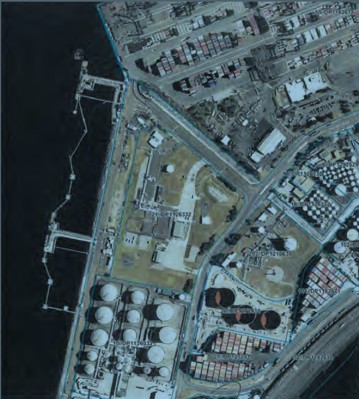
27 The “designated stockpile area” is depicted in a photograph within Mr Cronin’s affidavit. It is the area in which rows of containers are stored at the bottom right of the photograph. The bulk liquids berths are shown at the left side of the photograph. The photograph is reproduced below:
28 Mr Cronin deposes that in early November 2016 he discussed the NSW Ports’ “Master Plan”, which I take to be the 30 Year Master Plan, with Mr Mulder and either Mr Crossley or Mr Hancock. Mr Cronin deposes that the Mayur representatives told him that it was because of the Master Plan that Mayur proposed to unload sand at Port Botany in the form of a slurry. Mr Mulder denies that the 30 Year Master Plan was discussed at that time, but I prefer Mr Cronin’s evidence where it conflicts with that of Mr Mulder, as I will explain.
29 Mr Cronin sent an email to officials at NSW Ports on 16 November 2016 stating:
See below. I had a visit from Mayur Resources on Friday. They want to ship slurried sand from PNG to the BLB [Bulk Liquids Berths] at Port Botany, pump it out into a tank, dewater it and then use the sand in the construction industry in Sydney and surrounds.
They believe the fact it is a slurry means it falls under the bulk liquid definition.
…
30 Mr Cronin deposes that the email reflects his misunderstanding at that time that Mayur’s proposal was to ship slurried sand from PNG, and he later realised that the proposal was in fact to ship dry sand and then mix water into the sand on board ships at Port Botany. However, what is significant is that Mr Cronin was informed that a slurry would be transported off the ship to the storage area and that Mayur’s representatives contended that a slurry, “falls under the bulk liquid definition”. Mr Cronin deposes that if the Mayur representatives had suggested to him that Mayur proposed to unload dry sand at Port Botany, he would have informed them that it would not be possible. Mr Cronin deposes that his discussions with Mayur’s representatives were, “premised on using a pipeline to transfer a water-sand slurry from vessels at the bulk liquids berth to the Site”. I accept Mr Cronin’s evidence.
31 Consistently with Mr Cronin’s evidence, Mayur has admitted in para 2A(d) of its Amended Reply that Mayur represented to Botany that Mayur, “intended to unload construction and heavy mineral sand from ships by way of a liquid slurry system”. Mayur’s counsel also accepted that, “the earliest proposal was that the boat would arrive at the berth and it would be wet on board and taken off the ship wet”; and, “the first detail of that proposal is that one wets the sand on the ship, not in the hull, but in equipment on the ship”.
32 On 8 December 2016, Mr Mulder sent an email to Mr Cronin stating:
Mayur Resources would like to confirm our intent to progress to a Heads of Agreement (HoA) for a long term lease of the circa 1.68 hectare site on the corner of Friendship and Simblist Roads at Port Botany, Sydney (refer to Attachment – Site layout).
As part of the process we would like to commence discussions on the Lease, Licenses and Pipeline agreements with the aim of having a binding agreement for approval by your board at the February 2017 board meeting.
Mayur Resources (or its subsidiaries) will require access to the site, and easement data and drawings so that the site can be properly assessed for the importation of construction sands as a slurry product through the two bulk liquid berths at Port Botany.
…
(Emphasis in original.)
33 The reference to “Licences and Pipeline agreements” reflects an understanding by Mr Mulder that it would be necessary to enter into several separate agreements, including for a pipeline carrying the slurry from the bulk liquids berths to the storage area. The attachment to the letter contains an aerial photograph delineating the same area shown in Mr Cronin’s affidavit.
34 Mr Cronin explains that NSW Ports grants licences to use the bulk liquids berths. There are various pipeline corridors. The pipelines are owned by users and installed pursuant to pipeline licences granted by NSW Ports. Liquids are pumped off vessels to processing, storage or distribution facilities at Port Botany.
35 On 9 December 2016, Mr Hancock sent an email to Mr Cronin asking for some “technical planning standards” and asking whether, “The port still defers to local council planning”. On 12 December 2016, Mr Cronin provided Mr Hancock with a link to a webpage providing access to the “Port Botany Development Code of October 2013”. A link on the webpage led to a page entitled “Publications” at which NSW Ports’ documents were available for download, including the Five Year Port Development Plan, the 30 Year Master Plan and the Port Botany Development Code. Mr Cronin deposes that he expected that Mayur would use the resources on the website.
36 On 19 December 2016, NSW Ports sent an email to Mr Hancock and Mr Mulder attaching a “draft Heads of Agreement for lease of the Site”.
37 On 6 January 2017, Mr Hancock emailed Mr Cronin attaching a “Preliminary site layout sketch for discussion”. Mr Cronin replied asking for more information about, inter alia, the proposed pipeline corridor, the stockpile design and dewatering storage. On 9 January 2017, Mr Hancock replied indicating where the dewatering storage would be located and asking about pipeline rental.
38 On 30 January 2017, a meeting was held between Mr Mulder, Mr Crossley and Mr Hancock (Mayur) and Mr Cronin, Mr Varming and others (NSW Ports). The minutes of the meeting record it was confirmed that water utilised in the slurry system would not be subject to cargo charges.
39 Between January 2017 and May 2017, there were ongoing negotiations regarding the proposed agreement.
40 On 4 April 2017, Mr Mulder emailed Mr Cronin and others at NSW Ports concerning what would happen in the event that a lease was not ultimately entered. On 5 April 2017, Mr Cronin replied saying that:
I don’t see any impediments to reaching commercial agreement, as the terms are in the term sheet. Also, our Board has essentially approved the term sheet.
So the risk of this operation not happening really lies with Mayur Resources.
41 On 10 April 2017, Mr Cronin confirmed that, “As per my previous note, the NSW Ports Board has given approval for this project”.
42 This chronology shows that up to the time when the Agreement was made, the negotiations had proceeded on the basis that the sand would be unloaded from ships and transported to the storage area through a pipeline as a slurry.
The Agreement
43 The Agreement was signed by Mr Mulder and witnessed by Mr Crossley (Mayur) on 19 May 2017 and by Mr Cronin and Ms Calfas (Botany) on 22 May 2017.
44 The Agreement states that, “The Landlord proposes to lease the Premises to the Tenant on the terms of this Heads of Agreement”. That is followed by the heading “Lease items” and then by Items 1 to 51. Items 1 to 51 summarise the terms upon which the proposed lease would be based if ultimately entered (although Item 36 seems in part to contain a condition precedent to any lease).
45 Under Item 1, Botany is the Landlord and, under Item 5, Mayur is the Tenant.
46 Item 13 describes the “Premises” as, “Part of 39 Friendship Road, Port Botany NSW 2036”. Under Item 12, the “Land area” is described as, “Approximately 18,383 square metres as shown on the attached plan and shown with a site boundary in red, subject to survey”. Through oversight of the parties, the “attached plan” is not in evidence. However, it is not in contest that the Premises and the Land area are the same area depicted in the aerial photograph in Mr Cronin’s affidavit.
47 Under Item 18, the term of the proposed lease is 14 years.
48 Under Item 22, the “Permitted use” is described as:
24 hours per day 7 days per week in any calendar year – the storage handling and processing of imported construction and heavy mineral sand, sand slurry and sand by-products, administration offices and operation of truck loading bays.
49 The “Permitted use” must be understood to describe the permitted use of the Premises and the Land area under the proposed lease.
50 The Agreement provides at Item 24 for payment by Mayur of “Holding rent”, payable from 1 April 2017. Item 25 provides for “Other fees” to be paid under the proposed lease, including a Pipeline licence fee (charged per lineal metre per annum) and wharfage (charged per revenue tonne). Item 29 provides for Mayur to pay outgoings incurred by Botany in relation to the Premises commencing from 1 January 2018.
51 Item 33 deals with “Tenancy documents” and requires Mayur to comply with each of the tenancy documents, which are described as:
• the lease;
• any pipeline licence or other licence entered into by the Tenant as licensee in conjunction with the lease;
• BLB1 and/or BLB 2 User Licence Deeds; and
• any other written agreement relating to the Tenant’s occupation or use of the Premises or the Port entered into by the Tenant in conjunction with the lease or licences.
52 Item 36 deals with Capital Works and provides:
As described in the tenant’s Development Plan - the tenant will be required to provide a concept drawing, scope and program for the development of the site for inclusion in the Lease. The Development Plan will require the prior consent of NSW Ports and be consistent with the Port Botany Development Code and Green Port Checklist…
53 The heading “Additional lease matters” appears above Items 39 to 51. Item 49 is entitled “Project Milestones” and provides that:
The Landlord may terminate the Agreement for Lease or the Lease if the Tenant does not successfully achieve the following project milestones:
• Secure minimum 10 year Mining lease from PNG Mineral Resource Authority (March 2018)
• Obtain sufficient project funding (June 2018)
• Commenced project construction in PNG (September 2018)
• Commenced project construction on Premises (December 2018)
• Commenced full production in PNG (March 2019).
54 There is a heading, “Provisions applicable to this head of agreement/matters prior to entry of lease”, above Items 52 to 55.
55 Item 52 deals with “Conditions Precedent to entry into Lease” and provides:
Mayur Resources Pte Ltd will provide the following information to enable NSW Ports to properly assess the proposal to lease the Site:
• Development Plan
• Business Plan
• Operational Plan – this should include details on vessel size, estimated vessel calls frequency, average exchange volumes and discharge pumping rates. Note that the Common User Berth Licence will include a minimum discharge pumping rate which is proposed to be 2,000 tonnes (of sand – excluding water) per hour. The plan should also include estimated truck numbers.
• Environmental Impact Assessment
• Corporate Ownership Structure (incl. Directors)
Any other information as otherwise provided in this Heads of Agreement, Lease, Licences or reasonably requested by NSW Ports
56 Item 55 is entitled “Not legally binding” and provides, relevantly, that:
Despite anything else in this Heads of Agreement or otherwise, this Heads of Agreement does not create any legal rights or obligations. No such rights or obligations will arise until the Landlord and the Tenant properly execute a lease in registrable form.
Events after Agreement
57 Mr Mulder deposes that from about May 2017, he discussed with Mr Cronin a “Dual Facility”, by which Mr Mulder seems to describe a proposal for the importing of sand and cement. Mr Mulder deposes that Mr Cronin expressed significant enthusiasm about a Dual Facility and requested that Mayur continue to investigate the feasibility of implementing this as part of the project. The relevance of that passage is agreed by the parties to be limited to Mr Mulder’s understanding of the position. Mr Cronin’s evidence was that he and Mr Mulder only discussed Mayur unloading sand as a water-sand slurry and denies that they discussed any proposal to import cement. Mr Cronin states that if a proposal to import cement had been raised with him, he would have said that would not be possible at a bulk liquids berth.
58 If Mr Mulder’s evidence about Mr Cronin’s reaction to importing dry sand and cement were correct, it would be likely to have been documented at least in an exchange of emails or a file note of the phone call, but no such email or file note has been produced (I accept Mr Cronin’s evidence that his email of 29 May 2017 saying he wanted to discuss the Sydney cement market was merely a reference to sourcing customers).
59 Mr Mulder’s evidence is inconsistent with Mayur’s admission of para 5(b)(i) of the Amended Defence which pleads that, “at all times prior to 27 July 2018, [Mayur] represented to [Botany] that [Mayur] intended to unload construction and heavy mineral sand from ships by way of a liquid slurry system”. I found Mr Mulder to be quite evasive under cross-examination. In contrast, Mr Cronin was a straightforward and frank witness. I prefer Mr Cronin’s evidence where it conflicts with that of Mr Mulder.
60 On 20 September 2017, Maddocks Lawyers, acting on behalf of Botany, provided Mayur with a draft sublease and other documents, including a draft pipeline licence and a draft bulk liquid berth user licence.
61 On 15 December 2017, Mr Mulder sent an email to Mr Cronin stating that the “environmental process” and, “the fact the end users are taking longer than expected to firm up their soft commitment”, had become an issue for Mayur’s Board in signing the proposed lease. Mr Mulder proposed that Mayur would pay an upfront annual holding payment until, “we get visibility on the environmental approval and at least have some support for the offtake”.
62 In a further email dated 18 January 2018 to Mr Cronin, Mr Mulder stated that, “the Board is not comfortable in progressing full steam into a lease without…having a letter of intent for a material volume of sand offtake from the market”. He stated that, “the market/end users are taking much longer than expected”. Mayur proposed to pay additional holding rent and shift back the milestones by 12 months.
63 Botany submits that the emails demonstrate that Mayur was hesitant to enter a lease without commitments from potential purchasers of its product and explain why the development of Mayur’s proposal stalled between May 2017 and March 2018.
64 On 12 March 2018, Mr Hancock sent an email to Greg Walls of NSW Ports asking:
With the discharge from the vessel to the slurry tank directly alongside the vessel. Is there an issue if this is performed by a conveyor?
The solids flow into the slurry pipeline is better controlled through the use of a weighing conveyor.
It is still a slurry discharge system just the ship to tank discharge we would like to keep the option available to do this [part] by conveyor.
Can you see if this will cause any issues with [NSW Ports] or planning etc.
65 Mr Cronin deposes that he was confused by the implication in Mr Hancock’s email that discharge from the vessel might be performed by a conveyor because Mayur’s proposal had been to pump water-sand slurry off vessels to the storage area. Mr Cronin responded to Mr Hancock on 12 March 2018 saying:
Now that plans are progressing, can you please send through a diagram(s) explaining how the site will look, and how it will connect with the BLB, including all pipework, conveyors, etc?
I don’t quite understand what you are asking below.
It is important we all understand exactly how the system will operate.
66 On 3 April 2018, Mr Hancock wrote to Mr Walls attaching a diagram, “Port Botany sand off loading facility”. The email stated:
One of the key reasons is the current thinking on the transfer from a vessel to the hopper tank on the wharf may be a short slurry feeder conveyor. This gives a cleaner feed rate [than] the other options and reduces a spill risk on the critical transfer point.
The system from the wharf to the stockpile is still a slurry pipeline system but we need to get your option that this change does not impact the planning restriction from [NSW Ports’] perspective about liquid bulk.
67 Mayur submits that the attached diagram shows sand being wet on the berth, not on the ship. Mayur submits that by this point in time, Botany knew that Mayur’s proposal was to unload dry product from the ship. That submission is inconsistent with Mayur’s admission in para 2A(a) of its Amended Reply that until 27 July 2018, Mayur had represented that it intended to unload sand from ships by way of a liquid slurry system, but I accept that the email provided an indication of Mayur’s “current thinking”. Botany submits that the email shows that Mr Hancock (and therefore Mayur) understood the significance of any change from a liquid slurry system and that such changes could cause issues for NSW Ports. I accept that submission.
68 There was a meeting on 15 May 2018 between Mr Crossley and Mr Hancock (Mayur) and Mr Cronin, Mr Fahey and Jason McGregor (NSW Ports). The Agenda included, relevantly:
4. Discuss the vessel to hopper approvals. Need confirmation of approval for the option to discharge dry sand across the quayline to the density tank on the wharf.
69 This agenda item shows Mayur’s awareness of the need for approval of its new proposal.
70 Between 26 January and 13 July 2018, Mayur continued to seek a 12 month extension of the “milestones” stipulated in the Agreement on the basis of uncertainty about market feedback.
71 Mr Cronin left NSW Ports on 14 June 2018. Mr Fahey then assumed primary responsibility for dealings with Mayur.
72 On 27 July 2018, there was a meeting between Mr Thompson and Kevin Pickworth (Mayur) and Mr Fahey, Wayne Ashton and Ashley Rangott (NSW Ports). At the meeting, Mayur presented a “Project Planning Submission” dated 26 July 2018, which stated:
A pneumatic ship unloader will be used to unload bulk marine carriers and deliver product to a transfer station located on the East side of Fishburn Road…
…
The transfer station will sit on a concrete slab and completely enclose the transfer of product from pneumatic to pipe conveyor. …
…
A dockside pneumatic ship unloader, similar to the one shown above, will be mounted on the BLB2 berth. Significant design input will be required to ensure the equipment fits without effecting the operations of others. This is seen as a critical project risk and cannot be mitigated until the proposed pipeline routes are approved and the size of the equipment is known. …
73 The minutes of the meeting recorded:
Items Discussed
• Shawn Thompson and Kevin Pickworth were received by Wayne Ashton, Ashely Rangott and Matt Fahey.
• ST and KP presented the proposal using a general arrangement drawing and a draft submission explaining the concept with typical examples of the equipment that might be utilised.
• NSW Ports personnel appeared enthusiastic about the concept, discussing in detail, the various components of the design.
• NSW Ports personnel demonstrated acceptance of the reasons for adopting a dry conveying system and not pursuing slurry transport and did not seem concerned about the addition of a cement stockpile.
…
ST and KP were later taken to the Berth and allowed to take photographs and measure the area. NSW Ports personnel provided a number of helpful suggestions and the following was noted…
74 Mayur’s proposal on 27 July 2018 involved two relevant changes: first, importation of cement (a necessarily dry product) in addition to sand; and, second, use of a pneumatic system for the conveyance of the dry sand and cement. The pneumatic system would involve movement of dry sand and cement through a pipeline using air pressure. Mayur admits that until then, it had represented that it proposed to use a liquid slurry system.
75 Mr Thompson deposes that on 27 July 2018, the Botany representatives did not raise any concerns about the addition of a cement stockpile and recognised that allowing both sand and cement products to be unloaded from ships would lead to a higher throughput over the wharf from the ships. He states that they “brainstormed” ways Mayur could improve the proposal and overcome possible technical challenges.
76 On 31 July 2018, Mr Varming sent an email to Mr Fahey and various other employees of NSW Ports explaining the problems he perceived with Mayur’s new proposal:
Based on my experience it is highly unlikely that a pneumatic ship unloader with a capacity of 2,500 tonne per hour would be able to be built on the BLB2 loading platform…As the unloader will not be able to travel, the ship will have to be warped along the berth so the unloader can gain access into the various holds, this introduces a much higher level of risk into the operations and will significantly slow down the unloading of cargo…
Mixing dry bulk and liquid bulk loading/un-loading is in my experience not good practise as they are two very different processes. It’s not impossible but it does introduce some challenges.
With regards to the poly wrap for the sand stockpile, it works great when the poly wrap is new but as it get torn and sun damaged it becomes a much bigger challenge. If they are importing the sand dry they should put the sand into silo’s much more permanent and easier to control spillage.
77 On 31 July 2018, Mr Fahey sent an email to Mr Mulder (to which Mr Mulder did not respond) stating that:
The proposal appears to have shifted to the import of dry sand. Mixing dry bulk and bulk liquid un-loading is not particularly good practice and has some challenges. …
The proposed cement product line is also new and has similar challenges.
Happy to discuss or set up a meeting with the key people to work through these items.
78 Mayur continued to develop its new proposal in consultation with some of the NSW Ports staff. On 7 September 2018, there was a meeting between Mr Thompson and Mr Pickworth (Mayur) and Mr Fahey and Mr Varming (NSW Ports). Mayur presented a more refined proposal that involved no open stockpiles, no open transfer chutes or dust emissions.
79 In an email to Mr Thompson on 10 September 2018, Mr Fahey said, “the design looks to be progressing in the right direction”, but raised some planning issues, including that the existing Major Project Approval for the second bulk liquids berth did not contemplate the transfer of dry bulk material as part of the Environmental Assessment and that a modification may be required.
80 An internal email sent on 10 September 2018 by Mr Rangott to Mr Fahey and others within NSW Ports raised a series of concerns about Mayur’s proposal. Mr Rangott concluded, “Generally I think it has potential to be a great revenue opportunity but there are a few challenges to be clarified and expectations cleared before proceeding”. On 17 September 2018, Mr Fahey sent a series of questions and comments about Mayur’s proposal by email to Mr Pickworth, substantially based on Mr Rangott’s email.
81 On 27 September 2018, there was a telephone call between Mr Fahey and Mr Crossley. Mr Fahey’s file note states:
MF noted some key concerns with Mayur proposal:
• Now dry bulk (rather than sand slurry/ bulk liquid)
• Now includes cement
• Significant equipment on BLB2:
• which takes up all available space and leaves no/limited room for bulk liquids growth. Currently 2 MLAs, with spare for 3 more.
• which will be costly and difficult to maintain and potentially impact on vessel arrivals
• which will restrict other users ability to maintain their equipment, less room for a crane on the BLB2 deck
MF advised that we are looking at the growth projections for bulk liquids to see how long there is spare capacity for Mayur’s proposed operation, i.e 5, 10, 15yrs, etc
MF flagged that spending on the proposed geotechnical investigation, structural and electrical assessment may best be done after NSW Ports executive confirm we are happy to proceed.
Tim advised they currently have 2 drafters and an engineer full time on it at the moment.
Business case - Tim confirmed business case works for sand alone but is better with cement. The business case takes into account the proposed land rent, wharfage and site occupation.
…
82 On 4 October 2018, Mr Fahey forwarded an email from Mr Walls (NSW Ports) to Mr Crossley, which stated:
See below for some high‐level comments regarding permissibility of the development and use proposed by Mayur at Port Botany – happy for you to forward this on. I will also talk these through with Mayur’s planning consultants when we meet on Monday.
…
Port Development Plan
Under our Head Lease with Government, all development on our land is required to be consistent with the NSW Ports 5 Year Port Development Plan. The current Port Development Plan does not contemplate bulk construction materials through Port Botany.
However, a new Port Development Plan is currently being prepared for submission to Government before the end of the year. The current draft Plan includes development for the purposes of bulk construction material import and distribution at Port Botany and was drafted with the Mayur proposal in mind.
Additionally, the Port Development Plan may be amended at any time to capture new uses provided they continue to meet NSW Ports’ obligations of servicing the import/export needs of the State.
(Emphasis in original.)
83 On 10 October 2018, there was a meeting between Mr Crossley and others (Mayur) and Mr Fahey and others (NSW Ports). Mayur presented slides indicating its understanding that there were, “concerns regarding cement and sand being considered a dry commodity”, and indicating that Mayur believed that its proposed design, “will extinguish these concerns largely from the point of view that once cement and sand are aerated to transport in a pipe they in effect are fluidized”. The slide indicated that there would be no open stockpiles and no open transfer chutes or dust emissions.
84 On 16 October 2018, there was a telephone call between Mr Fahey and Mr Crossley in which Mr Fahey instructed Mayur to cease all work on the project. This was followed by an email from Mr Fahey to Mr Crossley and Mr Mulder on 17 October 2018 stating:
As discussed yesterday with Tim, we request you place a hold on your Port Botany cement & sand dry bulk import development proposal.
NSW Ports will be undertaking property strategy and business planning review work in the coming months culminating in a strategy workshop with our Board in February 2019.
As it stands:
• Dry bulk is not envisaged in Port Botany in the NSW Ports’ 30 year master plan. The inclusion of dry bulk at Port Botany would [form] part of the strategy review work.
• Dry bulk is not envisaged in Port Botany in the NSW Ports’ 5 year Port Development Plan. The provision for dry bulk uses at Port Botany is currently being incorporated into the plan to provide [flexibility] to pursue this use in the future.
Between now and February, NSW Ports will be progressing the strategy work which may include:
• a review of land uses within our Port Botany land holdings
• existing and future bulk liquid volumes
• existing and future container volumes
• existing and future utilisation of the bulk liquids berths
• anticipated timing for the development of the next bulk liquids berth (BLB3)
• Impacts that Port Botany dry bulk uses would have on Port Kembla dry bulk volumes
The outcome of the strategy work may or may not be supportive of dry bulk in Port Botany in the future. Should dry bulk be supported then we would undertake to give Mayur the opportunity to negotiate a new arrangement for your proposed development.
85 On 17 October 2018, Mr Crossley sent an email to Mr Mulder and Mr Thompson and others (Mayur), stating:
Shawn please add any relevant comments based on your conversations with Ports staff
It was at a meeting we had with Port on 15 May that we raised the issue of a duel use facility (ie cement and sand), Matt Fahey was present at this meeting and there were no concerns raised what so ever. Therefore since May 15 we have been working on a dry duel product solution with the full knowledge of the ports staff.
Putting aside cement for the moment , as we started to look at designs it was becoming more and more obvious a dry solution would be better for sand and that the solution could be the same for both.
At the time Robert Hancock started to work up a dry solution and this was then taken over by Shawn and Kevin and progressed to where we are today at every step we kept the ports engineer (Carston) involved and the feedback we got was in their eyes that this was a far superior solution to the original proposed wet solution. Hence to have Ports turn this around now is simply unacceptable.
Given Matts email today it appears they are now scrambling to back claw on their position.
My sense and approach for Mondays meeting
…
We need to emphasis the change in design from wet to dry was simply because it was agreed both by their engineer Carston and ours to be a technically better solution, this was never challenged and has been the solution being worked on since May 15… It is now October 22? We have had nearly two full time engineers and draftsman on since then and the concept has never been questioned or challenged, we have certainly had “engineering” and “operational” issues raised but not challenged the concept.
We need to emphasise that for all intensive purposes the pneumatic movement in a pipe of sand and or cement has it fluidised… there are plenty of papers on this and if she needs help on the physics we can get that for her
The port staff at the meeting on 10th October acknowledged that they were initiating a change in the ports permissible activities under the plan to enable our project to proceed. Mick Cronin also mentioned this.. if this does not equal support for the project I don’t know what does.
…
(Errors in the original.)
86 On 22 October 2018, Mr Mulder met with Ms Calfas, the Chief Executive Officer of NSW Ports. Mr Mulder deposes that Ms Calfas said, “[Mayur’s] permitted use as detailed in the Agreement had slipped through the cracks of the Board”, and that Mayur, “should never have been allowed to progress”. Ms Calfas did not give evidence and Mr Mulder’s account is not disputed.
87 On 29 October 2018, Mr Mulder wrote to Ms Calfas as follows:
…
I would like to emphasise that per our discussion, the current HOA is still valid and on foot for Mayur to build a facility to handle and receive sand and other heavy mineral sand products which we still intend to pursue. I did acknowledge that irrespective of the ‘sand & other heavy mineral product’ or ‘sand and cement products’ facilities proposed, either route for a lease execution would require approval by the NSW Ports Board (acknowledging the NSW Ports Board has approved the HOA, which for the large part contains all the major terms that would go into the NSW Ports Lease documentation already provided to Mayur).
Whilst NSW Ports continues with its draft 5 Year Port Development Plan that includes bulk construction material including a sand and cement import facility, to date both organisations have been contributing to the design, engineering, throughput optimisation etc, Mayur would like to highlight some items that we communicated and were discussed at our recent meeting:
a. Originally in our 1st meeting with NSW Ports (that I personally attended), Port Kembla was highlighted to us by NSW Ports as the nominated location for bulk commodities including sand, where I stated that the project using the Port Kembla port would be dead due to transportation costs into Sydney. Both parties then at this meeting discussed and then worked through the opportunity for sand to be accepted while staying consistent with the NSW Port infrastructure and plans that would enable the dispatch of our material via piped infrastructure – at which point the concept gained traction and a piped slurry material was an agreed option, where the HOA was the resultant outcome;
b. NSW Ports and Mayur over time with the intent and directions received by NSW Ports, has been to provide an environmentally superior discharge and storage system, with a reduced footprint on the wharf whilst maximising revenue for NSW Ports and benefitting greater sales revenue for Mayur, then optimised volume throughput and other technical, commercial/utilisation and design features significantly. These actions resulted in the material still behaving in a fluidised manner with a discharge system still in pipes and still was contained within a sealed storage facility in accord with the original proposal/plan which both parties felt was consistent with the strategic plan for Port Botany. This fluidised system proposed is not just concept but scientifically supported by detailed papers which can be provided where…
c. We have worked on complimenting the sand material with cement material with your technical and operational teams since May 2018 formally and the opportunity raised with Mick Cronin back in May 2017, where even as recent as 4 October 2018 there was written guidance from Greg Wells passed on by Matthew Fahey that…
d. Acknowledging the NSW Ports Board still needs to approve any lease, Mayur communicated based on the arrangements it had in place (HOA) with a clear pathway to a lease coupled with the endorsed directives and collaboration with the NSW Ports senior personnel, Mayur made representation to the market by seeking engagement of EPC construction providers (which one would want firmed up prior to signing the lease). Mayur believed that the plan and associated improvements and refinements were acceptable to NSW Ports and there was no cause to question otherwise which was re-affirmed for us on 4 October 2018; and
…
Whilst your communication to us was that it is unfortunate that it was not until recently that you were made aware of the revised plans of sand and cement and whilst initially I was quite concerned, I then became optimistic about the remainder of our meeting....
(Errors and italics in the original. Underlining added.)
88 Ms Calfas responded by letter dated 21 November 2018 saying:
…
Importantly, I raised with you that NSW Ports’ long term strategy does not currently include dry bulk being handled at Port Botany. We have rejected a number of proposals put to us in this regard both pre and post Mayur’s proposal. Mayur presented a proposal that involved liquefied sand, which we were willing to consider further via a non-binding heads of agreement.
It is clear that your current proposal for ‘fluidised sand’, with or without bulk cement, no longer involves ‘liquified sand’ and as such is a dry bulk proposal. NSW Ports has not changed its strategic direction for Port Botany in regards to dry bulk handling. We have made no decision to include dry bulk at Port Botany in our 5 Year Port Development Plan, and if we did that does not obligate NSW Ports to enable dry bulk handling, it simply reserves our position to be able to do so in the future should we wish to change our strategy in this regard.
NSW Ports has engaged constructively with Mayur to explore the feasibility of your dry bulk proposal and we are continuing to do so, including a genuine exploration of whether to reconsider NSW Ports’ current strategy and accommodate dry bulk cargo at Port Botany. I must reinforce however that there is no express agreement by NSW Ports to accept your new proposal, with or without cement.
It is in both our interests to allow NSW Ports to fully consider whether Mayur’s new proposal can and should be accommodated at Port Botany. As I indicated to you, this would occur at our Board Strategy Day to be held at the end of February 2019…
89 Ms Calfas also offered an undertaking that NSW Ports would not for the time being act or deal with the Premises in any way adverse to Mayur’s rights. Mr Mulder responded on 6 December 2018 suggesting the undertaking be formalised and saying they should continue to work on a sand/cement solution and refine it for the February Board Strategy Day.
90 On 15 February 2019, Mr Mulder wrote to Ms Calfas saying that discussions regarding an undertaking had seemingly stalled. The letter stated that Mayur was progressing its development plans with the Environment Protection Authority. It asserted that Botany had made representations including approving the “terms sheet” and that in reliance on the representations, Mayur had now incurred significant expenses. The letter asserted that subject to Environment Protection Authority approvals, there was no impediment to the parties entering into the lease.
91 On 14 March 2019, Julian Sefton, General Counsel for NSW Ports, wrote to Mr Mulder advising of NSW Ports’ decision to withdraw from further discussions regarding the proposed project and lease and responding to Mayur’s letter of 15 February 2019. The letter asserted that the only binding arrangements were in relation to the “Holding Terms”, namely that NSW Ports would hold the property until 30 June 2018, and the subsequent arrangement that NSW Ports would hold the property until 31 December 2018 in return for Mayur paying amounts for outgoings and “holding rent”. The letter denied that NSW Ports had engaged in misleading representations and asserted that Mayur had in fact misrepresented matters concerning the proposed permitted use of the Premises and that until July 2018, it had always been understood by NSW Ports that the Premises was to be used in a manner consistent with a bulk liquid terminal and NSW Ports’ 30 Year Master Plan.
The legislation and principles
92 Section 18 of the Australian Consumer Law provides that a, “person must not, in trade or commerce, engage in conduct that is misleading or deceptive or is likely to mislead or deceive”.
93 Where a representation is with respect to future matters, s 4 of the Australian Consumer Law applies:
(a) If a person makes a representation with respect to any future matter and the person does not have reasonable grounds for making the representation, the representation is taken to be misleading.
(b) Furthermore, the party is taken not to have had reasonable grounds for making the representation, unless evidence is adduced to the contrary.
94 In Self Care IP Holdings Pty Ltd v Allergan Australia Pty Ltd (2023) 277 CLR 186 (Self Care) at [80], the High Court observed:
The principles are well established. Determining whether a person has breached s 18 of the ACL involves four steps: first, identifying with precision the “conduct” said to contravene s 18; second, considering whether the identified conduct was conduct “in trade or commerce”; third, considering what meaning that conduct conveyed; and fourth, determining whether that conduct in light of that meaning was “misleading or deceptive or … likely to mislead or deceive”.
95 Their Honours continued at [82]:
The third and fourth steps require the court to characterise, as an objective matter, the conduct viewed as a whole and its notional effects, judged by reference to its context, on the state of mind of the relevant person or class of persons. That context includes the immediate context — relevantly, all the words in the document or other communication and the manner in which those words are conveyed, not just a word or phrase in isolation — and the broader context of the relevant surrounding facts and circumstances. …
96 In Google Inc v Australian Competition and Consumer Commission (2013) 249 CLR 435, Hayne J observed at [89] that, “The first question for consideration is always: ‘What did the alleged contravener do (or not do)?’ It is only after identifying the conduct that is impugned that one can go on to consider separately whether that conduct is misleading or deceptive or likely to be so.”
97 Whether or not conduct was misleading or deceptive is determined by reference to a reasonable person in the position of the applicant: Poulet Frais Pty Ltd v Silver Fox Company Pty Ltd (2005) 220 ALR 211 at [76].
98 In respect of representations as to future matters (and statements of opinion), the relevant time at which to assess whether representations were misleading or deceptive is at the date of the representation: Octet Finance Pty Ltd v Macgregor [2026] NSWSC 103 at [248]; Bill Acceptance Corporation Ltd v GWA Ltd (1983) 78 FLR 171 at 178-179; City of Botany Bay Council v Jazabas Pty Ltd [2001] NSWCA 94 at [83].
99 Misleading or deceptive conduct may arise from positive conduct or from failing to do something, such as by nondisclosure of information: see Addenbrooke Pty Ltd v Duncan (No 2) (2017) 348 ALR 1 at [78] (Dowsett J). In Miller & Associates Insurance Broking Pty Ltd v BMW Australia Finance Limited (2010) 241 CLR 357 (Miller) at [14]-[15], French CJ and Kiefel J observed (citations omitted):
[14] In determining whether there has been a contravention of s 52 of the Trade Practices Act, it is necessary to determine “whether in the light of all relevant circumstances constituted by acts, omissions, statements or silence, there has been conduct which is or is likely to be misleading or deceptive”. The term “conduct” is to be understood according to its definition in s 4(2)(a) and (b) of the Trade Practices Act, which includes a reference to “refusing to do any act”. That, in turn, includes a reference to “refraining (otherwise than inadvertently) from doing that act”.
[15] For conduct to be misleading or deceptive it is not necessary that it convey express or implied representations. It suffices that it leads or is likely to lead into error. …
100 “Silence” is “assessed as a circumstance like any other”: Miller at [18] (French CJ and Kiefel J), quoting from Demagogue Pty Ltd v Ramensky (1992) 39 FCR 31 (Demagogue) at 32 (Black CJ).
101 In Demagogue, Gummow J observed (citing French J in Kimberley NZI Finance Ltd v Torero Pty Ltd & Ors (1989) ATPR (Digest) 46-054 at 53,195) at 41 that, “unless the circumstances are such as to give rise to the reasonable expectation that if some fact exists it would be disclosed, it is difficult to see how mere silence could support the inference that the fact does not exist”. In Miller at [19]-[21], French CJ and Kiefel J explained:
[19] The language of reasonable expectation is not statutory. It indicates an approach which can be taken to the characterisation, for the purposes of s 52, of conduct consisting of, or including, non-disclosure of information. That approach may differ in its application according to whether the conduct is said to be misleading or deceptive to members of the public, or whether it arises between entities in commercial negotiations. …
[20] In commercial dealings between individuals or individual entities, characterisation of conduct will be undertaken by reference to its circumstances and context. Silence may be a circumstance to be considered. The knowledge of the person to whom the conduct is directed may be relevant. Also relevant, as in the present case, may be the existence of common assumptions and practices established between the parties or prevailing in the particular profession, trade or industry in which they carry on business. The judgment which looks to a reasonable expectation of disclosure as an aid to characterising non-disclosure as misleading or deceptive is objective. It is a practical approach to the application of the prohibition in s 52.
[21] To invoke the existence of a reasonable expectation that if a fact exists it will be disclosed is to do no more than direct attention to the effect or likely effect of non-disclosure unmediated by antecedent erroneous assumptions or beliefs or high moral expectations held by one person of another which exceed the requirements of the general law and the prohibition imposed by the statute. … It may lead to the imposition of a requirement to volunteer information which travels beyond the statutory duty “to act in a way which does not mislead or deceive”. …
(Citations omitted.)
102 Consideration of whether the failure to disclose something was misleading, “requires close analysis of all of the circumstances of the transaction.”: Miller at [91] (Heydon, Crennan and Bell JJ).
103 It was held by Palmer J in Aldhar v Motor Accident Commission [2007] NSWSC 1102 at [71] that there is no requirement to inform a person about:
…everything known to the vendor which could possibly be relevant to the transaction or which could possibly affect the purchaser’s mind. That would impose an unrealistic burden on parties to a commercial transaction…
The parties’ respective cases
104 In Self Care, the plurality emphasised at [80] the need for an applicant to identify “with precision” the “conduct” said to contravene s 18 of the Australian Consumer Law. However, some aspects of Mayur’s submissions are clouded with ambiguity. That ambiguity perhaps stems from a lack of precision attending the allegations in the Further Amended Statement of Claim (FASOC). It is necessary to examine the pleading closely to try to understand just what is being alleged by Mayur.
105 The FASOC alleges at para 3 that Botany was and is:
(d) the operator of a port situated at part of 39 Friendship Road, Port Botany, NSW (the “Site”).
106 Paragraph 3(d) of the FASOC defines the “Site” as the “port” (presumably Port Botany). The “Site” is apparently the whole of Port Botany.
107 However, in the Agreement, the “Premises” (the subject of the prospective lease) is defined as, “Part of 39 Friendship Road, Port Botany NSW 2036”. The Agreement was only concerned with a prospective lease of approximately 18,383 m² of land within Port Botany, not the entire “port”. It was an error for Mayur to define the “Site” as the “port” in the FASOC. It would have been preferable for the defined term “Site” to refer to the “Premises”. I will refer to the area of land proposed to be leased as the Premises in the remainder of these reasons.
108 The FASOC proceeds to use the expression “Site” throughout the pleading. Each such use purports to take its meaning from the definition of that expression in para 3(d). However, some uses of “Site” (such as in para 9A(b)) evidently refer to the whole of Port Botany while others (such as in para 4) refer to the Premises and others (such as in para 9A(d)) are ambiguous as to whether the reference is to the Premises or the whole of Port Botany.
109 In para 3 of its Amended Defence, Botany admits para 3(d) of the FASOC. However, Botany’s counsel submits that Botany had not intended to admit that where “Site” is used in the pleading, it refers to the whole of Port Botany, and had understood the “Site” to refer to the land proposed to be leased, situated at “part of 39 Friendship Road, Port Botany, NSW”.
110 In para 4 of the FASOC, Mayur alleges (and Botany denies):
On or about 22 May 2017, after a period of negotiation, the parties entered into an agreement entitled “Heads of Agreement to Lease” (the “Agreement”) by which, principally, the applicant preserved the opportunity to enter into a long term lease of the Site in exchange for payment of holding fees and outgoings to the respondent.
111 The “period of negotiation” is particularised as being between 11 November 2016 and 22 May 2017. The “Site” in para 4 must be intended to refer to the area of land called the Premises in the Agreement. It cannot possibly be intended to refer to the whole of Port Botany.
112 Mayur pleads at para 5 of the FASOC:
At all times material to this proceeding
a. the applicant’s intended use of the Site was in respect of dry bulk goods;
b. the applicant had no use for or interest in the Site other than in respect of dry bulk goods.
113 Paragraph 5 lacks clarity in several respects. Mayur’s post-trial written submissions indicate that in that paragraph, “Site” is intended to refer to the whole of Port Botany. If so, the allegation in para 5 is half true because the evidence demonstrates that Mayur’s intention was to have ships carrying dry sand arriving at a berth at Port Botany and to distribute dry sand from Port Botany to customers. But Mayur’s original proposal which became the subject of the Agreement also involved unloading a liquid, namely sand slurry, from ships berthed at Port Botany and transporting the liquid to the Premises.
114 That this was the original proposal is demonstrated by Mayur’s admission in para 2A(a) of the Amended Reply of para 5(b)(i) of the Amended Defence. Paragraph 5(b)(i) pleads that:
at all times during the period of negotiation referred to in paragraph 4(d)(i) above, and at all times prior to 27 July 2018, the Applicant represented to the Respondent that the Applicant intended to unload construction and heavy mineral sand from ships by way of a liquid slurry system at the Bulk Liquids Berth at Port Botany pump that liquid slurry to the Site and to use the Site to dewater that liquid slurry, store the dewatered sand and distribute that dewatered sand in a dry form…
115 In para 5(b)(i) of the Amended Defence, Botany plainly uses “Site” to refer to the area to which the sand slurry was to be transported and dewatered and then distributed (that is, the “Premises”), and the paragraph is admitted by Mayur.
116 In para 7 of the FASOC, Mayur pleads that:
Item 22 of the Agreement described the “Permitted Use” for the Site as “24 hours per day 7 days per week in any calendar year – the storage, handling and processing of imported construction and heavy mineral sand, slurry and sand by-products, administration offices and operation of truck loading bays”.
117 Item 22 of the Agreement in fact describes the permitted use of the “Premises”. Accordingly, the “Site” in para 7 must be understood as referring to the Premises.
118 While admitting para 7 of the FASOC, Botany expressly relies on para 4 of its Amended Defence which alleges inter alia that the Agreement did not create any legal rights or obligations and no such rights or obligations could arise until the parties executed a lease in registrable form.
119 In para 8 of the FASOC, Mayur pleads:
By entering into the Agreement, in the premises pleaded in paragraph 7 herein, the respondent represented to the applicant that use of the Site in respect of dry bulk goods was and would be permitted.
120 Paragraph 8 is also ambiguous in several ways. The “Site” may refer to the Premises, or it may refer to Port Botany more generally, including the bulk liquids berths. It is unclear what use is encompassed by the expression “in respect of”. The allegation that Botany represented that use of the Premises or Port Botany more generally in respect of dry bulk goods “was and would be permitted” cannot be meant literally because it is evident that Mayur was not permitted to use either until a lease and other licences and permits were agreed and it was not certain that they would eventually be agreed. Whether a lease would be entered depended upon satisfaction of the preconditions specified in Items 36 and 52 of the Agreement. If para 8 were understood literally, the allegations would not be established on the evidence.
121 It is much more likely that para 8 is intended to allege that Botany represented that use of the Premises and Port Botany more generally, “was permissible and would be permitted under the proposed lease if entered”. This interpretation seems consistent with Mayur’s written Opening Outline of Submissions which states that, “Mayur had understood that the project was permissible with consent”; and Mayur was, “not told of the Port Development Plan limitations prior to 4 October 2018”. Botany denies para 8, referring to paras 4 and 5 of the Amended Defence.
122 In para 9A of the FASOC, Mayur pleads that:
In October 2018, the respondent informed the applicant that:
a. all development on its land (which included the Site) is required to be consistent with the NSW Ports 5 Year Port Development Plan under the respondent’s head lease with the Government;
b. the current Port Development Plan did not contemplate bulk construction materials through the Site;
c. dry bulk is not envisaged in Port Botany in the NSW Ports’ 30 year master plan;
d. use of the Site for dry bulk goods was not supported;
e. the applicant would need to negotiate a new arrangement should dry bulk be supported in the future;
f. such use ‘may or may not’ be supported in the future.
…
123 In its Amended Defence, Botany admits para 9A(a) of the FASOC, but otherwise denies the allegations in that paragraph.
124 In para 9B of the FASOC, Mayur alleges that the facts in para 9A were:
(a) true; and
(b) known to the respondent during the period of negotiation identified in paragraph 4 [ie. the period up to entry into the Agreement].
125 Botany denies those allegations except to the extent they relate to para 9A(a).
126 At para 11 of the FASOC, Mayur pleads:
At no time prior to the events pleaded in paragraph 9C herein were the facts pleaded in paragraph 9A:
a. disclosed to the applicant by the respondent;
b. otherwise known to the applicant.
127 In para 11 of the Amended Defence, Botany pleads that it had no obligation to disclose the matters referred to in para 9A of the FASOC and that the Five Year Port Development Plan and 30 Year Master Plan were publicly available documents.
128 In para 12A of the FASOC, Mayur alleges that, in the circumstances pleaded, it, “had a reasonable expectation that the facts in paragraph 9A would be disclosed to the applicant by the respondent before entering into the Agreement”. At para 12A of its Amended Defence, Botany pleads that it does not know and therefore cannot admit that allegation.
129 In para 13A of the FASOC, Mayur alleges (and Botany denies) that Botany led Mayur into error by:
(a) making the representation in paragraph 8; and
(b) failing to disclose the facts in paragraph 9A before Mayur entered into the Agreement.
130 At para 14 of the FASOC, Mayur pleads (and Botany denies) that Botany’s conduct was:
…
b. misleading or deceptive or likely to mislead or deceive in contravention of section 18 of the Australian Consumer Law including because (to the extent the representation pleaded herein was with respect to future matters), the respondent did not have reasonable grounds for making the representation.
Particulars of lack of reasonable grounds:
A. Dry bulk uses at the Site required the inclusion of dry bulk in the NSW Ports’ 30 year master plan as well as the NSW Ports’ 5 year Development Plan.
B. Whether to include dry bulk was not a matter the respondent has the power to decide, but for NSW Ports.
C. There was when the Agreement was entered into, no realistic prospect of such inclusion.
131 In para 15 of the FASOC, Mayur alleges (and Botany denies) that had it not been led into error by Botany, it would not have:
(a) entered into the Agreement;
(b) paid holding fees and outgoings as invoiced by Botany;
(c) incurred costs and expenses in relation to its intended use of the site.
132 I have said that some aspects of Mayur’s submissions are clouded with ambiguity. This is illustrated by the following passages from Mayur’s Opening Outline of Submissions:
3. The Port knew from the beginning that Mayur’s proposal was to import dry bulk commodities. The Port was kept close to, and involved in, the development of the project.
4. Yet at no time did the Port tell Mayur that the importation of dry bulk could not occur, and the Port’s 5 Year Port Development Plan and 30 Year Master Plan (to the Port’s knowledge and on its understanding of matters) precluded it.
5. In reliance upon the import of dry bulk commodities being permissible, Mayur:
(a) paid the Port $527,884.51 in ‘holding rent’ and ‘outgoings’ for a site;
(b) incurred $590,485.35 in expenses towards the project.
6. Then the Port did an about-face. It informed Mayur that the project was not permitted by the Port Development Plan and Master Plan. This was after the Agreement was entered, the payments made and expenses were incurred by Mayur.
7. In all the circumstances, the Port engaged in misleading or deceptive conduct in contravention of s 18 of the Australian Consumer Law.
(a) It failed to reveal that dry bulk importation in the modality proposed was not permitted.
(b) It represented, by entering into the Agreement, that Mayur’s proposed use of the Site for dry bulk was, and would be, permitted.
(c) To the extent this was a representation as to the future, the Port did not have reasonable grounds to represent that importation of dry bulk would be permitted: it was precluded (according to the Port) by the Government Plans that bound the Port by reason of its Headlease.
(Emphasis in original.)
133 The words “import” and “importation” are repeatedly used but it is unclear whether Mayur uses the expressions to refer to bringing dry bulk off the ships and over the quay line. On one view of these passages, Mayur seems to use the expressions “importation of dry bulk”, “the project” and “the modality proposed” to imply that Mayur’s proposal was “from the beginning” to unload dry sand from ships berthed at Port Botany and transport the sand in dry form to the Premises. If so, that submission must be rejected because it ignores Mayur’s admission that its proposal at the time the Agreement was entered was to unload sand from ships by way of a liquid slurry system and pump the liquid slurry to the Premises.
134 On another reading, these passages may mean that Botany always knew but failed to disclose that Mayur’s proposal to unload and transport sand from ships by way of a liquid slurry system was never permissible under the Five Year Port Development Plan and the 30 Year Master Plan.
135 Mayur’s Opening Outline of Submissions later states that:
26. In October 2018 - after nearly two years - the Port did an about-face, and when nothing had changed (so far as Mayur knows) to justify it.
27. On 4 October 2018, the Port informed Mayur that:
Under our Head Lease with Government, all development on our land is required to be consistent with the NSW Ports 5 Year Port Development Plan. The current Port Development Plan does not contemplate bulk construction materials through Port Botany.
However, a new Port Development Plan is currently being prepared for submission to Government before the end of the year. The current draft Plan includes development for the purposes of bulk construction material import and distribution at Port Botany and was drafted with the Mayur proposal in mind.
Additionally, the Port Development Plan may be amended at any time to capture new uses provided they continue to meet NSW Ports’ obligations of servicing the import/export needs of the State.
28. Mayur was not to know of the binding status of these Plans upon the Port before this time: they are made binding by the Headlease between the Port and the State of NSW.
…
31. Up until October 2018, Mayur had understood that the project was permissible with consent. It was not told of the Port Development Plan limitations prior to 4 October 2018, and was not told of the Master Plan until 17 October 2018. Neither of these documents limitations, or their impact on the project, had been mentioned in any of the many meetings and communications between Mayur and the Port.
(Emphasis in original.)
136 These passages ignore the undisputed fact that something had changed, namely that in mid-2018, Mayur had provided NSW Ports with a new proposal that involved unloading and transporting dry sand to the Premises instead of a sand slurry. It also ignores the context of the email of 4 October 2018 which was responding to the new proposal.
137 Later, Mayur’s Opening Outline of Submissions state:
40. The Port engaged in misleading or deceptive conduct by failing to disclose that the use of the Site for the importation of dry bulk was:
(a) not consistent with the Port Development Plan and Master Plan;
(b) was therefore not permissible; and
(c) may or may not be supported in the future.
41. The Port failed to tell Mayur these matters in circumstances in which (as set out above):
(a) the Port knew that Mayur’s project was involved the importation of dry bulk – and its ex post facto assertions that it did not know this should not be believed. The email from the Port of 4 October 2018 set out at [27] above shows an awareness that the project involved importation of dry bulk.
(b) clause 22 of the Agreement made clear that Mayur’s intended use of the Site involved dry bulk (hence the words “imported construction and heavy mineral sand”). This was referred to as a “permitted use”;
(c) the entry into the Agreement was preceded by extensive negotiations and engagements;
(d) after entry into the Agreement, the parties collaborated in further developing and refining Mayur’s proposal, including by expanding it to also include cement (another dry bulk commodity, and something instigated by the Port), and by Mayur sharing its engineering approach with the Port.
42. It follows that:
(a) the Port knew (or ought to have known) that use of the Site was dry bulk was material to Mayur’s pursuit of the project
(b) there was a reasonable expectation that the Port would disclose that the Plans precluded such use (given that is what the Port says is and was the effect of them) before Mayur entered into the Agreement, or at any point after before Mayur paid fees to the Port and incurred expenses in relation to the Project.
43. At no time before 17 October 2018 did the Port reveal the Port Development Plan’s limitations, Master Plan or their implications for the project. Instead, it charged Mayur fees and Mayur incurred expenses for a project that could never be permitted.
138 Again, Mayur’s use of ambiguous expressions such as “involved the importation of dry bulk”, the “use of the Site was dry bulk” and “the project”, clouds the meaning of the submissions. The ambiguity of Mayur’s submissions requires that they must be approached with caution and carefully compared to the factual context, much of which is undisputed.
Consideration
139 The Agreement was made on 22 May 2017. Mayur agreed to pay holding rent and outgoings. In return, Botany agreed not to lease the land described as the “Premises” to anyone else for a period of time while the parties negotiated a proposed 14 year lease. As is made clear by Items 36, 49, 52 and 55, it was not certain that the proposed lease would ultimately proceed.
140 Botany did not expressly disclose to Mayur that it had a sublease in respect of Port Botany. However, Mayur must have assumed that Botany had some form of tenure that allowed Botany to lease the Premises to Mayur.
141 Clause 19.2 of the Sublease requires Botany to, “ensure that development of [Port Botany] is in accordance with the Port Development Plan”. It is not in dispute that Botany was only permitted to allow Mayur to use the Premises in a manner consistent with the Five Year Port Development Plan. In the Five Year Port Development Plan, Port Botany is described as having bulk liquids berths and as a bulk liquids port.
142 Having sought to interpret the FASOC and the submissions as best I can, Mayur can be understood to make the following allegations of misleading or deceptive conduct:
(1) Botany, by entering into the Agreement containing Item 22, represented that Mayur’s proposed use of:
(a) the Premises; and
(b) the bulk liquids berths;
in respect of dry bulk (including dry sand) was permissible and would be permitted under the proposed lease.
(2) Botany failed to disclose the matters set out at para 9A of the FASOC, including that development of Port Botany was required to be consistent with the Five Year Port Development Plan and the 30 Year Master Plan, when those Plans only provided for use of Port Botany for liquid bulk.
143 Mayur alleges that if it had not been led into error by Botany, it would not have entered into the Agreement and would not have paid holding fees and outgoings under the Agreement and wasted the wages of its employees who worked on the project.
Allegation that Botany engaged in misleading or deceptive conduct by entering into the Agreement containing Item 22
144 Mayur’s allegation that Botany represented that Mayur’s proposed use of the Premises and the bulk liquids berths in respect of dry sand was permissible and would be permitted under the proposed lease must be considered in the context of the Agreement as a whole and the negotiations that preceded the Agreement.
145 It is evident that from the admission made by Mayur in para 2A(a) of its Amended Reply (as well as the evidence of Mr Cronin, Mr Crossley and Mr Mulder) that during the period from late 2016 to mid-2018, Mayur advanced an overall proposal involving:
• Transporting dry sand by ship to the bulk liquid berths at Port Botany.
• Adding water to the sand on board the ship to form a slurry (that is, to “liquify” the sand).
• Unloading and transporting the sand slurry by pipeline to the Premises.
• Dewatering the sand slurry at the Premises.
• Storing the dry sand at the Premises.
• Transporting the dry sand to customers by truck from the Premises.
(Mayur’s overall proposal)
146 The evidence of Mr Crossley demonstrates that Mayur knew that Port Botany was a “liquid berth”, and it was, “for this reason that Mayur provided a liquification of products engineering solution”.
147 Mayur submits that:
Mayur had no interest in, or use for, the Site other than for transporting dry bulk from vessels, and would not have entered into negotiations with the Port if it had known that the Port was always bound to decline use of the berth to import dry bulk.
148 It is apparent that Mayur’s proposal during negotiations for the Agreement was to unload and transport a slurry of water and sand from vessels at the bulk liquids berths to the Premises. Accordingly, Mayur’s submission that its only interest was “transporting dry bulk from vessels” is quite inconsistent with its admission and the evidence of its own witnesses and must be rejected.
149 It was not until 27 July 2018, more than a year after the Agreement was made on 22 May 2017, that Mayur presented its new proposal to instead use a pneumatic system to unload dry sand and cement (that is, dry bulk) from ships at the bulk liquids berths and transport that material to the Premises.
150 Under Item 22 of the Agreement, the “Permitted use” of the Premises under the proposed lease included storage, handling and processing of imported construction and heavy mineral sand, as well as sand slurry. While Item 22 in its terms only dealt with Mayur’s proposed use of the Premises, the Agreement as a whole was concerned with facilitating Mayur’s overall proposal. That may be seen, for example, from Item 22 referring to sand slurry, from Item 33 referring to the need for a pipeline licence and Item 52 requiring, “minimum discharge pumping rate which is proposed to be 2,000 tonnes (of sand – excluding water) per hour”.
151 The Agreement makes it clear that it was not guaranteed that any lease would ultimately be entered. Any lease was subject to NSW Ports, “properly assess[ing] the proposal to lease the Site”, by reference to material Mayur was required to provide, including a Development Plan, Business Plan, Operational Plan, Environmental Impact Assessment, Corporate Ownership Structure and other information reasonably requested by NSW Ports (Item 52). The “prior consent of NSW Ports” to Mayur’s Development Plan was expressly required (Item 36). Mayur was also required to meet the project milestones or risk termination of the Agreement (Item 49). It is apparent that whether Items 36 and 52 were satisfied would depend on NSW Ports’ assessment of the detail of Mayur’s overall proposal, including for the unloading and transportation of sand slurry to the Premises.
152 The Permitted use of the Premises under Item 22 in respect of dry sand must be understood as subject to Mayur’s overall proposal being approved by NSW Ports and, of course, a lease ultimately being entered. To the extent that Mayur alleges that Item 22 represents that use of the Premises in respect of dry sand was permissible and would be permitted under the proposed lease absent the unloading of sand slurry and transporting of sand slurry to the Premises, that allegation must be rejected.
153 Further, to the extent that Mayur alleges that Item 22 represents that unloading of dry sand at the bulk liquids berths was permissible and would be permitted under the proposed lease, that allegation must be rejected. It was never any part of Mayur’s proposal prior to the Agreement that dry sand, as opposed to sand slurry, would be unloaded from ships and transported to the Premises. Botany made no representation by entering into the Agreement that unloading of dry sand at the bulk liquids berths was permissible and would be permitted under the proposed lease.
154 It is necessary to consider what representations were relevantly made by Botany’s entry into the Agreement. Botany represented that if the requirements specified in Items 36, 49 and 52 of the Agreement were satisfied and a lease of the Premises ultimately entered, the lease would be consistent with the terms set out in Items 1 to 51. Botany represented that under the terms of any lease ultimately entered, Mayur would be permitted to use the Premises for the storage, handling and processing of imported construction and heavy mineral sand and sand slurry in accordance with Item 22.
155 I also find that by including Item 22 in the Agreement, Botany represented that the fact of Port Botany being a bulk liquids port and operating bulk liquids berths would not of itself provide a barrier to use of the Premises for the storage, handling and processing of imported construction and heavy mineral sand and sand slurry in the context of Mayur’s overall proposal. In other words, Botany represented that the proposal for unloading sand slurry from ships and transporting the slurry to the Premises where the slurry would be dewatered, stored as dry sand and then transported to customers was permissible under the Sublease.
156 Botany’s first representation was as to a future matter. Under s 4 of the Australian Consumer Law, Botany must adduce evidence demonstrating that at the time the Agreement was made, it had reasonable grounds for making the representation. Whether Botany had such reasonable grounds devolves to whether Botany had reasonable grounds to represent that such use was in accordance with the Five Year Port Development Plan and therefore permissible under its Sublease.
157 The question in respect of Botany’s second representation is whether the Permitted use was in fact in accordance with the Five Year Port Development Plan. The similarity of the questions makes it appropriate to deal with the first and second representations together.
158 Botany was required under cl 19.2 of its Sublease to ensure that development of Port Botany was in accordance with NSW Ports’ Five Year Port Development Plan. Under that Plan, NSW Ports is responsible for managing, maintaining and developing Port Botany. The Plan describes Port Botany as having “bulk liquids berths”; as “NSW’s primary container and bulk liquids port”; and as providing, “critical infrastructure for bulk liquids trade, including berthing and storage facilities”. These expressions are not defined, and no particular uses are expressly prohibited. However, it is apparent that the bulk liquids berths were not intended to be used for unloading dry bulk from ships. That was in contrast to Port Kembla, which was described as a dry bulk port.
159 The Five Year Port Development Plan must also be understood in its full context. NSW Ports’ objective is stated as managing and developing the port land and port-related infrastructure in a safe, secure, efficient and environmentally responsible manner to cater for the import and export demands of the NSW economy. The Plan states that NSW Ports’ focus includes, “[improving] utilisation of existing Port land, including through re-development or additional capacity on existing sites”, and that, “[t]he size and scale of the port assets means that new developments, strategies and modes of operation are evolutionary in nature”.
160 Clause 19.2 of the Sublease envisages that Botany would exercise judgment as to whether any development was consistent with the Five Year Port Development Plan. It was part of the role of Botany and NSW Ports to assess whether new developments were consistent with Port Botany as a bulk liquids port operating bulk liquids berths, but to do so in the context of “evolutionary” modes of operation.
161 Mr Cronin deposes that the bulk liquids berths at Port Botany are specialised docks used to transfer liquids and liquid gases, such as refined fuel, chemicals and bitumen, from bulk carrier ships to storage facilities on the land. Mr Cronin was familiar with the Five Year Port Development Plan. He contrasts the proposal made by Mayur with any hypothetical proposal to unload dry sand at the bulk liquids berths at Port Botany which, “would not be possible”. It is evident from the fact that Mr Cronin advanced Mayur’s proposal involving sand slurry within NSW Ports that he considered it to be consistent with the Five Year Port Development Plan.
162 It should also be inferred that the NSW Ports Board approved Botany’s entry into the Agreement on the basis that it was consistent with the Five Year Port Development Plan. It would be fanciful to suppose the NSW Ports Board would have approved the Agreement if it considered Mayur’s proposal to be inconsistent with its own Plan.
163 The very premise of Mayur’s approach to NSW Ports was that its proposal involving pumping a liquid slurry from ships arriving at the bulk liquids berths and transporting the slurry through a pipeline to a dewatering and storage facility (“a liquification of products engineering solution”) was within the scope of Port Botany’s operation as a bulk liquids port. That premise was, on its face, correct and accepted as correct by the NSW Ports Board.
164 After the sand slurry was transported to the Premises, it would be dewatered and stored and transported to customers as dry sand, but that did not alter the fact that what would be unloaded at the bulk liquids berths was a liquid. Plainly, the NSW Ports Board took the view that Mayur’s proposal was consistent with the Five Year Port Development Plan. It was never put to Mr Cronin in cross-examination that it was not.
165 During the trial, Mayur’s case concerning why Botany’s representation that Mayur’s original proposal was not in accordance with the Five Year Port Development Plan and therefore impermissible was somewhat elusive. Mayur was permitted to provide supplementary submissions explaining its reliance on Botany’s post-Agreement conduct. In Mayur’s post-hearing submissions, it summarises its contentions as follows:
In short, the way in which the Ports brought the arrangement with Mayur to an end shows that its real concern was not the detailed process or design changes that Mayur had made along the way (with the knowledge, involvement and engagement of the Port), but rather the Port had rethought or come to realise that it could not get away with letting dry sand arrive at its berth and be handled there, whether that was with water or air. To do so cut across government planning documents and would put it into conflict with the uses for Port Kembla.
166 Mayur also submits:
The Port realised, it is submitted, that it could not deliver what it had promised for reasons to which Mayur was not privy and which have not been disclosed to the Court. It seems likely that it realised it could not seek to take a part of what the Five Year and 30 Year Plans allocated to Port Kembla; that pressure was brought to bear upon it given its Headlease has terms that require compliance with those Plans, and the Government’s close involvement in the formulation of those Plans. Mayur invites this inference. The Port called no-one who was in a position to explain the real reason for bringing the arrangement to an end: an inference should be drawn that no explanation Ms Calfas or Mr Fahey could have given would assist the Port in this regard.
167 This submission seems related to submissions made in Mayur’s opening that:
Our basic case about why this happened is that the port, behind our back, tried to push the envelope to get some of Port Kembla’s business. It tried it. It represented to us it could happen, but actually what it knew and what it was doing was different from what it represented to us and what it was doing was different from what it represented to us. They were trying something on with a competitor port which didn’t come off.
168 Mayur’s argument that Botany tried to “push the envelope” in order to attract business from a “competitor port” can immediately be rejected. No such proposition was put to Mr Cronin. The negotiations with Mayur were carried out by NSW Ports representatives. The Five Year Port Development Plan makes it clear that NSW Ports was responsible for the development of both Port Botany and Port Kembla. The evidence does not support the proposition that Port Botany was in competition with Port Kembla, nor that the Agreement involved “trying something on” in the course of rivalry with Port Kembla.
169 Mayur alleges that after the Agreement was entered, Botany realised that Mayur’s original proposal for dry sand to arrive at Port Botany by ship and be unloaded and transported to the Premises in the form of a slurry was inconsistent with the Five Year Port Development Plan and 30 Year Master Plan. Mayur argues that Botany used Mayur’s new proposal for unloading and transporting dry sand to the Premises pneumatically as a false excuse to end the Agreement as a result of pressure brought to bear on Botany by government or other sources.
170 Mayur’s argument seems to be that it should be inferred from Botany’s post-Agreement statements and conduct, including by making a false excuse that Mayur was advancing a new and different method of unloading and transporting sand, that Botany had belatedly realised that Mayur’s original proposal was impermissible.
171 Mayur relies on the email from Botany on 4 October 2018 which states that, “The current Port Development Plan does not contemplate bulk construction materials through Port Botany”. This is said to be an admission that Mayur’s original proposal was never permissible under the Sublease and the Five Year Port Development Plan.
172 However, Mayur’s submission takes the email of 4 October 2018 out of context. The email was addressing Mayur’s new proposal to use the bulk liquids berths to unload dry sand and cement and transport the dry material to the Premises. It was the movement of dry bulk construction materials through the bulk liquids berths that was said not to be contemplated under the Five Year Port Development Plan. That was entirely understandable and logical, since Port Botany was a bulk liquids port and operated bulk liquids berths but the new proposal did not involve movement of any liquids at all.
173 The email of 4 October 2018 indicates that a new Five Year Port Development Plan had been drafted with Mayur’s new proposal in mind. In other words, it raised the possibility of a new Plan being adopted that could allow pneumatic unloading and transporting of dry sand and cement. Contrary to Mayur’s submission, the email raises no suggestion that the original proposal was impermissible under the existing Five Year Port Development Plan.
174 In a meeting on 22 October 2018, Ms Calfas stated that, “[Mayur’s] permitted use as detailed in the Agreement had slipped through the cracks of the Board”, and that Mayur, “should never have been allowed to progress”. That evidence was uncontradicted. Mayur relies upon these statements as admissions that the Permitted use under the Agreement was always impermissible. In the context of Ms Calfas’ subsequent correspondence, I interpret her statements as meaning it was her opinion that Mayur’s original proposal ought not have been approved by the NSW Ports Board. However, I do not accept it to be an admission that use of the Premises in accordance with Mayur’s original proposal was impermissible under the Sublease and the Five Year Port Development Plan. Whether the proposal should have been approved on its merits and whether it was impermissible are different things.
175 My understanding is confirmed by Ms Calfas having stated in her subsequent letter of 21 November 2018 that, “Mayur presented a proposal that involved liquefied sand, which we were willing to consider further via a non-binding heads of agreement”. That statement is consistent with the use under Item 22 of the Agreement being permissible, subject to a lease ultimately being entered, which would require the range of approvals and permits specified in the Agreement. Ms Calfas went on to say that Mayur’s new proposal for “fluidised sand” (with or without bulk cement) no longer involved “liquified sand” and was a dry bulk proposal that was inconsistent with the extant Five Year Port Development Plan. Ms Calfas made no suggestion that the original proposal for “liquified sand” was impermissible under the Five Year Port Development Plan. Neither did Ms Calfas indicate any intention to resile from the terms of the Agreement based, as they were, on the unloading and transport of sand slurry.
176 In its letter of 14 March 2019, NSW Ports asserted that until July 2018, it had always been understood by NSW Ports that the Premises were to be used in a manner consistent with a bulk liquids terminal and NSW Ports’ 30 Year Master Plan. This was an affirmation that NSW Ports still considered the original proposal to be permissible.
177 Mayur also submits that the dealings between the parties in and from October 2018, well after Mayur’s new proposal to unload and transport dry sand and cement, show that the Agreement was ended because Botany “backtracked on the arrangement” rather than because of any change to Mayur’s proposal. Mayur submits that, otherwise, Botany could be expected to have brought the Agreement to an end promptly and clearly as soon as it was informed that Mayur’s proposal no longer involved slurried sand. In assessing that submission, the whole course of the parties’ dealings after Mayur presented its new proposal must be considered.
178 At a meeting on 27 July 2018, Mayur formally raised the proposal to unload and transport dry sand and cement to the Premises. Mayur argued that for all intents and purposes, “the pneumatic movement in a pipe of sand and or cement has it fluidised”.
179 After the new proposal was raised, NSW Ports exhibited a willingness to consider its feasibility, evidently because it would allow a greater volume of material to be unloaded and would produce increased revenue. However, NSW Ports also consistently warned that there were problems with changing the proposal to involve unloading and transporting dry sand and cement which would need to be resolved.
180 In an email to Mr Mulder on 31 July 2018, based on concerns raised by Mr Varming, Mr Fahey noted that, “The proposal appears to have shifted to the import of dry sand”; and, “Mixing dry bulk and bulk liquid un-loading”, was not good practice and posed some challenges. Mr Fahey’s email must be understood as inferring that the original proposal had not involved “dry bulk unloading” and therefore had not posed the same challenges. However, Mr Fahey indicated a willingness to continue to discuss the new proposal.
181 Mayur continued to refine its new proposal. On 10 September 2018, Mr Fahey stated that the design looked to be progressing in the right direction, but raised planning issues, including that the existing Major Project Approval for Bulk Liquids Berth 2 did not contemplate the transfer of dry bulk material as part of the Environmental Assessment and that a modification may be required.
182 On 17 September 2018, Mr Fahey raised a series of concerns about Mayur’s new proposal. On 27 September 2018, Mr Fahey discussed with Mayur “key concerns” including that its proposal now involved “dry bulk (rather than sand slurry/ bulk liquid)” and cement.
183 On 4 October 2018, NSW Ports informed Mayur that under Botany’s leasing arrangements, all development was required to be consistent with the Five Year Port Development Plan, which did not contemplate, “bulk construction materials through Port Botany”. This was a reference to the unloading of dry bulk construction materials at the bulk liquids berths. However, NSW Ports noted that a new Five Year Port Development Plan was being prepared for submission to the NSW Government and was drafted with the Mayur proposal in mind.
184 On 16 October 2018, Mr Fahey informed Mr Crossley that Mayur should cease all work on the project, followed with an email from Mr Fahey on 17 October 2018 stating that as things stood, dry bulk was not envisaged in the Five Year Port Development Plan. However, there was to be a strategic review which may or may not be supportive of dry bulk in the future.
185 This chronology shows that within four days of NSW Ports being informed on 27 July 2018 of Mayur’s new proposal to unload and transport dry sand and cement, NSW Ports raised concerns about the proposal, particularly that it involved dry bulk unloading, and then continued to raise concerns. That NSW Ports was willing to consider whether there was some way the new proposal might be accommodated, whether under the existing Five Year Port Development Plan or under a new one, does not indicate some acquiescence to the new proposal. Nor does NSW Ports’ conduct somehow indicate that the new proposal was being seized upon as a false excuse for ending the Agreement following a realisation that the original proposal was impermissible. Rather, there were clearly articulated bases for the concerns being expressed, including the obvious point that Port Botany operated bulk liquids berths, whereas Mayur’s new proposal involved unloading and transporting dry sand and cement to the Premises instead of a liquid sand slurry.
186 Mr Varming’s email of 31 July 2018 raising problems, including safety issues, with Mayur’s new proposal, formed the basis of Mr Fahey’s email of the same date to Mr Mulder. However, it was not suggested to Mr Varming in cross-examination that the concerns he expressed were not genuine, nor that he was involved in setting up a false excuse to end the Agreement.
187 Although Mayur submits that the reasons why NSW Ports ended the Agreement are unexplained, an obvious explanation is found in the letter of 14 March 2019 from NSW Ports’ General Counsel to Mr Mulder which stated that NSW Ports was withdrawing from further discussions. The letter explained that NSW Ports had only agreed to “hold the property” until 31 December 2018 and that date had expired. It indicated that at least some of the milestones under Item 49 had not been met. The decision to withdraw was made in circumstances where almost two years had elapsed since the Agreement was made and, despite asserting on 29 October 2018 that the Agreement was on foot, Mayur had not advanced its proposal to unload and transport sand slurry to the Premises. There are obvious and legitimate explanations for NSW Ports’ decision to withdraw, such that it cannot be inferred that the decision must have been prompted by some belated realisation that the Permitted use under the Agreement was never permissible.
188 I find that the post-Agreement conduct and correspondence of NSW Ports and Botany does not demonstrate a realisation that Mayur’s original proposal was never permissible under the Five Year Port Development Plan. Mayur’s submission to the contrary must be rejected.
189 Mayur’s submission that Botany’s, “real concern was not the detailed process or design changes that Mayur had made”, must also be rejected. It is clear that Mayur’s new proposal was a real concern for Botany.
190 Mayur has the onus of proving that Botany’s representations were misleading or deceptive: see, for example, Play Australia Pty Ltd (ACN 107 938 170) v Papadimitriou [2014] VSC 608 at [246]; Mobileciti Pty Ltd v Vodafone Pty Ltd [2009] NSWSC 899 at [34]; Australian Competition and Consumer Commission v Woolworths Limited [2019] FCA 1039 at [302]-[306]; Australian Competition & Consumer Commission v Michigan Group Pty Ltd (ACN 065 378 029) [2002] FCA 1439 at [298].
191 Mayur alleges that by entering into the Agreement, Botany represented that using the Premises and the bulk liquids berths for the purpose specified in Item 22 of the Agreement was permissible under the Sublease and that the representation was misleading or deceptive. The representation must be understood in the context of Mayur’s overall proposal at that time, which was for liquid sand slurry to be pumped off ships and transported to the Premises by pipeline and then dewatered, stored as dry sand and then transported to customers. Mayur has not proven that the representation that it was permissible for the Premises and the bulk liquids berths to be used for that purpose was wrong, false or otherwise misleading or deceptive. To the contrary, I find that Mayur’s overall proposal was in accordance with the existing Five Year Port Development Plan and was permissible under the Sublease.
192 The next issue is whether, in the context of the overall proposal Mayur had advanced and which formed the basis of Item 22 of the Agreement, Botany had reasonable grounds for making the representation that storage, handling and processing of construction and heavy mineral sand and sand slurry at the Premises would be permitted under the proposed lease if such a lease were ultimately entered. Section 4 of the Australian Consumer Law requires Botany to adduce evidence demonstrating that it had reasonable grounds for making the representation at the time when the Agreement was made. Whether the representation was misleading or deceptive devolves to whether Botany has demonstrated reasonable grounds for representing that the proposed use was permissible under its Sublease.
193 As I have indicated, Mayur’s proposal, involving as it did, unloading liquid sand slurry at the bulk liquids berths and transporting the slurry through a pipeline to the Premises was, on its face, consistent with Port Botany providing bulk liquids berths and operating as a bulk liquids port. The assessment of the NSW Ports’ personnel and Board that Mayur’s proposal would be in accordance with the Five Year Port Development Plan and the Sublease was eminently reasonable. Botany has demonstrated reasonable grounds for representing that the use under Item 22 would be permitted under the proposed lease if such a lease were entered.
194 I reject Mayur’s allegations that Botany engaged in misleading or deceptive conduct by entering the Agreement containing Item 22 which set out the use of the Premises that would be permitted under the proposed lease.
Allegation that Botany engaged in misleading or deceptive conduct by failing to disclose the matters set out at para 9A of the FASOC
195 Mayur’s second allegation is that Botany engaged in misleading or deceptive conduct by its failure to disclose the matters set out at para 9A of the FASOC.
196 Those matters are that: (a) all development on its land (which included the Premises) was required to be consistent with the Five Year Port Development Plan; (b) the current Five Year Port Development Plan did not contemplate bulk construction materials through the Site; (c) dry bulk was not envisaged in Port Botany in the NSW Ports’ 30 Year Master Plan; (d) use of the Site for dry bulk goods was not supported; (e) Mayur would need to negotiate a new arrangement should dry bulk be supported in the future; and (f) such use may or may not be supported in the future.
197 The issue is whether the circumstances gave rise to a reasonable expectation that these matters would be disclosed to Mayur: see Miller at [19]-[21].
198 There is an abundance of evidence demonstrating that Mr Crossley and Mr Mulder knew that Port Botany operated bulk liquids berths and operated as a bulk liquids port when they approached NSW Ports. For example, under cross-examination, Mr Mulder agreed with the proposition that Mayur’s initial proposal, involving the transportation of sand through a pipeline using water as a transport medium, was because he knew that Port Botany was a bulk liquids berth. As a corollary, they must have expected that approval for unloading of bulk dry goods would not be approved. That was why Mayur proposed, as Mr Crossley puts it, a “liquification of products engineering solution”. Mayur did not at any time before entering the Agreement put any proposal to NSW Ports involving unloading and transporting dry sand (and cement) to the Premises.
199 I have accepted Mr Cronin’s evidence that in early November 2016, he discussed the NSW Ports’ 30 Year Master Plan with Mr Mulder and either Mr Crossley or Mr Hancock, and they told him that it was because of the Master Plan that Mayur proposed to unload sand at Port Botany in the form of a slurry. Accordingly, Mayur understood that its proposal had to be consistent with Port Botany’s operation as a bulk liquids port under the 30 Year Master Plan and that a proposal for dry sand would not be consistent with that operation.
200 In addition, Mr Cronin’s unchallenged evidence was that on 12 December 2016, he provided Mr Hancock with a link which led to a webpage entitled “Publications” at which documents including the Five Year Port Development Plan were available for download. Mr Cronin’s evidence was that he expected that Mayur would use these resources. It was an entirely reasonable expectation that a sophisticated business embarking on a major project would read relevant material that it had been directed to.
201 In any event, the Five Year Port Development Plan, which described Port Botany as a “bulk liquids port” was described in a similar way in the 30 Year Master Plan, so whether or not Mayur also read the Five Year Port Development Plan made no difference to its understanding of the operation of Port Botany as a bulk liquids port and the need for its proposal to be consistent with that operation.
202 Further, the very premise of Mayur’s proposal was that unloading slurry and transporting the slurry to the Premises would not be inconsistent with Port Botany’s operation as a bulk liquids port, and that contention was accepted by Botany by its entry into the Agreement. Botany was not obliged to guess at ways in which Mayur might seek to amend its proposal in the future, particularly when it was clear that Mayur knew that Port Botany was not a dry bulk port. Botany could not reasonably be expected to disclose information concerning restrictions on the unloading of bulk dry goods when there was no proposal by Mayur to unload bulk dry goods at the time the Agreement was entered.
203 I find that Mayur could not have any reasonable expectation that Botany would disclose any of the matters in para 9A(a)-(c) of the FASOC in circumstances where Mayur already knew the substance of the matters specified before it entered the Agreement. I also find that Mayur could not have any reasonable expectation that Botany would disclose any of the matters specified in para 9A(a)-(f) in circumstances where Mayur had not raised, at any time before the Agreement was entered, any proposal to unload bulk dry goods and transport them to the Premises.
204 Accordingly, Mayur’s allegations of misleading or deceptive conduct must be rejected.
Damages
205 Although I have rejected Mayur’s claim that Botany engaged in misleading or deceptive conduct in contravention of s 18 of the Australian Consumer Law, I will proceed to assess the damages that would have been awarded if the claim had succeeded.
206 Mayur pleads that if Botany had not engaged in the alleged misleading or deceptive conduct, it would not have entered into the Agreement on 22 May 2017. On the assumption that the representations that Mayur’s proposed use of the Premises and the bulk liquids berths was permissible and would be permitted under the proposed lease had not been made, I accept that Mayur would not have entered into the Agreement.
207 Assuming that Botany was required, but failed, to disclose the matters set out at para 9A of the FASOC, including that development had to be consistent with the Five Year Port Development Plan, I do not accept that Mayur would not have entered the Agreement had those matters been disclosed. That is because Mayur already knew that Port Botany was a bulk liquids port operating bulk liquids berths and that is why Mayur had approached Botany with a proposal to unload and transport liquid slurry, not dry sand. However, I will proceed on an assumption that Mayur would not have entered the Agreement if those matters had been disclosed.
208 Section 236(1) of the Australian Consumer Law provides:
If:
(a) a person (the claimant) suffers loss or damage because of the conduct of another person; and
(b) the conduct contravened a provision of Chapter 2 or 3;
the claimant may recover the amount of the loss or damage by action against that other person, or against any person involved in the contravention.
209 Mayur contends that its damages consist of:
(a) the holding rent and outgoings invoiced by Botany and paid by Mayur pursuant to the Agreement;
(b) other costs involved in developing the project consisting of salaries of employed staff, the cost of engaging consultants and travel costs.
210 The relevant question is whether the contraventions were a cause of (in the sense of materially contributed to) the loss; not the sole cause: I & L Securities Pty Ltd v HTW Valuers (Brisbane) Pty Ltd (2002) 210 CLR 109 at [62]; Henville v Walker (2001) 206 CLR 459 at [106] (McHugh J).
211 There is no dispute that Mayur paid Botany holding rent totalling $275,000 (including GST) and outgoings totalling $252,485 (including GST) for the period from 1 April 2017 to 31 December 2018. These amounts were paid in accordance with the Agreement and agreed extensions of time that were granted to Mayur.
212 On the assumptions I have made, I would find that Mayur incurred those amounts because of the misleading or deceptive conduct of Botany and would award damages to Mayur of $527,485 plus interest.
213 Mayur claims a portion of the salaries paid to its employees and payments to consultants who were directly involved in the Port Botany project between 22 May 2017 and 17 October 2018.
214 In this respect, Mayur relies on two affidavits of Mr Merlin, the Financial Controller for Siecap Project Management and Advisory (Siecap). Botany objected to parts of Mr Merlin’s affidavits. He was not required for cross-examination.
215 Mr Merlin deposes that Mayur had a services agreement with Siecap, under which Siecap provided Mayur with project services, including financial services. Mr Merlin was generally responsible for overseeing Mayur’s financial reporting, budgeting and forecasting.
216 In his first affidavit, Mr Merlin deposes that, “Item #7 through Item #13 of the Particulars of Loss and Damage is an apportionment of salary for Mayur’s employees and Siecap’s consultants who were directly involved in negotiations with the Respondent for the period between 22 May 2017 and 17 October 2018”. He then identifies the relevant employees of Mayur and Siecap and attributes a portion of their wages or the payments to Siecap for their work on the Port Botany project. Mayur claims that portion as damages.
217 Mr Crossley, Mr Mulder and Mr Savory were directly employed by Mayur. Mr Thompson and Mr Pickworth were employed by Siecap and Mayur paid Siecap for their services at a day rate.
218 In respect of Mr Crossley, Mr Merlin deposes in his first affidavit that, “I was instructed by Mr Mulder that 20% of Mr Crossley’s workable hours for the above period were for or in relation to the Project”. Mr Merlin also deposes that Mr Mulder was his source of information for the percentage of “workable hours” of the other employees attributable to the Port Botany project.
219 In his second affidavit, Mr Merlin revises and gives further details of his calculations. He reiterates that he was instructed by Mr Mulder to attribute particular percentages of the employees’ “workable hours” to the Port Botany project.
220 Mr Merlin ultimately attributes the following amounts of wages or day-rate payments to Siecap expended by Mayur for work on the Port Botany project:
Mr Crossley (20%): $89,324;
Mr Mulder (20%): $130,762;
Mr Savory (20%): $14,100;
Mr Thompson (30%): $122,447;
Mr Pickworth (60%): $58,079.
221 Botany objects to the evidence of Mr Merlin to the extent that it relies on instructions given to him by Mr Mulder to attribute particular percentages of the employees’ “workable hours” to the Port Botany project. Botany submits that pursuant to s 59(1) of the Evidence Act 1995 (Cth), Mr Merlin’s evidence of the instructions given by Mr Mulder is not admissible to prove that the employees in fact worked the asserted percentages of their total “workable hours” on the Port Botany project. However, Mr Mulder deposes that, “The allocations of time instructed to Mr Merlin of the time of [Mayur] staff as recorded in Mr Merlin’s affidavit as having been spent on or in relation to the Project are accurate”. Mr Merlin’s evidence is admissible pursuant to s 64(3) of the Evidence Act.
222 Mayur submits that wages and contractual payments for labour that was wasted is a recoverable head of loss, relying on Aerospace Publishing Ltd v Thames Water Utilities Ltd [2007] EWCA Civ 3 where Wilson LJ observed at [86]:
I consider that the authorities establish the following propositions:
(a) The fact and, if so, the extent of the diversion of staff time have to be properly established and, if in that regard evidence which it would have been reasonable for the claimant to adduce is not adduced, he is at risk of a finding that they have not been established.
(b) The claimant also has to establish that the diversion caused significant disruption to its business.
(c) Even though it may well be that strictly the claim should be cast in terms of a loss of revenue attributable to the diversion of staff time, nevertheless in the ordinary case, and unless the defendant can establish the contrary, it is reasonable for the court to infer from the disruption that, had their time not been thus diverted, staff would have applied it to activities which would, directly or indirectly, have generated revenue for the claimant in an amount at least equal to the costs of employing them during that time.
223 Mayur also relies on Tesrol Joinery Pty Ltd v CEFLA Scri [2005] NSWSC 528 (Tesrol) where Einstein J reasoned at [28]:
The principle is that the innocent party is entitled to be put in the same position, as best as money can do it, as if the contract had not been broken. In the case of employees that means that the employer is entitled to be reimbursed for the cost of the employees' productive time lost by reason of the breach of contract. Hence in McRae v Commonwealth Disposals Commission the Commonwealth was liable to pay as one head of damages, the wages of the crew of the “Gippsland” incurred in the futile search for the tanker contracted to be sold.
(Citations omitted.)
224 In Tesrol, Einstein J expressly found at [26] that if the time of the relevant employees had not been wasted, the plaintiff would have been able to benefit from the productive capacity of the workforce in the time which would then have been available.
225 In BHP Coal Pty Ltd v O&K Orenstein & Koppel AG [2008] QSC 141 at [808], McMurdo J held that, “it is a matter for a plaintiff to prove that there was such a significant disruption, that there was a likely impact upon its profit, although not in a way ‘susceptible to very clear proof’”. In FYD Investments Pty Ltd v Promptair Pty Ltd (No 2) [2019] FCA 419, White J at [337] cited this passage with approval. His Honour observed that Tesrol indicates that the focus of the enquiry is on the lost ability of the employer to benefit from the productive capacity of its employees. Accordingly, it is for Mayur to prove the connection between the “significant disruption” and the “likely impact on its profit”. However, in respect of Mayur’s direct employees, Mayur’s evidence rises no higher than that the proportions of the employees’ time spent working on the Port Botany project are accurate. There is no evidence that the time spent by Mayur’s employees on the Port Botany project had an impact on Mayur’s profits. There was no attempt by Mayur to address in its evidence, for example, what alternative work they might have otherwise been engaged in.
226 I am not satisfied that Mayur has established any loss by reason of the wages paid to its employees who worked on the Port Botany project.
227 Mayur submits that Mr Thompson and Mr Pickworth provided services to Mayur as employees of Siecap and that Mayur would not otherwise have incurred the costs of their engagement. However, the evidence indicates that Mr Thompson and Mr Pickworth were in a position akin to that of employees. It is claimed that 30% of Mr Thompson’s time and 60% of Mr Pickworth’s time was spent on the Port Botany project so an inference is available that they would have been engaged by Mayur in any event. The calculation of loss in respect of Mr Thompson’s time is based, “on a day rate based off his gross remuneration package of $285,000 per annum plus superannuation, payroll tax and a 25% Siecap service fee”. Mayur treated Mr Thompson and Mr Pickworth as if they were employees (they each had, for example, Mayur email addresses and used those addresses to correspond with people outside Mayur).
228 In these circumstances, I am satisfied that Mr Thompson and Mr Pickworth should be treated in the same way as Mayur’s employees. There is no evidence that the time spent by them on the Port Botany project had an impact on Mayur’s profits. I am not satisfied that Mayur has established any loss by reason of the amounts paid to Siecap in respect of Mr Thompson and Mr Pickworth.
229 In his first affidavit, Mr Merlin deposes that, “On or around 31 August 2018, an amount of $1,689.19 was paid by Siecap, on behalf of Mayur, for services rendered by Nick Crossley from TESC Pty Ltd in connection with the Project”. The invoice describes a number of items as “Drafting support for Feedtank”, with a handwritten notation “Port Botany”. Botany objects to the admission of this evidence on the basis of the general discretion under s 135 of the Evidence Act. I rule that the evidence is admissible. I would have awarded Mayur the claimed amount of $1,689.19 together with interest.
230 Mr Merlin’s first affidavit annexes tax invoices issued by third party consultants. In his second affidavit he deposes that, “It was apparent to me from Mayur’s books and accounts that they relate to the project the subject of this litigation”. Botany objects to the admission of this evidence, apparently on the basis of s 135 of the Evidence Act. I rule that the evidence is admissible.
231 I am satisfied that Mayur would not have incurred the following costs if the assumed misrepresentations had not been made:
Engineering consultants: $17,668;
Design consultants: $38,727;
Robert Hancock, consultant: $80,918;
Planning consultants: $5,953;
Travel: $15,575.
232 If Mayur had established its allegations of misleading or deceptive conduct, I would have awarded Mayur these amounts together with interest.
Conclusion
233 I hold that Mayur has not established its allegations that Botany engaged in misleading or deceptive conduct.
234 The proceeding will be dismissed with costs.
I certify that the preceding two hundred and thirty-four (234) numbered paragraphs are a true copy of the Reasons for Judgment of the Honourable Justice Rangiah. |
Associate:
Dated: 18 November 2026


