

Federal Court of Australia
LIZ25 v Minister for Immigration and Citizenship [2026] FCA 1164
File number(s): | VID 1320 of 2025 |
Judgment of: | BENNETT J |
Date of judgment: | 20 August 2026 |
Catchwords: | MIGRATION s 501A – where the Assistant Minister for Immigration made a decision to exercise his discretion under s 501A to refuse to grant a visa to the Applicant – whether the effluxion of time rendered the decision unreasonable – whether the Assistant Minister reasoned illogically or unreasonably by relying on information that had not been updated – whether the Assistant Minister reasoned illogically by referring to a “trend” in offending – application dismissed |
Legislation: | Migration Act 1958 (Cth) |
Cases cited: | CPDL v Minister for Immigration and Citizenship [2026] FCA 342 EUF20 v Minister for Immigration, Citizenship and Multicultural Affairs [2023] FCAFC 130; 298 FCR 492 Fetelika v Assistant Minister for Immigration [2025] FCA 1249 GRCF v Minister for Immigration, Citizenship and Multicultural Affairs [2025] FCA 415 Jabari v Minister for Immigration, Citizenship, Migrant Services and Multicultural Affairs [2023] FCAFC 98; 298 FCR 431 LJTZ v Minister for Immigration, Citizenship, Migrant Services and Multicultural Affairs [2022] FCA 1209; 179 ALD 299 Luong v Minister for Immigration, Citizenship and Multicultural Affairs [2026] FCAFC 6 Main v Minister for Immigration and Citizenship [2026] FCA 325 Manebona v Assistant Minister for Citizenship and Multicultural Affairs [2025] FCA 1342 Minister for Immigration and Border Protection v SZVFW [2018] HCA 30; 264 CLR 541 Minister for Immigration and Citizenship v Li [2013] HCA 18; 249 CLR 332 Minister for Immigration and Citizenship v XMBQ [2026] FCAFC 19; 315 FCR 207 RGCZ and Minister for Immigration, Citizenship and Multicultural Affairs [2023] AATA 2768 RGCZ and Minister for Immigration, Citizenship, Migrant Services and Multicultural Affairs [2021] AATA 3051 RGCZ v Minister for Immigration, Citizenship, Migrant Services and Multicultural Affairs [2022] FCA 348 RGCZ v Minister for Immigration, Citizenship, Migrant Services and Multicultural Affairs [2022] FCAFC 201 Song v Minister for Immigration and Citizenship [2025] FCA 1351 Taylor v Minister for Immigration and Multicultural Affairs [2025] FCA 517 Tereva v Minister for Immigration, Citizenship, Migrant Services and Multicultural Affairs [2022] FCAFC 142; 294 FCR 270 XKTK v Minister for Immigration, Citizenship and Multicultural Affairs [2025] FCAFC 115; 311 FCR 539 XMBQ Minister for Immigration [2025] FCA 553 XPLW v Minister for Immigration [2026] FCA 210 |
Division: | General Division |
Registry: | Victoria |
National Practice Area: | Administrative and Constitutional Law and Human Rights |
Number of paragraphs: | 84 |
Date of last submission/s: | 16 April 2024 |
Date of hearing: | 30 April 2026 |
Counsel for the Applicant: | A McBeth |
Solicitors for the Applicant: | Farrell Rose Migration Lawyers |
Counsel for the Respondent: | J K Hoyle SC with J Lucas |
Solicitors for the Respondent: | Hall & Wilcox |
ORDERS
VID 1320 of 2025 | ||
| ||
BETWEEN: | LIZ25 Applicant | |
AND: | MINISTER FOR IMMIGRATION AND CITIZENSHIP Respondent | |
order made by: | BENNETT J |
DATE OF ORDER: | 20 August 2026 |
THE COURT ORDERS THAT:
1. The Applicant has leave to file his Amended Originating Application dated 2 April 2026.
2. The Amended Originating Application dated 2 April 2026 is dismissed.
3. Subject to order 4, the Applicant pay the Respondent’s costs as agreed or assessed.
4. If any party wishes to seek an order as to costs which differs from that set out in order 3:
(a) that party is to file, within 7 days, written submissions of no more than 5 pages together with any evidence upon which it wishes to rely on the issue of costs;
(b) the other party is to file any written submissions in response of no more than 5 pages, and any evidence on which it wishes to rely on the issue of costs, by 7 days after receipt of the material referred to in order 4(a).
5. The issue of costs will be decided on the papers.
Note: Entry of orders is dealt with in Rule 39.32 of the Federal Court Rules 2011.
REASONS FOR JUDGMENT
BENNETT J
1 This is an application for judicial review of a decision of the Assistant Minister for Immigration (Minister) dated 27 June 2025, setting aside the decision of the Administrative Appeals Tribunal (Tribunal) dated 28 August 2023, and refusing to grant the Applicant a Class UF Subclass 309 Partner (Provisional) visa under s 501A(3)(a) of the Migration Act 1958 (Cth) (Act). The Minister determined that the Applicant did not pass the character test because of the operation of s 501(6)(d)(i), and he was satisfied that it is in the national interest to refuse the Applicant’s visa application. He decided to exercise his discretion under s 501A of the Act.
2 The Applicant has advanced three grounds of review. For the reasons I have explained in detail below, the application is dismissed.
BAckground facts
3 The Applicant arrived in Australia on 6 May 2013 as an unauthorised maritime arrival. On 8 March 2017, he applied for a Safe Haven Enterprise Visa and was granted a bridging visa while that application was being considered.
4 In 2015, the Applicant was convicted twice of driving while disqualified, for which he received a fine, licence disqualification and a community correction order.
5 In May 2016, following an altercation between the Applicant and his wife, a 12-month family violence intervention order was issued against the Applicant. The Applicant’s wife and eldest son were listed as the protected persons.
6 In May 2017, the Applicant was convicted of the offences of recklessly causing injury and contravening a family violence order (the 2017 convictions). The victim was his wife. The circumstances of the offending have been described in different ways in different documents. In the initial police brief, the incident was described as follows:
On the 17th of April, 2017, at approximately 12:00 PM the accused asked the victim to help him with something on the internet. The accused was sitting in the lounge room and told the victim to come over to him. The victim went over to him and told him that he could do it himself as he had done it before. The accused hit the victim a number of times using his hands. At one point the victim fell over from being hit.
The victim began crying and when she eventually calmed down, the accused asked her to help him log onto his Pickles Auction account online. The victim again told the accused to do it himself which further angered him. The accused stood over the victim and hit her again. The victim's vision went black for a couple of seconds before going back to normal.
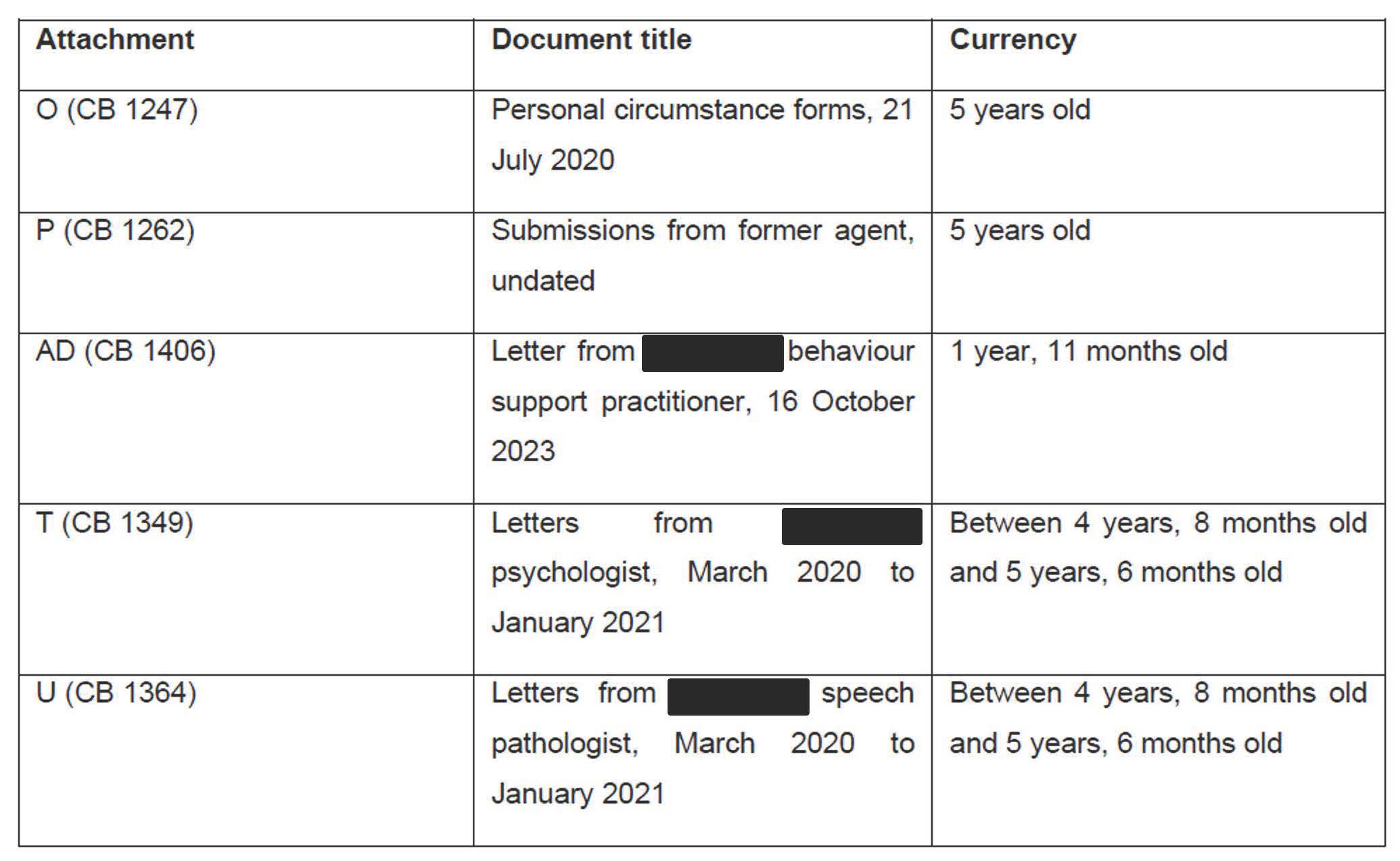
In between hitting the victim, the accused would give her water and say, "Here take a break." The accused would then start hitting her again. The victim was hit mostly to her face. Following the assault the victim could not see out of her right eye.
The victim got up when the accused stopped hitting her and went to lay on the bed and watch television.
The victim wanted to leave the house but couldn't. She felt like the accused was guarding her bedroom door. Their two children were in the house and the victim feared for their safety.
At some point the accused hid the victim's mobile phone. The victim wanted to call police or ambulance but was unable to do so. The victim had no mobile phone or home phone so felt trapped and was unable to seek assistance.
The accused took a light globe out of the master bedroom, the bathroom and his lamp. The victim assumed this was so she could not see her injuries in the mirror.
The victim wanted to leave but felt she couldn't. The victim believed that if she left without the accused's permission, he would go off and there would be repercussions. The victim has never left the house without the accused's permission because she is scared of him.
7 The police document records the following statement from the Applicant in response to the issues:
During the video recorded interview the accused stated that he only pushed the victim twice with an open hand. Once to the right side of the face and the other one he couldn't recall where he'd pushed her.
…
He stated that he put her in a headlock and he was writing and making her look at it. He was writing something along the lines of "You will do this, you will do that."
He stated that the bruises to her chin and leg were caused by an accident which she wouldn't tell him about.
The accused stated that the victim has very sensitive skin so bruises easily.
The accused stated that it is their religion that dictates that she must ask his permission before leaving the house.
He stated that she could have left at any time today when he wasn't there but she wouldn't leave because she was scared of the religion.
He stated that he can't control himself when he's angry and that he was out of control and didn't mean it. He stated that when he saw her face, it made him feel guilty.
He stated that he didn't hide the victim's phone but he put it in the draw in the bedroom because their son likes to put their phones in the toilet. He stated that he had turned it on aeroplane because he doesn't want his dad to call.
8 The Minister noted that there had been differing accounts of the alleged offending, and summarised the underlying material in the following way:
• in April 2017, the police informant reported that [the Applicant] hit his wife "a number of times" after she refused to assist [the Applicant] in undertaking an activity on the internet. [The Applicant] continued to hit his wife when she again refused to assist him. As a result, [the Applicant’s] wife could not see out of her right eye. She was observed to have facial injuries;
• the next day, [the Applicant] admitted that he hit his wife once after losing his temper;
• in a subsequent interview, [the Applicant] stated that he pushed his wife twice with an open hand and that he had put her in a headlock, making her read certain instructions;
• in June 2021, [the Applicant’s] wife stated that she and [the Applicant] had been arguing when [the Applicant] lunged towards her to get his phone as she threw it on the ground, and in so doing [the Applicant] hit his wife's face extremely forcefully but unintentionally;
• in August 2021, [the Applicant’s] wife stated that she had thrown [the Applicant’s] phone onto the floor, [the Applicant] had tried to grab his phone and punched his wife at the same time;
• in April 2023, [the Applicant’s] wife stated that she recalls [the Applicant] hitting her in the face only once with a closed fist;
• in April 2023, [the Applicant] stated that he hit his wife with the back of his hand; and
• at the AAT hearing, [the Applicant] stated that he could not recall whether he hit his wife with an open hand or a fist.
9 The Applicant was sentenced to an aggregate term of 42 days’ imprisonment, a 12-month community correction order and 150 hours of unpaid community work. His bridging visa was cancelled by reason of his offending, and he was taken into immigration detention.
10 In June 2018, the Applicant voluntarily left Australia and returned to Lebanon. On 11 June 2019, while still offshore, he applied for the Class UF Subclass 309 Partner (Provisional) visa. He was sponsored by his wife who is an Australian citizen.
11 On 12 April 2021, a delegate of the Minister exercised the discretion under s 501(1) of the Act to refuse to grant the Applicant the visa on character grounds (s 501(6)(d)(i)). The basis upon which the Applicant failed the character test included the 2017 convictions.
12 On 27 April 2021, the Applicant’s wife sought merits review of the delegate’s decision in the Tribunal. The application was refused by the Tribunal on 26 August 2021 (RGCZ and Minister for Immigration, Citizenship, Migrant Services and Multicultural Affairs [2021] AATA 3051).
13 The Applicant’s wife sought judicial review of the Tribunal’s decision to affirm the delegate’s decision in the Federal Court on 22 September 2021. The primary judge dismissed the application on 6 April 2022 (RGCZ v Minister for Immigration, Citizenship, Migrant Services and Multicultural Affairs [2022] FCA 348).
14 On 14 December 2022, the Full Court of the Federal Court allowed an appeal from the primary judge’s decision and remitted the matter to the Tribunal for determination according to law (RGCZ v Minister for Immigration, Citizenship, Migrant Services and Multicultural Affairs [2022] FCAFC 201 (RGCZ Appeal)).
15 On 28 August 2023, the Tribunal decided not to refuse to grant the Applicant the visa (RGCZ and Minister for Immigration, Citizenship and Multicultural Affairs [2023] AATA 2768). In reaching its decision, the Tribunal accepted that the Applicant did not pass the character test by operation of s 501(6)(d)(i) but decided not to exercise its discretion under s 501(1) to refuse to grant the visa.
16 The Tribunal’s decision enlivened the Minister’s power under s 501A to set aside that decision and refuse to grant the Applicant the visa, if the statutory conditions were met. Relevantly, those conditions were that the Minister reasonably suspected that the Applicant did not pass the character test and was satisfied that refusal to grant the visa was in the national interest.
17 On 27 June 2025, the Minister decided under s 501A(3)(a) of the Act to set aside the Tribunal’s decision dated 28 August 2023 and refuse to grant the Applicant the visa. The Applicant now seeks judicial review of the Minister’s decision.
18 There is no issue that the Applicant did not pass the character test by operation of s 501(6)(d)(i), and that the condition under s 501A(3)(c) was therefore met.
19 As to the national interest, the Minister concluded that the Applicant had committed family violence offences against a woman, and that there was an ongoing likelihood that he would reoffend. Without exhaustively setting out the Minister’s reasons, he said that, in the circumstances, the “Australian community could be exposed to significant harm should [the Applicant] reoffend in a similar fashion” and that he could “not rule out the possibility of further criminal conduct by [the Applicant].” The Minister also stated: “The Australian community should not tolerate any risk of further harm.”
20 It followed, according to the Minister’s reasons, that he considered it remained in the national interest to refuse to grant the Applicant the visa. The Minister concluded that the considerations against refusal of the visa were outweighed by the national interest considerations.
The statutory framework
21 The principles surrounding the operation of the power in s 501A of the Act have been well ventilated in recent decisions of this Court. It is not necessary to repeat all of those principles, save a few key observations:
(1) Section 501A confers powers that can only be exercised by the Minister personally (s 501A(5)) and whose exercise is not subject to review by the Tribunal (s 501A(7)).
(2) The Minister may exercise the power in s 501A(3), to set aside the original decision and refuse or cancel the visa if:
(a) the Minister reasonably suspects that the person does not pass the character test; and
(b) the Minister is satisfied that the refusal or cancellation is in the national interest.
(3) The Minister’s power is specifically conferred such that it is not subject to obligations of procedural fairness (s 501A(4)).
(4) The power in s 501A(3) is conditioned on the requirement that it be exercised reasonably, so that a decision under that provision will be invalid if it is legally unreasonable in the sense that it lacked an “evident and intelligible justification” (Minister for Immigration and Citizenship v Li [2013] HCA 18; 249 CLR 332 at [76] (Hayne, Kiefel and Bell JJ)).
22 A similar power in s 501BA(2) was described as an “override power”, by Mortimer J (as her Honour then was) in Tereva v Minister for Immigration, Citizenship, Migrant Services and Multicultural Affairs [2022] FCAFC 142; 294 FCR 270 at [10], [14]. Her Honour described the power in s 501BA of the Act (which relates to cancellation of a visa as distinct from refusing a visa) in the following terms at [14]-[15]:
The power in s 501BA is draconian. It overrides the executive process of an external and independent merits review, in a Tribunal long regarded as capable in the performance of that function. It overrides an outcome of that merits review process in which all have engaged in good faith, likely at some financial cost, and certainly at some emotional and personal cost. It renders futile the considerable expenditure of public funds and resources in that process.
The added absence of what is generally regarded as a basic presumption, in the exercise of statutory powers set against a background of common law notions of justice and fairness (Kioa v West [1985] HCA 81; 159 CLR 550 at 609, Brennan J), adds to the extremity of the power conferred.
23 The Applicant advances three grounds:
(1) First: a ground asserting delay in exercising the power in s 501A.
(2) Second: a ground asserting an unreasonable failure to seek updated information, or irrational assumptions regarding outdated information.
(3) Third: a ground asserting an irrational finding of a trend of increased seriousness of offending.
24 Each ground is considered in detail, below.
Ground one: Alleged delay in exercising the power in s 501A
25 The first ground is as follows:
The exercise of power by the Respondent (here the Assistant Minister, exercising the power of the Minister) approximately two years after the Tribunal decision the Respondent sought to set aside, without seeking updated information, was unreasonable.
26 As explained above, the Tribunal’s decision not to exercise the discretion in s 501(1) of the Act to refuse the Applicant a visa was made on 28 August 2023. The Minister’s decision to exercise the power in s 501A(3)(a) of the Act, to overturn the Tribunal’s decision and refuse the visa, was made on 27 June 2025 and notified to the Applicant on 15 August 2025 and 16 September 2025.
27 Thus, there was approximately 22 months between the time that the Tribunal made its decision and the time the Minister exercised his power under s 501A(3)(a).
28 The Applicant alleges that the Minister’s decision to refuse the visa, made approximately 22 months after the Tribunal’s decision, was unreasonable.
29 The Applicant does not contend that this is a case of a kind considered in XMBQ Minister for Immigration [2025] FCA 553 (XMBQ) and Minister for Immigration and Citizenship v XMBQ [2026] FCAFC 19; 315 FCR 207 (XMBQ Appeal), in which it is said that the power in s 501A(3) is subject to an implied temporal limit, such that it lapses when not exercised within a reasonable period. Rather, the Applicant contends that the Minister’s decision to exercise the power to overturn a favourable Tribunal decision more than two years after it was made was legally unreasonable. The Applicant relies upon the comments of Thawley J in XMBQ Appeal at [34] that:
Delayed exercises of power can have harsh consequences, a point emphasised in argument by reference to Damocles’ sword. The harshness is mitigated by the availability of judicial review, including on the implied condition of reasonableness. As mentioned, XMBQ did not put the case on that basis, such that the question on this aspect of the appeal was the narrow question of whether delay had already extinguished jurisdiction to exercise the power in s 501BA(2) by the time the Minister purported to exercise the power.
30 Thus, it is said that XMBQ (and the XMBQ Appeal) determined the question of whether there is a time period imposed by construction of the relevant provision. This is said to be a different proposition: that legal unreasonableness arises simply because of the effluxion of time, or in this case, the unexplained effluxion of time: it is said that the Minister has proffered no explanation for the delay, and that I should proceed on the basis that a delay of (nearly) two years is substantial and requires explanation. Thus, it is said that the Minister’s power breached the implied condition that it be exercised reasonably, by failing to exercise it within a reasonable period of time.
31 It is not controversial that the power in s 501A(3) is conditioned on the requirement that it be exercised reasonably (Main v Minister for Immigration and Citizenship [2026] FCA 325 (Main) at [39]-[40] (Moore J); GRCF v Minister for Immigration, Citizenship and Multicultural Affairs [2025] FCA 415 (GRCF) at [15] (Bennett J)). However, I do not see that the comments of Thawley J involve the conclusion that the exercise of the power after any particular period of time necessarily breaches the conditions of reasonableness.
32 The Applicant also relied on Song v Minister for Immigration and Citizenship [2025] FCA 1351 (Song) to argue that a delay of approximately two years could be unreasonable. Of course, Song was determined prior to the appeal from the first instance decision in XMBQ Appeal. It was dependent upon the rationale of Horan J in XMBQ, which was overturned by the Full Court. It does not establish a separate proposition supporting the existence of a duty or onus to explain delay of a particular length. In any event, one part of Song (and many other similar cases) that is not doubted, is the observation (at [93] (Hill J)) that:
The question of whether a decision has been made within a reasonable time is a question of mixed fact and law, and therefore the results of other cases do not establish any general rule or principle.
33 The test for legal unreasonableness is stringent, and a conclusion that the exercise is unreasonable is not to be reached lightly (Minister for Immigration and Border Protection v SZVFW [2018] HCA 30; 264 CLR 541 at [11] (Kiefel CJ), [52] (Gageler J), [135] (Edelman J); see also Main at [87] (Moore J) citing Taylor v Minister for Immigration and Multicultural Affairs [2025] FCA 517 at [62]- [63] (Stellios J); XKTK v Minister for Immigration, Citizenship and Multicultural Affairs [2025] FCAFC 115; 311 FCR 539 at [88]-[94] (Stewart and Needham JJ)).
34 In ground one, the Applicant does not identify particular pathways of reasoning in the decision which make the decision unreasonable beyond the effluxion of time. Some reliance was placed on the impact of the delay on the Applicant, who otherwise has been waiting outside Australia for the benefit of a visa to which he felt entitled after the decision of the Tribunal. This is not a case where a person might go about their life thinking that they had established a home and life in Australia which is then taken from under them. On the contrary, this is a case where the Applicant was well aware that the Minister had not yet exercised his power, because no visa was granted to him, and he continued to wait for and press for a decision from Lebanon. His solicitors sought updates on the Minister’s consideration and provided further information in support of his position in August and December 2024.
35 The Respondent submits, and I accept, that the Applicant’s argument on ground one, if accepted, would have some strange consequences:
(1) First, it would mean that the only reasonable decision that could be made at the time the Minister made it would be to not refuse the grant of the visa.
(2) Second, it would reduce legal unreasonableness to a temporal calculation. Given the reasoning of the Full Court in XMBQ Appeal, which rejected the contention that time had been limited, it would be strange to accept, by a side-wind, a necessary constraint on the exercise of the power arising from the effluxion of time.
36 The argument on ground one rests principally on the assertion of unreasonableness arising from the effluxion of time. On the current state of the authorities, that is insufficient in the absence of a statutory timeframe that would support that conclusion. Legal unreasonableness does not sit easily alongside generalisations of this kind. Moreover, as identified in CPDL v Minister for Immigration and Citizenship [2026] FCA 342 (CPDL), in the context of the analogous power in s 501BA(2), the statutory framework contemplates the use of “stale information” (at [59] (Hill J)). The true fetter on the power is not the effluxion of time, but the manner of the application of any stale information that is relied upon. Thus, the first ground fails.
Ground two: was the minister’s analysis logical and reasonable?
37 The second ground is the strongest of the three. It fastens upon the nature of the exercise and can therefore be distinguished from ground one’s focus upon the passage of time alone.
38 The Applicant asserts that the significant impact upon the Applicant’s three children of the refusal to grant the Applicant a visa was a critical aspect of his case. In RGCZ Appeal, the Full Court’s decision turned on the assertion that the primary judge had fallen into error by failing to find that the Tribunal had failed to comply with Ministerial Direction No. 90 and therefore s 499(2) of the Act by failing to properly consider the best interests of minor children. In particular, the Full Court concluded (at [46]) that:
Notwithstanding the Tribunal’s references to various matters concerning the children, it failed to make a determination about whether refusal of the visa under s 501 of the Act was, or was not, in the best interests of the children. The final sentence in paragraph [119], even when read with paragraph [121] as the Minister submits it should be, cannot fairly be taken to have constituted such a determination. For these reasons the first aspect of the appellant’s ground of appeal succeeds.
39 The Full Court also considered that it was necessary to give individual consideration to the extent that the interests of the children may differ and that the Tribunal had erred in its approach on this issue as well.
40 There are two aspects to the Applicant’s complaint:
(1) First: the Minister’s failure to obtain updated information in the circumstances where young children with complex medical needs were involved is said to itself be an error;
(2) Second: in reasoning from out-of-date information, the Minister is said to have made irrational assumptions or reasoned in an impermissible way.
41 Each aspect of the impugned reasoning is considered below.
The failure to obtain updated information
42 In the present case, the Applicant submitted that the significant impact on the Applicant’s three children of the refusal to grant the visa was a “critical aspect” of the Applicant’s case.
43 At the time of the Minister’s decision, the eldest son had been diagnosed with ADHD and was awaiting diagnosis for Autism at the time of the most recent material before the Minister. He suffered from various language and developmental delays for which he required treatment from medical and allied professionals.
44 The Applicant’s youngest son also had severe developmental and behavioural issues and was awaiting diagnosis for both ADHD and Autism at the time of the most recent material before the Minister.
45 The Minister relied on material in relation to each child, which recorded the provenance of the information and the age of the child at the time it was provided. The following table was relied upon.
46 The Applicant asserted that most of the material on which the Minister relied in this part of his reasons was approximately 5 years out of date. The most recent material was just under 2 years out of date by the time of the Minister’s decision.
47 The Applicant argued that in the context of considering the impact of a visa decision on children aged 9, 8 and 6 years old, the material will not give an accurate impression of the contemporary needs of each child, the children’s relationship with their father, or the impact that the decision will have on them. This is said to give rise to an unreasonable failure to get updated information.
48 The Applicant acknowledges that the Minister had the opportunity to exercise the power under s 501A(2) or (3), with the former power requiring the application of the rules of procedural fairness while the latter does not. The Applicant argues that had the Minister chosen to exercise the power under s 501A(2), he would have been obligated to invite the Applicant to make submissions as to why the discretion to set aside the Tribunal’s decision should not be exercised. Of course, the Minister was not precluded by s 501A(3) from seeking further information on a specific topic that was necessary to inform the Minister’s decision.
49 It is said that the failure to seek updated information was unreasonable. That is said to follow from the Minister’s awareness of the critical importance of the issue of the impact on the children, so that failure to take that step must be viewed as irrational. The Applicant relies upon LJTZ v Minister for Immigration, Citizenship, Migrant Services and Multicultural Affairs [2022] FCA 1209; 179 ALD 299 and the proposition (at [100] (Charlesworth J)) that:
… may be that there is an absence of evidence (or at least a gap in the evidence) bearing on a topic the Minister considers to be relevant. That absence or gap may limit the reasoning processes that are reasonably open to the Minister. For example, it may not be permissible (that is, within the bounds of legal reasonableness) for the Minister to proceed as though he has before him everything the applicant may have to say on the topic to the present day. It may not be permissible in the requisite sense to draw inferences about a current state of affairs by reference to an earlier state of affairs.
50 The authorities recognise that the powers like those at issue in this case operate on the basis that a decision maker may proceed on the basis of “stale information”, with the Minister (acting personally) being empowered specifically to cancel a visa without procedural fairness. A number of cases have held that this means that the decision maker can proceed to make a decision without updating the information (Luong v Minister for Immigration, Citizenship and Multicultural Affairs [2026] FCAFC 6 at [100(c)] (Charlesworth, Kyrou and Neskovcin JJ); EUF20 v Minister for Immigration, Citizenship and Multicultural Affairs [2023] FCAFC 130; 298 FCR 492 at [37], [44], [64] (Abraham, O’Sullivan and Raper JJ).
51 As was observed in GRCF, it is not sufficient to simply rely on information which could usefully be updated. In that case I observed (at [41]) that:
In this case, the Minister did not have up-to-date information before him. This case does not concern inferences arising from the 10-month-old evidence: it concerns a conclusion by the Minister that a certain factual situation persisted, without considering whether the age of the evidence made it safe to so conclude. Put another way, the Applicant argued that the Minister proceeded on the basis that the information was up to date, when it was not. This is distinct from the Minister proceeding on the basis of information which he knows to have been accurate at an earlier point in time, but has chosen not to update.
52 An error is not disclosed by relying upon old information per se: that is provided for under the statutory scheme. The difficulty for a decision maker can arise when irrationally or unreasonably applying out-of-date information. It is this issue where ground two most appropriately focuses. To the extent it is argued that the nature of the children’s disabilities and age make it necessary to seek updated information, I do not accept that submission: it is precluded by the statutory framework permitting a decision maker to proceed without procedural fairness. However, it is important to consider the way in which the obligation to reason has been held to have been affected by inappropriate reliance on out-of-date material (GRCF at [43], and the cases cited therein).
The alleged failure to reason logically
Previous cases
53 The principle that a decision maker must reason logically is easily stated. The cases demonstrate some complexity in the application of the concept in the circumstances of the present statutory framework. It is useful to briefly examine some of the cases that have been relied upon to make arguments like those advanced by the Applicant.
54 In GRCF, the Minister considered whether the applicant in that case had addressed his PTSD, which was a root cause of the criminal conduct that had led to the cancellation of his visa. The Minister said that the applicant “has not continued seeking psychological treatment or counselling to address his mental health and psychological function” (at [45]). This was, on the facts of the case, connected with the risk of reoffending. It was a positive finding that was repeated in the reasons, and which was important to the overall analysis: the applicant’s engagement with his own mental health treatment was core to whether or not the risk persisted. I observed in that case that the Minister could lawfully have confined himself to incomplete information (at [51]) but that is not what took place. In GRCF, there were other examples of findings that were held not to disclose the same error. For example, the Minister in that case found (at [56]):
Although I accept [GRCF’s sister’s] statements that a non-cancellation decision would be in the best interests of her children, I find that [GRCF’s sister’s] children, and [GRCF’s brother’s] children, are primarily cared for by their parents, there is limited evidence of [GRCF’s] relationship with those children, the children do not appear to have regular contact with [GRCF] and this appears unlikely to change.
55 That conclusion did not involve impermissible extrapolation because it was specifically anchored in the evidence before the Minister, and the reference to the position being “unlikely to change” was a reference to the Minister looking forward from the time that there was evidence and inferring matters about the present in a logical manner. He did not extrapolate impermissibly, even though reasonable minds could differ as to the analysis.
56 In XPLW v Minister for Immigration [2026] FCA 210 (XPLW) at [67]-[91], Horan J identified specific factual findings that were said to manifest legal unreasonableness. In that case, the applicant submitted that the Minister irrationally or unreasonably relied on outdated historical material to make findings about a current state of affairs bearing upon the applicant’s risk of reoffending and prospects of rehabilitation as at the time of the Minister’s decision. In particular, the applicant challenged findings made by the Minister in relation to the applicant’s responsibilities in providing care and support to members of his family, and his own ongoing need for mental health treatment. The Minister had, in his reasons, noted that the applicant’s prospects of reoffending were affected by “whether he can effectively manage his mental health, emotions and abstinence from illicit substance use” and gave less weight than the Tribunal had to the support of the applicant’s family and friends as a “prosocial” factor (at [29]). The Minister expressed his “concern” about “the evidence that some of [the applicant’s] family require ongoing care and support and have indicated an intention to rely heavily on [the applicant] for that support, suggesting he will be subject to significant resulting stress and pressure for the foreseeable future” (at [29]).
57 There were also findings about the applicant in XPLW that he had a “major depressive disorder” that “was not fully resolved and required ongoing treatment” (at [29]). The Minister’s finding that the applicant posed “an appreciable risk to the community” was based squarely on “those expectations” – that is, the applicant was required to provide ongoing care and support, together with his own ongoing need for treatment (at [69]). Properly construed, the Minister had specifically found as at the date of the decision that (at [70]):
(1) the applicant would be required to provide ongoing care and support to some family members, including his terminally ill sister and his elderly parents, which would subject him to significant resulting stress and pressure “for the foreseeable future”; and
(2) the applicant had an ongoing need for treatment of his major depressive disorder.
58 These findings were not, his Honour found, limited to the state of affairs at the time of the Tribunal decision. It followed, according to his Honour (at [72]) that:
… this is a case in which the Minister based his decision on specific findings of current facts, relying only on evidence of facts and circumstances that existed over two years before the Minister’s decision. The matters to which that evidence was directed were inherently transient or variable in nature. The circumstances of the applicant’s sister and her daughter and their support needs were likely to have changed. As at November 2002, the sister’s breast cancer had metastasised into her bones, liver and shoulders, and her diagnosis was terminal. There was therefore a strong possibility that she might have died in the two-year period since the hearing before the Tribunal. There might also have been material changes in the circumstances of his elderly parents, assuming that they were still alive, which could affect any demands that may be placed on the applicant. The applicant’s mental health condition might have changed significantly since his release from detention, which might conceivably affect the nature and extent of any ongoing needs for treatment.
59 It was for this reason that the Court concluded in that case that the Minister’s conclusion was legally unreasonable.
60 In CPDL, the failure of the applicant to participate in programs specific to domestic and family violence was based on his failure to do so as at two years earlier. The Minister had before him evidence that the applicant had previously failed to engage in programs to prevent family and domestic violence and impermissibly extrapolated that the applicant continued to fail to participate in programs of that kind. Similarly, the Minister’s conclusion that the risk factors associated with alcohol and anger management remained ongoing or unresolved was drawn from an earlier finding that the Minister took to be persisting because, in part, the applicant had not sought treatment.
61 In effect, in each of GRCF, CPDL and XPLW, there was impermissible extrapolation from the position in the past into the present, without a rational basis. They are not cases which support a general proposition that a failure to obtain updated information necessarily results in an erroneous assessment. It is necessary to consider the reasons as a whole, without an eye keenly attuned to error.
62 There are a range of cases which have made clear that the Minister can choose not to update information. Some of those canvassed in CPDL include:
(1) In Manebona v Assistant Minister for Citizenship and Multicultural Affairs [2025] FCA 1342 (Manebona), Wheatley J held that there was no error in the Minister’s finding of concern that the applicant would be unable to refrain from substance abuse. In reaching that conclusion, the Minister noted records of the applicant’s continued use of alcohol while in immigration detention and his engagement with rehabilitative programs and courses. The Minister was found to have reasoned from past conduct, namely that the applicant in that case had previously used alcohol in a controlled environment and while undertaking rehabilitation. That fact was probative of the likelihood that he may pose a similar risk in the future (at [50], [56]).
(2) In Fetelika v Assistant Minister for Immigration [2025] FCA 1249 (Fetelika), Goodman J held that there was no error in the Minister’s statement that the applicant “does not appear to have sought a referral to a psychologist to develop his emotional coping skills, as was recommended by [a psychologist who examined him]”. The Minister was “proceeding on the basis of information which was correct at the date of the Tribunal’s decision, but which he chose not to update, rather than proceeding on the basis that the position which obtained at the time of the Tribunal’s decision continued at the time of the s 501BA decision” (at [54]).
The present case
63 In the present case, the Minister identified the three children by name and identified their date of birth. The Minister then recounted the information provided to him. Without being exhaustive, it included the following:
(1) In relation to the eldest son (at [63]), the Minister recorded that the child had been struggling with language and attention difficulties, received treatment and had been diagnosed with Autism. There is a recitation of various medical opinions about the child, and a recitation of the Applicant’s statements about the child and his relationship with him.
(2) In relation to the second-born child (at [64]), the Minister noted a medical opinion about the need for adequate home supervision requiring two parents, recording that “…the home environment with her brother… could be a potential risk, given his aggressive and unpredictable behaviours” and setting out the Applicant’s statements about his relationship with the child and the time that he had spent with her since her birth.
(3) In relation to the youngest child (at [65]), there were likewise notes about assessment for various behavioural issues referred to in medical reports, including ADHD, global developmental delay, and assessment for autism spectrum disorder. The Minister sets out the Applicant’s assertions about his relationship with his youngest child, including noting that he met the child when he was four months old, and has fed, nursed and cared for him while the child was in Lebanon.
64 The Minister accepts that the decision to refuse the visa will have a negative impact on the Applicant’s wife and three children.
65 The Applicant refers to these paragraphs ([63], [64] and [65]) as making a series of findings about each child, expressed in the present tense, based on material that was old and out of date.
66 In each paragraph, the Minister states that he “notes” the matters that he then sets out. They are not findings as to the current status of each child. They are recording the position as previously reported. This is made clear by:
(1) the identification of the source for the matter being referred by reference to a specific attachment which contains a clear source for the constituent finding.
(2) in many (but not all) of the dot points in each paragraph, the Minister recites what has been previously said by the Applicant, his wife or a relevant medical professional. For example, the Minister records that the Applicant states: “…that [the second child’s] behavioural development benefits significantly from [the Applicant’s] physical presence and the bond that they share”.
67 Accordingly, while the present tense is used, each overall paragraph is framed by reference to the source of the assertion. The Minister does not “carry forward” the position as it then was. He notes that the position was as reported in the documents to which he refers.
68 The Applicant further relied upon paragraphs [66] and [70]. Paragraph [66] is as follows:
[The Applicant] states that the physical separation of their family has had a significant impact on the children, and that they have already formed a bond and an attachment with him. He states that the physical distance between himself and his children is “detrimental to their emotional and psychological wellbeing” Attachment O.
69 I do not accept the Applicant’s characterisation of this paragraph as a finding by the Minister. It is a recitation of the Applicant’s previous submission and it is identified as such by reference to the attachment from him. Nonetheless it is clear from an overall reading of the Minister’s reasons that the Minister accepts that the physical distance between the Applicant and his children is negative for the children.
70 The Applicant relies upon paragraph [70] which is in the following terms:
I consider that [the eldest son] has a stronger relationship with [the Applicant] due to having had a longer experience of being directly parented and supported by him. Nevertheless, in light of the difficulties [the Applicant’s wife] faces as a single parent to three young children, two of whom have special needs and significant behavioural issues, I find that a decision to refuse [the Applicant’s] visa is likely to have a significant negative impact on all three children.
71 The Applicant argues that in paragraph [70] the Minister purports to make a finding as to the degree of bond and attachment between the Applicant and each of his children, based on material that was 5 years old, and that the reasoning must be illogical or unreasonable because it is so far out of date. I do not accept that characterisation. The Minister relied on information as to the amount of time that the Applicant had been in the same country as his children, in a parenting role in the very young years of their lives. There is a basis for that logic: the period of time during which the children had the “…experience of being directly parented and supported by him” was longer for the older children than for the younger. That is, because the Applicant had been present in the country to parent during the younger, formative years, he has a stronger parental bond. That logic does not involve impermissible extrapolation; it is based upon factual substratum that was logically connected with the conclusion. It is further supported by the Applicant’s visa status, which did not permit him to be present to parent his children in Australia in that direct way. Even though reasonable minds could differ as to the conclusion, the reasoning disclosed in paragraph [70] is not relevantly unreasonable or illogical.
72 The Applicant also relies on paragraph [69] which is as follows:
I also note that both of [the Applicant’s] sons are participants in the National Disability Insurance Scheme (NDIS) attracting need for significant supports. While there is a possibility that [the Applicant’s wife] and the children will relocate to Lebanon to reunite with [the Applicant] in the event of a refusal decision, I have taken into account [the Applicant’s wife’s] submissions to the AAT regarding the lack of adequate medical supports for the children in Lebanon, among other issues, and consider it is far more likely they will remain in Australia Attachment B.
73 There are two interconnected aspects to this paragraph. First, that the sons are both participants in the NDIS, attracting the need for significant supports. That is based upon Attachment B, the Tribunal’s decision of 28 August 2023, which records this fact. The fact that the sons are participants in the NDIS is a matter that can be distinguished from the caring responsibilities which troubled the Minister in XPLW. In that case, the prospect of having to continue to care for a sick sister and elderly parents weighed against the applicant’s prospects of avoiding further offending. However, it was the current assessment of the applicant’s ongoing risk to the community that was the problematic part of the reasoning. In that case, the Court reasoned that the applicant should not have had an adverse finding of that kind made about him, particularly the Minister’s conclusion that his caring responsibility resulted in “stress and pressure for the foreseeable future”.
74 The present case involves no such statements about the Applicant’s current abilities, or the likelihood of his ability to avoid re-offending due to pressures upon him. The Minister noted the fact that the sons are participants in the NDIS attracting need for significant supports. That statement, when read in context, was tethered to the information available to the Minister, and which is referred to at the conclusion of the paragraph (i.e. Attachment B).
75 The second part of the paragraph is the conclusion that the Minister considered it “far more likely” that the Applicant’s wife and children would remain in Australia. That is a conclusion of current likelihood. It is based upon the previous representations (identified as having been made before the Tribunal) and it included the fact that the children were receiving NDIS supports. There might have been other factors relevant to this issue. However, the Minister decided to proceed on the basis of incomplete information, as he was entitled to do. Read fairly and as a whole, the Minister concluded that the family was likely to remain in Australia. He did so based on incomplete information. However, that information provided a logical basis for the conclusion. It provided a pathway of reasoning that is logical and reasonable. The Minister did not mistakenly rely upon information that he took to be up to date. It was clearly historical in nature.
76 At its highest, it might be said that the Minister proceeded on the basis that the children remained NDIS participants because the Minister states that both the Applicant’s sons “are participants”, and that this required updating. However, even if the Minister proceeded on the basis that the children remained NDIS participants, the mere fact of participating in the NDIS is not a granular diagnosis in and of itself. It is a very broad category, and it is reasonable to proceed on the basis that it would persist while the children were at school. The specific nature of medical treatment or support is much more variable, and as to those matters, the Minister did not make any leaps of logic.
77 Overall, I consider that there is a logical pathway of reasoning to this conclusion and it does not involve irrational extrapolation of the kind which arose in GRCF, CPDL and XPLW. This case is an example of the Minister proceeding on the basis of information which he chose not to update (see Fetelika at [54]-[56] (Goodman J); see also Manebona at [54]-[56] (Wheatley J)).
78 The Respondent asserts that even if there was some impermissible analysis, it went in favour of the Applicant and so cannot disclose an error. This submission has some difficulty where questions of fact and degree are involved. The Minister concluded that it was in the best interests of the children that his visa application not be refused. However, it might be said that with up-to-date information, the issue might have been given even greater weight (see Jabari v Minister for Immigration, Citizenship, Migrant Services and Multicultural Affairs [2023] FCAFC 98; 298 FCR 431 at [62] (Katzmann, Jackson and McEvoy JJ)). A case like this differs from one in which an applicant has had the opportunity to make submissions and has sought to characterise the submissions in a particular way. In that situation, it is possible to assess whether the decision maker has accepted the applicant’s submission, even where not all of the underlying facts have been accepted. In this case, it is not possible to know whether the Applicant would have asserted that the impact upon his family should have been given even greater weight. However, because of my conclusions that there was no impermissible reasoning, it is not necessary to consider this issue any further.
79 For the reasons I have explained, I consider that the second ground is not established.
Ground three: alleged Irrational finding of trend of increasing seriousness of offending
80 Ground three complains that in the course of considering the protection of the community, the Minister chose to consider both the “seriousness of criminal conduct” and “risk to the Australian community”. In considering the “seriousness of criminal conduct” the Minister made the following finding (at [33]):
I also find that there has been a trend of increasing seriousness in [the Applicant’s] offending, as can be seen from his initial offences for driving whilst disqualified, in respect of which he was fined and sentenced to a 12 month Community Correction Order, as compared to his most recent conviction of Recklessly cause injury in a family violence context, which is a very serious offence.
81 The Applicant asserts that in order to constitute a trend of increasing seriousness in offending, there must be a rational connection between one offence and a later offence, so that it can be said that the nature of the person’s conduct is escalating along a continuum of offending. That context can be relevant in assessing the risk posed by a person to the Australian community, because a trend of increasing seriousness of offending could be a rational basis for an expectation of further and more serious offending in the reasonably foreseeable future if the person was permitted to enter and remain in Australia. It was argued that the Minister’s finding of a trend of increasingly serious offending at [33] was directly relied upon in the conclusion that the Applicant’s criminal and other conduct “is very serious”.
82 The Minister observed that on 30 May 2017, the Applicant was convicted of “Recklessly cause injury” and “Contravene family violence intervention order – intend harm/fear”. The Applicant was also convicted of “Drive whilst disqualified” on 6 August 2015 and sentenced to a 12-month Community Correction Order and 120 hours of unpaid community work. On 6 May 2015, he was convicted of “Drive motor vehicle during disqualification period” and received an $800 fine and 12 months licence disqualification. The circumstances of the violence offence against his wife, constituting family violence, are set out in the Minister’s reasons and include references to the Applicant hitting his wife repeatedly, such that she could not see out of her right eye, placing her in a headlock and punching her in the face with a closed fist.
83 The Minister’s analysis operates at a relatively simple level: he has reasoned that there was less serious offending in 2015 and more serious offending in 2017. The less serious offending in 2015 was traffic offending, while the more serious offending in 2017 was recklessly causing injury in a family violence context. On any view, the offending in 2017 was very serious. The observation by reference to a “trend” does not imply mathematical correlation or a relationship between the offending beyond the fact of their respective seriousness. In any event, one can perceive an increasing disregard for Australian laws in carrying out less serious offending before carrying out more serious offending. In looking to the increasing significance of the sentences imposed, it was open to the Minister to find that there was an increasing trend of seriousness in relation to the Applicant’s offending. I do not accept that offending must be of a similar character before the Minister can note or take into account the increasing seriousness of the offending. Moreover, the Applicant’s analysis seeks to impose an overly technical meaning onto the word “trend”. It does not require mathematical correlation: it is a common term denoting (in this instance) the Minister’s observation that there had been more serious offending over a period of time. In this respect, the Minister’s findings were not irrational. It follows that ground three cannot succeed.
Conclusion
84 It follows from the foregoing analysis that the Applicant’s Originating Application is dismissed, with costs (subject to any contrary submission in relation to costs).
I certify that the preceding eighty-four (84) numbered paragraphs are a true copy of the Reasons for Judgment of the Honourable Justice Bennett. |
Associate:
Dated: 20 August 2026


