FEDERAL COURT OF AUSTRALIA
MacInnes v Wilson [2026] FCA 957
File number: | NSD 1727 of 2025 |
Judgment of: | RAPER J |
Date of judgment: | 22 July 2026 |
Catchwords: | DEFAMATION – where the applicant was the lead actor in a film in which the respondent was a co-star, director and producer – where the applicant sues in defamation with respect to four publications published on Instagram – whether the applicable law is that of Western Australia or New South Wales – whether the applicant has or is likely to have suffered serious harm – held: defamation not made out DEFAMATION – defences – justification – s 25 of the Defamation Act 2005 (NSW) – where the defence relied upon certain imputations with respect to each publication EQUITY – breach of confidence – held: breach of confidence not made out |
Legislation: | Evidence Act 1995 (Cth) ss 140(1), 140(2) Defamation Act 2005 (NSW) ss 10A, 10A(1), 11, 11(2), 11(3), 11(3)(a), 11(3)(c), 25, 33 (repealed) Defamation Act 2005 (WA) ss 11, 11(2), 11(3), 11(3)(a), 11(3)(c), 25 |
Cases cited: | Al Muderis v Nine Network Australia Pty Limited (Trial Judgment) [2025] FCA 909 Archbishop Makarios Griniezakis v Morelas (Trial Judgment) [2026] FCA 156 Archbishop Makarios Griniezakis v Morelas [2024] FCA 100 Bartlett v Roffey [2023] WASC 3 Blake v Fox [2024] EWHC 146 (KB) Deeming v Pesutto (No 3) [2024] FCA 1430 GLJ v The Trustees of the Roman Catholic Church for the Diocese of Lismore [2023] HCA 32; 280 CLR 442 Greenwich v Latham [2024] FCA 1050 Gregg v Fairfax Media Publications Pty Limited [2016] FCA 1470 Latham v Greenwich [2026] FCAFC 82 Lehrmann v Network Ten Pty Limited (Trial Judgment) [2024] FCA 369; 422 ALR 507 MG v PJ [2025] QCA 99 Mond v Age Co Pty Limited [2025] FCA 442 Nassif v Seven Network (Operations) Ltd [2021] FCA 1286 Optus Networks Pty Ltd v Telstra Corporation [2010] FCAFC 21; 265 ALR 281 Palmanova Pty Ltd v Commonwealth of Australia [2023] FCA 1391 Peros v Nationwide News Pty Ltd & Ors (No 3) [2024] QSC 192 Rader v Haines [2022] NSWCA 198 Singh v Singh [2025] FCA 1531 Smith v Lucht [2016] QCA 267; [2017] 2 Qld R 489 Stead v Fairfax Media Publications Pty Ltd [2021] FCA 15; 387 ALR 123 Stocker v Stocker [2019] UKSC 17; [2020] AC 593 Sutherland v Stopes [1925] AC 47 Szanto v Melville [2011] VSC 574 Vardy v Rooney [2020] EWHC 3156 (QB) |
Division: | General Division |
Registry: | New South Wales |
National Practice Area: | Other Federal Jurisdiction |
Number of paragraphs: | 261 |
Date of hearing: | 20 April - 1 May 2026 |
Counsel for the Applicant: | Ms S Chrysanthou SC and Mr T Smartt |
Solicitor for the Applicant: | Giles George |
Counsel for the Respondent: | Mr D Sibtain SC and Mr T Senior |
Solicitor for the Respondent: | Dentons |
ORDERS
NSD 1727 of 2025 | ||
| ||
BETWEEN: | CHARLOTTE MACINNES Applicant | |
AND: | REBEL WILSON Respondent | |
order made by: | RAPER J |
DATE OF ORDER: | 22 July 2026 |
THE COURT ORDERS THAT:
1. The application be dismissed.
2. The applicant pay the respondent’s costs as agreed or assessed.
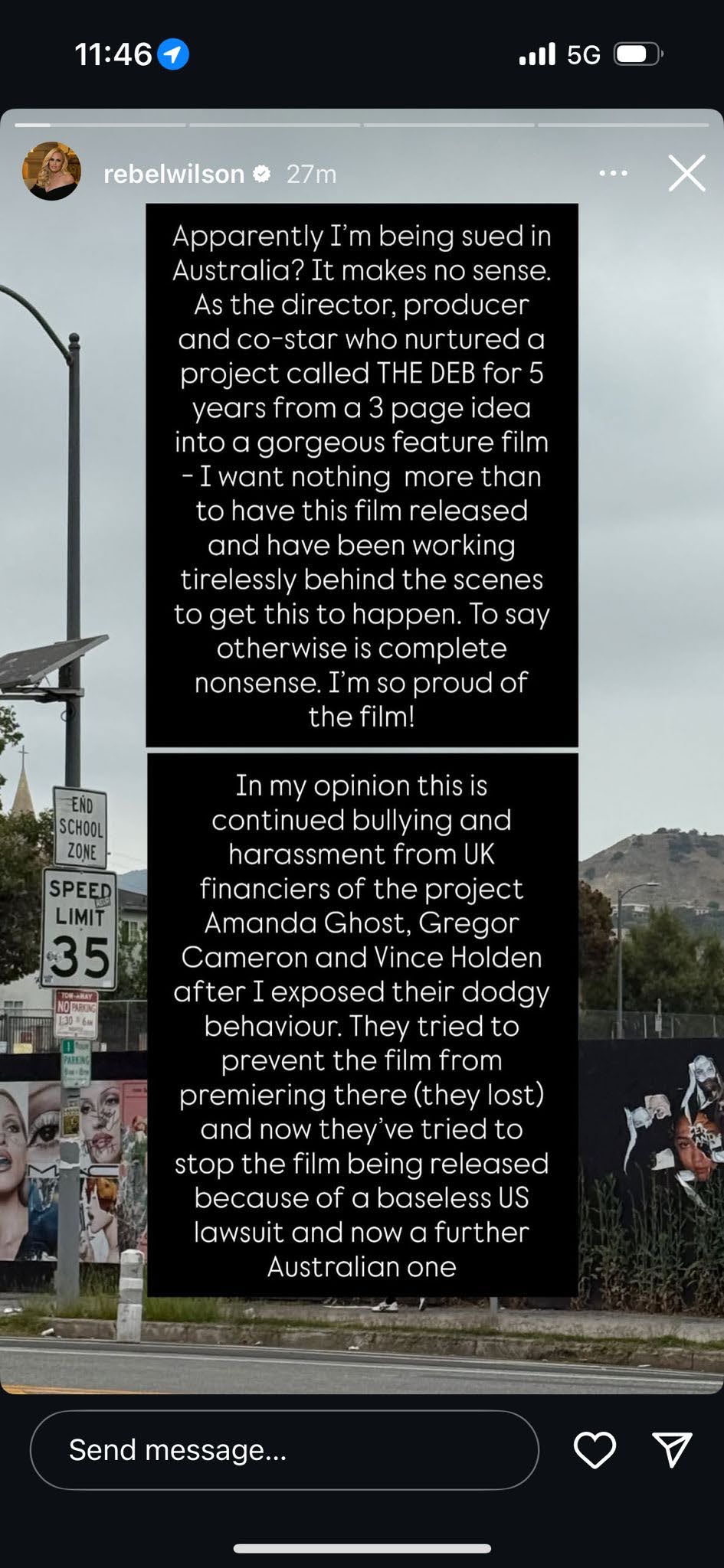
Note: Entry of orders is dealt with in Rule 39.32 of the Federal Court Rules 2011.
REASONS FOR JUDGMENT
RAPER J:
1 The applicant, Ms Charlotte MacInnes, was the lead actor in the film entitled The Deb. The respondent, Ms Rebel Wilson, was a co-star, director and co-producer of that film. Ms Amanda Ghost was the self-described “lead” producer and financier of the film. Ms MacInnes claims that Ms Wilson has defamed her or otherwise breached her confidence. The genesis for the dispute (and about which Ms Wilson commented on Instagram) concerns what happened on 5 September 2023: Ms Ghost (the then 49 year old producer) and Ms MacInnes (the then 25 year old actress) went swimming together at Bondi Beach in the cold early evening and thereafter ended up in the bath at the apartment they were staying at together. To say that the circumstances surrounding how they came to be in the bath are unusual would be an understatement. Ms Wilson alleges (and stated so in her impugned online comments) that Ms MacInnes complained to her the following day (as director and co-producer) of being asked by Ms Ghost to bathe and shower with her and feeling uncomfortable about it. Thereafter, Ms Wilson alleges that Ms MacInnes “walked back” her complaint.
2 Ms MacInnes sues in defamation with respect to four publications which Ms Wilson herself or by her agents, published on Instagram:
(a) on or about 23 September 2024, a series of posts to her Instagram account @rebelwilson (23 September 2024 Post);
(b) on or around 16 May 2025, a series of posts to the @thedebfilm Instagram account (16 May 2025 Post);
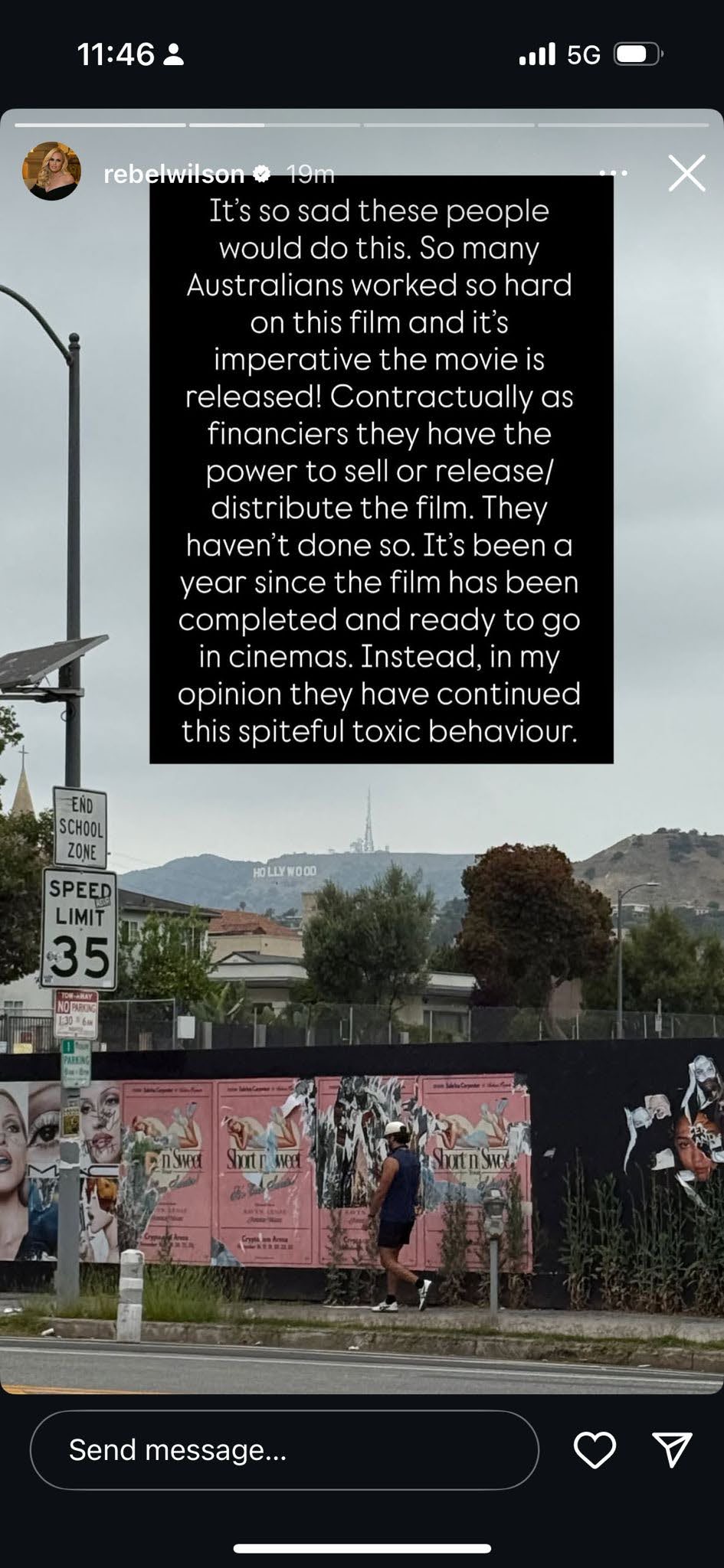
(c) later in May 2025, a post to the @thedebfilm Instagram account (Further May 2025 Post); and
(d) about 25 July 2025, a series of posts to Ms Wilson’s Instagram account @rebelwilson (25 July 2025 Post).
Copies of these Posts are attached to these reasons at Annexures A-D respectively.
3 Ms Wilson claims variously that the alleged imputations were not conveyed or were not defamatory or if they were, could be justified on the basis that they were substantially true.
4 As a consequence, the following issues require determination in this proceeding:
(a) whether the applicable law is the law of Western Australia or the law of New South Wales;
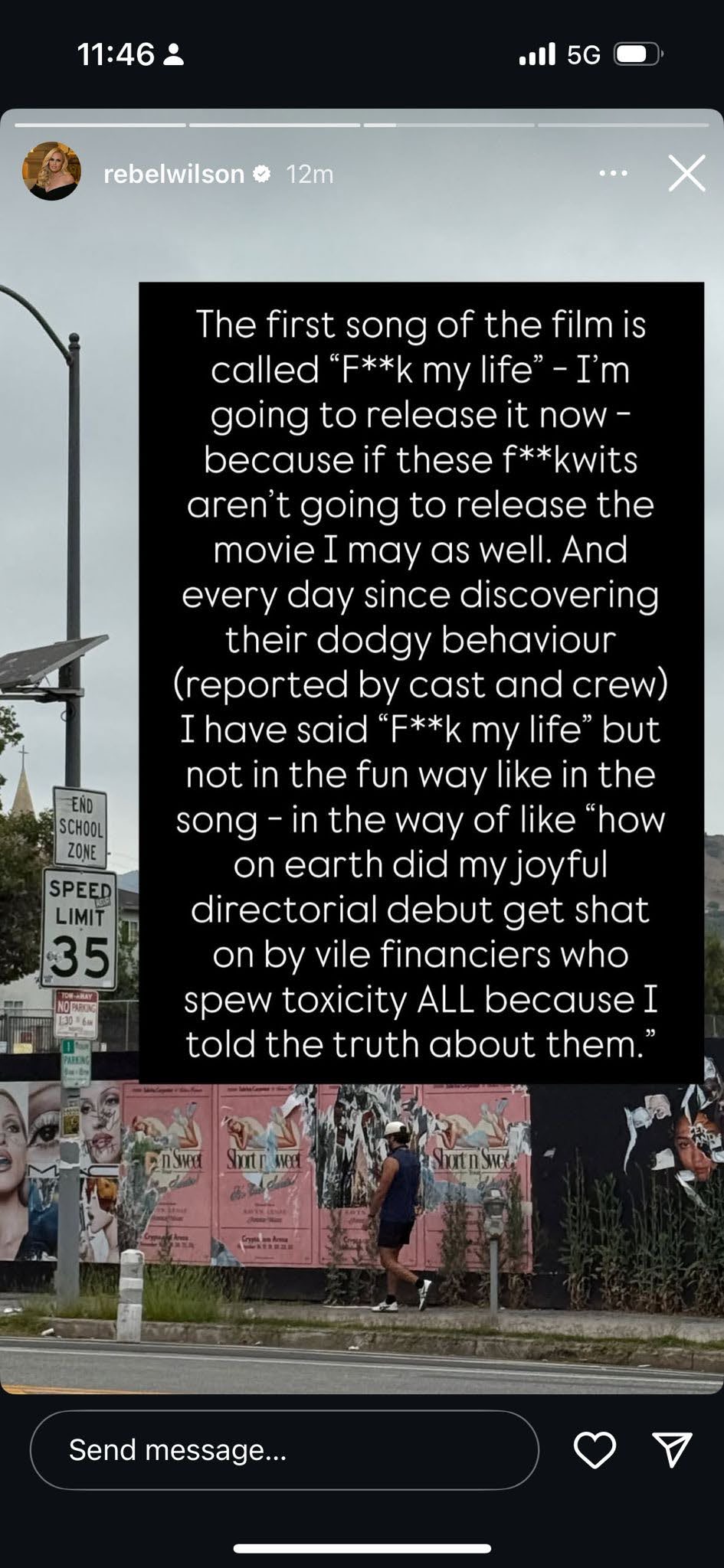
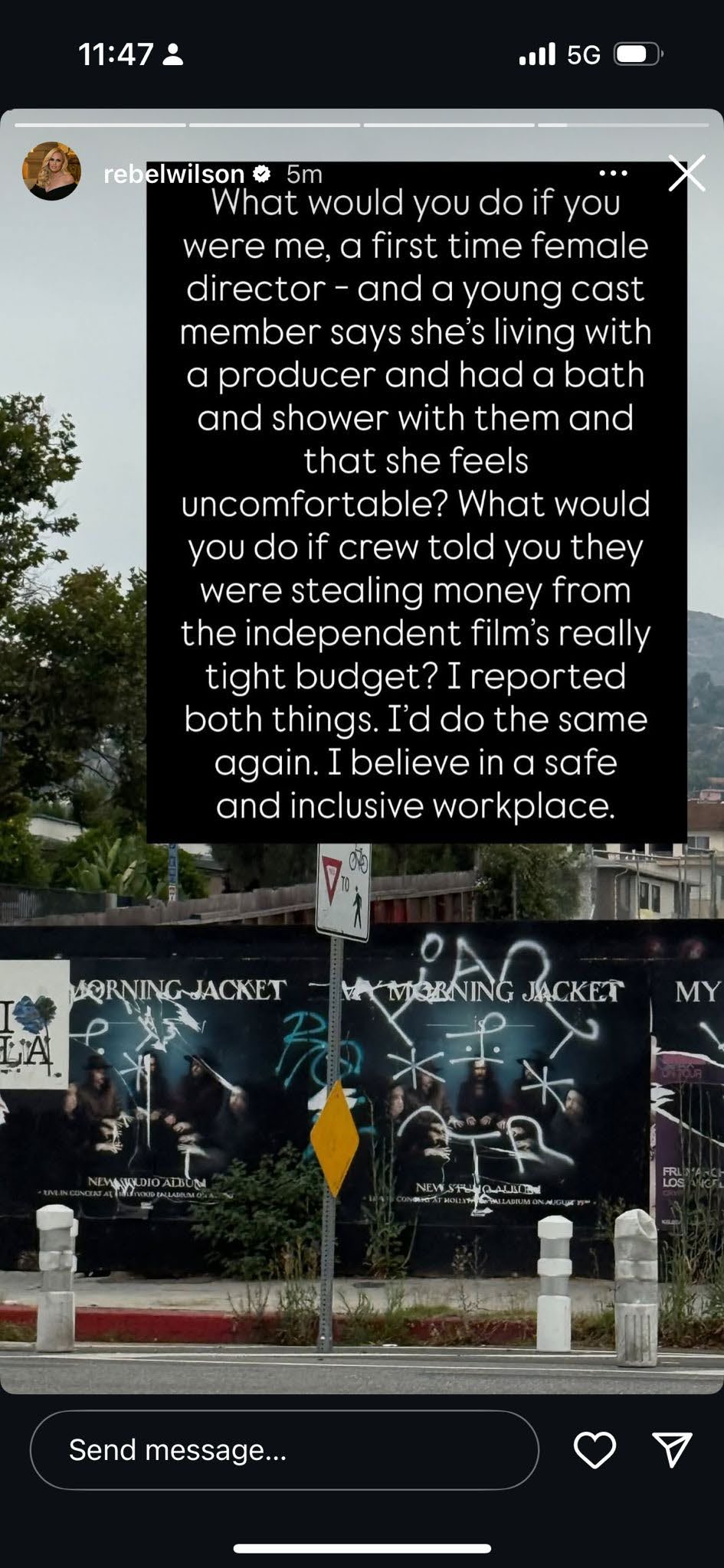
(b) whether the defamatory imputations pleaded with respect to each Post were carried;
(c) if the Posts are defamatory and the law of New South Wales applies, whether Ms MacInnes has established, in respect of each matter that the publication of the matter caused, or was likely to cause, serious harm to her reputation;
(d) in respect of each matter, has Ms Wilson established that each of the imputations found to have been conveyed and defamatory of Ms MacInnes is substantially true within the meaning of s 25 of the Defamation Act 2005 (NSW) or the Defamation Act 2005 (WA);
(e) to the extent that Ms Wilson establishes that Ms MacInnes made a complaint about Ms Ghost to Ms Wilson during the production of The Deb, has Ms MacInnes established that there was a breach of confidence?
(f) where no defence has been made out, whether Ms MacInnes is entitled to damages, including aggravated damages, equitable compensation for breach of confidence and/or injunctive relief.
Summary of conclusions
5 In summary, for the reasons which follow I find the following:
(1) the applicable law is that of New South Wales;
(2) only one imputation in relation to one matter (the 23 September 2024 Post) is made out, that Ms MacInnes changed her story about feeling uncomfortable about what happened in the bathroom;
(3) that imputation is not defamatory;
(4) whilst not necessary to go further, in the event that there were an alternative finding regarding (3) and by reason of (1):
(a) Ms MacInnes is required to establish that the publication of the matter complained of caused or was likely to cause serious harm;
(b) Ms MacInnes has failed to establish that the matter has caused or was likely to cause her reputation serious harm;
(5) in the event that there were alternative views as to (3) and (4), Ms Wilson has justified the matter, that is, the imputation is substantially true;
(6) Ms MacInnes’ claim of breach of confidence fails.
The applicable law is that of New South Wales
6 The first issue is whether the substantive law applicable to Ms MacInnes’ claims is the law of Western Australia or the law of New South Wales. Ms MacInnes claims that the applicable law is that of Western Australia, Ms Wilson claims it is New South Wales.
7 All States and Territories’ defamation legislation have a statutory provision that provides that in cases of publication in more than one Australian jurisdiction, the Court must apply the substantive law of the Australian jurisdiction “with which the harm occasioned by the publication as a whole has its closest connection” to determine each cause of action: Gregg v Fairfax Media Publications Pty Limited [2016] FCA 1470 at [33]; Defamation Act, s 11(2); Defamation Act 2005 (WA), s 11(2).
8 In determining the Australian jurisdiction with which the harm occasioned by a publication of matter has its closest connection, the Court “may” take account of the matters contained in s 11(3) of each Act, which are materially identical, namely:
(a) the place at the time of publication where the applicant was ordinarily resident;
(b) the extent of publication in each relevant Australian jurisdictional area;
(c) the extent of harm sustained by the applicant in each relevant Australian jurisdictional area;
(d) any other matter the Court considers relevant.
9 It is my view that New South Wales is the area where the harm occasioned by the publication of matter has its closest connection. First, Ms MacInnes was not ordinarily resident in either jurisdiction at the time of publication. For Ms MacInnes to suggest otherwise was perplexing. Ms MacInnes is ordinarily resident in the United Kingdom not Western Australia. Secondly, since 2021, to the extent that Ms MacInnes has had a connection with Australia, she has lived and worked in New South Wales (save for brief periods when she visited Western Australia). The alleged conduct took place after Ms MacInnes moved to New South Wales and after that, in April 2024, she left to live overseas.
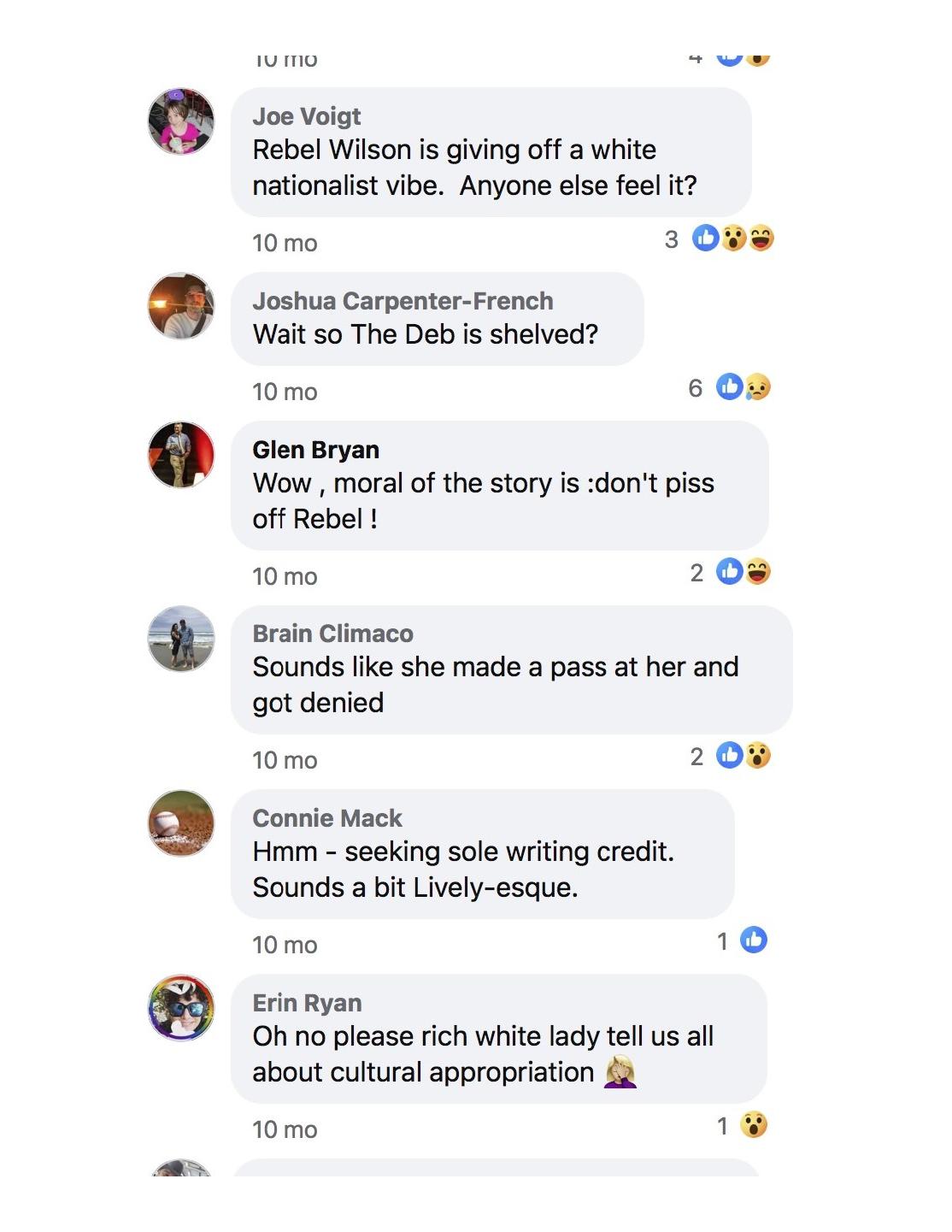
10 Ms MacInnes submitted that she has suffered the most reputational damage in Western Australia because she has lived there for the vast majority of her life (citing s 11(3)(a)). I do not understand s 11(3)(a) to be directed to a place where a person has lived, rather the place at the time of publication, where Ms MacInnes was ordinarily resident. I accept that account may be taken of where the person had lived for the majority of their life, as it may be an indicator of where the harm is suffered. However, it is one of a number of factors to be taken into account.
11 Thirdly, there was no evidence to determine the extent of publication in each relevant Australian jurisdiction.
12 Fourthly, it is material that Ms MacInnes lived and worked in New South Wales in the formative period of the development of her professional reputation between 2021 and 2024. It was in New South Wales that she began her acting career: First in The Deb stage play and then as part of The Deb film. It was in Sydney that Ms MacInnes developed formative relationships, both personal (establishing a relationship with her current partner Mr Boumouglbay and one of her now best friends, Ms Koprivec) and professional. The play was performed between April and June 2022. Later in 2022, between October and December 2022, in New South Wales, Ms MacInnes secured and acted in her first screen role in an Australian TV show. It was also in New South Wales that Ms MacInnes auditioned for The Deb film in December 2022 and in New South Wales that she met Ms Ghost, Ms Wilson and Ms Washington. New South Wales is also where Ms MacInnes formed professional and personal associations with the cast members, producers and directors of the various productions. Therefore in the formative period between 2021 and 2024, Ms MacInnes was living, working and associating with people in New South Wales.
13 Fifthly, the critical event, the alleged bath incident and complaint were New South Wales events: Archbishop Makarios Griniezakis v Morelas [2024] FCA 100 at [18]. The relevant subject matter of (a) the Posts and (b) the defence of justification concerned events that occurred in New South Wales (both prior to and following production of the film).
14 Not only did the relevant activity occur in New South Wales, but also the establishment of Ms MacInnes’ place in the performing arts industry. I do not accept that the place of this activity, and what can be inferred from it as to the establishment of a professional reputation and any subsequent harm, is immaterial. It can be inferred that if any damage were to have been occasioned, it would have been done in New South Wales.
15 Sixthly, the fact that Ms MacInnes spent her childhood and early adulthood in Western Australia has, in the circumstances of this case, limited weight in the determination of the jurisdiction with which any harm occasioned by the relevant publication has the closest connection. The evidence as to reputational harm occasioned in Western Australia was very limited. I do not accept that it establishes that Ms MacInnes has suffered more reputational damage in Western Australia than in New South Wales. Reliance was placed on the evidence of Mr Hales, who had taught Ms MacInnes singing and performing arts between 2017 and 2021 (when she was between 19 and 22 years old). Mr Hales’ evidence at its highest is that after the impugned publications an unspecified number of music teachers and students “talked about the Publications” but he did not specify the content of those discussions, rather only that he had tried to explain the situation to them. Further, Ms MacInnes relied upon the evidence of a family friend, Ms Deveson. The height of her evidence was that many friends in Albany (Western Australia) had talked to her about the publications and asked if the posts by Ms Wilson were true. As to Ms Joanne MacInnes’ evidence, the high-water mark was the comment from a sales assistant in a local clothing store, that Ms Wilson would not make things up because she is a lawyer.
16 Seventhly, the “harm” to which s 11(3)(c) is directed is reputational harm not emotional harm. I do not accept that it is relevant that Ms MacInnes was in Western Australia when she saw the 23 September 2024 Post and in November/December 2025 when she suffered any purported effects of Ms Wilson’s conduct when Ms Wilson appeared on the 60 Minutes programme. Ms MacInnes submitted that the harm in s 11(3)(c) is directed to both reputational harm and emotional harm by reason of the fact that “harm” under both Defamation Acts, falls into two categories, damage to reputation and hurt to feelings and that the wording in s 11 does not, on its terms, restrict the “harm” to reputational harm. Whereas, according to Ms MacInnes, the relevant harm in s 10A is expressly limited to reputational harm: Mond v Age Co Pty Limited [2025] FCA 442 at [384] (Wheelahan J). It was submitted that prior to the inclusion of s 10A there was much disputation as to scope of the term “harm” in s 33, and that by the amendment, the legislature sought to distinguish harm to reputation. However, there have been numerous authorities that have found that harm to feelings (and more importantly where the harm occurred) as not being relevant to s 11(3)(c): Bartlett v Roffey [2023] WASC 3 at [45] (Solomon J), citing Smith v Lucht [2016] QCA 267; [2017] 2 Qld R 489 at [63] (Flanagan J, Philippides JA agreeing); Szanto v Melville [2011] VSC 574 at [162] (Kaye J). Whilst these authorities pre-date the amendment, I do not accept that the provision is to be interpreted in the way Ms MacInnes urges.
17 Even if I were wrong in this respect, I do not think the fact of her suffering some emotional reaction on two occasions when she briefly visited Western Australia overrides the other material facts which favour a greater connectedness to New South Wales as already considered and also by reason of the fact that, at the time of publication of all of the matters, Ms MacInnes was ordinarily resident in the United Kingdom (contrary to the evidence she gave in chief: ET460.38-461.15). It was Ms MacInnes’ evidence that she spent only short periods of time in Western Australia in 2024.
18 Of particular relevance to this case, by reason of my finding that the applicable law is that of New South Wales, Ms MacInnes is required to establish, as a threshold matter, that the matter(s) complained of have caused or are likely to cause serious harm to her reputation. Relevant to that inquiry is the inherent tendency of the defamatory matter and therefore, it is worthwhile, before considering the serious harm element, to determine first whether the defamatory imputations pleaded with respect to each Post are carried and if so whether they are defamatory.
The defamatory imputations
19 As recently expressed by the Full Court in Latham v Greenwich [2026] FCAFC 82 (Wheelahan and Abraham JJ) at [28], central to the determination of liability in defamation is the ascertainment of the meaning of the matter sued upon. There was no real dispute between the parties as to the principles to be applied in the search for meaning.
20 Ms MacInnes submits that the first two matters stand alone and are clearly defamatory of Ms MacInnes. However, as was accepted by Ms MacInnes at trial, the third and fourth matters each have to have been read alongside one of the first two to carry the meanings (or meanings that do not differ in substance).
21 In the recent decision of Archbishop Makarios Griniezakis v Morelas (Trial Judgment) [2026] FCA 156, Abraham J condensed, in a pithy way, the relevant principles which inform a finding as to whether an imputation is conveyed or not, at [37]-[42]:
[37] The principles in relation to meaning are well established, and not in dispute between the parties: Favell v Queensland Newspapers Pty Ltd [2005] HCA 52; (2005) 219 CLR 165 at [6]-[12], [17]; Trkulja v Google LLC [2018] HCA 25; (2018) 263 CLR 149 (Trkulja) at [30]-[32]; Hanson v Burston [2023] FCAFC 124; (2023) 413 ALR 299 at [43]-[48]; and Kazal v Thunder Studios Inc (California) [2023] FCAFC 174 (Kazal) at [336]-[337].
[38] An applicant bears the onus of establishing on the balance of probabilities that an ordinary reasonable reader, viewer or listener would understand that the publication sued upon bears the alleged defamatory meanings or imputations as pleaded and particularised.
[39] The relevant question is whether the publication would have conveyed the alleged meanings to an ordinary reasonable person. It is to be objectively determined. The hypothetical individual is a person with various characteristics, including: they are of fair to average intelligence, experience, and education; are fair-minded and neither perverse, morbid, suspicious of mind, nor “avid for scandal”; and that they do not examine the publication overzealously. While they do not search for hidden meanings or adopt strained or forced interpretations, they nevertheless draw implications, especially derogatory implications, more freely than a lawyer would: Rush v Nationwide News Pty Ltd (No 7) [2019] FCA 496 (Rush (No 7)) at [75]-[77]; Kazal at [336]-[337]. The ordinary reasonable person is also taken to have read the entire publication, considered the context as a whole, and taken into account emphasis that may be given by conspicuous headlines or captions: see Rush (No 7) at [77]; Trkulja at [32]; and the summary in V’landys v Australian Broadcasting Corporation (No 3) [2021] FCA 500 (V’Landys) at [41]-[55]. They are more likely to consider a publication cautiously and carefully, and less likely to jump to conclusions or engage in loose thinking, where the publications purport to be serious investigative journalism concerning matters of importance.
[40] However, it does not follow that each part of the publication must be given equal significance, as striking words or images may stay with the reader, viewer or listener and give them a predisposition or impression that influences all that follows: V’landys at [51]. A pleaded imputation, and whether it has been proven to be substantially true, requires attention to context, as provided by the balance of the publication and any wider context within which it is to be understood. The natural and ordinary meaning of words is not limited to their literal meaning. The ordinary reasonable person is not a lawyer or taken to have a detailed understanding of the law: Trkulja at [32]. The imputations are considered by reference to the ordinary meaning, not their legal meanings, because that is the way the terms would be understood by ordinary reasonable people. Words do not necessarily have a fixed meaning that applies in all circumstances; even benign words may convey a worse, or better, impression when regard is had to how and when they are deployed: see, for example, Greek Herald Pty Ltd v Nikolopoulos & Ors [2002] NSWCA 41; (2002) 54 NSWLR 165 at [21]-[27]; Lewis v Daily Telegraph Ltd [1964] AC 234 at 258. The meaning that an individual would attribute to a publication, or the impression that the reader forms, may be influenced by the overall tone or tenor of the article in question: Rush (No 7) at [80].
[41] Given that the meaning is to be determined objectively, the audience is taken to have a uniform view of that meaning. The publisher’s intended meaning and that understood by individual readers of the matter complained of, are irrelevant: Rush (No 7) at [84]-[85]. The determination of the natural and ordinary meaning of words involves the application of the “single meaning” rule. Although different people might in fact have understood the meanings conveyed by a matter in different ways, the Court must arrive at a single objective meaning: Slim v Daily Telegraph Ltd [1968] 2 QB 157 at 171-175; Hockey v Fairfax Media Publications Pty Limited [2015] FCA 652; (2015) 237 FCR 33 at [73]; Australian Broadcasting Corporation v Chau Chak Wing [2019] FCAFC 125; (2019) 271 FCR 632 (Wing) at [32]. The issue is the single meaning that an objective audience composed of ordinary reasonable persons should have collectively understood the matter to bear: Wing at [32].
[42] A matter is defamatory if it carries a meaning about the applicant which is calculated to: expose him or her to hatred, contempt, or ridicule; lower him or her in the estimation of ordinary right-thinking members of society; or cause others to shun and avoid him or her: Boyd v Mirror Newspapers Ltd [1980] 2 NSWLR 449 at 452-453; Mirror Newspapers Ltd v World Hosts Pty Ltd [1979] HCA 3; (1979) 141 CLR 632 at 638-639; Radio 2UE Sydney Pty Ltd v Chesterton [2009] HCA 16; (2009) 238 CLR 460 at [5].
22 However, as is evident from the above, the nature, tone and tenor of the article as well as the relevant medium is important in the search for meaning. As observed by O’Callaghan J in Greenwich v Latham [2024] FCA 1050 at [122]-[124]:
[122] When it comes to interpreting social media posts, regard must be had to the impressionistic nature of the medium and over analysis is to be avoided.
[123] In Bazzi v Dutton (2022) 289 FCR 1 at 9 [29], Rares and Rangiah JJ quoted the following passage from the judgment of Lord Kerr JSC in Stocker v Stocker [2020] AC 593 at 605–6 [41]–[43]:
[41] The fact that this was a Facebook post is critical. The advent of the 21st century has brought with it a new class of reader: the social media user. The judge tasked with deciding how a Facebook post or a tweet on Twitter would be interpreted by a social media user must keep in mind the way in which such postings and tweets are made and read.
[42] In Monroe v Hopkins [2017] 4 WLR 68, Warby J at para 35 said this about tweets posted on Twitter:
The most significant lessons to be drawn from the authorities as applied to a case of this kind seem to be the rather obvious ones, that this is a conversational medium; so it would be wrong to engage in elaborate analysis of a 140 character tweet; that an impressionistic approach is much more fitting and appropriate to the medium; but that this impressionistic approach must take account of the whole tweet and the context in which the ordinary reasonable reader would read that tweet. That context includes (a) matters of ordinary general knowledge; and (b) matters that were put before that reader via Twitter.
[43] I agree with that, particularly the observation that it is wrong to engage in elaborate analysis of a tweet; it is likewise unwise to parse a Facebook posting for its theoretically or logically deducible meaning. The imperative is to ascertain how a typical (ie an ordinary reasonable) reader would interpret the message. That search should reflect the circumstance that this is a casual medium; it is in the nature of conversation rather than carefully chosen expression; and that it is pre-eminently one in which the reader reads and passes on.
[124] In Trkulja v Google LLC (2018) 263 CLR 149 at 160–61 [32] Kiefel CJ, Bell, Keane, Nettle and Gordon JJ said that the exercise of ascertaining the meaning that a publication conveys:
… is one in generosity not parsimony. The question is not what the allegedly defamatory words or images in fact say or depict but what a jury could reasonably think they convey to the ordinary reasonable person … and it is often a matter of first impression. The ordinary reasonable person is not a lawyer who examines the impugned publication over-zealously but someone who views the publication casually and is prone to a degree of loose thinking … He or she may be taken to read between the lines in the light of his general knowledge and experience of worldly affairs … but such a person also draws implications much more freely than a lawyer, especially derogatory implications … and takes into account emphasis given by conspicuous headlines or captions … Hence, … where words have been used which are imprecise, ambiguous or loose, a very wide latitude will be ascribed to the ordinary person to draw imputations adverse to the subject.
(Citations and internal quotations omitted)
23 This reasoning was not disturbed on appeal.
24 Accordingly, account, in the search for meaning, must be given to the fact that social media publications are casual and fast-moving mediums, conversational and read in a fleeting and informal way as the reader scrolls through them: Vardy v Rooney [2020] EWHC 3156 (QB) at [18]. I accept that Warby J’s observations remain apposite in relation to Instagram posts:
(1) The publications complained of in this case are social media posts. The authorities explain that it is particularly important for a Judge deciding such a case to beware of indulging in elaborate analysis. Twitter is a conversational and fast-moving medium. People will tend to scroll through messages relatively quickly. The reader’s reaction to a post is impressionistic and fleeting. The reader is likely to absorb the essential message quickly, before moving on. Readers of social media do not have advocates beside or in front of them, making arguments about what a tweet means. … All of this applies equally to an Instagram post.
25 As observed by Wheelahan and Abraham JJ in Latham at [36], the Court’s attention is upon the impression conveyed by the post:
The ordinary reasonable reader of a social media post has typical attributes of a social media user: Stocker v Stocker [2019] UKSC 17; [2020] AC 593 at [41] to [43] (Lord Kerr), cited in Bazzi v Dutton [2022] FCAFC 84; 289 FCR 1 at [29] (Rares and Rangiah JJ). Twitter (now X) is a casual, conversational medium, where the ordinary reasonable reader reads posts and then moves on. It is therefore the impression conveyed by a post that is important to ascertaining the objective single meaning and not an interpretation of a post that is the product of some deep analysis.
26 Lastly, as observed by Wheelahan J in Mond at [82], the task of the Court is therefore to make findings about whether the applicant has established, by reference to the standard of the ordinary reasonable reader, that the matters conveyed a meaning that was defamatory of the applicant that is fairly within the bounds of his or her pleaded case.
Whether the pleaded imputations were conveyed?
An imputation which does not differ in substance to the first and second imputations was conveyed by the 23 September 2024 Post
27 Ms MacInnes asserted that, on or about 23 September 2024, Ms Wilson – herself or by her agents on her behalf – published a series of posts to her Instagram account @rebelwilson. Ms MacInnes contends that the 23 September 2024 Post carried the following defamatory imputations (or imputations that do not differ in substance):
5.1 MacInnes lied by denying that she had made a complaint to Wilson about sexual harassment or other unacceptable behaviour by a producer of the film The Deb that made her feel uncomfortable.
5.2 MacInnes falsely changed her story that a producer of the film The Deb had made her feel uncomfortable by asking her to have a bath and a shower with her.
5.3 MacInnes falsely changed her story that a producer of the film The Deb had engaged in unacceptable behaviour toward her that made her feel uncomfortable during the making of the film The Deb in return for being employed by the producer in the lead role of the production called GATSBY and given a record label.
5.4 MacInnes was paid off by a producer of the film The Deb to lie about a complaint she had made to Wilson about inappropriate behaviour by that producer during the making of the film The Deb.
5.5 MacInnes was a sell out, in that she falsely denied being a victim of sexual harassment in exchange for a lead role in a production and a record label.
28 The 23 September 2024 Post is attached at Annexure A.
29 It is my view that the ordinary reasonable reader would have scrolled through the post relatively quickly and his or her reaction would have been impressionistic and fleeting. The essential message conveyed by the post is that Ms MacInnes complained about the producer’s conduct in the bathroom and how it had made her feel and then changed her story. I do not accept that the matters of detail regarding whether she had been asked to bathe and shower would have been retained by the reader in an impressionistic way. Rather, the purported sting is the fact of a complaint and thereafter changing her story.
30 I am satisfied that an ordinary reasonable reader would have understood from the 23 September 2024 Post that Ms MacInnes has changed her story about feeling uncomfortable about what happened with the producer in the bathroom.
31 It is my view that this meaning is not substantively different from imputations 5.1 and 5.2, in that they are comprehended in, or are a shade or nuance of, the pleaded meaning and are permissible: Deeming v Pesutto (No 3) [2024] FCA 1430 at [486] (O’Callaghan J); Nassif v Seven Network (Operations) Ltd [2021] FCA 1286 at [80] (Abraham J); Stead v Fairfax Media Publications Pty Ltd [2021] FCA 15; 387 ALR 123 at 127–8 [15] (Lee J).
32 However, I do not accept that what is conveyed, can be stretched, in the rolled-up way, to pleaded imputations 5.3 and 5.4. I do not consider that the reader would have understood there to be any relevant “exchange” namely, that Ms MacInnes was employed and received the record deal “in return” for changing her story, nor was she “paid off by a producer”. Nor do I accept that the reader would understand it to be conveyed, one way or another, that Ms MacInnes had ultimately in fact been a victim of sexual harassment and was falsely denying the same. Rather, the post conveys that Ms MacInnes made a complaint of feeling uncomfortable and thereafter retracted it because of her now beneficial association with the producer and the advancement of her career. There is no identification of who Ms MacInnes was a “sell out” to. Further, the ordinary reader would wonder about the appropriateness of the request and would have regard to the power imbalance between actor and producer. However, I do not accept that the matter would convey to the viewer that there was an act of “sexual harassment”.
However, the imputation is not defamatory
33 The question of whether the meaning found in the first matter complained of is defamatory is determined objectively and by reference to community standards. It involves a determination of a loss of standing in some respect, or the lowering of estimation in which a person is held, or simply that people would likely think less of Ms MacInnes: Latham at [44]. I do not accept that the assertion of someone changing their story, for which there could be innumerable reasons for why they did, determined objectively by reference to community standards, is defamatory.
None of the pleaded imputations were conveyed by the 16 May 2025 Post
34 Ms MacInnes asserted that, on or around 16 May 2025, Ms Wilson – herself or by her agents on her behalf – published a series of posts to the @thedebfilm Instagram account said to convey the following defamatory imputations (or imputations that do not differ in substance):
8.1 MacInnes lied and supported people blocking the release of the film The Deb in exchange for a record deal, at the expense of the 300 people who worked on The Deb.
8.2 MacInnes preferred her own interests to the interests of the people who worked on the film The Deb by accepting a record deal from the producers and supporting them in blocking the release of the film The Deb.
8.3 MacInnes prevented the release of the film The Deb through her lies and support for the people blocking the film’s release.
35 I am satisfied that the story conveys to the ordinary reasonable reader that Ms MacInnes lied and supported people blocking the release of the film in order to obtain a career benefit.
36 However, I do not accept that it conveys that she did so “in exchange” for a deal or benefits, that is where there was some pre-arrangement. Rather, the reader would have understood that Ms MacInnes was motivated to assist them by reason of some benefit she had or believed she would receive. I do not think that the ordinary reasonable reader would have understood that Ms MacInnes, when determining whether to lie or support those others, chose to “prefer” her own interests knowing the potential consequences for those other people who worked on the film. Nor do I accept that the matter conveys that Ms MacInnes did in fact prevent the release of the film, as opposed to supporting others.
37 As a consequence, I do not accept that any of the imputations are conveyed.
None of the pleaded imputations were conveyed by the Further May 2025 Post and the 25 July 2025 Post
38 Ms MacInnes conceded, at hearing, that the pleaded imputations are not carried by either the Further May 2025 Post or the 25 July 2025 Post, rather that the conveyance of the pleaded meanings depends upon the viewer’s knowledge and recollection of prior stories, namely the 23 September 2024 and/or 16 May 2025 Posts: AS[10].
39 As a consequence, different questions arise as to whether, in the circumstances of this case, where the publications are Instagram posts (where it was agreed that they only remain viewable for 24 hours or thereafter retrievable for 48 hours), it can be accepted that the ordinary reasonable reader would have both read and retained the content of the first or second matters complained of and thereafter assumed their meanings were embedded in the third and fourth matters complained of.
40 Ms MacInnes asserted that, later in May 2025, Ms Wilson – herself or by her agents on her behalf – published a post to the @thedebfilm Instagram account said to convey the following defamatory imputations (or imputations that do not differ in substance):
11.1 MacInnes lied by denying that she had made a complaint to Wilson about sexual harassment made to her by a producer of the film The Deb.
11.2 MacInnes falsely changed her story that a producer of the film The Deb had sexually harassed her during the making of the film The Deb.
11.3 MacInnes falsely changed her story that a producer of the film The Deb had sexually harassed her during the making of the film The Deb in return for being employed by the producer in the lead role of the production called GATSBY and given a record label.
11.4 MacInnes was paid off by a producer of the film The Deb to lie about a complaint she had made to Wilson that she had been sexually harassed by the producer during the making of the film The Deb.
11.5 MacInnes, as the lead actress of the film The Deb, conducted herself unprofessionally by engaging in an inappropriate relationship with one of the producers of the film and procuring special benefits not available to other cast members.
41 As to the 25 July 2025 Post, it is submitted, by the reader having read either the 23 September 2024 Post or the 16 May 2025 Post, the following meanings would be conveyed by the 25 July 2025 Post:
15.1 MacInnes lied by denying that she had made a complaint to Wilson about dodgy conduct towards her by a producer of the film The Deb.
15.2 MacInnes falsely changed her story that a producer of the film The Deb had sexually harassed her during the making of the film The Deb.
15.3 MacInnes falsely changed her story that a producer of the film The Deb had sexually harassed her during the making of the film The Deb in return for being employed by the producer in the lead role of the production called GATSBY and given a record label.
15.4 MacInnes was paid off by a producer of the film The Deb to lie about a complaint she had made to Wilson that she had been sexually harassed by the producer during the making of the film The Deb.
15.5 MacInnes lied to support the financiers of the film The Deb in blocking the release of the film The Deb.
15.6 MacInnes lied by denying she had complained to Wilson, who is known by everyone as a ‘truth teller’, about inappropriate behaviour to her by a producer during the making of the film The Deb, which was sexual harassment and in breach of a safe and inclusive workplace for the film.
42 I do not accept that, in the circumstances of this case, each of these purported meanings were conveyed. Only one imputation was conveyed by the first matter, as found above. I do not accept it can be inferred that it could thereafter have been conveyed in the latter two posts. I do not accept that the evidence establishes that the ordinary reasonable reader would have read each of the posts, retained them, and thereafter derived the meanings said to be conveyed.
43 Given that I have found that there is no defamatory matter, the matter must be dismissed. However, in the event that I am wrong as to whether the imputation conveyed not being defamatory, I will go on to consider, whether Ms MacInnes would be able to establish the required serious harm element.
Has Ms MacInnes proved that the pleaded publications caused or were likely to cause serious harm to her reputation?
44 Upon finding that the law of New South Wales is the applicable law, Ms MacInnes is required to establish that the publication of each matter complained of caused or was likely to cause serious harm (what is actual serious harm, not harm amongst notional readers): Greenwich v Latham [2024] FCA 1050 at [174] (O’Callaghan J). Here, the only matter complained of found to have conveyed an imputation is the first matter, the 23 September 2024 Post.
45 Section 10A(1) of the Defamation Act provides:
It is an element (the serious harm element) of a cause of action for defamation that the publication of defamatory matter about a person has caused, or is likely to cause, serious harm to the reputation of the person.
46 As recently observed in Morelas at [60], the inception of the serious harm element of the tort has been the subject of detailed judicial consideration: see, for example Deeming at [518]-[534] and Mond at [365]-[385]. Abraham J went on at [61]-[62] to describe the provision’s origin, purpose and application and thereafter synthesised applicable principle:
[61] Serious harm must be proved as an element of any instances of publication of a defamatory matter on or after 1 July 2021, even if the matter was first published before that date: Russell v Australian Broadcasting Corporation (No 3) [2023] FCA 1223; (2023) FCR 372 (Russell) at [258]; Mond at [366]. The provision was part of a reform which substituted serious harm as an element of the cause of action for the old defence of triviality. The history of its introduction is described by Wheelahan J in Mond at [373]-[377]. Suffice to say, it is apparent that it was introduced to prevent trivial, spurious, frivolous and vexatious defamation claims, which is reflected in the fact that the issue should be determined as soon as practicable before trial: s 10A(5) and (6). Wheelahan J observed at [377]:
In light of the object in s 3(c) of the Defamation Act to provide effective and fair remedies for persons whose reputations are harmed, s 10A(5) suggests that the serious harm element may be capable of ready determination prior to trial, thereby indicating that “serious harm to reputation” is harm that is at least not trivial or minor in nature, as the second reading speeches to the Victorian and New South Wales Bills would indicate, rather than establishing an especially high threshold requiring extensive evidence to be led by an applicant
[62] The terms of s 10A suggest the causal relationship is with the publication of the matter in a defamatory sense: Mond at [369]. The Court is concerned with actual serious harm, and not serious harm amongst a notional cohort of ordinary reasonable readers: Greenwich v Latham [2024] FCA 1050 at [174]; Mond at [369].
[63] Serious harm to reputation, or likely serious harm to reputation, are facts that must be proven by evidence, which may be direct evidence, or by inferences drawn from the circumstances of the case: Mond at [370]. As described by Wheelahan J in Mond at [370], those circumstances may include a combination of:
(1) the inherent tendency of the defamatory matter and its actual or probable impact on those to whom it was published, in other words, the gravity of the imputations;
(2) the extent of publication, any likely republication, and any likely “grapevine effect” or “percolation”;
(3) whether there was a prompt apology, and the breadth of the audience to which any apology was published;
(4) the reputation of the publisher – a defamatory publication by a generally reputable publisher that is represented as being reliable and the product of research might be more capable of causing serious harm than one by a publisher that is not so reputable;
(5) the medium of the publication – a transient publication might cause less harm to reputation than one in print or which is available for viewing online for an extended period or indefinitely;
(6) the situation of the applicant, including the applicant’s existing reputation in the relevant sector;
(7) the identity of the persons to whom the defamatory matter was published; and
(8) the inherent probabilities generally.
[64] Where there are other defamatory publications to the same effect published at around the same time, it is recognised that it is likely to be impossible to isolate the harm caused by any one publication. That circumstance was addressed in Peros v Nationwide News Pty Ltd (No 3) [2024] QSC 192 (Peros) where Applegarth J observed at [75]:
[i]n such a case, in which neither the claimant nor the court can isolate the harm caused by the subject publication, a plaintiff may choose to sue over one publication that is alleged to have caused, along with other publications, indivisible damage to reputation. The combined and indivisible harm may be as a result of publications to the same effect by the same defendant or by other publishers. The claimant may seek to invoke another general principle that renders a defendant liable in tort where its wrong was “a cause” or materially contributed to damage that is indivisible. In those circumstances, it is sufficient that the wrong, along with other causes, caused the same loss or damage.
[65] See also Deeming at [523].
47 Serious harm is concerned with harm to reputation. It is not concerned with injury to feelings including mental anguish, anxiety, personal hurt or distress and embarrassment: Mond at [384]; Rader v Haines [2022] NSWCA 198 at [28].
48 The Full Court in Latham recently opined as to the correct approach to be applied to the construction of the term “serious harm” at [63], applying MG v PJ [2025] QCA 99, in the following way:
The correct approach to the construction of the term “serious harm” in s 10A(1) of the Defamation Act is that identified in MG v PJ at [83] to [84], which is that the plain and ordinary meaning of the word “serious” should be adopted and that it is also appropriate to have regard to the purpose of the provision when construing the term. This approach accords with that identified earlier in Mond at [407] to [408] with the result that the term “serious harm” calls for the Court to reach an evaluative conclusion on the evidence in the exercise of its own judgment. In making that evaluative judgment precision on the issue will rarely be possible: Lachaux at [21]. And in making the evaluation it is to be borne in mind that the common law accepts that damage to reputation is not a commodity, and that every defamation is necessarily unique: see Rogers v Nationwide News Pty Ltd [2003] HCA 52; (2003) 216 CLR 327 at [66] (Hayne J). In addition, as observed in Mond at [383], harm to reputation is not like a bodily injury. A person’s reputation exists in the minds of others, and it may not be homogeneous. It is the impact of the defamatory matter on those to whom it was published that falls for consideration. That impact may result in serious harm without the impact being uniform.
49 As identified by Collins Rice J in Blake v Fox [2024] EWHC 146 (KB) at [157]:
[A defamation claimant] has to be ready in the first place to show, by reference to evidence and inherent probability, how his reputation – what people think of him – is seriously harmfully impacted in real life by their publications, as distinct from his, or indeed anyone else’s, or anything else. That is what defamation law requires – demonstration of actual impact, and what difference a publication makes or is likely to make in real life.
(Original emphasis)
Serious harm – the 16 May 2025, the Further May 2025 and the 25 July 2025 Posts
50 I have already found that none of the 16 May 2025, the Further May 2025 and the 25 July 2025 Posts are actionable because they do not convey any defamatory meanings fairly within the scope of the pleadings. Therefore, I do not need to consider whether they each meet the serious harm element of s 10A of the Defamation Act.
51 I am only required to consider the first matter complained of and whether the serious harm element is established for that particular defamatory matter on which Ms MacInnes sues and otherwise establishes liability: Mond at [381].
Serious harm – Ms MacInnes’ pleaded particulars of serious harm concerning the 23 September 2024 Post
52 Ms MacInnes’ pleaded particulars of serious harm with respect to the 23 September 2024 Post were as follows:
25. The 23 September 2024 Post caused or was likely to cause serious harm to MacInnes’ reputation by reason of the following facts and matters:
25.1 the inherently serious or defamatory nature of the imputations conveyed;
25.2 the 23 September 2024 Post harms and/or was likely to harm MacInnes’ reputation for integrity and honesty;
25.3 the harm caused or likely to be caused to MacInnes’ personal and professional reputation is that MacInnes would not be regarded or reputed as trustworthy within the film industry and/or by the public generally;
25.4 the wide dissemination of the 23 September 2024 Post, including:
c. the large numbers of followers of Wilson’s Instagram account @rebelwilson; and
d. the wide extent of republication of the sense and substance of the 23 September 2024 Post;
25.5 Wilson’s followers on Instagram are likely to believe her claims, especially given she portrays herself publicly as a ‘truth teller’;
25.6 MacInnes’ role in The Deb was her first lead role in a film and Wilson cruelled MacInnes’ professional reputation by publishing the allegations before MacInnes could even enjoy the benefit of having starred in her first lead role in a film;
25.7 Wilson’s reputation as a leading Australian star in the international film industry means that her statements carried particular weight within the film industry;
25.8 that Wilson continued to double down on and repeat her claims – in the 16 May 2025 Post, in the Further May 2025 Post, and in the 25 July 2025 Post – made it more likely that viewers of the 23 September 2024 Post would believe her claims and increase the harm to MacInnes’ reputation.
The inherent tendency of the defamatory matter
53 Part of those matters which the Court will consider when determining serious harm to reputation, or likely serious harm to reputation, include the inherent tendency of the defamatory matter and its actual or probable impact on those to whom it was published, that is, the gravity of the imputations: Mond at [370(a)]. Accordingly, the gravity of the defamation is relevant: the more seriously defamatory the publication, the more likely it is to cause serious harm: Peros v Nationwide News Pty Ltd & Ors (No 3) [2024] QSC 192 at [58] (Applegarth J).
54 I do not accept that the meaning conveyed was inherently serious or of a defamatory nature. The purported sting is that Ms MacInnes has changed her story about feeling uncomfortable about what happened with the producer in the bathroom. I do not accept that the assertion of someone lying or changing their story for self-interested reasons rises to the threshold in this case, of being characterised as being “inherently serious”.
55 Even if I am wrong about this, I make the following factual findings going to the question of whether the serious harm element is established.
The extent of publication
56 The 23 September 2024 Post was posted on Ms Wilson’s Instagram account, was only up for 24 hours and only retrievable for 48 hours. The parties accept, relying on Ms Wilson’s statement regarding the extent of the publications, that the Post can be taken to have typically attracted between 5,000 and 100,000 views in a 24-hour period. The Post attracted 1,050 likes.
57 As to the extent of republication, Ms MacInnes relied upon the republication of the 23 September 2024 Post on two celebrity gossip sites on 24 September 2024 (Just Jared) and on 25 September 2024 (Aceshowbiz). Both articles include reports of the US defamation case, Ms MacInnes’ statement and the allegations that were published in the Daily Mail article. Thereafter, Ms MacInnes relied upon an article published by The Australian on 24 July 2025. Again, the republication of the Post occurred in the context of Ms Wilson being sued by the film producers. A further article published on 8 August 2025 (by Pedestrian TV) concerned Ms MacInnes’ plans to sue Ms Wilson and reported that she had “hired a legal team and issued a concerns notice” with quotations from that notice. Reliance was also placed on an article published by the Star Observer on 4 October 2025, the 60 Minutes publication and TikTok and YouTube posts.
58 In response, Ms Wilson submits that the material relied upon by Ms MacInnes shows that there was almost no republication in the days after the first matter complained of and it has only been referred to since that date in the context of it being part of the subject matter of litigation.
59 Whilst I accept that account ought to be taken as to the fleeting nature of publication on social media, a review of each of the subsequent republications reveals broad republication of each of the actionable matters. The determination is made having regard to all of the circumstances of the case, not simply the circumstances of the publication: Peros at [56].
60 Ms MacInnes’ submission as to causation from republication was a bald one without reference to authority nor any careful consideration of each of the republished articles. As recently considered by Owens J in Singh v Singh [2025] FCA 1531, the cause of the alleged harm requires careful consideration and is often apparently neglected in defamation: at [38]. I do not consider that Ms MacInnes is able to rely on the mere fact of republication and then submit that there has been mass publication simpliciter and that it can therefore be presumed that she has suffered or there is a likelihood that she will suffer serious harm. As observed by Owens J in Singh at [49] a “more nuanced inquiry was called for”. I was provided with no assistance in this regard.
61 Similarly, Ms Wilson’s submission was overly simplistic. It was submitted that by reason of the matters being social media posts, readers are not undertaking an elaborate analysis, but rather take an impressionistic approach whereby they read and pass on the post, citing Stocker v Stocker [2019] UKSC 17; [2020] AC 593 at [41]-[42]. It is not apparent that Stocker was considering republication of the post after the event.
62 The extent of publication is relevant, although not necessarily decisive – the issue of serious harm is not a “numbers game” and a mass media publication will not necessarily cause serious harm: Peros at [60].
Ms Wilson’s reputation and the claimed “vulnerability” of Ms MacInnes
63 It may be accepted that Ms Wilson is a leading, well-known Australian actor. However, I do not accept that the evidence establishes that by reason of her being a well-known actress, “her claims are likely to have carried particular weight within the film industry” as baldly asserted without evidentiary foundation in Ms MacInnes’ submissions. Rather, it is my view that the evidence establishes that in the industry and generally the public at large, there is great circumspection for any claims Ms Wilson makes. It was Ms MacInnes’ agent, Ms Stone’s evidence, which I accept, that there will be people who will not believe Ms Wilson’s claims. It was my impression from all the evidence that Ms Wilson is known for being outspoken but not necessarily reliable.
64 Indeed, the social media posts (tendered by Ms MacInnes) reveal much scepticism as to Ms Wilson’s claims. For example, regarding the 16 May 2025 publication, comments included “Gotta love the rich, blonde, white woman telling everyone what is and isn’t culturally appropriate” (C258, at 1612), Ms Wilson is described as being “… a bit of a whinger isn’t she” (C258, at 1613), and, at C258 at page 1614:
65 It continues with a person commenting “Idk [I don’t know] whats goin [sic] on but I do know rebel has been caught lying publicly [sic] a few times”. The comments proceed to describe it all going to Ms Wilson’s head, that it “[s]eems she has a very bitter nasty side to her” (C258 at page 1615) and that “[t]he world has outgrown the need for a Rebel Wilson”.
66 In further comments on the Posts, people refer to whether Ms MacInnes has “throw[n] Rebel under the bus for standing up for her”, in response people comment that “Macinnes [sic] never asked Rebel to do this. I’d be pretty pissed too if someone decided I wasn’t capable of communicating for myself if I believed I was being sexually harassed, as a grown adult” (C258 at page 1620). There is then debate amongst those commenting about whether Ms Wilson was “wrong for making a good faith report”, some against Ms Wilson which refer to her being a lawyer. Others then respond stating that she is “a compulsive liar can’t wait for her to get her own karma”, make comments to the effect that they hope she gets what she deserves soon (C258 at page 1620) and call her a “garbage can of a human being” (C258 at 1621). What is revealed is that Ms Wilson remains at the centre of the comments and there is little to no consideration of Ms MacInnes. There are later comments, at C276, which are for and against the positions of Ms Wilson and Ms MacInnes and include a lot of negative commentary towards Ms Wilson. On Ms MacInnes’ own Instagram there are comments directed towards her that are negative but there are others supportive of her saying that “Rebel is lying”.
67 I also do not accept Ms MacInnes’ submission that by Ms Wilson’s allegations being “couched as “truth telling” and “‘exposing’ wrongdoing” equate to the allegation, without anything more, as being “particularly damaging” and “labels [Ms MacInnes] as an untrustworthy person”. One needs to consider the existence of actual harm to reputation. For the reasons set out below I find that there is no evidence of there being any actual harm or the likelihood of there being any in all of the circumstances. It is my view that account must be taken of the fact that there is evidence of general circumspection for Ms Wilson and what she says and does.
Ms MacInnes’ reputation
68 The evidence establishes that at the time of the matters complained of and now Ms MacInnes is not well-known within the music industry nor the public at large. This, of course, is not to say that Ms MacInnes needs to be well-known in order for there to be harm to her reputation. The evidence establishes that Ms MacInnes was at the time of the matters complained of recognised amongst those that she worked with as having “star” quality and was known to be genuine and honest. Ms MacInnes was described by one witness as being “an extremely talented singer and actor with a very bright future” (B8 (Fox) at [13]) and by another as having a “buzz surrounding her [which] was indicating that she would quickly rise to national and international success” (B12 (Morrissey) at [24]). Ms Wilson said in 2022 and 2023 that Ms MacInnes was “going to be a “star” and thereafter “a superstar”: B10 (Koprivec) at [17]; Ex A16. There was evidence that she was viewed by others as being honest and of integrity.
69 I accept that Ms MacInnes is not required to prove that she had a good reputation or was well-known in order to jump through the serious harm hurdle. I accept that a person may become well-known or their reputation diminished by reason of a publication.
No evidence of actual harm
70 It is not clear from Ms MacInnes’ submissions what sector she claims that her reputation has suffered. To the extent that the sector concerns Ms MacInnes’ family, friends and persons known to her when she was growing up, I do not accept that the evidence establishes any actual or likely reputational damage. It appears that those around her have rallied to support her and/or have questioned the posts and there is no evidence as to them forming negative views of her as a result.
71 As to any claimed actual or likely harm to her professionally, it is not apparent that there has been any actual harm. Rather there appears to be some scepticism as to accepting any claims made by Ms Wilson, as referred to by Ms Stone (Ms MacInnes’ agent) and as apparent, from the social media posts relied upon by Ms MacInnes said to be indicative of harm.
72 By September 2024, when the first matter had been published, Ms MacInnes had appeared in Gatsby and had signed a co-publishing agreement with Amanda Ghost Productions Ltd. At that time, Ms Stone was in negotiations with RCA Records, which continued until around December 2024 (three months after the publication of the first matter) and resulted in the offer of a development deal. I accept Ms Wilson’s submission that the evidence establishes that:
(1) Ms MacInnes was in Los Angeles in October and November 2024;
(2) by February 2025 she had moved to London;
(3) in early 2025 she travelled to Cannes and Italy and then on to Los Angeles (paid for from the “party budget” and Atlantic Records); and
(4) between May and October 2025 she shuttled between London and Los Angeles.
73 Over a year after the publication, on 16 October 2025, Ms MacInnes signed her recording contract with Atlantic Records and has since released two singles, including a single released on the fourth day of trial, with an EP to be released in June 2026. Ms MacInnes adduced no evidence of any deprivation of opportunity nor adverse consequence arising from the publication from which serious harm to her reputation could be established.
74 Ms Stone, Ms MacInnes’ agent makes no reference to the loss of any opportunities as a result of the publications but rather, the height of her evidence was that, even if people do not believe Ms Wilson’s claims, or are not sure if they are true, they “may still steer clear” of Ms MacInnes because of a “risk” of being involved with her.
75 Whilst it may be accepted that it is not necessary to establish actual harm, its absence forms part of the consideration of the likelihood of harm.
76 Ms MacInnes sought to rely on the evidence of a number of her friends, her partner, and others as to what they had understood the posts had conveyed to establish actual or the likelihood of serious harm. The determination of whether there has been actual serious harm (which includes the likelihood of it) must arise from a consideration of the meanings carried once objectively determined by the Court. I do not consider that the subjective views of individuals regarding the matters complained of (whether found to be actionable or not) are admissible. They are of very limited probative value. Even if I were wrong in this regard, I do not consider the inclusion of that evidence would change my conclusions regarding the establishment of serious harm.
77 As I found above, the extent of any reputational damage suffered in Australia is negligible. Ms MacInnes relied upon limited evidence from Mr Hales, who had taught Ms MacInnes singing and performing arts between 2017 and 2021 (when she was between 19 and 22 years old). Mr Hales’ evidence at its highest concerned people asking questions about the publications. Ms MacInnes’ family friend, Ms Deveson, referred again to people asking questions about the Post. The high-water mark was hearsay evidence from Ms MacInnes’ mother as to the view of a sales assistant. There was no evidence of her reputation being harmed in the eyes of family, friends and acquaintances.
78 I accept the submission of Ms Wilson that the comments Ms MacInnes says she received on Instagram following the broadcast of the 60 Minutes episode cannot establish, as a matter of inference, that those persons adopted an adverse view of Ms MacInnes as a result of the publication of the matters complained of so as to constitute serious harm: Peros at [433]-[441]. The comments appear to concern earlier posts made by Ms MacInnes, which are not visible in their entirety. They are therefore uncontextualised.
79 Ms MacInnes seeks to draw conclusions as to purported reputational decline from comments members of the public have made on social media. I was not taken to which parts of these comments were said to be directed against Ms MacInnes. There were negative comments about others including Ms Wilson. I do not consider anything can be made of them. They are not of the kind that exhibit a wave of abusive and hateful material of the kind considered in Deeming at [590]ff. Nor do they otherwise exhibit a clear negativity stemming from the matter complained of. There is great circumspection for Ms Wilson and indeed, in the comments at C276, people say that they believe Ms MacInnes.
80 Ultimately by reason of all of the above, an assessment needs to be undertaken as to the inherent probabilities of harm. I am satisfied, having regard to the first matter complained of, that the imputation carried was not serious (that is minor in nature), there is no evidence of the actual impact of the publication on Ms MacInnes’ reputation, the reputation of Ms Wilson and that of Ms MacInnes and whilst I accept that there was broad publication (arising largely from republication), I do not accept that the impugned publication has caused or is likely to cause serious harm to Ms MacInnes’ reputation.
81 Accordingly, for this reason, Ms MacInnes’ claim must fail.
82 However, if I am wrong regarding the applicable law (and therefore the absence of the need for Ms MacInnes to establish serious harm) and I am also wrong to have found that the matter was not defamatory and wrong as to Ms MacInnes’ establishment of serious harm, I will go on to consider whether Ms Wilson has justified the matter.
Justification
83 The Court is required to determine, in respect of each matter complained of, whether Ms Wilson has established that each of the imputations found to have been conveyed and defamatory of Ms MacInnes were substantially true.
84 Section 25 of the Defamation Act provides:
It is a defence to the publication of defamatory matter if the defendant proves that the defamatory imputations carried by the matter of which the plaintiff complains are substantially true.
85 In order to establish a defence of justification, Ms Wilson must establish that every material part of an imputation is substantially true. “Substantially true” is defined to mean “true in substance or not materially different from the truth”.
86 As adverted to by Abraham J in Al Muderis v Nine Network Australia Pty Limited (Trial Judgment) [2025] FCA 909 at [39]:
… A pleaded imputation, and whether it has been proven to be substantially true, requires attention to context, as provided by the balance of the publication and any wider context within which it is to be understood. The natural and ordinary meaning of words is not limited to their literal meaning. The ordinary reasonable person is not a lawyer or be taken to have a detailed understanding of the law: Trkulja at [32]. The imputations are considered by reference to the ordinary meaning, not their legal meanings, because that is the way the terms would be understood by ordinary reasonable people. Words do not necessarily have a fixed meaning that applies in all circumstances; even benign words may convey a worse, or better, impression when regard is had to how and when they are deployed: see, for example, Greek Herald Pty Ltd v Nikolopoulos & Ors [2002] NSWCA 41; (2002) 54 NSWLR 165 at [21]-[27]; Lewis v Daily Telegraph Ltd [1964] AC 234 at 258. The meaning that an individual would attribute to a publication, or the impression that the reader forms, may be influenced by the overall tone or tenor of the article in question: Rush at [80].
87 Accordingly, the defence of substantial truth is concerned with being able to justify the sting of the imputation: Morelas at [193].
The material parts of the imputation
88 Ms MacInnes then submitted (as partly contained in Schedule A to the second part of her closing written submissions and as submitted orally), that the relevant elements Ms Wilson must prove to be true were:
(a) Ms MacInnes made a complaint to Ms Wilson as the director.
(b) The complaint was that Ms Ghost had “asked her to have a bath and shower with her and it made her feel uncomfortable”.
(c) Ms Ghost did ask Ms MacInnes to have a bath and shower with her and it made Ms MacInnes feel uncomfortable.
(d) Ms Ghost engaged in sexual harassment or other unacceptable behaviour towards Ms MacInnes.
(e) Ms MacInnes has now changed her story about the bath and shower because she was employed by Ms Ghost in the lead role of Gatsby and given a record deal.
89 In order to determine the material parts of an imputation needed to be proved for it to be substantially true, one gives focus to the sting of the imputation. It is my view that, in order to meet the purported sting, Ms Wilson is required to justify that Ms MacInnes changed her story about feeling uncomfortable about what happened with the producer in the bathroom.
90 It is my view that Ms Wilson is not required to prove that the complaint was made in the exact quoted words; nor that Ms Ghost did in fact ask Ms MacInnes to have a bath and a shower with her and it made Ms MacInnes feel uncomfortable; nor that Ms Ghost engaged in sexual harassment or other unacceptable behaviour towards Ms MacInnes. For the reasons already given, I do not accept that the meaning conveyed is that Ms MacInnes lied about the conduct and it had truly occurred.
91 By analogy to Sutherland v Stopes [1925] AC 47 at 79, it would not matter for the purposes of justification what exactly happened to Ms MacInnes. The purported sting is that she changed her story about what happened. As opined by Lord Shaw, by way of illustration, when considering the need to address the real sting but not each detail accurately:
If I write that the defendant on March 6 took a saddle from my stable and sold it the next day and pocketed the money all without notice to me, and that in my opinion he stole the saddle, and if the facts truly are found to be that the defendant did not take the saddle from the stable but from the harness room, and that he did not sell it the next day but a week afterwards, but nevertheless he did, without my knowledge or consent, sell my saddle so taken and pocketed the proceeds, then the whole sting of the libel may be justifiably affirmed by a jury notwithstanding these errors in detail.
Did Ms MacInnes change her story about feeling uncomfortable about what happened with Ms Ghost in the bathroom?
Dramatis personae
92 Ms Wilson is a very well-known Australian actor, director, writer, comedian and producer. Ms Wilson has, over the last decade, contributed significantly to the Australian Theatre for Young People, including by the creation of a funded scholarship for an emerging artist. In 2019, Ms Hannah Reilly was awarded that scholarship for her pitch of an idea called The Deb. That idea first evolved into a stage play which was performed between April and June 2022. Ms MacInnes was the lead actor in the play.
93 The getting of this role was formative in Ms MacInnes’ career. As at 2022, Ms MacInnes was 24 years of age and had just graduated the year before from the Western Australian Academy of Performing Arts. Ms MacInnes had only moved to Sydney in 2021, signed with Mollinson Keightley Management and had started auditioning for theatre and screen roles.
94 Also in 2022, Ms MacInnes obtained her first screen role in a TV show, which was shot between October and December 2022.
95 Between 2019 and 2022, Ms Wilson was involved, with Ms Reilly (the script writer) and Ms Washington (the composer), in the development of the script and music for the stage production. There is a dispute as to the degree to which she was involved but regardless, that involvement germinated Ms Wilson’s idea for converting the stage play into a film.
96 As a result, through Ms Wilson’s UK-based agent, Ms Angharad Wood, Ms Wilson was introduced to Ms Ghost. Ms Ghost was a producer of The Deb. As a self-described Media and Entertainment Executive, her evidence revealed that she has had an extensive career in song writing and music production. She is a director of Unigram Media Limited, together with her husband Mr Gregor Cameron, a company in the business of music and film production. Ms Ghost is also a songwriter and producer. Ms Ghost and Mr Cameron own 30% of the shares in Unigram, with the balance ultimately owned by Access Industries. Further, Ms Ghost was the chairwoman of A.I. Film Production Limited, that was a subsidiary of Access Industries, and that was the film financing company financing The Deb. A.I. Film is a UK-based film finance and production company that provides financing and distribution services to films and other productions. Mr Vince Holden and Mr Cameron are directors of A.I. Film.
97 Camp Sugar Production Pty Ltd is Ms Wilson’s company of which Ms Wilson and her mother, Ms Sue Bownds, are directors.
98 Dunburn Debutantes Commissioning Company Pty Ltd (DDCC) is an Australian company equally owned by A.I. Film and Camp Sugar. The Board of DDCC comprises directors of A.I. Film (being Mr Holden and Mr Cameron) and Camp Sugar (Ms Wilson and Ms Bownds). Dunburn Debutants Pty Ltd (DD) is also an Australian company. Mr Cameron is one of the directors of DD. It is a wholly owned subsidiary of DDCC that was constituted as a special purpose vehicle to be the production company for the film.
99 Bunya Productions is an Australian film and television production company run by co-managing directors Mr David Jowsy and Ms Greer Simpkin. Bunya was engaged as the local producer of the film production of The Deb.
100 In the period between late 2022 and when the pre-production started, Ms Ghost effectively took Ms MacInnes under her wing and provided her with remarkable assistance. After attending a callback audition for the film, on 6 December 2022 Ms MacInnes met Ms Ghost. Ms MacInnes was almost immediately told by Ms Ghost that she wanted to offer her the leading role in The Deb. She discussed with her a potential publishing deal and told her that she could be a recording artist. Further, a short time after Ms MacInnes attended a studio to record a cover of a song “Silent People” at the arrangement of Ms Ghost and Warner Music Australia.
101 Thereafter in March 2023, Ms Ghost suggested to Ms MacInnes that she should audition for the lead role of Daisy in the stage production of Gatsby. The production was being produced by Ms Ghost and Sir Len Blavatnik for Unigram/Access Entertainment. In March 2023, Ms MacInnes gave Ms Ghost a clip of her singing for a submission to the Gatsby casting team. Thereafter, the text exchanges and other evidence reveal Ms Ghost providing Ms MacInnes with notes and comments to assist with Ms MacInnes’ preparation for her audition. This even involved Ms Ghost providing Ms MacInnes with a recording of another singer’s “super confidential” audition which provided a useful example of how Ms MacInnes could, when singing, act it. In the text exchanges, Ms Ghost describes the potential leap for Ms MacInnes if she gets the role:
Well the real test will be with the director.
And you are up against the biggest movie stars and broadway actors in the world
And you haven’t even seen a Broadway show yet
Let alone star in one
So this is a big leap. But we’ll [sic] done for going for it!!
I love it!
102 In response Ms MacInnes texted:
This is hilarious and incredible
If Daisy’s really meant to be some bogan from Albany then I’ll give it all I’ve got
103 In February 2023, A.I. Film and Camp Sugar, set out in general terms, the proposal for A.I. Film to arrange the finance to produce a film version of the screenplay, while Unigram would provide production services (by “loaning out” Ms Ghost and Mr Cameron as producers) (the Deal Memo). Ms Wilson would then direct, co-produce and co-star in the film. Initially, as contained in the Deal Memo, it was envisaged that the target budget for the film would be $15 million.
104 In about February or March 2023, Bunya was engaged as the local producer.
105 In May 2023, the lead cast members flew to London and then to Cannes. On 24 May 2023, the cast and crew, including Ms Wilson, Ms MacInnes, Ms Abbott and Ms Jean, attended The Deb’s launch party on Sir Len Blavatnik’s yacht.
106 Later in May 2023, Ms MacInnes attended Dean Street Studios in London for the film pre-recordings. Personnel started arriving for pre-production in August 2023. Ms Wilson arrived on 8 August 2023 and Ms Ghost on 27 August 2023. On 29 August 2023, Ms Ghost invited Ms MacInnes to stay at the Bondi apartment.
107 The filming commenced on 17 October 2023. About three weeks thereafter, the budget was finalised at $21.8 million.
108 The final terms of the agreement between these entities was not agreed until three weeks into the filming of The Deb.
109 However, ultimately, it was agreed that A.I. Film arranged the finance to produce the film version of the screenplay. Accordingly, in addition to being financiers of the film, Ms Ghost and Mr Cameron were producers of the film. It was also agreed that Ms Wilson would direct, co-produce and co-star in the film.
Ms Ghost’s instrumental role in Ms MacInnes’ career after The Deb
110 After the completion of The Deb filming, throughout November 2023 through to when Ms MacInnes was ultimately accepted for the role for Gatsby, Ms Ghost continued to mentor and support Ms MacInnes by providing her with assistance regarding industry contacts, paying for recording sessions, assisting her with the creation of songs, reviewing and providing advice of her recordings and then assisting with arranging when Ms MacInnes could audition for Gatsby, with Unigram paying for her travel to the audition in February 2024. Thereafter, between February and March 2024, Unigram paid for the travel and Ms MacInnes’ accommodation to additional auditions for Gatsby. On 15 March 2024, Ms MacInnes was cast in the lead role. Between May and August 2024, Ms MacInnes performed the role in Boston.
The relevant facts – the divide
111 On Ms Wilson’s case there is a very narrow controversy: whether or not a complaint was made on 6 September 2023. To contextualise the dispute, the central factual divide may be summarised as follows.
112 To say that what occurred on 5 September 2023 at Bondi Beach and the apartment thereafter was very unusual would be an understatement. Indeed, Ms MacInnes’ characterisation (purportedly at the time) that it was “bizarre” and “a weird one” are apt. The circumstances leading up to the events at the beach, thereafter at the apartment, and in the days after, all are very unusual and would cause any reasonable person to pause and wonder.
113 Contrary to the submission of Ms MacInnes, what occurred at the beach on 5 September 2023 and in the apartment is not clear. For the reasons set out below, the accounts of Ms MacInnes and Ms Ghost are inconsistent and Ms MacInnes has changed her accounts in material respects over time. Both are unreliable historians.
114 The unusualness is apparent from the following: That a 49 year old female film producer, in the early evening of a day that was objectively cold and windy (such that Ms MacInnes is pictured before they go swimming in a large windcheater with the hood over her head to protect her from the elements), where the producer has purportedly experienced an adverse reaction to swimming in cold water before, and so much so that she predicted the possibility of such a reaction by warning Ms MacInnes about it, would choose to nonetheless take the plunge with a 25 year old actress, thereafter experience an episode (on her account so severe that Ms MacInnes “nearly carried her” to the apartment and where she “could barely speak”), thereafter receive medical advice, but then (if Ms MacInnes’ version is accepted over Ms Ghost’s) choose to go swimming with the same actress two days later, raises innumerable questions about her judgment and the appropriateness of her conduct. Those questions arise regardless of there being in existence any question of motive or sexualised intent. Ms Ghost placed her subordinate in a position of having to care for her (and the further possibility of having to do the same on the second occasion) in such circumstances, which would be objectively awkward, stressful and uncomfortable (both being in the bathroom during a purported medical episode in swimmers) for any person. At the very least, the conduct raises suspicion.
115 The same “intriguing” oddness of Ms Ghost’s conduct appeared apparent to Ms Pavlovic, whom Ms Ghost spoke to on 14 September 2023. Ms Pavlovic is a very experienced theatrical producer of long-standing. It was clear that Ms Pavlovic was at pains to say, under cross-examination, that she did not have a “view about” or an “opinion about” what happened but wanted to understand what had happened and to give her friend guidance about what to do from there. It is my view that Ms Pavlovic was attempting to distance herself from the obvious inappropriateness of Ms Ghost’s conduct. By that inappropriateness, I mean that she had placed Ms MacInnes in a difficult position, going swimming with her when she knew she might have a medical episode, staying in the same apartment given the stark differences in their ages and the apparent power imbalance between them, then having to seek Ms MacInnes’ “assistance” whatever happened, and then being “angry” at Ms MacInnes for purportedly complaining about feeling uncomfortable in that situation, whatever happened. It is obvious that Ms Ghost, a 49 year old woman, should have appreciated the inappropriateness of her conduct regardless of whether there was any sexual motivation or conduct.
116 By Ms Wilson’s claim of justification, Ms Wilson says that, in order for her to succeed, this Court does not need to decide one way or another whether Ms MacInnes was the subject of sexual harassment or inappropriate conduct. As a consequence, there was no exploration of this issue at the hearing. This meant there was no exploration of who initiated the swim and what Ms Ghost’s motivations were for either her conduct on 5 September nor her subsequent decision to go swimming with Ms MacInnes again.
117 However, the unusualness of her conduct and the circumstances form part of the body of evidence, as to why I have been persuaded that Ms MacInnes did complain the following day to Ms Wilson. I do not have to be persuaded that she in fact was sexually harassed to find that she said she felt uncomfortable about what had occurred. It is my view that, it is highly probable that any person placed in that position would feel uncomfortable about what had occurred.
118 Ms Wilson alleges that Ms MacInnes complained to her the day after the bath incident, on 6 September 2023, about feeling uncomfortable about what had occurred in the bathroom with Ms Ghost. Ms Wilson alleges that Ms MacInnes said that Ms Ghost had asked her to have a bath and a shower with her and it had made her feel uncomfortable. Ms MacInnes claims (now) that she had no conversation with Ms Wilson at all about what happened in the apartment but rather spoke to her about “holidays” on 6 September 2023. It was her evidence that Ms Wilson had been present, at an earlier point in the day, with others when she and Ms Ghost spoke generally about the incident.
119 It is agreed that Ms Wilson did ring Ms MacInnes on 7 September 2023. However, Ms MacInnes claims that she did not understand why Ms Wilson was calling her (purportedly on the basis that she had not made any complaint or otherwise indicated discomfort the day before). Ms MacInnes now claims that she was “nervous” and “confused” to have received that call. For the reasons set out below, I accept her evidence that she was nervous but not by reason of purported confusion.
Issues of credit
120 Accordingly, the issue to be determined is whether Ms MacInnes complained to Ms Wilson about what happened in the bathroom on 5 September 2023 and subsequently changed her story.
121 Both sides say that the other is lying. Therefore, the resolution of the “lie”, whether Ms MacInnes complained to Ms Wilson about the bath incident, looms large in this case. The resolution involves the Court finding the case of a party proved if it is satisfied that the case has been proved on the balance of probabilities: s 140(1) of the Evidence Act 1995 (Cth). Here, Ms Wilson bears the onus, on her case, of proving that Ms MacInnes made a complaint to her about what happened in the bathroom and feeling uncomfortable and thereafter changed her story.
122 Without limiting the matters that the Court may take into account in deciding whether it is so satisfied, the Court is to take into account the matters identified in s 140(2): the nature of the cause of action or defence; the nature of the subject-matter of the proceeding; and the gravity of the matters alleged. Each of these matters are mandatory but not exhaustive: Lehrmann v Network Ten Pty Limited (Trial Judgment) [2024] FCA 369; 422 ALR 507 at [97]. As Lee J went on to opine, other considerations may include the inherent likelihood of the occurrence of the fact alleged and the notion that all evidence is to be weighed according to the proof which was in the power of one side to have produced and the other side to have contradicted: Lehrmann at [97].
123 As to the concept of “balance of probabilities”, as observed by Lee J, at [98], it does not equate to a simple estimate of probabilities, but rather requires a subjective belief by the tribunal of fact in a state of facts. A “preponderance of probabilities” is insufficient, rather the facts proven must form a reasonable basis for a definite conclusion affirmatively drawn from the truth. Actual persuasion as to the proof of a fact occurring or its existence is required. The gravity of the fact sought to be proven is relevant to the degree of persuasion required: Lehrmann at [101]-[103] and the citing in particular of GLJ v The Trustees of the Roman Catholic Church for the Diocese of Lismore [2023] HCA 32; 280 CLR 442 at [57].
124 Similarly, in Al Muderis at [159]-[161], Abraham J describes helpfully the rationale for reliance on contemporaneous documents:
[159] The premise underlying the reliance on contemporaneous documents is uncontroversial: Sampson v Tannous at [62]. Where there are disputed facts from events occurring many years ago, contemporaneous documents, where available, “are invaluable and often more revealing of the true position than flawed attempts at recollection by those with an interest in the outcome of the litigation”: Bathurst at [1247]. That is not to suggest that evidence of witnesses should be disregarded. Rather, it is said that greater weight is usually accorded to contemporaneous documentary evidence.
[160] As the respondents correctly submitted, this is not to be elevated to an inflexible rule. The authorities make clear that these are questions of fact that turn on the quality of the evidence in each case, bearing in mind the issues for determination: Volonakis at [150]; Sampson v Tannous at [62].
[161] That said, I am mindful of the frailties of human recollection and the difficulties which affidavits can present. I am also mindful of the effect of the passage of time on human memory and the processes of memory being overlaid by perceptions or self-interest as well as conscious considerations of what should have been or could have been said. I must also bear in mind the possible effect of rumours and discussions and the capacity of the human mind for ex post facto rationalisation of events and the phenomenon of false memories: see discussion in Roberts-Smith at [163]-[166]. I take these matters into account in assessing the evidence. The respondents submitted that the patients’ evidence was compelling, consistent on key issues and corroborated by contemporaneous records. I address this when considering the case studies.
125 For the reasons which follow I have serious misgivings as to the truthfulness of the testimony of each of Ms MacInnes, Ms Ghost and Ms Wilson.
126 This circumstance then gives emphasis to the importance of contemporaneous representations. As observed by Lee J in Lehrmann at [122] and in many authorities, including those cited, contemporaneous notes and documents that exist and the probabilities that can be derived from these documents and any other objective facts are of particular significance given the inherent unreliability of human memory. In this case, as will be evident from the below, there are certain contemporaneous records that are significant. In particular, the account of Ms MacInnes, on 18 September 2023, as set out by her agent (and described by Ms MacInnes in her evidence as her “slated position” which was “unequivocal”), materially calls into question Ms MacInnes’ account now. I do not refer to this document to say that it is the only relevant contemporaneous document, but it is one of a number that point in favour of Ms Wilson’s account.
127 This is not to say that the recollections of witnesses are not important and should not be taken into account. Rather, what I would observe from my review of all the text messages, emails, statements, declarations, and affidavits, is that the documentary material provides the best foundation for what happened rather than the post fact accounts, revisions, and retellings, all with obvious, material inconsistencies.
128 Whilst Ms MacInnes may seek to rely on apparent contemporaneous representations (or the absence of them) to purported disinterested parties namely those to Ms MacInnes’ friends and family on the one hand, and the absence of evidence of Ms Wilson raising the complaint with her agents and/or inconsistencies in her evidence, ultimately, it is for the Court to determine whether it is actually persuaded of the facts. The fact of apparent contemporaneous representations or their absence (and/or inconsistencies about them) may mean that actual persuasion cannot be achieved. However, ultimately, it is my view that in this case it can.
129 The fact that a witness may lie and/or be an unreliable historian because they assume in their mind facts or extrapolate from information a conclusion wildly different from what they know does not mean that they can never tell the truth: that something that they say happened did not happen.
130 Further, and notably, the Court is not bound to accept either of the parties’ accounts. The question which then looms large is onus. If I am unable to make a finding one way or another as to what happened, then it is open for me to decide that Ms Wilson has failed to discharge her burden. Ultimately, I must be satisfied that a fact is established if the hypothesis supporting it is more likely than all of the others considered together: Palmanova Pty Ltd v Commonwealth of Australia [2023] FCA 1391 at [21].
131 For the reasons which follow it is my view that each of Ms MacInnes, Ms Ghost and Ms Wilson are unreliable witnesses.
Ms MacInnes’ credit
132 Ms MacInnes is a 28 year old singer and actor. She appeared confident in the witness box. She had a tendency to avoid answering questions directly, to ask for clarification when it was unnecessary and to do what she could to shape a narrative that suited her. For instance, she sought to cavil with any question regarding the extent to which Ms Ghost had assisted her. She was combative when asked to accept reasonable propositions, for example the assistance Ms Ghost had given her in her career. Ms Ghost provided Ms MacInnes with a remarkable level of assistance from when she first met her, which will be dealt with further below. When questioned about Ms Ghost’s assistance in preparing her audition video for Gatsby, Ms MacInnes was asked to agree that this was “quite a lot of help” to which she replied “I think she was helping”. It was only when prompted by the Court that she agreed that “it was a lot of help”.
133 It was my impression that Ms MacInnes would be less than frank in her answers or avoidant until she felt she was forced to because, for example, there was contemporaneous documentary evidence. An example of this is when Ms MacInnes was asked about the extent of Ms Ghost’s assistance, referring to a text exchange, in organising Ms MacInnes’ attendance at the audition for Gatsby. Ms MacInnes confirmed with Ms Ghost her flights. Ms MacInnes was asked by Senior Counsel for Ms Wilson whether Ms Ghost was organising her visa for New York. Ms MacInnes denied this. The text exchange showed that Ms Ghost had texted her to say that “we wouldn’t be able to arrange a visa for you in time”. Ms MacInnes then stated that she “imagine[d]” that Ms Ghost had meant “the Gatsby team” not herself. This pedantry was deliberate and concerning. Whilst it may have been that Ms Ghost arranged her staff to do this or others involved in the Gatsby production, it would have been at Ms Ghost’s behest. The same can be said for Ms MacInnes’ reluctance to accept that after returning from Cannes to London, Ms Ghost had anything to do with some writing sessions she had with producers in London. She claimed to not know who had set up those sessions. She refused to accept it was Ms Ghost. She claimed not to know who did and then when pressed said it may have been Ms Pia Ashcroft who worked for Ms Ghost and Mr Cameron’s company. But even when pressed she maintained that she did not know. I found her evidence confounding. For Ms MacInnes to continually claim to not know who was behind the assistance she was receiving was not truthful.
134 Ms MacInnes’ demeanour was of self-assurance and lacking in insight as to her place in the world. When asked about the Oklahoma ticket incident, her account was inconsistent with the text exchange. Ms MacInnes now says that there was no firm plan for her to attend, rather saying that Ms Wilson would see if “they had any extra tickets at the box office in case [she] decided to join them”. However, the text exchange is different. There is nothing to suggest that she could decide at some point whether she wanted to attend. It is apparent that the understanding was, if a ticket could be obtained, she would go. This explains the two texts sent by Ms MacInnes on the following two days to Ms Wilson. Both of which contained apologies. I do not accept Ms MacInnes’ evidence where she deposes now that she was “confused” about this and was wondering if she had “completely misunderstood the situation”. The text exchange reveals that she understood that she was being called out for her impolite behaviour and sought in two texts to apologise and redeem herself. It also reveals a propensity for Ms MacInnes to take a distinct dislike for anyone calling out her behaviour, to feign confusion and exhibit a lack of insight about her own behaviour.
135 When asked, under cross-examination, about the meeting with Ms Simpkin and Ms Wilson after she had complained on set about make-up, she momentarily cried in the witness box. It revealed a lack of insight as to her own behaviour and her position relative to others. This was apparent from the account given by Ms Simpkin as to what happened at that meeting in November 2023. I accept Ms Simpkin’s account that she was trying to explain to Ms MacInnes that it was good for Ms MacInnes to let the people on set know if she had an issue so that the issue could be dealt with in real time. Ms Simpkin’s recollection was even-handed and recognised the legitimacy of certain of Ms MacInnes’ complaints. However, Ms Simpkin, in responding to Ms MacInnes’ account and to her disagreement with it, said the following in a diplomatic way:
… I remember being quite even-handed in the conversation, but of course she’s a young actor and it may have come across – she may have received it differently than I meant it. …
136 Further, for Ms MacInnes to claim that she had made no “complaint” about her make-up, rather she had just asked for it to be redone. I do not accept her evidence. This apparent disjunct as to her claim of not “complaining” is relevant when considering the paramount issue of whether she in fact complained to Ms Wilson.
137 Her account of what happened in the apartment changed in material respects numerous times, as will be apparent from the reasoning below. Her accounts as between what she told her agent on 18 September 2023 and what she then put in her US declaration and her account now are materially different.
Ms Ghost’s credit
138 It was clear from the evidence that Ms Ghost was immensely powerful and asserted that power. Ms Ghost held the cards. Ms Ghost told Mr Charles Collier in a meeting on 17 October 2023:
I am not just the person that does the music. I am the boss of Vince Holden. Danny Cohen is not my boss. I am the boss. I run the CEO of A.I. Film. I’m not sure if you’re aware of that, Charles, but I am. I’m also the CEO of Unigram. I am the financier and lead producer of the movie.
139 She was the making of Ms MacInnes’ career. It is my view that Ms Ghost could be aggressive and intimidating and used that power.
140 I do not accept her evidence in material respects.
141 For the reasons outlined below there are material differences between Ms Ghost’s account and Ms MacInnes’ account of what happened on 5 September 2023 (as set out in her account of the email of 18 September 2023). They include (a) that Ms MacInnes ran the shower for Ms Ghost; (b) that the bath was run for Ms Ghost’s benefit; (c) they went for another swim together shortly after 5 September; and (d) Ms MacInnes and Ms Ghost had a conversation with Ms Wilson after the event.
142 There are also material inconsistences between her own affidavit account and what she said in the witness box. Without being exhaustive, Ms Ghost’s affidavit account of her condition after leaving the beach and what she said under cross-examination were quite different. In her affidavit, she deposed:
[29.] … I went to my bathroom and began to run a hot shower. I remained in my bathing suit.
[30.] Charlotte followed me into the bathroom and helped make sure I was OK. …
143 Under cross-examination, contrary to this evidence, Ms Ghost dramatised the account by saying that Ms MacInnes “nearly carried [her]” into the bathroom. So, rather than what she had said in her affidavit, at [28] to [31], that they “walked quickly back to the apartment”, that she went to her bathroom and Ms MacInnes “followed” her, it is her evidence now that she nearly carried her.
144 Ms Ghost refers in her evidence to the conversation she had with her general practitioner, Dr Ali Joy. However, the substance of the conversation that she had with Dr Joy casts a dark shadow over the motivation for her decision to go for another swim with Ms MacInnes a day or two later. This case does not resolve this.
145 Dr Joy became Ms Ghost’s treating practitioner in 2020 (three years earlier). Ms Ghost had not reported an allergic response to cold water to her before. During this conversation, Ms Ghost told her of two previous episodes (in Spain and Cornwall). In addition, Dr Joy told Ms Ghost that she thought it was a condition known as urticaria (which she believed Ms Ghost already knew of), which develops in response to temperature changes, which could be caused by getting in or out of cold water.
146 It was Dr Joy’s impression that Ms Ghost was “quite scared by the incident”, “upset” by what had happened and “frightened whether she needed to go to hospital”. Whilst Dr Joy could not remember the minutiae of the conversation, it was her evidence that she told her she did not need to go to hospital and that it would have been “self-evident” to Ms Ghost that she should not go in cold water in the near future.
147 Under cross-examination, Dr Joy was asked the following:
Q. And she said, “Well, I’m not going swimming again at Bondi”?
A. I think she must have done, yes. We were talking more about the medical condition, not about her swimming routine. But I think she was quite scared by the incident and, you know, didn’t want to repeat it. …
148 However, very curiously despite that, Ms Ghost chose to go swimming again. Ms Ghost denies that she did so. Her evidence is contrary to that of Ms MacInnes and Ms MacInnes’ account of the same in her agent’s email of 18 September 2023. I do not accept Ms Ghost’s evidence.
149 Ms Simpkin identified anomalies between the accounts, in her email to Ms Ghost of 18 September 2023:
Charlotte is walking back the statement she made to Rebel. And her description of the event differs to yours and Pia’s. I feel there is some fudging being done by Charlotte.
150 As to the alleged anomalies as to the account differing from that of Ms Ghost and Ms Ashcroft, it was Ms Simpkin’s evidence it concerned the shower and bath and the order as to who got into the bath. It was Ms Pavlovic’s evidence that she could not recall what Ms Ghost had told her regarding the order of who got into the bath first.
151 When asked under cross-examination to concede that Ms MacInnes’ account (as contained in the 18 September email) differed from her own account, Ms Ghost disagreed. The account is undisputably different.
Ms Wilson’s credit
152 Ms Wilson was cross-examined for more than two days. She maintained composure, never once raised her voice nor became agitated during her evidence. This was despite being repeatedly accused by Senior Counsel for Ms MacInnes of lying and exaggerating or fabricating her evidence.
153 It was my observation, however, that she had a propensity to give an answer in an indirect narrative form and would go through a process of deduction (based on recollection) to attempt to explain why she had or had not done or did or did not recollect what she was asked. I accept that at times her evidence was self-serving. But I do not accept that this was the motivation at all times. It was apparent, for example, that on occasion, when giving this discursive answer she was trying to go through a chronology of events in her mind and this was the process by which she then gave the answer. This included giving concessions.
154 It was clear from her evidence that she had a propensity to exaggerate, to be suspicious and to draw long bows from evidence. This was evident, for example, regarding her claims of being falsely imprisoned at the meeting with Mr Cameron on 18 October 2023 and her claim that she had signed a document under duress. I do not accept either of these events occurred in the way Ms Wilson suggests. I also accept that Ms Wilson’s claims of “embezzlement” (as against Ms Ghost and Mr Cameron) go beyond what could have been alleged against them at the relevant time.
155 Much was made by Ms MacInnes as to Ms Wilson’s involvement in the creation of malicious websites in 2024 and other “examples” were raised in Ms MacInnes’ submissions as to why I should not accept Ms Wilson’s evidence. I have considered those examples, including the content of the Freedman letter, its inaccuracy and Ms Wilson’s cross-examination in this regard and Ms Wilson’s refusal to accept that she had engaged The Agency Group and Ms Nathan, her claimed lack of recall as to having been sued for defamation by Ms Elizabeth Wilson, Ms Wilson’s understanding as to Sir Len Blavatnik’s involvement and funding of this proceeding, Ms Wilson’s claims as against Mr Cameron and any purported impropriety regarding his conduct and the claimed concealment or destroying of documents.
156 It is my view, that even if one accepts, each of these claims (against her credit) together with her involvement in the creation of the malicious websites (without so deciding) that nonetheless, I accept her evidence as to Ms MacInnes’ complaint.
157 For the reasons set out below, the evidence establishes that Ms MacInnes did speak to her on 6 September 2023 about what happened with Ms Ghost on 5 September 2023 and said that she felt uncomfortable about what had occurred.
Why I am satisfied that Ms MacInnes made a complaint to Ms Wilson
Ms MacInnes’ thesis is flawed that the ultimate source of all evidence is with Ms Wilson
158 It may be accepted that ultimately it is for Ms Wilson to prove the elements of her defence of justification, not Ms MacInnes. However, Ms MacInnes’ submission as to why her thesis that she made no complaint should be accepted was blinkered. Ms MacInnes submitted that “the ultimate source of all evidence that the Complaint occurred” (my emphasis) was Ms Wilson. I do not agree.
159 The determination of whether Ms MacInnes made a complaint to Ms Wilson did not rest solely on whether to believe Ms Wilson. It is my view that Ms Wilson has established, despite her unreliability, that Ms MacInnes complained, because of the following. First, what happened on the beach and in the bathroom of the apartment was highly unusual such that it is inherently likely that any person would feel uncomfortable when placed in the position that Ms Ghost placed Ms MacInnes. Secondly, and relatedly, it is inherently likely that a person would express feeling uncomfortable in the immediate aftermath. Thirdly, Ms MacInnes was not a reliable witness, nor was Ms Ghost. Ms MacInnes has given numerous inconsistent accounts of what happened both on 5 September and 6 September 2023. So too did Ms Ghost. Fourthly, the contemporaneous documents support Ms Wilson’s account. Fifthly, whilst I accept that Ms Wilson has a propensity to exaggerate events and her evidence could be found to be untruthful on occasion, the evidence establishes that Ms Wilson acted in a manner consistent with a complaint being made and her own contemporaneous documentary trail supports this.
The beach
160 Neither Ms MacInnes nor Ms Ghost indicate in their evidence who initiated the swim. It was Ms MacInnes’ evidence that they went at about 5.20 pm. She was “rugged up” as there was “a cold wind blowing across the beach” and where she says, by a Bureau of Meteorology search, that the recorded minimum temperatures for 5 and 6 September 2023 for Bondi Beach at 6.00 pm on 5 September were 19.7 degrees with a 20.3km wind. On the way to the beach Ms Ghost told Ms MacInnes that she had experienced an unusual reaction after swimming in cold water in the past if she got too cold but that she was ok when she warmed up. Ms Ghost’s account of the warning was similar. According to Ms MacInnes, Ms Ghost chose to swim longer in the water (10 minutes more) than Ms MacInnes, despite the wind and the cold. Ms MacInnes waited on the beach. Apparently, according to Ms Ghost, Ms MacInnes acted with sense and told Ms Ghost to get out of the water as it was getting cold.
161 Once out of the water, according to Ms Ghost, such was the severity of her reaction that she “began to shake uncontrollably and [she] could not speak”. The alleged condition, according to her, got worse on the beach. Ms MacInnes wrapped Ms Ghost in her jumper. Ultimately, I cannot determine one way or another whether she had a medical episode nor its severity because of the unreliability of her evidence and that of Ms MacInnes. Further, as will be apparent from the below, the fact of such a medical episode, even if it was as she claims, does not mean that a person would not be made to feel uncomfortable about the situation and complain about it.
The bath
162 Once back in the apartment, according to Ms Ghost, she went straight to her bathroom (it was an ensuite to her bedroom). The other bedrooms had their own bathrooms. According to Ms Ghost’s evidence she ran a hot shower. It was her evidence that Charlotte followed her there “and helped to make sure [she] was ok”. According to Ms Ghost she had “started to develop welts all over [her] body and they were increasingly itchy”.
163 The evidence was unclear as to how Ms MacInnes came to be in and to stay in the bathroom: there was no evidence as to whether Ms Ghost asked her to stay with her or whether she did so of her own accord.
164 It is clear however, and I find that Ms MacInnes and Ms Ghost did bathe together in the bath at the same time. It is also clear that whilst Ms Ghost was in the shower Ms MacInnes was in the bath. So they did both bathe and shower at the same time. Whilst they both say that they did not shower together.
165 However, there were notable inconsistences between each of their stories of what happened.
166 For example, as to who ran the shower. It was Ms Ghost’s affidavit evidence that she ran her own shower, it was also Ms MacInnes’ affidavit evidence that Ms Ghost “turned on a hot shower for herself”. However, Ms MacInnes had told her agent in the 18 September 2023 account that Ms MacInnes ran the shower for Ms Ghost, and she stated the same in the 6 November declaration: that she “[ran] a warm shower and bath to warm [Ms Ghost] back up”.
167 Further, the circumstances leading to Ms MacInnes getting into the bath are not clear. There were different accounts for why the bath was run in the first place. Ms MacInnes had stated in her 18 September 2023 account that the bath was run for Ms Ghost (because she was not warming up) and Ms MacInnes got in whilst it was filling up. However, in her affidavit, it was Ms MacInnes’ evidence that she ran a hot bath for herself because “[she] was cold” and “got in while checking that Amanda was warming up”. However, again this was inconsistent with the version in her 6 November 2024 declaration. In addition, at hearing, Ms MacInnes changed her evidence again under cross-examination and stated that she was not running the bath because she was cold but for Ms Ghost. This then calls into question Ms Ghost’s evidence that it was only after Ms Ghost said she was not getting warmer that it was suggested by Ms MacInnes and Ms Ashcroft that Ms Ghost get in the bath.
168 Accordingly, there are numerous material differences between their accounts (and Ms MacInnes’ own accounts), first, as to whether Ms MacInnes ran the shower and secondly why Ms MacInnes ran the bath.
169 When asked under cross-examination, to explain these discrepancies, it was apparent from Ms MacInnes’ demeanour that she was not concerned as to the seriousness of the fact that her accounts were different, given under oath in Australia, and at risk of perjury in the Californian proceedings. There was a casualness to her responses that was concerning. It was only when pressed by the Court as to which version (as to who ran the shower) was correct that she first proffered “it is to my understanding” (again concerning) before being asked to tell the Court what happened. It appeared as if she effectively selected the version that Ms Ghost had run the shower to maintain the version consistent with that of Ms Ghost, despite it differing from her 18 September 2023 account and her 6 November 2024 declaration.
170 It was not clear as to who got in the bath first. I cannot ultimately determine the question one way or another. Ms Ghost and Ms MacInnes claim that Ms MacInnes did first despite the fact that she was apparently running the bath for Ms Ghost and there was no apparent reason why she needed to get in the bath, she could have put on clothes and/or had a shower in another bathroom to warm up. Ms Ashcroft was present and was able to check on Ms Ghost. However, Ms Ashcroft did not give evidence. I find it very difficult to accept the accounts of either Ms Ghost or Ms MacInnes for the reasons already given. A close review of Ms Pavlovic’s evidence as to what Ms Ghost told her after the event was that the bath was run for Ms Ghost not Ms MacInnes. However, it appeared that she could not recall who got in the bath first.
171 If Ms Ghost’s level of anxiety as to the nature of her condition is accepted, Ms Ghost says that once in the apartment she “became very anxious about [her] condition and symptoms” and this level of purported anxiety was felt before she started to experience the welts. It is my view that, if her account is accepted, it is likely that she asked Ms MacInnes, at the very least, to stay with her.
The credit of Ms MacInnes is called into question not only by her demeanour in the witness box but by her inconsistent accounts of what happened
172 As referred to above, my reasoning for deciding that Ms MacInnes complained is not predicated solely on what Ms Wilson says. The actual persuasion is rooted not only in the inherent likelihood of her complaining of feeling uncomfortable but also by reason of her contemporaneous account and the inconsistencies in her evidence (and that of Ms Ghost) thereafter.
173 It is worthwhile to extract each of Ms MacInnes’ accounts in 2023 and 2024 of what she says happened before, in the context of Ms Wilson’s account, considering their internal inconsistencies and the subsequent account(s) of Ms MacInnes under oath in this proceeding.
174 The first of Ms MacInnes’ accounts is in the email from her agent to Ms Simpkin a couple of weeks after the event. Whilst Ms MacInnes did not write the email, Ms MacInnes has adopted its content by describing it as her “slated position” which was “unequivocal”: That is that it was her account of what had happened. Her Counsel pivoted positions in closing: On the one hand that by the reference to the 18 September 2023 email her client was not “trying to hide what happened” but then later suggested that because she had not written it herself, she could back away from its meaning.
175 The email was in the following terms:
Hi Greer,
Good to chat earlier this morning, and again just now. As discussed, we agreed that I would check in with Charlotte about what appeared to be a misunderstanding. Certainly, when Charlotte moved accommodation on Thursday, she asked why – there was no sense that she had any idea why she was moving that day, though when we heard that the room was needed for Rebel’s partner it made sense.
Charlotte explained to me today her perspective on events. She and Amanda went for a swim on a Tuesday and Amanda went into anaphylaxis, which Charlotte told me Amanda said in advance of the swim might happen, and she knew how to deal with it. I believe Charlotte ran a shower for Amanda, but it wasn’t enough to get warm, so Charlotte ran a bath and got in, awaiting it to fill, to keep warm, then when the bath was full Amanda got in as well, to warm up. Next, Pia made Amanda a hot chocolate and Charlotte a chamomile tea. They sat and drank their hot drinks and warmed up. Charlotte left, not having felt any discomfort whatsoever. Indeed two days later they went to the gym together, and had another swim afterwards, she said.
Charlotte was chatting to Rebel and Amanda the following day, and Rebel said words to the effect – ‘I heard Amanda had a moment last night’ or similar. Amanda said something to the effect of ‘can you imagine if she wasn’t there!” Charlotte responded, “Oh, yes it was a weird one!’ or something similar, to keep the conversation light and not put herself in the centre of Amanda’s experience.
On Thursday, Rebel checked in with Charlotte by phone, saying that, as director, she wanted to make sure Charlotte wasn’t uncomfortable with what happened on the Tuesday. It seemed Rebel thought that Charlotte might have suggested that she was not comfortable with the situation. Charlotte said she was completely comfortable, and never was uncomfortable, but Rebel’s check-in call about it really made her feel supported, and she said as much to Rebel. It was not a long conversation, very straightforward, just a quick check-in of say, 2 to 3 minutes.
The above recounting of the swim, the bath, the hot drink and gym two days later, plus going to see Culture Club together, I think shows that Charlotte has no issue with Amanda – in fact, quite the opposite. Charlotte admires, respects, likes, and (between us) idolises Amanda. Charlotte is aware that Amanda leaves soon, and can only hope that things return to what they were before prior to her departure - she has noticed a big change in Amanda, and it’s really upsetting Charlotte because she’s not sure why, and is of course, keen to understand what’s going on. She’d love a chat with Amanda if that’s possible?
I look forward to hearing how we might mend this misunderstanding.
Regards
M
176 The context for Ms MacInnes’ second account of the event arises from the following. On 14 June 2024, Mr Freedman, an American attorney acting on behalf of Ms Wilson, sent a very aggressive, inflammatory letter to Ms Ghost, Mr Cameron and Mr Holden amongst others. Thereafter, Ms MacInnes made a declaration, having “reviewed” the Freedman letter in the following terms:
1. I reviewed the letter dated June 13, 2024 that attorney Bryan Freedman sent on behalf of Rebel Wilson to Amanda Ghost and Gregor Cameron, among other recipients (the “Letter”). The Letter includes numerous false and defamatory allegations about me and misrepresents my experiences with Ms. Wilson, Ms. Ghost, and Mr. Cameron.
2. I have a wonderful professional relationship with Ms. Ghost and Mr. Cameron and think highly of them both. My relationship with Ms. Wilson, however, became strained early on while working on The Deb. Beginning in September 2023, Ms. Wilson made up stories about Ms. Ghost supposedly mistreating me.
3. Contrary to Ms. Wilson’s contentions, there never was anything inappropriate or otherwise improper about my interactions and/or relationship with Ms. Ghost.
4. At no time did Ms. Ghost ever force me to stay at her apartment in Bondi Beach. During production, Ms. Ghost offered me to stay in the apartment. Ms. Ghost, Pia Ashcroft, and I each had separate bedrooms. Mr. Cameron was not staying at the apartment at the time.
5. Ms. Ghost never asked me to “have a bath and shower with her.” Neither Ms. Ghost nor Mr. Cameron ever harassed me, pressured me, held me “captive” or “shuttled” me anywhere. I never complained to Ms. Wilson or anyone else that Ms. Ghost or Mr. Cameron “made me feel uncomfortable” or caused me any trauma whatsoever.
177 Seven days later, on 10 July 2024, Ms MacInnes entered into a co-publishing agreement with Warner Chappell UK and Amanda Ghost Productions Limited.
178 On 10 July 2024, Ms Wilson posted a video on her Instagram account criticising the alleged “bad behaviour” of Ms Ghost, Mr Cameron and Mr Holden which included “inappropriate” behaviour towards “the lead actress” and “embezzling funds from the film’s budget”.
179 Two days later, Ms Ghost, Mr Cameron and Mr Holden commenced defamation proceedings against Ms Wilson in California.
180 Then on 21 September 2024, Ms Stone, on behalf of Ms MacInnes, sent a statement, which were Ms MacInnes’ “words”:
‘There is no truth to the allegations made involving me. I made a statement to the film team when this was first said in September 2023 and am saying this now to draw a line under it.
Making false accusations undermines real victims and I won’t be the subject of a fabricated narrative.’
181 On 24 September 2024, the Daily Mail published an article titled “EXCLUSIVE Actress at centre of defamation suit against Rebel Wilson is REVEALED as drama from Australian star’s new film ‘The Deb’ escalates”.
182 On the same day, the first matter complained of was published.
183 Then on 6 November 2024, Ms MacInnes filed a declaration in support of the opposition by Ms Ghost, Mr Cameron and Mr Holden to a special motion by Ms Wilson to strike out their amended complaint. As part of that declaration, Ms MacInnes declared:
[5.] In September 2023, an innocent incident occurred that Wilson has exploited and mischaracterized ever since. Ms. Ghost and I went swimming in the ocean near the apartment, and the cold water caused Ms. Ghost to have a medical reaction. I helped Ms. Ghost by bringing her back to the apartment and running a warm shower and bath to warm her back up. We both remained in our bathing suits, since we had been swimming in the ocean. Ms. Ashcroft was also present, and brought us a warm drink. There was nothing sexual or inappropriate about the incident whatsoever. It was a medical situation. Again, neither Mr. Cameron nor Mr. Holden were present.
[6.] In the days that followed, the cast and crew of the Film heard about this incident from both Ms. Ghost and me. Ms. Ghost was jovially praising me for helping her during her medical episode.
[7.] Wilson heard of the incident and called me on the phone to ask if everything was alright and if I had been uncomfortable. Believing that there had been some misunderstanding, I assured Wilson that nothing inappropriate had happened, and that I had assisted Ms. Ghost during a medical episode. I specifically assured Wilson that I had never been uncomfortable, and had in fact felt completely comfortable with Ms. Ghost at all times.
…
[12.] Wilson responded to my statement by publishing more comments on Instagram, this time accusing me of lying. I have reviewed Ms. Wilson’s Instagram posts, in which she wrote:
When an actress on her first feature film is asked by a producer to stay in the same apartment as them, and then makes a complaint to me as the director saying said producer “asked her to have a bath and a shower with her and it made her feel uncomfortable” – what am I supposed to do? Of course I reported it. There is no world where this is acceptable. The fact that this girl has been employed now by this “producer” in the lead role of a production called GATSBY (ART Boston) and given a record label -- should be all the proof you need as to why she has now changed her story.
[13.] To be clear, that statement is false in multiple respects. Ms. Ghost never “asked me” to have a bath or shower with her, and I never told Wilson that she had done so. Nor did I tell Wilson that the incident made me “uncomfortable,” because it did not. Wilson appears to have simply made that up. Her insinuation that I have “changed” my “story” is likewise false; I have consistently told her that nothing wrongful happened, including in my statement many months earlier in September 2023.
[14.] …
a. Wilson asserts in paragraph 3(a) of her Declaration that “Charlotte MacInnes, told me: that Amanda Ghost (who is listed as a producer of The Deb) asked Ms. MacInnes to bathe and shower with her, Ms. MacInnes did bathe and shower with Ms. Ghost, and Ms. MacInnes told me that it made her ‘feel uncomfortable.’” This statement is false in multiple respects. At no point did I tell Wilson that I had been asked to bathe and shower with Ms. Ghost, nor that it had made me uncomfortable. Instead, I told Wilson, repeatedly, the truth of what had happened – that Ms. Ghost had a medical episode, and that I had assisted her by running a shower. I emphasized to Wilson that I had felt completely comfortable with Ms. Ghost, and that nothing inappropriate had happened. Nothing that I told Wilson could reasonably have conveyed that I was reporting any misconduct, because there was no misconduct.
184 Each of the 18 September 2023 and the 6 November 2024 accounts contained inconsistencies and also inconsistencies from the account Ms MacInnes now gives in her affidavit evidence already identified.
The strangeness of going swimming again
185 Further, for the reasons already given, I have serious concerns as to Ms Ghost’s credit also. I do not accept Ms Ghost’s account either of what happened in the apartment. As a consequence, both of their evidence (at times inconsistent with one another) as to the purported sequence of events leading to them both getting into the bath, must be viewed as being unreliable.
186 It is my view that Ms Ghost’s account of the severity of her reaction to the cold water and whatever happened in the bathroom does not at all sit well with her decision to go swimming with Ms MacInnes a day or two later. It exemplifies the unreliability of her evidence and why I cannot make any determination as to her purported medical episode and its severity.
187 Ms MacInnes said nothing in her affidavits in this proceeding or the 6 November declaration about the fact that despite the purported serious medical event, she went swimming one or two days after 5 September 2023 again with Ms Ghost. Ms MacInnes could not deny that she did so because it formed part of her account to her agent on 18 September 2023 and was used to buttress her claim that she did not feel uncomfortable with Ms Ghost after the bath event.
188 I find that she did go swimming again with Ms Ghost. It reveals that Ms Ghost has lied about this fact. Ms Ghost was emphatic that she did not. It is not surprising that she was prepared to be untruthful given this choice does not fit at all easily with the account of her doctor, Dr Ali Joy, on 6 September 2023, that given the purported severity of the reaction, Dr Joy understood that Ms Ghost was “scared” and would not have gone swimming again so soon. It also does not fit with the accounts Ms Ghost apparently gave to others after the event of Ms MacInnes effectively saving her life and to her husband Mr Cameron that she had never had such a bad reaction.
Ms MacInnes was not completely comfortable
189 The fact that they were in the bathroom together and they both showered and bathed in their swimming costumes (despite the need for Ms Ghost to warm up) and were in the bath together revealed the uncomfortableness of the circumstances. This uncomfortableness would be compounded if Ms Ghost’s version is accepted, that she had welts all over her body that were “increasingly itchy” and became more “extensive” in the bath.
190 As already adverted to, Ms Pavlovic’s evidence is revealing as to what she considered needed to be done. An objective observer, an experienced theatrical producer of long-standing, revealed the obvious, the very difficult and uncomfortable position Ms MacInnes had been placed in by Ms Ghost. The objective facts reveal that, by design, Ms Ghost placed Ms MacInnes in a position, knowingly, where she might have to look after her (by reason of a medical episode) and where she was staying in the same apartment, despite the stark difference in their ages and the apparent power imbalance between them.
191 Whilst not necessary to decide, I also do not accept Ms MacInnes’ thesis now that she felt “completely comfortable” about what had occurred. On her own evidence at the time, she conceded that she described the situation she was placed in as “a weird one” and “the whole thing was strange and bizarre”.
192 This claim also does not sit comfortably with the evidence of Ms Koprivec, Ms MacInnes’ friend. Ms Koprivec says nothing in her affidavit evidence of Ms MacInnes telling her anything about what had happened in the bath. Despite this, when Ms Koprivec was visiting Ms MacInnes at the Bondi apartment, she “recall[ed] seeing the bath in [Ms Ghost’s] ensuite” and commented, in her evidence, on its size. Under cross-examination, she claimed to having been told by Ms MacInnes about what happened in the apartment (despite not including any evidence regarding this in her affidavit). Her evidence under cross-examination was unconvincing. However, regardless of whether Ms MacInnes did or did not tell her in advance of her visit about what happened, if Ms MacInnes was “completely comfortable” about what had happened, it does not make sense as to why her friend would go into the ensuite of Ms Ghost’s bedroom to look at the bath when she visited Ms MacInnes.
193 It is clear that Ms MacInnes did find the incident on 5 September 2023 bizarre. It is my view that it did make her uncomfortable, that is, she was placed by Ms Ghost in a difficult position. I am not being asked by any party to determine whether the conduct was sexualised in any way. There was no exploration by any party of this possible dimension to the behaviour. However, the evidence establishes, on the balance of probabilities, that Ms MacInnes felt uncomfortable in the situation. It is my view that she said something to Ms Wilson about this on 6 September 2023. She admits to having a conversation with her on the couch. She denies that she said anything at all about what had happened. I do not accept this.
194 It is my view that she said something to Ms Wilson on 6 September 2023 about being uncomfortable in the situation Ms Ghost had placed her in, in the bathroom. Whilst it is not necessary to decide her motivation for now saying that she did not have this conversation, it is my view that the evidence establishes that she changed her story (as to her being uncomfortable) at least in part because by the following day, when Ms Wilson spoke to her again, she was concerned she was losing control of the situation and sought to contain it and to “walk back” her complaint that she was not “personally” uncomfortable.
Ms MacInnes’ thesis assumes that such a comment of that nature could only be made in the context of sexual harassment – I do not accept this
195 Ms MacInnes’ thesis assumes that the comment could only have been made in the context of sexual harassment. For the reasons already given I do not accept the factual hypothesis is so limited. I am of the view that, objectively, a person would have felt uncomfortable in the situation Ms Ghost placed them in, regardless of whether there was sexual harassment or not.
196 I also do not accept Ms MacInnes’ submission that the content of the complaint was a “false account” of what happened. I am, at the very least, comfortably satisfied that Ms MacInnes was “asked” by Ms Ghost, in the sense, that she placed her in the position, of being in the bathroom with her, and was effectively “asked” to stay during the purported “medical episode”. It is likely that Ms MacInnes said something to the effect that Ms Wilson recalled about her being asked to bathe and shower with Ms Ghost, because, by the circumstances, she was effectively forced, on her evidence (if it is accepted), to bathe in the same bathroom as Ms Ghost. It is my view that it is highly likely that Ms Ghost asked her to stay with her in the bathroom.
Ms MacInnes did make a complaint to Ms Wilson
197 Both Ms Ghost and Ms MacInnes sang from the same song sheet as to what they said happened the following day. They said that Ms Ghost told cast and crew (in the presence of Ms Wilson) that Ms MacInnes had saved her life after the swim on the beach. Neither women say that they told the cast and crew what happened in the apartment.
198 Ms MacInnes accepted under cross-examination that even on her account there was no reference, as part of the conversation said to have occurred with the cast and crew (at which Ms Wilson was said to be present), to them being in the bath together.
199 Accordingly, both women say that they had no specific conversation with Ms Wilson (save for her being present during the conversation).
200 It was Ms Wilson’s evidence that:
… At some stage during the day, Ms MacInnes and I were sitting on the couch in the studio during a break. It was only the two of us in the conversation. I do not know where Ms Ghost was, but she was not with me at this time. While we were sitting on the couch, Ms McInnes [sic] said to me “Amanda asked me to have a bath and shower with her and it made me feel uncomfortable”. …
201 Under cross-examination, Ms Wilson disputed that Ms MacInnes just blurted out the comment but rather said that, during the break at the studio, Ms MacInnes confided in her. For reasons to which I will return, I do not accept that Ms Wilson’s account is rife with “artificiality” as submitted by Ms MacInnes. What Ms MacInnes said “alarmed” Ms Wilson. I accept it is that portion of the conversation that is remembered, not really anything else.
Ms MacInnes’ own contemporaneous note is consistent with her having made a complaint
202 However, Ms MacInnes gave a very different account to what she says now in her affidavit to what she said to Ms Keightley on 18 September 2023. It is to be recalled that in her affidavit Ms MacInnes claims not to have had any direct conversation with Ms Wilson on 6 September 2023 about what happened the previous day. Rather, she says Ms Wilson was present when Ms Ghost spoke about the incident with cast and crew but Ms Wilson did not say anything in that context and was merely “present” and when she did have a conversation with Ms Wilson later that day they did not talk about the incident at all but rather had a “lighthearted [sic] conversation about holidays”.
203 But, in Ms MacInnes’ “slated position”, as recorded by her agent, in the 18 September 2023 email, Ms MacInnes claimed something entirely different had occurred:
Charlotte was chatting to Rebel and Amanda the following day, and Rebel said words to the effect – ‘I heard Amanda had a moment last night’ or similar. Amanda said something to the effect of ‘can you imagine if she wasn’t there!” Charlotte responded, “Oh, yes it was a weird one!’ or something similar, to keep the conversation light and not put herself in the centre of Amanda’s experience.
204 What is stark about this account is that it suggests a separate conversation with Ms Wilson as the instigator of the subject not Ms Ghost or Ms MacInnes. That is Ms Wilson asking about the incident rather than Ms Ghost and Ms MacInnes telling the cast and crew about what happened (and Ms Wilson being present). It is also an account of a conversation as between the three of them and not the cast and crew. It supports the inherent probability that it was a separate conversation about the event after the general conversation with cast and crew. Further, it is, on Ms MacInnes’ recall, now a conversation where she specifically spoke to Ms Wilson about what had happened and the “weird[ness]” of the situation “or something similar”. Something out of the ordinary and for which a person could feel uncomfortable.
205 Further, the next paragraph of the most contemporaneous account is also revealing:
On Thursday, Rebel checked in with Charlotte by phone, saying that, as director, she wanted to make sure Charlotte wasn’t uncomfortable with what happened on the Tuesday. It seemed Rebel thought that Charlotte might have suggested that she was not comfortable with the situation. Charlotte said she was completely comfortable, and never was uncomfortable, but Rebel’s check-in call about it really made her feel supported, and she said as much to Rebel. It was not a long conversation, very straightforward, just a quick check-in of say, 2 to 3 minutes.
(Emphasis added)
206 The account makes very clear that Ms MacInnes understood, in the next conversation that she had with Ms Wilson, that Ms Wilson’s “check in” was a direct result of the conversation they had had the previous day and in particular what Ms MacInnes had said.
207 This adds to the truth of Ms Wilson’s account and why the Court should not accept Ms MacInnes’ contrived account of (a) her not speaking directly to Ms Wilson the previous day about anything other than holidays and (b) her purported surprise and nervousness upon receipt of Ms Wilson’s call.
208 When asked, under cross-examination about the fact that the account given in the 18 September email referred to a three-way conversation between her and Ms Ghost and Ms Wilson”, and that this was what she had told her agent, Ms MacInnes claimed to “not recall”. Her evidence again was unsatisfactory. Her demeanour in the witness box was one of nonchalant casualness – when faced with the apparent inconsistencies, she stated “I don’t recall”.
209 Indeed, it appeared from Ms Keightley’s text exchange with Ms Simpkin on 18 September 2023 that Ms Keightley understood that the source of the confusion as to Ms MacInnes being “uncomfortable” had come from “the conversation Rebel had with Charlotte” (Ex R27). This is entirely consistent with how one reads the content of the 18 September email. Ms MacInnes had a conversation with Ms Wilson on 6 September 2023, Ms Wilson understood from that conversation that Ms MacInnes was uncomfortable and then had a further conversation with Ms MacInnes on 7 September 2023.
210 In Ms MacInnes’ affidavit, she recounts the conversation with Ms Wilson, on 7 September 2023 in the following way:
The next day, 7 September 2023, I was on the phone to my Mum when Rebel called me. I thought it was strange that Rebel was calling and this made me nervous. She said she wanted to check whether I was uncomfortable with what had happened with Amanda. I was confused by the question. I responded to the effect that I was never uncomfortable with Amanda or what had happened, and that the situation itself was weird because of Amanda’s condition but I never felt weird or uncomfortable myself. I thanked Rebel for checking in. I called my Mum immediately after to tell her about the phone call.
(Emphasis added)
211 There is nothing in the 18 September account of Ms MacInnes being nervous or confused or finding the call strange. To the contrary, it is clear that, on that account Ms MacInnes made the link back to the conversation she had had with Ms Wilson the previous day. As referred to above, Ms MacInnes appears (as identified above with respect to the Oklahoma ticket incident) to seek to deflect attention from her own conduct by stating that she is “confused” or “misunderstood” the situation.
212 Further, what Ms MacInnes reported to her mother is also revealing (as her mother recalls):
Over the next few days, Charlotte phoned me and told me she was enjoying the experience very much but was getting tired from the long days. She also mentioned that Rebel had called to ask if she felt OK about what had happened on 5 September 2023 and that Charlotte had reassured her that she was fine. She actually said to me that she thought it was nice of Rebel to check in.
(Emphasis added)
213 This reveals that Ms MacInnes did not report to her mother that there was anything “strange” about Ms Wilson calling her or her being “confused” rather, that she thought it was “nice” of Ms Wilson to “check in”. This is also consistent with the 18 September account where Ms MacInnes stated the call had “really made her feel supported, and she said as much to Rebel”. This conduct is consistent with Ms MacInnes understanding that Ms Wilson had called her in response to what she had said to her the previous day. Further, as to the allegation now of being “nervous” (a form of uncomfortableness), notably Ms MacInnes says nothing to her mother about that, rather to the contrary.
214 This flies in the face of any account being given to Ms MacInnes’ thesis, that if she had been uncomfortable about what had happened with Ms Ghost, she would have told her mother (and her partner, Mr Boumouglbay and Ms Koprivec). Now on Ms MacInnes’ account, the conversation with Ms Wilson made her “nervous” and “confused” and despite this, calling her mother straight back, she makes no mention of it, rather the effect of what she says is the exact opposite. She tells her mother in effect she is grateful for the kindness of Ms Wilson.
215 In any event, despite what Ms MacInnes deposed in her affidavit regarding what happened on 7 September 2023, Ms MacInnes now accepts that she said to Ms Wilson something to the effect that “the whole thing is strange and bizarre” as Ms Wilson has stated.
The alleged unlikeliness that Ms MacInnes would complain to Ms Wilson
216 Ms MacInnes submitted that it was highly unlikely that Ms MacInnes would have complained about Ms Ghost to Ms Wilson, where Ms Ghost had been helping her achieve her dream of being a singer for some nine months (and then retract it the day after).
217 I accept that the evidence does establish that Ms Ghost had undertaken remarkable steps to assist Ms MacInnes since December 2022. It is my view however, for all the reasons already given, that it is likely, given the very unusual circumstances that Ms MacInnes had been placed in, which she has accepted were “bizarre” and “weird” that the day after, it is likely that she did say something about being uncomfortable about the position she was placed in.
218 Further, it was submitted that it would be unlikely that Ms MacInnes would have complained about sexual harassment or inappropriate behaviour to Ms Wilson, given the exchanges between them regarding the Oklahoma tickets and Ms MacInnes’ “emotional evidence” that she found it very difficult to be around Ms Wilson. It is my view that Ms MacInnes is now overstating her alleged “nervous[ness]” around Ms Wilson or the perceived “difficulty” she experienced being around Ms Wilson. This is in contradiction to what was contained in her 18 September account, describing Ms Wilson “as ma[king] her feel very supported” and describing to her mother that Ms Wilson’s check in was “nice”.
219 It is my view, as is evident, from Ms MacInnes’ response now to the Oklahoma issue and when her conduct was called into question by Ms Simpkin and Ms Wilson in November 2023, that Ms MacInnes’ response to her conduct being called out is one of claiming a misunderstanding or confusion or to having not complained. I accept Ms Simpkin’s account and prefer it over Ms MacInnes’ about what happened during the meeting on 18 November 2023. It revealed that Ms MacInnes had a propensity to complain about something and thereafter, when challenged about it, claim there was a misunderstanding or confusion or not having complained in the first place.
Ms Wilson’s text exchange with Ms Ghost after speaking to Ms MacInnes is consistent with a complaint being made (C28)
220 Much was made by Ms MacInnes of Ms Wilson’s behaviour after the complaint, said to tell against a complaint in fact being made. Ms Wilson’s exchange with Ms Ghost was in the following terms:
221 Ms MacInnes’ hypothesis included the fact that in Ms Wilson’s text to Ms Ghost thereafter, she did not refer to the alleged “walk back”. However, it is my view, on its terms, it did. It refers to Ms MacInnes saying she just meant “it was a bizarre situation” not that she felt personally uncomfortable. She was walking back, at least, by clarification, that she was not “personally” uncomfortable, that is it was an uncomfortable situation (objectively for the reasons I have already given it was) but that she was not “personally” uncomfortable. For the reasons, already given, I do not accept her account.
222 Ms MacInnes seeks to rely on the purported “mischaracterisation” of the tone of her conversation with Ms Wilson where “for the first time in [Ms Wilson’s] affidavit” she describes Ms MacInnes as being “nervous” which is said not to be capable of being reconciled with the contemporaneous text message and (unidentified) previous versions. I can see nothing inconsistent in the version given on 11 October 2023 (C61). It may be that she was nervous, on her own account, she was. Whilst I have not accepted that Ms MacInnes was nervous for her claimed reason (purported confusion as to why Ms Wilson was speaking to her), it is my view that she was nervous, at least in part, because she wanted to contain the effect of her complaint.
223 Further Ms MacInnes submitted that the content of the conversation with Ms Wilson on 7 September 2023, and as summarised in the text exchange between Ms Wilson and Ms Ghost, was consistent with her having never made a complaint, the fact of her instantaneous “zero issues at all”. However, for the reasons I have already given, I do not accept this submission. Indeed, what the text reveals is that Ms MacInnes said that she just meant that the situation was bizarre. That is, that she acknowledged that she had had a conversation with Ms Wilson the day before where she expressed something and that she was now saying what she had meant by it. This of course is contrary to what Ms MacInnes is saying now, that she said nothing at all about the incident but rather talked about “holidays”.
I do not accept Ms MacInnes’ purported confusion about Ms Ghost’s demeanour after 7 September 2023
224 Ms MacInnes submitted that her own conduct was inconsistent with her making a complaint, because of her claimed confusion as to the change in Ms Ghost’s demeanour after 7 September 2023 and as to why she was asked to leave the apartment. This was said to be evident from her professed confusion to her partner, her friend and her mother. For the reasons already given, I do have serious concerns as to the reliability of Ms MacInnes as a witness. Further, it is my view that Ms MacInnes’ apparent “confusion” arose from the fact that she thought she had put the matter to bed by what she had said to Ms Wilson on 7 September 2023. I do not accept that it is impossible to reconcile, in a realistic way, Ms MacInnes making a complaint and then withdrawing it and her being confused.
Ms Simpkin, understood, upon reading the 18 September email that Ms MacInnes’ account was different from both those of Ms Ashcroft and Ms Ghost
225 The evidence of Ms Simpkin supports Ms Wilson’s account. Ms Simpkin had talked to Ms Wilson about the event prior to receiving the 18 September 2023 email and upon reading it, wrote to Ms Ghost on 18 September 2023 stating (Ex R15):
Hi Amanda,
I sent the email from Charlotte’s agent the moment that I saw it so you could see it straight away.
Charlotte is walking back the statement she made to Rebel. And her description of the event differs from yours and Pia’s. I feel there is some fudging being done by Charlotte.
I wonder though, under the circumstances, if you are happy to draw a line under it since she no longer is saying that she was uncomfortable?
Please let me know how you would like to deal with this.
…
226 What is telling about this evidence is that upon Ms Simpkin’s understanding, as at 18 September 2023, Ms MacInnes’ account of the event as contained in the 18 September email was different from that of both Ms Ashcroft and Ms Ghost. When asked, in examination-in-chief, what she recalled of these “differences”, she stated that “it was something about the shower, and the bath, the order that someone got in the bath, something like that” but that she could not really remember. Under cross-examination, the differences in Ms Ashcroft’s account were not explored with Ms Simpkin but rather it was put to her (with which she agreed) that Ms Ashcroft did not have any concerns about nor thought anything untoward had occurred in the bathroom. Despite this, it reveals the obvious, that the accounts as to what in fact happened were different.
227 The email exemplifies that Ms MacInnes’ account(s) change, but also that Ms Ghost’s account is different from Ms MacInnes. There were material differences in both Ms Ghost’s and Ms MacInnes’ accounts of what happened on 5 September 2023 (as set out in her account of the email of 18 September 2023). They include (a) who ran the shower for Ms Ghost; (b) for whose benefit the bath was run; (c) they went for another swim together shortly after 5 September; and (d) Ms MacInnes and Ms Ghost had a conversation with Ms Wilson after the event.
Ms Wilson immediately called the walk back
228 Further, Ms Wilson, upon receiving the 18 September email, texted Ms Ghost calling Ms MacInnes on the walk back:
229 The content of this communication is consistent with Ms Wilson’s version.
The claimed “demonstrably unreliable and untrustworthiness of Ms Wilson” does not ultimately lead to a conclusion that the complaint was not made
230 As referred to above, Ms MacInnes’ first submission said to support her thesis that there was no complaint was on the basis that “the ultimate source of all evidence that the Complaint occurred” (my emphasis) was Ms Wilson. For the reasons already given I do not agree.
231 The evidence included what happened the day before the complaint and the conflicting and inconsistent accounts of Ms MacInnes and Ms Ghost. The evidence also reveals the inherent bizarreness of what occurred and the inherent likelihood that any person would have felt uncomfortable in the situation (regardless of the presence of any sexual harassment or inappropriate behaviour). Also, Ms MacInnes proved to be an unreliable witness, as did Ms Ghost. Ms MacInnes’ most contemporaneous documented account, said to be her “slated” and “stated” position, materially undermines her current story.
232 Ms MacInnes submits that Ms Wilson was motivated to lie because Ms Wilson saw “Ms MacInnes as allied with her enemy [Ms Reilly, by reason of her belief that Ms MacInnes had leaked information to her], and retaliated by seeking to drive a wedge between Ms MacInnes and [Ms Ghost]…who was helping her dreams come true”. Whilst Ms Wilson was of the view that Ms MacInnes was the “leak” of material to Ms Reilly, I do not accept that she in fact lied, in the making the complaint up, because she was angry with Ms MacInnes and wanted to drive a wedge between Ms MacInnes and Ms Ghost.
233 First, it is my view that whilst Ms Wilson thought Ms MacInnes was the “leak” of information, I do not think that she was so preoccupied with this issue as at 5 September as to then make up a complaint. Further, there was in fact a leak, Ms Reilly identified in evidence the person who had told her that she was not credited on the sheet music. It was also Ms Simpkin’s evidence that Ms Wilson did not talk to her about the leak after she sent her the text late in the evening of 5 September 2023. Whilst Ms Simpkin accepted under cross-examination that Ms Wilson had communicated to her that she was angry with Ms Reilly, she did not remember her being angry with Ms MacInnes. Further as to the alleged leaking of information, it was Ms Simpkin’s evidence that she did not recall the issue continuing much beyond the time of them discussing it at Hamilton Island. It was Ms Simpkin’s evidence that she raised the issue of Ms MacInnes’ non-disclosure obligations with Ms Keightley in late September but the issue seemed to die down thereafter.
234 Secondly, I accept the evidence of both Ms Wilson and Ms Ghost, that as at September 2023, they both had a good professional relationship. I find it implausible that Ms Wilson would have sought, to drive a wedge between Ms Ghost and Ms MacInnes, in this context. Further, it is my view that at this time Ms Wilson, whilst as she described feeling “uneasy” about the situation, did in fact believe Ms Ghost that nothing untoward had happened. Such unease is likely given the unusualness of the circumstances.
235 Thirdly, it is my view that Ms Wilson accepted the walk back (that Ms MacInnes was not personally uncomfortable), as at 7 September 2023, and proceeded to get on very well with Ms Ghost. It is my view that in the period between 6 September 2023 and 18 September 2023, Ms Wilson, as she said under cross-examination, wanted to believe that nothing untoward had happened and remained of that view up until October 2023. However, Ms MacInnes’ further walk back from what had happened, on 18 September, suggesting Ms Wilson had “misunderstood” what she had said made Ms Wilson upset.
236 I do not accept that much can be made of the submission that Ms Wilson did nothing further about the complaint until raising it with Ms Wood on 8 October 2023. Two days after the first walk back on 7 September 2023, Ms Ghost and Ms Wilson went away to Hamilton Island.
237 During their time at Hamilton Island, Ms Wilson described Ms MacInnes as being a trouble-maker. However, I do not think this ultimately points to the motive for which Ms MacInnes contends. As I have found, Ms MacInnes did make a complaint to Ms Wilson about feeling uncomfortable and then walked back from it. It is my view that at this time Ms Wilson did not believe there was any foundation for Ms MacInnes’ complaint – that is, that anything untoward had happened and therefore it was logical to conclude that Ms MacInnes was making baseless allegations and then retracting them.
238 I do not accept that asking Ms MacInnes to be reminded of her non-disclosure agreement was indicative of Ms Wilson’s underlying motive. As I have already found, there was information being leaked. It is my view that, as at 17 September 2023, Ms Wilson was of the view that Ms MacInnes had walked back from her complaint, but more importantly, did not believe, there was any foundation for the complaint in the first place and that to ask that she be reminded of her non-disclosure obligations was not indicative of an underlying motive but more of the fact that Ms Wilson did not trust her. The same can be said of Ms Wilson’s text exchanges with Ms Ghost between 17-18 September 2023. Ms Wilson says at the end of the email chain, “[A]t least you have in writing that she never felt uncomfortable”. It is my view that this continues to support the fact that at this stage Ms Wilson believed Ms MacInnes to have been lying about feeling about being uncomfortable. It is true that she spoke to Ms Ghost about it and saw Ms MacInnes as trouble-making but appeared to be concerned about potential exposure not driving a wedge between them.
239 Further, when they returned from Hamilton Island, Ms MacInnes had moved out of the apartment. Thereafter, Ms Simpkin sought a statement from Ms MacInnes. Ms Wilson, as at 18 September 2023, had in writing that Ms MacInnes was now effectively making no allegation of being uncomfortable. Further, Ms Ghost had returned to England on 22 September 2023.
The purported inconsistencies between the complaint and Ms Wilson’s purported action or inaction thereafter
240 In coming to this conclusion, I accept that account must be taken of the fact that Ms Wilson gave sworn evidence, that she told her agents of the complaint on 6 September 2023 and discussed a strategy for raising the complaint with Ms Ghost. It appears that she did not tell her UK agents Ms Wood nor Mr Collier until 8 October 2023.
241 Further, contrary to Ms Wilson’s sworn evidence, it does not appear that Ms Wilson had a detailed conversation about the complaint with Ms Simpkin on 6 September 2023. I accept Ms Simpkin’s account that Ms Simpkin first spoke to Ms Ghost about it early on 6 September 2023 when she met her, by coincidence, in the street in Bondi. It was Ms Simpkin’s recollection that she did not come to speak to Ms Wilson about the incident until Ms Wilson was away in Queensland a few days later (sometime between 9 and 13 September 2023).
242 According to Ms MacInnes, these inconsistencies go against Ms Wilson having received a complaint from Ms MacInnes on 6 September 2023. I do accept that account must be taken of them, but it is my view, for the reasons already given, that as to Ms Simpkin, Ms Wilson did speak to her a few days after Ms Wilson said she did. I am of the view that Ms Wilson has created a narrative in her own mind that she was taking immediate steps to speak to Ms Simpkin and be involved in re-accommodating Ms MacInnes when it was Ms Ghost who was discussing the accommodation issue with Ms Simpkin.
243 However, Ms Wilson did take three other immediate steps consistent with the receipt of the complaint: (a) she raised the complaint (in terms which she has consistently maintained since then) with Ms Ghost; (b) at Ms Ghost’s behest, she went back and spoke to Ms MacInnes to clarify the issue; and (c) she then spoke again to Ms Ghost to report back on what Ms MacInnes had said. It was only two or three days later that she then spoke with Ms Simpkin.
244 As to alleged inaction after that point, it is apparent that Ms Wilson took Ms MacInnes at her word as at 7 September 2023, that she was no longer complaining and she was of the view that Ms Ghost had not engaged in any inappropriate behaviour.
245 Further, in any event, Ms MacInnes moved out of the apartment and there was only a short period of time thereafter before Ms Ghost went back to the United Kingdom on 21 September 2023.
The Card (A8)
246 Ms Ghost refers to the fact of receiving a card from Ms Wilson on 20 September 2023. That card was tendered into evidence (Ex A8) and was handwritten in the following terms:
To dearest Amanda,
I cannot express to you how grateful I am for this incredible opportunity to direct this, my dream job. I promise you, I will give this my absolute ALL. The day Angharad set us up to meet was the birth of a special partnership – meant to be! Thank you for bringing all your amazing talents to THE DEB – you’re incredible! We’ve already been in the trenches together and I’ve seen how hard you fight. It’s magnificent. It’s inspiring. I adore you!
See you at the premier! (Ha, ha)
 Rebel xoxo
247 Ms Wilson claimed that she gave the card to Ms Ghost when she arrived in Australia rather than at the end of her trip. I prefer Ms Ghost’s evidence. The terms of the card read in a way which is consistent with a goodbye, referring to having worked together, foreshadowing her beginning to direct (when filming starts) and to when they will next meet (“at the premiere!”). It is not consistent with a welcome at the beginning of her stay. Further, Ms Wilson texted Ms Ghost on 25 September 2023 telling her that “we miss you here in Australia already!!” (C35).
248 What it reveals is that Ms Wilson’s relationship with Ms Ghost as at 20 September 2023 was still a good one. I accept that Ms Wilson may have still had some “residual doubts” about what had occurred at the Bondi apartment. At least some doubts would have been ordinary given the unusualness of the circumstances. But it is my view that as at the end of September 2023, Ms Wilson did not believe Ms Ghost had engaged in inappropriate behaviour.
249 As to whether she did in fact change her mind or act differently thereafter is ultimately neither here nor there, in the determination of whether I accept that a complaint was made to her. Further, as to the alleged misuse of the fact of the complaint by Ms Wilson after 8 October 2023, this also is not relevant to my determination of the central issue as to whether a complaint had been made. However, even if I accepted ultimately that Ms Wilson has never believed that Ms Ghost behaved inappropriately and has used the allegation for self-interested reasons, this would not change my view, that the complaint was nonetheless made.
250 When pressed under cross-examination that Ms MacInnes had never had a conversation with Ms Wilson, on 6 September 2023 and as to what was said on 7 September 2023, Ms Wilson stated the following:
Q. Ms Wilson, Ms MacInnes has said she never had that conversation with you on 6 September; do you understand?
A. Yes, and that’s why I said on my Instagram that she’s changed her story, she’s flip-flopped.
Q. You never said on the 7th “I want to clarify what you told me the day before” because nothing was told the day before, that’s what I’m putting to you?
A. That’s absolutely incorrect. Why would I be calling on her to check in on her if I didn’t have the knowledge that the young actress had a bath and shower with a producer?
Q. Because, Ms Wilson, you made up a narrative to be divisive between Ms Ghost and Ms MacInnes, didn’t you?
A. That is absolute nonsense. This is a nightmare situation to have the financial producer living with and having a bath and shower with a young actress, a first-time actress on a movie, and that actress comes to me and tells me that five weeks before shooting. It is my -- it is an absolute nightmare situation for me who is a first-time director making a movie that is essentially a girl-power movie.
Q. It’s a nightmare situation you created through a series of lies, isn’t it?
A. That is nonsensical. I’d worked for years to get this project up, it was weeks away from shooting, it would not at all be in my interest to make up a sexual harassment complaint between those two very important people, the lead actress and the producer who is connected with the financier.
251 I accept her evidence in this regard.
252 Ms Wilson thereafter made a written statement on 11 October 2023 in terms that were consistent with the complaint as alleged.
253 For these reasons, I find that Ms MacInnes did complain to Ms Wilson about feeling uncomfortable about what had happened in the bathroom the previous day and thereafter changed her story about her feeling uncomfortable.
Breach of confidence claim
254 For the following reasons, I do not accept Ms MacInnes has made out her breach of confidence claim.
255 In order to establish a breach of confidence, Ms MacInnes is required to identify the information (said to be made in confidence) with specificity, the information must have the necessary quality of confidence, it must have been received by Ms Wilson in circumstances importing an obligation of confidence and there must be actual or threatened misuse of that information without Ms MacInnes’ consent: Optus Networks Pty Ltd v Telstra Corporation [2010] FCAFC 21; 265 ALR 281 at [39] (Finn, Sundberg and Jacobson JJ).
256 Ms MacInnes claimed that the necessary elements were established by the following:
(a) As to the Information in question (identified with specificity): Ms MacInnes claimed that the complaint of sexual harassment that Ms Wilson alleges that Ms MacInnes made to her on 6 September 2023: see B19 (Wilson) [73].
(b) As to the information having the necessary quality of confidence: Ms MacInnes submitted baldly that “a complaint of sexual harassment (unwelcome conduct of a sexual nature) has the necessary quality of confidence”.
(c) As to the circumstances importing an obligation of confidence: It was submitted that on Ms Wilson’s evidence, Ms MacInnes “confided” in Ms Wilson: ET886.14-15; 1164.25-26. On Ms Wilson’s version, Ms MacInnes was a young actor confiding in a director, in a conversation involving just two people. The obligation of confidence exists.
(d) As to actual misuse of confidential information: Ms MacInnes claimed that Ms Wilson disclosing the alleged information in the Bryan Freedman letter (leaked to Variety (C123; C137)) on her Instagram page, on The Deb’s Instagram page and in the Websites, so that the world at large could access the alleged information was a misuse. Ms Wilson does not suggest that Ms MacInnes consented to the misuse.
257 It is for Ms MacInnes to identify and prove the information said to be the subject matter of the confidence, and it is for Ms MacInnes to prove that the use or disclosure of that information was in breach of an explicit or implicit obligation of confidence.
258 It appears, notwithstanding the limited assistance provided by the parties on this issue, that the factual determination required of the Court for the breach of confidence claim to be made out is whether Ms MacInnes made a complaint of sexual harassment. For the reasons already given, and in circumstances where neither party has invited the Court to determine whether Ms MacInnes was in fact subjected to sexual harassment, I am not satisfied that she made a complaint of sexual harassment. Rather, as noted above, the evidence establishes that Ms MacInnes complained that the bath incident made her feel uncomfortable, which is capable of explanation on grounds that do not involve sexual harassment. Indeed, Ms MacInnes has stated the contrary.
259 Similarly, as to the information having the necessary quality of confidence, it is on the basis that the complaint was “of sexual harassment”. This has not been established on the evidence. Furthermore, I do not accept, the bald, overly simplistic submission that a complaint made in employment to an employer, in and of itself, gives rise to the “necessary quality of confidence”. Employers have a myriad of positive statutory and common law obligations to act on complaints received, regardless of consent. Without more than mere assertion, without context, and the apparent need to draw an inference (on Ms MacInnes’ case contrary to her own evidence), such a claim cannot be made out.
260 As a consequence, none of the first three elements of the cause of action are made out on the evidence and the claim must fail.
Conclusion
261 For these reasons, Ms MacInnes’ application must be dismissed with costs.
I certify that the preceding two hundred and sixty-one (261) numbered paragraphs are a true copy of the Reasons for Judgment of the Honourable Justice Raper. |
Associate:
Dated: 22 July 2026
ANNEXURES
Annexure A - 23 September 2024 Post
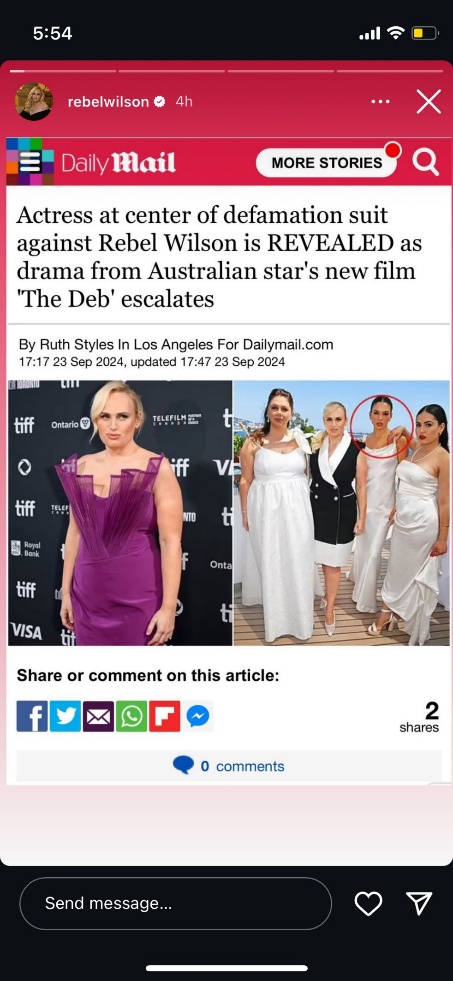
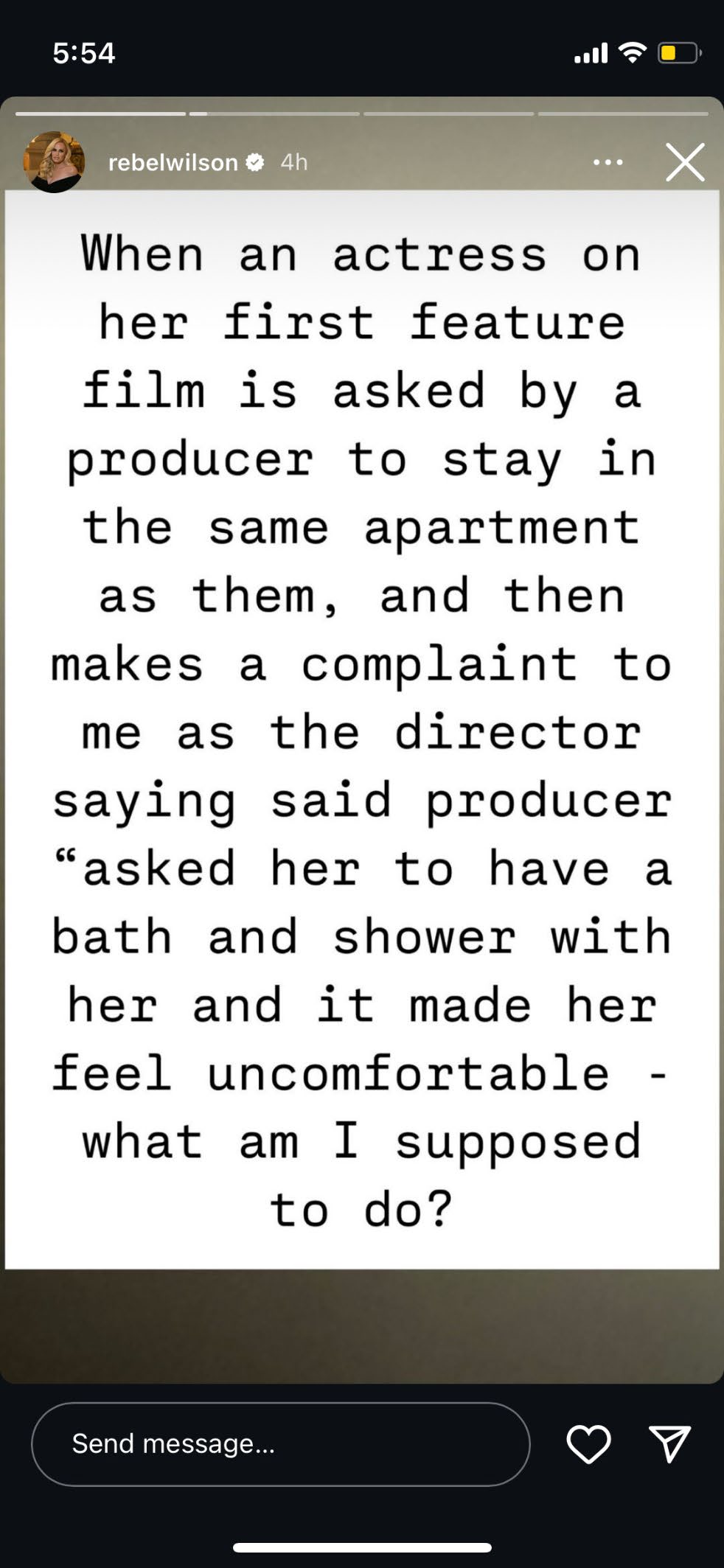
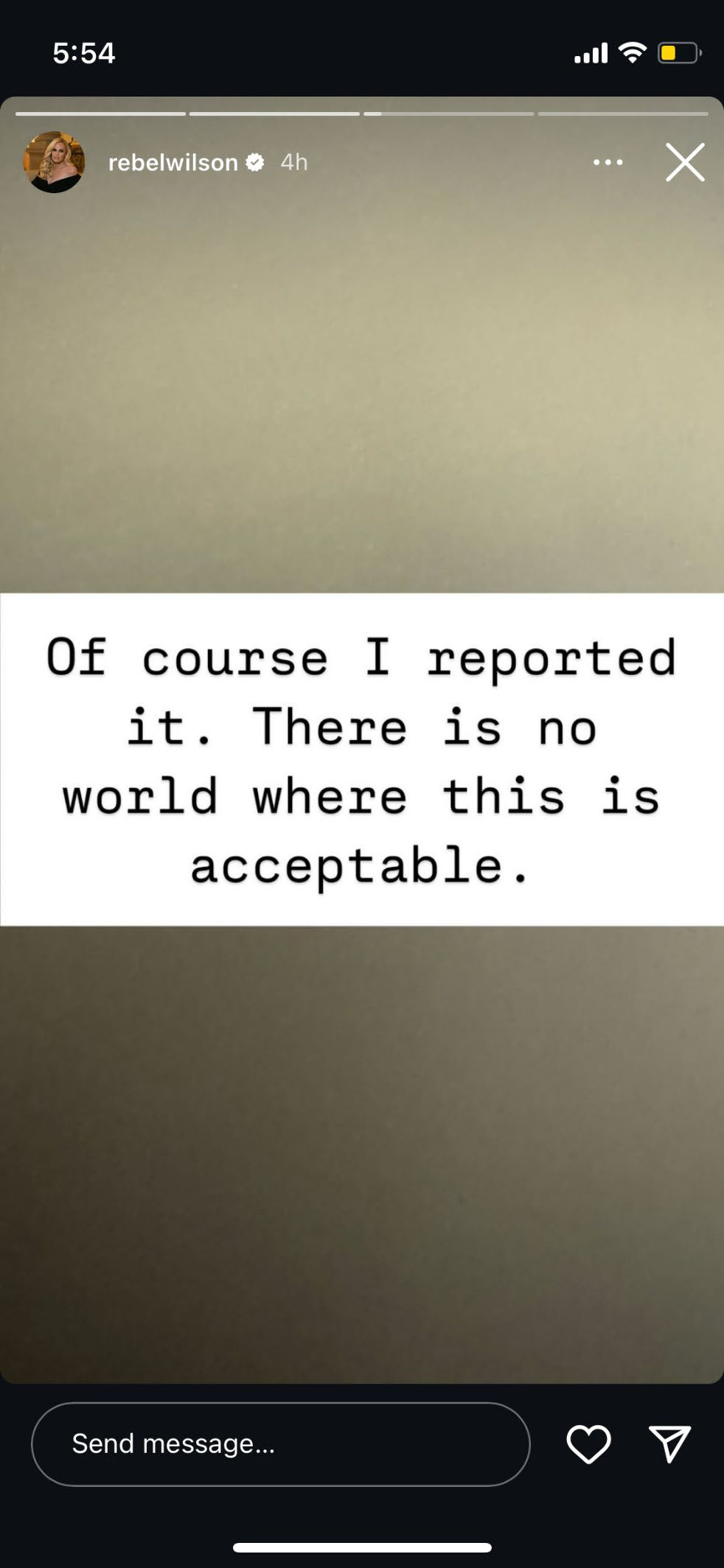
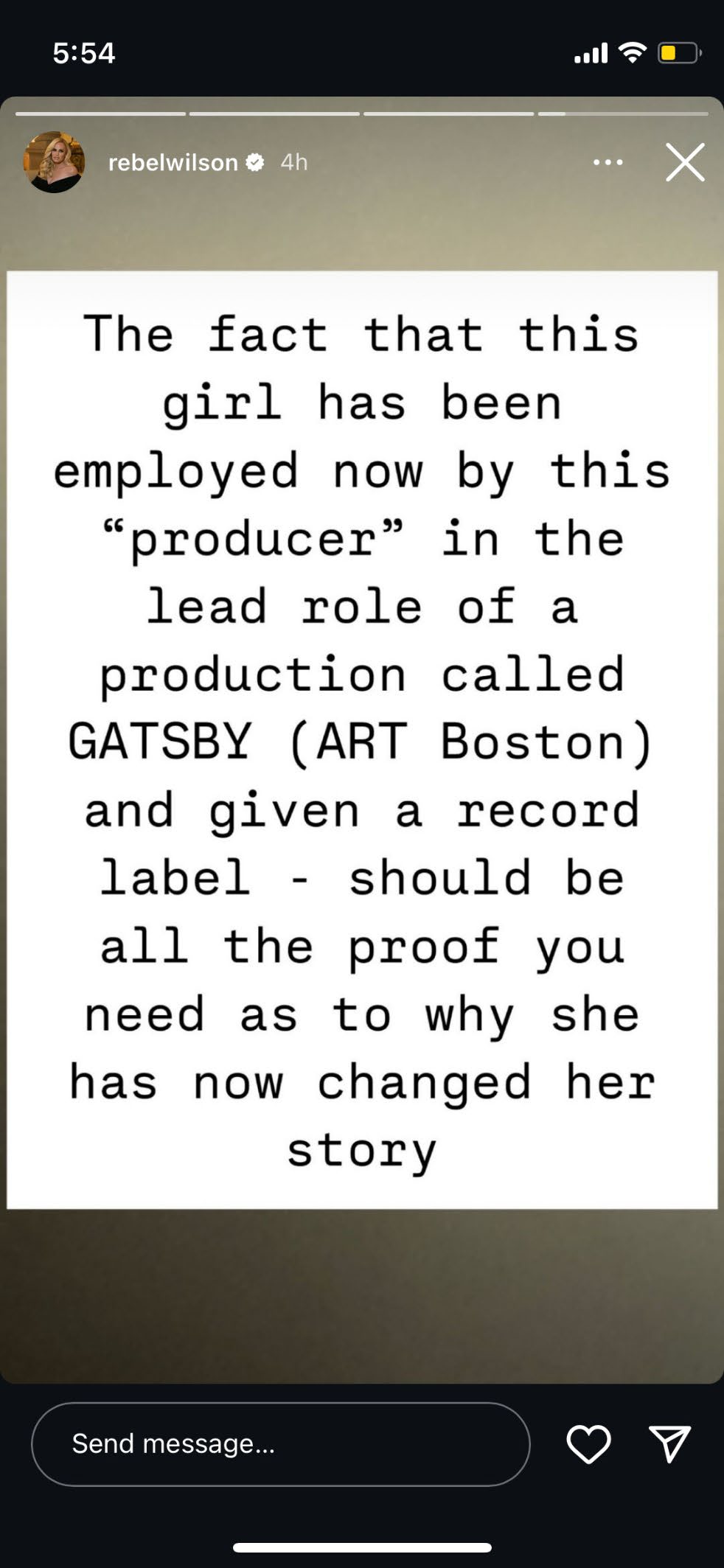
Annexure B - 16 May 2025 Post
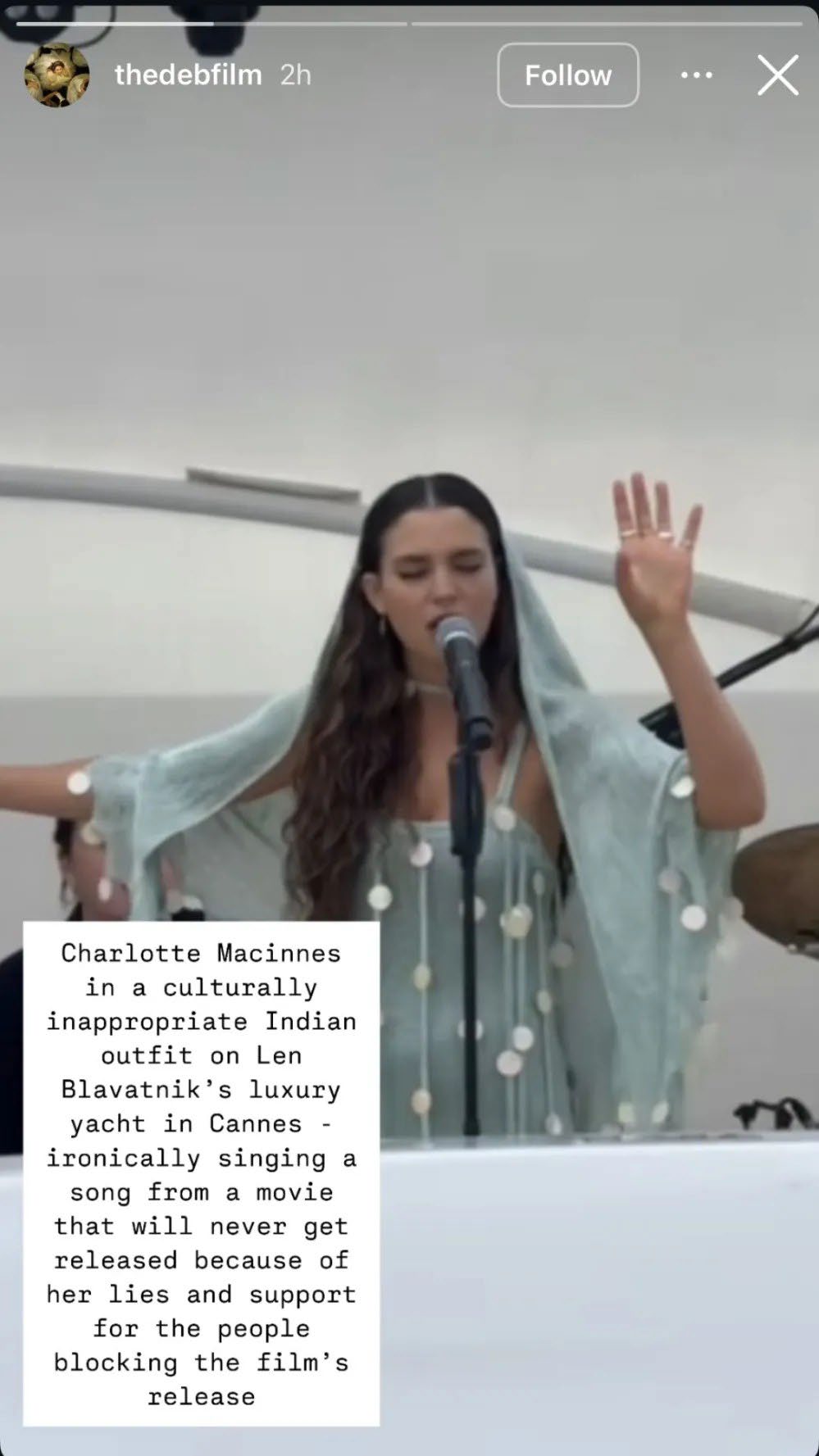
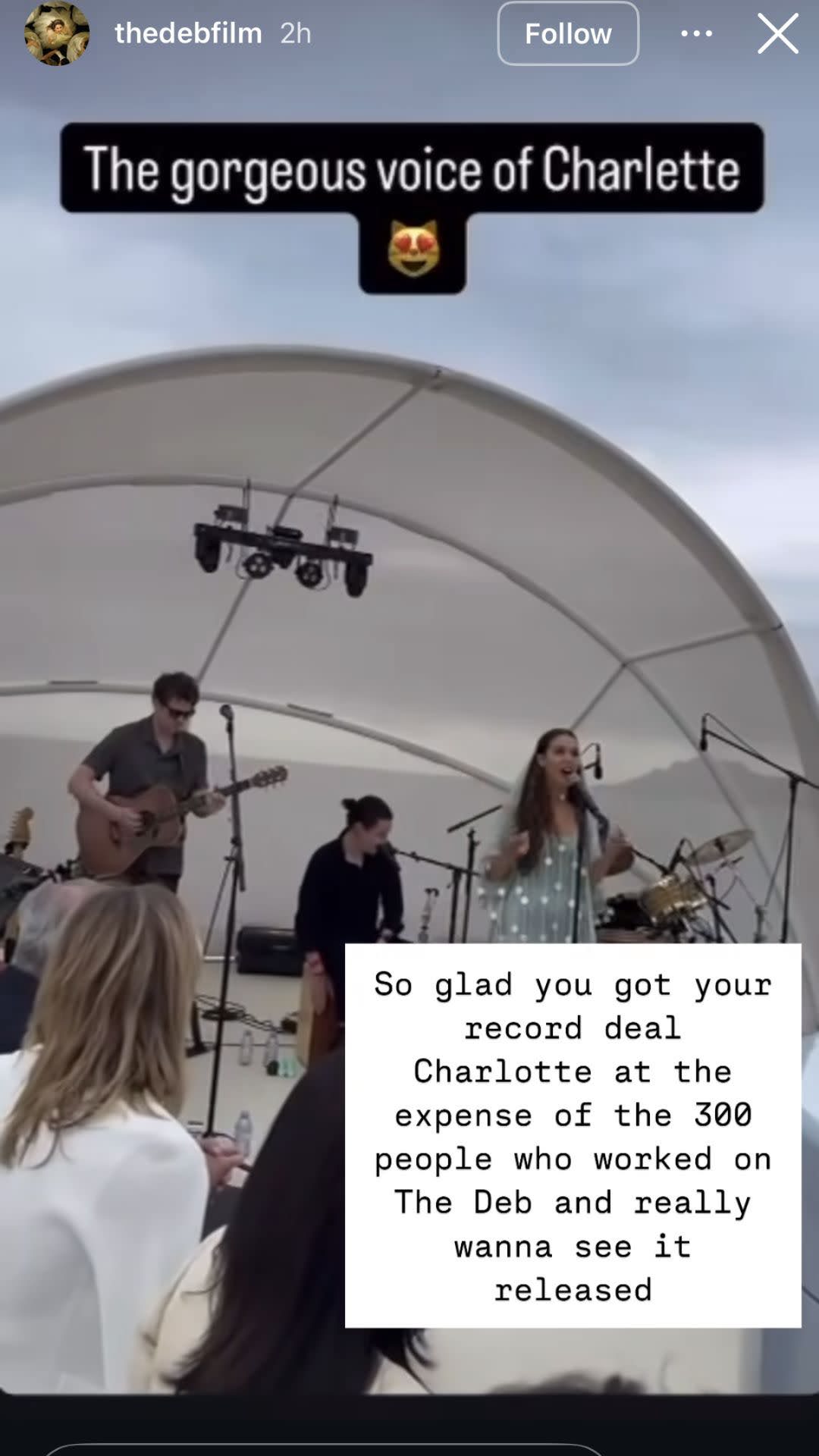
Annexure C - Further May 2025 Post
The Further May 2025 Post is in video form and is set in a recording studio. The video initially depicts Ms Ghost mouthing the words to a song that Ms MacInnes is singing in a dramatised way and then pans to Ms MacInnes singing.
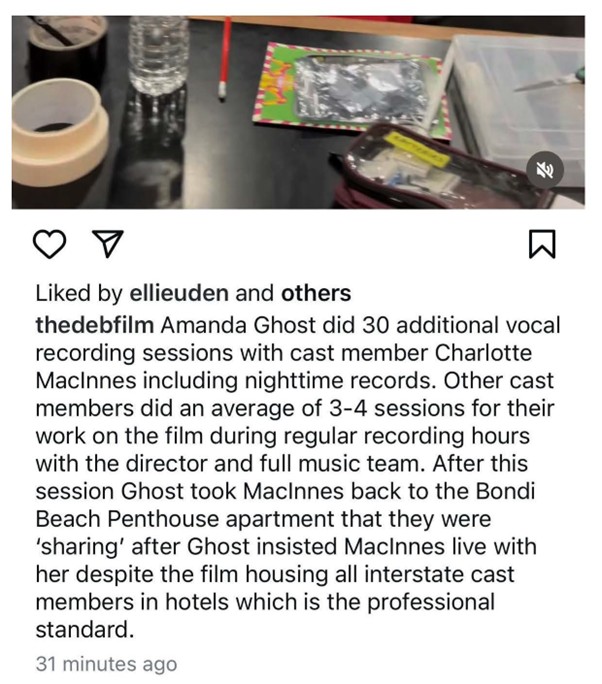
Annexure D - 25 July 2025 Post