

Federal Court of Australia
Matrix Composites & Engineering Ltd, in the matter of Matrix Composites & Engineering Ltd (No 2) [2026] FCA 915
File number: | WAD 157 of 2026 |
Judgment of: | JACKSON J |
Date of judgment: | 13 July 2026 |
Catchwords: | CORPORATIONS – scheme of arrangement – application for approval of scheme under s 411(4)(b) of the Corporations Act 2001 (Cth) – acquisition of 100% of shares in plaintiff in return for cash consideration – scheme approved by necessary majorities of shareholders – orders made approving scheme |
Legislation: | Corporations Act 2001 (Cth) ss 411, 412, 1322, Ch 6 |
Cases cited: | Fowler v Lindholm [2009] FCAFC 125; (2009) 178 FCR 59 Re Amcor Limited (No 2) [2019] FCA 842 Re Asaleo Care Limited (No 2) [2021] FCA 636 Re AWA Mutual Limited (No 2) [2024] FCA 104 Re Cirrus Networks Holdings Ltd (No 2) [2023] NSWSC 1436 Re Damstra Holdings Limited [2024] NSWSC 425 Re DDH1 Limited (No 3) [2023] FCA 1153 Re Essential Metals (No 2) [2023] FCA 1306 Re Matrix Composites & Engineering Ltd [2026] FCA 705 Re ThinkSmart Limited (No 2) [2022] FCA 1414 |
Division: | General Division |
Registry: | Western Australia |
National Practice Area: | Commercial and Corporations |
Sub-area: | Corporations and Corporate Insolvency |
Number of paragraphs: | 42 |
Date of hearing: | 13 July 2026 |
Counsel for the Plaintiff: | Dr R Collins |
Solicitor for the Plaintiff: | Gilbert + Tobin |
Counsel for the Interested Party: | Mr G Ahern |
Solicitor for the Interested Party: | MinterEllison |
ORDERS
WAD 157 of 2026 | ||
IN THE MATTER OF MATRIX COMPOSITES & ENGINEERING (ACN 009 435 250) | ||
MATRIX COMPOSITES & ENGINEERING LTD (ACN 009 435 250) Plaintiff | ||
ADVANCED INNERGY HOLDINGS LIMITED (ACN 687 262 479) Interested Party | ||
order made by: | JACKSON J |
DATE OF ORDER: | 13 JULY 2026 |
THE COURT ORDERS THAT:
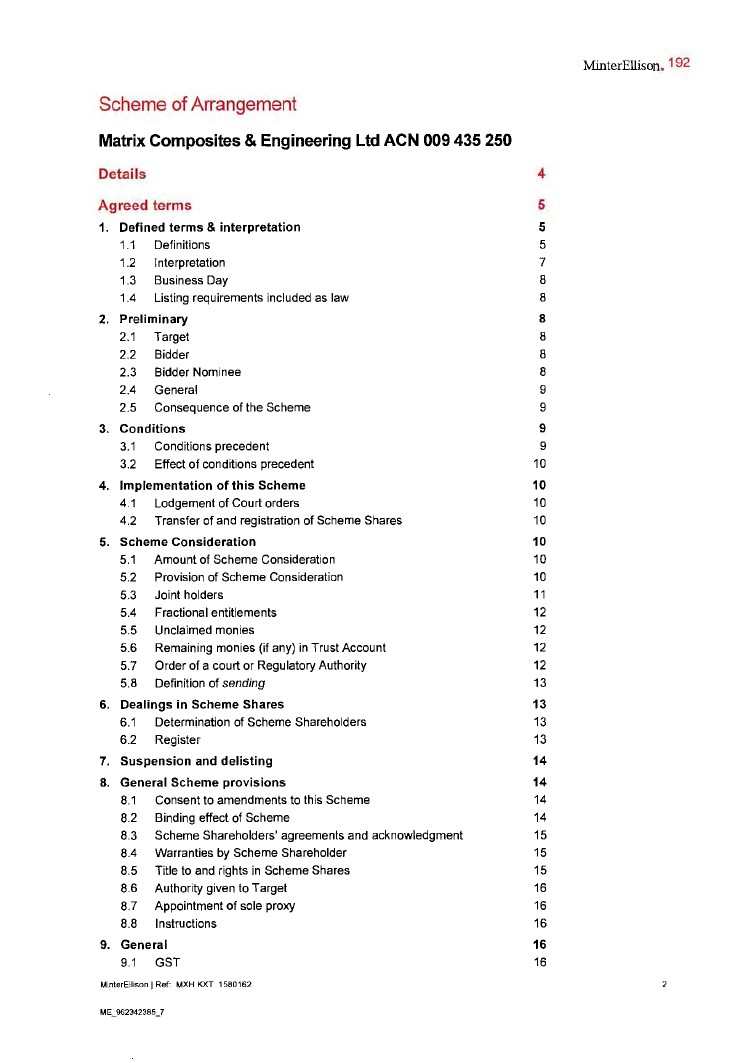
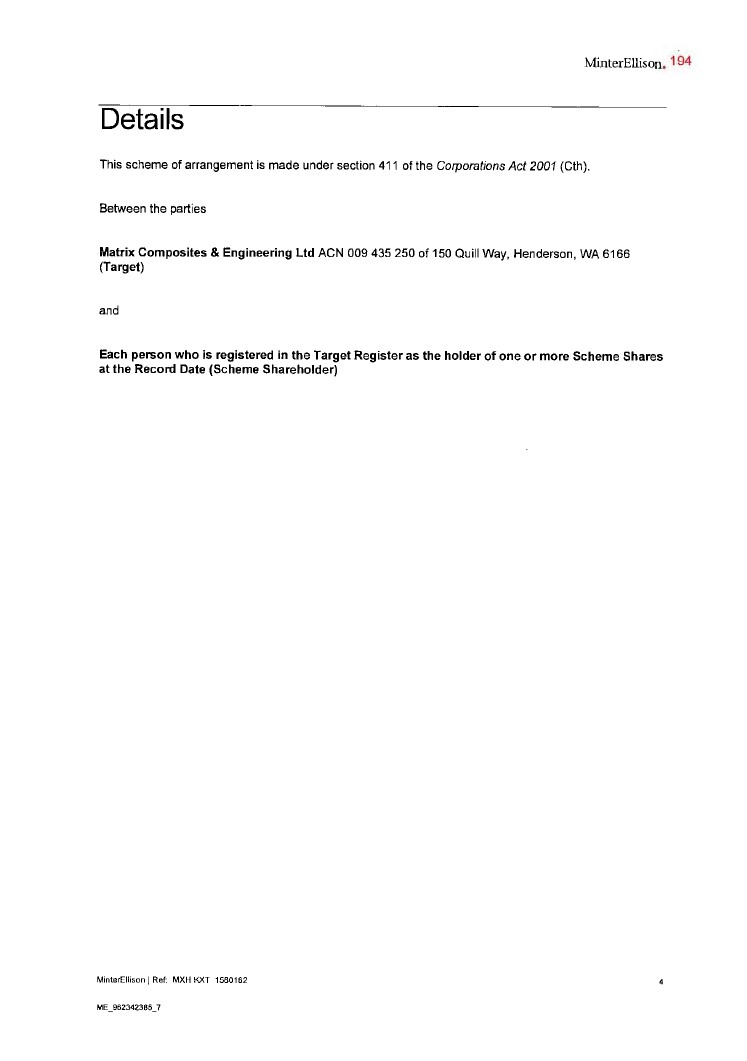
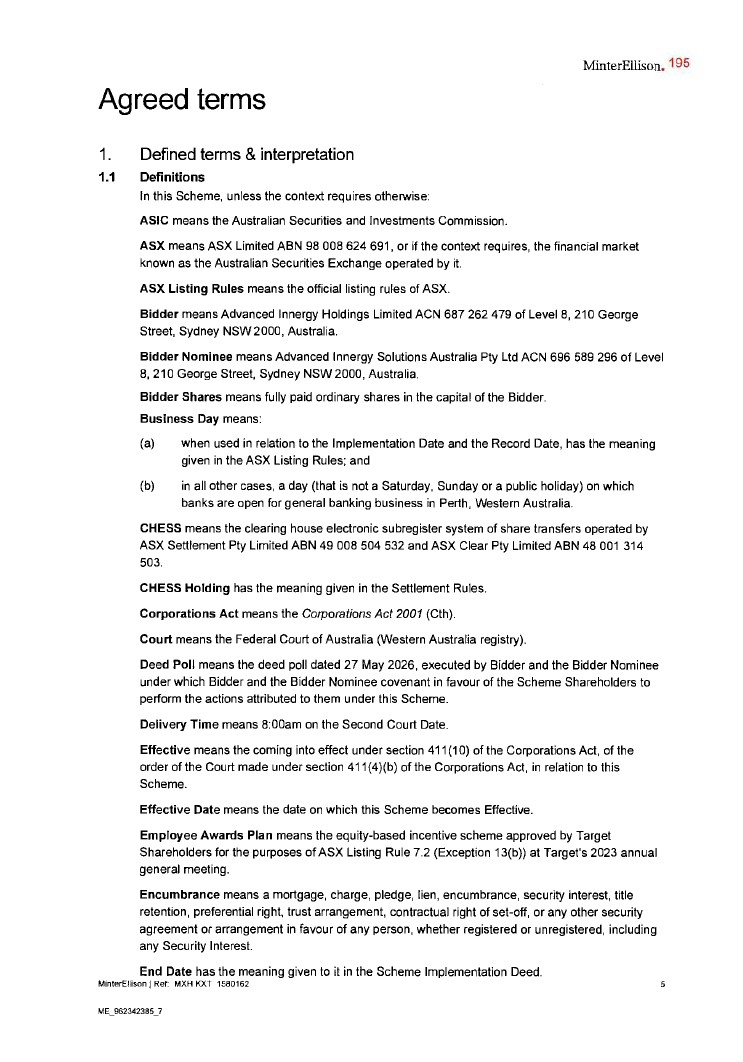
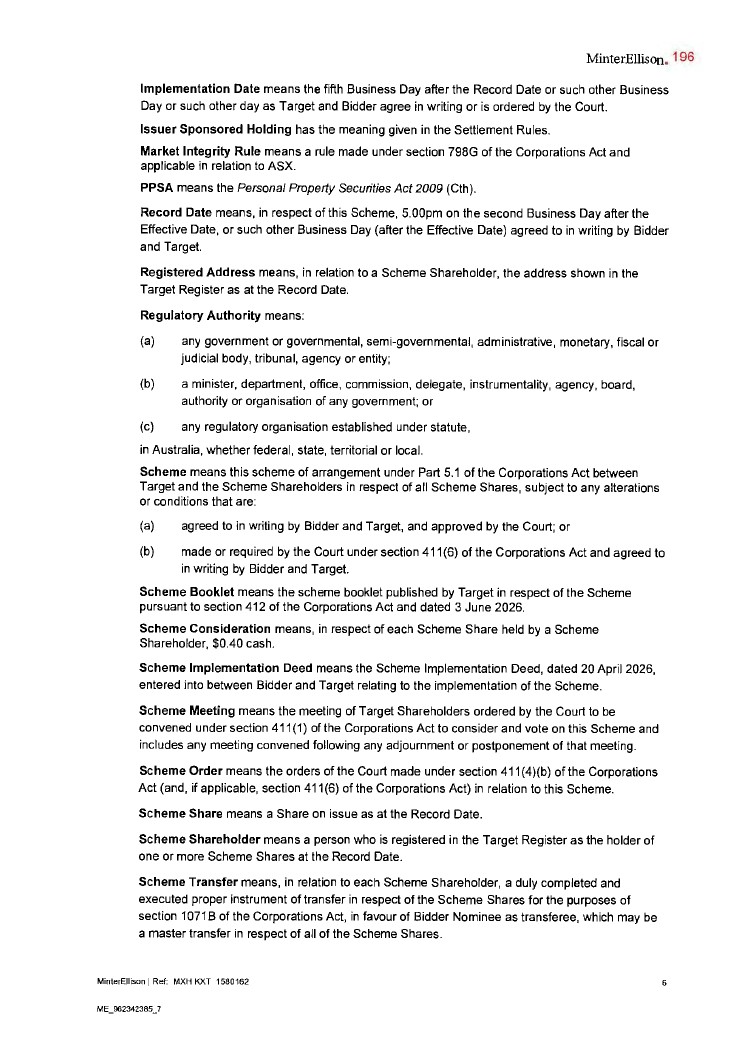
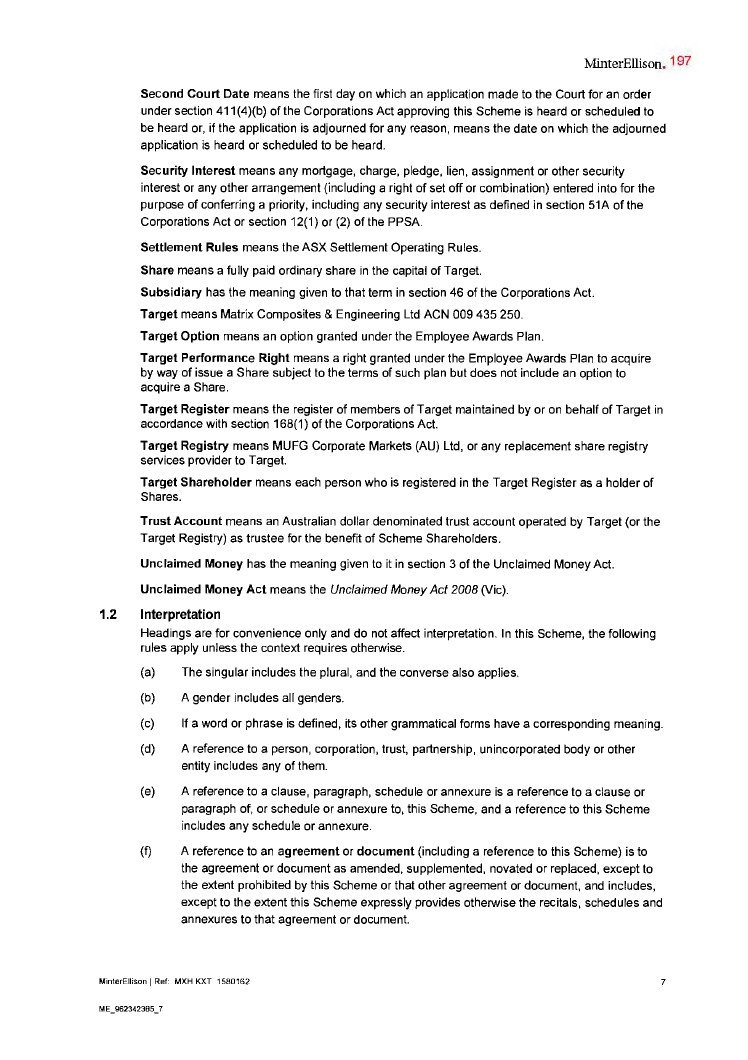
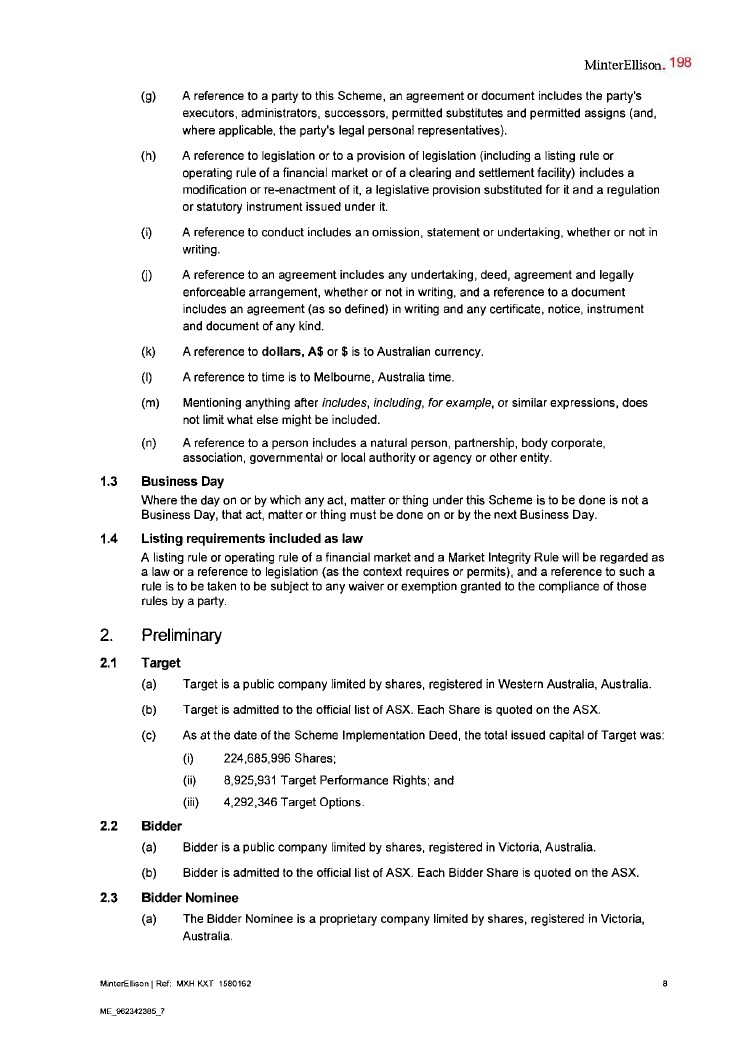
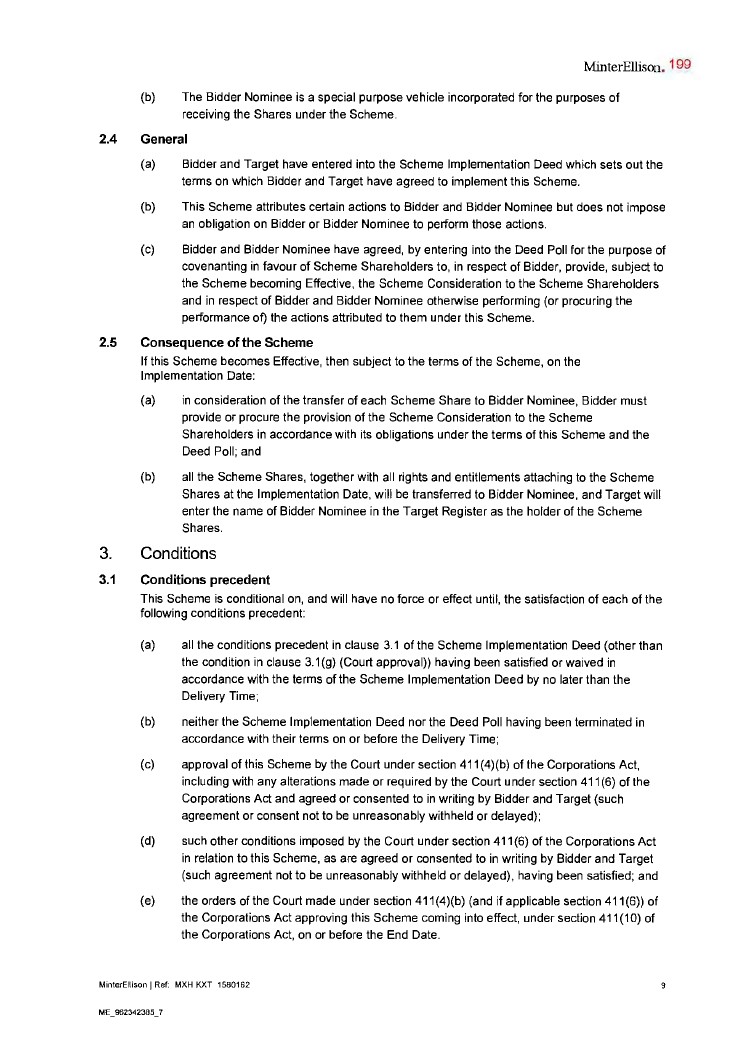
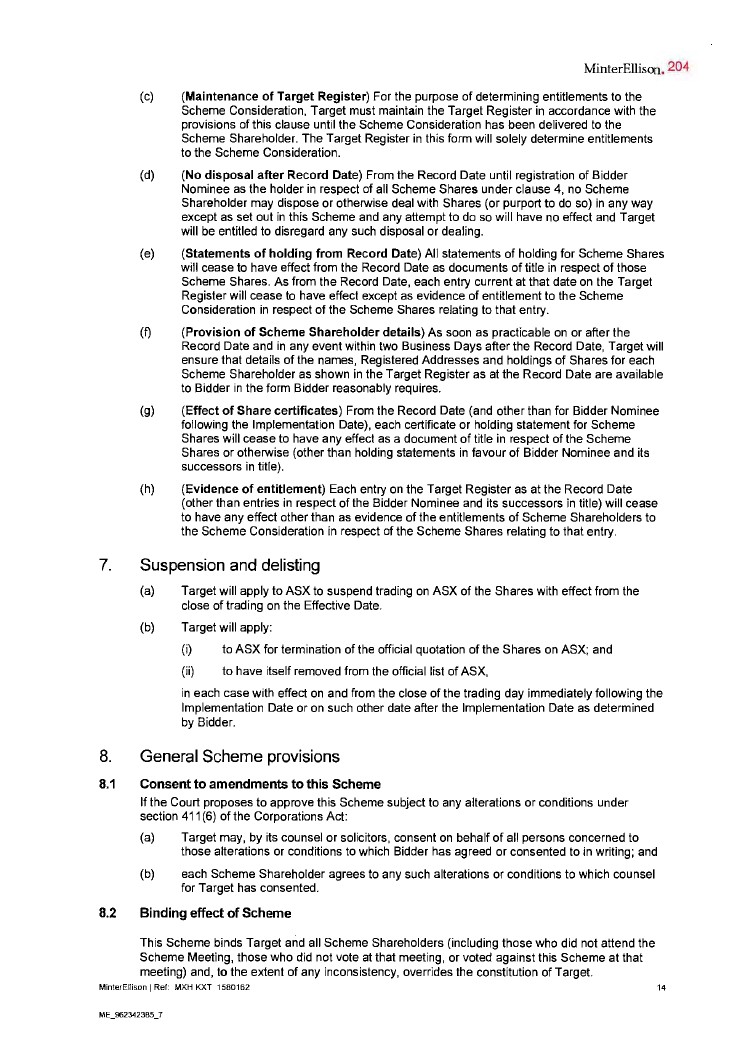
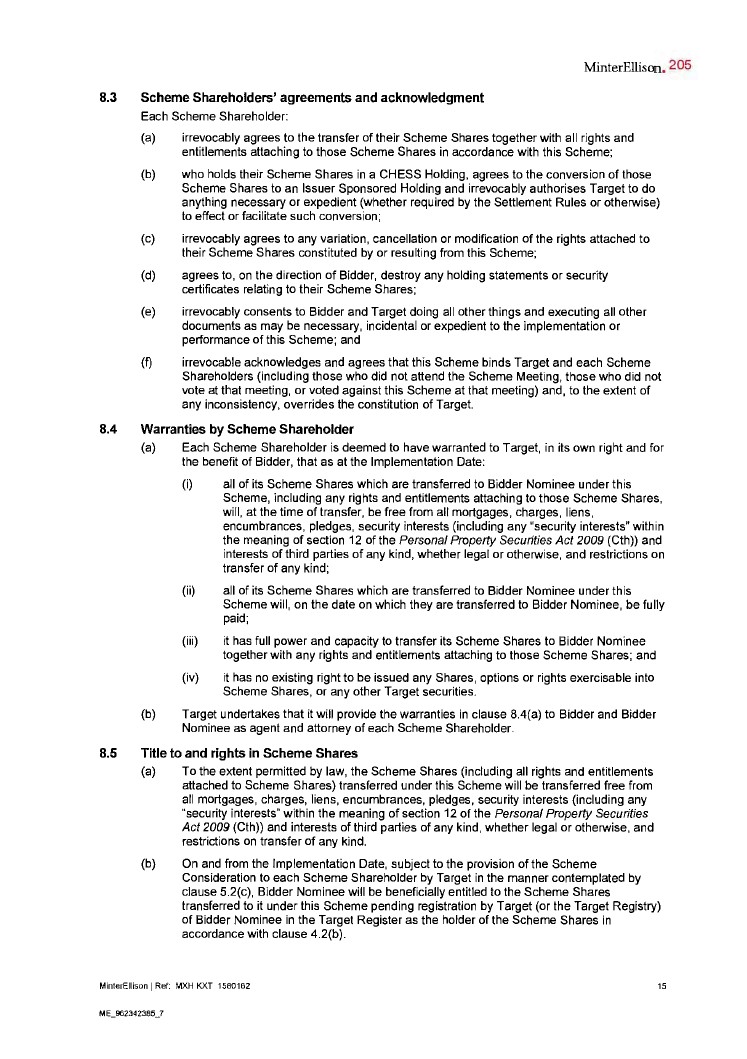
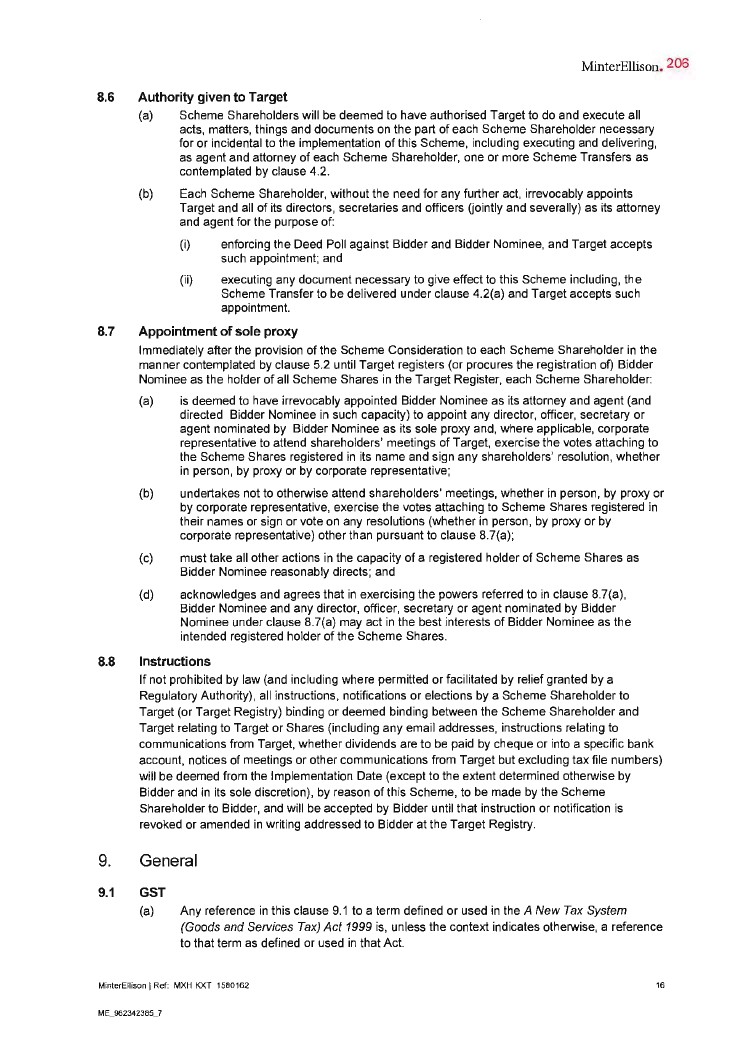
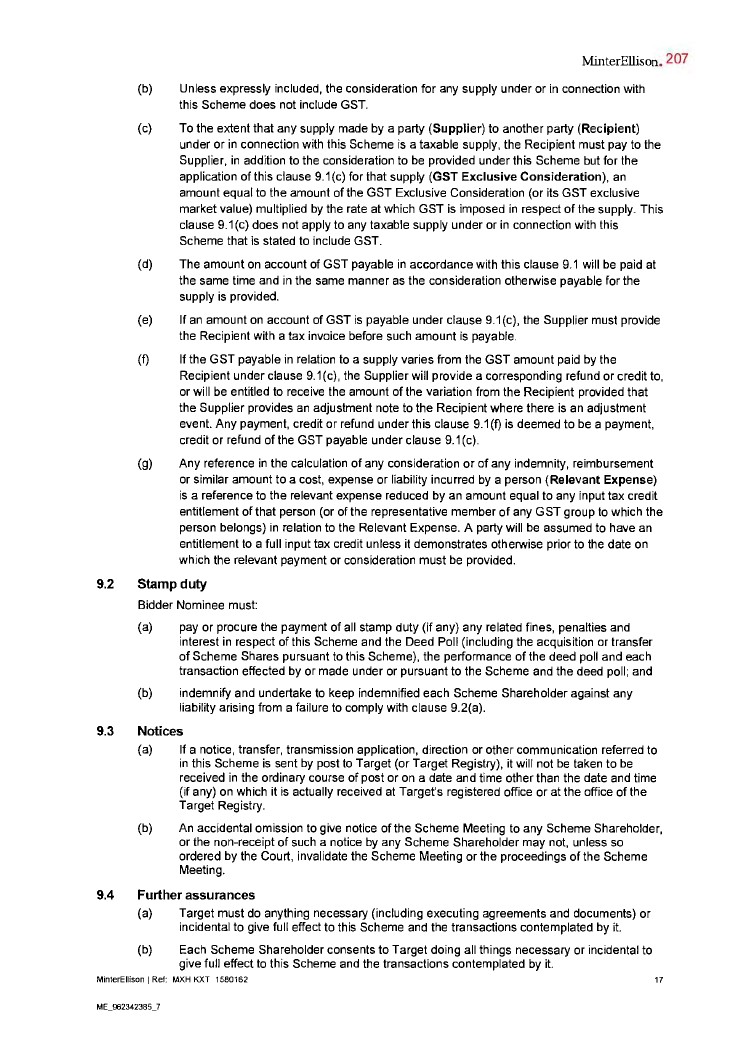
1. Pursuant to s 411(4)(b) of the Corporations Act 2001 (Cth), the scheme of arrangement between the plaintiff and the holders of fully paid ordinary shares in the capital of the plaintiff (Scheme), in the form contained at pages 191-208 of the affidavit of Peter John Hood AO sworn on 7 July 2026, a copy of which is Annexure A to these orders, is approved.
2. Pursuant to s 411(12) of the Corporations Act, the plaintiff is exempted from compliance with s 411(11) of the Corporations Act in respect of the Scheme.
3. The plaintiff must lodge an office copy of these orders with the Australian Securities and Investments Commission by 5.00 pm AWST on 14 July 2026.
Note: Entry of orders is dealt with in Rule 39.32 of the Federal Court Rules 2011.
ANNEXURE A

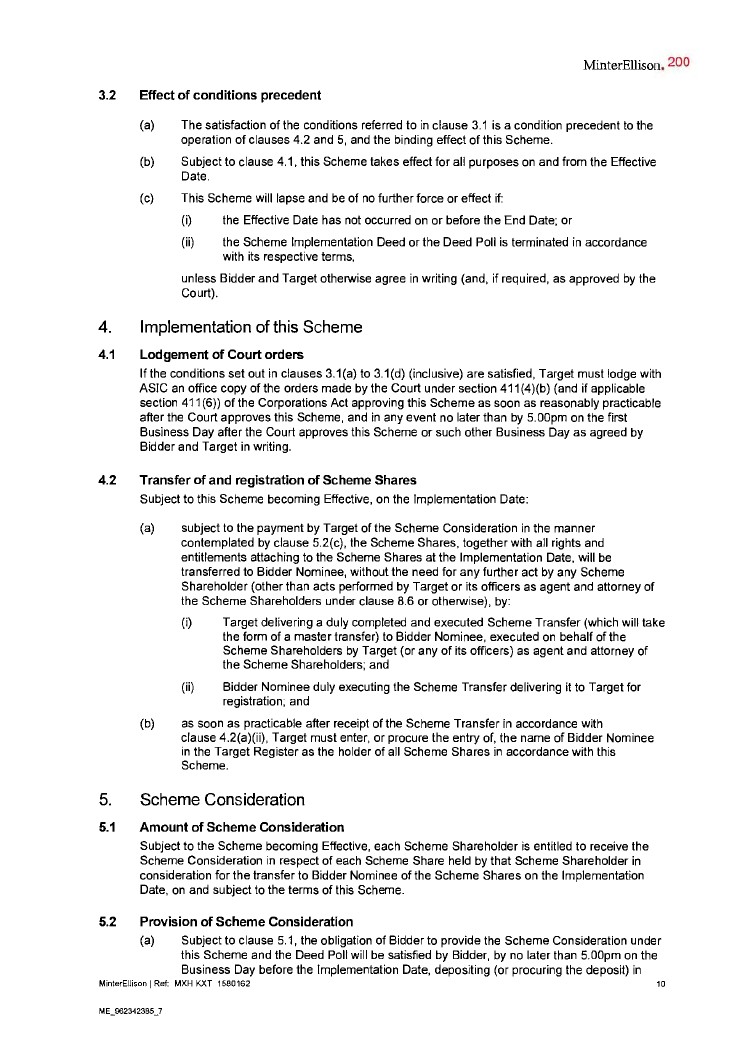
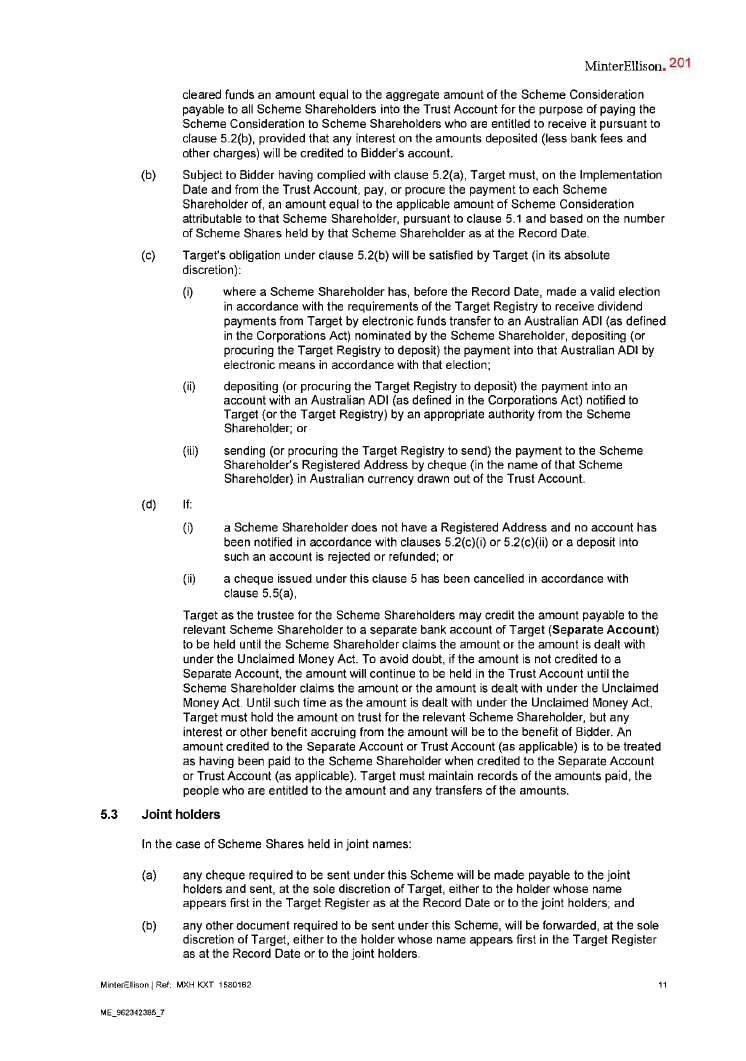
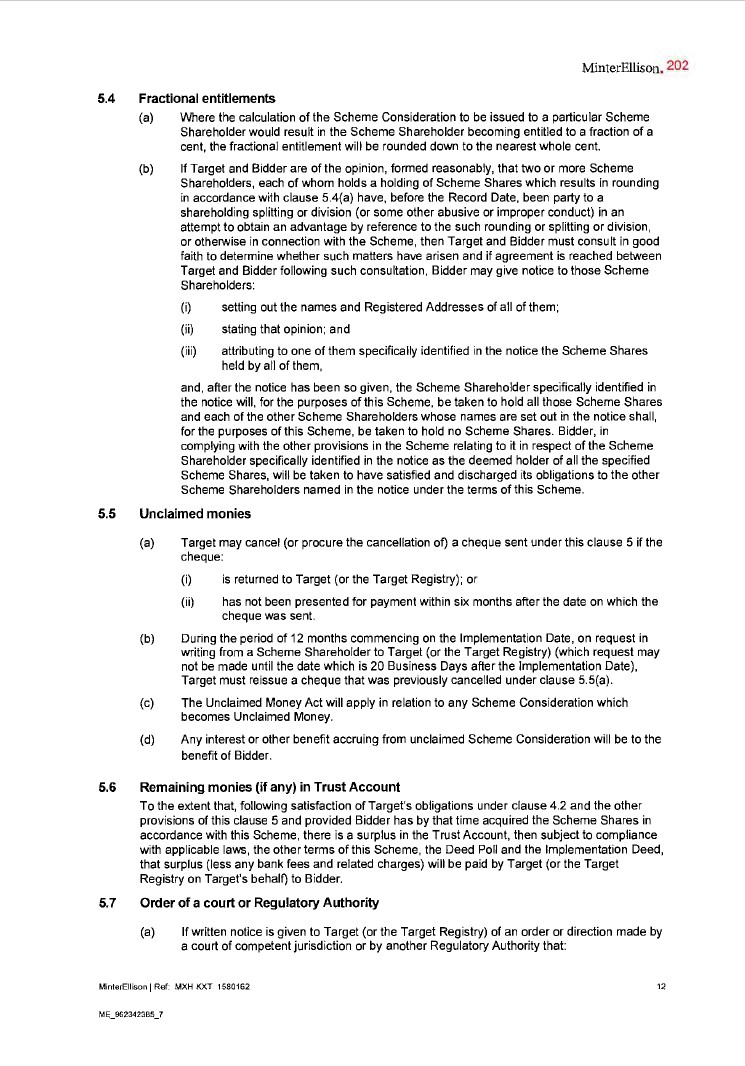
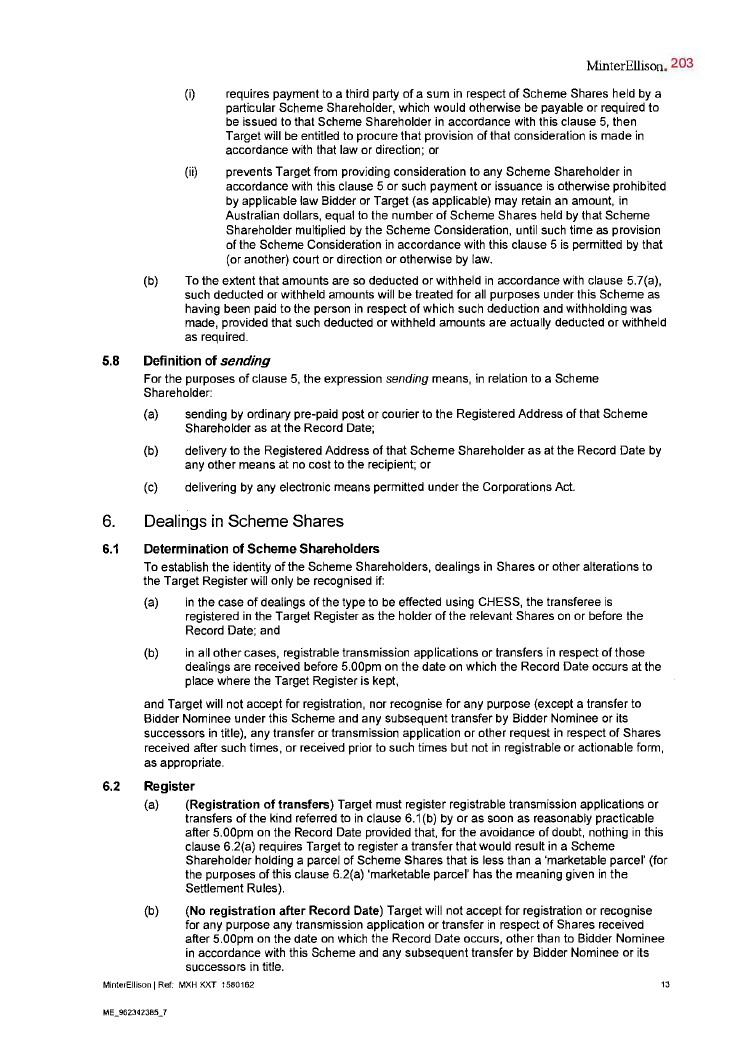
REASONS FOR JUDGMENT
JACKSON J:
1 On 3 June 2026, I made orders (Meeting Orders) convening a meeting of the shareholders of the plaintiff, Matrix Composites & Engineering Ltd (Scheme Meeting), for the purpose of considering and voting on whether to approve a scheme of arrangement (Scheme): Re Matrix Composites & Engineering Ltd [2026] FCA 705 (Matrix (No 1)).
2 In broad terms, the Scheme provides for the acquisition of 100% of the shares in Matrix by Advanced Innergy Holdings Limited (AIH), through its wholly owned subsidiary, Advanced Innergy Solutions Australia Pty Ltd (AIH Nominee). As consideration, each Matrix shareholder will receive $0.40 in cash for each share they hold on the record date (currently expected to be 5.00 pm AWST on 16 July 2026). The maximum aggregate Scheme consideration payable by AIH Nominee to Scheme shareholders will be approximately $93.4 million. Approximately $500,000 will also be needed as consideration for the cancellation of certain Matrix options that are on issue, although strictly speaking this will not form part of the Scheme consideration.
3 The Scheme Meeting was held on 6 July 2026. Matrix shareholders approved the Scheme by the requisite statutory majorities.
4 On 13 July 2026, the second hearing for approval of the Scheme pursuant to s 411(4)(b) of the Corporations Act 2001 (Cth) was held. No person sought leave to appear to oppose approval. I made orders approving the Scheme on that date. These are the reasons for those orders.
Materials relied on
5 In addition to the material adduced at the first hearing, Matrix relied on the following affidavits:
(a) affidavit of Peter John Hood AO, independent non-executive chairman of Matrix, sworn on 7 July 2026 (save for [32] of that affidavit, which was not read into evidence at the hearing); and
(b) third affidavit of Matrix’s solicitor, Ryan John Gava, affirmed on 13 July 2026.
Requirements for approval of a scheme of arrangement
6 Under s 411(4) of the Corporations Act, a scheme of arrangement will be binding on shareholders if, and only if, a resolution approving it is passed by the requisite statutory majorities at the scheme meeting, and the scheme is approved by order of the Court.
7 The principles governing the Court’s role in approving a scheme of arrangement under s 411(4)(b) of the Corporations Act are well-established. I adopt, without repeating, the summary of the relevant principles given in Re Essential Metals (No 2) [2023] FCA 1306 at [6]-[11].
8 The Court ultimately has a discretion as to whether to approve a scheme of arrangement. The exercise of that discretion will be informed by the Court’s assessment of whether the scheme is fair and reasonable, in the sense that an intelligent and honest shareholder, who is a member of the relevant class, and acting alone in respect of their interests as shareholder, might approve it. The Court relies on counsel to bring to its attention any matters that could be relevant to the exercise of the discretion.
9 The range of matters that guide the Court’s exercise of discretion are set out in the passage from Essential Metals (No 2) to which I have just referred. These are addressed below, following consideration of relevant procedural matters and other prerequisites to the Scheme’s effective implementation.
Procedural matters and other prerequisites
ASIC lodgement
10 Mr Hood’s affidavit states that a copy of the Meeting Orders were lodged with the Australian Securities and Investment Commission (ASIC) on 3 June 2026, and that on 4 June 2026 ASIC registered the Scheme Booklet and provided a stamped copy of the registered Scheme Booklet. The registration of the Scheme Booklet prior to its circulation to shareholders satisfies the prerequisite in s 412(6) of the Corporations Act.
Dispatch of the Scheme materials to shareholders
11 Notice of the Scheme Meeting, the Scheme Booklet, and other materials required to be distributed to the shareholders by the Meeting Orders, were dispatched no later than 5 June 2026 (being the time required for dispatch by the orders) by MUFG Corporate Markets (AU) Limited, Matrix’s share registry service provider. A small number of emails (four in total) returned delivery failure notifications (bounce-back shareholders).
12 In addition, Mr Hood’s affidavit says that, prior to the day on which the Meeting Orders were made and prior to the dispatch of the Scheme materials referred to above, MUFG identified 42 shareholders whose nominated email address had previously returned a ‘bounce-back’ notification to email broadcasts sent by MUFG, or who otherwise had an ‘invalid’ email address recorded in the share register (drop-off shareholders). On 10 June 2026, the Scheme materials were dispatched by post to those drop-off shareholders as part of a second planned mailout.
13 On 24 June 2026, as part of a third planned mailout, MUFG caused the Scheme materials to be dispatched by post to each of the bounce-back shareholders. The delay in dispatch was attributed to a 72-hour mail server waiting period and a public holiday on 8 June 2026, which meant that there was insufficient time to prepare the Scheme materials to be dispatched to the bounce-back shareholders as part of the planned mailout of 10 June 2026. No explanation was given as to why dispatch was further delayed for the intervening period of 14 days, other than that the third mailout was already planned for 24 June 2026.
14 Although not required by the Meeting Orders, the Scheme materials were also dispatched by post on 10 and 24 June 2026 respectively, to a total of 15 new Matrix shareholders who were recorded on the Matrix’s register of members between the ‘Register Time’ (being 5.00 pm AWST on 27 May 2026) and 5.00 pm AWST on 19 June 2026.
15 The manner in which the Scheme materials were dispatched to the drop-off shareholders and bounce-back shareholders meant that Matrix did not strictly comply with the Meeting Orders. They required the Scheme materials to be dispatched to all shareholders who had nominated to receive the materials by email broadcast by 5 June 2026 (para 4), with materials to be dispatched by post within a reasonable time after receiving any return of a receipt or notice that the email was undelivered (para 6).
16 Matrix submits, and I accept, that had the Scheme materials been dispatched by email to the drop-off shareholders in strict compliance with paragraph 4(a) of the Meeting Orders, it is likely they would have been unable to be delivered, and each drop-off shareholder would have become a bounce-back shareholder for the purposes of paragraph 6. The Scheme materials were dispatched to the drop-off shareholders by post, consistently with the object of paragraph 6 of the Meeting Orders. The materials were dispatched to those shareholders 23 days prior to the proxy return date and 25 days prior to the Scheme Meeting.
17 The dispatch of the Scheme materials to the bounce-back shareholders by post occurred 10 days prior to the voting return date and 12 days prior to the Scheme Meeting. As has been said, no explanation was given for the length of delay between 10 June 2026 and the 24 June 2026. I doubt that 14 days is a reasonable delay in the circumstances, but even assuming that it is not, I considered the irregularity to be a procedural one that did not cause substantial injustice.
18 Even if each of the four bounce-back shareholders had voted against the resolution, there would have been no difference to the result since, as is discussed below, the Scheme passed overwhelmingly. While 24 June 2026 is significantly later than the date on which the Scheme materials would have been dispatched to the relevant shareholders by email had they not been undeliverable, the Scheme Booklet was made available to shareholders online via the Australian Securities Exchange (ASX) and Matrix’s website on 4 June 2026, and notice of the Scheme Meeting was made via the ASX on 23 June 2026. There was no reason to think that the shareholders did not ultimately receive the Scheme materials, and while a shorter period than was required by the Meeting Orders of the Act, ten days was still sufficient to consider their position on a relatively simple Scheme of this kind. In any event, it can be inferred that in many cases the email bounce-backs were the result of the shareholders’ own failure to maintain email accounts or to notify Matrix of a change in email address: see Essential Metals (No 2) at [23].
19 I was therefore satisfied that these procedural irregularities did not cause substantial injustice. If they would otherwise have been capable of invalidating the result of the Scheme Meeting, that consequence is avoided as a result of the operation of s 1322 of the Corporations Act: see Re AWA Mutual Limited (No 2) [2024] FCA 104 at [25]-[27] (Anderson J); Re Damstra Holdings Limited [2024] NSWSC 425 at [10] (Black J).
Advertising the second court hearing
20 In accordance with the Meeting Orders, an announcement of the time and date of the second court hearing for the approval of the Scheme was published on the ASX announcements platform on 23 June 2026.
The Scheme Meeting
21 As has been said, the Scheme Meeting took place on 6 July 2026. Mr Hood acted as the chairperson and gave evidence in his affidavit that the meeting was conducted in accordance with the Meeting Orders.
22 An overwhelming majority of Matrix shareholders who voted at the Scheme Meeting voted in favour of the Scheme resolution (at 93.94%). The requirement in s 411(4)(a)(ii)(A) was therefore met. The resolution was approved by 99.84% of eligible votes cast, with the balance of 0.16% voting against it. The requirement in s 411(4)(a)(ii)(B) of the Corporations Act that a resolution be passed by 75% or more votes was also therefore met, overwhelmingly.
23 In total, approximately 75.22% of the Matrix shares on issue were voted on by 8.39% of shareholders by headcount. A voter turnout of less than 10% could be considered fairly low: Re Asaleo Care Limited (No 2) [2021] FCA 636 at [20] (Banks-Smith J). But, in itself, that is not necessarily a reason to refuse to exercise the discretion to approve a scheme. I was satisfied that the relatively low voter turnout was not caused by any deficiency in notice or any other matter that could have deterred voters from attending or voting at the Scheme Meeting: see discussion in Essential Metals (No 2) at [33]-[37].
24 From evidence in Mr Hood’s affidavit the headcount turnout figure for the Scheme Meeting appears to have exceeded participation at Matrix’s three most recent annual general meetings. And for the same reasons that I was satisfied that procedural irregularities in the dispatch of Scheme materials to the bounce-back shareholders and the drop-off shareholders did not cause substantial injustice, I was satisfied that those irregularities could not have resulted in a deficiency of notice capable of impacting headcount turnout.
25 For those reasons, I did not consider that the relatively low turnout of shareholders, measured by headcount, was any reason not to approve the Scheme.
No objection from ASIC
26 A letter from ASIC in standard form indicating that ASIC has no objection to the Scheme was annexed to Mr Gava’s third affidavit, satisfying the prerequisite to Court approval under s 411(17) of the Corporations Act. The Court’s consideration under s 411(17)(a) of whether the Scheme has been proposed to avoid the operation of the takeovers provisions in Ch 6 of the Act was therefore not required.
Conditions precedent
27 Mr Gava’s third affidavit also annexes two certificates verifying that all the conditions precedent in the Scheme Implementation Deed (SID) that were required to be satisfied by the second hearing for the Scheme to become effective had been satisfied or waived. The first certificate, executed by Matrix and AIH, is conditional on the second certificate, executed by Matrix, and both certificates are conditional on a third certificate to be provided by AIH to Matrix, confirming whether or not it has breached any of its obligations under the SID, and, if it has, giving details of such breach. This third certificate is not in evidence, however Mr Hood’s affidavit says that he is not aware of any fact, matter or circumstance that has resulted in, or is likely to result in, the failure of any of the conditions precedent. The only outstanding condition precedent is clause 3.1(d), the Court’s approval of the Scheme.
The exercise of the discretion
28 I was satisfied that there was no reason not to approve the Scheme. As indicated in Matrix (No 1), there was nothing to suggest that the Scheme was proposed other than in good faith and for a straightforward commercial purpose (see [38]). There was also no differential treatment between shareholders and no evidence of minority oppression (see [21]-[27]). Nothing has been brought to the Court’s attention to suggest that these assessments should be disturbed. There has been no indication that the shareholders have not voted in good faith and for a proper purpose. There was also no reason to suppose that the Scheme offended any aspect of public policy.
29 There has not been any change in opinion by the independent expert, BDO Corporate Finance Australia Pty Ltd. BDO concluded that the proposed Scheme was fair and reasonable and in the best interests of shareholders in the absence of a superior offer. No superior or competing proposal, as defined in the SID, had emerged by the time of the Scheme Meeting or by the time of the second hearing.
30 In a context where I already found in Matrix (No 1) that there was satisfactory disclosure of the independent expert opinion in the Scheme Booklet (see [37]), I was satisfied that the shareholders were sufficiently informed of this when they cast their votes to approve the Scheme: see Essential Metals (No 2) at [45]-[47]. The Scheme was a proposal which an intelligent and honest shareholder, properly informed and acting alone might approve: see Fowler v Lindholm [2009] FCAFC 125; (2009) 178 FCR 593 at [79] (Emmett, Gordon and Jagot JJ). The shareholders’ approval is prima facie evidence that the Scheme is fair: Re Amcor Limited (No 2) [2019] FCA 842 at [11] (Beach J). In this case, as has been noted, an overwhelming majority of shares were voted in favour of the Scheme.
Full and fair disclosure to shareholders
31 In Matrix (No 1), I was satisfied that the Scheme Booklet would give suitable disclosure to shareholders of the advantages and disadvantages of the Scheme and its potential benefits and risks to enable the shareholders to vote at the Scheme Meeting on an informed basis (see [28]-[33]).
32 I was satisfied that since the first hearing, nothing had occurred that changed that conclusion about the adequacy of disclosure to shareholders.
33 Mr Hood’s affidavit contains summary evidence concerning communications with shareholders through an inbound shareholder communication line, established following the first hearing and maintained by MUFG. MUFG staff were provided with a pre-approved script based on information contained in the ‘Frequently Asked Questions’ section of the Scheme Booklet, from which staff were instructed not to deviate. A copy of that script was provided to ASIC, which did not provide any comments.
34 The procedures for establishing and operating this line were outlined to me prior to the first hearing, and I was satisfied they were appropriate.
35 While nothing untoward emerged from any of the calls made by shareholders to that line, Matrix drew my attention to two matters concerning direct communication to shareholders following the dispatch of the Scheme materials.
36 The first concerned an instance of direct communication by MUFG to a Matrix shareholder via email, following a query from that shareholder about tax residency declaration in connection with the Scheme. In its communication, MUFG directed the shareholder to the relevant section of the Scheme Booklet concerning disclosure.
37 The second concerned direct communication by Mr Brendan Cocks, Executive Director and Chief Financial Officer of Matrix, to a total of 21 Matrix shareholders. This was for the purposes of informing them that the Scheme Booklet was released and ready for review; that voting on the Scheme was live; and that Matrix directors recommended that Matrix shareholders vote in favour of the Scheme, in the absence of a superior proposal and subject to the independent expert’s report continuing to conclude that the Scheme is in the best interests of Matrix shareholders.
38 Mr Cocks also informed certain of those shareholders that they had been sent a letter by Matrix in relation to the Scheme (being a reference to the ‘Access Letter’ referred to in paragraph 4(c)(i) of the Meeting Orders), encouraged those shareholders to vote on the Scheme as soon as possible, and provided a link to the website on which shareholders could complete and lodge their proxy form online.
39 I was satisfied on the basis of the evidence given in Mr Hood’s affidavit about these instances of direct shareholder communication that the information provided by MUFG and Mr Cocks in the course of those communications was consistent with the disclosure made in the Scheme Booklet, and did not impact the adequacy of disclosure or undermine the integrity of the voting process at the Scheme Meeting: see Re DDH1 Limited (No 3) [2023] FCA 1153 at [5]-[10] (Colvin J).
Exemption from compliance with s 411(11) of the Corporations Act
40 Matrix seeks exemption under s 411(12) of the Corporations Act from compliance with s 411(11), which requires a copy of every order made pursuant to s 411(4)(b) of the Act to be annexed to the company’s constitution.
41 I was satisfied that, in circumstances where the Scheme will not amend Matrix’s constitution, and Matrix will become a wholly owned subsidiary of AIH Nominee upon implementation of the Scheme, there would be no utility in requiring compliance with s 411(11): see Re Cirrus Networks Holdings Ltd (No 2) [2023] NSWSC 1436 at [13] (Gleeson J); Re ThinkSmart Limited (No 2) [2022] FCA 1414 at [54].
Scheme approved
42 It was for the reasons above that I made the orders today approving the Scheme.
I certify that the preceding forty-two (42) numbered paragraphs are a true copy of the Reasons for Judgment of the Honourable Justice Jackson. |
Associate:
Dated: 13 July 2026


