

Federal Court of Australia
The Pops Group Pty Ltd as trustee for The Pool Shops Trust v Pro Pool Services Pty Ltd (No 2) [2026] FCA 912
File number: | QUD 304 of 2024 |
Judgment of: | DERRINGTON J |
Date of judgment: | 16 July 2026 |
Catchwords: | TRADE MARKS – Application for relief under s 126 of the Trade Marks Act 1995 (Cth) in respect of alleged infringement of registered marks containing the words Pool Pro – where respondent company named Pro Pool Services – whether respondent abbreviated name to Pro Pool – whether Pro Pool substantially identical with or deceptively similar to Pool Pro – assessment of damages based on the user principle – whether exemplary damages appropriate |
Legislation: | Trade Marks Act 1995 (Cth) |
Cases cited: | Accor Australia & New Zealand Hospitality Pty Ltd v Liv Pty Ltd (2017) 124 IPR 264 AG Spalding & Bros v AW Gamage Ltd (1915) 32 RPC 273 Anchorage Capital Partners Pty Ltd v ACPA Pty Ltd (2018) 259 FCR 514 Anheuser-Busch Inc v Budejovicky Budvar (2002) 56 IPR 182 Aristocrat Technologies Australia Pty Ltd v DAP Services (Kempsey) Pty Ltd (in liq) (2007) 157 FCR 564 Australian Competition and Consumer Commission v AGL South Australia Pty Ltd [2014] FCA 1369 Australian Competition and Consumer Commission v Billbusters Pty Ltd [2003] FCA 423 Australian Competition and Consumer Commission v Coles Supermarkets Australia Pty Ltd (2014) 317 ALR 73 Australian Competition and Consumer Commission v Google LLC (No 2) (2021) 391 ALR 346 Australian Competition and Consumer Commission v Reckitt Benckiser (Australia) Pty Ltd (No 5) [2016] FCA 167 Australian Competition and Consumer Commission v TPG Internet Pty Ltd (2013) 250 CLR 640 Australian Competition and Consumer Commission v TPG Internet Pty Ltd (2020) 278 FCR 450 Australian Woollen Mills Ltd v FS Walton & Co Ltd (1937) 58 CLR 641 Banque Commerciale SA (En Liqn) v Akhil Holdings Ltd (1990) 169 CLR 279 Bed Bath ‘N’ Table Pty Ltd v Global Retail Brands Australia Pty Ltd (2023) 182 IPR 393 Bed Bath ‘N’ Table Pty Ltd v Global Retail Brands Australia Pty Ltd (2025) 100 ALJR 57 C A Henschke & Co v Rosemount Estates Pty Ltd (2000) 52 IPR 42 Campomar Sociedad Limitada v Nike International Ltd (2000) 202 CLR 45 Chromagen Solar Australia Pty Ltd v First Solar Inc [2015] ATMO 45 Commonwealth v John Fairfax & Sons Ltd (1980) 147 CLR 39 ConAgra Inc v McCain Foods (Aust) Pty Ltd (1992) 33 FCR 302 E & J Gallo Winery v Lion Nathan Australia Pty Ltd (2010) 241 CLR 144 Edgetec International Pty Ltd v Zippykerb (NSW) Pty Ltd (2012) 98 IPR 1 Flexopack SA Plastics Industry v Flexopack Australia Pty Ltd (2016) 118 IPR 239 Halal Certification Authority Pty Ltd v Flujo Sanguineo Holdings Pty Ltd (2023) 300 FCR 478 Henley Arch Pty Ltd v Henley Constructions Pty Ltd (2021) 163 IPR 1 Johnson & Johnson Australia Pty Ltd v Sterling Pharmaceuticals Pty Ltd (1991) 30 FCR 326 Lewis v Australian Capital Territory (2020) 271 CLR 192 Nature’s Blend Pty Ltd v Nestle Australia Ltd (2010) 87 IPR 464 Pacific Publications Pty Ltd v IPC Media Pty Ltd (2003) 57 IPR 28 Pham Global Pty Ltd v Insight Clinical Imaging Pty Ltd (2017) 251 FCR 379 Redbubble Ltd v Hells Angels Motorcycle Corporation (Australia) Pty Ltd (2024) 303 FCR 100 Registrar of Trade Marks v Woolworths Ltd (1999) 93 FCR 365 Self Care IP Holdings Pty Ltd v Allergan Australia Pty Ltd (2023) 277 CLR 186 Seven Network (Operations) Ltd v 7-Eleven Inc [2023] FCA 608 Shell Company of Australia Ltd v Esso Standard Oil (Australia) Ltd (1963) 109 CLR 407 Smith & Nephew Plastics (Australia) Pty Ltd v Sweetheart Holding Corporation (1987) 8 IPR 285 Solahart Industries Pty Ltd v Solar Shop Pty Ltd (2011) 92 IPR 165 Southern Cross Refrigerating Co v Toowoomba Foundry Pty Ltd (1953) 91 CLR 592 Sports Warehouse Inc v Fry Consulting Pty Ltd (2010) 186 FCR 519 State Street Global Advisors Trust Company v Maurice Blackburn Pty Ltd (t/as Maurice Blackburn Lawyers) (No 2) (2021) 164 IPR 420 Stoke-on-Trent City Council v W & J Wass Ltd [1988] 1 WLR 1406 Taco Co of Australia Inc v Taco Bell Pty Ltd (1982) 42 ALR 177 The Pops Group Pty Ltd as trustee for The Pool Shops Trust v Pro Pool Services Pty Ltd [2025] FCA 136 Trident Seafoods Corp v Trident Foods Pty Ltd (2019) 143 IPR 1 Universal Music Publishing Pty Ltd v Palmer (No 2) (2021) 158 IPR 421 Wingara Wine Group Pty Ltd v T’Gallant Winemakers Pty Ltd (2012) 98 IPR 562 Winnebago Industries Inc v Knott Investments Pty Ltd (No 4) (2015) 241 FCR 271 |
Division: | General Division |
Registry: | Queensland |
National Practice Area: | Intellectual Property |
Sub-area: | Trade Marks |
Number of paragraphs: | 194 |
Date of hearing: | 4 February 2026, 6 March 2026 |
Counsel for the Applicant and Second Respondent: | Dr D Eliades |
Solicitor for the Applicant and Second Respondent: | RA Law Group |
Counsel for the First Respondent: | The First Respondent appeared in person |
ORDERS
QUD 304 of 2024 | ||
| ||
BETWEEN: | THE POPS GROUP PTY LTD ACN 095 828 461 AS TRUSTEE FOR THE POOL SHOPS TRUST Applicant | |
AND: | PRO POOL SERVICES PTY LTD ACN 162 746 616 First Respondent PRO POOL (AUST) PTY LTD ACN 079 242 327 Second Respondent | |
order made by: | DERRINGTON J |
DATE OF ORDER: | 16 July 2026 |
THE COURT DECLARES THAT:
1. The use by the first respondent, whether by itself, its directors, officers, employees or agents or otherwise, of the sign and/or words and/or device and/or a combination of words and device with “Pro Pool”, without the licence or authority of the applicant in the course of trade on or in relation to:
(a) swimming pools and spas maintenance services (services);
(b) chemicals sold or supplied in connection with the supply of the services;
(c) equipment sold or supplied in connection with the supply of the services.
constitutes infringing use of the Trade Marks (as defined in the amended concise statement at [1(d)]) for the purpose of s 120(1) of the Trade Marks Act 1995 (Cth) (the Trade Marks Act).
THE COURT ORDERS THAT:
2. The first respondent is restrained, and an injunction is granted restraining the first respondent, whether by itself, its officers, servants or agents or otherwise howsoever, from using the sign and/or words and/or device and/or a combination of words and device of “Pro Pool”, or any sign substantially identical with or deceptively similar to the Trade Marks.
3. The first respondent pay damages to the applicant in the amount of $60,000 plus interest.
4. The question of costs be decided on the papers following the filing of further written submissions.
5. By 4:00 pm AEST on 31 July 2026, the first respondent file and serve any written submissions on the question of costs, limited to five pages.
6. By 4:00 pm AEST on 14 August 2026, the applicant file and serve any written submissions in response on the question of costs, limited to five pages.
7. By 4:00 pm AEST on 21 August 2026, the first respondent file and serve any written submissions in reply on the question of costs, limited to two pages.
Note: Entry of orders is dealt with in Rule 39.32 of the Federal Court Rules 2011.
REASONS FOR JUDGMENT
DERRINGTON J:
Introduction
1 By an amended Originating Application filed 8 November 2024, the applicant, The Pops Group Pty Ltd as trustee for The Pool Shops Trust, trading as Pool Pro (The Pops Group), seeks declaratory and other relief in respect of an alleged infringement by the first respondent, Pro Pool Services Pty Ltd (PPS), of certain registered trade marks.
2 The essence of the applicant’s claim is that PPS infringed three trade marks of which it is an authorised user. It seeks a declaration to that effect under s 120 of the Trade Marks Act 1995 (Cth) (Trade Marks Act), as well as a permanent injunction and an award of damages under s 126. In the alternative, it claims compensatory damages on the basis that PPS breached ss 18 and 29 of the Australian Consumer Law (ACL), or for passing off.
3 Ultimately, these proceedings suffered from a distinct lack of precision. Though that arose in part due to the fact that PPS was unrepresented: see The Pops Group Pty Ltd as trustee for The Pool Shops Trust v Pro Pool Services Pty Ltd [2025] FCA 136 [8]: it is also attributable in no small degree to the manner in which the applicant advanced its case.
4 However, despite those difficulties, the applicant’s trade mark infringement claim is made out. In short:
(a) PPS used the sign PRO POOL, and associated composite marks, as trade marks in the course of its business, including by use in its domain name, aspects of its website, certain social media posts, and signage;
(b) the sign PRO POOL and the composite logo containing those words are deceptively similar to the applicant’s registered textual and composite marks;
(c) the signs referred to were used in relation to goods and services falling within the classes for which the applicant’s marks are registered; and
(d) none of the statutory defences relied upon by PPS is made out, primarily because its use of the marks was not shown to have been done in good faith.
5 As to relief, the applicant is entitled to a permanent injunction restraining further infringing use of PRO POOL and associated composite marks, but not the full business name PRO POOL SERVICES. The applicant is also entitled to damages in the amount of $60,000.
Background
The applicant’s business
6 The applicant is a manufacturer and supplier of pool chemicals and other pool-related products bearing the name “Pool Pro”. It was founded by Ms Kathleen Ralph in 1993, and is now operated by her son, Mr Sean Ralph.
7 Mr Ralph gave evidence that Pool Pro presently supplies products to approximately 900 retailers in Australia, the Solomon Islands and Fiji. It also supplies products to two franchisees operating under the Pool Pro name, both of which are located in Queensland. According to Mr Ralph, as at June 2025, the business employs approximately 70 staff and has an annual turnover of around $40 million.
8 Mr Ralph deposed that the products manufactured and supplied by Pool Pro include: pool accessories; pool chemicals, including chlorines, water clarifiers, algaecides, hydrochloric acid, stabilisers, balancing chemicals, stain removers and pool salts; pool cleaning equipment; pool lighting, fixtures, safety equipment and spare parts; water testing products; pool pumps, spa pumps and heat pumps; pool valves, glues, lubricants and service tools; salt water chlorinators; sand filters, cartridge filters, filter media and replacement cartridge elements; and suction cleaners and robotic pool cleaners.
Corporate structure
9 The Pool Pro business is conducted by or comprises three corporate entities, of which Mr Ralph is the sole director:
(a) The Pops Group, which operates the Pool Pro business;
(b) Pool Pro (Aust) Pty Ltd (PPA), which is the second respondent in these proceedings and the registered owner of trade marks associated with the Pool Pro brand; and
(c) Axcess Marketing (Aust) Pty Ltd (Axcess), which is the franchisor in franchising arrangements for the Pool Pro brand.
10 Mr Ralph owns all of the shares in The Pops Group and Axcess. The shares in PPA are owned by Callan Australia Pty Ltd. As such, the only connection between all three companies is that they each have a common sole director.
Trade mark ownership and authorisation
11 PPA is the owner of three registered trade marks comprising the Pool Pro brand:
No. | Mark | Priority Date | Goods and Services Classes |
784050 | POOL PRO | 29 January 1999 | 1, 3, 5, 7, 9, 11, 25, 37 |
785737 | POOL PRO | 17 February 1999 | 35 |
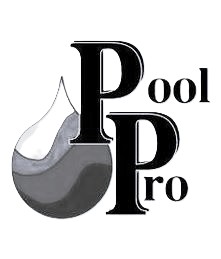
1425503 |
| 17 May 2011 | 5, 6, 7, 8, 11, 19, 20, 21, 28, 37 |
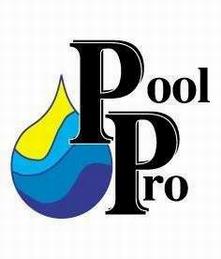
12 These marks are hereinafter referred to collectively as the “Trade Marks”. The two textual marks, being the 050 Mark and the 737 Mark, are referred to as the “Textual Trade Marks”. The logo is referred to as the “Composite Mark”.
13 Mr Ralph deposed that, by virtue of his sole directorship of each of PPA, The Pops Group and Axcess, the latter two companies are implicitly authorised by PPA to use and licence the Trade Marks in conducting the Pool Pro business. He also identified a number of other entities as authorised users of the Trade Marks, including two Pool Pro franchisees, as well as five companies which have entered into licensing arrangements. In respect of the latter, a sample Licence Deed was exhibited to Mr Ralph’s affidavit.
PPS’s business
14 PPS is a small enterprise that employs three full-time pool technicians, including its managing director, Mr Sharp. It operates primarily in the Melbourne metropolitan area and offers a range of pool-related services, such as pool cleaning, pool maintenance and equipment repair. It also sells replacement components for pool maintenance, but does not sell any products bearing its own name or brand.
15 PPS was registered on 8 March 2013. Prior to that time, Mr Sharp traded under his personal name and ABN in the pool servicing industry in the Melbourne metropolitan area. He deposed to PPS obtaining most of its work through word-of-mouth referrals.
Selection of the business name
16 Mr Sharp deposed in his affidavit that in March 2013, he and his business partner, Ms Kylee Christensen, chose the name, “Pro Pool Services”, because it was an “obvious business name that clearly and accurately described the services of the business”. He also considered that the use of the shorthand “pro” for “professional” made the name easier to recall, improved its readability, and conveyed an impression of professionalism and success.
17 After settling on the business name, Mr Sharp and Ms Christensen engaged their accountant, Mr Boris Feldman of BT Corporate Advisory, to “confirm the availability” of the proposed company name. Mr Sharp further deposed that he independently searched the ABN register and the ASIC register of companies, from which he concluded that the name “Pro Pool Services” was available.
18 Mr Sharp’s evidence was that he was unaware of the applicant’s business at the time of selecting his company name. He deposed that he did not become aware of it until around March 2020, when he purchased two Pool Pro pool filters for a client.
19 Mr Sharp did not apply to register a trade mark over the business name because he was unaware that such an option was available.
Use of the business name
20 PPS appears to primarily use its business name in two configurations: firstly, as “Pro Pool Services” in plain text; and second, in the form of the following corporate logo (the “Logo”):

21 The Logo was designed for PPS by the graphic design company, Fauvdesign Pty Ltd. It appears on all outgoing correspondence as part of a standardised email signature, and is also displayed on invoices, staff uniforms and business cards.
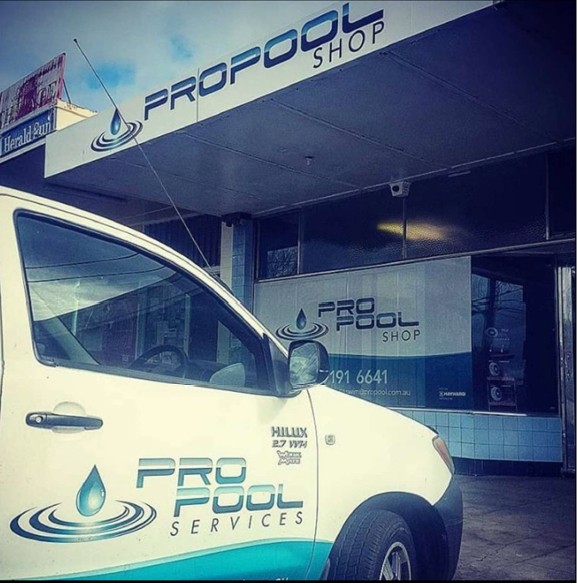
22 The Logo has also been displayed on some company-owned vehicles and on signage at the premises located at 9 Chapel Road, Moorabbin (the “Business Premises”), at which PPS operated a retail store between 2017 and 2020. An image depicting these uses was adduced into evidence:
23 Since 22 May 2013, PPS has advertised its business and traded online, using the registered domain name www.propool.com.au (the “Website”). It has also advertised its services using the Facebook account “Pro Pool Services” (the “Facebook Page”). Mr Sharp deposed in his affidavit that “no meaningful quantity of work” generated by PPS has been derived from the Website. He said further that the Facebook Page has 75 followers and is not effectively utilised by the business.
Abbreviations of the business name
24 The evidence disclosed that, on some occasions, the “Pro Pool Services” business name has been shortened to “Pro Pool”. It is these occasions which are said to comprise the alleged infringing conduct.
25 Firstly, the evidence indicates that the signage at the Business Premises, shown at supra [22], used a variant of the Logo containing the words “Pro Pool Shop”.
26 Second, the Website contains multiple references to “Pro Pool” or “Pro Pools”. In summary:
(a) the Website’s domain name is www.propool.com.au;
(b) at the bottom right-hand corner of the Website appears the email address, swim@propool.com.au;
(c) the “About Us” page of the Website contains the statement, “Call Pro Pools today…”;
(d) in the “Cleaning & Maintenance” section of the About Us page appears a paragraph which begins “At Pro Pools, we assess the individual needs of your pool…”; and
(e) in the “Repairs & Installations” section of the About Us page appear the words “Pro Pools Quality Installation”.
27 Third, the evidence indicates that PPS made two posts on the Facebook Page which use shortened references to its business name (referred to hereinafter as the “Facebook Posts”):
(a) On 20 August 2018, PPS posted an image of pool tiles with the words:
We love these glass tiles. See the spectrum of colour reflecting off the sunlight in each tile. We love these. #propools
(Emphasis added).
(b) On 4 September 2018, PPS posted images of a pool, assumedly in respect of which PPS had provided services, along with the following text:
See that basket? That’s all it takes to turn a blue pool, green.
#emptyyourbaskets
#propoolrescue
(Emphasis added).
Trade mark infringement
28 The applicant’s primary claim is that PPS engaged in trade mark infringement under s 120(1) of the Trade Marks Act. That provision relevantly states:
120 When is a registered trade mark infringed?
(1) A person infringes a registered trade mark if the person uses as a trade mark a sign that is substantially identical with, or deceptively similar to, the trade mark in relation to goods or services in respect of which the trade mark is registered.
29 Under s 120(1), the question of whether a trade mark has been infringed requires consideration of three elements: firstly, whether the allegedly infringing sign is used by the alleged infringer as a trade mark; second, whether the sign is substantially identical with, or deceptively similar to, the registered trade mark; and third, whether the sign is used in relation to goods or services in respect of which the trade mark is registered. Each element will be addressed in turn in these reasons.
30 Before addressing those elements, it is appropriate to make some brief observations about the applicant’s pleaded case. In particular, although the amended Originating Application refers to the name “Pro Pool Services” as being a mark which infringes upon the Trade Marks, the amended Concise Statement pleads only that PPS’s use of the abbreviation “Pro Pool” constitutes the relevant infringing conduct. The effect of this is that the applicant has confined its case to the question of whether that expression was used by PPS as a trade mark and, whether used alone or as part of the Logo, is substantially identical with, or deceptively similar to, the Trade Marks.
31 So much is clear from paragraph 6 of the amended Concise Statement, which defines the relevant “infringing conduct” as follows:
6. From a date unknown to the Applicant to the date of this Amended Concise Statement, but from at least in or around April 2024, the First Respondent was operating a business which advertised, promoted, offered for sale, supplied and sold, pool maintenance and repair services (the First Respondent’s services), including the sale and supply of chemicals and/or equipment and/or repairs, in the process of providing the First Respondent’s services, under or by reference to the following trade marks:
(a) the words “Pro Pool”; and/or
(b) the words “Pro Pool” and a device being the image of a droplet,
such marks being marks, names, words, devices and/or signs that are substantially identical with and/or deceptively similar to the Trade Marks (the infringing conduct).
32 It is also relevant that paragraph 7 of the amended Concise Statement sets out the occasions on which PPS is said to have represented its name as being “Pro Pool”. Further, the applicant pleads at paragraph 12 that it has suffered loss and damage “by reason of the infringing conduct”, as that term is defined in paragraph 6.
33 It is clear that the amended Concise Statement alleges only that the use of “Pro Pool” and the Logo constitute infringement of the Trade Marks. It does not allege that PPS’s use of “Pro Pool Services” is included within that “infringing conduct”. That being so, the pleading does not support the relief sought in the amended Originating Application in respect of PPS’s use of “Pro Pool Services”.
34 It is well established that the purpose of a pleading is to state with sufficient clarity the case that must be met, and ensure the basic requirement of procedural fairness that a party should have the opportunity of meeting the case against him or her and, incidentally, to define the issues for decision: Banque Commerciale SA (En Liqn) v Akhil Holdings Ltd (1990) 169 CLR 279, 286. As Edelman J observed in Australian Competition and Consumer Commission v Reckitt Benckiser (Australia) Pty Ltd (No 5) [2016] FCA 167 at [8], that does not alter in the context of a concise statement:
A fast track statement is intended to ensure that the dispute is presented in an efficient, cost effective, and expeditious manner and without unnecessary formality. It is a move towards a transparent, simple, plain English legal procedure. But it does not abandon natural justice. A party remains entitled to be informed of the essential allegations made against him or her, including the material facts upon which the allegations are based.
35 These principles are all the more relevant in circumstances where, as here, the respondent is unrepresented. A person without legal qualifications must be given a fair opportunity to understand and meet the case put against them. That is inhibited by inconsistencies arising as between the originating process and pleadings. That said, it should also be acknowledged that these issues would likely have arisen and been ventilated far earlier in the proceedings had PPS been legally represented. Notwithstanding, no such ventilation having occurred, the matter ought to be determined by reference to the case as pleaded.
36 In the circumstances, the applicant’s pleading confines its claim to the allegation that PPS used “Pro Pool” and the Logo as trade marks which are substantially identical with, or deceptively similar to, the Trade Marks. No issue arises as to whether the name “Pro Pool Services” satisfies that test. To the extent that submissions were advanced on that point, they fall outside the pleaded case and ought not be entertained.
Is the applicant an “authorised user” of the Trade Marks?
37 Another preliminary issue is the objection by Mr Sharp to the applicant’s standing. He submitted that the applicant was not an “authorised user” of the Trade Marks, within the meaning of the Trade Marks Act, and thus lacked standing to bring the claim. This submission can be disposed of briefly.
38 In these proceedings, the applicant relies for its standing upon s 26(1)(b) of the Trade Marks Act, which relevantly states:
26 Powers of authorised user of registered trade mark
(1) Subject to any agreement between the registered owner of a registered trade mark and an authorised user of the trade mark, the authorised user may do any of the following:
…
(b) the authorised user may (subject to subsection (2)) bring an action for infringement of the trade mark:
(i) at any time, with the consent of the registered owner; or
(ii) during the prescribed period, if the registered owner refuses to bring such an action on a particular occasion during the prescribed period; or
(iii) after the end of the prescribed period, if the registered owner has failed to bring such an action during the prescribed period;
…
(2) If the authorised user brings an action for infringement of the trade mark, the authorised user must make the registered owner of the trade mark a defendant in the action. However, the registered owner is not liable for costs if he or she does not take part in the proceedings.
39 An “authorised user” is defined in s 8 of the Trade Marks Act as follows:
8 Definitions of authorised user and authorised use
(1) A person is an authorised user of a trade mark if the person uses the trade mark in relation to goods or services under the control of the owner of the trade mark.
(2) The use of a trade mark by an authorised user of the trade mark is an authorised use of the trade mark to the extent only that the user uses the trade mark under the control of the owner of the trade mark.
(3) If the owner of a trade mark exercises quality control over goods or services:
(a) dealt with or provided in the course of trade by another person; and
(b) in relation to which the trade mark is used;
the other person is taken, for the purposes of subsection (1), to use the trade mark in relation to the goods or services under the control of the owner.
(4) If:
(a) a person deals with or provides, in the course of trade, goods or services in relation to which a trade mark is used; and
(b) the owner of the trade mark exercises financial control over the other person’s relevant trading activities;
the other person is taken, for the purposes of subsection (1), to use the trade mark in relation to the goods or services under the control of the owner.
(5) Subsections (3) and (4) do not limit the meaning of the expression under the control of in subsections (1) and (2).
40 Mr Sharp asserts that the applicant was and is not an “authorised user” within the meaning of s 8. He points to the absence of any formal licence or other agreement by which the second respondent, PPA, granted the applicant the right to use the Trade Marks in the course of operating the Pool Pro business. However, the applicant says that such a licence can be implied, by virtue of Mr Ralph’s sole directorship of both entities.
41 The latter submission can be accepted, having regard to what was said by the Full Court in Trident Seafoods Corp v Trident Foods Pty Ltd (2019) 143 IPR 1 at 14 [45] and 15 [51] (Trident):
[45] … The issue is not whether one company controlled the other but rather whether Trident Foods, even though a wholly owned subsidiary of Manassen, had control over Manassen’s use of the trade marks. In that sense it is significant that at all relevant times the two companies had the same directors. It must be inferred from the evidence that the two companies operated with a unity of purpose. Trident Foods held the trade marks. Manassen sold the products under the TRIDENT brand and thereby used the trade marks. In the primary judge’s view these arrangements showed nothing more than that Trident Foods acquiesced in Manassen’s use of the marks: PJ [179(4)] and [217]. In the present case, where there were common directors, the concept of mere acquiescence by the one company to the use by the other company (albeit that Manassen is the parent company) appears alien. As directors of Trident Foods, the directors had obligations to ensure the maintenance of the value in the marks. To that end Trident Foods necessarily controlled Manassen’s use of the marks by reason of the simple fact that it owned the marks and its directors, who were also Manassen’s directors, must have had one common purpose, being to maximise sales and to enhance the value of the brand. This is not a case like Lodestar in which there was no relationship between the owner and user of the marks beyond a licence. This case is at the other end of the spectrum. As Trident Foods submitted, it is commercially unrealistic in the circumstances of the present case not to infer that the owner of the marks controlled the use of the marks because the common directors necessarily wished to ensure the maintenance and enhancement of the value of the brand. The fact that this must also have been Manassen’s purpose simply confirms the unity of purpose between the corporate entities. But unity of purpose is not inconsistent with the existence of control in a case such as the present.
…
[51] … [G]iven the corporate relationship it is inconceivable that Manassen was using the marks without the knowledge, consent and authority of Trident Foods. This necessarily constitutes more than mere acquiescence by Trident Foods. Mere acquiescence denotes passive acceptance of Manassen’s use but the corporate relationship, common directorships and arrangements between the companies required active engagement by those directors to protect Trident Foods’ valuable goodwill ($10 million in the books of Trident Foods, PJ [161(1)]). Trident Foods’ active consent and authority must constitute an unwritten licence for use of the marks.
42 Like in Trident, in this case it is inconceivable that the applicant’s continued use of PPA’s Trade Marks amounted to no more than acquiescence on the part of the latter. Rather, by reason of Mr Ralph’s sole directorship of both companies, the only available inference is that the applicant used the Trade Marks with the knowledge, consent and authority of PPA. That is sufficient to establish, albeit as a matter of inference, that the applicant is an authorised user of the Trade Marks, and that it has standing to bring this infringement action pursuant to s 26(1)(b) of the Trade Marks Act.
Use as a trade mark
43 Turning to the question of infringement, the first issue is whether the alleged infringing marks were “used” by PPS as “trade marks”, within the meaning of the Trade Marks Act.
Relevant principles
44 Section 17 of the Trade Marks Act defines a “trade mark” as “a sign used, or intended to be used, to distinguish goods or services dealt with or provided in the course of trade by a person from goods or services so dealt with or provided by any other person”. In other words, the sign acts as a “badge of origin” to indicate a connection between the goods or services and the user of the mark: Campomar Sociedad Limitada v Nike International Ltd (2000) 202 CLR 45, 65 [42]; Self Care IP Holdings Pty Ltd v Allergan Australia Pty Ltd (2023) 277 CLR 186, 206 [23] (Self Care).
45 The principles relevant to the question of “use” as a trade mark were distilled into the following propositions by Stone, Gordon and McKerracher JJ in Nature’s Blend Pty Ltd v Nestle Australia Ltd (2010) 87 IPR 464 at 468 [19]:
(1) Use as a trade mark is use of the mark as a “badge of origin”, a sign used to distinguish goods so dealt with in the course of trade by a person from goods so dealt with by someone else.
(2) A mark may contain descriptive elements but still be a “badge of origin”.
(3) The appropriate question to ask is whether the impugned words would appear to consumers as possessing the character of the brand.
(4) The purpose and nature of the impugned use is the relevant inquiry in answering the question whether the use complained of is use “as a trade mark”.
(5) Consideration of the totality of the packaging, including the way in which the words are displayed in relation to the goods and the existence of a label of a clear and dominant brand, are relevant in determining the purpose and nature (or “context”) of the impugned words.
(6) In determining the nature and purpose of the impugned words, the court must ask what a person looking at the label would see and take from it.
(Citations omitted).
(see also Halal Certification Authority Pty Ltd v Flujo Sanguineo Holdings Pty Ltd (2023) 300 FCR 478, 503 – 504 [82])
46 In Self Care, the High Court observed that whether a sign has been used as a trade mark is to be assessed objectively, without reference to the subjective trading intentions of the user. That objective assessment is done according to context: Self Care 206 [24]:
[24] … As the meaning of a sign, such as a word, varies with the context in which the sign is used, the objective purpose and nature of use are assessed by reference to context. That context includes the relevant trade, the way in which the words have been displayed, and how the words present themselves to persons who read them and form a view about what they connote. A well known example where the use was not “as a trade mark” was in Irving’s Yeast-Vite v Horsenail [(1934) 51 RPC 110], where the phrase “Yeast tablets a substitute for ‘Yeast-Vite’” was held to be merely descriptive and not a use of “Yeast-Vite” as a trade mark. Therefore, it did not contravene the YEAST-VITE mark.
(see also E & J Gallo Winery v Lion Nathan Australia Pty Ltd (2010) 241 CLR 144, 160 [33]).
47 The Court also noted that the existence of a descriptive element or purpose does not necessarily preclude the sign being used as a trade mark: Self Care 206 [25], citing Johnson & Johnson Australia Pty Ltd v Sterling Pharmaceuticals Pty Ltd (1991) 30 FCR 326, 347. Where there are several purposes for the use of the sign, if one purpose is to distinguish the goods provided in the course of trade, that will be sufficient to establish use as a trade mark: Self Care 206 – 207 [25].
48 Further, where there are several words or signs used in combination, the existence of a clear dominant “brand” is relevant to the assessment of what would be taken to be the effect of the balance of the label, but does not mean another part of the label cannot also act to distinguish the goods: Self Care 207 [25], citing Anheuser-Busch Inc v Budejovicky Budvar (2002) 56 IPR 182, 228 [191] (Anheuser-Busch). In that latter case, Allsop J observed as follows:
[191] It is not to the point, with respect, to say that because another part of the label … is the obvious and important “brand”, that another part of the label cannot act to distinguish the goods. The “branding function”, if that expression is merely used as a synonym for the contents of ss 7 and 17 of the [Trade Marks Act], can be carried out in different places on packaging, with different degrees of strength and subtlety. Of course, the existence on a label of a clear dominant “brand” is of relevance to the assessment of what would be taken to be the effect of the balance of the label.
Was there a use of the trade mark?
49 In this case, it is palpably clear that PPS uses “Pro Pool Services” and the Logo as trade marks to distinguish its goods and services from those of others. Mr Sharp rightly did not suggest otherwise. However, as has been mentioned, the applicant does not contend that the former mark infringes upon the Textual Trade Marks. Rather, its pleaded case is that the relevant infringing conduct comprises PPS’s use of the words “Pro Pool” and/or those words paired with a water droplet device.
50 In this regard, the primary case advanced by the applicant at the hearing was that PPS’s use of the mark “Pro Pool”, either alone or as part of a composite mark with a droplet device, is established by reference to certain occasions on which PPS is said to have abbreviated its business name. Specifically, they comprise: (a) the Website domain name; (b) the contents of the Website; (c) the Facebook Posts; and (d) the signage at the Business Premises containing the words “Pro Pool Shop”.
51 Mr Sharp’s response was that PPS only ever used and traded under the name “Pro Pool Services”. He said further that to the extent that PPS might have used the name “Pro Pool” or “Pro Pool Shop”, those expressions were used descriptively, to indicate the nature of the goods and services offered by PPS – that is, by relying upon “pro” being an abbreviation of the word “professional”. In any event, he submitted that it would be “unfair, prejudicial and overreaching” to “artificially dissect” PPS’s business name and Logo to determine whether an infringement has occurred.
52 The pleadings and submissions are unclear as to whether use of the name “Pro Pool Services” constitutes use of “Pro Pool” as a trade mark. By way of example, in his closing address on behalf of the applicant, Dr Eliades of Counsel was asked about the effect of the word “Services” in “Pro Pool Services”, in the context of determining whether PPS has used the mark “Pro Pool”. His response was that the word “Services” should be elided for the purposes of determining whether “Pro Pool Services” is substantially identical with, or deceptively similar to, the Trade Marks. That, of course, is a subsequent question. It is also inconsistent with the case as pleaded, given that no allegation is made that “Pro Pool Services” infringes upon the Trade Marks. In those circumstances, and consistently with the observations at supra [30] – [36], the question of whether use of “Pro Pool Services” amounts to use of “Pro Pool” will not be considered in the absence of clear pleadings and submissions.
53 Against that background, the alleged uses will now be addressed in turn.
The domain name
54 Turning to the first alleged use of the textual mark, the applicant submits that the domain name for the Website, www.propool.com.au, constitutes use of “Pro Pool” as a trade mark.
55 The extent to which a domain name can be used as a trade mark has been discussed at some length in the cases. In Sports Warehouse Inc v Fry Consulting Pty Ltd (2010) 186 FCR 519 (Sports Warehouse), Kenny J held (at 556 [155]) that use of the domain name www.tennis-warehouse.com constituted use of the trade mark TENNIS WAREHOUSE, on the basis that the prefix “www.” and suffix “.com” could be disregarded as mere indicia of a domain name. Her Honour observed at 555 [153]:
[153] It is not suggested that mere registration of a domain name can amount to use of the mark. More must be shown. Plainly enough, not all domain names will be used as a sign to distinguish the goods or services of one trader in the course of trade from the goods or services of another trader. Sports Warehouse is correct in its submission that whether or not a domain name is used as a trade mark will depend on the context in which the domain name is used. In this case, the domain name is more than an address for a website, the domain name is also a sign for the applicant’s online retaining service available at the website. In the context of online services, the public is likely to understand a domain name consisting of the trade mark (or something very like it) as a sign for the online services identified by the trade mark as available at the webpage to which it carries the internet user.
56 These principles were elaborated upon by Perram J in Solahart Industries Pty Ltd v Solar Shop Pty Ltd (2011) 92 IPR 165 at 178 – 179 [50] (Solahart), where his Honour summarised the key propositions as follows:
(1) Mere registration of the domain name does not establish the infringement of a trade mark.
(2) Where a “cybersquatter” does not seek to attract consumers to the occupied domain name but merely seeks to treat with the owner of the mark, it is unlikely that trade mark infringement will be shown for there will be no goods or services being proffered to consumers to which the impugned sign, contained within the domain name, may reasonably be seen as relating.
(3) Where a person uses a domain name to attract consumers to a website which promises connexions with goods or services relating to the registered mark, infringement may be established even if the owner of the domain name does not sell the goods or services and instead merely benefits from a flow of traffic over the website.
(4) Where a domain name is used to conduct a website from which goods or services are sold, the same kinds of questions which arise in ordinary trade mark litigation will arise. In such cases, the analogy between the sign on the front of a shop and the goods sold within will be established: see also Seven Network (Operations) Ltd v 7-Eleven Inc [2023] FCA 608 [73].
(5) Explicit advertising of the website in that context is obviously relevant for it will show more clearly the connexion between the sign and the service.
57 In this case, PPS advertises its goods and services on the Website located at www.propool.com.au. There, consumers are able to view information about the goods and services offered by the business, purchase goods or contact the business to obtain services. To that extent, the Website is analogous to a physical shop, and the domain to a shop front: see Solahart 179 [51].
58 Insofar as PPS might rely upon the fact that the content of the Website identifies the business as “Pro Pool Services” and not “Pro Pool” (see infra [63] – [67]), regard may be had to Edgetec International Pty Ltd v Zippykerb (NSW) Pty Ltd (2012) 98 IPR 1. There, the applicant was the owner of the registered mark KWIK KERB. The respondent operated a business called “Zippykerb” and owned several domain names in respect of that business, including, relevantly, www.kwikkerbing.com. When users navigated to that URL, they were redirected to the website located at www.zippykerb.com. That website contained various statements as to why consumers should not acquire goods and services from Kwik Kerb, and a statement expressly disclaiming that “ZippyKerb is NOT Kwikkerb”. The respondent argued that since the URL was used only for the purpose of redirecting consumers to its website, and the website distinguished Zippykerb’s goods and services from those of Kwik Kerb, such use did not constitute use of KWIK KERBING as a trade mark. That submission was rejected at 7 – 8 [24]:
[24] … If, as it says it did … Zippykerb used the substantially identical signs or words in a domain name to redirect internet users to its website and that website displays, as it plainly does … the goods and service being offered by Zippykerb, I consider this is trade mark use of those signs or words. That is so because this use of a domain name to redirect potential customers to a website displaying one’s goods and services is analogous to using those words as a sign on the front of a shop to indicate the goods or services that are sold within... Furthermore, once this trade mark use has been made of those words, it is immaterial, in my view, whether there are statements on the website (or inside the shop in the analogy above) stating that the goods and services offered are not those of the holder of the registered trade mark. If anything, this confirms the original trade mark use of those words in the domain name.
(Citations omitted).
59 Regard may also be had to Flexopack SA Plastics Industry v Flexopack Australia Pty Ltd (2016) 118 IPR 239 at 252 [64] – [67] (Flexopack). There, Beach J found that the domain name www.flexopack.com.au constituted use of FLEXOPACK as a trade mark, notwithstanding that the name of the company on the website was “Flexopack Australia”. His Honour considered that the domain name was a contraction of the company name, which “reinforce[d] its indication of origin. It [was] used as a badge of origin to attract customers to the website featuring those goods”: Flexopack 252 [65]. He said further that customers would understand the contraction of the company name to act as a badge of origin in the same way as the company name itself: Flexopack 252 [67].
60 Applied here, the result must be that by using the domain name www.propool.com.au, PPS used “Pro Pool” as a trade mark. That is because, first, the domain name was used as a digital shop front to identify the goods and services that were sold within, and second, the domain name is a contraction of the business name, “Pro Pool Services”, which is undoubtedly a badge of origin.
61 It should be noted that similar reasoning may extend to the email addresses used by PPS which contain that domain name, for example, swim@propool.com.au. The use of that domain name in correspondence may also constitute use of the “Pro Pool” mark, depending on the context of such use: see Flexopack 252 [66].
The Website contents
62 The next alleged use of “Pro Pool” derives from the content of the Website. In this context, in line with the principles articulated in Self Care, it is appropriate to consider the Website as a whole in order to determine whether a clear dominant “brand” emerges from its contents.
63 The Court was provided with an image of the home page of the Website, as follows:
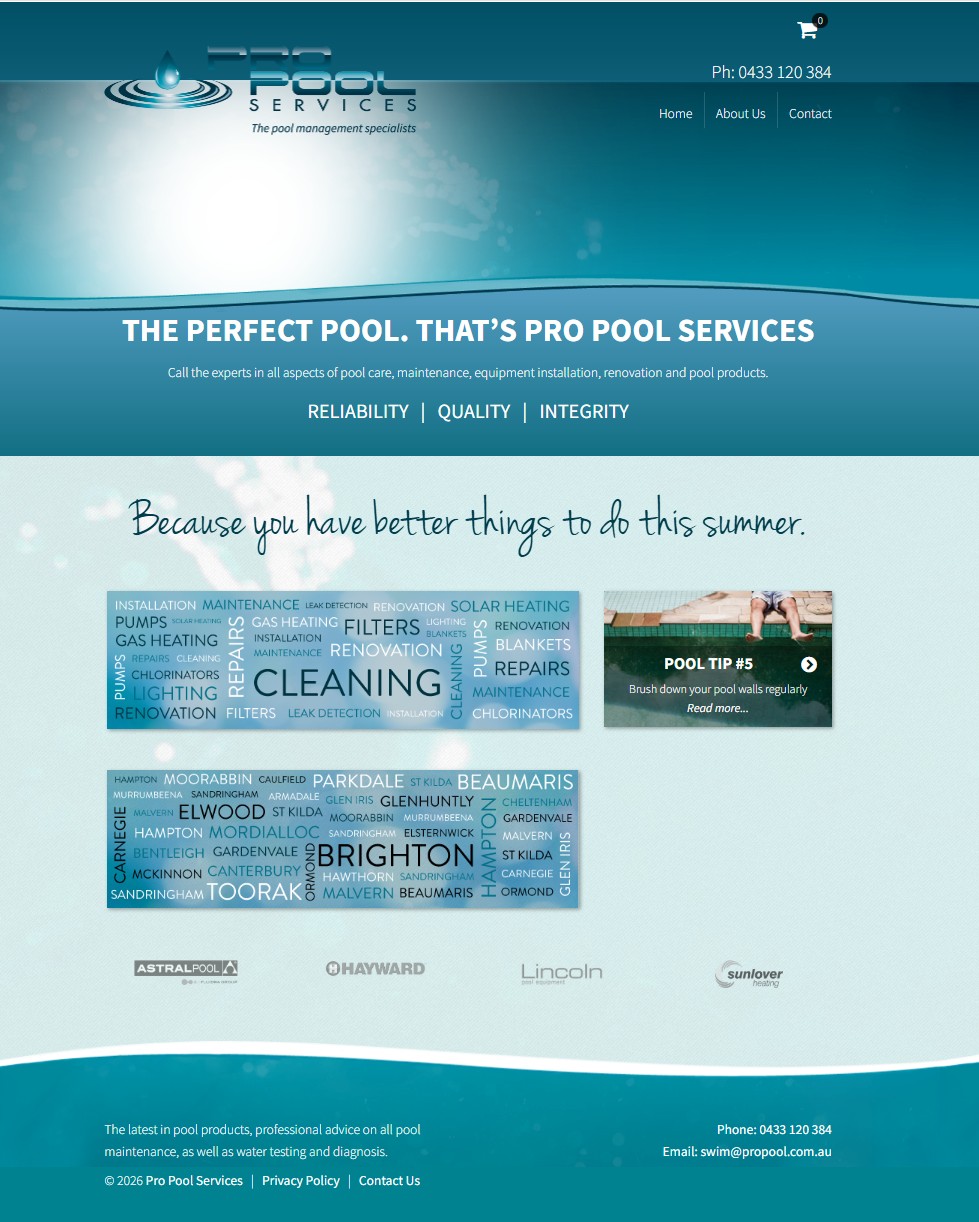
64 As can be seen, upon accessing the home page, a consumer would likely first notice the Logo which appears prominently in the top left-hand corner of the page. Notably, the Logo contains the name, “Pro Pool Services”, albeit with emphasis on the first two words (this is considered separately later).
65 The consumer would then notice the statement in bold white text in the middle of the page, stating “The Perfect Pool. That’s Pro Pool Services”.
66 The astute or attentive consumer might also notice the smaller text at the foot of the page. Relevantly, they would see the copyright symbol, “© [year] Pro Pool Services”, at the bottom left-hand corner, and the email address, “swim@propool.com.au” at the bottom right-hand corner.
67 Save for that email address and the domain, which are considered above, all of the references to PPS’s business on the home page use the name “Pro Pool Services”. That is the dominant brand emerging from that page, and there appears to be no relevant use of the mark “Pro Pool”.
68 The applicant also referred to the “About Us” page of the Website, to which a person can navigate by selecting the “About Us” option at the top right-hand corner of the home page, underneath the contact phone number. The About Us page appeared as follows:
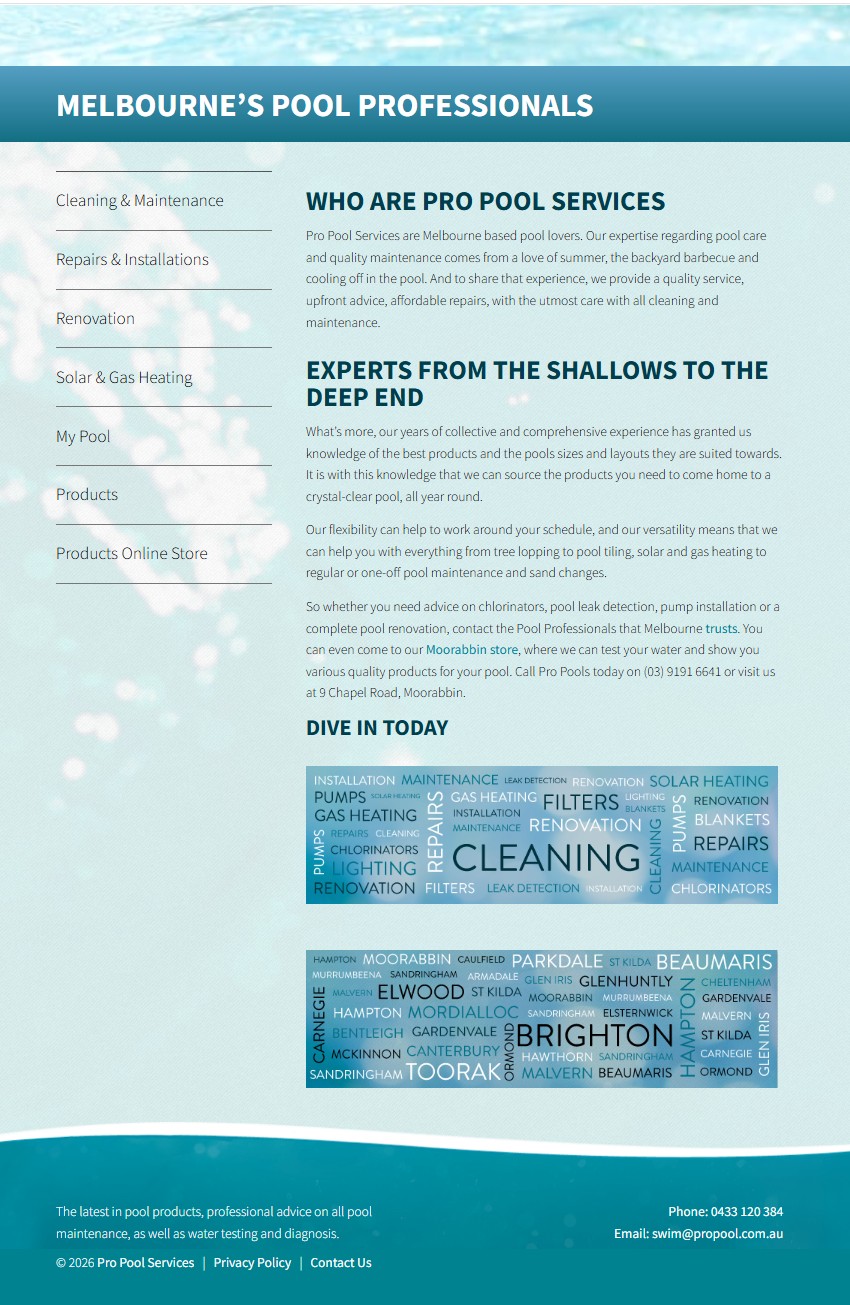
69 The prominent features of this page are, firstly, the white bold text towards the top of the page stating “Melbourne’s Pool Professionals”, and second, the blue bold text below, stating “Who Are Pro Pool Services”.
70 Pausing here, Dr Eliades submitted on behalf of the applicant that the phrase, “Melbourne’s Pool Professionals”, was a use of the mark POOL PRO. It was suggested that the term “professionals” could be abbreviated to “pros” (as frequently occurs in common parlance) and, as such, the phrase “Melbourne’s Pool Professionals” could be read as “Melbourne’s Pool Pros”. That submission should be rejected because, inter alia, the statement is obviously of a descriptive character and does not purport to indicate the origin of the services offered by PPS in the relevant sense.
71 Turning to the smaller print on the About Us page, the text below the heading, “Who Are Pro Pool Services”, begins with the sentence, “Pro Pool Services are Melbourne based pool lovers”.
72 Then, further down the page, the third paragraph beneath the heading “Experts from the Shallows to the Deep End”, contains the statement, “Call Pro Pools today on (03) 9191 6641 or visit us at 9 Chapel Road, Moorabbin”.
73 On the left-hand side of the About Us page, there appear several tabs which navigate the user to different pages containing further information about the services offered by PPS. Relevantly, one such page is entitled, “Cleaning & Maintenance”. There, towards the middle of the page, below the heading “Comprehensive Service All Year Round”, appears body text which begins, “At Pro Pools, we assess the individual needs of your pool…”. It is also relevant that that page contains two headings (in the same font and size as the “Who Are Pro Pool Services” heading, extracted above) lower down the page, stating, “Why Choose Pro Pool Services”, and “For All Encompassing Service Contact Pro Pool Services Today”.
74 The last page to consider is the “Repairs & Installation” page, which is the second tab on the left of the About Us page. There, in the middle of the page, appears a heading which reads, “Pro Pools Quality Installation”. Also on that page are portions of body text stating, “Pro Pool Services can help with finding the right product for your pool”, and “[l]et Pro Pool Services assess your pool, and save yourself from the financial deep end”. Finally, at the foot of the page appears the text “Call Pro Pool Services for Total Pool Repairs and Installation in Melbourne”.
75 It should be noted, for the avoidance of doubt, that the Logo consistently appears in the top left-hand corner of every page on the Website, in what is commonly referred to as the website “banner”. The “footer” of the Website, containing the copyright notice and the email address (see supra [66]), also appears on every page.
76 It is immediately apparent from the foregoing discussion that PPS primarily refers to itself as “Pro Pool Services”. That is the dominant brand which emerges from the various pages and sections of the Website, and which distinguishes PPS’s goods and services from those of others. However, the applicant submitted that the references to “Pro Pools” on the About Us page also constitute trade marks in and of themselves.
77 That submission should be accepted. Importantly, in accordance with Anheuser-Busch and Self Care (see supra [48]), the existence of a dominant brand does not mean that another part of the label – or in this case, the Website – cannot also act to distinguish the goods. All that is required is that the sign in question carry out the “branding function”, which is simply to distinguish the goods and services offered, no matter how strongly or subtly it does so: Anheuser-Busch 228 [191]. The existence of such a “branding function” is determined by asking whether the impugned words, viewed in context, operate to distinguish PPS’s goods and services from those of others.
78 Flexopack is analogous and instructive in these circumstances. There, as discussed at supra [59], Beach J considered the question of whether the domain name www.flexopack.com.au constituted use of the mark FLEXOPACK, notwithstanding that the name of the respondent’s business was Flexopack Australia. Relevantly, in addition to finding that the domain name constituted a use of the FLEXOPACK mark in the context of the respondent’s website, his Honour also found that the presence of the domain name on invoices also constituted a use of that mark. That was so even though the respondent was referred to elsewhere on the invoices as Flexopack Australia Pty Ltd. His Honour held that (at 252 [65]):
[65] … Further, the presentation of www.flexopack.com.au on invoices is a contraction of “FLEXOPACK AUSTRALIA”. This reinforces its indication of origin. It is used as a badge of origin to attract customers to the website featuring those goods.
79 In this case, an ordinary reasonable consumer who navigates to the About Us page of the Website would understand the references to “Pro Pools” as being shorthand or informal abbreviations of “Pro Pool Services”. Notwithstanding that the dominant brand conveyed by the Website is the longer form of the name, the abbreviations are nonetheless capable of distinguishing, and do distinguish, PPS’s goods and services from those of others. They appear in direct connection with the promotion of PPS’s goods and services and serve to identify their source. Therefore, like the URL on the invoices in Flexopack, they are badges of origin and constitute uses of “Pro Pools” (being a negligible variation of “Pro Pool”: see Trade Marks Act s 7(1)) as a trade mark.
The Facebook Posts
80 The applicant also submits that the Facebook Posts, extracted at supra [27], constitute further use of “Pro Pool” as a trade mark. The relevant question is whether the “hashtags” included in those posts, namely “#propools” and “#propoolrescue”, constitute such use.
81 As to the hashtag “#propools”, given that the posts appear under the Facebook account named, “Pro Pool Services”, and consistently with the references to “Pro Pools” on the Website, it is more likely to be understood by an ordinary reasonable consumer as a contraction of “Pro Pool Services”. It follows that, in accordance with the similar abbreviations on the Website, the reference to “Pro Pools” functions as a badge of origin. Indeed, hashtags are now an accepted method by which a business distinguishes its brand on social media platforms: see Henley Arch Pty Ltd v Henley Constructions Pty Ltd (2021) 163 IPR 1, 116 [461]. As such, this hashtag constitutes use by PPS of “Pro Pool” as a trade mark.
82 Conversely, the hashtag “#propoolrescue” appears to be descriptive, to the extent that it describes the content of the post as being a “professional pool rescue”. The addition of “rescue” directs attention to the service performed rather than the source. Although it is possible that a consumer could interpret the hashtag as another contraction of PPS’s business name, there is nothing to suggest that a reasonable consumer is more likely to interpret it in that way. In those circumstances, it does not constitute use of “Pro Pool” as a trade mark.
The Business Premises
83 The final alleged instance of the use of “Pro Pool” as a textual trade mark is the signage which appeared at the Business Premises between 2017 and 2020. That signage, extracted at supra [22], identified the Business Premises as the “Pro Pool Shop”. It should be kept in mind that the composite mark used in the signage will be considered separately, and the main focus at present is the expression, “Pro Pool Shop”, as a textual mark.
84 This instance more readily satisfies the characterisation of use as a trade mark. Indeed, as a starting point, the signage does not appear to display the full name, “Pro Pool Services”, at all. That is contrary to Mr Sharp’s submission that PPS never traded under or used anything other than that full name.
85 Viewed in context, the word “Shop” is apt to be understood as merely descriptive of the retail function of the premises. In those circumstances, the ordinary reasonable consumer would perceive the words, “Pro Pool”, as identifying the commercial source of the goods and services offered at that location. Accordingly, in the expression “Pro Pool Shop”, it is “Pro Pool” which functions as a badge of origin, and its use in that signage constitutes use as a trade mark.
86 In sum, PPS used “Pro Pool” as a textual trade mark in the domain name of the Website, in limited instances on the Website itself, on one of the Facebook Posts, and on the Business Premises signage.
The Logo
87 As mentioned, the second aspect of the applicant’s pleaded case is that PPS used the words “Pro Pool” in conjunction with a droplet device. This refers to the Logo, a composite mark, which appears at supra [20]. It depicts the words “Pro Pool Services” adjacent to a droplet device. A variation of the Logo appeared on the signage at the Business Premises, shown at supra [22], except it contained the word “Shop” instead of “Services”.
88 As can be seen, both of these composite marks emphasise the words “Pro Pool” relative to “Services” or “Shop”. The effect is that the former words are likely to be taken as the principal indicator of origin, while the latter are likely to be understood as merely descriptive suffixes indicating that certain services are to be offered, or that the Business Premises serves a retail function. Therefore, an ordinary reasonable consumer would perceive “Pro Pool” as denoting the commercial source of the goods and services offered.
89 It follows that both composite marks constitute use of the words, “Pro Pool”, in conjunction with a droplet device. It also follows that the presence of the word “Shop” on the Business Premises signage constitutes an alteration of the Logo that does not substantially affect its identity, such that a use of one variation constitutes a use of the other: see Trade Marks Act s 7(1). They therefore need not be considered separately for the purposes of the infringement comparison.
The “trap purchase”
90 It is appropriate at this juncture to mention one alleged use by PPS of “Pro Pool” which was apparently abandoned at the hearing. Specifically, paragraph 7(d) of the amended Concise Statement asserts that PPS abbreviated its name to “Pro Pool” in “aural representations”. In respect of that allegation, the applicant relied upon an affidavit of its solicitor, who deposed to having undertaken two “trap” phone calls to PPS. Both were ultimately fruitless: the first call went unanswered, with the answering message stating “Hi, you’ve reached Kylie at Pro Pool Services”, while on the second attempt, a female answered the phone with “Hello this is Kylie” and confirmed that the name of the business was Pro Pool Services. That evidence likely explains why the allegation was not seriously pursued at the hearing.
91 Notwithstanding the futility of the trap calls, it is somewhat concerning that they were conducted by a solicitor. In general terms, trap calls and purchases involve a degree of artifice; the caller does not disclose their true purpose. While such techniques might be employed as a means of gathering evidence, the involvement of a legal practitioner in doing so is not without difficulty, having regard to the practitioner’s professional obligations, including the fundamental ethical duty to act honestly in all dealings in the course of legal practice.
92 Nothing further need be said on the point, as the evidence was of no utility and the allegation to which it was directed was not pursued. It suffices to note that, where such evidence is to be obtained, it may often be preferable for that task to be undertaken by an independent third party.
The infringement comparison
93 Having established that PPS used the textual mark PRO POOL and the Logo as trade marks, it must now be considered whether those marks are substantially identical with, or deceptively similar to, the applicant’s Trade Marks. Again, notwithstanding submissions advanced to the contrary by the applicant at the hearing, this does not involve a consideration of whether “Pro Pool Services” meets those tests.
94 In short, the applicant submits that the mark PRO POOL is substantially identical with the Textual Trade Marks, and that the Logo is substantially identical with the Composite Mark. It says further that both PRO POOL and the Logo are deceptively similar to all of the Trade Marks.
95 Dealing first with substantial identity, it is apt to invoke the observations of Windeyer J in Shell Company of Australia Ltd v Esso Standard Oil (Australia) Ltd (1963) 109 CLR 407 at 414 – 415, where his Honour articulated the distinction between the tests of substantial identity and deceptive similarity in the context of trade mark infringement:
In considering whether marks are substantially identical they should, I think, be compared side by side, their similarities and differences noted and the importance of these assessed having regard to the essential features of the registered mark and the total impression of resemblance or dissimilarity that emerges from the comparison … On the question of deceptive similarity, a different comparison must be made from that which is necessary when substantial identity is in question. The marks are not now to be looked at side by side. The issue is not abstract similarity, but deceptive similarity. Therefore the comparison is the familiar one of trade mark law. It is between, on the one hand, the impression based on recollection of the plaintiff's mark that persons of ordinary intelligence and memory would have; and, on the other hand, the impressions that such persons would get from the defendant's television exhibitions.
96 Though it remains the case that substantial identity requires a side-by-side comparison of the two marks, some variation in expression appears to have arisen in recent times as to the method of that comparison. Specifically, consideration of the “essential features” of the mark, as described by Windeyer J, appears to have been replaced by the concept of “dominant cognitive cues”: see Accor Australia & New Zealand Hospitality Pty Ltd v Liv Pty Ltd (2017) 124 IPR 264, 305 [206]; Pham Global Pty Ltd v Insight Clinical Imaging Pty Ltd (2017) 251 FCR 379, 391 – 392 [51] (Pham); Bed Bath ‘N’ Table Pty Ltd v Global Retail Brands Australia Pty Ltd (2023) 182 IPR 393, 448 [355] (Bed Bath ‘N’ Table); cf Anchorage Capital Partners Pty Ltd v ACPA Pty Ltd (2018) 259 FCR 514, 530 [57] – 531 [60]. Notwithstanding, there does not appear to be any material difference between the two, as both are ultimately directed to the features of the mark striking the eye in a side-by-side comparison: Pham 391 – 392 [51].
97 As to deceptive similarity, s 10 of the Trade Marks Act provides that a trade mark will be deceptively similar to another if it “so nearly resembles that other trade mark that it is likely to deceive or cause confusion”. In an infringement case, to satisfy this requirement the owner of the registered mark must show that there is a real, tangible danger of deception or confusion occurring: Southern Cross Refrigerating Co v Toowoomba Foundry Pty Ltd (1953) 91 CLR 592, 608; Self Care 209 [32].
98 The oft-cited remarks of Dixon and McTiernan JJ in Australian Woollen Mills Ltd v FS Walton & Co Ltd (1937) 58 CLR 641 at 658 elucidate the manner in which that inquiry is to be undertaken:
But, in the end, it becomes a question of fact for the court to decide whether in fact there is such a reasonable possibility of deception or confusion that the use of the new mark and title should be restrained.
In deciding this question, the marks ought not, of course, to be compared side by side. An attempt should be made to estimate the effect or impression produced on the mind of potential customers by the mark or device for which the protection of an injunction is sought. The impression or recollection which is carried away and retained is necessarily the basis of any mistaken belief that the challenged mark or device is the same… The usual manner in which ordinary people behave must be the test of what confusion or deception may be expected. Potential buyers of goods are not to be credited with any high perception or habitual caution. On the other hand, exceptional carelessness or stupidity may be disregarded.
99 The guiding principles were also set out by the High Court in Self Care. As the Court there noted, the focus of the deceptive similarity inquiry is the notional buyer who would be likely to buy the goods or acquire the services covered by the registration: Self Care 208 [28]. Though, importantly, the notional buyer is not credited with any knowledge about any actual use of the registered mark, the goods the owner produces, any acquired distinctiveness arising from the use of the mark prior to filing, or any reputation associated with the registered mark. Within those parameters, the trade mark owner is required to show that this notional consumer would “entertain a reasonable doubt as to whether, due to the resemblance between the marks, the two products come from the same source”: Southern Cross 595, cited in Self Care 209 [32]; see also Registrar of Trade Marks v Woolworths Ltd (1999) 93 FCR 365, 382 [50]. That inquiry does not consider the reputation of the holder of the registered mark, and “must be applied whether the mark of which infringement is alleged is newly registered and almost unknown or has been prominently displayed on well-known merchandise for many years”: Self Care 205 [21], quoting C A Henschke & Co v Rosemount Estates Pty Ltd (2000) 52 IPR 42, 62 [43].
The textual marks
100 Turning first to whether the textual marks are substantially identical, they appear side by side as follows:
Applicant’s Textual Trade Marks | Alleged Infringing Mark |
POOL PRO | PRO POOL |
101 The “dominant cognitive cues” or “essential features” of each mark are the words POOL and PRO, as well as the sequence in which those words appear. The main difference between them is the latter; however, this is sufficient to prevent the marks from being substantially identical. The order in which words appear is an important aspect of the visual and cognitive impression conveyed by a mark. Where that sequence is varied, even if the same words are used, the mark conveys a different, albeit only slight, impression to the viewer. It follows that the alleged infringing mark is not substantially identical to the Textual Trade Marks. This is consistent with the approach followed in several cases, including Chromagen Solar Australia Pty Ltd v First Solar Inc [2015] ATMO 45 at [23] (SOLAR FIRST / FIRST SOLAR) and Pacific Publications Pty Ltd v IPC Media Pty Ltd (2003) 57 IPR 28 at 53 [99] (HOME BEAUTIFUL / 25 BEAUTIFUL HOMES). It should also be borne in mind that there is a relatively high bar to substantial identity: see, for example, Wingara Wine Group Pty Ltd v T’Gallant Winemakers Pty Ltd (2012) 98 IPR 562 at 572 [33], where ODYSSEUS and ODYSSEY were found not to be substantially identical.
102 It then falls to be determined whether the marks are deceptively similar. As has been mentioned, this inquiry concerns the respective impressions of the marks on the minds of notional consumers likely to purchase the relevant goods or acquire the relevant services, and assumes that they have an imperfect recollection of the mark as registered. In that context, the fact that the alleged infringing mark consists of the same two words as the Textual Trade Marks, albeit in reverse order, is of considerable significance. It is likely that an ordinary reasonable consumer would recall the use of the words POOL and PRO but not their sequence. The consumer might also recall the general idea thereby conveyed, namely, the notion of professionalism in relation to pools. Given that this is common across both marks, the inversion of the words is insufficient to dispel their resemblance. That has the result that there is a real and tangible danger that a consumer with an imperfect recollection of the Textual Trade Marks, would entertain some reasonable doubt as to whether the marks represent the same or related traders.
103 The nature of the words themselves reinforces that conclusion. The words PRO and POOL are both monosyllabic and begin with the same letter. The effect of this is that, when used together in a two-word mark, an ordinary reasonable consumer is less likely to recall with precision their arrangement or sequence. For example, a consumer may be more likely to recall the difference between SOLAR FIRST and FIRST SOLAR than that between POOL PRO and PRO POOL. It follows that the mark PRO POOL, in the context of imperfect recollection, so nearly resembles the Textual Trade Marks as to be likely to deceive or cause confusion.
104 Therefore, the mark PRO POOL is deceptively similar to the Textual Trade Marks. For the same reasons, it is also deceptively similar to the Composite Mark, to the extent that the latter contains the words POOL PRO.
The composite marks
105 Turning to the Logo and the Composite Mark, they appear side-by-side as follows:
Applicant’s Composite Mark | PPS’s Logo |
|
|

106 The marks are depicted in black and white in accordance with s 70(3) of the Trade Marks Act, which provides that a trade mark registered without any limitations as to colour is taken to be registered for all colours: see Pham 381 [2]. It appears that the Composite Mark is registered without any such limitation.
107 As can be seen, the dominant cognitive cues of each mark are the words POOL and PRO and, to a lesser extent, the depiction of a water droplet to the left of those words. Adopting the approach taken by the Full Court in Pham, the word SERVICES in the Logo does not comprise part of the essential features of the mark and thus need not be considered. It follows that the comparison essentially concerns whether the inclusion of the words POOL and PRO and their arrangement relative to the droplet device, makes the marks substantially identical. For the reasons given in relation to the textual marks, the reversal of the words negates any substantial identity arising as between the composite marks. Moreover, it is also relevant that the droplet device in the Logo differs substantially from that which appears in the Composite Mark. That further reinforces the conclusion that the marks are not substantially identical.
108 It is more probable that the marks are deceptively similar. A consumer with an imperfect recollection of the Composite Mark is likely to recall its dominant features, being the words POOL and PRO and the droplet device to the left of them, but would likely not recall the arrangement of the words nor the droplet device’s precise features. For the reasons given in respect of the textual marks, the presence of the expression PRO POOL, combined with a droplet device to the left of those words, creates a tangible risk that the notional consumer would be confused as to the origin of the goods and services offered under both marks. The consumer would likely entertain reasonable doubt about whether the marks represent the same or different traders. That confusion or doubt would not be assuaged by the presence of the word “services”. It follows that the Logo is deceptively similar to the Composite Mark.
109 It also follows that the Logo is deceptively similar to the Textual Trade Marks, owing to the dominant use of the expression PRO POOL.
Use in relation to registered goods and services
110 The final element in establishing prima facie infringement is whether the infringing marks were used in relation to goods or services in respect of which the trade mark is registered. This can be dealt with swiftly.
111 Both Mark 050 and the Composite Mark were relevantly registered in respect of class 37 services, broadly defined as “swimming pools and spas maintenance services” for the former, and “swimming pool maintenance” for the latter. Conversely, Mark 737 is registered in respect of class 35, which is again defined broadly as “[r]etailing or wholesaling of pool and spa chemicals and equipment or apparatus intended for use in swimming pools and spas”.
112 As has been mentioned, Mr Sharp’s evidence was that PPS predominantly provides pool maintenance services. That corresponds with class 37 services, in respect of which Mark 050 and the Composite Mark are registered. In relation to Mark 737, Mr Sharp also deposed that PPS was a retailer of pool chemicals and other pool equipment. That is sufficient to fall within class 35.
113 In the result, the infringing marks were used by PPS in relation to goods or services in respect of which the Trade Marks were registered. Prima facie infringement is therefore established.
Defences
114 PPS relies upon a number of defences under the Trade Marks Act, to absolve itself from liability for trade mark infringement. Namely, it contends that it:
(a) used the infringing marks in good faith to describe its name or the name of its place of business, within the meaning of subparagraph 122(1)(a)(i) of the Trade Marks Act;
(b) used the infringing marks descriptively and in good faith to indicate the type, kind, quality, value or intended purpose of the services it provided, within the meaning of subparagraph 122(1)(b)(i) of the Trade Marks Act;
(c) would be entitled to obtain registration of the infringing marks if it were to apply for it, within the meaning of subparagraph 122(1)(fa) of the Trade Marks Act; and
(d) has used the infringing marks continuously in the course of trade from a time before the Trade Marks were registered, and can therefore rely on the defence set out in s 124 of the Trade Marks Act.
115 None of the defences is available to PPS for the following reasons.
116 Firstly, it has been established that the infringing marks were used as trade marks (see supra [49] – [86]). In context, the impugned uses did not function descriptively, but operated to distinguish PPS’s goods and services from those of others. Further, and in any event, they constitute impermissible truncated references to PPS’s full business name which increase the likelihood of deception or confusion: Flexopack 258 [107], citing Smith & Nephew Plastics (Australia) Pty Ltd v Sweetheart Holding Corporation (1987) 8 IPR 285, 290 – 291. The defences under subparagraphs 122(1)(a) and (b) therefore do not apply.
117 Second, and in any event, PPS has not discharged its onus of proving that it acted in good faith in using the infringing marks. As Beach J identified in Flexopack, the reference to “good faith” in s 122 of the Trade Marks Act is properly interpreted as requiring reasonable diligence to ascertain that a chosen name does not conflict with a registered trade mark:
[111] The test to be applied is in one sense objective. If a person does not take steps that an honest and reasonable person would take to ascertain the ability to use a trade mark, and has in effect taken a risk, then they are not acting in good faith. If the Respondents are to avail themselves of this defence they must show that their conduct was in good faith. The onus rests on them.
118 The key principle is that mere ignorance of the trade mark is not sufficient to enliven a defence of good faith. As his Honour observed, if the law were not to demand such a result, it would undermine the very purpose of the trade mark register and weaken the exclusive rights granted to those who shrewdly protect their intellectual property by registering it (at 260 [118]):
[118] If only subjective knowledge was relevant, a person could use the good faith defence despite not having taken any appropriate steps to inform himself of any relevant existing trade marks. This has the potential to undermine the utility of a registered trade mark. The reasonableness or lack thereof of the steps undertaken by the First Respondent in the choice of its company name is to be considered in light of the effect on the trade mark owner. If good faith were to be construed as merely being satisfied on the basis of a stated subjective belief that one did not know of the other, it could lead to a situation where one could justify trade mark use with one’s ignorance. The failure to make proper inquiries should not place a respondent in a better position than if such inquiries had been made.
119 There is considerable force in Beach J’s reasons and they ought to be adopted here. Ultimately, it is reasonable for the law to demand that persons doing business in Australia take reasonable steps to obtain legal advice or independently examine the register of trade marks – of which they are taken to be aware – before adopting any mark or sign to distinguish their goods or services from those of others.
120 Mr Sharp’s evidence was that in or around March 2013, he and Ms Christensen engaged their accountant, Mr Feldman, to confirm the availability of the name “Pro Pool Services”. He deposed further that, around the same time, he conducted a search of the ABN register and ASIC register of companies, the results of which led him to believe that the name “Pro Pool Services” was available. That amounts to little more than mere ignorance of the Trade Marks, which were registered at the relevant time. The evidence demonstrates that a search of the register of trade marks for “Pro Pool” returns the applicant’s Trade Marks, and as such, had Mr Sharp or Ms Christensen undertaken such a search, they would have encountered those marks. Alternatively, they could have obtained legal advice as to whether to adopt their proposed name: see Flexopack 259 [112]. Instead, they relied upon the searches conducted by Mr Feldman, an accountant presumably not familiar with the Trade Marks Act nor the register of trade marks. That reliance was insufficient, and so too were the searches said to have been conducted by Mr Sharp. Therefore, PPS has not established that it acted in good faith when adopting the infringing marks in 2013. That excludes the defences in subparagraphs 122(1)(a) and (b) of the Trade Marks Act.
121 Third, according to Mr Sharp’s evidence, PPS began using the infringing marks in 2013, being some 14 years after the registration of the Textual Trade Marks, and two years after the registration of the Composite Mark. It follows that PPS would not be entitled to registration of the infringing marks were it to apply for them: see Trade Marks Act s 58A: nor can it rely on the defence of continuous prior use under s 124.
122 For the avoidance of doubt, Mr Sharp also suggested that no infringement could be established because the registered Trade Marks are of a descriptive nature. He also referred to other businesses which apparently trade under names which include the words “Pool” and “Pro”. Be that as it may, neither submission is a defence to a claim of trade mark infringement, and they should be rejected. As Dr Eliades for the applicant correctly identified, the appropriate course for Mr Sharp to advance submissions of this nature would have been to file a cross-claim seeking revocation of the Trade Marks from the register.
Conclusion on trade mark infringement
123 In the result, the applicant has established that by using PRO POOL and the Logo as trade marks, which are deceptively similar to the registered Trade Marks, PPS has engaged in trade mark infringement under s 120(1) of the Trade Marks Act. This finding renders it unnecessary to consider the applicant’s alternative argument that infringement also arises under s 120(2).
124 The appropriate remedies for this infringement are discussed later in these reasons (see infra [167] – [193]).
Misleading or deceptive conduct
125 By way of alternative, the applicant seeks relief under s 236 of the ACL in respect of alleged breaches by PPS of ss 18 and 29(1)(g) and (h) of the ACL. In general terms, the case so adduced is that, by using the contracted name “Pro Pool” in the marketing of its business, PPS conveyed to consumers the misleading representation that it is the applicant, or that it has a sponsorship from, the approval of, or an affiliation with, the applicant.
126 The findings made in respect of the trade mark infringement claim render it not strictly necessary to consider this alternative argument. However, for completeness, it should be addressed.
Principles
127 In Self Care, the High Court set out the analytical process by which alleged misleading or deceptive conduct is to be assessed at 225 [80]:
[80] The principles are well established. Determining whether a person has breached s 18 of the ACL involves four steps: first, identifying with precision the “conduct” said to contravene s 18; second, considering whether the identified conduct was conduct “in trade or commerce”; third, considering what meaning that conduct conveyed; and fourth, determining whether that conduct in light of that meaning was “misleading or deceptive or … likely to mislead or deceive”.
(Footnotes omitted).
128 A representation will be misleading or deceptive if it has the tendency to lead the notional consumer to forming an erroneous assumption or conclusion about some fact or matter: Self Care 225 [81]; Australian Competition and Consumer Commission v TPG Internet Pty Ltd (2013) 250 CLR 640, 651 [39]; Taco Co of Australia Inc v Taco Bell Pty Ltd (1982) 42 ALR 177, 200; Australian Competition and Consumer Commission v TPG Internet Pty Ltd (2020) 278 FCR 450, 458 [22].
129 The third and fourth analytical steps require the impugned conduct to be assessed objectively and in context: Self Care 225 – 226 [82]:
The third and fourth steps require the court to characterise, as an objective matter, the conduct viewed as a whole and its notional effects, judged by reference to its context, on the state of mind of the relevant person or class of persons. That context includes the immediate context – relevantly, all the words in the document or other communication and the manner in which those words are conveyed, not just a word or phrase in isolation – and the broader context of the relevant surrounding facts and circumstances.
(Footnotes omitted).
130 In the context of a dispute which concerns branding and trade marks, that “broader context of the relevant surrounding facts and circumstances” includes the reputation of the parties, which is not a relevant consideration when determining infringement under s 120(1) of the Trade Marks Act: see Bed Bath ‘N’ Table Pty Ltd v Global Retail Brands Australia Pty Ltd (2025) 100 ALJR 57, 64 [29] – [31], 66 [39].
131 The Court in Self Care also explained that, in cases like the present, where the relevant conduct is directed to the public or a part thereof, the third and fourth analytical steps must be undertaken by reference to the impact of the conduct on the “ordinary and reasonable members of the relevant class of persons”: Self Care 226 [83]. Here, the relevant class of persons comprises prospective purchasers of pool maintenance products and services.
132 With respect to s 29 of the ACL, upon which the applicant also relies, it is accepted that the concept of “false or misleading” conduct therein has no material difference to “misleading or deceptive” conduct under s 18: Australian Competition and Consumer Commission v Billbusters Pty Ltd [2003] FCA 423 [69]. However, the key distinction is that, unlike s 18, s 29 does not prohibit conduct that is likely to be false or misleading: see Australian Competition and Consumer Commission v Google LLC (No 2) (2021) 391 ALR 346, 368 [110].
Consideration
133 With respect to the first analytical step, it is somewhat unfortunate that the conduct said to contravene ss 18 and 29 was not particularised beyond the general assertion in the amended Concise Statement that PPS used the words “Pro Pool” “as its trade designation”. It is notable that this aspect of the case, as well as the passing off claim, received little attention in the parties’ written submissions or at the hearing, with the result that both were advanced at a high level of generality. Indeed, this is not an isolated occurrence in cases where claims under the ACL are pleaded as a form of backstop to the primary case, but not meaningfully developed.
134 Notwithstanding, it is assumed that the allegation refers to the abbreviated uses of PPS’s business name outlined at supra [24] – [27], as well as the Logo. The question, then, is whether such uses conveyed to the ordinary reasonable consumer, in the market for pool maintenance products and services, that PPS’s business was that operated by the applicant or that the business had a sponsorship from, the approval of, or an affiliation with, the applicant.
The Business Premises
135 The primary basis for the misleading or deceptive conduct claim appears to be the signage at the Business Premises stating “Pro Pool Shop”. Again, for the avoidance of doubt, this aspect of the analysis is concerned only with the textual mark used in the signage. The Logo is considered separately.
136 As a starting point, the observations made at supra [84] – [85] may be applied here. The word “shop” is merely descriptive of the retail function of the premises, and it follows that an ordinary reasonable consumer would be likely to perceive the words “Pro Pool” as identifying the business conducted at that location. That is reinforced by the context in which the signage appears, being in relation to physical premises from which pool-related goods and services are offered.
137 Having regard to the deceptive similarity between “Pro Pool” and “Pool Pro” (see supra [102] – [104]), there is a real likelihood that consumers would mistakenly infer that the business conducted at the Business Premises is that of the applicant, or is otherwise commercially associated with it, for example as an authorised retailer, franchisee or licensee.
138 That position does not alter by reason of the fact that PPS did not stock any Pool Pro products in its store. Indeed, it was Mr Sharp’s evidence in cross-examination that his customers generally paid little attention to the brands of products sold and used by PPS. It follows that the ordinary reasonable consumer would be less likely to notice the difference between the store operated at the Business Premises and what they might expect to comprise a Pool Pro store.
139 Nor is it relevant that Mr Sharp has not received any complaints from consumers that the name of his business is too similar to Pool Pro. Accepting that to be true, that does not exclude the fact that consumers may have either (a) been confused about the nature of the business without raising their confusion, or (b) mistakenly assumed that the business was Pool Pro without being aware of their mistake. Both are likely to have occurred.
140 In those circumstances, the signage conveys a representation as to commercial origin or affiliation which is apt to mislead or deceive, in contravention of s 18 of the ACL. It also amounts to a false or misleading representation that the enterprise operated at the Business Premises, and the goods or services sold by it, had the sponsorship or approval of Pool Pro for the purposes of subparagraphs 29(1)(g) and (h) of the ACL.
141 The ACL claims are therefore made out in respect of the Business Premises.
The Logo
142 The same conclusion should be reached in relation to each occasion on which PPS used either variation of the Logo. In the light of the visual resemblance between the Logo and the applicant’s Composite Mark (see supra [108]), and the manner in which the Logo is used to promote and identify PPS’s business, such use is likely, in context, to convey to ordinary reasonable consumers the impression that PPS’s business is associated with, authorised by, or otherwise affiliated with the applicant. Accordingly, those uses are apt to mislead or deceive, in contravention of s 18, and amount to false or misleading representations as to sponsorship or approval for the purposes of s 29(1)(g) and (h) of the ACL.
The Website
143 Turning to the Website – which, for present purposes, includes both the domain name and the Website content – it bears emphasis from the outset that the findings made above that PPS used PRO POOL as a trade mark, and that that mark was deceptively similar to the Trade Marks, do not necessarily establish that PPS engaged in misleading or deceptive conduct of the kind alleged. Rather, this inquiry requires consideration of the whole of the impugned conduct, taking account of the relevant context, to determine the dominant message conveyed: see Self Care 225 – 226 [82]. Here, this necessarily involves a consideration of the frequency and prominence of the references to “Pro Pools” throughout the Website, which was less relevant to the question of use as a trade mark.
144 Against that background, those references on the Website do not convey the alleged misleading representation. One will recall that, save for the domain name and the email address in the lower right-hand corner of the page, there is nothing on the home page of the Website that refers to PPS’s business as “Pro Pools”. Rather, the business is consistently referred to as “Pro Pool Services”, and the references to “Pro Pools” on the About Us page are sporadic among myriad references to the former. Properly construed, they are informal abbreviations of the dominant mark of which the consumer is plainly aware, and which is not suggested to convey the impression that the business is, or is somehow connected with, Pool Pro.
145 Further, that dominant use of “Pro Pool Services” negates any impression that might be created by the domain name. Though it is conceivable that a consumer might navigate to www.propool.com.au labouring under a mistaken belief that they were accessing the applicant’s website, which has the domain name www.poolpro.com.au, that mistake would likely be dispelled once the consumer engages with the content of the Website. In this regard, this is not a case in which the consumer is required to trawl through several different pages on the Website before the true position is revealed. The qualifying information – that is, the references on the home page to “Pro Pool Services” – are sufficiently prominent so as to neutralise any misleading effect of the domain name: Australian Competition and Consumer Commission v AGL South Australia Pty Ltd [2014] FCA 1369 [154]. The result is that the domain name may cause confusion or questioning on the part of the consumer, but that is not sufficient to amount to misleading or deceptive conduct: Australian Competition and Consumer Commission v Coles Supermarkets Australia Pty Ltd (2014) 317 ALR 73, 81 [39]
146 It follows that the Website, viewed as a whole, does not convey the alleged misleading representation.
The Facebook Posts
147 The same result must also apply to the hashtags on the Facebook Posts. In circumstances where the Facebook account is named “Pro Pool Services”, which is not alleged to be misleading, the hashtags do not convey any representation that the business is in fact Pool Pro, or has some kind of connection to or affiliation with that business.
148 The ACL claims therefore fail in respect of the Facebook Posts.
Passing off
149 The third and final cause of action advanced by the applicant is the tort of passing off. Again, the findings made in respect of the trade mark infringement claim render this cause of action moot, however, the following observations may briefly be made.
150 By its amended Concise Statement, the applicant pleads that:
18. The use of the names “Pro Pool Services”, “Pro Pool Shop” and “Pro Pool” in trade misrepresents to the relevant public, being those members of the public who require or seek pool maintenance, pool repair and /or pool servicing and the goods associated with those services, that the First Respondent is the Applicant or has a sponsorship, approval, of or an affiliation with the Applicant and refers to, repeats and relies upon the matters pleaded and particularised in paragraphs 6 and 7 hereof.
151 Paragraphs 6 and 7 of the amended Concise Statement set out the trade mark infringement claim (see supra [31] – [32]). It would appear that, notwithstanding the reference to “Pro Pool Services”, this aspect of the claim relies upon the same facts which underpinned the trade mark infringement and breach of ACL claims.
152 The tort of passing off is founded on the defendant’s interference with the plaintiff’s right of property in its reputation or goodwill: Winnebago Industries Inc v Knott Investments Pty Ltd (No 4) (2015) 241 FCR 271, 296 [85] (Winnebago), citing AG Spalding & Bros v AW Gamage Ltd (1915) 32 RPC 273, 283 – 285. It follows that reputation is “the key business facet that passing off protects”: ConAgra Inc v McCain Foods (Aust) Pty Ltd (1992) 33 FCR 302, 340 (ConAgra). That is the key distinction between it and claims under the ACL, where the applicant’s reputation is relevant only as part of the broader commercial context in which the representations are made: see Bed Bath ‘N’ Table 479 [529]. However, it is often the case that where the Court is satisfied that the conduct of the respondent is misleading or deceptive (or likely to be so), the same conclusion generally follows in respect of passing off: see, for example, Bed Bath ‘N’ Table 479 [530].
153 The elements of a passing off action were summarised by Beach J in State Street Global Advisors Trust Company v Maurice Blackburn Pty Ltd (t/as Maurice Blackburn Lawyers) (No 2) (2021) 164 IPR 420 at 544 [748] (State Street) as follows:
(a) first, the existence of a reputation, at the time of the respondent’s impugned conduct, in the mind of the relevant purchasing class for the applicant’s goods or services;
(b) second, a misrepresentation by the respondent, whether intentional or inadvertent, that its goods or services are those of the applicant; and
(c) third, that the applicant has suffered or is likely to suffer damage.
154 Here, given the requirement in (b) and in the light of the findings made with respect to the ACL claims, the only conduct capable of constituting the requisite misrepresentation is the use of “Pro Pool Shop” at the Business Premises and the use of the Logo. Whether a relevant finding can be made is subject to success on the first element, which is the most contentious issue between the parties.
Reputation
155 The standard of reputation required to support an applicant’s claim of passing off is “a substantial number of persons who are aware of the [applicant’s] product”: ConAgra 346; State Street 545 [750]. From the outset, it can be accepted that the relevant area in which that reputation needs to be established is the greater Melbourne area: see ConAgra 372 – 374.
156 The applicant submits that its reputation satisfies that threshold, and has sought to adduce evidence to that effect. In particular, Mr Ralph deposed that Pool Pro manufactures approximately 3,500 products under its brand, and is now one of the largest privately-owned businesses in the Australian pool industry. He also deposed to Pool Pro having spent $2,018,527 and $2,554,146 on advertising and marketing in 2023 and 2024 respectively.
157 In advancing this aspect of its case, the applicant also sought to rely upon affidavits sworn by three members of the pool industry. Firstly, Mr Fergus Christie, director of ICMQ Filtration Pty Ltd, a company apparently based in Queensland, deposed that his company has acted as a supplier and commercial partner of Pool Pro for 32 years. He said that, throughout that time, he has observed Pool Pro develop into a “prominent and clearly distinguishable brand” which is “widely recognised and respected across the sector”. In his view, Pool Pro has built considerable reputation and goodwill over its several decades of operation.
158 Second, Mr Tim Seletto, National Sales and Marketing Manager at Cheetham Salt Limited, based in Victoria, deposed that his company has been a supplier of Pool Pro since 2009, though it had been aware of the business since its inception in 1993. He said that Pool Pro is “well known to have a good reputation in the industry”.
159 Third, Mr Wally Nunn, director of Dylash Pty Ltd trading as Crystal Aquatic Systems, also based in Queensland, deposed that his company had been a supplier of Pool Pro since 2005, but was aware of the brand since 1993. Like Mr Seletto, he also said that Pool Pro has “a strong reputation in the pool industry”.
160 All of that evidence can readily be accepted as illustrating the strength of Pool Pro’s reputation at the present time. However, that is not the relevant question. As Beach J observed in Flexopack at 280 [280], “[t]he relevant date for assessing the reputation of a party alleging the tort of passing off is the date when the respondent’s relevant conduct commenced”. Here, it is common ground that PPS began using the name “Pro Pool Services” and adopted the Logo in 2013, while the signage at the Business Premises commenced at some time in 2017. Those are the relevant points in time at which the applicant’s reputation is to be assessed, and of which the evidence just described says very little. Accordingly, the applicant’s reputation at the relevant times must be assessed by reference to other evidence.
161 The evidence of Mr Ralph indicates that the applicant commenced supplying products to retailers in Victoria in about 2010. Between then and 2017, Pool Pro recorded the following sales volumes in Victoria:
2010 | 2011 | 2012 | 2013 | 2014 | 2015 | 2016 | 2017 | |
Customers | 16 | 22 | 24 | 27 | 34 | 55 | 64 | 89 |
Sales ($) | 137,608 | 210,349 | 204,699 | 231,986 | 244,995 | 577,893 | 820,560 | 1,109,506 |
162 The number of sales in 2013 suggests that Pool Pro was at that time a fledgling enterprise in Victoria, and does not support the inference that a substantial number of persons could have been aware of its products at that time. Conversely, the data suggests that Pool Pro experienced a period of significant growth between 2015 and 2017, and it can be assumed that its reputation grew commensurately. However, these values alone are insufficient to establish, on the balance of probabilities, that Pool Pro enjoyed a substantial reputation at that time.
163 Mr Ralph also deposed that between 2012 and 2021, Pool Pro intermittently advertised its products in the Splash! magazine and newsletter, in both digital and print form. Splash! appears to be a media platform for participants in the pool industry. Mr Ralph described it as a “prominent online platform dedicated to the swimming pool and spa industry in Australasia” and a “comprehensive resource for professionals involved in the design, construction, maintenance and management of residential and commercial pools and spas”. Exhibited to his affidavit were several advertisements published via Splash! between, relevantly, 2012 and 2017.
164 Though these advertisements are relevant, they are subject to an important limitation. The Splash! platform is marketed towards pool industry participants, such as suppliers and retailers of Pool Pro, but not necessarily to end consumers. Although it might be accepted that some end consumers would have been familiar with Splash! and the content conveyed by it at the relevant time, the ordinary member of the relevant class of persons – being those interested in acquiring products and/or services to maintain their pool – is not likely to have been so aware. It follows that the advertisements did not necessarily have the effect of increasing Pool Pro’s reputation among those consumers.
165 That conclusion is reinforced by Mr Sharp’s evidence in cross-examination – which was accepted (and, indeed, relied upon) by the applicant – that, in his experience, consumers tended not to pay close attention to the brands of products sold and used by PPS. To the extent that this reflects broader consumer behaviour in the pool industry, it may be that the applicant’s strong industrial reputation does not necessarily extend to the end consumers of its products.
166 That is the extent of the evidence on the question of Pool Pro’s reputation. In the circumstances, the paucity of that evidence renders it impossible to conclude that Pool Pro enjoyed a substantial reputation in 2013 or 2017. It follows that, were it necessary to decide the point, the passing off claim would fail.
Remedies
167 The question of liability having been considered, it now falls to be determined what relief ought to be awarded. In this regard, the applicant’s primary claim seeks a permanent injunction and an award of damages under s 126(1) and (2) of the Trade Marks Act. Damages for breaches of the ACL and passing off are only sought in the alternative to that arising under the Trade Marks Act, and as such, they need not be considered.
168 Section 126 of the Trade Marks Act provides as follows:
126 What relief can be obtained from court
(1) The relief that a court may grant in an action for an infringement of a registered trade mark includes:
(a) an injunction, which may be granted subject to any condition that the court thinks fit; and
(b) at the option of the plaintiff but subject to section 127, damages or an account of profits.
(2) A court may include an additional amount in an assessment of damages for an infringement of a registered trade mark, if the court considers it appropriate to do so having regard to:
(a) the flagrancy of the infringement; and
(b) the need to deter similar infringements of registered trade marks; and
(c) the conduct of the party that infringed the registered trade mark that occurred:
(i) after the act constituting the infringement; or
(ii) after that party was informed that it had allegedly infringed the registered trade mark; and
(d) any benefit shown to have accrued to that party because of the infringement; and
(e) all other relevant matters.
Permanent injunction
169 Though a permanent injunction is, by its nature, a discretionary remedy, where an applicant proves an infringement of its exclusive intellectual property rights, a permanent injunction is usually granted as a matter of course (akin to a prima facie entitlement): Redbubble Ltd v Hells Angels Motorcycle Corporation (Australia) Pty Ltd (2024) 303 FCR 100, 137 – 138 [182] – [185], 149 – 150 [243] – [249] (Redbubble). That is because the applicant need not show that damages are an inadequate remedy, lest their exclusive rights be undermined: Redbubble 137 – 138 [182] – [183], 150 [249]; Commonwealth v John Fairfax & Sons Ltd (1980) 147 CLR 39, 58. However, in keeping with its equitable forebears, there are several discretionary matters which may result in a permanent injunction being refused; for example, if there is no risk of repeated infringement: Redbubble 138 [186], 150 [249]. Though that is not to say that the applicant must prove that repeated infringement is more likely than not: Redbubble 150 [249].
170 Here, by establishing that PPS infringed its Trade Marks, the applicant has a prima facie entitlement to final injunctive relief against that infringement. There does not appear to be any matter which ought to prevent the exercise of discretion to grant that relief, and the evidence would suggest that there is a not insignificant risk that the infringing conduct will otherwise continue. However, the injunction ought not be granted in the terms set out in the amended Originating Application, because the applicant has not established that the name “Pro Pool Services” infringes upon the Trade Marks. The order made will be limited to restraining PPS from using the words “Pro Pool” and composite marks containing that expression.
Damages
171 The applicant seeks damages on two bases: first, it seeks ordinary damages under s 126(1)(b) of the Trade Marks Act, and second, it seeks exemplary damages under s 126(2).
Ordinary damages: s 126(1)(b)
172 As to the claim for ordinary damages, the applicant seeks that they be assessed in accordance with the “user principle”, which imposes a notional royalty or licence fee upon PPS in respect of its use of the Trade Marks: Stoke-on-Trent City Council v W & J Wass Ltd [1988] 1 WLR 1406, 1416. The user principle was summarised in the oft-cited reasons of Yates J in Winnebago at 277 [13]:
[13] … Under this principle, a plaintiff is entitled to recover, by way of damages, a reasonable sum from a defendant who has wrongfully used the plaintiff's property. The plaintiff may not have suffered actual loss from the use, and the wrongdoer may not have derived actual benefit. Nevertheless, under the principle, the defendant is obliged to pay a reasonable sum for the wrongful use. The reasonable sum is sometimes described as a reasonable rent, hiring fee, endorsement fee, licence fee or royalty (amongst other expressions), depending on the property involved and the nature of the wrongful use.
173 It is not contentious, nor could it sensibly be contested, that the Court may assess damages under s 120(1) of the Trade Marks Act by reference to the user principle: see Winnebago 289 – 292 [50] – [63]. However, PPS submitted that the user principle should not be applied in this case on the basis that it would not have engaged in a commercial relationship or franchise agreement with the applicant or PPA.
174 That submission is consistent with the decision of Black CJ and Jacobson J in Aristocrat Technologies Australia Pty Ltd v DAP Services (Kempsey) Pty Ltd (in liq) (2007) 157 FCR 564 (Aristocrat). There, in a case concerning copyright infringement, their Honours held at 569 [27] that “a royalty does not provide the appropriate measure of damages where the copyright owner would not have granted a licence”. However, subsequent cases have found that to be inconsistent with the underlying rationale of the user principle. For example, in Winnebago, Yates J observed at 288 [47]:
[47] The reasoning of Black CJ and Jacobson J is at odds with the user principle, which does not depend for its application on the willingness, in fact, of the property owner and the wrongful user to offer and accept a licence or, what is more, on the willingness of the wrongful user to pay a royalty or licence fee. The user principle can be understood as proceeding on the basis of an hypothetical negotiation in which both parties are presumed to act reasonably. As Lord Walker of Gestingthorpe remarked when delivering the judgment of the Board in Pell Frischmann Engineering Ltd v Bow Valley Iran Ltd [2011] 1 WLR 2370 at [49], the fact that one or both parties would in practice have refused to make a deal is to be ignored…
175 His Honour also considered that he could only be bound by Aristocrat in the context of determining damages for copyright infringement, and not when awarding damages at general law for passing off: Winnebago 293 [69].
176 Similarly, in Universal Music Publishing Pty Ltd v Palmer (No 2) (2021) 158 IPR 421 (Universal), also a copyright infringement case, Katzmann J rejected the submission that the Court was bound by Aristocrat. Her Honour considered the remarks of Black CJ and Jacobson J to be “obiter dicta and not seriously considered dicta at that” (at 485 [384]) and constituting “a significant divergence from longstanding English authorities”, which were not mentioned by their Honours (at 486 [388], quoting Lahore Copyright and Designs (LexisNexis Butterworths, looseleaf) [36,220]).
177 There is some force in the observations of Yates J in Winnebago and Katzmann J in Universal, both of whom undertook a substantial and detailed review of the authorities in Australia and the United Kingdom. They should be adopted here.
178 Moreover, the view of the user principle as operating independently of any likelihood of the parties actually having entered into a commercial arrangement is consistent with its intrinsic nature. As Edelman J observed in Lewis v Australian Capital Territory (2020) 271 CLR 192 at 242 – 243 [145] and 244 – 245 [147], to which Katzmann J referred in Universal, the principle is not concerned with the existence of any loss on the part of the applicant, and therefore might be described as restitutionary, rather than compensatory, in nature:
[145] In these cases based upon the user principle the remedy attempts to rectify the wrongful act by requiring payment of an amount that would have made the use lawful. As Fletcher Moulton LJ famously expressed the basic principle in relation to patents, “if you want to use it your duty is to obtain … permission” and if permission is not obtained damages are payable for what “could have reasonably been charged for that permission”. In short, “[r]ecompense is given to the wronged property owner that requires the wrong to be seen as righted, by requiring a price or hiring charge to be paid for the wrongful use”. It “suggests a ratification of the tortious [or otherwise wrongful] acts”. In each of these instances of a user principle award, the damages are awarded even if the plaintiff has suffered no actual detriment, including no loss of an opportunity that would have been exercised to license the use of the land, goods, information or intellectual property rights.
…
[147] The lack of any actual loss in many of these user principle cases has led numerous Australian and English courts to describe these damages awards as restitutionary. This approach gains support from the need for the defendant to have taken the opportunity to use the land, goods, information or monopoly right. As Lindley LJ described it in Whitwham v Westminster Brymbo Coal & Coke Co, “the defendants have had [the land] for their own benefit”. The user fee is required because “the advantage acquired by the defendant is one that should properly have been the subject of negotiation and payment”. It is not awarded for the “mere non-return of goods that lie idle”, nor for land that was not in the defendant’s possession, nor for confidential information that was taken but not for the opportunity of use. And the damages are increased if the wrongful act confers special value upon the defendant.
(Footnotes omitted).
179 These remarks make clear that the user principle operates irrespective of whether the parties would have actually entered into a licence arrangement. The purpose of the user principle is to quantify the value of the infringement by assuming a hypothetical negotiated outcome in place of the infringing conduct. PPS’s submission should therefore be rejected. Further, and in any event, Aristocrat does not bind the Court in this case, which concerns the granting of relief under s 126 of the Trade Marks Act.
180 The value of the notional licence now falls to be determined. In that regard, it must be observed from the outset that no damages may be awarded for any infringement which occurred prior to six years from the commencement of this action, which occurred on 10 June 2024. The applicant rightly did not suggest otherwise.
181 In terms of quantum, the applicant adduced a sample Licence Deed by which it licenses its Trade Marks, comprising the Pool Pro brand, to licensees (see supra [13]). Clause 4 of the Licence Deed provides for an annual licence fee of $10,000 per annum, however that fee is waived where at least 80% of the products stocked and sold by the licensee are products supplied by Pool Pro. Sensibly, the applicant grounds its claim for a notional licence fee upon this provision in the sample Licence Deed.
182 To aid in determining the full amount payable by PPS pursuant to the notional licence, the applicant adduced a report prepared by Mr Mark Lipson, Director at Hall Chadwick Forensics. In that report, Mr Lipson estimates Pool Pro’s total “loss of profit” by reference to two alternative scenarios: first, if PPS was a Pool Pro franchisee, and second, if PPS was a licensee of the Pool Pro brand.
183 For the reasons which follow, Mr Lipson’s evidence ought to be rejected in its entirety.
184 Firstly, Mr Lipson’s evidence as to what amounts might have been payable had PPS been a Pool Pro franchisee can be rejected from the outset. That goes well beyond the mere use by PPS of Pool Pro’s Trade Marks, and therefore goes well beyond the aim of the user principle.
185 Turning to the licensee scenario, Mr Lipson’s evidence was that the total “loss of profit” for Pool Pro between 2018 and 2024 was approximately $122,904. One might immediately notice the incongruence between that amount and the $10,000 annual licence fee upon which the calculations are said to be based. The reason for the inflated amount is that Mr Lipson included in his calculations an assumption that Pool Pro products would be sold by PPS, and that Pool Pro would obtain a gross profit of 33.6% from those sales. On the basis of those assumptions, Mr Lipson estimates that Pool Pro would have received between approximately $6,000 and $8,000 each year from PPS in addition to the licence fee of $10,000.
186 There is simply no basis for the inclusion of that assumption. Critically, the infringing conduct in this case did not involve any unauthorised sales by PPS of Pool Pro products. Indeed, it was Mr Sharp’s evidence that PPS did not sell Pool Pro products at all. In these circumstances, the inclusion of amounts representing lost profit on Pool Pro product sales contradicts the very nature of the user principle, as discussed at supra [172] – [178]. Its rationale is not to compensate loss, but to identify the value of the use which the respondent actually made of the applicant’s marks, by assuming a negotiated licensing arrangement. That does not involve postulating some hypothetical scenario in which a different use of the relevant marks occurred, or that the respondent became a franchisee of the applicant.
187 It follows that Mr Lipson’s evidence ought to be rejected. Instead, the only conclusion consistent with the rationale of the user principle is to award damages in an amount equal to what PPS would have paid in annual licence fees for the six-year period between June 2018 and June 2024, which, applying a fee of $10,000 per annum, amounts to $60,000.
Exemplary damages: s 126(2)
188 In addition to the damages sought under s 126(1), the applicant seeks exemplary damages pursuant to s 126(2). That provision requires the Court to consider each of the five matters prescribed therein, namely:
(a) the flagrancy of the infringement;
(b) the need to deter similar infringements of registered trade marks;
(c) the conduct of the party that infringed the registered trade mark that occurred:
(i) after the act constituting the infringement; or
(ii) after that party was informed that it had allegedly infringed the registered trade mark;
(d) any benefit shown to have accrued to that party because of the infringement; and
(e) all other relevant matters.
189 The applicant has not particularised this aspect of its claim in any detail, nor has it identified the additional amount sought. Only passing references were made to this point in the applicant’s written submissions. From those references, it appears that the applicant seeks exemplary damages on the basis that PPS continued using the infringing marks despite being put on notice of the alleged infringement. Specifically, the submissions refer to Mr Sharp’s response to a cease and desist letter which was sent to PPS on 16 April 2024:
Thanks for your letter.
We legally registered our business under this name in 2013.
We are Pro Pool Services, not Pool Pro. We did not copy of deliberately name our company to mislead anyone. Nor are we trying to confuse anyone into thinking we are Pool Pro. Pool Pro are an online shop and we do field services.
In fact, we had never even heard of Pool Pro until after we registered our business name.
There is another company registered in NSW called Pro Pool and nobody has complained about that. Pool Pro are based in Brisbane and we are based in Melbourne so I think your client has wasted his money getting you to send this letter.
We won’t be changing our business name.
190 There is nothing in that response, nor PPS’s subsequent conduct, which justifies an order granting exemplary damages. Mr Sharp was entitled to defend his company’s position and contest the allegation of trade mark infringement before the Court. He did so consistently through these proceedings. He cannot reasonably be punished for doing so merely because he was ultimately unsuccessful.
191 Moreover, this was not a case in which a finding of trade mark infringement was inevitable. As these reasons make clear, the matters in dispute were, for the most part, reasonably contestable. It follows that there was nothing flagrant or unreasonable in Mr Sharp defending the claim on behalf of PPS.
192 There is also no basis on which it might be concluded that the infringing conduct was flagrant, or of such a nature that ought to be deterred. Nor has the applicant pointed the Court to any evidence of the benefit which has accrued to PPS by reason of its infringing conduct.
193 In the result, the applicant has failed to present any reason justifying the award of exemplary damages. The award of damages will therefore remain at $60,000.
Costs
194 The applicant has indicated a desire to make additional submissions on the matter of the costs of these proceedings. Indeed, this is a case where post-hearing submissions on costs should be provided. Though the applicant succeeded to some degree, it fell short on numerous claims. So many, in fact, that a question arises as to whether some apportionment of costs is appropriate. The determination of that question should await the receipt of further submissions.
I certify that the preceding one hundred and ninety-four (194) numbered paragraphs are a true copy of the Reasons for Judgment of the Honourable Justice Derrington. |
Associate:
Dated: 16 July 2026


