

Federal Court of Australia
Republic of Peru (Peruvian State) v Registrar of Trade Marks [2026] FCA 791
Appeal from: | Republic of Peru (Peruvian State) [2023] ATMO 53 |
File number(s): | NSD 448 of 2023 |
Judgment of: | BURLEY J |
Date of judgment: | 23 June 2026 |
Catchwords: | TRADE MARKS – section 177 of the Trade Marks Act 1995 (Cth) – application for word PISCO to be registered as a certification mark – appeal from a decision of a delegate of the Registrar of the Australian Trade Mark Office – whether certification trade mark sought is inherently adapted to distinguish – whether certification trade mark sought is capable of distinguishing by reason of use or other circumstances – where evidence of use of word in country other than the applicant country is produced – whether presumption of registration applies to certification mark applications – application to proceed to registration. |
Legislation: | Intellectual Property Laws Amendment (Raising the Bar) Act 2012 (Cth) Trade Marks Act 1905 (Cth) Trade Marks Act 1955 (Cth) Pt XI, ss 83(1), 83(3) Trade Marks Act 1995 (Cth) ss 17, 20(1), 31, 33, 33(1), 35, 39, 40, 41, 42, 43, 44, 169, 170, 171, 172, 173, 174, 175(2), 176, 177, 179, 180, 180A, 181(2) Explanatory Memorandum, Intellectual Property Laws Amendment (Raising the Bar) Bill 2011 Federal Court Rules 2011 (Cth) r 34.24 Trade Marks Regulations 1995 (Cth) regs 4.8–4.10 Agreement on Trade-Related Aspects of Intellectual Property Rights (Marrakesh Agreement Establishing the World Trade Organization, opened for signature 15 April 1994, 1867 UNTS 3 (entered into force 1 January 1995) annex 1C Trans-Pacific Partnership Agreement (as incorporated into the Comprehensive and Progressive Agreement for Trans-Pacific Partnership, adopted 8 March 2018, [2018] ATS 23 (entered into force 30 December 2018)) Peru-Australia Free Trade Agreement (Free Trade Agreement between Australia and the Republic of Peru, adopted 12 February 2018, [2020] ATS 6 (entered into force 11 February 2020) Trade Marks Act 1938 (UK) ss 37, 37(2)(a), 37(2)(b) |
Cases cited: | Blount Inc v Registrar of Trade Marks [1998] FCA 440; 83 FCR 50 Bohemia Crystal Pty Ltd v Host Corporation Pty Ltd [2018] FCA 235; 129 IPR 482 Cantarella Bros Pty Ltd v Modena Trading Pty Ltd [2014] HCA 48; 254 CLR 337 Clark Equipment Co v Registrar of Trade Marks [1964] HCA 55; 111 CLR 511 Eclipse Sleep Products Inc v Registrar of Trade Marks [1957] HCA 86; 99 CLR 300 Jafferjee v Scarlett [1937] HCA 36; 57 CLR 115 Kenman Kandy Australia Pty Ltd v Registrar of Trade Marks [2002] FCAFC 273; 122 FCR 494 Moroccanoil Israel Ltd v Aldi Foods Pty Ltd [2017] FCA 823 Re Stilton Trade Mark [1967] RPC 173 Registrar of Trade Marks v Woolworths Ltd [1999] FCA 1020; 93 FCR 365 Republic of Peru (Peruvian State) [2023] ATMO 53 Self Care IP Holdings Pty Ltd v Allergan Australia Pty Ltd [2023] HCA 8; 277 CLR 186 |
Other resources: | Alexis Lichine, Alexis Lichine’s Encyclopedia of Wines & Spirits (5th ed, Cassell Ltd, 1982) Bob Lipinski and Kathie Lipinski, The Complete Beverage Dictionary (2nd ed, International Thomson Publishing Inc, 1996) Collins Dictionary (online edition as at 27 May 2025) Collins Spanish to English Dictionary (online edition as at 27 May 2025) Concise Oxford English Dictionary (12th ed, Oxford University Press, 2011) Dargent Chamot E, “Peruvian wine and pisco: a historical vision” (2020) 53 Anuario Jurídico y Económico Escurialense 379 Shanahan DR, Australian Law of Trade Marks and Passing Off (2nd ed, Law Book, 1990) Edwards G and Edwards S, The Dictionary of Drink: A Guide to Every Type of Beverage (Sutton Publishing Limited, 2007) Robinson J, The Oxford Companion to Wine (3rd ed, Oxford University Press, 2006) Davison M and Horak I, Shanahan’s Australian Law of Trade Marks & Passing Off (6th ed, Lawbook Co, 2016) Macquarie Dictionary (7th edition, Pan Macmillan, 2017) Working Party to Review the Trade Marks Legislation, Recommended Changes to the Australian Trade Marks Legislation (Australian Government Publishing Service, Canberra, 1992) |
Division: | General Division |
Registry: | New South Wales |
National Practice Area: | Intellectual Property |
Sub-area: | Trade Marks |
Number of paragraphs: | 141 |
Date of last submission/s: | 11 June 2025 |
Date of hearing: | 3 June 2025 |
Counsel for the Appellant: | Mr A Fox SC with Ms A McDonald |
Solicitor for the Appellant: | Griffith Hack Lawyers |
Counsel for the Respondent: | Mr H Bevan SC with Ms J McKenzie |
Solicitor for the Respondent: | Australian Government Solicitor |
ORDERS
NSD 448 of 2023 | ||
| ||
BETWEEN: | REPUBLIC OF PERU (PERUVIAN STATE) Appellant | |
AND: | REGISTRAR OF TRADE MARKS Respondent | |
order made by: | BURLEY J |
DATE OF ORDER: | 23 June 2026 |
THE COURT ORDERS THAT:
1. The appeal be allowed.
2. The decision of the Registrar of Trade Marks be set aside.
3. The Registrar of Trade Marks accept Trade Mark Application No. 2006463 for registration.
4. The parties confer and supply to the Chambers of Justice Burley by 4pm on 7 July 2026 draft orders going to the question of costs marked up to indicate any points of difference between them and a timetable for resolution of that question or any other issue between them.
Note: Entry of orders is dealt with in Rule 39.32 of the Federal Court Rules 2011.
REASONS FOR JUDGMENT
[1] | |
[1] | |
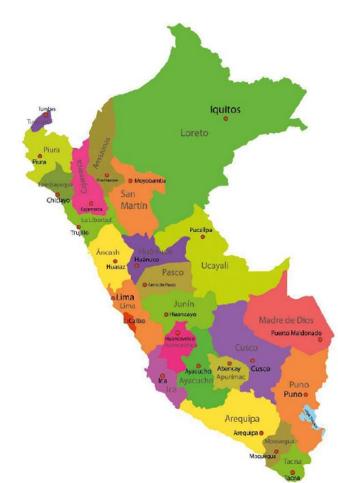
[7] | |
[15] | |
[29] | |
[33] | |
[34] | |
[40] | |
[42] | |
[53] | |
6.1 Examination and acceptance under Part 16 of the Trade Marks Act | [53] |
[63] | |
[80] | |
[141] |
BURLEY J:
1. INTRODUCTION
1.1 The proceedings
1 This case concerns whether an application for a certification trade mark under Part 16 of the Trade Marks Act 1995 (Cth) for the word PISCO in respect of “alcoholic beverages (except beer)”, ought to have been accepted by the Registrar of Trade Marks. The appellant, the Republic of Peru (Peruvian State), contends that the Registrar erred in refusing to accept the application. The Registrar disputes this proposition.
2 The proceeding is brought as an appeal from the decision of a delegate of the Registrar pursuant to s 35 of the Trade Marks Act: Republic of Peru (Peruvian State) [2023] ATMO 53 (ATMO Decision).
3 The delegate found that the word PISCO has an ordinary signification as a type of traditional spirit generally produced in Peru or Chile. He found that other traders, particularly those from Chile, would have a legitimate desire to use that mark in relation to alcoholic beverages and accordingly the mark is not inherently adapted to distinguish within s 177(2)(a) of the Trade Marks Act: ATMO Decision at [17]. The delegate also concluded that the certification trade mark sought is not capable of distinguishing within s 177(2)(b) by reason of use or any other circumstances: ATMO Decision at [18]–[23].
4 In accordance with r 34.24 of the Federal Court Rules 2011 (Cth) (FCR), the Republic of Peru filed a Notice of Appeal that sets out the manner in which it contends that the delegate erred by reference to his reasons. However, as an appeal de novo, it is not necessary for the Court to find error in the decision of the delegate. The question is whether, on the evidence before the Court, the application should be accepted on the merits: Jafferjee v Scarlett [1937] HCA 36; 57 CLR 115 at 126 (Dixon J); Eclipse Sleep Products Inc v Registrar of Trade Marks [1957] HCA 86; 99 CLR 300 at 308 (Dixon CJ, Williams and Kitto JJ); Registrar of Trade Marks v Woolworths Ltd [1999] FCA 1020; 93 FCR 365 at [32]–[34] (French J) (Branson J agreeing generally at [64] and Tamberlin J agreeing at [104]).
5 Mr Andrew Fox SC appeared with Ms Angela McDonald of counsel for the Republic of Peru, and Mr Hamish Bevan SC appeared with Ms Jessie McKenzie of counsel for the Registrar. Both parties filed helpful written submissions in advance of the hearing.
6 For the reasons set out below, I find that the application should proceed to acceptance.
1.2 The certification trade mark application
7 The application is for the word mark PISCO in class 33 in respect of “Alcoholic beverages (except beer)” (Trade Mark Application No. 2006463). It was filed on 1 May 2019, which is its priority date.
8 It is a requirement of Part 16 of the Trade Marks Act that the rules governing the use of the certification trade mark be filed in accordance with the Trade Marks Regulations 1995 (Cth): s 173(1). There is no dispute that the present application complies with those Regulations and with the requirements of s 173(2), to which I refer in more detail below.
9 Certification Rules for the PISCO trade mark were filed by the Republic of Peru on 9 September 2019. Annexed to the Certification Rules are Pisco Regulations (in both Spanish and English), called the Reglamento de la Demoninaciόn de Origen Pisco (Regulation of Pisco Denomination of Origin). The Certification Rules govern the use of PISCO as a certification mark and commence by reciting that the Republic of Peru is the owner of the PISCO certification trade mark, that PISCO is a recognised Denomination of Origin recognised in countries around the world as a product of Peru, and that the use of the certification trade mark is governed by the Certification Rules and the Regulatory Council appointed by the Republic of Peru. The Certification Rules provide a definition of PISCO commencing as follows:
In these Rules, PISCO means the product exclusively produced in the designated production areas in Peru and further matured, packed, and labeled in accordance with the Regulations and Related Laws and these Rules. Articles 3 to 13 of the Regulations provide detailed elaboration of the requirements for a product to be PISCO which includes by meeting the following general standards as to content, method of manufacture, geographical origin and quality: …
10 The Certification Rules then set out more detailed requirements that must be satisfied for goods to fall within the meaning of PISCO, including the ingredients of PISCO (“obtained exclusively by distillation of fresh must from freshly fermented ‘Pisqueras Grapes’, using methods that maintain traditional principles of quality …”), the equipment used, the fermentation process, distillation and resting. The Certification Rules also engage in a comprehensive analysis of the qualitative and quantitative requirements to be satisfied in order to be PISCO.
11 The Certification Rules provide that the right to use the PISCO certification trade mark is limited to those authorised by the Republic of Peru or its authorised certifier, the National Institute for the Defense of Free Competition and the Protection of Intellectual Property (INDECOPI). INDECOPI is a Peruvian public agency.
12 Clause 8 of the Certification Rules specifies the manner in which the certification trade mark may be used:
8. USE OF THE TRADE MARK
Only Authorised Users may use the Certification Trade Mark, and those Authorised Users:
a) Must only use the Certification Trade Mark in relation to products that meet the Certification Requirements in Rule 7;
b) Must only use the Certification Trade Mark in relation to the specific types of PISCO for which they hold a current Authorisation of Use from INDECOPI;
c) Must only use labels on PISCO in Australia which have been authorised by INDECOPI in accordance with Article 10 and 36 of the Regulations and whose approval has not been suspended or cancelled under Article 39 of the Regulations; and
d) May in accordance with these Rules and the Regulations use the Certification Trade Mark to promote and identify their PISCO goods in Australia.
13 It is relevant to note that Articles 10 and 36 of the Pisco Regulations referred to in Clause 8(c) of the Certification Rules above provide that the label must be approved by a Regulatory Council set up for quality control purposes for the use of the label. The label requirements in Article 10 of the Pisco Regulations are:
Article 10 - Labeling
10.1 The labeling must be in accordance with Peruvian Technical Standard NTP 210.027, NTP 209.038 and NMP 001.
10.2 The label must have the text “Pisco Denomination of Origin”, in legible characters, followed by the certificate number of the authorization of use, according to the attached model:
Pisco Denomination of Origin
Aut. of Use Nº … 1
10.3 Likewise, the label must indicate at least the type of pisco, the variety of the pisquera grape used the valley of location of the winery and the year of harvest.
10.4 The use of the denomination of the “Production Zone” is exclusively reserved for the pisco that is elaborated and packaged in the same zone from where the pisqueras grapes used in its elaboration come from.
14 It is of significance to note that to obtain an Authorisation of Use for PISCO, the Rules require that an application process be completed in which the details of type of pisco for which authorisation of PISCO is sought, the variety of pisqueras grapes used, and the geographical location of the grape growing area, is to be assessed.
2. THE STATUTORY PROVISIONS
15 Part 16 of the Trade Marks Act provides for certification trade marks.
16 A certification trade mark is defined in s 169:
169 What is a certification trade mark?
A certification trade mark is a sign used, or intended to be used, to distinguish goods or services:
(a) dealt with or provided in the course of trade; and
(b) certified by a person (owner of the certification trade mark), or by another person approved by that person, in relation to quality, accuracy or some other characteristic, including (in the case of goods) origin, material or mode of manufacture;
from other goods or services dealt with or provided in the course of trade but not so certified.
Note: The goods or services certified may be those of any person, including the owner of the certification trade mark or any person approved by the owner for the purpose of certifying goods or services.
17 Section 170 provides that, subject to the provisions of Part 16, all provisions (save for a short list) in the Act apply to certification marks as if a reference in those provisions to a trade mark included a reference to a certification mark. I refer to relevant exceptions in more detail below.
18 Section 171 provides for the “Rights given by registration of a certification trade mark” and states that in lieu of the terms of s 20(1), the following subsection is substituted:
If a certification trade mark is registered, the registered owner has, subject to this Part, the exclusive rights to use, and to allow other persons to use, the certification trade mark, in relation to the goods and/or services in respect of which the certification trade mark is registered. The registered owner may, however, use the certification trade mark only in accordance with the rules governing the use of the certification trade mark.
Note: For the rules governing the use of the certification trade mark see section 173.
19 Section 172 provides for the rights of persons allowed to use a certification trade mark. When the registered owner of a registered certification trade mark allows an approved user to use the mark in relation to goods or services in respect of which it is registered, the approved user has a right to use the mark in accordance with rules governing the use of the certification trade mark.
20 Section 173 provides for the filing of rules governing the use of certification trade marks. It provides, amongst other things, that a person who files an application for the registration of a certification trade mark must, in accordance with the Regulations, file a copy of the rules governing the use of the mark. These rules are to specify the requirements (defined as the “certification requirements”) that the relevant goods or services must meet for the certification trade mark to be applied to them: s 173(2)(a). The section also specifies details that rules must address, which include the process for determining whether goods or services meet the certification requirements (s 173(2)(b)), the attributes that a person must have to become an approved certifier approved to assess whether the goods or services meet the certification requirements (s 173(2)(c)), requirements that owners of certification marks and approved users must meet to use the certification trade mark (s 173(2)(d)), and dispute resolution mechanisms (ss 173(2)(f), (g)).
21 Section 174 provides that the Registrar must send the rules (and any other prescribed documents relating to the application) to the Australian Competition and Consumer Commission which, by s 175, must consider the application and any documents received under s 174 in accordance with the Regulations and certify that it is satisfied that they meet the relevant requirements: s 175(2).
22 In the present case, there is no dispute that the Certification Rules are in accordance with s 173.
23 Section 176 provides:
176 Acceptance or rejection of application
(1) The Registrar must accept the application if:
(a) the application is made in accordance with this Act; and
(b) there are no grounds for rejecting the application; and
(c) the Commission has given a certificate under subsection 175(2).
Otherwise the Registrar must reject the application.
(1A) However, the Registrar must give the applicant an opportunity to be heard before rejecting the application solely because one or both of the conditions in paragraphs (1)(a) and (b) are not met.
(2) The Registrar may accept the application subject to conditions or limitations.
Note: For limitations see section 6.
(3) The Registrar must:
(a) notify the applicant of the Registrar's decision under this section; and
(b) publish the decision in accordance with the regulations.
24 I have noted that s 170 provides that the provisions of the Trade Marks Act relating to trade marks generally apply to certification trade marks, subject to some exceptions. In this regard, the grounds upon which a trade mark application may be rejected are set out in Part 4 of Division 4, being those set out in ss 39, 40, 41, 42, 43 and 44 with the exception of s 41 (trade mark not distinguishing applicant’s goods or services), which is replaced by s 177.
25 Section 177 provides:
177 Additional ground for rejecting an application or opposing registration--certification trade mark not distinguishing certified goods or services
(1) In addition to any other ground on which:
(a) an application for the registration of a certification trade mark may be rejected; or
(b) the registration of a certification trade mark may be opposed;
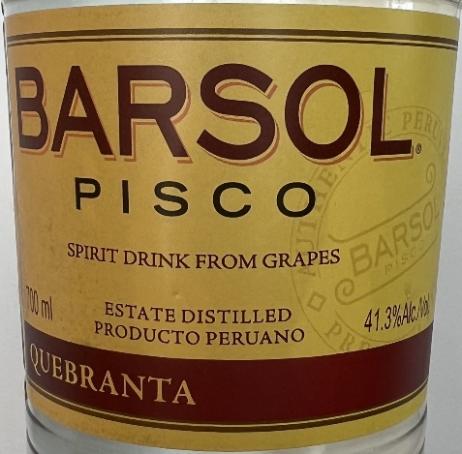
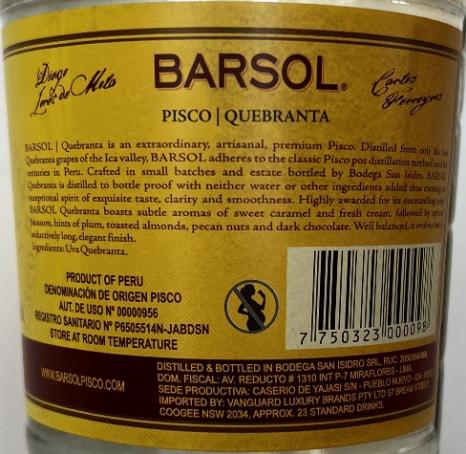
the application must be rejected or the registration may be opposed if the trade mark is not capable of distinguishing goods or services certified by the applicant or an approved certifier from goods or services not so certified.
Note 1: For applicant see section 6.
Note 2: For approved certifier see paragraph 173(2)(c).
Note 3: Division 2 of Part 4 sets out the main grounds for rejecting an application, but section 41 does not apply to certification trade marks (see section 170).
(2) In deciding whether or not the certification trade mark is capable of so distinguishing goods or services certified by the applicant or an approved certifier, the Registrar must take into account:
(a) the extent to which the certification trade mark is inherently adapted so to distinguish those goods or services; or
(b) the extent to which, because of its use or of any other circumstances, the certification trade mark has become adapted so to distinguish those goods or services.
26 As I have noted, in this case the delegate refused to accept the certification trade mark on the basis that s 177 was not satisfied: ATMO Decision at [27].
27 Section 178 provides for the variation of the rules. Section 179 provides that the Registrar must publish the rules. Sections 180 and 180A provide for the assignment of registered and unregistered certification trade marks respectively.
28 Section 181(2) provides that in addition to the powers under Division 2 of Part 8 in relation to certification marks, which concern action by the Court including rectification of the Trade Marks Register, a prescribed court may, on the application of a person aggrieved, order that the Register be rectified by cancelling the registration of a certification trade mark on grounds that the registered owner or approved certifier is no longer competent to certify, that the rules are detrimental to the public, or that the owner or an approved user has failed to comply with a provision of the rules governing use of the certification mark.
3. AGREED FACTS
29 The parties collaborated to produce a statement of agreed facts from which the following facts have been extracted.
30 Pisco is the name of a town in Peru close to vineyards where grapes used to make pisco are grown. Pisco has been produced within the Pisco region for more than 450 years. It is a drink that is traditional to Peru and has for many decades been an integral and important part of many traditions in Peruvian society. The fourth Sunday of every July is celebrated in Peru as Dia del Pisco, or national Pisco Day. The drink is a product of special importance to the Peruvian economy domestically and through exports. It is also important culturally.
31 Peru regulates the production of pisco in Peru. The Pisco Regulations (Regulation of Pisco Denomination of Origin) define what pisco is, make provision for where and how it is made and control, through a designated authority, the use in Peru of the term PISCO which the Peruvian Government has designated a denomination or appellation of origin. Use of the term PISCO as an appellation of origin in Peru must be authorised by the INDECOPI. The Pisco Regulations also provide for all of the processing steps required to produce pisco, from the selection of grape varieties, grape growing, grape processing and bottling the final spirit. They require that pisco be made exclusively by the distillation of fresh must (being a crushed mixture of grape juice with pulp and seeds) from freshly fermented pisqueras grapes using methods that maintain traditional quality. It is to be produced on the coast of departments within Peru, of Lima, Ica, Arequipa, Moquegua and the Valleys of Locumba, Sama and Caplina in the department of Tacna.
32 Australia imported more than 3.5 million litres of pisco in the period between 2005 and 2017, showing that it is the third major importer of pisco worldwide.
4. THE AFFIDAVIT EVIDENCE
33 The affidavits of the witnesses called by the parties are described briefly below. No witness was cross examined.
4.1 Republic of Peru
34 Vitaliano Gaspar Gallardo Valencia has since February 2022 been the Ambassador to Australia of the Republic of Peru. His Excellency gives evidence in his first affidavit about the promotion and sale of pisco in Australia, referring to medals awarded to pisco in international competitions over the years and particular promotions conducted by or with the assistance of the Peruvian embassy in Australia. Within the materials he annexes are pages from a book by Mariella Balbi entitled “Pisco es Perú” or “Pisco is Peru”, a slogan which has been used in promotional materials for pisco globally since around 2014. He refers to the protection of the name PISCO in Australia by Peru, referring to the Peru-Australia Free Trade Agreement (PAFTA) (Free Trade Agreement between Australia and the Republic of Peru), adopted 12 February 2018, [2020] ATS 6 (entered into force 11 February 2020) and also the filing in Australia by his office of oppositions to the registration of trade mark applications using the word “PISCO”. He also gives evidence about steps taken by the Peruvian government worldwide to ensure that the term PISCO is only used in relation to approved spirits.
35 In his second affidavit, Ambassador Valencia annexes pages from an earlier edition of “Pisco is Peru”. In his third affidavit, he provides further details of promotional activities undertaken in Australia concerning PISCO and gives some details of exports of pisco from Peru to Australia.
36 Eduardo Dargent Chamot is a Professor and researcher at Universidad Ricardo Palma and Pontificia Universidad Catolica del Peru, which are both in Lima, Peru. He holds a Doctorate in Tourism and a Masters degrees in History and Cultural Management and Heritage. Professor Dargent Chamot has published a number of books, three of which concern the production and use of pisco. He gave evidence in these proceedings as an expert witness.
37 Professor Dargent Chamot gives evidence of the origins of pisco, how it is produced and where it is produced in Peru, providing a map that shows it is produced on the coastal departments (regions) of Lima, Ica, Arequipa, Moquegua and Tacna (in the valleys of Locumba, Sama and Caplina):
38 In his second affidavit, Professor Dargent Chamot describes the instructions that he was given in relation to his first affidavit.
39 Sara Cruz Jose Pearson is a lawyer employed by Griffith Hack, the solicitors representing the Republic of Peru in these proceedings. In her first affidavit she annexed a number of documents relevant to the proceedings including the certification trade mark application and a copy of the Certification Rules as filed in conjunction with the application. In her second affidavit she describes locating, viewing and purchasing bottles of pisco products from various retail outlets and hospitality venues in Australia, both in person and online by reference to the Wayback Machine website. Additionally, a number of bottles of pisco products were exhibited to her second affidavit. She also visited and annexes extracts from the websites of various Pisco producers and the Encyclopaedia Britannica.
4.2 The Registrar
40 Isobel Kathleen Leonard is a solicitor in the employ of the Australian Government Solicitor, representing the Registrar. In her first affidavit she refers to and provides hyperlinks to various free trade agreements, decrees and regulations between different countries and Chile, and all of which set out conditions concerning the trade of pisco produced in Chile.
41 In her second affidavit, Ms Leonard gives evidence about visiting various online retail outlets and purchasing pisco and annexes evidence of doing so.
5. THE SUBMISSIONS
42 The Republic of Peru submits that in Australia as at 1 May 2019, PISCO was capable of distinguishing goods certified by it from goods not so certified, as required by s 177(1) of the Trade Marks Act. It contends that the ordinary signification of PISCO in that context was that it was a particular type of spirit which originates from a particular place, being the Pisco region of Peru. In its submissions it reviews the legislative history of the regime for the protection of certification trade marks in Australia by reference to the Trade Marks Act 1955 (Cth) (1955 Act) and the secondary materials applicable to the later enacted Trade Marks Act, including the Working Party to Review the Trade Marks Legislation, Recommended Changes to the Australian Trade Marks Legislation (Australian Government Publishing Service, Canberra, 1992) (Working Party Report) and the terms of the Agreement on Trade-Related Aspects of Intellectual Property Rights (TRIPS Agreement) (Marrakesh Agreement Establishing the World Trade Organization, opened for signature 15 April 1994, 1867 UNTS 3 (entered into force 1 January 1995) annex 1C (‘Agreement on Trade-Related Aspects of Intellectual Property Rights (TRIPS)’)).
43 It submits that the presumption of registrability which applies in the context of standard trade marks should apply to certification trade marks and that the requirement of s 177(1) is that the certification trade mark must be capable of distinguishing goods (I do not refer to services hereafter, as the present application concerns goods only) certified by the applicant (or an approved certifier) from goods “not so certified”. It contends that an important background matter in the regime for certification marks is to fulfil Australia’s obligations under the TRIPS Agreement in respect of geographical indications, citing articles 22(1), 22(2) and 23 as providing Members with means to protect designations of origin in respect of, amongst other goods, spirits. It also submits that Australia has recognised that signs that may serve as geographical indications can be protected through trade mark law in recent trade agreements, citing article 18.19 of the Trans-Pacific Partnership Agreement (as incorporated into the Comprehensive and Progressive Agreement for Trans-Pacific Partnership, adopted 8 March 2018, [2018] ATS 23 (entered into force 30 December 2018) art 1.1).
44 The Republic of Peru submits that the test under s 177 of the Trade Marks Act concerning a certification trade mark’s capacity to distinguish must have regard to the use of the certification trade marks system to protect geographical indications and the requirements of the TRIPS Agreement. It reviews the case law, submitting that there are no binding authorities that deal with the application of the test under s 177 but that the High Court in Cantarella Bros Pty Ltd v Modena Trading Pty Ltd [2014] HCA 48; 254 CLR 337 provides guidance as to the assessment of inherent adaptation to distinguish. It submits that Cantarella provides for a two stage analysis, first in determining the ordinary signification of the sign to those who would purchase, consume or trade in the goods/services and secondly whether that signification is likely to be desired to be used by others legitimately in the course of trade.
45 As to the first inquiry, the Republic of Peru submits that the ordinary signification of PISCO in Australia as at the priority date is that it was a particular type of beverage which comes from a particular place (or region) being the Pisco region in Peru and that the word is inherently adapted to function as a certification trade mark because, by its very nature, the word identifies the quality, origin, materials and mode of manufacture of the product. It submits that Australians are aware of this ordinary signification through three separate means. First, the product has been sold extensively in Australia since at least 2005, with Australia being the third major importer of PISCO globally. It submits that each bottle sold in Australia identifies that it has been produced in accordance with the standards and is an appellation of origin. Secondly, the Republic of Peru has engaged in extensive promotional activities regarding PISCO as an appellation of origin and its connection to the history and culture of Peru. Thirdly, it has taken steps since well before the priority date to protect its rights in PISCO in Australia and to remove any illegitimate use of the word by ensuring that there are no competing trade mark registrations (i.e. by opposing registration of trade mark applications containing the term ‘pisco’) and by reason of the terms of the PAFTA.
46 As to the second inquiry, the Republic of Peru submits that there is insufficient evidence to establish, at the priority date in Australia, any legitimate interest by other traders to use the term PISCO as a certification mark on alcoholic beverages other than those originating from Peru. In this regard, it submits that no affidavit evidence has been led by any trader in Australia concerning a desire to use the mark for any different purpose.
47 The Republic of Peru accepts that the Registrar has led some evidence to support the proposition that before 1 May 2019 there were sales in Australia of products labelled as PISCO from Chile but contends that those sales were vastly overshadowed by the sales of PISCO from Peru. It also accepts that the Macquarie Dictionary (7th edition, Pan Macmillan, 2017) definition of ‘pisco’ identifies ‘pisco’ as originating not only from Peru but also Chile, but challenges the accuracy of the Macquarie Dictionary definition. It notes that other definitions are from overseas dictionaries and draws attention to other dictionaries such as the Concise Oxford English Dictionary (12th ed, Oxford University Press, 2011) that refer to ‘pisco’ as originating in Peru. In terms of “other circumstances” under s 177(2) of the Trade Marks Act, the Republic of Peru submits that it is notable that there is no evidence of any other application seeking certification.
48 Ultimately, the Republic of Peru contends that there is insufficient doubt to warrant refusal of the application and that it should proceed to acceptance and publication for opposition.
49 The Registrar refers to the history of certification trade marks and their origins in the provisions under “Standardisation & trade marks” in the Trade Marks Act 1905 (Cth) (1905 Act) and developments in the United Kingdom prior to the enactment of the 1955 Act and the Trade Marks Act. The Registrar submits that s 177 provides no room for a presumption of registrability.
50 The Registrar submits that the approach required by s 177 is to assess whether the certification trade mark is capable of distinguishing goods that have been certified by the owner (or approved certifier) as to their features or characteristics from goods that are not certified, certification marks being a “badge of certification” in contrast to the “badge of origin” which applies for a standard mark under s 17 of the Trade Marks Act. In this regard, the Registrar also relies on Cantarella as providing the analytical approach required by s 177, recognising (as does the Republic of Peru) that the inquiry is directed towards distinguishing goods certified as to particular qualities (which may include geographical origin) and, unlike a standard trade mark, not distinguishing trade origin.
51 The Registrar contends that the word “pisco” is not inherently adapted to distinguish and relies on definitions from the Macquarie Dictionary (which provides that ‘pisco’ is a type of grape brandy made in Peru and Chile), and the Collins Dictionary (which provides that ‘pisco’ is a type of white grape brandy from South America in its British English edition, and specifies Peru and Chile in its American English and Spanish-English versions respectively). These definitions are, it submits, supported by documentary evidence in the form of texts tendered in evidence that pisco, when used in relation to alcohol, would not be understood by consumers or traders to originate solely in Peru (specifically, that there is a grape brandy produced in Chile called ‘pisco’) and evidence of sales in Australia before 1 May 2019 as well as other materials indicate that Chilean pisco was imported into and sold in Australia before this date.
52 The Registrar also points to international agreements reached between the Republic of Chile and other countries to demonstrate that Chile also claims rights to Chilean Pisco, and that in certain agreements these rights co-exist with the recognition of PISCO as a geographical indication of origin of Peru. In short, the Registrar contends that the ordinary signification of pisco to persons in Australia who will purchase, consume or trade in alcoholic beverages is that it is a grape brandy made in Peru and Chile. Whilst it may be that significant numbers of people would also recognise Pisco as the name of a region in Peru, the Registrar contends that this does not detract from the broader meaning attached to the word. Accordingly, other traders, without improper motive, might legitimately need to use the word in respect of their products. As a consequence, PISCO is not inherently adapted to distinguish goods certified by the Republic of Peru. Nor is there evidence to support that by way of use or other circumstances, PISCO has become adapted to so distinguish.
6. CONSIDERATION
6.1 Examination and acceptance under Part 16 of the Trade Marks Act
53 The process of acceptance of a trade mark application requires an examination by the Registrar to filter applications. By s 31 of the Trade Marks Act, the Registrar is obliged, in accordance with the Regulations, to examine and report on whether the application has been made in accordance with the Trade Marks Act and whether there are grounds for rejecting it. The standard set for the Registrar by the Regulations at regs 4.8 to 4.10 is one of reasonable belief in the existence of grounds for rejection. These regulations also set out a process for that belief to be conveyed to the applicant by way of report, and for the applicant to contest that report.
54 It was on the basis of this belief that the examiner in the present case refused acceptance, finding that the word PISCO “indicates that the goods for which you seek coverage is a traditional brandy produced and consumed in the country of Peru and Chile”. In the second adverse report, the examiner maintained that “in the Australian market, when used on alcohol, the Trade Mark connotes that the alcohol is a style of brandy originating from Chile or Peru” (ATMO Decision [5]). The delegate upheld the examiner’s decision. It is apparent from the reasoning of the delegate that the basis for the rejection was that “the examination process conducted by this office (and indeed the material annexed to the Applicant’s response to the second examination report) has clearly identified that the Trade Mark is used in Australia, among the consumers for the Applicant’s Goods, to refer to a broader set of spirits than just the Pisco product produced in Peru” (ATMO Decision [15]). In more detail, the delegate noted that there is a spirit advertised and sold in Australia as PISCO produced from various regions in Chile and not certified by the Republic of Peru (ATMO Decision [16]), that there are other traders who would have a legitimate desire to use the PISCO mark (ATMO Decision [17]), the difficulty with determining whether PISCO is descriptive or recognised as a certification (ATMO Decision [20]), and the lack of evidence that the trade mark is recognised as a certification mark for goods from the Republic of Peru (ATMO Decision [21]).
55 After examination and acceptance, a trade mark application is advertised and persons may oppose the application in accordance with Part 5 of the Trade Marks Act. In Woolworths, French J reviewed the history of the procedures whereby an application for a trade mark is scrutinised at [11]–[28] and the role of the Court and Registrar in undertaking that task at [33]–[34] (Branson J agreeing at [72], Tamberlin J agreeing generally at [104]). In Kenman Kandy Australia Pty Ltd v Registrar of Trade Marks [2002] FCAFC 273; 122 FCR 494 (French, Lindgren, Stone JJ), French J summarised the position at [22]:
There is no principle in favour of the correctness of the Registrar’s opinion. In determining the acceptance or rejection of an application for registration the Court must apply the same legal criteria as are to be adopted by the Registrar. Since the enactment of the Trade Marks Act 1995 the onus is no longer on the applicant to establish registrability as it was under the 1955 Act - Registrar of Trade Marks v Woolworths Ltd (1999) 93 FCR 365 at 372-373. The application must be accepted unless the Court is satisfied that it has not been made in accordance with the Act or that there are grounds for rejecting it. If the matter is in doubt then the application should be accepted. The possibility of refusal after a contested opposition with evidence and closer scrutiny remains open. The acceptance stage is not the time for detailed adversarial examination of the application that might be involved in an opposition - Registrar of Trade Marks v Woolworths at 377. Acceptance for registration involves an initial screening process albeit it requires the application of statutory criteria and evaluative judgments by the Registrar and the Registrar’s delegates.
56 Unlike in Woolworths and Kenman Kandy, s 176, not s 33 of the Trade Marks Act governs whether or not an application for a certification trade mark should be accepted. There is a slight difference in language between s 33(1), which provides that “The Registrar must, after the examination, accept the application unless he or she is satisfied that: …”, and s 176(1) which provides “The Registrar must accept the application if: …” various requirements are met. However, the Registrar properly accepts that this difference does not make any material difference to the analysis provided in these authorities.
57 Nor can I see any reason based on the scheme of the legislation why a different standard would apply for the acceptance of certification marks within Part 16 compared to the standard for the acceptance of standard trade marks. The secondary materials, including the Working Party Report, support that conclusion. For certification trade marks as well as standard trade marks, provision is made for the steps of acceptance, publication of acceptance, opposition by interested third parties and, if it comes to that, revocation.
58 Indeed, the recommendation of the Working Party Report to which French J referred in Woolworths at [24], is equally applicable for certification marks. In the subsection entitled “1.3.2 Test for registrability” (where the presumption of registrability is recommended), the Report includes a reference to the TRIPS Agreement and the protection of geographical indications. Recommendation 15F of the Report then states that:
The test for registrability of certification marks in terms of their distinctiveness should be their capability of distinguishing as defined in 1.3.2, p42.
(Emphasis added.)
59 This indicates that the presumption of registrability recommended in section 1.3.2 of the Working Party Report was equally intended to apply to certification marks.
60 In oral submissions, counsel for the Registrar submitted that the presumption of registrability did not apply in relation to certification marks by the content of s 177. The Registrar submitted that s 177 is similar to the pre-Intellectual Property Laws Amendment (Raising the Bar) Act 2012 (Cth) (Raising the Bar Act) version of s 41 of the Trade Marks Act, and that there was limited, if any, role for the presumption to play in cases concerning that version of s 41 drawing on the reasoning in Blount Inc v Registrar of Trade Marks [1998] FCA 440; 83 FCR 50 (Branson J), where the Court held that the correct interpretation of s 41 meant that the presumption of registrability in s 33 did not apply. The Registrar submits that although the subsequent Raising the Bar Act clarified that the presumption of registrability, as provided for in section 33, does apply to section 41 (Explanatory Memorandum, Intellectual Property Laws Amendment (Raising the Bar) Bill 2011 at 146), it made no such adjustment in relation to s 177, from which an intention may be inferred that the presumption in favour of registrability does not apply to certification marks.
61 The Registrar accepted in argument that there is no discernible policy basis for the difference in application of the presumption between s 41 and s 177. However, he maintained the position that “when one looks at the statutory command and the language, and then Blount and that history, that the construction is that the presumption has no work to do [with regards to s 177]”.
62 In my respectful view, the intentions espoused in the Working Party Report that the presumption applies to certification marks provides an indication that the position as set out in Kenman Kandy would equally apply to certification marks. Moreover, the language of s 41 of the Trade Marks Act in the form considered in Blount is significantly more prescriptive than the language of s 177: see Blount at 56F–58D. I do not consider that the language of s 177 provides sufficient support for the conclusion for which the Registrar contends to form a different view.
6.2 Section 177
63 The central issue between the parties concerns whether PISCO as a certification trade mark for alcoholic beverages (excluding beer) satisfies the requirement of s 177, such that it is capable of distinguishing goods certified by the Republic of Peru (or an approved certifier) from goods not so certified. This is to be examined by reference to the two matters that the Court, standing in the shoes of the Registrar, must take into account in s 177(2):
(a) the extent to which the certification trade mark is inherently adapted so to distinguish those goods or services; or
(b) the extent to which, because of its use or of any other circumstances, the certification trade mark has become adapted so to distinguish those goods or services.
64 In relation to (a), both parties draw on Cantarella. There, the plurality accepted (at [26], [30] and [44]) the explanation of Kitto J in Clark Equipment Co v Registrar of Trade Marks [1964] HCA 55; 111 CLR 511 at 514, that whether a trade mark consisting of a word is “adapted to distinguish” certain goods is to be tested:
... by reference to the likelihood that other persons, trading in goods of the relevant kind and being actuated only by proper motives – in the exercise, that is to say, of the common right of the public to make honest use of words forming part of the common heritage, for the sake of the signification which they ordinarily possess – will think of the word and want to use it in connexion with similar goods in any manner which would infringe a registered trade mark granted in respect of it.
(Emphasis added by the plurality in Cantarella at [26].)
65 The inquiry necessarily requires analysis of the ordinary meaning to be ascribed to the word and then determination of whether other persons would want to make use of it. As the plurality said in Cantarella (at [44]):
The requirement that a proposed trade mark be examined from the point of view of the possible impairment of the rights of honest traders to do that which, apart from the grant of a monopoly, would be their natural mode of conducting business (Lord Parker), and from the wider point of view of the public (Hamilton LJ), has been applied to words proposed as trade marks for at least a century, irrespective of whether the words are English or foreign. The requirement has been adopted in numerous decisions of this Court dealing with words as trade marks under the 1905 Act and the 1955 Act. Those decisions show that assessing the distinctiveness of a word commonly calls for an inquiry into the word’s ordinary signification and whether or not it has acquired a secondary meaning.
(Footnotes omitted.)
66 In considering the ordinary signification, geographical terms have long been a somewhat special case in the sense that they are considered not likely to be inherently adapted to distinguish. As the High Court explained in Cantarella at [57]:
In Clark Equipment, Kitto J considered for the purposes of registration in Part B the word "Michigan", which had acquired distinctiveness through 20 years of use in respect of the applicant's goods despite the fact that it was a geographical name of a State in America. After approving Lord Parker's test in Du Cros and Hamilton LJ's observation in R J Lea, his Honour explained that directly descriptive words, like geographical names, are not prima facie suitable for the grant of a monopoly because use of them as trade marks will rarely eclipse their "primary" (that is, ordinary) signification. Such a word, his Honour said, "is plainly not inherently, ie in its own nature, adapted to distinguish the applicant's goods". Traders may legitimately want to use such words in connection with their goods because of the reference they are "inherently adapted to make" to those goods. Kitto J's elaboration of the principle, derived from Lord Parker's speech in Du Cros, applies with as much force to directly descriptive words as it does to words which are, according to their ordinary signification, geographical names.
(Footnotes omitted.)
67 The parties correctly note that the test as applied in that case is not directly applicable because of the distinction between a standard trade mark and a certification trade mark. I now turn to that distinction.
68 If the Trade Marks Act defines a genus of intellectual property rights, being trade marks, standard trade marks and certification trade marks, each represent a distinct species. A comparison between s 17 and s 169 reveals the differences and similarities between the two. Like a standard trade mark, a certification trade mark is a sign used or intended to be used to distinguish goods dealt with or provided in the course of trade, but rather than distinguishing those goods from goods dealt with or provided in the course of trade by another person, the certification trade mark distinguishes goods certified by the owner (or another person approved by the owner) of the certification trade mark in relation to “quality, accuracy or some other characteristic” including origin, material or mode of manufacture from other goods dealt with or provided in the course of trade but not so certified.
69 Certification trade marks serve a different purpose to standard trade marks. Use of a standard trade mark differentiates the source of the goods dealt with by one trader from goods dealt with by other traders and so operates as a badge of trade origin: Self Care IP Holdings Pty Ltd v Allergan Australia Pty Ltd [2023] HCA 8; 277 CLR 186 at [23] (Kiefel CJ, Gageler, Gordon, Edelman and Gleeson JJ). A certification trade mark indicates that goods have the characteristics nominated in the rules for certification. Accordingly, a certification mark may appear in conjunction with a standard trade mark, one providing an indication of the trade source of the goods and the other indicating that the goods so sold have particular quality, origin, material or mode of manufacture characteristics.
70 The distinction may be seen by contrasting the rights conferred by registration of each species. Section 20(1) of the Trade Marks Act confers upon the registered owner the exclusive rights to use the trade mark and to authorise others to use the trade mark in relation to the goods in respect of which it is registered. Section 171 replaces s 20(1) in respect of certification trade marks and provides that the owner has exclusive rights to use and allow others to use the certification mark in relation to goods in respect of which the certification trade mark is registered, but specifies that the owner may use the mark only in accordance with the rules governing the use of the certification trade mark.
71 Part 16 of the Trade Marks Act pre-supposes that any trader who satisfies the requirements of the rules for certification will be entitled to apply a certification trade mark and that every trader who so applies the mark, including the registered owner, must comply with those rules. This is apparent at least from s 181(2) which provides an additional ground for revocation of a certification trade mark on the basis that: (a) the registered owner or an approved certifier is no longer competent to certify any of the goods in respect of which the mark is registered; or (b) the rules governing the use of the certification trade mark are detrimental to the public; or (c) the registered owner or an approved user has failed to comply with a provision of the rules governing the use of the certification trade mark.
72 These differences raise the question of how a certification trade mark is to be assessed for the purposes of s 177(2)(a), in particular, whether it is inherently adapted to distinguish.
73 The predecessor to Part 16 of the Trade Marks Act was Part XI of the 1955 Act. Section 83(1) relevantly provided that where a trade mark is adapted in relation to goods to distinguish in the course of trade goods certified by a person in respect of quality, accuracy or other characteristic, including origin, material or mode of manufacture from goods not so certified, the mark may be entered on the Register.
74 Section 83(3) of the 1955 Act provided:
(3) In determining whether a mark is adapted so to distinguish in relation to goods or services, regard may be had to the extent to which:
(a) the mark is inherently adapted so to distinguish; and
(b) by reason of the use of the mark or of any other circumstances the mark has become adapted so to distinguish.
75 There is little daylight between the requirements of s 83(3) of the 1955 Act and s 177(2) of the Trade Marks Act.
76 In Australian Law of Trade Marks and Passing Off by DR Shanahan (2nd ed, Law Book, 1990) the learned author observed of the 1955 Act provisions that whilst that Act did not require a statement on the application of the mark that a mark is a certification trade mark (i.e. as wording in proximity to the mark), its inclusion on a good must necessarily assist in establishing distinctiveness because a mark could not function as a certification trade mark “unless the public were educated in that way or by an appropriate advertising campaign (or more usually both) that the mark was in fact a certification mark.” (at p 226). In considering the formula provided in s 83(3) of the 1955 Act for determining whether a certification trade mark is “adapted so to distinguish”, the author says at page 227:
… As Lord Parker explained in the “W & G” case [W and G du Cros Ltd’s Appn (1913) 30 RPC 660 at 672 (House of Lords)], distinctiveness must “largely depend on whether other traders are likely, in the ordinary course of their business and without any improper motive, to desire to use the same mark”; however, in the case of a certification mark, registration does not reserve the use of the mark to the registered proprietor but presupposes that all who should be entitled to use the mark will be able to obtain authorisation to do so. …
(Emphasis added, footnotes omitted.)
77 The learned author then observed, in relation to geographical names, that such a name may well be registrable as a certification trade mark “if those who would have been entitled to use the name before registration will continue to have access to its use as a registered certification mark” (at p 227). As further explained (at p 227):
… That might be so where the use of the name is already restricted by regulation in the country of origin of the product, as in the case of the appellations d’origine controlee of France and the similarly regulated wine appellations of countries such as Germany and Italy. Provided that such a name has not become generic in Australia (in which case registration would interfere with description of the product), there appears no reason why registration should not be granted in Part C, and wine appellations have indeed been registered on this basis. …
(Footnotes omitted.)
78 In Re Stilton Trade Mark [1967] RPC 173, the Stilton Cheese Makers’ Association, of Melton Mowbray, in Leicestershire, represented all known makers of Stilton cheese and sought registration of STILTON as a certification mark under s 37 of the Trade Marks Act 1938 (UK). The terms of s 37 are sufficiently similar to s 177 of the Trade Marks Act to warrant examination, as set out in Stilton at 179:
(1) A mark adapted in relation to any goods to distinguish in the course of trade goods certified by any person in respect of origin, material, mode of manufacture, quality, accuracy or other characteristic, from goods not so certified shall be registerable as a certification trade mark in Part A of the register in respect of those goods in the name, as proprietor thereof, of that person: provided that a mark shall not be so registerable in the name of a person who carries on a trade in goods of the kind certified.
(2) In determining whether a mark is adapted to distinguish as aforesaid, the tribunal may have regard to the extent to which (a) the mark is inherently adapted to distinguish as aforesaid in relation to the goods in question; and (b) by reason of the use of the mark or of any other circumstances, the mark is in fact adapted to distinguish as aforesaid in relation to the goods in question.
79 The Court was satisfied that whilst Stilton was close to the area where the cheese was traditionally made, it was not a seat of cheesemaking itself. Indeed the evidence indicated that no cheese was made there at all (p 181). This was enough to conclude that the name STILTON was inherently adapted to distinguish within s 37(2)(a) (at p 181). The Court then proceeded to consider the second part of the definition in s 37(2)(b) which was that by reason of the use of the word STILTON or any other circumstances the word must, at any rate to some extent, be in fact adapted to distinguish. In that regard it found that the word had been used for 50 years to denote exclusively cheeses made by the particular process described in the rules and in this particular district (p 181). Accordingly, it was appropriate to distinguish cheese made by members of the Association and certified by the Association from cheese not so certified (p 181).
6.3 Analysis
80 Section 177(1) relevantly requires the rejection of the application if the trade mark is not capable of distinguishing goods certified by the Republic of Peru (or an approved certifier) from goods not so certified.
81 In deciding this question, the Court must by s 177(2) take into account:
(a) The extent to which the certification trade mark is inherently adapted so to distinguish those goods; or
(b) The extent to which, because of its use or of any other circumstances, the certification trade mark has become adapted so to distinguish those goods.
82 Both parties frame their arguments around Cantarella and contend that the degree to which the application is inherently adapted to distinguish will depend on first, what is the ordinary signification of the word PISCO and secondly, once that signification is determined, whether other traders might legitimately need to use the word PISCO in respect of their goods.
83 In this regard, the question of the meaning of the word PISCO is to be understood from the perspective of the ordinary persons in Australia concerned with alcoholic beverages, being people who will purchase, consume or trade in such goods: see Bohemia Crystal Pty Ltd v Host Corporation Pty Ltd [2018] FCA 235; 129 IPR 482 at [88]–[90] (Burley J) and the authorities cited there. Below I refer to that group of persons collectively as the ordinary consumer. The date for such consideration is the priority date, being 1 May 2019.
84 In the present case, “pisco” is a foreign word and its meaning to the ordinary consumer is contested as a matter of fact. The Republic of Peru contends that when used in the context of an alcoholic beverage it is understood to refer to a region in Peru where its production is in accordance with specific methods. The Registrar accepts that it signifies a beverage of a similar type but contends the geographical connotation is not confined to Peru but also Chile. In that sense, the parties agree that pisco is a word designating a type of beverage and also a place of origin and as such may be considered to be somewhat inherently distinctive.
85 The dispute concerns the word’s likely ordinary meaning.
86 The agreed facts demonstrate that Pisco is the name of a town close to the vineyards where grapes used to make pisco are grown, and that pisco is a drink that has been produced within the Pisco region for more than 450 years, that is traditional to Peru and has for many decades been an integral and important part of many traditions in Peruvian society. They also demonstrate that the Republic of Peru regulates its production in Peru, ensuring that pisco is produced within Peru in accordance with the requirements set by the Government in accordance with the Pisco Regulations. Those requirements are annexed to and form part of the Certification Rules. Both the Certification Rules and Pisco Regulations require that pisco be made exclusively by the distillation of fresh must (being a crushed mixture of grape juice with pulp and seeds) from freshly fermented pisqueras grapes using methods that maintain traditional quality, and that it be produced on the coast of departments within Peru of Lima, Ica, Arequipa, Moquegua and the Valleys of Locumba, Sama and Caplina in the department of Tacna.
87 Professor Dargent Chamot gives evidence that pisco was originally known in Spanish as “aguardiente” which may loosely be translated as “grape brandy”. He gives evidence of the production of pisco within the region. In his materials is an article he authored entitled “Peruvian wine and pisco: a historical vision” published in the Anuario Jurídico y Económico Escurialense (53 (2020) 379–396). That article refers to a long history of pisco being exported from Peru to other countries, including Chile. The article refers to historical documents that support the proposition that “pisco” is the name that has been used to describe the grape brandy produced in the Pisco region. It also describes the emergence of rivalry between Chile and Peru in the production of grape brandy, noting that the will of a Spaniard named Marcelino Rodriguez, owner of the Hacienda La Torre in the Elqui Valley in Chile, dated 1733, mentioned “three botijas (earthenware jugs) de Pisco”, the capitalised “P” referring to the place name (in Peru). In the same list is a grape spirit “aguardiente” with a small “a” which he understood to depict a product, but without the name of a place of origin. The article notes that this will is said to support the claim that a grape spirit was distilled in Chile and was called “Pisco”.
88 In his article, Professor Dargent Chamot also refers to the renaming in 1936 of a place in Chile from ‘La Uniόn’ to ‘Pisco Elqui’ with the apparent intention of usurping the name from Peru in order to enable spirits under the name of “Pisco” to be imported into the United States after the cessation of prohibition. This followed a diplomatic protest being sent by the Peruvian ambassador to the United States and the General Commissioner of Customs of Peru in May 1934, complaining that spirits not from Peru should be prohibited from using the name “Pisco” because the only genuine “Pisco” is that which comes from the area around the Port of Pisco in Peru.
89 In reaction to this, the then deputy for La Serena, Elqui, Ovalle and Llapel (and later the President of the Republic of Chile), Gabriel Gonzales Videla, orchestrated the change of name. The article cites a passage from the memoirs of Mr Gonzales Videla at p 398:
When I was a congressman, I had to defend the entry of pisco into the United Sates claimed against by the Government of Peru, because it is a product of exclusive origin from the region of Pisco (Peru).
The claim was accepted, but then suspended, because it occurred to me, as a congressman for that area, to present a bill that was quickly approved, by which I gave the name Pisco Elqui to a small town in that region called La Uniόn. And so Chilean Pisco Elqui had free entry into the United States.
90 However, it is not what took place in Peru and Chile that matters (however interesting that may be), but rather how the ordinary meaning of the word “pisco” is likely to be perceived and understood by the ordinary consumer. Accordingly the evidence of Professor Dargent Chamot must be set to one side as of historical interest, but having little bearing on the present dispute insofar as it concerns the ordinary meaning of “pisco”.
91 More relevant is the evidence upon which the parties rely. I commence with the dictionary definitions.
92 The Registrar places particular emphasis on the definition in the Macquarie Dictionary which provides at page 1143:
pisco … n. a grape brandy made in Peru and Chile; developed by Spanish settlers in the 16th century. [? Named after Pisco, a Peruvian colonial port from which the brandy was exported to Europe; ? Quechua]
(Underlining added.)
93 The Republic of Peru challenges the accuracy and utility of this entry. It subpoenaed the publishers of the Macquarie Dictionary and, from the documents produced, notes that the definition was added to the online version in 2014 and first appeared in print in 2017. The definition has remained as is in subsequent editions of the dictionary. No working papers from the formulation of the definition were produced which might indicate the sources for it. A document entitled “Summary of ongoing basic guidelines for inclusion of words in the Macquarie Dictionary” was produced which records that the main test for inclusion of a word in the dictionary is currency, within the whole community or within a section of it. The document says:
… If enough people know the word and use it as a token of meaningful exchange, then it ought to be in the dictionary. Finding evidence of this comes down to finding instances of a word’s use from a variety of different sources over a reasonable period of time – it used to be around five years, but, thanks to the internet, it is now a much shorter period. …
How does a new word/definition come to the attention of the dictionary editors?
There is a low-tech way and a high-tech way. The low-tech way is the way of Dr Johnson and of many dictionary editors in the past. The editor reads, and listens, and makes a record of anything interesting that they find.
The high-tech way is to get the computer to do the work of collecting and analysing texts. Data is plentiful these days and a spellchecker is the ultimate if rather crude means of identifying words not in the dictionary.
Finally, we rely on contributors, these days mostly contributors from our website. …
(Emphasis in original.)
94 The Republic of Peru submits that the entry should not be relied upon because working documents or lexicographical sources giving rise to it were not kept by the editors and so, like the challenged entry in Moroccanoil Israel Ltd v Aldi Foods Pty Ltd [2017] FCA 823 at [653] (Katzmann J), the entry is largely inscrutable. I return to this point below.
95 The Concise Oxford English Dictionary provides:
pisco … n. a white brandy made in Peru from muscat grapes. – ORIGIN named after a port in Peru.
(Italics added.)
96 The Collins Dictionary (online edition as at 27 May 2025) provides various definitions for “pisco”, which were tendered by the Registrar:
pisco … in British English … noun … a type of white grape brandy from S America
…
pisco … in American English … noun … a brandy made in Peru … Word origin … after Pisco, town in Peru
…
pisco … in American English … noun … a brandy made in the district near Pisco, a seaport in Peru
(Italics added.)
97 The Registrar also tendered the definition of ‘pisco’ in the Collins Spanish to English Dictionary (online edition as at 27 May 2025), which is as follows:
pisco … masculine noun (Andes, Chile) … strong grape liquor … pisco sauer
(Emphasis in original.)
98 The Registrar tendered extracts from a number of specialist publications.
99 One is The Complete Beverage Dictionary (2nd ed, International Thomson Publishing Inc, 1996), a United States publication, by Bob Lipinski, described as a “TV wine and food celebrity”, and Kathie Lipinski, a “holistic nurse” (both as described in the “About the Authors” section in the book)), both apparently resident in the United States. It includes the following definitions:
Pisco A brandy from Chile or Peru, distilled from Muscat of Alexandria and/or Mission grapes. The name Pisco is taken from the name of a port in southern Peru whence the brandy was shipped to the United States prior to Prohibition.
(Emphasis original.)
100 Another specialist publication, The Dictionary of Drink: A Guide to Every Type of Beverage, a United Kingdom publication, by Graham Edwards and Susan Edwards (Sutton Publishing Limited, 2007) provides the following definitions:
Pisco (S. Am) a brandy made from Muscat wine, is colourless, with a slight oily consistency. Produced in Argentina, Bolivia, Chile and Peru 45% alc by vol. See also Pisquero.
Pisco Aba (Chile) a pisco brandy produced from Muscat grapes.
Pisco Control (Chile) a 40% alc by vol. brandy, distilled and bottled in Valley of Elqui by Cooperativa Agrίcola Control Pisquero de Elqui y Limari Ltda.
(Bold emphasis in original, italics added.)
101 Another is Alexis Lichine’s Encyclopedia of Wines & Spirits (5th ed, Cassell Ltd, 1982), by Alexis Lichine, which is a United Kingdom publication:
Pisco brandy
Brandy distilled from Muscat wine in Peru, Chile, Argentina, and Bolivia. Originally Peruvian, the best comes from the Ica Valley, one of Peru’s better wine districts, near the port of Pisco. After distillation the brandy is placed in clay containers and is usually drunk young. This fiery brandy is still the preferred drink of Peruvian natives and has not gained popularity outside its country of origin, as Mexican tequila has in the United States.
(Bold emphasis in original, italics added.)
102 In The Oxford Companion to Wine (3rd ed, Oxford University Press, 2006), a United Kingdom publication by Jancis Robinson, the following definition is provided:
pisco, aromatic brandy made in Peru, Chile, and Bolivia, mainly from Moscatel (MUSCAT) grapes, rather like Bolivia’s singani.
(Bold emphasis in original, italics added.)
103 The other publications relied on add little to the information set out above.
104 The Republic of Peru is critical of the reliance on the dictionaries and specialist publications. The Registrar defends their use and submits that it is entirely proper and appropriate for examiners and delegates to have regard to such sources when considering whether or not to accept trade marks. The Registrar cites Shanahan’s Australian Law of Trade Marks & Passing Off by M Davison and I Horak (6th ed, Lawbook Co, 2016) at [15.1135]:
The examination process includes a search of earlier registrations and pending applications, but no attempt is made to search for “common law marks” or domain names, or to check the Register of companies or the business names registers of the various States and Territories. The Examiner does refer to dictionaries, directories, gazetteers and the Internet to see whether there may be grounds for rejection. The Examiner may also request further information from the applicant, as, for instance, where it appears that the trade mark or a part of it may have some foreign meaning in a foreign language or there is some obscurity in the statement of goods and / or services.
105 I accept that this is typical of the processes adopted by the Registrar upon examination and that it provides an appropriate balance between practicality, cost and commonsense for such publications to be relied upon at the examination stage. However, that is not to say that in all circumstances a dictionary definition will be definitive of the outcome of an application. In some circumstances there may be cause to doubt the accuracy of a definition, there may be relevantly inconsistent definitions or the publication may not be relevant to the enquiry, for instance, it may be coming from a source outside of Australia.
106 In the present case, the forensic dispute concerns how the ordinary consumer, being a person in Australia, would understand the word “pisco”. On the particular facts of this case, in my view the dictionary definitions are insufficient themselves to establish that usage.
107 First, there are competing dictionary definitions. The Concise Oxford English Dictionary indicates that PISCO indicates a brandy-like drink from Peru. The Collins Dictionary (online edition as at 27 May 2025) varies in meaning with British English and American English having different meanings, perhaps reflecting the fact that there are regional differences in understanding around the world. The Collins Spanish to English Dictionary (online edition as at 27 May 2025) provides a different definition again.
108 Only the Macquarie Dictionary is an Australian publication. It says in its definition that pisco originates in Peru and Chile. Although the Macquarie Dictionary is an Australian dictionary and is generally of great assistance in understanding the meaning of uncontested words, where a forensic dispute arises as to the use of a term in a particular trade, it may not be regarded as definitive, as exemplified in Moroccanoil at [653] (Katzmann J):
Ms Butler’s evidence suffers from a number of shortcomings, not least because her decision to include “Moroccan oil” in the Macquarie Dictionary is largely inscrutable since she did not keep a record of the source material upon which she relied. In contrast to the practice of the compilers of the OED, Ms Butler (apparently in conformity with the longstanding practice of the editorial team at the Macquarie Dictionary) did not keep a record of the lexicographical sources to which she referred in mid-2011 when she made the decision to include “Moroccan oil” in the Dictionary. Nor did she have a recollection of what those sources were.
109 The subpoenaed documents in this case indicate that the sources for the entry could have included internet searches or other materials which are not specific to meanings used in Australia.
110 Secondly, the specialist texts relied upon are publications from outside of Australia. Furthermore, it is not at all apparent that any of the persons falling within the class of persons being the ordinary consumer would rely upon those texts. It is likely that they are compiled by connoisseurs or those with intimate technical knowledge of the subject field as reference or subject encyclopedia books. It would appear that they are not directed either exclusively or broadly at the Australian market and so may not be a reliable indication of products available in the Australian market. No evidence provides guidance of the use that the ordinary consumer would make of these publications or suggests that the definitions provided relied on any concept of an ordinary signification to determine the definition provided. I am doubtful that they indicate the knowledge of the ordinary Australian consumer.
111 The parties also rely on evidence concerning sales of products in Australia.
112 The Republic of Peru refers to the agreed fact that accumulated figures from 2005 to September 2017 show that more than 3.5 million litres of pisco from Peru have been imported into Australia.
113 Customs figures supplied by the Peruvian Superintendent of Customs and Tax Administration (SUNAT) (a Peruvian Government Department), annexed to Ambassador Gallardo Valencia’s third affidavit, give figures of pisco exports to Australia direct from Peru that indicate that they have grown from 2 tonnes in 2005, to 20 tonnes in 2015, and 28 tonnes in 2019. The total from 2005 to 2019 being 156 tonnes.
114 Ambassador Gallardo Valencia gives evidence that pisco is usually exported in bottles of 500mL, 700mL or 750ml volumes. On the basis of a 700ml bottle weighing about 240 grams, he estimates that the total amount (156 tonnes) is the equivalent of about 650,000, 700ml bottles of Peruvian pisco.
115 The statement of agreed facts indicates that at or before 1 May 2019 about 12 Peruvian companies exported pisco to Australia. The evidence indicates that it is offered for sale from a range of Australian liquor retailers and in bars and restaurants.
116 It is an agreed fact that the Republic of Peru regulates the production of pisco in Peru by the application of its Pisco Regulations and that the term PISCO has been a Peruvian Appellation of Origin that has been officially protected in Peru since 12 December 1990. It is also a requirement that the Republic of Peru, through INDECOPI, must authorise the use of the word PISCO in Peru as a appellation or origin, just as is proposed in respect of the use of the word under the proposed certification trade mark. In these circumstances it may be accepted, and I find, that all bottles of pisco exported from Peru must comply with the Pisco Regulations, which include the requirements that I have summarised in section 1.2 of these reasons.
117 An example of one product is BARSOL PISCO, a bottle of which was tendered in evidence. The front and back labels on the product are as follows:
118 The writing on the front is:
“BARSOL
PISCO
SPIRIT DRINK FROM GRAPES
700ml ESTATE DISTILLED PRODUCTO PERUANO 41.3% Alc./Vol.
QUEBRANTA”
119 The writing on the rear of the label is:
BARSOL
PISCO | QUEBRANTA
BARSOL | Quebranta is an extraordinary, artisanal, premium Pisco. Distilled from only the best Quebranta grapes of the Ica valley, BARSOL adheres to the classic Pisco pot distillation method used for centuries in Peru. Crafted in small batches and estate bottled by Bodega San Isidro, BARSOL Quebranta is distilled to bottle proof with neither water or other ingredients added thus creating an exceptional spirit of exquisite taste, clarity and smoothness. Highly awarded for its outstanding taste, BARSOL Quebranta boasts subtle aromas of sweet caramel and fresh cream, followed by apricot blossom, hints of plum, toasted almonds, pecan nuts and dark chocolate. Well balanced, it evolves into a seductively long, elegant finish.
Ingredients: Uva Quebranta.
PRODUCT OF PERU
DENOMINACIÓN DE ORIGEN PISCO
AUT. DE USO Nº 00000956
REGISTRO SANITARIO Nº P6505514N-JABDSN
STORE AT ROOM TEMPERATURE
WWW.BARSOLPISCO.COM
DISTILLED & BOTTLED IN BODEGA SAN ISIDRO SRL, RUC: 20503644968
DOM. FISCAL: AV. REDUCTO # 1310 INT P-7 MIRAFLORES – LIMA
SEDE PRODUCTIVA: CASERIO DE YAJASI S/N – PUEBLO NUEVO – ICA PERÚ.
IMPORTED BY: VANGUARD LUXURY BRANDS PTY LTD 57 BREAM STREET, COOGEE NSW 2034, APPROX 23 STANDARD DRINKS
120 Documents produced on subpoena from the importer indicate that BARSOL was supplied to numerous venues, retail outlets and private establishments.
121 The BARSOL back label includes the words “DENOMINATIÓN DE ORIGEN PISCO AUT. DE USO Nº 00000956”.
122 The Republic of Peru submits that each exported bottle of PISCO identifies that it has been produced in accordance with the standards of the Pisco Regulations and is a denomination of origin. I accept that submission and place weight on the fact that, over years, this usage is likely to have educated ordinary consumers as to the connection between Peru and the word PISCO.
123 The Republic of Peru also relies on the evidence of promotional activities identified in the evidence of Ambassador Gallardo Valencia. Although described in submissions as “extensive” they appear to be confined to eleven identified events, four were consular or embassy events in Sydney and Canberra conducted on single days (in July 2014, July 2016, 23 August 2017 in Sydney and 25 August 2017 in Canberra). One event was the Peru Stand at the Royal Canberra Show over three days in February 2017. Three were conducted after the priority date of 1 May 2019. The balance relied upon are:
(a) An international campaign titled “Pisco is Peru” which commenced in “around 2014”. Details of the breadth and duration of the campaign in Australia are not supplied, though a number of documents are annexed to Ambassador Gallardo Valencia’s affidavit containing promotional materials used and information about the campaign in Europe;
(b) A campaign conducted in the United Kingdom since 2010 involving “Pisco Annual Cocktail Day” and “Pisco Sour Week” (the latter since 2015); and
(c) The publication of a promotional book entitled “Pisco is Peru” by Mariella Balbi, published by the Peruvian Commission for the Promotion of Exports and Tourism in about 2003, although no details of sales are provided.
124 In his first affidavit, Ambassador Gallardo Valencia also gives evidence that his office as served pisco and pisco-based cocktails on every event arranged by the Embassy, including annual PISCO Day celebrations.
125 The evidence of promotion is not properly characterised as “extensive”. Whilst this evidence shows a degree of promotion of PISCO in Australia and a connection between the Republic of Peru and the beverage of that name, it does little to establish, separately of the history of sales, a greater likelihood of a perception in the minds of consumers in Australia that PISCO is from Peru.
126 On the other hand, the Registrar relies on sales of bottles bearing the word “Pisco” that have arrived in Australia and were apparently made in Chile, and sales figures obtained by reference to documents produced on subpoena from the companies behind each of Dan Murphy’s liquor outlets and Valore Cellars. When analysed, the evidence relied upon is scant.
127 The sales figures tendered demonstrate that in the five year period from 2014 until 2019 about 17,000 bottles of a product apparently called “Pisco Control Reservado” from Chile were imported or sold by Dan Murphy’s outlets although sales tapered off from 6,911 bottles in 2016 to 245 bottles in 2017 and 3 bottles in 2018. No label of this product was in evidence, meaning that no conclusion can be drawn as to the use of the word “pisco” in this context.
128 A Wayback Machine image of the Dan Murphy’s website as at 13 January 2014 depicts an image of the front of the “Pisco Control Reservardo” bottle, but it is not possible to read the labelling:
129 At its highest, the extract above shows how a retailer used the word, but little of its context.
130 The sales figures produced by Valore Cellars on subpoena show that in 2017, 114 bottles of Pisco from Chile under the brands “Mistral” and “Moai” were sold, in 2018, 180 bottles under the same brands were sold and in 2019, 84 bottles branded “Mistral”, “Moai” and “Alto Carman” were sold. The subpoenaed documents indicate that from August 2019 to November 2023 (after the priority date) about 2,500 bottles of these brands plus “Campanario Mango”, “Alto del Carmen” and “Companario Sour” were sold.
131 None of the labels of the bottles sold before 1 May 2019 were tendered by the Registrar.
132 Although bottles recently (post-priority date) purchased by Ms Leonard were tendered in evidence, the sales and labelling of one-off purchases made post-priority date and without sales volumes adds little to the debate. Nor do print-outs from post-priority date websites of retailers.
133 Looking at the evidence as a whole, for the reasons given above I do not consider that I can place significant weight on the dictionary definitions to provide an understanding of the likely meaning attributed by the ordinary consumer of the word “pisco” when viewed in the context of alcoholic beverages. At best they indicate that the meaning is likely to be that “pisco” is understood to be a beverage that originates from Peru and may also include a beverage from Chile. I do not consider that it is safe to rely on the specialist publications, which are all published overseas and do not in any event purport to provide definitions of words used in Australia.
134 The evidence of sales supports the proposition that about 650,000 bottles of Peruvian PISCO have been imported into Australia over the 14 years prior to 1 May 2019. The agreed facts support the proposition that all of that product that is imported from Peru bears the certification mark PISCO in accordance with the requirements of the Pisco Regulations, an approximate example of which may be seen in the BARSOL labelling set out earlier.
135 Taken together, I consider that the evidence provides a basis upon which it may be concluded more likely than not that the ordinary consumer would consider that PISCO in relation to alcoholic beverages is indicative of a location or region of origin in Peru from where the beverage is made. I am not satisfied that the broader meaning contended for by the Registrar – that the beverage comes from either Peru or Chile – would constitute the ordinary meaning of the word.
136 Turning to the second limb of the test, I now consider whether, on the evidence, other persons, trading in goods of the relevant kind and being actuated only by proper motives will think of the word “pisco” and want to use it in connection with alcoholic beverages to designate an origin in those goods that lay somewhere other than in Peru: Cantarella at [26].
137 The evidence of the sales before the priority date of some products, apparently from Chile, that might have been sold with the word “pisco” on them to some extent suggests that other traders might wish to use the word. But that rather begs the question as to motive. There is no evidence that there is a place in Chile from where a beverage called “Pisco” originates. The specialist publications provide hints that “pisco” may be used generically as a beverage from South America. But as I have noted, they are not a reliable indication of the position in Australia. Whilst it is possible that other traders may, before 1 May 2019, have legitimately wished to sell an alcoholic beverage from Chile that bears the word PISCO to designate its origin, I am not persuaded that this is so. No trader came forward to say as such. Nor (at the stage of examination) would one be expected to. On the basis of the evidence before me, I have declined to conclude that it is a general term referring to a type of drink from either Peru or Chile but consider it more likely to be regarded to be perceived to be a beverage from Peru.
138 In light of my finding as to the likely ordinary signification of the word, in my view the correct conclusion is that the trade mark application is inherently adapted so as to distinguish alcoholic beverages (excluding beer).
139 Turning to “other circumstances” within s 177(2)(b) of the Trade Marks Act, I consider that the use made of PISCO as a designation of origin for product from Peru supports the conclusion that PISCO has become adapted to distinguish the alcoholic grape brandy beverage of that origin.
140 Accordingly, the application should be accepted for registration. It can be advertised and, if opposed, the Registrar will be furnished with evidence that enables further consideration of the issue.
7. DISPOSITION
141 The appeal must be allowed, the decision of the Registrar set aside and the trade mark accepted for registration.
I certify that the preceding one hundred and forty-one (141) numbered paragraphs are a true copy of the Reasons for Judgment of the Honourable Justice Burley. |
Associate:
Dated: 23 June 2026


