

Federal Court of Australia
AstraZeneca AB v Pharmacor Pty Ltd (No 4) [2026] FCA 663
File number(s): | NSD 2359 of 2025 |
Judgment of: | DOWNES J |
Date of judgment: | 26 May 2026 |
Date of publication of reasons: | 27 May 2026 |
Catchwords: | PRACTICE AND PROCEDURE – patents – discovery – application for discovery of documents said to be relevant to inventive step case based on failure to satisfy the selection patent principles claimed to form part of Australian law – where documents relate to work performed by inventors – limited discovery ordered |
Cases cited: | AstraZeneca AB v Pharmacor Pty Ltd (No 2) [2026] FCA 414 AstraZeneca AB v Pharmacor Pty Ltd (No 3) [2026] FCA 565 AstraZeneca AB v Pharmacor Pty Ltd [2026] FCA 88 Bluescope Steel Ltd v Dongkuk Steel Mill Co, Ltd (2017) 135 IPR 1; [2017] FCA 1537 Pfizer Ireland Pharmaceuticals v Samsung Bioepis Co, Ltd (No 4) (2024) 180 IPR 140; [2024] FCA 678 Ranbaxy Australia Pty Ltd v Warner-Lambert Co LLC (2008) 77 IPR 449; [2008] FCAFC 82 Teva Pharma Australia Pty Ltd v Boehringer Ingelheim Pharma GMBH & Co KG [2019] FCA 625 |
Division: | General Division |
Registry: | New South Wales |
National Practice Area: | Intellectual Property |
Sub-area: | Patents and associated Statutes |
Number of paragraphs: | 21 |
Date of hearing: | 26 May 2026 |
Counsel for the Applicants/Cross-Respondent: | Mr N Murray SC and Ms S Yates |
Solicitor for the Applicants: | Corrs Chambers Westgarth |
Counsel for the Respondent/Cross-Claimant: | Mr J Cooke SC and Ms J McKenna |
Solicitor for the Respondent: | Maddocks |
ORDERS
NSD 2359 of 2025 | ||
| ||
BETWEEN: | ASTRAZENECA AB First Applicant ASTRAZENECA PTY LTD (ABN 54 009 682 311) Second Applicant | |
AND: | PHARMACOR PTY LIMITED (ABN 58 121 020 835) Respondent | |
AND BETWEEN: | PHARMACOR PTY LIMITED ABN 58 121 020 835 Cross-Claimant | |
AND: | ASTRAZENECA AB Cross-Defendant | |
order made by: | DOWNES J |
DATE OF ORDER: | 26 MAY 2026 |
THE COURT ORDERS THAT:
1. The parties are to provide to the chambers of Downes J a form of order which reflects the agreement reached between them concerning the Notice to Produce served by the respondent dated 8 May 2026, and the application to set that Notice aside, and the orders as to discovery and costs as reflected in the transcript of the hearing on 26 May 2026.
Note: Entry of orders is dealt with in Rule 39.32 of the Federal Court Rules 2011.
REASONS FOR JUDGMENT
DOWNES J:
1 Relevant background appears in AstraZeneca AB v Pharmacor Pty Ltd [2026] FCA 88 (AstraZeneca (No 1)), and the defined terms in that judgment are adopted in these reasons. Further background is found in AstraZeneca AB v Pharmacor Pty Ltd (No 2) [2026] FCA 414 (AstraZeneca (No 2)) and AstraZeneca AB v Pharmacor Pty Ltd (No 3) [2026] FCA 565 (AstraZeneca (No 3)).
2 The trial in this matter was listed to commence on 31 August 2026. By Order dated 12 May 2026, the hearing (limited to all issues other than the quantum of any pecuniary relief) was changed such that it would commence on 19 October 2026, and timetabling orders were made.
3 This proceeding was listed for the hearing of two interlocutory applications on 26 May 2026.
4 The first was an application by AZ to set aside a Notice to Produce served by Pharmacor dated 8 May 2026 (other than certain identified documents). Following the exchange of submissions, that application was resolved between the parties, and I determined that costs would be reserved. This was not resisted by the parties.
5 The second was an application by Pharmacor for discovery. At the hearing, I indicated the order which I was prepared to make, including that costs would be reserved, and required the parties to prepare and provide a form of order to my chambers which reflected this indication as well as the agreement reached on the first application.
6 These are my reasons in relation to the discovery application.
7 Pharmacor initially sought discovery of documents pertaining to its inventive step case in the form proposed in Sch 1 of its submissions. Following receipt of AZ’s evidence on the discovery application, this was then amended in the form as contained in a document which became Exhibit 1 at the hearing. This version was then amended during the course of argument (being an alternative to Exhibit 1). The alternative form of order is Annexure A to these reasons.
8 The documents sought by Pharmacor are said to be relevant to the ground of invalidity alleged in paragraph 4(a)(i)(B) of the Amended Particulars of Invalidity, being (relevantly) that the alleged invention as claimed in each of the Asserted Claims [being claims 1, 2, 3 and 16 of the Patent] lacks an inventive step in the light of the common general knowledge as it existed in the patent area at 20 May 2002 considered together with WO 128, being information that the person skilled in the art could, before 20 May 2002, be reasonably expected to have ascertained, understood and regarded as relevant by reason that the Asserted Claims do not satisfy the selection principles summarised in Ranbaxy Australia Pty Ltd v Warner-Lambert Co LLC (2008) 77 IPR 449; [2008] FCAFC 82 at [105].
9 Claims 1 and 2 of the Patent, and WO 128, are addressed in AstraZeneca (No 1) at [13]–[26]. Claims 3 and 16 of the Patent are addressed in AstraZeneca (No 3) at [27]–[28].
10 The selection principles summarised in Ranbaxy are addressed at AstraZeneca (No 1) at [41], and Australian cases which have discussed those principles are referred to in that decision at [27]–[49], culminating in a conclusion at [50] (in the context of novelty) and [58] (in the context of obviousness) that I was not persuaded for the purposes of the application that such principles form part of Australian law.
11 The amendment to the Grounds of Invalidity to add [4(a)(i)(B)] was permitted for the reasons explained in AstraZeneca (No 3) at [12]–[14]. No opposition to the amendment was raised by AZ at that time on the basis that the allegation lacked proper particulars, or that the allegation was untenable as a matter of law. At the hearing of this application and by way of particulars, Pharmacor submitted that none of the principles were satisfied.
12 Pharmacor submitted that the documents sought by it by way of discovery are directly relevant to that allegation which refers to the selection principles summarised in Ranbaxy. It submitted that:
…These principles include whether there is a “substantial advantage to be secured by the use of the [selection]” and that “the selection must be in respect of a quality of a special character, which can fairly be said to be peculiar to the [selection]”. That is, on a selection principles enquiry concerning a compound, a comparison of the attributes of the selected compound against the attributes of other compounds in the same class must reveal a special advantage or quality peculiar to the selected compound.
In this case, the relevant enquiry is whether the selection of Dapagliflozin was properly made by reference to the attributes of that compound compared to the attributes of members of the broader prior art class disclosed in WO 128, being the Structure IB Candidates, such that the comparison revealed some special advantage or quality peculiar to Dapagliflozin and upon which it was selected. …
13 AZ did not submit on this application that the documents sought in either of the revised forms of order would be irrelevant to the resolution of the facts in issue in the proceeding, but submits that the inventive step case is legally tenuous.
14 As to this, the strength of the case which is the basis of the proposed discovery order tells against the discovery sought by Pharmacor for the reasons as explained in AstraZeneca (No 1). Of course, a different view may be taken at trial following fulsome submissions.
15 For present purposes and as AZ submits, “selection principles” are typically invoked by a patentee seeking to “overcome a prior publication” to use the words of the Full Court in Ranbaxy, and not by a party seeking revocation of claims. AZ also submits and Pharmacor accepts that it must prove the negative of the selection principles. This appears to mean that (on its case) it must overcome the statutory presumption that the Asserted Claims involve an inventive step by showing the following:
(1) there is no substantial advantage secured by the use of the selected members;
(2) the whole of the selected members do not possess the advantage in question;
(3) the selection is not in respect of a quality of a special character, which can fairly be said to be peculiar to the group; and
(4) the advantage possessed by the selected members is not clearly disclosed in the specification.
16 The fundamental difficulty with the discovery sought by Pharmacor is that the steps actually taken by the inventors to select dapagliflozin, and to compare it to other compounds, is of secondary relevance or significance. As explained by Beach J in Bluescope Steel Ltd v Dongkuk Steel Mill Co, Ltd (2017) 135 IPR 1; [2017] FCA 1537 at [37]:
[Section] 7 of the Patents Act 1990 (Cth) deems an invention to involve an inventive step when compared with the prior art base unless the invention would have been obvious to a person skilled in the relevant art. Such a test is not assessed by direct reference to what the inventor actually thought or did. Nothing in the plurality’s reasons in AstraZeneca AB v Apotex Pty Ltd (2014) 226 FCR 324; 312 ALR 1; 107 IPR 177; [2014] FCAFC 99 at [200] to [217] (per Besanko, Foster, Nicholas and Yates JJ) supports the notion that what the inventor actually thought or did could have anything other than secondary significance or relevance to the question of inventive step.
See also Teva Pharma Australia Pty Ltd v Boehringer Ingelheim Pharma GMBH & Co KG [2019] FCA 625 (Moshinsky J) at [18] and [27]; Pfizer Ireland Pharmaceuticals v Samsung Bioepis Co, Ltd (No 4) (2024) 180 IPR 140; [2024] FCA 678 (Burley J) at [11] and [13].
17 Although these cases were not concerned with the inventive step case sought to be advanced by Pharmacor, I am not persuaded that application of the selection principles from Ranbaxy somehow means that what the inventors in this case actually thought or did by way of selection or comparison is critical to Pharmacor’s case (as seemed to be suggested by its senior counsel) or that it takes this discovery application outside of the Bluescope line of authority.
18 Further, the discovery sought by Pharmacor was neither targeted nor proportionate. Indeed, by its alternative form of discovery order which appears in Annexure A, the discovery sought by it became wider than that sought initially. In circumstances where this proceeding is listed for trial in less than five months, with previous trial dates being vacated, and with Pharmacor’s evidence in chief due by 30 June 2026, the form of order sought by it placed both the trial timetable and the trial dates in peril.
19 In these circumstances, and taking into account the strength of the legal case to which these documents relate and that they will be of secondary significance to that inventive step case, I declined to make either of the discovery orders sought by Pharmacor.
20 Instead, a more targeted and proportionate form of discovery was that proposed by AZ which was confined to documents which had been discovered in proceedings in the United Kingdom, but allowing AZ a period of 14 days to retrieve and review those documents.
21 While I accept that AZ’s primary position was that no discovery ought to be ordered, this position was advanced at the hearing on the basis of (a) oppression, (b) the form of wording used in the orders proposed by Pharmacor, (c) the disruption of the timetable leading to trial, and that (d) the inventive step case was legally tenuous and the discovery sought was (in substance) a fishing expedition. The first three of these objections do not apply to the alternative form of discovery proposed by AZ and, while I have taken the final objection into account, I am persuaded that this more limited form of discovery is appropriate in all of the circumstances, including that the proceeding will remain on track for trial in October.
I certify that the preceding twenty-one (21) numbered paragraphs is a true copy of the Reasons for Judgment of the Honourable Justice Downes. |
Associate:
Dated: 26 May 2026
ANNEXURE A
Note: the Applicants are only required to give discovery of documents of which they are aware after a reasonable search (in the sense in which that expression is used in r 20.14(1) and taking into account the matters referred to in r 20.14(3) of the Federal Court Rules 2011 (Cth)) and which are or have been in the control of the Applicants.
A. Defined terms:
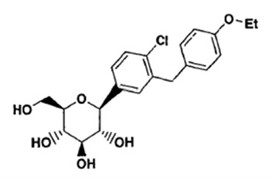
• Dapagliflozin means the compound with the following chemical structure:
• Documents has the same meaning as in Schedule 1 to the Federal Court Rules 2011 (Cth).
• Structure IB means the Examples of WO 128 identified by Professor Flynn and Dr Dow as falling within the Structure IB, being examples 1, 2, 3, 4, 7, 8, 9, 10, 11, 12, 16, 23, 32, 33, 34, 36, 40, 41, 60, 66, 69, 72, 73, 74, and 75 (see footnote 1 on page 33 of the Affidavit of Robert Dow affirmed on 22 January 2026 and Annexure BLF-4 to the Affidavit of Bernard Flynn affirmed 30 January 2026).
• US Discovery Documents means the Documents produced as part of the discovery process in the proceedings in the District Court for the District of Delaware between AstraZeneca AB and Zydus Pharmaceuticals (USA) Inc., Civil Action No. 18-664-RGA.
• WO 128 means International Patent Application No. PCT/US0027187, published as International Patent Application Publication No. WO 01/27128.
B. Category for discovery
1. One or more of the US Discovery Documents dated during the period from 1 November 1997 to 30 September 2004 which record each of the following matters:
a. the steps taken by the inventors of the Patent (including each of them) leading to the selection of, and/or arriving at, Dapagliflozin; and
b. the evaluation of:
i. the SGLT2 inhibitory activity; and/or
ii. stability,
A. of Dapagliflozin compared with any one or more of the compounds referred to in each of the Structure IB Examples; and/or
B. in respect of Dapagliflozin or any one or more of the Structure IB Examples.


