Federal Court of Australia
Pearson v State of New South Wales [2026] FCA 568
File number: | NSD 308 of 2025 |
Judgment of: | BROMWICH J |
Date of judgment: | 8 May 2026 |
Catchwords: | HIGH COURT AND FEDERAL COURT – remittal of part of proceeding from High Court of Australia pursuant to s 44 of the Judiciary Act 1903 (Cth) – whether certain video records relied upon by the applicant were made in contravention of s 8(1)(a) of the Surveillance Devices Act 2007 (NSW) – HELD: findings sought by the applicant made |
Legislation: | Customs Act 1901 (Cth) Evidence Act 1995 (Cth) s 140 Surveillance Devices Act 2007 (NSW) ss 8, 11, 12 |
Cases cited: | Bradshaw v McEwans Pty Ltd (1951) 217 ALR 1 Briginshaw v Briginshaw [1938] HCA 34; 60 CLR 336 Chief Executive Officer of Customs v Labrador Liquor Wholesale Pty Ltd [2003] HCA 49; 216 CLR 161 Farm Transparency International Ltd v New South Wales [2022] HCA 23; 277 CLR 537 HCF v The Queen [2023] HCA 35; 280 CLR 596 Luxton v Vines [1952] HCA 19; 85 CLR 352 Neat Holdings Pty Ltd v Karajan Holdings Pty Ltd [1992] HCA 66; 67 ALJR 170 Vata-Meyer v Commonwealth [2015] FCAFC 139 |
Division: | General Division |
Registry: | New South Wales |
National Practice Area: | Administrative and Constitutional Law and Human Rights |
Number of paragraphs: | 75 |
Date of last submission/s: | 20 March 2026 |
Dates of hearing: | 9 September 2025, 12 February 2026 |
Counsel for the Applicant: | Mr A Aleksov |
Solicitor for the Applicant: | Bleyer Lawyers |
Counsel for the Respondent: | Mr M G Sexton SC SG, Ms J Davidson SC and Ms O Ronan |
Solicitor for the Respondent: | Crown Solicitor’s Office |
ORDERS
NSD 308 of 2025 | ||
| ||
BETWEEN: | MARK ANTHONY PEARSON Applicant | |
AND: | STATE OF NEW SOUTH WALES Respondent | |
order made by: | BROMWICH J |
DATE OF ORDER: | 8 may 2026 |
THE COURT ORDERS THAT:
1. The issue remitted to this Court by the High Court of Australia on 3 March 2025 be resolved by a finding for the reasons given in the judgment that the video described as clip 9 and the video described as clip 13, to which the applicant was given access via hyperlinks in a text message sent to him on 1 July 2024, and which were played to this Court, were recorded in contravention of s 8(1)(a) of the Surveillance Devices Act 2007 (NSW) by a person or persons unknown.
2. The costs of the remitted issue be reserved to the High Court of Australia.
Note: Entry of orders is dealt with in Rule 39.32 of the Federal Court Rules 2011.
REASONS FOR JUDGMENT
BROMWICH J:
Introduction
1 The applicant, Mr Mark Pearson, has brought a proceeding in the High Court of Australia by a writ of summons and statement of claim filed on 23 August 2024, subsequently amended twice on 18 October 2024 and on 30 October 2024. Mr Pearson challenges the validity of s 11 and s 12 of the Surveillance Devices Act 2007 (NSW) (the Act) on the basis that he contends that their operation and effect is to burden impermissibly the freedom of political communication implied in the Constitution. The respondent is the State of New South Wales (NSW).
2 On 3 March 2025, the matter was remitted to this Court to make factual findings concerning:
the claim by the plaintiff to have received, on 1 July 2024, a record of the carrying on of an activity that was obtained by the use of an optical surveillance device in contravention of s 8(1)(a) of the Surveillance Devices Act 2007 (NSW).
3 Mr Pearson’s stance as to receipt of a record of an activity, referred to in the remittal order extracted above, which he contends was made in contravention of s 8(1)(a) of the Act, is nuanced in that he effectively contends that by only accessing the record online via hyperlinks provided to him in a text message, he has not obtained possession of them. He further effectively contends that he has not communicated any of those records. Those contentions mean that his position is that he had not yet committed either an offence of communicating a recording contrary to s 11 of the Act, or an offence of possessing a recording contrary to s 12 of the Act.
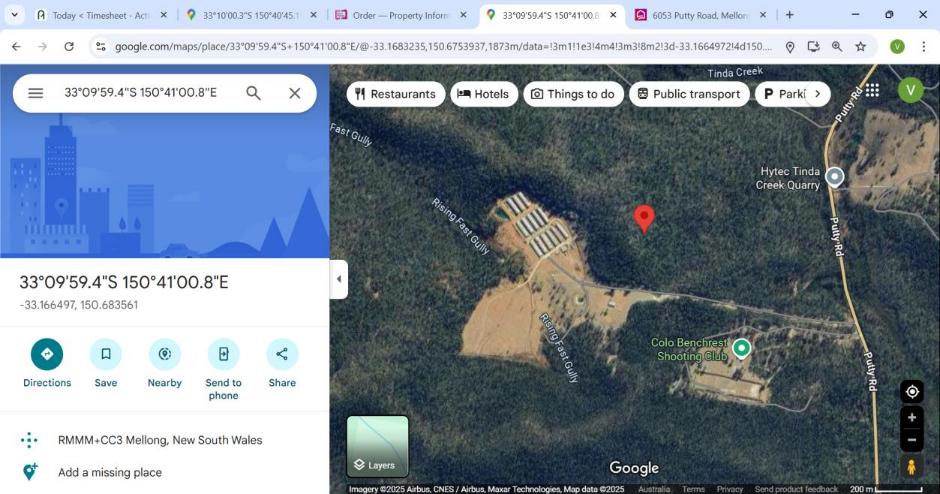
4 Mr Pearson is seeking to have the taking of the steps of possession and communication of illegal records rendered lawful by reason of those offences being invalid. To allow that challenge to have the necessary factual substratum, he must establish that at least one record was made in contravention of s 8(1)(a) of the Act. That depends upon establishing that whoever made a record did so whilst being on the premises where they were made without express or implied consent. That is an indispensable element of that offence, the other elements already being plainly present by reason of the nature and content of the recordings themselves.
5 For the reasons that follow, I am satisfied that it is more likely than not that both of the records ultimately relied upon by Mr Pearson were made in contravention of s 8(1)(a) of the Act.
The relevant provisions of the Surveillance Devices Act 2007 (NSW)
6 Section 8(1) of the Act has provided since long before the relevant events in April, June and July 2024, and still provides, as follows:
8 Installation, use and maintenance of optical surveillance devices without consent
(1) A person must not knowingly install, use or maintain an optical surveillance device on or within premises or a vehicle or on any other object, to record visually or observe the carrying on of an activity if the installation, use or maintenance of the device involves—
(a) entry onto or into the premises or vehicle without the express or implied consent of the owner or occupier of the premises or vehicle, or
(b) interference with the vehicle or other object without the express or implied consent of the person having lawful possession or lawful control of the vehicle or object.
Maximum penalty—500 penalty units (in the case of a corporation) or 100 penalty units or 5 years imprisonment, or both (in any other case).
(Emphasis added.)
7 It is not in dispute between the parties that in making the two video records that Mr Pearson relies upon, a person (or persons) must have knowingly used an optical surveillance device of some kind to record visually the carrying on of the activity depicted. That is self-evident from the content of the two video records, which were played to the Court as discussed below. However, there is a dispute as to whether the use of the device involved the entry onto or into the premises where the recordings took place without the express or implied consent of the owner or occupier. In part that is a legal dispute as to the construction of s 8(1)(a) of the Act and in part that is a factual dispute as to whether this element of the offences has been proven.
8 On its face, s 8(1)(a) refers only to consent to be on the premises where the record is made, not specific consent to make that record. Mr Pearson advanced an alternative interpretation of s 8(1)(a), namely that to avoid breaching the provision, it is not enough that the person making a record has consent, express or implied, to be on the premises; they must also have consent to make the record itself. I do not consider that alternative interpretation to be tenable given the clear language in paragraph (a), and the views expressed about s 8 more generally by the High Court in Farm Transparency International Ltd v New South Wales [2022] HCA 23; 277 CLR 537 at [31], [44], [53] (Kiefel CJ and Keane J, Steward J agreeing at [269]), and at [133], [164] (Gordon J), but in light of the factual conclusions I have reached, nothing ultimately turns on this.
9 Section 8(2) and (2A) provides a list of circumstances in which subsection (1) does not apply, none of which are applicable in this case.
10 As adverted to above, ss 11 and 12 of the Act relevantly create criminal offences of, respectively, communicating or possessing a record of an activity obtained in contravention of the Act. It is not necessary for the purposes of this remittal to reproduce or further consider those provisions, because the factual finding that is needed for Mr Pearson to conduct the challenge in the High Court depends upon establishing to the requisite standard of proof that a contravention of s 8(1)(a) of the Act took place in making any of the records. If that is established, a legal argument can then take place in the High Court on that factual substratum as to whether or not the consequential prohibitions in ss 11 and 12 are constitutionally valid, at least in relation to a person not complicit in making the records.
Overview of Mr Peason’s case
11 By Mr Pearson’s written submissions dated 4 August 2025 and 20 February 2026, and his oral submissions, he asks this Court to make findings of fact to the effect that two particular clips of video footage, for which links were sent to him by a text message from an unknown person on 1 July 2024, were made in contravention of s 8(1)(a) of the Act.
12 The hearing took place on 9 September 2025. However, Mr Pearson was subsequently granted leave, on 30 October 2025, to re-open his case to adduce further evidence on the issue of consent. NSW did not oppose the reopening and further hearing. Mr Pearson relied upon the following evidence across the two hearings:
(a) three affidavits from him affirmed 28 May 2025, 4 August 2025 and 29 August 2025, concerning how he was provided access to the records and what he observed upon viewing them;
(b) an affidavit from Ms Vanessa Bleyer, Mr Pearson’s solicitor, affirmed 4 August 2025, which addresses the location depicted on two of the records and in particular a property in rural NSW; and
(c) three affidavits from persons associated with the property, or the business on the property, at which Mr Pearson contends the records were made, being affidavits of:
(i) Mr Gregory Jones, the owner of the property, affirmed 4 August 2025;
(ii) Mr Aidan Jones, the grandson of Mr Gregory Jones and a farmhand at the business on the property, affirmed 2 October 2025; and
(iii) Mr Andrew Jawora, the step grandson of Mr Gregory Jones and a farmhand at the business on the property, affirmed 2 October 2025.
13 Messrs Pearson and Gregory Jones gave oral evidence at the initial hearing and Messrs Aidan Jones and Jawora gave oral evidence at the further hearing when the case was re-opened. Each of those witnesses was cross-examined, but not extensively.
The standard of proof
14 Mr Pearson is seeking to establish the commission of a criminal offence for the purpose of a civil proceeding. It follows that the choice is only required to be made between the civil and criminal standards of proof: cf Chief Executive Officer of Customs v Labrador Liquor Wholesale Pty Ltd [2003] HCA 49; 216 CLR 161 at [107] (Hayne J, Gleeson CJ and McHugh J concurring), in which their Honours decided that the applicable standard of proof in a “Customs Prosecution” under the Customs Act 1901 (Cth) that could not be simply categorised as civil or criminal was beyond reasonable doubt. Unlike Labrador, the undoubted civil nature of this proceeding means that the applicable standard of proof must be the civil standard of the balance of probabilities: Evidence Act 1995 (Cth), s 140(1).
15 The question then turns to the requirements of proof to the civil standard. Section 140(2) of the Evidence Act provides that a court, in deciding whether it is satisfied that the case of a party has been proved on the balance of probabilities, must take into account the nature of the cause of action or defence, the nature of the subject-matter of the proceeding and the gravity of the matters alleged. That statutory requirement reflects the observations of Dixon J in Briginshaw v Briginshaw [1938] HCA 34; 60 CLR 336 at 361-362. That is, the quality of the evidence necessary to establish a fact on the balance of probabilities may vary according to the nature of what it is sought to be proven. The more serious the conclusion sought to be reached as to the conduct in question, the better the quality of evidence required.
16 Where an allegation in a civil proceeding concerns the commission of a criminal offence, NSW submits that the general proposition that people do not ordinarily engage in criminal conduct should be borne in mind when considering the application of the civil standard of proof according to s 140(2) of the Evidence Act, citing Neat Holdings Pty Ltd v Karajan Holdings Pty Ltd [1992] HCA 66; 67 ALJR 170 at 170-171 (Mason CJ, Brennan, Deane and Gaudron JJ).
17 The identity of the alleged trespasser(s) is unknown. Consequently, as NSW accepts, the gravity of a finding that s 8(1)(a) of the Act was contravened would be tempered by the low prospect of any criminal sanction being applied to any person as a result. That anonymity also means that the Court cannot know whether the proposition that people ordinarily only engage in lawful conduct ought to be departed from because of any particular history, background or attribute specific to the person(s) making the records.
18 In considering the application of s 140(2), it is necessary to have regard to the apparent nature and context of the alleged offending. The recording was evidently made to advance a social cause of preventing cruelty to animals, based on the content of the video clips (as outlined below), and the fact that the accompanying anonymous text message to Mr Pearson, reproduced and discussed below at [24], asks him to “please do something”. That nature and context temper the application of the general principle that people ordinarily do not engage in criminal conduct, given that a person driven by such motivation is likely subjectively to regard that conduct as morally justified notwithstanding its illegality. Additionally, the application of the presumption that people tend to obey the law is further diminished by the fact that the person who recorded the two clips seen by the Court evidently took steps to minimise the risk that they would be detected or identified, as discussed below.
19 Mr Pearson’s case contending that the records were obtained in contravention of s 8(1)(a) of the Act is necessarily circumstantial, given the anonymity of the person(s) who made them, and also the lack of any detail, beyond the records themselves, about how this took place. He relies upon the approach set out in Luxton v Vines [1952] HCA 19; 85 CLR 352 at 358, where Dixon, Fullagar and Kitto JJ quoted from the following passage in Bradshaw v McEwans Pty Ltd (1951) 217 ALR 1 at 5 (citations omitted):
The difference between the criminal standard of proof in its application to circumstantial evidence and the civil is that in the former the facts must be such as to exclude reasonable hypotheses consistent with innocence, while in the latter you need only circumstances raising a more probable inference in favour of what is alleged. In questions of this sort, where direct proof is not available, it is enough if the circumstances appearing in evidence give rise to a reasonable and definite inference: they must do more than give rise to conflicting inferences of equal degrees of probability so that the choice between them is mere matter of conjecture (see per Lord Robson, Richard Evans & Co Ltd v Astley [1911] AC 674 at 687). But if circumstances are proved in which it is reasonable to find a balance of probabilities in favour of the conclusion sought then, though the conclusion may fall short of certainty, it is not to be regarded as a mere conjecture or surmise … .
(Emphasis added.)
20 While Mr Pearson did not have to go so far as to exclude all reasonable inferences consistent with innocence as is required for proof by circumstantial evidence of an element of an offence in a criminal proceeding, the inference he seeks must still be the most probable. It cannot be mere conjecture.
21 The distinction between inference and conjecture was explained by Gageler CJ, Gleeson and Jagot JJ in HCF v The Queen [2023] HCA 35; 280 CLR 596 at [13]:
In undertaking that necessary preliminary fact finding, it is useful to record the truism that “[o]ne does not pass from the realm of conjecture into the realm of inference until some fact is found which positively suggests, that is to say provides a reason, special to the particular case under consideration, for thinking it likely that in that actual case a specific event happened or a specific state of affairs existed”; inference requires “something more than mere conjecture, guesswork or surmise”.
22 Mr Pearson contends that the Court is not assisted by the identification of explanations inconsistent with his case and that he does not have to rebut such hypotheses. It is undoubtedly correct that he does not have to engage in the criminal prosecutor’s burden of excluding all reasonable explanations consistent with innocence to obtain a finding in a civil proceeding that a criminal offence has taken place. However, NSW submits, also correctly, that while the mere availability of alternative possibilities does not prevent the Court from drawing the inferences sought by Mr Pearson, the Court could not be satisfied on the balance of probabilities on the matters contended for by him if there are equally feasible explanations which prevent a reasonable and definite inference from being drawn, citing Vata-Meyer v Commonwealth [2015] FCAFC 139 at [72]-[74] (North, Collier and Katzmann JJ). Such an approach is consistent with the High Court’s statements in HCF v The Queen reproduced above.
The facts established by the evidence
23 It is the combined effect of the evidence that matters for the determination of an ultimate factual issue for which there is only, or predominantly, circumstantial evidence. Despite some direct evidence forming part of the factual substratum for drawing inferences, the best approach is to summarise the key evidence and then turn to the two intermediate issues that lead to the ultimate fact in issue, namely, whether at least one contravention has been proven. Those intermediate issues are:
(a) the location of the recording of clip 9 and clip 13; and
(b) whether the recording of clip 9 and clip 13 was made by a person or persons who did not have consent to be at the place where they were recorded.
Mr Pearson
24 Mr Pearson describes himself as a well-known animal rights activist, a characterisation that is not disputed. He is a former member of the NSW Parliament. On 1 July 2024, he received a text message through an application called Signal from a person using the handle “Twister”. The identity of Twister is unknown to Mr Pearson, and he was not able to confirm whether Twister recorded the footage that was shared, or indeed how many people were involved. The message read:
hey mate, you should look at this, please do something.
https://broccoli.fromsmash.com/TinderCreekMellongApril2024
https://broccoli.fromsmash.com/TinderCreekMellongJune24
Password is [redacted]
25 The two hyperlinks in the message reproduced above takes a person who clicks on them to a website where there are, respectively, 71 video clips and 94 video clips. Because of the criminal offences in ss 11 and 12 of the Act, Mr Pearson has been careful not to obtain possession of, nor to communicate to other persons in the sense of sending, the records that are at the heart of this proceeding. He evidently treats playing them from the website as not constituting communicating them. There is no evidence that, outside the courtroom, he has engaged in any further action with them other than viewing the records online via the hyperlinks. As detailed further below, he arranged for a viewing in the courtroom of two of the clips, one from each hyperlink. Those two clips are therefore able to be considered as evidence before the Court in the same way as oral evidence, including an oral description of an event. NSW did not suggest otherwise. Mr Pearson contends in doing so he has not taken possession of or communicated the clips to a person.
26 In his first affidavit, Mr Pearson deposed to reviewing the clips in which he saw ducks that appeared to be suffering from welfare problems, such as disease and malnutrition. None of the clips were downloaded because of the concern that this might entail Mr Pearson himself contravening the Act. However, at the initial hearing, Mr Pearson activated the two links in Court and played one video from each link, being clip 9 and clip 13 from the two links respectively. He accepted later during cross-examination that although the two clips displayed ducks on the floor of a shed as he deposed was generally depicted in all of the clips, the welfare concerns described in his affidavit were not shown or conveyed in the two specific clips that were played.
27 In clip 9, a mobile phone is visible during part of the footage. The screen of the phone displays a satellite image of sheds and in the top left-hand corner are a set of geographic coordinates, apparently obtained from an application such as Google Earth, a perception that Mr Pearson deposed to, and a red dot and line over one part of one particular shed. Mr Pearson submits that the coordinates displayed reflect the location of the mobile phone at the time the video was taken. Similarly, he submits that the date that is displayed on the mobile phone (27 April 2024) reflects the date the video was taken.
28 In clip number 13, a mobile phone is also visible during part of the footage. The screen of the phone displays a satellite image of a parcel of land and a set of coordinates in the left-hand corner, again apparently obtained from an application such as Google Earth, as well as a red dot and line over one of the sheds. The mobile phone also displays the date as 9 June 2024. As with clip 9, Mr Pearson submits that the coordinates and the date displayed on the phone reflect the location and time at which the video was recorded.
29 At various points in his affidavit evidence, Mr Pearson deposed that the dates displayed on the mobile phones in clips 9 and 13 were 30 April 2024 and 14 June 2024 respectively. In oral evidence, after being shown the clips, he corrected these dates to 27 April 2024 and 9 June 2024 respectively. No point was taken by NSW regarding those corrections. 27 April 2024 was a Saturday, and 9 June 2024 was a Sunday.
30 During cross-examination, Mr Pearson confirmed that his understanding of the location at which the videos were taken was purely based upon the coordinates displayed on the mobile phone screen, and that he had not examined the videos beyond viewing them. That is, Mr Pearson had not analysed the metadata of the videos to ascertain the time or location associated with the videos. It is not clear whether such analysis would have been possible without downloading the video clips and risking a potential contravention of s 12 of the Act.
31 Mr Pearson was further cross-examined on the following three aspects of the two clips:
(a) the coordinates displayed on the mobile phone screen;
(b) the date and time displayed on the mobile phone screen; and
(c) the red dot and line displayed on the mobile phone screen.
32 Mr Pearson’s evidence was that out of all the clips in the two hyperlinks, clip 9 (from the first link) and clip 13 (from the second link) were the only clips that depicted all of the above three elements.
33 In relation to the coordinates, Mr Pearson did not know the means by which they came to be displayed on the phone screen and could not identify whether an application was being used by the person who operated the phone. He presumed that live data was being displayed but could not confirm that one way or the other. He was not aware that coordinates or images shown on a mobile phone could be manipulated and confirmed that there was no way for him to know whether the coordinates displayed in the video had been altered.
34 As to the date and time, Mr Pearson explained that it looked like the display came about as a result of the person touching their phone. For that reason, Mr Pearson thought it was live data and he rejected the suggestion that it was a screenshot. However, he accepted that he had no way to confirm whether the time or date had been altered in any way. He accepted that he could only describe what he saw in the videos and was not aware that it was possible to manipulate the time and date on a mobile phone.
35 Mr Pearson deposed that the red dot and line displayed in each of the two recordings looked to him like where the mobile phone was located on the general areas depicted. During cross-examination he clarified that his conclusion was based on previous experiences where he had seen a similar red dot and line being used to indicate a location. However, as with the coordinate information, Mr Pearson conceded that he had no way to test whether the image was a screenshot and was limited to conveying what he saw on the phone screen.
36 Mr Pearson was then taken to Ms Bleyer’s affidavit, and in particular, an exhibit showing a search of the two sets of coordinates on Google Maps. A screenshot of the result of each search is reproduced from the exhibit at Appendix One and Appendix Two to this judgment in relation to the coordinates in clips 9 and 13 respectively. In her affidavit, Ms Bleyer deposed that the coordinates are within the property located at 6053 Putty Rd, Mellong NSW (the Mellong Property). It is a matter of uncontroversial judicial notice that Mellong is just under 125 km north-northwest of the Sydney CBD, just over a third of the way to Dubbo. The photographic images in evidence annexed to Ms Bleyer’s affidavit, which are appendices to this judgment, depict a rural area.
37 The first set of coordinates in clip 9 appears to be located within one of the sheds at the Mellong Property, based on Ms Bleyer’s evidence. The second set of coordinates in clip 13 appears to be located in surrounding bushland next to the sheds at the Mellong Property, based on Ms Bleyer’s evidence. For clip 13, Mr Pearson accepted that there was a difference between the location of the coordinates as shown in Ms Bleyer’s affidavit and the location pointed to by the red dot and line in the video, which appeared to point to a shed and not to a location among the trees (as can be seen at Appendix Two to this judgment). This discrepancy was not able to be explained, most likely because the only person(s) who could have done so was or were the anonymous individual(s) involved in recording the clips. However, I do not consider this discrepancy to be significant.
38 In his first affidavit, Mr Pearson deposed to forming a belief that the footage was made in breach of s 8(1)(a) of the Act because he observed the person filming to be doing so covertly and surreptitiously. When challenged about this belief, he maintained that the way the mobile phone was being used to display the coordinates and date had seemed to him to suggest covert activity. Despite this, he conceded that he had no knowledge about whether cameras or other surveillance devices were used at the Mellong Property and could not say one way or another whether it was possible that someone had filmed the footage with the consent of the owner of the property. In re-examination, he elaborated that his opinion on the covert nature of the footage was also formed on the basis that the filming was not professional and focused on animals that appeared to be suffering from welfare problems.
Mr Gregory Jones
39 Mr Gregory Jones is the sole owner of the Mellong Property and runs a business called Tinder Creek Ducks, which operates from that property. As such, he meets the description of the owner and the occupier of the relevant premises for the purposes of s 8(1)(a) of the Act. Consent, express or implied, to be at the Mellong Property had to be given by him or on his behalf.
40 Mr Gregory Jones gave evidence on the operation of the Tinder Creek Ducks business, which consists of a farm at the Mellong Property, a processing factory and a hatchery at Tennyson, which is near the outskirts of greater Sydney, just beyond Richmond. The ducklings are born in Tennyson and brought to the farm on Thursdays, normally by someone named Graham, whom Mr Gregory Jones regarded as part of the family. The ducklings are housed in the sheds, and eggs are collected from those sheds every day. Those eggs are taken to a separate room on the Mellong Property to be cleaned and incubated before they get transported to Tennyson on the next Thursday. When the ducks are old enough for processing, they are collected from the farm on Sunday nights/Monday mornings by someone named Dominic. Overall, the business has about 15-20 employees, but most of those employees work at the processing factory and not at the farm.
41 Further evidence given by Mr Gregory Jones about the Mellong Property can be summarised as follows:
(a) Members of Mr Gregory Jones’ family worked at the farm, being himself, his son, his grandson, Mr Aidan Jones, and his step grandson, Mr Andrew Jawora, also known as Andy. Mr Aidan Jones and Mr Jawora were mainly responsible for egg collection, which occurred every day. There was some inconsistency as to how many members of his family worked at the farm, but nothing turns on this.
(b) Beyond family members, Graham would deliver the ducklings on Thursdays (and only Thursdays) and Dominic would collect the ducks ready for processing on Sunday nights/Monday mornings. Mr Aidan Jones also had a friend named Shane who helped him to collect eggs from time to time on weekdays.
(c) A load of diesel would be delivered to the farm approximately once every three months and the shavings truck would also come around once every three months, to replenish the litter on the ground for the ducks. Those visits would only ever occur on a weekday.
(d) Mr Gregory Jones did not supervise these activities and people accessed the Mellong Property by unlocking a gate with a code. The employees had consent to come and go as they pleased, but he maintained that the consent was for a specific purpose, consistent with their role in the business. There was nothing to suggest that the consent given extended to attendance at the Mellong Property for any other purpose.
(e) Only one side of the Mellong Property is fenced and it was otherwise surrounded by a mountain or ridge. There was no barrier to prevent people from entering by foot, but vehicles need to go through the locked gate.
(f) The only people who had ongoing permission to access the Mellong Property on the weekends were Mr Aidan Jones and Mr Jawora, because the eggs are collected seven days a week. However, sometimes things would break and someone could be required to access the property to fix things on a Saturday or Sunday. For example, Mr Gregory Jones recalled a time where Shane assisted Mr Jawora with fixing the netting on a weekend. He does not supervise any activities on the weekend.
42 Mr Gregory Jones also deposed in his affidavit that he had not given consent to any person to access the Mellong Property on 30 April 2024 or 14 June 2024, in context a reference to persons other than those referred to in the preceding subparagraphs. That stance was maintained during his oral evidence when those dates were corrected to 27 April and 9 June 2024 (being the dates displayed on the mobile phone in clips 9 and 13). He noted that 27 April is his birthday but had no specific recollection of what occurred on that day in 2024.
43 Mr Gregory Jones does not reside at the Mellong Property but explained that his grandson, Mr Aidan Jones, lived nearby on a neighbouring property with the same street address.
44 When asked about video recording on the Mellong Property, Mr Gregory Jones explained that there is CCTV in the sheds, but the footage is not retained for any period. He could not recall explicitly asking visitors or employees to not film at the Mellong Property. However, he confirmed that he has never provided consent to Mr Aidan Jones, Mr Jawora, or Shane, to take any footage of the ducks and would not have let them enter the Mellong Property if he knew that they intended to do so. This evidence establishes the limited nature of the consent given to anyone to enter the Mellong Property.
45 One of the two clips accessed online in the courtroom via the link sent to Mr Pearson was also played to Mr Gregory Jones during re-examination. He identified the red dot on the mobile phone screen in the video as being located on shed six at the Mellong Property and confirmed that the ducks pictured in the remainder of the video were a species he bred. However, when senior counsel for NSW asked whether any other identifiable features could be seen in the video, he noted that the drinker and feeder were not distinguishable from what is typically used at any other farm and stated as follows:
You wouldn’t be able to pick it from any other farm. I’m not saying that’s not our farm, and, you know, there’s – there’s– yes. So – but it could be – it could be – if – could be anywhere. Yes.
46 Further, Mr Gregory Jones indicated that the ducks in the video look to be around ten days old and were too young to be in shed six where the ducks are normally around two weeks of age. Mr Gregory Jones’ evidence was that ten-day-old ducks age do not lay eggs and would be kept in a separate shed. That is, his evidence did not suggest that the ducks pictured were not at the property, but rather that they would not have been in shed six.
47 When asked about whether Mr Aidan Jones or Mr Jawora would have a reason to be in the shed on a weekend, he retracted his initial denial to clarify that they would also tend to other things beyond egg collection, such as checking feed and water levels. Mr Gregory Jones was also asked whether he recognised the visible hand in the video footage, with him indicating that it was not the hand of either Mr Aidan Jones or Mr Jawora from their size and appearance.
Mr Jawora
48 Mr Jawora worked fulltime as a farmhand at Tinder Creek Ducks from the Mellong Property during the relevant period between 27 April 2024 and 9 June 2024 when the two records were made, according to what the mobile phone depicted. In his affidavit, he deposed that he had never given permission for any person to access his work premises to record footage, or to access his work premises at all. He also deposed that he had never taken any footage at the Mellong Property.
49 Mr Jawora was unsure as to how many people worked in the business but estimated that there were “roughly” five workers at the Mellong Property. On his account, those workers arrived at and left the farm freely, along with just a few other people, including those making deliveries to the farm from time to time. One of those people was Mr Aidan Jones’ friend Shane, who came to assist with egg collection at the Mellong Property from time to time. Mr Jawora also confirmed that a variety of people working in the business came from Tennyson to deliver ducklings to the Mellong Property.
50 When asked about Mr Aidan Jones’ and Mr Gregory Jones’ family, Mr Jawora confirmed that family members came onto the work premises from time to time, both to spend time on the farm and to fix things. He was aware that Mr Aidan Jones lived in residential premises next to the farm but stated that he was not aware of any persons visiting those premises because he did not pay attention to who was coming and going from the residential premises.
51 In re-examination, Mr Jawora explained that duckling deliveries from Tennyson only occurred on Thursdays and that Shane collected eggs on weekdays, from Tuesday to Friday. He also indicated, in a way that indicated low confidence, that family members of Mr Aidan Jones and Mr Gregory Jones would visit only on weekdays.
Mr Aidan Jones
52 Mr Aidan Jones is the grandson of Mr Gregory Jones and works as a farmhand at Tinder Creek Ducks from the Mellong Property. He lives in a house which shares the same street address as the Mellong Property, but the work premises and his residential premises are two different neighbouring properties. In terms of access to the premises, his evidence was that the Mellong Property was fenced in a way which allowed any person to enter by foot, but vehicles could only access the property through a gate with a code lock. He stated that the code would be changed when the lock would break, which occurred roughly once every two to three months. When the code was changed, he would endeavour to inform the employees of the new code proactively, but this did not always happen.
53 During cross-examination, Mr Aidan Jones confirmed that he gave permission for other people to enter his residential premises and assumed that he had asked them to not film on the premises. However, he did not have any specific recollection that he used words expressly asking guests to not film in his house or on the Mellong Property. When asked about 27 April 2024 and 9 June 2024 specifically, he denied giving anyone permission to enter his residential premises on those dates. His recollection was that on 27 April 2024 his family would have been attending a birthday celebration for Mr Gregory Jones at a restaurant in Rouse Hill, Sydney.
54 When asked about visits from family members, his evidence was that only his father and grandfather would visit him at his residential premises. In turn, he was not aware of any other family members who would know the gate code.
55 Mr Aidan Jones stated that no one would visit the Mellong Property to help the business unless they worked for the business. Beyond Shane, who was an employee of the business, people who visited the farm included two people who worked at the factory and came on Thursdays to deliver the ducklings, as well as someone who worked at the factory and came on Sunday nights/Monday mornings to collect the ducks for processing. During re-examination, he clarified that the collection of ducks would begin between the hours of 7.00 pm on Sunday and 2.00 am on Monday and conclude by 5.00 am on Monday at the latest. Mr Aidan Jones would not always observe these activities but would be informed of their occurrence and provided the gate code to the employees or unlocked the gate for them.
56 Like Mr Jawora, Mr Aidan Jones denies ever having taken any footage at the farm. Additionally, Mr Aidan Jones understood that his grandfather had given him authority to exclude people from the Mellong Property and said that this was communicated to him when he first moved into the residential premises. In light of that evidence, his affidavit evidence extracted below cannot be taken literally and should be understood instead as referring to non-employees:
I have never given permission for any person to access my work premises at all. No one has ever asked me for permission to access my work premises.
Factual findings
57 In his closing submissions, Mr Pearson sought a generalised finding that:
On 1 July 2024, Mr Pearson received a record of the carrying on of an activity that was obtained by the use of an optical surveillance device that was made in circumstances that involve entry onto a premises in NSW without the express or implied consent of the owner or occupier of the premises.
58 In his opening submissions, Mr Pearson had contended that the following more specific findings should be made:
(a) On 27 April 2024, an unknown person or unknown persons entered onto premises at 6053 Putty Road, Mellong without the express or implied consent of the owner or occupier of the premises.
(b) Upon doing so, on 27 April 2024, the unknown person or unknown persons used an optical surveillance device on or within the premises at 6053 Putty Road, Mellong to record visually the carrying on of an activity, producing recorded footage.
(c) Mr Pearson has been given access to the footage so recorded, through a link on the smartphone application Signal.
(d) On 9 June 2024, an unknown person or unknown persons entered onto premises at 6053 Putty Road, Mellong without the express or implied consent of the owner or occupier of the premises.
(e) Upon doing so, on 9 June 2024, the unknown person or unknown persons used an optical surveillance device on or within the premises at 6053 Putty Road, Mellong to record visually the carrying on of an activity, producing recorded footage.
(f) Mr Pearson has been given access to the footage so recorded, through a link on the smartphone application Signal.
(g) The recordings were each made in contravention of s 8(1) of the Act.
59 Mr Pearson contends that it is not necessary and probably wasteful for the Court to make the more specific findings he originally sought. That is, he ultimately contends that it was not necessary to make findings regarding the specific location of the recording, the date of the recordings, the unknown identity of the person or persons who made the recordings, and the means by which the recordings were provided to the applicant.
60 This Court is tasked with deciding whether it is satisfied, on the available evidence that, on 1 July 2024, Mr Pearson received access to records obtained in contravention of s 8(1)(a) of the Act, as he contends. As the case evolved, such findings were only sought and are only able to be contemplated in relation to clip 9 and clip 13, because the Court did not view the other clips and they did not have all the features present in clips 9 and 13 such as information as to the time and location of the clips.
61 NSW accepts that the generalised finding, if made, would fulfil the purpose of the remittal as it corresponds with the terms of s 8(1)(a). However, NSW contends that it is appropriate for this Court to make more specific findings in relation to matters such as the location of the recordings. For example, if the Court could only be satisfied that the recordings were made in NSW if they were made at the Mellong Property, then it would be appropriate to make a finding at that level of specificity. As detailed below, I am satisfied that the records in issue were made at the Mellong Property and therefore in NSW.
62 If this Court was not satisfied that the generalised finding sought by Mr Pearson could be made (see [57] above), NSW contended that it would be necessary to consider additional matters, including whether the recordings were made by a person who did not have specific consent to record even if they were not otherwise a trespasser, due to the dispute that arose as to the construction of s 8(1) of the Act, outlined at [7] above. Given I have found that the generalised finding ultimately sought by Mr Pearson has been established on the balance of probabilities, it is not strictly necessary to consider those additional matters, but they are considered as part of the overall context at [69] below.
The location of the recording of clip 9 and clip 13
63 The evidence as to the location of the recordings that were played to the Court, clip 9 and clip 13, does not depend only upon the GPS information depicted on the face of the mobile phone filmed in those two clips and the evidence given by Mr Pearson. It is also to be considered by reference to the rest of the evidence about the premises.
64 I have been able to draw inferences as to the location and date of the recording of the clips as being on the Mellong Property, at or near the locations indicated on the mobile phone screen depicted in each clip, applying the longstanding principles as to inference drawing endorsed by the High Court in Doney v The Queen [1990] HCA 51; 171 CLR 207, extracting the propositions of universal application and not confined only to criminal proceedings. All five justices of the High Court (Deane, Dawson, Toohey, Gaudron and McHugh JJ) said at 211 (omitting citations and footnotes):
The essence of corroborative evidence is that it “confirms”, “supports” or “strengthens” other evidence in the sense that it “renders [that] other evidence more probable” … It is well settled that corroboration may be in the form of circumstantial evidence … Circumstantial evidence is evidence which proves or tends to prove a fact or set of facts from which the fact to be proved may be inferred.
65 I am satisfied that the evidence, taken as a whole, establishes that it is more likely than not that the making of the record of clip 9 and clip 13 took place on the date and at or close enough to the location depicted on the mobile phone that formed part of those records, namely at the Mellong Property on Saturday, 27 April 2024 for clip 9 and at the Mellong Property on Sunday, 9 June 2024 for clip 13, at or about the specific geographic locations depicted on the mobile phone screen. I reach that conclusion by the following process of inferential reasoning:
(a) The person or persons who recorded clips 9 and 13 are most likely to have made the remaining records, no other conclusion having been suggested, noting that it was Mr Pearson who selected those two clips, apparently only upon the basis that they contained more location information than the other clips that were not played. He described all of the records as generally depicting ducks.
(b) Based on the description of mistreatment of ducks described by Mr Pearson as being depicted in unspecified clips that were not played to the Court, coupled with the request in the text message sent to him asking him to “please do something”, the recordings in the two clips that were played to the Court were most likely to have been made by a person or persons who had more than a generalised interest in ducks, being a specific interest in duck welfare. As addressed below at [69], that does not entail reaching any conclusion as to whether any mistreatment of ducks has or has not taken place.
(c) The person(s) who recorded the clips:
(i) wished to identify genuinely where this was taking place, because otherwise the exhortation to do something would have been futile or even counterproductive;
(ii) sought to carry out that location identification task by the simple and reasonably reliable way of using a mobile phone with a global positioning system function on it of some kind, such as Google Earth, to depict where the phone itself was located and therefore where the record was being made at that time; and
(iii) would be aware that falsifying the location information in some way, such as by displaying a screenshot of a different location to where the phone was located, would not result in action being taken at the location where the ducks were actually located, such that falsifying the location makes no apparent sense.
66 That reasoning is also strengthened by virtue of its consistency with the evidence of Mr Gregory Jones regarding the clips, as outlined at [45] and [46] above, which was to the effect that they could have been taken on his property (although perhaps not at the precise shed indicated by the mobile phone screen). That is particularly significant given that it was not otherwise in his interest to give evidence that the clips were recorded on the Mellong Property, given the reported content of the other clips which were not shown to the Court. Consistent with that characterisation, Mr Gregory Jones asked counsel for Mr Pearson whether the footage had been examined to exclude the possibility it was created with artificial intelligence, but I regard that question as involving no more than speculation.
67 I do not consider that the discrepancy between the location depicted on the mobile phone screen in clip 13 and the result of the coordinate search conducted by Ms Bleyer (see Appendix Two to this judgment) undermines the above reasoning process. There was no evidence either way as to what the implications of that discrepancy may be, and given the technical matters likely to be at play, I am unwilling to speculate in that regard. As noted above, the discrepancy does not appear to be significant. Similar observations apply with even greater force in relation to Mr Gregory Jones’ assertion that the ducks pictured in the clip he was shown would not have been located in the shed indicated by the red dot shown on the mobile phone screen in that clip, given the proximity of that shed to the other sheds.
Whether the recording of clip 9 and clip 13 was made by a person or persons who did not have consent to be at the place where they were recorded
68 The evidence on the question of consent necessarily includes the evidence and inferences addressed in the conclusion above as to the location of the records that are clip 9 and clip 13.
69 I am satisfied on the totality of the evidence that it is unlikely that anyone was given consent by or on behalf of the owner/occupier of the premises, express or implied, to make the recording of clips 9 and 13, accessible via the hyperlinks sent to Mr Pearson. I found above that it is likely that clips 9 and 13 were taken at the Mellong Property. Those premises are predominantly used for the purpose of the Tinder Creek Ducks business. Whilst clips 9 and 13 did not depict the mistreatment of ducks, Mr Pearson deposed to the other clips depicting that taking place. As that footage was not played to the Court, NSW was not in any position to challenge that assertion and I was not in a position to assess it for myself, I do not think it is necessary, fair or otherwise appropriate to give any determinative weight to that evidence beyond general context, as relevant to clips 9 and 13.
70 That said, I am able to conclude that the footage shown (and probably the footage also described but not shown) was more likely to have been recorded in an effort to bring about change in the way that Tinder Creek Ducks conducted its business. That observation does not involve any conclusion being reached that there was in fact any mistreatment of ducks by anyone at that business. It rises no higher than the person(s) who made recordings at the premises forming that view, and Mr Pearson forming that view. It is unlikely that anyone with authority – essentially Mr Gregory Jones or someone acting on his behalf – would expressly consent to such recording taking place, or imply to others that it was permitted, especially given his evidence on that topic. The live issue is thus whether the person(s) who, relevantly, made the record in the two clips had express or implied consent to be on the premises.
71 I am satisfied on the totality of the evidence that there are only two realistic possibilities as to who made the records accessed by Mr Pearson via the hyperlinks in the text message sent to him, which ends up being ultimately relevant only as to clip 9 and clip 13, namely:
(a) those on the premises with express or implied consent to be there, for whom recording would not contravene s 8(1)(a) on the construction I have preferred, but who might contravene s 8(1)(a) on the alternative construction; and
(b) those on the premises without express or implied consent to be there, for whom recording would contravene s 8(1)(a) on either construction of that provision.
72 On the assumption that my preferred construction of s 8(1)(a) is correct, if it is equally likely that either category of person made the recording, I could not be satisfied that it was more likely recording clip 9 and clip 13 was made in contravention of s 8(1)(a). However, I am satisfied that those clips were more likely to have been recorded by person(s) who were on the property without express or implied consent to be there, and also without consent to make record any footage at the premises, such that those two records were made in contravention of s 8(1)(a) irrespective of which construction of that provision is applied. I reach that conclusion upon the basis of the following, in addition to applying again the reasoning above as to the location of the recording of the two clips and the motivation for making those recordings (in the context of the evidence regarding the contents of the other recordings):
(a) Mr Gregory Jones stated that he did not give permission to any person to enter the Mellong Property on 27 April or 9 June 2024. I take this to mean any person beyond those who ordinarily had consent to be on the property for work purposes on those days (e.g., Dominic on 9 June 2024, being a Sunday), because otherwise his evidence would make no sense. As such, it is necessary to consider whether anyone who had express or implied consent to be on the premises for work purposes was likely to have made the records.
(b) Anyone who was aligned with the activities of the business is unlikely to have been agitating against those activities and causing at least problems and perhaps expense by doing so – that does not mean this is impossible, but rather only less likely.
(c) There was no evidence or suggestion of there being any disgruntled former or current employees or persons formerly or currently associated with the business, who might have had a motive to report on any animal welfare issues, against the interests of the business.
(d) Clip 9 was made on a Saturday and clip 13 was made on a Sunday. The significance of those clips being made on the weekend is that various persons who were involved in work tasks during the weekdays were less likely to have been present on the premises for other reasons on a weekend. However, one work task did occur between Sunday evenings and the early hours of Monday mornings involving a person called Dominic who collected the ducks for processing. I consider it is unlikely he recorded the clips as there was no evidence that he was on the farm on Saturdays, and, as noted above, I consider it unlikely that someone working for the business was seeking to expose any animal welfare issues.
(e) Mr Aidan Jones and Mr Jawora had permission to enter the Mellong Property on the weekend for work purposes such as egg collection and checking feed levels. However, both deposed, and I accept, that they did not take the footage in question and did not give permission for any person to access their work premises on 27 April 2024 and 9 June 2024. As with the evidence of Mr Gregory Jones, I take this to mean any person beyond those who had consent to conduct work on the premises on those dates.
(f) Shane, a friend of Mr Aidan Jones and an employee of the business, normally assisted with egg collection on weekdays. However, I acknowledge that Mr Gregory Jones also recalled a time when Shane assisted Mr Aidan Jones with a repair task on the weekend. Shane did not give evidence in this proceeding. I consider that it is unlikely that Shane would have recorded the clips given the evidence of Mr Aidan Jones indicates Shane was not given consent to be there on 27 April or 9 June 2024, and on the occasion he was there on the weekend he was not there alone. Additionally, as reasoned at (b) and (c) above, I consider it unlikely that someone working for the business was seeking to expose any animal welfare issues.
(g) The manner in which the recordings were made, as I observed them and as Mr Pearson deposes, suggests that they were filmed in a covert way, largely, I infer, to avoid identifying the person or persons making those recordings because they were not supposed to be there.
(h) The text with the hyperlinks was sent to an animal welfare activist, with an exhortation to do something about what was depicted.
(i) The evidence indicated that it would have been easy for a person on foot to gain access to the Mellong Property without consent.
Conclusion as to whether a contravention to s 8(1)(a) of the Act has been established
73 In light of the conclusions I have reached about the location of the recording of clip 9 and clip 13 and the recording of those clips being made by a person or persons who did not have consent to be at the place where they were recorded or to make the recordings themselves, I am satisfied that it is more likely than not that the recording of those clips was made in contravention of s 8(1)(a) of the Act.
74 I would not have reached that conclusion had the criminal standard of proof applied. That is because Mr Pearson was not able to exclude reasonable explanations consistent with innocence, while less probable, namely that a person who had consent to be at the premises did not make the recordings. Nor was I able to be satisfied that the evidence went far enough to establish, to that standard, on the alternative interpretation of s 8(1)(a), that all persons who had consent to be at those premises on those dates did not have consent to make those recordings.
75 The costs of the remitted issue should be reserved to the High Court of Australia.
I certify that the preceding seventy-five (75) numbered paragraphs are a true copy of the Reasons for Judgment of the Honourable Justice Bromwich. |
Associate:
Dated: 8 May 2026
Appendix One
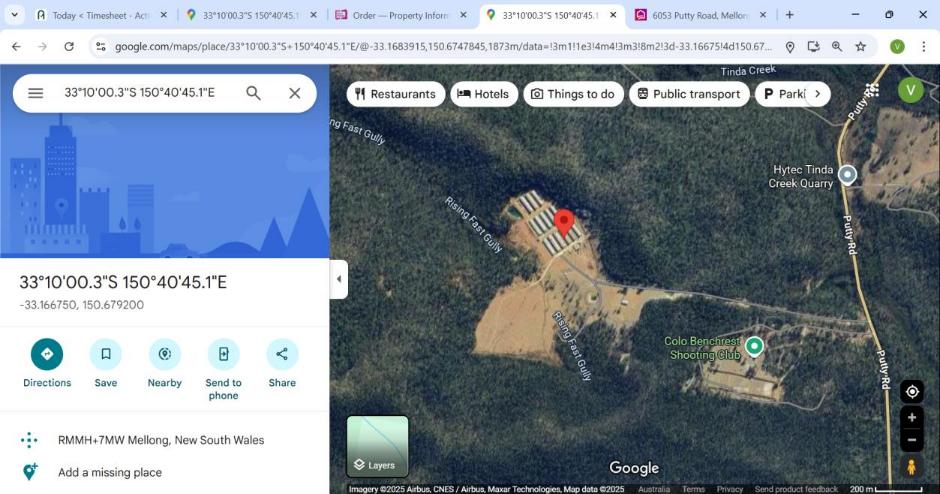
Appendix Two