

FEDERAL COURT OF AUSTRALIA
Narayan, in the matter of Elexsys Energy Pty Ltd (Receivers and Managers Appointed) [2026] FCA 536
File number(s): | NSD 1364 of 2023 |
Judgment of: | SHARIFF J |
Date of judgment: | 1 May 2026 |
Catchwords: | INSOLVENCY / CORPORATIONS – where parties entered into trade credit agreements and general security deeds – where defendants in default under those agreements and deeds – whether fifth plaintiff as a secured creditor is entitled to enforce security granted in its favour – interpretation of the charges granted under general security deeds – dispute between the parties as to ownership of large batteries – effect of “retention of title” clause – effect of perfection of security interest – appropriateness of order for seizure or delivery up of batteries |
Legislation: | Corporations Act 2001 (Cth) s 1305 Personal Property Securities Act 2009 (Cth) ss 10, 12, 19, 20, 21, 32, 43, 123 Sale of Goods Act 1923 (NSW) s 24(1) |
Cases cited: | Aluminium Industrie Vaassen BV v Romalpa Aluminium Ltd [1976] 1 WLR 676; [1976] 2 All ER 552 Bank of Queensland Limited v Star Trek Pty Ltd [2019] NSWSC 1712 Electricity Generation Corporation v Woodside Energy Ltd [2014] HCA 7; 251 CLR 640 Elisha v Vision Australia Ltd [2024] HCA 50; 99 ALJR 171 Mount Bruce Mining Pty Ltd v Wright Prospecting Pty Ltd [2015] HCA 37; 256 CLR 104 Rinehart v Hancock Prospecting Pty Ltd [2019] HCA 13; 267 CLR 514 Riseley v Toyota Finance Australia Ltd [2021] FCA 1566 |
Division: | General Division |
Registry: | New South Wales |
National Practice Area: | Commercial and Corporations |
Sub-area: | Corporations and Corporate Insolvency |
Number of paragraphs: | 125 |
Date of hearing: | 21 April 2026 |
Counsel for the Plaintiffs: | Mr J Willis |
Solicitor for the Plaintiffs: | Mitry Emerson Lewis Lawyers |
Counsel for the Second Defendant: | The Second Defendant was self-represented |
Counsel for the Third Defendant: | Mr K Wei (Director) appeared on behalf of the Third Defendant |
ORDERS
NSD 1364 of 2023 | ||
| ||
BETWEEN: | EDWIN NARAYAN IN HIS CAPACITY AS RECEIVER AND MANAGER OF ELEXSYS ENERGY PTY LTD ACN 160 084 195) (RECEIVERS AND MANAGERS APPOINTED) AND ELEXSYS R&D PTY LTD ACN 160 918 463 (RECEIVERS AND MANAGERS APPOINTED) First Plaintiff DOMENICO ALESSANDRO CALABRETTA IN HIS CAPACITY AS RECEIVER AND MANAGER OF ELEXSYS ENERGY PTY LTD ACN 160 084 195) (RECEIVERS AND MANAGERS APPOINTED) AND ELEXSYS R&D PTY LTD ACN 160 918 463 (RECEIVERS AND MANAGERS APPOINTED) Second Plaintiff ELEXSYS ENERGY PTY LTD ACN 160 084 195 (RECEIVERS AND MANAGERS APPOINTED) (and others named in the Schedule) Third Plaintiff | |
AND: | BEVAN HOLCOMBE Second Defendant OCEAN ENERGY PTY LTD (ACN 626 949 915) Third Defendant | |
order made by: | SHARIFF J |
DATE OF ORDER: | 1 MAY 2026 |
THE COURT DECLARES THAT:
1. The eight (8) batteries known as “Battery = CATL 233kW/233Kwh”, which are the subject of the undertaking given by the Third Defendant and its director, Zhihai Wei, to the Court on 8 July 2025 (CATL Batteries) are owned by the Third Plaintiff and:
(a) were not validly transferred to the Second Defendant; or
(b) are not otherwise owned by the Third Defendant.
2. Pursuant to section 123 of the Personal Property Securities Act 2009 (Cth), the Fifth Plaintiff is entitled to seize the CATL Batteries in accordance with its rights.
THE COURT ORDERS THAT:
1. The Second and Third Defendants are restrained from preventing the Fifth Plaintiff, and its officers, employee and agents from seizing the CATL Batteries in accordance with its rights pursuant to section 123 of the Personal Property Securities Act 2009 (Cth).
2. The Second and Third Defendants pay the Plaintiffs’ costs.
Note: Entry of orders is dealt with in Rule 39.32 of the Federal Court Rules 2011.
REASONS FOR JUDGMENT
SHARIFF J:
1. INTRODUCTION
1 The first and second plaintiffs were appointed as the receivers (Receivers) of the third plaintiff (Elexsys Energy) and fourth plaintiff (Elexsys R&D) on 23 October 2023. The Receivers were appointed by a secured creditor, the fifth plaintiff (Marketlend).
2 The central (but not only) issue to be resolved in these proceedings relates to whether Marketlend is entitled to enforce a security that it claims to hold over the assets of Elexsys Energy, including eight large batteries known as “Battery = CATL 233kW/233Kwh” (CATL Batteries). The defendants deny the claims made by the plaintiffs on the basis that they allege that the CATL Batteries were never owned by Elexsys Energy and are therefore not the subject of the security granted in favour of Marketlend.
3 The first defendant (Mr Romanowski) was a director of Elexsys Energy, but the proceedings against him were discontinued on 16 October 2025 on the basis that he was, and is, an undischarged bankrupt. The second defendant (Mr Holcombe) is a director of Elexsys Energy and claims that the eight CATL Batteries are in fact owned by him or, alternatively, by the third defendant (Ocean Energy). Ocean Energy was joined to the proceedings because it claimed to have supplied the CATL Batteries on the basis of a “retention of title” arrangement, meaning that it says that it is the true owner of the eight CATL Batteries.
4 When the proceedings were commenced, the Receivers sought to restrain Mr Romanowski and Mr Holcombe from removing assets of Elexsys Energy and Elexsys R&D, including the CATL Batteries, from the property in which those entities had conducted their business, being 152, 154, 158 and 160 Samford Road, Enoggera, Queensland (Property). As matters came to pass, Mr Holcombe had taken possession of the eight CATL Batteries and the interlocutory dispute was resolved by the provision of an undertaking by Mr Holcombe on 6 December 2023, by which he agreed to retain, preserve and not otherwise deal with or dispose of various assets, including the CATL Batteries, without giving 7 business days’ written notice to the Receivers or until further order of the Court (Undertaking). It appears that after Mr Holcombe gave the Undertaking, he permitted Ocean Energy to take possession of some or all of the CATL Batteries, without giving notice to the plaintiffs.
5 The issues that arise for determination are as follows:
(a) whether Marketlend is entitled to enforce the security granted in its favour in relation to the assets of Elexsys Energy, including the eight CATL Batteries;
(b) whether the eight CATL Batteries are owned by Elexsys Energy, Ocean Energy or Mr Holcombe and, if the Court determines that the eight CATL Batteries remained in the ownership of Ocean Energy or were validly transferred to Mr Holcombe, whether they:
(i) are charged in favour of and remain subject to the securities of Marketlend in accordance with and by reason of sections 19 and 32 of the Personal Property Securities Act 2009 (Cth) (PPS Act); and
(ii) are able to be seized by Marketlend in accordance with section 123 of the PPS Act; and
(c) whether there should be an order for seizure or delivery up of the eight CATL Batteries in favour of the plaintiffs.
6 There were other issues which were raised by the plaintiffs but not pressed. These included a claim that Mr Holcombe breached the Undertaking when he transferred the CATL Batteries to Ocean Energy without the Receivers’ knowledge or consent and is liable for an order for damages occasioned by reason of the breach. It is unnecessary to address the issues that were not pressed.
7 For the reasons that follow, the plaintiffs’ claims should be upheld and I will make appropriate orders to address the relief that should be granted as set out below.
2. PROCEDURAL HISTORY
8 At the commencement of the proceedings and during the earlier interlocutory applications, Mr Romanowski and Mr Holcombe were both represented by a firm of solicitors, Allens. At some point thereafter, they commenced representing themselves. From the time that Ocean Energy was joined to the proceedings, it has sought leave to be represented by its sole director, Mr Kevin Wei. That leave was not opposed and I granted that leave.
9 By the time of the final hearing, the defendants had not filed any evidence and sought leave to rely upon an updated defence. The day before the final hearing, Mr Romanowski sent a number of emails to my chambers, copied to the plaintiffs, which attached an updated defence and numerous documents upon which the defendants wished to rely. Although Mr Romanowski was no longer a party to the proceedings, he indicated that he was “assisting” Mr Holcombe. I will make some observations about Mr Romanowski’s role below.
10 At the commencement of the hearing, I granted leave to the defendants to file and rely upon the further defence that they wished to rely upon, and admitted into evidence some but not all of the documents that the defendants sought to tender. At the time of making these rulings, I indicated that I would give some short reasons in my final judgment as to why I took this course. In order to explain my reasons, it is necessary to set out some matters of procedural history.
11 During the conduct of the proceedings, I made a number of case management orders seeking to move the proceedings along to a final determination. Those orders repeatedly required, and repeatedly granted extensions to, the defendants to file and serve their defences and any affidavits that they wished to rely upon. With some minor exceptions, the defendants did not comply with any of the orders that I made.
12 On 24 July 2024, I made the following relevant order (July 2024 Orders):
5. The Defendants to file and serve any defence by 11 September 2024.
13 This order was not complied with.
14 On 15 October 2024, I made the following order extending the time for Mr Romanowski and Mr Holcombe to file and serve a defence (October 2024 Orders):
1. The time for the first and second defendants to comply with order 5 of the orders made by Justice Shariff on 24 July 2024 be extended to 14 November 2024.
15 This order was not complied with.
16 On 17 December 2024, I made the following order further extending the time for Mr Romanowski and Mr Holcombe to file and serve a defence (December 2024 Orders):
1. The time for the first and second defendants to comply with order 5 of the orders made by Justice Shariff on 24 July 2024 be extended to 20 December 2024.
17 This order was not complied with.
18 On 11 February 2025, I made the following relevant orders (February 2025 Orders):
1. The Defendants are to file any defence by 18 February 2025.
…
3. By 20 May 2025, the Defendants are to file and serve any evidence in chief.
…
6. By 8 July 2025, the Defendants are to file and serve their opening submissions and any objections to evidence.
19 On 21 February 2025, Mr Richard Romanowski filed a defence on behalf of the (then) defendants dated 20 December 2024, which was signed by Mr Romanowski and Mr Holcombe. However, there was no compliance with orders 3 and 6 of the February 2025 Orders.
20 On 17 June 2025, I made the following orders extending time for the defendants to file and serve any evidence in chief, opening submissions and any objections to evidence (June 2025 Orders):
2. The time for the Defendants to comply with order 3 of the orders made by Justice Shariff on 11 February 2025 be extended to 8 July 2025.
…
5. The time for the Defendants to comply with order 6 of the orders made by Justice Shariff on 11 February 2025 be extended to 26 August 2025.
21 These orders were not complied with.
22 On 8 August 2025, I made the following orders requiring the defendants to file and serve a defence to the Amended Statement of Claim (ASOC) and further extending time for the defendants to file and serve any evidence in chief, opening submissions and any objections to evidence (August 2025 Orders):
4. By 8 September 2025, the Defendants are to file and serve any Defences(s) in response to the Amended Statement of Claim.
…
6. Subject to order 7 below, the time by which the first and second defendants are to file and serve any evidence in chief is extended to 4pm on 15 August 2025, on the condition that the first and second defendants are not to file and serve any evidence in chief after that date without leave of the Court.
7. The:
(a) third defendant; and
(b) the first and second defendants in respect of the allegations at paragraphs 6A, 29A, 47A – 47D, 48 and 51 of the Amended Statement of Claim only,
are to file and serve any evidence in chief by 20 October 2025.
…
10. By 28 November 2025, the Defendants are to file and serve their opening submissions and any objections to evidence.
23 On 11 August 2025, the plaintiffs filed the ASOC, which, amongst other things, joined Ocean Energy to the proceedings. However, as had become the pattern throughout the conduct of the proceedings, the defendants did not comply with the August 2025 Orders that were directed to them.
24 On 26 September 2025, I made the following orders extending time for the defendants to file and serve a defence to the ASOC, and further extending time for the defendants to file and serve any evidence in chief, opening submissions and any objections to evidence (September 2025 Orders):
1. The time for the defendants to comply with order 4 of the orders made by Justice Shariff on 8 August 2025 be extended to 29 September 2025.
…
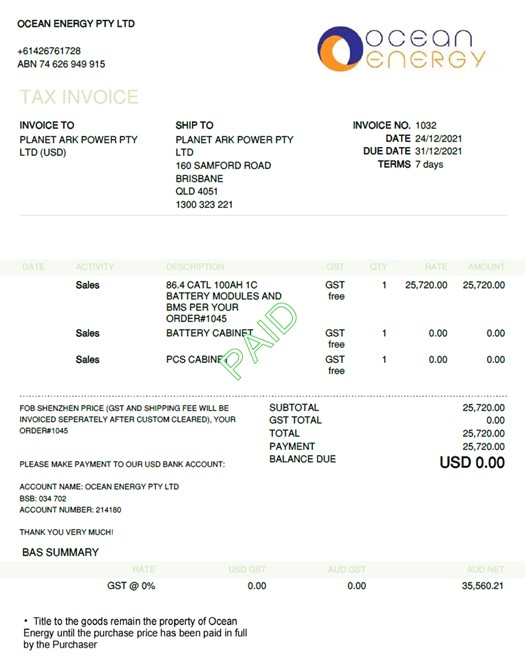
3. The time for the first and second defendants to comply with order 7 of the orders made by Justice Shariff on 8 August 2025 be extended to 10 November 2025.
4. The time for the third defendant to comply with order 7 of the orders made by Justice Shariff on 8 August 2025 be extended to 10 November 2025.
…
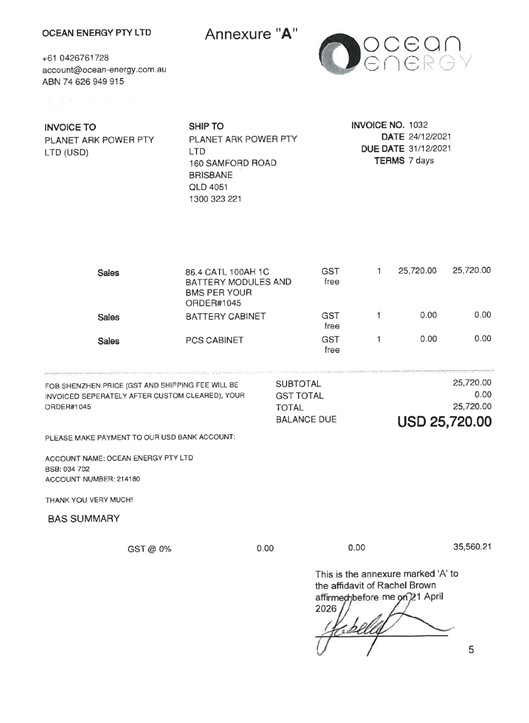
7. The time for the defendants to comply with order 10 of the orders made by Justice Shariff on 8 August 2025 be extended to 15 December 2025.
25 These orders were not complied with.
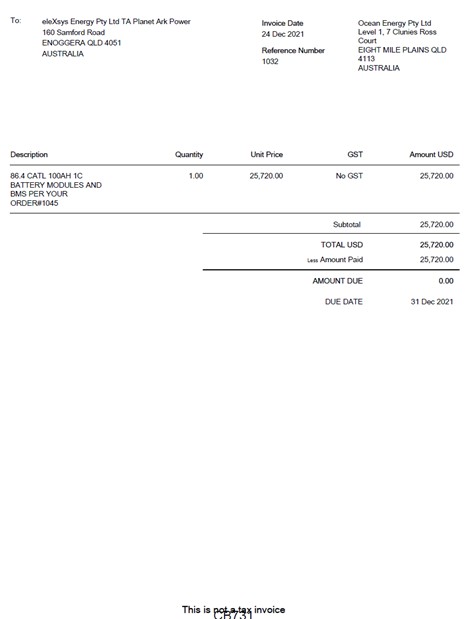
26 Finally, on 16 October 2025, I made the following orders further extending time for the defendants to file and serve a defence to the ASOC, to file and serve any evidence in chief, opening submissions and any objections to evidence (October 2025 Orders).
1. The time for the defendants to comply with order 4 of the orders made by Justice Shariff on 8 August 2025 be extended to 24 October 2025.
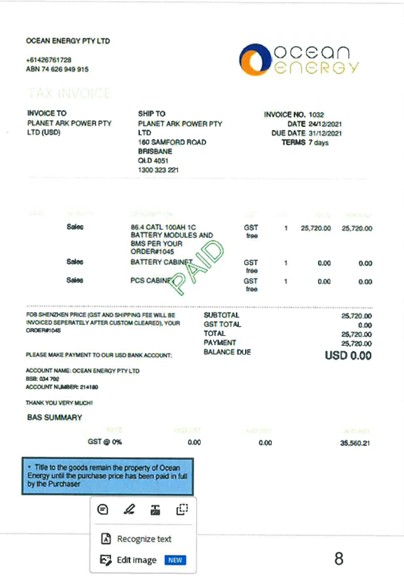
…
3. The time for the first and second defendants to comply with order 7 of the orders made by Justice Shariff on 8 August 2025 be extended to 19 December 2025.
4. The time for the third defendant to comply with order 7 of the orders made by Justice Shariff on 8 August 2025 be extended to 19 December 2025.
…
7. The time for the defendants to comply with order 10 of the orders made by Justice Shariff on 8 August 2025 be extended to 17 March 2026.
27 On 7 October 2025, Mr Romanowski emailed a defence to the ASOC to my Chambers. This defence was dated 7 October 2025, and was signed by Mr Romanowski and Mr Holcombe. There is no signature for Ocean Energy by Mr Kevin Wei or anyone else on its behalf, but rather the document contained the notation, “[o]verseas until 18 Oct 2025” in the signature box. This defence was not filed with the Court.
28 On or about 16 October 2025, the plaintiffs filed a Notice of Discontinuance discontinuing the proceedings against Mr Romanowski.
29 On 24 October 2025, Mr Romanowski, saying that he was assisting Mr Holcombe, emailed a defence to the ASOC to my Chambers. This defence was dated 24 October 2025 and was signed by Mr Holcombe. There was no signature for Ocean Energy by Mr Kevin Wei or anyone else on its behalf. This defence was not filed with the Court. The defendants did not comply with the balance of the October 2025 Orders.
30 As earlier mentioned, the day before the final hearing, Mr Romanowski sent a number of emails to my Chambers, which attached an updated defence and numerous documents in support of that defence.
31 At the hearing, the plaintiffs did not oppose leave being granted to Mr Holcombe and Ocean Energy to file and rely upon the defence. Although they took issue with aspects of the defence, Counsel for the plaintiffs ultimately indicated this could be dealt with in submissions. I granted that leave.
32 In relation to the documents which the defendants wished to rely upon, the plaintiffs took objection to a number of them and I did not admit them. The documents fell within a number of categories and I was not satisfied that they were admissible.
33 The first category of documents consisted of a number of documents purporting to be business records. These comprised the following:
(a) Document B1 – Balance Sheet of Elexsys Energy as at 30 September 2023 (PDF version);
(b) Document B2 - Balance Sheet of Elexsys Energy as at 30 September 2023 (Excel version);
(c) Document B3 - Profit & Loss of Elexsys Energy for the period of 30 September 2022 to 30 September 2023 (Excel version);
(d) Document B4 - Balance Sheet of Elexsys Energy as at 30 September 2023;
(e) Document B5 - Profit & Loss of Elexsys Energy for the period of 30 September 2022 to 30 September 2023 (PDF version);
(f) Document B6 - Profit & Loss of Elexsys Energy for the period of 30 September 2022 to 30 September 2023 (PDF version);
(g) Document F4 - Xero Aged Payables Detail;
(h) Document F5 - Reconciliation of Plaintiff's claim batteries have been paid; and
(i) Document H3 - Sales by Customer Detail.
34 Each of these documents purported to be business records of Elexsys Energy. However, on the face of the documents, there were a number of anomalies. Some of the documents bore annotations that appear to have been added to them and other documents appeared to have been compiled from other records, without identification or explanation of the source documents. The documents were not supported by any affidavit or other document explaining how they had been produced or created. When I asked Mr Holcombe about the source and provenance of the documents, he indicated that he had assumed they had been obtained from Elexsys Energy’s accounting software, Xero, but he confirmed that he was not the person who had retrieved or produced the documents. It appears that Mr Romanowski had supplied them. Mr Holcombe further confirmed that he was not familiar with the Xero software or the business records that had been produced and that was not part of his role. In those circumstances, I was not satisfied that it had been established that the documents were business records of Elexsys Energy and, in any event, as I have mentioned, the documents gave the appearance of having been prepared for the purpose or in anticipation of the proceedings.
35 The next document that I did not admit was email correspondence from November 2023 between Allens (the former solicitors for Mr Romanowski and Mr Holcombe) and others, including Mr Romanowski and Mr Holcombe. The email correspondence forwarded a without prejudice offer that had been made by the plaintiffs to resolve an interlocutory application and discussions about that offer. The initial communication was marked “without prejudice”. I was not satisfied that any exception to settlement privilege had been established and, in any event, I was not satisfied as to the relevance of the communications to the facts in issue before me for the final hearing.
36 The next document that I did not admit was a document entitled “Marketlend Operating in Bad Faith V.4” dated 12 November 2023. The document was in the nature of a submission. I did not admit the document into evidence but indicated that I would read it as a submission made by the defendants.
37 The next documents were a series of affidavits and draft affidavits as follows:
(a) Document E8 - Draft affidavit of Paul Klymenko dated 15 October 2025;
(b) Document E9 - Draft affidavit of Angelo Sofocleous dated 16 October 2025;
(c) Document E10 - Draft affidavit of Richard Romanowski dated 16 October 2025;
(d) Document E11 - Affidavit of Paul Klymenko (signed and undated); and
(e) Document E12 - Draft affidavit of Paul Klymenko (unsigned and undated).
38 None of these draft, unsigned or undated affidavits had been filed or served. Mr Holcombe said that he could make the witnesses available during the course of the hearing. I did not accept that submission or his suggested course. As I explained to Mr Holcombe, I had made numerous orders for the filing of evidence by the defendants, which were not complied with. The plaintiffs had no notice of the proposed evidence until the day before the hearing. Acceptance of belated evidence of this type in all the circumstances would give rise to a “trial by ambush” in circumstances where more than ample opportunity had been given to the defendants to present their case. Accordingly, I rejected receipt of these documents into evidence.
39 The next category of documents that I did not admit were a series of apparent file notes or records of discussions as follows:
(a) Document F1 - Leo Angelo meeting debrief notes;
(b) Document F2 - Leo call Friday evening 20 Oct 2023; and
(c) Document F3 - Email from Richard Romanowski 11 October 2025.
40 These documents were prima facie hearsay. They sought to record representations made in conversations where neither the author of the document nor the maker of the relevant representations was being called to give evidence. Accordingly, I rejected the tender of these documents.
41 There was a further category of documents relied upon by the defendants, which I did admit. These documents were as follows:
(a) Document H1 – styled as a BESS SUPPLY AGREEMENT between Elexsys Energy and Ocean Energy dated 6 April 2021; and
(b) Document H2 - Bundle of invoices - Inv 1032, Inv 1039, Inv 1044, Inv 1049, Inv 1051, Inv 1052, Inv 1055.
42 The plaintiffs objected to the tender of these documents on the basis that they appeared to have been modified after the fact, which they sought to establish by reference to the metadata of some of the documents. The defendants sought to rely upon the bundle of invoices to establish that they each contained a “retention of title” notation in favour of Ocean Energy in respect of the supply of the eight CATL Batteries until payment in full had been made. The plaintiffs said that these notations had been altered after the invoices had been issued and sought to explain this by reference to other evidence. I decided to admit the documents and indicated that I would hear submissions about the points the plaintiffs wished to advance.
43 The result of all of the above was that other than a limited handful of materials, the defendants had filed and tendered very little evidence in support of their defence and the claims they propounded in the proceedings.
44 It became apparent that both Mr Holcombe and Mr Wei had relied upon Mr Romanowski to assist them in filing and providing documents to the Court. Mr Romanowski also appeared at the hearing to assist Mr Holcome and Mr Wei appeared to think that Mr Romanowski was also assisting him. I expressed concern about Mr Romanowski’s involvement in circumstances where not only was he an undischarged bankrupt, but he was not neutral in providing assistance to Mr Holcombe and Mr Wei. Rather, he gave the appearance of the person who was in essence conducting the defence for both Mr Holcombe and Mr Wei. It will be a matter for the plaintiffs as to whether they wish to further take up any issues arising from Mr Romanowski’s participation in the proceedings.
3. THE TRADE CREDIT AGREEMEMENTS, THE GENERAL SECURITY AGREEMENTS AND DEEDS AND UNPAID DEBTS
45 It is convenient to set out the contractual documentation upon which the plaintiffs rely in aid of their claims for relief.
46 Marketlend is a lender, supplier, servicer and seller of receivables. The financing which Marketlend offers to borrowers is typically invoice financing or inventory financing.
47 In the period from about 23 November 2017 to about 16 November 2021, Marketlend entered into eight separate finance facilities with Elexsys Energy (Trade Credit Agreements or TCAs). It is unnecessary to detail each of these as the plaintiffs ultimately relied upon three of them.
3.1 The First Trade Credit Agreement and General Security Deed
48 The first of the Trade Credit Agreements (TCA1) (Application Identifier Number 11027) was executed on 27 November 2017 between Gozero Energy Pty Ltd (as buyer), Kyle Joshua Romanowski and Richard Joseph Romanowski (as guarantors), and Marketlend (as seller). It was supported a “General Security Deed & Power of Attorney” (GSD1) incorporated within TCA1.
49 Gozero Energy Pty Ltd was the former name of Elexsys Energy.
50 Clauses 1 and 2 of GSD1 provide as follows:
1. The account holder charges all its present and after-acquired, right, title and interest in the Seller, subject only to the prior interest relating to Marketlend, to Marketlend for the due and punctual performance observance and fulfilment of the obligations and the payment in full of all monies advance to the Seller on the terms and conditions contained in the Terms of Trade, as may be amended, deleted or supplemented by Marketlend (the Charge).
2. Without limiting the application of this Charge to any collateral, this Charge constitutes a PPSA Security Interest which attaches to the relevant collateral at the times prescribed in the PPSA.
51 Relevantly, the “Terms & Conditions (Terms)” attached to GSD1 contain the following clauses:
4.1 You, the Borrower, and Account Holder, agree to repay us, the amounts paid by the Credit Provider for you, in the payments detailed in the Account Particulars or communicated to your from time to time.
…
27.1 Each of the following events is an Event of Default:
a) Payment default: if the Borrower fails to repay the Loan on the Repayment Date or fails to pay any interest payment on the relevant interest payment date or fails to pay any other money payable under these Terms & Conditions on the due date for payment of that money and such failure continues for more than 5 days; or
…
52 The charge granted by cl 1 of GSD1 is inelegantly and awkwardly phrased. GSD1 defines Elexsys Energy as the “account holder” and the TCA1 defines Marketlend as the “Seller”. The first sentence of cl 1 is worded such that Elexsys Energy “charges” all of its present and after-acquired right, title and interest “in” the “Seller”, being Marketlend. However, that is somewhat awkwardly worded as the balance of the clause thereafter specifically refers to Marketlend, and appears to grant that charge “to Marketlend”.
53 It is uncontroversial that, when construing a commercial contract, a court should favour a businesslike interpretation over a non-businesslike one, but this has its limits as it is equally well established that commerciality is no basis for re-writing the agreement which the parties actually made: see, generally, Electricity Generation Corporation v Woodside Energy Ltd [2014] HCA 7; 251 CLR 640 at 656-357 [35] (French CJ, Hayne, Crennan and Kiefel JJ). Where the contract is a commercial one, the meaning is to be determined by reference to “what a reasonable businessperson would have understood those terms to mean”: Woodside at [35]. The meaning is to be gleaned from the text, read in light of the context and purpose of the agreement, which are to be gleaned from its terms: see Mount Bruce Mining Pty Ltd v Wright Prospecting Pty Ltd [2015] HCA 37; 256 CLR 104 at [46]–[52] (French CJ, Nettle and Gordon JJ); Rinehart v Hancock Prospecting Pty Ltd [2019] HCA 13; 267 CLR 514 at [44] (Kiefel CJ, Gageler, Nettle and Gordon JJ) and [83] (Edelman J); Elisha v Vision Australia Ltd [2024] HCA 50; 99 ALJR 171 at [38] (Gageler CJ, Gordon, Edelman, Gleeson And Beech-Jones JJ).
54 It is plain that the purpose of GSD1 was to provide security for Elexsys Energy’s obligations in TCA1. Having regard to that purpose and context, I am satisfied that the word “in” as it appears in cl 1 of GSD1 is to be read as meaning “in favour of” such that the clause is to be read as meaning that Elexsys Energy was granting a charge in all of its present and after-acquired right, title and interest “in” favour of and “to” Marketlend.
55 The unchallenged evidence, which I accept, is that there were unpaid invoices issued by Marketlend to Elexsys Energy under TCA1 which totalled $113,604.27 (inclusive of late fees) and $111,291.20 (exclusive of late fees). Accordingly, as I return to below, I am satisfied that Elexsys Energy was indebted to Marketlend under TCA1 in a way that entitled the latter to exercise the charge granted in its favour.
3.2 The Second Trade Credit Agreement and General Security Deed
56 The second of the Trade Credit Agreements (Application Identifier Number 12116) (TCA2) was entered into on 16 August 2018 between Gozero Energy Pty Ltd T/A Planet Ark Power (as buyer), Richard Joseph Romanowski and Bevan Clive Holcombe (as guarantors), and Marketlend (as seller). It was supported by a “General Security Deed & Power of Attorney” (GSD2) incorporated within TCA2.
57 Clauses 1 and 2 of GSD2 provide as follows:
1. The Account Holder charges all its present and after-acquired, right, title and interest in the Account Holder, subject only to the prior interest relating to Marketlend, to Marketlend for the due and punctual performance observance and fulfilment of the obligations and the payment in full of all monies advance to the Account Holder on the terms and conditions entitled Terms and Conditions (Terms) attached, as may be amended, deleted or supplemented by Marketlend (the Charge).
2. Without limiting the application of this Charge to any collateral, this Charge constitutes a PPSA Security Interest which attaches to the relevant collateral at the times prescribed in the PPSA.
58 The “Terms and Conditions (Terms)” attached to GSD2 relevantly include the following clauses:
4.1 You, the Account Holder, agree to repay us, the amounts paid by the Credit Provider for you, in the payments detailed in the Account Particulars or communicated to you from time to time.
…
27.1 Each of the following events is an Event of Default:
a) Payment default: if the Account Holder fails to repay the Loan on the Repayment Date or fails to pay any interest payment on the relevant interest payment date or fails to pay any other money payable under these Terms & Conditions on the due date for payment of that money and such failure continues for more than 5 days; or
…
59 A further Trade Credit Agreement (Application Identifier Number 12651) (TCA2 Variation 1) was entered into on 7 February 2019 between the same parties as TCA2. It was supported by a “General Security Deed & Power of Attorney” (GSD3) incorporated within TCA2 Variation 1. Clauses 1 and 2 of GSD3 are in the same form as in GSD2. Clauses 4.1 and 27.1(a) of the “Terms and Conditions (Terms)” attached to GSD3 are identical to their counterparts in the “Terms and Conditions (Terms)” attached to GSD2.
60 As with the charge granted by cl 1 of GSD1, the charges contained in cll 1 of GSD2 and GSD3 are also inelegantly and awkwardly phrased. GSD2 defines Elexsys Energy as the “Account Holder” and TCA2 defines Marketlend as the “seller”. The first sentence of cl 1 is worded such that Elexsys Energy “charges” all of its present and after-acquired right, title and interest “in” itself “to Marketlend”. However, again, having regard to the purpose and context of the deed, I am satisfied that the word “in” as it appears in cll 1 of GSD2 and GSD3 is to be read as meaning “held by” such that the clause is to be read as meaning that Elexsys Energy was granting a charge in all of the present and after-acquired right, title and interest held by it “to” Marketlend. It would not be a commercial or business-like interpretation to read the word “in” so as to mean that Elexsys Energy was granting a charge over its right, title and interest in itself, as opposed to the property held by it.
61 The unchallenged evidence, which I accept, is that there were unpaid invoices issued by Marketlend to Elexsys Energy under TCA2 which totalled $218,229.65 (inclusive of late fees) and $216,574.83 (exclusive of late fees), and under TCA2 Variation 1 which totalled $330,547.59 (inclusive of late fees) and $328,900.16 (exclusive of late fees). Accordingly, as I return to below, I am satisfied that Elexsys Energy was indebted to Marketlend in a way that entitled the latter to exercise the charges granted in its favour under GSD2 and GSD3.
3.3 The Third Trade Credit Agreement and General Security Deed
62 The third of the Trade Credit Agreements (Application Identifier Numbers 13796 and 14062) (TCA3) was executed on 25 November 2021 between Marketlend Pty Ltd (as credit provider or account provider) and Elexsys Energy Pty Ltd (as account holder). Schedule 4 of TCA3 contains a “General Security Deed & Power of Attorney” (GSD6). Clauses 2 and 4 of GSD6 provide as follows:
2. The Account Holder charges to Marketlend Pty Ltd (ACN 602 720 856) (Marketlend) all its present and after-acquired property, rights, title, interest and proceeds in respect of which the Account Holder has sufficient rights to grant a Security or charge (the Collateral), for the due and punctual performance observance and fulfilment of the obligations under the Credit Terms and the payment in full of all monies advanced to the Account Holder on the terms and conditions under the Credit Terms (the Obligations), as may be amended, deleted or supplemented by Marketlend (the Charge).
…
4. Without limiting the application of this Charge to any collateral, this Charge constitutes a PPSA Security Interest which attaches to the relevant collateral at the times prescribed in the PPSA.
63 Clause 23.1(n) of Section B of TCA3 provides:
23.1 Each of the following events is an Event of Default:
…
(n) Material adverse change: if there is a material adverse change, in the Credit Provider's opinion, in the business or financial condition of the Account Holder.
64 There is no doubt that the charge contained in cl 2 of GSD6 was one in favour of Marketlend in respect of all its present and after-acquired property, rights, title, interest and proceeds in respect of which Elexsys Energy has sufficient rights to grant a security or charge.
65 The defendants alleged in their defence that Elexsys Energy was not in default under TCA3 when the Receivers were appointed on 23 October 2023. However, the unchallenged evidence adduced by the Receivers is that the invoice report for Elexsys Energy’s line of credit facilities indicated that there was $2,386,034.94 owing in relation to TCA3.
66 As raised during the course of oral submissions, the fact that there were unpaid debts owing under each of TCA1, TCA2 and TCA2 Variation 1 were sufficient for Marketlend to form an opinion that there was a material adverse change in the business or financial condition of Elexsys Energy. That is because:
(a) in relation to TCA1, an event of default occurred on 15 June 2023 when payment due on 14 June 2023 was not made;
(b) in relation to TCA2, an event of default occurred on 15 June 2023 when payment due on 14 June 2023 was not made; and
(c) in relation to TCA2 Variation 1, an event of default occurred on 19 June 2023 when payment due on 18 June 2023 was not made.
67 The appointment of the Receivers was permitted following any one of the above defaults under the terms of each of TCA1, TCA2 or TCA2 Variation 1. To the extent that cll 27.1(a) of GSD1, GSD2 and GSD3 specify that a failure to make payment must continue for more than five days in order to constitute a “payment default”, no rectification of the failure to make payment occurred. The failure to pay the debts under each of those TCAs and, indeed, the appointment of the Receivers under each of those TCAs, also constituted a material adverse change in Elexsys Energy that validates the appointment of the Receivers under TCA3 and enlivens Marketlend’s entitlement to enforce its security interest under GSD6.
3.4 Registration of Security Interests
68 The unchallenged evidence is that Marketlend had registered its respective security interests, including in relation to GSD1, GSD2, GSD3 and GSD6, on the Personal Property Securities Register (PPSR). No argument or evidence was presented by the defendants that these interests were not registered.
3.5 The defendants’ arguments in relation to the debts
69 In their defence, and in the submission-styled document that was relied upon (referred to above at [36] above), the defendants made a number of assertions which were difficult to follow, but which essentially had a similar theme that Marketlend had set out with an intention to embark on a hostile takeover of Elexsys Energy and furthered this purpose by acting unconscionably in issuing invoices, creating debts and seeking their repayment when the business was financially sound and successful.
70 There was no evidence adduced in support of these assertions. The unchallenged evidence before me establishes that invoices were issued by Marketlend for monies that fell due, and which remained unpaid. I reject the defendants’ unsubstantiated assertions.
4. CONSIDERATION
71 The issues that arise for determination are those identified above at [5]. It is unnecessary to deal with each of these issues separately as the resolution of one of them leads to the determination of the next. I deal with the question of relief in Part 5 below.
4.1 Marketlend’s case as to entitlement to relief
72 The plaintiffs’ case is that Marketlend is entitled under s 123(1) of the PPS Act to enforce its security by seizing the assets of Elexsys Energy. Section 123(1) of the PPS Act provides a self-help remedy as follows:
A secured party may seize collateral, by any method permitted by law, if the debtor is in default under the security agreement.
73 As is evident from the text, the section:
(a) applies in respect of a “secured party”;
(b) applies when the debtor is in default under the “security agreement”; and
(c) permits the secured party in those circumstances to seize “collateral”.
74 The first issue that arises for determination is whether Marketlend has established that it is a “secured party”. The term “secured party” means, relevantly, a person who holds a “security interest for the person's own benefit or for the benefit of another person (or both)”: s 10 PPS Act. In turn, the term “security interest” is defined in s 12 of the PPS Act as “an interest in personal property provided for by a transaction that, in substance, secures payment or performance of an obligation” and includes, as examples, a fixed charge and floating charge.
75 For the reasons set out above, I am satisfied that each of GSD1, GSD2, GSD3 and GSD6 granted Marketlend a charge in respect of the present and after-acquired right, title and interest in Elexsys Energy’s assets such that Marketlend had a “security interest” and was therefore a “secured party” for the purpose of the PPS Act.
76 The second issue that arises is whether the debtor, Elexsys Energy, is in default under the “security agreement”. For the reasons set out above, I am satisfied that Elexsys Energy was in default under TCA1, TCA2, TCA2 Variation 1 and TCA3.
77 The third issue that arises is whether there is collateral that may be seized by Marketlend and, specifically, whether the eight CATL Batteries constitute such collateral.
78 The term “collateral” is defined in section 10 of the PPS Act as including personal property to which a “security interest” is “attached”. There is no doubt that the eight CATL Batteries are personal property and would fall within the meaning of “collateral” if they are ones to which a security interest attaches. This requires attention to be given to s 19 of the PPS Act.
79 Section 19 of the PPS Act provides that:
Enforceability of security interests against grantors--attachment
Attachment required for enforceability
(1) A security interest is enforceable against a grantor in respect of particular collateral only if the security interest has attached to the collateral.
Attachment rule
(2) A security interest attaches to collateral when:
(a) the grantor has rights in the collateral, or the power to transfer rights in the collateral to the secured party; and
(b) either:
(i) value is given for the security interest; or
(ii) the grantor does an act by which the security interest arises.
Time of attachment
(3) Subsection (2) does not apply if the parties to a security agreement have agreed that a security interest attaches at a later time, in which case the security interest attaches at the time specified in the agreement.
(4) To avoid doubt, a reference in a security agreement to a floating charge is not a reference to an agreement that the security interest created by the floating charge attaches at a time later than provided under subsection (2).
Goods leased, bailed, consigned or sold under a conditional sale agreement.
(5) For the purposes of paragraph (2)(a), a grantor has rights in goods that are leased or bailed to the grantor under a PPS lease, consigned to the grantor, or sold to the grantor under a conditional sale agreement (including an agreement to sell subject to retention of title) when the grantor obtains possession of the goods.
(6) Subsection (5) does not limit any other rights the grantor may have in the goods.
Note: A security interest may attach to crops while they are growing, and to the products of livestock, before they become proceeds of the crops or livestock (for example, wool before it is shorn). See subsections 31(4) and (5) (meaning of proceeds) and section 84A (security interests in crops and livestock).
(Original emphasis.)
80 In the present case, as explained in the next section, I am satisfied that the relevant security interest held by Marketlend is enforceable against Elexsys Energy (as grantor) because that security interest attached to the collateral, including the right, title and interest in the assets of Elexsys Energy, which, in turn, included the eight CATL Batteries. This conclusion follows because I am satisfied that Elexsys Energy owned the eight CATL Batteries, but it also follows if those Batteries were owned by Ocean Energy or Mr Holcombe. It is necessary to explain why.
4.2 Ownership of the CATL Batteries
81 The evidence does not make clear precisely when the eight CATL Batteries were supplied by Ocean Energy to Elexsys Energy. However, the documentary records disclose that they were supplied sometime in 2021 and/or 2022, were thereafter in the possession of Elexsys Energy during that time (including at the time the receivers were appointed), and were recorded in Elexsys Energy’s business records as being its assets. Those records are as follows.
82 First, the balance sheet of Elexsys Energy dated 22 October 2023 (well after each of GSD1, GSD2, GSD3 and GSD6 were entered into) (Balance Sheet) records “Inventory – Battery” at a value of $1,992,983.20.
83 Second, relatedly, the business records of Elexsys Energy include a document entitled “Inventory – Battery Transactions” for the period from 2 July 2020 to 23 October 2023 (Inventory), which records transactions relating to the supply of Ocean Energy batteries that were “shipped on 19 September 2022” and valued in total at $1,992,983.20. That is the same value as recorded in the Balance Sheet referred to above. The number of invoices issued indicate that there were multiple batteries that were supplied, which is consistent with the fact that Elexsys Energy had eight CATL Batteries in its possession or control when the Receivers were appointed.
84 Neither the Balance Sheet nor the Inventory entries referred to above give any indication that the batteries were anything but the assets of Elexsys Energy.
85 Third, the business records also include a ledger for invoices approved and paid by Elexsys Energy in relation to Ocean Energy for the period between 1 July 2020 and 30 April 2025, disclosing a total amount paid of $1,710,243.84.
86 Fourth, bank statements for bank accounts held by Elexsys Energy with the Commonwealth Bank disclose that in the period from 28 October 2021 to 26 October 2023, Elexsys Energy paid a total of $3,852,431.22 to Ocean Energy.
87 Each of the above records strongly points in the direction that Elexsys Energy had acquired the eight CATL Batteries from Ocean Energy and that they formed part of its assets. Section 1305 of the Corporations Act 2001 (Cth) provides that:
Admissibility of books in evidence
(1) A book kept by a body corporate under a requirement of this Act is admissible in evidence in any proceeding and is prima facie evidence of any matter stated or recorded in the book.
(2) A document purporting to be a book kept by a body corporate is, unless the contrary is proved, taken to be a book kept as mentioned in subsection (1).
88 I am satisfied that each of the records set out above formed part of the books kept by Elexsys Energy that were retrieved by the Receivers and that they are admissible as prima facie evidence as to the ownership of the eight CATL Batteries by Elexsys Energy. Although these books do not precisely identify or provide particulars as to the eight CATL Batteries in question, those eight CATL Batteries were the ones located at the Property when the Receivers were appointed and there is no evidence that there were any others. I am satisfied that it should be inferred that the eight CATL Batteries that were at the Property at that time were the ones that were recorded in the business records set out above.
89 Against the conclusion that the eight CATL Batteries formed part of the assets of Elexsys Energy, the first contention raised by the defendants was that those batteries remained in the ownership of Ocean Energy. In support of this contention, the defendants tendered invoices purported to have been issued by Ocean Energy that included the notation:
Title to the goods remain the property of Ocean Energy until the purchase price has been paid in full by the Purchaser.
90 One example of such an invoice tendered by the defendants is Invoice 1032, which appears as follows:
91 Aside from indicating on its face that the invoice was paid in full (which would render the so-called “retention of title” clause as having been spent in respect of this particular supply of a battery), there are more concerning issues that arise from this purported invoice.
92 First, there are two other versions of Invoice 1032 produced from the business records of Elexsys Energy. The first version appears to be the version of the invoice issued to Elexsys Energy and contains no indication that the invoice has been paid. It provides as follows:
93 It will be plain from the above version of the invoice that it does not include the so-called “retention of title” notation that appears in the version that the defendants tendered.
94 A further version of the invoice does not contain the same information, but contains the same monetary value for the supply (less GST) as follows:
95 As will be apparent from the above, this version also does not contain the so-called “retention of title” clause. No evidence was called by the defendants to explain the discrepancy.
96 Second, even more alarmingly, the Receivers and their solicitors have examined the metadata of Invoice 1032 as tendered by the defendants, which discloses that the so-called “retention of title” notation was a “text box” added to the document by an edit made on or about 25 September 2025. The relevant invoice as examined by the Receivers and their solicitors appears as follows:
97 The metadata for this document appears as follows:
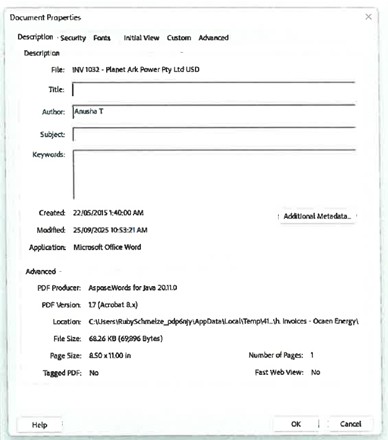
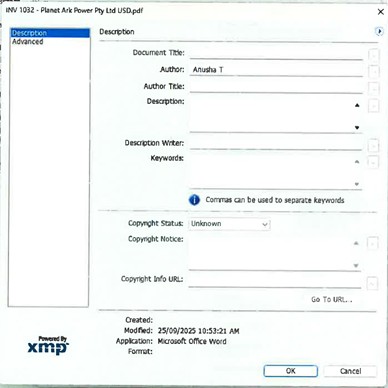
98 There is no explanation that has been given as to why the PDF version of the invoice dated 24 December 2021 would have been modified on 25 September 2025.
99 Based on the above evidence, I do not accept the veracity of the invoices tendered by the defendants. No evidence was called by them to explain those invoices or the discrepancies that were apparent on the evidence.
100 During the hearing, Mr Wei asserted that the supply of the batteries was agreed to occur on an “FOB” basis (a term that was not explained), and further claimed that there was an agreement with Mr Romanowski and Mr Holcombe that the batteries would be supplied in advance of payment being made on the condition that Ocean Energy would retain ownership. However, that payment was never made in full. Mr Holcombe made similar assertions in support of Mr Wei’s claims. However, none of these assertions were supported any admissible evidence called by the defendants.
101 I am not satisfied that there was any “retention of title” condition imposed or agreed as between Ocean Energy and Elexsys Energy in relation to the supply of the eight CATL Batteries.
102 The second contention advanced by the defendants was that Mr Holcombe had, in fact, acquired the eight CATL Batteries from Elexsys Energy sometime in 2023. This contention is inconsistent with the defendants’ first contention as it proceeds on the basis that Elexsys Energy owned the eight CATL Batters and had sold them to Mr Holcombe. Putting that inconsistency to one side, I am not satisfied that there was any legitimate transaction to this effect.
103 Without giving evidence himself, Mr Holcombe asserted that he had loaned monies to Elexsys Energy and the broader group of companies, and that he had acquired the eight CATL Batteries by a commensurate reduction of his loan account (being the debt owed by Elexsys Energy and the broader group to him). I do not accept these contentions.
104 First, the assertions made by Mr Holcombe are inconsistent with the business records, including the Balance Sheet and Inventory record referred to above which corroborate that Elexsys Energy recorded the relevant batteries as part of its assets.
105 Second, there is serious doubt as to the veracity of the documents upon which Mr Holcombe relied. The first of these documents is a purported invoice (INV-EVES1) issued by Elexsys Energy to Mr Holcombe on 30 June 2022 for an amount of $1,512,500. The second of these documents is a purported invoice numbered 1012 issued by Elexsys Energy to Mr Holcombe on 27 June 2023 for an amount of $1,375,000. The third of these documents was an apparent loan account ledger (Loan Ledger) purporting to record deductions from the loan account as follows:
(a) on 21 April 2022 for an amount of $1,375,000; and
(b) on 27 June 2023 for an amount of $1,375,000.
106 As will be apparent, the first deduction neither matches the date nor the value of the first purported invoice (INV-EVES1). Nor is there any record of any such loan account or deductions from it in the Balance Sheet and associated records of Elexsys Energy as retrieved by the Receivers. Other documents raise further discrepancies in relation to these dates.
107 Further, the Receivers adduced evidence from the business records of Elexsys Energy that again undermines the veracity of the purported invoices. That document records that the first purported invoice (INV-EVES1) was created on 13 June 2024 at 4.08 pm, and was approved and sent at the same time. It also records that this invoice was copied from Invoice 1012. These records indicate that these invoices were created post-fact.
108 Further still, there are also discrepancies with the alleged Loan Ledger (referred to above). That document was in fact produced by Mr Holcombe by way of discovery. The Receivers adduced evidence that this document is inconsistent with Elexsys Energy’s accounting records maintained on Xero for the period 23 October 2019 to 23 October 2023. That evidence confirms that the Xero records contain no ledger account for “B Holcombe & Associated Entities”. Indeed, there is no loan account recorded for Mr Holcombe at all (in contrast to the other director, Mr Romanowski, with a balance of $42,226.15).
109 Nor was any rational explanation given in submissions (let alone in evidence) as to why Mr Holcombe would acquire the relevant batteries from Elexsys Energy.
110 I do not accept the defendants’ contentions that Mr Holcombe had acquired the relevant batteries.
111 For the above reasons, I am satisfied that the eight CATL Batteries were part of the assets of Elexsys Energy and that Marketlend is entitled to exercise its security interest that was attached to them as collateral.
4.3 The alternatives lead to the same result
112 It is unnecessary to consider the position that would have arisen if I was not satisfied that the relevant batteries formed part of the assets of Elexsys Energy. For completeness, the result would not have changed.
113 To the extent that it was claimed that Ocean Energy remained the owner of the eight CATL Batteries, the operation of s 19(5) of the PPS Act means the result would not change. Ocean Energy’s claim rested on its assertions that it had the benefit of the so-called “retention of title” notation contained in the purported invoices referred to above. In an era gone by, or perhaps in other contexts, such an arrangement was and is regarded as a “Romalpa clause”: see s 24(1) of the Sale of Goods Act 1923 (NSW) and Aluminium Industrie Vaassen BV v Romalpa Aluminium Ltd [1976] 1 WLR 676; [1976] 2 All ER 552. However, for the purpose of the PPS Act, it is regarded as a “conditional sale agreement”. Section 12(2)(d) of the PPS Act provides that a “conditional sale agreement” (including “an agreement to sell subject to retention of title”) is an example of a security interest. By its nature, a conditional sale agreement refers to a transaction where the secured party sells goods to the grantor and retains title to the goods until payment is provided.
114 As set out above, s 19(5) of the PPS Act provides that for the purpose of s 19(2), a “grantor has rights in goods that are leased or bailed to the grantor under a PPS lease, consigned to the grantor, or sold to the grantor under a conditional sale agreement (including an agreement to sell subject to retention of title) when the grantor obtains possession of the goods” (emphasis added). What follows from the operation of this section, together with s 19(2), is that the grantor is taken to have rights in the collateral or a power to transfer the rights where the collateral relates to goods that have been sold to the grantor under a “conditional sale agreement” (including where there is a retention of title for the benefit of the seller).
115 Thus, even if Ocean Energy had the benefit of a so-called “retention of title” in the eight CATL Batteries based on the notation contained in the purported invoices, it would not interfere with the fact that Elexsys Energy (as grantor) had the right in those goods such that they were collateral that attached to Marketlend’s security interest for the purpose of s 19(2) of the PPS Act. It follows that Marketlend had a right that was enforceable against Elexsys Energy in respect of the eight CATL Batters for the purpose of s 19(1) of the PPS Act.
116 To the extent that it was claimed that Mr Holcombe had become the owner of the eight CATL Batteries, that too would not have changed the result. That is because of the operation of the rules contained in the PPS Act regarding Marketlend’s perfected security interest as against Mr Holcombe’s “unperfected security interest”.
117 Section 43 of the PPS Act provides that a buyer or lessee of personal property, for value, takes the personal property free of any “unperfected security interest” in the property. If I had been satisfied that the alleged sale of the CATL Batteries to Mr Holcombe was “for value” (which I do not accept), Mr Holcombe still would have acquired the eight CATL Batteries subject to Marketlend’s security interest because it had been “perfected” by its registration prior to the date of the first alleged acquisition by Mr Holcombe (being, at the earliest, 21 April 2022).
118 The “main rule” in respect of perfection is contained in section 21 of the PPS Act, which provides that a security interest in particular collateral is “perfected” if:
(a) the security interest is attached to the collateral;
(b) the security interest is enforceable against a third party, which is the case here as, pursuant to s 20 of the PPS Act:
(i) the security interest has attached to the CATL Batteries (s 20(1)(a)); and
(ii) there is a security agreement (being the respective GSDs) which covers the CATL Batteries (through the inclusion of a statement that a security interest is taken in all of the grantor's present and after-acquired property (s 20(2)(b)(ii))) that is signed by Elexsys Energy as grantor (s 20(2)(a)(i)); and
(c) a registration is effective with respect to the collateral, which is satisfied because, as at 21 April 2022 (being the earliest date that Mr Holcombe alleges he acquired the CATL Batteries), six security interests had been registered in the personal property of Elexsys Energy on the PPSR, including in respect of “[a]ll present and after-acquired property”.
119 It follows that Mr Holcombe would have acquired the eight CATL Batteries subject to Marketlend’s security.
120 For these reasons, I would have concluded that Marketlend remained entitled to enforce its security interest over the collateral irrespective of whether the eight CATL Batteries were owned by Ocean Energy or Mr Holcombe.
5. RELIEF AND DISPOSITION
121 For the reasons set out above, I am satisfied that Marketlend is entitled to enforce its security under s 123(1) of the PPS Act by seizing the relevant assets of Elexsys Energy, including the eight CATL Batteries.
122 The defendants alleged in their defence that the Receivers were not validly appointed. However, as set out above, I am satisfied that they were validly appointed. In any event, even if the Receivers were not validly appointed, all it would mean is that the first and second plaintiff do not have standing to bring the claim, but the fifth plaintiff, Marketlend, would still have standing.
123 By short minutes of order provided to the Court, the plaintiffs seek declaratory relief (orders 1 and 2) and injunctive relief (order 3) to facilitate the fifth plaintiff exercising its self-help rights under section 123(1) of the PPS Act. The orders are in a form similar to that contemplated by Besanko J in Riseley v Toyota Finance Australia Ltd [2021] FCA 1566 at [19]-[22]. Relevantly, his Honour observed at [19] that on its face, s 123 of the PPS Act gives the secured party a right which it may exercise, not a power or jurisdiction to the Court. However, his Honour reasoned at [21]-[22] (referring to Bank of Queensland Limited v Star Trek Pty Ltd [2019] NSWSC 1712 (Adamson J)), that it is open to the Court to make declarations vis-à-vis the property and an entitlement to seize property, and that “where it was necessary to gain entry and access to property for the purposes of seizing it, the debtor could be restrained from preventing the secured party from doing those acts”, which his Honour described as “appropriate ancillary orders to permit the Bank to enforce its security”.
124 Here, I am similarly satisfied that the declaratory orders sought by the plaintiffs should be made, as should the order that prevents the defendants from interfering with Marketlend exercising its rights under s 123 of the PPS Act.
125 There was a question I raised about the precise identity of the eight CATL Batteries, but as the plaintiffs pointed out, there have already been undertakings given to the Court that specify them sufficiently such that it is known with particularity the assets that Marketlend will seize.
I certify that the preceding one hundred and twenty-five (125) numbered paragraphs are a true copy of the Reasons for Judgment of the Honourable Justice Shariff. |
Associate:
Dated: 1 May 2026
SCHEDULE OF PARTIES
NSD 1364 of 2023 | |
Plaintiffs | |
Fourth Plaintiff: | ELEXSYS R&D PTY LTD ACN 160 918 463 (RECEIVERS AND MANAGERS APPOINTED) |
Fifth Plaintiff: | MARKETLEND PTY LTD (ACN 602 720 856) |


