

Federal Court of Australia
Deakin University v Macreadie [2026] FCA 481
File number(s): | VID 805 of 2024 |
Judgment of: | WHEELAHAN J |
Date of judgment: | 24 April 2026 |
Catchwords: | CONSUMER LAW – application for permanent injunctions pursuant to s 232 of the Australian Consumer Law restraining the respondents from representing that the second respondent is the owner of the relevant intellectual property and trade marks of the Blue Carbon Lab – application for mandatory injunction requiring the second respondent to change its name – application for injunction restraining first respondent from being involved in the conduct of the second respondent the subject of the alleged breach of the Australian Consumer Law – trade of carrying out environmental research services on a commercial basis – applicant alleged respondents were not the owners of the goodwill associated with the Blue Carbon Lab and its associated logo – applicant alleged misleading and deceptive conduct pursuant to s 18 of the Australian Consumer Law – applicant is the owner of the goodwill of the lab – disposition of a source of goodwill might reduce the value of the goodwill but does not extinguish it – first respondent was an employee of the applicant and undertook the lab’s activities in that capacity – the first respondent’s use of the name and marks as an employee for commercial endeavours was the applicant’s use – applications for injunctions granted TRADE MARKS – application for rectification of the Register of Trade Marks pursuant to s 88 of the Trade Marks Act 1995 (Cth) – applicant alleges that the respondents registered logo mark of the Blue Carbon Lab in bad faith and not as owner of the mark – state of mind is relevant to the assessment of bad faith – first respondent subjectively believed he owned the rights to the logo mark – an application pursuant to a mistaken belief as to ownership of the mark does not, without more, amount to bad faith – application for rectification on the ground of bad faith dismissed – second respondent was not the owner of the trade mark – applicant was the first user of the logo as a trade mark – application for rectification on the ground of ownership granted |
Legislation: | Competition and Consumer Act 2010 (Cth), Sch 2 (Australian Consumer Law) ss 18, 232 Copyright Act 1968 (Cth) s 196(4) Evidence Act 1995 (Cth) s 136 Trade Marks Act 1995 (Cth) ss 20, 58, 62A, 70, 88 Deakin University Act 2009 (Vic) ss 5, 44 |
Cases cited: | Australian Competition and Consumer Commission v Medibank Private Ltd [2018] FCAFC 235; 267 FCR 544 Australian Securities and Investments Commission v Kobelt [2019] HCA 18; 267 CLR 1 CI JI Family Pty Ltd v National Australian Nappies (NAN) Pty Ltd [2014] FCA 79 Cobbe v Yeoman’s Row Management Ltd [2008] UKHL 55; [2008] 1 WLR 1752 ConAgra Inc v McCain Foods (Aust) Pty Ltd (1992) 33 FCR 302 DC Comics v Cheqout Pty Ltd [2013)] FCA 478; 212 FCR 194 Federal Commissioner of Taxation v Murry [1998] HCA 42; 193 CLR 605 Food Channel Network Pty Ltd v Television Food Network GP [2010] FCAFC 58; 185 FCR 9 Fry Consulting Pty Ltd v Sports Warehouse Inc (No 2) [2012] FCA 81; 201 FCR 565 General Electric Co (of USA) v General Electric Co Ltd [1972] 1 WLR 729 Jones v Dunkel [1959] HCA 8; 101 CLR 299 Lomas v Winton Shire Council [2002] FCAFC 413; (2003) AIPC 91-839 Marengo v Daily Sketch and Daily Graphic Ltd [1992] FSR 1 Moorgate Tobacco Co Ltd v Philip Morris Ltd [No 2] [1984] HCA 73; 156 CLR 414 PDP Capital v Grasshopper Ventures [2021] FCAFC 128; 285 FCR 598 Pham Global Pty Ltd v Insight Clinical Imaging Pty Ltd [2017] FCAFC 83; 251 FCR 379 Self Care IP Holdings Pty Ltd v Allergan Australia Pty Ltd [2023] HCA 8; 277 CLR 186 Southern Cross Refrigerating Co v Toowoomba Foundry Pty Ltd [1954] HCA 82; 91 CLR 592 |
Division: | General Division |
Registry: | Victoria |
National Practice Area: | Intellectual Property |
Sub-area: | Trade Marks |
Number of paragraphs: | 208 |
Date of hearing: | 7-8 April 2025 |
Counsel for the applicant: | C H Smith SC |
Solicitors for the applicant: | Corrs Chambers Westgarth |
Counsel for the respondents: | L Merrick KC with S Campbell |
Solicitors for the respondents: | By George Legal |
ORDERS
VID 805 of 2024 | ||
| ||
BETWEEN: | DEAKIN UNIVERSITY Applicant | |
AND: | PETER MACREADIE First Respondent BLUE CARBON LAB PTY LTD (ACN 666 667 661) Second Respondent | |
order made by: | WHEELAHAN J |
DATE OF ORDER: | 24 April 2026 |
THE COURT ORDERS THAT:
1. The parties are to confer with a view to agreeing final orders to give effect to these reasons and for the disposition of any ancillary matters and costs, and if there is agreement the parties shall file by 4.00pm on 1 May 2026 a minute of agreed orders for the Court’s consideration for the making of final orders on the papers.
2. If the parties are unable to agree on the form of final orders, then:
(a) by 4.00pm on 1 May 2026 the parties are to file and serve proposed orders for which they contend together with any outline of submissions on which they wish to rely, not exceeding three pages in 12 point font and 1.5 spacing; and
(b) the proceeding is fixed for further hearing on 6 May 2026 at 10.15am for the hearing of argument in relation to final orders.
Note: Entry of orders is dealt with in Rule 39.32 of the Federal Court Rules 2011.
REASONS FOR JUDGMENT
WHEELAHAN J:
1 The applicant, Deakin University, was established in 1974 and is a leading tertiary education provider and research institute. Its statutory objects include the provision of a teaching and learning environment, undertaking scholarship and research, elevating public awareness of scientific developments, and using and exploiting its expertise and resources: Deakin University Act 2009 (Vic), s 5.
2 The first respondent, Professor Peter Macreadie, is a marine ecosystem biologist and sustainability researcher with over 20 years’ experience. At least fifteen of those years have been specifically within the field of blue carbon. The term “blue carbon” was described in the evidence as referring to carbon dioxide that is captured by marine systems, including mangroves, seagrasses, and salt marshes. Prof Macreadie was quoted in one publication as stating that “blue carbon ecosystems are a powerful natural weapon in the fight against climate change”.
3 Between 2013 and 2016, Prof Macreadie was an honorary fellow of Deakin University, while at the same time he was employed by the University of Technology Sydney (UTS). He was then employed by Deakin full time between 2016 and 2024. During this period Deakin employed Prof Macreadie in three different positions: firstly, as a senior lecturer; then from 2018 as an associate professor; and from 2021 as a professor.
4 The terms of Prof Macreadie’s employment were set out in a letter of offer from Deakin dated 10 February 2015 with Prof Macreadie’s acceptance dated 15 February 2015. The commencement date was nominated as 2 February 2016. The terms of employment included that Prof Macreadie’s duties would include those set out in a position description that was said to be attached. A position description document for Senior Lecturer in Ecology was tendered without objection and provided for principal accountabilities which included that the appointee was responsible for –
• Initiating and conducting independent research either as a member of a team, or independently (where appropriate), including the preparation of research proposal submissions to external funding bodies and other agencies.
5 During his time as an employee of Deakin, Prof Macreadie headed a research group known as the “Blue Carbon Lab”. Prof Macreadie had conceived of the term Blue Carbon Lab before he commenced employment at Deakin.
6 Immediately prior to commencing his full-time employment at Deakin, Prof Macreadie procured the design of a logo, and the re-design of an existing website that he had established and maintained, www.bluecarbonlab.org. After he commenced employment Prof Macreadie requested Deakin to pay the invoice for the design of the logo and the re-design of the website, which it did.
7 From the commencement of Prof Macreadie’s employment at Deakin the Blue Carbon Lab operated from Deakin’s Burwood Campus and was staffed by members who were on the Deakin payroll. Deakin entered into a number of commercial arrangements for the supply of research services by Prof Macreadie and other persons at Deakin who worked with him in the Blue Carbon Lab. Deakin managed the financial and operational logistics of the lab, including by paying its operating expenses, and managing and expending research funding that it attracted.
8 On 21 March 2023, Blue Carbon Lab Pty Ltd, which is the second respondent, was incorporated. Prof Macreadie is its sole director, and his wife is its sole shareholder.
9 On 10 August 2023, the second respondent filed applications for trade mark registration in relation to the words “Blue Carbon Lab” and in relation to a logo to which I will refer and set out at [98] below.
10 The application to register the word mark remains under examination. The logo mark was registered on 19 March 2024 with a priority date of 10 August 2023 in relation to goods and services described as including research, analysis, consulting, and engineering within Class 42.
11 The second respondent has also applied for the registration of other trade marks which have been opposed by Deakin to which I will refer later.
12 On 3 May 2024, Prof Macreadie resigned from Deakin to take up employment at RMIT University.
13 The second respondent proposes to provide environmental research services on a commercial basis under the Blue Carbon Lab name. The case that Deakin maintained at trial centres on a claim that Deakin, and not Prof Macreadie or the second respondent, is the owner of the goodwill associated with the Blue Carbon Lab and its associated logo. Deakin claimed that it would be misleading or deceptive for the second respondent to represent otherwise, and seeks permanent injunctions under s 232 of the Australian Consumer Law (Schedule 2 of the Competition and Consumer Act 2010 (Cth)) (ACL) to restrain the second respondent, whether by itself, its directors, officers, employees or agents or otherwise howsoever, from –
(a) representing that it is the owner of the Blue Carbon Lab mark or logo;
(b) representing that it is the owner of the goodwill and reputation associated with the Blue Carbon Lab mark or logo;
(c) representing that it has the right to use the Blue Carbon Lab mark or logo;
(d) representing that it has the sponsorship or approval of or an affiliation with Deakin;
(e) using the Blue Carbon Lab mark or logo to indicate the commercial origin of any provision of environmental research services; and/or
(f) alternatively to (e), using the Blue Carbon Lab mark or Logo in connection with the provision of environmental research services.
14 Deakin seeks an injunction against the second respondent of a mandatory character requiring that it change its name to a name that does not include the words “Blue Carbon Lab” or any name or word that is misleadingly, deceptively, or confusingly similar to those words.
15 Deakin also seeks an injunction under s 232 of the ACL restraining Prof Macreadie from being involved in conduct of the second respondent that would be the subject of the injunctions referred to above.
16 In relation to the registration of the logo, Deakin seeks an order rectifying the Register of Trade Marks by cancelling the registration of trade mark number 2376685, under s 88 of the Trade Marks Act 1995 (Cth). Deakin claims that the second respondent applied for registration of the logo as a trade mark in bad faith and further claims that the second respondent was not the owner of the trade mark.
17 Deakin further seeks a declaration that the second respondent’s use and threatened use of the Blue Carbon Lab name and logo to offer and promote the provision of environmental research services constitutes conduct in trade or commerce which is misleading or deceptive or likely to mislead or deceive in contravention of s 18 of the ACL.
18 Deakin seeks other ancillary relief, but no damages or compensation are sought.
19 Should Deakin be successful to any extent, the parties sought to be heard on the terms of any relief.
Witnesses
20 Evidence-in-chief was given by affidavit. Deakin adduced evidence from the following witnesses –
(a) Professor Matthew Clarke, who holds the office of Deputy Vice-Chancellor Research and Innovation at Deakin;
(b) Celeste Saldaneri, who was the Director, University Financials at Deakin and who produced business records of Deakin; and
(c) Jürgen Bebber, a member of Corrs Chambers Westgarth who are Deakin’s solicitors in this proceeding and who produced several documents.
21 Of Deakin’s witnesses, only Prof Clarke was cross-examined. Much of Prof Clarke’s evidence involved an overview of Deakin’s situation and a narrative of events by reference to documents that he annexed to his affidavits. Many of the narrated events were based upon information in contemporaneous documents and did not appear to be within Prof Clarke’s personal knowledge. The high point of the cross-examination of Prof Clarke was to quibble with the completeness of his extract of an email which he did not author dated 1 February 2016 at [36] of his first affidavit, where the email was otherwise referred to by Prof Clarke as being within an email chain that had been produced as Annexure JB-13 to an affidavit of Deakin’s solicitor that had been filed and which was read into evidence at trial. As with many of the documents produced by Prof Clarke, the email spoke for itself. Some of Prof Clarke’s affidavit evidence expressed conclusions that were received subject to limitations on the use of that evidence pursuant to s 136 of the Evidence Act 1995 (Cth). Otherwise, because of the documentary foundation for his narrative, the nature of Prof Clarke’s evidence was largely uncontroversial, and he came across as a reliable witness.
22 The respondents adduced evidence from two witnesses –
(a) Prof Macreadie; and
(b) Professor Lee Astheimer, who was the Deputy Vice Chancellor of Research at Deakin from March 2009 to 2016.
23 Prof Macreadie presented in cross-examination as an articulate witness. Prof Macreadie’s evidence conveyed a firm belief that he is entitled to the goodwill that attaches to the Blue Carbon Lab name and logo. His state of his belief is not a determinative issue in relation to the claims of contravention of the ACL. However, it is relevant to Deakin’s claim of bad faith which I will consider later and reject. I found that some of Prof Macreadie’s evidence was framed in a way that best advanced his case that the Blue Carbon Lab was his lab. Given his long association with the Blue Carbon Lab and the significant role that it has played in his professional life, I understand why Prof Macreadie approached his evidence in that way. I take account of the fact that Prof Macreadie is a scientist in a competitive academic environment and not a lawyer. As a result, his evidence did not accommodate the significance of some of the legal relationships, such as that from 2016 he was an employee of Deakin, that Deakin engaged the other academic staff and contractors who worked with him, that Deakin was the principal in the contractual arrangements with external research clients, and that Deakin was responsible for the administration of the funding for the Blue Carbon Lab and funded its expenses. Much of what Prof Macreadie did and said at the time he resigned his employment at Deakin and commenced employment at RMIT assumed that the Blue Carbon Lab name, marks, and goodwill were his. His evidence presented facts through this lens. An example is his evidence to which I will refer below of his understanding that the Blue Carbon Lab would be affiliated with but sit separately from Deakin, which I do not accept was the true position. Another example is his affidavit evidence in relation to the whole funding situation which I will address below. Some of his evidence was not directly responsive to questions that were put. His evidence in cross-examination concerning the question whether he informed Deakin about his proposal to have the second respondent apply to register the trade marks for its own benefit was a little loose. However, when pressed on issues in cross-examination Prof Macreadie made concessions. While I have not accepted Prof Macreadie’s evidence on some issues, I did consider that Prof Macreadie was seeking to give honest evidence to the Court on the facts as he perceived them, and Deakin did not submit otherwise.
24 Prof Astheimer was the Deputy Vice Chancellor of Research at Deakin from March 2009 to 2016. Her curriculum vitae stated that she retired in March 2016. Prof Astheimer was not required for cross-examination. Apart from some background, Prof Astheimer’s evidence did not amount to much. It included commentary on the contents of an email sent to her, Prof Macreadie, and others on 1 February 2016, which was the day before the commencement of Prof Macreadie’s employment to which I will refer later. Prof Astheimer expressed her view that she associated the name Blue Carbon Lab with Prof Macreadie and his body of work. Prof Astheimer then expressed what was little more than her personal opinion about Prof Macreadie’s entitlement to use the name Blue Carbon Lab when moving between institutions. On that issue, I give her evidence no weight because the outcome of the proceeding is to be resolved by reference to established facts judged against legal standards which is a matter for the Court to determine.
Factual background
Prof Macreadie’s early academic career and employment by UTS
25 Prof Macreadie first encountered the term “blue carbon” during 2009, when he saw the term used in a published academic study titled, Blue Carbon: The Role of Healthy Oceans in Binding Carbon. As a result, Prof Macreadie shifted his research focus to the study of blue carbon.
26 In 2010, Prof Macreadie completed his PhD in Marine Ecology at the University of Melbourne and was awarded a Chancellor’s Postdoctoral Research Fellowship at UTS, which involved full time employment with UTS.
27 During his time at UTS Prof Macreadie commenced using the name “Macreadie Lab”. Prof Macreadie gave evidence that continuously since 2010, the laboratory has undertaken research into the mitigation of climate change and improvement of natural capital, with a focus on blue carbon. He stated that from 2010, he began to take on students in the laboratory and attract funding to pay staff such as research assistants.
28 In 2012, Prof Macreadie registered the domain name and launched the website www.petermacreadie.com.
29 In February 2013, Prof Macreadie’s position at UTS changed to Senior Lecturer. While employed by UTS, Prof Macreadie was awarded an Australian Research Council Discovery Early Career Researcher Award (DECRA). This resulted in Prof Macreadie beginning to attract significant independent funding as an academic.
30 In the meantime, in 2013 Prof Macreadie relocated temporarily from Sydney to Melbourne due to family reasons. Having been awarded the DECRA, Prof Macreadie was concerned that the Australian Research Council would not approve his relocation unless he was able to secure a hosting arrangement with a Melbourne-based university. Deakin agreed to host Prof Macreadie in an honorary capacity which is referred to below. The terms on which Deakin and Prof Macreadie agreed upon his appointment as an honorary fellow were set out in a letter from Deakin to Prof Macreadie dated 18 November 2013. That letter included a hyperlink to a “Schedule A: Terms and Conditions – Honorary Appointment”. I find that Prof Macreadie thereby had notice of those terms.
The inception of the name Blue Carbon Lab
31 On 18 November 2013, Deakin offered Prof Macreadie the position as honorary fellow to conduct research in his environmental sciences field, which he accepted. The honorary position at Deakin did not attract a salary. Prof Macreadie remained employed by UTS and held another fellowship with the University of Melbourne. Prof Macreadie held the fellowship position at Deakin from 22 November 2013 until 1 February 2016. During that time, he established projects at UTS, the University of Melbourne, and Deakin. The projects at Deakin included two research projects for external parties that were the subject of written agreements entered into between Deakin and the commissioning entities.
32 In about October 2014, and during his fellowship at Deakin and his employment by UTS, Prof Macreadie decided to rename the Macreadie Lab to the Blue Carbon Lab. At that stage, the Macreadie Lab had grown to 13 members and Prof Macreadie considered that the lab should be expanded and its work should focus on blue carbon. He also considered that the lab needed an identity beyond his own name, noting that other scientists were now part of the lab and its research output.
The establishment of the Blue Carbon Lab at Deakin in early 2016
33 In early 2016 Prof Macreadie prepared a document that was in the nature of a proposal for funding the Blue Carbon Lab at Deakin. The document properties show that Prof Macreadie created the document on 29 January 2016, which was only a few days before the commencement of his employment. The document treated the Blue Carbon Lab as an entity that had existed prior to Prof Macreadie’s employment commencing. The document stated that Prof Macreadie formed the Blue Carbon Lab in 2015 during an honorary appointment at Deakin while completing an Australian Research Council DECRA fellowship though UTS. The document referred to various claimed achievements, completed projects, pending proposals, and media attention which the lab had attracted. The document stated that the lab consisted of 13 members, noting that not all of them were Deakin-based and naming four non-Deakin PhD students. Otherwise, the document referred variously to –
(a) “Deakin’s recently formed Blue Carbon Lab”;
(b) “Deakin’s Blue Carbon Lab”; and
(c) “BCL is currently situated at Deakin’s Burwood Campus”.
34 Prof Macreadie accepted that the work that he was proposing to conduct going forward from this point in time was as a full-time employee of Deakin.
35 Over the following years, the number of Deakin staff involved with the Blue Carbon Lab grew to the point where there were about 40 members at the time of Prof Macreadie’s resignation. However, Prof Macreadie explained that he was the only permanently employed staff member. As recounted below, Deakin marketed the lab and attracted significant funding and research projects for it.
“We were nothing back then”
36 At [68] of his affidavit Prof Macreadie stated in the following terms that his understanding at the time he commenced employment with Deakin was that the Blue Carbon Lab would be affiliated with, but sit separately from Deakin –
Before I commenced employment with Deakin, Deakin knew that I had established the BLUE CARBON LAB brand and BCL Website. My understanding of the plan going forward was that BLUE CARBON LAB would be affiliated with, but sit separately from, Deakin. This is referred to in an email from Ryan Raybould (Deakin Research Communications) dated 1 February 2016 to Deakin’s senior management including the Deputy Vice Chancellor of Research, Dean of Science, Head of School, and Centre for Integrative Ecology. That email is attached as Annexure PM-27. The outcome of the discussion contained in that email chain was that the BLUE CARBON LAB branding was updated to include the words “A DEAKIN IDEA”.
37 I do not accept that the email to which Prof Macreadie referred provided a reasonable basis for the understanding to which he referred at [68] of his affidavit. Prof Macreadie’s evidence at [68] of his affidavit must be assessed together with the evidence that he gave in cross-examination. It was put to Prof Macreadie at T89/10–13 that the only basis set out in his affidavit for his understanding of the plan going forward was the email from Mr Ryan Raybould, to which he agreed. It was then put that the email provided no basis for any understanding that Prof Macreadie would have personal rights in the Blue Carbon Lab name or logo, to which he gave at T89/29–90/4 a lengthy, non-responsive answer. As part of that answer, at T89/33–37 Prof Macreadie referred to himself as a “potential rising star” in relation to the time at which he was approached by Prof Astheimer and others at Deakin. And in reference to the Blue Carbon Lab brand, he stated at T89/34–37, “[a]t that point, I don’t think they would have cared too much about the Blue Carbon Lab brand. We – we were nothing back then”, although at the same time stating that Deakin knew that he was “coming in with a developed brand”. Ultimately, when pressed to give an answer, Prof Macreadie accepted at T90/26–27 that there was nothing in Mr Raybould’s email that would have provided a basis for him to have the understanding that he set out at [68] of his affidavit, and added “but that is one email of many communications that would have happened to that point”. I accept Prof Macreadie’s concession that the email from Mr Raybould of 1 February 2016 did not provide a foundation for what he had claimed at [68] of his affidavit. I do not accept that there was any other reasonable foundation for the claim in [68] of the affidavit because none was identified to my satisfaction.
Prof Macreadie’s contract of employment
38 I referred at [4] to the written terms of the contract of employment between Deakin and Prof Macreadie that were set out in a letter of offer from Deakin dated 10 February 2015. In addition to the terms referred to at [4], clauses 4.1 and 4.2 of the terms provided –
4.1 During your employment under this Contract you will:
4.1.1 act in the utmost good faith towards Deakin;
4.1.2 give your entire time and attention during working hours and your best energies and abilities to the performance of your Duties;
4.1.3 use your best endeavours to maintain, improve, promote and extend Deakin’s interests, reputation and welfare;
4.1.4 faithfully and diligently obey and perform all lawful orders and instructions of your supervisor;
4.1.5 faithfully and diligently perform the duties and exercise the powers set out in your Position Description (attached) and as amended from time to time;
4.1.6 act in accordance with all legislative requirements as are in force and as are amended or varied from time to time;
4.1.7 at all times while performing duties for Deakin or representing Deakin, act in a manner appropriate to your position and appropriate to the reputation of Deakin; and
4.2 You are also required to comply with Deakin’s policies and procedures as are in place and amended from time to time, however such policies and procedures do not form a term of this Contract unless expressly stated in this Contract. If there is any inconsistency between those policies and procedures and this Contract, this Contract will prevail.
39 In relation to the ownership of intellectual property, clause 11 of the terms provided –
11. Intellectual Property/Copyright
11.1 Ownership of intellectual property created by you is governed by Deakin statute 9.1 (Intellectual Property) and Deakin regulations 9.1(1) (Intellectual Property) as in force from time to time. Those documents as varied from time to time form part of the terms of this Contract and prevail over any terms of this clause to the extent of any inconsistency.
11.2 Any duties to teach and research include a duty to carry forward the fruits of the research (including to invent things in the course of research and to co-operate with Deakin to commercialise or to patent any invention(s)). Under this Contract you assign any intellectual property or patent worthy of discovery or invention (within the meaning of the intellectual property statue (sic) and regulations) created by you in the course of carrying out your employment obligations to Deakin. The assignment is effective from the date that the intellectual property comes into existence, and you agree to sign any further documents that may be required to formalise the assignment of the intellectual property to Deakin.
11.3 You agree you will not publish or otherwise disclose intellectual property or patent worthy of discovery or invention until such publication or disclosure is approved in writing by the Deputy Vice-Chancellor (Research) or nominee.
40 Clause 2 of statute 9.1 provided that all “Intellectual Property” in any works created by a staff member in the course of their employment would be owned by the University. The term “Intellectual Property” was defined in clause 1 to include all rights relating to “trade marks, service marks and commercial designations, whether or not registrable”.
41 Schedule A of the terms of Prof Macreadie’s appointment as an honorary fellow dated 18 November 2013 to which I referred at [30] above also incorporated a Deakin statute relating to ownership of intellectual property, although the statute was misnumbered as 13.1 rather than 9.1. I accept Prof Clarke’s evidence that statute 13.1 was renumbered as statute 9.1 on around 13 June 2013 but this change in numbering was not reflected in clause 2 of Schedule A of the terms sent to Prof Macreadie.
42 Deakin did not maintain at trial that there had been any breach of contract by Prof Macreadie, and therefore the terms of his employment and the terms of the Deakin statutes were not relied upon for that purpose. Rather, Deakin relied on the terms and the incorporation of statute 9.1 as reinforcing its claim to ownership of all rights, including the goodwill, relating to the unregistered name Blue Carbon Lab and the associated logos.
The creation of the Blue Carbon Lab logo
43 On 21 October 2014, Prof Macreadie requested a designer, Mr Randy Tackett of “rt elements”, to design a logo and a banner for his webpage. On 22 October 2014, Prof Macreadie registered in his own name the domain name “bluecarbonlab.org” for a 10-year term. In addition, between October and December 2014 Prof Macreadie created accounts for the Blue Carbon Lab on social media platforms. He established accounts on Twitter (@BlueCarbonLab), Facebook (@BlueCarbon Lab), and Instagram (@bluecarbonlab). Screenshots of social media accounts were in evidence to prove the dates they were created. They deployed the current emanation of the Blue Carbon Lab name and logos, but I find that the logos in that form were not developed until 2022, to which I will refer later.
44 The website was launched in about December 2014, with the name Blue Carbon Lab in generic stylised text, but without a logo at that stage. The website referred prominently to Prof Macreadie in the “Who we are” page and contained blog posts and a hyperlink to the Twitter account.
45 There were two Twitter posts in evidence that pre-dated the commencement of Prof Macreadie’s full-time employment at Deakin. The first post, dated 24 February 2015, contained a hyperlink to sciencedirect.com and stated that Prof Macreadie had a new publication. The second post, dated 19 October 2015, solicited interest in undertaking a PhD.
46 In about late 2014 or early 2015, Prof Macreadie met Prof Lee Astheimer who was at that time the Deputy Vice Chancellor of Research at Deakin. Prof Astheimer asked Prof Macreadie to present a seminar for Deakin’s Centre for Integrative Ecology. This seminar, as well as subsequent interactions between Prof Macreadie and the Deakin faculty, resulted in Prof Macreadie being offered full time employment with Deakin on 10 February 2015 as a Senior Lecturer. As I have mentioned, he accepted the offer but did not commence employment with Deakin until 2 February 2016. The delay was due to his funding arrangements under the terms of his DECRA scholarship. Prof Macreadie’s employment by Deakin was the subject of the written contract of employment to which I referred earlier.
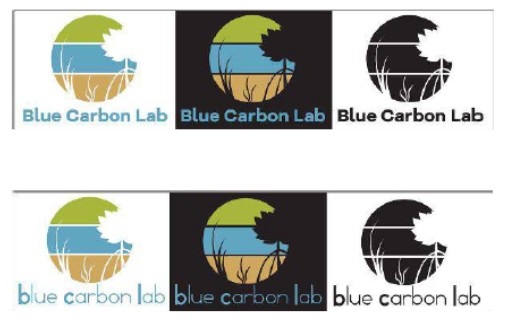
47 In late 2015, and after Prof Macreadie had entered into his contract of employment but a few months before he commenced employment at Deakin on 2 February 2016, Mr Tackett provided Prof Macreadie with examples for concepts for logos that the Blue Carbon Lab could use, as well as website designs that Mr Tackett had completed for other clients. By around 15 December 2015, an updated version of the Blue Carbon Lab website had been launched, and Mr Tackett had designed a series of logos in different colour and font options to which Prof Macreadie referred as the “Original Logo” –
48 Prof Macreadie stated in his affidavit that the vast majority of brand development costs for the Blue Carbon Lab had come from his personal resources, being money and time, and from external funders which he had secured and whose funds were administered by the relevant host university, being UTS, and later Deakin. This characterisation of the position by Prof Macreadie requires elaboration and qualification.
49 As I have mentioned, Prof Macreadie’s employment by Deakin commenced on 2 February 2016. From inception, Deakin played an active role in the way that the lab was marketed and branded. On 1 February 2016, Mr Raybould, whose title was “Deakin Research Communications”, emailed Prof Astheimer, Prof Macreadie and Mr Trevor Day, who was the Executive Dean at Deakin, regarding a discussion that he had had with Prof Macreadie concerning the website and branding for the Blue Carbon Lab. In his email, Mr Raybould stated that the lab’s branding lacked “consistent terminology to credit Deakin’s connection” and noted his desire to “adopt some common language” that could be applied to branding for all similar research groups across Deakin. Mr Raybould’s email concluded with the suggestion that the phrase “A Deakin idea” be used and attached a suggestion for the logo and a suggested footer for the website.
50 On 2 February 2016, Prof Macreadie forwarded Mr Raybould’s email to Mr Tackett and asked him to add a Deakin “footer” to the Blue Carbon Lab website and to add the phrase “A Deakin idea” below the Blue Carbon Lab logo. The Blue Carbon Lab logo and the “A DEAKIN IDEA” footer were as follows, which were substantially in accordance with Mr Raybould’s suggestions –

51 On 20 February 2016, Mr Tackett sent an invoice to Prof Macreadie in the sum of $4,600 for his work on the website development and logo design. On 28 February 2016, Prof Macreadie forwarded the invoice to the Finance Officer at the School of Life and Environment Sciences at Deakin and requested payment from a specified account. The account that Prof Macreadie specified was an internal account administered by Deakin for what he described in evidence as the Blue Carbon Lab’s Strategic Growth Fund. Prof Macreadie stated that this account held profits or margins for completed projects to serve as a “slush fund” for the lab. By this, Prof Macreadie meant that the funds booked to that account were used to pay for anything that could not be directly charged to clients, such as conferences, marketing and advertising expenses, and development costs. On 29 February 2016, the relevant finance officer at Deakin requested Mr Tackett to update the invoice so that it was addressed to Deakin. Mr Tackett then sent an updated invoice addressed to Deakin which it paid about a week later.
52 In support of his position that the payment to Mr Tackett had nonetheless come from his own resources, Prof Macreadie gave evidence that around $70,000 in funding had been moved from his UTS account to Deakin and attempted to maintain that the payment to Mr Tackett therefore did not come from a Deakin source. However, when pressed he clarified that he was not suggesting that the payment made by Deakin was paid from his personal funds and accepted that in expending funds Deakin had to do so solely for the purposes of the University’s operations. In further support of his position that he had contributed his own resources, Prof Macreadie emphasised that Mr Tackett was the partner of one of his colleagues and claimed that Mr Tackett had not charged for all his time, and that he had charged “mates rates”. However, when pressed in cross-examination Prof Macreadie accepted that he had no real basis for estimating how much time Mr Tackett had spent on the work.
53 Mr Tackett invoiced Deakin for other work in 2016. However, not all of Mr Tackett’s fees in 2016 were met by Deakin. In August 2016 Prof Macreadie paid Mr Tackett directly the sum of $1,040 for “Marketing BCL”. This sum corresponded to an invoice sent by Mr Tackett dated 12 August 2016 for work in relation to layouts for business cards, PowerPoint presentations, brochures, stationery, and letterhead.
54 Between 2020 and 2023, Mr Tackett issued several invoices addressed to Deakin for annual maintenance of the Blue Carbon Lab website. These invoices were paid by Deakin. In addition, between February 2020 and January 2024 Deakin paid other invoices associated with the website, including annual renewals and registration fees.
55 Deakin also paid other expenses associated with the internet presence of the Blue Carbon Lab. For example, in June 2022 a fee in the sum of $557.70 for the licensing of images taken by a professional photographer which Prof Macreadie decided to purchase for use in reports and social media posts was invoiced to the Blue Carbon Lab at Deakin.
The 2022 design work
56 After the commencement of Prof Macreadie’s employment in February 2016, the Blue Carbon Lab website deployed the branding to which I referred at [50] above, which was the green, blue, and orange logo with the text “Blue Carbon Lab” in focus and smaller text stating “A DEAKIN IDEA” below it. At the bottom of the webpage, the Deakin banner with “A DEAKIN IDEA” and the standard Deakin University logo were present. The website also gave Deakin’s address as the address for the Blue Carbon Lab, and stated –
The Blue Carbon Lab is an Australian research group based at Deakin University that specialises in devising ways to maximise blue carbon gains and minimise blue carbon losses.
57 In May 2022, Maria Palacios, who was employed by Deakin and who worked with Prof Macreadie, contacted Molly Patton of “Miscible Co” in relation to communication strategies for the Blue Carbon Lab. This led to a service agreement being entered into between Deakin and Ms Patton that was organised by Dr Melissa Wartman of the Blue Carbon Lab in consultation with Prof Macreadie. Ms Patton issued invoices for her work between June and October 2022 in the total sum of $7,447. Dr Wartman forwarded the invoices to the relevant finance department at Deakin for payment, and they were paid by Deakin.
58 The initial work undertaken by Ms Patton in June 2022 included the development of guidelines for the Blue Carbon Lab logo using its existing colour palette and including the words, “A DEAKIN IDEA”. Subsequently, in September 2022 Ms Patton presented “Brand Guidelines” for the Blue Carbon Lab. Under the heading “Deakin Style Guide” the Brand Guidelines stated –
Blue Carbon Lab is a research group of Deakin university, and as such is governed by the Deakin masterbrand style guide.
This means that all branded collateral should be guided by this style guide in use of Deakin brand shapes and use of Deakin Worldly font.
The only differentiation between Blue Carbon Lab and the Deakin Masterbrand style is that Blue Carbon Lab has its own logo, and its own colour palette.
Please refer to the Style Guide Hub on Assetbank for further detail.
59 On page 6 the Brand Guidelines under the heading “Blue Carbon Lab Logo” the document set out a colour logo and a reverse logo as follows –
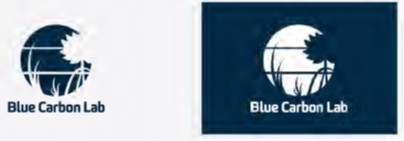
60 Underneath the logos on page 6 the Brand Guidelines stated –
Correct use and application
For all situations going forward, the Blue Carbon Lab logo is to appear as a single, solid fill colour; either the new Primary Blue, or white depending on the context of the application.
Any deviation from this is considered incorrect use, with the exception of social media profile images or other circumstances where the dimensions or scale requirements do not allow the full logo to be presented as intended.
Note
The Deakin logo must be used on all Blue Carbon Lab collateral as well as the Blue Carbon Lab logo in order to maintain connection to the master brand. See examples for usage.
In some instances, like when used in website headers, email signatures, brochure back covers, etc it should be locked up with the Blue Carbon Lab logo in a set scale and format – see next page for details.
(Emphasis added.)
61 On page 7 of the Brand Guidelines under the heading “Blue Carbon Lab + Deakin Lockup”, and the subheading “Correct use and application”, the Brand Guidelines stated –
The Deakin logo must be used on all Blue Carbon Lab collateral, and in some instances, like when used in website headers, email signatures, brochure back covers, etc it should be locked up with the Blue Carbon Lab logo in a set scale and format.
In these instances the Deakin logo MUST be the same height as the Blue Carbon Lab logo – including text. On white backgrounds the logo with a black border is used to maintain logo integrity.
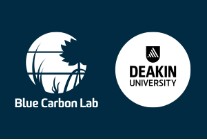
62 The Brand Guidelines then set out both a colour logo lockup and a reverse logo lockup as follows –

63 In October 2022, Ms Patton was involved in the preparation of a draft prospectus for the Blue Carbon Lab and the finalisation of a design and digital strategy which related to email, social media, and its website to which Prof Macreadie and Dr Wartmann were privy. The draft prospectus referred to “Deakin University’s Blue Carbon Lab” and included on its cover adjacent logos of the Blue Carbon Lab and Deakin University, although the Blue Carbon Lab logo retained the words “A DEAKIN IDEA”. This was consistent with the logos used on the email signature blocks of Prof Macreadie and Dr Wartman at this time, which had the following logo that was developed using the services of Ms Patton –
64 In November 2022, staff at Deakin reviewed a draft contract with BHP, which involved a payment to Deakin of just over $5.5 million to support a research program in which the Blue Carbon Lab was involved. One of the persons to whom the contract was sent for review questioned whether the branding of Blue Carbon Lab, and the inclusion of “A Deakin Idea” was correct, and whether Deakin University should be bannered underneath. The response from the Manager, Research marketing and Communications, was that the “A DEAKIN IDEA” branding was out of date, and that the logo used the incorrect font. On 14 November 2022, Matt Sabet Collins, the Head of Creative, Research Marketing and Communications at Deakin, circulated by email – including to Prof Macreadie – the updated logo options, which included the following lock up logos –
65 This pair of logos appear to be the same as those that were included in the Brand Guidelines that were prepared by Ms Patton in October 2022.
66 To complete the picture in relation to Ms Patton, by a copyright assignment deed dated 21 February 2025 Ms Patton purported to assign to Deakin the following works that were set out in the schedule –
67 I note that Ms Patton was misdescribed in the deed as the “Assignee” and that Deakin was misdescribed as the “Assignor”, but the intention is clear enough from the recitals in the deed and the objective surrounding context.
68 Prof Macreadie stated at [71] of his affidavit that Deakin itself had no direct involvement in the branding or maintenance of the Blue Carbon Lab brand. I do not accept this evidence. First, it does not take account of the involvement of Deakin from the outset in ensuring that the lab’s branding was associated with Deakin and its ongoing involvement in monitoring the use of the branding and logos. Secondly, it overlooks the fact that Prof Macreadie and many other persons who were involved with the lab were involved as employees or agents of Deakin. Thirdly, it overlooks the specific work of Ms Patton of Miscible Co in relation to a Deakin style guide prepared specifically in relation to the Blue Carbon Lab to which I referred at [57]–[63], which was undertaken pursuant to a written service agreement with Deakin and whose fees were paid by Deakin. Fourthly, it overlooks the fact that from 2016 onwards Deakin paid for much of the maintenance of the Blue Carbon Lab website.
The contents of the Blue Carbon Lab website and social media accounts
69 Prof Macreadie stated at [63] of his affidavit that he has always controlled and administered the Blue Carbon Lab website and associated social media pages. I do not understand this evidence to mean that Prof Macreadie was the only individual who managed and composed the content that was published, because at [64] Prof Macreadie added that he had appointed “members of my team” to manage aspects of the website and social media pages. He continued –
For example, I have for many years employed a science communicator who is responsible for outreach including on digital platforms.
70 This statement requires clarification. In cross-examination Prof Macreadie, while initially stating that he had employed Dr Maria Palacios as a science communicator and that he had won funding for Dr Palacios’s position, then accepted that Deakin had administered the funding, Deakin had signed the contract for the funding, and that Deakin had employed Dr Palacios who was now employed by RMIT.
71 As I have mentioned, the blog posts on the archived copy of the website from May 2015 related to Deakin projects and activities. Prof Macreadie accepted in cross-examination that the lab members referred to in the blog posts, being Paul Carnell and Carolyn Ewers, were at Deakin at the relevant time and that the work that was described in each of the eight blog posts was either a project being undertaken by Deakin or the activities of students and staff at Deakin.
72 In addition, Prof Macreadie accepted in cross-examination that when the website was redeveloped the work that he undertook was in his capacity as an honorary fellow at Deakin. Prof Macreadie also accepted there were contributions to the content made by two other Deakin employees with Prof Macreadie adding that those contributions were under his management. To the extent that Mr Tackett contributed to the graphic design for the redevelopment of the website, his fees were paid by Deakin at Prof Macreadie’s request. Prof Macreadie denied that the website was going to be a Deakin website. However, I find that at the time the website was redeveloped in January 2016 it was in contemplation of Prof Macreadie commencing full-time employment at Deakin on 2 February 2016 pursuant to the contract of employment that had been entered into a year earlier. Prof Macreadie accepted that the website was going to be used to promote the research that would be conducted at Deakin. That was consistent with the reference to “Deakin’s recently formed Blue Carbon Lab”, the hyperlink to the website, and the other references to Deakin in the proposal for funding document that Prof Macreadie prepared in January 2016 to which I referred at [33] above. I also find that the website was maintained by Prof Macreadie as an employee of Deakin, that it promoted the work that was being undertaken by Deakin, and that Deakin funded the maintenance of the website.
73 Prof Macreadie accepted that in the period from February 2016 until his departure in May 2024 articles that were published on the Blue Carbon Lab website were written by a range of different employees within the Blue Carbon Lab group. Those Deakin employees included the science communicator, Dr Palacios, to whom I referred at [70] above.
74 Pages from the Blue Carbon Lab website saved by the Wayback Machine (archive.org) between April 2016 and July 2024 convey the unmistakeable impression that the Blue Carbon Lab was part of Deakin. Screenshots of captures of the Blue Carbon Lab website for this period that were in evidence were dated 13 March 2016, 3 April 2016, 1 October 2016, 3 October 2016, 2 October 2017, 13 October 2017, 7 March 2018, 28 October 2018, 2 November 2018, 7 March 2019, 19 October 2019, 21 October 2019, 28 October 2019, 27 October 2020, 1 November 2020, 30 April 2021, 16 May 2021, 18 December 2021, 2 July 2022, 8 July 2022, 31 January 2023, 3 June 2023, 3 January 2024, 20 January 2024, 1 July 2024, 4 July 2024, and 7 August 2024. They show a consistent and prominent association between the Blue Carbon Lab and Deakin. The web pages did so by words of express association, by their references to Deakin’s Burwood and Queenscliff campuses as the locations of the Blue Carbon Lab, by the use of the words “A DEAKIN IDEA” within the logo, and on several pages from 21 October 2019 onwards the distinct use of Deakin’s own logo and reference to its credentials as a university. One of the web pages, dated 21 October 2019, stated under the heading “Our History” and above a box dedicated to the credentials of Deakin and containing the Deakin logo –
The Blue Carbon Lab was funded [sic] in January 2016 by A/Prof Peter Macreadie. The lab sits within the School of Life and Environmental Sciences (LES) and the Faculty of Science and the Built Environment (SEBE) at Deakin University, Australia.
(Bold in original.)
75 The above statement accords with a statement that Prof Macreadie made in a draft email dated 24 April 2024 that he prepared upon his departure from Deakin for circulation by Janine McBurnie of Deakin under the subject line, “Advising clients of my departure”. The email that Prof Macreadie prepared was not sent to his colleagues in the same terms that he had drafted. In the draft Prof Macreadie stated, inter alia –
Peter joined Deakin University in 2016, where he founded the BCL, which has now grown to 40 members. BCL’s mission has been to tackle major global challenges facing people and the planet.
76 Deakin also adduced evidence of screenshots of Blue Carbon Lab social media pages retrieved on 29 November 2024, which was about six months after Prof Macreadie left Deakin. Many of the pages depicted the Blue Carbon Lab logo sitting adjacent to the Deakin logo. Whether those pages had been recently posted is not clear, but they are sufficient to draw an inference that there were instances where the Blue Carbon Lab had been associated with Deakin on its Facebook, LinkedIn, and X pages.
Media releases
77 Deakin adduced evidence of media releases that it had published between June 2018 and December 2022 in which it referred to Deakin’s Blue Carbon Lab. The references included –
(a) on 25 June 2018 –
“Deakin study shows Vic inland wetlands storing $6 billion in carbon stocks”; and
“The tally, which came to three million tons of CO each year, was gathered by researchers from the Deakin School of Life and Environmental Sciences’ Blue Carbon Lab, and will increase understanding of how the environment helps to regulate greenhouse gas emissions” and
(b) on 18 April 2019 –
“Deakin-led Blue Carbon mapping to help fight to save Great Barrier Reef”; and
“A ground-breaking project, led by Deakin University, will soon begin mapping Queensland’s blue carbon resources to provide scientists with a new weapon in the fight to help save the Great Barrier Reef.
Deakin Associate Professor in Marine Science Peter Macreadie, Director of the University’s Blue Carbon Lab, said the project, funded by the Queensland Government’s Land Restoration Fund, will reveal for the first time the full scale of the State’s blue carbon farming opportunities”;
(c) on 5 September 2019 –
“World experts ask big blue carbon questions in Deakin study”; and
“Deakin University’s Blue Carbon Lab has set the agenda for future research into blue carbon with an international study that poses the top 10 questions for the emerging area of marine science”;
(d) on 26 February 2021 –
“Deakin University’s Blue Carbon Lab has received a Premier’s Sustainability Award for its HSBC Blue Carbon Citizen Science Program in 2020, in the Education category”;
(e) on 10 May 2022 –
“Deakin continues HSBC partnership with funding for new project”; and
“Deakin University’s Blue Carbon Lab is continuing its relationship with HSBC, with confirmation of funding for a new project”;
(f) on 19 December 2022 –
“[The Centre for Marine Science] will include Deakin’s highly successful Blue Carbon Lab, which offers innovative research solutions for helping to mitigate climate change through aquatic environments”;
(g) on 27 March 2023 –
“Researchers at Deakin University’s Blue Carbon Lab have commenced trialling the use of biodegradable structures to enhance the growth and survival of coastal wetland species, planted as part of restoration work in Port Phillip Bay and Western Port Bay”;
(h) on 24 April 2023 –
“Deakin’s Blue Carbon Lab recognised on national scale for climate change research”; and
“Researchers from Deakin University’s Blue Carbon Lab have been recognised for their work realising the potential for oceans and coasts to mitigate climate change on a global scale”;
(i) on 2 May 2023 –
“Deakin to launch ambitious nature-based solutions to climate change”; and
“Deakin University’s Blue Carbon Lab is set to begin ground-breaking research on nature-based solutions to climate change across Australia”.
Deakin and the Blue Carbon Lab in the media
78 Deakin adduced evidence of a bundle of 15 online publications, including some in the mainstream media, spanning the period February 2017 to April 2024 which referred in terms to “Deakin University’s Blue Carbon Lab” or which otherwise associated Deakin with blue carbon research undertaken by the lab. Two of the publications were by BHP and referred to BHP funding research projects undertaken by the “Deakin University Blue Carbon Lab”. Other publications referred to the funding of research projects provided by Chevron undertaken by “Deakin University’s Blue Carbon Lab”.
Other matters
79 Prof Macreadie gave evidence in cross-examination that during his employment at Deakin he and his colleagues presented at various conferences. He said that in conducting those conferences they would usually wear Blue Carbon Lab hats and t-shirts. In one of the online publications referred to in [78] above, being an article in The Guardian dated 3 February 2017, there is a colour photograph that includes Prof Macreadie wearing a blue cap bearing prominently the word “DEAKIN” and a shirt with a Blue Carbon Lab logo on the front and the words “Blue Carbon Lab” on the right hand sleeve.
80 There was one point in Prof Macreadie’s cross-examination where an academic article that referred to the Blue Carbon Lab was put to him as an example of members of the lab promoting the lab in that way. Prof Macreadie stated in response that the reference to the Blue Carbon Lab in the article was very uncommon, that a few articles had “slipped through”, and that they were not allowed to put the lab name in the articles because the Blue Carbon Lab was “not an official Deakin entity”. Whatever that means, it is difficult to reconcile that evidence with the involvement of Deakin in developing the logos, including the placement of the logo on a BHP contract to which I will refer later, and in referring to “Deakin University’s Blue Carbon Lab” in the media releases that it issued.
81 Prof Macreadie said in evidence that he promoted his research group by reference to the Deakin name because “[w]e were required to co-brand with the university, and it was also good diplomacy”. I will address the relevance of that evidence in due course.
Funding
82 Prof Macreadie gave evidence of funding received under the name “Blue Carbon Lab” for projects from 2014 and extending into 2027. The projects were 87 in number and were set out in a table annexed to Prof Macreadie’s affidavit. Most of the projects covered the period from 2016 in which Prof Macreadie was employed by Deakin. Some of the earlier projects were in the period in which Prof Macreadie was an honorary fellow of Deakin and the table indicates that Deakin itself was a source of funding for three of the pre-2016 projects. Two other pre-2016 projects were the subject of written agreements between Deakin and government authorities that were in evidence. Neither agreement referred to the Blue Carbon Lab.
83 The table nominated Prof Macreadie as an investigator in almost all instances, but he was not always the lead investigator. There are many instances where other evidence shows that the co-investigators were also employed or otherwise engaged by Deakin. That evidence includes Prof Macreadie’s evidence in cross-examination where he identified people within Deakin who worked with him on projects when he was an honorary fellow. In cross-examination Prof Macreadie was taken through a number of activities that were referred to in the blog posts for the earliest archived copy of the website for the Blue Carbon Lab from 29 May 2015 to which I referred earlier and he agreed that all eight posts related to either a project being done by Deakin or the activities of students and staff at Deakin.
84 The sources of the funding identified in the table varied between commercial interests, government, charitable or public interest entities, and Deakin itself. Some of the funding provided by commercial interests such as BHP and Chevron was very significant. For instance, BHP contributed funding in sums of $5,600,000, $991,078, $710,500 and $5,540,000 for the period 2022 to 2027. Chevron was a source of $2,000,000 in funding for a project spanning 2022 to 2026.
85 Evidence was adduced of the financial arrangements for the Blue Carbon Lab, some aspects of which I have already addressed. I accept the evidence of Prof Clarke that Deakin controlled the financial arrangements. That evidence was not challenged in cross-examination. The evidence accords with the legal relationship between Deakin and Prof Macreadie and staff working with him as being one of employer and employee or principal and contractor. It accords with the fact that Deakin was the contracting party for the research contracts to which I refer below. It accords with Deakin’s policies in the form of a guidance sheet titled “Research Group Support and Development Funds” dated 4 February 2017 that was in evidence and which related to the internal treatment of external funding. That guidance sheet stated –
Please note that funding held in Deakin’s financial accounts are deemed to be the funds of Deakin University. This removes any doubt on the nature of funds and the risk that it is viewed as personal income and subject to personal taxation provisions.
…
Deakin University requires that external funds received from externally funded project margins and other sources to be collected by Faculties/Institutes and transferred to group level “Research Group Support and Development Fund” accounts (Fund Source 29).
86 There was a tendency for Prof Macreadie in his affidavit evidence to regard the funding that was attracted as his funding that was received and held by Deakin as if it was some sort of administrator or stakeholder, hence his reference in [59] of his affidavit to funds that he had secured being administered by UTS and then Deakin as a “host” university. Whatever may have been the position with UTS and Deakin prior to 2016, I do not accept that characterisation in relation to Deakin following the commencement of his employment in 2016. The Blue Carbon Lab was not an entity with any legal status. At all relevant times from 2016, it was a research group within Deakin University that was headed by Prof Macreadie who was an employee of Deakin and who had an express contractual obligation while his employment agreement remained on foot to act in the utmost good faith towards Deakin. In cross-examination, Prof Macreadie accepted that as an employee of Deakin he had responsibilities for bringing in funding to Deakin for the conduct of research in relation to blue carbon capture and that all of the external funding that came in for the work that was being conducted by the Blue Carbon Lab group was paid to and received by Deakin.
87 As I have mentioned, at the time Prof Macreadie resigned his employment the lab had 40 members. The people working under the supervision of Prof Macreadie included a mixture of PhD students, research assistants, and technicians who were on short term, part time, or casual employment agreements, or were engaged on a contract basis by Deakin.
88 The Blue Carbon Lab received funding from internal sources, that is directly from Deakin, and also from external sources. In relation to internal funding, Deakin provided the sum of $649,025.79 in the period 2014 to 2019, and the sum of $1,017,455.75 in the years 2019 to 2024. In addition, Deakin underwrote expenses from the Strategic Growth account in the sum of $486,076.65 in the years 2015 to 2019, and $3,082,961.58 in the years 2019 to 2014. The fact that 2019 is included in both periods is explained by the fact that Deakin changed its financial data systems during the 2019 year, and the reports for the two identified periods were obtained from separate systems.
89 Between 2014 and 2024 the lab attracted about $30 million in external funding for Deakin. This included some relatively small amounts in 2014 and 2015 when Prof Macreadie was an honorary fellow, and some much more substantial amounts in the years 2016 to 2024 when Prof Macreadie was an employed staff member. In cross-examination, Prof Macreadie suggested that the external funding was more like $40 million, and said that he was responsible for bringing it in.
90 The funding was controlled and administered by Deakin. Money received by or on behalf of Deakin was required to be applied “solely for the objects or purposes of the University”: Deakin University Act, s 44. In relation to research undertakings for external parties, Deakin was the contracting party under the relevant agreements. Prof Clarke produced by way of illustration two written agreements involving blue carbon research that were entered into by Deakin and which were executed by Dr Greg Pullen, whose title was “Senior Commercial Manager Deakin Research Commercial”. In cross-examination, Prof Macreadie accepted that he would not have obtained approval from Deakin to allocate funding if it did not meet the University’s expenditure guidelines.
The BHP contract
91 Although not produced in evidence, I find on the basis of inferences that arise from the internal Deakin email communications passing in November 2022 that the contract documentation relating to the research funding from BHP of over $5.5 million bore the names and logos of Deakin and the Blue Carbon Lab in combination.
The reputation attaching to the Blue Carbon Lab
92 There was no real issue in the proceeding that the name Blue Carbon Lab and the marks had contributed to the generation of a valuable reputation. The question that I will later consider is the ownership of the reputation.
93 In relation to the existence of the reputation the starting point is that the respondents admitted in [20] of their defence that there was goodwill and reputation associated with the Blue Carbon Lab name, marks, website, and social media pages. In opening the case at trial senior counsel for the respondents referred to the success of the Blue Carbon Lab as being, essentially, common ground. The magnitude of external funding for projects which Deakin received speaks to the goodwill and reputation of the Blue Carbon Lab. Prof Macreadie agreed that throughout the majority of the time he was at Deakin the Blue Carbon Lab website carried the Deakin University branding. The continued and persistent use of the name and marks in association with the Deakin name and its logo during the course of Prof Macreadie’s employment by Deakin supports the inference that there had developed substantial goodwill and reputation. The fact that Prof Macreadie sought to incorporate the second respondent under the name “Blue Carbon Lab Pty Ltd” and made the trade mark applications gives further support to the conclusion that substantial goodwill attaches to the name and marks. In cross-examination Prof Macreadie accepted that by the time he left Deakin in 2024, a valuable reputation had been developed for the Blue Carbon Lab name within the environmental research field in Australia.
The second respondent’s trade mark applications
94 On 13 February 2023, Prof Macreadie sent an email to Deakin’s Senior Manager of Business Development and Commercial seeking advice on trade mark protection for the Blue Carbon Lab logo and brand name. Prof Macreadie gave evidence that as far as he could remember the enquiry was prompted by what he considered to be a phishing email suggesting that a lab with the same name was being created in China. Prof Macreadie stated in his affidavit that it was his expectation that the trade mark registration process would be administered by Deakin but that he, as lab head, would be the trade mark applicant. There were some subsequent email exchanges in which Prof Macreadie was informed that a solicitor had been assigned to the matter and which requested some more information. Prof Macreadie responded to the request for information and said that to the best of his recollection he never heard back from Deakin’s legal team.
95 About five weeks later, on 21 March 2023, Prof Macreadie incorporated the second respondent and paid the associated fees. As I have mentioned, Prof Macreadie is the sole director of the second respondent, and his wife is the sole shareholder. Deakin claims that it did not authorise the incorporation of the second respondent and that this act was beyond the terms of Prof Macreadie’s employment with Deakin.
96 At some time in 2013 Prof Macreadie submitted a formal proposal to establish a separate entity from the Blue Carbon Lab at Deakin. The proposal was rejected in a formal response that was signed by Professor Nick Birbilis and Ross Mahon of Deakin which was sent to Prof Macreadie on 1 August 2023. The proposal was described in the response as follows –
Current Request
Professor Peter Macreadie has requested that Deakin Research Innovations undertake a review of the Blue Carbon Lab (BCL). He is seeking a new entity to work in collaboration with BCL which can extend the work along the blue carbon value chain. In Professor Macreadie’s preferred future state, BCL will continue to focus on the research and develop innovative solutions, while the new entity would focus on consulting and technical services. Professor Macreadie, who would like to lead the new entity with full operational autonomy and sees the benefits including career progression for current BCL staff.
97 Professor Macreadie stated in his affidavit that, with effect from 9 August 2023, he assigned the Blue Carbon Lab trade marks from his own name to the second respondent. No instrument of assignment was in evidence. When he was pressed in cross-examination in relation to the purported assignment Prof Macreadie said that he did not recall what he did on 9 August 2023. I am not satisfied that Prof Macreadie understood what he deposed to in his affidavit in relation to the claim that he assigned the trade marks to the second respondent. Quite possibly, he deposed to a legal conclusion brought about because as its sole director he had arranged for the trade mark applications to be filed on behalf of the second respondent.
98 On 10 August 2023, the second respondent filed trade mark application 2376679 in relation to the word mark “Blue Carbon Lab” for various scientific research and advisory services in class 42, and by application 2376685 applied for a logo mark in class 42 in the following form and which, as I noted at [9] was subsequently registered on 19 March 2024 with a priority date of 10 August 2023 –

99 The registered logo mark appears to be in substantially the same form as the silhouette logo that was set out in the Brand Guidelines that were developed by Deakin using the services of Ms Patton under her agreement with Deakin in 2022 but without the words, “Blue Carbon Lab”. The extract from the Register does not disclose that the logo was registered with any colour limitation: see Trade Marks Act, s 70. The respondents claim that the logo shape was originally conceived by Mr Tackett shortly before Prof Macreadie commenced his employment at Deakin.
100 Prof Macreadie accepted in cross-examination that he arranged for the second respondent to file the applications to secure the logo and the word mark for the second respondent, and that they would position the second respondent to be able to provide the sorts of related research services that he had previously proposed that Deakin might provide through a separate entity. Prof Macreadie was asked whether he told anyone at Deakin that he had taken this step. Initially, he stated that he believed that he did. He claimed that “there’s 300,000 emails” and that Mr Mahon, Ashley Bowen, and Prof Birbilis of Deakin “would know about that”. When asked to clarify whether his evidence was that those people knew that his company had applied to have Blue Carbon Lab registered as a trade mark, he said that he did not know for certain and that he did not know if they knew. Prof Macreadie then said that he discussed the matter with Mr Bowen, who was a member of Deakin’s legal team, and that he had discussions with Michelle Xu, with whom he said he had discussed his interest in establishing a separate company, but then immediately added, “I don’t know. I don’t know.”, before stating that he did not know whether they knew.
101 I do not accept any suggestion by Prof Macreadie that he informed anybody with apparent authority at Deakin that he proposed to have the second respondent apply to register the trade marks or that he had done so. Prof Clarke at [77] of his affidavit squarely raised the claim that Prof Macreadie caused the second respondent to apply for registration of the trade marks during the course of his employment at Deakin without the knowledge, authorisation, or instruction of Deakin. Prof Macreadie addressed the fact that he had effected the trade mark applications at [77] of his affidavit, stating only that –
I filed the trade mark applications in order to protect the goodwill that I had accrued in connection with the activities undertaken by the lab continuously since 2014.
102 Prof Macreadie did not in his affidavit deny that he had filed the trade mark applications without the knowledge of Deakin, and his attempt to introduce uncertainty into the issue in the course of his cross-examination was unimpressive. I find that Prof Macreadie arranged for the registration of the trade marks on behalf of the second respondent during the course of his employment at Deakin without the knowledge, authorisation, or instruction of Deakin.
103 In relation to the incorporation of the second respondent under the name “Blue Carbon Lab Pty Ltd”, Prof Macreadie gave no evidence in his affidavit that he had disclosed that proposal to anybody else at Deakin. In cross-examination he sought to convey the impression that the incorporation of the second respondent was something that he had raised with Prof Birbilis, attributing to him a statement, “If you want to go ahead with the company that’s up to you”. Prof Macreadie explained, “at this point … my understanding was that Deakin had no proprietary interest in the brand that I had owned and created throughout my term at Deakin, eight years”. Later in the cross-examination Prof Macreadie stated that he did not recall telling anyone at Deakin about his incorporation of the second respondent. In re-examination Prof Macreadie gave an expansive answer at T104/21–35 in relation to whether the incorporation of the second respondent occurred with the knowledge of Deakin, but this answer did not amount to cogent evidence on the topic. I was not impressed by Prof Macreadie’s evidence on this issue. If anything, Prof Macreadie’s statement in re-examination at T104/27–28 that, “I didn’t see Deakin having any proprietary interest in it”, supports the conclusion that he did not inform Deakin that he had incorporated a company under the name “Blue Carbon Lab Pty Ltd”. Because of these answers and the absence of any reference to the issue in his affidavit, I am satisfied that Prof Macreadie did not tell any person at Deakin with apparent authority that he proposed to incorporate or had incorporated a company under the name “Blue Carbon Lab Pty Ltd”.
104 On 13 October 2023, the second respondent filed trade mark application 2401900 seeking registration of the following mark –

105 Again, this mark appears to be substantially similar to one of the marks that was set out by Ms Patton in the Brand Guidelines, and is similar to the mark circulated by the email on 14 November 2022 to which I referred at [64] above, but with a different font. Application 2401900 has been accepted but is opposed by Deakin.
106 On 13 May 2024, the second respondent filed trade mark applications 2449909 and 2449912 in relation to the following logo marks –


107 The evidence did not disclose why the second respondent made duplicate applications for registration of what appear to be the same marks, and I will not speculate. The two 13 May 2024 applications have been accepted but are opposed by Deakin. Again, the similarities with the marks that were developed at about the time of Ms Patton’s review are readily apparent, noting again the different font used for the words “Blue Carbon Lab” when compared to the logo that was circulated by Mr Sabet Collins on 14 November 2022.
108 In May 2024, which was a few months prior to the commencement of this proceeding, Mr Tackett and the second respondent executed a copyright assignment agreement under which Mr Tackett purported to assign to the second respondent, with effect from 11 December 2015, the copyright in the Blue Carbon Lab logo in the forms set out in the schedule to the agreement. It is noteworthy that the claimed copyright materials in the schedule to the agreement include a silhouette Blue Carbon Lab logo in the form which was set out in the Brand Guidelines that Ms Patton developed in September 2022 pursuant to her service agreement with Deakin.
Prof Macreadie’s resignation from Deakin and his employment by RMIT
109 On or about 31 August 2023, which was a little over two weeks after the second respondent filed the first two trade mark applications, Prof Macreadie notified Deakin of his intention to move the Blue Carbon Lab to RMIT. Prof Macreadie claimed that Deakin then took steps to hinder the Blue Carbon Lab’s performance, such as by withholding access to the lab’s research funds. This claim must be set against the context that the funding was in the hands of Deakin and that Deakin and not Prof Macreadie was responsible for its receipt and administration.
110 On 28 March 2024, Prof Macreadie emailed Prof Clarke regarding the Blue Carbon Lab team moving to RMIT. The email indicated that most of the Blue Carbon Lab team were moving within the next month. The two Professors engaged in exchanges over the following weeks which discussed appropriate transitional arrangements for the lab between the two universities. In one email on 15 April 2024, Prof Clarke stated that the lab was “a Deakin entity”, which was disputed by Prof Macreadie.
111 On 19 April 2024, Prof Macreadie tendered his resignation to Deakin via email. Prof Macreadie requested that his last day of employment at Deakin be 3 May 2024, which was agreed. On 3 May 2024, Prof Macreadie ceased employment with Deakin.
112 Since May 2024, Prof Macreadie has been employed by RMIT as a Professor within its STEM College. In his current employment, Prof Macreadie continues the work of the Blue Carbon Lab, including through the corporate identity of the second respondent. Prof Macreadie stated in his affidavit that the lab now had 30 members, which in cross-examination Prof Macreadie explained was a reference to his group which was now spread between Deakin and RMIT.
The continuing situation at Deakin
113 Prof Clarke gave affidavit evidence that while some members of staff left Deakin to join Prof Macreadie at RMIT, about nine members of the Blue Carbon Lab remained at Deakin and that those persons continued to use and be affiliated with the Blue Carbon Lab name including by referring to the research group at Deakin as “Blue Carbon Lab”. In cross-examination, Prof Clarke stated that he had checked the position the previous weekend with a colleague at Deakin, Janine McBurnie, and that his understanding was that the number of remaining people at that time was 13, with three of those expected to move shortly. That understanding was clarified by the tender of an email to Prof Clarke from Ms McBurnie dated 6 April 2025 which listed 12 staff, two of whom were shortly to finish their contracts and one of whom was to move to RMIT thereby appearing to correspond to the figure of nine staff in Prof Clarke’s affidavit. The academic profiles for six of the staff members from the Deakin website were also tendered. One of the profiles contained a hyperlink that referred to the Blue Carbon Lab.
114 Prof Clarke annexed to his affidavit a copy of an online academic journal article titled Threatened fauna that use blue carbon ecosystems: A review from Australia, that was published on 16 February 2025. The article named six authors. The lead author was Dr Kristian Bell who was identified in the article as a member of the Deakin Marine Research and Innovation Centre, School of Life and Environmental Sciences, Blue Carbon Lab, Deakin University, Burwood Campus. One of the other five authors was Prof Macreadie, who was identified as a member of the Centre for Nature Positive Solutions, STEM College, School of Science, RMIT University, Melbourne.
The disclaimer
115 In written submissions, counsel for the respondents stated that the respondents were prepared to add a suitable disclaimer to the Blue Carbon Lab website “to the effect that Blue Carbon Lab was housed at Deakin but has now relocated to RMIT”. An extract of the Blue Carbon Lab website that was in evidence stated in the “What we are about” page –
Our History
Blue Carbon Lab was founded in 2014 by Professor Peter Macreadie to understand and respond to the impacts of global change on freshwater, coastal and ocean ecosystems. Between 2016 and 2024, Blue Carbon Lab was located at Deakin where Peter held the position of Professor of Marine Science. In 2024, Blue Carbon Lab relocated to RMIT along with Peter and many of the senior members of the Blue Carbon Lab team. Other team members, industry partners and collaborators are located across Australia and around the world. Blue Carbon Lab is a multi-disciplinary team of approximately 40 researchers offering innovative research solutions to mitigating climate change and enhancing our blue economy.
(Emphasis added.)
The applicant’s submissions
116 In relation to the claims of contravention of the ACL, Deakin submitted that Prof Macreadie and the second respondent proposed to engage in misleading and deceptive conduct in contravention of s 18 of the ACL by using the Blue Carbon Lab name in the market in connection with services that Prof Macreadie now seeks to offer through the second respondent at RMIT.
117 Additionally, Deakin submitted that the registration of the plain logo mark should be cancelled on two grounds: first, under s 62A of the Trade Marks Act on the ground that the second respondent registered the trade mark in bad faith; and second, under s 58 of the Act, on the ground that Prof Macreadie and the second respondent did not own the trade mark.
The applicant’s submissions – claimed contraventions of the Australian Consumer Law
118 In its amended statement of claim Deakin used the following defined terms –
(a) Blue Carbon Logo, which referred to the logo substantially in the form set out under [104] above;
(b) Blue Carbon IP, which referred to the name Blue Carbon Lab and the Blue Carbon Logo;
(c) Blue Carbon trade marks, which referred to –
(i) the word mark the subject of application 2376679 to which I referred at [98] above and which remains under examination;
(ii) the registered logo mark the subject of application 2376685 to which I referred at [98] above;
(iii) the logo mark the subject of application 2401900 to which I referred at [104] above;
(iv) the logo mark the subject of the second application and numbered 244909 to which I referred at [106] above; and
(v) the logo mark the subject of the second application and numbered 244912 to which I referred at [106] above;
(d) Blue Carbon website, which referred to the website at www.bluecarbonlab.org; and
(e) BCL Social Media Pages, which referred to the Blue Carbon Lab Facebook, X, LinkedIn, and Instagram accounts.
119 By [37] of their further amended defence the respondents admitted that since at least about 3 May 2024 the second respondent had used the Blue Carbon IP and the Blue Carbon trade marks on the Blue Carbon website. And by [44] of their further amended defence the respondents admitted that the second respondent had used the Blue Carbon IP, the Blue Carbon trade marks and the Blue Carbon business name on the Blue Carbon website to promote innovative research solutions for helping to mitigate climate change and improve natural capital. Further, the second respondent proposes to continue using the Blue Carbon Lab name and marks, and Prof Macreadie confirmed in cross-examination that it proposes to do so in relation to the provision of all types of environmental research services for a fee.
120 Deakin claimed at [45] of its amended statement of claim that by using the Blue Carbon Lab name and logo, the Blue Carbon Lab trade marks and business name on the Blue Carbon Lab website and social media pages the second respondent represented in trade or commerce that –
(a) the second respondent is the owner of the Blue Carbon IP and the Blue Carbon trade marks;
(b) the second respondent was the owner of the goodwill and reputation associated with the Blue Carbon IP, the Blue Carbon trade marks and, the Blue Carbon website and the BCL Social Media Pages;
(c) the second respondent has the right to use Blue Carbon IP, the Blue Carbon trade marks, the Blue Carbon business name, and the Blue Carbon website and the BCL Social Media Pages; and/or
(d) the second respondent has the sponsorship or approval of or an affiliation with the applicant.
121 The respondents admitted the representations alleged in [45](a)–(c) of the amended statement of claim but denied the representation in (d). The respondents denied that the representations were made in trade or commerce and denied that the representations were false. The respondents denied that there had been any contravention of the ACL and in consequence denied that Prof Macreadie was an accessory to any contravention.
122 Deakin’s primary submission was that it is misleading and deceptive, in contravention of s 18 of the ACL, for Prof Macreadie and the second respondent to offer and provide environmental research services under the Blue Carbon Lab name in competition with Deakin. This submission was put on the basis that the promotion of such services would occur in trade or commerce and would be likely to mislead or deceive members of the public into believing that the provider of the services, being Prof Macreadie and the second respondent, have the sponsorship or approval of, or an affiliation with, Deakin.
123 Deakin submitted that goodwill belonging to Deakin had been generated through the use and promotion of the Blue Carbon Lab name, and to a lesser extent the associated logo. It was submitted that it is misleading, and would be misleading, for the second respondent to use that name for the same type of environmental research services that it is offering and intends to offer. In support of its primary submission, Deakin submitted that the misleading or deceptive effect of the respondents’ conduct occurs because Deakin is directly the owner of all rights in the unregistered Blue Carbon Lab mark, as a result of the lab’s goodwill and its commercial origin at Deakin.
124 It was not in dispute that the Blue Carbon Lab had attained a valuable reputation in the market of environmental research services. Prof Macreadie accepted in cross-examination that this was the position. Deakin accepted that Prof Macreadie had contributed to the establishment of the reputation but submitted that his contribution had been in his capacity as an employee of Deakin, together with the efforts of others engaged by Deakin. Deakin submitted that the lab was a research group that had operated as a type of business within Deakin, bringing in funding for the provision of services in the environmental science and ecology fields. Deakin relied on the fact that the lab was not some separate entity that comprised a physical laboratory or a laboratory with legal personality. Rather, Deakin submitted that the lab was a group of scientists and academics working on particular projects for clients. This was relevant to Deakin’s case because, in Deakin’s submission, the group of people comprising the lab were employees and students of Deakin that were led by Prof Macreadie, also an employee of Deakin.
125 Deakin submitted that the Blue Carbon Lab name generated its goodwill only during the eight years that Prof Macreadie was an employee of Deakin. Deakin submitted that any use of the name prior to this was insubstantial and of little consequence to the lab’s goodwill and the reputation it now holds. Deakin submitted that there was no evidence that in the period before February 2016 the Blue Carbon Lab name had been used to offer or provide research services for any project outside Deakin.
126 Deakin submitted that it has common law trademark rights in the Blue Carbon Lab name, which are sometimes called unregistered trademark rights. In particular, Deakin submitted that such rights are sourced in the goodwill generated by a business and are capable of protection through actions either in the tort of passing off or pursuant to a claimed contravention of the ACL. Deakin drew similarities between an action under s 18 and the tort of passing off, noting that case law concerning the latter has informed the principles relevant to establishing a contravention of s 18. Drawing on these authorities, Deakin submitted that it is immaterial whether the public is aware that Deakin is the true “supplier” of the services in question; rather, the relevant inquiry is whether a consumer seeing the Blue Carbon Lab name would erroneously understand that the services were being offered by the same “business” that previously provided those services.
127 Deakin submitted that it is the use of an unregistered trade mark to attract custom that generates common law rights in the mark. While Deakin accepted that Prof Macreadie had coined the Blue Carbon Lab name in late 2014, Deakin submitted that it was not used as a trade mark prior to Prof Macreadie’s employment commencing with Deakin on 2 February 2016. To the extent that any such use was made prior to this date, Deakin submitted that this occurred by and for Deakin’s benefit. Any use after this date, in Deakin’s submission, was in the course of Prof Macreadie’s employment with Deakin and therefore constituted use by Deakin.
128 Deakin pointed to examples of the promotion of the lab as a Deakin entity from February 2016 onwards to support its claim of ownership of the lab’s goodwill. This included the logo with the phrase “A DEAKIN IDEA”, the lab’s address on its website being Deakin University, the media releases about the lab under Deakin’s name and media articles that referred to the lab as “Deakin’s Blue Carbon Lab”. On this basis, Deakin submitted that the use of the Blue Carbon Lab name suggested to those aware of its brand that any services being promoted under the name were for services provided by the same business for whom that name is a source of goodwill. In other words, the promotion of the Blue Carbon Lab’s services were services provided by Deakin because the reputation and goodwill of the lab were associated with Deakin.
129 Deakin also placed significant reliance upon the manner in which it had operated the Blue Carbon Lab since 2016. This included paying the lab’s expenses, managing external and internal funding that it generated and employing the relevant staff that comprised it. For example, Deakin emphasised that it had paid the invoices issued to it by Mr Tackett in relation to the design of the lab’s logo and the maintenance of its website. Counsel for Deakin submitted that Deakin would only expend funds for its own benefit. Given Deakin was paying for invoices for the design and maintenance of the relevant intellectual property, Deakin submitted that this work was being done for Deakin’s benefit and not for Prof Macreadie’s personal benefit.
130 Regarding funding, Deakin further submitted that it had applied both external and internal funding towards the expenses of the Blue Carbon Lab. Counsel for Deakin remarked that the “Blue Carbon Lab bringing funding into Deakin was Deakin bringing funding into Deakin”. This was because, in its submission, Deakin had entered into all of the relevant funding agreements and supplied the relevant environmental research services in compliance with its contractual obligations. Additionally, to the extent that Prof Macreadie had attracted or assisted with the generation of funding for the lab, Deakin submitted that this was one of his core employment responsibilities. Further, Deakin emphasised that the relevant research services provided by the Blue Carbon Lab were only ever provided by Deakin to external clients: contrary to the manner in which Prof Macreadie tended to convey the situation, the services were not provided by Prof Macreadie personally or in his own name.
131 While Deakin did not rely on any contractual terms to found its claim that it owned the intellectual property in the Blue Carbon Lab, Deakin submitted that statute 9.1 was incorporated into the terms of engagement during Prof Macreadie’s honorary fellowship, as well as his employment terms. As I have noted at [40] above, clause 2 of statute 9.1 provided that all “intellectual property” created by a staff member in the course of their employment (or engagement as an honorary fellow) would be owned by Deakin. The term “intellectual property” in this clause was defined to include all rights relating to “trade marks, service marks and commercial designations, whether or not registrable”. Deakin relied on statute 9.1 as contextual reinforcement to its position that it directly owned the goodwill in the Blue Carbon Lab. Notwithstanding this, Deakin submitted that nothing ultimately turned on statute 9.1 because Deakin’s case was that the relevant intellectual property rights occurred through use and the provision of the Blue Carbon Lab’s services.
The applicant’s submissions – s 62A of the Trade Marks Act – bad faith
132 Deakin submitted that the registration of the plain logo mark should be cancelled pursuant to s 62A of the Trade Marks Act on the ground that the underlying application had been made by the second respondent in bad faith.
133 Deakin submitted that although the conduct in question need not be dishonest, an application to register a trade mark will be made in bad faith when it falls short of standards of acceptable commercial behaviour observed by reasonable and experienced persons in the particular area. Deakin submitted that while the registrant must have subjective knowledge of the relevant matters, the characterisation of the conduct as being in bad faith involves an objective assessment. In applying these principles to the conduct of Prof Macreadie and the second respondent, Deakin pointed to examples of deliberate conduct that it submitted fell short of the standards of acceptable commercial behaviour, including –
(a) Deakin had used the logo for the provision of the Blue Carbon Lab’s services and now Prof Macreadie was proposing to use the same logo for services provided by the second respondent;
(b) Prof Macreadie was concurrently a director of the second respondent and an employee of Deakin;
(c) the registration of the mark was adverse to Deakin’s interests;
(d) the application to register the mark in the name of a third party involved a breach by Prof Macreadie of terms of his employment with Deakin, specifically clauses 4.1.1 to 4.1.3 of the written terms which I set out at [38] above;
(e) the application was inconsistent with Prof Macreadie’s agreement as to the ownership of unregistered trade mark rights;
(f) Prof Macreadie had raised the issue of applying for a trade mark for the logo with Deakin in 2023, but left that decision with Deakin; and
(g) Prof Macreadie was intending to use the mark together with the words “Blue Carbon Lab” which formed part of its name thereby increasing the risk of confusion.
134 Deakin submitted that the second respondent’s conduct in registering the plain logo mark was, in its totality, in bad faith and should result in the cancellation of the registration under s 88 of the Trade Marks Act.
The applicant’s submissions – s 58 of the Trade Marks Act – ownership
135 An alternative ground on which Deakin submitted that the registration of the logo should be cancelled was pursuant to s 58 of the Act, namely that the second respondent did not own the logo mark that was registered. Deakin submitted that it was the first user of a mark that is the “owner” for the purposes of s 58. In developing this submission, Deakin relied upon the overlap of the submissions it had advanced in respect of the misleading and deceptive conduct claim that sought to establish its ownership of the goodwill in the Blue Carbon Lab.
136 Deakin otherwise made further submissions to the effect that Deakin was the first user of the logo as a trade mark, as required by s 58. Deakin maintained its opposition to the respondents’ claim that Prof Macreadie had made personal use of the logo as a trade mark prior to his employment with Deakin. In any event, Deakin submitted that even if it were found that Prof Macreadie had used the mark prior to his employment, Deakin had used the logo from 2016 onwards and Prof Macreadie had abandoned use of the logo from the date he was employed by Deakin in favour of Deakin’s ownership rights.
137 In response to submissions advanced on behalf of the respondents, Deakin submitted that, notwithstanding that use of the logo by Prof Macreadie had occurred in an email that Prof Macreadie had sent on 12 January 2016, the use of the logo at this time was still in preparation for a future use of that logo by Deakin and that the email was being sent for and on behalf of Deakin.
138 On the basis of its claim to ownership and Prof Macreadie’s abandonment, Deakin submitted that the registration of the plain logo mark should be cancelled under s 88(2)(a) of the Act.
The respondents’ submissions
139 I will summarise the respondents’ submissions by topic.
The claimed absence of witnesses
140 The respondents made a submission in writing which had a Jones v Dunkel flavour that was as follows –
a noteworthy feature of the evidence called by Deakin is the absence of any witness involved in:
(a) the proposal and offer of an Honorary Fellowship to Prof. Macreadie;
(b) the proposal and offer of employment to Prof. Macreadie (to the extent that Deakin maintains that this is relevant);
(c) the activities of Blue Carbon Lab and, consequently, how it is perceived in the marketplace (ie its reputation).
141 In opening, senior counsel alluded to the absence of evidence about the reputation of the Blue Carbon Lab, but in closing this was modified to a submission that Deakin had not called evidence on the question that could be tested.
142 It is convenient to address these submissions now. Evidence in relation to topics (a) and (b) would not be material to any real issue in dispute in this proceeding, and the respondents did not develop any submissions to suggest that they were. As to issue (c), the activities of the Blue Carbon Lab are not in substantial dispute, and the best person to give evidence about them was Prof Macreadie. As for the reputation attaching to the name Blue Carbon Lab, that was not in substantial dispute either: see [92] above. As to direct evidence as to how its reputation was perceived in the marketplace, while direct evidence might be relevant, for the reasons I will address later direct evidence was not necessary and I draw no adverse inference from the absence of such evidence.
The respondents’ submissions – claimed contraventions of the Australian Consumer Law
143 The respondents’ primary submission was that the brand of the Blue Carbon Lab, as well as the work it has performed, is associated with Prof Macreadie in the market and therefore Deakin cannot establish the right to exclude Prof Macreadie from use of the Blue Carbon Lab name. In such circumstances, the respondents submitted that it is not misleading or deceptive for Prof Macreadie to use the name because the relevant scientific consumer audience understands the Blue Carbon Lab as being associated with Prof Macreadie, or at least understands it to be a product of both Prof Macreadie and Deakin. The respondents submitted that Deakin had failed to establish that any member of the relevant audience would be misled or deceived by Prof Macreadie continuing to use the Blue Carbon Lab name during his employment with RMIT.
144 Regarding the test to be applied in determining whether the respondents had contravened s 18 of the ACL, the respondents submitted that the test had to be calibrated toward the specific scientific consumers of the Blue Carbon Lab’s services. They submitted that this audience is not “ordinary folks on the street” or everyday “consumers at large” that might be relevant to other cases in which misleading and deceptive conduct is alleged. Rather, the respondents submitted that the relevant audience is “specialised, sophisticated” and “well-informed as to the relevant subject matter”, and includes major corporations, environmental organisations, government departments and fellow academic institutions.
145 Specifically, the respondents submitted that the Court should ask itself how these sophisticated consumers perceive the reputation of the Blue Carbon Lab and whether such consumers would understand from the Blue Carbon Lab name that they are dealing with an entity associated with Deakin. The respondents submitted that Deakin’s case and its use of the concept of goodwill could be alternatively expressed as a case about reputation. In this way, the respondents emphasised that the claim put by Deakin is factual in nature and can be said to turn on what the Blue Carbon Lab’s market reputation is. Noting the sophisticated audience, the respondents submitted that the suggestion that this audience would form an erroneous view that the lab continued to be associated with Deakin is without merit and speculative.
146 In developing its submissions on the reputation of the lab, the respondents pointed to the intrinsic link between Prof Macreadie and the Blue Carbon Lab. This included that a previous emanation of the lab was known as the “Macreadie Lab”, that the lab commenced its life at UTS when Prof Macreadie was employed there, that the “Blue Carbon Lab” name was coined by Prof Macreadie prior to his employment by Deakin and that the lab was, according to the respondents, an extension of Prof Macreadie himself. Indeed, the respondents submitted that the reputation of the lab was “integrally associated” with Prof Macreadie and is “synonymous” with his name in the market. To support this submission, the respondents further submitted that labs of this nature are portable and tied to the individual researchers who establish them – they are not owned by a given academic institution that may house them at a point in time.
147 The respondents accepted that the Blue Carbon Lab had been “housed” at Deakin since Prof Macreadie had been associated with the university. Counsel for the respondents submitted that Prof Macreadie had brought the lab to Deakin to utilise the university as a structure through which the Blue Carbon Lab could enter into transactions with clients to conduct research. This was part of an exploitation of the trade mark that was beneficial both to Prof Macreadie and Deakin, as the lab was bringing research work into Deakin. The respondents submitted that this was the reality in the marketplace: both of the parties, through the housing of the lab at the university, built reputations associated with the Blue Carbon Lab name.
148 Like Deakin, the respondents accepted that the lab itself is not a physical laboratory or separate legal entity, but the respondents characterised it as a group of scientists who were working under Prof Macreadie’s leadership. The respondents submitted that Prof Macreadie was significantly more senior, in terms of professorial rank, to any other individual who worked for the lab. In characterising Prof Macreadie’s role, the respondents emphasised that it was his name and academic reputation that was responsible for the attraction of the significant funding that the lab received during his employment with Deakin.
149 In terms of the branding of the lab, the respondents accepted that Deakin paid the majority of the “modest expenses” associated with the design of the lab’s logo, the maintenance of the lab’s website, renewal of the domain name and other incidentals. However, the respondents submitted that it was Prof Macreadie who had commissioned Mr Tackett to complete the design and had started to use the design before his employment with Deakin commenced. The respondents submitted that the design was largely complete by 11 December 2015 and that Prof Macreadie was using the logo as the footer to his emails by January 2016. In any event, the respondents submitted that, although Deakin had paid for expenses associated with the operation of the lab, any such expenses were covered by the funding that the lab was bringing in, which the respondents submitted was the direct result of Prof Macreadie’s name and reputation.
150 The respondents submitted that the connection between Deakin and Prof Macreadie, in fostering the Blue Carbon Lab, was one of “co-branding”. The respondents submitted that Prof Macreadie had agreed to the co-branding of the lab because Deakin was his academic home at the time, and he thought it was going to be of assistance to him internally within Deakin from a “diplomatic” perspective if he ensured that Deakin was involved. Notwithstanding the co-branding of the lab, the respondents submitted that the Blue Carbon Lab is portable and that it is common in academia that labs or research centres like the Blue Carbon Lab move from institution to institution with the lead academic.
151 In seeking to undermine Deakin’s case, the respondents highlighted what they claimed was its “all or nothing” quality. In particular, it was submitted that Deakin’s case required it to demonstrate that it owned all of the goodwill in the Blue Carbon Lab. The respondents submitted that in order for Deakin to exclude Prof Macreadie from use of the Blue Carbon Lab’s name, it had to demonstrate that Prof Macreadie did not own any of the lab’s goodwill, which it submitted was a significant burden that Deakin had to meet. The respondents submitted that Deakin could not accept the possibility that both Deakin and Prof Macreadie were perceived as sharing ownership of the lab because this would mean that Deakin could not exclude Prof Macreadie. The respondents cited PDP Capital Pty Ltd v Grasshopper Ventures Pty Ltd [2021] FCAFC 128; 285 FCR 598 (PDP Capital) to support an argument that where there are two parties which have an interest in a body of goodwill, neither of those parties can exclude the other or allege misrepresentation by the other in seeking to use the shared goodwill.
152 In responding to Deakin’s claim for total ownership, the respondents pointed to use made by Prof Macreadie of the name prior to his employment with Deakin. The respondents highlighted his use of the lab’s website, bluecarbonlab.org, which was registered by Prof Macreadie in his personal capacity. The respondents also emphasised the lab’s name being coined in October 2014 by Prof Macreadie, after being inspired by work of a colleague, which led to the creation of the lab’s social media channels and launch of an early version of the lab’s website. The respondents submitted that this occurred at the same time that Prof Macreadie briefed Mr Tackett to create the lab’s logo.
153 The respondents were critical of Deakin’s evidentiary case. The respondents submitted that Deakin had not produced any witness evidence that supported its submissions about the misleading or deceptive effect that Prof Macreadie’s use of the Blue Carbon Lab name generated. In particular, the respondents submitted that Deakin did not demonstrate that the respondents’ use of the lab’s name in the relevant marketplace, in the course of Prof Macreadie’s new position at RMIT, would cause anyone to be misled into thinking that the lab was associated with Deakin. In particular, and as I have mentioned, the respondents submitted that Deakin had not adduced witness evidence from individuals who were “in the trade” of the research services provided by the Blue Carbon Lab, or from individuals who were involved in the lab’s operation. For example, the respondents submitted that Deakin’s reliance on the evidence of Prof Clarke was of limited assistance to the Court’s task, given that Prof Clarke was not involved in any of the discussions which led to Prof Macreadie becoming an honorary fellow and later an employee at Deakin, and that Prof Clarke had no involvement with the day-to-day activities of the Blue Carbon Lab. This, in the respondents’ submission, made it difficult for the Court to place itself in the shoes of consumers of the Blue Carbon Lab’s services, which the respondents submitted are specialist and idiosyncratic.
154 To the extent that Deakin relied upon any of the contracts in place between Deakin and Prof Macreadie, the respondents submitted that the terms of these contracts did not bear upon ownership of the intellectual property in the Blue Carbon Lab. Regarding the terms governing Prof Macreadie’s honorary fellowship, the respondents submitted that these were in the form of a brief letter to Prof Macreadie that did not concern intellectual property created by Prof Macreadie or the Blue Carbon Lab. Similarly, the respondents submitted that the Blue Carbon Lab name had been coined, and was being used, prior to the execution of Prof Macreadie’s employment contract with Deakin.
155 To further mitigate any claim of misleading and deceptive conduct, senior counsel for the respondents relied on the disclaimer that I set out at [115] above. Further, the respondents submitted that many people familiar with Prof Macreadie would already be aware that the lab is no longer a Deakin entity. Notwithstanding these current representations made by the respondents, the respondents also submitted that they would be prepared to give further disclaimers to clarify the nature of the services currently being offered by the Blue Carbon Lab at RMIT.
The respondents’ submissions – s 62A of the Trade Marks Act – bad faith
156 In relation to Deakin’s claim under s 62A of the Trade Marks Act, the respondents submitted that, at the time the application was made by Prof Macreadie for registration of the trade mark, he held a legitimate view about his commercial interests in the name of the Blue Carbon Lab. The respondents submitted that even if Prof Macreadie was wrong in holding such a view, his conduct did not amount to bad faith or a departure from the commercial standards that the community is required to adhere to in respect of trademarks.
157 The respondents relied on a statement from Dodds-Streeton J in Fry Consulting Pty Ltd v Sports Warehouse Inc (No 2) [2012] FCA 81; 201 FCR 565 (Fry Consulting) at [166] that “mere negligence, incompetence or a lack of prudence … would not, in themselves, suffice, as the concept of bad faith imports conduct which, irrespective of the form it takes, is of an unscrupulous, underhand or unconscientious character”. The respondents also submitted that this approach had been applied and expanded upon by Bennett J in DC Comics v Cheqout Pty Ltd [2013)] FCA 478; 212 FCR 194 (DC Comics), where it was said that the “question is whether the conduct falls short of the standards of acceptable commercial behaviour observed by reasonable and experienced persons in the particular area”.
The respondents’ submissions – s 58 of the Trade Marks Act – ownership
158 In relation to s 58 of the Trade Marks Act, the respondents submitted that, on the basis that Deakin cannot establish that it is the owner to the exclusion of Prof Macreadie of the Blue Carbon Lab logo, its claim for cancellation of the registration should be rejected. Accordingly, the respondents relied significantly on the submissions they made regarding the misleading and deceptive conduct claim and the ownership and use of the relevant intellectual property in the lab to submit that Deakin had not made out its claim that the second respondent was not the owner so as to engage s 58.
159 The respondents also submitted that it was not open to Deakin to run an alternative submission to what it had pleaded, which was that Prof Macreadie is the owner and therefore the second respondent cannot be. The respondents submitted that a party is not entitled to run an inconsistent case under the Federal Court Rules 2011 (Cth) unless it makes clear that it is a further or alternative pleading. The applicant confirmed that it would not be pursuing this submission.
Consideration
Deakin is the owner of the goodwill
160 A central issue in the proceeding is the ownership of goodwill. The determination of that issue will inform the outcome of other issues. The question of ownership of a trade mark for the purposes of the ground of opposition under s 58 of the Trade Marks Act is a separate matter attracting its own distinct considerations to which I will refer later.
161 The common law recognises goodwill that attaches to a business as an item of property. But there is no property in an unregistered trade mark that is independent of the goodwill that attaches to a business: ConAgra Inc v McCain Foods (Aust) Pty Ltd [1992] FCA 176; 33 FCR 302 at 366 (Gummow J).
162 The existence of goodwill depends upon proof that a business generates and is likely to continue to generate earnings from the use of identifiable assets, locations, people, efficiencies, systems, processes and techniques of the business: Federal Commissioner of Taxation v Murry [1998] HCA 42; 193 CLR 605 (Murry) at [12] (Gaudron, McHugh, Gummow and Hayne JJ). This directs attention to the activities of the business. I consider specialised research skills and know-how that are the product of a combination of people, systems, processes, and techniques of a business as being within the accepted potential sources of goodwill. Names and marks that draw attention to origin and the reputation that attaches to a business for the purpose of bringing in custom may be a source of goodwill: Murry at [27]. But the goodwill is not composed of the names or marks: Murry at [24].
163 Goodwill is not divisible: Murry at [37], [53]. The disposition of an asset that is a source of goodwill might reduce the value of the goodwill, but unless the business itself is sold there is no disposition of goodwill: Murry at [32]. The same reasoning applies to employees. The employees of a business may be a source of goodwill and contribute to the value of the goodwill of a business. However, the departure of employees does not sever the goodwill from the business: Murry at [33], [52].
164 As I noted at the outset, the statutory objects of Deakin under s 5 of the Deakin University Act include, “to utilise or exploit its expertise and resources, whether commercially or otherwise”. To the extent that Deakin engages in commercial activities, its reputation for research and scholarship, the personnel whom it engages, its expertise, its resources, the names and marks under which it conducts those activities, and the locations of its campuses, are all capable separately and in combination of being sources of its goodwill.
165 I am not satisfied that the Blue Carbon Lab was associated with any independent reputation or goodwill that attached to any business conducted by Prof Macreadie prior to February 2016. As Prof Macreadie said in evidence, “we were nothing back then”. The archived page of the website from May 2015 summarised Prof Macreadie’s academic background, and the blog posts described activities undertaken or hosted by other people at Deakin. But they did not describe any activities of a business nature such as the provision of research services on a commercial basis. The two pre-February 2016 social media posts that were in evidence do not add anything. There were two service agreements in evidence in relation to the pre-February 2016 period. In both agreements Deakin was the contracting party and Deakin agreed to provide services to government authorities. Neither agreement referred to the Blue Carbon Lab. To the extent that the service agreements evidence any business undertakings in the pre-February 2016 period, they were undertakings of Deakin. If I am wrong about this, then I find in the alternative that if Prof Macreadie owned any goodwill in the activities of a business known as the Blue Carbon Lab prior to February 2016, then for the reasons that follow it was subsumed by the goodwill that Deakin developed in relation to the lab over the course of the following eight years with the result that it ceased to have any existence that was independent of Deakin’s goodwill.
166 As the factual background demonstrates, Prof Macreadie knew from February 2015 when he entered into his employment agreement that he would be taking up full time employment at Deakin on 2 February 2016. That employment attracted implied obligations of fidelity and the express obligations set out in the written terms, including the obligation of utmost good faith and the terms of statute 9.1 relating to Deakin’s ownership of intellectual property created by a staff member, including trade marks. An unregistered trade mark is not a form of personal property that is independent of the business with which it is associated. But the relevance of the contractual terms is to emphasise the nature of the legal relationship between Prof Macreadie and Deakin over the eight-year period commencing in February 2016, and to demonstrate that there were no contractual terms that conferred any rights or immunities on Prof Macreadie which did not otherwise accrue.
167 In late 2015 Prof Macreadie organised for the Blue Carbon Lab website to be redeveloped and undertook work on the site in his capacity as an honorary fellow at Deakin. I find that he undertook that work in anticipation of the commencement of his full-time employment at Deakin under the terms that had been agreed. Others involved in the redevelopment of the website were employees of Deakin, and at Prof Macreadie’s request the fees for the professional design work by Mr Tackett were paid by Deakin for its benefit. Prof Macreadie’s purpose in redeveloping the website was to promote what he described in his funding proposal as “Deakin’s Blue Carbon Lab”. And that is what occurred. For more than eight years the Blue Carbon Lab was promoted as being a research group of Deakin and as being located at its campuses. This started with the revised presentation of the logo accompanied by the words, “A DEAKIN IDEA” in February 2016 and continued throughout. Through the efforts of Prof Macreadie in his capacity as an employee of Deakin and through the efforts of other Deakin staff and post-graduates, over the following eight years Deakin used the Blue Carbon Lab name and marks and was successful in attracting sizeable commercial funding for projects and services in the blue carbon area which Deakin contracted to provide.
168 I find that the Blue Carbon Lab and the combination of its name, marks, personnel, expertise, resources, academic research work, and the significant contract work on commercial terms that Prof Macreadie accepted that Deakin undertook in relation to blue carbon projects, were sources of Deakin’s goodwill in relation to the provision of services by Deakin on a commercial basis in furtherance of its statutory objects. It is worth reinforcing that the activities that Prof Macreadie and his colleagues undertook under the umbrella of the Blue Carbon Lab at Deakin were undertaken while they were employees or contractors of Deakin, using Deakin’s resources, in furtherance of Deakin’s own objects, and therefore in furtherance of Deakin’s interests. Prof Macreadie and his colleagues were not conducting some business of their own in providing research services on commercial terms under the Blue Carbon Lab name and marks. The sources of the goodwill therefore attached to Deakin and the goodwill was not divisible. The goodwill did not travel with Prof Macreadie to RMIT when he and several of his colleagues left Deakin. Their departure did not sever the goodwill from Deakin’s business, and I find that Prof Macreadie and other personnel will likely remain potential sources of Deakin’s continuing goodwill notwithstanding their departure because goodwill can be developed from sources which no longer exist: Murry at [24]. Moreover, Deakin’s claims are concerned with the proposed trading activities of the second respondent. The second respondent did not ever develop any goodwill in relation to the Blue Carbon Lab name or logo or the research work that it undertook.
169 Prof Macreadie’s defence to the claims rested on a false premise, which I reject above, that he had acquired and then developed his own goodwill to the exclusion of Deakin. Prof Macreadie’s evidence of his perception of co-branding and his purpose of good diplomacy in using the Deakin name to which I referred at [81] do not meet the objective issues that arise in relation to the ACL claims and I reject it as a consideration that is material to the question of ownership of goodwill.
170 In the alternative, Prof Macreadie submitted that this was a case of joint goodwill which Deakin could not assert to the exclusion of Prof Macreadie. That claim is rejected for much the same reasons. The respondents relied on the Full Court’s decision in PDP Capital to support their submission that there was joint goodwill. At [208], Jagot, Nicholas and Burley JJ stated –
In a passing off case when two traders have a reputation in the same or similar names that are concurrently being used “neither of them can be said to be guilty of any misrepresentation. Each represents nothing but the truth, that a particular name or mark is associated with his goods or business”: Habib Bank Ltd v Habib Bank AG Zurich [1981] 1 WLR 1265 at 1275 (Oliver LJ). If in such circumstances there might be confusion that is just “one of the misfortunes which occur in life”, but it is not actionable as a passing off: Marengo v Daily Sketch & Daily Graphic Ltd [1992] FSR 1 at 2 (Lord Greene MR). These observations were approved by the Full Court in Colorado Group Ltd v Strandbags Group Pty Ltd (2007) 164 FCR 506 at [221] (Allsop J, as he then was) [33] and [42] (Kenny and Gyles JJ agreeing with Allsop J.
171 Marengo v Daily Sketch and Daily Graphic Ltd [1992] FSR 1, which was cited by the Full Court, illustrates the principle. The plaintiff was a political cartoonist who signed his drawings with the pseudonym “Kem” which was distinctive of his cartoons. The defendants, who were publishers of a newspaper, published three political cartoons by another cartoonist better known to the public for his sporting cartoons under a signature intended to be “Kim” but without a dot on the “i”. The defendants were held to have made no misrepresentation by publishing under the name “Kim” cartoons of a person who had acquired a reputation and was entitled to sign his cartoons under that name, and that they did not thereby represent that they were the cartoons of the plaintiff.
172 The present proceeding is not an instance of two traders honestly and properly making concurrent use of a common law name or mark for a service business without misrepresenting the origin of the services: cf General Electric Co (of USA) v General Electric Co Ltd [1972] 1 WLR 729 at 743 (Lord Diplock). Rather, the name Blue Carbon Lab was used by Deakin for the purposes of its substantial commercial endeavours in relation to environmental research services which in every instance Deakin contracted to provide. Prof Macreadie was an employee of Deakin and his use of the Blue Carbon Lab name and logo from February 2016 to May 2024 for this purpose was Deakin’s use. It is not open to Prof Macreadie in these circumstances to misrepresent the goodwill as his own. That is because he was only a source, albeit a significant source, of Deakin’s goodwill.
Copyright
173 There are some copyright issues that lurk at the outer edges of the controversy in this proceeding that were touched upon by the parties. As I recounted earlier at [108], in May 2024 Mr Tackett purported to assign to the second respondent copyright in the Blue Carbon Lab logos in the forms set out in the schedule to an assignment agreement. Two of the logos set out in the schedule to the purported agreement appear to be logos in the form developed by Deakin in conjunction with Ms Patton in 2022, one of which appears to be in the same silhouette form as the logo which the second respondent succeeded in having registered on 19 March 2024 with a priority date of 10 August 2023 under application 2376685.
174 Whether the purported assignment from Mr Tackett to the second respondent was effective to assign anything of value runs up against potential problems. The first is that it is not clear that there was any consideration for the assignment, which was executed as an agreement and not as a deed. The assignment provided –
7 Consideration
The Company paid the Designer [INSERT] dollars (A$XXXX) for the rights assigned in clause 2, receipt of which is hereby acknowledged by the Designer.
(Set out verbatim.)
175 Putting to one side the potential uncertainty of this clause and the fact that the purported agreement contained an entire agreement clause, there was no evidence of any payment by the second respondent to Mr Tackett as contemplated by this clause. Another curious feature of the purported assignment is that it was dated May 2024 but was effective from 11 December 2015, which was more than seven years before the date of the second respondent’s incorporation, which was 21 March 2023.
176 The second potential problem is the prospect that in developing the logos in late 2015 Mr Tackett granted an implied licence to Deakin. There was a likelihood that an implied licence arose because Prof Macreadie engaged Mr Tackett as an agent of Deakin, even if Deakin was an undisclosed principal at the time of the engagement. Prof Macreadie was likely acting as agent because his work in redeveloping the website in late 2015 and early 2016 was in his capacity as an honorary fellow of Deakin, and in anticipation of the commencement of his term of full-time employment. If it was not already known to Mr Tackett that Deakin was the principal, Deakin’s role as principal was later disclosed to Mr Tackett upon its request that he redirect his invoice for his work to Deakin. Section 196(4) of the Copyright Act 1968 (Cth) would then have the effect that any subsequent purported assignment of copyright by Mr Tackett would be subject to the implied licence that arose in favour of Deakin at the outset.
177 There is also the assignment of copyright by Ms Patton to Deakin under the copyright assignment deed dated 21 February 2025 to which I referred at [66] above.
178 However, these copyright issues were not the subject of full pleadings, and they were not fully developed in evidence or argument. For instance, Prof Macreadie was not cross-examined about the circumstances in which the purported assignment from Mr Tackett to the second respondent came about or in relation to some of the apparent anomalies in its terms. In the way Deakin put its case, cross-examination on those issues was not necessary.
179 In the end, copyright issues have no bearing on the outcome of the proceeding because Deakin did not maintain any claim to ownership of copyright in any works, and the respondents did not file a cross-claim alleging that they held copyright in any works.
Evidence of Deakin’s reputation
180 I do not accept the respondents’ submission that there is anything remarkable about the absence of a witness called by Deakin as to how it is perceived in the marketplace. Like any fact in issue, the existence of goodwill and reputation may be established by circumstantial evidence. And so often evidence of objective circumstances is the more reliable evidence of the existence of a fact in issue. Here, Deakin has proven several sources of goodwill that give rise to a strong circumstantial case of a reputation in the relevant market in relation to the provision of environmental research services. It did not need to augment that case by adducing unnecessary evidence of witnesses which might be of questionable value and which might be liable to increase the cost and prolong the hearing of the proceeding. Moreover, Deakin’s circumstantial case has been fortified by the evidence of Prof Macreadie in relation to his activities and those of his colleagues in marketing Deakin and in securing for Deakin substantial contracts for the provision of environmental research services. Set against all the circumstances that evidence is more than sufficient to establish Deakin’s claim to substantial goodwill and a corresponding reputation in the relevant marketplace. The highpoint of Prof Macreadie’s case in response to the question of Deakin’s reputation is Prof Astheimer’s evidence at [29] of her affidavit that she associates the name Blue Carbon Lab with Prof Macreadie and his body of work. But that is completely consistent with Deakin’s case that it is the owner of the goodwill because Prof Astheimer’s evidence amounts to no more than identifying Prof Macreadie as a valuable source of Deakin’s goodwill.
The second respondent has engaged in and proposes to engage in misleading and deceptive conduct
181 In Self Care IP Holdings Pty Ltd v Allergan Australia Pty Ltd [2023] HCA 8; 277 CLR 186 (Self Care) the High Court (Kiefel CJ, Gageler, Gordon, Edelman and Gleeson JJ) stated at [80] that determining whether a person has breached s 18 of the ACL involves four steps –
Determining whether a person has breached s 18 of the ACL involves four steps: first, identifying with precision the “conduct” said to contravene s 18; second, considering whether the identified conduct was conduct “in trade or commerce”; third, considering what meaning that conduct conveyed; and fourth, determining whether that conduct in light of that meaning was “misleading or deceptive or … likely to mislead or deceive”.
(Footnote omitted.)
182 As to the first and second steps, the respondents admit that the second respondent has made the representations set out at [120](a), (b), and (c). I find that these three representations have been made in the course of trade or commerce and that the second respondent proposes to continue to make the representations in the course of trade or commerce to market and promote its business of environmental research services.
183 That brings me to the third and fourth steps. This involves an objective evaluation of the second respondent’s conduct as a whole and its notional effects on the state of mind of the relevant person or class of persons to whom the conduct was directed: Self Care at [82].
184 Where conduct is directed to the public or part of the public, the third and fourth steps must be undertaken by reference to the effect or likely effect of the conduct on the ordinary and reasonable members of the relevant class of persons. It is necessary to isolate an ordinary and reasonable “representative member” (or members) of that class, to objectively attribute characteristics and knowledge to that hypothetical person (or persons), and to consider the effect or likely effect of the conduct on their state of mind: Self Care at [82].
185 I find that the representations that are admitted were directed to the public, although they would likely be of more interest to those engaged in or having an interest in environmental research. I am prepared to assume that a person interested in environmental research would be representative of the class of persons to whom the representations were directed.
186 Each of the representations set out at [120](a), (b), and (c) is false and the conduct in making them is misleading or deceptive or likely to mislead or deceive. For the reasons I have given Deakin and not the second respondent is the owner of the goodwill and reputation associated with the Blue Carbon Lab name and logo, the trade marks, the website and the social media pages. It follows that the second respondent is not the owner of the Blue Carbon Lab name and logo and does not have the right to use them, the website, or the social media pages. In finding that the second respondent does not have the right to use them, I acknowledge that while the second respondent remains the registered owner of the logo mark it is entitled to exercise the rights conferred by s 20 of the Trade Marks Act which include the right to use the mark. However, a trade mark is not a licence to mislead or pass off and the second respondent is not entitled to use the mark if to do so would contravene s 18 of the ACL because the proscription in s 18 is supervening: see CI JI Family Pty Ltd v National Australian Nappies (NAN) Pty Ltd [2014] FCA 79 at [38]–[42] (Flick J).
187 The disclaimer that appears under the heading “Our History” on the “What we are about” page of the Blue Carbon Lab website to which I referred at [115] above is ineffective as an antidote to the representations that the respondents admit the second respondent has made. Instead, the disclaimer simply compounds the situation because it introduces further sources of misleading and deceptive conduct by incorrectly conveying that the Blue Carbon Lab is no longer located at Deakin and is now located at RMIT when Deakin retains the goodwill, and the departure of Prof Macreadie and his colleagues was ineffective to divest the goodwill from Deakin.
188 I find that an ordinary and reasonable representative member of the class of persons to whom the representations were directed would be liable to have been misled by the representations, and that the second respondent’s continuing conduct in making the representations would have the likely effect of misleading or deceiving that person. Any specialised qualifications or interests to be attributed to the ordinary and reasonable representative member of the class of persons likely to have received the representations does not affect this analysis. There is nothing about those qualifications or interests which would modify the effect of the admitted content of the representations on the ordinary and reasonable representative member of the class. The notional effect of the second respondent’s conduct in making the representations set out above at [120](a), (b), and (c) was that it was misleading and deceptive and likely to mislead and deceive.
189 Deakin’s claim in relation to representation (d) was largely undeveloped. I am not satisfied that that representation (d), namely that the second respondent has the sponsorship or approval of or an affiliation with Deakin, was conveyed by the second respondent’s conduct or is likely to be conveyed. Such a conclusion would require findings that the representative person to whom the conduct was directed would understand the logo and name to be affiliated with Deakin. This is where the absence of direct evidence is material. I am not prepared to infer that the second respondent’s conduct, without more, would convey that specific association. It would require the attribution of knowledge of extrinsic facts to the representative person. If I am wrong in this conclusion, then the terms of a suitable disclaimer, although suffering from the problems to which I referred above, might go some way to neutralise any representation of a current association between the second respondent and Deakin provided that the disclaimer was made more prominent in qualifying any implied representation to the effect of representation (d) that might be conveyed by the second respondent’s conduct.
Deakin is entitled to injunctions
190 For the above reasons, I conclude that Deakin is entitled to permanent injunctions substantially to the effect of those sought to the extent that they are directed to the representations set out at [120](a), (b), and (c). Deakin is also entitled to an injunction requiring the second respondent to change its name. I will hear from the parties on the precise terms of the injunctions, which was the course the parties submitted I should take in the event that Deakin succeeded.
191 It was not in dispute that if the second respondent was liable under the ACL, then Prof Macreadie, as its sole director, was liable as an accessory. Therefore, Deakin has established its entitlement to a corresponding injunction under s 232 of the ACL directed to Prof Macreadie.
Deakin fails in its claim that the second respondent’s application for registration of the trade mark was made in bad faith
192 Under s 62A of the Trade Marks Act the registration of a trade mark may be opposed on the ground that the application was made in bad faith. Under s 88 of the Act the Court may order that the Register be rectified by cancelling the registration of a trade mark on any of the grounds on which registration could have been opposed.
193 The principles concerning what amounts to bad faith for the purposes of s 62A of the Act were summarised in DC Comics at [62] (Bennett J), drawing upon Fry Consulting at [145]–[166] (Dodds-Streeton J). Bennett J summarised the principles as follows –
• Bad faith is a serious allegation and the more serious the allegation, the more cogent the evidence required to support it.
• Bad faith does not require dishonesty.
• Bad faith is a combined test that involves subjective and objective elements. The subjective element refers to the knowledge of the relevant person at the time of making the application. The objective element requires the decision-maker to decide whether, in the light of that knowledge, the relevant person’s behaviour fell short of acceptable commercial standards.
• The question is whether the conduct falls short of the standards of acceptable commercial behaviour observed by reasonable and experienced persons in the particular area. It is whether the knowledge of the applicant was such that the decision to apply for registration would be regarded as in bad faith by persons adopting proper standards.
• It is difficult to see how a person who applies to register, in his own name, a mark he has previously recognised as the property of a potential overseas principal can be said to be acting in accordance with acceptable standards of commercial behaviour. Combining the mark with the applicant’s own name is no answer to that criticism.
• The registration of a trade mark is designed to enable bona fide proprietors to protect their proprietary rights without having to prove unfair trading.
• All the circumstances surrounding the application to register the mark are relevant.
• An act of bad faith cannot be cured by an action after the date of application.
194 Deakin did not allege any subjective dishonesty by Prof Macreadie or the second respondent in applying for registration of the logo as a trade mark. On Deakin’s case, the application of the above principles to the facts in this case would require the Court to make an objective value judgment about the respondents’ behaviour: cf, Cobbe v Yeoman’s Row Management Ltd [2008] UKHL 55; [2008] 1 WLR 1752 at [92] (Lord Walker).
195 However, while dishonesty is not a necessary element of bad faith, it does not follow that state of mind is irrelevant. State of mind, including knowledge of facts, motive, purpose, and the absence of subjective dishonesty may be relevant to the overall evaluation of whether conduct is unconscionable as the cases on statutory unconscionability demonstrate: see Australian Competition and Consumer Commission v Medibank Private Ltd [2018] FCAFC 235; 267 FCR 544 at [247] (Beach J); Australian Securities and Investments Commission v Kobelt [2019] HCA 18; 267 CLR 1 at [14], [59] (Kiefel CJ and Bell J).
196 Deakin’s pleaded case contained a rolled-up allegation of bad faith at [52] of the amended statement of claim based upon all the matters alleged above it, including facts in support of causes of action that were not maintained at trial. There were therefore no discrete particulars of bad faith in the amended statement of claim. Deakin relied on its written opening at trial which identified the components of its claim that the second respondent applied for registration of the trade mark in bad faith which I set out at [133] above.
197 I do not accept Deakin’s claim that the trade mark application was made in bad faith. Deakin did not challenge Prof Macreadie’s evidence in relation to his purpose in having the second respondent apply for registration of the trade mark. That purpose was the product of a combination of two factors. The first factor was his belief that the name and mark should be protected because it was at risk of being adopted by another lab in China. That was one of the matters that prompted Prof Macreadie to make the enquiries of Deakin about trade mark protection to which I referred at [94] above. This evidence was not challenged in cross-examination. The second factor was that Prof Macreadie believed that the rights to the logo were his. While the objective foundation for that belief has been successfully challenged by Deakin, it was not squarely put to Prof Macreadie that his belief was not honestly or reasonably held. As I mentioned at the outset, Prof Macreadie is a scientist. His mistaken belief that he was entitled to use the logo for his own benefit is not sufficient to amount to bad faith. Further, it would be wrong to place weight on the fact that Prof Macreadie sought to secure the trade mark for the benefit of the second respondent. It was not put to Prof Macreadie that he sought to obtain some unfair advantage to the detriment of Deakin. The fact that the second respondent obtained an advantage to the detriment of Deakin therefore carries little weight when it is accepted that Prof Macreadie believed that he had an entitlement to have the second respondent apply for registration of the trade mark. An application for a trade mark in the mistaken belief that the applicant is entitled to use the mark does not, without much more, amount to bad faith. Therefore, there is no element of unscrupulous, underhanded, or sharp practice which are indicia of bad faith, and they are not matters that Deakin advanced or squarely put to Prof Macreadie.
The second respondent was not the owner of the trade mark
198 Section 58 of the Trade Marks Act provides that the registration of a trade mark may be opposed on the ground that the applicant is not the owner of the trade mark. Because this is a ground of opposition to registration it is also a ground on which the Court can order that the Register be rectified by cancelling the registration pursuant to s 88 of the Act.
199 The onus of showing that the second respondent was not the owner of the trade mark lies upon Deakin: Food Channel Network Pty Ltd v Television Food Network GP [2010] FCAFC 58; 185 FCR 9 (Food Channel) at [32] (Keane CJ, Stone and Jagot JJ). The time at which the question of ownership is to be addressed is the time of filing the application for registration: Southern Cross Refrigerating Co v Toowoomba Foundry Pty Ltd [1954] HCA 82; 91 CLR 592 at 595 (Kitto J); Lomas v Winton Shire Council [2002] FCAFC 413; (2003) AIPC 91-839 (Lomas) at [36] (Cooper, Kiefel and Emmett JJ); Pham Global Pty Ltd v Insight Clinical Imaging Pty Ltd [2017] FCAFC 83; 251 FCR 379 (Pham Global) at [14], [31], [41] (Greenwood, Jagot and Beach JJ).
200 The ground of opposition in s 58 operates within a scheme that is concerned with the registration of the ownership of trade marks. Under the Trade Marks Act, ownership can be established at the time of the application by authorship and use before filing an application for registration; or alternatively by the combination of authorship, the filing of an application for registration, and an intention to use or authorise use: Pham Global at [32]. Ownership may be defeated for the purposes of the ground of opposition in s 58 by showing that at the time of the application for registration another person was the first user of the trade mark.
201 The term “owner” in s 58 derives its meaning from its common law origins relating to prior use, and it has been held that the first user is the person entitled to claim to be the owner, and if the applicant for the trade mark is shown not to be the first user, the ground of opposition will be established: Food Channel at [55]. The authorities illustrate that the enquiry into the first use of a trade mark as a ground of opposition is in relation to first use as a trade mark such that it defeats the applicant’s claim to ownership: Lomas at [39], [45]; Food Channel at [64]. Use of a mark as a trade mark is an objective question: Self Care at [23]-[24]. Use as a trade mark involves use as a badge of origin in the course of trade, but it is not necessary that there be an actual dealing in goods or services before there can be use of the mark as a trade mark. It may be sufficient that there is an offer of goods or services by reference to the mark: Moorgate Tobacco Co Ltd v Philip Morris Ltd [No 2] [1984] HCA 73; 156 CLR 414 at 433–434 (Deane J, with whom Gibbs CJ, Mason J, Wilson J and Dawson J agreed).
202 I am satisfied that Deakin has discharged its onus of showing that at the time the second respondent made its application to register the logo as a trade mark, which was on 10 August 2023, Deakin was the first user of the logo as a trade mark. This has the result that the second respondent was not the owner of the mark and the ground of opposition under s 58 is made out.
203 As my primary findings show, an earlier version of the logo was developed by Mr Tackett in late 2015 at the request of Prof Macreadie at about the time he also asked Mr Tackett to undertake work on website design. There was a short period between the finalisation of the logo in November 2015 and the commencement of Prof Macreadie’s employment at Deakin on 2 February 2016. From 2 February 2016 the words “A DEAKIN IDEA” were added to the logo. I have found that Prof Macreadie procured the design of the logo and redeveloped the website in conjunction with other Deakin staff in anticipation of the commencement of his employment at Deakin. Prof Macreadie requested that Deakin pay Mr Tackett’s fees for the logo, which it did. Deakin engaged Ms Patton to redevelop the logo in 2022 and the second respondent’s application for registration of the trade mark was for registration of a logo in substantially the same form as the silhouette logo in the Brand Guidelines that Ms Patton developed for Deakin but without the words “Blue Carbon Lab”.
204 The respondents referred to the use of the Blue Carbon Lab logo in the form developed by Mr Tackett in the footer of an email that Prof Macreadie sent to other employees of Deakin on 12 January 2016. However, this did not amount to use of the logo as a badge of origin for any service that Prof Macreadie offered to provide. Prof Macreadie sent the email to other people within Deakin and four external students and it was copied to Mr Tackett. The subject of the email was the development of content for the Blue Carbon Lab website. The email identified Prof Macreadie as a senior lecturer at Deakin and the email footer included a Deakin logo adjacent to the Blue Carbon Lab logo.
205 There was otherwise no evidence of any use of the logo by Prof Macreadie as a trade mark other than in the course of his employment by Deakin. The totality of the evidence supports the conclusion that Deakin, and not Prof Macreadie or the second respondent, first used the Blue Carbon Lab logo as a trade mark. Deakin did so in combination with express references to Deakin on the website, in email footers, and on contract documentation for the provision of research services such as the agreement with BHP in November 2022 to which I referred at [91] above.
206 For the above reasons Deakin has established that it is entitled to the relief that it seeks involving the cancellation of the registration of the mark pursuant to s 88 of the Trade Marks Act.
Conclusions and orders
207 There are no discretionary reasons why I should not make permanent injunctions and a declaration that reflect the outcome of Deakin’s claims. There is no discretionary reason why an order should not be made under s 88 of the Trade Marks Act to rectify the Register.
208 I will hear the parties on the form of orders, any ancillary relief, and costs.
I certify that the preceding 208 (two hundred and eight) numbered paragraphs are a true copy of the Reasons for Judgment of the Honourable Justice Wheelahan. |
Associate:
Dated: 24 April 2026


