

Federal Court of Australia
Gilead Sciences Pty Ltd v Minister for Health and Ageing [2026] FCA 232
File number(s): | NSD 2287 of 2025 |
Judgment of: | DOWNES J |
Date of judgment: | 12 March 2026 |
Catchwords: | STATUTORY INTERPRETATION – construction of certain terms in the National Health Act 1953 (Cth) relating to the Pharmaceutical Benefits Scheme – meaning of “combination item” – meaning of “component drug” – where there can be a listing of a drug under s 85(2) which itself contains other individual constituent drugs – where meaning of word “drug” should be read consistently across the legislation ADMINISTRATIVE LAW – application for declaratory and injunctive relief under s 39B of the Judiciary Act 1903 (Cth) – whether listing of generic version of one of applicant’s drugs “Descovy” could lead to price reductions of three other products, namely “Odefsey”, “Genvoya” and “Biktarvy” – validity of reg. 65A of the National Health (Pharmaceutical Benefits) Regulations 2017 (Cth) – application dismissed |
Legislation: | National Health Act 1953 (Cth) ss 84, 84AB, 84ABA, 85, 85AB, 99ACA, 99ACB, 99ACC, 99ACQ, 101 Judiciary Act 1903 (Cth) s 39B National Health (Pharmaceutical Benefits) Regulations 2017 (Cth) reg. 65A |
Cases cited: | Minister for Immigration, Citizenship, Migrant Services and Multicultural Affairs v Moorcroft (2021) 273 CLR 21; [2021] HCA 19 Pfizer Pty Ltd v Birkett (2001) 112 FCR 305; [2001] FCA 828 |
Division: | General Division |
Registry: | New South Wales |
National Practice Area: | Administrative and Constitutional Law and Human Rights |
Number of paragraphs: | 84 |
Date of hearing: | 2 March 2026 |
Counsel for the Applicant: | Mr H Bevan SC and Ms L Thomas |
Solicitor for the Applicant: | Norton Rose Fulbright |
Counsel for the Respondent: | Mr S Lloyd SC and Mr D Rowe |
Solicitor for the Respondent: | Australian Government Solicitor |
ORDERS
NSD 2287 of 2025 | ||
| ||
BETWEEN: | GILEAD SCIENCES PTY LTD Applicant | |
AND: | MINISTER FOR HEALTH AND AGEING Respondent | |
order made by: | DOWNES J |
DATE OF ORDER: | 12 March 2026 |
THE COURT ORDERS THAT:
1. The amended originating application is dismissed.
2. The applicant pay the respondent’s costs to be agreed or, failing agreement, to be taxed.
Note: Entry of orders is dealt with in Rule 39.32 of the Federal Court Rules 2011.
REASONS FOR JUDGMENT
DOWNES J:
Overview
1 By an amended originating application for relief under s 39B of the Judiciary Act 1903 (Cth) which was filed on 25 February 2026, the applicant (Gilead) seeks:
(1) declarations that:
(a) emtricitabine with tenofovir alafenamide is not a “component drug” or a “listed component drug” within the meaning of that term in s 99ACA(1) of the National Health Act 1953 (Cth) (the Act);
(b) as at the date of these orders, pharmaceutical items containing bictegravir, emtricitabine, and tenofovir alafenamide, including the brand Biktarvy, are not “combination items” within the meaning of that term in s 84 of the Act;
(c) as at the date of these orders, pharmaceutical items containing tenofovir alafenamide, emtricitabine, elvitegravir, and cobicistat, including the brand Genvoya, are not “combination items” within the meaning of that term in s 84 of the Act.
(2) in the alternative to 1(a), a declaration that reg. 65A of the National Health (Pharmaceutical Benefits) Regulations 2017 (Cth) is invalid.
(3) an injunction restraining the respondent from applying s 99ACC of the Act to any pharmaceutical items containing emtricitabine and tenofovir alafenamide, including bictegravir, emtricitabine, and tenofovir alafenamide (including the brand Biktarvy), emtricitabine, rilpivirine, and tenofovir alafenamide (including the brand Odefsey), and tenofovir alafenamide, emtricitabine, elvitegravir, and cobicistat (including the brand Genvoya), in the event that a brand of a pharmaceutical item containing emtricitabine with tenofovir alafenamide becomes the subject of a statutory price reduction.
2 The relief is sought by Gilead on an expedited basis. The respondent (the Minister) opposes the relief sought by Gilead.
3 Gilead has listed four products on the Pharmaceutical Benefits Scheme (PBS), being “Descovy”, “Odefsey”, “Genvoya” and “Biktarvy”.
4 Descovy is presently the only brand listed on the PBS for the drug “emtricitabine with tenofovir alafenamide”.
5 On 8 January 2026, a generic version of Descovy was registered on the Australian Register of Therapeutic Goods by Alphapharm Pty Ltd, and Gilead apprehends it may shortly be listed on the PBS. Such a listing on the PBS could engage provisions in Div 3A in Pt VII of the Act which would apply a reduced price to both Descovy and the newly listed generic brand.
6 The issue between the parties is whether price reductions could also apply to Odefsey, Genvoya and Biktarvy on the basis that each of these is a “combination item” that contains the “listed component drug” emtricitabine and tenofovir alafenamide for the purposes of the definitions of those terms in ss 84(1) and 99ACA(1) of the Act. Gilead says not, but the Minister contends to the contrary.
7 Gilead also contends that, if the Minister’s approach is determined to be the correct one, then reg. 65A is invalid. That regulation provides the mechanism by which the price reduction is calculated. This is also disputed by the Minister on a number of bases.
8 For the following reasons, the amended application will be dismissed, with costs.
Relief sought in paragraphs 1 and 3 of the amended originating application
The relevant legislative framework
9 The PBS established by Pt VII of the Act “enables the supply of drugs and medicinal preparations under Commonwealth subsidy”: see Pfizer Pty Ltd v Birkett (2001) 112 FCR 305; [2001] FCA 828 (Black CJ, Branson and Katz JJ) at [4].
10 Section 85(2)(a)(i) of the Act provides that “[t]he drugs and medicinal preparations in relation to which this Part applies are … drugs and medicinal preparations that are … declared by the Minister, by legislative instrument, to be drugs and medicinal preparations to which this Part applies”.
11 The terms “medicinal preparations” and “medicinal preparation” played no part in this proceeding, and so I will not refer to these terms again.
12 As to the reference in s 85(2)(a)(i) to drugs, the term “drug” is not defined in the Act. However, a drug declared under s 85(2) is a “listed drug”: s 84(1).
13 The Minister may by legislative instrument determine the “form or forms” of a listed drug “by reference to strength, type of unit, size of unit or otherwise” (s 85(3)), as well as the manner of administration of a form of a listed drug (s 85(5)).
14 A particular listed drug in a particular form and with a particular manner of administration determined by the Minister is a “pharmaceutical item”: s 84AB. That provision states:
If:
(a) a declaration under subsection 85(2) is in force in relation to a drug or medicinal preparation (the drug); and
(b) a determination under subsection 85(3) is in force in relation to a form of the drug; and
(c) a determination under subsection 85(5) is in force in relation to a manner of administration of that form of the drug;
then the drug in that form with that manner of administration is a pharmaceutical item.
(Emphasis original.)
15 The Minister may also by legislative instrument determine a “brand” of a pharmaceutical item: s 85(6).
16 By s 85AB(1), the Minister may allocate listed drugs into separate formularies referred to as “F1” and “F2”. In general terms, a listed drug will be allocated to F1 where there is only one listed brand for that drug (or any other drug in the same therapeutic group): ss 85AB(2), (4) and (4A). The Minister may only determine that the drug is on F2 if the drug does not satisfy one or more of the criteria for F1: s 85AB(3).
17 Section 85AB does not apply to the drug if the drug is in a combination item, and there are no brands of combination items that (i) have the drug; and (ii) are bioequivalent or biosimilar; and (iii) are listed brands of the combination items on any day in the relevant period. Such a drug is recorded on what is referred to as the “Combination Drug List” (CDL).
18 These allocations have consequences for the operation of statutory price reduction provisions in issue in this case. Of particular focus is the exclusion from s 85AB which arises if the drug is “in a combination item”.
19 Division 3A provides for the reduction of the price paid by the Commonwealth for the supply of pharmaceutical items in certain circumstances. Relevantly, when a generic brand of a pharmaceutical item is listed on the PBS for the first time, price reduction provisions will apply to brands of pharmaceutical items that are otherwise connected to the newly listed generic brand in certain ways. This includes, under s 99ACC, price reductions that apply to an existing brand of a combination item where the drug in the combination item contains a listed component drug and a new generic brand of a pharmaceutical item that has that component drug is listed for the first time.
20 The particular provisions in Div 3A of Pt VII that are relevant to the current proceeding are ss 99ACB, 99ACQ and 99ACC.
21 Section 99ACB applies where there is a listed brand of a pharmaceutical item that is not a combination item, and a new brand is listed that has the same drug and manner of administration as the existing item and is bioequivalent or biosimilar to the existing brand: see s 99ACB(1). Where s 99ACB is engaged, ss 99ACB(5) and 99ACB(5A) provide for the price of the new brand to be limited to a proportion of the previous price of the existing brand. Further, by s 99ACQ, the price of the existing brand is reduced to an amount equal to the price of the new brand: see s 99ACQ(2).
22 Section 99ACC applies where there is a single listed brand of a combination item.
23 By s 99ACC(1)(d), s 99ACC only applies if (inter alia):
(1) the drug in the combination item contains only one listed component drug — that listed component drug becomes subject to a statutory price reduction on a day; or
(2) the drug in the combination item contains two or more listed component drugs — one of the listed component drugs becomes subject to a statutory price reduction on a day; or
(3) the drug in the combination item contains two or more listed component drugs — two or more of the listed component drugs become subject to a statutory price reduction on the same day.
24 Subject to other identified provisions, s 99ACC(2) relevantly provides that, on the reduction day, the approved ex-manufacturer price (AEMP) of the single brand of the combination item is taken to be reduced in accordance with a method prescribed by the regulations (which is reg. 65A at present).
25 Thus, if a “listed component drug” contained in the “drug in the combination item” becomes subject to a statutory price reduction, including because ss 99ACB or 99ACQ has applied to a listed brand of a pharmaceutical item that has the listed component drug, the single listed brand of the combination item is subject to a price reduction in accordance with the method prescribed in reg. 65A.
26 The interaction between the following provisions of the Act assists in identifying when a “listed component drug” contained in the “drug in the combination item” becomes subject to a statutory price reduction.
27 Section 84 of the Act contains the following relevant definitions:
combination item means a pharmaceutical item that has a drug that contains at least 2 other drugs or medicinal preparations, at least one of which is a listed drug.
combination item has a drug: see subsection 84ABA(2).
…
drug in a combination item means the drug referred to in paragraph 84AB(a) in the application of that paragraph to the pharmaceutical item that is the combination item.
drug in a pharmaceutical item means the drug referred to in paragraph 84AB(a) in the application of that paragraph to the pharmaceutical item.
…
listed drug means a drug or medicinal preparation in relation to which a declaration under subsection 85(2) is in force.
…
pharmaceutical item has a drug: see subsection 84ABA(1).
(Emphasis original.)
28 Section 84ABA relevantly provides that:
(1) A reference in this Part to a pharmaceutical item having a drug is a reference to the pharmaceutical item having the drug or medicinal preparation referred to in paragraph 84AB(a) in the application of that paragraph to the pharmaceutical item.
(2) A reference in this Part to a combination item having a drug is a reference to the combination item having the drug or medicinal preparation referred to in paragraph 84AB(a) in the application of that paragraph to the pharmaceutical item that is the combination item.
29 Finally, s 99ACA(1) provides that:
component drug, in relation to a drug in a combination item, means a drug or medicinal preparation that is contained in that drug.
listed component drug means a component drug in relation to which a declaration under subsection 85(2) is in force.
(Emphasis original.)
The relevant facts
30 Descovy is presently the only brand listed on the PBS for a pharmaceutical item that has the drug “emtricitabine and tenofovir alafenamide”. It is listed in two forms (“Tablet containing emtricitabine 200 mg with tenofovir alafenamide 10 mg” and “Tablet containing emtricitabine 200 mg with tenofovir alafenamide 25 mg”) and with one manner of administration (oral). It is on F1.
31 The other of Gilead’s brands in issue in this case also contain emtricitabine and tenofovir alafenamide (being Descovy, a listed drug), as well as other drugs:
(1) Odefsey is the only listed brand for a pharmaceutical item that has the drug “emtricitabine with rilpivirine with tenofovir alafenamide”. It is listed in one form (“Tablet containing emtricitabine 200 mg with rilpivirine 25 mg with tenofovir alafenamide 25 mg”) and with one manner of administration (oral). It is on the CDL, on the basis both that it contains emtricitabine with tenofovir alafenamide, and that it contains rilpivirine, which is also a separately listed drug.
(2) Genvoya is the only listed brand for a pharmaceutical item that has the drug “tenofovir alafenamide with emtricitabine, elvitegravir and cobicistat”. It is listed in one form (“Tablet containing tenofovir alafenamide 10 mg with emtricitabine 200 mg, elvitegravir 150 mg and cobicistat 150 mg”) and with one manner of administration (oral). It is currently on F1; however, the Minister’s Department has formed the view that it should be on the CDL on the basis that it contains emtricitabine with tenofovir alafenamide and has indicated to Gilead that its listing will be referred to the Minister.
(3) Biktarvy is the only listed brand for a pharmaceutical item that has the drug “bictegravir with emtricitabine with tenofovir alafenamide”. It is listed in one form (“Tablet containing bictegravir 50 mg with emtricitabine 200 mg with tenofovir alafenamide 25 mg”) and with one manner of administration (oral). It is on the CDL, on the basis that it contains emtricitabine with tenofovir alafenamide.
32 If a generic version of Descovy (that is, emtricitabine with tenofovir alafenamide) was to be listed, it is common ground that the provisions of the Act would have the effect that:
(1) a first new brand price reduction would apply to the new generic brand under s 99ACB;
(2) the same price reduction would apply to Descovy itself under s 99ACQ.
33 The central issue is whether price reductions would also apply to Odefsey, Genvoya and Biktarvy under s 99ACC. In this case, this turns on whether each of these drugs is a “combination item” and the drug in each of them contains a “listed component drug” being, on the Minister’s case, “emtricitabine with tenofovir alafenamide”.
Consideration
34 By its written submissions, Gilead submits that “[t]he proper construction of the Act, for which the applicant contends, requires that the “component drugs” in a pharmaceutical item are its individual active ingredients and that a pharmaceutical item is only a “combination item” if at least one of its individual active ingredients is a listed drug”. However, during oral submissions, senior counsel for Gilead clarified that the reference to active ingredients in its written submissions was to identify that, when referring to the “component” of a drug (in the definition of “component drug”) and the meaning of “drug” in the definition of “combination item”, the statute is focusing on the identification of the individual constituent drugs within the pharmaceutical item. That clarification is an important one. The key word in the relevant definitions is “drug”. As Gilead appeared to accept, the ordinary meaning of that word in the legislation under consideration is not constrained by the concept of an “active ingredient” to which no reference is made in the relevant definitions.
35 As to whether the reference to drugs in the relevant definitions should be construed as meaning “individual constituent drugs”, Gilead submits that its construction is the ordinary, and only straightforward, meaning and application of the phrase “a drug that contains at least 2 other drugs” in the definition of “combination item” and that the ordinary meaning of “component” refers to “the constituent parts of a larger thing”. It submits that “[w]here each part of a combination is distinct (with no particular relationship of parts), it is neither a natural nor ordinary use of language to characterise two arbitrarily selected parts of a combination as comprising a component”.
36 In support of its construction that the Act is focusing on the identification of the individual constituent drugs within the pharmaceutical item, Gilead relies upon the Explanatory Memorandum for the National Health Amendment (Pharmaceutical Benefits Scheme) Bill 2007 which stated at page 13 in relation to proposed s 99ACC:
This section applies only if subsection 85AB(5) applies to the drug in the combination item (ie, to the combination drug that is the subject of the subsection 85(2) declaration relating to the combination item, not the individual component drugs). …
This section provides for prices of single brand combination items to be adjusted whenever any statutory price reductions apply to the individually listed component drugs.
(Emphasis added.)
37 Based on its construction, Gilead submits that, for the purposes of the definition of “combination item” (and the reference in that definition to “a drug that contains at least 2 other drugs”):
(1) the “other drugs” contained in “emtricitabine with rilpivirine with tenofovir alafenamide” (and thus in the brand Odefsey) are:
(a) emtricitabine;
(b) rilpivirine (which is a listed drug); and
(c) tenofovir alafenamide;
(2) the “other drugs” contained in “tenofovir alafenamide with emtricitabine, elvitegravir and cobicistat” (and thus in the brand Genvoya) are:
(a) tenofovir alafenamide;
(b) emtricitabine;
(c) elvitegravir; and
(d) cobicistat.
(3) the “other drugs” contained in “bictegravir with emtricitabine with tenofovir alafenamide” (and thus in the brand Biktarvy) are:
(a) bictegravir;
(b) emtricitabine; and
(c) tenofovir alafenamide.
38 As the above lists are of the individual component drugs of Odefsey, Genvoya and Biktarvy, Gilead submits that none of the three products contain “emtricitabine with tenofovir alafenamide” as a component drug within the meaning of s 99ACA(1).
39 On this premise, Gilead contends that Genvoya and Biktarvy could only be a “combination item” if one or both of emtricitabine and tenofovir alafenamide were separately and individually listed on the PBS (which they are not). Thus, so it submits, none of the individual component drugs that are contained in Genvoya and Biktarvy is a “listed component drug”, with the consequence that neither Genvoya nor Biktarvy is a “combination item”. While Gilead accepts that Odefsey is a combination item because it contains rilpivirine, which is a listed drug, it disputes that it is a combination item on any other basis.
40 For these reasons, Gilead submits that s 99ACC would have no application to Odefsey, Genvoya and Biktarvy in the event that a generic version of Descovy (that is, emtricitabine with tenofovir alafenamide) was to be listed on the PBS.
41 The Minister’s position is that each of Odefsey, Biktarvy and (subject to its listing on the CDL) Genvoya are “combination items” and that each contains a “listed component drug”, namely “emtricitabine with tenofovir alafenamide”, because “emtricitabine with tenofovir alafenamide” is the subject of a declaration under s 85(2). On that premise, the Minister submits that price reductions will apply to Odefsey, Genvoya and Biktarvy under s 99ACC in the event that a generic version of Descovy (that is, emtricitabine with tenofovir alafenamide) was to be listed on the PBS.
42 Gilead submits that the Minister seems to contend that any arbitrary selection or combination of a pharmaceutical item’s individual component drugs can be grouped together and so treated as a “component drug” and the listed drug in a “combination item”. However, I do not accept this criticism, and for the following reasons, I do not accept the construction advanced by Gilead.
43 As the Minister submits, the term “drug” should be read consistently across the definitions of “combination item”, “component drug”, “listed component drug”, “listed drug”, “pharmaceutical item” and indeed the Act more broadly. There is no reason to do otherwise in the context of Part VII of the Act: see, generally, Minister for Immigration, Citizenship, Migrant Services and Multicultural Affairs v Moorcroft (2021) 273 CLR 21; [2021] HCA 19 at [25] (Kiefel CJ, Keane, Gordon, Steward and Gleeson JJ).
44 Further, the words used in the definitions in issue in this case should be given their natural and ordinary meaning in the context in which they appear.
45 A “drug” that is or could be the subject of the general listing power in s 85(2) includes a drug which itself contains other drugs or, to adopt Gilead’s terminology (which does not appear in the Act), a drug which itself contains other “individual constituent drugs”. Gilead did not dispute this.
46 The listing of a drug in no sense involves an arbitrary grouping. Rather, it is a consequence of a decision by the Minister to exercise the listing power in s 85(2) in relation to a drug, which listing power can only be exercised in prescribed circumstances: see, in particular, s 101(4) of the Act.
47 A “combination item” is defined in s 84(1) as a pharmaceutical item that has a drug that contains at least two other drugs, at least one of which is a listed drug. That definition can be broken down into these elements:
(1) pharmaceutical item that has a drug;
(2) being a drug which contains at least two other drugs; and
(3) at least one of those two other drugs is a listed drug.
48 Section 84(1) contains this definition which is aligned with the first element:
pharmaceutical item has a drug: see subsection 84ABA(1).
(Emphasis original.)
49 Section 84ABA(1) relevantly provides that a reference to a pharmaceutical item having a drug is a reference to the pharmaceutical item having the drug referred to in paragraph 84AB(a) in the application of that paragraph to the pharmaceutical item. It will be recalled that s 84AB(a) refers to a declaration being in force under s 85(2) in relation to a drug.
50 As to the second and third elements and adopting a consistent approach to the meaning of the word “drug” as it is used in Part VII of the Act, the correct construction of the phrase “other drugs” in the definition of “combination item” is a reference to other drugs in the same sense as referred to in each other instance of the word “drug” in that definition and (indeed) the Act more broadly. That is, as a “drug” that is or could be the subject of the general listing power in s 85(2).
51 On that basis, the “other drugs” in the definition of “combination item” can include a drug which itself contains more than one individual constituent drug and which is a listed drug. This conclusion finds support in the final words of the definition “at least one of which is a listed drug” which is a reference back to being one of the “other drugs”. This means that at least one of the “other drugs” in the definition of “combination item” and which is contained in the listed drug is itself also a “listed drug”.
52 Applying the definition of “pharmaceutical item”, a combination item is a pharmaceutical item that has a listed drug, about which there have been determinations under s 85(3) and 85(5), and that listed drug contains at least two other drugs and at least one of those other drugs is itself a listed drug.
53 In terms of determining when s 99ACC applies, the relevant question is when a “drug in the combination item” contains a “listed component drug”.
54 A component drug, in relation to a drug in a combination item, relevantly means a drug that is contained in that drug. A drug in a combination item means the drug referred to in s 84AB(a) in the application of that paragraph to the pharmaceutical item that is the combination item. A listed component drug is a component drug in relation to which a declaration under s 85(2) is in force.
55 Thus, the text of the legislation requires only that a drug be “contained in” the drug in a combination item to fall within the defined term “component drug”. That aligns with the ordinary meaning of the word “component”.
56 Adopting a consistent approach to the meaning of the word “drug” as it is used in Part VII of the Act, when the Act speaks of a “component drug” that is contained within the “drug” in the “combination item” in s 99ACC(1), it is speaking of the same concept of a drug that is (or could be) the subject of the Minister’s listing power in s 85(2). As already observed, a drug which can be the subject of a declaration under s 85(2) can be made up of one or more other “drugs”. Further, if a drug is the subject of such a declaration, it would be a “listed component drug” within the meaning of s 99ACC(1)(d) of the Act.
57 For these reasons, a “component drug” can be a listed drug which itself can be comprised of one or more “individual constituent drugs” (to adopt Gilead’s phraseology).
58 On the facts of this case, “emtricitabine and tenofovir alafenamide” have been listed together under s 85(2) as the “drug” of the pharmaceutical item associated with the brand Descovy. Those two drugs together make up the “listed drug”. For that reason, “emtricitabine and tenofovir alafenamide” is “the drug” within the meaning of s 84AB(a).
59 It follows that only one potential “grouping” of the “other drugs” contained in each of Odefsey, Genvoya and Biktarvy is presently available. That is not because of an arbitrary selection of the individual drugs which make up Odefsey, Genvoya and Biktarvy but because they each contain the listed drug “emtricitabine with tenofovir alafenamide”. That grouping as follows:
(1) Odefsey contains the listed drug “emtricitabine with tenofovir alafenamide”, as well as the listed drug rilpivirine;
(2) Genvoya contains the listed drug “emtricitabine with tenofovir alafenamide”, as well as the drugs elvitegravir, and cobicistat; and
(3) Biktarvy contains the listed drug “emtricitabine with tenofovir alafenamide”, as well as the drug bictegravir.
60 Thus, each of Odefsey, Genvoya and Biktarvy is a pharmaceutical item that has a drug that contains at least 2 other drugs, at least one of which is the listed drug “emtricitabine with tenofovir alafenamide”.
61 It follows that each of Odefsey, Genvoya and Biktarvy is a combination item within the meaning of s 99ACC of the Act.
62 Because it is “the drug” within the meaning of s 84AB(a) and is contained in each of Odefsey, Genvoya and Biktarvy (each of which is a combination item), the listed drug (being emtricitabine and tenofovir alafenamide) is a component drug.
63 That is so even though the listed drug “emtricitabine and tenofovir alafenamide” remains “individually listed” (to use the words used in the Explanatory Memorandum on which Gilead relies, but which does not assist it).
64 As it is a listed drug, “emtricitabine and tenofovir alafenamide” is a “listed component drug” within the meaning of s 99ACC(1)(d) of the Act.
65 This has the consequence that price reductions will apply to Odefsey, Genvoya and Biktarvy under s 99ACC of the Act in the event that a generic version of Descovy (that is, emtricitabine with tenofovir alafenamide) is listed on the PBS.
66 That is because the drug in each of Odefsey, Genvoya and Biktarvy contains the listed component drug “emtricitabine with tenofovir alafenamide” within the meaning of s 99ACC(1)(d) of the Act.
67 For these reasons, the relief sought in paragraphs 1 and 3 of the amended originating application will be refused.
Relief sought in paragraph 2 of the amended originating application
68 In the event that the Minister’s construction of “component drug” is found to be correct (which has occurred), Gilead seeks a declaration that reg. 65A of the Regulations is invalid.
69 Section 99ACC(2) of the Act requires that the regulations prescribe a method of determining the reduced price of a combination item, in the event that one or more of its listed component drugs become subject to a statutory price reduction.
70 Regulation 65A states as follows:
65A Price reductions for single brands of combination items
(1) This section sets out, for the purposes of subsection 99ACC(2) of the Act, the method for calculating the reduced approved ex-manufacturer price of a single brand of a combination item on the reduction day mentioned in that subsection.
(2) The reduced approved ex-manufacturer price of the brand of the combination item is the amount worked out by the following formula:
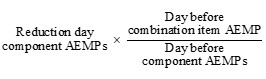
where:
component drug, in relation to a drug in a combination item, means a drug or medicinal preparation that is contained in that drug.
day before combination item AEMP means the approved ex-manufacturer price of the brand of the combination item on the day before the reduction day.
day before component AEMPs means the sum of:
(a) the approved ex-manufacturer prices, on the day before the reduction day, of any one brand of each of the listed component items, adjusted in accordance with subsection (3); and
(b) if the combination item includes one or more component drugs that are not listed component drugs—the non-listed component price.
differential reduction percentage means:
(a) if there is only one listed component item for which the approved ex-manufacturer price of any one brand of the listed component item has been reduced under a provision mentioned in subsection 99ACC(6) of the Act on the reduction day—the difference between 100% and the percentage by which the approved ex-manufacturer price of any one brand of the listed component item in the combination item has been so reduced; or
(b) if there are 2 or more listed component items for which the approved ex-manufacturer price of any one brand of each of those listed component items has been reduced under a provision mentioned in subsection 99ACC(6) of the Act on the reduction day—the difference between 100% and the average of the percentages by which the approved ex-manufacturer price of any one brand of each of those listed component items has been so reduced.
listed component drug means a component drug in relation to which a declaration under subsection 85(2) is in force.
listed component item, for each listed component drug contained in the combination item, means the pharmaceutical item that has:
(a) the listed component drug; and
(b) the same manner of administration as the combination item as referred to in subsection 99ACC(7) of the Act; and
(c) subject to subsection (4) of this section, the smallest difference in the total quantity or amount of the listed component drug contained in the quantity or number of units in the pricing quantity of any one brand of the pharmaceutical item compared to the total quantity or amount of the listed component drug in the pricing quantity of the brand of the combination item.
non-listed component price means the day before combination item AEMP reduced (but not below zero) by the sum of the approved ex-manufacturer prices, on the day before the reduction day, of any one brand of each of the listed component items, adjusted in accordance with subsection (3).
reduction day component AEMPs means the sum of:
(a) the approved ex-manufacturer prices, on the reduction day, of any one brand of each of the listed component items, adjusted in accordance with subsection (3); and
(b) if the combination item includes one or more component drugs that are not listed component drugs—the non-listed component price multiplied by the differential reduction percentage.
(3) For the purposes of the definitions of day before component AEMPs, non-listed component price and reduction day component AEMPs in subsection (2), adjust the approved ex-manufacturer price of a brand of a listed component item so that the value attributed to the listed component drug in the combination item reflects:
(a) any difference in quantity or amount; and
(b) any difference in pricing quantity;
of the listed component drug in the listed component item.
(4) For the purposes of paragraph (c) of the definition of listed component item in subsection (2), if there is more than one pharmaceutical item that has the smallest difference as referred to in that paragraph, the pharmaceutical item that:
(a) is not an exempt item; and
(b) results in the smallest reduction under this section to the approved ex-manufacturer price of the brand of the combination item;
is taken to be the listed component item for the purposes of this section.
71 Gilead submits that “reg 65A does not provide any direction as to how to choose between the different possible combinations of a combination item’s [constituent drugs], in selecting the “component drugs” to which the formula in reg 65A(2) will be applied. The choice as to how to apply the formula is an entirely arbitrary one, generating different results depending on the choices made”.
72 In summary, Gilead submits that:
(1) s 99ACC contemplates a method for calculating the price reduction applied by that provision that “generates a single, certain reduced price” without recourse to any “discretionary judgments”; but
(2) if a “component drug” can itself consist of more than one “drug”, then a “combination item” can contain multiple different groupings of component drugs if the individual drugs in the combination item have been listed in different sub-combinations;
(3) reg. 65A requires the tallying of the AEMP associated with each “listed component drug” in the combination item in working out the “Reduction day component AEMPs” and the “Day before component AEMPs”; and so
(4) on the Minister’s construction of “component drug”, there are multiple ways in which the component drugs in the combination item could be added together, potentially producing different results.
73 Gilead provided the following table by reference to Odefsey, which depicts the component drugs of Odefsey, their form (if they are listed) and their AEMP:
Drugs | Form (all relevant pharmaceutical items have oral manner of administration) | AEMP |
Emtricitabine with rilpivirine with tenofovir alafenamide | Tablet containing emtricitabine 200 mg with rilpivirine 25 mg with tenofovir alafenamide 25 mg | $910.16 |
Emtricitabine | Not subject of a declaration under s 85(2) of the Act | N/A |
Rilpivirine | Tablet 25 mg (as hydrochloride) | $245.10 |
Tenofovir alafenamide | Not subject of a declaration under s 85(2) of the Act | N/A |
Emtricitabine with rilpivirine | Not subject of a declaration under s 85(2) of the Act | N/A |
Emtricitabine with tenofovir alafenamide | Tablet containing emtricitabine 200 mg with tenofovir alafenamide 10 mg | $665.06 |
Tablet containing emtricitabine 200 mg with tenofovir alafenamide 25 mg | $665.06 | |
Rilpivirine with tenofovir alafenamide | Not subject of a declaration under s 85(2) of the Act | N/A |
74 According to Gilead, the following table depicts the candidate component drugs of Odefsey and the different results depending upon which component drugs are selected and the formula then applied:
Candidate component drugs (on Respondent’s construction of “component drug”) (showing form and AEMP of relevant listed component items – all component items have oral manner of administration) | Calculation of “Day before component AEMPs” according to reg. 65A | Reduced AEMP of combination item if rilpivirine were to take a 25% price reduction |
* Rilpivirine – (Tablet 25 mg (as hydrochloride) - $245.10) * Emtricitabine * Tenofovir alafenamide “non-listed component price”, calculated according to the formula in reg. 65A in this example is $910.16 -$245.10 = $665.06 | $665.06 + $245.10 = $910.16 | Reduction day component AEMPs: $183.83 + $498.8* = $682.63 Reduced AEMP for combination item: $682.83 x $910.16 / $910.16 = $682.63 *The non-listed component price is multiplied by the “differential reduction percentage”, which in this case is 75%. |
* Emtricitabine and tenofovir alafenamide (Tablet containing emtricitabine 200 mg with tenofovir alafenamide 25 mg - $665.06) * Rilpivirine - (Tablet 25 mg (as hydrochloride) - $245.10) | $665.06 + $245.10 = $910.16 | Reduction day component AEMPs: $183.83 + $665.06 = $848.89 Reduced AEMP of combination item: $848.89 x $910.16 / $910.16 = $848.89 |
* Emtricitabine and rilpivirine * Tenofovir alafenamide | s 99ACC does not apply (no listed component drug) | N/A |
* Tenofovir alafenamide and rilpivirine * Emtricitabine | s 99ACC does not apply (no listed component drug) | N/A |
75 However, the manner in which reg. 65A works is not as stated by Gilead.
76 As the Minister submits, the formula in reg. 65A(2) can be re‑arranged — without altering its mathematical outcome — so that its operation is more transparent. This would be represented by the following equation:

77 That is, the reduced AEMP of the combination item is calculated by taking the existing AEMP of the combination item and multiplying it by the fraction depicted above.
78 The denominator of that fraction — “Day before component AEMPs” — is defined in reg. 65A(2) as the sum of (a) the AEMPs, on the day before the reduction day, of any one brand of each of the listed component items (as defined), adjusted in accordance with subreg. (3), and (b) if the combination item includes one or more component drugs that are not listed component drugs, the non-listed component price (which is defined).
79 The numerator of that fraction — “Reduction day component AEMPs” — is defined in reg. 65A(2) as the sum of (a) the AEMPs, on the reduction day, of any one brand of each of the listed component items (as defined), adjusted in accordance with subreg. (3), and (b) if the combination item contains one or more component drugs that are not listed component drugs, the non-listed component price (as defined) multiplied by the differential reduction percentage (which percentage is defined).
80 The term “listed component item” is defined by reference to each listed component drug contained in the combination item. Thus, the same listed component drugs are in the numerator and denominator, and all are included in the calculation. None are either omitted or “arbitrarily” selected. Something is either a listed component drug, or it is not. If it is, it is included.
81 Similarly, the numerator and denominator of the fraction also include a calculation by reference to the same component drugs that are not listed component drugs, with none being either omitted or “arbitrarily” selected.
82 Thus, it is not the case that there are “multiple ways” in which the component drugs in the combination item could be added together for the purposes of performing the calculation.
83 For these reasons, the relief sought in paragraph 2 of the amended originating application will be refused.
Conclusion and disposition
84 For these reasons, the amended originating application will be dismissed. It is appropriate that costs follow the event, and I will order accordingly.
I certify that the preceding eighty-four (84) numbered paragraphs are a true copy of the Reasons for Judgment of the Honourable Justice Downes. |
Associate:
Dated: 12 March 2026


