

FEDERAL COURT OF AUSTRALIA
Australian Competition and Consumer Commission v Mobil Oil Australia Pty Ltd [2026] FCA 93
File number(s): | VID 1378 of 2024 |
Judgment of: | O’CALLAGHAN J |
Date of judgment: | 17 February 2026 |
Catchwords: | CONSUMER LAW – false or misleading representations – admitted contraventions of ss 18, 29(1)(a), 29(1)(g) and 33 of Sch 2 to the Competition and Consumer Act 2010 (Cth) – imposition of pecuniary penalties and other relief – orders made to establish compliance program – relief sought not opposed by respondent |
Legislation: | Competition and Consumer Act 2010 (Cth) ss 77A, 137H, 139B(2), Sch 2, Australian Consumer Law ss 18, 29, 33, 224, 229, 246 Corporations Act 2001 (Cth) Federal Court Act 1976 (Cth) s 21 |
Cases cited: | Australian Competition and Consumer Commission v Reckitt Benckiser (Australia) Pty Ltd [2016] FCAFC 181; (2016) 340 ALR 25 Commonwealth v Director, Fair Work Building Industry Inspectorate (2015) 258 CLR 482 Volkswagen Aktiengesellschaft v Australian Competition and Consumer Commission (2021) 284 FCR 24 |
Division: | General Division |
Registry: | Victoria |
National Practice Area: | Commercial and Corporations |
Sub-area: | Regulator and Consumer Protection |
Number of paragraphs: | 117 |
Date of hearing: | 10 November 2025 |
Counsel for the Applicant: | F Forsyth KC with S Rajanayagam |
Solicitor for the Applicant: | Australian Government Solicitor |
Counsel for the Respondent: | N De Young KC with A Muhlebach |
Solicitor for the Respondent | K&L Gates |
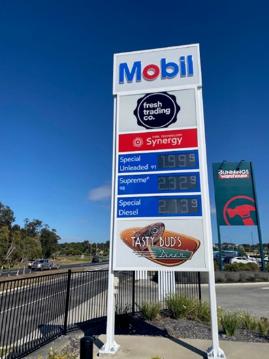
ORDERS
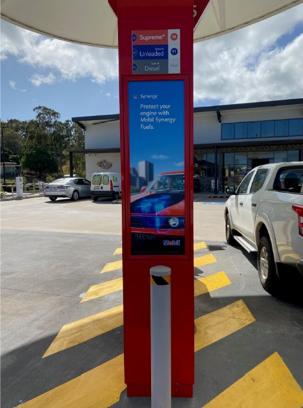
VID 1378 of 2024 | ||
| ||
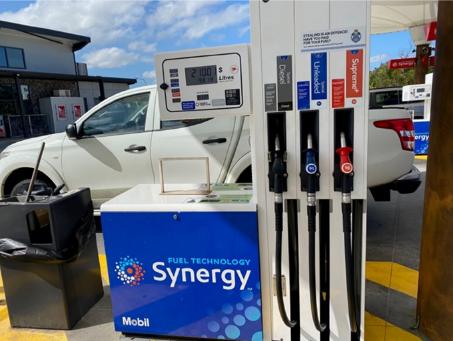
BETWEEN: | AUSTRALIAN COMPETITION AND CONSUMER COMMISSION Applicant | |
AND: | MOBIL OIL AUSTRALIA PTY LTD (ACN 004 052 984) Respondent | |
order made by: | O’CALLAGHAN J |
DATE OF ORDER: | 17 February 2026 |
THE COURT DECLARES THAT:
1. Mobil Oil Australia Pty Ltd (Mobil) contravened ss 18, 29(1)(a), 29(1)(g) and 33 of the Australian Consumer Law (ACL), being Sch 2 to the Competition and Consumer Act 2010 (Cth) (CCA), by causing branding in relation to “Mobil Synergy Fuels” to be displayed at the retail fuel site at 208 Nathan St, Aitkenvale QLD 4814 (Aitkenvale Site) that:
(a) used the words “Synergy Fuel” individually and together with the words “special” and “technology” (Synergy Branding Words); and
(b) stated that the fuel contained various additives which provided various specific benefits as compared to unadditised fuel (the Beneficial Additives Statements),
and thereby representing, from on or about 17 September 2021 to on or about 11 May 2022, that the fuel supplied at the site:
(c) was “Synergy Fuel” (Synergy Fuel Representation);
(d) had a substantially different composition or quality to unadditised fuel of the same grade or octane rating supplied at retail sites that were not Mobil Synergy Fuel retail fuel sites (Quality Representation); and
(e) contained various additives which provided various benefits as compared to unadditised fuel, including:
(i) protecting a vehicle engine against corrosion; and/or
(ii) reducing and/or removing harmful engine deposits; and/or
(iii) improving and/or enhancing fuel economy; and/or
(iv) reducing emissions; and/or
(v) protecting and cleaning a consumer’s vehicle engine from first use; and/or
(vi) improving, and/or ensuring peak, engine performance,
(individually and together in any combination, the Benefits Representation),
in circumstances where the fuel dispensed at the site was not “Mobil Synergy Fuel”, and:
(f) did not contain the additives referred to in paragraph 1(e) (the Advertised Additives); and
(g) was substantially similar to, if not the same composition or quality as, unadditised fuel of the same grade or octane rating supplied at retail fuel sites that were not Mobil Synergy Fuel retail fuel sites (Unadditised Fuel).
2. Mobil contravened:
(a) ss 18, 29(1)(a), 29(1)(g) and 33 of the ACL by causing branding in relation to “Mobil Synergy Fuels” to be displayed at the retail fuel site at Oak St and Box St, Barcaldine QLD 4725 (Barcaldine Site) that used the Synergy Branding Words and made the Beneficial Additives Statements, and thereby making, from on or about 1 June 2022 to on or about 6 December 2023, the Synergy Fuel Representation, the Quality Representation and the Benefits Representation in circumstances where the fuel dispensed at the site was not “Mobil Synergy Fuel”, did not contain the Advertised Additives and was substantially similar to, if not the same composition or quality as, Unadditised Fuel; and
(b) ss 18, 29(1)(a) and 33 of the ACL by causing branding in relation to “Mobil Synergy Fuels” to be displayed at the Barcaldine Site that used the Synergy Branding Words, and thereby making, from on or about 6 December 2023 to on or about 8 July 2024, the Synergy Fuel Representation and the Quality Representation in circumstances where the fuel dispensed at the site was not “Mobil Synergy Fuel”, did not contain the Advertised Additives and was substantially similar to, if not the same composition or quality as, Unadditised Fuel.
3. Mobil contravened ss 18, 29(1)(a), 29(1)(g) and 33 of the ACL by causing branding in relation to “Mobil Synergy Fuels” to be displayed at the retail fuel site at 12 Queen Elizabeth Dr, Berserker QLD 4701 (Berserker Site) that used the Synergy Branding Words and made the Beneficial Additives Statements, and thereby making, from on or about 28 April 2022 to on or about 23 May 2022, the Synergy Fuel Representation, the Quality Representation and the Benefits Representation in circumstances where the fuel dispensed at the site was not “Mobil Synergy Fuel”, did not contain the Advertised Additives and was substantially similar to, if not the same composition or quality as, Unadditised Fuel.
4. Mobil contravened ss 18, 29(1)(a), 29(1)(g) and 33 of the ACL by causing branding in relation to “Mobil Synergy Fuels” to be displayed at the retail fuel site at 13 Dawson Hwy, Biloela QLD 4715 (Biloela Site) that used the Synergy Branding Words and made the Beneficial Additives Statements, and thereby making, from on or about 18 May 2022 to on or about 22 October 2022, the Synergy Fuel Representation, the Quality Representation and the Benefits Representation in circumstances where the fuel dispensed at the site was not “Mobil Synergy Fuel”, did not contain the Advertised Additives and was substantially similar to, if not the same composition or quality as, Unadditised Fuel.
5. Mobil contravened ss 18, 29(1)(a), 29(1)(g) and 33 of the ACL by causing branding in relation to “Mobil Synergy Fuels” to be displayed at the retail fuel site at 4 Coventry Rd, Guthalungra QLD 4805 (Guthalungra Site) that used the Synergy Branding Words and made the Beneficial Additives Statements, and thereby making, from on or about 5 July 2022 to on or about 24 August 2022, the Synergy Fuel Representation, the Quality Representation and the Benefits Representation in circumstances where the fuel dispensed at the site was not “Mobil Synergy Fuel”, did not contain the Advertised Additives and was substantially similar to, if not the same composition or quality as, Unadditised Fuel.
6. Mobil contravened ss 18, 29(1)(a), 29(1)(g) and 33 of the ACL by causing branding in relation to “Mobil Synergy Fuels” to be displayed at the retail fuel site at 3-5 Horsford Pl, Proserpine QLD 4800 (Proserpine Site) that used the Synergy Branding Words and made the Beneficial Additive Statements, and thereby making, from on or about 6 August 2020 to on or about 1 December 2021, the Synergy Fuel Representation, the Quality Representation and the Benefits Representation in circumstances where the fuel dispensed at the site was not “Mobil Synergy Fuel”, did not contain the Advertised Additives and was substantially similar to, if not the same composition or quality as, Unadditised Fuel.
7. Mobil contravened ss 18, 29(1)(a), 29(1)(g) and 33 of the ACL by causing branding in relation to “Mobil Synergy Fuels” to be displayed at the retail fuel site at 2-4 Santal Dr, Rasmussen QLD 4815 (Rasmussen Site) that used the Synergy Branding Words and made the Beneficial Additives Statements, and thereby making, from on or about 1 October 2020 to on or about 9 January 2024, the Synergy Fuel Representation, the Quality Representation and the Benefits Representation in circumstances where the fuel dispensed at the site was not “Mobil Synergy Fuel”, did not contain the Advertised Additives and was substantially similar to, if not the same composition or quality as, Unadditised Fuel.
8. Mobil contravened ss 18, 29(1)(a), 29(1)(g) and 33 of the ACL by causing branding in relation to “Mobil Synergy Fuels” to be displayed at the retail fuel site at Eimeo Rd, Rural View QLD 4740 (Rural View Site) that used the Synergy Branding Words and made the Beneficial Additives Statements, and thereby making, from on or about 7 July 2021 to on or about 1 December 2021, the Synergy Fuel Representation, the Quality Representation and the Benefits Representation in circumstances where the fuel dispensed at the site was not “Mobil Synergy Fuel”, did not contain the Advertised Additives and was substantially similar to, if not the same composition or quality as, Unadditised Fuel.
9. Mobil contravened ss 18, 29(1)(a), 29(1)(g) and 33 of the ACL by causing branding in relation to “Mobil Synergy Fuels” to be displayed at the retail fuel site at 1 Homemaker Dr, Yeppoon QLD 4703 (Yeppoon Site) that used the Synergy Branding Words and made the Beneficial Additives Statements, and thereby making, from on or about 13 May 2021 to on or about 24 January 2024, the Synergy Fuel Representation, the Quality Representation and the Benefits Representation in circumstances where the fuel dispensed at the site was not “Mobil Synergy Fuel”, did not contain the Advertised Additives and was substantially similar to, if not the same composition or quality as, Unadditised Fuel.
THE COURT ORDERS THAT:
Penalty
10. Pursuant to s 224(1)(a) of the ACL, Mobil pay to the Commonwealth of Australia pecuniary penalties totalling $16 million, in respect of the contraventions of ss 29(1)(a), 29(1)(g) and 33 of the ACL described in paragraphs 1 to 9 above, within 28 days of the date of this order.
Publication orders
11. Mobil, at its own expense, within 14 days of the date of this order:
(a) publish, or cause to be published, a colour copy of a corrective notice on its website (https://www.mobil.com.au/en-au) in the form (including as to font, size and formatting) and in the terms set out in Annexure A (the Notice), ensuring:
(i) the Notice is viewable by clicking a “click-through” icon (Click-through Icon);
(ii) the Click-through Icon:
A. contains the words “Corrective Notice ordered by the Federal Court of Australia — Breaches of Australian Consumer Law.”:
(1) in at least 14-pixel black font;
(2) in bold text with a font-weight of at least 700; and
(3) on a white background; and
B. contains the words “Learn More”:
(1) in at least 14-pixel blue font;
(2) in bold text with a font-weight of at least 700;
(3) on a white background; and
(4) operating as a one-click hyperlink to a page containing the Notice; and
(iii) the Notice:
A. occupies the entire webpage that is accessible via the Click-through Icon;
B. must not be displayed as a “pop up” or “pop under” window;
C. must be crawlable (meaning, its contents must be indexable by a search engine); and
D. must be maintained for a period of 30 days from the date of publication; and
(b) publish, or cause to be published, on one occasion, a colour copy of a corrective advertisement in the terms set out in Annexure A, in the first 10 pages of The Australian and The Courier Mail newspapers, and ensure that the advertisement be in a text which is Arial font and which is:
(i) for the headline, not less than 12-point and bolded; and
(ii) for the remaining text, not less than 11-point.
12. Mobil must inform the ACCC, within seven days after the end of the 14-day period referred to in order 11, of its compliance with:
(a) order 11(a), by providing the URL of the Notice and the date on which it was published; and
(b) order 11(b), by providing the edition and page number of the newspapers in which the corrective advertisement was published.
Compliance orders
13. Mobil, at its own expense:
(a) establish and implement, within 90 days of the date of this order, an ACL compliance program in accordance with Annexure B, to be undertaken by all directors, officers, employees, representatives and agents of Mobil, whose duties could result in them being concerned with conduct that may contravene ss 18, 29 and/or 33 of the ACL, being a program designed to minimise Mobil’s risk of future contraventions of those sections of the ACL; and
(b) maintain that ACL compliance program for a period of three years from the date of this order.
14. Mobil serve on the ACCC:
(a) an affidavit verifying that it has carried out its obligations under order 13(a) within 14 days after the end of the 90-day period referred to in order 13(a); and
(b) an affidavit verifying that it has carried out its obligations under order 13(b), at the end of each 12-month period, for each of the three years referred to in order 13(b).
Other orders
15. The court’s reasons for judgment, with the court’s seal affixed, be retained on the court file for the purposes of s 137H of the CCA.
16. Mobil pay a contribution to the ACCC’s costs of and incidental to this proceeding, fixed in the amount of $250,000, within 30 days of this order.
Note: Entry of orders is dealt with in r 39.32 of the Federal Court Rules 2011 (Cth).
ANNEXURE A
Following legal action by the Australian Competition and Consumer Commission (ACCC), the Federal Court of Australia has declared by consent that Mobil Oil Australia Pty Ltd (Mobil) contravened ss 18, 29(1)(a), 29(1)(g) and 33 of the Australian Consumer Law, being Sch 2 to the Competition and Consumer Act 2010 (Cth) through its advertising at nine fuel retail sites in north and central Queensland.
Between August 2020 and July 2024 (with the duration of the period over which the relevant representations were made varying between each site), Mobil represented to consumers, through branding and signage at the nine sites, that the fuel being sold:
was Mobil “Synergy Fuel”;
was substantially different in composition or quality to the unadditised fuel sold at sites that were not Mobil Synergy Fuel retail sites; and
contained additives which provided benefits such as protecting vehicle engines against corrosion, reducing and/or removing harmful engine deposits, improving and/or enhancing economy, reducing emissions, protecting and cleaning the vehicle engine, and improving, and/or ensuring peak, engine performance,
in circumstances where the fuel dispensed at the sites was not Mobil Synergy Fuel, did not contain additives which provided the advertised benefits, and was substantially the same as unadditised fuel sold at sites that were not Mobil Synergy Fuel retail sites.
The nine north and central Queensland sites at which Mobil made these misleading representations were located in Rasmussen, Yeppoon, Barcaldine, Biloela, Guthalungra, Aitkenvale, Berserker, Proserpine and Rural View. Although these sites represented a small proportion of the Mobil retail network throughout Australia, Mobil recognises that they were a large proportion of its sites in north and central Queensland.
Mobil has cooperated with the ACCC during its investigations and the proceedings, and has taken, and is taking, steps with a view to ensuring that there is no recurrence of similar conduct in the future.
Mobil regrets that this conduct occurred and apologises to any consumers who were misled by the representations made at the nine sites.
This corrective [notice/advertisement] has been paid for and published by Mobil as a result of an order of the Federal Court of Australia in an action commenced by the ACCC.
ANNEXURE B
Mobil Oil Australia Pty Ltd (Mobil) will establish a competition and consumer law compliance program with a particular focus on the Australian Consumer Law (ACL), being Sch 2 to the Competition and Consumer Act 2010 (Cth) (CCA) (Compliance Program), that complies with each of the following requirements.
Appointments
1. Within 30 days of the date of the order of the court, Mobil will appoint a senior manager with suitable qualifications or experience in corporate compliance as responsible for ensuring the Compliance Program is effectively designed, implemented and maintained (Compliance Officer).
Compliance Policy
2. Mobil will, within three months of the date of the order of the court, issue a policy statement outlining Mobil’s commitment to compliance with the ACL and CCA (Compliance Policy).
3. Mobil will ensure the Compliance Policy:
(a) contains a statement of commitment to compliance with the ACL;
(b) contains an outline of how commitment to ACL compliance will be implemented within Mobil;
(c) contains a requirement for all staff to report any Compliance Program related issues and ACL compliance concerns to the Compliance Officer;
(d) highlights to Mobil staff the existence of its current Whistleblowers Protection Policy, including confirming that whistleblowers with competition and consumer law compliance concerns will not be prosecuted or disadvantaged in any way and that their reports will be kept confidential and secure; and
(e) contains a clear statement that Mobil will take action internally against any persons who are involved in a contravention of the ACL and, as applicable, draws attention to the operation of s 77A of the CCA and/or s 229 of the ACL which prohibit Mobil from indemnifying officers of Mobil from payment of pecuniary penalties or legal costs from related proceedings for certain contraventions.
4. Mobil will ensure that all executive or non-executive directors and officers, employees, representatives and agents of Mobil, whose duties could result in them being concerned with conduct that may contravene the ACL, are made aware of the Compliance Policy when it is issued and that it forms part of the Staff Training and Induction outlined at paragraphs 7 to 10 of this Annexure.
Whistleblower protection
5. Mobil will highlight to its staff the existence of its Whistleblowers Protection Policy, and will:
(a) ensure that it has whistleblower protection mechanisms to protect those coming forward with competition and consumer law complaints; and
(b) use its best endeavours to ensure that these mechanisms are consistent with good practice guidance identified in ASIC Regulatory Guide 270: Whistleblower policies, as in force or existing at the date of the order of the court, tailored as required to Mobil’s circumstances.
6. The requirements referred to in paragraph 5(b) do not replace any obligations relating to whistleblowing that may arise under the Corporations Act 2001 (Cth).
Staff Training and Induction
7. Mobil will ensure that the Compliance Program includes a requirement for ACL compliance training at least once per year (Staff Training) for all:
(a) officers, employees, representatives and agents of Mobil, whose duties could result in them being concerned with conduct that may contravene the ACL; and
(b) executive and non-executive directors of Mobil.
8. Mobil will ensure that the Staff Training is developed and conducted by a suitably qualified compliance professional or legal practitioner with expertise in competition and consumer law.
9. Mobil will ensure that the Compliance Program includes a requirement that awareness of Mobil’s obligations under the ACL forms part of the induction (Induction) of all new:
(a) officers, employees, representatives and agents of Mobil whose duties could result in them being concerned with conduct that may contravene the ACL; and
(b) executive or non-executive directors of Mobil.
10. Mobil will ensure that the Induction is developed by a suitably qualified compliance professional or legal practitioner with expertise in competition and consumer law.
Reports to Mobil’s board
11. Mobil will ensure that the Compliance Officer reports to Mobil’s board every 12 months on the continuing effectiveness of the Compliance Program.
Compliance Review
12. Mobil will, at its own expense, cause an annual review of the Compliance Program (Review) to be carried out in accordance with each of the following requirements:
(a) Scope of Review – the Review should be broad and rigorous enough to provide Mobil and the ACCC with:
(i) a verification that Mobil has in place a Compliance Program that complies with each of the requirements detailed in paragraphs 1 to 11 of this Annexure; and
(ii) the Compliance Report detailed at paragraph 13 of this Annexure.
(b) Independence of Review – Mobil will ensure that each Review is carried out by a suitably qualified, independent compliance professional with expertise in competition and consumer law (Reviewer). The Reviewer will qualify as independent on the basis that they:
(i) did not design or implement the Compliance Program;
(ii) are not a present or past staff member or director of Mobil;
(iii) have not acted and do not act for, and do not consult and have not consulted to, Mobil in any competition and consumer law matters, other than performing Reviews; and
(iv) have no significant shareholding or other interests in Mobil.
(c) Evidence – Mobil will use its best endeavours to ensure that each Review is conducted on the basis that the Reviewer has access to all relevant sources of information in Mobil’s possession or control, including without limitation:
(i) the ability to make enquiries of any officers, employees, representatives and agents of Mobil;
(ii) documents relating to Mobil’s Compliance Program, including documents relevant to Mobil’s Compliance Policy and Staff Training and Induction; and
(iii) any reports made by the Compliance Officer to Mobil’s board regarding Mobil’s Compliance Program.
(d) Mobil will ensure that a Review is completed within one year of the date of the order of the court, and that a subsequent Review is completed annually for two years.
Compliance Report
13. Mobil will use its best endeavours to ensure that within 30 days of the completion of a Review, the Reviewer includes the following findings of the Review in a report to the Compliance Officer of Mobil (Compliance Report):
(a) whether the Compliance Program of Mobil includes all the elements detailed in paragraphs 1 to 11 of this Annexure, and if not, what elements need to be included or further developed;
(b) whether the Staff Training and Induction is effective, and if not, what aspects need to be further developed;
(c) whether Mobil is able to provide protections consistent with good practice guidance referred to in paragraph 5(b) of this Annexure for competition and consumer law whistleblowers, and whether staff are aware of the whistleblower protection mechanisms; and
(d) whether there are any material deficiencies in Mobil’s Compliance Program, or whether there are or have been instances of material non-compliance with the Compliance Program (Material Failure), and if so, recommendations for rectifying the Material Failure.
14. For the purposes of paragraph 13(d) of this Annexure, Material Failures are intended to include non-trivial failures that are ongoing or continue for a significant period of time to:
(a) incorporate a requirement of this order in the design of the Compliance Program; or
(b) comply with a fundamental obligation in the implementation of the Compliance Program (eg if no Staff Training has been conducted within the Annual Review period).
Mobil’s response to Compliance Report
15. Mobil will ensure that the Compliance Officer, within 14 days of receiving the Compliance Report:
(a) provides the Compliance Report to Mobil’s board; and
(b) where a Material Failure has been identified by the Reviewer in the Compliance Report, provides a report to Mobil’s board identifying how Mobil can implement any recommendations made by the Reviewer in the Compliance Report to rectify the Material Failure.
16. Mobil will promptly and fully implement any recommendations made by the Reviewer in the Compliance Report to address a Material Failure.
Reporting to the ACCC
17. Mobil will:
(a) provide a copy of the Compliance Report to the ACCC within 30 days of Mobil’s board receiving the Compliance Report; and
(b) where a Material Failure is identified by the Reviewer in the Compliance Report:
(i) inform the ACCC of any steps that have been taken by Mobil to implement the recommendations made by the Reviewer in the Compliance Report; or
(ii) otherwise outline the steps that Mobil proposes to take to implement the recommendations and inform the ACCC once those steps have been implemented.
Provision of Compliance Program documents to the ACCC
18. Mobil will maintain copies of all documents relating to and constituting the Compliance Program for a period not less than five years.
19. If requested by the ACCC during the period of five years following the date of this order, Mobil will, at its own expense, cause to be produced and provided to the ACCC copies of all documents constituting the Compliance Program, including:
(a) the Compliance Policy;
(b) Staff Training and Induction materials;
(c) the Compliance Report that has been completed at the time of the request; and
(d) copies of the reports to Mobil’s board referred to in paragraphs 11 and 15 of this Annexure.
ACCC recommendations
20. Mobil will promptly and fully implement any recommendations that the ACCC considers reasonably necessary to ensure that Mobil maintains and continues to implement the Compliance Program in accordance with the requirements of this order.
REASONS FOR JUDGMENT
O’CALLAGHAN J:
INTRODUCTION
1 This proceeding concerns the promotion by the respondent (Mobil) of fuel that it supplied to nine retail fuel sites in north and central Queensland between August 2020 and July 2024.
2 The applicant (ACCC) alleged, and Mobil admitted, that Mobil represented that the fuel dispensed at those retail fuel sites was “Mobil Synergy Fuel”, being fuel that contained additives claimed to provide certain benefits, when, in fact, the fuel was not Mobil Synergy Fuel and did not contain the additives or provide the advertised benefits.
3 The ACCC alleged, and Mobil admitted, that such conduct contravened ss 18, 29(l)(a), 29(l)(g) and 33 of the Australian Consumer Law (ACL), being Sch 2 to the Competition and Consumer Act 2010 (Cth) (CCA).
4 The parties reached agreement as to the terms on which they jointly sought the resolution of the proceeding. They relied on a statement of agreed facts and admissions and joint submissions on liability and relief.
5 At the hearing before me on 10 November 2025, at which Ms F Forsyth KC and Mr S Rajanayagam of counsel appeared for the ACCC and Mr N De Young KC appeared with Ms A Muhlebach of counsel for Mobil, the ACCC and Mobil jointly submitted that I should make the declarations and orders set out above.
6 For the reasons set out below, in all the circumstances the relief agreed upon is appropriate and I will make the declarations and orders so agreed.
APPLICABLE LAW
7 Section 18(1) of the ACL provides that a person must not, in trade or commerce, engage in conduct that is misleading or deceptive or is likely to mislead or deceive.
8 Section 29(1)(a) of the ACL provides that a person must not, in trade or commerce, in connection with the supply or possible supply of goods or services or in connection with the promotion by any means of the supply or use of goods or services, make a false or misleading representation that goods or services are of a particular standard, quality, value, grade, composition, style or model or have had a particular history or particular previous use.
9 Section 29(1)(g) of the ACL provides that a person must not, in trade or commerce, in connection with the supply or possible supply of goods or services or the promotion by any means of the supply or use of goods or services, make a false or misleading representation that goods have sponsorship, approval, performance characteristics, accessories, uses or benefits.
10 Section 33 of the ACL provides that a person must not, in trade or commerce, engage in conduct that is liable to mislead the public as to the nature, the manufacturing process, the characteristics, the suitability for their purpose or the quantity of any goods.
CONDUCT GIVING RISE TO THE CONTRAVENTIONS
11 Mobil is a fuel wholesaler. It supplies petroleum, diesel and other fuel products to retailers with which it has contractual relationships. Those retailers, known as “branded wholesalers”, directly or indirectly supply those products to the public via retail fuel sites (more commonly referred to as service stations).
12 During the relevant period (6 August 2020 to on or about 8 July 2024), Mobil had contractual relationships with the branded wholesalers in relation to retail fuel sites operated by those branded wholesalers in Rasmussen, Yeppoon, Barcaldine, Biloela, Guthalungra, Aitkenvale, Berserker, Proserpine and Rural View.
13 Pursuant to brand agreements with Mobil, the branded wholesalers were required to install and display Mobil branding and advertising material in the forecourt of the retail fuel sites that they operated. Mobil did not operate the retail fuel sites, but it had contractual rights to control, and from time to time did control, the content of the branding and advertising material to be displayed at the sites.
14 Mobil also had the unilateral contractual right to change “Retail Image Standards”. Under the brand agreements, the branded wholesalers were required to maintain and repair all signage and retail image elements to comply with those standards. Mobil employees could also periodically inspect the retail fuel sites to ensure that Mobil branding and advertising material was displayed in accordance with Mobil’s requirements, including the Retail Image Standards.
15 One kind of fuel product that Mobil supplied during the relevant period to some branded wholesalers was “Mobil Synergy Fuel”.
16 Mobil Synergy Fuels are diesel and petroleum fuels which Mobil promoted as containing additives and other ingredients, which Mobil claimed provided certain advertised benefits to vehicles.
17 During the relevant period, Mobil’s branding and advertising materials relating to Mobil Synergy Fuel, which bore Mobil’s name and associated marks, comprised the elements set out below (Synergy Branding).
18 The Synergy Branding included “Mobil Synergy Fuel” and “Synergy Fuel Technology”, located on the Main Identification Display (MID), being the flag-style sign visible to motorists on the road and which contains fuel price; and on Waves and Blades, which were advertising panels located in the retail fuel site forecourt.
19 The Synergy Branding also included posters located in the retail fuel site forecourt (forecourt posters) which displayed photographs of vehicles and made statements such as “Mobil Synergy Fuels. Protect your engine from the first fill”; Mobil Synergy Fuels “contain additives designed to improve engine performance by helping vehicle engines run more smoothly”; and the additives in Mobil Synergy Fuels “help to remove harmful deposits from vital engine parts”.
20 The Synergy Branding also included “Product Claims Decals”, being rectangular, coloured stickers located beside fuel pumps, which made statements including:
(1) in respect of “Special Unleaded” fuel, that that fuel “protects against corrosion”, “reduces harmful engine deposits” and “improves fuel economy” as “compared to unadditised fuel”;
(2) in respect of “Special E10 fuel”, that that fuel “protects against corrosion”, “improves fuel economy” and “reduces emissions” as “compared to unadditised fuel”;
(3) in respect of “Extra” fuel, that that fuel “protects and cleans your engine from the first fill”, “removes harmful engine deposits”, “improves engine performance” and “improves fuel economy” as “compared to unadditised fuel”;
(4) in respect of “Supreme+” fuel, that that fuel is “rigorously tested for maximum protection”, “protects and cleans your engine from the first fill”, “removes harmful engine deposits”, leads to “peak engine performance” and “enhances fuel economy” as “compared to unadditised fuel”.
21 The Synergy Branding also included “Grade Labels” and “Wayfinding Decals”, being stickers relating to each type of Synergy Fuel offered at the retail fuel site, which were displayed near fuel pumps and identified the various fuel types by name, as well as “Dispenser Skirts”, which were large decals on the fuel pumps which displayed the words “Synergy Fuel Technology”.
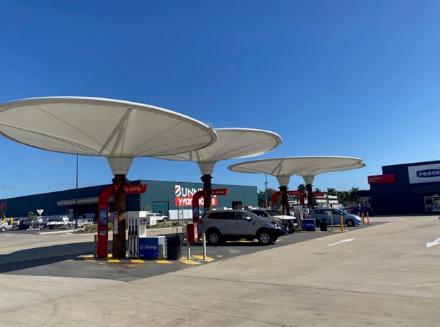
22 I attach as Annexure 1 examples of such branding at the Yeppoon Site.
THE REPRESENTATIONS
23 The parties agreed that by reason of displaying one or more of the Synergy Branding elements at each of the nine sites, representations were made that the fuel supplied at each of the nine sites:
(1) was “Synergy Fuel” (Synergy Fuel Representation);
(2) had a substantially different composition or quality to unadditised fuel of the same grade or octane rating supplied at non-Mobil Synergy Fuel retail fuel sites (Quality Representation); and/or
(3) contained various additives which provided various benefits as compared to unadditised fuel, including protecting a vehicle engine against corrosion; and/or reducing and/or removing harmful engine deposits; and/or improving and/or enhancing fuel economy; and/or reducing emissions; and/or protecting and cleaning a consumer’s vehicle engine from first use; and/or improving, and/or ensuring peak, engine performance (individually and together in any combination, the Benefits Representation).
24 The Synergy Fuel Representation arose from the use of the words “Synergy Fuel” individually and together with the words “special” and “technology” on MIDs, Waves, Blades, forecourt posters, Product Claims Decals, Grade Labels and Dispenser Skirts.
25 The Quality Representation arose from the statements identified above on the forecourt posters and Product Claims Decals and from the use of the words “Synergy Fuel” and the words “special” and “technology” on MIDs, Waves, Blades, Wayfinding Decals, forecourt posters and Dispenser Skirts.
26 The Benefits Representation arose expressly from the statements identified above on the forecourt posters and Product Claims Decals and impliedly from the use of the words “Synergy Fuel” and/or the words “special” and “technology” on MIDs, Waves, Blades, Wayfinding Decals, Grade Labels and Dispenser Skirts when displayed in combination with forecourt posters and/or Product Claims Decals.
27 Annexure 2 to these reasons identifies the particular representations Mobil made at each of the nine sites, and the time period over which it made those representations.
28 Mobil accepted that it made the representations at the nine sites, including because pursuant to its contractual rights under the Brand Agreements, Mobil arranged for particular Synergy Branding elements identified in relation to each particular site in Annexure 2 to be displayed at that site at the times set out in that Annexure.
29 Specifically, Mobil admitted among other things that through its employees and other persons acting at the direction or with the agreement of Mobil and/or one or more Mobil employees it:
(1) designed those Synergy Branding elements, including by determining the format and content of those elements;
(2) co-ordinated the supply and installation of those Synergy Branding elements for use at that site;
(3) for each of the nine sites, directed the operator of that site (in each case, either the Branded Wholesaler or its related entity) to display those Synergy Branding elements during the times set out in Annexure 2; and
(4) in the case of the Rasmussen and Yeppoon sites, directly applied Synergy Branding elements at those sites during site surveys.
30 Mobil admitted that by reason of s 139B(2) of the CCA that conduct is conduct on behalf of Mobil which is taken to have been engaged in by Mobil; and in so far as the Synergy Branding was displayed by the Branded Wholesalers or other operator at the nine sites, pursuant to the directions described in paragraph 29(3) above, that conduct was engaged in on behalf of Mobil, and is taken to have been engaged in by Mobil.
ADMITTED CONTRAVENTIONS
31 Mobil admitted that each of the Synergy Fuel Representations, the Quality Representations, and the Benefits Representations (together, the Representations) were false, misleading and/or deceptive because, in fact, the fuel dispensed at each of the nine sites during the periods in which each Representation was made at that site:
(1) was not “Mobil Synergy Fuel”;
(2) did not contain the additives referred to above; and
(3) was substantially similar to, if not the same composition or quality as, unadditised fuel of the same grade or octane rating supplied at retail sites that were not Mobil Synergy Fuel retail fuel sites.
32 Mobil admitted that:
(1) by making the Synergy Fuel Representations at each of the nine sites, it contravened s 18 of the ACL;
(2) by making the Quality Representations at each of the nine sites, it contravened ss 18, 29(l)(a) and 33 of the ACL;
(3) by making the Benefits Representations at each of the nine sites, it contravened ss 18, 29(l)(a), 29(l)(g) and 33 of the ACL.
33 Mobil also admitted that for each site, during each period identified in the “approximate dates” column of Annexure 2, it made each of the Representations identified in the “representations conveyed” column.
34 It is not possible to determine precisely how many times the Representations were made, but it was agreed that the number was very substantial.
35 The parties’ best estimate is that there were at least 778,473 fuel sales transactions during the time periods over which Mobil made one or more of the Representations at each site.
PECUNIARY PENALTY
Principles governing agreed penalties
36 The parties jointly propose a pecuniary penalty in the amount of $16 million, made up as follows:
(1) Aitkenvale: $1,800,000.
(2) Barcaldine: $1,900,000.
(3) Berserker: $150,000.
(4) Biloela: $200,000.
(5) Guthalungra: $50,000.
(6) Proserpine: $3,100,000.
(7) Rasmussen: $4,900,000.
(8) Rural View: $400,000.
(9) Yeppoon: $3,500,000.
37 They do so by reference to the well-established principles relevant to the imposition of pecuniary penalties, including most relevantly by reference to deterrence (always the primary objective); the “course of conduct” principle; the nature and extent of the act or omission and of any loss or damage (which includes financial as well as non-pecuniary loss or damage) suffered as a result of the act or omission; the circumstances in which the act or omission took place; the contravener’s size; the deliberateness of the contravention and the period over which it extended; whether the contravention arose out of the conduct of senior management or at a lower level; whether the contravener has a corporate culture conducive to compliance with the relevant laws; and whether the contravener co-operated with the regulator.
38 As French CJ, Kiefel, Bell, Nettle and Gordon JJ said in Commonwealth v Director, Fair Work Building Industry Inspectorate (2015) 258 CLR 482 at [46], [47] and [58]:
[T]here is an important public policy involved in promoting predictability of outcome in civil penalty proceedings and that the practice of receiving and, if appropriate, accepting agreed penalty submissions increases the predictability of outcome for regulators and wrongdoers … [S]uch predictability of outcome encourages corporations to acknowledge contraventions, which, in turn, assists in avoiding lengthy and complex litigation and thus tends to free the courts to deal with other matters and to free investigating officers to turn to other areas of investigation that await their attention.
… because fixing the quantum of a civil penalty is not an exact science, there is a permissible range in which courts have acknowledged that a particular figure cannot necessarily be said to be more appropriate than another. It is only in that latter sense and only to that extent that the court will not depart from the submitted figure merely because it might otherwise have been disposed to select some other figure.
… Subject to the court being sufficiently persuaded of the accuracy of the parties’ agreement as to facts and consequences, and that the penalty which the parties propose is an appropriate remedy in the circumstances thus revealed, it is consistent with principle and … highly desirable in practice for the court to accept the parties’ proposal and therefore impose the proposed penalty.
(Internal quotations and citations omitted).
39 But the court must nonetheless be persuaded that the penalty proposed by the parties is appropriate and the agreement of the parties cannot bind it to impose a penalty which it considers is not appropriate. As the Full Court observed in Volkswagen Aktiengesellschaft v Australian Competition and Consumer Commission (2021) 284 FCR 24 at [129]:
… in considering whether the proposed agreed penalty is an appropriate penalty, the Court should generally recognise that the agreed penalty is most likely the result of compromise and pragmatism on the part of the regulator, and to reflect, amongst other things, the regulator’s considered estimation of the penalty necessary to achieve deterrence and the risks and expense of the litigation had it not been settled … The fact that the agreed penalty is likely to be the product of compromise and pragmatism also informs the Court’s task when faced with a proposed agreed penalty. The regulator’s submissions, or joint submissions, must be assessed on their merits, and the Court must be wary of the possibility that the agreed penalty may be the product of the regulator having been too pragmatic in reaching the settlement …
40 Section 224(1)(a)(ii) of the ACL provides that if the court is satisfied that a person has contravened a provision of (relevantly) Pt 3-1 of the ACL, the court may order the person to pay to the Commonwealth such pecuniary penalty, in respect of each act or omission to which the section applies, as the court determines to be appropriate.
41 Section 224(4) of the ACL provides that if conduct constitutes a contravention of two or more of the provisions to which s 224 applies, a person is not liable to pay more than one pecuniary penalty under s 224 in respect of the same conduct.
Maximum penalties
42 During the relevant period, the maximum pecuniary penalty payable by a body corporate in respect of a contravention of ss 29(1)(a), 29(1)(g) and 33 of the ACL was, relevantly:
(1) from the start of the relevant period (ie about 6 August 2020) until 9 November 2022, the greater of:
(a) $10 million;
(b) if the court can determine the value of the benefit that the body corporate and any related body corporate obtained that is reasonably attributable to the relevant act or omission — three times the value of that benefit;
(c) if the court cannot determine the value of that benefit — 10% of the annual turnover of the body corporate during the 12-month period ending at the end of the month in which the act or omission occurred or started to occur; and
(2) from 10 November 2022 until the end of the relevant period (ie about 8 July 2024), the greater of:
(a) $50 million;
(b) if the court can determine the value of the benefit that the body corporate, and any related body corporate, obtained directly or indirectly and that is reasonably attributable to the relevant act or omission — three times the value of that benefit;
(c) if the court cannot determine the value of that benefit — 30% of the body corporate’s adjusted turnover during the breach turnover period for the act or omission.
43 The parties agreed, however, in the circumstances of this case that because there were at least 778,473 contraventions of ss 29 and 33, there is no meaningful overall maximum penalty and the appropriate penalty is best assessed by reference to other factors. See Australian Competition and Consumer Commission v Reckitt Benckiser (Australia) Pty Ltd [2016] FCAFC 181; (2016) 340 ALR 25 at 63 [157] (Jagot, Yates and Bromwich JJ).
Course of conduct
44 If there is an interrelationship between the factual and legal elements of more than one contravention by the same person, the court may group those contraventions together into a course of conduct, to avoid double punishment for those parts of the contraventions that involve overlap in wrongdoing. Here, it was agreed that the contravening conduct is appropriately characterised as involving nine courses of conduct, for each of the nine sites.
The totality principle
45 The totality principle operates as a final check to ensure that the penalties to be imposed on a wrongdoer, considered as a whole, are just and appropriate and that the total penalty does not exceed what is proper for the entire contravening conduct in question. The parties here agreed that any overlap in wrongdoing is properly accounted for by the course of conduct approach, and no discount is required for totality reasons.
Penalty of $16 million is appropriate
46 The parties submitted, and I agree, that the proposed penalties, which total $16 million, are appropriate to achieve the objectives of general and specific deterrence, having regard to the mandatory and other relevant factors, and are within the appropriate range for the contraventions admitted by Mobil for the nine courses of conduct.
47 The figures for each site have been arrived at having regard to the estimated number of fuel sales transactions at each site, with appropriate alterations made for gaps in the transaction data and the change in the maximum penalty in November 2022.
Deterrence
48 As to specific deterrence, the parties submitted, and I agree, that the proposed total of $16 million is large enough that it will not be regarded by Mobil as an acceptable cost of doing business.
49 I am satisfied that penalties of that magnitude is appropriate to achieve the objective of specific deterrence (without being oppressive), including the size and financial position of Mobil and its parent companies.
50 As to general deterrence, the proposed total of $16 million is sufficient to “send a message” to others that contraventions of the kind committed by Mobil are unacceptable. That is particularly important in the present case, which relates to false, misleading and deceptive statements made in connection with the promotion and supply of an essential consumer good.
The nature and extent of the contraventions
51 The contravening conduct outlined above occurred across the nine sites for periods of varying duration, spanning from three and a half weeks (Berserker) to over three years (Rasmussen).
52 The conduct involved multiple Synergy Branding elements displayed prominently across the sites, some of which (namely, the Product Claims Decals and the forecourt posters) included highly specific claims about the purported nature, quality and benefits of the products being sold.
53 Mobil controlled the branding that was displayed at the nine sites and required Synergy Branding to be displayed. It had contractual rights to exercise control over the branding that appeared at the nine sites. Among other things, Mobil employees and other persons acting at the direction or with the agreement of Mobil and/or one or more Mobil employees: engaged in the conduct described in paragraphs 28 to 29 above; proposed the scope of branding works to the Branded Wholesalers and obtained quotes for the Synergy Branding; directly applied Synergy Branding elements to the Rasmussen and Yeppoon sites during site surveys; and in some instances instructed Branded Wholesalers to remove Synergy Branding, including arranging for the de-branding of the Barcaldine Site and instructing the Branded Wholesalers to remove or cover up Product Claims Decals at the Barcaldine, Rural View and Yeppoon sites.
54 Further, Mobil did not act promptly to remove or cover up the Synergy Branding, despite having control over the display of Synergy Branding elements; and in cases where it did direct Branded Wholesalers to remove or cover up Synergy Branding, its efforts were inadequate, including, in some cases, because these efforts were limited to the Product Claims Decals. Further, Mobil did not follow up to ensure that its directions were actioned. Mobil was therefore aware during the relevant period that Synergy Branding was being displayed while Mobil Synergy Fuel was not being supplied, and failed to fully rectify the conduct until 2024, after it became aware of the ACCC’s investigation.
55 On Mobil’s best estimate, the retail value of all unadditised fuel sold by the Branded Wholesalers to consumers as Mobil Synergy Fuel (that was supplied to those Branded Wholesalers by Mobil) during the time periods over which Mobil made one or more of the Representations at each site (as identified in Annexure 2) was as follows:
(1) Aitkenvale: $9,225,625.
(2) Barcaldine: $6,144,743.
(3) Berserker: $859,192.
(4) Biloela: $1,230,701.
(5) Guthalungra: $236,872.
(6) Proserpine: $13,099,294.
(7) Rasmussen: $12,792,520.
(8) Rural View: $1,765,011
(9) Yeppoon: $11,351,124
Total $56,705,082
56 The proposed total penalty of $16 million represents approximately 28.2% of the total value of $56,705,082 of all unadditised fuel supplied by Mobil across the nine sites during the relevant date range for each site.
57 On Mobil’s best estimate, the total revenue generated by Mobil, and the gross profit and net profit made by Mobil, on the supply of unadditised fuel to the Branded Wholesalers at the nine sites during the time periods over which Mobil made one or more of the Representations at each site (as identified in Annexure 2), organised by reference to calendar years 2020 to 2024, was as follows:
Calendar year | Revenue | Gross profit | Net profit |
2020 | $3,489,605 | $22,444 | -$47,447 |
2021 | $19,827,192 | $273,858 | -$725,016 |
2022 | $15,174,805 | $180,804 | $288,079 |
2023 | $10,607,184 | $268,195 | $84,541 |
2024 | $1,645,171 | $42,799 | -$52,012 |
Total | $50,743,957 | $788,100 | -$451,855 |
58 The proposed total penalty of $16 million represents approximately 31.53% of the total revenue of $50,743,957 described in the table above, and more than 20 times the gross profit of $788,100 described in that table.
59 On Mobil’s best estimate, the number of fuel sales transactions at the nine sites during the time periods over which Mobil made one or more of the Representations at each site (as identified in Annexure 2) was as follows:
(1) Aitkenvale: 125,534
(2) Barcaldine: 61,408
(3) Berserker: 9,942
(4) Biloela: 12,466
(5) Guthalungra: 2,336
(6) Proserpine: 222,719
(7) Rasmussen: 183,527
(8) Rural View: 27,442
(9) Yeppoon: 133,099
Total 778,473
60 The total penalty of $16 million represents a penalty of approximately $20.55 per fuel sales transaction.
61 Although the number of contraventions cannot be determined with precision, the contraventions related to several hundreds of thousands of sales of a product that is an essential consumer good over an extensive period of time, in circumstances where there was significant revenue associated with, and Mobil made a gross profit from, those sales.
62 The parties agreed that those matters warrant substantial penalties, in order to achieve the objective of deterrence, and have taken them into account in agreeing the proposed total penalty of $16 million is appropriate and sufficient to achieve the object of deterrence.
The circumstances of the contraventions, including deliberateness
63 The Synergy Branding initiative was part of a national strategy by Mobil to differentiate Mobil Synergy Fuel from unadditised fuel, and to differentiate Mobil’s fuel offering from fuels offered by competitors. Mobil Synergy Fuel was supported by a marketing campaign that involved a number of elements intended to build the connection between Mobil and Synergy Fuels, so that Mobil’s audience visited Mobil sites with the objective of purchasing Mobil Synergy Fuel.
64 Prior to the relevant period, Mobil sought to expand its branded wholesaler network into north and central Queensland. Given the distance of the nine sites from the terminals from which Mobil supplied Mobil Synergy Fuel to other retail sites in Queensland, Mobil faced a number of operational and technical difficulties in supplying Mobil Synergy Fuel to these sites. Mobil began to consider methods by which it could supply Mobil Synergy Fuel to sites in north and central Queensland in late 2018 to early 2019. At this time, Mobil’s intention was to establish what they called “additisation” capability to enable it to supply Mobil Synergy Fuel to sites in that region prior to opening any retail fuel sites in that region. Mobil initially envisaged that a solution could be rolled out by late 2019 to early 2020, however the project was delayed on a number of occasions.
65 Mobil ultimately decided to adopt an “on-truck” solution, which involved the installation of units on haulier trucks, which would blend pre-dosed Mobil additives (picked up from a haulier yard) with unadditised bulk fuel picked up from the terminal, to produce Mobil Synergy Fuel, while the fuel was on board trucks travelling to sites in north and central Queensland (On-Truck Solution).
66 Mobil experienced delays in the development and deployment of the On-Truck Solution.
67 These delays resulted in Mobil not having Mobil Synergy Fuel available to supply to the Aitkenvale, Barcaldine, Proserpine, Rasmussen, Rural View and Yeppoon sites at the time that they opened.
68 Prior to the relevant period Mobil became aware that it was unlikely to be able to supply Synergy Fuel to the Rasmussen Site when it opened, and might not be able to supply Mobil Synergy Fuel in time for the opening of one or more other sites in the “first wave” of branded wholesaler sites in north Queensland.
69 On 18 September 2019, a Mobil employee sent an email to the then Australia/New Zealand Retail Sales Manager (a senior manager and director of Mobil), to which the Retail Sales Manager responded on 25 September 2019.
70 The 18 September 2019 email identified four “possible options” for implementing Synergy Branding at the “first wave” of Synergy-branded sites in north Queensland that were affected by the delay in the rollout of the On-Truck Solution in north Queensland and sought the Retail Sales Manager’s “okay” to seek internal legal (referred to as “Law”) and other approvals within Mobil (referred to as “endorsement”) to pursue what was described as “Option B - Synergy without claims”. Under that option, it was proposed that affected sites which were expected to have Mobil Synergy Fuel available to them within six months of opening would have Synergy Branding installed, but with “[r]evised claims” to appear on the “Product Claims/Decals”. Internal legal approval was to be sought for those revised claims.
71 The Retail Sales Manager responded to that email on 25 September 2019, stating as follows (emphasis added):
I’m not so concerned about the requirement to have additised Fuel within 6 months of branding as per Option B and I’m not sure of the thinking behind this timing. To me if we have plans in process to provide additised Fuel then it is OK to go with Option B.
The reality is that so far every time we have set a plan timing for LVA [Low Volume Additisation — i.e., Mobil’s rollout of fuel additisation capability] we have never met the plan but eventually we have completed and additised fuel is available and so it seems foolish to set a definitive time. E.g. is [sic] will be several years between Synergy Branding and additised fuel supply in parts of NZ and I don’t think there has been any issues with Branding.
Please proceed for endorsement of Option B for all of North Queensland, including Trinity.
We can then continue to discuss Synergy with Trinity from a commercial perspective.
72 In September 2019, a slide pack was prepared by a member or members of the Mobil team working on the establishment of additisation capability in north and central Queensland, for the purposes of updating local retail management on the status of that project (including Mobil’s then Australia/New Zealand Retail Sales Manager, referred to above).
73 One slide was titled “North Queensland synergy branding”, and contained the four options discussed in the email above. Option B was highlighted as a “solution” for the branding of the Rasmussen Site (referred to in the slide as “Townsville” and “Townsville (Rasmussen)”). The slide was authored by the Australian Retail Support Manager at Mobil at the time.
74 There is no evidence that internal legal advice regarding Option B was in fact sought. Nor is there any evidence that any particular “revised claims” contemplated by Option B were developed. However, Mobil took steps to revise the manner in which Synergy Branding was displayed at five of the nine sites, as follows.
75 What Mobil did in practice at the sites affected by the delay in the rollout of the On-Truck Solution (namely, Aitkenvale, Barcaldine, Proserpine, Rasmussen, Rural View and Yeppoon) was to require the installation of various elements of the Synergy Branding. It did so despite knowing that it was unlikely to be able to supply Mobil Synergy Fuel to the Rasmussen Site when it opened, and might not be able to supply Mobil Synergy Fuel in time for the opening of one or more other sites. Several of the sites displayed Product Claims Decals, which, as I have already said, did not contain revised claims about the benefits of the fuel dispensed at the sites. However, in several instances Mobil arranged for elements of the Synergy Branding (chiefly but not only the Product Claims Decals) not to be sent to or installed, to be covered up, or to be removed (at the Barcaldine, Proserpine, Rasmussen, Rural View and Yeppoon sites), albeit that Mobil did not always follow up in a timely manner to ensure that this occurred and, in some of those instances, Mobil only did so after becoming aware that the ACCC had commenced the investigation that has culminated in this proceeding.
76 In 2022, what the parties agreed to describe as “unforeseen operational factors” caused a further delay in Mobil supplying Mobil Synergy Fuel to the Berserker, Biloela and Guthalungra sites. Mobil did not seek to adjust or remove the Synergy Branding at these sites at all in advance of their opening, on the assumption that, following the commissioning of the On-Truck Solution, Mobil Synergy Fuel would be available at those sites shortly after their opening. Mobil did not review the use of Synergy Branding at those sites once operational issues with the supply of Mobil Synergy Fuel became known.
77 At all times that Synergy Branding was displayed at the nine sites during the relevant period, Mobil knew that Mobil Synergy Fuel was not being supplied to those sites and that unadditised fuel was being supplied to consumers.
78 The joint submission contained this paragraph on the question of deliberateness of Mobil’s conduct:
There is no evidence to suggest that Mobil had a strategy to deliberately mislead consumers. Nevertheless, Mobil acted deliberately in the sense that it directed and procured the use of Synergy Branding at sites where it knew during the relevant period that Synergy Fuel was not being supplied. In engaging in that conduct, Mobil had insufficient regard to the likelihood that its conduct would mislead consumers, and Mobil did not take sufficient steps to prevent that conduct from occurring.
79 I remarked to counsel that the paragraph read as if it had been drafted by a committee. That suggestion was not resisted. It was, however, agreed that I should read the first sentence as if it said “[t]here is no evidence to suggest that Mobil intended to breach the law or to flout the law”, which I do.
80 As was agreed, the deliberateness of the conduct is a factor in favour of substantial penalties, and the parties have taken that into account in agreeing that the proposed penalties are appropriate and sufficient to achieve the object of deterrence.
Prior contraventions
81 Mobil has not previously been found to have contravened the ACL.
Size and financial position of Mobil and its parent companies
82 While the size of a company does not of itself justify a higher penalty than might otherwise be imposed, it may be relevant to determining what penalty amount would be an effective deterrent. All else being equal, a greater financial incentive will be necessary to persuade a well-resourced contravener to abide by the law rather than to adhere to its preferred policy than will be necessary to persuade a poorly resourced contravener that its unlawful policy preference is not sustainable.
83 While the penalty is to be imposed on the contravener, not its parent company, the size of the contravener’s parent company cannot be ignored. Where the contravener is a distinct legal entity within a broader corporate structure, it is appropriate to take into account that broader structure in assessing deterrence, including where (as here) the contravener is part of a much larger, internally coordinated and wealthy group.
84 However, regard must also be had to the fact that there is no evidence that Mobil’s Australian parent company, ExxonMobil Australia Pty Ltd (ExxonMobil Australia), or its ultimate, US-based parent, ExxonMobil Corporation (ExxonMobil), had any involvement in the contravening conduct.
85 For the calendar years 2020 to 2024, Mobil and various consolidated entities, including Mobil, Mobil Oil New Guinea Ltd and Mobil trading as Mobil Oil Fiji, reported as follows (in AUD):
Totals | 2024 | 2023 | 2022 | 2021 | 2020 |
Revenue | $10.697B | $11.232B | $11.355B | $7.144B | $6.073B |
Profit | -$82M | -$77M | $43M | $45M | -$532M |
EBITDA | -$40M | -$21M | $125M | $105M | -$486M |
Assets | $1.001B | $1.299B | $1.111B | $1.583B | $1.627B |
Liabilities | $1.279B | $1.495B | $1.225B | $1.711B | $1.716B |
86 For the calendar years 2020 to 2024, ExxonMobil Australia reported as follows (in AUD):
Totals | 2024 | 2023 | 2022 | 2021 | 2020 |
Revenue and other income | $17.419B | $18.280B | $20.569B | $12.611B | $9.874B |
Profit before income tax | $2.216B | $3.229B | $5.611B | $2.082B | -$237M |
Profit attributable to members of parent entity | $1.479B | $1.663B | $2.739B | $1.130B | $69M |
Assets | $26.918B | $28.789B | $31.626B | $29.464B | $29.850B |
Liabilities | $18.463B | $20.310B | $20.737B | $18.865B | $19.994B |
Total equity | $8.455B | $8.479B | $10.889B | $10.599B | $9.856B |
87 For the calendar years 2020 to 2024, ExxonMobil reported as follows (in USD):
Totals | 2024 | 2023 | 2022 | 2021 | 2020 |
Total revenues and other income | $349.585B | $344.582B | $413.680B | $285.640B | $181.502B |
Net income attributable to ExxonMobil | $33.680B | $36.010B | $55.740B | $23.040B | -$22.440B |
Assets | $453.475B | $376.317B | $369.067B | $338.923B | $332.750B |
Liabilities | $182.869B | $163.779B | $166.594B | $163.240B | $168.620B |
ExxonMobil share of equity at year-end | $263.705B | $204.802B | $195.049B | $168.577B | $157.150B |
88 It is obvious from those figures that Mobil is a very large company with a strong financial position, and that it forms part of an even larger corporate group, which points to the need for substantial penalties in order to achieve the goal of specific deterrence.
Involvement of senior management
89 There is evidence that at least one senior manager had at least some preliminary involvement in the contravening conduct: namely, the then Australia/New Zealand Retail Sales Manager, who sent the email described in paragraph 71 above.
Nature and extent of loss and damage, and benefit to Mobil, resulting from the contraventions
90 The loss and damage to be considered by the court is not limited to financial harm. Similarly, the court is not limited to considering financial benefits to a contravener.
91 The parties agreed that the contraventions led to two forms of non-financial harm to consumers.
92 First, Mobil’s conduct harmed consumers by depriving them of the opportunity to make informed purchasing decisions as to the fuel used for their vehicles.
93 Second, Mobil’s conduct has deprived consumers of the opportunity to seek to buy fuel from another fuel retailer that had additives with the benefits Mobil advertised Synergy Fuel as having.
94 Mobil’s conduct may have also led to additional sales of Mobil fuel to consumers by reason of the contravening representations, to the benefit of Mobil and the Branded Wholesalers (and to the corresponding detriment of other retail fuel site operators and wholesale fuel suppliers, the latter being Mobil’s competitors).
95 Given the number and overall value of the transactions in which unadditised fuel was sold by the Branded Wholesalers to consumers as Mobil Synergy Fuel at the nine sites during the relevant period, this harm is significant.
96 It is not possible to quantify with precision the benefit that Mobil obtained from the conduct, including because it is not known how many consumers would have made different purchasing decisions absent the contravening conduct.
Mobil’s compliance culture
97 ExxonMobil has had a global compliance program, involving a business practices review (BPR) training program, in place in Australia since at least 2015. The program relates to a suite of policies, including a “Standards of Business Conduct” (Standards) which includes consumer law related obligations which are described at a very high level. The global compliance program relevantly involves: all Mobil employees being required to complete an annual survey/acknowledgement of their compliance with certain policies, including the Standards; and training in respect of the BPR program, which is required to be attended by all Mobil employees and a subset of contractors nominated by Mobil management. This training was carried out in 2020 and again in 2024.
98 Mobil’s internal Australian legal team also provides annual competition law training, and has done so since before the commencement of the relevant period.
99 None of the BPR training program, the Standards or the annual competition law training specifically addressed Mobil’s obligations under the ACL.
100 Since becoming aware of the ACCC’s investigation of the contravening conduct, Mobil’s internal Australian legal team has also provided some ACL training to a subset of Mobil employees, including to then current employees involved in the contravening conduct.
101 The contravening conduct occurred because Mobil had an inadequate program of compliance with the ACL.
102 The 18 and 25 September 2019 emails referred to at paragraphs 69 to 71 above indicate that Mobil employees had identified a risk associated with displaying Synergy Branding at retail fuel sites during any periods when those sites would not be supplied with Mobil Synergy Fuel. They further indicate a proposal that Mobil display branding elements that referred to “Synergy” despite the fact that Mobil Synergy Fuel likely would not be supplied to those sites at the time of opening. Mobil’s then Australia/New Zealand Retail Sales Manager authorised a Mobil employee to proceed to obtain internal legal approval in relation to that proposal. However, there is no evidence that such approvals were sought, or that particular “revised claims” contemplated by Option B were developed.
103 Moreover, although Mobil took the steps described in paragraph 75 above to address the use of Synergy Branding at five of the nine sites during periods in which Mobil Synergy Fuel was available at those sites, those steps did not prevent the contravening conduct.
104 While the proposal suggested that only sites that were expected to receive Synergy Fuel within six months should display branding elements that referred to “Synergy”, Mobil’s then Australia/New Zealand Retail Sales Manager did not consider it necessary for there to be any outer limit on the date by which Mobil Synergy Fuel would be supplied to the sites — instead, they considered that it was sufficient for Mobil to “have plans in process” to supply additised fuel to those sites. This does not bespeak a robust culture of compliance with consumer law obligations on the part of a Mobil senior manager.
105 The contravening conduct also occurred over several years (with differing contravention periods for each of the nine sites). That the contraventions could occur over such a sustained period supports the view that Mobil’s compliance culture during the relevant period was inadequate. Although the conduct affected a small proportion of Mobil’s business (relating to total revenue over a period of almost four years which comprised less than 1% of Mobil’s annual revenue), the conduct was endemic in the region in which Mobil was experiencing delays in the development and commissioning of its mobile additisation system (ie north and central Queensland).
106 After Mobil became aware of the ACCC’s investigation, Mobil started taking steps to improve its compliance culture, including by having Mobil’s internal Australian legal team provide some ACL training to a subset of Mobil employees, including to then current employees involved in the contravening conduct.
107 It follows from the above that Mobil had inadequate processes to ensure compliance with its ACL obligations during the relevant period; and that, although it has taken steps to improve those processes by providing some ACL training to some employees, there remain steps to be taken to improve its compliance program. To that end, Mobil has consented to an order that it establish an ACL compliance program.
Co-operation
108 Mobil co-operated with the ACCC’s investigation of the contravening conduct and made appropriate admissions at an early stage of the proceedings, thereby sparing costs and resources that would otherwise have been incurred by the ACCC and the court in preparing for and holding contested hearings on liability and relief.
CONCLUSION ON PENALTY
109 The parties submitted that appropriate pecuniary penalties in this case for the nine courses of conduct should total $16 million.
110 As was jointly submitted, the total amount takes into account the principal object of deterrence, and matters including:
(1) the nature of the contravening conduct, including the fact that it occurred over a period from 6 August 2020 to 8 July 2024, albeit that the period of conduct at any particular site varied from three and a half weeks (Berserker) to over three years (Rasmussen), and that Mobil was aware that Mobil Synergy Fuel was not being supplied at the nine sites during the entire period;
(2) the size and resources of Mobil and its parent companies, both of which are relevant in considering what level of penalty is required to ensure specific deterrence is achieved, but which must be balanced against the lack of involvement of those parents in the conduct;
(3) that the conduct did not involve a deliberate strategy to mislead;
(4) the deficiencies in Mobil’s compliance processes, which allowed the conduct to occur and then to continue for a period of almost four years;
(5) Mobil’s co-operation with the ACCC;
(6) the steps Mobil has taken to improve its compliance with the ACL, and its agreement to the order requiring it to implement an ACL compliance program; and
(7) the need for the penalties to be sufficient to send a message to others of the importance of consumers being able to make informed purchasing decisions, particularly in circumstances where consumers themselves are not in a position to readily identify the conduct and the conduct relates to an essential consumer good.
111 Further:
(1) the representations were made over a total period of almost four years across nine different sites in central and northern Queensland;
(2) Mobil obtained revenue of approximately $50 million from relevant supplies of unadditised fuel to the nine sites, with the total penalty amount representing approximately 31.53% of that revenue, and more than 20 times the gross profit of $788,100 associated with those supplies; and
(3) while the cumulative maximum penalty does not serve as a useful numerical yardstick given the very large number of contraventions, the proposed penalty is 32% of the maximum penalty for a single contravention in the current penalty regime.
112 In all those circumstances, the total penalty of $16 million should not in my view be regarded by Mobil, its parent companies or others, as an acceptable cost of doing business.
113 I am therefore satisfied that a penalty of that magnitude is appropriate to achieve the primary objective of deterrence, without being oppressive.
DECLARATIONS
114 I am satisfied that the granting of the declaratory relief sought pursuant to s 21 of the Federal Court Act 1976 (Cth) is appropriate. The declarations are directed to conduct that Mobil actually engaged in, and therefore are not hypothetical, and the ACCC, obviously enough, has a sufficient interest to seek declarations. They also serve to record the court’s disapproval of Mobil’s conduct, vindicate the ACCC’s claim that it engaged in the contraventions and to assist it to carry out its duties, and as well as deterring other persons from engaging in such conduct.
OTHER ORDERS
115 I am also satisfied that it is appropriate to order the publication of the corrective notice under s 246(2)(d) of the ACL and to make the compliance program orders under s 246(2)(b), to ensure a company-wide awareness of responsibilities and obligations in relation to the contravening conduct or similar or related conduct.
116 The parties agreed that it is appropriate that a copy of these reasons, with the seal of the court thereon, be retained in the court for the purposes of s 137H of the CCA.
117 The parties proposed that Mobil contribute $250,000 to the ACCC’s costs of and incidental to the proceeding. I will also make that order.
I certify that the preceding one-hundred and seventeen (117) numbered paragraphs are a true copy of the Reasons for Judgment of the Honourable Justice O'Callaghan. |
Associate:
Dated: 17 February 2026
ANNEXURE 1
Images of the Yeppoon Site displaying Mobil branding (including Synergy Branding) and advertising material on 12 September 2023, during the relevant period:
(1) Forecourt
(2) MID
(3) Wayfinding Decals
(4) Dispenser Skirts
ANNEXURE 2
Approximate dates | Synergy Branding element displayed | Representations conveyed | ACL contravention |
Aitkenvale | |||
17 September 2021 to 11 May 2022 | MID | Synergy Fuel Representation Quality Representation Benefits Representation | Section 18 Sections 18, 29(1)(a) and 33 Sections 18, 29(1)(a), 29(1)(g) and 33 |
Waves | |||
Blades | |||
Grade Labels (Special E10, Special Unleaded, Special Diesel and Supreme+) | |||
Dispenser Skirts | |||
Forecourt Posters | |||
Product Claims Decals (Special E10, Special Unleaded, Special Diesel and Supreme+) | |||
Barcaldine | |||
1 June 2022 to 13 September 2022 | MID | Synergy Fuel Representation Quality Representation Benefits Representation | Section 18 Sections 18, 29(1)(a) and 33 Sections 18, 29(1)(a), 29(1)(g) and 33 |
Dispenser Skirts | |||
Grade Labels (Extra, Special Diesel and Special Unleaded) | |||
Wayfinding Decals (Extra, Special Diesel and Special Unleaded) | |||
Product Claims Decals (Extra, Special Diesel and Special Unleaded) | |||
13 September 2022 to 6 December 2023 | MID | Synergy Fuel Representation Quality Representation Benefits Representation | Section 18 Sections 18, 29(1)(a) and 33 Sections 18, 29(1)(a), 29(1)(g) and 33 |
Blades | |||
Dispenser Skirts | |||
Grade Labels (Extra, Special Diesel and Special Unleaded) | |||
Wayfinding Decals (Extra, Special Diesel and Special Unleaded) | |||
Product Claims Decals (Extra, Special Diesel and Special Unleaded) | |||
6 December 2023 to 8 July 2024 | MID | Synergy Fuel Representation Quality Representation | Section 18 Sections 18, 29(1)(a) and 33 |
Blades | |||
Dispenser Skirts | |||
Grade Labels (Extra, Special Diesel and Special Unleaded) | |||
Wayfinding Decals (Extra, Special Diesel and Special Unleaded) | |||
Berserker | |||
28 April 2022 to 23 May 2022 | MID | Synergy Fuel Representation Quality Representation Benefits Representation | Section 18 Sections 18, 29(1)(a) and 33 Sections 18, 29(1)(a), 29(1)(g) and 33 |
Waves | |||
Dispenser Skirts | |||
Grade Labels (“Special Unleaded”, “Extra”, “Special E10” and “Special Diesel”) | |||
Wayfinding Decals (“Special Unleaded”, “Extra”, “Special E10” and “Special Diesel”) | |||
Forecourt Posters | |||
Product Claims Decals (“Special Unleaded”, “Extra”, “Special E10” and “Special Diesel”) | |||
Biloela | |||
18 May 2022 to 14 September 2022 | MID | Synergy Fuel Representation Quality Representation Benefits Representation | Section 18 Sections 18, 29(1)(a) and 33 Sections 18, 29(1)(a), 29(1)(g) and 33 |
Dispenser Skirts | |||
Grade Labels (“Special Unleaded”, “Supreme+” and “Special Diesel”) | |||
Wayfinding Decals (“Special Unleaded”, “Supreme+” and “Special Diesel”) | |||
Product Claims Decals (“Special Unleaded”, “Supreme+” and “Special Diesel”) | |||
14 September 2022 to 22 October 2022 | MID | Synergy Fuel Representation Quality Representation Benefits Representation | Section 18 Sections 18, 29(1)(a) and 33 Sections 18, 29(1)(a), 29(1)(g) and 33 |
Blades | |||
Dispenser Skirts | |||
Grade Labels (“Special Unleaded”, “Supreme+” and “Special Diesel”) | |||
Forecourt Posters | |||
Wayfinding Decals (“Special Unleaded”, “Supreme+” and “Special Diesel”) | |||
Product Claims Decals (“Special Unleaded”, “Supreme+” and “Special Diesel”) | |||
Guthalungra | |||
5 July 2022 to 24 August 2022 | Blades | Synergy Fuel Representation Quality Representation Benefits Representation | Section 18 Sections 18, 29(1)(a) and 33 Sections 18, 29(1)(a), 29(1)(g) and 33 |
Dispenser Skirts | |||
Grade Labels (“Special Diesel”) | |||
Forecourt Posters | |||
Proserpine | |||
6 August 2020 to 1 December 2021 | MID | Synergy Fuel Representation Quality Representation Benefits Representation | Section 18 Sections 18, 29(1)(a) and 33 Sections 18, 29(1)(a), 29(1)(g) and 33 |
Waves | |||
Blades | |||
Dispenser Skirts | |||
Grade Labels (“Special Unleaded”, “Extra”, “Special E10” and “Special Diesel”) | |||
Forecourt Posters | |||
Rasmussen | |||
1 October 2020 to 9 January 2024 | MID | Synergy Fuel Representation Quality Representation Benefits Representation | Section 18 Sections 18, 29(1)(a) and 33 Sections 18, 29(1)(a), 29(1)(g) and 33 |
Waves | |||
Dispenser Skirts | |||
Grade Labels (“Special E10”, “Special Unleaded”, “Special Diesel” and “Supreme+”) | |||
Forecourt Posters | |||
Rural View | |||
7 July 2021 to 2 August 2021 | MID | Synergy Fuel Representation Quality Representation Benefits Representation | Section 18 Sections 18, 29(1)(a) and 33 Sections 18, 29(1)(a), 29(1)(g) and 33 |
Waves | |||
Blades | |||
Grade Labels (“Special Diesel”, “Supreme+”, “Special E10” and “Special Unleaded”) | |||
Dispenser Skirts | |||
Wayfinding Decals (“Special Diesel”, “Supreme+”, “Special E10” and “Special Unleaded”) | |||
Forecourt Posters | |||
Product Claims Decals (“Special Diesel”, “Supreme+”, “Special E10” and “Special Unleaded”) | |||
2 August 2021 to 1 December 2021 | MID | Synergy Fuel Representation Quality Representation Benefits Representation | Section 18 Sections 18, 29(1)(a) and 33 Sections 18, 29(1)(a), 29(1)(g) and 33 |
Waves | |||
Blades | |||
Grade Labels (“Special Diesel”, “Extra”, “Special E10” and “Special Unleaded”) | |||
Dispenser Skirts | |||
Wayfinding Decals (“Special Diesel”, “Supreme+”, “Special E10” and “Special Unleaded”) | |||
Forecourt Posters (“Special Diesel”, “Supreme+”, “Special E10” and “Special Unleaded”) | |||
Yeppoon | |||
13 May 2021 to 12 September 2023 | MID | Synergy Fuel Representation Quality Representation Benefits Representation | Section 18 Sections 18, 29(1)(a) and 33 Sections 18, 29(1)(a), 29(1)(g) and 33 |
Waves | |||
Grade Labels (“Special Diesel”, “Special Unleaded” and “Supreme+”) | |||
Dispenser Skirts | |||
Forecourt Posters | |||
12 September 2023 to 9 January 2024 | MID | Synergy Fuel Representation Quality Representation Benefits Representation | Section 18 Sections 18, 29(1)(a) and 33 Sections 18, 29(1)(a), 29(1)(g) and 33 |
Waves | |||
Grade Labels (“Special Diesel”, “Special Unleaded” and “Supreme+”) | |||
Dispenser Skirts | |||
Forecourt Posters | |||
Product Claims Decals (“Special Diesel”, “Special Unleaded” and “Supreme+”) | |||
9 January 2024 to 11 January 2024 | MID | Synergy Fuel Representation Quality Representation Benefits Representation | Section 18 Sections 18, 29(1)(a) and 33 Sections 18, 29(1)(a), 29(1)(g) and 33 |
Grade Labels (“Special Diesel”, “Special Unleaded” and “Supreme+”) | |||
Product Claims Decals (“Special Diesel”, “Special Unleaded” and “Supreme+”) | |||
11 January 2024 to 24 January 2024 | Grade Labels (“Special Diesel”, “Special Unleaded” and “Supreme+”) | Synergy Fuel Representation Quality Representation Benefits Representation | Section 18 Sections 18, 29(1)(a) and 33 Sections 18, 29(1)(a), 29(1)(g) and 33 |


