

Federal Court of Australia
Chambers v Broadway Homes Pty Ltd (No 2) [2026] FCA 28
File number: | WAD 182 of 2023 | |
Judgment of: | JACKSON J | |
Date of judgment: | 30 January 2026 | |
Catchwords: | INDUSTRIAL LAW - general protections claim - adverse action - alleged underpayment - entitlement to reasonable remuneration for duties performed - entitlement to reasonable notice of termination - alleged termination for exercising or proposal to exercise workplace rights -proceeding commenced in the Fair Work Commission in same month as termination - concession by respondents that contract of employment existed - breach of s 323 and s 340 of the Fair Work Act 2009 (Cth) by first respondent - second respondent involved within the meaning of s 550 of the Fair Work Act 2009 (Cth) CONTRACTS - alleged agreement or agreements - settlement agreement - employment agreement - whether agreement about essential terms - whether contract formed orally or by the conduct of the parties - objective assessment of the state of affairs between the parties PRACTICE AND PROCEDURE - application for summary judgment on adverse action claim - application dismissed | |
Legislation: | Evidence Act 1995 (Cth) s 131 Fair Work Act 2009 (Cth) ss 117, 323, 340, 341, 342, 360, 361, 539, 545, 546, 550 Federal Court of Australia Act 1976 (Cth) s 31A | |
Cases cited: | Australian Securities and Investments Commission v Union Standard International Group Pty (Trial Ruling No 1) [2023] FCA 169 Board of Bendigo Regional Institute of Technical and Further Education v Barclay [2012] HCA 32; (2012) 248 CLR 500 Branir Pty Ltd v Owston Nominees (No 2) Pty Ltd [2001] FCA 1833; (2001) 117 FCR 424 Brenner v First Artists' Management Pty Ltd [1993] 2 VR 221 Byrne v Australian Airlines Ltd (1995) 185 CLR 410 Construction, Forestry, Mining and Energy Union v BHP Coal Pty Ltd [2014] HCA 41; (2014) 253 CLR 243 Empirnall Holdings Pty Ltd v Machon Paull Partners Pty Ltd (1988) 14 NSWLR 523 Ermogenous v Greek Orthodox Community of SA Inc [2002] HCA 8; (2002) 209 CLR 95 Fazio v Fazio [2012] WASCA 72 Feldman v GNM Australia Ltd [2017] NSWCA 107 Finlayson v Campbell (unreported, Supreme Court of New South Wales, 4 September 1997) Hebei Jikai Industrial Group Co Ltd v Martin [2015] FCA 228 John Holland Pty Ltd v Kellogg Brown & Root Pty Ltd [2015] NSWSC 451 Jones v Dunkel (1959) 101 CLR 298 Kramer v Stone [2024] HCA 48; (2024) 281 CLR 484 Ligon 158 Pty Ltd (in liq) v Shield Holdings Australia Pty Limited (de-registered) [2024] FCA 144 Masters v Cameron (1954) 91 CLR 353 Muscat v Haider (No 2) [2015] ACTSC 349 Pavlovic v Universal Music Australia Pty Ltd [2015] NSWCA 313; (2015) 90 NSWLR 605 Rankin v Marine Power International Pty Ltd [2001] VSC 150 Richards v Han [2022] FCA 1539 Rose v Manno Kingsway Pty Ltd [2025] NSWCA 23; (2025) 116 NSWLR 598 Sheather v Staples Waste Removals Pty Ltd (No 2) [2014] FCA 84 State of Victoria (Office of Public Prosecutions) v Grant [2014] FCAFC 184 Tattsbet Ltd v Morrow [2015] FCAFC 62; (2015) 233 FCR 46 Watson v Foxman (1995) 49 NSWLR 315 Way v Latilla [1937] 3 All ER 759 Westpac Banking Corporation v Wittenberg [2016] FCAFC 33; (2016) 242 FCR 505 Carter JW, Contract Law in Australia (6th ed, LexisNexis, 2013, LexisNexis) | |
Division: | Fair Work Division | |
Registry: | Western Australia | |
National Practice Area: | Employment and Industrial Relations | |
Number of paragraphs: | 370 | |
Date of last submissions: | 31 January 2025 (applicant) 16 January 2025 (respondents) | |
Date of hearing: | 3-5 December 2024 | |
Counsel for the Applicant: | The applicant appeared in person | |
Counsel for the Respondents: | Mr S Heathcote | |
Solicitor for the Respondents: | APX Law | |
ORDERS
WAD 182 of 2023 | ||
| ||
BETWEEN: | PETER JOHN CHAMBERS Applicant | |
AND: | BROADWAY HOMES PTY LTD First Respondent MARK BASSO-BRUSA Second Respondent | |
order made by: | JACKSON J |
DATE OF ORDER: | 30 january 2026 |
THE COURT DECLARES THAT:
1. For the periods 24 to 25 April 2023 and 10 May to 17 May 2023 (all dates inclusive), the first respondent breached s 323(1)(a) of the Fair Work Act 2009 (Cth) (FWA), in that its employee the applicant was entitled to be paid at a rate of $180,000 per annum inclusive of superannuation in relation to the performance of work during those periods, when in fact the first respondent only paid him at a rate of $52,000 per annum exclusive of superannuation for those periods.
2. The first respondent breached s 340 of the FWA by dismissing the applicant from its employment on or about 20 June 2023 because the applicant had exercised a workplace right by commencing proceeding number C2023/3465 in the Fair Work Commission.
3. The second respondent was involved in each of the breaches referred to in paragraphs 1 and 2 above, within the meaning of s 550 of the FWA.
THE COURT ORDERS THAT:
4. The parties must confer as to the calculation of the amount of underpayment referred to in paragraph 1 above.
5. A case management hearing is to be held on a date to be fixed.
Note: Entry of orders is dealt with in Rule 39.32 of the Federal Court Rules 2011.
Table of Contents
[10] | |
[11] | |
[14] | |
[25] | |
[32] | |
[38] | |
[39] | |
[43] | |
[49] | |
[53] | |
[66] | |
[68] | |
The initial 'employment arrangement' between Mr Chambers and Broadway Homes | [70] |
The initial Fair Work Commission and Federal Court proceedings | [75] |
[77] | |
[85] | |
[111] | |
[147] | |
[152] | |
The meeting of 25 October 2022 and subsequent correspondence | [162] |
[169] | |
[174] | |
[183] | |
[204] | |
[209] | |
June 2023 - Mr Chambers commences a Fair Work proceeding and is dismissed | [230] |
[239] | |
[250] | |
[258] | |
[259] | |
[266] | |
[275] | |
[276] | |
[284] | |
[294] | |
[304] | |
[327] | |
Whether Mr Chambers was dismissed because he exercised workplace rights | [332] |
[332] | |
[337] | |
[342] | |
[349] | |
[349] | |
[354] | |
[364] | |
[365] |
REASONS FOR JUDGMENT
JACKSON J:
1 The applicant, Mr Chambers, sues the first respondent, Broadway Homes Pty Ltd, for alleged breaches of the Fair Work Act 2009 (Cth) (FWA), alternatively for breach of contract.
2 Mr Chambers' claims are founded on an alleged unwritten agreement which, he says, resulted from the settlement of previous FWA claims against Broadway Homes. According to Mr Chambers, there was a single agreement with two aspects: (1) a lump sum payment in settlement of claims for commission income that had accrued; and (2) the terms on which Mr Chambers would recommence employment with Broadway Homes.
3 There is no issue that the lump sum was paid as agreed. But Mr Chambers claims that Broadway Homes paid him less than his entitlements under the employment aspect of the alleged agreement, and thereby breached s 323 of the FWA. Mr Chambers further claims that, in breach of s 340, when he raised this and took action to recover the underpayments, his employment was terminated because he was exercising workplace rights or proposing to exercise them. This is said to have happened in June 2023.
4 The second respondent, Mark Basso-Brusa, is a director of Broadway Homes. Mr Chambers alleges that Mr Basso-Brusa is liable under the accessory liability provisions of the FWA. (It appears that Mr Basso-Brusa also goes by the surname Basso, so I will call him Mr Basso in these reasons.)
5 Mr Chambers thus claims compensation under the FWA from both respondents for the underpayments, and for what he says were the consequences of his dismissal. He also seeks penalties, to be paid to him, and interest. In the alternative to the claims under the FWA, he claims against Broadway Homes damages in contract at common law.
6 The respondents deny that there was any contract governing Mr Chambers' employment formed on the terms alleged by him. They deny that any relevant contract was formed at all before Mr Chambers recommenced work for Broadway Homes on 9 January 2023. They accept that from that time he was an employee, which involves accepting that there was a contract of employment from that time. But as will be seen, they assert that his entitlements from that time were modest. As to the adverse action claim, they accept that Mr Chambers had workplace rights, that he was exercising them, and that he was dismissed. But they contend that the exercise of those workplace rights was not the reason for the dismissal.
7 The Court made orders for a split trial so these reasons are confined to the following questions:
(a) whether any agreements between the parties were formed, if so, when and on what terms, and whether any such agreements were breached; and
(b) whether the FWA was breached.
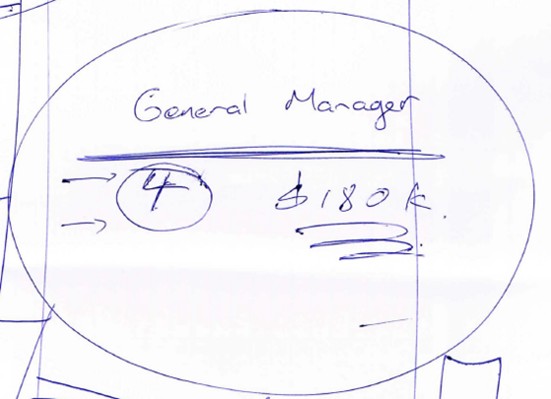
8 For the following reasons, I find that there was no agreement governing the terms of Mr Chambers' employment formed on the terms alleged by him, and indeed no employment agreement at all before 9 January 2023. From that time, there was an employment agreement with duties and pay as detailed below.
9 As to contraventions of the FWA, for reasons that will be explained, Broadway Homes underpaid Mr Chambers and so breached s 323 of the FWA for part of the period of his employment in 2023. As to s 340, Mr Chambers has established that Broadway Homes breached that provision when it dismissed him. Mr Basso was involved in each of these breaches within the meaning of s 550 of the FWA.
The issues
10 The matter proceeded on concise statements and the following account is drawn from them and from the parties' opening submissions.
Background
11 Broadway Homes is a home builder and a national system employer. It is part of a group of companies (loosely so called) known as the Delstrat Group. Mr Basso is a director of Broadway Homes and has day to day control of its commercial activities.
12 It is common ground that Mr Chambers initially worked for Broadway Homes as Sales Manager, from September 2019 until he was dismissed in June 2021. In July 2021, he brought an unfair dismissal claim against Broadway Homes in the Fair Work Commission (FWC). Broadway Homes was successful at first instance in persuading a member of the Commission that it lacked jurisdiction because Mr Chambers was not an employee, but in July 2022 a Full Bench of the Commission overturned that decision. It will be convenient to refer to these proceedings and related proceedings described below at [75] as the 2021 Fair Work Proceedings.
13 Mr Chambers' mother, Jennifer O'Brien also worked for Broadway Homes at this time and was also dismissed at this time. Ms O'Brien had some involvement in the events said to give rise to Mr Chambers' claim in this proceeding, and was a witness.
The settlement and employment agreement(s)
14 It is also common ground that in October 2022, after the Full Bench decision, Mr Chambers and Broadway Homes settled the dispute between them, in so far as it concerned accrued commission entitlements of Mr Chambers and of a company controlled by Ms O'Brien, Jamrok Pty Ltd. But while there are some emails that arguably evidence an agreement to settle the dispute, it was not otherwise reduced to writing. Mr Chambers alleges that the agreement for his re-employment about to be detailed, and the agreement to settle the 2021 Fair Work Proceedings, were one and the same agreement. It is the existence, terms and performance of that alleged employment agreement, or that alleged aspect of the settlement agreement, which is in issue. While I consider that nothing turns on whether there was one agreement or two, I will make findings about that below in case I am wrong. Since I have found that they were two separate agreements, I will generally refer to them that way.
15 As to the disputed terms of employment, according to Mr Chambers' concise statement, the dispute that arose from his dismissal in June 2021 was settled on terms which included that Broadway Homes would employ him for a minimum of four years. He was to be employed as the General Manager of a new division of Broadway Homes called Katura Homes (the respondents characterise this as a 'new marketing arm' of Broadway Homes' business). Mr Chambers pleads that it was agreed that he was to be entitled to a base salary of $180,000 per annum, as well as a bonus of 1% of sales revenue for all homes sold by Katura Homes.
16 In his concise statement in reply, Mr Chambers supplements these pleas as follows:
(a) the agreement was to have a 'total minimum value of $1,220,000', broken down as follows:
(i) $419,186.93 inclusive of GST was to be paid to Jamrok (which Ms O'Brien identifies in the evidence as her company);
(ii) $73,134 was to be paid to Mr Chambers to cover his previous periods of employment;
(iii) $7,679.07 was to be paid to Mr Chambers' nominated superannuation fund as compulsory contributions for his previous periods of employment (this and the two previous amounts total $500,000); and
(iv) Delstrat Pty Ltd, a company in the Delstrat Group, would reinstate Mr Chambers 'within a new entity among its affiliated companies' on the terms described above (that is, a base salary of $180,000 per year for a minimum of four years plus 1% on all sales made by the new business, where $500,000 + 4 x $180,000 = $1,220,000); and
(c) Mr Chambers would cease all claims against the respondents in relation to his previous period of employment (and Ms O'Brien would provide a similar release).
17 In his concise statement in reply, Mr Chambers gives a detailed account of the chronology of events that, he says, led to the settlement and employment agreement being reached in the terms he alleges. It is not necessary to describe that chronology here - I will set out Mr Chambers' version of events when I come to consider his evidence. By closing submissions, however, Mr Chambers confirmed that his case was that the relevant agreement was formed orally at a meeting attended by him, Mr Basso and Ms O'Brien on 18 October 2022. The evidence about this will be set out below.
18 The respondents' concise statement gives a different version of the settlement agreement and the employment agreement. By closing submissions, it was clear that their case was, as stated above, that there was no employment agreement before Mr Chambers started work at Katura Homes in January 2023.
19 Keeping that modification to their case in mind, the respondents say in their concise statement that Broadway Homes had expressed a willingness to pay Mr Chambers $454,545.45 (exclusive of GST) in full and final satisfaction of wages, superannuation and commission payments for the period of employment which ceased on 11 June 2021. It is to be observed that with 10% GST, this totals $500,000.
20 Also, Broadway Homes indicated that it was willing to 're-engage' Mr Chambers as Sales Manager from 9 January 2023 on a full time basis. Mr Chambers specifically disputes that his position was Sales Manager as, he says, there was at that stage no product of the new division to sell. He maintains that he was employed as General Manager. By the time of trial there was no dispute that this was his job title, but there was a dispute as to what duties that title entailed, if it entailed any at all.
21 The respondents concede that an employment contract was formed when Mr Chambers started work at Katura Homes on 9 January 2023. I will describe what they say about the terms of that employment contract shortly.
22 In so far as the respondents made submissions about what was agreed, or at least put by them, in the negotiations in 2022, they maintain that Mr Chambers' salary was to be $180,000 per annum inclusive of superannuation, subject to the following. In the first three months, it was to be paid as a flat rate, that is, $45,000 over those three months. After that, the guaranteed amount was to reduce to $52,000 per annum plus the statutory superannuation minimum. Above that, the salary 'would be progressively supplemented with sales commission (up to the agreed amount of $180,000 gross per annum)'. In opening, counsel for the respondents said that their case was that the amount of the commission was 4% of sales.
23 Mr Chambers specifically denies that his base salary was to be reduced to $52,000 per annum and his case does not include any commission on sales made by him. He maintains that his base salary was to be $180,000 throughout, with a 1% 'override' commission on top of that. It appears from the evidence that commission overrides are in effect commissions paid to managers for sales made by members of their sales team (see [88] below).
24 In any event, the first main issue in the proceeding can be encapsulated in the question of whether the parties reached a legally binding agreement as to the terms of Mr Chambers' employment at all, and if so on what terms.
Mr Chambers' employment from January 2023
25 It is common ground that Mr Chambers commenced employment with Broadway Homes on 9 January 2023. The respondents concede that this means that there was an employment contract between those two parties. But they submit that its terms were very different to those alleged by Mr Chambers.
26 As to Mr Chambers' role and responsibilities, the respondents contend that his primary function was to sell single and double storey home packages. Mr Chambers pleads, however, that his primary function 'was to create a new business entity and system'. The system in question, according to Mr Chambers' concise statement in reply, was 'to automate the pre-construction process of the building company to make it more efficient and minimise wage costs for administration staff', with the apparent intention that this could be transferred across all businesses in the Delstrat Group and so reduce wage costs significantly.
27 As to the duration of Mr Chambers' employment, the respondents' case changed throughout the course of the trial. In their concise statement, they pleaded that Broadway Homes agreed that the term of Mr Chambers' employment would be four years, but that this was subject to Mr Chambers successfully completing a six month probationary period. But in oral opening submissions, counsel for the respondents properly conceded that there was no agreement as to a probationary period (although he maintained that Mr Basso thought there was, as relevant to the reasons for the dismissal of Mr Chambers in June 2023).
28 As a result, by the time of closing submissions, the respondents took the position that in the absence of any agreement as to any fixed term, Mr Chambers' employment was ongoing, with mutual rights to terminate on giving reasonable notice. The respondents submit that in the circumstances, reasonable notice was two weeks.
29 As to remuneration, in the absence of actual agreement, the respondents say that Mr Chambers was entitled to a quantum meruit rate which was the one they were paying him from April 2023: $1,000 per week. This is because, they submit, he had done very little.
30 Turning to relevant events during Mr Chambers' employment in 2023, he pleads that Broadway Homes underpaid him in every fortnightly pay period from the one ending on 19 January 2023 to the period ending on 22 June 2023. The alleged underpayments total $21,519.65. The respondents deny this. Mr Chambers says that he complained about the underpayments in emails and a text message, on various occasions during this period.
31 In a letter attached to one of the emails, on 6 June 2023, Mr Chambers raised the prospect of commencing proceedings under the FWA. He commenced those proceedings in the FWC on 14 June 2023 (the 2023 Fair Work Proceeding). He was dismissed from his employment with Broadway Homes on 20 or 21 June 2023, and was given two weeks' notice. Despite the concerns of Mr Chambers described below at [237]-[238], there is no reason to doubt the authority of the person who signed the dismissal letter of 20 June 2023. Therefore, while nothing turns on it, I find that the date Mr Chambers was dismissed was 20 June 2023.
The reason(s) for Mr Chambers' dismissal
32 Mr Chambers pleads that he was dismissed because he had, had exercised, or proposed to exercise various workplace rights. Several such rights are specified in his concise statement but it is not necessary to set them out, because the respondents accept that he had workplace rights and that in raising complaints about his pay and in commencing the 2023 Fair Work Proceeding he exercised those rights. It is sufficient to proceed on the basis that as at 14 June 2023, Mr Chambers was exercising the workplace right specified in s 341(1)(b) of the FWA, being the right to initiate and participate in proceedings under a workplace law, being a conference conducted or hearing held by the FWC (s 341(2)(a)).
33 The respondents also accept that Mr Chambers was dismissed from his employment on 20 June 2023. There is no issue that the act of dismissing Mr Chambers is capable of being adverse action under s 342 (column 2 of item 1(a) in the table in s 342(1)).
34 The issue is whether that adverse action was taken against Mr Chambers because of that admitted exercise of a workplace right: s 340(1)(a)(ii). As an apparent particular of this claim, Mr Chambers alleges that the FWC notified the respondents of the proceedings commenced against them on the afternoon of 19 June 2023, Mr Basso acknowledged receipt of the notification later that afternoon, and Mr Chambers was dismissed on the next day. Mr Chambers also pleads in that context that the respondents had not given him any formal warning or raised any concerns about Mr Chambers' performance or that of Katura Homes.
35 The respondents deny that Broadway Homes dismissed Mr Chambers because he had, or had exercised, or proposed to exercise any workplace rights. Rather, they say that Mr Basso decided on 20 June 2023 that Broadway Homes should dismiss Mr Chambers because he 'did not make any sales or generate any leads that might produce a sale during the Probationary Term, and his role was redundant'. The 'Probationary Term' is defined to be the six month period of probation that the parties had allegedly agreed on. As said, by the time the respondents opened their case, this had devolved into an allegation that Mr Basso subjectively believed in the 'Probationary Term', even though it was never actually agreed. But that lack of any such term by itself is not significant on the respondents' case, because they deny that there was a four year minimum term, and contend that Mr Chambers was entitled to two weeks' notice only (which was the period of notice given).
36 As to the reasons for dismissal alleged by Broadway Homes, Mr Chambers denies that he was responsible for selling homes and so denies that his job performance was unsatisfactory. He does plead, though, that other companies within the Delstrat Group were experiencing delays in 'producing product to sell for the new business'. So, he says, he offered to help Broadway Homes with sales. Some five weeks before he was terminated, Broadway Homes gave him 25% of their 'unqualified sales leads (email enquiries from their website and Facebook adverts)'. But according to Mr Chambers, it usually takes three to six months to convert a lead into a sale of a two storey luxury home. Therefore, the lack of any finished sales as a result of those leads within five weeks cannot have been a reason for his dismissal.
37 The respondents accept that if Broadway Homes is liable for breach of s 340 of the FWA, it follows that Mr Basso is liable by reason of his involvement in the breach. He was the sole decision maker.
The witnesses
38 There were three witnesses: Mr Chambers, Ms O'Brien and Mr Basso. Each gave evidence in chief by way of affidavit and each was cross-examined. It is convenient to offer brief comment on the witnesses at this point.
Peter John Chambers
39 Mr Chambers was 47 years old when he gave evidence. He has worked in the residential construction industry in various capacities since 1999.
40 Mr Chambers was cross-examined for the better part of a day. He occasionally appeared brusque in the witness box, often confining himself to one word answers. But I did not form the view that he was obstructive. He appeared to consider the answers to questions carefully before he gave them, and made concessions where that was appropriate. Nothing in his demeanour or the content of his evidence suggested that he gave it other than honestly.
41 Nevertheless, as will become apparent in my discussion of the evidence below, there were reasons to doubt the reliability of Mr Chambers' recollections. As cross-examining counsel pointed out, much of Mr Chambers' affidavit evidence about the relevant meetings took the form of commentary on his fragmentary and somewhat cryptic notes from the meetings, rather than his recollection of what was actually said at them. That evidence did not improve when he was asked what he or Mr Basso did say at those meetings; as will be detailed below, often Mr Chambers could not even paraphrase what was said, and retreated to generalities. When tested, his evidence about the relevant discussions became quite vague.
42 Also, on occasion, Mr Chambers' evidence was incredible: for example, when Mr Chambers accepted as correct the proposition that Mr Basso offered him a job in which he did not have to do anything, and would be paid a base salary of $180,000 per year whether he turned up or not 'without being required to be accountable in any way, shape or form for output'. That and other examples will be described below.
Jennifer Katherine O'Brien
43 As has been said, Ms O'Brien is Mr Chambers' mother and gave evidence as part of his case.
44 I do not need to make any assessment of Ms O'Brien's credibility, however, because I have determined that her evidence is of no probative value, even if it is fully believed. Her affidavit appears not to have been prepared with the assistance of a legal practitioner - in evidence she said she prepared it herself. Perhaps because of that, it is comprised almost entirely of evidence that is both hearsay, about discussions between Mr Chambers and Mr Basso which she did not witness, and at an extremely high level of generality. This assessment of her evidence was confirmed in cross-examination. With three exceptions, her affidavit is a very general summary of things Mr Chambers told her about the settlement discussions. While it was read into evidence mostly without objection, I put no weight on evidence of that kind. Save for the exceptions, the evidence is, with respect, not worth describing further.
45 The first exception is that Ms O'Brien gave some evidence about her history at Broadway Homes, where she worked, including her dismissal and the claims she brought as result. But while relevant background, this evidence adds nothing to Mr Chambers' uncontested evidence about those matters, so there is no need to deal with it separately.
46 The second exception is that Ms O'Brien did attend a meeting between Mr Chambers and Mr Basso which took place on 18 October 2022 and is described below. But her evidence in chief about what was said or done at the meeting, in so far as it is capable of bearing on the existence or terms of any agreement between Mr Chambers and Broadway Homes, is so general as to be worthless. She said, for example, that Mr Basso 'displayed enthusiasm for the proposed agreement at this meeting', the 'proposed agreement' being one that Mr Chambers told her about before the meeting, not based on any direct observation of the discussions by Ms O'Brien. It is true that Ms O'Brien gave further evidence about this meeting during cross-examination. I will address that in the course of the account of the evidence I give below.
47 The third and final exception is that Ms O'Brien also attended a conciliation conference on 21 October 2022. Again, Ms O'Brien's evidence about this is very general: she says that at the conference Mr Basso, a member of Broadway Homes' senior management staff, Don McLean, Mr Chambers and she 'agreed that the proposed settlement would be actioned'. This time, the 'proposed settlement' at least seems to be described by Ms O'Brien based on what she observed at the meeting. I will therefore set out that evidence below when I come to consider that conference. But as will be seen there, it too was of such generality that I put no weight on it.
48 It is not necessary to comment further on Ms O'Brien's evidence. Even proceeding on the basis that she gave it entirely honestly, its content and the way it was presented meant it was of no assistance to the Court.
Mark Basso
49 There was little evidence about Mr Basso's experience and background. But from answers he gave under cross-examination, as well as things Mr Chambers said about him, it can be inferred that he is an experienced business person with a long history in the building industry including as a director of Broadway Homes and other companies, with executive responsibilities.
50 Mr Chambers cross-examined Mr Basso for most of the second day of the trial and part of the third day. Mr Basso was generally calm in the witness box; indeed his demeanour can be described as subdued. For the most part his answers were straightforward and did not appear to be influenced by distrust of or antipathy towards the person cross-examining him. His evidence was largely unshaken.
51 There are occasions detailed below where I have not accepted Mr Basso's evidence on specific matters because it is inconsistent with objective circumstances. That is mostly so in relation to his expressed reasons for dismissing Mr Chambers in June 2023; while I am prepared to accept that he had concerns of the kind expressed in mind, I am not prepared to find that in all the objective circumstances Broadway Homes has discharged the onus effectively placed on it by s 360 and s 361 of the FWA of proving that it did not dismiss him for reasons that included the fact that he had commenced the 2023 Fair Work Proceeding. I also do not accept that some aspects of the position Mr Basso took as to the terms of the relevant contract are objectively likely. Save in those specific instances, however, I have accepted Mr Basso's evidence as given straightforwardly and consistent with objective probabilities.
52 It is however necessary to say that, like Mr Chambers, Mr Basso gave quite a bit of evidence about his subjective thinking as to the agreement that had been reached, for example the commercial advisability (in his view) of employing Mr Chambers for four years with no ability to dismiss him. This evidence was objected to and I have not taken it into account. In relation to the question of the terms of the agreement(s) reached between the parties, only evidence about objectively apparent matters is relevant.
Evidentiary ruling - without prejudice communications
53 During the course of the trial the respondents objected to the admission of parts of Mr Chambers' affidavit evidence about things said at certain meetings, on the basis that they were without prejudice communications. The respondents objected to the admission of certain documents on a similar basis. I overruled those objections during the trial and said I would give reasons as part of this judgment.
54 The communications and documents in question are:
(a) Annexure PC-13 to Mr Chambers' affidavit, which is an email chain dated 14 October 2022 (and headed 'Without Prejudice'), in which Mr Basso gave Mr Chambers some information, apparently relevant to the settlement discussions they were having;
(b) paragraphs 41-44 of Mr Chambers' affidavit, concerning things said at a conciliation conference at the FWC on 15 October 2022 (which preceded further settlement discussions later on);
(c) paragraphs 165-166 of Mr Chambers' affidavit, concerning things said at the further conciliation conference on 21 October 2022 which has already been mentioned;
(d) paragraphs 35-38 of Ms O'Brien's affidavit, in which she purports to summarise the outcome of the same conference; and
(e) Annexures PC-60 and PC-62 to Mr Chambers' affidavit, which both contain an email dated 30 May 2023 from Mr Chambers to the Delstrat Group's Chief Financial Officer, Tracy Joughin, in which Mr Chambers says things about the effect of the settlement discussions held the previous year and about the terms of his re-employment in 2023.
55 While some of these communications took place in conferences held under the aegis of the FWC, the respondents directed me to no statutory provision specific to that jurisdiction providing that communications at those conferences are inadmissible in subsequent proceedings. So I resolved the objections on the basis of the general law of evidence, as governed by the Evidence Act 1995 (Cth).
56 The admissibility of such communications and documents is governed by s 131 of the Evidence Act. Subsection (1) provides:
Evidence is not to be adduced of:
(a) a communication that is made between persons in dispute, or between one or more persons in dispute and a third party, in connection with an attempt to negotiate a settlement of the dispute; or
(b) a document (whether delivered or not) that has been prepared in connection with an attempt to negotiate a settlement of a dispute.
57 I was satisfied that this provision applied to the evidence to which the respondents objected. Mr Chambers and Broadway Homes were in dispute at the time of the meetings and discussions just mentioned, and the email of 14 October 2022 and the various things said, were all in connection with the settlement of that dispute.
58 Section 131(2) of the Evidence Act, however, contains a number of exceptions to the application of s 131(1). One of those, in paragraph (f), is that:
the proceeding in which it is sought to adduce the evidence is a proceeding to enforce an agreement between the persons in dispute to settle the dispute, or a proceeding in which the making of such an agreement is in issue …
59 For two reasons, the application of this exception to the evidence in question was not entirely straightforward. The first reason is that the parties were not at one as to whether the agreement that governed the terms of Mr Chambers' employment by Broadway Homes which commenced in 2023 was the same as, or part of, the agreement that they reached to settle their dispute in the FWC in 2022. As has been said, Mr Chambers maintained that the agreement to employ him was part of the settlement; the respondents maintained that they were separate. Therefore, it is open to dispute as to whether, by suing on his employment contract, Mr Chambers is seeking to enforce an agreement to settle the dispute. That goes to the first limb of s 131(2)(f), concerning whether this proceeding is 'a proceeding to enforce an agreement between the persons in dispute to settle the dispute'.
60 The second reason why it was not straightforward to apply s 131(2)(f) was that, at least at the time the objection was resolved, the parties both accepted that there was an agreement governing the terms of Mr Chambers' employment. So it is arguable that the 'making of [the] agreement' was not in issue. That goes to the second limb of s 131(2)(f).
61 Ultimately, however, I did not consider that those matters stood in the way of applying s 131(2)(f). The exception in that paragraph 'should not be narrowly construed and can encompass proceedings where the interpretation of a settlement agreement is in issue': Hebei Jikai Industrial Group Co Ltd v Martin [2015] FCA 228 at [93] (Wigney J). Also, the reference in the paragraph to the 'making of' the agreement can encompass proceedings where the circumstances in which the agreement was entered into are in issue: Australian Securities and Investments Commission v Union Standard International Group Pty (Trial Ruling No 1) [2023] FCA 169 at [19] (Wigney J). It can also encompass proceedings in which the effect of the settlement itself is in issue: Ligon 158 Pty Ltd (in liq) v Shield Holdings Australia Pty Limited (de-registered) [2024] FCA 144 at [41] (Cheeseman J).
62 Further, it would not be sensible to read s 131 as excluding evidence that is capable of supporting findings that an alleged agreement to settle a dispute included terms as to Mr Chambers' employment. If it were to be read that way, evidence going to the very dispute about the terms and proper characterisation of the alleged settlement and employment agreement would be excluded. See by analogy Young J's comment in Finlayson v Campbell (unreported, Supreme Court of New South Wales, 4 September 1997) to the effect that a supportable allegation that there is an agreement arising from without prejudice discussions is sufficient to permit evidence about those discussions to be adduced, even if the court ends up finding that there was no agreement. In my view that approach is consistent with the policy behind the exception: as to which, see Muscat v Haider (No 2) [2015] ACTSC 349 at [137] (Refshauge J).
63 I considered that this proceeding is a proceeding to enforce an agreement allegedly made to settle a dispute, of which an agreement governing Mr Chambers' employment was allegedly a part. Since those allegations are supportable, evidence of communications between the parties to the dispute is admissible under the first limb of the exception in s 131(2)(f).
64 As to the second limb, in issue in this proceeding are what are the terms of the alleged settlement agreement, and so what agreement was made, orally or by the conduct of the parties. In my view, this meant that the making of the settlement agreement is in issue. Understanding this to involve the 'making of [the] agreement' avoids an unduly narrow reading of s 131(2)(f).
65 It was for those reasons that I overruled the objections to the admissibility of the evidence described at [54] above.
The relevant events
66 When the issue concerns the terms of an agreement that was not formally documented, it is often necessary to review the relevant events in chronological context to see what, objectively, can be derived from them. The following is an account of the evidence, where possible with findings of fact where the parties' versions of events differs. Since some findings will depend on overall objective probabilities, it will be necessary to defer them to the sections after this one, where I will determine the matters in issue.
67 It is necessary to note at the outset that Mr Chambers was not legally represented, and appears to have prepared his affidavit without legal assistance. This is relevant because, as appears below, much of his evidence about crucial meetings between he and Mr Basso was at a high level of generality. It was often about Mr Chambers' subjective thinking, rather than any objective manifestation of contractual assent. Making allowances for his lack of forensic experience, I have considered whether a fair reading of the evidence nevertheless reveals evidence of an objective kind. Sometimes it has, sometimes not. To be clear, where I have discerned evidence of that kind, that means only that it has sufficient probative value to be considered. Whether it is persuasive or should be given weight is another matter.
Mr Chambers' employment history
68 Mr Chambers worked in the residential construction industry from 1999 in various capacities. In 2005 he progressed into a sales and design role. He has contributed to the construction of over 1,000 homes across the Perth metropolitan area. Mr Chambers' mother, Ms O'Brien, has often collaborated with him in relation to their respective roles at various building companies over the years.
69 There was a dispute about Mr Chambers' description of himself as an expert in the 'field of residential design, construction and sales'. It is not necessary for me to resolve the dispute; it is enough for me to accept that Mr Chambers has a great deal of experience in the industry, and that he had that experience in late 2022, when the settlement and employment agreements were under discussion.
The initial 'employment arrangement' between Mr Chambers and Broadway Homes
70 Broadway Homes hired Mr Chambers as a sales person of luxury homes in September 2019. The agreement governing this between him and Broadway Homes was in evidence. It is relevant to note that Mr Chambers (or Jamrok, for his services) was remunerated solely by way of a 4% commission on sales (4.5% for any month in which he achieved more than $1 million in sales). In the words of Schedule A to the document:
Only when all relevant approvals have been received, Commission Claim Form completed and authorised by the Operations Manager, and the job has commenced to slab down on site on the prior month, will the Consultant be paid.
71 Ms O'Brien also joined the company in October 2019. While it is not clear what her role was, I infer that it was similar to Mr Chambers' sales role and involved working with him. The parties did not agree on the precise nature of the relationship at this time between Broadway Homes on the one hand and each of Mr Chambers and Ms O'Brien on the other, including whether they were employment relationships (hence the inverted commas in the above heading, albeit that nothing turns on this).
72 Mr Chambers' uncontested evidence is that he quickly became Broadway Homes' top selling sales representative and was promoted to a senior management position in June 2020. He has presented figures indicating that during his initial time with Broadway Homes he had earned a combined sales commission and override of roughly $500,000 per annum, and that Ms O'Brien had earned roughly $175,000 per annum. It seems that for at least part of that time, the arrangement was that commissions for homes sold by Mr Chambers were to be paid to Ms O'Brien's company, Jamrok.
73 However, both Mr Chambers and Ms O'Brien ceased to work for Broadway Homes in June 2021, according to Mr Chambers 'with no warning or notice'. Mr Basso's account of this is different, in that he suggests that Mr Chambers, at least, had resigned rather than been dismissed. It is not necessary to resolve who is correct; the relevant fact is that Mr Chambers and Ms O'Brien were in dispute with Broadway Homes about the termination of their working arrangements with the company.
74 On 29 June 2021, Mr Chambers sent Broadway Homes an email offering to accept sums totalling approximately $1.22 million in full and final settlement of the amounts owed to him and Ms O'Brien. There was no response to this.
The initial Fair Work Commission and Federal Court proceedings
75 In July 2021 each of Mr Chambers and Ms O'Brien commenced proceedings in the FWC. It is not necessary to describe the course of the proceedings in detail. What is relevant is that by July 2022, Mr Chambers had successfully established before the Full Bench that he was an employee of Broadway Homes, and so eligible to pursue the Fair Work proceedings, but Ms O'Brien's appeal to the Full Bench on a similar point had been unsuccessful, and she had applied to this Court for judicial review of that Full Bench decision. Broadway Homes was also at this time contending that the FWC did not have jurisdiction in relation to Mr Chambers because he had resigned and had not been dismissed.
76 In September 2022 the Commission convened a conciliation conference. It did not resolve the proceedings. However informal negotiations ensued.
The meeting of 7 October 2022
77 Mr Chambers and Mr Basso met at Seacrest Homes' office in Wangara on 7 October 2022 (it appears that Seacrest Homes is a company or business that is part of the Delstrat Group).
78 In so far as Mr Chambers' evidence about the meeting is relevant, it is that Mr Basso told him that he (Mr Basso) was having to clean up a 'mess' at Broadway Homes. Mr Chambers then said words to the effect that he (Mr Chambers) could be given the position of General Manager of Broadway Homes to help in fixing the company to make it more profitable. Mr Basso's response was not to accept that, saying that there would be staff at Broadway Homes who would not be happy if Mr Chambers were to return. According to Mr Chambers, he then raised the idea of a 'spin off' company being formed for Broadway Homes that could target more efficient and cost effective two story homes. Mr Chambers says that Mr Basso expressed interest in the idea.
79 The meeting was then joined by Mr McLean. There was discussion about the commissions due to Mr Chambers and Ms O'Brien and some disagreement about how they should be calculated. These discussions were not concluded. Mr McLean left the meeting.
80 Mr Chambers gives evidence of further discussions between him and Mr Basso at the meeting, the content of which is not relevant. The meeting ended without any firm proposal from either person, let alone any consensus.
81 Mr Basso also gave quite general evidence about this meeting. He says he recalled the meeting and what was said, but not the words that people used. Given the tenor of his evidence, this seems to be the nature of his recollection about what was said at all the meetings he attended. That is unremarkable; experience shows that usually where a person does recall specific words, the occasion recalled was exceptional in some way (or the person is exceptional).
82 Mr Basso's recollection of the 7 October 2022 meeting (at paragraph 25 of his affidavit) is as follows (for consistency and convenience I will change all references in Mr Basso's affidavit to 'the Applicant' to 'Mr Chambers' without marking that change with square brackets):
(a) settling the dispute was the main focus and topic for discussion;
(b) there was discussion that appeared to me to be directed at identifying settlement terms;
(c) there was no dispute that Broadway owed Mr Chambers and his mother some money for commissions;
(d) none of us were sure how much to pay and, given the Commission's finding that Mr Chambers had earned those commissions as an employee, how to pay both Mr Chambers and Ms O'Brien;
(e) there was a dispute about whether commissions should be paid on cancelled deals;
(f) Mr Chambers expressed a desire to get back into the industry; and
(g) Mr Chambers claimed that Broadway owed him and his mother about $1.2M.
83 Mr Basso denies that Mr Chambers suggested at the meeting that he should be made General Manager of Broadway Homes. He denies that the idea of a spin off business was raised at this meeting and says that in any event, it was his (Mr Basso's) idea, not Mr Chambers. Save as to these points, Mr Basso's evidence about the meeting is largely consistent with that of Mr Chambers. I accept the evidence of both men save as to these two points. There is no way of deciding between them on the two disputed points but I do not need to: nothing came of the suggestion that Mr Chambers could become General Manager of Broadway Homes (if indeed it was made) and it does not matter whether the idea of a spin off business was raised by Mr Chambers on this occasion or was raised by Mr Basso later.
84 Later on the same day, Mr Basso and Mr Chambers (by text and telephone) agreed to move the next FWC hearing to a later date to give them more time to discuss a settlement.
The meeting of 13 October 2022
85 On the afternoon of 13 October 2022, Mr Chambers and Mr Basso again met at the offices of Seacrest Homes.
86 According to Mr Chambers, he presented a calculation of the total commission payable of $426,820.77. There was discussion of the commission figures, but Mr Chambers said that he also sought agreement on 'compensation for what Broadway did to Ms O'Brien and I'. There is in evidence a sheet of paper, said to be the back of a printed spreadsheet about commissions, with handwriting which, on Mr Chambers' uncontested evidence, was made by him at the meeting. There is a figure '$750k' which is crossed out, and two figures nearby of '$550k' and '$200k'.
87 Mr Chambers' evidence is that this represented the $750,000 to which he and Ms O'Brien considered themselves entitled, along with a compromise figure of $550,000 along with the $200,000 that would be relinquished by that compromise. Mr Chambers' evidence does not say in terms that any of these figures were communicated to Mr Basso in the meeting. However he does say later that Mr Basso was pushing in the meeting to reduce the $550,000 down to $500,000.
88 Consistently with this, on the reverse of the page the figure '$500k' is written down by Mr Chambers and circled. This was a page with a printed spreadsheet which, according to Mr Chambers, calculated '"Override" commission amounts' for his previous sales manager commission. It appears to have been common practice, at Broadway Homes at least, that when a salesperson sold a house, that person received most of the commission but a smaller 'override' commission was paid to the person's manager. On the spreadsheet tendered by Mr Chambers, this was calculated at 1.25%.
89 In any event, it can be accepted that Mr Chambers' evidence overall is that at some point in the meeting, Mr Basso mentioned the figure of $500,000, but it is not possible to be more specific than that.
90 A further set of notations are also on the sheet as follows:
91 Mr Chambers' affidavit evidence is that this set of notations 'represented the reinstatement offer that included the position of General Manager for 4 years at a salary of $180k per annum'. I take this as evidence that either he or Mr Basso put that proposal at the meeting. But that is as far as the evidence goes. In cross-examination, Mr Chambers described this as 'an organic discussion around that four-year term' (ts 40) but at the same time he also characterised it as an offer made by Mr Basso.
92 However earlier in the cross-examination, Mr Chambers had been asked specifically what Mr Basso said about that 'offer'. His answer was (ts 33):
I can't recall the exact words, but the discussion was held that I would come back and work. It was said that I couldn't work at Broadway because there were people at Broadway that I - I - was still there when I was terminated the first time. But he was - basically he was offering me a position to come back and work at Broadway as a part of our settlement.
93 When pressed again on what Mr Basso actually said or did, Mr Chambers' answer was (ts 34):
So, again, my settlement figure was 750. Mr Basso was never going to come up to that and he stated he was never going to come up to that. He was discussing paying me only 426,000, which I told him we were never going to accept. He understood that I was a very good salesman. He knew the figures that I produced at Broadway Homes. He knew that I had saved all my homes previously.
94 And a little later (ts 34):
The conversation of our settlement included a four-year term and a position of general manager.
95 And a little later still (ts 34-35):
You seem to be having difficulty understanding that what I'm looking for here is for you to tell me what Mr Basso said or did. I'm not asking you to quote him, but at least give us some basis for understanding how these four elements ended up in your affidavit?---Our discussions resulted in Mr Basso agreeing to employ me as a general manager for four years at 180,000 a year.
And you say that offer was made at that meeting?---It was discussed at that meeting.
Well, you say, in your words, this represented the reinstatement offer. Okay?---It was a - it - - -
So I'm asking you, how was this offer communicated to you?---Verbally, as a part of our settlement discussion.
So you're saying that at some point in the meeting Mr Basso-Brusa said to you, 'I would like you to be our general manager. I want to pay you $180,000 a year. And I want you to stay for four years. Will you take it?'?---Not in so - - -
Did he do anything like that?---Not in so many words.
Not in so many words. So are you implying that that's what the offer might be based on things that he that he said?---No.
He didn't communicate this directly as an offer of employment?---Did he, as I said, I can't recall the exact words.
It sounds like you can't recall any of the words. You can't point to anything he said or did that can contains this offer?---Our discussion went for a number of hours. We discussed multiple points, not just the settlement, but we discussed a lot of things.
Well, this would have been a fairly important thing to nail down, wouldn't it?---In a document, yes, definitely.
Well, at all. But you can't recall him nailing it down?---We were actually in principle agreement.
In principle?---Yes.
96 It is not necessary to multiply the examples further. Mr Chambers' inability to be specific about what it was Mr Basso actually said did not reflect well on the credibility of his evidence. Of course he cannot be expected to recall the exact words, but when given an opportunity to give direct evidence about Mr Basso's statements at the meeting, he could not even paraphrase. When pressed about it, he retreated to generally expressed conclusions about what happened, on which I place little weight.
97 Mr Chambers was also asked in cross-examination whether his duties under the proposed employment were discussed at the 13 October 2022 meeting. His response was to the effect that the job title was discussed so that the duties were 'implied'. I do not accept that they were implied. There was no evidence of any generally accepted practice in the residential building industry as to what a general manager would do. Mr Chambers' evidence was that the two men 'discussed just starting a new business' (ts 39). The duties of the general manager of that business must surely have depended on the characteristics of the business, including what functions it was to perform (for example, design, or building, or sales).
98 Another notation on the sheet is said by Mr Chambers to represent an estimate or projection of the sales that could be achieved by the 'spin off' brand. The estimate was in the range of $24 million to $36 million in sales. Mr Chambers explains his thinking about this part of the proposal in his evidence but, again, does not give evidence that anything was actually said at the meeting about it. In contrast to the previous paragraph, admissible evidence that any proposal was actually put at the meeting does not emerge, even at a high level of generality.
99 Mr Chambers' affidavit evidence does refer to both he and Mr Basso using the term 'win/win' to describe the proposal that was under discussion. This appears from his evidence to have three elements: the figure paid to Mr Chambers and Ms O'Brien would be lower than it otherwise would have been; the balance of the payments would be spread out over four years; Broadway Homes would receive the benefit of Mr Chambers' services; and Mr Chambers would have the opportunity to rebuild his career after the dismissal and the 2021 Fair Work Proceedings. Presumably the last of these is the 'win' for Mr Chambers, with the other three being the 'win' for Broadway Homes. I therefore infer that Mr Chambers' evidence is that these elements of the proposal were discussed at this meeting with Mr Basso. He confirmed as much in cross-examination. But it is impossible to be more specific about the evidence than that.
100 The clarity of this evidence did not improve in cross-examination, for when asked about what payment was going to be 'spread out' over four years, Mr Chambers said that the figure of $720,000 (four times $180,000) was never a 'target number'. He presented $180,000 as a number he had proposed after researching the salaries of general managers, a detail missing from his affidavit evidence and also inconsistent with his apparent evidence that it was Mr Basso who offered this amount. And this all seems inconsistent with the impression created by his affidavit that the lump sum of $500,000 plus the four annual salaries of $180,000 were a way of structuring an overall settlement sum. It is also inconsistent with a letter Mr Chambers sent to Mr Basso on 6 June 2023 (see [230] below), which in numbered paragraph 2 notes as part of the history leading up to the agreement alleged in this case that Mr Chambers made an offer to settle the 2021 Fair Work Proceedings for $1,203,910 and also that (at para 8):
The 4-year minimum employment term at a base salary of $180,000/pa, plus the $500,000 lump sum payment combined to resemble the initial offer of settlement made by Mr Chambers on 29 June 2021 (paragraph 2).
101 While Mr Chambers appeared to move back to that position later in the cross-examination, saying that he must earlier have been mistaken, his wavering on the point did not reflect well on his credibility.
102 Also in evidence is another sheet on which Mr Chambers wrote 'West End' circled with two ticks next to it and 'BW' circled and enclosed in a rectangle, which he says stands for 'Broadway'. Mr Chambers' evidence appears to be that at the meeting he said words to the effect that he wanted the new division (then to be called 'West End by Broadway') to be so successful that he would eventually take over Broadway and make it just as successful as well.
103 A further point about Mr Chambers' evidence about the meeting of 13 October 2022 is that in cross-examination, he indicated that the identity of his proposed employer was not specified. At that stage at least, the discussion was on the basis that it would be a company from the Delstrat Group, without saying which one.
104 It is therefore possible to piece together from this and from other things mentioned above that Mr Chambers' evidence is to the effect that the idea of him working as General Manager of a 'spin off' division of the Delstrat Group to be called 'West End by Broadway' was discussed. As already said, it is not necessary to determine whether the genesis of this idea was something Mr Chambers said at the 7 October 2022 meeting or something Mr Basso said at the 13 October 2022 meeting.
105 As to what Mr Chambers' duties would be in this new role, he was consistent in his evidence that he was going to be setting up a new division which would operate on systems that would automate the pre-construction process of the building company and so achieve efficiencies that could be rolled out across the Delstrat Group. I accept that this is what he had in mind during October 2022 and indeed thereafter until he was dismissed. But for reasons given, there is insufficient basis in his evidence to find that he expressed this to Mr Basso at any time in 2022, let alone that Mr Basso expressed his assent to it.
106 According to Mr Chambers, the 13 October 2022 meeting went for a couple of hours and other aspects of Broadway Homes' operations were discussed.
107 Mr Basso also gives evidence about the meeting of 13 October 2022. It is as follows (Basso affidavit para 32):
(a) I told Mr Chambers that I wanted to move forward, but he needed to understand that Broadway did not owe him anything beyond the undisputed commissions - there was no basis for his claim that Broadway owed him and his mother $1.22M;
(b) I agreed that the undisputed commissions amounted to approximately $400.0K (some of which belonged to Mr Chambers' mother);
(c) Mr Chambers requested that the amount be rounded up to $500.0K, including GST, to compensation [sic] him for his time;
(d) I said that, given Mr Chambers had been found to be an employee, it was necessary to pay some of that commission to Mr Chambers as salary;
(e) I suggested establishing a marketing business to sell homes that Broadway would build;
(f) Mr Chambers praised his sales expertise and indicated a willingness to be involved with a new venture;
(g) I told Mr Chambers that I'd be willing to give him a chance to sell houses and to earn the additional money ($1.22M-$500.0K=$720.0K) that he thought he was entitled to;
(h) I told Mr Chambers that Broadway didn't owe him anything except the $500.0K;
(i) Mr Chambers pointed out that we couldn't complete any discussions without involving his mother, because some of the money we were discussing was hers - I agreed.
108 Mr Basso says that there was no discussion about an override commission, and had there been he would have dismissed it out of hand because, at that point, they were discussing a business in which Mr Chambers was to be the only worker. This is objectively likely to be true and I accept it.
109 Mr Chambers' evidence is that on the evening of that day (13 October 2022), he discussed the meeting with Ms O'Brien. Her view was that $550,000 was the minimum amount they should be accepting. In an email sent to Mr Basso, Mr Chambers put that position to him, with explanations and rationales that do not need to be set out here. It is worth noting, however, that the email refers to 'the opportunity of me starting West End by Broadway with you'.
110 Mr Basso and Mr Chambers spoke after that. The following day (14 October 2022) Mr Basso sent Mr Chambers an email which appears to have attached some further figures and said 'As discussed I'm more than happy for your mum to attend the next meeting as the attachments relate to you as well as your mums company'.
The meeting of 18 October 2022
111 Mr Basso, Mr Chambers and Ms O'Brien met at the Seacrest Homes office on the afternoon of 18 October 2022.
112 Again, Mr Chambers' evidence about this meeting mostly explains a few sheets of paper he put into evidence which contains a number of handwritten figures along with some shapes and scribbles.
113 One such sheet is a page from a notepad with numbers and scribbles on it made by Mr Chambers. His evidence based on this appears to be that the following numbers were 'discussed' at the 18 October 2022 meeting, but he does not say by whom they were raised, or how or in what context:
(a) $1.22 million as an offer originally made to Broadway Homes shortly after Mr Chambers' earlier dismissal;
(b) the $500,000 compromise settlement figure 'we were agreeing to';
(c) four amounts of $180,000 representing the annual salary for four years totalling $720,000; and
(d) the total of the $720,000 and $500,000, being again $1.22 million.
114 Mr Chambers gives further evidence of this nature explaining other figures noted on the page. There is a note '3mths' which Mr Chambers says 'represented the initial 3-month period that all parties determined was the minimum time required before any sales could possibly be produced by the new business as it needed to be setup from scratch'. Mr Chambers confirmed in cross-examination that at this meeting there was discussion of a three month period to set up the business (which became Katura Homes), but he did not accept that it was a 'grace period' as put to him by the cross-examiner.
115 There are also figures on the page that appear to relate to the numbers of houses that would need to be built to pay for the outlays that had been discussed. But beyond saying that 'the build number required to cover my salary' was discussed, Mr Chambers does not say clearly that any of the specific figures noted there were mentioned at the meeting. There is other evidence of a similarly broad and imprecise nature to the effect that the right package to attract sales staff, presumably the proposed 'spin off' venture, was also discussed.
116 Mr Chambers' affidavit then does give more specific evidence about actual discussions at the meeting. It is:
107. Mr Basso raised a point by saying words to the effect that 'He start[s] projects for the long term, not just 4 years.' When referring to the 4-year minimum term that was presented.
108. I replied with words to the effect 'that the 4 years was to protect me for that period, and it ensured Ms O'Brien, and I received our full settlement amount.'
109. I also reiterated that, 'I wanted to build our new business into a long-term brand and that I wasn't here for just 4 years either.'
110. Mr Basso noted words to the effect that, 'it was a risk and that I might not turn up to work for the entire four years.'
111. I agreed that it was a risk, however I … highlighted that my previous work with Broadway and my desire for a job to re-establish myself in the industry significantly reduced his risk.
117 In cross-examination, Mr Chambers' evidence about the '4-year minimum term that was presented' was vague and confusing. The relevant passage is as follows (ts 52-53):
Who suggested the four-year minimum term?---It was a mutual discussion.
So nobody suggested it?---Mark - when we were speaking about the four-year minimum term, he said, 'I don't start projects for four years. I don't just do something for four years; I do it for long term.'
I'm concerned about your recollection of these events because, when I asked you whether you said something or Mr Basso said something, you can't recall?---I've said words to the effect.
Well - - -?---They were along those lines.
Well, who said them? You or Mr Basso-Brusa?---Mr Basso.
Okay. So now, you remember that he was the one who, you say, presented the four-year option?---Exactly as I said in 107. Mr Basso raised the point by saying words to the effect he 'starts projects for the long term, not just four years,' when referring to the four-year minimum term that was presented.
'The four-year minimum term was presented.' So I asked you who presented it, you said - you didn't answer my question, you simply said it came up in conversation?---Yes, possibly. It was a discussion between both of us. It may have come from me. For me, the four-year minimum term was important because it protected my - it gave me an opportunity to rebuild my career, and it also then gave me an opportunity to keep the settlement agreement that we - that we were basically working towards.
118 Again, without in any way criticising Mr Chambers' inability to remember precise words, the imprecision of his evidence about this point is important. For if the way Mr Basso raised the notion of a four year term was to say that he did not start projects for four years, that hardly supports a contention that he was agreeing to a four year minimum term, with no scope for dismissal, with a guaranteed base salary of $180,000. This is another example of how the general nature of Mr Chambers' evidence damaged the credibility of that evidence.
119 Mr Chambers' affidavit contains more evidence about another sheet of paper covered with handwritten figures and scribbles made during the meeting of 18 October 2022. This time, according to Mr Chambers, Mr Basso was responsible for some of these. However, in cross-examination Mr Chambers appeared to identify only one somewhat illegible note as coming from Mr Basso.
120 To the extent that anything rationally probative emerges from this part of Mr Chambers' affidavit, it is that Mr Chambers and Mr Basso were discussing the four year $180,000 per year payments as a 'base' salary for Mr Chambers, and they were also discussing how that $180,000 would be made up of sales commissions, being a 3% commission for houses sold by Mr Chambers and a 1% 'override' commission payable to him for houses sold not by him but by members of his team. Mr Basso is said to have commented that 'he doesn't just print money and that money coming in from clients paid all the bills' so that the 'salary' would have to be covered by the commission on house sales.
121 Yet another sheet of paper with handwritten notes on it said to have been made in the meeting is in evidence. According to Mr Chambers, this reflects a different bonus structure he discussed with Mr Basso. This includes '$180k Base' which reflects the $180,000 per annum base salary which, he says 'remained a constant throughout our discussions'.
122 As with the meeting of 13 October 2022, Mr Chambers was unable to add meaningful detail to this evidence in cross-examination. He confirmed that his evidence was that the majority of the terms of employment were confirmed at this meeting. But when asked how Mr Basso communicated the '180, four years, 1 per cent bonus' to him, he said only that he could not 'recall the exact conversation' (ts 43). Again, this did not enhance the credibility of his evidence (in the sense of its reliability).
123 Ms O'Brien was also cross-examined about this point in relation to the meeting of 18 October 2022 and her evidence was similarly general. When asked what Mr Basso said about Mr Chambers' proposed salary, she was only able to say that he 'agreed to paying Peter the $180,000 a year and he used the words "win-win", because he was - this way he had a chance of making money out of it, Peter had a chance of making money and bonuses, and he thought it was a win-win for both people, or all parties concerned' (ts 83). But when asked how precisely the deal was expressed, Ms O'Brien was unable to say. I place no weight on evidence at such a high level of generality.
124 Cross-examining counsel then gave Ms O'Brien the opportunity to describe the entire course of the meeting in her own words and she did, but without any evidence capable of establishing what Mr Basso or Mr Chambers actually said that would have given rise to an agreement on the terms Mr Chambers alleged. This is why, with respect, I put no weight on Ms O'Brien's evidence.
125 Then a bit later, when pressed on how the alleged agreement was expressed at the meeting, Ms O'Brien said that it was said by Mr Basso that Mr Chambers (ts 85):
would be the general manager of a new start-up division within his organisation, that he would have just himself as an employee initially, that he would be paid $180,000 a year, and once the division got up and running, he would get a one per cent from the sales. It was all discussed.
126 But evidence at this level of generality, to the effect that these matters were 'all discussed', gives me no confidence that Mr Basso actually expressed assent to these matters. Nor is it necessarily inconsistent with the respondents' case, which is that Mr Basso did agree to pay a salary of $180,000 per year, albeit inclusive of GST, but only guaranteed for the initial three month period, with the $180,000 to be largely contingent on commissions thereafter. I therefore put no weight on Ms O'Brien's evidence as shedding any further light on what either Mr Chambers or Mr Basso actually said or did at the 18 October 2022 meeting. That is especially so when Mr Chambers himself does not give evidence that Mr Basso expressed a willingness to agree to these terms at the meeting.
127 Other evidence which Mr Chambers gave in cross-examination about this meeting, which was implausible was (ts 45-46):
Now, I just want to be clear with you there. You're saying that this was going to be guaranteed regardless of what you did, whether you achieved anything, whether you did any work, you're saying you become entitled to this anyway?---It was a discussion we had, yes.
I'm asking the question - - -?---Yes, I was entitled to it.
You were entitled to it because Mr Basso said that you couldn't be dismissed?---He told me I had a four-year minimum term. We discussed a four-year minimum term.
Did you understand from anything that he said or done that there was no way you could be dismissed?---Yes.
So what you're asking us to accept is that Mr Basso-Brusa, an experienced guy in the commercial field, offered you a job in which you didn't have to do anything, you would simply get paid $180,000 whether you turned up or not, without being required to be accountable in any way, shape or form for output?---Correct.
You're saying that that's the deal Mr Basso-Brusa made with you?---There were other considerations, but yes, that was the deal.
Well, what I'm going to put to you is that that summary of what Mr Basso had in mind for you and what he discussed with you is just pure fantasy and it didn't happen. He never agreed to that at all?---Then he would be incorrect.
128 In my view, this account of what Mr Basso was prepared to agree to could only be plausible if the evidence indicated that the parties had agreed to a global settlement of $1.22 million and the guaranteed four annual salaries of $180,000 each were part of how that was to be structured (in that $500,000 + 4 x $180,000 = $1,220,000). As mentioned above, while that was indeed the tenor of some of Mr Chambers' affidavit evidence, he moved away from that in cross-examination. Therefore on his own account of events, this possible rationale for the deal does not arise.
129 Even if Mr Chambers had not moved away from that account, the evidence did not support a finding that Mr Basso was indeed prepared to pay $1.22 million to settle the 2021 Fair Work Proceedings. Mr Chambers made attempts to establish his entitlement to the extra $720,000 in cross-examination of Mr Basso, but those attempts were unsuccessful; Mr Basso remained adamant that no commission was payable for any homes that had not reached the 'slab down' stage. Mr Chambers himself tendered spreadsheets apparently prepared by Mr McLean during the course of the negotiation of the settlement of the initial Fair Work dispute which appears to show commissions owing of about $238,000 and override of about $168,000. This of course is nowhere near $1.22 million.
130 In cross-examination, Mr Basso gave an unshaken account of the settlement discussions in early October 2022 to the effect that, while Mr Chambers and Ms O'Brien were demanding $1.22 million, he had figures saying that there were owed approximately $420,000, because the extra $720,000 that was being claimed was for deals that did not go ahead. Mr Basso presented throughout as an experienced business person who was not prone to give something away for nothing, and he had a basis for his position in Mr Chambers' previous written contract, as set out at [70] above. Whether or not the position was correct, I find that it was Mr Basso's state of mind throughout the settlement discussions of October 2022.
131 It is the respondents in this matter who submit that a total settlement of $1.22 million was Mr Chambers' objective in pursuing the salary arrangement for which he contends, but they do not contend that Mr Basso was prepared to agree to that amount. Their point is that it is unreal to suggest that Mr Basso would have agreed to this.
132 As a result, I find implausible Mr Chambers' evidence to the effect that during the four year employment term he could not be dismissed in any circumstances.
133 Later in cross-examination, when asked about how an arrangement of the kind put by Mr Chambers would protect Mr Basso, Mr Chambers' evidence was 'Because I needed to rebuild my career' (ts 53). The cross-examination then proceeded:
So how does that protect Mr Basso-Brusa?---Because I intended on building Katura Homes into a profitable, financially beneficial business for Mr Basso-Brusa.
So, ultimately, what your evidence is, is that Mr Basso-Brusa was concerned about you not turning up, but you were able to deal with his reservations, simply by expressing your commitment to getting the job done?---He had already seen my past performances.
What I'm putting to you is that Mr Basso-Brusa had those concerns, and those concerns remained unresolved?---Incorrect.
These answers are also implausible, particularly in a context where, for whatever reason, Mr Chambers had already been dismissed once.
134 At the end of this meeting, according to Mr Chambers, he and Ms O'Brien and Mr Basso reached an 'an in-principle agreement to resolve our matters with the terms outlined in an email that I sent to Mr Basso later that afternoon'. I will address that email shortly below. But the cross-examination about how Mr Basso indicated that agreement at the meeting of 18 December 2022 went as follows (ts 55):
What was it that he said or did that indicated his agreement to that?---Well, he didn't accept my offer of doing a bonus percentage on - on profit margin.
So his refusal to accept that proposal, for you, amounted to agreement to the other proposal?---Our discussions went that way. Yes.
But he didn't actually say, 'I agree,' did he?---He did on the email on 18 October.
Okay. I'm talking about at the meeting?---Yes, he did.
You're saying he did say that he agreed?---On the 18th, we all stood up, shook hands, and walked our separate ways.
That's not quite the same thing as him saying, 'I agreed,' is it?---We agreed.
Okay. I will go back to my question. What did he say to indicate that he agreed?---I can't recall the exact words, but in his reply email to me, he said, 'I agree with your summary.'
So - - -?---Exact words.
So you don't recall him actually saying anything to that effect in the meeting, do you?---Well, no, wasn't clarified exactly like that.
135 This is yet another example of how, when pressed, Mr Chambers was unable to provide cogent evidence that Mr Basso actually said or did anything at the meetings to indicate that he agreed to Mr Chambers' re-employment on the terms alleged by Mr Chambers.
136 Also in cross-examination about his evidence about the 18 October 2022 meeting, as with his cross-examination about the 13 October 2022 meeting, Mr Chambers was unable to give any evidence about what Mr Basso said about his duties in the proposed new employment, other than to assert that the job title agreed was General Manager and that resulted in an 'implicit understanding' about his duties because 'to build a business, you need to do certain things. I didn't need to be told' (ts 57). However when then asked whether all general manager jobs are the same, Mr Chambers replied 'In the building industry, probably, but, again, that's beyond my field of expertise'. This simply confirms that there was no meeting of minds about Mr Chambers' responsibilities in the role.
137 Before turning to the emails of 18 October 2022, it is necessary to recount Mr Basso's evidence about the meeting on that day. It is (Basso affidavit para 37):
(a) Broadway offered to pay $500.0K including GST to resolve the dispute about unpaid commissions.
(b) I suggested that a portion of that money had to be allocated to paying Mr Chambers' unpaid wages for the Original Employment, directly to him. Mr Chambers disagreed and insisted that he be paid only the minimum wage so that the balance to paid to Jamrok.
(c) I told Mr Chambers how the remuneration structure in the new venture would work - specifically:
i. Broadway would guarantee Mr Chambers remuneration of $180.0K per annum (pro rata) for the first 3 months, so that he had a window of paid time to set things up;
ii. Broadway would guarantee Mr Chambers $1.1K per week (including superannuation contributions) and top that amount up with commissions on sales; and
iii. Mr Chambers' remuneration would be capped at $180.0K per annum (including superannuation).
(d) There was a discussion about the duration of the employment. Mr Chambers appeared to want a guarantee of 4 years of employment. I told him that I wanted a productive, mutually beneficial working relationship that went on forever provided that it was a win/win situation and we were making money.
(e) There was no discussion about giving Mr Chambers an unqualified guaranteed right to 4 years of employment with a salary of $180.0K per annum. Such an arrangement would have been commercial lunacy, and I would never consider employing anyone on that basis.
(f) It seemed to me that:
i. Mr Chambers was looking for a route to a payment of $720.0K; and
ii. he hadn't accepted that Broadway didn't owe him any money (beyond the unpaid commissions described above).
(g) I told him clearly that, if he wanted money from Broadway, he'd have to earn it. I think my words were along the lines of 'we don't have a colour copier printing money - how it work is, you get money when clients pays us - ultimately, the clients pay you'.
(The references to 'Original Employment' in Mr Basso's evidence means the period from September 2019 to 11 June 2021, in which Mr Chambers was engaged as a sales representative at Broadway Homes.)
138 Mr Chambers submits that (d) and (e) here are inconsistent, because the first says that the term of his employment was discussed, while the second says that there was no discussion about four years of employment. I do not accept that: read in full, fairly and together, the relevant subparagraphs are to the effect that, while the duration of the proposed employment was discussed, and Mr Chambers appeared to want a guaranteed four years, it was not proposed or agreed that this would be an unqualified guarantee at a salary of $180,000 per annum for four years.
139 Mr Basso also gave the following evidence in cross-examination about how the discussion about Mr Chambers' new employment position occurred at the 18 October 2022 meeting (ts 162):
So basically, that agreement was, okay, how do we move forward, and that's when you pitched - and I pitched the idea of, okay, let's create a separate sales arm, and you have to work. You have to work to earn the 720,000, and so you need to sell houses, obtain commission. That was a discussion we had, and that's how it became this marketing arm as a - as a means because you said you wanted to re-establish yourself in the market. So the 500 was a settlement of everything which you cleaned off. This thing was something you weren't owed, but I said, 'Okay. I'm in business. I'm here for sales'. You kept preaching me to be the best sales guy in Perth. I said, 'Okay. Let's turn this into a win-win scenario'. That's how it evolved.
140 This is chronologically inconsistent with Mr Basso's affidavit evidence that the idea of a separate sales arm was raised in the 13 October 2022 meeting, and also inconsistent with Mr Chambers' evidence that the idea that it was a win-win was also raised then. But these are ordinary inconsistencies of fallible human memory and I make nothing of them.
141 And a little later (ts 165, the 'you' being Mr Chambers, who was conducting the cross-examination):
So you will say, 'But I'm owed this 720,000'. I say you're not owed a dollar. Let's get this straight. In order for you to get that money, we have to come up with a scenario where you could earn and work for it, mate. So you said okay. I said let's - that's where we came up with the marketing idea. So I said there is no free gift. I said to you there's no photocopier around the corner, printing $100 bills - was the discussion I had with you. We actually - I said, 'This is not actually owed, however', and you kept saying, 'Mark, I'm the best sales guy in Perth. I will generate you so much business you won't know what to do with it'. I said, 'Okay, fine. Let's establish a sales and marketing arm. Let's have the three months set up period', etcetera, etcetera, and that's what we're talking about as a way of moving forward. That's what it was all about because - - -
142 Mr Basso gave similar evidence in cross-examination the following day. As incomplete as all this oral evidence of his is, it at least has the virtue of giving an account of things that were actually said by each of the men at the meeting, in contrast to the evidence about the meeting given by Mr Chambers and Ms O'Brien. It is also inherently likely that Mr Basso did want Mr Chambers to earn his money by selling houses. With one important qualification, I accept this evidence of Mr Basso. I note at this point, however, that what the evidence lacks is any clear indication that Mr Chambers agreed to be remunerated on the basis stated. It also lacks any suggestion that the 4% rate of commission for which the respondents contend was ever raised by any person at the meeting (or later).
143 The important qualification is that it is implausible that a person agreeing to be employed to sell houses would agree to a commission-based remuneration structure that would be capped at $180,000 per annum, and that he would agree to do this for four years. Some guidance as to expectations can be gathered from Mr Chambers' previous contract, which provided for a bonus commission of 4.5% instead of the usual 4% in months where he achieved $1 million in a given month. Even if one halves that number after annualising it, the result is commissions of $240,000 for a year (half of 4% of $12 million). In fact, as I have said, there is uncontested evidence that Mr Chambers was earning around $500,000 a year in his previous period of employment. There was potentially significant upside beyond $180,000 for Mr Chambers if he were on an uncapped commission arrangement.
144 Mr Basso acknowledged in cross-examination that no other sales persons working on commission had their remuneration capped. His explanation as to how it came to be that Mr Chambers would have a cap was (ts 179):
The cap was your suggestion because you said, 'I want to get my name back into the industry, and to show how good I am, I'm prepared to cap it for four years.' That was your recommendation.
145 In my view this is likely to be reconstruction for the purposes of justifying Mr Basso's position in the witness box (I do not suggest it is dishonest reconstruction, just a reflection of the malleability of memory under the pressure of litigation). By Mr Basso's own account, in these discussions Mr Chambers extolled his abilities as the best salesperson in Perth. Four years is a long time for a person with that level of self-belief to forego the potential upside from their efforts when no one else in the industry was doing so.
146 Mr Basso also sought to explain the commercial rationale for the cap by saying that Mr Chambers had the benefit of a 'retainer' (by which he appears to have meant the $52,000 base salary) while others did not. But he was then led to concede that at least one other sales agent had a $57,200 per annum (inclusive of superannuation) retainer with no cap. This undermined the credibility of his earlier answer.
The emails of 18 October 2022
147 The email that Mr Chambers sent to Mr Basso after the meeting is time stamped 5.01 pm on 18 October 2022. It says:
Hi Mark,
As per our conversation this afternoon we are please[d] to make an in principle agreement of the following:
1) Broadway pays Jamrok Pty Ltd the sum of $500,000 including GST upon signing of Deed between all parties
2) Chambers removes all current claims to employee entitlements from Broadway.
3) Delstrat agrees to employ Chambers for a minimum of 4 years as General Manager of West End by Broadway.
The details of this in principle agreement are to be worked out in the coming weeks and potentially with the assistance of Deputy President Binet, of the Fair Work Commission, through the scheduling of a conciliation conference.
I will approach the Fair Work Commission to request assistance in this matter and communicate the outcome to all parties.
If I have left anything off that we spoke about please let me know.
Cheers
Peter Chambers
148 Mr Basso responded about half an hour later as follows:
Hi Peter
I agree with your summary
The only point to note is that we need to get clear direction from the government departments involved to date that we can pay the agreed sum to Jamrock or whether we need to have a different split of the 500K incl GST given that you have been classed as an employee. We need a clear understanding of what can now be done so that there is no come back on Broadway Homes or you or Jamrock. This is something we'll need to work through and resolve as fast as we can so that payment(s) can be made.
Cheers
Mark
149 This was what Mr Chambers identified when he was asked in cross-examination as to when Mr Basso communicated his agreement to a four year term. Mr Chambers confirmed in cross-examination his evidence that other terms of employment, including his salary and a 'bonus', had been agreed at the meeting on 18 October 2022. When asked why there was no reference to the salary and bonus in the email he said only 'I didn't feel like I had to put it in' (ts 43). With respect, that does not explain why he did not feel that way, and is not a persuasive explanation.
150 Mr Chambers also accepted in cross-examination, correctly, that the email did not propose that Broadway Homes would be his employer. He confirmed that at this stage it was unknown which entity was going to employ him and it was only known that it was going to be one of Mr Basso's companies.
151 On 19 October 2022, Mr Chambers asked the Registry of this Court how Ms O'Brien could discontinue her judicial review application. He also sent Mr Basso a rough draft of the logo he was thinking of for the 'spin off' West End. Mr Basso replied saying that he would ask a staff member to register 'Westend' and a trading name of Broadway Homes and asked a question about the logo. He also said he had taken steps to reactivate Mr Chambers' previous email account at Broadway Homes. Mr Chambers responded with some details about the West End name and a revised draft of the logo.
The Fair Work conciliation conference of 21 October 2022
152 The Fair Work conciliation conference was due to occur on 21 October 2022. On 20 October 2022 Mr Chambers circulated an agenda as follows:
1 Payment to Jamrok Pty Ltd in the sum of $500k including GST
2 Any ramifications of making payment to Jamrok Pty Ltd in lieu of Mr Chambers when considering the Full Bench Decision that he was an employee.
3 Complications of Mr Chambers being defined as employee? Can payment be split partially to Jamrok and Mr Chambers?
4 Date of payment to Jamrok Pty Ltd.
5 Discontinuance of all actions by both Mr Chambers and Ms O'Brien in relation to these matters
6 Mr Chambers be employed by Delstrat Group to create new building division, with a minimum 4-year term.
7 Details of employment package and performance structure/bonuses.
8 Commencement date for Mr Chambers
9 Preparation of Deed of settlement and Employment contract
153 Mr Basso responded to this saying that it seemed 'to cover most items' although he raised a point about the split of the $500,000 payment between Mr Chambers and Jamrok.
154 The conciliation conference did take place on 21 October 2022. Apart from the Commissioner, in attendance were Mr Basso, Mr McLean, Mr Chambers and Ms O'Brien (as well as legal representatives from Bennett Law).
155 Mr Chambers' affidavit evidence about the conference, again at a high level of generality, is:
133. During the conference we ran through the agenda items with the following discussions and outcomes:
(a) That the $500,000 upfront payment would be split as follows:
i. Payment of roughly $420,000 to Jamrok Pty Ltd
ii. Payment of backpay to me for roughly $73,000 with the super guarantee payments bringing the total amount to roughly $80,000
(b) That Ms O'Brien and I would discontinue all our actions against Broadway
(c) That I would be re-employed within their group of companies on a 4-year minimum term
(d) That my salary would be $180,000 per annum with 1% bonus on all sales from the new building division being created
(e) That Broadway undertook the preparation of the Deed of Settlement and Employment contracts. I can recall that we specifically discussed that the Deed of settlement needed to reference the employment contract.
134. Probation was never considered or discussed during this conference, or at any time prior.
156 Further (Chambers affidavit para 139):
We had finalised our agreement and I was encouraged to sign a discontinuance form with the Fair Work Commission because I was assured that even though the agreement had not been committed to paper yet, it was still binding on the parties.
157 It is not clear from this who is said to have encouraged the signature of the discontinuance or who gave the alleged assurance. A notice of discontinuance of the 2021 Fair Work Proceedings signed by Mr Chambers on 21 October 2022 is in evidence.
158 As has been mentioned, Ms O'Brien's evidence about the conference is even more general. It is that (O'Brien affidavit para 36):
The agreement was for Peter Chambers to be reinstated for a minimum four-year term within the Delstrat Group, with a base salary of $180,000 plus superannuation. Jamrok would receive $420,000 inclusive of GST, and Peter Chambers would receive $80,000 as wages for the previous period of employment.
159 This is broad, conclusionary and lacking in any detail of Ms O'Brien's recollection of what she saw and heard at the conference. Having regard to the need for some precision in evidence of contracts not reduced to writing (see [272] below), I place no weight on this evidence.
160 Mr Basso's evidence about the 21 October 2022 conciliation conference is as follows (Basso affidavit para 42):
The agreement we finally made contained the following terms:
(a) Broadway pays Mr Chambers the minimum wage from the date on which he commenced on 30 September 2019 to the date on which his first period of employment ended (90 weeks at $812.60 per week);
(b) Broadway pays Mr Chambers 10.5% superannuation contributions;
(c) Broadway pays almost $400,000 to Jamrock (I don't recall the exact amount);
(d) Broadway re-employs Mr Chambers for up to 4 years during which he could earn up to $180,000.00 per annum;
(e) Mr Chambers discontinues his legal proceedings against Broadway; and
(f) Mr Chambers releases Broadway for any employment-related claims for the Original Employment.
161 Mr Basso denies that there was an agreement that gave Mr Chambers 'an unqualified 4-year term of employment' and denies that it was agreed to guarantee him earnings of $180,000 per annum. He also denies any agreement to pay Mr Chambers a 1% bonus on all sales.
The meeting of 25 October 2022 and subsequent correspondence
162 According to Mr Chambers, he and Mr Basso met again at the Seacrest Homes office on 25 October 2022. Mr Chambers sought a change to the upfront payment, which raised tax issues for him, but according to him 'Mr Basso would not change or agree to any further amendments to our agreement'. Mr Basso gives evidence about this meeting which is largely consistent with that.
163 The same day, Mr Chambers sent Mr Basso an invoice from Jamrok to Broadway Homes as a first instalment of $20,410.29 of a total of $419,186.93 due to Jamrok. This was said in the email to be pursuant to numbers discussed that afternoon. The email also said that it was discussed that Broadway was to pay Mr Chambers 'a minimum wage of $812.60 per week for the total period he was employed at Broadway (totalling 90 weeks)' adding up to $73,134, and superannuation of 10.5% totalling $7,679.07. Those numbers add up to $80,813.07. This, of course, concerned Mr Chambers' previous position at Broadway Homes and not his prospective employment.
164 On 28 October 2022, Mr Chambers emailed Mr Basso saying:
I just wanted to touch base on a couple of items regarding our settlement.
1) All Jennifer's and my actions have been discontinued except for the Federal Court Judicial Review. To complete this we need your lawyers to sign the discontinuance form. They have had this form since Monday afternoon.
2) Jennfier and I have completed our discontinuances in good faith.
3) We are still waiting on Don to provide a timeframe for the documentation to be prepared.
4) Can you please provide an idea when the invoice provided on Tuesday will be processed?
I hope you have a great weekend and I look forward to catching up sometime later next week to run through the business plan I am working on for Katura Homes.
165 Mr Basso replied by email on 2 November 2022 saying only: 'I'll work through the correct numbers with you when we catch up to discuss dot points for Katur [sic]'.
166 This exchange confirms that Mr Chambers expected that Broadway Homes would arrange for the agreement(s) in respect of the settlement of the 2021 Fair Work Proceedings and Mr Chambers' employment to be documented.
167 It also confirms that, to Mr Basso's knowledge, Mr Chambers was working on a business plan for Katura Homes. While that is consistent with the duties Mr Chambers understood he would have as General Manager of Katura Homes, it is also consistent with Mr Basso's understanding that Mr Chambers was employed to sell homes. This therefore sheds no light on whether the parties had reached a consensus on what Mr Chambers' duties were to be.
168 Mr Chambers' evidence about the Katura Homes name is that it was adopted in late October 2022 because attempts to secure a suitable website address for West End by Broadway had not been successful. On 26 October 2022 Mr Basso arranged for 'Katura Homes' to be registered as a business name of Broadway Homes (that is, Broadway Homes Pty Ltd).
The meeting of 8 November 2022
169 It appears that the catch up Mr Basso mentioned in his email of 2 November 2022 occurred at the Seacrest Homes office on the afternoon of 8 November 2022. Mr Chambers and Mr Basso were present.
170 According to Mr Chambers, there was a discussion about whether GST should apply in respect of the component of the $500,000 that related to Mr Chambers' salary. Again, figures written by Mr Chambers on a notepad are in evidence. Again, it is not clear that any of the figures were actually discussed, save that Mr Chambers says that he told Mr Basso that if the numbers were done his way, Broadway Homes would only be paying $491,900 rather than $500,000. According to Mr Chambers, the meeting ended without any variation to the agreement he says had been reached.
171 Again, Mr Basso's evidence about the meeting is largely consistent with this, although he says that by the end of the meeting he had agreed to pay $500,000. He says in addition, however, that at this meeting the two men ran through the details of how their working relationship was going to work. Mr Basso says that he told Mr Chambers about arrangements for 'accommodation, marketing support, probationary period, remuneration structure and other administrative and logistical supports'.
172 At this point in his affidavit, Mr Basso also gives broader evidence about the agreement reached which does not appear to be evidence about this specific meeting. He denies that he agreed that Broadway Homes would employ Mr Chambers for four years without any ability to dismiss him. He appears to assert that Broadway Homes had a practice of putting all employees on a six month probationary period, but the respondents have adduced no evidence to support that assertion and, as said, they no longer contend that there was in fact a probationary period in this case. Mr Basso also asserts that Mr Chambers' employment 'was always going to be subject to performance and behavioural requirements' and that he would not have agreed to an arrangement where Mr Chambers did not have to do or achieve anything and could behave as he pleased while being immune from dismissal.
173 Mr Basso also gives general evidence to the effect that it was Broadway Homes' practice that sales staff were remunerated entirely on commission. Their remuneration was not capped, but nor were they entitled to any guaranteed base salary, even the $52,000 per annum that was paid to Mr Chambers. This is supported by Mr Chambers' previous written contract with Broadway Homes described at [70] above. Mr Chambers' evidence was that when he was promoted to Sales Manager he also received on top of that a 1.25% 'override' commission on sales made within his team.
Events in November and December 2022
174 A consent notice of discontinuance of Ms O'Brien's judicial review application in this Court was lodged in mid-November 2022 (albeit not accepted for filing until mid-December).
175 Mr Chambers sent an email to Mr Basso on 15 November 2022 which set out the same figures as his email of 25 October 2022, albeit with a slightly different breakdown.
176 According to Mr Chambers, at the conciliation conference on 21 October 2022, Mr Basso and Mr McLean agreed to prepare a settlement deed and employment agreement. No draft had appeared by 2 November 2022, when Mr Chambers emailed Broadway Homes' lawyers, Bennett Law directly to ask when they would be received. The following day, after what appears to have been several emails, Nathan Ebbs, Managing Principal of the firm, replied asking Mr Chambers to speak to Mr Basso and saying 'My firm complies with instructions - read between the lines'.
177 Mr Chambers' affidavit contains evidence of his having taken various steps to prepare for the commencement of the Katura Homes business in October to December 2022. But by 7 December 2022 no deed of settlement or employment agreement had materialised, and on that day Mr Chambers emailed Mr Basso to follow that up. He did acknowledge in the email that invoices rendered, apparently in respect of part of the lump sum settlement payment, had been paid. The email appears to have been sent from a 'katurahomes.com.au' email account and the signature on it was for Mr Chambers as 'General Manager'.
178 On the same day, 7 December 2022, Mr Basso replied giving explanations for the delay in producing the 'draft agreement' and saying:
Either way let's gear up for an official start on the 9/1/23 when we recommence work in 2023 as nothing much can be achieved before we finish on the 16/12/22
You can also invoice the balance of what's outstanding for Jamrok which only leaves the smaller wage component to pay to you once the docs are signed off
179 There is in evidence a document which Mr Basso accepted he authored and which, from dates given in it for Jamrok invoices, is likely to have been written in December 2022. It is headed 'Peter Chambers & Jamrok agreed figures to settle the legal action with Bennett & Co'. It commences with the sentence: 'Mark Basso & Peter Chambers/Jamrok agreed to a final settlement sum of $500K inclusive of GST in Oct 2022'.
180 The document then lays out how it was determined to pay that amount, that is, partly by payment of invoices rendered by Jamrok and partly by payment of wages owed to Mr Chambers. It contains a note that the wages component will be paid to Mr Chambers in early 2023 once he signs 'the new emp[l]oyment document'. It also contains the calculations and notes (bold in original):
As the agreed total settlement was 500K Including GST this equates to $454,545.45 excluding GST | |
Total settlement amount payable excluding GST to Peter Chambers & Jamrok | $454,545.45 |
Deduct salary amount allocated to Peter Chambers ( Wage + Super) | -$80,813.07 |
Total settlemet [sic] amount due to Jamrok excluding GST | $373,732.38 |
Total settlemet [sic] amount due to Jamrok including GST | $411,105.62 |
Peter Chambers came into the office once the above figures were presented to him and argued that he wanted Jamrok to be paid 10% GST on the amount allocated to his salary. This made nil accounting sense to me however in order to keep the peace I agreed to add the GST component of $80,813.07 x 10% = $8,081.30 | |
Therefore the Total Settlement Sum due to Jamrok is $411,105.62 + $8,081.30 inclusive of GST ( This figure excludes the $73,134 wages + $7,679.07 super payable directly to Peter Chambers) | $419,186.92 |
181 The document then deals with how the Jamrok part of this had been and would be paid against invoices rendered by that company.
182 Mr Basso accepted in cross-examination that, with not much likely to be achieved in relation to Katura Homes over the Christmas break, in the lead up to Christmas he suggested that Mr Chambers would start work at Katura Homes on 9 January 2023.
January 2023 - Mr Chambers starts work for Broadway Homes
183 Mr Chambers turned up to work for his first day under the new arrangement at the Seacrest Homes office on 9 January 2023. He says he had still not seen any draft agreements.
184 Mr Chambers gives evidence about an unremarkable first day including discussions with Mr Basso. Mr Basso, however, gives evidence that on Mr Chambers' first day back at work, he placed on Mr Chambers' desk a manila file containing a 'welcome letter' which said, relevantly:
Your salary will be 180Kpa incl super. Probation period 6 months. As we discussed around Oct/Nov last year to allow you time to setup Katura and gain leads 45K incl super (ie full salary/4) will be paid over 3 months from 9/1/23. Thereafter your base wage will reduce to 52Kpa plus super. This amount will then be progressively topped up from your sales to reach the 180K agreed capped amount per annum. The cap will apply for 4 years min. As per our calcs late last year you will need approx. 1 deal per month ( subject to job value ) to cover your salary.
185 There was a slight difference between this and the evidence Mr Basso gave in cross-examination, in which he was very specific that he handed the manila folder to Mr Chambers, rather than put it on his desk. He was very clear in his oral evidence that it was Mr Chambers who put it on the desk. I accept that evidence, which was given in detail and with conviction, and make nothing of the minor discrepancies in it. There is no basis to think that the terms set out in the 'welcome letter' were different from the terms Mr Basso subjectively thought had been agreed. This is confirmed by an email he later sent to Ms Joughin and an email later sent to Mr Chambers (see [204], [209] and [211] below). But that does not mean that they actually had been agreed in the objective way required by the law.
186 Mr Chambers' position is that he never received this 'welcome letter', and that he was unaware of it until it was mentioned in the concise defence filed in this proceeding. In cross-examination he denied that it was put on his desk.
187 The file properties for the letter as provided by Broadway Homes to Mr Chambers in discovery as a Microsoft Word file were in evidence. These contain a field 'Last printed' which is empty. Mr Chambers relied on this as evidence that the letter was never printed. But I am not prepared to put any weight on that without evidence as to the chain of events that led to this particular file being produced in discovery, and evidence about how reliable the presence or absence of an entry in that field is, as an indicator of when it has been printed.
188 I do find however, that Mr Chambers never saw the letter. It was given to him in a manila folder and was not mentioned to him or otherwise drawn to his attention. There is no evidence as to whether the folder contained other documents. Mr Chambers was no doubt dealing with a lot of paperwork on his first day in the office. I have no reason to disbelieve his evidence, given under affirmation, that he never saw the letter. To the contrary, I find it is inherently probable that he did not see the letter, because Mr Chambers' conduct as recounted above and below shows that he was a person who was neither shy nor tardy in protesting if he was not being accorded his entitlements, as he understood them. It has not been alleged, and I do not find, that Mr Chambers harboured some design whereby, although he knew that the letter accurately stated what had been agreed, he would pretend otherwise in the hope of extracting better terms.
189 It is likely that the 'welcome letter' was misplaced among all the other papers with which Mr Chambers was dealing at the commencement of his work for Katura Homes, and that he never became aware of it. It follows that nothing can be made of the fact that Mr Chambers continued to work for Broadway Homes after the letter was given to him but not seen by him.
190 In any event, Mr Chambers asked after the draft employment agreement on 9 January 2023 and on the following day, 10 January 2023. On that day, Mr Basso sent to Mr Chambers what appears to be an uncompleted precedent letter agreement for employment with Broadway Homes. By uncompleted I mean that no specific details had been filled in, such as employee name, position or remuneration. It did include a term, however, providing for a six month probationary period, during which either party could terminate the employment for any reason on one week's notice. It provided for two weeks' notice for termination of employment for any reason after the probationary period.
191 A few minutes after sending that document, Mr Basso sent to Mr Chambers what appears to be a standard one page employment conditions for the Delstrat Group for probationary employees. Other than letterhead details and a box for signature it is, in full:
EMPLOYMENT AND 6 MONTH PROBATIONARY AGREEMENT BETWEEN THE DELSTRAT GROUP AND
(EMPLOYEE NAME)
As a probationary employee of the above companies, you are welcomed into the company on the following conditions:
1. You are required at all times to wear appropriate protective clothing (e.g. steel capped safety boots).
2. Please refer to your Manager for your hours of employment and lunch time duration.
3. If there are any questions regarding your work related duties you are to report directly to your Manager.
4. All confidentiality of information in relation The Delstrat Group will not be discussed with any persons out of the office hours and will be treated with the highest respect.
5. All tools and machinery remain the property of The Delstrat Group and are to be used for the purpose that they are intended for and use only when appropriately trained and approved by the Manager.
6. Courtesy and commonsense will be adhered to at all times.
7. No employee will be intoxicated at any time during work hours as this will result in instant dismissal without pay.
8. No employee will sell or have in their possession any mood altering drugs as this will result in instant dismissal without pay, other than prescribed medication.
9. Wages shall commence in the next fortnightly payroll cycle and will be paid on a fortnightly basis. During the 6 month probationary period your employment is full time but may be terminated with 1 week's notice. On successful completion of the probationary period, the position will become permanent full time.
10. The use of personal mobile phones during work hours is prohibited.
11. I give permission to the Payroll office to deduct any personal usage charges of my 'Company Mobile Phone' from my wages.
In signing this document you/we hereby agree to the conditions above and understand them fully.
192 Mr Chambers also emailed Mr Basso a completed set of standard employment forms, which Ms Joughin had provided to him uncompleted the day before.
193 At around the same time, Mr Chambers was working on a remuneration schedule, apparently for salespeople, which he says he printed and discussed with Mr Basso in his office on 10 January 2023. It included the following:
1% override to General Manager on all deals | |||
$180,000 Base Salary | |||
General Manager must sell 11 houses in 12 month period at an average of $550,000 to cover base salary and 12% super | |||
$550,000 at 1% | $5,500 | 4.5% total | $24,750 |
x 11 | x 11 | ||
$60,500 | $272,250 | ||
Plus $180,000 Base | $240,500 | ||
Plus 12% super (up to $25k max) | $265,500 | $6,750 | |
Base plus max super | $205,000 | ||
194 According to Mr Chambers, Mr Basso did not raise any concerns about these figures. I accept Mr Chambers' evidence about all this, which is uncontradicted. But in all the circumstances outlined above, Mr Basso's silence when these figures were raised with him cannot be construed as assent.
195 That is especially so since, later that day, Mr Chambers emailed amended versions of the draft employment agreement and the employment conditions to Mr Basso. Mr Chambers had been through the precedent letter and added to it, as well as entered the missing details. The job title in the draft employment agreement was 'General Manager' with 'Katura Homes'. Mr Chambers had changed the title of the document from 'Maximum Term Contract' to 'Employment Contract'. He inserted the following term (2c):
The minimum term of this employment contract is 4 years from the commencement date referred to in Clause 2a, KATURA HOMES makes no guarantee of ongoing employment beyond that date.
196 Relevant terms as to remuneration (amended or added by Mr Chambers) were:
4. Remuneration
a. You will be paid at the BASE rate of RATE OF PAY $180,000 per annum.
b. An additional 1% of all KATURA HOMES sales revenue will be paid as a bonus when the homes have completed their pre-construction process and are 'ready to start'. These bonus payments will be made on the first Thursday of each month for homes that reach 'ready to start' the previous calendar month.
197 The draft employment agreement as amended by Mr Chambers contains a clause requiring payment of superannuation, but does not make it clear whether this is in addition to the $180,000 'base' rate of pay or included in it.
198 The term about a probationary period was struck through. The term about a two week notice period was amended so that only Mr Chambers had the right to terminate the employment on that amount of notice for any reason. Under his amendments, Katura Homes could only terminate for misconduct. Nothing expressly stated how that interacted with the proposed minimum term of four years.
199 Mr Chambers had also amended the 'Employment And 6 Month Probationary Agreement' to remove the references to a probationary period from the title and the introductory words. But he did not delete or amend cl 9, which provides for a six month probationary period. His position is that this was a mere oversight and he confirmed in re-examination that he mistakenly missed the reference to probation in that clause. He was not cross-examined on that point, even though I gave counsel for the respondents the opportunity to do so. I accept his evidence. There is no reason to think that Mr Chambers ever subjectively thought that he was subject to a six month probation period. And as for objective conduct, as about to be mentioned Broadway Homes never expressed assent so the inclusion of the probation term in the document sent back to Mr Basso does not go anywhere.
200 Mr Chambers' evidence is that Mr Basso never responded to these documents or provided any alternative employment contract. However in cross-examination Mr Basso gave evidence that after receiving these documents, he came in to Mr Chambers' office and asked him why he had put a line through the mobile phone clause. He also said of the amended version of the longer employment letter (ts 183), 'Mate, there is nothing on here that I can use'. I do not accept this evidence, because it was absent from Mr Basso's affidavit and inconsistent with it. The affidavit said in much more general terms that he 'chose not to respond extensively to the marked-up employment contract or to his letter' and but also that he (paras 81-82):
decided not to engage with this latest piece of fantasy.
To my mind, our employment terms was clear, and they had been articulated and explained clearly. There was no need to engage.
201 Nevertheless, nothing in the evidence discloses that Mr Basso said or did anything to indicate that Broadway Homes accepted the terms put by Mr Chambers. Broadway Homes never, for example, paid Mr Chambers in a manner consistent with the terms set out in his amended employment letter.
202 According to Mr Chambers, later on the same day (10 January 2023), after a brief discussion with Mr Basso (which Mr Basso denies), Mr Chambers emailed him 'a settlement letter outlining our agreement and acknowledgement that Ms O'Brien and I have withdrawn all our actions against Broadway'. The letterhead of the letter showed it as being from both Mr Chambers and Ms O'Brien, although only Mr Chambers signed it. The letter said:
In relation to all claims Mr Chambers and Ms O'Brien had against Broadway Homes Pty Ltd for their previous employment and termination the following letter outlines a full and final settlement of all matters.
Broadway Homes Pty Ltd has paid the amount of $419,186.93 to Jamrok Pty Ltd to cover all outstanding commission payments due to both Mr Chambers and Ms O'Brien.
The Delstrat group has agreed to employ Mr Chambers for a period no less than 4 years on terms outlined in his employment contract.
Further Broadway Homes Pty Ltd has agreed to pay Mr Chambers the following:
1. $73,134 for his employment period from September 2019 until June 2021; and
2. $7,679.07 into Mr Chambers nominated superannuation fund.
Once these payments have been completed, they will constitute full and final settlement of all claims against either party.
Mr Chambers and Ms O'Brien have withdrawn all their actions against Broadway Homes Pty Ltd in the Fair Work Commission, Federal Full Court, Fair Work Ombudsman and the ATO.
203 According to Mr Chambers, he and Mr Basso had no further discussions about the settlement or his salary until he started raising concerns about being underpaid.
Emails between Mr Basso and Ms Joughin
204 On 19 January 2023, Mr Basso and Ms Joughin had an exchange of emails in which Mr Basso sent Ms Joughin the completed standard employment forms that Mr Chambers had sent him on 10 January 2023. Two passages from this are relevant. At one point Mr Basso informed Ms Joughin:
The agreed salary package is 180K inclusive of Super. ( Calculate the tax based on this figure per annum ) This runs for three months from 9 Jan 2023 and then he'll sign an agreement Don is preparing for the next period.
205 And later in the email he informed her that:
the 180K is a salary package and as we move forward will be adjusted in alignment with sales achieved. If poor sales this figure will go down - if heaps of sales it will peak at 180K for 4 year term.
206 It would appear, however, that Mr Chambers did continue to raise the question of the final payment to him as part of the $500,000 back payment portion of the settlement. For on 31 January 2023, Mr Basso sent Ms Joughin an email as follows (bold in original):
Hi Tracy
Peter Chambers has been harassing me daily for his final payment as he has a settlement due and needs the funds. We need to get him sorted today so please extract funds from wherever you can so that he stops standing outside my office every hour. He keeps reminding me that the agreement from last year was to have everything squared up by the end of Jan 2023 which is today.
The final amount due to him in wages (as per the attached sheet ) is $73.134 + Super $7,679.07
The $73,134 can be split as follows:
Gross Wage $73,134
Tax $19,894 (His accountant contracted [sic] the ATO and they advised him that this is a Category E payment and hence the tax is $19,894)
Net Wage $53,240 to be paid 31/1/23
Then later on super = $7,679.07
Thanks
Mark
207 As far as I was made aware, the 'attached sheet' to which Mr Basso refers is not in evidence. But it appears from an email forwarded by Mr Basso's email of 31 January 2023 that the sheet was a spreadsheet with the file name 'Peter Chambers Settlement Spreadsheet.xlsx' which Mr Basso sent to Ms Joughin on 22 December 2022. The covering email of 22 December 2022 gave Ms Joughin approval to process 'three outstanding Jamrok invoices' which I infer were listed in the spreadsheet. The evidence does not permit any finding to be made about why Mr Basso sent the settlement figures to Ms Joughin at the end of December 2022.
208 On 2 February 2023, Mr Chambers received in his pay for that date a total of $75,542.52 shown on his payslip as being a lump sum of back pay.
Mr Chambers' pay drops
209 On 26 April 2023, Mr Basso emailed Ms Joughin as follows (bold in original):
With Peter Chambers I made a 3 month arrangement to pay 180K pa (super inclusive) prorata to set up Katura Homes [sic] The start date was 9/1/23. This amount is not recoverable as it was an agreed amount to set things up. So from 10/4/23, or the start of next fortnight pay period, this figure no longer applies as inorder [sic] to receive up to 180K pa ( capped total ) incl super from the 10/4/23 it needs to [be earned] via sales commissions.
Therefore his pay rate can change to $1000/week plus super as there are no deals in the system so we don't want to expose ourselves. Every 3 months please monitor what deals he has in the system to ensure payments are being covered. Once there are sufficient contracted jobs with deposits paid we can increase the fortnightly payments with a goal to work towards a capped amount of 180K pa incl super.
I'll discuss this with Peter tomorrow.
210 There is no evidence about any such discussion. It appears that from his first payslip dated 19 January 2023 until a payslip dated 27 April 2023, Mr Chambers was being paid an hourly rate of $82.4372 for around 38 hours per week, which equates to an annual salary of $180,000 inclusive of superannuation. But the payslip of 27 April 2023 showed of the two of the days covered as being paid at a rate of $26.316 per hour. For a 38 hour week this equates to $52,000 per annum exclusive of superannuation.
211 On 28 April 2025, Mr Chambers queried this in an email to Ms Joughin. He says he did not receive a response to that email. However, Mr Basso's evidence is that on that same day he emailed Mr Chambers a response. It relevantly said:
Hi Peter
I was hoping to catch up with you in the office today to discuss the query you have raised with Tracy.
From the outset we agreed to a 3 month period for the setup of a new two storey marketing arm ( The name Katura Homes was eventually selected )
The three month period commenced on 9/1/2023. The wage payments (super inclusive) for this period were based on $180K pa as agreed.
The three month set up period ended on 8/4/2023. After the 3 month set up period it was agreed that you would transition to payments based on performance up to a cap of $180k pa inclusive of super for a 4 year period. Earnings in excess of 180K would be retained by Broadway Homes Pty Ltd t/as Katura Homes to help cover business expenses.
We have now transitioned to a non recoverable base salary of $1000 plus super per week and will top up these base wage payments on a monthly basis to a total cap of 180K pa super inclusive (i.e Capped at 15K per month including super-This figure comprises base salary plus the top up) based on deals you have contract signed for Katura Homes ( or Broadway Homes ). For a deal to be included in the monthly top up calculation a 6.5% deposit must have been paid by the client in the prior month. Also, only 50% of the deals, where a 6.5% deposit has been paid, will be included in the calculation in order to allow for possible cancellations)
…
As your recent leave crossed between the two different periods it may be difficult to understand the pay amount. I can get Tracy to explain the calc in more detail.
We can run through this in more detail on Monday.
Cheers
Mark
212 Mr Chambers' evidence, however, is that this email was never received by him. According to him, this is because Mr Basso used a defunct email address on the 'broadwayhomes.com.au' domain rather than Mr Chambers' then current 'katurahomes.com.au' address. In his cross-examination of Mr Basso, Mr Chambers pointed out that he had notified the respondents of this mis-delivery in his concise reply filed June 2023 but Mr Basso still said in his affidavit of October 2023 that he had sent the email without noting any concern about whether it had actually been received. However, I find that this was a mere slip on the part of Mr Basso and those who helped prepare his affidavit; they likely missed or overlooked the reference to the email in the concise reply. I accept Mr Basso's evidence, given in cross-examination, that he only became aware of the misdirection of the email at the mediation that took place in this matter in July 2024.
213 Mr Chambers submits that I should find that neither the 'welcome letter' dated 9 January 2023 nor the above email were delivered to him, and that this, together with the 'warning' in the email from Mr Ebbs described at [176] above indicates that the non-delivery 'was not a simple slip, but a calculated endeavour to obscure the respondent's true intent in relation to employing Mr Chambers for a minimum of 4-years'.
214 I do not make that inference. Mr Chambers sought to make something out of the fact that several emails annexed to Mr Basso's affidavit showed the email address in full while the printout of the email of 28 April 2023 just shows 'Peter Chambers' as the addressee. But I cannot make any inference based on that difference, because the first set of emails are shown as having been printed from Mr Basso's Gmail account while the 28 April 2023 email is formatted differently and shown as having been printed by Ms Joughin, likely from a different email client. That explains the difference in address formats and Mr Chambers ended up accepting as much in the course of his cross-examination of Mr Basso. Mr Ebbs's cryptic comment adds nothing to this evidence.
215 Given Mr Chambers' ultimate acceptance that there was an email sent to his defunct 'broadwayhomes.com.au' email address, I find that it was sent. But because it was sent to the wrong address, Mr Chambers did not receive it; he never had the opportunity to open it and to read it. To the extent that the email of 28 April 2023 is relevant at all, it indicates Mr Basso's understanding of the agreement that had been reached with Mr Chambers at that date. But as I have found, Mr Chambers never indicated his assent to those terms, and not having received this email, nothing that he did after it was sent can be construed as such assent. So the email, like the welcome letter of 9 January 2023, merely confirms the subjective view of the deal on the part of one of the parties, but is of no use in reaching a conclusion as to what, objectively, they are taken to have agreed.
216 Mr Chambers and Mr Basso met in Mr Chambers' office on 2 May 2023. According to Mr Chambers' evidence, they discussed the salary spreadsheets that he had prepared that show 'Wages out' for the General Manager position of $180,000 per year, plus superannuation plus the 1% bonus commission on homes sold by other sales staff. Mr Chambers says that Mr Basso did not raise any of the matters mentioned in the email of 28 April 2023 which Mr Chambers says he never received.
217 On 3 May 2023, Mr Chambers emailed Mr Basso as follows:
Following on from yesterday's conversation about the pay structures for Katura, I double checked my latest pay slip last night and I have noticed that I am now only getting paid $52k/pa and also from day one I was only getting paid $162,896/pa plus super.
As per all of our previous conversations, mutual agreement and the spreadsheets I gave you yesterday my salary should have been $180k/pa plus super.
Please rectify these as soon as possible.
218 Mr Basso responded on the same day:
Let's discuss in detail when you are in the office as I can't find any correspondence or recall any discussions saying plus super. Discussions & spreadsheets have always shown a total amount. If you have received anything from me which shows plus super please forward it to me for review.
219 Mr Chambers replied with an email attaching the spreadsheets he says he had printed out and discussed with Mr Basso on 10 January 2023, and the draft employment contract he had sent on the same day. Mr Chambers' email reasserted his entitlement to a base salary of $180,000 per annum.
220 According to Mr Chambers there was another apparently inconclusive discussion about pay between Mr Basso and Mr Chambers in the latter's office on 4 May 2023. Mr Chambers' evidence is that Mr Basso did not discuss anything said in the email of 28 April 2023.
221 On 5 May 2023 Mr Chambers emailed Mr Basso a slightly revised version of the spreadsheet they had discussed on 2 May 2023.
222 On 11 May 2023 Mr Chambers received fortnightly pay entirely calculated at the $82.4372 hourly rate, not the $26.316 shown on the previous payslip. But the pay for the next fortnight was calculated entirely at the lower rate. On 26 May 2023 Mr Chambers emailed Mr Basso as follows:
I have woken up this morning to find that Delstrat has varied my pay again.
Last night's pay was only $1676 nett for the fortnight.
I previously raised concerns about not being paid as per our agreement, and in good faith I was prepared to ignore the oversight if all future payments were in line with our agreement.
Given our conversations about the Katura pay structures I thought that this issue would have already been sorted out.
In light of these continuing issues with my salary, I expect full back pay, from the 9th January, as per our agreement to rectify the situation, immediately. The amount currently stands at approximately $11,313.44 of salary that you have not met.
Mark, to be clear, neither Jennifer nor I would have accepted an offer to work with Delstrat as a part of our settlement negotiation if we thought that you would not honour the arrangement that was put forward, and agreed, in front of the Fair Work Commission.
We entered this agreement hoping to work towards something positive, however the inefficiencies of design and estimating are making this journey extremely challenging.
223 In mid-May 2023, Mr Basso decided to give Mr Chambers access to a number of Broadway Homes' sales leads to see whether he could convert them to sales. In cross-examination Mr Basso could not remember the precise date but did not disagree with the date of 17 May 2023 which Mr Chambers put to him. I find that this is when it occurred.
224 Mr Chambers sent a text message following up the above email on the afternoon on 26 May 2023 and further follow up email messages about his pay on the afternoon of 29 May 2023. Having not heard back by the end of the day, he emailed Ms Joughin asking why his 'salary is so variable'. Ms Joughin replied the next morning saying that the recent fortnightly pay calculated at the higher rate was an error and that the lower rate of pay was correct and would be Mr Chambers' pay going forward. Mr Chambers responded to Ms Joughin in an email reasserting his entitlement to $180,000 per annum plus superannuation. After describing the draft employment contract of 10 January 2023 and the alleged $50,000 base salary, Mr Chambers said: 'I consider this to be a significant breach of Delstrat's obligations under my employment contract and expect that it will be rectified immediately'.
225 He also sent a text message to Mr Basso:
Morning Mark,
I have had confirmation from Tracy this morning that my salary has been altered to only $50k/pa. This was not our agreement and I am extremely disappointed that we took you for a man of your word.
226 Ms Joughin replied to Mr Chambers' latest email saying 'I wasn't aware anything had changed since Mark's communication with you end of April … '. Mr Chambers replied forwarding the email he sent to Mr Basso on 5 May 2023 attaching the revised 'Wages out' spreadsheet, saying that he had discussed that with Mr Basso at the beginning of May 2023.
227 On 31 May 2023, Mr Basso texted Mr Chambers as follows:
Hi Peter. I believe that I have made things very clear to you on multiple occasions from the outset. I am someone who sticks to exactly what I say. The agreed salary was 180k pa (inclusive of super) for the 3 month period to set up Katura. The 3 months commenced on 9/1/23 and all payments were made fortnightly as discussed. Thereafter in order to achieve the 180K salary sales need to come into the system. I distinctly remember telling you that we don't PRINT money we effectively use clients money to pay all the bills. The $1000 per week wage plus super was introduced after the 3 month set up period. The goal is for you to achieve sufficient sales over the 12 month period so that you earn 180k including super. As you believe that you are one of the best sales people in Perth there shouldn't be any problems achieving this goal. I have also asked BH to send you leads while you get the Katura Web site up and running. This will assist you in achieving the sales target. The purpose of the spreadsheet you have been working on is to determine the number of sales you need in order to cover the 180K. The fortnightly payments are effectively non refundable advances. I'm more than happy to go through all of this again with you [when] I get back to work in approx 4 weeks. Cheers Mark
228 The reference to Mr Basso getting back to work in four weeks stems from the fact that he was on holiday in Italy from the end of May to the end of June 2023. Mr Basso confirmed during cross-examination that he does not normally respond to people while on holidays, which I took to refer to responding to work communications.
229 Mr Chambers responded by text on the same day: 'Please kindly show me what paperwork you are basing the $1000 a week payments on, as Jennifer and I would have never agreed to that to resolve our matters'.
June 2023 - Mr Chambers commences a Fair Work proceeding and is dismissed
230 On 6 June 2023 Mr Chambers emailed a long letter sent on an open basis and addressed to Mr Basso and 'Delstrat Payroll'. It set out the chronology of events from Mr Chambers' point of view. There is no need to set it out; it is essentially captured in Mr Chambers' evidence as described above. The only point worth noting is that in it, Mr Chambers says that he felt that the first payment of his salary on 19 January 2023 constituted an acceptance of the terms outlined in the draft employment contract he had sent to Mr Basso on 10 January 2023.
231 The letter concluded with an allegation that 'Delstrat' had breached the FWA and the settlement agreement reached in front of the FWC, and pointed out that the Court could order penalties for breaches of the FWA. It closed with a reservation of the rights of Mr Chambers and Ms O'Brien to take action to enforce their rights, including making a complaint to the FWC or commencing legal proceedings.
232 Mr Basso's evidence in his affidavit is that:
95. The letter contained implied threats, but I wasn't concerned about them. I knew that Mr Chambers was inclined to be litigious, and I believed that that he used threatening behaviour as a tool to get his own way and to gain financial advantage for himself.
96. Unless I gave in to his view of things, in my assessment, he was always going to adopt a threatening stance and try intimidate his way to some kind of victory.
97. In those circumstances and from early in our employment relationship with Mr Chambers, I was confident that, at some point, our differences were likely to end up in litigation.
233 Mr Chambers also sent a without prejudice offer at the same time on 6 June 2023.
234 Broadway Homes did not respond to that offer or to the open letter. Mr Chambers's pay shown on his payslip for 8 June 2023 remained at the lower hourly rate of $26.3158. An email from Mr Basso to Ms Joughin, dated 7 June 2023 and dealing with the open letter, was in evidence, but in so far as relevant it simply proposed that Ms Joughin reply to Mr Chambers telling him that a detailed reply would need to await Mr Basso's return from annual leave. Indeed, Mr Basso said in the email to Ms Joughin: 'I haven't had time to go through Peter Chambers letter nor am I interested [in] doing this while I'm trying to have a holiday'. Consistently with that, in cross-examination Mr Basso said 'I was on holidays, I was trying to avoid too much interaction, and I had other staff deal with it' (ts 123). When it was specifically put to him that while on holidays he was not performing cost benefit analyses as to Mr Chambers' employment, Mr Basso did not give a direct answer to the question (ts 129):
Is it likely that you didn't perform a cost-benefit analysis while you were on holidays and without access to all the relevant information?---It's purely based on sales. So no sales is a problem for me. That's the analysis that I do.
How did you get that information?---Well, I was - I was obviously working with yourself since the 1st of - 9 January until I went on holiday, so until the end of May, assessing it progressively all the way, and - and that's where I got the information.
Why were those - were you provided that information via email?---I'm running it. I know exactly what's going on.
235 On 14 June 2023, Mr Chambers filed a 'General protections application not involving dismissal' with the FWC, naming Broadway Homes as the respondent. It is not clear when or whether he served that, but it appears from an email dated 20 June 2023 from the chambers of the relevant Commissioner that the day before, on 19 June 2023, Broadway Homes had been directed to file an 'Employer response form' by 26 June 2023. While it wasn't clear from the evidence what precisely he was suing for, Mr Chambers alleged in his defence that it related to issues as to underpayment of remuneration.
236 Mr Basso's affidavit evidence about the complaint (referred to as the 'Second GP Claim') is:
100. As a rule, I'm not troubled about question or complaints. In business, they're part of managing commercial situations, and dealing with people. I do it every day.
101. While I'd prefer not to do it, I'm not concerned about litigation either.
102. I recognise that people disagree and that, sometimes, litigation is the only way a dispute can be resolved.
103. It can be annoying and costly but, like answering questions and dealing with complaints, it's part of being in business. I don't take these things personally.
104. The complaints and the Second GP Claim were, essentially, different stages of the same intractable dispute about the settlement terms - it was just an escalation.
105. In any event, neither Mr Chambers' complaints, nor his Second GP Claim would have driven me to terminate his employment. Those things were just background noise. I was focused on whether Mr Chambers was going to help our business, or hurt it.
237 On 20 June 2023, Mr Chambers received an email from Delstrat Group payroll attaching a letter signed by Lee Tucker, Operations Manager of Broadway Homes. It said:
Termination of your employment by reason of redundancy
The purpose of this letter is to confirm the outcome of a recent review by Broadway Homes (the employer) of its operational requirements, and what this means for you.
As a result of economic factors outside our control, your position as Manger[sic]/Sales Manager with the employer is no longer needed. Your position will be absorbed into the Operations Managers role at Broadway Homes. Regrettably this means your employment will terminate.
Your employment will end immediately. Based on your length of service, your notice period is 2 weeks. Instead of receiving that notice, you will be paid the sum of $2,000.
As no sales have been generated by yourself since 09th January 2023 no top up wages are applicable.
We wish you every success in the next chapter of your career.
238 Mr Chambers replied by email on 21 June 2023, essentially disputing Mr Tucker's authority to dismiss him. Then on 21 June 2023 he received a letter in identical terms, but signed by a director of Broadway Homes, Carl Basso Brusa.
Mr Basso's evidence about the reasons for the dismissal
239 Mr Basso's affidavit evidence as to why Mr Chambers' employment was terminated is as follows:
Probation
106. Mr Chambers commence[d] employment on 09 January 2023 and his probationary period expired on 08 July 2023.
107. In mid-May, as the end of Mr Chambers' probationary period approached, I turned my mind to whether or not our difficult relationship was salvageable, and whether it was likely to achieve what I'd hoped it would achieve, and whether he was helping the business.
108. At that time, I believed that I had to make a decision about Mr Chambers' employment before the end of the probationary period. I subsequently (recently) found out that that wasn't the case.
Decision to dismiss
109. By mid-May, I'd pretty much made up my mind that Mr Chambers wasn't going to get past his probation.
110. My inquiries of my administration team confirmed that Mr Chambers hadn't sold anything during his employment thus far, and that Katura Homes hadn't even so much as commissioned a design drawing. As far as I could see, Mr Chambers, the super salesman, had failed to get even the beginnings of a sniff of a potential deal for Katura Homes.
111. I didn't see evidence of effort, I didn't see evidence of sales-related activity, and I didn't see evidence of any sales.
112. By mid-June 2023, I was completely satisfied that Mr Chambers:
(a) wasn't going to deliver the sales effort and commitment that was required to get Katura Homes off the ground commercially; and
(b) he was just going to occupy a seat, collect a salary without adding any value to our efforts to launch a new brand.
113. Since it was very clear to me that Katura Homes was not going to be financially viable I decided to close it.
114. In those circumstances, I couldn't see any point in persevering with Mr Chambers' employment and I decided (finally) to terminate his employment.
240 Mr Basso thus instructed Ms Joughin to terminate Mr Chambers' employment as soon as possible and to get Mr Tucker to sign the termination letter. His affidavit evidence was that he did this '[o]n or around 16 June 2023'. But in cross-examination the following exchange occurred (ts 124):
Okay. So who managed the complaints and his termination while you were on holidays?---I phoned Tracy when I was overseas on the 20th and advised her to issue a termination letter and asked for Lee Tucker to sign it.
That was on the 20th?--- That was on the -20 June. Yes.
241 A little later (ts 124) Mr Basso said in response to a question as to whether he was in Italy 'I was in Italy on 20 June, and she prepared the letter as I instructed her to'. He therefore volunteered the date of 20 June 2023 as the date on which he called Ms Joughin, twice.
242 However, on the next day of the trial, still under cross-examination, Mr Basso sought to revert to his evidence that he called Mr Joughin on 16 June 2023. He explained that he had a lot of dates in his head while he was in the witness box and he was thinking about the date of the letter, not the date of the call to Ms Joughin.
243 As Mr Chambers pointed out, the respondents did not seek to back up the evidence with evidence that would have been in their power, including WhatsApp records (Mr Basso confirmed that was how he and Ms Joughin spoke while he was overseas) or adducing evidence from Ms Joughin herself. Mr Chambers makes a Jones v Dunkel submission about this (Jones v Dunkel (1959) 101 CLR 298).
244 Mr Basso then says in his affidavit:
117. I was conscious at the time that this dismissal was likely to lead to more litigation. I was also mindful that a dismissal's proximity in time to the Second GP Claim and Mr Chambers' various complaints, queries and threats, would be used against me and against Broadway.
118. In the end, I concluded that there may never be a time when there'd be clear air (a context without conflict) in which to make and implement this decision.
119. Despite the risks, I decided to make the call and end an employment relationship that was producing nothing for Broadway.
245 There is no documentary evidence as to what Mr Chambers had actually achieved in the approximately five months leading up to his dismissal on 20 June 2022. But there is no reason not to accept the summary he himself gave in cross-examination (ts 62):
Tasks. What did you actually get done in five months?---I had meetings with suppliers. I negotiated space at one of our tile shops for a pre-start room. I negotiated with Seima, which is another supplier. I gained a lot of quotes for specific details about homes. We had drawn approximately 10 concept plans, and I believe three of them were fully drafted.
Do you do the drawing?---I do not, but I do the design. We had those priced, and I went through that pricing and was putting that into a - basically an Excel spreadsheet, which was an automated system. So when you first input a client's details at the very start of that system, it pre-populates all the documents. So, instead of providing a massive amount of administration staff within the business, I was trying to streamline the business and create a system that minimised overheads …
246 Mr Chambers confirmed that there were no concluded sales at Katura Homes during this period, and only one in the pipeline.
247 Mr Basso's limited oral evidence about warnings given to Mr Chambers about his performance during the five month period was (ts 223):
… So when you were working there and nothing was happening in terms of sales, we sort of got to a point, you know, down the line, I said, 'Okay. Pete, this is - there's no sales coming in.' So I decided to put you on that roster we talked about the other day to say let's - I will try to generate you - I will give you some leads to work on while you're - while you're still mucking around with what you're doing because it's just taking forever, as - as a means of you to try and get something. And during the whole period of time you were there - and I've written in my affidavit - there was not even a sniff of a deal.
It would appear that this is referring to mid-May 2023, when Mr Basso gave Mr Chambers access to leads in the Broadway Homes sales database.
248 Mr Basso also said later in cross-examination that he had observed that Mr Chambers' 'hours of work were minimal' (ts 231).
249 Before turning to resolve the issues that arise on all the above evidence, it is necessary to deal with a summary judgment application.
Dismissal of summary judgment application
250 On 12 November 2024, Mr Chambers made an interlocutory application to strike out the concise defence and to have judgment entered in his favour on the question of liability. At a case management hearing the following day I ordered that the application be treated as an application for summary judgment on the question of liability pursuant to s 31A of the Federal Court of Australia Act 1976 (Cth) and that it be listed for mention at the trial.
251 At the trial, Mr Chambers pressed the application, albeit he chose to do so only in relation to the question of whether the Broadway Homes had breached s 340 of the FWA (adverse action). He pressed the application after both he and the respondents had closed their respective cases and prior to closing submissions.
252 I heard argument on the application and dismissed it. I said I would give reasons for that dismissal as part of these reasons.
253 The reasons for the dismissal can be put briefly. In order to enliven the discretion for the Court to grant summary judgment under s 31A in relation to the whole or any part of a proceeding, an applicant must establish, in the words of the section, that the respondents have 'no reasonable prospect of successfully defending the proceeding or that part of the proceeding': s 31A(1)(b). The basis on which Mr Chambers contended that this was established in this case was Mr Basso's evidence on the first day of his cross-examination that he called Ms Joughin on 20 June 2023 to instruct her to prepare the letter of dismissal, which he says indicated that it was a 'retaliatory action for the escalation of my complaint, which he received on the 19th' (ts 243).
254 Mr Chambers also indicated that it was clear that there were significant gaps in the respondents' evidence because they had not called Mr McLean as a witness when he was involved in the preparation of the settlement deed as well as the written employment contract, neither of which eventuated.
255 I was not satisfied that either of these matters led to a conclusion that the respondents had no reasonable prospect of defending the claim that they had breached s 340 of the FWA by dismissing Mr Chambers. Mr McLean's evidence about the settlement deed and employment agreement would simply not be relevant to that issue; if he had any relevant evidence to give, that would have pertained to the prior issue of the terms of Mr Chambers' employment. As for Mr Basso's evidence about the timing of his call to Ms Joughin, while the changes in that evidence over time reduce its reliability, they did not mean that there was no reasonable prospect that the Court would accept Mr Basso's explanation of why he dismissed Mr Chambers in June 2023. Mr Basso's evidence is that his reason for the dismissal is that essentially Mr Chambers was not earning any money for Broadway Homes by making sales or pursuing sales leads. That evidence may or may not be accepted, but it is not obviously and clearly wrong, and Mr Basso's prevarication about the date does not make it so.
256 For those reasons, the matter was not a suitable one for summary judgment.
257 I will now explain how and why I have resolved the three issues that are essential to determining whether Broadway Homes is liable to Mr Chambers for the alleged breaches of the FWA: what were the terms of the agreement or agreements which the parties reached, if any, in the period October 2022 (when the 2021 Fair Work Proceedings were ended) until June 2023 (when Mr Chambers' subsequent employment was ended); did Broadway Homes underpay Mr Chambers in breach of s 323 of the FWA; and did Broadway Homes dismiss Mr Chambers for a reason that is prohibited under s 340(1) of the FWA?
The terms of the agreement(s) between the parties
258 The first set of issues concerns what the parties did in fact agree at or after the time at which the 2021 Fair Work Proceedings brought by Mr Chambers and Ms O'Brien were discontinued in October 2022.
The parties' cases
259 It will be recalled that by the time of closing submissions, Mr Chambers' case was that a single agreement was made covering both the settlement of the disputes between the parties (including Ms O'Brien) and Mr Chambers' future employment. His case is that this agreement was made at the meeting of 18 October 2022 and that the existence of the agreement was confirmed in the subsequent email exchange of the same date. According to Mr Chambers, the conciliation conference of 21 October 2022 only led to a change in the split of payment of the $500,000 and to agreement about the preparation of the documentation, with no other changes to the agreement formed on 18 October 2022.
260 Mr Chambers relies heavily on the email exchange of 18 October 2022. He submits that Mr Basso's assent to the summary that Mr Chambers sent to him shows that an agreement had been reached between the parties. Mr Basso's only reservation concerned the manner of payment of the agreed $500,000. Mr Chambers submits that this indicates that there had been a meeting of minds, including in relation to his employment for a minimum term of four years at $180,000 per year.
261 Mr Chambers further submits that there was a single agreement, comprised of the lump sum settlement amount of $500,000 and the agreement to employ him. He submits that there was agreement on all matters necessary for the formation of a legally binding contract.
262 Mr Chambers submits that the fact that he and Ms O'Brien took steps to discontinue their respective legal proceedings soon after the 21 October 2022 conciliation conference supports a conclusion that an agreement was formed at that conference. He makes the same point about the undisputed fact that Broadway Homes began paying instalments on the $500,000 lump sum in late 2022.
263 The respondents submit that at the time of the 21 October 2022 conciliation conference, there were some significant matters that were not agreed, in particular the terms on which Mr Chambers would be re-employed. More broadly, the respondents' position is that there was no employment agreement formed before 9 January 2023, when Mr Chambers started work at Katura Homes. They submit that missing from the terms agreed were important matters such as the amount of the remuneration and the term of the agreement; the respondents also say there was no agreement of a fixed term of four years.
264 The respondents accept that when Mr Chambers commenced work for Broadway Homes on 9 January 2023, he did so pursuant to an employment relationship that was, necessarily, a contractual relationship. But it was a contract that came into existence at that point, when Mr Chambers started working as an employee, not before. And they submit that in the absence of actual agreement as to important terms, Mr Chambers was entitled to remuneration based on the higher of quantum meruit or the statutory minimum rate of pay. The quantum meruit rate for which they contend, $1,000, is higher than the minimum as determined in accordance with Pt 2-6 of the FWA.
265 As to the reasonable notice of termination which, the respondents say, was Mr Chambers' entitlement, they submit that in the circumstances of his employment, reasonable notice was two weeks. Those circumstances are: his relatively low level of remuneration, the absence of supervisory responsibilities, and the absence of a budget or broader organisational responsibilities.
Legal principles
266 The general principles as to the formation of a contract and ascertainment of its terms are well-established and not in dispute. The starting point here is that any contract formed was not contained in a document, and the documents that evidenced it are few (it will be cumbersome to keep referring the contract or contracts so henceforth I will use the singular only, except where necessary). If there was a contract formed, it was formed orally or perhaps by conduct.
267 The essence of contract is the voluntary assumption of a legally enforceable duty, which requires identifiable parties to the arrangement, certain terms and real consideration and a mutual intention to subject the agreement to the adjudication of the courts: see Ermogenous v Greek Orthodox Community of SA Inc [2002] HCA 8; (2002) 209 CLR 95 at [24] (Gaudron, McHugh, Hayne and Callinan JJ). There was no issue in this case that the last of these requirements has been met. But there is real uncertainty as to who were the parties to the arrangement, what were its terms, and what consideration was to be flowing from each side. There is a question of fact as to whether the parties reached agreement about the obligations they were each to assume, at all.
268 It is trite, but important to this case, that an intention to create contractual relations requires an objective assessment of the state of affairs between the parties, as distinct from uncommunicated subjective intentions: Ermogenous at [25]. It is necessary to have regard to the intention disclosed by the language the parties have employed; it is necessary to look at 'the communications between the parties in their context and the parties' dealings over the time leading up to the making of the alleged contract': Pavlovic v Universal Music Australia Pty Ltd [2015] NSWCA 313; (2015) 90 NSWLR 605 at [15] (Bathurst CJ, and see also Beazley P at [65]).
269 This analysis need not proceed on the basis of the conventional framework of analysis of offer and acceptance, since:
if it can be stated with confidence that by a certain point the parties mutually assented to a sufficiently clear regime which must, in the circumstances, have been intended to be binding, the court will recognise the existence of a contract.
Branir Pty Ltd v Owston Nominees (No 2) Pty Ltd [2001] FCA 1833; (2001) 117 FCR 424 at [369] (Allsop J).
270 It is also necessary to recall that, while language is undoubtedly the most common way in which a contract is formed, it may also be inferred from the acts and conduct of the parties as well as or in the absence of their words: Empirnall Holdings Pty Ltd v Machon Paull Partners Pty Ltd (1988) 14 NSWLR 523 at 528.
271 It is also trite that for there to be a contract, the parties must have actually reached agreement, and a contract will fail for incompleteness where some essential or important part of the bargain has not been agreed: see Feldman v GNM Australia Ltd [2017] NSWCA 107 at [60] (Beazley P, McColl and Macfarlan JJA agreeing), quoting with approval from J W Carter, Contract Law in Australia (6th ed, LexisNexis, 2013) at 91 [4-01].
272 A binding agreement is made when a reasonable person would believe, based on the parties' words and behaviour, that they intended to contract: John Holland Pty Ltd v Kellogg Brown & Root Pty Ltd [2015] NSWSC 451 at [93] (Hammerschlag J). In Branir, Allsop J (Drummond and Mansfield JJ agreeing) said at [369]:
… The essential question in such cases is whether the parties' conduct, including what was said and not said and including the evident commercial aims and expectations of the parties, reveals an understanding or agreement or, as sometimes expressed, a manifestation of mutual assent, which bespeaks an intention to be legally bound to the essential elements of a contract. …
273 In answering such questions, it is necessary to recall the often cited words of McLelland J in Watson v Foxman (1995) 49 NSWLR 315 at 318-319 (concerning misleading or deceptive conduct allegations, but confirmed by his Honour at 319 to be equally applicable to causes of action based on contract and on equitable estoppel):
Where the conduct is the speaking of words in the course of a conversation, it is necessary that the words spoken be proved with a degree of precision sufficient to enable the court to be reasonably satisfied that they were in fact misleading in the proved circumstances. In many cases (but not all) the question whether spoken words were misleading may depend upon what, if examined at the time, may have been seen to be relatively subtle nuances flowing from the use of one word, phrase or grammatical construction rather than another, or the presence or absence of some qualifying word or phrase, or condition. Furthermore, human memory of what was said in a conversation is fallible for a variety of reasons, and ordinarily the degree of fallibility increases with the passage of time, particularly where disputes or litigation intervene, and the processes of memory are overlaid, often subconsciously, by perceptions or self-interest as well as conscious consideration of what should have been said or could have been said. All too often what is actually remembered is little more than an impression from which plausible details are then, again often subconsciously, constructed. All this is a matter of ordinary human experience.
274 As to the conduct of the parties subsequent to the alleged formation of the agreement, it cannot be used to inform the proper construction of agreed terms, but it can be relevant to whether there was an agreement or what its terms were: see Fazio v Fazio [2012] WASCA 72 at [192]-[193] (Murphy JA, Pullin and Newnes JJA agreeing) and the authorities cited there.
Analysis
275 In overview, the discussions in October 2022 between Mr Chambers and Ms Basso (and on occasion Ms O'Brien and Mr McLean) unfolded as follows.
The first two meetings in October 2022
276 The meeting of 7 October 2022 did not produce any consensus. It is only relevant in so far as it displayed that Mr Chambers and Mr Basso were prepared to discuss a settlement of the 2021 Fair Work Proceedings that was likely to involve a payment by Broadway Homes on account of unpaid commissions.
277 At the meeting of 13 October 2022, the discussion had evolved to focus on a figure of $500,000 to $550,000 for that payment. The two main witnesses, Mr Chambers and Mr Basso, are largely at one as to that.
278 The idea of Mr Chambers being employed for four years at a salary of $180,000 was also raised at the meeting. Since Mr Chambers has made a note 'General Manager' on a piece of paper during the meeting, I am prepared to find that this job title was raised.
279 Mr Basso's own evidence confirms that Mr Chambers receipt of 'additional money' (Mr Basso's words) of $720,000 was also discussed at the 13 October 2022 meeting.
280 The two main witnesses are also in agreement that the discussion that the employment was to be employment with a 'new venture'. That finds some independent corroboration in the email that Mr Chambers sent on the same day, referring to the commencement of 'West End by Broadway'.
281 Nothing turns on who first suggested the idea that Mr Chambers would work for a 'spin off' or separate business division and the evidence does not permit a finding. Setting that aside, it is inherently likely that all these proposals for Mr Chambers' future employment were raised by him and not by Mr Basso. He is likely to have brought up the idea of becoming 'General Manager' because he would have been interested in a job title indicative of seniority and responsibility. It does not seem like something that Mr Basso would have suggested unprompted. And for reasons explained in more detail at [90]-[96] above when assessing Mr Chambers' evidence about the meeting, the general nature of that evidence does not persuade me that Mr Basso actually communicated any offer as to employment terms at the meeting, or that he expressed any assent to, or even interest in the suggestion, which was likely made by Mr Chambers.
282 Also, for reasons explained in connection with the subsequent 18 October 2022 meeting (see [127]-[132] above), I do not find that the two men ever agreed that the intent was that these figures would form part of an overall payment for the purposes of settling the 2021 Fair Work Proceedings. I accept Mr Basso's evidence that he did not accept that Broadway Homes owed Mr Chambers and Ms O'Brien more than the approximately $426,000 that had been discussed, and that he said so at the meeting of 18 October 2022. That being so, it is inherently more likely that Mr Basso, at least, did frame that component of the discussions as an opportunity for Mr Chambers to 'earn' the $720,000 over four years. That is, it was not to be given to him purely in return for releases from the claims made in the 2021 Fair Work Proceedings.
283 It also follows as inherently likely that Mr Basso referred to the new business in the 13 October 2022 meeting as a marketing business that would sell homes. That is likely how he thought that Mr Chambers would earn the $720,000. But neither witness gives evidence that Mr Chambers expressed assent to this.
The 18 October 2022 meeting and emails
284 The meeting of 18 October 2022 is the one where, according to Mr Chambers, the agreement governing his employment (as part of an overall settlement) was made. At [117]-[118] and [122]-[136] above I have explained at some length why I do not accept Mr Chambers' and Ms O'Brien's evidence about several aspects of this meeting, and why that evidence does not persuade me that Mr Basso communicated any assent to the proposal that Broadway Homes would pay Mr Chambers $180,000 for four years, regardless of his performance in the job.
285 A further reason why that is difficult to believe is that, even on Mr Chambers' account of the meeting, they discussed how many houses would need to be built to cover that salary and appear to have discussed commission rates in that regard. That is not a sensible discussion to have if there is no agreement that the remuneration is actually going to be on a commission basis, or any agreement that a sale of a minimum number of homes was in some way a target to be achieved.
286 If these matters are not accepted, very little about Mr Chambers' account of the meeting remains. It is worth mentioning, however, that even on his version of events, an initial three month start up period was discussed. Again, that makes little sense if there was a guaranteed minimum employment period of four years at $180,000 per year, but makes much more sense if the proposal is that Mr Chambers was to be paid a salary covering that start up period, but thereafter would have to earn money through sales.
287 As for Mr Basso's evidence of the meeting, as explained above I accept it in so far as it establishes (as does Mr Chambers' evidence) that they had agreed to a payment of $500,000 for undisputed past commissions, and that there was some discussion as to how that would be split between payments to Jamrok and salary and superannuation to Mr Chambers (on which nothing turns).
288 I also accept Mr Basso's evidence in so far as it indicates that he proposed that Mr Chambers would have an agreed salary equivalent to $180,000 for the first three months (as has just been said, Mr Chambers himself accepts that a three month period was raised). But, crucially, as stated above, Mr Basso's evidence does not go so far as to say that Mr Chambers agreed to the terms that Mr Basso proposed, and I consider it unlikely that he did, at least in so far as those terms involved Mr Chambers agreeing to the risk of working on commission, while foregoing any upside above $180,000 for the long period of four years.
289 As a result of my limited acceptance of each witness's evidence, I do not find that at the end of the meeting there was any meeting of minds on essential terms of Mr Chambers' proposed employment, including matters as fundamental as how much he was to be paid and how that was to be structured, and what his responsibilities were to be. It also appears from the summary of the evidence above that the identity of the entity that was to employ him had not been agreed.
290 This fundamental uncertainty, and incompleteness in any agreement, is only confirmed by Mr Chambers' email of 18 October 2022, to which Mr Basso did express agreement. It contained reasonable certainty about the payment of $500,000 (albeit the split between Jamrok and Mr Chambers might have been susceptible to change, as Mr Basso noted in his reply). The reference in the email to Mr Chambers removing 'all current claims to employee entitlements from Broadway' can reasonably be construed to refer to releases from the 2021 Fair Work Proceedings.
291 But this is all referred to as an 'in principle agreement' the details of which 'are to be worked out in the coming weeks and potentially with the assistance of Deputy President Binet, of the Fair Work Commission, through the scheduling of a conciliation conference'. And, crucially, what is not mentioned in the email is any agreement as to Mr Chambers' pay or duties as 'as General Manager of West End by Broadway', nor any conditions on which the 'minimum of 4 years' employment might be cut short. This confirms that the parties had not reached agreement at the meeting of 18 October 2022 as to essential terms on which Mr Chambers was to be employed.
292 That is enough to conclude, as I do, that Mr Chambers had not made out his case as to the formation of an employment agreement at the 18 October 2022 meeting, or as to the terms of any such agreement as at that date (I have not overlooked the possible relevance of post contractual conduct, but as explained below it does not really advance the position). It also follows from my refusal to accept Mr Basso's evidence about the remuneration structure, and from the unlikelihood that Mr Chambers expressed assent to Mr Basso's proposals, that no different agreement had been formed at that meeting.
293 It may be that the communications of 19 October 2022 described at [151] above show that both men thought that they had reached an agreement. But two different subjective beliefs do not add up to one objective reality; essentially they were at cross purposes.
Correspondence and other events in late 2022
294 Although that conclusion means that Mr Chambers' case fails, it will be recalled that the respondents, properly, accept that there was an employment relationship at the time of his dismissal in June 2023. It is necessary to keep following the evidence through to ascertain what that relationship comprised.
295 The evidence about the conciliation conference of 21 October 2022 adds little. The agenda Mr Chambers circulated confirms that there was agreement as to essential terms concerning the lump sum payment of $500,000 and the resulting discontinuance of the 2021 Fair Work Proceedings, but it indicates that 'Details of employment package and performance structure/bonuses' were yet to be agreed. Also, the reference to 'performance structure/bonuses' is difficult to reconcile with the idea that a flat $180,000 salary had been agreed.
296 As already stated, Mr Chambers' evidence about what was agreed at the conference is too general to be given much weight, particularly in the context of the difficulties with his evidence about the earlier meetings that have already been canvassed. I accept as inherently probable, however, his specific evidence that Broadway Homes undertook to prepare a deed of settlement and an employment contract, with the former being required to refer to the latter. The respondents have essentially conceded this. This is relevant to a promissory estoppel case that will be addressed below. But for completeness I confirm that the situation nevertheless did not fall into any of the well-known categories of agreement set out in Masters v Cameron (1954) 91 CLR 353 at 360-362. There was simply no agreement at all.
297 Mr Basso's evidence about the conciliation conference of 21 October 2022 is also very general and therefore also carries little weight. Further, his evidence (about the terms that are now central to the dispute) is quite vague: 'Broadway re-employs Mr Chambers for up to 4 years during which he could earn up to $180,000.00 per annum' (see [160] above). It is not possible to understand what 'up to 4 years means' when there is no suggestion in the prior evidence that Mr Chambers was to be employed for a maximum four year term, and the basis on which he 'could earn up to $180,000.00 per annum' is unstated. But for reasons already given, I accept that it is inherently unlikely that the parties agreed to give Mr Chambers 'an unqualified 4-year term of employment'.
298 In those circumstances, even if I were to make a Jones v Dunkel inference based on the respondents' failure to call Mr McLean, that would not make much difference. Jones v Dunkel essentially supports an inference that Mr McLean's evidence would not have assisted the respondents, but I have largely not accepted their evidence about the conference anyway. Such and inference would not change that assessment, and it certainly would not point to a conclusion that Mr Chambers' evidence about a different agreement should be accepted. As to Mr McLean's knowledge of the terms of employment when he was tasked with arranging the settlement documentation, it is simply not clear what he knew. In an email on 27 October 2022 he asked Mr Basso to 'provide some details on the new role incl key inclusions as this forms part of the settlement deed'. There is no evidence that Mr Basso ever gave him those details.
299 The meeting of 25 October 2022 and the email of the same day solely concerned the breakdown of the $500,000 lump sum which is uncontroversial in this matter. No further findings about it need be made.
300 Similarly, the December 2022 document described at [179]-[181] solely evidences earlier discussions about the $500,000 payment to Jamrok and Mr Chambers. It appears that by the time of that document, at least, the parties had reached a firm agreement as to the amount of the back payment and how it was to be broken down.
301 The emails of late October 2022 ([164]-[168] above) demonstrate that each of Mr Chambers and Mr Basso thought they had an agreement, since Mr Chambers indicated that he was working on the Katura Homes business plan, and Mr Basso did not stop him from doing so. But they add nothing to the evidence above as to whether there actually had been an objectively manifested meeting of minds.
302 I place no weight on Mr Basso's vague evidence about discussion at the meeting of 8 November 2022 of 'details of how their working relationship was going to work'. Nor do I place weight on his broad conclusionary evidence about the agreement that follows. It does not change the findings I have made based on the more specific evidence about the several preceding discussions and emails.
303 I infer from Mr Basso's registration of 'Katura Homes' as a business name of Broadway Homes that by 26 October 2022, the parties had agreed that this company was the member of the Delstrat Group that was to be Mr Chambers' employer. By 7 December 2022 the parties had agreed on the start date of 9 January 2023. I also infer from Mr Chambers' email signature as 'General Manager, Katura Homes', and the lack of any demur from Mr Basso, that they had agreed that this would be Mr Chambers' job title. But as at that start date, when Mr Chambers began to work at the Seacrest Homes office as the sole person working for Katura Homes, nothing had changed in respect of the absence of an employment agreement dealing with the essential terms of duration, remuneration and responsibilities.
The terms of Mr Chambers' employment in 2023
304 I do not construe Mr Chambers' acceptance of pay at a rate annualised at approximately about $163,000 plus superannuation for the first three months of his employment, and then at a rate annualised at $52,000 plus superannuation, as indicating his agreement to either rate of pay. For on the second day of his employment, he sent Mr Basso draft terms of employment which proposed a rate of pay of $180,000 for four years.
305 By the same token, I do not accept a suggestion made in Mr Chambers' letter of demand of 6 June 2023 that the initial payments made to him indicated Broadway Homes's acceptance of the terms Mr Chambers said had been agreed. For one thing, there appears to have been a difference of opinion as to whether the $180,000 was inclusive of superannuation. But setting that aside, the salary payments made by Broadway Homes up to 27 April 2023 were consistent with each of the different agreements asserted by the respective parties. So it does not support an inferred agreement either way.
306 Mr Chambers' reliance on Broadway Homes' performance of the settlement aspect of the arrangement also does not advance his position. For reasons given below, the settlement agreement and any employment agreement were separate.
307 As explained in detail at [184]-[201] above, the documents exchanged between the two men on 9 and 10 January 2023 simply confirm that they had not reached agreement about Mr Chambers' terms of employment. The same may be said of the documents they exchanged subsequently in April 2023 ([210]-[215] above) or, in the case of Mr Basso's email of 28 April 2023, failed to exchange. And the same may be said of the inconclusive discussions and correspondence of early May 2023 ([216]-[ 222] above). By that time, it must have been clear to both that they had very different ideas as to what they had agreed.
308 Nevertheless, from 9 January 2023 on, Mr Chambers worked for Katura Homes as a division of Broadway Homes. He was paid for that work by way of payslips. There is no suggestion that the relationship was one of independent contractors. For those reasons, I accept Broadway Homes's factual concession that as at 9 January 2023 there was an employment relationship between Mr Chambers and Broadway Homes.
309 It is clear that even when Mr Chambers started at Katura Homes, the parties were at cross purposes as to his role and responsibilities. Mr Chambers thought he was employed to set up a business division that would operate a streamlined automated pre-construction process which, once set up, would be used to sell single and double-storey homes. Mr Basso thought Mr Chambers was employed to go out and sell homes.
310 But on 17 May 2023, Mr Basso gave Mr Chambers access to Broadway Homes sales leads. Mr Chambers expressed no dissent from the implied proposition that he should go out to pursue those leads. At the end of May 2023, Mr Basso made it clear in a text message that that was what he expected Mr Chambers to do. While Mr Chambers expressed dissent about the pay structure laid out in the text message, he did not demur from the proposition that he was to attempt to sell homes, and he did not give notice of any intention to resign.
311 In my view, the objective observer would conclude that from 17 May 2023, it was a core part of Mr Chambers' responsibilities to sell one and two storey homes in the Perth metropolitan area, which would then be constructed by Broadway Homes. Since Mr Basso never told Mr Chambers to stop developing the new business systems, that also formed part of his responsibilities. But in view of Mr Basso's clear and expressed focus on sales, the sales function was to take priority.
312 Before that time, as I have found, Mr Chambers performed the duties described in his evidence set out at [245] above. These may be summarised as negotiating with suppliers and arranging for the preparation of concept plans in order to compile house packages, including pricing and automatic population of client details into documentation with a view to creating streamlined business systems for the pre-construction steps for one and two storey homes. It appears from Mr Basso's evidence as to the number of interactions he had with Mr Chambers during this period, and his dissatisfaction with progress, that he was aware of what Mr Chambers was doing, and did not raise any concerns about this until he provided the Broadway Homes sales leads in mid-May 2023. Therefore, from 9 January 2023 until 17 May 2023, it may be inferred that Mr Chambers' role and responsibilities were as set out in this paragraph, and that he fulfilled them.
313 Given that remuneration had not been agreed, Mr Chambers was entitled to reasonable remuneration for the work that he did. Again, I accept the respondents' submission to that effect as a limited concession. And in all the other circumstances detailed above, there is no basis in the evidence to reach any different conclusion. In that respect, the contract here is similar to the 'implied contract' in Way v Latilla [1937] 3 All ER 759; see in particular 761B, 763G (in view of the respondents' concession, it is not necessary to consider whether Way v Latilla was informed by theories of restitution grounded in quasi-contract which have since been discarded in this country).
314 In terms of setting the rate of remuneration, Way v Latilla authorises the Court to have regard to industry practice ('trade usage') and to the bargaining between the parties, even though it did not result in a concluded contract: at 764, and see more recently Richards v Han [2022] FCA 1539 at [237] (Halley J) and Sheather v Staples Waste Removals Pty Ltd (No 2) [2014] FCA 84 at [128]-[129] (Nicholas J). In the last of these cases, Nicholas J did not confine his consideration of discussions to those that occurred before the relevant legal relationship came into existence; in this case, similarly, communications and conduct on and after 9 January 2023 can be taken into account. In Brenner v First Artists' Management Pty Ltd [1993] 2 VR 221 at 264, Byrne J accepted (following Way v Latilla) that reasonable remuneration could be calculated on the basis of commissions when it is customary in an industry to do so.
315 For reasons just given, the period of Mr Chambers' employment in 2023 breaks into two phases. The first is 9 January to 17 May 2023, in which the objective observer would conclude that Mr Chambers' role was to act as General Manager of a new business division, fulfilling the functions outlined in [311] above. From 17 May 2023 until 20 June 2023, that role became secondary to the role of selling one and two storey home packages.
316 As to remuneration for the first of these roles, Mr Basso's willingness to pay Mr Chambers, regardless of any home sales, at the rate of $180,000 inclusive of superannuation is strong evidence that this was a reasonable rate of pay for those services. There is no basis to conclude that the pay to which Mr Chambers thought he was entitled, $180,000 plus superannuation, was a reasonable rate of pay. To the contrary, the lack of any evidence that Mr Chambers complained about the lower inclusive rate when he was paid according to it confirms that it was a reasonable rate.
317 As to the second phase, it is likely that the reasonable rate of remuneration changed, due to the significant change in the role to one that was primarily a sales role. During the pre-contractual discussions detailed above, Mr Basso's position was consistently that this would be remunerated partly by a base salary and partly by commissions, although he never clearly expressed what rate the commissions would be. This is a reasonable structure, to reflect the mixed nature of the role between the development of the new business arm and its systems and the selling of houses. Mr Basso also confirmed in cross-examination that he had afforded that mixed structure with a base pay of $52,000 per annum to at least one other sales representative at Delstrat Group. He also gave evidence in cross-examination which tended to confirm that a commission incentive structure was widespread, at least at the Delstrat Group (ts 227):
So in all sales, we always put an incentive to people to perform. Otherwise, people are going to sit around doing nothing. So the whole structure for - since I've ever been business is always incentivised to make people basically perform.
318 As to the rate of the commissions, Mr Chambers' 2020 contract with Broadway Homes (via Jamrok) was in evidence. It provided for a 4% base rate of commissions on 'slab down'. Mr Basso's evidence in cross-examination was to the effect that a sales consultant 'is earning 4 per cent roughly of the value of a job' (ts 170). Mr Chambers refers in his evidence to the notation of '4%' on one of the notes made in the meeting of 18 October 2022. He gave the following evidence about that in cross-examination (ts 44):
We went through a number of different figures. So I outlined Mr Basso had 4 per cent built into all the sales of his homes. So that 4 per cent was to cover his sales and marketing portion of the business. Obviously, there was other parts of his business that he needed to account for in his margins.
319 There is also the following uncontradicted evidence in Mr Chambers' affidavit about a discussion with Mr Basso that took place on 10 January 2023:
200. While discussing them [documents Mr Chambers had printed out], Mr Basso raised a concern about the 4.5% allowance that I wanted to build into each home as it could price us out of the market.
201. I responded by noting that it was less than his current structure at Broadway that paid up to 5.75% commission and override.
320 This confirms that a commission in the order of 4% could be accommodated within the proposed costs structure for Katura Homes, but that any higher percentage could be too high.
321 I do not consider that the 1% override commission was part of any reasonable remuneration in circumstances where Mr Chambers did not have any sales team reporting to him and there is no suggestion that he ever would. Nor is there any reason to think that the bonus rate provided for in the 2020 contract of 4.5% for monthly sales exceeding $1 million is necessary to make the commission structure reasonable, and it adds complexity that is inconsistent with the task of setting a reasonable rate in the absence of express agreement.
322 Nor is there any reason to think that the sales commission needed to be capped at $180,000 per annum or any other number in order to be reasonable. I have already rejected Mr Basso's justifications for that, and do not see it as reasonable. The relatively modest base salary of $52,000 in addition to sales commissions is reasonable in view of the management responsibilities that Mr Chambers had in addition to sales responsibilities.
323 In summary, then, I find that the reasonable remuneration to which Mr Chambers was entitled in the second phase (from 18 May 2023 onwards) was a base salary equivalent to $52,000 per annum inclusive of superannuation to be supplemented with a 4% commission on the price of any homes sold (with a sale taken to have occurred at 'slab down' stage).
324 Finally, as to the term (duration) of Mr Chambers' employment, since the term and notice period for the respondents had not been agreed, the common law implies a term into the contract that it may be terminated on reasonable notice, or summarily for serious breach: see Byrne v Australian Airlines Ltd (1995) 185 CLR 410 at 423 (Brennan CJ, Dawson and Toohey JJ); Westpac Banking Corporation v Wittenberg [2016] FCAFC 33; (2016) 242 FCR 505 at [218] (Buchanan J, McKerracher and White JJ agreeing). Under s 117 of the FWA, Mr Chambers would have been entitled to one week's notice in any event, however here the respondents submitted that reasonable notice was two weeks so it is not necessary to apply the statutory minimum.
325 In making that submission, the respondents draw attention to Mr Chambers' 'status', the relatively low level of remuneration of $1,000 per week, and the absence of supervisory responsibilities, a budget or broader organisational responsibilities. But it is not clear what they mean by his 'status' in this regard, and in any event his job title of General Manager is one commonly associated with a high level of seniority. The respondents' reliance on the 'low level of remuneration' overlooks the fact that Mr Chambers was paid at the $180,000 base rate for the first three months and, after that, was entitled to reasonable remuneration for the duties and responsibilities which he discharged.
326 The length of a reasonable notice is a question of fact to be determined after consideration of all relevant circumstances. Considerations which may guide the calculation include, but are not limited to: the nature and circumstances of the employment, including duties and responsibilities of the role, seniority, and degree of specialist skills and knowledge: see generally Rankin v Marine Power International Pty Ltd [2001] VSC 150 at [219]-[223]. It is the nature of Mr Chambers' duties and responsibilities on which I place most weight in determining what was a reasonable period of notice. The respondents are right to refer to the lack of any persons reporting to Mr Chambers, nevertheless on his account of what he did (and what Mr Basso assented to him doing, for a time) was to fulfill management responsibilities with potential long term benefits for the broader Delstrat Group businesses, and from mid-May 2023 the reasonably high level role of selling one and two storey home packages. In my view, in all the circumstances the reasonable period of notice in the absence of serious misconduct was four weeks.
Whether Broadway Homes breached s 323 of the FWA
327 Section 323(1) of the FWA relevantly provides that an employer must pay an employee amounts payable to the employee in relation to the performance of work in full. This is a civil remedy provision.
328 Mr Chambers was essentially paid at the rate I have found to be reasonable for the period 9 January 2023 to 23 April 2023. Broadway Homes has not breached s 323 in respect of that period. And for the period 18 May 2023 until the end of Mr Chambers' employment, there were no sales, so paying him at (or above) the base rate of $52,000 per annum, as Broadway Homes did, also involved no breach of s 323.
329 One of the payslips in evidence, however, shows that Mr Chambers was paid at the rate equivalent to $52,000 for two days, 24 and 25 April 2023. This was the first underpayment and Mr Chambers noticed it and brought it up with Mr Basso (see [217] above). As set out above, the pay for the next payslip, and fortnightly period, then reverted to the higher rate of $162,895.91 per annum plus 10.5% superannuation, which was $180,000 in total.
330 However, the following payslip for the period 10 to 23 May 2023 reverted back down to the $52,000 per annum rate (plus 10.5% superannuation). On the basis of the findings above, Mr Chambers was entitled to be paid at the higher base rate for the period 10 May 2023 up to and including 17 May 2023. That was a total of six days, after eliminating the weekend that fell within that period. Together with the two days of underpayment in April 2023, Mr Chambers was underpaid for 8 days' work. In the manner of calculation used in the payslips, he should have been paid an hourly rate (at 7.6 hours per day) of $82.4372 plus 10.5% superannuation, rather than the hourly rate of $26.3158 plus 10.5% superannuation at which he was in fact paid. I will leave it to the parties to confer as to the necessary calculation of the amount of the underpayment.
331 It follows that for that period, Broadway Homes breached s 323. Mr Basso was involved in that breach within the meaning of s 550 of the FWA. There will be declarations to that effect.
Whether Mr Chambers was dismissed because he exercised workplace rights
The parties' cases
332 The respondents properly concede that Mr Chambers had workplace rights and that he exercised them. This concession presumably encompasses Mr Chambers's complaints about underpayment from April 2023, his letter of demand of 6 June 2023 and the commencement of proceedings in the FWC on 14 June 2023. They also properly concede that Mr Chambers was dismissed, which I have found occurred on 20 June 2023.
333 For reasons already given, to resolve the present proceeding it is only necessary to focus on the causal relationship between Mr Chambers' commencement of the 2023 Fair Work Proceeding on 14 June 2023 and his dismissal on 20 June 2023. This aspect of the dispute comes down to whether the commencement of the proceeding was the reason for that dismissal. That needs to be assessed in accordance with s 360 and s 361 of the FWA, which will be described shortly.
334 Mr Chambers submits that the fact that no concerns or warnings about his performance were expressed before he was dismissed indicates that the dismissal was motivated by the commencement of the 2023 Fair Work Proceeding on 14 June 2023. He points out in addition that Mr Basso decided to give him sales leads that Broadway Homes had to work on in mid-May 2023. Mr Chambers submits that it this not the conduct of someone who had decided to terminate his employment at that time.
335 Mr Chambers also relies on what he says is the correlation of timing between Broadway Homes' receipt of the Fair Work complaint and his receipt of the letter of termination. He submits that the Court should find that the instruction to Ms Joughin to prepare the letter of termination of the employment was given by Mr Basso on 20 June 2023, and so after Broadway Homes had received the Fair Work complaint. That was the date initially given by Mr Basso in cross-examination, although he later sought to amend that to 16 June 2023. Mr Chambers further relies on the fact that while on holiday in Italy, Mr Basso would have had little desire to ruminate on Mr Chambers' work performance and decide to terminate his employment on that basis.
336 I have set out the respondents' case as to the reason for the dismissal at [35] above and Mr Basso's evidence about those reasons at [239]-[248] above. Essentially, they contend that Mr Basso decided to dismiss Mr Chambers because Mr Chambers was not performing satisfactorily as a sales person.
Legal principles
337 Section 340(1)(a)(ii) of the FWA relevantly provides that a person must not take adverse action against another person because the other person has exercised a workplace right. 'Adverse action' includes dismissal: column 2 of item 1(a) in the table in s 342(1). A 'workplace right' includes a right to participate in a process or proceedings under a workplace law, which relevantly includes a conference conducted or hearing held by the FWC: s 341(1)(b) and s 341(2)(a). Mr Chambers is entitled to the protection of s 340 of the FWA even if he was mistaken to believe that he had the rights he was seeking to vindicate: Tattsbet Ltd v Morrow [2015] FCAFC 62; (2015) 233 FCR 46 at [107] (Jessup J, Allsop CJ and White J agreeing).
338 Section 360 of the FWA provides that for the purposes of Pt 3-1, in which s 340 is also found, 'a person takes action for a particular reason if the reasons for the action include that reason'. Section 361(1) provides that if:
(a) in an application in relation to a contravention of this Part, it is alleged that a person took, or is taking, action for a particular reason or with a particular intent; and
(b) taking that action for that reason or with that intent would constitute a contravention of this Part;
it is presumed that the action was, or is being, taken for that reason or with that intent, unless the person proves otherwise.
339 As to the approach to take to these provisions, I rely on the summary of High Court authority found in State of Victoria (Office of Public Prosecutions) v Grant [2014] FCAFC 184 at [32] (Tracey and Buchanan JJ):
As the trial judge recognised the leading authority on the operation of ss 360 and 361 of the Fair Work Act in the context of Part 3-1 of that Act (which includes s 351) is Board of Bendigo Regional Institute of Technical and Further Education v Barclay (2012) 248 CLR 500. The principles which informed this decision were recently reaffirmed by a majority of the High Court in Construction, Forestry, Mining and Energy Union v BHP Coal Pty Ltd [2014] HCA 41. Relevantly, these authorities establish that:
• The central question to be determined is one of fact. It is: 'Why was the adverse action taken?'
• That question is to be answered having regard to all the facts established in the proceeding.
• The Court is concerned to determine the actual reason or reasons which motivated the decision-maker. The Court is not required to determine whether some proscribed reason had subconsciously influenced the decision-maker. Nor should such an enquiry be made.
• It will be 'extremely difficult to displace the statutory presumption in s 361 if no direct testimony is given by the decision-maker acting on behalf of the employer.'
• Even if the decision-maker gives evidence that he or she acted solely for non-proscribed reasons other evidence (including contradictory evidence given by the decision-maker) may render such assertions unreliable.
• If, however, the decision-maker's testimony is accepted as reliable it will be capable of discharging the burden imposed on the employer by s 361.
…
340 Thus it is open to the Court to accept the evidence of a decision maker as to why a person was dismissed as honest, but nevertheless reject is as ultimately unreliable after other evidence including evidence of objective circumstances are taken into account: see Board of Bendigo Regional Institute of Technical and Further Education v Barclay [2012] HCA 32; (2012) 248 CLR 500 at [45] (French CJ and Crennan J); Construction, Forestry, Mining and Energy Union v BHP Coal Pty Ltd [2014] HCA 41; (2014) 253 CLR 243 at [39] (Hayne J), [56] (Crennan J, in dissent but not on this point).
341 Section 340 is a civil remedy provision under the FWA: column 1 of item 11 in the table in s 539(2). Under s 545(1) and s 545(2)(b), if this Court is satisfied that a person has contravened such a provision, it may make an order awarding compensation for a loss that another person has suffered because of the contravention. Under s 546(1), the Court may also make a pecuniary penalty order and may order that the amount of the penalty be paid to a particular person, most obviously a person aggrieved by the contravention. As has been said, these remedies will not be the subject of this judgment.
Analysis
342 I accept Mr Chambers' submissions in relation to this issue. They are persuasive and largely speak for themselves. At the risk of some repetition, though, I will further explain my conclusion. It is that, in view of the following matters, the respondents have failed to displace the statutory presumption that Mr Chambers was dismissed because he had commenced the 2023 Fair Work Proceeding:
(1) There is no clear evidence that Mr Basso or anyone else raised concerns with Mr Chambers about his performance before his employment was terminated - Mr Basso's brief oral evidence on the topic is broad and I give I little weight ([247] above).
(2) Mr Basso had given Mr Chambers access to Broadway Homes' sales leads as recently as mid-May 2023, and he confirmed this in his text message of 31 May 2023 (which acknowledged that it was necessary for Mr Chambers to 'get the Katura Web site up and running', see [227] above), in circumstances where I accept Mr Chambers' evidence that Mr Basso knew that it would take more than one month to convert those leads into sales. This is inconsistent with the idea that Mr Basso had decided to dismiss Mr Chambers before the commencement of the 2023 Fair Work Proceeding.
(3) Mr Basso prevaricated in his evidence as to the date on which he instructed Ms Joughin to prepare the letter of termination, meaning that I do not find his evidence that it was given on 16 June 2023 persuasive.
(4) That is especially so since, as Mr Chambers pointed out in his cross-examination of Mr Basso, it was likely that Mr Basso had a record of what he said was his WhatsApp call to Ms Joughin on this occasion, but this was never produced to confirm the date of that call.
(5) In any event, the letter was sent the day after Broadway Homes became aware that Mr Chambers had commenced the 2023 Fair Work Proceeding, so it can be comfortably inferred that the proceeding was in the respondents' mind when they took the adverse action complained of.
(6) For all that Mr Basso was prepared to deal calmly with Mr Chambers' previous complaints about underpayment, commencing a legal proceeding represented a significant escalation and meant that the relationship had become openly adversarial.
(7) Mr Basso was on holidays in Italy, and his evidence in cross-examination (see [228] above) as well as correspondence that he sent both at that time ([234] above) and on other occasions when he was on holiday confirmed that he was not inclined to deal with work matters during such periods unless it was absolutely necessary.
(8) Although I accept Mr Basso's evidence that he believed that Mr Chambers' employment was subject to a six month probationary period, that period expired on 9 July 2023, when Mr Basso confirmed that his trip ended at the end of June, meaning there would have been sufficient time to act after he got back.
(9) The bland explanation in the dismissal letter that it was a redundancy due to 'economic factors outside our control' is inconsistent with the reason given by Mr Basso in evidence, which was that it was due very specifically to Mr Chambers' failure to perform - this undermines the credibility of both explanations.
343 Taken together, these matters provide strong additional support for the inference that obviously arises from the fact that Broadway Homes dismissed Mr Chambers the day after it learned that Mr Chambers was suing it for alleged underpayment of remuneration.
344 To the extent that the date of Mr Basso's instruction to Ms Joughin matters, I am more prepared to make this obvious inference because of the respondents' failure to call Ms Joughin to confirm Mr Basso's version of events: see Jones v Dunkel at 308 (Kitto J). The explanation given by Mr Basso for not calling relevant witnesses - that his lawyers said it was not necessary - tells the Court nothing at all.
345 For those reasons, I do not accept as reliable Mr Basso's direct evidence that Mr Chambers' employment was terminated solely because of underperformance. While the lack of sales or sales leads may have been in Mr Basso's mind at the time, the above matters strongly support an inference that also in his mind as a motivating factor was the fact that Mr Chambers had sued Broadway Homes as the culmination of increasingly strident demands for a pay structure and guaranteed employment to which Mr Basso was never prepared to agree.
346 Specifically, I have already addressed Mr Basso's expressed concern about the end of the probationary period. And his evidence that by mid-May 2023, he had decided that Mr Chambers was not going to get past that period is inconsistent with his act in giving him sales leads, and acknowledging in his text message of 31 May 2023 that this was necessary while Mr Chambers got the Katura Homes website up and running.
347 Mr Chambers has made out his case that in dismissing him on 20 June 2023, Broadway Homes breached s 340 of the FWA. It follows from the respondents' proper concession that Mr Basso was involved in that breach within the meaning of s 550 of the FWA.
348 There will need to be an inquiry into the compensation for that breach to which Mr Chambers is entitled under s 545(1) of the FWA. The Court will also need to receive submissions as to whether a penalty should be ordered, in what amount, and to whom it should be payable.
Other matters to be addressed in this judgment
One agreement or two?
349 I have said above that nothing turns on whether there were two separate agreements - one about settlement of the 2021 Fair Work Proceedings and one about the terms of Mr Chambers' future employment - or whether both matters were the subject of a single agreement. It is, further, possible that the two matters were interdependent, meaning that the acceptance of the settlement was conditional upon the future employment, while still comprising two different agreements.
350 But I will make a finding about the point in case I am wrong that nothing turns on it. In my view, there were two agreements. The first was an agreement to settle the 2021 Fair Work Proceedings and judicial review proceeding involving each of Mr Chambers and Ms O'Brien by the payment of $500,000 in return for discontinuance. This was formed, by the latest, by December 2022 when the breakdown between contractor payments to Jamrok and employee payments to Mr Chambers was agreed: see [300] above. It is not possible to find that this agreement included any enforceable condition that an employment agreement be entered into, since the terms of that employment agreement were insufficiently certain.
351 The second agreement is the one that the respondents have accepted came into existence when Mr Chambers started working for Broadway Homes as an employee in January 2023.
352 That the employment component of the arrangement and the settlement component were separate is reflected in the proposal at the 21 October 2022 conciliation conference that two separate documents be prepared. Further, the settlement agreement involved Ms O'Brien and Jamrok as parties; they are unlikely to have been parties to an employment agreement between Broadway Homes and Mr Chambers. Further, the settlement agreement was fully executed (performed) once the $500,000 was paid and the 2021 Fair Work Proceedings had been discontinued. The employment agreement was to be ongoing (or, on Mr Chambers' version of events, ongoing for at least four years). Also, Mr Chambers' email of 18 October 2022 and the conciliation conference agenda he proposed reflect the position that the parties had agreed on the essential terms of the settlement agreement with the employment agreement to be worked out separately. Finally, even though there was no employment agreement before 9 January 2023, that was no impediment to the parties performing the steps that were necessary to dispose of the subsisting proceedings, in a manner that has not proved contentious.
353 The evidence does not support the proposition that there was one agreement only which, given that Mr Chambers' case as to the agreement fails, would mean there was no agreement at all. To the extent that it is relevant, there was a settlement agreement, formed by December 2022 at the latest, which has been fully performed, and a separate employment agreement in January 2023 which I have found on the basis of the proper concessions made by the respondents.
Estoppel
354 Mr Chambers raises two estoppel arguments.
355 In his written opening submissions, Mr Chambers submitted that the circumstances which gave rise to the agreement, on his case, also 'give rise to estoppel by convention, in that the parties have acted on the basis of agreed or assumed facts and are "estopped" from denying those agreed or assumed facts because such a denial will cause detriment to one of them' (para 29). However he did not articulate any way in which an estoppel by convention could arise in the present circumstances if those circumstances did not also give rise to a legally binding agreement. The estoppel by convention case adds nothing to the agreement case, so I will not give it separate attention.
356 In closing submissions, Mr Chambers raised what appeared to be a promissory estoppel, which did differ from his case as to a legally binding agreement. This estoppel is based on what Mr Chambers said was a promise by the respondents to prepare the settlement documents, by which he means a deed of settlement of the 2021 Fair Work Proceedings and a contract governing his future employment, as well as promises to employ him for a minimum term of four years and to pay approximately $420,000 to Jamrok and 'back pay' of approximately $80,000 including superannuation to him.
357 Mr Chambers contends that in reliance on these promises, he changed his position by discontinuing the 2021 Fair Work Proceedings, and that if the promises had not been made he would not have done that. The respondents did not object to the late raising of this claim so I will address it.
358 It can be inferred that Mr Chambers would not have discontinued the 2021 Fair Work Proceedings if the promise of a deed of settlement and a contract of employment had not been made. Nevertheless, there are two reasons why I do not accept the promissory estoppel claim.
359 The first is that '[i]t is an essential element of promissory estoppel that a 'clear and unequivocal' promise be made by the party estopped to the party who relied upon the promise': Rose v Manno Kingsway Pty Ltd [2025] NSWCA 23; (2025) 116 NSWLR 598 at [79] (Bell CJ, Mitchelmore and Adamson JJA agreeing). But all the evidence establishes here is that Broadway Homes undertook to prepare a deed of settlement and an employment contract. This says nothing about the content of either document and, as has been made clear above, the terms of the employment contract, at least, were entirely unclear. In the absence of a statement or agreement as to those terms, the undertaking given by Broadway Homes was empty. It cannot be characterised as clear and unequivocal.
360 To the extent that the promises relied on by Mr Chambers to support an estoppel were more direct promises to employ him on the alleged terms, they fail for the same reason that his case as to the terms of the contract of employment fail.
361 The lack of clarity as to the content of what was promised would also present difficulties in framing any relief, even if an estoppel had been established. As to the considerations that commonly inform such relief, see Kramer v Stone [2024] HCA 48; (2024) 281 CLR 484 at [40] (Gageler CJ, Gordon, Edelman and Beech-Jones JJ). There would be no point in compelling Broadway Homes to prepare an employment contract if the terms of that contract were at large. Similar difficulties would arise if it were thought that monetary relief commensurate to the value of the promise made was appropriate.
362 The second reason I do not accept the promissory estoppel claim is that Mr Chambers has not established that the act of his on which he relies, the discontinuance of the 2021 Fair Work Proceedings, has caused him detriment. He did, after all, receive payment of accrued commissions (whether due to him directly or through Jamrok). As explained above, there is little or no evidence about what his actual entitlements were, so he has not established that he would have been any better off had he not discontinued the proceeding: cf. Kramer v Stone at [40].
363 For those reasons, I do not accept Mr Chambers' estoppel case.
The contract case
364 It follows from my finding that there was no contract of employment formed on the terms that Mr Chambers alleges that his alternative case for breach of contract fails. It is in any event difficult to see how that case would put him in a better position than his primary case for breach of s 340.
Conclusion
365 No contract of employment between Mr Chambers and Broadway Homes had formed by the end of the negotiations that took place in 2022.
366 The contract of employment which the respondents have conceded did come into existence is to be inferred from the terms on which Mr Chambers was employed commencing on 9 January 2023. In relation to that period of employment, Mr Chambers was entitled to reasonable remuneration in return for the duties described in more detail at [309]-[311] above; duties which Mr Chambers performed. Mr Chambers was also entitled to reasonable notice of the termination of his employment (save for serious misconduct), which in the circumstances was four weeks. But no term guaranteeing him employment for four years was ever agreed (or would be inferred or implied).
367 For the reasons explained above, for periods totalling 8 days, Broadway Homes did underpay Mr Chambers and so breached s 323 of the FWA. Other than for that period, there was no underpayment.
368 I have found that when Mr Chambers was dismissed in June 2023, that was adverse action taken against him because he exercised a workplace right by commencing a proceeding in the FWC in that same month. Broadway Homes thus breached s 340 of the FWA.
369 Mr Basso was involved in each of these breaches within the meaning of s 550 of the FWA. Both respondents are therefore liable to pay compensation to Mr Chambers.
370 In accordance with the orders for a separate question made on 5 December 2022, the assessment of the amount of that compensation, and consideration of any civil penalties payable, are yet to take place.
I certify that the preceding three hundred and seventy (370) numbered paragraphs are a true copy of the Reasons for Judgment of the Honourable Justice Jackson. |
Associate:
Dated: 30 January 2026


