

FEDERAL COURT OF AUSTRALIA
Australian Securities and Investments Commission v Cohen [2025] FCA 1255
File number(s): | NSD 1114 of 2021 |
Judgment of: | GOODMAN J |
Date of judgment: | 16 October 2025 |
Catchwords: | CORPORATIONS – conflicted remuneration - Division 4 of Part 7.7A of the Corporations Act 2001 (Cth) – incentives offered to sales agents – requirement to plead with specificity and prove the elements of s 766B of the Act – existence of conflicted remuneration not established – alleged involvement of the first and second respondents in alleged contraventions of provisions of Division 4 not established CORPORATIONS – first respondent’s duties under s 180 of the Act – contended breaches of duty arising from conduct relating to the availability of the incentives offered to sales agents and from alleged omissions with respect to such incentives – consideration of the circumstances of the corporation and the first respondent’s offices and responsibilities – breaches of duty by the first respondent not established |
Legislation: | Corporations Act 2001 (Cth), ss 9, 50, 180, 761A, 761G, 763A, 763C, 764A, 766B, 910A, 912A, 916A, 916B, 917C, 922A, 963A, 963AA, 960, 961P, 963E, 963F, 963J, 963L, 1324,1549A, 1549B Corporations Amendment (Life Insurance Remuneration Arrangements) Act 2017 (Cth) Evidence Act 1995 (Cth), s 140 Federal Court of Australia Act 1976 (Cth), s 37M Life Insurance Act 1995 (Cth), s 9 Corporations Amendment (Life Insurance Remuneration Arrangements) Regulations 2017 (Cth) Corporations Regulations 2001 (Cth), regs 7.6.05, 7.7A.11B, 7.7A.11C, 7.7A.16H |
Cases cited: | Australian Securities and Investments Commission v Commonwealth Bank of Australia [2023] FCAFC 135; (2023) 299 FCR 604 Australian Securities and Investments Commission v Drake (No 2) [2016] FCA 1552; (2016) 340 ALR 75 Australian Securities and Investments Commission v MacDonald (No 11) [2009] NSWSC 287; (2009) 256 ALR 199 Australian Securities and Investments Commission v Noumi Limited (No 4) [2024] FCA 1192 Australian Securities and Investments Commission v Rich [2009] NSWSC 1229; (2009) 75 ACSR 1 Australian Securities and Investments Commission v Select AFSL Pty Ltd (ACN 151 931 618) (No 2) [2022] FCA 786; (2022) 162 ACSR 1 Australian Securities and Investments Commission v Westpac Banking Corporation (ACN 007 457 141) [2022] FCA 515; (2022) 159 ACSR 381 Briginshaw v Briginshaw [1938] HCA 34; (1938) 60 CLR 336 Diakyne Pty Ltd (ACN 099 168 402) v Ralph [2009] FCA 721; (2009) 72 ACSR 450 Shafron v Australian Securities and Investments Commission [2012] HCA 18; (2012) 247 CLR 465 Termite Resources NL (ACN 112 036 398) (in liq) v Meadows [2019] FCA 354; (2019) 135 ACSR 45 |
Division: | General Division |
Registry: | New South Wales |
National Practice Area: | Commercial and Corporations |
Sub-area: | Corporations and Corporate Insolvency |
Number of paragraphs: | 423 |
Date of last submissions: | 29 April 2025 |
Date of hearing: | 17-21 July 2023 and 24-28 July 2023 |
Counsel for the Plaintiff: | Mr E Nekvapil SC with Mr T Kane and Ms M O’Brien |
Solicitor for the Plaintiff: | Australian Securities and Investments Commission |
Counsel for the First Defendant: | Mr J C Hewitt SC with Mr A R Langshaw |
Solicitor for the First Defendant: | Maddocks Lawyers |
Solicitor for the Second Defendant: | The second defendant appeared in person |
ORDERS
NSD 1114 of 2021 | ||
BETWEEN: | AUSTRALIAN SECURITIES AND INVESTMENTS COMMISSION Plaintiff | |
AND: | KEITH CHARLES COHEN First Defendant ROBERT RAFEC OAYDA Second Defendant | |
order made by: | GOODMAN J |
DATE OF ORDER: | 16 october 2025 |
THE COURT ORDERS THAT:
1. The originating process be dismissed.
2. By 31 October 2025, the parties are to confer as to the appropriate orders for costs and are to provide to the Court a joint set of orders that may be made by consent or, absent agreement, competing orders.
3. If the parties lodge competing orders, then the proceeding is to be listed for case management at a date and time convenient to the Court and the parties.
Note: Entry of orders is dealt with in Rule 39.32 of the Federal Court Rules 2011.
[1] | |
[19] | |
[218] | |
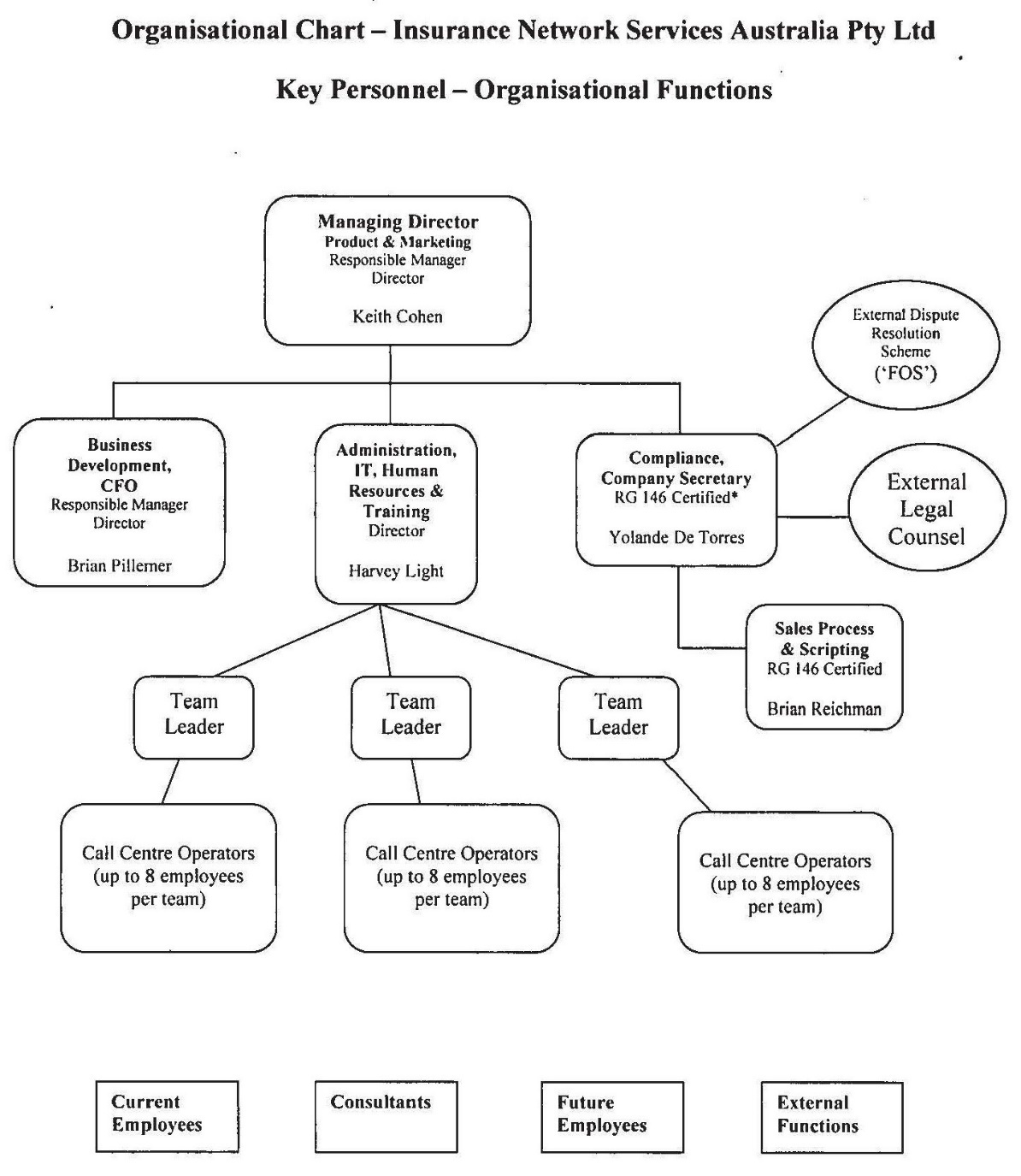
[218] | |
[219] | |
[223] | |
[224] | |
[227] | |
[229] | |
C.3.3.1 Was the FPP a “financial product of a particular class”? | [231] |
C.3.3.2 Was access to the prizes dependent upon the number of FPPs acquired by retail clients? | [239] |
[241] | |
[269] | |
[270] | |
[271] | |
[273] | |
[274] | |
C.4.4 Provision of financial product advice to persons as retail clients | [275] |
[277] | |
[290] | |
C.5 ASIC’s further alternative contention – s 963AA of the Act and reg 7.7A.11B(1) | [291] |
[292] | |
[295] | |
[298] | |
[299] | |
[300] | |
[301] | |
C.5.3.4 Was information given to persons in relation to the FPP? | [306] |
[308] | |
[310] | |
[312] | |
[316] | |
[317] | |
[318] | |
[319] | |
D. DID MR COHEN CONTRAVENE S 180 OF THE ACT? | [340] |
[341] | |
[343] | |
[344] | |
[346] | |
[347] | |
[348] | |
[349] | |
[350] | |
[363] | |
[365] | |
[366] | |
[378] | |
D.4.1 Mr Cohen’s knowledge concerning the First Bali Sales Incentive | [381] |
[383] | |
D.4.3 Mr Cohen’s knowledge concerning the Second Bali Sales Incentive | [385] |
[387] | |
[392] | |
D.5 Has a contravention of s 180 of the Act been established? | [401] |
[402] | |
[404] | |
[422] | |
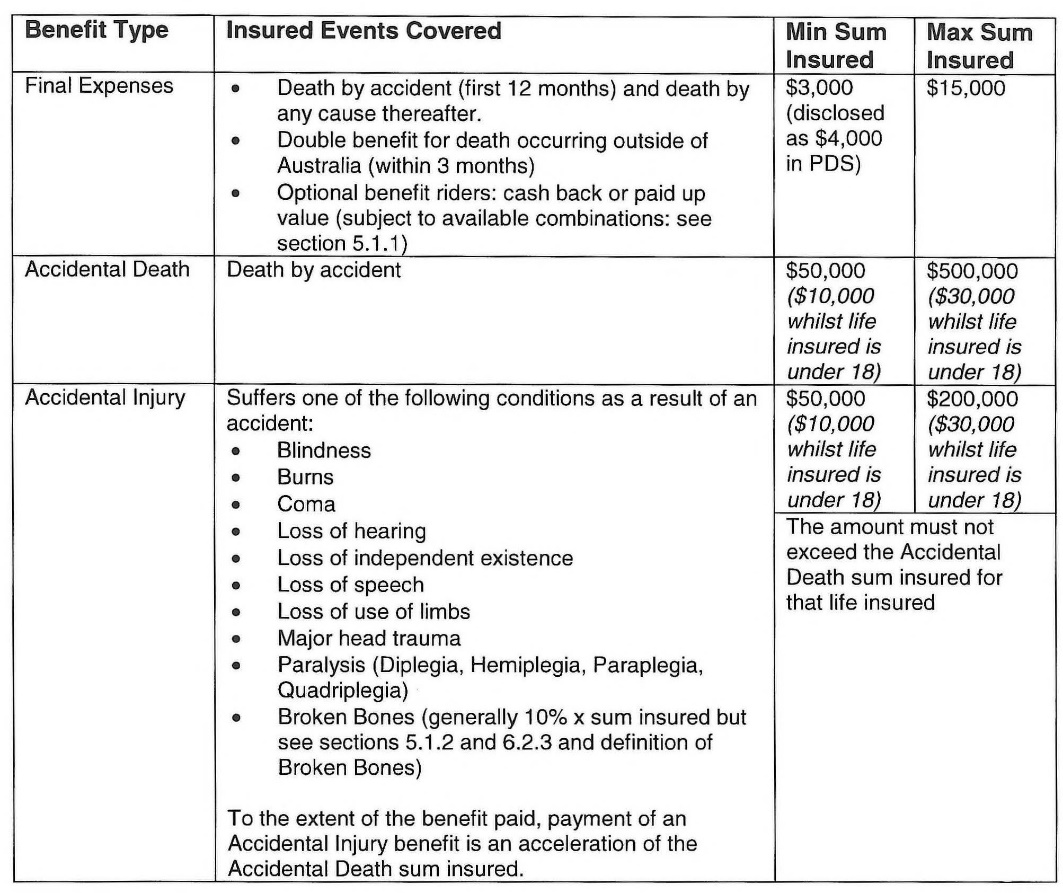
[423] |
REASONS FOR JUDGMENT
GOODMAN J:
A. INTRODUCTION AND OVERVIEW
1 The plaintiff (ASIC) seeks declaratory relief, injunctive relief, disqualification orders, and orders for pecuniary penalties against the defendants, Mr Keith Cohen and Mr Robert Oayda.
2 Mr Cohen was a director of various companies within the Freedom group of companies, which during the relevant period – namely 15 November 2017 to 2 October 2018 – included Freedom Insurance Group Ltd (FIG), Freedom Insurance Pty Ltd, Freedom Administration Pty Ltd and Insurance Network Services Australia Pty Ltd (INSA).
3 References in these reasons for judgment to Freedom are references to the group of companies generally or to the business they conducted. Greater precision is not required, other than to record that: (1) Freedom Insurance held an Australian Financial Services Licence (Freedom AFSL); (2) INSA was the employer of the sales agents who worked for the Freedom group; and (3) FIG was, from December 2016, an entity listed on the Australian Stock Exchange (ASX).
4 Mr Oayda was engaged by INSA as a consultant to deliver services to INSA and Freedom Insurance during the period from about 7 September 2016 to about 17 September 2018 and acted as the Quality Assurance (QA) Manager for Freedom Insurance from about late 2016 or early 2017 to about January 2018. In that position, he was responsible for the management of Freedom Insurance’s QA team and QA processes.
5 As noted above, Freedom Insurance held the Freedom AFSL. During the relevant period, it sold an insurance product known as the Freedom Protection Plan (FPP). The FPP was sold by the sales agents who worked from a call centre.
6 During September 2017, Freedom suffered a significant downturn in its sales of the FPP. From November 2017, Freedom sought to address this slump by conducting incentive programs referred to herein individually as the Vespa Incentive, the First Bali Sales Incentive and the Second Bali Sales Incentive, and collectively as the Incentives. The Incentives each had a prize: the Vespa Incentive involved the award of a Vespa motorcycle to the winner; and each of the Bali Sales Incentives offered travel to and from, and accommodation in Bali, Indonesia to those sales agents who met their sales targets, referred to herein as the Bali 1 package and the Bali 2 package.
7 Mr Adam Walker was the sole recipient of the Vespa. There were 28 recipients of the Bali 1 package (First Bali Sales Incentive prize-winners) and eight recipients of the Bali 2 package (Second Bali Sales Incentive prize-winners). The recipients of the Vespa, the Bali 1 package and the Bali 2 package (together, the prizes) are referred to herein collectively as the prize-winning sales agents.
8 ASIC contends that during the relevant period Freedom Insurance and INSA contravened provisions within Part 7.7A of the Corporations Act 2001 (Cth). I address the issues and evidence below by reference to ASIC’s pleaded case. In circumstances where: (1) Mr Cohen, by his senior counsel, made clear that he was defending the case as pleaded; and (2) Mr Oayda is a litigant in person, it is appropriate that ASIC be held to its pleaded case.
9 First, ASIC contends that Freedom Insurance contravened s 963E(2) of the Act which provided:
963E Licensee must not accept conflicted remuneration
...
(2) A financial services licensee contravenes this section if:
(a) a representative, other than an authorised representative, of the licensee accepts conflicted remuneration; and
(b) the licensee is the, or a, responsible licensee in relation to the contravention.
10 In essence, ASIC contends that Freedom Insurance contravened s 963E(2) of the Act because: (1) it was a “financial services licensee”; (2) its representatives, namely the prize-winning sales agents, accepted “conflicted remuneration” in the form of the prizes; and (3) it was the “responsible licensee” in relation to the contraventions.
11 Secondly, ASIC contends that Freedom Insurance contravened s 963F of the Act, which provided:
963F Licensee must ensure compliance
A financial services licensee must take reasonable steps to ensure that representatives of the licensee do not accept conflicted remuneration.
12 ASIC contends that Freedom Insurance, as a financial services licensee, failed to take reasonable steps to ensure that the prize-winning sales agents (as its representatives) did not accept conflicted remuneration in the form of the prizes.
13 Thirdly, ASIC contends that INSA contravened s 963J of the Act, which provided:
963J Employer must not give employee conflicted remuneration
An employer of a financial services licensee, or a representative of a financial services licensee, must not give the licensee or representative conflicted remuneration for work carried out, or to be carried out, by the licensee or representative as an employee of the employer.
14 In essence ASIC contends that INSA, as the employer of the prize-winning sales agents (being representatives of a financial services licensee, namely Freedom Insurance), gave those agents conflicted remuneration in the form of the prizes for work carried out or to be carried out by those agents as employees of INSA.
15 ASIC does not seek relief against Freedom Insurance or INSA, each of which has been deregistered, with respect to the contended contraventions. Instead, it proceeds only against Mr Cohen and Mr Oayda.
16 ASIC alleges that:
(1) Mr Cohen was “knowingly concerned in, or party to” within the meaning of s 1324(1) of the Act, contraventions of:
(a) ss 963E(2) and 963F of the Act by Freedom Insurance;
(b) s 963J of the Act by INSA; and
(2) Mr Oayda was “knowingly concerned in, or party to” contraventions of ss 963E and 963F of the Act by Freedom Insurance, within the meaning of s 1324(1)(e) of the Act.
17 In the remainder of these reasons, I set out my principal findings of fact (Part B) before considering the centrally relevant question of whether the prizes were “conflicted remuneration” for the purposes of the Act (Part C). As I reach the conclusion that ASIC has not established that any of the prizes were conflicted remuneration, it is not necessary to address whether Freedom Insurance contravened s 963E(2) or 963F of the Act or INSA contravened s 963J of the Act; or whether Mr Cohen and Mr Oayda were knowingly concerned in, or party to the pleaded contraventions.
18 ASIC also alleges that Mr Cohen, qua director of Freedom Insurance and INSA, contravened s 180 of the Act, in broad terms, by failing to take reasonable steps to prevent Freedom Insurance and INSA from engaging in contraventions (actual or potential) of ss 963E(2), 963F, and 963J of the Act. For the reasons developed below at Part D, I am not persuaded that Mr Cohen contravened s 180 of the Act.
B. PRINCIPAL FINDINGS OF FACT
19 ASIC read affidavit evidence from:
(1) Mr Malcolm McCool, a solicitor who was employed by Freedom as its Head of Legal & Product Development during the relevant period;
(2) Ms Lisa Delahunty, who was employed by Freedom as a risk and compliance manager during the relevant period;
(3) Mr Adrian Turner, who was employed by Freedom and managed Freedom’s sales team during the relevant period;
(4) Mr Daniel Saphra, who was employed by INSA from 22 January 2018 and who worked as a sales agent selling FPPs; and
(5) Ms Rachel Perla, a lawyer in the employ of ASIC.
20 ASIC also adduced evidence, under compulsion of a subpoena, from Ms Jennifer Andrews, a former chief financial officer (CFO) of Freedom.
21 Each of these witnesses, with the exception of Ms Perla, was cross-examined.
22 Each of Mr Cohen and Mr Oayda provided affidavit evidence and was cross-examined.
23 Mr Cohen also adduced affidavit evidence from Ms Isabella Heath, a solicitor in the employ of Mr Cohen’s solicitor and Mr Gavin Bellamy, a process server. Ms Heath and Mr Bellamy were not cross-examined. The evidence of Mr Bellamy and Ms Heath was relevant only to the question of whether Mr Cohen should be allowed to adduce evidence of a transcript of an examination of Mr Walker in circumstances where Mr Walker apparently was not available for cross-examination. I have decided that such evidence should not be admitted.
24 In addition to the several thousand pages tendered with the affidavits, there was a separate documentary tender in the order of 11,000 pages.
25 From this evidence, the salient facts are set out below.
26 I pause to note that there are several areas in respect of which some witnesses differ in their recollections. Many of these differences were not explored or tested in cross-examination, and some are, at most, of peripheral relevance to the issues requiring determination on the pleaded case.
27 There are, however, some areas of tension between the evidence of Mr Cohen and the evidence of Mr McCool which are of some importance to ASIC’s case that Mr Cohen contravened s 180 of the Act.
28 To the extent that there are differences between the evidence of Mr Cohen and Mr McCool, I prefer the evidence of Mr Cohen, particularly in circumstances where: (1) ASIC did not contend that Mr Cohen’s evidence should not be accepted; (2) contemporaneous documents are more consistent with Mr Cohen’s evidence than with Mr McCool’s evidence; and (3) Mr McCool shifted during cross-examination, at times significantly, away from aspects of his affidavit evidence. For example:
(1) evidence in his affidavit that he “did not take on any responsibilities for the compliance function and in particular, operational compliance” yielded in cross-examination to evidence that:
(a) part of his role as Freedom’s Head of Legal was to apply his legal skills to ensure that there was no non-compliance with any applicable financial services laws that related to Freedom’s business;
(b) in his role as Freedom’s Head of Legal, it was incumbent upon him to be aware of what was happening in the business, to apply his decades of experience as a financial services lawyer so as to identify any risks, and to take appropriate steps to address any identified risks;
(2) evidence in his affidavit suggesting that his role was limited to specific tasks when requested by Mr Cohen and that he had no involvement in, or responsibility with respect to the Incentives yielded in cross-examination to evidence that:
(a) he had been tasked by Mr Cohen with considering the effect of the legislative changes to be introduced by the Corporations Amendment (Life Insurance Remuneration Arrangements) Bill 2016 (LIF Reforms) upon, inter alia, the arrangements between Freedom and its sales agents; and
(b) it was his responsibility to consider all aspects of the LIF Reforms including non-monetary incentives.
29 Nothing in these reasons for judgment should be taken as suggesting that Mr McCool was negligent. No such case was brought by ASIC, nor is such a case addressed herein. The observations and findings made with respect to Mr McCool are made in the context of the s 180 case brought by ASIC against Mr Cohen.
30 Returning to the salient facts, Freedom commenced in 2009 with the incorporation of INSA and INSA Distribution Pty Ltd (which was renamed on 1 September 2010 to Freedom Insurance) and grew over time with the incorporation of, relevantly, Freedom Administration (in July 2013) and FIG (in October 2015).
31 Freedom was established to market and distribute life insurance products. Mr Cohen, Mr Harvey Light and Mr Brian Pillemer were the founders and founding directors of INSA and INSA Distribution. Mr Light and Mr Pillemer had previously worked with Mr Cohen at Australian Life Insurance Group Pty Ltd (ALI). Ms Yolande De Torres joined Freedom at an early stage and worked in establishing Freedom’s business.
32 Mr Cohen was the managing director, Mr Light was head of operations, Mr Pillemer was CFO and Ms De Torres worked on the financial services licensing requirements. In those early days, they were the only four permanent employees and they did not adhere to a strict organisational structure and instead were all involved in doing whatever needed to be done.
33 On 14 August 2009, Dr Tamsin Clarke of Auron Consulting Pty Ltd provided a detailed letter of advice to INSA (Mr Pillemer and Mr Cohen) titled “General Advice re Principles to apply in offering insurance policies”. The letter contained the following “Background”:
Background
INSA has recently been established to act as an independent distributor of insurance products to retail clients.
(a) INSA proposes to use advertising to attract phone and email enquiries from retail clients. The enquiries will generally be answered by ‘call centre’ telephone and/or email operators.
(b) INSA will provide clients with its own FSG and with the issuers’ PDSs for the relevant insurance product(s) offered.
(c) INSA does not wish or intend to provide anything other than general product advice, although some of its business may relate to the provision of replacement insurance products.
(d) INSA is in the process of obtaining an AFSL covering the appropriate authorisations which it will need to carry on this business through ‘call centre’ telephone and/or email operators and will carry out the appropriate training of those operators.
Generally, the Corporations Act regulates the marketing of insurance products, which come within the definition of ‘financial products’ (with some specific exemptions such as funeral benefits).
Insurance provided to individual persons relating to motor vehicle, home building, home contents, sickness and accident, consumer credit, travel or personal and domestic property (see Corporations Regulations 7.1.11 to 7.1.17) is deemed under the Corporations Act to be provided to a ‘retail’ client (s 761G(5)).
The INSA activities described above therefore involve two potential ‘financial services’ (see s 766A) for the purposes of the Corporations Act:
• giving general financial product advice to ‘retail’ clients, and
• arranging for a ‘retail’ client to acquire a financial product offered by an insurer.
References in this advice to sections are to sections in the Corporations Act unless indicated otherwise.
(emphasis in original; footnotes omitted)
34 On 17 September 2009, INSA Distribution applied for an Australian Financial Services Licence. Mr Cohen was involved in the preparation of this application, including ensuring the veracity of the information included in it. That application included:
(1) an overview of INSA Distribution’s business that included:
4.0 Details of how the business is operated. |
4.1 The Applicant will enter into an arrangement with existing life & general insurers to distribute their risk life & general insurance products.
4.2 Distribution will be via phone through a centralised call centre which will receive inquiries in response to advertising on television and in other media. Marketing material may contain straightforward general advice such as highlighting the benefits of taking out a particular type of insurance. All general advice contained in any such advertising or marketing material will be reviewed by an RG 146 qualified person within the group and checked by our external legal counsel.
4.3 Call centre staff will perform the task of offering the products to customers. All INSA’s call centre staff will be direct employees of INSA Group and will be subjected to a rigorous selection process and extensive training program. Sales staff will be supervised and monitored by team leaders who in turn will be supervised and monitored by the head of Human Resources & Training (Annexure 1 Organisational Chart).
4.4 Customers will not be provided with any personal advice. Essentially a “no advice” offer process will be followed, although the call centre scripting and general marketing will contain a limited amount of general advice. Customers requiring personal advice will be told that they should contact an independent financial adviser.
…
6.0 Outsourced operations – details of who performs these and in what location, if other than the principal place of business. |
6.1 The following services will be outsourced by the Applicant:
• External auditor (Baskin & Clarke, Chartered Accountants)
• External Dispute Resolution Scheme (Financial Ombudsman Service)
• Legal services re licensing & compliance (Auron Consulting Pty Ltd)
• IT support & development services as required
6.2 All operations sourced from outside the Company will be done in a manner consistent with INSA’s Outsourcing Policy and Procedures.
6.3 A set of compliance and risk management protocols will be established by the Company. These have been designed to minimize the risk of potential breaches of the AFS Licence Conditions.
…
10.0 Organisational Chart and relevant information |
10.1 See Annexure 1 Organisational Chart – Insurance Network Services Australia Pty Ltd, Key Personnel – Organisational Functions
10.2 The Compliance Manager is responsible for ongoing compliance with AFS obligations and is also responsible for reporting breaches directly to ASIC.
10.3 The Compliance Manager is currently enrolled to do Kaplan Professional’s Tier 1 Compliance Solutions course which will lead to RG 146 certification upon completion*.
…
(emphasis in original);
(2) an organisational chart in the following terms:
(3) a table of organisational competence which set out, inter alia, details of Mr Cohen’s experience as follows:
Details of Responsible Manager(s) | Keith Charles Cohen Relying on RG 105 Option 5 |
Qualifications | Bachelor of Science University of Cape Town, South Africa, Completed 1983 (This course is NOOSR verified -please see appendix B 1.8) Membership of Professional Associations • Fellow of the Institute of Actuaries of Australia • Fellow of the Institute of Actuaries (UK) • Member of the Actuarial Society of South Africa • Associate of the Society of Actuaries (US)
|
Experience in providing: Dealing services on behalf of another in applying for life risk and general insurance products. | Dates in Role: August 2002 to February 2009 Dealing Entity Name: A.L.I. Group Pty Ltd/Australian Life Insurance Business Description: Life Insurance and General Insurance distribution and administration. Around 50 staff and more than 2,500 sales per month. Position: Managing Director and Founder Clients: Over 200 retail mortgage broking business relationships resulting in over 4,500 brokers being accredited as authorised representatives of the company. The company had over 50,000 retail customers. Products: Life risk products and Home & Contents insurance. Role : Involved directly in all aspects of the business set up and operations including distribution, administration, legal, marketing, actuarial and finance. Products were distributed both through the company’s authorised representatives and through its call centre. All products were distributed on a no advice basis. Deal Experience: • Life risk products. A.L.I. customers applied for cover on applications provided to them by ALI Distribution’s authorised representatives who were mortgage brokers. These applications were submitted centrally for processing. The insurer for the majority of these products was Tower Life Ltd who outsourced the administration of these policies to A.L.I Administration Pty Ltd which was part of the A.L.I. Group. Policies were issued by ALI Administration on behalf of Tower Life. Income Protection policies were inputted directly onto the Macquarie Life policy system and Macquarie handled all the administration. Customers who wished to cancel or vary their products/policies would call a central call centre at A.L.I. • General Insurance products. All Home & Contents products were initially offered by A.L.I.’s authorised representatives with all applications processed centrally directly onto the systems provided by Insurer QBE. QBE handled all policy administration. • All client monies were collected and held by the Insurers Tower, Macquarie or QBE Keith Cohen had 7 years of dealing experience at A.L.I. As a founder of the business he was involved in the setup of all processes. Some particular instances or circumstances are as follows: • Participated in the development of and signed off on all retail customer correspondence templates. • Signed off on all client communications. • Ran a monthly Compliance meeting that reviewed any breaches or complaints. • Developed the broker training programs for both life risk and home & contents products and facilitated signoff from the Head of Compliance. • Participated in the training of brokers as required to ensure the adequacy and appropriateness of the training materials. • Would listen into calls made by the call centre operators on a ad hoc basis to ensure calls being made were compliant and that operators were providing a high level of customer service. • Developed and facilitated signoff of a DVD to be used by mortgage brokers to educate their retail customers directly on A.L.I. products. • Thoroughly reviewed daily and monthly lodgments, lapses, cancellations and retention rates to ascertain if there were any trends requiring investigation. • Presented on a regular basis to call centre and processing staff to increase their understanding of the total business. • Ran focus groups for over 100 authorised representatives using external consultants over a 3 month period. • Ran regular twice weekly management team meetings. At INSA, all insurance products will be processed directly onto the systems of the product issuers in a similar fashion to that at A.L.I. Dates in Role: 1996 to 2002 Entity Name: Westpac Life Insurance Services Position: Principal Executive Officer (1998-2002) Chief Actuary (1996-1998) |
(4) a submission concerning Mr Cohen’s competence as a responsible manager; and
(5) a statement of personal information for Mr Cohen in which he agreed to be a responsible manager for INSA Distribution.
35 On 29 October 2009, Compact Compliance & Corporate Training wrote to ASIC in the following terms:
Re: Corporations Act Knowledge
This letter is to confirm that Brian Pillemer and Keith Cohen have today attended a training course for AFSL Responsible Managers conducted by our firm.
The objective of this particular course is to provide participants with an overview of their obligations as Responsible Managers, the Licensee’s obligations under its Australian Financial Services’ Licence, and to refresh some of the fundamental features of the financial services reform regime.
The learning outcomes of the course are that upon completion of the course, participants should be able to:
• explain their obligations as Responsible Managers;
• explain key regulatory obligations in relation to the provision of financial services;
• explain the business’ authorisations under its AFS licence;
• consider and explain potential personal liability arising from their role as a Responsible Manager; and
• identify and explain developments and trends that have, and are, taking place in the financial services industry which might impact on their role as Responsible Managers.
In terms of content, the course looks at the following:
a) basic concepts in both the Corporations Act and ASIC Act, and the changes brought about to the Corporations Act by virtue of the Financial Services Reform Act 2001;
b) consideration of why a financial services business may require an AFS Licence;
c) what constitutes a financial product;
d) consideration of the participants’ AFS licence authorisations in relation to both products and services;
e) distinction between wholesale and retail clients, and what this means to a financial services provider;
f) the obligations of the Licensee, both generally and specifically in relation to its authorisations, including disclosure requirements, conflicts of interests, risk management, etc;
g) the key requirements and responsibilities pertaining to their role as Responsible Managers; and
h) some activities which are prohibited under the Corporations Act.
In addition to being trainers and having conducted this course to many Responsible Managers from a wide range of AFSL holders over the last 4 years, both Grant Holley and I are lawyers practising in financial services and providing advice to licensees and their senior management in relation to obligations arising pursuant to the conduct of the financial services.
(emphasis in original)
36 On 30 October 2009, ASIC issued an AFSL to INSA Distribution. From that time, it was a financial services licensee. It was also the entity which entered into distribution agreements with insurers from time to time, providing the arrangements for the marketing and distribution of those insurers’ products by Freedom.
37 The AFSL included authorisation as follows:
1. This licence authorises the licensee to carry on a financial services business to:
(a) provide general financial product advice for the following classes of financial products:
(i) general insurance products; and
(ii) life products limited to:
(A) life risk insurance products as well as any products issued by a Registered Life Insurance Company that are backed by one or more of its statutory funds; and
(b) deal in a financial product by:
(i) arranging for another person to apply for, acquire, vary or dispose of financial products in respect of the following classes of financial products:
(A) general insurance products; and
(B) life products limited to:
(1) life risk insurance products as well as any products issued by a Registered Life Insurance Company that are backed by one or more of its statutory funds;
to retail clients.
38 On 1 September 2010, INSA Distribution changed its name to Freedom Insurance and on 6 September 2010, ASIC issued the Freedom AFSL to Freedom Insurance in that name.
39 Mr Cohen remained a responsible manager under the Freedom AFSL until October 2018. As will be seen, others also became responsible managers under the Freedom AFSL as Freedom’s business grew.
40 In late 2010, Freedom launched its first product. From that time, it gradually took on more employees and, over time, it developed more formal business structures and reporting lines as the business grew.
41 In 2011: (1) Mr McCool (with whom Mr Cohen had worked at both ALI and Westpac Banking Corporation) joined Freedom, as a part-time legal consultant; and (2) Mr Turner joined Freedom, as its contact centre manager.
42 In about 2012, Mr Pillemer left as an executive of Freedom and Ms Jennifer Andrews joined Freedom as its CFO. Mr Cohen had worked with Ms Andrews at ALI and Westpac.
43 As at 30 June 2012, Freedom had 29 staff (which included 12 call centre sales staff, seven customer service staff and two administration/quality assurance staff).
44 On 18 July 2013, Freedom Administration was incorporated. It carried out administration – such as premium collection and customer service – for the insurers whose products Freedom distributed.
45 By 2014, the business of Freedom involved:
(1) distributing insurance products to consumers via its in-house call centre, on behalf of insurers with whom Freedom had distribution arrangements;
(2) undertaking marketing and lead generation activities for those insurance products;
(3) undertaking in-house policy administration services on behalf of the insurers with which Freedom had distribution arrangements; and
(4) managing customer relationships post-sale including through premium collection, retention, cancellations, renewals and claim processing.
46 In about 2014, Freedom entered into a distribution agreement with NobleOak Life Limited, pursuant to which Freedom marketed and sold insurance products issued by NobleOak. Freedom also undertook policy administration services for NobleOak. NobleOak’s policies were fully reinsured by Swiss Re Life & Health Australia Limited and, as a result, Freedom dealt with both NobleOak and Swiss Re in relation to these arrangements. Freedom also took an equity stake in NobleOak and Mr Cohen was a director of NobleOak between about 2016 and 2017.
47 In about 2015, Ms Jennifer Davitt was employed by Freedom as its chief operating officer (COO).
48 On 10 July 2015, Mr Cohen entered into an employment contract with Freedom Insurance as its full-time managing director. Clause 1.4 of the employment contract indicated that Mr Cohen’s duties would be those described in item 4 of the Schedule to that contract, which in turn described Mr Cohen’s responsibilities in the role of managing director as follows:
4.1 Specific
To direct and control the Freedom group of companies operations and to give strategic guidance and direction to the business, including:
• implementing company policy
• developing strategic plans
• directing and controlling the work and resources of the group
• controlling group finances including preparation and implementation of budgets building and maintaining an effective management team
• establishing and maintaining effective formal and informal links with major customers
• maintaining a dialogue between shareholders and the board
• accountability to the board for all company operations
4.2 General
During your employment you will:
(1) work faithfully and diligently for Freedom;
(2) act at all times in Freedom’s best interests;
(3) use all reasonable means to protect and promote Freedom, its property and its reputation;
(4) perform the duties assigned to you from time to time to the best of your abilities;
(5) comply with the lawful directions and instructions made or given to you by Freedom’s Board, Freedom’s senior management and your manager in relation to your duties;
(6) devote the whole of your time and attention during your normal working hours and during such other reasonable hours as Freedom’s business may reasonably require from time to time; and
(7) act at all times in a manner which will ensure a safe and healthy work environment for all employees and contractors of Freedom.
49 On the same day, Mr McCool entered into an employment contract with Freedom Insurance as its “Head of Legal & Product Development, Company Secretary”. His specific responsibilities under that contract were described as:
4.1 Specific
• Legal, contractual, licensing and product development and related tasks as requested.
• Legal advice and guidance on contractual, licensing, product, operational and HR issues as requested
• Company secretarial and record retention services to Freedom group companies
• Management services as part of the senior management team
50 Mr McCool’s designated general responsibilities were similar to those set out in Mr Cohen’s employment contract.
51 In around 2015 or 2016, Freedom’s sales and customer service functions were separated into distinct teams and Mr Turner’s role shifted to the day-to-day management of the sales team only.
52 From about 2016, Freedom operated from premises at Bond Street in the central business district of Sydney. The business occupied two inter-connected floors, with all of the sales agents on the upper floor. The finance and marketing teams, risk and compliance teams, the COO, Mr Cohen and Mr McCool, as well as meetings rooms, were on the lower floor.
53 On 17 February 2016, Mr Wesley Chan of Swiss Re forwarded to Mr Cohen and others an email from Ms Bianca Richardson, a senior policy manager with the Financial Services Council indicating that the Corporations Amendment (Life Insurance Remuneration Arrangements) Bill 2016 had been introduced in the House of Representatives on 11 February 2016 and providing a summary of key components covered in the Bill.
54 Mr Cohen forwarded that email to Mr McCool.
55 On 11 April 2016, Mr McCool prepared and signed a notification to ASIC that Freedom Insurance wished to add him as a responsible manager on the Freedom AFSL. The notification identified that: (1) Mr McCool was employed by Freedom Insurance as a legal adviser; (2) it was proposed that financial services for which he would be responsible would be “provide financial product advice” and “deal in financial product”; (3) he would spend one to three days per week on duties related to the provision by Freedom Insurance of such services; and (4) his experience included experience in banking, general insurance, life insurance, “law firm/legal” and management with an overall type of experience as a technical adviser and in management with relevant industry experience exceeding five of the previous eight years.
56 Mr McCool was added as a responsible manager.
57 Mr McCool accepted in cross-examination that he represented that he was capable of giving legal advice in relation to Freedom’s products, as to the provision of financial product advice, and dealing in financial products.
58 As at 30 June 2016, Freedom had 171 staff (which included 90 call centre sales staff, 27 customer service/retention staff and 17 administration/quality assurance staff).
59 From about August 2016, FIG was the ultimate holding company of Freedom Insurance, Freedom Administration and INSA.
60 On or about 7 September 2016, Mr Oayda, who was a friend of Mr Cohen, commenced as a consultant to Freedom. Mr Oayda began working at Freedom in the role of QA Manager. He worked within the operations department and reported to Ms Davitt initially, and then Mr Mark Weinstein when Mr Weinstein was operations manager, and later to Mr Craig Orton as COO.
61 On 21 October 2016, Freedom and Swiss Re entered into a Product Development and Distribution Agreement.
62 Prior to entry into this agreement, Swiss Re undertook a due diligence process. Swiss Re’s due diligence report included, with respect to, inter alia, “sales and retention” a recommendation to “proceed with no critical show stoppers identified”.
63 Pursuant to this agreement Swiss Re could conduct regular audits of Freedom’s business to ensure compliance with the agreements and applicable laws. Such audits subsequently took place.
64 On 28 October 2016, FIG issued a prospectus for an initial public offering.
65 Freedom’s management structure at that time was described as follows:
(1) Mr Cohen was the managing director and chief executive officer (CEO);
(2) Ms Andrews was the CFO, reporting directly to Mr Cohen;
(3) Ms De Torres was the Head of Marketing, reporting directly to Mr Cohen;
(4) Mr McCool was the Head of Legal and Product Development, reporting directly to Mr Cohen;
(5) Ms Davitt was the COO, reporting directly to Mr Cohen. Among other things, the sales team and the compliance/QA teams fell within the operations group under Ms Davitt’s supervision. Mr Turner (Head of Sales) and Mr Light reported to Ms Davitt; and
(6) Mr Mark Schroeder was the managing director of Spectrum, an adviser distribution business acquired by Freedom.
66 Mr Cohen was described in the prospectus as:
Mr Keith Cohen is the CEO, Executive Director and founder of Freedom.
Keith has been responsible for leading the development and execution of the Company’s long term strategy with a view to creating shareholder value. He is responsible for the day-to-day management decisions and has been critical to the success of the Company including the development of insurer relationships from inception to the more recent acquisition of Spectrum.
Keith has extensive experience in the life insurance industry and was also the founder and Managing Director of Australian Life Insurance Group (ALI Group) from September 2002 to March 2009. Prior to this, Keith was also a Director of various Westpac companies (WBC.ASX), including Westpac Life Insurance Services Limited, Westpac General Insurance Limited, Westpac Financial Services Limited, Westpac Financial Consultants Limited and Westpac Custodian Nominees Limited. Before joining Westpac as the Chief Actuary in 1996, Keith was Deputy General Manager - Development Actuary at Sage Life Limited in South Africa. Keith is also a Non-Executive Director on the NobleOak Board.
Keith holds a Bachelor of Science degree from the University of Cape Town and is a Fellow of the Institute of Actuaries of Australia and the UK.
67 Ms Andrews was described in the prospectus as:
Ms Jenny Andrews is the CFO of Freedom.
Jenny is responsible for financial planning, reporting and managing all financial risks of the Company. She is a senior finance executive with strong expertise in actuarial, financial and operational management across life insurance, superannuation and wealth management.
From June 2009 to October 2012, Jenny was Head of Pricing and Profitability with ANZ Wealth Management (part of ANZ.ASX). She is also experienced in start-up companies and was another founding member of Australian Life Insurance where during the period 2003 to 2009 she was CFO and Chief Actuary for the group. Jenny was responsible for the financial and operational management of the company and established the group’s financial systems and reporting infrastructure
During the period 1998 to 2003, Jenny was the Financial Control Actuary at Westpac Financial Services Ltd (part of WBC.ASX) where she was responsible for leading the actuarial team. From 1994 to 1998, Jenny held the roles of Valuation Actuary and Associate Actuary Marketing (Pricing and Product Development) with TOWER Life Australia Ltd (now TAL).
Jenny holds a Bachelor of Science degree and is a Fellow of the Institute of Actuaries of Australia.
68 Ms Davitt was described in the prospectus as:
Mrs Jennifer Davitt is the COO of Freedom.
Jennifer joined Freedom in 2015 and has been instrumental in providing senior management to all aspects of operations including but not limited to marketing, sales, training, human resources, compliance and systems. She has been integral in the project management of the Spectrum acquisition and the successful listing of Freedom on the ASX. She is a senior executive in the banking and finance sector with a broad skill base across multiple disciplines including business transformation, project management, change management, financial management, mergers and acquisitions, risk, procurement, technology, process excellence, HR and governance.
From 2006-2015, Jennifer held various head of department and executive roles in which she displayed a focus on execution and the creation of high performing teams. During her time at ANZ Limited (ANZ ASX), Bankwest Ltd (subsidiary of CBA.ASX), Qantas Loyalty (part of QAN ASX) and multiple appointments at Westpac Banking Corporation Ltd (WBC.ASX), Jennifer successfully led major programmes of work, involving process improvement, cultural transformation, technical integration and major capital works.
As a former Naval Officer in the Royal Australian Navy, Jennifer is recognised for the structure and discipline she brings to the organisations for which she works, whilst also understanding the importance of customer centricity, stakeholder management and fiscal efficiency.
Jennifer holds a MBA, Master of Project Management and a Bachelor of Arts (Economics).
69 Mr McCool was described in the prospectus as:
Mr Malcolm McCool is the Group General Counsel of Freedom.
Malcolm initially joined Freedom in 2011 to help facilitate the next phase of its development and has primarily been involved in project type initiatives relating to relationships with insurers and reinsurers and product and benefit fund design.
He is a senior lawyer with 30 years’ experience in a range of corporate legal and management positions in the financial services industry. For much of that period he has been involved in the life insurance industry and has developed a unique mix of legal, product, process development and business and management skills that are ideally suited to a specialist life insurance business such as the Freedom group.
Malcolm was a founding member of ALI Group. Prior to the commencement of ALI Group in 2002, Malcolm held senior legal positions for 4 years with Westpac Banking Corporation (WBC.ASX) and became a leading practitioner in the financial services reform laws that now regulate the insurance industry. From 1990 Malcolm spent 8 years with Citibank group in various legal roles.
Malcolm holds a Bachelor degree in both Law and Commerce from the University of NSW.
(emphasis added)
70 Mr McCool accepted in cross-examination that this description was accurate. He also accepted that:
(1) he was a senior lawyer with 30 years’ experience in a range of corporate, legal and management positions in the financial services industry;
(2) he was a leading practitioner in the financial services reform laws that regulate the insurance industry;
(3) in issuing the prospectus, Freedom was representing to prospective investors that Mr McCool, as the general counsel of Freedom, would exercise all of the skills that are described in that part of the prospectus in discharging his responsibilities as the group general counsel and would be applying his legal skills to ensure that there was no non-compliance with any applicable financial services laws that related to Freedom’s business; and
(4) one of the ways that he would discharge his responsibilities would be to ensure that there was no non-compliance with any applicable financial services laws.
71 Mr McCool also gave evidence that:
(1) he and Mr Cohen worked well as a team and their familiarity with each other, which had developed over years, allowed Mr McCool a high degree of autonomy;
(2) Mr Cohen did not try to micro-manage Mr McCool’s work;
(3) he understood that Mr Cohen had a high regard for Mr McCool’s skill and competence as a lawyer;
(4) he was aware of the general conflicted remuneration provisions in the Act; and
(5) it was his view in 2017 that the conflicted remuneration provisions of the Act did not apply to incentives such as the First Bali Sales Incentive and the Vespa Incentive. This was based on his understanding that Freedom operated on a “no advice” model.
72 As to the “no advice” model, Mr McCool gave evidence that:
(1) prior to 1 January 2018:
The understanding was that we – that the business was doing a no advice model and that sales agents were not permitted to provide advice in those calls. I think we confirmed in the scripts that there was no advice in the scripts. They were purely factual. And, therefore, the conflicted remuneration provisions that related to advice which I think came into effect early in that decade didn’t apply to the Freedom – to the Freedom business. ;
(2) and:
I recall saying to Mr Cohen, prior to March 2018 and based on the scripts I had seen to that point, words to the effect, “from what I have seen, we don’t have general advice in our scripts”. From what I had seen prior to March 2018, the content of the scripts was primarily factual, but I was unaware of the context, such as training, and management instructions that might impact how the scripts were utilised…
(emphasis in original)
73 Mr Light was described in the prospectus as:
Harvey is a founding member of Freedom and was a member of the Board and Director of Freedom Insurance until October 2016. Harvey is responsible for the shared service functions of the business. His primary responsibilities include management of the customer service, collections, claims, underwriting and retention teams. In addition, Harvey is also responsible for enterprise wide functions including facilities, procurement. systems and technology.
Harvey has over 25 years’ experience in IT and administration management. primarily in the insurance environment working for companies such as HIH (formerly HIH.ASX) and Allianz Australia Limited. Harvey was part of the management team that founded and ran ALI Group from September 2002 until March 2009.
74 Ms De Torres was described in the prospectus as:
Ms Yolande De Torres is the Head of Marketing of Freedom.
Yolande has been with Freedom since its inception and was instrumental in obtaining Freedom’s AFSL. In her current role as Head of Marketing, she has overall responsibility for the strategic planning and execution of all marketing and media activity, liaising closely with relevant external and internal stakeholders.
Until May 2016, she also held the position of Head of Compliance. In this role Yolande was responsible for designing the overall compliance framework for the business as well as overseeing the day to day implementation of best practices ensuring high standards of quality and compliance are met.
Prior to joining Freedom, Yolande held senior roles in business administration, compliance and marketing including 4 years at Insession Pty Ltd (now ACI Worldwide) and 5 years at Falkiner Global Investors Ltd (FGIL) where she was also a Director.
Yolande holds a Bachelor Degree in Arts from Sydney University.
75 Ms Diane Osborne was described in the prospectus as:
Ms Diane Osborne is the Head of Risk Management and Compliance for Freedom.
Diane joined Freedom in 2016 and is responsible for overseeing all regulatory requirements, risks and the day-to-day compliance issues of the Company. Her responsibilities for the Company is to ensure all staff including management and employees adhere strictly to the Company compliance policies and procedures.
Diane comes from a background of more than 20 years’ experience in financial services as a senior legal, company secretarial and compliance manager. Prior to her current role, Dianne was General Counsel and Compliance Manager at Uniting Financial Services, General Counsel and Company Secretary at Cuscal Limited, Legal Head of Retail & Business Distribution at Westpac Banking Corporation (WBC.ASX), Legal Head of Product & Compliance at St. George Bank (subsidiary of WBC.ASX) and Global Head of Legal & Compliance at AMP Ltd (AMP.ASX).
Diane holds a Bachelor of Arts and a Bachelor of Law from Macquarie University.
(emphasis added)
76 On 17 November 2016, and in connection with its proposal to list on the ASX, Freedom issued a compliance policy, which included:
4. Responsibilities and Organisation
Responsibility for Compliance at Freedom is normally divided as follows:
a) Board
Ultimate responsibility for Compliance within Freedom resides with its Board of Directors. The role of the Board is to provide strategic guidance for Freedom and effective oversight of Management.
b) Committees
The Audit and Risk Committee is responsible for ensuring that Freedom has an appropriate Compliance Framework and Policies to manage compliance risks in accordance with its risk appetite and monitors Freedom’s adherence with its Compliance Policies and Procedures and considers the effectiveness of internal control systems as well as to set and review any internal audit plan and outcomes.
The Remuneration and Nomination Committee provides appropriate corporate governance by identifying the mix of skills and individuals required in Directors to allow the Board to contribute to the successful oversight and stewardship of Freedom and discharge their duties under the law diligently and efficiently; and aligns Freedom’s remuneration approach with shareholder interests to allow it to attract, motivate and retain its staff and enhance Freedom’s performance in a manner that supports the long-term financial soundness of Freedom.
The responsibilities of the Committees are set out in more detail in their respective Charters.
c) Managing Director
The Managing Director ensures that Freedom’s compliance framework is fit for purpose and operational and that Senior Managers and Team Leaders are aware of their obligations and have implemented processes to adhere to and sustain compliance.
The Managing Director is able to bring material and relevant compliance matters to the appropriate Committee and Board in a timely manner, in consultation with the Senior Managers and Team Leaders and in particular the Head of Risk and Compliance.
d) Head of Risk and Compliance (“HRC”)
The HRC must have a direct reporting line to the Managing Director, and have regular and unfettered access to the Board and the Audit and Risk Committee.
The role will include:
• Involving in, and having the authority to provide effective challenge to activities and decisions that may materially affect Freedom’s risk profile.
• Reviewing the key business risks and risk reports and recommending internal control enhancements
• Being a custodian of any risk appetite statements, risk frameworks, policies and charters and facilitating updates and developments of those documents on an on-going basis as required for Board oversight and approvals.
• Ongoing monitoring and reporting of Risk and Compliance functions,
e) Head of Legal
The Head of Legal’s compliance obligations include providing specific, general and compliance advice and guidance to business units, management, Team Leaders and the Board.
f) Senior Managers and Team Leaders
Senior Managers and Team Leaders are responsible for the day to day management of compliance risks and for ensuring that the procedures and guidance in support of Freedom’s integrity and ethical standards are adhered to in the areas for which they are responsible, including by ensuring appropriate training. This also includes responsibility for ensuring that appropriate remedial or disciplinary action is taken according to the relevant procedures if breaches are identified.
g) All Employees
Each individual in Freedom (including any contractor and agent) is expected to comply with all Freedom Policies and Procedures and be responsible for familiarising themselves with the Policies and Procedures that are relevant to their particular circumstances.
…
6. Framework Governance
a) Framework Governance
Freedom must ensure that the “Three Lines of Defence” model is understood and applied consistently to enable an effective governance and internal control environment. Accountability for Compliance is structured within this model as follows:
• Line 1: Business – owners of the compliance obligations, related compliance risks and compliance behaviours within their business;
• Line 2: Risk & Compliance Team – provide advice, review and oversight of obligations and ensure the compliance framework is fit for purpose; and
• Line 3: Audit – independent review of the Compliance framework and internal controls.
Freedom’s Three (3) Lines of Defence
Independent Review (3rd Line) Independent experts engaged to validate effectiveness of the compliance management systems. | |
Audit | |

Compliance Team (2nd Line Compliance personnel or subject matter experts that ensure compliance is done adequately and appropriately. Responsible for the Compliance Framework. | |
Risk & Compliance | Legal |

Business (1st Line) Owns compliance as part of their strategy, structure and day-to-day operations. Are responsible for behavioural compliance. | |||
Managing Director | Senior Management | Team Leaders | All Employees |
b) Compliance Forum
The line 2 Risk & Compliance Team and Head of Legal must meet on a regular basis to ensure that the Compliance framework is fit for purpose and is being consistently implemented. This Compliance forum should consider compliance obligations, risks, breaches and other compliance information and be attended by all line 2 Freedom compliance professionals.
(bold emphasis in original; underline emphasis added)
77 Mr McCool agreed in cross-examination that the description of Mr Cohen’s role as managing director accorded with his understanding; and that the description of his responsibilities as Head of Legal was accurate.
78 Mr McCool regularly spoke with Ms Osborne and later Ms Delahunty as the “line 2 risk and compliance team”.
79 On 1 December 2016, FIG was listed on the ASX. Mr McCool was heavily involved in the process that led to the listing of FIG, including providing assistance with the preparation of the prospectus. From this time, the companies within Freedom operated as one business, with business and management matters relating to the respective companies being reported to the directors of FIG. The directors of the subsidiary companies acted only to approve administrative or process matters, such as company accounts or a change of auditor, and did not receive management reports on the day-to-day operations of the particular subsidiary company.
80 Mr Cohen continued as the managing director and CEO of each of the companies within Freedom after the listing of FIG on the ASX.
81 In 2017 and following FIG’s public listing, Mr Cohen devoted less time to the day-to-day operations of Freedom and devoted more of his time to more strategic issues within Freedom. For example, his time was devoted to investor relations, pursuing acquisition opportunities for Freedom, developing new products and managing the relationship with Swiss Re.
82 In an average week he spent: (1) between 20 and 30 per cent of his time on investor relations; (2) about 10 to 20 per cent of his time on relationship management issues with Swiss Re; (3) between 10 to 30 per cent of his time developing new products; and (4) between 10 to 30 per cent of his time dealing with board and management related issues. At various times in 2017 and early 2018 between 20 and 80 per cent of his time was spent on a proposed transaction by which Freedom would acquire St Andrews Life and General Insurance companies from the Bank of Queensland (St Andrews acquisition).
83 Mr Cohen had confidence in his senior executive team to focus on the day-to-day operations of Freedom as most of them had worked for him (either at Freedom or in earlier roles) for a reasonably long time. Mr Cohen considered them to be competent executives with relevant experience and he felt that they worked well together.
84 In early 2017, Ms Davitt ceased working for Freedom. Freedom did not hire a replacement COO immediately and she was not replaced until February 2018, when Mr Orton commenced with Freedom as its COO. As a result, for most of 2017, the sales and operations managers reported directly to Mr Cohen (rather than reporting to him through the COO, as had been the case when Ms Davitt held that position).
85 On 18 January 2017, Mr McCool sent an email to Ms De Torres and Mr Light, which he copied to Mr Cohen, with the subject line “FSG – Freedom Protection Plan (1 February 2017)”, as follows:
Hi
Just updated the FSG - tiny changes as marked. Otherwise it seems ok. Not sure if you really want to give to Swiss Re for a look, otherwise we can look to print.
Note I didn’t put in anything about clawbacks or variable commission as per existing FSG.
86 The email attached a Financial Services Guide for the FPP, which included:
What services are provided?
Our representatives are authorised by us to:
• make you aware of the availability of the insurance protection provided by the Freedom Protection Plan.
• provide you with information on the product including a premium quote and a copy of the PDS.
• answer any questions that you may have about the product features.
• arrange for you to apply for the product and obtain an authority for the Insurer to obtain premium payments.
• assist with changes that you might request to your insurance after it has commenced.
We may also provide you with information and general advice about the product through our representatives or by means of additional promotional material.
…
How are our representatives paid?
Our representatives that arrange your insurance or make changes to it after it commences, are provided with the usual employee benefits such as salary and superannuation. They may also qualify for additional remuneration based on performance criteria that can include volume of sales. We may also pay a fee to people or organisations who refer customers to us.
(emphasis in original)
87 Mr McCool accepted in cross-examination that at this time he needed to, and did, understand how Freedom’s representatives were paid.
88 On 1 February 2017:
(1) an Administration Agreement between Freedom Administration and Swiss Re commenced. Under this agreement, Freedom Administration provided certain administrative services to Swiss Re in relation to the insurance products;
(2) a Services Agreement between INSA and Swiss Re commenced. This agreement also concerned the insurance products and provided for certain services in respect of these products to be provided by INSA to Swiss Re; and
(3) a product specification for the FPP was approved by Swiss Re and Freedom and signed by Mr Cohen. The product specification included:
2.6 Method of Distribution
The product will be offered through a combination of inbound and outbound calls through Freedom’s call centre. A simple, convenient no-advice process will be followed with no forms to complete or medical examinations required. All calls are recorded and the recording will form the basis of the application.
Initially, it is not intended that prospective customers will be able to apply directly through the Freedom Insurance website or by submitting an application contained in direct mail packs. However, these mediums will be used to promote the product and obtain expressions of interest by means of inbound calls.
2.7 Financial Product Advice
The product will be distributed by on a predominantly “no advice” basis. Call centre staff may be permitted by Freedom to provide limited general financial product advice to customers or prospective customers. Where Freedom permits the provision of general advice in this manner it will be fully scripted by Freedom. Promotional material may also contain basic general advice in connection with the product.
No personal financial product advice will be provided by Freedom or call centre staff to customers or prospective customers.
…
5.1 Benefit Overview
(bold emphasis in original; underline emphasis added)
89 As is apparent, the FPP provided three types of benefit or cover. In summary, those three types of benefit or cover were as follows:
(1) Final Expenses Cover (FEC) was a core benefit option, with cover of up to $15,000 payable upon death. This benefit could be used for any purpose once received, including the payment of funeral expenses, and was payable as a lump sum;
(2) Accidental Death Cover (ADC) was a core benefit option, with cover of up to $500,000 payable upon death by accident (subject to exclusions). The benefit payable was the amount of the sum insured that applied on the date of death, which was to be paid as a lump sum; and
(3) Accidental Injury Cover (AIC) – which could only be obtained if ADC was also obtained – provided cover of up to $200,000 payable upon the occurrence of particular specified injuries suffered as a result of an accident (as an advance of the accidental death benefit, and with the same exclusions).
90 The agreements between Freedom and Swiss Re entitled Freedom to commissions and fees payable by Swiss Re in connection with the distribution of the FPPs and the provision of associated services.
91 Freedom distributed the FPP on behalf of Swiss Re, through a combination of inbound and outbound telephone calls to or from Freedom’s call centre. Sales agents working in the call centre were provided with scripts to follow in their calls which prescribed the information that the sales agents were required to provide to potential customers during the course of the call.
92 It was Mr Cohen’s intention when establishing Freedom and developing the funeral insurance product that the FPP would be distributed by Freedom’s call centre on a “no advice” basis, in that neither general nor personal advice would be provided by call centre staff to the customer. Mr Cohen understood that the scripts that were provided to sales agents were developed on that basis.
93 From time to time when Mr McCool was discussing product documentation, scripts and other issues within Freedom’s business with Mr McCool, Mr McCool told Mr Cohen that Freedom did not have any general advice in its scripts.
94 The sales agents were supervised directly by team leaders, who had responsibility for several agents each, and ultimately reported to Mr Turner. The number of sales agents at Freedom fluctuated, but between 2016 and 2018, there were approximately 90 to 100 such agents.
95 The sales agents comprised a combination of Australian residents, sponsored agents and agents on working holiday visas. Many of the sales agents were from the United Kingdom and they were relatively young, often in their 20s. Many had university degrees and were working at call centres as relatively short-term employment to fund their travels.
96 Leads for the sales agents were generated by the marketing team and loaded into the dialer by the “Dialer Manager”. The Dialer was the system Freedom used to manage and optimise leads. Calls to customers were initiated by the Dialer and the sales agent took the calls and spoke with the customer using a Freedom sales script. There were certain things that a sales agent was required to say to a potential customer on any call and these were specified in the sales script.
97 On 17 February 2017, Freedom Insurance notified ASIC of the addition of Ms Osborne as a responsible manager on the Freedom AFSL.
98 On 30 May 2017, Ms Osborne provided to Ms De Torres a checklist that Mr McCool had prepared of AFSL requirements to be used in checking scripts. In an earlier email to Ms De Torres, Mr McCool stated:
Further to our meeting last week about the script, I have prepared a script AFSL checklist to assist with review/updating of the scripts.
Diane is just finishing a few bits and pieces and will send it you before long. It is more a list of the requirements at this stage and we will turn it into something that looks more like a checklist in due course so that we can retain a record of approving each script. It follows the legislation/regulations very closely.
We can add other obligations in the future to cover other obligations
99 On about 14 June 2017, Ms Osborne prepared a Risk Management Framework Review document, which included:
Recommended Resolution
The Board resolved that:
1. The current risk management framework continues to be sound and sufficient for the financial year ending 30 June 2017.
2. Statements be included in FIG’s annual report confirming that the Board reviewed FIG’s risk management framework during FY17 and was satisfied that it continues to be sound
Background
In accordance with Recommendation 7.2 of the ASX Corporate Governance Principles and Recommendations, prior to 30 June 2017 the Board or the Audit and Risk Committee should:
(a) undertake an annual review of FIG’s risk management framework to satisfy itself that it continues to be sound; and
(b) disclose in its FY17 Corporate Governance Statement, whether such a review has taken place.
Overview
Freedom has a number of policies, practices and processes which currently ensures that there are:
• Adequate procedures for identifying risks;
• Policies that are a reasonable balance between cost and risk; and
• Measures to ensure the organisation is adequately protected.
This paper seeks to provide the Board with an overview of the current risk management processes within FIG.
Controls and Management of Risks
Current controls used to manage risks include:
• Small hands-on management team aware of the primary risks facing the business and responsible for managing and monitoring those risks;
• Management structures that enable immediate and decisive action to be taken to address risks as they arise;
• Regular management meetings and interactions to enable identification of issues and risks:
• Corporate decision making which includes a discussion of the potential risks embedded in those decisions.
• Alignment of interests between management and the business
• Expertise in all relevant areas of the business including legal and financial
• Tight controls on expenditure with authorities generally limited to CEO and CFO
…
• Checklists for ensuring legal compliance
• Review and sign off approval process for documentation and processes
• Comprehensive sales agent training and Scripting for all sales calls
Audits and reviews (External)
Recent reviews and audits have confirmed no adverse findings. Improvements suggested have been implemented, where required, to address any issues or gaps identified. These include:
• AFSL Audits of both Spectrum and Freedom by Crowe Horwath
• A financial audit by Crowe Horwath of both Freedom and Spectrum
• A due diligence review by Swiss Re of the distribution and administration processes and controls prior to product launches
• A due diligence process conducted by Piper Alderman as part of the IPO and ASX listing process in 2016
Recent Enhancements
…
• employment of a Head of Risk and Compliance
(bold and italic emphasis in original; underline emphasis added)
100 In Mr Cohen’s view, the underlined controls were consistent with the way in which the Freedom senior executive team operated.
101 Mr McCool understood from reading the Risk Management Framework Review document that he and other executives of Freedom were required to take immediate and decisive action where necessary to address risks as they arose and to have regular management meetings and interaction to enable the identification of issues and risks.
102 The Risk Management Framework Review document also referred to “Recent Enhancements”, stating:
As part of its aim for continuous improvement considerable progress has been made in the previous 9 months towards formally documenting and implementing the risk management process ...
103 This was consistent with Mr Cohen’s view of the way in which Freedom was moving. Freedom began to develop more formal practices and procedures as the organisation grew and in particular after the listing of FIG. Mr Cohen recalled numerous conversations with Mr McCool about the development of these practices and procedures within Freedom in which Mr McCool told Mr Cohen that controls and processes would be added as the organisation grew, with controls that were appropriate for its size.
104 On 8 September 2017 at 9:33am, Mr Cohen and Mr Turner (among many others) received a regular sales report which indicated a significant downturn in Freedom’s sales. At 9:57am, Mr Cohen sent an email to Mr Turner: “What’s happening? When do you see turnaround & any specific/urgent action plans”. At 10:15am, Mr Turner responded indicating that he had been investigating the issue, and would report back to Mr Cohen the following Monday (11 September 2017). Later in the evening of 8 September 2017 (at 8:02pm), Mr Turner sent a further email to Mr Cohen describing several possible reasons for the downturn in sales, including the quality of sales leads that had been used to initiate calls by sales agents.
105 In this regard, Freedom acquired leads which were used by the Dialer to initiate calls on behalf of sales agents. The leads purchased by Freedom varied in quality and cost. High quality leads were, for example, people who had called directly asking for a funeral insurance policy. Such leads were more expensive but typically had high conversion rates. An example of a lower quality lead is someone who had taken part in a survey and ticked a box indicating that they were content to receive a call about funeral insurance. Such leads were less expensive and typically had lower conversion rates.
106 The slump in sales caused a drop in the morale, and the commission earnings, of the sales agents.
107 Also on 8 September 2017, Mr Cohen forwarded to Mr McCool an email he had received from Ms Bronwyn Kirwan of Swiss Re concerning the LIF Reforms and a proposed review to be conducted by Swiss Re concerning remuneration. Ms Andrews, Mr McCool and Ms Norma Pezikian were involved in that review on behalf of Freedom.
108 Mr McCool understood the LIF Reforms to be an important piece of legislation and that Mr Cohen, by forwarding the email to Mr McCool expected Mr McCool to take appropriate steps with respect to the email. He also understood that the proposed changes affected remuneration for sales agents. Mr McCool familiarised himself with the proposed changes.
109 Mr Cohen:
(1) was involved in numerous discussions about the LIF Reforms and the impact they would have on Freedom’s business, both with executives at Freedom and with people at Swiss Re (and Ms Kirwan in particular);
(2) understood in 2017 that the most significant way in which the LIF Reforms could potentially impact Freedom’s business was through the introduction of a cap on upfront commissions and new minimum periods for “clawbacks” of commissions where policies had lapsed;
(3) was concerned that although the LIF Reforms capped, but did not completely ban, upfront commissions, a wholesale ban on upfront commissions could be introduced in the near future. Upfront commissions were a significant proportion of Freedom’s business and so a ban on upfront commissions would affect Freedom’s entire business; and
(4) expected that Mr McCool would be considering the LIF Reforms and their impact on Freedom’s business and based on his discussions with Mr McCool in 2017, believed he was doing that.
110 Mr Cohen was also involved in numerous discussions with Mr McCool and other members of Freedom’s senior executive team and Swiss Re about whether changes would have to be made to the commission arrangements between Freedom and Swiss Re in order to comply with the new legislation. Mr McCool was advising Freedom about the impact of the LIF Reforms and working with Swiss Re to consider the impact that the reforms might have on the commission arrangements between Swiss Re and Freedom.
111 In October 2017, Ms Delahunty commenced with Freedom as a risk and compliance officer. She reported to Mr McCool and worked with Ms Osborne within the “compliance function” of Freedom.
112 On 4 October 2017, Mr Cohen sent a report to the board of FIG, identifying the cause of the problem with sales as the quality of sales leads.
113 Thereafter, the low-quality leads were removed from the Dialer. Some of the lead suppliers also compensated Freedom by providing additional better quality leads. However, this took a month or two to resolve.
114 Mr Cohen also indicated in his 4 October 2017 report that he anticipated that Freedom’s September 2017 results would be significantly below forecasts.
115 On 13 October 2017, Ms Kirwan of Swiss Re sent an email to Mr Cohen and Mr McCool indicating that Swiss Re had been working through the proposed LIF Reforms and was working towards providing a formal opinion to Freedom before the end of October 2017.
116 On 18 October 2017, Mr Cohen presented a detailed report to the directors of FIG concerning the decline in sales. The board resolved to closely monitor this issue and to determine at the end of October 2017 whether an announcement to the market should be made.
117 On 25 October 2017, Mr Weinstein sent an email to Mr Light, which was copied to Mr Turner, Mr Cohen and Ms De Torres, in which he suggested various ways of boosting sales, including incentives.
118 On 3 November 2017, FIG published an ASX market announcement downgrading its revenue forecasts for the first half of the financial year ending 30 June 2018.
119 On 6 November 2017, Ms Pezikian sent an email to various persons and copied it to Mr Cohen and Mr McCool (among others), which referred to the work that Freedom was doing with Swiss Re in order to confirm the changes that needed to be made as a result of the LIF Reforms.
120 On the same day, Mr McCool sent an email to Mr Cohen and Ms Pezikian indicating that he had not heard back from Herbert Smith Freehills (HSF) on the “life insurance commission advice” and that it was important to receive that advice so that Freedom could “get a move on”.
121 On 8 November 2017, Ms Pezikian sent an email to Mr Josh Hunt of Swiss Re (copied to Mr McCool) asking if he had received external advice on the LIF Reforms.
122 On 9 November 2017, Mr McCool sent an email to Ms Pezikian, which was copied to Mr Cohen (and others), indicating that he had checked the “clawback scales”; and identifying that only particular changes needed to be made. He also indicated that, once the work to identify the necessary changes had been finalised, Ms Pezikian could tell Swiss Re that Mr McCool would put some documentation together to confirm the changes.
123 During November 2017, Mr Cohen and Mr Oayda discussed the decline in Freedom’s sales and the need to act so as to arrest this slump.
124 Mr Oayda suggested running a competition involving a trip to Bali and setting individual targets based upon each sales agent’s experience and skill level, so as to enable all sales agents to have a good chance of qualifying for the trip if they simply worked to their ability and maintained their attendance levels. Mr Cohen agreed, considering that this would provide all of the sales agents with a chance to win; and would “lift the mood”.
125 Mr Cohen viewed Mr Oayda’s suggestion favourably because it involved giving sales agents individual targets relative to their ability, as opposed to being an incentive won by the agent or agents who made the highest number of sales in absolute terms. In his view, individualised targets meant that sales agents would be able to reach their targets, and obtain the incentive, simply by working consistently with the way they had worked before. Mr Cohen thought the proposed incentive would discourage absenteeism because the agents would realise that simply by coming into work every day, or perhaps working a few extra hours or on a weekend, they would be able to reach their individual target. He also considered that the targets were achievable for the sales agents without requiring them to change the way they were already working or to significantly increase the number of sales they were making.
126 The achievability of the prize was important to Mr Cohen because he felt that the sales agents had been through a difficult period (including a reduction in commissions) during the sales slump caused by the lead generation issues. He wanted the sales agents to feel that the prize offered was achievable so that they would feel motivated again after a difficult period.
127 Mr Cohen did not consider the cost of each Bali trip (approximately $2,000) to be material, relative to the overall earnings of the sales agents (when they could, in some cases, earn tens of thousands of dollars in commission in addition to their base salary), or relative to the overall costs of Freedom’s business.
128 Shortly after that discussion, Mr Cohen and Mr Oayda met with Mr Turner and they discussed the proposal further.
129 Mr Turner appeared to Mr Oayda to be very enthusiastic about the proposal and did not suggest any changes or additions. Mr Turner thought it was a good idea and would give the sales agents a point of focus following a couple of months of low sales. Mr Cohen told Mr Oayda to “move into the sales area and help [Mr Turner] run it”.
130 Mr Turner recalled that the proposal appeared to be Mr Oayda’s initiative and one that was supported by Mr Cohen.
131 The proposed Bali sales incentive was approved by Mr Cohen.
132 Mr Cohen claims that he had a separate discussion with Mr Turner, in the absence of Mr Oayda, in which he told Mr Turner that he (Mr Turner) was in charge of the sales team and of running the incentive, and that Mr Turner should use Mr Oayda as a resource. Mr Turner disagrees and says that Mr Oayda ran the incentive. It is not necessary to resolve this difference.
133 Mr Cohen’s initial discussions with Mr Oayda and Mr Turner in relation to the proposal were preliminary and conceptual in nature. Mr Cohen assumed that Mr Turner and Mr Oayda would work together, under Mr Turner’s supervision, to “fine tune” the specifics of the proposal, to set the terms and conditions and duration of the incentive, and to communicate it to the sales agents. Mr Cohen considered Mr Turner, as Head of Sales, to be responsible for determining those matters as they fell squarely within the scope of his role. Mr Cohen assumed they were working together, with Mr Turner in charge.
134 After his initial discussions with Mr Oayda and Mr Turner in November 2017, Mr Cohen had little further involvement in the development and implementation of the proposed incentive. He was aware that it was happening from email updates he received from time to time, and it was discussed in weekly management meetings. He was also aware of decorations in the office relating to Bali, and that staff were speaking about it. However, after the initial discussions with Mr Turner and Mr Oayda about the proposal, Mr Cohen left it to them to finalise the terms of the proposal, such as the eligibility criteria and its duration, and to inform the sales staff of it.
135 On 14 November 2017, Mr Oayda sent to Mr Cohen a draft email announcing an incentive for sales agents in the form of a holiday to Bali.
136 On 15 November 2017, Mr Oayda sent an email to Freedom’s sales agents announcing the First Bali Sales Incentive in the following terms:
IMPORTANT NEWS
There are only 27 working days between today and our Christmas break. We want a HUGE sales result in the run up to Christmas. So, we are going to offer all sales agents an AMAZING INCENTIVE.
Today, each agent will be given an individual sales target covering the next 27 days including today.
Every agent that reaches their target will win a LUXURY 7-day holiday for 2 people to BALI including air fares, accommodation and complimentary treats So its not anyone can win it......it’s EVERYONE can win it.
Your target is achievable as long as you work hard. More details will be given over the next 48 hours but we wanted to let you know immediately because every call counts, so your efforts need to start TODAY!!
LETS ALL GO TO BALI!
(emphasis in original)
137 Later that day, Mr Turner replied: “[t]his is by the [sic] far the most amazing incentive that’s ever been run at Freedom. Make every call count and let’s got [sic] to Bali”. He sent this email because he considered this incentive to have the ability to reward sales agents for making more sales and to increase the sales team’s motivation. After Mr Oayda’s email was sent out, Mr Turner observed the sales agents and team leaders were “really excited” about the First Bali Sales Incentive, and he thought that excitement would be good for the sales team overall in terms of productivity and morale.
138 Mr Turner also explained that the sales team was coming off a difficult period following the sales slump and that after the First Bali Sales Incentive was announced, morale amongst the sales team was the highest that Mr Turner observed during his time at Freedom. The sales agents were very enthusiastic about getting through their sales calls, and the sales floor started “buzzing”.
139 Mr Cohen had conversations with Mr Turner during the period of the First Bali Sales Incentive in which Mr Turner indicated that that Incentive was having the desired effect and was working very well, with sales agents and team leaders being a lot more positive.
140 The First Bali Sales Incentive operated as follows:
(1) each participating sales agent was given an individual sales target, pursuant to which that sales agent was required to sell a specific number of FPPs during the qualifying period for the First Bali Sales Incentive in order to meet his or her target;
(2) whether a sales agent met their target and qualified for the prize depended upon the number of FPPs sold by the sales agent during the relevant qualifying period; and
(3) each sales agent who met their respective target within the qualifying period qualified for the prize, namely the Bali 1 package.
141 The Bali 1 Package was a trip to Bali for two people, which included return flights to Bali, seven nights’ accommodation, daily buffet breakfast and return airport transfers.
142 The Bali 1 Package had a value of approximately $2,180 per recipient.
143 Mr Oayda relocated himself to a desk in the sales area of Freedom and took charge of running the competition. Mr Oayda worked closely with the sales team leaders. Mr Oayda also took, from the QA department, Ms Courtney Pistorius to be his assistant.
144 Ms Pistorius had many tasks to perform including the tracking of every agent. Mr Oayda mainly answered questions, dealt with team leaders, fixed problems and guided, encouraged and motivated the sales team. Throughout the First Bali Sales Incentive, Mr Oayda was the first to arrive at Freedom’s office at about 7am every day and amongst the last to leave between 8 and 9pm, including every Saturday.
145 Mr Oayda’s evidence, which I accept, was that: (1) the script for the sales agents did not change during the period of the First Bali Sales Incentive; (2) the QA department treated and marked the calls during the competition in the same way as it did prior to the First Bali Sales Incentive; and (3) during that Incentive no change in selling behaviour by the agents was detected by the QA team.
146 On 15 November 2017, Freedom released details of its “2017 Operating Revenue” to the ASX. The release included:
• Freedom continually seeks to improve lead outcomes through identifying a broader range of lead sources and optimising the quality, cost and value of leads
• An investigation during October 2017 into lower final expenses sales volumes and conversion rates combined with increased lead volumes identified quality issues with a material number of recent leads
• The lower quality leads triggered complications with the software used to process and optimise the ultisation of leads (the ‘dialer’). This has had a broader impact on the sales team productivity
• The complexity of the issue meant it took some time to fully identify the sources of the problem and take steps to address it
• Steps that were taken in October included:
1. rectifying quality problems with lead providers
2. purging the dialer software of poorly performing leads
3. improving the effectiveness of reporting, analysis and lead management tools
4. recovering sales team productivity
5. acquiring additional leads to support the recovery
6. reviewing and fortifying resourcing
• In early November it became evident that the recovery would take longer than expected
• The sales run rate is trending back to normal and is expected to fully recover by the end of the half
• It is anticipated that 1H18 sales will be between $2.8 million and $4.8 million lower than 1H17
147 On 16 November 2017, Freedom Insurance notified ASIC of the addition of Ms Delahunty as a responsible manager on the Freedom AFSL.
148 Soon after the decision to run the First Bali Sales Incentive, someone mentioned to Mr Cohen that another call centre was running an incentive involving a Vespa as a prize. Mr Cohen mentioned this to Mr Oayda and Mr Turner. They discussed the idea of running a similar incentive at Freedom involving a Vespa; and Mr Cohen agreed that such an incentive could be run. This incentive was to operate concurrently with the First Bali Sales Incentive. Mr Cohen thought of it as a small additional gesture to create some more excitement in the office and to give the sales agents something to talk about. Mr Cohen was not involved in setting the eligibility criteria for the Vespa Incentive. The Vespa was in the Freedom office on the same level as the sales agents for several weeks and, according to Mr Cohen, it created a “buzz” around the office.
149 Mr Cohen understood that the Vespa would be won by the sales agent who made the most sales during the operation of the Vespa Incentive.
150 Mr Oayda was not as enthusiastic about the Vespa Incentive as he was about the First Bali Sales Incentive, but with the assistance of Ms Pistorius ran and managed all facets of the Vespa Incentive.
151 On 24 November 2017, Mr Oayda sent an email to Freedom’s sales agents (copied to Mr Cohen, Mr Turner and others) titled “VESPA SCOOTER COMP” in the following terms:
HOW TO WIN THE VESPA GTS 150 SCOOTER COMPETITION
ALL FREEDOM FINAL EXPENSES & LIFE AGENTS ARE COMPETING
COMPETITION STARTED 15 NOVEMBER 2017 and ENDS 25 JANUARY 2018
WINNER TAKE ALL – no handicapping – so you need to be #1 to win!
FINAL EXPENSES AGENTS –
1 policy sale = 1 point
ANY AD & AI on the policy = Half-point BONUS
EXAMPLE – Sell 1 policy with 4 lives – if just 1 has AD&AI cover = 1.5 points
(ALL SALES NET OF CFIs)
LIFE SALES AGENTS –
1 Point for every $200 of premiums
(ALL SALES NET OF CFI’s)
(emphasis in original)
152 Mr Oayda ran the Vespa Incentive.
153 On 30 November 2017, Mr Oayda sent an email to “Freedom Accounts” attaching an invoice for the Vespa and stating: “[t]he promotion and prize was approved by Keith Cohen”.
154 As noted above, during the latter part of 2017, Mr McCool was involved in Swiss Re’s review of its arrangements with Freedom in the light of the LIF Reforms.
155 During the period of that review, Mr McCool and Mr Cohen had a number of conversations concerning that review. Mr McCool gave affidavit evidence that:
(1) in about late November 2017 or early December 2017 he and Mr Cohen met twice to discuss the potential impact of the LIF Reforms on Freedom’s sales agent remuneration and incentives;
(2) at the first meeting, Mr McCool and Mr Cohen worked through the provisions of the new requirements and noted how the new conflicted remuneration laws extended to Freedom staff, not just to external arrangements. Mr McCool explained why the reforms now applied to sales agent remuneration paid by Freedom and they discussed the options available to Freedom to comply. The existing sales agent commission scheme was discussed and Mr Cohen indicated that his preference was to retain this scheme if possible, noting that considerable effort had gone into achieving a balanced scorecard effect by introducing significant compliance and customer service elements to the scheme and eligibility to receive a monetary incentive. They agreed that they would meet soon after to go through the detail of the existing sales agent commission scheme; and
(3) at the second meeting, there was a conversation to the following effect:
Mr McCool: I have done some research and am aware of suggestions in the industry that balanced scorecards can be used, and if they have the correct balance they should be able to comply. But given this is new law and there is a clear sales-based component, I don’t know where the line gets drawn.
Mr Cohen: I think our scorecard has good checks and balances and it is unique, market leading and is designed to encourage compliant sales.
Mr McCool: I can see the effort that has been made to create a compliance and customer service overlay, but even with these checks and balances, I’m not sure whether we will be compliant. It may be, but I really can’t say for sure whether this complies with the conflicted remuneration changes as I don’t know much about balanced scorecards. The legislation is new and I have little to go off other than the ASIC guidelines and some general commentary. We could get advice from Herbert Smith Freehills who advised Swiss Re and seemed to have a good feel for the new laws?
Mr Cohen: I don’t think we need advice. I think we should go ahead with the current remuneration arrangements but should revisit if we learn anything new.
(emphasis added)
156 Mr Cohen denied stating the words in italics. I accept Mr Cohen’s evidence.
157 In cross-examination, Mr McCool gave the following evidence:
... So in addition to that line of work that involved considering the arrangements between Freedom and Swiss Re, there was also some work to be done to consider the commission arrangements between Freedom and Freedom’s sales agents; is that right?---That’s correct.
And you say, do you, that there were some meetings that took place at the end of 2017 on that topic?---That’s right.
And do you accept that it was your responsibility, as the head of legal at Freedom, to consider the effect of the legislative changes insofar as the arrangements between Freedom and Freedom’s sales agents was concerned?---That was the job I had been tasked with by Keith and that’s what I was doing. Yes.
And was that consideration confined to commissions paid to sales agents, or did it encompass all aspects of sales agent remuneration, including sales incentives?---It covered all aspects, but the focus was on the – the – the commission scheme.
The focus was on the monetary commissions; is that right?---That’s right.
And so when you say at paragraph 52 of your affidavit – you refer there to some informal discussions with Mr Cohen as to the impact of the LIF reforms on sales agent remuneration and incentives; do you see that?---Yes.
Should his Honour understand that by the word “incentives” there you’re referring to monetary incentives, that is to say, commissions?---No. I believe that was meant to be a broader – broader concept, and it was to all – all remuneration paid to sales agents.
So is this right, that you say – are you telling his Honour that Mr Cohen had charged you with responsibility for considering the impact of the LIF reforms on all aspects of sales agent remuneration, commissions, as well as incentives, including on monetary incentives?---The reality was – is that I was aware of the legislation, had had a number of discussions with Keith, and I was obviously going to work through the legislation, obviously, because I had been learning a lot through Swiss Re, and I was going to then work with Keith to determine compliance with all level – with both monetary and non-monetary remuneration for – for agents.
So you accept, don’t you, that it was your responsibility, as the head of legal to consider all aspects of the changes that were coming into effect on 1 January 2018, including the effect on the commission arrangements as well as on the non-monetary incentive that were paid to - - -?---That’s what I was advising on, yes.
(emphasis added)
158 By late November 2017, Mr McCool was aware that the First Bali Sales Incentive was running. He did not regard this as an issue because he held the view that non-monetary incentives were generally permissible under the Act (see also [71(5)] above), and he assumed that the First Bali Sales Incentive would end before the LIF Reforms came into effect on 1 January 2018. For that reason, Mr McCool did not consider whether the First Bali Sales Incentive complied with the LIF Reforms.
159 In December 2017, Ms Osborne left the employ of Freedom.
160 On 20 December 2017, Mr Orton signed a contract of employment with Freedom. That contract provided that Mr Orton would be Freedom’s COO, commencing no later than 19 February 2018.
161 As is apparent from Mr Oayda’s 15 November 2017 email ([136] above), the First Bali Sales Incentive was due to end on the last working day before Christmas 2017. As that date approached, Mr Oayda was contacted by some sales agents who sought an extension of time to complete the First Bali Sales Incentive due to time they had lost due to illness. After receiving similar requests through team leaders, Mr Oayda sought and obtained Mr Turner’s approval to such requests and Mr Cohen indicated that he was content with that course if Mr Turner and Mr Oayda were.
162 As a result, some of the sales agents were allowed to extend their involvement in the First Bali Sales Incentive into January 2018 for a few days.
163 On 24 December 2017, Ms Pezikian sent an email to Mr McCool (which was copied to Mr Cohen and others), confirming that “the LIF changes have been put into production successfully today”. Those changes related to the relationship between Swiss Re and Freedom, rather than the arrangements between Freedom and its sales agents.
164 Mr Cohen’s understanding from the review of the LIF Reforms that was undertaken was that the LIF Reforms had necessitated some relatively minor changes to the commission arrangements between Swiss Re and Freedom, and that those changes had been implemented by the end of 2017, ready to take effect from 1 January 2018. No one within Freedom indicated to Mr Cohen that the LIF Reforms necessitated any immediate changes to Freedom’s incentive programs, including the incentives that were running at the end of 2017.
165 On 1 January 2018, the LIF Reforms took effect, with the commencement of the Corporations Amendment (Life Insurance Remuneration Arrangements) Act 2017 (Cth).
166 On 8 January 2018, Mr Turner received an email from Mr Cesar Mikolaitis of Freedom providing statistics for the sales agents “Pre and Post Bali Incentive”. This recorded a marked increase in hours worked and policies sold during the First Bali Sales Incentive.
167 As Mr Oayda explained, in the First Bali Sales Incentive:
(1) agents were not competing against each other for a single prize. They were competing against themselves, and everybody could win; and
(2) the Saturday promotions included treats such as a coffee cart with unlimited free coffee, donuts and drinks and free lunches. Prior to this incentive, it was optional for sales agents to work on Saturdays. The average Saturday normally attracted low numbers of five to six sales agents, but during the incentive the number of sales agents on Saturday was up to about 30.
168 On 10 January 2018, Mr Turner sent an invitation to Mr Oayda and the sales team leaders for a meeting that day regarding “Bali Part 2”. This was the genesis of the Second Bali Sales Incentive.
169 Shortly after his return from holidays in January 2018, Mr Oayda was approached by Mr Turner and they had a conversation in which Mr Oayda said to Mr Turner that he was opposed to the idea of the Second Bali Sales Incentive because: (1) he did not think it would have anywhere near the same impact so soon after the First Bali Sales Incentive; (2) he did not want to do another month of work at the intensity involved in the First Bali Sales Incentive; and (3) he had too much work to do on the other projects on which he was working.
170 Mr Oayda’s evidence is that: (1) Mr Turner spoke to Mr Cohen and obtained his permission to do another Bali sales incentive; (2) Mr Oayda later relayed his thoughts to Mr Cohen, telling him of the reasons he had expressed to Mr Turner; and (3) Mr Cohen indicated that he saw no downside in doing it and had told Mr Turner that he did not have an issue with it.
171 When the Second Bali Sales Incentive started, Mr Oayda moved his desk out to a new area where he was running the new trial for a “two-part sales call”. Ms Pistorius was assisting him with the new trial and also moved her desk to this area.
172 Mr Oayda did assist with the Second Bali Sales Incentive when asked to do so by Mr Turner and others, but his involvement in that incentive was considerably less than that of the First Bali Sales Incentive; and Mr Turner, rather than Mr Oayda, was running the Second Bali Sales Incentive. During the Second Bali Sales Incentive Mr Oayda did not work on any Saturdays as he had done during the First Bali Sales Incentive and left that and other tasks to Mr Turner.
173 My Oayda agreed to Mr Turner’s request that he send an email launching the Second Bali Sales Incentive, provided that the email was drafted for him (as it was, by one of the team leaders).
174 On 12 January 2018, Mr Oayda sent an email to Freedom’s sales agents (copied to Mr Cohen and Mr Turner) as follows:
BALI – BALI – BALI
IT’S ON AGAIN!
ANOTHER BALI INCENTIVE
For those that WON a Bali trip...
UPGRADE PACKAGE
Stay Longer – Stay 8 nights not 7
Room Upgrade – A nicer poolside or ocean view room
Free Food – As well as your great buffet breakfast, enjoy 8 complimentary dinners or lunches for two, in beautiful restaurants in the hotel.
Free Drinks – Enjoy unlimited free drinks every day for 2 hours.
SPA/Massages – Several free massages for two
Potato Head – 500,000 Rupiah voucher to spend at Bali’s
Coolest beach bar.
For those that did NOT WIN Bali
YOU GET ANOTHER CHANCE!
Get your target and you’re in!
DETAILS
• Incentive starts Monday 15 January and ends 28 February – that’s 33 days
• All Saturdays during the 33 days (6) are non compulsory but are ‘free shots’ – (like last time)
• Tomorrow (Saturday) is being made an extra BONUS Saturday ‘free shot’ –
Making it 7 free shot days.
• Your TL has your target.
• Depending on final confirmations, some of the package above may vary slightly, but final details will be announced in the next week or so.
NOTE – For the UPGRADE candidates, if you want to swap your upgrade for another basic holiday package – YOU CAN.
175 The Second Bali Sales Incentive operated as follows:
(1) each participating sales agent was given an individual sales target, pursuant to which he or she was required to sell a specific number of FPPs during the Second Bali Sales Incentive’s qualifying period to meet his or her target;
(2) whether a sales agent met their target and qualified for the prize depended upon the number of FPPs sold by the sales agent during the relevant qualifying period; and
(3) each sales agent who met their target within the Second Bali Sales Incentive’s qualifying period qualified for the Bali 2 Package.
176 The prize, namely the Bali 2 package, was again a Bali holiday package. It was valued at approximately $2,180 per recipient.
177 On 22 January 2018, Mr Saphra commenced work as a sales agent for Freedom, selling the FPP. Mr Saphra recalled there being an incentive involving a trip to Bali when he worked at Freedom.
178 His affidavit evidence was that he was motivated to sell more products and that he used “objection handling techniques” as a means of doing so. In cross-examination, Mr Saphra accepted he had no recollection of whether he did more “objection handling” during the period of the Second Bali Sales Incentive, nor whether he felt any increased pressure to achieve sales. On 28 February 2018, Mr Saphra received an email indicating that he had qualified for a trip to Bali. He took that trip.
179 On 30 January 2018, Mr Oayda sent an email to Freedom’s sales agents (and Mr Cohen, among others), titled “BALI WINNERS – Important message” in the following terms:
The first Bali Incentive has now ended with 28 people being successful!
Congratulations to –
[28 named First Bali Sales Incentive prize-winners]
HOW TO BOOK YOUR TRIP
...
FOR THOSE THAT MISSED OUT..........
Don’t forget you have another chance right now. Try hard, work lots of overtime and you will win too!
(emphasis in original)
180 On the same day, Mr Turner sent an email to Freedom’s sales agents, indicating that the “Win a Vespa” competition had closed, and that the winner would be announced at Freedom’s monthly drinks function on 2 February 2018.
181 On 2 February 2018, at the drinks function, Mr Turner presented the Vespa to the winner of the Vespa Incentive, Mr Walker.
182 The Vespa was paid for by INSA at a cost of approximately $5,000, exclusive of associated costs and GST.
183 A Freedom risk and compliance report for January 2018 included:
1. REGULATORY UPDATE
Royal Commission into Misconduct in the Banking, Superannuation and Financial Services Industry
18 January 2018 - Swiss Re have received a letter from the Royal Commission seeking information back to 2008 relating to instances of misconduct and failings to meet community expectations and standards. Swiss Re must respond by 19th February 2018. Swiss Re have a team focussed on this, it covers both their life and general reinsurance divisions as well as the direct life business. They will also be engaging external legal counsel. Swiss Re has requested Freedom to help with a response with information being provided on 2 February.
ASIC Corporations Act Part 7.9 Financial Products – Design and Distribution obligations and product intervention powers.
ASIC seeks industry consultation by February 2018 after the release of draft legislation with the primary obligation on product providers (issuer of the PDS) to “make a target market determination” which:
- provides ASIC with broad product review powers
- requires a class of people who comprise the target market to be determined
- sets out any conditions and restrictions on dealings in, or providing financial product advice in relation to the product.
- ensures ‘the product would generally meet the likely objectives, financial situations and needs of the persons in the target market’
- determines ‘review triggers’ and a ‘review period’, with a maximum review period having to be ‘reasonable in the circumstances’.
This will be monitored closely as there are potential consequences for the business although some elements of this legislation have been pre-empted in the Life Code.
…
(emphasis in original)
184 In about February 2018, Mr Orton joined Freedom as COO.
185 On 13 February 2018, Mr Orton sent an email to the senior executive team of Freedom stating:
I briefly caught up with an ex colleague from Aegon this morning who let slip ASIC were doing a review on sales processes on the Commonwealth Bank book developed by Aegon. In particular they were looking at sales incentives, QA processes, call recordings and QA checklists to ensure sales people were appropriately incentivised and not using pressure selling.
Mark and Adrian, I think it would be a good idea for us to commence a review and ensure that we have the appropriate documentation and a balanced scorecard approach on QA. Can we discuss please?
186 On 21 February 2018, Mr Cohen, Mr Orton and Ms Andrews gave FIG’s half year investor presentation. They noted in that presentation that the life insurance industry was “facing greater regulatory scrutiny which presents both opportunities and risks”. A release issued by Freedom to the ASX and the media on that day included:
Chief Executive Officer and Managing Director, Keith Cohen expressed satisfaction with the results, notwithstanding the lead performance issues during the period as Freedom made significant progress to realise its medium term growth aspirations. Mr Cohen noted that the recovery in sales and the launch of new products provided an encouraging finish to a challenging half.
187 As was foreshadowed in Mr Oayda’s 12 January 2018 email, the Second Bali Sales Incentive was to conclude on 28 February 2018. However, it ran until 24 March 2018 for one sales agent.
188 There were eight Second Bali Sales Incentive prize-winners, including Mr Saphra.
189 From about March 2018, and at the direction of Mr Orton, Mr McCool took steps to obtain advice on Freedom’s approach to conflicted remuneration from HSF.
190 On 16 March 2018, Mr McCool sent an email to Mr Vrsakis of HSF:
Thank you for the help you gave Swiss Re and Freedom on the LIF requirements late last year. As between those companies we have it all sorted.
Freedom are now wanting to revisit the remuneration that we pay our call centre agents and were hoping that you might be able to assist.
If we were to assume the commission they get for life sales is conflicted remuneration, the issue is then probably whether the benefit ratio and claw-back requirements are satisfied. A complicated balance scorecard type approach is taken, involving a number and variety of factors but volume of sales is one of them.
191 At about this time, Mr Orton told Mr McCool that he did not want any incentives programs for sales agents at Freedom to occur without his approval. Mr Orton requested that Mr McCool email Mr Turner and Mr Oayda and tell them they needed to seek approval for all new incentives.
192 On 19 March 2018, Mr McCool sent an email to Mr Turner and Mr Oayda titled “Agent Incentive Programs”:
As of 1st Jan 2018, new laws came into effect relating to the remuneration of life insurance sales representatives, a result of which many traditional sales incentives have been prohibited as “conflicted remuneration”.
Incentives relating to the value of life insurance sales or the number of life insurance sales have been heavily restricted.
As a result of that, and consistent with the internal company sign-off/approval requirements about to be introduced, can you please ensure that all proposed or varied incentive programs are approved by myself, Jenny and Craig prior to implementation.
Thanks
193 This email was sent on Mr Orton’s instruction, and Mr McCool agreed that it was a prudent course to adopt.
194 Later on 19 March 2018, Mr McCool sent an email to Mr Cohen, copying Mr Orton, asking to speak with him about the sales agent incentives, and informing him that Mr Turner was compiling a list of incentives and that Mr McCool had been in contact with HSF.
195 Mr Cohen was aware by this time that Mr McCool was arranging for HSF to give advice to Freedom on all of Freedom’s remuneration arrangements and incentives involving their sales agents, and understood that Mr McCool was collating information for the purpose of briefing HSF.
196 Mr Cohen does not recall Mr McCool raising any specific concerns about any of Freedom’s incentive programs and the application of conflicted remuneration provisions to them with him in March 2018 and as far as Mr Cohen was aware, no specific incident prompted Mr McCool to seek advice from HSF. Mr Cohen did not understand there to be any particular urgency with respect to the advice. Throughout 2018, on several occasions, Mr McCool said to Mr Cohen that it was possible that the “clawback” requirements could apply to agent remuneration, but he was not sure how that could work in practice; some advice on it was needed; and it may be that some “tweaks” to the agents’ remuneration arrangements were needed.
197 On 20 March 2018, Mr McCool sent an email to Mr Orton informing him that he had followed up with HSF. Mr Orton responded that he and Mr McCool would both meet with Mr Cohen to discuss.
198 At about this time, Mr McCool took other steps to collate materials about Freedom’s approach to agent commissions and incentives, in order to obtain advice from HSF.
199 On 29 March 2018, Mr McCool sent an email to HSF with a formal request for legal advice regarding sales agent incentive schemes. The covering email indicated that Freedom was:
… very much interested in ways of improving our incentive schemes to drive the right behaviour in light of ongoing industry demands.
200 On 16 April 2018, the directors of FIG resolved to approve the St Andrews acquisition.
201 On 24 April 2018, Mr McCool wrote to HSF providing further information. On 27 April 2018, he added “one more scenario to the list of questions”.
202 On 2 May 2018, Mr McCool sent an email to Mr Orton, Ms De Torres and Mr Turner (which was copied to others, including Mr Cohen). The email referred to the need to consider, among other things, agent training, sales scripting, QA processes and agent remuneration (particularly commissions and the balanced scorecard), in light of increased “regulatory expectations”. Mr Cohen understood Mr McCool to be referring in his email to ensuring compliance with requirements that had already been implemented in legislation as well as ensuring Freedom was operating consistently with ASIC’s expectations, in circumstances where the industry was facing increasing scrutiny, and it was likely that regulations were going to become more stringent in the future. The email did not raise any specific concerns about any of Freedom’s non-monetary incentive programs.
203 On 8 June 2018, HSF provided Mr McCool with its draft advice regarding sales agent remuneration.
204 On 19 June 2018, Mr McCool sent an email to Mr Orton and Mr Cohen concerning the draft HSF advice, indicating that he found it very disappointing, and stating that either he could work with HSF to improve the advice or alternatively prepare the advice himself. It was subsequently decided between Mr Orton and Mr McCool that Mr McCool should prepare the advice given his subject matter expertise and his knowledge of Freedom’s business.
205 At that time, Mr Cohen understood – based on discussions he had with colleagues in the industry and his discussions with Mr McCool about the HSF advice – that many people in the industry were struggling to understand the implications and practical consequences of the LIF Reforms, how the requirements were going to be enforced and interpreted, and how organisations could ensure compliance.
206 In around June 2018, the directors of FIG, including Mr Cohen, received a risk and compliance report for May 2018. That report included under the heading “Compliance & Risk Initiatives”:
Freedom has received formalised legal advice recommending that Freedom address the need to undertake a comprehensive review of all scripting, training, remuneration programs and quality assurance processes. This review should ensure Freedoms [sic] compliance not only with existing regulatory requirements but must also address the regulators [sic] hardened approach to distributors and insurers in relation to deceptive and misleading acts and conduct expectations to meet community standards.
…
Quality Assurance (QA) Review and Framework – The Compliance Manager and Quality Assurance Manager to review all QA conducted across the business and document all existing processes and SLAs. The comprehensive Freedom QA Framework will be completed by the end of May 2018.
207 On 5 July 2018, Mr McCool completed a detailed written advice concerning sales agent incentives. One of the assumptions that was made for the purposes of that advice was that the sales agents were “not permitted to give financial product advice (whether personal or general)”.
208 Mr McCool’s advice did not raise any specific concerns with respect to the Bali Sales Incentives or the Vespa Incentive. The first time that Mr Cohen became aware of any potential legal concerns with respect to the Incentives was in the context of the 7 September 2018 letter sent by Mr McCool to ASIC ( [215] below).
209 On 11 July 2018, the directors of FIG met. They discussed the receipt of a notice from the Royal Commission into Misconduct in the Banking, Superannuation and Financial Services Industry, and resolved that:
1. Craig Orton take responsibility for the management of the relationship with ASIC and the proper response to its information requests.
2. Craig Orton take responsibility for the day to day running and operations of the business effective immediately.
3. Keith Cohen remain as CEO and focus on the St Andrew’s acquisition, developing the alternative options for funding and growth of the business and the relationship with Swiss Re.
210 As the above resolutions foreshadowed, Mr Cohen became less involved in day-to-day operational and managerial matters at Freedom and spent more time working on the St Andrews acquisition.
211 At around this same time, Freedom was also involved in responding to notices issued by the Royal Commission and Mr Orton was overseeing Freedom’s response to the Royal Commission.
212 In about early August 2018, Mr McCool was involved in Freedom’s responses to notices issued in the course of the Royal Commission.
213 On 7 August 2018, Mr Turner sent an email to Mr McCool attaching documents concerning the incentives that had been run at Freedom, that were responsive to a request for information from the Royal Commission. Mr Turner’s email identified that:
(1) the “Funeral and Life team Bali incentive No 2” commenced in 2018;
(2) the “Life Team Bali Holiday” commenced in 2018; and
(3) the “Vespa scooter incentive” had run well into 2018.
214 On about 8 August 2018, in response to that email, Mr McCool asked Mr Turner whether there had been a compliance element to the Bali and Vespa incentives, to which Mr Turner responded that there had not been. Mr McCool understood that if there had not been a compliance element, that a breach report would need to be lodged by Freedom in relation to those incentives.
215 On 7 September 2018, Mr McCool sent an email to Mr Cohen and the other Freedom directors, attaching a draft letter to ASIC constituting a breach notification. Mr Cohen was not involved in drafting that letter and was not asked to approve the draft letter in his capacity as managing director and CEO of Freedom. The email indicated that the draft letter had been put together by Clyde & Co., the lawyers who were advising Freedom in connection with the Royal Commission and that Mr Orton, Mr McCool and Mr Stephen Menzies (a Freedom director who was also a lawyer at Ashurst) had approved it for release to ASIC.
216 Later that day, Mr McCool sent the letter to ASIC indicating that Freedom had identified matters that appeared to be breaches of s 963E of the Act and potential breaches of s 912A of the Act in the period after 1 January 2018 by reason of the provision of non-monetary incentives.
217 In October 2018 Mr Cohen formally ceased his role as CEO of Freedom and as a director of the various Freedom companies.
C. CONFLICTED REMUNERATION
C.1 Introduction
218 I turn now to consider whether the prizes were “conflicted remuneration”. That expression is an element of each of ss 963E(2), 963F and 963J of the Act. ASIC has framed its case that the prizes were “conflicted remuneration” in three ways, relying upon: (1) ss 963L of the Act; (2) 963A of the Act; and (3) 963AA of the Act (together with reg 7.7A.11B(1) of the Corporations Regulations 2001 (Cth), respectively. These alternative pathways are considered in turn at C.3, C.4 and C.5 below.
C.2 Mr Cohen’s concession
219 Before considering these pathways, it is appropriate to note a concession made by Mr Cohen.
220 In closing submissions, senior counsel for Mr Cohen conceded that for the purposes of s 963A of the Act, “at least some of the sales agents fell within the scope of s 963A of the Act” in the sense that such agents, on occasions, provided financial product advice (Mr Cohen’s closing submissions at [205]; T729.32-35; 730.10-36; 731.20-33).
221 However, senior counsel for Mr Cohen emphasised the level of generality of that concession and submitted that it did not advance ASIC’s case, which case, he contended, required proof of the statements made by the prize-winning sales agents (Mr Cohen’s closing submissions at [206]).
222 No such concession was made by Mr Oayda and, of course, Mr Cohen’s concession does not bind Mr Oayda.
C.3 ASIC’s primary contention – s 963L(b)(ii) of the Act
223 I turn now to ASIC’s primary contention, that: (1) the prizes are presumed to have been “conflicted remuneration” by reason of s 963L(b)(ii) of the Act absent rebuttal of that presumption; and (2) that presumption has not been rebutted.
C.3.1 Introduction
224 Section 963L(b)(ii) of the Act provided:
963L Volume-based benefits presumed to be conflicted remuneration
It is presumed for the purposes of this Division that a benefit of one of the following kinds is conflicted remuneration, unless the contrary is proved:
…
(b) a benefit access to which ... is wholly or partly dependent on the number of financial products of a particular class ...:
...
(ii) acquired by retail clients, or a class of retail clients, to whom a financial services licensee, or a representative of a financial services licensee, provides financial product advice.
225 The expression “this Division” is a reference to Division 4 of Part 7.7A of the Act. Each of ss 963E(2), 963F and 963J of the Act is within Division 4.
226 ASIC contends that:
(1) in the course of selling, or attempting to sell the FPP (i.e., a “financial product”) the participating sales agents, including the prize-winning sales agents, (each being “representatives of a financial services licensee”, namely Freedom Insurance), gave “financial product advice” to “retail clients”;
(2) access to “benefits” in the form of the prizes was wholly or partly dependent on the number of FPPs acquired by the “retail clients” to whom the participating sales agents provided “financial product advice”;
(3) it follows that the presumption referred to in the chapeau to s 963L arises such that the benefits are presumed to be conflicted remuneration; and
(4) there is no basis for rebutting this presumption.
C.3.2 Were the prizes benefits?
227 The first element of s 963L(b) of the Act is the existence of a “benefit”.
228 “Benefit” was defined in s 9 of the Act, in so far as is presently relevant, as meaning: “any benefit, whether by way of payment of cash or otherwise”. It is plain, and it is common ground, that each of the prizes was a “benefit” within this definition.
C.3.3 Was access to the prizes dependent upon the number of “financial products” acquired by retail clients?
229 The second element of s 963L(b) of the Act is that, relevantly, access to the benefit was “wholly or partly dependent on the number of financial products of a particular class ... acquired by retail clients, or a class of retail clients, to whom … a representative of a financial services licensee, provides financial product advice”.
230 This element has several components.
C.3.3.1 Was the FPP a “financial product of a particular class”?
231 The first component of this element of s 963L(b) of the Act is the identification of a “financial product”.
232 It is common ground as between ASIC and Mr Cohen that the FPP was a “financial product”. Mr Oayda has put this in issue. I am satisfied that the FPP was a “financial product” for the following reasons.
233 By dint of s 9 of the Act, “financial product” had the meaning in Chapter 7.7A that it had in Chapter 7 of the Act. That meaning was provided by Division 3 of Part 7.1 of the Act.
234 Within Subdivision B of Division 3 there was a general definition provision, s 763A, which relevantly provided that a financial product was “a facility through which, or through the acquisition of which, a person does one or more of the following…. (b) manages financial risk”.
235 Management of financial risk was the subject of s 763C of the Act, which provided that:
763C When a person manages financial risk
For the purposes of this Chapter, a person manages financial risk if they:
(a) manage the financial consequences to them of particular circumstances happening; or
(b) avoid or limit the financial consequences of fluctuations in, or in the value of, receipts or costs (including prices and interest rates).
Note 1: Examples of actions that constitute managing a financial risk are:
a) taking out insurance;…
236 The FPP was plainly a means by which persons could manage the financial consequences to them of particular circumstances happening.
237 Within Subdivision C of Division 3 there were some specific inclusions. As the FPPs met the general definition of financial product in s 763A (read with s 763C), it is unnecessary to consider the provisions of Subdivision C.
238 Subdivision D of Division 3 provided for over-riding exclusions from the concept of “financial product”. However, none of those exclusions apply in the present case (nor did any party contend that they did).
C.3.3.2 Was access to the prizes dependent upon the number of FPPs acquired by retail clients?
239 The second component of this element of s 963L(b) of the Act is that access to the benefit be dependent upon the number of financial products acquired by “retail clients”. Section 761G of the Act provided a definition of “retail client”. It is common ground that the FPP was marketed and sold to “retail clients” within the terms of that definition.
240 I am satisfied that access to the prizes was dependent on the number of FPPs acquired by retail clients. So much is clear from the terms of each of the Incentives. For each of the Bali Sales Incentives, the sales agents were given a target number of FPPs to sell, and achievement of that target provided access to the relevant prize. For the Vespa Incentive, the sales agents earned a point for each FPP sold and the agent with the most points had access to the Vespa.
C.3.3.3 Was financial product advice provided by the sales agents, qua representatives of a financial services licensee, to those retail clients?
241 The third component of this element of s 963L(b) of the Act is that the retail clients who were to acquire the FPPs were persons to whom the sales agents – as representatives of Freedom Insurance, a financial services licensee – provided “financial product advice”.
242 I am satisfied (and note that Mr Cohen accepts) that each sales agent was during the relevant period a “representative” of Freedom Insurance in its capacity as a financial services licensee. The definition of “representative” in s 910A of the Act included an employee of a related body corporate of the licensee; and INSA, which employed the sales agents, was a related body corporate of Freedom Insurance, within the meaning of that term in s 50 of the Act. Thus, each sales agent was a “representative” of Freedom Insurance.
243 The expression “financial product advice” was defined in s 761A of the Act as having the meaning given by s 766B of the Act which, in so far as is presently relevant, was as follows:
766B Meaning of financial product advice
(1) For the purposes of this Chapter, financial product advice means a recommendation or a statement of opinion, or a report of either of those things, that:
(a) is intended to influence a person or persons in making a decision in relation to a particular financial product or class of financial products, or an interest in a particular financial product or class of financial products; or
(b) could reasonably be regarded as being intended to have such an influence.
...
(emphasis in original)
244 The burden of establishing that financial product advice was provided falls upon ASIC: Australian Securities and Investments Commission v Commonwealth Bank of Australia [2023] FCAFC 135; (2023) 299 FCR 604 (ASIC v CBA FFC) at 645 [175] (O’Bryan J; Moshinsky and Jackman JJ agreeing).
245 The chapeau to s 766B(1) of the Act refers to “a recommendation or a statement of opinion, or a report of either of those things”. Such a recommendation, statement or report (which for convenience I will refer to as a statement) must have the characteristics described in s 766B(1)(a) or (b).
246 Thus, that which must be proven is the making of statements of a particular kind and that the contents of such statements satisfy the definition of financial product advice: ASIC v CBA FFC at 607 [4] (Moshinsky J), 654 [216] (O’Bryan J) and 672 [288] (Jackman J).
247 The allegations in ASIC’s statement of claim (SOC) concerning the provision of financial product advice are cast at a very general level. ASIC does not identify any particular statements in the SOC.
248 The central allegation is found in SOC [18.2], which is in the following form:
18. In marketing and selling the Freedom Protection Plan during the Relevant Period, Freedom Insurance:
...
18.2 provided financial product advice within the meaning of s.766B(1) of the Corporations Act to persons as retail clients; and
Particulars
The Sales Agents (defined in paragraph 20 below) provided financial product advice when they received inbound telephone calls and/or made outbound telephone calls for the purpose of marketing and selling the Freedom Protection Plan using scripts provided to Sales Agents by Freedom Insurance.
249 The “Sales Agents” are defined in SOC [20] as:
… a team of people, including persons who made outbound telephone calls to, and/or answered inbound telephone calls from, consumers in order to sell, or attempt to sell, the Freedom Protection Plan to them on behalf of Freedom Insurance.
250 The SOC cross-references the allegation in SOC [18.2] – directly, or indirectly via SOC [21.1] – in other references within the SOC to the provision of financial product advice: SOC [12.2], [21.1], [32.1.1], [32.2.2], [51.1.1], [51.2.2], [69.1.1] and [69.2.2]. More particularly, the SOC contains allegations as to:
(1) who provided “financial product advice”, namely:
(a) Freedom Insurance, via the sales agents (SOC [18.2]);
(b) the sales agents generally (SOC [21.1], [24.10], [25.9]) and more particularly:
(i) Mr Walker (SOC [29], [32.1.1], [32.1.2] and [32.2.2]);
(ii) the First Bali Sales Incentive prize-winners (SOC [46], [51.1.1], [51.1.2] and [51.2.2]);
(iii) the Second Bali Sales Incentive prize-winners (SOC [65], [69.1.1], [69.1.2] and [69.2.2]); and
(2) when the financial product advice was provided, namely when the sales agents received inbound telephone calls and/or made outbound telephone calls for the purposes of marketing and selling the FPP using scripts provided by Freedom Insurance (particulars to SOC [18.2]); and more particularly during the periods that each of the Incentives was operative (SOC [32.1.1], [32.1.2], [32.2.2], [51.1.1], [51.1.2], [51.2.2], [69.1.1], [69.1.2] and [69.2.2]).
251 However, the SOC does not identify what the “financial product advice” was. As noted above, no particular statements are identified. Nor is there an allegation that a particular statement had characteristics which met the definition of “financial product advice”. This is, of itself, fatal to ASIC’s case that financial product advice was provided.
252 Further, at an evidentiary level, ASIC did not seek to prove that the prize-winning sales agents provided financial product advice by adducing evidence of what each of those particular sales agents actually did and then identifying the statements made by those sales agents which were said to constitute financial product advice.
253 That is not to say that ASIC did not adduce some evidence of what various sales agents said generally during calls to customers. In this regard, ASIC adduced evidence of some scripts used by the various sales agents and the recordings of some 15 calls made by sales agents, together with transcripts of those recordings. However, ASIC did not identify particular statements made by the sales agents and then explain why such statements satisfied the definition of financial product advice. Further, ASIC did provide some evidence of a call made by Mr Saphra but did not address which parts of that call were alleged to constitute financial product advice.
254 With the exception of three of the 15 recorded calls, the sales agents involved therein were not prize-winning sales agents.
255 Subsequent to the hearing, the Court wrote to the parties concerning the 15 recorded calls:
ASIC has invited the Court to draw inferences from the sample of fifteen telephone call recordings the subject of the affidavit of Ms Rachel Perla sworn on 28 July 2022. There is an issue as to the inferences (if any) that ought be drawn from that evidence.
It has come to the Court’s attention that the names of three of the sales agents named in paragraph 15 of Ms Perla’s affidavit (15.8, 15.13 and 15.15) have the same (or similar) names as three of the sales agents who are alleged to have received incentives (see statement of claim [46.11], [46.15], [47.6], [47.7] and [65.4]).
It is not apparent that any submissions were directed to the inferences, if any, that ought be drawn from the recordings of those three sales agents (as distinct from the group of 15 agents more generally).
The Court would be assisted by any submissions as to the inferences (if any) that ought be drawn from those three recordings (including as to whether the sales agents bearing the same or similar names are the same persons).
256 ASIC’s submissions in response did not invite the Court to draw any inference concerning the three identified prize-winning sales agents, relying instead upon a syllogism set out in its closing submissions and discussed below.
257 ASIC contends, for the purposes of s 963L(b)(ii) of the Act, that it is not necessary to establish that particular financial product advice was given; and that it is sufficient to prove, in an abstract way, that the sales agents provided financial product advice from time to time. I do not accept that submission, which is contrary to the approach taken in ASIC v CBA (FFC).
258 ASIC invites the Court to find that the prize-winning sales agents provided financial product advice to the retail clients, by reasoning in accordance with the following syllogism:
(1) during the relevant period, all sales agents who were: (a) employed by INSA; and (b) representatives of Freedom Insurance, were persons who generally (or at least on some occasions) provided financial product advice (SOC [18.2] and [19] to [23]);
(2) the prize-winning sales agents were: (a) employed by INSA; and (b) representatives of Freedom Insurance (SOC [29] to [31], [46] to [50] and [65] to [68]); and
(3) thus, the prize-winning sales agents were persons who generally (or at least on some occasions) provided financial product advice (SOC [32], [51] and [69]).
259 The parenthesised paragraphs of the SOC referred to in the previous paragraph are those cited by ASIC in its submissions as its pleading of the syllogism. The cited paragraphs relevant to the provision of financial product advice are [18.2] and [21.1], which are discussed at [248] to [251] above.
260 The minor premise of the syllogism – that the prize-winning sales agents were: (a) employed by INSA; and (b) representatives of Freedom Insurance – may readily be accepted. The truth of this premise is clearly established on the evidence summarised in Annexure A to ASIC’s closing submissions and was not contested by either defendant.
261 ASIC contends that the major premise – that during the relevant period, all such sales agents were persons who generally (or at least on some occasions) provided financial product advice – is established in two ways.
262 The first method by which ASIC seeks to establish that the prize-winning sales agents provided financial product advice is the concession made on behalf of Mr Cohen and referred to above.
263 However, this premise is not established by the concession as: (1) the concession was not that all sales agents generally provided financial product advice, it was that at least some of the agents provided such advice on occasions; and (2) the concession was made only with respect to s 963A of the Act.
264 The second method by which ASIC seeks to prove the first premise is by inference from documentary evidence.
265 As ASIC submitted, proof of the provision of financial product advice does not necessarily require evidence from individual staff members or individual customers; and documentary evidence and inference may provide a sufficient foundation: ASIC v CBA FFC at 607 [4] (Moshinsky J), 654 [216] (O’Bryan J) and 672 [288] (Jackman J).
266 ASIC relies upon the following strands of evidence in support of its contention that the Court should infer that all of the sales agents were providing financial product advice:
(1) the authorisation in the Freedom AFSL to Freedom Insurance to provide general financial product advice. This does no more than raise the possibility that such advice was provided;
(2) the training of sales agents in the use of “objection handling” techniques. However, this does not demonstrate that financial product advice was provided; nor does it, of itself, increase the likelihood that such advice was provided;
(3) the QA guidelines which required the QA agents to determine whether the sales agents avoided personal and unscripted general advice. ASIC contends that the requirement to avoid personal and unscripted general advice suggests that scripted general advice was acceptable and was provided. I accept that this conclusion is open. However, the weight to be afforded to such a conclusion is dependent upon the scripts themselves, to which I know turn;
(4) the scripts used by the sales agents. In this regard, ASIC tendered various scripts. However, it did not identify within those scripts the statements it contended amounted to the provision of financial product advice. Rather, ASIC invited the Court to read those scripts and to infer that sales agents were providing financial product advice. This, together with the deployment of a pleading which does not identify statements of a particular kind alleged to have constituted the provision of financial product advice, is an unsatisfactory approach, particularly in circumstances where Mr Oayda is a litigant in person, faced with a lengthy and complex trial and one in which ASIC seeks orders likely to have grave consequences for him. As a matter of procedural fairness (at least), the particular statements relied upon ought to have been identified. The Court is also entitled to expect, consistent with s 37M of the Federal Court of Australia Act 1976 (Cth) that ASIC conduct the proceeding efficiently by identifying with some precision the statements allegedly made and why those statements constituted financial product advice; and
(5) the tape recordings of 15 calls made by sales agents, together with transcripts of those calls, and a schedule (being Annexure B to ASIC’s submissions), which set out extracts of those calls, but with no explanation as to which parts are contended to constitute the provision of financial product advice, or why this was so. The comments made in the previous sub-paragraph apply equally to the tape recordings and the transcripts of those recordings. As noted above, only three of the 15 calls were made by the prize-winning sales agents and ASIC did not invite the Court to draw any inferences from those three recordings.
267 For the above reasons, I am not prepared to infer that all sales agents provided financial product advice.
268 It follows that I am not persuaded, via ASIC’s syllogism, that the prize-winning sales agents provided financial product advice.
C.3.4 Conclusion as to s 963L
269 Thus, I am not satisfied that the presumption referred to in the chapeau to s 963L arises. It is not necessary to consider whether it has been displaced.
C.4 ASIC’s alternative contention – s 963A(b) of the Act
270 I turn now to ASIC’s alternative contention, namely that the prizes were each “conflicted remuneration” by dint of the operation of s 963A(b) of the Act.
C.4.1 Introduction
271 Section 963A(b) provided:
Conflicted remuneration means any benefit, whether monetary or non-monetary, given to a financial services licensee, or a representative of a financial services licensee, who provides financial product advice to persons as retail clients that, because of the nature of the benefit or the circumstances in which it is given:
...
(b) could reasonably be expected to influence the financial product advice given to retail clients by the licensee or representative.
272 ASIC contends that the prizes were “conflicted remuneration” within the meaning of s 963A of the Act because:
(1) the sales agents were “representatives” of Freedom Insurance;
(2) in the course of selling, or attempting to sell, the FPP during the qualifying periods for the prizes, the sales agents, including the prize-winning sales agents, gave “financial product advice” to “retail clients”;
(3) the prizes encouraged sales agents, including the prize-winning sales agents, to sell as many FPPs as possible (in respect of the Vespa Incentive) and as many as needed to meet their individual target (in respect of the First Bali Sales Incentive and Second Bali Sales Incentive) during each applicable qualifying period;
(4) the nature of the prizes, and/or the circumstances in which the prizes were given could reasonably be expected to influence the “financial product advice” given by the participating sales agents, including the prize-winning sales agents, to “retail clients”; and
(5) the prizes provided the prize-winning sales agents with a “non-monetary benefit”.
C.4.2 Benefit
273 The first element of s 963A(b) of the Act is the existence of a “benefit”. This has been established ([227] to [228] above).
C.4.3 Representative of a financial services licensee
274 The second element of s 963A(b) of the Act is that each recipient of the benefit (here, the prize-winning sales agents) was a “representative of a financial services licensee”. This has also been established ([241] to [242] above).
C.4.4 Provision of financial product advice to persons as retail clients
275 The third element of s 963A(b) of the Act is that each recipient of the benefit (i.e. the prize-winning sales agents) provided “financial product advice” to persons as “retail clients”. As noted above, any advice that was given by the prize-winning sales agents was given to retail clients.
276 I note again the concession made by Mr Cohen. However, for the reasons set out above, I am not persuaded that the prize-winning sales agents provided financial product advice.
C.4.5 Whether the nature of the benefit or circumstances in which it was given could reasonably be expected to influence the financial product advice given
277 The remaining element of s 963A(b) of the Act is that the nature of the prize or the circumstances in which it was given could “reasonably be expected to influence” the “financial product advice” given to the clients.
278 In ASIC v CBA (FFC), O’Bryan J (Moshinsky and Jackman JJ agreeing) explained at 642 to 644:
159 It is, of course, necessary to read the phrases in paras (a) and (b) of s 963A as a whole. The following features of those paragraphs are noted.
160 First, the test expressed by the words “could reasonably be expected to influence” is prospective in nature. The use of the conditional future tense (“could reasonably be expected”) conditions the definition of conflicted remuneration in s 963A (and, by extension, the prohibitions contained in ss 963E and 963K) on the likelihood of the relevant benefit affecting the choice of financial product recommended or the financial product advice given in the future.
161 Second, the words “could reasonably be expected” are capable of more than one meaning. The Macquarie Dictionary defines the verb “to expect” in this context as “to look forward to”, “to regard as likely to happen” or “to anticipate the occurrence or the coming of”. Thus, the word “expected” imports a concept of future likelihood. As yet, there has been no occasion to determine whether the standard of likelihood is “more probable than not” or some lower standard such as “real commercial possibility”. Respectfully, I agree with the observation of the primary judge (at PJ [468]) that a “mere possibility” of influence would be insufficient. The issue did not arise in any of Australian Securities and Investments Commission v Westpac Banking Corporation (2022) 407 ALR 1 (ASIC v Westpac (Omnibus)), Australian Securities and Investments Commission v Select AFSL Pty Ltd (No 2) (2022) 162 ACSR 1, or Australian Securities and Investments Commission v Forex Capital Trading Pty Ltd [2021] FCA 570. The outcome of this appeal is not affected by the standard applied, as I would dismiss the appeal even applying the lower standard of “real commercial possibility”. As the parties did not address submissions to this issue, I refrain from expressing any concluded view on it.
162 Third, the word “reasonably” imports an objective standard. That is, the expectation is determined by reference to what is objectively reasonable and not, for example, by reference to the subjectively held views and beliefs of the persons giving or receiving the benefit. Although an objective standard is required, evidence of the motives and intentions of the persons giving or receiving the benefit would be relevant to the assessment of whether the benefit could reasonably be expected to influence the choice of financial product recommended or the financial product advice given. For example, the negotiations between the product issuer and the financial services licensee may reveal that the benefit was agreed to be paid for the express purpose of causing the licensee to recommend the product. The converse may also occur. Evidence of such negotiations constitute part of the circumstances in which the benefit is given and is therefore relevant to the assessment.
163 Fourth, the ordinary meaning of the word “influence” is “to modify, affect or sway”, or to “move or impel” something (Macquarie Dictionary). I respectfully agree with the trial judge that the word “influence” invokes a causal nexus between the benefit and the effects stated in paras (a) and (b) (PJ [466]). The relevant benefit must therefore be capable of affecting the choice of financial product recommended or the financial product advice given.
164 The phrase “influence the choice of financial product recommended by the licensee” does not circumscribe when and how the relevant choice is made by the licensee, save that it must be influenced by the benefit. A licensee may choose to offer only a single financial product (or a single financial product of a particular kind) to retail clients. A necessary consequence of that choice is that the licensee can recommend only that product to retail clients. If that choice to offer a single financial product is influenced by a benefit given to the licensee, there is no apparent reason based on the statutory text why the prohibition against conflicted remuneration should not apply. The relevant inquiry is whether the issuer or seller of the financial product has given, and the financial services licensee has accepted, a benefit that could reasonably be expected to influence the choice made by the financial services licensee to offer only that product. If that is the effect of the benefit (having regard to the nature of the benefit and the circumstances in which it is given), the effect is necessarily to influence the choice of financial product recommended by the licensee.
165 Similarly, the phrase “influence the financial product advice given … by the licensee” does not circumscribe when and how the relevant decision is made by the licensee about the financial product advice to be given, save that it must be influenced by the benefit. I respectfully agree with the conclusion of Beach J in ASIC v Westpac (Omnibus) that para (b) is concerned with “the capacity of a benefit to influence the content of financial product advice, and not whether the benefit will influence a decision to give, or not to give, financial product advice” (at [91], emphasis added). Again, a licensee may choose to offer financial product advice having a singular content (for example, to invest in a particular financial product). If that choice is influenced by a benefit given to the licensee, there is no apparent reason based on the statutory text why the prohibition against conflicted remuneration should not apply.
166 Construing paras (a) and (b) in accordance with their ordinary language, and eschewing the imposition of limitations that are not founded in the statutory text, best promotes the statutory purpose as stated in s 760A of the Act and the Revised Explanatory Memorandum (as set out earlier).
(bold emphasis added)
279 ASIC pleaded this aspect of its case as follows:
(1) for the Vespa Incentive, ASIC alleged that:
27 With respect to the Sales Agents who sold the Freedom Protection Plan, the Vespa Incentive operated as follows:
27.1 participating Sales Agents earned points by reference to the number of Freedom Protection Plans they sold during the Vespa Incentive Qualifying Period;
Particulars
A Sales Agent earned one point for every sale of FEC and a half point for every sale of ADC and AIC.
27.2 therefore, the number of points earned depended upon the number of Freedom Protection Plans (that is, relevant financial products) sold by the Sales Agent; and
27.3 the Sales Agent who earned the most points from selling Freedom Protection Plans during the Vespa Incentive Qualifying Period was the highest-ranking at the conclusion of the Vespa Incentive Qualifying Period and qualified to win and receive a new Vespa scooter (the Vespa).
...
32.2.3 the Vespa Incentive encouraged participating Sales Agents, including Adam Walker, to sell as many Freedom Protection Plans as possible during the Vespa Incentive Qualifying Period;
32.2.4 the nature of the Vespa, and/or the circumstances in which the Vespa was given (that is, in which the Vespa Incentive was conducted as pleaded at paragraph 27 above), could reasonably be expected to influence the financial product advice given by the participating Sales Agents, including Adam Walker, to retail clients during the Vespa Incentive Qualifying Period.
(bold emphasis in original; underline emphasis added);
(2) for the First Bali Sales Incentive, ASIC alleged that:
44 With respect to the Sales Agents who sold the Freedom Protection Plan, the First Bali Sales Incentive operated as follows:
44.1 each participating Sales Agent was given an individual sales target (based on policies sold), pursuant to which he or she was required to sell a specific number of Freedom Protection Plans during the First Bali Sales Incentive Qualifying Period to meet his or her target (Bali 1 Target);
44.2 therefore, whether a Sales Agent met their Bali 1 Target and qualified for the First Bali 1 package depended upon the number of Freedom Protection Plans (that is, relevant financial products) sold by the Sales Agent during the First Bali Sales Incentive Qualifying Period; and
44.3 each Sales Agent who met their respective Bali 1 Target within the First Bali Sales Incentive Qualifying Period qualified for the First Bali 1 package.
...
51.2.3 the First Bali Sales Incentive encouraged participating Sales Agents, including each of the Sales Agents referred to in paragraph 46, to sell as many Freedom Protection Plans as needed to meet their Bali 1 Target during the First Bali Sales Incentive Qualifying Period;
51.2.4 the nature of the Bali 1 package, and/or the circumstances in which the Bali 1 package was given (that is, in which the First Bali Sales Incentive was conducted as pleaded at paragraph 44 above), could reasonably be expected to influence the financial product advice given by the participating Sales Agents, including each of the Sales Agents referred to in paragraph 46, to retail clients during the First Bali Sales Incentive Qualifying Period.
(bold emphasis in original; underline emphasis added); and
(3) for the Second Bali Sales Incentive, ASIC alleged that:
63 With respect to the Sales Agents who sold the Freedom Protection Plan, the Second Bali Sales Incentive operated as follows:
63.1 each participating Sales Agent was given an individual sales target (based on policies sold), pursuant to which he or she was required to sell a specific number of Freedom Protection Plans during the Second Bali Sales Incentive Qualifying Period to meet his or her target (Bali 2 Target);
63.2 therefore, whether a Sales Agent met their Bali 2 Target and qualified for the Bali 2 package depended upon the number of Freedom Protection Plans (that is, relevant financial products), sold by the Sales Agent during the Second Bali Sales Incentive Qualifying Period; and
63.3 each Sales Agent who met their respective Bali 2 Target within the Second Bali Sales Incentive Qualifying Period qualified for the Bali 2 package.
...
69.2.3 the Second Bali Sales Incentive encouraged participating Sales Agents, including each of the Sales Agents referred to in paragraph 65, to sell as many Freedom Protection Plans needed to meet their Bali 2 Target during the Second Bali Sales Incentive Qualifying Period;
69.2.4 the nature of the Bali 2 package, and/or the circumstances in which the Bali 2 package was given (that is, in which the Second Bali Sales Incentive was conducted as pleaded at paragraph 63 above), could reasonably be expected to influence the financial product advice given by the participating Sales Agents, including each of the Sales Agents referred to in paragraph 65, to retail clients during the Second Bali Sales Incentive Qualifying Period.
(bold emphasis in original; underline emphasis added)
280 There are two central reasons why I am unpersuaded that the Incentives could reasonably be expected to influence the financial product advice given by the sales agents.
281 The first is the absence of any clear articulation of the statements made which are alleged to constitute financial product advice given (see [250] to [251] above). This is a necessary step in considering whether the Incentives could be expected to influence advice given. In other words, no meaningful assessment of whether there is a reasonable expectation of influence can be undertaken without identifying the statements made and then considering the likely effect of the benefit upon future statements. As Justice O’Bryan explained in ASIC v CBA FFC at 645 [175], if the provision of financial product advice is not established, then there is no potential for the alleged benefit to have influenced the financial product advice given.
282 The second reason is that – as Justice Beach explained in Australian Securities and Investments Commission v Westpac Banking Corporation (ACN 007 457 141) (ASIC v Westpac (Omnibus)) [2022] FCA 515; (2022) 159 ACSR 381 at 398 [91] – s 963A(b) of the Act is concerned with the capacity of a benefit to influence the content of financial product advice, not whether the benefit will influence a decision to give (or not give) such advice. In ASIC v CBA (FFC) Justice O’Bryan at 643 [165] (with whom Justice Jackman agreed at 672 [288]) endorsed the view expressed by Justice Beach.
283 ASIC’s submissions in support of its contention that the Incentives could reasonably be expected to influence the financial product advice given by the sales agents addressed – consistently with the allegations in SOC [32.2.3], [51.2.3] and [63.2] – the encouragement of the sales agents to sell a greater number of FPPs. For example, those submissions referred to the Incentives causing the sales agents to work harder and for longer hours (including weekends). However, as noted in the previous paragraph, s 963A(b) is not directed at influence upon the volume of sales achieved, rather it is directed at influence upon the content of advice given to the client.
284 In the present case, the content of the financial product advice has not been identified. Thus, no meaningful assessment can be made of the capacity of the Incentives to influence such content.
285 ASIC submitted that the value of the prizes (approximately $2,000 for each of the Bali 1 Package and the Bali 2 Package and $5,000 for the Vespa) was significant. The significance (and more particularly the potential for the prizes to influence advice given by the sales agents) is difficult to assess in the absence of evidence as to the earnings of the sales agents, although as set out at [127] above, Mr Cohen’s evidence suggested in broad terms that the sales agents were well-remunerated. In any event, ASIC’s submission is that the influence is upon volume of sales, not upon the content of calls.
286 ASIC submitted that that the “Incentives were specifically designed to influence the financial product advice given by the representatives by changing the content of the financial product advice given (i.e. by objection handling more)”. I do not accept this submission.
287 I accept that there was an increase in the use of “objection handling”. However, I am not persuaded that, although objection handling may have changed what was said during the calls made, this would be expected to change the content of any financial product advice given.
288 ASIC’s submissions included other circumstances which it contended established a reasonable expectation that the Incentives would influence the financial product advice given. These circumstances included: a contended absence of compliance requirements; and the transient nature of the sales agent workforce. There is little to be gained from analysing these circumstances when there has been no identification of the statements said to comprise the contended financial product advice.
289 Thus, I am not persuaded that the prizes, by reason of their nature or the circumstances in which they were given, could reasonably have been expected to have influenced any financial product advice given to retail clients of Freedom.
C.4.6 Conclusion
290 As: (1) the provision of financial product advice; and (2) the reasonable expectation of influence have not been established, it follows that ASIC has not established its alternative contention that the Incentives were each “conflicted remuneration” by reason of the operation of s 963A(b) of the Act.
C.5 ASIC’s further alternative contention – s 963AA of the Act and reg 7.7A.11B(1)
291 I turn now to ASIC’s further alternative contention, which relates only to the period commencing on 1 January 2018. ASIC’s contention is that the prizes – to the extent that they were available on or after that date – were “conflicted remuneration” by dint of s 963AA of the Act and reg 7.7A.11B(1) of the Regulations.
C.5.1 Introduction
292 From 1 January 2018:
(1) s 963AA of the Act provided:
963AA Benefits given in relation to life risk insurance products
The regulations may prescribe circumstances, in addition to those set out in section 963A, in which a benefit given to a financial services licensee, or a representative of a financial services licensee, in relation to a life risk insurance product, or life risk insurance products, is conflicted remuneration. ; and
(2) reg 7.7A.11B(1) provided in so far as is presently relevant:
Circumstances in which benefits in relation to life risk insurance products are conflicted remuneration
Giving information in relation to life risk insurance products
(1) A benefit given to a financial services licensee, or a representative of a financial services licensee, is conflicted remuneration if:
(a) the benefit is given to the licensee or representative in relation to information given to a person, or persons, in relation to a life risk insurance product, or life risk insurance products; and
(b) access to the benefit, or the value of the benefit, is dependent on:
...
(iii) the number of life risk insurance products subsequently acquired by a person or persons to whom, or in relation to whom, the information is given; or
...
(c) the information is not given in the course of, or as a result of, the licensee or representative, or an associate of the licensee or representative, providing financial product advice; and
(d) if the information is given in the course of providing a financial product—the information is not given in the course of providing that product to a person as a wholesale client, or to persons as wholesale clients.
293 ASIC contends that:
(1) the prizes were “benefits” given to “representatives” of a “financial services licensee”;
(2) the FPP was a life risk insurance product (LRIP) for the purposes of s 963AA of the Act and reg 7.7A.11B(1) of the Regulations;
(3) in the course of selling and/or attempting to sell the FPP in the period from 1 January 2018:
(a) Mr Walker;
(b) a subset of the First Bali Sales Incentive prize-winners (post-1 January 2018 Bali 1 Recipients); and
(c) the Second Bali Incentive prize-winners,
gave “information” to persons in relation to the FPP;
(4) after 1 January 2018, and during the relevant qualifying periods, the same sales agents made sales of the FPP in respect of which they earned credit toward qualification for the relevant prize;
(5) the prizes were given to Mr Walker, the post-1 January 2018 Bali 1 Recipients and the Second Bali Sales Incentive prize-winners in relation to information given to persons who were not wholesale clients in relation to a LRIP; and
(6) access to the prizes was dependent on the number of FPPs (being LRIPs) acquired by persons to whom the information was given.
294 ASIC’s pleading, while addressing various elements of reg 7.7A.11B(1) set out in the previous paragraph, does not expressly address the requirement of reg 7.7A.11B(1)(c) that the information not be given in the course of, or as a result of the licensee or representative providing financial product advice.
C.5.2 The transitional provisions
295 The First Bali Sales Incentive and the Vespa Incentive each commenced in November 2017 and concluded in 2018, with the relevant benefits given in 2018. As these periods straddle the introduction of s 963AA and reg 7.7A.11B on 1 January 2018, the transitional provisions introduced by the Corporations Amendment (Life Insurance Remuneration Arrangements) Act 2017 and the Corporations Amendment (Life Insurance Remuneration Arrangements) Regulations 2017, namely ss 1549A and 1549B of the Act and reg 7.7A.16H of the Regulations, are relevant.
296 In view of the conclusion reached below it is sufficient to assume, without deciding, that s 963AA applied to the First Bali Sales Incentive and the Vespa Incentive.
297 No such issue arises with respect to the Second Bali Sales Incentive, which commenced in January 2018 and thus is subject to the post-1 January 2018 regime.
C.5.3 Reg 7.7A.11B(1)
298 I turn now to the operation of reg 7.7A.11B(1).
C.5.3.1 Benefit
299 The first element of reg 7.7A.11B(1) is the provision of a benefit. As discussed above, each of the prizes was a benefit.
C.5.3.2 Representative of a financial services licensee
300 The second element of reg 7.7A.11B(1) is the provision of that benefit to a representative of a financial services licensee. As discussed above, each of the prize-winning sales agents was a representative of Freedom, the holder of the Freedom AFSL.
C.5.3.3 A “life risk insurance product”
301 The third element of reg 7.7A.11B(1) is the existence of a “life risk insurance product”. I am satisfied that the FPP was a LRIP, for the following reasons.
302 First, s 761A of the Act defined a “life risk insurance product” as a “financial product described in paragraph 764A(1)(e)”.
303 Secondly, s 764A(1)(e) of the Act provided:
764A Specific things that are financial products (subject to Subdivision D)
(1) ...
(e) a life policy, or a sinking fund policy, within the meaning of the Life Insurance Act 1995, that is a contract of insurance, but not including such a policy:
(i) to the extent that it provides for a benefit to be provided by an association of employees that is registered as an organisation, or recognised, under the Fair Work (Registered Organisations) Act 2009 for a member of the association or a dependant of a member; or
(ii) to the extent that it provides for benefits, pensions or payments described in paragraph 11(3)(c) of the Life Insurance Act 1995; or
(iii) to the extent that it provides for the provision of a funeral benefit; or
(iv) issued by an employer to an employee of the employer;
...
304 Thirdly, the FPP was a life policy within the meaning of the Life Insurance Act 1995 (Cth), as:
(1) that section provided in so far as is presently relevant:
9 Life policy
(1) Subject to subsection (2), each of the following constitutes a life policy for the purposes of this Act:
(a) a contract of insurance that provides for the payment of money on the death of a person or on the happening of a contingency dependent on the termination or continuance of human life;
...
(2) A contract that provides for the payment of money on the death of a person is not a life policy if:
(a) by the terms of the contract, the duration of the contract is to be not more than one year; and
(b) payment is only to be made in the event of:
(i) death by accident; or
(ii) death resulting from a specified sickness.
(2) the FPP was a contract of insurance that provided for the payment of money on the death of a person; and
(3) the FPP did not provide for a duration not exceeding one year.
305 Fourthly, none of the exclusions in s 764A(1)(e)(i) to (iv) were operative. In this regard, s 764A(1)(e)(iv) was not operative because “funeral benefit” was defined in s 761A of the Act as the “provision of funeral, burial or cremation services”; and the FPP did not provide for such services.
C.5.3.4 Was information given to persons in relation to the FPP?
306 The fourth element of reg 7.7A.11B(1) is that information was given to “persons in relation to” a LRIP (here, the FPP) (reg 7.7A.11B(1)(a)). “Information” was not defined in the Regulations.
307 Applying the ordinary meaning of “information”, it is plain that the sales agents conveyed information to persons in relation to the FPP. The conveyance of such information was a core reason for the calls.
C.5.3.5 Were the prizes given to the sales agents “in relation to” the information that was given to such persons?
308 The fifth element of reg 7.7A.11B(1) is that the benefits (here, the prizes) were given to the sales agents in relation to the information provided by the recipients of the benefits (here, the prize-winning sales agents).
309 A broad interpretation of the expression “in relation to” is appropriate given the nature of the regulation. In my view the prizes were given to the prize-winning sales agents in relation to the information they gave to the clients (albeit that the more immediate reason for the provision of the Incentives was the sale of FPPs of a particular number).
C.5.3.6 Was access to the prizes dependent on the number of FPPs subsequently acquired by persons to whom or in relation to whom the information was given?
310 The sixth element of reg 7.7A.11B(1) is that access to the benefits was dependent upon the number of LRIPs (here, FPPs) subsequently acquired by persons to whom or in relation to whom the information was given.
311 As discussed above, access to the particular prizes was dependent upon the number of FPPs acquired by the retail clients. As the retail clients were persons to whom the information was given, it follows that this element is satisfied.
C.5.3.7 Was the information not given in the course of or as a result of the sales agent providing financial product advice?
312 The seventh element of reg 7.7A.11B(1) is that the information was not given in the course of, or as a result of, the representatives (here, the prize-winning sales agents) providing financial product advice (reg 7.7A.11B(1)(c)). As noted above, ASIC did not expressly plead this element of reg 7.7A.11B(1).
313 ASIC bears the onus of proving that the information was not given in the course of, or as a result of, the prize-winning sales agents providing financial product advice. ASIC did not attempt to prove this. As noted above, its position was that the prize-winning sales agents did provide financial product advice.
314 At C.3.3.3 above, I concluded that ASIC had not established that the sales agents were providing financial product advice. However, it does not follow from that conclusion that the sales agents were not providing financial product advice. The true position is that ASIC has proven neither the positive nor the negative proposition.
315 As ASIC has not established that the sales agents were not providing financial product advice, the seventh element of reg 7.7A.11B(1) has not been established.
C.5.3.8 Was the information not given in the course of providing the LPP to a person as a wholesale client?
316 The remaining element of reg 7.7A.11B(1) is that the information was not given in the course of providing the LPP to a person as a wholesale client (reg 7.7A.11B(1)(d)). As noted above, it was common ground the sales agents were dealing with retail clients. Thus, this element is established.
C.5.3.9 Conclusion with respect to reg 7.7A.11B(1)
317 As the seventh element of reg 7.7A.11B(1) described above – that the sales agents were not providing financial product advice – is not established, it follows that reg 7.7A.11B(1) applies to neither Mr Cohen nor Mr Oayda. As reg 7.7A.11B(1) does not apply, it is unnecessary to consider the operation of reg 7.7A.11C.
C.6 Conclusion with respect to conflicted remuneration
318 For the reasons set out above, I have reached the conclusion that ASIC has not established that the prizes were conflicted remuneration.
C.7 Consequences of the conclusion that ASIC has not established that the Incentives were conflicted remuneration
319 My conclusion that ASIC has not established that the Incentives were conflicted remuneration has several consequences.
320 The first consequence is that ASIC is unable to establish that Freedom Insurance contravened s 963E(2) or s 963F of the Act, or that INSA contravened s 963J of the Act. This is because, as noted above, the existence of conflicted remuneration is an element of each of those sections.
321 The second consequence, which follows from the first, is that neither Mr Cohen nor Mr Oayda could have been involved in the pleaded contraventions. Thus, it is unnecessary to address the questions of whether Freedom Insurance and INSA contravened the Act and whether Mr Cohen and Mr Oayda were involved in the pleaded contraventions.
322 There are, however, two matters relevant to the s 963E(2) case that may be noted briefly.
323 First, one of the elements of s 963E(2) is that the prize-winning sales agents were not “authorised representatives” of Freedom Insurance.
324 Division 5 of Part 7.6 of the Act and in particular, ss 916A and 916B of the Act concerned authorised representatives.
325 ASIC’s SOC did not refer to this element of s 963E(2). Nor was it addressed in submissions. Nor was I directed to a register of notified authorised representatives (see s 922A(2) of the Act and reg 7.6.05 of the Regulations).
326 Thus, the Court is placed in a position where a necessary element of this alleged contravention has not been addressed.
327 I am mindful of the need to feel an actual persuasion that the prize-winning sales agents were not authorised representatives of Freedom Insurance: Briginshaw v Briginshaw [1938] HCA 34; (1938) 60 CLR 336 at 361 to 362 (Dixon J as his Honour then was). I am also mindful of the operation of s 140(2) of the Evidence Act 1995 (Cth), which requires the Court to take into account, inter alia, the nature of the cause of action, the subject matter of the proceeding and the gravity of the matters alleged.
328 One might speculate – from the evidence suggesting that a number of the sales agents were itinerant workers – that those workers (or perhaps some of them) were not authorised representatives of Freedom Insurance. However, it would only be speculation and not inference.
329 Taking all of the above into account, I am not persuaded that the prize-winning sales representatives were not authorised representatives of Freedom Insurance.
330 Secondly, another element of s 963E(2) is that the impugned financial services licensee (i.e. Freedom Insurance) be “the, or a, responsible licensee in relation to the contravention”.
331 ASIC has pleaded, and Mr Cohen and Mr Oayda have denied, that Freedom Insurance was “the” responsible licensee in relation to the alleged contraventions by the prize-winning sales agents when they accepted conflicted remuneration.
332 Section 960 of the Act defined “responsible licensee” as having the meaning given by s 961P of the Act, namely:
961P Responsible licensee
For the purposes of this Part, the, or a, responsible licensee, in relation to a contravention of a provision of this Part, is:
(a) if the person who contravenes the provision is a representative of only one financial services licensee—that financial services licensee; or
(b) if the person who contravenes the provision is a representative of more than one financial services licensee:
(i) if, under the rules in section 917C, one of those licensees is responsible for the person’s conduct—that licensee; or
(ii) if, under the rules in section 917C, 2 or more of those licensees are jointly and severally responsible for the person’s conduct—each of those licensees.
333 Thus, s 961P of the Act provided two methods of establishing the requisite relationship between the person who has contravened a provision of Part 7.7A (which includes ss 963E(2), 963F and 963J) and a licensee.
334 The first method is proof that each prize-winning sales agent was a representative only of Freedom Insurance: s 961P(a) of the Act. ASIC relied upon this method. However, I was not directed to evidence in support of the proposition that each of the prize-winning sales agents was a representative only of Freedom Insurance.
335 Instead, ASIC submitted that there is no evidence, nor any suggestion by Mr Cohen or Mr Oayda, that the prize-winning sales agents were representatives of any other financial services licensee and thus s 961P of the Act renders Freedom Insurance the responsible licensee. However, ASIC bears the onus of proof, and that onus is not discharged by suggesting that Mr Cohen and Mr Oayda did not adduce particular evidence.
336 Absent evidence capable of establishing that the prize-winning sales agents were representatives only of Freedom Insurance, I am unable to conclude that this was the case.
337 ASIC did not rely upon the second method, namely by proving that the sales agents were representatives of more than one financial services licensee (and how s 917C of the Act would operate on the facts). For completeness, I note that I was not directed to evidence establishing that the sales agents were representatives of more than one financial services licensee, or as to the operation of s 917C of the Act.
338 I note that during the course of his opening address, senior counsel for ASIC stated “[a]s we understand it, it’s accepted that Freedom Insurance was the responsible licensee” (T44.5). This suggestion was not answered by senior counsel for Mr Cohen, nor by Mr Oayda. However, I do not regard such silence as an acceptance of the position, particularly in view of the pleaded denials of that proposition. Further, ASIC’s closing submissions did not refer to such an understanding and instead set out the basis for its contention that Freedom Insurance was the responsible licensee (as per [334] above).
339 Thus, I am not satisfied that Freedom Insurance was the, or a, responsible licensee in relation to any contravention by the prize-winning sales agents.
D. DID MR COHEN CONTRAVENE S 180 OF THE ACT?
340 I turn now to consider whether Mr Cohen contravened s 180 of the Act.
D.1 Section 180 of the Act
341 Section 180 of the Act provided:
180 Care and diligence—civil obligation only
Care and diligence—directors and other officers
(1) A director or other officer of a corporation must exercise their powers and discharge their duties with the degree of care and diligence that a reasonable person would exercise if they:
(a) were a director or officer of a corporation in the corporation’s circumstances; and
(b) occupied the office held by, and had the same responsibilities within the corporation as, the director or officer.
Business judgment rule
(2) A director or other officer of a corporation who makes a business judgment is taken to meet the requirements of subsection (1), and their equivalent duties at common law and in equity, in respect of the judgment if they:
(a) make the judgment in good faith for a proper purpose; and
(b) do not have a material personal interest in the subject matter of the judgment; and
(c) inform themselves about the subject matter of the judgment to the extent they reasonably believe to be appropriate; and
(d) rationally believe that the judgment is in the best interests of the corporation.
The director’s or officer’s belief that the judgment is in the best interests of the corporation is a rational one unless the belief is one that no reasonable person in their position would hold.
…
(3) In this section:
business judgment means any decision to take or not take action in respect of a matter relevant to the business operations of the corporation.
342 It is common ground that Mr Cohen owed a duty, pursuant to s 180 of the Act, to each of Freedom Insurance and INSA, to exercise his powers and discharge his duties with the degree of care and diligence that a reasonable person would exercise if they: (1) were a director or officer of a corporation in the circumstances of; and (2) occupied the office held by, and had the same responsibilities within, each of Freedom Insurance and INSA.
D.2 Overview of ASIC’s case
343 The essence of ASIC’s s 180 case as pleaded is that Mr Cohen contravened s 180 of the Act – in circumstances where Mr Cohen was a director, and the managing director and CEO of each of Freedom Insurance and INSA and a responsible manager on the Freedom AFSL – by:
(1) engaging in particular conduct with respect to each of the Incentives;
(2) failing to take reasonable steps to prevent:
(a) Freedom Insurance from engaging in contraventions of s 963E(2) and s 963F of the Act of the kind pleaded by ASIC;
(b) INSA from engaging in contraventions of s 963J of the Act of the kind pleaded by ASIC; and
(3) thus, exposing Freedom Insurance and INSA to a foreseeable risk of harm.
D.3 The content of the duty owed by Mr Cohen
344 The two elements which shape the content of the duty of reasonable care and diligence under s 180 of the Act are: (1) the circumstances of the company (s 180(1)(a)); and (2) the position and responsibilities of the officer (s 180(1)(b)): Shafron v Australian Securities and Investments Commission [2012] HCA 18; (2012) 247 CLR 465 at 476 [18] (French CJ, Gummow, Hayne, Crennan, Kiefel and Bell JJ).
345 These are considered, in turn, below.
D.3.1 The circumstances of the companies
346 In Australian Securities and Investments Commission v Rich [2009] NSWSC 1229; (2009) 75 ACSR 1, Justice Austin explained at 614 [7201(a)]:
[T]he reference to the “corporation’s circumstances” in s 180(1)(a) requires that consideration be given to the type of company involved, the size and nature of its business or businesses, the provisions of its constitution (not a significant issue here), the composition of the board and the distribution of the work between the board and other officers: Commonwealth Bank of Australia v Friedrich (1991) 5 ACSR 115 at 123 (Friedrich); Daniels at NSWLR 505; ACSR 668; ASIC NSWSC 85 at [35]; ASIC NSWSC 738 at [1070]. I would add, relevantly to the circumstances of this case, that it is necessary to have regard to the status of the company as a listed or unlisted entity, and in the case of a parent company, to have regard to the size and nature of the businesses of its subsidiaries if they are under the general supervision of the parent: and generally, see Austin, Ford and Ramsay, 2005, at [6.2];
D.3.1.1 Generally
347 Neither ASIC nor Mr Cohen sought to draw a distinction between the circumstances of Freedom Insurance and the circumstances of INSA, and I will treat those circumstances as relevantly the same. Those circumstances are as follows.
D.3.1.2 Type of company
348 During the relevant period, Freedom Insurance and INSA formed part of Freedom, which was headed by FIG, a company listed on the ASX. The companies within the group were each managed by the same persons.
D.3.1.3 The business carried on by the companies
349 As described above, the business carried on by Freedom Insurance and INSA (and the Freedom group generally) was the sale of insurance products.
D.3.1.4 The composition of the board and the distribution of work between the board and other officers
350 Mr Cohen was one of the directors of FIG. The other directors were Mr David Hancock, Mr Menzies, Mr Andrew Jensen, and Ms Katrina Glendinning. The prospectus described Mr Menzies, Mr Jensen, and Ms Glendinning as non-executive directors.
351 Mr Cohen was also the managing director and CEO of the companies in the Freedom group, including Freedom Insurance and INSA. Other senior management included:
(1) Ms Andrews, CFO;
(2) Mr McCool, Head of Legal and Product Development;
(3) Mr Light, Head of Shared Services;
(4) Ms De Torres, Head of Marketing; and
(5) Ms Osborne, Head of Risk Management and Compliance. As noted above, Ms Osborne left in late 2017 and was replaced by Ms Delahunty.
352 Of particular relevance are Mr McCool and Ms Osborne.
353 Mr McCool was, during the relevant period, a highly experienced lawyer with specific experience in the life insurance industry. The prospectus ([69] above) recorded that Mr McCool was a senior lawyer with 30 years’ experience in a range of corporate legal and management positions in the financial services industry with legal, product, process development and business and management skills ideally suited to a specialist life insurance business such as that conducted by Freedom. This is confirmed by Mr McCool’s evidence as to his experience. The prospectus also recorded that Mr McCool had become “a leading practitioner in the financial services reform laws that now regulate the insurance industry”. There is no reason to doubt this description.
354 Further, as noted above, Mr McCool accepted in cross-examination that:
(1) he was a senior lawyer with 30 years’ experience in a range of corporate, legal and management positions in the financial services industry;
(2) he was a leading practitioner in the financial services laws that regulated the insurance industry;
(3) in issuing the prospectus, Freedom was representing to prospective investors that he, as the general counsel of Freedom, would exercise all of the skills described in that part of the prospectus in discharging his responsibilities as the group general counsel and would be applying his legal skills to ensure that there was no non-compliance with any applicable financial services laws that related to Freedom’s business; and
(4) one of the ways he would discharge his responsibilities would be to ensure that there was no non-compliance with any applicable financial services laws.
355 Mr McCool also accepted that in his role as Freedom’s Head of Legal, it was incumbent upon him to be aware of what was happening in the business, to apply his decades of experience as a financial services lawyer so as to identify any risks and to take appropriate steps to address any identified risks.
356 Mr McCool’s responsibilities within Freedom are described in several contemporaneous documents.
357 Mr McCool’s employment contract describes his specific and general responsibilities ([49] and [50] above). His specific responsibilities included:
• Legal, contractual, licensing and product development and related tasks as requested.
• Legal advice and guidance on contractual, licensing, product, operational and HR issues as requested
358 Mr McCool was also a responsible manager on the Freedom AFSL. As noted above, ASIC added Mr McCool as a responsible manager after being notified, inter alia, of Mr McCool’s experience.
359 Freedom’s compliance policy ([76] above) provided that Mr McCool’s obligations, qua Head of Legal, included the provision of specific, general and compliance advice and guidance to business units, management, team leaders and the directors of Freedom. It also provided for the “line 2” risk and compliance team to meet with Mr McCool qua Head of Legal. As noted at [78] above, Mr McCool regularly spoke with Ms Osborne and later Ms Delahunty as the “line 2 risk and compliance team”.
360 Ms Osborne was, from late 2016 until December 2017, Freedom’s Head of Risk and Compliance. This role was described in Freedom’s compliance policy as including:
• Involving in, and having the authority to provide effective challenge to activities and decisions that may materially affect Freedom’s risk profile.
• Reviewing the key business risks and risk reports and recommending internal control enhancements
• Being a custodian of any risk appetite statements, risk frameworks, policies and charters and facilitating updates and developments of those documents on an on-going basis as required for Board oversight and approvals.
• Ongoing monitoring and reporting of Risk and Compliance functions
361 Ms Osborne was also a responsible manager on the Freedom AFSL from 17 February 2017. In late 2017, Ms Osborne was replaced by Ms Delahunty, who became a responsible manager on the Freedom AFSL from 16 November 2017.
362 Thus, day-to-day responsibility for Freedom’s compliance did not rest with Mr Cohen.
D.3.1.5 The sales slump
363 As explained at [104] to [106] above, in September 2017, Freedom experienced a significant downturn in sales. The effect of the downturn on FIG’s revenue forecasts was of sufficient magnitude to require disclosure to the ASX; and such disclosure occurred in early November 2017.
364 The idea for the Incentives was born from discussions about how to arrest the sales slump.
D.3.1.6 The LIF Reforms
365 As noted above, the proposed LIF Reforms were due to commence on 1 January 2018. There were two aspects of the LIF Reforms relevant to Freedom. The first, being the impact of those reforms upon payments made by Swiss Re to Freedom, was the subject of review by Swiss Re. Mr McCool was involved in that review and Mr Cohen was informed as to the progress of that review. The second aspect of the LIF Reforms relevant to Freedom was the impact upon payments made by Freedom to its sales agents, Mr McCool had been asked by Mr Cohen to consider this aspect ([157] above).
D.3.2 Mr Cohen’s offices and responsibilities
366 I turn now to Mr Cohen’s offices and responsibilities.
367 In Australian Securities and Investments Commission v MacDonald (No 11) [2009] NSWSC 287; (2009) 256 ALR 199 at 247 [241], Justice Gzell explained:
A director or officer’s “responsibilities within the corporation” in s 180(1)(b) include not only matters of specific delegation but also the manner in which work is distributed in fact within the corporation and the expectations placed by those arrangements on the shoulders of the individual director or officer: Rich at [50]. They include arrangements flowing from the experience and skills that the director brings to his or her office and any arrangements within the board, or between the director and executive management affecting the work that the director would be expected to carry out: Rich at [49].
368 Mr Cohen’s experience is described in a summary form in the prospectus ([66] above). A more detailed description is set out at [34(3)] above. His qualifications were as an actuary and he had no legal qualifications.
369 During the relevant period:
(1) Mr Cohen was a director and officer of, and held the positions of managing director and CEO of, each of Freedom Insurance and INSA (as well as FIG and Freedom Administration);
(2) Mr Cohen was a responsible manager on the Freedom AFSL;
(3) Mr Cohen was:
(a) ultimately responsible for the day-to-day management decisions of Freedom, and he reported to the directors of FIG in respect of Freedom’s business;
(b) delegated authority by the board of directors of FIG in respect of certain matters necessary for the management of Freedom, which authority was exercised by him;
(c) with the exception of his own accountability to the board of directors of FIG, at the apex of the reporting lines within Freedom;
(4) qua managing director and CEO, Mr Cohen received written and verbal reports and had access to information about the business operations of Freedom from various executives and employees within the Freedom including through:
(a) Ms Andrews, who reported directly to Mr Cohen in respect of financial matters and had regular contact with him;
(b) Mr McCool, who reported directly to Mr Cohen in respect of legal and corporate matters;
(c) Mr Oayda, who had regular contact with Mr Cohen and provided updates or reports to Mr Cohen, including in respect of: (i) the status of work undertaken by Mr Oayda; and (ii) each of the Incentives;
(d) Mr Turner, who reported directly to Mr Cohen until about February 2018 and who during that period provided information to Mr Cohen in respect of sales matters (including sales results and sales reports) and who met with Mr Cohen on a weekly basis to discuss the performance of sales agents;
(e) Mr Orton, who from in or about February 2018, reported directly to Mr Cohen in respect of operational matters and business activities;
(f) his involvement in sub-committees of the directors of FIG – such as the Audit and Risk Committee and the Remuneration and Nomination Committee – and attendance on occasion at meetings of those sub-committees;
(g) risk and compliance reports tabled at monthly meetings of the board of directors of FIG that he attended;
(h) his attendance at meetings of executive or senior management (and on occasion of team leaders) in relation to sales;
(i) his custom of regularly attending informal lunch or coffee meetings with Mr Oayda, and with members of the senior management team including Ms Andrews, Mr Light, Ms De Torres and on occasion Mr Orton;
(j) the location of his office in the same premises as the call centre and the proximity to the offices of senior management;
(k) his access to Freedom Insurance’s “Sales Force” internal reporting system and an electronic dashboard, which tracked the numbers of insurance policy sales made, policies created and lives covered;
(l) his receipt of updates or reports as to the progress of each of the Incentives; and
(m) his receipt of, or access to, scripts created for sales agents to use in their selling, or attempting to sell, the FPP.
370 It was common ground between ASIC and Mr Cohen that a reasonable director or officer in the position of Mr Cohen would have known that, as a financial services licensee, Freedom Insurance had obligations under the Act in relation to the financial services that it provided, and would have appreciated the real and foreseeable possibility that: (1) any contraventions of those obligations may have come to the attention of ASIC; (2) ASIC may have taken regulatory action in relation to contraventions of those obligations; and (3) Freedom Insurance could have been exposed to litigation and/or reputational damage because of contraventions of those obligations.
371 ASIC contends that Mr Cohen had (or ought reasonably to have had) knowledge or awareness of Freedom Insurance and INSA’s obligations under the Act, including the prohibition of conflicted remuneration under Division 4 of Part 7.7A of the Act. Mr Cohen admits that he had (or ought reasonably to have had) a high level knowledge or awareness of those matters, but as he was not a legal practitioner he did not have (nor ought reasonably to have had) detailed knowledge or awareness of them. ASIC has not established that Mr Cohen had such detailed knowledge. Nor has it established that Mr Cohen ought to have had such knowledge. In this regard, I accept that Mr Cohen remained as a responsible manager on the Freedom AFSL, but do not accept that this required him to have a detailed knowledge of the provisions of Division 4 of Part 7.7A of the Act, particularly in circumstances where Mr McCool, a specialist lawyer in this area, had been appointed as a responsible manager in 2016.
372 ASIC also contends that Mr Cohen had (or in the alternative ought reasonably to have had) knowledge or awareness of the sales performance of sales agents during the relevant period. Mr Cohen admits that he had (or in the alternative ought reasonably to have had) a high level knowledge of the sales performance of sales agents in the Freedom group but says that he did not have (and ought not reasonably to have had) detailed knowledge or awareness of the performance of individual sales agents on a daily, weekly or monthly basis. There is considerable ambiguity in the expression “sales performance of sales agents” – it is not clear whether it means number of sales achieved, the manner in which the sales were made, or something else. ASIC has not established that Mr Cohen had any detailed knowledge. Nor has ASIC established that the “sales performance of sales agents” is a matter that Mr Cohen ought to have known, beyond the high level knowledge that Mr Cohen has admitted.
373 Mr Cohen’s responsibilities are described in several contemporaneous documents.
374 Mr Cohen’s employment contract describes Mr Cohen’s specific and general responsibilities ([48] above). As might be expected, those responsibilities are primarily supervisory and required Mr Cohen to provide strategic guidance and direction to Freedom’s business.
375 The prospectus ([66] above) recorded that Mr Cohen had responsibility for the development and execution of Freedom’s long-term strategy and for day-to-day management decisions.
376 Freedom’s compliance policy set out the division of responsibility within Freedom for compliance ([76] above). In particular:
(1) the directors of FIG (as a group) were charged with ultimate responsibility for compliance; and the role of the directors (again, as a group) was to provide strategic guidance for Freedom and effective oversight of management; and
(2) Mr Cohen, qua managing director, was charged with the responsibility of ensuring that Freedom’s compliance framework was fit for purpose and that Freedom’s senior managers and team leaders were aware of their obligations and had implemented processes to adhere to and sustain compliance. There is no allegation that Mr Cohen failed to discharge this responsibility.
377 As noted above, day-to-day responsibility for compliance matters did not rest upon Mr Cohen and there was a compliance team headed by Mr McCool.
D.4 The contended contraventions
378 I turn now to the contended contraventions. As set out at [343] above, ASIC contends that by dint of particular positive acts of conduct on the one hand and failures to take particular steps on the other, Mr Cohen exposed Freedom Insurance and INSA to a foreseeable risk of harm, and thus breached the duties he owed to those companies, in contravention of s 180 of the Act.
379 Before addressing the particular acts and omissions for which ASIC contends, it is convenient to address the knowledge that Mr Cohen had at the relevant time.
380 Mr Cohen’s knowledge generally is addressed at [369] to [372] above. His knowledge concerning the Incentives is addressed below.
D.4.1 Mr Cohen’s knowledge concerning the First Bali Sales Incentive
381 It is common ground that Mr Cohen knew that the First Bali Incentive was being offered to sales agents.
382 The evidence establishes that Mr Cohen was aware of the First Bali Incentive and that a trip to Bali was the prize on offer to sales agents who met their individual targets.
D.4.2 Mr Cohen’s knowledge concerning the Vespa Incentive
383 Mr Cohen knew that the Vespa Incentive was being offered to sales agents.
384 The evidence establishes that Mr Cohen was aware of the Vespa Incentive and that he was the genesis of it ([148] above). His knowledge of the criteria for that Incentive is to be inferred from his receipt of the 24 November 2017 email from Mr Oayda which set out those criteria ([151] above).
D.4.3 Mr Cohen’s knowledge concerning the Second Bali Sales Incentive
385 Mr Cohen knew that the Second Sales Incentive was being offered to sales agents.
386 The evidence establishes that Mr Cohen was aware of the Second Bali Incentive and that the prize on offer to sales agents who met their individual targets.
D.4.4 The alleged conduct
387 I turn now to the conduct in which Mr Cohen is alleged to have engaged. Not all of the pleaded conduct was the subject of final submissions. I am satisfied that ASIC has established the following conduct of Mr Cohen.
388 First, that Mr Cohen approved and/or authorised the expenditure of monies on each of the Incentives, and the offering of each of the prizes as a means of increasing sales of the FPP.
389 Secondly, that Mr Cohen took no steps to prevent the Incentives taking place, nor any steps to prevent the giving of the prizes to, or acceptances of the prizes by, the prize-winning sales agents.
390 Thirdly, that Mr Cohen received reports and/or updates on the progress of each of the Incentives.
391 Fourthly, in the case of the Vespa Incentive, that Mr Cohen observed the Vespa sitting in the sales area of the Freedom offices, until about late January or early February 2018, when he observed that it was no longer there.
D.4.5 The alleged failure to take reasonable steps
392 I turn now to the alleged omissions on the part of Mr Cohen.
393 As noted above, ASIC alleges that Mr Cohen failed to take reasonable steps to prevent:
(1) Freedom Insurance from engaging in contraventions of s 963E(2) and s 963F of the Act of the kind pleaded by ASIC; and
(2) INSA from engaging in contraventions of s 963J of the Act of the kind pleaded by ASIC.
394 ASIC’s case does not depend upon proof that such contraventions occurred.
395 ASIC alleged that Mr Cohen ought to have taken, but did not take, “some or all” of a number of steps with respect to each of Freedom Insurance and INSA. Not all of those steps were addressed in final submissions.
396 I am satisfied that Mr Cohen did not take the following steps. The question of whether he ought to have taken such steps is considered later.
397 First, Mr Cohen did not take steps to prevent sales agents from participating in each of the Incentives and from accepting the prizes. As noted above, Mr Cohen took no steps to prevent the Incentives taking place, nor any steps to prevent the giving of the prizes to, or acceptances of the prizes by, the prize-winning sales agents.
398 Secondly, before the start of the Incentives, Mr Cohen did not seek legal or regulatory compliance advice about the impact of the conflicted remuneration provisions on the Incentives.
399 Thirdly, Mr Cohen did not take steps to prevent the development and implementation of the Incentives by Freedom Insurance or INSA.
400 Finally, Mr Cohen did not take steps to prevent Freedom or INSA paying for the prizes offered to the recipients of the Incentives.
D.5 Has a contravention of s 180 of the Act been established?
401 I turn now to consider whether in light of the established acts and omissions, Mr Cohen exposed Freedom Insurance or INSA to a foreseeable risk of harm; and if so, whether he acted in contravention of the duties he owed to Freedom Insurance and INSA under s 180 of the Act.
D.5.1 Relevant principles
402 The relevant principles are well-established. ASIC relied upon the following principles as explained by Justice White in Termite Resources NL (ACN 112 036 398) (in liq) v Meadows, [2019] FCA 354; (2019) 370 ALR 191 at 225 to 228:
180 The principles developed by the Courts concerning the duty imposed by s 180(1) were not in issue. It is convenient to adopt the summary which Brereton J gave in Australian Securities and Investments Commission v Maxwell (2006) 59 ACSR 373; [2006] NSWSC 1052:
[99] The statutory duty imposed by s 180(1) reflects, and to some extent refines, that which obtains at general law. As Santow J (as his Honour then was) explained in Australian Securities and Investments Commission v Adler (2002) 42 ACSR 80; [2002] NSWSC 483… both the common law and equity imposes on directors a duty of care and skill … the content of which is essentially the same as the statutory duty …. Similarly, the statutory duties imposed by s 181 and s 182 reflect, and to some extent refine, corresponding obligations of directors under the general law.
[100] In determining whether a director has exercised reasonable care and diligence, as s 180(1) expressly contemplates, the circumstances of the particular corporation concerned are relevant to the content of the duty. These circumstances include the type of company, the provisions of its constitution, the size and nature of the company’s business, the composition of the board, the director’s position and responsibilities within the company, the particular function the director is performing, the experience or skills of the particular director, the terms on which he or she has undertaken to act as a director, the manner in which responsibility for the business of the company is distributed between its directors and its employees, and the circumstances of the specific case ….
[101] Directors are not required to exhibit a greater degree of skill in the performance of their duties than may reasonably be expected for persons of commensurate knowledge and experience, in the relevant circumstances …And while directors are required to take reasonable steps to place themselves in a position to guide and monitor the management of the company … they are entitled to rely upon others, at least except where they know, or by the exercise of ordinary care should know, facts that would deny reliance ….
[102] The constitution of the corporation, and concomitantly the identity of those to whom the duty is owed, is of importance because the duties referred to in ss 180, 181 and 182 are not duties owed in the abstract, but duties owed to the corporation. As Clarke and Sheller JJA observed in Daniels (formerly practising as Deloitte Haskins & Sells) v Anderson (1995) 37 NSWLR 438 at 504; 16 ACSR 607 at 665, the duties imposed by former s 232 (the predecessor of s 180) reflected the concept of negligence at general law, in that a director owes to the company a duty to take reasonable care in the performance of the office. In Vrisakis v Australian Securities Commission (1993) 9 WAR 395 at 449–50; 11 ACSR 162 at 211–13; Ipp J (as his Honour then was) (with the concurrence of Malcolm CJ) held that although the statutory duty of care and diligence would be contravened if a director had not exercised a reasonable degree of care and diligence in the exercise of his powers or the discharge of his duties, even if there was no actual damage, that could only be so if it was reasonably foreseeable that the relevant conduct might harm the interests of the company — which means the corporate entity itself, the shareholders, and, where the financial position of the company is precarious, the creditors of the company — and, moreover, that in determining whether the relevant duty had been breached, the foreseeable risk of harm must be balanced against the potential benefits which could reasonably be expected to accrue to the company from that conduct [see also Australian Securities and Investments Commission v Doyle (2001) 38 ACSR 606; [2001] WASC 187at [102]]. As His Honour explained:
Under s 229(2), however, there is no reference to damage suffered by the company, and an offence may notionally be committed under that section without any damage having been sustained. The question is merely whether the defendant director has exercised a reasonable degree of care and diligence in the exercise of his powers in the discharge of his duties. Nevertheless, a criminal offence will not have been committed if an omission to take care did not carry with it a foreseeable risk of harm to the company. No act of commission or omission is capable of constituting a failure to exercise care and diligence under s 229(2) unless at the time thereof it was reasonably foreseeable that harm to the interests of the company might be caused thereby. That is because the duty of a director to exercise a reasonable degree of care and diligence cannot be defined without reference to the nature and extent of the foreseeable risk of harm to the company that would otherwise arise.
Further, the mere fact that a director participates in conduct that carries with it a foreseeable risk of harm to the interests of the company will not necessarily mean that he has failed to exercise a reasonable degree of care and diligence in the discharge of his duties. The management and direction of companies involve taking decisions and embarking upon actions which may promise much, on the one hand, but which are, at the same time, fraught with risk on the other. That is inherent in the life of industry and commerce. The legislature undoubtedly did not intend by s 229(2) to dampen business enterprise and penalise legitimate but unsuccessful entrepreneurial activity. Accordingly, the question whether a director has exercised a reasonable degree of care and diligence can only be answered by balancing the foreseeable risk of harm against the potential benefits that could reasonably have been expected to accrue to the company from the conduct in question.
181 The standard of care required by s 180(1) is objective but account must be taken of the circumstances of the company and of the particular director or officer involved. The Court enquires as to what an ordinary person, with the knowledge and experience of the director or officer, could be expected to have done in the circumstances if he or she was acting on their own behalf: Australian Securities and Investments Commission v Adler (2002) 41 ACSR 72; 168 FLR 253; [2002] NSWSC 171 at [372]. The “corporation’s circumstances” include the type of company, the size and nature of its business, the provisions of its constitution, the composition of the Board and the distribution of the work between the Board and other officers: Australian Securities and Investments Commission v Rich (2009) 75 ACSR 1; [2009] NSWSC 1229 (ASIC v Rich) at [7201]. In Australian Securities and Investments Commission v Mariner Corporation Ltd (2015) 241 FCR 502; 327 ALR 95; 106 ACSR 343; [2015] FCA 589, Beach J elaborated the position:
[440] It is not in doubt that the circumstances of the particular company concerned inform the content of the duty. These include the size and type of the company, the size and nature of the business it carries on, the terms of its Constitution, and the composition of the board of directors.
[441] It is also not in doubt that in considering the acts or omissions of a particular director, one looks at factors including the director’s position and responsibilities, the director’s experience and skills, the terms and conditions on which he has undertaken to act as a director, how the responsibility for the company’s business has been distributed between the directors and the company’s employees, the informational flows and systems in place and the reporting systems and requirements within the company.
[442] Further, one then looks at the relevant acts, omissions and circumstances in the given case.
182 In ASIC v Cassimatis (No 8), Edelman J reviewed the historical basis and nature of the common law, equitable and statutory bases for the duty of directors and officers to act with due care and diligence. His Honour’s conclusions included the following:
(a) the dominant position is that directors owe a single general law duty, recognised by both common law and equity, to take reasonable care, at [427]; and
(b) the duty is concerned with negligence and not gross negligence, at [428].
183 Edelman J also concluded that the foreseeable risk of harm to be considered in relation to an alleged breach of s 180(1) is not confined to financial harm but includes harm to all of the interests of the company, including its reputation; that the question of whether a director has exercised reasonable care and diligence is to be answered by balancing the foreseeable risk of harm against the potential benefits which could be expected to accrue to the company from the conduct in question; that the balancing of the risk against potential benefits should be carried out in a way which is similar to the negligence calculus discussed by Mason J Wyong Shire Council v Shirt (1980) 146 CLR 40 at 47–8; 29 ALR 217 at 221 (Wyong Shire Council v Shirt); and that the exercise is “forward looking” to what a reasonable person would have done, not “backward looking” at what would have avoided the injury: ASIC v Cassimatis (No 8) at [483]–[487]. See also Australian Securities and Investments Commission v Drake (No 2) (2016) 340 ALR 75; 118 ACSR 189; [2016] FCA 1552 (ASIC v Drake (No 2)) at [395]–[401].
184 The duty imposed by s 180(1) requires directors and officers to be familiar with the fundamentals of the company’s business, to keep themselves informed about the company’s activities, to monitor generally the company’s affairs, to maintain familiarity with its financial status and, in most cases, to have a reasonably informed opinion of the company’s financial capacity: ASIC v Rich at [7203]. Questions of whether a director or officer has failed to meet the required standard of care and diligence are to be assessed with regard to the circumstances existing at the relevant time, without the benefit of hindsight, and with the distinction between negligence and mistakes or errors of judgment kept firmly in mind: ibid at [7242]. Section 180(1) is not directed to mere mistakes or errors of judgment. The position was stated by Robson J in Australian Securities and Investments Commission v Lindberg (2012) 91 ACSR 640; [2012] VSC 332 at [72]:
… Making mistakes does not by itself demonstrate lack of due care and diligence. The business judgment rule in s 180(2) also recognises that business judgments made in good faith and on a proper basis do not fall within s 180(1). Directors and officers of corporations are expected to take calculated commercial risks. A company run on the basis that no risks were ever taken would be unlikely to be successful. The proper taking of risk in making business decisions is entirely consistent with exercising care and diligence. The proper assessment of the risks and potential rewards is a matter that demands the exercise of care and diligence. The two concepts complement each other in the management of corporations.
(italic emphasis in original; bold emphasis added)
403 More recently, in Australian Securities and Investments Commission v Noumi Limited (No 4) [2024] FCA 1192, Justice Jackman provided the following conspectus of relevant principles:
20 There are two elements as to the content of the duty of reasonable care and diligence under s 180(1) of Act, namely: (a) the circumstances of the company; and (b) the position and responsibilities of the officer: ASIC v GetSwift Limited [2021] FCA 1384 (GetSwift) at [2530] (Lee J).
21 As to the circumstances of the company, this includes: the type of company; the provisions of its constitution; the size and nature of the company’s business; the composition of the board; the officer’s position and responsibilities within the company; the particular function the director is performing; the experience or skills of the particular officer; the terms on which he or she has undertaken to act as an officer; the manner in which responsibility for the business of the company is distributed between its directors, officers and its employees; and the circumstances of the specific case: ASIC v Maxwell [2006] NSWSC 1052; (2006) 59 ACSR 373 (Maxwell) at [100] (Brereton J); GetSwift at [2531] (Lee J).
22 The “responsibilities” referred to by s 180(1) do not just refer to statutory responsibilities that the Act imposes upon the officer, but include whatever responsibilities the officer has within the corporation, regardless of how or why those responsibilities came to be imposed on that officer: Shafron v Australian Securities and Investments Commission [2012] HCA 18; (2012) 247 CLR 465 at [18] (French CJ, Gummow, Hayne, Crennan, Kiefel and Bell JJ); Cassimatis v Australian Securities and Investments Commission [2020] FCAFC 52; (2020) 275 FCR 533 (Cassimatis) at [27] (Greenwood J) and [457] (Thawley J). The standard imposed by s 180 requires consideration of all of the circumstances of an officer’s role including what others within the corporation expected the officer to do and including any special responsibilities that the officer had: ASIC v Vines at [1057]–[1069] (Austin J); Cassimatis at [27] (Greenwood J) and [455]–[457] (Thawley J). …
23 The test under s 180(1) is an objective one and is measured by what an ordinary person, with the knowledge and experience of the relevant director, would have done: GetSwift at [2527] (Lee J).
24 Directors and officers are required to take reasonable steps to place themselves in a position to guide and monitor the management of the company: ASIC v Healey [2011] FCA 717; (2011) 196 FCR 291 (Healey) at [16]–[17] (Middleton J); GetSwift at [2535] (Lee J). A director or officer should become familiar with the fundamentals of the business in which the corporation is engaged; he or she is under a continuing obligation to keep informed about the activities of the corporation: Healey at [16]–[17] (Middleton J).
25 The conduct of a director contributing to a company’s breach of the Act which exposes the company to prejudice (including any actual or potential exposure to civil penalties or other liability under the Act) may give rise to breaches of s 180(1), but such liability does not automatically follow from the fact that the company contravened a provision of the Act at the time the defendant was a director: ASIC v Vocation Ltd (in liquidation) [2019] FCA 807; (2019) 136 ACSR 339 (Vocation) at [730] (Nicholas J).
26 Section 180(1) does not impose an obligation on directors to conduct the affairs of the company in accordance with the law generally or the Act specifically: Cassimatis at [460] (Thawley J); GetSwift at [2538] (Lee J). However, liability under s 180(1) may be triggered where a director’s failure to exercise reasonable care and diligence has caused or allowed the company to contravene the Act, at least where it was reasonably foreseeable that such contravention might harm the company’s interests: Vocation at [730]; Maxwell at [104] (Brereton J); GetSwift at [2538] (Lee J).
27 Relevant jeopardy to the interests of the company may be found in the actual or potential exposure of the company to civil penalties or other liability under the Act, and it may no doubt be a breach of a relevant duty for a director to embark on or authorise a course which attracts the risk of that exposure, at least if the risk is clear and the countervailing potential benefits insignificant: Maxwell at [104] (Brereton J); Cassimatis at [180] (Greenwood J) and [427] (Thawley J). It is the failure to guard against the foreseeable harm flowing from the company’s contraventions that leads to the conclusion that the directors or officers did not discharge the degree of care and diligence required of them by s 180(1) of the Act: Cassimatis at [78] (Greenwood J) and [464]–[465] (Thawley J).
(bold and italic emphasis in original; underline emphasis added)
D.5.2 Consideration
404 I am not persuaded that the conduct and omissions which have been established constitute a contravention of s 180 of the Act for the following reasons.
405 First, in view of the management structure within Freedom and the events which occurred, Mr Cohen was entitled to rely upon others, and in particular Mr McCool, with respect to potential non-compliance with the conflicted remuneration provisions by dint of the Incentives. In particular, Mr Cohen was entitled to rely upon Mr McCool in circumstances where:
(1) Mr Cohen, as managing director of a relatively recently listed company had many responsibilities including pursuit of the St Andrews acquisition ([81] to [82] above);
(2) Mr Cohen had confidence in his experienced executive team, including Mr McCool ([83] above);
(3) Mr McCool was a highly experienced lawyer and a leading practitioner in the area of financial services laws ([69] to [70] above);
(4) Mr Cohen had known and worked with Mr McCool in several organisations over a number of years ([41] and [71(1)] above);
(5) Mr McCool was, as represented in the prospectus and as he acknowledged in cross-examination, a person who, in the discharge of his responsibilities as group general counsel, was expected to apply his legal skills to ensure compliance with applicable financial services laws ([70] above);
(6) as Mr McCool accepted, it was incumbent upon him to be aware of what was happening in the business, to apply his decades of experience as a financial services lawyer so as to identify any risks and to take appropriate steps to address any identified risks ([355] above); and
(7) Mr Cohen had asked Mr McCool to consider the impact of the LIF Reforms ([157] above).
406 ASIC submitted that Mr Cohen was not entitled to rely upon Mr McCool, in circumstances where (it submitted) Mr Cohen was micro-managing that business.
407 In support of this submission, which appeared to be an attempt to draw an analogy with the facts of Australian Securities and Investments Commission v Select AFSL Pty Ltd (ACN 151 931 618) (No 2) [2022] FCA 786; (2022) 162 ACSR 1 (Abraham J), ASIC relied principally upon the following evidence:
(1) Mr Cohen’s retention of a significant shareholding in the Freedom group. I accept that this might have given Mr Cohen another reason to be vigilant in his roles as managing director and CEO, however I am not persuaded that it establishes that Mr Cohen was a micro-manager of that business;
(2) the proximity of the offices occupied by senior management, including Mr Cohen, and that the whole of Freedom’s operations filled two floors of the Bond Street building ([52] above). I regard this to be of little moment; and
(3) the following passage of transcript of the cross-examination of Mr McCool:
And we will come to it later, but when in 2018 you decided that it was prudent to obtain advice from Freehills, that was a step that you took, wasn’t it?---That advice was at the instruction of Craig Orton.
And you say you couldn’t have taken that step without Mr Orton’s instruction?---The arrangements in this organisation was that it was Keith’s – Keith’s business, and he – he ran it, and there was no way in the world that I would have gone and got external legal advice without his approval.
You see, can I suggest to you that you’re mistaken about the fact that it was Keith’s business, aren’t you, Mr McCool, because what we’ve been through is that the company was an ASX listed company and you had obligations to all of the shareholders; did you understand that?---I understand that, but what – that’s not how the business was run. It was run by Keith.
Well, Mr Cohen was the CEO, so is that – is that – you’re saying - - -?---That’s right, and I went to the CEO, and if – and he ultimately made the decisions, and this was not a large organisation. It was a small – small business that – it still only had limited management, and Keith – Keith instructed me what to do. I told him what I thought and it was ultimately – he made the calls.
(emphasis added)
408 ASIC submitted that this transcript – which concerned the process at Freedom for obtaining external legal advice – summarised succinctly Mr Cohen’s role in the business. I do not accept that submission. This evidence is relevant to the proposition that Mr Cohen’s approval was required before external legal advice was obtained. However, it does not prove generally that Mr Cohen’s approval was required for all aspects of the business.
409 ASIC has not established that Mr Cohen was micro-managing the business. Mr McCool’s evidence in cross-examination does not establish such a proposition; and ASIC’s proposition that Mr Cohen was micro-managing the business sits most uneasily with:
(1) the contemporaneous documents recording the division of responsibilities within Freedom, such as the prospectus and the compliance policy discussed above; and
(2) Mr McCool’s evidence that Mr Cohen allowed him a high degree of autonomy and did not try to micro-manage his work ([71(1) and (2)] above).
410 Secondly, the conflicted remuneration provisions in Division 4 of Part 7.7A of the Act are not readily understood. There is a considerable degree of complexity, as is illustrated by the permutations in the case as framed by ASIC in this proceeding, the length of the submissions provided by the parties addressing these permutations, and the analysis set out at Part C above. As senior counsel for Mr Cohen submitted, Mr Cohen was not a lawyer and cannot have been expected to have anything but a high level understanding of those provisions. This is particularly so when Freedom had employed Mr McCool, a highly experienced lawyer with a speciality in this area.
411 Thirdly, the evidence establishes that: (1) Mr McCool was charged by Mr Cohen with considering the effect of the LIF Reforms upon the remuneration of sales agents, including incentives ([157] above); and (2) no-one within Freedom (including Mr McCool) notified Mr Cohen that the Incentives would contravene the Act, following the introduction of the LIF Reforms ([164] above).
412 Fourthly, Mr McCool formed the view that the conflicted remuneration provisions prior to the LIF Reforms were not applicable to incentives offered by Freedom ([158]) above).
413 Fifthly, the absence of evidence (as opposed to assertion) as to the actions that would have been taken by a reasonable person. ASIC has not established that a reasonable director would have known or acted in the manner pleaded: cf Australian Securities and Investments Commission v Drake (No 2) [2016] FCA 1552; (2016) 340 ALR 75 at 156 to 157 ([398] to [401]) (Edelman J).
414 Finally, I am not persuaded that there was, to a reasonable officer in the position of Mr Cohen, a foreseeable risk of harm to Freedom Insurance or INSA arising from Mr Cohen’s conduct or omissions that outweighed the potential benefits to those companies from the Incentives.
415 In Diakyne Pty Ltd (ACN 099 168 402) v Ralph [2009] FCA 721; (2009) 72 ACSR 450, Justice Jagot explained at 469 [84]:
The principles relating to the application of these statutory provisions were also largely agreed. Those principles have been identified on numerous occasions. The parties in the present case referred particularly to the observations in Re HIH Insurance Ltd (in prov liq) and HIH Casualty and General Insurance Ltd (in prov liq); Australian Securities and Investments Commission v Adler (2002) 41 ACSR 72; [2002] NSWSC 171 at [372], [458] and [735] (Adler); Australian Securities and Investments Commission v Macdonald (No 11) (2009) 256 ALR 199; 71 ACSR 368; [2009] NSWSC 287 at [236]–[257] and Vrisakis v Australian Securities Commission (1993) 9 WAR 395; 11 ACSR 162. Among other matters, those decisions identify that:
(1) Sections 180, 181 and 182 involve duties owed to the corporation.
(2) The requirement of reasonable care and diligence is objective in the sense that it involves asking what an ordinary person of ordinary prudence, with the knowledge and experience of the director, might be expected to have done in all of the circumstances at the relevant time of the conduct if he or she were acting on his or her own behalf.
(3) Putting the test another way, was the director cognisant of circumstances of “such a character, so plain, so manifest, and so simple of appreciation, that no men with any ordinary degree of prudence, acting on their own behalf, would have entered into such a transaction as they entered into”: Vrisakis at WAR 450; ACSR 212 citing Overend & Gurney Co v Gibb & Darby (1872) LR5HL 480 at 486–7 (Overend).
(4) The circumstances of the corporation at the time are thus relevant to the content of the duty to act with reasonable care and diligence.
(5) Directors are not required to exhibit a greater degree of skill than may reasonably be expected from persons of commensurate knowledge and experience in the circumstances and are entitled to rely on others except where an exercise of ordinary care would deny reliance.
(6) There can be no failure to exercise reasonable care and diligence unless at the relevant time harm to the interests of the corporation is reasonably foreseeable by reason of the conduct and, to determine breach, the foreseeable risk of harm must be balanced against the potential benefits which might be expected to accrue to the corporation.
(7) Where the matter involves a potential conflict between the director’s duties to the corporation and a personal interest, “the duty of care and diligence falls to be exercised in a context requiring special vigilance”: Adler at [372].
(emphasis added)
416 The foreseeable risk of harm is particularised in two ways, namely that:
(1) it was foreseeable that failing to take reasonable steps, or any steps, to prevent contraventions of ss 963E(2), 963F and s 963J of the Act, would expose Freedom Insurance and/or INSA to the risk of reputational harm, litigation and/or regulatory action (and/or be exposed to liability for relief sought in litigation and/or regulatory action), in circumstances where the consequences of such contraventions were significant and serious, and the burden of taking alleviating action was minimal; and
(2) Mr Cohen exposed Freedom Insurance and/or INSA to a foreseeable risk of harm, because his conduct created a significant risk of non-compliance with financial services laws, and was likely to result in future contraventions by those companies, whether or not those contraventions ultimately eventuated, in circumstances where the consequences of the contraventions were significant and serious, and the burden of taking alleviating action was minimal.
417 The assessment of foreseeable risk must be undertaken by reference to the circumstances existing at the time of the alleged conduct and the alleged failures to act; and not using hindsight. Those circumstances relate to the period in which the Incentives were on foot. As is clear from the events of 2018 recounted at [183ff] above, there was a marked change in the circumstances which existed after the Incentives. Such circumstances are not relevant to the assessment of foreseeable risk.
418 As noted above, Mr McCool was of the view in 2017 that: (1) the sales agents were operating on a “no advice” model; and (2) the conflicted remuneration provisions of the Act were not applicable to the incentives offered by Freedom.
419 In circumstances where Mr McCool, a highly experienced lawyer in this field, did not consider the conflicted remuneration provisions applied, a conclusion that the risk that the Incentives would contravene those provisions was reasonably foreseeable to a person in Mr Cohen’s position is far from obvious. Indeed, the proper conclusion is that such reasonable risk was not foreseeable to a person in Mr Cohen’s position.
420 Further, it is necessary to balance any foreseeable risk of harm against the potential benefits which might be expected to accrue to Freedom: see e.g., Diakyne at [84(6)].
421 I am not satisfied that the potential foreseeable harm was not outweighed by the potential benefits to Freedom. Such evidence as there was concerning the potential benefits (again to be assessed without hindsight) that may have flowed from the Incentives (see e.g., the evidence at [166] above concerning the increased sales of policies during the First Bali Sales Incentive) suggests that there were considerable potential benefits available to Freedom.
D.6 Business judgment defence
422 I note that Mr Cohen pleaded a defence based upon s 180(2) and (3) of the Act. However, this defence was not developed during the hearing. In any event, it is unnecessary to address it.
E. CONCLUSION
423 For the reasons set out above, the originating process must be dismissed. There appears to be no reason why costs should not follow the event, at least with respect to Mr Cohen. Against the possibility that any party wishes to be heard on the question of costs, I will make orders to allow this to occur.
I certify that the preceding four hundred and twenty-three (423) numbered paragraphs are a true copy of the Reasons for Judgment of the Honourable Justice Goodman. |
Associate:
Dated: 16 October 2025


