

FEDERAL COURT OF AUSTRALIA
Shearman v Techin MBS Pty Ltd [2025] FCA 1243
File number: | VID 550 of 2020 |
Judgment of: | HORAN J |
Date of judgment: | 14 October 2024 |
Catchwords: | CONSUMER LAW – misleading and deceptive conduct – where purchaser entered into “off-the-plan” contract of sale of penthouse apartment in residential development – whether vendor made representations in relation to luxury quality of the development – whether vendor made representations about the ongoing involvement of named architect in curating, supervising or overseeing construction and development – whether purchaser relied on representations when entering contract of sale – whether representations were false or misleading – whether vendor had reasonable grounds on which to make representations with respect to future matters – effect of disclaimer and exclusion clauses. Held: vendor did not engage in misleading or deceptive conduct in contravention of s 18 of Australian Consumer Law. CONTRACTS – contract of sale of penthouse apartment “off-the-plan” – where contract provided for sale of apartment with specified fixtures, fittings and finishes – where purchaser sought variations to interior design and fit-out of apartment – where proposal to complete sale of apartment as a “cold shell” at reduced price – where parties contemplated that variations would be effected by formal deed – where draft deed of variation was not executed by parties – whether parties entered binding agreement to vary contract – whether agreement required by s 126(1) of the Instruments Act 1958 (Vic) to be in writing signed by the person to be charged – where purchaser failed to pay balance of purchase price on nominated settlement date – where vendor did not rescind and reserved rights under contract – whether time was of the essence – whether purchaser repudiated contract by failing to meet demands to settle or by commencing proceedings seeking to rescind contract – whether vendor entitled to terminate contract – whether purported termination by vendor amounted to repudiation. ESTOPPEL – promissory estoppel – where parties to contract of sale engaged in negotiations to vary contract – whether purchaser induced vendor to assume or expect that purchaser had agreed or would agree to variations to contract to deliver apartment as “cold shell”– whether vendor acted or abstained from acting in reliance on assumption or expectation to knowledge of purchaser – whether unconscionable for purchaser to depart from assumption or expectation – whether purchaser estopped from denying that bound by agreement to vary contract. |
Legislation: | Competition and Consumer Act 2010 (Cth) Sch 2 ss 4, 18, 236, 237, 243 Corporations Act 2001 (Cth) Evidence Act 1995 (Cth) s 79 Federal Court Rules 2011 (Cth) rr 1.34, 23.11, Div 23.2 Instruments Act 1958 (Vic) s 126(1) Estate Agents (Contracts) Regulations 2008 (Vic) |
Cases cited: | Agricultural & Rural Finance Pty Ltd v Gardiner (2008) 238 CLR 570 Air Great Lakes Pty Ltd v KS Easter (Holdings) Pty Ltd (1985) 2 NSWLR 309 Allen v Carbone (1975) 132 CLR 528 Ananda Marga Pracaraka Samgha Ltd v Tomar (No 4) (2012) 202 FCR 564 Attorney-General (Hong Kong) v Humphreys Estate Ltd [1987] 1 AC 114 Austotel Pty Ltd v Franklins Selfserve Pty Ltd (1989) 16 NSWLR 582 Australian Competition and Consumer Commission v ACM Group Ltd (No 2) [2018] FCA 1115 Australian Competition and Consumer Commission v TPG Internet Pty Ltd (2013) 250 CLR 640 Australian Competition and Consumer Commission v Woolworths Group Ltd (2020) 281 FCR 108 Australian Competition and Consumer Commission v Woolworths Ltd [2019] FCA 1039 Bahr v Nicolay (No 2) (1988) 164 CLR 604 Barnes v Alderton [2008] NSWSC 107 Baulkham Hills Private Hospital Pty Ltd v GR Securities Pty Ltd (1986) 40 NSWLR 622 Blatch v Archer (1774) 98 ER 969 BP Refinery (Westernport) Pty Ltd v Hastings Shire Council (1977) 180 CLR 266 Branir Pty Ltd v Owston Nominees (No 2) Pty Ltd (2001) 117 FCR 424 Burke & Riversdale Road Pty Ltd v Gemini Investments Pty Ltd [2003] VSC 33; [2004] V ConvR 54-690 Butcher v Lachlan Elder Realty Pty Ltd (2004) 218 CLR 592 Campbell v Backoffice Investments Pty Ltd (2009) 238 CLR 304 Campomar Sociedad, Limitada v Nike International Ltd (2000) 202 CLR 45 Carbon Black Lab Pty Ltd v Launer [2015] VSCA 126 Carr v JA Berriman Pty Ltd (1953) 89 CLR 327 Century Legend Pty Ltd v Ripani [2022] FCAFC 191 Cirrus Real Time Processing Systems Pty Ltd v Jet Aviation Australia Pty Ltd [2025] FCAFC 85 Clarke v Great Southern Finance Pty Ltd [2014] VSC 516 Codelfa Construction Pty Ltd v State Rail Authority (NSW) (1982) 149 CLR 337 Crown Melbourne Ltd v Cosmopolitan Hotel (Vic) Pty Ltd (2016) 260 CLR 1 Danbol Pty Ltd v Swiss Re International SE [2020] VSCA 274 Davis v Wilson [2025] FCA 108 DHJPM Pty Ltd v Blackthorn Resources Ltd (2011) 83 NSWLR 728 DTR Nominees Pty Ltd v Mona Homes Pty Ltd (1978) 138 CLR 423 E K Nominees Pty Ltd v Woolworths Ltd [2006] NSWSC 1172 Edge Development Group Pty Ltd v Jack Road Investments Pty Ltd [2018] VSC 326 Elders Trustee & Executor Co Ltd v EG Reeves Pty Ltd [1987] FCA 332; (1987) 78 ALR 193 Elgas Ltd v AJ Young Industries Pty Ltd (1986) 4 BPR 9329 Empirnall Holdings Pty Ltd v Machon Paull Partners Pty Ltd (1988) 14 NSWLR 523 Ermogenous v Greek Orthodox Community of SA Inc (2002) 209 CLR 95 FGT Custodians Pty Ltd v Fagenblat [2003] VSCA 33 Foran v Wight (1989) 168 CLR 385 Franklins Pty Ltd v Metcash Trading Ltd (2009) 76 NSWLR 603 Galafassi v Kelly (2014) 87 NSWLR 119 Gaskell v Denkas Building Services Pty Ltd [2008] NSWCA 35 Gates v City Mutual Life Assurance Society Ltd (1986) 160 CLR 1 GEC Marconi Systems Pty Ltd v BHP Information Technology Pty Ltd (2003) 128 FCR 1 General Newspapers Pty Ltd v Telstra Corporation (1993) 45 FCR 164 Global Sportsman Pty Ltd v Mirror Newspapers Pty Ltd (1984) 2 FCR 82 GR Securities Pty Ltd v Baulkham Hills Private Hospital Pty Ltd (1986) 40 NSWLR 631 Green v Sommerville (1979) 141 CLR 594 Guy v Crown Melbourne Ltd [2017] FCA 1104 Hensley v Reschke (1914) 18 CLR 452 Herron v HarperCollins Publishers Australia Pty Ltd (2022) 292 FCR 336 Hoyt’s Pty Ltd v Spencer (1919) 27 CLR 133 Integrated Computer Services Pty Ltd v Digital Equipment Corp (Aust) Pty Ltd (1988) 5 BPR 11,110 Jafari v 23 Developments Pty Ltd [2019] VSCA 201 JJ Savage & Sons Pty Ltd v Blakney (1970) 119 CLR 435 Jones v Dunkel (1959) 101 CLR 298 Killarney Investments Pty Ltd v Macedonian Community of Western Australia (Inc) [2007] WASCA 180 Koompahtoo Local Aboriginal Land Council v Sanpine Pty Ltd (2007) 233 CLR 115 Kriketos v Livschitz [2009] NSWCA 96 Laurinda Pty Ltd v Capalaba Park Shopping Centre Pty Ltd (1989) 166 CLR 623 Legione v Hateley (1983) 152 CLR 406 Lek v Minister for Immigration, Local Government and Ethnic Affairs (1993) 43 FCR 100 Marku v Minister for Justice (2015) 237 FCR 580 Masters v Cameron (1954) 91 CLR 353 McDonald v Commissioner of Taxation (2001) 109 FCR 207 Mehmet v Benson (1965) 113 CLR 295 Miller & Associates Insurance Broking Pty Ltd v BMW Australia Finance Ltd (2010) 241 CLR 357 Mushroom Composters Pty Ltd v IS & DE Robertson Pty Ltd [2015] NSWCA 1 Neeta (Epping) Pty Ltd v Phillips (1974) 131 CLR 286 Nund v McWaters [1982] VR 575 Ogle v Comboyuro Investments Pty Ltd (1976) 136 CLR 444 Oliana Foods Pty Ltd v Culinary Co Pty Ltd (in liq) [2020] VSC 693 Pacific National (ACT) Ltd v Queensland Rail [2006] FCA 91 Pappas v Soulac Pty Ltd [1983] FCA 3; (1983) 50 ALR 231 Parkdale Custom Built Furniture Pty Ltd v Puxu Pty Ltd (1982) 149 CLR 191 Pavlovic v Universal Music Australia Pty Ltd (2015) 90 NSWLR 605 Phillips v Ellinson Bros Pty Ltd (1941) 65 CLR 221 Pipikos v Trayans (2018) 265 CLR 522 Pirmax Pty Ltd v Kingspan Insulation Pty Ltd [2022] FCA 1340 Psaltis v Schultz (1948) 76 CLR 547 Rawson v Hobbs (1961) 107 CLR 466 Ripani v Century Legend Pty Ltd [2022] FCA 242 Ripani v Century Legend Pty Ltd (No 4) [2024] FCA 1211 Ross T Smyth & Co Ltd v TD Bailey Son & Co [1940] 3 All ER 60 Rossi v Qantas Airways Ltd [2024] FCAFC 144 Rossiter v Miller (1878) 3 App Cas 1124 Rush v Nationwide News Pty Ltd (No 5) [2018] FCA 1622 Save Our Strathbogie Forest Inc v Secretary, Department of Energy, Environment and Climate Action [2024] FCA 317 Seventh Shar Nominees Pty Ltd v Hortico Pty Ltd [2000] VSC 155 Shepherd v Felt & Textiles of Australia Ltd (1931) 45 CLR 359 Shevill v Builders Licensing Board (1982) 149 CLR 620 Sinclair, Scott & Co v Naughton (1929) 43 CLR 310 Stellar Vision Operations Pty Ltd v Hills Health Solutions Pty Ltd [2023] NSWCA 102 SVI Systems Pty Ltd v Best & Less Pty Ltd [2001] FCA 279; (2001) 187 ALR 302 Sweet & Maxwell Ltd v Universal News Services Ltd [1964] 2 QB 699 Sykes v Reserve Bank of Australia (1998) 88 FCR 511 Taylor v Johnson (1983) 151 CLR 422 Thornton v Bassett [1975] VR 407 Tropical Traders Ltd v Goonan (1964) 111 CLR 41 Victorian Economic Development Corporation v Cloverdale [1992] 1 VR 596 Vroon BV v Foster’s Brewing Group Ltd [1994] 2 VR 32 Walters v Cooper [1967] VR 583 Waltons Stores (Interstate) Ltd v Maher (1988) 164 CLR 387 Whittle v Parnell Mogas Pty Ltd (2006) 94 SASR 421 Winterton Constructions Pty Ltd v Hambros Australia Ltd (1992) 39 FCR 97 Yammine v Lantrak Holdings Pty Ltd (No 2) [2023] FCA 162; (2023) 167 ACSR 232 Expert Evidence Practice Note (GPN-EXPT) Romauld Andrew, “The Termination of Building Contracts: Common Law Repudiation v Contractual Termination” (2004) 97 Australian Construction Law Newsletter 11 |
Division: | General Division |
Registry: | Victoria |
National Practice Area: | Commercial and Corporations |
Sub-area: | Regulator and Consumer Protection |
Number of paragraphs: | 525 |
Date of hearing: | 3–4, 8–12, 17–19 April 2024 |
Counsel for the Applicant: | Mr P Bick KC and Mr L Hawas |
Solicitor for the Applicant: | Rigby Cooke Lawyers |
Counsel for the Respondent: | Mr P Cawthorn KC and Mr J McKay |
Solicitor for the Respondent: | Best Hooper Lawyers |
ORDERS
VID 550 of 2020 | ||
| ||
BETWEEN: | SCOTT DONALD SHEARMAN Applicant | |
AND: | TECHIN MBS PTY LIMITED Respondent | |
order made by: | HORAN J |
DATE OF ORDER: | 14 october 2025 |
THE COURT ORDERS THAT:
1. Within 14 days, the parties file any agreed minute of proposed orders to give effect to the Court’s reasons for judgment, and in relation to costs.
2. If the parties cannot agree, within 21 days each party file and serve a minute of proposed orders to give effect to the Court’s reasons for judgment, and in relation to costs, together with an outline of submissions (of no more than five pages) in support of those proposed orders.
3. The parties have liberty to apply on reasonable notice.
Note: Entry of orders is dealt with in Rule 39.32 of the Federal Court Rules 2011.
REASONS FOR JUDGMENT
HORAN J:
[1] | |
[15] | |
[15] | |
[17] | |
[29] | |
[57] | |
[61] | |
[64] | |
[69] | |
Interior design of the penthouse apartment and engagement of David Hicks | [82] |
[104] | |
[125] | |
[150] | |
[165] | |
[167] | |
[177] | |
[177] | |
[191] | |
[194] | |
[198] | |
[207] | |
[207] | |
[216] | |
[242] | |
[258] | |
[259] | |
[267] | |
[277] | |
Conclusions on the quality of the Lascelles Toorak development | [282] |
[286] | |
[291] | |
[291] | |
[298] | |
[302] | |
[316] | |
Is Mr Shearman estopped from denying that he had agreed or would agree to vary the Contract of Sale? | [370] |
[374] | |
[387] | |
[393] | |
[424] | |
[430] | |
[434] | |
[439] | |
[441] | |
[447] | |
[449] | |
[461] | |
[512] | |
[519] | |
[525] |
INTRODUCTION
1 On 22 May 2018, the applicant, Mr Scott Shearman, entered into a Contract of Sale to purchase off the plan the penthouse apartment in a residential development carried out by the respondent, Techin MBS Pty Ltd, at 14 Lascelles Avenue, Toorak, Victoria (the Lascelles Toorak development). The purchase price under the Contract of Sale was $6,500,000, with a deposit of ten percent.
2 The Lascelles Toorak development was marketed by Techin as providing “grand single-level living in the heart of Melbourne’s most prestigious suburb”, with an emphasis on fine craftsmanship and luxurious finishes. It comprised two buildings, Lascelles Grange and Lascelles Manor. There was a particular emphasis in the marketing materials on the involvement of Christopher Doyle Architects (CDA) and John Patrick Pty Ltd, trading as John Patrick Landscape Architects (John Patrick landscaping). Mr Shearman negotiated for the purchase of two rooftop apartments in the Lascelles Manor building, which were to be consolidated into one “bespoke” penthouse apartment.
3 After entering a Contract of Sale in relation to the penthouse apartment, Mr Shearman engaged his own interior designer, Mr David Hicks of David Hicks Pty Ltd, to redesign the interior fit-out of the penthouse apartment. When the proposed interior design was not finalised before the deadlines set by the project manager, an option emerged of completing the purchase of the penthouse apartment as a “cold shell”, that is, a bare unfinished shell without any interior fit-out, heating or air conditioning, into which Mr Shearman could install his own fit-out after settlement. The builder and the project manager proposed a reduced purchase price, and the parties engaged in correspondence about the specifications and inclusions for the cold shell. It was contemplated that these changes would be given effect by a deed of variation to the Contract of Sale. However, while Techin’s solicitors eventually prepared a draft deed of variation, the deed remained unexecuted.
4 As the development was approaching completion in March 2020, Mr Shearman encountered difficulties in obtaining finance for the purchase of the penthouse apartment as a cold shell, and sought to explore the possibility of completing the fit-out of the apartment before settlement in accordance with the original Contract of Sale. Techin vigorously resisted that suggestion, contending that the parties had proceeded on the basis that the Contract of Sale had been varied, and that Mr Shearman was legally bound to take delivery of the penthouse apartment as a cold shell.
5 Techin proceeded to nominate a settlement date for the penthouse apartment in July 2020. Mr Shearman sought an extension of the settlement, but this was refused by Techin. The property did not settle on the nominated date. The parties’ solicitors engaged in correspondence about the prospects of settlement, with Techin reserving its rights under the Contract of Sale and at law in relation to Mr Shearman’s default.
6 In August 2020, Mr Shearman commenced the current proceeding, alleging that Techin had engaged in misleading or deceptive conduct in contravention of s 18 of the Australian Consumer Law (ACL) contained in Schedule 2 to the Competition and Consumer Act 2010 (Cth), and seeking orders that the Contract of Sale be rescinded, or alternatively payment of damages or compensation, pursuant to ss 236, 237 and 243 of the ACL.
7 Shortly thereafter, Techin purported to terminate the Contract of Sale (as allegedly varied) based on Mr Shearman’s alleged repudiation of that contract. Mr Shearman ultimately also purported to terminate the Contract of Sale, alleging that Techin had wrongfully terminated the Contract and had persisted in failing to perform its contractual obligations. It is common ground that the Contract of Sale is no longer on foot, having been terminated either by Techin or by Mr Shearman. The outcome of these proceedings turns largely on which party was entitled lawfully to terminate the Contract of Sale.
8 By his amended originating application and amended concise statement, Mr Shearman seeks a declaration that he lawfully terminated the Contract of Sale by his acceptance of Techin’s repudiation of that contract, and an order that Techin repay to him the deposit of $650,000 together with interest. Further or alternatively, Mr Shearman claims damages for breach of contract and damages or compensation under ss 236 and 237 of the ACL in respect of Techin’s alleged misleading or deceptive conduct.
9 By its cross-claim, Techin seeks damages in respect of Mr Shearman’s repudiatory breach of the Contract of Sale, to be calculated as the purchase price under the varied contract less the value of the cold shell remaining in Techin’s hands, together with holding costs and interest.
10 The main issues raised for determination are:
(a) whether Techin made representations in relation to the features, standard and quality of the Lascelles Toorak development, including the ongoing involvement of CDA as one of the “curators” of that development, on which Mr Shearman relied in purchasing the penthouse apartment, and whether any such representations were false or without reasonable grounds;
(b) whether the parties agreed to vary the Contract of Sale to provide for the delivery of the penthouse apartment as a cold shell, or whether Mr Shearman is estopped from denying that he is bound by an agreement to vary the Contract of Sale in such terms;
(c) whether Mr Shearman repudiated the Contract of Sale by failing to settle the penthouse apartment when required by Techin, or by commencing proceedings in which he sought relief that included the rescission of the Contract of Sale; and
(d) whether Techin repudiated the Contract of Sale by unlawfully purporting to terminate that contract based on an alleged repudiation by Mr Shearman.
11 As will become apparent from the facts set out below, the course of dealings between the parties in relation to the sale of the penthouse apartment left a lot to be desired. This is not meant as a criticism of the bona fides or motivations of either Techin or Mr Shearman. Nevertheless, some of the difficulties that have arisen were exacerbated by an apparent reluctance on the part of Techin and its project manager to insist on its contractual rights so as to accommodate Mr Shearman’s position in relation to the interior design of the apartment and in making arrangements for settlement. On the other hand, the position adopted by Mr Shearman has at times been unclear or ambiguous, and marked by an absence of commitment to a definite course of action as to the manner in which the penthouse apartment would be completed.
12 In particular, Techin’s project manager failed to enforce deadlines for the interior redesign to be finalised within the construction schedule, resulting in an exploration of the basis on which the apartment could instead be delivered as a cold shell, which would require a variation to the Contract of Sale. This alternative was not progressed with any expedition, nor was it ultimately consummated in a formal deed or document. By the time that the matter came to a head, Techin maintained that it was too late to complete the penthouse apartment with an interior fit-out in accordance with the plans and specifications under the original contract. Even assuming that the apartment was to be settled as a cold shell, Techin did not serve a default notice on Mr Shearman after he failed to settle on the nominated date, allowing matters to drag on for several months before purporting to terminate the Contract of Sale for repudiation by Mr Shearman.
13 For his part, Mr Shearman did not take a hands-on approach in progressing the interior redesign of the apartment, largely leaving matters to be discussed between his interior designer and the project manager for the Lascelles Toorak development. The changes sought to be implemented were substantial, including in relation to the design of a swimming pool, and ongoing delay in their finalisation began to present problems for the builders’ construction program. Mr Shearman was prepared to embrace the cold shell proposal, but again left matters in the hands of his interior designer and solicitor to conclude the necessary variations to the Contract of Sale. Before a final agreement had been completed, Mr Shearman changed his mind about the cold shell, and then developed reservations about the quality of the development more generally. He nevertheless appears to have proceeded towards the settlement of the penthouse apartment in its existing state as a cold shell, but sought extensions of the settlement date to arrange finance while at the same time preparing to commence legal proceedings against Techin.
14 For the reasons set out below, I have reached the following conclusions on the key issues.
(a) Mr Shearman has not established his claim that Techin engaged in misleading or deceptive conduct in contravention of s 18 of the ACL. In so far as Techin made representations in relation to the quality of the Lascelles Toorak development and the involvement of CDA, those representations were not untrue and Techin had reasonable grounds for making such representations as to future matters.
(b) Mr Shearman did not enter a binding agreement with Techin to vary the Contract of Sale so as to take delivery of the penthouse apartment as a cold shell at a reduced price. The parties proceeded on the basis that an agreement would not be concluded unless and until a formal deed was executed.
(c) Nor was Mr Shearman estopped from denying that he had agreed or would agree to vary the Contract of Sale to take delivery of the penthouse apartment as a cold shell.
(d) It follows that Techin was not in a position to settle the penthouse apartment in accordance with the Contract of Sale, and Mr Shearman was entitled to terminate the contract based on Techin’s fundamental breach.
(e) The questions whether Mr Shearman repudiated the Contract of Sale by his failure to meet Techin’s repeated demands for settlement or by his commencement of this proceeding, or whether Techin wrongfully terminated the Contract of Sale in purported reliance on that repudiation, do not need to be determined. However, if I am wrong in relation to the cold shell variation or estoppel, I would have found as follows.
(i) Mr Shearman’s conduct did not constitute a repudiation of the Contract of Sale.
(ii) Although this would mean that Techin was not entitled to terminate the contract for repudiation by Mr Shearman, I do not consider that Techin’s wrongful termination on such an erroneous basis would have itself amounted to a repudiation of the Contract of Sale.
(iii) As neither party now regards the Contract of Sale as being on foot, one possible consequence may be that the contract has been mutually abandoned.
CHRONOLOGY OF RELEVANT EVENTS
The parties
15 Mr Shearman is self-employed, and has a long history of buying, selling and developing real estate since the early 1980s. In addition to managing his family’s real estate portfolio, including sourcing properties and arranging finance, he has also been actively involved in purchasing real estate for himself over many decades. In particular, Mr Shearman has a keen interest in luxury residential property in Toorak, and keeps abreast of the local market for suitable opportunities.
16 Techin is incorporated under the Corporations Act 2001 (Cth), with its registered office in Western Australia. The shares in Techin are held by two companies that are registered in Australia, Family Yang Nominees Pty Ltd and Family Mo Nominees Pty Ltd. Ms Wanling (Carol) Chen has been employed as Techin’s marketing manager since about May 2013, shortly after Techin was incorporated, and is its sole representative in Melbourne. Ms Chen reports to Techin’s directors, who include Mr Armando (John) Rigo and Mr Yu Tong Xing. Mr Rigo is an Australian citizen and resides in Western Australia.
The Lascelles Toorak development
17 In around November 2014, Techin acquired the land at 14 Lascelles Avenue, Toorak, for the purposes of building the Lascelles Toorak development as a luxury residential apartment complex. The development was to comprise two buildings: Lascelles Manor, fronting onto Lascelles Avenue; and Lascelles Grange, fronting onto Orrong Road.
18 The Lascelles Toorak development was Techin’s second project in Victoria, having previously embarked on an apartment development for student accommodation in Geelong, which had not yet been built as at the time of the hearing. Techin had also completed a project involving the construction of three townhouses in Perth, Western Australia. The Lascelles Toorak development was the first large-scale apartment development of its kind in which Techin had been engaged. Ms Chen was responsible for the development from its commencement.
19 Shortly after acquiring the land, Techin had discussions with CDA in relation to the provision of architectural services for the Lascelles Toorak development. The principal of CDA, Mr Christopher Doyle, is a well-known architect who has a particular reputation in relation to high-end residential properties in Toorak. Ms Chen gave evidence that Techin selected Mr Doyle because he is “a very famous architect in Melbourne especially in [the] Toorak area”.
20 On 23 December 2014, following a meeting with Ms Chen, Mr Doyle sent Techin an initial fee proposal on behalf of CDA. The proposal was based on a percentage of the estimated building costs as an indicator as to the amount of works required by the architect. The scope of architectural services was identified by reference to successive stages of the development, namely:
Stage 1 Schematic Design Stage
Stage 2 Design Development / Town Planning Stage
Stage 3 VCAT (as required)
Stage 4 Contract Documentation Stage
Stage 5 Tender Stage
Stage 6 Contract Administration Stage (as required)
For each of the above stages, the initial fee proposal set out an overview of what the stage involved, and listed specific tasks generally performed by the architects as part of that stage.
21 The initial fee proposal estimated the construction cost of the Lascelles Toorak development to be in the order of $25 million, based on an estimated net saleable area of 7,800 square meters and a construction rate “[f]or a high level of living that we would associate with the Toorak market”. Based on that estimate, the proposal set out a “Summary of Fees” in respect of each stage of the development as follows.
STAGE | PERCENTAGE (based on $25,000,000) | FEE (EXC GST) |
Stage 1 Schematic Design Stage | 1.0% | $250,000 |
Stage 2 Design Development (Town Planning Stage) | 1.5% | $375,000 |
Stage 3 VCAT (as required) | $200 / hr as required | |
Stage 4 Contract Documentation Stage | 2.5% | $625,000 |
Stage 5 Tender Stage | $200 / hr as required | |
Stage 6 Contract Administration Stage | $200 / hr as required |
22 The initial fee proposal was not accepted by Techin. After a further meeting with Ms Chen on 12 February 2015, Mr Doyle sent Techin a revised fee proposal that differed from the initial fee proposal in several respects.
(a) The “Scope of Architectural Services” to be provided under the revised fee proposal was categorised into four stages, and the scope of the works to be undertaken under some stages was altered or reduced. The four stages identified in the revised fee proposal were:
Stage 1 Schematic Design Stage
Stage 2 Design Development / Town Planning Stage / VCAT
Stage 3 Contract Documentation / Tender Stage
Stage 4 Contract Administration Stage
Thus, the “VCAT (as required)” and the “Tender Stage” from the previous proposal were consolidated with other stages.
(b) There was a reduction in the estimate of fees payable, as a result of the consolidation of stages and a reduction in the fees for the “Contract Documentation / Tender Stage” from 2.5% to 2.25% (or $562,500), with the difference of 0.25% (or $62,500) being allocated to the “Contract Administration Stage” in the place of the hourly rate. The total fee payable under the revised fee proposal was $1.25 million.
23 On 18 February 2015, Techin accepted the revised fee proposal and paid to CDA an initial retainer fee of $20,000 (excluding GST). Mr Rigo sent an email to Mr Doyle, reminding him of the brief from the other directors “that they want to use the best materials, products and designs to give the impression of a Luxury Development” and that, “being our first venture in Melbourne we would like to set a Standard of development and finishes for others to follow”.
24 In February 2015, Techin also received a fee proposal from Mr John Patrick of John Patrick landscaping, for the provision of “landscape architecture services” in connection with the completion of plans for a town planning submission for the Lascelles Toorak development. Ms Chen gave evidence that Techin had approached Mr Patrick because he was recommended by Mr Doyle, and that she understood him to be a very good landscape designer who was highly regarded in the Toorak market. Mr Patrick’s fee proposal covered the provision of landscape advice during design stages, the preparation of a town planning submission, and involvement in any proceeding before the Victorian Civil and Administrative Tribunal (VCAT). On 25 May 2015, Mr Rigo accepted the fee proposal on behalf of Techin and engaged Mr Patrick to provide landscape design and advice for the Lascelles Toorak development.
25 In December 2015, Techin engaged Marshall White as the real estate agent in relation to the sale of apartments in the Lascelles Toorak development.
26 The application for a planning permit to construct the Lascelles Toorak development was refused by the Stonnington City Council on 21 January 2016, following which Techin applied to VCAT for a review of the Council’s decision.
27 In March 2016, Pomeroy Pacific Pty Ltd was engaged by Techin as the project manager for the Lascelles Toorak development. Mr Jonathan Gioldasis was a Senior Project Manager at Pomeroy and was the main contact at Pomeroy in relation to the project management of the Lascelles Toorak development.
28 At around this time, Techin also engaged Andrew Hoyne Design Pty Ltd as the marketing consultant responsible for developing the “branding and marketing campaigns” for the development.
The departure of CDA from the Lascelles Toorak development
29 On 9 May 2016, Mr Doyle wrote to Mr Rigo and Ms Chen in relation to the ongoing involvement of CDA in the Lascelles Toorak development. The letter referred to an offer that had been made by Techin in relation to the fees in respect of “Redesign & Redraws” for the compulsory conference and final hearing at VCAT, which Techin proposed would be payable only if there were a successful outcome in the VCAT proceedings. Techin’s offer was not acceptable to CDA.
30 Mr Doyle stated in his letter that the “vast shift occurring with the project prohibits us from continuing with Techin under our current arrangement”, referring to changes to the scope of works, an increase in the project budget, and the appointment of Pomeroy as the project manager. Noting that these changes would necessitate a new agreement, Mr Doyle stated that “[a]t this stage we consider there is little chance of us wanting to re-enter a new agreement with Techin to continue with the project”.
31 In the course of “re-capping” CDA’s involvement in the project to date, Mr Doyle noted:
By the end of April 2016, it had become clear to Techin the project was losing net sellable area (NSA) creating a situation that was untenable for Techin as lost area translated into lost profits. At this point it was suggested by Techin that as Architects, we were somehow to blame for the reduced NSA. It was also made apparent to CDA that Techin had been thinking of dismissing us as the Architect in favour of another practice but that you had personally suggested to Mr Mo & Mr Zing [sic] to stay the course with CDA despite their loss of faith.
Mr Doyle concluded:
Sadly, we have well and truly exhausted our fee in relation to the scope of our involvement for services under our agreement.
The change to the scope of works would ordinarily require the client and the architect to review fees, and / or enter a new fee agreement to account for the continually changing direction of the project and increased project budget.
At this stage however, we would not be looking to enter any new agreement with Techin going forward. Also given the dissatisfaction of Mr Mo & Mr Xing at this stage, and their desire to change architects, we feel it is best to utilise this opportunity to amicably part company.
Overall we have enjoyed working with Techin, and consider we have done our best to steer this ambitious project through the complexities of the local planning process which is fraught with challenges and disappointments, politics and perceptions.
Unfortunately for CDA to move forward on the project with the continual change to the scope of works is not something we can consider. The suggestion that CDA is to undertake potentially 600-800 hours of service for no monies is not a situation we can sustain commercially.
We are happy to make all documentation in an electronic format with the associated release available at your request and wish you all the best moving forward.
32 In the months that followed, CDA continued to provide services in connection with the VCAT proceeding, including the submission of amended plans to the Stonnington City Council.
33 On 15 August 2016, a compulsory conference or mediation was conducted in the VCAT proceeding, which was attended by Mr Doyle together with representatives of Techin. On that day, the Council approved the amended plans and the parties submitted consent orders to VCAT.
34 Later on 15 August 2016, Mr Chris Tootell of Pomeroy sent an email to Mr Greg Blanch of Detail 3 Architectural Facilitators, a building design services practice based in Collingwood, attaching an “Architectural Consultant Brief” for the Lascelles Toorak development (the Detail 3 Brief). Mr Tootell stated in his email that “there is an incumbent Architect to this development being CDA however for the development to continue at an acceptable pace through [Design Development] and Construction … a project Architect will need to be engaged”. Mr Tootell requested Detail 3 to provide a fee proposal. The introduction to the Detail 3 Brief relevantly stated:
The incumbent design Architect Christopher Doyle Architects will remain engaged to oversee the interior look and feel of the detailing for the development. Typical details will be provided by Christopher Doyle Architects and are to be used throughout as a basis for design development. Christopher Doyle Architect will remain engaged only to review completed works as required, all other design and documentation work as required to meet the full scope of works in the below brief to be by consultant.
35 On 16 August 2016, Mr Doyle sent an email to Mr Rigo and Ms Chen in which he stated “[w]hile we are frustrated with yesterday’s mediation, we should all be confident a permit will likely be issued next month” for the Lascelles Toorak development, and “[a]s such, we should now look forward to the next stage of the project”. Noting that Techin was “keen to go to market as soon possible following permit issue”, Mr Doyle advised that “[f]or structures of this size and complexity, we consider it to be [a] substantial risk to go to market in the absence of fully documented Construction Drawings”. In circumstances where it would take CDA “anywhere between 9-12 months” to deliver construction drawings, which was “contrary to [Techin’s] hopes to commence sales and building asap”, Mr Doyle stated that “[w]e strongly believe it would be in your best interests to utilise the services of a documentation practice who work on large scale multi-unit documentation to ensure this stage is completed as quickly as possible”. Mr Doyle continued in his email:
We are sure that Pomeroy would agree with us, that as time is now of the essence, you have an opportunity to ‘make up’ time lost to the planning process by engaging a much larger firm to undertake the construction drawings. Naturally, our name would still be associated with the project and all DWG / CAD files would be released and forwarded to the documentation team. We consider Pomeroy should now use this next month to gain quotes from a documentation firm so they are ready to go once the permit has been issued. We will of course undertake the endorsed plans for the Planning Permit before handing over the drawings to documentation team. In addition, under Pomeroy’s instruction we would undertake peer review of the documentation to ensure consistency of design and quality control.
(Emphasis added.)
36 On 17 August 2016, a meeting was held at Pomeroy’s office to discuss Mr Doyle’s ongoing role in the Lascelles Toorak development. This meeting was attended by Ms Chen, Mr Rigo and Mr Xing of Techin, Mr Doyle and Mr Nic Smith of CDA, Mr Tootell of Pomeroy, and Mr Brendan Allen of Marshall White. According to Ms Chen, Mr Rigo and Mr Xing stated at this meeting that Techin agreed with Mr Doyle’s suggestion “that he would have limited ongoing involvement in the project”.
37 Also on 17 August 2016, Mr Smith of CDA replied to an email dated 15 August 2016 from Mr Tootell of Pomeroy, in which Mr Smith had been requested to “send over those dots points of proposed CD scope involvement going forward for the Lascelles development”. In response, Mr Smith stated that that “[w]e believe CDA’s future involvement should be limited to the planning elements of the job”, such as potential changes leading up to the VCAT hearing, the preparation of endorsed plans to incorporate VCAT conditions, and any secondary consent application relating to the consolidation of apartments. The email continued:
For the benefit of the architect appointed to fulfil the contract documentation, we believe that all duties regarding the documentation and necessary detailing that takes place during this stage should be handled by the appointed architect without us acting as a superintendent. We are more than happy to take part in a peer review process at the request of the client. This would be charged at an hourly rate.
For the benefit of the client, we would be happy for our brand to be included in any marketing or sales material for the project and we would of course make all of our documentation available to them.
38 On 17 August 2016, Mr Blanch of Detail 3 sent to Mr Tootell some queries arising from the Detail 3 Brief. Mr Tootell provided his response to these queries by return email on 18 August 2016. Among other things, Mr Tootell confirmed the assumption that CDA would be responsible for the “preparation, submission, [and] attendance of town planning matters”, and “amendments to town planning drawings for compliance with town planning approval conditions and for planning drawing endorsement”. In relation to the “selection and provision of light and dark colour schemes”, CDA was “to provide finishes palate and standard details that will be adopted and rolled out throughout development by documentation architect”. Detail 3 was otherwise asked to price for marketing drawings and design development against the consultant brief. In response to a query about the absence of an allowance for a marketing or display suite, Mr Tootell stated that the “[d]isplay suite has been fully designed and detailed already by CDA”.
39 On 22 August 2016, Detail 3 provided a fee proposal to Pomeroy. In addressing the assumptions on which the proposal was based, Mr Blanch stated:
Detail 3 (D3) will take on the role of lead consultant under the direction of Pomeroy Pacific (PP), the client, as required providing architectural documentation and construction phase activities services. Our work will be based on the design by Christopher Doyle Architect as expressed in the design drawings issued by PP.
...
The basis for this fee proposal is the fee submission invitation document package emailed by you on 15 August 2016, and consisting of a design drawing package prepared by Christopher Doyle Architect for town planning submission purposes, the consultant brief document noted above, and a draft client/consultant agreement.
It is our intention to do this project using Autocad CAD software. In preparing our assessment of work to be completed we have allowed that existing electronic CAD drawings will be provided by PP to D3 for our use on the project.
40 The Detail 3 fee proposal made no allowance for work associated with the “town planning” phase or any permit amendment applications, on the basis that any such work would be carried out by CDA at no cost to Detail 3. The fee proposal set out the work to be performed by Detail 3 at the design development stage, the construction documentation stages, and the construction phase.
41 Pomeroy proceeded to appoint Detail 3 as “architectural consultant” for the Lascelles Toorak development.
42 On 5 October 2016, VCAT made orders for an amended planning permit to be granted with certain conditions. The permit was issued by Stonnington City Council on 28 October 2016.
43 Between October and December 2016, CDA issued tax invoices to Techin in respect of professional services relating to the “consolidation of apartments”, “layout revisions” and “display suite amendments”.
44 On 14 November 2016, Detail 3 requested Pomeroy to provide a set of the “AutoCAD files” prepared by CDA for the Lascelles Toorak development, for use by Detail 3 “in preparing the architectural drawings”.
45 On 19 December 2016, Mr Smith emailed Pomeroy and attached a copy of “the revised drawing set” prepared by CDA (CDA Planning Drawings), which comprised 35 pages of the exteriors and elevation profiles of the Lascelles Toorak development, including the specification of external finishes. Each of the drawings was marked with the name “Christopher Doyle”.
46 In December 2016, John Patrick landscaping provided a landscape plan to Pomeroy. The drawing was titled “Landscape Plan for Town Planning”.
47 On 17 February 2017, CDA provided Pomeroy with copies of the “latest CADs” to be passed on to Detail 3 “in order to finalise the Town Planning endorsed drawings/secondary consent set”. Pomeroy asked Detail 3 to “review the works required to reflect the [Town Planning] set and put together a proposal to finalise the [Town Planning] package”.
48 On 3 March 2017, CDA issued a further invoice to Techin for “works completed to date” in respect of layout revisions, detailing, and the preparation of secondary consent application drawings. Ms Chen confirmed during her cross-examination that the planning permit endorsed plans were about to be submitted at around this time. This was the final invoice issued by CDA to Techin in relation to the Lascelles Toorak development.
49 In around April 2017, Hoyne Design prepared a “creative concept” for the marketing of the Lascelles Toorak development (the Hoyne marketing proposal). The “project overview” stated:
14 Lascelles Avenue will be a benchmark medium-density development in Melbourne’s blue chip suburb of Toorak
The development will have approximately 55 luxury apartments which will be split over two buildings
The development’s two buildings will visually complement each other but have different architectural façade treatments
This will be the first residential development in Australia for Chinese developers Techin
50 The Hoyne marketing proposal included rendered images and descriptions of each of the proposed buildings, and estimates of the anticipated or potential pricing of the apartments. The proposal contemplated that there would be “one consistent interior design scheme for the entire project”, which would “aim to achieve a grand and timeless style” and “to feature the finest finishes and fixtures throughout”. The marketing proposal stated that John Patrick landscaping had been engaged as the landscape architects for the development, which would “enhance the project appeal to downsizers who may have come from homes with large gardens”, that “[s]pacious grounds will provide a private sanctuary for residents to exclusively enjoy”, and that “[m]ature trees and planting between the buildings will break down the visual mass and provide more intimate privacy and green views from apartments”.
51 The Hoyne marketing proposal listed the “project team”, including each of CDA, Pomeroy, John Patrick landscaping, Marhsall White and Techin. The proposal relevantly stated that CDA “have extensive experience in designing grand homes in the suburb of Toorak” and that John Patrick landscaping “has 20 years experience in Australia as a prominent landscape architect and has been highly commended at the Melbourne International Flower and Garden Show”.
52 In relation to the display suite design, the marketing proposal stated that “[t]he current design of the display suite takes architectural cues from homes within the local area of Toorak”. The proposal noted that “[t]here were concerns raised that people may misinterpret this façade for the projects architecture” and that “[i]t was discussed that the display suite aesthetic should be a contemporary design to avoid any false representation of the project’s architecture”.
53 A “project SWOT analysis” set out in the Hoyne marketing proposal listed the strengths of the project as including “[l]uxurious product” and “[t]imeless design”, along with “Christopher Doyle’s reputation in local area”. The proposal also listed the “[h]igh level quality of build and construction” and “[h]igh level of craftsmanship”, and the “[c]ity and green canopy views”.
54 The Hoyne marketing proposal contemplated the design of a hard cover book in relation to the Lascelles Toorak development, and included draft pages which anticipated aspects of the “coffee table” book that was ultimately provided to prospective purchasers (as discussed below). In addition to highlighting the design and location of the development, the draft book included pages with the words “DESIGNED BY ARCHITECTURAL LUMINARY CHRISTOPHER DOYLE”, accompanied by a picture of a hand holding a pencil in the act of drawing an architectural sketch, and “PRIVATE GROUNDS DESIGNED BY JOHN PATRICK”. The proposal also included representations of advertising materials for the Lascelles Toorak development.
55 On 17 May 2017, Stonnington City Council approved a secondary consent amendment and endorsed plans.
56 Techin subsequently engaged LU Simon Builders Pty Ltd under a design and construct contract for the Lascelles Toorak development.
Mr Shearman’s purchase of the penthouse apartment
57 In around January 2018, Mr Shearman saw an advertisement for the Lascelles Toorak development while he was browsing online real estate websites. Mr Shearman gave evidence that the property caught his attention because it was close to the Toorak Village shops, which was important to his wife, and because it was described as a development designed by Mr Doyle. Mr Shearman was also attracted by the “look and feel” of the development as “one of the luxury, high quality, aesthetically pleasing and beautifully finished residential buildings I associated with Christopher Doyle”.
58 Mr Shearman said that he had observed properties designed by Mr Doyle since the early 1990s, and had become familiar with his “classic designs” and “knew his classic style architecture and his use of high quality materials and finishes”, which he described as being “of the standard sought by upmarket luxury buyers in Toorak and therefore a sound and profitable investment”. In his affidavit, Mr Shearman listed numerous examples of such properties, using descriptive language in relation to their architecture and design such as “old world”, “classic style”, “timeless architectural qualities”, and “refined class”. Mr Shearman stated that he had observed each of these properties “to possess the same luxury finish using high quality materials with a classically accurate design with attention to detail, scale and proportion”.
59 In cross-examination, Mr Shearman confirmed that he had been impressed with the quality of the other properties designed by Mr Doyle and had admired their exterior facades, describing his impression as one of “quality”, and that Mr Doyle “just seems to get it right”. Mr Shearman said that he believed that Mr Doyle was only involved in luxury buildings, whether houses or apartments. He accepted that the examples that he had seen were mostly houses.
60 Mr Shearman visited the development site in January 2018. At that time, there was no building on the site and large hoardings had been erected at the front of the property. The location was familiar to Mr Shearman, being approximately 600 metres from his family property in Orrong Road, Toorak. Mr Shearman was also familiar with Lascelles Avenue as “an attractive tree-lined quiet Toorak street with high quality residences”.
Lascelles website
61 Some time in January 2018, Mr Shearman viewed the website for the Lascelles Toorak development at lascellestoorak.com.au (Lascelles website), which had been designed by Hoyne Designs. The website described the Lascelles Toorak development as “GRAND SINGLE-LEVEL LIVING”, and included the following visual depictions of each of the two buildings comprising the development — Lascelles Manor and Lascelles Grange:
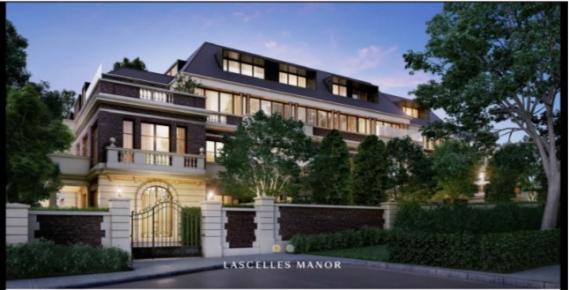

62 The Lascelles website referred to “ARCHITECTURE BY CHRISTOPHER DOYLE” and “LANDSCAPING BY JOHN PATRICK”, next to a drawing of two individuals which may be taken to represent Mr Doyle and Mr Patrick respectively. Under the heading “THE CURATORS”, the website introduced “THE TEAM BEHIND LASCELLES”, setting out information about Techin, Pomeroy, CDA and John Patrick landscaping respectively as follows:
TECHIN MBS PTY LTD
Established in Perth, Western Australia, in 2013, Techin MBS Pty Ltd is an international group that specialises in the development of commercial and residential properties. With key projects underway in Perth and Melbourne, Techin’s focus is squarely on the luxury residential sector. By identifying and working with only the best consultants in relevant fields Techin will deliver consistently superior quality and results.
POMEROY PACIFIC
One of Australia’s leading development and project management companies, Pomeroy Pacific boasts a 46-year track record for identifying and delivering high quality, profitable developments for its clients. A disciplined approach, coupled with premium service, means projects are delivered on time, on budget and to a level of quality that all parties are proud of.
CHRISTOPHER DOYLE ARCHITECTS
Over the past 15 years Christopher Doyle Architects has acquired a reputation for fine luxury residential architecture. Great emphasis is placed on composition, detailing, and the use of enduring materials. The work represents an articulate voice that is grounded in a rigorous understanding of both architectural traditions and the complexity of modern construction.
JOHN PATRICK LANDSCAPING
British-trained John Patrick is acclaimed in his field, in demand by universities and media outlets alike. His highly qualified team works across landscape architecture, urban design and planning, ecology and horticulture. The firm has undertaken landscape conservation and management studies, heritage assessments and management plans including Yarralumla, the official residence of the Governor-General of Australia, and Old Parliament House in Canberra.
63 The Lascelles website included a disclaimer in the following terms:
The architectural renderings of the Lascelles development are artist’s impressions only. The development and construction of the project is subject to planning approval and may be subject to change. The descriptions of inclusions and facilities were prepared prior to the completion of construction. Changes may be made during development and dimensions, tile set out, areas, fittings, finishes, facilities and specifications are subject to change without notice in accordance with the provisions of the Contract of Sale. No warranty, express or implied, is given to the accuracy of the information in this document and Techin MBS Ltd [sic] do not accept any liability for error or omission. Nothing in this document constitutes specific technical, financial or investment advice. Specialist advice should be taken in relation to specific circumstances; accordingly users are advised to seek their own independent advice. Prepared (insert month and year). Published by Techin MBS Ltd [sic], ABN 65 163 537 059.
The display suite and the Lascelles Toorak book
64 On 23 January 2018, Mr Shearman made an appointment to meet with Mr Allen of Marshall White at the Lascelles display suite in Toorak Village. The display suite contained a large model of the Lascelles Toorak development and a mock interior of the completed apartments. Mr Shearman considered that the model was an accurate representation of what he had seen online (on the Lascelles website), and was impressed by “the classic design and extensive landscaping” including “numerous mature trees and extensive hedging”.
65 At the meeting, Mr Shearman was provided with layout designs for two penthouse apartments on the third floor of the Lascelles Manor building, which were numbered 231 and 232. These designs included the name of Mr Doyle, along with other parties involved in the Lascelles Toorak development (i.e. Techin, Marshall White and Pomeroy). Mr Shearman was also given a hardcover bound coffee table book entitled “Lascelles Toorak” (Lascelles Toorak book), and a bound folio of documents including the project’s plans and specifications and the floorplans for each floor (Lascelles Folio). He took both the Lascelles Toorak book and the Lascelles Folio from the meeting, and later carefully reviewed the materials he had been given and read the Lascelles Toorak book in its entirety.
66 The Lascelles Toorak book was consistent with the Hoyne marketing proposal, and some of its content reflected information on the Lascelles website.
(a) The development was described as “grand single-level living in the heart of Melbourne’s most prestigious suburb, Toorak”.
(b) The book contained a series of pages dedicated to various aspects of the lifestyle associated with Toorak Village. Among other things, the area was described as “home to bespoke tailors, chic boutiques, fresh food provedores, cafes and more”. There were page inserts in relation to various local businesses, including the Henry Bucks menswear store which was described as providing “curated goods for the contemporary gentleman”.
(c) The middle pages contained a fold-out display of the two buildings, Lascelles Grange and Lascelles Manor, with images providing a visual depiction of the street frontage of each building, and a close-up of the front gate for Lascelles Manor. The images for Lascelles Grange and Lascelles Manor were the same as those used on the Lascelles website (see above), and carried in small print the words “Artist’s impression”.
(d) Beneath the image of Lascelles Grange, the accompanying text stated:
STYLE FOR THE GLOBAL CITY
An elegant evocation of traditional city architecture, Christopher Doyle’s design gives the Grange contemporary gravitas and panache.
(e) Beneath the image of Lascelles Manor, the accompanying text stated:
INSPIRED BY THE STREETSCAPES OF TOORAK
Christopher Doyle’s vision for Lascelles draws on his fine reputation and experience creating significant private residences throughout Toorak.
(f) Lascelles Grange was also described as follows:
Reminiscent of New York Deco style, the stately and polished Grange makes a perfect addition to this prominent Melbourne location.
(g) The description for Lascelles Manor stated:
Nestled into its avenue streetscape, the Manor blends French flourishes with contemporary elements to achieve its enduring charm.
(h) There were pictorial representations of various apartment interiors and common areas (a lobby, gardens, and a gymnasium), together with descriptions such as “Light-Filled Luxury” and “Exquisite Bathrooms”. On one page, beneath a generic photo of a glass of water on a wooden table, it was stated “The Finer Details: The architect’s signature crafted approach is on show”. On a page depicting one of the lobbies, it was stated “Each Lascelles lobby reflects the tasteful craftsmanship inherent in all Christopher Doyle’s designs”.
(i) There was a section on “Craftsmanship” which addressed some of the finishes and materials to be used in the development, including herringbone parquetry, natural granite stone and Carrara marble, and the description “richly detailed and luxuriously appointed Toorak homes”.
(j) The book contained a separate section headed “THE CURATORS”. On a double page headed with the words “ARCHITECTURAL VISIONARY”, next to a picture of a hand in the act of drawing an architectural sketch, the following paragraph appeared:
CHRISTOPHER DOYLE ARCHITECTS
TOORAK HAS ALWAYS CAPTURED the enduring qualities in what is arguably Melbourne’s most prestigious address. Building here means upholding the idea of contributing to the best residential neighbourhood. Lascelles enjoys the materials and lasting detailing one would anticipate in the finest Toorak buildings. Our objective was to create a richly detailed and luxuriously appointed pair of buildings that sit naturally beside each other.
(k) The following double page showed an “artist’s impression” of the grounds of one of the buildings, depicting tall green trees adjacent to apartment balconies. On the next page, under the heading “Landscaping by John Patrick”, was the following paragraph:
JOHN PATRICK LANDSCAPE ARCHITECTS
Located between the mature treed streetscape of Orrong Road and the quiet residential character of Lascelles Avenue, this building enjoys a unique setting, which we wished to sustain in the long term. New canopy trees will provide residents with the pleasure of being surrounded by the natural world. Floral perfume and colour will be present year-round, while echoes of Melbourne’s Royal Botanic Gardens can be found in the formal courtyard.
(l) The final page in the Lascelles Toorak book reproduced information about each of Techin, Pomeroy, CDA and John Patrick landscaping in the same terms as that contained on the Lascelles website (see above). A disclaimer was set out at the bottom of the page in identical terms to the disclaimer appearing on the Lascelles website (see above), save for the insertion of the date on which the book was prepared (namely, April 2017), and the addition of the concluding words “Marketing by Hoyne”.
67 Mr Shearman was interested in reconfiguring the two rooftop apartments in the Lascelles Manor building into one “bespoke” penthouse apartment, with an interior that would be reconfigured to suit his requirements. He gave evidence of his understanding based on the display suite, the Lascelles Toorak book and the Lascelles website “that the as built Lascelles development would be completed with the high quality materials and finishes synonymous with Christopher Doyle developments and with an upmarket luxury, high quality and beautifully finished development”.
68 Mr Shearman asserted that, through the Lascelles Toorak book and the Lascelles website, Techin “was representing that Christopher Doyle would supervise or ‘curate’ the construction of the development so that the completed Lascelles would achieve Christopher Doyle quality and finish”, and that he formed an understanding that Mr Doyle “would oversee the development from start to finish to ensure that the completed product would conform to his design, luxury quality and standards of finish”. However, he conceded in cross-examination that it was not expressly stated in the marketing materials that Mr Doyle would supervise the construction or oversee the development from start to finish.
Sale and purchase of the penthouse apartment
69 On 25 January 2018, Mr Shearman met with representatives of Pomeroy at its offices in South Yarra in order to discuss the proposal to combine the two penthouse apartments, with six car parking spaces and the possibility of installing a lap swimming pool on the terrace. In addition to Mr Gioldasis, Mr Cameron Jones and Mr Mark Pomeroy of Pomeroy, Mr Shearman was introduced at this meeting to Mr Nico Kelly as a representative of Detail 3.
70 On 26 January 2018, Mr Gioldasis sent an email to Mr Shearman, copied to Mr Allen of Marshall White, attaching a marked-up plan of the top floor of Lascelles Manor and noting changes that had been requested in relation to the installation of a lap pool on the southern balcony and the configuration of the northern balcony. Mr Gioldasis stated, “[i]n terms of the internal changes, I have briefed Brendan [Allen] and he will arrange a time that is convenient for you to meet with our Architect (Detail 3) to amend the internal layout accordingly”.
71 On 6 February 2018, Mr Kelly of Detail 3 sent an email to Mr Shearman attaching a preliminary sketch of the proposed layout for his comment, and noted that they were “seeking structural and services advice regarding the proposed changes and inclusion of the pool”. Mr Shearman responded on the same day, stating that “it is close but there are some areas that need tweaking”. Mr Shearman and Mr Kelly exchanged further emails over following days in relation to aspects of the internal layout of the combined penthouse apartment.
72 While Mr Gioldasis had referred in his email to Detail 3 as “our Architect”, Mr Shearman gave evidence that he did not expect that Mr Doyle would be involved in the changes to the internal layout of his apartment “as those changes had no impact on the overall building and were only particular to the penthouses I was considering purchasing”. Mr Shearman maintains that he was not told that Mr Doyle was no longer the “architectural curator” of the development. In cross-examination, he accepted that he was aware that Mr Kelly from Detail 3 was involved, but he insisted that “it was my assumption they were the engineering architects” who were responsible for preparing the working drawings, as opposed to the “overall architect”. He also said that he was dealing with Mr Kelly in relation to the layout of the apartment which “had absolutely nothing to do with the outside of the building which I consider the prized thing of a main architect”.
73 On 8 February 2018, Mr Allen of Marhsall White sent an email to Mr Shearman attaching the first version of the contract of sale for the Lascelles penthouse. Mr Shearman engaged Mr Darren Marx of Rigby Cooke Lawyers to review the contract. They negotiated additional special conditions to be included in the contract. On 1 March 2018, Mr Marx requested the inclusion of a special condition to accommodate a due diligence period. Mr Shearman accepted in cross-examination that he did not seek to include any warranty or special condition about the identity of the architect or the landscape designer of the Lascelles Toorak development.
74 On 16 February 2018, at a meeting held at Pomeroy’s office in South Yarra, Mr Shearman introduced Mr Gioldasis to his friend Mr Stephen Ariss, who is a property developer. There was a discussion about the changes to the layout of the penthouse apartment, following which Mr Gioldasis sent Mr Ariss a copy of the electrical and architectural drawings and a schedule of fixtures, fittings and equipment. In his affidavit, Mr Shearman stated that he let Mr Ariss “take the lead on working out the layout, design and other details for the proposed combined Lascelles penthouse with Pomeroy”, and that Mr Ariss negotiated the layout of the apartment on his behalf.
75 On or about 16 March 2018, Mr Shearman again visited the display suite in order to determine the level of fit-out that he wanted. He inspected the fixtures and fittings on display, and was provided with a copy of the “Fixtures, Fittings and Equipment and Finishes” schedule dated 11 August 2017.
76 On 3 May 2018, an updated contract of sale for the combined penthouse apartment (the Lascelles penthouse apartment) was provided to Mr Shearman’s lawyers. Mr Shearman gave evidence that he “read the particulars of sale carefully and looked for any non-standard conditions”, but that he did not read every clause on every page. In his oral evidence, Mr Shearman said that he had “scanned through” the Contract of Sale, but “didn’t read every last detail”, and explained “[t]hat’s why I left it for the lawyer”. Mr Shearman also reviewed the plans attached to the proposed contract to ensure that the position and layout were what he had sought.
77 On 10 May 2018, Mr Shearman sent an email to Mr Allen in which he confirmed that he was “progressing with the contract and from my end, I’m all ready to go”. Mr Shearman asked for trust account details so that he could pay the deposit as soon as the contract was ready for signing.
78 On 14 May 2018, Mr Shearman paid the deposit of $650,000 into the trust account of Techin’s lawyers, in advance of signing the Contract of Sale.
79 On 22 May 2018, after a further exchange of correspondence between the parties’ respective solicitors in relation to the terms of the special conditions, the Contract of Sale was executed by the parties. The Lascelles penthouse apartment, defined by reference to the applicable lot numbers on a proposed plan of subdivision, was purchased by Mr Shearman for the price of $6,500,000 with a deposit of $650,000 and a balance of $5,850,000 payable at settlement. In accordance with General Condition 10, settlement was due on the later of 14 days after notice of registration of the plan of subdivision and “14 days after the vendor gives notice in writing to the purchaser that an Occupancy Permit has issued for the property”.
80 Under the Additional Special Conditions, the parties agreed that lots 2301 and 2302 would be consolidated into a single lot in the form of an attached floor plan. The goods sold with the land included the chattels in an attached list of fittings, fixtures and finishes. There were also Additional Special Conditions in relation to the car park and storage lots, the fittings, fixtures and finishes that were included in the property, and the supply and installation of a pool and spa at the cost of the purchaser.
81 Clause 6 of the Additional Special Conditions, which dealt with “provisional items”, relevantly provided that the purchaser could upgrade or change specified fittings, fixtures and finishes, with any such amendments above the nominated allowances for those fittings, fixtures and finishes and any upgrades to the plans and specifications to be at the purchaser’s expense. The vendor was required to act reasonably in considering and attempting to accommodate the purchaser’s requests for such amendments.
Interior design of the penthouse apartment and engagement of David Hicks
82 In the months after entering the Contract of Sale, Mr Shearman began exploring options for the interior design of the penthouse apartment. Mr Ariss had suggested to Mr Shearman that he could engage a leading interior design firm to undertake an upmarket and expensive fit out of the apartment. Mr Shearman thought that this was a reasonable idea, explaining that he wanted “to create a point of difference between the fit out of [the penthouse] apartment versus the general apartments downstairs which are of a much lesser value”.
83 On 20 August 2018, Mr Shearman sent an email to Mr Gioldasis, in which he raised the possibility of appointing an interior designer to “re-spec” the apartment:
Further to discussions I have had with Stephen Ariss regarding the fit-out of my apartment, I would like to appoint a leading interior design firm to re-spec the … apartment. I asked Brendan Allen the other day if he could suggest what he believes are some of the best upmarket apartment fit-outs that he has seen lately and I was hoping you may have a handle on this too.
I’m not against even using the firm who did the original design for Lascelles but probably with a new brief as previously they have been commissioned to design the interior of apartments in the $1.5-$3.0m bracket for this project but we are now talking a $6.5m+ apartment and I’m happy to pay them or someone else to come up with something that is more fitting for that price point. If you can think of any projects who’s penthouse or apartment interiors are ‘right up there’ or a really good designer/firm (eg, David Hicks/ Sue Carr etc) would you please let me know asap and I’ll get right to it as I know we are now working to a tighter time line.
84 In his affidavit, Mr Shearman referred to the sale of a penthouse apartment in another development in Toorak for $15 million, and said that “given I had signed up for the $6.5 million purchase price and if I would then spend $2 million more (for a combined cost of around $8.5 million) to fit it out, it would be a very sound investment”.
85 In September 2018, Mr Shearman took steps to engage Mr Hicks, who is described in Mr Shearman’s affidavit as “a luxury interior architect and building designer”, to design a “bespoke fit out of the Lascelles penthouse”. At the suggestion of Mr Shearman, Mr Hicks met with Mr Ariss to explore ideas for the fit-out before providing a fee proposal. In an email to Mr Ariss dated 12 September 2018, Mr Shearman said:
I hope [Mr Hicks] will be ok and not want to change too much of the actual layout, as it could be a problem with the developer.
I’ve just realised today that we had the answer right under our noses and I didn’t realise it before, Christopher Doyle is the architect and we should have asked him who to use or brief the original interior designers to take it further up market.
Well, let’s see how David is and what his thoughts are.
86 On 16 September 2018, Mr Hicks provided a fee proposal to Mr Shearman, which comprised a fixed fee of $115,000 (excluding GST) that was broken down into the stages of planning, concept design, design development, documentation and construction, the last of which involved an hourly rate.
87 Mr Shearman engaged Mr Hicks and made progress payments in respect of his services between October 2018 and September 2019.
88 In late 2018 and early 2019, Mr Hicks and Mr Gioldasis engaged in correspondence in relation to the proposed interior redesign of the penthouse apartment, including a range of issues in relation to matters such as architectural documentation, engineering, electrical redesign, sprinklers and fire documentation, hydraulic redesign, swimming pool design, liaison with the building surveyor, and garage/storage documentation. Detail 3 provided responses to questions and comments from Mr Hicks about aspects of the interior redesign.
89 On 4 February 2019, Mr Hicks told Mr Gioldasis that “we see a [minimum] of 4-8 weeks for our design and documentation to be fully resolved”. Mr Gioldasis sent a reply email to Mr Hicks on the same day in which he referred to an eight week period as being “in line” with LU Simon’s construction program and an acceptable “target for design completion”, stating “[t]o put a date on it, Friday 28th March 2019 at the latest”. Mr Hicks responded that “[t]he 8 week period is basically dependent on when we receive fees for consultants, when they are approved and the pace at which the consultants respond and provide requested information”. Mr Hicks stated that he would be providing a design for the swimming pool, but that it would be necessary for the architect “to document this and co ordinate it with the building structure etc”. Mr Hicks told Mr Gioldasis:
Thanks for the hourly rates, but as you can appreciate in this instance the changes are big. Therefore we need to define a scope and an estimate fee proposal for this. please advise how you want to proceed with obtaining this?
If you could please advise on the items below that you have noted LUS to confirm and when this information is likely to be available?
90 Mr Gioldasis responded to Mr Hicks that the consultants were “reluctant to put a fixed price on the works as they cannot be quantified and we think any fixed price would include this unknown factor and thus be priced accordingly i.e. very high pricing including risk”. Nevertheless, Mr Gioldasis provided an estimate of some of the consultants’ fees based on the scope of works from the new design. Mr Ariss was unimpressed with the additional costs, describing them to Mr Gioldasis as a “try on”. Mr Hicks suggested that he needed an estimate based on an itemised scope with a proper fee proposal from each of the consultants, noting that “[t]he longer this takes the longer it will take for us to finalise the package”. Mr Gioldasis told Mr Hicks that the consultants needed to see the current design before they could itemise a scope of works.
91 On 13 April 2019, Mr Michael McDonald of Maddocks (Techin’s solicitors) sent an email to Mr Marx of Rigby Cooke (Mr Shearman’s solicitors), stating that:
[I]n accordance with the contract for the purchase of this property, the vendor and the purchaser have been negotiating amendments to the apartment finishes and specifications, with the purchaser responsible for any increase in costs above the nominated allowances for the specified provisional items.
This appears to have been a reference to clause 6 of the Additional Special Conditions. Techin proposed that current and future variations to the apartment finishes and specifications be paid for by Mr Shearman, under an arrangement to be incorporated in a deed of variation executed by the parties. In a follow-up email sent on 13 May 2019, Mr McDonald asked Mr Marx to obtain “urgent instructions” on Mr Shearman’s position, noting that “if this matter is not resolved urgently, and agreement reached on payment for the variations, the variations which are continuing to be negotiated between the parties will not be able to proceed”.
92 On 3 May 2019, Mr Gioldasis sent an email to Mr Hicks and Mr Shearman in relation to “the completed design development set you are producing on behalf of the Purchaser and the deadlines that will need to be met to ensure that this design is constructed on site”. Mr Gioldasis noted that the target date of 28 March 2019 had not been achieved as the design was still being developed. The email continued:
As you are aware, after the completion of this design set there will be a large number of works to follow, including but not limited to the Builder pricing the works, the consultants updating all of their documentation, amended building permits being procured, the purchaser agree the pricing, the Contract of Sale be amended to reflect the new design and the procurement of the finishes items commence.
There are also structural and services implications which need to be known much sooner as the structure is topping out in the coming weeks and things like set downs, services rough in, pool implications on structure and services etc. need to be coordinated and agreed.
As such, I can confirm that the following dates must be met in order for your design to be constructed on site otherwise the design will revert to the current Contract of Sale that is on foot and LU Simon will proceed to deliver the apartment on the basis of this Contract of Sale in terms of the layout and finishes (as attached):
…
(Original emphasis.)
93 Mr Gioldasis’ email then set out deadlines in respect of a series of “Deliverables (PDF & CAD)” in successive stages, including “Final Floor Plan Layouts” and “Swimming Pool Design” by 10 May 2019, LU Simon pricing those works by 15 May 2019, the purchaser agreeing to “variation pricing” by 20 May 2019, and “Final Design Development Documentation” by 27 May 2019. Mr Gioldasis stated:
We cannot allow the design of Apartment 231 to delay the completion of the development and/or have LU Simon on site past the Date for Practical Completion as this was not the original Agreement and the Agreement with the Purchaser was only to change a few specific finishes, not the entire floor plate including structure, services, external elements etc.
…
We understand you have been engaged and briefed to produce a certain design however the Agreement between the Purchaser and Developer doesn’t encompass re-design to the extent that is being proposed.
In summation of the above and for the avoidance of doubt, I can confirm that the Developer has acted fairly and reasonably throughout this process to facilitate the Purchaser’s design requirements however if the dates in the above table are not met this will delay the Date for Practical Completion and as such the Developer is not willing to risk the settlement of the other apartments and will not be proceeding with the alternative design any further.
94 In May 2019, a number of issues arose in relation to the proposed swimming pool which would impact on the building works being carried out by LU Simon. This led to an exchange of emails between Mr Hicks, Mr Corrigan of LU Simon and the pool supplier, to which Mr Gioldasis was copied.
95 On 22 May 2019, Mr Gioldasis sent the following email to Mr Shearman, Mr Marx and Mr McDonald:
Hi Gents,
We require a meeting to work out how the settlement and payments of 231 are going to be handled and the Agreement that needs to be put in place for this.
We have a current CoS on hand however what we have been asked to provide differs materially in a substantial manner and also adds 2-3 months on the Contract Program.
The substantial amount of work for all consultants, Pomeroy and the Builder to date which remains unpaid is an issue as well as the construction program being extended and I am at the point where in order to mitigate risk for my Client I will have to advise that the plans and finishes in the current Contract of Sale for 231 are what prevails.
This would mean all the David Hicks design input to date would be wasted however we are under no obligation to accept this and he has been nothing but hard to deal with to date so I want to understand the implications of this.
Please confirm availability for next week:
…
96 Also on 22 May 2019, Mr Gioldasis sent an email to the pool supplier (Aloha Pools Pty Ltd), noting that he had advised Mr Hicks and Mr Shearman of certain limitations and requirements in relation to the pool design and layout, and that Pomeroy required the final pool design to be sent to the supplier and approved by 24 May 2019, “otherwise we will be removing the pool from the design and re-endorsing the Town Planning set with the planter in its place as failure to meet this date puts the crane program at risk and the crane costs $35,000 per week with the crew”. Mr Gioldasis stated:
Essentially if we do not have a final design and cost approval by Friday [24 May 2019] I have been asked to remove the pool from the balcony and not install it as part of the LUS works.
97 Mr Gioldasis set out a similar position in his email to Mr Marx, which was copied to Mr Shearman and Mr McDonald, dated 22 May 2019:
Darren,
My advice is also to give David Hicks a call and advise him contractually where he stands with everything because if this pool detailing isn’t agreed with Aloha Pools and confirmed by Friday I am not going to be proceeding with the pool and Scott can install it after.
Same goes with his design as contractually we don’t have to agree to it.
Not ideal on either issue but too much delay to the program and way to [sic] much push back for my liking.
98 The pool design had not been finalised by 27 May 2019, and Mr Gioldasis sent an email to Mr Marx (copied to Mr Shearman and Mr McDonald) stating:
Hi Darren,
Tried calling numerous times and left a few messages.
Something else for discussion tomorrow will be that as the pool design is still yet to be signed off by the Client this will result in a 2 months delay to the Contract Program as advised today by LUS.
I do not believe the Client will accept this so it is likely the pool will be removed completely from the design.
Let’s discuss tomorrow.
99 On the same day, Mr Gioldasis sent an email to Aloha Pools, asking them to hold off on ordering the pool until the following day when he was meeting with Mr Marx, as he had “instructions to remove the pool from the design as it is a 2 month delay on the handover of the building”, observing that it had “[t]aken too long unfortunately” (original emphasis). Mr Gioldasis informed Aloha Pools that “the pool is something that would need to be done after handover if it is still required”.
100 A meeting took place between Mr Gioldasis, Mr Marx and Mr McDonald on or about 28 May 2019, at which the timing and other issues relating to the construction of the penthouse apartment were discussed between the parties.
101 On 28 May 2019, Mr Gioldasis sent an email to Mr Marx and Mr Shearman in which he advised that LU Simon had confirmed a delay of 38 working days to their contract program, “based on the pool being signed off by COB this week”, and asked for confirmation that they wished to proceed with the installation of the pool and accept the costs of the delay, adding “[i]f not it will be removed from the design”.
102 On 29 May 2019, Mr Hicks provided LU Simon with documentation and schedules for the interior of the penthouse apartment.
103 Also on 29 May 2019, LU Simon provided to Mr Gioldasis a price variation “for the structural changes to the concrete slab” to the penthouse apartment, stating that “[w]e require approval of this variation price by no later than COB on Monday 3rd June, otherwise we will be proceeding with the original design in accordance with our head contract”. On the same day, Mr Gioldasis sent an email to Mr Shearman and Mr Marx, attaching the price variation “for the alterations to the structural design to meet the David Hicks layout”. Mr Gioldasis stated:
For clarity, if the David Hicks design is desired as the end outcome and there is no chance we would be reverting back to the current Contract of Sale design then the $6,800 is not going to be charged.
This $6,800 is to put in penetrations as per the existing design also (on top of the ones for the new design) and fill them up later if required just as a failsafe.
Please confirm your instructions.
The “cold shell” option
104 On 31 May 2019, in response to a request from Ms Chen, Mr Gioldasis provided Techin with an update on the penthouse apartment, in which he stated:
I can confirm the following:
1. We have received his final design from David Hicks just last week and LUS are currently pricing it as per the attached email.
2. We have amended the CoS plan to reflect the amended layout as attached but it is currently being revised with some minor changes as we need to insert this into a Deed of Variation to the Contract of Sale.
3. We also had a meeting last week with Michael from Maddocks and Darren from Rigby Cook [sic] (purchaser’s solicitor) as to how the deal needs to proceed and Darren has explained this to the Purchaser in terms of timing.
4. There is also the option put forward to the Purchaser for Techin to hand over a ‘cold shell’ (so basically no fitout) on settlement and him to do the fitout at a later stage as this is typical for luxury apartments and would be less risk to the project - we are awaiting feedback on this.
LUS are also pricing the current Contract of Sale layout for 231 that Techin are obligated to give the Purchaser as part of the $6.5m sale so we understand how much this purchaser change costs.
(Emphasis added.)
105 On 3 June 2019, Mr Shearman sent an email to Mr Hicks, in which he said that he was “writing now to confirm the next directions on the apartment as from my point of view it is all unfortunately coming apart at the seams but if we act quickly there may be some saving”. Mr Shearman inquired as to the possibility of installing a stainless steel pool and spa instead of a concrete pool from Aloha Pools. He continued:
In terms of the apartment fit-out, I am fearful of both being held to ransom cost wise and potentially more bullshit from the builder, so I am going to ask for the cold shell fit out and then we go to market after hand over for a true competitive quote situation. Time is no issue from my point of view for the completion/move-in.
[Sic] took on board what you said about issues with the body corporate etc and I will have this addressed legally before accepting a change to the contract, otherwise we are back to the original fit-out and I do not want to beaten by this project.
Please work out asap what items you believe need to be craned in during the build process so that we can at least have those on the floor ready to go and avoid any issues post building completion.
Hopefully we can get this all sorted.
(Emphasis added.)
106 Mr Shearman also sent the following email on 3 June 2019 to Mr Gioldasis, along with Mr Marx and Mr Hicks:
Hi Jonathan,
I am not sure if I have understood this properly but either way, I approve whatever is required in this to have the apartment ready to take the David Hicks design installation.
I am also 99% sure that I want to accept the apartment as a ‘cold shell’ hand over and I have asked Darren Marx to look at this from a legal point of view with regard to being unduly treated, delayed etc. from a Body Corporate point of view as it will be done some time after the building completion.
In wanting to do this, I have asked David Hicks to compile a list of items etc., that would be ideally supplied and craned in during the build process, in order that it minimises cost & delays once we are ready to complete the apartment. Would you please also advise on what you think should be supplied now and we can then match up and asses the requirements.
Assuming the legal issues are in order I believe it is probably a waste of time in LU Simon quoting on the fit out as I can basically imagine where that is heading and I’m happy to complete the apartment post hand over as move in time for us is not an issue.
Please advise anything else you need an answer on that I may have missed.
(Emphasis added.)
107 On 3 June 2019, Mr Gioldasis sent an email to Ms Chen, Mr Rigo, and representatives of Techin’s financiers, with the subject “Lascelles - 231 Penthouse Design Dates To Be Met (Alternative Design) - Update 03.06.19”:
Hi Techin and Financiers,
Hope you are all well.
Just an update on the 231 Penthouse and where we are at after the last month of intense design work, negotiations and deadlines coming to a head.
We have received the revised David Hick’s design and it is currently with LUS being vetted and priced.
They have confirmed it is very elaborate and would likely be additional time on the project due to the detailing and materials.
We met with Techin’s lawyer last week along with the Purchaser’s lawyer to discuss this and due to the cost implications of the new design as well as the potential time implications on the project with the new fit out, the idea of a cold shell handover was raised by the Purchaser’s lawyer.
As such we are currently investigating this in terms of building compliance, final handover, settlement, financial etc.
My general thoughts are:
we have no objection to this and would consider it a better result for the project as the fit out would be done after settlement by the Purchaser, thus mitigating any potential delays that LUS could raise against Techin;
it is not uncommon for a penthouse cold shell to be handed over and this has occurred on several projects lately (one of which David Hicks was the designer also);
LUS would credit back the required fit out amount to the Purchaser as well as crediting the same amount back to Techin from the Contract Sum so Techin would settle less on the penthouse but be credited the exact same amount less to LUS on the Cos (thus being even).
Please note that the cost of the Purchaser Changes for the penthouse that Techin are obliged to pay have not formally been completed yet i.e. the cost of combining the two apartment in the Contract design to the penthouse as per the original CoS so LUS are currently working on this;
we are investigating along with LUS the option of craning up big items now and placing them within the shell to enable the fit out works to occur more seamlessly;
we will liaise with Michael from Maddocks and the OC when they are appointed to ensure the rules reflect fair practices for both 231 Purchaser and the other residents to ensure minimal disruption;
At this stage no action is required, just providing an update on what we have been doing and what we will work on in the coming weeks.
Will discuss next week at the PCG also.
(Emphasis added.)
108 In an email dated 20 June 2019, Mr Shearman asked Mr Gioldasis “what action needs to be done to follow through on the possibility of getting the components/sections for a steel pool in place in time for the available crane time”.
109 On 28 June 2019, Mr Hicks sent an email to Mr Gioldasis stating that he had “been liaising with [Mr Shearman] and we would [like] to get an idea of the cost to have the shell handed over with the below works completed as per the new design”, setting out a list of specified works and asking Mr Gioldasis to “please come back to me on this”.
110 On 3 July 2019, Mr Gioldasis sent a further email update to Ms Chen, which was copied to a number of persons, including Mr Rigo, Mr McDonald, Mr Allen, and representatives of Techin’s financiers, with the subject “FW: Lascelles Ave - VP 28 - Apt 231 Shell”:
Hi Carol et al.
Just to keep everyone in the loop, please see attached and below in regards to 231 Cold Shell Credits applicable to Techin and also the Purchaser.
So essentially what this means is:
1. To go from the 2 x no. apartments (231 & 232) that are included in the Head Contract as per the LUS Tender to a cold shell, LUS have offered a credit of $335,202 to Techin.
2. To go from what Techin have sold the 231 Purchaser in his Cos and what they are obliged to provide him to cold shell, Techin will have to reduce the Purchase Price of 231 by $487,000.
The reasons the reduction to the Purchaser is more is due to the combined apartment and agreed upgraded items in his CoS, the requirements are more onerous with a lot of extra inclusions so even if he was to settle the $6.5m, Techin would be paying LUS the extra over of $151,798; so it basically balances out as per the below.
(Original emphasis.)
The email set out a table of price calculations in relation to the penthouse apartment “as a cold shell” and “as per the CoS”, before continuing:
With time being of the essence, I will be forwarding the proposal of a $487,000 credit to the Purchaser and agree exactly what a ‘cold shell’ means as we are currently negotiating some extra over requirements from what a traditional cold shell would be i.e. he is requesting that penetrations are roughed in etc
From this Agreement I will get Michael from Maddocks and Darren from Rigby Cook [sic] to prepare a Deed of Amendment to the Contract of Sale to reflect the new Purchaser Price of $6,013,000 as well as the cold shell requirements and arrange for execution by all parties.
111 Mr Gioldasis attached to his email a variation price submission from LU Simon dated 2 July 2019 in respect of the credits for works to hand over the penthouse apartment “as a shell”. Among other things, this document noted that “[a] certificate of occupancy will not be issued for the apartment; however a certificate of final inspection will be issued”. LU Simon provided a separate breakdown for a proposed credit valued at $487,000 between the client (Techin) and the purchaser (Mr Shearman) for providing a shell, taking into account “a number of different requirements that are not part of the LU Simon Head Contract”. It was noted that this amount “could not be used in reverse, i.e. to be used as a cost for LU Simon to undertake the works in accordance with the Contract of Sale”.
112 On the same day, 3 July 2019, Mr Gioldasis forwarded to Mr Hicks and Mr Shearman the detailed breakdown of the credit of $487,000 for the penthouse apartment “to go back to a cold shell as per the request by Scott”. In his covering email, Mr Gioldasis listed items that would or would not be completed by LU Simon to enable the fit-out to be installed. Mr Gioldasis informed Mr Hicks and Mr Shearman:
Once the items above are agreed I will get Michael from Maddocks (Vendor’s lawyer) and Darren from Rigby Cook [sic] (Purchasers lawyer) to prepare a Deed of Amendment to the Contract of Sale to reflect the new Purchaser Price of $6,013,000 as well as the cold shell requirements and arrange for execution by all parties.
This way the Vendor has a contractual obligation to provide the David Hicks design in the form of a cold shell and I can also commence the process of going back to Council for a Secondary Consent amendment to suit the David Hicks design.
Please confirm your instructions.
In a number of ensuing emails, Mr Hicks and Mr Gioldasis exchanged comments on the costs of the works for the cold shell, including the items that had been listed by LU Simon.
113 On 4 July 2019, Ms Chen responded to the email update that had been sent by Mr Gioldasis on the previous day, stating:
Hi Jonathan,
For making the decision, we need further information regarding the quotes.
Would you please send us the breakdown for the quote from LU Simon and the Client? Or any related information?
Thank you and looking forward to hearing from you.
114 Mr Gioldasis replied to Ms Chen’s email on the same day as follows:
Hi Carol,
The quotes are on the email that was sent as attached.
The Purchaser has confirm [sic] they want cold shell so at this stage we cannot go back to a fitout as the time has passed.
I spoke with Tanya and Mark Power about this and they are accepting of the outcome and strategy to credit the Purchaser $487,000 and LUS credit Techin $335,202.
We can discuss further at the PCG also.
The reference to “Tanya and Mark Power” was to the representatives of Bank of Melbourne and Qualitas respectively, who were Techin’s financiers for the Lascelles Toorak development.
115 On 5 July 2019, Mr Gioldasis exchanged emails with Mr Hicks and Mr Shearman in relation to the proposed price reduction or “purchaser credit” for the cold shell, stating that “essentially we are proposing the current Purchase Price minus $487,000 for the cold shell as per the LUS comments below”.
116 On 9 July 2019, Mr Gioldasis sent an email to Mr Hicks and Mr Shearman, copied to Mr Marx and Mr McDonald, in which he stated:
Hi David and Scott,
In order to formally confirm that the apartment will be a ‘cold shell’, I am proposing a Deed of Amendment to the current Contract of Sale be entered into (as agreed with both lawyers).
The Contract Price will also be adjusted to $6,013,000 and I will confirm the impact on the current holding deposit as the difference may need to be refunded to reflect 10% of the revised Contract Price.
What I am proposing is outlined in the Contract of Sale is the following which I believe outlines all items as per our discussions to date.
Please confirm this is acceptable and we will proceed on this basis.
The email proceeded to summarise the basis on which the apartment would be handed over as a “cold shell”, with specified inclusions.
117 On 16 and 17 July 2019, Mr Gioldasis sent “follow up” emails to Mr Hicks and Mr Shearman, again copied to Mr Marx and Mr McDonald. In a further email dated 23 July 2019, Mr Gioldasis confirmed that the tower crane was being removed “on the weekend of 24th – 25th August 2019”, and that “[i]f anything needs to be craned up to the apartment it needs to be done prior to that date.
118 On 5 August 2019, Mr Hicks sent an email to Mr Gioldasis setting out further comments and questions on the works for the cold shell. Mr Gioldasis replied on 6 August 2019, confirming various matters and stating that “[e]ssentially at this stage there will be a shell that is constructed to suit your layout plan with fire sprinklers and as-builts of what is constructed and any interior documentation of services and fit-out to be documented by yourself or others”.
119 On 20 August 2019, Mr Hicks responded to Mr Gioldasis by email, stating that “[t]he general comments are fine but still don’t answer some of the questions”, and requested further information about aspects of the works. Mr Hicks said:
I understand the apartment will be a shell but need to ensure that it will be handed over in a way that the revised design will work.
As you can understand I am making sure we have all of this documented and that we have received all of the latest information so that the client can be confident with the shell.
120 By email dated 22 August 2019, LU Simon provided some further information in response to Mr Hicks’ requests.
121 On 26 August 2019, Mr Gioldasis sent an email to Mr Hicks and Mr Shearman with the subject “Lascelles - 231 Shearman Penthouse - Revised CoS”:
Hi David and Scott,
On the back of this information and when you have time to review it I would like to establish the new Contract of Sale and get it executed to reflect the cold shell handover so this is agreed with all parties.
As mentioned previously, the Contract Price will also be adjusted to $6,013,000 to deduct the credit for the fit out works and I will confirm the impact on the current holding deposit as the difference may need to be refunded to reflect 10% of the revised Contract Price.
What I am proposing is outlined in the Contract of Sale is the following which I believe outlines all items as per our discussions to date as well as a few I added in 16 and 17 as we have discussed recently:
…
The email set out a further summary of the basis on which the apartment would be handed over as a “cold shell”, with specific inclusions. This summary largely reflected that set out in the email dated 9 July 2019, but with some additional conditions to reflect subsequent discussions including:
16. Levelling of all concrete floors to be provided to Australian Standards; and
17. As-built documentation and CAD’s (where applicable) to be provided to the Purchaser for all of the above installed items.
122 On 27 August 2019, Mr Gioldasis sent a further email to Mr Hicks and Mr Shearman regarding the subject “Lascelles - 231 Shearman Penthouse - Revised CoS”, stating:
Hi Gents,
I will be instructing the lawyers to prepare the Deed of Amendment as mentioned in the email below as I believe all the legal details and cold shell requirements are now agreed between the parties.
There may be some minor design back and forth but shouldn’t stop the Deed from being executed as what is being provided won’t change.
Just a few items updated and expanded on as per below on the back of emails with David the past day shown below in YELLOW to ensure that the parties are agreeable and it is clear what is being provided and the attached drawings which will form part of the Contract:
…
(Original emphasis.)
The summary of the “cold shell” inclusions was then reproduced with a number of additions highlighted in yellow. There were three new conditions in the list of “inclusions”, and changes made to 12 out of the 17 existing conditions.
123 On 13 September 2019, Mr Gioldasis sent another email to Mr Hicks and Mr Shearman, this time copying Ms Chen of Techin and Mr Allen of Marshall White. The subject of the email was “RE: Lascelles - 231 Shearman Penthouse - Revised CoS - Final Terms”. Mr Gioldasis stated:
Hi Gents,
Trust you are well.
As per latest correspondence, see below latest terms and drawings for inclusion in the revised Contract of Sale which we believe encapsulates all the items that you have requested:
I will instruct Maddocks to prepare a Deed of Amendment accordingly.
124 The email from Mr Gioldasis reproduced the latest version of the “cold shell” inclusions, which had been further amended since the email dated 27 August 2019 with an additional introductory paragraph in the following terms:
For the avoidance of doubt, the Purchaser will solely at their own costs provide all of the interior works including but not limited to all design development and documentation, supply and installation of all services and interior finishes and all other required items, with the Developer providing only the following inclusions:
…
The list of inclusions was modified from the previous version, with four new conditions and various changes to other items. The list no longer contained a condition contemplating that “[t]he Pool shell and any other loose building materials or items provided by the Purchaser to be craned up using the Tower Crane should it still be on site”, possibly reflecting that the crane had by then been removed. Further matters were dealt with in new conditions, including:
4. The structural slab will be designed and constructed to accommodate an 800kg dry weight bathtub in the main bedroom en-suite at gridlines 5/D-E;
…
8. The Purchaser is solely responsible for all costs relating to the supply and installation of the pool and spa. The cold shell has structural provisions for the pool and spa to be constructed as shown in drawing “A161(C5)” as annexed;
…
22. All works provided to the Purchaser will completed to Australian Standards as per the Building Permit that has been issued and no sprinkler heads are required in bathrooms; and
23. ‘Certificate of Final Inspection’ to be provided to the Purchaser (as issued to LU Simon by the Registered Building Surveyor) for the cold shell works;
The draft Deed of Variation
125 On 16 September 2019, Mr Gioldasis sent an email to Mr McDonald, which appears from its subject (“FW: Lascelles - 231 Shearman Penthouse - Revised CoS - Final Terms”) to have forwarded the email chain referred to above (see paragraph 123). In this email, Mr Gioldasis instructed Mr McDonald to “prepare a CoS Deed of Amendment accordingly for the penthouse at Lascelles as we discussed previously”, and attached a set of plans “to be annexed” (presumably, to the draft deed of variation).
126 On 26 September 2019, Mr Gioldasis sent Mr McDonald a “follow up” email, in which he added:
Also, I would like all future correspondence to go through Maddocks and the Purchaser directly (or Rigby) as I believe if they keep liaising though me they will keep requesting changes.
I believe the inclusions below to be the final list so will not be making an [sic] further changes.
127 On 9 October 2019, Mr Gioldasis sent a further email to Mr McDonald, asking “Just a follow up on this please, what is the current status?”.
128 On 14 October 2019, Mr Hicks sent an email to Mr Shearman and Mr Marx, in which he asked Mr Shearman, “Just wanted to check and see where you were with the below and the likely program of works going forward”. The word “below” appears to be a reference to the previous email chain with the subject “RE: Lascelles - 231 Shearman Penthouse - Revised CoS - Final Terms” (see paragraph 123 above). Mr Shearman replied to Mr Hicks on 15 October 2019, stating:
Hi David,
At this point my lawyer, Darren Marx from Rigby Cooke is waiting for the new contract to arrive from the vendors solicitors and I have given Darren you [sic] details so he can be in contact with you to verify that the details within the contract are as per your discussions with Pommeroy’s [sic].
As far as a time line moving forward, we will not be able to commence any further work until settlement has been effected. Closer to that date I will be in contact and we can plan a timeline then.
I should be home for Christmas, so i hope to catch you over the summer anyway.
129 On 31 October 2019, Mr Gioldasis sent a further follow-up email to Mr McDonald, stating:
Hi Michael,
Can you confirm a status on this please?
Since my original email on 13 September 2019 I haven’t heard any feedback and we need to close out this Deed of Amendment.
This email was copied to Mr Marx and Ms Chen, among others.
130 On 8 November 2019, Mr McDonald emailed a draft Deed of Variation to Mr Marx. The email stated:
Darren
Further to the email below from Jonathan, attached is a draft Deed of Variation of Contract.
Please confirm the terms of the deed of Variation are agreed in anticipation of execution and exchange.
Let me know if you have any comments or queries.
131 The draft Deed of Variation between Techin and Mr Shearman relevantly provided for the variation of the Particulars of Sale to reduce the price to $6,013,000 and the deposit to $601,300, leaving a balance of $5,411,700. Clause 3 provided for a refund to Mr Shearman of $48,700 from the deposit held by Techin’s lawyer, to be paid “[a]s soon as practicable following the date of this Deed”. General Condition 10 (Settlement) and Special Condition 15.3 (Completion of Building) of the Contract of Sale were varied so as to replace the words “Occupancy Permit” with “Certificate of Final Inspection”, which was defined as meaning “the certificate of that name issued by the Builder to the registered building surveyor in relation to the completion of the Works required to be undertaken in accordance with Annexure 4”. Accordingly, under General Condition 10 as varied, settlement would be due on the later of 14 days after notice of registration of the plan of subdivision or “14 days after the vendor gives notice in writing to the purchaser that a Certificate of Final Inspection has issued for the property”. Under Special Condition 15.3 as varied, the issuing of the Certificate of Final Inspection would be “conclusive evidence that the Works on the Property are completed”. Annexure 4 to the Contract of Sale, which listed Specifications and Inclusions, was completely replaced so as to reflect the handover of the apartment as a “cold shell”, and reflected the latest version of the inclusions from the exchange of correspondence between the parties that had culminated in the email from Mr Gioldasis dated 13 September 2019, together with attached plans.
132 On 28 November 2019, Ms Chen of Techin sent an email to Mr Doyle of CDA, which appears to have followed from a discussion with the directors of Techin. After setting out some arrangements in relation to the completion of the Lascelles Toorak development, including the possible redesign of some apartments that were impacted by a “TPZ” (tree protection zone), Ms Chen inquired as to whether Mr Doyle “would like to work with us further for Lascelles”.
133 On 6 December 2019, Mr Doyle replied to Ms Chen, declining her offer of further work on the Lascelles Toorak development. Mr Doyle stated:
We hope you are well and apologies for not responding earlier. It sounds as though you have made good progress on the path forward with Lascelles which is good news. Certainly, we consider the best option is for you to continue to work closely with the builder and Detail3 to redesign the apartments to ensure the best outcome. From our perspective this will serve you best. We are not sure that our involvement would be of further benefit to you outside of the recommendations we have already made.
134 On 9 December 2019, Mr McDonald sent an email to Mr Marx, asking him to “please confirm the terms of the Deed of Variation are agreed in anticipation of execution and exchange”.
135 On 22 January 2020, Mr Gioldasis sent an email to Mr Marx, copied to Mr McDonald, seeking an update on the execution of the draft Deed of Variation. Mr Gioldasis stated:
Hope you are well.
In regards to the Shearman penthouse at Lascelles, I am chasing the executed Deed of Amendment as requested by the Purchaser that was sent through some time ago.
Can you please provide an update?
136 Mr Marx replied by email dated 29 January 2020, telling Mr Gioldasis that he was “yet to hear from my client but I am following up”. Mr Gioldasis replied on the same day, asking Mr Marx to “[p]lease let him [i.e. Mr Shearman] know that as the project is being completed in April it is something we need to get sorted ASAP”.
137 On 3 February 2020, Mr Gioldasis sent the following email to Mr Shearman (copied to Mr Marx and Mr McDonald):
Hope you are well and Happy New Year!
Just wanting to follow up the Deed of Amendment that was sent to you by Maddocks to reflect your revised design requirements and layouts to suit the David Hicks Design as well as the cold shell requirements.
Can you please execute this and return to us?
With the completion of the project in the next few months we would like to get this executed by both parties in a timely manner to enable settlement to occur.
138 Mr Gioldasis sent a further email to Mr Shearman and Mr Marx on 7 February 2020:
Hi Scott and Darren,
Can you please confirm the below?
It has been months’ since we have heard anything and need to understand the current status.
We believe the Deed of Amendment reflects the Purchaser’s requests and the design works we were instructed to undertake in regards to the David Hick’s design adequately and should be executed.
139 Mr Shearman replied to Mr Gioldasis on the same day, stating:
Hi Jonathan,
I hope your year has started well!
I haven’t actually seen any agreement and in fact I only found your email here today by chance in my junk mail section, so I’ll talk with Darren and find out where he’s at with it all.
Mr Marx responded to Mr Shearman’s email, noting that he had sent the draft Deed of Variation to Mr Shearman and asking him to check his junk mail for Mr Marx’s emails.
140 Later that evening, Mr Gioldasis sent a further email in which he asked Mr Shearman to let him know “what you are thinking regarding the apartment fitout”, noting that Techin had appointed an “OC” (an owners’ corporation) and he wanted “to ensure the rules reflect conditions that suit what you require, things like lift use etc”.
141 On 24 February 2020, Mr Shearman advised Mr Gioldasis that he had asked Mr Hicks “to go over the attachments that you sent through”, as a result of which Mr Hicks had raised questions regarding the installation of sprinklers, and the penetrations and services shown on the roof plans. Mr Gioldasis responded to these questions by email on 26 February 2020.
142 On 10 March 2020 and 17 March 2020, Mr Gioldasis sent further emails to Mr Shearman (copied to Mr Marx) seeking an update on the draft Deed of Variation. In the second email, Mr Gioldasis informed Mr Shearman that “[a]s we are completing the project next month we need to get this executed Deed back please in order to finalise the Plan of Subdivision and allocate your lots accordingly”.
143 On 20 March 2020, Mr Gioldasis again sought an update from Mr Shearman and Mr Marx in relation to the draft Deed of Variation, noting that “we need to submit the final PoS [i.e. plan of subdivision] by COB today”. Mr Gioldasis confirmed that he was “happy to amend the sprinklers clause” to confirm the installation of sprinklers in accordance with an annexed drawing (which reflected his response to one of the questions raised by Mr Hicks), and stated “[i]f this is acceptable please let me know so I can instruct Maddocks to amend accordingly and get you a final execution copy”.
144 On 24 March 2020, Mr Gioldasis sent a further email to Mr Shearman and Mr Hicks (copied to Mr Marx and Mr McDonald) in relation to the draft Deed of Variation. Perhaps reflecting his growing impatience, Mr Gioldasis stated:
Hi Gents,
Really running out of time on this one as I need to submit the Plan of Subdivision to Council to confirm the combined lot, garaged area, 6 car parks etc.
Please let me know what is holding this up so I can sort it out.
Mr Hicks replied by email on the following day, telling Mr Gioldasis that “[t]his one is not my call”, and adding “[s]orry but best for Scott [i.e. Mr Shearman] to confirm”.
145 On 25 March 2020, Mr Gioldasis sent to Mr McDonald an updated version of the draft Deed of Variation, stating:
Hi Michael,
In order to get this Deed finalised and executed by both parties, I have attached a track changes copy with the main change being the addition of the wording to the fire sprinkler clause and the drawing as requested by the Client.
Can you please just check over this and if all in order, issue a final execution copy PDF version with the drawings also attached as annexures?
I will then send to Scott [i.e. Mr Shearman] to execute.
146 On the same day, Mr McDonald sent Mr Gioldasis and Mr Marx the draft Deed of Variation “incorporating the changes and the plans”, and with some minor typographical corrections. Mr Gioldasis then forwarded this version of the draft Deed of Variation to Mr Shearman, stating:
Hi Scott,
Please find attached the Execution Version of the Deed of Variation for your apartment.
This has been modified to include the fire sprinkler plan as an annexure as they have been installed as requested by David Hicks.
Can you please execute this at your earliest convenience and I will have my Client counter sign it and also arrange for the balance deposit monies to be refunded.
147 It appears that Mr Marx subsequently had a telephone discussion with Mr Gioldasis about Mr Shearman’s position in relation to the Contract of Sale. In his affidavit, Mr Shearman stated that he had instructed Mr Marx “to feel out with Jonathan Gioldasis the possibility of the developer completing the fit out before settlement”, after he encountered difficulties in obtaining finance for the purchase of the “cold shell”. It can be inferred from subsequent correspondence that Mr Marx, on Mr Shearman’s instructions, raised with Mr McDonald the possibility of settling the sale of the penthouse apartment under the original Contract of Sale as opposed to a cold shell.
148 On 27 March 2020, Mr McDonald sent the following email to Mr Marx:
Darren
I refer to your recent telephone call to Jonathan where you advised that the Purchaser is having difficulty obtaining finance for the cold shell apartment and that he is now seeking to revert to the terms of the original contract.
Based on the significant correspondence between the Purchaser, his representatives and the project manager, the original contract has been varied in accordance with the terms of the Deed of Variation, and the terms of the Deed of Variation are binding and enforceable, notwithstanding that the Deed of Variation has not been formally executed.
As evidenced by the correspondence, including the direct variations paid by the Purchaser to provide for delivery of the cold shell, it is clear that the Purchaser intended that the Vendor act in reliance on this correspondence and representations, notwithstanding the formal Deed of Variation was not executed. Legally the Purchaser is bound to proceed with the agreement for delivery of a cold shell and can not unilaterally seek to change that agreement.
Any request by the Purchaser to fit out the apartment approximately 4 weeks prior to the completion of the project is an unreasonable and costly solution and we encourage you to brief the Purchaser on the legal implications for the Purchaser if he doesn’t proceed with delivery of a cold shell as agreed and settle on the due date for settlement. The Vendor reserves all of its rights under the contract as varied if the Purchaser fails to comply with his obligations, including the right to forfeit the deposit and claim for any loss or damages incurred arising from any failure to settle as required.
Please call me so that we can discuss the Purchaser’s specific issues, and explore any available options.
149 On 29 March 2020, Mr Marx replied by email to Mr McDonald:
Michael
Thank you for your email.
I do not propose to get into a legal debate as to if there is a legal agreement or not. I also do not require encouragement to advise my client. My client is very aware of its position.
As I communicated to Jonathan Gioldasis, our client had always planned to sell down other assets to settle Lascelles. This was unsuccessful. While our client has sold one Sydney property, the settlement has a three month window of an earlier date and a later date. In addition to the settlement date uncertainty, that property underpins other mortgages and our client is endeavouring to negotiate cross securitisation.
The sale of our client’s Toorak property was unsuccessful. Unlike Jonathan’s suggestion that Toorak is “only worth $8-9m”, our client received recent valuations from actual valuers in excess of $14m.
Our client has been unable to obtain finance on an empty shell. Other second tier financiers have suggested finance may be available for a completed apartment (hence the suggestion to revert to a lesser styled apartment). Our client is also in discussion with another financier seeking what is effectively a construction style loan.
Our client does not want this being tied up in legal dispute for the next 12-18 months and is trying to resolve this and is open to any other resolutions including delaying settlement while finance is sought.
Attempted settlement of the Contract of Sale
150 On 3 April 2020, a certificate of final inspection was issued in relation to “Apartment 231 (Shell only)”, that is, the “cold shell” penthouse apartment. The conditions stated that the certificate was “issued for apartment 231 shell only”, and that “[a] separate building permit is required for the fit-out of the apartment prior to occupation”.
151 On 30 April 2020, Mr McDonald sent an email to Mr Marx in which he confirmed that the plan of subdivision was expected to be lodged for registration shortly, and that settlement was expected to occur “sometime in May”. Mr McDonald asked Mr Marx to confirm if Mr Shearman would “be in a position to settle the purchase in full on the due date, or has an alternative proposal regarding settlement”.
152 On 22 June 2020, Techin’s solicitors advised Mr Marx that the plan of subdivision had been registered, and gave notice of settlement under the Contract of Sale. The email to Mr Marx relevantly stated:
Dear Sir/Madam,
Techin MBS Pty Ltd sale to:
Name: |
Scott Donald Shearman |
Property: Apartment 301 2301 & 2302, Lascelles, Lascelles Toorak - Lascelles Toorak
We act for the Vendor.
Plan of Subdivision
We confirm that the Plan of Subdivision (Plan) has been registered. The title particulars to the lot being purchased by your client are as follows:
Volume Folio
12228 255
Occupancy Permit
The occupancy permit has also issued and a copy can be found by following the link below: https://madbox.maddocks.com.au/seosl/1000/mpd/ul31072021bf9bf3fd3e3714fc6c579874a4795c94
Settlement
In accordance with the terms of the contract of sale, settlement is therefore due on 6 July 2020 being 14 day(s) from the date of this notification confirming issue of the Occupancy Permit and registration of the Plan.
(Original emphasis.)
153 On 26 June 2020, Mr McDonald sent an email to Mr Marx referring to the notice of settlement and confirming that settlement was due on 6 July 2020. Mr McDonald asked Mr Marx to confirm that Mr Shearman would be proceeding to settlement on the due date. In response, Mr Marx stated that “[a]t this stage I have not received instructions to settle”, noting that Mr Shearman had requested an inspection of the premises and inquiring as to who he should contact in that regard. Mr McDonald replied with details of the relevant contact.
154 On 29 June 2020, Techin’s solicitors sent a statement of adjustments to Mr Marx, in anticipation of the settlement on 6 July 2020. The attachment included a “Settlement Statement” that recorded the purchase price as $6,500,000 less the deposit paid of $650,000 (that is, the purchase price and deposit under the original Contract of Sale), leaving a balance of $5,850,000 to which the adjustments were added. The balance due to the vendor was stated as $5,877,425.54, the distribution of which was detailed under the subheading “Cheques”. The covering email stated:
Delayed settlements
Please be aware that if settlement is not completed on the due date, our client reserves its rights to charge penalty interest in addition to the delayed settlement fee in accordance with the contract (if applicable).
(Original emphasis.)
155 On 1 July 2020, Mr Marx sent an email to Mr McDonald requesting “an extension of one month without penalty to settle the property”. Mr Marx stated that Mr Shearman’s circumstances had prevented him from being ready to settle, but that Mr Shearman believed “that one month will be sufficient to enable him to be in a position to settle”. Mr Marx noted that Mr Shearman had made an appointment to inspect the property on 3 July 2020. Mr Marx asked Mr McDonald to seek instructions from Techin, before concluding “[i]n the meantime, now that we have received instructions, we will attend to all other settlement requirements”.
156 On 2 July 2020, Mr McDonald advised Mr Marx that Techin had “instructed that it requires settlement to occur on the due date, and does not agree to an extension of the date for settlement”, and that Techin reserved all of its rights under the Contract of Sale if settlement did not occur on the due date.
157 The settlement did not take place on 6 July 2020.
158 On the following day, 7 July 2020, Mr McDonald sent the following email to Mr Marx:
Darren
Further to my email below, I note that settlement was not completed on the due date, and that the purchaser is now in default under the Contract.
Before I obtain further instructions from the vendor regarding the action the vendor intends to take in response to the default, please confirm your client’s position in relation to settlement.
The vendor reserves all of its rights under the Contract in relation to the default.
159 On 9 July 2020, Mr McDonald sent a further email to Mr Marx:
Further to my email below, I confirm that the purchaser remains in default.
I am instructed that unless we receive confirmation from you by close of business tomorrow that the purchaser will immediately attend to settlement, a rescission notice will be served.
The vendor reserves all of its rights under the contract and at law.
I look forward to your response.
160 On 10 July 2020, Mr Marx replied by email to Mr McDonald:
Hi Michael
If it were not clear from my colleague’s earlier email, our client has continued to get it’s [sic] affairs in order in readiness for settlement. His finance has been approved, but like most things in the current world, documents are taking some time to be produced. We will keep you updated.
161 On 16 July 2020, Mr McDonald asked Mr Marx to confirm when Mr Shearman expected to be in a position to settle, stating that “[a]s you would appreciate, the sale price for this lot is significant, and my client needs to keep its financier informed of the likely settlement date”. Mr McDonald asked Mr Marx to advise whether he was “waiting on anything further from us to progress settlement”.
162 On 22 July 2020, Mr McDonald again asked Mr Marx to confirm when Mr Shearman expected to be in a position to settle, stating that Techin reserved its rights under the Contract of Sale. Mr Marx told Mr McDonald by return email that the “loan documents” had been prepared and Mr Shearman was “attending to having them signed”, adding that “[t]he documents need to be couriered between parties which I understand is taking place now”.
163 On 24 July 2020, Mr Marx sent a “without prejudice” letter to Mr McDonald, advising that Mr Shearman was disappointed with the presentation and quality of the Lascelles Toorak development and was considering his options. The letter stated:
As previously confirmed, our client continues to put all things in place to effect settlement on apartment 301, 14 Lascelles Avenue Toorak.
However, our client is deeply disappointed with the presentation and quality of the buildings that form the Property. Mr Shearman has instructed us to investigate all commercial options that may be available to him. Consequently, we have briefed Mr Ben Murphy of Counsel and Mr Michael Wyles, one of Her Majesty’s Counsel to provide advice on this matter. Counsel has assisted in the preparation of the attached Concise Statement which is ready to file in the Federal Court of Australia.
Our client is seeking relief under Australian Consumer Law. Before seeking any specific relief or damages, we believe the parties should seek to mediate any possible outcome regarding our client’s position. We recommend that you seek instructions from your client to mediate this dispute before Ray Finkelstein AO QC at the earliest opportunity possible.
If your client does not wish to proceed with a mediation or any other form of discussion regarding its concerns, then we have been instructed to file the proceedings in the Federal Court of Australia.
Attached to the letter was a “confidential draft” of a concise statement dated 24 July 2020, which contained allegations that Techin had engaged in misleading or deceptive conduct and sought relief by way of rescission of the Contract of Sale, damages or compensation under ss 236, 237 or 243 of the ACL.
On 13 August 2020, Mr Marx sent the following email to Mr McDonald:
Dear Michael
Thank you for your recent call and discussion.
We have received instructions from our client regarding the proposed settlement of Lascelles Avenue.
Our client confirms that his claim is not about seeking a discount or damages. Our client considers his only acceptable solution to rectify what he believes to be the grossly misleading conduct of the vendor is to have the vendor terminate the Contract of Sale and for the purchaser to have their additional costs recovered.
We are instructed that if the vendor will not release our client from the Contract of Sale, then we are to commence proceedings in the Federal Court, including involving whatever other third parties necessary to resolve this matter.
We will await your reply.
164 Mr McDonald replied on the same day, stating:
Darren
Thank you for your email.
I have also received instructions from my client as follows:
1. My client rejects the claims made by your client and does not agree to release your client from the Contract. My client requires your client to comply with its obligations under the Contract and to proceed to settlement without any further delay.
2. My client rejects the proposal for this matter to be referred to conciliation.
3. I have instructions to issue a rescission notice if settlement does not occur without further delay.
4. My client reserves all of its rights under the Contract, including the right to charge penalty interest in accordance with the Contract as from the due date for settlement being 6 July, 2020 until settlement occurs.
5. I have instructions to accept service of any proceedings which may be issued.
Commencement of proceedings
165 On 19 August 2020, Mr Shearman commenced the present proceeding in this Court. The originating application filed on 19 August 2020 sought an order pursuant to s 243 of the ACL that the Contract of Sale be rescinded and Techin repay the deposit of $650,000, damages pursuant to s 236 of the ACL, and compensation pursuant to s 237 of the ACL for loss suffered as a consequence of his entry into the Contract of Sale.
166 The grounds on which such relief was claimed were set out in an accompanying concise statement, in which it was alleged that Techin had made representations in trade or commerce that it would construct the Lascelles Toorak development “to the standards and with the exterior finishes associated with buildings which Mr Christopher Doyle had designed over many years”, and that it would surround the buildings upon completion and prior to settlement with gardens and landscapes of the standard, maturity and growth associated with those designed and installed under the supervision of John Patrick landscaping. Mr Shearman alleged that, in reliance on those representations, he had entered into the Contract of Sale, paid the deposit, and engaged the services of a leading interior architect to prepare plans for the internal design of the penthouse apartment. After alleging facts contrary to the alleged representations, Mr Shearman alleged that Techin had no reasonable basis for making the representations, and had engaged in conduct that was misleading or deceptive or likely to mislead or deceive in breach of s 18 of the ACL.
Claimed repudiation and purported termination
167 Following the commencement of the proceeding, correspondence was exchanged between the parties’ respective solicitors in relation to the claims raised in the concise statement.
168 On 18 September 2020, Techin’s solicitors (Maddocks) wrote to Mr Shearman’s solicitors (Rigby Cooke) in advance of a case management hearing that was listed on 24 September 2020. Maddocks complained that the concise statement was inadequate to enable Techin to understand the allegations made against it, and foreshadowed an application for an order that the case proceed by way of pleadings. Maddocks stated:
In the meantime, our client maintains that the Contract of Sale remains on foot, and will rigorously defend these proceedings. In this regard penalty interest is accruing at the approximate rate of $72,000 per month since 6 July 2020.
…
Further, our client is entitled to serve a default notice on Mr Shearman for failing to meet his obligations under the Contract, and it reserves its right to do so, in every respect.
169 On 22 September 2020, Rigby Cooke replied to Maddocks’ letter. After defending the adequacy of the concise statement, Rigby Cooke stated:
In the penultimate paragraphs of your letter you assert that the Contract of Sale remains on foot with penalty interest accruing. Further, your client reserves its rights to issue a default notice. Your client must make an election. Our client seeks a declaration that the Contract of Sale is at an end. Your client is required to claim positive relief in this proceeding, and we invite your client to put on its Concise Crossclaim when filing and serving its Concise Statement Response. In this regard, we refer you to the decision of Port of Melbourne Authority v Anshun Pty Ltd (1981) 147 CLR 589, which will apply in the event your client does not elect to put on its Concise Crossclaim and prohibit it from seeking that relief against our client in the future.
170 On 12 October 2020, Maddocks wrote to Rigby Cooke, referring to the email from Mr Marx dated 13 August 2020 and the commencement of the proceedings on 19 August 2020, before stating:
We confirm that our client does not accept the purported rescission of the Contract of Sale to purchase Lots 2301 and 2301 at 14 Lascelles Avenue, Toorak 3142 (Contract) by Mr Shearman.
Mr Shearman has, by purporting to rescind the Contract and commencing proceedings in the Federal Court of Australia, evinced an intention to no longer be bound by his obligations under that Contract. He has therefore repudiated the Contract. In the circumstances, our client elects to accept that repudiation and to terminate the Contract, with immediate effect.
Our client reserves all of its rights to take whatever action is necessary to recover any loss or damage suffered as a result of Mr Shearman’s repudiation of the Contract, including, without limitation, seeking declaratory relief in relation to its entitlement to the deposit and loss and damages suffered as a result of termination of the contract, by way of cross-claim in the current proceedings.
(Original emphasis.)
171 By letter dated 15 October 2020, Rigby Cooke took issue with Techin’s purported termination of the Contract of Sale:
We refer to your letter dated 12 October 2020 in which you client has purported to terminate the contract of sale dated 22 May 2018 (contract).
The email from Mr Marx of 13 August 2020 self-evidently reveals that our client considered himself bound by the contract and was requesting to be released from the contract. The vendor, by an email of 13 August 2020 from Mr Michael McDonald of your firm, refused to do so. Following this, our client instructed us to commence a proceeding seeking among other relief, that the contract be rescinded in accordance with the Australian Consumer Law.
At no stage has our client rescinded the contract and requesting to be released from a contract does not amount to repudiatory conduct. It will be a matter for the Court as to whether there are grounds for the contract to be rescinded. Until such time, the contract remains in force. It is possible that the Court may determine that our client is not entitled to such relief in which case he would be required to settle the contract.
In those circumstances, it is not open to your client to purport to bring the contract to an end until the hearing and determination of this proceeding.
(Original emphasis.)
Instead, Rigby Cooke requested that Techin agree to hold the deposit in escrow, or to pay the deposit into court, pending the outcome of the proceeding.
172 On 21 October 2020, Maddocks wrote to Rigby Cooke, rejecting Mr Shearman’s assertion that the Contract of Sale remained on foot and stating that Techin “maintains that your client’s conduct amounted to repudiation of the Contract and our client was entitled to accept that repudiation and terminate the Contract”. The letter also stated that, although Techin contended that it was entitled to the deposit monies given that the Contract of Sale had been terminated, Maddocks had been instructed to hold the deposit monies in an interest bearing account pending an order of the Court or the joint written direction of the parties.
173 The proceeding continued through various interlocutory steps in ensuing months, including the service and return of subpoenas and obtaining case management directions.
174 On 31 May 2021, Rigby Cooke wrote a letter to Maddocks and Techin, in which Mr Shearman purported to terminate the Contract of Sale based on conduct by Techin amounting to repudiation of the contract. It is convenient to reproduce the terms of this letter in full:
We refer to your firm’s letters to us dated 12 October 2020 (12 October Letter) and 21 October 2020 (21 October Letter).
In the 12 October Letter you asserted on behalf of Techin that our email to you of 13 August 2020 and Shearman commencing the Proceeding on 19 August 2020 by way of the Concise Statement constituted a purported rescission and repudiation by Shearman of the contract between the parties dated 22 May 2018 (Contract). Those assertions were incorrect. By our 13 August email and by commencing the Proceeding, Shearman did not purport to rescind the Contract and did not repudiate it. Shearman commenced the Proceeding on the ground that the Contract remained on foot. By the Proceeding, Shearman sought relief in respect of the Contract under the Australian Consumer Law, including an order under s.436 that the Contract be rescinded (not a declaration that it had already been rescinded).
Techin’s purported termination of the Contract was ineffective. By wrongfully purporting to terminate the Contract, Techin itself evinced an intention no longer to be bound by the Contract and repudiated it.
Further, by the 21 October Letter Techin stated again that Shearman’s conduct amounted to a repudiation of the Contract which Techin claimed it was entitled to accept and had accepted, so that the Contract was at an end. Again, that assertion was incorrect. Shearman had not repudiated the Contract. The 21 October Letter constituted a further repudiation of the Contract by Techin.
The 21 October Letter also purported to rely on repudiatory conduct as referred to in Techin’s Cross-Claim in the Proceeding, being failure to pay the “balance of the purchase price” “despite repeated demands” and commencing the Proceeding seeking, inter alia, an order that the Contract be rescinded. None of this conduct of Shearman amounted to a repudiation by Shearman of the Contract. The due date for settlement being 6 July 2020 had passed without any notice of default or notice appointing a new time for settlement being served.
The Contract remained on foot, contrary to the assertion by Techin that it had been terminated.
By the abovementioned conduct, Techin has repudiated the Contract and evinced an intention not to be bound by the Contract.
We write now to notify you formally that Shearman accepts Techin’s repudiation of the Contract and he terminates the Contract with immediate effect. |
As a consequence, Shearman will seek leave immediately to amend his Concise Statement in the Proceeding to reflect this, including a claim for the return of his deposit paid pursuant to the Contract together with consequential damages.
(Original emphasis.)
175 Maddocks responded by letter dated 7 June 2021, in which they disagreed with the contentions that Techin had repudiated the Contract of Sale by incorrectly asserting that Mr Shearman had repudiated the contract and by accepting that repudiation and purporting to terminate the contract. Maddocks stated:
As set out in our client’s Statement of Cross-Claim dated 16 October 2020, your client repudiated the Contract by failing to settle the Contract, despite repeated communications from our client that your client was in default and demands that he perform his obligations under the Contract, and commencing these proceedings. It follows that our client was entitled to accept your client’s repudiation, and did so by letter dated 12 October 2020 and terminated the Contract.
As the Contract was terminated at this time, your client’s purported termination of the Contract by your 31 May 2021 letter is of no effect.
176 As had been foreshadowed in the letter from Rigby Cooke, Mr Shearman subsequently obtained leave to file and serve an amended originating motion and concise statement which, among other things, included the claim that Mr Shearman had lawfully terminated the Contract of Sale by his acceptance of Techin’s alleged repudiation of that contract.
THE CLAIMS IN THE PROCEEDING
Amended concise statements
177 In his amended concise statement dated 12 August 2021, Mr Shearman alleges that Techin engaged in conduct in trade or commerce that was misleading or deceptive, or likely to mislead or deceive, in breach of s 18 of the ACL. This claim is based on representations that are alleged to have been made by Techin to Mr Shearman in relation to the design and construction of the Lascelles Toorak development. The alleged representations are collectively referred to as the “Techin luxury quality representations”, which are in substance pleaded as follows:
(a) that Mr Doyle was the architect of and would be a curator of the Lascelles Toorak development, and that the design and construction of Lascelles Manor and Lascelles Grange would be “curated”, or alternatively supervised or overseen, by Mr Doyle;
(b) that Techin would construct Lascelles Manor and Lascelles Grange to the standards and with the exterior and interior finishes associated with buildings which Mr Doyle had designed over many years, and consistent with “an exclusive, high quality, Toorak luxury apartment and penthouse development”; and
(c) that Techin would surround Lascelles Manor and Lascelles Grange upon completion and prior to settlement with gardens and landscape of the standard, maturity and growth associated with landscapes and gardens designed and installed under the curation and supervision of John Patrick landscaping.
178 Mr Shearman alleges that the Techin luxury quality representations were made prior to 22 May 2018, and were contained in or evidenced by various statements in the Lascelles Toorak book and on the Lascelles website, and the presentation of the model in the display suite “of finished buildings possessing the luxury exterior consistent with the ‘Lascelles Toorak’ book and its contents”. He alleges that he relied on the representations by entering into the Contract of Sale, paying the deposit of $650,000, and engaging the services of an interior architect to prepare plans for the internal design of the penthouse apartment.
179 Mr Shearman alleges various matters that are said to be “[c]ontrary to the Techin luxury quality representations”. These include that Mr Doyle did not curate the Lascelles Toorak development, and that the design and construction of Lascelles Manor and Lascelles Grange were not curated, supervised or overseen by Mr Doyle. More generally, it is alleged that the Lascelles Manor building (including the penthouse apartment) was not constructed or completed to the standard required to conform to the Techin luxury quality representations.
180 In so far as the Techin luxury quality representations were representation as to future matters, Mr Shearman alleges that Techin had no reasonable basis for making those representations. Further, Mr Shearman alleges that Techin knew as at 22 May 2018, and had a duty to disclose, that Mr Doyle was not, or had ceased to be, the architect or curator of the Lascelles Toorak development.
181 Mr Shearman also advances a claim in contract. He alleges that Contract of Sale contained terms to the effect of the Techin luxury quality representations. Alternatively, he alleges that the penthouse apartment was not fitted out or finished in accordance with the terms of the Contract of Sale, but rather was “partially completed as a ‘cold shell’ without the fixtures, fittings and finishes specified in the Contract”. Accordingly, Mr Shearman pleads that he “was not obliged by the terms of the Contract to pay the balance of the Price in the sum of $5,850,000 for a ‘cold shell’ without the fittings, fixtures and finishes” listed in the Contract of Sale.
182 Mr Shearman pleads that, when settlement did not take place on the date nominated by Techin, time ceased to be of the essence in relation to payment of the balance of the purchase price, and that Techin did not serve any default notice on Mr Shearman. He alleges that Techin repudiated the Contract of Sale by incorrectly asserting repudiatory conduct by Mr Shearman, at a time when Mr Shearman was under no temporal obligation to settle and in circumstances where Techin had not fitted out the Lascelles penthouse or reached agreement on a price reduction. Mr Shearman pleads that he accepted Techin’s repudiation and himself terminated the Contract of Sale.
183 In its amended concise statement in response, Techin relevantly denies having made the alleged Techin luxury quality representations, and relies on the disclaimers in the Lascelles Toorak book and on the Lascelles website. Techin also pleads the express terms of the Contract of Sale, including terms by which Mr Shearman acknowledged that he had not relied on any representation or warranty other than those set out expressly in the Contract of Sale. Techin alleges that Mr Doyle undertook the schematic design of the Lascelles Toorak development, and that Lascelles Manor and Lascelles Grange were designed by Mr Doyle and constructed substantially in accordance with that design. Further, Techin alleges that the design and construction of Lascelles Manor, along with the gardens and landscaping, substantially conformed to the statements made in the Lascelles Toorak book and on the Lascelles website.
184 Techin alleges that that parties agreed to vary the Contract of Sale so as to provide that the Lascelles penthouse would be handed over as a “cold shell”, with Mr Shearman providing all of the interior works at his own cost and Techin providing only limited inclusions. Under the alleged contract variation, the purchase price would be reduced to $6,013,000 and the deposit payable would be reduced to $601,300, with the balance due on settlement of $5,411,700. Techin alleges that the parties agreed that they would record their agreement in a deed of variation (in accordance with Additional Special Condition 6.7), following which Techin would refund to Mr Shearman the deposit amount of $48,700. The alleged contract variation is particularised by Techin as having been partly in writing, namely the unexecuted draft Deed of Variation, and partly implied or to be inferred from conduct, namely the dealings between the parties between September 2018 and June 2020 (as recounted above).
185 Further or alternatively, Techin alleges that Mr Shearman is estopped from denying that he agreed that the Lascelles penthouse would be constructed as a “cold shell” and that settlement would be completed on that basis. Techin alleges that “from June 2019”, Mr Shearman (himself or by his agents including Mr Hicks and Mr Marx) represented that he agreed to the variation of the Contract of Sale, and did not correct or question Techin’s conduct in constructing the Lascelles penthouse as a “cold shell”, as a consequence of which Techin was induced to assume that Mr Shearman had agreed to the variation and constructed the Lascelles penthouse as a “cold shell” in reliance on that assumption.
186 Techin alleges that Mr Shearman repudiated the Contract of Sale by evincing an intention not to be bound by that contract, having demonstrated that he was not ready, willing and able to perform the contract. The alleged repudiatory conduct is that, in breach of the Contract of Sale, Mr Shearman failed, refused or neglected to pay the balance of the varied purchase price despite repeated demands made by Techin for him to do so, and that he commenced proceedings seeking orders that the Contract or Sale be rescinded. Techin alleges that it accepted Mr Shearman’s repudiation and, by letter dated 12 October 2020, terminated the Contract of Sale.
187 By his reply to Techin’s amended concise statement in response, Mr Shearman denies that his claim for misleading or deceptive conduct is excluded by the disclaimers or by the terms of the Contract of Sale. Mr Shearman says that the scope of Mr Doyle’s retainer was reduced in about August or September 2016, following which Mr Doyle facilitated the transition of the Lascelles Toorak development to an “architectural facilitator company” and did not thereafter curate, supervise or oversee the construction of the development. Mr Shearman alleges that Techin informed him that Mr Kelly of Detail 3 was an architect or architectural facilitator working on the development with Pomeroy, and did not inform him that Detail 3 had replaced or succeeded Mr Doyle as the architect or curator of the development.
188 In relation to Techin’s allegation that he had repudiated the Contract of Sale, Mr Shearman pleads that the settlement date was to be further agreed by the parties, that Techin had not nominated a new settlement date or given notice to settle, and that he commenced this proceeding on the basis that the Contract of Sale remained on foot, seeking relief under the ACL in respect of the contract.
189 Mr Shearman denies that there was any agreement to vary the Contract of Sale. While he accepts that the parties discussed and negotiated varying the contract and that Techin took steps to finish the Lascelles penthouse as a “cold shell”, he says that no deed or document varying the Contract of Sale was executed. Further, at the commencement of the hearing, Mr Shearman was given leave to amend his reply so as to plead that the alleged variation of the Contract of Sale is unenforceable by reason of s 126(1) of the Instruments Act 1958 (Vic).
190 In relation to the alleged estoppel, Mr Shearman denies that he advised or represented to Techin that he had agreed or would agree to the proposed variation of the Contract of Sale, and says that Techin knew that he had not agreed or was yet to agree to any such variation.
Amended cross-claim
191 Techin cross-claims for a declaration that the deposit of $650,000 has been forfeited to Techin, and for damages. By its amended statement of cross-claim, Techin relies on the alleged variation of the Contract of Sale by which the Lascelles penthouse would be constructed as a “cold shell”, and the alleged estoppel by which Mr Shearman is precluded from denying that he agreed to such a variation. Alternatively, Techin alleges that the representations made by or on behalf of Mr Shearman that he would settle the purchase of the Lascelles penthouse as a “cold shell” amounted to misleading or deceptive conduct in breach of s 18 of the ACL. Techin repeats its allegations in relation to Mr Shearman’s repudiatory conduct.
192 Mr Shearman’s defence to the amended cross-claim relevantly repeats his denials in relation to the alleged variation of the Contract of Sale, the alleged estoppel, and the alleged repudiatory conduct.
193 At the commencement of the hearing, Mr Shearman was granted leave to amend his defence so as to plead a term of the Contract of Sale that settlement was due 14 days after notice that an occupancy permit had issued for the Lascelles penthouse, and that he was not subject to an obligation to settle because such an occupancy permit had not issued and Techin had not given notice that such an occupancy permit had issued. Further, Mr Shearman alleged that, if Techin had suffered loss and damage, it failed to mitigate its loss and damage including by reselling the Lascelles penthouse within a reasonable time.
Issues
194 Prior to the commencement of the trial, the parties filed an agreed statement of issues which identified 28 questions of fact and law arising from the claims set out above. However, the parties’ opening and closing submissions were presented on the basis that those questions encompassed three overarching issues:
(a) whether Techin engaged in misleading or deceptive conduct by making the Techin luxury quality representations, or alternatively whether Techin breached contractual terms to similar effect (the Misleading Conduct Issue);
(b) whether the parties agreed to vary the Contract of Sale such that the Lascelles penthouse would be handed over as a “cold shell” for a reduced price of $6,013,000, or alternatively whether Mr Shearman was estopped from denying that he had agreed to such a variation (the Cold Shell Variation Issue); and
(c) whether the Contract of Sale was lawfully terminated by Techin on 12 October 2020 based on Mr Shearman’s repudiation of that contract, or was lawfully terminated by Mr Shearman on 31 May 2021 based on repudiation of the contract by Techin (the Termination Issue)?
195 The parties differed as to the relationship between these issues, and the proper order in which they should be addressed.
196 Mr Shearman proceeded on the basis that the Termination Issue was the primary issue. He submitted that, if he were successful on that issue (i.e. if the Court were to find that he lawfully terminated the Contract of Sale on 31 May 2021), the Cold Shell Variation Issue would “fall away” and the Misleading Conduct Issue would be relevant only to the extent of the loss or damage suffered by Mr Shearman. Nevertheless, he accepted that the Cold Shell Variation Issue might itself be relevant to the Termination Issue in that, if Techin had remained obliged at settlement to deliver the Lascelles penthouse apartment with the original fit-out, this would provide a further basis on which Mr Shearman was entitled to terminate the Contract of Sale.
197 Techin’s submissions commenced with the Misleading Conduct Issue and, in particular, the claims advanced by Mr Shearman under the ACL. Having submitted that Mr Shearman was not entitled to any relief under the ACL, Techin submitted that the parties had agreed to vary the Contract of Sale, or alternatively that Mr Shearman was estopped from denying such an agreement, and that Mr Shearman’s repudiation of the Contract of Sale as so varied was manifest from the circumstances, including his failure to settle and then seeking to avoid the bargain by commencing these proceedings.
Evidence
198 Mr Shearman relied on two affidavits sworn on 12 August 2021 and 13 February 2024 respectively. He gave oral evidence and was cross-examined. While there was no direct challenge to Mr Shearman’s credit, some aspects of his evidence were disputed or were the subject of criticism. I accept that Mr Shearman sought to give his evidence honestly and in a manner that was responsive to questions. In any event, in circumstances where many of the central issues in this case ultimately turn on an objective assessment of facts that are evidenced by contemporaneous documents and are largely uncontested, somewhat less importance attaches to issues concerning the credibility and reliability of any particular witness.
199 Mr Shearman also relied on an affidavit of Mr Sean Cussell sworn on 22 March 2022. Mr Cussell is a licensed real estate agent, who gave evidence about the marketability of buildings designed by Mr Doyle, and his assessment of various matters about the appearance of the Lascelles Manor and Lascelles Grange buildings. Techin objected to Mr Cussell’s affidavit in its entirety, on the basis that it comprised inadmissible opinion evidence and that, to the extent that it was capable of being treated as expert opinion based on specialised knowledge, Mr Cussell lacked independence and had not complied with the requirements of Div 23.2 of the Federal Court Rules 2011 (Cth). As discussed further below, I ruled that the affidavit was admissible, and that matters concerning Mr Cussell’s independence went to the credibility and reliability of his evidence. Mr Cussell gave oral evidence and was cross-examined.
200 Techin relied on four affidavits of Ms Chen affirmed on 6 December 2021, 2 February 2023, 28 March 2024 and 8 April 2024 respectively. Ms Chen gave oral evidence and was cross-examined.
201 Techin also relied on an affidavit of Mr McDonald sworn on 30 January 2023. As set out above, Mr McDonald is a lawyer employed in the property group of Maddocks who acted for Techin in relation to the Lascelles Toorak development. His evidence addressed the Contract of Sale of the Lascelles penthouse and the negotiation of variations in relation to the interior fit-out and the “cold shell”, as well as the correspondence between the solicitors for the respective parties in relation to the attempted settlement. Mr McDonald gave oral evidence and was cross-examined.
202 Each of the parties called expert evidence from a qualified architect, who gave evidence in relation to the design and appearance of the Lascelles Toorak development. Mr Shearman obtained an expert report dated 19 November 2021 from Mr Bruce Trethowan. Techin obtained an expert report from Mr Chris McCue dated 28 November 2023, in which he addressed and responded to specific aspects of Mr Trethowan’s expert report. Following an expert conclave, Mr Trethowan and Mr McCue produced a “Joint Expert Report” dated 30 November 2023. Neither of the architectural experts gave oral evidence.
203 Techin relied on two expert reports of Mr Karl Cundall dated 3 December 2021 and 15 February 2023 respectively. Mr Cundall is a certified practising valuer who provided an opinion as to the market value of the Lascelles penthouse as a “cold shell” as at 12 October 2020, 12 October 2021 and 10 February 2023. This evidence is primarily relevant to the quantum of any loss or damage suffered by Techin, in the event that it were to succeed in its claim for damages for breach of contract. In forming his opinion, Mr Cundall in turn relied on two reports by a quantity surveyor, Ms Linda Mok, dated 3 December 2021 and 6 February 2023 respectively, which provided an estimate of the cost of an internal fit-out of the Lascelles penthouse from a “cold shell” to the original contract specification. Mr Cundall gave oral evidence and was cross-examined. Ms Mok was not required to give oral evidence.
204 The parties also relied on a number of documents reproduced in the Court Book that were referred to in opening submissions or in the course of evidence, many of which also formed exhibits to one or more of the affidavits referred to above. The trial was conducted on the basis that such documents would be tendered or treated as forming part of the evidence in the proceeding, in the contemplation that the parties would prepare a joint tender list. Ultimately, the parties provided to the Court an agreed list of documents that were referred to at trial, in addition to those included as exhibits to affidavits that had been read into evidence.
205 By way of a general observation, the central narrative of the dealings between the parties is primarily revealed through the documentary evidence. In that regard, many of the principal actors who were directly involved in those dealings did not provide affidavits and were not called to give evidence. Mr Shearman often conducted negotiations and engaged in communications through other persons, including his friend Mr Ariss, his interior designer Mr Hicks, or his solicitor Mr Marx; none of whom was called as a witness in the proceeding. On the other side, the principal for Techin, Ms Chen, largely relied on Pomeroy as the project manager responsible for the day-to-day management of the project, and she was not directly engaged in any negotiations or other dealings with Mr Shearman or his representatives. In particular, Mr Gioldasis of Pomeroy was a key figure in the events surrounding the interior design of the penthouse apartment and the “cold shell” proposal, but was not called by Techin to give evidence about those matters. Mr Rigo, one of the directors of Techin with authority to enter into contracts and to make other important decisions, was also not called by Techin as a witness.
206 Each of the parties submitted that inferences should be drawn against the other party from their unexplained failure to call available witnesses: see Jones v Dunkel (1959) 101 CLR 298. Such principles cannot be used to fill gaps in the evidence, and a failure by a party to adduce evidence from a witness does not provide a basis for an adverse inference against that party if the evidence does not otherwise support that inference being drawn: see e.g. Marku v Minister for Justice (2015) 237 FCR 580 at [68] (Kenny J); Lek v Minister for Immigration, Local Government and Ethnic Affairs (1993) 43 FCR 100 at 124 (Wilcox J); Gaskell v Denkas Building Services Pty Ltd [2008] NSWCA 35 at [46]–[48] (Bryson AJA, with whom Hodgson and Basten JJA agreed). In the present case, while proper regard must be had to the affidavit and oral evidence where relevant, significant weight can be given to the contemporaneous documents and written communications exchanged between the parties, particularly in relation to an assessment of the objective nature of their dealings. Where an inference that is unfavourable to a party is available from the documentary or other evidence, that inference may be drawn with greater confidence if that party has failed without explanation to call an available witness to give evidence about the relevant matter, on the basis that the evidence of that witness would not have assisted the party’s case.
MISLEADING OR DECEPTIVE CONDUCT
Applicable principles
207 Section 18(1) of the ACL provides:
18 Misleading or deceptive conduct
(1) A person must not, in trade or commerce, engage in conduct that is misleading or deceptive or is likely to mislead or deceive.
208 For such purposes, a representation with respect to any future matter is taken to be misleading if the person does not have reasonable grounds for making the representation: ACL, s 4(1). In a proceeding concerning such a representation, the person is taken not to have had reasonable grounds for making the representation unless evidence is adduced to the contrary: ACL, s 4(2). This does not mean that merely adducing evidence to the contrary will establish that the person is taken to have had reasonable grounds for making the representation, nor does it have the effect of placing on any person an onus of proving that the person who made the representation had reasonable grounds for making the representation: ACL, s 4(3). Further, it does not necessarily follow that a representation with respect to a future matter is not misleading merely because the person had reasonable grounds for making the representation: ACL, s 4(4).
209 The remedies for a contravention of s 18 are dealt with in Part 5-2 of the ACL. Relevantly, a person who suffers loss or damage because of the contravention can bring an action for damages: ACL, s 236. The court can also make other orders that are considered appropriate against the person who engaged in or was involved in the contravention, in order to compensate the injured person for the loss or damage: ACL, s 237. Such orders can include an order declaring the whole or any part of a contract made between the respondent and the injured person to be void, either ab initio or at all times on and after a specified date, and an order directing the respondent to refund money or return property to the injured person: ACL, s 243(a), (d).
210 There was no dispute between the parties as to the relevant legal principles governing the application of s 18(1) of the ACL. Conduct will be misleading or deceptive, or likely to mislead or deceive, if it has a tendency to lead a person into error: Parkdale Custom Built Furniture Pty Ltd v Puxu Pty Ltd (1982) 149 CLR 191 at 198 (Gibbs CJ); Australian Competition and Consumer Commission v TPG Internet Pty Ltd (2013) 250 CLR 640 at [39] (French CJ, Crennan, Bell and Keane JJ). It has been accepted in this context that “likely” refers to a real and not remote chance or possibility: Global Sportsman Pty Ltd v Mirror Newspapers Pty Ltd (1984) 2 FCR 82 at 87 (Bowen CJ, Lockhart and Fitzgerald JJ). The question whether conduct is misleading or deceptive involves an objective inquiry into the effect of the conduct upon the minds of those by reference to whom the question falls to be tested: Parkdale at 198–199 (Gibbs CJ); Global Sportsman at 87 (Bowen CJ, Lockhart and Fitzgerald JJ). The conduct must be viewed as a whole and in the context and the surrounding facts and circumstances: Parkdale at 199; Elders Trustee & Executor Co Ltd v EG Reeves Pty Ltd [1987] FCA 332; (1987) 78 ALR 193 at 241–242 (Gummow J); Butcher v Lachlan Elder Realty Pty Ltd (2004) 218 CLR 592 at [109] (McHugh J).
211 Where the relevant conduct involves a statement of past or present fact, the question is whether the statement was false or inaccurate, and the intention of the person making the statement is irrelevant: Global Sportsman at 88 (Bowen CJ, Lockhart and Fitzgerald JJ). On the other hand, statements which are directed to circumstances or events which may or may not happen in the future (including predictions, promises or forecasts) cannot be proven to be true or false at the time when they are made: Australian Competition and Consumer Commission v Woolworths Group Ltd (2020) 281 FCR 108 at [121] (Foster, Wigney and Jackson JJ). Nevertheless, such statements can expressly or implicitly convey that the person had a particular state of mind at the time that the statement was made, such as holding an opinion or belief about certain matters or having an intention to do something in the future: Global Sportsman at 88 (Bowen CJ, Lockhart and Fitzgerald JJ); Elders Trustee at 242 (Gummow J); Campbell v Backoffice Investments Pty Ltd (2009) 238 CLR 304 at [33] (French CJ). Further, a statement involving a prediction or an opinion about future matters is capable of conveying that the person had a reasonable basis or foundation for making that prediction or holding that opinion.
212 It is in this context that the evidentiary provisions of s 4 of the ACL may operate. In order to establish that a representation made by a person with respect to a future matter is misleading, it is sufficient to show that the person did not have reasonable grounds for making that representation. The question is whether, at the time the representation was made, the person had facts sufficient to induce in the mind of a reasonable person a basis for making the representation with respect to the future matter: see Australian Competition and Consumer Commission v Woolworths Ltd [2019] FCA 1039 at [114]–[116] (Mortimer J); Australian Competition and Consumer Commission v ACM Group Ltd (No 2) [2018] FCA 1115 at [173] (Griffiths J). The representor must have in fact relied on facts or circumstances existing at the time of the representation which are objectively reasonable and which support the representation made: Sykes v Reserve Bank of Australia (1998) 88 FCR 511 at 513 (Heerey J). There is an evidentiary onus on the representor to displace the deeming effect of s 4(2), by which he or she will be taken not to have had reasonable grounds for making the representation unless evidence is adduced to the contrary (that is, evidence that the representor had reasonable grounds for making the representation). Once such evidence has been adduced, the onus will remain on the other party to establish that the representation was misleading by proving on the balance of probabilities that the representor did not have reasonable grounds for making the representation.
213 Whether conduct is to be characterised as misleading or deceptive is generally to be determined by reference to a representative member of the class to whom the conduct was directed: Campomar Sociedad, Limitada v Nike International Ltd (2000) 202 CLR 45 at [101]–[103]. However, in circumstances where the conduct occurs in the context of commercial negotiations or other dealings between identified individuals, the state of knowledge and experience of the particular person to whom the conduct is directed may form part of the relevant circumstances, whether in relation to the characterisation of the conduct or the causal link between that conduct and any claimed loss or damage : Campbell at [26] (French CJ); Butcher at [36]–[37] (Gleeson CJ, Hayne and Heydon JJ); Miller & Associates Insurance Broking Pty Ltd v BMW Australia Finance Ltd (2010) 241 CLR 357 at [19]–[22] (French CJ and Kiefel J), [91] (Heydon, Crennan and Bell JJ).
214 Non-disclosure or silence is capable of amounting to misleading or deceptive conduct, particularly where the circumstances give rise to a reasonable expectation of disclosure. However, the language of “reasonable expectation” is not statutory and it is necessary to have regard to all of the contextual circumstances of the commercial dealings between the parties, including any common assumptions and practices established between the parties or prevailing in the relevant profession, trade or industry: Miller at [16]–[23] (French CJ and Kiefel J). In assessing whether a failure to disclose some relevant fact or facts is properly characterised as misleading or deceptive, the judgment is objective and is directed to “the effect or likely effect of non-disclosure unmediated by antecedent erroneous assumptions or beliefs or high moral expectations held by one person of another which exceed the requirements of the general law and the prohibition imposed by the statute”: ibid at [21] (French CJ and Kiefel J). In some cases, a representation might be misleading or deceptive if it is incomplete, through non-disclosure of an important qualifying fact: ibid at [23] (French CJ and Kiefel J). For example, silence may constitute misleading conduct where “[a] vendor may make a series of representations about the property to be sold, but omit from them some matter which is absolutely vital, so that what is said constitutes but a half-truth”: Winterton Constructions Pty Ltd v Hambros Australia Ltd (1992) 39 FCR 97 at 113–114 (Hill J).
215 It may also be relevant to have regard to any disclaimers or exclusion clauses. Although such disclaimers or exclusions cannot oust the operation of the ACL, they nevertheless form part of the overall context and can be relevant to characterisation, reliance or causation: Campbell at [29], [31] (French CJ), cf. at [130] (Gummow, Hayne, Heydon and Kiefel JJ); Oliana Foods Pty Ltd v Culinary Co Pty Ltd (in liq) [2020] VSC 693 at [535] (Connock J). In so far as the contractual terms or conditions purport to operate as disclaimers of reliance or exclusions of liability in respect of misrepresentations, such clauses do not necessarily “erase the effect of … anterior misleading conduct” which resulted in the person having been induced to enter into the contract: Century Legend Pty Ltd v Ripani [2022] FCAFC 191 at [213] (McElwaine J, with whom Markovic and McEvoy JJ agreed); see also Butcher at [152], [157] (McHugh J). But a disclaimer can, in some circumstances, be effective to modify the impugned conduct such that it is not characterised as misleading or deceptive, or can provide evidence of non-reliance or break the causal link between the impugned conduct and the claimed loss or damage.
The alleged representations in relation to Mr Doyle’s involvement in the Lascelles Toorak development
216 Mr Shearman relevantly alleges that Techin represented to him in trade or commence that:
(d) Mr Doyle was the architect, and would be a curator, of the Lascelles Toorak development; and
(e) the design and construction of Lascelles Manor and Lascelles Grange would be curated by Mr Doyle or, alternatively, supervised or overseen by Mr Doyle.
217 Mr Shearman then alleges that Mr Doyle did not “curate” the Lascelles Toorak development, and that the design and construction of Lascelles Manor and Lascelles Grange was not “curated”, supervised or overseen by Mr Doyle.
218 The case is pleaded on the basis that each of the Techin luxury quality representations (including those set out above) was a representation as to a future matter, and that Techin had no reasonable basis for making those representations. Further or alternatively, Mr Shearman alleges a failure by Techin to disclose “material information” that was within its knowledge; namely, the fact that Mr Doyle was not, or had ceased to be engaged as, the architect of the Lascelles Toorak development and a “curator” of that development.
219 Mr Shearman gave evidence that he became interested in the Lascelles Toorak development because it “was a Christopher Doyle development which he was going to curate from start to finish”, and that he considered that Mr Doyle’s involvement “would guarantee an excellent classical design with top quality appearance, materials and finishes”. However, he said that he would not have proceeded with the purchase of an apartment if he had been informed that Mr Doyle “was not to have control of the architectural curation of the development”, or that Mr Doyle was “no longer officially involved in the development” or that his involvement was “diluted” such that he was no longer the “architectural curator” or the “captain of the ship”. This was because Mr Shearman would have considered that he “could no longer be assured that [Mr Doyle’s] signature style, finishes and quality would be retained and his design constructed as he had intended”, and he “would have been uncomfortable with how the end product would have been delivered”.
220 In some respects, the alleged representations in relation to the ongoing involvement of Mr Doyle in the Lascelles Toorak development are connected with the other luxury quality representations, including in particular the alleged representation that the development would be constructed to the standard and with the finishes associated with buildings designed by Mr Doyle and for which he had a reputation. Mr Shearman’s central complaint is that Techin engaged in misleading or deceptive conduct because he alleges that the development was not ultimately constructed to that standard. It is perhaps implicit in that complaint that the lack of ongoing supervision or oversight by Mr Doyle contributed to such an outcome. The significance of the separate alleged representation in relation to Mr Doyle’s involvement is connected to the importance placed by Mr Shearman on that involvement when deciding to purchase the apartment.
221 As set out above, Mr Doyle and CDA were engaged by Techin in 2015 to provide architectural services for the Lascelles Toorak development. CDA proceeded to provide such services in relation to the “schematic design”, “design development” and “town planning” stages. This also appears to have extended to the design of a display suite. The ongoing involvement of CDA was brought to an end in around August 2016, following the conduct of a mediation in the VCAT proceeding. By that time, CDA had provided schematic design drawings and had worked on amended plans that were submitted to the Council in the town planning process. At the suggestion of Mr Doyle, Detail 3 was engaged and briefed to prepare construction drawings based on the schematic design and endorsed plans. While Mr Doyle contemplated that CDA could “undertake peer review of the documentation to ensure consistency of design and quality control”, no services of that nature were subsequently provided by CDA.
222 Although CDA ceased to have any ongoing involvement in providing architectural services for the development, Mr Doyle considered that “[n]aturally, our name would still be associated with the project”, and CDA later confirmed that “[f]or the benefit of the client, we would be happy for our brand to be included in any marketing or sales material for the project and we would of course make all of our documentation available to them”. CDA continued to provide services until early 2017 in relation to matters such as the “consolidation of apartments”, “layout revisions” and “display suite amendments”.
223 From late 2016, Detail 3 took on the role of architectural “consultant”, providing “architectural documentation and construction phase activities services” based on CDA’s design as expressed in the design drawings prepared by CDA and given to Detail 3 by Pomeroy. Ms Chen accepted in cross-examination that Detail 3 were not “the same type of architect” as CDA, but rather were “the architect for the working drawings” for the construction of the development. However, she denied that Techin had deliberately given the impression that CDA or John Patrick landscaping were still involved, and maintained that they remained the designers.
224 Each of the Lascelles website and the Lascelles Toorak book contained prominent references to Mr Doyle and his architecture firm. This included statements that the architecture was “by Christopher Doyle”, and the inclusion of CDA as one of the “curators” in relation to the Lascelles Toorak development. The Lascelles website referred to CDA having “acquired a reputation for fine luxury residential architecture”. The Lascelles Toorak book referred, in relation to Lascelles Manor, to “Christopher Doyle’s vision for Lascelles”, which was said to draw “on his fine reputation and experience creating significant private residences throughout Toorak”. In addition, the layout designs for the penthouse apartments that were provided to Mr Shearman bore the name of Mr Doyle, albeit together with Techin, Pomeroy and Marshall White.
225 It is clear that Techin represented that Mr Doyle and CDA were the architects of the Lascelles Toorak development. In so far as this related to the creation of the architectural design of the apartment buildings, the representation was an accurate statement of fact in relation to Mr Doyle’s association with and involvement in the development. However, Mr Shearman contends that the representation went further, effectively suggesting that Mr Doyle would “curate”, supervise or oversee the construction of the Lascelles Toorak development, as the architect who was responsible for the “finished product”. That is, he contends that the reference to Mr Doyle as “curator” in the marketing material “conveyed to him not only that [Mr] Doyle had designed the development (a historical fact) but that he would oversee its construction to completion to ensure that his vision for the development was preserved and achieved (a future matter)”.
226 In my view, this seeks to attach a meaning or significance to the use of the word “curator” that is greater than it can reasonably bear in all of the circumstances. First, Mr Doyle (or CDA) was identified only as one of the “curators” of the Lascelles Toorak development, along with John Patrick landscaping, Techin and Pomeroy. The inclusion of Techin and Pomeroy in the “team” of curators behind the development was perhaps clearer on the Lascelles website than in the Lascelles Toorak book, which featured each of CDA and John Patrick landscaping respectively with a double page spread. Nevertheless, the identification of Mr Doyle and CDA, and the description of their objective or vision for the development did not in terms suggest that they would necessarily have an ongoing role in supervising the construction or completion of the project from start to finish.
227 Mr Shearman relied on the ordinary meaning of the words “curate” and “curator” as signifying a person who keeps, manages or oversees a collection such as a museum, gallery or library. It may be noted in passing that the Lascelles Toorak book also described the menswear retailer Henry Bucks as providing “curated goods for the contemporary gentleman”. While it might be argued that such usage is not inconsistent with the sense in which Mr Shearman contends the term was used in relation to CDA, it illustrates the relative looseness with which such language was employed for marketing purposes in connection with the Lascelles Toorak development.
228 Ultimately, Mr Shearman’s case depends on investing the term “curators” with a particular meaning which implies that, unless indicated otherwise, the architect of the development will have an ongoing role in ensuring that his or her “vision” is ultimately achieved. However, in my view, the term “curator” as used in the marketing material did not convey any specific representation regarding the ongoing involvement of Mr Doyle or CDA at all stages of the development.
229 Subject to the caveat that their opinions should be limited to their area of expertise as professional architects, and that the meaning of the representations made in the marketing material is ultimately a question of fact for the Court to determine, Mr Trethowan and Mr McCue agreed in their Joint Expert Report that “the representation of Christopher Doyle’s ongoing involvement in the project was not explicitly stated”. They accepted that “[t]he architect’s services in a design and construct [project] are often limited in the construction stage”, and that the project manager would be “retained as superintendent of the contract to manage project program with the architect often involved to provide a monthly statement to confirm that the construction is conforming to the intent of the contract documents”. I note that this is broadly consistent with the terms of CDA’s fee proposal, which envisaged that CDA would inspect works and monitor the builder’s progress on site during the “contract administration stage”. In particular, Mr Trethowan and Mr McCue stated that there may be “some variation in the design with the builder taking the opportunity to build to a more cost-efficient outcome”.
230 Mr Trethowan and Mr McCue stated that it was common for a design architect to be “retained for the duration of the build”, in order to give purchasers confidence that the design vision was being upheld. Nevertheless, there was no explicit statement in the marketing material that CDA had been or would be engaged in that role.
231 In his expert report, Mr Trethowan recognised that, in some circumstances, a client or project manager might decide to appoint an independent contractor to undertake detail design and construction documentation, giving the project manager and the builder a degree of control over the direction of the project without necessarily involving the architect. Mr Trethowan noted that a “prudent” architect would resign and deny any involvement in the project’s detail design and documentation, and that conversely a “shrewd” project manager would seek to ensure that the architect continued his commission as the architect’s reputation might assist in the marketing of the project. It was a matter for the parties to agree on the tasks to be undertaken respectively by the architect and the design/construction documentation team, and the details of those responsibilities would vary from project to project.
232 Mr McCue agreed with the scenarios set out in Mr Trethowan’s report regarding the respective roles of the architect and the design or construction documentation team, and the requirement for “role clarity” between the parties. Mr McCue stated in his expert report that an architect will sometimes be engaged only to design a building, and not to oversee or supervise its construction. In other words, a “name” architect might design a building to the town planning stage, after which a “documenting” architect would take over the project. However, Mr McCue expressed his opinion that, if it were known that Mr Doyle would not be continuing services on the project, it was inappropriate to market the project as such. Mr McCue considered that, while the Lascelles Toorak development “fundamentally remains a design by Christopher Doyle”, he believed that “the marketing material should declare that the project was to be undertaken as a collaboration between [CDA] and Detail 3 as the documenting practice”.
233 In relation to the use of the term “curator”, Mr Trethowan and Mr McCue agreed that “[t]he curator title is not commonly used in architectural discourse” and “does not imply that there is an ongoing involvement in the project”. To the extent that Mr Cussell expressed a contrary view, I place little weight on his opinion and do not accept that it reflects either the ordinary meaning or any industry usage or understanding of the term.
234 To some extent, the generic reference to the “curators” of the Lascelles Toorak development might be regarded as being in the nature of sales “puffery”, made for the purposes of attracting the interest of prospective purchasers, as opposed to a statement of specific facts or matters on which such purchasers would be expected to place any reliance: see Pappas v Soulac Pty Ltd [1983] FCA 3; (1983) 50 ALR 231 at 234–235, 238 (Fisher J); General Newspapers Pty Ltd v Telstra Corporation (1993) 45 FCR 164 at 178 (Davies and Einfeld JJ); cf. Butcher at [118]–[119] (McHugh J), [187] (Kirby J).
235 The references to CDA and Mr Doyle in the marketing material accurately reflected the fact that the latter had provided the design drawings and the endorsed plans for the development. The reference to Mr Doyle or his firm as one of the “curators” of the development was consistent with that level of involvement, and cannot be taken as having represented that he would supervise or oversee the construction or completion of the development. In so far as Mr Shearman gave evidence of his subjective understanding that Mr Doyle would oversee the development “from start to finish” to ensure that it conformed to his design and standards of finish, I do not consider that this impression can reasonably be attributed to the use of the word “curators” in the marketing material for the Lascelles Toorak development.
236 Mr Shearman was a relatively sophisticated and experienced buyer and seller of real estate. He had sufficient time to consider and obtain advice in relation to the proposed purchase of the Lascelles penthouse, and to make inquiries of Pomeroy or Marhsall White. In the days following his initial visit to the display suite, he had a further meeting at Pomeroy’s office at which he was introduced to Mr Kelly of Detail 3, with whom he then corresponded in relation to the proposed internal layout of the penthouse apartment. In that context, Detail 3 was described in an email from Mr Gioldasis as “our Architect”. It can be accepted that Mr Doyle’s reputation and his association with the development were significant matters that attracted Mr Shearman’s interest in the penthouse apartments. Nevertheless, it was open to him to make inquiries in order to confirm the nature of Mr Doyle’s ongoing role in the development and, if necessary, to seek specific warranties in relation to Mr Doyle’s involvement or in relation to the design or appearance of the buildings.
237 In my view, it is also relevant to take into account the terms of the disclaimers on the Lascelles website and in the Lascelles Toorak book respectively. Mr Shearman accepted that he would have seen the disclaimers, and that the effect of such disclaimers was known to him and was a “fairly standard situation”. In any event, while the disclaimers were in small type, they were “there to be read”: see Butcher at [49] (Gleeson CJ, Hayne and Heydon JJ). Particularly in the light of Mr Shearman’s experience in real estate transactions, he can be taken to have appreciated that no reliance could reasonably be placed on general statements made in the marketing material, including the reference to the “curators” of the development.
238 In the circumstances, I do not consider that that Techin or Pomeroy had a duty to disclose to Mr Shearman that the engagement of Mr Doyle and CDA had come to an end, nor that Detail 3 had “replaced” Mr Doyle in providing architectural services in relation to the preparation of working drawings for the development. Putting this more accurately, the non-disclosure of that information did not render misleading the statements made in the marketing material about Mr Doyle as having provided the architectural vision for the Lascelles Toorak development. Mr Shearman was in fact aware that Detail 3 were providing architectural services in connection with the development, including the design of the internal layout of the penthouses and the preparation of construction drawings. Mr Shearman’s evidence that he was not told that Mr Doyle was “no longer the architectural curator of the development” presupposes that Mr Doyle could not be described as such unless he had an ongoing role in supervising or overseeing the construction and completion of the development. However, I do not accept that underlying premise. It was not misleading conduct in the circumstances for Techin not to have specifically disclosed that CDA was no longer engaged to provide services at the contract documentation and construction stages.
239 Putting to one side the reference in the marketing material to “the curators” of the Lascelles Toorak development, any belief on the part of Mr Shearman that Mr Doyle or CDA would have an ongoing involvement in supervising or overseeing the construction of the development to its ultimate completion was a matter of assumption on his part, and was not based on anything said or not said by Techin. The evidence does not support any universal proposition that the design architect of a luxury apartment development will necessarily remain involved at all stages of the construction unless otherwise disclosed.
240 Accordingly, I find that the alleged representations that Mr Doyle would curate, supervise or oversee the Lascelles Toorak development, including the construction of Lascelles Manor and Lascelles Grange, are not established.
241 For completeness, if I had found that the marketing material contained a representation that Mr Doyle or CDA would be involved on an ongoing basis in the supervision or oversight of the development, there would not have been reasonable grounds for Techin to make such a representation as to that future matter, in circumstances where Techin knew that CDA had ceased its involvement with the development and had not provided any services since March 2017.
The other alleged “luxury quality representations”
242 Mr Shearman relevantly alleges that Techin represented to him in trade or commence that:
(a) it would construct Lascelles Manor (the top storey of which would comprise the Lascelles penthouse) and Lascelles Grange to the standards and with the exterior and interior finishes:
(i) associated with buildings which Mr Doyle had designed over many years; and
(ii) consistent with an exclusive, high quality, Toorak luxury apartment and penthouse development; and
(b) it would surround Lascelles Manor and Lascelles Grange upon completion and prior to settlement with gardens and landscape of the standard, maturity and growth associated with landscapes and gardens installed under the curation and supervision of John Patrick landscaping.
243 Each of these alleged representations is directed to future matters. As such, the central question is whether Techin had reasonable grounds for making any such representation.
244 Both the Lascelles website and the Lascelles Toorak book emphasised the engagement of CDA and John Patrick landscaping as selling points for the proposed development. As discussed above, the marketing material proclaimed Mr Doyle’s reputation for “fine luxury residential architecture”, involving an emphasis on “composition, detailing, and the use of enduring materials”. The Lascelles Toorak book made note of “Christopher Doyle’s design” of Lascelles Grange and “Christopher Doyle’s vision” for Lascelles Manor, and stated that each lobby would reflect “the tasteful craftsmanship inherent in all Christopher Doyle’s designs”. The testimonial attributed to CDA in the Lascelles Toorak book described Lascelles as enjoying “the materials and lasting detailing one would anticipate in the finest Toorak buildings” and referred to CDA’s objective “to create a richly detailed and luxuriously appointed pair of buildings that sit naturally beside each other”. In relation to the landscaping, the testimonial paragraph in relation to John Patrick landscaping made reference to “[n]ew canopy trees” that would “provide residents with the pleasure of being surrounded by the natural world”, as well as a formal courtyard in which “echoes of Melbourne’s Royal Botanic Gardens” could be found.
245 More generally, the Hoyne marketing proposal which was ultimately reflected in the Lascelles website and the Lascelles Toorak book was based on the apartments as a “luxurious product” with “timeless design” based on Mr Doyle’s reputation. The marketing proposal contemplated that the development would exhibit a high level of craftmanship and build quality. This was sought to be conveyed in the “artist’s impressions” of Lascelles Manor and Lascelles Grange, along with the images of various interior designs and common areas, drawing a comparison with “richly detailed and luxuriously appointed Toorak homes”.
246 In so far as the alleged representations relate to the standard or quality of interior finishes, they are largely immaterial to the case that is now advanced by Mr Shearman. Not long after he entered into the Contract of Sale, Mr Shearman decided that he would obtain his own “bespoke” interior design as an upgrade from the contract specifications of fixtures, fittings and finishes. Accepting that there might still be questions about the interior finishes of common areas such as the lobbies, there was very limited evidence directed to the standard of the finishes in such areas of either Lascelles Manor or Lascelles Grange. Mr Shearman’s case was focused primarily on perceived shortcomings or deficiencies in the appearance and finishes of the exterior of Lascelles Manor and Lascelles Grange.
247 Assuming for present purposes that Techin made the luxury quality representations as pleaded by Mr Shearman, there is an insuperable obstacle to his claim that such representations amounted to misleading or deceptive conduct. It is accepted that each of the alleged representations was made with respect to future matters concerning the manner in which the Lascelles Toorak development would be constructed. As discussed further below, they were not made as contractual warranties. Accordingly, it is necessary for Mr Shearman to do more than seek to establish that the completed buildings fell short of the quality or standard that would fulfil the luxury quality representations. In order to establish that the representations were misleading, Mr Shearman must establish that Techin did not have reasonable grounds to make the representations as at the time that they were made.
248 In my view, Techin adduced evidence that it had reasonable grounds to make the luxury quality representations, so as to displace the deeming effect of s 4(2) of the ACL. That does not require any particular kind of evidence, and can encompass both witness testimony and documentary evidence: Woolworths at [211]–[212] (Mortimer J); Davis v Wilson [2025] FCA 108 at [1235]–[1237] (Shariff J).
249 In the present case, Ms Chen agreed in cross-examination that Techin wanted to use the best materials, products and designs for the Lascelles Toorak development in order to give the impression of a luxury development, and that Mr Doyle had been given instructions in such terms by Techin’s directors. To this end, Ms Chen had selected Mr Doyle based on his reputation as a “famous” architect in Melbourne, and proceeded to engage John Patrick landscaping on the recommendation of Mr Doyle and with the understanding that he was a highly regarded landscape designer who was suitable for an upmarket luxury development. It was put to Ms Chen, and she accepted, that Techin intended to build high quality luxury apartments that would be marketed to discerning buyers, and that Techin intended to provide such buyers with a very good product. Among other things, this was important to Techin’s reputation, in so far as the Lascelles Toorak development was its first project of this kind in Melbourne.
250 There is ample evidence of the reputation and competence of both CDA and John Patrick landscaping. It is not in dispute that Techin obtained an architectural design from CDA and a landscaping design from John Patrick landscaping. When CDA’s retainer came to an end, Techin accepted Mr Doyle’s recommendation to retain a larger firm to prepare construction drawings and documentation based on CDA’s design, in circumstances in which CDA agreed that its name would remain associated with the development. It is not suggested that LU Simon, the builders engaged by Techin, were not suitable to complete the development in accordance with the design and construction drawings.
251 Having regard to that evidence, Mr Shearman has not established that Techin did not have reasonable grounds for making the luxury quality representations as alleged, as at the time that those representations were made in 2018. I find that, in so far as Techin made such representations, there was a reasonable basis on which it could be said that the Lascelles Toorak development would be constructed to the standard and with the finishes associated with buildings designed by Mr Doyle and consistent with an exclusive, high quality, luxury apartment development. Further, having engaged John Patrick landscaping to provide a landscape design, there was a reasonable basis on which to represent that the development would ultimately be surrounded by gardens of the standard, maturity and growth associated with those installed under the curation and supervision of John Patrick landscaping. The realisation of those expectations was inherently a future matter, but there were reasonable grounds for making such representations in 2018, before the construction of the development had commenced.
252 The fact that the engagement of CDA had ceased prior to 2018 does not itself establish that there were no reasonable grounds for making the luxury quality representations. Among other things, Mr Doyle was happy for his name to remain associated with the Lascelles Toorak development and there was no reason for Techin to contemplate that the development might not meet the expected standards simply because CDA would not provide supervision or oversight of the development beyond the town planning stage.
253 Further, as with the use of the term “curators”, the various references in the marketing material to “luxury” and “luxurious”, in so far as they were applicable to the design or architecture of Lascelles Manor or Lascelles Grange, might be regarded as somewhat subjective and lacking any specific or fixed connotation. As such, they were in the nature of introductory comments or “puffery” designed to attract prospective buyers, and did not convey a sufficiently certain meaning as to be capable of being objectively proved to be true or false: see Clarke v Great Southern Finance Pty Ltd [2014] VSC 516 at [1389]–[1391] (Croft J). In so far as the references to luxury were associated with Mr Doyle’s reputation or drew more general comparisons with Toorak homes, this reflected the design of the buildings which was also conveyed by the model in the display suite.
254 In relation to the landscaping, it can be accepted that the marketing material contained representations that the buildings would ultimately be surrounded by gardens designed by John Patrick landscaping that would include canopy trees and evoke a sense of the natural world. I am not persuaded that those representations could reasonably be taken to suggest that the gardens would be fully mature prior to settlement of the penthouse apartment. In any event, for the reasons set out above, I find that Techin had a reasonable basis to make the landscaping representations as at the time that they were made prior to May 2018.
255 Again, it is necessary to have regard to the disclaimers contained in the marketing material, which relevantly stated that the architectural renderings of the Lascelles Toorak development were “artist’s impressions only”, and that there may be changes to the development and construction including in relation to “dimensions, tile set out, areas, fittings, finishes, facilities and specifications”. Similarly, by Special Condition 15.9 of the Contract of Sale, Mr Shearman acknowledged and agreed that “any drawings, mock ups, displays or other material depicting the Building contained in any display suite or marketing material provided to or inspected by the Purchaser prior to the day of sale is intended only as an indicative representation of finishes, fittings, fixtures (and the like) forming part of the Works generally”, and acknowledged that he had relied on his review of the plans and specifications and not on his inspection of the display suite or marketing materials.
256 Although the disclaimers were in relatively small font and were not prominent in the marketing materials, Mr Shearman confirmed in cross-examination that he had seen and would have read them, and that he understood that the renderings of the buildings were artist’s impressions only and that the development and construction of the project was subject to planning approval and may be subject to change. He characterised the matters contained in the disclaimers as “a fairly standard situation”. I accept that a reference to an architectural render or image being an “artist’s impression” does not preclude a finding that the render or image conveys a particular representation that is misleading or deceptive: cf. Ripani v Century Legend Pty Ltd [2022] FCA 242 at [64]–[66] (Anastassiou J). Nevertheless, in the present circumstances, it is difficult for Mr Shearman to establish that he relied on the alleged Techin luxury quality representations or that such reliance caused him to enter into the Contract of Sale.
257 For completeness, I note that Mr Shearman submitted that some or all of the Techin luxury quality representations were false at the time that they were made by Techin, on the basis that Techin did not at that time “regard itself as bound” to have Mr Doyle curate, supervise or oversee the construction and completion of the Lascelles Toorak development, nor to construct Lascelles Manor and Lascelles Grange to the standards of an exclusive, high quality, luxury apartment development surrounded by landscaping of the standard, maturity and growth associated with John Patrick landscaping. This submission misconceives the content of the alleged representations, which were not directed to whether Techin was obliged to fulfil the representations or considered itself bound to do so. The relevant question is whether Techin had reasonable grounds for making the luxury quality representations, and not whether those representations “falsely” conveyed that Techin held any particular belief or state of mind.
The alleged deficiencies in Lascelles Toorak development
258 In the light of the findings made above, it is strictly unnecessary to determine whether or not the subject matter of the Techin luxury quality representations was false, that is, whether or not there were deficiencies or shortcomings in the Lascelles Toorak development such as to give rise to any inconsistency with the luxury quality representations. Nevertheless, for completeness, I will address the evidence that was given in relation to the quality or appearance of the Lascelles Toorak development as constructed.
Mr Shearman’s evidence
259 In his affidavit, Mr Shearman stated that he went ahead with the purchase of the Lascelles penthouse because he was told that it was “a Christopher Doyle development”, so that the buildings when completed would have the “architectural appearance, finishes, quality and characteristics” that he associated with Mr Doyle: see above at paragraphs 57 and 58. However, Mr Shearman considered that the Lascelles Toorak development fell far short of what Mr Doyle had achieved at his other residential developments, and was “not the sort of property one would expect in Toorak at this high end of the market where purchasers are discerning and rightly (for the price) have high expectations”.
260 In particular, when he visited the Lascelles Toorak development when it was nearing completion in late April 2020, Mr Shearman formed the view that:
[I]t did not come at all close to looking like a Christopher Doyle development or what one would expect of a high quality up-market luxury Toorak development, nor to matching what I had seen in the Lascelles Toorak book, the Model or at the Lascelles Website, or what I knew to be a Christopher Doyle project.
261 The particular criticisms raised by Mr Shearman included:
(a) exposed white PVC drain pipes were visible from multiple viewpoints of Lascelles Manor, which Mr Sheaman considered “looked cheap” and were not a feature common to buildings designed by Mr Doyle nor typically found in quality upmarket Toorak developments;
(b) Lascelles Grange was rendered in a “stark white colour” that was “contrary to the classic earth toned pale sand colour of the Christopher Doyle finish” depicted in the marketing material and was unlike a typical quality up-market Toorak development;
(c) “unsightly” service boxes were located in the middle of the Lascelles Grange frontage on Orrong Road, which had not been shown in the depictions contained in the marketing material;
(d) the landscaping was “largely comprised of very immature plants or none at all, in some areas”, and looked “barren and cheap with the extensive use of tan bark”;
(e) the location and design of a white enclosed disabled lift in the middle of the Lascelles Grange frontage was contrary to the depictions in the marketing material, in which “the proposed lift appeared to be enclosed in glass and did not feature so prominently at the entrance to the building”, and the prominent location of such an “unsightly” disabled lift was not a feature of other developments by Mr Doyle or other high quality upmarket Toorak developments;
(f) the driveway entrance at Lascelles Grange had “a basic low standard concrete finish, cheap looking commercial/industrial lights and a bright yellow steel pole erected in the middle of the driveway for key swiping access, much like what one would expect to see at the entrance to an industrial estate”, which was considered by Mr Shearman to be at odds with the overall feel and detail of other properties designed by Mr Doyle and not typically found in high quality upmarket Toorak developments;
(g) many of the external light fittings “looked like cheap reproduction fittings of the type one could buy at a store like Bunnings”, which was in stark contrast to the finish of other properties designed by Mr Doyle and not what one would expect in an upmarket luxury Toorak development;
(h) the grounds included “[b]asic, wooden paling partition fences”, the standard and finish of which was that not consistent with the “feel” of other properties designed by Mr Doyle and were not typical of quality upmarket luxury Toorak developments;
(i) prominent bicycle racks were located at the front entrance to Lascelles Manor, which Mr Shearman regarded as “contrary to the up-market and sophisticated entrances associated with other Doyle designed properties” and the presentation of typical upmarket luxury Toorak developments; and
(j) the front gates of Lascelles Manor looked “insubstantial and cheap”, such as to be inconsistent with the finishes of other properties designed by Mr Doyle and other typical upmarket luxury Toorak developments.
262 Mr Shearman reiterated these concerns in his oral evidence in re-examination, stating that he had been “dumbfounded … with how many strange not up-to-standard features there were compared to what I was expecting”. Mr Shearman continued:
For instance, when I first got there, there were these large PVC pipes coming out the walls horizontally and then down in two or three locations on the façade of the building. And I just was dumbfounded. And I thought, “What’s going on here? This is not representation of what Christopher Doyle would do.” Then obviously there was no garden as such, or no mature garden. Then around at the other side of the building, on the Grange side, as I said in my affidavit, the carpark looked like a – sorry, the driveway looked like the entrance to an industrial carpark or a Coles loading dock. The – what do you call it – the disabled elevator looked like a backyard toilet sitting by the front door and the service boxes, which I have very strongly in my mind were, on one of the plans or drawings or model, were on the far side of the property on the side – right side of the driveway, were now all of a sudden spread out right in front of the front door, which is highly unusual in any – any luxury development. They’re usually – particularly one with such a massive frontage. They’re always very carefully and discretely put somewhere away from the door.
263 Following his visit, Mr Shearman said that he raised his concerns with Mr Pomeroy about the finish of the Lascelles Toorak development, telling him in late April or early May 2020 that “[i]f you think I'm going to pay for that piece of shit, then you have another thing coming”. In the course of his cross-examination, Mr Shearman accepted that he did not want to purchase the apartment after looking at the exterior façade of the buildings, but said that he was “aware of my obligations” and “was looking at whether or not there were alternatives”.
264 Mr Shearman stated in his affidavit that he would not have purchased the Lascelles penthouse if he had known that the Lascelles Toorak development was to be built in the manner set out above, and that he would instead have purchased “some other up-market high quality luxury property with comparable characteristics” and with similar location features. He said that “[b]uying the Lascelles penthouse is like being told that you are buying a bespoke architecturally curated luxury penthouse apartment but in reality receiving an unremarkable apartment in a cheap-looking development instead”.
265 The evidence included a number of photographs taken by Mr Shearman at the Lascelles Toorak development on 12 May 2020, which illustrated some of the matters raised in his affidavit. The photographs depicted the Lascelles Grange frontage, including prominent service cupboards and the enclosed disabled lift adjacent to the entrance; the street view of the entrance driveway and front gate to Lascelles Manor; and various garden beds with tanbark and immature trees or shrubs. Some examples of these photographs are as follows.
(a) Street views of the Lascelles Grange building:
|
|
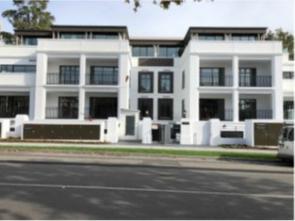
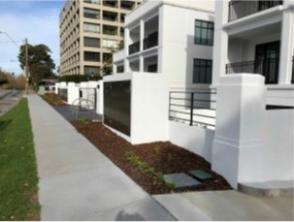
(b) Street views of the Lascelles Manor building:
|
|
|
|
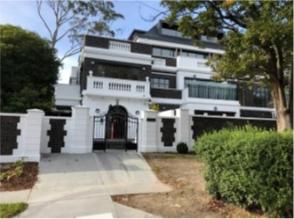
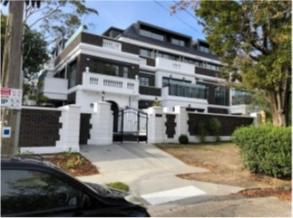
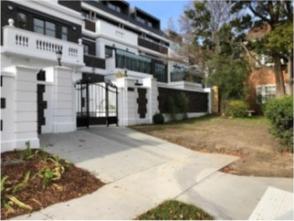
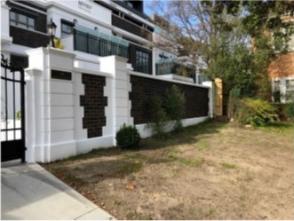
(c) Views of various garden beds:
|
|
|
|
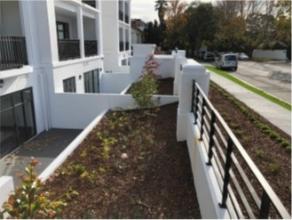
266 The photographs from Mr Sheaman’s visit in May 2020 are broadly consistent with the following images of the completed development that were displayed on Pomeroy’s website as at 24 May 2021, which are below.
|
|
|
|
|
|
|
|

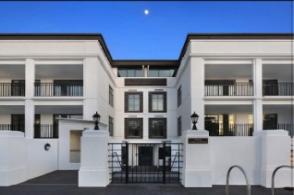



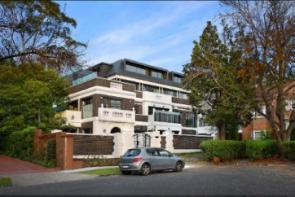
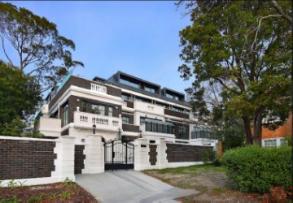
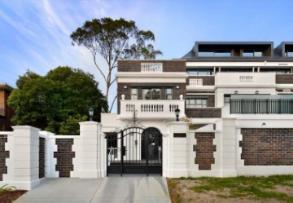
Mr Cussell’s evidence
267 Mr Cussell is a Victorian licenced real estate agent with professional experience in the real estate market in Melbourne, focusing on luxury properties. He has a pre-existing relationship with Mr Shearman, who he met approximately 15 years ago through a common interest in motorsport racing. Mr Cussell described Mr Shearman as “a business and sporting contact, not a friend”. He has also advised and assisted Mr Shearman in relation to a number of real estate transactions, and was previously appointed as the vendor’s agent in relation to the sale of Mr Shearman’s family home in Orrong Road, Toorak.
268 As mentioned above, Techin objected to the whole of Mr Cussell’s affidavit on the ground that it was inadmissible opinion evidence in relation to the quality of the construction and aesthetic appeal of the Lascelles Toorak development. In summary, Techin submitted that such matters were beyond the scope of Mr Cussell’s expertise, that he was not independent by reason of his past social and commercial relationship with Mr Shearman, and that his evidence did not comply with the requirements of Div 23.2 of the Federal Court Rules or the Expert Evidence Practice Note (GPN-EXPT).
269 On balance, I concluded that Mr Cussell’s affidavit was admissible as expert opinion under s 79 of the Evidence Act 1995 (Cth), and that the matters raised by Techin could be taken into account when assessing the weight to be given to that evidence.
(a) Mr Cussell has specialised knowledge in the marketing of real estate, including luxury properties, based on his training, study or experience as a licenced real estate agent. Although he does not have qualifications or expertise in the field of architecture, I consider that he is able to give an opinion on the aesthetic appearance of the Lascelles Toorak development from a marketing perspective, that is, in relation to how the development would be perceived by potential purchasers, including in the “prestige” segment of the market. Such evidence is relevant to the issues raised by the misleading or deceptive conduct claim.
(b) It is clear that Mr Cussell is not independent of Mr Shearman, and he was not retained or engaged as an independent expert. Mr Cussell has had a long association with Mr Shearman of both a social and business nature. Generally speaking, however, independence is not an absolute precondition to the competence of an expert witness or the admissibility of opinion evidence under s 79 of the Evidence Act, but rather can be regarded as going to credibility, reliability and other matters of weight: see FGT Custodians Pty Ltd v Fagenblat [2003] VSCA 33 at [5], [10], [12], [15], [24], [29] (Ormiston JA, with whom Chernov and Eames JJA agreed); Ananda Marga Pracaraka Samgha Ltd v Tomar (No 4) (2012) 202 FCR 564 at [35], [45]–[46], [55] (Dodds-Streeton J); Rush v Nationwide News Pty Ltd (No 5) [2018] FCA 1622 at [32], [34]–[36] (Wigney J); Save Our Strathbogie Forest Inc v Secretary, Department of Energy, Environment and Climate Action [2024] FCA 317 at [354] (Horan J).
(c) There has been no attempt to comply with Div 23.2 of the Federal Court Rules and the Practice Note, including the Harmonised Expert Witness Code of Conduct, notwithstanding that Mr Cussell’s affidavit was specifically prepared for the purposes of the proceeding. Mr Cussell has not provided an expert report that meets the requirements of r 23.13, nor was he provided with a copy of the Practice Note or the Code of Conduct as required by r 23.12. Nevertheless, such non-compliance does not itself render the evidence inadmissible (see e.g. Herron v HarperCollins Publishers Australia Pty Ltd (2022) 292 FCR 336 at [498] (Lee J); Rossi v Qantas Airways Ltd [2024] FCAFC 144 at [78] (Snaden, Hatcher and Horan JJ); Pirmax Pty Ltd v Kingspan Insulation Pty Ltd [2022] FCA 1340 at [56] (Snaden J)), and the Court has power under r 1.34 to dispense with compliance with the applicable requirements.
(d) In so far as Techin sought to rely on the decision of Mortimer J (as her Honour then was) in Guy v Crown Melbourne Ltd [2017] FCA 1104, the circumstances of that case can be distinguished from the present case. Her Honour accepted (at [35]) that s 79(1) of the Evidence Act “does not impose a precondition that opinion evidence, as expert evidence, must be given by a person who is ‘independent’ of the party calling her or him”. However, Mortimer J took the view that r 23.11 of the Federal Court Rules was expressed in mandatory terms so as to require compliance with Div 23.2, which in turn gives legal force to the Practice Note and the Code of Conduct: ibid at [40], [44]. In particular, her Honour considered that the capacity of an expert witness to comply substantially with Part 23, and to assist the Court impartially and not to be an advocate for the cause of a party, is a precondition to the admissibility of expert opinion evidence in this Court: ibid at [49]–[50].
(e) In Guy, Mortimer J made a specific finding that the relevant expert did not have a capacity to comply substantially with Part 23, having in fact disclosed that he was an advocate for the cause of the party who had called him as a witness: at [23], [51], [56]–[57]. In those circumstances, while the Court had power to waive compliance with the requirements of Part 23, it would be “inimical to the structure and purpose of Part 23” to do so: ibid at [52], [58].
(f) It can be accepted that Mortimer J in Guy found it “difficult to imagine a situation where it will be in the interests of the administration of justice to waive compliance with the entire regime in Part 23 and the Practice Note”, and regarded the approach adopted by Dodds-Streeton J in Ananda Marga (of treating independence as going to weight rather than admissibility) as more appropriate in circumstances “where there has been at least purported or substantial compliance with Part 23, and a purported acknowledgment by an expert of the need for independence, and a purported assertion of her or his actual independence”: at [52]–[53]. Nevertheless, the insuperable obstacle arising in Guy was the incapacity of the witness to comply with the core requirements of Part 23 in relation to independence and objectivity.
(g) On balance, I did not consider that it had been demonstrated that Mr Cusssell was incapable of assisting the Court impartially and refraining from being an advocate for Mr Shearman. While Techin raised forceful criticisms of Mr Cussell’s independence, such matters were capable of being addressed in cross-examination and by way of submissions as to the weight (if any) to be given to Mr Cussell’s opinion.
270 Mr Cussell gave evidence that he had become familiar with “the classically inspired European architectural styles common in the inner eastern suburbs of Melbourne”. He considered that properties designed by Mr Doyle were “a cut above other properties by reason of [his] fastidious attention to detail and a level of finish that is of a very high standard”, which was reflected in the architectural working drawings and specifications for Doyle-designed developments. Mr Cussell identified some “defining common characteristics” of Mr Doyle’s properties, including a classical style of architecture, a hand rendered exterior finish, high quality windows, and a very high standard of exterior finish, especially in relation to the façade. Such properties were in “the prestige owner occupier segment of the market, where the choice of architect and builder is of real significance to potential purchasers, especially where the property is sold off-the-plan”. Thus, Mr Cussell considered that an off the plan development that was designed by Mr Doyle was a “substantial selling point”, and that purchasers would “typically pay a premium based on the perception of quality that comes with the use of premium architects, such as Christopher Doyle”.
271 Having inspected the exterior and common areas of the Lascelles Toorak development, Mr Cussell considered that the apartments “do not have the appearance, attention to detail and luxury finish” that is typical of high-end Toorak apartment buildings. In particular, Mr Cussell identified a number of “key areas of concern” in relation to Lascelles Manor, Lascelles Grange and the grounds. As well as matters such as the PVC pipes (which he described as “very noticeable” and “unsightly”), the external light fittings (which he described as “cheap quality”), the “stark white” colour of the painted finish, the unsealed concrete finish of the carpark driveway and the “low grade and cheap looking” disabled lift, Mr Cussell also raised issues in relation to the dormer windows and opaque balcony screens in Lascelles Manor, the poor quality of the common areas, the unfinished ceiling to the carpark entrance, the internal finish of the garage, the poor quality of the aluminium window frames, the timber paling fences, and the height and maturity of the landscaping.
272 Mr Cussell considered that the overall level of finish of the Lascelles Toorak development was inferior to similar buildings in the price range in Toorak and South Yarra, which would have an adverse effect on the marketability of properties in the development.
273 While both Mr Cussell and Mr Shearman did not characterise their relationship as one of “friends”, it is clear that they have had a longstanding association that originated in a shared interest of motorsport racing and developed into an informal relationship in which Mr Shearman would seek Mr Cussell’s advice in relation to sales strategies for various properties. Mr Cussell was also engaged professionally by Mr Shearman in relation to the proposed sale of his family home in Orrong Road, Toorak, as well as the proposed sale of as a small apartment block in December 2023. Although that property was ultimately withdrawn from sale, Mr Cussell had a continuing authority as vendor’s agent. In each of those engagements, Mr Cussell would be entitled to a commission on the sale of the property. Mr Cussell stated in the course of cross-examination that he had not been paid to assist in the proceedings, and accepted that it was a “significant favour” to Mr Shearman. While he denied any financial incentive to assist Mr Shearman “other than future business”, he candidly acknowledged that it had been present in his mind that Mr Shearman “would likely look favourably upon [him] with respect to further engagements in the future to sell real estate”.
274 Mr Cussell was cross-examined on the extent to which some of the features that he criticised as being inconsistent with the standard of buildings designed by Mr Doyle were in fact contemplated by the architectural drawings prepared by CDA, or may have been required by the conditions of the planning permit. In the face of such questions, he generally sought to maintain his views in relation to the appearance of the features “as built”. He nevertheless conceded that the Lascelles Toorak development was large for a building designed by Mr Doyle, who usually designed large houses or small boutique developments which were “more in keeping with the Doyle luxury aesthetic”.
275 Taking into account Mr Cussell’s past and ongoing relationship with Mr Shearman, his financial interest in future professional engagements by Mr Shearman, and the manner and form in which his evidence was given (including the failure to comply with Part 23 of the Federal Court Rules and the Practice Note); I have placed limited weight on Mr Cussell’s opinions about the appearance of Lascelles Grange or Lascelles Major, particularly where they go beyond or differ from those expressed by the independent architectural experts. Indeed, it might be said that any capacity of Mr Cussell to comply substantially with the core requirements of Part 23 of the Federal Court Rules, including by acknowledging the necessity for independence, was not ultimately realised in his oral evidence.
276 In any event, Mr Cussell’s evidence about the market perception of properties designed by Mr Doyle ultimately has limited relevance to the determinative issues in the case, in the light of my findings above that Techin had a reasonable basis for making the luxury quality representations.
Expert reports
277 Mr Trethowan provided an expert report dated 19 November 2021. His report addressed the distinctive architectural design and construction characteristics common to properties designed by Mr Doyle, and the extent to which such characteristics are shared by the Lascelles Toorak development. Mr Trethowan noted that the Lascelles Toorak development is a larger apartment development that stood apart from Mr Doyle’s other projects, which are primarily individual houses or small luxury apartment complexes. While the overall design exhibited some elements of other projects by Mr Doyle, compromises were necessary to accommodate the size and configuration of a larger apartment development.
278 Mr Trethowan addressed the extent to which the design and construction characteristics of properties designed by Mr Doyle were reflected in the marketing materials for the Lascelles Toorak development, and whether the development as built accorded with the marketing materials and the architectural design drawings. Mr Trethowan’s report is lengthy and detailed. In broad terms, he expressed the view that “[a]s the development stands today it is missing [Mr Doyle’s] attention to external architectural details”, and that “[w]hile the hand of the designer is apparent in the overall appearance, despite the design’s shortcomings, the significant lack of resolution in the architectural details is contrary to other [Doyle] buildings”. Mr Trethowan also considered that Lascelles Grange and, to a lesser extent, Lascelles Manor fell short of the characteristics of an exclusive, high quality Toorak luxury apartment development. His report addressed a number of the particular aspects identified above as perceived shortcomings in the completed development. Among other things, he considered that some aspects of the exterior design had been compromised by changes to the building as originally conceived and an unsatisfactory resolution of certain details, including precast wall panels, the location of service cupboards, and the enclosed lift at the street frontage. He considered that such matters were not consistent with the marketing materials or the plans that had been endorsed by Mr Doyle.
279 Mr McCue provided an expert report dated 22 December 2022. The questions on which he was asked to provide his opinion were largely directed to whether or not he agreed with identified parts of Mr Trethowan’s report and Mr Cussell’s affidavit. Mr McCue agreed that “the marketing material depicted a Christopher Doyle design reflecting his known style and aesthetic”, although he noted that Mr Doyle was “well known for more single and smaller boutique scale multi residential developments”. He agreed with some but not all aspects of Mr Trethowan’s criticisms of the aesthetic quality of the Lascelles Toorak development, including the shortcomings in the exterior and street view, but noted that “the overall composition is generally in accordance with the Town Planning drawings”.
280 Mr Trethowan and Mr McCue provided a Joint Expert Report dated 28 November 2023. Neither of them was cross-examined, and the parties were largely content to proceed on the basis of their common opinions as recorded in the Joint Expert Report. Mr Shearman objected to the admission of limited parts of the Joint Expert Report as going beyond the matters on which the experts were qualified to express opinions, essentially in so far they purported to address whether representations were made in the marketing material and the meaning of terms used in that material. However, it is not in dispute that the experts are qualified to give opinions about industry practice and the use of language in “architectural discourse”.
281 Relevantly, the experts reached the following conclusions.
(a) In relation to the way in which the Lascelles Toorak development was marketed, the experts agreed that there were design and delivery shortcomings in the build of Lascelles Grange and Lascelles Manor, and that the development was “not consistently luxurious in its finish”.
(b) The experts agreed that on the whole the marketing material showed “the design shortcomings that are evident in the architecture” and did not mispresent detail. They noted that it was “typical” that there would be some variation as the design evolved, particularly where the marketing material was prepared on the basis of town planning drawings.
(c) Lascelles Manor was “more aligned to the expertise and scale of previous Christopher Doyle works and given its more limited frontage is more successful”. Lascelles Grange lacked the presence of Lascelles Manor, and displayed a lower quality.
(d) A number of design shortcomings were evident to a trained eye at the time of the marketing and town planning application, which would reasonably be expected to be resolved “given more time or co-ordination in subsequent project phases”.
(e) The experts considered that some apparent shortcomings (in relation to elements such as overlooking screening, disabled access arrangements and fire booster cupboards) affected the overall appearance of the development and required resolution “at an early stage”. Other aspects, such as the location of façade panel expansion joints and the integration of external downpipes, would generally be resolved through co-ordination and input from consultants after the town planning stage. The experts agreed that “[t]he built outcome has not managed to co-ordinate these items successfully” and that it appeared that no consideration had been given to such elements.
(f) The external light fittings on the façade were inconsistent with what one might expect of a high-end development, save for two feature coach lights atop the Lascelles Manor gated entry.
(g) The Lascelles Grange building articulation and façade finishing was the most impacted by the transfer of the design architect to the architectural documentation consultant (i.e. Detail 3), and it was “apparent that the value management of the building project to achieve an acceptable project construction cost has impacted the architectural quality of overall development”.
(h) In relation to Lascelles Manor, it appeared to the experts that the team of Detail 3, Pomeroy and LU Simon had “not understood the nuance of period details where the resolution of several items and the subtlety of detail has been set aside”.
(i) The experts stated:
On balance the design was compromised but not to the extent that the design integrity is lost entirely. Lascelles Manor is largely true to the intent of the Town Planning drawings and the architectural renderings of the marketing material. Lascelles Grange saw a far greater deviation from the marketing material to the built outcome.
(j) There were shortcomings evident in “the poor final resolution of external details, some of which were design issues and others have come about in the interpreted delivery of the project”. In particular, the entrance arrangement to Lascelles Grange “lack[ed] presence and dignity”, and could not be described as luxurious.
(k) The public space fit-out of entry halls and corridors was not at a standard one would expect of a high-end development.
(l) The market might typically associate luxury as being a “more boutique development of a smaller number of apartments”, the exclusivity of which would typically speak to an element of luxury. However, the marketing material described a development with large variance in apartment sizes and up to 52 apartments which would not usually represent an exclusive development.
(m) In relation to the penthouse apartment, “[a]rguably the form and the constraints on the interior space were never going to meet the definition of a luxury Toorak penthouse apartment”, although an inventive designer might work within the constraints to achieve an interior fit-out that is luxurious.
(n) The marketing materials showed both Lascelles Grange and Lascelles Manor as finished in an off-white or bone colour, whereas the completed buildings were finished in “stark white”. The former would have been softer and would have integrated better with the character of Lascelles Avenue. Further, the precast panels of the buildings had an “applied” or roll-on paint finish, as opposed to a cement rendered finish on the main façade of most of the buildings designed by Mr Doyle. The experts agree that “[a]s a standalone this is perhaps not damning but when coupled with several incremental changes, the downgrading of the finishes specification does impact the quality representation of the building despite the building overall still achieving a quality, but not luxurious, outcome”.
(o) When inspected at the end of 2022, the landscape was found to be “quite mature and arguably gardenesque, particularly to the central garden”. The experts noted that some garden elements depicted in the marketing material had been removed entirely. They stated:
Over time the overall impression is that the landscape setting could be described as a “soft manicured garden”. This is not unusual that the landscape budget is reduced at the commencement of the build in order to find project cost savings on the assumption that the plant stock will grow and reach maturity with time.
Conclusions on the quality of the Lascelles Toorak development
282 The nature and scale of the Lascelles Toorak development is such that is not necessarily to be expected that the building would be directly comparable to other properties designed by Mr Doyle, nor that it would have the same degree of exclusivity. In so far as such compromises were inherent in the concept and design of the Lascelles Toorak development, Mr Shearman must be taken to have been aware of those limitations from the outset.
283 There were shortcomings in the quality and appearance of some external details of the development as constructed, including in relation to the external downpipes, the service cabinets, the disabled lift, some of the external light fittings, the colour and finish of the façade, and the maturity of the gardens. In this regard, I accept the opinions expressed by Mr Trethowan and Mr McCue in their Joint Expert Report. Some of those matters might have resulted from the resolution of issues arising in the course of construction and the management of project costs, without specific input from the design architects. However, while this may have compromised the design in specific respects, it did not result in a complete loss of “design integrity” in that the buildings remained largely true to the intent of the architectural drawings prepared by Mr Doyle. As the architectural experts concluded, the development overall still achieved a “quality, but not luxurious, outcome”.
284 Nevertheless, for the reasons set out above, any such shortcomings in the built outcome of the Lascelles Toorak development do not establish that Techin engaged in misleading or deceptive conduct in marketing the penthouse apartment to Mr Shearman. In so far as the Techin luxury quality representations involved future matters, as is pleaded by Mr Shearman in his amended concise statement, Techin had reasonable grounds for making those representations at the time that they were made.
285 In substance, Mr Shearman’s case is that the shortcomings in the appearance and aesthetic qualities of the Lascelles Toorak development resulted primarily from Mr Doyle’s replacement by Detail 3 as architectural consultants from the design drawing and construction documentation stage onwards. Mr Shearman contends that Techin’s knowledge of that fact, and its non-disclosure, demonstrates that Techin did not have reasonable grounds to make the luxury quality representations between January and May 2018. However, the replacement of CDA by Detail 3 did not of itself bring about the various perceived deficiencies or shortcomings that were later identified in the development as built, nor did it make those shortcomings inevitable or likely. In the absence of any representation by Techin that Mr Doyle had been engaged to supervise or oversee the construction of the Lascelles Toorak development to its completion, any assumption made by Shearman to that effect was not based on any conduct on the part of Techin.
Contractual terms
286 Mr Shearman also alleged that the Contract of Sale contained implied terms to the effect of the Techin luxury quality representations.
287 To the extent that I have found that Techin made any of the alleged luxury quality representations, they are incapable of being regarded either as implied terms in the Contract of Sale or as warranties under a collateral contract. Apart from the difficulties in characterising the representations as promissory, any such implied terms would be inconsistent with the express terms of the Contract of Sale, and cannot be seen as necessary to give business efficacy to that contract: see Codelfa Construction Pty Ltd v State Rail Authority (NSW) (1982) 149 CLR 337 at 347 (Mason J), 404 (Brennan J), referring to BP Refinery (Westernport) Pty Ltd v Hastings Shire Council (1977) 180 CLR 266 at 282–283 (Lord Simon, Viscount Dilhorne and Lord Keith).
288 Further, in so far as Mr Shearman alleges that he entered into a collateral contract in consideration for which he entered the Contract of Sale, it remains necessary to establish that the relevant statements were promissory, and any such collateral contract cannot be inconsistent with the terms of the Contract of Sale: see Hoyt’s Pty Ltd v Spencer (1919) 27 CLR 133 at 140–141 (Knox CJ), 145–146 (Isaacs J); JJ Savage & Sons Pty Ltd v Blakney (1970) 119 CLR 435 at 442 (Barwick CJ, Kitto, Menzies, Owen and Walsh JJ); Gates v City Mutual Life Assurance Society Ltd (1986) 160 CLR 1 at 5–6 (Gibbs CJ), 11 (Mason, Wilson and Dawson JJ); SVI Systems Pty Ltd v Best & Less Pty Ltd [2001] FCA 279; (2001) 187 ALR 302 at [114], [116] (Einfeld J); Yammine v Lantrak Holdings Pty Ltd (No 2) [2023] FCA 162; (2023) 167 ACSR 232 at [207]–[209] (Rares J).
289 In this regard, Special Conditions 15.9, 29 and 31 of the Contract of Sale relevantly provided as follows:
15.9 Marketing materials
The Purchaser acknowledges and agrees that any drawings, mock ups, displays or other material depicting the Building contained in any display suite or marketing material provided to or inspected by the Purchaser prior to the day of sale is intended only as an indicative representation of finishes, fittings, fixtures (and the like) forming part of the Works generally, and the Purchaser acknowledges that:
15.9.1 the Purchaser has not relied on its inspection of that display unit or other marketing material in entering into this Contract, but has relied on its review of the Plans and Specifications; and
15.9.2 to the extent of any inconsistency between the finishes or other details in the display unit or other marketing material and the Plans and Specifications, the Plans and Specifications prevail.
…
29. No Warranties
The Purchaser acknowledges that it:
29.1 has made all the enquiries with Authorities that a prudent and careful person would make before entering into this Contract;
29.2 enters into this Contract on the basis of its inspection and the enquiries it has carried out, and relying on its own judgment; and
29.3 has not relied, and does not rely, on any representation or warranty of any nature made by or on behalf of the Vendor, the Vendor’s solicitor or the Vendor’s Agent other than those expressly set out in this Contract.
…
31. Whole Agreement
The covenants, provisions, terms and agreements contained in this Contract expressly or by statutory implication cover and comprise the whole of the agreement between the parties and the parties expressly agree and declare that no further or other covenants, agreements, provisions or terms are deemed to be implied in this Contract or to arise between the parties by way of collateral or other agreement by reason of any promise, representation, warranty or undertaking given or made by either party to the other on or before the execution of this Contract, and the existence of any such implication or collateral or other agreement is hereby expressly negatived.
(Original emphasis.)
290 Accordingly, the claim based on alleged contractual warranties to the effect of the Techin luxury quality representations, which was only faintly pressed in written and oral submissions at the hearing, is not made out.
THE “COLD SHELL” VARIATION
The parties’ pleadings
291 In his amended concise statement, Mr Shearman pleaded the written terms of the Contract of Sale as relevantly including the payment of the price of $6,500,000, payable by a deposit of $650,000 with the balance to be paid at settlement 14 days after notice of registration of the plan of subdivision or the issue of a certificate of occupancy for the Lascelles penthouse. Mr Shearman also relied on the list of fittings, fixtures and finishes to be included under the terms of the contract, subject to adjustments in respect of agreed variations to those fittings, fixtures and finishes.
292 Mr Shearman alleged that, in breach of the Contract of Sale, the Lascelles penthouse was not fitted out or finished in accordance with the contract, but rather was “partially completed as a ‘cold shell’ without the fixtures, fittings and finishes specified in the Contract”, and that he was not contractually obliged to pay the balance of the purchase price for the Lascelles penthouse as a “cold shell”.
293 Techin alleged in its amended concise statement in response and its amended statement of cross-claim that the parties had agreed to vary the terms of the Contract of Sale at some time “[b]etween June 2019 and March 2020”. Under the variation alleged by Techin:
(a) the Lascelles penthouse would be handed over as a “cold shell”;
(b) Mr Shearman would provide all of the interior works at his own cost, with Techin providing only limited inclusions as agreed between the parties;
(c) the purchase price would be reduced to $6,013,000 and the deposit payable by Mr Shearman would be reduced to $601,300;
(d) as soon as practicable after the execution of a deed of variation, Techin would refund to Mr Shearman the deposit amount of $48,700;
(e) the balance due to Techin on settlement would be $5,411,700; and
(f) the parties would record their agreement in a deed of variation in accordance with additional Special Condition 6.7 of the Contract of Sale.
294 Techin alleged in the particulars that the specifications and inclusions comprising the variation had been “negotiated and agreed” between June 2019 and March 2020 by Techin and Mr Shearman and their representative; namely, Mr Hicks and Mr Marx on behalf of Mr Shearman, and Mr Gioldasis and Mr McDonald on behalf of Techin. It was alleged that the terms of the variation were those set out in the draft Deed of Variation provided to Mr Shearman (through his lawyers) on 25 March 2020.
295 In the alternative, Techin pleads an estoppel against Mr Shearman on the basis that it would be unconscionable for him to deny that he agreed that the Lascelles penthouse would be constructed as a “cold shell” and that the settlement of the Contract of Sale would be completed on that basis, in circumstances where:
(a) Mr Shearman and his agents made representations to Techin and its representatives that he agreed to the variation of the Contract of Sale on the terms set out in the draft Deed of Variation;
(b) Mr Shearman subsequently did not purport to correct or question Techin’s conduct in constructing the Lascelles penthouse as a “cold shell”, or its statements to the effect that the Lascelles penthouse was being constructed as a “cold shell”;
(c) Techin was induced by Mr Shearman to assume that he had agreed to vary the Contract of Sale and, to the knowledge or Mr Shearman, constructed the Lascelles penthouse as a “cold shell” in reliance on that assumption; and
(d) Techin will suffer loss and damage unless the assumption is fulfilled.
296 While Mr Shearman admits that the parties discussed and negotiated varying the Contract of Sale along the lines pleaded by Techin, he denies that they reached agreement on any such variation and says that no deed or document varying the contract was executed. Further, Mr Shearman pleads that any agreement to vary the Contract of Sale would be unenforceable by operation of s 126(1) of the Instruments Act.
297 Mr Shearman also denies any alleged estoppel. Among other things, he says that Techin repeatedly asked him whether he agreed to the variation and to execute a deed of variation, and he did not at any time advise or make any representation to Techin that he would agree or had agreed to the variation.
Was there an agreement to vary the Contract of Sale?
298 The first question raised on the pleadings is whether Mr Shearman and Techin entered into a binding agreement to vary the terms of the Contract of Sale in the terms alleged by Techin, relevantly, that Mr Shearman would purchase the Lascelles penthouse apartment as a “cold shell” that would accommodate his own interior fit-out, and that the purchase price would be reduced by an agreed amount together with a partial refund of the deposit.
299 It was submitted on behalf of Mr Shearman that the parties proceeded on the basis that it was necessary to enter into a deed of variation and that, while the parties engaged in negotiations towards that end, they did not reach final agreement on the price or on what would be included in the cold shell. Mr Shearman submitted that the parties did not intend to be bound unless and until a deed of variation had been executed, referring to the third category of case under Masters v Cameron (1954) 91 CLR 353 at 360 (Dixon CJ, McTiernan and Kitto JJ) (discussed further below).
300 Techin, on the other hand, submitted that “by 13 September 2019, or at some time shortly thereafter”, the parties agreed to vary the Contract of Sale to provide for the delivery of the penthouse apartment as a cold shell. Techin contended that the price and the specifications for the cold shell had been “fully negotiated” by that date, and both parties were aware that Techin had instructed its solicitors to prepare a formal deed of variation. Techin relies on Mr Shearman’s conduct as having amounted to an acceptance of Techin’s offer to vary the Contract of Sale on the terms proposed, in circumstances where he did not indicate that the varied price was unacceptable, authorised Mr Hicks to finalise the specifications of the “cold shell”, and allowed Techin to proceed to construct the “cold shell” and to forbear from fitting out the penthouse apartment in accordance with the original specifications under the Contract of Sale.
301 Mr Shearman also argued that any agreement to vary the Contract of Sale, as a contract for the sale or other disposition of an interest in land, is not enforceable because it is not “in writing signed by the person to be charged or by a person lawfully authorised in writing by that person”, as required by s 126(1) of the Instruments Act. Techin sought to meet this argument by submitting that the variation was properly characterised as an agreement as to the means or mode of performance of the Contract of Sale, or that there had been part performance of the alleged agreement to vary the Contract of Sale, or that Mr Shearman was estopped from denying that he had agreed to the variation, or that he had waived the requirements of s 126 of the Instruments Act. However, those issues do not arise unless the parties intended to enter into a binding agreement to vary the Contract of Sale so as to provide for the settlement of the penthouse apartment as a “cold shell” at a reduced price.
Applicable principles
302 There was no dispute between the parties as to the legal principles governing the formation of a contract in circumstances such as the present case.
303 In Stellar Vision Operations Pty Ltd v Hills Health Solutions Pty Ltd [2023] NSWCA 102, the New South Wales Court of Appeal (Bell CJ, Hammerschlag CJ in Eq and Adamson JA) stated (at [64]):
Whether parties intend to create binding legal relations is ascertained objectively, that is, by determining whether a reasonable person in the position of the parties would have taken them to have intended to contract. The presence (or absence) of that intention is fact-based, to be found in all the circumstances, including by drawing inferences from their words and their conduct in making their agreement. In ascertaining their intention, whether from a series of communications or from a single document, regard can be had to the commercial circumstances in which the parties exchanged their communications and to the subject matter of the supposed contract …
(Citations omitted.)
304 Accordingly, in determining whether a binding contract has been concluded, the law is concerned not with the parties’ subjective intentions, but with “the outward manifestations of these intentions”: Mushroom Composters Pty Ltd v IS & DE Robertson Pty Ltd [2015] NSWCA 1 at [59] (Sackville AJA, with whom Macfarlan and Gleeson JJA agreed), quoting Taylor v Johnson (1983) 151 CLR 422 at 428 (Mason ACJ, Murphy and Deane JJ). The “intention” to create legal relations “describes what it is that would objectively be conveyed by what was said or done, having regard to the circumstances in which those statements and actions happened”, and “is not a search for the uncommunicated subjective motives or intentions of the parties”: Ermogenous v Greek Orthodox Community of SA Inc (2002) 209 CLR 95 at [25] (Gaudron, McHugh, Hayne and Callinan JJ). As McColl JA stated in Kriketos v Livschitz [2009] NSWCA 96 at [108]:
The exercise of objective determination requires the court to consider the text of relevant documents, and also the surrounding circumstances known to participants, and the genesis, purpose and object of the transaction, but not the participants’ subjective beliefs … (citations omitted).
305 These general principles were recently summarised by Derrington, Cheeseman and Jackman JJ in Cirrus Real Time Processing Systems Pty Ltd v Jet Aviation Australia Pty Ltd [2025] FCAFC 85 at [111]–[112]:
The overriding issue can be briefly stated: did the parties objectively evince an intention to be legally bound to identifiable terms and conditions? (see Allen v Carbone (1975) 132 CLR 528, 532; Ermogenous v Greek Orthodox Community of SA Inc (2002) 209 CLR 95, 105–106 [25] (Ermogenous); Krolczyk v Winner t/as J Winner Building Services [2022] NSWCA 196 [147]; Sagacious Procurement Pty Ltd v Symbion Health Ltd [2008] NSWCA 149 [69] (Sagacious Procurement)). That is to be resolved by determining what a reasonable person in the position of the parties would have taken the parties to have intended, given what they said and did in the surrounding circumstances: Stellar Vision Operations Pty Ltd v Hills Health Solutions Pty Ltd [2023] NSWCA 102 [64] (Stellar Vision); Air Great Lakes Pty Ltd v K S Easter (Holdings) Pty Ltd (1985) 2 NSWLR 309, 337 (Air Great Lakes). That may involve, for example, the drawing of inferences from the conduct and/or communications of the parties that surrounded the alleged formation of the contract in question.
It is necessary to keep steadily in mind that the “reasonable person” must be satisfied that the parties intended to be legally bound to perform, henceforth, the essential elements of a contract: Branir Pty Ltd v Owston Nominees (No 2) Pty Ltd (2001) 117 FCR 424, 525 [369]. Underlying such proposition is a distinction, albeit oft indivisible, between the parties having agreed terms that (a) are, in the circumstances, legally necessary to constitute a contract; and (b) they intend to be bound to perform henceforth: Heydon J D, Heydon on Contract: The General Part (2019, Thomson Reuters) 121 [4.50] and 88 [3.70] (Heydon on Contract). It is, therefore, insufficient for the relevant parties to agree upon the so-called “essential” terms of their bargain, but not (objectively) intend to be bound by them … or otherwise (objectively) intend to be so bound upon the happening of a future event (see, eg, Masters v Cameron (1954) 91 CLR 353, 360-362 (Masters v Cameron)). The need for objectivity in this context is consistent with the objective theory of contract: Ermogenous 105-106 [25]; Tipperary Developments Pty Ltd v Western Australia (2009) 38 WAR 488, 516 [119] (Tipperary Developments): and is, in many respects, a custodian of certainty inter partes, in that where parties “manifest their mutual assent” to be legally bound (that being the instructive language of the Restatement (Second) of the Law of Contracts (American Law Institute, 1981) § 18), they are unable to seek to then rely upon a private or undisclosed intention to vary the content of their prior agreement.
306 In the present case, Mr Shearman and Techin were already parties to the Contract of Sale. The question is whether they concluded a binding agreement to vary the terms of that contract, notwithstanding that the draft Deed of Variation was never executed. For such purposes, a variation agreement is itself a new contract that changes or extinguishes particular terms contained within the existing contract, and is governed by the ordinary requirements of contractual formation: Ripani v Century Legend Pty Ltd (No 4) [2024] FCA 1211 at [174] (Neskovcin J), referring to Jafari v 23 Developments Pty Ltd [2019] VSCA 201 at [190] (Whelan and Niall JJA and Sifris AJA); see also GEC Marconi Systems Pty Ltd v BHP Information Technology Pty Ltd (2003) 128 FCR 1 at 63 (Finn J).
307 An analysis of this question may be assisted by reference to the three “classes” of case identified in Masters v Cameron at 360 (Dixon CJ, McTiernan and Kitto JJ) where “parties who have been in negotiation reach agreement upon terms of a contractual nature and also agree that the matter of their negotiation shall be dealt with by a formal contract”:
(a) in the first class, “the parties have reached finality in arranging all the terms of their bargain and intend to be immediately bound to the performance of those terms, but at the same time propose to have the terms restated in a form which will be fuller or more precise but not different in effect”;
(b) in the second class, “the parties have completely agreed upon all the terms of their bargain and intend no departure from or addition to that which their agreed terms express or imply, but nevertheless have made performance of one or more of the terms conditional upon the execution of a formal document”; or
(c) in the third class, “the intention of the parties is not to make a concluded bargain at all, unless and until they execute a formal contract”.
308 There may be a “fourth” class, or perhaps a variation on the first class, in which “the parties were content to be bound immediately and exclusively by the terms which they had agreed upon, while expecting to make a further contract in substitution for the first contract, containing, by consent, additional terms” (Baulkham Hills Private Hospital Pty Ltd v GR Securities Pty Ltd (1986) 40 NSWLR 622 at 627 (McLelland J), referring to Sinclair, Scott & Co v Naughton (1929) 43 CLR 310 at 317 (Knox CJ, Rich and Dixon JJ), or where “parties enter into an immediately binding agreement on some certain terms and on such other terms as are either subsequently agreed by the parties or are able to be determined by the Court”: Stellar Vision at [66] (Bell CJ, Hammerschlag CJ in Eq and Adamson JA).
309 In cases within the first and second class (as well as the fourth class), the parties will have entered a binding contract either irrespective of whether or not a formal document is brought into existence, or with an obligation to bring a formal document into existence. In such cases, a stipulation that a formal agreement be prepared that embodies the terms of the parties’ agreement does not itself “show that they continue merely in negotiation”, in circumstances where the formal agreement cannot vary the terms already settled: Masters v Cameron at 361 (Dixon CJ, McTiernan and Kitto JJ), referring to Rossiter v Miller (1878) 3 App Cas 1124 at 1151 (Lord Blackburn). Cases within the third class are “fundamentally different”, in that “the terms of agreement are not intended to have, and therefore do not have, any binding effect of their own”, for example because the parties “have dealt only with major matters and contemplate that others will or may be introduced into the formal document … or simply because they wish to reserve to themselves a right to withdraw at any time until the formal document is signed”: Masters v Cameron at 361 (Dixon CJ, McTiernan and Kitto JJ).
310 It has been recognised that these classes or categories should not be rigidly applied, and that the decisive issue is the ascertainment of the parties’ intention having regard to all of the circumstances: GR Securities Pty Ltd v Baulkham Hills Private Hospital Pty Ltd (1986) 40 NSWLR 631 at 633 (McHugh JA, with whom Kirby P and Glass JA agreed); Pavlovic v Universal Music Australia Pty Ltd (2015) 90 NSWLR 605 at [69] (Beazley P, with whom Bathurst CJ and Meagher JA agreed).
311 In the present case, the critical questions are whether a mutual consensus or agreement was reached between Techin and Mr Shearman on the terms of the variation to the Contract of Sale, and whether they intended that this consensus should constitute a binding contract: see Air Great Lakes Pty Ltd v KS Easter (Holdings) Pty Ltd (1985) 2 NSWLR 309 at 326–327 (Mahoney JA); Branir Pty Ltd v Owston Nominees (No 2) Pty Ltd (2001) 117 FCR 424 at [369] (Allsop J, with whom Drummond and Mansfield JJ agreed).
312 Although a binding contract is usually manifested in the communication by one party of his or her acceptance of an offer made by the other party, in some circumstances a contract may be inferred from the conduct of the parties: Integrated Computer Services Pty Ltd v Digital Equipment Corp (Aust) Pty Ltd (1988) 5 BPR 11,110 at 11,117–11,118 (McHugh JA, with whom Hope and Mahoney JJA agreed); Kriketos at [110]–[120] (McColl JA); Vroon BV v Foster’s Brewing Group Ltd [1994] 2 VR 32 at 80–83 (Ormiston J); Danbol Pty Ltd v Swiss Re International SE [2020] VSCA 274 at [73]–[86] (McLeish, Niall and Sifris JJA).
313 Putting to one side the question of estoppel, a question can arise whether an offeree’s silence, in conjunction with the surrounding circumstances, can be regarded as an implied acceptance of an offer that is sufficient to form a contract: see Empirnall Holdings Pty Ltd v Machon Paull Partners Pty Ltd (1988) 14 NSWLR 523 at 534–535 (McHugh JA, with whom Samuels JA agreed). Usually, however, silence will only be treated as giving rise to a contract if the offeree is under a duty to communicate his or her rejection of the offer (for example, in the light of the previous relationship between the parties, the course of their dealings, or the custom of the trade) or if, “knowing of the terms of the offer and the offeror’s intention, [the offeree] has exercised a choice and taken the benefit of the offer”: ibid. This will be a question of fact in the circumstances of the particular case. As McHugh JA stated in Empirnall Holdings at 534, “[t]he ultimate issue is whether a reasonable bystander would regard the conduct of the offeree, including his silence, as signalling to the offeror that his offer has been accepted”.
314 In this context, reference may be made to the following observations made by McLeish, Niall and Sifris JJA in Danbol at [82]–[86]:
… In the context of an express offer, relevant accepting conduct may comprise the doing of acts or, as in this case, communications that do not embody an express acceptance. Such cases are by no means uncommon. They may involve an implied contract in the sense that the party seeking to prove the contract is unable to point to any express acceptance, however, they are far from that end of the spectrum in which neither offer nor acceptance can be identified.
In assessing the adequacy of the conduct or communication which is said to amount to acceptance, and thereby sustain a contract, it is important not to lose sight of the critical inquiry: what would a reasonable person in the position of the offeror make of an alleged acceptance? To find a contract in that context, the court must be satisfied that the offeror would conclude that the offeree had positively bound itself to the contract. It may be easier to find such an expression in verbal communications.
In every case it will be necessary to show that the conduct was responsive to the offer, and that the offeree has signalled an acceptance of a binding obligation. Where the offeree’s conduct would leave a reasonable person in the position of the offeror unclear or uncertain as to its meaning then the court will be left unpersuaded as to the existence of the contract. That remains true whether the conduct takes the form of acts, communication or silence.
In the absence of an express acceptance, the existence of a contract will depend on what inferences can be drawn from the conduct or communications. The fact that conduct is consistent with the existence of a contract may mean no more than that one available inference supports the existence of a contract. Depending on what other inferences might arise, the fact that conduct is consistent with there being a contract in place is unlikely to be enough, on its own, to establish the existence of a contract.
The critical issue is what a reasonable person would make of the communications in the context in which they occurred. In considering that issue in this case, the task is to focus on the overt communications between the two parties. In assessing those communications, and whether they evidence an acceptance of an offer, it may be tempting to consider how a reasonable person might be expected to respond in order to secure agreement. Similarly, where there is silence, it might be tempting to consider whether a reasonable person would have made their assent express. Given that the existence of a contract is to be determined objectively, those matters are not necessarily irrelevant to the inquiry. However, the issue is not whether the conduct and silence of the offeree was reasonable or prudent, but what a reasonable person in the position of the offeror would make of the conduct.
315 In Edge Development Group Pty Ltd v Jack Road Investments Pty Ltd [2018] VSC 326 at [45], Riordan J identified a range of matters that may be relevant in determining whether or not there was an intention to create legal relations by entering into an immediately binding contract. Two of those matters are noteworthy in the present context:
(f) The established or common practice with respect to agreements of the type in question may indicate that the parties did not intend to be finally bound until the completion of a formal contract. An example of such a practice is with respect to the sale of real estate.
(g) The fact that the parties did not use solicitors for the informal agreement but proposed to do so for the formal contract, may be a factor indicating that the parties did not intend to be bound by the informal agreement.
(Footnotes omitted.)
For examples of cases in which it was expected that an agreement in relation to the sale of land would be concluded by the exchange of written contracts, see Allen v Carbone (1975) 132 CLR 528 at 532–533 (Stephen, Mason, and Murphy JJ); McDonald v Commissioner of Taxation (2001) 109 FCR 207 at [17]–[21] (Stone J, with whom Beaumont ACJ agreed); Elgas Ltd v AJ Young Industries Pty Ltd (1986) 4 BPR 9329 at 9335 (McHugh JA); Seventh Shar Nominees Pty Ltd v Hortico Pty Ltd [2000] VSC 155 at [28]–[29] (Mandie J).
Consideration
316 In submitting that the parties continued to negotiate on the proposed variation to the Contract of Sale and “did not intend to conclude their bargain unless and until the deed of variation was executed”, Mr Shearman sought to characterise the present case as falling within the third class identified in Masters v Cameron.
317 In its oral closing submissions, senior counsel for Techin classified the circumstances as attracting the second class under Masters v Cameron, stating that the parties had effectively agreed and intended to be bound on 13 September 2019, notwithstanding that they were going to “put in writing a further document” and “to have some further alterations made that don’t affect the fact that they’re immediately bound”. Reference was also made to the evidence of Mr McDonald, who said that he had taken the view that the situation was in “category two” of Masters v Cameron, albeit that this was in a response to a question that described the second category as where “the parties have reached a concluded bargain and intend to be bound immediately, regardless of whether or not a formal document comes into existence”. Neither of those formulations accurately captures the second class as described by Dixon CJ, McTiernan and Kitto JJ in Masters v Cameron, under which the execution of a formal contract is made a condition of the parties’ agreement. Both Techin’s submissions and Mr McDonald’s evidence are arguably closer to the first class, or perhaps the fourth class, set out above. However, this may be put to one side — the critical aspect of Techin’s position is that the intention to create a binding agreement in respect of the “cold shell” variation did not depend on the execution of a formal deed of variation.
318 Techin’s amended concise statement in response alleged that the variation agreement was made between June 2019 and March 2020, and that it was partly in writing (comprising the unsigned draft Deed of Variation) and partly implied or inferred from conduct engaged in by the parties from February 2019 to April 2020. The imprecision of this pleading must be viewed in the light of the evidence and submissions at the trial. As noted above, Techin ultimately adopted the position that the alleged variation agreement was not formed until 13 September 2019 at the earliest.
319 To determine whether a reasonable person would take Mr Shearman and Techin to have entered into a binding agreement to vary the Contract of Sale, it is necessary to consider the course of communications and the conduct of the parties.
320 By early 2019, Mr Shearman had engaged Mr Hicks to prepare the interior design of the penthouse apartment, and Mr Hicks had been dealing with Pomeroy and Detail 3 in relation to matters arising from the proposed changes to the contract specifications. Mr Gioldasis indicated that an acceptable deadline for completion of the design documentation was by the end of March 2019. At this stage, it was assumed that the builder (LU Simon) would be installing the interior fit-out prior to settlement.
321 Techin and its solicitors appear to have been proceeding on the basis that the interior redesign fell within the scope of Additional Special Condition 6 of the Contract of Sale. As discussed above, that condition dealt with “Provisional Items”, setting out nominated allowances and allowing Mr Shearman to “upgrade or change” the listed fittings, fixtures and finishes (including consequential upgrades to the Plans and Specifications) at his own expense. Any amendments would be included in the Contract of Sale and the price would be varied upwards or downwards accordingly. The parties agreed to execute all documents as may be necessary, desirable or reasonable to give effect to Additional Special Condition 6. It is unnecessary for present purposes to determine whether the new interior design proposed by Mr Shearman fell within the upgrades or changes contemplated by Additional Special Condition 6. The proposed variations were never finalised, let alone formalised.
322 At the beginning of May 2019, Mr Gioldasis advised Mr Shearman and Mr Hicks of the deadlines that needed to be met in order for the interior redesign to be accommodated within the construction timeline. Mr Gioldasis stressed that, if the deadlines for the redesign “to be constructed on site” were not met, the builder would proceed to deliver the penthouse apartment “in terms of the layout and finishes” specified in the Contract of Sale. He suggested that the extent of the proposed interior redesign went beyond what was encompassed in the Contract of Sale and stated that, while Techin had “acted fairly and reasonably throughout this process to facilitate the Purchaser’s design requirements”, it was not willing to delay the completion of the development or jeopardise the settlement of other apartments. Accordingly, if Mr Shearman and Mr Hicks did not meet the deadlines, Techin would “not be proceeding with the alternative design any further”. The relevant deadline for “Final Design Development Documentation” was 27 May 2019, and Mr Shearman was required to agree to the builder’s pricing of the variation by 1 July 2019.
323 In his affidavit sworn on 30 January 2023, Mr McDonald stated that these deadlines were “necessary to avoid delaying the completion of the remainder of the Lascelles Development”.
324 In his oral evidence, Mr Shearman said that he had appreciated the urgency in the email from Mr Gioldasis, and that that he had understood that Mr Gioldasis “had the right to pull the trigger on [the deadlines] any time he wanted”.
325 By mid-May 2019, it was proposed that Mr Shearman would meet with Pomeroy, together with the parties’ respective solicitors, “to work out how the settlement and payments of [the penthouse apartment] are going to be handled and the Agreement that needs to be put in place for this” (see the email dated 22 May 2019 from Mr Gioldasis to Mr Shearman, Mr Marx and Mr McDonald). Mr Gioldasis said that he was at the point where he would “have to advise that the plans and finishes in the current Contract of Sale … are what prevails” in order to mitigate risk for Techin.
326 On or about 28 May 2019, Mr Gioldasis met with Mr Marx and Mr McDonald. At this meeting, the option was first raised that Techin could deliver the penthouse apartment as a “cold shell” and that Mr Shearman could install his interior fit-out following settlement. Precisely who raised this option is not clear, but this is of little moment. It appears from subsequent correspondence that, after the meeting, Mr Gioldasis was “awaiting feedback” from Mr Shearman on this proposal.
327 The only attendee of the meeting held on 28 May 2019 who gave evidence was Mr McDonald. He said that there had been a discussion of various options that were available to Mr Shearman at that time, including delivery of the penthouse apartment as a cold shell, as a warm shell, in accordance with the original contract specifications, or in accordance with agreed variations to the fit-out. In cross-examination, Mr McDonald said that the meeting was run by Mr Gioldasis and that there was a general discussion that a cold shell might be “an appropriate way of going forward”. Mr McDonald stated that they also discussed “the timing by which a decision was required to be made together with what would be required for the Penthouse to be handed over as a cold shell”. He said that Mr Gioldasis confirmed that he would obtain an amended price from LU Simon for the delivery of the penthouse apartment as a cold shell, and he understood that Mr Marx would seek instructions from Mr Shearman and that Mr Gioldasis would obtain instructions from Techin. Mr McDonald said that his recollection of the meeting was that they agreed that “there would need to be a deed of variation of contract”.
328 As at 31 May 2019, Mr Hicks had provided design documentation and Pomeroy was in the process of amending the plan in the Contract of Sale to reflect the amended layout, with a view to inserting the revised plan into a deed of variation. LU Simon were in the process of pricing the current and revised layouts.
329 In his affidavit sworn on 12 August 2021, Mr Shearman said that “[u]ltimately, the refusal of Jonathan Gioldasis to agree with or work with David Hicks left me in the position where I considered I had no choice but to accept completing the fit out myself after the building was completed”. In cross-examination, Mr Shearman said that there had been problems and delays with the design of the swimming pool, that the design was taking longer than he had expected, and that there were “quite a number of internal alterations that Jonathan [Gioldasis] and David [Hicks] were having — let’s call it argy-bargy with”. He stated in his affidavit that, “[d]ue to the impasse between the parties about the proposed bespoke fit out of the Lascelles penthouse”, their respective solicitors had engaged in correspondence “about the Lascelles penthouse being handed over to me at settlement as a ‘cold shell’ as a solution to the fit out impasse”.
330 Mr Shearman could not recall who had come up with or put forward the idea of the cold shell, and was unsure whether it had been raised by Mr Marx at his meeting with Mr McDonald. He agreed that it was “an option to look at”, and that “it’s not an unusual situation in the marketplace, so it would have been considered” and explored as a possibility.
331 On 3 June 2019, Mr Shearman told Mr Hicks that he was “going to ask for the cold-shell fit out” because of his concerns about LU Simon installing the interior redesign. However, he noted that there were legal issues that still needed to be addressed in relation to the body corporate before he accepted a change to the Contract of Sale. On the same day, Mr Shearman told Mr Gioldasis that he approved “whatever is required in this to have the apartment ready to take the David Hicks design installation”. Mr Shearman informed Mr Gioldasis that he was “99% sure” that he wanted to accept the penthouse apartment as a “cold shell”, and that he had asked his solicitor, Mr Marx, “to look at this from a legal point of view” with regard to issues with the body corporate (in circumstances where the interior fit-out would be installed after the completion of the building). He considered that it was “probably a waste of time” having LU Simon provide a quote on the interior fit-out, given that he was “happy to complete the apartment post hand over”, assuming that “the legal issues are in order”.
332 While counsel for Techin submitted that Mr Shearman’s reference to being “99% sure” was “about as certain as one can get”, Mr Shearman did not agree with that characterisation when it was put to him in cross-examination. Mr Shearman explained that this was a term he often used “because there’s always that last niggling thing that may occur” or where “something may come up which prevents that happening”. In particular, he said that was “leaving room for lawyer input” and was “leaving the door open in case it can’t be done”. Accordingly, Mr Shearman’s evidence was that he was going to accept the apartment as a cold shell “under the proviso that everything else was in place and there was the one per cent opening that there may be something come along preventing it happening or being able to happen or whatever the case might be”.
333 Techin sought to rely on Mr Shearman’s correspondence to Mr Hicks and Mr Gioldasis respectively on 3 June 2019, in which he contemplated that Mr Hicks would work out what items could be “craned in during the build process” in order to reduce cost and delay when fitting out the apartment “post building completion”. In cross-examination, Mr Shearman maintained that this had been conditional on the parties proceeding “down that track”, bearing in mind that Mr Gioldasis could “pull the trigger on his deadlines” and “had the option at any point in time to revert back to the original design”. Mr Shearman said that, in asking Mr Hicks to work this out as soon as possible, it had been necessary “to try and keep it on track … before somebody pulls the trigger”.
334 To this point, there was clearly nothing capable of giving rise to an immediately binding agreement between Techin and Mr Shearman to vary the Contract of Sale in order to provide for the handover of a “cold shell” at a reduced price. In particular, the essential terms of any such agreement were completely absent. The parties had not negotiated, let alone agreed on, the price of the “cold shell” apartment, and there was not yet any specification of what the “cold shell” would comprise. While Mr Shearman had indicated that he was strongly leaning towards acceptance of this option, this was subject to obtaining legal advice on certain issues arising from the proposal.
335 Further, it is clear from Mr Gioldasis’ email to Ms Chen and others on 3 June 2019 that he had not yet obtained instructions from Techin to agree to any “cold shell” variation, and that “the idea” was still being investigated by Pomeroy “in terms of building compliance, final handover, settlement, financial etc”. LU Simon were still in the process of pricing Mr Hicks’ redesign. Mr Gioldasis provided Techin with his “general thoughts” on the “cold shell handover”, including that Pomeroy had no objection to the idea and “would consider it a better result for the project as the fit out would be done after settlement by the Purchaser, thus mitigating any potential delays that [LU Simon] could raise against Techin”. He flagged a number of issues to be addressed in relation to crediting back the cost of the original fit-out, the possibility of large items being craned up and placed within the shell, and liaising with Techin’s solicitors and the owners’ corporation in relation to disruption to other residents. He concluded that “[a]t this stage no action is required” and that he was “just providing an update on what we have been doing and what we will work on in the coming weeks”.
336 The deadlines that had been set by Mr Gioldasis in his email dated 3 May 2019 for the finalisation of the interior redesign of the penthouse apartment were not met by Mr Shearman or Mr Hicks.
337 By July 2019, LU Simon had provided costing details in relation to the handover of a cold shell instead of the original fit-out of the penthouse apartment under the Contract of Sale. Relevantly, it was proposed that Techin would need to reduce the purchase price by $487,000. On 3 July 2019, Mr Gioldasis advised Techin that he would be forwarding this proposal to Mr Shearman and would seek to reach agreement on “exactly what a ‘cold shell’ means as we are currently negotiating some extra over requirements from what a traditional cold shell would be”. On the same day, Mr Gioldasis forwarded the costings to Mr Shearman and Mr Hicks. He told them that, “once the above items are agreed”, he would get their respective lawyers to prepare a deed of variation to reflect the reduced price and the “cold shell” requirements, so that Techin would have “a contractual obligation to provide the David Hicks design in the form of a cold shell” and he could seek a secondary consent amendment from the Council. He concluded his email by asking Mr Shearman and Mr Hicks to “[p]lease confirm your instructions”. On no view can it be concluded that the parties objectively had entered into any binding agreement at this point in time.
338 Mr McDonald, who was copied on the email from Mr Gioldasis dated 3 July 2019, accepted in cross-examination that it remained necessary for Mr Shearman as the purchaser to agree to the proposed price reduction, and agreed with the characterisation of the email as a proposal to offer a credit to the purchaser.
339 On 4 July 2019, Mr Gioldasis sent an email to Ms Chen and Mr Rigo in which he asserted that Mr Shearman had “confirmed” that he wanted a “cold shell”, and that the time had passed by which it was possible to “go back to a fitout”. Critically, there was no apparent basis for Mr Gioldasis to have stated that Mr Shearman had agreed to the proposed “cold shell” variation, at least if that was intended as a reference to a binding contract rather than a general intimation of Mr Shearman’s desire or inclination to achieve such an outcome. While Mr Gioldasis noted that Techin’s financiers had been consulted and that they were “accepting of the outcome and strategy”, the matter clearly remained subject to further discussion between Mr Gioldasis and Techin. Mr Shearman could not recall having confirmed to Mr Gioldasis that he wanted to proceed with the cold shell, stating that “[i]t was the intent, provided that everything else – legals and whatever else all stacked [up]”, and “depending on what came up”.
340 In his email to Mr Hicks and Mr Shearman on 5 July 2019, Mr Gioldasis again referred to the reduced purchase price for the cold shell as what “we are proposing”. In cross-examination, Mr McDonald agreed that the parties “were still at the negotiation phase” as at this time, and that the cold shell proposal was “still being worked through”. In my view, this distinguishes the present case from the circumstances considered in Air Great Lakes at 320 (Hope JA), where references to a “proposed agreement” were treated as an indication that a more formal document would be drawn up and did not preclude a finding that the parties intended to create a binding and legally enforceable contract.
341 On 9 July 2019, Mr Gioldasis was still seeking confirmation from Mr Shearman and Mr Hicks that the proposed amendment was acceptable, both in relation to the adjustment to the purchase price and as to what would be included in the cold shell to reflect their discussions “to date”. Mr Gioldasis indicated that he would confirm the impact of the amendment on the current holding deposit. The language in his email remained couched in terms of a “proposal” and “what I am proposing” should be outlined in the contract. In particular, Mr Gioldasis contemplated that that the parties would enter into a deed of variation to the Contract of Sale, “as agreed with both lawyers”, so as “to formally confirm that the apartment will be a ‘cold shell’”. Despite several follow-up emails from Mr Gioldasis, neither Mr Shearman nor Mr Hicks specifically replied to this email from Mr Gioldasis.
342 Mr McDonald was also included as a recipient of the email from Mr Gioldasis to Mr Shearman and Mr Hicks dated 9 July 2019. While Mr McDonald considered that “the matter was still subject to negotiation” at that time, he gave evidence that “the negotiations had been substantially completed and were just subject to formal confirmation”. Nevertheless, he accepted that formal confirmation was necessary, in that “the deed of variation would have been required”. He also gave evidence that Mr Gioldasis had both regarded such formal confirmation as being necessary, and knew that the variation had to be agreed by the lawyers for both parties.
343 On 9 July 2019, Mr Gioldasis also attended a meeting with Ms Chen, Mr Rigo and Mr Xing, together with representatives of LU Simon and Techin’s financiers. Ms Chen gave evidence that Mr Gioldasis told the attendees that Mr Shearman had agreed to proceed with building the penthouse apartment as a cold shell. If that was an accurate recollection of what Mr Gioldasis said at the meeting (noting that Mr Gioldasis was not called to give evidence), it was an overstatement and did not reflect the status of the discussions or correspondence engaged in between Mr Gioldasis, Mr Shearman and Mr Hicks. Mr Shearman gave evidence that he didn’t recall having agreed, but suggested that “it might have been Mr Gioldasis’ interpretation of some communication we had had”. In any event, Ms Chen’s evidence was that Mr Rigo and Mr Xing instructed Mr Gioldasis to go ahead with the cold shell, and the financiers’ representatives also gave their approval for the cold shell variation.
344 In August 2019, Mr Gioldasis and Mr Hicks exchanged a series of emails in which they addressed the manner in which the cold shell would be delivered. It seems clear that these discussions were based on an understanding or assumption that the penthouse apartment would ultimately be handed over as a cold shell. They reflected an iterative process by which Mr Hicks sought to ensure that the cold shell would be feasible and would meet the requirements for his interior design. However, there is nothing to suggest that Mr Hicks had actual authority to enter into any agreement on behalf of Mr Shearman. Mr Hicks’ subsequent email on 24 March 2020 (in which he told Mr Gioldasis that it was “not my call” and that it was “best for Scott to confirm”) suggests the contrary.
345 The mere fact that Mr Shearman was copied on emails exchanged between Mr Gioldasis and Mr Hicks does not establish that Mr Shearman authorised Mr Hicks to act as his agent for the purposes of agreeing to the variation of the Contract of Sale. Mr Shearman gave evidence that he had left Mr Gioldasis and Mr Hicks to work out the “technicalities” of the fit-out, because it was not his area, and said that Mr Hicks was acting on his behalf “for the technical side of things” and “for some of the dealings”. This does not suggest that he had given Mr Hicks authority to enter into any binding agreement.
346 Nor can it be said that Mr Hicks was held out by Mr Shearman as having authority to conclude an agreement to vary the Contract of Sale on his behalf. As one would expect given Mr Hicks’ role, the subject of his correspondence with Mr Gioldasis was focused on the practical requirements associated with the construction and delivery of the cold shell, with a view to documenting the specifications and inclusions for the purposes of finalising a variation agreement. The list of inclusions for the cold shell continued to be developed over the course of August and into September 2019.
347 The language used in Mr Gioldasis’ email to Mr Shearman and Mr Hicks on 26 August 2019 is consistent with the parties not yet having reached any agreement to vary the Contract of Sale. Thus, Mr Gioldasis indicated that he “would like to establish the new Contract of Sale and get it executed to reflect the cold shell handover so this is agreed with all parties” (emphasis added). He again undertook to confirm the impact of the proposed price reduction on the holding deposit, indicating that this matter was not yet settled. He referred to an attached list of items as “[w]hat I am proposing” to be outlined in the Contract of Sale, noting that he had added some further items to reflect recent discussions. On 27 August 2019, Mr Gioldasis informed Mr Shearman and Mr Hicks that he would instruct “the lawyers” to prepare the draft Deed of Variation based on his belief that “all the legal details and cold shell requirements are now agreed between the parties”, although he noted that there might still be “some minor design back and forth” which would not change the provisions of that deed.
348 On 13 September 2019, Mr Gioldasis sent to Mr Shearman and Mr Hicks an updated list of inclusions and drawings “for inclusion in the revised Contract of Sale which we believe encapsulates all the items that you have requested”. He stated that he would instruct Techin’s solicitors “to prepare a Deed of Amendment accordingly”. The submissions made on behalf of Techin place some significance on this communication as reflecting the point at which the parties had reached an agreement on the essential terms of the variation to the Contract of Sale. Nevertheless, there was no specific response by Mr Shearman or Mr Hicks confirming their agreement, let alone any indication that they considered themselves immediately bound prior to the preparation and execution of the foreshadowed draft Deed of Variation.
349 In mid-September 2019, Mr Gioldasis instructed Mr McDonald to prepare a deed of variation. He told Mr McDonald that he wanted future correspondence to be conducted between the parties’ respective solicitors, ostensibly so as to avoid or minimise the prospect that Mr Hicks and Mr Shearman would “keep requesting changes”. This is not consistent with a view that the parties had already reached an immediately binding agreement that simply needed to be documented in writing.
350 In October 2019, Mr Hicks sought an update from Mr Shearman as to the status of the revised Contract of Sale and the future program of works. Mr Shearman, who was overseas at the time, told Mr Hicks that Rigby Cooke was “waiting for the new contract to arrive” from Maddocks, following which Mr Marx would ask Mr Hicks to verify that the details were consistent with his discussions with Mr Gioldasis. Mr Shearman advised Mr Hicks that further work on the interior design could not commence until after settlement, which shows that he was proceeding on the basis of the “cold shell” scenario. Nevertheless, that does not itself demonstrate that an agreement had been concluded in relation to the variation of the Contract of Sale. In cross-examination, Mr Shearman maintained that Mr Hicks might not ultimately have been required to do any further work “because I was considering other options”. While he conceded that he knew at the time that Techin was “taking steps” to construct the apartment as a cold shell (and was not at that point taking steps to fit out the apartment), he maintained that this “was the intent, but it wasn’t signed off and it wasn’t a commitment”. He insisted that he “hadn’t agreed fully at that point”, and that the parties were “working towards” incorporating the details in a contract.
351 Mr McDonald commenced drafting the draft Deed of Variation some time after mid-October 2019. He gave evidence that he did not need further instructions from Techin for this purpose, and that he did not communicate directly with Techin during this period. He proceeded on the understanding or assumption that the instructions from Mr Gioldasis would have been approved by Techin, and that the parties had agreed to the “base terms” to be included in the deed, based on their email correspondence.
352 In October 2019, Mr Gioldasis sent a number of follow-up emails to Mr McDonald, referring to the need to “close out this Deed of Amendment”. Mr McDonald did not produce a draft Deed of Variation until 8 November 2019. In a covering email, he asked Mr Marx to confirm that the terms of the draft Deed of Variation were agreed in anticipation of its execution. It does not appear that there was any response by Mr Marx, prompting follow-up emails from Mr McDonald on 9 December 2019 and from Mr Gioldasis on 22 January 2020.
353 When Mr Marx finally replied on 29 January 2020, it was to advise Mr Gioldasis that he was “yet to hear” from Mr Shearman. After further emails from Mr Gioldasis, Mr Shearman responded on 7 February 2020 that he had not yet seen the draft Deed of Variation. Following this, further questions were raised by Mr Hicks which led to minor amendments being made to the draft Deed of Variation, and a revised version being sent to Mr Shearman for execution towards the end of March 2020. Mr McDonald regarded the revisions as minor and “not substantive”, including “fixing up typographical errors and updating the schedules and specifications relating to the cold shell as informed to me by Mr Gioldasis”. In oral evidence, Mr McDonald accepted that the revisions were a change to what he had been told was previously agreed, but reiterated that he did not consider that the changes were material, although he qualified this by stating that he was not an architect. He said that the changes seemed to him “to be minor qualifications to what had previously been agreed following discussions between the parties”.
354 More generally, Mr McDonald accepted in cross-examination that it was necessary that all of the terms of the draft Deed of Variation be agreed, including Annexure A setting out the variations to the contractual terms and Annexure B dealing with the changes in relation to what was being sold.
355 At around this time, Mr Shearman was exploring the possibility of completing the original fit-out of the penthouse apartment before settlement, instead of purchasing a “cold shell”. On Mr Shearman’s instructions, Mr Marx raised this possibility with Mr Gioldasis, who then prepared a draft email to be sent to Mr Marx. Mr Gioldasis forwarded his draft email to Mr McDonald for his comments, stating “I am thinking we go back first with the part [sic] initially as I am keen to still get him to sign the Deed”, and “Perhaps if he understand [sic] the implications he may do it?”. The first part of the email drafted by Mr Gioldasis stated that the request by Mr Shearman to fit out the apartment so close to the completion of the project “was not the preferred solution”, and encouraged Mr Marx “to brief your Client on the legal implications” if he did not proceed, asserting that there was “more than enough written correspondence between the parties”, together with the direct variations to suit the cold shell, for the variation to be enforceable.
356 The email that was drafted by Mr Gioldasis to be sent to Mr Marx contained a number of incorrect or questionable assertions, including:
(a) that there had been “over 18 months of correspondence with the architect that the Purchaser hired to re-design his apartment to suit a cold shell”, when in fact the cold shell proposal had first been raised in mid-2019 (around nine months earlier), and the correspondence prior to that date was in relation to the redesign of the interior fit-out by Mr Hicks;
(b) that Pomeroy had “written instructions by the Purchaser himself to amend the apartment to suit a cold shell and not to proceed with his current Contract of Sale based on the approval and payment of variations to the structure and apartment which would prohibit the original CoS being delivered”, when it does not appear that there were any written instructions from Mr Shearman to this effect; and
(c) that Pomeroy had “an email stipulating the credit the Purchaser requested for the cold shell being delivered in lieu of a fit out”, when it is not in dispute that Mr Shearman had not himself requested such a credit nor confirmed any proposed credit by Techin.
357 Mr McDonald recalled that he had discussed with Mr Gioldasis who should send any email to Mr Marx, and that he was clear that the email should be sent by him and not Mr Gioldasis. Mr McDonald considered that the email that had been prepared by Mr Gioldasis would have been “inappropriate”. Instead, Mr McDonald drafted his own email to Mr Marx in which he insisted that the Contract of Sale had been varied on the terms set out in the draft Deed of Variation, which were “binding and enforceable” notwithstanding that the Deed had not been formally executed. In particular, the email from Mr McDonald referred to Techin’s reliance on the correspondence between Mr Shearman, Mr Hicks and Mr Gioldasis and on representations made by or on behalf of Mr Shearman, and maintained that Mr Shearman was legally “bound to proceed with the agreement for delivery of a cold shell”.
358 In his oral evidence, Mr McDonald described this as “an allegation” or as “his view”, rather than a legal conclusion. He said that the purpose of the letter “was to make it clear, to the extent possible, that there was an existing binding agreement and there was no longer any capability of … the purchaser changing his mind”. He considered that this was a case in which the parties had intended to be bound immediately, regardless of whether or not a deed of variation was executed. However, he accepted that a variation of contract for the sale of land was required to be in writing, so that some other path was necessary for the agreement to become binding. In the present case, Mr McDonald said that he “had estoppel in mind”, although he had not stated this explicitly in his letter.
359 In his reply to Mr McDonald, Mr Marx declined to engage in a “legal debate” about Mr Shearman’s obligations, and instead invited discussion on ways to resolve the situation, including delaying settlement while Mr Shearman sought to obtain finance.
360 In the following months, the parties appear to have abandoned any further attempts to have the draft Deed of Variation executed. On the other hand, Mr Shearman did not directly push back against the contention that he was bound to accept a cold shell, and appears to have been prepared to contemplate that the penthouse apartment could proceed to settlement on that basis. Nevertheless, it was around this time that Mr Shearman visited the Lascelles Toorak development and raised complaints about its appearance.
361 For completeness, it may be noted that the proposed email that was drafted by Mr Gioldasis on 26 March 2020 to be sent Mr Marx also contemplated an alternative option, which can presumably be regarded as the “second” part of his email (in distinction to the part that he proposed should be sent “initially”). This option was expressed in the following terms:
If fit out will enable settlement then this can be explored based on the following:
1. Fit out can be provided to suit the David Hicks apartment layout as this is structurally unable to change;
2. Finishes will be provided to suit the current finishes in the Lascelles development generally;
3. All extra over fit out costs will be borne by the Purchaser as materials handling and logistics are now a lot more difficult;
4. The pool and spa will not be provided;
5. The Purchaser will be charged interest for not settling on the date by which settlement of the cold shell would have been due;
…
362 The significance of this alternative option being floated by Mr Gioldasis is two-fold. First, it is consistent with the parties having remained in negotiations about whether the penthouse apartment would be delivered with the interior fit-out, as varied under the provisions of the Contract of Sale in accordance with Mr Hicks’ design, or as a cold shell. Secondly, it suggests that it remained feasible in March 2020 for Techin and Pomeroy to proceed to construct or install the penthouse interior (save for the pool and spa), albeit with some potential impact on the settlement date. Mr McDonald stated in oral evidence that he did not raise this alternative option with Techin in the course of obtaining instructions.
363 In my view, the dealings between the parties constitute ongoing attempts to reach an agreement to vary the Contract of Sale by the execution of a deed of variation. By September 2019, Techin through Pomeroy had unilaterally proposed a reduction in the purchase price by way of a “credit” to Mr Shearman for taking the apartment without the interior fit-out, and most of the specifications of the cold shell had been settled between Mr Gioldasis and Mr Hicks. Those terms formed the basis on which Mr McDonald was instructed to prepare the draft Deed of Variation. However, there was no communication by or on behalf of Mr Shearman that he accepted the proposed variations to the Contract of Sale. It is not possible in the circumstances to treat the “silence” by Mr Shearman and his representatives as giving rise to an inference that he had agreed to vary the Contract of Sale on the terms proposed in the September 2019 email, or in the draft Deed of Variation that was provided in November 2019. I do not consider that a reasonable bystander would regard the conduct of Mr Shearman or his representatives as having amounted to an acceptance of the proposed variation of the Contract of Sale on the terms contained in the draft Deed of Variation.
364 This is consistent with the repeated efforts to get Mr Shearman to confirm whether he agreed to the draft Deed of Variation, and to arrange for its execution by the parties. However, by late January 2020, it became clear that Mr Shearman had not yet given instructions to agree to the proposed variation of the Contract of Sale. Further discussions were conducted in February and March 2020 that led to revisions being made to the draft Deed of Variation which, although relatively minor in nature, are consistent with the agreement not having been concluded. In my view, there was no more than an agreement to agree, subject to the preparation and execution of a formal deed.
365 Ms Chen accepted in cross-examination that it was necessary for Mr Shearman to agree to the amount of the proposed credit in reduction of the purchase price and on what the cold shell comprised, and that if he did not agree he could discuss or negotiate such matters. Ms Chen further accepted that it was necessary for the agreement to be recorded in a document to be signed by Techin and Mr Shearman.
366 In addition, there is no evidence that the variations were finally agreed on Techin’s side. Ms Chen confirmed in cross-examination that she did not have authority to enter agreements on behalf of Techin, and that Mr Gioldasis was not given authority to bind Techin to any such agreement. While Ms Chen handled the “day to day management” and was the “point of contact for various consultants and contractors in relation to Lascelles”, she confirmed that she was required to obtain the approval of the directors of Techin, namely Mr Rigo and Mr Xing, in respect of all important decisions, including spending significant amounts of money and entering into or varying any agreement on behalf of Techin. However, there is no evidence of any decision having been made by the directors of Techin in relation to the cold shell proposal after the meeting on 9 July 2019 at which Mr Rigo and Mr Xing had instructed Mr Gioldasis “to go ahead with the cold shell”. At that time, the terms of the proposed variation had clearly not been finalised or agreed. The evidence does not establish that the directors of Techin subsequently agreed to the contents of the email from Mr Gioldasis on 13 September 2019, nor that they agreed to the draft Deed of Variation or gave instructions for its execution by Techin. It was not simply a matter of agreement being reached between Mr Gioldasis on the one hand and Mr Hicks or Mr Marx on the other. To the extent that Mr Rigo might have been capable of shedding any light on such matters, he was not called as a witness by Techin, notwithstanding that he is based in Western Australia and was present in Court during much of the hearing.
367 Accordingly, in 2019 and early 2020, the parties were proceeding on the basis that there would be no binding and enforceable agreement unless and until a written deed was executed. This is supported by the fact that any variation to the Contract of Sale was required by s 126(1) of the Instruments Act to be in writing signed by the parties, as was accepted by Mr McDonald in his oral evidence. The draft Deed of Variation amounted to a fundamental change to the essential terms of the Contract of Sale, altering both the subject matter of the purchase and the price. It is inconceivable that the parties would have contemplated that such a variation could be made by an informal agreement on the basis that it would be later documented or recorded in writing. The difficulties with such an approach are illustrated by the confusion that subsequently arose when attempting to give notice of settlement in accordance with the terms of the Contract of Sale, without reference to any alleged variation.
368 I do not accept Techin’s contention that Mr Shearman “elected” to take the apartment as a bare shell in exchange for a price reduction. Techin argued that, after having failed to meet the deadlines for his interior redesign, Mr Shearman was left with the options of either reverting to the original fit-out or accepting the cold shell. Techin submitted that neither Mr Shearman nor Mr Hicks gave any indication to Techin that they wanted to revert to the original fit-out. Instead, they engaged in a process to determine the specifications of the cold shell, in the knowledge that the removal of the crane would place a significant impediment on Techin’s capacity to fit-out the apartment other than as a cold shell. However, for the reasons set out above, this is not sufficient to establish an agreement between the parties on the terms of any variation to the Contract of Sale.
369 Accordingly, I find that there was no binding agreement between Techin and Mr Shearman to vary the Contract of Sale on the terms reflected in the draft Deed of Variation.
Is Mr Shearman estopped from denying that he had agreed or would agree to vary the Contract of Sale?
370 As discussed above, Techin alleges that Mr Shearman (by himself or by his agents) represented that he agreed to vary the Contract of Sale on the terms set out in the draft Deed of Variation. Techin alleges that it was induced to assume that Mr Shearman had agreed to the variation and that, in reliance on that assumption, it constructed the Lascelles penthouse as a cold shell. It is alleged that Mr Shearman intended or knew that Techin would act in reliance on this assumption, and that he did not correct or question Techin’s conduct in constructing the penthouse as a cold shell or statements made by Techin to the effect that it would do so. In such circumstances, Techin alleges that it would be unconscionable for Mr Shearman to deny that he agreed to the variation of the Contract of Sale, and that he is estopped from doing so.
371 In Techin’s pleading of the estoppel claim, the particulars of the alleged representation made by or on behalf of Mr Shearman largely comprise the conduct that is also relied upon as giving rise to the alleged variation agreement, including in particular the email dated 3 June 2019 from Mr Shearman to Mr Gioldasis, the emails between Mr Hicks and Mr Gioldasis from 28 June 2019 to 13 September 2019 in relation to the specifications of the cold shell and the proposed price reduction, and the email dated 27 March 2020 from Mr Marx to Mr Gioldasis regarding Mr Shearman’s difficulties in obtaining finance for the cold shell apartment.
372 It may be noted that the estoppel claim is pleaded as being based on an alleged representation made by Mr Shearman or his agents that he had agreed to the “cold shell” variation of the Contract of Sale, as opposed to a representation or expectation induced by Mr Shearman that he would conclude such an agreement by executing the draft Deed of Variation. In the light of my findings that the parties did not conclude an agreement as to the terms of any variation of the Contract of Sale, and did not intend to enter into a binding agreement to vary the Contract of Sale unless and until the draft Deed of Variation was executed, the claim that Mr Shearman represented to Techin that he had agreed to the proposed variation faces both conceptual and forensic difficulties.
373 Nevertheless, it may be possible to treat Techin’s case as encompassing a claim that Mr Shearman induced Techin to assume that he agreed to the penthouse apartment being handed over at settlement as a cold shell, on the terms discussed in correspondence exchanged between the parties, and that he would execute a formal deed to vary the Contract of Sale accordingly. To some extent, this reflects the claim made by Techin based on alleged misleading or deceptive conduct under the ACL.
Applicable principles
374 Each of the parties proceeded on the basis that the elements necessary to establish an equitable estoppel were those identified by Brennan J in Waltons Stores (Interstate) Ltd v Maher (1988) 164 CLR 387 at 428–429, namely:
In my opinion, to establish an equitable estoppel, it is necessary for a plaintiff to prove that (1) the plaintiff assumed that a particular legal relationship then existed between the plaintiff and the defendant or expected that a particular legal relationship would exist between them and, in the latter case, that the defendant would not be free to withdraw from the expected legal relationship; (2) the defendant has induced the plaintiff to adopt that assumption or expectation; (3) the plaintiff acts or abstains from acting in reliance on the assumption or expectation; (4) the defendant knew or intended him to do so; (5) the plaintiff’s action or inaction will occasion detriment if the assumption or expectation is not fulfilled; and (6) the defendant has failed to act to avoid that detriment whether by fulfilling the assumption or expectation or otherwise. For the purposes of the second element, a defendant who has not actively induced the plaintiff to adopt an assumption or expectation will nevertheless be held to have done so if the assumption or expectation can be fulfilled only by a transfer of the defendant’s property, a diminution of his rights or an increase in his obligations and he, knowing that the plaintiffs reliance on the assumption or expectation may cause detriment to the plaintiff if it is not fulfilled, fails to deny to the plaintiff the correctness of the assumption or expectation on which the plaintiff is conducting his affairs.
375 As the above formulation encompasses either an assumption that a legal relationship existed between the parties or an expectation that such a legal relationship would exist between the parties, it can apply to a situation in which one party is induced into an expectation that the other party will enter into a binding agreement, at least provided that there is an expectation that the other party “would not be free to withdraw from the expected legal relationship”: ibid at 428.
376 In Waltons Stores, the appellant company (Waltons) was estopped from denying the existence of a binding contract to take a lease of land from the respondent owner: ibid at 407–408 (Mason CJ and Wilson J), 432 (Brennan J), 452 (Deane J), 464 (Gaudron J). The parties contemplated that the owner would demolish an existing building on the site and would construct a new building to suit Waltons’ purposes: ibid at 393 (Mason CJ and Wilson J), 408 (Brennan J), 455 (Gaudron J). Waltons’ solicitors sent a draft deed of agreement for lease to the owner’s solicitors: ibid. After having discussed amendments to the lease, Waltons’ solicitor obtained verbal instructions that the amendments were acceptable, following which he sent an amended draft deed to the owner’s solicitor: ibid at 393–394 (Mason CJ and Wilson J), 408 (Brennan J), 455–456 (Gaudron J). Waltons’ solicitor stated that, while he had not yet obtained specific instructions to each requested amendment, he believed that approval would be forthcoming and would let the owner’s solicitor know by the following day if any amendments were not agreed: ibid at 394 (Mason CJ and Wilson J), 408 (Brennan J), 456 (Gaudron J). The owner’s solicitor had told Waltons’ solicitor that it was necessary for the agreement to be concluded “within the next day or two” so that the owner could organise labour and order building supplies, and that the owner did not wish to demolish part of the existing building until it was clear that there were no problems: ibid. Neither Waltons nor its solicitors indicated that any of the amendments were unacceptable: ibid. The owner’s solicitors sent an executed deed to Waltons’ solicitors “by way of exchange”, following which the owner commenced demolition of the existing building, to the knowledge of Waltons: ibid. However, Waltons deferred making a decision to commit itself to the proposed arrangements, as a result of which its solicitors did not respond to the letter from the owner’s solicitors and simply retained possession of the executed documents: ibid at 395 (Mason CJ and Wilson J), 456 (Gaudron J). The owner proceeded to commence the building works: ibid at 394 (Mason CJ and Wilson J), 410 (Brennan J), 456 (Gaudron J). When the building was 40 per cent complete, Waltons informed the owner that it did not intend to proceed with the lease: ibid at 395 (Mason CJ and Wilson J), 410 (Brennan J), 457 (Gaudron J).
377 It was accepted in Waltons Stores that the exchange of executed deeds was a prerequisite to the creation of a concluded contract between the parties: at 397 (Mason CJ and Wilson J), 418 (Brennan J), 436 (Deane J), 462 (Gaudron J). Nevertheless, the High Court held that Waltons was estopped from denying that it was bound by the agreement, and upheld orders that Waltons pay to the owner damages in lieu of specific performance: ibid at 408 (Mason CJ and Wilson J), 430 (Brennan J), 446, 450–451 (Deane J), 464 (Gaudron J). The Court found that the owner was not under any misapprehension that Waltons had in fact executed or exchanged the documents so as to create a binding contract: ibid at 395 (Mason CJ and Wilson J), 430–431 (Brennan J), 462 (Gaudron J); cf. at 435–442 (Deane J). However, Mason CJ and Wilson J considered that the owner was entitled to assume “that the [company] accepted the amendments and that exchange of contracts was a mere formality”: ibid at 395–396. Their Honours stated (at 397) that:
This assumption was a reasonable assumption because the terms of [Waltons’ solicitor’s] letter of 7 November coupled with the failure to communicate any refusal by [Waltons] to agree to the amendments justified the inference that [Waltons] agreed to the amendments with the result that exchange would follow as a matter of course.
378 In such circumstances, Mason CJ and Wilson J concluded (at 408) that Waltons was estopped “from retreating from its implied promise to complete the contract”. In reaching this conclusion, their Honours considered that the doctrine of promissory estoppel “extends to the enforcement of voluntary promises on the footing that a departure from the basic assumptions underlying the transaction between the parties must be unconscionable”: ibid at 406. However, in order to “bring promissory estoppel into play”, something more was required than “mere reliance on an executory promise to do something, resulting in the promisee changing his position or suffering detriment”: ibid. It was suggested (at 406) that:
… this may be found, if at all, in the creation or encouragement by the party estopped in the other party of an assumption that a contract will come into existence or a promise will be performed and that the other party relied on that assumption to his detriment to the knowledge of the first party.
To the extent that this involves an assumption that the other party would not exercise a right or liberty to withdraw from negotiations, Mason CJ and Wilson J observed that “as a matter of substance such an assumption is indistinguishable from an assumption that a binding contract would eventuate”: ibid, referring to Attorney-General (Hong Kong) v Humphreys Estate Ltd [1987] 1 AC 114 at 124 (Lord Templeman).
379 As Mason CJ and Wilson J acknowledged, it may be difficult to rely on promissory estoppel in circumstances where pre-contractual negotiations are conducted through the parties’ solicitors on the basis that the agreement will be concluded by the execution or exchange of a formal document: Waltons Stores at 406. However, in the particular circumstances in Waltons Stores, Mason CJ and Wilson J considered (at 407) that Waltons had not been entitled to “stand by in silence”, in circumstances where, firstly, there was an element of urgency in concluding the lease agreement and, secondly, the counterpart deed had been executed and forwarded to Waltons’ solicitor on the assumption that completion of the exchange was a formality. In those circumstances, Waltons was obliged to warn the owner if it had not yet decided whether to complete the contract, and its inaction “constituted clear encouragement or inducement to the respondents to continue to act on the basis of the assumption which they had made”: ibid; cf. Brennan J at 428. It was therefore unconscionable for Waltons to adopt that course knowing that the owner was acting to its detriment on the basis of a false assumption: ibid at 407 (Mason CJ and Wilson J).
380 Justice Brennan proceeded (at 418) on the basis that the owner had
… either assumed that a contract had been made or expected that, the matter having passed beyond the stage of negotiations, Waltons would execute and deliver the original deed and was not free at that stage to withdraw.
(Emphasis added.)
This was to be distinguished from situations in which a party hopes that an agreement will be concluded, or even expects that an agreement will probably be concluded. As Brennan J stated (at 422–423):
It follows that an assumption or expectation by one party which does not relate to what the other party is bound to do or not to do gives no foundation for an equitable estoppel, though the assumption or expectation relates to the prospect of the other party conducting himself in a particular way. The risk that the other party who, being free to conduct himself in whatever way he chooses, may choose to conduct himself in a way different from that assumed or expected rests with the party who adopts the assumption or expectation.
Parties who are negotiating a contract may proceed in the expectation that the terms will be agreed and a contract made but, so long as both parties recognize that either party is at liberty to withdraw from the negotiations at any time before the contract is made, it cannot be unconscionable for one party to do so. Of course, the freedom to withdraw may be fettered or extinguished by agreement but, in the absence of agreement, either party ordinarily retains his freedom to withdraw. It is only if a party induces the other party to believe that he, the former party, is already bound and his freedom to withdraw has gone that it could be unconscionable for him subsequently to assert that he is legally free to withdraw.
381 This requirement was incorporated by Brennan J in his summary of the elements of an equitable estoppel (in the passage quoted above at [374]). His Honour concluded (at 429–430) that those elements were satisfied in the particular circumstances of that case. In particular, his Honour found that “[t]he retention of the counterpart deed and the absence of any demur as to the schedule of finishes or terms of the deed was tantamount to a promise by Waltons that it would complete the exchange”, and that the owner had acted on that promise to his detriment: ibid at 429. Waltons knew and intended that the owner would continue the building works in reliance on an expectation that the contract would be made and that “Waltons was not free to withdraw”: ibid. Accordingly, “[i]t was unconscionable for Waltons subsequently to seek to withdraw after a substantial part of the work was complete, leaving the [owner] to bear the detriment which non-fulfilment of the expectation entailed”: ibid at 430. This gave rise to an equity which was satisfied “by treating Waltons as though it had done what it induced [the owner] to expect that it would do, namely, by treating Waltons as though it had executed and delivered the original deed”: ibid.
382 Justice Deane held (at 443–444) that Waltons was estopped from denying the existence of a binding agreement for lease, based on a finding that the owner had been misled by Waltons’ silence and inaction into believing that there was a binding agreement notwithstanding that there had been no exchange of executed deeds. However, Deane J would have reached a similar conclusion if it were found that Waltons had led the owner to assume that the exchange of contract was a mere formality which would be satisfied as a matter of course: ibid at 446, 450–451, 453.
383 Justice Gaudron (at 462–464) concluded that there was an equitable estoppel based on the owner’s assumption that an exchange of deeds had taken place or his reasonable expectation that the exchange of deeds would take place, in reliance on which he commenced demolition and building works. The facts and circumstances that gave rise to this assumption or expectation were described by Gaudon J (at 462) as follows:
The negotiations had been completed to the point that the documents expressed the requirements of all parties; the terms of the documents which had been agreed between the solicitors required speedy completion of the building; the respondents had executed the agreement; the agreement had been forwarded to the appellant’s solicitors by way of exchange; the appellant’s solicitor had been informed on 7 November that it was necessary for the agreement to be concluded “within the next day or two”.
384 The outcome in Waltons Stores was pithily summarised in DHJPM Pty Ltd v Blackthorn Resources Ltd (2011) 83 NSWLR 728 at [40] (Meagher JA, with whom McFarlan JA agreed):
In Waltons Stores v Maher an estoppel was enforced by a landowner against an intended tenant in circumstances where there was no dispute as to the terms of the proposed lease agreement. There was no binding agreement because there had not been any exchange of executed counterparts of the contract. The assumption or expectation relied on was directed to the completion of that exchange.
This was characterised by Meagher JA as a case in which “the parties contemplated and intended that the proprietary rights which were sought to be enforced by an equitable estoppel had been or would be created by a binding contract and they had reached agreement as to the essential terms of that contract”: ibid.
385 Where contractual negotiations are conducted on the basis that a binding agreement will not be concluded until a formal document is executed, it may be more difficult to establish an estoppel, because each of the parties may generally be taken to know that the other party is free to change their mind and to withdraw from the negotiations: Barnes v Alderton [2008] NSWSC 107 at [51] (Young CJ in Eq); Austotel Pty Ltd v Franklins Selfserve Pty Ltd (1989) 16 NSWLR 582 at 613–614 (Priestley JA); see also Pacific National (ACT) Ltd v Queensland Rail [2006] FCA 91 at [668] (Jacobsen J); Whittle v Parnell Mogas Pty Ltd (2006) 94 SASR 421 at [98], [100] (Vanstone J), [113]–[116] (Layton J); Franklins Pty Ltd v Metcash Trading Ltd (2009) 76 NSWLR 603 at [557]–[563] (Campbell JA); DHJPM at [47]–[50], [56] (Meagher JA); cf. E K Nominees Pty Ltd v Woolworths Ltd [2006] NSWSC 1172 at [231]–[268] (White J), and the authorities discussed therein. However, as is demonstrated by Waltons Stores, there may be circumstances in which a party is induced to assume that the other party will conclude a binding agreement and has given up the right to withdraw, so that it is unconscionable for that other party to depart from the assumption that the contract will be concluded. In effect, the other party may be found to have promised that they will carry out any formalities necessary to bring about a concluded agreement, and detrimental reliance on that promise by the first party may be held to give rise to an estoppel.
386 It is generally recognized that, in order to found an estoppel, the representation that is said to have induced the relevant assumption or expectation must be clear, although this does not necessarily require the promise or representation to have “contractual certainty”: see e.g. Crown Melbourne Ltd v Cosmopolitan Hotel (Vic) Pty Ltd (2016) 260 CLR 1 at [35] (French CJ, Kiefel and Bell JJ), [142] (Keane J), cf. [210]-[212] (Nettle J); Legione v Hateley (1983) 152 CLR 406 at 435-436 (Mason CJ and Deane J).
The parties’ submissions
387 Techin submitted that Mr Shearman was bound by a promissory estoppel to take the penthouse apartment as a cold shell on the terms contained in the draft Deed of Variation. Techin relied on the course of dealings between the parties, including in particular:
(a) Mr Shearman’s email to Mr Hicks on 3 June 2019, stating that he was “going to ask for the cold shell fit out”;
(b) Mr Shearman’s email to Mr Gioldasis on 3 June 2019, stating that he was “99% sure that I want to accept the apartment as a ‘cold shell’ hand over”;
(c) Mr Gioldasis’ email on 3 July 2019, in which he offered a price reduction of $487,000;
(d) Mr Gioldasis’ email to Ms Chen and Mr Rigo on 4 July 2019, stating that Mr Shearman had confirmed that he wanted a cold shell;
(e) Mr Gioldasis’ email to Mr Hicks and Mr Shearman on 23 July 2019, in which he confirmed that the tower crane was being removed on the weekend of 24–25 August 2019 and that, if anything needed to be craned up to the apartment, it needed to be prior to that date;
(f) the correspondence between Mr Gioldasis and Mr Hicks in relation to the “cold shell” inclusions, which is said to show that both men understood that the apartment would be provided as a cold shell;
(g) Mr Gioldasis’ email to Mr Hicks and Mr Shearman on 13 September 2019, setting out the “latest terms and drawings for inclusion in the revised Contract of Sale”, and indicating that he would “instruct Maddocks to prepare a Deed of Amendment accordingly”;
(h) Mr Shearman’s email to Mr Hicks on 15 October 2019, stating that Mr Marx was “waiting for the new contract to arrive from the vendors solicitors”;
(i) Mr McDonald’s email to Mr Marx on 8 November 2019, attaching the draft Deed of Variation and requesting confirmation that the terms were agreed “in anticipation of execution and exchange”;
(j) the fact that, while Mr Shearman did not execute and return the deed, he “did not suggest to Techin or its solicitors that he had changed his mind about the bare shell”; and
(k) the provision of a “slightly amended” version of the draft Deed of Variation on 25 March 2020 which addressed two minor queries raised by Mr Shearman, and the fact that Mr Shearman “did not cavil with the amendments”.
388 Techin submitted that Mr Shearman knew that it was forbearing from fitting out the penthouse apartment in accordance with the plans and specifications in the Contract of Sale because it believed that Mr Shearman wanted to take the apartment as a cold shell, and that he stood by while Mr Hicks negotiated the items to be included in the cold shell over several months. Techin submits that Mr Shearman knew that the crane was being removed on 24 or 25 August 2019, and that Techin was constructing the apartment as a cold shell. Techin submits that Mr Shearman failed to warn Techin that he was “resiling” from the arrangement respecting the cold shell, and refused to complete the variation agreement after Techin had constructed the cold shell in accordance with the specifications and inclusions that had been negotiated on Mr Shearman’s behalf by Mr Hicks.
389 In its closing submissions, Techin relied on Ms Chen’s evidence to the effect that she had understood that Mr Shearman remained committed to the “cold shell” proposal from 4 July 2019 to 13 September 2019, and that by 13 September 2019 the specifications of the “cold shell” had been finally agreed and the parties were simply waiting on the drafting and signing of a deed as a “mere formality”.
390 Further, Techin contended that the original fit-out of the penthouse apartment could have been procured if Mr Shearman had made it clear prior to 13 September 2019 that he did not agree to take the apartment as a “cold shell”. In those circumstances, Techin had proceeded to carry out works between August 2019 and early 2020 in order to deliver the apartment as a cold shell that would accommodate Mr Hicks’ interior design. Techin submitted that, by the time that Mr Shearman indicated that he did not agree to take the “cold shell”, the completion of the original fit-out of the apartment would have delayed completion and caused disruption to the sale of other apartments in the Lascelles Toorak development.
391 Mr Shearman submitted that, by 4 July 2019, the time had passed for going back to a fit-out of the penthouse apartment and Techin was therefore committed to constructing the penthouse apartment as a cold shell. However, at that time, Techin had not produced any proposed deed which identified with precision the terms on which the Contract of Sale would be varied. In particular, the varied price had been raised with but not agreed by Mr Shearman, who had only informed Mr Gioldasis that he was “99% sure” that he wanted to accept the apartment as a cold shell. Mr Shearman submits that, in these circumstances, Techin “took the commercial risk to commit to the construction of the Lascelles Penthouse as a cold shell in the obvious absence of an agreement from [Mr] Shearman but in the hope he would ultimately agree”.
392 Mr Shearman submitted that he did not induce Techin to assume that the Contract of Sale would be varied and that, by the time that the proposed terms of the variation agreement were articulated with any certainty in November or December 2019, “Techin was already well committed to constructing the Lascelles Penthouse as a cold shell”. Further, Mr Shearman argues that he did not represent to Techin that he would sign any of the draft deeds, nor did he indicate that the execution of such a deed was a mere formality and that he considered himself bound by the terms of the draft Deed of Variation.
Consideration
393 As I have found above, the parties did not intend to enter into a binding agreement to vary the Contract of Sale unless and until a formal document was executed. This effectively precludes any finding that Techin assumed, or was induced to assume, that Mr Shearman had concluded an agreement to vary the Contract of Sale so as to purchase the penthouse apartment as a cold shell. The question is whether Techin had a reasonable expectation that Mr Shearman would enter a binding agreement on the terms proposed and that he would execute a deed of variation to complete such an agreement as a matter of course.
394 As is implicitly recognised in Techin’s submissions, there are temporal difficulties in seeking to establish any expectation prior to 13 September 2019 that a particular legal relationship would exist between Techin and Mr Shearman in relation to an agreed variation of the Contract of Sale to give effect to the proposal to deliver the penthouse apartment as a cold shell. Prior to that date, the key terms of any such variation had either not yet been articulated or remained under negotiation.
395 In early June 2019, although Mr Shearman was clearly amenable to the cold shell proposal, the details of that proposal had not been formulated, including essential terms such as the price and the specifications or inclusions for the cold shell. Mr Shearman’s indication that he was “99% sure” that he wanted to accept the apartment as a cold shell must be viewed in this context, at a time when the proposal had been couched in very general terms. Even then, this was no more than a conditional statement of Mr Shearman’s future intention, and was expressly made subject to his obtaining legal advice on certain implications of the proposal. Further, at the time that this email was sent by Mr Shearman to Mr Gioldasis, Techin had only just been made aware of the “idea of a cold shell handover” and had not yet given instructions to Mr Gioldasis to proceed down that path.
396 By early July 2019, LU Simon had provided advice in relation to the costing of the cold shell, and the consequential reduction in the purchase price under the Contract of Sale. Mr Gioldasis undertook to forward the proposed credit to Mr Shearman and to “agree exactly what a ‘cold shell’ means”, following which he would be able to instruct Techin’s solicitors “to prepare a Deed of Amendment to the Contract of Sale to reflect the new Purchaser Price of $6,013,000 as well as the cold shell requirements and arrange for execution by all parties”. It was around this time that Mr Gioldasis stated in an email to Ms Chen that Mr Shearman had confirmed that he wanted the cold shell, and (according to Ms Chen) stated during a meeting attended by Ms Chen, Mr Rigo and Mr Xing that Mr Shearman had agreed to proceed with building the penthouse apartment as a cold shell. On the evidence before the Court, there was clearly no basis for Mr Gioldasis to have made such statements. On the same day that he attended the meeting with Ms Chen and Mr Rigo, Mr Gioldasis was still seeking confirmation from Mr Hicks and Mr Shearman that the cold shell proposal was acceptable (as evidenced by his email dated 9 July 2019). Nevertheless, based on what they had been told by Mr Gioldasis, Mr Rigo and Mr Xing gave instructions to Mr Gioldasis “to go ahead with the cold shell”.
397 At that point in time, any assumption by Techin that Mr Shearman had agreed to take the penthouse apartment as a cold shell was based on the misrepresentations made by Mr Gioldasis, rather than having been induced by or on behalf of Mr Shearman. It was in reliance on those misrepresentations that Techin decided at that time to proceed with the cold shell rather than complete the penthouse apartment in accordance with the specifications under the Contract of Sale.
398 Techin seeks to address these temporal difficulties by identifying the time at which agreement was reached by reference to the email sent by Mr Gioldasis to Mr Shearman and Mr Hicks on 13 September 2019 reflecting the “latest” version of the cold shell inclusions that had been negotiated between Mr Gioldasis and Mr Hicks, the content of which was subsequently incorporated in the draft Deed of Variation provided on 8 November 2019. However, while Mr Gioldasis indicated that he would instruct Techin’s solicitors “to prepare a Deed of Amendment accordingly”, there is no evidence of anything having been said or done by Mr Shearman or Mr Hicks to indicate that they would sign or execute a deed on the terms proposed.
399 In his previous email dated 27 August 2019, Mr Gioldasis had foreshadowed that he would “be instructing Maddocks to prepare the Deed of Amendment … as I believe all the legal details and cold shell requirements are now agreed between the parties”, although he acknowledged that “[t]here may be some minor design back and forth” which “shouldn’t stop the Deed from being executed as what is being provided won’t change”. Despite Mr Gioldasis’ unilateral declaration that the parties had now agreed “all the legal details and cold shell requirements”, the evidence does not reveal anything having been said or done by Mr Shearman or Mr Hicks to indicate their agreement, noting that Mr Gioldasis had sent an email on the previous day (26 August 2019) in which he referred to “[w]hat I am proposing is outlined in the Contract of Sale”. Mr Gioldasis did not give evidence, and no inferences can be drawn as to the basis on which he made the statements in his email.
400 It may be noted that Mr Gioldasis was yet to confirm “the impact on the current holding deposit”, which he had indicated in previous correspondence might need to be partially refunded “to reflect 10% of the revised Contract Price” (see the emails dated 9 July 2019 and 26 August 2019). That issue was subsequently addressed by clause 3 of the draft Deed of Variation, which provided for a refund to the purchaser of the amount of $48,700 from the deposit “[a]s soon as practicable following the date of this Deed”, but this position had not been established at the time of Mr Gioldasis’ email of 13 September 2019.
401 While Ms Chen received a copy of the email sent by Mr Gioldasis on 13 September 2019, from which she might possibly have presumed that the parties had reached agreement on the terms of the “cold shell” variation and would proceed to execute a formal deed, any such expectation could not have been induced by Mr Shearman. Further, Ms Chen understood that it remained necessary for the parties to execute a formal deed.
402 The draft Deed of Variation was not drafted and provided to Mr Marx until 8 November 2019. Mr Marx did not respond to Mr McDonald to confirm that the terms of the draft Deed of Variation were agreed. On 6 December 2019, Mr McDonald again sent the draft Deed of Variation to Mr Marx and again requested him to confirm that the terms of the Deed were agreed in anticipation of execution and exchange. Mr Marx did not respond until 29 January 2020, when he informed Mr Gioldasis that he was “yet to hear” from Mr Shearman. It is apparent from subsequent correspondence between Mr Gioldasis and Mr Shearman that the latter had not yet seen the draft Deed of Variation that had been emailed to him by Mr Marx.
403 Apart from Mr Shearman’s silence, there was nothing said or done by or on behalf of Mr Shearman to induce Techin to assume that he had agreed to the draft Deed of Variation or to expect that he would execute the draft Deed of Variation.
404 The circumstances are different from those considered in Waltons Stores, where Waltons’ solicitor had previously told the owner’s solicitor that he would let him know if Waltons did not agree to any requested amendments, before receiving an executed copy of the amended deed “by way of exchange”. Waltons then retained possession of the executed documents, knowing that the owner had commenced demolition and building works and seeking to keep open “the option of completing the exchange and proceeding to take the lease if it should appear expedient to do so”: Waltons Stores at 418 (Brennan J). It was in those circumstances that Waltons came under a duty to communicate with the owner within a reasonable time after receiving the executed documents, and its inaction encouraged or induced the owner to act on the basis of an assumption or expectation that executed deeds would be exchanged as a mere formality: ibid at 407 (Mason CJ and Wilson J), 429–430 (Brennan J), 450–451 (Deane J), 462 (Gaudron J). There was an implied promise made by Waltons that it would complete the exchange.
405 In the present case, however, there is no evidence that Mr Shearman (or Mr Hicks or Mr Marx on his behalf) had indicated his agreement with the draft Deed of Variation or that he would execute the draft Deed of Variation as a matter of course. Negotiations had been conducted between Mr Gioldasis and Mr Hicks in which agreement had been reached on most of the inclusions or specifications of the cold shell, for incorporation in a formal deed of variation. Mr Gioldasis had put forward a reduced purchase price for the cold shell. However, the parties were proceeding on the basis that any variation would need to be made by the execution of a formal document. The mere silence by Mr Shearman in response to the provision of the draft Deed of Variation in November and December 2019 is not capable of giving rise to any reasonable expectation of Techin that the execution of the draft Deed of Variation was a mere formality. On the contrary, Mr Shearman never confirmed that the terms of the draft Deed of Variation were agreed, and Mr Gioldasis was persistent in his continued efforts to pursue Mr Shearman in order to get him to execute the Deed.
406 Further, and in any event, the temporal difficulties confronting Techin’s case remain. It appears that Techin’s directors had decided to go ahead with the cold shell as early as July 2019. The deadlines set by Mr Gioldasis suggest that it might not have been possible to complete an interior fit-out of the penthouse apartment after that time, having regard to the construction schedule and the removal of the tower crane in late August 2019, although Ms Chen gave evidence to the contrary. Techin had commenced carrying out works necessary to deliver the penthouse apartment as a cold shell in early August 2019. There is a suggestion in an email chain between the builder, Mr Hicks and Mr Gioldasis in August 2019 that the “as built” documentation for the cold shell would be issued in “approximately two months”. In such circumstances, it is difficult to contend that Techin acted or refrained from acting in reliance on any expectation in November 2019 or later that Mr Shearman would execute the draft Deed of Variation. And it became clear by late January 2020 that Mr Shearman had not yet given instructions to enter into the draft Deed of Variation.
407 It is necessary to address the evidence of Ms Chen. In her affidavit of 6 December 2021, Ms Chen referred to the email from Mr Gioldasis to Mr McDonald dated 16 September 2019, and said that she had instructed Mr McDonald to prepare the draft Deed of Variation “[o]n the understanding that the parties had agreed to vary the contract so that the Penthouse would be delivered as a cold shell”. Any such understanding was based on what she had been told by Mr Gioldasis. This is made clear in Ms Chen’s affidavit of 8 April 2024, in which she states that she believed “from about 4 July 2019” that Mr Shearman had chosen to take the penthouse apartment as a cold shell because of the email from Mr Gioldasis dated 4 July 2019 (in which he stated that Mr Shearman had confirmed that he wanted to take the apartment as a cold shell), and Mr Gioldasis’ statements at the meeting on 9 July 2019 that Mr Shearman had agreed to take the apartment as a cold shell on the basis of a price reduction of $487,000. Ms Chen says that she maintained her belief at all relevant times after 4 July 2019, as a result of which she caused Techin to construct the cold shell in accordance with Mr Shearman’s specifications. In cross-examination, Ms Chen accepted that Techin didn’t proceed with the original fit-out because Mr Gioldasis had told her that a cold shell was already agreed. As mentioned above, there can be no doubt that Mr Shearman had not agreed to any variation of the Contract of Sale in July 2019, nor that he induced Techin to assume that he had agreed or to expect that he would agree to the terms of any such variation.
408 Ms Chen continued to hold the same belief in the period between July and September 2019, during which she was told by Mr Gioldasis that he was engaging with Mr Hicks to work out the specifications for the cold shell. Her understanding was that Mr Gioldasis and Mr Hicks were “merely working out the details for the inclusions”, and that Mr Shearman “remained committed to taking the apartment as a ‘cold shell’ for the agreed price reduction”. As discussed above, the basis for that understanding was misconceived.
409 Ms Chen stated in her affidavit that “by 13 September 2019, I believed and understood that the specifications had been finalised, and Maddocks lawyers were engaged to prepare a deed of variation”, and that she “believed that the signing of the deed was a formality to record the deal already reached”. I regard this evidence with a degree of scepticism, given its self-serving nature. In any event, any belief or understanding of Ms Chen to this effect was based primarily, if not exclusively, on what she had been told by Mr Gioldasis, and was not induced by anything said or done by or on behalf of Mr Shearman. And Mr Gioldasis was not called to give evidence about the basis of his statements to Ms Chen, nor about whether he (as the agent of Techin) had assumed that Mr Shearman agreed to the terms of the proposed variation or had expected that Mr Shearman would sign a deed of variation as a matter of course.
410 Ms Chen agreed that there were time constraints in constructing a fit-out of the penthouse apartment, having regard to the scheduled removal of the tower crane in late August 2019. Her evidence was that, while it would have remained possible to fit out the apartment after the removal of the crane, this would have required Techin to hire a new crane and would have cost significant sums of money. This explains the deadlines that were fixed by Mr Gioldasis in relation to the finalisation of Mr Shearman’s proposed interior design, under which it would have been necessary for Mr Shearman to agree to the pricing of the variations by 1 July 2019. Ms Chen said that the deadlines were imposed “to ensure there was no delay or cost blowout”.
411 Nevertheless, Ms Chen was unsure what Mr Gioldasis had meant when he stated in his email dated 4 July 2019 that “the time had passed” by which Techin could “go back to a fitout” of the apartment, and disagreed that it had not been possible after that date for the apartment to be delivered with a full internal fit-out. Ms Chen gave evidence that “if Shearman had changed his mind any time throughout July to September 2019, the reversion to the original fitout would have been achievable, even if it had been more expensive and inconvenient”. On the other hand, she said that it had become “impossible in practical terms” to revert to the original fit-out of the apartment by late March 2020. This was because of the costs, the fact that Techin had made changes to the cold shell that were not consistent with the original fit-out, and the disruption to the sale and completion of other apartments in the Lascelles Toorak development.
412 I note in passing that Mr Gioldasis’ email to Mr McDonald dated 26 March 2020 contemplated an alternative option under which it remained possible to “explore” a fit out of the penthouse apartment in accordance with Mr Hicks’ layout (but without the pool and spa) if it would “enable settlement”, albeit that this might require Mr Shearman to bear extra costs and would have an impact on the settlement date. It is difficult to reconcile this email with Ms Chen’s evidence that, by late March 2020, it would have been impossible to deliver the penthouse apartment with a full fit-out. There is also a suggestion in Mr Gioldasis’ earlier email dated 29 May 2019 that the penetrations for the new design would be in addition to, rather than instead of, those for the existing or original fit-out (in that the latter would be put “on top of” the former, and subsequently filled in if they were not required). Thus, it may be doubted that it was impossible after January 2021 for Techin to revert to the original fit-out of the penthouse apartment.
413 Counsel for Mr Shearman submitted that the view of Mr Gioldasis as the project manager for the Lascelles Toorak development should be preferred over the unqualified opinions of Ms Chen on this issue. There is some force in that submission. I note that Ms Chen is employed by Techin as a marketing manager, and would have relied on Pomeroy and Mr Gioldasis to manage the construction of the development. Ms Chen accepted in cross-examination that it was Pomeroy’s responsibility to ensure that building timelines and deadlines were met, and Mr Gioldasis was responsible “on the Techin side” for dealing with the cold shell proposal.
414 Ms Chen gave evidence that, if she had believed that the variation was not agreed at any time between 9 July and 13 September 2019, she “would have ensured that Techin either commenced the fit-out originally agreed, or taken steps to confirm [Mr] Shearman’s agreement to the ‘cold shell’”. However, this evidence does not identify what would have been done to confirm Mr Shearman’s agreement beyond the steps that were being taken by Mr Gioldasis. Nor does it address whether it would have remained possible to complete the original fit-out after 8 November 2019, when the draft Deed of Variation was first provided to Mr Marx.
415 In her oral evidence, Ms Chen conceded that the original fit-out could have been done by bringing a crane to the site after 13 September 2019, but that Techin did not proceed with the original fit-out because Mr Gioldasis had told her that a cold shell had already been agreed. She agreed that it would take a minimum of three to four months for a fit-out of the cold shell to be carried out, and that it remained possible to install a fit out that was “very similar” to the original fit-out under the Contract of Sale, notwithstanding that there had been some changes to the penetrations for plumbing and wiring in accordance with Mr Hicks’ interior design.
416 Techin’s failure to call Mr Gioldasis to give evidence is significant. Ms Chen gave evidence that Mr Gioldasis was no longer employed by Pomeroy, and that he now lives and works in Saudi Arabia. Although Ms Chen stated in her affidavit of 8 April 2024 that she had managed to contact Mr Gioldasis by mobile phone after he relocated, she gave contradictory evidence in cross-examination that she did not herself communicate with Mr Gioldasis and that it was in fact Mr Rigo who had contacted and spoken to him. In such circumstances, it is difficult to place any weight on the statement in her affidavit that she asked Mr Gioldasis to give evidence, but he said that he did not want to be involved in the case. Further, even proceeding on the assumption that Mr Gioldasis expressed his unwillingness to assist when he spoke with Mr Rigo, it remains the case that Mr Gioldasis’ contact details have been given to Techin’s solicitors. Ms Chen said that Techin’s solicitors have communicated with Mr Gioldasis, but there was no evidence as to the nature or outcome of those communications. Ultimately, I am not satisfied that Mr Gioldasis was in fact unavailable to give evidence, nor that he was no longer in Techin’s “camp”.
417 Mr Gioldasis’ evidence would have been critical to Techin’s case that Mr Shearman was legally bound to purchase the penthouse apartment as a cold shell, whether by an agreement to vary the Contract of Sale or by an estoppel. Among other things, the matters that Mr Gioldasis could have explained or addressed include: the basis on which he told Techin in July 2019 that Mr Shearman had agreed to take the cold shell; the deadlines specified in his email dated 3 May 2019 and the consequences of a failure to meet those deadlines; any ability of Techin to revert to a fit-out of the penthouse apartment after 4 July 2019, including as at 13 September 2019 or later; and the basis on which he carried out the negotiations in relation to the cold shell variation, including whether and when he formed any view that the parties had agreed the terms of the variation and whether or not he expected that the execution of the draft Deed of Variation to complete such an agreement was a mere formality.
418 Techin’s unexplained failure to call Mr Gioldasis as a witness may give rise to an inference that his evidence would not have assisted Techin’s case, such that available inferences that are unfavourable to Techin may be drawn with greater confidence: see Jones v Dunkel at 308 (Kitto J), 312 (Menzies J), 320–321 (Windeyer J). More generally, in the absence of evidence from Mr Gioldasis, there is a gap in the evidence on issues that are critical to the establishment of an equitable estoppel in favour of Techin. Ms Chen and the directors of Techin did not deal directly with Mr Shearman or his agents. Apart from being copied in selectively on some correspondence, they relied on what they were told by Mr Gioldasis, in circumstances where it is evident (on the material before the Court) that what they were told was either inaccurate or incomplete. The relevant person who was acting on behalf of Techin in its dealings with Mr Shearman was Mr Gioldasis, but he was not called to give evidence about his dealings with Mr Shearman and Mr Hicks or his assumptions and expectations regarding the cold shell variation agreement.
419 For completeness, I note that directions were made under s 136 of the Evidence Act in respect of evidence given by Ms Chen as to what she had been told by Mr Gioldasis, so that such evidence cannot be used for the purpose of establishing the truth of any representations made by Mr Gioldasis.
420 Returning to the elements of equitable estoppel identified by Brennan J in Waltons Stores, those elements either have not been established or do not line up neatly with the facts of the present case at any given point in time.
(a) I am not satisfied that Techin assumed that Mr Shearman had entered a binding agreement to vary the terms of the Contract of Sale so as to purchase the penthouse apartment as a cold shell. Nor am I satisfied that Techin had a reasonable expectation that Mr Shearman would agree to such a variation by executing the draft Deed of Variation and that the execution of such a deed was a mere formality.
(b) In so far as Techin held any understanding or belief that Mr Shearman had agreed or would agree to take the penthouse apartment as a cold shell, that understanding or belief was primarily based on what Techin had been told by Mr Gioldasis, which did not accurately convey Mr Shearman’s true position. Accordingly, neither Mr Shearman nor his representatives induced Techin to adopt any assumption or expectation in relation to the completion of the cold shell variation agreement.
(c) I am not satisfied that Techin acted or abstained from acting in reliance on any such assumption or expectation in relation to the cold shell agreement. At the time that Techin initially decided to go ahead with the cold shell in July 2019, there was no basis for any assumption or expectation as to the terms on which the cold shell variation had been or would be agreed. By the time that the proposed terms of the variation agreement had been formulated, which was no earlier than 13 September 2019 or possibly 8 November 2019, Techin had already commenced undertaking the works necessary to deliver the apartment as a cold shell in accordance with Mr Hicks’ design. To the extent that Techin abstained from constructing the penthouse apartment with the fixtures, fittings and finishes in accordance with the Contract of Sale, I consider that it is more probable than not that this option remained open to Techin in early 2020, and even in late March 2020.
(d) It follows that I am not satisfied that any detriment allegedly suffered by Techin was caused by or resulted from Mr Shearman having induced Techin to assume or expect that he would take the Lascelles penthouse apartment as a cold shell on the terms contained in the draft Deed of Variation. Accordingly, it is not unconscionable for Mr Shearman now to “depart” from any such alleged assumption or expectation.
421 Techin was undoubtedly proceeding in the hope that Mr Shearman would agree to the variation of the Contract of Sale, or even with an expectation that it was likely that Mr Shearman would ultimately execute a deed of variation. However, that is not sufficient to give rise to a promissory estoppel. The parties understood that any agreement to vary the Contract of Sale was required to be formalised by a signed document. There is no basis on which to conclude that Mr Shearman surrendered his right to withdraw from the negotiations before such an agreement was completed.
422 Mr Shearman’s conduct from late March 2020 has perhaps muddied the waters as to the status of the Contract of Sale. After Mr Shearman’s request to complete the fit-out of the penthouse apartment before settlement was rejected, and Mr McDonald insisted that Mr Shearman was bound to proceed with the delivery of a cold shell in accordance with the terms of the draft Deed of Variation (notwithstanding that it had not been formally executed), Mr Marx simply declined to enter a “legal debate” about whether or not there was a “legal agreement” to vary the Contract of Sale. Mr Shearman then ostensibly proceeded to make arrangements to settle the purchase of the apartment as a cold shell. On the other hand, Techin did not further pursue any attempt to execute the draft Deed of Variation, and the claimed estoppel against Mr Shearman is not based on any conduct by him after March 2020.
423 I therefore do not accept that Mr Shearman was estopped from denying or departing from the alleged assumption that he had agreed or would agree that the penthouse apartment would be constructed as a cold shell and that the settlement of the Contract of Sale would be completed on that basis. The Contract of Sale remained on foot in its original terms.
Instruments Act
424 In the light of my finding that the parties did not enter a binding agreement to vary the Contract of Sale, it is unnecessary to consider whether any such agreement would be enforceable in the absence of writing despite s 126(1) of the Instruments Act. Nevertheless, I will set out some brief observations in relation to the issues raised.
425 If Techin had been able to establish an equitable estoppel, the variation would be enforceable against Mr Shearman notwithstanding the failure to sign an agreement in writing. It is accepted that a Statute of Frauds provision such as s 126 of the Instruments Act has no application to the enforcement in equity of a promissory estoppel: see Waltons Stores at 408 (Mason CJ and Wilson J), 433 (Brennan J), 445–446 (Deane J), 464 (Gaudron J).
426 Techin contended that the agreement was not required to be in writing because it related only to the mode or manner of performance of the Contract of Sale, and was not itself a variation or substitution of that contract: see e.g. Agricultural & Rural Finance Pty Ltd v Gardiner (2008) 238 CLR 570 at [74]–[75] (Gummow, Hayne and Kiefel JJ); Phillips v Ellinson Bros Pty Ltd (1941) 65 CLR 221 at 243–244 (Williams J). At a general level, it is difficult to characterise the alleged “cold shell” variation as relating only to the manner of performance of the Contract of Sale, in the light of the significant changes to what was to be delivered at settlement and the reduction in the purchase price (and holding deposit). However, Techin relied on Additional Special Condition 6 (Provisional Items), which contemplated that the purchaser could request changes to the fittings, fixtures and finishes specified in the Contract of Sale, following which the price would be adjusted accordingly. There is some doubt as to whether the variations for the cold shell were capable of being dealt with under the mechanism provided in Additional Special Condition 6. Further, while Additional Special Condition 6.7 provided that the parties agreed to execute all documents as may be necessary, desirable or reasonable to give effect to Additional Special Condition 6, the draft Deed of Variation was drafted on the premise that the Additional Special Conditions in the Contract of Sale were to be deleted. In my view, if Techin had succeeded in proving the alleged variation agreement, it would not have been possible to regard that agreement as dealing with the mode of performance of the Contract of Sale such that it was not required to comply with the requirements of s 126(1) of the Instruments Act.
427 Techin also argued that there had been part performance of the alleged variation agreement, in that Techin had performed specific works to construct the cold shell in accordance with the specifications contemplated by Mr Hicks and Mr Gioldasis, and obtained a certificate of final inspection in respect of the penthouse apartment as such a cold shell. Techin contended that this conduct was unequivocally referable to an agreement of the same general nature as the alleged variation agreement, and could only have been done in the performance of such an agreement: see Pipikos v Trayans (2018) 265 CLR 522 at [4], [6], [52]–[55] (Kiefel CJ, Bell, Gageler and Keane JJ), [99]–[102] (Nettle and Gordon JJ), [157]–[159] (Edelman J).
428 While it is unnecessary to reach a concluded view on this issue, Techin’s argument may confront similar temporal difficulties to those considered above in relation to estoppel, in so far as the cold shell works appear to have been commenced in August 2019, before the terms of the alleged variation agreement had been fully articulated. Further, in so far as works were carried out by Techin to accommodate a fit-out in accordance with the interior design of Mr Hicks, such works might have been equally consistent with a future settlement of the Contract of Sale with agreed variations to the fixtures, fittings and finishes of the penthouse apartment. As such, there is some doubt as to whether Techin could establish that the works that it carried out amounted to acts of performance that were unequivocally referable to an agreement to vary the Contract of Sale to provide for the settlement of the penthouse apartment as a cold shell.
429 While Techin also pleaded that Mr Shearman was barred from relying on s 126(1) of the Instruments Act, because to do so would amount to a fraud in equity, that argument was not pressed by counsel for Techin in closing submissions.
Techin’s ACL claim
430 Techin relied on an alternative claim that Mr Shearman engaged in misleading or deceptive conduct in contravention of s 18 of the ACL, by reason of which it had suffered loss or damage. This claim was based on allegations that Mr Shearman had falsely or without any reasonable basis represented to Techin from June 2019 that he would settle the Lascelles penthouse as a cold shell, or had failed to communicate to Techin his belief that he was not under an obligation to take possession of and settle the penthouse apartment as a cold shell. Techin alleged that, in reliance on such conduct by Mr Shearman, it constructed the penthouse apartment as a cold shell.
431 This claim was given relatively little emphasis in Techin’s written and oral submissions. Thus, in its closing submissions, Techin stated that its ACL claim “closely mirrors the variation and estoppel claims”. Conversely, Mr Shearman argued in his closing submissions that the matters relied upon to establish that he was not estopped from denying that he was bound by the alleged variation agreement also provided a complete answer to Techin’s ACL claim.
432 There is little utility in giving separate consideration to the elements of Techin’s ACL claim, in circumstances where the parties appear to have proceeded largely on the basis that the ACL claim stands or falls with the estoppel claim. For the reasons set out above, Mr Shearman did not represent to Techin that he had agreed or would agree to vary the Contract of Sale so as to take the penthouse apartment as a cold shell, and Techin was not induced by any such representation to construct the penthouse apartment as a cold shell rather than with the fittings, fixtures and finishes in accordance with the Contract of Sale. In so far as Techin assumed that Mr Shearman had agreed or would agree to take the penthouse apartment as a cold shell, that assumption was based primarily on representations made by Mr Gioldasis and Pomeroy.
433 Accordingly, Techin’s claim against Mr Shearman under the ACL must also be dismissed.
Conclusions on “cold shell” variation
434 As a consequence of the findings set out above, there was no agreement between Techin and Mr Shearman for the variation of the Contract of Sale, and Mr Shearman was not estopped from denying that he had agreed to such a variation or that he would execute the draft Deed of Variation. Accordingly, the relationship between the parties remained governed by the Contract of Sale in its original terms.
435 Under the Contract of Sale, settlement of the penthouse apartment was due on the later of 14 days after Techin gave notice in writing to Mr Shearman of registration of the plan of subdivision, or 14 days after Techin gave notice in writing to Mr Shearman that an occupancy permit had issued for the property. The apartment was to be delivered in accordance with the plans and specifications, and with the fittings, fixtures and finishes, contemplated by the Contract of Sale. In other words, it remained the sale and purchase of a fitted-out apartment, as opposed to a cold shell.
436 The notice purportedly given by Techin’s solicitors on 22 June 2020 was not a notice of settlement in accordance with the terms of the Contract of Sale, and was ineffective. It is not in dispute that an occupancy permit had not been issued for the penthouse apartment at that time. Although the notice stated that an occupancy permit had issued, and included a link by which a copy of that permit could be found, this is likely to have been the occupancy permit issued in relation to other apartments in the Lascelles Toorak development. Further, Techin was clearly not in a position in July 2020 to settle the Lascelles penthouse in accordance with the terms of the Contract of Sale.
437 Accordingly, there was no default by Mr Shearman in having failed to settle on 6 July 2020 or at any time thereafter. On the contrary, Techin’s insistence that the Contract of Sale had been varied and its purported termination of the Contract of Sale was in breach of that contract, and manifested an intention no longer to be bound or to fulfil the contract only in a manner that was substantially inconsistent with its obligations. Techin thereby repudiated the Contract of Sale. On 31 May 2021, Mr Shearman accepted that repudiation and terminated the Contract of Sale.
438 As discussed further below, Mr Shearman is entitled to relief accordingly. In particular, Techin should be ordered to refund the deposit under the Contract of Sale with interest.
FAILURE TO SETTLE — REPUDIATION AND TERMINATION
439 It becomes unnecessary to determine the parties’ respective claims arising from the failure by Mr Shearman to settle on the purchase of the penthouse apartment as a cold shell, the subsequent commencement by him of proceedings seeking relief under the ACL, the purported termination of the Contract of Sale by Techin based on the claimed repudiation of the contract by Mr Shearman, and the corresponding claim by Mr Shearman that this amounted to a repudiation of the Contract of Sale by Techin.
440 However, given that these issues were fully argued and were the subject of considerable evidence, I will endeavour to set out my findings on the hypothesis that (contrary to my conclusions set out above) the parties entered into a binding agreement to vary the Contract of Sale, or that Mr Shearman is estopped from departing from such an assumption.
The parties’ submissions
441 Techin submitted that Mr Shearman repudiated the Contract of Sale by reason of his failure to settle between 6 July 2020 and 12 October 2020, and by reason of his commencement of the current proceeding on 19 August 2020 seeking, among other things, orders to rescind the Contract of Sale. It was submitted that Mr Shearman’s conduct demonstrated that he was intending to perform the Contract of Sale only in a manner that was inconsistent with its terms, and only if and when it suited him. In such circumstances, Techin argued that it was entitled to accept the repudiation by Mr Shearman and to terminate the Contract of Sale without any need to serve a notice of default or to give Mr Shearman any further opportunity to rectify the default.
442 More broadly, Techin contended that Mr Shearman could not establish that he had been in a position to settle, or that he had sufficient funds available at the relevant time, even if a default notice had been given under the Contract of Sale. Techin argued that Mr Shearman had decided not to complete the purchase as early as April or May 2020, and was instead seeking ways to avoid the bargain. Accordingly, Techin submitted that it had not been shown that Mr Shearman was ready, willing and able to perform his obligations under the Contract of Sale.
443 Mr Shearman submitted that, once the nominated settlement date had passed without Techin having served a rescission notice or seeking to terminate the Contract of Sale, time had ceased to be of the essence. As a consequence, Mr Shearman argued that he was not under a temporal obligation to settle unless and until Techin served a notice of default or fixed a new date for settlement or otherwise reinstated time as being of the essence. While Techin’s solicitors had threatened to serve a rescission notice, they never in fact served any such notice.
444 Mr Shearman submitted that he had commenced the current proceeding on the express basis that he remained bound by the Contract of Sale and was therefore seeking relief under the ACL, including an order to rescind the Contract of Sale. However, he argued that he had not disabled himself from performing the Contract of Sale while the proceeding was on foot, and did not unequivocally reveal an intention not to be bound by the Contract of Sale or to refuse to perform his obligations. The commencement of the proceeding did not itself interfere with Techin’s rights under the Contract of Sale, including its entitlement to serve a default notice on Mr Shearman. In its initial response to the commencement of the proceeding, Techin had not regarded the proceeding as a repudiation of the Contract of Sale, but rather had continued to reserve its right to serve a rescission notice.
445 In so far as Techin sought to put Mr Shearman’s ability to settle in issue, Mr Shearman submitted that it was necessary to demonstrate only that he was not incapacitated from raising the funds to settle if it had become necessary to do so; and that it was sufficient if he had access to funds or property against which he could borrow to raise the funds for settlement.
446 Mr Shearman submitted that, as he had not repudiated the Contract of Sale, Techin’s purported termination on 12 October 2020 without any prior notice of rescission was itself conduct amounting to a repudiation of the Contract of Sale. As a result of Techin maintaining its position, Mr Shearman contended that he was entitled to accept Techin’s repudiation by terminating the Contract of Sale himself on 31 May 2021.
The Contract of Sale
447 Under General Condition 16.1 of the Contract of Sale, time was of the essence of the contract.
448 General Conditions 25, 26, 27 and 28 respectively dealt with breach and default:
25. Breach
A party who breaches this contract must pay to the other party on demand:
(a) compensation for any reasonably foreseeable loss to the other party resulting from the breach; and
(b) any interest due under this contract as a result of the breach.
Default
26. Interest
Interest at a rate of 2% per annum plus the rate for the time being fixed by section 2 of the Penalty Interest Rates Act 1983 is payable on any money owing under the contract during the period of default, without affecting any other rights of the offended party.
27. Default notice
27.l A party is not entitled to exercise any rights arising from the other party’s default, other than the right to receive interest and the right to sue for money owing, until the other party is given and fails to comply with a written default notice.
27.2 The default notice must:
(a) specify the particulars of the default; and
(b) state that it is the offended party’s intention to exercise the rights arising from the default unless, within 14 days of the notice being given -
(i) the default is remedied; and
(ii) the reasonable costs incurred as a result of the default and any interest payable are paid.
28. Default not remedied
28.1 All unpaid money under the contract becomes immediately payable to the vendor if the default has been made by the purchaser and is not remedied and the costs and interest are not paid.
28.2 The contract immediately ends if:
(a) the default notice also states that unless the default is remedied and the reasonable costs and interest are paid, the contract will be ended in accordance with this general condition; and
(b) the default is not remedied and the reasonable costs and interest are not paid by the end of the period of the default notice.
28.3 If the contract ends by a default notice given by the purchaser:
(a) the purchaser must be repaid any money paid under the contract and be paid any interest and reasonable costs payable under the contract; and
(b) all those amounts are a charge on the land until payment; and
(c) the purchaser may also recover any loss otherwise recoverable.
28.4 If the contract ends by a default notice given by the vendor:
(a) the deposit up to 10% of the price is forfeited to the vendor as the vendor’s absolute property, whether the deposit has been paid or not; and
(b) the vendor is entitled to possession of the property; and
(c) in addition to any other remedy, the vendor may within one year of the contract ending either:
(i) retain the property and sue for damages for breach of contract; or
(ii) resell the property in any manner and recover any deficiency in the price on the resale and any resulting expenses by way of liquidated damages; and
(d) the vendor may retain any part of the price paid until the vendor’s damages have been determined and may apply that money towards those damages; and
(e) any determination of the vendor’s damages must take into account the amount forfeited to the vendor.
28.5 The ending of the contract does not affect the rights of the offended party as a consequence of the default.
(Original emphasis.)
Applicable principles
449 Where time is of the essence under a contract for the sale of land, a failure by the purchaser to complete the purchase in accordance with the terms of the contract will generally amount to a repudiation which entitles the vender to rescind the contract. A failure to settle on the date specified under the contract would be a breach of an essential term of the contract. However, a decision by the vendor to keep the contract on foot can amount to a waiver of General Condition 16.1, such that time will no longer be of the essence unless and until the vendor gives notice to the purchaser: see Mehmet v Benson (1965) 113 CLR 295 at 303 (Barwick CJ); Green v Sommerville (1979) 141 CLR 594 at 599–600 (Barwick CJ), 609–610 (Mason J, with whom Murphy and Aickin JJ agreed), 612 (Wilson J); Foran v Wight (1989) 168 CLR 385 at 457–458 (Gaudron J); Burke & Riversdale Road Pty Ltd v Gemini Investments Pty Ltd [2003] VSC 33; [2004] V ConvR 54-690 at [28], [30] (Nettle J); Carbon Black Lab Pty Ltd v Launer [2015] VSCA 126 at [54]–[56] (Santamaria, Ferguson and McLeish JJA); Killarney Investments Pty Ltd v Macedonian Community of Western Australia (Inc) [2007] WASCA 180 at [113] (Heenan AJA); cf. Tropical Traders Ltd v Goonan (1964) 111 CLR 41 at 52–53 (Kitto J, with whom Taylor J agreed), 60–61 (Menzies J).
450 Thus, Barwick CJ stated in Mehmet (at 303):
If the party entitled to insist on the essential quality of the stipulated time leads the other party to understand that its essentiality is not being maintained, time for payment will cease to be essential without some further circumstance, such as a proper notice in that behalf, apt to restore its essential quality. The loss of the essential quality of the time for payment may thus happen by the party entitled to rescind doing some act inconsistent with his insistence on the essential quality of time.
451 Similarly, Gaudron J said in Foran (at 457–458):
Thus, if both parties to a contract for sale of land in which time of completion is made essential allow the date fixed for completion to pass without tendering performance, they may, and ordinarily will, be taken to have each waived the essentiality of the requirement as to time of performance. That waiver is ordinarily inferred from the failure of one to tender performance on the stipulated day and the failure of the other to insist upon performance on the date fixed for completion or a combination of both. In such a case it is said that the contract continues on foot. But it continues on foot in what is, in effect, varied form. It is transformed from one requiring performance at a specified time to one requiring performance within a reasonable time. That transformation follows from the waiver by each party of the essentiality of the requirement as to time of performance.
452 It is common ground that a contract may be repudiated by a party if their conduct evinces “an unwillingness or an inability to render substantial performance of the contract”, or “an intention no longer to be bound by the contract or to fulfil it only in a manner substantially inconsistent with the party’s obligations”: Koompahtoo Local Aboriginal Land Council v Sanpine Pty Ltd (2007) 233 CLR 115 at [44] (Gleeson CJ, Gummow, Heydon and Crennan JJ); see also Shevill v Builders Licensing Board (1982) 149 CLR 620 at 625–626 (Gibbs CJ), 633 (Wilson J). More generally, repudiation can refer to any breach of contract which justifies termination by the other party: ibid. This can include failure to comply with an obligation which has been agreed by the contracting parties to be essential to the contract: Koompahtoo at [47] (Gleeson CJ, Gummow, Heydon and Crennan JJ). Or it can extend to “a sufficiently serious breach of a non-essential term”: Koompahtoo at [49] (Gleeson CJ, Gummow, Heydon and Crennan JJ). Nevertheless, it is often said that repudiation is a “serious matter” which is “not lightly” to be inferred: see e.g. Shevill at 633 (Wilson J); Laurinda Pty Ltd v Capalaba Park Shopping Centre Pty Ltd (1989) 166 CLR 623 at 657 (Deane and Dawson JJ), quoting Ross T Smyth & Co Ltd v TD Bailey Son & Co [1940] 3 All ER 60, 71 (Lord Wright).
453 In some circumstances, protracted delay by a party in the performance of contractual obligations can amount to repudiation of the contract. In Laurinda, for example, the owner of a shopping centre entered into a written agreement for the lease of retail premises, under which it was obliged to deliver to the lessee an executed lease in registrable form. After the lessor failed to perform this obligation despite repeated requests, the lessee gave notice requiring the requiring the lessor to complete registration of the lease within 14 days, reserving its rights in respect of the lessor’s default if the obligation was not performed within that time: Laurinda at 628–629 (Mason CJ). Shortly before the expiry of the 14-day period, the lessor’s solicitors responded by merely stating that they had referred the letter to the lessor for instructions: ibid at 629 (Mason CJ). The lessee proceeded to rescind the agreement on the ground that the lessor had repudiated the agreement or was in breach of an essential condition: ibid at 629 (Mason CJ). The High Court held that the lessor’s conduct — which was characterised by Mason CJ (at 636) as “not only dilatory but also cavalier and recalcitrant” and by Deane and Dawson JJ (at 657) as having “bordered on the contemptuous” — gave rise to an inference that the lessor intended to perform the contract only in a manner substantially inconsistent with its obligation, constituting a repudiation of the agreement which entitled the lessee to rescind: ibid at 638 (Mason CJ), 658 (Deane and Dawson JJ).
454 Relevantly, Deane and Dawson JJ addressed the circumstances in which unexplained and lengthy delay in performing contractual obligations can be treated as repudiation of the contract. After observing that the issue of repudiation “turns upon objective acts and omissions” rather than subjective intentions (at 658), their Honours continued (at 658–659):
It is not necessary for repudiation of a contract that the repudiator make plain that he will never perform his contractual obligations at all. What Lord Dunedin described [in Forslind v. Bechely-Crundall [1922] SC (HL) 173 at 190] as the assumption of “a shilly-shallying attitude in regard to the contract” and what Lord Shaw of Dunfermline [at 192] called “procrastination ... persistently practised” can, in some circumstances, reach the stage of repudiation even though accompanied by assurances of ultimate performance at some future time. … Lord Shaw [at 191–192] went on to point out that “the question whether the stage has been reached when procrastination or non-performance” constitutes repudiation is essentially one of fact. That question will, as has been said, only be properly answered in the affirmative when procrastination or non-performance has marked the stage of conveying to a reasonable person, in the situation of the other party, repudiation or disavowal either of the contract as a whole or of a fundamental obligation under it.
455 Accordingly, even where time is not of the essence, a failure to perform a contract within a reasonable time may give rise to an inference that the party “does not intend to take the contract seriously” but rather “is prepared to carry out his part of the contract only if and when it suits him”: Carr v JA Berriman Pty Ltd (1953) 89 CLR 327 at 351 (Fullagar J). As Mason CJ explained in Laurinda (at 634):
There is a difference between evincing an intention to carry out a contract only if and when it suits the party to do so and evincing an intention to carry out a contract as and when it suits the party to do so. In the first case the party intends not to carry out the contract at all in the event that it does not suit him. In the second case the party intends to carry out the contract, but only to carry it out as and when it suits him. It is much easier to say of the first than of the second case that the party has evinced an intention no longer to be bound by the contract or to fulfil it only in a manner substantially inconsistent with his obligations and not in any other way. But the outcome in the second case will depend upon its particular circumstances, including the terms of the contract. In some situations the intention to carry out the contract as and when it suits the party may be taken to such lengths that it amounts to an intention to fulfil the contract only in a manner substantially inconsistent with the party's obligations and not in any other way.
456 Questions may arise as to whether a notice to complete given by one party has the effect of making time of the essence, such that a failure to perform by the stipulated date amounts to repudiation. The fact that a notice does not expressly state that the contract will be rescinded upon the stipulated date does not necessarily prevent the notice from having that effect, at least provided that the recipient is “made aware that the party giving the notice may elect to treat the contract as at an end at the conclusion of such reasonable time unless compliance is forthcoming”: see Laurinda at 638 (Mason CJ); cf. at 646–647 (Brennan J). On the facts in Laurinda, the notice given by the lessee’s solicitor simply reserved the lessee’s rights in respect of the default by the lessor. While time was not of the essence under the agreement considered in Laurinda, so that a mere delay in performance would not of itself amount to repudiation, the notice given by the lessee was able to fix a reasonable time for performance of the obligation so as to make time of the essence or to lift any equitable restraint on the exercise of a right to rescind: ibid at 644 (Brennan J), 652 (Deane and Dawson JJ), 664 (Gaudron J).
457 As Brennan J stated in Laurinda (at 643):
The difference between a contract which contains a stipulated day for performance of an essential term and a contract which, expressly or impliedly, requires performance within a reasonable time is important when the question is whether, on failure to perform within the time limited by the contract, the innocent party is entitled to rescind. In the former case, a right to rescind arises at law when the stipulated day passes; in the latter, that right does not necessarily arise when the reasonable time expires but only when repudiation is clearly to be inferred from the circumstances in which the delay occurs. Delay will amount to repudiation if the defaulting party “evinces an intention no longer to be bound by the contract ... or shows that he intends to fulfil the contract only in a manner substantially inconsistent with his obligations and not in any other way”: Shevill v Builders Licensing Board [(1982) 149 CLR 620 at 625–626 (Gibbs CJ)]; Progressive Mailing House Pty Ltd v Tabali Pty Ltd [(1985) 157 CLR 17 at 33 (Mason J), 40 (Wilson J)]. If the inference to be drawn from the circumstances is that the defaulting party intends to perform an essential promise after some minor delay, repudiation cannot be inferred; but if the inference is that the defaulting party intends so to delay performance that the promisee will be substantially deprived of the benefit of the promise, repudiation can be inferred. The inference is not lightly drawn: Progressive Mailing House Pty Ltd v Tabali Pty Ltd [(1985) 157 CLR 17 at 32 (Mason J)].
458 These principles have a particular application in the context of contracts for the sale of land. However, it is necessary to distinguish in this context between, on the one hand, an entitlement to terminate on the ground of repudiation under the general law and, on the other hand, a right of rescission conferred by the General Conditions under the standard form of contract for the sale of real estate prescribed by the Estate Agents (Contracts) Regulations 2008 (Vic).
(a) Under General Condition 28, where the purchaser fails to pay the balance of the purchase price upon settlement, the vendor can give a written default notice stating that, unless the default is remedied and reasonable costs and interest are paid by the purchaser, the contract will immediately end, upon which the vendor will have the rights set out in General Condition 28.4 (including forfeiture of the deposit, an entitlement to possession, and the right to elect between retaining the property and suing for damages or reselling the property and recovering liquidated damages in respect of any deficiency in the price and the expenses of sale).
(b) If such a default notice has not been served, the vendor may still be entitled to terminate the contract under the general law on the ground of repudiation by the purchaser, including where the purchaser has breached an essential term or has evinced an intention not to be bound by the contract in accordance with the principles discussed above: see e.g. Walters v Cooper [1967] VR 583 at 584–586 (Winneke CJ, Smith and Pape JJ); Nund v McWaters [1982] VR 575 at 589 (Brooking J, with whom Starke and Murphy JJ agreed); Galafassi v Kelly (2014) 87 NSWLR 119 at [96]–[100] (Gleeson JA, with whom Bathurst CJ and Ward JA agreed). In so far as the vendor has not treated a failure to settle as amounting to the breach of an essential term, the vendor may give a notice that specifies a reasonable time within which the purchaser must complete the contract and thereby restore time as being of the essence: see Nund at 580, 584 (Brooking J, with whom Starke and Murphy JJ agreed).
459 On the facts considered in Burke, the purchaser had failed to settle a purchase of land as a result of its inability to obtain finance to complete the contract. Some time later, the vendor served a notice of rescission under the general conditions of the contract, requiring payment of the balance due within 14 days. The purchaser did not settle by the end of that period, and instead instituted proceedings alleging that the notice of rescission was defective and that the contract remained on foot. In addition to submitting that the notice was valid and effective to bring the contract to an end, the vendor advanced an alternative contention that the purchaser had nevertheless repudiated the contract by its persistent failure to pay in accordance with the contract. Justice Nettle noted that, while time was originally of the essence of the contract, the stipulation as to time had been waived “once the due date for completion had come and gone” without the vendor having given notice of rescission under the contract: Burke at [28]. His Honour went on to find that the service of a notice of rescission, while it did not itself amount to an acceptance of a repudiation of the contract, “had the effect of once more making time of the essence of the contract”: ibid at [30]–[31]. The notice “comprised a demand for payment of the purchase price, within a reasonable period of time [i.e. 14 days], coupled with a warning that, failing compliance, the vendor would treat the contract as at an end”: ibid at [31]. In those circumstances, the purchaser’s failure to pay the purchase price within the specified period constituted a repudiation of the contract, and the vendor had accepted that repudiation and rescinded the contract: ibid at [36].
460 If the vendor waives the essentiality of time in relation to the settlement date, the purchaser remains in default of the obligation to settle in accordance with the contract: see Carbon Black at [65] (Santamaria, Ferguson and McLeish JJA); see also Foran at 420–421 (Brennan J). The vendor may give a notice fixing a reasonable time for completion, which will cause time again to be of the essence and create a new obligation to perform the contract by the end of the notice period. However, General Condition 27 does not restrict the exercise by the vendor of the rights arising from a failure to comply with that obligation; accordingly, it is unnecessary for the vendor to give a separate notice of default before exercising a right to terminate the contract: Carbon Black at [57]–[65] (Santamaria, Ferguson and McLeish JJA), discussing Thornton v Bassett [1975] VR 407 at 429–430 (Pape J). Further, the notice given by the vendor may both fix a reasonable time for completion and give notice of rescission of the contract in the event that completion does not take place by that time: Carbon Black at [53], [65] (Santamaria, Ferguson and McLeish JJA).
The present case
461 On the facts of the present case, Techin’s solicitors gave notice to Mr Shearman that settlement was due on 6 July 2020, being 14 days after the date of the notice “confirming issue of the Occupancy Permit and registration of the Plan [of Subdivision]”. The notice of settlement was erroneous, in so far as it stated that an occupancy permit had been issued for the property in circumstances where no such permit could be issued for the penthouse apartment as a cold shell. The evidence does not make clear whether the document that was to be found at the link given in the notice was a copy of the certificate of final inspection for the cold shell that had been issued on 3 April 2020, or a copy of the occupancy permit in relation to the balance of the Lascelles Toorak development (which was also issued on 3 April 2020). It appears more likely to have been the latter.
462 The person who prepared the notice of settlement seems to have assumed that the original terms of the Contract of Sale remained applicable, under which settlement would be due 14 days after the vendor gave notice in writing of registration of the plan of subdivision or 14 days after the vendor gave notice in writing that an occupancy permit had issued for the property, whichever was later. However, if it is assumed that the Contract of Sale was varied in accordance with the terms contained in the draft Deed of Variation, settlement would instead have been due on the later of 14 days after giving notice of registration of the plan of subdivision and 14 days after giving notice of the issue of a Certificate of Final Inspection.
463 In further written closing submissions filed after the hearing, Techin stated that the Plan of Subdivision (PS 810915G) was registered on 22 June 2020, which is the same date on which Techin’s solicitors gave notice that settlement was due on 6 July 2020 (i.e. 14 days later). Assuming this to be the case, the erroneous reference to the occupancy permit having been issued was arguably immaterial to the settlement date under the Contract of Sale, as was any failure to give written notice of the issue of the certificate of final inspection. Further, Mr Shearman did not raise any objection to the proposed settlement on the basis that an occupancy certificate had not been issued or that he had not given notice in writing of the issue of the certificate of final inspection for the penthouse apartment. In such circumstances, he may be taken to have waived compliance with any requirement in relation to the form or content of the notice of settlement.
464 The Statement of Adjustments that was sent by Techin’s solicitors to Mr Marx in advance of the settlement was also prepared on an erroneous basis, if it is assumed that the penthouse apartment was to be delivered as a cold shell in accordance with the draft Deed of Variation. The “Settlement Statement” was based on the purchase price of $6,500,000 under the original Contract of Sale. Mr McDonald explained that the statement had been prepared by a clerk in the property team at Maddocks using an “e-portfolio” system, which was not updated with the change to the purchase price and balance due because the draft Deed of Variation had not been formally executed. Mr McDonald said that this error would have been amended if and when the settlement had been booked to proceed. He also pointed out that the purchaser was expected to review the statement of adjustments, and could have responded if there were any errors or issues arising from such a statement.
465 Nevertheless, Mr Shearman did not provide instructions to settle under the Contract of Sale on 6 July 2020. Instead, five days before the scheduled settlement date, Mr Marx requested a one-month extension to enable Mr Shearman to make arrangements to settle. Techin did not agree to extend the settlement date, and reserved its rights under the Contract of Sale in the event that settlement did not take place.
466 When Mr Shearman failed to settle on 6 July 2020, Mr McDonald wrote to Mr Marx asking for confirmation of Mr Shearman’s position in relation to settlement, reserving its rights in relation to his default. On 9 July 2020, Mr McDonald informed Mr Marx that he was instructed to serve a rescission notice unless he received confirmation by close of business on the following day that Mr Shearman would “immediately attend to settlement”. Mr Marx responded that Mr Shearman was continuing “to get [his] affairs in order in readiness for settlement” and that, while his finance had been approved, “like most things in the current world, documents are taking some time to be produced”. In this regard, I take judicial notice of the fact that metropolitan Melbourne was at the time entering its second period of “lockdown” with significant restrictions on movement and gatherings as a consequence of the COVID-19 pandemic.
467 Mr McDonald sent further emails to Mr Marx on 16 and 22 July 2020 in order to inquire as to the progress towards settlement, noting that Techin needed to keep its financiers informed of the “likely settlement date”, and reserving its rights under the Contract of Sale. Mr Marx responded on 22 July 2020 that Mr Shearman was attending to the execution of loan documents.
468 On 24 July 2020, Mr Marx advised Mr McDonald that Mr Shearman was disappointed with the presentation and quality of the Lascelles Toorak development and had given instructions “to investigate all commercial options that may be available to him”. The “without prejudice” letter enclosed a draft concise statement in which it was alleged that Techin had engaged in misleading or deceptive conduct in contravention of the ACL, and sought (among other things) rescission of the Contract of Sale. It may be noted in passing that the Contract of Sale was pleaded in the concise statement in its original terms rather than as varied in respect of the cold shell. Mr Marx suggested that the parties arrange a mediation to resolve the dispute before Mr Shearman brought legal proceedings. Notwithstanding the foreshadowed commencement of proceedings, Mr Marx confirmed in his letter that Mr Shearman was continuing “to put all things in place to effect settlement” on the penthouse apartment.
469 In addressing this letter, the following exchange took place during Mr Shearman’s cross-examination by senior counsel for Techin:
MR CAWTHORN: So, it follows that you wanted to be released from the contract?
MR SHEARMAN: I was exploring the possibility, yes.
MR CAWTHORN: You were escalating it into a dispute in court?
MR SHEARMAN: That I — I’m not — I’m — sorry. I don’t have that knowledge to know that it would have gone to court.
MR CAWTHORN: This was a document prepared by lawyers and senior and junior counsel?
MR SHEARMAN: Yes.
MR CAWTHORN: Which — the threat being, “If the matter isn’t resolved in a mediation, this will be issued in court”?
MR SHEARMAN: Right. So, as you said, mediation — we were hoping to achieve the negotiation before it got anything like that far.
MR CAWTHORN: Yes. If it didn’t get that far, it was going to be issued in court?
MR SHEARMAN: That’s not something I recall at the time.
MR CAWTHORN: The letter at [page] 1824 [of the Court Book] — if I can remind you of what that says:
“If your client does not wish to proceed with a mediation or any other form of discussion regarding its concerns, then we have instructions to file the proceedings in the Federal Court of Australia”.
MR SHEARMAN: Well, I would — assuming that was his [i.e. Mr Marx’s] way of hurrying things up or bringing it to a point.
MR CAWTHORN: But what he was conveying was that … “If you don’t let Mr Shearman out of the contract, he’s going to sue you in the Federal Court of Australia”?
MR SHEARMAN: Well, it certainly brings things to a head to have something like that written.
…
MR CAWTHORN: What you wanted was to be released from the contract?
MR SHEARMAN: Yes.
MR CAWTHORN: You would not be proceeding with the contract and completing your purchase?
MR SHEARMAN: That’s not quite correct.
…
MR CAWTHORN: You were saying so serious were these representations that … because you relied on them, you entered into the contract?
MR SHEARMAN: Yes.
MR CAWTHORN: And it follows that you were unhappy to have entered into the contract?
MR SHEARMAN: Yes.
MR CAWTHORN: And I put it to you again you wanted to get out of the contract?
MR SHEARMAN: Yes.
MR CAWTHORN: And you knew that if this matter went to litigation, it would take months or years to resolve?
MR SHEARMAN: That I wasn’t aware of.
MR CAWTHORN: You knew when you issued this proceeding it was going to take, at the very least, months to come on for hearing because there had to be responses given to the pleadings you put on and in the matter?
MR SHEARMAN: Very possibly. But I was hoping they would negotiate in the meantime.
MR CAWTHORN: You knew at least it would take months to come on?
MR SHEARMAN: Possibly. Yes.
MR CAWTHORN: And you weren’t going to settle the contract, were you?
MR SHEARMAN: I was prepared to.
MR CAWTHORN: You asked to be released from the contract?
MR SHEARMAN: Yes.
MR CAWTHORN: You could have settled and then sued for damages, couldn’t you?
MR SHEARMAN: Yes.
470 Mr Marx again wrote to Mr McDonald on 13 August 2020, referring to their recent telephone call and discussion. Mr Marx asserted that Mr Shearman was not seeking a discount or damages, and that he considered “his only acceptable solution” was for Techin to terminate the Contract of Sale. Techin rejected Mr Shearman’s claims and did not agree to “release” him from the Contract of Sale. Mr McDonald advised Mr Marx that Techin required Mr Shearman “to comply with its obligations under the Contract and to proceed to settlement without any further delay”. Mr McDonald again stated that he had instructions to issue a rescission notice “if settlement does not occur without further delay”.
471 In cross-examination, Mr McDonald was unable to recall whether he had in fact received express instructions from Techin to issue a rescission notice as at the date of his emails dated 9 July 2020 or 13 August 2020. He suggested that this might have been a “standard form” of correspondence, but said that he would need to check his file. While he thought that he probably did not have express instructions as at 9 July 2020 to serve a rescission notice (as opposed to having been instructed to consider issuing such a notice), he expected that he probably had been given such instructions as at 13 August 2020, although he accepted that this might not have been the case.
472 Ms Chen gave evidence that the directors of Techin were responsible for what would happen after Mr Shearman failed to settle the penthouse apartment. She said that she understood that a default notice could be served under the Contract of Sale requiring settlement within 14 days, but no such default notice was ever served. However, Ms Chen said that she sent an email to Mr McDonald in which she had asked him to serve a default notice. Although that email was not itself in evidence, I find on the balance of probabilities that Ms Chen did give instructions to Mr McDonald in relation to the service of a default notice on Mr Shearman. This is consistent with the statements made by Mr McDonald in his contemporaneous emails, and was not squarely contradicted by Mr McDonald in the course of his oral evidence. It is likely that the instructions from Ms Chen were to the same effect as those referred to in Mr McDonald’s email to Mr Marx on 13 August 2020; namely, to issue a rescission notice if settlement did not occur “without further delay”.
473 Mr Shearman subsequently filed proceedings in this Court on 19 August 2020. Nevertheless, as at 18 September 2020, Techin continued to maintain that the Contract of Sale remained on foot and stated through its solicitors that it would “rigorously defend” the proceedings. Techin’s solicitors once again referred to its entitlement to serve a default notice of Mr Shearman under the Contract of Sale, and reserved its right to do so.
474 Mr Shearman’s solicitors responded by stating that Techin was required to “make an election”, which appears to have been referring to an election whether or not to issue a default notice and to rescind the Contract of Sale, and invited Techin to file a cross-claim if it intended to seek positive relief against Mr Shearman.
475 On 12 October 2020, Techin asserted that Mr Shearman had repudiated the Contract of Sale by “purporting to rescind the Contract” and commencing proceedings in this Court, thereby evincing an intention no longer to be bound by his obligations under the Contract. Techin’s solicitors stated that it had elected to accept Mr Shearman’s repudiation and to terminate the Contract of Sale with immediate effect. It may be observed that, in purporting to accept the repudiation by Mr Shearman, Techin’s solicitors did not expressly rely on Mr Shearman’s delay in arranging for settlement of the penthouse apartment, although this does not necessarily prevent Techin from seeking to justify or support its termination of the Contract of Sale by reference to additional or different grounds that in fact existed at the time: see Shepherd v Felt & Textiles of Australia Ltd (1931) 45 CLR 359 at 377–378 (Dixon J). Further, Techin proceeded to file its statement of cross-claim dated 16 October 2020, in which it also alleged that Mr Shearman had repudiated the Contract of Sale by failing despite repeated demands to pay the balance of the purchase price by the settlement date.
476 In response to the letter from Maddocks dated 12 October 2020, Mr Shearman’s solicitors denied that he had rescinded the Contract of Sale, and said that he “considered himself bound by the contract and was requesting to be released from the contract”. Mr Shearman’s solicitors asserted that this did not amount to repudiatory conduct, and that it would “be a matter for the Court as to whether there are grounds for the contract to be rescinded [under the ACL]”. The position adopted by Mr Shearman was that the Contract of Sale remained in force and that he would be required to settle in the event that the Court determined that he was not entitled to relief under the ACL. In such circumstances, Mr Shearman’s solicitors stated that it was not open to Techin “to purport to bring the contract to an end until the hearing and determination of this proceeding” (emphasis added).
477 Techin maintained its position that Mr Shearman had repudiated the Contract of Sale and that it was entitled to accept that repudiation and terminate that contract.
478 It was not until 31 May 2021 that Mr Shearman’s solicitors ultimately treated Techin’s conduct, in purporting to determine the Contract of Sale and maintaining its assertion that it had accepted Mr Shearman’s repudiation of the Contract of Sale, as itself evincing an intention not to be bound by the Contract and amounting to repudiation by Techin. Mr Shearman purported to accept Techin’s repudiation and terminated the Contract of Sale.
479 The following conclusions may be drawn from the circumstances set out above.
480 When Mr Shearman failed to settle on 6 July 2020, and Techin did not elect to serve a default notice or to rescind the Contract of Sale, time was no longer of the essence in relation to settlement. It may be accepted that Mr Shearman was in default of his contractual obligation to settle and that Techin had not waived that obligation, which remained an essential condition of the Contract of Sale. Further, by giving Mr Shearman the opportunity to pay within a further unspecified period of time, Techin was not necessarily electing not to rescind for non-payment on the due date: Nund at 580 (Brooking J). However, by not taking steps to serve a default notice and instead pressing for settlement to be rescheduled at a subsequent date, Techin waived the essentiality of time under the Contract of Sale. As Nettle J stated in Burke at [30], “the effect of allowing the due date for completion to pass was that time ceased to be of essence of the contract, and it could not again be made to be of the essence without reasonable notice first being given”.
481 Techin did not give any notice to Mr Shearman that had the effect of reinstating time as being of the essence. It may be accepted that the email from Mr McDonald to Mr Marx on 13 August 2020 stated that Techin required Mr Shearman to comply with his obligations under the Contract of Sale “and to proceed to settlement without further delay”. Nevertheless, despite having given instructions “to issue a rescission notice if settlement does not occur without further delay”, Techin did not follow through by giving a default notice under the Contract in respect of Mr Shearman’s failure to settle (noting that Techin had consistently reserved its rights under the Contract), nor did it give reasonable notice of a new settlement date. In those circumstances, the ongoing delay in settlement did not of itself amount to repudiation of the Contract of Sale by Mr Shearman, in that it was neither a breach of an essential term nor did it evince an intention not to be bound by the Contract.
482 The commencement of this proceeding by Mr Shearman sought statutory remedies under the ACL, including orders under s 243 of the ACL that the Contract of Sale be rescinded and that Techin repay the deposit to Mr Shearman. This may be taken as an invocation of the powers conferred on the Court under s 243(a) and (d) of the ACL to make orders declaring the whole or any part of a contract to be void and to direct the respondent to refund money to the injured person. Nevertheless, the orders that were initially sought in the originating application and concise statement was not inconsistent with an assumption that the Contract of Sale remained on foot and that Mr Shearman was bound by that Contract, subject to any relief that might ultimately be granted by the Court under the provisions of the ACL. This is consistent with the position set out in the letter from Mr Marx dated 13 August 2024, in which Mr Shearman was asking Techin to “release” him from the Contract of Sale. It is notable that Techin’s solicitors, in their letter dated 18 September 2020, did not immediately regard the commencement of the proceeding as amounting to repudiatory conduct, but rather maintained that the Contract of Sale remained on foot, although reserving its right to serve a default notice under that contract (which it did not proceed to do).
483 It was submitted on behalf of Techin that the letter from Mr Shearman’s solicitors dated 22 September 2020 could reasonably be regarded as having purported to rescind the Contract of Sale, in so far as it was stated that “[o]ur client seeks a declaration that the Contract of Sale is at an end” (emphasis added). However, I consider that this must be read in the context of the originating application and concise statement, in which Mr Shearman clearly sought an order to rescind the Contract of Sale under s 243 of the ACL and did not allege that the Contract of Sale had already been terminated.
484 Accordingly, I consider that Techin’s solicitors purported to terminate the Contract of Sale on an erroneous basis, namely that Mr Shearman was “purporting to rescind the Contract” and thereby evincing an intention no longer to be bound by his obligations under the Contract of Sale. As was subsequently made clear by Mr Shearman’s solicitors, he was not at that stage contending that he was not bound by the Contract of Sale. Further, it remained open to Techin to give Mr Shearman a default notice requiring him to settle within 14 days or otherwise by a stipulated date (being a reasonable time). If such a notice had been given by Techin, Mr Shearman would have been required to settle by that date, leaving him to pursue any rights to relief that he may have under the ACL in relation to the Contract of Sale.
485 The question arises whether Mr Shearman had by his conduct more generally, including the commencement of this proceeding, evinced an intention not to be bound by the Contract of Sale or to fulfil it only in a manner substantially inconsistent with his obligations and not in any other way. In this regard, it may be noted that Mr Shearman’s solicitors indicated in their letter dated 15 October 2020 that it was not “open” to Techin to bring the Contract of Sale to an end until such time as the proceeding had been heard and determined. In other words, the position adopted by Mr Shearman was that it would be a matter for this Court to decide whether or not there were grounds on which to rescind the Contract of Sale and to grant relief to Mr Shearman under the ACL, and that Contract would remain on foot in the meantime. On its face, the letter does not contain any acknowledgement of the possibility that Techin could enforce its rights under the Contract of Sale to require Mr Shearman to settle within 14 days or within a reasonable time. Rather, it was asserted that Techin would have to await the final determination of the proceeding, which was likely to take months or years.
486 In his submissions before this Court, Mr Shearman accepted that he could have been required by Techin to settle the Contract of Sale while proceedings were on foot, but argued that Techin had failed to do so before purporting to terminate the Contract of Sale. The premise of these submissions was that, if Techin had served a default notice or given reasonable notice of a settlement date; Mr Shearman would have been ready, willing and able to settle the purchase of the penthouse apartment as a cold shell, notwithstanding his ongoing claims for relief under the ACL. That premise may warrant further examination in the light of the evidence. However, this position was certainly not articulated in the correspondence between the parties’ respective solicitors in October 2020. There is some force in the argument that, by seeking to have the matter “tied up in litigation” for many months or even years (and implicitly denying Techin’s right to bring on settlement before that time), Mr Shearman was evincing an intention to perform the contract only if and when it suited him. Viewed objectively, the position adopted by Mr Shearman might be capable of amounting to repudiation of the Contract of Sale. However, this was not the precise basis on which Techin purported to terminate the Contract.
487 Nevertheless, on balance, I accept that Mr Shearman would have settled the purchase of the penthouse apartment if he had been required to do so, notwithstanding that he still had proceedings on foot before this Court claiming relief (including damages and compensation) under the ACL. As stated by Barwick CJ and Jacobs J in Neeta (Epping) Pty Ltd v Phillips (1974) 131 CLR 286 at 306, “[c]ontracts for the sale of land, creating as they do equitable interests in the land, do not easily go off except pursuant to an express condition of the contract or pursuant to an express repudiation or a repudiation clearly to be inferred”; see also Nund at 584 (Brooking J). Accordingly, I find that Mr Shearman had not repudiated the Contract of Sale as at 12 October 2020, and that Techin was therefore not entitled to accept any such repudiation and to terminate the Contract.
488 This leads to the issue of whether Techin’s purported but wrongful termination provided a basis on which Mr Shearman could regard Techin as having repudiated the Contract of Sale, and proceed to terminate the Contract (as he purported to do on 31 May 2021). In other words, if Techin wrongfully terminated the Contract of Sale on an erroneous basis, did this itself amount to repudiation of the Contract of Sale by Techin?
489 Difficult questions can sometimes arise in situations where each party to a contract purports to terminate the contract on the ground of repudiation by the other party. For example, one party might assert that the other party is in breach of an essential condition, or has otherwise evinced an intention not to be bound by the contract, and may purport to accept the repudiation by the other party and terminate the contract. The other party might then assert that it is not in breach, or deny that it does not intend to perform its contractual obligations, and contend that the first party has repudiated the contract by reason of its wrongful termination. In some cases, the dispute between the parties may turn on the adoption of competing interpretations of the contract or different views as to the parties’ contractual obligations. Each party might contend that it is willing to perform its obligations under the contract, and assert that the other party is in fundamental breach or has renounced the contract. The question as to which party has lawfully exercised a right to terminate the contract may be significant in relation to who is entitled to bring an action for damages.
490 As one commentator has observed (Romauld Andrew, “The Termination of Building Contracts: Common Law Repudiation v Contractual Termination” (2004) 97 Australian Construction Law Newsletter 11 at 11 (Andrew (2004)):
The rights and wrongs of such a case cannot be resolved without delving into the full facts and circumstances surrounding the alleged terminations and construing the relevant clauses in the context of the whole contract. The victor might only emerge after a long and protracted litigation, or the court might find that neither of the parties has terminated the contract, either contractually or at common law, and further litigation is required.
(Footnote omitted.)
491 In the present case, on the assumption that the Contract of Sale was varied by agreement or estoppel and that Mr Shearman has not established his claim for misleading or deceptive conduct, Techin was in a relatively strong contractual position in relation to settlement. Mr Shearman would have been in default of his obligation to settle on 6 July 2020, and it is accepted that Techin was entitled to serve a default notice which would have brought about the rescission of the Contract of Sale unless settlement were effected within the specified period. Alternatively, having allowed the settlement date to pass without exercising its right to rescind, Techin could at any time have given notice to restore time as being of the essence, and treated any failure to settle within a specified period as bringing about rescission under the Contract of Sale or as amounting to repudiation at general law. Techin would then have a right to damages in respect of its loss arising from Mr Shearman’s breach of the Contract of Sale.
492 However, because Techin did not serve a default notice or otherwise require him to settle by a specified date, Mr Shearman argues that Techin was not entitled to terminate and that its purported termination was wrongful and amounted to repudiation of the Contract of Sale. By failing to give any such notice before purporting to terminate, and asserting repudiation by Mr Shearman on an erroneous basis, Techin would have effectively surrendered its otherwise strong contractual position and rendered itself liable to an action in damages by Mr Shearman. Mr Shearman thus seizes upon Techin’s wrongful termination and seeks to use it to “turn the tables”, enabling him to achieve his ultimate objective of being “released” from the Contract of Sale. Through its misstep in purporting to terminate the Contract of Sale for repudiation at general law rather than serving a default notice and fixing a settlement date, Techin would effectively be hoisted with its own petard.
493 Such a binary analysis is not always warranted. Although the wrongful termination of a contract will generally constitute repudiation (see e.g. Ogle v Comboyuro Investments Pty Ltd (1976) 136 CLR 444 at 453 (Barwick CJ)), this is not necessarily always the case, particularly where an ineffective termination is based on that party’s interpretation of the contract or its view about the rights or obligations of the parties under the contract. If the party has made a mistake in purporting to terminate the contract, and has thereby given an invalid notice of termination, this might not itself involve either breach of an essential term or an intention not to be bound by the contract. Accordingly, at least in some circumstances, a party who purports to terminate might not be found to have repudiated the contract if it later turns out that the termination was mistaken or ineffective.
494 This can be illustrated by the decision in DTR Nominees Pty Ltd v Mona Homes Pty Ltd (1978) 138 CLR 423, which was described by Stephen, Mason and Jacobs JJ (at 425) as “a case in which, as so often happens, the parties to a contract, having placed conflicting interpretations upon it, have claimed to rescind it on the ground that the other party has repudiated and renounced it”.
495 In DTR Nominees, the vendor under a contract for the sale of land had given notice of settlement. The purchasers asserted that the vendor had failed to comply with provision of the contract (which required lodgement of a particular plan of subdivision), thereby repudiating the contract of sale, and purported to rescind the contract on the ground of the vendor’s repudiation. The vendor asserted that the purchasers’ rescission was wrongful and itself constituted a repudiation of the contract, which it purported to accept by rescinding the contract, forfeiting the deposit and reserving its rights in respect of damages. The purchasers brought proceedings seeking a declaration that they had validly rescinded the contract. The High Court ultimately accepted the purchasers’ construction of the applicable contractual provisions, but concluded that the relevant obligation was not an essential term of the contract so that the vendor’s breach had not given rise to a right to rescind. Relevantly, however, the Court was required to address the effect of the purported termination of the contract by each of the parties respectively.
496 The purchasers submitted that the vendor’s continued adherence to an incorrect interpretation of the contract gave rise to an inference that the vendor intended to renounce the contract. This submission was rejected by Stephen, Mason and Jacobs JJ (with whom Aickin J agreed), who stated (at 432):
No doubt there are cases in which a party, by insisting on an incorrect interpretation of a contract, evinces an intention that he will not perform the contract according to its terms. But there are other cases in which a party, though asserting a wrong view of a contract because he believes it to be correct, is willing to perform the contract according to its tenor. He may be willing to recognize his heresy once the true doctrine is enunciated or he may be willing to accept an authoritative exposition of the correct interpretation. In either event an intention to repudiate the contract could not be attributed to him.
497 Thus, the situation may be one in which the proper construction of the contract must ultimately be determined by a court. On the facts in DTR Nominees, there was “no basis on which one can infer that the [vendor] was persisting in its interpretation willy nilly in the face of a clear enunciation of the true agreement”, or that it had “acted otherwise than in accordance with a bona fide belief as to the correctness of the interpretation which it sought to place upon the contract”: DTR Nominees at 432 (Stephen, Mason and Jacobs JJ). Such conduct did not justify an inference that the vendor had repudiated the contract, such that the purchasers were not entitled to rescind for “anticipatory breach” (in circumstances where it had been found that the vendor had not breached an essential term of the contract).
498 The plurality went on to consider whether the vendor had been entitled to rely on the purchasers’ ineffective rescission of the contract as itself a repudiation of the contract, and concluded that the vendor could not rely on the purchasers’ purported rescission as a repudiation. While the purchasers had erroneously regarded themselves as entitled to rescind, they had adopted a correct interpretation of the contract. In such circumstances, the plurality found (at 433):
The purported rescission [by the purchasers] did not evince an intention not to proceed with the contract correctly interpreted; it did no more than evince an intention not to proceed with the contract on the basis of the incorrect interpretation then being advanced by the [vendor]. That cannot be regarded as a repudiation which would entitle the appellant to rescind when it was itself the party in error.
This was largely because the vendor had not been willing to perform the contract on its proper interpretation, which disentitled it from being entitled to rescind for anticipatory breach.
499 Significantly, this meant that neither party had effectively rescinded or lawfully terminated the contract of sale: DTR Nominees at 434 (Stephen, Mason and Jacobs JJ). Nevertheless, the plurality observed that “neither party … regarded the contract as being still on foot” as at the date that the proceedings were commenced, and “[n]either party intended that the contract should be further performed”. The plurality therefore concluded (at 434):
In these circumstances the parties must be regarded as having so conducted themselves as to abandon or abrogate the contract. The position is similar to that with which Isaacs J dealt in [Summers v Commonwealth (1918) 25 CLR 144]. The plaintiff did not succeed in his action for damages for breach of contract, but on the other hand the defendant had not rescinded. Time passed during which neither party took any steps to perform the contract. It was held that the parties had so conducted themselves as mutually to abandon or abrogate the contract.
The Court held that the vendors were required to return the deposit to the purchasers, “but with no particular order for payment of interest”: ibid at 435.
500 DTR Nominees demonstrates that a mistaken or ineffective rescission of a contract might not itself amount to an immediate repudiation of the contract, if the party does not thereby evince an intention not to perform its contractual obligations: see e.g. Sweet & Maxwell Ltd v Universal News Services Ltd [1964] 2 QB 699 at 735 (Buckley LJ); Ross Smyth v Bailey at 72 (Lord Wright); see also the cases discussed in Andrew (2004) at 15–19. For example, the circumstances might be such that the parties are content for the matter to be determined by a court. At some point, however, the conduct of a party resulting from its continued reliance on the wrongful rescission might be such as to repudiate the contract by prejudicing its future performance or acting in a manner that is inconsistent with the contract remaining on foot. For example, a vendor might take steps to resell the property to a third party, or an owner might take steps to lock a builder out of the site. As was suggested in Andrew (2004) (at 17):
The answer would seem to be, however, that merely sending an invalid notice of termination will not in itself amount to a repudiation, such an action being conduct evincing an intention (albeit erroneously founded) to rely on the contract. But if that party persists in relying on the wrongful termination, then that conduct must, at least as a matter of logic or common sense, amount to repudiation.
(Original emphasis.)
501 Cases such as these potentially raise difficult and complex questions, which will usually require close attention to the particular facts. The present case is not on all fours with the situation in DTR Nominees, in that the respective positions adopted by Techin and Mr Shearman were not based on competing or conflicting interpretations of the Contract of Sale. Nevertheless, an analogy may be drawn in so far as Techin purported to terminate the Contract of Sale on an erroneous basis (namely, that there had been a repudiation by Mr Shearman), and Mr Shearman ultimately treated that wrongful termination and Techin’s persistence in its position as itself having amounted to a repudiation of the Contract of Sale. Although I have found that Techin was not entitled to terminate the Contract of Sale on 12 October 2020 based on its purported acceptance of repudiation by Mr Shearman, I would not regard Techin’s conduct in giving that notice of termination as itself amounting to a repudiation of the Contract of Sale. And apart from progressing the dispute through the current proceeding before this Court, it does not appear that there has been any other conduct on the part of Techin which would be capable of amounting to a repudiation.
502 It follows that, as was the case in DTR Nominees, neither Techin nor Mr Shearman has lawfully terminated the Contract of Sale. It is strictly unnecessary to consider whether either party would now be entitled to do so. The proceedings have been conducted on the basis that it is common ground that the Contract of Sale is not currently regarded as being on foot. In circumstances where neither party has taken any steps to perform the Contract of Sale, it is arguable that the parties have “so conducted themselves as mutually to abandon or abrogate the contract”, as in DTR Nominees. As a consequence, if I had found that the Contract of Sale was varied by agreement or estoppel to provide for the delivery of the penthouse apartment as a cold shell, it is arguable that the Contract of Sale as so varied has been mutually abandoned, which might have led to orders being made for the return of the deposit to Mr Shearman, albeit perhaps without interest: see DTR Nominees at 435 (Stephen, Mason and Jacobs JJ). However, because this possibility was not addressed by either party in argument, I refrain from expressing any definite conclusion on the question.
503 It is necessary to say something about Techin’s contention that Mr Shearman was not ready or willing to perform the Contract of Sale by proceeding with the purchase of the penthouse apartment. This was pleaded by Techin in its amended concise statement in response and amended statement of cross-claim as an aspect of its allegation that Mr Shearman had repudiated the Contract of Sale by commencing the proceeding and by failing or refusing to pay the balance of the purchase price on the settlement date. In its submissions, Techin relied on “unwillingness” or “inability” to perform a contract as an element of repudiation, referring to Koompahtoo at [44] (Gleeson CJ, Gummow, Heydon and Crennan JJ). Techin accepted that it was required to plead that Mr Shearman was not ready, willing or able to perform the contract, but submitted that Mr Shearman bore the onus of proving that he was ready, willing and able to complete the purchase: see Foran at 393, 397 (Mason CJ), 430–431 (Brennan J), 454 (Dawson J).
504 In its closing submissions, Techin contended that Mr Shearman had “led no evidence (either on affidavit or at trial) to the effect that he had obtained the funds required to settle”, and that he “evidently was not willing to complete”. More broadly, Techin contended that Mr Shearman had “determined not to complete the Contract of Sale months before the settlement date (and by about late April 2020), having specifically told Techin’s project manager of this intent”, and that he “wanted to avoid the bargain” and had brought these proceedings solely in order to facilitate this intent. In oral submissions, counsel for Techin went as far as to suggest that Mr Shearman’s claim under the ACL was “a pretext to get out of the contract” (see also Techin’s written opening submissions in which it was stated that “Techin’s case is that [Mr] Shearman’s supposed reliance on the allegedly misleading conduct is a contrivance designed to extricate him from the deal”).
505 In my view, Mr Shearman did not bear an onus to prove that he was ready, willing and able to settle in order to meet Techin’s allegation that he had repudiated the Contract of Sale. In so far as Mr Shearman’s willingness and ability to perform the Contract of Sale is relevant to the question whether he evinced by his conduct an intention not to perform his obligations, this formed part of Techin’s case that it was entitled to terminate the Contract of Sale on the ground of repudiation by Mr Shearman. However, for the reasons set out above, Techin has failed to establish that Mr Shearman’s conduct, either in failing to settle once time was no longer of the essence or in commencing the current proceeding, amounted to repudiation of his obligations under the Contract of Sale.
506 The issue addressed in Foran was different, namely, whether the party who purports to rescind a contract can establish that he or she was ready and willing to perform the contract, which operates as a condition on the exercise by that party of the right to rescind and to seek damages: see e.g. DTR Nominees at 433 (Stephen, Mason and Jacobs JJ); Foran at 402–403, 406–407 (Mason CJ), 424–425 (Brennan J), 451–452 (Dawson J); see also Killarney at [116] (Heenan AJ), referring to Hensley v Reschke (1914) 18 CLR 452 at 467–468 (Isaacs and Rich JJ). This is analogous to the requirements that apply when a party seeks an order for specific performance: see e.g. Bahr v Nicolay (No 2) (1988) 164 CLR 604 at 619–621 (Mason CJ and Dawson J), 640 (Wilson and Toohey JJ), 657 (Brennan J); Mehmet at 307–308 (Barwick CJ). For such purposes, readiness and willingness encompasses an ability or capacity to perform the contract: Foran at 397 (Mason CJ) 424 (Brennan J), 451 (Dawson J); Psaltis v Schultz (1948) 76 CLR 547 at 560 (Dixon J).
507 In so far as Mr Shearman claimed that he was entitled to terminate the Contract of Sale on the ground of Techin’s repudiation, it can be accepted that he must show that he was ready, willing and able to perform the Contract of Sale as at the date of the repudiation and consequent rescission: Foran at 408 (Mason CJ), 427 (Brennan J); cf. at 437 (Deane J). However, this question is “one of substance not to be resolved in any technical or narrow sense”: Mehmet at 307 (Barwick CJ). What must be shown is a readiness and willingness to perform if and when performance falls due, if the other party had not repudiated the contract. As Dixon CJ observed in Rawson v Hobbs (1961) 107 CLR 466 (at 480–481):
It is hardly necessary to say that once there has been a renunciation of a contract or of future performance of an essential obligation thereof by one contracting party, the other if he elects to treat that as an anticipatory breach discharging the contract is relieved from all further obligation to perform on his side and in consequence need not thereafter be ready and willing to do what would otherwise be his part. But that is not the question. What is the question is whether up to that point he must not be ready and willing to proceed with the contract and, as and when the time comes to do his part, so far as it is of the essence, to perform the contract on his side. Lord Sumner speaks of a party “already completely disabled from doing his part at all” and of a party who “had become wholly and finally disabled from performing essential terms of the contract altogether” [British and Benningtons Ltd v North Western Cachar Tea Co [1923] AC 48 at 72 (Lord Akinson)]. A party in that situation cannot recover from the opposite party to the contract if the latter at that point renounces the contract on his side. But Lord Sumner was not attempting to give an exhaustive definition, positive and negative, of the condition which must be satisfied with respect to the then present readiness and willingness of the party to perform in the future the obligations of a contract which the opposite party renounces. Indeed Lord Sumner in formulating the erroneous theory for which reliance was mistakenly placed on Braithwaite v Foreign Hardwood [[1905] 2 KB 543] uses the traditional terms: he describes the erroneous contention as being that the party renouncing a contract when the other party accepts the renunciation and sues “cannot require the latter to prove his readiness and willingness to perform any of his obligations under the contract thus repudiated” [British and Benningtons Ltd v North Western Cachar Tea Co [1923] AC 48 at 70 (Lord Akinson)]. One must be very careful to see that nothing but a substantial incapacity or definitive resolve or decision against doing in the future what the contract requires is counted as an absence of readiness and willingness. On the other hand it is absurd to treat one party as tied to the performance of an executory contract although the other has neither the means nor intention of performing his part when his turn comes, simply because his incapacity to do so is not necessarily final or logically complete.
508 In Foran, Mason CJ referred to the above passage from Rawson and said (at 406):
Implicit in this view of the concept of readiness and willingness in the context of an action for damages for anticipatory renunciation is the proposition that the action will be dismissed if the plaintiff was not, immediately before acceptance of the renunciation, in a position to complete on the day appointed for completion. It is a view that is consistent with the proposition that a party who refuses to perform a contract can justify his action by pointing to grounds that justify his refusal even if at the time of refusal he was unaware of the existence of those grounds … And, as Rawson v. Hobbs itself demonstrates, the incapacity of one party to complete the contract is a lawful ground of termination by the other party before the time for performance.
509 Where a party terminates a contract for actual breach, the party must show that he or she was ready and willing to perform the contract if it had not been repudiated by the other party, except to the extent that the other party has dispensed with such performance: Foran at 409 (Mason CJ). Where a party terminates a contract on the ground of anticipatory breach, “the requirement of readiness and willingness extends only up to the time of acceptance [of the repudiation]”, and the party “will generally be able to show at the time of termination that he would have been able to perform at the time for performance by demonstrating that he was not then disabled or incapacitated from such performance”: ibid. This may involve questions of degree: ibid at 425 (Brennan J). But a party “who is not disposed to perform or capable of performing in any event” might not be entitled to rescind for repudiation: ibid at 426–427 (Brennan J). In this regard, “[t]he caution which Dixon CJ expressed in Rawson v Hobbs against finding an absence of readiness and willingness too lightly must be observed”: Foran at 427 (Brennan J).
510 In Foran, Dawson J relevantly noted (at 452):
Even where a party has been absolved by the repudiating party from performing his future obligations under the contract he must show that at the time of the repudiation he was ready and willing to complete the contract had it not been repudiated. But in proving his readiness and willingness where he has been absolved from tendering performance he may not have to prove a great deal.
After referring to Psaltis at 560 (Dixon J) and Rawson at 480–481 (Dixon CJ), Dawson J continued (at 453–454):
… the vendors’ implied intimation to the purchasers that there was no point in their attempting to tender the purchase price on the due date was sufficient to alter the nature of the readiness and willingness which the purchasers were required to prove, that being put in issue by the vendors. They were not required to show that upon the day stipulated for settlement they were ready and willing to tender the purchase price. They were absolved from the obligation of placing themselves in a position to be able to tender the purchase price upon that day by reason of the representation of the vendors two days earlier. All that the purchasers were required to show was that at the time of the repudiation, that is, at the time they were absolved from future performance, there was not a “substantial incapacity” on their part or a “definitive resolve or decision” against the performance of their obligations.
… the purchasers did not have to prove that they could have raised the amount needed to complete the financing of their purchase by the time stipulated for settlement. They merely had to prove that, at the time of the defendants’ repudiation, two days before the settlement date, they were not incapacitated from raising that amount and had not resolved or decided against doing so. That was a relatively light burden to discharge and, upon the evidence, I think that the plaintiffs did discharge it.
511 In the present case, the question whether Mr Shearman was ready and willing to perform the Contract of Sale (as varied) may not strictly arise for determination, given that I have found that Mr Shearman did not have a right to rescind for repudiation by Techin (on the assumption that the Contract of Sale had been varied to provide for the penthouse apartment to be delivered as a cold shell). Nevertheless, the following observations may be made.
(a) In so far as Techin contended that Mr Shearman was unwilling to proceed with the purchase, and was “looking for ways to get out of it”, I do not accept that Mr Shearman had conclusively made up his mind in March, April or May 2020 not to perform his obligations under the Contract of Sale. Mr Shearman was dissatisfied with aspects of the external appearance of the Lascelles Toorak development, and had encountered some difficulties in securing finance for the purchase of the penthouse apartment as a cold shell, but he remained alive to his obligations under the Contract of Sale. While he accepted in cross-examination that he no longer wanted to purchase the property and said that he was “looking at whether or not there were alternatives”, this does not establish that he had resolved not to perform his obligations under the Contract of Sale if and when he was required to do so.
(b) In particular, I am not satisfied that Mr Shearman’s claim that Techin had engaged in misleading or deceptive conduct was contrived as a pretence in order to avoid settlement under the Contract of Sale. Nevertheless, at the same time that he was seeking an extension of the settlement date on the ostensible basis that he was in the process of arranging finance and finalising loan documents, Mr Shearman was obtaining legal advice and preparing to bring legal proceedings if he could not achieve a commercial resolution. In this regard, Mr Shearman’s ultimate goal was to secure his release from the Contract of Sale, rather than to obtain damages or a discount on the purchase price. In such circumstances, questions might arise as to Mr Shearman’s willingness to perform the Contract of Sale, and there is perhaps room to doubt that he was in fact taking all possible steps to obtain the finance necessary to enable him to settle.
(c) Techin contended that Mr Shearman had not proved that he was in a position to settle on 6 July 2020 or any time before 12 October 2020. Among other things, counsel for Techin referred to Mr Shearman’s unsuccessful attempts to sell the family property in Orrong Road (the title to which was in his wife’s name), his attempts to obtain finance sufficient to cover the settlement and subsequent interior fit-out, his tax returns suggesting that he was earning little or no income, and the shortfall in the proceeds of sale of other properties owned by Mr Shearman. Techin submitted that Mr Shearman had not adduced evidence in support of a submission that was made in opening that he had access to funds from trusts of which he was a discretionary beneficiary, and had failed to meet a call to produce documents in relation to any such trusts.
(d) On the other hand, it was submitted on behalf of Mr Shearman that the financial resources available to him had not been “properly or fully explored”, and that he “is a wealthy man from a wealthy family” with “more than sufficient means to settle”, referring to his ability to raise money against the Orrong Road property, his purchase of other properties in late 2020 or early 2021, and the “very substantial assets under his control in 2021”.
(e) Mr Shearman relevantly stated in his affidavit that “[n]otwithstanding my view that the development was not what I had signed up for, I nevertheless took steps to sell property and obtain finance to be able to settle on the Contract of Sale if I had to, with the greatest of reluctance in the end”. He did not agree that obtaining finance for the penthouse apartment as a cold shell was “unattainable”, although he had faced difficulties in getting the paperwork done as a result of the Covid pandemic and lockdowns at the time.
(f) Mr Shearman gave oral evidence in re-examination that he believed that, if he had been required to settle the penthouse apartment after 12 October 2020 or in the first half of 2021, he could have done so through “[a] combination of financing against properties obviously and family help”. There was some evidence of his attempts to obtain finance, albeit through a lender of “last resort” and on terms that were not “particularly palatable”. Ultimately, the evidence of the funds available to Mr Shearman was equivocal.
(g) The evidence in relation to Mr Shearman’s financial capacity to settle under the Contract of Sale “is to be weighed according to the proof which it was in the power of one side to have produced, and in the power of the other to have contradicted”: Blatch v Archer (1774) 98 ER 969 at 970 (Willes J). Further, the onus is on Mr Shearman to prove that he was ready and willing to settle under the Contract of Sale, in exercising any right to rescind the Contract or to seek damages from Techin. On the evidence before the Court, I am unable to make a positive finding that Mr Shearman had sufficient financial resources available for settlement between 6 July 2020 and 12 October 2020.
(h) However, in circumstances where Techin did not give a notice to restore time as being of the essence or give reasonable notice of a date for settlement, the question is whether Mr Shearman was “substantially incapable” of raising the funds required for settlement, or had definitively resolved not to perform his obligations under the Contract of Sale: see Foran at 430–432 (Brennan J), 434–435 (Deane J). It is sufficient for such purposes that there was a reasonable prospect that Mr Shearman would have succeeded in raising the finance necessary to complete the purchase at the time of settlement. On balance, I would have been inclined to accept that Mr Shearman was ready and willing to perform the Contract of Sale in the requisite sense.
Techin’s alleged loss or damage
512 By its cross-claim, Techin alleged that Mr Shearman had breached General Condition 10 of the Contract of Sale by failing to pay the balance of the purchase price on the settlement date, as a result of which Techin had suffered loss and damage. The notice of cross-claim sought a declaration that the deposit of $650,000 had been forfeited to Techin, together with damages. Techin’s amended statement of cross-claim particularised its alleged loss and damage as including:
1. The difference between the sale price under the Contract and the present value of the Penthouse;
2. Expenses paid and payable by Techin under any existing loans in respect of the Penthouse;
3. Any additional land tax incurred by Techin as a result of the Penthouse land being included in Techin's land tax assessment for the next calendar year;
4. Legal costs and expenses as between solicitor and client incurred due to Mr Shearman's repudiatory conduct;
5. Any commission or other expenses (including marketing and advertising expenses) claimed by Techin's agents, or other representatives, relating to the resale of the Penthouse;
6. Ongoing council rates, owners corporation fees, and other expenses relating to the Penthouse.
513 The claim in relation to the forfeiture of the deposit may be problematic, in so far as Techin did not serve a default notice and does not rely on the contractual remedies under General Condition 28.4 of the Contract of Sale. It is also anomalous that Techin claimed forfeiture of the deposit of $650,000 paid under the original terms of the Contract of Sale, rather than the reduced deposit of $601,300 that would have been payable if Techin succeeded in establishing that the Contract of Sale was varied by agreement or estoppel.
514 In support of its claimed loss and damage, Techin adduced expert evidence from Mr Karl Cundall and Ms Linda Mok in relation to the value of the penthouse apartment as a “cold shell” at several alternative valuation dates, namely 12 October 2020, 12 October 2021 and 10 February 2023. In broad terms, Mr Cundall adopted a methodology by which he ascertained the value of the penthouse apartment “as if fitted out” under the original contract, based primarily on comparable sales, and then deducted from that value the cost of installing the fit-out, together with an additional “risk allowance” of 15%, 20% or 25% (depending on the date of valuation). For such purposes, Mr Cundall relied on the opinion of Ms Mok in relation to the fit-out costs. While Ms Mok’s evidence was unchallenged, Mr Cundall was cross-examined on his valuation.
515 Techin also relied on Ms Chen’s affidavit affirmed on 8 April 2024 in relation to Techin’s reasons for not reselling the penthouse apartment after its purported termination of the Contract of Sale on 12 October 2020.
516 As Techin has not succeeded in its claim that the Contract of Sale was varied to provide for the delivery of the penthouse apartment as “cold shell”, its cross-claim against Mr Shearman for breach of his settlement obligation under the Contract must be dismissed. Techin was neither ready nor willing to settle the penthouse apartment in accordance with the terms of the original Contract of Sale. In such circumstances, it is unnecessary to make any findings on the evidence in relation to Techin’s alleged loss or damage.
517 By way of general observation, I note that Techin’s loss and damage would prima facie be assessed as at the date on which it terminated the Contract of Sale, that is, 12 October 2020: see e.g. Victorian Economic Development Corporation v Cloverdale [1992] 1 VR 596 at 604 (Tadgell J). Any claim for consequential losses (such as costs or expenses involved in any resale of the penthouse apartment and any necessary outgoings in the period between breach and resale) would need to be established by evidence, and would be subject to principles of remoteness and Techin’s duty to mitigate its loss.
518 In so far as Mr Cundall deducted from his valuation a further risk allowance for “unknown issues and problems” that were likely to arise in relation to the post-construction installation of an interior fit-out, this arguably exceeded Mr Cundall’s area of expertise and was more properly addressed as an aspect of the construction costs that were the subject of Ms Mok’s reports. Ms Mok had already included a “cost premium for site specific issues” in each of her reports, which was accepted as covering the costs of a retrospective fit-out from a building perspective. Mr Cundall was unable to provide a convincing explanation of the figures that he had selected as risk and/or profit allowance, nor why the allowance differed between each of the respective valuation dates (apart from a suggestion that both the building and the cold shell were “older” at the later valuation dates, or that there might be more residents in other apartments, or perhaps some potential issues with the siting of a crane). Accordingly, if it had been necessary for me to make findings about the value of the penthouse apartment as a “cold shell”, I would not have accepted Mr Cundall’s deduction of an additional risk allowance calculated as a percentage of the fit-out construction costs.
RELIEF
519 While Mr Shearman has failed in his misleading or deceptive conduct claim under the ACL, Techin did not establish that the Contract of Sale was varied by agreement or that Mr Shearman was estopped from departing from an assumption that the Contract of Sale was varied to provide for the delivery of the penthouse apartment as a “cold shell”.
520 It follows that Techin was not in a position to settle the penthouse apartment in accordance with the Contract of Sale, and has failed to perform its obligations under the Contract of Sale. Mr Shearman lawfully terminated the Contract of Sale based on Techin’s breach or its intention not to be bound by the Contract of Sale in its original terms.
521 For such purposes, Mr Shearman can be regarded as having been ready and willing to perform the Contract of Sale, in that he was not substantially incapacitated from completing the purchase as at the date of termination. This is even more so in circumstances where any settlement would have involved the penthouse apartment as fitted out in accordance with the Contract of Sale, so that it may be assumed that Mr Shearman would not have encountered the same difficulties in raising finance as had arisen in relation to the cold shell. In circumstances where Techin had unambiguously refused to perform its obligation to settle the penthouse apartment in accordance with the Contract of Sale, it is unnecessary for Mr Shearman to have tendered performance of his concurrent obligations on settlement.
522 I note also that Techin neither alleged nor submitted that Mr Shearman was not or would not have been ready, willing or able to settle the Contract of Sale as at 31 May 2021. Although Techin pleaded that Mr Shearman was unable to settle “on and from the settlement date”, its closing submissions were directed to his inability “to raise the finance to settle by 6 July 2020, or afterwards and before 12 October 2020”. Accordingly, while Techin invited the Court to find that Mr Shearman “was not able to settle as at 6 July 2020, or before 12 October 2020”, it did not put in issue Mr Shearman’s ability (or willingness) to settle the Contract of Sale in the event that he established that he had a right to terminate on 31 May 2021.
523 Mr Shearman is entitled to recover from Techin the deposit of $650,000, whether as damages or as money paid for a consideration that has totally failed — as to the latter, see Foran at 432 (Brennan J), 455 (Dawson J), 459 (Gaudron J).
524 It is unclear whether any damages might be recoverable by Mr Shearman in respect of other consequential losses. In his written opening submissions, Mr Shearman claimed that he had suffered pecuniary loss or damage in respect of Techin’s alleged misleading or deceptive conduct, comprising an amount of $137,998.85 paid to Mr Hicks in relation to the interior design of the penthouse apartment, and an amount of $92,868.93 paid to Pomeroy to facilitate the modified interior or cold shell in order to accommodate Mr Hicks’ interior design. As Mr Shearman has not succeeded on his claim for relief under the ACL, a question may arise whether these or any other amounts can be claimed as damages in contract, as wasted expenditure incurred in reliance on the Contract of Sale prior to its termination. To the extent that it remains open for Mr Shearman to claim any such amounts, the parties can address this question in making submissions on the appropriate final orders.
CONCLUSION
525 For the reasons set out above, I conclude that the Contract of Sale was lawfully terminated by Mr Shearman. Techin should repay to Mr Shearman the deposit of $650,000, together with accrued interest. The parties are directed to provide submissions on appropriate orders giving effect to these reasons for judgment, including on the question of costs.
I certify that the preceding five hundred and twenty-five (525) numbered paragraphs are a true copy of the Reasons for Judgment of the Honourable Justice Horan. |
Associate:
Dated: 14 October 2024


