

FEDERAL COURT OF AUSTRALIA
Pascoe v Voukidis Holdings Pty Ltd [2024] FCA 915
ORDERS
Applicant | ||
AND: | VOUKIDIS HOLDINGS PTY LTD (ACN 067 238 144) First Respondent ZV ASSET MANAGEMENT PTY LTD (ACN 132 620 378) Second Respondent CHRISTOS VOUKIDIS Third Respondent | |
DATE OF ORDER: |
THE COURT ORDERS THAT:
1. By 23 August 2024, the parties are to provide draft orders to chambers to give effect to these reasons.
2. If the parties disagree as to the appropriate outcome as to costs, each party must file and serve any submissions on costs (limited to four pages) by 28 August 2024, with any responsive submissions (limited to two pages) by 30 August 2024.
Note: Entry of orders is dealt with in Rule 39.32 of the Federal Court Rules 2011.
[1] | |
[4] | |
[18] | |
[19] | |
[32] | |
[38] | |
[46] | |
[50] | |
[50] | |
60 Belmore St, Burwood, and Peter and Kathy’s claims to be creditors of COV in its liquidation | [51] |
Receipts into, and payments from, Voukidis Holdings’ bank account | [60] |
[68] | |
[70] | |
[72] | |
[75] | |
[77] | |
[79] | |
[80] | |
[81] | |
[82] | |
[83] | |
[88] | |
[101] | |
[107] | |
[113] | |
[115] | |
[119] | |
[122] | |
[123] | |
[152] | |
[152] | |
[158] | |
[161] | |
[168] | |
[170] | |
[186] | |
[190] | |
[196] | |
[208] | |
[211] | |
[217] | |
[223] | |
[235] | |
[250] | |
[250] | |
[277] | |
IF THE TRANSFER OF PETER AND KATHY’S SHARES IN VOUKIDIS HOLDINGS TO ZVAM WAS EFFECTIVE, WAS ZVAM’S TRANSFER OF THE SHARES TO CHRISTOS VOID PURSUANT TO S 37A OF THE CONVEYANCING ACT 1919 (NSW)? | [282] |
[289] | |
[294] | |
[299] |
BUTTON J
1 The Applicant is the trustee in bankruptcy of Peter Voukidis and Kathy Voukidis. They are the mother and father of Christos Voukidis. Given their common surname, I will refer to them as Peter, Kathy and Christos. Christos’ sister is Penny Calagis.
2 The Applicant brought the proceeding, advancing claims in respect of the following principal issues:
(1) The date on which Peter and Kathy entered into the Loan Agreement (defined below) with Voukidis Holdings Pty Ltd (Voukidis Holdings).
(2) Whether Voukidis Holdings was a secured creditor of Peter and Kathy (with security over their home at 3 Wyatt Avenue, Burwood NSW (the Property) pursuant to the Loan Agreement, notwithstanding that no mortgage in registrable form was provided by Peter and Kathy until 2021.
(3) Whether Voukidis Holdings’ rights as a creditor of Peter and Kathy are an asset of the KEPP CO Unit Trust (the KC Trust), or held by Voukidis Holdings in its own right.
(4) Whether the Loan Agreement should be set aside on the ground of unconscionable conduct and/or undue influence.
(5) The amount for which Voukidis Holdings should be admitted as a creditor of the bankrupt estates of Peter and Kathy.
(6) Whether Peter and Kathy authorised the transfer of their 1003 ordinary shares in Voukidis Holdings to ZV Asset Management Pty Ltd (ZVAM) in May to August 2020 and, if so, whether the transfer should be avoided under s 120 or s 121 of the Bankruptcy Act 1966 (Cth) (the Act).
3 The factual background to the present issues arising is as follows.
Peter, Kathy, Christos and the loans
4 The Property was Peter and Kathy’s home. In 2007, they took out a loan with AMP Bank (AMP). In August 2009, Peter and Kathy applied to AMP to refinance their existing loan (which then stood at $162,000) into a new, interest only loan of $720,000. False statements were made in the application as to their income. There is no suggestion AMP was aware of the false statements when it approved their application.
5 Christos deposed that his parents entered into the 2009 loan with AMP so as to provide funds (he said by loan) to enable him to pay legal expenses associated with legal proceedings in the Supreme Court of Victoria. I will refer to that particular proceeding (being proceeding No 2014 of 2005) as the Joint Venture Proceeding. The Applicant relied on documents filed in that proceeding in impugning Christos’ credit. I return to the Joint Venture Proceeding below.
6 As at August 2009, Peter was 77 and Kathy was 72. Both Peter and Kathy were retired and depended on Christos to assist them with their living expenses, which he did. Both Peter and Kathy were born in Greece. Kathy could not read English. Peter previously worked as a courier between 1990 and 2000, and had some work as a pedestrian crossing supervisor after he retired in 2000. Kathy worked in a café run by the family, and retired from work in or about 2000.
7 On taking out the 2009 loan with AMP, Peter and Kathy provided $550,000 to Christos between September and December 2009. He needed funds for legal expenses in litigation. Christos did not repay the sums advanced by his parents.
8 On the Respondents’ case, the payments to Christos were advanced pursuant to a loan agreement dated 5 September 2009 (the 2009 Loan Agreement). The Applicant disputed that the 2009 Loan Agreement was entered into on 5 September 2009, and contended that it was in fact created by Christos in 2016 to enable Peter and Kathy to be admitted as creditors of Christos for an inflated amount when Christos was seeking to enter into a personal insolvency agreement instead of becoming a bankrupt. I say more about the 2009 Loan Agreement at paragraphs 113 to 114 below.
9 Initially, Peter and Kathy met their obligations to pay interest to AMP by drawing down on funds under the 2009 AMP loan but, by late 2010, their capacity to fund the interest payments in that way was close to being exhausted.
10 The apparent solution was for Peter and Kathy to enter into a loan agreement with Voukidis Holdings and pay interest on the AMP loan from those loaned funds. A written loan agreement, dated 1 October 2010 on its face (the Loan Agreement), was signed by Peter, Kathy and Voukidis Holdings. Under the Loan Agreement, Voukidis Holdings was to lend $3 million to Peter and Kathy. Whether Voukidis Holdings obtained a security interest in the Property pursuant to this agreement is disputed, as is the date the document was signed; the Respondents said it was signed on 1 October 2010, but the Applicant contended the Loan Agreement was backdated, and in fact only signed some time in 2020 as it became clear that Peter and Kathy were headed for bankruptcy.
11 Under the Loan Agreement, the standard interest rate was 12% per annum and the default interest rate was 24% per annum. Interest was calculated monthly, and unpaid interest was capitalised monthly.
12 Voukidis Holdings has claimed to be a secured creditor in the bankruptcies of Peter and Kathy. Between 4 November 2010 and 20 July 2021 (being the date of Peter and Kathy’s bankruptcies), Voukidis Holdings advanced around $373,650 to Peter and Kathy. A transfer of $95,000 from Peter and Kathy to Voukidis Holdings on 7 December 2020 was treated by Voukidis Holdings as a partial repayment. A further transfer of $10,000 by Peter to Voukidis Holdings on 16 July 2021 was also treated by the Applicant as reducing the net balance advanced by Voukidis Holdings to Peter and Kathy. While the $10,000 sum was not recorded as reducing the balance in all schedules produced by Voukidis Holdings, it was recorded as reducing the balance owing in the schedule addressed to Peter and Kathy and dated 11 July 2022. If both of these sums are included, that brings the net total advanced over that time to about $268,650.
13 With the application of interest compounding monthly at 12% and then at 24% (from July 2011), the gross total amount claimed by Voukidis Holdings in the bankruptcies of Peter and Kathy was $1,852,200 (although that amount was claimed to be owing as at 31 August 2021). The asserted justification for the application of the default rate of interest was the failure of Peter and Kathy to provide a mortgage in registrable form.
14 Voukidis Holdings did not lodge a caveat on the title to the Property until on or about 25 August 2020 (caveat AQ339359). The caveat stated that the interest claimed was a “mortgage” pursuant to the Loan Agreement.
15 The due date for repayment stipulated in the Loan Agreement was 30 June 2021. On or about 31 March 2021, Peter and Kathy signed a loan deed with Voukidis Holdings as lender (the Loan Deed). The Applicant did not contend this document was backdated. It was, unlike the earlier Loan Agreement, witnessed by an independent third party. The principal sum under the Loan Deed included sums advanced under the earlier Loan Agreement.
16 Peter and Kathy executed a mortgage in registrable form dated 22 March 2021 (the Mortgage). The Applicant did not contest the dating of that document.
17 Under the 2021 Loan Deed and Mortgage, the date for repayment was the earlier of the sale of the Property or the deaths of Peter and Kathy.
The corporate entities and share transfers
18 Some matters concerning the relevant corporate entities need to be explained.
19 Voukidis Holdings was incorporated on 21 November 1994. Its initial directors were Peter, Kathy, Christos and Olga Sclavenitis, who at that time (and until February 2018) adopted her married name: Olga Voukidis. I will refer to Ms Sclavenitis as Olga. Olga was married to Christos. They separated in 2013 and divorced in 2017.
20 At incorporation, the shares in Voukidis Holdings were divided into ordinary shares and dividend variable shares. The shares were held as follows:
(a) C&O Voukidis Pty Ltd (COV) held one dividend variable share and 1000 ordinary shares; and
(b) Christos, Olga, Peter and Kathy each held one dividend variable share and one ordinary share.
21 COV was the trustee of the Voukidis Family Trust and the Voukidis Family No. 2 Trust. The capacity in which COV held its shares in Voukidis Holdings was not clear on the evidence, however, nothing turns on that.
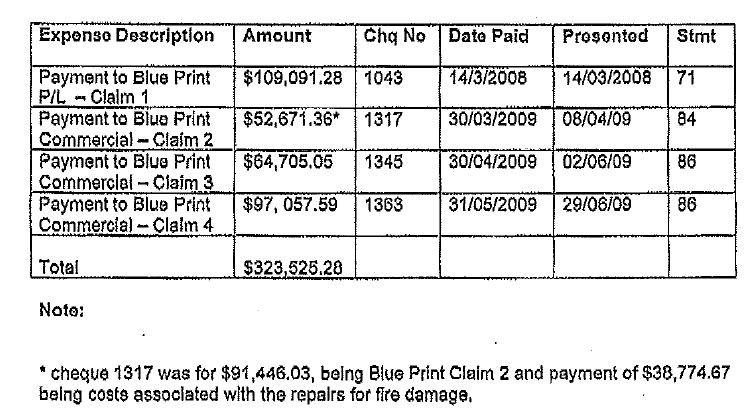
22 On 20 June 2013, Olga ceased to be a director of Voukidis Holdings.
23 On 1 May 2014, Peter and Kathy resigned as directors of Voukidis Holdings and, on the same day, COV transferred its 1000 ordinary shares in Voukidis Holdings to Peter and Kathy in equal shares (ie 500 shares each), and transferred its one dividend variable share to Peter. COV went into liquidation on 27 May 2014, shortly after transferring its shares in Voukidis Holdings to Peter and Kathy.
24 On 29 April 2016, Christos ceased to be formally recorded as a director of Voukidis Holdings, although the Applicant contended Christos continued to control Voukidis Holdings. Also on 29 April 2016, Christos transferred his one ordinary share and one dividend variable share in Voukidis Holdings to Peter. Peter was also appointed Voukidis Holdings’ sole director. Four days after transferring his shares in Voukidis Holdings to Peter, Christos became a bankrupt on 3 May 2016.
25 Peter and Kathy claimed in Christos’ bankruptcy for over $2.8 million. That claim was made on the basis of amounts advanced by Peter and Kathy to Christos, purportedly pursuant to the 2009 Loan Agreement.
26 Just as Christos divested his shares in Voukidis Holdings just before his bankruptcy, and COV divested its shares just before its liquidation, Peter and Kathy transferred their shares in Voukidis Holdings shortly before their bankruptcies.
27 On 5 August 2020, an ASIC Form 484 was lodged in respect of Voukidis Holdings. Christos, in his capacity as a director of Voukidis Holdings, certified that the information in the form was “true and complete”. The form recorded that it was “signed” on 5 August 2020 but did not bear any signature.
28 A second copy of the ASIC form dated 4 August 2020 — and which the evidence established had not been lodged with ASIC — was in evidence. That copy was signed by both Christos and Peter, apparently on 5 October 2020.
29 On their face, both forms recorded the resignation of Peter as a director and secretary of Voukidis Holdings on 15 May 2020, and the appointment of Christos in his place. They also recorded the transfer of 502 ordinary shares in Voukidis Holdings from Peter to ZVAM, and 501 ordinary shares from Kathy to ZVAM. The “earliest date of change” in respect of those transfers was recorded as 15 May 2020.
30 Whether Peter and Kathy in fact transferred their shares in Voukidis Holdings to ZVAM prior to their bankruptcies was in issue in this proceeding.
31 In some apparent housekeeping, a Transfer of Shares document dated 15 May 2020 was prepared that purported to transfer Olga’s one ordinary share and one dividend variable share in Voukidis Holdings to Christos for $2. Christos did not dispute that he applied Olga’s signature to this document, but Olga maintained she had not authorised Christos to do so. Olga also said that she had reverted to her maiden name — Sclavenitis — in 2018, so was not signing as “Olga Voukidis” at the time her “Voukidis” signature was applied by Christos in 2020.
32 COV was incorporated on 13 May 1994. At the time, its directors were Christos and Olga. Christos and Olga each held one dividend variable share and one ordinary share in COV.
33 As mentioned above, COV acted as the trustee of both the Voukidis Family Trust and the Voukidis Family No. 2 Trust.
34 On 20 June 2013, Olga ceased to be a director of COV. On 10 March 2015, Olga ceased to be a shareholder of COV.
35 On 27 May 2014, COV entered into liquidation.
36 On 4 May 2016, following his bankruptcy, Christos ceased to be a director of COV.
37 COV was deregistered on 22 November 2020.
38 ZVAM was incorporated on 7 August 2008. Its directors at the time were Christos and Maurizio Zappacosta, who together owned all of the share capital in ZVAM (each holding one ordinary share).
39 Mr Zappacosta is an accountant and was a business associate of Christos.
40 On 4 July 2013, Christos transferred his ordinary share in ZVAM to MM Asset Management Pty Ltd.
41 On 29 April 2016, a few days before his bankruptcy, Christos ceased to be a director of ZVAM, and Robert Leidl was appointed in his place.
42 On 16 June 2014, Mr Zappacosta resigned as a director of ZVAM, leaving Mr Leidl as its sole director. Mr Leidl was a business associate of Christos. Mr Zappacosta retained his shareholding in the company, and remained a shareholder at least to 20 December 2022 (being the date of the ASIC register search in evidence), as to one ordinary share.
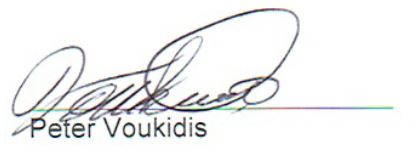
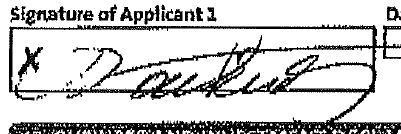
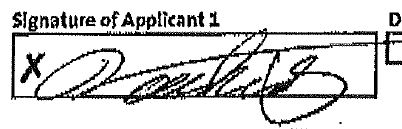
43 As noted above, the Respondents claim that on 15 May 2020 Peter and Kathy transferred their shares in Voukidis Holdings to ZVAM. I address these purported share transfers in more detail below.
44 On 8 January 2021, Mr Leidl resigned as a director of ZVAM, and Peter Christopher Voukidis, Christos and Olga’s son, was appointed in his place.
45 On 16 March 2021, a form was lodged with ASIC notifying that MM Asset Management Pty Ltd had transferred its ordinary share in ZVAM to Voukidis Management Pty Ltd (Voukidis Management), and that a further three ordinary shares had been issued to Voukidis Management. The form specified 28 February 2021 as the earliest date of change.
46 On 25 August 1998, the KC Trust was established. The initial trustee was Con Calagis, Ms Calagis’ husband, and the sole unitholder was COV in its capacity as trustee for the Voukidis Family Trust.
47 Sometime between 25 August 1998 and 15 March 2001, Mr Calagis retired as trustee of the KC Trust and Kepp Co Pty Ltd (Kepp Co) was appointed in his place.
48 On 30 June 2003, Kepp Co retired as trustee of the KC Trust and Voukidis Holdings was appointed in its place.
49 The authenticity of the (very limited) financial records produced by Voukidis Holdings in the present proceeding is disputed, as is whether it entered into the Loan Agreement and made advances to Peter and Kathy in its own right, or as trustee of the KC Trust.
Properties, bank accounts and transactions: the AMP accounts and advances from Voukidis Holdings to Peter and Kathy
50 Peter and Kathy owned and lived at the Property, which is 3 Wyatt Avenue, Burwood. Christos and Olga lived next door, at 5 Wyatt Avenue. Christos and Olga moved out of 5 Wyatt Avenue and, from August 2005, rental income in respect of 5 Wyatt Avenue was received by Voukidis Holdings. Olga’s evidence was that they lived at 5 Wyatt Avenue until about 2000, before moving to 5 Appian Way, Burwood, and then to 37 Thompson St, Drummoyne. Christos gave evidence that rent only began to be received in respect of 5 Wyatt Avenue from August 2005 because until that point he and Olga resided there. Nothing turns on whether Olga and Christos moved from the property in 2000 or 2005.
60 Belmore St, Burwood, and Peter and Kathy’s claims to be creditors of COV in its liquidation
51 60 Belmore St, Burwood, was another property owned by Peter and Kathy (the Belmore St Property). That property was transferred to COV in April 2003. The Belmore St Property was sold in March 2012. Break Fast Investments Pty Ltd (Break Fast) was COV’s principal creditor. In June 2017, Peter and Kathy pursued their claim to be creditors of COV, entitled to the proceeds of sale of the Belmore St Property, by litigation in the Supreme Court of Victoria (the COV Proceeding).
52 Peter and Kathy’s entitlement was said to arise pursuant to a letter dated 12 February 2003, recording the terms of a loan from them to COV (as trustee for the Voukidis Family No. 2 Trust) upon the transfer of their interest in the Belmore St Property. The Applicant in this proceeding contended that the 2003 loan letter was backdated and only devised to support a claim being made in COV’s liquidation to the proceeds of sale of the Belmore St Property, and to thwart Break Fast’s claim to the proceeds of sale of the Belmore St Property.
53 Break Fast, on behalf of COV (then in liquidation) contested Peter and Kathy’s claim. On 14 June 2018, Sloss J (having delivered reasons for judgment on 24 May 2018) dismissed Peter and Kathy’s claim and ordered that Peter and Kathy pay the defendant’s costs of the proceeding to Break Fast, to be taxed if not agreed.
54 In reliance on the costs order, on 4 May 2020 Break Fast caused a summons for taxation of costs to be filed, by which it claimed $347,372.35 in costs. In seeking to oppose the taxation, Peter and Kathy authorised Christos to provide instructions to a costs solicitor.
55 Relevantly, a title search of the Property (being Peter and Kathy’s residence) performed on 4 May 2020 revealed that the only encumbrance on the title to that property (aside from an easement for drainage) as at that date was a mortgage in favour of AMP.
56 On 14 July 2020, the Supreme Court of Victoria issued a “Notice of Estimate” which informed the parties that, if subject to taxation, the costs likely to be payable by Peter and Kathy would be $223,130. Interim orders were then made on 27 July 2020, requiring Peter and Kathy to pay $100,000 to Break Fast.
57 Shortly thereafter, and as mentioned above, on or about 25 August 2020, a caveat was lodged on the title to the Property on behalf of Voukidis Holdings. The caveat claimed that Voukidis Holdings’ interest arose pursuant to a mortgage dated 20 August 2020 between Voukidis Holdings and Peter and Kathy. The caveat referred to a supporting document described as “Loan Agreement dated 1 Oct 2010”.
58 On 27 October 2020, the Supreme Court of Victoria fixed the costs payable to Break Fast by Peter and Kathy in the sum of $264,965.47.
59 Peter and Kathy’s liability to Break Fast for the costs of the failed litigation then led to their bankruptcies.
Receipts into, and payments from, Voukidis Holdings’ bank account
60 Between 2001 and March 2012, monthly rental payments in respect of the Belmore St Property were deposited in Voukidis Holdings’ bank account.
61 Christos’ evidence was that Voukidis Holdings received rents from 5 Wyatt Avenue and the Belmore St Property in some kind of managerial capacity. There were no documents concerning this arrangement in evidence, and Christos’ evidence did not detail the nature of that arrangement. However, nothing presently turns on the capacity in which Voukidis Holdings received those rents.
62 In addition to the rental receipts from those two properties, Voukidis Holdings received transfers from other entities associated with Christos: T-Pay Australia Pty Ltd, Meet Me Introductions Pty Ltd and Gravity Ventures Pty Ltd.
63 The bank account statements of Voukidis Holdings’ account show that Peter and Kathy received $2,500 per month from that account from (at least) March 2001 to June 2008. Prior to February 2004, those transfers out of the Voukidis Holdings bank account had narrations that referred to Peter and Kathy. While those narrations no longer appeared from February 2004, it was accepted that the transfers were to Peter and Kathy.
64 The amount of the regular transfers then increased to $3,500 per month from June 2008. Those regular transfers continued during and after November 2010, until April 2016 (although no transfers were made in June 2009 and November 2013, and there was an additional transfer of $5,000 in February 2012). The Respondents contended that, from November 2010, the transfers were made pursuant to the Loan Agreement, which they contended was entered into on 1 October 2010.
65 The transfers to Peter and Kathy recommenced in August 2016, mostly in the sum of $3,000, although the amount varied and was higher in some months.
66 Between August 2019 and January 2021, five payments of $4,200 each were made to Peter and Kathy.
67 From September 2009, the monthly transfers out of Voukidis Holdings’ bank account can be reconciled with Peter and Kathy’s AMP bank statements, confirming that they were in fact paid to Peter and Kathy.
Servicing the AMP loan and the offset account
68 Bank statements for Peter and Kathy’s offset account with AMP were in evidence. Those statements show draw downs and payments out by cheque, being the means by which the funds referred to in paragraph 7 above were provided to Christos.
69 Peter and Kathy’s interest payments were made by deductions from the offset account. Initially, they made small drawdowns against the loan to fund the interest payments. Then, from 4 November 2010, transfers from Voukidis Holdings into the offset account provided the means by which Peter and Kathy met their interest obligations under the AMP loan.
70 The COV Proceeding, referred to above, was not the only litigation in which the Voukidis family was engaged.
71 I refer to other litigation in addressing matters concerning Christos’s credit.
THE WITNESSES, ISSUES OF CREDIT AND HEARSAY
72 The Applicant relied on: two affidavits sworn by him, dated 21 February 2023 and 12 April 2023; two affidavits of his solicitor, Alan James Foster, dated 15 June 2023 and 10 October 2023; two affidavits of Greg Joseph Taylor, a director of Break Fast, dated 16 August 2023 and 5 September 2023; an expert report of Andrew Le, dated 22 August 2023; a further expert report of Mr Le, dated 5 September 2023; an expert report of John Ganas, dated 21 January 2024; and a further expert report of Mr Ganas, dated 29 May 2024.
73 The Applicant also called Olga, to whom a subpoena to give evidence had been issued. Olga was cross-examined. The Applicant’s other witnesses, and the two experts, were not cross-examined.
74 The Respondents relied on: two affidavits of Christos, dated 14 September 2023 and 9 May 2024; an affidavit of Ms Calagis, dated 22 March 2024; and an affidavit of Mr Zappacosta, dated 13 June 2024. Christos, Ms Calagis and Mr Zappacosta were cross-examined.
Hearsay evidence of Peter and Kathy
75 The Applicant sought to adduce hearsay evidence of Peter and Kathy pursuant to s 67 of the Evidence Act 1995 (Cth) (the Evidence Act) on the basis that Peter and Kathy were not available to give evidence. Peter is deceased. Kathy is elderly and in ill-health. It was accepted that she was unable to give evidence.
76 Some of the documents tendered as hearsay evidence were not objected to. I ruled against the Respondents’ objection to one document tendered as hearsay evidence of Peter and Kathy (being a joint affidavit they swore in a proceeding in the Supreme Court of Victoria). Some additional hearsay evidence (transcript extracts of evidence given by Gerard O’Hea and Theo Baker in Supreme Court of Victoria proceedings) was also tendered pursuant to s 64 of the Evidence Act, without objection.
77 The Applicant sought to adduce tendency evidence, being evidence adduced to prove that Christos has or had a tendency to create false documents, backdate documents, knowingly give false evidence on oath and give false instructions to lawyers.
78 The tendency evidence was sought to be adduced after notice was given under s 97(1) of the Evidence Act. I granted a dispensation under s 100(1) of the Evidence Act from the notice requirement in s 97 in relation to a document that was not referred to in the tendency notice served on the Respondents, and admitted the tendency evidence over the Respondents’ objections, for reasons recorded in the transcript.
79 Olga was called by the Applicant. She gave evidence on subpoena concerning her relationship with Christos and their homes, her involvement (or lack thereof) with the activities of COV and Voukidis Holdings, and the application of her signature to various documents. She was cross-examined. I accept Olga as a witness of truth, although her evidence on some matters (referred to below) was of limited probative value.
80 Ms Calagis was called by the Respondents, and was cross-examined. With the Applicant’s agreement, Ms Calagis was cross-examined by video link from New South Wales as she had caring responsibilities for Kathy. Ms Calagis’ evidence focused on the execution of the Loan Agreement and, in particular, whether it was executed in 2010. I have accepted her evidence, as detailed below.
81 The Respondents called Mr Zappacosta. He was cross-examined, also by video link from New South Wales. His evidence concerned whether Voukidis Holdings entered into the Loan Agreement and made advances to Peter and Kathy as trustee of the KC Trust or in its own capacity. I have rejected his evidence. Mr Zappacosta made himself the uncritical mouthpiece of Christos and gave baseless evidence.
82 To a large extent, the Respondents’ case relied on evidence given, and documents produced, by Christos. The Applicant urged the Court to find that Christos is an unreliable witness, whose evidence should not be accepted unless it is independently corroborated by documents or other witnesses whose evidence is also accepted. In aid of that submission, the Applicant adduced the tendency evidence referred to above. I address this evidence below.
83 The Joint Venture Proceeding involved Ambridge Investments Pty Ltd and Break Fast, which was controlled at the relevant time by Christos.
84 On 24 August 2009, Christos swore an affidavit in the Joint Venture Proceeding in his capacity as a director of Break Fast, the sixth defendant to the proceeding. Christos gave evidence that Break Fast had discovered bank statements in the Joint Venture Proceeding. Christos had manipulated those bank statements. Christos sought to explain his conduct in manipulating the bank statements in his 24 August 2009 affidavit. He said as follows (emphasis added):
Some of the statements which have been discovered are incorrect or incomplete. I have altered some of these statements prior to them being discovered in this proceeding. I provide this affidavit in explanation of alterations of those statements which I performed and apologise to the Court.
85 Christos went on to explain the reasons why he amended the bank statements (emphasis added):
By about August 2007 and at the time I first made some of these alterations I was getting extremely frustrated at the intrusion placed upon Break Fast’s business activities and business relationships by the activities of the plaintiff and particularly the actions of Greg Taylor.
…
Because of this frustration and the fact that, in my view, the plaintiff had no right to know what the ongoing business was of Break Fast until they had established any interest in the company, which is expressly denied, I altered some of the transactions that had occurred. This was in an effort to avoid endless investigations and continuing each and every transaction entered into by Break Fast which I viewed as being premature and an abuse of process.
I now realise that my actions were not appropriate. The extreme seriousness of the conduct I have engaged in has been thoroughly explained to me by my lawyers. I am deeply regretful of my actions and sincerely wish to apologise to this Honourable Court.
86 Christos’ affidavit exhibited a table setting out the alterations he had made. Some were as to the description of the transaction concerned, and some were as to the amount of the transaction. In total, there were more than 85 alterations admitted to. Some of the amounts altered were substantial. For example, Christos deposed to having changed an entry in a bank statement from $20,000 to $180,000.
87 On his own admission, Christos falsified evidence in a Supreme Court of Victoria proceeding. The gravity of this conduct alone, exhibiting, as it does, Christos’ willingness to falsify documents to serve his personal and business ends, would lead me to conclude that Christos is not an honest and truthful person whose evidence can be taken at face value. But the litany of Christos’ misdeeds goes on, reinforcing that conclusion.
88 On 24 August 2009, Christos swore a further affidavit in the Joint Venture Proceeding deposing to the circumstances surrounding his non-compliance with orders made in that proceeding on 3 May 2007.
89 Paragraph 2(a) of the 3 May 2007 orders directed that the sum of $320,210 be paid into an interest-bearing trust account with Rigby Cooke solicitors, and provided that such amount could only be withdrawn for two purposes: payment of costs associated with compliance with orders made in a related proceeding for the removal of cladding from the property at 176 Wellington Parade, East Melbourne (the Wellington Parade Property); or the payment of such sum into Court pending the hearing of an appeal against the orders made in the related proceeding.
90 The 3 May 2007 orders also provided, by paragraph 2(b), for payment of a further $340,000 into the Rigby Cooke interest-bearing trust account and that such funds were only to be withdrawn for payment of legal costs incurred by Break Fast in the Joint Venture Proceeding.
91 In his second 24 August 2009 affidavit, Christos deposed that while the funds the subject of the orders were not paid into a Rigby Cooke trust account, they had only been applied for purposes permitted by the orders. The relevant paragraphs of the affidavit are as follows:
7. All of the funds which were the subject of the Orders made on 3 May 2007 were expended consistent with those Orders. For the cladding removal as provided for in order 2 (a), $323,526.28 was paid to Blue Print Commercial or to third parties at their direction. Each of the cheque requisition documents, invoices, bank accounts and general ledgers reflecting these payments have been discovered (including documents numbered 42, 93, 135 and 136 in the Defendants Supplementary Discovery). A further amount of $459,932.81 has been paid to Rigby Cooke lawyers and to G.W Meldrum Barristers Clerk. The Defendants maintain a claim of legal professional privilege over the Rigby Cooke invoices. I am informed and verily believe that Rigby Cooke will verify the amount paid for legal expenses in a separate affidavit. The cheque requisition documents and bank statements have been discovered. The rest of the monies released were applied to the Sixth Defendant's funds as working capital.
8. The payments referred to in paragraph 7 (save for $120,000 referred to below) were made from an interest bearing cash management account in the name of the sixth defendant account number 87-401-8316 which was not a Rigby Cooke trust account. I am informed by my solicitors and verily believe that in October 2008 a trust account was opened at Rigby Cooke in the name of Break Fast Investments Pty Ltd. An amount of approximately $120,000 was paid into that account by Break Fast Investments Pty Ltd and applied to outstanding legal invoices. This made up part of the $459,932.81 referred to above. Because the monies were spent consistently with the Orders made 3 May 2007 I did not think that it was necessary for all the monies to go into the Rigby Cooke trust account.
9. I deeply regret the failure to comply with the Orders by paying the funds out of an account which was not a Rigby Cooke trust account, although the funds were paid out only to the parties for which the funds were permitted by the Orders.
92 Exhibited to the affidavit at CV-1 was a document titled “Summary of Application of Funds Referred to in paragraph 2(a) [of the 3 May 2007 orders] being $320,210”. Exhibit CV-1 comprised the following table:
93 As can be seen, the first payment recorded in the table was an amount of $109,091.28 paid on 14 March 2008. It was described as “Payment to Blue Print P/L – Claim 1” and was said to be associated with cheque number 1043 and bank statement 71.
94 The payment of $109,091.28 and cheque number 1043 were the subject of evidence in a further proceeding in the Supreme Court of Victoria involving Break Fast, Christos and Gravity Ventures Pty Ltd (the Gravity Proceeding). In the Gravity Proceeding, Break Fast tendered evidence including:
(a) a copy of a Break Fast cheque requisition dated 14 March 2008 in relation to cheque number 1043;
(b) a copy of a Valleyclad Pty Ltd (Valleyclad) “tax invoice” dated 3 December 2007 addressed to Break Fast as “client” and in the amount of $109,091.29;
(c) a copy of a National Australia Bank (NAB) bank statement numbered 71 with two relevant entries on 14 March 2008 for “Bank Cheque Issue Fee” in the amount of $8.00 and “Miscellaneous Debit” in the amount of $109,091.28; and
(d) a copy of a NAB bank cheque dated 14 March 2008, payable to “R Romano” in the sum of $109,091.28.
95 The director of Valleyclad, Mr O’Hea, gave evidence in the Gravity Proceeding to the effect that Valleyclad had not prepared or issued the “tax invoice” dated 3 December 2007 and that, despite what the documents produced by Break Fast indicated, Valleyclad had not worked for, and did not receive payment from Break Fast.
96 Mr Baker, a former director of Break Fast, also gave evidence in the Gravity Proceeding. Mr Baker explained that it would be inconsistent for Valleyclad to issue a tax invoice directly to Break Fast in circumstances where the relevant works were contracted to Break Fast by Blue Print Commercial (for whom Valleyclad was a subcontractor). Mr Baker also gave evidence that he had come to understand that the $109,091.28 cheque had been applied by Christos to purchase a property at 8 Third Avenue, Lane Cove NSW (the Lane Cove Property) from “R Romano”. Mr Baker’s evidence was that Christos had used the funds without the consent of Break Fast.
97 The evidence of Mr O’Hea was admitted as hearsay evidence in this proceeding after the Applicant served a notice as to the hearsay evidence. The Respondents withdrew their objection to the admission of the hearsay evidence of Mr O’Hea, and that of Mr Baker.
98 Christos was cross-examined in this proceeding about the evidence tendered by Break Fast in the Gravity Proceeding and his second 24 August 2009 affidavit, filed in the Joint Venture Proceeding. Christos accepted that:
(a) the sum of $109,091.28 was “probably” used by him to purchase a bank cheque in the name of R Romano in order to purchase the Lane Cove Property;
(b) the evidence which he had given at paragraphs 7 to 9 of his affidavit was “false” and “inaccurate”; and
(c) he knew, at the time of making the affidavit, that the representations contained at CV-1 as to the payment of $109,091.28 to Blue Print Commercial on 14 March 2008 were inaccurate.
99 When pressed as to his knowledge of the 3 May 2007 orders, Christos accepted that he “did know of the orders” but sought to minimise his understanding of them, claiming to recall there having been “a significant amount of confusion as to exactly how those orders were to be executed” and suggesting that he had not been intimately aware of how to comply with them.
100 It is frankly staggering that, on the very same day he was swearing an affidavit confessing to, and apologising for, having manipulated bank statements, Christos swore another affidavit riddled with mistruths. This second affidavit falsely claimed that the funds that Christos had, in breach of court orders, put towards buying the Lane Cove Property had been applied to a purpose sanctioned by the Court’s orders (cladding removal works).
101 The principal issue in the Joint Venture Proceeding was whether Break Fast was acting as a company in its own right, or as the manager of an unincorporated joint venture, in relation to its investment in the Wellington Parade Property.
102 On 4 September 2008, Christos swore a “further supplementary affidavit of documents” in his capacity as a director of Break Fast. The affidavit discovered, as document 63, a copy of a document described as a “facsimile from Graham Jacobs to Anthony Fink” dated 13 September 2001.
103 As it happened, another copy of the fax from Mr Jacobs to Mr Fink dated 13 September 2001 was discovered in the Joint Venture Proceeding. The two versions of the fax appeared identical at first glance, both bearing the date “13/09/01” and time “10:17:19 AM”. However, the two documents differed in the following important respects:
(a) on the first page, in the first paragraph of the letter, the words “joint venture” had been replaced with the word “company” in the version discovered by Christos;
(b) on the second page, in the draft balance sheet, the words “Partners’ Equity” had been replaced with the words “Shareholders’ Equity” in the version discovered by Christos;
(c) in the draft balance sheet, references to “Ambridge Investments Pty Ltd Capital” and “Total Ambridge Investments Pty Ltd” had been replaced by references to “Mark Stanley Capital” and “Total Mark Stanley” in the version discovered by Christos; and
(d) on the third page, the words “Total Partners’ Equity” had been replaced with the words “Total Shareholders’ Equity” in the version discovered by Christos.
104 Christos was cross-examined in the Joint Venture Proceeding regarding the “altered” version of the fax but denied that he had manufactured the version discovered by his affidavit of documents dated 4 September 2008.
105 Christos was again cross-examined about this document in this proceeding. He accepted that the characterisation of the activities of Break Fast as those of a manager of an unincorporated joint venture — as opposed to a company — was of central importance to the outcome of the Joint Venture Proceeding. It was put to Christos that, at the time of making the affidavit of documents in September 2008, he knew that the document was false and nonetheless put it forward as a genuine document. Christos gave evidence that he did not recall knowing the document to be false at the time it was put forward, nor how he came to have the document.
106 Christos’ evidence was not persuasive. It was evasive. I do not accept Christos’ evidence in this proceeding that he did not recall knowing the document to be false at the time he put it forward in giving discovery in the Joint Venture Proceeding.
COV Proceeding and the tax returns
107 As outlined above, in around June 2017 Peter and Kathy commenced the COV Proceeding.
108 On 23 May 2017, in a separate proceeding before the Supreme Court of Victoria, the liquidator of COV had obtained orders that they were justified in not further investigating Peter and Kathy’s claim and would be justified in not defending, and in causing the company not to take further steps to defend, any proceeding commenced by Peter and Kathy in relation to that claim. As such, the COV Proceeding was defended by Break Fast who, as the only other significant creditor of COV, was granted leave to defend the proceeding for and on behalf of COV.
109 Peter and Kathy’s entitlement was said to arise pursuant to a letter dated 12 February 2003, recording the terms of a loan from them to COV upon the transfer of their interest in the Belmore St Property. I return to this letter below.
110 As mentioned above, Peter and Kathy took out a loan from AMP in 2009. The loan application enclosed documents described as Peter and Kathy’s tax returns in respect of the 2007 and 2008 income years. Christos was cross-examined about these documents in the COV Proceeding. He gave evidence that:
(a) he, in conjunction with a finance broker, filled out the home loan application form on behalf of Peter and Kathy;
(b) the income tax returns were “draft” returns prepared for the purpose of the loan application, and the information in the returns was provided by him;
(c) he knew the information would be relied upon by AMP to increase the facility to $720,000; and
(d) the rental income shown in the tax returns (being Peter and Kathy’s sole source of income described in the returns) was inaccurate in that it was not properly attributable to Peter and Kathy.
111 Christos was also cross-examined about the AMP loan application documents in this proceeding. He accepted that AMP would require information about Peter and Kathy’s ability to service the debt, and that the tax returns enclosed with the application (whether or not they were in draft or final form) made representations as to Peter and Kathy’s income in respect of the 2007 and 2008 income years. However, when pressed on the accuracy of the returns, and despite his previous evidence in the COV Proceeding, Christos seemed to suggest that the returns were not, by reason of their being in draft form, inaccurate. At one point during his cross-examination, Christos sought to shift the blame to AMP for not having requested income tax assessments (cf returns). Ultimately, Christos accepted that the returns provided in support of the loan application were false when viewed against Peter and Kathy’s tax returns as ultimately filed. His evidence on this topic was evasive and unconvincing.
112 I find that Christos:
(a) provided the income figures contained in the tax returns;
(b) knew that AMP would rely on the income figures provided in the tax returns for the purposes of assessing whether to advance the loan, whether or not they were in fact “draft” returns; and
(c) knew the income figures in the tax returns were inaccurate and deliberately overstated them in order to secure the loan, which was taken out entirely for his benefit.
113 As noted above, the Applicant disputed that Christos and his parents entered into the 2009 Loan Agreement in 2009. In support of his submission that the 2009 Loan Agreement was in fact created in 2016, the Applicant relied on the following evidence:
(1) In the COV Proceeding, Peter gave evidence (in September 2017) that about two or three years prior, he had adopted a “curl” to his signature. However, that “curl” was present on the 2009 Loan Agreement, whereas it was not present on, for example, his signature on the AMP loan application, dated 10 August 2009. The Applicant also pointed to other documents signed by Peter in 2016 and 2017 which contained the “curl”, in relation to which Peter gave evidence. The signature appearing on the 2009 Loan Agreement was as follows:
Peter’s signatures appearing on the 2009 AMP home loan application were as follows:
An example of the “curl” appearing in Peter’s signature on other documents signed in 2017 included the following:
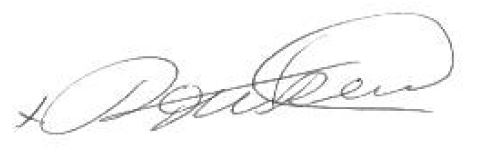
(2) The Applicant also relied on a discrepancy between the figure disclosed by Christos on oath to be owing to his parents as at 30 September 2014 ($750,000) and the amount purportedly owing at that date, calculated pursuant to the provisions of the 2009 Loan Agreement, according to the Schedule enclosed to Peter and Kathy’s proof of debt lodged in Christos’ bankruptcy ($1,985,913.65).
114 The evidence supports a conclusion that the 2009 Loan Agreement was not signed in 2009 due to the changes to Peter’s signature. Christos had Peter’s electronic signature, and a strong motive to backdate the document (to inflate the amount for which his parents would be admitted in his bankruptcy, and maximise their resulting voting power in the decision to enter into a personal insolvency agreement). I accept the Applicant’s contention that the 2009 Loan Agreement is an example of a document backdated by Christos.
115 As explained above, the 12 February 2003 letter was put forward by Peter and Kathy in the COV Proceeding in support of their claim to part of the proceeds of sale of the Belmore St Property in priority to Break Fast.
116 The Applicant submitted that the letter was put forward in the COV Proceeding as a genuine document when in fact it had not been created in 2003, having instead been created by Christos for the purposes of that proceeding. In support of his submission, the Applicant relied on the following evidence:
(1) Olga’s evidence that the first time she had seen the letter was in the months prior to the trial of this proceeding, when she was shown a copy by the Applicant’s solicitor. While identifying the signature on the document as her own, Olga gave evidence that she doubted that she had signed the document. Olga explained that it was unlikely she would have been with her father (whose signature appears on the document as a witness) on a school night, that she did not consider it plausible that her father would have signed “in the air” as opposed to on the line, and that — on the assumption that her father, Peter and Kathy were in the same room when the document was signed — she did not believe Peter, Kathy and her father would have discussed each other’s assets with one another.
(2) That Olga had not authorised anyone to apply her digital signature to this document.
(3) The second expert report of Mr Ganas, which concluded that it was most likely that Olga’s signature on the letter was a digital signature produced by a process of “cut and paste forgery”.
(4) That the letter features Peter’s “curl” signature, however (and as explained at paragraph 113(1) above), Peter gave evidence in the COV Proceeding that he had only adopted that form of signature in approximately 2014.
117 Christos was cross-examined about the genuineness of this document in this proceeding. He rejected any suggestion that the letter had been “concocted” by him sometime between 2014 and 2017 to enable Peter and Kathy to put forward a claim to the proceeds of sale of the Belmore St Property, or that he had applied Olga’s signature to the document in order to create the appearance that it had been signed by her. Christos appeared to maintain that Olga’s signature on the letter was not a digital signature at all.
118 On the basis that the letter features Peter’s “curl” signature and not the signature he was using before about 2014, I accept the Applicant’s contention that this document was backdated. I do not base that conclusion on Olga’s evidence regarding the location of her father’s signature relative to the signing line.
119 In this proceeding, the Respondents produced a document purporting to be a letter from Voukidis Holdings to Peter and Kathy dated 11 July 2022. The letter said: “Please find below the statement for the period 1 July 2021 to 30 June 2022 regarding your loan facility.” The letter then set out, in table form, transaction details (draw down amounts, interest charged, repayments and loan balances).
120 The expert evidence of Mr Le was that the document itself was created on 23 May 2023, by the user “CV”, and that the document contained two embedded pdf images, the second of which (setting out the transaction details) was created on 29 May 2023. The creation of this image six days after the creation of the principal document shows the document was not an original, but was created in May 2023, I infer by Christos.
121 This document is a further instance of Christos creating a backdated document and using it in litigation without disclosing the circumstances of its creation.
Conclusion on Christos’ credit
122 I do not accept Christos as a witness of truth. His willingness to fabricate documents (particularly the bank statements noted above) and give false evidence (particularly in relation to the application of funds in accordance with a court order for cladding removal purposes) means that I do not accept Christos’ evidence on contested facts unless supported by the evidence of a witness whose disposition to dishonesty has not been established (such as Ms Calagis) or reliable documentary evidence. In addition, I found Christos’ evidence in cross-examination to often be evasive and non-responsive. In my assessment, in answering questions in cross-examination, Christos’ evidence was directed to what he perceived to be to the Respondents’ advantage. He sought to side-step or minimise the significance of evidence put to him regarding his history of falsification of documents and false evidence.
WHEN WAS THE LOAN AGREEMENT EXECUTED?
123 The Applicant’s position was that the Loan Agreement was entered into in 2020, and not on the date stated on the face of the document, being 1 October 2010.
124 The Applicant submitted that, even putting to one side Christos’ history of document falsification, the terms of the Loan Agreement (which in the Applicant’s submission created an “absurdly inflated liability” of Peter and Kathy to Voukidis Holdings of more than $1,800,000 on advances (net of repayments) of $268,650 over a period of more than 10 years) and the timing of the lodgement of the caveat in support of it (on or about 25 August 2020, when Peter and Kathy were aware of the imminent costs order in the COV Proceeding) should invite the most serious scepticism as to the date of the Loan Agreement’s execution.
125 In an annexure to his closing submissions, the Applicant relied on further pieces of evidence as supporting his contention that the Loan Agreement was not executed on 1 October 2010, including:
(1) The fact that no native file of the unexecuted document was ever produced, with no credible explanation given for the absence of the native file.
(2) The earliest evidenced date of existence of the document (other than Christos and Ms Calagis’ evidence) was 5 August 2020, being the “date content created” and “date content last modified” date identified in respect of the document by Mr Le.
(3) The fact that no mortgage was provided by Peter and Kathy until 22 March 2021, despite it being a condition precedent to any advances under the Loan Agreement, and the absence of any good reason for a mortgage not being provided earlier.
(4) The absence of any credible explanation by Christos for the failure to lodge a caveat until August 2020, when he well knew the caveat procedure to protect unregistered security interests.
(5) The absurdity of the assertion by Christos that Voukidis Holdings notified Peter and Kathy of the imposition of default interest from 1 July 2011, while at the same time making a further 84 advances of money to Peter and Kathy between 1 July 2011 and 20 July 2021.
(6) That in 2016, Christos prepared a pension application on Peter’s behalf and ticked “no” in respect of the question: “In the last 12 months have you (and/or your partner) [being Peter and Kathy] borrowed an amount which is secured against your home”.
126 The Respondents’ position was that the Loan Agreement was entered into on the date stated on its face, being 1 October 2010. They relied on:
(a) Christos’ evidence;
(b) Ms Calagis’ evidence;
(c) the transfer of substantial funds from Voukidis Holdings to Peter and Kathy, which transfers commenced on 4 November 2010; and
(d) Mr Ganas’ evidence that: “There is no evidence to support the proposition that the [Loan Agreement] is not an original document.”
127 Unlike many other documents, which were only produced in pdf copy format, the Loan Agreement was produced in “original”, with inked signatures. The year 2010 was part of the typed document, but “1 October” was inserted in ink. There were two signed originals. Ms Calagis said that was because Peter was not happy with how his signature appeared on the first version he signed, so he signed another copy. Nothing turns on whether Ms Calagis’ explanation should be accepted as the terms of the two versions were the same.
128 I also note that Peter’s signature appears without the “curl” (explained above at paragraph 113(1)). If, as the Applicant alleged, the Loan Agreement was only executed in 2020, Peter must have consciously signed the document adopting the “old” version of his signature (without the “curl”). There is no reason to conclude that Peter was so cunning as to adopt his “old” signature when signing the document.
129 Mr Le examined a pdf version of the Loan Agreement that was produced by the Respondents. That pdf version was created on 5 August 2020 and the pdf file was also last modified on that date. However, as dating a pdf does not date the document from which the pdf file was created, Mr Le’s evidence only goes as far as establishing that the earliest pdf copy of the Loan Agreement was made in 2020.
130 Mr Ganas examined an original of the Loan Agreement. He was unable to determine when it was created.
131 That leaves the lay witness evidence concerning when the Loan Agreement was created and signed.
132 As mentioned above, it was common ground that neither Peter nor Kathy could give evidence, Peter being deceased and Kathy being aged and infirm in a nursing home.
133 Christos gave evidence that the Loan Agreement was signed on or about 1 October 2010. He stated that he had provided a soft copy template document to Peter, who filled out details (after having consulted with a solicitor friend of his) such as the parties, and some details around the definitions and recitals. Christos said he could not recall specifically the changes Peter made.
134 Christos stated that on 1 October 2010 (or thereabouts), he went to his parents’ house, that Ms Calagis was already there when he arrived, and that he did not bring the hard copies of the Loan Agreement to the house.
135 Given Christos’ chequered history of fabricating documents and giving untrue evidence on oath, I place no weight on his evidence.
136 Unlike Christos, Ms Calagis does not have an established history of fabricating documents and giving false evidence. Her evidence was that, in the afternoon of 1 October 2010, she received a call from Peter asking her to “come over to [Peter and Kathy’s] house and witness my signature, and your mother’s, signatures to a loan agreement. We are getting a loan from Chris’s company”. In cross-examination, Ms Calagis gave evidence that when she arrived at her parents’ house, her parents were there and Christos arrived shortly after she did. Ms Calagis said that two copies of the Loan Agreement were on the table when she arrived.
137 Ms Calagis recalled Peter saying to Kathy: “‘Remember seeing a solicitor, remember going to a solicitor’ that sort of thing, about a loan.” Ms Calagis gave evidence that she quickly read the document before witnessing the signatures, but did not see how much the loan was for, what interest rate would be payable, or when it would have to be repaid. However, Ms Calagis said that she could recall seeing the date “1 October 2010” written on the Loan Agreement before she witnessed the signatures. She also gave evidence that this was the only document signed by her parents that she witnessed between 2000 and 2022.
138 Ms Calagis explained that her father signed the first copy of the Loan Agreement, but was not happy with his signature, and so he signed a second copy of the Loan Agreement.
139 In re-examination, the following exchange occurred:
Now right at the end of your cross-examination, Mr Evans put to you that it wasn’t until 2020 that you witnessed the signatures on this document, and you said you disagree. Why do you disagree?---Because it wasn’t – it wasn’t four years ago. Because four years ago my dad was -was sick. He broke his femur, and it was way before that. So it was, yes, back in 2010.
140 Ms Calagis gave evidence that, in 2010, she was working part-time as a learning support officer and worked Mondays through to Thursdays. That is relevant as 1 October 2010 was a Friday. Accordingly, Ms Calagis’ work schedule was consistent with her evidence regarding having received a call from her father to come around to the Property that afternoon.
141 I accept that Ms Calagis is likely loyal to her family and that the family’s interests lie in maximising the amounts that can be claimed by family entities, including Voukidis Holdings, in Peter and Kathy’s bankruptcies. I also accept that Ms Calagis did not have an independent recollection that the Loan Agreement was executed on 1 October 2010, nearly 14 years ago, but fixed the date of the events to which she deposed by reference to the date stated on the Loan Agreement. While she did not, in my assessment, have an independent recollection of the specific date on which the documents were signed, she had a good recollection of the signing gathering and surrounding circumstances, which recollections would be impossible to reconcile with the Loan Agreement only having been signed in 2020 (as the Applicant alleged).
142 Ms Calagis’ evidence was consistent and not shaken in cross-examination. Aspects of her evidence had the ring of truth, in particular her recollection that she witnessed her parents signing this document long before Peter broke his leg, which happened in 2020, some ten years after 2010. Ms Calagis was also not much involved in her parents’ financial affairs. The fact that she only witnessed their execution of one document means that it is unlikely that her evidence about the execution of the Loan Agreement was merely the product of mixing up the circumstances of the execution of the Loan Agreement with the execution of some other document.
143 I do not consider that, as the Applicant submitted, I could reject Ms Calagis’ evidence without impugning her credit. As I have explained, I do not consider her evidence to be the product of innocent confusion.
144 Olga gave evidence that she was not made aware of the Loan Agreement in 2010. She said that she “had no knowledge of what went on within their family”, and explained that she was first shown the Loan Agreement within the preceding two months by the Applicant’s solicitor. While Olga was a director of Voukidis Holdings in 2010, I do not consider that her lack of awareness of the Loan Agreement in 2010 (or at any time before 2024) suggests it was not entered into in 2010. That is because Olga had little to no involvement in the running of Voukidis Holdings.
145 In addition, the objectively verified circumstances are that Peter and Kathy had a need for funds to meet their interest obligations to AMP on the 2009 loan and had exhausted their capacity to meet the interest payments by drawing down on the AMP loan itself by mid to late 2010. In other words, there was a clear need for them to have a source of funds from which to meet the interest obligations. Of course, the need for funds does not dictate that a formal loan be entered into as their son, Christos, was already supporting them financially. He could have simply provided them with further funds without entry into a formal loan. Nevertheless, the need to meet their interest obligations provides an identifiable impetus that would explain entering into a loan agreement in 2010.
146 That does not explain, however, the quantum of the loan. Interest payments on the AMP loan were in the order of only around $3,000 to $4,000 per month, yet the loan agreement was for up to $3 million. That quantum is more readily explicable if, as the Applicant contended, the Loan Agreement was entered into in 2020 when it became clear that Peter and Kathy would have non-family creditors arising out of the failed litigation in the Supreme Court of Victoria. Nevertheless, I do not consider that the fact that the quantum is more readily explicable if the loan were entered into in 2020 outweighs the other evidence in support of the 2010 date.
147 While I note that the pension application completed by Christos for Peter stated that there was no secured loan taken out against the Property, given Christos’ propensity to misstate matters when convenient (eg in stating his parents’ income in applying for the AMP loan), the pension form does not constitute compelling evidence that the Loan Agreement was in fact not entered into in 2010, but only in 2020.
148 By his Originating Application, the Applicant sought (inter alia) declarations that the Loan Agreement did not create any security interest in respect of the Property or, if it did, that any security interest so created is void pursuant to ss 120 and/or 121 of the Act. In pleading the basis for the claims for relief under ss 120 and/or 121 of the Act in relation to the Loan Agreement, the Statement of Claim advanced those claims “if it is established that the Loan Agreement was entered into at a date after 23 May 2017” (in respect of the s 120 claim) and “22 March 2016, alternatively 17 June 2016, alternatively 20 July 2016” (in respect of the s 121 claim).
149 In my view, on the balance of probabilities, the Loan Agreement was entered into in 2010. My acceptance of Ms Calagis’ evidence is central to this conclusion.
150 As I have concluded that the Loan Agreement was not entered into after the dates listed at paragraph 148 above, it is not necessary to determine whether ss 120 or 121 apply to the Loan Agreement.
151 For completeness, I note that I do not accept that the Respondents had the burden of establishing that the Loan Agreement was entered into in 2010 and not, as the Applicant suggested, 2020. Given that it was the Applicant who invoked ss 120 and 121 of the Act to avoid any security interest conferred by the Loan Agreement and to do so on the basis of the Loan Agreement having been entered into after a particular date, I do not accept that Voukidis Holdings bears the onus of establishing the date on which the Loan Agreement was entered into simply because it is the entity claiming in the bankruptcies of Peter and Kathy, or because the Applicant also sought relief for the removal of Voukidis Holdings’ caveats.
DID THE LOAN AGREEMENT CREATE A SECURITY INTEREST?
152 The parties agreed that, if the Loan Agreement was entered into in 2010 and did not create a security interest, then the Loan Deed and Mortgage are void under ss 120 and 122 of the Act.
153 Given my conclusion on the date issue, it is necessary to proceed to consider the question of whether the Loan Agreement created a security interest.
154 In order for an equitable mortgage or equitable charge to come into existence, “there must be an intention to create an immediate proprietary interest or immediate right of recourse to identifiable, present, or in the case of a charge, future property”: Roberts v Investwell Pty Ltd (in liq) (2012) 88 ACSR 689; [2012] NSWCA 134 (Investwell) at [29] (Bathurst CJ, Beazley JA and Tobias AJA agreeing). This is a question of the construction of the agreement in issue.
155 In concluding that there was no intention to grant an immediate security interest in Investwell, Bathurst CJ drew attention to the features of the agreement in question at [32]:
First, the obligation to grant the mortgage [is] expressed to be upon request. Second, the proposed security is expressed as alternatives, the third alternative being security that Mr Roberts may consider necessary. Third, the form of security is not settled but is required to be in a form acceptable to the legal advisers to Mr Roberts. These matters taken cumulatively seem to me to lead to the conclusion that there was no intention to grant an immediate equitable interest of charge.
156 In my view, the Loan Agreement did not create a security interest.
157 The question of whether or not Voukidis Holdings held a security interest pursuant to the Loan Agreement rests on the terms of the Loan Agreement governing the provision of security. The relevant provisions were in the following terms:
3. Conditions Precedent and Subsequent
3.1 Conditions
The obligations of the Lender to provide the funds under this Facility and not require such funds to be repaid immediately is conditional upon the Lender having received the following in form and substance reasonably satisfactory to the Lender:
(a) a mortgage in registerable [sic] form over the Property on terms acceptable to the Lender;
(b) written confirmation from the Borrower in a form reasonably satisfactory to the Lender that the Warranties are true, correct and accurate as at each Drawdown Date; and
(c) the Guarantor and Borrower complying with all of their obligations hereunder.
3.2 Best Endeavours
The Borrower must use its best endeavours to obtain the fulfilment of the conditions set out in Clause 3.1.
158 The Respondents contended that Peter and Kathy were in default under the Loan Agreement because they did not use their “best endeavours” (clause 3.2) to provide a mortgage in registrable form to Voukidis Holdings. They also contended that, notwithstanding Peter and Kathy’s failure to provide a mortgage in registrable form, the terms of the Loan Agreement created an immediate equitable security interest in the Property.
159 The Applicant submitted that clause 3.1 is properly to be regarded as a “contingent condition”, in that it merely provides that the performance of two of the obligations of the lender (to provide funds, and to observe the requirement regarding the timing of repayment under clause 6.1) are subject to the contingency that the lender has received the documents prescribed by sub-clauses 3.1(a)–(b). He submitted that this construction is supported by the best endeavours clause, on the basis that if clause 3.1 was a “promissory term” there would be no need for a best endeavours clause.
160 The Applicant further submitted, by reference to Joseph Finance and Investment Pty Ltd v Eastwood Retirement Pty Ltd [2023] VSC 731, that a best endeavours clause does not impose an absolute obligation, with the result that the appropriate remedy is damages and not specific performance. The Applicant concluded that: “The provision of a mortgage in registrable form would have effected the creation of an equitable security, but a less than absolute obligation to provide it does not achieve the same result”.
161 As noted above, based on the authorities (principally Investwell) the critical question is whether the Loan Agreement evinces an intention to create an immediate proprietary interest or an immediate right of recourse to identifiable property.
162 Clause 3.1 did not create an equitable mortgage or equitable charge. The Loan Agreement does not evince an intention on the part of the parties for the creation of an immediate proprietary interest or right of recourse against the Property. Rather, the effect of clause 3.1 was that Voukidis Holdings was not obliged to advance funds to Peter and Kathy if no mortgage in registrable form was provided. The clause did not itself purport to create a security interest in the Property. The evident intention of the clause was to entitle Voukidis Holdings to insist on provision of a mortgage in registrable form before advancing funds under the Loan Agreement.
163 The fact that the Loan Agreement did not specify the terms of the proposed mortgage, but instead referred to it being “on terms acceptable to the Lender” also tends against any conclusion that the parties intended to create an immediate interest in the Property (as was the case in Investwell at [32]).
164 The existence of a best endeavours obligation, imposed by clause 3.2, does not assist the Respondents. It does not impose an absolute obligation. All that clause does is to require Peter and Kathy to use their best endeavours to provide (inter alia) a mortgage in registrable form which, had it been provided, would have created a security interest in the Property.
165 Consequently, and in accordance with the position agreed by the parties, the Loan Deed and Mortgage are void and Voukidis Holdings stands as an unsecured creditor.
166 It also follows that the first caveat (lodged on or about 25 August 2020) was not supported by the Loan Agreement, which was the stated basis for the interest claimed.
167 However, it is still necessary to determine whether the Loan Agreement should be set aside, as the sum for which Voukidis Holdings can prove in the bankruptcies of Peter and Kathy as an unsecured creditor depends on the interest rate to be applied. If the Loan Agreement is not set aside, the amount will be calculated in accordance with the contractual terms of the Loan Agreement (including as to compounding interest).
SHOULD THE LOAN AGREEMENT BE SET ASIDE ON THE BASIS OF HAVING BEEN PROCURED BY UNCONSCIONABLE CONDUCT AND/OR UNDUE INFLUENCE?
168 The Applicant contended that the Loan Agreement should be set aside on the basis that it was procured by unconscionable conduct and/or undue influence.
169 On the basis of my earlier finding that the Applicant has not established that the Loan Agreement was not entered into on the date on the face of the document, the circumstances relevant to whether a presumption of undue influence arises, and the facts relevant to whether the Loan Agreement was procured by unconscionable conduct, are to be established as at 2010. (If that finding is wrong and the Loan Agreement was entered into in 2020, then it was common ground that the Loan Agreement would be void under s 120 of the Act and it would not be necessary to consider undue influence or unconscionable conduct.)
170 The Applicant contended that the Loan Agreement was procured by unconscionable conduct on the part of Voukidis Holdings, acting via Christos. That claim was advanced in equity and also pursuant to statute. While the Applicant pleaded reliance on s 12CA of the Australian Securities and Investments Commission Act 2001 (Cth) (the ASIC Act), he made an oral application for leave to also rely on the equivalent provisions of the Australian Consumer Law (ACL) in the event that the Respondents were correct in their contention that the ASIC Act provisions did not apply because Voukidis Holdings did not provide a “financial service” pursuant to s 12BAB(9) of the ASIC Act. The grant of leave was not resisted beyond counsel for the Respondents submitting that Voukidis Holdings was not acting “in trade or commerce” in entering into the Loan Agreement.
171 The principles concerning unconscionable conduct in equity are reasonably well-established. Those principles were summarised by the plurality in Thorne v Kennedy (2017) 263 CLR 85; [2017] HCA 49 (Thorne v Kennedy) at [37]–[40] (Kiefel CJ, Bell, Gageler, Keane and Edelman JJ) (citations omitted):
Unconscionable conduct
There was no controversy on this appeal concerning the principles of unconscionable conduct in equity. Those principles were recently restated by this Court in Kakavas v Crown Melbourne Ltd.
A conclusion of unconscionable conduct requires the innocent party to be subject to a special disadvantage “which seriously affects the ability of the innocent party to make a judgment as to [the innocent party’s] own best interests”. The other party must also unconscientiously take advantage of that special disadvantage. This has been variously described as requiring “victimisation”, “unconscientious conduct”, or “exploitation”. Before there can be a finding of unconscientious taking of advantage, it is also generally necessary that the other party knew or ought to have known of the existence and effect of the special disadvantage.
In Commercial Bank of Australia Ltd v Amadio, Deane J said that the equitable principles concerning relief against unconscionable conduct are closely related to those concerned with undue influence. The same circumstances can result in the conclusion that the person seeking relief (i) has been subject to undue influence, and (ii) is in a position of special disadvantage for the purposes of the doctrine concerned with unconscionable conduct. For instance, in Diprose v Louth [No 1], the trial judge, King CJ, observed that both doctrines were satisfied where the defendant “was in a position of emotional dominance which gave her an influence over the [plaintiff] which she exercised unconscientiously to procure the gift of the house”. Before the High Court in that case, Mr Diprose relied only upon the ground of unconscionable conduct.
Although undue influence and unconscionable conduct will overlap, they have distinct spheres of operation. One difference is that although one way in which the element of special disadvantage for a finding of unconscionable conduct can be established is by a finding of undue influence, there are many other circumstances that can amount to a special disadvantage which would not establish undue influence. A further difference between the doctrines is that although undue influence cases will often arise from the assertion of pressure by the other party which might amount to victimisation or exploitation, this is not always required. In Commercial Bank of Australia Ltd v Amadio, Mason J emphasised the difference between unconscionable conduct and undue influence as follows:
“In the latter the will of the innocent party is not independent and voluntary because it is overborne. In the former the will of the innocent party, even if independent and voluntary, is the result of the disadvantageous position in which he is placed and of the other party unconscientiously taking advantage of that position.”
172 A party seeking to set aside a transaction on the basis of unconscionable conduct in equity must establish: (1) that one party to the transaction is placed at a “special disadvantage” vis-à-vis the other by reason of some condition or circumstance which seriously affects the ability of the innocent party to make a judgement as to their own best interests; and (2) that the other party unconscientiously took advantage of that special disadvantage: Commercial Bank of Australia Ltd v Amadio (1983) 151 CLR 447 (Amadio) at 462 (Mason J); Thorne v Kennedy at [38] (Kiefel CJ, Bell, Gageler, Keane and Edelman JJ). For a finding of unconscientious taking of advantage to be made, it is also generally necessary that the other party knew or ought to have known of the existence and effect of the special disadvantage: Thorne v Kennedy at [38], citing Amadio at 462.
173 Determining cases of unconscionable conduct:
[C]alls for a precise examination of the particular facts, a scrutiny of the exact relations established between the parties and a consideration of the mental capacities, processes and idiosyncrasies of the [weaker party]. Such cases do not depend upon legal categories susceptible of clear definition and giving rise to definite issues of fact readily formulated which, when found, automatically determine the validity of the disposition … “A court of law works its way to short issues, and confines its views to them. A court of equity takes a more comprehensive view, and looks to every connected circumstance that ought to influence its determination upon the real justice of the case”.
(Jenyns v Public Curator (Qld) (1953) 90 CLR 113 at 118–9 (Dixon CJ, McTiernan and Kitto JJ), quoting The Juliana (1822) 2 Dods 504 at 522 (Lord Stowell). See also Tanwar Enterprises Pty Ltd v Cauchi (2003) 217 CLR 315; [2003] HCA 57 at [23] (Gleeson CJ, McHugh, Gummow, Hayne and Heydon JJ); Kakavas v Crown Melbourne Ltd (2013) 250 CLR 392; [2013] HCA 25 at [122]–[123] (the Court); Thorne v Kennedy at [43] (Kiefel CJ, Bell, Gageler, Keane and Edelman JJ); Australian Securities and Investments Commission v Kobelt (2019) 267 CLR 1; [2019] HCA 18 at [150] (Edelman J).)
174 The relevant circumstances in which the Loan Agreement was entered into include the following.
175 At the time the Loan Agreement was entered into, Peter and Kathy were already elderly. In 2010, they were 78 and 73 years old, respectively, and had retired in 2000. Peter and Kathy had run a café, which was sold in about 1989, and Peter had then worked as a courier from 1990 to 2000. After his retirement in 2000, Peter had worked from time to time as a pedestrian crossing supervisor. Given his background, work history and the absence of any evidence that Peter was financially sophisticated, I infer that he was not financially sophisticated (contrary to the Respondents’ contention that Peter had “substantial business acumen” and that he and Kathy were “savvy business people”).
176 While Peter and Kathy were, on Olga’s evidence, “sharp as a tack” around 2010, her perception of their “sharpness” in relation to the ordinary interactions between a woman and her parents-in-law does not suggest that Peter and Kathy were financially sophisticated. There was no suggestion that Olga had any engagement with Peter and Kathy in relation to their financial affairs.
177 Peter and Kathy trusted Christos with their financial affairs and had, prior to 2009, already advanced significant funds ($500,000) to Christos to invest on their behalf, without questioning how he was investing the funds or requiring him to sign any documents in respect of the transaction.
178 Kathy was particularly vulnerable. She could not read English and left her business affairs to Peter and Christos.
179 At least from the time of their retirement, Peter and Kathy relied on financial support from Christos. When giving evidence in another proceeding in the Supreme Court of Victoria, Christos’ evidence was that, from 2003 to May 2017, he was providing them with between $50,000 and $70,000 per annum to meet their living expenses. The evidence showed that Peter and Kathy were receiving regular monthly payments, organised by Christos, from the account of Voukidis Holdings (initially $2,500, then $3,500 and later $4,200).
180 Peter and Kathy were not in receipt of an aged pension in 2010 (only receiving a pension from around May 2017).
181 Christos was aware of Peter and Kathy’s financial affairs. He prepared Peter’s tax returns after Peter retired in 2000.
182 As noted above, in 2009, Peter and Kathy applied to refinance their AMP loan, which then stood at $162,000, into a new $720,000, interest only loan secured against the Property. This loan was taken out in order to provide the funds to Christos, who used them in connection with his legal expenses. Christos assisted in putting together the loan application and did so making false statements as to Peter and Kathy’s income in order to give the appearance that they could service the loan. In fact, Peter and Kathy would quickly become dependent on Christos to provide funds to enable them to meet their interest obligations to AMP.
183 Initially, Peter and Kathy were able to meet their interest obligations to AMP by using funds drawn down on the AMP loan, but that capacity was exhausted by late 2010. Christos was aware of his parents’ financial circumstances. Christos, and thereby Voukidis Holdings, were aware that Peter and Kathy did not have the capacity to repay the loan being advanced by Voukidis Holdings under the Loan Agreement. Even on a best case scenario, they would be subject to interest compounding monthly at 12% indefinitely. There is no suggestion that any attempt was made to obtain finance on less onerous terms.
184 The monthly interest expense incurred on the AMP loan was in the order of around $3,000 to $4,000. Despite this, the Loan Agreement provided for a loan facility of up to $3 million at an interest rate of 12% per annum, compounding monthly, and a default rate of 24% per annum, also compounding monthly.
185 The prospective impact of these interest provisions is illustrated by the fact that gross advances of only around $373,650 (net advances being $268,650) between 4 November 2010 and 20 July 2021 have resulted in an asserted indebtedness of $1,852,200 by 31 August 2021, driven by the monthly compounding of interest and the application of the default rate of interest from 1 July 2011.
Parties’ submissions
186 The Applicant contended that Peter and Kathy were subject to a special disadvantage of the requisite kind as they were elderly, retired, relied heavily on Christos in respect of their financial affairs, depended on Christos for financial support and, in Kathy’s case, could not read English.
187 The Respondents submitted that, regardless of whether the ASIC Act applies, the transaction was not unconscionable because:
(a) it was not open to the Applicant to allege that Voukidis Holdings took unconscientious advantage of any special disadvantage on the part of Peter and Kathy, because Peter and Kathy were in fact directors of Voukidis Holdings at the relevant time; and
(b) the transaction in question was for the benefit of Peter and Kathy (in that it averted the risk of having their home repossessed) and it is inappropriate to “ignore the effect of this transaction and impose the subsequent adverse outcome of another transaction (being the loan to Christos) in order to demonstrate unconscionability”.
188 The Applicant submitted that the derivation of a benefit by Peter and Kathy (in allowing them to service the AMP loan and thereby avert the risk of losing their home) was not to the point because the unconscionable conduct enquiry focuses on the transaction which is sought to be set aside, which transaction included “extraordinary” terms as to default interest at 24% per annum, compounding monthly.
189 The Respondents accepted that Christos’ actions and knowledge could be attributed to Voukidis Holdings but maintained that the actions and knowledge of Peter and Kathy were also to be attributed to Voukidis Holdings as they were also named directors in 2010.
Consideration
190 Having regard to the matters set out above, I find that Peter and Kathy did suffer from a special disadvantage. They were in a position where they had already mortgaged their home to take out a loan to provide funds to their son, and had no way to meet their obligations to the bank other than by the funds that Christos provided to them. They were elderly and retired, and had no means to earn income to meet their obligations to AMP and avoid the bank taking enforcement action against them and enforcing the mortgage on the Property, which was their home. Peter and Kathy were dependent on Christos and had no real option but to put their trust in him in relation to ensuring that they had funds to meet their obligations to AMP. I do not accept Christos’ evidence that Peter positively wanted to ensure that he and Kathy had no equity left in the Property. The first time that defensive point was raised was when Christos gave evidence and there is no supporting evidence to substantiate it; it smacks of recent invention. Given Christos’ abject lack of credibility, I do not accept his evidence even in the absence of contradictory evidence.
191 Christos, on behalf of Voukidis Holdings, arranged for his parents to take out a loan from Voukidis Holdings on extremely disadvantageous terms. Voukidis Holdings, through Christos, took advantage of Peter and Kathy’s vulnerability. At the time the Loan Agreement was executed in October 2010, COV held 1000 out of 1004 ordinary shares in Voukidis Holdings and one dividend variable share. It was not suggested that Peter and Kathy had any entitlement to benefits that may flow through COV or the trusts of which it was trustee. Although Peter and Kathy each held one dividend variable share in Voukidis Holdings at that time (as did Christos and Olga), there is no evidence that Peter and Kathy would stand to benefit from the Loan Agreement by that means.
192 Although, as the Respondents emphasised, Peter and Kathy were both also listed as directors of Voukidis Holdings as at October 2010, there was no evidence that they were active in managing the affairs of Voukidis Holdings. I infer they were directors in name only. While I accept that Peter and Kathy being directors of Voukidis Holdings is a relevant fact to be considered in evaluating whether Voukidis Holdings acted unconscionably, it was Christos who controlled Voukidis Holdings and its funds.
193 I also accept that Peter and Kathy received some benefit in that they were put in funds to pay the interest due to AMP. However, that benefit does not absolve the conduct of Voukidis Holdings in having Peter and Kathy commit to such an improvident and harsh loan. Rather, their dependence on Christos to put in place a funding structure so that they were not at risk of losing their home provided the platform for Voukidis Holdings’ exploitation of their vulnerability to put in place a loan that was all but certain to strip them of their equity in the Property given the interest rates set, the monthly compounding of interest and Peter and Kathy’s lack of any means by which to pay the interest and stop the debt spiralling.
194 I conclude that the Loan Agreement was procured by unconscionable conduct and should be set aside.
195 Having regard to my conclusion that the Applicant has established unconscionable conduct in equity, it is not necessary to determine whether unconscionable conduct under the ACL or the ASIC Act has also been established.
196 Given my conclusion on unconscionable conduct it is not strictly necessary to address the undue influence claim, but I will do so for completeness.
197 In Amadio, Mason J (as his Honour then was) explained the difference between unconscionable conduct and undue influence as follows at 461:
In the latter [undue influence] the will of the innocent party is not independent and voluntary because it is overborne. In the former [unconscionable conduct] the will of the innocent party, even if independent and voluntary, is the result of the disadvantageous position in which he is placed and of the other party unconscientiously taking advantage of that position.
198 As set out above, in Thorne v Kennedy the plurality explained (at [39]), by reference to the judgment of Deane J in Amadio, that the same circumstances can give rise to unconscionable conduct and undue influence (citations omitted):
In Commercial Bank of Australia Ltd v Amadio, Deane J said that the equitable principles concerning relief against unconscionable conduct are closely related to those concerned with undue influence. The same circumstances can result in the conclusion that the person seeking relief (i) has been subject to undue influence, and (ii) is in a position of special disadvantage for the purposes of the doctrine concerned with unconscionable conduct.
199 A presumption of undue influence arises in respect of certain classes of relationships, such as “parent and child, guardian and ward, trustee and cestui que trust, solicitor and client, physician and patient and cases of religious influence”: Johnson v Buttress (1936) 56 CLR 113 (Johnson v Buttress) at 119 (Latham CJ); see also Thorne v Kennedy at [34] (Kiefel CJ, Bell, Gageler, Keane and Edelman JJ); McFarlane v McFarlane [2021] VSC 197 (McFarlane) at [43] (Richards J); Permanent Mortgages Pty Ltd v Vandenbergh (2010) 41 WAR 353; [2010] WASC 10 (Permanent Mortgages) at [169] (Murphy JA).
200 It was common ground that the relationship at issue here fell outside the established categories where a presumption of undue influence arises. However, the established categories “do not constitute an exhaustive list of the cases in which undue influence will be presumed from personal relations”: Johnson v Buttress at 119 (Latham CJ); see also Thorne v Kennedy at [34]: “the classes are not closed” (Kiefel CJ, Bell, Gageler, Keane and Edelman JJ); McFarlane at [43] (Richards J); Permanent Mortgages at [171] (Murphy JA).
201 In order for a presumption of undue influence to arise outside the established categories, it must be demonstrated that an antecedent relationship exists between the parties in which one party occupies a position of ascendancy or influence over the other, with the other in a corresponding position of dependency or trust: Johnson v Buttress at 134–5 (Dixon J); Thorne v Kennedy at [34] (Kiefel CJ, Bell, Gageler, Keane and Edelman JJ); McFarlane at [43] (Richards J); Permanent Mortgages at [171] (Murphy JA). See Johnson v Buttress at 134–5 (Dixon J):
[T]he doctrine which throws upon the recipient the burden of justifying the transaction is confined to no fixed category. It rests upon a principle. It applies whenever one party occupies or assumes towards another a position naturally involving an ascendancy or influence over that other, or a dependence or trust on his part.
202 Similarly, in Thorne v Kennedy the plurality stated at [34] (quoted in McFarlane at [43]):
Outside recognised categories, the presumption can also be raised by proof that the history of the particular relationship involved one party occupying a similar position of ascendency or influence, and the other a corresponding position of dependency or trust.
203 This principle was articulated by Latham CJ in Johnson v Buttress (at 119) as arising where one party occupied “a position to exercise dominion over the former by reason of the trust and confidence reposed in the latter”.
204 Where a presumption of undue influence is held to arise, a court has jurisdiction to set aside the transaction in equity unless the presumption is rebutted: Johnson v Buttress at 119 (Latham CJ).
205 To rebut the presumption of undue influence, the “stronger” party must establish “that the particular transaction or transfer, in its particular circumstances, was nevertheless the result of the weaker party’s free will”: Thorne v Kennedy at [34] (Kiefel CJ, Bell, Gageler, Keane and Edelman JJ), quoted in McFarlane at [44] (Richards J); see also Johnson v Buttress at 123 (Latham CJ), 134 (Dixon J). As stated by Murphy JA in Permanent Mortgages (at [176]): “The doctrine of undue influence looks to the quality of the consent, or assent, of the weaker party”. To this end, the caselaw emphasises the importance of obtaining independent legal and/or financial advice. See, for example, Johnson v Buttress at 120 (Latham CJ):
But evidence that such advice has been given is one means, and the most obvious means, of helping to establish that the gift was the result of the free exercise of independent will; and the absence of such advice, even if not sufficient in itself to invalidate the transaction, would plainly be a most important factor in determining whether the gift was in fact the result of a free and genuine exercise of the will of the donor.
206 This enquiry involves consideration of the particular circumstances of the parties to the transaction. For example, in Johnson v Buttress, Latham CJ noted (at 120):
In the case of an illiterate or weak-minded person it will be more difficult for the donee to discharge the prescribed onus of proof than in other cases. The burden will be still heavier upon the donee where the donor has given him all or practically all of his property.
207 Further, in circumstances such as the present proceeding where the transaction does not involve a gift, the “[a]dequacy of consideration becomes a material question. Instead of inquiring how the subordinate party came to confer a benefit, the court examines the propriety of what wears the appearance of a business dealing”: Johnson v Buttress at 136 (Dixon J).
Parties’ submissions
208 The Applicant did not assert that the Loan Agreement had been procured by actual undue influence. The Applicant also accepted that the relationship between parent and child is only an established category of case in which there is a presumption of undue influence where the transaction is to the benefit of the parent(s), meaning that the present case did not fall within an established category. Rather, the Applicant’s case was that the characteristics of the relationship between Christos and his parents were such that a presumption of undue influence arose in relation to Peter and Kathy’s entry into the Loan Agreement. In support of this contention, the Applicant relied on essentially the same facts advanced to establish unconscionable conduct as giving rise to the presumption of undue influence.
209 The Respondents accepted that the relationship between particular persons may be such as to give rise to a presumption of undue influence outside the established categories, but disputed that any such presumption arose in relation to Peter and Kathy’s dealings with Christos giving rise to the Loan Agreement.
210 The Respondents contended that the actual relationship at issue did not give rise to a presumption of undue influence pursuant to Johnson v Buttress. The Respondents argued that Peter and Kathy were the donees under the impugned transaction because they received funds under the Loan Agreement to service their obligations to AMP and thereby remain in possession of their home. They contended that it is only when other issues are brought into the analysis — the existence of the prior loan to Christos and the interest rate on the borrowings — that the Applicant made any real attempt to impugn the fairness of the transaction. The Respondents contended that the loan to Christos was extraneous and the interest rate was explicable as matching the interest rate on the prior loan to Christos. They also submitted, as they did in respect of unconscionable conduct, that Peter and Kathy were “savvy business people” and were (on Olga’s evidence) “sharp as a tack” around 2010. The Respondents also drew attention to the fact that Peter and Kathy were directors of Voukidis Holdings at the relevant time, and that Christos and Voukidis Holdings were not one and the same.
Consideration
211 In my view, the relationship between Peter, Kathy and Christos was a relationship of such dependency, and the Loan Agreement was so onerous, that a presumption of undue influence arises. That is for the same reasons that I concluded that the Loan Agreement was procured by unconscionable conduct. The history of their relationship also shows Peter and Kathy handing over significant sums to Christos, including the proceeds from the sale of the Belmore St Property, and taking on the 2009 AMP loan so as to provide funds to Christos. The history of their relationship is relevant to considering whether the presumption of undue influence arises: Thorne v Kennedy at [34] (Kiefel CJ, Bell, Gageler, Keane and Edelman JJ).
212 As set out above, it is well accepted that the same matters can support a finding of unconscionable conduct and a presumption of undue influence (see Amadio at 461, and Thorne v Kennedy at [40]). While Peter and Kathy did, as the Respondents submitted, obtain a benefit from the Loan Agreement — being able to meet their interest obligations and not face enforcement action by AMP — the fact that some benefit was obtained does not mean that a presumption of undue influence cannot arise.
213 The benefit obtained by Peter and Kathy must be assessed in its context. That context included the magnitude of the loan facility (up to $3 million) relative to their monthly interest obligations to AMP (which were approximately $3,000 to $4,000 in 2010) and the imposition of interest at 12% per annum (and 24% on default), compounding monthly. The Loan Agreement imposed onerous obligations on Peter and Kathy, which they had no hope of meeting (given they were retired, had no established income, and depended on Christos for their living expenses).
214 In respect of the Loan Agreement, Voukidis Holdings was acting under the direction and control of Christos. Peter and Kathy were not actively involved as directors of the company. Accordingly, I do not consider that the fact that Peter and Kathy were formally directors of Voukidis Holdings, or that Christos and Voukidis Holdings are different legal persons, means that the relationship was not one in which a presumption of undue influence arises.
215 Nor do I consider (as the Respondents contended) that the characterisation of the relationship as one in which a presumption of undue influence arises depends on the 2009 Loan Agreement between Peter, Kathy and Christos, having “gone sour”. That is so whether or not it is accepted that the 2009 Loan Agreement was in fact entered into in 2009.
216 The Respondents did not contend that they had successfully rebutted the presumption of undue influence, should that presumption arise. Nevertheless, for completeness, I note that there was a suggestion that legal advice was obtained by Peter and Kathy regarding the Loan Agreement (cf the Mortgage in 2021, which included declarations from Peter and Kathy as to having been advised by a solicitor in respect of the transaction). Even if, as Christos and Ms Calagis suggested, Peter said when they gathered to sign the Loan Agreement that he had had some contact with a social acquaintance who was a solicitor, that does not establish that legal advice was obtained by Peter and Kathy regarding the obligations they were assuming under the Loan Agreement.
On what conditions should the Loan Agreement be set aside?
217 Where a party is entitled to rescission in equity and restitutio in integrum is not possible, the caselaw emphasises that relief must be fashioned to achieve practical justice and restore the parties to the status quo as far as possible: Maguire v Makaronis (1997) 188 CLR 449 (Maguire v Makaronis) at 496–7 (Kirby J); Jams 2 Pty Ltd v Stubbings (No 4) (2019) 59 VR 1; [2019] VSC 482 (Jams 2) at [12] (Robson J). In Jams 2, Robson J opined at [12] (quoting Alati v Kruger (1955) 94 CLR 216 at 223–4) (citations omitted):
At common law, a party would not be entitled to rescission where it was unable to restore the parties to their original position before the contract, for example, money repaid and property returned. This requirement is known as restitutio in integrum. However, where a transaction is set aside by reason of a wrong recognised by equity, more flexible relief is available. This was explained by the High Court in Alati v Kruger:
If the case had to be decided according to the principles of the common law, it might have been argued that at the date when the respondent issued his writ he was not entitled to rescind the purchase, because he was not then in a position to return to the appellant in specie that which he had received under the contract, in the same plight as that in which he had received it. But it is necessary here to apply the doctrines of equity, and equity has always regarded as valid the disaffirmance of a contract induced by fraud even though precise restitutio in integrum is not possible, if the situation is such that, by the exercise of its powers, including the power to take accounts of profits and to direct inquiries as to the allowances proper to be made for deterioration, it can do what is practically just between the parties, and by so doing restore them substantially to the status quo.
218 Similarly, in Maguire v Makaronis, Kirby J stated at 496–7 (citations omitted):
Whatever the rationale, and whether or not it is a species of the equitable maxim that those who seek equity must do equity, the ordering as a condition of rescission of a contract flawed by breach of fiduciary duty, that the party seeking relief should restore to the other what was secured under the contract, is neither new nor surprising. It is ancient and very common. Where the contract impugned involved the payment of money, the beneficiary seeking relief from a contract is ordinarily required, as a term of such relief, to repay the moneys actually advanced, together with reasonable interest. If such condition is not, or cannot be, offered, the court may refuse relief altogether. Alternatively, other and different relief may be fashioned to do “practical justice”.
219 While a higher rate of interest than the rate incurred by the wrongdoer will not be allowed, the court will identify a suitable alternative rate where evidence of the actual rate of interest is not available. For example, in Maguire v Makaronis (at 477), the plurality ordered interest at rates allowed by the Supreme Court of Victoria where the appellants had not adduced evidence as to the rates they paid to the Commonwealth Bank.
220 The Applicant accepted that, if the Loan Agreement were to be set aside on the basis of undue influence or unconscionable conduct, it should be set aside on terms that provided for Voukidis Holdings nevertheless to claim as an unsecured creditor in the bankruptcies of Peter and Kathy for the amounts advanced to the date of the bankruptcies, together with simple interest at a moderate rate to reflect the time value of money. The Applicant agreed with the Respondents’ calculation that the gross total of the amounts advanced to Peter and Kathy by Voukidis Holdings in the period 4 November 2010 to 20 July 2021 was $373,650.
221 Voukidis Holdings suggested that interest should be calculated at the rates charged by AMP on the 2009 loan taken out by Peter and Kathy. While the Applicant suggested that interest be calculated at the Reserve Bank of Australia cash rate, he accepted that the AMP rates would also be sensible as they constituted third party commercial rates of interest.
222 In my view it is appropriate that simple interest be calculated at the rates charged by AMP. The parties agreed that they could calculate the interest payable on that basis after delivery of my reasons.
DID PETER AND KATHY AGREE TO THE TRANSFER OF THEIR SHAREHOLDINGS IN VOUKIDIS HOLDINGS TO ZVAM IN MAY TO AUGUST 2020?
223 The parties agreed that, if Peter and Kathy did not agree to transfer their shares in Voukidis Holdings to ZVAM, then those shares would remain vested in the Applicant as Peter and Kathy’s trustee in bankruptcy.
224 As set out above, Peter and Kathy each held one ordinary and one dividend variable share in Voukidis Holdings at incorporation. On 1 May 2014, shortly prior to entering into liquidation, COV transferred its 1000 ordinary shares in Voukidis Holdings to Peter and Kathy (500 shares each), and transferred its one dividend variable share to Peter. On 29 April 2016, shortly before he entered into bankruptcy, Christos transferred his one ordinary share and one dividend variable share in Voukidis Holdings to Peter.
225 On 5 August 2020, an ASIC Form 484 was lodged with ASIC by ZM Partners. It stated that it had been signed by Christos the same day, although the form itself did not bear any signature.
226 The 5 August 2020 form stated that Peter had ceased as a director and secretary of Voukidis Holdings effective 15 May 2020, Christos was appointed director and secretary of Voukidis Holdings on 15 May 2020, and Peter had transferred 502 ordinary shares, and Kathy had transferred 501 ordinary shares, to ZVAM. The “earliest date of change” specified in respect of the share transfers was 15 May 2020 in each instance.
227 A second copy of the ASIC form, dated 4 August 2020, was in evidence. That form had not been lodged with ASIC. That document was signed by both Christos and Peter and their signatures dated 5 October 2020.
228 The Respondents also produced two pdf documents, both headed “Transfer of Shares” and both dated 15 May 2020. One bore the signature of Peter, and the other bore the signature of Kathy. The document with Peter’s signature stated that he was transferring 502 ordinary shares in Voukidis Holdings to ZVAM. Christos admitted that he found this document with no date on it, filled in the date, and then re-scanned the document. He also accepted that he applied the digital signatures.
229 The document bearing Kathy’s signature stated that she was transferring her 501 ordinary shares in Voukidis Holdings to ZVAM.
230 Mr Ganas’ expert evidence was that Peter and Kathy’s signatures on these documents were identical to other instances of their signatures, indicating that this was a “cut and paste forgery”. However, if a digital signature is applied with the consent of the person concerned, then it would not be a forged signature. As Christos had access to the digital signatures of Peter and Kathy (and Mr Leidl, who is recorded as having signed the transfers in his capacity as a director of ZVAM), Mr Ganas’ evidence does not suggest that Peter and Kathy did not approve the application of their signatures, or did not agree to the transfer of their shares.
231 In view of the knowledge that Peter and Kathy had been unsuccessful in their claim in the COV Proceeding, and would be liable for significant costs to Break Fast, the transfer of their shares in Voukidis Holdings was entirely consistent with the modus operandi of ensuring that a family member heading towards bankruptcy (or family company headed towards liquidation) offloaded assets. Christos’ evidence was that the shares in Voukidis Holdings were transferred as a “precaution” against his parents’ impending bankruptcy so as to try and put them out of the reach of a trustee in bankruptcy.
232 While the transfer of Peter and Kathy’s shares in Voukidis Holdings appears to have been orchestrated by Christos, so as to put them out of reach of a trustee in bankruptcy, I have no reason to consider that his parents were not in agreement with the transfers. Accordingly, while the documentary record raises some questions about timing, the evidence does not support any conclusion that Peter or Kathy were not in agreement with their shares in Voukidis Holdings being transferred prior to their bankruptcy.
233 That is so notwithstanding that Christos applied Olga’s digital signature to a document transferring her ordinary share and her dividend variable share in Voukidis Holdings to Christos without her authorisation. In 2020, Olga and Christos were already separated, which explains why Christos would take steps to take any interest in Voukidis Holdings out of Olga’s hands without her consent. By contrast, Peter and Kathy were facing bankruptcy due to the failed COV Proceeding and their willingness to transfer their shares in Voukidis Holdings to ZVAM is readily explicable.
234 Nor does Mr Zappacosta’s lack of awareness of the transfer of shares in Voukidis Holdings to ZVAM tell against the proposition that Peter and Kathy agreed to the transfer. Mr Zappacosta was not a director of ZVAM at the time of the transfers (having resigned on 16 June 2014), and although he was a 50% shareholder in ZVAM, it appears he had little to no involvement in its affairs.
WERE THE LOAN AGREEMENT AND ADVANCES OF MONEY TO PETER AND KATHY MADE BY VOUKIDIS HOLDINGS AS TRUSTEE OF THE KC TRUST?
235 The question of whether Voukidis Holdings acted as trustee of the KC Trust in entering into the Loan Agreement and advancing funds to Peter and Kathy arises because the answer to that question informs the value of the shares in Voukidis Holdings and whether they were transferred at an undervalue. The Applicant accepted that, if Voukidis Holdings did act as trustee in the relevant transactions, the shares held by Peter and Kathy in Voukidis Holdings would be worthless.
236 Voukidis Holdings became the trustee of the KC Trust in 2003. The immediately prior trustee of the KC Trust was Kepp Co. The bank account held by Kepp Co was explicitly styled as an account held in its capacity as trustee for the KC Trust. In addition, NAB bill facilities taken out by Kepp Co state that they were taken out by Kepp Co “atf The Kepp Co Unit Trust”.
237 Records of Voukidis Holdings’ bank account since 2001 were in evidence. It was not suggested that Voukidis Holdings had more than one bank account. This account, which was operating before Voukidis Holdings became the trustee of the KC Trust in 2003, was not overtly held in a trustee capacity when it was opened. Nor did the capacity in which the account was held change after Voukidis Holdings became trustee in 2003.
238 The Loan Agreement did not make any reference to the KC Trust or Voukidis Holdings entering into that agreement as trustee of the KC Trust.
239 The complete absence of any statement that Voukidis Holdings was acting in a trustee capacity in entering into the Loan Agreement, and the fact that its bank account was, unlike the bank account of Kepp Co, not stated to be held as trustee, are both strong indications that Voukidis Holdings did not relevantly act in a trustee capacity. That is so particularly in light of Christos’ acceptance that he was aware, since at least 1994 and possibly earlier, of the distinction between a company acting on its own behalf and acting as trustee. He also accepted that he was “well aware” of the need to maintain records that draw a distinction between a company acting in its own right and as trustee.
240 The Applicant also relied on the fact that the KC Trust has never had an Australian Business Number (ABN) as undermining the assertion that Voukidis Holdings only operated in a trustee capacity, whereas Voukidis Holdings had (from 20 May 2010) an ABN in its own capacity. He further relied on the fact that other trusts operated by the Voukidis family — the Voukidis Family Trust and the Voukidis Family Trust No. 2 — both had ABNs. The lack of any ABN in respect of the KC Trust provides some further support for the conclusion that Voukidis Holdings operated on its own account, and not as trustee, in advancing funds to Peter and Kathy and in entering into the Loan Agreement. However, that additional support is limited as the necessity for the KC Trust to have an ABN was not fully explored during the trial.
241 For their part, the Respondents relied on certain financial statements (in pdf format), purportedly prepared in respect of the KC Trust for the period between June 2016 to June 2022, as showing that Voukidis Holdings acted as trustee of the KC Trust at the relevant times. The financial records comprised certain balance sheets and profit and loss statements. These statements recorded loans extended to Peter and Kathy as assets of the KC Trust.
242 These documents were only produced by the Respondents on 30 May 2023. As noted, they were produced as pdfs and those pdf documents were created on 29 May 2023. No native files were produced. In a letter dated 9 June 2023, the Respondents’ solicitors offered some further information about the production of those documents as pdfs created in late May 2023. They said that:
(a) the balance sheet and profit and loss statement for 2016 was “a printout from MYOB but the datafile no longer exits”; and
(b) the balance sheets for 2017 to 2022 had been “recently created on excel by our client to assist with the request for documents”.
The solicitors also said “[o]ur client was only recently in a position to prepare and bring the Kepp Co Unit Trust books up to date, using Microsoft Excel work sheets”.
243 Given the dubious provenance of the KC Trust financial statements, I give them no weight. The fact that, even on the Respondents’ case, no contemporaneous trust records could be produced further undermines the suggestion that Voukidis Holdings acted as trustee of the KC Trust in making advances to Peter and Kathy. That is particularly so where the effective controller of the trust, Christos, is a trained accountant, and cognisant of the need to maintain accurate records.
244 The fact that shares in Voukidis Holdings have been transferred multiple times as the holder was on the precipice of an insolvent winding up, or bankruptcy, suggests that the shares were perceived by those holding them as having real value. If the shares were merely shares in a trustee entity, which had no assets of its own, there is no apparent reason why the holders of the shares would transfer them as they did. As such, the transfer of shares in Voukidis Holdings by COV shortly before its liquidation, by Christos shortly before his bankruptcy and by Peter and Kathy shortly before their bankruptcy, all tell against the proposition that Voukidis Holdings merely acted as a trustee.
245 In the absence of any reliable documentary support for the contention that Voukidis Holdings acted as trustee of the KC Trust in entering into the Loan Agreement and in making advances to Peter and Kathy, and having regard to the lack of credibility of Christos, his mere assertion that Voukidis Holdings acted as trustee does not establish that it acted in that capacity.
246 The Respondents also relied on the evidence of Mr Zappacosta, an accountant. He swore an affidavit which stated that his firm, ZM Partners, had been the tax agent for Voukidis Holdings since about 2002. He deposed that:
From the time that I have been the tax agent and accountant, the only activity of Voukidis Holdings is that of trustee of the Kepp Co Unit Trust. Voukidis Holdings has not traded or generated income in its own right.
ZM Partners has not prepared or filed company tax returns on behalf of Voukidis Holdings or prepared financial statements for Voukidis Holdings in its own right.
247 Mr Zappacosta was also the author of a letter dated 21 April 2022, and addressed “To Whom it May Concern”. That letter stated (emphasis added):
We at ZM Partners act as the accountants for Voukidis Holdings Pty Ltd.
This letter is to confirm that Voukidis Holdings Pty Ltd does not trade or operate in its own capacity as its only role is to act as trustee for Kepp Co Unit Trust. We enclose the signed Deed of Retirement and Appointment of Trustee for the Kepp Co Unit Trust, confirming the company's appointment as trustee on 30th June 2003.
We note that the units in Kepp Co Unit Trust were transferred to ZV Asset Management Pty Ltd in late 2008.
We further confirm that ZM Partners has no financial records on hand for the company, and that no tax returns or financial statements have been prepared for the company by ZM Partners.
248 The evidence of Mr Zappacosta regarding the capacity in which Voukidis Holdings operated must be rejected. In cross-examination, it emerged that while his firm was listed as the tax agent for Voukidis Holdings, they had never actually done any work for the company. Rather, he based his statement that Voukidis Holdings acted in a trustee capacity on what he had been told by Christos, and on the fact that there was a deed appointing Voukidis Holdings the trustee of the KC Trust in 2003. It was disgraceful for Mr Zappacosta to swear an affidavit utilising his claimed position as accountant and tax agent to the company to put forward a position without any foundation, based only on the (undisclosed) say-so of Christos. It also does not stand to Voukidis Holdings’ credit that it put forward this affidavit of Mr Zappacosta as part of its case. Either it knew that his evidence was worthless, or it failed to make even the most basic enquiries as to the basis upon which he could so boldly assert that Voukidis Holdings only acted in its trustee capacity.
249 Accordingly, I find that the sums advanced by Voukidis Holdings to Peter and Kathy pursuant to the Loan Agreement and the subsequent Load Deed were not advanced by Voukidis Holdings in its capacity as trustee of the KC Trust, and were instead advanced in its own capacity.
SHOULD THE TRANSFER OF PETER AND KATHY’S SHARES IN VOUKIDIS HOLDINGS TO ZVAM BE AVOIDED PURSUANT TO S 120 OR S 121 OF THE ACT?
Transfer at an undervalue: s 120
250 The Applicant contended that if, as I have determined to be the case, Voukidis Holdings did not act as trustee in respect of the Loan Agreement and the advances to Peter and Kathy, it follows that Voukidis Holdings held a valuable asset in its own right: viz, the receivable. He then contended that Peter and Kathy transferred their shares in Voukidis Holdings at an undervalue for the purposes of s 120 of the Act.
251 Section 120 of the Act provides, relevantly, that:
Transfers that are void against trustee
(1) A transfer of property by a person who later becomes a bankrupt (the transferor) to another person (the transferee) is void against the trustee in the transferor’s bankruptcy if:
(a) the transfer took place in the period beginning 5 years before the commencement of the bankruptcy and ending on the date of the bankruptcy; and
(b) the transferee gave no consideration for the transfer or gave consideration of less value than the market value of the property.
252 The Applicant’s contention that s 120 was engaged was advanced on two bases. First, that the assertions that ZVAM provided consideration for the shares should not be accepted. Secondly, and in any event, the amount purportedly paid for the shares — $2,000 — was an undervalue.
253 The Respondents’ principal contention in response was that the Applicant had not established the value of the shares in Voukidis Holdings and, accordingly, had not established the proposition that the shares were transferred at an undervalue. The Applicant’s response to this issue was that, although he accepted he bore the onus of establishing that an impugned transaction was at an undervalue for the purposes of s 120 of the Act, as Voukidis Holdings did not have any proper or reliable accounts, he could not practically be expected to prove the value of the shares in Voukidis Holdings beyond establishing that it had an asset of value, namely the amounts owed to it by Peter and Kathy pursuant to the Loan Agreement.
254 The general rule is that the burden of proving all facts essential to a civil claim rests on the claimant or moving party: eg Currie v Dempsey (1967) 69 SR (NSW) 116 at 125 (Walsh JA). While this general rule applies in respect of claims under s 120 of the Act, the authorities confirm that the burden may lie on transferees in respect of certain matters. In Sutherland v Vale (2008) 170 FCR 112; [2008] FCAFC 148 at [52], Lindgren J (in the minority as to the result) explained that:
The trustee in bankruptcy bears the onus of proving that a transfer is void against the trustee pursuant to s 120(1) of the Act, namely, that:
(a) the transfer of property took place in the period beginning five years before the commencement of the bankruptcy and ending on the date of the bankruptcy; and
(b) the transferee gave no consideration for the transfer or gave consideration of less value than the market value of the property.
The transferee bears the onus of proving that the transfer was not void against the trustee because it fell within s 120(3), that is to say, of proving, relevantly, that:
(a) the transfer took place more than two years before the commencement of the bankruptcy; and
(b) at the time of the transfer, the transferor was solvent.
(See Halse v Norton 76 FCR [389] at 398.)
255 His Honour then confirmed that, subject to a pleading point, the trustee bore the onus of establishing the value of a particular property. The majority (Gray and Tracey JJ) similarly observed (at [30]) that: “In the normal case it will be necessary for a trustee to obtain a valuation of property to which it is said that s 120 of the Act applies.”
256 The burden in cases under s 120 of the Act was also helpfully summarised by Moshinsky J in Gomez v Carrafa (Trustee) [2018] FCA 201 at [118] as follows:
While the trustee in bankruptcy, as the moving party in an application under s 120 of the Bankruptcy Act, has the onus of proving the elements of s 120(1), if the respondent seeks to rely on an equity of exoneration by way of defence, the onus lies on the respondent to establish the equity. This is an application of the general principle that the burden of proof lies on a plaintiff “if the fact alleged … is an essential element in his cause of action” and the onus is on the defendant “if the allegation is not a denial of an essential ingredient in the cause of action, but is one which, if established, will constitute a good defence, that is, an ‘avoidance’ of the claims which, prima facie, the plaintiff has”: Currie v Dempsey (1967) 69 SR (NSW) 116 at 125 per Walsh JA; see also Heydon JD, Cross on Evidence (11th Aust ed, LexisNexis Butterworths, 2017) at [7060]-[7075].
257 Here, the Respondents contest that the Applicant has established the elements of s 120(1). They do not advance a positive defence such as might attract the burden in accordance with the principles set out above.
258 While the burden rests with the Applicant to establish that the shares in Voukidis Holdings were transferred at an undervalue, that is not to say that the analysis of whether the burden has been satisfied is insensitive to the practicalities of the capacity of the trustee to prove certain matters.
259 The difference between the legal onus and an evidentiary onus was explained by Gleeson and Kirk JJA in Creak v Ford Motor Company of Australia Ltd (2023) 112 NSWLR 272; [2023] NSWCA 217 at [26]:
The difference between the legal onus of proof and an evidentiary onus (as opposed to a “tactical” one) is that the latter involves an obligation to show that there is sufficient evidence to raise an issue such as to require determination; once that has been done, it falls to the party bearing the legal onus to make out the relevant facts: note, for example, discussion in CR Williams, “Burdens and standards in civil litigation” (2003) 25 Sydney Law Review 165 at 166–169; Cross on Evidence at pars 7005 and 7210; Commissioner of Police (New South Wales Police Force) v Zisopoulos (2020) 299 IR 314; [2020] NSWCA 236 at [61]–[62], [74]–[75], [96]–[99].
260 However, in determining whether a party bearing the burden of proving an issue on the balance of probabilities has discharged that burden “regard must be had to that party’s ability to adduce evidence relevant to the issue and any failure on the part of the other party to adduce available evidence in response”: G v H (1994) 181 CLR 387 at 391–2; [1994] HCA 48 (Brennan and McHugh JJ).
261 In Andrew v Zant Pty Ltd (2004) 213 ALR 812; [2004] FCA 1716, which relevantly concerned an application by a trustee in bankruptcy to void transactions under s 121 of the Act, Hill J stated (at [20]) the following relevant propositions, which he described as being “not controversial”:
• The burden of proof will lie upon the trustee of the bankrupt estate to show that the property over which the trustee asserts title was property which vested in the trustee as a result of the bankruptcy: ...
• However, where all the facts concerning a particular transaction are within the knowledge of persons other than the trustee in bankruptcy (and where, as here the person who was insolvent is dead) a “very slight degree of proof should be sufficient to shift that burden”: Re Trautwein; Richardson v Trautwein (1944) 14 ABC 61 at 75; Michael v Thompson (1894) 20 VLR 548 at 552.
262 In Commissioner of Taxation v Oswal (No 6) (2016) 339 ALR 560; [2016] FCA 762, Gilmour J said at [64]: “I apprehend Hill J in Andrew to have been referring to the shifting of an evidentiary burden not the ultimate burden of proof.” That is consistent with Goldberg J’s analysis in Re Maxwell William Ebner; Ex parte Official Trustee and Ingrid Ebner [1998] FCA 751 at 9 (emphasis added):
The burden of proof lies upon the applicant to establish the necessary factors required to be established by ss 120 and 121: Re Trautwein; Richardson v Trautwein (1944) 14 ABC 61, 75 - 76 affirmed on appeal to High Court: Trautwein v Richardson (1946) ArgLR 129; Official Receiver v Marchiori (1983) 69 FLR 290, 297; Re Barton; Ex parte Official Receiver v Barton (1983) 52 ALR 95, 105 affirmed on appeal: Barton v Official Receiver (supra) 75; In Re Windle; Ex parte Trustee [1975] 1 WLR 1628, 1632; PT Garuda Indonesia Limited v Grellman (1992) 35 FCR 515, 526; Official Trustee in Bankruptcy v Mitchell (1992) 38 FCR 364, 369 - 370. However it has been suggested that where all the facts concerning the transaction are within the knowledge of the parties to it and not within the knowledge of the creditors, although the burden lies upon the party seeking to impugn the transaction, “a very slight degree of proof should be sufficient to shift that burden”: Michael v Thompson (1894) 20 VLR 548, 552; Official Receiver v Marchiori (supra) 297. I am prepared to adopt this suggestion, recognising that the ultimate burden nevertheless remains on the applicant.
263 The proposition that, in circumstances where the facts lie in the knowledge of the other side, “a very slight degree of proof” should shift the evidentiary burden was accepted by a Full Court of this Court in El-Debel v Micheletto (Trustee) (2021) 153 ACSR 15; [2021] FCAFC 117 at [104] (Markovic, Derrington and Colvin JJ), quoting the decision of Gleeson J below in Micheletto (Trustee), in the matter of the El-Debel (Bankrupt) v El-Debel [2020] FCA 1031 at [76] (Gleeson J).
264 In the present case, the Applicant has established that the shares in Voukidis Holdings were not worthless. The litigation proceeded on the basis that the question of whether the shares had any value turned on whether Voukidis Holdings acted in the relevant respects as trustee. In his affidavit of 14 September 2023, Christos said: “Because [Voukidis Holdings] holds no assets in its own right, at all material times the shares in VH have been of no or negligible value.” As I have determined that Voukidis Holdings did not act as trustee of the KC Trust in entering into the Loan Agreement and advancing funds to Peter and Kathy, the Respondents’ contention that the shares in Voukidis Holdings were valueless as shares held in a mere trustee must be rejected.
265 In addressing the position — were I to conclude, as I have, that Voukidis Holdings did not relevantly act in a trustee capacity — the Respondents’ argument in closing was that the Applicant had not established that the liabilities of Voukidis Holdings exceeded its assets, on the basis that an excess of liabilities relative to assets would make the shares valueless.
266 Voukidis Holdings was one of the Respondents. The Applicant had no real capacity to prove Voukidis Holdings’ assets and liabilities other than by reference to Voukidis Holdings’ financial statements and bank account statements.
267 The Applicant sought, and I made, orders requiring that Voukidis Holdings produce for inspection by the Applicant the original of any financial statements and tax returns prepared by or for Voukidis Holdings in the period from 1 July 2010 to 30 June 2022, the books of account of the KC Trust and any financial statements and tax returns in respect of the KC Trust in the period from 1 July 2010 to 30 June 2022. The Respondents’ solicitors then informed the Applicant that no tax returns or financial statements had been prepared for Voukidis Holdings (which the solicitors described as the “trustee company”), that financial statements and records from 2016 in respect of the KC Trust were available, but that no tax returns for the trust existed as it had not generated any profit.
268 The documents then produced by the Respondents were limited to documents purporting to be the following:
(1) KC Trust balance sheet and profit and loss statement for the financial year 2016.
(2) KC Trust balance sheet and profit and loss statement for the financial years 2017 to 2022.
(3) KC Trust cashbook transactions for the financial years 2017 to 2022.
(4) Voukidis Holdings loan statements for the financial years 2020 to 2022.
(5) Loan statements of ZVAM showing advances from Voukidis Holdings to it during the period from 1 June 2016 to 30 June 2022 (which were produced on the basis that they formed part of the KC Trust’s books of account).
269 As noted above, on 9 June 2023, the Respondents’ solicitors confirmed that:
(a) the cashbook discovered by a pdf scanned on 29 May 2023 was generated from a native document in Excel, which had been “updated recently by our client”;
(b) the loan statements of ZVAM had been scanned on 29 May 2023 (but no further explanation was given as to the documents from which the scanned versions were created);
(c) the KC Trust balance sheet and profit and loss statement for 2016 was scanned on 29 May 2023 and was a “printout from MYOB but the datafile no longer exists”; and
(d) the KC Trust balance sheet for 2017 to 2022 “was recently created on Excel by our client”.
270 As the Applicant submitted, and as I have accepted above, the documents discovered by the Respondents purporting to be records of the KC Trust are wholly unreliable. They were mostly admitted to be Christos’ recent creations, or “updated” by him. That collection of documents did not provide any reliable basis upon which the Applicant (or the Court) could hope to establish the value of the shares in Voukidis Holdings.
271 Nevertheless, the Applicant has adduced evidence, principally the bank account statements of Voukidis Holdings, obtained on subpoena, establishing the transfers made to Peter and Kathy by Voukidis Holdings. These transfers establish a valuable receivable on the part of Voukidis Holdings that well exceeds the amount purportedly paid by ZVAM as consideration for the transfer of Peter and Kathy’s shares in Voukidis Holdings ($2,000). Against that, there was no acceptable proof that Voukidis Holdings had any liabilities, let alone liabilities that exceeded the value of the receivable (being an asset).
272 In my view, the Applicant established that Voukidis Holdings had a receivable of real value, and that the proffered evidence of Voukidis Holdings’ financial affairs was unreliable. It follows that, because the capacity to establish Voukidis Holdings’ financial affairs rested with the Respondents, the Applicant has done more than enough to put the evidentiary burden on the Respondents to establish the liabilities of Voukidis Holdings. The provision of a cluster of recently created and dubious financial statements and a recently created cashbook falls far short of establishing that Voukidis Holdings had liabilities such that the shares transferred were not worth more than $2,000.
273 In any event, I am not satisfied that any consideration was in fact paid by ZVAM for the transfer of the shares. The Respondents’ case was that there was valuable consideration for the transfer, in the sum of $2,000. Christos’ evidence was that amounts had been expended for the benefit of Peter and Kathy in relation to works on their home and they did not want or accept any additional payment for the transfer of their shares. The relevant passage of Christos’ evidence was as follows (emphasis added):
Well, rather than speculating on your parents’ mind, just explain how you want to characterize the transaction?---Okay. They – when we discussed the need for consideration, my parents acknowledged that they had received consideration in the form of the works that were being done at their home, and they did not require direct – further payment for the transfer of those shares, and this is part of the consideration that relates to what they offset in their – what they offset against the consideration for their shares back in 2020.
Okay. And at what point in time did you determine that the payments said to be for your parents’ benefit, which are identified as the transactions in paragraphs – sorry, the document at page 21 and 22 – constituted the payment to them by ZV Asset Management of consideration for their transfer of their shares?---No. At the time when we actually held that meeting, or the discussion about the transfer of shares, they were not specific about which transactions or which amounts would constitute the offset but, in general, they said, “You’ve paid more than enough for that, so we’re happy.”
Okay?--- “There’s no need to pay an additional amount.” They refused to consider or accept anything further.
Okay. So my question was, when did you decide which of the various payments that had been made by ZV Asset Management, apparently for the benefit of your parents, would be the ones which amounted to the payment to them of consideration for their shares?---I don’t know. I don’t recall when we specifically identified which payments constituted, but I do – I – I don’t recall specifically when we actually made the decision or selected which payments amount to the – an amount similar to that which was the consideration for their shares.
Okay. Well, I will suggest to you that it was a unilateral decision made by you, in or about April 2023, to justify the other documents that you were producing at that time with respect to the alleged share transfer. What do you say?---No, that’s not correct.
274 Consideration for a transfer is that which moves the transfer: see, in the duties context, Commissioner of State Revenue (NSW) v Dick Smith Electronics Holdings Pty Ltd (2005) 221 CLR 496; [2005] HCA 3 at [72] and [75] (Gummow, Kirby and Hayne JJ); Commissioner of State Revenue (Vic) v Lend Lease Development Pty Ltd (2014) 254 CLR 142; [2014] HCA 51 at [49]–[51] (French CJ, Hayne, Kiefel, Bell and Keane JJ).
275 Christos’ evidence was to the effect that his parents declined receipt of payment for the transfer of the shares, the apparent basis being that enough had already been done for them by Christos or ZVAM (who is not clear from Christos’ evidence). In any event, the post-hoc labelling of payments that were not in fact made to Peter and Kathy as somehow representing consideration to them, due to the expenditure of amounts for their benefit, does not render those payments consideration “for” the transfer. The payments nominated, I infer by Christos, to represent consideration totalled a different amount — $2,202.61 — than the consideration for the shares identified by Christos, which was $2,000, and the amounts described as being payable to each of Peter and Kathy on the share transfer forms ($502, or $1,004 total).
276 Accordingly, s 120(1) falls to be applied on the basis that Peter and Kathy did not receive any consideration for the transfer. Unless the shares in Voukidis Holdings were worthless (which they were not) it follows that the transfer was at an undervalue.
Transfer to defeat creditors: s 121
277 Section 121 of the Act operates upon transfers that are intended to defeat creditors. It provides, relevantly, that:
Transfers that are void
(1) A transfer of property by a person who later becomes a bankrupt (the transferor) to another person (the transferee) is void against the trustee in the transferor’s bankruptcy if:
(a) the property would probably have become part of the transferor’s estate or would probably have been available to creditors if the property had not been transferred; and
(b) the transferor’s main purpose in making the transfer was:
(i) to prevent the transferred property from becoming divisible among the transferor’s creditors; or
(ii) to hinder or delay the process of making property available for division among the transferor’s creditors.
Showing the transferor’s main purpose in making a transfer
(2) The transferor’s main purpose in making the transfer is taken to be the purpose described in paragraph (1)(b) if it can reasonably be inferred from all the circumstances that, at the time of the transfer, the transferor was, or was about to become, insolvent.
278 Christos characterised Peter and Kathy’s transfer of the shares in Voukidis Holdings to ZVAM as a “precaution” against their impending bankruptcy. That amounts to a concession that the transfer was made to defeat, hinder or delay creditors for the purposes of s 121(1)(b) of the Act.
279 Even if that admission were not binding on Voukidis Holdings for some reason — noting, however, that Christos has been a named director of Voukidis Holdings from 15 May 2020, and remains a director of Voukidis Holdings — the inference that the transfer was made for the purposes referred to in s 121(1)(b) is inescapable.
280 As detailed above, a costs order was made against Peter and Kathy in the COV Proceeding on 14 June 2018. The summons for taxation of costs was issued on 4 May 2020, and an interim order was made on 27 July 2020 that Peter and Kathy pay $100,000 on account of costs.
281 The transfer of Peter and Kathy’s shares was effected either in May 2020 or August 2020. Either way, I infer that the summons for taxation triggered the precautionary action to transfer the shares out of Peter and Kathy’s names and put them beyond the reach of their creditors. To the extent that the steps to effect the transfer had not been completed by the time the interim order was made on 27 July 2020, I infer that triggered the action of lodging documents concerning the transfer with ASIC on 5 August 2020.
IF THE TRANSFER OF PETER AND KATHY’S SHARES IN VOUKIDIS HOLDINGS TO ZVAM WAS EFFECTIVE, WAS ZVAM’S TRANSFER OF THE SHARES TO CHRISTOS VOID PURSUANT TO S 37A OF THE CONVEYANCING ACT 1919 (NSW)?
282 On 13 January 2023, Christos lodged an ASIC Form 484 recording the transfer of 1003 ordinary shares in Voukidis Holdings by ZVAM to Christos. That form stated that the earliest date of the change was 6 September 2022.
283 The evidence also included a document dated 6 September 2022 stating that ZVAM was transferring 502 ordinary shares in Voukidis Holdings to Christos for $2,000. As that document also stated that the shares being transferred were “numbered 1, 3, 4 and 5 to 1004 inclusive”, it appears the reference to 502 shares was an error. That transfer was signed by Christos both as transferee and for ZVAM as transferor. Minutes of a meeting Voukidis Holdings ostensibly held dated 6 September 2022, and at which Christos was the only supposed attendee, refer to the transfer of 1003 shares, again suggesting the reference to 502 shares was a typographical error.
284 The Applicant raised s 37A of the Conveyancing Act 1919 (NSW) (Conveyancing Act) as an “alternative pathway” by which the ultimate transfer of the shares in Voukidis Holdings to Christos could be set aside. The Respondents did not contend that, if Peter and Kathy’s transfer of the shares in Voukidis Holdings to ZVAM was effective but did not survive challenge under ss 120 or 121 of the Act, ZVAM’s transfer to Christos would nonetheless be effective. As such, it appears unnecessary to determine whether, as the Applicant also contended, ZVAM’s transfer of its shares in Voukidis Holdings to Christos is void pursuant to s 37A of the Conveyancing Act, but I will do so for completeness.
285 Section 37A of the Conveyancing Act is in the following terms:
37A Voluntary alienation to defraud creditors voidable
(1) Save as provided in this section, every alienation of property, made whether before or after the commencement of the Conveyancing (Amendment) Act 1930, with intent to defraud creditors, shall be voidable at the instance of any person thereby prejudiced.
(2) This section does not affect the law of bankruptcy for the time being in force.
(3) This section does not extend to any estate or interest in property alienated to a purchaser in good faith not having, at the time of the alienation, notice of the intent to defraud creditors.
286 The Applicant accepted that if I concluded that Voukidis Holdings acted as trustee in advancing funds to Peter and Kathy, he would fail on the s 37A issue. However, as I did not so conclude, the Applicant’s concession does not dispose of this issue.
287 It was common ground that the principles governing the operation of s 37A of the Conveyancing Act were set out by the High Court in Marcolongo v Chen (2011) 242 CLR 546; [2011] HCA 3 (Marcolongo). In Zreika v Royal (2019) 271 FCR 65; [2019] FCAFC 82 (Zreika), the Full Court (Besanko, Farrell and O’Callaghan JJ) summarised the relevant principles from Marcolongo as follows (at [88], emphasis added):
The relevant principles in relation to the elements of s 37A of the Conveyancing Act and, in particular, the intent to defraud creditors, may be briefly stated. The High Court considered s 37A of the Conveyancing Act in Marcolongo v Chen. French CJ, Gummow, Crennan and Bell JJ referred to the history of s 37A and its predecessor, the Statute 13 Eliz. 1 c. 5. (the Elizabethan Statute). Their Honours made the point on two occasions in the course of their reasons that s 37A, like the Elizabethan Statute before it, should receive a liberal construction in effecting the purpose of suppressing fraud (at [20] and [58]). Section 37A refers to an intent to defraud creditors and means delay, hinder or [otherwise] defraud creditors as the Elizabethan Statute had provided (at [19]). Whether there is an intent to defraud creditors involves a question of fact concerning actual knowledge and is to be distinguished from the purely equitable doctrine of constructive notice or constructive knowledge (at [26]-[28]). However, it is not necessary to prove a desire to cheat or swindle those prejudiced. Furthermore, whilst it is necessary to show the existence of an intention to hinder, delay or defeat creditors, it is not necessary to show that the debtor wanted creditors to suffer a loss or that the debtor had a purpose of causing loss (at [32]). Finally, it is not necessary that the intent to defraud creditors be the sole or predominant intention (at [57]).
288 In Young v Smith (2015) 18 BPR 35; [2015] NSWSC 400, Sackar J considered an application to set aside a transfer of property pursuant to s 37A of the Conveyancing Act. His Honour observed (at [37]) that “[i]t is not necessary, for the purposes of s 37A, that there be actual proof that the alienator had in his mind an intention to defraud creditors; the court can attribute to the alienator the requisite fraudulent intent if, from all the surrounding circumstances, it appears that the effect might be expected to be, or has in fact been, to defeat creditors”.
Parties’ submissions
289 The Applicant submitted that the transfer of the Voukidis Holdings shares from ZVAM to Christos took place on 13 January 2023 — being the date that Christos lodged the ASIC Form 484 recording the change in Voukidis Holdings’ shareholding — which was the day after the Respondents were given notice of the Applicant’s intention to commence this proceeding seeking to set aside the share transfers by Peter and Kathy to ZVAM in 2020.
290 In those circumstances, the Applicant contended that the requisite intention referred to in s 37A of the Conveyancing Act was “readily established”.
291 The Applicant further submitted that the meeting minutes and share transfer, said to support the Respondents’ claim that the transfer from ZVAM to Christos had occurred on 6 September 2022, were created by Christos in April 2023 (and backdated). In an annexure to his closing submissions, the Applicant relied on the following evidence in support of the alleged falsity of these documents and the allegation that they were created by Christos:
(1) the evidence of Mr Le, that the pdf document comprising the share transfer and meeting minutes was first created (scanned from physical documents) on 21 April 2023;
(2) the evidence of Mr Le, that the pdf document comprising the Voukidis Holdings Members’ Register was first created (scanned from a physical document) on 21 June 2023;
(3) the evidence of Mr Ganas, that Christos’ and Mr Leidl’s signatures were digital facsimiles and affixed to the documents electronically (in circumstances where Christos accepted he had access to Mr Leidl’s digital signature);
(4) the failure of the Respondents to provide native files of the unexecuted or original versions of the share transfer despite orders requiring their production, and despite the evidence of Mr Le establishing that a physical document was scanned in April 2023;
(5) the absence of any evidence, other than from Christos, that the $2,000 payment by him recorded in a ZVAM bank statement was intended to be paid as consideration for the transfer of the shares, including the fact that:
(a) the sum appears to be arbitrary and does not correspond in any way to the number of shares transferred or the value of those shares which, on the Respondents’ case, was “nil or nominal”; and
(b) the transaction is not described as being for that purpose;
(6) the Respondents’ unexplained failure to call Mr Leidl to give evidence regarding the use of his digital signature on the share transfer; and
(7) the Respondents’ unexplained failure to call Peter Voukidis junior (Christos’ son and the sole director of ZVAM in 2022).
292 In the event that the transfer from ZVAM to Christos was found to have taken place on 6 September 2022, the Applicant submitted that the transfer “was wholly the creation of Christos, at a time when he knew of the value of the claims of Voukidis Holdings against Peter and Kathy’s bankrupt estate, that the shares held by ZVAM constituted a valuable or potentially valuable asset, and where he had been the sole architect of the (purported) transfer of the shares by Peter and Kathy to ZVAM in 2020”. On those bases, the Applicant submitted that the Court should infer the requisite fraudulent intent and set aside the transfer.
293 As against the Applicant’s claim to set aside the transfer, the Respondents raised three points. First, that the only assets held by ZVAM were shareholdings in a bare trustee company. Secondly, that in the transfer of shares from ZVAM to Christos nothing of value was transferred and therefore there could be no actual knowledge or any intention to defraud. Thirdly, that there was no allegation that ZVAM alienated its unitholding in the KC Trust, which was the asset of value (cf the shareholding in a bare trustee company).
Consideration
294 Given I have concluded that Voukidis Holdings did not relevantly act as trustee, the Respondents’ arguments necessarily fail.
295 I do not accept that the shares were transferred on 6 September 2022. Although a transfer document bearing that date was in evidence, it was signed by Christos purportedly as director of ZVAM. However, Christos was not a director of ZVAM at that time. The only director was his son, Peter Voukidis junior. Peter Voukidis junior was not called to give evidence.
296 Although the failure to produce the relevant documents in any form other than in the form of pdfs created in 2023 is not determinative, on the balance of probabilities, I conclude that the transfer of shares in Voukidis Holdings from ZVAM to Christos was effected by Christos alone in January 2023. The ASIC Form 484, being the only document whose date is established conclusively — as distinct from on Christos’ evidence — was submitted on 13 January 2023. The transfer of shares in Voukidis Holdings to Christos, once alerted to the Applicant’s intended action, is consistent with a pattern of conduct by which the shares in Voukidis Holdings were transferred, at Christos’ instigation, as events unfolded revealing a risk of the shares coming into the hands of a liquidator or trustee in bankruptcy (see above concerning the transfer of shares in Voukidis Holdings by COV to Peter and Kathy in May 2014 just before its liquidation, the transfer by Christos to Peter in April 2016 just before Christos’ bankruptcy and the transfer by Peter and Kathy to ZVAM just before their bankruptcy in July 2021). Christos’ chequered history of misdating and manipulating documents is a further reason why I reject his evidence.
297 All told, the only available conclusion is that Christos sought to transfer the shares in Voukidis Holdings in order to put them out of the reach of Peter and Kathy’s trustee in bankruptcy, or at least to make it harder for the trustee to recover those shares for the benefit of their bankrupt estates, by adding a further transfer to the chain once alerted to the Applicant’s intention to challenge Peter and Kathy’s transfer of the shares to ZVAM: Zreika at [88].
298 Accordingly, in my view the Applicant has established that the transfer of shares in Voukidis Holdings by ZVAM to Christos is void pursuant to s 37A of the Conveyancing Act.
299 The parties are to confer and provide a proposed form of order giving effect to these reasons to chambers by 23 August 2024.
I certify that the preceding two hundred and ninety-nine (299) numbered paragraphs are a true copy of the Reasons for Judgment of the Honourable Justice Button. |
Associate:


