

Federal Court of Australia
BTK19 v Minister for Immigration, Citizenship, Migrant Services and Multicultural Affairs [2024] FCA 658
ORDERS
Appellant | ||
AND: | MINISTER FOR IMMIGRATION, CITIZENSHIP, MIGRANT SERVICES AND MULTICULTURAL AFFAIRS First Respondent IMMIGRATION ASSESSMENT AUTHORITY Second Respondent | |
DATE OF ORDER: | 21 June 2024 |
THE COURT ORDERS THAT:
1. The appellant’s application for leave to raise ground 2 of the further amended notice of appeal in circumstances where the ground had not been raised before the primary judge, is granted.
2. The appeal is allowed.
3. The first respondent is to pay the applicant’s costs in the Federal Court of Australia as taxed or agreed.
4. Set aside the orders made by the Federal Circuit Court on 23 February 2021 and in lieu thereof it be ordered that:
(a) the decision of the second respondent made on 3 April 2019 be quashed;
(b) a writ of mandamus issue to the second respondent requiring it to determine the referred application of the appellant according to law;
5. there be no order as to costs in respect of the proceedings in the Federal Circuit Court.
Note: Entry of orders is dealt with in Rule 39.32 of the Federal Court Rules 2011.
PERRY J:
1 The appellant is a citizen of Sri Lanka of Tamil ethnicity, who arrived in Australia as an unauthorised maritime arrival on 13 November 2012.
2 This is an appeal from a decision of the (then) Federal Circuit Court of Australia (FCCA) in BTK19 v Minister for Immigration, Citizenship, Migrant Services and Multicultural Affairs [2021] FCCA 226 (first BTK19 decision) dismissing the appellant’s application for judicial review of a decision of the Immigration Assessment Authority made on 3 April 2019. The Authority’s decision affirmed the rejection of the appellant’s application for a Safe Haven Enterprise Visa (SHEV) by a delegate of the Minister of Immigration, Citizenship, Migrant Services and Multicultural Affairs.
3 The appellant did not have legal representation before the primary judge, or when he filed his original notice of appeal. However, he is now represented by Legal Aid NSW, who filed a further amended notice of appeal on 20 March 2024.
4 The further amended notice of appeal raises two issues concerning the Authority’s purported failure to consider new information put to it by the appellant. Specifically, the appellant contends that the FCCA erred in failing to find that:
(1) the Authority erred by failing to assess the new information given to it by the appellant against each of the criteria in subs 473DD(b)(i) and 473DD(b)(ii) of the Migration Act 1958 (Cth) and then take the outcome of that assessment into account in its subsequent assessment of the criterion in s 473DD(a) (ground 1); and
(2) the Authority made findings that were illogical, irrational, or unreasonable in finding that the requirements of s 473DD of the Migration Act were not met in relation to one of the pieces of new information given to it by the appellant (ground 2).
5 The new information referred to in ground 2 comprises a Summons to a Witness to Give Evidence which was issued to the appellant’s mother in Sri Lanka. The appellant sought to rely upon this evidence in support of his claim that his mother and/or uncle had forfeited surety that they had allegedly provided for him in 2012.
6 Neither of these issues was raised by the appellant before the primary judge. In support of his application for leave to raise the new grounds, the appellant relied upon his affidavit affirmed on 2 February 2024. The appellant affirmed the affidavit after it was sight translated to him in Tamil by an interpreter, in accordance with the Code of Conduct for Interpreters in Legal Proceedings: see the Working with Interpreters Practice Note of 24 March 2024 (GPN-INTERP).
7 The Minister did not object to the appellant being permitted to rely upon the proposed first ground of appeal, given that the Minister had addressed the Authority’s compliance with s 473DD of the Migration Act in light of AUS17 v Minister for Immigration, Border Protection [2020] HCA 37; (2020) 269 CLR 494 in written submissions before the primary judge. However, the Minister did object to leave being granted for the appellant to rely upon the second ground of appeal.
8 For the reasons given below, I granted leave at the hearing for the appellant to raise the proposed first ground (to the extent that leave was required), grant leave for the appellant to raise ground two, and allow the appeal on ground 1.
2. FURTHER EVIDENCE ON THE APPEAL
9 The appellant sought leave to rely on further evidence on appeal pursuant to s 27 of the Federal Court of Australia Act 1976 (Cth) (FCA Act) and r 36.57 of the Federal Court Rules 2011 (Cth) (FCR). The further evidence comprised four documents which were annexed to the affidavit of William Jean Berthelot, solicitor, affirmed on 2 February 2024. The documents contain information that was before the Authority, namely:
(1) a transcript of the audio recording of the protection visa interview with the delegate (noting that the recording itself was listed, but not reproduced, in the Court Book prepared by the Minister); and
(2) three country information reports, which were referred to by the Authority in its reasons.
10 The appellant contended that leave to adduce the fresh evidence should be granted on the ground that it would enable the Court to properly assess the proposed grounds of appeal, and the materiality of any error, by reference to the material that was considered by the Authority. The Minister did not object to the grant of leave, which was granted at the hearing.
11 I note that I have omitted certain details of the appellant’s claims and the factual background as they may tend to identify the appellant. Instead, I have described his claims at a level of generality to the extent possible, bearing in mind the need to address his grounds of appeal.
3.1 The application for the SHEV
12 The appellant was born in the Eastern Province of Sri Lanka. In late 2012, the appellant arrived in Australia as an unauthorised maritime arrival.
13 On 21 December 2015, the Department of Immigration and Border Protection wrote inviting the appellant to apply (relevantly) for the SHEV. The appellant lodged an application for a SHEV on 16 January 2017 with the assistance of a migration agent. The appellant’s protection claims were outlined in his statement dated 1 September 2016 which was attached to the application, and included a fear of harm by reason of the following matters:
(1) his forced recruitment by the Liberation Tigers of Tamil Eelam (LTTE) as a teenager;
(2) his fear of harm from a paramilitary group, the Tamil Makkal Viduthalai Pulikal (TVMP), which had split from the LTTE resulting from his and his father’s refusal to support them;
(3) attacks upon him and his father by members of the TVMP;
(4) his assistance to the Tamil National Alliance;
(5) threats made against him to his mother by a member of the TVMP prior to his departure from Sri Lanka;
(6) after he had left Sri Lanka, threats to kill him made by two men because he had refused to support them in an election, who came to his home asking his mother for his whereabouts; and
(7) the fact that he departed Sri Lanka illegally while on bail for charges relating to his earlier unsuccessful attempt to depart Sri Lanka illegally and that his mother had subsequently (on an unidentified date) received a warrant for his arrest.
14 With respect to the last of these claims, the appellant said that he was granted bail after spending about two weeks in prison and that his mother and uncle stood as sureties.
3.2 The protection visa interview and decision by the delegate
15 The applicant attended a protection visa interview on 4 December 2018. At the interview, he provided a copy of the arrest warrant allegedly issued by the District & Magistrates Court of his hometown. The warrant is in Tamal and English, gives a case number, and is dated “08/10/2015”.
16 The transcript of the interview is attached to the affidavit of Mr Berthelot. There was no dispute as to the accuracy of the transcript. During the interview, the delegate asked various questions about the appellant’s claims. Among other things, the appellant said that he was kept in prison for two weeks with 100 other people who had tried to leave Sri Lanka on his first attempt. He also said that when he attended court and was released on bail, he was told that the next hearing would be six months later. However, he left the country before the next hearing. The delegate asked him about why, despite the hearing being six months later, the arrest warrant was only issued in 2015. The appellant responded:
There was a long time because they issued the arrest warrant because they have arrested 100 people, but the case was hearing one by one. So my turn came only in 2015, then they issued the arrest warrant. The thing is, first they called my name in the court and as I was not attended, and then they postponed my case about a year or one and a half years time. And the second time also I did not attend to the court, and then only in 2015 they issued the arrest warrant.
…
When they released me on bail, they said next hearing will be in six months later. But before the hearing, I left the country. This is what I’m saying again and again. Before the hearing, I left the country illegally again. Then my case was taken into the courts within that three years’ time and I did not attend twice. So that’s why they issued the arrest warrant after three years because the case was not only for me. There are other 99 people’s cases for hearing. That’s why it took a long time for hearing.
17 The appellant said his family had received two or three requests for him to attend court before the arrest warrant was issued. He said that, while he did not have a copy of the requests, he could provide them to the delegate if he could obtain them from his family.
18 The appellant’s migration agent made submissions at the end of the interview. Among other things, the agent explained how slow the court processes are in Sri Lanka, particularly where 100 people whose matters are being heard individually are involved. While the migration agent was granted time to put further written submissions before the delegate, no further submissions were provided.
19 On 8 January 2019, the appellant was notified that his SHEV application had been refused.
3.3 The new information provided by the appellant to the Authority
20 The delegate’s decision to refuse to grant the protection visa was referred to the Authority for review on 11 January 2019. By this stage, the appellant was no longer represented. On 14 January 2019, the appellant sought an extension of time within which to provide further documents to the Authority which he was seeking from his family in Sri Lanka.
21 On 30 January 2019, the appellant provided additional submissions and new information to the Authority. The appellant contended that four categories of new information were relevant to the appeal (leaving aside new country information). These were accurately summarised in the appellant’s submissions as follows:
a. That after his arrival to Australia, his mother and uncle were summoned to court and were required to pay money in order to be released from the court hearing;
b. That the appellant’s sister was sexually assaulted by Sri Lankan authorities in [redacted] 2016 because of her family association to the appellant and an allegation that she was involved in collecting LTTE funds from overseas, leading to her suicide;
c. Information received from his mother about the abduction, detention and torture of his brother in [redacted] 2018; and
d. Information received from his mother about the abduction, detention and torture of his brother in [redacted] 2019.
(Citations omitted.)
(Together with the documents described below, it is convenient to describe these as the new personal information.)
22 The appellant also relevantly provided the following documents in support of his claims:
(1) A “Summons to a Witness to Give Evidence” issued to his mother;
(2) An English translation of a death certificate of the appellant’s sister, listing her cause of death; and
(3) An untranslated obituary notice for the appellant’s sister.
23 The summons is in similar form to the arrest warrant, purports to be issued by the same court as the arrest warrant, and bears the same case number and complainant as the arrest warrant. The summons also bears two dates as follows:
Whereas it has been made to appear to this Court that you are likely to give material evidence in the above case for the Prosecution/Defence, You are hereby required to appear before this Court on

…
By Order of Court,
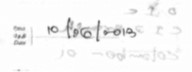
24 The Authority’s reading of the second date as 26 October 2013, rather than 10 June 2013, is significant to ground 2, as I later explain. The appellant submitted that this was an important document which supported his contention that his court proceedings continued for a number of years and that he was subject to an outstanding arrest warrant.
25 On 3 April 2019, the Authority affirmed the delegate’s refusal of the appellant’s protection visa application.
26 First, with respect to the new information on which the appellant sough to rely, the Authority found that the appellant had been given “plenty of opportunity to present all his claims to the delegate” during the 4 December 2018 interview. The Authority also expressed doubts and concerns about the new personal information, and decided not to accept the information under s 473DD for reasons I later develop.
27 Secondly, the findings by the Authority for concluding that the appellant did not satisfy the criteria for a protection visa in ss 36(2)(a) (the refugee criterion) or 36(2)(aa) (the complementary protection criterion) may be briefly summarised as follows.
28 The Authority accepted that the appellant was taken for forced recruitment by the LTTE as a minor, during which time he was injured as punishment for attempting to escape, causing a permanent scar. The Authority further accepted that, as president of his local youth club, the appellant declined to support the TMVP and provided some assistance to the Tamil National Alliance. However, the Authority did not accept that the appellant was sought out or harmed for his or his family’s refusal to support the TMVP. The Authority found that the appellant “does not face a real chance of harm on account of his past involvement with the LTTE, his ethnicity, his scarring, his political associations (including any such associations he may have in the future), nor any other factors in his or his family’s profile or circumstance”.
29 Nor did the Authority accept the appellant’s evidence that criminal proceedings with respect to his first attempt to depart Sri Lanka illegally were ongoing and that further court proceedings were required. In so finding, the Authority rejected the applicant’s evidence that his mother and family had provided surety for his release and that there were any outstanding arrest warrants. Instead, the Authority was satisfied that the appellant “was processed in a group, found guilty by a Magistrate and served two weeks in prison” (at [36]). The Authority also found that upon being charged for illegal departure on return to Sri Lanka, the appellant would be in custody for a short period and would be fined, and that the evidence did not support that he would be at a real risk of a custodial sentence or mistreatment.
3.5 The application for judicial review in the Federal Circuit Court
30 On 30 April 2019, the appellant sought judicial review of the Authority’s decision in the FFCA (First BTK19 Decision, [29]). As none of the grounds raised before the primary judge are pressed on the appeal, it is unnecessary to summarise those here.
31 On 23 February 2021, the primary judge dismissed four of the five grounds of judicial review. While the primary judge failed to address the fifth ground of judicial review, the appellant did not seek to appeal the judgment on this ground. In those circumstances, the Minister did not press his notice of contention with respect to this deficiency in the primary judge’s consideration of the matter.
4. SHOULD LEAVE BE GRANTED TO RAISE NEW GROUNDS ON THE APPEAL?
32 With respect to determining whether, in the exercise of discretion, a Court will permit an appellant to rely upon a new ground on appeal was not raised below, I explained in FGQ18 v Minister for Immigration, Citizenship and Multicultural Affairs [2023] FCA 944 at [30]–[32] that:
Fundamentally, the question is “whether it is in the interests of justice to grant leave” to rely upon the new ground: Tohi v Minister for Immigration, Citizenship, Migrant Services and Multicultural Affairs [2021] FCAFC 125; (2021) 285 FCR 187 at [14] (Derrington J) and [110] (O’Bryan J); MBJY v Minister for Immigration, Citizenship, Migrant Services and Multicultural Affairs [2021] FCAFC 11; (2021) 284 FCR 152 at [2] (Allsop CJ).
Various matters can and often do go to the question of whether it is in the interests of justice to grant leave: see Tohi at [13] (Derrington J). One “important consideration” is whether the ground has merit: Maharjan v Minister for Immigration and Border Protection [2017] FCAFC 213; (2017) 258 FCR 1 at [33] (Gilmour and Mortimer JJ); Leota v Minister for Immigration, Citizenship, Migrant Services and Multicultural Affairs [2010] FCA 1120 at [43] (Banks-Smith J). The assessment of the merits should generally occur at a “reasonably impressionistic basis”: AWV18 v Minister for Home Affairs (No 3) [2020] FCA 365 at [55] (Derrington J).
Without being exhaustive, other considerations which may be relevant include:
(1) whether the appellant has provided an adequate explanation for why the ground was not raised below: NAJT v Minister for Immigration and Multicultural and Indigenous Affairs [2005] FCAFC 134; (2005) 147 FCR 51 at [166] (Madwick J);
(2) the prejudice to the respondent in permitting the ground to be agitated: SZQYM v Minister for Immigration, Citizenship, Migrant Services and Multicultural Affairs [2020] FCA 779; (2020) 169 ALD 579 at [136] (Allsop CJ); and
(3) the prejudice to the appellant if leave is not granted: Tohi at [13](5) (Derrington J).
33 At the start of the hearing of the appeal, I granted leave to the extent necessary for the appellant to rely upon ground one of the amended (and proposed further amended) notice of appeal. I did so for two reasons: first, the Minister did not object to the appellant relying upon ground one of the amended notice of appeal (and proposed further amended notice of appeal); and secondly, the issue raised by ground 1 had very properly been raised and addressed by the Minister’s counsel before the primary judge in circumstances where the appellant was unrepresented.
34 In support of the application for leave to raise ground two on the appeal, which was opposed by the Minister, the appellant’s counsel relied upon the following factors:
(1) the appellant had no legal representation before the primary judge;
(2) there is no prejudice to the Minister;
(3) the stakes for the appellant are very high (NAJT v Minister for Immigration and Multicultural and Indigenous Affairs [2005] FCAFC 134; (2005) 147 FCR 51 at [170] (Madgwick J)) given that the result of this application may determine whether the appellant is returned to Sri Lanka in circumstances where the Authorities’ failure to consider information in support of his protection claims allegedly resulted in an invalid decision by the Authority; and
(4) the ground has substantial merit.
35 In addition, ground 2 had been addressed in the appellant’s written submissions filed in advance of the hearing.
36 On the other hand, the Minister submitted that this Court has warned against the transformation of appeals into de facto trials on new grounds: see, eg, the discussion in Han v Minister for Home Affairs [2019] FCA 331 at [8]–[20] (Bromwich J) and the authorities referred to therein. Specifically, the Minister made submissions to the effect that granting leave would deny the Minister any practical right of appeal, given that any subsequent appeal faces the hurdle of obtaining special leave from the High Court.
37 I agree that this is an important consideration to which the Court on appeal should have regard when new grounds are raised for the first time of appeal.
38 The Minister also correctly submitted that the facts that the appellant was unrepresented at first instance, and that the Minister would not suffer any prejudice, do not alone suffice to allow a new ground to be raised on appeal, referring to SZKMS v Minister for Immigration and Citizenship [2008] FCA 499 at [20] (Lander J). The Minister further submitted that ground 2 lacks sufficient merit including on the basis that logical, rational or reasonable minds could differ on the Authority’s assumption that the document records dates in a consistent format and it is therefore not legally unreasonable, referring to Minister for Immigration and Citizenship v SZMDS [2010] HCA 16; (2010) 240 CLR 611 at [78] and [130]–[131]. The Minister also contended that the ground lacks sufficient merit on the basis that the alleged error regarding the summons could not be material to the Authority’s decision, as required by MZAPC v Minister for Immigration and Border Protection [2021] HCA 17; (2021) 273 CLR 506 at [39].
39 Notwithstanding the caution which must be exercised before permitting an appellant to raise a new ground for the first time on appeal, on balance I consider that the interests of justice weigh in favour of granting leave with respect to ground 2 of the further amended notice of appeal. In addition to the considerations identified by the appellant’s counsel, the issue sought to be raised is discrete and, in my view, has sufficient merit.
40 In this regard, a decision not to exercise the power will be legally unreasonable if it is “lacking a rational foundation or an evident or intelligible justification, or [is] plainly unjust, arbitrary, capricious, or lacking in common sense”: CCQ17 v Minister for Immigration and Border Protection [2018] FCA 1641 at [51] (Thawley J), cited in DPI17 v Minister for Home Affairs [2019] FCAFC 43; (2019) 269 FCR 134 at [38] (Griffiths and Steward JJ). As earlier mentioned, the Authority read the second date on the summons (being the date on which the documents were signed by the District and Magistrate’s Court Registrar) as 26 October 2013. As a consequence, the Authority found that “[c]onfusingly the date the witness is requested to appear in court is fourteen days prior to this on the 12 August 2013”. This in turn was one of two factors which led the Authority to “question the reliability of the document”.
41 Yet, the alternative construction of the date as 10 June 2013 was obviously open and, so read, would have eliminated the perceived inconsistency in the document between the date of the summons and the date of hearing. The failure to consider such an obvious matter, with respect, is at least surprising, if not lacking in common sense. Moreover, as the appellant submitted, this was potentially an important document which corroborated his contention that the criminal proceedings against him for his initial illegal departure were still on foot when he left the country and there was an outstanding arrest warrant against him. However, it is unnecessary for me to decide whether these matters would have established that the decision was legally unreasonable and, if so, was material in the requisite sense to establish jurisdictional error. This is because I have ultimately upheld the appeal on ground 1.
5. GROUND 1: ALLEGED FAILURE BY THE AUTHORITY TO COMPLY WITH S 473DD
5.1 Part 7AA of the Migration Act and relevant principles
42 Ground 1 alleges that the Authority did not comply with s 473DD as construed by the High Court in AUS17. The relevant principles were not in issue and may be shortly stated.
43 Part 7AA of the Migration Act provides for the review by the Authority of a “fast track reviewable decision”. Although the Authority’s review is a de novo (i.e. fresh) consideration of the merits of the fast track reviewable decision, s 473DB(1) of the Act provides that, subject to Pt 7AA of the Act, the Authority must review a fast track reviewable decision “by considering the review material provided to the Authority”, “without accepting or requesting new information” and “without interviewing the referred applicant”. The “review material” refers to the material provided under s 473CB to the Authority by the Department and includes the statement of reasons by the primary decision-maker, material provided by the referred applicant to the primary decision-maker, and any other material which is in the Secretary’s possession or control and which the Secretary considers relevant to the review. The term “new information” is defined by ss 473BB and 473DC(1) to mean documents or information that were not before the Minister when the Minister made the decision to grant or refuse to grant the visa under s 65 of the Act and which the Authority considers may be relevant. The term “information” is used in its ordinary sense of a communication of knowledge about a particular fact, subject or event: Plaintiff M174/2016 v Minister for Immigration and Border Protection [2018] HCA 16; (2018) 264 CLR 217 at [24] (Gageler, Keane and Nettle JJ).
44 It follows that the primary rule (or default position, as it is sometimes also described) under Part 7AA is that the Authority reviews a decision referred to it “by considering the review material provided to the Authority under s 473CB without accepting or requesting new information and without interviewing the referred applicant”: M174/2016 at [22].
45 The exception to the primary rule is contained in s 473DC of the Act, entitled “Getting new information”. Subsections (1) and (3) of s 473DC confer a power on the Authority to obtain new information in these terms:
(1) Subject to this Part, the Immigration Assessment Authority may, in relation to a fast track decision, get any documents or information (new information) that:
(a) were not before the Minister when the Minister made the decision under section 65; and
(b) the Authority considers may be relevant.
…
(3) Without limiting subsection (1), the Immigration Assessment Authority may invite a person, orally or in writing, to give new information:
(a) in writing; or
(b) at an interview, whether conducted in person, by telephone or in any other way.
(Emphasis in underlining added.)
46 The use of the word “may” in subs 473DC(1) and (3) makes it clear that the Authority has a discretion to get new information, including to invite a person to give evidence. Subsection (2), in turn, makes clear that the Authority is under no obligation to obtain or accept any new information. That provision states that:
(2) The Immigration Assessment Authority does not have a duty to get, request or accept, any new information whether the Authority is requested to do so by a referred applicant or by any other person, or in any other circumstances.
47 Importantly for present purposes, the discretion to get new information is exercisable only in very limited circumstances. Specifically, s 473DD imposes certain criteria which must be met before the Authority may consider new information. That provision provides:
For the purposes of making a decision in relation to a fast track reviewable decision, the Immigration Assessment Authority must not consider any new information unless:
(a) the Authority is satisfied that there are exceptional circumstances to justify considering the new information; and
(b) the referred applicant satisfies the Authority that, in relation to any new information given, or proposed to be given, to the Authority by the referred applicant, the new information:
(i) was not, and could not have been, provided to the Minister before the Minister made the decision under section 65; or
(ii) is credible personal information which was not previously known and, had it been known, may have affected the consideration of the referred applicant’s claims.
48 With respect to s 473DD, first, the reference to “credible personal information which was not previously known” has been construed to mean credible personal information not previously known to the Minister, as opposed to the visa applicant: CSR16 v Minister for Immigration and Border Protection [2018] FCA 474, [41]–[42] (emphasis added).
49 Secondly, as the appellant submitted, expressing doubts about the reliability of information is not the same in terms or in substance as a finding that information is not credible. As Bromberg J, for example, stated at [41]-[42] in CSR16:
In my view all that the “credible” element of the s 473DD(b)(ii) criteria requires is the Authority’s satisfaction that the “new information” is information which is open to be or capable of being accepted by the Authority as truthful (or accurate, or genuine). It is only at the deliberative stage of its review that the Authority will be required to determine whether or not the “new information” is true. The s 473DD(b)(ii) criteria is concerned with an earlier or anterior stage of the review directed at whether “new information” should be received by the Authority so that it may be considered at the deliberative stage.
The criteria is a filtering mechanism designed to separate information worthy of consideration at the deliberative stage from that which is not. In that context, the word “credible” is used in relation to information, not in the sense that the information is believed, but in the sense that the information is capable of being believed. It is only information that the Authority is satisfied is “evidently not credible” (VEAL v Minister for Immigration and Multicultural Affairs (2005) 225 CLR 88 at [17] per Gleeson CJ, Gummow, Kirby, Hayne and Heydon JJ) that fails to meet the credibility requirement imposed by the s 473DD(b)(ii) criteria.
(Emphasis added.)
50 Thus, his Honour held that the Authority had fallen into jurisdictional error in that case by deciding whether the information was true or believed in applying the s 473DD(b)(ii) criterion, and thereby imposed a higher standard of satisfaction than that imposed by the statutory criterion: at [43].
51 Justice Bromberg’s approach was endorsed by Mortimer J (as her Honour then was) and Jackson J in Minister for Immigration, Citizenship, Migrant Servies and Multicultural Affairs v BTW17 [2020] FCAFC 159; (2020) 294 FCR 150 at [75]. As their Honours explained in BTW17 at [75], it is the decision as to whether the information has the character of being “capable of being believed … as well as the character of being ‘personal’ to the visa applicant, which is to be made at this procedural stage, for the purpose of deciding what the scope of the review material should be, and whether there should be a departure from the primary rule.” It follows, as the appellant emphasised, that the requirement in s 473DD(b)(ii) that the new information be “credible” sets a low bar. In order to reject new information on the ground that it is not credible, the Authority must find that the new information is not even capable of being believed; mere doubts about its reliability will not suffice.
52 Thirdly, as the appellant submitted, given the manner in which s 473DD is expressed, it would be understandable if the Authority assumed that it was unnecessary to consider new information in circumstances where it found that either the criteria in s 473DD(a) or the criteria in s 473DD(b) were not satisfied. However, it is apparent from the decision in AUS17 which post-dated the Authority’s decision, that the position is more complex.
53 In AUS17, the High Court confirmed that, while paragraphs (a) and (b) of s 473DD were cumulative, the Authority must consider the criteria in subparagraphs (i) and (ii) of s 473(DD)(b) first and take its assessment of those criteria into account in considering whether the criterion in s 473(DD)(a) is met. This is because it is not possible for the Authority to determine whether there are exceptional circumstances justifying a consideration of the new information for the purposes of paragraph (a) without first addressing the criteria in paragraph (b), namely, whether the new information could have been provided (relevantly) to the delegate or is credible personal information. As Kiefel CJ, Gageler, Keane and Gordon JJ explained (at [10]–[11]):
Section 473DD would be at war with itself, and the purpose of s 473DD(b)(ii) would be thwarted, if the circumstance that there was new information from a referred applicant meeting the description in either s 473DD(b)(i) or s 473DD(b)(ii) were able to be ignored by the Authority in assessing the existence of exceptional circumstances justifying consideration of that new information in order to meet the criterion specified in s 473DD(a).
Logic and policy therefore demand that the Authority assess such new information as it might obtain from the referred applicant first against the criteria specified in both s 473DD(b)(i) and s 473DD(b)(ii) and only then against the criterion specified in s 473DD(a)….
(Emphasis added.)
54 If the Authority failed to approach its statutory task in this manner, the majority in AUS17 held that it would not have “perform[ed] the procedural duty imposed on it by s 473DD in its conduct of a review”, and the nature of the non-performance of that procedural duty may be “characterised as a failure to take account of a mandatory relevant consideration in the purported application of the criterion in s 473DD(a)”: AUS17 at [12]; see also at [18].
55 In BXT17 v Minister for Home Affairs (2021) 283 FCR 248; [2021] FCAFC 9, the Full Court rejected the Minister’s submission that the plurality judgment in AUS17 merely gave “guidance” on the process to be followed, holding rather that it “mandated the way in which the assessment of new information is to be undertaken pursuant to s 473DD”: at [137]. It follows, therefore, that the Authority is required to “assess the new information against both criterion in s 473DD(b) and then against the criteria in s 473DD(a), taking into account any finding it makes that one or other or both of the criterion in s 473DD(b) was met”: BXT17 at [140] (original emphasis). The appellant rightly submitted that the decision in BXT17 requires that a rigorous approach be taken to applying the approach required by the plurality in AUS17.
56 Finally, it was common ground that the question of whether the Authority has complied with s 473DD must be addressed as a matter of substance. It follows that, even if the Authority has not expressly referred to subsections (b)(i) and (ii) and has not expressly taken its findings on those criteria into account in considering whether the criterion in (a) is satisfied, the Court may nonetheless be satisfied, as a matter of substance, that the Authority has approached the application of the provision in this way: DDH17 v Minister for Immigration, Citizenship, Migrant Services and Multicultural Affairs [2020] FCA 1523 at [25]. Thus, as the Minister submitted, it is sufficient if it can be inferred from the Authority’s reasons that the requisite assessment has occurred. As, for example, Markovic J explained in APH17 v Minister for Immigration, Citizenship, Migrant Services and Multicultural Affairs [2021] FCA 23 at [79]:
As the Minister submits, notwithstanding the plurality’s statement that “logic and policy” demand that the Authority assess new information obtained from a referred applicant first against the criteria in both s 473DD(b)(i) and (ii) and only then against the criterion in s 473DD(a), it is unnecessary for the Authority to engage in any particular formulaic consideration of s 473DD(b). It will be sufficient if, in a particular case, the Court on judicial review is able to infer from the Authority’s reasons that the requisite assessment has occurred. The question is whether the substance of the criteria prescribed by s 473DD(b) has been considered prior to a consideration as to whether “exceptional circumstances” exist for the purposes of s 473DD(a).
5.2 The parties’ submissions on ground 1
57 The appellant accepted that the Authority considered the reliability of the new information having regard, among other things, to the fact that the information could have been provided earlier by the appellant, but submitted that its reasons were expressed only in terms of addressing the criterion of “exceptional circumstances” in s 473DD(a). The appellant submitted that, as a matter of substance, the Authority engaged in a partial assessment of whether the criterion in s 473DD(b)(i) had been met, but made no assessment of whether or not the “credible personal information” criterion in s 473DD(b)(ii) had been satisfied. In support of his reading of the Authority’s reasons, the appellant contrasted its findings at [16]-[18] where the Authority expressly considered s 473DD(b).
58 On the other hand, the Minister submitted that the Authority did not merely express doubts about the reliability of the new information. Rather, in the Minister’s submission, in substance the Authority considered whether the criteria in s 473DD(b)(i) and (ii) were satisfied and factored that consideration into its consideration of whether the criterion in s 473DD(a) was met. In support of this construction, the Minister submitted that it is apparent that the Authority’s concerns about the reliability of the new information arose because of a number of considerations, and not merely because it considered that it was “somewhat convenient” that the claims were raised only after his application for the SHEV was refused (at [14]). As such, the respondent submits that the Authority approached its statutory task under s 473DD as elucidated subsequently in AUS17.
5.3.1 Did the Authority apply s 347DD in line with the approach set out in AUS17?
59 Ultimately, the disposition of ground 1 turns upon the proper construction of the Authority’s reasons. As the respondent contends, these must be read fairly and as a whole: Plaintiff M64/2015 v Minister for Immigration and Border Protection [2015] HCA 50; (2015) 258 CLR 173 at [59]–[60]. In this regard, it is well established that the reasons of an administrative decision-maker “are not to be construed minutely and finely with an eye keenly attuned to the perception of error”: Minister for Immigration and Ethnic Affairs v Wu Shan Liang (1996) 185 CLR 259 at 271–2 (Brennan CJ, Toohey, McHugh and Gummow JJ (quoting with approval Collector of Customs v Pozzolanic (1993) 43 FCR 280 at 287)). As such, when it is said that such reasons should be read beneficially, ultimately this means that “a commonsense and realistic approach should be taken to understanding the reasons as a whole to see what it was that the Tribunal was saying”: Fang Wang v Minister for Immigration and Multicultural and Indigenous Affairs [2003] FCA 1044 at [14]–[15] (Allsop J (as his Honour then was)).
60 Bearing these principles in mind, first, I agree with the appellant that the structure and content of the Authority’s reasons indicate that it proceeded on the basis that it sufficed to find that s 473DD(a) was not satisfied, and not that it was required first to reach a view on whether the criteria in s 473DD(b) were met. Thus, with respect to the new information contained in the applicant’s statement to the Authority and related documents, the Authority reached a conclusion only with respect to s 473DD(a), stating at [15] that:
I have too many doubts as to the reliability of the new information contained within the applicant’s statement to the IAA and the other related documents. I have considered whether there are any exceptional circumstances for considering the new information including those reasons advanced by the applicant and I am not satisfied that there are any. I am not satisfied that s 473DD(a) has been met.
61 No reference was made to the criteria in s 473DD(b) in the context of these findings.
62 By contrast, with respect to the new country information from Amnesty International’s 2017/18 report, the Authority expressly concluded that the information was general country information, rather than personal information, and was therefore not satisfied that the requirements of s 473DD(b) were met.
63 Secondly, as Raper J held in EEP18 v Minister for Immigration, Citizenship, Migrant Services and Multicultural Affairs (No 2) [2023] FCA 682 at [81]:
I accept that there is a degree of overlap conceptually such that “veracity” could be directed to the word “credible” within s 473DD(b)(ii). However, as the appellant contends, the veracity of information and its probative value is also relevant to exceptional circumstances in s 473DD(a) and is equally capable of being seen as directed to exceptionality.
64 Accordingly it does not necessarily follow from the fact that the Authority has made findings as to the reliability of the new information in the context of finding that the “exceptional circumstances” criteria in s 473DD(a) have not been met, that it addressed the “credibility” criteria in s 473DD(b)(ii).
65 Thirdly, given that the question posed by the criterion in s 473DD(b)(ii) is relevantly whether the information has the character of being “capable of being believed”, the authorities earlier referred to establish that mere doubts or concerns about the veracity of the new information alone will not suffice. Thus, for example, in holding that the Authority in EEP18 had failed to address the criterion in s 473DD(b)(ii) before considering the exceptional circumstances criterion, Raper J at [81]–[82] found that:
the reference to “the veracity of the assertion” arises where the Tribunal does not reject its veracity but only questions it. This again points to the Authority being concerned with the satisfaction of the “exceptional circumstances” limb and not the s 473DD(b) criteria.
…
I accept the appellant’s submission that the better reading of [7] [of the Authority’s decision] is that the sentence directed to veracity was using that concept in the sense of low probative value for the purposes of s 473DD(a). Nowhere in [7] or elsewhere in the reasons is there any analysis of whether it is credible personal information, or could have affected the consideration of the appellant’s claims under subs (b)(ii). The lack of a subsequent credibility finding, after questioning its veracity, is indicative that this limb of subs (b)(ii) was not dealt with.
(Emphasis in the original.)
66 This case is relevantly analogous. Thus, the Authority did not determine whether the witness summons to the appellant’s mother was “credible personal information” for the purposes of s 473DD(b)(ii). That criterion is neither addressed merely by, as the Authority did, pointing to the type of document and its content as “lead[ing] [the Authority] to question the reliability of the document”; nor is it addressed by the Authority’s finding merely that it had “concerns regarding the genuineness of the documents the [appellant] has supplied” (at [7] and [13] respectively (emphasis added)).
67 With respect to the new information comprising the witness summons, no finding appears to have been made by the Authority as to whether the witness summons could have been provided before the delegate’s decision. As such, I am satisfied that the Authority failed to consider s 473DD(b)(i) at least in relation to this piece of new information. However, with respect to the new information comprising:
(1) the information that the appellant’s mother and uncle were summoned to court in 2013 and required to pay a sum in order to be released from a court hearing; and
(2) the assaults upon the appellant’s sister by Sri Lankan authorities because of her family association to him and an imputed LTTE connection on account of which she took her own life;
the Authority in substance addressed the criterion in s 473DD(b)(i) in finding that the appellant had plenty of opportunity to present all of his claims to the delegate. As such, the Authority would appear in substance to have determined that it was not satisfied that the new information was not, and could not have been, provided to the Minister before his decision. However, as is the case with respect to the witness summons, it did not suffice to address the criterion in s 473DD(b)(ii) for the Authority then to find only that it had “concerns regarding the genuineness of the documents the [appellant] has supplied” (at [13] (emphasis added)).
68 With respect to the information received by the appellant from his mother about the abduction, detention and torture in late 2018 and in early 2019 of his brother, the Authority appears to have found (at [13]) that the new information met the criterion in s 473DD(b)(i). However, the finding at [14] that the Authority “consider[ed] it somewhat convenient the applicant has presented these unsupported claims to the IAA only following the refusal of his SHEV application” (emphasis added) again falls well short of a finding that the new information was not capable of being accepted and therefore was not credible for the purposes of s 473DD(b)(ii).
69 Fourthly, the Minister contended that the reference to the Authority having “too many doubts as to the reliability of the new information” at [15] of its reasons showed that the Authority ultimately found that the new information was not credible in a general sense. In the Minister’s submission, the case was analogous to the decision in FGI18 v Minister for Immigration, Citizenship, Migrant Services and Multicultural Affairs [2022] FCA 57, where O’Callaghan J held at [28] that the Authority’s expression of doubts was tantamount to a finding that the information was not credible under s 473DD(b)(ii).
70 However, ultimately each case will turn on its own facts. In the present case, the reference to “too many doubts” is simply a reference back to the “concerns” and “doubts” expressed by the Authority which fell well short of a finding that the evidence was not “open to be or capable of being accepted by the Authority as truthful (or accurate, or genuine)”: CSR16 at [41]. To suggest that the findings rose higher so as to meet this standard is, with respect, to put a gloss on the findings in fact made by the Authority.
71 It follows that the Authority failed to factor a consideration of whether the criteria in s 473DD(b) were met before reaching its conclusion at [15] that there were no exceptional circumstances. The Authority therefore fell into an error of the kind identified by the High Court in AUS17.
5.3.2 Was the failure to lawfully apply s 473DD material?
72 Finally, the question arises as to whether the error was material. The relevant principles were recently explained in Nathanson v Minister for Home Affairs [2022] HCA 26; (2022) 276 CLR 80. In their joint judgment, Keifel CJ, Keane and Gleeson JJ explained the common law principle of statutory interpretation that a statute conferring decision-making authority is “ordinarily to be interpreted as incorporating a threshold of materiality in the event of non-compliance.” (quoting Hossain v Minister for Immigration and Border Protection [2018] HCA 34; (2018) 264 CLR 123 at [29] with approval). It is apparent that that test is not onerous and requires a consideration of “the basal factual question of how the decision that was in fact made was in fact made” (quoting MZAPC v Minister for Immigration and Border Protection [2021] HCA 17; (2021) 273 CLR 506 at [38] with approval). Their Honours in Nathanson further explained at [32] that:
This question is determined by proof of historical facts on the balance of probabilities. Then, it is necessary to consider whether the decision that was in fact made could have been different had the relevant condition been complied with “as a matter of reasonable conjecture within the parameters set by the historical facts that have been determined”. The burden falls on the plaintiff to prove “on the balance of probabilities the historical facts necessary to enable the court to be satisfied of the realistic possibility that a different decision could have been made had there been compliance with that condition”.
(Emphasis omitted.)
73 The standard of “reasonable conjecture” was described by the joint judgment as “undemanding” (at [33]). Thus, in that case, the joint judgment held that the appellant had established that the breach of procedural fairness was material for the following reasons (at [39]):
That decision was made by weighing the range of considerations in Ministerial Direction 79 that were of relevance to the appellant, following an evaluation of the appellant’s history, circumstances and prospects as appropriate, in order to make findings about each of those considerations. In that context, additional evidence and submissions directed to mitigating the significance of the evidence of domestic violence could realistically have affected the Tribunal’s evaluative fact finding concerning the nature and seriousness of the appellant’s conduct and, ultimately, the outcome of the Tribunal’s review. There was no need for the appellant to establish the nature of any additional evidence or submissions that might have been presented at the Tribunal hearing, had that hearing been procedurally fair. As a matter of reasonable conjecture, and as Wigney J reasoned, the appellant may have been able to present evidence on his own behalf or from his wife, and to make submissions that could have led to a different characterisation by the Tribunal of the nature of the appellant’s offending.
74 Similarly, Gageler J held at [45]–[47] that:
SZMTA and MZAPC are together authority for two cumulative propositions. The first is that a denial of procedural fairness results in a decision being affected by jurisdictional error, so as to be capable of justifying the grant of curial relief, only if that denial is shown by the applicant to have been material to the decision. The second is that the materiality of a denial of procedural fairness is shown by the existence of a realistic possibility that the decision could have been different had procedural fairness been observed.
SZMTA and MZAPC do not hold that, in order to meet the threshold of materiality, an applicant for relief must establish any part of what would have occurred on the balance of probabilities had a fair opportunity to be heard been afforded. The onus which the applicant bears to establish materiality is no greater than to show that, as a matter of reasonable conjecture within the parameters set by the historical facts established on the balance of probabilities, the decision could have been different had a fair opportunity to be heard been afforded.
Establishing that threshold of materiality is not onerous. The explanations in MZAPC of the materiality of the denials of procedural fairness which had been found in Stead v State Government Insurance Commission and in Re Refugee Review Tribunal; Ex parte Aala are consistent with the observation that “[i]t is no easy task for a court … to satisfy itself that what appears on its face to have been a denial of natural justice could have had no bearing on the outcome”.
(Emphasis omitted.)
75 While the present case does not involve a denial of procedural fairness, the question whether the Authority was satisfied that there were exceptional circumstances to justify considering the new information was also an evaluative one. As the Full Court held in Minister for Immigration and Border Protection v BBS16 [2017] FCAFC 176; (2017) 257 FCR 111 at [104], “the phrase ‘exceptional circumstances’ is to be given a broad meaning, along the lines of circumstances which are unusual or out of the ordinary. This necessarily requires that consideration be given to all the relevant circumstances in determining whether or there are ‘exceptional circumstances’”.
76 In this case, however, in considering whether exceptional circumstances existed, the Authority failed to consider all of the relevant circumstances by reason of its failure to consider whether the new personal information was capable of being accepted as truthful, accurate or genuine. Instead, it took into account only whether the reliability of this new information was questionable. Furthermore, in my view, it is reasonably possible that, if the Authority had properly understood its statutory task, it would have found that the new information was capable of being believed, notwithstanding its doubts. The Authority also failed to consider whether s 473DD(b)(i) was met in relation to the witness summons and the information concerning the two abductions of the appellant’s brother. It follows, bearing in mind the low threshold for materiality, that there was a reasonable possibility that if the Authority had approached its statutory task lawfully, it might have reached a different view on the exercise of the power in s 473DD.
77 Moreover, if the Authority did receive the new personal information, there is also a realistic possibility that the Authority may have reached a different conclusion on the substantive visa application. For example, one of the critical questions before the Authority was whether the criminal proceedings in relation to his illegal departure had concluded at the first hearing date, as the Authority found, or were ongoing, as the appellant claimed. The witness summons was plainly capable of corroborating the appellant’s case, notwithstanding, with respect, the surprising way in which the Authority read the date on which the summons was issued. Thus, if the Authority had considered the new information comprised of the witness summons, as a matter of reasonable conjecture the Authority may not have rejected the appellant’s claim that the criminal proceedings in relation to illegal departure were in fact ongoing when he left the country.
78 Furthermore, as the appellant submitted, if the Authority determined that the new information met the requirements of s 473DD so as to be considered at the deliberative stage, the Authority could have exercised its power under s 473DC to seek further information from the appellant in relation to the documents concerning his sister’s death, being a translation of the obituary and the Tamil copy of the death certificate, a translation of the witness summons, and/or further information about the appellant’s brother’s abduction.
79 For the reasons set out above, the appeal must allowed. The Minister is to pay the appellant’s costs of the appeal. Further, the orders awarding the Minister his costs below should be set aside and substituted with an order that there be no orders as to costs in respect of the proceedings in the Federal Circuit Court.
I certify that the preceding seventy-nine (79) numbered paragraphs are a true copy of the Reasons for Judgment of the Honourable Justice Perry. |
Associate:


