

FEDERAL COURT OF AUSTRALIA
Walalakoo Aboriginal Corporation RNTBC v State of Western Australia [2023] FCA 1181
ORDERS
WALALAKOO ABORIGINAL CORPORATION RNTBC (ICN 8041) Applicant | ||
AND: | STATE OF WESTERN AUSTRALIA AND OTHERS Respondent | |
DATE OF ORDER: |
THE COURT NOTES THAT:
A. The Applicant has applied for a variation of two approved determinations of native title under s 13(1)(b) and s 61(1) of the Native Title Act 1993 (Cth) by a revised native title determination application filed on 5 October 2022.
B. The revised native title determination application seeks a variation of the approved determinations of native title made by the Court in Watson on behalf of the Nyikina Mangala People v State of Western Australia (No 6) [2014] FCA 545 on 29 May 2014 (Nyikina Mangala #1) and in Watson on behalf of the Nyikina Mangala People (Nyikina Mangala #2) v State of Western Australia [2015] FCA 1132 on 29 October 2015 (Nyikina Mangala #2) (together, the Determinations).
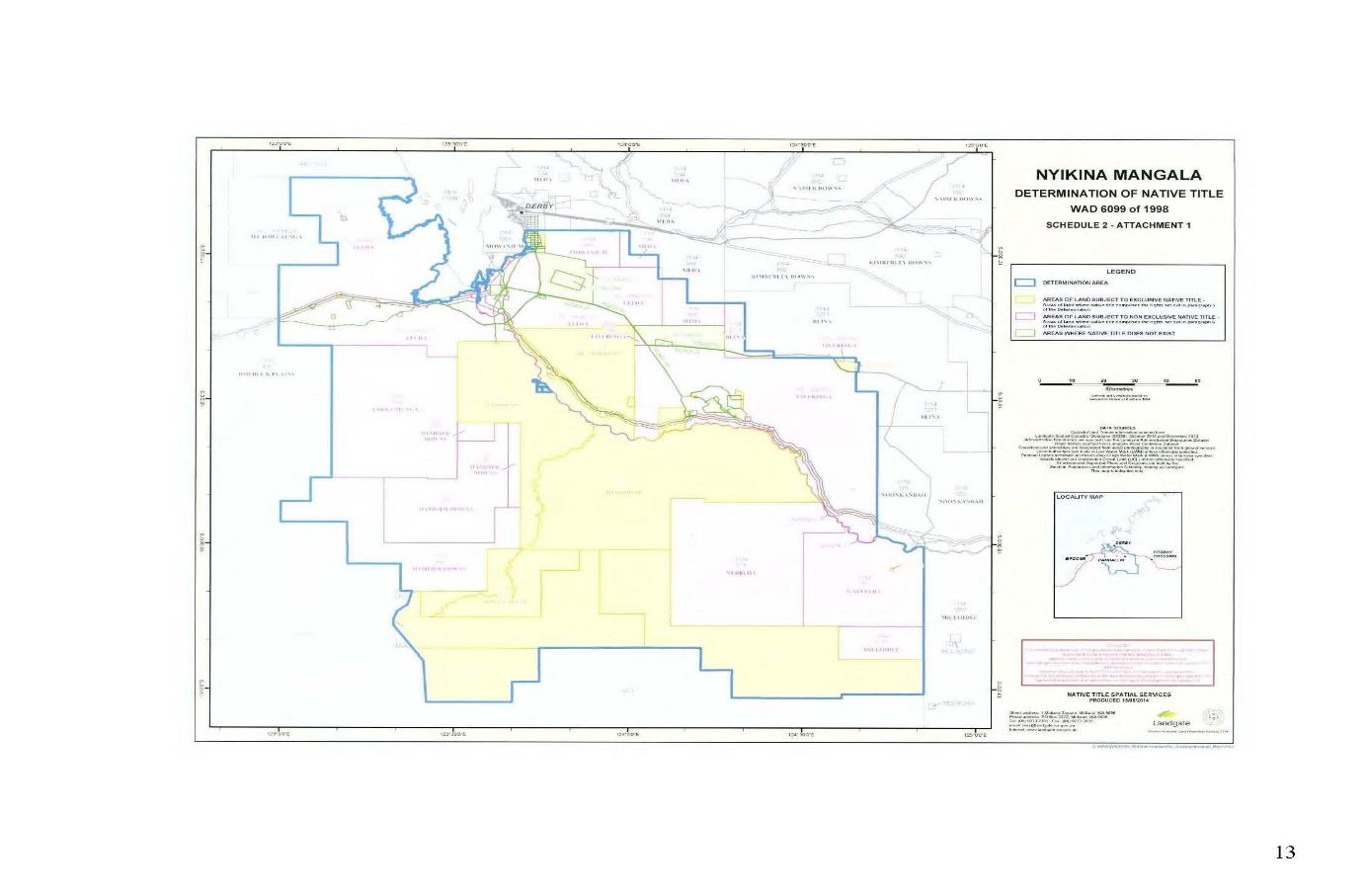
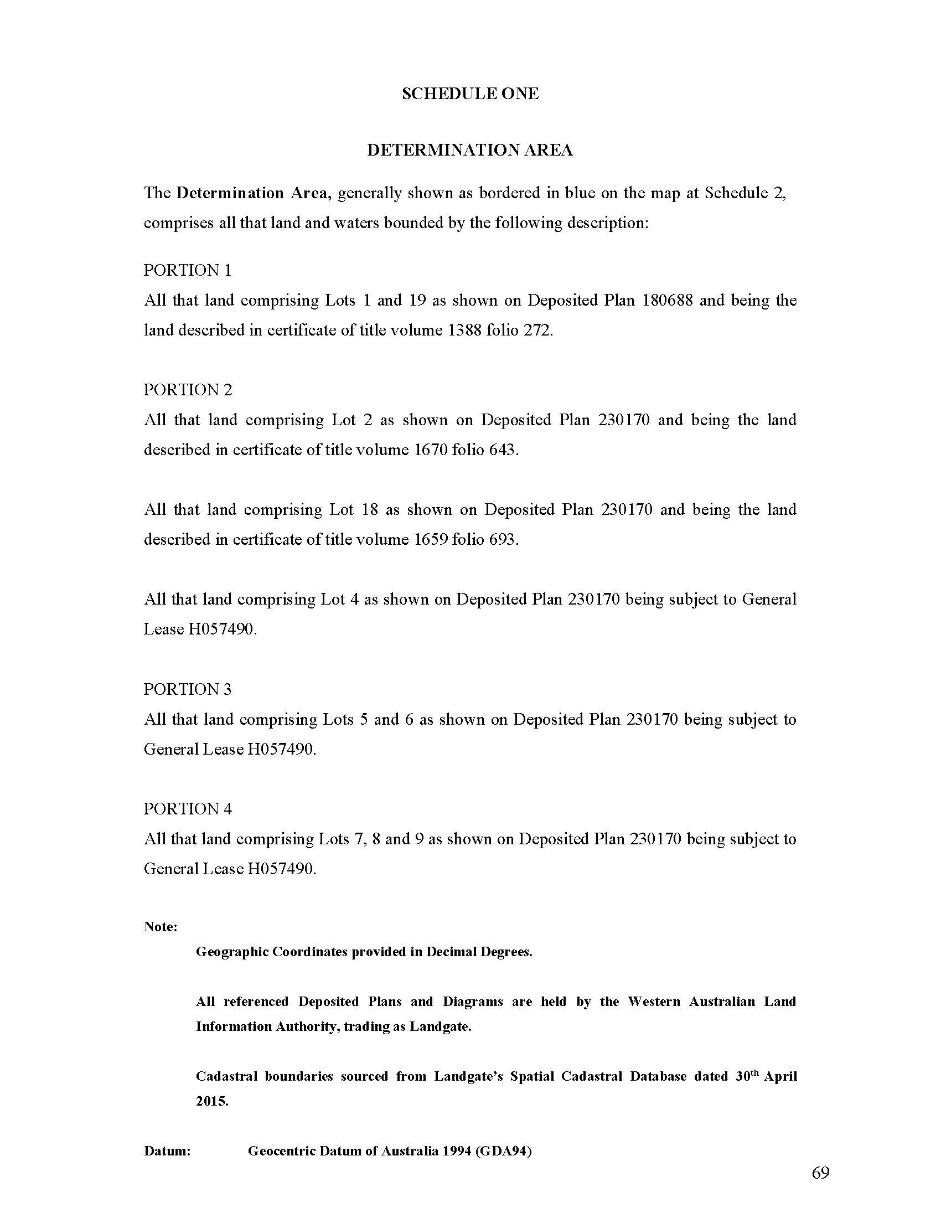
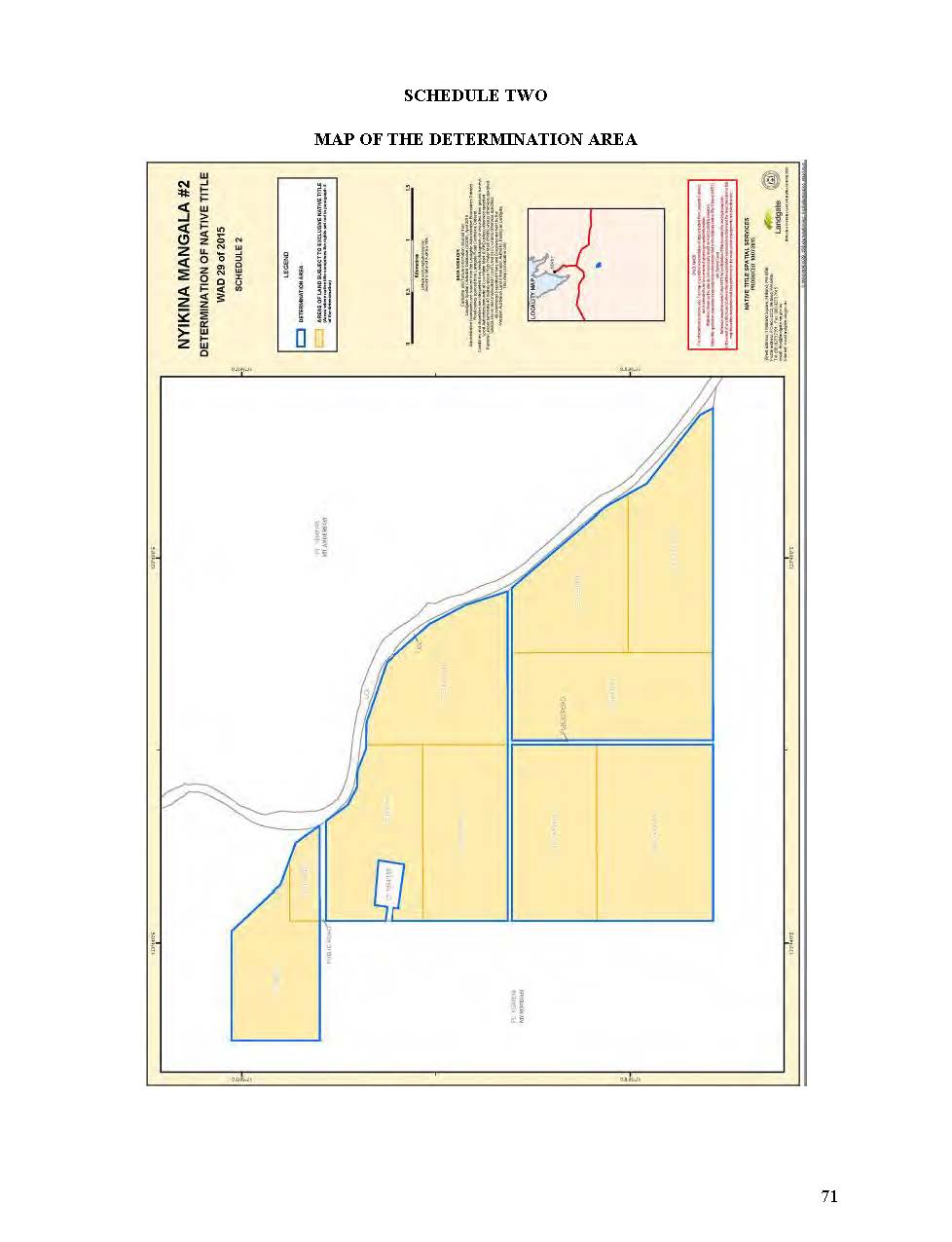
C. Nyikina Mangala #2 covers four relatively small areas within the boundary of Nyikina Mangala #1. The native title holders recognised in Nyikina Mangala #1 and Nyikina Mangala #2 are the same group of people, defined as the descendants of an identical list of people in each of the Determinations.
D. The Applicant holds the native title rights and interests recognised in the Determinations in trust for the native title holders. The Applicant, through consultations with and the consent of the native title holders, has identified people who, under traditional laws and customs, hold native title rights and interests in the land and waters of the Determinations but who were not included in the description of the native title holders in the Determinations.
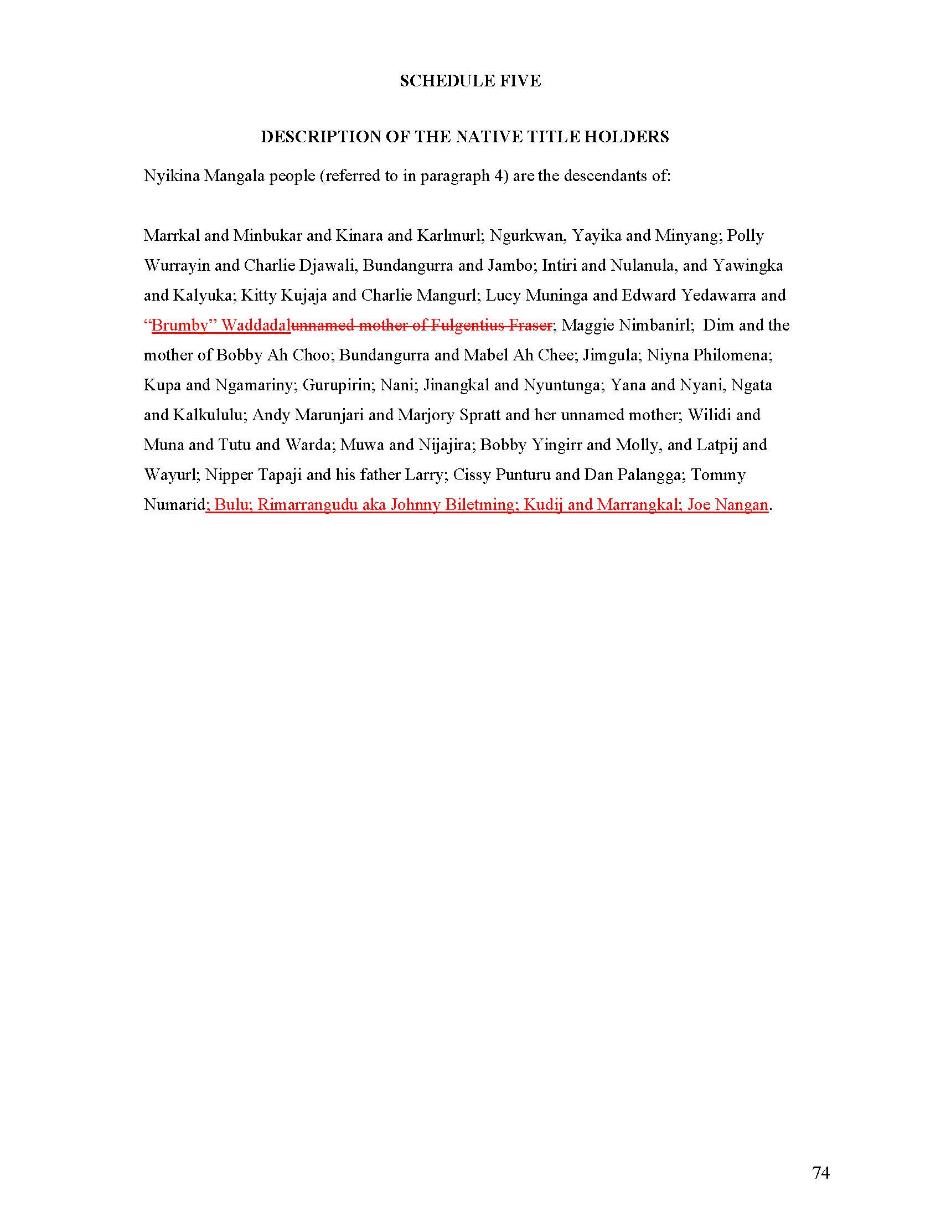
E. The revised native title determination application seeks to vary Nyikina Mangala #1 and Nyikina Mangala #2 by amending the description of the native title holders in each of the Determinations to give a name to the apical ancestor identified as the “unnamed mother of Fulgentius Fraser”, and to include five additional apical ancestors, such that their descendants may properly be recognised as native title holders in the Determinations.
F. The revised native title determination application has been notified in accordance with s 66 of the Act, with the notification period ending on 27 March 2023.
G. The Applicant and the State have reached agreement on the terms of the orders sought and the variations to each of the Determinations. Accordingly, the Applicant has filed with the Court a Minute of Proposed Consent Orders signed by the Applicant and the State of Western Australia, and the Varied Determinations of Native Title. Joint submissions by the Applicant and the State of Western Australia were also filed in support of the proposed orders.
BEING SATISFIED that the orders in the terms sought by the parties are within the power of the Court and pursuant to s 13(5) of the Act:
THE COURT ORDERS THAT:
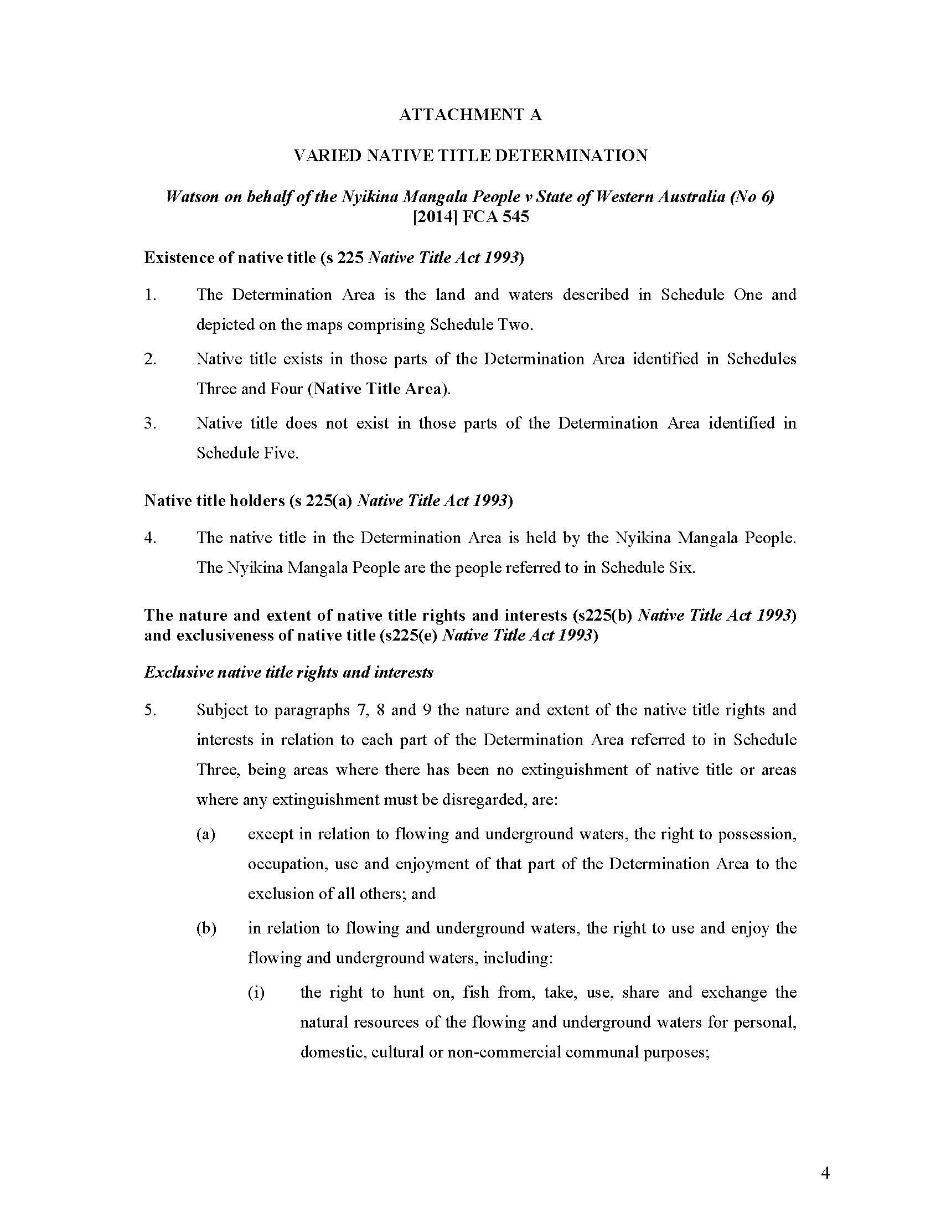
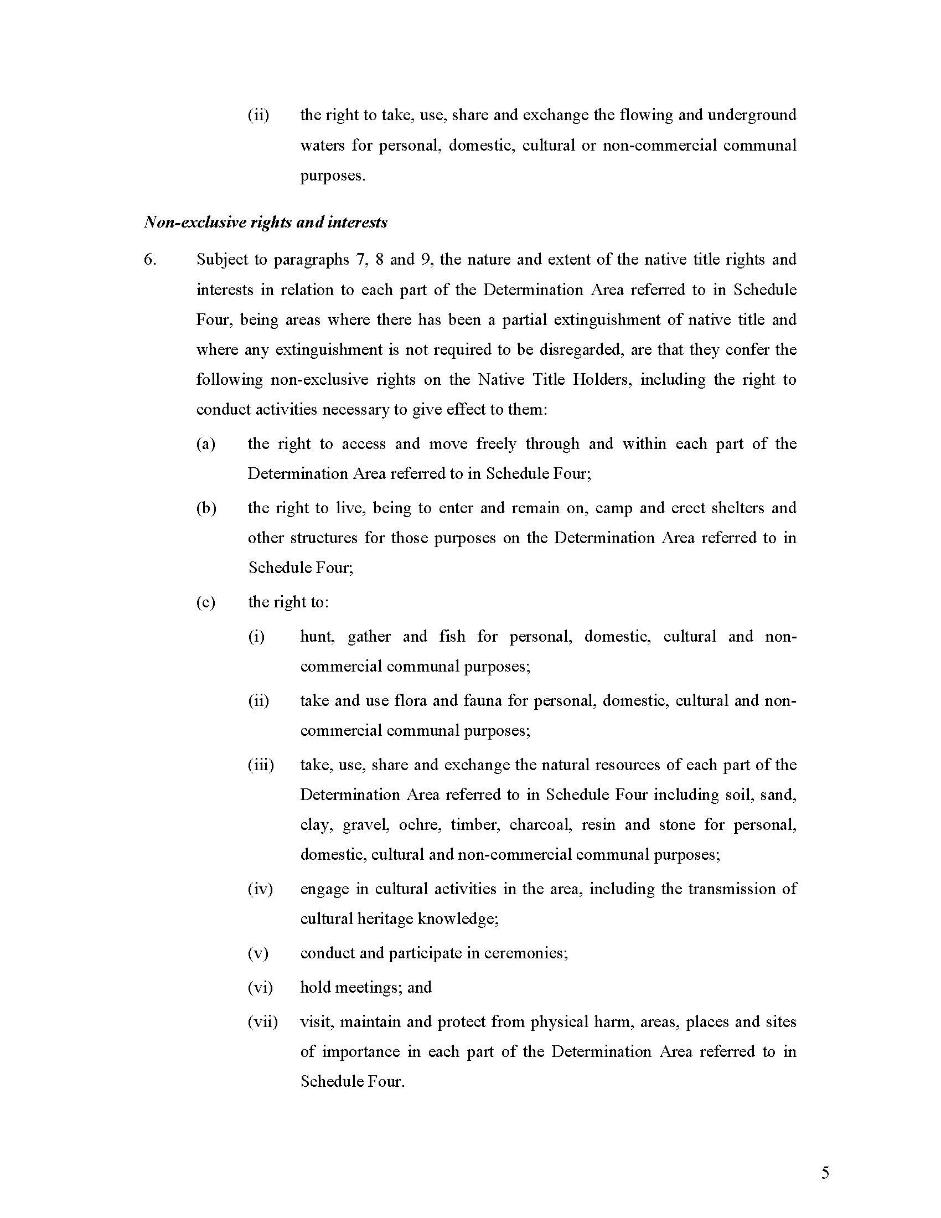
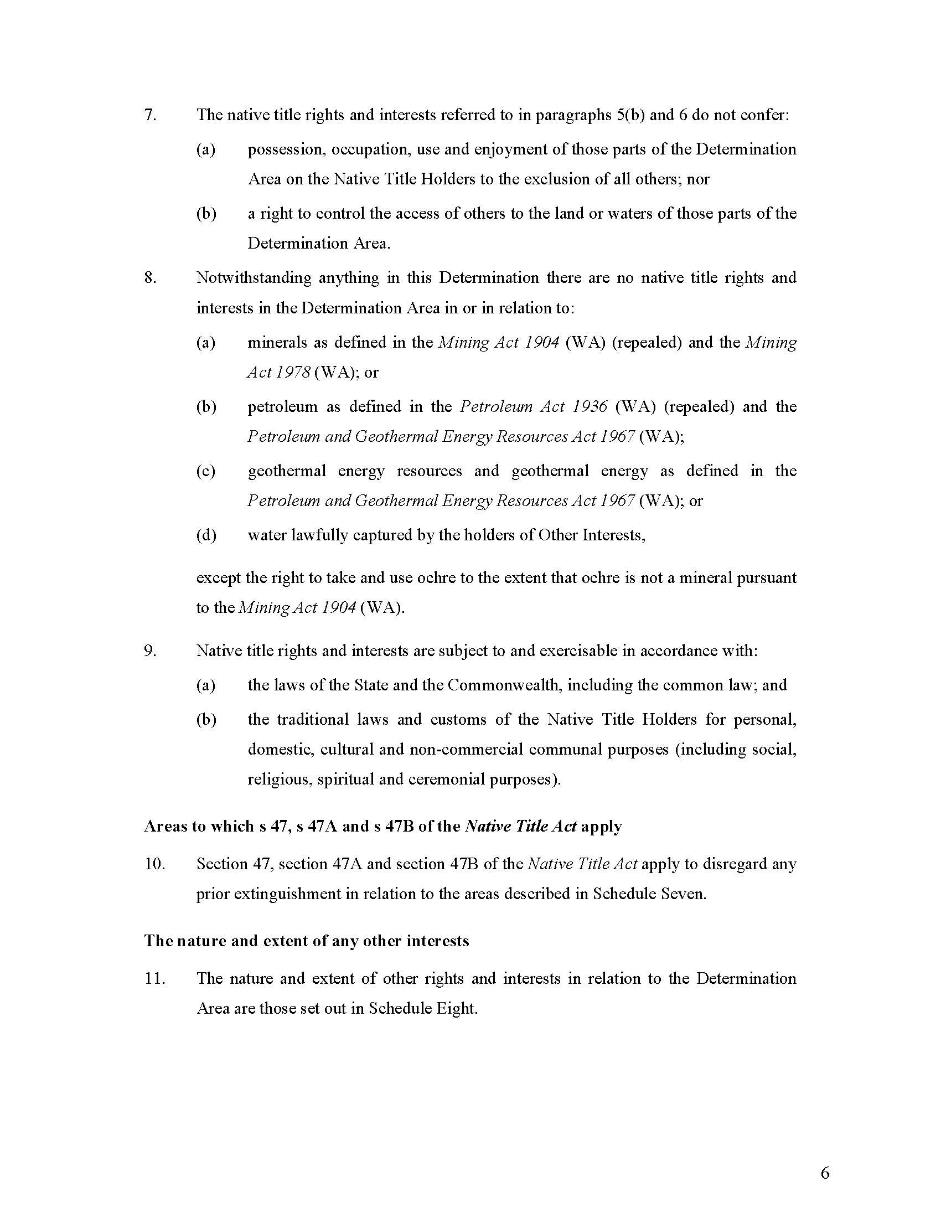
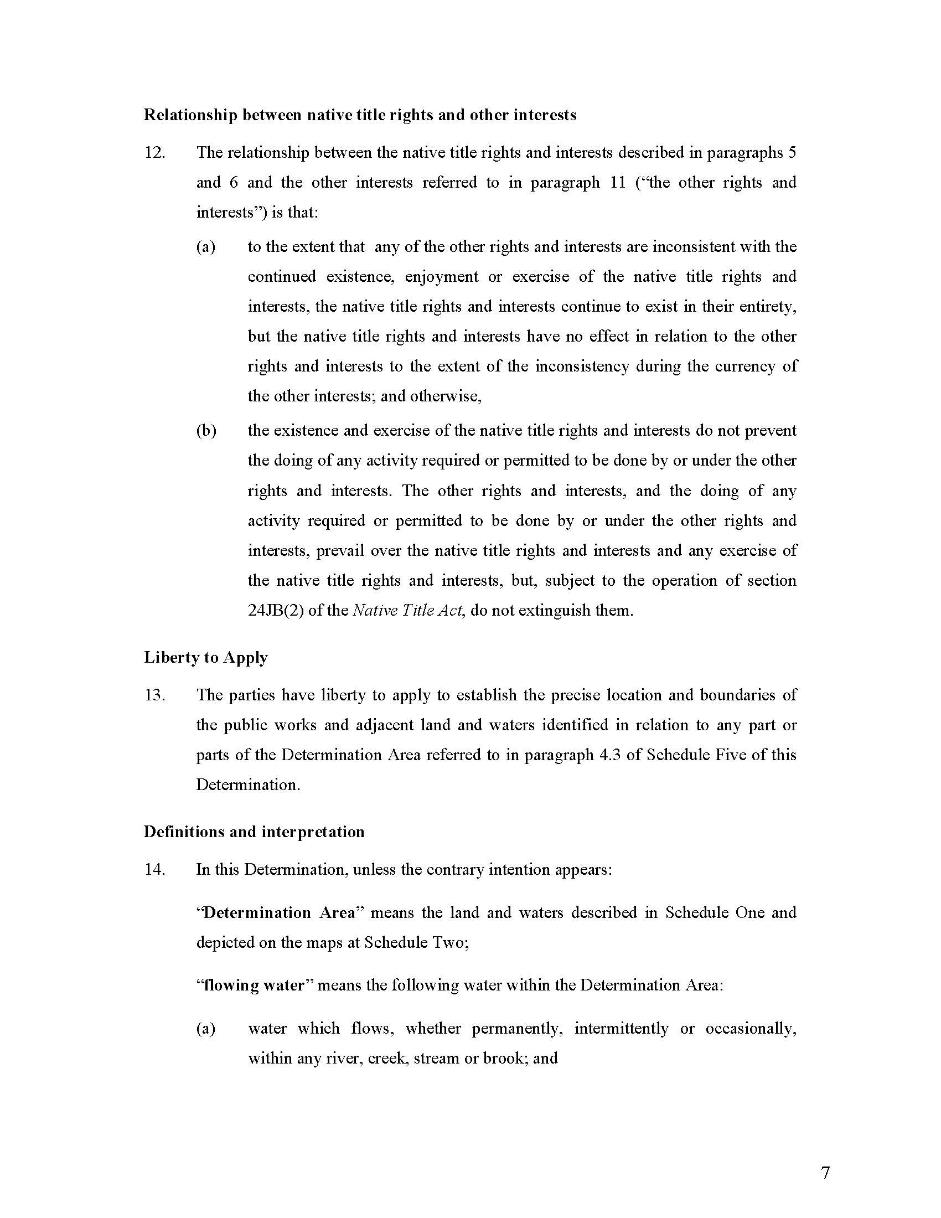
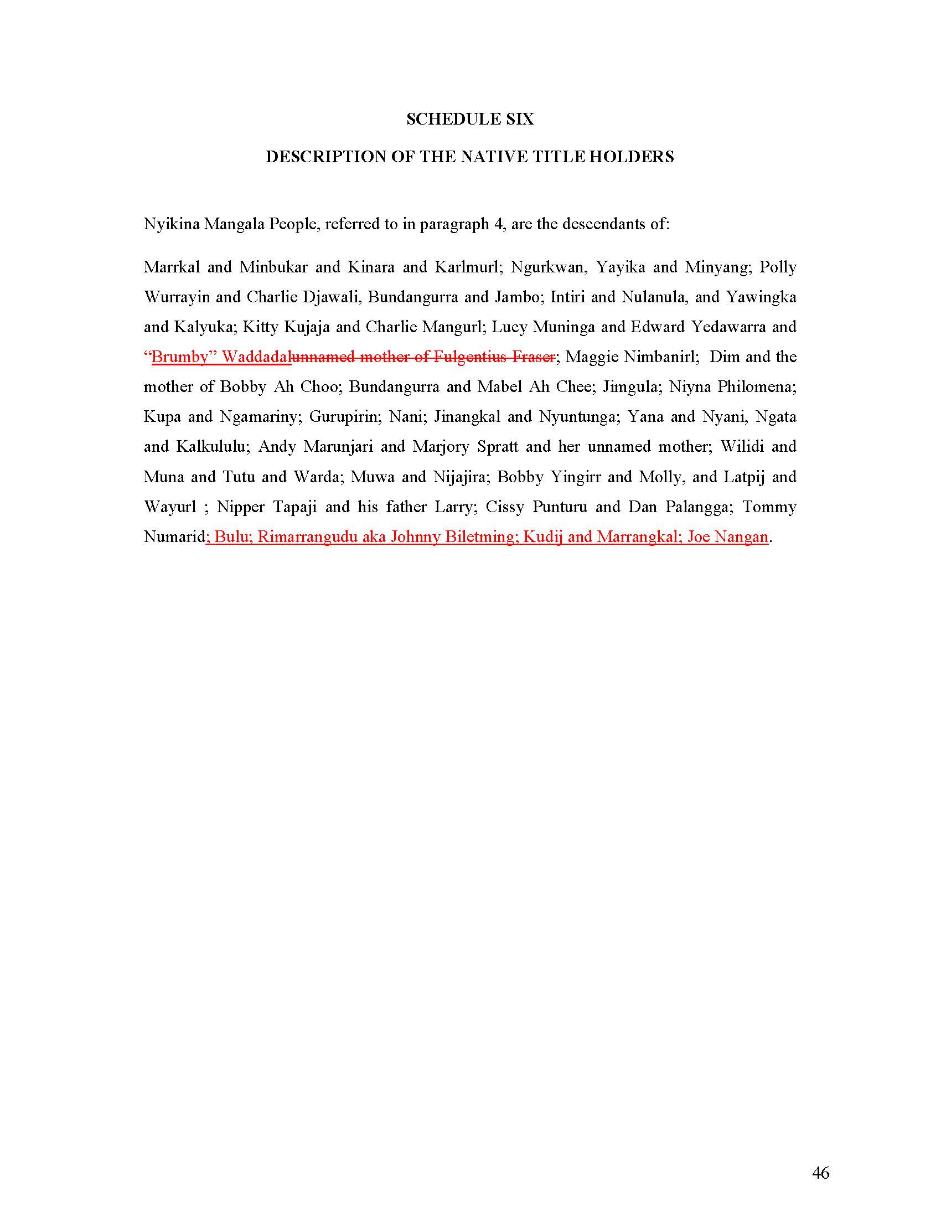
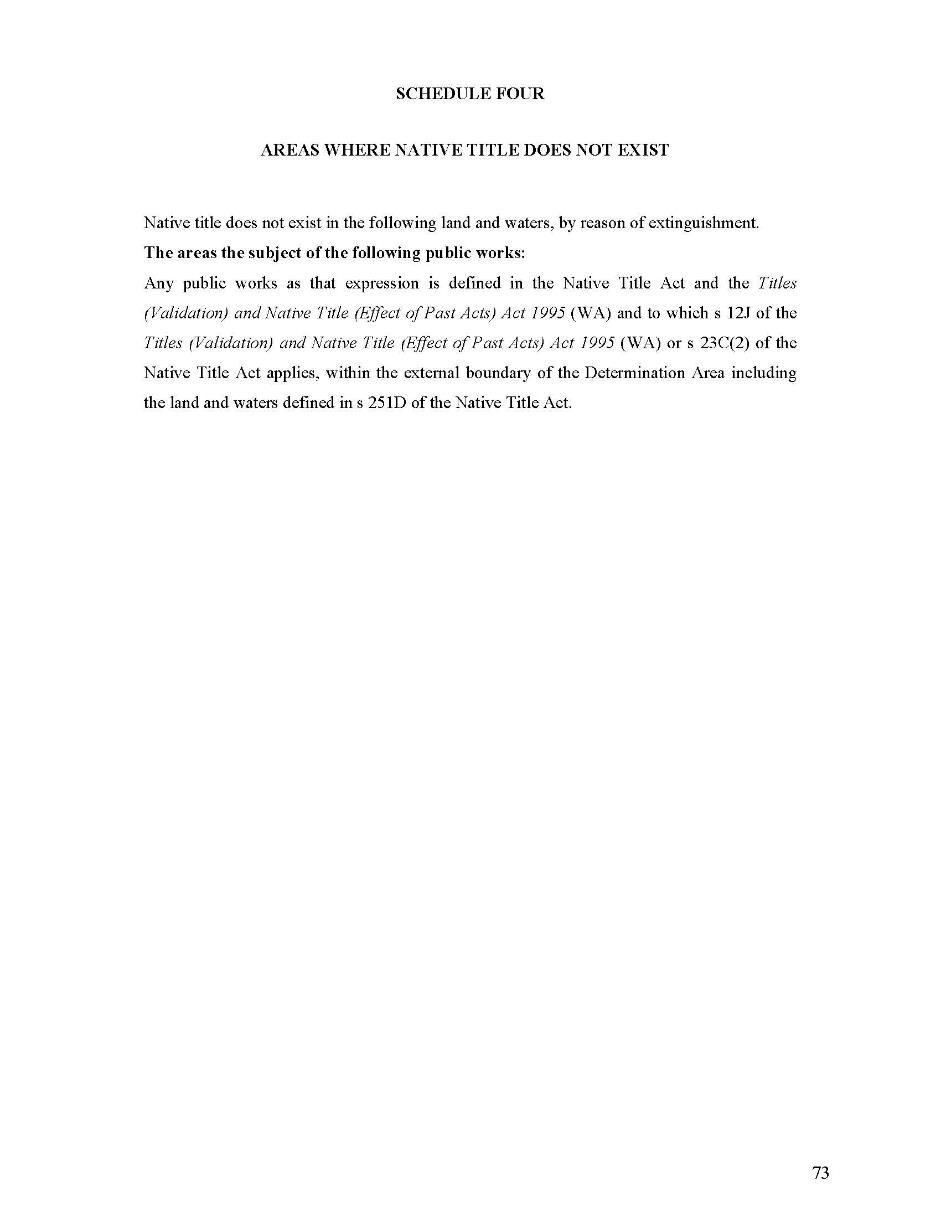
1. The determination of native title made in Watson on behalf of the Nyikina Mangala People v State of Western Australia (No 6) [2014] FCA 545 on 29 May 2014 be varied as follows:
(a) in the second paragraph of Sch Six, delete the words “unnamed mother of Fulgentius Fraser” and replace with “‘Brumby’ Waddadal”; and
(b) in the second paragraph of Sch Six, after the words "Tommy Numarid" add "Bulu; Rimarrangudu aka Johnny Biletming; Kudij and Marrangkal; Joe Nangan."
2. The determination of native title made in Watson on behalf of the Nyikina Mangala People (Nyikina Mangala #2) v State of Western Australia [2015] FCA 1132 on 29 October 2015 be varied as follows:
(a) in the second paragraph of Sch Five, delete the words "unnamed mother of Fulgentius Fraser" and replace with “‘Brumby’ Waddadal"; and
(b) in the second paragraph of Sch Five, after the words "Tommy Numarid" add "Bulu; Rimarrangudu aka Johnny Biletming; Kudij and Marrangkal; Joe Nangan."
3. The determination of native title varied by order 1 is in the form of the varied determination of native title provided for in Attachment A.
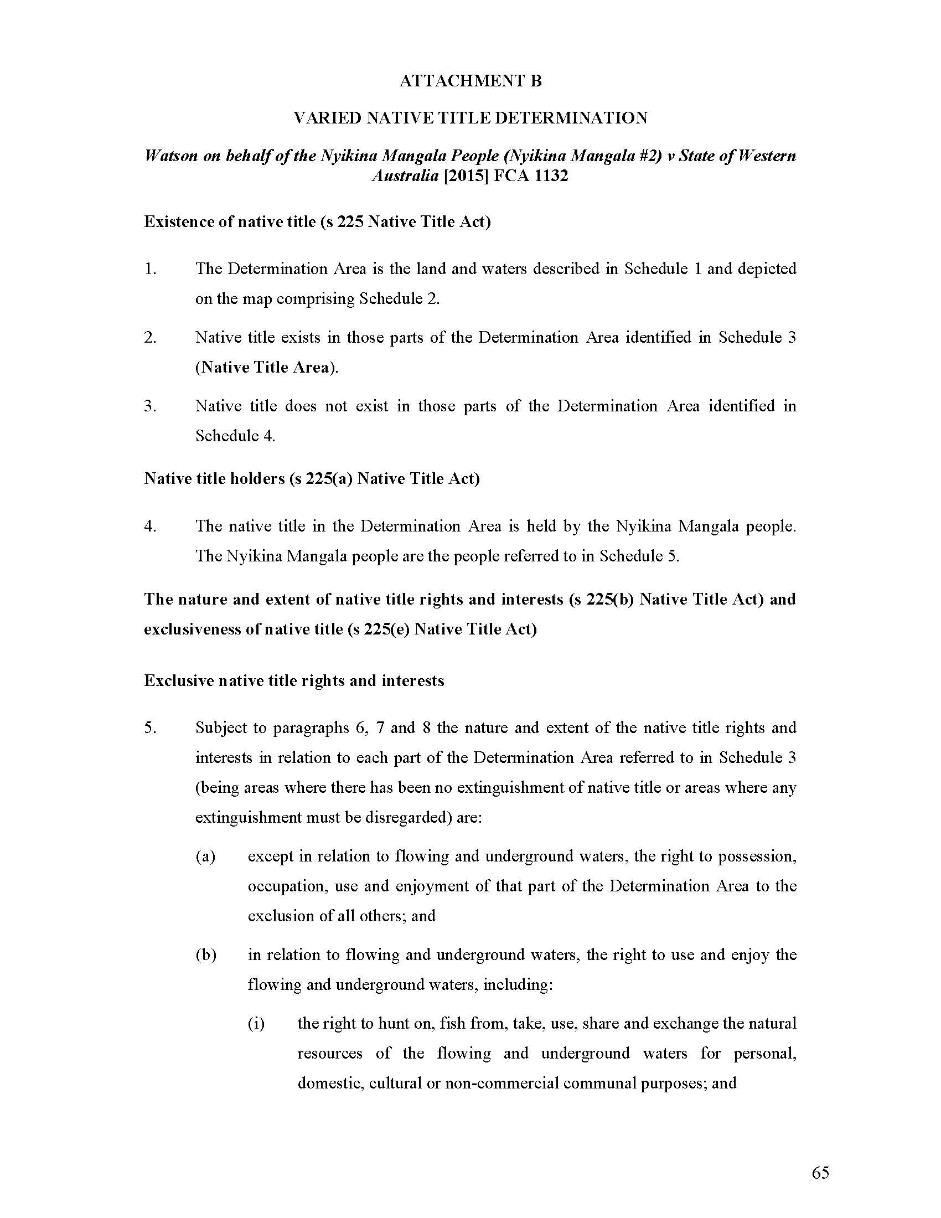
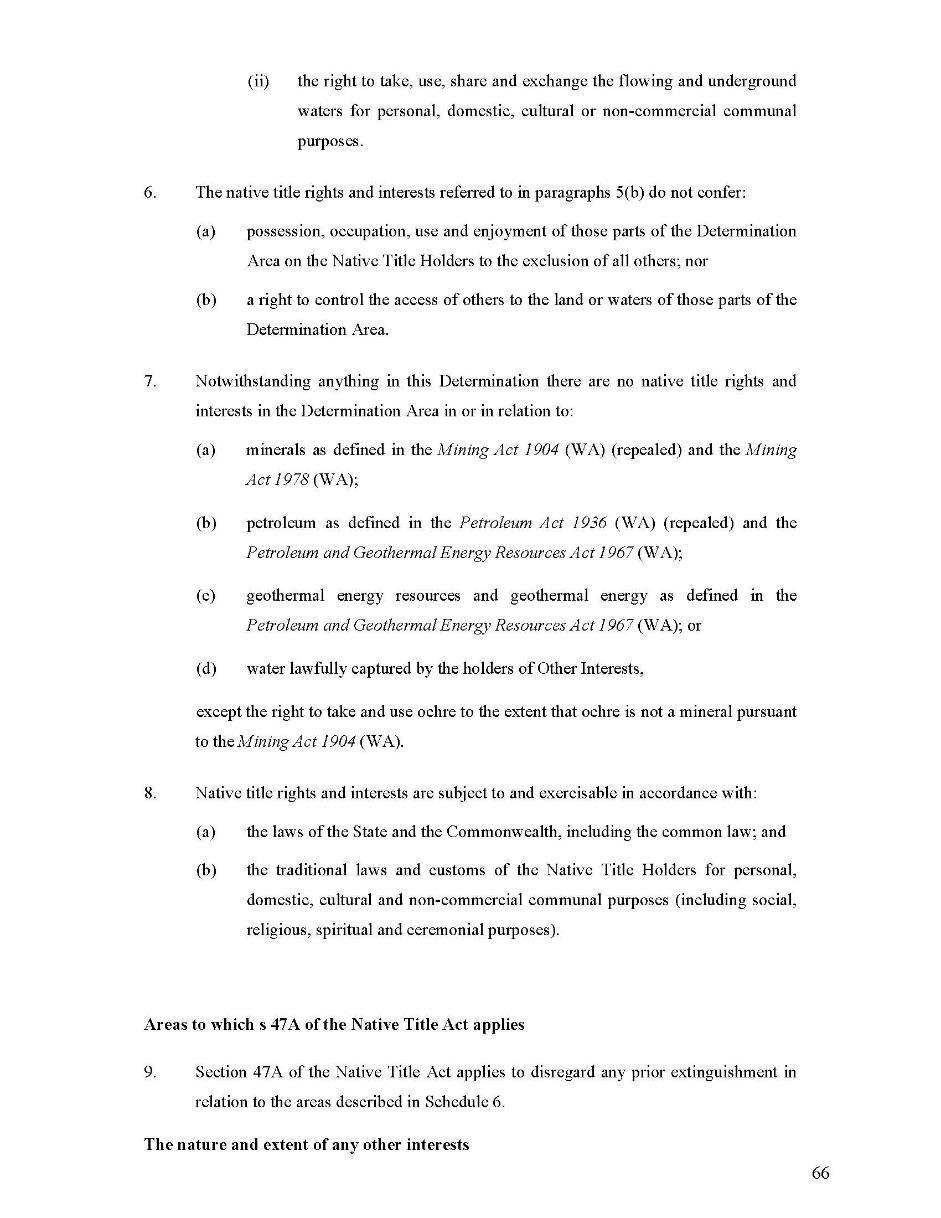
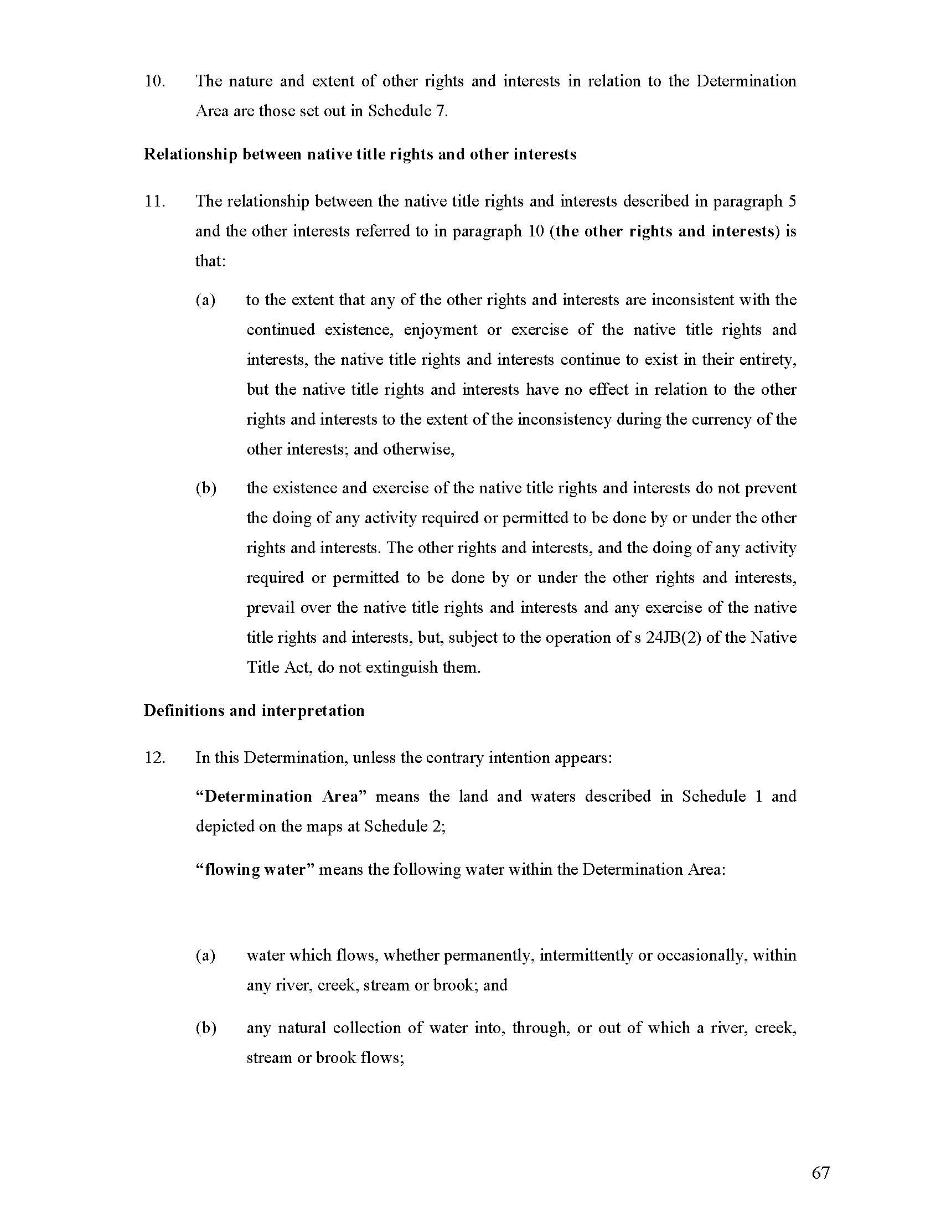
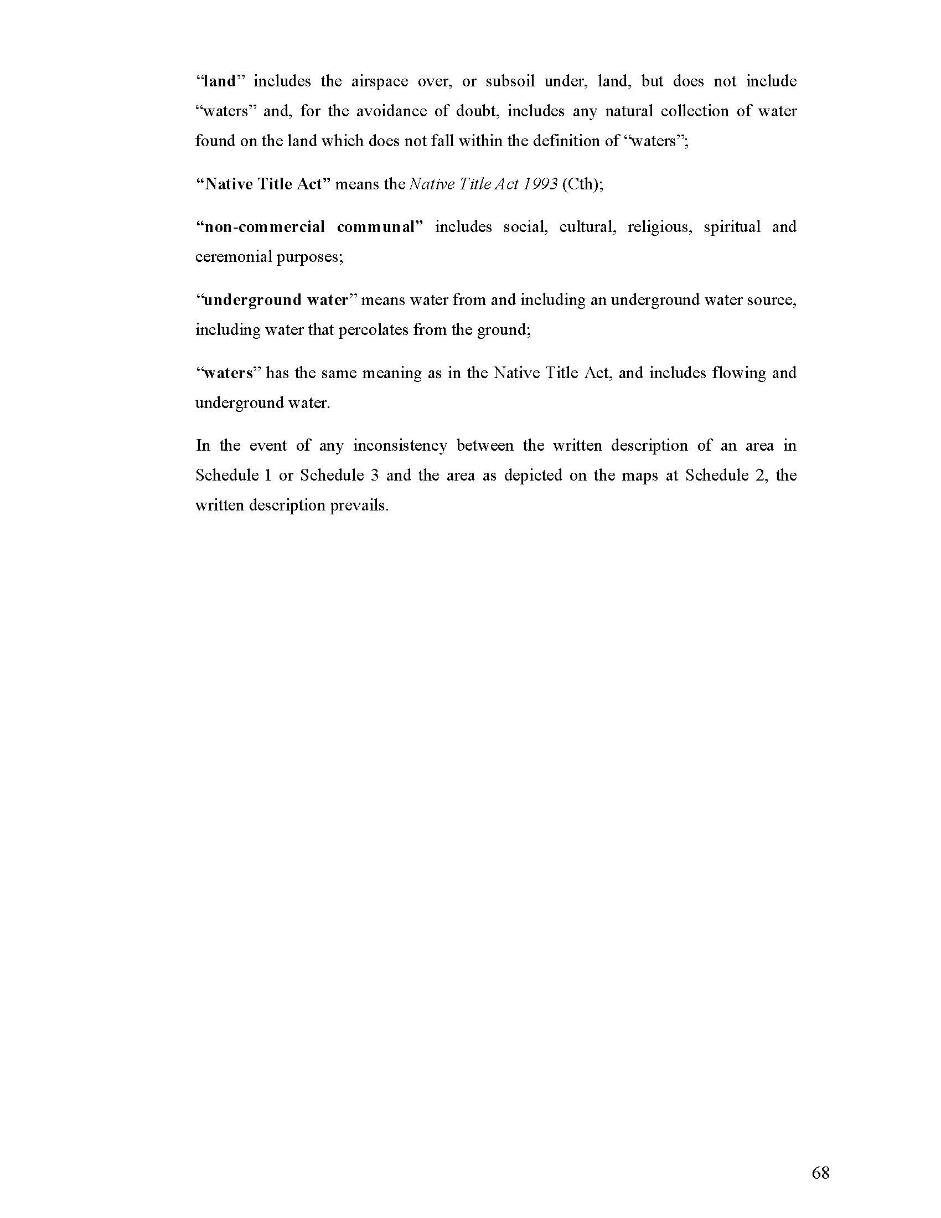
4. The determination of native title varied by order 2 is in the form of the varied determination of native title provided for in Attachment B.
5. There be no order as to costs.
Note: Entry of orders is dealt with in Rule 39.32 of the Federal Court Rules 2011.

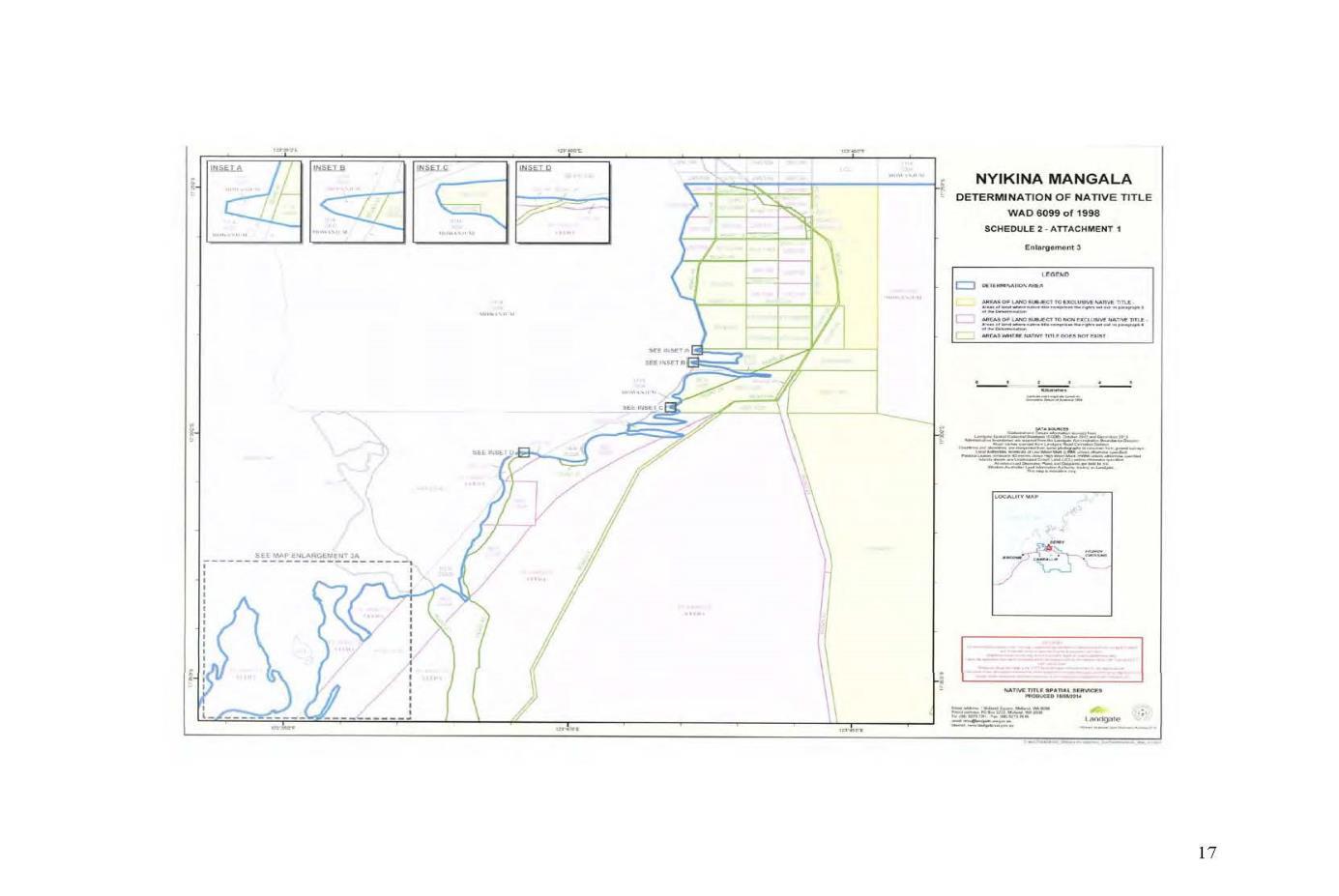
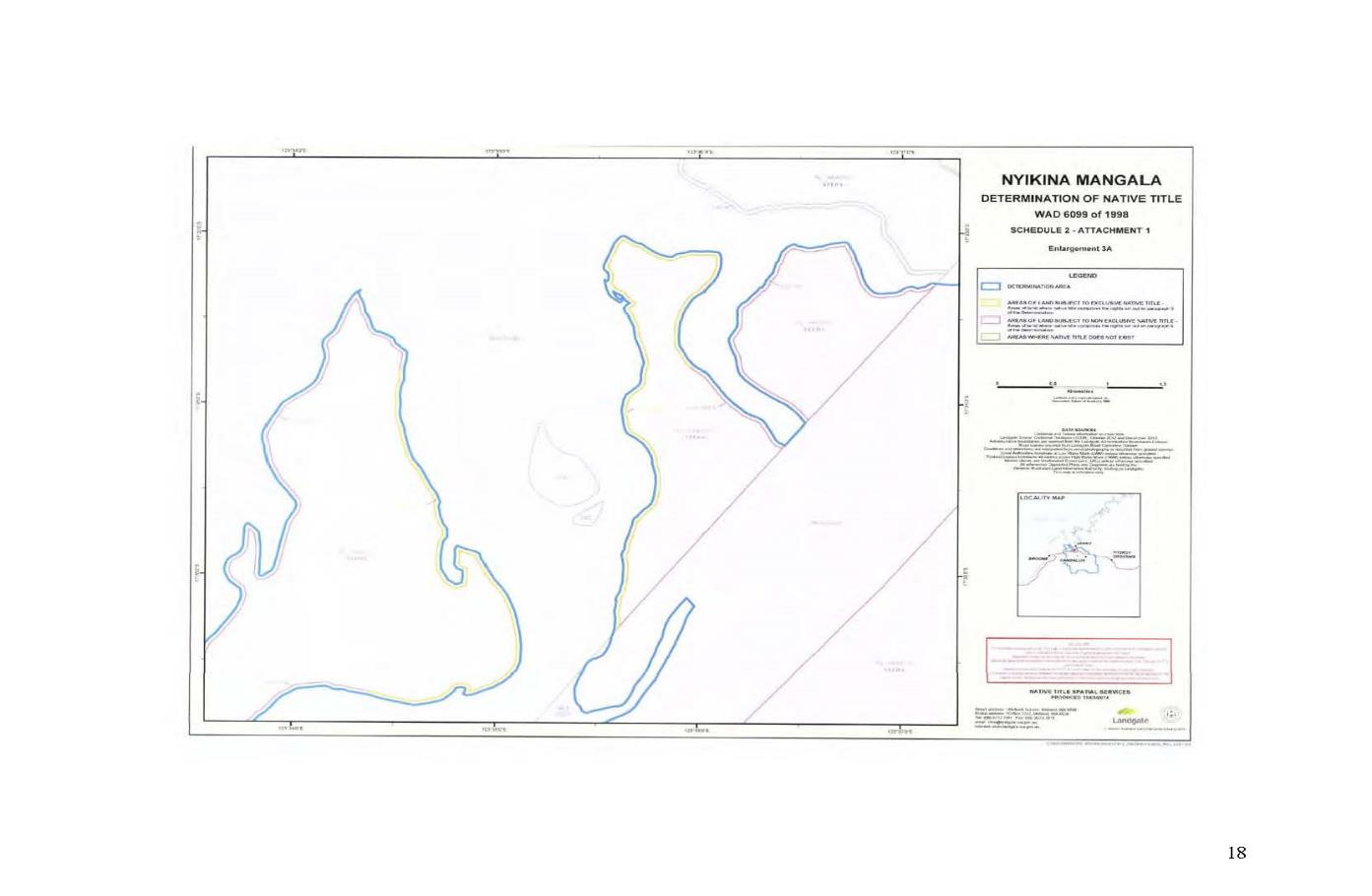
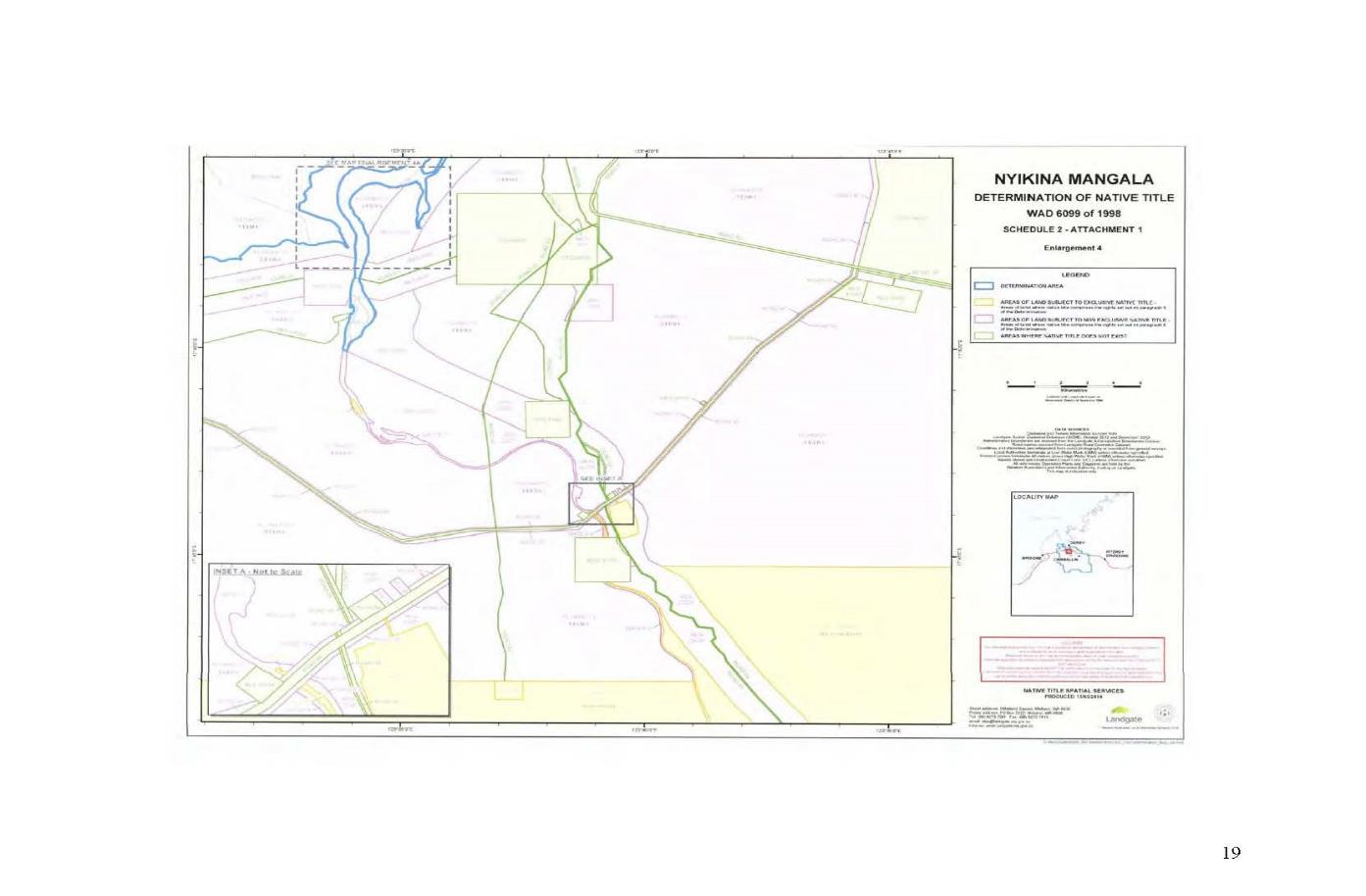
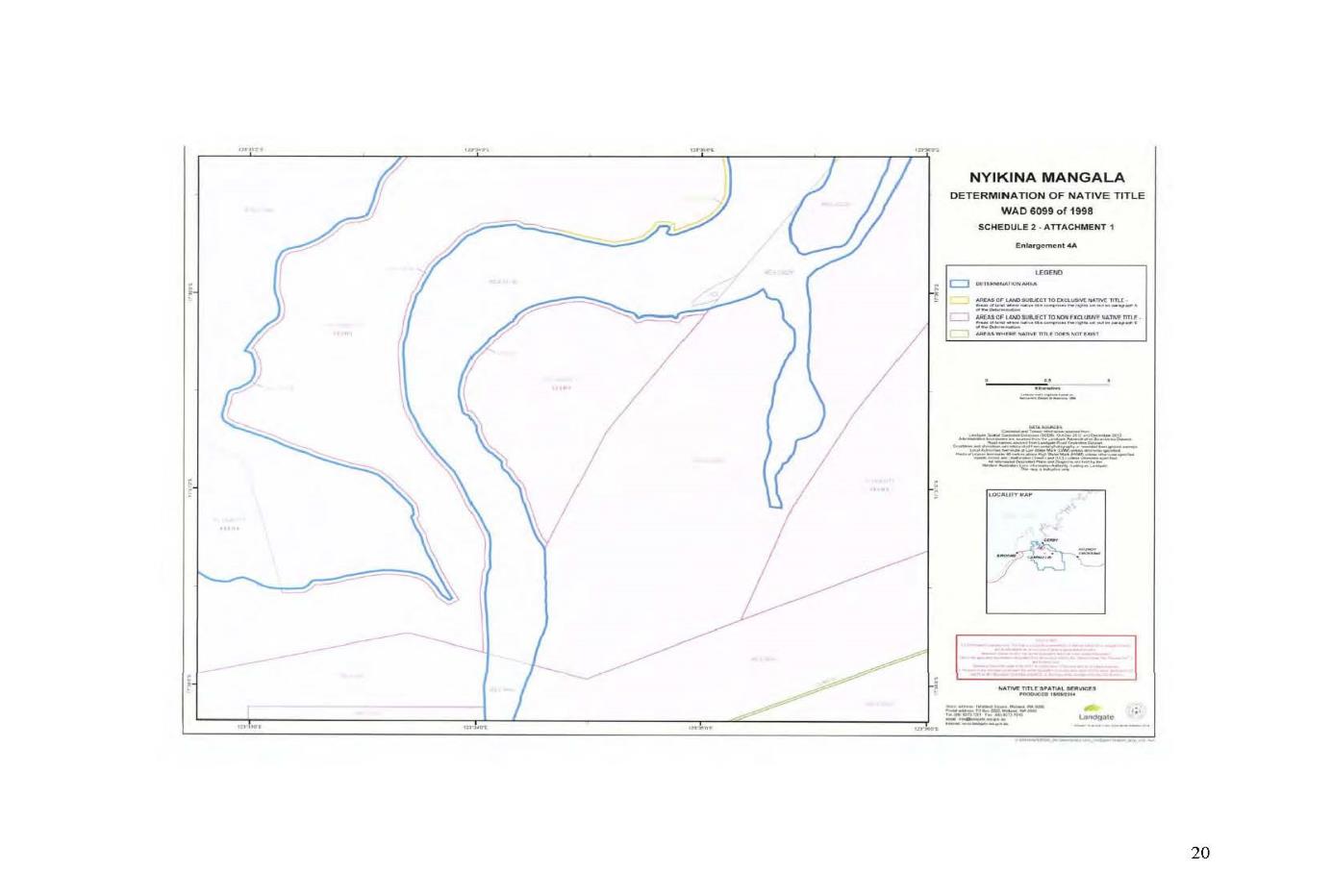
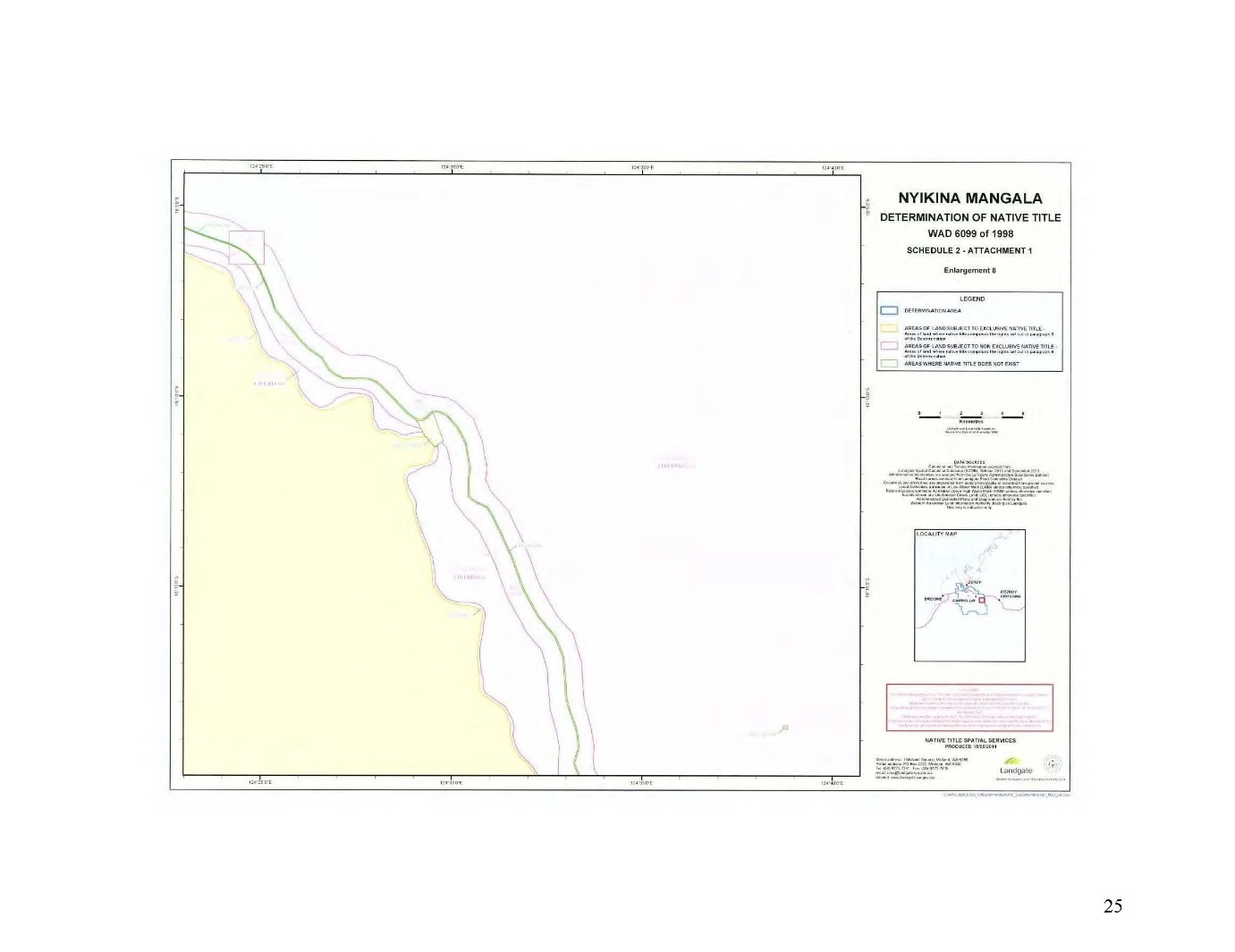
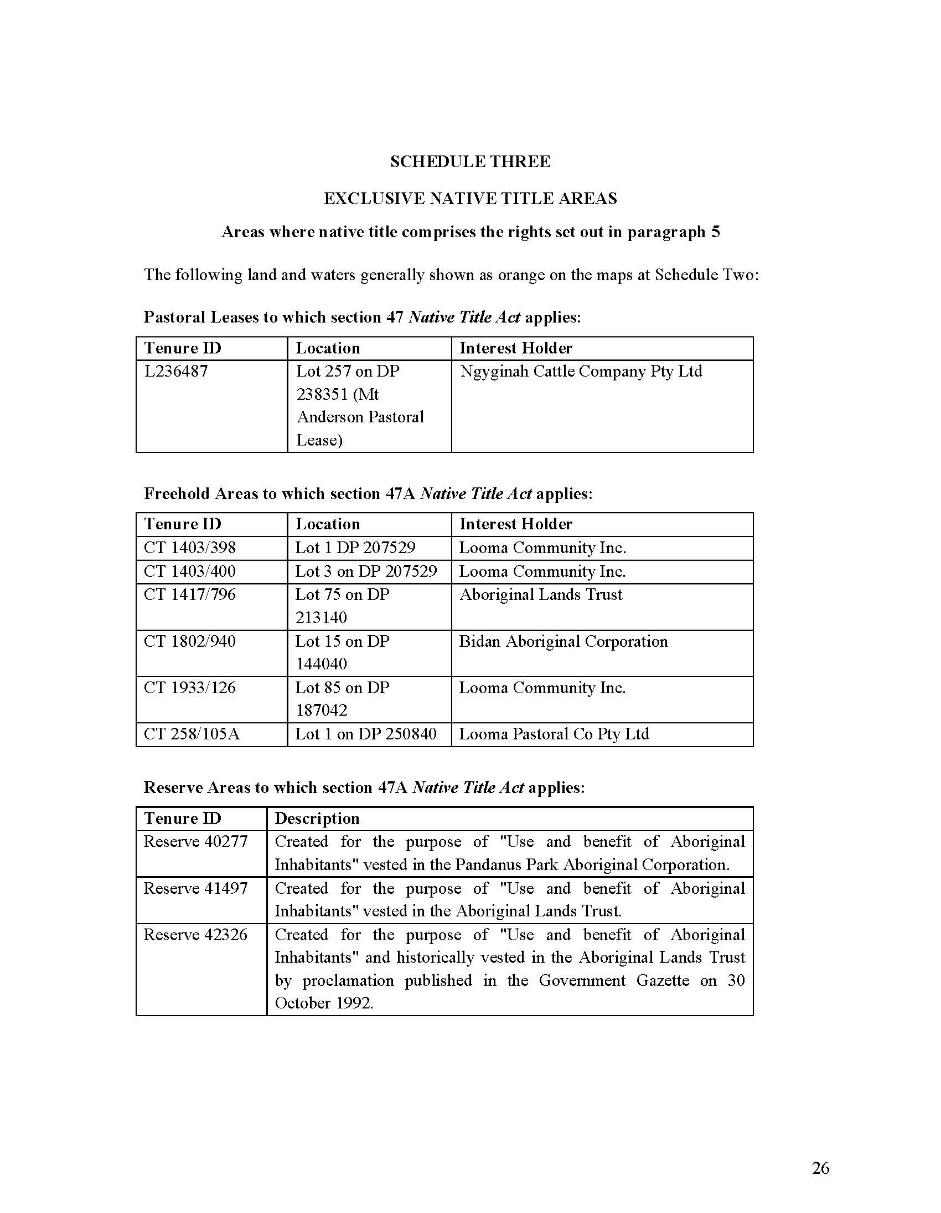
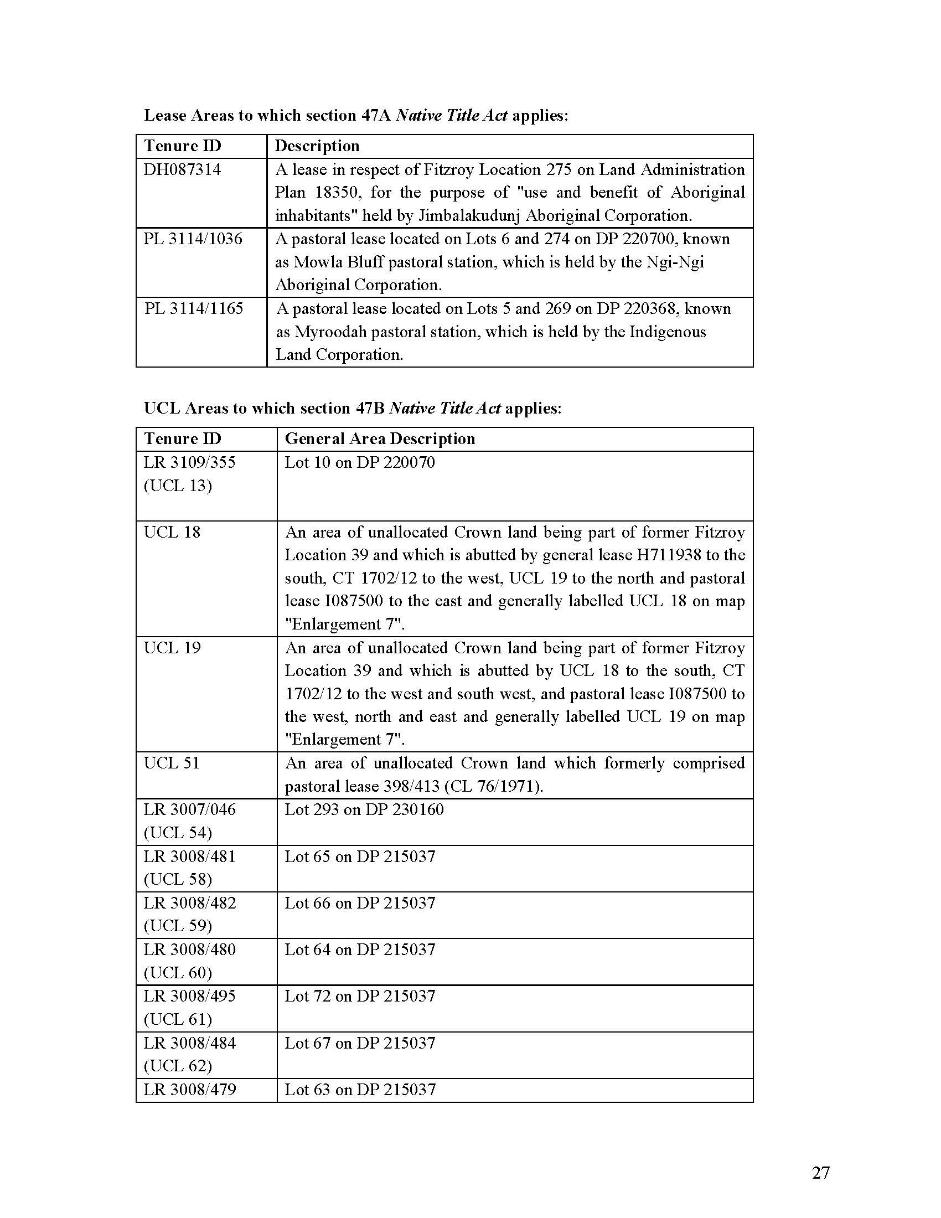
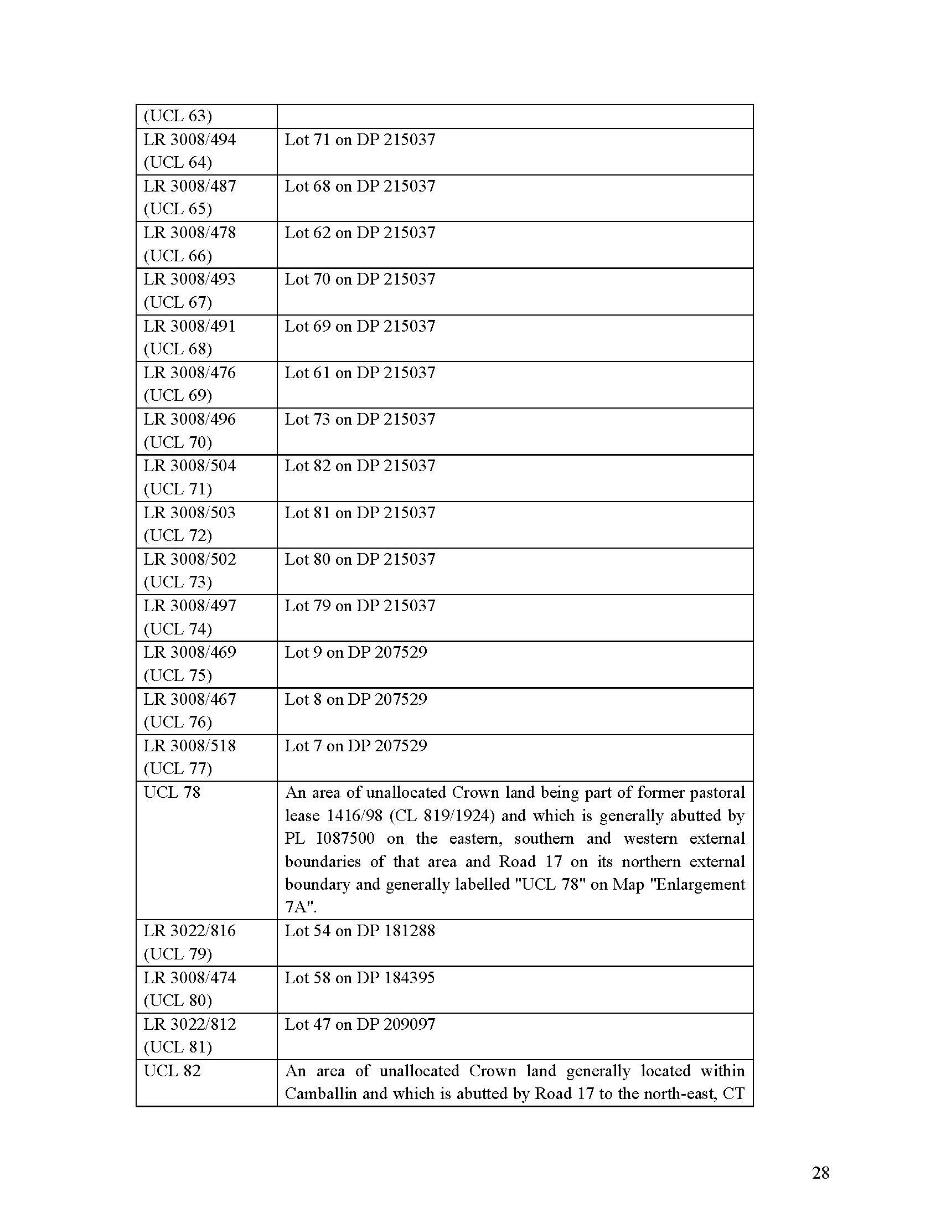
BROMBERG J:
BACKGROUND
1 This proceeding was commenced on 5 October 2022 by the Walalakoo Aboriginal Corporation RNTBC filing an application under s 13(1)(b) and s 61(1) of the Native Title Act 1993 (Cth) seeking revision of two approved determinations of native title (the Application).
2 The Application seeks revision of the description of the native title holders as determined in Watson on behalf of the Nyikina Mangala People v State of Western Australia (No 6) [2014] FCA 545 on 29 May 2014 (Nyikina Mangala #1) and in Watson on behalf of the Nyikina Mangala People (Nyikina Mangala #2) v State of Western Australia [2015] FCA 1132 on 29 October 2015 (Nyikina Mangala #2) (together, the Determinations).
3 The description of the native title holders at Sch Six of Nyikina Mangala #1 is the same as that in Sch Five of Nyikina Mangala #2. As such, the native title in the lands and waters determined in Nyikina Mangala #1 and Nyikina Mangala #2 is held by the same group of native title holders (the Native Title Holders).
4 On 8 December 2022, the Application was notified by the Native Title Registrar pursuant to s 63 and s 66 of the Act. On 27 March 2023, the period of 3 months after the notification day referred to in s 66(8) and s 66(10)(c) of the Act ended.
5 On 27 March 2023, three persons joined as pastoralist respondent parties (the Pastoralists) to the Application. On 18 April 2023, the Pastoralists ceased to be parties to the Application.
6 The parties to the Application are:
(a) the Walalakoo Aboriginal Corporation RNTBC (ICN 8041) (Applicant); and
(b) the State of Western Australia (State).
7 The Applicant was determined pursuant to s 56(2)(b) of the Act to be the prescribed body corporate to hold the determined native title rights in trust for the Native Title Holders.
8 The Applicant seeks to vary the Determinations to:
(a) include the following people in the description of native title holders in the Determinations:
(i) Bulu;
(ii) Rimarrangudu aka Johnny Biletming;
(iii) Kudij and Marrangkal; and
(iv) Joe Nangan,
(the Additional Apical Ancestors), and
(b) change the name of the apical ancestor identified as “unnamed mother of Fulgentius Fraser” to “‘Brumby’ Waddadal”.
9 The proposed variations are to Sch Six of Nyikina Mangala #1 and Sch Five of Nyikina Mangala #2.
THE ISSUES AND MATERIAL TO BE CONSIDERED
10 In determining whether orders should be made revising the Determinations, it is necessary to consider the following issues:
(a) the validity of the Application;
(b) whether the requirements of s 13(5) of the Act are satisfied;
(c) whether it is necessary for the requirements of s 87 of the Act to be met and if so whether those requirements have been satisfied; and
(d) the terms of any orders to be made.
11 The parties have ably assisted my determination of those issues by providing a Minute of Proposed Consent Orders and joint submissions made in support of the orders proposed. Those joint submissions primarily rely upon the following material filed with the Court in support of the Application;
(a) Attachment F-1: the certification of the resolutions passed by Nyikina Mangala people on 22 November 2019 at the meeting for the purpose of authorising the variation to the description of the native title holders (Certificate);
(b) Attachment F-2: Affidavits in support of the Application:
(i) Affidavit of Joseph Heffernan affirmed 16 October 2020;
(ii) Affidavit of Roberta Marshall sworn 18 August 2020;
(iii) Affidavit of Johana Mairead McDonald affirmed 5 November 2020;
(iv) Affidavit of Nayina Annie Milgin affirmed 17 November 2020;
(v) Affidavit of Jeffrey Jamieson affirmed 17 November 2020;
(vi) Affidavit of Rosita Shaw affirmed 17 November 2020;
(vii) Affidavit of Shaharimah Bin Sulaiman affirmed 2 December 2020;
(viii) Affidavit of Louie Bin Maarus affirmed 12 March 2021;
(ix) Affidavit of Justin Lincoln affirmed 13 April 2022;
(x) Affidavit of Justin Lincoln affirmed 19 September 2022; and
(c) Attachment F-3: Anthropologist’s Report by Mr Justin Lincoln titled “Nyikina Mangala Native Title Determination (WCD2014/003): report on a variation application to the native title holder group description” dated 20 September 2021 (Lincoln Report).
12 From that material, the evidence of primary relevance to the Application has been summarised by the joint submission and is set out in Schedule A to these reasons.
13 Pursuant to an order made by Registrar McGregor dated 4 April 2023, the Application is to be determined on the papers.
Validity of the application
14 The Applicant is entitled to make the Application under s 61(1) of the Act as the registered native title body corporate for the Determinations.
15 Beyond the authorisation provided by the Act to the Applicant as the relevant “registered native title body corporate”, the parties submitted that, based on the evidence referred to in Schedule A, the Applicant has authority to bring the Application as the Applicant has consulted and obtained the consent of the Native Title Holders to the making of the Application in accordance with:
(a) reg 8 and reg 9 of the Native Title (Prescribed Body Corporate) Regulations 1999 (Cth) (PBC Regulations); and
(b) r 4 and Sch 2 of the Rule Book of the Walalakoo Aboriginal Corporation RNTBC (ICN:8041) (Rule Book).
16 Reg 8 of the PBC Regulations requires that a PBC consult with, and obtain the consent of, common law holders in relation to a “native title decision”. The definition of a “native title decision” in reg 3 relevantly encompasses variation applications made under s 13(1) and s 61 of the Act.
17 The Applicant has filed the Certificate in accordance with reg 9 (Annexure F1 to Application). As per reg 9(6), the Certificate is “prima facie evidence that the body corporate has consulted and obtained consent in relation to the decision as required by regulation 8”.
18 The Rule Book relevantly provides that the PBC must “consult with and obtain the consent of the Common Law Holders in accordance with the PBC Regulations … before making a Native Title Decision”.
19 In accordance with the requirement at Sch 2 of the Rule Book, the Certificate also confirms that the Kimberley Land Council, the native title representative body for the relevant area, was consulted about the instructions that the Nyikina Mangala people gave to the Applicant to file the Application, and has provided its views.
20 I am satisfied that the Application has been validly made.
21 Section 13(5) of the Act states that the grounds for variation or revocation of an approved determination of native title are:
(a) that events have taken place since the determination was made that have caused the determination no longer to be correct; or
(b) that the interests of justice require the variation or revocation of the determination; or
(c) that the determination relates to an area in relation to which the agreement required by para 47C(1)(b) [of the Act] has been given.
22 Subsection 13(5)(c) was inserted by the Native Title Legislation Amendment Act 2021 (Cth). Prior to this, s 13(5) only contained the grounds in s 13(5)(a) and (b). In considering the previous iteration of s 13(5), the Court has held that the grounds in s 13(5)(a) and (b) are alternatives, in that if the grounds in s 13(5)(b) have been met, it is unnecessary for a Court to consider whether the grounds for varying a determination set out in subsection (a) are satisfied, and vice versa: Robe River Kuruma Aboriginal Corporation RNTBC v State of Western Australia [2021] FCA 20 at [28] (Rangiah J); Top End Aboriginal Corporation RNTBC v Northern Territory of Australia (2022) 403 ALR 666 at [11] (Jagot J); Warrie (formerly TJ) (on behalf of the Yindjibarndi People) v State of Western Australia (2017) 365 ALR 624 at [360] (Rares J). I accept, as the parties contended, that the insertion of subsection 13(5)(c) does not impose an additional requirement but provides an additional alternative ground by which s 13(5) may be satisfied.
23 Regarding the criteria in s 13(5)(b) of the Act, Rares J said at [360] in Warrie:
The ground for variation or revocation in s 13(5)(b) is both protean in nature and substantive. It is available as an alternative to, and its use is not conditional on, the occurrence of subsequent events. Of course, in assessing the interests of justice, the Court is exercising a judicial discretion and must therefore act judicially. But the subject matter, scope and purpose of the criterion of “the interests of justice” must be considered in light of the whole of the Act and the facts, matters and circumstances that the Court has before it in considering the proposed variation or revocation: R v Australian Broadcasting Tribunal; Ex parte 2HD Pty Ltd (1979) 144 CLR 45 at 49; 27 ALR 321 at 325 per Stephen, Mason, Murphy, Aickin and Wilson JJ.
24 His Honour went on at [373]-[374] to say:
It is important to appreciate that the grounds for an application to revoke or vary an approved determination of native title in s 13(5) include not only that subsequent events have occurred that cause the determination no longer to be correct, but also that the interests of justice require such a variation or revocation.
The interests of justice can be engaged because a subsequent proceeding for a determination, using, in part, evidence or findings from earlier proceedings pursuant to s 86(1)(a) and or s 86(1)(a)(c), show that the earlier determination was not correct when it was made. After all, that must be a consequence that the express words of s 13(5)(b) contemplate. That follows because that provision empowers the Court to make an order revoking or varying the earlier determination even though nothing, within the meaning of s 13(5)(a), has occurred subsequently to cause it to be incorrect. (Emphasis in original.)
25 In Robe River, Rangiah J quoted at [32] the following passage from Perry and Lloyd (eds) in Australian Native Title Law (2nd ed, Thomson Reuters, 2018) regarding the words “the interests of justice” in s 13(5)(b):
[The words “the interests of justice” in s 13(5)(b) of the Native Title Act] are words of the widest possible reference, and enliven a discretionary judgement. They can extend to looking at the circumstances of an individual affected by a decision. The interests of justice are not the same as the interests of one party, and there may be interests wider than those of either party to be considered, but the interests of the respective parties (which may be in some respects common and in some respects conflicting) will arise for consideration. It has been said that the test for determining the interests of justice is the avoidance of injustice. Where the interests of justice lie in a particular case may be difficult to articulate but must nevertheless be an objective deduction reached judicially.
The inclusion of the Additional Apical Ancestors is in the interests of justice
26 I am satisfied that it is in the interests of justice, and necessary to avoid injustice, for the Additional Apical Ancestors to be included in the description of the native title holders in the Determinations.
27 First, the descendants of the Additional Apical Ancestors are people who, under the Nyikina and Mangala traditional law and custom, hold rights and interests in the Nyikina Mangala #1 and Nyikina Mangala #2 determination areas. It would be unjust for persons and their descendants who hold rights and interests under traditional law and custom in the area the subject of the Determinations to not be recognised as holding such rights and interests under Australian law. That is because there are significant consequences for the legal rights of descendants of the Additional Apical Ancestors if they are not recognised in the Determinations. They will not have access to the same full and equal legal remedies as are available to Native Title Holders to enforce, protect and exercise their native title rights and interests under the Act, including the right to seek remedies for the loss, diminution, impairment or other effect on those rights and interests.
28 Second, the lack of recognition of the descendants of the Additional Apical Ancestors also has the consequence that those descendants are denied full participation in post determination Nyikina and Mangala society. Without recognition in the Determinations, the descendants of the Additional Apical Ancestors are ineligible for membership of the Applicant. This denies them membership rights, including the right to attend, participate in and vote at meetings of the PBC that holds native title on trust, and the right to elect directors of, and seek information from, that PBC. As anthropologist Mr Lincoln explained in the Lincoln Report, the recognition of traditional connections to country in the Australian legal context of native title is “fundamental to maintaining traditional rights and interests in the post-determination society”. Mr Lincoln explained at [129] of his Report that:
The descendants of the proposed additional apical ancestors are disadvantaged socially as they are not considered to be members of the Nyikina Mangala society and do not have access to the social networks this brings. Culturally they are disadvantaged as their traditional rights and interests to country are not recognised, and they are not able to fulfil their cultural obligations to look after or make decisions about country. The non-recognition of their traditional rights and interests also disadvantages them economically as they are not eligible to participate in decisions or benefits arising from developments on their traditional country. Politically, they are excluded from being members of the decision-making entity established to hold and manage the native title of the Nyikina Mangala society.
29 Given those consequences, if the Court was satisfied that those persons who should have been recognised as native title holders are, in fact, native title holders, it would clearly be in the interest of justice to recognise them as such by amending the Determinations. I am satisfied that each of the Additional Apical Ancestors are native title holders within the meaning of the claim description.
30 The background to, and the reasons in support of, the inclusion of the four Additional Apical Ancestors is set out more fully in Schedule A of this judgment. Nonetheless, it is worthwhile to set out here a brief overview of the fundamental matters in support of their inclusion.
Bulu
31 The anthropological evidence of Mr Lincoln and Dr Vachon in the Lincoln Report (at [67]-[84]) establishes that Bulu observed the traditional laws and customs of the Nyikina Mangala society in the determination area and therefore should be included in the Nyikina Mangala native title holder group description. As explained in the report, Paddy Roe and his siblings were initially to be included as additional apical ancestors but, following discussions with representative of Paddy Roe’s descendants in 2019, it was decided that Bulu would be the more appropriate apical ancestor for their family.
32 As noted below (at [43]), Bulu is also recognised as an apical ancestor in the Mulardy, Shaw and Mouda native title determinations.
33 Bulu’s inclusion is further supported by the acceptance of all the current Nyikina Mangala native title holders of his inclusion, as set out in the affidavit of Joseph Paul Heffernan (at [15], [19]-[21]), and the affidavits of Nayina Annie Milgin (at [17]-[19]), Rosita Shaw (at [5]-[10]) and Louie Bin Maarus (at [14]).
Rimarrangudu aka Johnny Biletming
34 The anthropological evidence of Mr Lincoln in the Lincoln Report (at [85]-[92]) establishes that Rimarrangudu aka Johnny Biletming observed the traditional laws and customs of the Nyikina Mangala society in the determination area and therefore should be included in the Nyikina Mangala native title holder group description.
35 As noted below (at [43]), Rimarrangudu is also recognised as an apical ancestor in the Shaw native title determination.
36 Rimarrangudu’s inclusion is further supported by the acceptance of all the current Nyikina Mangala native title holders of his inclusion, as set out in the affidavit of Joseph Paul Heffernan (at [15], [19]-[21]), and the affidavits of Roberta Marshall (at [1]-[10]), Nayina Annie Milgin (at [21]) and Rosita Shaw (at [11]-[13]).
Kudij and Marrangkal
37 The anthropological evidence of Dr Vachon and Mr Lincoln, discussed in the Lincoln Report (at [59]-[60] and [93]-[100]), establishes that Kudij and Marrangkal observed the traditional laws and customs of the Nyikina Mangala society in the determination area and therefore should be included in the Nyikina Mangala native title holder group description.
38 As noted below (at [43]), Kudij is also recognised as an apical ancestor in the Shaw native title determination.
39 Kudij and Marrangkal’s inclusion is further supported by the acceptance of all the current Nyikina Mangala native title holders of their inclusion, as set out in the affidavit of Joseph Paul Heffernan (at [15], [19]-[21]), and the affidavits of Jeffrey Jamieson (at [1]-[14]), Nayina Annie Milgin (at [20]-[22]) and Rosita Shaw (at [14]-[18], [24]).
Joe Nangan
40 The anthropological evidence of Mr Lincoln in the Lincoln Report (at [101]-[114]) establishes that Joe Nangan observed the traditional laws and customs of the Nyikina Mangala society in the determination area and therefore should be included in the Nyikina Mangala native title holder group description.
41 As noted below (at [43]), Joe Nangan is also recognised as an apical ancestor in the Mulardy and Shaw native title determinations.
42 Joe Nanga’s inclusion is further supported by the acceptance of all the current Nyikina Mangala native title holders of his inclusion, as set out in the affidavit of Joseph Paul Heffernan (at [15], [19]-[21]), and the affidavits of Louie Bin Maarus (at [7]-[14]), Nayina Annie Milgin (at [13]-[16]) and Rosita Shaw (at [19]-[23]). Finally, the inclusion of the descendants of the Additional Apical Ancestors will ensure that the Determinations correctly record the list of native title holders. Whilst the Additional Apical Ancestors were not included in the list of apical ancestors in the description of the Native Title Holders in each of the Determinations at the time the Determinations were filed and subsequently made by the Court, the Additional Apical Ancestors have since been identified by the Nyikina Mangala people as persons who should be included in the Determinations. This identification occurred after an extensive process of research, cultural mapping and consultations with, and the support of, the current Native Title Holders as well as the descendants of the Additional Apical Ancestors (see Schedule A).
43 The inclusion of the Additional Apical Ancestors in the Determinations would also be consistent with their recognition as Nyikina apical ancestors in the surrounding native title determinations:
(a) Bulu and Joe Nangan are recognised as Nyikina apical ancestors in the Birriman-gan Native Title Determination: see Mulardy on behalf of the Birriman-gan Native Title Claim Group v State of Western Australia [2019] FCA 2119 at Sch 4 (Bank-Smith J);
(b) Kudij, Rimarrangudu, Bulu and Joe Nangan are recognised as apical ancestors in the Boorroola Moorrool Moorrool Native Title Determination: see Shaw on behalf of the Boorroola Moorrool Moorrool Native Title Claim Group v State of Western Australia [2020] FCA 1700 at Sch 8 (Bank-Smith J); and
(c) Bulu is recognised as an apical ancestor in the Joombarn-Buru Native Title Determination: see Mouda on behalf of the Joombarn-Buru Native Title Claimants v State of Western Australia [2021] FCA 1233 at Sch 6 (McKerracher J).
44 For the reasons set out at paragraphs [27]–[43] above, it is in the interests of justice, and necessary to avoid injustice, for the Additional Apical Ancestors to be included in the description of native title holders in the Determinations.
The change from “unnamed mother of Fulgentius Fraser” to “‘Brumby’ Waddadal” is in the interests of justice
45 It is in the interests of justice for the name “the unnamed mother of Fulgentius Fraser” to be replaced with “‘Brumby’ Waddadal” in the description of the native title holders in the Determinations.
46 First, it will bring the Determinations in line with surrounding native title determinations that recognise Brumby Waddadal as the mother of Fulgentius Fraser, namely:
(a) “Wadadarl ‘Brumby’” is named as a Nyikina apical ancestor in the Mulardy determination at Sch 4; and
(b) “Wadadarl (mother of Fulgentius Fraser)” is named as an apical ancestor in the claim group description of the Shaw determination at Sch 8.
47 As explained in the Lincoln Report (at [114]-[116]), the name “‘Brumby’ Waddadal” and “Wadadarl ‘Brumby’” and “Wadadarl (mother of the Fulgentius Fraser)” are different renderings of the same name and the names all refer to the same person.
48 Second, it will reflect the current understanding and acceptance by the Native Title Holders and Nyikina and Mangala society that the apical ancestor referred to as “the unnamed mother of Fulgentius Fraser” in the Determinations is the same person known as “Brumby” Waddadal by Nyikina and Mangala people. The identification and acceptance of “Brumby” Waddadal as the mother of Fulgentius Fraser is the result of an extensive process of consultations, knowledge recording and sharing, including:
(a) further anthropological work and consultations with Nyikina and Mangala people since the Determinations were made, including the Cultural Mapping in the Lincoln Project undertaken by the Applicant and the related work of Dr Vachon and Mr Lincoln: see Schedule A at [1];
(b) research and actions taken in relation to the recognition of “Brumby” Waddadal in surrounding determinations, including the replacement of the Nyikina apical ancestor named at the commencement of the Birriman-gan Claim (Mulardy determination) as the “unnamed mother of Fulgentius Fraser” with “Wadadarl ‘Brumby’” prior to the authorisation of the Birriman-gan Claim; and
(c) discussion at a meeting of the Native Title Holders in November 2019 and the decision by the Native Title Holders to make the variation: see Schedule A at [17]-[18].
49 Third, it will ensure that the Determinations reflect the correct group of native title holders, with particular accuracy and completeness.
50 Finally, in all the circumstances, it would be unjust for the Determinations to remain on terms identifying an apical ancestor as “unnamed” when the name is known and accepted by the Native Title Holders and wider Nyikina and Mangala society.
51 I am therefore satisfied that it is in the interests of justice pursuant to s 13(5)(b) of the Act for the Determinations to be varied to change the reference to “unnamed mother of Fulgentius Fraser” to “‘Brumby’ Waddadal”.
SECTION 87 OF THE ACT
52 In their joint submission, the Applicant and State raised whether, in light of conflicting authority on this issue, it is necessary for the Court to be satisfied that the requirements in s 87 of the Act are met in order to approve a variation application pursuant to s 13(1)(b).
53 In Tarlka Matuwa Piarku (Aboriginal Corporation) RNTBC v State of Western Australia [2017] FCA 40, Barker J held at [16] that, if the grounds for variation are met pursuant to s 13(5)(b) of the Act, it is unnecessary to review the grounds for the making of a determination pursuant to s 87 of the Act:
As the Court is satisfied that the grounds for variation are met pursuant to s 13(5)(b) of the Native Title Act, it is unnecessary to review the grounds for the making of the determination on 29 July 2013 pursuant to s 87 and 87A of the Native Title Act, as the result of the variation will not remake the determination. Rather the result of the variation is that the varied determination will replace the determination as the approved determination of native title with the only change to the determination being the inclusion of areas of pastoral improvements as areas where native title exists. Nothing further will be varied in the determination nor the agreement reached between the parties for the determination on 29 July 2013.
54 As observed by Rangiah J in Robe River at [52], following Tarlka Matuwa Piarku, a number of decisions have made orders varying determinations of native title without reference to s 87 of the Act and only addressed whether the orders in the terms sought by the parties are within the power of the Court pursuant to s 13(5) of the Act: see, for example, the cases cited by Rangiah J at [52].
55 In contrast, in other determinations of variation applications, the Court has considered the grounds for the making of the variation pursuant to s 87 or s 87A in addition to the grounds for variation pursuant to s 13(5) of the Act. For example, in Karlka Nyiyaparli Aboriginal Corporation RNTBC v State of Western Australia [2021] FCA 9, Colvin J at [11] considered the reasoning of Barker J in Tarlka Matuwa Piarku, but said at [12]-[15]:
However, in my view, an application to vary a determination must be a proceeding in relation to an application filed in the Federal Court that relates to native title. Therefore, with due respect to his Honour, the requirements of s 87 (or the equivalent provision in s 87A) must be met in respect of the present application. I note that this was the course followed by Rares J in Yindjibarndi Aboriginal Corporation RNTBC v State of Western Australia [2020] FCA 1416 (and see also the approach of Rangiah J in Finlay on behalf of the Kuruma Marthudunera Peoples v State of Western Australia [2018] FCA 548).
Nevertheless, the fact that the Court has already determined that native title exists when it made the Determination by consent and did so on the basis of an agreement which contemplated the possibility of future variation of the determination if the High Court appeal was successful are matters that are relevant in deciding whether it is appropriate for the proposed orders to be made on the present application. The Court has already determined that it is appropriate to declare native title and has thereby been satisfied as to the matters specified in s 87 as to the making of a determination of native title by consent. Necessarily implicit in that decision was an acceptance that but for the decision BHP Billiton Nickel West Pty Ltd (since overturned), it would have been appropriate to make a determination of native title in the terms now sought. The orders made at that time contemplated the present application. The present application does not seek to depart from the basis upon which the Determination was made or to point to some matter that was not in contemplation at that time.
Therefore, this is not an instance where the application seeks to justify the variation of a previous determination of native title in terms that were not demonstrated to the Court when making the previous determination. Were that not to be the case then, in my view, it would be necessary for the Court to be provided with material of a kind that would support the making of a determination by consent in the exercise of the power conferred by s 87. The fact that the determination is to be made by way of variation does not take it outside the terms of that requirement.
Section 87 is an important requirement. Recently, in Hobbs on behalf of the Ngurrara D2 Claim Group v State of Western Australia [2020] FCA 624 at [24]-[28], I summarised the authorities as to the nature of the matters that must be established on such an application. The communal nature of native title and its perpetual proprietary character mean that the Court must have an eye for the public interests and the future interests of those who may be affected by the terms of a determination of native title which, though made with the requisite consent, will have consequences for those who are not themselves before the Court on the application. However, in the circumstances of the present application, the Court can look to the earlier Determination as having addressed those matters and proceed on the basis that no party raises any issue as to the earlier consent or the appropriateness of the order. Rather, the Court is asked to take a step that was contemplated at that time.
56 Most recently, Jagot J in Top End agreed with the reasoning of Barker J in Tarlka Matuwa Piarku and explained at [9]-[12]:
I agree with the reasoning in Tarika Matuwa Piarku (Aboriginal Corporation) RNTBC v State of Western Australia [2017] FCA 40 (see also Robe River Kuruma Aboriginal Corporation RNTBC v State of Western Australia [2021] FCA 20 at [51]-[55] citing Yindjibarndi Aboriginal Corporation RNTBC v State of Western Australia [2020] FCA 1416) that if the Court is satisfied that the grounds for variation are met pursuant to s 13(5)(b) of the Act, it is unnecessary to review the grounds for the making of the determination under ss 87 or 87A of the Act (relating to the requirements to be satisfied for the Court to make an order in accordance with an agreement of the parties).
However, it should be noted that ss 87(1)(c) and 87A(4)(a) both require that any order made as a result of an agreement between parties must be on terms “within the power of the Court”.
In other words, for a variation (or revocation) of an approved determination of native title, the Court must be satisfied that one or more of the grounds in s 13(5) of the Act exist. Further, an order giving effect to an agreement between the parties under ss 87(2) or 87A(4), where the agreement is for a variation or revocation of an approved determination of native title, will be an order varying or revoking that approved determination under s 68(c), having the effect of replacing the original determination as provided for in s 13(4)(c) of the Act.
This approach to the statutory scheme ensures the harmonious operation of all of its provisions. The requirement that an order giving effect to an agreement be within the power of the Court is fundamental. While the statutory scheme embodies the important object of facilitating resolution of dispute about native title by agreement between the parties (see, for example, Lovett on behalf of the Gunditjmara People v State of Victoria [2007] FCA 474 at [36]-[38] and Western Bundjalung People v Attorney General of New South Wales [2017] FCA 992 at [3]-[22]), the requirement that the order reflecting the terms of the agreement be within the power of the Court is mandatory. To this end, regard should also be had to the facultative provisions of ss 87(4)-(5) and 87A(5), which enable the order of the Court to give effect to terms of an agreement that involve matters other than native title, provided such an order itself is within power.
57 I respectfully agree with the approach taken by Jagot J in Top End.
58 However, in any event and in case that view is mistaken, I consider that the requirements of s 87 of the Act are satisfied with respect to the variation application.
59 The following requirements are necessary preconditions to the exercise of power under s 87 of the Act:
(a) The notification period specified in the notice given under s 66 of the Act has ended (s 87(1));
(b) The parties have reached agreement on the terms of orders relating to the proceedings (s 87(1)(a) and (aa));
(c) The parties have reduced their agreement to writing, the agreement has been signed by or on behalf of the parties, and it has been filed with the Court (s 87(1)(b));
(d) The Court is satisfied that an order in, or consistent with, those terms is “within the power of the Court” (s 87(1)(c)); and
(e) It appears appropriate to the Court to make an order consistent with the terms of the order sought (s 87(1A) and s 87(2)).
60 I am satisfied that all of these requirements are met in the present application. As described at [4] above, the period specified in the notice given under s 66 of the Act has ended and the parties have reached an agreement which has been reduced to writing and signed. Further, the orders proposed by the parties are “within the power of the Court” pursuant to s 87(1)(c) of the Act because:
(a) the application is valid and was made in accordance with s 13(1) and s 61 of the Act: see [14]-[20] above;
(b) section 13(5)(b) of the Act is satisfied: see [26]-[51] above; and
(c) the orders agreed to by the parties comply with s 94A and s 225 of the Act.
61 I turn now to consider whether the order is appropriate pursuant to s 87(1A) and s 87(2) of the Act.
62 In Davey on behalf of the Mayala #2 Native Title Claim Group v State of Western Australia [2019] FCA 1137 at [14]-[18], I made the following observations as to whether the Court should be satisfied that it is “appropriate” pursuant to s 87 of the Act for the Court to make the orders sought by the parties:
[14] As I said in Jones on behalf of the Yinhawangka People v State of Western Australia [2017] FCA 801 at [45], the focus of the Court is upon determining whether there is an agreement between the parties and whether that agreement was freely entered into on an informed basis: Hughes (on behalf of the Eastern Guruma People) v State of Western Australia [2007] FCA 365 at [9] (Bennett J). As observed by North J in Ward v State of Western Australia [2006] FCA 1848 at [8]:
The Act makes mediation the primary means of resolution of native title cases. It is designed to encourage parties to take responsibility for resolution of proceedings without the need for litigation. Section 87 must be construed in this context. The section provides a power which is exercisable only when an agreement has been made. The power must be exercised flexibly and with regard to the purpose for which the section is designed. The section should not be construed to require parties in agreement to produce evidence as if in a trial.
[15] I also said in Jones at [44] that in determining where it is appropriate to make the determination sought by the parties, the Court exercises a discretion that must be exercised judicially and within the broad boundaries ascertained by reference to the subject matter, scope and purpose of the NTA: Brown (on behalf of the Ngarla people) v State of Western Australia [2007] FCA 1025 at [22] (Bennett J).
[16] Like Mortimer J in Freddie v Northern Territory [2017] FCA 867 at [20], I accept that it is also important to see the exercise of the judicial power in ss 87 and 87A of the NTA in the context of the Court’s jurisdiction as a whole, and its foundational legislation, the Federal Court of Australia Act 1976 (Cth), and in particular s 37M and s 37N of that Act.
[17] Further, in Brown v Northern Territory of Australia [2015] FCA 1268 at [23], in describing the task to be undertaken by the Court, Mansfield J said this:
The Court is not required to embark upon an inquiry as to the merits of the claim to be itself satisfied that the orders are supported and in accordance with law: Cox on behalf of the Yungngora People v State of Western Australia [2007] FCA 588 at [3] per French J. However, the Court will consider evidence for the limited purpose of determining whether the State has made a rational decision and is acting in good faith: Munn for and on behalf of the Gunggari People v State of Queensland (2001) 115 FCR 109 at [29]-[30] per Emmett J.
[18] The State has a public responsibility to ensure that its agreement to the order proposed is in the interests of the community it represents. That responsibility involves, but it is not limited to, satisfaction by the State that there is a sufficient basis for concluding that the proposed determination is capable of satisfying the requirements of s 225 of the Native Title Act. As Mortimer J said in Freddie:
23. [a] s 87 agreement may be reached on behalf of the State (or Territory), and other parties, without the level of proof required in a contested application. Inherent in parties’ agreement to resolve claims by settlement rather than litigation, as in other areas of the law, is a willingness to abide by an outcome without the exhaustive and detailed investigation that accompanies a trial of contested issues of fact and law. The public interest in an outcome of this kind is considerable: see Prior on behalf of the Juru (Cape Upstart) People v State of Queensland (No 2) [2011] FCA 819 at [26], Rares J.
24. The Court is entitled to rely on the processes established by a State (or Territory) for the assessment of claims to native title and, without abdicating its task of determining that the matters set out in s 225 are present in a particular application, is entitled to proceed on the basis the State (or Territory) has made a reasonable and rational assessment of the material to which it has access in deciding to enter into a s 87 agreement: see, in relation to a similar point with respect to s 223 of the Act, King on behalf of the Eringa Native Title Claim Group and the Eringa No 2 Native Title Claim Group v State of South Australia [2011] FCA 1387 at [21] (Keane CJ).
63 The requirements of s 87(2) of the Act will likely be met where the Court is satisfied that a relevant government respondent — such as the State of Western Australia — has, “through competent legal representation, satisfied itself as to the cogency of the evidence upon which an applicant relies”: Jones on behalf of the Yinhawangka People v State of Western Australia [2017] FCA 801 at [46] (Bromberg J). See also Eagles on behalf of the Combined Thiin-Mah, Warriyangka, Tharrkari and Jiwarli People v Western Australia [2019] FCA 508 at [22] (Murphy J).
64 In their joint submissions, the Applicant and the State submitted that it was appropriate that the Court make the orders in the terms of the parties’ agreement because:
(a) the parties are legally represented and have been throughout the Application process;
(b) the State has played an active role in the negotiation of the variation to the Determinations and, in doing so, the State acting on behalf of the community generally is satisfied that the Application is justified in all the circumstances having regard to the requirements of the Act and through a rigorous and detailed assessment process;
(c) the Nyikina Mangala people, including those people recognised in the Determinations as Native Title Holders and those people who would be recognised as a result of the making of the variation sought in the Application, have been thoroughly consulted and have consented to the making of the Application: see Schedule A; and
(d) there are no proceedings before the Court relating to native title determination applications to cover any part of the area the subject of the Application which would otherwise require orders to be made under s 67(1) of the Act.
65 Having regard to the above matters, I am satisfied that the orders proposed are appropriate.
66 For all those reasons, I am satisfied that the requirements of s 87 of the Act are satisfied.
CONCLUSION
67 I am satisfied that the relevant requirements of the Act have been met with respect to the application to vary the Determinations and the orders proposed by the parties should be made. I will make orders accordingly.
I certify that the preceding sixty-seven (67) numbered paragraphs are a true copy of the Reasons for Judgment of the Honourable Justice Bromberg. |
Associate:
Schedule A
Events leading to the making of the Application
Cultural Mapping Project and Dr Vachon’s Review in 2016
1. Section 3 of the Lincoln Report sets out how, in early 2016, the Applicant initiated a review of the current description of the Native Title Holders by way of a Cultural Mapping Project. As part of the Cultural Mapping Project, the Applicant engaged Dr Daniel Vachon, Anthropologist, to undertake the anthropological component of the project, which included:
(a) desktop research, including a review of Dr Kingsley Palmer’s anthropological connection report for the Determinations and Dr Vachon’s own native title research work for Nyikina Mangala and surrounding claims;
(b) discussion with senior Nyikina and Mangala elders, including a meeting in March 2016;
(c) two field trips to conduct interviews with key Nyikina and Mangala people in April and May 2016, including visits to the communities of Jarlmadangah, Looma, Pandanus Park and Bedunburra; and
(d) preparation of Nyikina and Mangala genealogies and site map.
August 2016 Meeting
2. As set out in the Lincoln Report and the affidavit of Rosita Shaw, in August 2016, Dr Vachon presented his findings to the Applicant’s Executive and Cultural Advisory Committee (WAC Committee) (August 2016 Meeting). As part of his findings, Dr Vachon expressed his view that several Nyikina ancestors were missing from the description of the Native Title Holders in the Determinations, namely:
(a) Paddy Roe and his siblings;
(b) Kudij and Marrangkal;
(c) Amy Benning; and
(d) Emily Watson Snr.
3. At the August 2016 Meeting, the WAC Committee decided that the descendants of the following persons should be eligible to become members of the Applicant:
(a) Paddy Roe and his siblings; and
(b) Kudij and Marrangkal.
4. The WAC Committee decided against Amy Benning’s descendants being eligible for membership of the Applicant. No descendants of Emily Watson Snr could be located.
Further Consultations and Meetings
5. Following the August 2016 Meeting, a subsequent meeting was held in October 2016 between the WAC Committee and the family of Amy Benning, including her descendant Roberta Marshall.
6. In her affidavit filed with the Court, Roberta Marshall deposes at [7]-[9]:
I was concerned at first, when my Grandmother, Amy Benning, was mentioned as a Nyikina woman but was not included in the native title holding group for the Nyikina Mangala and Nyikina Mangala #2 determinations through our ancestor Johnny Biletming. Anthropologists were taking records from my Aunties and Uncle at the time before the determinations were made, but somehow it got taken off so the families just sort of sat back and waited.
Our family gave our story to Walalakoo Aboriginal Corporation at a meeting in October 2016, but waited on the decision until we heard in further meetings that Rimarrangudu was being recognised in the ancestry list for Nyikina Mangala native title holders. So at the Walalakoo Aboriginal Corporation meeting, we asked them who they said Johnny Biletming, or Rimarrangudu, was, and they said he is a Nyikina man.
Then we brought our case forward again to Walalakoo Aboriginal Corporation stating that he is our ancestor–our Grandmother’s Father–and from the last year we have provided all the evidence we had that we are Rimarrangudu’s descendants.
7. Following that meeting, the WAC Committee accepted that the father of Amy Benning – Rimarrangudu aka Johnny Biletming – had traditional connections to the Nyikina Mangala country and decided that his descendants, including the family of Amy Benning, should therefore be eligible for membership of the Applicant.
8. Between 2016 and 2019, the Applicant and the anthropologist Mr Justin Lincoln had further consultations and discussions with the Native Title Holders and with representatives of the descendants of the Additional Apical Ancestors, regarding their potential inclusion in the Determinations. This included:
(a) discussions with a representative of the descendants of Paddy Roe and his siblings, who confirmed that Paddy Roe’s father, Bulu, was the more appropriate apical ancestor for their family; and
(b) discussions with a representative of the descendants of Joe Nangan who confirmed that Joe Nangan should be recognised as an apical ancestor in the Determinations.
9. In the same time period, there were developments in the other native title claims by Nyikina people in the areas surrounding the Determinations to include the Additional Apical Ancestors. This included, on 21 November 2018, the authorisation meeting (Birriman-gan Authorisation Meeting) for the Mulardy, Birriman-gan Native Title Claim (WAD541/2018) (Birriman-gan Claim), which abuts the western side of the Determinations. At the Birriman-gan Authorisation Meeting, the Nyikina people decided to include Joe Nangan and Bulu as Nyikina apical ancestors for the Birrimangan Claim. Further, around the same time period, the Birriman-gan Applicant replaced the apical ancestor in the Birriman-gan Claim who was listed as “unnamed mother of Fulgentius Fraser” with the name “Wadadarl ‘Brumby’”.
November 2019 Meeting
10. The process for authorising the Application was rigorous and involved extensive consultation with the Native Title Holders and with the descendants of the Additional Apical Ancestors prior to its filing.
11. A meeting of the Native Title Holders and the descendants of the Additional Apical Ancestors was arranged to take place at King Sound Resort Hotel in Derby, Western Australia, on 22 November 2019 (November 2019 Meeting). The November 2019 Meeting was open to the common law holders of native title in the Determinations, including the descendants of the apical ancestor identified as the “unnamed mother of Fulgentius Fraser”, as well as the descendants of Paddy Roe, Rimarrangudu aka Johnny Biletming, Kudij and Marrangkal, and Joe Nangan.
12. The details of the notice and the conduct of the November 2019 meeting are set out in the affidavits of Joseph Paul Heffernan and Johana Mairead McDonald filed in support of the Application.
13. Prior to the November 2019 Meeting, representatives of the descendants of Bulu and of Joe Nangan were separately consulted by Mr Justin Lincoln and they provided their support for the inclusion of those apical ancestors in the Determinations. Louie Bin Maarus, descendant of Joe Nangan, has also provided an affidavit in support of the Application.
14. In attendance at the November 2019 Meeting were 46 people who were Native Title Holders and 3 people who were descendants of the Additional Apical Ancestors. The three people who were descendants of the Additional Apical Ancestors included:
(a) a representative of the descendants of Kudij and Marrangal, Jeffrey Jamieson, who has also provided an affidavit in support of the Application; and
(b) a representative of the descendants of Rimarrangudu aka Johnny Biletming, Roberta Marshall, who has also provided an affidavit in support of the Application.
15. Descendants of the apical ancestor identified as the “unnamed mother of Fulgentius Fraser” were also in attendance at the November 2019 Meeting.
16. On the same day as the November 2019 Meeting, a funeral was held for Mr William Watson in Broome. As a result, a number of persons eligible to attend the November 2019 Meeting were unavailable to attend as they were attending the funeral. This included some of the descendants of Bulu and the descendants of Joe Nangan.
Resolutions at the November 2019 Meeting
17. At the November 2019 Meeting, the Native Title Holders present passed resolutions as set out in the Certificate, resolving in summary that:
(a) the people present at the meeting were sufficiently representative of the Native Title Holders. Each person attending was representative of members of their family who were unable to attend, and their families and Elders were aware of the meeting and had been consulted about the issues for discussion;
(b) sufficient notice was given of the meeting for the purpose of making authoritative decisions at the meeting;
(c) there is no particular process of decision-making under traditional law and custom for decisions of this kind, namely the decision to consent to the making of a native title revision application and dealing with matters arising in relation to it;
(d) the Native Title Holders would use an adopted process of decision-making for the purposes of deciding whether to consent to the making of the Application;
(e) the Determinations should be amended on the following terms:
(i) add the following names to the description of the native title holders in the two Nyikina Mangala determinations:
(A) Bulu;
(B) Rimarrangudu aka Johnny Biletming;
(C) Kudij and Marrangkal; and
(D) Joe Nangan.
(ii) change the ancestor identified as the “unnamed mother of Fulgentius Fraser” in the description of native title holders in two Nyikina Mangala determinations to “Brumby” Waddadal.
(f) the Applicant would make the Application; and
(g) the Native Title Holders have been consulted and consent to the revisions to the Determinations as sought in the Application.
18. Resolutions were then considered and passed by those Native Title Holders together with those descendants of the Additional Apical Ancestors who were present at the November 2019 Meeting, resolving in summary the following:
(a) the variations to the Determinations as sought in the Application and as agreed to by the Native Title Holders in Resolution 3, extracted above at [17(e)], should be made; and
(b) the Applicant should make and deal with matters arising in relation to the Application.


