

Federal Court of Australia
Clarence City Council v Commonwealth of Australia [2022] FCA 1492
ORDERS
Applicant | ||
AND: | First Respondent HOBART INTERNATIONAL AIRPORT PTY LTD (ACN 080 919 777) Second Respondent | |
AND BETWEEN: | HOBART INTERNATIONAL AIRPORT PTY LTD Cross-Claimant | |
AND: | Cross-Respondent | |
AND
TAD 27 of 2018 | ||
| ||
BETWEEN: | NORTHERN MIDLANDS COUNCIL Applicant | |
AND: | THE COMMONWEALTH OF AUSTRALIA First Respondent AUSTRALIA PACIFIC AIRPORTS (LAUNCESTON) PTY LTD (ACN 081 578 903) Second Respondent | |
AND BETWEEN: | AUSTRALIA PACIFIC AIRPORTS (LAUNCESTON) PTY LTD (ACN 081 578 903) Cross-Claimant | |
AND: | THE COMMONWEALTH OF AUSTRALIA Cross-Respondent | |
order made by: | O’CALLAGHAN J |
DATE OF ORDER: | 13 DECEMBER 2022 |
THE COURT ORDERS THAT:
1. The applicant’s proceeding be dismissed.
2. The second respondent’s cross-claim be dismissed.
3. The parties file submissions on costs, not exceeding 5 pages, within 21 days.
Note: Entry of orders is dealt with in Rule 39.32 of the Federal Court Rules 2011..
O’CALLAGHAN J:
Introduction
1 These two proceedings principally concern questions regarding the proper construction of a clause contained in leases entered into in 1998 (the leases) between the Commonwealth as lessor, and the lessees of Hobart International Airport (Hobart Airport) and Launceston Airport (collectively, the Airports or Airport Sites), being Hobart International Airport Pty Ltd (HIAPL) and Australia Pacific Airports (Launceston) Pty Ltd (APAL) respectively (collectively, the lessees), the second respondent in each proceeding.
2 The applicants (collectively, the Councils) are Councils for municipal areas in Tasmania.
3 The applicant in proceeding TAD 25 of 2018 (the Hobart proceeding), Clarence City Council, administers a municipal area covering the eastern suburbs of Hobart and surrounding localities, including Hobart Airport.
4 The applicant in proceeding TAD 27 of 2018 (the Launceston proceeding), Northern Midlands Council, administers a municipal area that extends from the south of Launceston to the central midlands, including Launceston Airport.
5 The Councils are not parties to the leases, but they seek to obtain declaratory relief in respect of their construction and application, in circumstances where the parties to the leases agree that the lessees have acted, and will continue to act, in accordance with their own understanding of the relevant terms of their contracts.
6 The lessees also brought cross-claims for declaratory relief against the Commonwealth (the first respondent in each proceeding), which raised hypothetical questions of accord and satisfaction, and estoppel. As will become apparent, the making of those claims made it necessary to set out in these reasons in some detail the terms of correspondence between the parties leading up to the commencement of the proceedings. The gist of the claims was the lessees’ contention that the Commonwealth, if those accord and satisfaction and estoppel claims were made good, would thereby be precluded from seeking to compel them to make further payment to the Councils under the leases, if the Commonwealth should ever change its mind and seek to do so – and that the Councils’ applications for declaratory relief should in turn therefore be dismissed as a matter of discretion.
7 I first heard these proceedings over a period of seven days in March and July 2019.
8 I ordered that the proceedings be dismissed, on the ground that the Councils had no standing to seek the declaratory relief they sought. See Clarence City Council v Commonwealth [2019] FCA 1568. I accordingly did not deal with any of the other issues raised in the proceedings.
9 The Councils successfully appealed that decision to the Full Court, which ordered that the proceedings be remitted to me for final determination. See Clarence City Council v Commonwealth (2020) 280 FCR 265 (Jagot, Kerr and Anderson JJ).
10 The lessees sought and obtained special leave to appeal to the High Court.
11 That appeal was, by majority, dismissed. See Hobart International Airport Pty Ltd v Clarence City Council [2022] HCA 5; (2022) 96 ALJR 234.
12 The proceedings were listed before me for further hearing upon the remittal on 19 and 20 September 2022.
Factual background
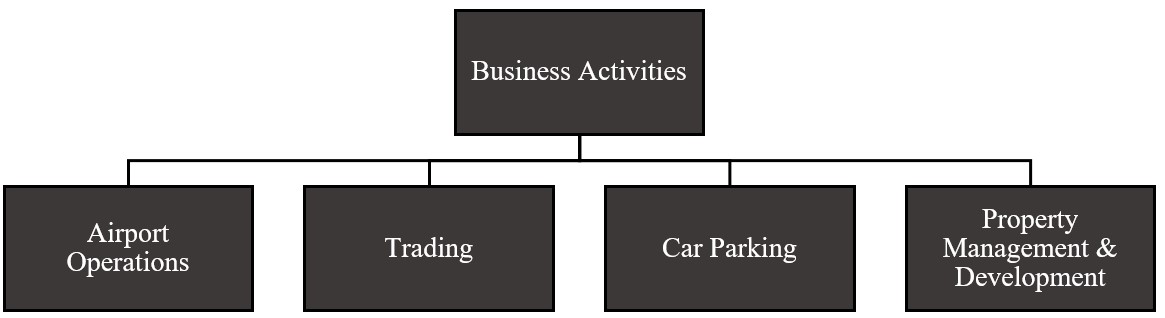
13 The Airports are on Commonwealth land, so they are not amenable to Council rates or State land tax. That is because s 114 of the Constitution prohibits States (without the consent of the Commonwealth Parliament) from imposing “any tax on property of any kind belonging to the Commonwealth”. The parties also agreed that the Airport Sites are “places acquired by the Commonwealth for public purposes”, such that State laws (including State taxation laws) have no application to them by operation of s 52(i) of the Constitution, which provides that the Commonwealth Parliament has exclusive power to make laws for the peace, order, and good government of the Commonwealth with respect to such places.
14 During the 1980s, most major airports were operated by the Federal Airports Corporation (the FAC) as “government business enterprises”. A long standing Government policy required the Commonwealth to make payments equivalent to rates to local authorities in certain circumstances. The FAC agreed to maintain the Commonwealth Government’s policy by making payments in lieu of rates for areas of federal airports which were used for commercial activities and for which the FAC received an annual rent.
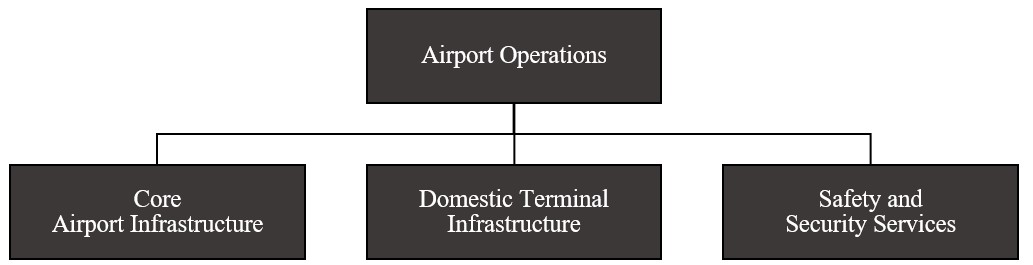
Competition Principles Agreement
15 On 11 April 1995, the Commonwealth and the States and Territories entered into the “Competition Principles Agreement” (the CPA), which recorded the agreement of the Council of Australian Governments to adopt certain principles of competition policy and to apply competition laws across the public sector.
16 One of the overarching purposes of the CPA was to achieve and maintain consistent and complementary competition laws and policies which would apply to all businesses in Australia, regardless of ownership. One of the principles agreed to was the principle of “competitive neutrality”.
17 Clause 3 of the CPA was headed “Competitive Neutrality Policy and Principles”. It relevantly provided as follows:
(1) The objective of competitive neutrality policy is the elimination of resource allocation distortions arising out of public ownership of entities engaged in significant business activities: Government businesses should not enjoy any net competitive advantage simply as a result of their public sector ownership. These principles only apply to the business activities of publicly owned entities, not to the non-business, non-profit activities of these entities.
…
(4) Subject to subclause (6), for significant Government business enterprises which are classified as “Public Trading Enterprises” and “Public Financial Enterprises” under the Government Financial Statistics Classification:
(a) the Parties will, where appropriate, adopt a corporatisation model for these Government business enterprises … ; and
(b) the Parties will impose on the Government business enterprise:
(i) full Commonwealth, State and Territory taxes or tax equivalent systems;
…
(5) Subject to subclause (6), where an agency (other than an agency covered by subclause (4)) undertakes significant business activities as part of a broader range of functions, the Parties will, in respect of the business activities:
(a) where appropriate, implement the principles outlined in subclause (4); …
18 Clause 4(3) of the CPA, which was headed “Structural Reform of Public Monopolies”, provided as follows:
Before a Party introduces competition to a market traditionally supplied by a public monopoly, and before a Party privatises a public monopoly, it will undertake a review into:
(a) the appropriate commercial objectives for the public monopoly;
(b) the merits of separating any natural monopoly elements from potentially competitive elements of the public monopoly;
(c) the merits of separating potentially competitive elements of the public monopoly; …
19 The Airports were, at that time, “a public monopoly” within the meaning of that provision.
20 The principle of competitive neutrality underlying the CPA was further articulated in the Commonwealth Competitive Neutrality Policy Statement issued in June 1996. It explained that competitive neutrality required that “government business activities should not enjoy net competitive advantages over their private sector competitors simply by virtue of public sector ownership” and “where governments choose to provide services through market based mechanisms that allow actual or potential competition from a private sector provider, that competition should be fair”, and that the implementation of the principles was “intended to remove resource allocation distortions”.
The role of the FAC
21 Competitive neutrality applied to significant government business activities, including the business activities of the FAC. The FAC was a Commonwealth organisation “identified as conducting significant business activities” and was therefore required to make ex gratia payments in lieu of rates in the interests of competitive neutrality. As the FAC Policy Manual dated 10 November 1995 explained:
… in a letter addressed to the [FAC] in 1987, the then Minister for Transport and Communications indicated that it was a long standing Government policy that the Commonwealth make payments equivalent to rates to local authorities in certain circumstances. The Minister went on to say that it had always been the Government’s intention that this policy would continue to apply in relation to Federal Airports, and sought assurance that the [FAC] would continue to make such payments.
The [FAC] subsequently agreed to the continuation of making payments in lieu of rates for areas on airport which were used for commercial activities and for which the [FAC] received an annual rent.
22 The FAC was established by the Federal Airports Corporation Act 1986 (Cth). Section 6 of that Act provided that the FAC’s functions included:
(a) to operate Federal airports, and participate in the operation of jointly used areas, in Australia;
(aa) to establish airports at Federal airport development sites;
(b) to provide the Commonwealth, governments, local government bodies, and other persons, who operate, or propose to operate, airports or facilities relating to airports (including airports and facilities outside Australia) with consultancy and management services relating to the development and operation of those airports or facilities;
(ba) to assist the Commonwealth and other persons in connection with any or all of the following:
(i) the implementation of the Airports (Transitional) Act 1996;
(ii) preparatory work associated with the implementation of the Airports Act 1996;
(iii) matters relating to the leasing, or proposed leasing, of an airport (within the meaning of the Airports (Transitional) Act 1996) that was or is a Federal airport or a Federal airport development site, including matters relating to the transfer, or proposed transfer, of responsibility for such an airport to an airport-lessee company (within the meaning of the Airports (Transitional) Act 1996);
(c) other functions that:
(i) relate to airports or Federal airport development sites;
…
23 Section 7(2)(a) of the Federal Airports Corporation Act provided that the FAC “shall endeavour to perform its functions in a manner that … is in accordance with the policies of the Commonwealth Government”.
24 Section 8 was entitled “Extent of functions of Corporation” and provided that the functions of the FAC, among other things, extended to “carrying on commercial activities at, or in relation to, Federal airports (including carrying on such activities in co-operation, or as joint ventures, with other persons)”.
25 Section 56 was entitled “Aeronautical charges”. Sub-sections (9) and (10) provided:
(9) The following amounts may be recovered by the Corporation as debts due to the Corporation:
(a) an aeronautical charge that is due and payable under this Act; and
(b) an amount payable by way of penalty under subsection (8).
(10) An aeronautical charge shall not be fixed at an amount that exceeds the amount that is reasonably related to the expenses incurred or to be incurred by the Corporation in relation to the matters in respect of which the charge is payable and shall not be such as to amount to taxation.
26 Section 56(1) defined aeronautical charge to mean:
… a charge for, or in respect of:
(a) the use by an aircraft of a Federal airport; or
(b) services or facilities provided by the Corporation;
and, without limiting the generality of the foregoing, includes:
(c) a charge for the landing or parking of an aircraft at a Federal airport;
(d) a charge relating to the embarkation or disembarkation of aircraft passengers at a Federal airport; and
(e) a charge relating to the handling of cargo carried on an aircraft;
but does not include any charge made under, or because of, a contract, a lease, a licence, or an authority, in writing under the common seal of the Corporation.
Federal airport includes a jointly used area.
…
27 Section 56(2A) provided that s 56 “has effect subject to the Prices Surveillance Act 1983”.
The privatisation of Australian airports
28 During the late 1990s and early 2000s, the Commonwealth entered into a number of long-term leases with airport operators as part of a project to privatise Australia’s federal airports.
29 Legislation to facilitate the privatisation project was enacted.
30 The Airports Act 1996 (Cth) established the regulatory arrangements to apply to the airports then owned and operated on behalf of the Commonwealth by the FAC following the leasing of those airports. Certain provisions of the Airports Act applied to “core regulated airports”, which was defined in s 7 to include, among others, the Hobart and Launceston Airports.
31 The Airports (Transitional) Act 1996 (Cth) (the Transitional Act) established a framework to give effect to the Government’s decision to lease all the federal airports effectively as ongoing businesses with staff and management in place.
32 The simplified outline set out in s 3 of the Transitional Act provided:
• This Act provides for the leasing of certain airports.
• Airport land and other airport assets will be transferred from the [FAC] to the Commonwealth.
• The Commonwealth will grant an airport lease to a company. The company is called an airport-lessee company.
• Immediately after the grant of the airport lease, the Commonwealth may transfer or lease certain assets to the airport-lessee company.
• Certain employees, assets, contracts and liabilities of the FAC will be transferred to the airport-lessee company.
33 The grant of the leases was a step in the privatisation project, which involved two “phases”. The second phase occurred in 1998.
34 In November 1997, as part of the privatisation project, the Commonwealth published an information memorandum in relation to both Hobart and Launceston Airports, entitled “Phase 2 Federal Airports”, and made them available to potential bidders.
35 They were in materially similar terms. I will use the Launceston document for these purposes.
36 The information memorandum provided, among many other things, that the “principal businesses” of the Launceston Airport were “airport operations”, “trading”, “car parking”, and “property management and development”. The memorandum also described the “commercial potential” of the latter three items.
37 Section 2.4 was headed “Core Business Activities”, and provided relevantly as follows:
Many of the facilities and businesses located at Launceston airport are operated by third parties such as airlines, government agencies and airport tenants. The principal business activities that are undertaken by Launceston airport are summarised in Figure 2.3.
Figure 2.3: Business Activities
38 Section 4 was headed “Airport Operations”, and provided relevantly as follows:
4.1 Introduction
LA provides and maintains some core airport, utility and ground access infrastructure at Launceston airport, and arranges various safety and security services at the airport.
Operational activities undertaken by LA can be summarised under three broad headings, as illustrated in Figure 4.1.
Figure 4.1: Airport Operations
(The reference to “LA” above is to the FAC “in the context of its commercial, legal and operational activities carried out in connection with Launceston airport”, with the information memorandum noting that Launceston Airport does not exist as a separate legal entity.)
39 Section 4.4 was headed “Airport Charges”, and set out, among other things, the “aeronautical charges applying at LA”.
40 Section 5 was headed “Trading”, and said that a “range of trading activities are undertaken at Launceston airport”, including retail in the domestic terminal leased by Qantas and Ansett, car rental, ground transportation, and other miscellaneous trading activities.
41 Section 6 was headed “Car Parking”, and described the car park facilities at Launceston Airport as “Domestic Terminal Public Car Park” and “Other Parking”.
42 Section 7 was headed “Property Management and Development”, and said that the “properties from which LA currently receives revenue fall broadly into three categories” of domestic terminal leases, aviation leases and licences, and non-aviation leases and licences.
43 At the same time, the Commonwealth also issued a document entitled “Phase 2 Federal Airports – General Information Memorandum”. That document explained that the “Phase 2 airports sale” comprised “the sale of 10 Regular Public Transport airports”, including Hobart and Launceston Airports. The memorandum explained to potential bidders that each of those airports was a “core regulated airport” which meant that they were governed by the provisions of the Airports Act, which established a regulatory framework for the major federal airports.
44 Section 1.3.4 of the General Information Memorandum was headed “Comprehensive Regulatory Framework for Core Regulated Airports” and relevantly provided as follows:
The non-economic regulatory framework for core regulated airports is designed to protect the public interest without detracting from the commercial attractiveness of the businesses to be sold. In particular:
• the Airports Act reflects extensive consultation with airport users, investors and other stakeholders;
• the establishment of a modern and comprehensive legal framework reduces uncertainty over the obligations placed on the operators of core regulated airports; and
• the airports legislation is designed to substantially reduce Government involvement in airport administration and to encourage airport operators to adopt an approach towards the Commonwealth and the general public that is informative, transparent and interactive.
In relation to the economic regulation of the airports, the stated Government policy is:
• to step back from setting prices and provide a framework in which, over time, airport operators and their customers resolve pricing issues contractually, rather than seek to involve the Government of the day;
• to encourage commercially driven decisions on maintaining existing airport infrastructure and on undertaking new infrastructure developments; and
• to promote the operation of the airports in as efficient and commercial a manner as possible.
The Government has established a framework for economic regulation to apply to core regulated airports. It is overseen by the Australian Competition and Consumer Commission (ACCC).
Key features of the framework are:
• an initial 5 year period during which aeronautical charges (based on the current definition in the FAC Act) will be subject to a CPI-X price cap;
• flexibility for increases in aeronautical charges to accommodate necessary new investment in the provision of aeronautical services, subject to support from principal users and the ACCC;
• a review during the fifth year which will lead to a Government decision on the future approach to economic regulation. Subject to adherence to the price caps in the first five years, the presumption is that the price caps will not continue;
• monitoring quality of service against performance indicators, although service standards will not be mandated; and
• an emphasis on transparency whereby the Airports Act imposes various reporting and accounting requirements on the airport lessee company (and any airport management company) in order to keep track of trends in airport performance.
45 Section 9 of the General Information Memorandum was headed “Economic Regulation”.
46 Section 9.1 was headed “FAC Charging Structure” and provided:
Since commencing operations in 1988, and in line with Government policy, the FAC has applied a network approach to aeronautical charges. Consequently, the same aeronautical charges have applied to each of the FAC’s major international gateway airports (except for Sydney airport, which also imposes “peak and shoulder” period charges). In June 1996, the FAC began a process of industry consultation with a view to moving to a system of location and service specific aeronautical charging at the Federal airports and a new aeronautical charging structure came into effect on 1 January 1997.
47 Section 9.2 was headed “New Pricing Arrangements for Core Regulated Airports” and provided:
The Government intends applying the same pricing policy to Phase 2 core regulated airports as it did to Phase 1 airports. The principal Government objectives for the proposed pricing arrangements at the core regulated airports are to:
• achieve an appropriate balance between public interest and private commercial objectives;
• promote the operation of the airports in as efficient and commercial a manner as possible;
• encourage commercially driven decisions in relation to maintaining existing, and building new, airport infrastructure; and
• protect airport users from abuse of market power by airport operators.
These policy objectives will be met using the same approach to prices oversight of Consumer Price Index CPI-X caps, with different values of X for the different airports and administration of the price cap by the ACCC.
48 Section 9.3 was headed “Role of the ACCC” and provided:
The need to provide some protection to users is reflected in current arrangements where aeronautical charges levied by the FAC are subject to price surveillance by the ACCC. The ACCC will continue to have an active role in preventing abuse of market power.
The Government proposes that the ACCC will have various roles in pricing oversight for core regulated airports. These include:
• administering a price cap for aeronautical charges (including the assessment of any airport operator proposals for aeronautical charging increases outside the price cap);
• monitoring and evaluating quality of service against performance indicators;
• collecting and publishing information on airports, as a further measure to assist public scrutiny and the comparison of airport performance; and
• undertaking a review of pricing oversight arrangements as a basis for recommending to the Government the arrangements to operate after the first five years of the price cap.
49 Another document that was available to any bidder as part of the data room documents was entitled “A revised history of aeronautical charges”. It explained that before the creation of the FAC in 1986, airports, along with air navigation services, were operated by the Commonwealth Department of Transport, and that since 1961, the Commonwealth had “had a formal policy of recovering the costs of providing aviation infrastructure and services from the aviation industry”. That policy was apparently unsuccessful, because between 1961 and the creation of the FAC, the Commonwealth had provided a total subsidy to the aviation industry for the supply of airport, airway and associated services in excess of $2 billion. The document went on to explain:
In October 1983 the Government commissioned an independent inquiry into aviation cost recovery, under the chairmanship of Mr Henry Bosch. The Bosch Report was released in November 1984. In the overview to this report the Inquiry Committee commented “the Committee has concluded that there is virtually no possibility of achieving 100% cost recovery under the present arrangements. If these arrangements are allowed to continue the heavy burdens on the general taxpayer will not be eased.”
As a result of this inquiry the Commonwealth Government transferred the ownership of the major city international airports, their supporting general aviation airports, the major joint civil/defence airports of Darwin, Townsville and Canberra and several other major regional airports such as Launceston and Coolangatta to the FAC from 1 January 1988, with some of the smaller airports transferring on 1 April 1989.
50 The document also recorded that the FAC had established a schedule of services and facilities for which aeronautical charges could be levied under s 56 of the Federal Airports Corporation Act. Those services and facilities were defined in “Attachment C” to the document under two headings, “Aircraft Movement Areas” and “Passenger Processing Areas”, as follows:
Aircraft Movement Areas
• grounds, runways;
• taxiways, aprons;
• airside safety;
• airfield lighting;
• airside roads/lighting;
• aircraft parking areas;
• nose-in guidance; and
• visual navigation aids.
Passenger Processing Areas
• forward airline support service areas;
• aerobridges;
• buses - airside;
• departure lounges;
• holdings lounges;
• immigration service areas;
• customs service areas;
• public address systems;
• closed circuit surveillance systems;
• lifts/escalators/moving walkways;
• public amenities;
• baggage makeup/handling/reclaim;
• public areas in terminals;
• landside road and lighting;
• security systems;
• covered walkways; and
• flight information display systems.
51 It was accepted by all parties that each of the documents to which I have made reference above was before the contracting parties prior to them entering into the leases.
Economic regulation of the Airports
52 The Commonwealth has at all material times since at least 1998 continued to regulate the price and quality of services and facilities for which aeronautical charges could be levied in three main ways.
53 A price cap applied to all charges for aeronautical services as defined by s 56 of the Federal Airports Corporation Act, including passenger processing areas, such as departure lounges, baggage handling areas and public areas in terminals. The price cap was administered by the Australian Competition and Consumer Commission (the ACCC) under the Prices Surveillance Act 1983 (Cth).
54 On 22 May 1998, shortly prior to the date of the leases, the Treasurer made Declaration 84 and Directions 13 and 14 respectively under ss 21, 20, and 27A of the Prices Surveillance Act.
55 Direction 14 directed the ACCC to undertake formal monitoring of “aeronautical related services” at the Airports pursuant to s 27A of the Prices Surveillance Act. That required the ACCC to monitor prices, costs and profits relating to the supply of such services and to report to the Treasurer. “Aeronautical related services” was defined to mean:
[T]he provision, by an airport operator company, of any of the following
(a) aircraft refueling;
(b) aircraft maintenance sites and buildings;
(c) freight equipment storage sites;
(d) freight facility sites and buildings;
(e) ground support equipment sites;
(f) check-in counters and related facilities; or
(g) car parks (including public and staff parking but not valet parking).
56 Declaration 84 declared as “notified services” the provision of aeronautical services at the Airports, limited to “aircraft movement facilities and activities” and “passenger processing facilities and activities” (as defined in the Declaration), but not including specified services (which corresponded to those defined in Direction No 14 as aeronautical related services). This had the effect that such services could not generally be supplied above certain prices.
57 Direction 13 directed the ACCC, in exercising its powers in relation to the pricing of aeronautical services at the Airports, to give special consideration to specified matters, including the implementation of pricing oversight and the imposition of a price cap on all charges for the declared aeronautical services.
58 Section 141 of the Airports Act required an airport-operator company to prepare certain accounts and statements, which were required to be provided to the ACCC under s 143. Immediately prior to the date of the leases, reg 7.03(1)(b) of the Airports Regulations 1997 (Cth), which commenced on 12 February 1997, provided, for the purposes of s 141(2) of the Airports Act, that an airport-lessee company (which fell within the definition of airport-operator company under s 5) for a core regulated airport had to prepare:
[C]onsolidated financial statements for the operations, in relation to the airport, of itself and all airport-management companies at the airport, showing financial details in relation to the provision of aeronautical services and non-aeronautical services separately.
59 Regulation 7.03(4) (nowadays reg 7.02A) defined “aeronautical services”, as follows:
“aeronautical services” means services and facilities in relation to:
(a) aircraft landings, take-offs and parking, including the provision of:
(i) runways, taxiways, parking aprons and associated lighting; and
(ii) airside roads and grounds, and associated lighting; and
(iii) maintenance and repair services in relation to runways, taxiways, and parking aprons; and
(iv) rescue, fire-fighting and safety services; and
(v) environmental-hazard-control services; and
(vi) services and facilities to ensure compliance with environmental laws; and
(vii) airfield navigation services, including nose-in guidance and visual navigation aids; and
(b) the embarkation or disembarkation and temporary accommodation of passengers, including the provision to passengers of:
(i) toilets, seating, thoroughfares, transfer systems and aerobridges; and
(ii) departure lounges and holding lounges; and
(iii) flight-information and public-address systems; and
(iv) facilities to permit the operation of terminal security services; and
(c) the administrative processing of passengers, including the provision to passengers of:
(i) facilities to enable the operation of customs, immigration and quarantine services; and
(ii) passenger check-in facilities; and
(iii) landside terminal access roads, lighting and covered walkways; and
(iv) baggage handling services; and
(v) facilities to enable the operation of baggage security services.
60 The Airports Act also provided for an access regime. Section 192 (now repealed) required the Minister to make a determination in respect of each core regulated airport as soon as practicable after the 12 month anniversary of its privatisation. If such a determination was in force, each “airport service” in relation to the airport would be a “declared service” for the purposes of Part IIIA of the Trade Practices Act 1974 (Cth), now the Competition and Consumer Act 2010 (Cth). Part IIIA is headed “Access to Services”. As the Australian Competition Tribunal explained in Re Australian Union of Students (1997) 140 FLR 167 at 171; (1997) 147 ALR 458 at 462, Part IIIA is “designed to establish a regime to facilitate third party access to services of certain essential facilities of national significance”, and:
Part IIIA is based on the notion that competition, efficiency and public interest are increased by overriding the exclusive rights of the owners of “monopoly” facilities to determine the terms and conditions on which they will supply their services. In Pt IIIA the focus is upon facilities of national significance that it would be uneconomic to duplicate or replicate and that supply a service, access to which would promote competition in another market.
61 Section 155(1) of the Airports Act also provided that “the ACCC has the function of monitoring and evaluating the quality of airport services and facilities against” (a) performance indicators prescribed under s 153, and (b) such other criteria as the ACCC determined in writing. Examples of performance indicators were given in s 154, and included “indicators relating to the standard of runways, taxiways and apron facilities”.
The leases
62 The two leases the subject of these proceedings were granted by the Commonwealth pursuant to s 22 of the Transitional Act.
63 Both the leases commenced in 1998, for terms of 50 years with a 49 year option to renew.
64 Each of the leases is in materially similar terms.
65 The Councils admitted that cl 26.2 of the leases, which requires lessees to pay to the Councils a “fictional” or “notional” equivalent to the rates that would have been payable if the Airport Sites were not on Commonwealth land, was included pursuant to the competitive neutrality principles agreed in the CPA.
66 The opening clause of each lease explains the context and operation of the agreement as follows:
1.1 LEASE AND CONCURRENT LEASE
In consideration of the payment by the Lessee to the Lessor of a premium which is not refundable in any circumstances, the Lessor grants to the Lessee pursuant to the Airports (Transitional) Act 1996 a Lease of the Airport Site (including the Structures) for the Term. This Lease operates as a concurrent lease over all that part of the Airport Site which is the subject of leases existing as at the Grant Time.
67 For the purposes of these proceedings, the key provision of the leases is cl 26, titled “Rates and Land Tax and Taxes”, which provides as follows:
26.1 PAYMENT OF RATES AND LAND TAX AND TAXES
The Lessee must pay, on or before the due date, all Rates, Land Tax and Taxes without contribution from the Lessor.
26.2 EX GRATIA PAYMENT IN LIEU OF RATES AND LAND TAX
(a) Where Rates are not payable under sub-clause 26.1 because the Airport Site is owned by the Commonwealth, the Lessee must promptly pay to the relevant Governmental Authority such amount as may be notified to the Lessee by such Governmental Authority as being equivalent to the amount which would be payable for rates as if such rates were leviable or payable in respect of those parts of the Airport Site:
(i) which are sub-leased to tenants; or
(ii) on which trading or financial operations are undertaken including but not limited to retail outlets and concessions, car parks and valet car parks, golf courses and turf farms, but excluding runways, taxiways, aprons, roads, vacant land, buffer zones and grass verges, and land identified in the airport Master Plan for these purposes,
unless these areas are occupied by the Commonwealth or an authority constituted under Commonwealth law which is excluded from paying rates by Commonwealth policy or law. The Lessee must use all reasonable endeavours to enter into an agreement with the relevant Governmental Authority, body or person to make such payments.
(b) Where Land Tax is not payable under sub-clause 26.1 because the Airport Site is owned by the Commonwealth, payments in lieu of Land Tax must be made by the Lessee in respect of those parts of the Airport Site:
(i) which are sub-leased to tenants; or
(ii) on which trading or financial operations are undertaken including, but not limited to, retail outlets and concessions, car parks and valet car parks, golf courses and turf farms, but excluding runways, taxiways, aprons, roads, vacant land, buffer zones and grass verges, and land identified in the airport Master Plan for these purposes,
unless these areas are occupied by the Commonwealth or an authority constituted under Commonwealth law which is excluded from making payments by Commonwealth policy or law. Unless otherwise directed by the Lessor, the Lessee will make payments promptly in lieu of land tax at the relevant State rate to the Commonwealth addressed as provided for in subclause 24.1.
These payments in lieu of Land Tax will be levied on a financial year basis. The Lessee must submit an assessment of the payment in lieu of land tax to the Commonwealth on 31 August of the current financial year with this payment due 30 days later. Land value assessment for the purposes of making payments in lieu of land tax are required at least every three years.
(c) Where Taxes such as stamp duty, payroll tax, financial institutions duty and debits tax imposed by a Governmental Authority are not payable by the Lessee because they are Taxes on transactions, instruments or activities on or related to the Airport Site owned by the Commonwealth, the Lessee must pay to the relevant Governmental Authority such amount as is equivalent to the amount which would be payable for such Taxes if such Taxes were leviable or payable.
68 For the purposes of cll 26.1 and 26.2(a), the word “Rates” is defined to mean “all rates (including water rates and sewerage rates), and levies to defray expenses levied or imposed by a Governmental Authority on land or on owners or occupiers of land in relation to their ownership or occupation of that land”.
69 The Clarence City Council and the Northern Midlands Council, established under the Local Government Act 1993 (Tas), are respectively the relevant “Governmental Authority” for the Hobart Airport and the Launceston Airport.
70 The leases also relevantly contain an “entire agreement” clause as follows:
28. ENTIRE AGREEMENT
The terms of this Lease constitute the entire agreement between the parties for the subject matter referred to in this Lease and all prior arrangements, agreements, representations and undertakings will have no effect. No modification or alteration of any clause of this Lease will be valid except in writing signed by each party.
71 The leases also contain a term in cl 2.2(g) that “headings in this Lease are for convenience only and are not part of, or to be used in the interpretation or construction of, this Lease”.
Relevant facts
72 It is necessary to record the relevant facts in relation to each of the Airport Sites.
73 Between 1998 and 2013, there was no issue about the operation of cl 26.2(a) of the leases and the payments made to the Councils by the lessees.
The Hobart Airport
74 On 29 May 2013, the Valuer-General of Tasmania (the Valuer-General) issued HIAPL with a document described as a “Notice of Valuation” of the Airport Site as at 1 July 2012, said to be pursuant to the Valuation of Land Act 2001 (Tas). That valuation took effect on and from 1 July 2013. The underlying valuation was performed by Mr Peter Hann of LG Valuation Services Pty Ltd pursuant to a statutory “Valuation Services Contract” with the Valuer-General.
75 In the Notice of Valuation, the Valuer-General ascribed the following values to the Airport Site as a whole: land value of $19.7 million; capital value of $192.1 million; and assessed annual value of $15.371 million.
76 The capital value and assessed annual value identified by the Valuer-General reflected an increase of approximately 140% and 262% respectively as compared with the values as assessed in the Valuer-General’s previous valuation in 2006. The valuation formed the basis for the Council’s determination of the amounts it considered were payable by HIAPL under cl 26.2(a) for financial year (FY) 2013/14 to FY 2017/18, and for what were described as “Notice of Rates” issued by the Council to HIAPL throughout that period.
77 On 15 July 2013, the Council issued HIAPL with a “Notice of Rates” for FY 2013/14 in which the Council claimed that a total of $851,047.60 was payable by HIAPL under cl 26.2(a). That figure represented an increase of 92% from the amount claimed by the Council for FY 2012/13. (The lessees submitted that it “appears that that increase was attributable to … the corresponding increases in the [capital value] and [assessed annual value] identified by the Valuer-General and … the Council moving from the [assessed annual value] methodology that it had previously adopted to the [capital value] methodology from FY 2013/14 onwards”.)
78 HIAPL lodged an objection to the Valuer-General’s valuation on or around 24 July 2013, purportedly under s 28 of the Valuation of Land Act. It also sought to negotiate directly with both Mr Hann and the Council.
79 On 2 June 2014, Mr Rod Parry, the Chief Executive Officer of HIAPL, sent a letter to Mr Andrew Wilson, the Deputy Secretary of the Department of Infrastructure and Regional Development (DOIRD), in relation to HIAPL’s obligations to make ex gratia payments in lieu of rates to the Clarence City Council. Mr Parry said that there had been a “sudden and significant increase in the assessment of HIAPL’s payment” for rates and that:
It appears to HIAPL that a significant factor contributing to the increase in the assessment of the ex-gratia payment is the valuation of the Hobart Airport site and the subsequent approach to the calculation of rates adopted by Council. In this respect, in HIAPL’s opinion there are flaws with the approach being undertaken by Valuer General of Tasmania and Council, including in relation to the application of clause 26.2 of the Airport Lease.
Notwithstanding this, HIAPL continues to negotiate with the contractor who undertook the valuation on behalf of Valuer General of Tasmania and Clarence City Council in order to try and resolve the issue. However, given no resolution to the valuation issues has yet been found, Hobart Airport intends to attempt to negotiate the amount of the ex gratia payment directly with Council.
In this regard, as a sign of good faith to the Council, HIAPL has already paid the rates for the current financial year in response to the Rates Notice notwithstanding that HIAPL considers that the current increase is unsubstantiated, unwarranted and not in accordance with HIAPL’s obligations under the lease.
HIAPL remains hopeful that its negotiations with the Clarence City Council will lead to a mutually agreeable resolution and will continue to keep you updated as to the progress of those negotiations.
80 In the interim, and as foreshadowed in Mr Parry’s letter, HIAPL made full payment of the amount claimed by the Council for FY 2013/14.
81 HIAPL’s objection was formally disallowed by the Valuer-General purportedly under s 30(2) of the Valuation of Land Act on 17 June 2014.
82 On 15 August 2014, Mr Mike Mrdak of the DOIRD wrote to Mr Andrew Paul, the General Manager of the Clarence City Council, as follows (omitting formal parts):
Subject: Ex-gratia payments in lieu of rates by Hobart Airport
As you are aware, the Department of Infrastructure and Regional Development has responsibility for regulation of the Airports Act 1996 and the airport leases and sale agreements for the leased Federal Airports. I am writing to clarify the lease obligations placed on Hobart Airport, a federally owned airport, to make ex-gratia payments in lieu of rates to relevant government authorities. I am aware there have been, in some instances, ongoing differences of opinion between some airports and Councils on this matter, particularly with regard to the calculation method for these payments.
Firstly it is important to state that neither the Commonwealth nor Hobart Airport is under any statutory obligation to pay rates, however at the time of the long term lease of the airport the Commonwealth recognised the need for competitive neutrality between commercial (non aeronautical) activities on airport land and off airport land. In reflection of this under the airport’s lease with the Commonwealth, the airport lessee company is required to pay an ex-gratia payment in lieu of rates.
In the case of airport lessee companies, this seeks to ensure that, notwithstanding the statutory inapplicability to Commonwealth-owned land of State and local government rates, the lessee of a federally owned airport and its tenants are on an [sic] comparable footing in this respect to other similar commercial landowners and tenants off airport, and do not enjoy competitive advantage arising from the inapplicability to Commonwealth-owned land of such charges.
Consequently the lease provision provides for the airport lessee company to pay an ex-gratia payment in lieu of rates in respect of those parts of the airport site:
(i) which are sub-leased to tenants; or
(ii) on which trading or financial operations are undertaken including but not limited to retail outlets and concessions, car parks and valet car parks, golf courses and turf farms, but excluding runways, taxiways, aprons, roads, vacant land, buffer zones and grass verges, and land identified in the airport Master Plan for these purposes;
unless these areas are occupied by the Commonwealth or an authority constituted under Commonwealth law which is excluded from paying rates by Commonwealth policy or law.
The airport lessee is required to use all reasonable endeavours to enter into an agreement with the relevant government authority with regard to these payments. Agreed outcomes are necessarily premised on good faith and the demonstration of reasonableness between the airport and the local government authority.
I acknowledge some government authorities recognise the important economic contribution made by federally-leased airports and actively support their operations. Recently however some government authorities have sought to create unique airport rateable land categories and have proposed land valuations at rates far in excess of those applied to comparable off-airport landowners.
In accordance with the principle underlying the clauses of the long term lease agreements, it is the Commonwealth’s position that the airport lessee companies are under no statutory or contractual obligation to pay amounts which are in excess of those applied to comparable off-airport landowners or tenants.
Hobart Airport is a significant piece of infrastructure which contributes to the local, regional and national economy. I would encourage you to consider engaging positively with Hobart Airport.
I trust this information is of assistance in clarifying this issue.
83 From July 2014 to February 2015, the Council and HIAPL continued to exchange correspondence regarding the payment of ex gratia rates under cl 26.2(a).
84 On 23 December 2014, Mr Parry of HIAPL wrote to Mr Warren Truss, the Minister for Infrastructure and Regional Development, including as follows:
The reason that I am writing is to inform you that the Airport is trying to negotiate directly with the Council to agree on a sensible, commercial rate increase which is in line with the terms of the airport lease. The Airport has a good working relationship with Clarence City council and is committed to working with the Council to agree on a long-term arrangement for rates increases to give certainty to both the Council and the Airport. The Airport’s view is that our approach is consistent with the Commonwealth’s position in relation to rates payable at airports, as expressed in a letter by the Secretary of your Department to the Council.
85 HIAPL continued to make payments to the Council in accordance with the amounts set out in the purported Notice of Rates issued to HIAPL for FY 2012/13.
86 On 15 June 2015, Mr Mrdak of the DOIRD wrote to Mr Parry, as follows (omitting formal parts):
Airport Ex-gratia Rates Payments
I refer to previous correspondence regarding the calculation of ex-gratia rates. I am concerned an agreement with Clarence City Council over ex-gratia rates payments remains unresolved. While the Department of Infrastructure and Regional Development remains at arms’ length to such negotiations, I take this opportunity to again clarify the Department’s expectations of airport lessee companies (ALCs) relating to this lease provision.
Firstly, I reiterate neither the Commonwealth nor the ALCs are under any statutory obligation to pay rates. The underlying policy principle for the ex-gratia rates lease provision is to provide for competitive neutrality between non-aviation operations on airport and those off-airport in respect of rates and charges.
Following this rationale, it is the Department’s position ex-gratia rates payments should be calculated at a rate equivalent to similar land off-airport. Areas on airport subject to ex-gratia rates should be restricted to areas where commercial operations which do not directly support aviation operations are undertaken. While some areas on airport are specifically excluded from ex-gratia rates calculations under the lease, I believe other areas, particularly in common user terminals, should also be excluded from the ex-gratia rates calculation. This includes the check-in, security, baggage collection and handling areas, departure gates, queuing areas (such as Immigration and Customs processing) and general circulation areas. It is clear these areas are not comparable with off-airport businesses.
Rates amounts notified by the local government are only required to be paid in full when that amount is equivalent to what would be payable if the land was not Commonwealth land. ALCs are under no obligation to pay amounts in excess of those applied to comparable off-airport landowners or tenants. The lease also requires ALCs to use reasonable endeavours to enter into an agreement with the relevant local authority to make the payments. If an ALC and council have different views on any aspect of the ex-gratia payment, I believe the parties involved have a responsibility to show good faith and reasonableness to reach a negotiated outcome.
Where parties are in dispute the Commonwealth Government’s role is to ensure the provisions of the lease are being upheld. The Department’s view is that where an ALC has made reasonable efforts to negotiate an agreed outcome and has paid an amount equivalent to what would have been paid if not on Commonwealth land, taking into account the exclusions noted above then the ALC is not in breach of the lease and there is no compulsion on the Commonwealth to take any action.
I urge all parties to continue to engage in a committed attempt to find common ground on the ex-gratia rates issues. I encourage all parties to negotiate a long term agreement which includes appropriate dispute resolution provisions to reduce the likelihood of future disputes of this nature.
I have sent a similar letter to Clarence City Council.
87 On 8 July 2015, Mr Doug Chipman, the Mayor of the Clarence City Council, wrote to Mr Mrdak and reiterated the Council’s “firm view” that the quantum of payments under cl 26.2(a) was “not a matter for negotiation”; that it was not a party to the lease; and that it had “no legislative recourse to either HIAPL or the Commonwealth in this matter”. He asked the Commonwealth to intervene on the Council’s behalf to ensure payment of the amounts the Council considered to be due under the lease.
88 On 14 October 2015, following further correspondence and discussions, the Commonwealth led a mediation meeting between HIAPL and the Council regarding cl 26.2(a).
89 Following the mediation meeting, on 4 November 2015, Ms Leonie Horrocks of the DOIRD wrote relevantly identical letters to Mr Parry of HIAPL, and to Mr Chipman. The letter sent to Mr Parry was in these terms (omitting formal parts):
Subject: Proposal for resolution of issues relating to payments in lieu of rates to Clarence City Council (CCC)
I am writing to you regarding a proposed approach to resolve the unresolved issues between [HIAPL], as lessee of Hobart Airport, and CCC relating to payments in lieu of rates for the rating periods 2013/14 through to 2015/16 inclusive. This proposal furthers the discussion held on this matter between the Department, HIAPL and CCC in Hobart on 14 October 2015.
The Department understands the fundamental point of disagreement is the valuation of Hobart Airport conducted by the Tasmanian Valuer General on 12 December 2012. To address this the Department proposed, and all parties agreed, to an “independent” valuation; the outcomes of which both parties agreed to adopt as the basis for the determination of payments in lieu of rates by HIAPL for the relevant periods.
The proposed process is as follows.
1. The Department develops a scope of work for an independent valuer.
a. CCC and HIAPL have opportunity to provide comment on the scope of work.
2. The Department selects at least three valuers with relevant valuation experience.
a. CCC and HIAPL are provided the opportunity to comment on the valuers proposed.
3. The potential valuers are supplied the scope of work and requested to provide a quote.
4. The Department assesses the quotes for value for money in accordance with Commonwealth procurement processes and procedures and identifies the preferred provider.
5. The Department and CCC enter a cost agreement, whereby CCC agrees to reimburse the Department for all reasonable costs of the valuation conducted by the preferred provider.
6. The Department engages the preferred provider.
7. HIAPL provides all information necessary for the valuation to be conducted to the Department and the valuer.
8. A draft valuation is prepared by the valuer.
a. The Department, CCC and HIAPL have opportunity to provide comment on the draft valuation.
9. The valuer may incorporate feedback received, at their discretion, and will prepare a final valuation.
10. The valuer applies the relevant CCC commercial property rate for each relevant rating period to all rateable areas of Hobart Airport to determine the total liability for HIAPL.
11. The Department pays the valuer and obtains reimbursement from CCC.
12. CCC provides the Department and HIAPL a statement of the amounts already paid for the relevant periods by HIAPL and based on the assessment by the valuer, the amounts outstanding.
13. HIAPL makes payment, within 20 business days of the notification from CCC, of any outstanding amount.
The valuation prepared by the independent valuer is to be considered final and not appealable or negotiable and the Department expects an agreement be entered between HIAPL and CCC for payments in lieu of rates for future years.
Please respond to this letter within 15 business days of the date of this letter providing your acceptance of this process and commitment to settle this matter through this process. A similar letter proposing the same resolution process has also been sent to CCC.
90 On 18 January 2016, the Commonwealth told HIAPL that it had engaged Herron Todd White (HTW) for the “ex-gratia rates valuation process”.
91 In the “Commonwealth Contract-Consultancy Services” executed by the Commonwealth and Herron Todd White (Melbourne) Pty Ltd on 15 January 2016, the Commonwealth instructed HTW that “unleased areas used solely for aeronautical purposes as listed in Regulation 7.02A are not rateable”.
92 On 1 May 2016, Mr Mrdak of the DOIRD wrote relevantly identical letters to Mr Paul of the Council and to Mr Parry of HIAPL, enclosing a draft copy of the HTW report. Each letter stated that “the Department engaged [HTW] to conduct a valuation of Hobart Airport to assist with the resolution of the long-standing dispute with Clarence City Council … over payment amounts of ex-gratia rates” and that:
In terms of next steps, the Department seeks your written comments on the draft report. These comments will be provided to HTW for due consideration ahead of the report’s finalisation. Once final, the Department expects the report will provide Hobart Airport and CCC with appropriate information upon which to reach agreement for payments in lieu of rates.
I have also provided a copy of the draft report to [HIAPL/Clarence City Council]. As such, I encourage [you] to engage with [Clarence City Council/HIAPL] on this matter.
93 On 3 June 2016, Mr Mrdak wrote to Mr Parry enclosing the final valuation report. In the letter, Mr Mrdak said:
Thank you for your comments of 10 May 2016 on the draft ex-gratia rates valuation report for Hobart Airport. Please find enclosed a copy of the final report and responses from the independent valuer addressing your relevant comments.
I note some of the comments provided by [HIAPL] related to Government policy which underpins the ex-gratia rates provisions within the Airport’s head lease. While HIAPL’s comments were largely supportive, the methodology applied by the relevant local authorities for the calculation of ex-gratia rates is not a matter in question through this process.
The Department’s view is this valuation accords with the terms of the lease, and the ex-gratia rates determination accurately reflects the obligation imposed on HIAPL for payments in lieu of rates.
…
[A]s the Department understands HIAPL has made payments to CCC exceeding the amounts determined in the report, it considers HIAPL to have met its lease obligation for the years addressed by the valuation.
94 Mr Mrdak also sent a relevantly identical letter to Mr Paul on the same day, in which the only substantive difference was the second paragraph of the extract set out above, which instead read:
I note a number of the comments provided by Clarence City Council … related to Government policy which establishes the ex-gratia rates provisions within the Airport’s head lease. The Government’s long-standing policy which the Department has previously conveyed to the CCC, including the underpinning principle of competitive neutrality, is consistent with the Airport’s head lease and is not a matter in question through this process.
95 On 4 April 2017, HTW prepared a report titled “Valuation Report - Version 2.0 Hobart International Airport” (First Hobart HTW Valuation). The Commonwealth instructed HTW for the purpose of its valuation that “[r]ates equivalent payments are not required to be made in respect of … areas used for aeronautical purposes which are not subleased” and that “[t]he Commonwealth considers that such areas are not areas on which trading or financial operations are undertaken” and that “[f]or these purposes, facilities and services specified in Table 1 or Table 2 of reg 7.02A of the Airports Regulations 1997 may be taken to be areas used for aeronautical purposes”. Annexure 5 to the First Hobart HTW Valuation identified those areas of the Airport Site that were treated by HTW as not rateable.
96 In the First Hobart HTW Valuation, HTW determined that the payments required to be made by HIAPL under cl 26.2(a), in accordance with the Commonwealth’s instructions, were as follows:
(1) FY 2013/14: $397,801;
(2) FY 2014/15: $363,195; and
(3) FY 2015/16: $367,132.
97 On 5 May 2017, Ms Pip Spence, the Acting Deputy Secretary of the DOIRD, wrote to Mr Parry of HIAPL, relevantly as follows:
The Department is confident the revised draft report correctly interprets, and treats all areas of the airport in a manner consistent with, the terms of clause 26.2 of the airport lease …
… Un-subleased areas which are used for aeronautical purposes are considered by the Department not to be areas on which ‘trading or financial’ operations are undertaken, and therefore not subject to the ex-gratia rates obligation.
The Department considers that this review process, which was agreed by both parties prior to commencement, is finalised. Going forward, in the absence of a formal agreement between the parties, the Commonwealth intends to consider HIAPL compliant with its lease obligation should it make payments in lieu of rates to [the Council] on the basis of a valuation and methodology consistent with the revised HTW report.
…
The Minister for Infrastructure and Transport, the Hon Darren Chester MP, has endorsed the above outcome as the Commonwealth’s position.
98 The Minister for Infrastructure and Transport, the Hon Darren Chester MP, also wrote to Mr Parry on the same day, relevantly as follows:
I am advised by my Department that the recent independent review process regarding this matter has established methodology for the determination of ex-gratia rates which is consistent with the terms of the Hobart Airport Lease. I understand my Department has confirmed with you that if HIAPL calculates and makes payments of ex-gratia rates according to this methodology, HIAPL will be considered to be compliant with its lease obligation with respect to ex-gratia rates.
99 Correspondence in similar terms was sent to the Council.
100 On 17 June 2017, Mr Parry wrote to Ms Horrocks of the DOIRD informing her that HIAPL intended to make ex gratia payments “as per the direction of the Commonwealth in [its] correspondence on this matter”.
101 Accordingly, on the same day, Mr Parry wrote to Mr Paul of the Council, saying that “Hobart Airport would like the opportunity to meet with yourself and Clarence City Council regarding a future [memorandum of understanding] and hold initial discussions about the content of such a memorandum”.
102 On 29 September 2017, HIAPL engaged HTW to undertake an independent valuation of the amounts payable by it to the Council under cl 26.2(a) for FY 2016/17 to 2017/18, using a methodology consistent with that used in the First Hobart HTW Valuation.
103 On 25 January 2018, HTW prepared a report for HIAPL titled “Valuation Report Hobart International Airport” (Second Hobart HTW Valuation) in which it determined the payments required to be made by HIAPL under cl 26.2(a) to be as follows:
(1) FY 2016/17: $350,616; and
(2) FY 2017/18: $464,603.
104 In calculating those amounts, HTW used a valuation and methodology that was consistent with that used in the First Hobart HTW Valuation. Annexure 5 to the Second Hobart HTW Valuation identified those areas of the Airport Site that were not subleased and that were used for aeronautical purposes, and were treated by HTW as “rates exempt”.
105 On 20 June 2018, HIAPL paid an amount of $133,810 to the Council pursuant to cl 26.2(a). The amount reflected the net shortfall between the amounts already paid by HIAPL for FY 2012/13 to FY 2017/18 inclusive, and the amounts to be paid in accordance with the First and Second Hobart HTW Valuations. On 26 June 2018, the Council provided HIAPL with a refund of the same amount.
106 On 21 February 2019, HIAPL paid the Council $103,394 pursuant to cl 26.2(a) to reflect the net shortfall between the amounts already paid by HIAPL to the Council in respect of FY 2014/15 to FY 2017/18 and the amounts to be paid in accordance with the First and Second Hobart HTW Valuations, together with an adjustment of the fire service rate applied in the First Hobart HTW Valuation for FY 2014/15 to FY 2015/16, which did not accord with the fire rate adopted by the Council for those years. On the same day, Ms Sarah Renner, the Chief Executive Officer of HIAPL, wrote to Mr Paul of the Clarence City Council, advising of the basis on which the shortfall had been calculated, and that the payment was made unconditionally. That amount has not been refunded by the Council.
The Launceston Airport
107 On 11 April 2013, the Valuer-General issued APAL with a “Notice of Valuation” of the Airport Site as at 1 October 2006 said to be pursuant to the Valuation of Land Act. The April valuation represented a “supplementary” valuation and was said to be undertaken by reason of “alterations and review of tenancies”.
108 On 29 May 2013, the Valuer-General issued APAL with another “Notice of Valuation” of the Airport Site as at 1 July 2012. It was also said to be pursuant to the Valuation of Land Act. The May valuation took effect on and from 1 July 2013.
109 The underlying valuations for these notices were also performed by Mr Hann pursuant to a statutory Valuation Services Contract with the Valuer-General.
110 In the May valuation, the Valuer-General ascribed the following values to the Airport Site as a whole: land value of $8.9 million; capital value of $121 million; and assessed annual value of $9.713 million. It formed the basis for the Northern Midlands Council’s determination of the amounts it considered were payable by APAL under cl 26.2(a) for FY 2013/14 to FY 2017/18, and for what were described as “Rate Notices” issued to APAL throughout that period.
111 APAL subsequently lodged with the Valuer-General an objection to each of the April and May Valuations on 11 June and 17 July 2013 respectively, pursuant to s 28 of the Valuation of Land Act.
112 APAL told the Northern Midlands Council that those objections had been lodged, and suggested that the payment of ex gratia rates for FY 2013/14 should await the Valuer-General’s resolution of the objections. The Council agreed.
113 In January 2014, the Northern Midlands Council told APAL that it now considered that it was “unreasonable” to await the outcome of the objection process and requested that APAL make payment of the outstanding instalments.
114 On 13 May 2014, Mr Michael Cullen, the Finance & Commercial Manager of APAL, attended a meeting with Ms Maree Bricknell, the Acting General Manager of the Northern Midlands Council. The minutes of that meeting prepared by Mr Cullen record that among other things, APAL:
(1) outlined its understanding that aeronautical facilities (including “common/non-tenanted terminal and gate lounge” areas) are “non-assessable” under cl 26.2(a);
(2) recommended that a memorandum of understanding between APAL and the Council be developed to guide the making of ex gratia payments; and
(3) agreed to make ex gratia payments to the Council based upon the valuation provided in support of APAL’s objections pending their resolution, with the amount payable to exclude “those areas which are non-assessable in accordance with our lease arrangements”.
115 On 28 May 2014, Mr Cullen attended a “Lease review meeting” with Mr Rod Burgess, the Section Head, South East Airports and Economic Regulation at the DOIRD. The minutes of that meeting prepared by Mr Cullen record that APAL said that it had lodged objections to the valuations of the Airport Site and outlined the associated discussions that had taken place with the Northern Midlands Council, placing “particular emphasis” on APAL’s understanding that those areas classified as gate lounge or terminal areas (save for shops and the like) should be “non-assessable for rates”. The Commonwealth confirmed that this was consistent with its own understanding.
116 On 3 June 2014, Mr Cullen wrote to Mr Burgess, relevantly as follows:
LAUNCESTON AIRPORT – EX GRATIA RATES
I refer to the recent lease review meeting conducted with APAL at Launceston Airport in which the matter of ex-gratia rates was discussed.
As outlined in our meeting, APAL is working through a formal objection process with the Valuer-General’s department following the revaluation of the Launceston Airport in 2013 site for rating purposes. In addition, we are also engaged in discussions with the Northern Midlands Council in relation to our ex-gratia rate equivalent payment in accordance with our lease obligations with the Commonwealth.
One particular matter which has raised some concern with council is APAL’s interpretation that under our lease obligations, those areas of the airport that are utilised for common (nontenanted) terminal space, gates, passenger lounges and the like, (broadly the passenger processing facilities), and supporting infrastructure such as baggage carousels, conveyers and x-rays used for terminal operations, are not areas on which trading or financial operations are undertaken under clause 26.2 of our lease, and accordingly should be excluded from the ex-gratia rate equivalent payment calculation. We believe this interpretation was confirmed by Mr Mike Mrdak the then Deputy Secretary to the Department on 23 May 2006 at a Senate estimates hearing when he stated, that those areas of an airport which relate to passengers lounges and gates are a part of the airport operation and are therefore non-rateable.
Are you able to confirm to us, that our interpretation of the lease, as corroborated by Mr Mrdak’s statement, that those areas of the airport site utilised for terminals, gates, lounges etc, are non-rateable and should be excluded from the ex-gratia rate equivalent calculation?
117 Mr Burgess replied to Mr Cullen by letter dated 16 June 2014. Relevantly, the response was as follows:
The obligation to pay a rates equivalent is consistent with the Australian Government’s commitment to the principles of competitive neutrality. The Department of Infrastructure and Regional Development (DOIRD) does not seek to involve itself in the commercial negotiations of ex gratia rate equivalent payments.
This view was outlined by Mr Mike Mrdak at Senate Estimates on 23 May 2006, at which time Mr Mrdak further outlined DOIRD’s view that it does not consider areas in terminal buildings which relate to aviation operations (such as passenger lounges and gates and areas which Commonwealth agencies occupy or operate) to be subject to rates equivalent payments. These remains [sic] the Department’s views, however, it is up to individual Airport Lessee Companies to negotiate such matters with local governments.
I encourage you to continue negotiations with the Northern Midlands Council to establish a memorandum of understanding in relation to ex-gratia rates payments.
118 On 17 June 2014, the Valuer-General notified APAL that its objections to the April and May valuations had been disallowed.
119 On 26 June 2014, Mr Cullen attended a meeting with Mr Michael McLeod, the Manager, Finance & Property at APAL, and Ms Bricknell of the Northern Midlands Council. The minutes of that meeting prepared by Mr Cullen record that APAL “informed [the Council] that the Commonwealth supports [APAL’s] position on this and agree[s] that rates are not payable on the terminal, as confirmed by Rod Burgess from DOIRD”.
120 On the same date, Mr Paul Hodgen, the General Manager of APAL wrote to Ms Horrocks, the General Manager – Airports Branch of the DOIRD, as follows (omitting formal parts):
I refer to recent discussions in relation to ex-gratia rates at Launceston Airport.
As highlighted in the annual lease review meeting between [APAL] and the Commonwealth, APAL is working through a formal objection process with the ValuerGeneral’s department, following the revaluation of Launceston Airport site in 2013. In addition, in light of this objection, we have also been engaged in dialogue with the Northern Midlands Council, with regard to our ex-gratia rate equivalent payment in accordance with our lease obligations.
One particular matter, which is subject to differing views as outlined in our letter to Rod Burgess of 2 June 2014, is APAL’s interpretation (haying sought legal guidance on the matter) that under our lease obligations, those areas of the airport that are provided for common terminal space (gates, passenger lounges and the like used for terminal aviation operations) should be excluded from the ex-gratia rate equivalent payment calculation. This is in keeping with the Commonwealth’s philosophy of “competitive neutrality” and based upon the supporting evidence available; namely the position of Mr Mike Mrdak on Hansard in May 2006 (and confirmation from Mr Burgess this remains the Department’s view) that such areas should not be subject to rate equivalent payments. We have been clear in communicating to council that we do not dispute the fact that ex-gratia rates are payable on commercial areas of the airport, such as car parks, retail concessions, office leases etc.
We have now made payment to council in accordance with our determination of the ex-gratia rate equivalent amounts due for 2014, based on those sites that are assessable for rate equivalent [sic]. Kindly note that we continue to challenge the assessability of those areas deemed as ‘aviation operations’ with council.
Throughout the objection process, we have continued to actively engage with council on the matter. We have been consistent and transparent in our dealings with them in outlining the basis of our objection, the objection process and status and the associated payment situation. We have also proposed to them, the establishment of a Memorandum of Understanding (MOU) which would provide a future framework outlining the principles of the ex-gratia rate payments for Launceston Airport. We believe this guiding document would greatly assist future engagement with council, however to date it appears to have received little traction with them. Your encouragement for council to engage in this process with us would be welcomed.
121 On 7 January 2015, APAL’s objection to the May valuation was referred to the Supreme Court of Tasmania for determination pursuant to s 30(4)(b) of the Valuation of Land Act. APAL’s objection to the April valuation was later referred to the Land Valuation Court pursuant to s 30(4)(a) of the Valuation of Land Act and then adjourned pending the outcome of the Supreme Court proceedings.
122 On 15 June 2015, Mr Mrdak of the DOIRD wrote relevantly identical letters to Mr Hodgen of APAL and Cr David Downie, the mayor of the Northern Midlands Council, “to again clarify the Department’s expectations of airport lessee companies” relating to cl 26.2(a). The letter to Mr Hodgen was in these terms (omitting formal parts):
Airport Ex-gratia Rates Payments
I refer to previous correspondence regarding the calculation of ex-gratia rates. I am concerned an agreement with Northern Midlands Council over ex-gratia rates payments remains unresolved. While the Department of Infrastructure and Regional Development remains at arms’ length to such negotiations, I take this opportunity to again clarify the Department’s expectations of airport lessee companies (ALCs) relating to this lease provision.
Firstly, I reiterate neither the Commonwealth nor the ALCs are under any statutory obligation to pay rates. The underlying policy principle for the ex-gratia rates lease provision is to provide for competitive neutrality between non-aviation operations on airport and those off-airport in respect of rates and charges.
Following this rationale, it is the Department’s position ex-gratia rates payments should be calculated at a rate equivalent to similar land off-airport. Areas on airport subject to ex-gratia rates should be restricted to areas where commercial operations which do not directly support aviation operations are undertaken. While some areas on airport are specifically excluded from ex-gratia rates calculations under the lease, I believe other areas, particularly in common user terminals, should also be excluded from the ex-gratia rates calculation. This includes the check-in, security, baggage collection and handling areas, departure gates, queuing areas (such as Immigration and Customs processing) and general circulation areas. It is clear these areas are not comparable with off-airport businesses.
Rates amounts notified by the local government are only required to be paid in full when that amount is equivalent to what would be payable if the land was not Commonwealth land. ALCs are under no obligation to pay amounts in excess of those applied to comparable off-airport landowners or tenants. The lease also requires ALCs to use reasonable endeavours to enter into an agreement with the relevant local authority to make the payments. If an ALC and council have different views on any aspect of the ex-gratia payment, I believe the parties involved have a responsibility to show good faith and reasonableness to reach a negotiated outcome.
Where parties are in dispute the Commonwealth Government’s role is to ensure the provisions of the lease are being upheld. The Department’s view is that where an ALC has made reasonable efforts to negotiate an agreed outcome and has paid an amount equivalent to what would have been paid if not on Commonwealth land, taking into account the exclusions noted above then the ALC is not in breach of the lease and there is no compulsion on the Commonwealth to take any action.
I urge all parties to re-engage in a committed and genuine attempt to find common ground on the ex-gratia rates issues. I encourage all parties to negotiate a long term agreement which includes appropriate dispute resolution provisions to reduce the likelihood of future disputes of this nature.
I have sent a similar letter to Northern Midlands Council.
123 On 18 September 2015, a meeting occurred between APAL and the Council, at which representatives of the Commonwealth were also present. Notes of what occurred at that meeting, prepared by Mr Cullen, were in evidence. The notes included, under the heading “Commitments from the Department [of Infrastructure and Regional Development]”:
• It is the [D]epartment’s view that the ACCC view on aeronautical facilities should apply in determining which parts of the airport are not rateable. For passenger-related services and facilities, this would include public areas in terminals, public amenities, lifts, departure and holding lounges, area for processing passengers, quarantine facilities, check in counters and queuing facilities etc.
…
• [The Department] outlined that it is their view the state Valuer General valuation of the airport site has no bearing on a piece of Commonwealth land, rather it is an opinion only, and legal relationship only exists between the Commonwealth and APAL …
• [The Department] strongly support the establishment of a MOU between APAL and council to establish legal relationship, as this currently doesn’t exist.
124 On 1 December 2015, Mr Wilson, the Deputy Secretary of the DOIRD, wrote to each of Mr Hodgen of APAL and Cr Downie of the Northern Midlands Council and stated that, absent an agreement between APAL and the Council, the Commonwealth would engage an independent expert to calculate the ex gratia payments to be made under cl 26.2(a) of the lease. The letter to Mr Hodgen relevantly read:
Despite the best efforts of the Commonwealth, the Council and the airport, a resolution has not been able to be reached to the dispute about the amount of ex-gratia rates to be paid by the airport to the Council. My understanding is that there are two main elements to the dispute. First, Launceston Airport disputes the most recent valuation provided by the Tasmanian Valuer General and is appealing the valuation. In the meantime, the airport has commissioned a further valuation and has paid ex-gratia rates according to the external valuation it has received. Second, Launceston Airport has not paid ex-gratia rates for certain areas of the airport it contends are unleased and aeronautical in nature, which the airport considers are exempt from such payments under the airport lease. I understand this represents the major part of the amount in dispute.
In the absence of agreement between the airport and the council on the way forward, the Department of Infrastructure and Regional Development, which is responsible for ensuring the lease provisions are met, will engage an independent expert to:
• identify the airport sites subject to ex-gratia rates payments according to the Commonwealth’s interpretation of the lease provisions;
• value these areas of the airport in accordance with the methodology used by the State Valuer General to value areas off-airport; and
• assess the appropriate rate to be applied to the airport sites taking into account the rate applied by the Council to commercial land off-airport; and
• calculate the appropriate ex-gratia rates payment to be made by the airport to the Council.
The approach proposed is consistent with the policy of competitive neutrality that underscores the lease provision requiring an ex-gratia payment in lieu of rates. …
125 The following day, Mr Hodgen informed Mr Wilson that APAL agreed with the Commonwealth’s proposal, as follows:
PROPOSED RESOLUTION RELATING TO PAYMENTS IN LIEU OF RATES
Thank you for your letter of 1 December outlining a proposal to resolve the ongoing issues relating to payment in lieu of rates by [APAL] to the Northern Midlands Council.
Launceston Airport appreciate the mediation efforts made by the Department to date and are sorely disappointed that so far, this has not resulted in us being able to reach agreement with Northern Midlands Council.
Launceston Airport fully concurs with your proposed way forward through the engagement of an independent expert appointed by the Commonwealth and the valuation methodology for sites subject to ex-gratia rating that you have outlined. We trust through this approach and with our best endeavours, an appropriate agreement can be reached with Council for future payments.
126 On 16 December 2015, Ms Horrocks of the DOIRD wrote to Mr Hodgen to “clarify [that] the Department’s role [would] be limited to the resolution of the ex-gratia payments for the years currently in dispute (2013-2014, 2014-2015 and 2015-16)”. She also said, “I trust the resolution process over the coming months can provide a constructive basis for the [Council] and APAL to negotiate a long-term agreement for future payments as specified in the airport lease”.
127 On 18 and 20 January 2016, the Commonwealth advised APAL and the Northern Midlands Council respectively that it had engaged HTW for the “ex-gratia rates valuation process”. The January 2016 “Commonwealth Contract-Consultancy Services” between the Commonwealth and HTW was for both Airports, and accordingly the Commonwealth’s instruction that “unleased areas used solely for aeronautical purposes as listed in Regulation 7.02A are not rateable” applied equally in relation to Launceston Airport.
128 On 19 March 2016, the Commonwealth provided to APAL and to the Northern Midlands Council a copy of the independent valuation report dated 24 February 2016 prepared by HTW for FY 2013/14 to FY 2015/16 (First Launceston HTW Valuation), in which HTW identified that it had been instructed by the Commonwealth to exclude from its valuation particular areas of the Airport Site, including unleased areas used solely for aeronautical services and facilities as listed in regs 7.02A and 8.01A of the Airports Regulations, including identified aspects of common user terminals. The cover letters to both APAL and the Northern Midlands Council from Mr Mrdak read relevantly as follows:
As instructed by the Department, HTW have undertaken a thorough valuation of the airport other than certain areas used for aeronautical purposes, as required by the lease. Areas of the airport which under the lease are subject to the rates obligation have been valued on the same valuation basis as that used by the state valuation office (i.e. Assessed Annual Value). Determination of the amounts payable in lieu of rates on these areas has also been provided.
The Department’s view is this valuation accords with the terms of the lease and the rates determination accurately reflects the obligation imposed on [APAL] for payments in lieu of rates. Should APAL make payment to [the Council] in line with the report, the Department will consider APAL to have met its lease obligation for the years addressed in the report.
…
I encourage [APAL/the Council] to engage constructively with [the Council/APAL] to reach an agreement for the payment of ex-gratia rates in future years and look forward to receiving your confirmation in the near future that an agreement has been reached.
129 On 30 March 2016, Mr Cullen of APAL sent an internal email to Mr Hodgen and Mr McLeod attaching “the reconciliation of the ex-gratia rate equivalent payments due to the Northern Midlands Council following receipt of the [First Launceston HTW Valuation]”. The attached reconciliation showed that the total amount due to the Council was $63,868.89.
130 On 4 April 2016, APAL wrote to the Commonwealth and advised that the outstanding sum had been transferred to the Council on 1 April 2016 pursuant to the First Launceston HTW Valuation.
131 On 29 April and 2 May 2016, APAL notified the Magistrates Court of Tasmania and the Supreme Court of Tasmania respectively that the objection proceedings were discontinued by consent. In its letter to the Supreme Court, APAL also said that it withdrew its objection to the valuation made by the Valuer-General.
132 Mr Cullen and Mr Hodgen of APAL and Mr Des Jennings, the General Manager of the Northern Midlands Council, attended a meeting on 17 May 2016. The minutes of that meeting prepared by Mr Cullen record that the Council indicated that it may “seek to test” the scope of cl 26.2 in the Supreme Court, that it was of the view that “full” payment of rates “should still be forthcoming”, and that the valuation adopted by the Council was appropriate. The minutes record that the following response was given by APAL:
APAL indicated our disappointment at this position, as our lessor (the Commonwealth) has determined if the amounts paid under the independent valuation were paid to council we would be in compliance with our lease agreement (noting the lease agreement is the only mechanism requiring APAL to pay ex-gratia payments to council).
133 On the same day, Mr Jennings wrote to Mr Cristhian Cano, the Director, South East Airports and Economic Regulation at the DOIRD, as follows:
I wish to advise that Council at its meeting on the 16 May 2016 formally resolved that the Department of Infrastructure and Regional Development be advised that Council does not accept the independent valuation on the basis that it does not accurately reflect all areas of the airport land subject to a rate equivalent payment, pursuant to the lease between the Commonwealth and the Australia Pacific Airports Corporation.
Upon review of the independent valuation assessment, and considered legal advice, Council now understands that it has available to it the opportunity for an application to the Supreme Court of Tasmania for the a declaration [sic] as to the proper construction of clause 26.2 of the lease; and, in particular, which areas of the airport are to be included in the calculation.
Council will continue at this time to seek to exhaust all other avenues prior to taking the litigation pathway.
We continue to express our preparedness to meet with the Minister for Infrastructure and Transport.
134 On 18 May 2016, Mr Jennings wrote to Mr Hodgen advising that the payment by APAL of $63,868.89 did not “satisfy the rate equivalent debt owing to Council”, that the payment was “only accepted as a part payment of the outstanding rate equivalent debt owed”, that the Council did not “accept this amount as full and final settlement of the amounts owing”, and that it would “continue to pursue this matter further via all appropriate avenues”.
135 On 24 May 2016, Cr Downie of the Northern Midlands Council wrote to Mr Chester, the Minister for Infrastructure and Transport, relevantly as follows:
LAUNCESTON AIRPORT – RATE EQUIVALENT PAYMENT DISPUTE
On behalf of Council I wish to raise with you the serious matter of the outstanding ex-gratia rates from the Launceston Airport.
Council received in late March, a valuation arranged by the Department of Infrastructure and Regional Development, pertaining to the ex-gratia rate payments owed by the Launceston Airport to the Northern Midlands Council.
This assessment, completed by Herron Todd White, differs substantially from the valuation provided by the State Valuer General in two areas:
1. The areas identified as being applicable to have rate equivalent payments made against them; and
2. The formula for the valuation.
The two conflicting assessments have identified that clarity is required with regard to clause 26.2 of the Lease between the Commonwealth and [APAL].
Council’s legal advice is:
• Any areas subleased to tenants are subject to rate equivalent payments.
• There is an obligation to pay rate equivalent payments on any area the subject of the lease on which trading or financial operations are undertaken.
• Each portion of the airport which encompasses areas the airport charges airline carriers on a per passenger basis, is an area on which trading or financial operations are undertaken within the meaning of the lease. This includes check in counters.
• All of the general public assembly and waiting areas ought to be characterised in the same way.
• If these areas have been excluded, it is not correct to do so.
Council’s advice is that we are now in a position to take the matter to the Supreme Court of Tasmania to seek clarity around the correct construction of clause 26.2 of the lease agreement between [APAL] and the Commonwealth.
136 On 24 August 2016, Mr Shane Carmody, the Deputy Secretary of the DOIRD, sent an email to Mr Hodgen of APAL, relevantly as follows:
Clarence City Council has approached the Department to raise concerns about the recent ex-gratia rates valuation process. I have now considered the matters raised and it has become clear our initial valuations were not as comprehensive as they might have been. This was due in large part to the boundaries we provided to the valuer. I will shortly be asking the independent valuer to revisit the valuations.
I hope this piece of work will provide guidance for the airports and councils going forward (including in relation to concluding agreements as envisaged by the lease). Having said that, the Department would not expect the most recent ex-gratia payments to be revisited.
137 In a document provided to HTW on 7 September 2016 and prepared on behalf of the DOIRD, headed “Valuation instructions for Launceston Airport”, the following appears:
1. Under the lease over the airport site of Launceston Airport between the Commonwealth and [APAL], APAL must make ex gratia payments in lieu of rates (‘rates-equivalent payments’) to Northern Midlands Council in respect of the airport, excluding certain specified areas. Clause 26.2 of the lease provides:
[Clause 26.2 is then set out.]
2. The amount payable as rates equivalent payment pursuant to clause 26.2 is to be calculated on a fictional basis – ‘as if’ the relevant State legislation actually applied. Accordingly, the application of the clause is guided by, but not necessarily completely confined by, the relevant State law and practice.
3. Rates-equivalent payments are to made in respect of any area of the airport site which is subleased (including subleased areas used for aeronautical purposes) or on which trading or financial operations are undertaken. Rates equivalent payments are not required to be made in respect of:
– runways, taxiways, aprons, roads, vacant land, buffer zones and grass verges, and land identified in the airport Master Plan for these purposes;
– areas occupied by the Commonwealth or an authority constituted under Commonwealth law which is excluded from paying rates by Commonwealth policy or law;
– areas used for aeronautical purposes which are not subleased. The Commonwealth considers that such areas are not areas on which trading or financial operations are undertaken. For these purposes, facilities and services specified in Table 1 or Table 2 of reg 7.02A of the Airports Regulations 1997 may be taken to be areas used for aeronautical purposes.
4. In these instructions, the area of the airport site in respect of which rates-equivalent payment are to be made is, for convenience, referred to as ‘Rateable Land’.
5. The valuation of Launceston Airport for the purposes of clause 26.2 previously undertaken by HTW (the Original Valuation) did not include subleased areas used for aeronautical purposes in the Rateable Land.
6. The Commonwealth therefore requires the value of the Rateable Land of Launceston Airport to be re-determined. The value should be determined for the 2013/14 rates year and adjusted for subsequent rates years (by reference to the adjustment factors applied by the Tasmanian Valuer General’s office), and including 2015/16.
138 On 19 September 2016, Mr Hodgen of APAL wrote to Mr Carmody stating that it was “disappointing to see [the valuation] issue being revisited” and that “it has always been our position to comply with the independent valuation process initiated by the Commonwealth and we will certainly continue to do so”. The letter concluded:
Following the conclusion of this process, it would be helpful to meet to discuss how Launceston Airport and the Commonwealth could work together in encouraging the [Council] to reach an understanding about future rate equivalent payments. Our repeated attempts to engage Council on this issue in a meaningful way have been unsuccessful and we would appreciate your support on this moving forward.
139 On 4 April 2017, HTW prepared its revised valuation of the Airport Site for FY 2013/14 to 2015/16 in a report titled “Valuation Report - Version 2.0 Launceston Airport” (Second Launceston HTW Valuation). In accordance with the Commonwealth’s instructions, Annexure 5 to the Second Launceston HTW Valuation identified areas of the Airport Site that were not subleased and that were used for aeronautical purposes, and were treated by HTW as “rates exempt”.
140 On 5 May 2017, the Commonwealth sent two letters to APAL. The first was from Ms Spence to Mr Hodgen of APAL. The letter, omitting formal parts, was as follows:
Launceston Airport Ex-Gratia Rates Revised Valuation
Thank you for your letter of 20 January 2017 regarding the revised draft valuation report for Launceston Airport prepared by [HTW].
The Department does not agree with your view that treating subleased areas of the airport used for aeronautical purposes, as subject to the obligation under clause 26.2 of the airport lease, is a ‘new interpretation’ of this clause. Clause 26.2 is clear that all subleased areas of the airport are subject to the ex gratia rates obligation, regardless of their use. However, the Department considers that, having regard to the intentions of the parties when the lease was entered into, the correct construction of this term of the lease is that un-subleased areas which are used for aeronautical purposes are not areas on which ‘trading or financial operations’ are undertaken and therefore are not subject to the ex-gratia rates obligation.
The Department considers that this review process is finalised. Going forward, in the absence of a formal agreement between [the Council] and [APAL], the Department will regard APAL as compliant with the obligation in clause 26.2 if it makes payments in lieu of rates to [the Council] on the basis of a valuation and methodology consistent with the revised HTW report.
That said, and consistent with the Department’s long standing position, I encourage APAL to enter into negotiations with [the Council], with a view to reaching mutually agreed arrangements around the payment of ex-gratia rates for future years.
The Minister for Infrastructure and Transport, the Hon Darren Chester MP, has endorsed the above outcome as the Commonwealth’s position.
I have written in similar terms to [the Council].
141 The second letter dated 5 May 2017 was from Mr Chester to Mr Hodgen. Relevantly the letter was as follows.
I am advised by my Department that the recent independent review process regarding this matter has established the methodology for the determination of ex-gratia rates which is consistent with the terms of the Launceston Airport Lease. I understand my Department has confirmed if APAL calculates and makes payments of ex-gratia rates according to this methodology, APAL will be considered to be compliant with its lease obligation with respect to ex-gratia rates.
Based on feedback from Senator Duniam and Mr Campbell, I appreciate APAL’s efforts to reach an amicable and reasonable conclusion with [the Council] on this matter. While I understand the matter of the ex-gratia payments is settled, I encourage you to continue to work with [the Council] to find ways of ensuring the airport contributes to the community. Going forward, I encourage APAL to enter into negotiations with [the Council], with a view to reaching mutually agreed arrangements around the payment of exgratia rates for future years.
142 Mr Chester also sent a letter to Cr Downie on the same date, similarly advising that “APAL will be considered compliant with the obligations of the Airport Lease relating to the payment of ex-gratia rates if it makes payments in lieu of rates to [the Council], on the basis of a valuation and methodology consistent with the revised HTW report”.
143 On 31 May 2017, Mr Hodgen wrote to Mr Jennings of the Northern Midlands Council, enclosing “a summary of the ex-gratia rate equivalent adjustment payment” made on that date ($23,465 for FY 2016/17, taking the total payment to $224,921) and indicating that the payment was being made in accordance with the Second Launceston HTW Valuation “consistent with the direction provided from the Department of Infrastructure, and as confirmed in writing by acting Department Deputy Secretary Pip Spence”.
144 That same day, Mr Hodgen wrote to Ms Spence as follows.
LAUNCESTON AIRPORT – EX-GRATIA RATE EQUIVALENT ADJUSTMENT PAYMENT FY2017
Thank you for your correspondence of 5 May 2017 in relation to the above and for your positive support on the matter. We appreciate the acknowledgement that “The Department considers that this review process is finalised” and the “Department will regard APAL as compliant with the obligation in clause 26.2 if it makes payments in lieu of rates to [the Council] on the basis of a valuation and methodology consistent with the revised HTW report”.
We have made an additional payment to the Northern [Midlands] Council today and attach a copy of the correspondence for your reference.
As you will notice in the letter, we are continuing to request engagement from the [Council] regarding agreement to a Memorandum of Understanding to outline the future conduct of ex-gratia rate equivalent matters.
145 On 18 July 2017, APAL paid $239,105.72 to the Northern Midlands Council pursuant to cl 26.2(a) for FY 2017/18, consistently with the valuation and methodology in the Second Launceston HTW Valuation.
146 By letter dated 16 August 2017, Ms Horrocks of the DOIRD informed Mr Hodgen of APAL that the DOIRD considered “the 2017 Lease and Compliance Review process” to be complete.
Proceedings commenced
147 As is apparent from the factual matters set out above, there was – and still is – no dispute between the parties to the leases about the operation of cl 26.2(a) or the lessees’ compliance with it. The Commonwealth and the lessees agree that areas of the Airport Sites which are used for aeronautical purposes are not areas on which trading or financial operations are undertaken, and are therefore not subject to the ex gratia rates obligation contained in cl 26.2(a), and that the lessees have paid such rates, and will continue to pay such rates, in amounts properly calculated under that clause.
148 The Councils, on the other hand, contended that the Valuer-General correctly identified the portions of each Airport Site on which trading or financial operations were undertaken in calculating the equivalent quantum under cl 26.2(a).
149 The Councils, therefore, did not accept that the lessees’ payments to them of amounts calculated in accordance with HTW’s valuations (and not the higher amounts based on the Valuer-General’s valuations) satisfied the lessees’ obligations under cl 26.2(a).
150 The lessees and the Councils have not relevantly entered into any agreements about ex gratia payments as contemplated by the final sentence of cl 26.2(a) for the financial years in issue.
151 In July 2018, the Councils commenced these proceedings against the Commonwealth and the lessees seeking declaratory relief pursuant to s 21 of the Federal Court of Australia Act 1976 (Cth) with respect to the proper construction of cl 26.2(a) of the leases and the lessees’ obligations to make payments pursuant to the leases for FY 2014/15 to FY 2017/18 inclusive.
152 In substance, the Councils contended that the whole of each of the Airports is “rateable”, except for the areas occupied by the Commonwealth or a Commonwealth authority or which comprise runways, taxiways, aprons, roads, vacant land, buffer zones and grassed verges, because “trading or financial operations” (within the meaning of cl 26.2(a)) are undertaken on all other areas of the Airports. In particular, the Councils contended that the areas identified in Attachment A to the amended statement of claim in each proceeding (the Disputed Areas) (set out at [163] below) comprise areas that fall within cl 26.2(a)(ii) of the leases and have been wrongly excluded.
153 The lessees and the Commonwealth, to the contrary, contended, among other things, that when regard is had to the principle of competitive neutrality, which was the rationale for cl 26.2(a), it is evident that “trading or financial operations” was not intended to apply to “aeronautical services and facilities” because the lessees could not enjoy a competitive advantage over such services and facilities where there was no comparable business. They contended, therefore, that the Disputed Areas do not fall within the scope of cl 26.2(a)(ii).
Affidavit evidence
154 During the hearings in 2019, the parties sought to rely on competing valuation evidence. A considerable part of that evidence was concerned with the detail of how valuations are properly to be made in respect of the Airport Sites, and was mainly directed to the question of whether the valuations made by the Valuer-General relied on by the Councils were or were not rate “equivalents” within the meaning of cl 26.2(a).
155 Mr Hann was called by the Councils. He prepared the underlying valuation reports behind the Valuer-General’s valuations relied on by the Councils in these proceedings to justify the amount of “fictional” or equivalent rates claimed. The lessees called Mr Raymond Westwood, a property valuer and who held the office of Valuer-General from 1997 to 2000, and Mr Jason Stevens of HTW. They were cross-examined.
156 Mr Hann was cross-examined by counsel for the lessees. As a result of the concessions Mr Hann made in the course of his cross-examination, senior counsel for the Councils, Mr SB McElwaine SC (as his Honour then was) did not seek to defend the valuation figures contained in the valuation notices relied on in both proceedings. As Ms K Cuthbertson SC put the Councils’ position at the remittal hearing: “the valuation evidence is all very interesting in many respects, but at the end of the day, I don’t think it leaves your Honour in a position where you can say one valuation or another is … the proper value”. In light of those concessions, it is unnecessary to explore the intricacies or correctness of the valuation evidence adduced by the lessees directed to proving the point that the Councils ultimately conceded. It follows that I find that the valuations made on behalf of the Valuer-General in relation to both the Airport Sites, and relied on by the Councils in the proceedings, were flawed and were not rate “equivalents” within the meaning of cl 26.2(a).
157 A large amount of other (non-valuation) affidavit material was filed before the hearing, and there was some cross-examination of further witnesses, but ultimately nothing turned on it. The Commonwealth and the lessees also relied on a number of affidavits which exhibited a body of historical documents relating to the privatisation project. Various objections were made to parts of various affidavits, mainly on the grounds of relevance (except for the evidence that was subject to an objection on the basis of parliamentary privilege, which is dealt with later in these reasons). The evidence that was the subject of unresolved objections by the time of the hearing was all admitted subject to relevance, but ultimately never saw the light of day in closing submissions. To the extent that reference is made in these reasons to documents to which objection was taken, I did not accept those objections. It is otherwise not necessary to rule on the objections or refer to any evidence beyond the evidence and the findings of fact set out above.
The pleadings
158 By its amended originating application dated 25 October 2018 in the Hobart proceeding, the Clarence City Council seeks the following declarations pursuant to s 21 of the Federal Court Act:
(a) Upon a proper construction of clause 26.2 of a Lease Agreement entered into between the first respondent as Lessor, and the second respondent as Lessee, dated 10 June 1998 and granted in respect of the land known as the Hobart Airport (the Lease) the areas that must be included in the calculation of the ex-gratia rates equivalent payment includes each of the areas specified in attachment ‘A’ to the amended statement of claim;
(b) A declaration that the second respondent is obliged to make payments to the applicant pursuant to clause 26.2 of the lease:
(a) calculated in accordance with valuations made by the Valuer-General pursuant to the Valuation of Land Act 2001 and as set out in the valuation list; and
(b) as notified by the applicant in each rates notice issued by it to the second respondent.
(c) A declaration that the second respondent has not correctly calculated the amount of each of the ex-gratia payments that it has made to the applicant in each of the financial years 2014/2015 – 2017/2018 inclusive pursuant to the Lease; and
(d) Alternatively, a declaration as to how the ex-gratia payment in lieu of rates is to be calculated in accordance with clause 26.2 of the Lease.
159 The amended statement of claim dated 25 October 2018 in the Hobart proceeding relevantly pleads (omitting the pleaded facts and the relevant provisions of the lease set out above) as follows:
3 Equivalent Rates and Charges
3.1 Within the meaning of clause 26.2(a) of the Lease, the applicant pursuant to Part 9 of the Local Government Act 1993 has made the following relevant general rates, service rates, service charges and a fire service rate that would otherwise have been leviable or payable in relation to the land as follows based on the capital value of land:
[The rates and charges are then set out.]
…
3.2A The General Manager of the applicant sent to the second respondent a notice of the equivalent amount of the rates that would otherwise have been payable in respect of those parts of the airport site the subject of the obligation imposed upon the second respondent pursuant to clause 26.2 of the lease as follows (excluding arrears):
Dates of rates notice | Rating Year | Amount |
7 July 2014 | 2014/2015 | $597,181.91 |
6 July 2015 | 2015/2016 | $746,921.25 |
11 July 2016 | 2016/2017 | $761,679.70 |
12 July 2017 | 2017/2018 | $770,059.80 |
3.2B Each of the amounts set out in each rates notice:
(a) were calculated upon the capital value of the land as determined by the Valuer-General under the Valuation of Land Act 2001 and adjusted under the Local Government Act 1993;
(b) were based on the valuation list provided by the Valuer-General to the applicant pursuant to s.45 of the Valuation of Land Act 2001; and
(c) were therefore equivalent to the amounts which would have been payable if such rates were leviable and payable for those parts of the airport site within the meaning of clause 26.2 of the Lease.
3.2C The second respondent has not made payments to the applicant as calculated by it.
3.3 From the commencement of the financial year 2014/2015 the second respondent has caused the following amounts to be paid to the applicant based on its interpretation of the areas required to be included in the calculation of the ex-gratia payment pursuant to clause 26.2 of the Lease and or based on its interpretation of the application of that clause to the general rate and fire service rates determined by the applicant:
Year Amount
2014/2015 $351,738.32
2015/2016 $341,397.73
2016/2017 $349,586.89
2017/2018 $349,519.09
3.4 In making each of the payments as above, the second named respondent has not advised the applicant:
(a) As to the basis for the calculation undertaken by it in order to determine the amounts paid;
(b) As to which parts of the Airport Site it has included in its calculations; and
(c) As to which parts of the Airport Site it has excluded from its calculations, and the basis for each exclusion.
4 The dispute
4.1 The applicant contends, and each of the respondents’ [sic] dispute, that the amounts paid by the second respondent to it in each of the financial years 2014/2015 to 2017/2018 inclusive have not been determined and calculated in accordance with clause 26.2(a) of the Lease in that:
(a) parts of the Airport Site which are or were sub-Leased to tenants have been wrongly excluded; and/or
(b) parts of the Airport Site on which trading or financial operations are undertaken including but not limited to retail outlets and concessions, car parks and valet car parks but excluding runways, taxiways, aprons, roads, vacant land, buffer zones, grass verges and land identified in a relevant airport master plan for these purposes have not been included
where, in each case, these areas were not occupied by the Commonwealth or an authority constituted under Commonwealth law that is excluded from paying rates by Commonwealth Policy or law.
4.2 Further, the applicant contends that each of the respondents has wrongly interpreted clause 26.2(a) of the Lease as follows:
(a) by applying to it the Competitive Neutrality Policy and Principles as identified in the Competition Principles Agreement dated 11 April 1995 between the first respondent and each State and Territory of Australia so as to restrict the ex-gratia payment calculation to areas of the airport site where commercial operations are conducted and which do not directly support aviation operations, such as common user terminals, check in facilities, security areas, baggage collection and handling areas, departure gates, queuing areas and general circulation areas; and
(b) by applying to it the definition of ‘aeronautical services and facilities’ at Regulation 7.02A of the Airports Regulations 1997, in order to exclude from the ex-gratia calculation each of the aircraft related services and facilities and passenger related services and facilities there defined
where, in each case, these areas were not occupied by the Commonwealth or an authority constituted under Commonwealth law that is excluded from paying rates by Commonwealth Policy or law.
4.2A Further, the applicant contends, and the respondents dispute, that upon a proper construction of clause 26.2 of the Lease the equivalent amount that the second respondent is obliged to pay:
(a) is to be calculated in accordance with the values determined by the Valuer-General pursuant to the Valuation of Land Act 2001, for those parts of the airport site the subject of clause 26.2(a) of the lease; and
(b) as notified to it by the applicant in a rates notice for each rating year.
4.3 The applicant and the second respondent have not entered into an agreement for the making of payments within the meaning of clause 26.2(a) of the Lease.
5 The factual detail of the dispute
5.1 The applicant contends that each of the areas identified in attachment A to this statement of claim comprise parts of the Airport Site which are required to be included in the calculation of the payment pursuant to clause 26.2(a) of the Lease but which have been wrongly omitted or excluded from that calculation in each of the financial years 2014/2015 to 2017/2018 inclusive in that those areas:
(a) where indicated, are sub-Leased to tenants; and/or
(b) where indicated, are areas on which trading or financial operations are undertaken and which are not subject to the exclusions expressed at clause 26.2(a) of the Lease.
5.2 The respondents dispute, in whole or in part, that such areas are required to be included in the calculation.
5.2A The applicant further contends that the amounts paid by the second respondent to it have not been calculated in accordance with the capital value of those portions of the airport site the subject of clause 26.2(a) of the Lease as determined by the Valuer-General pursuant to the Valuation of Land Act 2001 and as notified by it in a rates notice for each rating year.
5.3 If the applicant is correct in its construction of the areas required to be included in the calculation and the methodology to be applied, then it calculates the difference between the amount payable and the amounts paid in each year … [to be a total of $1,755,034.38].
5.4 The Respondents dispute the calculations of the Applicant.
160 The amended originating application and amended statement of claim in the Launceston proceeding are in materially similar terms. The amount in dispute in the Launceston proceeding for the relevant financial years is $1,797,752.
161 The respondents filed amended defences, but it is unnecessary to refer to them here in any detail, because the relevant facts are largely undisputed.
162 The lessees also pleaded by way of defence certain matters going to whether declaratory relief should, as a matter of discretion, be granted.
163 The Councils alleged, and the Commonwealth and the lessees denied, that the following Disputed Areas must be included in the calculation of the ex gratia rates equivalent payments (being the areas specified in Attachment A to the amended statements of claim):
Hobart
Precinct | Description |
Terminal | All airlines – Virgin, Qantas, Jetstar and Tiger: check-in queue |
Terminal | Domestic departures lounge |
Terminal | International departures and arrivals lounge |
Terminal | Virgin arrivals baggage claim area |
Terminal | Qantas and Jetstar arrivals baggage claim area |
Terminal | Virgin and Virgin International arrivals – Arrivals Security & Departure security |
Terminal | Qantas and Jetstar arrivals – Arrivals security and departures security |
Terminal | Security into domestic departure lounge – Arrivals security and departures security |
Terminal | Toilets throughout the terminal |
Terminal | Qantas and Jetstar arrivals waiting circulation area |
Terminal | International terminal concourse waiting circulation area |
Terminal | BCS baggage makeup area |
Terminal | Qantas Club and other check-in/baggage area, disused and set-aside for redevelopment in due course (2017) |
Launceston
Property ID | Precinct | Description |
NA | Terminal | All airlines – public areas in terminals, amenities, lifts, and walkways |
NA | Terminal | All airlines – departure lounges and related facilities |
NA | Terminal | All airlines – check-in counters & queuing areas |
NA | Terminal | All airlines – arrivals baggage make-up, handling and reclaiming facilities |
NA | Terminal | All airlines – arrivals waiting circulation area |
NA | Terminal | Arrivals security and departures security |
NA | Terminal | Security into domestic departure lounge |
NA | Terminal | Toilets throughout the terminal |
NA | Terminal | Outbound baggage area / facilities |
3224472 3224480 3224499 | Terminal | Vending Machine / kiosk facilities |
3224448 3224456 3224464 | Terminal | Automatic Teller facilities |
3224501 | Terminal | Baggage Trolleys |
3224595 3224608 3224659 3224667 3224675 | Terminal | Indoor Advertising facilities / sites |
1898959 1898967 2767723 | Landside Main Precinct | Outdoor advertising facilities / sites |
NA | Landside Main Precinct | Airport access facilities (taxi, kerbside pickup and drop off) |
NA | Landside Main Precinct | All carparks |
164 A series of agreements that had been entered into by the lessees were in evidence. These agreements were to provide services for the above areas, including the use of and access to the areas in consideration for the payment of commercially calculated charges, but it is not necessary to refer to them here in any detail.
The cross-claims
HIAPL
165 In the Hobart proceeding, HIAPL also put on a cross-claim alleging that it had reached agreement with the Commonwealth as to the basis upon which payments had been and are to be made under cl 26.2(a), which had been relevantly satisfied, and that any cause of action that the Commonwealth may have had as against HIAPL under that clause of the lease from FY 2013/14 onwards had been discharged by accord and satisfaction.
166 HIAPL’s notice of cross-claim dated 4 April 2019 sought a “declaration that in the circumstances set out in the statement of cross-claim, any cause of action which the [Commonwealth] may have had as against [HIAPL] under clause 26.2(a) of the Lease for FY 2013/14 to FY 2015/16 [alternatively from FY 2013/14 onwards] has been discharged by accord and satisfaction” (emphasis added).
167 HIAPL’s statement of cross-claim in support of the declaratory relief sought, omitting formal pleas and pleas in relation to the lease, was in these terms:
Independent valuation of the Airport Site
11. By letter dated 15 June 2015, the Commonwealth confirmed to each of the Council and HIAPL that:
(a) areas on airport subject to the obligation of HIAPL to make payment under clause 26.2(a) of the Lease should be restricted to areas where commercial operations which do not directly support aviation operations are undertaken;
(b) common user terminals should be excluded from calculations of amounts required to be paid by HIAPL under clause 26.2(a) of the Lease, including the check-in, security, baggage collection and handling areas, departure gates, queuing areas and general circulation areas;
(c) where the parties to the Lease are in dispute, the Commonwealth’s role is to ensure the provisions of the Lease are being upheld; and
(d) where an airport lessee company has made reasonable efforts to negotiate an agreed outcome and has paid an amount equivalent to what would have been paid if not on Commonwealth land, taking into account the exclusions noted at paragraph 11(b) above, then the airport is not in breach of clause 26.2 of the Lease and there is no compulsion on the Commonwealth to take any action.
Particulars
Letter from Mike Mrdak to Rod Parry dated 15 June 2015.
12. On or about 4 November 2015 the Commonwealth wrote to each of the Council and HIAPL confirming, inter alia, that:
(a) there was a dispute between the Council and HIAPL as to the amounts required to be paid by HIAPL under clause 26.2(a) of the Lease;
(b) the appointment of an independent valuer by the Commonwealth had been proposed by the Commonwealth as a means of resolving the dispute that had arisen;
(c) on or about 14 October 2015 all parties had agreed to the Commonwealth’s proposal set out in paragraph 12(b) above and had agreed to adopt the outcome of the independent valuation as the basis for the determination of amounts required to be paid by HIAPL under clause 26.2(a) of the Lease for FY 2013/14 to 2015/16 inclusive; and
(d) the independent valuation was to be considered final and not appealable or negotiable.
Particulars
Letter from Leonie Horrocks to Rod Parry dated 4 November 2015.
13. On or about 14 January 2016, the Commonwealth engaged [HTW] to undertake an independent valuation of the ex gratia amounts payable by HIAPL to the Council under cl 26.2(a) of the Lease for each of FY 2013/14, 2014/15 and 2015/16.
14. The Commonwealth instructed HTW for the purpose of its valuation that rates equivalent payments are not required to be made under cl 26.2(a) of the Lease in respect of inter alia un-subleased areas of the airport that are used for aeronautical purposes, as the Commonwealth considers that such areas are not areas on which trading or financial operations are undertaken, and that for these purposes the facilities and services specified in Table 1 or Table 2 of reg 7.02A of the Regulations may be taken to be areas used for aeronautical purposes.
Particulars
Valuation Report - Version 2.0 Hobart International Airport dated 4 April 2017, Annexure 1.
15. On or about 4 April 2017, HTW prepared a report titled “Valuation Report - Version 2.0 Hobart International Airport” (First HTW Valuation), which determined the amount of the payments required to be paid under cl 26.2(a) of the Lease, determined on the basis of the Commonwealth’s instruction as set out in [14] above, to be as follows:
(a) FY 2013/14: $397,801.08;
(b) FY 2014/15: $363,195.13; and
(c) FY 2015/16: $367,132.40.
16. By letter dated 5 May 2017:
(a) the Commonwealth stated to HIAPL that:
i. the draft version of the First HTW Valuation correctly interprets, and treats all areas of the airport in a manner consistent with, the terms of clause 26.2 of the Lease (subject to one exception, which was corrected in the First HTW Valuation); and
ii. un-subleased areas which are used for aeronautical purposes are considered by the Department not to be areas on which “trading or financial operations” are undertaken, and therefore not subject to the exgratia rates obligation; and
iii. the Department considered this review process, which was agreed by both parties prior to commencement, to be finalised;
(b) the Commonwealth promised to HIAPL that going forward, absent a formal agreement between the parties, the Commonwealth would consider HIAPL compliant with its obligation to the Commonwealth under clause 26.2 of the Lease if it made payments to the Council on the basis of a valuation and methodology consistent with the First HTW Valuation; and
(c) the Commonwealth stated that the Minister for Infrastructure and Transport had endorsed the above outcome as the Commonwealth’s position.
Particulars
Letter from Pip Spence to Rod Parry dated 5 May 2017.
17. By further letter dated 5 May 2017:
(a) the Minister for Infrastructure and Transport informed HIAPL that his Department had advised him that the recent independent review process had established a methodology for the determination of ex-gratia rates which is consistent with the terms of the Lease, and expressed his understanding that the Department had confirmed with HIAPL that if HIAPL calculates and makes payments of ex-gratia rates according to this methodology, HIAPL will be considered to be compliant with its Lease obligation with respect to ex-gratia rates;
Particulars
Letter from the Hon Darren Chester MP to Rod Parry dated 5 May 2017.
(b) the Minister for Infrastructure and Transport thereby adopted and repeated the promise as set out in [16(b)] above.
18. By letter dated 17 June 2017, HIAPL informed the Commonwealth and the Council that it intended to make payments to the Council under clause 26.2(a) of the Lease in accordance with the directions of the Commonwealth set out at [16] and [17] above.
Particulars
Letter from Rod Parry to Leonie Horrocks dated 17 June 2017; Letter from Rod Parry to Andrew Paul dated 17 June 2017.
19. HIAPL thereby accepted the offer of the Commonwealth as set out at [16] and [17] above.
20. On or around 29 September 2017, HIAPL engaged HTW to undertake an independent valuation of the amounts payable by it to the Council under clause 26.2(a) of the Lease in FY 2016/17 and FY 2017/18 in accordance with a methodology consistent with the First HTW Valuation, and consistent with the instruction from the Commonwealth as set out at [14] above and with the position of the Commonwealth as set out at [16] and [17] above.
21. On or about 25 January 2018, HTW prepared a report titled “Valuation Report - Hobart International Airport” (Second HTW Valuation), which determined the amounts to be paid to the Council under clause 26.2(a) of the Lease, consistent with the instruction from the Commonwealth at [14] above, to be as follows:
(a) FY 2016/17: $350,616.94; and
(b) FY 2017/18: $464,603.12.
Payments made by HIAPL to the Council in accordance with the First and Second HTW Valuations
22. On or about 20 June 2018 HIAPL paid an amount of $133,810.00 (Adjustment Amount) to the Council to reflect the net short-fall between amounts paid by HIAPL to the Council under clause 26.2(a) of the Lease for FY2013/14 to 2017/18 inclusive and the amounts to be paid in accordance with the position of the Commonwealth as set out at [16] and [17] above, accepted by HIAPL as set out at [19] above, and as reflected in the First and Second HTW Valuations. Erroneously this figure also included the sum of $44,263 on account of FY 2012/13 which was not included in the First or Second HTW Valuation.
23. On or about 26 June 2018, the Council provided HIAPL with a refund of the Adjustment Amount.
[Particulars omitted.]
24. The fire service rate applied in the First HTW Valuation for FY 2014/15 and FY 2015/16 did not accord with the fire rate adopted by the Council for those years, and the amount of the payments to be made by HIAPL to the Council under clause 26.2(a) of the Lease based on the First HTW Valuation and the instruction of the Commonwealth as set out at [14] above, as adjusted by reference to the fire service rate adopted by the Council for those years, is as follows:
(a) FY 2014/15: $338,524.75;
(b) FY 2015/16: $341,206.22.
[Particulars omitted.]
25. On or about 21 February 2019:
(a) HIAPL paid the Council a sum of $103,394.45 to reflect the net shortfall between the amounts already paid by HIAPL to the Council in respect of FY 2014/15 to FY 2017/18 and the amounts owing in accordance with the matters set out in paragraphs 22 to 24 above (Net Shortfall); and
(b) HIAPL advised the Council that the payment of the Net Shortfall was made unconditionally.
[Particulars omitted.]
26. Following payment of the Net Shortfall to the Council, the payments made by HIAPL to the Council for each of FY 2014/15, 2015/16, 2016/17 and 2017/18 are consistent with the figures in the First HTW Valuation (as adjusted by reference to the fire service rate adopted by the Council for FY 2014/15 and 2015/16) and in the Second HTW Valuation and with the position of the Commonwealth as set out at [16] and [17] above.
Particulars
Prior to payment of the Net Shortfall to the Council, HIAPL had paid the following amounts to the Council pursuant to cl 26.2(a) of the Lease:
i. FY 2014/15: $342,746.46;
ii. FY 2015/16: $349,704.14;
iii. FY 2016/17: $349,586.89;
iv. FY 2017/18: $349,519.09.
27. By reason of the payments made by HIAPL to the Council for each of FY 2014/15, 2015/16, 2016/17 and 2017/18 HIAPL has fully complied with its obligations under clause 26.2(a) of the Lease and with the terms as agreed between the Commonwealth and HIAPL as set at [16], [17] and [19] above.
Particulars
Letter from Pip Spence to Rod Parry dated 5 May 2017.
28. By reason of the matters set out at [11] to [26] above:
First Accord
(a) an accord was reached between the Commonwealth and HIAPL as to the basis upon which payments were to be made by HIAPL under clause 26.2(a) of the Lease from FY 2013/14 - FY 2015/16, as set out at [11] - [12] above (First Accord);
(b) the First Accord was satisfied by HIAPL agreeing to make, or alternatively making, payments to the Council in accordance with the First Accord including paying the Adjustment Amount and the Net Shortfall; and
(c) any cause of action which the Commonwealth may have had as against HIAPL under clause 26.2(a) of the Lease for FY 2013/14 to FY 2015/16 has been discharged by accord and satisfaction.
Second Accord
(d) an accord was reached between the Commonwealth and HIAPL as to the basis upon which payments were to be made by HIAPL under clause 26.2(a) of the Lease from FY 2013/14 and continuing into the future, as set out at [16] - [19] above (Second Accord);
(e) the Second Accord includes an accord:
i. As to HIAPL’s obligations from FY 2013/14 to FY 2017/18; and
ii. As to HIAPL’s obligations for financial years beyond FY 2017/18.
(f) the Second Accord was satisfied by HIAPL agreeing to make, or alternatively making, payments to the Council in accordance with the Second Accord including paying the Adjustment Amount and the Net Shortfall; and
(g) any cause of action which the Commonwealth may have had as against HIAPL under clause 26.2(a) of the Lease from FY 2013/14 onwards has been discharged by accord and satisfaction.
168 The Commonwealth’s defence, in substance, was that HIAPL’s cross-claim as to the first accord and the second accord must fail because there was never any genuine dispute between HIAPL and the Commonwealth regarding the construction of cl 26.2(a) of the lease. Rather, from the outset and at all times thereafter, any dispute was understood to exist only as between HIAPL and the Clarence City Council. As such, it was submitted, the alleged accords were not supported by the necessary consideration, and in any event, the Commonwealth did not disclose any clear and unequivocal intention to release HIAPL from any claim.
APAL
169 APAL sought leave to amend its notice of cross-claim, consistently with the underlined passages below. The Commonwealth objected to leave being granted because, it was submitted, the effect of the granting of such leave would be to contemplate the unlawful tendering of statements made in Parliament, contrary to s 16(3) of the Parliamentary Privileges Act 1987 (Cth).
170 APAL’s (proposed amended) notice of cross-claim dated 8 April 2019 seeks the following declarations:
1. A declaration that in the circumstances set out in the statement of cross-claim, the [Commonwealth] is precluded from resiling from the Fifth Representation by seeking to compel APAL to make any further payment or payments under clause 26.2(a) of the Lease for FY 2013/14 to FY 2015/16 inclusive or from seeking relief in legal proceedings inconsistent with the terms of the Fifth Representation.
2. A declaration that in the circumstances set out in the statement of cross-claim, the [Commonwealth] is precluded from resiling from the statement at paragraph [12] therein and/or the First, Second, Third, Fourth, Fifth, Sixth and/or Seventh Representations by seeking to compel APAL to make any further payment or payments under clause 26.2(a) of the Lease for FY 2013/14 to FY 20120/21 inclusive or from seeking relief in legal proceedings inconsistent with the terms of the statement at paragraph [12] therein and/or the First, Second, Third, Fourth, Fifth, Sixth and/or Sixth Seventh Representations as regards FY 2013/14 to FY 20201/21 inclusive.
3. Further and in the alternative, a declaration that in the circumstances set out in the statement of cross-claim, the [Commonwealth] is precluded from seeking to compel APAL to make any further payment or payments under clause 26.2(a) of the Lease for FY 2013/14 to FY 20120/21 inclusive or from seeking relief in legal proceedings inconsistent with the terms of the common assumption identified at [58(a)] therein [set out below].
4. Further and in the alternative, a declaration that in the circumstances set out in the statement of cross-claim, any cause of action which the [Commonwealth] may have had as against [APAL] under clause 26.2(a) of the Lease for FY 2013/14 to FY 2015/16 inclusive has been discharged by accord and satisfaction.
5. Further and in the alternative, a declaration that in the circumstances set out in the statement of cross-claim, any cause of action which the [Commonwealth] may have had as against APAL under clause 26.2(a) of the Lease from FY 2016/17 onwards has been discharged by accord and satisfaction.
171 The gist of APAL’s statement of cross-claim is that “the Commonwealth would be estopped, if it sought to do so, from seeking to compel APAL to make any further payment under cl 26.2(a) … or from seeking relief in legal proceedings inconsistent” with the terms of the respective pleaded representations or common assumption. Omitting formal pleas and pleas in relation to the lease, APAL’s statement of cross-claim was in these terms:
Background
12. On 23 May 2006, the Deputy Secretary of the Department of Transport and Regional Services stated to the Senate Rural and Regional Affairs and Transport Legislation Committee that areas of the airport terminal which are clearly aero facilities including passenger lounges and gates are part of the airport development as an operation and the Commonwealth would not regard those areas as being subject to the obligation in clause 26.2(a) of the Lease.
Particulars
Hansard, Commonwealth, Rural and Regional Affairs and Transport Legislation Committee (Budget Estimates), Senate, 23 May 2006.
13. On or about 11 April 2013, the Valuer-General of Tasmania (Valuer-General) issued APAL with a Notice of Valuation of the Airport Site under the Valuation of Land Act 2001 (Tas) (Valuation of Land Act).
Particulars
Notice of Valuation dated 11 April 2013.
14. On or about 29 May 2013, the Valuer-General issued APAL with a further Notice of Valuation of the Airport Site under the Valuation of Land Act.
Particulars
Notice of Valuation dated 29 May 2013.
15. On or about 11 June 2013 and 17 July 2013, APAL lodged notices of objection to the valuations of the Valuer-General under the Valuation of Land Act.
[Particulars omitted.]
16. On or about 28 May 2014, APAL and the Commonwealth attended a Lease review meeting at which:
(a) APAL stated that its understanding was that those areas of the airport that are classified as “gate lounge/terminal areas (except for shops etc)” are not subject to the obligation in clause 26.2(a) of the Lease; and
(b) the Commonwealth confirmed to APAL that this was consistent with its understanding of the obligation in clause 26.2(a) of the Lease.
Particulars
APAL file note of meeting dated 28 May 2014.
17. By letter dated 3 June 2014, APAL:
(a) stated to the Commonwealth that APAL was working through a formal objection process with the Valuer-General’s department following the revaluation of the Airport Site;
(b) informed the Commonwealth that APAL was also engaged in discussions with the Council in relation to APAL’s obligation to make payments under clause 26.2(a) of the Lease;
(c) stated to the Commonwealth that APAL’s interpretation of the Lease was that those areas of the airport that are utilised for common (non-tenanted) terminal space, gates, passenger lounges and the like (broadly the passenger processing facilities) and supporting infrastructure such as baggage carousels, conveyers and x-rays used for terminal operations are not areas on which trading or financial operations are undertaken under clause 26.2 of the Lease and should therefore be excluded from the calculation of payments under clause 26.2(a);
(d) requested that the Commonwealth confirm that those areas of the airport site “utilised for terminals, gates, lounges etc” did not fall within the obligation in clause 26.2(a) of the Lease and thereby should be excluded from the calculation of payments under clause 26.2(a) of the Lease.
Particulars
Letter from Michael Cullen to Rod Burgess dated 3 June 2014.
18. By letter dated 16 June 2014, the Commonwealth confirmed to APAL that its position was that areas in terminal buildings which relate to aviation operations (such as passenger lounges and gates and areas which Commonwealth agencies occupy or operate) are not subject to the obligation under clause 26.2(a) of the Lease.
Particulars
Letter from Rod Burgess to Michael Cullen dated 16 June 2014.
19. The Commonwealth thereby, on each of 28 May 2014 and/or 16 June 2014, represented to APAL that the Commonwealth considered that APAL would be compliant with its obligations under cl 26.2(a) of the Lease if it made payments which excluded any payment in respect of areas in terminal buildings which relate to aviation operations, including gates and lounges (First and Second Representations).
20. On or about 17 June 2014, the Valuer-General disallowed APAL’s objections.
Particulars
Letters from Warrick Coverdale (Valuer-General) to Greg McNamara dated 17 June 2014.
21. On or about 9 January 2015 and 3 February 2015, APAL’s respective objections were referred by the Valuer-General to the Supreme Court of Tasmania (First Objection Proceedings) and to the Land Valuation Court (Second Objection Proceedings) for determination (together, the Objection Proceedings).
[Particulars omitted.]
22. On or about 6 February 2015, the Second Objection Proceedings were adjourned pending the outcome of the First Objection Proceedings.
[Particulars omitted.]
23. The Commonwealth knew at all relevant times that:
(a) APAL had lodged objections to the valuations of the Land made by the ValuerGeneral under the Valuation of Land Act;
(b) those objections had become the subject of the Objection Proceedings; and
(c) APAL had not entered into an agreement with the Council to make payments under clause 26.2(a) of the Lease for FY 2013/14 to FY 2017/18 inclusive.
Particulars
Letter from Michael Cullen to Rod Burgess dated 3 June 2014. Letter from Paul Hodgen to Leonie Horrocks dated 8 July 2014.
24. By letter dated 15 June 2015, the Commonwealth informed APAL that it considered that common user terminals, including the check-in, security, baggage collection and handling areas, departure gates, queuing areas and general circulation areas, should be excluded from the calculation of payments under clause 26.2(a) of the Lease.
Particulars
Letter from Mike Mrdak to Paul Hodgen dated 15 June 2015.
25. The Commonwealth thereby represented to APAL that the Commonwealth considered that APAL would be compliant with its obligations under clause 26.2(a) of the Lease if it made payments which excluded any payment in respect of areas in terminal buildings which relate to aviation operations, including check-in, security, baggage collection and handling areas, departure gates, queuing areas and general circulation areas (Third Representation).
26. On or about 18 September 2015, the Commonwealth stated to APAL and to the Council that its view was that the ACCC view on aeronautical facilities should apply in determining which parts of the airport are not rateable, and that for passenger-related services and facilities this would include public areas in terminals, public amenities, lifts, departure and holding lounges, area for processing passengers, quarantine facilities, check in counters and queuing facilities.
Particulars
APAL file note of meeting dated 18 September 2015.
27. The Commonwealth thereby represented to APAL that the Commonwealth considered that APAL would be compliant with its obligations under clause 26.2(a) of the Lease if it made payments which excluded any payment in respect of areas in terminal buildings which relate to aviation operations, including public areas in terminals, public amenities, lifts, departure and holding lounges, area for processing passengers, quarantine facilities, check in counters and queuing facilities (Fourth Representation).
28. On or about 1 December 2015 the Commonwealth wrote to each of the Council and APAL confirming inter alia that:
(a) there was a dispute between the Council and APAL as to the amounts required to be paid by APAL under clause 26.2(a) of the Lease;
(b) it was the Commonwealth that was responsible for ensuring the provisions of the Lease were met; and
(c) absent an agreement between APAL and the Council on the way forward, the Commonwealth would engage an independent expert to identify the airport sites that are subject to the obligation in clause 26.2(a) of the Lease, value those areas of the airport and calculate the payments to be made by APAL under clause 26.2(a) of the Lease.
Particulars
Letter from Andrew Wilson to Paul Hodgen dated 1 December 2015.
29. By letter dated 2 December 2015 APAL accepted the Commonwealth’s proposed way forward as set out in paragraph 28 above.
Particulars
Letter from Paul Hodgen to Andrew Wilson dated 2 December 2015.
30. On or about 14 January 2016, the Commonwealth engaged [HTW] to undertake an independent valuation of the amounts payable by APAL under clause 26.2(a) of the Lease for each of FY 2013/14, 2014/15 and 2015/16.
31. The Commonwealth instructed HTW for the purpose of its valuation that unleased areas of the Airport Site that are used solely for aeronautical purposes as listed in Regulation 7.02A of the Regulations are not rateable.
Particulars
Valuation Report: Launceston Airport dated 24 February 2016, Annexure 1.
32. On or about 24 February 2016, HTW prepared a report titled “Valuation Report: Launceston Airport” (First HTW Valuation) which determined the amount of the payments required to be made under clause 26.2(a) of the Lease, determined on the basis of the Commonwealth’s instructions as set out in [31] above, to be as follows:
(a) FY 2013/14: $165,932.00;
(b) FY 2014/15: $176,030.00; and
(c) FY 2015/16: $196,297.00.
33. By letter dated 19 March 2016:
(a) the Commonwealth stated to APAL that the Commonwealth’s view was that the First HTW Valuation accords with the terms of the Lease and accurately reflects the obligation imposed upon APAL under cl 26.2(a) of the Lease; and
(b) the Commonwealth promised APAL that if APAL makes payments to the Council in line with the First HTW Valuation, the Commonwealth would consider APAL to have complied with the obligation under cl 26.2(a) of the Lease for FY 2013/14, 2014/15 and 2015/16.
Particulars
Letter from Mike Mrdak to Paul Hodgen dated 19 March 2016.
34. Further, the Commonwealth thereby represented to APAL that the Commonwealth considered that APAL would be compliant with its obligations under cl 26.2(a) of the Lease if it made payments which were calculated consistently with the methodology set out in the First HTW Valuation which excluded payment in respect of areas used exclusively for aeronautical purposes (Fifth Representation).
35. On 31 March 2016 APAL, having accepted the Commonwealth’s offer as set out in paragraph 33 above, paid an amount of $63,868.00 (First Adjustment Amount) to the Council to reflect the net short-fall between amounts paid by APAL to the Council under clause 26.2(a) of the Lease for FY 2013/14 to 2015/16 inclusive and the amounts to be paid in accordance with the position of the Commonwealth as set out at [33] and [34] above, and as reflected in the First HTW Valuation.
Particulars
Email from Michael Cullen to Paul Hodgen and Michael McLeod dated 30 March 2016;
Letter from Des Jennings to Paul Hodgen dated 18 May 2016.
36. On or about 24 August 2016, the Commonwealth informed APAL that it would be asking HTW to revisit the valuation of the Airport Site and the Commonwealth hoped this would provide guidance for APAL and the Council going forward, but that the Commonwealth would not expect the most recent ex-gratia payments to be revisited.
Particulars
Email from Shane Carmody to Paul Hodgen dated 24 August 2016.
37. By letter dated 19 September 2016, APAL informed the Commonwealth that it has always been APAL’s position to comply with the independent valuation process initiated by the Commonwealth and that APAL would certainly continue to do so.
Particulars
Letter from Paul Hodgen to Shane Carmody dated 19 September 2016.
38. In or about September 2016, the Commonwealth engaged HTW to revise the First HTW Valuation for the purpose of determining the amounts payable by APAL under clause 26.2(a) of the Lease going forward.
39. The Commonwealth instructed HTW for the purpose of its valuation that un-subleased areas used solely for aeronautical purposes are not subject to the obligation under clause 26.2(a) of the Lease, and that HTW should refer to regulation 7.02A of the Regulations for guidance as to which areas are of this nature.
Particulars
Valuation Report: 2.0 dated 4 April 2017, [1.1].
40. On or about 4 April 2017, HTW prepared a report titled “Valuation Report: 2.0” (Second HTW Valuation) which:
(a) determined for the purpose of the calculation of the payments required to be made under clause 26.2(a) of the Lease that the Assessed Annual Value of the Land was $2,505,554.00 (Valuation); and
(b) determined the amount of the payments required to be made under clause 26.2(a) of the Lease, determined on the basis of the Commonwealth’s instructions as set out in [39] above, to be as follows:
i. FY 2013/14: $186,463;
ii. FY 2014/15: $201,098; and
iii. FY 2015/16: $219,161.
41. By letter dated 5 May 2017:
(a) the Commonwealth stated to APAL that the review process was finalised;
(b) the Commonwealth promised to APAL that going forward, absent a formal agreement between APAL and the Council, the Commonwealth would regard APAL as compliant with its obligation to the Commonwealth under clause 26.2(a) of the Lease if it made payments to the Council on the basis of a valuation and methodology consistent with the Second HTW Valuation; and
(c) the Commonwealth stated to APAL that the Minister for Infrastructure and Transport had endorsed the above outcome as the Commonwealth’s position.
Particulars
Letter from Pip Spence to Paul Hodgen dated 5 May 2017.
42. By further letter dated 5 May 2017:
(a) the Minister for Infrastructure and Transport informed APAL that he was advised by his Department that the independent review process had established the methodology for the determination of ex-gratia rates which is consistent with the terms of the Lease, and expressed his understanding that the Department had confirmed with APAL that if APAL calculates and makes payments of ex-gratia rates according to this methodology, APAL would be considered compliant with its lease obligation;
Particulars
Letter from the Hon Darren Chester MP to Paul Hodgen dated 5 May 2017.
(b) the Minister for Infrastructure and Transport thereby adopted and repeated the promise as set out in [41(b)] above.
43. Further, the Commonwealth thereby represented to APAL that the Commonwealth considered that APAL would be compliant with its obligations under cl 26.2(a) of the Lease if it made payments under cl 26.2(a) calculated consistently with the methodology set out in the Second HTW Valuation which excluded payment in respect of areas used solely for aeronautical purposes (Sixth Representation).
44. On or about 31 May 2017:
(a) APAL, having accepted the offers of the Commonwealth as set out at paragraphs 33 and 41 above, paid an amount of $23,465.00 (Second Adjustment Amount) to the Council to reflect the net short-fall between the amount of the payment made by APAL under clause 26.2(a) of the Lease for FY 2016/17 and the amount to be paid in accordance with the valuation and methodology in the Second HTW Valuation; and
(b) APAL informed the Council that the Second Adjustment Amount was made in accordance with the Second HTW Valuation, consistent with the direction provided from the Department of Infrastructure, and as confirmed in writing by acting Department Deputy Secretary Pip Spence.
Particulars
Letter from Paul Hodgen to Pip Spence dated 31 May 2017;
Letter from Paul Hodgen to Des Jennings dated 31 May 2017.
45. APAL thereby accepted the offer of the Commonwealth as set out at [41] above.
46. On 18 July 2017, APAL paid $239,105.72 to the Council under clause 26.2(a) of the Lease for FY 2017/18 consistently with the methodology in the Second HTW Valuation.
[Particulars omitted.]
47. By letter dated 16 August 2017, the Commonwealth informed APAL that it considered the 2017 Lease and Compliance Review process to be complete.
Particulars
Letter from Leonie Horrocks to Paul Hodgen dated 16 June 2017 [sic].
48. The Commonwealth thereby represented to APAL that the Commonwealth considered that APAL was and would in the future be compliant with its obligations under cl 26.2(a) of the Lease if it made payments under cl 26.2(a) of the Lease calculated consistently with the methodology in the Second HTW Valuation which excluded payment in respect of areas used solely for aeronautical purposes (Seventh Representation).
49. The payments made by APAL to the Council for each of FY 2013/14, FY 2014/15 and FY 2015/16 are consistent with the figures in the First HTW Valuation.
50. The payments made by APAL to the Council for each of FY 2016/17 and FY 2017/18 are consistent with the valuation and methodology in the Second HTW Valuation.
51. By reason of the payments made by APAL to the Council for each of FY 2013/14, 2014/15, 2015/16, 2016/17 and 2017/18 APAL has fully complied with its obligations under clause 26.2(a) of the Lease and with the terms as agreed between the Commonwealth and APAL as set out at 42, 43 and 45 above.
52. Throughout the period 2014 to the present APAL has considered that cl 26.2(a) of the Lease did not require payments to be made by APAL in respect of common areas used solely for aeronautical purposes.
Estoppel
53. In reliance upon the Fifth Representation, APAL:
(a) notified the Registrar of the Supreme Court of Tasmania and the Registrar of the Magistrates Court of Tasmania respectively on or about 2 May 2016 that the First Objection Proceedings and the Second Objection Proceedings were discontinued by consent;
(b) notified the Registrar of the Supreme Court of Tasmania and the Registrar of the Magistrates Court of Tasmania respectively on or about 2 May 2016 that APAL withdrew its objections to the valuation made by the Valuer-General; and
(c) would thereby suffer detriment if the Commonwealth were to resile from the Fifth Representation in the form of the lost opportunity to pursue its objections to the Valuer-General’s valuations of the Land under the Valuation of Land Act.
Particulars
Letter from Tierney Law to the Registrar dated 2 May 2016.
54. In the circumstances, the Commonwealth would be estopped, if it sought to do so, from seeking to compel APAL to make any further payment or payments under clause 26.2(a) of the Lease for FY 2013/14 to FY 2015/16 inclusive or from seeking relief in legal proceedings inconsistent with the terms of the Fifth Representation.
55. In reliance upon the statement at [12] above, and on the First, Second, Third, Fourth, Fifth, Sixth and/or Seventh Representations:
(a) APAL did not seek to, or to preserve an entitlement to, pass on to airlines or aircraft operators any of the cost of payments under cl 26.2(a) of the Lease other than in accordance with the methodology of the First and/or Second HTW Valuations for the years FY 2013/14 up to FY 2020/21; and/or
(b) APAL did not seek to, or to preserve an entitlement to, pass on to tenants or licensees any of the cost of payments under cl 26.2(a) of the Lease other than in accordance with the methodology of the First and/or Second HTW Valuations, for the years FY 2015/16 up to FY 2017/18; and/or
(c) APAL did not take any action to challenge APAL’s liability to make payments under cl 26.2(a) of the Lease in an amount that exceeded the amounts calculated in, or calculated consistently with the approach in, the First and Second HTW Valuations for FY 2013/14 to FY 2020/21 inclusive or otherwise to clarify the extent of that liability.
56. In the circumstances, APAL would suffer detriment if the Commonwealth were to resile from the statement at [12] above and/or the First, Second, Third, Fourth, Fifth, Sixth and/or Seventh Representations.
57. In the circumstances, the Commonwealth would be estopped, if it sought to do so, from seeking to compel APAL to make any further payment or payments under clause 26.2(a) of the Lease for FY 2013/14 to FY 2020/21 inclusive or from seeking relief in legal proceedings inconsistent with the terms of the statement at [12] above and/or the First, Second, Third, Fourth, Fifth, Sixth and/or Seventh Representations as regards FY 2013/14 to FY 2021/21 [sic] inclusive.
58. Further and in the alternative:
(a) the Commonwealth and APAL adopted a common assumption as to the proper ambit of the obligation upon APAL under clause 26.2(a) of the Lease in the terms set out at paragraphs 16, 17(c), 17(d), 18, 24, 26, 31 and 39 above; and
(b) the Commonwealth and APAL have conducted their relationship on the basis of that common assumption; and
(c) APAL has sought to comply with cl 26.2(a) of the Lease on the basis of that common assumption;
(d) the Commonwealth and APAL knew or intended that both parties would and would continue to act on the basis of the common assumption as to the proper ambit of the obligation upon APAL under cl 26.2(a) of the Lease.
59. By reason of the matters set out at paragraphs 53, 55 and 58 above, departure from the common assumption will occasion detriment to APAL.
60. In the circumstances, the Commonwealth would be estopped, if it sought to do so, from seeking to compel APAL to make any further payment or payments under clause 26.2(a) of the Lease for FY 2013/14 to FY 2020/21 inclusive or from seeking relief in legal proceedings inconsistent with the terms of the common assumption.
Accord and satisfaction
61. Further and in the alternative, by reason of the matters set out above:
First Accord
(a) an accord was reached between the Commonwealth and APAL as to the basis upon which payments were to be made by APAL under clause 26.2(a) of the Lease from FY 2013/14 to FY 2015/16, as set out at paragraph 33 above (First Accord);
(b) the First Accord was satisfied by APAL agreeing to make, or alternatively making, payments to the Council in accordance with the First Accord including paying the First Adjustment Amount; and
(c) any cause of action which the Commonwealth may have had as against APAL under clause 26.2(a) of the Lease for FY 2013/14 to FY 2015/16 inclusive has been discharged by accord and satisfaction;
Second Accord
(d) an accord was reached between the Commonwealth and APAL as to the basis upon which payments were to be made by APAL under clause 26.2(a) of the Lease from FY 2016/17 and continuing into the future, as set out at [41]-[43] above (Second Accord);
(e) the Second Accord includes an accord:
i. as to APAL’s obligation from FY 2016/17 to FY 2017/18; and
ii. as to APAL’s obligations for financial years beyond FY 2017/18.
(f) the Second Accord was satisfied by APAL agreeing to make, or alternatively making, payments to the Council in accordance with the Second Accord including paying the Second Adjustment Amount; and
(g) any cause of action which the Commonwealth may have had as against APAL under clause 26.2(a) of the Lease from FY 2016/17 onwards has been discharged by accord and satisfaction.
172 APAL led evidence from Mr Michael Cullen, the Manager of Commercial & Business Development for APAL, on the question of detrimental reliance for the purpose of the estoppel plea, about which he was not challenged (although the Commonwealth objected to those parts of Mr Cullen’s evidence which referred to the statements made to the Senate Rural and Regional Affairs and Transport Legislation Committee on the basis of parliamentary privilege). Mr Cullen’s evidence was that in paying and accounting for the costs associated with APAL’s ex gratia rates liability under cl 26.2, he had relied on the “consistent statements made by the Commonwealth regarding the proper construction of, and APAL’s meeting its obligations under, clause 26.2(a)(ii)”, referring to the correspondence (including the HTW reports) and meetings set out above, as well as the statements made to the Senate Rural and Regional Affairs and Transport Legislation Committee. His evidence was that the amounts paid by APAL to the Northern Midlands Council for FY 2013/14 to FY 2017/18 in reliance on the statements from the Commonwealth was less than the amount claimed by the Council for the same period in respect of ex gratia rates.
173 Mr Cullen also gave evidence that he had made a number of business decisions in his role on the basis that those amounts paid by APAL were the rates equivalents that it was required, by the Commonwealth, to pay, and that future payments would be made on a consistent basis. Such decisions included APAL not seeking to pass on the cost of payments made by APAL, or the higher amount claimed by the Council, to Qantas or Virgin in respect of common areas of the airport terminal (including when negotiating the terms of the relevant agreements), and APAL only passing on the cost of payments made by it, rather than the higher amount claimed by the Council, to retail tenants operating in the airport terminal.
174 The gist of the Commonwealth’s defence to the cross-claim, insofar as it related to accord and satisfaction, was the same as that in relation to the cross-claim in the Hobart proceeding (that the accords were not supported by consideration and that it did not disclose any clear and unequivocal intention to release APAL from any claim – see [168] above). As to estoppel, its position, in substance, was set out in its written submissions, as follows:
The second respondent’s cross-claim as to promissory and convention estoppel is not a matter upon which the Commonwealth wishes to make submissions. The Commonwealth has not admitted the allegations and it is for the second respondent to prove its claim.
The questions that arise
175 Upon the remittal, the parties agreed that the following questions arise in relation to both proceedings:
(1) What is the proper interpretation of cl 26.2(a) in the leases? Specifically:
(a) Is the proper construction of cl 26.2(a) of each lease that it creates a positive/substantive obligation on the lessee:
(i) to make payments to the Council (the construction preferred by the Councils and the Commonwealth and the lessees’ alternative construction); or
(ii) only to use reasonable endeavours to enter into an agreement with the Council (the construction preferred by the lessees)?
(b) What do the words “trading or financial operations” mean?
(c) Having regard to this meaning, are the areas identified in Attachment A to the amended statements of claim areas on which “trading or financial operations” are undertaken within the meaning of cl 26.2(a)(ii) of the leases?
(d) Are the lessees required under cl 26.2(a) of the leases to make payments in accordance with the valuations made by the Valuer-General of the Airport Sites pursuant to the Valuation of Land Act and notified to them by the relevant Council?
(2) In determining the proper interpretation of cl 26.2(a) in the leases, the following subsidiary questions arise:
(a) What is the basis of the Valuer-General’s role in the valuation of the Airport Sites? (While the question asks for an answer as to the “basis” of the Valuer-General’s role, the parties were in agreement as to the basis for the Valuer-General’s role, and the relevant submissions instead appeared to be directed to the question: “What is the Valuer-General’s role in the valuation of the Airport Sites?”. Accordingly, I have answered that question instead.)
(b) Does the fire service rate levied by the Councils pursuant to ss 93(1)(f) and 93A of the Local Government Act apply to non-rateable land? If yes:
(i) Is the fire service contribution a fee for service or a tax?
(ii) What (if any) is the effect of that construction on whether the lessees had a right of objection under the Valuation of Land Act in respect of the valuations?
(3) Has any cause of action that the Commonwealth may have had against the lessees under cl 26.2(a) of the leases been discharged by accord and satisfaction?
(4) Should the declaratory relief sought by the applicants be refused in the exercise of discretion?
And in relation to the Launceston proceeding:
(5) In respect of FY 2013/14 to FY 2020/21, would the Commonwealth be precluded by operation of a promissory estoppel and/or estoppel by convention from seeking to compel APAL from making any further payments under cl 26.2(a) or from seeking relief in legal proceedings inconsistent with certain representations or conduct?
(6) If the court finds the Commonwealth is estopped, what relief might be granted (having regard to the applicant’s reply filed in the Launceston proceeding)?
(7) Is the evidence the Commonwealth objected to on the ground of parliamentary privilege inadmissible?
The proper construction of cl 26.2 of the leases
Does cl 26.2(a) of each lease create a positive/substantive obligation on the lessee to make payments to the Council or only to use reasonable endeavours to enter into an agreement with the Council?
176 In my view, cl 26.2(a) creates an obligation to make relevant payments.
177 The starting point is cl 26.1. It is cast in the language of obligation – that is, the “Lessee must pay, on or before the due date, all Rates, Land Tax and Taxes without contribution from the Lessor”. It thus makes clear the allocation of responsibility for rates and taxes which are payable, as between the lessor and lessee.
178 The language of cl 26.2(a) also bespeaks positive obligation. The first part imposes an obligation on the lessee (that is, it “must”) “promptly pay to the relevant Governmental Authority such amount as may be notified … as being equivalent to the amount which would be payable”. The second part then stipulates that the “Lessee must use all reasonable endeavours to enter into an agreement … to make such payments”.
179 As the Commonwealth and the Councils submitted, and I agree, the “reasonable endeavours” provision is premised on the existence of an obligation to make “such payments” (of such amounts as may be notified as being equivalent to the amount which would be payable if the Airport Sites were rateable) – not such payments as may (or may not) be agreed.
180 It seems to me that such a construction is not only tolerably clear from the text of cl 26 but, unlike the construction contended for by the lessees, (i) is consistent with the principle of competitive neutrality which, it will be recalled, the parties agreed was the reason why cl 26 was included as a term of the leases; and (ii) is commercially sensible.
181 The construction which I prefer is consistent with the principle of competitive neutrality, because at the core of that principle lay the notion that there should be created a “level playing field” between trading enterprises operating at the Airports on the one hand, and those trading enterprises operating otherwise than at the Airports on the other hand (where such traders were liable to pay Council rates or State land tax). As the Commonwealth put it:
[R]eading the clause as if it imposed no obligation deprives it of this very purpose: to achieve competitive neutrality by imposing obligations where they do not otherwise exist. Competitive neutrality is not achieved when a Council has a mere “hope” of payments equivalent to the amount payable … Rather, the Lessees would be placed in a materially superior position as compared to other trading enterprises, who do have that unconditional obligation.
182 The construction which was contended for by the Commonwealth and the Councils, and which I prefer, is also commercially sensible for that same reason, and, as the Commonwealth submitted, because it gives work to do to the words imposing upon the lessees an obligation to “use all reasonable endeavours to enter into an agreement with [the Councils] … to make … payments [of such amount as may be notified to them] by [the Councils] as being equivalent to the amount which would be payable for rates as if such rates were … payable”. The obligation to use such reasonable endeavours, it seems to me, properly construed, is an obligation to use such endeavours to reach agreement about what notional or fictional amount of rates is the equivalent to that amount which would be payable if rates were in fact payable. Such an interpretation is much more commercially sensible than that which would follow from the lessees’ view of it, because on their case, they are taken to have agreed that no more is required of them than the use of their reasonable endeavours to enter into an agreement – failing which, they are discharged from any obligation to pay a rates equivalent. That does seem to me a most unlikely thing for the parties to be taken objectively to have intended.
183 I am not persuaded by the lessees’ submissions to the contrary. They contended that the phrase “such amount as may be notified” includes the possibility that no notification may be provided because, despite the use of best endeavours, no agreement had been reached for the making of payments in lieu of rates.
184 They contended that such a conclusion followed because it was “striking” that the language of “reasonable endeavours” was used in cl 26.2(a) but not in cll 26.2(b) and (c). In my view, the absence of those words in those sub-clauses is not striking. There was no need for the parties to impose any such obligation in relation to cl 26.2(b)(ii) because those payments are made to the Commonwealth by the lessees and a duty to cooperate in that regard would readily be implied. And there is no need for it in cl 26.2(c) because the obligation to pay Councils stamp duty, payroll tax, financial institutions duty, and debits tax is not subject to the identification of areas on which trading or financial operations are undertaken.
185 The lessees also submitted that the Commonwealth’s contention had no textual or other basis, but for the reasons that I have endeavoured to explain above, I disagree. In my view, the construction contended for by the Commonwealth and the Councils is to be derived from the text of cl 26.2(a), as well as from its context and purpose.
The decision of the High Court
186 Some considerable time was spent at the remittal hearing, and in written submissions filed in respect of it, on the significance, or otherwise, of certain observations made by Edelman and Steward JJ in dissent and of certain other observations made by Kiefel CJ, Keane and Gordon JJ, and to a lesser extent other observations made by Gageler and Gleeson JJ, in Hobart International Airport Pty Ltd v Clarence City Council [2022] HCA 5; (2022) 96 ALJR 234.
187 Chief Justice Kiefel and Keane and Gordon JJ identified that the relevant question was whether the dispute involved a “matter” for the purposes of Ch III of the Constitution, capable of determination by a court exercising the judicial power of the Commonwealth, when the parties to the leases were not in dispute about the operation of cl 26.2(a) or about the lessees’ compliance with that provision (at [25]). Their Honours explained that in this case, the particular question for determination was whether the Councils has standing (at [32]) and answered that question in the affirmative, including because:
33 The requirement that an applicant for declaratory relief have a “sufficient” or “real” interest in obtaining the relief has work to do in both public and private law contexts. …
…
38 … the Councils have a “sufficient” and “real” interest in seeking declaratory relief about the proper construction of cl 26.2(a) of the Leases. Under cl 26.2(a), the Councils are made active participants in the process established under that clause for the making of ex‑gratia payments by the Lessees to the Councils. That process contemplates that the Councils will notify the Lessees of the amount which is “equivalent to the amount which would be payable for rates as if such rates were leviable or payable” in respect of particular parts of the Airports, with the Lessees being obliged to use “all reasonable endeavours” to enter into an agreement with the Councils “to make” those ex‑gratia payments. In that sense, and to that extent, the Councils could not be described as “outsider[s]” to the Leases. The proper construction of the words “trading or financial operations” in cl 26.2(a) is of real practical importance to the Councils, given their contemplated role under the Leases.
39 The Councils also have a real commercial interest in the relief. The meaning of the words “trading or financial operations” in cl 26.2(a) will bear upon the calculations made by the Councils as to the quantum of the amount notified by the Councils. That will have direct and far‑reaching ramifications for the financial position of the Councils.
(Footnotes omitted.)
188 In separate reasons, Gageler and Gleeson JJ agreed that the appeal turned on the justiciability of the controversy between the Councils and the Commonwealth and the lessees (at [51], [54]). Their Honours agreed that the appeal was to be dismissed on the basis that the controversy is “justiciable at the instance of the Council in each proceeding” by reason of its “fiscal or governmental interest” in the relief sought (at [76]).
189 Justices Edelman and Steward dissented. Their Honours found that the Councils did not have standing to seek declarations concerning the private contractual rights of the lessees and the Commonwealth (at [83], [123]), and would have allowed the appeal (at [143]). Their Honours also addressed the proper interpretation of cl 26.2(a) of the leases, as follows at [101]:
… the parties to these proceedings made few submissions about the proper interpretation of cl 26.2(a). The parties generally assumed that cl 26.2(a) imposed a duty upon the Lessees to make payments in lieu of rates to the Councils in accordance with the formula in cl 26.2(a). This assumption by the parties concerns an issue of interpretation of cl 26.2(a) that is related to those above. It suffices for the purpose of these reasons to explain at the outset that the parties’ assumption might not be correct.
190 Their Honours then set out the terms of cll 26.1 and 26.2(a)-(c) of the leases, and continued:
106 It is unnecessary to reach any final conclusion as to the meaning of cl 26.2(a), which may be the subject of full argument on the remittal of these proceedings. It suffices to say, however, that it is arguable that the assumption concerning the meaning of cl 26.2(a) upon which the Councils proceeded in their submissions in this Court is incorrect. That assumption was that, in the absence of any agreement between the Lessees and the Councils, the Lessees were obliged to make payments in lieu of rates to the Councils.
107 An appreciation of why the assumption may be incorrect commences with cl 26.2(b). That subclause is premised on a state of affairs in which land tax is not payable because the “Airport Site[s]”, being Hobart Airport and Launceston Airport, are “owned by the Commonwealth”. Clause 26.2(b), by its terms, creates a liability to pay to the Commonwealth (and not to the State of Tasmania) payments “in lieu of” land tax on a “financial year basis”. Such payments “must be made”. The Lessees “must submit an assessment of the payment” to the Commonwealth on 31 August every financial year, with the resulting payment being “due 30 days later”. And, at least every three years, a “Land value assessment” must be completed. Clause 26.2(b) does not refer to the need for the parties to enter into any agreement for payments of money in lieu of land tax. Nor does it require any notification by the Commonwealth of the amount of the payments to be made. That is because the terms of cl 26.2(b) create the liability in question.
108 The reference in cl 26.2(b)(ii) to those parts of the Airport Sites “on which trading or financial operations are undertaken”, and the examples of such operations that follow in the paragraph, use precisely the same language as that found in cl 26.2(a)(ii). That language operates as part of the positive criteria to be applied objectively to determine the quantum payable in lieu of land tax. As such, a dispute between the parties about the meaning of that language may conformably be resolved by declaratory orders made by a court. …
109 Clause 26.2(c) is similar to cl 26.2(b). It concerns the making of payments which are equivalent to the amount that would have been payable by the Lessees, had the Airport Sites not been owned by the Commonwealth, on account of “stamp duty, payroll tax, financial institutions duty and debits tax”. Like cl 26.2(b), cl 26.2(c) does not refer to the need for the parties to enter into any further agreements with the Governmental Authorities for payments of money in lieu of these taxes and duties. Nor does it require any notification by those authorities of the amount of the payments to be made. This is because, like cl 26.2(b), cl 26.2(c) creates a positive obligation to make such payments to the relevant Governmental Authority.
110 Clause 26.2(a) operates in a notably different manner from cll 26.1, 26.2(b), and 26.2(c). Several observations may be made in relation to these differences. First, cl 26.2(a) operates by requiring the Lessees to “use all reasonable endeavours to enter into an agreement” with the Councils. The agreement is not expressed as a matter of the mechanics or formula for payments that are already required. Rather, the agreement is “to make such payments”. A contrast with the other three liability‑creating clauses might arguably be that the only liability under cl 26.2(a) is created by an agreement, under the power contained in s 134 of the Local Government Act 1993 (Tas).
111 Secondly, the heading to cl 26.2 suggests that there may be no obligation to make payments in lieu of rates. The heading describes the “payment in lieu of rates” as “ex gratia” (meaning by favour, or without obligation). In other words, until an agreement is reached, there is no obligation to make the payments.
112 As Gibbs CJ observed in Hospital Products Ltd v United States Surgical Corporation [(1984) 156 CLR 41] an obligation to use “best endeavours” does not require the person “to go beyond the bounds of reason”; the person is required to do all that they “reasonably can in the circumstances to achieve the contractual object, but no more”. It follows that the obligation on the Lessees, conformably with their duty to do all that they reasonably can do, may or may not result in the entry into an agreement to make payments in lieu of rates to the Councils. Unless and until such an agreement is struck, however, any payments by the Lessees to the Councils are ex gratia, and the Councils have no more than a hope or expectancy of payments.
113 Thirdly, unlike cl 26.2(b) or 26.2(c), the obligation in cl 26.2(a) to pay to the Councils an amount equivalent to rates is conditioned upon “such amount as may be notified to [the Lessees] by [the Councils]”. It may be that the notification to which reference is made is properly understood as concerning the amount that is due under any agreement reached. On that approach, because an agreement may never be reached, cl 26.2(a) refers only to the amount which “may be notified” by the Councils. The conditional reference, “may be notified”, implicitly acknowledges that an agreement might not be reached. In any event, “may be notified” contrasts with the imperatives of “must” or “will” which are deployed in cll 26.1, 26.2(b) and 26.2(c).
114 Fourthly, and again unlike cl 26.2(b), the Commonwealth’s role is not prominent in cl 26.2(a). The Commonwealth is not the administrator of cl 26.2(a) until an agreement is reached between the Lessees and the Councils. That is, save for enforcing, if necessary, the Lessees’ promise to use reasonable endeavours under cl 26.2(a), the Commonwealth has nothing to do.
115 Fifthly, it may be that the phrases in dispute between the Lessees and the Councils in cl 26.2(a)(ii) as to the parts of the Airport Sites required to be included in the calculation and the valuation methodology of the payments pursuant to cl 26.2(a) give content to the duty on the Lessees to use reasonable endeavours to negotiate and enter into such an agreement. That would be because the subject matter of the agreement is the making of “such payments”, namely the payments earlier described. Thus, to illustrate, the Lessees have promised, by cl 26.2(a), to use reasonable endeavours to negotiate an agreement which obliges the Lessees to make payments that are “equivalent to the amount which would be payable for rates as if such rates were leviable”. The obligation to use reasonable endeavours is owed to the Commonwealth, who may enforce it, and not to the Councils.
116 If the obligation on each of the Lessees – owed to the Commonwealth – is only to use reasonable endeavours to negotiate an agreement with each of the Councils, it is relevant that, with the parameters of that negotiation informed by the general words used in cl 26.2(a), including the parts of the Airport Sites required to be included in the calculation and the valuation methodology of the payment, the Councils are not so confined. The Councils are free to make whatever offers they consider are consistent with their own duties and interests. However, knowing the constraints to which the Lessees are subject, there would be a natural incentive for the Councils also to tailor any negotiation with the Lessees to conform to cl 26.2(a).
117 Ultimately, and on any view, whether the Lessees and the Councils are able to reach such an agreement is a matter for them. They will, in that respect, be free to negotiate about which parts of the Airport Sites are to be treated as parts on which trading or financial operations are undertaken and about what type of valuation methodology should be used to determine the Lessees’ liability. It does not matter whether such an agreement would or would not conform to an objective application of the words employed by cl 26.2(a) or to their correct judicial interpretation. The scope of the negotiation to be had is necessarily broader than that. That is not only because the words of cl 26.2(a) do not bind the Councils, but also because those words do not operate as the actual criteria for liability. Rather, the criteria for the liability to make payments in lieu of rates will be that which may be agreed as between the Lessees and the Councils.
118 For these reasons, it is at least arguable that, unlike cl 26.2(b) or 26.2(c), the words used in cl 26.2(a) do not constitute the criteria for liability to make payments but instead contemplate only the entry into an entirely separate agreement which would establish that liability.
(Footnote omitted.)
191 As to the reasoning of Edelman and Steward JJ, the lessees submitted as follows:
Of course, their Honours ultimately found it unnecessary to reach any final conclusion as to the meaning of cl 26.2(a) in circumstances where it did not receive full argument on the appeal, and concluded simply that the propounded construction was “at least arguable” (see [101], [106], [118]). However, their Honours’ reasoning with respect to cl 26.2(a) was carefully considered, cogent, and consistent with the terms of cl 26.2(a). No contrary conclusions or observations were expressed by either of the majority judgments. Accordingly, [the lessees submit] that this Court would afford significant weight to the construction posited by Edelman and Steward JJ, and to the reasoning deployed by their Honours in support of that construction.
192 The Commonwealth and the Councils submitted that the construction of cl 26.2(a) mooted by Edelman and Steward JJ, although “arguable”, was not correct. They further submitted that it was expressed in tentative language (“might not be correct”, “at least arguable”), and was not the subject of any submission before the High Court. It was also submitted that remarks in dissenting judgments are not to be accorded any special weight by this Court, citing Allsop P (as the Chief Justice then was) in Holmes a Court v Papaconstuntinos [2011] NSWCA 59 at [3] (Beazley and Tobias JJA agreeing) (“there is no justification in point of precedent in applying a dissenting judgment in the High Court as an exposition of the principle embodied in the common law of Australia”).
193 On the other hand, the Commonwealth contended, and the lessees disputed, that the reasons of the plurality, especially at [33] and [39], “are premised on the conclusion that cl 26.2(a) imposes an obligation to make payments”.
194 The Commonwealth’s submission continued:
The difficulty for this Court is whether the majority judges proceeded on an assumption as to the correct interpretation of cl 26.2(a), and if so, whether the effect of any such assumption is that this Court is not bound by that construction. …
In short, reasons for judgment are not authority for a proposition that is assumed, rather than actually decided, in the course of those reasons for judgment. However, as Buxton LJ explained in R (Kadhim) v Brent LBC Housing Benefit Review Board [2001] QB 955 (CA) at [38]:
Like all exceptions to, and modifications of, the strict rule of precedent, this rule must only be applied in the most obvious of cases, and limited with great care. The basis of it is that the proposition in question must have been assumed, and not have been the subject of decision. That condition will almost always only be fulfilled when the point has not been expressly raised before the court and there has been no argument upon it: as Russell LJ went to some lengths in National Enterprises Ltd v Racal Communications Ltd to demonstrate had occurred in the previous case Davies Middleton & Davies Ltd v Cardiff Corpn 62 LGR 134. And there may of course be cases, perhaps many cases, where a point has not been the subject of argument, but scrutiny of the judgment indicates that the court’s acceptance of the point went beyond mere assumption. Very little is likely to be required to draw that latter conclusion: because a later court will start from the position, encouraged by judicial comity, that its predecessor did indeed address all the matters essential for its decision.
Here, the Commonwealth accepts that the question of construction was not the subject of argument before the High Court. However, the Commonwealth submits that the reasons given by the plurality demonstrate that their Honour’s consideration of cl 26.2(a) went “beyond mere assumption” in that their Honours expressly considered that the proper construction of “trading or financial operations” would bear upon the calculations, and have a “direct” impact on the financial position of the Councils (HC [39]). That involves acceptance (and not merely assumption) of the Commonwealth’s preferred construction of cl 26.2(a): that it imposes an obligation to pay.
The Commonwealth accepts that the position is not as clear with respect to the reasons of Gageler and Gleeson JJ. However, at least three members of a majority in the High Court preferred the construction for which the Commonwealth contends. In those circumstances, that construction (namely, that cl 26.2(a) imposes an obligation to pay) ought be given significant weight by this Court in determining for itself the proper construction of cl 26.2(a).
195 I do not agree that the reasons given by the plurality demonstrate that their Honours’ consideration of cl 26.2(a) went “beyond mere assumption”.
196 But in any event, in my view, in the particular circumstances of these proceedings, it is neither necessary nor desirable to explore the implications of any of the observations made by their Honours, whether in the majority or in dissent. The simple fact of the matter is that the question whether cl 26.2(a) of the leases created a positive or substantive obligation on the lessees to make payments to the Councils, or only to use reasonable endeavours to enter into an agreement with them, was not in issue before the High Court, and unsurprisingly, therefore, was not the subject of any submission made at the hearing. In those circumstances, in my view it is at best unprofitable, and at worst undesirable, further to explore the possible or arguable implications of the observations made by their Honours which were the subject of submissions before me.
What do the words “trading or financial operations” mean?
197 Ordinarily, the process of determining the proper construction of a contract is possible by reference to the contract alone. If an expression in a contract is unambiguous or susceptible of only one meaning, evidence of surrounding circumstances (events, circumstances and things external to the contract) cannot be adduced to contradict its plain meaning. See, by way of example only, Mount Bruce Mining Pty Ltd v Wright Prospecting Pty Ltd (2015) 256 CLR 104 at 116 [48] (French CJ, Nettle and Gordon JJ).
198 As French CJ, Hayne, Crennan and Kiefel JJ explained in Electricity Generation Corporation v Woodside Energy Ltd (2014) 251 CLR 640 at 656-657 [35]:
The meaning of the terms of a commercial contract is to be determined by what a reasonable businessperson would have understood those terms to mean. That approach is not unfamiliar. As reaffirmed, it will require consideration of the language used by the parties, the surrounding circumstances known to them and the commercial purpose or objects to be secured by the contract. Appreciation of the commercial purpose or objects is facilitated by an understanding of the genesis of the transaction, the background, the context and the market in which the parties are operating … [U]nless a contrary intention is indicated, a court is entitled to approach the task of giving a commercial contract a businesslike interpretation on the assumption that the parties intended to produce a commercial result. A commercial contract is to be construed so as to avoid it making commercial nonsense or working commercial inconvenience.
(Internal quotations and citations omitted.)
199 And as Gleeson CJ, Gummow, Hayne, Callinan and Heydon JJ said in Pacific Carriers Ltd v BNP Paribas (2004) 218 CLR 451 at 462 [22]:
The construction of the [contracts] is to be determined by what a reasonable person in the position of Pacific would have understood them to mean. That requires consideration, not only of the text of the documents, but also the surrounding circumstances known to [the parties], and the purpose and object of the transaction. In Codelfa Construction Pty Ltd v State Rail Authority of NSW [(1982) 149 CLR 337 at 350], Mason J set out with evident approval the statement by Lord Wilberforce in Reardon Smith Line Ltd v Hansen-Tangen [[1976] 1 WLR 989 at 995-996; [1976] 3 All ER 570 at 574]:
“In a commercial contract it is certainly right that the court should know the commercial purpose of the contract and this in turn presupposes knowledge of the genesis of the transaction, the background, the context, the market in which the parties are operating.”
(Footnotes omitted.)
200 Further, when construing a contract, it is “necessary … to have regard not only to the text [of the contract] … but also … the legislative background against which the [contract] was made and in which it was to operate”. See Amcor Ltd v Construction, Forestry, Mining and Energy Union (2005) 222 CLR 241 at 253 [30], 255 [40], 258 [50] (Gummow, Hayne and Heydon JJ). As Kirby J put it in that case at 261 [64] in relation to the provisions of the Workplace Relations Act 1996 (Cth) relevant to the construction of the industrial agreement the subject of the dispute:
[Those] provisions … constitute the legislative background against which the Agreement was made and certified. It was a background that would have been in the minds of both parties (Amcor and its agent on the one side and the Union on the other) who negotiated the Agreement and hammered out its terms. The legislative background is therefore part of the common knowledge attributable to the parties to the Agreement. So far as it is relevant, it would ordinarily be assumed that, in agreeing as they did, the parties intended the Agreement to take its place within the industrial setting created by the Act.
201 Relevant background may also include “matters of law”. See Maggbury Pty Ltd v Hafele Australia Pty Ltd (2001) 210 CLR 181 at 188 [11] (Gleeson CJ, Gummow and Hayne JJ).
202 Resort to events, circumstances and things external to the contract may also be “necessary in determining the proper construction where there is a constructional choice”. See Mount Bruce Mining Pty Ltd v Wright Prospecting Pty Ltd (2015) 256 CLR 104 at 117 [49] (French CJ, Nettle and Gordon JJ).
203 The starting point in this case, obviously, is the text of cl 26.2(a). Relevantly, it will be recalled, it provides that “the Lessee must promptly pay to the [Councils] such amount as may be notified … as being equivalent to the amount which would be payable for rates as if such rates were leviable or payable in respect of those parts of the Airport Site … which are sub-Leased to tenants; or … on which trading or financial operations are undertaken …”
204 Those trading or financial operations are then defined to include, but not be limited to, “retail outlets and concessions, car parks and valet car parks, golf courses and turf farms” but exclude “runways, taxiways, aprons, roads, vacant land, buffer zones and grass verges, and land identified in the airport Master Plan for these purposes”. Any areas that “are occupied by the Commonwealth or an authority constituted under Commonwealth law which is excluded from paying rates by Commonwealth policy or law” are also excluded.
205 I should add a brief explanation about Master Plans. At any given time, airports, including the Hobart and Launceston Airports, were and are the subject of a Master Plan, as required by the Airports Act. Among other things, they set out the strategic direction for economic development, operational and public use, and environmental management at the relevant airport. They also set out at a high level proposed use of the land on the airport. They are reviewed by the Commonwealth and give the Commonwealth oversight of the strategic direction of the airport. A number of such plans were in evidence in both proceedings, but nothing in particular turned on them.
206 It is thus readily apparent that the leases contemplate that some parts of the Airport Sites are (fictionally speaking) “rateable”, and some other parts are not. In other words, the concept of areas “on which trading or financial operations are undertaken” was intended by the parties to denote something less than the Airport Sites in their entirety.
207 Leaving aside areas occupied by the Commonwealth or certain Commonwealth authorities, areas where trading or financial operations are undertaken do not include runways, taxiways, aprons, roads, vacant land, buffer zones and grass verges and land identified in the airport Master Plans for these purposes.
208 On the other hand, areas where trading or financial operations are undertaken at least extend to retail outlets and concessions, car parks and valet car parks, golf courses and turf farms.
209 So much is clear from the express terms of cl 26.2. As the Commonwealth put it, however, the issue between the parties is “how much further do ‘trading or financial operations’ extend?”
210 In my view, the issue presented self-evidently involves a constructional choice. Despite the Councils’ assertion to the contrary, the meaning of cl 26.2 is not clear by reference only to its terms and the terms of the leases as a whole.
211 It follows that in construing the leases in these proceedings, regard is to be had to aspects of the background and origin of the leases, as well as relevant operational and market-related matters and the statutory and legislative background and framework governing the sale of the Airports and their regulation, to the extent that they were matters known to the parties. (Before the commencement of the trial, counsel for the Councils objected to the relevance of almost all the evidence relied on by the Commonwealth as going to context, surrounding circumstances and matters known to the parties at the time they entered into the leases. It follows from the view I take of the approach to the construction of cl 26.2(a) that, in my view, the evidence relied on by the Commonwealth is admissible.)
212 The Councils contended that the Disputed Areas identified in Attachment A to the amended statement of claim in each proceeding comprise areas on which “trading or financial operations” are undertaken within the meaning of cl 26.2(a)(ii) of the leases and have been wrongly excluded. The Commonwealth and the lessees, on the other hand, submitted that the phrase “trading or financial operations” within the meaning of cl 26.2(a)(ii) does not capture those parts of the Airport Sites on which aeronautical services and facilities are provided, and therefore does not require the lessees to make ex gratia rate payments in respect of the Disputed Areas. The Councils, however, said that trading or financial operations are undertaken on each part of each Airport Site that is in dispute. They said that trading “is not limited to the buying and selling of goods or services, but encompass other activities of a commercial or income-producing nature”, and that “the provision of an airline service is a commercial enterprise in trade or commerce” (citing Australian National Airways Pty Ltd v Commonwealth (1945) 71 CLR 29 at 57).
213 It was common ground that there were no “financial operations” undertaken on the Disputed Areas, with the exception of the Northern Midlands Council in its proceeding, in which it submitted (and the other parties contested) that APAL wrongly excluded from its calculation of ex gratia rates the Automatic Teller Machines located at the Launceston Airport.
214 The dispute thus focused on the question whether “trading operations”, within the meaning of cl 26.2(a)(ii), were undertaken at the Airport Sites.
215 The adjective “trading” relevantly means “of or relating to commerce, a particular trade or occupation, or trade as a whole”. As a verb, “trade” means “to carry on trade”; as a noun “the buying and selling, or exchanging, of commodities, either by wholesale or by retail”. See the Macquarie Dictionary Online (as at 12 December 2022).
216 The meaning of the word “trade”, of course, depends on the context in which it appears.
217 In Re Ku-ring-gai Co-operative Building Society (No 12) Ltd [1978] FCA 50; (1978) 36 FLR 134, the Court had to answer, among other questions, whether the practice of supplying loans upon the condition that the members insure with a specified insurer was “in trade or commerce” for the purposes of s 47 of the Trade Practices Act. Bowen CJ observed (at 139):
The terms “trade” and “commerce” are ordinary terms which describe all the mutual communings, the negotiations verbal and by correspondence, the bargain, the transport and the delivery which comprise commercial arrangements (W. & A. McArthur Ltd. v. State of Queensland [(1920) 28 CLR 530 at 547]. The word “trade” is used with its accepted English meaning: traffic by way of sale of exchange or commercial dealing (Commissioners of Taxation v. Kirk [(1900) AC 588 at 592] per Lord Davey; W. & A. McArthur Ltd. v. State of Queensland [(1920) 28 CLR 530]. The commercial character of trade was mentioned more recently by Lord Reid in Ransom v. Higgs [(1974) 1 WLR 1594 at 1600]. His Lordship there said: “As an ordinary word in the English language ‘trade’ has or has had a variety of meanings or shades of meaning. Leaving aside obsolete or rare usage it is sometimes used to denote any mercantile operation but is commonly used to denote operations of a commercial character by which the trader provides to customers for reward some kind of goods or services”. Moreover, the word covers intangibles, such as banking transactions, as well as the movement of goods and persons, for historically its use has been founded upon the elements of use, regularity and course of conduct (Bank of New South Wales v. Commonwealth [(1948) 76 CLR 1 at 381].
218 It is obvious, however, in this case that the critical phrase “trading operations” must derive meaning from the context in which it appears. And as Campbell JA (Giles and Hodgson JJA agreeing) said in Brighton v Australia and New Zealand Banking Group Ltd [2011] NSWCA 152 at [96], “if general words are accompanied by a list of examples which all fall within some genus that is narrower than the general words, that can provide a reason for restricting the general words”.
219 Along the same lines, as Spigelman CJ (McColl and Basten JJA agreeing) put it in Lend Lease Real Estate Investments Ltd v GPT RE Ltd [2006] NSWCA 207 at [30]-[32]:
The general principle of the law of interpretation that the meaning of a word can be gathered from its associated words – noscitur a sociis – has a number of specific sub-principles with respect to the immediate textual context. The most frequently cited such sub-principle is the ejusdem generis rule. The relevant sub-principle for the present case is the maxim propounded by Lord Bacon: copulatio verborum indicat acceptationem in eodem sensu – the linking of words indicates that they should be understood in the same sense. As Lord Kenyon CJ once put it, where a word “stands with” other words it “must mean something analogous to them”. (Evans v Stevens (1791) 4 TR 224; 100 ER 986 at 987. See also W J Byrne (ed) Broomes Legal Maxim (9th ed) Sweet and Maxwell, London (1924) pp 373-374.)
However, as Lord Diplock put it in Letang v Cooper [1965] 1 QB 232 at 247:
“The maxim noscitur a sociis is always a treacherous one unless you know the sosietas to which the socii belong.”
… The reading down of general words is one of the most common mechanisms applied in the course of legal interpretation. The Court should not give one word in an interrelated, overlapping list of expressions a meaning that is so broad as to be inconsistent with adjoining words or that renders those words irrelevant.
220 Applying those principles of construction, it seems to me, as the Commonwealth submitted, that the word “trading” should be limited to matters ejusdem generis to the examples specifically enumerated – that is to say, retail outlets and concessions, car parks and valet car parks, golf courses and turf farms are all activities for which there would, or would potentially, be market competitors and which are therefore contestable in the relevant market which exists. Further, “trading” should also be construed in the light of the exclusions in cl 26.2(a)(ii). Again, as the Commonwealth submitted, runways, taxiways and aprons “at least are areas which are used for, or to facilitate, the provision of relevant aeronautical services and facilities for regular passenger transport. The provision of such services and facilities is non-contestable as there is no relevant market”.
221 Put another way, as the lessees submitted, “the areas that are expressly included within the scope of cl 26.2(a)(ii) are of a kind that are not unique to airports (e.g. retail outlets, car parks, golf courses), while the areas that are specifically excluded from cl 26.2(a)(ii) are areas that are necessary for or otherwise support the unique operations and activities of an airport site, e.g. runways and taxiways, aprons, grass verges and buffer zones”.
222 As the lessees further submitted:
Competitive neutrality has no relevance or application to the provision of aeronautical services at the Airport Site[s]. The objective of competitive neutrality is (and was as at [the date of the leases]) the elimination of resource allocation distortions arising out of the public ownership of entities engaged in significant business activities and to ensure that “[g]overnment businesses do not enjoy any net competitive advantage simply as a result of their public sector ownership” (cl 3(1) [of the CPA]). Competitive neutrality requires inter alia that there be an off-airport competitor for the services supplied on the Airport Site[s]. There is no relevant competition as between the aeronautical services and facilities that are provided at [the Airports] and any analogous services provided on land that is not owned by the Commonwealth (as distinct from, say, car parks, retail outlets and concessions to which the principles of competitive neutrality readily apply). It follows that the rationale underlying cl 26.2(a), being to promote competitive neutrality between businesses operated on and off the Airport Site[s], does not apply to aeronautical services which cannot be carried out on “off-airport” land and in respect of which [the lessees do] not enjoy any corresponding competitive advantage over businesses operated on private land.
223 It seems to me that the purpose and context of cl 26 makes it tolerably clear that such a reading of the text is to be preferred – that is to say, the “trading operations” to which cl 26.2(a)(ii) refers were, objectively speaking, intended to refer to trading operations which do not involve the provision of relevant aeronautical services and facilities. Rather, the trading operations to which cl 26.2(a)(ii) refers are those which are, to use the Commonwealth’s expression, “contestable”.
224 That follows, in my view, because, as all parties agreed, the purpose of cl 26.2 was to achieve competitive neutrality – that is, at the risk of repeating myself, to level the playing field by eliminating what would otherwise be a competitive advantage held by trading operations at the Airports, over those operating elsewhere, where the traders were liable to pay Council rates or State land tax. The lessees could not enjoy any such competitive advantage in respect of the provision of relevant aeronautical services and facilities because they were not relevantly provided elsewhere, so there was no relevant market or competitor. It was thus not “contestable”.
225 As at the date of the leases, the statutory and regulatory framework instead imposed certain requirements on the lessees’ activities relating to the provision of relevant aeronautical services and facilities. It was common ground that this regime was known to the parties at the time they entered into the leases.
226 The provision of those aeronautical services and facilities was the subject of a specific regime, namely the statutory price and service monitoring provisions described above, including:
(1) the power given to the ACCC to regulate charges for aeronautical services, including by way of imposing price caps (see [53] above);
(2) the direction given to the ACCC to undertake monitoring of “aeronautical related services” (as defined) at the Airports, including monitoring prices, costs and profits relating to the supply of such services (see [55] above);
(3) regulation 7.03 of the Airports Regulations that required the lessees to prepare “consolidated financial statements for the operations, in relation to the airport, of itself and all airport-management companies at the airport, showing financial details in relation to the provision of aeronautical services and non-aeronautical services separately” (emphasis added) (see [58] above);
(4) the imposition of an access regime pursuant to the Airports Act, requiring the Minister to make a determination in respect of the Airports as soon as practicable after the 12 month anniversary of their privatisation, making it a “declared service” for the purposes of Part IIIA of the Trade Practices Act (see [60] above); and
(5) the power conferred on the ACCC under s 155 of the Airports Act to monitor and evaluate the quality of airport services and facilities, including by reference to performance indicators relating to, among other things, runways, aprons and taxiways (see [61] above).
227 The existence of that separate regulatory regime in relation to aeronautical services meant that the rationale of competitive neutrality, as at the date of the leases, had no bearing on or relevance to such services.
228 In my view, it follows that the Commonwealth’s submission below is to be accepted:
In the result, it should be found that the purpose of cl.26.2 of the Lease was to give effect to [the] Competition Principles Agreement and the Competitive Neutrality Policy Statement, and more specifically, to give effect to the principle of competitive neutrality. That was only necessary in relation to that part of the airport lessee’s business at the airport which did not involve the provision of relevant aeronautical services and facilities. That aspect of the airport lessee’s business was subject to economic regulation of the nature outlined above. Accordingly, “trading … operations” in cl.26.2(b)(ii) should be understood in this context. It is trading operations other than these non-contestable services which were and remain subject to economic regulation.
229 Further, as the lessees submitted, the documents provided to bidders before the leases were entered into drew a clear distinction between trading activities and aeronautical operations. A good example was the information memoranda provided in respect of the Airport Sites. Relevant parts of the Launceston Airport information memorandum are set out at [36]-[42] of these reasons. As Dr K Stern SC submitted:
[W]e say this is precisely the kind of material that one would expect a court to have regard to construing a commercial contract, namely the information memorandum which described that which was to be the subject matter of the transaction. … Your Honour will see … that … the principal businesses are split between airport operations, trading, car parking and property management and development, again, reflecting this very particular use of the word “trading” that your Honour will find in the context of the airports as at 1997/98.
… And … there’s reference to trading, car parking, and property management and development, under the heading of “Commercial potential”. But, your Honour will note … property management and development, but not the airport operations. So whereas there are the four areas that are identified as the airport’s business, when the language of commercial potential is introduced, it’s portrayed in car parking and property management and development upon which the information memorandum focuses. Then … your Honour will see again, graphically represented in a flow chart, business activities, airport operations – your Honour will note the word – trading, car park and property management and development.
And, again, there is that clear split between the airport operations on the one hand and the trading, car park and property management and development on the other. And that fits very neatly with the language of conducting, trading or financial operations meaning something other than airport operations … And your Honour will then see the business description of that airport operation [and] within airport operations there’s reference to the aeronautical charges. Then … your Honour will see trading … there’s a range of trading activities that are undertaken. But what’s really very clear is this doesn’t include the aeronautical operations that have been described under an entirely separate chapter of airport operations. So there’s retailing, car rental, ground transportation and other miscellaneous trading activities. Then there’s the separate heading for car parking, given its own chapter. And then … there’s a separate chapter for property management and development.
And your Honour will also note that within that property management and development subheading, there are leases, but that it is a separate category to the aeronautical operations. So, your Honour, once one looks at a document such as this, what is very clear is that the reasonable business person in the position of the parties entering into this lease, would have understood the undertaking of trading or financial operations to correspond with the description of those operations in documents such as the information memoranda which reflect the way in which the airports were being operated.
And in that context, one would readily understand that trading or financial operations being undertaken excluded the aeronautical operations which are treated entirely separately.
230 The Councils submitted that I should resist the “broad ranging invitation of the Commonwealth and each of the lessees to have regard to a large amount of extrinsic material”, including because cl 26.2 is not relevantly ambiguous. It would be apparent from what I have already said that I do not agree. The material is not extensive. And the clause is ambiguous – and, on any view of the matter, at least poses a constructional choice. It seems to me, for reasons that I trust I have explained, that this is a paradigm case in which evidence of context and surrounding circumstances may and should be used to resolve the ambiguity or constructional choice. Once resort is had to it, in my view the proper construction of cl 26(2)(a) is tolerably clear.
231 I should mention one other point made by the Councils. It will be recalled that the leases contain an “entire agreement” clause, viz that “[t]he terms of this Lease constitute the entire agreement between the parties for the subject matter referred to in this Lease and all prior arrangements, agreements, representations and undertakings will have no effect. No modification or alteration of any clause of this Lease will be valid except in writing signed by each party”. The Councils submitted that “the respondents face a further hurdle in pointing to the extrinsic circumstances … [because the] entire agreement clause … on its face precludes reference to the objective circumstances that were known to the contracting parties”.
232 That submission cannot be accepted. Entire agreement clauses “only reflect the epitome of the operation of the parol evidence rule”. The “parties have merely expressly avowed that the totality of the contract, about the relevant subject matter, is to be found within the four corners of the document”. See Branir Pty Ltd v Owston Nominees (No 2) Pty Ltd (2001) 117 FCR 424 at 542 [440] (Allsop J, emphasis in original). Such a clause does not, and is not intended to, preclude courts from construing the existing terms of a contract by reference to the language used by the parties, the surrounding circumstances known to them and its commercial purpose or objects.
233 I also need to deal with a point that arose for the first time in the course of Ms Cuthbertson’s oral submissions in reply at the remittal hearing. Because it was a new point, I gave leave for the other parties to file post-remittal hearing submissions, and for the Councils to reply to them.
234 In order to follow the point, it is necessary to set out the relevant parts of the CPA. The important parts for the purpose of this last minute controversy are highlighted below.
235 Clause 3 of the CPA was headed “Competitive Neutrality Policy and Principles”. It relevantly provided as follows:
(1) The objective of competitive neutrality policy is the elimination of resource allocation distortions arising out of public ownership of entities engaged in significant business activities: Government businesses should not enjoy any net competitive advantage simply as a result of their public sector ownership. These principles only apply to the business activities of publicly owned entities, not to the non-business, non-profit activities of these entities.
…
(4) Subject to subclause (6), for significant Government business enterprises which are classified as “Public Trading Enterprises” and “Public Financial Enterprises” under the Government Financial Statistics Classification:
(a) the Parties will, where appropriate, adopt a corporatisation model for these Government business enterprises … ; and
(b) the Parties will impose on the Government business enterprise:
(i) full Commonwealth, State and Territory taxes or tax equivalent systems;
…
(5) Subject to subclause (6), where an agency (other than an agency covered by subclause (4)) undertakes significant business activities as part of a broader range of functions, the Parties will, in respect of the business activities:
(a) where appropriate, implement the principles outlined in subclause (4); …
(Emphasis added.)
236 The Councils submitted that:
(1) clause 3(5) of the CPA provided that “where an agency (other than an agency covered by subclause (4)) undertakes significant business activities as part of a broader range of functions, the Parties will, in respect of the business activities … where appropriate, implement the principles outlined in subclause (4)”;
(2) clause 3(4) applied to “significant Government business enterprises which are classified as ‘Public Trading Enterprises’ and ‘Public Financial Enterprises’ under the Government Financial Statistics Classification” and provided that the parties would “where appropriate, adopt a corporatisation model” and “impose on the Government business enterprise … full Commonwealth, State and Territory taxes or tax equivalent systems”;
(3) the FAC, was, at the time of the CPA, “a Government business enterprise” engaging in “significant business activities”, because the Commonwealth Competitive Neutrality Policy Statement:
(a) listed the FAC as a “Government business enterprise” in Table 1 of the Appendix;
(b) defined “significant” businesses as including “all Government Business Enterprises … and their subsidiaries”;
(c) said that “Commonwealth organisations which have been identified as conducting significant business activities are listed in the tables in the Appendix”;
(4) therefore it was relevantly cl 3(4) of the CPA which applied to the FAC and not, as the Commonwealth had submitted, cl 3(5); and
(5) it followed that, as Ms Cuthbertson put it:
All of this, in my submission, makes very clear that what the airports do are considered and were considered for the purposes of the competitive neutrality principles as significant business activities, and in our submission, ones to which – well, ones in which any argument about their not being non-profit and descriptors of that type have no application as a matter of fact. And as a consequence of being significant businesses, they are and meet the definition of … trading operations. They are operations, activities from which profits and revenue are derived.
…
The other relevant part of that document is [an] extract from [the] competition principles agreement … And here, the specific aspects of that competition principles agreement are extracted as they relate to this policy. And you will see there … that clause 3(4) is set out there, and reiterates that for significant government business enterprises, the parties will, where appropriate, adopt a corporatisation model, and the parties will impose on the government business enterprise full Commonwealth state and territory taxes or tax-equivalent systems. That’s the extent to which I want to refer your Honour to that document again.
(Emphasis added.)
237 The crux of the submission was that expressed in the italicised part of the above passage. But, with respect, it does not follow at all. The fact that the FAC was classified as a “Government business enterprise” and was thus “significant” says nothing about whether, and if so on which parts of the Airport Sites, trading or financial operations are undertaken within the meaning of cl 26.2(a).
238 And the submission that it is cl 3(4) that was relevant – not cl 3(5) – begs the question of what “full” taxes means. The Commonwealth said the submission “tend[ed] to suggest that the Court should approach cl 26.2(a) as if the intention of the contracting parties was to impose ‘full Commonwealth, State and Territory taxes or tax equivalent systems’ on all of the activities of the lessees”. I am not convinced that is so, but even if the Councils’ submission is to be so understood, it cannot be right because cl 26.2(a) does not purport to make all parts of the Airport Sites rateable (because it imposes rates only on those parts on which “trading or financial operations are undertaken” and excludes “runways, taxiways, aprons, roads, vacant land, buffer zones and grass verges, and land identified in the airport Master Plan”).
Having regard to this meaning, are the areas identified in Attachment A to the amended statements of claim areas on which “trading or financial operations” are undertaken within the meaning of cl 26.2(a)(ii) of the leases?
239 At the remittal hearing, there remained some ambiguity about the actual areas in dispute. In their first written submissions, the Councils identified in two tables areas referred to as “the common user facilities and services”, being the “areas in dispute”. The areas identified in those tables were almost, but not entirely, identical to the Disputed Areas set out in Attachment A to the amended statements of claim. At the remittal hearing, Dr Stern said that the Disputed Areas (as pleaded) may have been superseded because they had been taken from the HTW reports that applied from FY 2013/14 to FY 2017/18 relating to the then existing configurations of the Airport Sites.
240 Dr Stern also suggested at the remittal hearing that the parties could put forward a list of the areas listed in Attachment A and “indicate what is accepted and what isn’t and the evidence that’s relied on”.
241 On 3 October 2022, I caused my associate to write to the parties relevantly in the following terms:
I refer to the hearing in the above proceeding on 19 September 2022, and in particular page 10, line 31 of the transcript of the hearing where Dr Stern SC suggested that “the parties put forward a list where your Honour will have the matters in annexure A in each matter and we could indicate what is accepted and what isn’t and the evidence that’s relied on”.
Could the parties please indicate the progress of the preparation of such a list?
242 On 18 October 2022, Ms Isabelle Paton of Corrs Chambers Westgarth, the legal representatives of HIAPL, responded relevantly as follows:
By way of update, the parties are currently in the process of preparing the list setting out the parties’ position on the areas identified in Attachment A to the Amended Statement of Claim in each proceeding, and will endeavour to provide that list to His Honour as soon as possible.
243 On 10 November 2022, not having received any list, I caused my associate to write again to the parties in the following terms:
I refer to my email of 3 October 2022 and Ms Paton’s email of 18 October 2022.
Could the parties please provide an update as to the preparation of the list setting out their respective positions on the areas identified in Attachment A to the Amended Statement of Claim in each proceeding?
244 Ms Kaitlyn Wilkins-Fraser of Corrs responded on 29 November 2022, relevantly as follows:
The parties are still in the process of preparing the list outlining the parties’ positions on the areas identified in Attachment A to the Amended Statement of Claim. In relation to the Hobart proceeding (TAD 25/2018), the list is well advanced and the parties expect to be able to provide that list to His Honour within the next week.
245 As at 12 December 2022, I had not received any such list. However, it seems to me that in answering the questions necessary to be resolved in these reasons, nothing in fact turns on the parties identifying with precision the Disputed Areas. It is sufficient to proceed on the basis that the proceedings were argued on the basis that Attachment A to the statements of claim identified the Disputed Areas for the purposes of the submissions made in respect of the relevant years. As Ms Cuthbertson submitted on the final day of the hearing, “the determination as to what … trading and financial operations means will elucidate, in respect of everything else, whether or not it falls within that category” and “it may well be that your Honour can make a determination that’s more of a general nature … and then it’s a matter of applying that interpretation to the particular circumstances”.
246 To the extent that the areas identified in Attachment A to the amended statements of claim identify parts of the Airport Sites on which aeronautical services and facilities are provided, the answer to the question whether those areas are areas on which “trading or financial operations” are undertaken is “No”.
247 I turn next to these two related questions:
Are the lessees required under cl 26.2(a) of the leases to make payments in accordance with the valuations made by the Valuer-General of the Airport Sites pursuant to the Valuation of Land Act and notified to them by the relevant Council?
What is the basis of the Valuer-General’s role in the valuation of the Airport Sites?
248 It will be recalled that the Councils’ case, which the Commonwealth and the lessees dispute, is that “although there is no statutory payment obligation that may validly be imposed by the Local Government Act”, upon a proper construction of cl 26.2(a), the “equivalent amount” that the lessees are contractually obliged to pay is to be calculated in accordance with the values determined by the Valuer-General pursuant to the Valuation of Land Act, for those parts of the Airport Sites the subject of cl 26.2(a), as notified to them by the Councils in rates notices for each rating year.
249 The first obvious enough observation to make is that cl 26.2(a) makes no mention of the Valuer-General or the Valuation of Land Act, or of any express obligation to pay any amount calculated by reference to a valuation of the Airport Sites by the Valuer-General, or for that matter anyone in particular. The obligation is to pay an amount which is “equivalent to the amount which would be payable for rates” – not an obligation to pay “rates”, or any amount assessed or determined.
250 The second uncontroversial observation that may be made about cl 26.2(a) is that it creates a “contractual fiction”, because the lessees are required to pay to the Councils such amount as may be “notified” as “being equivalent” to the amount that would be payable for rates “as if” such rates were leviable. (They are not, in fact, leviable as I have already said, because each of the Airport Sites is, by operation of ss 52 and 114 of the Constitution, places in respect of which State taxes, including rates, cannot be levied.) It follows, as they conceded, that the Councils have no statutory power to issue rates notices. As the Councils put it:
It is not in dispute that the statutory scheme of the Local Government Act does not operate in these proceedings to authorise the issue of rates notices that have the effect of imposing a tax. Nor is it in dispute that the rates notices are not enforceable so as to create the statutory liability for payment or the land charge for the general rate which is a tax. To that extent the notices are simply the mechanism chosen by each applicant that has the character of the notice that may be given pursuant to clause 26.2(a).
(Emphasis added.)
251 The only lawful basis asserted by the Councils requiring the lessees to pay “fictional” rates is cl 26.2(a) of the leases.
252 The parties seemed to accept, despite the absence of any reference in cl 26.2(a) (or anywhere in the leases) to the Valuer-General or the Valuation of Land Act, or of any express obligation to pay any amount calculated by reference to a valuation of the Airport Sites by the Valuer-General, that it was appropriate to have regard to matters of context or surrounding circumstances, including the legislative background against which the leases were made and intended to operate, in determining the answer to the questions now addressed, either because the words of the clause are sufficiently ambiguous or because they pose an issue of construction. See, by way of example only, Electricity Generation Corporation v Woodside Energy Ltd (2014) 251 CLR 640 at 656-657 [35] (French CJ, Hayne, Crennan and Kiefel JJ); Amcor Ltd v Construction, Forestry, Mining and Energy Union (2005) 222 CLR 241 at 253 [30], 254-255 [40], 258 [50] (Gummow, Hayne and Heydon JJ).
253 The Commonwealth and the lessees contended that the statutory scheme governing the valuation of land in Tasmania provides a powerful contextual basis for rejecting the Councils’ construction of cl 26.2(a). As Dr Stern put it: “when one looks at the legislative structure, it’s highly unlikely that the parties would … have intended that the valuation [for the purposes of cl 26.2(a)] be required to be of the Valuer-General”. The Councils contended the opposite.
254 It is necessary now to set out a number of statutory provisions to which reference was made during the course of submissions.
Relevant statutory provisions
255 Section 90 of the Local Government Act relevantly provides:
90. General rate
(1) A council may, not earlier than 1 June and not later than 31 August in any year, in respect of each financial year, make one general rate for that year on all rateable land in its municipal area.
(2) A council may make a general rate on rateable land whether or not it provides any services in respect of that land.
(3) A general rate is to be based on one of the following categories of values of land:
(a) the land value of the land;
(b) the capital value of the land;
(c) the assessed annual value of the land.
256 The “land value”, “capital value” and “assessed annual value” are each defined in s 86 of the Local Government Act, as being those values determined by the Valuer-General under the Valuation of Land Act (and adjusted under the Local Government Act).
257 The Clarence City Council adopted a capital value of the land for its general rate. The Northern Midlands Council, on the other hand, adopted the assessed annual value of the land.
258 “Land” is also defined in s 86 to mean “a parcel of land which is shown as being separately valued in the valuation list prepared under the Valuation of Land Act 2001”.
259 Section 123(1) of the Local Government Act provides for a right of objection to rates notices, as follows:
A person may object to a rates notice on the ground that –
(a) the land specified in the rates notice is exempt from the payment of those rates; or
(b) the amount of those rates is not correctly calculated having regard to the relevant factors; or
(c) the basis on which those rates are calculated does not apply; or
(d) he or she is not liable for the payment of the rates specified in the rates notice; or
(e) he or she is not liable to pay those rates for the period specified in the rates notice.
260 At the time that the leases were entered into, the Land Valuation Act 1971 (Tas) was in force.
261 Section 12 of that Act was headed “Duty of Valuer-General to make valuation” and relevantly provided:
(1) The Valuer-General shall, subject to this section, make –
(a) valuations of the land values, capital values, and assessed annual values –
(i) of all lands (other than Crown lands and lands held by or on behalf of State authorities) within each valuation district; and
(ii) of such Crown lands and lands held by or on behalf of State authorities within each valuation district as the Valuer-General thinks proper to include in the valuation, except Crown lands and lands so held that are leased for grazing or agricultural purposes and that are part of the outer islands within the valuation district of Flinders …
262 An “owner” of the land who was dissatisfied with a valuation of that land made under the Land Valuation Act was entitled to lodge an objection with the Valuer-General, pursuant to s 26(1) of the Act. “Owner” was defined in s 3 to mean “any person who, whether jointly or severally, is seised or possessed of, or entitled to, any estate or interest in any land”.
263 The Land Valuation Act was repealed and replaced by the Valuation of Land Act in 2001.
264 Pursuant to s 11(1) of the Valuation of Land Act, the Valuer-General “must, subject to this section, make valuations of the land values, capital values and assessed annual values of all lands within each valuation district, including any Crown lands that are liable to be rated in accordance with Part 9 of the Local Government Act 1993”.
265 Apart from certain presently irrelevant prescriptions in sub-ss 11(3), (4) and (5), s 11 does not prescribe how the Valuer-General is to conduct any given valuation. That is left to his or her professional expertise and judgment as a valuer.
266 Section 20(1) of the Valuation of Land Act provides that “[a] fresh valuation of all lands within each valuation district is to be made within a period of 7 years after the date on which the last such valuation under this Act came into force”.
267 Section 28(1) provides:
(1) An owner of land who is dissatisfied with –
(a) a valuation of that land made under section 11, 18, 20 or 21; or
(b) the provision of a certificate under section 44 –
may, within 60 days after receipt of a notice under section 27 or the provision of that certificate, post to or lodge with the Valuer-General an objection, in an approved form, against the relevant valuation stating fully and in detail the grounds on which he or she relies and stating any changes to the values specified in that valuation or certificate which he or she considers should be made.
268 The term “owner of land” is defined in s 3 to mean “a person having an estate of freehold at law or in equity in any land and includes … a lessee or licensee who is liable for payment of any rates”.
269 Section 45(1) provides:
(1) The Valuer-General must, as soon as is reasonably practicable after the making of a proclamation of a fresh valuation under section 20(9) or after exercising powers under Part 9A, provide to –
(a) the Commissioner of State Revenue; and
(b) any relevant rating authority –
a valuation list –
(c) giving such particulars as the Valuer-General considers necessary for the purposes of this Act with respect to the ownership and values of all lands within that valuation district (except such lands of the Crown as are not rateable and have not been valued under this Act); and
(d) certified by the Valuer-General as being correct –
and the valuation list may include any adjustment factors applicable to those lands.
270 Section 51 is headed “Valuations for Agencies, &c.” and provides:
(1) The Valuer-General may, and if so requested by the Minister administering any Act or Agency or by any statutory authority must, make any valuation of land or provide any advice required by, or for the purposes of, that Act, Agency or authority.
(2) The Valuer-General may, at any time, make any valuation required by the owner of any land.
(3) Where any valuation is made by the Valuer-General under this section, the Valuer-General must provide the Minister, statutory authority or owner with a report of the valuation.
(4) There is to be paid, in respect of the making of valuations under this section, such fees as may be determined by the Valuer-General.
(5) A valuation provided under this Part is not to be included in the valuation roll.
271 How it is that the Valuer-General has the authority to value the Airport Sites was not a matter of controversy.
272 Section 3 of the Commonwealth Places (Application of Laws) Act 1970 (Cth) defines “Commonwealth place” to mean a place with respect to which the Commonwealth Parliament, by virtue of s 52 of the Constitution, has exclusive power to make laws for the peace, order, and good government of the Commonwealth (as I have explained, the parties’ agreed position was therefore that each of the Airport Sites was a Commonwealth place). Section 4(1) of that Act provides:
The provisions of the laws of a State as in force at a time (whether before or after the commencement of this Act) apply, or shall be deemed to have applied, in accordance with their tenor, at that time in and in relation to each place in that State that is or was a Commonwealth place at that time.
273 The parties accepted that by reason of that provision, the Valuer-General is empowered to value the Airport Sites, notwithstanding that the land is a Commonwealth place, because s 51 of the Valuation of Land Act would operate as “applied laws” under s 4(1) of the Commonwealth Places (Application of Laws) Act and confer relevant power upon the Valuer-General.
274 The dispute between the parties about whether relevant provisions of the statutory scheme made it more or less likely that the parties objectively intended to use and/or be bound by a valuation of the Airport Sites by the Valuer-General in the end fell within a fairly narrow compass.
275 The Councils submitted that the Valuation of Land Act imposes an obligation on the Valuer-General to value the Airport Sites if requested to do so by the Councils. It follows, so it was submitted, that it is thus more likely that the parties objectively intended the lessees are required under cl 26.2(a) of the leases to make payments in accordance with the valuations made by the Valuer-General and notified to them by the relevant Council.
276 The Commonwealth and the lessees submitted that the Valuer-General may perform such a valuation, but is under no obligation to do so, and that, by virtue of cl 26.2(a), such a valuation can also be performed by a private valuer.
277 The Councils submitted that although they have no statutory authority to issue rates notices with respect to Commonwealth land, cl 26.2(a) creates a fiction in their favour, and that “the only way one can satisfy that fiction is to turn to the Local Government Act 1993 and the Land Valuation Act” and that the “only way” to determine the fictional rates equivalence contemplated by cl 26.2(a) “is by applying, mechanistically, the provisions of the Local Government Act”. A similar proposition was put on behalf of the Councils that “the only way that the [Councils] can lawfully notify an amount that has the character as equivalent to the amount which would be payable if the rates were leviable and payable on parts [of] the [A]irport [S]ite[s] is by engagement of the provisions of the Local Government Act 1993”. Or as Ms Cuthbertson put it: “What the councils say is the only value that matters is the one that’s entered on the valuation list, and until such time that list is amended, that’s the only one they can apply in order to give effect to the calculation in accordance with the statutory scheme”.
278 In my view, those submissions cannot, with great respect, be accepted. They find no support in the text of the legislation or in the leases, and they ignore the critical fact that distinguishes the valuation to be performed here from the Councils’ “everyday” obligations to issue general rate notices to ratepayers – namely, that here there is no statutory right to issue a rates notice to the lessees, and they have no concomitant obligation to pay by virtue of any rates notice. The obligation to pay is purely contractual – and there is not the slightest suggestion in cl 26.2(a) that the Valuer-General was intended by the parties to have a necessary or essential role to play in determining for the Councils the amount that they should notify the lessees is payable as rates “equivalent”.
279 Mr C Lenehan SC put the Commonwealth’s case this way in his (remittal) closing address:
[O]ur position, to be clear … we start from the point … that you are only really put on an equal footing if you’re paying the same rates as your competitors are. But this all takes place under not a statutory fiction but something similar: a fiction erected by a contract, which is looking at the counterfactual where the Commonwealth land is rateable when it is not.
And so it is true as a practical matter, if the Valuer-General is able to make a valuation in respect of the land … then that is a logical starting point which the [C]ouncils, we say, may rely on if they choose. But they don’t need to. They could equally go off and get a private valuer to do the same exercise, because all that is required is a rates equivalent analysis. And so whether that is the Valuer-General or someone else doing the process is irrelevant. The point is to come up with a valuation which truly is equivalent to the rates that would be paid if they were leviable.
…
Where the [Councils request] that to be done as the basis for its calculation and then notifies on that basis, that is an obvious way to engage the clause. And that, we say, is one that is available to [the Councils], but it is not something that then creates an obligation to pay whatever the Valuer-General specifies, because it was equally available to the parties, more particularly the [C]ouncils, because, at that point, it’s really in the [C]ouncil’s court to go off and say there’s a private valuer who will do exactly that and will do so in a way that [the lessees] are more likely to regard as entirely legitimate and correct, and we will do it that way. Both procedures are open.
…
Your Honour’s … question when this whole issue crystallised in a way that then required further thinking on our part was, “Well, how does a public official of the state exercise power in respect of Commonwealth land to do something that would ordinarily be done on every piece of land within the state apart from Commonwealth land[?]” And it is through [the Commonwealth Places] Act … [that] effectively … [makes] the Valuation Act in the relevant parts applicable as a Commonwealth law. That was how it had application to Commonwealth land. But, as I say, all of that is not to say that the contracting parties have bound themselves to the outcome of that process. It’s just that the terms of the Commonwealth Places Act permit that to be done, and then our friends are able to use that as one basis, if they choose, for identifying the amount that they say is the rates equivalent amount. But that is not determinative. It is not necessarily the final word. And where, as emerged here, there were problems with calculation, then that can be disputed.
280 In my view, with respect, those submissions are correct and are to be accepted.
281 For those reasons, I do not accept the Councils’ submission that “the only way one can satisfy that fiction is to turn to the Local Government Act 1993 and the Land Valuation Act”.
282 The Commonwealth and the lessees also urged the rejection of the Councils’ contention that upon a proper construction of cl 26.2(a) the “equivalent amount” that the lessees are contractually obliged to pay is to be calculated in accordance with the values determined by the Valuer-General for these additional main reasons.
283 First, it is highly uncommercial having regard to the fact that the lessees would have no recourse if the valuation upon which the notice is based was erroneous because there is nothing incorporated into cl 26 by way of a scheme of objections to valuation by the Valuer-General, and no right in the lessees conferred by statute so to object.
284 The Councils contended that the lessees would be entitled to lodge an objection with the Valuer-General under s 28(1) of the Valuation of Land Act. In my view, this submission cannot be accepted. Quite apart from anything else, that right vests in an “owner of land”, which is defined to include, among others, “a lessee … who is liable for payment of any rates”. In my view, that liability must be limited to one that arises under the statute – not under a contract. That is to say, the lessees are not “owners of land” within that definition because they are not and cannot be liable for the payment of rates in relation to the Airport Sites. The position is less clear for the 1971 provisions of the Land Valuation Act in force at the time the leases were entered into, which did not have the same “liable for payment of any rates” requirement in the definition of “owner”, which was instead defined as “any person who, whether jointly or severally, is seised or possessed of, or entitled to, any estate or interest in any land”.
285 However, as Mr Lenehan submitted:
MR LENEHAN: [N]one of that matters is the reason that I gave yesterday, that is, it’s not a requirement under the contract to have that sort of valuation under that state Act when one is calculating rates and it doesn’t matter whether [the lessees] did or didn’t have a right of objection because the calculation of rates can be done in other ways, and so all of this is a large red herring.
HIS HONOUR: What, the question of whether the fire service levy is a tax or not?
MR LENEHAN: Yes. And your Honour does not need to determine that. Your Honour can determine the question – if I’m right that that is not an essential step in the contract, then your Honour doesn’t need to say whether or not the objection process was available.
HIS HONOUR: And the question whether the objection process was available only arises if I accept Ms Cuthbertson’s submission that the rates notice has to be accepted?
MR LENEHAN: Yes.
HIS HONOUR: Such rate notice, including a fire service levy –
MR LENEHAN: Yes.
HIS HONOUR: – to which [the lessees wish] to object, but, on one view of the world, can’t.
MR LENEHAN: Yes. And we furiously agree with Dr Stern that [the lessees] can’t, including if your Honour was required to disentangle all of this because the fire service levy doesn’t get them to an objection point either because it’s a tax, but before your Honour embarks upon any of that, your Honour would first consider the question of whether a valuation prepared by the Valuer-General is an essential step and it’s not.
286 As I have explained, I have considered that question and in my view, a valuation prepared by the Valuer-General is not an essential step, for the reasons I have given.
287 The second main reason advanced by the Commonwealth and the lessees for rejecting the Councils’ construction was that, because the Valuer-General could decline to perform a valuation of the Airport Sites if asked to do so by the Councils, the legislative scheme stands against the operation of cl 26.2 being necessarily dependent upon the Valuer-General valuing the site.
288 The Councils’ submission that the Valuer-General is obligated to value Commonwealth land for the purposes of enabling them to make a general rate on the land – despite the fact that it is exempt from rates – should be rejected.
289 Section 11(1) of the Valuation of Land Act provides that the Valuer-General “must … make valuations of the land values, capital values and assessed annual values of all lands within each valuation district, including any Crown lands that are liable to be rated in accordance with Part 9 of the Local Government Act 1993” (emphasis added).
290 The Councils submitted that on the proper construction of s 11(1), the reference to “Crown lands that are liable to be rated” must be confined to State Crown land and that each Airport Site is simply “land” that is within a land valuation district – and that, on that basis, the Valuer-General must undertake a valuation of each airport by reason of the Commonwealth Places (Application of Laws) Act. Even accepting (without deciding) that in such a circumstance the Valuer-General does not have some discretion to decline to value the Airport Sites, it seems to me that the point goes nowhere, because the Councils have no statutory basis on which to issue general rates notices to the lessees.
291 The final main submission made by the lessees was that the only construction which made sense from a competitive neutrality standpoint was one in which they were obliged to pay amounts which were “actually equivalent to the rate liability”, rather than simply whatever amount had been notified. As Dr Stern put it: “a payment obligation tied to an erroneously calculated notification couldn’t possibly serve the object and purpose of competitive neutrality. Rather, that object and purpose is only served by a payment obligation which is tied to the correct calculation of an amount equivalent to rates for the respective areas”. I accept that submission. As was submitted, rates based on an erroneously calculated valuation could not truly be an amount “equivalent” to that which would be payable for rates, if they were so payable. The parties could not have intended that the lessees were to pay any amount notified by the Valuer-General where such an amount was affected by error (as the Councils accepted was the case here – see [156] above).
292 For those reasons, in my view, the answer to the question “Are the lessees required under cl 26.2(a) of the leases to make payments in accordance with the valuations made by the Valuer-General of the Airport Sites pursuant to the Valuation of Land Act and notified to them by the relevant Council?” is “No”.
293 The first “subsidiary question” is to be answered as follows:
What is the basis of the Valuer-General’s role in the valuation of the Airport Sites?: “The Valuer-General may value the Airport Sites, but is not obliged to”.
Does the fire service rate levied by the Councils pursuant to ss 93(1)(f) and 93A of the Local Government Act apply to non-rateable land?
If yes:
Is the fire service contribution a fee for service or a tax?
What (if any) is the effect of that construction on whether the lessees had a right of objection under the Valuation of Land Act in respect of the valuations?
294 The Notices of Rates issued by the respective Councils included line items described as “fire rates”. The Councils submitted that the rates notices operated permissibly to impose the liability, because these “rates” were in fact fees for service, and not taxes that would be subject to the prohibition on taxation in s 114 of the Constitution. The Commonwealth and the lessees disagreed. Because I have answered in the negative the question whether the lessees are required under cl 26.2(a) to make payments in accordance with the valuations made by the Valuer-General, the questions arising in respect of the fire service levy incorporated into that valuation do not arise.
295 As Mr Lenehan said, the fire levy questions raise (related) constitutional questions. Because they do not arise, I should refrain from expressing my opinion on them, in accordance with long established principle. See Attorney General (NSW) v Brewery Employes Union of New South Wales (1908) 6 CLR 469 at 553-554 (Isaacs J), 590 (Higgins J); Deputy Federal Commissioner of Taxation (NSW) v WR Moran Pty Ltd (1939) 61 CLR 735 at 773-774 (Starke J); Lambert v Weichelt (1954) 28 ALJR 282 at 283; Telstra Corporation Ltd v Hurstville City Council (2002) 118 FCR 198 at 219 [48] (Sundberg and Finkelstein JJ); Australian Industry Group v Automotive, Food, Metals, Engineering, Printing and Kindred Industries Union (2002) 125 FCR 529 at 552-553 [73] (Goldberg and Finkelstein JJ); Duncan v State of New South Wales (2015) 255 CLR 388 at 410 [52] (French CJ, Hayne, Kiefel, Bell, Gageler, Keane and Nettle JJ); Knight v State of Victoria (2017) 261 CLR 306 at 324 [32]-[33] (Kiefel CJ, Bell, Gageler, Keane, Nettle, Gordon and Edelman JJ). As Mason P put it in Multicon Engineering Pty Ltd v Federal Airports Corporation (1997) 47 NSWLR 631 at 642:
… I consider it appropriate that we should follow the practice of avoiding the determination of constitutional issues unless necessary. The practice has been frequently stated … Such an approach is judicially economical; it avoids unnecessary conflict between the judicial and other arms of government, thereby enhancing the standing of each; and it saves the parties and others from the potentially irremediable consequences of a determination that is beyond legislative correction. Above all, the practice reflects the truth that there are times and areas in which judges “know too little to risk the finality of precision”: Denver Area Educational Telecommunications Consortium Inc v Federal Communications Commission 518 US 727 (1996) at 778 (Souter J) …
296 I will therefore answer these questions: “Unnecessary to decide”.
Accord and satisfaction
Has any cause of action that the Commonwealth may have had against the lessees under cl 26.2(a) of the leases been discharged by accord and satisfaction?
Should the declaratory relief sought by the applicants be refused in the exercise of discretion?
Introduction
297 There was little time devoted to the lessees’ cross-claims in the course of the hearing of these proceedings. More attention was given to them in the parties’ written submissions.
298 The accord and satisfaction pleas were said to be relevant, and require consideration, in this way. If the Councils were correct as to their proposed interpretation of cl 26.2(a) (which, for the views I have expressed above, they were not), so that the amounts required to be paid by the lessees exceeded those amounts paid or calculated consistently with the approach in the HTW valuations, then, so the argument went:
(1) it would follow that the lessees have not complied with their obligations under cl 26.2 for the financial years in issue;
(2) the party with a contractual right to enforce the lessees’ obligations under cl 26.2(a) is (only) the Commonwealth;
(3) any claim by the Commonwealth seeking to compel the lessees to make further payments in accordance with the Councils’ interpretation of cl 26.2(a) could not succeed, because of the pleaded accord and satisfaction; and
(4) that would be a reason why, if the Councils’ contentions as to construction were right, the court would decline to make declarations in their favour.
299 Because I have found against the Councils on the relevant question of the proper construction of cl 26.2(a), strictly speaking, the question “Has any cause of action that the Commonwealth may have had against the lessees under cl 26.2(a) of the leases been discharged by accord and satisfaction?” is unnecessary to decide.
300 The question is also entirely hypothetical, because the Commonwealth did not contend, and never has contended, that the lessees are in breach of their obligations under the leases. Indeed, as the correspondence set out at [72]ff above shows, the parties to the leases at all relevant times agreed that areas of the Airport Sites which are used for aeronautical purposes are not areas on which trading or financial operations are undertaken, and are therefore not subject to the ex gratia rates obligation contained in cl 26.2(a), and that the lessees have paid such rates, and will continue to pay such rates, in amounts properly calculated under that clause.
301 That is reason enough to answer the question as follows: “Inappropriate to answer in the present circumstances”.
302 But the fact that the Commonwealth did not contend, and never has contended, that the lessees were in breach of their obligations under the leases to pay ex gratia rates, not only renders hypothetical the accord and satisfaction pleas, it would also be fatal to them even if the question were not hypothetical, because it is a precondition for an agreement to constitute an accord and satisfaction that it must resolve a genuine dispute between the parties. Otherwise it fails for want of consideration. (The only dispute concerning that obligation existed as between the lessees and the Councils. That is a dispute which, for the purposes of making a case for an accord between the lessees and the Commonwealth, is neither here nor there.)
303 And if that were not enough, the correspondence between the Commonwealth and the lessees relied on does not evidence an accord, in any event.
304 It follows that the question “Should the declaratory relief sought by the applicants be refused in the exercise of discretion?” does not arise, and is answered “Unnecessary to decide”.
305 I now turn to explain those conclusions – that is, why (i) the question is hypothetical; (ii) it is a precondition for an agreement to constitute an accord and satisfaction that it must resolve a genuine dispute between the parties, and there is not and never has been such a dispute between the Commonwealth and the lessees; and (iii) the Commonwealth and the lessees never reached an accord in any event.
Hobart
Hypothetical facts
306 It will be recalled that by its cross-claim, HIAPL seeks a declaration that “any cause of action which the [Commonwealth] may have had as against [it] under clause 26.2(a) of the Lease for FY 2013/14 to FY 2015/16 inclusive has been discharged by accord and satisfaction” (emphasis added). It also seeks a declaration “further and in the alternative” that “any cause of action which the [Commonwealth] may have had as against [it] under clause 26.2(a) of the Lease from FY 2013/14 onwards has been discharged by accord and satisfaction” (emphasis added).
307 The form of the proffered declarations makes the hypothetical nature of the declarations apparent on their face (“any cause of action which the Commonwealth may have”). As the courts have said many times, declaratory relief cannot be claimed as a way of answering a hypothetical question divorced from a real controversy which will produce no foreseeable consequences. See eg Luna Park Ltd v Commonwealth (1923) 32 CLR 596 at 600 (Knox CJ); Australian Commonwealth Shipping Board v Federated Seamen’s Union of Australasia (1925) 36 CLR 442 at 451 (Isaacs J); University of New South Wales v Moorhouse (1975) 133 CLR 1 at 10 (Gibbs J, as he then was); Bass v Permanent Trustee Co Ltd (1999) 198 CLR 334 at 355-356 [45]-[47] (Gleeson CJ, Gaudron, McHugh, Gummow, Hayne and Callinan JJ); Kuczborski v Queensland (2014) 254 CLR 51 at 61 [6] (French CJ).
308 As Mason CJ, Dawson, Toohey and Gaudron JJ said in Ainsworth v Criminal Justice Commission (1992) 175 CLR 564 at 582:
[D]eclaratory relief must be directed to the determination of legal controversies and not to answering abstract or hypothetical questions. The person seeking relief must have “a real interest” and relief will not be granted if the question “is purely hypothetical”, if relief is “claimed in relation to circumstances that [have] not occurred and might never happen” or if “the Court’s declaration will produce no foreseeable consequences for the parties”.
(Footnotes omitted.)
309 A hypothetical fact is one which has “not yet occurred and may never occur at all”. See Lord Woolf and Jeremy Woolf, The Declaratory Judgment (Sweet & Maxwell, 4th ed, 2011) at 159 [4-74]. As the learned authors explained:
The claimant in such a case might say:
“This particular event may happen; actually, I am almost certain that it will happen; and then, most probably, a dispute as to my rights will arise between the defendant and myself; therefore, I wish to have my rights in such a possible event determined here and now, so that I may plan my future activities accordingly.”
Such a claim will generally be dismissed as hypothetical.
310 In this case, the claimant lessees say, in substance, “[t]his particular event [the Commonwealth changing its mind] probably will not happen; actually, we are almost certain that it will not happen”. As Mr Sarna said in his work The Law of Declaratory Judgments (Thomson Carswell, 3rd ed, 2007) at 31, “the greater the distance between a claimant’s expectation of and the existence of his right, between the potential of harm and its realization, between the realization of harm and a consequent violation of rights, and between a claim and its dispute, the less likely judicial discretion will be exercised in favour of granting declaratory relief”.
311 Here, that distance is vast. And it would be inappropriate to grant the declaratory relief sought because the claim for declaratory relief is founded upon speculation.
No evidence of accord and satisfaction
312 The essence of accord and satisfaction is the acceptance of something in place of the full remedy to which the recipient is entitled. The accord is the agreement or consent to accept the satisfaction, which may in turn be “a promise or contract or it may be the act or thing promised”. Upon provision of the satisfaction, the recipient’s original cause of action is discharged. See McDermott v Black (1940) 63 CLR 161 at 183-185 (Dixon J, with whom Rich and McTiernan JJ agreed).
313 As Phillips JA (with whom Winneke P and Charles JA agreed) explained in Osborn v McDermott [1998] 3 VR 1 at 8:
Where there is an accord and satisfaction, the agreement for compromise may be enforced, and indeed only that agreement may be enforced, because ex hypothesi the previous cause of action has gone; it has been ‘satisfied’ by the making of the new agreement constituted by abandonment of the earlier cause of action in return for the promise of other benefit.
314 Whether there has been an accord and satisfaction is a question of fact. See Bagnall v National Tobacco Corporation of Australia Ltd (1934) 34 SR (NSW) 421 at 427 (Jordan CJ). It turns upon determining the parties’ intentions, which may be discerned from the terms of any document said to constitute all or part of the agreement or the surrounding circumstances and context. See Ballantyne v Phillott (1961) 105 CLR 379 at 398 (Menzies J).
315 There are a number of preconditions for an agreement to constitute an accord and satisfaction. They include that the agreement must:
(1) resolve a genuine dispute between the parties, otherwise it fails for want of consideration (see Ballantyne at 398-399; Ashton v Pratt (2015) 88 NSWLR 281 at 311 [172] (Bathurst CJ, McColl and Meagher JJA agreeing)); and
(2) clearly demonstrate that one party intended to release the other party from the claims in consideration of the payment to be made (see Ashton at 311 [173]).
316 HIAPL contended that any cause of action under cl 26.2(a) of the lease has been discharged, by two accords. The first was put this way.
317 It was contended that “[o]n or about 15 June and 4 November 2015, an accord was reached between the Commonwealth and HIAPL as to the basis upon which payments by HIAPL to the Council were to be determined under cl 26.2(a) for FY 2013/14 to FY 2015/16”. That accord was said to be “proffered in writing by letters from the Commonwealth to HIAPL [dated 15 June, 8 July and 4 November 2015] in the terms extracted” at [86]-[89] of these reasons.
318 It was contended that:
… the language used by the Commonwealth is significant both for its clarity and finality. In terms, the Commonwealth as head lessor identified an on-going dispute between HIAPL and the Council, provided express confirmation to HIAPL as to precisely what areas it considered should be ‘excluded’ from calculations made under cl 26.2(a) and confirmed that payments which reflected those exclusions would mean that HIAPL is “not in breach” of cl 26.2(a). That language speaks directly to HIAPL’s liability or exposure under cl 26.2(a). In addition, the Commonwealth proposed that the precise quantum of the payments to be made for FY 2013/14 to 2015/16 be determined by an independent valuer whose assessment would “resolv[e] the dispute that had arisen” and would be “considered final and not appealable or negotiable”. Again, the language of finality of this proposed outcome is striking.
319 It was said to be “critical” that “the accord offered by the Commonwealth arose in the context of a sustained dispute as between the Council … and the Commonwealth and HIAPL … with respect to the scope of cl 26.2(a) and the quantum of the payments required to be made thereunder by HIAPL”. HIAPL contended that “[i]t followed repeated approaches made directly by the Council to the Commonwealth … in which the Council iterated its view that HIAPL was in breach of the Lease, and exhorted the Commonwealth to take action to enforce cl 26.2(a)” and “it also followed articulation by the Commonwealth of its distinct role in the dispute, namely to ‘ensure the airport lessee acts in accordance with the lease’ … and ensure that the provisions of the Lease are being upheld”.
320 It was contended that the letters evidenced a “course of action [that] was intended by the Commonwealth to provide a definitive answer to the questions then in issue: namely, how much was HIAPL required to pay to the Council under cl 26.2(a) for FY 2013/14 to 2015/16, in respect of which areas, and what step the Commonwealth as a contracting party would take in the light of the dispute between the Council (a non-party) and HIAPL”.
321 HIAPL further contended that:
Properly construed, by the First Accord the Commonwealth agreed to accept, as satisfaction of HIAPL’s obligation under cl 26.2(a), payments to the Council that reflected the exclusion of the particular areas within the terminal that the Commonwealth had identified and that were calculated in accordance with the First HTW Valuation; in so doing, the Commonwealth should objectively be taken to have agreed to forego any contractual entitlement either to seek payments of a higher amount (as had consistently been urged by the Council) or to compel HIAPL to engage in further negotiations with the Council (being the course previously encouraged by the Commonwealth). In short, the agreement … resolved what was raised by the Council as “a genuine dispute” as to the extent of HIAPL’s liability under cl 26.2(a) for FY 2013/14 to FY 2015/16.
322 It was contended that the first accord was “inconsistent with any claim being made by the Commonwealth that HIAPL has not complied with its obligations under cl 26.2(a) for FY 2013/14 to 2015/16, and should therefore be construed as incorporating a release or discharge of such a claim or cause of action”.
323 As to the satisfaction limb of the submission, it was put this way:
On or about 20 June 2018 and 21 February 2019, HIAPL paid the Adjustment Amount and the Net Shortfall respectively to the Council. The Adjustment Amount relevantly reflected the net shortfall between the amounts paid by HIAPL for FY 2013/14 to 2017/18 and the amounts to be paid in accordance with the position of the Commonwealth and the approach in the First and Second HTW Valuations; meanwhile, the Net Shortfall reflected the net shortfall between amounts already paid by HIAPL to the Council under cl 26.2(a) for FY 2014/15 to FY 2017/18 inclusive, and the amounts to be paid in accordance with the First and Second HTW Valuations as adjusted by reference to the fire rate in fact adopted by the Council for FY 2014/15 and 2015/16.
It follows that the First Accord was satisfied by HIAPL agreeing to make, or alternatively making, payment to the Council in accordance with the First Accord, including by payment of the Adjustment Amount and/or the Net Shortfall. Any claim or cause of action which the Commonwealth may previously have had available as against HIAPL under cl 26.2(a) for FY 2013/14 to 2015/16 inclusive has therefore been discharged by accord and satisfaction.
324 The second accord alleged was that on about 5 May 2017, the Commonwealth and HIAPL agreed as to the basis upon which payments were to be made by HIAPL to the Council under cl 26.2(a) for FY 2013/14 and continuing into the future. That accord was alleged to be “proffered in writing by letter from the Commonwealth to HIAPL” in the terms set out at [97]-[98] of these reasons.
325 It was said that by those letters, the Commonwealth “provided express confirmation to HIAPL as to what course of action the Commonwealth would consider to be ‘compliant’ with the obligation in cl 26.2(a) – and, by necessary inference, what it would consider to be non-compliant therewith”. It was alleged that “[t]hat language speaks directly to HIAPL’s legal obligations under cl 26.2(a) and to the Commonwealth’s corresponding rights thereunder, and invites a course of action designed to satisfy both”.
326 HIAPL submitted that:
[T]he Commonwealth agreed to accept, as satisfaction of HIAPL’s obligation under cl 26.2(a), payments to the Council that were calculated consistently with the valuation and methodology in the First HTW Valuation and to release any contractual entitlement to seek payments of a higher amount as urged by the Council. That agreement resolved “a very definite dispute” [citing McDermott v Black (1940) 63 CLR 161 at 186] raised by the Council as to the extent of HIAPL’s liability to make payments to the Council under cl 26.2(a), and a fortiori in the light of HIAPL’s repeated and unsuccessful attempts to engage the Council in discussions regarding a proposed [memorandum of understanding] to deal with payments moving forward.
327 It was contended that the second accord was also satisfied by HIAPL making payment of the “Adjustment Amount and/or the Net Shortfall”, or in the case of future years agreeing to make payment or making payment in due course, to the Clarence City Council of amounts calculated in accordance with the valuation and methodology in the First Hobart HTW Valuation.
328 One looks in vain in the correspondence that it has been necessary to set out at length (see [79]-[106] above) for any suggestion that there was at any relevant time an extant dispute between the Commonwealth and HIAPL about the proper construction of cl 26.2(a). On the contrary, on many occasions HIAPL made it clear that it agreed with the Commonwealth’s approach, and in particular never disputed the Commonwealth’s explanation that cl 26.2 was clear that all un-subleased areas of the airport including those used for aeronautical purposes were not subject to the ex gratia rates obligation.
329 And for its part, the Commonwealth never asserted that HIAPL was in breach of cl 26.2(a) – instead, it urged Clarence City Council and HIAPL to resolve their dispute.
330 It follows, as the Commonwealth submitted, that any “promises” said by HIAPL to arise from the pleaded facts “were (at most) promises to do that which was … the subject of an existing and relevantly indistinguishable promise” which “supplies only ‘illusory consideration’”, citing Wigan v Edwards (1973) 47 ALJR 586 at 594 (Mason J).
331 As Mason J explained in the passage from Wigan v Edwards cited by the Commonwealth:
The general rule is that a promise to perform an existing duty is no consideration, at least when the promise is made by a party to a pre-existing contract, when it is made to the promisee under that contract, and it is to do no more than the promisor is bound to do under that contract. The rule expresses the concept that the new promise, indistinguishable from the old, is an illusory consideration. And it gives no comfort to a party who by merely threatening a breach of contract seeks to secure an additional contractual benefit from the other party on the footing that the first party’s new promise of performance will provide sufficient consideration for that benefit.
332 As the Commonwealth submitted, with HIAPL having accepted that the “essence” of accord and satisfaction is the acceptance of something in place of the full remedy to which the recipient is entitled, “[a]bsent any controversy between the parties to an agreement, acceptance of that which the agreement already requires self-evidently lacks that essential quality”.
333 Unsurprisingly, there is also nothing in the correspondence to provide any basis for a necessary finding that there was any objective intention on the part of Commonwealth “clearly and unequivocally” to release HIAPL from any relevant claims under the lease. See Ashton v Pratt at 311 [173] (acceptance of the payments offered in satisfaction of the rights and claims that one party has against another must be clear and unequivocal).
334 If it were necessary or appropriate to decide the point, I would therefore have found that there had been no discharge of any relevant cause of action which the Commonwealth “may have” as against HIAPL under cl 26.2(a) of the lease for FY 2013/14 to FY 2015/16 or FY 2013/14 onwards.
Launceston
335 I will not repeat what I said about the hypothetical nature of the question, or the failure of consideration point. The reasoning above applies equally to the Launceston proceeding.
336 APAL also relies on two alleged accords, but again no accord was reached.
337 The first accord was put this way.
338 It was contended that “[o]n or about 19 March 2016, an accord was reached between the Commonwealth and APAL as to the basis upon which payments were to be made by APAL to the Council under cl 26.2(a) for FY 2013/14 to FY 2015/16” and was “proffered in writing by letter from the Commonwealth to APAL in the terms extracted” at [128] of these reasons.
339 Again, it was contended that the Commonwealth provided express confirmation to APAL as to what course of action the Commonwealth would consider to be “compliant” with the obligation in cl 26.2(a) – and, by necessary inference, what it would consider to be non-compliant therewith.
340 It was alleged that it follows that the first accord was satisfied upon payment by APAL of the relevant amounts and that any claim or cause of action which the Commonwealth may previously have had available as against APAL under cl 26.2(a) for FY 2013/14 to FY 2015/16 inclusive has therefore been discharged by accord and satisfaction.
341 The second accord was put this way. On or about 5 May 2017, a further accord was reached between the Commonwealth and APAL as to the basis upon which payments were to be made by APAL to the Council under cl 26.2(a) of the lease for FY 2016/17 onwards. That accord was alleged to have been proffered in writing by letters from the Commonwealth to APAL dated 5 May 2017 in the terms set out at [140]-[141] of these reasons.
342 The second accord was also said to have been satisfied by payment to the Northern Midlands Council of the relevant amounts, and in respect of each future year by APAL agreeing to make, or making in due course, payments to the Council in accordance with the second accord.
343 It is unnecessary to repeat what I have already said about the two alleged accords in the Hobart proceeding at [306]ff above. These claims must fail for the same reasons.
344 Again, if it were necessary or appropriate to decide the point, I would similarly have found that there has been no discharge of any relevant cause of action which the Commonwealth “may have” as against APAL under cl 26.2(a) for FY 2013/14 to FY 2015/16 inclusive or FY 2016/17 onwards.
Estoppel
In respect of FY 2013/14 to FY 2020/21, would the Commonwealth be precluded by operation of a promissory estoppel and/or estoppel by convention from seeking to compel APAL from making any further payments under cl 26.2(a) or from seeking relief in legal proceedings inconsistent with certain representations or conduct?
345 APAL submitted that the Commonwealth would be precluded, by operation of a promissory estoppel and/or an estoppel by convention, from seeking to compel APAL to make further payments to the Northern Midlands Council under cl 26.2(a) of the lease or from seeking relief in legal proceedings against APAL “which is inconsistent with the terms on which it has at all relevant times conducted its relationship with APAL”, in circumstances where APAL’s own submission conceded that “[t]he Commonwealth has not yet sought to do so” and that “[a]s emphasised in APAL’s outline of submissions dated 8 March 2019, there remains no dispute between the Commonwealth and APAL”.
346 APAL submitted that “[b]y reason of this, the Council’s application should be dismissed in the exercise of the Court’s discretion”.
347 It was also submitted that:
By the terms of the Commonwealth’s Defence to the Statement of Cross-Claim, the Commonwealth is taken to have admitted each of the allegations at [53] to [60] of APAL’s Statement of Cross-Claim: Federal Court Rules 2011 (Cth) r 16.07(2). That is, the Commonwealth is taken to have admitted that both a promissory estoppel and an estoppel by convention would arise in the manner and under the circumstances alleged by APAL”.
348 Rules 16.07(1) and (2) of the Federal Court Rules 2011 (Cth) provide:
16.07 Admissions, denials and deemed admissions
(1) A party pleading to an allegation of fact in another party’s pleading must specifically admit or deny every allegation of fact in the pleading.
(2) Allegations that are not specifically denied are taken to be admitted.
349 Other than taking the parliamentary privilege point about APAL’s reliance on what was said before the Senate Rural and Regional Affairs and Transport Legislation Committee (as to which see [356] below), the Commonwealth did not admit each of the estoppel allegations made in [53]-[60] of APAL’s statement of cross-claim. It follows that, as APAL submitted, the Commonwealth is taken to have admitted those allegations.
350 The Commonwealth made no submission about APAL’s estoppel plea, other than to say:
[APAL’s] cross-claim as to promissory and convention estoppel is not a matter upon which the Commonwealth wishes to make submissions. The Commonwealth has not admitted the allegations and it is for the second respondent to prove its claim.
351 In my view, despite the fact that the Commonwealth is to be taken to have admitted the facts pleaded against it in relation to the estoppel plea, the question raised – “would the Commonwealth be precluded by operation of a promissory estoppel and/or estoppel by convention from seeking to compel APAL from making any further payments under cl 26.2(a) or from seeking relief in legal proceedings inconsistent with certain representations or conduct?” – in circumstances where the Commonwealth has not and does not seek or threaten to compel APAL to do any such thing, is a hypothetical question, divorced from a real controversy, which will produce no foreseeable consequences. For the reasons explained above, declaratory relief cannot be claimed in respect of such a question.
352 I would thus answer the question: “Inappropriate to answer in the present circumstances”.
If the court finds the Commonwealth is estopped, what relief might be granted (having regard to the applicant’s reply filed in the Launceston proceeding)?
353 As I say, the parties did not devote any significant time to the cross-claims, and written submissions on the form of appropriate relief should the court find that the Commonwealth is estopped were limited. It was said that this question arose because of this paragraph of the Northern Midlands Council’s reply to APAL’s amended defence:
[The Council] denies [that the Commonwealth would be estopped from seeking that APAL make further payment to the Council pursuant to cl 26.2(a) other than in accordance with the terms set out in APAL’s amended defence] and says in the alternative that if this Court makes findings of fact as between and second respondent that constitute a claim in estoppel in favour of the second respondent, then any detriment suffered by the second respondent is capable of being met by orders that require the first respondent to indemnify the second respondent for the amount of any difference between the ex gratia rates paid, and the amounts properly payable, for the years in question in this proceeding
354 The Commonwealth said that it understood the Council, by this paragraph, to be asserting that “if the Court concludes that the Commonwealth is relevantly estopped, any detriment is ‘capable of being met by orders that require the first respondent to indemnify the second respondent for the amount of any difference between the ex gratia rates paid, and the amounts properly payable’”. The Commonwealth submitted that a finding of estoppel usually means that the estopped party will be held to their representations, and that there was no authority to support the Council’s contention that the Commonwealth should “indemnify” APAL, and that APAL would therefore be obliged to pay funds to the Council.
355 Because I have found that it is inappropriate to answer the question of estoppel, I would also answer this question: “Inappropriate to answer in the present circumstances”.
Parliamentary privilege
Is the evidence the Commonwealth objected to on the ground of parliamentary privilege inadmissible?
356 Given the view that I have taken about the estoppel claim, this question does not arise.
357 It is, in my view, in any event undesirable to answer the question in the void of the hypothetical.
358 The Commonwealth objected to the admission of certain evidence proposed to be adduced by the lessees in the Launceston proceeding, viz that on 23 May 2006, “the Deputy Secretary of the Department of Transport and Regional Services stated to the Senate Rural and Regional Affairs and Transport Legislation Committee that areas of the airport terminal which are clearly aero facilities including passenger lounges and gates are part of the airport development as an operation and the Commonwealth would not regard those areas as being subject to the obligation in clause 26.2(a) of the Lease”, evidenced by Hansard, Commonwealth, Rural and Regional Affairs and Transport Legislation Committee (Budget Estimates), Senate, 23 May 2006. The Commonwealth objected on the ground that it is not lawful for the court to receive the material, or for any party to rely upon it in the proceeding, by operation of s 16(3) of the Parliamentary Privileges Act.
359 Section 16(3) of the Parliamentary Privileges Act relevantly provides that in proceedings in any court it is not lawful for evidence to be tendered or received, questions asked or statements, submissions or comments made, concerning proceedings in Parliament, by way of, or for the purpose of:
(a) questioning or relying on the truth, motive, intention or good faith of anything forming part of those proceedings in Parliament;
(b) otherwise questioning or establishing the credibility, motive, intention or good faith of any person; or
(c) drawing, or inviting the drawing of, inferences or conclusions wholly or partly from anything forming part of those proceedings in Parliament.
360 Section 16(2) defines “proceedings in Parliament” to mean “all words spoken and acts done in the course of, or for purposes of or incidental to, the transacting of the business of a House or of a committee”. This includes evidence given before, and the presentation or submission of a document to, a House or committee. See ss 16(2)(a) and (b).
361 The Commonwealth submitted that it is axiomatic that if proceedings in Parliament are to be used in any way in a court proceeding, and meet the threshold test for relevance, this must involve the “drawing, or inviting the drawing of, inferences or conclusions”, citing the following passage from Coleman v Sellars [2000] QCA 465; (2000) 181 ALR 120 at 123 [12] (Pincus JA):
Since any evidence, question, submission or comment in a court or tribunal would ordinarily have the purpose of leading to some conclusion – otherwise it would presumably be irrelevant – s 16(3) goes, as a practical matter, close to saying that parliamentary proceedings may not be discussed in any court or tribunal. The qualification one must make to this is that, if it can be shown that the question, statement, submission or comment about parliamentary proceedings is not intended to lead (either by itself or with other matters) to any conclusion whatever, then it is lawful. …
(Emphasis in original.)
362 The Commonwealth submitted that it is not lawful for the court to receive into evidence, or for any of the parties to rely upon, the relevant material, which it said related to proceedings in Parliament within the meaning of s 16. In particular, the extract of Hansard was said to relate to evidence given before the Committee by Mr Mrdak, regarding the inclusion of rate equivalent payment obligations in airport leases, and the Commonwealth’s policy motivations and practice for the inclusion of such obligations.
363 The Commonwealth submitted that the principal question in issue in the proceeding is the proper construction of the rate equivalent obligation in the lease, and that it is to be inferred that the only relevant purpose for which APAL could seek to put into evidence the material identified is to draw, or invite the court to draw, an inference from the material as to the proper construction of the lease.
364 APAL said that it did not seek to make use of the material identified for that purpose, but rather it was seeking simply to prove what was said to the Committee. APAL submitted that it did not seek to establish the truth of the representations made by Mr Mrdak or to question or rely upon the matters identified in ss 16(3)(a) and (b) of the Parliamentary Privileges Act; nor did it seek to “draw[ ], or invit[e] the drawing of, inferences or conclusions wholly or partly from” that material so as to engage s 16(3)(c). Rather, it submitted, it sought to establish that the statements contained in the Hansard extract were made by Mr Mrdak to the Committee on that date. That being so, it was submitted that s 16 does not prohibit such a use, citing AMI Australia Holdings Pty Ltd v Fairfax Media Publications Pty Ltd [2009] NSWSC 1484 at [25] (Brereton J).
365 It is precisely because the question arises in a hypothetical context – that is, where the Commonwealth in fact does not contend the contrary of the statements made in the Hansard extract – that the issue does not arise. In such a circumstance, it is both unnecessary and undesirable to address the question about parliamentary privilege in these reasons.
366 I would therefore answer this question “Unnecessary to decide”.
Disposition
367 The questions are answered accordingly.
368 The Councils’ claims will be dismissed.
369 The lessees’ cross-claims will be dismissed.
370 I will direct that the parties file submissions on costs, not exceeding 5 pages, within 21 days.
I certify that the preceding three hundred and seventy (370) numbered paragraphs are a true copy of the Reasons for Judgment of the Honourable Justice O'Callaghan. |


