

Federal Court of Australia
ThinkSmart Limited, in the matter of ThinkSmart Limited (No 2) [2022] FCA 1414
ORDERS
THINKSMART LIMITED (ACN 092 319 698) Plaintiff | ||
Interested Party | ||
DATE OF ORDER: |
THE COURT ORDERS THAT:
1. Pursuant to r 29.07 of the Federal Court Rules 2011 (Cth), the plaintiff has leave to rely on the affidavit of Joe Cotterell filed on 22 November 2022.
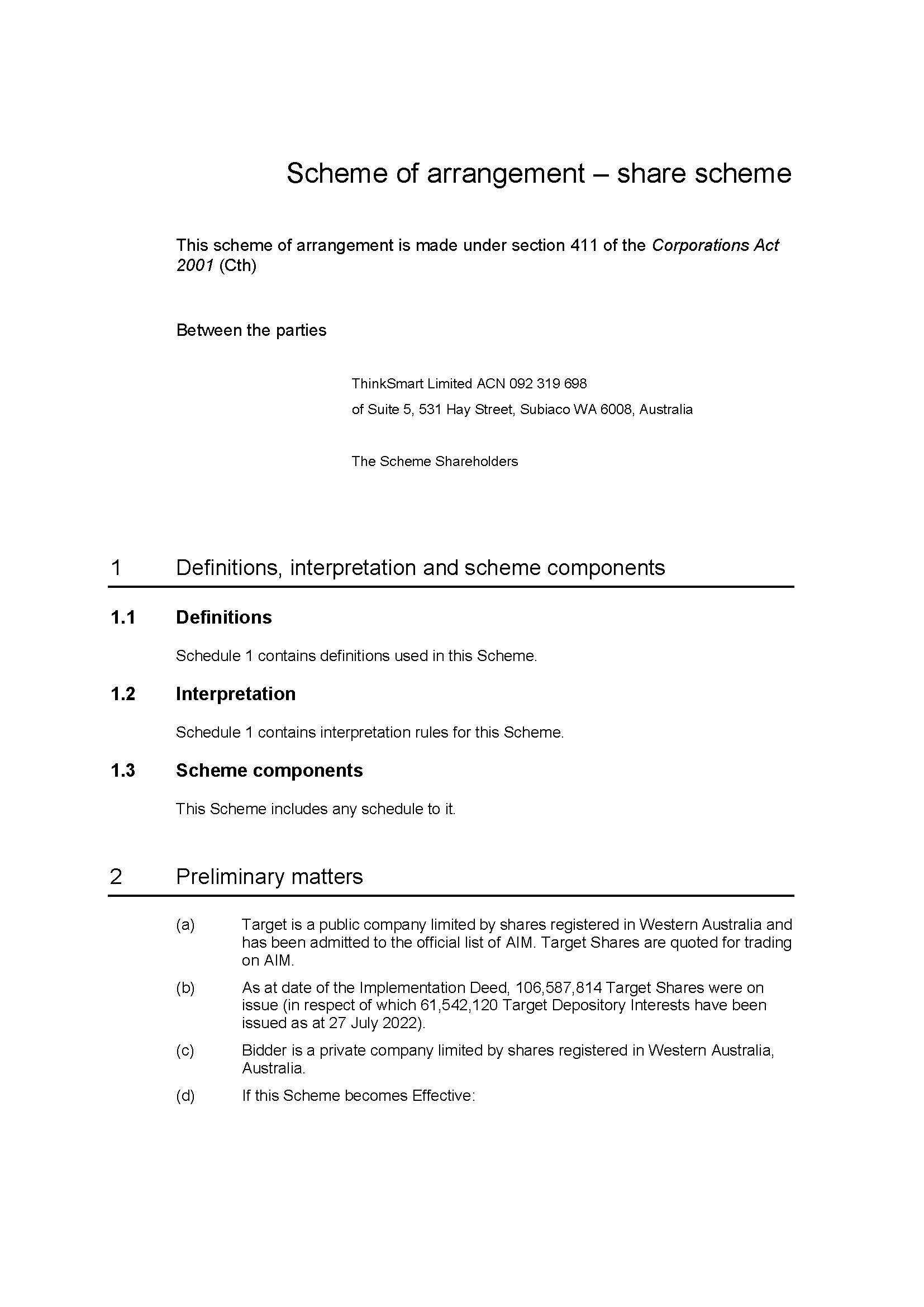
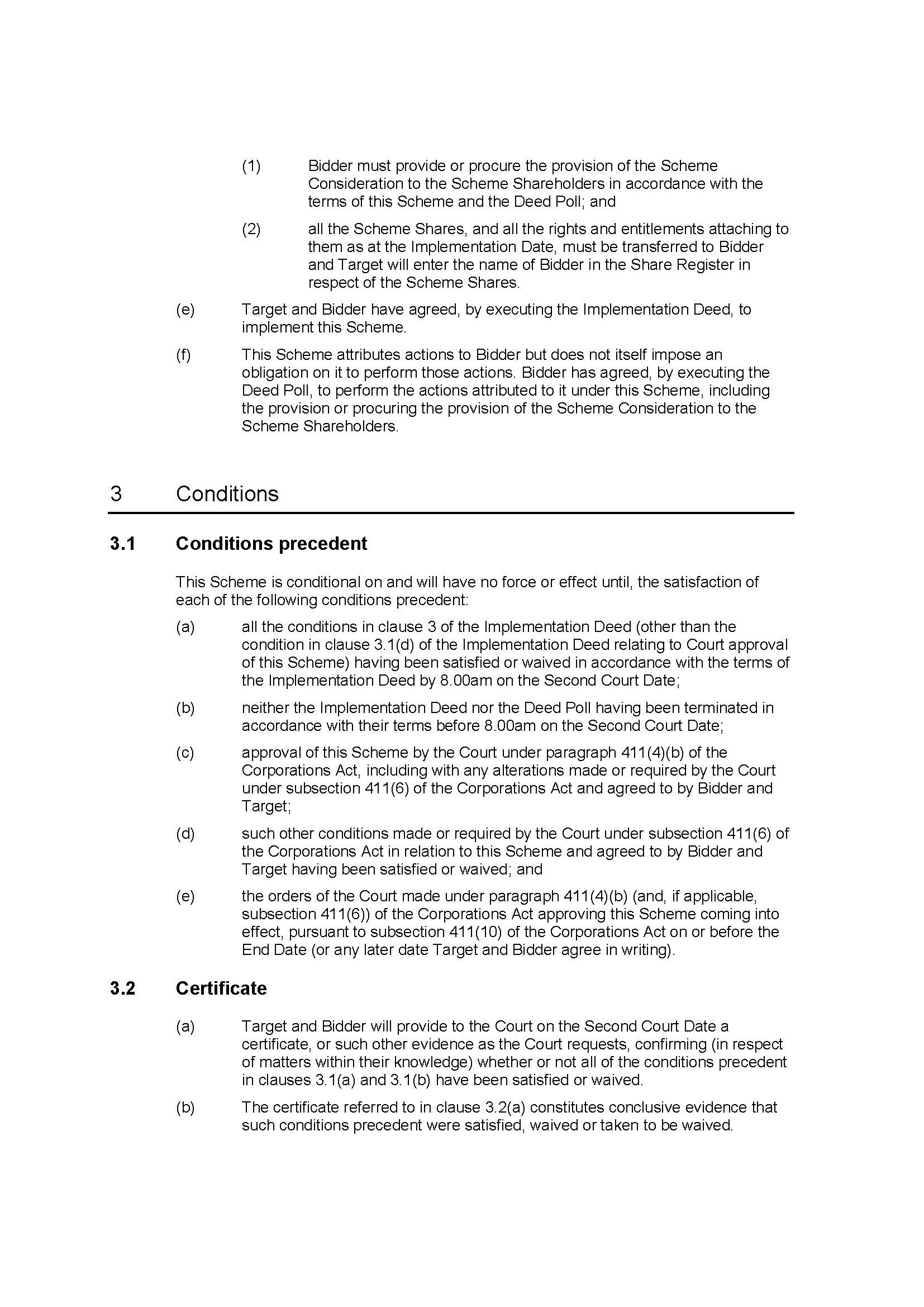
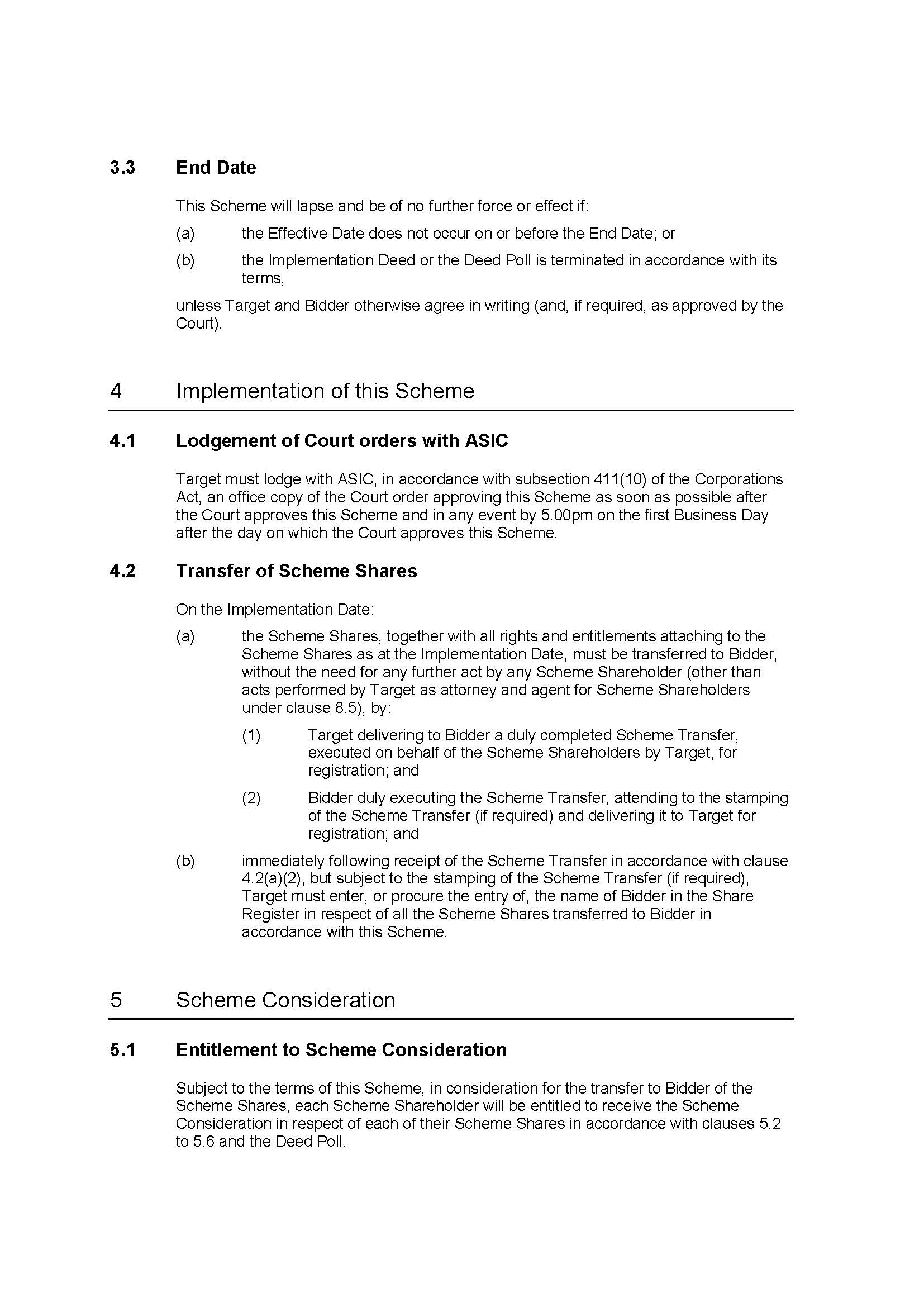
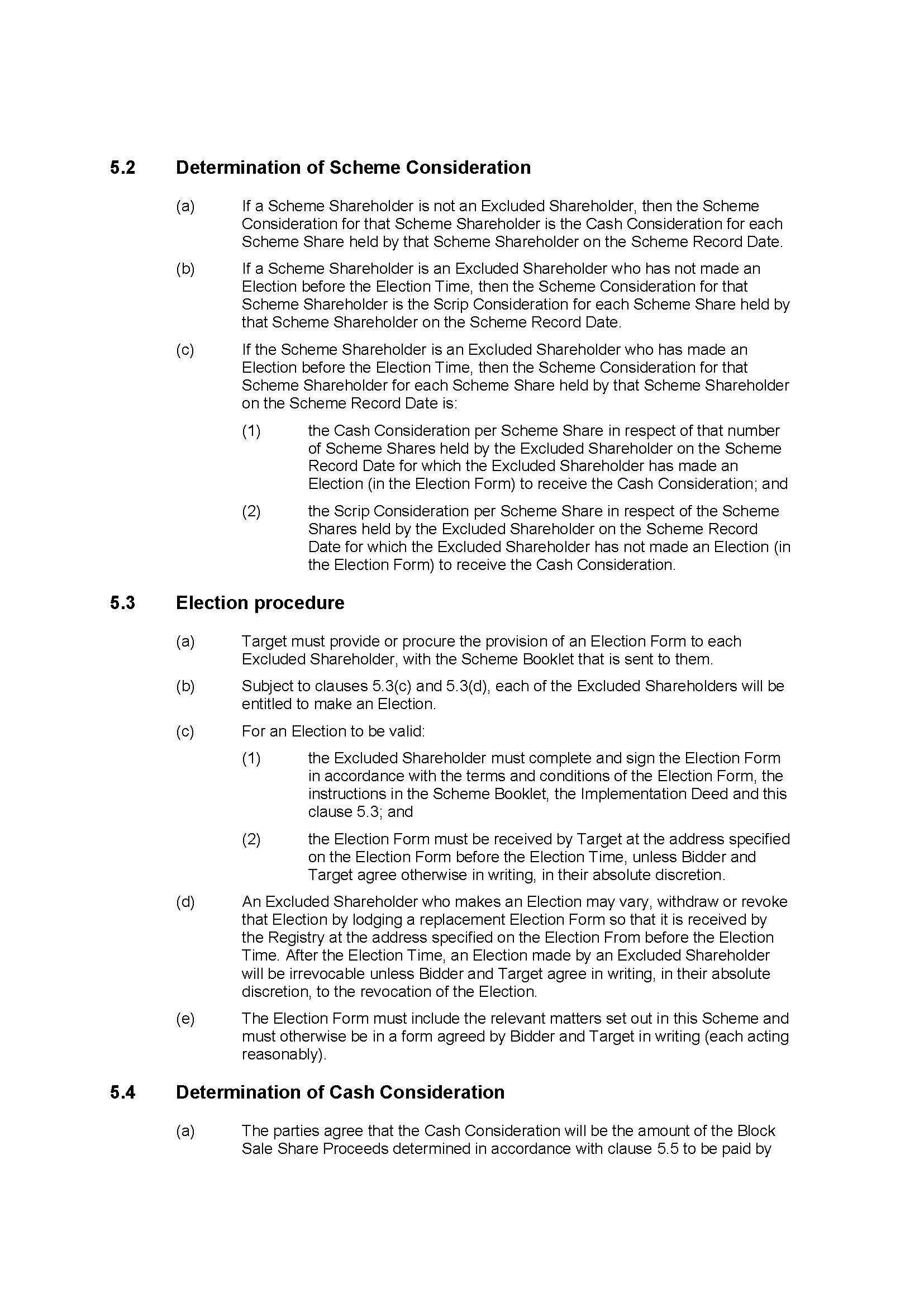
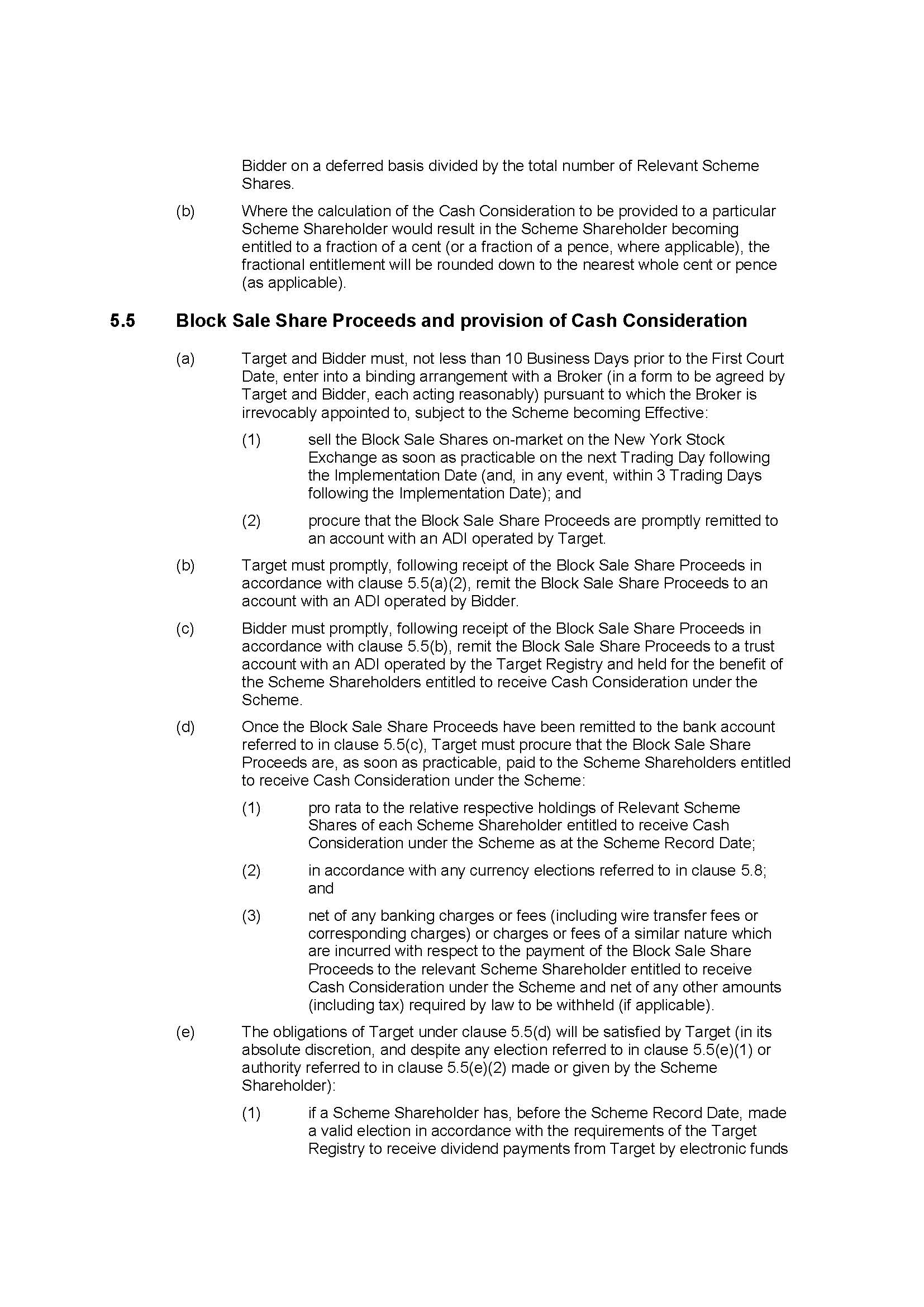
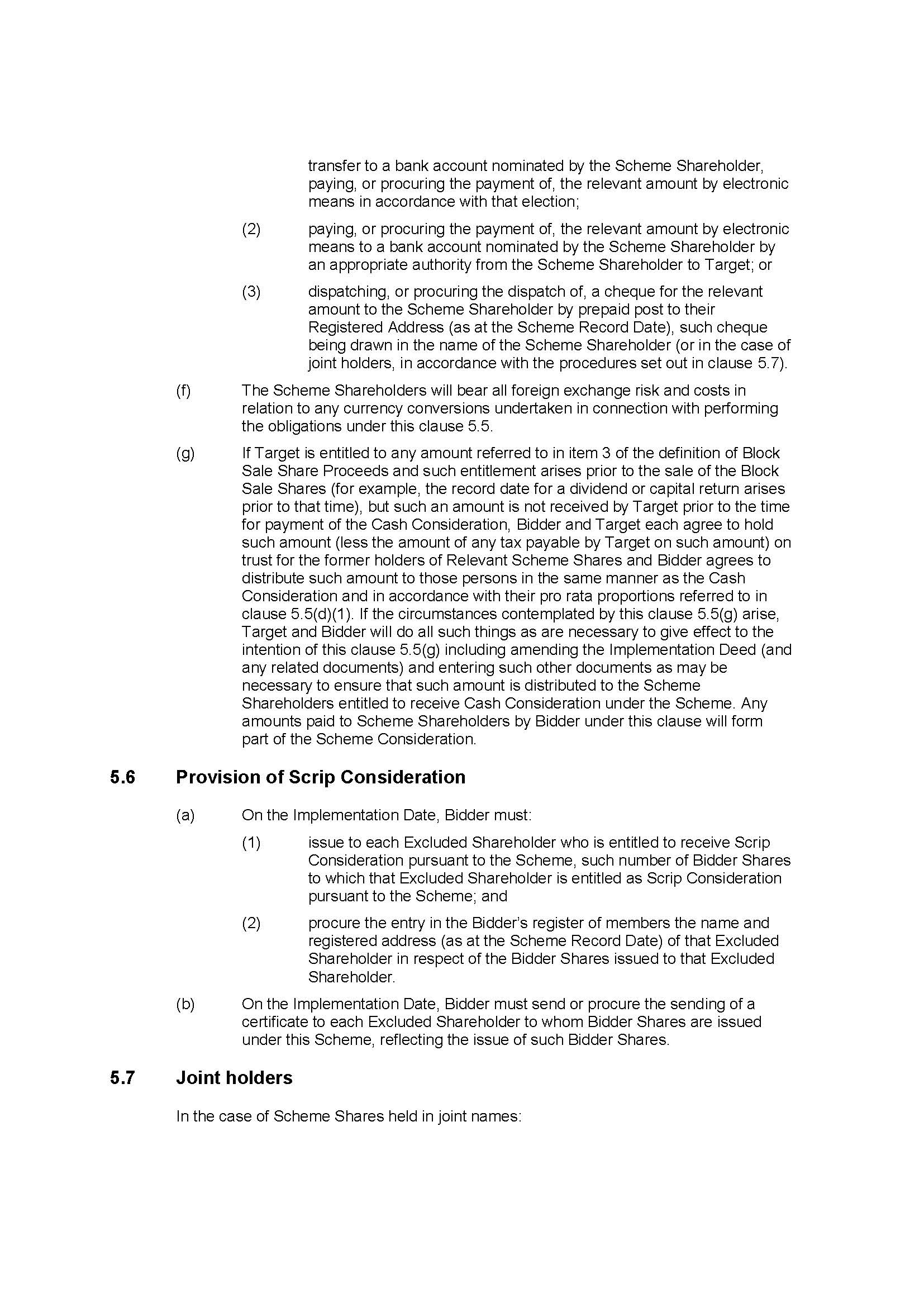
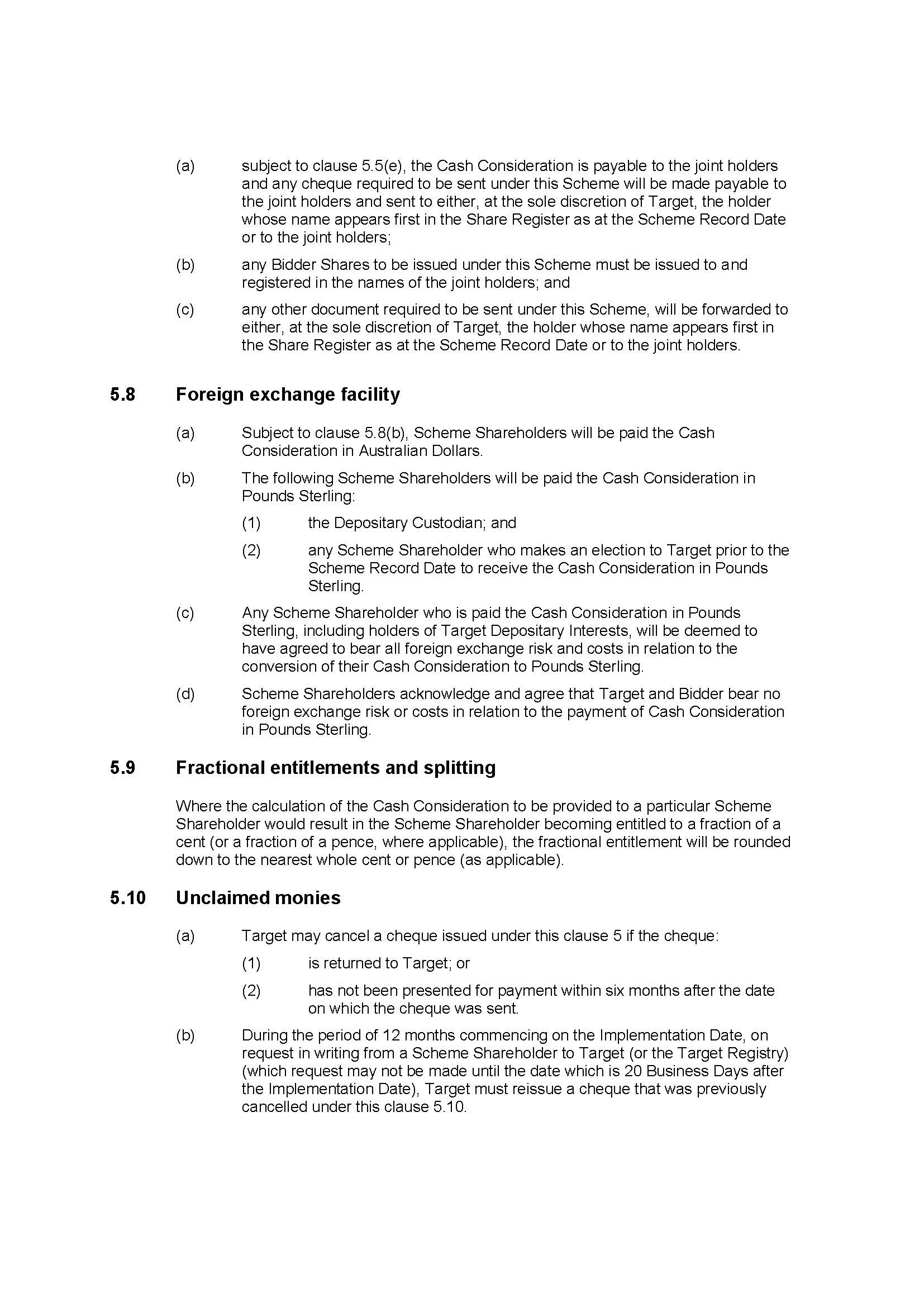
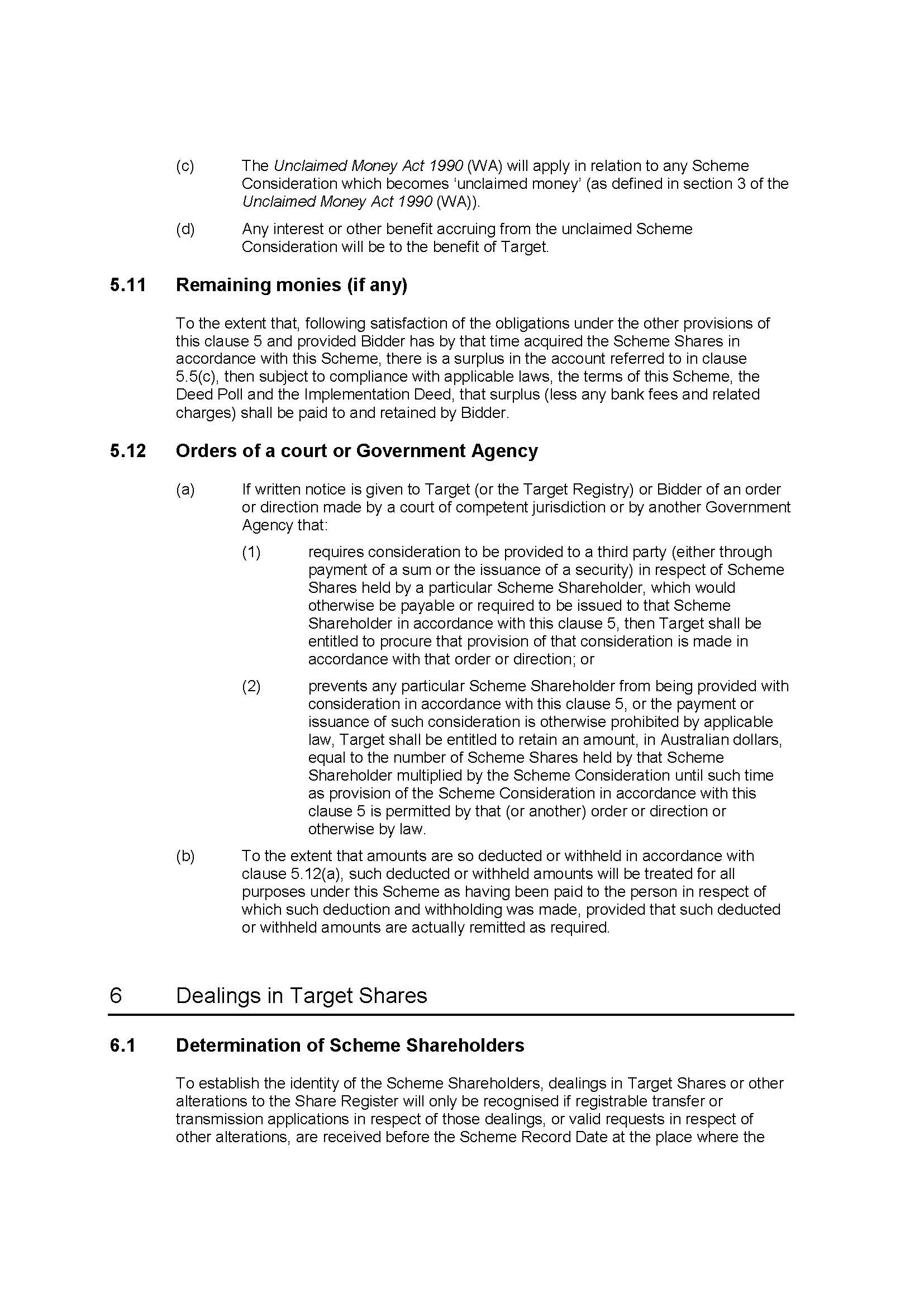
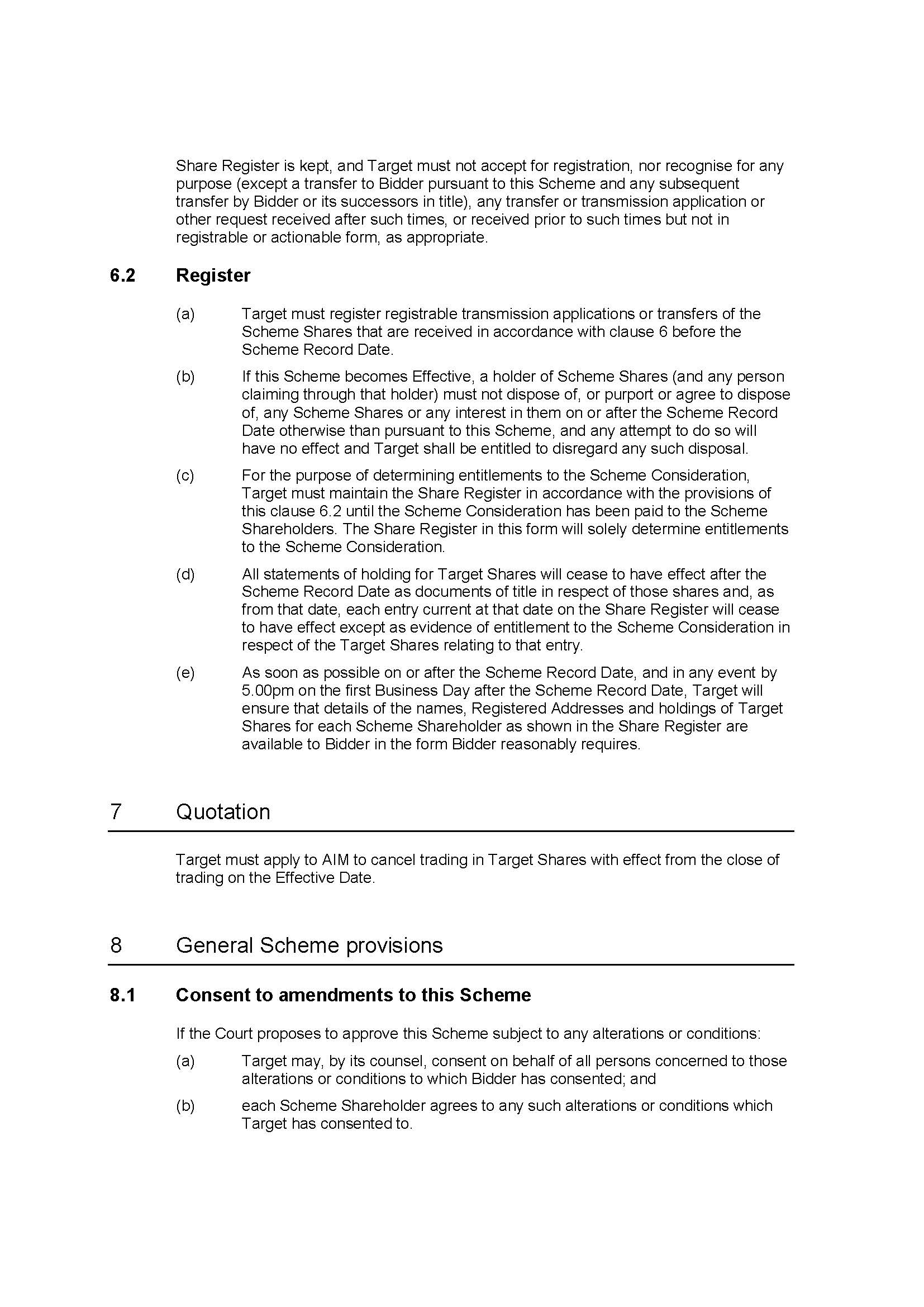
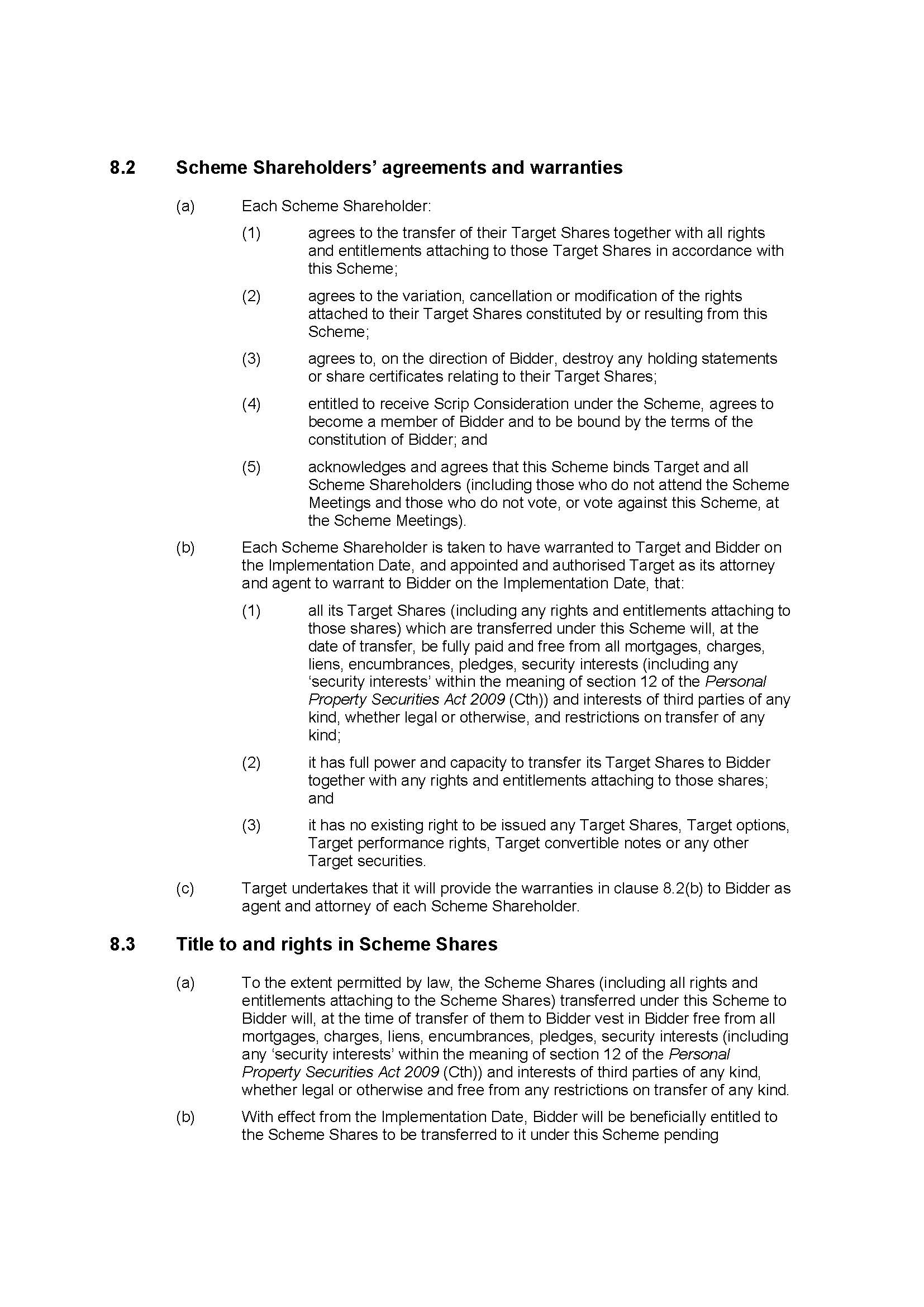
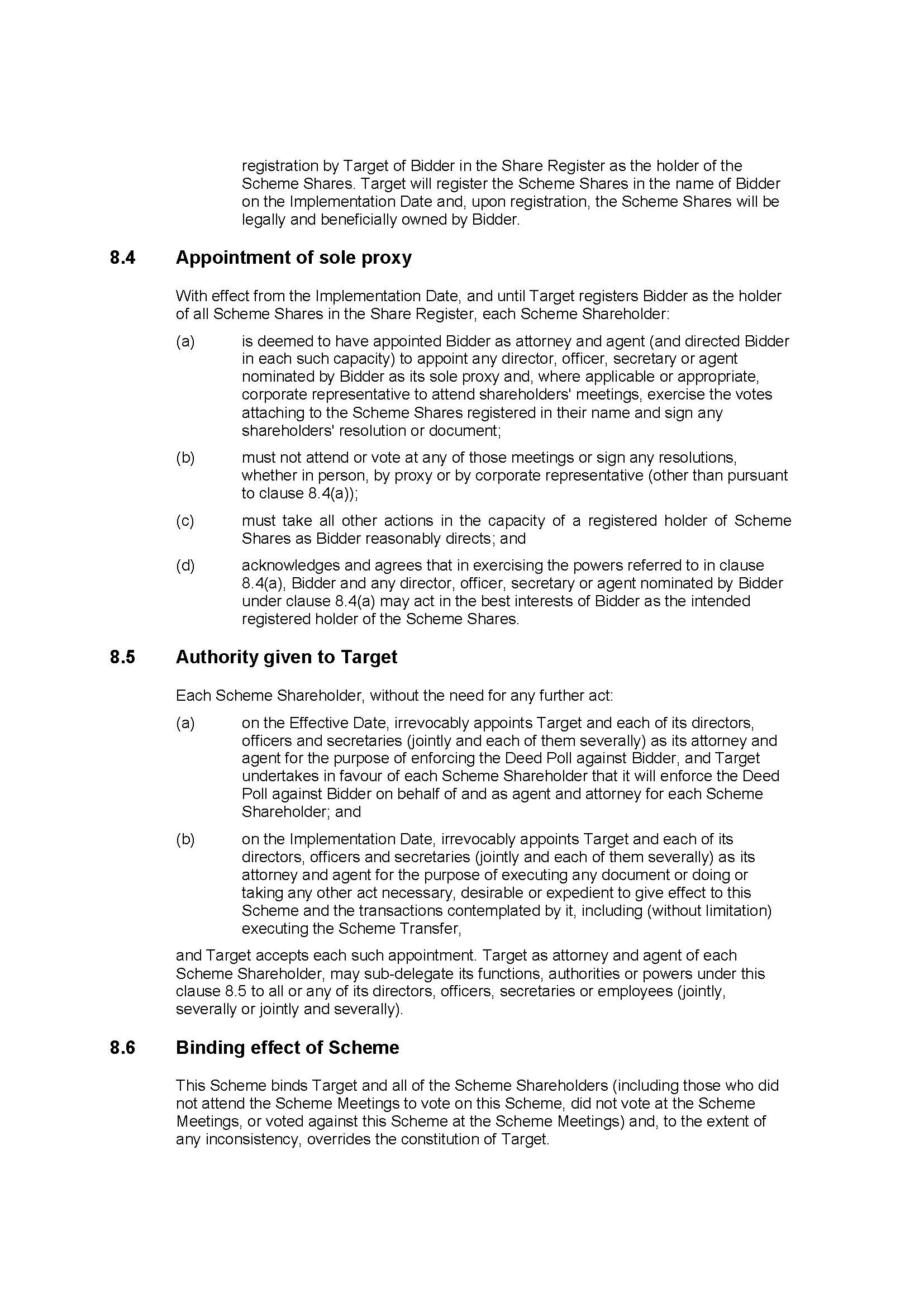
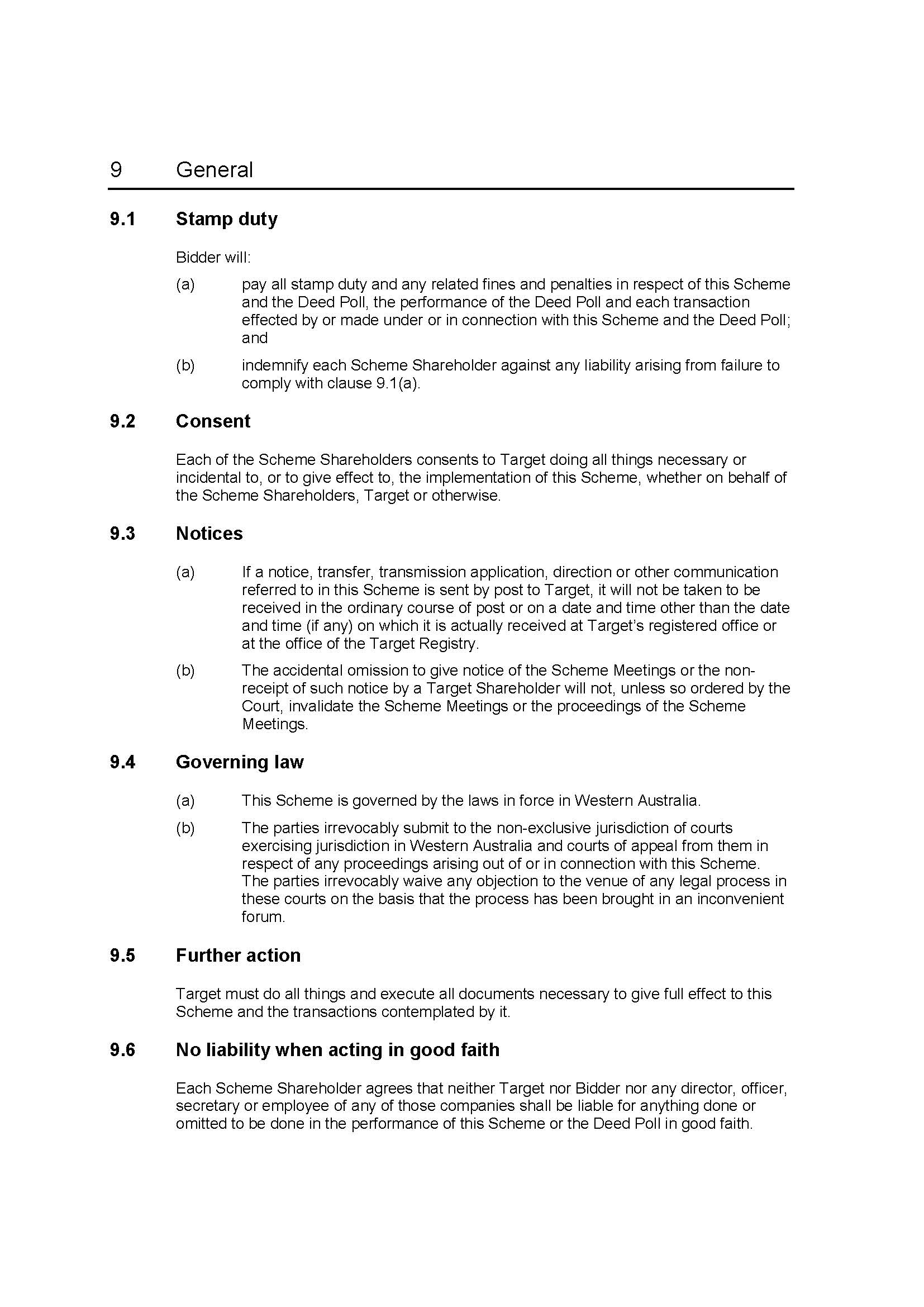
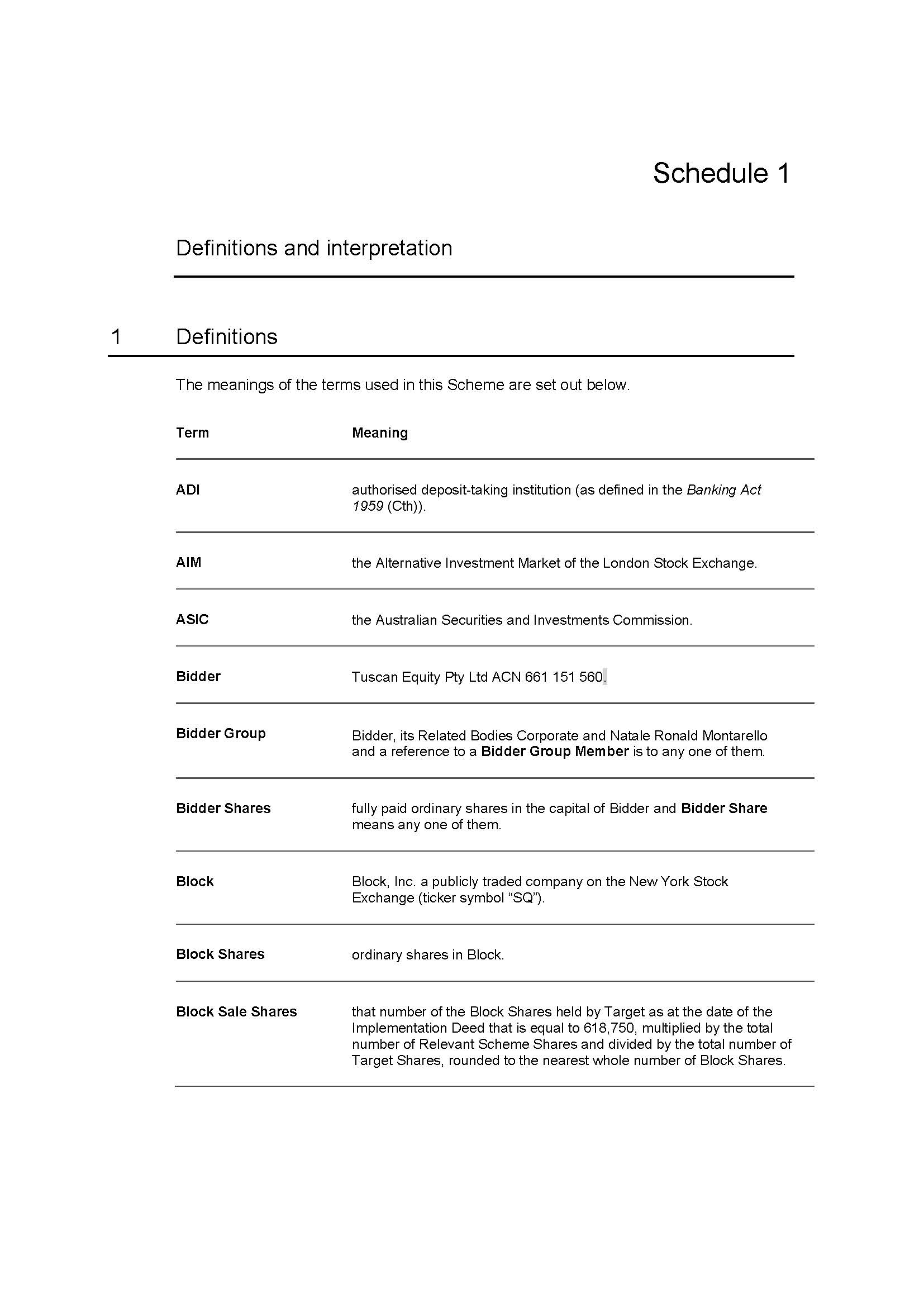
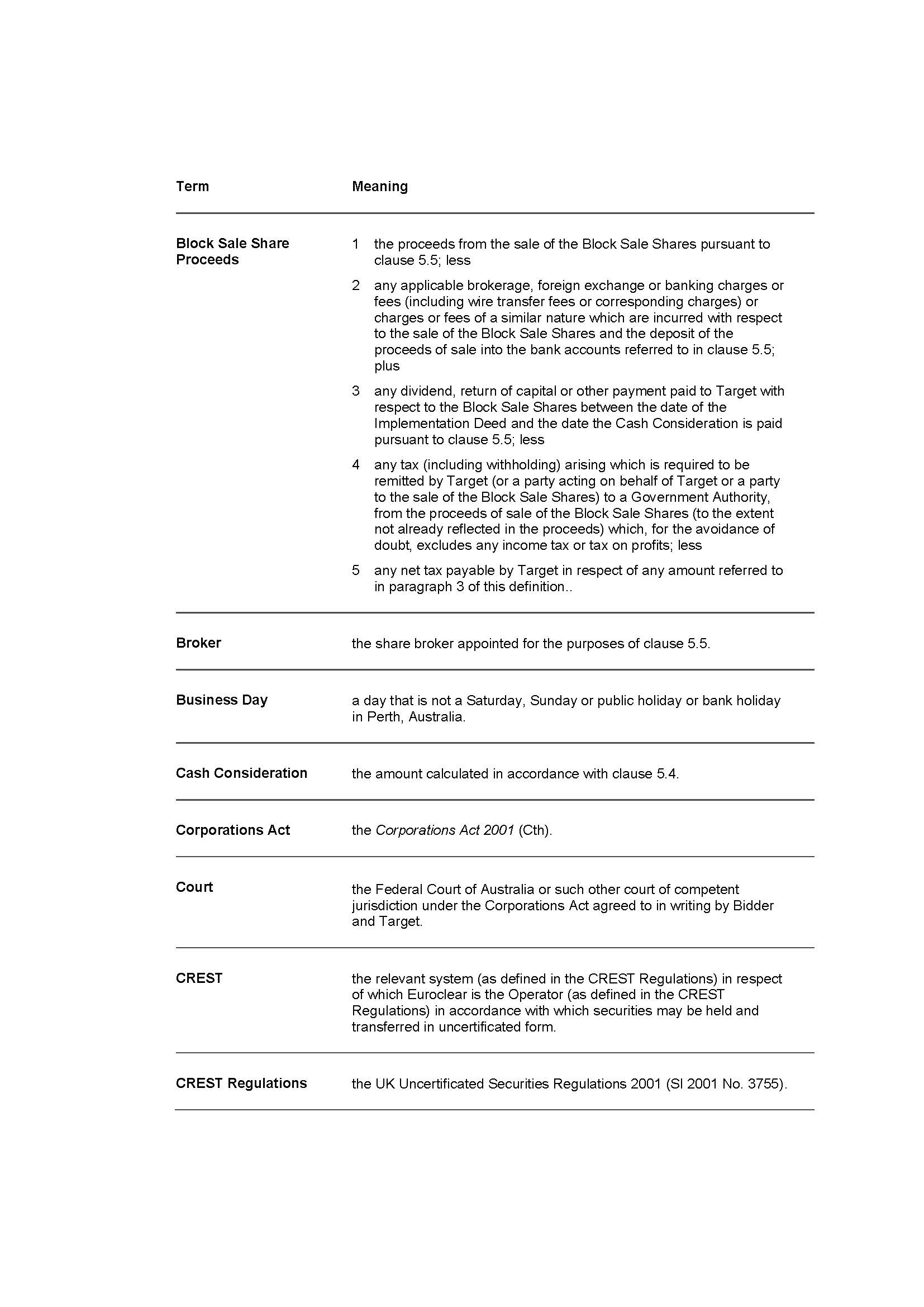
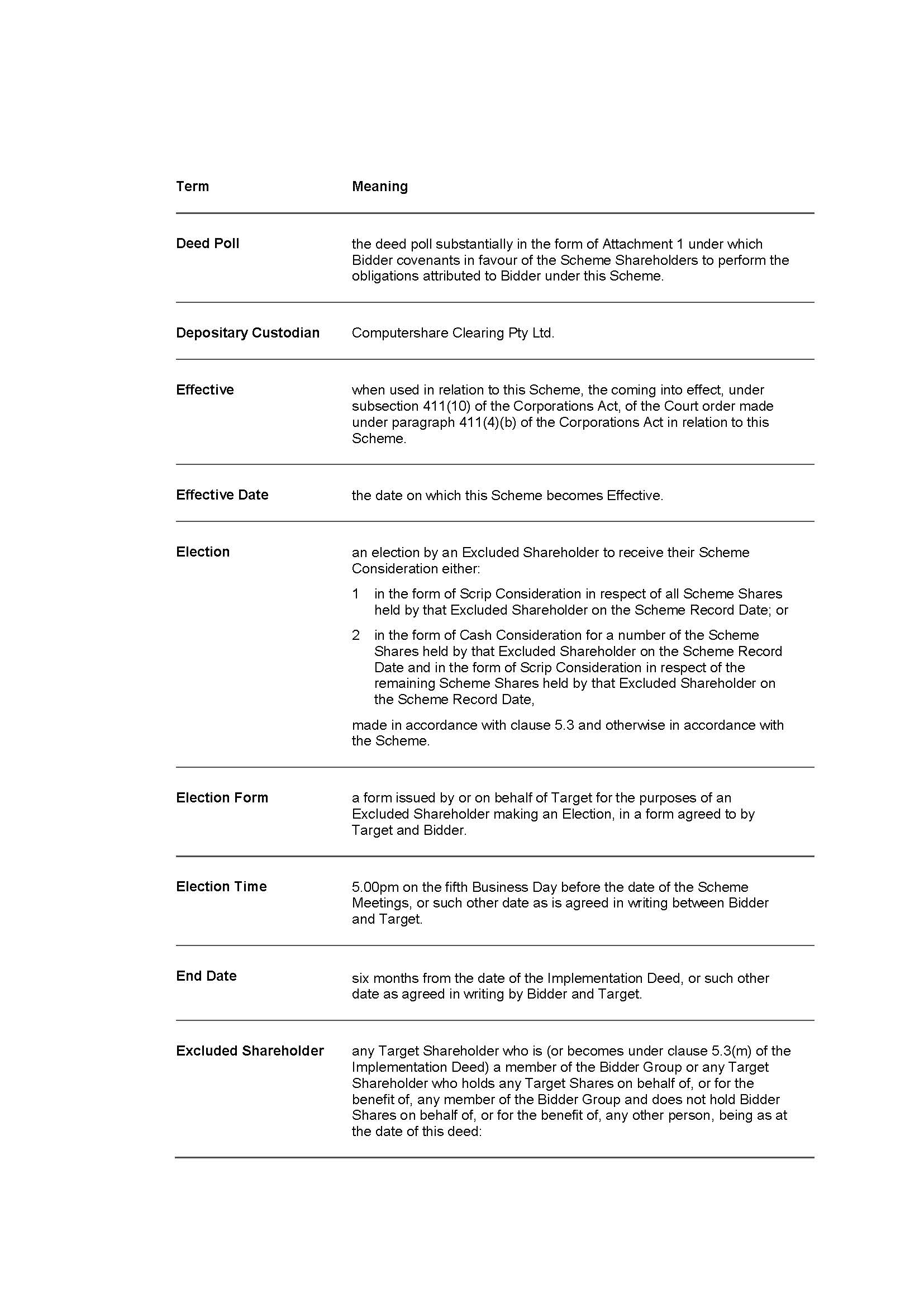
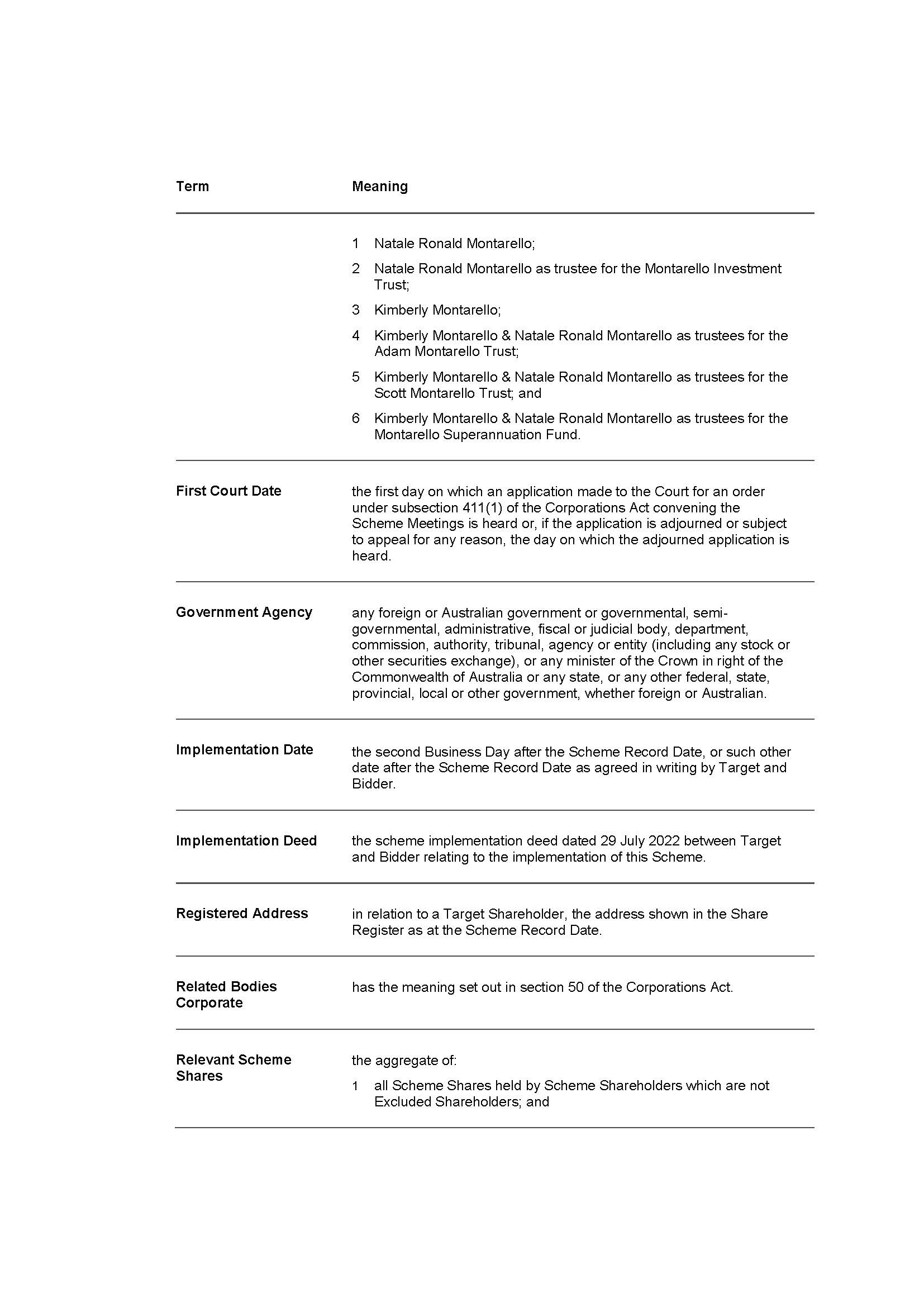
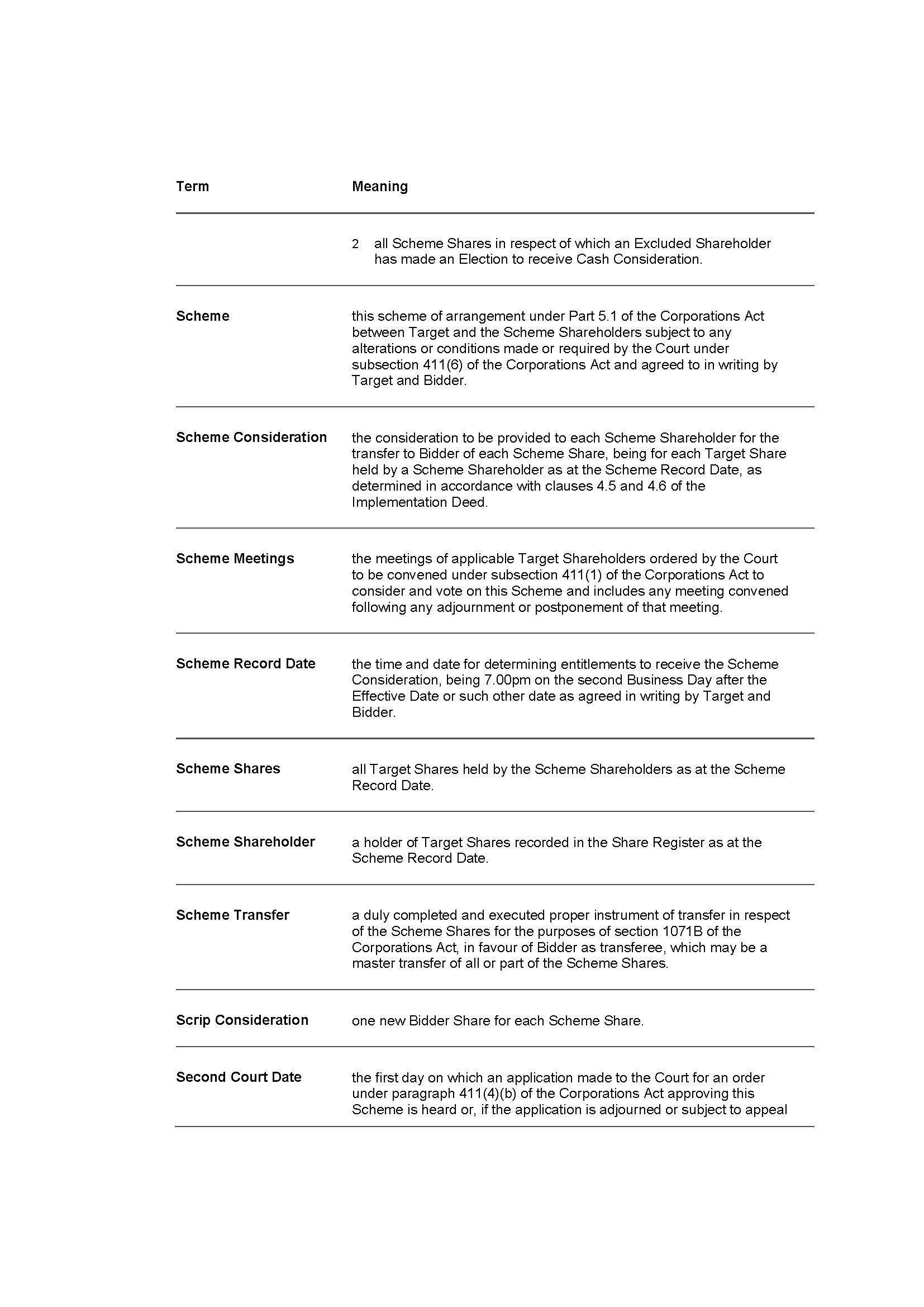
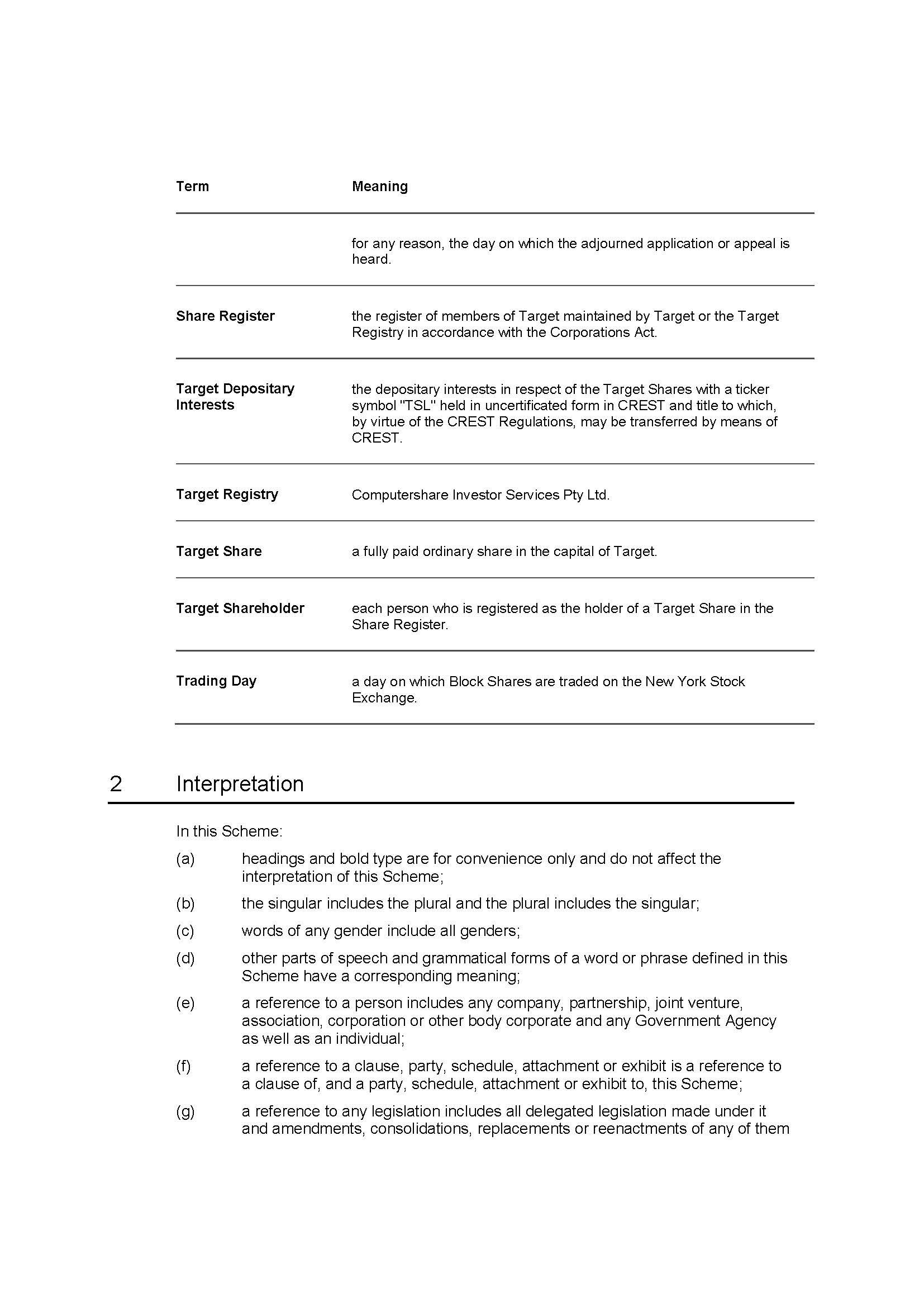
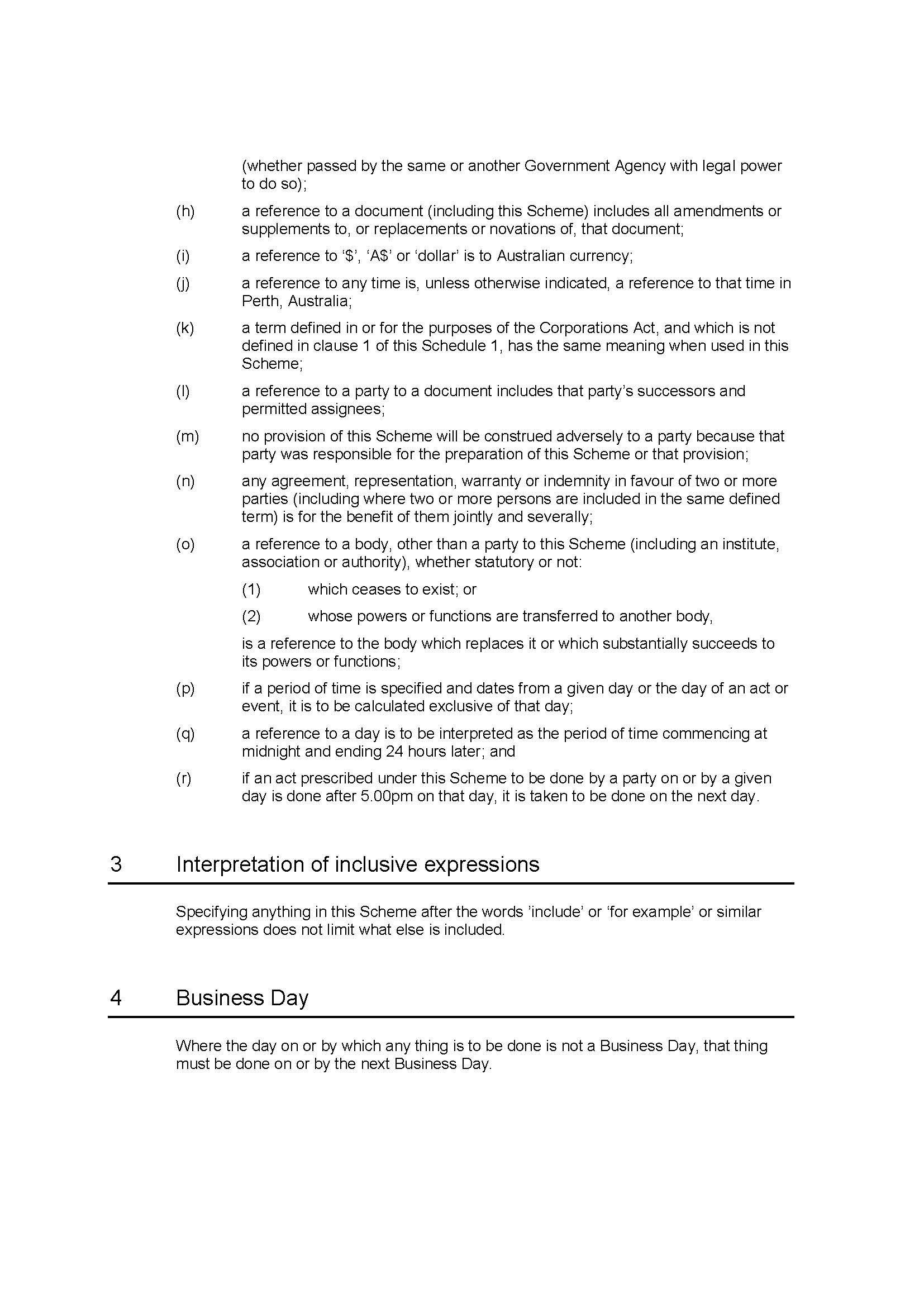
2. Pursuant to s 411(4)(b) of the Corporations Act 2001 (Cth) (Act), the scheme of arrangement between the plaintiff and its members, as set out on pages 302 to 321 of the affidavit of Paul Bentley Branston affirmed on 29 September 2022 (Scheme), a copy of which is annexure A to these orders, is approved.
3. Pursuant to s 411(12) of the Act, the plaintiff is exempted from compliance with s 411(11) of the Act in relation to the Scheme.
4. Pursuant to s 1322(4)(d) of the Act, the time by which ThinkSmart Depositary Interest holders were to lodge their voting instructions for the Scheme Meetings in accordance with the relevant notice of Scheme Meeting, pursuant to paragraph 13 of the orders made on 21 October 2022, is extended until 12.30 pm (London time) on 11 November 2022.
5. The plaintiff must lodge an office copy of these orders with the Australian Securities and Investments Commission by 23 November 2022.
Note: Entry of orders is dealt with in Rule 39.32 of the Federal Court Rules 2011.
Annexure A
JACKSON J:
1 On 21 October 2022, orders were made (First Orders) convening meetings for the purpose of considering a scheme of arrangement (Scheme) proposed by the plaintiff, ThinkSmart Limited: ThinkSmart Limited [2022] FCA 1314 (ThinkSmart (No 1)).
2 The First Orders made provision for:
(a) convening a meeting of ThinkSmart's Excluded Shareholders (the company's Executive Chairman and CEO, Natale (Ned) Montarello, and entities related to him) for the purpose of considering, and if thought fit, agreeing to the Scheme;
(b) convening a meeting of ThinkSmart's other shareholders (General Shareholders), for the purpose of considering and, if thought fit, agreeing to the Scheme; and
(c) the dispatch of the explanatory statement for the Scheme (scheme booklet) subject to some approved amendments.
3 Subsequently, on 24 October 2022, orders were made approving call scripts for both inbound and outbound telephone information lines, subject to some approved amendments.
4 In broad terms, the Scheme will involve ThinkSmart selling on market those of its shares in Block, Inc that are attributable to General Shareholders, and distributing the cash to General Shareholders in proportion to their shareholdings in ThinkSmart. In return, their shares in ThinkSmart will be transferred to Tuscan Equity Pty Ltd (BidCo), a company owned by Mr Montarello. The Excluded Shareholders will also transfer their shares to BidCo. However they will have an election in respect of each of their shares to receive the same consideration as General Shareholders, or to receive scrip in BidCo instead. To the extent that they elect to take scrip in exchange for ThinkSmart shares, the Block shares attributable to those shares will not be sold, and so will be retained by ThinkSmart. In substance Mr Montarello and his related entities will, through BidCo, emerge with full ownership of ThinkSmart, which will in turn hold such shares in Block as are retained, and other assets mentioned below. Further details of the Scheme are outlined in ThinkSmart (No 1) at [2]-[7].
5 The meetings were held on 16 November 2022. At the General Shareholders' Scheme meeting, the resolution to approve the Scheme was passed by majorities of votes cast and of shareholders present and voting. The Excluded Shareholders passed the resolution to approve the Scheme unanimously.
6 On 22 November 2022, the second hearing for approval of the Scheme pursuant to s 411(4)(b) of the Corporations Act 2001 (Cth) (Act) was held. Orders approving the Scheme and dealing with certain ancillary matters were made at that hearing. These are the reasons for those orders.
Materials relied upon
7 In addition to the evidence already adduced at the first hearing, ThinkSmart relied upon the following affidavits:
(a) the affidavit of Paul Bentley Branston affirmed on 18 November 2022 - Mr Branston is a solicitor at Herbert Smith Freehills, ThinkSmart's solicitors (this was the third affidavit of Mr Branston in this matter);
(b) the affidavit of Nicole Brooke Lewis affirmed 18 November 2022 - Ms Lewis is a relationship manager employed by Computershare, ThinkSmart's share registry;
(c) the affidavit of Jonathan Peter Sterling affirmed 21 November 2022 - Mr Sterling is a client manager employed by Computershare;
(d) the affidavit of Suzanne Thelma Zollo sworn 17 November 2022 - Ms Zollo is the executive manager of a mail house;
(e) the affidavit of Joe Cotterell affirmed 21 November 2022 - Mr Cotterell is the managing director of a printing and print finishing services company which was responsible for printing and posting scheme materials;
(f) the fourth affidavit of Mr Branston, affirmed on 21 November 2022;
(g) the fifth affidavit of Mr Branston, affirmed on 21 November 2022; and
(h) the affidavit of Jasper William Charles Johnson affirmed on 22 November 2022 - Mr Johnson is a solicitor at Herbert Smith Freehills (this was the second affidavit of Mr Johnson in this matter).
Requirements for approval of a scheme of arrangement
8 A court's power to approve a scheme is derived from s 411(4)(b) of the Act: Hibernian Friendly Society (NSW) Limited [2002] FCA 1139 at [8] (Conti J). Section 411(4) of the Act provides for a scheme of arrangement to be binding on, relevantly, members of a company with share capital if, at a meeting convened in accordance with an order of the Court, a resolution in favour of the scheme is passed by a majority in number of members present and voting (unless the Court otherwise orders) and by 75% of the votes cast on the resolution, and the scheme is approved by the Court.
9 The Court has discretion whether to approve a scheme, and it is not bound to approve it merely because it has previously made orders convening a meeting to approve the scheme: Seven Network Limited (No 3) [2010] FCA 400 at [31] (Jacobson J). The fundamental issue informing the exercise of the discretion is whether the proposal is fair and reasonable, in the sense that an intelligent and honest shareholder, who is a member of the relevant class, and acting alone in respect of their interests as shareholder, might approve it. The jurisdiction is supervisory; the Court is concerned to be satisfied that there has been an absence of oppression and that the compromise or arrangement is one which is capable of being accepted: see NRMA Limited (No 2) [2000] NSWSC 408 at [22] (Santow J) approved in Fowler v Lindholm [2009] FCAFC 125; (2009) 178 FCR 563 at [79] (Emmett, Gordon and Jagot JJ).
10 Apart from that, other matters of which the Court needs to be satisfied when deciding whether to approve a scheme are whether:
(a) there has been compliance with the orders of the Court convening the scheme meeting;
(b) the resolution to approve the scheme has been passed by the requisite majorities;
(c) all other statutory requirements have been satisfied;
(d) the plaintiff has brought to the Court's attention all matters that could be considered relevant to the exercise of the Court's discretion; and
(e) there has been full and fair disclosure to members of all information material to the decision whether to vote for or against the scheme.
See APN Outdoor Group Limited (No 2) [2018] FCA 1633 at [5] (Markovic J).
11 The first three of these can be described as procedural matters. In addition, ThinkSmart made submissions as to whether shareholders who voted at the meetings acted in good faith and not in pursuit of some illegitimate purpose: see NRMA at [22]. That goes to the exercise of the discretion: see Chevron (TAPL) Pty Ltd (No 2) [2022] FCA 381 at [22]-[23] (Banks-Smith J).
Procedural matters
The scheme booklet and notice of the Scheme meetings
12 The above matter and the following two (voting instructions and conducting the Scheme meetings) bear on whether there has been compliance with the First Orders convening the scheme meetings. The scheme booklet was registered with the Australian Securities and Investments Commission (ASIC) on 24 October 2022, as required by s 412(6) of the Act, prior to being sent to shareholders. ASIC must not register a copy of the explanatory statement (i.e. the scheme booklet) unless it appears to comply with the Act and ASIC is of the opinion that the statement does not contain any matter that is false in a material particular or materially misleading: s 412(8).
13 With the exception of one matter, the scheme booklet, substantially in the form approved at the first hearing, was dispatched to the shareholders in accordance with the First Orders.
14 The exception concerns the Excluded Shareholders. Paragraph 14(b)(i) of the First Orders required that Excluded Shareholders be sent a letter substantially in the form approved by the Court, which was to give the URL of a website enabling the Excluded Shareholders to access the scheme booklet and to lodge a proxy form. Instead, Excluded Shareholders were sent a hard copy of the scheme booklet. That was due to an election they had provided to receive hard copy communications by post. This is self-evidently a minor departure from the First Orders.
15 ThinkSmart made submissions about the effect of the departure under s 1322(2) of the Act, which relevantly provides that a proceeding under the Act is not invalidated because of any procedural irregularity unless the Court is of the opinion that the irregularity has caused or may cause substantial injustice. The term 'proceeding under this Act' in s 1322 has been given a broad meaning, and I am satisfied that it applies to the Scheme meetings and the process of calling them: see The Thoroughbred Consultants Pty Ltd (in liq) [2021] VSC 627 at [70]. I am also satisfied that the departure from the First Orders is a procedural irregularity, as it is an irregularity of notice: see s 1322(1)(b)(ii); and see Excelsior Gold Limited [2018] FCA 2064 at [104]; Cassini Resources Ltd (No 2) [2020] WASC 354 at [23]. In order to provide certainty as to the validity and effectiveness of the Scheme, it is appropriate to record that the Court is not of the opinion that the irregularity has caused or may cause substantial injustice. Nor was this non-compliance with the First Orders a reason not to approve the Scheme.
Voting instructions
16 At the second hearing, ThinkSmart sought an order to regularise the late receipt of certain voting instructions for the General Shareholders' Scheme meeting. ThinkSmart is listed on the Alternative Investment Market of the London Stock Exchange (LSE), and a number of shareholders hold their shares in the company by way of depositary interests held via a share custodian. So holders of depositary interests (DI holders) needed to provide their instructions to CREST, the platform that would process their voting intentions, before the meeting. There was a cut-off time of 10.00 am London time on 11 November 2022. One DI holder attempted to submit its instruction but it appears that CREST's platform did not receive the instruction electronically until after the cut-off time. The instruction was late by a matter of seconds so Computershare permitted the DI holder to submit its instruction by a written form, which was provided two hours later on the same day.
17 ThinkSmart sought an order under s 1322(4)(d) of the Act to ensure that the late receipt of the instruction would not affect the validity of the vote at the General Shareholders' Scheme meeting. Relevantly, that provision empowers the Court to make an order extending the period for the doing of any act in relation to a corporation. It is a necessary condition of such an order that the Court is satisfied that no substantial injustice has been or is likely to be caused to any person: s 1332(6)(c).
18 I was satisfied of that in this case for two reasons. First, the DI holder was late by a matter of seconds and there was reason to believe on the evidence that the instructions may have been submitted before the cut off time but not electronically received until after that time. Second, in view of the number of shares voted by the DI holder, which were all voted in favour of the resolution, there would have been no difference to the outcome had the relevant votes not been cast. So an order under s 1322(4)(d) was made.
Conducting the Scheme meetings
19 There was evidence that the requirements of the First Orders relating to the conduct of the Scheme meetings were complied with. The meetings were held on 16 November 2022. They were conducted electronically via a meeting platform administered by Computershare. Shareholders were able to gain access to that platform by following instructions provided in the notice of scheme meeting sent to shareholders, and quorums were achieved. As required by the First Orders one of ThinkSmart's independent directors, David Adams, acted as chair.
Voting majorities and voter turnout
20 The evidence establishes that at the meeting of General Shareholders, a resolution to approve the Scheme was passed by, relevantly, 90.58% of votes cast and 91.30% of shareholders present and voting. As has been said, the votes of the Excluded Shareholders at their separate meeting were unanimously in favour of approving the scheme.
21 ThinkSmart drew the Court's attention to some discrepancies between the poll results revealed in the evidence provided to the Court, and those announced to the LSE for both the General Shareholders' meeting and the Excluded Shareholders' meeting. The discrepancies related to how DI holders and Excluded Shareholders were to be counted for the purposes of the headcount test in s 411(4)(a)(ii)(A) of the Act and do not affect the ultimate outcome in that regard.
22 The statutory thresholds under s 411(4)(a)(ii) have therefore been met.
23 It is worth noting, however, that the turnout of shareholders was quite low. Here, only 52 of 684 eligible shareholders voted at the scheme meetings (that is, 7.6%), and the number of shares voted at the scheme meeting as a percentage of ThinkSmart's total shares on issue was 56.69%. The votes cast in favour at the General Shareholders' meeting represented some 34.88% of the votes eligible to be cast at that meeting.
24 Low shareholder participation can sometimes call for consideration to ensure that the vote is not unrepresentative: TriAusMin Limited (No 2) [2014] FCA 833 at [11] (Farrell J). Also, in Asaleo Care Limited (No 2) [2021] FCA 636 at [21]-[22] Banks-Smith J said:
A low voter turnout is to be treated with some care on these applications because it may reflect issues as to notice or other procedural compliance: see generally TriAusMin Limited, in the matter of TriAusMin Limited (No 2) [2014] FCA 833 at [10]-[12]; and the spectrum of voter turnouts considered in Decimal Software Limited, in the matter of Decimal Software Limited (No 2) [2018] FCA 2040 at [19]-[21].
However, it does not follow that there are any such issues. In [Re] Amcor [Limited] (No 2) [[2019] FCA 842], Beach J, in addressing a similarly low voter turnout, adopted (at [20]) the following extract from Re Matine Ltd (1998) 28 ACSR 268, where Santow J said at 295:
The apathetic shareholder who chooses not to vote upon a scheme should not be presumed to be antagonistic to the scheme or to warrant paternalistic protection.
25 However there is no reason to think that the somewhat low turnout in this case is the result of any irregularity in the dispatch of materials to shareholders. ThinkSmart undertook a call campaign to proactively encourage shareholders to attend the meeting to cast their votes. Nor is there any reason to think that shareholders faced obstacles in voting. They were able to submit proxies or voting instructions in advance, and since the meeting occurred online, shareholders in any geographical location could attend and vote.
26 ThinkSmart points out that although the voter turnout was quite low, it exceeded the turnout for the three previous ThinkSmart general meetings (4.86% of shareholders for the 2021 AGM; 5.06% for a general meeting in January 2022; and 5.25% in June 2022). This can be relevant: see TriAusMin at [12]. I accepted that the low voter turnout was not a reason to decline to make orders approving the Scheme.
The second Court hearing
27 A notice of the second hearing was published in The Australian newspaper on 16 November 2022 in accordance with paragraph 18 of the First Orders. No person, including ASIC, filed a notice of intention to appear at the hearing (other than BidCo, which supported approval of the Scheme) and ThinkSmart received no informal notice of any objection to the Court giving its approval.
28 For the above reasons, I was satisfied that the procedural requirements for approval of the Scheme have been satisfied.
Discretionary matters
The Scheme is fair and reasonable
29 ThinkSmart must demonstrate that the Scheme is fair and reasonable so that an intelligent person, properly informed and acting alone, might approve it. The Court will usually approach the task upon the basis that the members are better judges of what is in their commercial interests than the court: Seven Network at [32]. The Court should not readily conclude that a scheme is unreasonable or unfair if the members have approved it after having been properly informed of the matters relevant to their decision.
30 It is relevant that there were two shareholder meetings of different classes, meaning that the General Shareholders, who will receive cash only and have no option to retain any indirect interest in ThinkSmart's remaining assets, had the opportunity to veto the proposal. As long as the General Shareholders were appropriately informed of the benefits and disadvantages of the Scheme, their vote in favour of it is a significant indicator that it should be taken to be fair and reasonable: see David Jones Limited (No 3) [2014] FCA 753 at [13] (Farrell J), quoted in ThinkSmart (No 1) at [22].
31 ThinkSmart submitted that the Scheme is fair and reasonable because of the following matters:
(1) Proof of the relevant statutory majorities is prima facie evidence that the Scheme is fair (citing Angel Seafood Holdings Ltd [2022] FCA 717 at [31]).
(2) The independent expert opined that the Scheme is fair and reasonable and therefore in the best interests of the General Shareholders. The expert maintained its opinion. The methodology of the expert has been fully explained to shareholders.
(3) The Independent Board Committee (described in ThinkSmart (No 1)) unanimously recommended that shareholders voted in favour of the Scheme in the absence of a superior proposal and while the independent expert maintained its opinion.
(4) No superior proposal has emerged since the announcement of the Scheme Implementation Deed on the LSE on 29 July 2022. There has been more than three months for an alternative proposal to emerge.
(5) The Scheme will yield commercial benefits for shareholders, as it facilitates an exit from their investment in ThinkSmart at a price that eliminates the discount at which ThinkSmart shares have typically traded when compared to the market value of ThinkSmart's holdings in Block.
(6) The General Shareholders voted in a separate class to the Excluded Shareholders and approved the Scheme by the requisite majorities with the benefit of full disclosure of the terms of the Scheme.
(7) The Scheme did not have a coercive effect on shareholders. This is a reference to concerns that ASIC raised in a letter that was sent a short time before the first court hearing: see ThinkSmart (No 1) at [32]. Some of those concerns related to things said in the scheme booklet about shareholders' exposure to a potential wind up of the company if the scheme did not go ahead. ThinkSmart submitted that the Scheme is not coercive by reason of things said in the scheme booklet about shareholders' exposure to the wind down of legacy businesses, because it involved a commercial proposition that had been put to and agreed to by the company's shareholders. Further, ThinkSmart submitted that the explanation in the scheme booklet of possible scenarios if the Scheme did not go ahead did not involve coercion but were relevant considerations for shareholders.
(8) The day before the Scheme meetings, ThinkSmart announced on the LSE the elections made by the Excluded Shareholders as to the form of consideration to be taken by them, so the other shareholders were fully informed of that.
(9) Neither ASIC nor any shareholder appeared at the second hearing to oppose it.
32 I do not consider it necessary to go so far as to say that the votes are prima facie evidence of the fairness of the proposal, but I otherwise accept these submissions. In the end, the fairness of the proposal depends on each shareholder's assessment of the value of their shares compared to the cash consideration they are to receive, of the value of the assets that will remain with Mr Montarello and the Excluded Shareholders through BidCo, and the likelihood that any more advantageous way of dealing with their investment will emerge. Those are commercial judgments for shareholders, which they are best placed to make, provided that they have been fully informed. Subject to that proviso (to which I turn below), there is no reason to second guess the judgments represented by the majority approval of those General Shareholders who voted at the Scheme meeting.
33 As for the concerns ASIC expressed about coercion and other matters, ASIC's decision not to appear at the second hearing implies that it has withdrawn those concerns, or that they have been otherwise resolved. No other person has raised them. It would not be appropriate to expect ThinkSmart or the Court to grapple with matters of such potential seriousness when they have been raised in nothing more than a letter, and where the sender of the letter has chosen not to appear at the second hearing to back the concerns up with evidence and submissions.
Full and fair disclosure
34 It must be shown that there was full and fair disclosure to shareholders of all information material to the decision whether to vote for or against the Scheme.
35 Before the scheme booklet was sent to shareholders, ThinkSmart amended it after consultation with ASIC, and after suggestions made at the first Court hearing. The amendments addressed substantive matters that may have been important to shareholders, such as performance risk (see ThinkSmart (No 1) at [44]-[49]), the future value of the legacy businesses or changes to the price of Block shares, uncertainty in the amount of consideration to be provided for the shares, and issues of fairness arising out of differential treatment between Excluded Shareholders and General Shareholders and the position BidCo will be in after implementation of the Scheme.
36 Where there is a complicated scheme, such as the one proposed, a balance must be struck between giving too little information to members and giving too much information such that the disclosure is unintelligible. The use of summaries and concise form expert reports may assist: Wesfarmers Ltd [2018] WASC 308 at [55]-[57]. In this matter, the 'short form' disclosure was contained in the Independent Board Committee Chairperson's letter. There was also the independent expert's report on the question of fairness and reasonableness which helped shareholders make their decision. The main characteristics of the Scheme were brought to shareholders' attention.
37 There was evidence the scheme booklet was professionally drafted and went through a verification process before being approved by the independent directors to ensure that it did not contain any misleading statements and that it satisfied the applicable disclosure requirements: see ThinkSmart (No 1) at [31].
38 I was therefore satisfied that there has been full and fair disclosure. When combined with shareholder approval, that disclosure in itself increases the confidence that the Court has in the fairness and reasonableness of the Scheme.
Good faith and proper purpose
39 ThinkSmart submitted that the Court should be satisfied that the shareholders voted in good faith and not for an illegitimate purpose, based on the following:
(a) the purpose of the Scheme is to effect the acquisition by BidCo of all of the ThinkSmart shares on issue;
(b) aside from the manner in which the consideration for the acquisition of shares will be obtained and provided, which has been disclosed in the scheme booklet, the Scheme does not involve any novel or exotic treatment of shareholders' rights;
(c) transactions of a similar nature have been approved by courts and are of a kind that sensible business people might consider to be of benefit to members (see, e.g. Navitas Ltd (No 2) [2019] WASC 218);
(d) voting was therefore unlikely to be motivated by an improper purpose;
(e) further, the independent expert engaged by ThinkSmart opined that the Scheme is fair and reasonable and therefore in the best interests of the General Shareholders; and
(f) neither ASIC nor any shareholder appeared in order to object to approval of the Scheme at the second hearing.
40 With one qualification, I accept those submissions. The qualification is that I do not accept that court approvals of acquisitions involving mixed scrip and cash consideration, such as that approved in Navitas, are of substantial precedential value in relation to the present Scheme. Of course, each proposal and each vote must be assessed on their own merits. The present Scheme has certain features that the one in Navitas lacked (see Navitas Ltd [2019] WASC 180), including that the cash to be provided to the relevant shareholders is to be obtained, in effect, by realisation of certain assets of ThinkSmart itself, namely its shares in Block. And its result will be to leave Mr Montarello in control of the remaining assets of ThinkSmart which, as explained in ThinkSmart (No 1), are legacy businesses of leasing finance and support for a part of Block's business, as well as the Block shares that are not sold, and cash.
41 I have already addressed whether the Scheme is fair and reasonable. In relation to good faith it is enough to say that the Scheme has been proposed for an intelligible commercial purpose. In short, the scheme booklet indicated that the shares in ThinkSmart have traded at a discount to the value of the Block shares held by the company, so that the proposed Scheme is a way of realising that value for shareholders and leaving Mr Montarello and interests associated with him with control of the legacy businesses, which are expected to wind down. That is not an illegitimate purpose and there is no evidence before the Court suggesting that ThinkSmart or its directors or shareholders have acted with any different purpose, or other than in good faith.
Section 411(17) of the Act
42 The Court must not approve the Scheme unless it is satisfied that the Scheme has not been proposed for the purpose of avoiding the operation of any of the provisions of Chapter 6 of the Act (concerning takeovers), or there has been produced to the Court a letter from ASIC stating that ASIC has no objection to the Scheme: s 411(17).
43 The necessary letter from ASIC, dated 21 November 2022, has been provided. Therefore s 411(17) does not prevent the Court from approving the Scheme. As a matter of logic it does not follow that the existence of the proscribed purpose of avoiding provisions of Chapter 6 would be irrelevant to the exercise of the discretion: see Macquarie Private Capital A Ltd [2008] NSWSC 323 at [29] (Barrett J). But unless ASIC or another contradictor has raised the point specifically, it does not seem to me to be helpful or appropriate for the Court to embark on an inquiry into the question separate to the broader issues of fairness and proper purpose which I have addressed in any event.
Other matters brought to the Court's attention
44 In its written submissions for the first hearing and described in ThinkSmart (No 1) at [42]-[64], ThinkSmart raised several issues for the Court's consideration. For reasons given there, none of those issues was likely to be an impediment to Court approval of the Scheme. Subject to comment on three matters, there have been no further developments in relation to those issues, and they did indeed present no impediment to approval of the Scheme.
45 The first matter requiring additional comment is that ThinkSmart has provided a certificate, in a form contemplated by the Scheme and executed by ThinkSmart and BidCo, confirming that all conditions precedent to the operation of the Scheme and the Scheme Implementation Deed have been satisfied, other than Court approval. It is appropriate for the Court to receive that, so that it can be assured that the Scheme will be binding on Court approval being given: see United Medical Protection Limited [2007] FCA 631 at [19] (Finkelstein J); Chevron (TAPL) at [20].
46 The second matter requiring comment concerns financial assistance and related party benefits that will be given when the Scheme is implemented. In addition to the resolutions passed at the Scheme meetings, it was necessary for ThinkSmart to propose shareholder resolutions at a general meeting for the approval of the company providing financial assistance for the purchase of its own shares, and approval of the provision of a benefit to a related party, in the form of a loan from ThinkSmart to BidCo by which that financial assistance will be provided: see ThinkSmart (No 1) at [42]-[43].
47 At the second hearing I sought evidence as to whether those resolutions had been passed. That evidence was provided in the form of an announcement to the LSE of the results of the annual general meeting of the company that preceded the Scheme meetings, which was annexed to Mr Branston's third affidavit. The announcement shows that both resolutions were passed with the votes of just under 93% of those voting in favour, where the threshold required was 75% for the financial assistance resolution (s 260B(1)(a)) and 50% for the related party benefit resolution. It can be inferred from the announcement that, as required by s 224(1) and s 260B(1)(a) of the Act, no votes in favour were cast by BidCo or its associates, namely the Excluded Shareholders. Passage of the resolutions was also a condition precedent to implementation of the Scheme, so the conditions precedent certificate is further evidence that it occurred.
48 The third matter requiring comment is that ThinkSmart foreshadowed that it might need an order of the Court waiving compliance with the headcount test in s 411(4)(a)(ii)(A) of the Act: see ThinkSmart (No 1) at [65]-[67]. In view of the numbers of shareholders who ended up voting in favour of the resolutions at the Scheme meetings, that order will not be required.
49 ThinkSmart raised three other matters before the second hearing on which it is appropriate to comment briefly.
50 First, three persons became DI holders after the date of dispatch of scheme materials. Those persons were not sent the scheme materials. ThinkSmart's constitution provides for situations in which shareholders are bound by notices prior to their entry on the share register, and while this does not directly relate to DI holders, it can be seen that there would be no deficiency in the notice provided had the DI holders been shareholders. Further, the scheme booklet was publicly available on the LSE website and even if the votes of those new DI Holders were voted against the Scheme, the outcome would not be affected. These matters meant that the fact that these DI holders were not given direct notice of the Scheme was no reason to withhold approval of the Scheme: see Mantra Group Limited (No 2) [2018] FCA 805 at [10] (Markovic J).
51 Second, approximately 1.7 million options for the issue of shares in ThinkSmart were outstanding at the time of the first hearing. For the purposes of that hearing I was satisfied that the option holders would have the opportunity to exercise the options before the relevant cut-off dates in order to participate as shareholders in voting on the Scheme and in its implementation: see ThinkSmart (No 1) at [24]. Since then, approximately 1.1 million options have been exercised, so about 500,000 of the options will lapse if the Scheme is approved and implemented.
52 Third, as already mentioned, the elections of the Excluded Shareholders to take consideration in scrip or cash were publicly disclosed by an announcement to the LSE on 15 November 2022. The Excluded Shareholders elected to receive cash consideration in respect of 5,720,330 of their shares, with the balance of 26,121,956 of their shares being exchanged for shares in BidCo upon the Scheme becoming effective. Accordingly, those Excluded Shareholders will become shareholders in BidCo and through it, ThinkSmart, and ThinkSmart will retain ownership of a number of Block shares corresponding to the shares for which scrip will be taken.
53 These three matters are straightforward consequences of the process and terms of the Scheme as disclosed to shareholders and did not present any reason to withhold approval of the Scheme.
Exemption from s 411(11)
54 ThinkSmart also sought orders under s 411(12) of the Act exempting it from compliance with s 411(11), which requires a copy of the Court's order approving the scheme of arrangement to be annexed to every copy of the company's constitution. I was satisfied that in circumstances where ThinkSmart will come to be closely held by Mr Montarello and his associates, there would be no utility in requiring ongoing compliance with that requirement.
Conclusion
55 For those reasons, I was satisfied that it was appropriate to approve the Scheme and made orders in the terms sought by ThinkSmart.
I certify that the preceding fifty-five (55) numbered paragraphs are a true copy of the Reasons for Judgment of the Honourable Justice Jackson. |
Associate:


