

Federal Court of Australia
Fidelity Capital (Australia) Pty Ltd v Delic [2022] FCA 41
ORDERS
FIDELITY CAPITAL (AUSTRALIA) PTY LTD (ACN 604 621 589) Appellant | ||
AND: | First Respondent MICHAEL SLAVEN AS TRUSTEE IN THE BANKRUPT ESTATE OF DAMIR JAKOV DELIC Second Respondent | |
DATE OF ORDER: | 1 February 2022 |
THE COURT ORDERS THAT:
1. The parties should seek to agree orders giving effect to these reasons for judgment, including as to costs.
2. If the parties are unable to agree final orders by 14 February 2022, each should by no later than that day file and serve a copy of their respective proposed orders, together with an outline of written submissions in support not exceeding two pages in length.
3. Final orders will then be determined on the papers and without a further oral hearing.
Note: Entry of orders is dealt with in Rule 39.32 of the Federal Court Rules 2011.
GRIFFITHS J:
1 These reasons for judgment concern an appeal from orders of the (then) Federal Circuit Court of Australia reported as Delic v Kazar and Slaven as Joint Trustees in the Bankrupt Estate of Delic (No 2) [2021] FCCA 130. The primary judge upheld an application for review by Mr Damir Delic pursuant to s 104(1) of the Bankruptcy Act 1966 (Cth) of a decision made by his then trustees in bankruptcy, Mr Michael Slaven and Mr Henry Kazar, to admit in whole an amended proof of debt (POD) submitted by the appellant in these proceedings, Fidelity Capital (Australia) Pty Ltd, in the amount of $285,142.46, which was subsequently revised down to $266,298.57 (see [42] below).
2 On 6 October 2021, the second respondent, the trustees in bankruptcy of Mr Delic’s estate, requested that the name of the second respondent be changed to remove reference to Mr Michael Slaven who, by Court orders dated 24 July 2019, resigned as Joint and Several Trustee effective from 29 March 2019. Mr Henry Kazar subsequently was appointed the sole trustee of Mr Delic’s estate. Neither the appellant nor the first respondent opposed this request. Orders were made on 11 October 2021 changing the second respondent’s name to “Henry Kazar in his capacity as Trustee of the Bankrupt Estate of Damir Jakov Delic” (the Trustee).
3 Before turning to the factual background of this appeal, it is desirable first to outline an unusual aspect of the procedural history of this proceeding. This refers to the fact that, following numerous concerns raised by Court in correspondence with the parties and resulting appointment of and provision of written submissions by an amicus curiae, on 23 December 2021 the appellant withdrew signed consent orders dated 18 November 2021 which would have had the effect of allowing the appeal by consent (the Proposed Consent Orders). This meant that the matter had to proceed to a subsequent hearing.
The withdrawal of the Proposed Consent Orders
(a) Applicable legal principles
4 Before outlining the relevant background, the Court’s concerns and the submissions of the amicus which preceded the withdrawal of the Proposed Consent Orders, it is apposite first to note three important matters of principle which inform the following discussion.
5 First, the Court is exercising jurisdiction under s 24(1)(d) of the Federal Court of Australia Act 1976 (Cth) (FCA Act) to hear and determine an appeal from orders made by the then FCCA pursuant to s 104(2) of the Bankruptcy Act. That appeal is by way of rehearing for the correction of error (see Robertson v Knott Investments Pty Ltd (No 3) [2010] FCA 1074 at [20]-[23] per Flick J).
6 Secondly, where parties to a proceeding proffer consent orders to resolve the matter, the Court must be satisfied that the proposed orders are both within power and appropriate (see Thompson Australia Holdings Pty Ltd v Trade Practices Commission [1981] HCA 48; 148 CLR 150; Australian Competition and Consumer Commission v Real Estate Institute (WA) [1999] FCA 1387; 95 FCR 114 at [37]-[38] per French J and Australian Competition and Consumer Commission v Woolworths (SA) Pty Ltd [2003] FCA 530; 193 ALR 417 at [20]-[22] per Mansfield J). As stated by French J in Real Estate Institute at [38]:
Nevertheless, in the making of consent orders and the acceptance of undertakings the court must not exceed its power. The limitations affecting jurisdiction or power to grant the relief sought must be observed. The court cannot put itself in the position of enforcing conduct which it has no capacity to command or compel. Parties cannot by consent confer power on the court to make orders which the court lacks power to make. Moreover the power of the court to make orders is an exercise of power defined and conferred by public law. The court, in exercising that power, does not merely give effect to the wishes of the parties. It exercises a public function and must have regard to the public interest in doing so. …
7 That being said, there remains a “principle of judicial restraint in the scrutiny of settlements between legally represented parties of full capacity which applies to consent orders” (Telstra Corporation Ltd v Minister for Broadband, Communications and the Digital Economy [2008] FCAFC 7; 166 FCR 64 at [47] per French, Weinberg and Greenwood JJ, citing Real Estate Institute).
8 Thirdly, where the Court is exercising appellate jurisdiction and the parties seek to allow an appeal by consent, the Court must be satisfied of arguable appealable error in the judgment below before exercising its power under s 25(2B)(b) of the FCA Act (see Redbubble Ltd v Hells Angels Motorcycle Corporation (Australia) Pty Ltd [2021] FCA 1467; 163 IPR 491 and the cases cited therein).
(b) Background to the withdrawal of the Proposed Consent Orders and the Court’s concerns
9 The matter was originally listed for hearing on 18 November 2021. When the matter was called on that day, the appellant’s counsel advised the Court that the appellant and first respondent (who was self-represented) were in advanced settlement negotiations. The matter was stood down for 30 minutes to allow those negotiations to continue. When the matter was re-called, the appellant advised the Court that a settlement had been reached. The Proposed Consent Orders were read onto the transcript without objection from the first respondent in substantially similar terms to those provided by email on 22 November 2021 (but dated 18 November 2021), which were as follows:
The Court orders that:
1. Appeal be allowed.
2. Orders made on 5 February 2021 be set aside.
3. In lieu, order that pursuant to s 104(2) of the Bankruptcy Act 1966 (Cth), the Appellant’s Proof of Debt be admitted for $325,000.
4. Each party pay their own costs.
The Court notes:
(a) The $325,000 is inclusive of the sum of $50,000 held by the Appellant’s solicitors on trust;
(b) Upon receipt of $275,000 from the Respondent and release of the $50,000 held on trust by the Appellant’s lawyers to the Appellant to a total of $325,000, the Appellant will release its interest over vehicles it has a security interest in with Composite Installations (NSW) Pty Ltd (In Liquidation) and otherwise undertakes to have the vehicles transferred to Mr Delic free of any interest of the Liquidator of Composite Installations (NSW) Pty Ltd (In Liquidation); and
(c) After (a) and (b) the parties will execute mutual releases.
10 After the parties provided Proposed Consent Orders signed by the appellant and first respondent, the Court requested the parties to provide a joint note which identified arguable appealable error in the primary judgment in accordance with settled authority (see [8] above). On 26 November 2021, the appellant provided its first short note which sought to identify arguable appealable error in the primary judgment, noting that the first respondent had failed to respond to the appellant’s requests that he provide his consent to the note by that date. Despite a further request by the Court to indicate his position with respect to the first short note, Mr Delic failed to respond, and did not engage with any further correspondence by the Court or the appellant leading to the withdrawal of the Proposed Consent Orders.
11 Having read the appellant’s first short note, the Court noted that the sum in proposed order 3 (which is considerably more than the figure of $266,298.57 claimed before the primary judge) may include amounts for interest and costs of this proceeding and the proceeding below, arising after the date of bankruptcy. The first short note made reference to the calculation of the sum of $266,298.57 claimed by Fidelity before the primary judge in an affidavit of Mr Abhinav Sharma dated 24 August 2020, which included explicit reference to amounts claimed for interest and enforcement costs arising after the date of bankruptcy. The appellant’s first short note stated that the amount calculated by Mr Sharma “excludes further interest and costs”, and that the “settlement includes costs of the trial and the appeal which are significant”.
12 On 30 November 2021, I caused my Associate to send an email to the parties seeking brief written submissions as to whether the Court had the power to make the Proposed Consent Orders having regard to s 82 of the Bankruptcy Act and Foots v Southern Cross Mine Management Pty Ltd [2007] HCA 56; 234 CLR 52.
13 On the same day, the appellant provided a second short note. In that note, the appellant submitted that:
(a) Section 82 of the Bankruptcy Act “has no part to play because the “debt” comprises an agreed amount”, and that the Bankruptcy Act does not “stand in the way of an agreed amount being provable in bankruptcy”.
(b) As a matter of the proper interpretation of the settlement agreement reached between the appellant and first respondent, “there is no interest or cost component in the agreed sum of $325,000” in proposed order 3.
(c) Alternatively, on the proper construction of the contract giving rise to the dispute, the appellant submitted that Mr Delic was subject to the debts and liabilities in this case as at the date of bankruptcy, presumably referring to both interest and costs.
14 On 1 December 2021, I caused my Associate to send another email to the parties, asking the appellant to explain apparent inconsistencies between the first and second short notes as to the agreed sum of $325,000 containing amounts referable to interest and costs.
15 On 2 December 2021, the appellant provided a third short note, which submitted that there was no such inconsistency, and stated:
The short point is there is no amount to be characterised as either interest or costs in the agreed amount. As such, it is not necessary to deconstruct a settlement in order to ascertain whether one can extract a component on account of either interest or costs.
16 The third short note also stated that Mr Sharma’s affidavit dated 24 August 2020 “can be put to one side” because “[t]hat was the claim as formulated at first instance”.
17 Remaining concerned as to Court’s power to make the Proposed Consent Orders, on 7 December 2021 the parties were informed that the Court was minded to appoint a junior counsel as amicus curiae on a pro bono basis to provide brief written submission on this issue. The parties had an opportunity to object to that course by 12 pm the following day.
18 As no objection was received, in the afternoon of 12 December 2021, orders were made appointing Mr N Bender of counsel as amicus curiae on a pro bono basis, and for the amicus to provide brief written submissions by 19 December 2021. The parties were informed that they would then be afforded an opportunity to provide any brief written submissions in response by 24 December 2021, and that the matter would otherwise be determined on the papers. The amicus provided written submissions on 15 December 2021, which were also made available to the parties.
(c) Amicus submissions summarised
19 In his outline of written submissions dated 15 December 2021, the amicus made the following primary submissions as to why the Court would not be satisfied that it has the power to make the Proposed Consent Orders and/or that it is appropriate to do so.
20 First, the mere fact that Mr Delic consented to the Proposed Consent Orders does not provide the Court with a valid basis to be satisfied that $325,000 is an appropriate quantification of a provable debt under s 82(1) of the Bankruptcy Act. Nor does that mean that the Proposed Consent Orders are consistent with s 107(1), which provides that a creditor is not entitled to receive, in respect of a provable debt, more than the amount of the debt and any interest payable. The amicus submitted there is no other evidence before the Court as to the basis of the quantification of the agreed amount. Even assuming, as Fidelity contends in its second short note, that Mr Delic was bound by an obligation incurred prior to the date of bankruptcy to pay Fidelity’s costs and therefore Foots would not prevent those costs being a provable debt, there is no basis other than Mr Delic’s agreement to conclude that those costs have been correctly quantified.
21 Secondly, the Court cannot be satisfied that the agreed amount of $325,000 excludes any amount representing interest arising after the date of bankruptcy that is not provable by operation of s 82(3B) of the Bankruptcy Act. The amicus submitted that the appellant’s short notes do not clearly assert that post-bankruptcy interest has been excluded from the calculation of the agreed amount. Mr Delic and Fidelity do not have the power to contract out of s 82(3B) by operation of a settlement agreement. To the extent that the parties have agreed that Fidelity’s proof of debt is to be admitted in an amount that incorporates post-bankruptcy interest, this would be beyond the Court’s power to make an order under s 104(2) of the Bankruptcy Act.
22 Thirdly, s 102(1) of the Bankruptcy Act provides that the trustee in bankruptcy, not the bankrupt, is to adjudicate on proofs of debt. The amicus submitted that it could not have been the legislative intent of the Bankruptcy Act to permit the admission and quantification of debts determined solely by agreement between the bankrupt and the creditor in the absence of any evidence of the appropriateness of that quantification. A trustee in bankruptcy is not bound to admit a proof of debt simply because a bankrupt has himself or herself admitted to it (see James v Woodgate [2012] FMCA 1214; 273 FLR 22 at [14]). This would circumvent the operation of ss 102(1) and 104(2) of the Bankruptcy Act. Furthermore, admission of Fidelity’s debt in the form proposed by the Proposed Consent Orders may affect the distributions paid to other creditors.
23 Fourthly, even assuming that the amount of $325,000 is a provable debt owed by Mr Delic to Fidelity, that was not the amount the subject of the proof of debt admitted by the Trustee nor the proof of debt rejected by the primary judge. The parties are asking the Court to vary the primary judge’s decision by admitting a proof of debt in an amount that exceeds the amount submitted by Fidelity to the Trustee and which at least appears to incorporate amounts representing Fidelity’s costs and potentially interest post-bankruptcy. The amicus submitted that the Trustee has not been presented with nor adjudicated on a proof of debt claiming $325,000 that is amenable to review by the Court under s 104(2) of the Bankruptcy Act. Furthermore, it is difficult to see how the parties could establish arguable appealable error in the reasons of the primary judge so as to justify an order by this Court under s 104(2) of the Bankruptcy Act admitting a proof of debt that exceeds the amount before the primary judge.
24 Finally, the amicus submitted that the Trustee has not signed the Proposed Consent Orders, and unless and until he provides such consent, it is not an appropriate case for the exercise of “judicial restraint” (see [7] above). Furthermore, Mr Delic was self-represented at the hearing and at the time the Proposed Consent Orders were provided to the Court. As Mr Bender noted, in allowing an appeal by consent, the Full Court in Bradken Ltd v Norcast S.ar.L [2013] FCAFC 123; 219 FCR 101 at [36] per Allsop CJ, Mansfield and Jacobson JJ treated as significant whether responsible counsel for the respondent had conceded an arguable appealable error to arise.
25 The Court wishes to express its profound gratitude to Mr Bender for his valuable assistance to the Court on short notice and on a pro bono basis. His willingness to assist the Court without financial reward is in the best and noble traditions of the Bar.
(d) Procedural background following the amicus submissions
26 Following the amicus submissions, the appellant informed the Court by email on 23 December 2021 that it did not propose to file any submissions in reply to the amicus’ submissions. As noted above, the appellant instead withdrew the Proposed Consent Orders.
27 The earlier procedural history of the proceeding may be summarised as follows:
26 February 2021: The notice of appeal was filed by Fidelity.
17 May 2021: Justice Perry made an order listing the matter for a case management hearing on 9 June 2021.
7 June 2021: Justice Perry made orders vacating the case management hearing on 9 June 2021 and re-listing the matter for a case management hearing on 30 June 2021.
30 June 2021: Justice Perry made orders requiring the appellant to file and serve an amended notice of appeal by 14 July 2021 (which was not complied with), submit drafts of the indexes to Part A and B of the Appeal Book by 11 August 2021, and listing the matter for a case management hearing on 21 July 2021. The orders noted that:
(a) The solicitors for Mr Delic indicated prior to the first case management hearing on 30 June 2021 that they would be filing a notice of ceasing to act.
(b) At the case management hearing Mr Delic sought an adjournment of two to three weeks to instruct solicitors, and as such the Court considered it appropriate to afford Mr Delic that opportunity.
21 July 2021: Justice Perry made orders vacating the case management hearing. Justice Perry was of the view that no further timetabling order should be made until it was docketed to a Judge for hearing.
18 August 2021: Orders made listing the matter for a case management hearing on 31 August 2021.
31 August 2021: Orders made at the case management hearing setting a timetable for the matter to be heard on 10:15am on 18 November 2021.
4 and 8 November 2021: Emails were sent by NSW Registry requesting an urgent explanation for Mr Delic's failure to file written submissions and list of documents to be included in Part C in accordance with orders dated 31 August 2021. No response was received from Mr Delic.
9 November 2021: An email was sent to the parties by NSW Registry listing the matter for an urgent case management hearing on 10 November 2021.
10 November 2021: At the case management hearing on 10 November 2021, Mr Delic claimed that the matter had been settled, that he was battling with health issues, and sought an adjournment of the hearing for six weeks to finalise the settlement. The appellant stated that no such settlement had been reached. Mr Delic was told that if he sought an adjournment, he would have to make a formal application with a supporting affidavit promptly. Otherwise, if the matter did not settle before the hearing, he should comply with the Court’s orders dated 31 August 2021 and file written submissions promptly because the hearing of the appeal would proceed as listed.
18 November 2021: On the morning of the hearing, Mr Delic sent a letter to Chambers (without notice to the parties) outlining his ongoing medical and mental health issues and he was seeking to make financial arrangements to engage legal representation. He also stated that he was continuing to seek to settle the matter with the appellant. He provided no supporting evidence regarding these issues. Mr Delic requested an adjournment of approximately two to three months, which was not granted.
It might also be noted that at 10:26 am on Monday, 31 January 2022 (shortly after the hearing had commenced) Mr Delic sent an email to my associate requesting an adjournment of the hearing so that he could “consider the advice of the amicus curiae and to potentially settle this matter with the appellant” and he claimed that he had found a barrister and law firm to assist him with submissions. He added that he had contracted COVID-19 and had been “very ill” for the past month. The adjournment request was opposed by the appellant. I refused the adjournment having regard to the lengthy history of the matter and Mr Delic’s failure to provide any evidence in support of his claims. His adjournment request effectively duplicated his unsuccessful request dated 18 November 2021.
The factual background summarised
The facts giving rise to the POD
28 The factual background underlying the POD and the primary judge’s findings in respect of disputed evidence are comprehensively set out at [13] to [78] of the primary judgment. As the appellant acknowledged in its written outline of submissions, none of those particular factual findings is challenged in this appeal. As such, the factual background underlying the appeal can be summarised briefly as follows.
29 In November 2017, Mr Delic was the sole director of the Composite Installations (NSW) Pty Ltd, which carried on a building façade business.
30 On 26 November 2017, Composite was de-registered on initiation by the Australian Securities and Investment Commission (ASIC) acting under s 601AB of the Corporations Act 2001 (Cth). As that provision required ASIC to give notice to Composite and Mr Delic of its intention to de-register Composite, the primary judge did not accept Mr Delic’s evidence that he was unaware on 30 November 2017 that Composite was de-registered.
31 On 30 November 2017, Mr Delic contacted a finance broker, Mr Jim Volonakis, urgently requesting a $60,000 loan for Composite to pay for a container of supplies from China which had arrived on a ship docked in Botany Bay. Mr Volonakis contacted Mr John Crawley (J Crawley) and Mr Chris Crawley (C Crawley) to obtain such a loan from Fidelity, the former being the general manager of Fidelity, and the latter being J Crawley’s father and a consultant to Fidelity. Fidelity’s business was to provide secured finance facilities, including buy and lease agreements. Mr Volonakis attached to his request by email two motor vehicle registration certificates, one for a truck and one for a Mercedes Benz vehicle as proposed security for secured finance from Fidelity (the Vehicles).
32 On receiving Mr Volonakis’ email, J Crawley stated that he did an ABN search of Composite and made enquiries as to the value of the vehicles. The primary judge rejected J Crawley’s evidence as to the company search, as the primary judge found that if he had done so, he would have become aware that Composite had been de-registered on 26 November 2017.
33 On 1 December 2017, J Crawley sent Mr Volonakis a number of unexecuted documents, which he caused Mr Delic purportedly to sign on behalf of Composite, including:
(a) A document headed “Lease Vehicle Order Form and Tax Invoice” (Lease Vehicle Order Form) addressed to Fidelity, under which it would purchase and lease the Vehicles (although the order form was blank at this stage) to Composite for a monthly rental of $2,682.33 for 60 months. This document was subject to the terms and conditions of the “Master Lease” agreement.
(b) A tax invoice under which Fidelity would purchase the Vehicles for $61,000.
(c) A delivery receipt which stated that pursuant to the “Master Lease” agreement, the lessee certified that it had received the Vehicles.
(d) The “Master Lease” agreement (MLA) between Fidelity as lessor and Composite as Lessee. The terms of the MLA, including a guarantee by Mr Delic to Fidelity with respect to the performance of the MLA, will be summarised below.
34 Mr Delic also signed a document as director of Composite and as guarantor acknowledging that Fidelity had a caveatable interest in any real estate held now or in the future by Composite.
35 Subsequently, on the same day, Fidelity transferred $56,767.67 to a bank account nominated by Mr Delic, which was the purchase price of the Vehicles less the first rental payment of $2,682.33, the application fee of $1,050 and the “real time transfer fee”.
36 On 14 December 2017, Mr Delic was made bankrupt.
37 On 24 January 2018, Fidelity issued a Termination Notice by which Fidelity demanded the return of the Vehicles and $160,939.80, which it stated was the “balance of the rentals payable”. The Termination Notice purported to rely upon cll 11.1(d) and (j) of the MLA, which as will be outlined below relate to the solvency of Composite and Mr Delic.
38 On 10 March 2018, Fidelity issued a Notice of Demand addressed to Mr Delic which demanded the balance of the rental of $160,939.80 and the surrender of the Vehicles. It is important to set out the relevant terms of that Notice of Demand from [63] of the primary judgment (emphasis in original):
(1) The Balance of the rentals in the sum of $160,939.80 is now due and payable and we hereby demand payment of same, in full, within 7 days of this notice.
(2) The Vehicles described below, owned by Fidelity Capital (Australia) Pty Limited, which are currently in your possession are to be surrendered to us, or to our agent within 7 days of this Notice.
39 In May 2018, Fidelity engaged a collection agency to recover the Vehicles, however, the Vehicles were never recovered.
40 On 11 October 2018, Ms Delic (Mr Delic’s wife) paid Fidelity $50,000, which was placed into Fidelity’s solicitors’ trust account.
41 On 12 December 2018, Mr Delic paid $1 to Fidelity.
42 On 12 April 2019, Fidelity submitted a proof of debt with Mr Delic’s trustees in bankruptcy and on 16 July 2019 Fidelity submitted the revised POD which is the subject of this proceeding, which claimed $285,142.46.
43 On 11 August 2020, the NSW Supreme Court made an order reinstating Composite.
44 On 17 August 2020, Black J made orders that included an order under s 601AH(3) of the Corporations Act validating the MLA.
45 On 24 August 2020, Mr Abinav Sharma prepared an affidavit by which the amount claimed in the POD was further revised down to $266,298.57, which was described by the primary judge as the “recalculated sum”.
The relevant terms and obligations of Composite under the MLA
46 It is convenient to set out the primary judge’s summary at [29] of the relevant terms of the MLA (italics for quotes in original amended):
(a) Composite may request Fidelity to lease a vehicle by giving a completed “Lease Vehicle Order Form” which on delivery will constitute an irrevocable offer by Composite to Fidelity to lease the Vehicles on the terms set out in the MLA (cl 2.1(a)).
(b) On receipt of the Lease Vehicle Order Form Fidelity may purchase the Vehicles for the purpose of leasing the Vehicles to Composite (cl 2.1(c)(i)).
(c) Fidelity shall lease the Vehicles to Composite for the term stated in the Lease Vehicle Order Form, namely, 60 months (cl 2.4).
(d) On taking delivery of the Vehicles Composite shall complete a “Delivery Receipt” (cl 3(c)).
(e) On each “Rent Payment Date” Composite must pay to Fidelity in advance “the Rent” (cl 4.1). “Rent” in relation to the Vehicles is defined in cl 1.1 to mean “the monthly amount specified in the Lease Vehicle Order Form under the heading “Total Monthly Payment””. The monthly amount stated in the Lease Vehicle Order Form is $2,682.33. The expression “Rent Payment Date”, when used in relation to the Vehicles, is defined in cl 1.1 to mean “the same day of each month as the day of the Commencing Date”.
(f) Composite acknowledges: it has no right of property in the Vehicles, and is only a bailee of the Vehicles; the Vehicles have been used as security or collateral, or leased by Fidelity to obtain finance or credit from an external funder; Fidelity “has assigned all of its rights” in relation to the Vehicles “to an external funder” whose interests in the Vehicles “supersedes any interest of the Lessee”; and that a default by Fidelity may result in the external funder taking possession of the Vehicles (cl 6.1).
(g) Fidelity may issue a “Termination Notice” at any time after an “Event of Default”, being any one of the events specified in cl 11.1. These events include a failure by Fidelity (sic) to pay any Rent (cl 11.1(a)), Fidelity or Mr Delic being unable to pay its or his debts as they fall due (cl 11.1(d)), or the liquidation of “the Lessee or Guarantor” (cl 11.1(j)).
(h) If Fidelity gives Composite a Termination Notice, Composite must, among other things, give up possession of and deliver to Fidelity the Vehicles, and pay to Fidelity the “Termination Sum in respect of the Vehicle[s]” (cl 11.2(g)(i)) together with “all other moneys due by the Lessee” under the MLA (cl 11.2(g(ii))). The expression “Termination Sum” is defined in cl 1.1 of the MLA to be either the amount specified as the “Payout in Annexure C”, if there is an amount specified as the “Residual Value in the Second Schedule” (there is no such amount specified) or, if there is no such amount specified, the amount that is arrived at by the application of the formula B - (C x D)/E where:
(i) “B” is the sum of: the aggregate of the Rent payable for the period commencing on the “Terminating Date” (being the date specified in the Termination Notice) and ending on the “Lease Expiry Date” (being “the last day of the period specified in the Lease Vehicle Order Form under the heading “Lease Period”); all Rent and other amounts due or accrued but unpaid; and the “costs and expenses (including legal costs) of recovering or attempting to recover possession of the” Vehicles;
(ii) “C” is the sum of the aggregate of the Rent payable during the term of the MLA as specified in the Lease Vehicle Order Form under the heading “Lease Period” and the “Anticipated Termination Value” (which is defined in cl 1.1 of the MLA as the “anticipated value of the Vehicle[s] (determined by [Fidelity] in its absolute discretion) as at the Terminating Date”);
(iii) “D” is the sum of the number of months from the “Terminating Date” to the “Lease Expiry Date”; and
(iv) “E” is the number of months of the term of the MLA.
(i) Clause 11.3 deals with the monetary consequences if Fidelity does not recover possession of the Vehicles on termination of the MLA:
(a) (Lessee to pay current market value) If Fidelity Capital does not recover possession of the Vehicle within 28 days of the termination of this Agreement (however occurring), the Lessee shall pay to Fidelity Capital on demand the current market value for which the Vehicle would have been insured under Clause 9.
(b) (Refund) If the Lessee pays the amount specified in Clause 11.3(a) and Fidelity Capital subsequently recovers possession of the Vehicle, Fidelity Capital will (subject to the payment by the Lessee of any other moneys due but unpaid by the Lessee to Fidelity Capital) refund to the Lessee the current market value for which the Vehicle would normally have been insured under Clause 9 (after deduction of all expenses relating to the return of the Vehicle to Fidelity Capital including, without limitation, any storage fees).
(j) Finally, there is cl 15 of the MLA which concerns the payment of “default interest” at the “default rate” (which in cl 1.1 is defined as 25% per annum):
The Lessee shall pay interest at the Default Rate (such interest to accrue on a daily basis after as well as before judgment) on:
(a) all moneys which are not paid to Fidelity Capital on due date; and
(b) any moneys expended by Fidelity Capital to remedy any default by the Lessee or in the enforcement or protection or attempted enforcement or protection of Fidelity Capital’s rights under this Agreement or in respect of the Vehicle (including without limitation, all legal fees as between solicitor and own client and other professional fees, costs of enforcement and repossession) from the date Fidelity Capital expends such moneys to the actual date of repayment thereof.
47 Beyond this summary of Composite’s key obligations, it is important to set out in full the relevant terms of the MLA which are central to the disposition of this appeal, namely relevant definitions in cl 1.1 as well as parts of cll 4 and 11:
1.1 Definitions
…
Anticipated Termination Value means, in relation to a Vehicle, the anticipated value of the Vehicle (determined by Fidelity Capital ln its absolute discretion) as at the terminating date.
…
Lease Expiry Date means the last day of the period specified in the Lease Vehicle Order Form under the heading “Lease Period”.
Lease Period means the period commencing on the Commencing Date and ending on the earlier of the Terminating Date or the Lease Expiry Date.
...
Liquidation includes liquidation, official management, receivership, compromise, arrangement, amalgamation, administration, reconstruction, winding up, dissolution, assignment for the benefit of creditors, arrangement or compromise with creditors, bankruptcy or death.
Losses means any costs, expenses, payments, charges, losses, damages, liabilities, claims, actions, proceeding , penalties, fines, judgements, orders or other actions.
…
Rent means, in relation to a Vehicle, the monthly amount specified in the Lease Vehicle Order Form under the heading “Total Monthly Payment'”.
Rent Payment Date means, in relation to a Vehicle, the same day of each month as the day of the Commencing Date.
...
Terminating Date means the date specified in a Termination Notice.
Termination Notice means a notice issued by Fidelity Capital to the Lessee, on the occurrence of an Event of Default pursuant to Clause 11.1.
Termination Sum means, in relation to a Vehicle, the amount calculated by and payable to Fidelity Capital according to one of the following formulae:
(a) where there is no amount specified as the Residual Value in the Second Schedule:
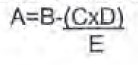
Where:
A = the amount calculated:
B = the sum of.
(i) the aggregate of the Rent payable for the period commencing on the Terminating Date and ending on the Lease Expiry Date; and
(ii) all Rent and other amounts due or accrued but unpaid to the Terminating Date of this Agreement and interest thereon; and
(iii) the costs and expenses (including legal costs) of recovering or attempting to recover possession of the Vehicle;
C = the sum of.
(i) the aggregate of the Rent payable during the term of this Agreement (as specified in the Lease Vehicle Order Form under the heading “Lease Period”}; and
(ii) the Anticipated Termination Value, less the purchase price and the Total Estimated Service Costs;
D = the sum of all the whole numbers from one to the number or months (including part of a month as a Whole month) from the Terminating Date to the Lease Expiry Date;
E = the sum of the whole numbers from one to the number of months (including part of a month as a whole month) in the term of this Agreement (as specified in the Lease Vehicle Order Form Under the heading "lease Period");
(b) where there is an amount specified as the Residual Value in the Second Schedule, the amount specified as the Payout in Annexure C.
…
4. RENT AND OTHER PAYMENTS
4.1 Instalments
The Lessee shall pay to Fidelity Capital in advance on each Rent Payment Pate the Rent or, if the Lessee leases other vehicles from Fidelity Capital pursuant to other leases, such other date as the parties shall agree (in which case, that date shall for the purposes of this Agreement be taken to be the Rent Payment Date).
…
4.3 Net agreement
…
(c) (Rent Payable) It is the intention of the parties that the Rent and any other moneys payable under this Agreement shall continue to be payable in all events: and in the manner and at the times provided in this Agreement unless the obligation to pay the same shall be terminated pursuant to the express provisions of this Agreement.
…
11. EVENTS OF DEFAULT
11.1 Events
Each of the following is an Event of Default (whether or not within the control of the Lessee).
(a) (Non-payment) The Lessee fails to pay any Rent or other amount (including Losses) payable to Fidelity Capital under this Agreement on the due date for payment.
…
(d) (Insolvency) The Lessee or the Guarantor is unable to pay its debts when they fall due, or is deemed unable to pay its debts under any applicable legislation other than as a result of a failure to pay a debt or claim in respect of which:
(i) a good faith dispute exists which is being prosecuted by appropriate means by the Lessee or the Guarantor (as the case may be); and
(ii) adequate reserves exist to meet any claim.
…
(j) (Liquidation) Liquidation of the Lessee or the Guarantor occurs.
…
11.2 Consequences of termination
If Fidelity Capital gives the Lessee a Termination Notice:
(a) (give up possession) the Lessee shall immediately give up possession of the Vehicle and deliver the Vehicle at its own cost to Fidelity Capital and in accordance with its directions to the place where the Vehicle was originally delivered to the Lessee, or such other place as Fidelity Capital may Instruct:
(b) (deliver Vehicle) the Lessee shall deliver the Vehicle, its accessories, equipment, Technical Records and keys to Fidelity Capital as requested in as good working order, repair, condition and appearance as it was when delivered to the Lessee, Fair Wear and Tear excepted. If the Lessee fails to deliver the Vehicle at the time and place specified then the Lessee shall be liable for any costs and expenses or losses Incurred by Fidelity Capital as a result;
(c) (liability) all right title and interest of the Lessee in the Vehicle under this Agreement shall terminate from the Terminating Date but the Lessee shall remain liable as provided in this Agreement. Any such termination shall not prejudicially affect any right or remedy of Fidelity Capital in respect of any antecedent breach by the Lessee of any of its obligations under this Agreement;
…
(f) (repossession) Fidelity Capital may, directly or by its agent, take possession of the Vehicle and the Lessee waives any right to claim any damages reasonably occasioned by such taking of possession;
(g) (payments) on the Terminating Date the Lessee shall pay to Fidelity Capital:
(i) the Termination Sum in respect of the Vehicle;
(ii) all other moneys due by the Lessee to Fidelity Capital under this Agreement in respect of the Vehicle (including without limitation any excess kilometre charges payable under Clause 4.6);
less the proceeds of insurance (if any) received by Fidelity Capital in respect of the Vehicle.
For the purpose of this Clause 1 1.2(g) in the event that this Agreement terminates before the Lease Expiry Dale, the Estimated Kilometres shall be reduced by the same proportion by which the Lease Period is reduced pursuant to early termination under Clause 12(d) and the excess kilometre charge payable under Clause 4.6 shall apply to any distance travelled by the Vehicle in excess of the reduced Estimated Kilometres.
11.3 Payment of current market value of the Vehicle
(a) (Lessee to pay current market value) If Fidelity Capital does not recover possession of the Vehicle within 28 days of the termination of this Agreement (however occurring), the Lessee shall pay to Fidelity Capital on demand the current market value for which the Vehicle would have been insured under Clause 9.
(b) (Refund) If the Lessee pays the amount specified in Clause 11.3(a) and Fidelity Capital subsequently recovers possession of the Vehicle, Fidelity Capital will (subject to the payment by the Lessee of any other moneys due but unpaid by the Lessee to Fidelity Capital) refund to the Lessee the current market value for which the Vehicle would normally have been insured under Clause 9 (after deduction of all expenses relating to the return of the Vehicle to Fidelity Capital including, without limitation, any storage fees).
The relevant terms of Mr Delic’s guarantee under the MLA
48 The primary judge set out the terms of Mr Delic’s guarantee at [30]. It is well to set out the relevant parts of cll 23 and 48 of the MLA:
23 GUARANTEE
23.1 Definition
In this Clause 23. , Documents means:
(i) this Agreement (and any variation of it); and
(ii) any lease of a Temporary Vehicle or Relief Vehicle granted under this Agreement to the Lessee (whether or not in separate written form).
23.2 Guarantee
The Guarantor unconditionally and irrevocably guarantees to Fidelity Capital:
(a) (Rent) the payment of Rent and any other money payable under the Documents:
(b) (obligations) the performance and observance by the Lessee of the Lessee’s obligations contained or implied in the Documents; and
(c) (damages) the payment by the Lessee of any damages payable by the Lessee for failure to fulfil or delay in fulfilling any of the Lessee’s obligations contained or implied in the Documents.
23.3 Payment
If the Lessee defaults in:
(a) (payment) payment of any amount due under the Documents (including Rent), the Guarantor shall on demand pay that amount to Fidelity Capital; and/or
(b) (obligations) the performance and observance of any of the Lessee's other obligations under the Documents,
the Guarantor shall on demand pay to Fidelity Capital all losses, damages, expenses and costs which Fidelity Capital is entitled to recover because of that default whether or not Fidelity Capital has exercised or exhausted Fidelity Capital’s remedies for their recovery from the Lessee.
…
23.11 Indemnity
As a separate and additional liability, the Guarantor Indemnifies Fidelity Capital in respect of,
(a) (obligations) all liability, including all actions, proceedings, judgments, damages, losses, costs and expenses of any nature, which ch may be incurred by, brought, made or recovered against FIDELITY CAPITAL consequent on or arising directly or indirectly out of any default or delay by the Lessee in the performance and observance of the Lessee’s obligations contained or implied in the Documents; and
(b) (money) any money payable under the Documents (including money which would have been payable if it were recoverable) which is not recoverable from the lessee for any reason, including any legal limitation, disability or incapacity affecting the Lessee or an obligation in the Documents being or becoming unenforceable, void or illegal and whether or not:
(i) (void) any transaction relating to any money payable under the Documents was void or illegal or has been avoided, or
(ii) (knowledge) anything relating to that transaction was or ought to have been known to Fidelity Capital.
…
48.10 Continuing guarantee
This is a continuing guarantee and Indemnity despite any settlement of account, Intervening payment or anything else until all money payable under the Documents has been paid in full, and all the Lessee’s other obligations under the Documents have been performed and observed.
48.11 Indemnity
As a separate and additional liability, the Guarantor Indemnifies Fidelity Capital in respect of:
(a) (obligations) all liability, including all actions, proceedings, judgments, damages, losses, costs and expenses of any nature, which may be incurred by, brought, made or recovered against FIDELITY CAPITAL consequent on or arising directly or indirectly out of any default or delay by the Lessee in the performance and observance of the Lessee’s obligations contained or lmpl1ed In the Documents; and
(b) (money) any money payable under the Documents (including money which would have been payable if tt were recoverable) which os not recoverable from the lessee for any reason, including any legal limitation, disability or incapacity affecting the Lessee or an obligation in the Documents being or becoming unenforceable, void or illegal and whether or not:
(i) (void) any transaction relating to any money payable under the Documents was void or illegal or has been avoided, or
(ii) (knowledge) anything relating to that transaction was or ought to have been known to Fidelity Capital.
Relevant parts of the primary judgment summarised
49 At [78], the primary judge noted Fidelity’s failure to make submissions as to how it said Composite became liable under the relevant terms of the MLA for the recalculated sum of $266,298.57:
Fidelity has made no submission about how, in the events that occurred, Composite is said to have become liable under the relevant terms of the MLA to pay each of the amounts Fidelity claims are owing to it, and how it is said Mr Delic is liable under the terms of the guarantee he gave to pay to Fidelity the amounts for which Fidelity claims Composite is liable to pay to Fidelity. Perhaps Fidelity has omitted to make such submissions because the grounds on which Mr Delic relies for submitting he is not liable are all premised on the MLA and guarantee not having any legal effect. That, however, does not relieve Fidelity of the burden of having to prove it is owed a debt or debts to the effect of the debts claimed in the POD. The first question I must consider, therefore, is whether Mr Delic became indebted to Fidelity in the amounts Fidelity claimed in the POD and as it now claims, assuming the MLA is not void or otherwise liable to be set aside, and none of the clauses on which Fidelity relies is void for being a penalty.
50 The primary judge considered in turn the five components advanced by Fidelity as constituting the recalculated sum for which Composite, and therefore Mr Delic, was liable. These amounts were summarised at [73] (emphasis denoting defined terms and italics for quotes):
(a) First, there is the “Termination Sum” of ($43,963.04) (Recalculated Termination Sum). This reflects the calculation contained in annexure “JC-8” to the affidavit of J Crawley made on 27 July 2020. It is greater than the ($41,253.71) claimed in the POD. This adjustment appears to intend to reflect the adjustment in (b).
(b) Second, there is the “principal amount” of $158,257.74 (Recalculated Principal Amount). This is a reduction from the principal amount of $160,939.80 claimed in the POD. It represents the sum of 59 monthly payments of $2,682.33 whereas the $160,939.80 represent the sum of 60 monthly payments of $2,682.33.
(c) Third, there is $106,000, being the third of the amounts referred to in “Attachment “A”” to the POD. Mr Sharma describes this amount as the “Value of Vehicles”, whereas the POD describes the amount as the “current market value of the vehicles payable pursuant to clause 11.2(g)(ii)” of the MLA. J Crawley, however, in annexure JC-8 to his affidavit of 27 July 2020 refers to the $106,000 being the “Anticipated Termination Value (clause 1.1 – value of the vehicles on the Terminating Date at Fidelity’s absolute discretion”). As I have already noted, “Anticipated Termination Value” is defined in cl 1.1 of the MLA to mean “the anticipated value of the Vehicle[s] (determined by [Fidelity] in its absolute discretion) as at the Terminating Date”. The expression “Anticipated Termination Value” is an element of the value of “C” in the formula for calculating the “Termination Sum”.
(d) Fourth, there is interest of $64,340.14, being less than the $75,532.27 claimed in the POD (Recalculated Interest Amount).
(e) Finally, there are enforcement costs of $31,665 being less than the $33,925.10 claimed in the POD (Recalculated Enforcement Costs Amount).
51 Adopting the defined terms in the primary judgment and noting that the appellant did not press its entitlement to (d) or (e) in the appeal, the relevant aspects of the primary judge’s reasons can be summarised as follows.
52 First, at [79] the primary judge summarised the scope of Mr Delic’s guarantee with respect to the MLA:
Under cl 23.2 of the MLA Mr Delic guaranteed to Fidelity three things: the payment of “Rent and any other money payable under the Documents”; the performance and observance of Composite’s obligations contained or implied in “the Documents”; and the payment of damages Composite is liable to pay for not complying with its obligations under the MLA. Further, under cl 23.3 of the MLA, as properly construed, Mr Delic agreed that he would on demand pay to Fidelity three classes of amounts: any amount Composite fails to pay in default of the MLA; the “losses [and] damages” Fidelity “is entitled to recover because of that default” where Composite defaults in “the performance and observance of any of” Composite’s other obligations; and “expenses and costs [Fidelity] is entitled to recover” because of Composite’s default. Thus, whether Mr Delic is liable to pay any one of the amounts claimed in the POD depends on whether the amount constitutes “Rent”; or some other amount payable by Composite under the MLA; or a loss or damage, or any expense or cost Fidelity is entitled to recover because of Composite’s default under the MLA.
As will become evident, the appellant relies heavily on what it says was a failure by the primary judge to consider Mr Delic’s liability for “losses [and] damages” as opposed to “Rent and any other money payable” in his Honour’s reasons.
53 Turning then to each of the components of the recalculated sum, the primary judge first noted that the Recalculated Termination Sum payable pursuant to cl 11.2(g)(i) of the MLA, when calculated according to the formula contained in cl 1.1 of the MLA, actually resulted in a credit of $41,253.71 in favour of Composite. At [81], the primary judge stated (emphasis added):
The “Termination Sum” of ($41,253.71) stated in the POD is an amount the POD treats as payable by Fidelity to Composite or, at least, is an amount that should be credited to Composite against any amount Composite might be liable to pay to Fidelity under the MLA. Fidelity similarly treats the Recalculated Termination Sum as an amount that is to be credited to Composite. Fidelity, however, has made no submission, and there is nothing in the MLA itself, that suggests that the “Termination Sum” is an amount that is or may be payable to Composite. Subparagraph (i) of cl 11.2(g) of the MLA provides that “the Lessee”, that is, Composite, “shall pay to Fidelity Capital (i) the Termination Sum in respect of the Vehicle”. I will say nothing further about the treatment of the “Termination Sum” of $41,253.71, and will assume that Fidelity is correct in treating the Recalculated Termination Sum as an amount that is to be credited to Composite.
54 As to the Recalculated Principal Amount, the primary judge noted that this amount purported to consist of the sum of 59 monthly rental payments of $2,682.33 that Composite was required to make under cl 4.1 of the MLA during the term of the MLA. Fidelity submitted that the rental payments were “moneys due by” Composite under cl 11.2(g)(ii) of the MLA as at the date of the Termination Notice. In rejecting this contention, the primary judge first rejected the proposition that the MLA “created a present debt that was payable in instalments” with reference to the High Court’s decision in Lamson Store Service Co Ltd v Russell Wilkins & Sons Ltd [1906] HCA 87; 4 CLR 672, stating at [84]:
The MLA does not contain a clause to the effect the High Court considered in Lamson. Moreover, the MLA contains no clause that obliges or purports to oblige Composite to pay to Fidelity on Fidelity giving Composite a Termination Notice an amount equal to the aggregate of the rental payments Composite would have been required to make over the life of the MLA, had the MLA remained on foot. Further, it is impossible to characterise as “moneys due by” Composite a liability to make the monthly rental payments under cl 4.1 of the MLA that had not accrued by the day on which Fidelity gave the Termination Notice (24 January 2018), but which would have accrued over the remaining term of the MLA, had the MLA remained on foot. Under cl 4.1 of the MLA Composite was required to pay the “Rent” (which is defined in cl 1.1 to mean the “monthly amount specified in the Lease Vehicle Order Form”, namely $2,682.33) “on each Rent Payment date”, namely, on “the same day of each month as the day of the Commencing Date”.
55 The primary judge then pointed to other terms of the MLA which also weighed against Fidelity’s construction, stating at [85]-[86]:
… First, there is the formula for determining the “Terminating Sum” which, under cl 11.2(g)(i) of the MLA, would become payable on Fidelity’s giving a “Termination Notice”. That formula includes as an element “the aggregate of the Rent payable for the period commencing on the “Terminating Date”, and ending on the “Lease Expiry Date””; and Fidelity calculated the Recalculated Termination Sum of $43,963.04 by including the aggregate of the 59 monthly instalments that were payable under the MLA up to its expiry date. Having expressly provided for the inclusion of the aggregate of the rent payable for the period commencing on the “Terminating Date”, and ending on the “Lease Expiry Date” as part of the calculation of the “Terminating Sum”, it cannot reasonably be supposed that the intention of the MLA was that the same amount would be independently payable under a clause without it being specifically identified as an amount that would be payable.
86 Second, there is cl 11.3(a) of the MLA which provides that if Fidelity does not recover possession of the Vehicles within 28 days after the termination of the MLA (however such termination occurs), Composite could become liable to pay the “market value for which the Vehicle[s] would normally have been insured under Clause 9”, but Composite would become liable to pay this amount only if Fidelity would demand Composite pay such amount. This clause, together with cl 11(2)(g)(i), suggests that the MLA contemplated that on the giving of a Termination Notice Composite would be obliged to pay the Terminating Sum and to return the Vehicles and, if the Vehicles were not returned, it would be liable to pay, on demand, the market value for which the Vehicles would have been insured under cl 9 of the MLA. It cannot reasonably be supposed that the MLA contemplated that in addition to Composite’s being liable to return the Vehicles or, in the alternative, to Composite’s being liable to pay to Fidelity the market value of the Vehicles, it would also be liable to pay rent on the Vehicles.
56 As to the Anticipated Termination Value, the primary judge found that the MLA “does not contain a term that requires Composite to pay to Fidelity” the Anticipated Termination Value, other than as an amount to be included in the calculation of the Termination Sum (at [88]). Furthermore, at [89] the primary judge stated there was no evidence that Fidelity demanded Composite to pay the market value of the Vehicles under cl 11.3(a) with reference to cl 9, and therefore Mr Delic could not be liable to pay such an amount under the guarantee in cl 23.
57 Finally, given the findings as to the Recalculated Principal Amount and Anticipated Termination Value, his Honour found there was no basis for the recalculated interest amount to be payable (at [90]-[91]).
58 In sum, after considering the recalculated enforcement costs (which is not challenged in this appeal), the primary judge found that the only provable debt was an amount of $165 incurred by Fidelity in engaging a person to attempt to recover the Vehicles.
59 The primary judge then turned to each of the grounds advanced by Mr Delic as to why Composite and Mr Delic were not liable for the recalculated amount by the MLA. In short, the primary judge held that:
(a) The fact that Composite was de-registered at the time the MLA was signed by Mr Delic did not have the consequence that Composite had no obligations under the MLA to which Mr Delic’s guarantee could respond (at [106]).
(b) If, contrary to his Honour’s earlier finding, cl 11.2(g)(ii) of the MLA purported to oblige Composite to pay the aggregate of the rent payable over the term of the MLA, the clause was void as a penalty. Therefore, the Recalculated Principal Amount of $158,257.47 would not be a debt Composite would have been liable to pay (at [124]).
(c) There was no unilateral mistake by Mr Delic, as his Honour rejected Mr Delic’s evidence that he was unaware that Composite was de-registered (at [125]).
(d) Mr Delic’s claim that he misunderstood the effect of the MLA must fail because his Honour had not accepted Mr Delic’s evidence as to his state of mind, and, in any event, there was no evidence that his alleged state of mind was induced by or on behalf of Fidelity (at [126]).
(e) Mr Delic’s ground based on the failure of Mr Volonakis to disclose the true effect of the MLA must fail due to the rejection of Mr Delic’s evidence as to his state of mind, conversations with Mr Volonakis and also that Mr Volonakis was not acting as an agent for Fidelity (at [127]-[128]).
60 Evidently, only (b) of the findings summarised above is challenged by the appellant in this appeal.
61 The primary judge concluded at [129]:
On the findings I have made, Mr Delic as guarantor was liable to pay only two debts under the MLA: the $165 recovery costs, and interest on that amount. On 11 October 2018 Fidelity accepted $50,000 from Ms Delic on account of the debt Fidelity claimed Mr Delic owed it, and on 12 December 2018 Mr Delic paid $1.00. The $50,001 is obviously sufficient to cover the $165 recovery costs, and the interest payable on that amount. On these findings, the trustees ought not to have admitted the POD. I propose, therefore, to make an order under s 104(2) of the Act reversing the trustees’ decision to admit the POD.
The grounds of appeal
62 The appellant initially advanced 13 grounds of appeal. In an amended notice of appeal annexed to its outline of written submissions filed on 12 October 2021, the appellant again advanced 13 grounds of appeal, however, these grounds differed in some respects. Those grounds are as follows (without alteration and tracking indicating changes from the original notice of appeal, noting that ground 12A, which was inserted by the amended notice of appeal, appears mistakenly not to have been underlined):
1. The trial judge erred in finding (at J129) that the First Respondent (Delic) was not liable to the Appellant (Fidelity) for the amounts claimed by Fidelity and summarised at J73(a)-(d) of the Judgment less the sum of $50,001 received by Fidelity, for a total amount of $266,298.57.
1A. In the alternative to 1, the trial judge erred in failing to find that Delic was liable to Fidelity for the value of the vehicles (not less than $95,000) pursuant to clauses 23.2, 23.3 and 23.11 of the MLA.
2. The trial judge erred in construing that the POD treats the “Termination Sum” under the Master Lease (MLA) as an amount that is or may be payable to Composite Installations (NSW) Pty Ltd (Composite) (at J81).
3. The trial judge erred in failing to find that the “Termination Sum” was a discounting factor relevant to clause 11.2(g) (at J81).
4. The trial judge erred in finding that the MLA does not contain any clause that obliges Composite to pay to Fidelity, after the giving of a Termination Notice, an amount equal to the aggregate of the rental payments (at J84) and in so doing disregarded clause 4.3 of the MLA.
5. The trial judge erred in construing clause 4.1 of the MLA as being inapplicable to future rental payments (at J85).
6. The trial judge misconstrued clauses 11.3(a) and 11.2(g)(i) of the MLA as having the effect that Composite was required to return the vehicles and pay rent on the vehicles (at J86).
7. The trial judge erred in failing to find that the Anticipated Termination Value (MLA clause 1.1) is payable under MLA clause 11.2(g) (at J88).
8. The trial judge erred in finding that Fidelity was required to make a demand on Composite for the market value of the vehicles pursuant to MLA clause 11.3(a) in circumstances where Composite was deregistered (at J88-89).
9. In the alternative to 9, the trial judge erred in failing to find that the lodgement by Fidelity of a Proof of Debt was a demand for the purposes of MLA clause 11.3(a) (at J88-89).
10. The trial judge erred in finding that clause 11.2(g)(ii) of the MLA was void as a penalty (at J124).
11. The trial judge erred in finding that the Aggregate Rental Obligation relevant to clause 11.2(g)(ii) does not incorporate any discount (at J118).
12. In the alternative to 11, the trial judge erred in failing to find that the “Termination Sum” was a discounting factor relevant to clause 11.2(g)(ii) (at J118).
12A. The trial judge erred in failing to find that Delic was liable to Fidelity for the Principal Amount of $158,257.47 pursuant to clause 23.2, 23.3 and 23.11 of the MLA [J87].
13. In the alternative to 1, the trial judge erred in finding that Fidelity was not entitled to have its Proof of Debt admitted for at least $10,999 $7,766.67 in circumstances where Fidelity advanced $61,000 and received $2,682.33, an application fee of $1,050, a real time transfer fee and $50,001 by way of repayment of the principal sum advanced (at J129).
Consideration and determination
63 For the following reasons, grounds 1A and 8 should be upheld, as also should ground 13 in part. The balance of the grounds should be rejected.
Grounds 1A and 8-9
64 It is convenient first to start with ground 1A of the notice of appeal which the appellant described as one of its “short points” as to error in the primary judge’s reasons. By ground 1A, the appellant claims that as Composite was obliged, pursuant to cl 11.2(a) of the MLA, to return the Vehicles to Fidelity upon the issue of the Termination Notice on 24 January 2018, the primary judge should have admitted the POD for $95,000, being the current market value of the Vehicles, given that Mr Delic guaranteed:
(a) the performance and observance by Composite of its obligations in the MLA (cl 23.2(b) and 23.3(b)); and
(b) agreed to indemnify Fidelity in respect of damages and losses arising out of a default by Composite and the performance of its obligations under the MLA (cl 23.11(a)).
65 As will become apparent, the success of ground 1A is also interrelated with alternative grounds 8 and 9, by which the appellant contends:
(a) the primary judge erred in finding that Fidelity was required to make a demand on Composite for the market value of the vehicles pursuant to cl 11.3(a) of the MLA in circumstances where Composite was de-registered (ground 8); or
(b) in the alternative, the primary judge erred in failing to find that the lodgement by Fidelity of the POD was a demand for the purposes of cl 11.3(a) of the MLA (ground 9).
66 At [89], the primary judge found that Mr Delic was not liable to pay the market value of the Vehicles because there was “no evidence” Fidelity made a demand for the payment of such amount in accordance with cl 11.3(a).
67 For the following reasons, the appellant’s claim under ground 1A (as supported by ground 8) that the POD should have been admitted for the market value of the Vehicles should be accepted.
68 There is no dispute that the Termination Notice dated 24 January 2018 was validly issued in accordance with cl 11.1. It is therefore uncontroversial that Composite breached cll 11.2(a) and (b) of the MLA due to its failure to surrender the Vehicles after the Termination Notice was issued and in accordance with the Notice of Demand dated 10 March 2018. Fidelity subsequently failed to recover possession of the Vehicles (see [39] above), notwithstanding its right under cl 11.2(f). As such, Fidelity suffered “loss” due to Composite’s breach, as it was deprived of possession of the Vehicles it was entitled to after the Termination Notice was issued.
69 Turning then to clls 23.2(b), 23.3(b) and 23.11(a), Mr Delic was liable under the MLA to guarantee and indemnify Fidelity for any “loss” suffered due to a breach of the MLA by Composite. While it is true Fidelity did not make a demand for the current market value of the Vehicles under cl 11.3(a), Composite was independently obliged to surrender, and Fidelity was entitled to recover, the Vehicles pursuant to sub-cll 11.2(a), (b) and (f). A demand for payment of the current market value of the Vehicles under cl 11.3(a) did not deprive Fidelity of the right to recover the Vehicles. This construction of the MLA is clearly supported by cl 11.3(b), which provides for a refund by Fidelity to Composite if the payment of the market value of the Vehicles is made under cl 11.3(a) and then the Vehicles are subsequently recovered by Fidelity (less any expenses and other amounts owing under the MLA). Thus, the failure of Fidelity to make a demand to Composite, in circumstances where Composite was de-registered and therefore any such demand would have been futile, did not deprive Fidelity of its contractual rights under the guarantee and indemnity by Mr Delic. It was entitled under cl 23 to seek payment from Mr Delic for loss suffered as a result of Composite’s failure to surrender the Vehicles. Fidelity therefore has a provable debt for the market value of the vehicles against Mr Delic. Given this finding (which means Fidelity succeeds on ground 8), it is unnecessary to consider Fidelity’s alternative argument in ground 9.
70 While the POD failed correctly to identify $95,000 as provable debt arising under cll 11.2(a), (b) and (f) of the MLA as guaranteed and indemnified by Mr Delic under cl 23, the nature of a review by a court under s 104 of the Bankruptcy Act “is not confined to the correctness or otherwise of the trustee’s decision. It is a ‘re-hearing’” (Daevys v Official Trustee in Bankruptcy [2011] FCA 398 at [13] per Flick J). As stated by Toohey J in Re Payne; Ex Parte: Levi [1986] FCA 320 at [10]:
… the parties may place before the Court such material as they wish, provided of course that it is relevant and otherwise admissible. … The function of the Court is not to consider the correctness or otherwise of the trustee’s decision in the light of the material before him but to determine, in the light of the material before it, whether the applicant has a debt that should be admitted to proof.
71 As such, ground 1A of the appeal should be upheld, with the consequence that Fidelity has a provable debt of $95,000 against Mr Delic that should have been admitted by the Trustee under s 102 of the Bankruptcy Act.
Ground 13
72 By ground 13, which is the appellant’s other “short point”, Fidelity argues that, under cll 23.2, 23.3 and 23.11, Mr Delic is liable to indemnify Fidelity in the amount of $7,766.67, being the differential between the sum advanced by Fidelity and sums received by it from Composite.
73 Seemingly also under ground 13, the appellant’s written outline of submissions contend that $2,682.33 including GST in Rent was due to be paid on 1 January 2018 prior to the issue of the Notice of Termination and therefore guaranteed by Mr Delic under the MLA.
74 As to the differential between the amount advanced by Fidelity and payments made by or on behalf of Composite, the appellant failed to identify any basis upon which that amount was a provable debt. The appellant’s contention fails to appreciate that notwithstanding that it advanced $61,000 to Composite to purchase the Vehicles (whose current market value was $95,000), under the MLA Fidelity retained title to those vehicles either upon discharge of the MLA or the giving of the Termination Notice.
75 I accept that Mr Delic as guarantor is liable for the Rent payment which was due and payable on 1 January 2018, being an amount of $2,682.33. Fidelity has suffered loss in being deprived of this rental payment due to Composite’s failure to pay this Rent amount in accordance with the MLA.
76 Ground 13 should therefore be upheld in part for an amount of $2,682.33.
Grounds 1, 3, 4, 5 and 12A
77 By grounds 3, 4, 5 and 12A, the appellant contends that the primary judge erred in finding that the MLA does not contain any clause that obliges Composite to pay to Fidelity, after the giving of a Termination Notice, an amount equal to the aggregate of the rental payments (Aggregate Rental Obligation) owing from the Terminating Date to the Lease Expiry Date (the Recalculated Principal Amount). In particular, the appellant contends that the primary judge disregarded cl 4.3(c), and erred in holding at [84] that the inclusion of such an amount in the calculation of the Termination Sum supported his Honour’s view. The appellant submits that cl 4.3(c) provides that Rent is payable “in all events” and that the termination of the MLA did not have the effect of extinguishing Composite’s Aggregate Rental Obligation, as such a construction would render cl 4.3(c) redundant. The appellant therefore contends Mr Delic was liable to pay the Recalculated Principal Amount pursuant to cll 23.2, 23.3 and/or 23.11 of the MLA.
78 This ground cannot succeed in the face of the express terms of cl 4.3(c). It clearly states that Rent will continue to be payable in all events unless “the obligation to pay the same shall be terminated pursuant to the express provisions” of the MLA. Fidelity terminated the MLA pursuant to the Termination Notice dated 24 January 2018, relying expressly upon cll 11.1(d) and (j). Therefore, from 24 January 2018 (the Terminating Date pursuant to cl 1.1), Rent became no longer due and payable. The primary judge was correct to hold at [85]-[86] that the MLA contemplated that, on the issuing of a Termination Notice, Composite would principally become liable:
(a) to pay the Termination Sum (cl 11(2)(g)(i)); and
(b) to return the Vehicles, and if the Vehicles were not returned, would be liable to pay the market value of those vehicles (cl 11.3).
79 I also agree with the primary judge’s finding at [86] that it cannot reasonably be supposed that the Aggregate Rental Obligation would be independently payable under cl 11.2(g)(ii) without expressly stating so, in circumstances where that aggregate rent of 59 months from the Terminating Date formed part of the calculation of the Termination Sum.
80 Contrary to the appellant’s argument that such a construction would give cl 4.3 no work to do, the appellant’s construction would make the phrase “unless the obligation to pay the same shall be terminated pursuant to the express provisions [of the MLA]” otiose. This is because the only express provision for the termination of obligations under the MLA, including the obligation to pay Rent, is the provision of a Termination Notice by Fidelity under cl 11.2, which can only be issued “on the occurrence of an Event of Default” under cl 11.1 (see cl 1.1). Thus, on the appellant’s construction, the latter half of cl 4.3 could never be engaged.
81 It may be noted at this point that while the appellant (and the primary judge at [81]) proceeded on the basis that the Termination Sum, when calculated as a negative amount (as in this case), should be “credited” to Composite (and therefore Mr Delic) in relation to the amount owing under the POD, this does not appear to flow from the express terms of cl 11.2(g)(i). Clause 11.2(g) only imposes an obligation that “the Lessee shall pay to Fidelity” upon a Termination Notice being issued the amounts specified in sub-clauses (i) and (ii). This is consistent with the definition of Termination Sum in cl 1.1, which is stated to be an “amount calculated by and payable to Fidelity”. The MLA, properly construed, does not support a view that the Termination Sum, being an amount to be calculated by Fidelity, could ever have become payable to Composite if the Vehicles had been surrendered to Composite and other amounts payable had been paid. This further supports the view that Recalculated Principal Amount is not an amount payable under cl 11.2(g)(ii). Indeed, it is notable that Fidelity offered no discount reflecting the Termination Sum said to be “credited” to Composite from the Aggregate Rental Obligation figure demanded in the Notice of Demand to Mr Delic and Composite dated 10 March 2018 (see [38] above).
82 The appellant contends that the fact Fidelity would have retained title to Vehicles (in accordance with its purchase of the vehicles under the Lease Vehicle Order Form and cll 6 and 14.1 of the MLA) if the MLA was discharged by performance after 60 months also supports its contention that the Recalculated Principal Amount was payable under cl 11.2(g)(ii). In this context, the appellant also places reliance upon Lamson. However, Lamson does not take the appellant’s case any further. Lamson stands for the proposition that, in certain circumstances, a lessor is entitled to recover the full amount of the agreed rent for the term of a lease where a lessee repudiates, in addition to regaining possession of a chattel. It is, however, distinguishable on the following grounds. First, for the reasons explained at [78] above, cl 4.3(c) expressly contemplates that the obligation to pay Rent terminates if the MLA is terminated. Secondly, as stated by the primary judge at [84], Rent was an amount payable “on each Rent Payment date”. There is no indication that the MLA, unlike the lease agreement in Lamson, sought to create a present debt that was payable in instalments.
83 Independently of the submissions outlined above, the appellant contends that cll 23.2, 23.3 and 23.11 are broad enough to capture damages and losses (such as lost payments of Rent over the 60-month term of the MLA not made) which would have been made absent the default by Composite. For the reasons explained at [78]-[80] above, this contention cannot succeed.
84 For these reasons, grounds 3, 4, 5 and 12A should be dismissed. As Mr Weinberger acknowledged in oral address, ground 1 of the amended notice of appeal is dependent on success of those other grounds. Ground 1 therefore should also be dismissed.
Ground 7
85 By ground 7, the appellant contends that the primary judge erred in failing to find that the Anticipated Termination Value is payable under cl 11.2(g). No such obligation arises under cl 11.2(g)(ii), in circumstances where the MLA expressly provided for Composite to be liable to pay on demand the current market value of the Vehicles if it failed to deliver the Vehicles to Fidelity within 28 days of a Termination Notice (cl 11.3). It cannot reasonably be supposed that the parties intended that the Anticipated Termination Value be an amount separately payable under cl 11.2(g)(ii), where the only express reference to that term is contained in the calculation of the Termination Sum. Ground 7 should be dismissed.
Grounds 10, 11 and 12
86 Ground 10 relates to the primary judge’s alternative finding that if an obligation to pay the Recalculated Principal Amount did arise under cl 11.2(g)(ii), it would have been void as a penalty. By Grounds 11 and 12, the appellant contends that the primary judge failed to find that the Aggregate Rental Obligation, if payable, did not incorporate any discount, including by failing to find that the Termination Sum was a discounting factor.
87 Given my finding that the appellant fails on grounds 3, 4, 5 and 12A, it is unnecessary to decide grounds 10, 11 and 12.
88 If it had been necessary to determine grounds 10, 11 and 12, I would have agreed with the primary judge’s finding that, if the MLA required the payment of the Recalculated Principal Amount on issuance of a Termination Notice, it would have been void as a penalty. I agree with the primary judge’s conclusion at [118] that an Aggregate Rental Obligation “is out of all proportion to the interest cl 11.2(g)(ii) may reasonably be taken to have been intended to protect or promote”. Unlike the facts in Lamson, where the hirer had an ongoing financial interest in the use and display by the lessee of the novel patented cash cable tramway system, Fidelity did not have a “wider commercial or financial interest” in the “continued use of the apparatus by the hirer” which could be said to be protected by an Aggregate Rental Obligation (cf Café Du Liban Pty Ltd v Bespoke Garage Pty Ltd [2017] NSWSC 779 at [104]-[106] per Beech-Jones J). To the contrary, there are numerous provisions of the MLA which seek to restrict Composite’s use of the Composite Vehicles during the term of the MLA (see cll 4.6 and 5.1 which, for example, impose excess kilometre charges and prohibits alterations to the Vehicles not otherwise required by law without written consent).
89 In those circumstances, the distinction drawn by Brennan J in O’Dea v Allstates Leasing System (WA) Pty Ltd [1983] HCA 3; 152 CLR 359 at [105] as to why the relevant contractual provision in O’Dea (which concerned a very similar buy and lease back loan arrangement to the present case) was void as a penalty, and the Lamson clause was not, is apposite (emphasis added):
Having regard to what [Griffith CJ in Lamson Store Service] thought to be the principal advantage which the contract conferred on the hirer in that case, namely, the right to a fair and full exhibition of the novel apparatus, the lessor’s right to dismantle and take away the apparatus was hardly a material benefit which the lessor could turn to account. Not so in the present case. The factual distinction between the present case [ie O’Dea] and Lamson Store Service lies in the fact that the lessor here has an advantage in retaking possession of the vehicle from the hirer; in Lamson Store Service the lessor had an advantage in the continued use of the apparatus by the hirer.
(See also the passages of Gibbs CJ, Wilson and Deane JJ in O’Dea quoted by the primary judge at [120]-[123].)
90 Furthermore, in answer to ground 12, I am not satisfied that the Termination Sum would be a relevant discounting factor in this respect. The express terms of cl 11.2(g)(i) do not suggest the parties intended that the Termination Sum could be an amount payable by Fidelity to Composite (see [81] above).
Conclusions
91 For these reasons, grounds 1A and 8 should be upheld and ground 13 should be upheld in part for an amount of $2,682.33. The appeal should therefore be allowed in respect of these grounds but otherwise dismissed. The orders dated 5 February 2021 of the primary judge should be set aside. Including the $165.00 found by the primary judge to be payable by Mr Delic for recovery costs (at [129]), the Trustee should have admitted the POD for an amount of $97,847.33. Orders varying the Trustee’s decision to admit the POD in whole should be made.
92 The appellant did not claim any amount as interest.
93 The parties should seek to agree orders giving effect to these reasons, including as to costs. Having regard to the procedural history of the matter, the rejection of the majority of the grounds of appeal and the appellant’s limited success which is reflected in the fact that I have found that the Trustee should have admitted the POD for an amount of $97,847.33 which is considerably less than that sought by the appellant, together with the first respondent’s status as a litigant in person, the Court’s tentative view is that there should be no order as to costs. The Court’s additional tentative view is that the primary judge’s orders dated 9 April 2021 as amended on 22 April 2021 as to the costs of the proceeding below should not be disturbed.
94 If the parties are unable to agree final orders, by no later than 14 February 2022, each should file and serve a copy of their proposed orders, together with an outline of written submissions not exceeding two pages in length. Final orders will then be determined on the papers and without a further oral hearing.
I certify that the preceding ninety-four (94) numbered paragraphs are a true copy of the Reasons for Judgment of the Honourable Justice Griffiths. |
Associate:


