

Federal Court of Australia
Think Childcare Limited, in the matter of Think Childcare Limited (No 2) [2021] FCA 1228
ORDERS
First Plaintiff THINK CHILDCARE DEVELOPMENT LIMITED Second Plaintiff | ||
DATE OF ORDER: |
THE COURT ORDERS THAT:
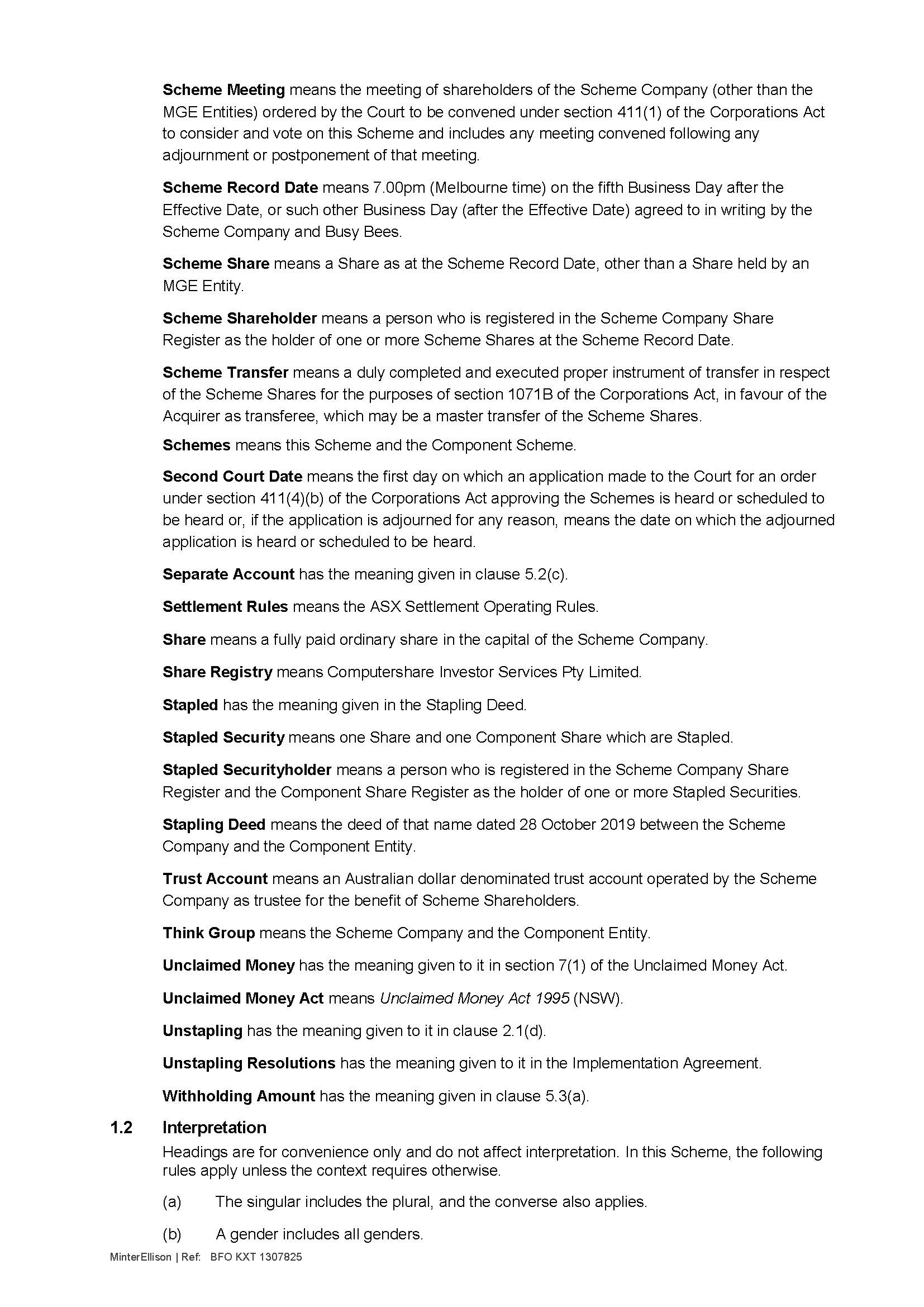
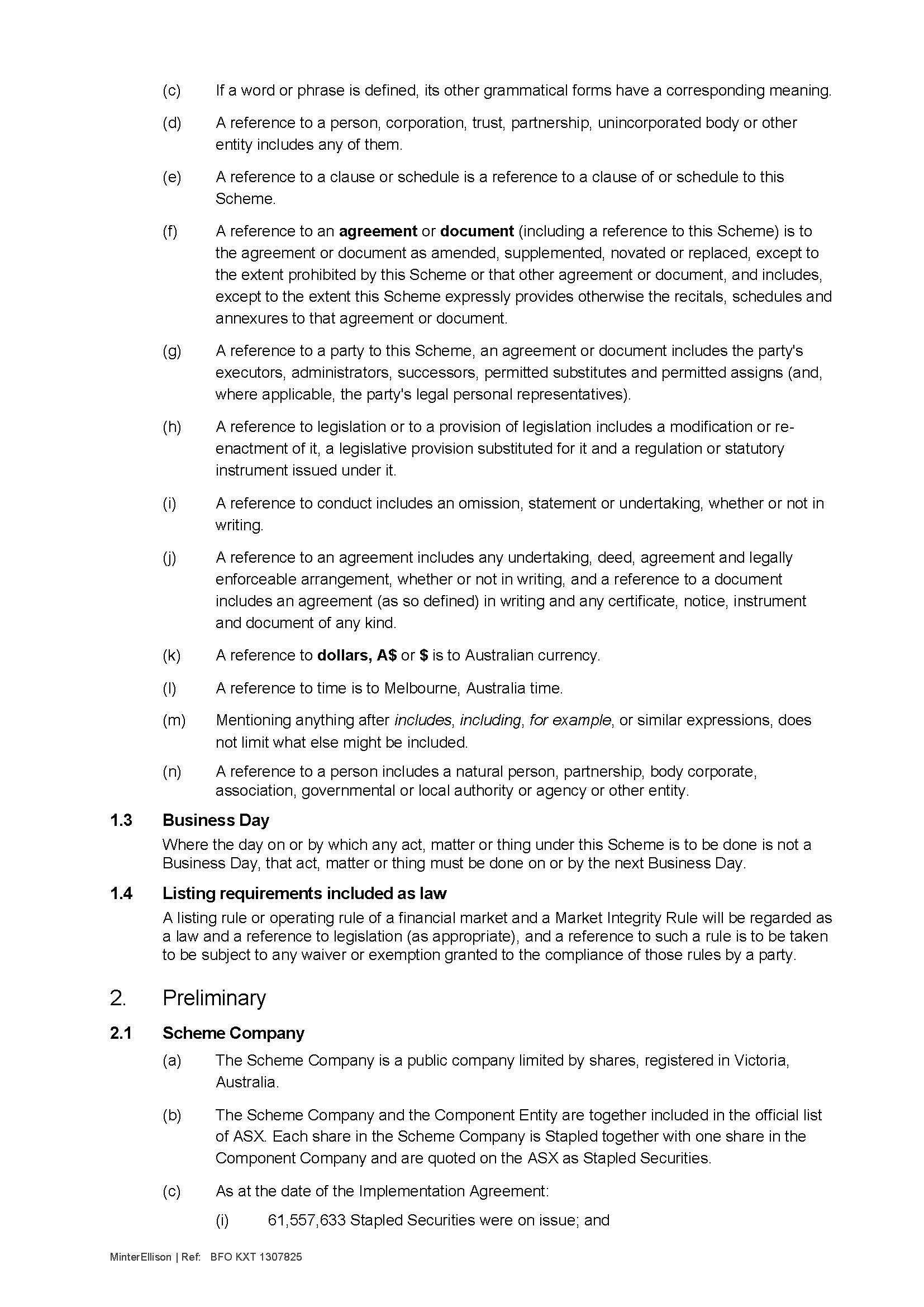
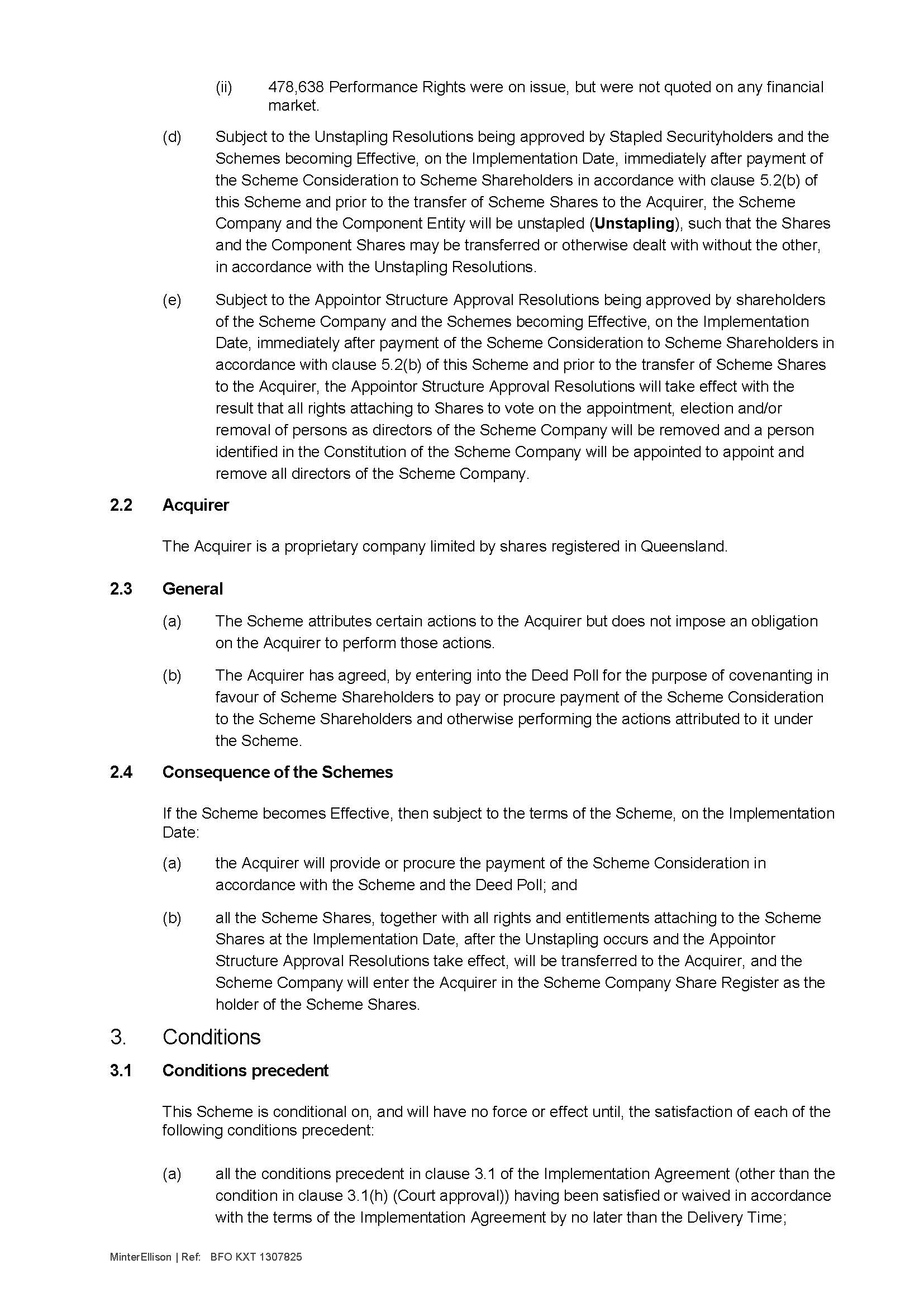
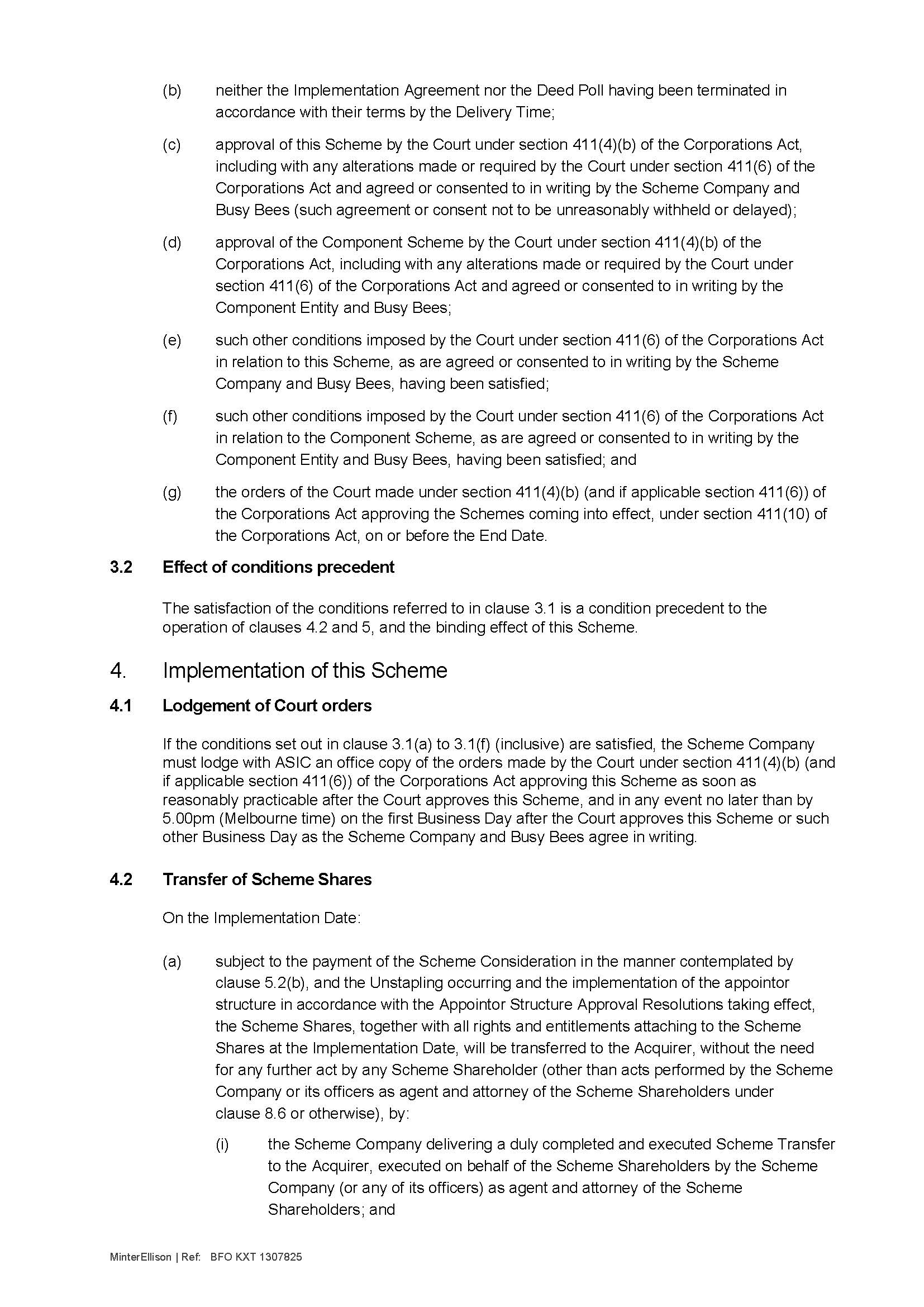
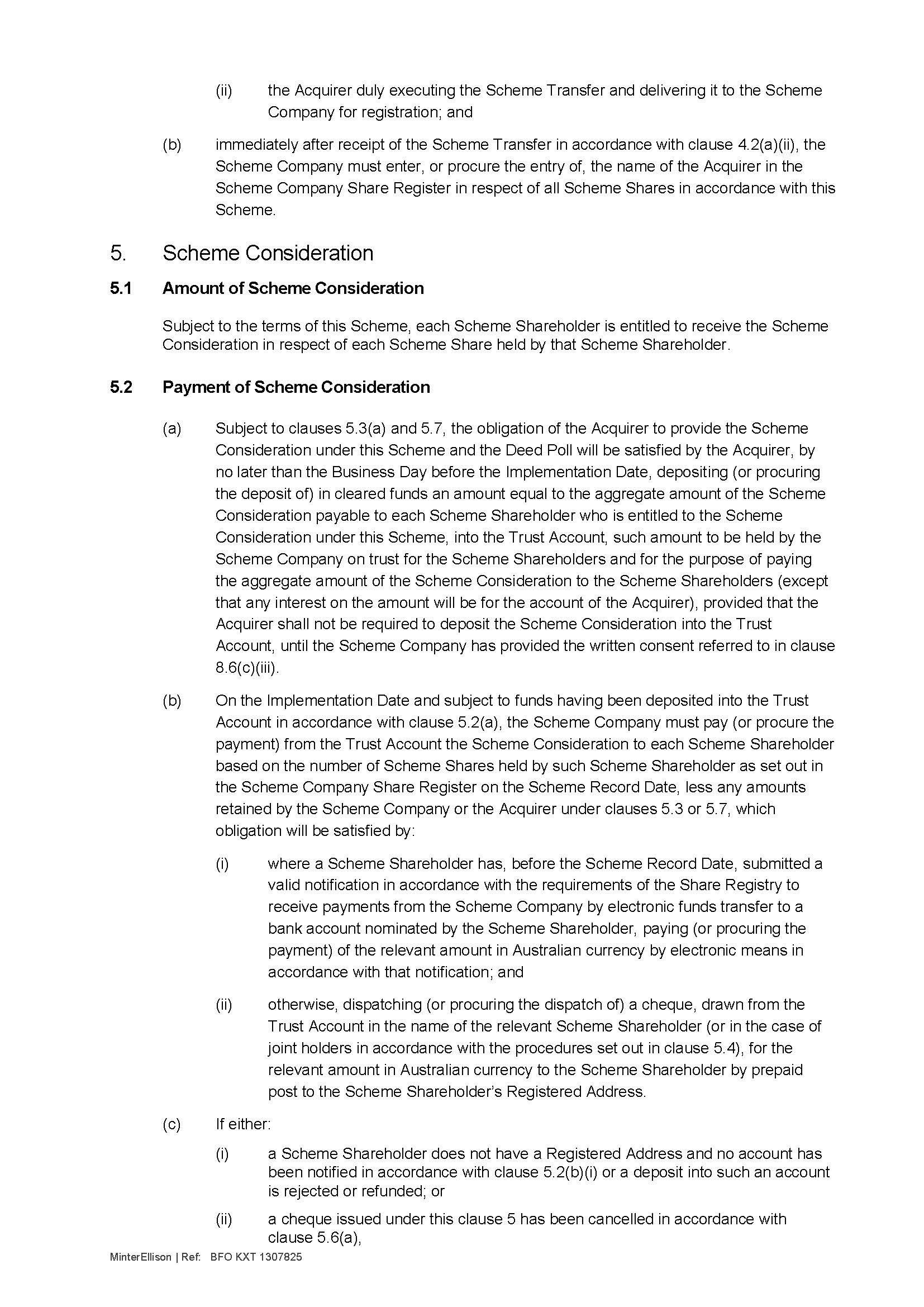
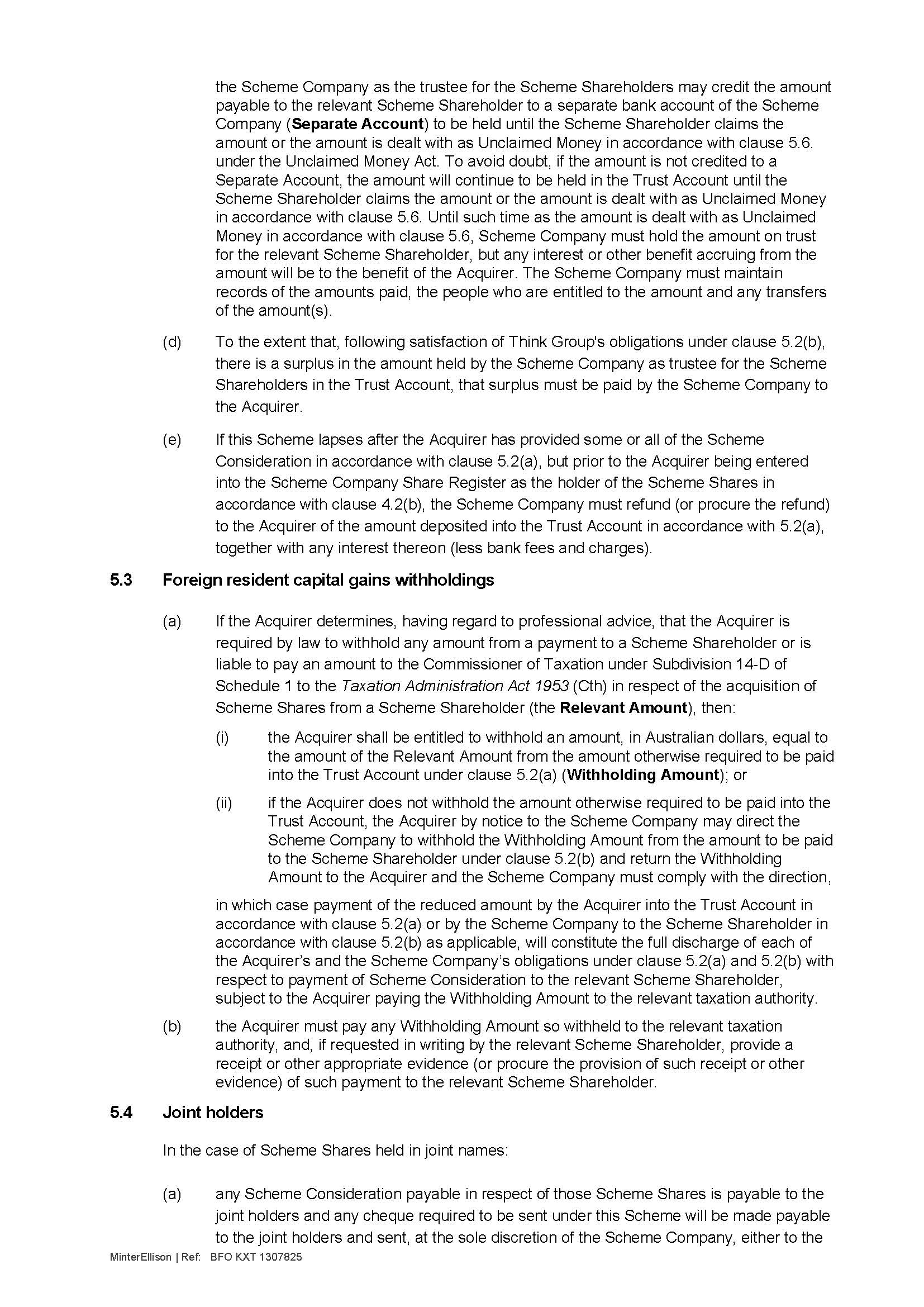
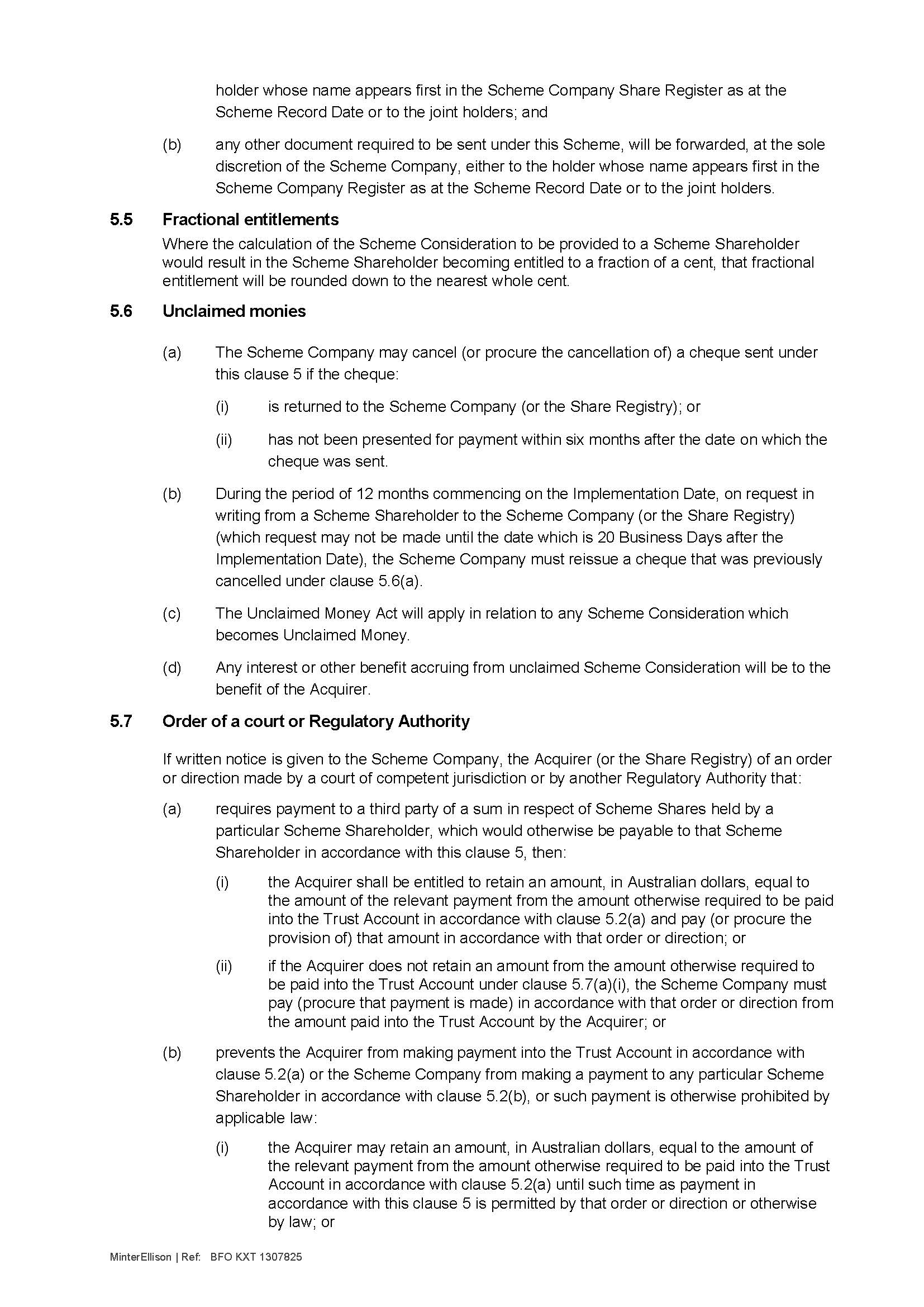
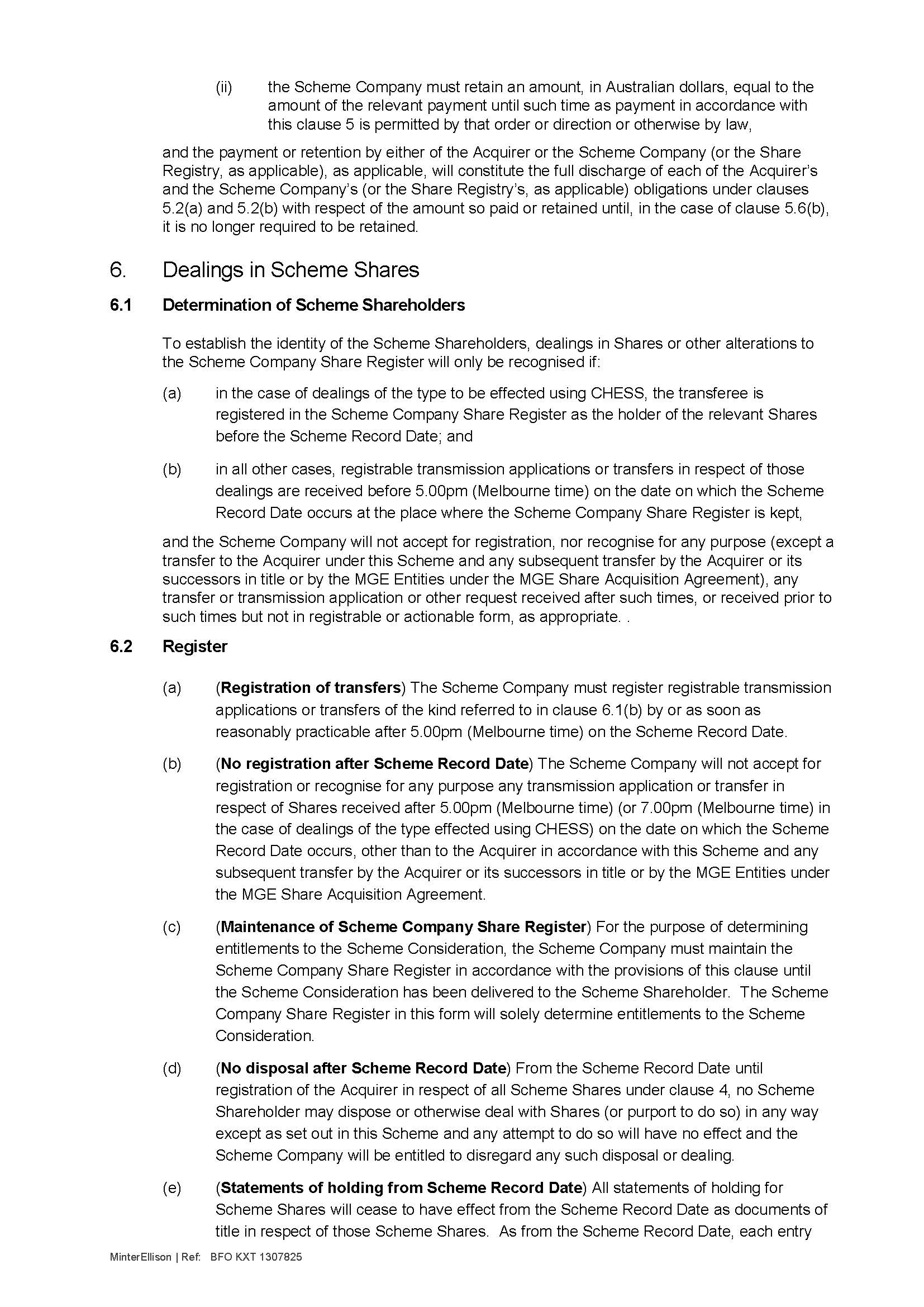
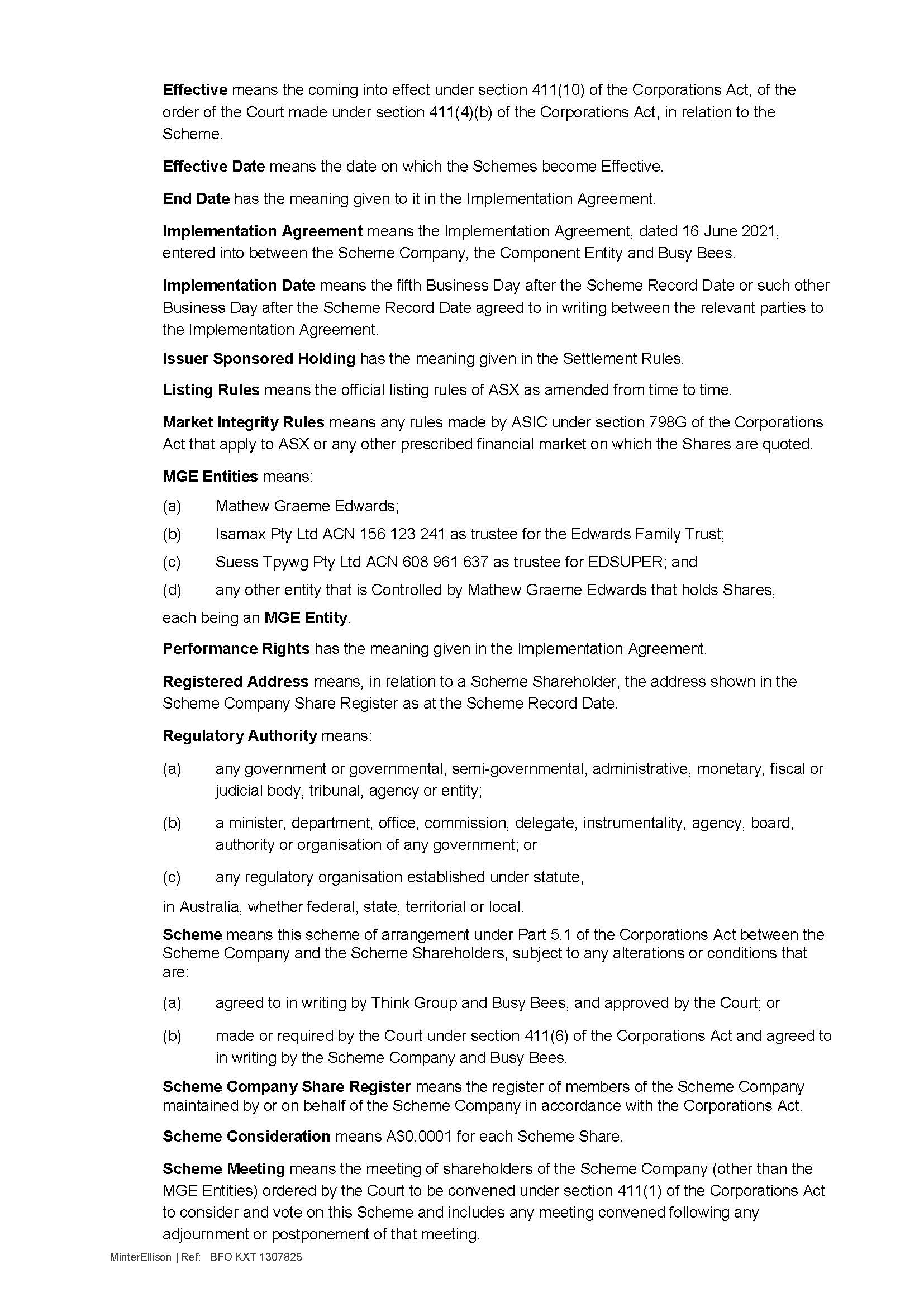
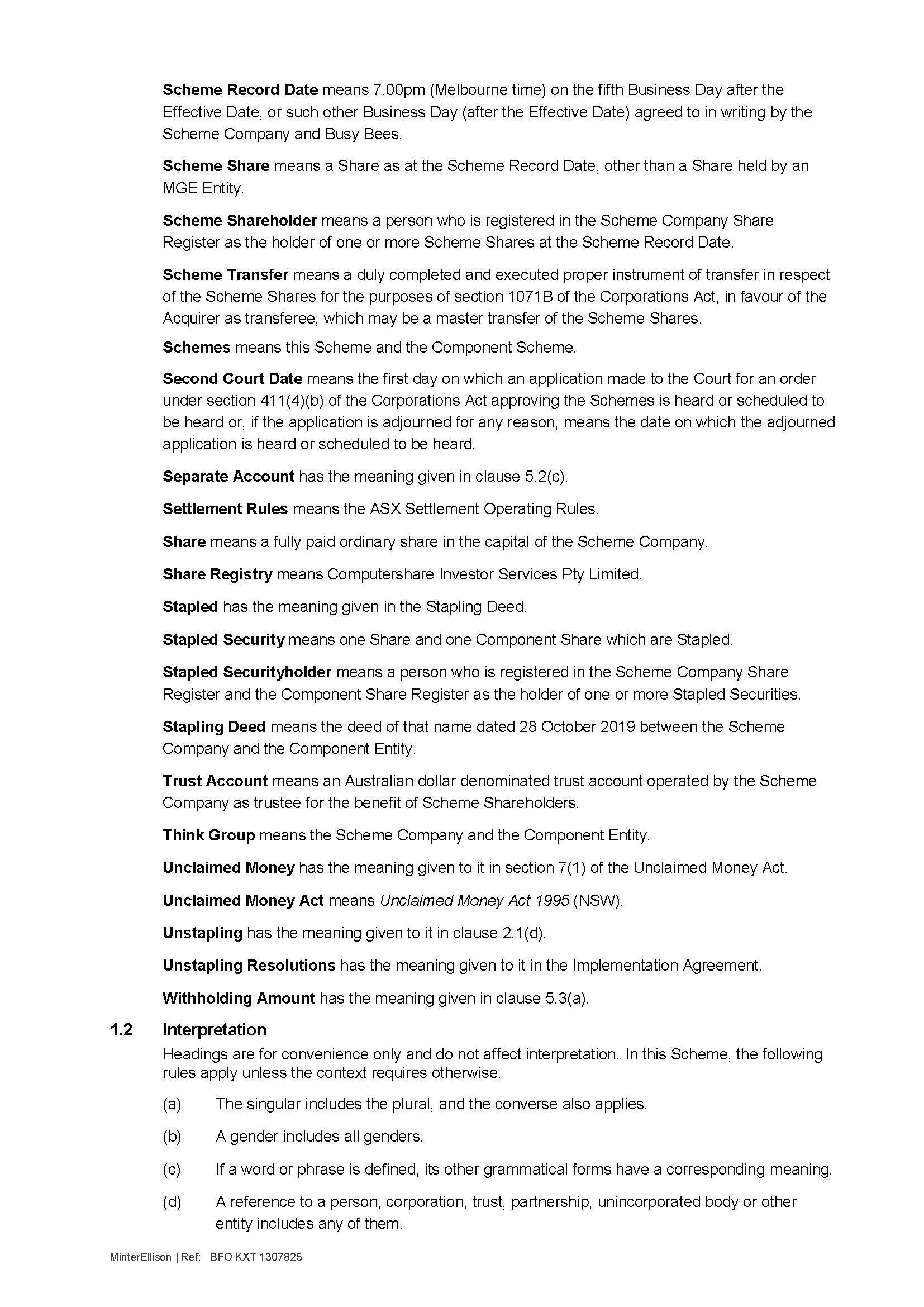
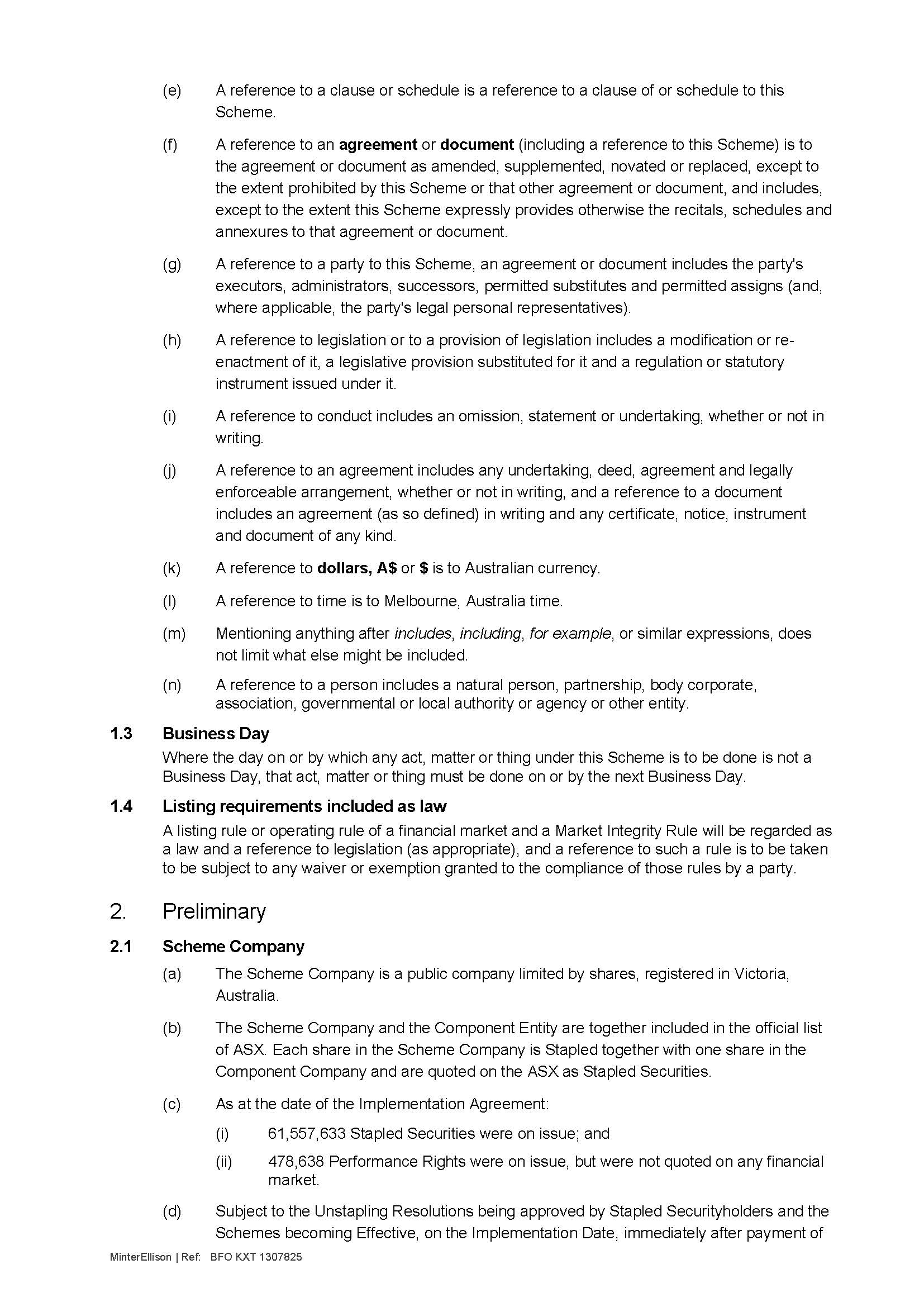
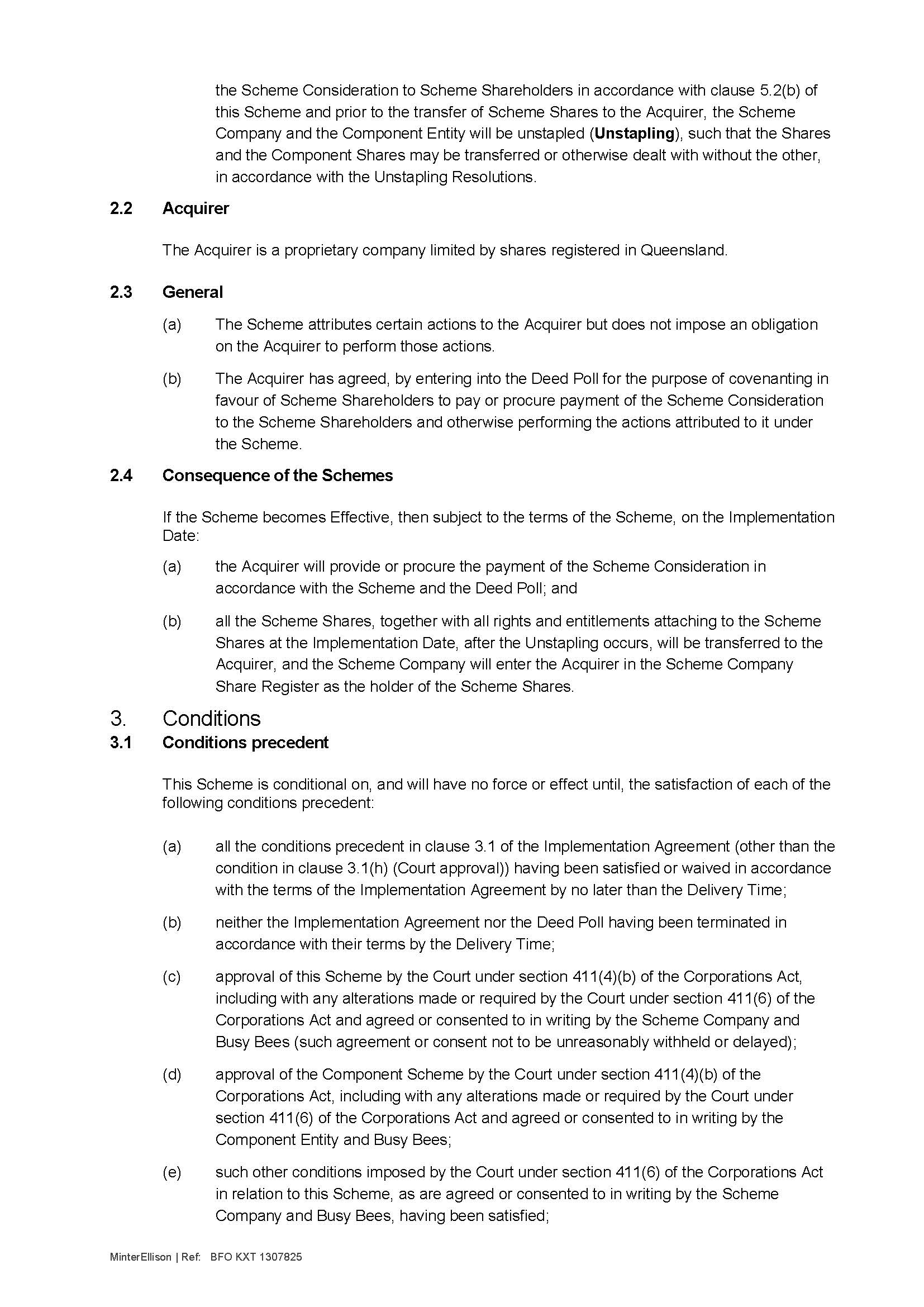
1. Pursuant to sections 411(4)(b) and 411(6) of the Corporations Act 2001 (Cth) (Act), the TNK Scheme of Arrangement between the First Plaintiff and the Scheme Shareholders (as defined in the TNK Scheme of Arrangement), the terms of which are set out in Annexure A to these Orders, is approved.
2. Pursuant to sections 411(4)(b) and 411(6) of the Act, the TND Scheme of Arrangement between the Second Plaintiff and the Scheme Shareholders (as defined in the TND Scheme of Arrangement), the terms of which are set out in Annexure B to these Orders, is approved.
3. Pursuant to section 411(12) of the Act, the Plaintiffs are exempted from compliance with section 411(11) of the Act in relation to Orders 1 and 2 above.
4. Pursuant to rule 39.34 of the Federal Court Rules 2011 (Cth), these orders be entered forthwith.
OTHER MATTERS
A. The Court notes the letter dated 5 October 2021 from the Australian Securities and Investments Commission to MinterEllison, the solicitors for the Plaintiffs, at Annexure ‘BFO18’ to the affidavit of Bernard Frederic Oude-Vrielink dated 6 October 2021.
Note: Entry of orders is dealt with in Rule 39.32 of the Federal Court Rules 2011.
Annexure A
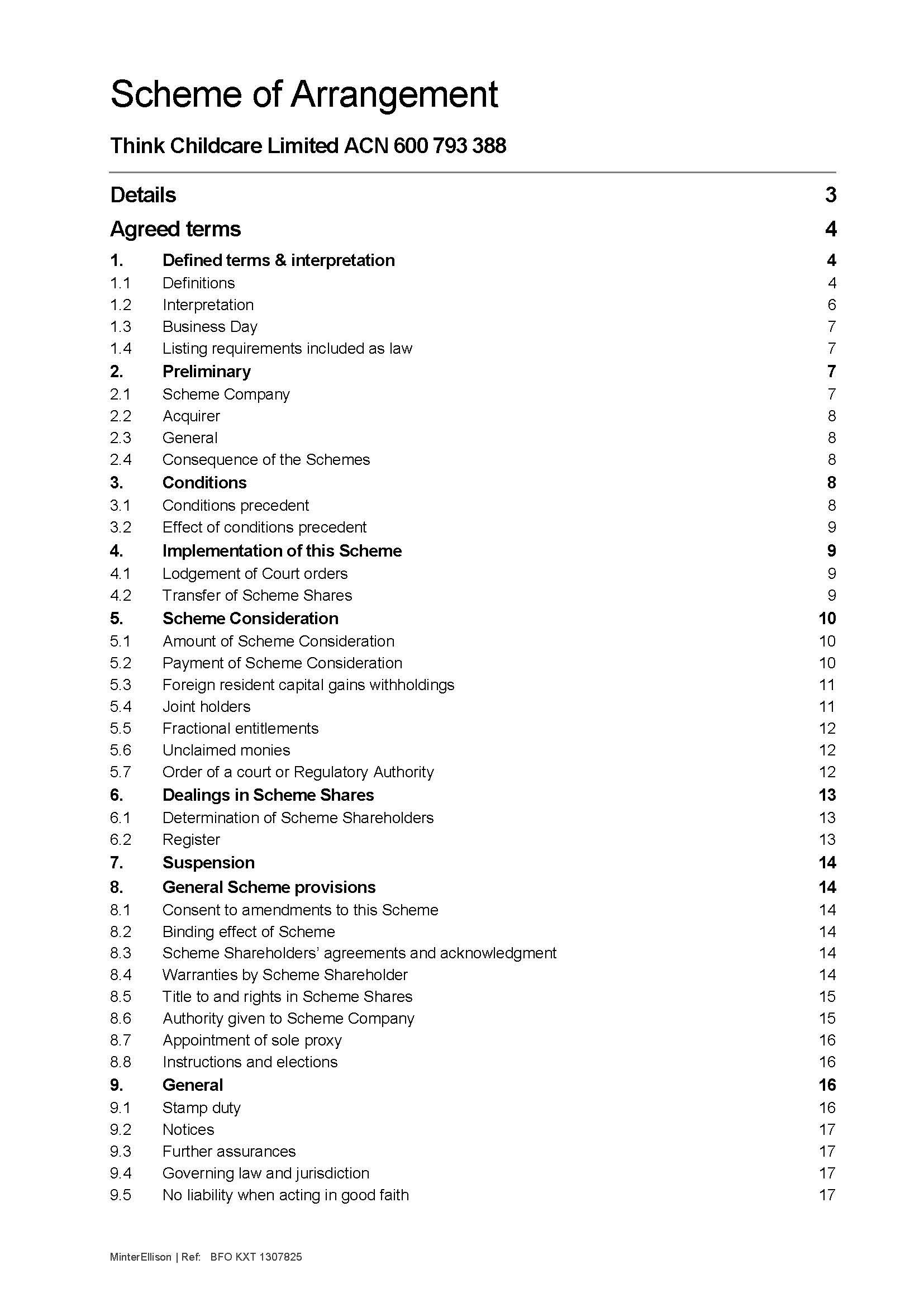
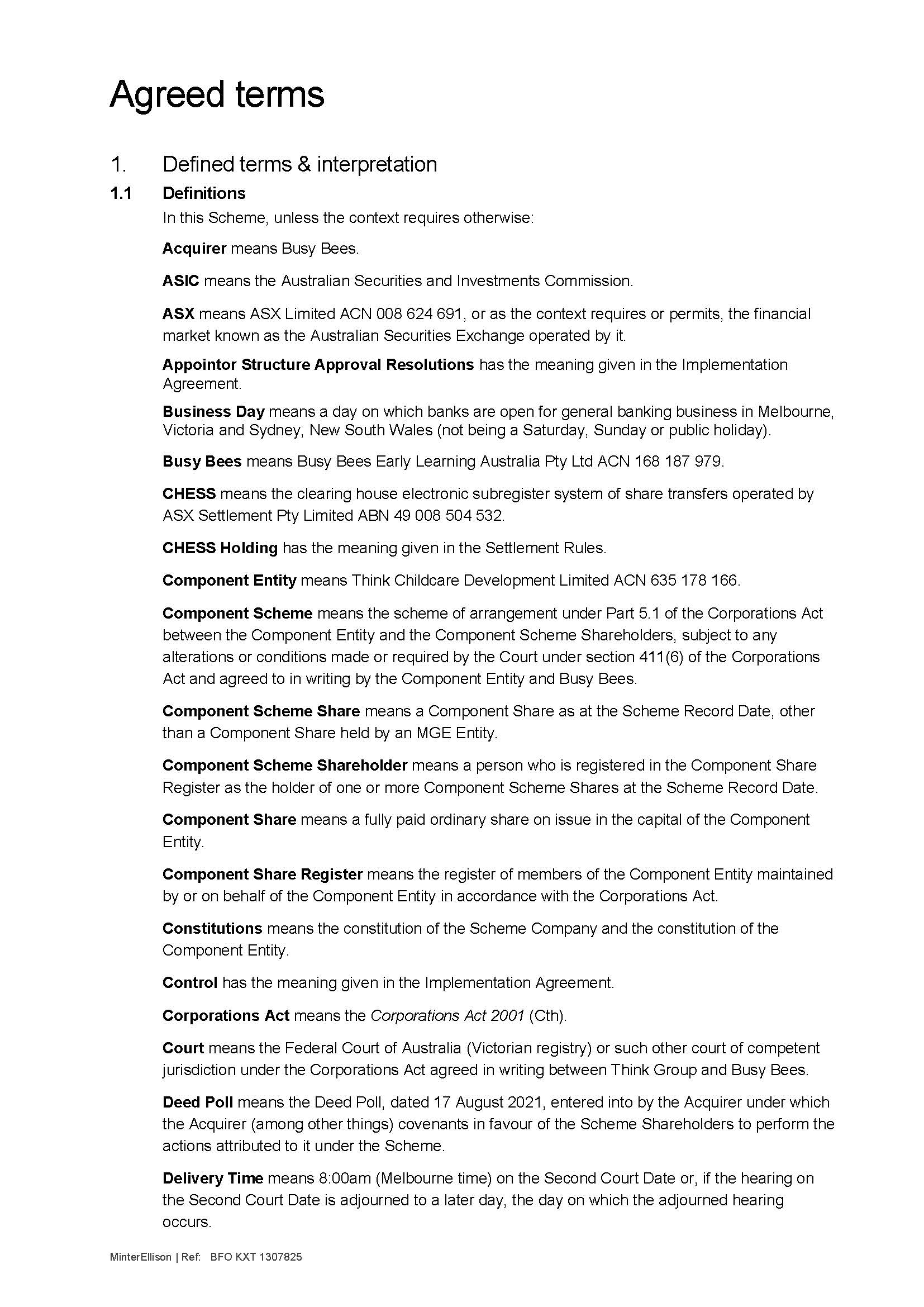
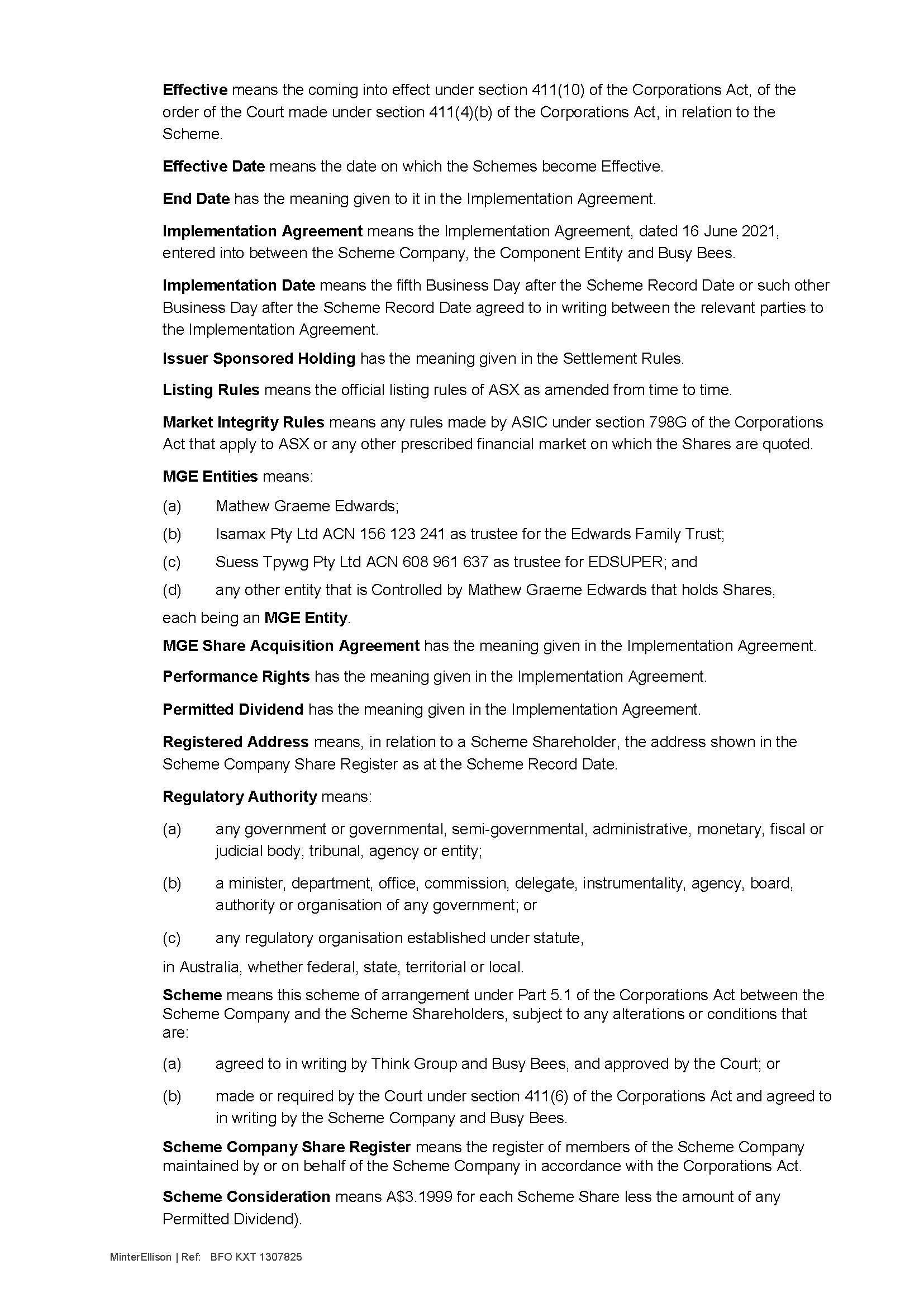
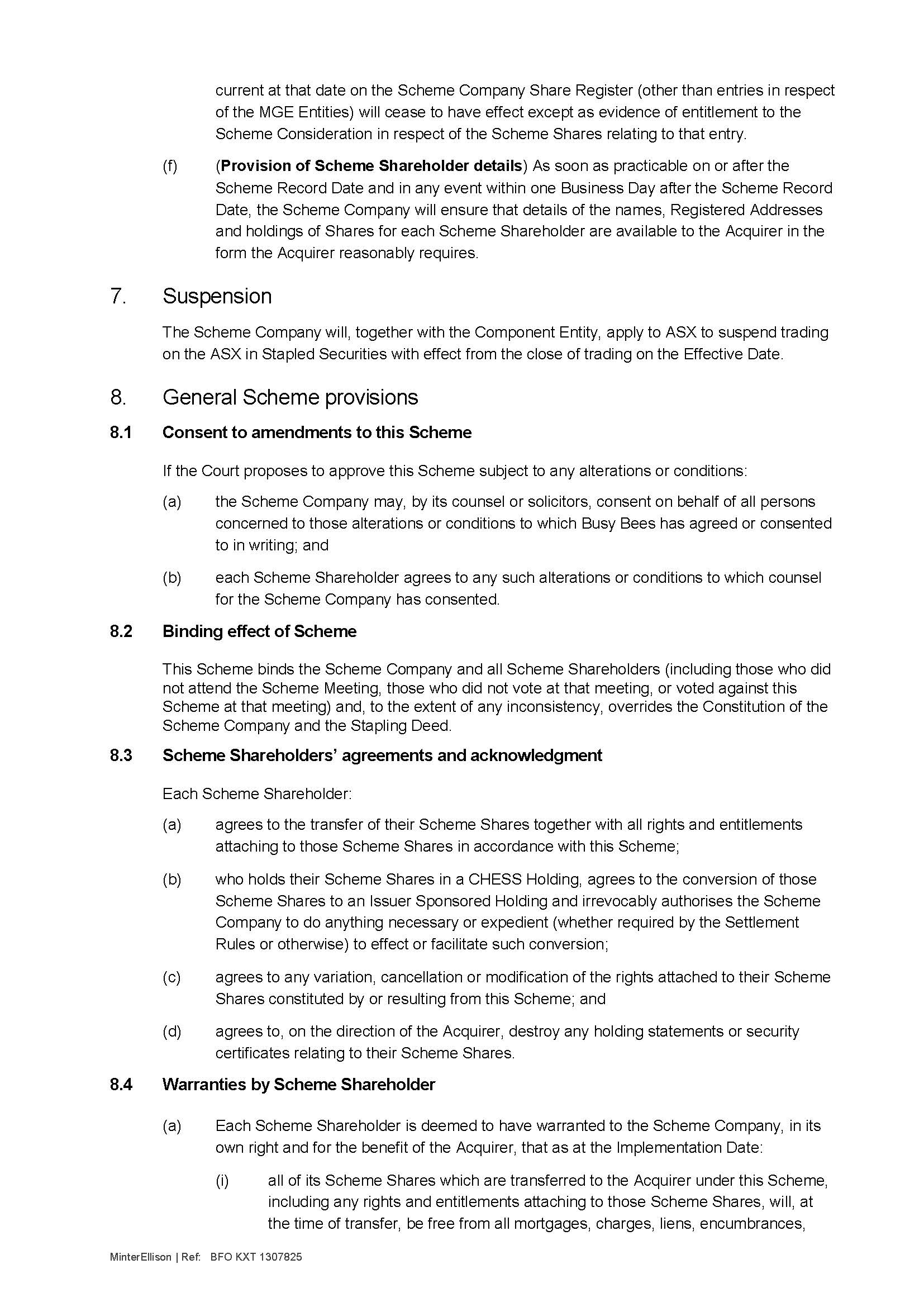
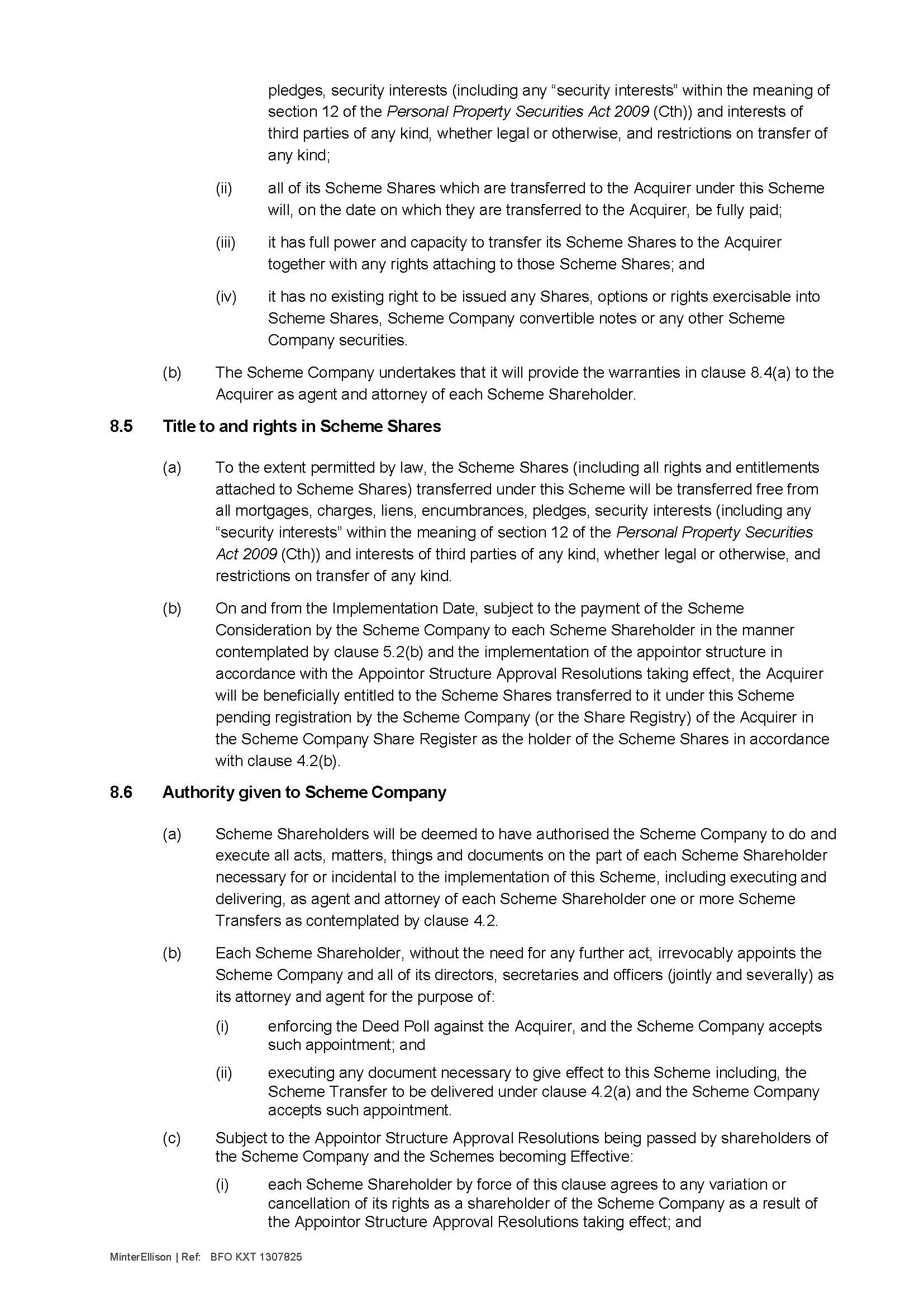
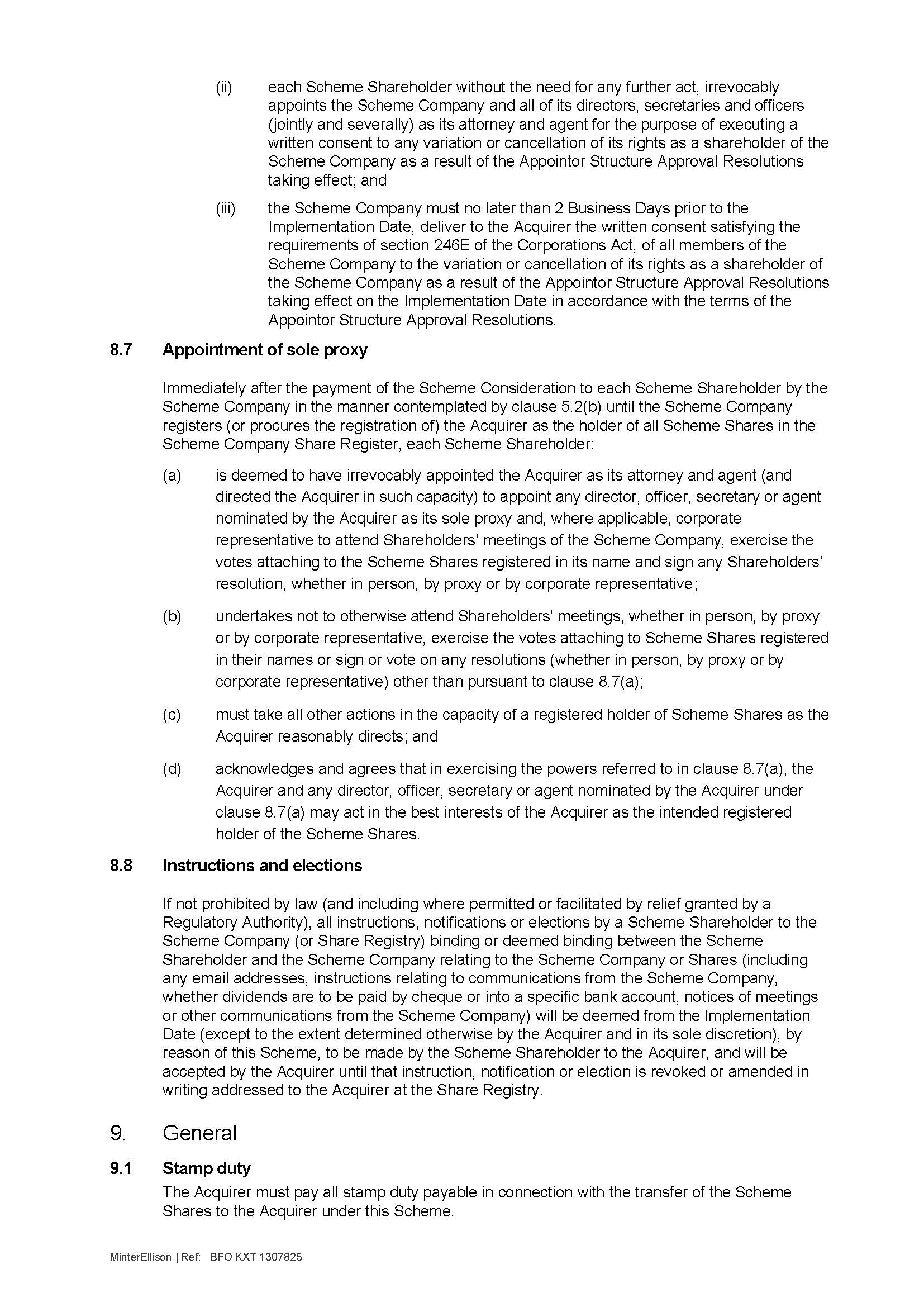
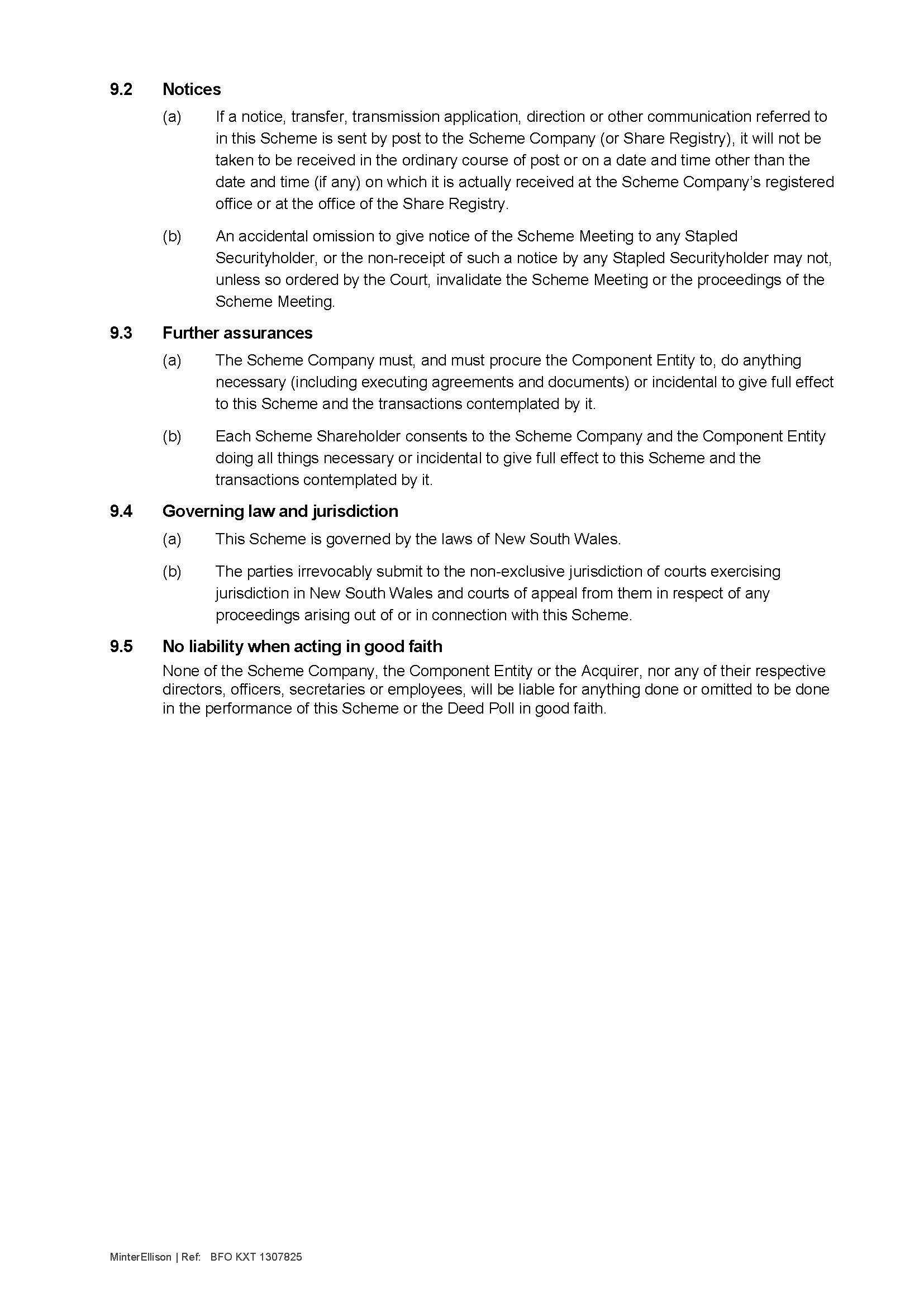
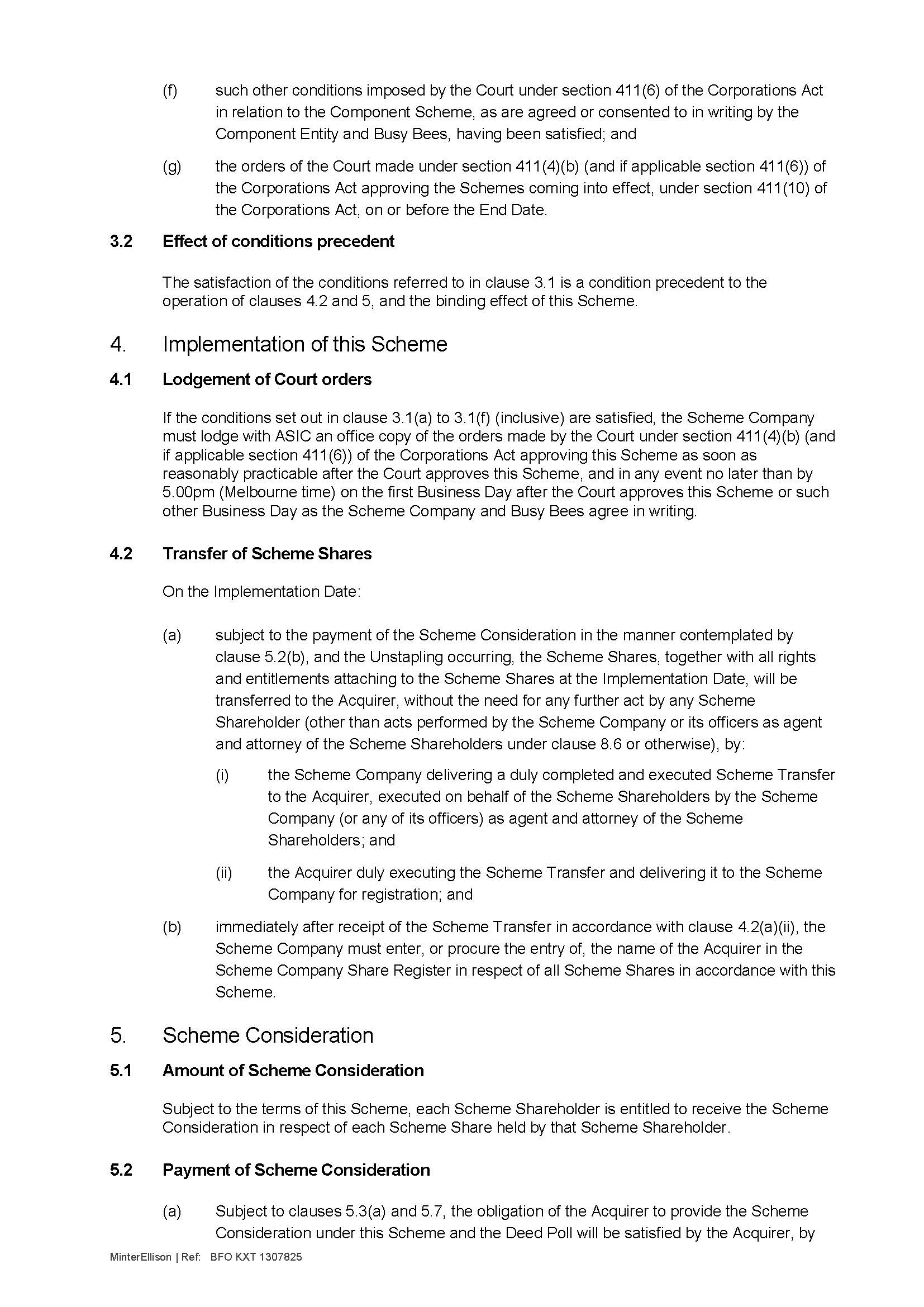
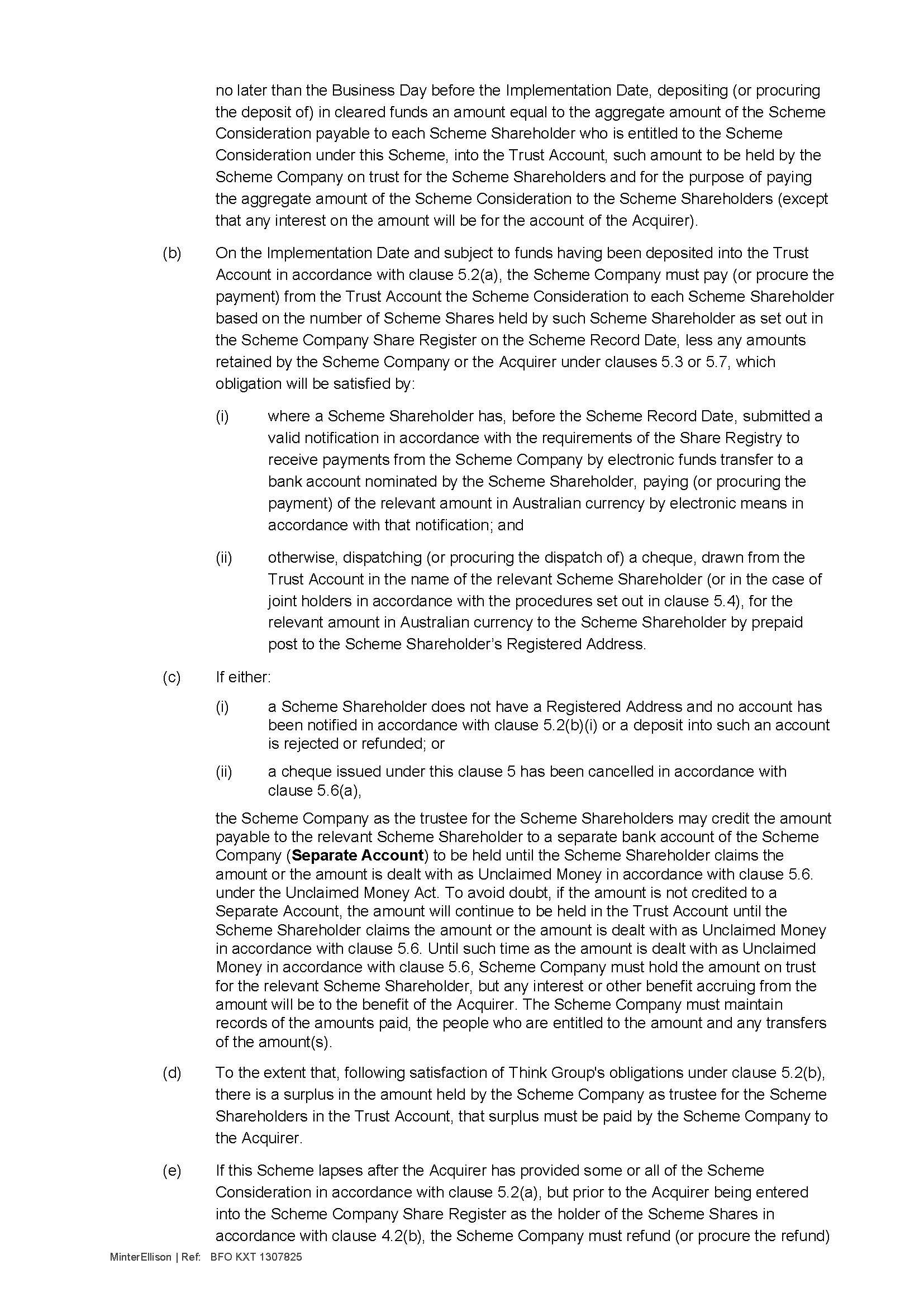
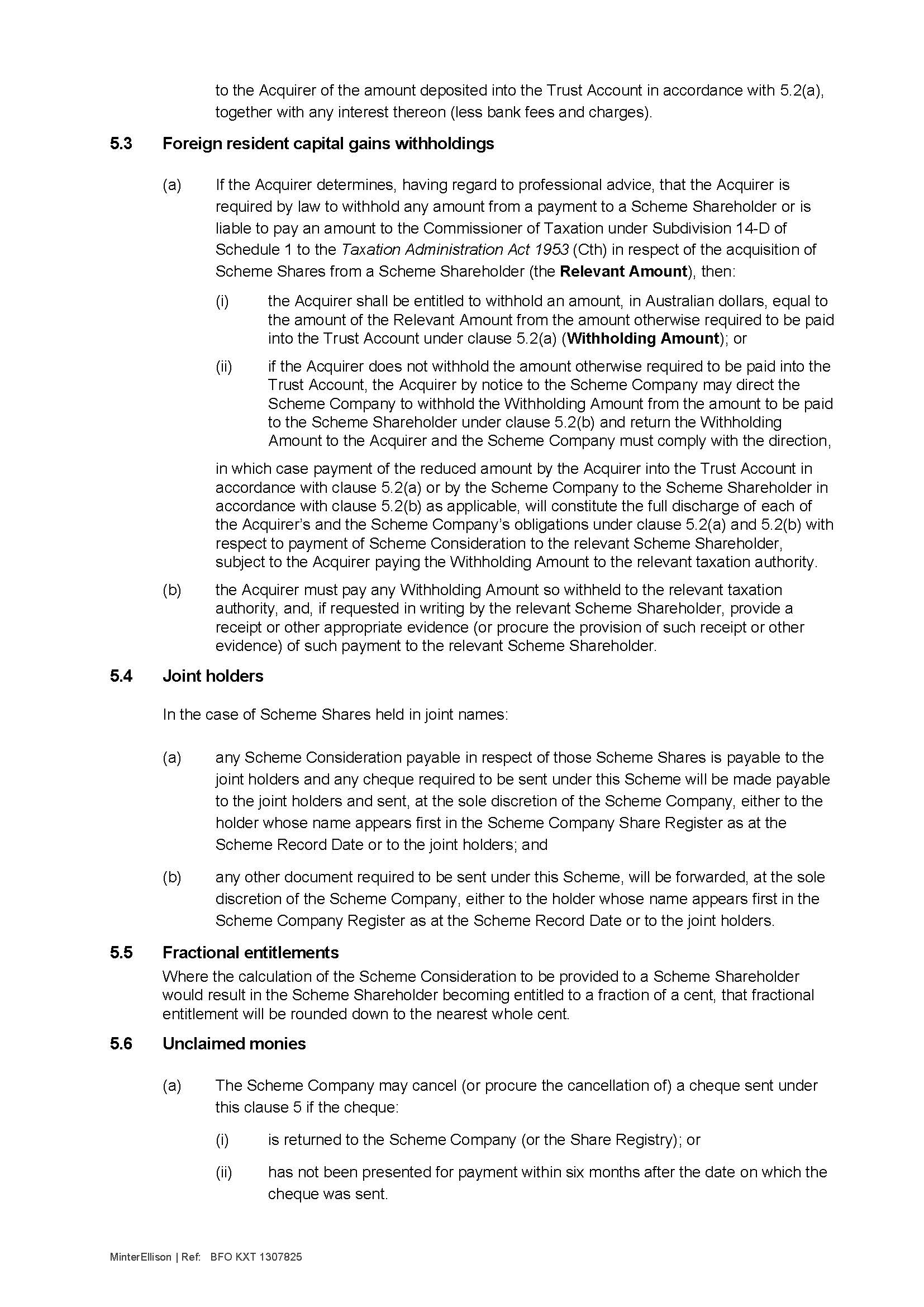
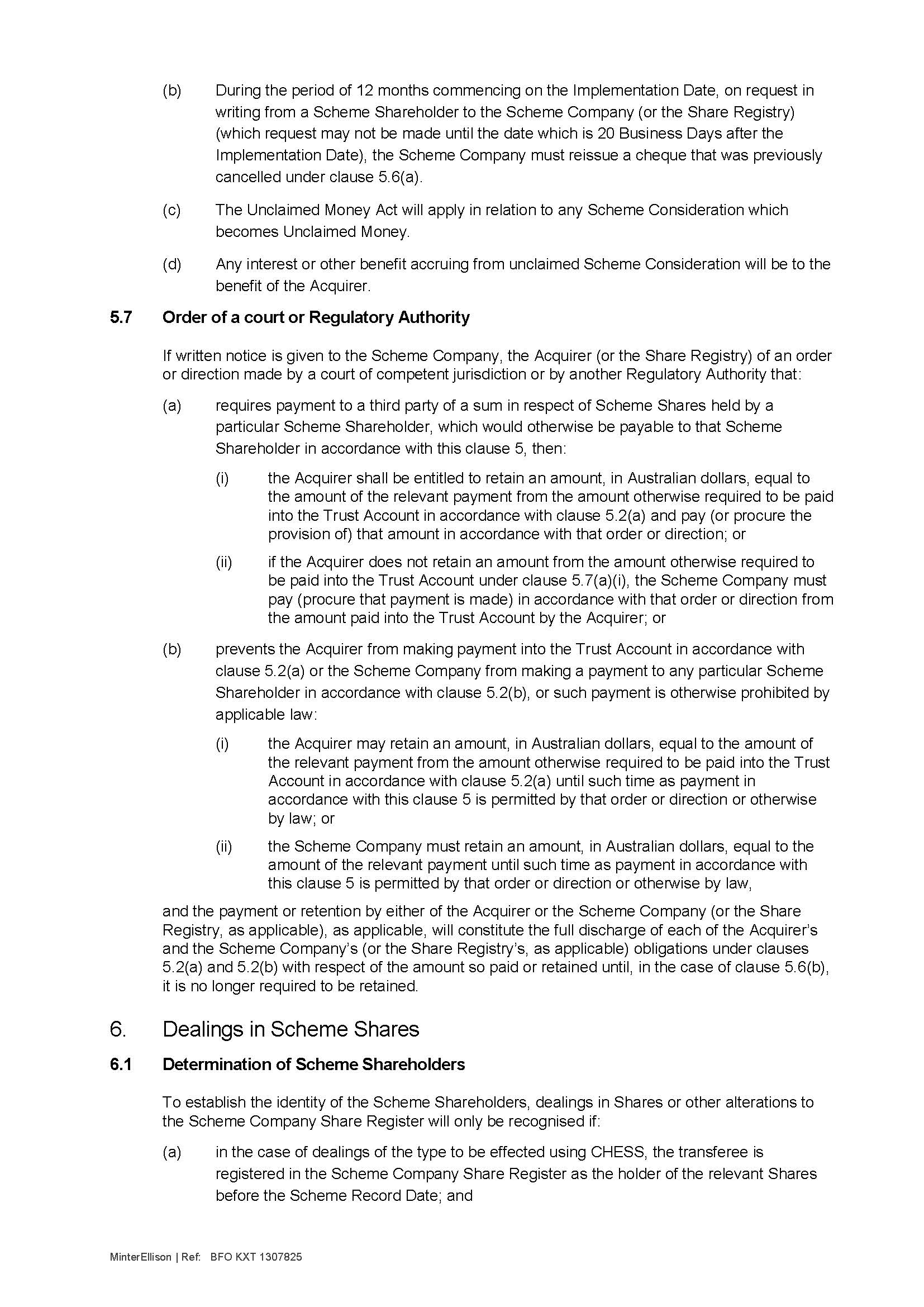
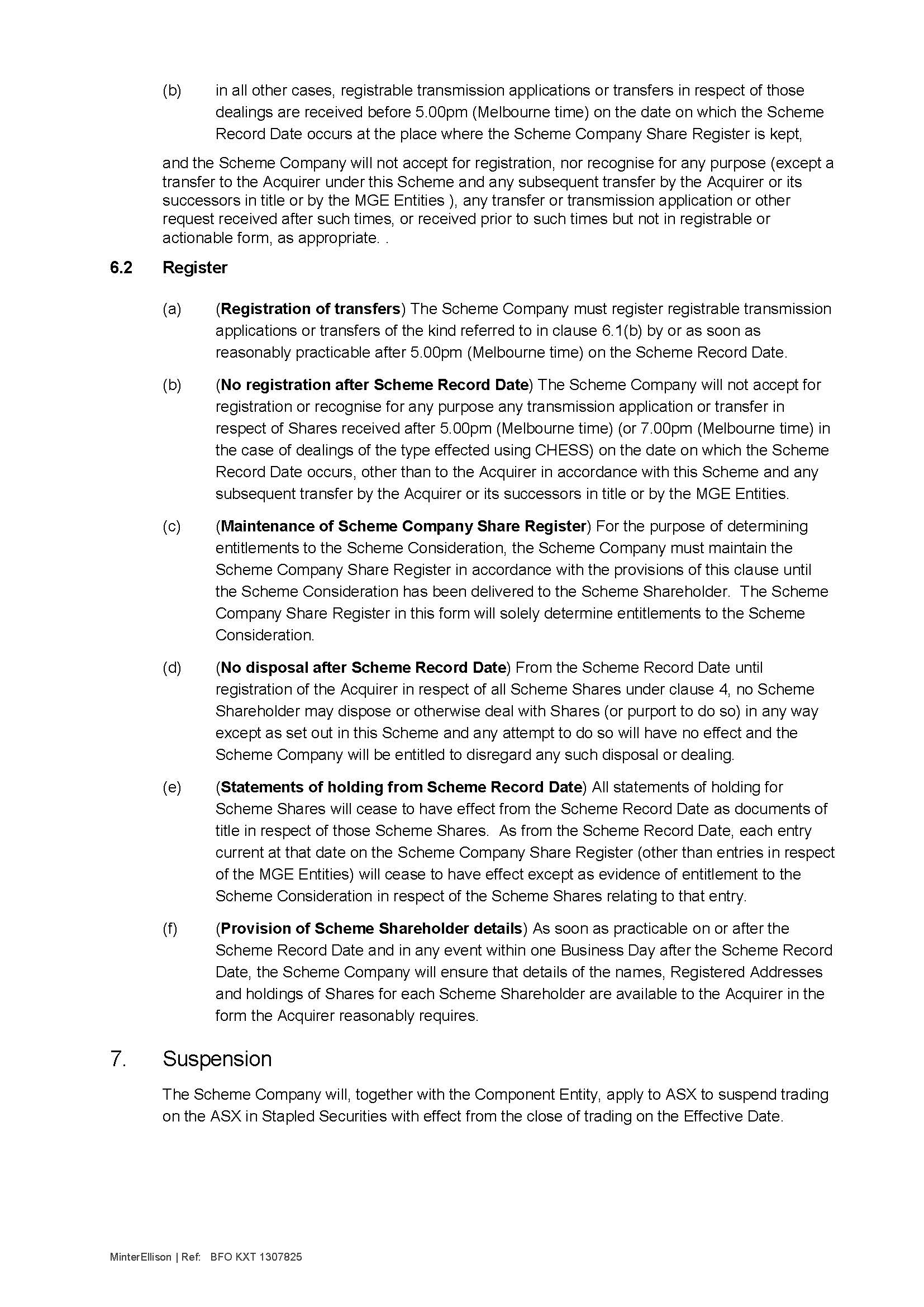
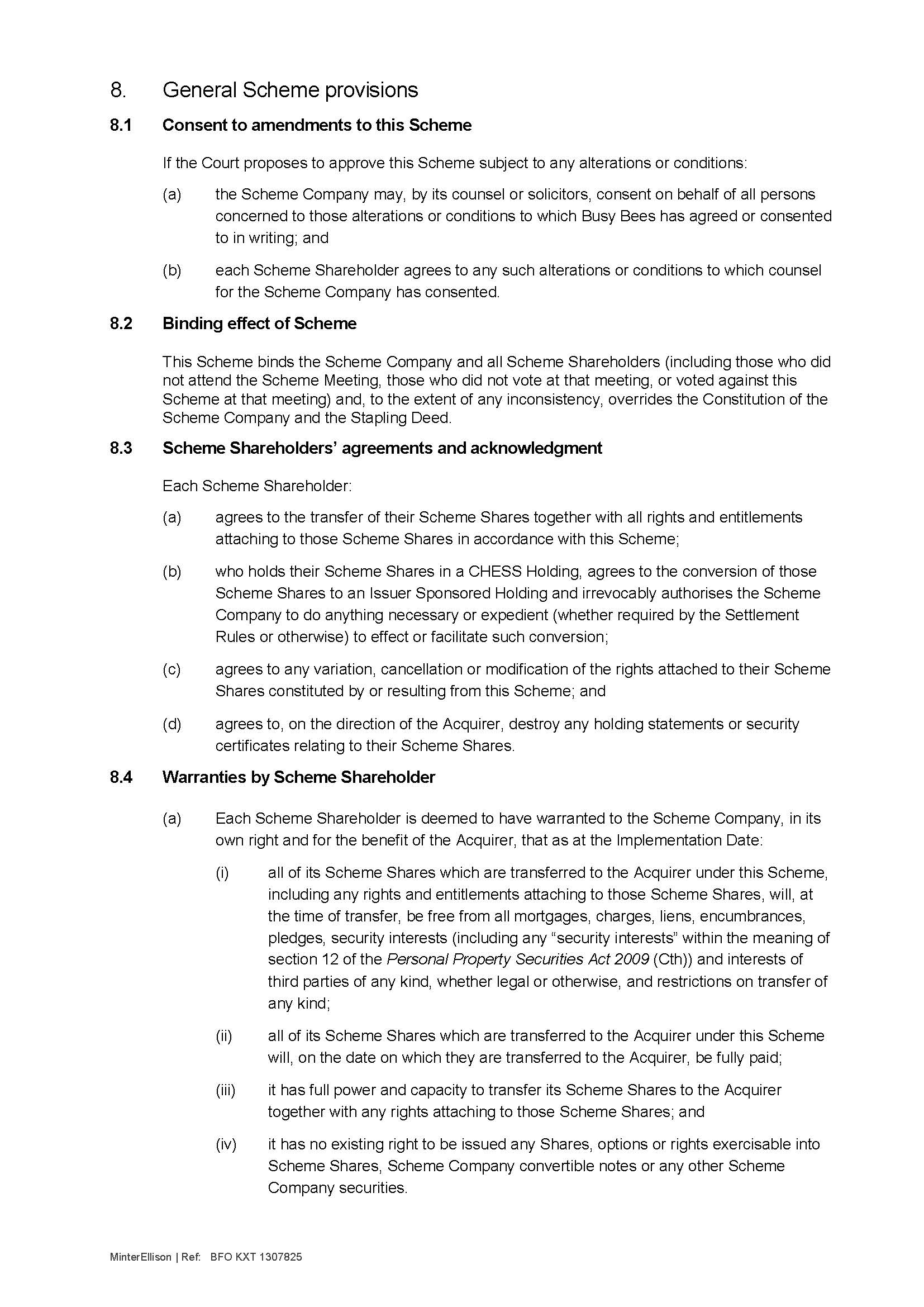
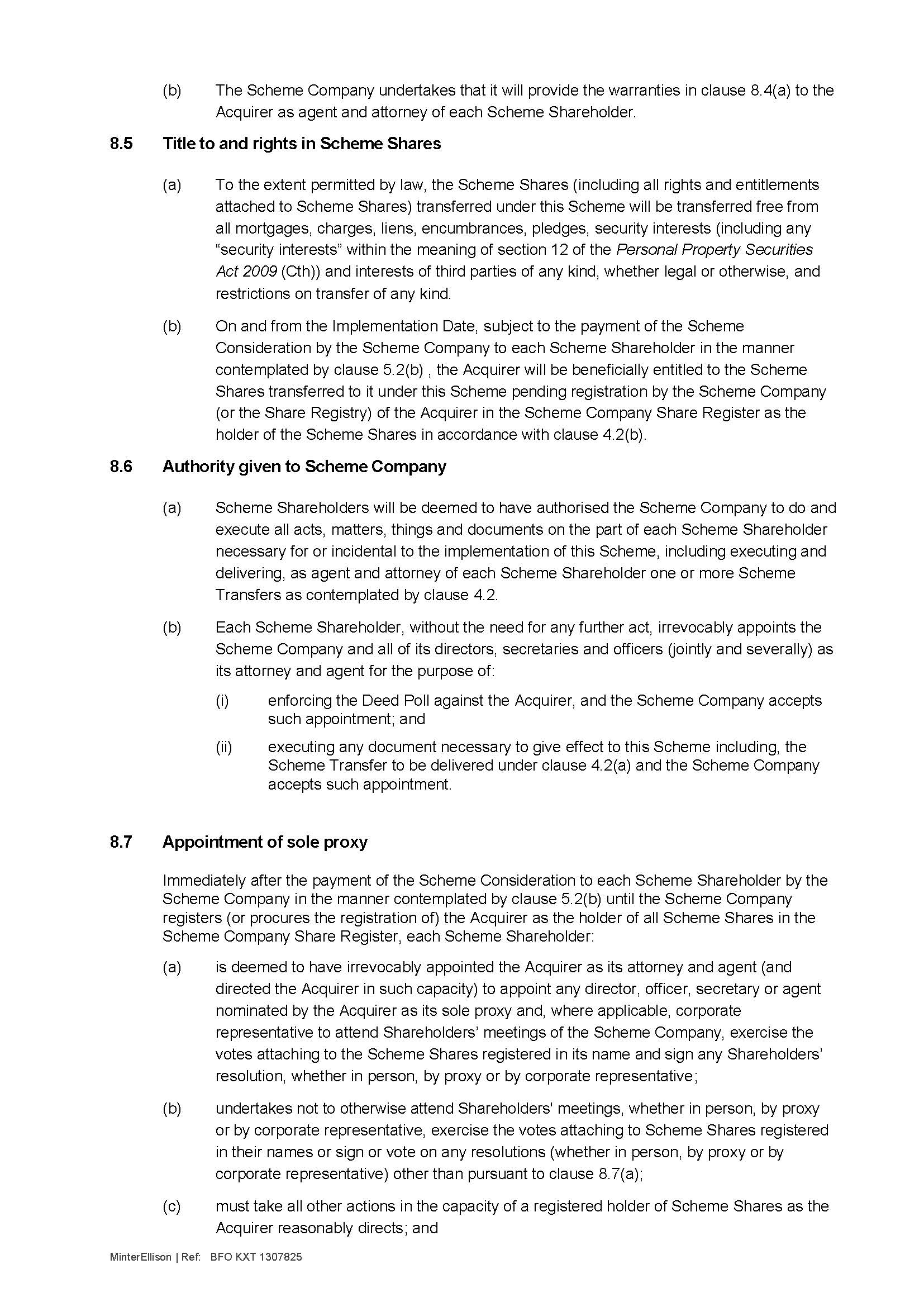
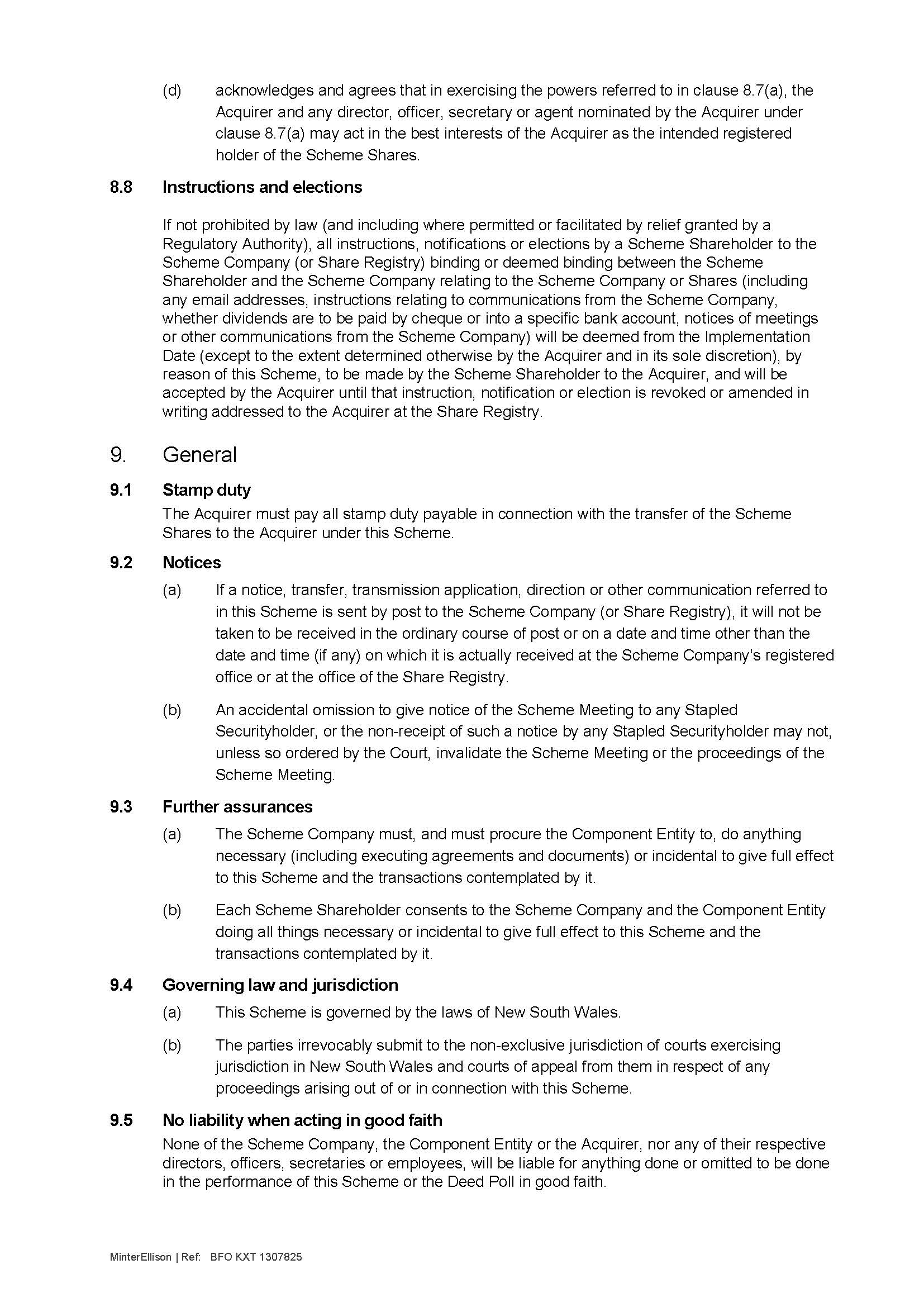
TNK Scheme

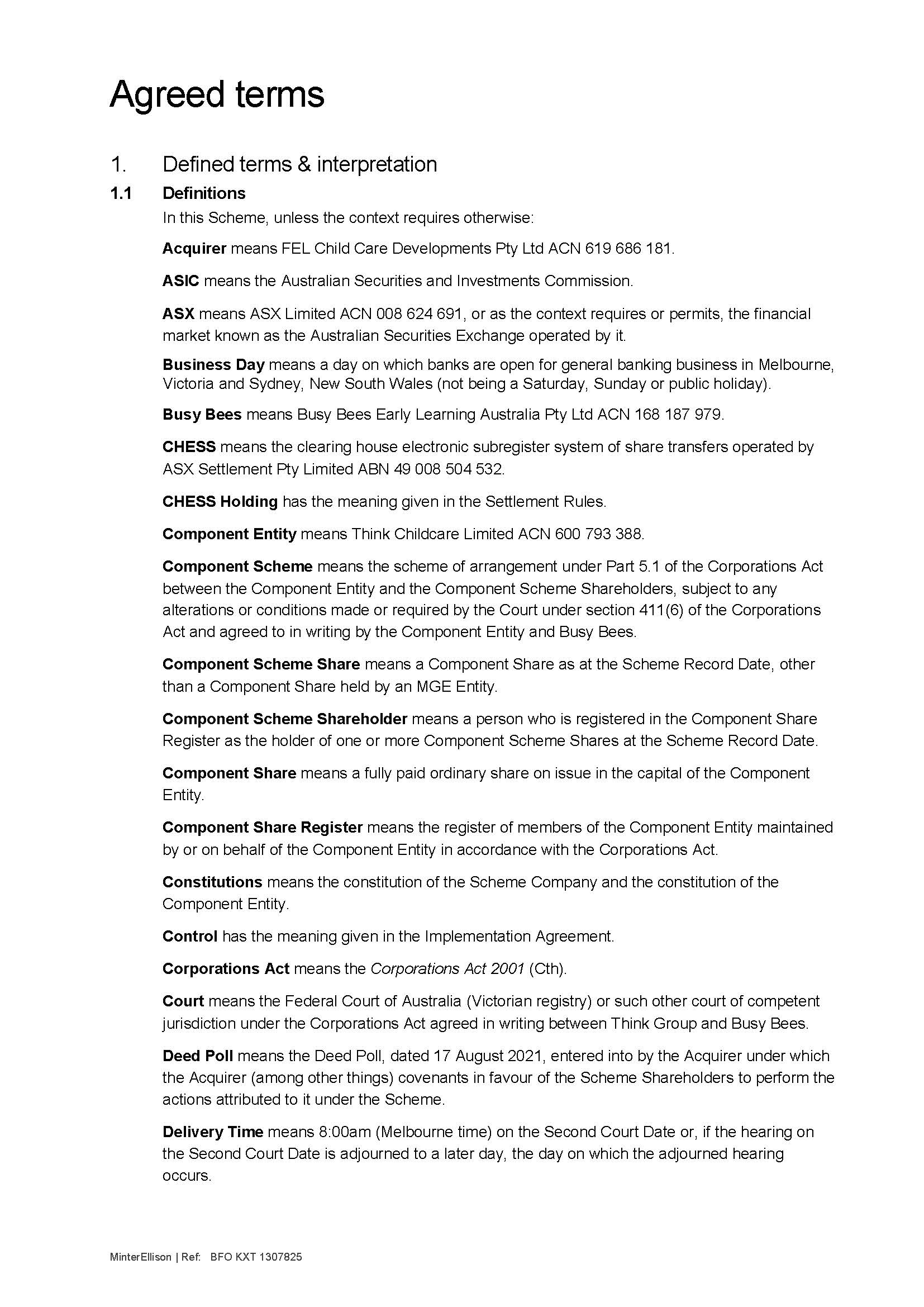
Annexure B
TND Scheme 
O’CALLAGHAN J:
1 I made the orders set out above at a hearing held on 6 October 2021. These are my reasons.
2 On 18 August 2021, I made orders (Orders) convening the following two meetings:
(a) a meeting of the ordinary shareholders of Think Childcare Limited ACN 600 793 388 (TNK) (other than (i) Mathew Graeme Edwards (the CEO and Managing Director of Think Group), (ii) Isamax Pty Ltd ACN 156 123 241 as trustee for the Edwards Family Trust, (iii) Seuss Tpywg Pty Ltd ACN 608 961 637 as trustee for EDSUPER, and (iv) any other entity controlled by Mr Edwards that holds Think Group securities (together, MGE Entities)) for the purpose of considering a scheme of arrangement (TNK Scheme) proposed to be made between TNK and its ordinary shareholders (other than the MGE Entities) (TNK Scheme Meeting); and
(b) a meeting of the ordinary shareholders of Think Childcare Development Limited ACN 635 178 166 (TND) (other than the MGE Entities) for the purpose of considering a scheme of arrangement (TND Scheme) proposed to be made between TND and its ordinary shareholders (other than the MGE Entities) (TND Scheme Meeting),
together the Scheme Meetings.
3 I gave reasons for making the Orders in Re Think Childcare Limited [2021] FCA 1042, and I use the same definitions in these reasons, namely:
(a) Think Group: TNK and TND together.
(b) Think Group Security: One TNK share stapled to one TND share.
(c) Independent Securityholder: All Think Group securityholders, except the MGE Entities.
4 The Schemes, if implemented, will result in:
(a) under the TNK Scheme, Busy Bees Early Learning Australia Pty Ltd ACN 168 187 979 (Busy Bees) acquiring all of the issued share capital of TNK (other than any TNK shares held by the MGE Entities), comprising 77.85% of TNK shares on issue; and
(b) under the TND Scheme, Busy Bees’ subsidiary, FEL Child Care Developments Pty Ltd ACN 619 686 181 (FEL) acquiring all of the issued share capital of TND (other than any TND shares held by the MGE Entities), comprising 77.85% of TND shares on issue,
for total cash consideration of $3.20 per Think Group Security, less the amount of the fully franked, cash only special dividend of $0.24 per Think Group Security (Permitted Dividend), which the Think Group board declared on 22 September 2021 (subject to the Schemes becoming effective). The split in the consideration is $2.9599 for each TNK share and $0.0001 for each TND share.
5 The Orders also addressed matters relating to the holding of the Scheme Meetings and the dispatch of materials to Think Group securityholders in connection with the Scheme Meetings.
6 As the Orders provided, the Scheme Meetings were held on 29 September 2021. The scheme resolutions were passed by the requisite statutory majorities, with the approval of 99.85% of the votes cast and 97.55% of shareholders present and voting (in person or by proxy) in relation to both Schemes.
7 On the same day, Think Group also held a combined general meeting of TNK and TND, at which all the general meeting resolutions were passed by the requisite majorities.
8 The Explanatory Booklet (Annexure ‘CPD1’ to the affidavit of Christopher Paul Dedrick sworn 4 October 2021) was registered by the Australian Securities and Investments Commission (ASIC) on 19 August 2021.
9 At the hearing on 6 October 2021, Think Group sought orders:
(a) approving the Schemes under s 411(4)(b), and if necessary s 411(6), of the Corporations Act 2001 (Cth) (Act); and
(b) exempting Think Group from compliance with s 411(11) of the Act under s 411(12).
10 At the first court hearing on 18 August 2021, Think Group relied upon a written outline of submissions dated 17 August 2021, which Think Group also relied upon for the purposes of the second hearing.
11 Think Group also relied on the following affidavits and annexures in support of its application for approval of the Schemes:
(a) affidavit of Christopher Paul Dedrick sworn 4 October 2021 (Client Relationship Manager at Computershare Investor Services Pty Ltd, which was retained in relation to the administration of the Schemes) (Dedrick Affidavit), which addressed the dispatch of the scheme materials, the maintenance of Think Group’s security register, the number of Think Group securityholders on the register as at 7.00pm on 13 August 2021, being the cut-off time for the dispatch of the scheme materials, the production, replacement and receipt of proxy forms, and acting as returning officer at the Scheme Meetings, including the preparation of the meeting results reports for each of the Scheme Meetings and the general meeting;
(b) second affidavit of Mark Gregory Kerr sworn 4 October 2021 (Chairman and a non-executive independent director of Think Group, who chaired the Scheme Meetings and the general meeting) (Second Kerr Affidavit), which addressed the holding of the Scheme Meetings and general meeting, and the passing of the scheme resolutions and general meeting resolutions;
(c) second affidavit of Trinh Tuyet Bui sworn 4 October 2021 (Head Legal Counsel and Company Secretary of Think Group), which addressed the dispatch of the Explanatory Booklet to the Think Group directors and auditor, the declaration of the Permitted Dividend, and communications with Think Group securityholders;
(d) third affidavit of Bernard Frederic Oude-Vrielink sworn 4 October 2021 (a Partner of MinterEllison, the solicitors for the Plaintiffs), which addressed registration of the Explanatory Booklet with ASIC and the advertisement of the second court hearing; and
(e) fourth affidavit of Bernard Frederic Oude-Vrielink (Fourth Oude-Vrielink Affidavit), which addressed the satisfaction of conditions precedent, ASIC’s position in respect of the second court hearing, whether notice had been received from any person proposing to appear at the second court hearing to object to the approval of the Schemes, and whether Think Group had received notice of any competing proposal.
12 The role of the court in approving a scheme of arrangement is supervisory. The court is not bound to approve it merely because it previously made orders for the convening of a meeting or because the statutory majorities were achieved. That said, as Jacobson J said in Re Seven Network Limited (No 3) [2010] FCA 400; (2010) 267 ALR 583 at [32] “the court will usually approach the task upon the basis that the members are better judges of what is in their commercial interests than the court”.
13 The cases establish that the following matters should be taken into account, namely that:
(a) the orders of the court convening the scheme meeting were complied with;
(b) the resolution to approve the scheme was passed by the requisite majority, and whether other statutory requirements have been satisfied;
(c) all conditions to which the scheme is subject (other than court approval and lodgement of the court’s orders with ASIC) have been met or waived;
(d) the scheme is fair and reasonable so that an intelligent and honest shareholder, properly informed and acting alone, might approve it;
(e) there was full and fair disclosure to shareholders of all information material to the decision whether to vote for or against the scheme;
(f) the plaintiff has brought to the attention of the court all matters that could be considered relevant to the exercise of the court’s discretion; and
(g) the court is satisfied under s 411(17) that the scheme has not been proposed to avoid Chapter 6 of the Act, or that the plaintiff has a statement from ASIC that it has no objection to the scheme.
14 The Orders required that the Scheme Meetings be convened by providing various documents to Think Group securityholders on or before 30 August 2021, the principal document being the Explanatory Booklet. The table below, which was contained in the commendably brief and helpful written submissions of Mr DFC Thomas SC, sets out the relevant requirements of the Orders and refers to the evidence which established the satisfaction of those requirements, including:
ELECTRONIC DISPATCH | |
Orders | Evidence reference |
The Scheme Meetings be convened by sending on or before 30 August 2021: | Dedrick Affidavit at [40] and [41] |
in the case of Think Group securityholders who have elected to receive notices of meetings electronically by email (Email Securityholders), an email substantially in the form at Annexure ‘MGK28’ to the affidavit of Mark Gregory Kerr dated 16 August 2021 (First Kerr Affidavit), which includes access by an embedded link to the following documents: | Dedrick Affidavit at [31] |
an electronic copy of a document substantially in the form of the explanatory booklet, a draft of which is at Exhibit ‘BFO9’ (Explanatory Booklet) to the affidavit of Bart Oude-Vrielink dated 17 August 2021, which contains, among other things, the Notice of TNK Scheme Meeting and Notice of TND Scheme Meeting; | Dedrick Affidavit at [30] and [32] |
a personalised Proxy Form in respect of both the TNK Scheme Meeting and the TND Scheme Meeting, substantially in the form at Annexure ‘MGK10’ to the First Kerr Affidavit (Proxy Form); | Dedrick Affidavit at [33] |
in the case of Think Group securityholders who hold more than 5% of Think Group Securities, and therefore could be a “relevant foreign resident” for the purposes of subdivision 14-D to schedule 1 to the Taxation Administration Act 1953 (Cth), a Relevant Foreign Resident Declaration Form, substantially in the form at Annexure ‘MGK11’ to the First Kerr Affidavit (Foreign Resident Declaration Form); | Dedrick Affidavit at [33] |
an online portal or website that is accessible by the Email Securityholder and which enables the Email Securityholder to lodge their proxy for the Scheme Meetings and voting instructions online; | Dedrick Affidavit at [33] |
HARD COPY DISPATCH | |
Orders | Evidence reference |
in the case of Think Group securityholders who are not Email Securityholders (Postal Securityholders) and whose registered address is in Australia, the following documents by prepaid post addressed to the relevant addresses recorded in the Plaintiffs’ register: | |
a letter substantially in the form at Annexure ‘MGK29’ to the First Kerr Affidavit, which contains the address of a website which enables Postal Securityholders to access the Explanatory Booklet (Postal Securityholder Letter); | Dedrick Affidavit at [40(a)(i)] |
a personalised Proxy Form; | Dedrick Affidavit at [40(a)(ii)] |
in the case of Think Group securityholders who hold more than 5% of Think Group Securities, and therefore could be a “relevant foreign resident” for the purposes of subdivision 14-D to schedule 1 to the Taxation Administration Act 1953 (Cth), a Relevant Foreign Resident Declaration Form; | Dedrick Affidavit at [40(a)(iii)] |
a reply paid envelope for the return of that Think Group securityholder’s Proxy Form; | Dedrick Affidavit at [40(a)(iv)] |
for Think Group securityholders receiving a Relevant Foreign Resident Declaration Form, a reply paid envelope for the return of that Think Group securityholder’s Relevant Foreign Resident Declaration Form; | Dedrick Affidavit at [40(a)(v)] |
in the case of Postal Securityholders and whose registered address is outside Australia, the following documents by prepaid airmail post addressed to the relevant addresses recorded in the Plaintiffs’ register: | |
a Postal Securityholder Letter; | Dedrick Affidavit at [40(b)(i)] |
a personalised Proxy Form; | Dedrick Affidavit at [40(b)(ii)] |
a self-addressed envelope for the return of that Think Group securityholder’s Proxy Form. | Dedrick Affidavit at [40(b)(iii)] |
15 This table, again from senior counsel’s submissions, sets out the requirements of the Orders in relation to the conduct of the Scheme Meetings, and refers to the evidence which established the satisfaction of those requirements:
Requirement of Orders | Evidence reference |
Convene and hold the TNK Scheme Meeting at 11.00am on 29 September 2021. | Second Kerr Affidavit at [8] |
Convene and hold the TND Scheme Meeting at 11.30am or at the conclusion or adjournment of the TNK Scheme Meeting on 29 September 2021. | Second Kerr Affidavit at [8] |
The Scheme Meetings are to be convened using the notices of meeting substantially in the form contained in Appendix 6 to the Explanatory Booklet for the TNK Scheme Meeting and substantially in the form contained in Appendix 7 to the Explanatory Booklet for the TND Scheme Meeting respectively without specifying a physical location for the meetings. | Dedrick Affidavit at [23] and [24] |
The Scheme Meetings are to be held and conducted electronically, without any physical meeting of Think Group securityholders being held, pursuant to the arrangements for attending, participating and voting described in the Notice of TNK Scheme Meeting and the Notice of TND Scheme Meeting respectively relating to the appointment and revocation of proxy and attorney appointments and in respect of the effect of a Think Group securityholder’s attendance at a Scheme Meeting on a proxy or attorney appointment by that Think Group securityholder. | Dedrick Affidavit at [60] |
At the TNK Scheme Meeting, ordinary shareholders of TNK (other than the MGE Entities) are to be permitted to submit questions, and at the TND Scheme Meeting, ordinary shareholders of TND (other than the MGE Entities) are to be permitted to submit questions, in the manner provided on the website, subject to the functions and powers of the Chair under the Plaintiffs’ Constitutions as applicable and the general law. | Dedrick Affidavit at [60] |
Notwithstanding clause 64.8 of the First Plaintiff’s Constitution and s 249Y(3) of the Act, the appointment of a proxy in respect of the TNK Scheme Meeting shall not be revoked or suspended by the appointing ordinary shareholder of TNK (TNK Appointor) attending and taking part in the TNK Scheme Meeting, but if the TNK Appointor votes on a resolution at the TNK Scheme Meeting, the proxy is not entitled to vote as the TNK Appointor’s proxy on that resolution and any such vote must not be counted in the results of the relevant poll. | Dedrick Affidavit at [65] and [66] |
Notwithstanding clause 65.8 of the Second Plaintiff’s Constitution and s 249Y(3) of the Act, the appointment of a proxy in respect of the TND Scheme Meeting shall not be revoked or suspended by the appointing ordinary shareholder of TND (TND Appointor) attending and taking part in the TND Scheme Meeting, but if the TND Appointor votes on a resolution at the TND Scheme Meeting, the proxy is not entitled to vote as the TND Appointor’s proxy on that resolution and any such vote must not be counted in the results of the relevant poll. | Dedrick Affidavit at [65] and [66] |
Voting on the resolutions to approve the TNK Scheme and TND Scheme is to be conducted by way of a poll. | Second Kerr Affidavit at [20] and [38] |
Mr Mark Gregory Kerr, or failing him, Mr Joe Leonard Dicks be the Chairperson of the Scheme Meetings. | Second Kerr Affidavit at [11] |
16 The evidence establishes that, in accordance with s 411(4)(a)(ii) of the Act, the resolution to agree to the TNK Scheme was passed by a majority in number of members present and voting (either in person or by proxy) at the TNK Scheme Meeting, and by 75% of the votes cast on the resolution, and that the resolution was both passed by 99.85% of the votes cast and 97.55% of shareholders present and voting at the TNK Scheme Meeting (in each case, in person or by proxy). These percentage figures are identical in respect of the resolution to agree to the TND Scheme at the TND Scheme Meeting.
17 The number of shares voted at the TNK Scheme Meeting as a percentage of TNK’s total issued shares (excluding the shares held by the MGE Entities) was 69.8%. The number of TNK shareholders who voted as a percentage of the total number of TNK shareholders (excluding the MGE Entities) was 26.6%. These percentage figures are identical for TND.
18 I agree with Mr Thomas’ submission that the level of voter turnout (26.6%) does not give rise to any concern that securityholders were deterred from attending the Scheme Meetings or did not have notice of it.
19 As Beach J said in Re Amcor Limited (No 2) [2019] FCA 842 at [18]–[20]:
18 Now I would note that shareholder turnout was relatively low, although the number of shares voted as a percentage of Amcor’s total issued share capital was high. In particular:
(a) 6.70% of Amcor’s shareholders voted on the resolution; and
(b) 72.20% of shares were voted on the resolution.
19 But the low voter turnout at the Scheme meeting does not give rise to any concern that shareholders were deterred or did not have notice of the Scheme meeting. In this respect:
(a) except for minor procedural irregularities, there is nothing to suggest that there was any irregularity in the manner of dispatch of material to the shareholders;
(b) shareholders were provided with notice of the Scheme meeting;
(c) there is no evidence of any issue that would have deterred shareholders from voting at or from attending the Scheme meeting; and
(d) those shareholders who did vote voted overwhelmingly in favour of the Scheme.
20 Moreover, the comments of Santow J in Re Matine Ltd (1998) 28 ACSR 268 at 295 that “[t]he apathetic shareholder who chooses not to vote upon a scheme should not be presumed to be antagonistic to the scheme or to warrant paternalistic protection” are entirely apposite to the present context.
20 See also Re TriAusMin Limited (No 2) [2014] FCA 833 (where 10.94% of shareholders voted); Re Beadell Resources Limited (No 2) [2019] WASC 53 (where 8.3% of shareholders voted); Re Decimal Software Limited (No 2) [2018] FCA 2040 (where 5.21% of shareholders voted); Re Avoca Resources Limited [2011] FCA 208 (where 11.49% of shareholders voted).
21 In this case, I agree that:
(a) there is nothing to suggest any irregularity in dispatch of material to the securityholders;
(b) securityholders were provided with notice of the Scheme Meetings;
(c) there is no evidence of any issue that would have deterred securityholders from voting at or from attending the Scheme Meetings, and Think Group has not received any complaint from any securityholder that they did not receive notice of the Scheme Meetings; and
(d) those shareholders who did vote voted overwhelmingly in favour of the Schemes.
22 In that regard, it is worth noting that the level of voter turnout is significantly higher than the voter turnout for Think Group’s last three annual general meetings.
23 Order 11 of the Orders was that an advertisement of the proposed approval hearing be published in the “The Australian” newspaper on 29 September 2021. That order was complied with. I was told that no notice was received that any person intended to appear at the hearing before me on 6 October 2021 to oppose the application for approval of the Schemes.
24 Each of the Schemes is conditional on satisfaction of the conditions precedent set out in clause 3.1 of each Scheme, one of which is that the conditions precedent in clause 3.1 of the Implementation Agreement (other than the court approval condition precedent) have been satisfied or (if applicable) waived by the “Delivery Time” (where the term “Delivery Time” is defined in each Scheme to mean 8.00am (Melbourne time) on the day of the second court hearing). Clause 3.1 of each Scheme also requires that neither the Implementation Agreement nor the relevant Deed Poll have been terminated in accordance with their terms by the Delivery Time. (Busy Bees and FEL entered into a Deed Poll in relation to the TNK Scheme and the TND Scheme respectively, covenanting to, among other things, perform their actions under the relevant Scheme and provide or procure the provision of the Scheme consideration.)
25 Before approving a scheme, the court will ordinarily require that all conditions precedent to the scheme (other than the court’s approval and the lodgement of the court’s approval order with ASIC) have been satisfied or waived, in order to remove any future doubt as to the binding nature of the scheme.
26 Clause 3.5 of the Implementation Agreement provides a regime for certificates to be provided by Think Group and Busy Bees regarding the satisfaction or waiver of conditions precedent. These certificates were provided to the court as Annexures ‘BFO12’ to ‘BFO16’ to the Fourth Oude-Vrielink affidavit. And Think Group annexed to the certificates primary evidence regarding the relevant condition, where available.
27 The certificates also provided that neither the Implementation Agreement nor the Deeds Poll have been terminated in accordance with their terms as at the Delivery Time.
28 I agree that each of the Schemes is fair and reasonable in the sense that an intelligent and honest shareholder, properly informed and acting alone, might approve the Schemes. As was submitted, the following matters support this conclusion:
(a) The overwhelming support of the shareholders, as reflected in the voting results of the Scheme Meetings. In this respect, proof of the relevant statutory majorities is sufficient to establish that, prima facie, the Schemes are fair. This is because the court generally takes the view that the members are in the best position to judge whether an arrangement is in their commercial interests and will be reluctant to make a decision contrary to the views expressed at the meeting.
(b) The recommendation from the independent directors that securityholders vote in favour of the Schemes for the reasons given in the Explanatory Booklet, and the fact that the independent directors stated their intention to vote all of the Think Group Securities held or controlled by them in favour of the Schemes.
(c) The opinion of the independent expert that the Schemes are fair and reasonable and in the best interest of Independent Securityholders. The basis for this conclusion was that the total amount of $3.20 per Think Group Security that Independent Securityholders will receive if the Schemes are implemented (including the Permitted Dividend of $0.24 per Think Group Security) lies above the assessed fair market value range for Think Group on a “control basis” of $2.82 to $3.12 per Think Group Security.
(d) The disclosures in the Explanatory Booklet of the potential benefits and disadvantages of the Schemes.
(e) That there is nothing to suggest that the Schemes have been proposed other than in good faith or that the securityholders voted other than in good faith or that any securityholder was oppressed.
(f) There is no application to oppose the orders approving the Schemes, and no evidence as to any oppression in the conduct of the Scheme Meetings.
(g) The Schemes contain measures to protect shareholders against performance risk.
29 The starting point as to whether there has been full and fair disclosure to shareholders of all information material to the decision whether to vote for or against a scheme of arrangement is the explanatory statement. The explanatory statement is required to disclose any information that is “material” to a member’s decision whether or not to agree to the scheme so that members are properly and fully informed in their consideration of the proposed scheme.
30 As I explained in my previous reasons, it is proposed that Mr Edwards and the MGE Entities, in a separate series of transactions, will acquire the development business of Think Group and management rights in respect of 35 early childhood education and care centres (MGE Acquisition). The MGE Acquisition involves FEL transferring the 77.85% of TND shares acquired under the TND Scheme to Mr Edwards for nominal consideration.
31 At the first hearing, I explained that I was satisfied that the details of the MGE Acquisition were adequately disclosed to Think Group securityholders, including the Independent Securityholders, such that they have been properly informed as to the nature of the Schemes, including the MGE Acquisition, before the Scheme meetings. See Re Think Childcare Limited [2021] FCA 1042 at [41].
32 Further, the explanatory statement contained in the Explanatory Booklet was registered by ASIC prior to dispatch, as required by s 412(6) of the Act. Before registering the explanatory statement, ASIC must conclude that it appears to comply with the requirements of the Act, and ASIC must form the opinion that the statement does not contain any matter that is false in a material particular or materially misleading in the form and context where it appears. Accordingly, as was submitted, in light of ASIC’s registration of the explanatory booklet, ASIC must be taken to have been satisfied that the requirements of s 412(1) of the Act were met.
33 The evidence also showed that Think Group operated a “Securityholder Information Line” between 19 August 2021 and 29 September 2021, Monday to Friday between 8.30am and 5.30pm, for any Think Group securityholders who had questions or complaints about either of the Schemes, the general meeting resolutions, or the Explanatory Booklet. Ms Bui gave evidence that this telephone line received approximately 24 calls from Think Group securityholders.
34 In light of the above, I was satisfied that there has been full and fair disclosure to members.
35 The court’s power to approve a scheme is restricted by s 411(17) of the Act, which provides that the court must be satisfied there is no proscribed purpose as described in s 411(17)(a), or there must be provided to the court a statement in writing by ASIC that it has no objection to the arrangement (see s 411(17)(b)).
36 ASIC was provided with a copy of the Orders on 19 August 2021. Think Group received letters from ASIC dated 5 October 2021 (Annexure ‘BFO18’ to the Fourth Oude-Vrielink affidavit) under s 411(17)(b) of the Act, stating that ASIC had no objection to the Schemes.
37 It is otherwise well established that the court should not refuse approval of a scheme of arrangement merely because it could have been effected under Chapter 6.
38 In any event, there is nothing to suggest that there was a specific intention to avoid the operation of a specific provision of Chapter 6.
39 The requirement to bring all matters relevant to the court’s attention arises from the nature of the proceedings as an ex parte application. As was submitted, since the commencement of the proceedings, Think Group has brought to the court’s attention:
(a) all relevant correspondence with ASIC regarding the Explanatory Booklet and the proposed Schemes;
(b) the voter turnout numbers on both the proposed Schemes; and
(c) the specific matters warranting the court’s attention at the first court hearing.
40 In those circumstances, I was satisfied that Think Group has brought to the attention of the court all matters that could be considered relevant to the exercise of the discretion to approve the Schemes.
41 Think Group also sought an order pursuant to s 411(12) of the Act that it be exempted from compliance with s 411(11).
42 Section 411(11) requires, subject to s 411(12), that a copy of the court’s order approving a scheme of arrangement be annexed to every copy of the company’s constitution issued after the order is made. Section 411(12) allows the Court to exempt a body from compliance with this provision or to determine the period during which it shall comply.
43 Neither of the proposed Schemes amend the constitution of either TNK or TND. Furthermore, if the Schemes are approved by the court and are implemented, and the MGE Acquisition proceeds to completion, TNK will become a wholly-owned subsidiary of Busy Bees and TND will be wholly owned by entities controlled by Mr Edwards. In those circumstances it is appropriate for the court to make an order under s 411(12). See, by way of example, Re Vault Intelligence Limited (No 2) [2020] FCA 1504 at [34].
I certify that the preceding forty-three (43) numbered paragraphs are a true copy of the Reasons for Judgment of the Honourable Justice O'Callaghan. |
VID 344 of 2021 | |
MATHEW GRAEME EDWARDS | |
Second Interested Party: | BUSY BEES EARLY LEARNING AUSTRALIA PTY LTD |
Third Interested Party: | FEL CHILD CARE DEVELOPMENTS PTY LTD |


