

Federal Court of Australia
Booth v Biber [2021] FCA 871
ORDERS
Applicant | ||
AND: | Respondent | |
DATE OF ORDER: |
THE COURT ORDERS THAT:
1. The Court hereby makes an interim control order pursuant to s 104.4 of the Criminal Code in relation to Mehmet Biber:
(a) on the grounds set out in Schedule 1 to these orders;
(b) in the terms set out in Schedule 2 to these orders; and
(c) for the reasons summarised in the Reasons for Judgment reproduced in Schedule 3 to these orders.
2. Until further order and pursuant to s 37AF of the Federal Court of Australia 1976 (Cth) on the grounds set out in s 37AG(1)(a) and (c) of that Act there be no publication of the address referred to in control 3.2 of Schedule 2 and the dates of birth referred to in controls 3.2.a.-b, 11.1.f.i.-xii and 11.2.a.-b.
3. The proceeding is listed for hearing at 10.15am on 27 October 2021 (with an estimate of 2 days).
Endorsement pursuant to Rule 41.06
To: Mehmet Biber
You will be liable to imprisonment, sequestration of property or punishment for contempt if:
(a) for an order that requires you to do an act or thing - you neglect or refuse to do the act or thing within the time specified in the order; or
(b) for an order that requires you not to do an act or thing - you disobey the order.
Note: Entry of orders is dealt with in Rule 39.32 of the Federal Court Rules 2011.
SCHEDULE 1
1. This Interim Control Order relates to the Respondent, Mehmet Biber.
2. The Court is satisfied on the balance of probabilities that the Respondent has provided support for or otherwise facilitated the engagement in a hostile activity in a foreign country (s 104.4(1)(c)(vii) of the Criminal Code).
3. The Court is satisfied on the balance of probabilities that each of the obligations, prohibitions and restrictions to be imposed on the Respondent by the order is reasonably necessary, and reasonably appropriate and adapted, for the purpose of:
3.1 protecting the public from a terrorist act (s 104.4(1)(d)(i) of the Criminal Code); or
3.2 preventing the provision of support for or the facilitation of a terrorist act (s 104.4(1)(d)(ii) of the Criminal Code); or
3.3 preventing the provision of support for or the facilitation of the engagement in a hostile activity in a foreign country (s 104(1)(d)(iii) of the Criminal Code).
4. The obligations, prohibitions and restrictions to be imposed on the Respondent by this Interim Control Order are those set out in Schedule 2 to these orders.
5. A summary of the grounds on which the order is made is set out in Schedule 3 to these orders.
6. This Interim Control Order does not begin to be in force until it is served personally on the Respondent and the Respondent is released from custody.
7. If this Interim Control Order is confirmed, the confirmed control order is to be in force for 12 months after the day on which this Interim Control Order is made.
8. The Respondent may attend the Federal Court of Australia at 10.15am on 27 October 2021 on which date the Court will consider whether it should:
8.1 confirm (with or without variation) this Interim Control Order,
8.2 declare this Interim Control Order to be void, or
8.3 revoke this Interim Control Order.
9. The Respondent’s lawyer may attend the Australian Federal Police Sydney office at 110 Goulburn Street, Sydney, NSW 2000 between 9:00 am and 4:00 pm, Monday to Friday in order to obtain a copy of this Interim Control Order.
Schedule 2
Control 1
1.1 You are required to remain at premises:
a. nominated by you within 6 hours from the time that this Interim Control Order comes into force; and
b. approved in writing by the AFP Superintendent
(the specified premises),
between the hours of 12:00 am and 6:00 am (the curfew period) each day from the day on which this Interim Control Order comes into force until the day that it ceases to be in force.
1.2 You must present and identify yourself at the specified premises during the curfew period upon request by a police officer.
Control 2
2.1 You are required to wear a tracking device at all times for the duration of this interim control order once provided or fitted in accordance with Control 2.2.
2.2 The tracking device you are required to wear pursuant to Control 2.1 is:
a. the tracking device which is provided and/or fitted to you by an AFP member within 12 hours of this interim control order coming into force; or
b. if an AFP member provides and/or fits to you a different tracking device for the purposes of this control during the period in which this interim control order is in force – that tracking device, as the case may be.
2.3 For the purposes of Control 2.2.a. you are required to permit AFP members entry to the specified premises and access to your person at a time agreed with the AFP Superintendent (which time must be within 24 hours of nominating the specified premises under Control 1), for the purposes of permitting officers to provide and/or fit you with a tracking device.
2.4 For the avoidance of doubt, if an AFP member provides and/or fits to you a tracking device pursuant to Control 2.2.b, you are no longer required to wear any other tracking device previously provided and/or fitted to you pursuant to this interim control order.
2.5 You are required to do all of the following:
a. all things reasonable to:
i. permit an AFP member to provide and/or fit to you a tracking device for the purposes of this interim control order; and
ii. permit an AFP member to provide you instructions on using and maintaining the tracking device;
b. take reasonable steps to ensure that the tracking device you are required to wear, and any equipment necessary for the operation of that tracking device, are or remain in good working order;
c. report to the AFP Superintendent, or another AFP member specified in writing by the AFP Superintendent, at the specified premises or a location nominated by the AFP as may be required, at such reasonable times as are from time to time nominated by the AFP Superintendent for the purpose of permitting the AFP Superintendent or an AFP member to inspect, service, modify, replace or repair the tracking device you are required to wear or its charging unit;
d. if you become aware that the tracking device you are required to wear, or any equipment necessary for the operation of that tracking device, is not in good working order – notify an AFP member as soon as practicable, but no later than 4 hours, after becoming so aware;
e. charge the device on a daily basis to ensure that the battery is charged at all times.
2.6 You must not:
a. remove, tamper with, damage or destroy any component of the tracking device you are required to wear or any equipment necessary for the operation of that tracking device;
b. attempt to do any of the things referred to in Control 2.6.a;
c. permit any other person to do any of the things referred to in Control 2.6.a.
2.7 Control 2.6 does not apply:
a. to the extent the AFP Superintendent has authorised any of the things referred to in Control 2.6.a to be done;
b. if you are required to undergo an emergency medical procedure that necessitates removal of the tracking device;
c. in an emergency, if it is necessary to remove the tracking device to avoid serious injury or death to yourself or any other person.
2.8 One or more AFP members who are authorised by the AFP Superintendent for the purposes of this Control may:
a. enter the specified premises for the purpose of installing any equipment necessary for the operation of the tracking device you are required to wear;
b. contact you on the permitted mobile phone (as to which, see Control 12) to ensure the tracking device and any equipment necessary for the operation of the tracking device are or remain in good working order
Control 3
3.1 You are prohibited from being at any of the following areas:
a. within the exclusion zone at Sydney Airport, as identified by yellow shading in Annexure 1;
b. within the exclusion zone at Circular Quay, as identified by yellow shading in Annexure 2;
c. within the exclusion zone at White Bay, as identified in Annexure 3;
d. within 1 km of any Australian airport (besides Sydney Airport, which is addressed in Control 3.1.a) which has an international point of departure, or from which a person can board or charter a flight for an international destination;
e. within 1 km of any Australian port (besides Circular Quay and White Bay, which are addressed in Controls 3.1.b and 3.1.c) which has an international point of departure, or from which a person can board or charter a marine vessel for an international destination;
f. inside, or in the grounds of, any prison or correctional facility;
g. at the residence of any person with whom, by reason of Control 11, you are prohibited from communicating or associating;
h. any place in Australia outside the state of New South Wales;
i. any firing range or other place which sells or hires firearms or ammunition, or any military surplus store; and
j. any premises of any person, organisation or entity (not being premises occupied by an Australian police service or members thereof) where firearms or ammunition are kept or stored.
3.2 Control 3.1 does not prohibit you from being at XXX XXX XXX in the presence of one or more of the following persons:
a. Guven BIBER, born XXX XXX XXX;
b. Sunay BIBER, born XXX XXX XXX.
Control 4
4.1 You are prohibited from leaving Australia.
Control 5
5.1 You are prohibited from carrying out the following specified activities (including in respect of your work or occupation), namely: accessing, acquiring, or possessing, or causing or facilitating any other person to access, acquire or possess, documents (including documents in electronic form) or electronic media, which relate to any of the following:
a. explosives, explosive devices, initiation systems or firing devices;
b. firearms, ammunition or knives;
c. anti-surveillance or counter surveillance,
unless that material is:
d. published by a ‘constituent body’ of the Australian Press Council;
e. published by Al Jazeera, the British Broadcasting Corporation (BBC), CNN, or the Guardian
f. broadcast on Australian free to air television;
g. broadcast on Australian pay television;
h. shown in a commercial movie cinema;
i. broadcast on one of the following streaming services: Netflix, STAN, Disney+, Prime Video, ABC iView, or SBS on demand; or
j. contained in material that is served on you or your legal representative in relation to any legal proceedings before an Australian court to which you are a party, provided that it is accessed, acquired or possessed by you only for a purpose connected with the conduct of those proceedings and not otherwise (Court material).
Control 6
6.1 You are prohibited from carrying out the following specified activities (including in respect of your work or occupation), namely: accessing, acquiring, or possessing, or causing or facilitating any other person to access, acquire or possess, documents (including documents in electronic form) or electronic media, depicting or describing any:
a. execution;
b. beheading;
c. suicide attack;
d. bombing;
e. terrorist attack;
f. propaganda and promotional material for a ‘terrorist organisation’ within the meaning of s 102.1(1) of the Schedule to the Criminal Code Act 1995 (Cth);
g. activities of, or associated with, any ‘terrorist organisation’ within the meaning of s 102.1(1) of the Schedule to the Criminal Code Act 1995 (Cth); or
h. anti-surveillance or counter-surveillance techniques;
unless that material is:
i. published by a ‘constituent body’ of the Australian Press Council;
j. published by Al Jazeera, the British Broadcasting Corporation (BBC), CNN, or the Guardian;
k. broadcast on Australian free to air television;
l. broadcast on Australian pay television;
m. shown in a commercial movie cinema;
n. broadcast on one of the following streaming services: Netflix, STAN, Disney+, Prime Video, ABC iView, SBS on demand; or
o. Court material.
Control 7
7.1 You are prohibited from carrying out the following specified activities (including in respect of your work or occupation), namely: storing, producing or distributing, or causing or facilitating any other person to store, produce or distribute, documents (including documents in electronic form) or electronic media relating to:
a. explosives, explosive devices, initiation systems or firing devices;
b. firearms, ammunition or knives;
c. anti-surveillance or counter surveillance;
d. execution;
e. beheading;
f. suicide attack;
g. bombing;
h. terrorist attack;
i. propaganda and promotional material for a ‘terrorist organisation’ within the meaning of s 102.1(1) of the Schedule to the Criminal Code Act 1995 (Cth); or
j. activities of, or associated with, any ‘terrorist organisation’ within the meaning of s 102.1(1) of the Schedule to the Criminal Code Act 1995 (Cth).
7.2 Control 7.1 does not prohibit you from storing Court material or distributing Court material to your legal representatives, to another party to the proceedings to which the material relates, or to the Australian court those proceedings are before.
Control 8
8.1 You are prohibited from carrying out the following specified activities (including in respect of your work or occupation), namely: renting, purchasing, or driving any vehicle which exceeds a gross vehicle mass of 4.5 tonne.
Control 9
9.1 You are prohibited from carrying out the following specified activities (including in respect of your work or occupation), namely: undertaking paid work without first notifying the AFP Superintendent.
9.2 In notifying the AFP Superintendent, you must contact the AFP Superintendent (by phone or in writing) and provide information about the proposed work, including details of the employer (including their name and place of business) and the nature of the work that will be undertaken.
Control 10
10.1 You are prohibited from possessing or using, or causing any person to act on your behalf to possess or use, any of the following specified articles or substances:
a. firearm, firearm part or ammunition within the meaning of s 4 of the Firearms Act 1996 (NSW);
b. a prohibited weapon within the meaning of the Weapons Prohibition Act 1998 (NSW) legislation;
c. any quantity of petrol exceeding 4 litres that is not contained in the petrol tank of a vehicle that you have purchased, rented or driven in compliance with Control 8;
d. any quantity of any chemical which is not consistent with reasonable domestic use;
e. an article or device, not being a firearm, capable of discharging by any means:
i. any irritant matter in liquid, powder, gas, chemical form or any dense smoke; or
ii. any substance capable of causing bodily harm;
f. a detonator;
g. a fuse capable of use with an explosive or a detonator;
h. a knife, in a public place, without reasonable excuse;
i. anything intended, by the person in possession of the thing, to be used to injure or menace a person or damage property.
Control 11
11.1 You are prohibited from communicating or associating with, directly or indirectly (including through a third party):
a. any person incarcerated or otherwise being held in custody in any prison or correctional facility;
b. any person known to you to be in the community subject to a control order made under Division 104 of the Criminal Code Act 1995 (Cth) or an interim or extended supervision order made under the Terrorism (High Risk Offenders) Act 2017 (NSW);
c. any person known to you to be convicted of, or currently charged with, a ‘terrorism offence’ within the meaning of s 3(1) of the Crimes Act 1914 (Cth);
d. any person known to you to be convicted of an offence under the Crimes (Foreign Incursions and Recruitment) Act 1978 (Cth);
e. any person known to you to be located in Turkey, Iraq or Syria; and
f. any of the following persons:
i. Emir BIBER, born XXX XXX XXX;
ii. Cem TEKRIDAG, born XXX XXX XXX;
iii. Muhammad Abdul-Karim MUSLEH, born XXX XXX XXX;
iv. Abdullah AZARI, born XXX XXX XXX;
v. Kamal JALAL, born XXX XXX XXX;
vi. Omar JAWABREH, born XXX XXX XXX;
vii. Mahmoud SUMREIN, born XXX XXX XXX;
viii. Wisam HADDAD, born XXX XXX XXX;
ix. Hicham ISMAIL, born XXX XXX XXX;
x. Tamer ABDULKADER, born XXX XXX XXX;
xi. Nayef SALAMEH, born XXX XXX XXX;
xii. Bilal BETKA, born XXX XXX XXX.
11.2 Control 11.1 does not prevent you from communicating or associating with Emir BIBER or Cem TEKRIDAG in person, in presence of and under the supervision of one or more of the following persons:
a. Guven BIBER, born XXX XXX XXX;
b. Sunay BIBER, born XXX XXX XXX.
Control 12
12.1 You are prohibited from accessing or using, any mobile telephone device other than one mobile telephone device (the permitted mobile phone), and your use of the permitted mobile phone is subject to the following conditions:
a. before using the permitted mobile phone, you must present it to the AFP Superintendent (or a police officer specified in writing by the AFP Superintendent) for inspection;
b. before using the permitted mobile phone, you must advise the AFP Superintendent, in writing, of the following information:
i. the International Mobile Equipment Identity number for the permitted mobile phone;
ii. the Integrated Circuit Card Identifier for the SIM card you will use with the permitted mobile phone;
iii. the telecommunication service provider which you will use with the permitted mobile phone; and
iv. the password for the permitted mobile phone and the phone number to which the permitted mobile phone will be connected.
c. once you have advised the AFP Superintendent of the information required by paragraph 12.1.b above, you must not change, remove, modify or disconnect or cause any other person to change, remove, modify or disconnect on your behalf (including any employee or person acting on behalf of a telecommunications service provider) the SIM card, telecommunication service provider or phone number connected to the permitted mobile phone; and
d. if you change the password for the permitted mobile phone, you must provide the new password to the AFP Superintendent, or a police officer acting under the AFP Superintendent’s direction, if you are requested to do so by the AFP Superintendent or the police officer.
12.2 If the permitted mobile phone is one that the AFP has provided to you:
a. Controls 12.1.a and 12.1.b.i-iv do not apply; and
b. Control 12.1.c applies as if the following words were omitted: ‘once you have advised the AFP Superintendent of the information required by paragraph 12.1.b above’.
12.3 You are prohibited from causing or permitting another person to use or access the permitted mobile phone.
12.4 You are prohibited from causing or permitting another person to use or access any mobile telephone device on your behalf.
Control 13
13.1 You are prohibited from accessing or using any fixed or landline telephone service other than a service that has been approved in writing by the AFP Superintendent for you to access or use.
13.2 To seek approval, you must:
a. submit a written request to the AFP Superintendent which nominates the fixed or landline telephone service; and
b. provide any other information requested by or on behalf of the AFP Superintendent for the purpose of identifying the nominated fixed or landline telephone service.
13.3 You are prohibited from causing another person to use or access any fixed or landline telephone service on your behalf.
Control 14
14.1 You are prohibited from accessing or using, or causing any person to access or use on your behalf, any public telephone except in the case of an emergency, provided that you contact the AFP Superintendent as soon as practicable after accessing or using the public telephone and provide the AFP Superintendent with the following information:
a. sufficient details to enable the AFP Superintendent to identify the public telephone;
b. the date and time that you accessed or used, or caused another person to access or use, the public telephone;
c. the phone number(s) that were called using the public telephone;
d. if you caused another person to access or use the public telephone on your behalf – the name of that person and any other information required by the AFP Superintendent to identify them; and
e. an explanation of the emergency which required you to access or use, or cause another person to access or use on your behalf, the public telephone.
Control 15
15.1 You are prohibited from accessing or using, or causing any person to access or use on your behalf, any satellite telephone service.
Control 16
16.1 You are prohibited from accessing or using, or causing any person to access or use on your behalf, any of the following websites, applications or computer programs (collectively, platforms), as the case may be:
a. Facebook
b. Facebook Messenger
c. FaceTime
d. Google Duo
e. Google Hangouts.
f. Google Talk
g. Instagram
h. KIK
i. Signal Private Messenger
j. Skype
k. Snapchat
l. Telegram
m. Twitter
n. Viber
o. WhatsApp
16.2 In addition to the platforms listed in Control 16.1, you are prohibited from accessing or using, or causing any person to access or use on your behalf, any Voice Over Internet Protocol (VOiP) service.
16.3 In addition to the platforms listed in Control 16.1, you are prohibited from accessing or using, or causing any person to access or use on your behalf, any internet based messaging service.
16.4 However, Controls 16.2 and 16.3 do not prohibit access to or the use of a website which includes an ‘instant chat’ function that allows a visitor to the website to send messages to, and receive messages from, the website host solely for the purpose of obtaining or providing customer service.
16.5 You are prohibited from accessing or using, or causing any person to access or use on your behalf, any encrypted storage applications which may or may not purport to be another application, for the purposes of accessing or storing ‘data’, as defined in s 3 of the Crimes Act 1914 (Cth).
Control 17
17.1 You are prohibited from accessing or using any internet service other than a service that has been approved in writing by the AFP Superintendent for you to access or use (the permitted internet service).
17.2 To seek approval you must:
a. submit a written request to the AFP Superintendent which:
i. nominates the internet service provider account; and
ii. nominates the devices you will connect to the internet service (including but not limited to computers and televisions);
b. provide any other information requested by, or on behalf of, the AFP Superintendent, in relation to, or for the purpose of identifying, the nominated account and devices.
17.3 You are prohibited from causing any other person to access or use on your behalf any other internet service.
Control 18
18.1 You are prohibited from accessing or using any electronic mail (email) account other than an account that has been approved in writing by the AFP Superintendent for you to access or use (the permitted email account).
18.2 To seek approval:
a. you must submit a written request to the AFP Superintendent which nominates the email account; and
b. provide any other information requested by, or on behalf of, the AFP Superintendent in relation to, or for the purpose of identifying, the nominated account.
18.3 You are prohibited from causing or permitting another person to use or access the permitted email account.
18.4 You are prohibited from causing any other person to access or use on your behalf any email account.
Control 19
19.1 You are prohibited from accessing or using any computer other than a computer that has been approved in writing by the AFP Superintendent for you to access or use (the permitted computer) and your use of the permitted computer is subject to the following conditions:
a. before using the permitted computer, you must provide the password for the permitted computer to the AFP Superintendent; and
b. if you change the password for the permitted computer, you must provide the new password to the AFP Superintendent, or a police officer acting under the AFP Superintendent’s direction, if you are requested to do so by the AFP Superintendent or the police officer.
19.2 To request approval under Control 19.1 you must:
a. submit a written request to the AFP Superintendent which nominates the computer; and
b. provide any information requested by or on behalf of the AFP Superintendent in relation to, or for the purpose of identifying and accessing, the nominated computer.
Control 20
20.1 You are prohibited from accessing or using, or causing any person to access or use on your behalf, any tablet device, including but not limited to an iPad or a Samsung Galaxy Tab.
20.2 However, Control 20 does not prohibit you from accessing or using a computer with tablet device functionalities that is approved for use as the ‘permitted computer’ pursuant to Control 19.
Control 21
21.1 You are required to consider in good faith participating in counselling or education relating to your spiritual, emotional and physical wellbeing, with a suitably qualified professional counsellor or publicly recognised religious leader, for at least 60 minutes per week.
21.2 If you agree to participate in such counselling or education you must advise the AFP Superintendent in writing that you have commenced the counselling or education and provide the AFP Superintendent the name and qualifications of the professional you have engaged.
Exemptions requested by you
22.1 You may request the AFP Superintendent approve an exemption to the obligations, requirements or prohibitions specified in Controls 1-21 above.
22.2 To request an exemption, you must:
a. submit a written request to the AFP Superintendent which:
i. identifies the Control in respect of which you seek an exemption;
ii. explains the extent to which you seek to be exempted from the Control; and
iii. explains your reason(s) for seeking the exemption; and
b. provide any other information requested by, or on behalf of, the AFP Superintendent for the purposes of determining whether to approve the exemption.
22.3 The AFP Superintendent may grant an exemption subject to conditions specified in writing.
22.4 You must comply with all of the conditions specified in writing by the AFP Superintendent. If you do not comply with a condition to an exemption, the exemption is (and will be taken to have been for all purposes) of no effect.
22.5 A request for an exemption must be made before the material time and date (as defined in Control 25.1).
22.6 If the AFP Superintendent has not approved an exemption by the material time and date, the request is deemed to have been refused.
Exemptions granted by the AFP without a request from you
23.1 An AFP Superintendent may grant an exemption, initiated by the AFP, to the requirements or prohibitions specified in the Controls with your consent.
23.2 The AFP Superintendent may grant an exemption subject to reasonable conditions specified in writing provided on reasonable notice to you and to which you consent in writing.
23.3 If an exemption is granted and consented to in accordance with paragraphs 23.1 and 23.2, you must comply with all of the conditions specified in writing by the AFP Superintendent. If you do not comply with a condition of an exemption, the exemption is (and will be taken to have been for all purposes) of no effect.
Application of controls while in custody
24.1 Controls 1-23 do not apply during any period in which you are held by or on behalf of any officer in a prison or remand centre of the Commonwealth, a State or a Territory.
24.2 Controls 1-23 resume their application at the conclusion of any period referred to in Control 24.1.
Interpretation
25.1 In this Interim Control Order:
a. ‘material time and date’ means:
i. in relation to a request for an exemption to a Control that requires you to do an act - the time and date that you are required to do that act and propose not to do it;
ii. in relation to a request for an exemption to a Control that prohibits you from doing an act - the time and date that you propose to do that act;
iii. in relation to a request for an exemption to a Control that requires you to be present at an area or place - the time and date that you are required to be present at that area or place and propose not to be;
iv. in relation to a request for an exemption to a Control that prohibits you from being present at an area or place - the time and date that you propose to be present at that area or place.
b. ‘AFP Superintendent’ means a member of the Australian Federal Police performing the duties of a Superintendent within the Counter Terrorism portfolio.
c. ‘password’ includes but is not limited to any passcode, swipe pattern or any information or function necessary to facilitate access to the applicable device.
d. ‘police officer’ means a ‘member’ or ‘special member’ of the Australian Federal Police, as defined by the Australian Federal Police Act 1979 (Cth), or a ‘police officer’ within the meaning of the Police Act 1990 (NSW).
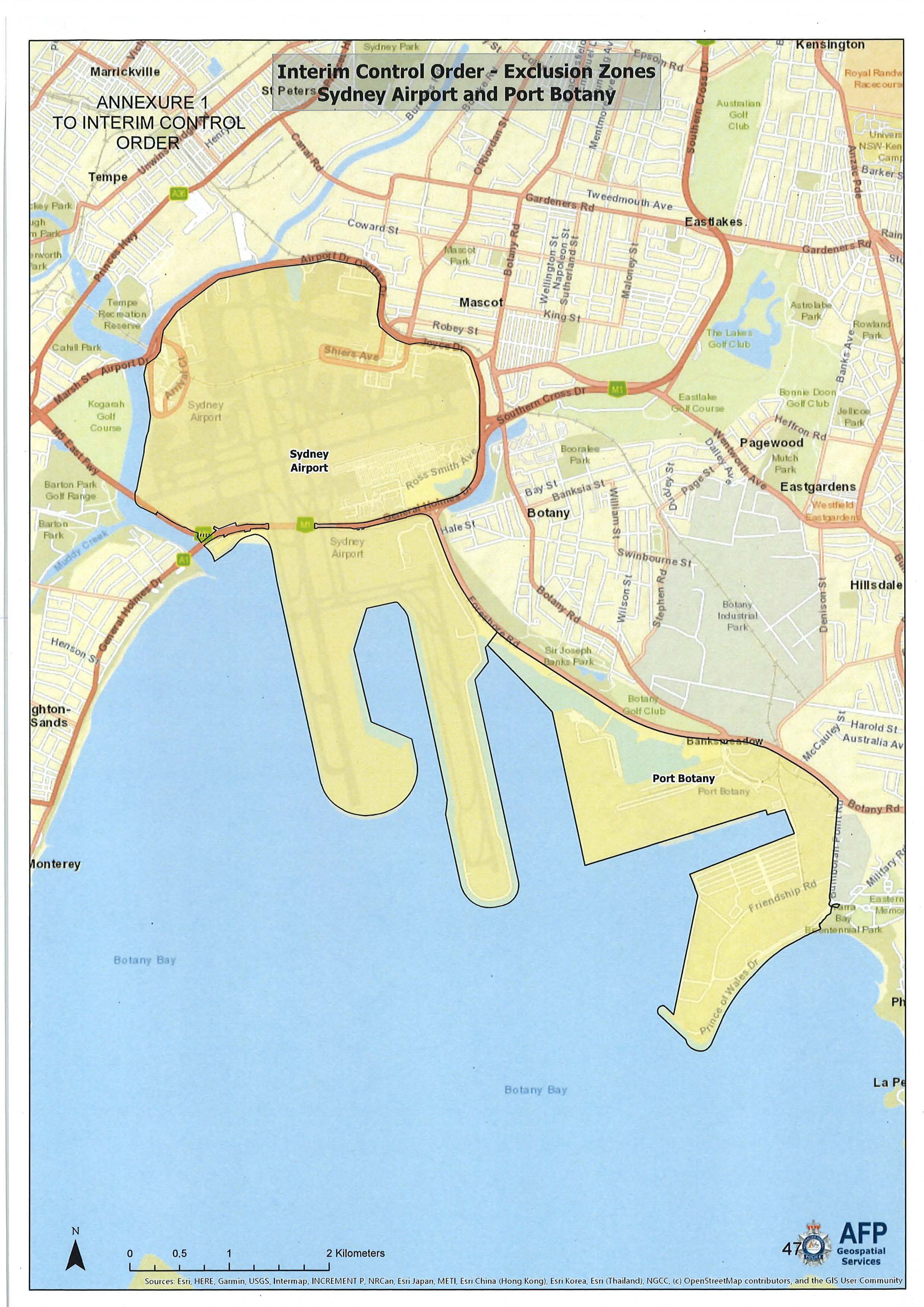
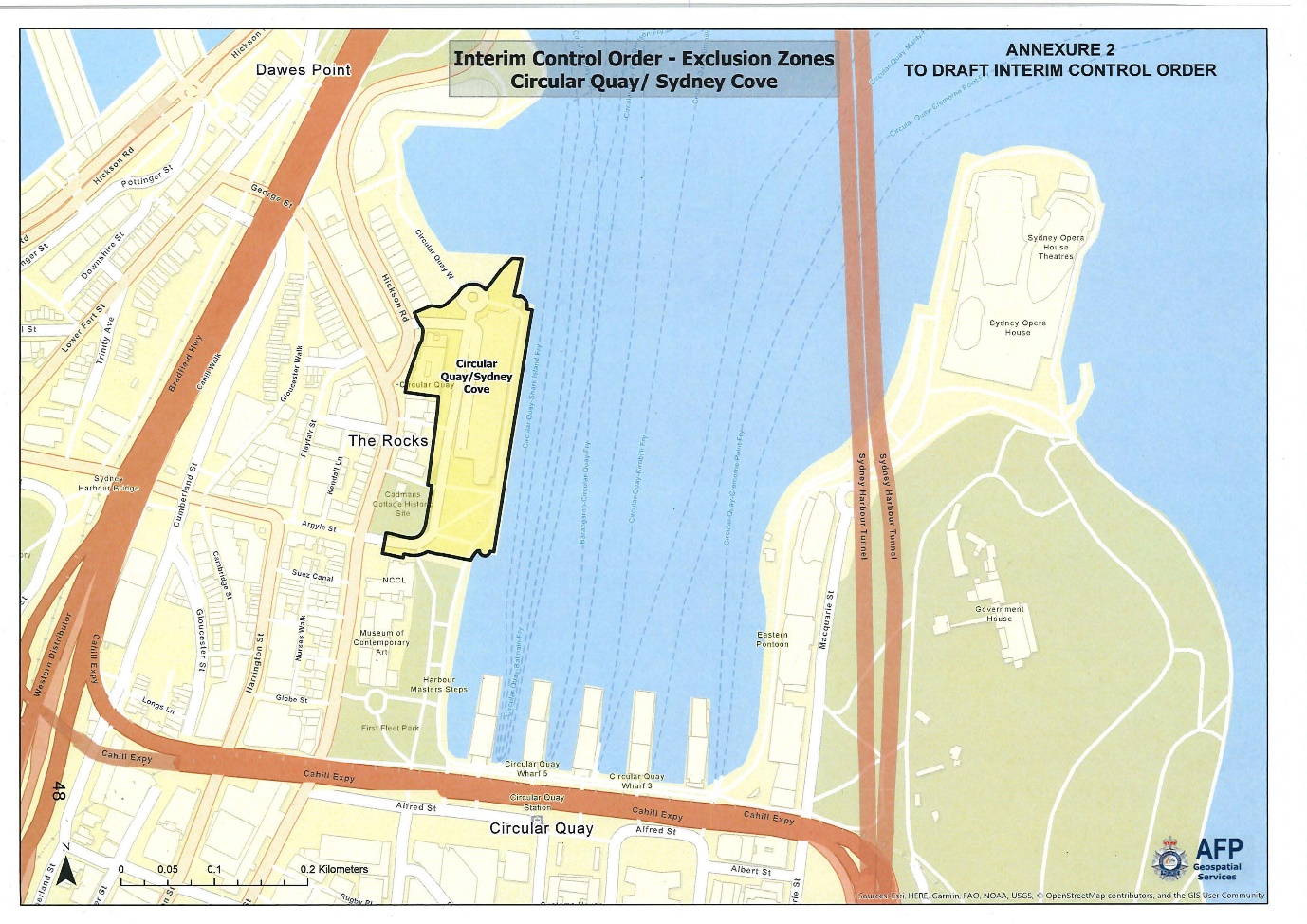
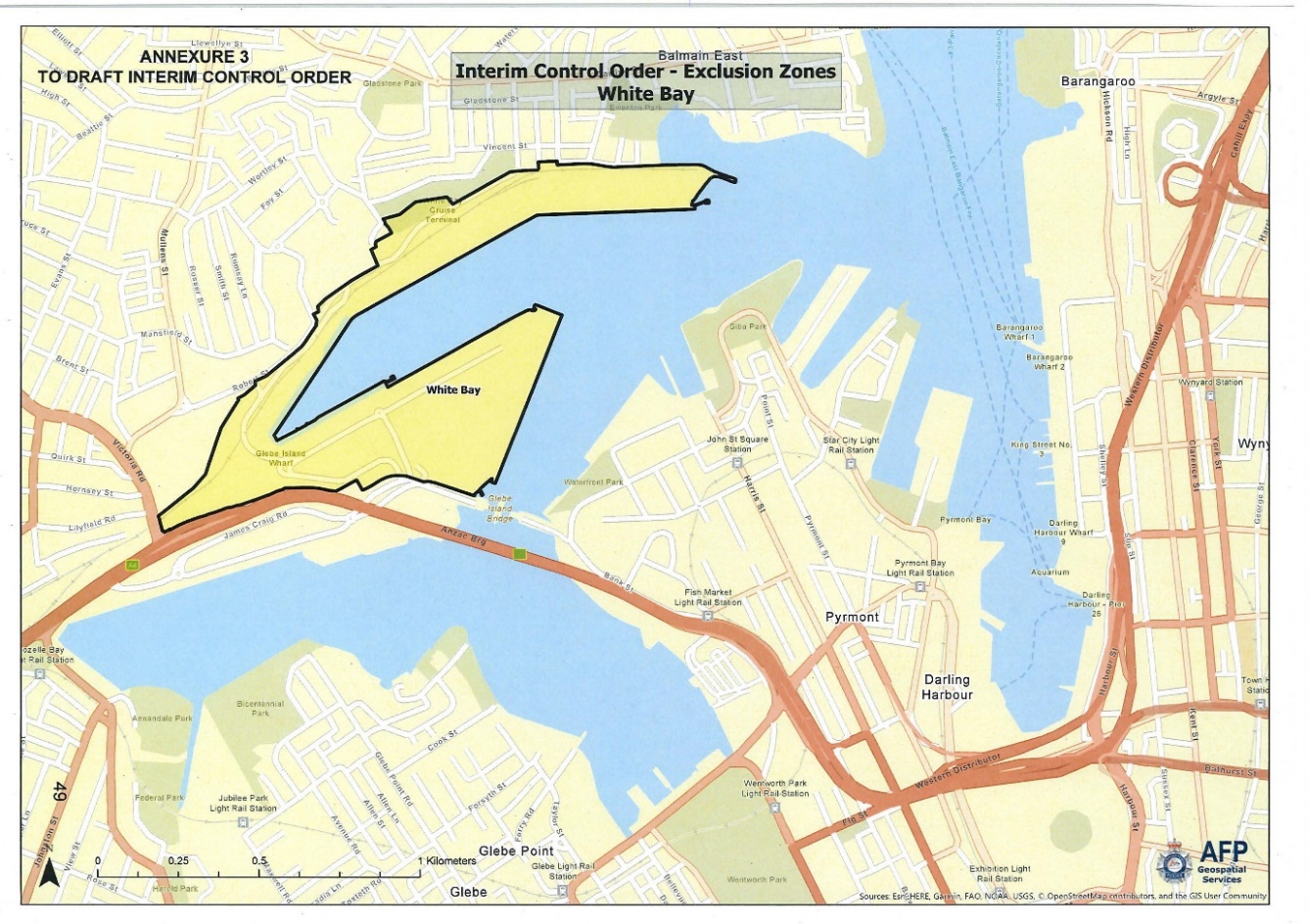
REASONS FOR JUDGMENT
NICHOLAS J:
1 Before me is an application for an interim control order under the provisions of Div 104 of the schedule to the Criminal Code Act 1995 (Cth) (“the Code”). The applicant and the respondent were both represented by counsel who have agreed upon the terms of an interim control order. Any such order will operate for a period up to a maximum of 12 months unless it is varied, declared void or revoked in accordance with s 104.5 of the Code.
2 Even though the parties have agreed on the terms of the interim control order, and no grounds have been raised by the respondent in opposition to the making of such an order at this time, it is necessary under the relevant provisions of the Code that the Court satisfy itself in relation to certain matters. These reasons for judgment explain why I am satisfied that the interim control order in the form agreed by the parties should be made.
3 The objects of Div 104 are set out in s 104.1. These allow obligations, prohibitions and restrictions to be imposed on a person by a control order for various purposes, relevantly, protecting the public from a terrorist act, preventing the provision of support for or the facilitation of a terrorist act, and preventing the provision of support for or the facilitation of the engagement in a hostile activity in a foreign country.
4 Section 104.2 provides that a senior AFP member must not request an interim control order without the consent of the AFP Minister and may only seek such consent if the AFP member (inter alia) suspects on reasonable grounds that the person has provided support for or otherwise facilitated the engagement in a hostile activity in a foreign country.
5 Section 104.3 specifies the information and material that must be provided to an issuing court in support of a request for an interim control order. This information includes an explanation as to why each of the proposed obligations, prohibitions or restrictions should be imposed on the person and, if the member is aware of any facts relating to why any of those obligations, prohibitions or restrictions should not be imposed on the person, a statement of those facts. The material to be provided to the issuing court must also include a copy of the AFP Minister’s consent.
6 Section 104.4 relevantly provides:
(1) The issuing court may make an order under this section in relation to the person, but only if:
(a) the senior AFP member has requested it in accordance with section 104.3; and
(b) the court has received and considered such further information (if any) as the court requires; and
(c) the court is satisfied on the balance of probabilities:
(i) that making the order would substantially assist in preventing a terrorist act; or
(ii) that the person has provided training to, received training from or participated in training with a listed terrorist organisation; or
(iii) that the person has engaged in a hostile activity in a foreign country; or
(iv) that the person has been convicted in Australia of an offence relating to terrorism, a terrorist organisation (within the meaning of subsection 102.1(1)) or a terrorist act (within the meaning of section 100.1); or
(v) that the person has been convicted in a foreign country of an offence that is constituted by conduct that, if engaged in in Australia, would constitute a terrorism offence (within the meaning of subsection 3(1) of the Crimes Act 1914); or
(vi) that making the order would substantially assist in preventing the provision of support for or the facilitation of a terrorist act; or
(vii) that the person has provided support for or otherwise facilitated the engagement in a hostile activity in a foreign country; and
(d) the court is satisfied on the balance of probabilities that each of the obligations, prohibitions and restrictions to be imposed on the person by the order is reasonably necessary, and reasonably appropriate and adapted, for the purpose of:
(i) protecting the public from a terrorist act; or
(ii) preventing the provision of support for or the facilitation of a terrorist act; or
(iii) preventing the provision of support for or the facilitation of the engagement in a hostile activity in a foreign country.
(2) For the purposes of paragraph (1)(d), in determining whether each of the obligations, prohibitions and restrictions to be imposed on the person by the order is reasonably necessary, and reasonably appropriate and adapted, the court must take into account:
(a) as a paramount consideration in all cases—the objects of this Division (see section 104.1); and
(b) as a primary consideration in the case where the person is 14 to 17 years of age—the best interests of the person; and
(c) as an additional consideration in all cases—the impact of the obligation, prohibition or restriction on the person’s circumstances (including the person’s financial and personal circumstances).
(2A) In determining what is in the best interests of a person for the purposes of paragraph (2)(b), the court must take into account the following:
(a) the age, maturity, sex and background (including lifestyle, culture and traditions) of the person;
(b) the physical and mental health of the person;
(c) the benefit to the person of having a meaningful relationship with his or her family and friends;
(d) the right of the person to receive an education;
(e) the right of the person to practise his or her religion;
(f) any other matter the court considers relevant.
(3) The court need not include in the order an obligation, prohibition or restriction that was sought by the senior AFP member if the court is not satisfied as mentioned in paragraph (1)(d) in respect of that obligation, prohibition or restriction.
…
7 The expression” engaged in a hostile activity” is defined in s 117.1 as follows:
engage in a hostile activity: a person engages in a hostile activity in a foreign country if the person engages in conduct in that country with the intention of achieving one or more of the following objectives (whether or not such an objective is achieved):
(a) the overthrow by force or violence of the government of that or any other foreign country (or of a part of that or any other foreign country);
(b) the engagement, by that or any other person, in action that:
(i) falls within subsection 100.1(2) but does not fall within subsection 100.1(3); and
(ii) if engaged in in Australia, would constitute a serious offence;
(c) intimidating the public or a section of the public of that or any other foreign country;
(d) causing the death of, or bodily injury to, a person who is the head of state of that or any other foreign country, or holds, or performs any of the duties of, a public office of that or any other foreign country (or of a part of that or any other foreign country);
(e) unlawfully destroying or damaging any real or personal property belonging to the government of that or any other foreign country (or of a part of that or any other foreign country).
8 Section 104.5 imposes various requirements in relation to the terms of an interim control order. These include that the order state that the issuing court is satisfied that the requirements referred to in s 104.4(1)(c) and (d) are met and the day on which the person may attend the court for the court to (inter alia) confirm or revoke the interim control order (“the confirmation hearing”). That date cannot be more than 12 months after the date on which the interim control order is made and, in any event, must be as soon as practicable.
9 The applicant, Sandra Booth, is a Commander of the AFP, and a “senior AFP member” for the purposes of the Code swore an affidavit in support of the application. She is a highly experienced officer who is responsible for the AFP’s High Risk Terrorist Offender teams operating across various states. She has extensive experience and expertise in policing and, in particular, counter-terrorism investigations. Ms Booth’s affidavit contains the material relied upon in support of the application for an interim control order.
10 On 9 February 2018, the respondent pleaded guilty to a charge that, contrary to s 6(1)(a) of the (now repealed) Crimes (Foreign Incursions and Recruitment) Act 1978 (Cth) (“the Foreign Incursions Act”), he did between 1 July 2013 and 9 February 2014 enter a foreign state, namely the Syrian Arab Republic, with the intent to engage in a hostile activity in that foreign state, namely, engaging in armed hostilities. On 27 April 2018 in the Supreme Court of NSW the respondent was convicted of an offence against s 6(1)(a).
11 On the same date the respondent was sentenced to a term of imprisonment of four years and nine months, commencing on 3 November 2016 and expiring on 2 August 2021, with a non-parole period of two years and six months.
12 In early July 2013 the respondent travelled with a small group of like-minded men from Sydney to Turkey and then into Syria. Two members of that group ultimately died while fighting in the Syrian conflict. The evidence shows that the respondent provided support for, and otherwise facilitated, other members of the group engaging in hostile activity in Syria. In particular, the respondent assisted with the purchase of airline tickets for other members of the group and provided information about travel arrangements to them. He also provided other assistance and support to the group as they travelled from Turkey to Syria. Between September and December 2013, the respondent was in communication with an associate in Sydney to whom he provided advice as to the availability and cost of AK47 and M16 assault weapons, and the arrival and activities of foreign fighters in Syria.
13 On 3 December 2013, mobile phones were located and seized by police which contained various images one of which featured nine men, including the respondent, holding assault weapons posing around the rear of a utility vehicle displaying a flag used by insurgent Islamic forces in Syria in 2013.
14 Despite his intentions and his apparent willingness to engage in hostilities, the respondent did not fight and instead returned to Turkey after approximately three and a half months. In Turkey he met up with some of his family members, including his wife who had apparently travelled to Turkey to give birth to his child. He was subsequently apprehended by local authorities and deported to Australia involuntarily. He arrived in Australia on 9 February 2014. It was not until 3 November 2016, the respondent was arrested and charged. He has been in custody since his arrest. Various applications by the respondent to be released on parole were refused by the Commonwealth Attorney-General. The respondent’s sentence expires on 2 August 2021.
15 The respondent gave oral evidence at his sentencing hearing including evidence that his intention to travel to Syria grew from news and other reporting relating to the Syrian civil war, and the activities of Syrian President Bashar Al-Assad’s army. He said his particular interest stemmed from connections to his ancestors from north-western Syria, and from “seeing images of women and children being pulled out of rubble, being killed, and … some of the videos were very, very horrific and that particularly hit me in the heart because I had a wife and she was pregnant at the time”. The respondent said that he wanted to see the end of the Assad regime and that he became “passionate and emotional about it”.
16 In addition to the material regarding his activities in Syria, there is a considerable amount of evidence concerning the respondent’s activities in Australia following his return.
17 Following his return to Australia the respondent received from his cousin a hyperlink to an uncensored video of the beheading of Canadian businessman John Ridsdel by the terrorist organisation Abu Sayyaf in the Philippines on 25 April 2016. In response the respondent said “lol theyr (sic) amateur beheaders”. The respondent also described to another cousin a conversation he had had with another male about “Hijrah” (the movement of Muslims from a land of unbelievers to a land of Islam). During the course of this conversation the respondent expressed his agreement with “d” which is an apparent reference to “dawla” which is an Arabic name for Islamic State.
18 The respondent also accessed the following material over the internet:
(a) 7 February 2016: a post titled “Multaqa Ahl al-Hadith” and a post titled “14 Evidences: What makes You a Kafir” describing that the killing of a kafir (non-believer) is permitted, however a person cannot just be deemed a kafir if they appear to be one;
(b) 7 February 2016: a post titled “Judging by what is Apparent: A trait of the takfeeri?” describing that a person can be deemed a kafir if apparent;
(c) 20 February 2016: a web article titled “The world Includes Only Two Camps – That Of ISIS And That of Its Enemies”;
(d) 10 June 2016: an image of Islamic State representative with a microphone, armed Islamic State fighters and four prisoners in cages;
(e) 10 June 2016: an image of armed Islamic State fighters standing over two prisoners;
(f) 11 June 2016: an image of incomplete Islamic text “The life enjoyed by martyrs”;
(g) 12 June 2016: an image depicting armed Islamic State soldiers with two prisoners;
(h) 17 June 2016: an image of Islamic State fighters in the process of beheading prisoners; and
(i) 17 June 2016: an image of three armed Islamic State fighters standing over three prisoners with heads removed and placed on their back. The male in the middle is holding a head in his hand
19 There is evidence that the respondent continued to associate with people who belonged to online chat groups that openly discussed Islamic State propaganda and that his associates, prior to his arrest, included various individuals who were members of overseas organised crime groups, who had been convicted of various weapons and other offences, or who were the subject of prohibition orders under the Weapons Prohibition Act 1998 (NSW) and under the Firearms Act 1996 (NSW). At least some of these individuals are identified by name in the proposed interim control order.
20 In his evidence at his sentencing hearing, the respondent accepted that, following his return to Australia, he had “admired ISIS … on occasions” because “they were intending to … cause Sharia Law to be imposed in Syria” and that he had “sympathy” for them. He claimed this stemmed from his “emotional association” with Islamic State, which had formed because an associate of his, whom he had “loved … like a brother” had been killed by the Free Syrian Army whilst fighting for Islamic State. He accepted that he had, in a WhatsApp message, “expressed support for Islamic State”.
21 The sentencing judge noted that it was difficult to assess prospects of the respondent’s rehabilitation particularly in circumstances where she was not satisfied that the respondent felt any remorse or contrition for his offending. She nevertheless concluded that the prospects of his rehabilitation were reasonable particularly having regard to the support provided by his family and his desire to be part of his daughter’s life.
22 In determining whether I am satisfied of the matters specified in s 104(4)(c) and (d) of the Code on the balance of probabilities I have had regard to the material contained in the statements of facts relating to why the control order should be made filed by the applicant, some of which I have referred to in preceding paragraphs. Against this I have also had regard to the material contained in the statement of facts relating to why the order should not be made some of which material may suggest that the respondent will not pose a significant risk to the public upon release from prison.
23 The various communications and internet activity in which the respondent engaged after his return to Australia appears to reflect an interest in the killing of “non-believers” (including by beheading) and the activities of Islamic State fighters (including the killing of their prisoners). In evidence given before the sentencing judge the respondent acknowledged that he had an interest in ISIS and other groups that were involved in the Syrian conflict. There is also evidence from which it can be inferred that the respondent was a supporter of ISIS, although this is something he denied in his evidence to the sentencing judge.
24 One matter that I have had regard to is the fact that there has been no evidence given by the respondent himself on the hearing of this application. That is not a criticism of the respondent or his legal representatives because, as was made clear to me, they have decided that the preferable course is to not resist the present application and instead take time to prepare more detailed submissions and evidence that the respondent will rely on at the confirmation hearing which (on the orders jointly proposed by the parties) will take place in several months’ time after the respondent has been released. But it does mean that there is no sworn evidence before me from the respondent from which I might conclude that he no longer has any interest in supporting insurgent groups engaged in armed conflict with a foreign government or an extremist religious ideology that countenances the killing of “non-believers”.
25 As to the requirements of s 104.4(1), I am satisfied that the respondent has provided support for, or otherwise facilitated, the engagement in a hostile activity in a foreign country, namely, Syria, and that the requirement of s 104.1(c)(vii) is therefore satisfied.
26 I am also satisfied that each of the obligations, prohibitions and restrictions to be imposed on the respondent by the proposed interim control order are reasonably necessary and reasonably appropriate and adapted for the purposes of each of the matters referred to in s 104.1(d)(i), (ii) and (iii). In coming to that position I have taken into account the fact that the terms of the proposed interim control order were the subject of negotiations between the parties’ legal representatives that culminated in some agreed changes modifying the proposed restrictions that the applicant sought to have imposed on the respondent’s contact with certain individuals (control 11.2) and his freedom of movement more generally (control 1.1). No submission was put to me on the respondent’s behalf as to why I should not be satisfied that the obligations, prohibitions and restrictions to be imposed were not necessary or appropriate.
27 It was submitted on behalf of the applicant that the offence for which the respondent was convicted is an “offence” relating to terrorism within the meaning of s 104.1(1)(c)(v). Neither the expression “offence relating to terrorism” nor the word “terrorism” is defined in the Code. For the purposes of determining this application it is not necessary to express a view in relation to that question. However, I note that Snadden J recently expressed the view that a person convicted of a related offence against s 7(1)(e) of the Foreign Incursions Act had been convicted in Australia of an offence relating to terrorism: Booth v Brookman [2021] FCA 767.
28 I will make the interim control order sought by the applicant and fix a confirmation hearing for 27 October 2021.
I certify that the preceding twenty-eight (28) numbered paragraphs are a true copy of the Reasons for Judgment of the Honourable Justice Nicholas. |


