Federal Court of Australia
CJMcG Pty Ltd as Trustee for the CJMcG Superannuation Fund v Boral Limited (No 2) [2021] FCA 350
ORDERS
CJMCG PTY LTD (ACN 169 952 096) AS TRUSTEE FOR THE CJMCG SUPERANNUATION FUND Applicant | ||
AND: | BORAL LIMITED (ACN 008 421 762) Respondent | |
JUDGE: | LEE J | |
DATE OF ORDER: | 31 March 2021 | |
THE COURT ORDERS THAT:
1. Proceeding NSD 340 of 2020 (CJMCG Pty Ltd as Trustee for the CJMCG Superannuation Fund v Boral Ltd) be permanently stayed.
2. Proceeding NSD 602 of 2020 (Parkin v Boral Ltd) and NSD 935 of 2020 (Martini Family Investments ATF Martini Family Investments Super Fund v Boral Ltd) be listed for a case management hearing at 12.15pm on 9 April 2021 to make directions in relation to the approval of opt-out notices to be sent to group members in both proceedings.
3. Mr Parkin pay the costs of CJMCG Pty Ltd as Trustee for the CJMCG Superannuation Fund in relation to the first case management hearing on 27 April 2020 and up to, and including, 28 May 2020.
Note: Entry of orders is dealt with in Rule 39.32 of the Federal Court Rules 2011.
ORDERS
NSD 602 of 2020 | ||
| ||
BETWEEN: | ANDREW PARKIN Applicant | |
AND: | BORAL LIMITED (ACN 008 421 762) Respondent | |
JUDGE: | LEE J | |
DATE OF ORDER: | 31 March 2021 | |
THE COURT ORDERS THAT:
1. Proceeding NSD 340 of 2020 (CJMCG Pty Ltd as Trustee for the CJMCG Superannuation Fund v Boral Ltd) be permanently stayed.
2. Proceeding NSD 602 of 2020 (Parkin v Boral Ltd) and NSD 935 of 2020 (Martini Family Investments ATF Martini Family Investments Super Fund v Boral Ltd) be listed for a case management hearing at 12.15pm on 9 April 2021 to make directions in relation to the approval of opt-out notices to be sent to group members in both proceedings.
3. Mr Parkin pay the costs of CJMCG Pty Ltd as Trustee for the CJMCG Superannuation Fund in relation to the first case management hearing on 27 April 2020 and up to, and including, 28 May 2020.
Note: Entry of orders is dealt with in Rule 39.32 of the Federal Court Rules 2011.
ORDERS
NSD 935 of 2020 | |
| |
BETWEEN: | MARTINI FAMILY INVESTMENTS PTY LTD ACN 606 000 944 ATF MARTINI FAMILY INVESTMENTS SUPER FUND Applicant |
AND: | BORAL LIMITED (ACN 008 421 762) Respondent |
DATE OF ORDER: | 31 March 2021 |
THE COURT ORDERS THAT:
1. Proceeding NSD 340 of 2020 (CJMCG Pty Ltd as Trustee for the CJMCG Superannuation Fund v Boral Ltd) be permanently stayed.
2. Proceeding NSD 602 of 2020 (Parkin v Boral Ltd) and NSD 935 of 2020 (Martini Family Investments ATF Martini Family Investments Super Fund v Boral Ltd) be listed for a case management hearing at 12.15pm on 9 April 2021 to make directions in relation to the approval of opt-out notices to be sent to group members in both proceedings.
3. Mr Parkin pay the costs of CJMCG Pty Ltd as Trustee for the CJMCG Superannuation Fund in relation to the first case management hearing on 27 April 2020 and up to, and including, 28 May 2020.
Note: Entry of orders is dealt with in Rule 39.32 of the Federal Court Rules 2011.
(Revised from Transcript)
LEE J:
1 This so-called “carriage dispute” concerns three competing securities class actions of a substantially similar nature brought against Boral Limited (Boral). The relevant proceedings are as follows:
(1) CJMcG Pty Ltd as Trustee for the CJMcG Superannuation Fund (CJMcG) v Boral (NSD 340 of 2020) (CJMcG proceeding);
(2) Parkin v Boral (NSD 602 of 2020) (Parkin proceeding); and
(3) Martini Family Investments ATF Martini Family Investments Super Fund (Martini) v Boral (NSD 935 of 2020) (Martini proceeding).
2 In Klemweb Nominees Pty Ltd (as trustee for the Klemweb Superannuation Fund) v BHP Group Ltd [2019] FCAFC 107; (2019) 369 ALR 583 (at 593 [48]–[49]), I explained that fastening upon a remedial response to competing class actions is a matter of case management involving an evaluation, and not a calculus; it involves weighing up incommensurable and sometimes conflicting considerations and it is inevitable that different judges may weigh the relevant considerations differently. It is also a decision made in the context of there being a range of potential solutions and there being no uniquely “correct” answer. The decision involves an appraisal informed by diverse factors, and the ultimate judgment is one upon which reasonable minds might, and often will, differ.
3 This is the first occasion on which the Court has addressed questions of carriage subsequent to the High Court’s decision in Wigmans v AMP Limited [2021] HCA 7. The High Court, in substance, affirmed the guidance given by the Full Court of this Court in Perera v Getswift Ltd [2018] FCAFC 202; (2018) 263 FCR 92 (Getswift) (Middleton, Murphy and Beach JJ) and the reasoning in Klemweb remains highly relevant to the Court’s task. The High Court (at [52] and [106] per Gageler, Gordon and Edelman JJ), as the Full Court had stressed in Klemweb, came to the determination that there is no “one size fits all” remedy to issues of multiplicity and a wide variety of factors may be relevant to the Court’s discretionary decision depending on the particular circumstances of the case. The High Court also emphasised (at [106]), as had been previously explained in Perera v GetSwift Ltd [2018] FCA 732; (2018) 263 FCR 1 (GetSwift First Instance) and by the Full Court in Getswift (at 122 [122]), that multiplicity of proceedings is not to be encouraged and that the continuation of competing representative proceedings run by different firms of solicitors, with different funders, may in principle be inimical to the administration of justice.
4 In CJMcG Pty Ltd as Trustee for the CJMcG Superannuation Fund v Boral Limited [2020] FCA 914 (CJMcG (No 1)), I explained the background to these applications and why I thought, in all the circumstances, it was necessary to defer further consideration of any multiplicity issues until after the High Court had delivered judgment in Wigmans. Having said that, I indicated (at [19]) that I was (and am) attracted to resolving these issues with alacrity if it is possible to do so. Indeed, it seems to me that, given the nature of the decision, the Court should strive to resolve these issues with a minimum of cost and a maximum of expedition.
5 In accordance with this view, as soon as practicable following the delivery of judgment in Wigmans, the three proceedings were listed for case management. Directions were then made concerning the resolution of the carriage controversy as follows:
1. Proceeding NSD 935 of 2020 (Martini Proceeding) be case managed together with proceeding NSD 340 of 2020 (CJMcG Proceeding) and proceeding NSD 602 of 2020 (Parkin Proceeding) (the applicants).
Multiplicity Applications
2. By 4pm on 19 March 2021, junior counsel for the applicants are to confer and prepare a document entitled ‘Statement of Agreed Facts or Non-Contentious Facts’ which sets out the matters agreed between the applicants, including:
a. the proposed funding arrangements;
b. group membership; and
c. any other matters that are non-contentious for multiplicity.
3. By 4pm on 19 March 2021, the applicants are to file and serve the ‘Statement of Agreed Facts or Non-Contentious Facts’ on the respondent, except for parts over which a claim for confidentiality is made.
4. By 4pm on 24 March 2021, the applicants are to file and serve:
a. any evidence on which they intend to rely, restricted only to those matters that remain in contention between them; and
b. an outline of submissions, which are to include at paragraph one the orders sought at the multiplicity hearing.
5. By 4pm on 29 March 2021, the parties are to file and serve:
a. any evidence; and
b. an outline of submissions,
in response to any evidence and/or submissions filed and served by any other party.
6. The multiplicity applications be listed for hearing at 10.15am on 31 March 2021.
6 The aim of this exercise was to avoid unnecessary voluminous affidavit and other material that has been a feature of such applications in the past. My direction for junior counsel to confer and prepare a document entitled “Statement of Agreed Facts or Non-Contentious Facts” was aimed at ensuring that only matters truly in contest between the parties be the subject of affidavit evidence. As it turned out, the Statement of Agreed Facts or Non-Contentious Facts (which was admitted as Exhibit A on the applications as agreed facts pursuant to s 191 of the Evidence Act 1995 (Cth)) was a useful document and is set out at Annexure A to this judgment. Needless to say, these facts are found for the purposes of this application. However, despite this process being engaged with constructively by counsel for the parties, there was, alas, still a vast bulk of affidavit material filed, none of which was the subject of any real contest. On the next occasion that I undertake an exercise such as this, it may be appropriate that a Registrar be appointed as a facilitator and the conferral occur over two stages to assist in preparing a Statement of Agreed Facts or Non-Contentious Facts and avoid unnecessary affidavit material being filed.
7 In any event, in large part, the regime set up by the orders has served to bring on the multiplicity hearing promptly and without the swingeing costs that have sometimes been associated with such disputes in the past. Further, the parties have demonstrated a high degree of cooperation and skill in complying with these orders. This has allowed the multiplicity hearing to be conducted efficiently and, without, I hope, doing any injustice to the detailed and well-reasoned submissions of the parties, allowed me to determine the multiplicity dispute immediately so that attention may be directed, at long last, to the substance of the underlying dispute.
8 Speaking at a level of generality, the following principles emerge from the majority’s decision in Wigmans.
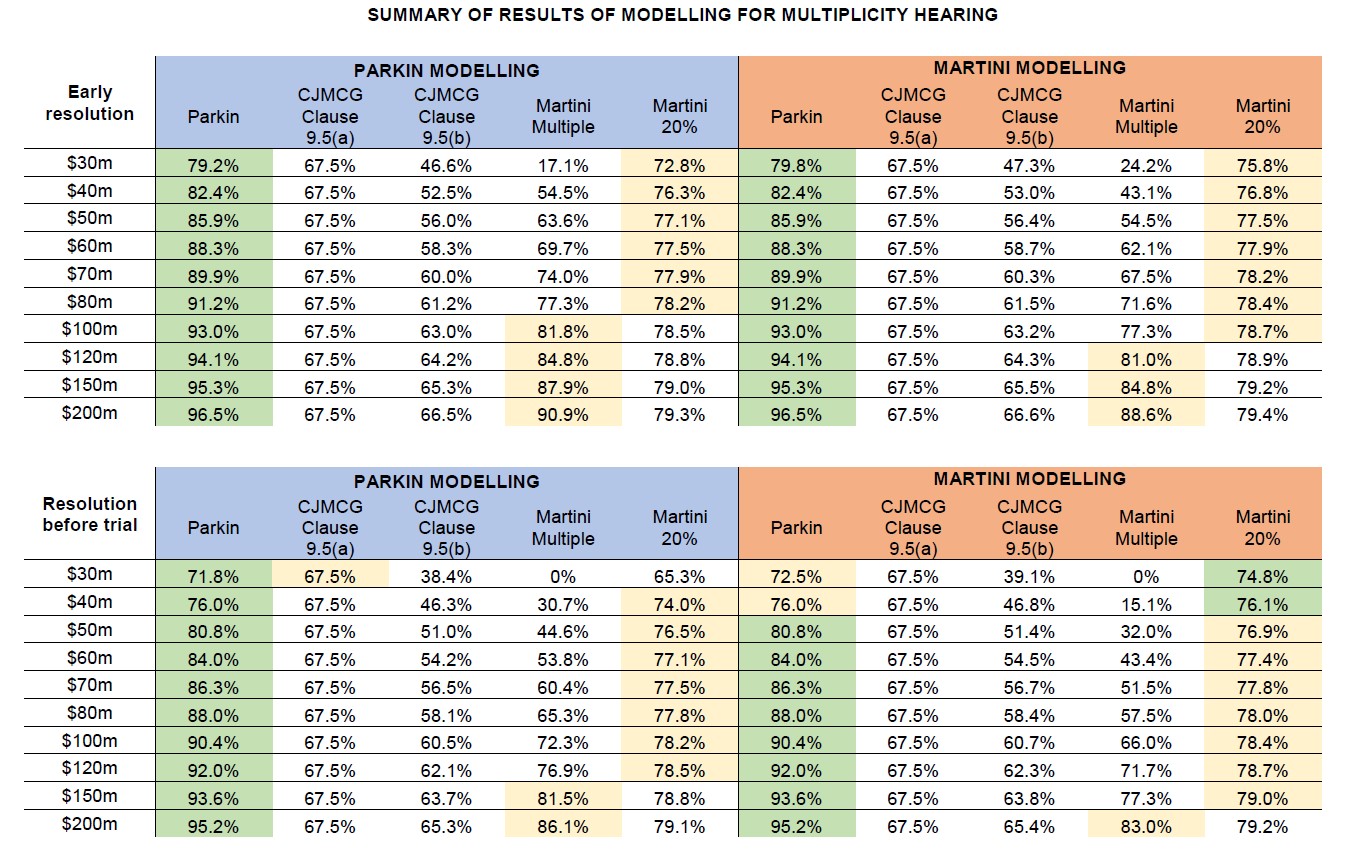
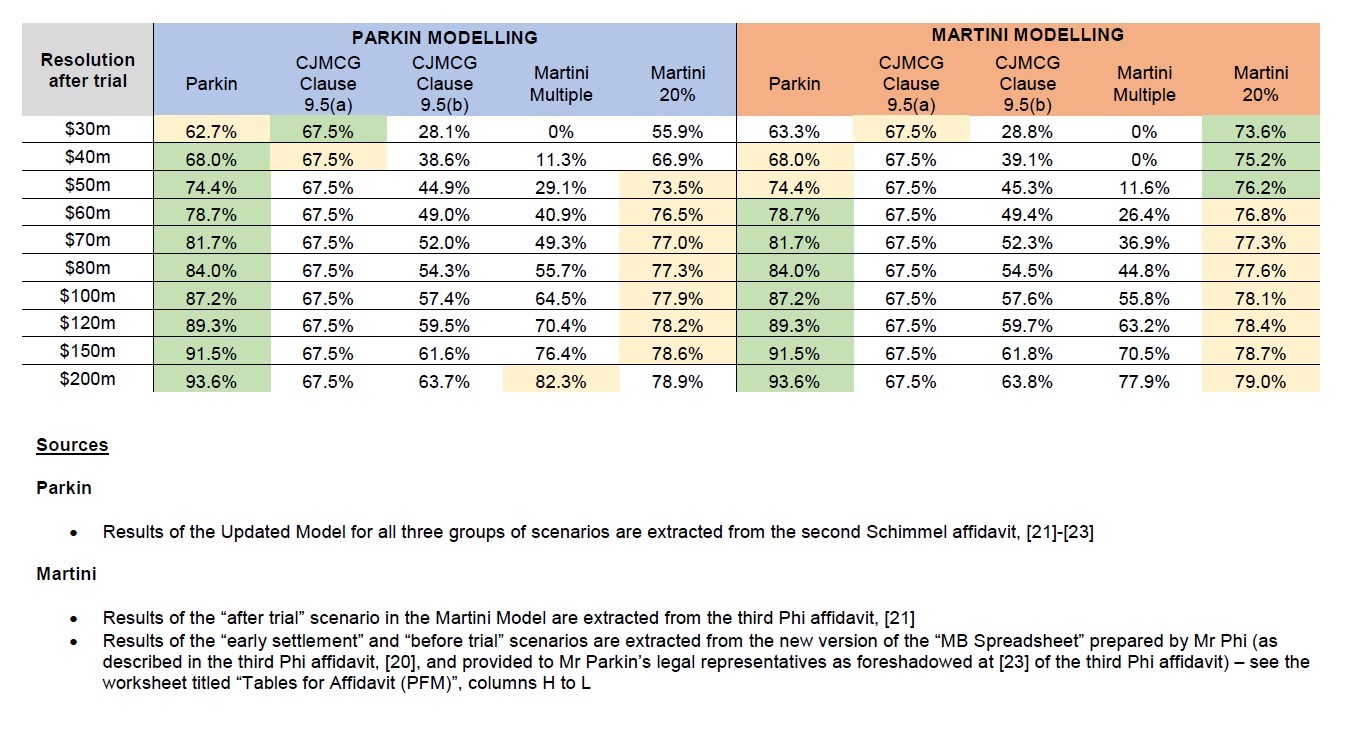
9 First, in determining the appropriate remedial response, the focus of the Court is on what “would be in the best interests of group members”: at [52]. This is a task directed to ensuring that justice is done in the competing proceedings: at [116]. In this way, the approach mandated by Wigmans is entirely consonant with the Court’s statutory requirement contained in Pt VB of the Federal Court of Australia Act 1976 (Cth) (Act) to facilitate the overarching purpose.
10 Secondly, there is no race to the courthouse. The High Court has decisively rejected that there be a presumption that the “first in time” rule applies: at [52] and [94]. In and of itself, it is not vexatious, oppressive or an abuse of process to commence a subsequent bona fide class action prior to the Court giving substantial directions in existing but overlapping proceedings: at [107], citing Getswift (at 126 [150]). Although the time of filing may remain a relevant consideration, as I will explain below, it is a less relevant consideration in cases such as the present where the competing proceedings have been commenced within a relatively short time of each other: at [107], citing Wigmans v AMP Ltd [2019] NSWCA 243; (2019) 373 ALR 323 (at 341 [83] per Bell P, with whom Mcfarlan, Meagher, Payne and White JJA agreed).
11 Thirdly, as is to be expected in a multifactorial inquiry, the factors relevant to the determination of applications such as the present will vary from case to case: at [109], citing Getswift First Instance (at 48–9 [169]) and Getswift (at 136 [195]). The point made by the High Court is that it is necessary for a court to determine, by reference to all relevant considerations, which proceeding going ahead would be in the best interests of group members: at [109].
12 Fourthly, the litigation funding arrangements adopted by the competing applicants are not irrelevant, and there is nothing foreign to the judicial process for a court to take into account likely success in proceedings or quantum of recovery, both of which may be affected by the litigation funding arrangements in place: at [111]–[112] .
13 It follows from the above that the factors that will be relevant in conducting a multifactorial analysis for the purposes of staying one or more of the duplicative proceedings cannot be exhaustively stated. Having said that, previous cases, for example, Wigmans v AMP Ltd [2019] NSWSC 603 (at [121]–[126] per Ward CJ in Eq) (Wigmans First Instance), McKay Super Solutions Pty Ltd (Trustee) v Bellamy’s Australia Ltd [2017] FCA 947 (at [71] per Beach J) and GetSwift First Instance (at 48–9 [169] per Lee J), have identified at least the following factors, which all participants have suggested are relevant considerations to a greater or lesser extent (summarised in Wigmans (at [6])):
(1) the competing funding proposals, cost estimates and net hypothetical return to group members;
(2) proposals for security;
(3) the nature and scope of the causes of action advanced (and relevant case theories);
(4) the size of the respective classes;
(5) the extent of any book build;
(6) the experience of the legal practitioners (and funders) and availability of resources;
(7) the state of progress of the proceedings; and
(8) the conduct of the representative applicants to date.
14 As I will explain below, most of these factors are neutral in the circumstances of this case. Further, unsurprisingly, there are also bespoke considerations that are relevant that do not fall squarely within these eight categories. During the course of oral argument, I asked counsel for each of the applicants to identify with specificity any further matters that they considered relevant that should be taken into account.
15 As it happened, there were three additional matters identified, two of which relate somewhat to the factors identified above:
(9) related to (5), how opt-out would operate in the context of these proceedings and the issue of the choice made by some shareholders;
(10) related to (6), the unique position of Quinn Emanuel as an American law firm in the United States, given, as is common ground, the class actions involve close consideration of what occurred in relation to Boral’s activities in the United States; and
(11) the possibility of conflict arising in a no win/no fee class action.
16 I have already set out at Annexure A most of the relevant facts necessary to determine these applications. Despite this, there are a number of other matters that emerge from the evidence which, to the extent they are relevant, I will refer to in the context of considering each of the 11 factors that have been identified by the parties.
17 I should stress that I have had the opportunity of reading all the affidavit material and the submissions filed by the parties. To the extent that I do not refer to any of the material filed, it does not mean that I have not had regard to it. These applications should not become mini-hearings. Indeed, it is inimical to the overarching purpose to allow applications such as the present, which involve internecine disputes between competing class action applicants, to unnecessarily delay the pursuit of claims within the Court. Some effort must be taken for these types of applications to be resolved in a proportionate manner, without long hearings and delay in resolution.
C Consideration of THE relevant factors
18 I now turn to consider each of the 11 factors that I have identified. I am going to take the factors out of turn and deal first with those matters that I consider to be of either neutral or of marginal importance in the overall assessment that I have made.
C.1 The proposals for security
19 As is evident from Exhibit A, the position in relation to security for costs in the three proceedings is as follows:
Respondent security for costs and group member indemnity
The CJMcG Proceeding
47. As noted above, Regency has agreed to pay any amount of security for costs that the Court may order: LFA, cl 8.3. Regency may seek to obtain insurance from a third party insurance provider in respect of any security for costs order: LFA, cl 4.3.
48. Regency is prepared to consent to the referral of the question of security to a referee and abide by their decision as to the quantum and form of security.
49. Regency has agreed to indemnify Group Members in respect of any Adverse Costs Order: LRA, cl 18.
The Parkin Proceeding
50. Maurice Blackburn is prepared to provide security in any form and amount ordered by the Court.
The Martini Proceeding
51. In accordance with clauses 5.4 and 5.5 of the LFA, Therium agrees to pay any adverse costs order made against the Applicant and all Funded GMs and is obliged to provide security for costs.
52. Therium has obtained ATE insurance from AmTrust Europe Limited. Therium proposes to provide security for costs by way of a deed of indemnity from AmTrust Europe Limited in favour of the Respondent and/or the Court.
20 The position in relation to security developed by the conclusion of the oral hearing. In short, there is nothing to distinguish the position in the CJMcG proceeding and the Parkin proceeding.
21 Prior to the hearing, Regency IV Funding Pty Ltd (Regency), the funder of the CJMcG proceeding, had agreed to provide such an amount of security as may be ordered and had agreed to make a payment of $2.5 million into Court in respect of security in accordance with tranches as suggested by Boral. That payment is without prejudice of the ability of Boral to seek further security, should it be necessary. It was suggested that the payment of security in this way would provide appropriate protection for Boral’s position and avoid unnecessary interlocutory disputation.
22 During the course of the oral hearing, Mr Edwards, who appeared on behalf of Mr Parkin in the Parkin proceeding, indicated that this course had also commended itself to Mr Parkin: T41.5–16.
23 The position in relation to the Martini proceeding is somewhat different. It is proposed that security be obtained by way of an “after the event” (ATE) policy to be supported by a deed of indemnity. During the course of the hearing, Boral submitted that this is a matter of some weight favouring those class actions that were prepared to offer security in cash. It was said that a representative applicant’s willingness and ability to provide security for costs in a form and quantum acceptable to a respondent (and to the Court) is an important consideration in selecting the most suitable proceeding to go forward. If an applicant is unwilling to provide security for costs in a form and quantum acceptable to a respondent, it was said that there would likely be the need for an interlocutory hearing to resolve the issue, generating further cost and delay. That cost, needless to say, will ultimately be borne by group members in the event a settlement or judgment is obtained.
24 Further, Mr Moore SC, who appeared on behalf of Boral, stressed the necessity for the Court to bear steadily in mind that in assessing the appropriate remedial response, one must have regard to fairness not only as between the class action applicants, but also the respondent. It was said that the fact that CJMcG and Mr Parkin were willing to provide security in an “orthodox” fashion, which would occasion no challenge by Boral, was therefore a matter that weighs in favour of those proceedings being an appropriate vehicle for advancing the claims of group members and operates to the disadvantage of Martini.
25 Although I think that there is some marginal benefit in any controversy concerning the provision of security being definitively resolved by the approach taken by CJMcG and Mr Parkin, I do not think that this weighs heavily in the balance. Ultimately, there is no dispute as to the long-established principle that provided a respondent’s legitimate interest in obtaining security is protected, then it is appropriate that adequate security be provided in a way that is least disadvantageous to the applicant. This has particular force in class actions where the ultimate cost of the provision of security is likely to be borne by non-parties (that is, group members). Having said this, I would not countenance a regime in relation to security which I did not consider adequately protected Boral’s interest. My point is that and I am not satisfied on the current state of the evidence that the only adequate mode of security is the payment of cash into Court.
26 Moreover, this highlights a proposition made with some force by Mr Darke SC, who appeared on behalf of Martini. It was said that carriage applications such as the present cannot become a “race to the bottom”, where applicants act in some sort of Dutch auction process in which they fall into the demands made by a respondent in order to reduce the area of potential disputation, thus distinguishing themselves from a competing class action. Implicit in this submission is the notion that the offer of cash security might be thought to be a little unusual. To some extent there is some force in this point as, at least in my experience, the provision of cash as security for a respondent’s costs has, at least in recent years, been a relatively rare phenomenon in class actions.
27 In any event, it is unnecessary to reach a final view about what would constitute adequate security for the purposes of this application. As I have said, the fact that there will be no disputation with two of the class actions is of some relevance, but it goes no further than that. I am satisfied that whatever case goes forward, adequate security will be provided.
C.2 The nature and scope of the causes of action advanced (and relevant case theories)
28 I am satisfied that the causes of action advanced in all proceedings is a neutral factor in selecting the proceeding by which group members’ claims should be advanced. It is common ground between the parties that the allegations advanced in all three proceedings arise from a common factual substrata and concern largely the same causes of action. As such, there is little in the substantive allegations that remain in each proceeding that would differentiate them.
C.3 The size of the respective classes
29 Related to the forgoing point, I also consider the size of the respective classes to be a neutral consideration. The reason why there is some difference in the size of the respective classes is because there are presently some differences in the period pleaded in respect of which the claim is made: see Annexure A (at [1]–[4]).
30 At present, each of the applicants has either alleged or indicated by the time of this hearing to allege that the relevant class period commenced on the date that Boral announced that it intended to acquire the company Headquarters, being 21 November 2016. However, there is a distinction in the end date of the class period. The CJMcG proceeding presently alleges that the class period ended on 5 December 2019, being a date upon which Boral first announced various matters, and there was a significant diminution in its share price. The Parkin and Martini proceedings allege that the class period ends on 10 February 2020, being a date on which Boral made a further announcement in respect of which both Mr Parkin and Martini allege there was a further release of information that was material.
31 As I said in Klemweb (at 602 [84]), although a difference in the relative claim periods may have some significance, it must be put into perspective. I went on to note (at 601–2 [84]–[85]):
Securities class actions necessarily involve allegations of misleading conduct or non-disclosure of one form or another. Speaking very generally, the central issue in the case is often: what did officers of the listed entity know and when did they know it? The answer to the question is often (but not always) somewhat nubilated at the commencement of a proceeding. The case usually commences with an information asymmetry between the parties which dissipates as it passes through interlocutory stages, including the service of evidence and discovery.
Legal representatives acting for an applicant have professional, contractual and fiduciary duties. Those duties involve advising and assisting the applicant to discharge the obligation to represent the claims of the group members they represent in accordance with Pt IVA and Pt VB of the Act. The Court is entitled to expect that the applicant and the lawyers will not act contrary to the interests of group members as a whole in advancing and dealing with the common aspects of their s 33C claims. It is to be expected that differently represented applicants may responsibly and in good faith come to disparate views about pleadings, claim periods, forensic decisions and case theories in complex litigation. Leaving aside manifest deficiencies in a way a case is pleaded or conducted, often it will be difficult to tell whether a particular decision was sound until the end of the litigation. Having said that, provided there is no reason to think otherwise, the Court should assume that a relevant legal team will reflect regularly upon the conduct of the case and give thought to amendments including refining or including further causes of action and, if appropriate, bringing s 33K applications to augment or restrict the class.
32 I then went on to indicate (at 602–3 [90]) that, for those experienced in class actions, any concern relating to there being differing class periods at the commencement of the proceeding seems a tad unrealistic and amounts to conjuring up difficulties which will likely never arise. If upon reflection it is thought that a claim exists that should be advanced – and applicants are rarely shrinking violets paralysed by indecision – history suggests that any current vexation at the prospect of arbitrary exclusion caused by there being different class periods is likely to be the equivalent of starting at shadows. Indeed, if following the receipt of expert evidence it was thought that there was merit in a different claim period being pursued, given the quality of the legal representatives acting in all three proceedings, I have little doubt that they will conscientiously consider the interests of group members and bring their case into line with such evidence.
33 Accordingly, I see this as an entirely neutral matter.
C.4 The experience of the legal practitioners (and funders) and availability of resources
34 Apart from a submission made that Maurice Blackburn should be preferred because of its history in securing very large class action settlements, there was no real emphasis placed by the parties on the respective experience of the legal practitioners and funders. There was, however, some debate about the availability of resources. Insofar as these submissions relate to the position of Quinn Emanuel as an American law firm, I will deal with them below.
35 I have little doubt that, if carriage was awarded to any of the highly experienced solicitors (who in turn have briefed highly competent and experienced barristers), then the interests of group members would be appropriately advanced. In this regard, I do not think there is a cigarette paper of difference between each of these class actions. Further, when it comes to the availability of resources, on the evidence adduced, I do not think that there is a material difference that has been established. It has been highlighted that Maurice Blackburn have audited accounts (admitted into evidence) which do not suggest anything other than an ability to not only provide the initial security, but also any later tranches of security, and adequately resource the costs and disbursements associated with the litigation. To my mind, this necessarily goes without saying – it is inconceivable to me that Maurice Blackburn would be prepared to run this case on a no win/no fee basis unless their financial position is such as to allow this case to be adequately resourced. To conclude otherwise would be counterintuitive given the prominence of that firm in class action litigation. In the end, however, despite some suggestion to the contrary by Mr Parkin, I do not consider that this distinguishes the Parkin proceeding from the other two class actions.
36 Therium Litigation Finance Atlas AFP IC (Therium), the funder of the Martini proceeding, is a well-known litigation funder based in Jersey. It has provided funding in a range of other securities class actions, and there was no attempt to seek to persuade me that it would not be in a position to adequately fund these proceedings. Although the funder of the CJMcG proceeding, Regency, has not, at least to my understanding, funded a significant number of securities class actions, I do not think I should take a different view in relation to the resources available to that class action. As can be seen from Exhibit A (at [13]), Regency is part of a funding group based in the United States with substantial capital resources and which has funded or is funding nine representative proceedings in Australia (although none have been identified as securities class actions).
37 It follows that the experience of the legal practitioners (and funders) and availability of resources is, again, an essentially neutral factor.
C.5 State of progress of the proceedings
38 The relevant chronology concerning the commencement of the proceedings is evident from Exhibit A (at [5]–[7]) and does not need to be repeated. Unlike the other two class actions, prior to all three proceedings being adjourned sine die pending the decision in Wigmans, interlocutory steps had been ordered to take place in the CJMcG proceeding. Orders were made for the filing of a defence and reply, and an initial tranche of documents has been provided by Boral (of 337 documents) and reviewed by CJMcG’s legal representatives. I will return below to the circumstances in which these orders were made, but the mere fact of making them does not seem to me to amount to a factor of any particular significance.
39 In any event, if carriage was to be awarded to a proceeding other than the CJMcG proceeding, the amount of sunk costs would, in the overall context of these proceedings, be relatively minimal. I have little doubt that the steps that have been undertaken to date could be undertaken very quickly by the other applicants. Further, while the issue of sunk costs may be a relevant consideration as a prejudice that would be occasioned to those funding the CJMcG proceeding in the event carriage was to go to another party, as I noted in Klemweb (at 593 [45]), this might arguably be thought to be part of the rough and tumble of conducting a business in the commercialising of litigation, which, in the long run and assuming efficiencies in the markets, is likely to be factored in price. This is not to say the prejudice is not real, but it is of a particular character.
40 The CJMcG proceeding has a slight advantage in this respect, but I incline to the view that the state of progress of the proceedings per se is a relatively neutral factor.
C.6 The position of Quinn Emanuel and its capability in the United States
41 The submission is made by CJMcG that Quinn Emanuel has a “worldwide footprint”, with offices and legal capability in the United States. This includes having an office in Atlanta, Georgia, where Boral USA is headquartered, and offices in Texas where some of the windows plants and relevant Boral personnel are located.
42 As noted above, the proceeding is concerned with events that occurred in Boral’s North American business. It follows that having a legal capability on the ground in the United States will be, it is submitted, of “considerable advantage”. For example, it was said that it may be the case that in due course it is considered desirable to approach the Court for leave to make an application to a court in the United States to obtain evidence from persons resident in the United States pursuant to USC § 1782. It was said that this prospect is neither farfetched nor fanciful in circumstances where a number of former employees of Boral who were located in the United States have since left the employ of that company.
43 There is some substance in the possibility that “United States style” discovery, given the circumstances of this case, may be something that will become relevant. Having said that, the point made by Mr Parkin and Martini is that the supposed advantage is somewhat overstated when there is nothing preventing Maurice Blackburn or Phi Finney McDonald instructing lawyers in the United States to make any necessary applications to a United States federal court or conducting any inquiries on their behalf in the Unites States. I think there is force in the contention made that, again, this is a neutral, or relatively neutral, consideration.
C.7 The competing funding proposals, cost estimates and net hypothetical return to group members
C.7.1 Competing funding proposals
44 The various ways in which the class actions are funded is set out in Annexure A (at [41]–[46]). Essentially, the Court is faced with three different models:
(1) the Parkin proceeding, which offers a no win/no fee model;
(2) the CJMcG proceeding, which offers a novel and innovative funding model; and
(3) the Martini proceeding, which offers a funding model similar to that which commended itself to the Court in GetSwift First Instance, with some improvements from the perspective of group members, including, importantly, the stated intention that a “Settlement CFO” or “Judgment CFO” will not be sought in the proceeding. Rather, the only order sought to share costs will be in the nature of a funding equalisation order.
45 It is necessary to say a little bit about each of these proposals.
46 There is no complication about the proposal made by Mr Parkin. A no win/no fee or speculative basis for funding litigation has a long common law pedigree and remains a “funding” model for a vast amount of litigation conducted in courts throughout Australia. It has also become, in recent times, a model for funding securities class actions that balances potential incentives and disincentives by putting the risk of the litigation squarely with the solicitors: see Wigmans First Instance (at [210] per Ward CJ in Eq). Although, as Middleton and Beach JJ explained in Klemweb (at 589 [28]), a no win/no fee model, like other funding models, is to be considered on its merits and hosts no necessary privileged status over other funding models, it does have the advantage, speaking generally, that it does not involve payment of a commission to an external funder and, all other things being equal in relation to legal costs, is, as a general proposition, likely to result in the greatest return for group members. This stands to reason when one considers that a funding model involving payments to an external funder, together with legal fees, involves two separate participants in the common enterprise promoting the proceedings, obtaining upon any settlement not only any costs outlaid but, from the funder’s perspective, an adequate return on capital to reflect the risk undertaken during the course of the venture.
47 The only deductions from any settlement or judgment benefiting group members in the Parkin proceedings would, in distinction to the other two models, be for legal costs and disbursements. Those costs will be the costs actually incurred and approved as reasonable by the Court up to an amount of $30 million. If the case is resolved for an amount over $30 million, Maurice Blackburn will also seek payment of an uplift of 25 per cent on the fees actually incurred in accordance with the applicable provisions of the Legal Profession Uniform Law (NSW).
48 At first glance, it might be thought that superficially the proposal put forward by Quinn Emanuel and their funder, Regency, provides for a proposed “Costs Sharing Order” whereby 32.5 per cent of any resolution sum is paid to Regency and Quinn Emanuel (in addition to the payment of any adverse costs order and the reimbursement of all security for costs from the proceeds of the claim). I use the term “superficially” because what is clear from the funding arrangements is that the CJMcG proceeding avoids a problem which has arisen in many funding agreements, by removing any uncertainty as to the power of the Court to vary the terms of the commission arrangements agreed. The funding arrangements allow the Court to determine the appropriate level of remuneration that is to be provided to Regency and Quinn Emanuel at the conclusion of the proceeding, having regard to the way in which the proceeding develops. This protects group members from downside risk in the event it transpires that significant legal expenses are incurred but the resolution sum is relatively modest.
49 Quinn Emanuel and Regency are responsible for the entirety of the costs of the proceedings and the arrangements provide that Quinn Emanuel acts on a “no win, no fee” basis, such that if the proceeding is successful, Quinn Emanuel’s fees will not be borne by it. It follows that under the arrangements struck, if there is not a successful resolution of the proceeding, neither the representative applicant nor the group members will be charged any amount, but if there is a successful resolution of the proceeding (whether by way of judgment or settlement), then an application for a Costs Sharing Order will be made. The order that would be proposed would provide for a certain amount from any amount recovered in the proceedings to be paid to Regency at the discretion of the Court, but in no case would exceed 32.5 per cent of any claim proceeds. From any amount paid pursuant to the Costs Sharing Order, Regency will pay an amount to Quinn Emanuel. The division of the amount payable to Regency and Quinn Emanuel pursuant to the Costs Sharing Order is determined in accordance with a remuneration formula. In short, that formula serves to apportion the amount payable under the cost sharing order to either Regency or Quinn Emanuel depending upon their respective contributions to obtaining the amount to be distributed.
50 There was some faint suggestion made that such an approach would be contrary to s 183(1) of the Legal Profession Uniform Law. I very much doubt this is the case, although it is unnecessary to decide such a point for the purposes of these applications (and I will proceed on the basis that my intuitive reaction is the correct one). In this regard, in Klemweb (at 610–1 [127]–[128]) I indicated that this Court, as a court of equity, will apply fundamental equitable doctrines and principles in the execution of its jurisdiction, including the maxim that equity is equality. One of the outer workings of this maxim is seen in respect of the proper order for costs in representative proceedings brought in Chancery in respect of the reimbursement for the costs of litigation. I went on to note (at 612–3 [139]–[141]) that:
Focussing on the context of Pt IVA proceedings, it is not apparent to me why a properly formulated common fund order that relates, in its operation to a common fund and involves a contingency payment to a solicitor could not, in some cases, be appropriate to ensure justice in some Pt IVA proceedings. …
In circumstances where there is real doubt about the ability to intervene with contractual promises given to funders absent any complaint by the contractual counterparty … the practical benefit of common fund orders has been to maintain control over disproportionate deductions from modest settlements, prevent windfalls, and ensure the Court’s protective and supervisory role in relation to group members is given effect. …
Subject to being properly framed (which the Order was not), I do not consider it unlikely that a common fund order incorporating a contingency payment could be made. When one has regard to the equitable roots and restitutionary basis of common fund orders, it is not apparent why a common fund order incorporating a contingency component is antithetical to doing justice in a Pt IVA proceeding in an appropriate case.
51 As I noted above, CJMcG’s innovative funding proposal preserves the Court maximum flexibility and discretion in setting the amount payable to the funder and the solicitors pursuant to a cost sharing order.
52 As noted above, the structure proposed in this proceeding is similar to that approved in GetSwift First Instance. The commission is the lesser of 20 per cent of gross recoveries, or a figure deriving from a multiple, varying from 1.9 to 3 depending upon the duration of the litigation. As in GetSwift First Instance, group members are protected from any perverse incentive arising from the use of the multiple, by the appointment of an independent monitor of costs, being a court appointed referee. But in some respects, the funding model is an improvement on that approved in GetSwift First Instance. This arises from the way in which the outcome under the multiple and the outcome under the percentage commission are compared to determine the lesser sum that then applies. If the funder’s funded costs plus the sum resulting from applying the multiple to them exceed 20 per cent of the settlement gross or verdict, then the most the funder can recover is 20 per cent. In this way, the 20 per cent figure operates as a “cap”, otherwise than in respect of conditional or “remaining” costs incurred by the solicitors.
53 Further, as noted above, if the Martini proceeding continues as an open class, the recovery of the funder (and conditional or “remaining” costs incurred by the solicitors) would be equalised across the unfunded group by a funding equalisation order. Accordingly, the effective funding rate is much lower than the 20 per cent headline rate, even if that rate were to apply in place of the multiple. Again, this model is innovative and has much to commend it over the funding models previously used in securities class actions.
54 Attached to this judgment as Annexure B is a summary of the “GST-inclusive lawyers’ [sic] fees”. The fees are not of “the lawyers’” engaged in the proceedings, but those of the solicitors and the employees of the firms of solicitors.
55 As can be seen, there are some marginal differences, which, taken as a whole, tend to indicate that the rates charged by Quinn Emanuel are somewhat less expensive than the fees charged by Maurice Blackburn and Phi Finney McDonald. All in all, I am satisfied that each firm is likely to charge a relatively similar amount for the conduct of the case.
56 I cannot pass from this document, however, without pausing to make one comment. I note, for example, that “law clerks” or “paralegals” on a GST-inclusive basis are charging up to $387.09. Newly admitted solicitors are charging at over $530 on a GST-inclusive basis.
57 In Armstrong Scalisi Holdings Pty Ltd v Piscopo (Trustee), in the matter of Collins [2017] FCA 423, Rares J was faced with $17,000 being estimated for preparation by the solicitors for a two day hearing, while the costs of counsel’s preparation was only $6,400. Further, the attendance of all four solicitors for varying times at the hearing was estimated at a cost of nearly $21,000, when counsel, who was to present the case, would be charging a mere $6,400. His Honour noted (at [20]–[28]):
In my opinion, first, this division of work and costs does not comply with the requirements of Part VB of the [Act] and the overarching purpose of the civil practice and procedure rules. Secondly, it reflected, on its face, an inefficient and inappropriate way of dealing with the preparation for, and conduct of the hearing of, a case …
…
One of the significant concerns in our society is the cost of access to justice. It is not surprising that individuals and small businesses would find it difficult to obtain access to justice where four lawyers at a solicitor’s firm were each charging different, but substantial, amounts for doing what must involve repetitive work of looking at one another’s drafts, documents or other communications, all of which, ultimately, would be, and were intended to be (and properly should have been), drafted and settled by counsel. There is no obvious reason why, having regard to solicitors’ fiduciary duties to their clients to ensure that their cases are prepared as efficiently, but as economically and reasonably, as possible, this kind of charging practice is appropriate.
I am not intending to direct criticism in these reasons towards the particular solicitor. … That is because I am not suggesting that this is an isolated situation. To the contrary, it appears to have become a more general model for solicitors to do work that the purpose of having a separate bar was originally intended to ensure be done by the specialised and most cost-efficient advocate, namely counsel. All too often, in looking at security for costs applications, the amounts estimated to be incurred by solicitors in preparing cases, as opposed to the amounts estimated to be incurred by counsel, involve a skewing of work towards the solicitors’ efforts that does not seem to be efficient or appropriate in the preparation or presentation of the particular case. Where counsel has to make the forensic decisions as to how the material facts should be pleaded, what pleadings are maintainable, what evidence is to be led and what submissions should be drafted, it is of vital importance that counsel undertake the burden of doing that work themselves and not have it duplicated unnecessarily by the involvement in preparing drafts of one, let alone multiple, solicitors.
Moreover, if solicitors do the significant amounts of drafting work involved in the estimates, it becomes much more difficult for counsel to delete or jettison that material, if counsel decides that some, or often much, of it is irrelevant or unnecessary. After all, by then the solicitor’s client has been charged for what is very often forensically useless and would never have been included in the drafting process, had that process been in the control of the advocate from the beginning, as used to be the position.
Indeed, the experience of judges in the hearing of cases, including frequently in appeals, is that counsel often departs significantly from the written submissions that have been ordered to be filed, when he or she informs the Court about the different way in which he or she is going to present the case. At the conclusion of counsel’s address, he or she then relies, in almost a throwaway line, on everything in the written submissions, without developing them.
This is not the way that litigation can, or should, be conducted, having regard to the solicitors’ and counsel’s fiduciary duties to their client, their obligations to the Court and their client under Pt VB of the Federal Court Act and their ethical obligations otherwise arising from their being officers of the Court.
Litigation should be conducted as quickly, inexpensively and as efficiently as possible. That is because the allocation of what is substantively the work necessary to draft pleadings, and present evidence and argument in proceedings is essentially that of the advocate who appears at the trial or other hearing. However, that is not how larger law firms tend to approach modern litigation, as is exemplified in the estimates for this case This approach appears to be treated by the profession as being one that somehow is justifiable.
In my opinion, it is time that the profession recognised that costs should be kept to a minimum. Having five lawyers looking at, for example, the drafting of a pleading or submissions is a matter that, in a case such as this, bespeaks a failure to address a client’s best interests and the overarching purpose in Pt VB of the Federal Court Act in minimising costs, and involves a degree of waste and unnecessary duplication of effort that I cannot comprehend.
(Emphasis added).
58 Although Rares J’s comments were made in the context of an appeal, the point his Honour was making has a much broader significance, particularly in open class representative proceedings when the costs are not just being incurred pursuant to a contract between solicitor and client to advance the client’s own interests.
59 In Dyczynski v Gibson [2020] FCAFC 120; (2020) 381 ALR 1 (at 86–7 [378]–[379]), I explained that solicitors acting for representative applicants have important responsibilities. The role is not only defined by a retainer, but also by duties which reflect the representative nature of the role assumed by the lead applicant. Sometimes solicitors are only engaged contractually by a lead applicant. At other times, they are also retained directly by some or all group members. Where a solicitor is retained by a group member, then the duties owed to the group member client will, of course, be regulated in both contract and tort, and will also take on a fiduciary character informed by the contract. In the absence of a retainer with group members in an open class proceeding, then the duties of the solicitor acting for a representative applicant are, obviously enough, to perform the role consistently with the duty not to act contrary to the interests of those in respect of whom the lead applicant acts in a representative capacity, that is, not to take steps contrary to the interests of the group members.
60 For those in a position of responsibility in firms of solicitors, thought must always be given in individual cases as to whether or not it is consistent with the duties of the solicitors and their professional obligations to keep certain work “in house”. That is, when assessing a particular task, it seems to me consistent with a partner’s professional obligations to consider whether they are engaging employees to perform work at a higher rate than independent consultants who may be more experienced and yet would be less expensive.
61 The class action is different from other forms of litigation where costs payable as between solicitor and client have historically been taxed or assessed against the obvious background that those paying the costs have made a bargain with the professional and, usually, have accepted contractual rates for the work. Speaking very generally, as someone who has seen many reports of cost consultants opining on the reasonableness of fees, there has been no or little examination as to whether tasks could have been completed less expensively if done by junior barristers rather than employees. Perhaps because of the legacy of reasonableness assessments historically occurring in the context of a contractual relationship, the reports rather tend to focus on whether the rates charged by the employees are at a market rate relative to solicitors of a comparable experience. When it comes to assessments of reasonableness of costs in class actions, it seems to me the Court should be giving consideration as to whether work has been allocated between lawyers (be they solicitors or barristers) in an optimal way in the interests of group members.
62 In any event, the legal charge out rates and the likely budgets are not of any great difference as between the three firms involved. Additionally, I stress the comments I have made about this issue of work allocation generally are not directed to any specific criticism of these firms or because I think there is any particular danger that any of the firms will conduct this litigation without being conscious of their obligations. Having made these general comments, in the circumstances of this case, the rates are very roughly the same and this consideration is, again, relatively neutral.
C.7.3 Net hypothetical return to group members
63 I was entreated by Mr Darke not to be distracted or beguiled by the net hypothetical return as being the principal or decisive consideration. There is merit in this submission. A multifactorial analysis is just that – multifactorial. Annexure C to these reasons is a copy of a document marked MFI1, which is entitled “Summary of results of modelling for multiplicity hearing”.
64 Immediately, I should sound two notes of caution in relation to this document: first, is that the modelling in relation to the CJMcG proceeding, as Ms Collins SC pointed out (with respect correctly), can obscure the fact that in the CJMcG proceeding the amount that will be payable upon any settlement will be as described above and will not necessarily be at the ceiling rate; and secondly, is the deficiencies in the modelling provided by Martini, which it is now accepted proceeded on an incorrect construction of cl 7.1 of the funding agreement, increasing group member returns in certain low settlement scenarios.
65 In this last respect there has been somewhat of a moveable feast in relation to the recovery in the Martini proceedings. In the second affidavit of Mr Benjamin James Yang Phi, affirmed on 26 March 2021, he explains a difference between the intention as to how cl 7.1 is to operate (it is unclear whether it was a mutual or unilateral intention) and the way in which cl 7.1 operates on its terms. This has resulted in an undertaking being given by Therium to only recover in accordance with what Mr Phi has indicated was the intention of the agreement. In relation to Martini’s modelling, again, there is an apparent difference in the intention of the parties which appears to have miscarried in the drafting of the agreement. Mr Darke has indicated, and I accept, that it is likely a similar undertaking will be given by the funder to correct this issue, but the exigencies of time have prevented such an undertaking being provided by the conclusion of this hearing.
66 At the end of the day, I need not trouble myself unduly with this matter because it does not bear upon my ultimate conclusion in relation to this factor. Despite the careful thought that has gone into the proposals made by both CJMcG and Martini in relation to their funding models, it seems to me tolerably clear (as Annexure C indicates) even with its limitations, that in the very significant majority of conceivable scenarios, the likely return to group members on a no win/no fee model is superior, sometimes by a significant amount, to the alternative models.
67 As Mr Parkin submits, the benefits to the group members of the no win/no fee model are borne out by the modelling. That modelling was conducted at three different stages of the proceeding: (a) early; (b) shortly prior to trial; and (c) after trial. The modelling has also been conducted on a range of possible settlement sums from $30 million to $200 million and on the basis that equalised the budgets to the initial trial. If an early settlement of $70 million is achieved, then, on Mr Parkin’s modelling, approximately $63 million (or 89.9 per cent) will be paid to group members in the Parkin proceeding, whereas group members would only receive $54.53 million (or 77.9 per cent) in the Martini proceeding, and there is some uncertainty as to what would be recovered in the CJMcG proceeding. On what I stress is a “worst case” scenario, group members in the CJMcG proceeding would only receive at most $47.25 million (or 67.5 per cent) if the ceiling amount was approved. The likely difference between the outcome in the Parkin proceeding and the other proceedings only increases as the resolution sum increases.
68 The position is somewhat different if there is a settlement or judgment after an initial trial of $30 million. But, as counsel for Mr Parkin said with some force, the Court would not prefer a proceeding that results in a better individual outcome for group members in one scenario but significantly worse outcomes in a range of scenarios in which better gross returns are achieved for group members. Indeed, while I accept, as Mr Darke submitted, that this is not the “be-all and end-all” of the exercise, what has been demonstrated in this case is that the no win/no fee model is likely to result in a better return for group members in the majority of circumstances that I consider to be feasible should the matter settle (as most securities class actions do).
C.8 The possibility of conflict
69 This point was stressed by Mr Darke on behalf of Martini. In effect, the conflict was said to arise in two ways: first, is that in conducting litigation on a speculative basis, there may, at times, be an incentive not to devote resources to the conduct of the litigation that would otherwise be allocated in the event that those legal fees and disbursements were being paid from time to time by a funder; and secondly, is that the nature of a speculative proceeding may operate to create a moral hazard where there is an incentive for the solicitors to settle the proceeding as the work in progress being funded by the firm increases during the course of the proceeding.
70 Mr Julian Klus Schimmel gave the following evidence concerning this issue in his affidavit of 29 March 2021 (at [30]–[36]):
Conflicts of interest
30. In the first Phi affidavit (at [58]), Mr Phi expressed the opinion that a no-win no-fee model created a potential conflict of interest whereby solicitors’ self-interest in securing payment of their legal fees may lead them to compromise their clients’ and group members’ interests. While this potential risk should be recognised (consistently with my professional obligations), the manifestation of that risk is not something that I have experienced or observed over more than 13 years working at Maurice Blackburn. In that time, Maurice Blackburn has negotiated the four largest ever settlements of Australian class actions, and in three of those cases Maurice Blackburn acted on a conditional fee basis (namely the Kilmore-Kinglake bushfire class action ($494 million), the Murrindindi bushfire class action ($300 million), and the DePuy hip implants class action ($250 million)). Two of those settlements were only reached after lengthy trials (16 months in the Kilmore-Kinglake bushfire claim, and more than four months in the DePuy hip implants class action). Substantial amounts of costs were at risk in each of those three cases (my understanding is that more than $100 million in total was at risk for these three cases).
31. In the DePuy hip implants class action, the settlement administration (for which I am responsible, having also had responsibility for the conduct of the proceeding including the lengthy trial) is ongoing and the final payment amounts are not yet known. However eligible group members who have elected to undergo individual assessment of their personal injury damages have already received 100 cents in the dollar of their compensation as assessed by independent counsel. On the basis of actuarial advice that I have received over the last three years in order to assist me in managing the settlement funds, I believe eligible group members undergoing individual assessment of their injuries will ultimately receive more than 100 cents in the dollar after additional payment tranches are made.
32. By way of another example, I also note that in the Volkswagen diesel emissions class actions conducted by Maurice Blackburn (for which I was responsible), a substantial amount of conditional fees was at risk. In approving the settlement (the total amount of which is more than $170 million), Foster J made the following remarks (Cantor v Audi Australia Pty Ltd No 5) [2020] FCA 637; my emphasis)
[228] [T]he most significant risks which the applicants faced were posed by the need for the applicants to prove recoverable loss or damage as part of the causes of action relied upon…
[229] [T]he applicants’ damages evidence was, in some very important respects, problematic and was the subject of substantial criticism by the experts intended to be called by the respondents on the question of damages both as to the methodology employed and the quality and reliability of the underlying data.
[231] … The applicants were genuinely at risk of coming up short and failing to prove any loss. Furthermore, there was considerable force in the proposition that, ultimately, such loss as could be proven was no more than about 10% of the market value of the affected vehicles as at September/October 2015. If that were to be the result of this very serious and expensive forensic contest, then the settlement which has been agreed compares very favourably indeed with that postulated result.
33. I am also aware that Andrew Watson, the national head of Maurice Blackburn’s class actions practice, has given evidence addressing the same conflict of interest issue that was also raised in the context of the multiplicity dispute in the AMP shareholder class actions in the Supreme Court of NSW. The evidence is contained in Mr Watson’s affidavit dated 22 November 2018 which was read in the hearing before Ward CJ in Eq. I have reviewed that evidence and believe it to be true, and it also accords with my own direct experience. An extract of Mr Watson’s affidavit is as follows:
Maurice Blackburn has previously conducted many class actions on the same basis including, most notably, the Kilmore-Kinglake bushfire class action (to which I referred in para [48] of my First Affidavit) in which Maurice Blackburn ran and funded the costs of a 16-month trial in the Supreme Court of Victoria (NWNF Cases).
(a) in almost all of those NWNF Cases substantial settlement offers were received by Maurice Blackburn which were inferior to the settlement offer that was ultimately accepted;
(b) it is also almost always the case that those earlier settlement offers would have resulted in Maurice Blackburn’s costs to that point being paid in their entirety, together with a reasonable return to class members;
(c) however, conscious of my professional obligations to the class members, those earlier offers were in each case rejected because I considered that they did not properly reflect the strength and value of the class members’ claims, and therefore did not provide a satisfactory outcome for class members;
(d) the rejection of those offers necessarily meant that Maurice Blackburn remained at risk of not recovering any of its costs up to that point, and would be obliged to incur additional costs in conducting the proceeding further; and
(e) in considering whether to accept or reject a settlement offer in NWNF Cases (or, indeed, in any case), the only matter which I consider relevant is the interests of the class members – contrary to some of the statements made in the Perino Report, I do not require any economic or other incentives to act solely in the class members’ best interests, consistent with my professional obligations.
34. Mr Watson’s evidence was referred to in the judgment of Ward CJ in Eq in relation to the multiplicity issue: Wigmans v AMP Ltd; Fernbrook (Aust) Investments Pty Ltd v AMP; Wileypark Pty Ltd v AMP Ltd; Georgiou v AMP Ltd; Komlotex Pty Ltd v AMP Ltd [2019] NSWSC 603 (23 May 2019) at [298].
35. I have taken the same approach described in sub-paragraph (e) of Mr Watson’s evidence above in no win no fee cases in which I have been involved, and would take the same approach in this proceeding. I also note that the decision as to whether to accept or reject a settlement offer in any class action would be informed by advice from counsel as to whether the settlement offer is fair, reasonable and in the interests of group members, and the settlement would of course also be subject to court approval in any event.
36. Finally, while this type of conflict of interest should be recognised in the context of a conditional fee arrangement, similar conflicts may also arise in the context of the tripartite arrangements in funded representative proceedings as a result of the funder’s self-interest in securing payment. Unlike the potential for conflicts in conditional fee proceedings, the potential for conflicts in funded proceedings led Parliament to enact ASIC Regulatory Guide 248, which identifies the nature of arrangements between parties involved in a litigation scheme as having the potential to lead to a divergence of interests between the interests of the members and the interest of the funder and lawyers that may result in a conflict of interest.
71 Mr Schimmel’s evidence was not the subject of any challenge, was not inherently incredible, and in accordance with the principles explained in cases such as Precision Plastics Pty Limited v Demir (1975) 132 CLR 362 (at 370–1 per Gibbs J), it ought to be accepted. I do so even more confidently because this evidence does, to my mind, reflect the way in which courts should approach issues of conflict that arise in class action litigation.
72 Indeed, given the nature of the model by which funded securities class actions have developed, there are a range of actual and potential conflicts that may arise. Although there may be conflicts that arise for solicitors, it would be naïve to think that these conflicts are not also present when it comes to funders. As I said in GetSwift First Instance (at 116–7 [32]–[33]):
To this list I would add a further and potentially worrisome reason for cases not proceeding to judgment following an initial trial. By reason of the very nature of the commercial model I have described, a desire exists on behalf of the funders to not only obtain a return, but to obtain that return with celerity. To those acting for applicants, there is a need to be alive to the possibility arising of a conflict between the commercial imperatives and demands of the funder, and the interests of the applicants and group members in maximising the recovery of their claims. To suggest simplistically that there is always an alignment between the funder and group members (because each have an interest in maximising relevant claims) is to fail to appreciate the difference between a commercial enterprise seeking consistent and predictable returns (and management of risk spanning a number of projects), with the position of a group member involved in one action who has a relatively small amount at stake which the group member may be willing to wager on the possibility of a greater return. …
No doubt this issue could prove a fertile ground for a sophisticated economic and behavioural analysis, but it suffices to note that those acting for applicants have an important role in the administration of justice in ensuring that the interests of group members are not swamped by the interests of funders in obtaining predictable and early returns. This important role is buttressed by the protective and supervisory role that this Court has in approving settlements of such litigation. I stress that, to the extent relevant, the history of settlement approvals suggests that there has been no difficulty and there is no reason whatsoever to doubt the conscientiousness of those commonly acting for applicants, but it might be thought at the very least surprising that this type of litigation never, ever runs to a conclusion.
73 Although this has now somewhat changed and more cases seem to be travelling towards an initial trial, the factors favouring resolution of these types of claims are often powerful. One must be alive to the possibility that, at least in some cases, the economic interests of funders may have driven or influenced compromising cases in circumstances where running the case to an initial trial may have been better from the perspective of group members. Having said this, at least in the present case, there is no reason to consider that highly experienced solicitors will not act in a conscientious way to advance the interests of group members, and although conflicts or potential conflicts are part of the arrangements pursuant to which these class actions are advanced, the Court must rely on those acting for applicants to do their job properly.
74 It follows that I do not consider the issue of conflict to be of any significance to the disposition of these applications.
C.9 The extent of any book build
75 This is a matter of some significance in this case.
76 The Court has expressed the view on a number of occasions as to the waste of conducting an expensive book building exercise in circumstances where it is proposed that a funder will be remunerated by way of a CFO. At least from my point of view though, comments that I had made to that effect seemed of particular importance when the practice had developed within the Court of making what are now described as “Commencement CFOs”. Once the heresy of Commencement CFOs was pointed out by the High Court in BMW Australia Ltd v Brewster [2019] HCA 45; (2019) 94 ALJR 51, some of the force of those observations was diminished in that if, such as in the present case, no CFO was proposed to be sought, then it would be entirely appropriate for those seeking to promote a class action to book build. Indeed, the entire economics of the Martini proceeding are based on book build, in circumstances where it proposes to seek a funding equalisation order. But the same cannot be said for CJMcG proceeding and the Parkin proceeding. Both of those proceedings are funded in a way where the economics is not dictated by book build and, sensibly, neither party has spent significant resources in relation to book build (although there has been some attempt by Maurice Blackburn to procure registrations).
77 As a consequence of the way in which the economics has driven the approach to book building in the Martini proceeding, 134 so-called “master level” claimants, representing 4,827 group members, have retained Phi Finney McDonald and have entered into funding agreements with Therium. Those group members acquired an aggregate of 573,753,228 Boral shares during the relevant claim period. On any view, this is a significant book build. The submission made by Mr Darke is that the Court would be chary to deny these group members, who “voted with their feet” to support the Martini proceeding, of their choice of solicitor and funder. A further point was made that these persons “have bound themselves to opt out of any other proceeding conducted against Boral if the claims pursued in that other proceeding overlap with the claims pursued in this proceeding”: affidavit of Mr Phi, affirmed 24 March 2021 (at page 21 (cl 3.1(c)) and 57 (cl 4.2(e)). This step of those group members who have retained Phi Finney McDonald binding themselves in this way is a matter to which I will return below.
78 For present purposes, the fact that a large number of group members have retained Phi Finney McDonald does not seem to me to be of particular importance when I consider the primary question of which out of the three open class representative proceedings should be allowed to go ahead. Any applicant granted carriage of this class action and conducting the case on behalf of an open class is going to be conducting the case for every group member, other than group members who take a step to opt out. This is not to deny the choice of any group member of a solicitor or funder, but reflects the reality that Pt IVA gives group members the opportunity to exercise their choice at a particular time, being the time of opt out.
C.10 How opt out operates and the issue of the choice made by some shareholders
79 In the affidavit evidence and submissions, emphasis was placed on a term of the agreements between Therium, Phi Finney McDonald and certain funded group members, under which they irrevocably instruct Phi Finney McDonald to opt them out of any competing proceeding: see [77] above. In part, this is said to make it “futile to stay the Martini proceeding, and the only way to avoid a multiplicity of proceedings is to stay the Parkin proceeding and the CJMcG proceeding”.
80 What follows is not intended as a criticism of those that drafted the arrangements between Therium, Phi Finney McDonald, and those retaining Phi Finney McDonald. While I am sure that those agreements were drafted in good faith, they do, in my view, raise quite troubling issues, at least on the basis of the evidence that has been adduced on these applications. It will be recalled that the Martini proceeding was the third duplicative open class proceeding commenced. The irrevocable authority given to the solicitors would only operate, it seems to me, in circumstances where the Court had previously determined that the Martini proceeding (despite Martini’s submissions to the contrary) should not be the vehicle through which group members’ claims should be advanced. It follows that this clause may function in such a way as to bind funded group members to a proceeding that the Court has determined is not the optimal vehicle to advance the interests of group members.
81 It is trite that the relationship between a solicitor and client is an accepted fiduciary relationship and is one of trust and confidence: see Hospital Products Limited v United States Surgical Corporation (1984) 156 CLR 41 (at 68 per Gibbs CJ and at 96 per Mason J). As McHugh, Gummow, Hayne and Callinan JJ explained in Pilmer v Duke Group Limited (In Liquidation) [2001] HCA 31; (2001) 207 CLR 165 (at 199 [78]):
… the fiduciary is under an obligation, without informed consent, not to promote the personal interests of the fiduciary by making or pursuing a gain in circumstances in which there is “a conflict or a real or substantial possibility of a conflict” between personal interests of the fiduciary and those to whom the duty is owed. That is how the matter was put by Mason J in Hospital Products.
82 It is also trite to observe that solicitors are potentially able, through the process of making full disclosure to their clients, to obtain properly informed consent to what otherwise would be a breach of their fiduciary duty by reason of a conflict or the possibility of a conflict.
83 It is not clear to me, at least by reference to the material to which I was taken, why it would be appropriate for an irrevocable authority to be exercised by a solicitor to take an active step to opt out of a proceeding which a court has determined is the best vehicle in which the interests of group members are to be advanced, without there being a full and complete disclosure of all material facts to the client at the time that step is taken. Again, it is not necessary for the purposes of this application to make any definitive findings in this regard, but the problem is complicated by the following evidence given by Mr Phi in his affidavit affirmed 24 March 2021 (at [16]):
In about mid-February 2020, I was informed by Ms McDonald, who supervised part of the due diligence, that a potential claim against Boral had substance. I contacted institutional investor clients about their interest in participating in a potential claim. My communication with those clients are confidential and privileged.
84 It is understandable at one level why Mr Phi was not in a position to adduce evidence as to what he told these institutional investors and I do not doubt that Mr Phi behaved appropriately with regard to his dealings with his clients. But having said that, I am left in the dark as to what was said to those clients when they, to use the words of the submissions made by Martini, “voted with their feet”.
85 Quite independently of these concerns, I have reached the view that book build is not of particular significance to the overall multifactorial analysis. The views that I have formed about the opaqueness of the material before me justifying a conclusion being reached that the choice being made by the clients in the Martini proceeding was a properly informed one, fortifies me in the view that I have otherwise formed that this matter be given little weight. It will, however, be necessary to return to this matter of the opt out clause below when I come to the remedial response I propose to adopt.
C.11 The conduct of the representative applicants to date
86 In CJMcG (No 1), I explained that on 23 April 2020 (that is, almost a year ago) I sought to explore with the parties the optimal way of progressing the CJMcG proceeding through its interlocutory stages to what I then somewhat optimistically identified as an “early initial trial”. Orders were made which, inter alia, required Boral to file and serve its defence and for the applicant to file and serve any reply. As noted above, orders were also made concerning an initial tranche of discovery and the proceeding was to be listed for case management as soon as practicable after 31 July 2020. However, things then changed. At [5]–[11], I noted:
On 28 May 2020, without prior notice to the Court, a substantially duplicative open class proceeding was commenced, being the Maurice Blackburn proceeding. It is apparent from what I have been told today, that at the time of the first case management hearing in the Quinn Emanuel proceeding, Maurice Blackburn were aware of the first case management hearing in that proceeding and that the Court, consistently with the procedure identified in the Class Actions Practice Note (GPN-CA) and CPN-1, would likely be making orders to progress the matter.
On 12 June 2020, I was provided with a proposed minute of consent orders in the Quinn Emanuel proceeding, seeking an order be made in chambers that the date for the filing of the defence be extended on the basis that the respondent be “forthwith excused from continuing its preparation of the defence” pending the outcome of the case management hearing today, which hearing I had fixed upon becoming aware of the filing of the Maurice Blackburn proceeding. I declined to make that order because I thought it was best to hear from the parties today.
On 18 June 2020, (that is, yesterday), my Associate was provided with proposed orders in relation to the conduct of each proceeding. Orders 1 and 2 of those proposed orders were in following terms:
1. By 4pm on 19 June 2020, [Boral Limited] is to provide a copy of these orders to the law firm (sic) Phi Finney McDonald.
2. By 4pm on 29 June 2020, Phi Finney McDonald are to notify the Associate to Justice Lee, with copies of the notification to be provided to the parties (as defined below) whether they have instructions to investigate or commence a representative proceeding against [Boral Limited], and if so the status of the proposed claim and the best estimate of the timeframe for filing the proceeding.
When these orders came to my attention late last evening, I instructed my Associate to contact the parties to suggest that contact be made immediately with the solicitors, Phi Finney McDonald. That was because the proposed orders were legally misconceived (in that they contemplated orders being made which would purport to bind persons who were not to be present and absent notice) and, perhaps more importantly, there was little point in proceeding to yet a further case management hearing when it was obvious that another firm of solicitors were apparently investigating the conduct of another class action, and any directions and orders to be made at this case management hearing should be informed by an understanding of the true extent of any likely multiplicity contest.
At very short notice, Mr Fahey of counsel was able to appear, for which I am grateful. He informed the Court that Phi Finney McDonald is currently investigating a class action which is well-progressed, with litigation funding terms being secured with a funder. Apparently, funding agreements have already been sent out to some proposed group members, and it is intended that the solicitors will seek to “book-build” in order to have a sufficient number of group members to meet requirements put in place by the funder for the commencement of a funded, open class proceeding. It appears that Phi Finney McDonald, like Maurice Blackburn, were aware that a case management hearing was taking place in the Quinn Emanuel proceeding on 23 April 2020.
These multiplicity disputes present challenges for the Court. They have delayed, sometimes substantially, the progress of matters both in this Court and in other courts. The time has long passed, if it ever existed, where firms of solicitors can sit back and stay schtum when a not unrealistic prospect exists that a substantially duplicative open class proceeding will be commenced. In the present circumstances, both experienced class action firms stayed mute when the matter was first before the Court. Such a course should not happen again – it amounts to conduct inimical to the resolution of the disputes between claimants and a respondent as quickly, inexpensively and efficiently as possible. Indeed, these events have necessitated the vacation of the substantive orders made on 23 April 2020, with the consequence that the underlying dispute remains in stasis while plaintiff lawyers and funders consider their respective positions.
Of course, it is perfectly understandable why a firm of solicitors would be reticent to commence an open class proceeding, notwithstanding another open class proceeding has already been, or may about to be, commenced. Apart from the fact that it may take time to secure funding, the commencement of a proceeding is a serious step. Leaving aside the fact that, as far as possible, a proposed applicant should take genuine steps to resolve disputes before civil proceedings are instituted (see Civil Dispute Resolution Act 2011 (Cth)), such a step can only be undertaken when those advising a proposed applicant have conscientiously fulfilled their obligation to satisfy themselves that there is a proper basis for making the allegations set out in the statement of claim. The relevant professional obligations of lawyers, and the encouragement of mature reflection and proper pleading of claims, has informed the view (expressed by judges on a number of occasions), that to approach carriage of open class proceedings in a way which encourages a race to the “courthouse steps” would be highly unfortunate and potentially deleterious to the administration of justice.
87 CJMcG places some reliance on experienced class action firms staying mute when the matter was first before the Court and allowing the Court to proceed to make directions based upon what must have been known to them to be a misapprehension. Needless to say, I agree. Given the orders I made were based on a misapprehension, the parties (to what I thought was then the only relevant securities class action) engaged in correspondence in relation to security for costs and particulars, and a first tranche of the initial discovery was provided. No doubt efforts were also made by Boral to commence preparation of its defence due to be filed on 19 June 2020.
88 This is hardly surprising. As I noted in CJMcG (No 1) (at [2]):
As the Central Practice Note: National Court Framework and Case Management (CPN-1) outlines (at [8.4]), the first case management hearing is integral to case management, with the aim of identifying issues at the earliest possible stage.
89 Further, also unsurprisingly, given the orders that I made, the representatives for the CJMcG proceedings worked to advance matters by reviewing the initial discovery that had been produced by Boral, engaged with the event study expert and gave consideration to potential pleading amendments. Having regard to these matters, it was submitted that the state of progress of the CJMcG proceeding and the conduct of the other applicants to date are each matters that support the selection of the CJMcG proceeding as the appropriate vehicle through which to prosecute group members’ claims.
90 There is some substance in this submission (although, as I turned out, I do not think the work actually conducted was sufficiently extensive to be of any real significance). In any event, there should be some consequence flowing from experienced class action firms sitting back and failing to apprise the Court of matters relevant to the proper case management of the proceeding at the first case management hearing. The simple fact is that I would not have proceeded to make the orders that I did, but for the fact that those who had clearly reached an advanced level of investigation in relation to proceedings against Boral were content to let the Court proceed on a misapprehension.
91 Although I consider this conduct to be a relevant factor, the point made by Mr Edwards on behalf of Mr Parkin was that this should not distract the Court from the overarching consideration as to what is in the interests of group members as a whole. Put simply, it was said that this adverse factor to the Parkin proceeding is not of sufficient weight to allow the case to go forward in circumstances where the CJMcG proceeding is likely to result in a less favourable net return to group members in most of the realistic scenarios. There is force in this submission. My role is not to act contrary to the interests of group members as some form of punishment for what I consider, with respect, to be an exercise in poor judgment by others.
92 The position relating to the Martini proceeding in this regard is somewhat more complicated. It appears that there was (at the time of the first case management hearing at least), some doubt as to whether or not Therium would agree to fund the proceeding, and at the second case management hearing, counsel for Martini, Mr Fahey, came and apprised the Court of the then position in relation to the Martini proceeding.
93 It is important to not confuse what I am saying in relation to this issue with the notion, which the High Court has rejected, that there is no first in time rule or presumption: Wigmans (at [52]). Not only is not oppressive or an abuse of process to commence a subsequent bona fide class action, nothing I have said should be seen as discouraging solicitors taking proper time to consider the commencement of proceedings in accordance with their professional obligations. The key is not allowing the Court to proceed on a misapprehension as to the likelihood of duplicate proceedings being commenced when there is some realistic possibility that a multiplicity issue will arise.
94 As Gageler, Gordon and Edelman JJ explained in Wigmans (at [52]):
In matters involving competing open class representative proceedings with several firms of solicitors and different funding models, where the interests of the defendant are not differentially affected, it is necessary for the court to determine which proceeding going ahead would be in the best interests of group members. The factors that might be relevant cannot be exhaustively listed and will vary from case to case.
95 If one is to take into account all the matters raised by the parties in their respective submissions, it is consistent with the requirement to take into account the best interests of group members and, incidentally, the overarching purpose, to allow the open class proceeding to be conducted on a no win/no fee basis to proceed. This seems to be the inexorable logic that flows from an analysis of the likely scenarios that arise upon the resolution of this proceeding. Any other factors pointing in a different direction are insufficient to result in a contrary conclusion being reached. This means, in my view, that the Parkin proceeding should continue as the open class vehicle in respect of which group members’ claims are advanced.
96 I stress that I have had regard to all the factors that the parties have identified as being relevant and continue, as these reasons indicate, to be particularly troubled in relation to what occurred at the commencement of these proceedings when it was known by Maurice Blackburn and Phi Finney McDonald that the CJMcG proceeding had been commenced and I was making orders to allow it to progress. Despite this, it appears to me that allowing the Parkin proceeding to progress is the appropriate exercise of discretion. The most compelling factor in the circumstances of this case (as it happened to be in Wigmans) is the net return to group members.
97 Having reached this conclusion, it would be remiss of me not to at least record the Court’s appreciation for the evident care and thought that has gone into the funding models for the open class proceedings proposed in both the CJMcG proceeding and the Martini proceeding. The competition engendered by competitive class actions obviously places demands upon the Court and might be conducive of some delay. Counterbalanced against this, however, is the reality that the sort of funding proposals the Court has considered in this case are vast improvements on those pursuant to which securities class actions were conducted at an earlier stage in the development of Pt IVA.
E The Appropriate Remedial ReSponse
98 Principally, this was a contest between which of three open class actions should proceed. For reasons I have already explained, there is no book build in the CJMcG proceeding. This is no criticism of the practitioners involved in that proceeding, given the way in which it was proposed that the funder and solicitor in that proceeding be remunerated. However, it seems to me to have the consequence that there is no real reason in the circumstances why that proceeding ought not to be permanently stayed. Of course, this does not prevent CJMcG opting out of the open class action if it wishes to do so, but there does not seem to me to be any reason why that company should continue to act in a representative capacity.
99 The position in relation to the Martini proceeding is somewhat more complex. In its submissions in chief, in accordance with the orders of the Court, Martini sought the following order in the alternative:
The Martini Proceeding proceed as a closed class proceeding with the Parkin Proceeding according to a cooperation protocol, and the CJMcG proceeding be stayed.
100 It follows that it is necessary for me to consider this alternative relief. It is opposed, relevantly, by both Boral and Mr Parkin. Both point to the fact that the Court could not be satisfied on the material before it that any choice that has been made to retain Phi Finney McDonald has been an informed one. This submission is given added force, it is said, by the fact that a promise has been procured on behalf of the funder of that proceeding requiring opt out of proceedings which have been found, by the Court, to be the optimal vehicle through which group members’ claims are to be advanced. It is submitted that the appropriate remedial response is to stay the Martini proceeding permanently. There is no prejudice to Martini if this was to occur. Those acting for Martini have not pointed to anything in the funding or retainer agreements that would prevent properly advised clients of Phi Finney McDonald opting out of the Parkin proceeding following the provision of a court approved opt-out notice and then, if so advised on the basis of complete information, to commence a further closed class action.
101 In response, Martini submits that this would be a wasteful and duplicative course. They point to the fact that the evidence discloses there was notification in the public domain which I should infer was received by institutional investors at the commencement of the two other class actions and at the least, in some general way, was the basis upon which those proceedings were being conducted. Notwithstanding this information being in the public domain, it was said that these institutional investors signed up with Phi Finny McDonald in the numbers to which I have already made reference. It was said that I should infer that there must therefore have been a large number of institutional investors who, properly advised, wish their case to be advanced in the Martini proceeding, notwithstanding the no win/no fee basis proposed by Mr Parkin. Although it was not said this crudely, the point being made was that I should respect the freedom of contract of those persons and not be so paternalistic to think that my subjective view of the respective merits of the two proceedings and which is the best vehicle to advance group members’ claims would be one shared by sophisticated institutional investors.
102 This seems to me to be quite a finely balanced question. A point made by Ms Collins in this respect seems to me to have some force. In opposition to carriage being granted to CJMcG, Martini have focused, almost relentlessly, on the notion that the ceiling figure of 32.5 per cent would be deducted from any recovery in that proceeding. Ms Collins has indicated that the overwhelming inference is that without any intention to mislead, this is the overly simplistic message, at least at a headline level, that was likely given at the time when the group members in the Martini proceeding entered into the funding and retainer agreements.
103 This submission, coupled with my concern as to the contractual promise that was extracted requiring persons to opt-out of other proceedings, even in circumstances where the Court has made the determination that another proceeding is the optimal vehicle through which group members’ claims should be advanced, has caused me considerable pause. At the very least, it is going to be critical in this proceeding to put in place a regime, whereby in furtherance of my protective and supervisory role in respect of group members, I am satisfied that all group members, including those that have signed up to the arrangements in the Martini proceeding, have been apprised of all relevant factors which bear upon their decision to remain in the Parkin proceeding. There should be no lack of transparency in this regard.
104 On balance, and not without some hesitation, I have formed the view that, at least at this time, I should not order a permanent stay of the Martini proceeding, but rather, let it proceed as a closed class proceeding. Having said that, I intend to relist the matter at the earliest convenient date in order to hear argument about a form of notices that should be sent to group members who are not currently clients of Phi Finny McDonald and those that are clients of Phi Finny McDonald. Given what has occurred, I will consider, on that application, to allow Phi Finny McDonald to be heard together with the funder, but also appoint an amicus to represent the role of group members. This will allow me to consider, inter alia, the content of the notice and whether it is necessary for me to apprise those group members as to whether the relevant terms of the agreements to which I have drawn reference are void at common law or otherwise unenforceable in equity.
105 Accordingly, I make the following orders:
(1) Proceeding NSD 340 of 2020 (CJMCG Pty Ltd as Trustee for the CJMCG Superannuation Fund v Boral Ltd) be permanently stayed.
(2) Proceeding NSD 602 of 2020 (Parkin v Boral Ltd) and NSD 935 of 2020 (Martini Family Investments ATF Martini Family Investments Super Fund v Boral Ltd) be listed for a case management hearing at 12.15pm on 9 April 2021 to make directions in relation to the approval of opt-out notices to be sent to group members in both proceedings.
(3) Mr Parkin pay the costs of CJMCG Pty Ltd as Trustee for the CJMCG Superannuation Fund in relation to the first case management hearing on 27 April 2020 and up to, and including, 28 May 2020
I certify that the preceding one hundred-and-five (105) numbered paragraphs are a true copy of the Reasons for Judgment of the Honourable Justice Lee. |
Associate:
Annexure A
STATEMENT OF AGREED AND NON-CONTENTIOUS MATTERS
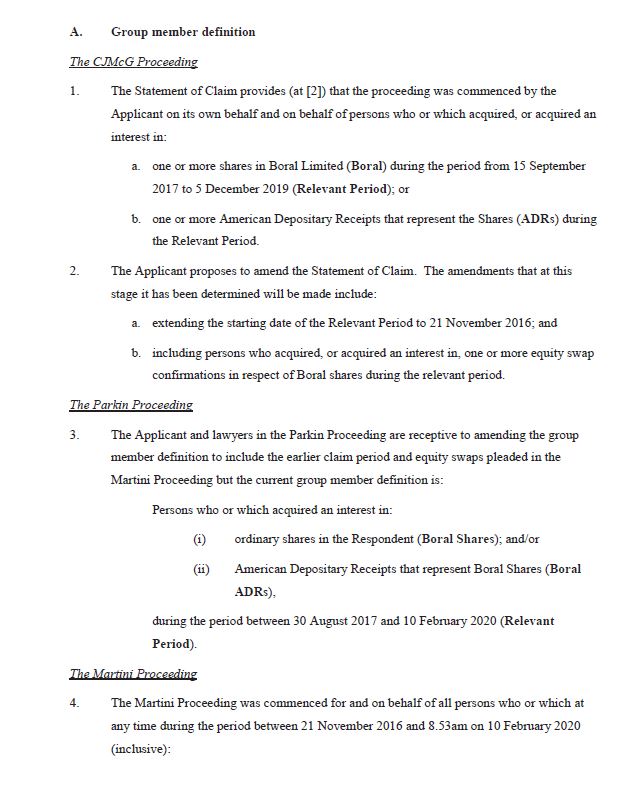
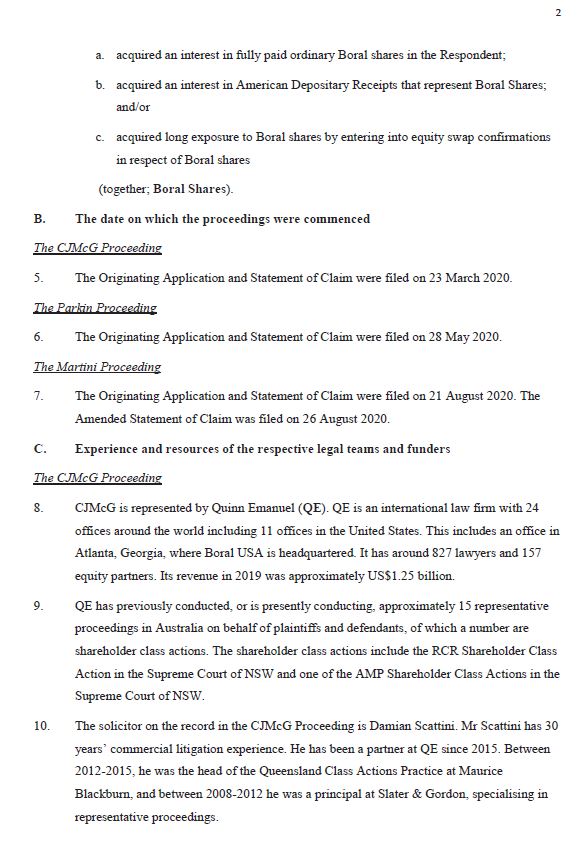
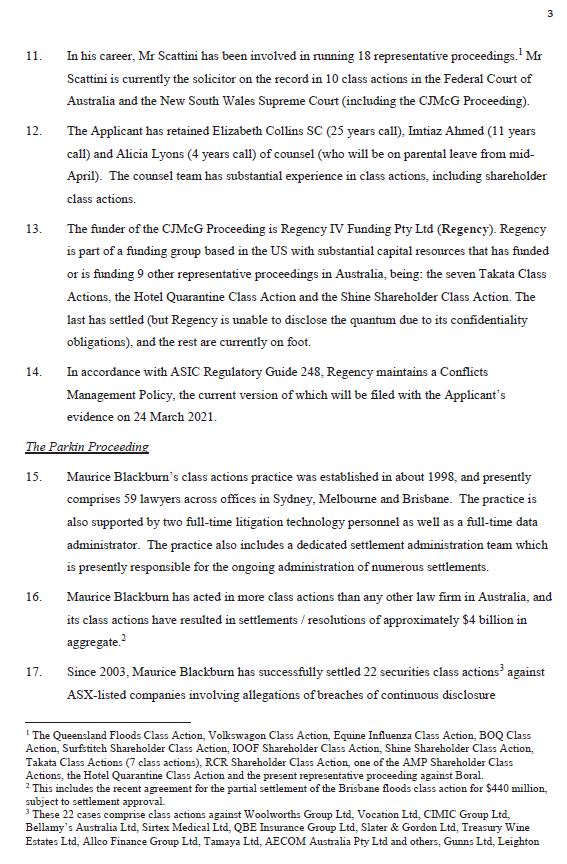
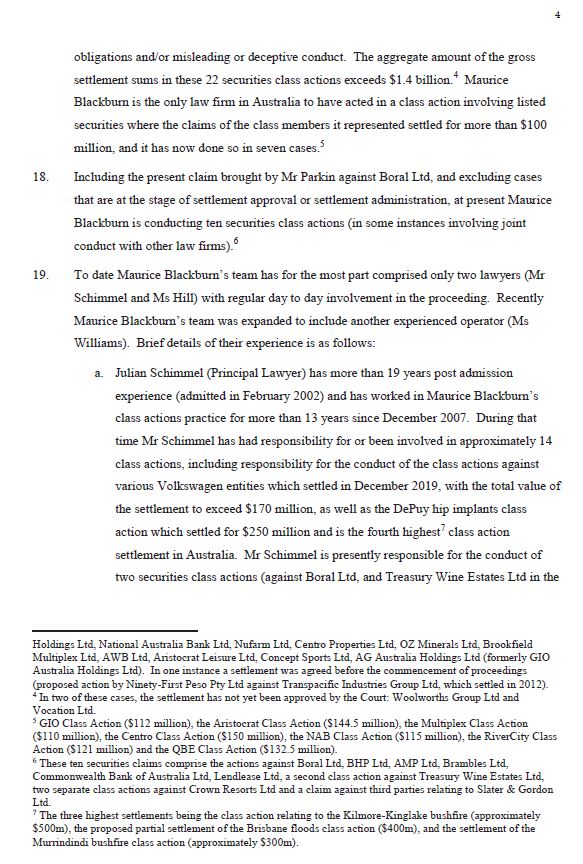
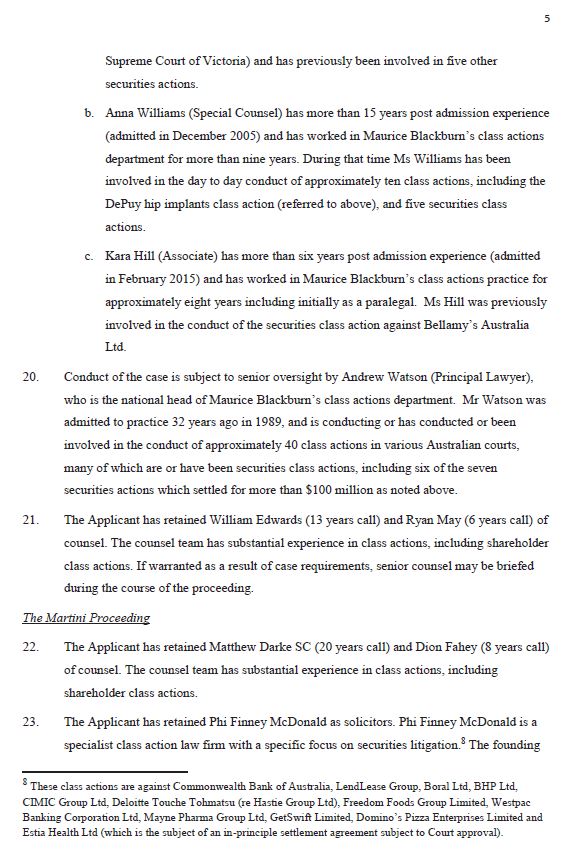
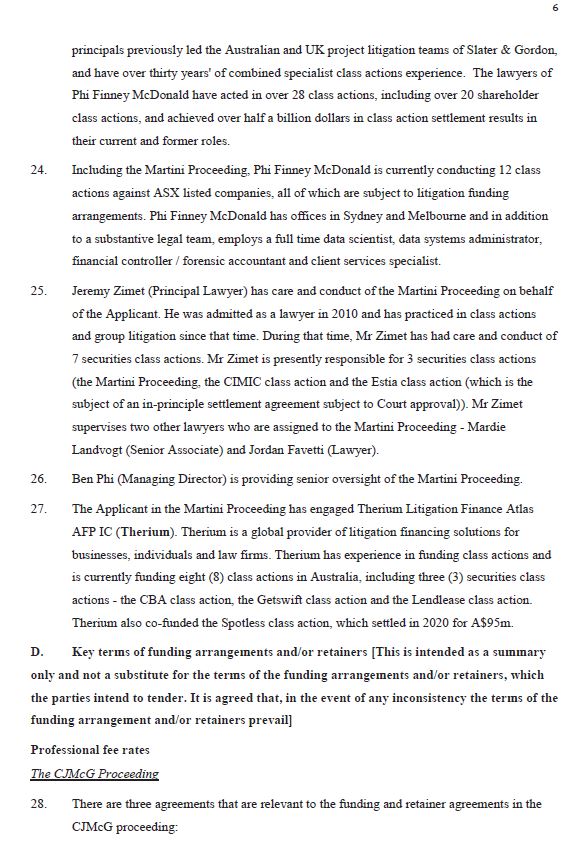
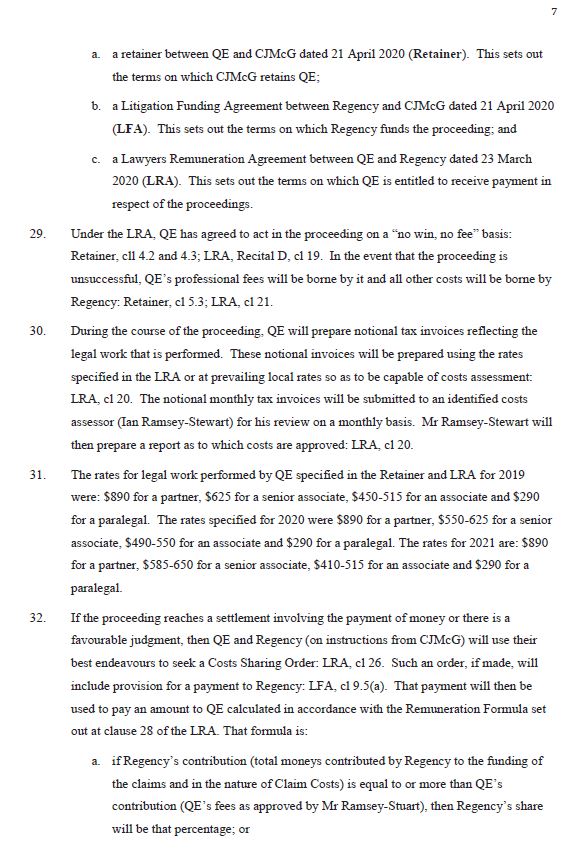
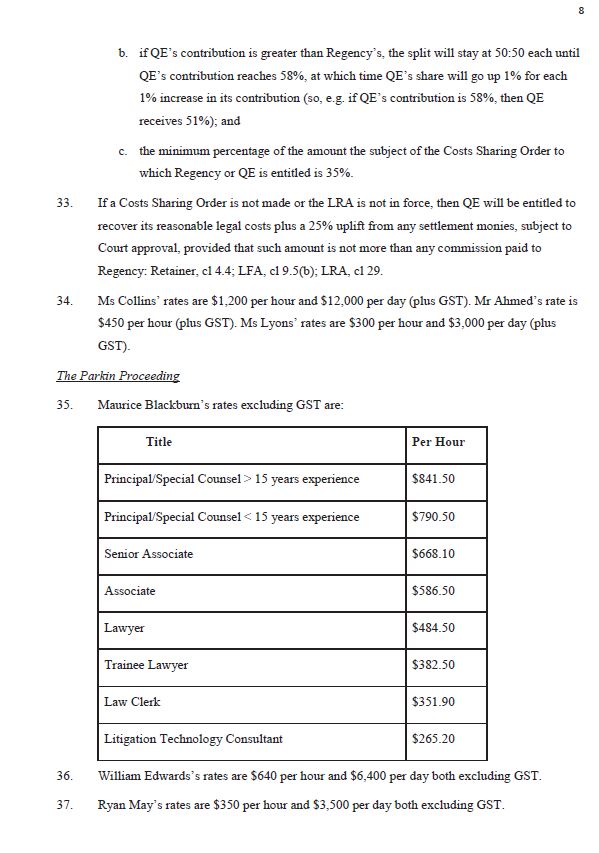
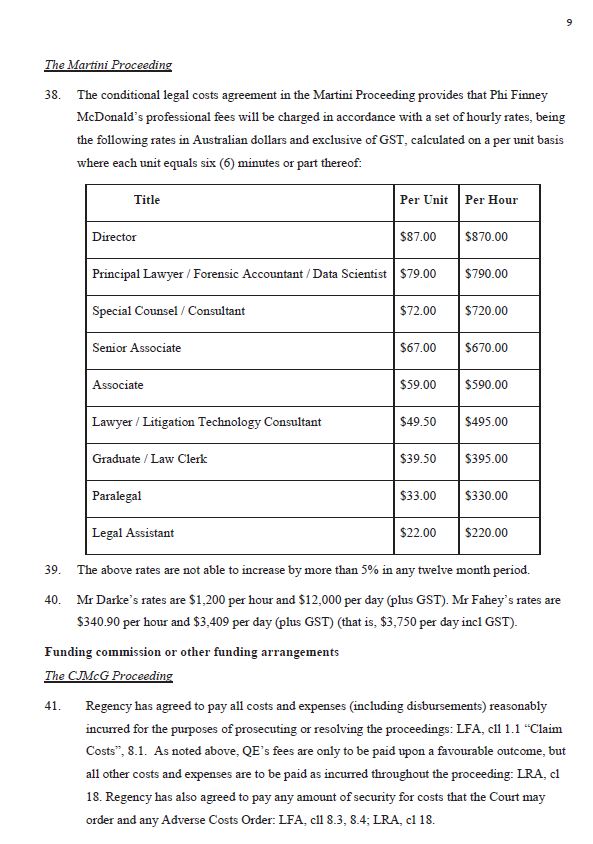
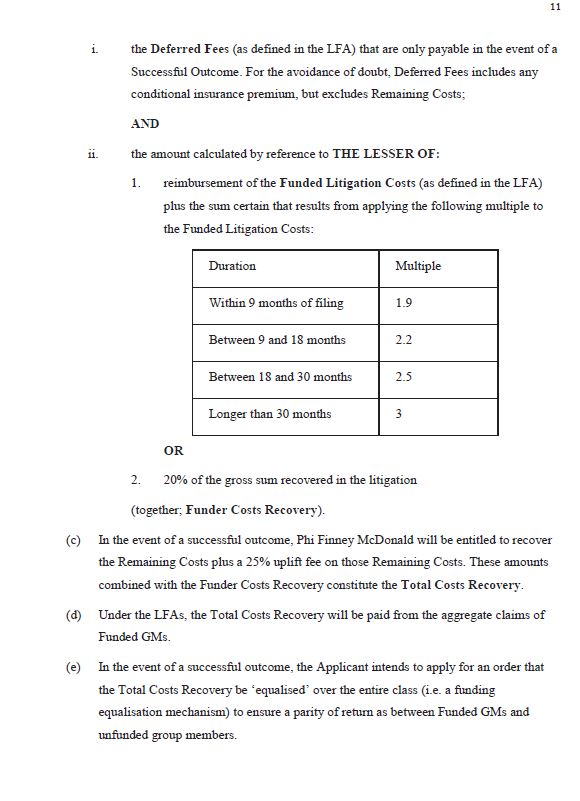
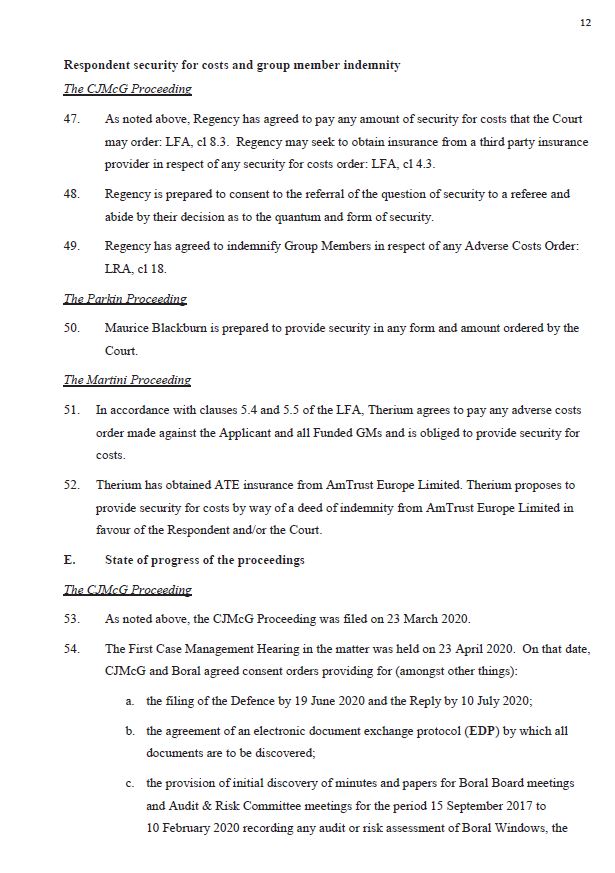
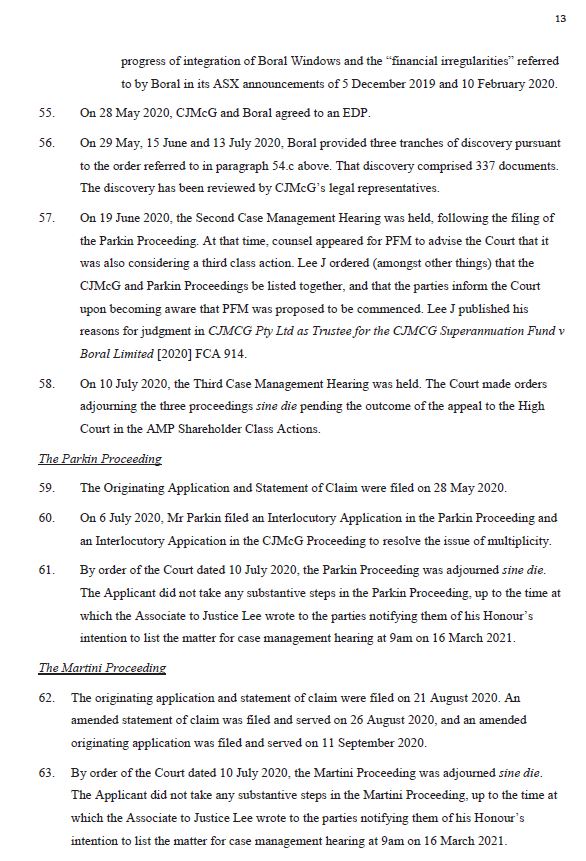

Annexure B
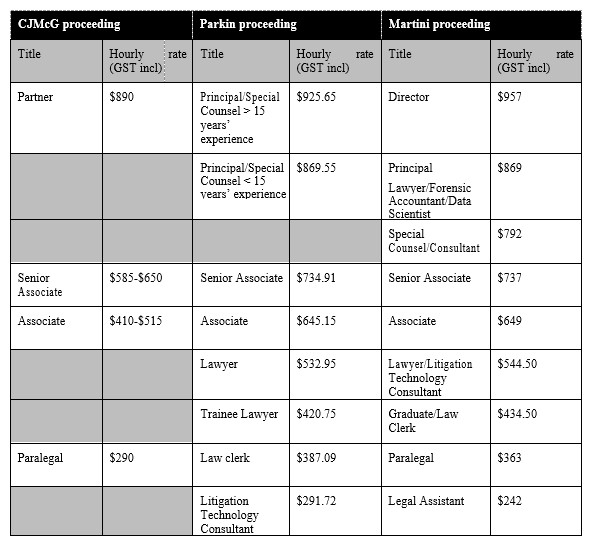
Annexure C