

Federal Court of Australia
Taxiprop Pty Ltd v Neutron Holdings Inc [2020] FCA 1565
ORDERS
DATE OF ORDER: |
THE COURT ORDERS THAT:
1. The proceeding be adjourned for a further hearing on a date to be fixed.
Note: Entry of orders is dealt with in Rule 39.32 of the Federal Court Rules 2011.
O’CALLAGHAN J:
introduction
1 Some years ago, Justice Brendan Brown invoked the aphorism “use it or lose it” to describe the philosophy that underpins the statutory rights of an owner of a registered trade mark. See Tasman Insulation New Zealand Ltd v Knauf Insulation Ltd [2014] NZHC 960; 108 IPR 162 at 182 [72].
2 Section 92 of the Trade Marks Act 1995 (Cth) (the Trade Marks Act) is the provision on this side of the Tasman Sea that reflects that pithy idea. It permits any person to apply to have a registered trade mark removed from the Register on the basis that the trade mark has remained registered for a defined three-year period and “at no time during that period” has the registered owner used the trade mark in Australia, or used the trade mark in good faith in Australia.
3 But “use it or lose it” in this context is not meant to convey an irrevocably binary choice. It is not as simple as that, including because modern trade mark statutes provide that, even if a non-use application has been successful, the court retains a discretion not to remove the mark from the Register in respect of any or all of the services or goods to which the application relates. In this country, the relevant provision is contained in s 101 of the Trade Marks Act.
4 In this proceeding, the applicant is the registered owner of a trade mark for the word “LIME”, including in respect of transport and taxi services.
5 The central anterior questions to be resolved arise out of the respondents’ non-use applications, which are incorporated into separate cross-claims brought by each respondent. Those questions are: (a) whether the applicant has discharged its onus to prove that it has used the mark in good faith within a three-year period from 16 March 2017; and (b) if the respondents’ non-use claims are allowed in whole or in part, whether the court should exercise the discretion under s 101 of the Trade Marks Act not to remove the mark, or to maintain it in certain respects.
6 The applicant trade mark owner says that it has used the mark in good faith in respect of taxi services during the relevant three-year period, and that the respondents’ non-use applications should be refused. It says that even if the mark were pared back to taxi services, the respondents’ use and threatened use of the brand “Lime” in Australia constitutes an infringement of its exclusive rights to its mark pursuant to s 120 of the Trade Marks Act. The applicant also contends that the respondents’ use and threatened use constitutes passing off, and a contravention of the prohibitions against misleading or deceptive conduct in ss 18 and 29 of the Australian Consumer Law (Sch 2 to the Competition and Consumer Act 2010 (Cth)) (ACL), arising from what it alleges is the reputation and goodwill that it has in its “Lime” brand and business, at least in Sydney.
The parties, the mark and the allegations of non-use summarised
The parties and the mark
7 The applicant (Taxiprop) owns the intellectual property of its holding company, A2B Australia Limited (A2B). A2B, which until November 2018 was called Cabcharge Australia Limited (Cabcharge), owns the 13CABS taxi business.
8 Since 1 December 2017, Taxiprop has been the equitable owner (and since 19 February 2018 the legal owner) of Australian Registered Trade Mark No 1079430 for the word “LIME” in class 39 in respect of “Transport; packaging and storage of goods; travel arrangements; taxi, hire car, bus, coach and limousine services …” (the mark or the Taxiprop mark).
9 The mark was originally applied for in 2005, by a company associated with Macquarie Bank called MACT Network Pty Ltd (MACTN). In March 2006, it assigned the mark to another Macquarie Bank entity, which was later renamed Austaxi Group Pty Ltd (Austaxi). The mark was entered on the Register on 16 June 2006.
10 In 2006, Macquarie Bank commenced to operate a “wheelchair focused” taxi service in Sydney under the Lime brand. The taxis bore this livery:
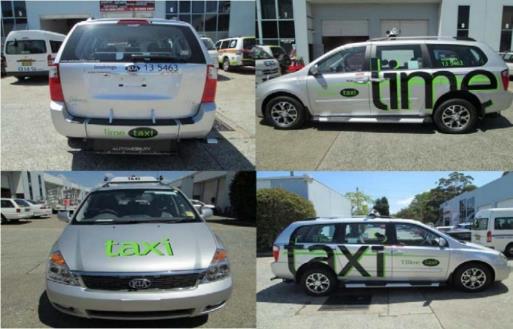
11 There was a website for the Lime taxi service at the domain name “www.limetaxis.com.au”. One of its features was an online booking portal, accessed via the sub-domain name “www.bookings.limetaxis.com.au”. Lime taxis could also be booked over the telephone, using a “13LIME” smart number.
12 The venture was not a success. In early 2008, Macquarie Bank disposed of its shares in Austaxi, the owner of the Lime business and the mark. At that time, only 50 Lime taxis were operating in Sydney.
13 In New South Wales, A2B’s taxi network services are operated by one of its subsidiaries, Combined Communications Network Pty Ltd (CCN). In May 2010, Austaxi agreed that the Lime taxi network would join CCN’s centralised booking and dispatch system. As part of this process, the parties entered into a suite of agreements, namely:
(1) an Agreement for the Sale of Equipment between Austaxi and CCN dated 3 May 2010, by which Austaxi sold its communications and GPS equipment to CCN, and assigned its rights under software licensing and support agreements with third parties;
(2) a Licence Agreement between Austaxi and CCN dated 3 May 2010, by which CCN licensed use of its equipment back to Austaxi;
(3) a Licence Agreement between Taxi Combined Services Pty Ltd (TCS) and MACTN (a subsidiary of Austaxi) dated 30 April 2010, by which TCS licensed MACTN as the fleet network operator; and
(4) a Centralised Booking Services Agreement between CCN and MACTN, by which CCN agreed to provide bookings to taxis in the MACTN taxi network through its centralised booking service.
14 As part of these arrangements, CCN agreed to take over operation of the 13LIME smart number and the Lime online booking portal. In December 2010, CCN registered the domain name “www.limetaxisbooking.com.au” and migrated the online booking portal to the A2B group’s servers.
15 In August 2011, CCN acquired 100% of the issued share capital of Austaxi, and thus its assets, including the mark, taxi licences and vehicles. The A2B group also took control of the www.limetaxis.com.au domain name, and, in July 2012, the Lime website was migrated to its servers.
16 Sometime in the first half of 2015, A2B decided to consolidate the disparate brands under which its taxi networks operated, one of which was the Lime brand.
17 By the end of the 2015 financial year, CCN had consolidated its dispatch system, so that any booking made through any of its taxi networks was dispatched to any vehicle matching the conditions for the job. As a result, a booking made through Lime’s booking service could have been allocated to a driver operating, for example, a “Silver Service” or “Taxis Combined” branded taxi. This also meant that a booking dispatched to a Lime vehicle could have originated from any of the phone numbers routed through a CCN contact centre or through the Taxis Combined website.
18 In August 2016, A2B announced to staff in New South Wales that CCN’s taxi networks would be rebranding, “to align with 13CABS in VIC, SA and areas of NSW – Newcastle and Maitland, and to become a stronger, nationally recognised brand”. This meant that eleven brands, including Lime, would “all be incorporated under the one umbrella of 13CABS”, and that logos, signs, staff uniforms and any other sales and promotional materials, among other things, would be changed.
19 Between September 2016 and July 2017, with the exception of the Silver Service brand, the taxis in CCN’s networks, including Lime branded taxis, were rebranded with 13CABS livery.
20 In December 2016, the Lime online booking portal at www.limetaxisbooking.com.au and the Lime website at www.limetaxis.com.au ceased to operate. The www.limetaxis.com.au domain name was thereafter “pointed at” the 13CABS website server. This meant that users navigating to www.limetaxis.com.au were taken to the 13CABS website, but still saw the www.limetaxis.com.au domain name in their browser.
21 In December 2017, Austaxi assigned the mark to Taxiprop. (This was part of an A2B group restructuring designed to ensure that the group’s intellectual property was held by a single subsidiary.) Taxiprop then licensed the mark back to Austaxi. Taxiprop became the registered owner of the mark in February 2018.
22 Since about mid-2017, A2B has expanded the use of the 13CABS brand to Brisbane, the Northern Territory and parts of regional Victoria, and as at mid-2018 operated a total fleet of almost 9,500 taxis, using the current 13CABS orange colour scheme.
23 Meanwhile, in 2017, Neutron Holdings, Inc., the first respondent, launched a Lime branded bicycle-share scheme at the University of North Carolina in Greensboro. Neutron is, according to its Australian-based Director of Government Strategy (Asia Pacific), a “micro-mobility solution provider that offers dockless bike-sharing and electric scooter-sharing options throughout major cities across the world”.
24 Lime Network Pty Ltd, the second respondent, is an Australian wholly owned subsidiary of Neutron Holdings, Inc. It was incorporated in August 2018. Like the parties, I will call the respondents collectively Neutron, unless there is some reason not to.
25 On 20 August 2018, Neutron filed its Australian Trade Mark Application No 1949564 for registration of LIME in classes 9, 12, 35, 39 and 42. On 7 September 2018, a delegate of the Registrar of Trade Marks issued an adverse report in respect of Neutron’s application.
26 On 21 September 2018, Neutron filed an application with the Registrar to remove the Taxiprop mark from the Register for non-use under s 92(4)(b) of the Trade Marks Act, alleging that there was no use of the mark between 21 August 2015 and 21 August 2018 (the first non-use period). That application was subsequently referred by the Registrar to this court. Neutron later filed a second non-use claim, alleging that there was no use of the mark between 16 March 2017 and 16 March 2020 (the second non-use period).
27 Neutron launched its business in Australia on 7 November 2018, and during the course of that month deployed Lime branded electric bicycles (branded Lime-E) or electric scooters (branded Lime-S) in Sydney, Brisbane and Adelaide, and at the Monash University campus in Clayton, Victoria.
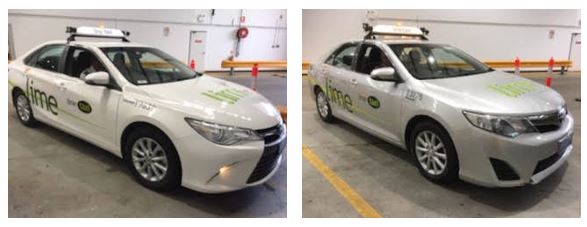
28 A2B found out about Neutron’s non-use application on 5 October 2018. In response, CCN rebranded two Sydney-based Toyota Camry taxis with new Lime livery. They commenced to operate in late November 2018. This is a depiction of the new livery:
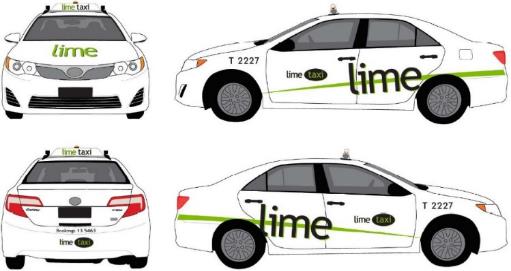
29 By that time, the www.limetaxis.com.au domain name was no longer pointed at the 13CABS website, and instead resolved to a non-active server. This was rectified in October 2018, and www.limetaxis.com.au began once again to resolve to the 13CABS website. Later, in mid-2019, a “redirection” (as opposed to a repointing) was put in place, so that users who navigated to www.limetaxis.com.au were taken to the 13CABS website and saw the 13CABS domain name displayed in their browser.
30 After a futile exchange of correspondence between the parties via their solicitors, on 21 December 2018, Taxiprop commenced this proceeding, alleging, among other things, infringement of its mark.
The main non-use disputes
Wheelchair accessible taxis bearing the mark in Sydney from March 2017 to October 2018
31 There is a dispute about whether the applicant has proved its case that, notwithstanding the rebranding of the CCN fleet, it continued to operate seven Lime branded wheelchair accessible taxis (often referred to as WATs) in Sydney at various times between March 2017 and October 2018, and whether the drivers of Lime taxis wore Lime branded uniforms.
Did Taxiprop “control” use of the mark by taxi operators?
32 Neutron says that neither Austaxi nor Taxiprop exercised control over the Lime taxi operators’ provision of the WAT services, or the wearing by the drivers of Lime branded uniforms, and that any such use of the mark, if proved, was not use of the mark by the registered owner.
33 Taxiprop’s case on the control issue includes the overarching proposition that there was a “unity of purpose” of the relevant companies in the A2B group, including CCN, “demonstrated by inter alia the corporate relationship, common directors, the ultimate beneficial ownership of the shares and the written arrangements between the companies”. It says that CCN controlled taxi operators pursuant to its Code of Conduct, and that because CCN dispatched taxi jobs under the terms of the Code, when the Lime taxis were performing those jobs, they were doing so under the control of CCN, and thus A2B. It points also to licence agreements that it says were executed between taxi operators and CCN, or alternatively to implied licences to use the mark which it says must have arisen between those parties. Further, it relies on some tendered correspondence concerning the obligations of taxi drivers to come into CCN’s headquarters for regular taxi inspections, and for rebranding, as evidencing actual control by CCN.
The two Toyota Camry taxis
34 Taxiprop says that the rebranding of the two Toyota Camry taxis in November 2018 by CCN, its wholly owned subsidiary, is evidence of use of the mark by it during the second non-use period. Neutron says that the rebranding was not done in good faith and thus does not constitute use within the meaning of s 92(4)(b)(ii) of the Act. Neutron also says Taxiprop has not proved that it relevantly controlled the conduct of CCN in carrying out the rebranding.
The repointing or redirection of the Lime domain name to the 13CABS website
35 Taxiprop says that the repointing of the www.limetaxis.com.au domain name to the 13CABS website that began in December 2016 was still in place at the start of the second non-use period, and that this constituted use of the mark. Neutron says that Taxiprop has not proved the repointing was still effective at that time.
36 As to the repointing (and later redirection) of the www.limetaxis.com.au domain name to the 13CABS website that occurred after the first non-use application, Neutron alleges, and Taxiprop denies, that this was not done in good faith. Neutron also submits that it did not constitute use of the mark by Taxiprop, because it was put in place by an employee of Black Cabs Combined Pty Ltd (BCC), another company in the A2B group, and Taxiprop has not proved that it relevantly controlled the conduct of BCC. Neutron submits further and in any event that use of the www.limetaxis.com.au domain name merely to redirect traffic to the 13CABS website was not use of the mark as a trade mark.
Neutron’s non-use case summarised
37 Neutron’s non-use case may be summarised as follows:
(1) There has never been any use of the mark by Taxiprop for any of the registered services other than taxi services. The court should for that reason alone remove all services other than taxi services from the registered mark.
(2) To the extent that Taxiprop proved any use of the mark during the second non-use period (16 March 2017 to 16 March 2020), such use was not use for the purposes of s 92(4)(b) of the Act, because Taxiprop did not prove that it was: (a) authorised by either Austaxi or Taxiprop; or (b) in good faith, and the court should exercise its discretion to remove the mark for all services.
(3) If the mark is removed for all services, there can be no trade mark infringement claim to support Taxiprop’s claim for injunctive relief.
(4) If the mark is removed for all services other than taxi services, and the court gets to the question of infringement, Neutron has not infringed the mark because: (a) its bicycle and scooter hire services are not services of “the same description” as taxi services; (b) its bicycles, scooters and app are not goods that are “closely related” to taxi services; and (c) there is no likelihood that its use of the mark would cause confusion within the meaning of s 120(2) of the Trade Marks Act.
(5) Alternatively, Neutron says that it would be entitled to the defences available under ss 122(1)(e), (f) and (fa) of the Trade Marks Act.
38 Neutron advanced two other alternative cases in relation to non-taxi services. The first is that the mark was “abandoned” for non-taxi services before Austaxi assigned its ownership of the mark to Taxiprop in 1 December 2017. The second is that the mark should be cancelled for all services other than taxi services pursuant to s 88(2)(c) of the Trade Marks Act (which provides that a mark may be cancelled if “because of the circumstances applying at the time when the application for rectification is filed, the use of the trade mark is likely to deceive or cause confusion”).
Taxiprop’s response to Neutron’s non-use case summarised
39 Taxiprop does not dispute that the mark has only ever been used in respect of taxi services. It disputes Neutron’s case that the mark was not used in respect of taxi services in the second non-use period. It says that the mark was used in that period in respect of taxi services by:
(1) use of the new Lime livery on the exterior of two Toyota Camry taxis from 20 November 2018;
(2) continued use of existing Lime livery on the exterior of seven WATs from the first non-use period up to October 2018;
(3) continued use on the drivers’ Lime branded uniforms; and
(4) use in the Lime domain name as a redirection to the 13CABS homepage and online booking service offered by A2B under the 13CABS brand.
40 It also submits that each such use was authorised and in good faith, and that the evidence of use and authorised use in the second non-use period thus rebuts the non-use application in respect of taxi services.
41 Taxiprop submits in the alternative that if Neutron’s non-use applications are allowed in whole or in part, the court should exercise its discretion under s 101(3) of the Trade Marks Act so that registration of the mark is maintained for all the registered services; or, if the court considers it appropriate to limit the scope of registration of the mark, at least for what Taxiprop calls “personal transport services”, as well as “couriering services; travel arrangement[s] in the field of personal transport; taxi, hire car, and limousine services”; or, at a bare minimum, for taxi services.
42 Taxiprop submits that Neutron is infringing its mark, and would infringe it in the future whether the mark is limited to taxi services or personal transport services, or whether it remains as it is. It says that the court should thus enjoin Neutron from using the mark, and award damages.
The first non-use period not pressed
43 At trial, Neutron ran, but in closing did not press, a case that the mark had not been used for any of the registered services during the first non-use period (the three years from 21 August 2015). Neutron later accepted that the mark had been used for taxi services during that period. The evidence led in respect of that period was in the end relied on by Neutron only to invoke the court’s jurisdiction to remove all services other than taxi services from the mark. The evidence of use in respect of taxi services during the first non-use period was also relied upon by Taxiprop, in support of its ACL and passing off case, by which it contended that such use developed a significant reputation in the mark, at least in Sydney.
44 The decision taken by Neutron not to press its non-use case in respect of taxi services during the first non-use period, although responsibly and properly made, meant that it was no longer necessary to have regard to the considerable body of evidence adduced by Taxiprop about such use during that period. Because Taxiprop prepared and filed its written closing submissions before Neutron did, large parts of those submissions, understandably enough, addressed taxi service use in the first non-use period. After reserving judgment, I asked the parties, via my Associate, to assist me to identify the evidence about the first non-use period which was no longer relevant, but to no avail. It suffices to say that there is a considerable amount of evidence to which it is not necessary to have regard, for the reason that non-use was not pressed in respect of taxi services during the first non-use period. As I will explain, there was also (at times voluminous) evidence adduced in respect of the second non-use period that, in the end, was either uncontroversial or irrelevant. For that reason, it has not been necessary to recite that evidence in any detail.
The parties’ businesses
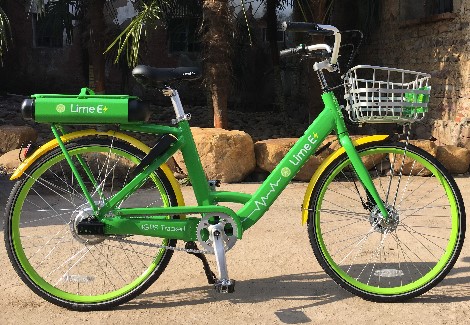
A2B and Taxiprop
45 Mr Adrian Lucchese is, and has been for about 5 years, the General Counsel and Company Secretary of A2B. He gave affidavit evidence about the A2B business, including the history of the use of the Taxiprop mark. What follows is taken from that evidence. It is uncontroversial.
46 A2B is a publicly listed company. Its taxi networks have approximately 10,000 affiliated vehicles throughout Australia (except the ACT). Taxiprop, the registered owner of the mark, is A2B’s subsidiary and the group’s intellectual property holding company.
47 The businesses affiliated with A2B’s taxi networks provide the following services: door-to-door personal transport; taxi, van and station wagon transport; airport transfers; mobile point pickup; parcel delivery; “transport solutions for businesses”; and wheelchair accessible taxis.
48 A2B’s taxi networks also offer a range of other goods and services, including a fully integrated booking and dispatch service for customers and drivers (with a telephone and web-based booking system, smartphone apps and driver apps) and navigation systems. Further, the networks supply, fit and repair security, surveillance, driver communications and payment systems.
The Lime business
49 The Lime taxi network was launched by Macquarie Bank in 2006. It was acquired by the A2B group in 2011, prior to the national 13CABS rebrand (see [7]-[30] above).
50 Mr Lucchese deposed that “Lime promoted its passenger transport service as offering a newer, cleaner, more luxurious fleet and presenting an option for passengers who required wheelchair-accessible vehicles”. He said that “Lime pitched itself as offering a service which was the combination of a taxi and private car hire. The Lime fleet consisted of the brand new (at the time) Mercedes-Benz Vito vehicles fitted out with a motorised wheelchair lifting system. These were luxury vehicles produced by a prestige European manufacturer. Lime taxis were also visually distinctive. Most cabs in Sydney were white with plain branding, whereas Lime taxis were silver with large black and bright green livery”.
The national rebrand to 13CABS
51 In the past, taxis affiliated with A2B’s networks have operated under numerous brands (all of which are now owned by A2B), including Black Cabs Combined, Taxis Combined, Silver Service, Yellow Cabs, Apple, Lime, ABC Radio Taxis, South Western Taxis and Maxi Taxi. The brands operating in each state were different for historical and regulatory reasons. The entry into the market, more recently, of international businesses that use a single brand throughout Australia (like Uber), according to Mr Lucchese, “compelled A2B to create a national presence so that the business could effectively compete in a disrupted and changing market”.
52 In 2016, A2B chose 13CABS as its “first national brand”. Mr Lucchese explained a little of the history of the rebranding, including why 13CABS was selected as an appropriate brand for the provision of a single, national taxi booking service, as follows:
[T]he 13cabs trade mark emanated from the national taxi booking service telephone number which was issued to Taxis Australia Pty Ltd (Taxis Australia). A2B is also the ultimate holding company of Taxis Australia. This telephone number, 13 2227, spells out the word ‘13CABS’ on an alphanumeric telephone keypad. This specific booking telephone number was selected as it was considered that it would be easy for the Australian public to remember and they could use it in any location in Australia. Further A2B wished to benefit from the growing international trend of identifying telephone numbers by their corresponding alphanumeric keypad representation at the time. Hence, from this point on, A2B commenced associating the 13cabs trade marks with goods and services including but not limited to motor vehicles for hire purposes, taxi services including taxi transport, taxi hire, and taxi booking and reservation services.
Since June 2009, A2B has offered for download free of charge a mobile phone application that prominently features the 13cabs trade mark (13cabs Application). The 13cabs Application has been downloaded over 2.4 million times in the last two years, making it the leading taxi booking application in Australia.
The 13cabs Application allows customers to book a taxi, to follow a taxi’s location on approach on an interactive map using Global Positioning System … technology, to estimate a customer’s fare and process payment and to view a history of trips taken. The 13cabs Application is available for download on Apple devices, including the iPhone, iPad and iPod touch and also on Android devices. The 13cabs Application is also available for download on the Apple watch, it was Australia’s first taxi booking application that can be accessed through the Apple watch.
53 It is notorious that the entry into the market of rideshare services like Uber had a dramatic effect on the taxi industry. Mr Lucchese explained the rationale for the 13CABS’ national rebranding in a post-Uber world as follows:
From my position as General Counsel of the A2B group I am aware that the introduction of Uber to the Australian market place, followed by other ride share companies such as Didi and Ola, has led to a shake-up of the personal transportation market in Australia. These companies operate under a single national brand (and in many cases a global brand) and give users the opportunity to book travel across Australia using a single touchpoint; the branded app. In 2015 Governments commenced their introduction of sweeping reforms to the way the Taxi industry was regulated. In large part the reason for this reform was to legitimise the illegal operations of international ride share companies like Uber. Naturally reforms of this nature have had a significant impact on the personal transport sector. The changes have seen the emergence of new competitors and business models and dramatic shifts in the competitive landscape. For A2B this has meant business models were carefully reconsidered. This thinking also encompassed the use and deployment of its well-known and established trade marks. In 2016 A2B commenced its strategy to create a national brand presence to effectively compete in this new regulatory landscape.
54 He continued:
At A2B we considered that, in the face of competition from Uber and other entrants into the personal transportation market, the presence of multiple different taxi brands in each state was hurting A2B’s business. In the interests of survival of the taxi industry, A2B needed to present a single brand so that passengers recognised taxis operating under our network no matter where they lived or travelled within Australia. Given that 13cabs already had national recognition as a brand through the 13cabs booking system, in around late 2016, A2B decided to adopt 13cabs as its lead national taxi brand. Unfortunately, this also meant that taxis needed to rebrand from existing brands that still enjoyed considerable reputation, goodwill and consumer recognition, such as BLACK CABS, TAXIS COMBINED, YELLOW CABS, APPLE and LIME.
Neutron
55 Mr Mitchell Price is Neutron’s Director of Government Strategy (Asia Pacific). He is responsible for, among other things, developing and managing Neutron’s relationships with government authorities in the region, and “for advocating for safe regulation of micro-mobility products and services, engaging with working groups and alliances across different modes of micro-mobility and transport, and investigating think-tank opportunities with members of industry and government”.
56 The following uncontroversial description of Neutron’s business and the history of it is derived from Mr Price’s affidavit evidence.
57 A “micro-mobility” product refers to a small, lightweight device, such as a bicycle or a scooter, which typically operates at speeds below 25km/h and is generally used for distances less than 10km.
58 Neutron was founded by Messrs Brad Bao and Toby Sun in California in January 2017. Originally, the business launched as a traditional pedal bicycle-share scheme trading under the business name and brand “LimeBike”. Mr Price said that “[t]he founders’ vision was to create an environmentally sustainable way to connect the first and last mile of users’ transport. This is the difficulty faced by people when moving from a public transport hub (such as a train station or bus depot) to their final destination”.
59 Neutron launched the first dockless LimeBike service at the University of North Carolina in Greensboro in June 2017. By September 2017, it had expanded its service to offer over 1,000 LimeBikes that could be hired anywhere in Greensboro.
60 In October 2017, Neutron obtained US$50 million in additional funding, allowing it to expand across the United States. By December 2017, Neutron had 150,000 users of LimeBikes and was valued at US$225 million.
61 In January 2018, Neutron announced its expansion into electric bicycles. Shortly afterwards, it announced that it was piloting electric scooters in the United States.
62 In July 2018, Neutron raised a further US$335 million in funding from investors, including Uber and Google, and was valued at US$1.1 billion. By February 2019, Neutron had raised over US$700 million in funding and was valued at US$2.4 billion.
63 Over the course of 2018, Neutron began offering electric scooters in Paris, Auckland and Australia, among other places. By February 2019, it had passed over 45 million rides globally.
64 Neutron currently offers dockless electric scooters and electric bicycles under the “Lime” brand to users in over 120 cities in more than 30 countries. As at May 2020, Neutron was “the largest micro-mobility provider in the world” and had “hosted” over 100 million rides.
65 Neutron launched its business in Australia on 7 November 2018, by deploying 300 Lime-E bikes around the Sydney CBD and commencing a Lime-S trial at the Monash University campus in Clayton, Victoria. Between mid-November 2018 and February 2020, it commenced a Lime-S trial in the Brisbane CBD, entered into a licence with Brisbane City Council to supply Lime-S scooters, and commenced a Lime-S trial in Adelaide.
66 Prior to the COVID-19 pandemic, Neutron was also in the process of expanding its services to other cities and regional centres in Australia including Newcastle, Melbourne, Townsville, Perth and Canberra.
The Lime app
67 Neutron’s products and services can only be accessed through the Lime app, and paid for with a credit or debit card. The app has several “core capabilities”, including “rental, reservation, transportation, consulting, troubleshooting and delivery” of bicycles and scooters. It also provides for charging and delivery of the bicycles and scooters, through a network of third-party contractors (called “Juicers”).
68 The app connects users to the “fleet” and, among other things, allows them to locate and unlock bicycles or scooters that are available nearby.
69 Before a user can unlock and use a bicycle or a scooter, they must create an account on the Lime app. The account is linked to a mobile phone number, email address or Facebook account. As part of this registration process, the user must accept Neutron’s terms and conditions.
70 Once a user has registered their account, they are taken to the app’s home screen, which displays a map of bicycles and scooters available nearby. Having located a bicycle or scooter, the app provides a walking route to it, as well as a suggested route for the rest of the trip. The app also displays the registration number, location, price and battery range of each available bicycle or scooter, as well as areas where riding, speed or parking are restricted.
71 Once the user reaches the bicycle or scooter, they are prompted to use their mobile phone camera to scan a QR code or enter a six-digit “unlock code”, which unlocks the bicycle or scooter and allows use for up to 24 hours, subject to battery limits.
72 After a journey is complete, the user must lock the bicycle or scooter. Once it has been locked, the user receives a receipt via the email address associated with their account.
Lime branding
73 Neutron adopted “LimeBike” as a brand in January 2017. But Mr Price deposed that “[i]n June 2018, Neutron refined the brand name from ‘LimeBike’ to ‘Lime’ to reflect its transition into a multimodal micro-mobility solution provider offering pedal bikes, electric bikes and electric scooters”.
74 Mr Price also deposed that “[s]ince January 2017, there has been a visual identity accompanying the Lime brand which has evolved over time”, as follows:
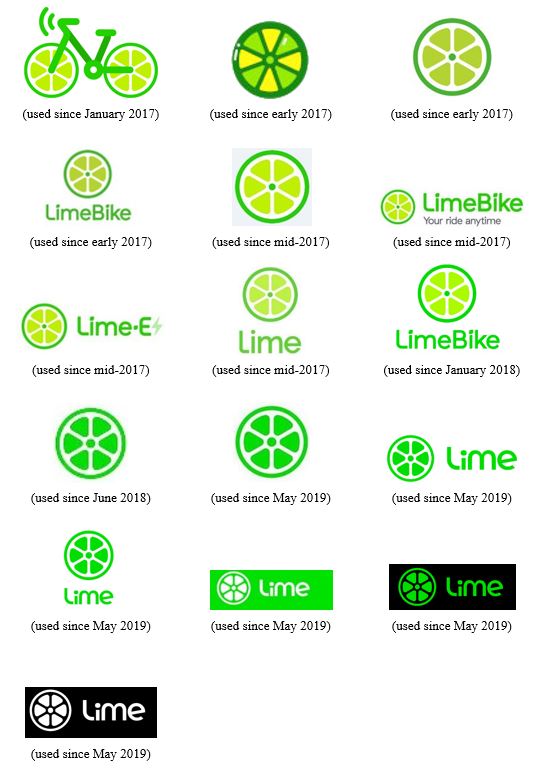
75 It was not made clear which of these “visual identities” has been used by Neutron in Australia, but nothing turns on that.
76 The scooters look like this:
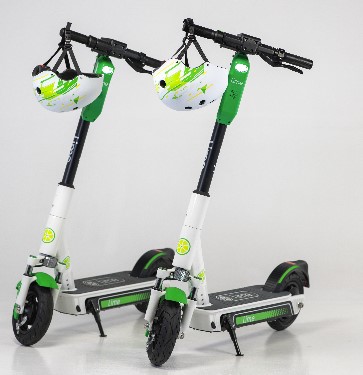
77 The bicycles look like this:
78 It was common ground that Neutron has “extensively used, promoted and marketed the Lime brand” in Australia, including on the Lime app, its website, bicycles and scooters, in advertising and promotional events, and on social media platforms.
Use of THE mark during the second non-use period
The two Toyota Camrys
79 I will turn first to Taxiprop’s contention that it used the mark on the exterior of two Toyota Camry taxis from 20 November 2018.
80 It is necessary at the outset to describe how, despite A2B’s national 13CABS rebrand, these two taxis came to bear new Lime livery.
81 In his second affidavit, Mr Lucchese relevantly deposed as follows:
After I became aware of the Non-Use Application, I wanted to ensure that the Lime brand remained part of the stable of brands that the A2B business could continue to use in the future (especially for hybrid and electric fleets). As a result, I was compelled to start considering different ways in which we could bring the brand back prior to locking in a strategy regarding the future use of the brand and not detracting from the national rebrand program. In around early November 2018, I recall having a discussion with Stuart Overell [COO of Taxi Networks] during which I explained to him that we needed to keep using the Taxiprop Mark to ensure that Taxiprop could maintain its registration of the mark. I suggested to Stuart that we should bring the Lime livery back on some hybrid vehicles.
82 In a later affidavit, Mr Lucchese made some clarifications to this evidence, as follows:
Having now discovered [certain documents] I recall that:
(a) my initial discussion with Stuart Overell occurred after I first learned of the Non-Use Application on around 5 October 2018 but before the creation of the first mock-ups on 16 October 2018; and
(b) Taxiprop’s planning to bring back the Lime brand had commenced several weeks prior to Neutron launching in Australia on 7 November 2018.
My evidence remains that after becoming aware of Neutron launching in Australia in early November 2018, I recall thinking at the time that we could not reintroduce the Lime brand beyond a few cars because the widespread relaunch of Lime taxis at the same time the respondents had just entered the Australian market using the Lime trade mark might confuse consumers into thinking they were related. Neutron’s launch in Australia forced A2B to accelerate its plans to bring the Lime brand back. However, this did not inform my thinking around Taxiprop’s original plans to bring back the Lime brand prior to 16 October 2018, as I did not become aware of Neutron’s launch in Australia until on around 7 November 2018.
83 After speaking with Mr Lucchese about applying new Lime livery to some taxis, Mr Overell received an email on 16 October 2018 from 13CABS’ marketing department. It attached Lime livery designs for his consideration. He approved one of the designs, though it did not resemble the livery that was eventually applied to the two taxis.
84 On 19 November 2018, Mr Overell sent a brief email to Mr John Dulgaro (General Manager for CCN) and Ms Liz Attia (Head of Marketing for 13CABS), which said “I need that Lime Taxi on the road Tomorrow in Sydney”. This email was later forwarded to Mr Morgan in 13CABS’ marketing department. Mr Morgan said that he was in the process of printing the decals in Melbourne. The email was also forwarded to Mr Stevis (an employee of CCN and the Manager of 13CABS’ TaxiTech division in NSW), who later took delivery of the decals in Sydney.
85 On 20 November 2018, Mr Stevis and his colleague applied the Taxiprop mark to the exterior of two Toyota Camry vehicles with registration numbers T3775 and T7839 at 13CABS’ Alexandria workshop. These photographs of the two taxis, among others, were adduced in evidence:
86 Mr Stevis deposed that he has since seen the two taxis on the road and in the workshop for periodic inspections, still bearing the same Lime livery. Messrs Cotsios and Quinn (compliance officers employed by TCS at the Alexandria workshop) also deposed to having seen the livery on the taxis. Mr Cotsios inspected taxi T3775 on 21 February 2020 and taxi T7839 on 1 May 2020. Mr Quinn inspected taxi T7839 on 13 August 2019.
87 Neutron does not dispute that, from 20 November 2018, the two vehicles operated as taxis in the Sydney metropolitan area until at least 16 March 2020 (the end of the second non-use period). It agrees that in that period “those two taxis were operating like any other taxis, carrying passengers and collecting fares”.
88 Neutron also does not dispute that a total of 15,701 rides were taken by those two vehicles during the second non-use period (an average of 32.5 trips per day), and that their reported fare revenue within the period was $339,213.86.
89 Neutron contends, however, that Taxiprop has not discharged its onus to establish that such use was use in good faith because, among other statements of principle found in the cases, it was not “an ordinary and genuine use judged by commercial standards”, or a “real commercial use on a substantial scale” or a “real or genuine use”. Neutron also contends that Taxiprop has not proven that it controlled this use of its mark.
Use in good faith
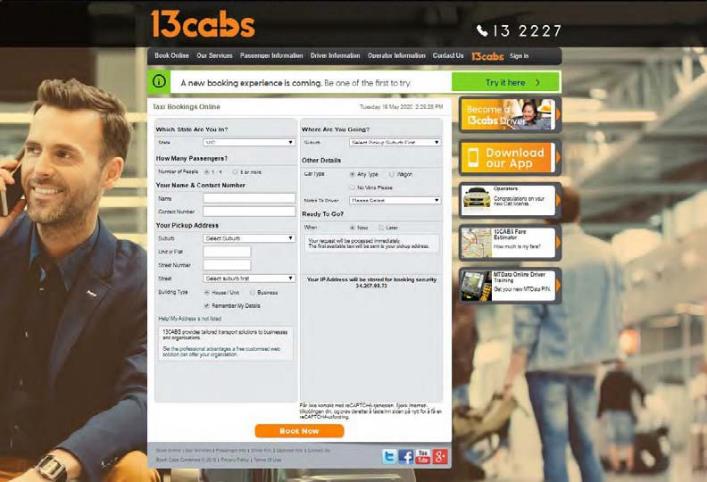
90 Neutron relies, in particular, on the affidavit evidence of Mr Lucchese about the decision to “bring the Lime livery back” (see [81] above).
91 Neutron also relied on a response given by Mr Lucchese in cross-examination to a question about that affidavit evidence, as follows:
COUNSEL: It’s quite clear that that was the primary purpose of rebranding these two taxis. Correct?
MR LUCCHESE: To keep the Taxiprop mark alive because your client had started a non-use application knowing that we were already using the mark in Australia; yes.
92 Neutron also relied on evidence given on behalf of Taxiprop by Messrs Quinn and Stevis, which it summarised as follows:
Mr Quinn has worked in the taxi industry for 42 years. Throughout that time he has worked in a workshop environment where anything from 80 to 100 taxis would come in and out on an average type of day.
Mr Quinn confirmed that in all the time that he has spent in the taxi industry he has never seen a particular branded livery being designed, printed and applied to only two taxis.
Mr Stevis confirmed that there was no other occasion where he had received a request from the Chief Operating Officer [Mr Overell] and the national Head of Marketing [Ms Attia] (in cooperation with the people who produce decals, to produce those decals) and apply them onto two taxis and put them on the road within 24 hours.
93 The issue that therefore arises is whether the use of the mark on the two Camry taxis during the second non-use period was good faith use in the context of A2B’s overall taxi fleet operations.
94 It is necessary at this point to turn to the relevant provisions of the Trade Marks Act and the relevant authorities.
95 Part 9 of the Trade Marks Act is headed “Removal of trade mark from Register for non-use”. Section 92 in Pt 9 relevantly provides:
92 Application for removal of trade mark from Register etc.
(1) Subject to subsection (3), a person may apply to the Registrar to have a trade mark that is or may be registered removed from the Register.
…
(3) An application may not be made to the Registrar under subsection (1) if an action concerning the trade mark is pending in a prescribed court, but the person may apply to the court for an order directing the Registrar to remove the trade mark from the Register.
...
(4) An application under subsection (1) or (3) (non-use application) may be made on either or both of the following grounds, and on no other grounds:
...
(b) that the trade mark has remained registered for a continuous period of 3 years ending one month before the day on which the non-use application is filed, and, at no time during that period, the person who was then the registered owner:
(i) used the trade mark in Australia; or
(ii) used the trade mark in good faith in Australia;
in relation to the goods and/or services to which the application relates.
96 Section 100 relevantly provides:
100 Burden on opponent to establish use of trade mark etc.
(1) In any proceedings relating to an opposed application, it is for the opponent to rebut:
...
(c) any allegation made under paragraph 92(4)(b) that the trade mark has not, at any time during the period of 3 years ending one month before the day on which the opposed application was filed, been used, or been used in good faith, by its registered owner in relation to the relevant goods and/or services.
…
…
(3) For the purposes of paragraph 1(c), the opponent is taken to have rebutted the allegation that the trade mark has not, at any time during the period referred to in that paragraph, been used, or been used in good faith, by its registered owner in relation to the relevant goods and/or services if:
(a) the opponent has established that the trade mark, or the trade mark with additions or alterations not substantially affecting its identity, was used in good faith by its registered owner in relation to those goods or services during that period …
97 As Nicholas J explained in Lodestar Anstalt v Campari America LLC (2016) 244 FCR 557 at 585-586 [120], the concept of “use in good faith” (or “bona fide use” as it was described in the Trade Marks Act 1938 (UK)) is a familiar one and has been considered in a number of cases decided under the provisions of the Trade Marks Act 1938 (UK) and the 1955 and 1995 Trade Marks Acts in this country. As his Honour said, “[t]hese cases have generally insisted that the trade mark use relied upon by the registered owner must be ‘real commercial use’ or ‘ordinary and genuine use’ and not ‘some fictitious or colourable use’ if it is to defeat a non-use application”. As his Honour also explained, however, “[a]t the same time the authorities have recognised that the motives of the registered owner are largely irrelevant” and that “[u]se of a trade mark will still be use in good faith even if engaged in for the sole purpose of protecting the owner’s trade mark registration from attack for non-use provided that the use is real and genuine”. The older cases are well known, and are conveniently summarised by Falconer J in Re Concord Trade Mark [1987] FSR 209.
98 The High Court set out the principles or considerations to be taken into account in a case of this sort in determining whether a use is in good faith in E & J Gallo Winery v Lion Nathan Australia Pty Ltd (2010) 241 CLR 144 at 168-169 [62]-[64] (French CJ, Gummow, Crennan and Bell JJ), as follows:
In Electrolux Ltd v Electrix Ltd [(1953) 71 RPC 23] a question arose of bona fide use within the meaning of s 26 of the Trade Marks Act 1938 (UK). It was held that bona fide use must be ordinary and genuine use judged by commercial standards. In Imperial Group Ltd v Philip Morris & Co Ltd [[1982] FSR 72], it was held that use of a trade mark for a purpose other than deriving profit and establishing goodwill is not use as required by the legislation. It has also been held that contriving use for the purpose of defeating a trade rival’s plans will lack the necessary quality of genuineness. However, a use does not cease to be genuine even if it only occurs after an appreciation that a registration was vulnerable to an attack on the grounds of non-use. In deciding that a use is not genuine, a court may be influenced by the quantum of sales. In Re Concord Trade Mark, Falconer J relied on Lawton LJ’s summary of the findings in the Electrolux case in Imperial Group:
According to the judgments given in this court in that case [Electrolux] a bona fide use should be ‘ordinary and genuine’ (per Lord Evershed MR at 36), ‘perfectly genuine’, ‘substantial in amount’, ‘a real commercial use on a substantial scale’ (per Jenkins LJ at 41) and not ‘some fictitious or colourable use but a real or genuine use’ (per Morris LJ at p 42).
Lion Nathan relied on a passage in New South Wales Dairy Corporation v Murray-Goulburn Co-operative Co Ltd [(1989) 86 ALR 549 at 567] in which Gummow J noted that in Concord, Falconer J held that, for a use to be bona fide within the meaning of s 26 of the Trade Marks Act 1938 (UK), the use should be ‘substantial and genuine judged by ordinary commercial standards considered in relation to the trade concerned’. Concord concerned the launch of cigarette products under a trade mark which had not been in use for some years. Falconer J found that the sales, in the context of cigarette sales, were ‘negligible’ and therefore could not be regarded as substantial.
Whilst a single act of sale may not be sufficient to prevent removal, in the case of genuine use, a relatively small amount of use may be sufficient to constitute ‘ordinary and genuine’ use judged by commercial standards. It has been recognised by the Court of Justice of the European Communities, dealing with the expression ‘genuine use’ as used in Arts 10 and 12 of Directive 89/104 of the Council of the European Communities, that use of a mark ‘need not ... always be quantitatively significant for it to be deemed genuine’. On the facts here, it is not necessary to decide whether a single use of the registered trade mark in good faith would have been sufficient to resist removal.
(Footnotes omitted.)
99 The High Court applied those principles to the facts in the next paragraph, as follows:
A commercial quantity of wine, some 144 bottles, was imported and offered for sale under the registered trade mark by Beach Avenue during the statutory period. Some forty-one sales during that time were proven by reference to invoices and tax paid. There was no suggestion in the evidence that the offering for sale and selling either overseas or in Australia was for any purpose other than making profit and establishing goodwill in the registered trade mark. It was not contended that the use was fictitious or colourable. In all the circumstances the use was genuine and sufficient to establish use in good faith for the purposes of Lion Nathan’s application for removal.
100 A recent example of a good faith/non-use case is the decision of Gleeson J in Trident Seafoods Corporation v Trident Foods Pty Ltd [2018] FCA 1490; 137 IPR 65. In that case, her Honour accepted a submission that the use which had occurred after the non-use period was “a reaction to the non-use application”, “very limited” and “unaccompanied by a formal relaunch of the kind that might have been expected if there was an intention to sell the relevant products on a large scale” (at 95 [175]). On the other hand, her Honour also accepted that “the sales were not unprofitable or otherwise contrived”. In those circumstances, her Honour accepted that the owner of the mark had proved good faith use (at 95 [177]). See also Trident Seafoods Corporation v Trident Foods Pty Ltd [2019] FCAFC 100; 369 ALR 367 at 373 [21], 375 [28]-[29] (Reeves, Jagot and Rangiah JJ).
101 It is also well established that “[a] single bona fide use of the mark in the relevant period is sufficient to answer an application for removal [for non-use under s 92(4)(b)]”. Woolly Bull Enterprises Pty Ltd v Reynolds (2001) 107 FCR 166 at 172 [17] (Drummond J).
102 Neutron made the following submissions about good faith on the facts.
103 First, it submitted that “Mr Lucchese’s evidence about considering ways to ‘bring the brand back’ is itself a concession that the brand was not in use at the time Neutron filed its non-use application”, and that “[h]aving decided that it was necessary to bring the brand back in order to protect it from the non-use application, Mr Lucchese then – and only then – set his mind to what use would be necessary in order to meet that purpose”.
104 Secondly, it submits that Mr Lucchese’s statement that Taxiprop wanted to revive the brand “prior to locking in a strategy regarding the future use of the brand” amounted to saying that “Taxiprop had not decided how or when, or even whether, it really wanted to use the mark”.
105 Thirdly, Mr Lucchese did not dispute – indeed, he volunteered – that the primary purpose of rebranding the two Camry taxis was “to keep the Taxiprop mark alive”.
106 Neutron’s written submissions went on to say as follows:
The present case bears many similarities to Imperial Group and Concord, particularly that:
(a) rebranding these two taxis was not ‘a trading activity pursued with the primary intention of deriving from it a trading profit coupled with a trading goodwill’;
(b) in the context of a fleet of over 9,000 taxis, rebranding only two taxis was negligible and could not be regarded as substantial;
(c) there was no preliminary preparation of any kind, and no market research or financial research (in contrast to the detailed market research invested in the rebranding to 13CABS, for example);
(d) there was no advertising plan, and there was no advertising (again in contrast to the substantial advertising of the 13CABS brand, which cost in the order of $8 million);
(e) it was not intended to seek substantial sales by the standards of the trade; and
(f) there was not a course of trading embarked upon as an end in itself.
Of course, in the period from 20 November 2018 to the end of the Second Non-Use Period on 16 March 2020, those two taxis were operating like any other taxis, carrying passengers and collecting fares. However, in the context of a fleet of over 9,000 taxis, the comments of Shaw LJ in Imperial Group apply:
In truth those sales were of no consequence in themselves measured by any trading standard in the tobacco trade. They were a mere charade from a commercial point of view. In this sense those sales did not constitute bona fide trading.
The evidence supports the conclusion that this use of LIME was not ‘ordinary and genuine use’ judged by commercial standards. It was not ‘perfectly genuine’, ‘substantial in amount’ or even ‘a real commercial use on a substantial scale’.
Rather, this use of LIME was ‘fictitious or colourable’ and contrived for the purpose of defeating Neutron in this litigation.
It follows that Taxiprop has not discharged the onus it bears under s 100(1)(c) to establish that the use of the Registered LIME Mark on these two taxis was use in good faith for the purposes of s 92(4)(b)(ii) of the [Trade Marks Act].
(Footnotes omitted.)
107 In my view, the use of the mark on the two Camry taxis was a use in good faith. It is true, and Mr Lucchese made no secret of it, that the taxis were rebranded for the purpose of protecting Taxiprop’s mark from attack for non-use. It is also true that, as a percentage of A2B’s overall fleet, which numbered over 9,000, the trips and revenue comprised a small portion of total revenue and total trips. And Messrs Quinn and Stevis both accepted that branding only two taxis with a particular livery was in their experience unprecedented. But that does not mean that the use of the mark on the two taxis was not commercial, or was contrived, or anything of the sort. As the cases explain, provided the use relied upon is “real and genuine”, and not a mere token or otherwise a contrivance, relevant use in good faith is established. Here, the taxis earned significant amounts of revenue, operated over a considerable time period and made a large number of trips. In my view, in all the circumstances, the use of the mark on the two Camry taxis was genuine and sufficient to establish use in good faith for the purposes of Neutron’s application for removal.
Control
108 Taxiprop must also show that the use of the mark on the two Camry taxis was use by it.
109 Section 7 of the Trade Marks Act provides that use by another person will be taken to be use by the trade mark owner if the use is “authorised use”. Section 8 defines “authorised use” as follows:
8 Definitions of authorised user and authorised use
(1) A person is an authorised user of a trade mark if the person uses the trade mark in relation to goods or services under the control of the owner of the trade mark.
(2) The use of a trade mark by an authorised user of the trade mark is an authorised use of the trade mark to the extent only that the user uses the trade mark under the control of the owner of the trade mark.
(3) If the owner of a trade mark exercises quality control over goods or services:
(a) dealt with or provided in the course of trade by another person; and
(b) in relation to which the trade mark is used;
the other person is taken, for the purposes of subsection (1), to use the trade mark in relation to the goods or services under the control of the owner.
(4) If:
(a) a person deals with or provides, in the course of trade, goods or services in relation to which a trade mark is used; and
(b) the owner of the trade mark exercises financial control over the other person’s relevant trading activities;
the other person is taken, for the purposes of subsection (1), to use the trade mark in relation to the goods or services under the control of the owner.
(5) Subsections (3) and (4) do not limit the meaning of the expression under the control of in subsections (1) and (2).
110 It follows that Taxiprop must show that the use of the mark on the two Camry taxis was use “under [its] control”.
111 Neutron submits that the livery was applied to those taxis by employees of CCN at the direction Mr Overell (neither an employee nor an officer of Taxiprop), and later inspected by employees of TCS. It submits that there is no evidence that CCN controlled the use of the mark by the operators of the taxis, because there is no evidence of any contract between them and CCN.
112 Neutron also submits that, even if CCN controlled the use of the mark by the operators, Taxiprop has not established that it controlled CCN. It submits that there is no evidence that Mr Lucchese (or any other officer of Taxiprop) controlled or approved the application of the Lime livery to the two taxis, or even knew that it was happening at the time.
113 Taxiprop submits that the court should infer that CCN controlled the operators of the two taxis via licence agreements and the CCN Code of Conduct. It submits that the persons who applied and inspected the livery, Messrs Stevis, Quinn and Cotsios, were all employees of the A2B group, and that this is sufficient, because the companies in the group were acting with a “unity of purpose”. It submits that, in those circumstances, it was unnecessary for Mr Lucchese to be personally involved in the process, citing Trident Seafoods Corporation v Trident Foods Pty Ltd [2019] FCAFC 100; 369 ALR 367 (Reeves, Jagot and Rangiah JJ). It says further and in any event that Mr Lucchese’s evidence about the genesis of the rebranding project (see [81]-[82] above) shows sufficient involvement on his part.
114 In my view, the use of the mark on the two Camry taxis was controlled by Taxiprop.
115 There is evidence that a director of Taxiprop, Mr Lucchese, actually turned his mind to this particular use of the mark, and suggested that it occur for the express purpose of protecting Taxiprop’s rights. It was obviously not necessary for him to have applied the mark to the taxis himself, or to have personally exercised control over the operators of the taxis by inspecting the new livery once applied. Those things were done by employees of other A2B group companies, of which he is also a director, who cooperated to give effect to his instruction. The natural and ordinary inference in the circumstances is that all these people, and the companies who employed them, were acting with a unity of purpose. See Trident Seafoods Corporation v Trident Foods Pty Ltd [2019] FCAFC 100; 369 ALR 367 at 380 [46] (Reeves, Jagot and Rangiah JJ).
116 Taxiprop also contended that it used its mark in several other ways during the second non-use period. Given my conclusion that the use of the two Camry taxis was good faith use by Taxiprop of its mark during that period, it is unnecessary to consider those other contentions. I will however consider them, in case they should become important.
Continued use on the exterior of WATs from the first non-use period up to October 2018
117 Taxiprop ultimately contended that the evidence it adduced allowed the court to infer on the balance of probabilities that the following seven wheelchair accessible taxis bore Lime livery at various dates up to 9 October 2018, as follows:
Registration | Vehicle | First provision of service within non-use periods | Last provision of service within non-use periods | No of rides during second non-use period | |
T1895 | Kia Carnival | 21 August 2015 | 15 June 2017 | 795 | |
T2348 | Toyota Hiace | 21 August 2015 | 9 October 2018 | 4,074 | |
T3731 | Toyota Tarago | 21 August 2015 | 5 April 2017 | 204 | |
T5294 | Kia Carnival | 21 August 2015 | 4 June 2017 | 866 | |
T5328 | Toyota Tarago | 21 August 2015 | 21 March 2017 | 58 | |
T5503 | Kia Carnival | 21 August 2015 | 21 March 2017 | 50 | |
T5644 | Toyota Tarago | 21 August 2015 | 8 April 2017 | 237 | |
118 Taxiprop submits that the inference is to be drawn from the content of a number of sources, including:
(1) detailed trip data collected by the on-board dispatch system installed in each of the relevant vehicles;
(2) a spreadsheet recording details relating to the application of 13CABS livery to certain vehicles in the period 15 September 2016 to 2 July 2017, including notations for each vehicle of the registration number, vehicle make, vehicle model and the vehicle colour; and
(3) a database recording the “change history” for changes made to the configuration of vehicles within A2B’s booking and dispatch system, called “TelOp”, relevant entries of which have been extracted into a report by one of A2B’s database engineers, Mr Chen.
119 The forensic difficulty that Taxiprop faced at the hearing is that, because it never kept records that in terms recorded which taxis in the fleet were branded Lime and when they were out on the road, and because it did not call a taxi driver or drivers with relevant contemporaneous knowledge of use, it was left to run a case that use of the seven WATs between the dates listed in the table above should be inferred from all the circumstances, including from the documents listed in the previous paragraph.
120 In his second affidavit, Mr Lucchese summarised the difficulties that he had faced in that regard (and about which he had deposed in his first affidavit) as follows:
(1) at the time of the acquisition of Austaxi by CCN, Austaxi owned 42 active WAT licences;
(2) all 42 WAT licenses were for Lime branded taxis, of which 34 appeared to be in active use as part of the Lime fleet (12 of which were owned by franchisees and private operators), while 8 were off the road at the time;
(3) in 2011 to 2012 Austaxi was insuring 25 Mercedes Vito vehicles, which he believed were all Lime branded taxis;
(4) by the time he commenced employment with A2B in October 2014, he recalled that other models of vehicle from other manufacturers, such as Toyota Tarago and Kia Carnival taxis, had joined the Lime fleet and carried the same Lime branding as the original Mercedes Vito vans; and
(5) retrieving information and documents establishing the exact number of Lime branded taxis that were in operation at any particular point in time had proven very difficult and work on retrieving relevant documents and information from company records was ongoing.
121 Mr Stevis commenced employment with CCN on 29 August 2016. One of his first projects was to plan and oversee the rebranding of taxis in the Sydney network to 13CABS. He gave evidence about each of the seven WATs ultimately relied on by Taxiprop to make good its case that it used the mark during the second non-use period. He referred to a database called the “change history”, which he explained “records with date and time stamps and details every change made for every vehicle in the network” (see [118(3)] above). He also referred to a 13CABS rebrand spreadsheet, which is the document described at [118(2)] above. His evidence about the seven WATs was as follows:
T1895
On 20 January 2014, there is a record of taxi plate T1895 being fitted to a Kia Carnival in the Silver Service fleet. The Change History records that the plate was previously fitted to a Ford Flash Cab in the Taxis Combined fleet.
On 6 June 2014, there is a record of the Kia Carnival with taxi plate T1895 being moved from the Silver Service fleet to the Lime fleet.
The 13cabs rebrand spreadsheet records that a silver Kia with plate T1895 was rebranded as 13cabs on 15 June 2017. There is no record in the Change History for T1895 that the vehicle changed fleets from Lime or that the T1895 plate moved to a different car between 6 June 2014 and 15 June 2017. There is a change to the maximum number of passengers recorded on 10 May and 9 June 2017 but the actual vehicle description is unchanged which indicates to me it was the same car.
The car was briefly suspended from the network for missing inspections between 26 May and 27 May 2016 and again between 3 and 6 February 2017, but was otherwise recorded as operating on the network through to at least 15 June 2017.
…
T2348
On 3 October 2014, a new lease for taxi plate T2348 was granted for [an] 11 seater Toyota Hiace Commuter bus and the vehicle was added to the Lime fleet. The Change History records that it moved from the Lime fleet on 9 October 2018 and plate was moved to [a] Toyota Hiace van. There is no record of the Toyota Hiace Commuter bus with plate T2348 moving being rebranded 13cabs, moving fleets or being suspended or deactivated from the network between 3 October 2014 and 9 October 2018.
There is a record of the ‘Rebranded’ status of the new Hiace van changing to YES on 14 June 2019. This is a reference to when the vehicle was changed to the new orange style 13cabs livery. There is no corresponding earlier entry recording the old Lime Toyota Hiace Commuter bus receiving the new orange style 13cabs livery.
…
T3731
On 7 April 2015, there is a record of the taxi plate for T3731 moving from a 2005 Toyota Tarago long wheelbase model in the Yellow Cabs fleet to a 2013 Toyota Tarago long wheelbase model in the Lime fleet.
The same vehicle remained recorded as using the T3731 plate and remained part of the Lime fleet until 10 April 2017, when the registration for the vehicle expired and it was removed from the network.
The 13cabs rebrand spreadsheet records that the new 13cabs livery was applied to a silver Toyota Tarago with registration T3731 on 5 April 2017. The Change History records that the same Toyota Tarago was reactivated on the network on 24 May 2017 and was then recorded as part of the 13cabs fleet.
…
T5294
From the earliest record in the Change History for T5294 on 16 December 2010 the taxi plate was assigned to a Mercedes Vito in the Lime fleet.
On 15 May 2013, the lease of plate T5294 ended. On 14 June 2013, the vehicle details were changed from Mercedes Vito to none and the Primary Fleet was changed from Lime to ‘Test’, indicating to me that the Mercedes Vito was taken off the road.
On 11 November 2013, there is a record of a new lease for plate T5294 being granted for a Kia Carnival with the Primary Fleet recorded as Silver Service.
On 21 May and 29 May 2014, there are records indicating that the Kia Carnival moved from the Silver Service fleet to the Lime fleet.
The 13cabs rebrand spreadsheet records that a silver Kia with taxi plate T5294 had the 13cabs livery applied on 4 June 2017.
There is no record in the Change History that the Kia Carnival with taxi plate T5294 moved from the Lime fleet between 29 May 2014 and 4 June 2017, when the 13cabs rebrand spreadsheet records that the 13cabs livery was applied to the vehicle.
…
T5328
The taxi plate T5328 was originally leased to a Toyota Tarago long wheelbase model in the Taxis Combined fleet.
On 13 March 2015, there are records in the Change History indicating that the T5328 plates were moved from the Toyota Tarago in the Taxis Combined fleet to a different 2012 model Toyota Tarago long wheelbase model which was recorded as a Lime taxi.
There are 2 records in the 13cabs rebrand spreadsheet … for a silver Toyota Tarago with taxi plate T5328: one on 21 March 2017 and one on 17 June 2017.
There is no record in the Change History that the Toyota Tarago with taxi plate T5328 moved from the Lime fleet or the plate was moved to a different vehicle between 13 March 2015 and 17 June 2017. It is unclear to me why there are 2 records for the same vehicle in the 13cabs rebrand spreadsheet or which of the dates was when the 13cabs livery was applied to the vehicle.
…
T5503
On 16 April 2014, there is a record of a new lease of taxi plate T5503 onto a Kia Carnival which was recorded as a Lime taxi.
The 13cabs rebrand spreadsheet records that the new 13cabs livery was applied to a silver Kia with taxi plate T5503 on 21 March 2017.
There is no record in the Change History that the Kia Carnival with taxi plate T5503 moved from the Lime fleet or the vehicle or taxi plate changed between 16 April 2014 and 21 March 2017, when the 13cabs rebrand spreadsheet records that the 13cabs livery was applied to the vehicle.
…
T5644
From the earliest record in the Change History for T5644 on 10 December 2010 the taxi plate was assigned to a Toyota Tarago in the Lime fleet.
On 4 October 2011, the Primary Fleet for the vehicle was changed from Lime to Taxis Combined but this was changed back to Lime again on 10 December 2013.
The taxi plate was assigned to the same Toyota Tarago which remained recorded as a Lime vehicle until 18 July 2016, when the Lime box was deselected from the Fleets field. However, there was no other fleet name assigned (as the remaining selections were ‘CCN, iHail, TapTaxi, WATS’ none of which were fleet names) and the vehicle remained on the network until the lease of the plate ended and the vehicle was deactivated from the network on 21 April 2017. There is no other record of the vehicle changing or moving fleets or being rebranded as 13cabs prior to 21 April 2017. This indicates to me that the vehicle remained on the network as a Lime taxi until 21 April 2017.
122 Neutron objected to this evidence, but, in the view I take, it is unnecessary to determine that objection. I will assume for present purposes that it is admissible.
123 Counsel for Taxiprop summarised the detail of the totality of the evidence Taxiprop relied upon with respect to a large number of taxis for both the first and second non-use periods in a schedule to their written submissions. Attached to these reasons as Annexure A are extracts from that schedule, which summarise the evidence relied upon concerning each of the seven relevant WATs.
124 Although Taxiprop’s written closing submissions on the question whether it has inferentially proved, the onus being on it, that those seven taxis, or one or more of them, operated in Sydney at some point during the second non-use period are contained within a chapter that runs to well over 80 pages, in the end, its case about the seven remaining taxis hinges on the propositions that:
(1) the court “can be satisfied that A2B has maintained comprehensive records of the properties and characteristics of the vehicles operating within its affiliated networks”; and
(2) the court should infer, on the balance of probabilities, that the Taxiprop mark, having been affixed to each taxi before the commencement of the second non-use period, remained on the taxis until such time as the rebrand spreadsheet (at least in the case of five of them, because it does not mention T2348 or T5644), or some other document, records them as ceasing to operate as a Lime branded taxi.
125 This extract from Taxiprop’s written closing submissions is the highpoint of its case that such an inference is available:
The 13cabs Rebrand Spreadsheet is … a highly probative document. Although it indicates when certain taxis ceased to carry the Lime brand, it simultaneously validates inferences able to be drawn from other documents that the Taxiprop Mark was in fact applied to those taxis prior to the rebrand. If the taxis Taxiprop contends were Lime taxis referred to in the 13cabs Rebrand Spreadsheet were not Lime taxis, what other fleet could they have belonged to? The answer is, there is no obvious counterfactual.
The undisputed evidence in this case is that the only taxis in A2B’s affiliated networks that were silver were Lime, Apple and Silver Service. Apple Taxis were predominantly sedans and were not WATS vehicles. All Lime taxis were silver. Lime taxis were either Mercedes Vitos, Toyota Tarago, Toyota Hiace or Kia Carnival. If a vehicle was one of these models and was silver in colour, it was most likely either a Lime or a Silver Service. Indeed, the Change History Log records many vehicles that were rebranded from Silver Service to Lime or vice versa ... Vehicles in the Silver Service fleet were not part of the 13cabs rebrand and would instead retain separate branding. Accordingly, wherever the 13cabs Rebrand Spreadsheet records a silver Mercedes Vitos, Toyota Tarago, Toyota Hiace or Kia Carnival that vehicle is more likely to be a Lime taxi than [any] other taxi brand.
126 The submission that the court “can be satisfied that A2B has maintained comprehensive records of the properties and characteristics of the vehicles operating within its affiliated networks” is an ambitious one. If that were so, the task of proving use on the seven taxis could not possibly involve the sort of detail that is relied upon, and which is summarised in Annexure A.
127 I do not accept that the rebranding spreadsheet is “a highly probative document”. Taxiprop’s own witness, Mr Quinn, who was largely responsible for it, admitted that it was his “first attempt at a spreadsheet”, and that he “had never seen a spreadsheet or used a spreadsheet before”. That, he candidly agreed, was “why it’s a bit higgledy-piggledy”. In particular, the spreadsheet did not record, and was not designed to record, which prior branding appeared on any taxi before it was rebranded to 13CABS. As Mr Quinn put it: “The only thing we had to do was just like, for example, just rip the old stickers off and put the new ones on. Take a photo of it after it was done, and that was pretty much the process”.
128 A further difficulty concerns the information recorded under the column in the spreadsheet headed “Livery removed by TaxiTech”. This column was intended to record whether a taxi had been presented at the workshop for rebranding with its decals already removed, or whether Mr Quinn and his colleagues in 13CABS’ TaxiTech division had to remove them before applying the new 13CABS decals. Mr Quinn agreed in cross-examination that he was not consistent in recording entries under that heading. He also accepted that he was unable to point to any particular taxi and say with any certainty whether it was the driver who removed the decals or whether it was he and his team who did so, unless it was recorded in that column that it was done by his team.
129 Further, as Neutron submitted, none of the five vehicles T1895, T3731, T5294, T5328 and T5503 is recorded under that column as having its “Livery removed by TaxiTech”. This raises the unanswered question: if the livery was not removed by TaxiTech, by whom was it removed, and when?
130 In my view, therefore, the evidence adduced by Taxiprop is insufficient to permit the drawing of the inference of use for which it contends.
Use on the drivers’ Lime branded uniforms
131 Taxiprop’s case about use of the mark on the drivers’ Lime branded uniforms is as follows.
132 First, it says that in consideration for providing access to its booking and dispatch network, CCN required operators and drivers to comply with a Code of Conduct, which since 2016 required drivers to “wear an approved CCN uniform which is clean, pressed and in good condition”. Taxiprop says that the reference to “CCN uniform” in this context “should be understood to mean the uniform of the relevant taxi fleet to which the driver’s vehicle belonged, as ‘CCN’ was a booking and dispatch network only and not a taxi fleet”.
133 Taxiprop says that the Lime uniforms included the clothing worn in this picture:

134 In addition to the Code of Conduct, Taxiprop also relies on an internal email dated 11 November 2013, which stated that the uniforms were available for purchase and that “Lime and Apple Taxi Drivers are required to wear the correct network uniform … Any Driver not wearing the correct uniform is subject to the penalties per the by laws [sic] if they are caught and reported”.
135 Taxiprop submits that “[i]t can be comfortably inferred from … the Codes of Conduct imposed on drivers by CCN, and the unaltered design of the uniform from 2006 that drivers of Lime branded taxis wore uniforms bearing the Taxiprop Mark for as long as the relevant vehicle was designated as a Lime taxi”.
136 Neutron submits that Taxiprop’s inferential case “falls a long way short of establishing any actual use of these LIME branded uniforms by any taxi drivers as at 16 March 2017”.
137 I agree that Taxiprop has not proven that any driver actually wore any Lime branded uniform while operating a taxi after 16 March 2017. Quite apart from anything else, and as Neutron submitted:
(1) there is no evidence that the CCN Code of Conduct was provided to any of the (unidentified) operators or drivers of the relevant taxis;
(2) the internal email dated 11 November 2013 predates the second non-use period by several years; and
(3) by the commencement of the second non-use period, the Lime online booking service and the Lime website had been out of operation for three months, and the project to rebrand the Sydney fleet to 13CABS had been underway for six months, “providing even less reason to assume that any drivers remained compelled to wear LIME uniforms”.
Use of the mark in the Lime domain name
138 It will be recalled that the A2B group used the domain name www.limetaxis.com.au for the Lime taxis website until it was taken offline in December 2016.
139 Mr Warren O’Brien, who is employed by BCC as an IT Manager for the 13CABS business, deposed as follows in his first affidavit:
From 15 December 2016 to early 2017, the Lime Domain Name was pointed at the 13CABS website server. This was not a redirection. A user typing the Lime Domain Name into their browser would have accessed the 13CABS website but would have seen the www.limetaxis.com.au domain name rather of the 13cabs.com.au domain name in their browser. From around May 2017 to around October 2018, the Lime Domain Name resolved to a non-active server. Then from October 2018, the Lime Domain Name again resolved to the 13CABS website. From around mid-2019, a redirection was in put in place so that www.limetaxis.com.au redirected to www.13cabs.com.au.
140 In his second affidavit, Mr O’Brien gave some evidence, using Google Analytics, about the number of page views that had occurred between 11 May 2018 and 17 May 2020, which gave rise to an evidentiary objection. It is unnecessary to resolve that dispute, because the question of the precise volume of use during the second non-use period is not relevant. Neutron in the end addressed the substance of Taxiprop’s case in this regard on the basis that Mr O’Brien’s evidence on this topic was accepted essentially at face value.
141 By the time of closing submissions, Neutron did not seek to dispute that between June 2018 and April 2020 the 13CABS website (www.13cabs.com.au) to which the Lime domain name redirected looked like this:
142 It was also not disputed that, since 28 February 2020, the Lime domain name has redirected to a different page, which looks like this:
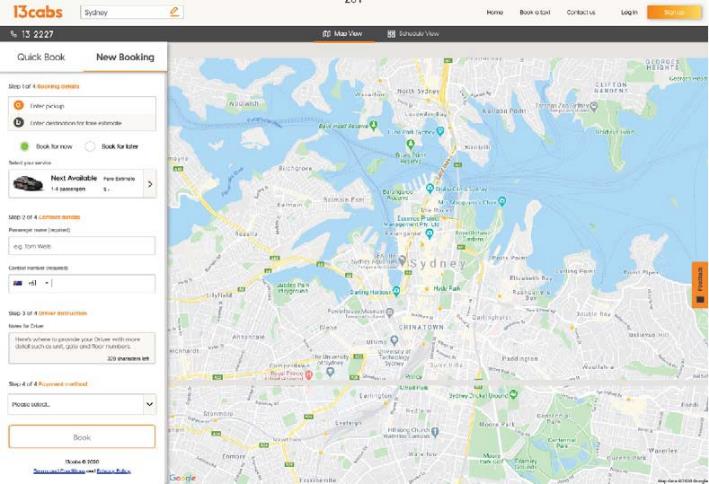
143 Taxiprop cited six cases directed to making good the following propositions: (i) in order to establish use of the mark for the registered services, it is sufficient to show use of the mark within a domain name that resolved or redirected to a website promoting or offering the registered services; and (ii) if the mark is also used on the website itself, this will constitute a separate use of the mark. The cases relied upon are Mantra Group Pty Ltd v Tailly Pty Ltd (No 2) (2010) 183 FCR 450 at 462-463 [50] (Reeves J); Solahart Industries Pty Ltd v Solar Shop Pty Ltd [2011] FCA 700; 281 ALR 544 at 559 [61] (Perram J); Edgetec International Pty Ltd v Zippykerb (NSW) Pty Ltd [2012] FCA 281; 98 IPR 1 at 7-8 [24] (Reeves J); Harcourts WA Pty Ltd v Roy Weston Nominees Pty Ltd (No 4) [2016] FCA 138; 116 IPR 269 at 326 [196] (McKerracher J); Accor Australia & New Zealand Hospitality Pty Ltd v Liv Pty Ltd [2015] FCA 554; 112 IPR 494 at 511-512 [81]-[90] (Rangiah J); and Flexopack SA Plastics Industry v Flexopack Australia Pty Ltd [2016] FCA 235; 118 IPR 239 at 249 [45], 251 [59] (Beach J).
144 Those cases, however, with respect, do not stand for such unqualified propositions. Whether or not use of a mark in a domain name is use as a trade mark within the meaning of the Trade Marks Act will always depend upon the context in which the domain name is used. See Sports Warehouse Inc v Fry Consulting Pty Ltd (2010) 186 FCR 519. In that case, the issue was whether the applicant could rely on its use of the domain name “www.tennis-warehouse.com” in relation to a website from which it offered its goods for sale using the mark “TENNIS WAREHOUSE”. Kenny J held (at 555 [153]):
In this case, the domain name is more than an address for a website, the domain name is also a sign for the applicant’s online [retailing] service available at the website. In the context of online services, the public is likely to understand a domain name consisting of the trade mark (or something very like it) as a sign for the online services identified by the trade mark as available at the webpage to which it carries the internet user.
145 In this case, the public, it seems to me, being “redirected” or “repointed” (the difference is immaterial for present purposes) by the Lime domain name to a 13CABS website, is not likely to understand that the domain name is a sign for online services identified by the trade mark LIME. Taking the process as a whole, where a user has navigated to the Lime domain name and been instantaneously repointed or redirected to the 13CABS website, it seems to me that the conclusion that a reasonable member of the public would draw is that the mark LIME is no longer in use, because, upon arriving at the 13CABS website, it is readily apparent that the Lime domain name is not a sign for online services identified by the LIME mark. On the contrary, those services are identified by the 13CABS mark.
146 For those reasons, I would find that Taxiprop has not discharged the onus it bears under s 100(1)(c) to establish that the repointing or redirection of the Lime domain name to the 13CABS website, before or after October 2018, was use of the mark for the purposes of s 92(4)(b) of the Trade Marks Act.
Remaining issues of control and good faith unnecessary to decide
147 Because I would have decided that Taxiprop’s case that the mark was used during the second non-use period in the Lime domain name or on the seven WATs and the drivers’ uniforms is not established on the facts, it follows that it is unnecessary to deal with Neutron’s contention that neither Austaxi nor Taxiprop exercised control over those uses of the mark, or that they were not uses in good faith.
Conclusion on use
148 Taxiprop has established that it used the mark during the second non-use period in respect, and only in respect, of taxi services. The court is thus empowered to order that the mark be removed from the Register in respect of all the other registered services, subject to s 101(3) of the Trade Marks Act.
Section 101(3) of the Trade Marks Act
Relevant principles
149 Taxiprop seeks to invoke the court’s discretion under s 101(3) of the Trade Marks Act “in relation to those services which are vulnerable for removal” – which, as I said above, is all of the registered services other than taxi services.
150 The principles governing the exercise of that discretion are well established, and they were not in dispute.
151 Section 101, which relates to opposed applications for removal for non-use, relevantly provides:
101 Determination of opposed application—general
(1) …
(2) Subject to subsection (3) and to section 102, if, at the end of the proceedings relating to an opposed application, the court is satisfied that the grounds on which the application was made have been established, the court may order the Registrar to remove the trade mark from the Register in respect of any or all of the goods and/or services to which the application relates.
(3) If satisfied that it is reasonable to do so, the … court may decide that the trade mark should not be removed from the Register even if the grounds on which the application was made have been established.
(4) Without limiting the matters the Registrar may take into account in deciding under subsection (3) not to remove a trade mark from the Register, the Registrar may take into account whether the trade mark has been used by its registered owner in respect of:
(a) similar goods or closely related services; or
(b) similar services or closely related goods;
to those to which the application relates.
…
152 The Full Court in Austin, Nichols & Co Inc v Lodestar Anstalt (2012) 202 FCR 490 at 497 [35] (Jacobson, Yates and Katzmann JJ) held that the discretion under s 101(3) is a broad one, “limited only by the subject-matter, scope and purpose of the legislation and, in particular, by the subject-matter, scope and purpose of Pt 9 of the [Trade Marks] Act”.
153 The Full Court went on to hold (at 498 [38]) that the purpose of Part 9 is:
[T]o provide for the removal of unused trade marks from the Register. In that regard it is plainly designed to protect the integrity of the Register, and in this way, the interests of the consumer. At the same time, however, it seeks to accommodate, where reasonable, the interests of the registered trade mark owners. Otherwise, there would be no need for the discretion.
154 In addition to the public interest, and the private interests of the trade mark owner, it is also permissible to have regard to the private interests of the party seeking the mark’s removal. Ibid at [33]-[35]; Tivo Inc v Vivo International Corporation Pty Ltd [2012] FCA 252 at [467] (Dodds-Streeton J).
155 It was common ground that it is for the registered owner of the mark to satisfy the court that it would be reasonable not to remove the mark, notwithstanding that the power to order removal is enlivened (see, by way of example only, Ritz Hotel Ltd v Charles of the Ritz Ltd (1988) 15 NSWLR 158 at 221 (McLelland J)), and that the discretion is to be assessed at the time the court is called upon to make its decision.
156 The High Court made the following observations about the scope and purpose of the 1955 Trade Marks Act in Campomar Sociedad, Limitada v Nike International Ltd (2000) 202 CLR 45 at 65 [42] (Gleeson CJ, Gaudron, McHugh, Gummow, Kirby, Hayne and Callinan JJ):
[T]he Australian legislation has manifested from time to time a varying accommodation of commercial and the consuming public’s interests. There is the interest of consumers in recognising a trade mark as a badge or origin of goods or services and in avoiding deception or confusion as to that origin. There is the interest of traders, both in protecting their goodwill through the creating of a statutory species of property protected by the action against infringement, and in turning this property to valuable account by licensing or assignment.
157 Those observations apply with equal force to the 1995 Act. See Austin, Nichols & Co Inc v Lodestar Anstalt (2012) 202 FCR 490 at 498 [36]-[37] (Jacobson, Yates and Katzmann JJ).
Parties’ submissions on s 101 discretion
158 Taxiprop says that its interests weigh in favour of no or limited interference with the mark. It advances a number of partially interrelated reasons why the discretion should be exercised in its favour, including by permitting the mark to remain on the register for all registered services, or at least “personal transport services” or “transport services”, notwithstanding that the mark has only ever been used in respect of taxi services.
159 The first reason is what it variously calls “blurring”, “brand extension” or “progressive convergence” of what constitutes “personal transport services” in Australia. In that regard, Taxiprop relies on three cases where the discretion under s 101(3) was exercised to retain the disputed mark in respect of a broader range of services than those for which use had been proved, namely Pioneer Computers Australia Pty Ltd v Pioneer KK (2009) 176 FCR 300 at 338-344 [193]-[223] (Bennett J); Tivo Inc v Vivo International Corporation Pty Ltd [2012] FCA 252 at [493] (Dodds-Streeton J); and Sensis Pty Ltd v Senses Direct Mail and Fulfillment Pty Ltd [2019] FCA 719; 141 IPR 463 at 505 [151] (Davies J).
160 The second reason Taxiprop says that the discretion should be exercised in its favour is that it has a “residual reputation” in the mark from the use of the taxis in Sydney.
161 The third reason Taxiprop gives is that it is not in the public interest to split up the distinctive LIME mark between two or more personal transport service providers, as this, it says, could lead to confusion.
162 The fourth reason concerns Taxiprop’s 2016 “Five-Year Strategy”, a document which, although it never mentioned micro-mobility transport services, as senior counsel put the submission, “make[s] clear that … A2B … had its eye on the ball in terms of what was happening with personalised transport”, and that “there [was] an intention to get into other modes” of transport.
163 I will deal with each of those reasons, and the parties’ respective submissions about them, in turn.
Convergence
164 Neutron did not seek substantially to dispute any of the factual bases or premises of Taxiprop’s case about “convergence” “blurring”, or “brand extension”, which I understand to be synonyms in this context. The gist of the contention is that “[t]he convergence in the personal transport industry (and the emergence of [mobility as a service]) demonstrates the trend towards multiple transport options being provided by the one service provider or via the one app and Taxiprop should not be deprived of the opportunity to engage in this market trend”.
165 The “convergence” evidence relied on is as follows:
(1) 23% of Neutron’s customers had replaced a trip in a taxi or rideshare with an electric scooter;
(2) taxi services are provided by way of a mobile phone app, like the services provided by Uber and other rideshare companies;
(3) consumers would not be surprised if a company like A2B were to expand its offering like Uber has;
(4) rideshare services are substitutable with taxi services;
(5) both Uber and 13CABS allow a consumer to select their preferred vehicle type, and offer package delivery and payment by credit card, all via an app;
(6) Uber and Neutron have entered into a “strategic partnership”, and Neutron intends to offer its electric bicycles and scooters to consumers via the Uber app in Melbourne; and
(7) Uber assigned to Neutron the word mark JUMP in respect of services in class 39 in July 2020, and the court can therefore readily infer that Neutron intends to offer micro-mobility services under that brand, in addition to Lime.
166 Having regard to those facts, counsel’s written closing submissions put the convergence case this way:
Taxiprop submits that the integration or ‘blurring’ between ride share services and e-bikes and e-scooters is only just beginning and it is this kind of convergence of offerings, all under the one brand, that consumers expect on their smartphone apps, both from ride-share companies and taxi companies as competitors in this space.
… consumers would be entitled to think that taxi companies such as A2B might extend their offerings just like UBER into scooters and the like.
Mr Price accepted that this type of convergence is already happening in various sectors. Qantas was an example with which Mr Price was familiar. He gave evidence that he was aware of how Qantas, although an airline provider, also offered to customers the ability to book a hotel, a restaurant, car hire and an Uber and that consumers are used to at least providers of air transport also enabling the purchase of other transport services.
…
Taxiprop also submits that the evidence in this case demonstrates a convergence within at least the personal transport sector, such that the distinction between taxi services on the one hand and e-scooters on the other has been blurred and consumers have and will come to expect providers of personal transport services in the nature of taxi services may also offer personal transport services in the nature of e-scooter and e-bike hire.
This is especially apposite when one has regard to the ‘strategic partnership’ that exists between Neutron and the global ride share company, Uber and the declared intention to offer Neutron’s services via the Uber app, the fact that such convergence has already occurred throughout the US on the Uber app, and that such convergence had already commenced in Australia with Jump micro-mobility services available on the Uber app in March 2020. Furthermore, given the similarity in offerings between the Uber app and the 13cabs app, and the reach of both into the Australian community, consumers would fairly expect 13cabs to similarly provide micro-mobility services in at least the same manner as Uber.
(Footnotes omitted.)
167 Neutron was dismissive of Taxiprop’s convergence case, dubbing it “highly generalised”, designed for the purpose of preserving the registration of the mark for all “transport” (which would more likely include micro-mobility services). Its written closing submissions included the following contentions.
168 First, Neutron stresses that Taxiprop is not currently offering, or even intending to offer, services that are like Neutron’s services. Rather, Taxiprop merely says that because of the alleged convergence in the industry, consumers might think that completely different services were offered by the same person.
169 Secondly, Neutron submits that Taxiprop “does not say that it is actually going to start up a broad ‘converged’ transport business under the LIME brand, so that consumers will be confused between that business and Neutron. Rather, it says that consumers might see Neutron’s business of offering electric bicycles and scooters, and, because of convergence, might think that that business is connected with the business previously offered under the LIME brand”.
170 Neutron submits that there are several difficulties with that argument, including:
First, Taxiprop has not established that its asserted trend of convergence was understood by any significant number of consumers as at 7 November 2018. Much of Taxiprop’s evidence about convergence is based on events after that date.
Secondly, there is not a single contemporaneous document prior to 7 November 2018 suggesting that any officer or employee of … A2B had any such concern about convergence between taxis and electric scooters and bicycles.
Thirdly, even after 7 November 2018, there is no evidence from any officer or employee of … A2B other than Mr Lucchese, expressing any such concern about convergence between taxis and electric scooters and bicycles.
Fourthly, even if consumers did think A2B were engaging in any such trend, Taxiprop has not established that consumers would think A2B would do so under the LIME brand.
Rather, Taxiprop has itself put paid to the notion that a consumer might think A2B was using the LIME brand for a new micromobility service. It has undergone two rebrands in recent years, focused on applying, and then refining, its national 13CABS brand, so that its services (excluding Silver Service) are consistently offered under that 13CABS brand, and only under that brand. As set out in its annual reports, A2B has invested significant resources in, and has conducted significant publicity for, its national 13CABS brand ... It has positively, and publicly, eschewed the branding that its multiple smaller fleets used to carry, including the LIME brand. It completed the rebrand of its Sydney fleet to 13CABS in the financial year to 30 June 2017. When A2B recently launched a parcel delivery service, it called it ‘13things’. There is no reason for a consumer to think that 13cabs would launch a converged transport service under the mark LIME.
(Footnotes omitted.)
Residual reputation in LIME in Sydney
171 The concept of “residual reputation” is referred to in some of the cases. See Mark Davison and Ian Horak, Shanahan’s Australian Law of Trade Marks and Passing Off (Lawbook, 6th ed, 2016) at 584 [7.2505] (Shanahan’s).
172 Although Neutron spent a considerable part of the hearing testing the reliability of Taxiprop’s evidence about the extent to which things like the Lime booking portal had been used to effect completed bookings, how many “unique” visits the Lime website had received, and how many Lime taxi trips occurred during the non-use periods, in the end, having conceded use of the mark for taxi services during the first non-use period, Neutron was content to take Taxiprop’s case in that regard at its highest. That case in support of Taxiprop’s residual reputation as at November 2018 (when Neutron commenced business in Australia), including in Sydney, relied on the following evidence:
(1) LIME branded taxis had been available since around 2006.
(2) LIME branded taxis had performed 221,888 rides during the first non-use period.
(3) There were 76,423 likely completed bookings on the Lime booking portal (not including bookings made before December 2010), of which 25.9% were made by consumers who had visited the Lime website immediately prior to that booking, and the remaining 74.1% were likely to have been made by consumers who had visited the Lime website or placed a booking through the booking portal on at least one other occasion.
(4) There were 75,009 unique visits to the Lime website (not including unique visits prior to July 2012), of which a significant proportion were likely repeat visitors and/or had substantial engagement with the website during a visit.
(5) The 13LIME smart number had been active since around the time that Lime taxis were first on the road, with available call data showing around an average of between 15.7 to 18 calls a day in the period December 2017 to May 2018.
(6) The word Lime also appeared in the merchant narration on invoices and credit card statements for 2.75 million transactions processed through Cabcharge FAREWAYPlus terminals in the period 21 August 2015 to November 2018. Those invoices were said to have looked something like this:
(7) As at November 2018, no entity outside the A2B group had a relevant reputation of its own in Australia.
173 Neutron contended that some of this evidence was not admissible. In the view I take, it is not necessary to determine those objections. I will assume for present purposes that it is admissible.
174 Taxiprop does not contend that use of the 13LIME smart number (or the appearance of the word “lime” on invoices or credit card statements) constituted use of the mark. Rather, it says that the volume of calls to it are probative of: (i) “an enduring reputation” of the mark “in the minds of a not insubstantial number of consumers throughout the period December 2017 to May 2020”; (ii) consumers having seen advertisements for the booking service under the mark on the two Camry taxis from November 2018 onwards or the WAT with taxi plate T2348 during the period December 2017 to October 2018; and (iii) consumers having used A2B taxi services during the period December 2017 to May 2020 “by reason of having either recalled the [mark] from past consumer experiences or having seen the [mark] on taxis and then successfully completed a transport booking with the 13cabs contact centre”.
175 Taxiprop submitted as follows:
To the extent any of the hundreds of thousands of consumers who had engaged with the Lime brand had forgotten about it with the passage of time, they need only have seen another Lime branded taxi, or had a transaction processed in a differently-branded taxi and seen the word LIME on a receipt or in their credit card statement to refresh and consolidate the brand associations previously held.
As a result of the above, Taxiprop submits that as at November 2018, a reputation existed in the Market in the LIME brand in respect of taxi services, at least within Sydney and for travellers to Sydney. In light of that reputation, there is a real and not remote risk that reasonable persons within the Market, when confronted with a LIME branded e-scooter or bicycle, would have in their memory the LIME branding for personal transport by way of taxi services and would be led into error by thinking that the Neutron Goods and Services are part of or affiliated with the Lime Business.
176 Although Neutron sought to show that Taxiprop’s evidence of some of the types of use of the mark (summarised at [172]) was unreliable, in closing submissions it was content to proceed on the basis that, even assuming Taxiprop’s best case on residual reputation to be true, it amounted to very little.
177 In its written closing submissions, Neutron made these points about A2B’s Lime taxi service:
(1) By 7 November 2018, it had been defunct for some time.
(2) Even on Taxiprop’s best case (“despite all the problems in its evidence”) there were no more than seven Lime branded vehicles operating by 16 March 2017 and no more than one by 15 June 2017.
(3) Even at its peak, the Lime fleet was very small, varying between 22 and 42 vehicles, and limited to van-sized wheelchair accessible taxis operating only in Sydney.
(4) By comparison, as at 30 June 2018 there were 9,471 vehicles in A2B’s taxi network.
178 Neutron made the following submissions about the Lime website and the Lime online booking portal:
(1) By 7 November 2018, none of the Lime website, the Lime online booking portal or the www.limetaxisbooking.com.au domain name had operated for almost two years, having been switched off in December 2016.
(2) Even on Taxiprop’s best case (“and despite all the problems in its evidence”), up to December 2016 the Lime website had about 30 unique visits per day, and the Lime booking service had about 34 bookings per day.
(3) As such, each day there was roughly one online visit and booking for each of the 22 to 42 taxis operating in that period.
(4) It follows that this evidence does not add much to the operation of the taxis themselves in terms of boosting consumers’ recollection of the Lime brand.
The public interest
179 Taxiprop’s submission on the relevance of the public interest was as follows:
If the Court declines to exercise its discretion under s 101(3) and the Taxiprop Mark is partially removed from the Register for services other than ‘taxi services’, a practical consequence of this will be that, at least in relation to the personal land transport sector, the distinctive mark LIME will be split up at least between two service providers, but potentially between many more.
That is, it is conceivable that a ‘carving out’ would also allow third parties to use the LIME trade mark for other forms of transport or travel arrangements, such as rideshare or car-share. If Neutron were also permitted to register and use the Neutron Application for the Neutron Services, this would result in ‘fragmented ownership’ of the LIME mark for micro-mobility and potentially other competing and substitutable forms of personal transport (such as rideshare or car-share) that ‘would, or at least could’ lead to confusion. This is precisely the situation that the Courts have cautioned against. On this basis alone, Taxiprop submits that it is sufficient to reject the partial removal to ‘taxi services’ sought by Neutron.
Partial removal of the Taxiprop Mark to ‘taxi services’ would also allow Neutron to exploit future use of the Taxiprop Mark for motor vehicle transport options. It has offered such services overseas in the past and it must be taken from the services claimed for in the Neutron Application that it intends to do so in Australia. This would also lead to consumer confusion.
In an environment where transport services are being progressively aggregated and increasingly available through common channels, it is not (and certainly will not be) unnatural for consumers of transport services to see a LIME branded taxi on the road and see a LIME branded scooter or bicycle on a street corner, and have cause to wonder whether those services originate from the same provider or might otherwise be related. The same observations apply to use of LIME on or within a smartphone app.
It is therefore in the public interest to maintain registration of the Taxiprop Mark … on the Register in respect of all of the Registered services. Conversely, the public interest will not be adversely affected if this were to occur.
180 Neutron submitted that I should have regard to a much different public interest, including the obvious strong public interest in unused trade marks not remaining on the Register, citing Laboratoire de la Mer Trade Marks [2002] FSR 51 at 796 [19(a)] (Jacob J) (“[t]here is an obvious strong public interest in unused trade marks not being retained on the registers of national trade mark offices. They simply clog up the register and constitute a pointless hazard or obstacle for later traders who are trying actually to trade with the same or similar marks. They are abandoned vessels in the shipping lanes of trade”).
181 Neutron submitted that the mark “[has been] registered for 15 years and never used at all, by anyone, in relation to services other than taxis. That is five times the statutory period for removal. The public interest weighs very heavily against the exercise of any discretion to leave [the mark] on the Register in relation to services other than taxis”. It cited Conquip Holdings Pty Ltd v S & A Restaurant Corp [2000] FCA 256 at [90] (Heerey J), where the 18-year period in which the unused marks had remained on the register was “a powerful factor against the exercise of any discretion” in favour of the registered owner, because “[s]uch a long period of non-use is destructive of the purpose of trade mark registration”.
A2B’s 2016 five-year strategy
182 I was taken by senior counsel for Taxiprop in closing submissions in detail to a document entitled “Cabcharge Australia 5-Year Strategy”. The first page of that document is headed “Networks and payments sectors provide robust demand outlook, but new competitors and current positioning create challenges”. Under the subheading “Sector trends – Taxi networks”, the document notes that “[c]ompetitive dynamics are rapidly evolving, driven by new market entrants and business models; specifically, rideshare operators …” It is then noted that “[r]ideshare in particular, is expected to rapidly expand” and that there will be “[c]ontinued proliferation of smartphone technology” and a “shift to app-based bookings”. The document also records that “[b]eyond a 5 year horizon, the introduction of fully electric and driverless vehicles will result in additional investment pressure on taxi operators to renew the vehicle fleet”.
183 The next part of the document is headed “As part of the 5-year strategy, Cabcharge has defined its purpose, values and vision, as well as a Strategic Program to implement”. The “Purpose, Values and Vision” include “becom[ing] Australia’s leading personal transport business”. The document goes on to explain that “[p]ersonalised transport will remain the core of the business, but will be complemented by growth in new segments and offerings, such as rideshare and segment-specific transport services. In doing so, Cabcharge will shape, facilitate and benefit from the transition to an increasingly mobile society”.
184 The document also contains a part entitled “Cabcharge’s 5-year vision is to become the first choice for customers, drivers and employees”. That part goes on to say as follows:
Personalised transport is the core of our business. We will win market share from private cars, ride share, other taxi businesses, car share, and rental car competitors and convert pedestrian traffic into new customers.
We will pursue opportunities to expand and grow our business into new segments and offerings, such as rideshare and segment-specific transport services.
In doing so, we will shape, facilitate and benefit from the transition to an increasingly mobile society.
(Emphasis in original.)
185 Later in the document, it is anticipated that Cabcharge will “[d]evelop additional business cases and pursue growth opportunities where a clear commercial case exists”. “Initial sectors to be investigated” are listed as private hire, fleet operations, parcel delivery, car sharing and rental cars.
186 The document also contains so-called “initiative budgets” which, it is sufficient for present purposes to note, anticipate expenditure of significant sums of money on new business models.
How should the s 101 discretion be exercised?
187 I am unpersuaded that any part of the mark other than taxi services should remain.
188 First, and most obviously, the mark has only ever been used in respect of taxi services since it was applied for in 2005.
189 I accept Neutron’s submission that Taxiprop’s case about “convergence” is “highly generalised”. It may readily be accepted that there is some relevant convergence between the provision of taxi services on the one hand and the provision of rideshare services on the other. They may in many situations be substitutable services. But even assuming that the aspirational language in the five-year strategy document may be construed as the expression of an intention on A2B’s part to enter the rideshare market, there is not the faintest suggestion in the evidence of any intention to enter the market for micro-mobility services. The argument that in those circumstances the mark should remain registered in respect of “transport” or “personal transport”, if I may say so with respect, seems contrived. The evidence adduced in support of “convergence” bears no resemblance to the extensive evidence led about it by the registered trade mark owner in Pioneer Computers Australia Pty Ltd v Pioneer KK (2009) 176 FCR 300. There the word was appropriately used to describe evidence about the disappearance or diminishment of the distinction between consumer electronic (including audio-visual) products and computer-related products. Bennett J in that case exercised the s 101(3) discretion not to remove certain goods from Pioneer KK’s trade mark registrations because there was sufficient convergence between consumer electronic products and computer products such that, even though Pioneer KK had not demonstrated use of the marks on all the registered goods, the public would still associate those goods with Pioneer KK if they were sold under the name “Pioneer”. In my view, Taxiprop’s reliance on the case is misplaced.
190 The other two authorities relied upon by Taxiprop in relation to its convergence submission, Tivo Inc v Vivo International Corporation Pty Ltd [2012] FCA 252 and Sensis Pty Ltd v Senses Direct Mail and Fulfillment Pty Ltd [2019] FCA 719; 141 IPR 463, also involve facts and discretionary considerations far removed from those relevant in the instant case.
191 Secondly, and relatedly, the chance that any consumer, even in Sydney, let alone anywhere else in the country, “would have in their memory the LIME branding for personal transport by way of taxi services”, and would be led into error by thinking that the Lime bicycles, scooters and app are part of, or affiliated with, an A2B Lime taxi business, seems to me a remote one.
192 Putting Taxiprop’s case at its highest, by 2008 there were only around 50 Lime taxis in operation in Sydney. However many of those 50 taxis remained on the road in June 2017, almost all of them were rebranded with the 13CABS livery over three years ago. And as for the two Lime branded Camrys, which came into operation in November 2018, only one remains on the road today. The other was taken out of service in March 2020. In those circumstances, as Neutron put it, Taxiprop’s case at its highest does not prove anything other than “negligible residual reputation”. For that reason, I am not inclined to give it much, if any, weight.
193 Thirdly, returning to Taxiprop’s reliance on A2B’s 2016 five-year strategy, I accept that it may be relevant in the exercise of the discretion under s 101(3) that a party in Taxiprop’s position intends to use a mark with respect to particular services (here, what Taxiprop chooses to call “personal transport”). See, eg, Sensis Pty Ltd v Senses Direct Mail and Fulfillment Pty Ltd [2019] FCA 719; 141 IPR 463 at 502 [137] (Davies J). But in this case there is no evidence that A2B has any intention of entering the market for electric bicycle or scooter services, let alone under the Lime brand. The notorious fact that the market for the provision of transport services has been disrupted in recent years with the arrival of rideshare services, like Uber, and that those services compete with taxi services, falls a long way short of anything significant that might weigh in Taxiprop’s favour in this case.
194 Fourthly, I accept Neutron’s submission that, because the mark has now been registered for 15 years and never used at all, by anyone, in relation to services other than taxi services, the public interest weighs very heavily against the exercise of any discretion to leave it on the Register in relation to such services. As the High Court put it in Health World Ltd v Shin-Sun Australia Pty Ltd (2010) 240 CLR 590 at 597 [22] (French CJ, Gummow, Heydon and Bell JJ):
[T]he legislative scheme [of the Trade Marks Act] reveals a concern with the condition of the Register of Trade Marks. It is a concern that it have ‘integrity’ and that it be ‘pure’. It is a ‘public mischief’ if the Register is not pure, for there is ‘public interest in [its] purity’. The concern and the public interest, viewed from the angle of consumers, is to ensure that the Register is maintained as an accurate record of marks which perform their statutory function – to indicate the trade origins of the goods to which it is intended that they be applied.
(Citations omitted, emphasis added.)
195 Having determined that the mark should be removed from the Register for non-use in respect of all services other than taxi services, it is unnecessary to consider Neutron’s alternative contentions that the mark was abandoned or that its registration should be cancelled under s 88 of the Trade Marks Act.
Expert evidence
196 I should next say something about the expert evidence of Dr Brent Coker that was adduced by Neutron, before turning to Taxiprop’s infringement allegations in respect of which Neutron led that evidence.
197 Dr Coker is a lecturer of marketing at the University of Melbourne. He is also the founder and managing director of a company that develops web apps. He was asked to consider whether Australian consumers are likely to view the services provided by Neutron and Taxiprop as commercially related or independent of each other.
198 In summary, his evidence was:
My analysis indicates that there are a number of differences between the services provided by Neutron and Taxiprop which would inform the way consumers viewed those services, and whether they would perceive a relationship between them given they are (or were) both offered under the name ‘Lime’. In particular, it is apparent to me that Taxiprop and Lime’s services […]:
(a) [are] primarily used by consumers for different purposes (taxis tend to be used mainly for functional purposes while a major use of micromobility services is for recreational purposes);
(b) have different target markets (taxis tend to skew to an older generation, and Lime taxis in particular were targeted at less mobile and disabled users, while micromobility services are targeted at younger, more tech-savvy and active users);
(c) have different methods of access and delivery (taxi services are modelled around the call and dispatch method of access and delivery, while micromobility services are solely accessed, used and paid for via apps. While some taxi services now have apps, the Lime taxi service does not appear to have had an app during the period it operated);
(d) have different locations and reach (taxi services traditionally operate in a single territorial area while micromobility services such as Neutron’s operate globally);
(e) have different [business] strategies (taxi services are traditionally conservative and reactive, while micromobility services are proactive, innovative and technology-based); and
(f) differ in the way they approach marketing and advertising and as a consequence in their brand perceptions and associations (taxi service advertisements convey messages related to the functionality of their service, while micromobility service advertisements are aspirational and relate to the hedonic and recreational purposes for their use).
In considering the way consumers will understand the use of the name ‘Lime’ by both Taxiprop and Neutron, I have also taken into account that Lime taxis operated only in Sydney and during the period of operation comprised a very small percentage of taxis on the road (less than 1%). Lime taxis have also not been available for at least 4 years (and possibly much longer). Both the number of taxis and the time that has passed are likely to have a negative impact on consumer recollection of Lime taxis.
In my expert opinion, each of the differences between Taxiprop and Neutron described in this affidavit is likely to impact on the way consumers differentiate between the products and services offered by those companies and the way consumers perceive the experience of using those products and services. In my view, consumers will see them as different products and services and as originating from different sources. Due to the many material differences in the nature of the services provided from a consumer perspective:
(a) it is unlikely that a consumer (if they remembered the Lime taxi brand at all), would associate the Lime eScooters and eBikes with Lime taxis; and
(b) it is very likely that consumers who are aware of both Lime taxis and Lime eScooters / eBikes would think that they are independent of each other.
199 Dr Coker was cross-examined, and Taxiprop dedicated over 20 pages of its 263-page written closing submissions to a series of criticisms of his evidence, seeking to make good the proposition that it should be given no weight. Taxiprop’s criticisms of Dr Coker’s evidence included, by way of example only, that:
(1) his evidence comprised a survey of one person’s personal, rather than expert, view based on his idiosyncratic experiences that are not referable to the average consumer;
(2) his evidence included a series of statements regarding consumer psychology or memory that “brooked no compromise, were tailored to emphasising the fallibility of brand memory and were not supported by the scientific references he gave”;
(3) he has no education, training or specialised experience in the transport industry, but instead in social media and online brand building, which he described as “digital marketing”;
(4) his “propositions were generally directed to explaining how fallible human memory [is] at extremes, rather than providing a balanced dissertation on human memory”;
(5) he tried “to put a scientific spin on the rather simple concept that memory fades over time … [b]ut his attempt to do so was flawed and certainly does not provide a scientific (as opposed to a layperson’s) basis for the opinion that memories may fade over 4 to 5 (or more) years”; and
(6) the primary basis for his opinion “lies in the assumption that consumers use Lime e-scooters for recreation and use taxi services for functional transportation … As it turns out, his analysis involves confirmation bias – looking for information that suits his conclusion – rather than critically assessing that information”.
200 There is much to be said for some of Taxiprop’s criticisms of Dr Coker’s evidence. At a certain level of generality, his evidence about the differences between the two types of services was unassailable. The notion, by way of example, that Taxiprop’s and Neutron’s services have different methods of access and delivery, or that they have different locations or reach, are obvious enough. But the difficulty with much of his evidence, about which Taxiprop justifiably complains, is that Dr Coker sought to justify his views with reference to literature and studies about “cognitive processing” and “consolidation” and the like, most of which, if I may say so with respect, seemed to stray far from the essential question he was asked (“whether Australian consumers are likely to view the services provided by Neutron and Taxiprop under the trade mark LIME as commercially related or independent of each other”).
201 In his first affidavit, Dr Coker said that he had “drawn upon a number of external reference sources which [he] consider[ed] appropriate to explain and support [his] opinions”, and that such sources included those “with which [he was] familiar from [his] academic work and [his] research”. The sources and the propositions they were said to support included the following:
(1) studies by Joseph W Alba & Amitava Chattopadhyay (1986) for the propositions that “[t]ime decay also affects brand recall. In general, the recollection of brands is fragile. In some studies, participants failed to recall brands even within an hour of being exposed to the brand”;
(2) studies by Leib Litman & Lila Davachi (2008) for the proposition that “[f]or information to be stored in a consumer’s long-term memory, and therefore for it to be remembered and retrievable in the future, there needs to be some kind of cognitive processing or consolidation”;
(3) a book by DO Hebb, entitled The Organization of Behavior: A Neuropsychological Theory (John Wiley & Sons, 1949), for the proposition that “the process of consolidation could take up to 30 minutes”;
(4) studies by Bennet B Murdock Jr (1962) for the proposition that “a person must expend some effort thinking about or pondering on the brand. For this to occur, it is insufficient for a consumer to be merely exposed to the brand, because the transfer of short-term memory to long-term memory relies on more than simple exposure. Many scientific studies have shown that humans tend to forget what they have seen, even within minutes … suggesting that most information does not get stored in long-term memory”; and
(5) studies by John R Anderson and Gordon H Bower (1972) for the proposition that “even if a consumer recorded the Lime branded taxi in his or her long-term memory 4 to 5 (or more) years ago, in my opinion, such memories are liable to have faded. This process, known as ‘interference’ … involves memories being distorted or replaced over time, which leads to individuals forgetting”.
202 Counsel for Taxiprop made a number of telling submissions about Dr Coker’s evidence in that regard, principally directed to showing that those sources did not make good the propositions for which they had been cited, and that, in any event, Dr Coker’s field of expertise did not extend so far.
203 I do not propose to have regard to any of Dr Coker’s evidence about brand recall, consumers’ long-term memory, cognitive processing, consolidation, interference or the like. I am not satisfied that Dr Coker was suitably qualified to give such evidence in this case, and, as counsel demonstrated in cross-examination, his sources were of problematic relevance. But, in any event, the evidence is of no utility because, so it seems to me, it strays far from the court’s relevant enquiry.
204 In the end, I am therefore unpersuaded that the evidence given by Dr Coker is of much, if any, assistance in determining whether Australian consumers are likely to view the services provided by Neutron and Taxiprop as commercially related or independent of each other. That is a question for the court. As the Full Court said in the context of a claim under s 52 of the Trade Practices Act 1974 (Cth), in Domain Names Australia Pty Ltd v .au Domain Administration Ltd (2004) 139 FCR 215 at 221 [20]-[22] (Wilcox, Heerey and RD Nicholson JJ):
Opinion evidence sought to be adduced as to the likely characteristics or reactions of recipients might be met by the observation of Dixon CJ, Kitto and Taylor JJ in Transport Publishing Co Pty Ltd v The Literature Board of Review (1956) 99 CLR 111 at 119 that
... ordinary human nature, that of people at large, is not a subject of proof by evidence, whether supposedly expert or not.
Certainly market research evidence has not been received with enthusiasm in this Court in recent years in cases like the present one. In Cat Media Pty Ltd v Opti-Healthcare Pty Ltd [2003] ASAL 55-103 at [55] Branson J said:
... It seems to me that evidence of opinions based on market research and expert appreciation of consumer behaviour will rarely be of assistance in litigation where the Court’s primary concern is with the behaviour to be expected of, and the judgments likely to be made by, ordinary (even if it might be thought, somewhat credulous) members of the community intent on making a relatively modest purchase in a conventional way. I endorse the comment of Beaumont J in Pacific Publications Pty Ltd v IPC Media Pty Ltd [2003] FCA 104 [(2003) 57 IPR 28] at [92] that where a claim is essentially a matter for the Court’s impression, expert views which are merely ‘impressionistic’ can be given no more than nominal weight ...
Consideration of these difficulties shows the practical wisdom of the firm rule that the likelihood of conduct being misleading or deceptive is a question for the tribunal of fact and not for any witness to decide: General Electric Co (USA) v General Electric Co Ltd [1972] 1 WLR 729 at 738 per Lord Diplock, applied in a s 52 context by Gummow J, with whom Black CJ and Lockhart J agreed, in Interlego AG v Croner Trader Pty Ltd (1992) 39 FCR 348 at 387.
205 In any event, by the time they came to their final written submissions, counsel for Neutron did not place much reliance on Dr Coker’s more controversial evidence, and instead limited it to the evidence he gave about matters which counsel conceded were simply matters of common sense, namely that taxi services on the one hand and electric bicycle and scooter services on the other hand:
• are primarily used by consumers for different purposes;
• are used to travel different distances;
• can carry different numbers of people;
• have different target markets;
• have different methods of access and delivery;
• have different payment systems;
• differ in cost;
• differ in whether they allow reservations;
• differ in how they use apps;
• have different locations and reach;
• have different businesses strategies; and
• differ in how they approach marketing and advertising and as a consequence in their brand perceptions and associations.
Trade mark infringement
206 Taxiprop claims infringement under each of ss 120(1) and 120(2) of the Trade Marks Act, which provide:
120 When is a registered trade mark infringed?
(1) A person infringes a registered trade mark if the person uses as a trade mark a sign that is substantially identical with, or deceptively similar to, the trade mark in relation to goods or services in respect of which the trade mark is registered.
…
(2) A person infringes a registered trade mark if the person uses as a trade mark a sign that is substantially identical with, or deceptively similar to, the trade mark in relation to:
(a) goods of the same description as that of goods (registered goods) in respect of which the trade mark is registered; or
(b) services that are closely related to registered goods; or
(c) services of the same description as that of services (registered services) in respect of which the trade mark is registered; or
(d) goods that are closely related to registered services.
However, the person is not taken to have infringed the trade mark if the person establishes that using the sign as the person did is not likely to deceive or cause confusion.
…
207 Having accepted Neutron’s contention that the mark ought to be removed for all services other than taxi services, it is necessary to determine whether the services provided by Neutron are “of the same description” as taxi services, and whether Neutron’s goods are “closely related” to the registered services.
208 As will be apparent already, since 9 November 2018, Neutron has used the signs LIME, LIME-S, LIME-E and LIMEBIKE in Australia as trade marks in relation to micro-mobility services, being its network of electric bicycles and scooters. And since the same date it has also used those signs in relation to goods, namely the Lime smartphone app and electric bicycles and scooters.
209 Neutron does not dispute that the signs LIME, LIME-S and LIME-E are deceptively similar to the Taxiprop mark, but it says that LIMEBIKE is not.
210 In summary, Neutron contends that:
(1) its services are not the same as taxi services for the purposes of s 120(1);
(2) its services are not “of the same description” as taxi services for the purposes of s 120(2); and
(3) its goods are not “closely related” to taxi services for the purposes of s 120(2).
211 Neutron also relies on the defence in the final phrase of s 120(2), viz that it has not infringed the Taxiprop mark because using its signs as it did was not likely to deceive or cause confusion.
212 Neutron also says that it is entitled to defences under s 122(1)(f) and/or (fa) of the Trade Marks Act, on the basis that the first respondent would obtain registration of the trade mark LIME in its own name if it were to apply for it in respect of micro-mobility sharing services (being its network of electric bicycles and electric scooters) and goods (being the Lime app and electric bicycles and scooters) by operation of s 44(3)(a) and/or (b) of the Act. Neutron also says that the second respondent’s use of the mark LIME is and has been at all times controlled and thus authorised by the first respondent, such that its use of that trade mark is taken (under s 7(3) of the Trade Marks Act) to be use of that trade mark by the first respondent, which is covered by the defences under s 122(1)(f) and/or (fa).
213 Neutron also says that it ought to be entitled to the defence under s 122(1)(e) of the Trade Marks Act.
214 Neutron says that it would, or will, obtain registration of its own LIME mark, because the goods and services it provides are sufficiently different from taxi services that the marks could co-exist on the Register.
215 Alternatively, it says that it has honestly used its LIME mark concurrently with the registration of the Taxiprop mark, so that it would, or will, be granted registration under s 44(3)(a) and/or (b).
The LIMEBIKE sign
216 I should deal first with LIMEBIKE. Neutron contends that LIMEBIKE is neither substantially identical nor deceptively similar to the Taxiprop mark, “particularly when assessed in a context where the [Taxiprop] Mark is limited to taxi services. The suffix -BIKE sends a clear message that those services are not related to any LIME taxi services”. It says therefore that it is not to be taken to have infringed the Taxiprop mark by using the LIMEBIKE sign because such use is not likely to cause confusion.
217 There was no dispute that the test about whether use is likely to cause confusion is derived from this passage of the judgment of Kitto J in Southern Cross Refrigerating Co v Toowoomba Foundry Pty Ltd (1954) 91 CLR 592 at 595:
While a mere possibility of confusion is not enough – for there must be a real, tangible danger of its occurring – it is sufficient if the result of the user of the mark will be that a number of persons will be caused to wonder whether it might not be the case that the two products come from the same source. It is enough if the ordinary person entertains a reasonable doubt.
(Citations omitted, emphasis added.)
218 Taxiprop submits that the primary visual and aural cue in, and the essence of, the Taxiprop mark is the word LIME, and that that is equally true of each of Neutron’s LIME signs, including LIMEBIKE, because LIME is the key, distinctive and first (or only) word in each sign.
219 It says that the word BIKE in LIMEBIKE “is a mere descriptive element”, because that word is descriptive of the uses in respect of which Neutron puts the sign (dockless and electric bicycles) and that “[c]onsumers would reasonably understand that use of the sign LIMEBIKE for a product offering was a brand extension referring to different models offered under the common house brand LIME, which on its own functioned as the badge of origin for each of the products”.
220 As for taxi services specifically, Taxiprop submits that LIMEBIKE is deceptively similar to the Taxiprop mark because:
Even when considering ‘taxi services’ alone … a reasonable manner in which such services could be provided is by a smartphone app, such that a reasonable consumer would at least be caused to wonder whether a LIME taxi service offered through a transport booking app is operated by the same company or related to a LIME bicycle or scooter service offered through a transport booking app.
Neutron says that in comparing LIMEBIKE with LIME one looks to whether the word bike is descriptive of taxi services. Taxiprop is not aware of any authority which holds for the proposition. The proper analysis is to consider whether the word is descriptive in respect of the services in respect of which the term is actually used – here the LIMEBIKE mark is only applied to the respondents’ e-bicycles (and not its e-scooters). That is how consumers will see the usage of LIMEBIKE and come to consider whether it is deceptively similar to the Taxiprop Mark.
(Citations omitted, emphasis added.)
221 It seems to me that, having conceded that each of the other Neutron signs is deceptively similar to the Taxiprop mark, there is little substantive difference between those signs and the LIMEBIKE sign, and that in each instance, “a number of persons will be caused to wonder whether it might not be the case that the two products come from the same source”. It follows in my view that LIMEBIKE is deceptively similar to the Taxiprop mark.
Are electric bicycle and scooter services of the same description as taxi services?
222 It was common ground that the question of whether services are “of the same description” involves considering the nature of the services, their respective uses, and the trade channels through which they are bought and sold. Southern Cross Refrigerating Co v Toowoomba Foundry Pty Ltd (1954) 91 CLR 592 at 606 (Dixon CJ, McTiernan, Webb, Fullagar and Taylor JJ). Services are to be considered not relevantly similar to each other if their sale under the same mark by different companies is not likely to lead to confusion or deception. The question is whether consumers might see the services as having the same trade origin. See, eg, Canon Kabushiki Kaisha v Brook (1996) 69 FCR 401 at 410 (Tamberlin J); E & J Gallo Winery v Lion Nathan Australia Pty Ltd (2009) 175 FCR 386 at 408 [73] (Moore, Edmonds and Gilmour JJ) (this aspect of the Full Court’s decision was not disturbed on appeal – see E & J Gallo Winery v Lion Nathan Australia Pty Ltd (2010) 241 CLR 144 at 170-171 [71]-[72] (French CJ, Gummow, Crennan and Bell JJ)).
223 In my view, and as Neutron submitted, the sale of micro-mobility services and taxi services under the same mark by different companies is not likely to lead to confusion or deception. Consumers would not see those services as having the same trade origin.
224 First, and most obviously, the nature of the services is different. Neutron’s services do not involve transportation by cars or vans with drivers, which is surely the essence of a taxi service. Instead, Neutron’s services provide electric bicycles and scooters, not cars or vans, for users to share and ride – or “operate” – by themselves.
225 Secondly, the target market for the taxi services, on the one hand, and the bicycle and scooter services, on the other, is very different. Taking obvious, non-exhaustive examples, taxis can be used by the aged, the visually impaired, people in wheelchairs or with limited mobility or agility, and by carers with children. None of those categories of consumer is likely to use Neutron’s services for the purpose of getting from A to B.
226 Thirdly, as counsel for Neutron put it in their written closing submissions:
Another inherent and central characteristic of taxi services is their booking and dispatch system. In contrast, Neutron does not dispatch its e-scooters or e-bikes to pick up passengers (or food or packages). Neutron’s services are self-operated and instantaneous. Unlike taxis, consumers of Neutron’s services do not need to decide on (or communicate) any pickup or drop-off location. Rather, they use the Neutron app to locate a device, walk to where it is, scan the barcode of the device on the app, accept the terms and conditions, put on a helmet, and then operate the device themselves to get to their destination. When they finish their ride, they must lock the device, remove their helmet, and take a photo. That is a fundamentally different process from the process of booking and using a taxi.
(Citations omitted.)
227 Fourthly, taxi services can be accessed in a number of different ways, including the taxi network’s call centres or websites, by waving down a passing taxi, from taxi ranks or through dedicated taxi apps. Neutron’s services, on the other hand, are offered only to users through its app.
228 Fifthly, as Neutron submitted:
Taxi services can be used for longer journeys, whereas Neutron’s services are appropriate for shorter trips, such as the beginning and end of a journey on public transport. While e-scooters are technically capable of being driven longer distances, the average trip length is less than 2 km. In 2014, the average distance travelled by taxis in Australia as measured by the Australian Taxi Industry Association was 8.9 km (i.e. more than 4 times longer).
(Citations omitted.)
229 In short, the nature of the services, their respective uses, and the trade channels through which they are bought and sold, so it seems to me, are different, and vastly so; and I do not accept that a consumer would possibly wonder whether the two services had the same trade origin.
Are Neutron’s goods closely related to taxi services?
230 Taxiprop contends that “if … the Neutron Services are of the same description as taxi services which may be provided by way of a smartphone app, then the Neutron Lime App would logically be closely related to taxi services”. For the reasons given above, I do not accept the premise of that contention – in my view, taxi hire, and electric bicycle and scooter hire, are not services “of the same description”. It follows that an app for the provision of electric bicyle and scooter hire is not “closely related” to “taxi services” within the meaning of s 120(2)(d) of the Trade Marks Act.
Proviso in s 120(2)
231 Neutron relies alternatively on the final phrase or proviso of s 120(2) of the Trade Marks Act, viz that even if a person uses as a trade mark a sign that is substantially identical or deceptively similar to a registered trade mark in relation to the goods or services listed in s 120(2)(a)-(d), “the person is not taken to have infringed the trade mark if the person establishes that using the sign as the person did is not likely to deceive or cause confusion”.
232 It is not necessary to address the proviso because, in my view, for the reasons given above, Taxiprop has not established infringement under either s 120(1) or (2).
Defences under s 122(1)(e), (f) and/or (fa)
233 Neutron also contends in the alternative that it would be entitled to the defences under s 122(1)(e), (f) and/or (fa) of the Trade Marks Act (see [212] above). It is not necessary to consider that alternative case.
Misleading or deceptive conduct and passing off
234 As for Taxiprop’s misleading or deceptive conduct and passing off claims, Neutron submits that they cannot succeed, because there is no sufficient residual reputation in the Lime taxi business.
235 It submits that, in any event, there is no real risk that any consumer across Australia would think that the global Lime electric bicycle and scooter hiring service is commercially related to the Lime taxi business conducted in Sydney.
236 It follows from my findings at [191]-[192] and [223]-[229] above that I agree that Taxiprop has not established its claims for misleading conduct or passing off.
Objections to evidence
237 Numerous objections to evidence remained at the conclusion of the trial, all of which were dealt with in written submissions. In the view I have taken of the case, it was not necessary to have regard to the majority of the evidence the subject of those objections. Where it was necessary to presume that it was admissible for some purpose, I have said so.
One last matter
238 In their written closing submissions, counsel for Taxiprop submitted:
[E]ven if Neutron is successful in having the Taxiprop Mark removed entirely, the Taxiprop Mark is infringed up to the date the order is made [citing Shanahan’s at [85.2815]]. While such an outcome would mean no injunction would flow for infringement of the trade mark, that would still leave the question of declaratory relief and of injunctive [relief] for contravention of the ACL and passing off.
239 Similarly, in Taxiprop’s closing address, senior counsel for Taxiprop submitted:
[O]ur friend said there was no infringement if your Honour finds that the mark should be limited to taxi services and if your Honour finds that … the taxi services are not of the same description. We just wanted to point out … that even if your Honour does accede to … both of those propositions … there has been infringement, of course, up until the date that your Honour makes an order for removing part of the services other than taxi services, and your Honour, our friends have just simply not dealt with the fact that there has been infringement up until that date.
240 Counsel for Neutron made no submissions on this point, including about the question whether infringing conduct could still be found to have occurred before actual removal of the trade mark, and damages ordered.
241 I propose to give Taxiprop an opportunity, if it wishes, to make submissions about an infringement case of the (admittedly limited) type anticipated by counsel at [238] and [239] of these reasons.
Disposition
242 I accordingly propose to adjourn the proceeding to a date convenient to the parties for a further hearing on the form of orders consequent upon these reasons.
I certify that the preceding two hundred and forty-two (242) numbered paragraphs are a true copy of the Reasons for Judgment of the Honourable Justice O’Callaghan. |
Associate:
NSD 2420 of 2018 | |
LIME NETWORK PTY LTD ACN 628 322 930 |
ANNEXURE A
Extracts from Taxiprop’s summary of the evidence concerning the WATs
Date | Description | Reference | ||
T1895 | ||||
14 April 2011 to 5 October 2013 | Plate T1895 fitted to Ford Flash Cab operating as part of the Taxis Combined fleet | Annexure YEC-1 lines 1235-1356 CB2368-70 Stevis [31] CB1098 | ||
20 January 2014 | Plate T1895 moved to Kia Carnival operating as part of the Silver Service fleet | Annexure YEC-1 lines 1360-1377 CB2370-1 Stevis [31] CB1098 | ||
30 May to 2 June 2014 | Tess Rittenhouse emails Impression Markings requesting quote for application of full set of Lime livery to Kia Grand Carnival with car number T1895 | Annexure AL-40 at pp 291 CB1574 | ||
5 June 2014 | Kia Carnival T1895 booked in for application of Lime livery | Annexure AL-40 at pp 291 CB1574 | ||
6 June 2014 | Kia Carnival with plate T1895 moved to Lime fleet with comment added “Fleet Change S/S to LIME 06/06/14 REF: 11949” (S/S meaning Silver Service) | Annexure YEC-1 lines 1396-1402 CB2371-2 Stevis [32] CB1098 | ||
11 June 2014 | Impression Markings issues invoice number 00039571 for application of full set of Lime markings to T1895 | Annexure AL-40 at pp 292-3 CB1575 | ||
5 May 2015 | Tess Rittenhouse emails Impression Markings requesting quote for supply and application of Lime livery for repairs to bonnet and front doors | Annexure AL-40 at pp 284-8 CB1567-71 | ||
7 May 2015 | Impression Markings issues invoice number 00043705 for application of front bonnet and door Lime markings to T1895 and invoice number 00043706 for application of the passenger front door 13LIME decal to T1895 | Annexure AL-40 at pp 294-7 CB1577-80 | ||
5 August 2015 | August 2013 model Lime Kia Carnival listed as part of Lime fleet with notation “Fleet change S/S to LIME 06/06/2014” | Annexure AL-38 1st line CB1523 | ||
21 August 2015 to 15 June 2017 | Continuously providing transport services, (except for brief suspensions for missing inspections overnight on 26-27 May 2016 and 3-6 February 2017: see annexure YEC-1 at lines 1444-1447 & 1453-1456 CB2373). No record of vehicle being rebranded, moving fleets or leaving the network during this time (or between 6 June 2014 and 15 June 2017). | Confidential annexure VK-3 at p 2011 CB6273 Confidential annexure VK-1 lines 1- 7290 CB4274-4334 Annexure YEC-1 lines 1403-1457 CB2372-3 Stevis [33]-[34] CB1098 | ||
15 June 2017 | Michael Quinn records that a silver Kia with taxi plate T1895 was rebranded 13cabs between 9am and 10.30am The trip data for this taxi plate confirms that the vehicle was not taking any rides during the time the vehicle was recorded as being rebranded at Taxitech. | Annexure MBQ2 at CB1270 Confidential annexure VK-1 at CB4334 (lines 7285-6) | ||
T2348 | ||||
26 August 2014 | Tess Rittenhouse emails operator to confirm booking for application of Lime livery to new vehicle with taxi plate T2348 on 7 October 2014 | Annexure AL40 at p. 303 CB1586 | ||
1 October 2014 | Booking for application of Lime livery changed to 2 October 2014 | Annexure AL40 at p. 305 CB1588 | ||
2 October 2014 | Impression Markings issues invoice number 00041111 for application of full set of Lime markings to vehicle T2348 listed as Toyota Hiace | Annexure AL-40 at pp 306-7 CB1589-90 | ||
3 October 2014 | TelOp records taxi plate leased onto 11 seater Toyota Hiace Commuter bus and vehicle added to Lime fleet | Stevis [45] CB1099 Annexure YEC-1 lines 1893-1908 CB2385 lines 1917-1922 CB2386 | ||
5 August 2015 | July 2013 model Lime Toyota Hiace Bus with registration number T2348 listed as part of Lime fleet | Annexure AL-38 5th line CB1523 | ||
21 August 2015 to 9 October 2018 | Continuously providing transport services. No record of vehicle being rebranded, moving fleets or leaving the network during this time (or between 3 October 2014 and 9 October 2018). | Confidential annexure VK-3 at p 2011 CB6273 Confidential annexure VK-1 lines 23694-34104 CB4471-4558 Annexure YEC-1 lines 1909-1965 CB2386-7 Stevis [45] CB1099 | ||
9 October 2018 | TelOp records plate moving to Toyota Hiace van (not bus) | Annexure YEC-1 lines 1966-9 CB2387 Stevis [45] CB1099 | ||
14 June 2019 | New non-Lime Toyota Hiace rebranded with new orange style 13cabs livery | Annexure YEC-1 line 1979 CB2387 Stevis [46] CB1099 | ||
T3731 | ||||
26 March 2015 | Emails between Tess Rittenhouse and Impression Markings regarding quotation for supply and application of full set of Lime livery for Toyota Tarago with registration T3731 for appointment booked on 1 April 2015. | Annexure AL-40 at pp 340-3 CB1623-6 | ||
1 April 2015 | Impression Markings issues invoice number 00043315 for application of full set of Lime vehicle markings to T3731 | Annexure AL-40 at pp 344-5 CB1627-8 | ||
7 April 2015 | Taxi plate T3731 moves from a 2005 Toyota Tarago long wheelbase model in the Yellow Cabs fleet to a 2013 Toyota Tarago long wheelbase model in the Lime fleet. Comments recorded in TelOp “NEW CAR APRIL 2015” and “Fully installed by Dada 07/04/15” | Annexure YEC-1 lines 3258-3291 CB2414-5 Stevis [50] Tab 20 CB1100 | ||
5 August 2015 | January 2013 model Toyota Tarago with registration number T3731 listed as part of Lime fleet | Annexure AL-38 8th line CB1523 | ||
21 August 2015 to 5 April 2017 | Continuously providing transport services, other than temporary suspensions on 27 October 2016, 8-9 February 2017, 2-7 March 2017 and 28-30 March 2017 For each of these periods there is a notation in the Change History Log “Suspended until contacts CCN Management” (Annexure YEC-1: lines 3328-3335 CB2416-7). No record of vehicle being rebranded, moving fleets or leaving the network during this time (or between 7 April 2015 and 5 April 2017). | Confidential annexure VK-3 at p 2011 CB6273 Confidential annexure VK-1 lines 48818-54622 CB4680-4729 Annexure YEC-1 lines 3258-3335 CB2414-7 | ||
5 April 2017 | Michael Quinn records that a silver Toyota Tarago with taxi plate T3731 was rebranded 13cabs between 8am and 10.30am. The trip data for this taxi plate confirms that between 8:24am and 9:58am on 5 April 2017 the vehicle was around O'Connor Lane, Beaconsfield, which is around 100m from Taxitech at 9-13 O’Riordan Street, Alexandria: | Annexure MBQ2 at CB1270 Confidential annexure VK-1 at CB4729 (lines 54619-20) | ||
T5294 | ||||
16 December 2010 | Taxi plate T5294 assigned to 2006 Mercedes Vito in the Lime fleet | Annexure YEC-1 at lines 6161, 6357, 6362, 6359-60 (“Lime Account” in “Conditions” field), 6394-6 CB2483, 2486-7 Stevis [86] CB1104 | ||
26 February 2011 | 2006 Mercedes Vito vehicle with registration number T5294 owned by Austaxi | Annexure AL-16 at CB791 | ||
18 May 2011 | Emails between Tess Rittenhouse and Impression Markings regarding quotation for replacement Lime decals for a Lime taxi with registration T5294. | Annexure AL-40 at p 445 CB1728 | ||
8 September 2011 onwards | Taxi plate owned by Austaxi | Annexure AL-44 at p. 11 CB2035 | ||
15 May 2013 to 14 June 2013 | Lease of plate T5294 to Mercedes Vito ended, equipment removed from vehicle and vehicle taken off the road. | Annexure YEC-1 lines 6382-6399 CB2487 Stevis [84] CB1104 | ||
11 November 2013 | T5294 leased onto 2013 model Kia Carnival in the Silver Service fleet | Annexure YEC-1 lines 6403-6421 CB2488 Stevis [85] CB1104 | ||
14 May 2014 | Emails between Tess Rittenhouse and Impression Markings regarding quotation for supply and application of full set of Lime livery for Kia Carnival with registration T5294 booked for 20 May 2014. | Annexure AL-40 at p 444 CB1727 | ||
21-29 May 2014 | Kia Carnival with plate T5294 switched to Lime fleet. Comment added “New Lease, Fleet Change & Client D Change” | Annexure YEC-1 lines 6430-6439 CB2488-9 Stevis [86] CB1104 | ||
11 June 2014 | Impression Markings issues invoice number 00039302 dated 22 May 2014 for application of full set of Lime markings and removal of Silver Service markings for vehicle T5294. | Annexure AL-40 at pp 446-7 CB1729-30 | ||
5 August 2015 | June 2013 model Kia Carnival with registration number T5294 listed as part of Lime fleet | Annexure AL-38 15th line CB1523 | ||
21 August 2015 to 4 June 2017 | Continuously providing transport services. No record of vehicle being rebranded, moving fleets or leaving the network during this time (or between 20 June 2013 and 4 June 2017) | Confidential annexure VK-3 at p 2011 CB6273 Confidential annexure VK-1 lines 91136-98940 CB5033-5098 Annexure YEC-1 lines 6440-6458 CB2489 Stevis [88] CB1104 | ||
4 June 2017 | Michael Quinn records that a silver Kia with taxi plate T5294 was rebranded 13cabs between 11am and 12pm. The trip data for this taxi plate confirms that the vehicle was not taking any rides during the time the vehicle was recorded as being rebranded at Taxitech. | Annexure MBQ2 at CB1268 Confidential annexure VK-1 at CB5098 (lines 98939-40) | ||
T5328 | ||||
9-10 March 2015 | Emails between Tess Rittenhouse, Impression Markings and Stratacom regarding quotation for supply and application of complete set of Lime livery for Toyota Tarago LWB with registration T5328 with booking made for 12 March 2015. | Annexure AL-40 at pp 487-91 CB1770-4 | ||
12 March 2015 | Appointment for application of full set of Lime livery to Toyota Tarago LWB by Impression Markings. | As above. | ||
12 March 2015 | Email from Tess Rittenhouse to Michael Quinn with attached “Vehicle conditions / attributes form” with details of Toyota Tarago LWB with registration T5328. Several “fleet” boxes are ticked, with the “Lime” circled as well. | Annexure AL-40 at pp 492-3 CB1775-6 | ||
11-13 March 2015 | T5328 leased onto new Novmber 2012 Toyota Tarago recorded in the Lime fleet. Old vehicle was June 2006 Toyota Tarago in Taxis Combined Fleet. Records shows deinstallation of equipment from old car and installation into new car. Comment added “Replace vehicle and Fleet (TCS to LIME). NEW CAR MARCH 2015”. | Annexure YEC-1 lines 7327-7371 CB2508-9 Stevis [96] Tab 20 CB1105 | ||
16 March 2015 | Impression Markings issues invoice number 00043053 for application of complete set of Lime markings for vehicle T5328. | Annexure AL-40 at pp 494-5 CB1777-8 | ||
20 May 2015 | Emails between Tess Rittenhouse and Impression Markings regarding appointment for Lime taxi with registration T5328 on 21 May 2015. | Annexure AL-40 at p 496 CB1779 | ||
21 May 2015 | Impression Markings issues invoice number 00043909 for application of passenger side a Lime markings for vehicle T5328. | Annexure AL-40 at p 497-8 CB1780-1 | ||
5 August 2015 | November 2012 model Toyota Tarago with registration number T5328 listed as part of Lime fleet | Annexure AL-38 19th line CB1523 | ||
21 August 2015 to 21 March 2017 | Continuously providing transport services. No record of vehicle being rebranded, moving fleets or leaving the network during this time (or between 13 March 2015 and 17 June 2017) | Confidential annexure VK-3 at p 2011 CB6273; Confidential annexure VK-1 lines 108319-113131 CB5176-5216; Annexure YEC-1 lines 7372-7379 CB2509-10 | ||
21 March 2017 | Michael Quinn records that a silver Toyota Tarago with taxi plate T5328 was rebranded 13cabs between 8am and 9am. The trip data for this taxi plate confirms that the vehicle was not taking any rides during the time the vehicle was recorded as being rebranded at Taxitech. | Annexure MBQ2 at CB1258 Confidential annexure VK-1 at CB5216 (lines 113126-7) | ||
17 June 2017 | Michael Quinn records further notation of 13cabs livery being applied to silver Toyota Tarago with taxi plate T5328 between 8am and 9am Quinn gave evidence that an explanation of a record for the second application of 13cabs livery to the same vehicle is that the vehicle was involved in an accident and needed to have livery reapplied. | Annexure MBQ2 at CB1258 Quinn at T157.24-35 | ||
T5503 | ||||
28-31 March 2014 | Emails between Tess Rittenhouse and Impression Markings regarding quotation for supply and application of full set of Lime livery for Kia Grand Carnival with registration T5503 for appointment on 7 or 8 April 2014. | Annexure AL-40 at pp 332-4 CB1615-7 | ||
7 or 8 April 2014 | Appointment for application of full set of Lime livery by Impression Markings. | See above. | ||
16 April 2014 | T5503 leased onto November 2013 model Kia Carnival recorded in the Lime fleet. | Annexure YEC-1 lines 9718-9740 CB2563-4 Stevis [121] CB1108 | ||
5 August 2015 | November 2013 model Kia Carnival with registration number T5503 listed as part of Lime fleet | Annexure AL-38 25th line CB1523 | ||
21 August 2015 to 21 March 2017 | Continuously providing transport services. No record of vehicle being rebranded, moving fleets or leaving the network during this time (or between 16 April 2014 and 21 March 2017). | Confidential annexure VK-3 at p 2011 CB6273 Confidential annexure VK-1 lines 146627-152911 CB5495-5548 Annexure YEC-1 lines 9741-9781 CB2564-2566 Stevis [123] C1108 | ||
21 March 2017 | Michael Quinn records that a silver Kia with taxi plate T5503 was rebranded 13cabs between 8am and 9.30am. The trip data for this taxi plate confirms that the vehicle was not taking any rides during the time the vehicle was recorded as being rebranded at Taxitech. | Annexure MBQ2 at CB1258 Confidential annexure VK-1 at CB5548 (lines 152905-6) | ||
T5644 | ||||
10 December 2010 | Taxi plate T5644 assigned to a 2006 model Toyota Tarago in the Lime fleet. | Annexure YEC-1 at lines 11297, 11340, 11392, 11393 (“Lime” in “Conditions”), 11494, 11497-9, 11512 CB2601-2, 2604 Stevis [137] CB1109 | ||
31 August 2011 - 9 May 2017 | Taxi plate owned by Austaxi | Annexure AL-44 at p. 18 CB2042 | ||
4 October 2011 | “Primary Fleet” and “Fleets” changed from “Lime” to “Taxis Combined” | Annexure YEC-1 lines 11502-3 CB2604 Stevis [138] CB1110 | ||
18 January 2012 | “Lime” added to “Fleets” | Annexure YEC-1 line 11515 CB2604 | ||
10 December 2013 | “Primary Fleet” changed back from “Taxis Combined” to “Lime” | Annexure YEC-1 lines 11549 CB2605; Stevis [138] CB1110 | ||
3 December 2014 | Emails between Tess Rittenhouse and Impression Markings regarding quotation and booking for full set of Lime livery for vehicle T5644 on 9 December 2014. | Annexure AL-40 at p 598 CB1881 | ||
10 December 2014 | Impression Markings issues invoice number 00042012 for supply and application of full set of Lime markings and numbers to vehicle T5644. | Annexure AL-40 at pp 599-601 CB1882-4 | ||
5 August 2015 | June 2006 model Toyota Tarago with registration number T5644 listed as part of Lime fleet | Annexure AL-38 30th line CB1523 | ||
21 August 2015 to 8 April 2017 | Continuously providing transport services. No record of vehicle being rebranded, moving fleets or leaving the network during this time (or between 10 December 2013 and 21 April 2017, except for brief deactivation between 25-28 March 2017). | Confidential annexure VK-3 at p 2012 CB6274 Confidential annexure VK-1 lines 169903-178244 CB5689-5759 Annexure YEC-1 lines 11552-11626 CB2605-7 Stevis [139] CB1110 | ||
14 June 2016 | Emails between Tess Rittenhouse, Impression Markings and operator regarding quotation and booking for passenger side Lime decals for Toyota Tarago LWB with registration T5644. | Annexure AL-40 at pp 603-7 CB1886-90 | ||
5 July 2016 | Impression Markings issues invoice number 00048833 dated 16 June 2016 for supply and application of passenger side Lime markings to vehicle T5644. | Annexure AL-40 at pp 608-9 CB1891-2 | ||
8 April 2017 | Last trip recorded before 21 April 2017. | Confidential annexure VK-3 at p 2012 CB6274 Confidential annexure VK-1 line 178244 CB5759 | ||
21 April 2017 | Lease ended, vehicle disconnected from network and equipment removed from vehicle. | Annexure YEC-1 lines 11627-11637 CB2607-8 Stevis [139] CB1110 | ||


