

Federal Court of Australia
ViiV Healthcare Company v Gilead Sciences Pty Limited (No 2) [2020] FCA 1455
ORDERS
DATE OF ORDER: |
THE COURT ORDERS THAT:
1. The applicants’ interlocutory application seeking to strike out the respondent’s amended particulars of invalidity be adjourned sine die.
2. Within 7 days of the date hereof, the parties submit minutes of proposed orders to give effect to these reasons concerning the respondent’s interlocutory application seeking discovery.
3. The parties’ costs of both interlocutory applications be their costs in the cause.
4. Liberty to apply.
Note: Entry of orders is dealt with in Rule 39.32 of the Federal Court Rules 2011.
BEACH J:
1 The patent in suit, which is Australian patent no. 2006239177, concerns polycyclic carbamoylpyridone derivatives having HIV integrase inhibitory activity. The invention relates to compounds possessing such an antiviral activity and compositions containing such an anti-HIV agent.
2 As I explained in my earlier judgment (ViiV Healthcare Company v Gilead Sciences Pty Limited (2020) 152 IPR 31; [2020] FCA 594), HIV is a retrovirus which causes AIDS. It is an RNA virus, rather than a DNA virus. HIV produces, inter-alia, an enzyme being a retroviral integrase. The function of the integrase is to insert the viral genome of HIV into the chromosomal DNA of a host human cell through the formation of covalent bonds. Let me explain the process.
3 Once the viral RNA has entered the human cell and after the RNA has been liberated from the viral capsid that has entered the cell through endocytosis, the single-stranded viral RNA is reverse transcribed into double-stranded viral DNA. The double-stranded viral DNA is then transported to and enters the cell’s nucleus. Such viral DNA is then integrated into the cell’s chromosomal DNA with that process facilitated by the retroviral integrase. The functionality of the retroviral integrase is to catalyse two reactions. First, two or three nucleotides are removed from the 3’ ends of the viral DNA. Second, the processed 3’ ends are then covalently ligated to the cell’s chromosomal DNA.
4 The compounds and compositions of the patent are designed to inhibit such integrase activity so achieving the desired antiviral activity. In short, the integration is stymied. The zombie macro-molecule is not activated.
5 The applicants (collectively, ViiV) have brought an infringement suit against the respondent (Gilead) concerning Gilead’s product marketed as Biktarvy. The marketing and sale of Biktarvy, a pharmaceutical composition containing as one of its active ingredients bictegravir as a sodium salt, is said to infringe claims 1 to 10, 28, 29, 43, 44 and 47 of the patent.
6 The patent is some 277 pages in length with some further inserted pages (pp 2a to 2h). There are 53 claims, but for present purposes I need only set out extracts from claims 1, 5 and 6.
7 The first part of claim 1 is in the following terms:
1. A compound of the formula:
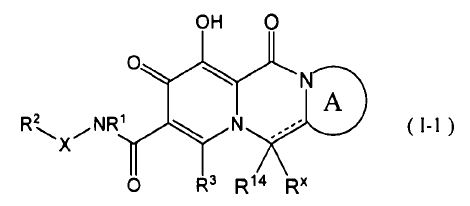
wherein,
A ring is optionally substituted heterocycle;
R14 and RX are independently hydrogen, optionally substituted C1-C10 alkyl, optionally substituted C3-C8 cycloalkyl, optionally substituted C3-C8 cycloalkyl C1-C10 alkyl, optionally substituted C2-C8 alkenyl, optionally substituted C1-C10 alkoxy, optionally substituted C2-C8 alkenyloxy, optionally substituted aryl, optionally substituted aryl C1-C10 alkyl…
…
a broken line represents the presence or absence of a bond, provided that when the broken line represents the presence of a bond, RX is not present;
R1 is hydrogen or C1-C10 alkyl;
X is a single bond, a heteroatom group selected from O, S, SO, SO2 and NH, or C1-C6 alkylene or C2-C6 alkenylene each may be intervened by the heteroatom group;
R2 is optionally substituted aryl;
R3 is hydrogen, halogen, hydroxy, optionally substituted C1-C10 alkyl, optionally substituted C3-C8 cycloalkyl, optionally substituted C2-C8 alkenyl, optionally substituted C1-C10 alkoxy, optionally substituted C2-C8 alkenyloxy, optionally substituted aryl, optionally substituted aryloxy, optionally substituted heterocyclic group, optionally substituted heterocycleoxy or optionally substituted amino);
or a pharmaceutically acceptable salt, or solvate thereof;
and wherein:
(a) a group which is optionally substituted, other than optionally substituted amino, optionally substituted carbamoyl or optionally substituted phosphoric acid, is a group which is unsubstituted or substituted at any position by 1 to 4 substituents B, which are the same or different, B being selected from hydroxy, carboxy, halogen, halo C1-C10 alkyl, halo C1-C10 alkoxy, C1-C10 alkyl, C2-C8 alkenyl, ethynyl, C3-C8 cycloalkyl, cycloalkenyl, C1-C10 alkoxy C2-C8 alkenyloxy, C1-C10 alkoxycarbonyl, nitro, nitroso, optionally substituted amino, acylamino, aralkylamino, hydroxyamino, azido, aryl, aralkyl, cyano, isocyano, isocyanate, thiocyanate, isothiocyanate, mercapt, alkylthio, alkylsulfonyl, optionally substituted alkylsulfonylamino, optionally substituted carbamoyl, sulfamoyl, acyl, formyloxy, haloformyl, oxal, thioformyl, thiocarboxy, dithiocarboxy, thiocarbamoyl, sulfino, sulfo, sulfoamino, hydrazino, azido, ureido, amizino, quanidino, phthalimide, oxo, phosphoric acid residue, C1-C10 alkyl which is substituted with a phosphoric acid residue and may be intervened with a heteroatom group(s), aryl substituted with a phosphoric acid residue, aralkyl substituted with a phosphoric acid residue, hydroxyl C1-C10 alkyl, carboxy, halogen, halo C1-C10 alkyl, halo C1-C10 alkoxy, C1-C10 alkyl, C1-C10 alkoxy, optionally substituted amino, oxo and phosphoric acid residue;
… [I do not need to set out (b) and (c)]
8 Claim 5 is in the following terms:
5. A compound according to Claim 1, pharmaceutically acceptable salt, or solvate thereof, wherein A ring is an optionally substituted and optionally condensed 5- to 7- membered heterocycle containing 1 to 2 hetero atom(s).
9 Further, claim 6, in part, is in the following terms:
6. A compound of the formula:
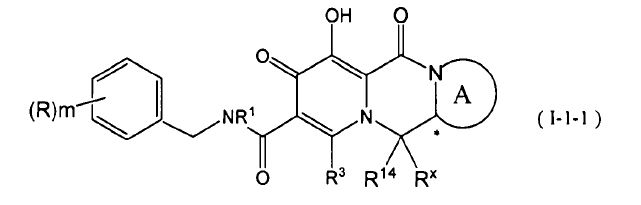
wherein,
A ring is an optionally substituted and optionally condensed 5- to 7- membered heterocycle containing 1 to 2 hetero atom(s);
… [No further details need be set out by me]
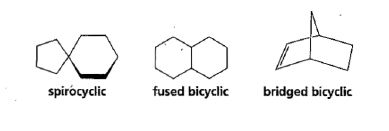
10 Now before proceeding further, I should repeat what I said in my earlier judgment about rings given that an integer of claim 1 is expressed as an “A ring [which] is [an] optionally substituted heterocycle” and an integer of claim 6 is an “A ring [which] is an optionally substituted and optionally condensed 5- to 7- membered heterocycle containing 1 to 2 hetero atom(s)”. There are a number of propositions concerning general structural features of heterocycles that are not presently contentious. First, a heterocycle is a cyclic structure (ring) that includes one or more non-carbon atoms, also known as heteroatoms. Heterocycles can be of any ring size, and can vary as to the number, type and position of heteroatoms. Second, rings can be joined together to form bicyclic or polycyclic ring structures. Relevantly to the present context, there are three realistic ways in which rings can be joined. The structures are spiro, fused, and bridged. In the spiro structure two rings share a single atom. In the fused structure, two rings share two adjacent atoms. In the bridged structure, two rings share two non-adjacent atoms. These can be shown as follows:
11 Now ViiV says that Gilead has infringed each of claims 1, 2, 3, 4, 5, 6, 7, 8, 9, 10, 28, 29, 43, 44 and 47 of the patent by its dealings in the pharmaceutical composition known as Biktarvy. Biktarvy is a pharmaceutical composition indicated for the treatment or prophylaxis of an HIV infection in humans being a fixed-dose combination containing the following active ingredients:
(a) bictegravir as a sodium salt, an integrase strand transfer inhibitor having a molecular formula of C21H17F3N3NaO5 and the following structural formula:
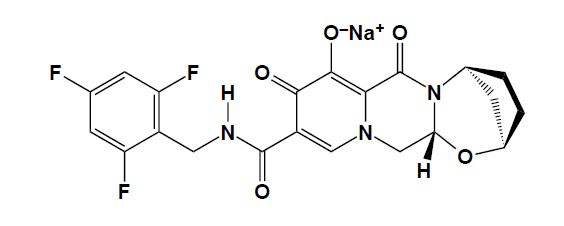
(b) emtricitabine, a nucleoside reverse transcriptase inhibitor; and
(c) tenofovir alafenamide as fumarate, a reverse transcriptase inhibitor.
12 Gilead denies infringement. And importantly for present purposes, it has cross-claimed for revocation of the asserted claims on the ground that, inter-alia, the invention as claimed is not useful.
13 Gilead’s amended particulars of invalidity filed on 3 July 2020 allege this lack of utility in the following fashion (at [2] and [3]):
2. The alleged invention as claimed in claims 1 to 10 (inclusive), 28, 29, 43, 44 and 47 of the Patent is not a patentable invention, in that it is not useful within the meaning of section 18(1)(c) of the Act, because compounds of the invention cannot be made.
Particulars
a. The object or promise of the alleged invention is set out at pages 1 and 2 of the specification as follows:
“The present invention relates to novel compounds possessing an antiviral activity, in detail polycyclic carbamoylpyridone derivatives possessing an inhibitory activity against HIV integrase and a pharmaceutical composition containing the same, especially as an anti-HIV agent.
….
The present inventors have intensively studied to find that a novel polycyclic carbamoylpyridone derivative possesses [sic] a potent HIV integrase inhibitory activity.
….
Moreover, the present inventors have discovered that a compound of the present invention and a pharmaceutical composition containing the same are useful as an antiviral agent, an antiretroviral agent, an anti-HIV agent, an anti-HTLV- 1 (Human T cell leukemia virus type 1) agent, an anti-FIV (Feline immunodeficiency virus) agent or an anti-SIV (Simian immunodeficiency virus) agent, especially an anti-HIV agent or anti-AIDS agent, to accomplish the present invention shown below.”
b. The specification does not teach the skilled addressee how to make compounds of the invention which include, for example, an oxazine A ring as falls within claims 1, 5 and 6 of the Patent, and claims dependent on them, with:
i. two bulky substituents at the carbon next to the nitrogen;
ii. two bulky substituents at the carbon next to the oxygen (2 position of the A ring); and
iii. bulky substituents cis to each other at the 2, 3 and 4 position carbons of the A ring,
and the skilled addressee could not do so without undue experimentation, if at all.
c. The skilled addressee could not, without undue experimentation, if at all, make compounds of the invention which include, for example, an oxazine A ring as falls within claims 1, 5 and 6 of the Patent, and claims dependent on them, with:
i. a fully substituted carbon with anything larger than a methyl and isopropyl next to the nitrogen;
ii. a compound with the 2, 3 and 4 position carbon of the A ring substituted with a methyl;
iii. a compound with the 2, 3, and 4 position carbon of the A ring di-substituted with an methyl,
because the skilled addressee could not produce the amino acid alcohol intermediates required for that synthesis or perform the necessary cyclisation reactions required to produce those compounds of the invention.
d. The Cross-Claimant reserves the right to provide further particulars.
3. The alleged invention as claimed in claims 1 to 10 (inclusive), 28, 29, 43, 44 and 47 of the Patent is not a patentable invention within the meaning of section 18(1)(c) of the Act, in that it is not useful, because compounds of the invention are not sufficiently active or effective to meet the promise of the Patent.
Particulars
a. The Cross-Claimant refers to and repeats the object or promise of the alleged invention set out in the particulars at paragraph 2(a) above.
b. Claims 1, 5 and 6 of the Patent, and claims dependent on them, encompass compounds, or compositions or uses of compounds, including (but not limited to) the following compounds, that do not meet that stated object or promise, and in particular do not possesses potent HIV integrase inhibitory activity.
i. The following compounds within claims 1 and 5 of the Patent, and claims dependent on them, where R1 is one of C1 to C10 alkyl:
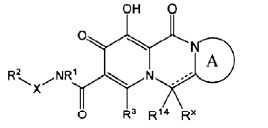
and in which the C1 to C10 alkyl disrupts the intramolecular hydrogen bonding with the pyridone core carbonyl.
ii. The following compounds within claim 6 of the Patent, and claims dependent on it, where R1 is one of C1 to C10 alkyl:
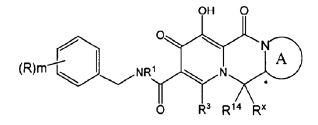
and in which the C1 to C10 alkyl disrupts the intramolecular hydrogen bonding with the pyridone core carbonyl.
iii. The compound identified in Confidential Annexure A.
iv. Each of the following compounds:
(A)
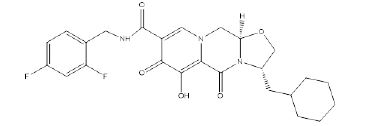
(B)
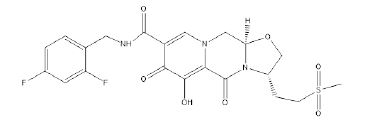
(C)
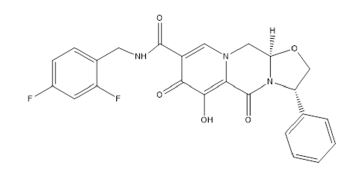
(D)
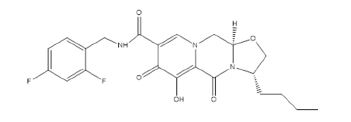
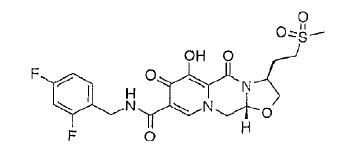
c. Claims 1, 5 and 6 of the Patent, and claims dependent on them, encompass compounds, or compositions or uses of compounds, including (but not limited to) the following compounds, which do not meet that stated object or promise, and in particular are not useful as an antiviral agent, an antiretroviral agent, an anti-HIV agent, an anti-HTLV- 1 (Human T cell leukemia virus type 1) agent, an anti-FIV (Feline immunodeficiency virus) agent or an anti-SIV (Simian immunodeficiency virus) agent, especially an anti-HIV agent or anti-AIDS agent.
i. The following compound, which is identified as compound Z-27 in the Patent:
ii. The compounds enumerated in paragraphs 3(b)(i) – 3(b)(iv) above.
d. It is not possible to identify which, if any, of the many millions of compounds of the invention meet the stated object or promise of the invention without undue experimentation.
e. The Cross-Claimant reserves the right to provide further particulars.
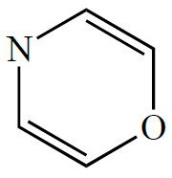
14 The amended particulars at [2(b)] refer to “compounds of the invention which include, for example, an oxazine A ring as falls within claims 1, 5 and 6 of the Patent”. An oxazine is a 6 membered ring containing a carbon and a nitrogen atom, with two double bonds. For example, a 1,4 oxazine (in this case the 4H) can be represented as follows:
15 I should also make two other points here. First, it is not necessary for understanding the dispute between the parties to set out Confidential Annexure A referred to in [(3(b)(iii)] of the amended particulars. Second, the amended particulars also assert a lack of fair basis and a lack of clarity, but it is not necessary to deal with these matters at this point.
16 More generally in relation to the patent, I should also note that there are related proceedings in the United States and Canada. In the United States proceeding, ViiV and a related entity allege that Gilead Sciences, Inc has infringed US patent no. 8,129,385. In the Canadian proceeding, ViiV and a related entity allege that Gilead Sciences Canada, Inc. has infringed Canadian patent no. 2,606,282. Now the patent in suit before me, US patent no. 8,129,385 and Canadian patent no. 2,606,282 are related, and each claim priority from Japanese patents no. JP2005-131161 and no. JP2005-312076.
17 Let me now turn to the current dispute and the two interlocutory applications before me.
18 By its application, Gilead seeks discovery of documents in six categories relevant to its allegation that the invention claimed in the asserted claims is not useful, in that compounds of the invention either cannot be made or are not sufficiently active or effective to meet the promise of the patent. I have already set out relevant extracts from Gilead’s amended particulars which are said to make relevant the documents sought. ViiV opposes that application.
19 By its application, ViiV seeks orders striking out certain parts of [2] and [3] of the amended particulars. This application may be seen as having been provoked by Gilead’s application for discovery. It is appropriate to deal with the strike out application first.
(a) The plea of lack of utility
20 As I have said, ViiV has moved to strike out portions of the amended particulars of invalidity concerning the alleged inutility. ViiV says that there has been non-compliance with r 34.46 of the Federal Court Rules 2011 (Cth) which relevantly provides:
(1) A party who disputes the validity of a patent under the Patents Act must include in the pleading or other document in which the party disputes the validity, particulars of the grounds of invalidity on which the party relies.
…
(3) If a ground mentioned in subrule (1) is that the invention, to the extent that is alleged in the complete specification of the patent, is not useful, and it is intended for that ground to rely on the fact that an example of the invention that is the subject of the claim cannot be made to work at all or as described in the specification, the particulars must:
(a) identify each claim; and
(b) state that fact; and
(c) include particulars of each such example, specifying the respect in which it is alleged that it does not work at all or as described.
(4) A party is not entitled to tender any evidence in, or make any submissions in support of, a ground for revocation or rectification not stated in the application.
21 Let me set out some of the background.
22 On 8 May 2020, Gilead filed its cross-claim together with particulars of invalidity.
23 On 18 May 2020, ViiV took issue with what was asserted to be a lack of specificity concerning the plea of lack of utility.
24 On 29 May 2020, by letter from Gilead’s solicitors to ViiV’s solicitors, Gilead provided further information, including identifying what it stated were “non-limiting examples”, and asserted that r 34.46(3)(c) was inapposite to the present case. Further, Gilead provided the following explanation of what was meant by the phrase “bulky substituents”:
… “bulky substituents” include any substituents that are sufficiently large in terms of size, complexity and/or steric bulk that the energy required to synthesise particular A rings containing such substituents, or the intermediates necessary to synthesize the A rings, would be prohibitively high. In respect of each of sub-paragraphs … [2(b)(i) and (iii)], non-limiting examples of bulky substituents include t-butyl or larger groups and in respect of sub-paragraph … [2(b)(iii)], non-limiting examples of bulky substituents include t-pentyl groups or larger. Further, smaller groups may constitute bulky substituents in the context of particular A rings. In this regard, a further non-limiting example within subparagraph … [2(b)(iii)] is a compound with 2,3,4-hexaethyl substitutions in the A ring.
25 On 5 June 2020, ViiV stated that it would proceed on the basis that the only examples of inutile compounds were those compounds specifically identified in the particulars, and that it would resist evidence or submissions going beyond those specific compounds.
26 On 22 June 2020, Gilead stated that it intended to seek leave to amend its particulars of invalidity so as to include particulars of specific inutile compounds.
27 On 26 June 2020, I granted Gilead leave to file and serve its amended particulars of invalidity, relevant extracts of which I have set out.
28 On 3 July 2020, Gilead filed its amended particulars.
29 The amended particulars at [2] assert that the invention as claimed in the impugned claims is not a patentable invention, in that it is not useful within the meaning of s 18(1)(c) of the Patents Act 1990 (Cth), because compounds of the invention cannot be made: [2(a)] sets out the object or promise of the invention; [2(b) and (c)] then provide non-limiting examples of compounds that cannot be made; [2(d)] states that Gilead may provide further particulars.
30 The amended particulars at [3] assert that the invention as claimed in the impugned claims is not useful, because compounds of the invention are not sufficiently active or effective to meet the promise of the patent. In [3(a)] Gilead sets out what it contends is “[t]he object or promise of the alleged invention”. For present purposes, although it is a triable issue, I will proceed on the assumption that that is the relevant object or promise. In [3(b) and (c)] examples are provided of such compounds. In [3(d)] it is then stated:
It is not possible to identify which, if any, of the many millions of compounds of the invention meet the stated object or promise of the invention without undue experimentation.
31 Consistently with [2(d)] of the amended particulars, [3(e)] states that Gilead may provide further particulars.
32 ViiV contends that there are five classes of defects in [2] and [3] of the amended particulars.
33 First, ViiV complains about the use of exemplars or inclusive words in [2(b) and (c)] and [3(c)] to identify the compounds that are allegedly unable to be made.
34 Second, ViiV complains that there is the identification of compounds that are allegedly unable to be made by reference to imprecise concepts. So, there are imprecise references to compounds that contain “bulky substituents” or “a fully substituted carbon with anything larger than a methyl and isopropyl next to the nitrogen”.
35 Third, ViiV complains about the identification of compounds that allegedly do not meet the stated object or promise of the invention by reference to compounds in claims 1, 5 and 6 in which R1 is one of C1 to C10 alkyl “and in which the C1 to C10 alkyl disrupts the intramolecular hydrogen bonding with the pyridone core carbonyl”.
36 Fourth, ViiV complains that there is an impermissible reservation of the right to provide further particulars in combination with the open-ended nature of the relevant particulars.
37 Fifth, ViiV complains that there is an unjustifiable assertion by Gilead that “[i]t is not possible to identify which, if any, of the many millions of compounds of the invention meet the stated object or promise of the invention without undue experimentation”.
38 Let me elaborate on ViiV’s arguments.
Open-ended definitions
39 ViiV points out that the use of the language “compounds … which include, for example” and “compounds including (but not limited to) the following compounds” expressly indicates that the class of supposedly inutile compounds is left at large. ViiV says that this is contrary to the terms of r 34.46(3). Moreover, it is not conducive to the confined or orderly adducing of evidence, but allows Gilead to introduce at any point a new compound that is said to make a claim of the patent invalid due to inutility. Further, the lack of certainty is liable to lead to ambush at trial because any compound could be nominated as proving inutility and justified on the basis that it falls within the generality of the pleading. Further, such language has led to attempts by Gilead to seek broad discovery on a fishing basis to determine whether there are documents to support its inutility case.
40 Further, ViiV says that these considerations are liable to increase the cost and duration of the proceeding, to render indeterminate the scope of admissible evidence, to increase the risk that ViiV might need to seek an adjournment due to a new case arising mid-trial, and to substantially increase the cost of undertaking discovery and preparing expert evidence. It says that Gilead’s approach is antithetical to the overarching purpose of s 37M of the Federal Court of Australia Act 1976 (Cth).
41 Further, ViiV says that r 34.46(3) expressly confines the permissible scope of particulars of inutility and thereby the scope of discovery and admissible evidence. It requires that particulars such as the amended particulars “must … include particulars of each such example, specifying the respect in which it is alleged that it does not work at all or as described”. Such a requirement ensures that the scope of the inutility attack is precisely defined. It requires that the particulars generate precise triable issues which identify a specific question of fact, being whether one or more defined examples of the invention is inutile, with discovery, submissions and evidence then being confined to the particular examples.
“Bulky” and “larger than”
42 ViiV says that the second class of defects suffers from the same problem but by reason of the imprecise language used rather than open-ended and inclusive phraseology.
43 ViiV contends, based upon expert evidence placed before me, that the terms “bulky substituents” and “anything larger than a methyl and isopropyl” are not sufficiently clear and unambiguous to identify allegedly inutile compounds with the requisite specificity. The term “bulky substituents” does not identify any particular substituents, and it does not have any accepted meaning when used in a patent specification. Further, the meaning of the term “bulky” depends upon the context, including other substituents present in the compound. Moreover, the same is true of “larger than”.
44 Further, ViiV says that Gilead’s evidence shows that the term imports a relative and subjective assessment. ViiV says that the evidence of Dr Rowan Williams, a patent scientist engaged by Gilead, suggests either that methyl groups in all cases should be considered “bulky”, which does not make sense from a chemical point of view, or more realistically that what is “bulky” will depend heavily upon context. Accordingly, what is “bulky” for one purpose may not be bulky for another purpose. But ViiV says that the same is true of bromine atoms, which may be considered “bulky” for SN2 reactions, but would not necessarily be “bulky” in other contexts. So, the term “bulky” depends on the structure of the rest of the molecule, and includes a degree of subjective evaluation on which reasonable minds might differ. Accordingly, ViiV says that it does not mark out clearly what is and is not included within it.
45 Similarly, ViiV says that Gilead’s attempt to explain the term by reference to the impact that it has on the ability to synthesise a compound shows that there is an ambulatory aspect to the definition. If a substituent may or may not be considered “bulky” depending on the method used to synthesise it, that turns the term from one describing a compound by reference to structure to one that also incorporates the method of synthesis for that compound. But there might be many methods of synthesis, and therefore the substituent might be considered bulky in only some circumstances. But none is indicated in the amended particulars.
46 Further, ViiV points out that Gilead also places some reliance on the use of the terms “comparatively bulky” and “relatively bulky” in descriptions of reaction steps in patent applications. But ViiV says that does not assist. In such applications, the terms are expressly used in a comparative sense. And in that context the terms are not used to demarcate claimed compounds. Therefore, ViiV says that Gilead’s comparative justification is inapposite.
Identification of undefined compounds by purported interaction with other molecules
47 Further, ViiV says that the problem of indeterminate, ambulatory operation is present in the use of the words in “which the C1 to C10 alkyl disrupts the intramolecular hydrogen bonding with the pyridone core carbonyl”. ViiV says that this does not define compounds by reference to any fixed or determinate criterion such as structure, but by reference to a behaviour which cannot be determined from a molecular structure alone. Further, “disrupts” is a relative term, and it is not clear at what point a substituent will be said to “disrupt” intramolecular hydrogen bonding. ViiV says that such a phrase does not mark out claimed inutile examples with any clarity. It says that the phrase is no more than identifying inutile compounds as being “compounds which are inutile”, in that the required character of disruption is the basis of the alleged inutility.
Other matters
48 Further, as to Gilead’s reservation of rights, ViiV says that particulars of invalidity should be the subject of an application to amend that is subject to the usual principles to avoid prejudice and subversion of the overarching s 37M purpose, and to avoid the problems of uncertainty and potential surprise. ViiV says that Gilead should not be able to avoid this by the device of treating the pleading as an informal document that can unilaterally be supplemented at any time.
49 Further, as to Gilead’s statement that it is not possible to identify which of the many millions of compounds of the invention meet the stated object or promise of the invention without undue experimentation, ViiV makes two points. ViiV says that it is clear from that statement, and from references in Gilead’s solicitor’s evidence in support of Gilead’s discovery application, that Gilead does not know or have any physical proof whether any compounds claimed within the patent are inutile. So it is an admission that the amended particulars provide a “placeholder” for an inutility attack that it hopes it might be able to substantiate if it can get broad ranging discovery from ViiV. Further, as a component of particulars of invalidity, ViiV says that such a statement is objectionable. It does not identify an inutile compound or state a basis on which that compound is inutile. It is a statement in support of a fishing expedition.
50 Let me say something at a more general level. In addition to asserting non-compliance with r 34.46(3), ViiV has also sought to invoke r 16.21 of the Federal Court Rules.
51 ViiV says that the amended particulars are ambiguous within the meaning of r 16.21(1)(c), as they leave ViiV uncertain as to the precise content of the attack on the patent.
52 Further, because of the amended particulars’ tendency to result in increased discovery, uncertainty and the potential for unfair surprise, ViiV says that Gilead’s inutility case has a tendency to cause prejudice and delay in the proceeding within the meaning of r 16.21(d).
53 Further, ViiV says that the amended particulars also fail to disclose a reasonable cause of action or case appropriate to the nature of the pleading, within r 16.21(1)(e). It says that the impugned paragraphs of the amended particulars do not state all material facts. Rather, it says that they contain an undifferentiated case that some unidentified compounds, and some classes of compounds described in uncertain terms, do not work. It says that that case cannot succeed as pleaded.
54 In summary, ViiV says that those parts of the amended particulars the subject of ViiV’s application should be struck out.
Analysis
55 In terms of the principles applicable to the lack of utility plea, all that I need to consider in the present context is what I said in Sequenom, Inc. v Ariosa Diagnostics, Inc. (2019) 143 IPR 24; [2019] FCA 1011 at [798] to [805] to the following effect:
Section 18(1)(c) of the Act requires that an invention so far as claimed in any claim be useful, with the onus of showing otherwise resting on Ariosa.
Three questions may be posed. What has been promised (as gleaned from the specification) for the invention as delineated by the relevant claim? Is the promise useful? Has the promise been met? In this context the specification (including the claims) must be construed from the perspective of a skilled person, but not in a way that such a person would appreciate would lead to unworkability when by construction it could be given a more limited but workable meaning.
There is no need for the specification to provide support to demonstrate that a promise of the claims was satisfied (SNF (Australia) Pty Ltd v Ciba Speciality Chemicals Water Treatments Ltd (2011) 92 IPR 46; [2011] FCA 452 at [296] per Kenny J). And as Jagot J accepted in Apotex Pty Ltd v AstraZeneca AB (No 4) (2013) 100 IPR 285; [2013] FCA 162 at [352], “[u]ltimately, an asserted lack of utility must be established by appropriate evidence, not by mere speculation that the invention will not work or meet the promise set out in the specification”.
Further a lack of commercial viability or commercial practicality does not establish lack of utility. This point was made in Lane Fox v Kensington and Knightsbridge Electric Lighting Co Ltd [1892] 3 Ch 424 at 431 per Lindley LJ, cited by the High Court in Advanced Building Systems Pty Ltd v Ramset Fasteners (Aust) Pty Ltd (1998) 194 CLR 171 at [24], with that Court stating:
It is no objection to the validity of a patent granted under the Act that it is commercially impracticable; its utility depends on whether, by following the teaching of the complete specification, the result claimed is produced.
Further, when construing the specification, it is important to consider the nature of any promises. Unless the specification would be understood to convey a clear assertion that the invention will achieve a particular outcome across the breadth of the claims, inutility will not be demonstrated by showing that in some cases that outcome may not be achieved. A claim may have utility even though the promised advantage is not achieved in all cases. In Rescare Ltd v Anaesthetic Supplies Pty Ltd (1992) 111 ALR 205; [1992] FCA 811, the claimed method of treatment utilised a nose-piece apparatus applied to patients suffering from snoring sickness so as to maintain air pressure sufficient to keep the nasal passages open. It was argued that the claim was not useful as not all patients would achieve a beneficial result. Gummow J said (at 232):
One looks at the claim to see whether there is a failure to fulfil that promise. It is not necessary to show utility that the promise be fulfilled in every case. On the evidence, the claimed invention plainly is of considerable practical utility in the treatment of substantial numbers of persons who are “patients” within the meaning of claim 1.
Further, there are limits on any broad principle, if there be one, that everything within the scope of a claim must be useful. Lehane J in Aktiebolaget Hässle v Alphapharm Pty Ltd (1999) 44 IPR 593; [1999] FCA 628 at [227] observed in respect of such a broad principle that “[a] degree of caution, however, is required”. If qualifications and expedients necessary to make the invention work are left to the reader to supply, that does not necessarily equate with inutility.
Further, to identify by the process of construction what the patentee intended to do by his or her invention, one must construe the whole of the specification.
As Gummow J in Rehm Pty Ltd v Websters Security Systems (International) Pty Ltd (1988) 81 ALR 79 at 84 and 96 to 97 describes this construction question, it is a search for any “promise of the invention”. He adopted the formulation of Lindley LJ in Fawcett v Homan (1896) 13 RPC 398 at 405 that the basic principle is that “[i]f an invention does what it is intended by the Patentee to do, and the end attained is itself useful, the invention is a useful invention”. So having identified the promise of the invention (at 97):
It is in the light of this that one has to consider the question of utility, and the question is whether in the sense of patent law the device is useless for that purpose.
56 As to the promise of the invention, it should be noted that the specification states (at [0001]):
The present invention relates to novel compounds possessing an antiviral activity, in detail polycyclic carbamoylpyridone derivatives possessing an inhibitory activity against HIV integrase and a pharmaceutical composition containing the same, especially an anti-HIV agent.
57 It then states (at [0004]):
The present inventors have intensively studied to find that a novel polycyclic carbamoylpyridone derivative possesses a potent HIV integrase inhibitory activity.
Moreover, the present inventors have discovered that a compound of the present invention and a pharmaceutical composition containing the same are useful as an antiviral agent, an antiretroviral agent, an anti-HIV agent, an anti-HTLV-1 (Human T cell leukemia virus type 1) agent, an anti-FIV (Feline immunodeficiency virus) agent or an anti-SIV (Simian immunodeficiency virus) agent, especially an anti-HIV agent or anti-AIDS agent, to accomplish the present invention shown below.
58 Let me note that for present purposes I am proceeding as I must on the basis of Gilead’s assertion of the relevant promise as set out in [2(a)] of the amended particulars.
59 But I take ViiV’s point that there will be an issue for trial as to whether the existence and extent of the potency as referred to in [0004] of the specification applies to all relevant compounds in terms of the object or promise of the invention. In other words its point is that compounds falling within the asserted claims may not necessarily be inutile if they do not have such potency.
60 Let me now turn to the analysis.
61 I would refuse the strike out application at this time for the following reasons.
62 First, the form of the amended particulars, and in particular its reliance on examples of compounds, is a consequence of the expansive nature of the asserted claims.
63 This can be seen in the form of claim 1 that I have set out earlier, which claims a compound of a formula with a vast range of optional substitutions. The effect of the range of optional substitutions is that there are many millions of compounds of the formula. Accordingly, it is understandable that the amended particulars are in their current form, pending the outcome of Gilead’s application for discovery and the possibility that it will need to engage in experiments.
64 Indeed, Gilead does in fact seek discovery relating to its inutility case. And as I have said, it may be necessary for Gilead to conduct some experiments. Gilead will not be in a position to put forward more complete particulars of inutility until discovery has occurred and/or any experiments have been completed.
65 Second, ViiV asserts that if the amended particulars are permitted to stand, there is a risk that ViiV could be surprised during the preparation of its evidence and/or at trial by Gilead pursuing its inutility claims by reference to a previously unidentified compound. But that assertion should be rejected. There is no such risk. Let me explain.
66 On the infringement case, the contents of the amended particulars do not bear upon or impede the preparation of ViiV’s evidence in chief on infringement.
67 On the invalidity case, Gilead will be required to file its evidence in chief on invalidity before ViiV is required to address invalidity issues in evidence. I will insist that Gilead further amend the amended particulars to bring them into line with its evidence in chief concurrently with the filing of its evidence on invalidity. Accordingly, ViiV will be apprised of Gilead’s case on inutility, both through pleadings and evidence, when ViiV comes to address those issues in evidence.
68 As a corollary, ViiV will not be taken by surprise by Gilead’s case on inutility. That case will be clear from Gilead’s evidence in chief and any corresponding amendment to the amended particulars to bring them into line with the evidence.
69 Further, this can all occur before ViiV is required to put on evidence regarding inutility, and with adequate notice of Gilead’s case.
70 Third, let me deal with some of the technical phraseology.
71 ViiV initially asserted that the phrase “bulky substituents” does not have any accepted meaning in the field of organic chemistry. But in evidence in reply, ViiV retreated from that position, and now relies on evidence to the effect that whilst “bulky” is accepted terminology, it is a relative term. In my view, ViiV’s assertions about the term “bulky” do not provide a sufficient basis to grant the strike out application. Let me elaborate.
72 I should at this point say something more about the expert evidence which was quite helpful. Of course I am not finally deciding anything at this point on technical issues.
73 Dr Williams, who has a PhD in organic chemistry, gave the following evidence about the meaning of the phrase “bulky substituents”:
In my experience, the term “bulky” is a well-known concept in chemistry and is a feature of substituent groups that is positively exploited by synthetic chemists. By “positively exploited” I mean that bulky groups are used routinely and successfully in synthetic chemistry. The concept of “bulk” and “bulky groups” is something that I was taught as part of my undergraduate chemistry studies at the University of Melbourne. I still have a copy of the organic chemistry textbook that was part of my reading for first year organic chemistry, a text by John McMurry titled “Organic Chemistry”. A copy of pages from that text that refer to “bulky substituents” and “bulky substrates” in the context of steric effects is annexed to my affidavit and marked Annexure RJW-1.
74 Dr Neil Ireland, a patent attorney and principal of the law firm representing ViiV in this proceeding, who also has a PhD in organic chemistry, initially stated that he was not aware of the phrase “bulky substituents” having any accepted meaning in the field of organic chemistry.
75 But having reviewed the evidence, in my view I should proceed on the basis for the purposes of the present interlocutory applications only that the term “bulky” is a well-known concept in chemistry and is a feature of substituent groups that is positively exploited by synthetic chemists. By positively exploited I mean that bulky groups are used routinely and successfully in synthetic chemistry.
76 Synthetic chemists place bulky substituents on compounds in a particular position to disfavour a subsequent reaction occurring at a site proximate to that particular position. The bulkiness of the substituent can be exploited to achieve regioselectivity, where positions that are relatively sterically unencumbered preferentially react with the reagent that introduces the bulky substituent, leaving other positions available for reaction in a subsequent step. Similarly, a bulky substituent on a compound may block reactivity that would occur with a non-bulky substituent in the same or similar position on a compound. In both cases, as the site of potential reactivity is now blocked by the bulky substituent, the subsequent reaction can occur in a different position on the compound to which it may have occurred in the absence of the bulky substituent. Such strategies are exploited to control sites of reactivity during total synthesis.
77 As well as using bulky substituents to control sites of reactivity, synthetic chemists use “bulky reagents” to control modes of reactivity. For instance, hindered bases such as the organolithium reagent lithium diisopropylamide (LDA) feature bulky substituents on the lithium atom to favour activity as a base rather than a nucleophile. In contrast, the different organolithium reagent n-butyllithium (n-BuLi) has a less bulky substituent on the lithium atom and is more likely to act as a nucleophile than LDA.
78 A “substituent” also has a clear meaning and is defined by the International Union of Pure and Applied Chemistry (IUPAC). IUPAC defines a “substituent atom (group)” as:
An atom (group) that replaces one or more hydrogen atoms attached to a parent structure or characteristic group except for hydrogen atoms attached to a chalcogen atom.
79 The description of “bulky substituents” in the letter from Gilead’s solicitors to ViiV’s solicitors dated 29 May 2020 that I have partly set out earlier further explains that expression by reference to the consequence that the relevant substituent has on the energy requirements for synthesis of the “A ring” referred to in the patent. That letter states that substituents are “bulky” where “the energy required to synthesise particular A rings containing such substituents, or the intermediates necessary to synthesize the A rings, would be prohibitively high”. In reactions in organic chemistry, relevant effects between atoms or molecules can fall into two categories, being steric effects or electronic effects. Electronic effects are bonding interactions such as hydrogen or ionic bonds. Steric effects are non-bonding interactions. IUPAC states that a “steric effect” is:
The effect on a chemical or physical property (structure, rate or equilibrium constant) upon introduction of substituents having different steric requirements. … Steric effects arise from contributions ascribed to strain as the sum of (1) non-bonded repulsions, (2) bond angle strain and (3) bond stretches or compressions.
80 With respect to “bulky substituents”, it is therefore apparent from the fact that “bulk” is defined by reference to the effect that a substituent has on synthesis of a compound and that it is the effect that a substituent has through non-binding, that it is steric interactions that are relevant. These non-binding interactions do not include electrostatic influence. But steric effects do include interactions arising from the size or volume of a substituent group and its orientation or direction. And as outlined in the IUPAC definition, steric effects include repulsive non-bonded effects and influence reaction rate. Such non-bonded effects would be influenced by the size, complexity and/or steric bulk of the substituent.
81 Now Dr Ireland gave evidence that the statement in Gilead’s solicitors’ letter of 29 May 2020 that substituents are “bulky” where “the energy required to synthesise particular A rings containing such substituents, or the intermediates necessary to synthesize the A rings, would be prohibitively high” is vague. Dr Ireland also stated that the energy required for a reaction depends on the reaction conditions, which are unspecified.
82 But Dr Williams pointed out that a chemical process occurs spontaneously when there is a negative change in free energy (ΔG), where ΔG is dependent upon the change in enthalpy (ΔH), temperature (T) and the change in entropy (ΔS), such that ΔG = ΔH - TΔS for a process at constant temperature and constant pressure. So, the energy required for a reaction to occur depends upon the reaction conditions. But the structure of a compound can mean the ΔS for the reaction is prohibitive without knowing all of the reaction conditions. Further, non-bonding interactions contribute to ΔS, and bulky substituents make significant contributions to non-bonding interactions. Accordingly, Dr Williams said that in certain circumstances it is possible to ascertain that bulky substituents may entail that the ΔS of a reaction is such that it will not occur without a prohibitively high input of energy.
83 I note that Dr Ireland commented on Dr Williams’ reference to the thermodynamic equation for reactions and said the following. Non-binding interactions are one of a number of factors that contribute to a change in entropy, and a particular substituent in a complex molecule makes a contribution to non-bonding interactions, as do other substituents. Other entropic considerations include a change in the number of degrees of freedom of a given molecule, a change in the molar ratio of components in a reaction, and temperature. Accordingly, one cannot determine the energy needed to synthesise a compound by simply looking at a molecular structure. Consequently, in the context of formula I-1 of the patent, it would be difficult to determine that any particular substituent on an oxazine ring or any other ring would result in the synthesis energy being prohibitively high from the molecular structure alone. Furthermore, what is meant by “prohibitively high” levels of energy is unclear. The phrase contains an element of subjective judgment. It does not mark out clearly what is and is not included in the particularised case. In addition, the synthesis energy required for any particular compound will depend on the reaction scheme undertaken to make it and a compound that may have a higher synthesis energy for one reaction scheme may have a lower synthesis energy following a different reaction scheme. There is some force in what Dr Ireland has said.
84 Dr Ireland also stated that “what is meant by ‘bulky’ is in [his] opinion also affected by the nature of the remainder of the structure to which the substituent is attached”. But where a “bulky substituent” is defined by reference to the impact that it has on the ability to synthesise a compound, the “bulk” is relative to the atoms in proximity to the site of intended reaction, not to the structure of the compound as a whole.
85 Further, Dr Ireland stated that he did not understand the use of the expression “larger than”. But the expression “larger than” is used in the amended particulars with reference to the ability to perform synthesis reactions. It is referring to the size or volume of substituent groups; I should note here that it does not appear to be referring to molecular weight as such.
86 Now ultimately Dr Ireland in his reply evidence accepted that the phrases “bulky group” or “bulky substituent” are expressions that are used in the field of organic chemistry. The term “bulky” is a relative descriptor. In a particular context, a substituent may be referred to as “bulky” in relation to another substituent. However, the term “bulky” does not have a defined or accepted meaning and so does not identify a substituent having any particular characteristics or identify any particular substituent. A substituent may be described as “bulky” by an organic chemist in one context and may be considered not to be bulky in a different context.
87 He gave the example of a consideration of the steric strain imparted by methyl substituents on 2-butene. In the instance of the cis isomer, the methyl substituents are considered to impart steric strain, influencing the equilibrium towards to the trans isomer. In this context, the methyl substituents can be described as “bulky”, but the context is a simple four carbon alkylene molecule. In the context of a more complex molecule, methyl would in many cases not be considered a bulky substituent. Further, whether a substituent is characterised as “bulky” may also be influenced by the nature of other substituents that are present. Further, greater steric strain exists between the two methyl groups in the cis isomer. If “bulkiness” is a reference to the degree of steric hindrance caused by a substituent, then the methyl substituents of the cis isomer are “bulkier” than the methyl substituents of the trans isomer. But they are the same substituents. In the case of the 2-butene isomers, the extent of steric hindrance caused by the substituents is influenced by the structure of the compound. Hence, this is an illustration of why the meaning of the term “bulky” is context dependent.
88 Further, Dr Ireland pointed out that other factors that affect whether a substituent causes steric hindrance or not, and therefore might be considered to be “bulky” or not, include the three-dimensional shape of the molecule, the nature of the atoms and bonds present and their respective lengths and angles, the ability of the molecule to adopt different conformations, and the reactivity of the molecule. By conformations is meant different arrangements of the molecule brought about by rotations about single bonds.
89 Finally, I note that Dr Ireland said that where the amended particulars at [3(b)(ii)] refer to “C1 to C10 alkyl disrupts the intramolecular hydrogen bonding with the pyridine core carbonyl”, it is unclear what is meant by this phrase. “Disrupts” is a relative term. If different alkyl substituents exhibit different levels of intramolecular hydrogen bonding, it not clear what C1 to C10 alkyl substituent can be characterised as one that “disrupts”. Furthermore, it is not possible to determine the level of intramolecular hydrogen bonding for any particular alkyl substituent from the molecular structure alone.
90 At this point let me distill some themes from this brief discussion of some of the expert evidence.
91 In my view, Dr Ireland retreated a little from his initial opinion that “bulky” has no accepted meaning and instead appeared to rely on “bulky” being a relative term. I accept that the preponderance of the evidence before me supports such a relative notion. But to the extent that ViiV is concerned that the term “bulky” is a relative term which takes on meaning from the context in which it is used, that is properly a matter for later expert evidence.
92 If ViiV has ongoing concerns about the clarity of the amended particulars once Gilead has filed its evidence in chief, those concerns can be addressed at that time.
93 Further, ViiV asserts that the reference to the “size” of substituents is unclear because the term “size” could refer to molecular weight, a measurement of volume or a measurement of electrostatic influence. But that assertion does not provide a sufficient basis to grant the strike out application. The word “size” and the phrase “molecular weight” are not used synonymously in chemistry. And in any event that could all be clarified in later expert evidence filed by Gilead.
94 Further, there is some force in ViiV’s criticisms concerning the phrase “in which the C1 to C10 alkyl disrupts the intramolecular hydrogen bonding with the pyridone core carbonyl” in that “disrupts” is imprecise and it is a conclusion to be established. Accordingly, in one sense, it does not allow the compound to be separately identified with that condition at the present time.
95 Now I will return to this issue later when dealing with Gilead’s discovery category 5 which does not expressly use the disruption concept but simply identifies the use of the C1 to C10 alkyl. So, at least for the discovery category there can be a separate objective identification of the documents which fit the description of the category. I will also later discuss ViiV’s fishing criticism relating to this phrase when discussing the discovery question.
96 More generally, in my view ViiV’s complaints about some of the technical terminology used in the amended particulars are insufficient to justify striking out the amended particulars. If ViiV still has any such concerns about the form of the amended particulars once it receives Gilead’s evidence in chief, those concerns can be raised at that time.
97 At that time, Gilead will be required to remove the current vices in its amended particulars. So, its non-limiting examples of inutile compounds will need to be exhaustively stated. Further, ambiguity or uncertainty in some of its phraseology will need to be removed concerning “bulky substituents”, “larger than”, “size” and the like. Moreover, greater definition will then be able to be given to the phrase and the mechanism contemplated by “in which the C1 to C10 alkyl disrupts the intramolecular hydrogen bonding with the pyridone core carbonyl”.
98 But I do accept that the amended particulars do not currently comply with r 34.46(3) because the particulars of inutility are not limited to identified compounds. But in my view, and having regard to the circumstances outlined above, this is an appropriate case to allow the amended particulars to stand until Gilead files its evidence in chief on inutility and amends the amended particulars to conform with that evidence.
99 I will not strike out the relevant parts of the amended particulars at this time. And if it is necessary to do so I will grant Gilead temporary dispensation from having to comply with r 34.46(3). This should occasion no significant prejudice to ViiV as any relevant vices will be removed in Gilead’s trial evidence and any updated particulars to accord with that evidence; I will deal with the discovery implications questions in a moment. ViiV will not have to put on evidence on the validity question until after Gilead files its trial evidence on invalidity and updates its particulars.
100 Finally and for completeness, I should note that as to ViiV’s points concerning r 16.21, particularly sub-paragraphs (c) and (d), my solution obviates any practical need to exercise my power thereunder at this time. Even assuming that my powers have been relevantly enlivened, I do not propose to exercise my discretion to strike out at this time. Further, as to r 16.21(e), if I grant temporary dispensation from complying with r 34.46(3), that limb of r 16.21 would seem to fall away.
101 Let me now turn to the question of discovery and ViiV’s apprehension that Gilead is using its amended particulars inappropriately to engage in a fishing exercise.
(b) Gilead’s discovery application
102 Gilead seeks discovery of documents including electronic records in the following six categories:
1. Documents which describe, record or evidence: (a) failures in relation to the synthesis of; and/or (b) any testing for Activity (as defined) of compounds the subject of the patent and/or the Articles (as defined).
2. Documents which describe, record or evidence the structure-activity relationships for compounds made and tested in the GSK or Shionogi research programs leading to the patent and/or the Articles, including, but not limited to, documents which describe, record or evidence the results of in vitro assays, in vivo testing, inhibition assays, drug metabolism assays, pharmacokinetic testing, binding assays, and physicochemical testing.
3. Documents which describe, record or evidence the results of the testing of any compound falling within the scope of the asserted claims tested in the assay reflected in Experimental Example 1 of the patent, including results not disclosed in the patent.
4. Documents relating to or reflecting the results of the testing of any compound falling within the scope of the asserted claims tested in the assay reflected in Experimental Example 2 of the patent, including results not disclosed in the patent.
5. To the extent not already produced in another category, documents which describe, record or evidence testing for Activity, or Activity, of any compounds falling within the scope of the patent in which R1, as identified in the formulae of the patent, including without limitation in the formula for compounds (I), (I-1) and (I-1-1), is not hydrogen.
6. Documents which define and/or cross-reference any internal code names used for compounds in any documents produced in another category with the structural formula, or chemical compound name, for those same compounds.
103 Capitalised terms in the categories are defined in Gilead’s application. It is appropriate that I set out most of the definitions:
(a) “Activity” means anti-HIV or anti-integrase activity or a lack thereof.
(b) “Articles” means:
(i) Kawasuji et al, ‘A platform for designing HIV integrase inhibitors. Part 1: 2-Hydroxy-3-heteroaryl acrylic acid derivatives as novel HIV integrase inhibitor and modeling of hydrophilic and hydrophobic pharmacophores’ (2006) Bioorganic & Medicinal Chemistry 14, 8430-8445.
(ii) Kawasuji et al, ‘A platform for designing HIV integrase inhibitors. Part 2: A twometal binding model as a potential mechanism of HIV integrase inhibitors’ (2006) Bioorganic & Medicinal Chemistry 14, 8420-8429.
(iii) Kawasuji et al, ‘3-Hydroxy-1,5-dihydro-pyrrol-2-one derivatives as advanced inhibitors of HIV integrase’ (2007) Bioorganic & Medicinal Chemistry 15, 5487-5492.
(iv) Kawasuji et al, ‘Carbamoyl Pyridone HIV‐1 Integrase Inhibitors. 1. Molecular Design and Establishment of an Advanced Two-Metal Binding Pharmacophore’ (2012) Journal of Medicinal Chemistry 55, 8735-8744.
(v) Kawasuji et al, ‘Carbamoyl Pyridone HIV‑1 Integrase Inhibitors. 2. Bi- and Tricyclic Derivatives Result in Superior Antiviral and Pharmacokinetic Profiles’ (2013) Journal of Medicinal Chemistry 56, 1124-1135.
(vi) Johns et al, ‘Carbamoyl Pyridone HIV‑1 Integrase Inhibitors 3. A Diastereomeric Approach to Chiral Nonracemic Tricyclic Ring Systems and the Discovery of Dolutegravir (S/GSK1349572) and (S/GSK1265744)’ (2013) Journal of Medicinal Chemistry 56, 5901-5916.
(vii) The doctoral thesis authored by Takashi Kawasuji titled ‘Discovery of HIV-1 Integrase Inhibitors’, dated 2013 and submitted to the Tokyo University of Science.
(viii) The Johns 2010 Conference Presentation, being Johns et al, ‘The Discovery of S/GSK1349572: A Once Daily Next Generation Integrase Inhibitor with a Superior Resistance Profile’, Conference Presentation, 17th CROI Conference on Retroviruses and Opportunistic Infections, San Francisco CA February 16-19, 2010.
(c) “GSK” means GlaxoSmithKline LLC, the co-owner of the patent with Shionogi until 26 February 2013. “Shionogi” is the second applicant in this proceeding.
Overview of categories sought and their relevance
104 Let me begin with categories 1 and 2.
105 Categories 1 and 2 refer to eight publications defined as the “Articles”. The Articles were authored by one or more individuals who were also named inventors of the patent. The Articles together describe the evolution and optimisation of several series of compounds designed to inhibit HIV integrase and which according to Gilead led to the development of the carbamoyl-pyridone derivatives described in the patent.
106 Gilead asserted that the experimental results of these research programs may be relevant to the inutility grounds even in circumstances where the compounds investigated did not fall within the scope of the asserted claims. It said that any such results could be relevant to the allegations that the compounds of the asserted claims are not sufficiently active or effective to meet the promise of the patent. The solicitor for Gilead gave the following evidence:
The process of structural design and optimisation described in the Inventor Publications is also instructive insofar as it demonstrates that certain structural alterations to the compounds are, or may be, inconsistent with integrase inhibitory activity. So while not all of the compounds described in the Inventor Publications are covered by the claims of AU 177, the compounds claimed in AU 177 retain structural features of the compounds discussed in the Inventor Publications, including features that the Inventor Publications report as being relevant to activity of the compounds…
107 Further, Gilead submitted that the drug design and development project reflected in the Articles included the investigation of structure-activity relationships leading to the patent. But it was accepted that the full extent of the results of those investigations would not be the subject of the Articles. In particular, results concerning failures or inactive compounds would not necessarily be published.
108 Part (a) of category 1 is directed to documents that describe, record or evidence failures in relation to the synthesis of compounds the subject of the patent or the Articles. It is said that those documents are relevant to the allegation in [2] of the amended particulars that compounds of the invention cannot be made.
109 Part (b) of category 1 is directed to documents that describe, record or evidence testing for anti-HIV or anti-integrase activity of compounds the subject of the patent or the Articles. It is said that those documents are relevant to the allegation in [3] of the amended particulars that compounds of the invention are not sufficiently active or effective to meet the promise of the patent.
110 Category 2 is directed to documents that describe, record or evidence the structure-activity relationships for compounds made and tested in research programs leading to the patent or the Articles, with the asserted relevance that I have described above.
111 Let me now say something about categories 3 and 4 that are defined by reference to the in vitro assays detailed in Experimental Examples 1 and 2 of the patent.
112 The specification explains Experimental Examples 1 and 2 in the following terms:
Experimental Example 1
The HIV integrase inhibitory activity was investigated based on the following assay method.
(1) Preparation of DNA solution
By the same method as that described in Experimental Example 1 of WO 2004/024693, a substrate DNA solution (2 pmol/µl) and a target DNA solution (5 pmol/µl) were prepared. After each target DNA solution was once boiled, a temperature was slowly lowered to anneal complementary chains, which was used. Each sequence of a substrate DNA and a target DNA is as described in the same Experimental Example.
(2) Measurement of inhibition rate (IC50 value)
Streptavidin (manufactured by Vector Laboratories) was dissolved in a 0.1M carbonate buffer solution (composition: 90 mM Na2CO3.10 mM NaHCO3) to a concentration of 40 µg/ml. Each 50 µl of this solution was added to a well of an immunoplate (manufactured by NUNC), this is allowed to stand at 4ºC overnight to adsorb. Then, each well was washed with a phosphate buffer (composition: 13.7 mM NaCl, 0.27 mM KCI, 0.43 mM Na2HPO4, 0.14 mM KH2PO4) two times, and 300 µl of a phosphate buffer containing 1 % skim milk to block it for 30 minutes. Further, each well was washed with a phosphate buffer two times, 50 µl of a substrate DNA solution (2 pmol/µl) was added to adsorb at room temperature for 30 minutes while shaking, and this was washed with a phosphate buffer two times and, then, distilled 20 water once.
Then, to each well prepared as described above were added 12 µl of a buffer (composition: 150 mM MOPS (pH7.2), 75 mM MnCl2, 50 mM 2-mercaptoethanol, 25% glycerol, 500 µg/ml bovine serum albumin-fraction V), and 51 µl of a reaction solution prepared from 39 µl of distilled water. Then, 9 µl of an integrase solution (30 pmol) was added, and the mixture was mixed well. To a well as a negative control (NC) was added 9 µl of a diluting solution (composition: 20 mM MOPS (pH7.2), 400 mM potassium glutamate, 1 mM EDTA, 0.1% NP-40, 20% glycerol, 1 mM DTT, 4 M urea), and this was mixed well using a plate mixer.
After the plate was incubated at 30ºC for 60 minutes, the reaction solution was discarded, followed by washing with 250 µl of a washing buffer (composition: 150 mM MOPS (pH7.2), 50 mM 2-mercaptoethanol, 25% glycerol, 500 µg/ml bovine serum albumin-fraction V) three times.
Then, to each well were added 12 µl of a buffer (composition: 150 mM MOPS (pH7.2), (pH17.2), 75 mM MgCl2, 50 mM 2-mercaptoethanol, 25% glycerol, 500 µg/ml bovine serum albumin-fraction V), and 53 µl of a reaction solution prepared from 41 µl of distilled water, Further, 6 µl of a solution of a test compound in DMSO was added to each well, and 6 µl of DMSO was added to a well as a positive control (PC), followed by mixing well using a plate mixer. After the plate was incubated at 30ºC for 30 minutes, 1 µl of a target DNA (5 pmol/µl) was added, and this was mixed well using a plate mixer.
After each plate was incubated at 30ºC for 10 minutes, the reaction solution was discarded, followed by washing with a phosphate buffer two times. Then, an anti-digoxigenin antibody labeled with alkaline phosphatase (sheep Fab fragment: manufactured by Boehringer) was diluted 2000-fold with an antibody diluting solution, 100 µl of the diluent was added to bind at 30ºC for 1 hour, and this was washed successively with a phosphate buffer containing 0.05 % Tween20 two times, and a phosphate buffer once. Then, 150 µl of an alkaline phosphatase coloring buffer (composition: 10 mM paranitrophenyl phosphate (manufactured by Vector Laboratories), 5 mM MgCl2, 100 mM NaCl, 100 mM Tris-HC1 (pH 9.5)) was added to react at 30ºC for 2 hours, 50 µl of a 1N NaOH solution was added to stop the reaction, an absorbance (OD405 nm) of each well was measured, and an inhibition rate (IC50) was obtained according to the following calculation equation.
Inhibition rate (%) = 100[1-{(C abs.- NC abs.) / (PC abs.- NC abs.)}]
C abs.; absorbance of well of compound
NC abs.: absorbance of NC
PC abs.: absorbance of PC
Results are shown below.
[Table 1]
Example No. | Integrase inhibitory activity (IC50, ng/ml) |
C-2 | 3.3 |
F-2 | 3.8 |
H-2 | 3.2 |
The present compound showed the strong integrase inhibitory activity against HIV.
Experimental Example 2
A derivative of 293T cells expressing an attachment factor to improve adherence to plastic were used for the assay. A VSV-g pseudotyped HIV vector that expresses luciferase (herein referred to as PHIV) was produced by transfection of cells with the pGJ3-Luci vector plasmid (Jármy, G, et al., J. Medical Virology, 64:223-231, 2001) and pVSV-g (Clontech). Cells were mixed with the PHIV vector and then mixed with serially diluted compounds. After incubation at 37ºC and 5% CO2 for two days, the plates were read by using Steady Glo luciferase assay reagent (Promega) as recommended by the manufacturer. To assess non-HIV specific inhibition, a similar assay was performed, except that cell/PHIV vector mixture was replaced by cells which had been previously transduced and constitutively expressed luciferase.
[Table 2]
Example number | PHIV IC50 * = < 10 nM, ** = 10 – 100 nM, ***> 100 nM |
Z - 1 | * |
Z - 2 | * |
Z - 3 – Z - 26 | … |
Z - 27 | *** |
Z - 28 – Z - 60 | … |
113 For convenience, I have truncated Table 2 which contains separate entries for Z - 1 to Z - 60, but omitting Z - 56 to Z - 58. I should also make one other point that arose in the course of argument. Take Experimental Example 1, Table 1. It cannot be assumed that results not in Table 1 reflect unsuccessful or poor outcomes. I say that because in the equivalent Table 1 in the Japanese priority application No 2005-312076, six “successful” results are reported, not just three results.
114 Category 3 is directed to the results of the testing of any compound falling within the scope of the asserted claims in the assay described in Experimental Example 1, including results not disclosed in the patent. As is apparent from the above extract, Experimental Example 1 is an in vitro assay described as an investigation of HIV integrase activity. Gilead asserts that the priority documents for the patent demonstrate that additional compounds were tested using the same assay, but the results are not reported in the patent. Gilead says that the results not reported for the patent relating to these assays are relevant to the question of whether compounds within the asserted claims are not sufficiently active to meet the promise of the patent. I would say now that I agree as to such relevance. Moreover, there is little in ViiV’s point concerning the distinction between an in vitro assay and an in vivo test for present purposes. But I should also say, of course, that the results not included may not support its case as I have intimated in the preceding paragraph by reference to the Japanese priority application.
115 Category 4 is directed to the testing of any compound falling within the scope of the asserted claims in the assay described in Experimental Example 2, including results not reported in the patent. As is apparent, Experimental Example 2 is an in vitro cellular assay of antiviral activity. It would seem that certain aspects of the results reported in the patent are incomplete. Again Gilead says that any results of the assay described in Experimental Example 2 are relevant to the question of whether compounds within the asserted claims do not have sufficient antiviral activity to meet the promise of the patent. Again, I would say that I agree as to such relevance.
116 Let me make one other point. Documents in categories 3 and 4 may also partly answer category 1(b). I will return to this point later.
117 Category 5 is directed to documents that describe, record or evidence testing for activity, or activity, of compounds falling within the scope of the patent in which R1, as identified in the formulae of the patent, is not hydrogen. The patent defines R1 as being either hydrogen or C1 to C10 alkyl. Gilead says that ViiV would have synthesised and tested compounds in which R1 was varied across the spectrum of C1 to C10 alkyl as part of the drug design project to identify compounds with improved activity. Gilead says that any such documents are relevant to the question of whether compounds within the asserted claims are not sufficiently active to meet the promise of the patent. I agree with this contention and as to the likelihood that there are such documents.
118 Now Mr David Shavin QC for ViiV queried whether there was a proper basis for the allegation in the amended particulars supporting this category of discovery that if R1 was one of a C1 to C10 alkyl then the C1 to C10 alkyl could disrupt the intramolecular hydrogen bonding with the pyridone core carbonyl. He said that it was made for trawling purposes.
119 In response, Mr Christian Dimitriadis SC for Gilead drew my attention to three articles co-authored by some of the inventors to support Gilead’s assertion that there was a proper basis for the allegation in [3(b)(i) and (ii)] of the amended particulars that if R1 is one of C1 to C 10 alkyl then the C1 to C10 alkyl could disrupt the intramolecular hydrogen bonding with the pyridone core carbonyl.
120 First, he referred to Kawasuji et al, ‘Carbamoyl Pyridone HIV‐1 Integrase Inhibitors. 1. Molecular Design and Establishment of an Advanced Two-Metal Binding Pharmacophore’ (2012) Journal of Medicinal Chemistry 55, 8735 to 8744 and in particular 8735 and 8737. Without setting out all the detail, I note that by reference to Figure 5 it was explained that the “prior scaffold ‘ring’ integrity and positioning of the benzyl group was maintained by placement of a carboxamide in the 5-position of the pyridone system whereby an intramolecular hydrogen bonding with the pyridone core carbonyl allowed for coplanarity and re-establishment of the original scaffold pseudo-ring system.” So, by inference, this intramolecular hydrogen bonding could be disrupted at R1 (see [3(b)(i) and (ii)]) if a C1 to C10 alkyl was used rather than hydrogen, thereby affecting the required activity.
121 Second, he referred to Kawasuji et al, ‘Carbamoyl Pyridone HIV‑1 Integrase Inhibitors. 2. Bi- and Tricyclic Derivatives Result in Superior Antiviral and Pharmacokinetic Profiles’ (2013) Journal of Medicinal Chemistry 56, 1124 to 1135. Reference was made to Figure 2c and the statement “An intramolecular tethering design was adopted as shown in Figure 2c as a logical next step in the development of the carbamoyl pyridone SAR [structure-activity relationship] in order to fix the metal chelation motif into a desired coplanar orientation for effective metal coordination”. Now put to one side for the moment the tethering design involving Mg. The point is that Figure 2c would appear to pre-suppose the same “advantageous” intramolecular hydrogen bonding as referred to in the previous paper, which on Gilead’s case could be disrupted by the use of a C1 to C10 alkyl in place of hydrogen.
122 Third, he drew my attention to Johns et al, ‘Carbamoyl Pyridone HIV‑1 Integrase Inhibitors 3. A Diastereomeric Approach to Chiral Nonracemic Tricyclic Ring Systems and the Discovery of Dolutegravir’ (2013) Journal of Medicinal Chemistry 56, 5901 to 5916 and in particular 5906 which by reference to Figure 5 explained that “… upon closer analysis, the methyl group in the 4-position of the newly formed ring creates a significant steric interaction with the amide π system during the ring closure of the diequatorial major hemiaminal intermediate”. So steric interaction was created in an intermediate by the existence of the methyl group (C1).
123 What is to be drawn from these articles? It would seem that there was an appreciation by some of the inventors (as evidenced from later publications) that an H as R1 was more favourable than a C1 to C10 alkyl, which could potentially disrupt otherwise favourable intramolecular hydrogen bonding with the pyridone core carbonyl. I am not in doubt that Gilead has established for present purposes a reasonable basis for the allegation made and justified the relevance of category 5.
124 Finally, category 6 seeks documents that define or cross-reference internal code names used for compounds in any documents produced in any of the other categories.
125 Let me now deal with some general themes.
126 Gilead submits that the discovery sought is directly relevant to proof of the inutility ground and that it will facilitate the just and efficient resolution of the proceedings.
127 Gilead says that discovery may avoid the need for experiments to be conducted. It says that conducting experiments will be far more burdensome than ViiV giving documentary discovery. According to Gilead’s evidence, relevant experiments could take months and cost hundreds of thousands of dollars. Further, Gilead says that documents in categories 1 and 2 might also be used in computational chemistry modelling that could potentially avoid the need for more expensive and time-consuming practical experimentation.
128 Contrastingly, ViiV contends that giving the discovery sought would be oppressive, even if electronic searching and technology assisted review methods are used.
129 The solicitor for ViiV in his affidavit evidence explained that his firm has access to an electronically searchable database maintained by FTI Consulting which contains approximately 2.25 million documents (the Australian database). The documents in the Australian database essentially comprise documents that were produced in the US proceeding. Nonetheless, he says that there would be difficulty formulating keywords that could be used to search the Australian database for documents falling within the discovery categories. He also says that significant manual review would be required in any event, including by skilled personnel who are proficient in Japanese.
130 But Gilead says that there are two important ways in which that review process could be facilitated and the oppression asserted by ViiV avoided.
131 First, Gilead has pointed out that the solicitor for ViiV mentioned that in order to collect the documents that were searched to give discovery in the US proceeding, relevant documents were identified following discussions with individuals who had, inter-alia, been involved in the research connected with the invention the subject of the patent including the inventors.
132 Accordingly, Gilead says that consultation with the inventors or other individuals involved in the relevant research may be a step in an efficient search for documents that would fall within the discovery categories. Gilead says that it is reasonable to expect that the inventors would be able to give assistance in locating the experimental results of the research programs that are described in the Articles and the patent.
133 Moreover, Gilead says that the inventors would likely be well-placed to assist in identifying which parts of the 267 laboratory notebooks, some of which are 200 or more pages, in the Australian database could potentially contain material answering the discovery categories. Now the solicitor for ViiV has suggested that each page of those laboratory notebooks would need to be reviewed by a patent attorney and by a senior lawyer, including to check for privileged material. And for notebooks in Japanese, he says that a review by a Japanese speaking document reviewer will also be required. But Gilead says that enlisting the assistance of the inventors could reduce the number of notebook pages to be reviewed and the number of people required to review each page.
134 Second, Gilead says that any obligation to give discovery could be satisfied by ViiV conducting certain electronic searches using technology assisted review (TAR). And in this respect, Gilead points out that ViiV’s initial evidence did not consider how using TAR could assist in giving the discovery sought. Let me elaborate for a moment on TAR.
135 The TAR method, explained in Gilead’s evidence, is predictive coding with continuous active learning technology (CAL). Some brief points can be made about CAL.
136 CAL is a type of predictive coding algorithm that learns which documents from a document pool are likely to be responsive and not responsive based on the review team’s coding of a sample of documents within that document pool. In simple terms, CAL learns from the coding decisions made by reviewers to identify documents within the rest of the document pool that are conceptually similar to the documents that have been coded as responsive by reviewers.
137 CAL assigns documents that are yet to be reviewed a rank according to how conceptually similar they are to documents that the reviewing team has coded as responsive. It feeds the highest-ranked documents to the reviewing team in an iterative process that continues until CAL begins feeding mostly unresponsive documents, indicating that most of the responsive documents have been found. A “rank cut-off” is then used to discard documents that CAL has ranked as least likely to be responsive and no manual review of those documents is performed.
138 Importantly, keywords are not used to conduct a CAL review. They may be used to refine the document pool to which CAL is applied, but that is not necessary. In other words, although keyword searches or consultation with the inventors could be used to narrow the number of documents in the Australian database that require review, that step is not required.
139 In summary, Gilead says that a search that included the use of CAL on the Australian database, as well as giving effect to any guidance given by any inventors who are accessible to ViiV, would be a reasonable search in the present context if discovery was to be ordered of the categories that it seeks.
140 Contrastingly, the solicitor for ViiV gave the following evidence in a reply affidavit. He said that in the Canadian proceeding, CAL was not useful to reduce the number of documents that required manual review.
141 Further, he expressed the following views:
(a) In order to use CAL, a subset of documents within the document pool must be manually reviewed and a determination made of the relevance of each document. Information about the relevance of those documents is entered into the program.
(b) In order to train the program, it is necessary to continue to undertake manual reviews of documents and to enter that information into the program, in a number of “rounds”.
(c) It is also important to manually review documents that the program has identified as “irrelevant”, called a “null set”, and to enter information from that review into the program.
(d) It is necessary to repeat the step of reviewing subsets of documents and ranking their relevance in order for the program to learn to identify relevant documents from the non-coded pool of documents. So, if the starting set of documents was approximately 100,000, it may be necessary to identify and rank for relevance up to 5,000 documents and another 1,000 null set documents for CAL to properly function.
(e) However, whether CAL can reliably identify relevant documents from the non-coded pool of documents even after this input, depends on a number of factors. One is the subject matter that it being searched for. If the group of documents is being searched in relation to an issue that requires a subjective assessment to be made in order to assess relevance, CAL cannot reliably identify such documents.
142 The solicitor for ViiV made enquiries of a director of FTI Consulting based in the US who assisted ViiV in discovery processes in the US proceeding and the Canadian proceeding. He asked that director whether CAL could operate to identify documents in the US production database going to a failure to synthesise a compound. The director advised him that a machine learning tool cannot reliably operate to identify such documents because what constitutes a “failure” requires an understanding of the disclosure in the document. I should say now that I am not ordering that there be discovery in category 1(a) as I explain later, which relates to that “failure” question.
143 The solicitor also asked the director if CAL could be used to identify documents in the US production database “describing, recoding or evidencing any testing for anti-HIV or anti-integrase activity or a lack thereof”. The director advised him that he considered that CAL was unlikely to be able to reliably identify such documents, because whether a document constitutes a description or a record or evidence of the testing for activity or a lack thereof requires an understanding of or an ability to assess the content of scientific documents.
144 Further, the director informed the solicitor that whether a document within a document pool can be identified as relevant also depends on the readability of the text document. But in the present case, much of the content of laboratory notebooks is handwritten or of low clarity. Accordingly, such documents cannot be reviewed by CAL and need to be manually reviewed.
145 However, for categories that CAL could reliably assess, the director estimated that CAL could function to reduce the number of documents for manual review by 10 to 50%. But the effectiveness of CAL would depend on the categories of documents being searched for. And for some categories, CAL would not operate to reliably identify relevant documents and exclude other material.
146 Now in his first affidavit, the solicitor for ViiV gave an estimate as to the substantial expense that would be involved to search the Australian database for documents within Gilead’s proposed category 1. But I should note at this point that I am not going to order discovery in category 1. It is pointless therefore to set out the solicitor’s costs estimates in giving discovery in that category.
147 I should note one other specific matter. The solicitor gave an estimate of five minutes per document based on his experience and on the basis of looking at a sample of documents in the Australian database. His estimate of five minutes per document took into account that the documents in question were of varying length and many had complex scientific content. Further, many were in Japanese. Further, although Gilead stated that on a first level review, 40 to 50 documents could be reviewed per hour, ViiV’s solicitor’s estimate was not for a first level review.
148 Now, I accept that whatever discovery I might order may be burdensome to ViiV in terms of time and expense. But any burden of giving some of the discovery sought is proportionate to the nature, size and complexity of the case. This proceeding concerns an important antiretroviral with respect to which the parties or their related entities are currently engaged in patent litigation in multiple jurisdictions. Moreover, I would have thought that speaking to the inventors and undertaking a form of CAL on some sets of the documents would reduce ViiV’s burden. But even if not practicable, given the narrower discovery that I propose to order, I would not consider that oppression would be caused to ViiV by my proposed orders.
149 It is appropriate to now analyse the discovery categories in some more detail.
Analysis
150 Let me first dispose of some of the easier points.
151 First, I will not order discovery in any category by the use of the expression “or evidence”. Such phraseology is too vague, judgment-laden and in some respects subjective.
152 Second, I will not order discovery by reference to the Articles. In my view the discovery categories referable thereto would not be identifying directly relevant documents or be proportional in terms of the significance of the documents to the issues that I will need to address or the size and expense of what would be involved in giving discovery.
153 Third, on any view category 2 is impermissible in its width and its indirectness. Such width and indirectness may have resonated with the themes of the Peruvian Guano test. But that is old millennium thinking. Such a category is not now justifiable under the Federal Court Rules or s 37M.
154 Fourth, I can put to one side category 6. Mr Shavin QC has indicated that ViiV will provide to Gilead if and when necessary any codes, cross-referencing or definitions necessary for identifying and matching compounds dealt with in the relevant documents.
155 Let me then turn to what is left, being categories 1, 3, 4 and 5 and note the following concerning their scope.
156 First, categories 3 and 4 are a subset of category 1(b). Now if I remove the references to “or evidence” and “or the Articles”, what is left in category 1(b) that is not included in categories 3 and 4 is testing for activity of compounds the subject of the patent other than the in vitro assays described in Experimental Examples 1 and 2. I will return to this in a moment.
157 Second, category 1(a) is free-standing. In essence it is “documents which describe or record … failures in relation to the synthesis … of compounds the subject of” the patent. But what is a failure as such? Moreover, this travels well beyond the examples identified by Gilead as being inutile in its amended particulars. Is it fishing? I will return to these questions in a moment.
158 Third, categories 3 and 4 deal with any compound falling within the scope of the asserted claims tested in the relevant assays in Experimental Examples 1 and 2. But again this travels beyond the examples identified by Gilead as being inutile in its amended particulars. Is this justified? I will return to this in a moment.
159 Fourth, category 5 closely aligns with the class of compounds identified in the amended particulars at [3(b)(i) and (ii)].
160 Now before proceeding further, let me say something about what ViiV has offered to give by way of discovery. It has offered discovery in two categories: category 1 documents which describe or record the synthesis of any of Compounds A; and category 2 documents which describe or record the Activity of any of Compounds B including the testing for Activity. The capitalised expressions have been defined in the following terms:
(a) “Activity” means anti HIV or anti integrase activity or a lack thereof.
(b) “Compounds A” means the following compounds within the scope of any one of claims 1, 5 and 6 of the patent wherein the A ring is oxazine with:
(i) two ‘t-butyl’ substituents on the carbon next to the nitrogen;
(ii) two ‘t-pentyl’ substituents on the carbon next to the oxygen;
(iii) ‘t-butyl’ or ‘ethyl’ substituents cis to each other at the 2-3 and 4 position carbons on the oxazine;
(iv) a fully substituted carbon with ‘t-butyl’ next to the nitrogen;
(v) the 2-3 and 4 position carbons of the oxazine substituted with a methyl;
(vi) the 2-3 and 4 position carbon of the oxazine di-substituted with an ethyl; and
(vii) a fully substituted carbon with anything larger than a methyl and isopropyl next to the nitrogen.
(c) “Compounds B” means:
(i)
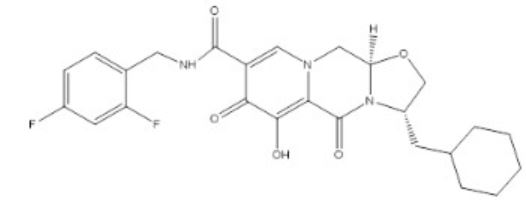
(ii)
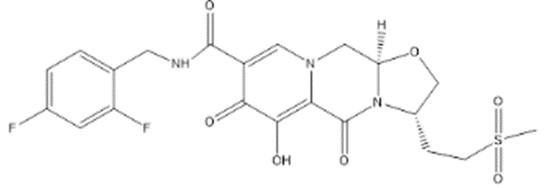
(iii)
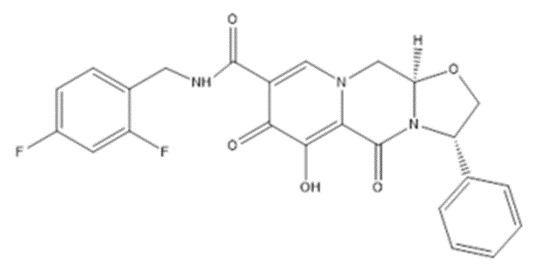
(iv)
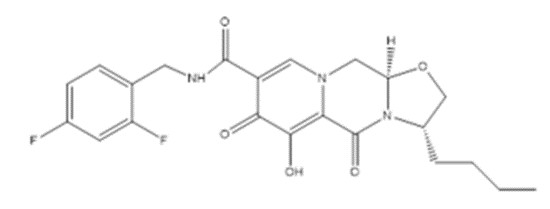
(v) the compound identified as Compound Z - 27 in the patent.
(vi) the compound identified in Confidential Annexure A to the amended particulars.
161 Let me now return to and analyse the categories of discovery sought by Gilead in categories 1, 3, 4 and 5. It is convenient to deal with them in reverse order.
162 I will allow discovery in category 5 subject to excising “or evidence” and save that it should be limited to where R1 is not H but rather a C1 to C10 alkyl, as distinct from just saying not H.
163 First, this category more closely reflects [(3(b)(i) and (ii)] of the amended particulars.
164 Second, it does not suffer from the vice of adding into the discovery category the rider “and in which the C1 to C10 alkyl disrupts the intramolecular hydrogen bonding with the pyridone core carbonyl”. A judgment call thereon does not need to be made by the person giving discovery.
165 Third, documents of the type referred to in category 5 with my limitations should, with some work, be able to be identified.
166 Fourth, in my view documents in this category would be directly relevant to the plea in [3(b)(i) and (ii)] of the amended particulars. If there is no effect on activity by inserting a C1 to C10 alkyl as R1 as compared with H as R1 or there is some effect, whether plus or minus, this would go directly to denying (if a plus) or supporting (if a minus) Gilead’s assertion.
167 Fifth, from the articles that Mr Dimitriadis SC took me to, I am satisfied that there is a basis for the assertion in the amended particulars and that its phraseology has not just been chosen to support a fishing expedition.
168 Sixth, perhaps in the way that [3(b)(i) and (ii)] are expressed there is something to Mr Shavin QC’s circularity point. But in my view what is being asserted is clear enough for the purposes of ViiV being put on notice as to what is being said and what is being sought.
169 Seventh, as to the asserted difficulty in identifying these documents, so be it. But I must say that the problems seem to have been over-stated. I would have thought that with some work, documents with R1 as a C1 to C10 alkyl, should be able to be identified. Indeed, a very integer of claim 1 is “R1 is hydrogen or C1 - C10 alkyl”. It would seem likely that ViiV should be able to identify documents reflecting such an integer. Perhaps this will take some time and expense. But I do not see the exercise as being oppressive to ViiV.
170 I would also allow discovery in categories 3 and 4 save for excising “or evidence” in category 3.
171 In my view the discovery sought is directly targeted to what was done in Experimental Examples 1 and 2 of the patent. And in that sense is targeted at the inutility plea.
172 Now I accept that these categories may travel beyond the specific compounds identified in the amended particulars. But it would seem to me that Gilead has made a firm allegation of inutility such as to provide in my view a proper foundation for some latitude being allowed, even though the expression “any compounds” is broader.
173 Further, I would have thought that with a little goodwill on ViiV’s part, including speaking with the inventors, such documents should be able to be identified albeit with some work. But none of that in my view would impose an oppressive burden on ViiV.
174 Finally, let me return to category 1.
175 On balance I will not order discovery in category 1(a) at this time subject to one matter that I will discuss in a moment. It is too broad and the expression “failures in relation to the synthesis” is not without its problems. Moreover, there is a broad scope for “compounds”. In context, I have a different situation than the context of “compounds” in, say, categories 3 and 4.
176 In my view, Gilead may need to conduct experiments. And although I accept that this is time consuming and expensive, it is the lesser of two evils. Moreover, if after having conducted experiments Gilead can identify specific potential compounds the synthesis of which failed, I may then review whether discovery could be pursued in that category by reference to such failed potential compounds.
177 Further, I see nothing onerous in the first instance by compelling Gilead to conduct experiments to support its assertions in [2(b) and (c)] of its amended particulars.
178 But having said all of that, I will compel ViiV to follow through on its offer in its category 1 to discover documents which describe or record the synthesis of any of Compounds A in its latest proposal. Moreover, to be clear, synthesis should include a failure to synthesise.
179 As to category 1(b) of Gilead’s discovery categories, on balance I am not persuaded to order this. It embraces testing other than the in vitro assays the subject of Experimental Examples 1 and 2 in the specification.
180 But again, I will compel ViiV to follow through on its offer in category 2 dealing with its Compounds B.
181 Finally, I will not, contrary to Gilead’s written submission filed after the hearing, require any further amendment to ViiV’s proposal.
182 Now if none of what I have directed is satisfactory or sufficient for Gilead’s purposes, so be it. It should carry out its own experiments. Moreover, after it has identified other inutile compounds through such experiments, there is the possibility that it may be able to make a further discovery request.
183 The parties should file proposed minutes of orders to give effect to my reasons on the discovery questions. As to ViiV’s strike out application, in my view the appropriate order is to adjourn it sine die. On costs questions relating to both applications, each party has had a measure of success. I will order that all parties’ costs be their costs in the cause.
I certify that the preceding one hundred and eighty-three (183) numbered paragraphs are a true copy of the Reasons for Judgment of the Honourable Justice Beach. |
Associate:
VID1332 of 2019 | |
SHIONOGI & CO. LTD |


