

Federal Court of Australia
Alhalek v Quintiliani trading as Kells Lawyers [2020] FCA 1272
File number: | NSD 336 of 2020 |
Judgment of: | mARKOVIC J |
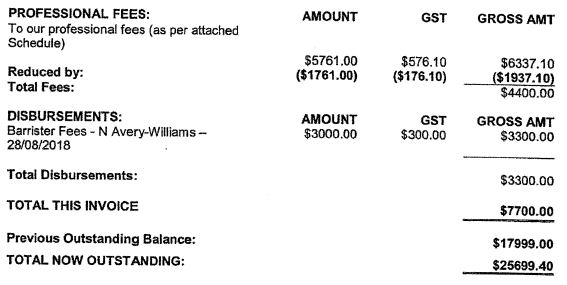
Date of judgment: | |
Catchwords: | BANKRUPTCY – application to set aside bankruptcy notice – whether the applicant has a counter-claim, set off or cross demand – whether the judgment underlying the bankruptcy notice will be set aside – whether the bankruptcy notice constitutes an abuse of process – where there was no evidence that the judgment underlying the bankruptcy notice was served – where applicant claims he was solvent – whether time for compliance with the bankruptcy notice should be extended – application dismissed |
Legislation: | Bankruptcy Act 1966 (Cth), ss 30, 40(1)(g), 41 |
Cases cited: | Coshott v Prentice, in the matter of Coshott (No 2) [2016] FCA 1531 Glew v Harrowell, in the matter of Glew [2003] FCA 373; (2003) 198 ALR 331 Guss v Johnstone [2000] HCA 26; (2000) 171 ALR 598 Royal v Nazloomian, in the matter of Royal [2019] FCA 555 Sandell v Porter (1966) 115 CLR 666 Seller v Deputy Commissioner of Taxation [2011] FCA 865; (2011) 282 ALR 80 Sharpe v W H Bailey & Sons Pty Ltd [2014] FCA 921; (2014) 317 ALR 738 |
Division: | General Division |
Registry: | New South Wales |
National Practice Area: | Commercial and Corporations |
Sub-area: | General and Personal Insolvency |
Number of paragraphs: | |
Solicitor for the Respondents: | Mr M Micevski of Kells Lawyers |
ORDERS
Applicant | ||
AND: | MARIO QUINTILIANI, PETER CHODAT, DAVID POTTS, AMY HARPER, MICHAEL HATFIELD AND PAUL MAGANINO T/AS KELLS LAWYERS Respondents | |
DATE OF ORDER: |
THE COURT ORDERS THAT:
1. The amended application filed on 22 July 2020 be dismissed.
2. Pursuant to s 41(6A) of the Bankruptcy Act 1966 (Cth), extend the time for compliance with bankruptcy notice BN 248915 issued on 19 March 2020 to the applicant to 14 September 2020.
3. The applicant pay the respondents’ costs.
Note: Entry of orders is dealt with in Rule 39.32 of the Federal Court Rules 2011.
MARKOVIC J
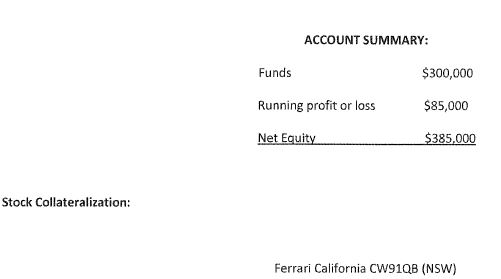
1 On 19 March 2020 bankruptcy notice BN 248915 was issued by the Official Receiver to the applicant, Kyled Alhalek (Bankruptcy Notice). Pursuant to the Bankruptcy Notice, Mario Quintiliani, Peter Chodat, David Potts, Amy Harper, Michael Hatfield and Paul Maganino trading as Kells Lawyers (Kells) seek payment of the amount of $21,738.24 from Mr Alhalek.
2 By amended application filed on 22 July 2020 Mr Alhalek seeks an order setting aside the Bankruptcy Notice or, in the alternative, extending the time for compliance with it.
Background
Costs assessment application
3 As is evident, Kells is a law firm. Mario Quintiliani, a partner of Kells, formerly acted for Mr Alhalek, having been retained on or about 6 February 2018 to represent him in two proceedings in the Local Court of New South Wales (Local Court). On 27 August 2018 Mr Alhalek withdrew his instructions.
4 As at 29 August 2018 Mr Alhalek had incurred costs and disbursement of $35,699.40 with a balance owing of $25,699.40. That balance was included in a tax invoice dated 29 August 2018 addressed to Mr Alhalek (August Account) which covered work carried out over the period of 2 to 28 August 2018 as follows:
5 Prior to 29 August 2018 Kells had received two payments in satisfaction of its costs and disbursements in a total amount of $10,000 which was reflected in the balance owing in the August Account. Those payments were made as follows: the first payment of $2,500 was made in cash; and the second payment of $7,500 was made by cheque by Mortgage Loan & General Pty Ltd (Mortgage Loan & General). Mr Quintiliani was aware that Mr Alhalek was in control of Mortgage Loan & General as a result of previous instructions he had received from him.
6 Mr Alhalek refused to pay any further amounts in satisfaction of Kells’ fees and took no steps to have Kells’ fees assessed, despite an alleged dispute as to the amount owing.
7 On 12 June 2019 Kells issued and served a bill of costs in itemised form on Mr Alhalek for a net amount of $27,587.55, made up of fees and disbursements of $37,587.55 less the amount of $10,000 which had been paid on account of those costs (Bill of Costs). Mr Alhalek refused to pay the amount claimed in the Bill of Costs and took no steps to have the claimed costs assessed.
8 On 5 August 2019:
(1) Kells filed an application for assessment of the Bill of Costs (Costs Assessment Application) with the Supreme Court of New South Wales (Supreme Court). The Costs Assessment Application was addressed to Mr Alhalek at 168 Oxford Street, Woollahra NSW 2025 (Woollahra Address); and
(2) the Supreme Court notified Mr Alhalek by email at admin@mortgageloangeneral.com that “[a]n application for assessment of costs was filed” and “[a]ny objections to the application must be lodged in writing and in triplicate with The Manager Costs Assessment by 26 August 2019”.
9 Mr Alhalek resided at the Woollahra Address until about 20 June 2019 at which time he moved to an address in Paddington NSW 2021 (Paddington Address) where he continues to reside.
10 On 26 August 2019 Mr Alhalek filed written submissions in the Costs Assessment Application in support of his objection to the Bill of Costs.
11 Under cover of a letter dated 13 September 2018 (but which I assume was in fact intended to be dated 13 September 2019 and was despatched on or about that date) addressed to Mr Alhalek at both the Woollahra Address and the Paddington Address and at the email address admin@mortgageloangeneral.com, Kells provided to Mr Alhalek a copy of its submissions and letter to the costs assessor.
12 On 22 September 2019 Mr Alhalek provided a further submission to the costs assessor responding “to the counter submission filed by Kells”.
13 Mr Quintiliani says that the submissions referred to at [10] and [12] above were provided by Mr Alhalek to the costs assessor notwithstanding that the Costs Assessment Application was issued to the incorrect address and that at no time during the currency of the Costs Assessment Application or prior to 23 March 2020 did Mr Alhalek notify the Supreme Court or Kells of a change in address for service.
14 On 8 November 2019 a certificate of assessment of costs (Costs Certificate) in the amount of $31,322.50 with reasons was issued. The only copy of the Costs Certificate in evidence before me is addressed to Kells.
15 On 18 November 2019 the Costs Certificate was registered as a judgment of the Local Court against Mr Alhalek in the amount of $21,322.50, being the amount in the Costs Certificate, $31,322.50, less the payment of $10,000 Kells had previously received (Costs Judgment).
16 According to Mr Alhalek, the Costs Certificate, reasons that accompanied it and the Costs Judgment were sent to the Woollahra Address. However, because Mr Alhalek did not reside at the Woollahra Address in November 2019 he did not receive or become aware of those documents. Notwithstanding that he had moved to the Paddington Address, Mr Alhalek still checked the post box at the Woollahra Address on approximately a weekly basis but at no stage did he find a copy of the Costs Certificate or the costs assessor’s reasons in the post box. It was not until he was served with the Bankruptcy Notice on 20 March 2020 that he became aware of the Costs Certificate. That evidence is difficult to accept in the case of Kells given that it addressed its letter referred to at [11] above to Mr Alhalek at both the Woollahra Address and the Paddington Address.
17 Mr Alhalek says that he did not contact Kells after 22 September 2019 because he was not aware that the Costs Certificate or the Costs Judgment had issued or that Kells was attempting to garnishee his “previous bank accounts” (see [18]-[23] below).
Steps taken by Kells to enforce the Costs Judgment
18 On 22 November 2019 Mr Quintiliani caused garnishee notices to be served on the Commonwealth Bank of Australia (CBA) and the Australia and New Zealand Bank (ANZ).
19 By letter dated 26 November 2019 the ANZ informed Mr Quintiliani that there were “insufficient funds in the account(s) in the name of the Judgment Debtor to answer the Garnishee Order” and that, “[a]s a result, ANZ is not in a position to make any payment to you pursuant to the Garnishee Order”.
20 Mr Quintiliani has not received any reply from the CBA in response to the garnishee notice served on it.
21 Mr Alhalek’s evidence is that he has bank accounts at other financial institutions. By way of example he put into evidence a statement for the period ended 19 March 2020 for an account held with the National Australia Bank (NAB) which showed a closing balance of $251.82. Mr Alhalek says, had Kells issued a garnishee notice to the NAB or other financial institutions, it would have been properly informed as to his financial position.
22 In or about mid-October 2019 Mr Quintiliani became aware that Mortgage Loan & General had been placed into liquidation by order of the Supreme Court of Victoria.
23 Mr Quintiliani was not aware that Mr Alhalek had any other means to satisfy the debt owed to Kells or any capacity to earn an income other than his involvement with Mortgage Loan & General. Following the receipt of the letter from ANZ (see [19] above), Mr Quintiliani formed the view that Mr Alhalek was probably insolvent and on 19 March 2020 concluded that the only course of action he could take in light of Mr Alhalek’s apparent impecuniosity was to issue the Bankruptcy Notice.
Mr Alhalek’s financial position
24 Mr Alhalek says that in about January 2020 he sold a “Ferrari California” to F1 Prestige Car Sales Pty Ltd (F1 Prestige) for approximately $300,000 and that it was agreed, as between him and F1 Prestige, that F1 Prestige would keep the proceeds of sale to reinvest in the business but that Mr Alhalek could call upon his investment on 24 hours’ notice.
25 According to Mr Alhalek, by 19 March 2020 he had a running account with F1 Prestige in the amount of $385,000. A statement of account dated 31 March 2020 from F1 Prestige for account KALHAK004 marked to the attention of “Kyled” shows the following:
Steps taken by Mr Alhalek subsequent to service of the Bankruptcy Notice
Mr Alhalek seeks review of the Costs Certificate
26 On 23 March 2020 Mr Alhalek sent an email to the costs assessment division of the Supreme Court seeking a copy of the Costs Certificate.
27 According to Mr Alhalek, on 28 March 2020 he lodged an application for review of the determination of the costs assessor in relation to the Costs Certificate (Review Application).
28 As the Review Application was lodged out of time, on 19 May 2020 Mr Alhalek applied for an extension of time to lodge the Review Application.
29 On 21 July 2020 the manager, costs assessment issued a determination dismissing Mr Alhalek’s application for an extension of time to lodge the Review Application (Determination). The Determination which is dated 17 July 2020 includes:
This is a request for additional time to lodge a review application which has been reached for consideration. A review application was lodged on 21 April 2020 with a request for additional time. The certificates of determination were sent to parties on 8 November 2019. Under section 83 of the Legal Profession Uniform Law Application Act (NSW) 2014 ("the Act"), a review application is to be lodged within 30 days of the certificates being forwarded to the parties.
If a review application is properly lodged within time it is automatically referred to a review panel. If outside the timeframe provided in section 83 of the Act, it is a matter for the Manager Costs Assessment (“MCA”) to allow any additional time. When considering an application to extend time to lodge a review application the factors for consideration include; the length of the delay, the explanation for the delay, the merits of the application, any prejudice the parties may experience and what is just and fair in the circumstances.
…
In cases where the review application is late and the required notice has not been provided, it is a matter of discretion for the MCA to allow additional time, where a properly made review application is lodged late.
…
In [sic] must be said, the costs assessor’s determination was sent to the same address previously used in the assessment and none of the correspondence sent to it, appears to have been returned as being unsuccessfully delivered. The same would seem to equally apply to the correspondence sent by the costs assessor during the course of the assessment.
…
With the review applicant appearing to rely on the same, if not similar, concerns and objections already made, and considered by the original costs assessor, without fresh supporting material, this review application can best be described as a generalised objection to the assessor’s determination. Once more, the costs assessor has considered the objection raised. Doing so in great detail.
Having said that, it is difficult to see what, if any, merits this review application has or how a review panel could reach a different outcome to that of the original costs assessor, considering the same available material. Likewise, how in those circumstances, the review applicant would not be liable for the costs of the review panel’s assessment. Without additional material being provided to support the claims they make, this review application seems to lack merit.
…
The review applicant’s grounds of review can be best described as dissatisfaction with the costs assessor’s determination, towards the amount determined as being proportionate and reasonable. When considering an application for additional time, compelling submissions addressing the grounds of review are required. Also, or in the alternative, fresh supporting material substantiating the grounds of review.
It is important to appreciate, dissatisfaction with an outcome; want for a further assessment; or taking an opposing view to the objective assessment undertaken by an assessor, are not sufficient to address or demonstrate merit in support of the delay.
With those comments in mind, and having considered the available material, the MCA is not satisfied, that it would be just and fair in the circumstances to grant an extension of time for filing the review application.
30 On 3 August 2020 Mr Alhalek filed a summons in the Supreme Court seeking judicial review of the Determination (Judicial Review Proceeding) in which he seeks the following relief:
1 That the decision of B Bellach Manager Costs Assessment made on 17 July 2020 in Out of Time Costs Assessment Review numbered 2019/242728 be quashed.
2 That the Applicant have leave to provide further evidence on the Summons.
3 That additional time to lodge the review application for costs assessment be granted to the Applicant.
4 Costs.
In the summons and in the affidavit in support of the summons Mr Alhalek gives his address as the Woollahra Address.
31 Mr Alhalek is not legally represented in the Judicial Review Proceeding. He contends that Kells did not account for his $10,000 payment in the Bill of Costs and that he is unaware of how it is that Kells’ costs increased from $25,699.40, as included in the August Account, to the amount of $37,587.55 included in the Bill of Costs given that he did not instruct Kells to undertake any work after 29 August 2018. Mr Alhalek believes that the manager, costs assessment did not consider this material in making the Determination and that the Judicial Review Proceeding has strong prospects of success.
32 Mr Alhalek also believes that if he is successful in the Judicial Review Proceeding and he is given additional time to lodge the Review Application he will be successful in the latter application because the final invoice issued by Kells, i.e. the August Account, is substantially different to the amount claimed in the Bill of Costs.
Mr Alhalek commences a proceeding in the Local Court
33 On 26 March 2020 Mr Alhalek commenced a proceeding in the Local Court (Local Court Proceeding) against Kells as defendant seeking damages in the amount of $95,000 arising out of alleged negligence on the part of Kells. In his statement of claim Mr Alhalek alleges that:
1 The Defendant was engaged by the Plaintiff to file a Notice to Show Cause, under section 41 of the Motor Dealers Act 1974, in defence of allegations against the Plaintiff.
2 The Defendant was well aware that the filing had to been done within 18 days.
3 The Defendant filed the Notice 11 days late.
4 At all material times the Plaintiff urged the Defendant to complete the filing on time to no avail
5 The filing was too late, the matter was decided against the Plaintiff.
6 Due to the professional negligence by the Defendant, the Plaintiff continues to suffer injury and financial losses.
34 In or about early July 2020 Mr Quintiliani instructed Kells’ legal representatives engaged by its insurers to make an offer to Mr Alhalek to settle the Local Court Proceeding on the basis that the offer would not be extended beyond the close of business on 24 July 2020. After business hours on 24 July 2020 Mr Alhalek accepted Kells’ offer to settle the proceeding on terms that Mr Alhalek release Kells from any claims made in the proceeding or at all. Mr Quintiliani explains that the terms of settlement do not involve the payment of any amount of money to Mr Alhalek in respect of the claim or for costs. The parties are currently settling the terms of a deed of release.
Mr Alhalek’s amended application
35 As set out at [2] above, the principal relief sought by Mr Alhalek in his amended application is that the Bankruptcy Notice be set aside. In the alternative, Mr Alhalek seeks an order that the time for compliance with the Bankruptcy Notice be extended.
36 Mr Alhalek seeks to have the Bankruptcy Notice set aside on three alternate bases: first, that he has a counter-claim exceeding the amount of the Costs Judgment, being the Local Court Proceeding; secondly, because the Costs Judgment that underpins the Bankruptcy Notice will be set aside or varied as a result of the Review Application or rather, given that by the time of the hearing that application had resulted in the Determination, as a result of the Judicial Review Proceeding; and thirdly, because the Bankruptcy Notice is an abuse of process pursuant to s 30 of the Bankruptcy Act 1966 (Cth) (Act).
37 In the alternative Mr Alhalek seeks an order that the time for compliance with the Bankruptcy Notice be extended pursuant to s 41(6A) of the Act because he has filed the Review Application challenging the Costs Assessment which is the basis for the Costs Judgment that underpins the Bankruptcy Notice. However, because since the filing of the amended application, the manager, costs assessment has issued the Determination by which the Review Application was dismissed, at the hearing Mr Sibley who appeared for Mr Alhalek informed me that Mr Alhalek now seeks his alternative relief on the basis that he has commenced the Judicial Review Proceeding in which he seeks to quash the Determination.
Legislative framework
38 Section 41(1) of the Act empowers an Official Receiver to issue a bankruptcy notice on the application of a creditor who has obtained a final judgment or final order against a debtor that is of the kind described in s 40(1)(g) of the Act and is for an amount of at least $5,000. I pause to note that, as the Bankruptcy Notice was issued on 19 March 2020 prior to the commencement of Sch 12 to the Coronavirus Economic Response Package Omnibus Act 2020 (Cth) on 25 March 2020, the COVID-19 related amendments to the Act and the Bankruptcy Regulations 1996 (Cth) do not apply in this case.
39 Section 40(1)(g) of the Act relevantly provides:
(1) A debtor commits an act of bankruptcy in each of the following cases
…
(g) if a creditor who has obtained against the debtor a final judgment or final order, being a judgment or order the execution of which has not been stayed, has served on the debtor in Australia or, by leave of the Court, elsewhere, a bankruptcy notice under this Act and the debtor does not:
(i) where the notice was served in Australia—within the time specified in the notice; or
(ii) where the notice was served elsewhere—within the time fixed for the purpose by the order giving leave to effect the service;
comply with the requirements of the notice or satisfy the Court that he or she has a counter‑claim, set‑off or cross demand equal to or exceeding the amount of the judgment debt or sum payable under the final order, as the case may be, being a counter‑claim, set‑off or cross demand that he or she could not have set up in the action or proceeding in which the judgment or order was obtained;
40 Subsections 41(6A) and (6C) of the Act concern the circumstances in which the Court may order an extension of time for compliance with a bankruptcy notice and provide:
(6A) Where, before the expiration of the time fixed for compliance with the requirements of a bankruptcy notice:
(a) proceedings to set aside a judgment or order in respect of which the bankruptcy notice was issued have been instituted by the debtor; or
(b) an application has been made to the Court to set aside the bankruptcy notice;
the Court may, subject to subsection (6C), extend the time for compliance with the bankruptcy notice.
(6C) Where:
(a) a debtor applies to the Court for an extension of the time for complying with a bankruptcy notice on the ground that proceedings to set aside a judgment or order in respect of which the bankruptcy notice was issued have been instituted by the debtor; and
(b) the Court is of the opinion that the proceedings to set aside the judgment or order:
(i) have not been instituted bona fide; or
(ii) are not being prosecuted with due diligence;
the Court shall not extend the time for compliance with the bankruptcy notice.
41 Section 41(7) of the Act concerns when the time for compliance with a bankruptcy notice shall be deemed to have been extended and provides:
Where, before the expiration of the time fixed for compliance with the requirements of a bankruptcy notice, the debtor has applied to the Court for an order setting aside the bankruptcy notice on the ground that the debtor has such a counter‑claim, set‑off or cross demand as is referred to in paragraph 40(1)(g), and the Court has not, before the expiration of that time, determined whether it is satisfied that the debtor has such a counter‑claim, set‑off or cross demand, that time shall be deemed to have been extended, immediately before its expiration, until and including the day on which the Court determines whether it is so satisfied.
42 Section 30 of the Act sets out the general powers of courts in bankruptcy and relevantly provides that the Court has full power to decide all questions, whether of law or fact, in any case of bankruptcy or any matter coming under Pt IX, X or XI within the cognisance of the Court and may make such orders as the Court considers necessary for the purposes of carrying out or giving effect to the Act.
Should the Bankruptcy Notice be set aside?
Does Mr Alhalek have a counter-claim, set off or cross demand?
43 The first ground relied on by Mr Alhalek is that he has a counter-claim, set off or cross-demand equal to or exceeding the Costs Judgment that he could not have set up in the action or proceeding in which that judgment was obtained within the meaning of s 40(1)(g) of the Act. The relevant counter-claim is the Local Court Proceeding which Mr Alhalek says he could not have set up in the proceeding in which the Costs Judgment was obtained given that it was the result of the Costs Assessment Application.
44 Mr Alhalek submits that, as required by the authorities, the Local Court Proceeding raises both a prima facie and bona fide claim and that he has a fair chance of success in that claim for the following reasons:
(1) the claim against Kells is one of professional negligence. In its defence Kells denies that it caused the loss suffered and says that the claim is time barred by operation of s 14 of the Limitation Act 1969 (NSW) (Limitation Act);
(2) his claim makes clear that Kells’ failure to submit certain documents on time caused his disqualification from holding a licence or being concerned in the direction, management or conduct of a business for the carrying on of which a licence was required for a period of five years from 31 July 2012; and
(3) despite Kells’ defence that his claim is statute barred, there is authority to suggest that the period of limitation under s 14 of the Limitation Act, and analogous provisions in other states, commences at the time that the damage crystallises, relying on Wardley Australia Ltd v State of Western Australia (1992) 175 CLR 514 (Wardley Australia). Applying the principles in Wardley Australia to the present dispute, Mr Alhalek says that he suffered loss and damage for a period of five years commencing on 31 July 2012 and, while a claim for loss and damage in the period of 31 July 2012 to 24 March 2014 would likely be statute barred by reason of s 14(1)(b) of the Limitation Act, the loss and damage suffered by him following 24 March 2014 would not suffer the same fate. Mr Alhalek says it would be unjust to require him to commence a proceeding in respect of any loss and damage he suffered between 25 March 2014 and 31 July 2017, the date upon which he ceased suffering loss and damage, prior to those dates. Accordingly, Mr Alhalek says that the Local Court Proceeding raises a prima facie and bona fide claim and that he is fairly entitled to litigate that claim given that various periods of damage are not statute barred.
Legal principles
45 In Guss v Johnstone [2000] HCA 26; (2000) 171 ALR 598 at [40] the High Court (Gleeson CJ, Gaudron, McHugh, Kirby and Callinan JJ) said:
The state of satisfaction referred to in s 40(1)(g), and s 41(7), involves weighing up considerations as to the legal and factual merit of the claim relied upon by the debtor, and the justice of allowing the bankruptcy proceedings to go ahead or requiring them to await the determination of the claim.
46 In Glew v Harrowell, in the matter of Glew [2003] FCA 373; (2003) 198 ALR 331 Lindgren J observed (at [9]) that in order to be satisfied that there is a counter-claim, set off or cross demand, for the purposes of s 40(1)(g) of the Act, a debtor must satisfy the Court of the following “interrelated and sometimes overlapping matters”:
• that they have a “prima facie case”, even if they do not adduce evidence which would be admissible on a final hearing making out that case (Ebert v The Union Trustee Co of Australia Ltd (1960) 104 CLR 346 (“Ebert”) at 350; Re Brink; Ex parte Commercial Banking Company of Sydney Ltd (1980) 44 FLR 135 (“Brink”) at 141; Gomez v State Bank of NSW Ltd [2002] FCAFC 101 at [17], [18]);
• that they have “a fair chance of success” or are “fairly entitled to litigate” the claim: Brink at 141; Re Gould; Gould v Day [1999] FCA 1650 at [27], [28]; Re Capsanis; Capsanis v The Owners – Strata Plan 11727 [2000] FCA 1262 at [11]); and
• that they are advancing a “genuine” or “bona fide” claim (Re Capsanis; Capsanis v The Owners – Strata Plan 11727 [2000] FCA 1262 at [11]).
It may be that the first and second formulations are intended to cover the same ground. In Brink Lockhart J treated (at 141) the reference to a “prima facie case” in Ebert as a reference to “a fair chance of success”.
47 His Honour also observed (at [10]) that, while the Court is not required to undertake a preliminary trial of the relevant counter-claim, set off or cross demand, the application of the criteria identified requires it to make some kind of preliminary assessment although not to determine the counter-claim, set off or cross demand finally.
Consideration
48 The evidence before me establishes that Mr Alhalek has accepted Kells’ offer to settle the Local Court Proceeding and that the parties are in the course of negotiating a deed of settlement and release reflecting the terms of the settlement. In those circumstances it is difficult to see how Mr Alhalek can maintain this ground. In response to my query to that effect, Mr Alhalek submitted that, for so long as the Local Court Proceeding has not been discontinued and the parties had not yet reached agreement formally to discontinue that proceeding, the claim remained on foot and therefore could amount to a counter-claim for the purposes of s 40(1)(g) of the Act. Mr Alhalek was unable to take me to any authority in support of that proposition.
49 I am not satisfied that the Local Court Proceeding constitutes a counter-claim, set off or cross demand for the purposes of s 40(1)(g) of the Act. While Mr Alhalek may have been able to argue that he had a prima facie case, which had a fair chance of success and which he was advancing as a genuine claim prior to reaching agreement to settle the Local Court Proceeding, that can no longer be so. Given the agreement to settle, the Local Court Proceeding will be brought to an end. That being so, the question of whether Mr Alhalek had a fair chance of success in that proceeding no longer arises.
50 Further, given the uncontested evidence before me that the Local Court Proceeding has settled on terms whereby no payment is to be made by Kells to Mr Alhalek and Kells is to receive a release from Mr Alhalek, the value of the claim made in the Local Court Proceeding could not possibly be one that is equal to or exceeds the Costs Judgment.
51 This ground is not made out.
Will the Costs Judgment be set aside or varied?
52 The second ground relied on by Mr Alhalek is that the Costs Judgment which underpins the Bankruptcy Notice will be set aside or varied as a result of the Review Application.
53 It was common ground between the parties that, since the filing of Mr Alhalek’s amended application, the manager, costs assessment had issued the Determination which had the effect of dismissing the Review Application. However, Mr Alhalek now relies on the Judicial Review Proceeding in which Mr Alhalek seeks judicial review of the Determination on the basis that the manager, costs assessment failed to take a relevant consideration into account and failed to afford procedural fairness to Mr Alhalek. The Judicial Review Proceeding was first returnable before the Supreme Court on 18 August 2020.
54 Mr Alhalek submits that he will be successful in the Judicial Review Proceeding and will have the Determination set aside. On the assumption that he is successful in the Judicial Review Proceeding, he also submits that, if his subsequent review is successful, the debt underpinning the Bankruptcy Notice will change, the Bankruptcy Notice will be invalid and therefore it should be set aside.
Consideration
55 Mr Alhalek acts for himself in the Judicial Review Proceeding. Little weight can be given to his assertion that he will be successful in that proceeding. But even if I was to accept that to be so, success in that proceeding will result in the quashing of the Determination and the remittal of the application for an extension of time to bring the Review Application to a different decision-maker. That is, the matter will be remitted to re-determine the extension of time application. It is only if Mr Alhalek is successful in obtaining an extension of time that the Review Application will proceed and the costs assessment reconsidered. Thereafter, it is only if the costs assessor accepts some or all of Mr Alhalek’s grounds in his Review Application that the Costs Certificate which underpins the Costs Judgment will change and thus the amount due to Kells will change.
56 There is no evidence before me, other than Mr Alhalek’s own opinion that he will be successful in achieving a reduction in the assessed costs, of Mr Alhalek’s prospects of obtaining an extension of time within which to bring his Review Application, or the likelihood of Mr Alhalek’s grounds of review achieving some measure of success in reducing the assessed amount of Kells’ costs and, if so, the likely quantum of that reduction. The contention that there will be a variation of the Costs Certificate and thus a variation or setting aside of the Costs Judgment is mere speculation. In those circumstances it is not possible to conclude that the Judicial Review Proceeding and, if successful, the applications that will or may follow will lead to a setting aside or variation of the Costs Judgment such that the Bankruptcy Notice should be set aside.
57 This ground is not made out.
Does the Bankruptcy Notice constitute an abuse of process?
58 The third ground relied on by Mr Alhalek to set aside the Bankruptcy Notice is that it is an abuse of process.
59 Mr Alhalek submits that, while Kells attempted to garnishee two bank accounts, they were accounts which he no longer used or in which he had minimal funds. He contends that at no stage after obtaining the Costs Judgment did Kells write to him to ascertain whether he had alternative bank accounts with funds sufficient to satisfy the debt, such as his account held at the NAB. Mr Alhalek submits that it was unreasonable for Kells to draw the inference that he was insolvent as a corollary of the insufficiency of funds in bank accounts known by Kells to be in his name and that the Court should refuse to draw that inference on that basis.
60 Mr Alhalek submits that despite issuing two garnishee notices, both of which were unsuccessful, Kells did not attempt any other meaningful form of execution including, for example, issuing an application for examination or a letter of demand. Mr Alhalek says, had Kells issued an application for examination or a letter of demand, he would have responded and Kells may then have properly determined his true financial position and may have agreed suitable payment terms with him. Mr Alhalek submits that in circumstances where Kells did not employ meaningful execution methods or exhaust those methods, beyond a meagre unsuccessful attempt to garnishee obsolete bank accounts, the Court should draw an inference, akin to that drawn in Royal v Nazloomian, in the matter of Royal [2019] FCA 555 (Nazloomian) at [74], that Kells issued the Bankruptcy Notice with the intention of pressuring him.
61 Mr Alhalek submits that the fact that he made no effort to make payment of the Costs Judgment is not his fault. Rather, until he was served with the Bankruptcy Notice, Kells made no effort to contact him to inform him that the Costs Certificate had been issued, he owed Kells a sum of money, Kells had obtained the Costs Judgment and that it had issued garnishee orders to the CBA and ANZ. Mr Alhalek says that notwithstanding that he had moved residential address on or about 20 June 2019 he continued to check whether he had received post at the Woollahra Address on a weekly basis and, had Kells issued correspondence to him demanding payment of the Costs Judgment, he would have received that correspondence and acted upon it. Mr Alhalek contends that by failing to contact him either by post or email, which Kells did frequently prior to 22 September 2019, this Court should draw an inference that Kells issued the Bankruptcy Notice with the intention of pressuring him or for a collateral purpose.
62 Mr Alhalek submits that Kells has not propounded in any meaningful way why the winding up of Mortgage Loan & General is a proper basis to conclude that he is or was impecunious at the time of issuing the Bankruptcy Notice. Mr Alhalek contends that Mortgage Loan & General’s winding up is immaterial to the question of whether he is solvent, Mortgage Loan & General and he are separate legal entities and he was not an officer or shareholder of Mortgage Loan & General. Mr Alhalek says that it follows that, even if Mortgage Loan & General was impecunious, that conclusion does not, ipso facto, also suggest that he is or was impecunious.
63 In the alternative, Mr Alhalek submits that the Bankruptcy Notice is an abuse of process because he was solvent as at 19 March 2020 and had sufficient assets to meet the Costs Judgment, relying on the account issued by F1 Prestige (see [24]-[25] above).
Legal principles
64 In Seller v Deputy Commissioner of Taxation [2011] FCA 865; (2011) 282 ALR 80 at [15]-[20] Flick J set out the principles concerning when a bankruptcy notice might be set aside as an abuse of process. Among other things (at [15]-[16]) his Honour said:
15 The jurisdiction of this Court to set aside a bankruptcy notice as an abuse of process was not put in issue: Re Sterling; Ex parte Esanda Ltd (1980) 44 FLR 125 at 129 per Lockhart J. In identifying some of the circumstances in which the power may be exercised, His Honour said:
This Court and the Federal Court of Bankruptcy before it, have set aside bankruptcy notices over many years on various grounds. Instances of the exercise of this power are where the notice is not in accordance with the terms of the judgment and is calculated to perplex the debtor; the notice is issued for the whole of a judgment debt, yet the judgment debtor has paid into court in part satisfaction of the debt; in truth no debt lies behind the judgment … and the sum of which payment is required by the terms of a notice has in fact been paid by the debtor …: [(1980) 44 FLR 125 at 129]
His Honour continued on to state:
I mentioned earlier some instances of the exercise of the power to set aside bankruptcy notices by this court and the Federal Court of Bankruptcy. They are not exhaustive of the occasions on which the power will be exercised: [(1980) 44 FLR 125 at 131]
…
The Court has “a wide discretion to set aside a bankruptcy notice where it is satisfied that the interests of justice require it to do so”: Re Lentini; Ex parte Lentini v CSR Limited (1991) 29 FCR 363 at 372 per Neaves J. See also Rixon v Bryett [2001] FCA 963 at [26], 112 FCR 295 at 303 per Moore J.
16 One instance of an abuse of process is where the purpose in issuing a bankruptcy notice is to put pressure on a debtor to pay the debt rather than to genuinely invoke the Court’s jurisdiction in relation to insolvency: Brunninghausen v Glavanics [1998] FCA 230. In Killoran v Duncan [1999] FCA 1574, Gyles J observed:
[12] Whilst there is no debate about the jurisdiction of the Court to set aside a bankruptcy notice as an abuse of process where it can be concluded that it was simply to put pressure on the debtor rather than to genuinely invoke the Court’s jurisdiction, I am not satisfied that that is the position here. There is nothing to indicate that the respondent creditor does not genuinely intend to pursue the matter if there is default in complying with the notice. In my opinion, there is nothing special about abuse of process in this field, and, if a person wishes to resort to the jurisdiction of the Court for appropriate orders, then it will be an unusual case in which that will be prevented.
[13] There is no evidence here of any collateral purpose or of any undue pressure being applied. It is correct, I think, that the time to judge abuse of process is the time that the bankruptcy notice is issued and that subsequent events have relatively slight relevance. They may be relevant insofar as they throw light upon circumstances which might have been appreciated and foreseen at the time of the issue of the notice.
[14] If, contrary to my view, however, there were a prima facie case of abuse of process, the remedy is discretionary and, in my view, if circumstances following that time had altered significantly so that it would not be appropriate to set aside the notice, I think that the jurisdiction of the Court is wide enough to give effect to that. I have in mind here that whilst the immediate parties to the application are those with the most interest in the matter, the body of creditors generally also have an interest and I cannot be certain one way or the other about the position of solvency. It may be most unfortunate if a bankruptcy notice were set aside in circumstances where the debtor is in fact insolvent.
…
65 In Nazloomian, after observing that the circumstances in which the Court may set aside a bankruptcy notice as an abuse of process are varied, not governed by rigid rules and do not fall into fixed categories, Stewart J (at [28]-[31]) said:
28 … As McHugh J observed in Rogers v R [1994] HCA 42; 181 CLR 251 at 286:
abuses of procedure usually fall into one of three categories: (1) the court’s procedures are invoked for an illegitimate purpose; (2) the use of the court’s procedures is unjustifiably oppressive to one of the parties; or (3) the use of the court’s procedures would bring the administration of justice into disrepute. Many, perhaps the majority of, cases of abuse of procedure arise from the institution of proceedings. But any procedural step in the course of proceedings that have been properly instituted is capable of being an abuse of the court’s process. In Walton v. Gardiner, Mason C.J., Deane and Dawson JJ. said that the jurisdiction to stay proceedings that are an abuse of process “extends to all those cases in which the processes and procedures of the court, which exist to administer justice with fairness and impartiality, may be converted into instruments of injustice or unfairness”.
29 The issuing of a bankruptcy notice is a legitimate mechanism to secure payment of a debt – it is legitimate to issue a notice with the intention that the debt be paid, and in the event of default, to proceed by way of petition for sequestration: Slack v Bottoms English Solicitors [2002] FCA 1445 at [15]-[21] per Spender J; Young v Cooke [2017] FCA 26 at [105] per Gleeson J.
30 The time to judge abuse of process is the time the bankruptcy notice is issued; subsequent events have only slight relevance to the circumstances foreseen at the time of the issue of the notice: Killoran v Duncan, in the matter of Killoran [1999] FCA 1574 at [13] per Gyles J.
31 There is no dispute that the onus of proving the existence of the relevant purpose lies on the debtor: Cavoli v Etl [2007] FCA 1191 at [17] per Heerey J. There are, however, competing authorities as to the level of proof required to establish an abuse of process on the basis of illegitimate purpose.
66 As to the competing authorities on the question of the level of proof required to establish abuse of process based on illegitimate purpose in issuing a bankruptcy notice, at [34]-[36] his Honour said:
34 Bromwich J recently reviewed the competing authorities in Prentice v Fewin Pty Ltd [2017] FCA 490:
[48] In Williams v Spautz [[1992] HCA 34; 174 CLR 509], the High Court held that private prosecutions – instituted by a university lecturer against former colleagues for the purpose of placing pressure on the university in unfair-dismissal proceedings – constituted an abuse of process and ought to be stayed. The majority considered (at 529), that to establish abuse of process, it must be shown that the predominant purpose of the impugned action or proceeding is improper, for which there was a heavy onus. The discharging of such an onus does not necessarily require the calling of evidence. Rather, it may be met by relying upon the circumstances, and perhaps the absence of evidence to provide a rebuttal of inferences otherwise able to be drawn.
[49] In Rozenbes v Kronhill [(1956) 95 CLR 407] at 417.5, it was observed that to meet the threshold of extortion sufficient to be a clear ground to set aside a bankruptcy notice, it will not be held to have taken place:
… in the absence of mala fides or anything amounting to oppression in fact. There must be a real intention on the part of the creditor to use the process for some other end than its legitimate end, and there must be a real exertion of pressure.
35 The “heavy onus” test in Williams v Spautz, in which a stay of proceedings was sought rather than the setting aside of a bankruptcy notice, was also applied by Gordon J in Yarranova Pty Ltd v Shaw (No 2) [2014] FCA 616 at [90] (affirmed in Shaw v Yarranova Pty Ltd [2014] FCAFC 171, although not dealing expressly with the onus question), and it was applied by Gleeson J in Barton v Malcolm Johns Legal Pty Ltd (No 2) [2015] FCA 166 at [84]. See also UBS AG v Tyne [2018] HCA 45; 360 ALR 184 per Gordon J (in dissent) at [136].
36 In UBS AG, Kiefel CJ and Bell and Keane JJ at [34] stated that the procedural law of the relevant court, including s 37M of the Federal Court Act 1976 (Cth) in the case of this Court, is relevant to the determination of whether the bringing or continuance of a proceeding is an abuse of process. Of further present relevance is the [sic] their Honour’s statement (at [45]) that courts cannot be expected to indulge parties who engage in tactical manoeuvring that impedes the “just, quick and efficient” resolution of litigation.
Consideration
67 As Stewart J observed in Nazloomian (at [37]) an allegation of abuse of process is “serious” and cannot be made without a sufficient factual foundation. It is for Mr Alhalek to establish that the issuing of the Bankruptcy Notice constitutes an abuse of process. In that regard he bears a “heavy onus” but it is not necessary for there to be direct evidence of the ulterior purpose. A conclusion as to that purpose can properly be made by way of inference: see Nazloomian at [37].
68 The first basis on which Mr Alhalek contends that the issuing of the Bankruptcy Notice is an abuse of process is that it was issued for an ulterior purpose in that Kells failed to take proper steps to have the Costs Judgment paid or to have Mr Alhalek enter into an arrangement to pay the debt prior to its issue. For the following reasons, I do not accept that is so.
69 First, in this case Kells took steps to enforce the Costs Judgment. It applied for the issue of garnishee notices directed to two authorised deposit-taking institutions (ADI) with which Mr Quintiliani was aware Mr Alhalek held accounts, the CBA and ANZ. Kells was informed by the ANZ that it held insufficient funds to satisfy the Costs Judgment and received no response from the CBA.
70 Two observations can be made about garnishee notices. First, unless the court so orders, there is no requirement to serve an application for a garnishee order on a judgment debtor: see r 39.34(2)(b) of the Uniform Civil Procedure Rules 2005 (NSW) (UCPR). Accordingly, in the absence of such an order, which I infer was not made, there was no requirement to inform Mr Alhalek of the garnishee notices issued to the CBA and ANZ. Secondly, it was not incumbent on Kells to apply to serve a garnishee notice on every ADI in order to achieve satisfaction of the Costs Judgment. That is apparent given the requirement in r 39.35 of the UCPR that an affidavit be filed together with an application for a garnishee notice in which the deponent must identify the garnishee, and any debts that are, or are reasonably likely to be, owed by the garnishee to the judgment debtor. That being so, the “scattergun approach” urged by Mr Alhalek is not appropriate or required.
71 Mr Alhalek relies on the fact that he held an account with the NAB as at the period ended 19 March 2020 in support of his contention that Kells failed to take proper steps to enforce the Costs Judgment. However, Kells applied for the issue of a garnishee notice to those ADIs with which it was aware Mr Alhalek had dealings. Given the requirements of the UCPR, that is all that it could do. At the relevant time, Kells was not aware that Mr Alhalek held an account with the NAB. In any event there were insufficient funds in Mr Alhalek’s NAB account to satisfy the Costs Judgment as at 19 March 2020.
72 Mr Alhalek submits that there were other steps that Kells could have taken to enforce the Costs Judgment which would have brought it to his attention and may have led to the parties entering an agreement to pay the debt. Those steps include issuing a demand and/or applying for an examination order. According to Mr Alhalek, the latter would have led to Kells becoming aware of his arrangement with F1 Prestige (see [24]-[25] above).
73 The effect of Mr Alhalek’s submission is that a party must exhaust all avenues of recovery before resorting to service of a Bankruptcy Notice and, it follows, to do otherwise would amount to an abuse of process. But that is not what the authorities suggest. Rather, the question of whether there was an ulterior purpose in the issue of a bankruptcy notice must be viewed having regard to the facts as a whole and in context. In this case Kells took steps to enforce the Costs Judgment based on the information known to Mr Quintiliani but those steps were unsuccessful.
74 Secondly, while it is apparent that Kells did not serve a demand on Mr Alhalek, that of itself is not sufficient for me to draw an inference that Kells had an ulterior purpose in issuing the Bankruptcy Notice, having regard to other factors.
75 Related to this, and perhaps of more significance, is whether the Costs Certificate, reasons and Costs Judgment were served at the Woollahra Address or at all. As far as Kells was aware, Mr Alhalek was receiving mail at the Woollahra Address. However, there is no evidence that the Costs Certificate and reasons were sent to that address by Kells or that the Costs Judgment was served at that address by Kells. In the Determination, under the heading “Decision”, the manager, costs assessment states that “the costs assessor’s determination was sent to the same address previously used in the assessment”, being the Woollahra Address, and that “none of the correspondence sent to it, appears to have been returned as being unsuccessfully delivered” (see at [29] above). There is no evidence before me, beyond that statement, that the Costs Certificate and reasons were sent to the Woollahra Address by the costs assessor. In his evidence Mr Alhalek says that the Costs Certificate, the reasons and the Costs Judgment were sent to the Woollahra Address but, notwithstanding that, he did not become aware of any of those documents. This was so despite the fact that he checked the post box at the Woollahra Address on approximately a weekly basis.
76 On the basis of the available evidence, I would infer that the Costs Certificate, reasons and Costs Judgment were not sent or served at the Woollahra Address and, even if they were, I accept Mr Alhalek’s evidence that he never became aware of those documents. If Kells had sent or served the documents, I would have expected Mr Quintiliani to have given evidence to that effect. His evidence in relation to the Costs Certificate and reasons is simply that they were issued on 8 November 2019. An inspection of the material annexed to Mr Quintiliani’s affidavit sworn on 26 May 2020 shows a Costs Certificate annexed to a cover letter dated 8 November 2019 addressed only to Kells.
77 That Mr Alhalek engaged in the Costs Assessment Application by providing submissions on 26 August 2019 and 22 September 2019 can be explained by the fact that the letter from the Supreme Court (see [8(b)] above) was addressed to Mr Alhalek at his email address and the letter from Kells (see [11] above) was addressed to Mr Alhalek at the Woollahra Address, the Paddington Address and his email address. In other words, Mr Alhalek could have become aware of that correspondence by a number of means including by its receipt by email and/or, in the case of the latter, at the Paddington Address.
78 That being so, I accept Mr Alhalek’s evidence that he first became aware of the Costs Certificate and, I infer, the Costs Judgment when he was served with the Bankruptcy Notice on 20 March 2020.
79 That fact is of some concern. The absence of service of the Costs Certificate and Costs Judgment does not represent best practice, particularly where the creditor is a firm of lawyers. However, it does not lead me to infer that Kells had any collateral purpose or sought to bring undue pressure to bear on Mr Alhalek in serving the Bankruptcy Notice. While Mr Quintiliani does not explain why, for example, the Costs Judgment was not served, Kells did take steps to enforce the Costs Judgment before resorting to the issue of the Bankruptcy Notice. Those attempts bore no result. That combined with the fact that Mortgage Loan & General, a company with which Mr Alhalek was clearly associated, had gone into liquidation led Mr Quintiliani to believe that Mr Alhalek was likely insolvent.
80 Thirdly, while Mr Alhalek submits that, had Kells contacted him or served a demand prior to issuing the Bankruptcy Notice, he would have acted on it, there is no evidence of what he in fact would have done had that occurred. Indeed Mr Sibley expressly declined to make submissions on “whether [Mr Alhalek] would have instantaneously paid [the] debt” if, for example, a demand had been served on him and, rather, referred to Mr Alhalek’s claim of set off.
81 Fourthly, I cannot draw the same inference as was drawn by Stewart J in Nazloomian. In that case his Honour found (at [67]-[75]) that the inference that the bankruptcy notice was issued for an improper purpose could be drawn from a number of matters including that:
(1) there had been a long history of litigation involving Mr Nazloomian and the Royals, the debtors, based on which his Honour drew the inference that Mr Nazloomian had a “propensity to readily resort to court processes for ulterior purposes, and recklessly as to their prospects, including that bankrupting the Royals would give him an advantage in other litigation”;
(2) as known to Mr Nazloomian, the Royals had bona fide set off claims;
(3) the debt underpinning the bankruptcy notice was relatively small;
(4) the Royals made a bona fide attempt to secure the debt; and
(5) Mr Nazloomian proceeded to issue the bankruptcy notices with “considerable haste” and without even writing a letter asking them to pay the debt. His Honour noted that, a few weeks after the costs certificate had issued in that case, Mr Nazloomian applied for and was issued a judgment of the Local Court in his favour on the strength of which the first bankruptcy notice was issued. Shortly after the first bankruptcy notice was set aside, Mr Nazloomian again applied for a judgment from the Local Court and one business day later issued the second bankruptcy notice and served it on the Royals.
82 The facts before me are quite different and do not permit the same inference to be drawn. They include that:
(1) Mr Alhalek retained Kells to act for him for over a period of six months;
(2) when Mr Alhalek terminated Kells’ retainer in August 2018 he had fees which remained unpaid;
(3) it was not until August 2019, that is, some 12 months later, that Kells filed its Costs Assessment Application;
(4) Mr Alhalek was aware of the Costs Assessment Application and participated in it;
(5) Mr Alhalek did not become aware of the Costs Certificate issued on 8 November 2019 or the Costs Judgment at the time of its issue on 18 November 2019;
(6) on 22 November 2019 Kells sought to enforce the Costs Judgment by the issue of garnishee notices. That attempt was unsuccessful; and
(7) the Bankruptcy Notice was issued on 19 March 2020, some 19 months after Mr Alhalek terminated Kells’ retainer and some four months after the Costs Judgment was issued.
83 These facts do not lead me to infer that the Bankruptcy Notice was issued for an improper purpose or ulterior motive, namely to bring pressure to bear on Mr Alhalek to pay the Costs Judgment. The Bankruptcy Notice was issued because, putting to one side the failure to issue a demand or bring the Costs Judgment to the attention of Mr Alhalek, the steps taken to enforce the Costs Judgment had been unsuccessful. Mr Quintiliani was unaware of any source of income from which Mr Alhalek could satisfy the Costs Judgment. This conclusion was reinforced by the fact that Mortgage Loan & General, a company which Mr Quintiliani knew Mr Alhalek had some association with and which had paid a part of the legal fees owing to Kells on Mr Alhalek’s behalf, had gone into liquidation. It was following the receipt of the letter from the ANZ that Mr Quintiliani formed the view that Mr Alhalek was probably insolvent and in March 2020 he concluded that the only course open was to issue the Bankruptcy Notice.
84 The second basis on which Mr Alhalek contends that the Bankruptcy Notice is an abuse of process is because he was solvent at the time it was issued. He contends that as at 19 March 2020 he had sufficient assets to meet the Costs Judgment and was otherwise solvent. In that regard Mr Alhalek relies on his arrangement with F1 Prestige and a statement of account dated 31 March 2020 which discloses that he had net equity of $385,000 in or with F1 Prestige.
85 In Sandell v Porter (1966) 115 CLR 666 at 670-671 Barwick CJ (with whom McTiernan and Windeyer JJ agreed) said the following about the assessment of solvency:
Insolvency is expressed in s. 95 as an inability to pay debts as they fall due out of the debtor’s own money. But the debtor’s own moneys are not limited to his cash resources immediately available. They extend to moneys which he can procure by realization by sale or by mortgage or pledge of his assets within a relatively short time —relative to the nature and amount of the debts and to the circumstances, including the nature of the business, of the debtor. The conclusion of insolvency ought to be clear from a consideration of the debtor’s financial position in its entirety and generally speaking ought not to be drawn simply from evidence of a temporary lack of liquidity. It is the debtor’s inability, utilizing such cash resources as he has or can command through the use of his assets, to meet his debts as they fall due which indicates insolvency. Whether that state of his affairs has arrived is a question for the Court and not one as to which expert evidence may be given in terms though no doubt experts may speak as to the likelihood of any of the debtor’s assets or capacities yielding ready cash in sufficient time to meet the debts as they fall due.
86 Mr Alhalek has not provided any evidence of his ability to pay his debts as they fall due out of his own assets beyond the arrangement with F1 Prestige. While he may have had available to him cash reserves of $385,000 at 24 hours’ call as at 31 March 2020, he provides no evidence of his liabilities beyond the Costs Judgment let alone of his financial position in its entirety. Thus, no proper assessment can be made of his solvency or otherwise. Accordingly, Mr Alhalek has not established that the issue of the Bankruptcy Notice was an abuse of process because he was solvent at the time of its issue.
Should time be extended under s 41(6A) of the Act?
87 In the alternative, Mr Alhalek seeks an order that the time for compliance with the Bankruptcy Notice be extended pursuant to s 41(6A) of the Act. Mr Alhalek now seeks that order on the basis that he has commenced the Judicial Review Proceeding in which he seeks relief against the Determination. He says that, in the event that he is successful in the Judicial Review Proceeding, he will be granted leave to file a costs review application with a view to setting aside or varying the Costs Certificate, which will undermine the Costs Judgment that underpins the Bankruptcy Notice.
88 Mr Alhalek submits that the Judicial Review Proceeding has been instituted bona fide and prosecuted with due diligence as required by s 41(6C) of the Act based on the following:
(1) on 3 August 2020, 13 days after the Determination was issued, he filed and served the Judicial Review Proceeding;
(2) the Judicial Review Proceeding seeks relief against the Determination on the basis that the manager, cost assessment failed to have regard to Mr Alhalek’s primary submission that the Bill of Costs was fundamentally different in quantum to the August Account issued by Kells and, it appears, failed to take into account payments made by Mr Alhalek in partial satisfaction of that invoice; and
(3) in the event that he obtains the relief sought in the Judicial Review Proceeding, he will file a costs review application seeking to have the Costs Certificate set aside or varied. He says that the corollary of this is that the Costs Judgment underpinning the Bankruptcy Notice will be void.
89 Mr Alhalek submits that the Court should extend time for compliance with the Bankruptcy Notice until such time that the Judicial Review Proceeding has been determined and, in the event that it is determined in his favour, the Court can consider whether to set aside the Bankruptcy Notice on the basis that it is no longer underpinned by a valid final judgment.
Consideration
90 Section 41(6A) of the Act confers power on the Court to extend time for compliance with a bankruptcy notice where, before the expiration of the time fixed for compliance with the requirements of the bankruptcy notice, proceedings to set aside a judgment or order in respect of which the bankruptcy notice was issued have been instituted by the debtor or where an application has been made to the Court to set aside the bankruptcy notice.
91 Subject to s 41(6C) of the Act (see [40] above), the discretion conferred by s 41(6A) is not fettered and should be exercised based upon the facts and circumstances of the particular case: see Sharpe v W H Bailey & Sons Pty Ltd [2014] FCA 921; (2014) 317 ALR 738 (Sharpe) at [26] and the cases there cited.
92 In Sharpe Gleeson J referred (at [27]) to the principles to be applied on an application to adjourn the hearing of a creditor’s petition but observed (at [28]) that they are not necessarily applicable to the exercise of the discretion to extend time for compliance with a bankruptcy notice under s 41(6A) of the Act because the commission of an act of bankruptcy is of a different order of gravity from the change of status brought about by the making of a sequestration order. At [29] her Honour said:
In Byron, at 270 to 271, Lehane J referred to the following matters to be taken into account in deciding whether to extend time for compliance with a bankruptcy notice:
a. The interest of the judgment creditor and other creditors of the judgment debtor in ensuring that, if ultimately a sequestration order is made, the relevant act of bankruptcy occurs earlier rather than later;
b. Whether any stay has been granted of the judgment supporting the bankruptcy notice;
c. As “a consideration reinforcing the Court’s reluctance to extend time in the absence of a stay, that an appeal has already been dismissed and the proceeding in question is…an application for special leave to make a further appeal.”
93 In Coshott v Prentice, in the matter of Coshott (No 2) [2016] FCA 1531 Bromwich J considered the nature of the power conferred by s 41(6A) of the Act. His Honour was of the view that the Court has a general power to extend the time for compliance with a bankruptcy notice that is not constrained by s 41(7) of the Act in its application to offsetting claims: at [161]. After referring to Streimer v Tamas (1981) 37 ALR 211, his Honour said at [163]-[166]:
163 The application to set aside the bankruptcy notice in Streimer v Tamas was not an application under ss 40(1)(g) and 41(7). That case involved an application arising from an appeal from the judgment upon which the bankruptcy notice was based rather than an offsetting claim and was concerned with interpreting s 41(6A). However, in the later High Court case of Guss v Johnstone, the ability to use s 41(6A) to extend the time for compliance with the bankruptcy notice in the context of proceedings based on ss 40(1)(g) and 41(7) was considered, albeit in the context of exercise by the High Court or by the Full Court of this Court after judgment in the court below and after the automatic extension of time had been exhausted and an act of bankruptcy otherwise committed. In those circumstances the use of the general power was specifically contemplated and endorsed as follows at 610-11 [63]:
We are unable to accept that whenever, in a proceeding under s 40(1)(g) and s 41(7), a judge at first instance has determined that he or she is not satisfied of the matter referred to in s 41(7), and has declined to interfere with the process initiated by a creditor, no appellate reversal of that decision, whether by the Full Court or by this court, can alter the consequences of the decision. In a proper case it would have been within the power of the Full Court to set aside the declaration made by Sundberg J. The consequences for proceedings and events that had occurred in the meantime would vary with the circumstances, but they could include the same consequences as flowed from the order in Streimer v Tamas (1981) 37 ALR 211, where the statutory power to extend time for compliance with a bankruptcy notice, given by s 41(6A), was exercised after an act of bankruptcy had been committed.
164 Importantly, it also does not appear that the High Court in Guss v Johnstone was of the view that the power in s 41(6A) should be read down to exclude the application to offsetting claim cases by reason of that being exclusively dealt with by the automatic statutory extension of time in s 41(7). Thus the power in s 41(6A) to extend time for compliance of the bankruptcy notice has a wider application for deployment whenever properly required in the interests of justice, including in a case when an application under ss 40(1)(g) and 41(7) has not been successful.
165 The general power to extend time for compliance with a bankruptcy notice is not constrained by any need for a valid application to set aside such a bankruptcy notice. There are several reasons for that conclusion. The first is that the text does not require and interpretation does not demand that the application be valid. It is not an automatic benefit. Judicial power must be engaged to have that effect. Secondly, the power is being exercised in respect of the bankruptcy notice, not in respect of the application to set the bankruptcy notice aside. Thirdly, the practical implications that would flow from the power not existing in those circumstances support the text and nature of the power being exercised. If an application is made for a s 41(6A)(b) extension of time, and is granted by a court (including by the exercise of delegated judicial power by a registrar), a debtor would be entitled to proceed upon the basis that the court’s order means that he or she will not commit an act of bankruptcy because the time for compliance had been deferred. That is quite different from a step taken by a debtor alone of doing no more than filing the application to set aside, and, by reason of the invalidity of the application, failing to activate an automatic statutory extension time. That is because there has been no intervention by or on behalf of a judicial officer and no exercise of judicial power. However, there is no corresponding basis for finding that a s 41(6A)(b) extension of time for compliance with the bankruptcy notice also bestows any power or foundation for the retroactive validation of an invalid application to set aside the bankruptcy notice, having regard to the language and terms of s 41(7).
166 If such a power exists for the use of the Full Court or the High Court, there is no reason in principle why it should not also exist for this Court at first instance to deploy in an appropriate case. There is no material difference between an appeal court being able to avoid the injustice of an act of bankruptcy occurring despite the success of the debtor on appeal and a first instance court being able to avoid the injustice of the time for presenting a creditor’s petition expiring through no fault of the creditor. …
94 Mr Alhalek relies on the Judicial Review Proceeding as the basis on which the time for compliance with the Bankruptcy Notice should be extended. Section 41(6A) of the Act requires that the relevant proceeding to set aside the judgment or order in respect of which the bankruptcy notice was issued be commenced prior to the expiration of the time fixed for compliance with the requirements of the bankruptcy notice. The Judicial Review Proceeding was commenced on 3 August 2020 which was after that time had expired. Based on Mr Alhalek’s evidence that the Bankruptcy Notice was served on 20 March 2020, the time fixed for its compliance expired on 10 April 2020.
95 Even if the Judicial Review Proceeding was seen to be an extension of the Review Application which, according to Mr Alhalek, was lodged on 28 March 2020 and thus could be treated as having been commenced within the time required by s 41(6A) of the Act, I would not extend time for compliance with the Bankruptcy Notice until the determination of that proceeding. That is because, as already observed, contrary to Mr Alhalek’s submissions, the resolution of that proceeding will not result in the Costs Judgment being set aside. Rather, if Mr Alhalek is successful in the Judicial Review Proceeding, the result will be that the Determination will be set aside and the application for extension of time within which to lodge the Review Application will be considered afresh. It is only if Mr Alhalek succeeds in obtaining an extension of time that the Review Application will then be considered. The Costs Judgment will only be set aside if Mr Alhalek is successful in that application. In other words, Mr Alhalek must be able, first, to pursue and, secondly, to achieve success in three different, albeit related, applications in order to set aside or undermine the Costs Judgment. Beyond Mr Alhalek’s own belief that he has good prospects of success, there is, as noted at [56] above, no evidence before me of his prospects or the time it will take for the various steps to be undertaken and resolved.
96 Notwithstanding that, as an application to set aside the Bankruptcy Notice was filed, it is open to me to extend the time for compliance pursuant to s 41(6A)(b) of the Act. I propose to do so for a period of seven days.
97 As I understand it, Mr Alhalek relied on the Local Court Proceeding as constituting an application under s 40(1)(g) and s 41(7) of the Act. As set out at [48]-[51] above, I am not satisfied that Mr Alhalek has a counter-claim, set off or cross demand within the meaning of s 40(1)(g) of the Act. The power in s 41(6A) of the Act to extend time for compliance with a bankruptcy notice can be deployed whenever properly required in the interests of justice, including in a case when an application under s 40(1)(g) and s 41(7) has not been successful: see Coshott at [164].
98 In my opinion, in all of the circumstances, it is in the interests of justice that the time for compliance by Mr Alhalek with the Bankruptcy Notice be extended to the date that is seven days after the date of delivery of these reasons. Mr Alhalek took a number of steps when he became aware of the Costs Judgment and brought his application to set aside the Bankruptcy Notice. He was entitled to have that application resolved. He has been unsuccessful but that does not mean that he should have visited upon him the consequence that he has, with the passing of time and while awaiting a resolution, committed an act of bankruptcy. He should be given an opportunity to comply with the Bankruptcy Notice, if that is what he wishes to do. Balanced against that, it is not apparent that there are any creditors other than Kells. Any prejudice that might flow, if there is non-compliance with the Bankruptcy Notice, from the delay of seven days in the date of commission of an act of bankruptcy, is not sufficient to cause me not to make the order I propose to make.
Conclusion
99 Mr Alhalek has failed to establish any of the grounds in his amended application to set aside the Bankruptcy Notice or to extend the time for compliance with it until the resolution of the Judicial Review Proceeding. Accordingly, I will make orders dismissing Mr Alhalek’s amended application, extending the time for compliance with the Bankruptcy Notice to 14 September 2020 pursuant to s 41(6A) of the Act and, as Mr Alhalek has been unsuccessful in his application, for Mr Alhalek to pay Kells’ costs of the proceeding.
I certify that the preceding ninety-nine (99) numbered paragraphs are a true copy of the Reasons for Judgment of the Honourable Justice Markovic. |
Associate:


