FEDERAL COURT OF AUSTRALIA
Australian Competition and Consumer Commission v Medibank Private Limited [2020] FCA 1030
ORDERS
AUSTRALIAN COMPETITION AND CONSUMER COMMISSION Applicant | ||
AND: | MEDIBANK PRIVATE LIMITED (ACN 080 890 259) Respondent | |
DATE OF ORDER: |
THE COURT DECLARES THAT:
1. Between 28 February 2013 and 25 July 2018, Medibank trading as ahm, in trade or commerce:
(a) engaged in conduct that was misleading or deceptive, or likely to mislead or deceive, in contravention of s 18 of the Australian Consumer Law being Schedule 2 of the Competition and Consumer Act 2010 (Cth) (ACL); and
(b) made representations, in connection with the supply or possible supply or promotion of the supply of private health insurance services, that were false or misleading about the existence or effect of a condition or right, in contravention of s 29(1)(m) of the ACL;
by representing in the course of responding to:
(c) claims made by, or on behalf of, ahm members with “Lite” policies; and
(d) eligibility enquiries made by, or on behalf of, ahm members with “Lite” and “Boost” policies (Policies);
for procedures or treatments associated with certain MBS codes for medical services which constitute joint investigations and reconstructions (Affected Members) that Affected Members were not entitled to the payment of benefits under their Policies for those medical services, when in fact the Affected Members were entitled to benefits under their Policies for such services.
THE COURT ORDERS THAT:
2. Pursuant to section 224 of the ACL, Medibank pay to the Commonwealth of Australia a pecuniary penalty in the sum of $5,000,000 in respect of the contraventions referred to in the declaration in paragraph 1 of these orders, to be paid within 60 days of the date of 16 July 2020.
3. Medibank make a contribution to the ACCC's costs in the amount of $70,000 to be paid within 60 days of the date of 16 July 2020.
4. The proceeding be otherwise dismissed.
Note: Entry of orders is dealt with in Rule 39.32 of the Federal Court Rules 2011.
ANDERSON J:
SUMMARY
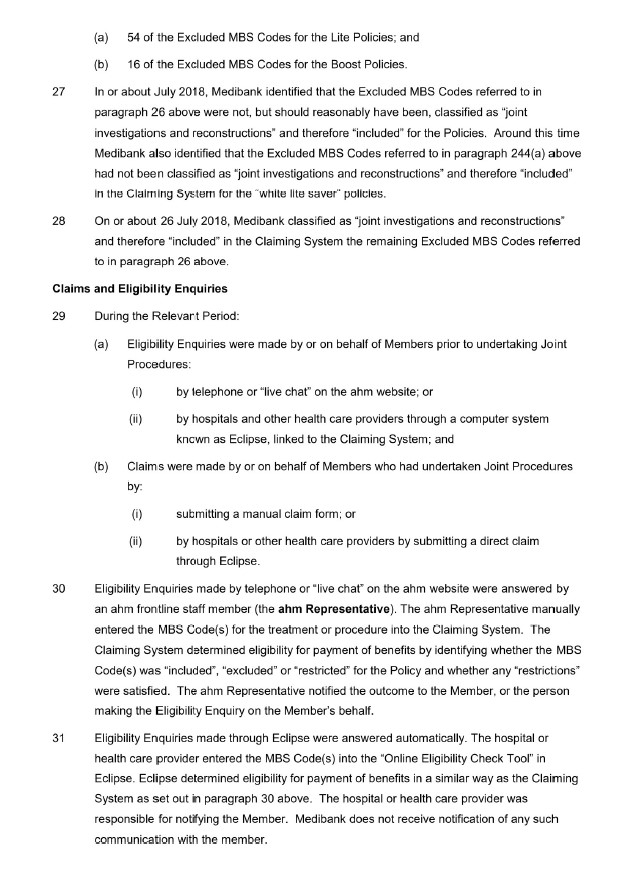
1 By way of summary, this proceeding entails two main aspects. First, the Respondent (Medibank) made certain inaccurate representations to its customers: Medibank represented to several of its customers that certain insurance policies did not afford relevant insurance coverage when those policies in fact did provide such coverage. Medibank has in these circumstances admitted that it has contravened certain provisions of the Australian Consumer Law.
2 Second, the Applicant, the Australian Competition and Consumer Commission (the ACCC), and Medibank have provided to the Court a detailed Joint Statement of Agreed Facts and Admissions, together with joint submissions. That evidence and those submissions were principally directed towards the appropriateness of Medibank paying to the Commonwealth $5 million by way of a pecuniary penalty relating to Medibank’s admitted contraventions.
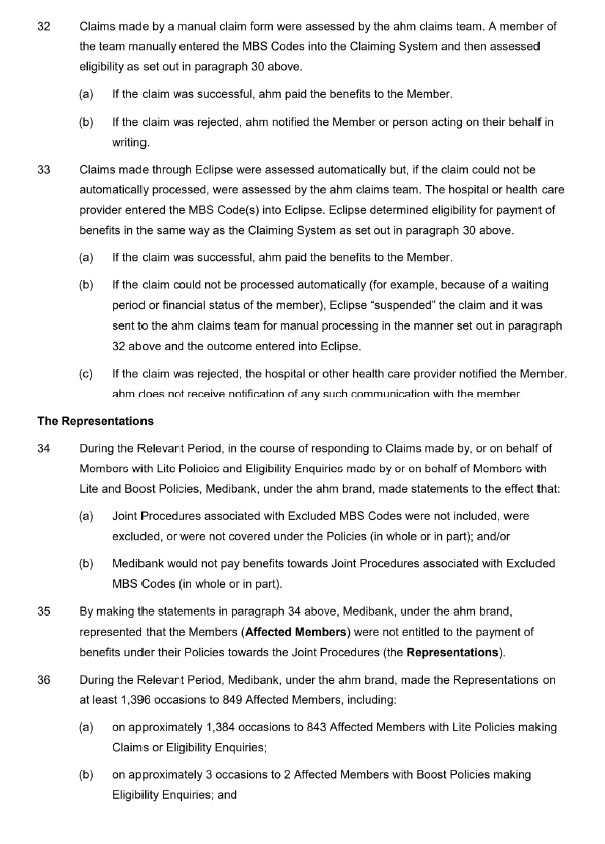
3 For the following reasons, $5 million is an appropriate penalty having regard to the relevant circumstances of this case. I made Orders to that effect on 16 July 2020. These are my reasons for doing so.
BACKGROUND
4 The ACCC’s Concise Statement filed on 2 September 2019 alleged that Medibank falsely represented that some of its customers were not entitled to health insurance cover for certain investigations and reconstructions of their joints, when in fact the customers’ policies did cover such investigations and reconstructions. The ACCC further alleges that Medibank wrongfully accepted payment from its customers for health insurance cover that Medibank did not supply.
5 The ACCC’s Concise Statement sought declarations in respect of Medibank’s contraventions of ss 18, 29(1)(m) and 36(4) of the Australian Consumer Law (ACL) (being Schedule 2 of the Competition and Consumer Act 2010 (Cth) (CCA)). The ACCC also sought orders for pecuniary penalties in respect of Medibank’s contraventions of s 29(1)(m) of the ACL.
6 Medibank by its Concise Response filed 11 October 2019 admitted the contraventions of ss 18 and 29(1)(m) of the ACL. However, Medibank denied the alleged contraventions of s 36(4) of the ACL.
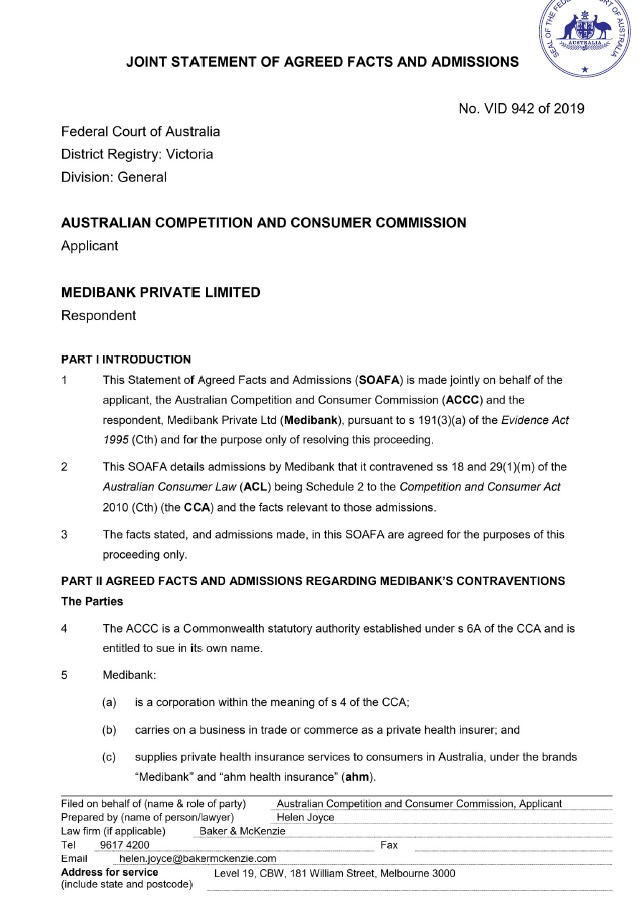
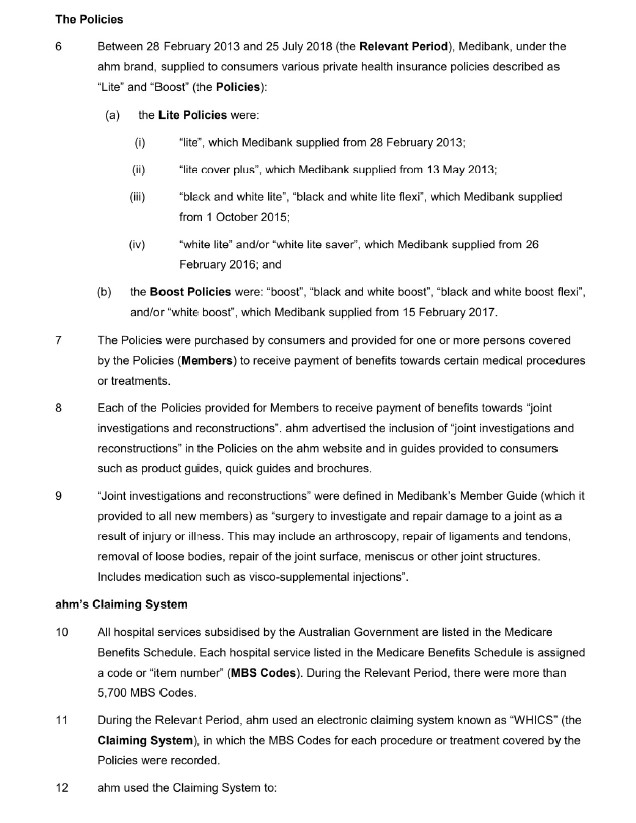
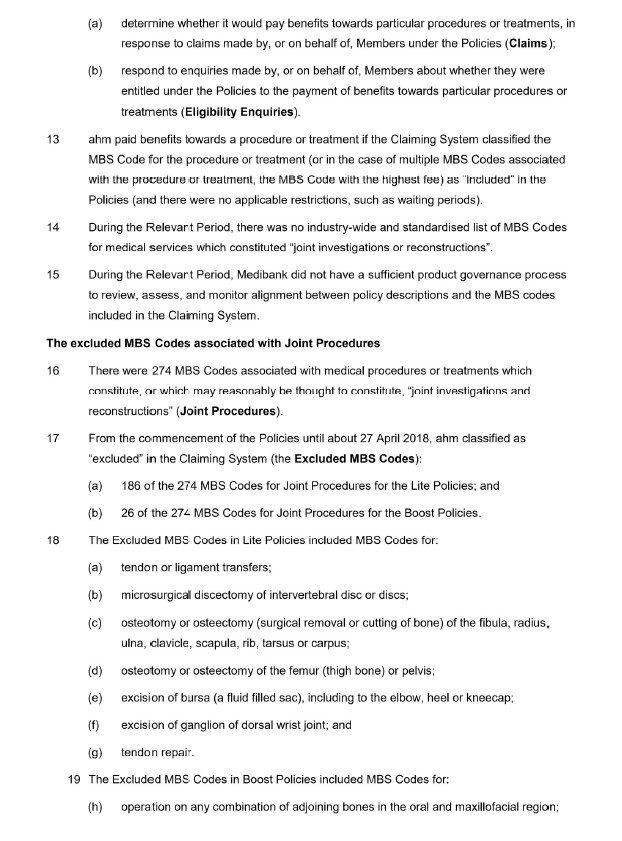
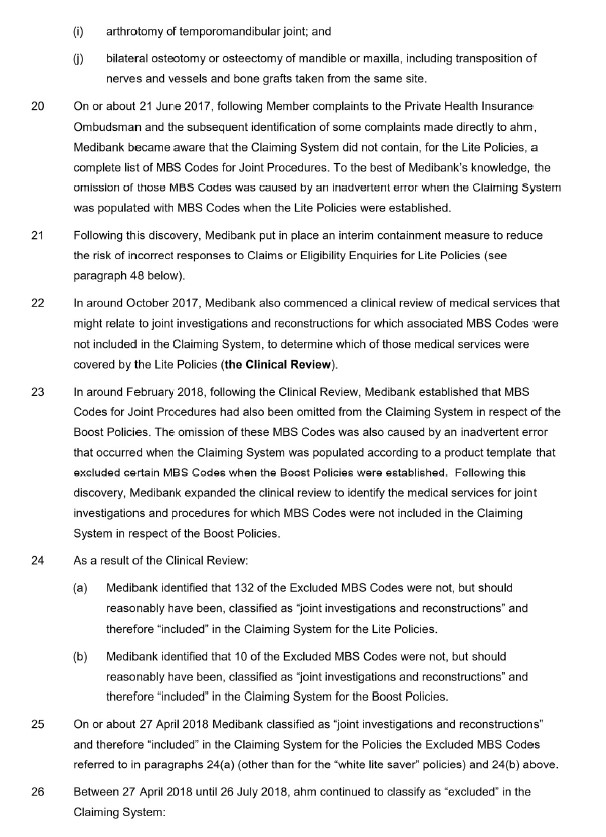
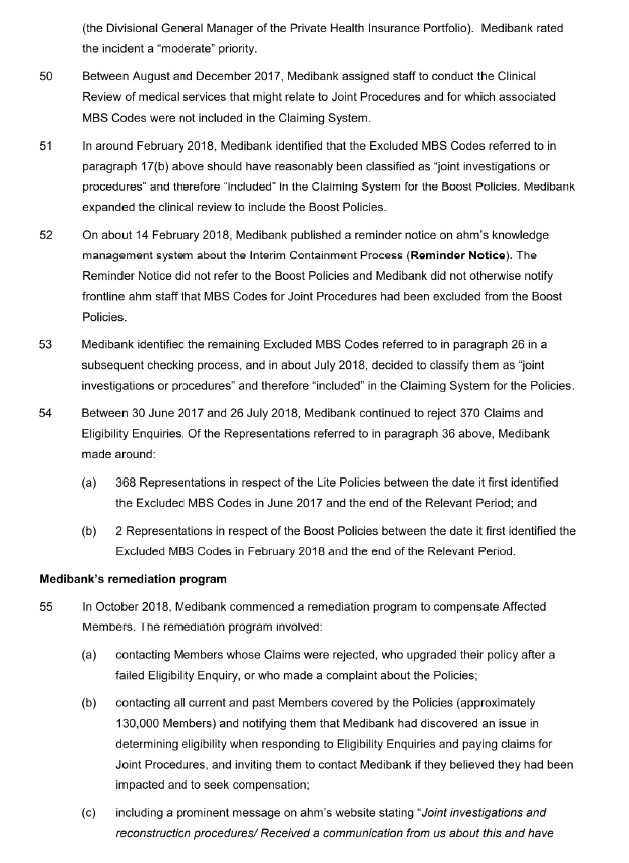
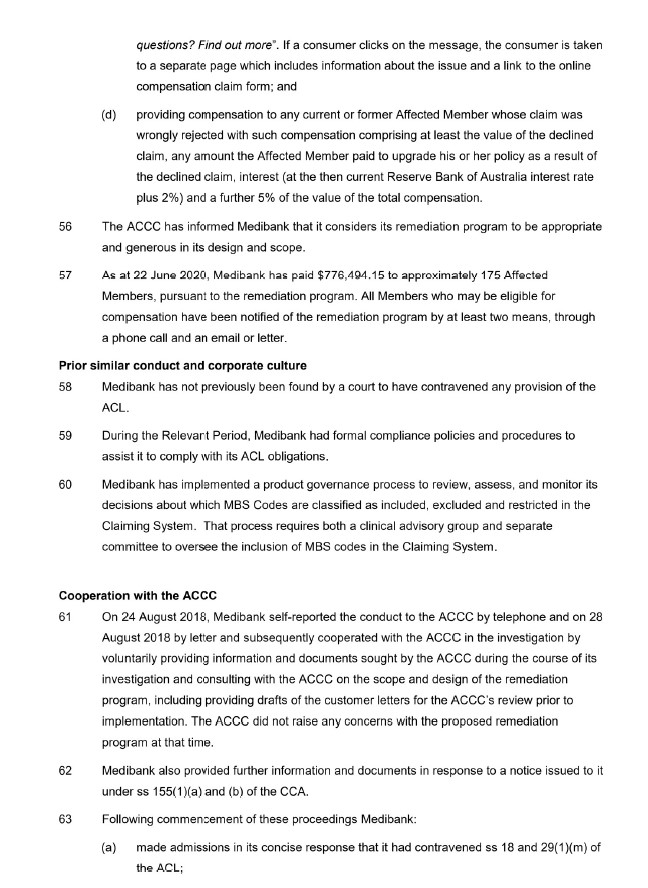
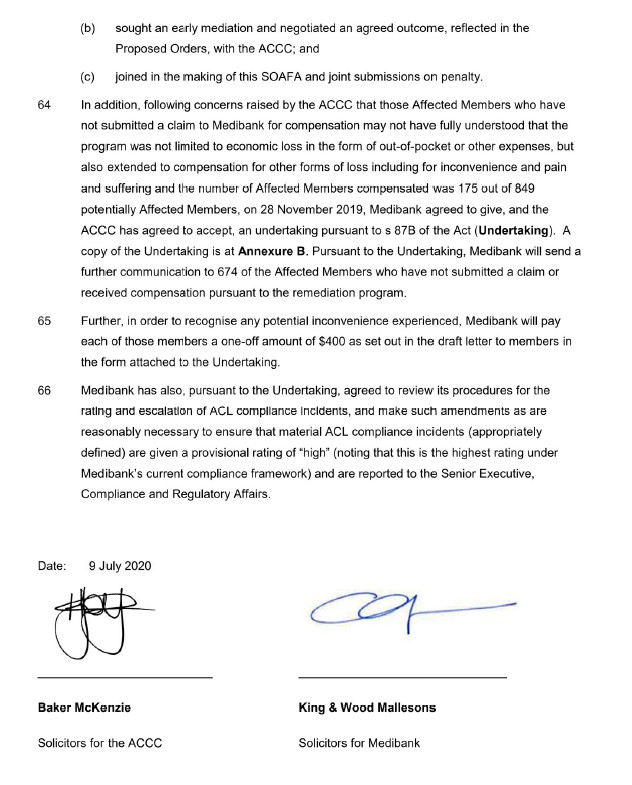
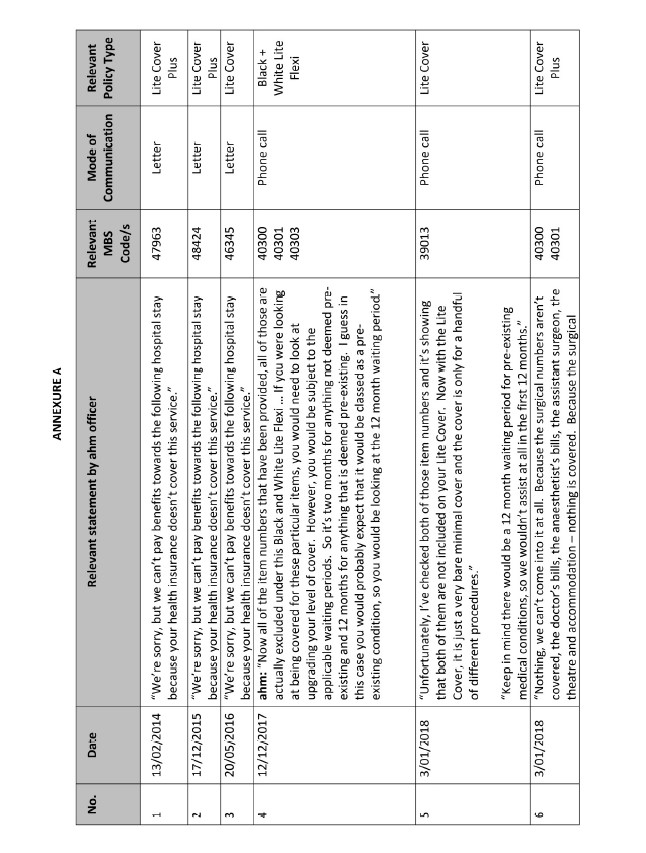
7 Pursuant to s 191 of the Evidence Act 1995 (Cth), the parties have subsequently agreed facts and formal admissions of contraventions by Medibank of ss 18 and 29(1)(m) of the ACL. Those joint agreed facts and admissions are contained in a Joint Statement of Agreed Facts and Admissions filed 10 July 2020 (SOAFA). A copy of the SOAFA is annexed as Annexure A to these Reasons for Judgment. Such agreed facts are facts “that the parties to a proceeding have agreed [are] not, for the purposes of the proceeding, to be disputed” (Evidence Act 1995 (Cth), s 191(1)). In such a proceeding, “evidence is not required to prove the existence of an agreed fact” (Evidence Act 1995 (Cth), s 191(2)).
8 The parties have also filed on 10 July 2020 proposed consent orders which sought:
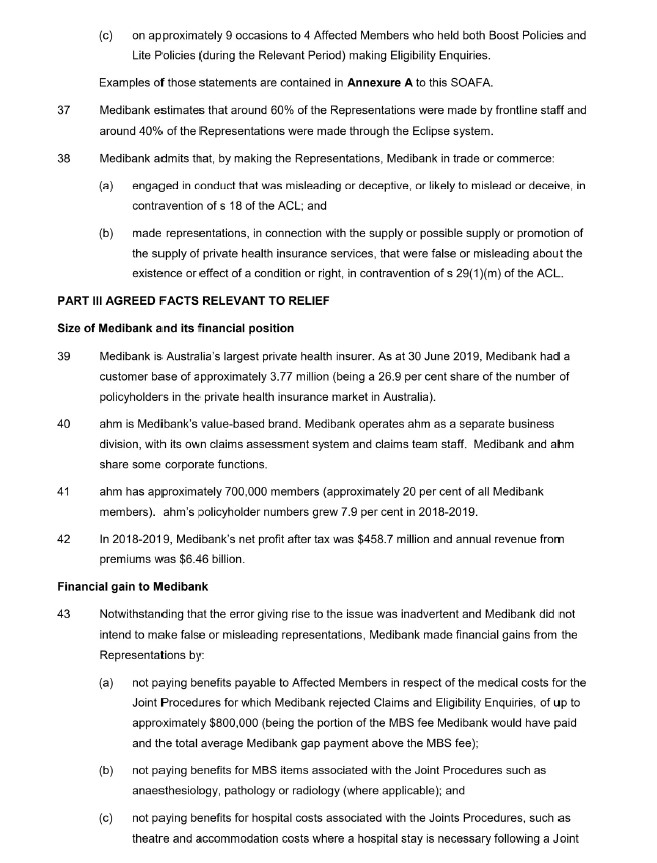
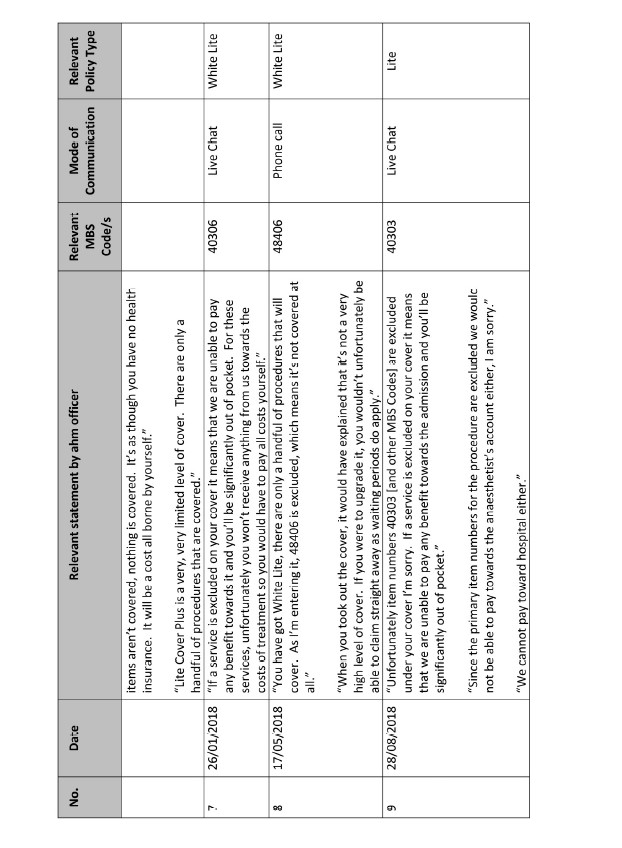
(1) declaratory relief under s 21 of the Federal Court of Australia Act 1976 (Cth) (FCA);
(2) orders for pecuniary penalties under s 224 of the ACL in respect of the contraventions of s 29(1)(m) of the ACL;
(3) costs under s 43 of the FCA;
(4) that the proceeding be otherwise dismissed.
9 On 10 July 2020, the parties filed joint submissions in support of the relief sought in the proposed orders.
PRINCIPLES CONCERNING CIVIL PENALTY CONSENT ORDERS
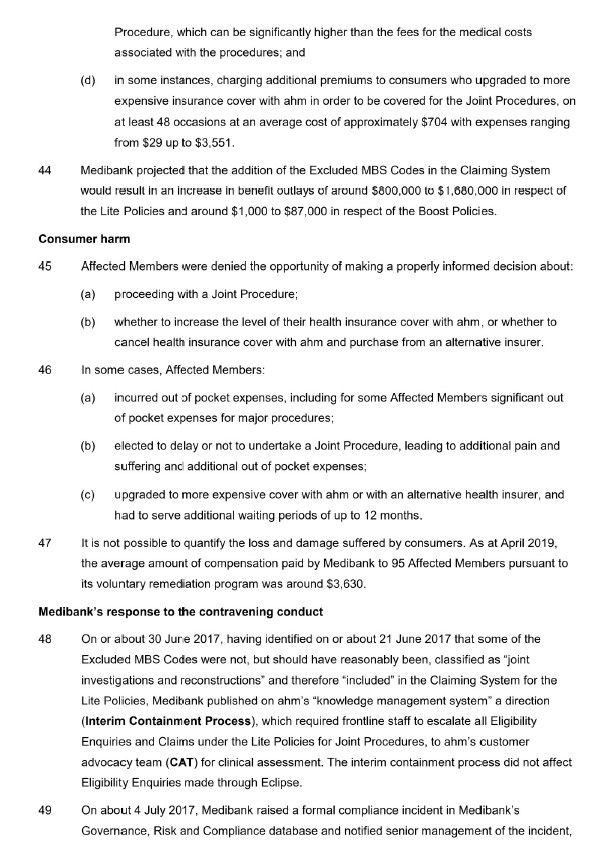
10 In these circumstances, an initial matter arising concerns the principles relevant to the making of consent orders in a civil penalty proceeding. Those principles were summarised by Gordon J in Australian Competition and Consumer Commission v Coles Supermarkets [2014] FCA 1405 (ACCC v Coles) at [70]-[73] as follows:
The applicable principles are well established. First, there is a well-recognised public interest in the settlement of cases under the Act: NW Frozen Foods Pty Ltd v Australian Competition & Consumer Commission (1996) 71 FCR 285 at 291. Second, the orders proposed by agreement of the parties must be not contrary to the public interest and at least consistent with it: Australian Competition & Consumer Commission v Real Estate Institute of Western Australia Inc (1999) 161 ALR 79 at [18].
Third, when deciding whether to make orders that are consented to by the parties, the Court must be satisfied that it has the power to make the orders proposed and that the orders are appropriate: Real Estate Institute at [17] and [20] and Australian Competition & Consumer Commission v Virgin Mobile Australia Pty Ltd (No 2) [2002] FCA 1548 at [1]. Parties cannot by consent confer power to make orders that the Court otherwise lacks the power to make: Thomson Australian Holdings Pty Ltd v Trade Practices Commission (1981) 148 CLR 150 at 163.
Fourth, once the Court is satisfied that orders are within power and appropriate, it should exercise a degree of restraint when scrutinising the proposed settlement terms, particularly where both parties are legally represented and able to understand and evaluate the desirability of the settlement: Australian Competition & Consumer Commission v Woolworths (South Australia) Pty Ltd (Trading as Mac’s Liquor) [2003] FCA 530 at [21]; Australian Competition & Consumer Commission v Target Australia Pty Ltd [2001] FCA 1326 at [24]; Real Estate Institute at [20]-[21]; Australian Competition & Consumer Commission v Econovite Pty Ltd [2003] FCA 964 at [11] and [22] and Australian Competition & Consumer Commission v The Construction, Forestry, Mining and Energy Union [2007] FCA 1370 at [4].
Finally, in deciding whether agreed orders conform with legal principle, the Court is entitled to treat the consent of [the party against which the civil penalty is sought] as an admission of all facts necessary or appropriate to the granting of the relief sought against it: Thomson Australian Holdings at 164.
11 Civil penalties were subsequently addressed in Commonwealth of Australia v Director, Fair Work Building Industry Inspectorate; Construction, Forestry, Mining and Energy Union v Director, Fair Work Building Industry Inspectorate [2015] HCA 46; 258 CLR 482 (Commonwealth v FWDII). Chief Justice French and Kiefel, Bell, Nettle and Gordon JJ (with whom Gageler and Keane JJ agreed at [68] and [79] respectively) observed the following at [56]:
[T]here is an important public policy involved in promoting predictability of outcome in civil penalty proceedings and that the practice of receiving and, if appropriate, accepting agreed penalty submissions increases the predictability of outcome for regulators and wrongdoers. As was recognised in Allied Mills [Trade Practices Commission v Allied Mills Industries Pty Ltd (No 4) [1981] FCA 156; [1981] FCA 142; (1981) 37 ALR 256] and authoritatively determined in NW Frozen Foods [NW Frozen Foods Pty Ltd v ACCC [1996] FCA 1134; (1996) 71 FCR 285], such predictability of outcome encourages corporations to acknowledge contraventions, which, in turn, assists in avoiding lengthy and complex litigation and thus tends to free the courts to deal with other matters and to free investigating officers to turn to other areas of investigation that await their attention.
12 Their Honours further observed at [57]-[58]:
In contrast [to criminal proceedings], in civil proceedings there is generally very considerable scope for the parties to agree on the facts and upon consequences. There is also very considerable scope for them to agree upon the appropriate remedy and for the court to be persuaded that it is an appropriate remedy … [I]t is entirely consistent with the nature of civil proceedings for a court to make orders by consent and to approve a compromise of proceedings on terms proposed by the parties, provided the court is persuaded that what is proposed is appropriate.
There is ... no reason in principle or practice why civil penalty proceedings should be treated as an exception. Subject to the court being sufficiently persuaded of the accuracy of the parties’ agreement as to facts and consequences, and that the penalty which the parties propose is an appropriate remedy in the circumstances thus revealed, it is consistent with principle and, for the reasons identified in Allied Mills, highly desirable in practice for the court to accept the parties’ proposal and therefore impose the proposed penalty. (Emphasis in the original.)
13 Chief Justice French and Kiefel, Bell, Nettle and Gordon JJ (at [60] and [61]) further noted that a “regulator in a civil penalty proceeding is not disinterested”. In this respect, the ACCC has been empowered in certain circumstances to investigate potential contraventions of the ACL (see eg CCA, s 155) and to “institute a proceeding in a court for the recovery … of a [relevant] pecuniary penalty” (ACL, s 228(1)). In Commonwealth v FWDII, French CJ and Kiefel, Bell, Nettle and Gordon JJ identified that those types of considerations ensured it was “naturally to be assumed” that the relevant regulator in that case would “fashion penalty submissions … with one eye to considerations beyond the case in hand”, which supported “the propriety of a court receiving joint … submissions as to facts and penalty and imposing the proposed penalty if persuaded that it is appropriate” (at [60]). Their Honours noted that “it is the function of the relevant regulator to regulate the industry in order to achieve compliance and, accordingly, it is to be expected that the regulator will be in a position to offer informed submissions as to the effects of contravention on the industry and the level of penalty necessary to achieve compliance” (at [60]).
14 The principles in Commonwealth v FWDII apply equally to an agreement between the parties on the forms of relief, including declaratory relief: see [24], [57]-[59], [63], [103] and [107] and ACCC v Coles at [72] and [75].
15 In addition, this Court has a wide discretionary power to make declarations under s 21 of the FCA: Forster v Jododex Australia Pty Limited (1972) 127 CLR 421 (Forster) at 437-438 per Gibbs J; Ainsworth v Criminal Justice Commission (1992) 175 CLR 564 (Ainsworth) at 581-582. Such power is, however, “confined by the considerations which mark out the boundaries of judicial power” (Ainsworth at 582). This Court must be satisfied of certain requirements before making a declaration including:
(1) the question the subject of the declaration “must be directed to the determination of legal controversies and not to answering abstract or hypothetical questions” (Ainsworth at 582 per Mason CJ and Dawson, Toohey and Gaudron JJ);
(2) the applicant must have a “real interest” (ibid); and
(3) the applicant “must be able to secure a proper contradictor, that is to say, someone presently existing who has a true interest to oppose the declaration sought” (Forster at 437-438 per Gibbs J (citing Lord Dunedin in Russian Commercial and Industrial Bank v British Bank for Foreign Trade Ltd [1921] 2 AC 438 at 448)).
16 It is necessary in these circumstances to first summarise the conduct of Medibank which forms the factual foundation of this proceeding.
SUMMARY OF CONTRAVENING CONDUCT
Medibank’s business and the relevant insurance policies
17 Medibank carries on a business of marketing and supplying private health insurance services to consumers in Australia, including under the brand “ahm health insurance” (ahm).
18 Between 28 February 2013 and 25 July 2018 (the Relevant Period), Medibank, under the ahm brand, offered to supply to consumers health insurance cover under various private health insurance policies described as “Lite” and “Boost” (the Policies), including:
(1) from 28 February 2013, policies referred to as “lite”, “lite cover plus”, “black and white lite”, “black and white lite flexi”, “white lite” and/or “white lite saver” (collectively, the Lite Policies); and
(2) from 15 February 2017, policies referred to as “boost”, “black and white boost”, “black and white boost flexi” and/or “white boost” (collectively, the Boost Policies).
19 During the Relevant Period, Medibank accepted payment from consumers (Members) in return for Medibank supplying health insurance cover to persons covered by the Policies. The Policies entitled Members to health insurance cover for “joint investigations and reconstructions”. That coverage position was confirmed on ahm’s website and in guides such as product guides, “quick guides” and brochures.
20 The phrase “joint investigations and reconstructions” was defined in Medibank's Member Guide which Medibank provided to all new Members. That definition provided that “joint investigations and reconstructions” referred to “surgery to investigate and repair damage to a joint as a result of injury or illness” which “may include an arthroscopy, repair of ligaments and tendons, removal of loose bodies, repair of the joint surface, meniscus or other joint structures” and also “[i]ncludes medication such as visco-supplemental injections” (Joint Procedures).
Medibank’s “claiming system” and the Medicare Benefits Schedule codes
21 There was a process by which Members could receive payment under the Policies in relation to a Joint Procedure. This was referred to in the SOAFA as “ahm’s claiming system”. To understand that system, it should be noted by way of summary that all hospital services subsidised by the Australian Government are listed in the Medicare Benefits Schedule. Each hospital service listed in the Medicare Benefit Schedule is assigned a relevant code (the MBS Code or MBS Codes).
22 A subset of these MBS Codes is relevant to this proceeding. Medibank has admitted for the purposes of this proceeding that there were at the relevant time 274 MBS Codes associated with medical procedures or treatments which constitute, or which may reasonably be thought to constitute, “joint investigations and reconstructions” (the MBS Joints Codes).
23 During the Relevant Period, Medibank used a computer system known as “WHICS” (the Claiming System) which used the MBS Codes to relevantly perform three functions, namely:
(1) by reference to the MBS Codes, determining whether Medibank would supply to a Member health insurance cover under a Policy for each particular hospital service;
(2) determining whether Medibank would supply health insurance cover for particular hospital services in response to claims for health insurance cover made by, or on behalf of, Members under the Policies (Claims); and
(3) responding to enquiries made by, or on behalf of, Members about whether the relevant Member was entitled under the Policies to health insurance cover for particular hospital services (Eligibility Enquiries).
24 Medibank accepts that, from the commencement of the Policies until on or around 27 April 2018, Medibank had excluded, or failed to include, in the Claiming System:
(1) 186 of the 274 MBS Joints Codes for the Lite Policies; and
(2) 26 of the 274 MBS Joints Codes for the Boost Policies (collectively, the Excluded MBS Joints Codes).
25 That failure arose in the following way. In or around mid-June 2017, following Member complaints to the Private Health Insurance Ombudsman and the subsequent identification of some complaints made directly to ahm, Medibank became aware that, in relation to the Lite Policies, the Claiming System did not contain a complete list of MBS Joints Codes. That is, the Claiming System did not contain a complete list of the 274 MBS Codes associated with medical procedures or treatments which constitute, or which may reasonably be thought to constitute, “joint investigations and reconstructions”.
26 As a result, Medibank subsequently implemented an interim measure. This measure required relevant “frontline” Medibank employees to escalate to ahm’s “Customer Advocacy Team” relevant Members’ Claims and Eligibility Enquiries under the Lite Policies.
27 By February 2018, Medibank had also identified a separate issue. Medibank established that some of the MBS Joints Codes had also been omitted from the Claiming System in respect of the Boost Policies.
28 Medibank subsequently conducted a review. As a result of that review, Medibank identified that 132 of the Excluded MBS Joints Codes were not, but should have been, classified as “joint investigations and reconstructions” and therefore included in (rather than excluded from) the Claiming System for the Lite Policies. Medibank also identified that 10 of the Excluded MBS Joints Codes were not, but should reasonably have been, classified as “joint investigations and reconstructions” and therefore included in (rather than excluded from) the Claiming System for the Boost Policies.
29 Medibank continued to exclude from (or failed to include in) the Claiming System:
(1) all of the Excluded MBS Joints Codes until 27 April 2018; and
(2) some of the Excluded MBS Joints Codes (54 for the Lite Policies and 16 for the Boost Policies) until 26 July 2018.
The result of this conduct
30 In the circumstances set out above, during the Relevant Period, Medibank made unlawful representations to certain Members: in response to Claims or Eligibility Enquiries under the Policies for joint investigations or reconstructions associated with the Excluded MBS Joints Codes, Medibank made certain statements to Members (the Affected Members) directly, or to persons making Claims or Eligibility Enquiries on their behalf. Those statements were to the effect that the joint investigations or reconstructions were not included, were excluded or were not covered under the Policies and that Medibank would not pay a benefit or claim for, or contribute to, the joint investigations or reconstructions.
31 By making these statements, Medibank represented to the Affected Members that they were not entitled to health insurance cover under the Polices for joint investigations and reconstructions associated with the Excluded MBS Joints Codes (the Representations). In addition, Medibank failed to supply health insurance cover to the Affected Members for joint investigations and reconstructions associated with the Excluded MBS Joints Codes. This failure occurred notwithstanding that Medibank accepted payment from the Affected Members for health insurance cover for joint investigations and reconstructions.
32 During the Relevant Period, Medibank, under the ahm brand, made the Representations on at least 1,396 occasions to 849 Affected Members, including:
(1) on approximately 1,384 occasions, to 843 Affected Members with Lite Policies who had made Claims or Eligibility Enquiries;
(2) on approximately three occasions, to two Affected Members with Boost Policies who had made Eligibility Enquiries; and
(3) on approximately nine occasions, to four Affected Members who held both Boost Policies and Lite Policies during the Relevant Period and who had made Eligibility Enquiries.
The admitted contraventions
33 Medibank admits that by making the Representations:
(1) Medibank engaged in conduct that was misleading or deceptive, or likely to mislead or deceive, in contravention of s 18 of the ACL; and
(2) in connection with the supply or possible supply or promotion of the supply of private health insurance services, Medibank made representations that were false or misleading about the existence or effect of a condition or right, in contravention of s 29(1)(m) of the ACL.
FACTS RELEVANT TO THE ASSESSMENT OF THE APPROPRIATE PENALTY
34 A number of matters relevant to the appropriate penalty are set out in the SOAFA annexed to these reasons. In addition to those matters, it should be noted in particular that Medibank is Australia’s largest private health insurer. As at 30 June 2019, Medibank had a customer base of approximately 3.77 million people (being a 26.9 per cent share of the number of policyholders in the private health insurance market in Australia). In 2018-2019, Medibank's net profit after tax was $458.7 million and its annual revenue from premiums was $6.46 billion.
35 ahm is Medibank's “value-based” brand. Medibank operates ahm as a separate business division, with its own claims assessment system and claims team staff. Medibank and ahm share some corporate functions. ahm has approximately 700,000 members (approximately 20 per cent of all Medibank members). ahm's policyholder numbers grew 7.9 per cent in 2018-2019.
36 Medibank made financial gains from the Representations by:
(1) failing to pay to Affected Members the benefits payable for the medical procedures associated with the incorrectly rejected Claims and Eligibility Enquiries. The total amount of benefits payable that were not paid as a result of the Representations totalled approximately $800,000;
(2) Affected Members electing not to have procedures at all. Such an election had the effect that Medibank was not required to pay benefits for Medicare Benefit Schedule items associated with the covered procedures (such as anaesthesiology, pathology or radiology). Medibank also was not required to pay benefits for other hospital costs associated with those procedures (such as theatre and accommodation costs where a hospital stay is necessary following such a procedure – which can be significantly higher than the fees for the medical costs associated with the procedures); and
(3) in some instances, charging additional premiums to consumers who upgraded to more expensive insurance cover with ahm in order to unnecessarily obtain cover for the (already) covered procedures. This occurred on at least 48 occasions at an average cost of approximately $704 per occasion with expenses ranging from $29 up to $3,551.
37 Medibank projected that the addition of the Excluded MBS Codes into the Claiming System would result in an increase in benefit outlays of approximately $800,000 to $1,680,000 in respect of the Lite Policies, and approximately $1,000 to $87,000 in respect of the Boost Policies.
38 In addition to these gains and costs avoided, Affected Members were denied the opportunity of making properly informed decisions. Such decisions, for example, included whether to proceed with a Joint Procedure, whether to increase the level of their health insurance cover with ahm, or whether to cancel health insurance cover with ahm and purchase cover from an alternative insurer.
39 The parties’ SOAFA does not provide a precise quantification of the loss and damage suffered by consumers (assuming such a quantification is reasonably possible). However, in October 2018, Medibank commenced a remediation program to compensate Affected Members. The ACCC considers the remediation program to be appropriate. As at April 2019, the average amount of compensation paid by Medibank to 95 Affected Members pursuant to Medibank’s voluntary remediation program was approximately $3,630. As at 22 June 2020, Medibank has paid $776,494.15 to approximately 175 Affected Members pursuant to Medibank’s remediation program.
40 Medibank has not previously been found by a court to have contravened any provision of the ACL.
41 Medibank self-reported the contravening conduct to the ACCC on 28 August 2018. Medibank also subsequently cooperated with the ACCC in the investigation by voluntarily providing information and documents sought by the ACCC during the course of its investigation and by consulting with the ACCC on the scope and design of the remediation program.
LEGAL PRINCIPLES APPLICABLE TO THE ASSESSMENT OF THE APPROPRIATE PENALTY
42 It is next necessary to apply relevant principles to the factual matters set out above. The following principles in particular should be referred to.
The statutory regime
43 First, if a court is satisfied that a person has contravened (among other things) a provision of Part 3‑1 of the ACL (which includes s 29(1)(m)), the court may order the person to pay to the Commonwealth, State or Territory (as the case may be) such pecuniary penalty (in respect of each act or omission by relevant the person) as the court determines to be appropriate (ACL, s 224(1)). As stated above, Medibank has admitted that the conduct described above contravened s 29(1)(m) of the ACL.
44 As a result, section 224(2) of the ACL is engaged. It provides that, in determining the appropriate penalty, the Court must have regard to “all relevant matters”, “including”:
(1) “the nature and extent of the act or omission and of any loss or damage suffered as a result of the act or omission”; and
(2) “the circumstances in which the act or omission took place”; and
(3) “whether the person has previously been found by a court in proceedings under Chapter 4 or [Part 5 of the ACL] to have engaged in any similar conduct”.
Primary purpose of civil penalties and the process of fixing the appropriate penalty
45 Second, in the context of this statutory regime, the primary purpose of civil penalties remains deterrence: “specific deterrence of the contravener and, by his or her example, general deterrence of other would-be contraveners”: Australian Building and Construction Commissioner v Construction, Forestry, Mining and Energy Union [2018] HCA 3; 262 CLR 157 (ABCC v CFMEU) at [116] per Keane, Nettle and Gordon JJ (citing Commonwealth v FWBII at [55]). Unlike criminal sentences, such penalties are “primarily if not wholly protective in promoting the public interest in compliance”: Commonwealth v FWBII at [55].
46 Third, the specific and general deterrent effect is achieved by putting a price on contravention that is “sufficiently high” to deter repetition by both the contravenor and would-be contravenors: Commonwealth v FWBII at [55] (citing Trade Practices Commission v CSR Ltd [1990] FCA 521; (1991) ATPR 41-076 at 52, 152 per French J). In ABCC v CFMEU at [116], Keane, Nettle and Gordon JJ described that price as the “sting or burden” of the penalty: the greater the “sting or burden”, the more likely the contravenor will seek to avoid further penalties, the more potent the example for would-be contravenors, and the greater the specific and general deterrent effect. “Ultimately, if a penalty is devoid of sting or burden, it may not have much, if any, specific or general deterrent effect” (ABCC v CFMEU at [116]).
47 Fourth, the penalty must be fixed with a view to ensuring that the penalty is not such as to be regarded by the wrongdoer as an “acceptable cost of doing business”: Singtel Optus Pty Ltd v ACCC [2012] FCAFC 20; 287 ALR 249 (Singtel Optus) at [68] per Keane CJ, Finn and Gilmour JJ; approved in Australian Competition and Consumer Commission v TPG Internet Pty Ltd [2013] HCA 54; 250 CLR 640 at [64] and [66] per French CJ, Crennan, Bell and Keane JJ; and see also Australian Competition and Consumer Commission v Reckitt Benckiser (Australia) Pty Ltd [2016] FCAFC 181; 340 ALR 25 (Reckitt) at [151] per Jagot, Yates and Bromwich JJ.
48 Fifth, the process of fixing a pecuniary penalty follows the principles described in Markarian v The Queen [2005] HCA 25; 228 CLR 357 (Markarian) for the fixing of a criminal sentence. That is, it calls for a discretionary value judgment based on all relevant factors – a process of “intuitive or instinctive synthesis”: TPG Internet Pty Ltd v ACCC [2012] FCAFC 190; 210 FCR 277 at 294 [145] per Jacobson, Bennett and Gilmour JJ; see also Australian Competition and Consumer Commission v Coles Supermarkets Australia Pty Limited [2015] FCA 330; 327 ALR 540 (Coles) at [6]; Reckitt at [44].
49 Sixth, that process requires “careful attention” to the maximum penalty, including because the legislature has legislated for it, it invites comparison between the case before the Court and the “worst possible” case, and it provides, taken and balanced with all of the other relevant factors, a yardstick: see Reckitt at [154]-[155]; Coles at [6] per Allsop CJ (citing Markarian). As the Full Court emphasised in Reckitt at [156], that requires the maximum penalty to be considered as “one of a number of relevant factors, albeit an important one” and that there be “some reasonable relationship between the theoretical maximum and the final penalty imposed”.
The “French factors”
50 Seventh, the matters relevant to determining the appropriate penalty have been considered in a number of authorities. Such matters concern the objective nature and seriousness of the contravening conduct and the particular circumstances of the contravener. They are often considered by reference to the so-called “French factors” derived from the decision in Trade Practices Commission v CSR Limited [1990] FCA 521; [1991] ATPR 41-076 at 52, 152-52, 153 per French J. Those factors were endorsed in NW Frozen Foods Pty Ltd v ACCC [1996] FCA 1134 (NW Frozen Foods); 71 FCR 285, and summarised in Australian Competition and Consumer Commission v Singtel Optus Pty Ltd (No 4) [2011] FCA 761; 282 ALR 246 at 250 [11] per Perram J, as follows:
(1) the size of the contravening company;
(2) deliberateness of the contravention and the period over which it extended;
(3) whether the contravention arose out of the conduct of senior management of the contravenor or at some lower level;
(4) whether the contravener has a corporate culture conducive to compliance with the Act (or the ACL) as evidenced by educational programmes and disciplinary or other corrective measures in response to an acknowledged contravention;
(5) whether the contravener has shown a disposition to cooperate with the authorities responsible for the enforcement of the Act in relation to the contravention;
(6) whether the contravener has engaged in similar conduct in the past;
(7) the financial position of the contravener;
(8) whether the contravening conduct was systematic, deliberate or covert.
51 This Court has observed that these “French factors” have “a degree of overlap” with the mandatory considerations in s 224(2) of the ACL, but “do not necessarily exhaust potentially relevant considerations” or “regiment the discretionary sentencing function”: Coles at [9].
Course of conduct and totality principles
52 Eighth, while separate contraventions arising from separate acts should ordinarily attract separate penalties, where there is an interrelationship between the factual and legal elements of two or more contraventions, the Court may “group” the contraventions together as a single “course of conduct”, so as to avoid double punishment in respect of the relevant acts or omissions that comprise the multiple contraventions: Construction, Forestry, Mining and Energy Union v Cahill [2010] FCAFC 39; 269 ALR 1 at [39] and [42] (per Middleton and Gordon JJ); see also Singtel Optus at [53] (citing Australian Competition and Consumer Commission v Telstra Corporation Ltd [2010] FCA 790; 188 FCR 238 at [231]-[235] per Middleton J). Those authorities make clear that the course of conduct principle is a “tool of analysis” which the Court may use to guide the exercise of its discretion to determine the appropriate penalty. Application of the course of conduct principle does not, however, restrict the Court to the prescribed maximum penalty for each course of conduct: see Australian Competition and Consumer Commission v Yazaki Corporation [2018] FCAFC 73; 262 FCR 243 at [226]-[235] per Allsop CJ, Middleton and Robertson JJ (Yazaki).
53 Ninth, the “totality principle” is designed to ensure that the overall “penalty is appropriate and that the sum of the penalties imposed for several contraventions does not result in the total of the penalties exceeding what is proper having regard to the totality of the contravening conduct involved”: Australian Competition and Consumer Commission v Australian Safeway Stores Pty Ltd [1997] FCA 450; 145 ALR 36 at 53 per Goldberg J. The “totality principle involves a final overall consideration of the sum of the penalties determined”: ibid, referring to the principle as described in Mill v The Queen [1988] HCA 70; 166 CLR 59 at 63 per Wilson, Deane, Dawson, Toohey and Gaudron JJ (citing Thomas, Principles of Sentencing, 2nd ed (1979), 56-57).
54 Moreover, the Full Federal Court has emphasised that the differing circumstances of individual cases mean that a penalty in one case need not dictate the penalty in a later case. As Allsop CJ and Middleton and Robertson JJ stated in Yazaki at [237], “there is little utility” in referring to the penalty imposed in “other cases decided at a different time, in different circumstances and with different facts”. The purpose of any comparison with other cases is consistent application of principle, not numerical uniformity.
The Court is not bound to give effect to parties’ joint submissions
55 The ACCC and Medibank in their proposed orders seek an order that, pursuant to s 224 of the ACL, Medibank pay to the Commonwealth of Australia a pecuniary penalty in the sum of $5 million in respect of the admitted contraventions referred to above. Medibank accepts that each of the Representations involve a separate contravention of the ACL. As a consequence, the conduct for which penalties are sought gave rise to approximately 1,396 legally distinct contraventions (Medibank having admitted that the Representations were made on approximately 1,396 occasions to approximately 849 Affected Members): SOAFA [36]. At all times during the Relevant Period, the maximum pecuniary penalty under s 224(3) of the ACL applicable to each contravention was limited to $1.1 million.
56 Whilst the parties have jointly submitted that $5 million is an appropriate penalty, the Court is not bound to give effect to that joint submission. In Australian Competition and Consumer Commission v Volkswagen Aktiengesellschaft [2019] FCA 2166, Foster J said at [164]-[165]:
First, it is the responsibility of the Court, and the Court alone, to determine the appropriate pecuniary penalty under s 224 of the ACL once the Court is satisfied that the person upon whom it proposes to impose that penalty has contravened one or more relevant provisions of the ACL. In order to discharge that responsibility, the Court must examine all of the circumstances of the case. Where the parties have put forward a statement of agreed facts, the Court may act upon that statement if it considers that it is appropriate to do so. The Court may also act upon such other evidence as may be admitted for the purpose of its determination of an appropriate pecuniary penalty.
Second, where, as here, a specialist regulator and the contravener reach an agreement as to the amount of the pecuniary penalty which they suggest the Court should impose, the Court is not bound to give effect to that agreement and impose the agreed penalty. The responsibility to fix “… such pecuniary penalty … as the court determines to be appropriate” (s 224(1)) remains with the Court at all times. The Court must not act as a mere “rubber stamp”. As Wilcox J said in Australian Competition and Consumer Commission v FFE Building Services Limited (2003) ATPR ¶41-969 (FFE) at 47,805 [34]–[36]:
There is a danger in judges of this Court being overly influenced by the view as to penalty taken by the ACCC. In Australian Competition and Consumer Commission v Colgate Palmolive Pty Ltd (2002) ATPR ¶41-880; [2002] FCA 619, Weinberg J was confronted with a case where the ACCC and the respondent had agreed upon a particular penalty figure. Although he eventually decided to adopt the agreed figure, his Honour made it clear at [29] that he thought it too low. His Honour went on to make some comments that apply equally to a situation where the Court is presented with an agreed narrow range of penalties. His Honour said, at [34]:
“There are dangers associated with this approach. The Court may be seen, perhaps not altogether incorrectly, to act as a ‘rubber stamp’ in simply approving a decision taken at an executive level by a body charged with investigating and prosecuting contraventions of the Act, but having no role in actually imposing particular sanctions for those contraventions. Negotiated settlements are an important vehicle for resolving complex matters such as those involved in the present case. It must be borne in mind, however, that there is a public interest in ensuring that corporations that engage in behaviour of the kind that occurred in this case are dealt with appropriately, and that proper recognition is given to the need for specific and general deterrence. There are important parallels between the fixing of a pecuniary penalty under s 76, and the ordinary sentencing process which is quintessentially a matter for the courts.”
Weinberg J noted the tendency of the Court simply to adopt the agreed figure. He said at [32]:
“I acknowledge that both the ACCC and Colgate have accepted that the figure proposed is in no way binding upon the Court. However, when pressed to point to a single instance when the Court has not, in the past, endorsed such a figure, counsel found it difficult to do so.”
This seems to me a most unsatisfactory position. It involves an abrogation of responsibility by the Court. My concern is exacerbated by the level of penalties often accepted by ACCC. In 1992, Parliament made a dramatic revision of the scale of penalties available for breaches of Part IV of the Act. The maximum penalty for a corporate respondent was increased from $250,000 to $10,000,000. Parliament obviously intended to achieve a quantum leap in the size of penalties imposed for breaches of Part IV. Yet, as the cases cited to me demonstrate, ACCC has continued to negotiate penalties that are but a small fraction of the new maximum.
In FFE, his Honour more than doubled the agreed penalty submitted to the Court by the parties. I agree with these observations made by Wilcox J and propose to keep them in mind when determining the appropriate pecuniary penalty in the present case.
57 It is therefore a matter for this Court on the basis of the admitted facts to determine the quantum of an appropriate penalty. The High Court has made it clear that, in considering what is an appropriate penalty, the Court can receive and, if appropriate, accept an agreed submission as to the amount of the pecuniary penalty to be imposed. In Commonwealth v FWDII, the plurality observed at [57]:
[I]n civil proceedings there is generally very considerable scope for the parties to agree on the facts and upon consequences. There is also very considerable scope for them to agree upon the appropriate remedy and for the court to be persuaded that it is an appropriate remedy. Accordingly, settlements of civil proceedings are commonplace and orders by consent for the payment of damages and other relief are unremarkable. So are court-approved compromises of proceedings on behalf of infants and persons otherwise lacking capacity, court-approved custody and property settlements, court-approved compromises in group proceedings and court-approved schemes of arrangement. More generally, it is entirely consistent with the nature of civil proceedings for a court to make orders by consent and to approve a compromise of proceedings on terms proposed by the parties, provided the court is persuaded that what is proposed is appropriate.
58 In this respect, I agree with the observations of Wigney J in Australian Competition and Consumer Commission v Australia & New Zealand Banking Group Ltd [2016] FCA 1516; 118 ACSR 124 (ACCC v ANZ) at [104] where his Honour observed the following:
In considering whether the proposed agreed penalty is an appropriate penalty, the Court should … generally recognise that there is no single appropriate penalty and that an agreed penalty may be an appropriate penalty if it falls within a range within which any of the figures could be considered to be appropriate having regard to all relevant circumstances. The Court should also recognise that the agreed penalty is most likely the result of compromise and pragmatism on the part of the [ACCC], and to reflect, amongst other things, the [ACCC]’s considered estimation of the risks and expense of the litigation had it not been settled.
59 I also agree with the observations of Mortimer J in Australian Competition and Consumer Commission v Bupa Aged Care Australia Pty Ltd [2020] FCA 602. After referring to Wigney J’s observations in ACCC v ANZ extracted above, her Honour said at [19] that “it is important to emphasise that considerations of pragmatism and compromise on the part of the regulator do not absolve the Court from forming its own opinion that the proposed penalty is, on the evidence, within an appropriate range and proportionate to the conduct constituting the contraventions”.
60 I now turn to consider the application of these principles to this case.
APPLICATION OF THESE PRINCIPLES TO THE ADMITTED FACTS
61 I accept, as is jointly submitted by the parties, that the private health insurance industry is one in which the risk of non-compliance with the ACL is real and significant. Insurers stand to profit by denying claims to which their members are entitled. The harm caused to consumers by wrongfully denied claims are not only financial, but have the potential to affect consumers’ ability to access, and make informed decisions about, their medical procedures and treatment.
62 I accept as jointly submitted that, given the substantial size of the private health insurance industry, there is potential for widespread harm to consumers arising from conduct – be it deliberate or inadvertent – which is not identified or addressed by way of compliance systems or processes in a timely manner. In this case, Medibank’s compliance system was not sufficiently adequate to identify and address the contravening conduct within an appropriate timeframe. As a result, the contravening conduct continued to occur for up to a year after it was first identified: SOAFA [53].
63 However, it should also be observed that, in or around June 2017 when Medibank initially identified that the issues described above had affected the Lite Policies, Medibank took some steps to address the issue. Medibank published on ahm's “knowledge management system” a direction which required its “frontline staff” to escalate to ahm's customer advocacy team (for a clinical assessment) all Eligibility Enquiries and Claims concerning Joint Procedures under the Lite Policies.
64 I accept, as is jointly submitted by the parties, that, as a matter of specific deterrence for Medibank, the burden or “sting” of the penalty must be sufficient to act as a deterrent by outweighing:
(1) the gains and costs avoided of wrongfully denying proper claims; and
(2) the costs of a strong compliance program sufficient to avoid such contravening conduct.
65 It is relevant to note in this respect that the proposed penalty of $5 million is in addition to the $776,494.15 (as at 22 June 2020) already paid to Affected Members by Medibank as compensation: SOAFA [57]. The proposed penalty of $5 million is also approximately 1% of the net profit after tax of $458.7 million announced by Medibank in August 2019, and relates to conduct which affected 849 (or 0.02%) of Medibank’s 3.77 million customers. While those types of arithmetical considerations are not determinative, they are a factor which tends to indicate the burden of the proposed penalty in this proceeding.
66 Given these considerations, it was jointly submitted and I accept that, in the circumstances of the admitted facts of this case (where the contraventions were inadvertent and not deliberate), the proposed penalty would not be seen by Medibank or other would-be contravenors as “an acceptable cost of doing business”.
67 In these circumstances, I turn to consider the particular factors relevant to the assessment of whether the proposed penalty is, in the circumstances of the admitted facts, an appropriate penalty to achieve that deterrent effect including by reference to the mandatory statutory factors which I consider further below.
Nature, extent and duration of contravening conduct and circumstances in which it took place
68 The parties jointly submitted, and I accept, that the contravening conduct was serious. The admitted conduct involved Representations about the benefits payable to Affected Members under the Policies, including for procedures under the Lite Policies such as tendon or ligament transfers, microsurgical discectomy of intervertebral disc or discs or tendon repair: SOAFA [18]. The admitted conduct involved approximately 1,396 Representations: SOAFA [36]. The admitted conduct in respect of the Lite Policies also continued over a five-year period and the conduct in respect of the Boost Policies for over a year: SOAFA [6] and [28].
69 The contravening conduct continued after Medibank became aware of it, for over a year in respect of the Lite Policies, and for almost six months in respect of the Boost Policies. The conduct affected approximately 849 Affected Members: 843 under the Lite Policies, two under the Boost Policies and four Affected Members who held both Boost Policies and Lite Policies: SOAFA [36]. As I have stated above, while the conduct continued for over a year in respect of the Lite Polices, when the issue was first identified, Medibank implemented some measures in an attempt to contain it.
70 It was jointly submitted and I accept that:
(1) the Affected Members were misled about the benefits to which they were in fact entitled, and denied the opportunity to make informed decisions about their medical procedures, medical treatment and health insurance coverage. In some cases, Affected Members incurred significant out of pocket expenses, or experienced pain and suffering as a result of delaying medical procedures and treatment: SOAFA [45] and [46];
(2) the contravening conduct concerns the core of Medibank's business, being the provision of benefits to Members under health insurance policies; and
(3) Medibank initially took some steps to address the contravening conduct, but its systems and processes were not sufficiently adequate to identify the extent of the contravening conduct and to address it promptly.
Loss and damage to consumers
71 The loss and damage to consumers reflects the nature of the contravening conduct:
(1) as a consequence of the admitted contravening conduct, Affected Members incurred out of pocket expenses. This included for some Affected Members significant out of pocket expenses for major procedures. As at April 2019, the average amount of compensation paid by Medibank to 95 Affected Members pursuant to its voluntary remediation program was approximately $3,630: SOAFA [47]. At least 48 Affected Members upgraded their policy to a more expensive policy to obtain benefits to which they were in fact already entitled – at an average cost of approximately $704 with expenses ranging from $29 up to $3,551: SOAFA [43];
(2) Affected Members as a result of the admitted contravening conduct were denied the opportunity to make properly informed decisions about proceeding with a Joint Procedure. They were also denied the opportunity of making properly informed decisions about whether to change providers or increase their level of health insurance cover with ahm;
(3) another consequence of the admitted contraventions was that some Affected Members elected to delay surgery or not to undertake surgery. In some cases, Affected Members who upgraded their cover with ahm or with an alternative insurer were required to serve waiting periods of up to 12 months for the relevant procedure.
72 It was jointly submitted and I accept that, in considering the loss or damage to consumers, it is also appropriate to take into account as a potentially mitigating factor the steps Medibank has taken to address the impact of its contravening conduct (including the voluntary payment of compensation): Australian Competition and Consumer Commission v Woolworths Limited [2016] FCA 44 at [166], [167] per Edelman J; Australian Competition and Consumer Commission v AGL South Australia Pty Ltd [2015] FCA 399; 146 ALD 385 at [35]-[40] per White J. Compensation is relevant as an action which is associated with the contraventions that “attempts to redress, in the limited manner in which money can do it, the consequences of the contraventions”: ibid.
73 It was jointly submitted in this respect and I accept that Medibank voluntarily commenced a remediation program to address financial harm caused to Affected Members. This included notifying all current and past members and publishing a notice on the ahm website, which invited Affected Members to contact Medibank to seek compensation: SOAFA [55]. In respect of this remediation program, during the hearing of this matter on 16 July 2020, I asked Counsel for Medibank, Dr Catherine Button QC, whether there was any ceiling or cap placed on the amount of remediation which might be paid in the aggregate or to any individual Affected Member. I was informed by Counsel that no such cap is in place.
74 The ACCC has informed Medibank that it considers its remediation program to be appropriate and generous in its design and scope. As at 22 June 2020, Medibank has paid $776,494.15 in compensation under that program: SOAFA [57].
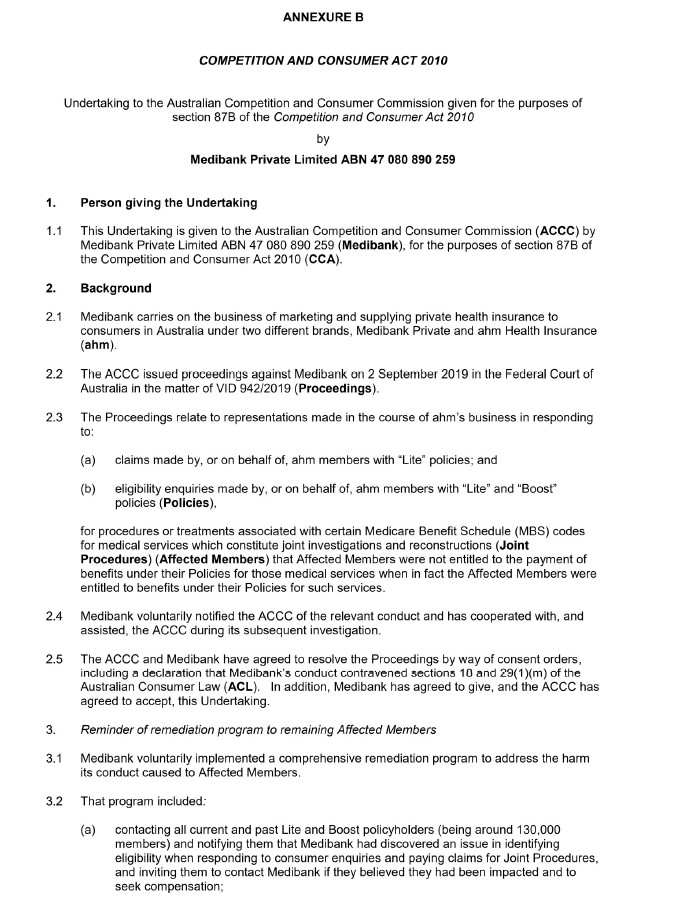
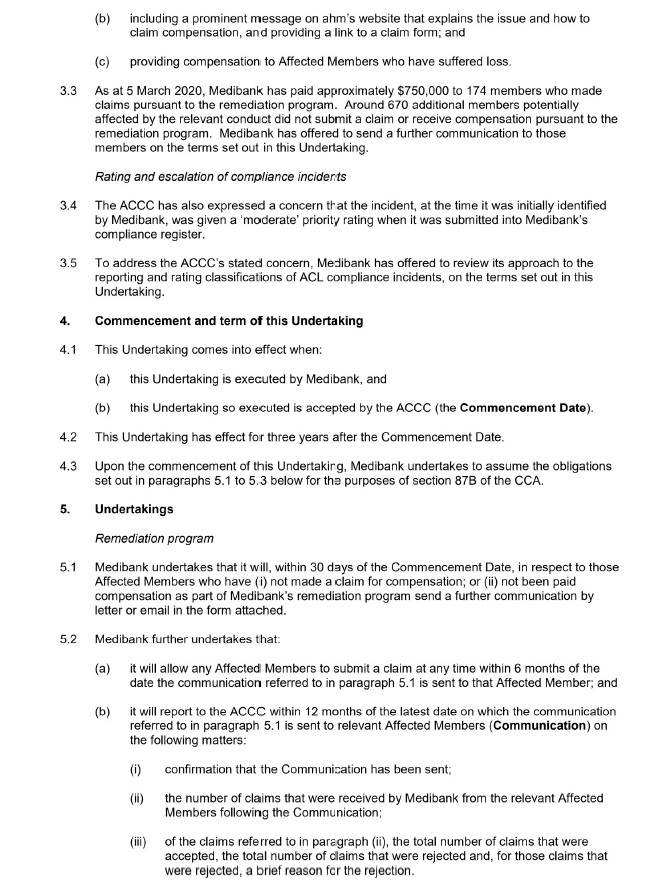
75 Medibank has offered the ACCC an undertaking, which the ACCC has accepted, pursuant to s 87B of the CCA (the Undertaking). The Undertaking requires Medibank to (among other things):
(1) send a further communication to Affected Members who have not yet submitted a claim for compensation or been paid compensation under the program: SOAFA [64]; Undertaking [5.1]. This communication is intended to address the ACCC’s concerns that members who have not submitted a claim to Medibank for compensation may not have understood the extent of the compensation available including that it was not limited to economic loss in the form of out of pocket or other expenses but also extended to compensation for other forms of loss including inconvenience and pain and suffering;
(2) allow any Affected Members to submit a claim at any time within six months of the date of this communication: Undertaking [5.2(a)];
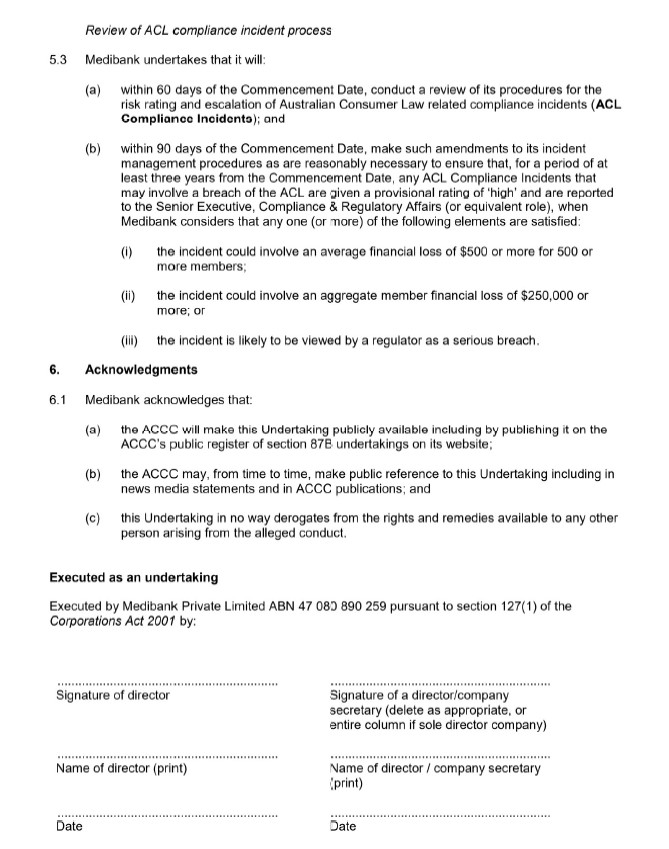
(3) conduct a review of Medibank’s “procedures for the risk rating and escalation of Australian Consumer Law related compliance incidents” (ACL Compliance Incidents): Undertaking [5.3(a)]. Medibank is then required, within 90 days of the Commencement of the Undertaking, to:
make such amendments to its incident management procedures as are reasonably necessary to ensure that, for a period of at least three years from the Commencement Date [of the Undertaking], any ACL Compliance Incidents that may involve a breach of the ACL are given a provisional rating of ‘high’ and are reported to [Medibank’s] Senior Executive, Compliance & Regulatory Affairs (or equivalent role), when [certain criteria] are satisfied. (Internal quotations in the original; Undertaking [5.3(b)].)
The criteria referred to in this extract are that “the incident could involve an average financial loss of $500 or more for 500 or more members”, “the incident could involve an aggregate member financial loss of $250,000 or more”, or “the incident is likely to be viewed by a regulator as a serious breach”: Undertaking [5.3(b)].
76 One purpose of the Undertaking is evidently to address the temporal period between Medibank identifying potential non-compliance with the ACL and Medibank then adequately addressing any such non-compliance. One aim of the Undertaking is to improve and make more robust Medibank compliance processes so that Medibank escalates issues as a higher priority when there is evidence of potential non-compliance with relevant laws. While each undertaking of this kind must be designed by reference to the particular circumstances of each case, the Undertaking in this matter should provide a degree of appropriate oversight concerning Medibank’s remediation of the Representations in this proceeding, and Medibank’s more general compliance with the ACL.
Financial gain to Medibank
77 The parties have submitted and I accept that the benefits payable to Affected Members for the medical procedures associated with the incorrectly rejected Claims and Eligibility Enquiries would have been up to approximately $800,000. Medibank made gains from Affected Members electing not to have procedures at all which enabled Medibank to avoid the payment of benefits. Medibank also benefited from Affected Members paying higher premiums to upgrade their policies. The SOAFA at [43] identifies the financial gain to Medibank as being approximately $800,000 to $1,680,000 in respect of the Lite Policies and around $1,000 to $87,000 in respect of the Boost Policies.
Deliberateness and the role of management in the contraventions
78 On the basis of the facts admitted, the parties submitted and I accept that the contraventions that took place were not the result of a deliberate disregard of the law by Medibank, but instead resulted from inadvertent errors. The ACCC does not allege that Medibank had any intention to mislead and the evidence set out in the admitted facts does not establish any such intention.
79 Nevertheless, the inaccurate statements that comprised the Representations were preventable. The contravening conduct could have been avoided had Medibank formulated and maintained a satisfactory product governance process to review, assess and monitor whether the MBS Codes included in the Claiming System for the Policies included all medical procedures or treatments which constituted “joint investigations and reconstructions”: SOAFA [15]. A business of the size and sophistication of Medibank, whose core business is providing benefits under health insurance policies, should have had product governance arrangements in place that were sufficient to ensure alignment between policy descriptions and the MBS Codes included in Medibank’s Claiming System.
80 From July 2017, Medibank’s senior managers, including the Divisional General Manager of the Private Health Insurance Portfolio, were aware of the incorrect exclusion of MBS Codes: SOAFA [47]. While Medibank took some steps when this incorrect exclusion was initially identified, the admitted contravening conduct continued to occur for over a year after senior managers became aware that the MBS Codes had been incorrectly excluded: SOAFA [54].
81 This was plainly a failure in Medibank’s compliance processes. Despite the steps Medibank initially took in an attempt to contain the issue when it was first identified, it is also apparent that Medibank initially underestimated the compliance risk. The interim measures put in place by Medibank were not entirely sufficient to prevent frontline staff continuing to make the Representations. Medibank ultimately notified Affected Members approximately one and a half years after first becoming aware of the contravening conduct: SOAFA [55].
Medibank’s size and financial position
82 The parties jointly submit that the proposed penalties take into account the fact that Medibank is a large and profitable company, and that the penalties are a significant penalty which will achieve the required “sting” necessary for specific deterrence. The parties also jointly contend that the proposed penalties are not oppressive when the size of Medibank and its financial position is taken into account.
83 The factual foundation for these submissions included that, as at 30 June 2019, Medibank had a customer base of 3.77 million, which comprises a 26.9% share of the number of policyholders in the private health insurance market in Australia. In August 2019, Medibank announced a net profit after tax of $458.7 million and annual revenue from premiums of $6.46 billion. The brand ahm is Medibank’s “value-based” brand. It currently has over 700,000 members representing around 20% of all Medibank members: SOAFA [39]-[42].
Prior similar conduct and corporate culture conducive to compliance
84 Medibank has not previously been found to have engaged in any contraventions of the CCA or the ACL. Medibank's conduct in self-reporting its contraventions and its cooperation with the ACCC, as well as its voluntary remediation program, provides evidence of a corporate culture that is likely to be conducive to compliance. In that regard, Medibank has taken further steps to improve its product governance processes and has offered the ACCC the Undertaking: SOAFA [60].
Medibank’s cooperation
85 The parties jointly submit and I accept that Medibank has provided a significant degree of cooperation to the ACCC since self-reporting its contravening conduct to the ACCC in August 2018. Medibank has cooperated with the ACCC’s investigation and voluntarily provided information to the ACCC. Medibank has also made admissions in this proceeding and avoided a contested hearing.
86 In this respect, at the hearing of this matter on 16 July 2020, I enquired with Counsel for the ACCC, Mr Michael Borsky QC, as to the effect of Medibank’s cooperative approach on the proposed penalty in this proceeding. I asked Mr Borsky QC what the proposed penalty might have been if Medibank had not provided to the ACCC the degree of cooperation that Medibank has provided in this matter. Mr Borsky QC indicated that in those hypothetical circumstances the ACCC’s proposed penalty would have been closer to a figure of approximately $10 million.
The courses of conduct
87 The parties have jointly submitted and I accept that for the purposes of determining an appropriate penalty the admitted facts disclose contraventions which comprise two courses of conduct. Those two categories of conduct flow from deficiencies in Medibank’s determination of the MBS Codes which constitute Joint Procedures in the Lite Policies (identified in 2017), and in the Boost Policies (identified in 2018).
88 It was jointly submitted and I accept that it is appropriate to consider the contraventions by reference to these two courses of conduct. Doing so, in my view, appropriately takes into account the relevant acts or omissions which were common to each of the two contraventions, being:
(1) first, the exclusion of the MBS Codes from the Claiming System for the Lite Policies (identified in 2017); and
(2) second, the exclusion of the MBS Codes from the Claiming System for the Boost Policies (identified in 2018).
89 I also accept the parties’ joint submissions that, given the facts of this case, the use of the course of conduct as a tool is of particular assistance where the number of contraventions is very large but there is a substantial interrelationship between the factual elements which underpin the various contraventions. In this respect, there were approximately 1,396 individual contraventions (or approximately 1,384 for the Lite Polices, three for the Boost Policies and nine for the Affected Members who held both Boost Policies and Lite Policies). However, the Representations made to Members on each of those occasions in effect conveyed the same misleading information. The amount of loss has also not been precisely quantified.
90 The parties have jointly submitted that the proposed penalties are appropriate when the two courses of conduct are examined. The first course of conduct involves approximately 1,389 contraventions of the ACL in respect of the Lite Policies with a combined penalty of $4.75 million. The second course of conduct involves approximately seven contraventions of the ACL in respect of the Boost Policies with a combined penalty of $250,000. It was jointly submitted by the parties that the different penalties for each course of conduct reflect that the Representations made in respect of the Lite Policies were:
(1) significantly greater in number;
(2) made in respect of a significantly greater number of procedures and treatments;
(3) made in response to both Claims and Eligibility Enquiries; and
(4) continued for five times as long as the Representations in respect of the Boost Policies, and for twice as long after Medibank became aware of the conduct.
91 Having considered all of the admitted facts and the joint submissions of the parties, I accept that the different penalties for each course of conduct are appropriate in the circumstances of this case.
Totality
92 As referred to above, the “totality principle” operates as a “final overall consideration” as to the appropriateness of the proposed penalty having regard to the totality of the contravening conduct involved. It was jointly submitted that, on the admitted facts of this case, grouping the penalties into two courses of conduct and attaching penalties to each in the amounts proposed jointly by the parties results in a cumulative and appropriate total penalty of $5 million. It was submitted that such a penalty does not exceed what is appropriate, having regard to the totality of the contravening conduct as set out above. For the reasons referred to earlier, I accept the parties’ joint submissions in this regard.
CONCLUSION ON THE APPROPRIATENESS OF THE PENALTY
93 I have concluded that the orders jointly proposed by the parties are in the public interest: they protect the interests of the community, should improve Medibank’s compliance with the ACL, and should provide both specific deterrence for Medibank and general deterrence in respect of the contravening conduct. The parties’ proposed orders also bring about a timely final resolution of this proceeding which avoids the substantial costs (to the parties and the public) typically associated with a contested hearing of the proceeding.
COSTS
94 The Court has power to award costs pursuant to s 43 of the FCA. The parties jointly seek an order that Medibank pay the ACCC’s costs fixed in the sum of $70,000 to be paid within 60 days of the date of the Court’s order. I made these Orders on 16 July 2020.
I certify that the preceding ninety-four (94) numbered paragraphs are a true copy of the Reasons for Judgment herein of the Honourable Justice Anderson. |
Associate:
Annexure A