FEDERAL COURT OF AUSTRALIA
Estates 77 Pty Ltd v Minister for the Environment (No 2) [2019] FCA 1935
ORDERS
ESTATES 77 PTY LTD (ACN 008 688 131) First Applicant NOVALEE NOMINEES PTY LTD (ACN 111 776 017) Second Applicant | ||
AND: | Respondent | |
DATE OF ORDER: |
THE COURT ORDERS THAT:
1. The application be dismissed.
2. The applicants pay the costs of the respondent, to be assessed if not agreed.
Note: Entry of orders is dealt with in Rule 39.32 of the Federal Court Rules 2011.
MCKERRACHER J:
THE DISPUTE
1 The first applicant, Estates 77 Pty Ltd (ACN 008 688 131), and the second applicant, Novalee Nominees Pty Ltd (ACN 111 776 017) (collectively, the applicants), wish to proceed with a development. The Minister for the Environment has taken steps which may delay or preclude the development due to a perceived risk to species of cockatoo.
2 The applicants apply under the Administrative Decisions (Judicial Review) Act 1977 (Cth) (the ADJR Act) and s 39B of the Judiciary Act 1903 (Cth) seeking review of the decision of the Minister pursuant to s 75(1) of the Environment Protection and Biodiversity Conservation Act 1999 (Cth) (the EPBC Act). By her delegate, the Minister decided that the residential development (the Proposed Action) of Lots 635, 739 and 740 on Deposited Plan 202751, Baldivis Road, Baldivis, Western Australia (the Subject Land) is a ‘controlled action’ under the EPBC Act and will require assessment and approval under the EPBC Act before it can proceed.
3 In Estates 77 Pty Ltd v Minister for the Environment [2019] FCA 1427 (Estates 77 (No 1)) I held that the applicants’ argument that the Minister lacked jurisdiction because there was not a ‘significant impact’ was quintessentially merits review and, as such, the Court lacked jurisdiction to entertain it. I considered that the applicants’ grounds, to the extent that they relied on this argument, should be dismissed. The originating application was amended to reflect the reasons in Estates 77 (No 1).
4 By their amended originating application, the applicants’ claim to be aggrieved by the Minister’s decision because:
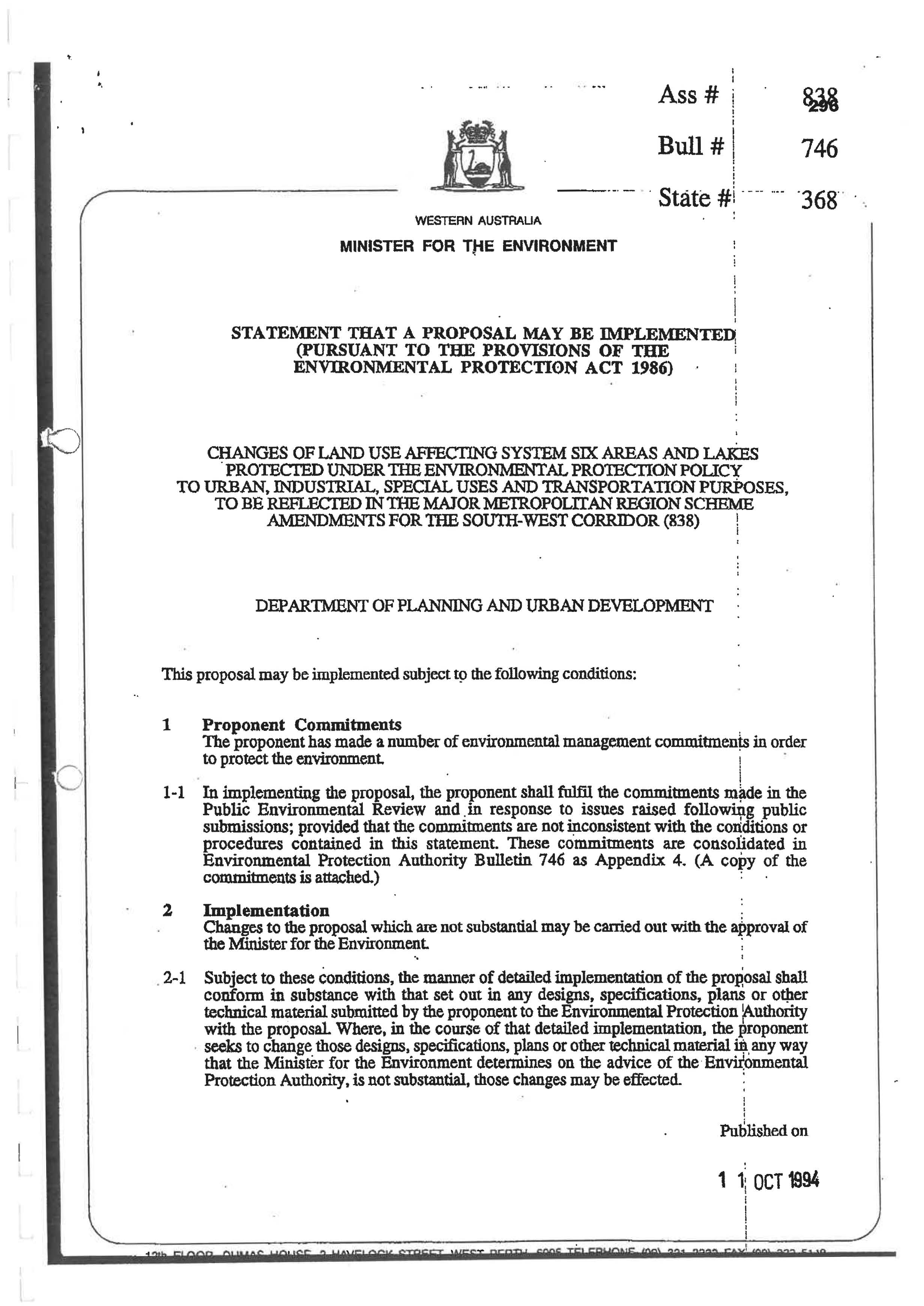
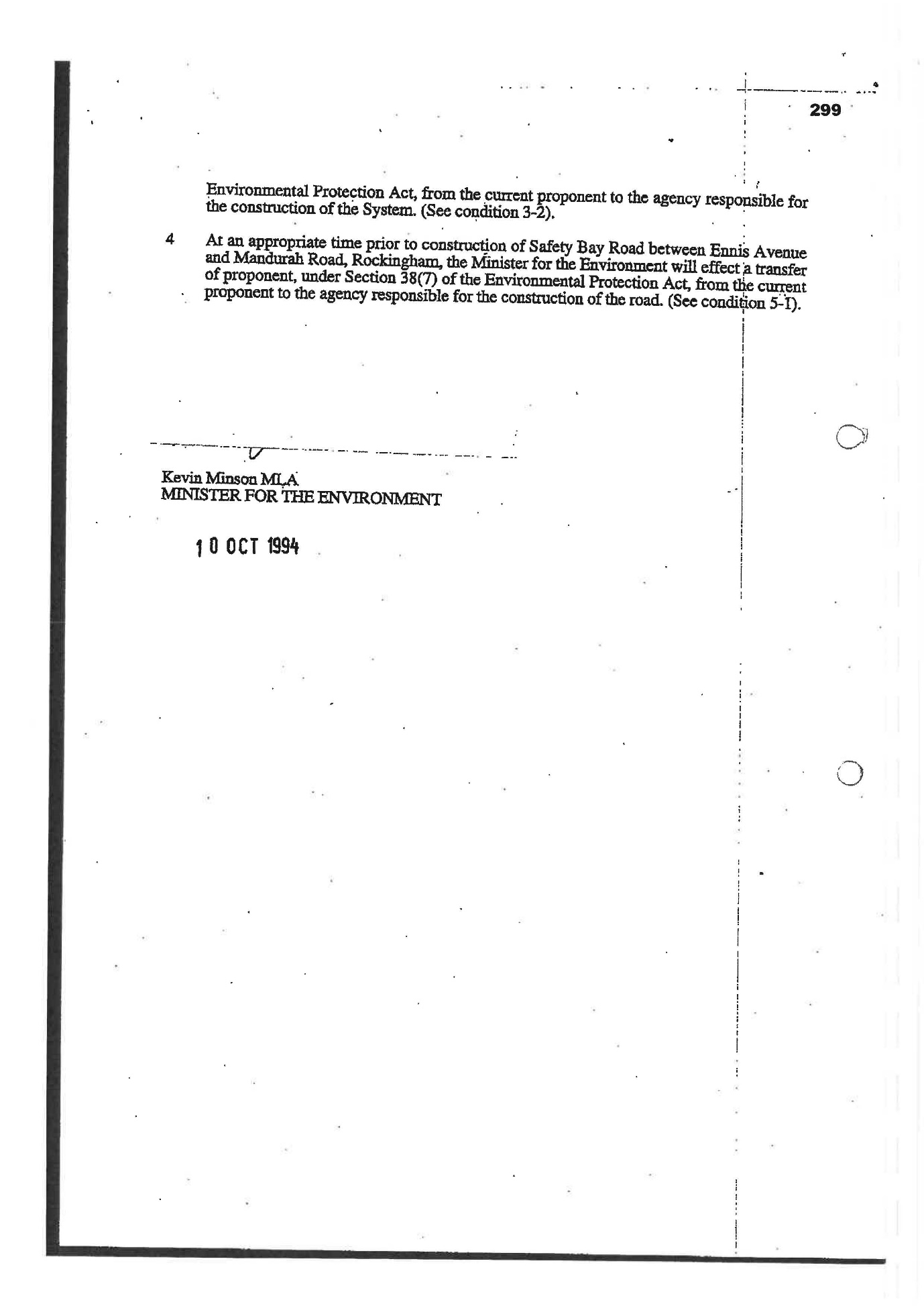
The Proposed Action is exempt from the requirements of referral, assessment and approval under the EPBC Act by reason of section 43A EPBC Act, in that before the commencement of the EPBC Act, the Proposed Action was authorised by a specific environmental authorisation.
5 For the reasons which follow, I am not satisfied that the Proposed Action is exempt under s 43A of the EPBC Act. Essentially, in my view, there was no ‘specific environmental authorisation’ within the proper meaning of that expression.
BACKGROUND
6 On 29 March 2019, the Minister decided under s 75 and s 87 of the EPBC Act that the Proposed Action was a ‘controlled action’ under the EPBC Act and that the Proposed Action would require assessment and approval under the EPBC Act before it could proceed (the Controlled Action Decision). The Minister further notified that the Proposed Action would need to be assessed by preliminary documentation.
7 The applicants rely on s 5 and s 6 of the ADJR Act discussed below. The applicants say, in particular, they are aggrieved by:
(a) the Minister’s delegate’s Deemed Referral Decision (referred to below);
(b) the Minister’s delegate’s Controlled Action Decision; and
(c) the Minister’s delegate’s conduct in deciding to proceed with an assessment of the Proposed Action purportedly under the EPBC Act.
The essence of the complaint is that the decision involved an error of law in that the Proposed Action is not a ‘controlled action’ as it is exempt under the EPBC Act. What may be ‘exempt’ is a central consideration. The practical interaction of State and Federal statute arises.
8 In addition to the ADJR Act ground, there is an application pursuant to s 39B of the Judiciary Act for a writ of prohibition against the Minister to take no further action or steps in respect of the Minister’s proposed assessment of the Proposed Action. The ground in support of the writ are the same as those relied upon under the ADJR Act. Accordingly, it is sufficient to consider the ground under the ADJR Act.
THE EVIDENCE
9 The applicants rely on the affidavit of Mr Craig Wallace, sworn 17 May 2019.
10 The Minister relies on the affidavit of Mr Cain Sibley, affirmed 2 July 2019.
11 The affidavits upon which the parties rely, both deposed to by their solicitors, were read subject to relevance.
12 An issue arose during the course of the hearing as to the definition of ‘urbanisation’. The parties were given leave to file short supplementary submissions on this point. Those submissions were filed. Ultimately little turned on the topic.
13 In Estates 77 (No 1), I set out the background to this proceeding substantially as deposed to by Mr Wallace in his affidavit. For convenience, this background is repeated.
The background to the Proposed Action
14 The Subject Land was rezoned ‘Urban Deferred’ pursuant to MRS Amendment 937/33 (South West Corridor Stage B) to Western Australia’s Metropolitan Region Scheme, which amendment became effective on 10 December 1994. Its purpose was to give effect to the proposals in the South West Corridor Structure Plan within the City of Rockingham. At the same time, and as part of the process of MRS Amendment 937/33, the Environmental Protection Authority for the State of Western Australia (the EPA) set a level of ‘Public Environmental Review’ (Assessment Number 838) for certain aspects of proposed MRS Amendment 937/33 and produced EPA Bulletin 746 dated July 1994. The other land use changes proposed by the proposed MRS Amendment 937/33 (including the proposed Urban Deferred zoning for the Subject Land) were to be considered by the EPA at the level of ‘informal review with public advice’.
15 The advice of the EPA was contained in a letter of 5 May 1994 and included the following:
The [EPA] considers that decisions on the use of bushland areas outside Systems Recommendation areas and conservation areas should be made through the planning process, both at the State and local level.
16 The then State Minister for the Environment approved MRS Amendment 937/33, subject to conditions (which did not relate to the Subject Land) by Ministerial Statement 368, dated 11 October 1994: ‘Statement That A Proposal May Be Implemented (pursuant to the provisions of the Environmental Protection Act 1986)’ (Annexure A). Subsequently, on 16 July 2000, the EPBC Act commenced operation, the significance of which will become apparent.
17 The City adopted the South Baldivis District Structure Plan (the SBDSP) in 2001. The Subject Land was located within Precinct 4 of the SBDSP (constituting approximately 70% of Precinct 4) and planned for a predominant zoning of ‘Urban’ for an ultimate planned population of 4,290 people.
18 The Subject Land was zoned ‘Development’ in the City’s Town Planning Scheme No 2 (the TPS2) and gazetted. Clause 4.2.4 of the TPS2 required a local structure plan to be prepared to support the development or subdivision of any land within the Development zone.
19 Planning consultants for the applicants lodged such a draft proposed Local Structure Plan (the LSP) with the City on 18 March 2010, setting out a proposed design for 870 residential lots. In April 2010, the planning consultants also lodged with the West Australian Planning Commission (the WAPC) a request (with supporting information) for the lifting of the Urban Deferment zoning to Urban zoning.
20 The draft proposed LSP was revised a number of times in October 2011. A fourth version was submitted by the applicants’ planning consultants to the City. It enclosed an Environmental Assessment Report dated September 2011, prepared by RPS Environmental Consultants. It advised, amongst other things, that due to the topography there was a need to reduce the levels across the site to a maximum of approximately 28-30 metres AHD which ‘will result in very little ability to retain native trees across most of the site’. RPS had earlier commissioned a tree survey ecologists dated 2 March 2011, which had been required by the City as a requirement for advertising the draft proposed LSP.
21 The WAPC had referred the proposed lifting of Urban Deferment zoning to Urban zoning to the EPA by a letter of 31 May 2010. The EPA responded on 20 July 2010, noting that the environmental issues raised included Carnaby’s Black Cockatoo and advised it was expected that the identified environmental factors would be ‘adequately managed where possible through detailed planning processes’.
22 The WAPC resolved on 10 December 2013 to proceed with MRS Amendment 1262/27 for the transfer of the Subject Land from the Urban Deferred zone to the Urban zone.
23 On 2 September 2014, the applicants applied to the WAPC for the approval of the proposed subdivision of lots 635, 739 and 740, including 868 single residential lots, seven grouped housing lots and three duplex lots. The WAPC issued an approval of the proposed subdivision, subject to a number of conditions on 27 February 2015. The conditions required compliance with a fire management plan. On 24 March 2015, the WAPC advised the Chief Executive Officer of the City that modifications to the LSP had been satisfactorily undertaken and the WAPC had resolved to endorse the modified LSP.
24 By an application of 21 July 2016, the applicants applied to the WAPC for the approval of the proposed subdivision of portions of lots 635 and 739 (first stage), including 247 residential lots. The WAPC approved the subdivision, subject to various conditions. The conditions included a condition requiring the applicants to implement a fire management plan with such a plan to be implemented during the subdivision works. The works for the approved subdivision proceeded accordingly.
Commonwealth involvement
25 Ten months later, the Department wrote to the applicants on 23 May 2017 advising that matters of national environmental significance under the EPBC Act that were known to occur included Carnaby’s Black Cockatoos (listed endangered under the EPBC Act) and the Forest Red-Tailed Black Cockatoos (listed vulnerable under the EPBC Act) and that the proposed residential development of the Subject Land may have potential to have significant effect on Carnaby’s Black Cockatoos and the Forest Red-Tailed Black Cockatoos.
26 On 14 June 2017, the applicants’ project manager, Spatial Property Group (SPG) wrote to the Department advising that the landowners had determined it was highly unlikely that there was any significant impact to matters of national environmental significance and as a result referral under the EPBC Act was not necessary. The Department advised by letter of 5 July 2017 that local and/or state approvals did not extinguish the requirements under the EPBC Act and that the Departmental officers would carry out an inspection on the site under a monitoring warrant.
27 The delegate of the Department made the Deemed Referral Decision under s 70(3) of the EPBC Act on 17 December 2018, to deem that the EPBC Act had effect in respect of the Proposed Action as if the Proposed Action had been referred under the EPBC Act by the applicants.
28 The delegate gave notification on 29 March 2019 that the Proposed Action was a ‘controlled action’ for the purposes of the EPBC Act and would require assessment and approval before it could proceed.
THE ISSUES
29 The issue is whether the Minister’s decision involved an error of law in that the Proposed Action was not a ‘controlled action’ as it was exempt under the EPBC Act.
30 There are two key elements in the way the applicants progressed their argument. The first concerns the interpretation of s 43A of the EPBC Act which, in short, provides exemptions to certain otherwise controlled actions from the assessment and approval provisions of the EPBC Act, including, relevantly, where there is prior authorisation. The second element underpinning the applicants’ argument concerns the nature of the approval process and the environmental legislation in Western Australia in support of their contention that they did, in fact, have the requisite authorisation for the purposes of s 43A of the EPBC Act.
THE LEGISLATIVE FRAMEWORK AND CURRENT DISPUTE
Judicial review
31 While a well-trodden and familiar area, it is appropriate to set out the provisions of the Judiciary Act and the ADJR Act upon which the applicants rely.
32 Section 5(1) of the ADJR Act provides:
5 Applications for review of decisions
(1) A person who is aggrieved by a decision to which this Act applies that is made after the commencement of this Act may apply to the Federal Court or the Federal Circuit Court for an order of review in respect of the decision on any one or more of the following grounds:
(a) that a breach of the rules of natural justice occurred in connection with the making of the decision;
(b) that procedures that were required by law to be observed in connection with the making of the decision were not observed;
(c) that the person who purported to make the decision did not have jurisdiction to make the decision;
(d) that the decision was not authorized by the enactment in pursuance of which it was purported to be made;
(e) that the making of the decision was an improper exercise of the power conferred by the enactment in pursuance of which it was purported to be made;
(f) that the decision involved an error of law, whether or not the error appears on the record of the decision;
(g) that the decision was induced or affected by fraud;
(h) that there was no evidence or other material to justify the making of the decision;
(j) that the decision was otherwise contrary to law.
(Emphasis added.)
33 As noted above, by the amended originating application, the applicants rely upon the ground of review that the Minister’s decision involved an error of law under s 5(1)(f) of the ADJR Act (in that the Proposed Action was not a controlled action as it is exempt under the EPBC Act).
34 Section 6 of the ADJR Act provides for this Court to hear applications for an order of review made by a person aggrieved. Section 6(1)(f) of the ADJR Act provides relevantly:
6 Applications for review of conduct related to making of decisions
(1) Where a person has engaged, is engaging, or proposes to engage, in conduct for the purpose of making a decision to which this Act applies, a person who is aggrieved by the conduct may apply to the Federal Court or the Federal Circuit Court for an order of review in respect of the conduct on any one or more of the following grounds:
…
(f) that an error of law had been, is being, or is likely to be, committed in the course of the conduct or is likely to be committed in the making of the proposed decision;
…
The applicants additionally, or alternatively, rely upon that ground of review in respect of the Minister’s proposal to conduct an assessment of the Proposed Action.
35 Finally, turning to s 39B(1) of the Judiciary Act, it relevantly provides:
39B Original jurisdiction of Federal Court of Australia
Scope of original jurisdiction
(1) Subject to subsections (1B), (1C) and (1EA), the original jurisdiction of the Federal Court of Australia includes jurisdiction with respect to any matter in which a writ of mandamus or prohibition or an injunction is sought against an officer or officers of the Commonwealth.
36 Further, or in the alternative, the applicants seek under s 39B a writ of prohibition against the Minister to prevent further action or steps in respect of the Minister’s proposed assessment of the Proposed Action, relying on the same ground.
The EPBC Act
37 The objects of the EPBC Act, which came into statutory effect on 16 July 2000, include provision for the protection of the environment, especially those aspects of the environment that are ‘matters of national environmental significance’. Part 3 of Ch 2 of the EPBC Act sets out a number of such matters for which assessment and approval is required. These include world heritage properties, national heritage places, wetlands of international importance and, relevantly, listed threatened species and communities.
38 Section 75(1) of the EPBC Act provides:
75 Does the proposed action need approval?
Is the action a controlled action?
(1) The Minister must decide:
(a) whether the action that is the subject of a proposal referred to the Minister is a controlled action; and
(b) which provisions of Part 3 (if any) are controlling provisions for the action.
Note: The Minister may revoke a decision made under subsection (1) about an action and substitute a new decision. See section 78.
39 The term ‘action’ is defined in s 523(1) of the EPBC Act to include, relevantly, ‘a project’ and ‘a development’.
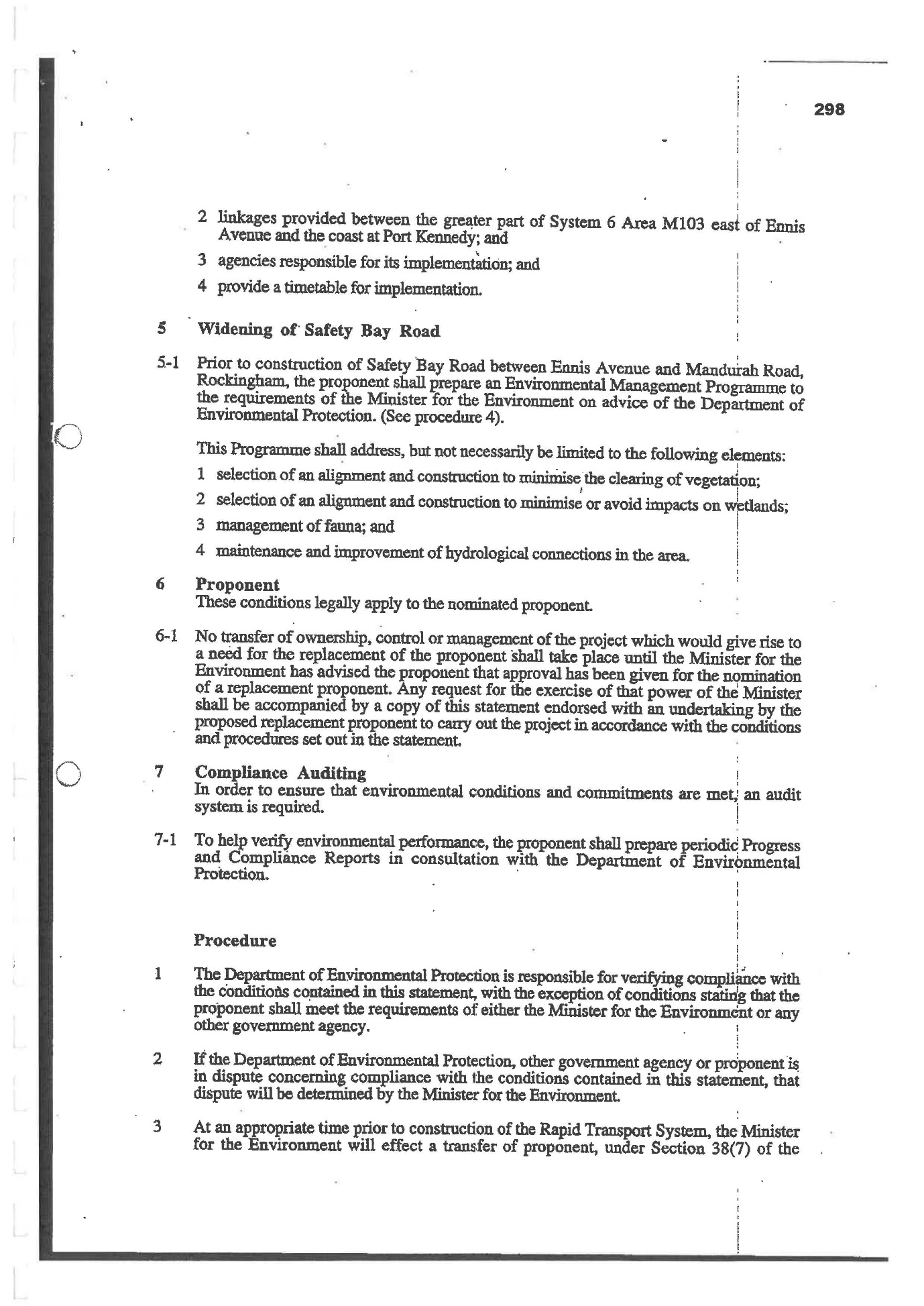
40 The term ‘controlled action’ is defined in s 67 of the EPBC Act as follows:
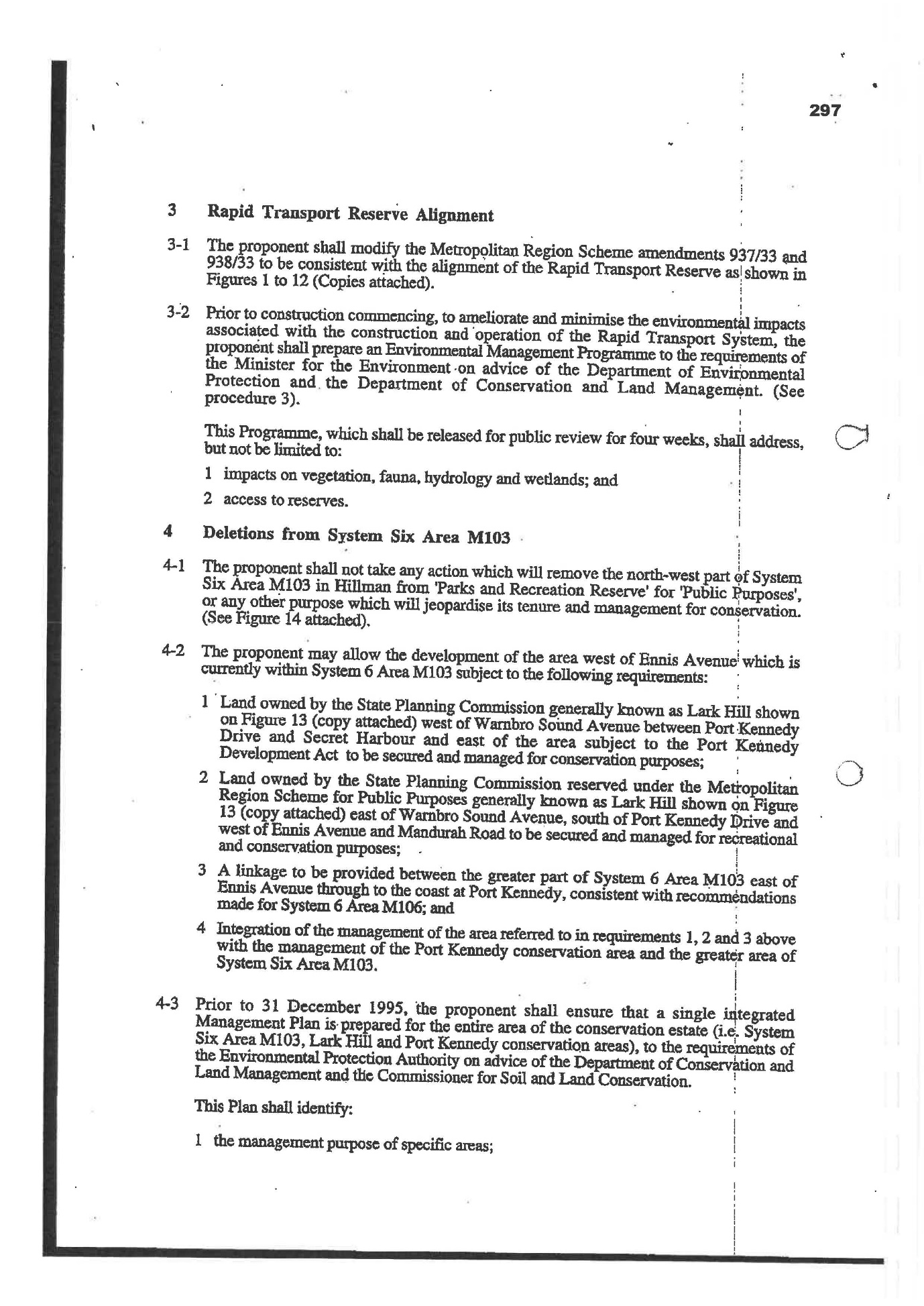
67 What is a controlled action?
An action that a person proposes to take is a controlled action if the taking of the action by the person without approval under Part 9 for the purposes of a provision of Part 3 would be (or would, but for section 25AA or 28AB, be) prohibited by the provision. The provision is a controlling provision for the action.
41 As part of the Controlled Action Decision, the Minister’s delegate decided that the controlling provisions for the Proposed Action were s 18 and s 18A of the EPBC Act in Pt 3 of Ch 2.
42 Section 18 of the EPBC Act relevantly provides:
18 Actions with significant impact on listed threatened species or endangered community prohibited without approval
…
Endangered species
(3) A person must not take an action that:
(a) has or will have a significant impact on a listed threatened species included in the endangered category; or
(b) is likely to have a significant impact on a listed threatened species included in the endangered category.
Civil penalty:
(a) for an individual—5,000 penalty units;
(b) for a body corporate—50,000 penalty units.
Vulnerable species
(4) A person must not take an action that:
(a) has or will have a significant impact on a listed threatened species included in the vulnerable category; or
(b) is likely to have a significant impact on a listed threatened species included in the vulnerable category.
Civil penalty:
(a) for an individual—5,000 penalty units;
(b) for a body corporate—50,000 penalty units.
…
43 Section 18A of the EPBC Act relevantly provides:
18A Offences relating to threatened species etc.
(1) A person commits an offence if:
(a) the person takes an action; and
(b) the action results or will result in a significant impact on:
(i) a species; or
(ii) an ecological community; and
(c) the species is a listed threatened species, or the community is a listed threatened ecological community.
Note: Chapter 2 of the Criminal Code sets out the general principles of criminal responsibility.
…
(2) A person commits an offence if:
(a) the person takes an action; and
(b) the action is likely to have a significant impact on:
(i) a species; or
(ii) an ecological community; and
(c) the species is a listed threatened species, or the community is a listed threatened ecological community.
Note: Chapter 2 of the Criminal Code sets out the general principles of criminal responsibility.
44 As noted, the Carnaby’s Black Cockatoo, Calyptorhynchus latirostris, and Baudin’s Black Cockatoo Calyptorhynchus baudinii, are both listed under the EPBC Act as ‘endangered’. The Forest Red-tailed Black Cockatoo, Calyptorhynchus banksii naso, is listed as ‘vulnerable’ under the EPBC Act.
45 Reading ss 18, 18A, 67 and 75 together – against the context of the Controlled Action Decision – the evaluative issue or integer that was the focus clearly was whether the Proposed Action has, will have, or is likely to have, a significant impact on a listed threatened species.
46 The meaning of ‘impact’ is addressed in s 527E of the EPBC Act to include an ‘event or circumstance’ which is a direct consequence of the action. An ‘event or circumstance’ is not defined in the EPBC Act, so those words are to be given their ordinary meaning.
47 The phrase ‘significant impact’ is also not defined in the EPBC Act but has been construed as meaning an ‘impact that is important, notable or of consequence having regard to its context or intensity’: Booth v Bosworth (2001) 114 FCR 39 per Branson J (at [90]). It is to be noted that in Booth, the parties were in ‘broad agreement’ as to interpretation of the phrase.
48 The Controlled Action Decision was made by Mr Gregory Manning, Assistant Secretary, Assessments (WA, SA, NT) and Post Approvals Branch. A brief dated 29 March 2019 was prepared for Mr Manning in respect of the Controlled Action Decision (Controlled Action Brief). The Controlled Action Brief contained the following recommendation:
The Department recommends that you decide that the proposal is a controlled action, because there are likely to be significant impacts on listed threatened species. These impacts are discussed below. For the same reasons, the Department recommends you decide that the controlling provisions for the proposed action are section 18 and 18A.
49 As I concluded in Estates 77 (No 1), the factual question of whether there was a ‘significant impact’ was a question for the Minister that was incapable of review on the basis advanced.
50 The provision at the heart of the present dispute is s 43A of the EPBC Act. Section 43A is in the following terms:
43A Actions with prior authorisation
(1) A person may take an action described in a provision of Part 3 without an approval under Part 9 for the purposes of the provision if:
(a) the action consists of a use of land, sea or seabed; and
(b) before the commencement of this Act, the action was authorised by a specific environmental authorisation; and
(c) immediately before the commencement of this Act, no further specific environmental authorisation was necessary to allow the action to be taken lawfully; and
(d) at the time the action is taken, the specific environmental authorisation continues to be in force.
(1A) For the purposes of paragraphs (1)(c) and (d), a renewal or extension of a specific environmental authorisation is taken to be a new specific environmental authorisation unless:
(a) the action that is authorised by the authorisation following the renewal or extension is the same as the action that was authorised by the authorisation before the commencement of this Act; and
(b) the renewal or extension could properly be made or given without any further consideration of the environmental impacts of the action.
Note: If a renewal or extension of a specific environmental authorisation is taken to be a new specific environmental authorisation, the condition in paragraph (1)(c) or (d) would not be met.
(2) In this Act:
environmental authorisation means an authorisation under a law of the Commonwealth, a State or a self-governing Territory that has either or both of the following objects (whether express or implied):
(a) to protect the environment;
(b) to promote the conservation and ecologically sustainable use of natural resources.
specific environmental authorisation means an environmental authorisation that:
(a) identifies the particular action by reference to acts and matters uniquely associated with that action; or
(b) was issued or granted following a consideration of the particular action by reference to acts and matters uniquely associated with that action.
51 In order to ground an exemption under s 43A of the EPBC Act an action must satisfy each of the requirements in subss 43A(1)(a) to 43A(1)(d). Satisfaction of these requirements necessitates there being a ‘specific environmental authorisation’ to found the exemption. This is at the heart of the dispute between the parties.
THE ‘SPECIFIC ENVIRONMENTAL AUTHORISATION’ AS CONTENDED
52 Turning to consider whether the approval relied upon by the applicants satisfies the exemption in s 43A, the applicants argue the Proposed Action was the subject of a ‘specific environmental authorisation’ under a law of a State, being that of Western Australia. The relevant State law relied upon by the applicants that pre-dated the EPBC Act was the Environment Protection Act 1986 (WA) (the EP WA Act).
53 In Western Australia the systems for environmental and planning approvals are dealt with under separate legislation. The EP WA Act, in Pt IV entitled ‘Environmental impact assessment’, provides for the environmental assessment of referred proposals and the environmental assessment of planning schemes and planning scheme amendments. The applicants identify planning schemes as being the primary statutory planning instruments that control and authorise land use, subdivision and development of land within Western Australia.
54 Prior to 2005, the planning framework in Western Australia was comprised by the Town Planning and Development Act 1928 (WA) (repealed) (the TPD Act), the Metropolitan Region Town Planning Scheme Act 1959 (WA) (repealed) and the Western Australian Planning Commission Act 1985 (WA) (repealed) and various planning schemes made under those statutes. These three pieces of legislation were consolidated (with amendments) into the Planning and Development Act 2005 (WA): see Explanatory Memorandum, Planning and Development Bill 2005 (WA) (at 2).
55 As stated above (from [14]), as part of the process of the MRS Amendment 937/33, the EPA had set a level of ‘Public Environmental Review’ (PER) (Assessment Number 838) for certain aspects of MRS Amendment 937/33 and produced EPA Bulletin 746 dated July 1994. The other land use changes proposed by the proposed MRS Amendment 937/33 (including the proposed Urban Deferred zoning for the Subject Land) were to be considered by the EPA at the level of ‘informal review with public advice’.
56 The advice of the EPA was contained in a letter dated 5 May 1994. The EPA advice included the following:
The [EPA] considers that decisions on the use of bushland areas outside System 6 Recommendations areas and conservation areas should be made through the planning process, both at the State and local level.
57 The applicants contend the EPA acted on the basis that MRS Amendment 937/33 had been referred as a proposal for a decision as to whether to require environmental assessment or not. The EPA determined that certain areas of the proposed MRS Amendment required formal environmental assessment at a level of Public Environmental Review. A PER is required when the EPA has decided the proponent must undertake it under s 40(2)(b) of the EP WA Act and that the proposed re-zonings for other areas (including the Subject Land) did not, and would be dealt with under the usual planning processes.
58 The then State Minister for the Environment determined to approve MRS Amendment 937/33 subject to conditions (which conditions did not relate to the Subject Land) by Ministerial Statement 368 dated 11 October 1994: the ‘Statement that a Proposal may be Implemented (pursuant to the provisions of the Environmental Protection Act 1986)’ (Annexure A). The applicants contend that this, Ministerial Statement 368, is the ‘specific environmental authorisation’ that was given before the commencement of the EPBC Act and is the basis for the exemption that is contended for by the applicants.
59 Whether Ministerial Statement 368 constitutes a ‘specific environmental authorisation’ for the purposes of s 43A of the EPBC Act, requires reference to its terms and the State regime under which it was made.
60 The applicants contend Ministerial Statement 368 had effect for the purposes of the EP WA Act to authorise the actions taken thereafter to rezone the Subject Land to Urban Deferred under the MRS Amendment 937/33. The conditions to the Ministerial Statement 368 included requirements for the proponent which, importantly, was then the Department of Planning and Urban Development (the DPUD), to fulfil commitments made in the PER as were consolidated in the EPA Bulletin 746 (and attached to Ministerial Statement 368). The commitments attached to the Ministerial Statement 368 included a commitment by the DPUD that as urbanisation of the South West Corridor progressed, the DPUD would endeavour to ensure the environmental protection requirements in the PER would be implemented, where appropriate, in town planning schemes, district and local structure plans and subdivision plans.
61 Accordingly, the applicants contend Ministerial Statement 368 authorised the progressing of planning instruments such as town planning schemes, district and local structure plans for the areas proposed for rezoning within the South West Corridor, including the Urban Deferred zoning for the Subject Land, and for approvals for subsequent subdivision applications in accordance with these planning instruments.
62 The applicants emphasise the background to the determination in Ministerial Statement 368, noting that the assessment involved the future development proposals for the South West Corridor as reflected in a major amendment to the Metropolitan Region Scheme for the City, which assessment was undertaken by PER and dated March 1994. Relevantly, the PER at the time acknowledged that the area assessed was predominantly rural and underdeveloped, and as it intended to change character to become a major part of the Perth Metropolitan Region, that both urban and conservation objectives would need to be reconciled. Further, the PER acknowledged the potential for more detailed study for specific development proposals but noted that the reason for conducting the environmental assessment of the proposed rezonings at the time was ‘to ensure that the potential environmental impacts are considered in a strategic regional context’. Relevantly, the PER identified that urban rezoning and population expansion would have implications for the environment. It also stated that the:
DPUD will endeavour to ensure that the environmental requirements implicit in this PER are implemented, where appropriate in Town Planning Schemes, District and Local Structure Plan and Subdivision Plans.
63 The applicants argue that the planning process that follows such an assessment in a Western Australian context, including the subsequent lifting of the Urban Deferred zoning and ultimate subdivision, would be based on Ministerial Statement 368 and would only require further environmental assessment in circumstances that a decision-maker for the subsequent stages or a proponent anticipates an alternative proposal.
64 This contention is grounded in the EP WA Act and the manner in which proposals (including subsequent subdivision and development approval applications) under assessed schemes are dealt with. Section 48I of the EP WA Act provides:
48I Which proposals under assessed schemes to be referred to Authority
(1) Despite section 38, when a proposal under an assessed scheme that appears likely, if implemented, to have a significant effect on the environment comes to the notice of the responsible authority in respect of the assessed scheme, that responsible authority shall determine whether or not —
(a) the environmental issues raised by that proposal were assessed in any assessment of the assessed scheme under this Division; and
(b) that proposal complies with the assessed scheme and any conditions to which the assessed scheme is subject.
(2) If the responsible authority determines under subsection (1) that —
(a) the environmental issues raised by the proposal were assessed in any assessment of the assessed scheme under this Division; and
(b) the proposal complies with the assessed scheme and any conditions to which the assessed scheme is subject, the responsible authority need not refer the proposal to the Authority under section 38.
65 The reason for the inclusion of an opportunity for early assessment of scheme amendments prepared under the Planning and Development Act 2005 (WA) is explained in the second reading speech to the Planning Legislation Amendment Bill, which inserted the relevant provision in the EP WA Act, on 29 June 1995:
It is essential that the environmental assessment is done up-front with the planning assessment so that the community has as much information as it is reasonably practicable before it when determining the most appropriate use of land.
…
Once the Government as a whole has determined the most appropriate use of land, the owner of that land will benefit from the certainty of knowing that the environmental factors have also been taken into consideration and the land use will not be changed without good reason. The new process is specifically intended to ensure that all assessment is done ‘up-front’ to provide certainty in the system. Therefore, subdivision or development proposals submitted to the responsible authority for consideration under an assessed scheme will not be referred to the EPA for environmental impact assessment.
66 The applicants acknowledge that Ministerial Statement 368 was issued before these amendments and was not an assessed scheme in a strict sense, however they argue that it has been evaluated and determined as an ‘assessed scheme’ as it was assessed using the same process and, therefore, the resulting Ministerial Statement has the same legal effect as an assessed scheme. As such, the consequential application of s 48I of the EP WA Act is said to be relevant. In particular, once a rezoning has taken place, there is no further need for any additional approval unless the EPA considers the project or proposal requires further assessment and approval because, when it assessed the assessed scheme, it did not have sufficient scientific or technical information to enable it to assess the environmental issues (s 38(5e) of the EP WA Act). Relevantly, the applicants contend even if the Ministerial Statement 368 was not considered an assessed scheme, the application of s 38(5c) of the EP WA Act also limits the requirement for reconsideration of matters previously referred, though subject to the provision in s 45C of the EP WA Act in that further assessment may only be required in circumstances that changes are made to a proposal after the Ministerial Statement is issued. (It is to be noted (although nothing turns on it in the end), that s 38 was substantially amended by the Environmental Protection Amendment Act 2003 (WA), by which subss 38(1) to 38(5) were repealed and replaced to include s 38(5) subsections relied upon by the applicants).
67 In terms of s 43A of the EPBC Act, the applicants argue that the sole environmental authorisation that was required under the State’s environmental legislation prior to the commencement of the EPBC Act was the EPA Assessment of the South West Corridor and the Ministerial Statement 368 for the same.
68 The request for lifting of the Urban Deferment of the Subject Land was addressed in a letter to the WAPC from the Office of the EPA dated 20 July 2010 who provided comments only. That letter advised that the environmental factors identified (including Carnaby’s Black Cockatoos) were expected to be managed adequately where possible through the detailed planning processes. The advice from the Director of the Office of the EPA (and not a decision of the EPA) was merely commentary on the process to be taken that had already been authorised by the Ministerial Statement. Relevantly, the letter notes:
The environmental issues raised by the proposed Metropolitan Region Scheme (MRS) amendment include:
• High Pressure Gas Pipeline
• Buffers
• Contamination
• Carnaby’s Black Cockatoo
• Management of Water Quality and Quantity
• Impacts on Sensitive Land Use
…
Carnarby’s [sic] Black Cockatoos
Carnarby’s [sic] Black Cockatoos are known to feed on the Swan Coastal Plain and clearing of the Marri and Jarrah trees which are present on the site may have an impact on the species. The Cockatoos are listed as “endangered” according to the Australian Government and “Rare or likely to become extinct” by the Western Australian Government and are protected under the [EPBC Act]. The proposal may need to be referred to the Department of the Environment, Water, Heritage and Arts (DEWHA) under the EPBC Act. ·
The OEPA supports the developer’s intention to retain as many large trees as possible on the subject site as possible habitat for Carnaby’s Black Cockatoo or other Black Cockatoo species that may utilise the area. Additionally, a survey should be undertaken at the detailed planning stage to identify trees with possible nesting hollows. The intention to schedule construction activities to not coincide with their breeding season is also supported.
…
Based on its consideration of the above factors, the OEPA has no objection to the WAPC initiating the proposed MRS amendment, understanding that any such amendment will require referral to the EPA in accordance with section 38 of the Planning and Development Act 2005 for a decision on whether or not the amendment requires formal environmental assessment.
That advice was not in the nature of a renewal or extension of the environmental authorisation within the meaning of s 43A(1A) of the EPBC Act as such renewal or extension was not required. This letter, the applicants contend, confirms that no assessment was required on the proviso that any actions were carried out in accordance with the scheme, noting the statutory position that the proposed scheme amendment may require further referral and approval under s 38 of the EP WA Act. It is the case that the applicants applied for and were granted subdivision approval for the Subject Land, without any need for referral to the EPA by the relevant decision-maker or it as a proponent subsequent to the issuing of Ministerial Statement 368.
69 The applicants argue that the planning processes that have been followed (as owners of the Subject Land) and the planning approvals obtained (in particular the approvals of the subdivision applications) have been entirely consistent with the environmental authorisation contained in the Ministerial Statement 368 and no other specific environmental authorisation has been required (either prior or subsequent to the EPBC Act commencing) in order for the Proposed Action to be undertaken.
70 The applicants argue that Ministerial Statement 368 comprises the only environmental authorisation applicable to the development of the Subject Land. The rationale for that is premised upon the West Australian approach to a strategic assessment of anticipated and actual clearing contemplated in an urban zoning and in seeking to balance the environmental and urban objectives in a strategic manner to allow certainty for land development at an early stage. The anticipated clearing of appropriately zoned land (including the Subject Land) in this sense and the requirement for reservation of land comprising significant environmental values and the specific advice to consider the protection of site-specific values in the planning process comprises, it is argued, a specific environmental authorisation in a West Australian context.
71 Importantly, the applicants note that if the Minister is correct in its submissions that Ministerial Statement 368 is not a ‘specific environmental authorisation’, then the prior authorisation exemption in s 43A of the EPBC Act becomes otiose in a Western Australian context. If the Minister is right, a proponent who has obtained a Ministerial Statement that predates the EPBC Act, following a rezoning amendment and benefits from a subdivision approval with no further requirement for State environmental assessment, will still be required to undergo another assessment under the EPBC Act at the end of that process. It is argued the consequence would fundamentally affect the commerciality of the development process and the point and purpose of the prior authorisation exemption.
CONSIDERATION
72 Section 43A of the EPBC Act was amended by the Environment and Heritage Legislation Amendment Act (No. 1) 2006 (Cth) (Act No 165 of 2006) (the 2006 Act). It has not been amended since. Prior to the 2006 Act, s 43A was in the following terms:
43A Actions with prior authorisation
(1) A person may take an action described in a provision of Part 3 without an approval under Part 9 for the purposes of the provision if:
(a) the action consists of a use of land, sea or seabed; and
(b) the action was specifically authorised under a law of the Commonwealth, a State or a self-governing Territory before the commencement of this Act; and
(c) immediately before the commencement of this Act, no further environmental authorisation was necessary to allow the action to be taken lawfully.
(2) In this section:
environmental authorisation means an authorisation under a law of the Commonwealth, a State or a self-governing Territory that has either or both of the following objects (whether express or implied):
(a) to protect the environment;
(b) to promote the conservation and ecologically sustainable use of natural resources.
73 The amendments brought about by the 2006 Act followed the construction given to s 43A of the EPBC Act by Sackville J in Minister for Environment and Heritage v Greentree (No 2) (2004) 138 FCR 198. Greentree was appealed but not on this issue: Greentree v Minister for Environment and Heritage (2005) 144 FCR 388.
74 In Greentree, Sackville J held that a more general authorisation not specific to the subject land would constitute specific State authorisation due to the use of ‘under’ in s 43A(1) of the EPBC Act at that time. The relevant action of land clearing were covered under State law to which the areas concerned was subject.
75 By the 2006 Act, s 43A(1)(b) was deleted and re-enacted. The current version of s 43A(1)(b) does not include the word ‘under’ (which informed Sackville J’s reasoning as to the breadth of the exemption (especially at [151]-[154])) and only includes the word ‘by’ (which Sackville J explicitly contrasted with ‘under’ (at [151])). Further, it no longer refers to authorisation under ‘a law of the Commonwealth, a State or a self-governing Territory’ (which led Sackville J to conclude that a general authorisation would engage s 43A). Section 43A(2) now is only engaged by a ‘specific environmental authorisation’. That phrase is defined by a definition clause, which was inserted in s 43A(2), also as part of the amendments brought about by the 2006 Act, as follows:
specific environmental authorisation means an environmental authorisation that:
(a) identifies the particular action by reference to acts and matters uniquely associated with that action; or
(b) was issued or granted following a consideration of the particular action by reference to acts and matters uniquely associated with that action.
Construction of s 43A
76 The term ‘environmental authorisation’ was already defined in s 43A. Clearly ‘specific environmental authorisation’ was added to focus on precise specifics of the authorisation.
77 In short, the effect of the amendments was to narrow the scope of the exemption provided by s 43A to particular actions which were specifically authorised by an existing environmental approval. Therefore, a general authorisation to do an action in an area would not after 2006, qualify as a ‘prior authorisation’ for the purposes of s 43A of the EPBC Act.
78 That this was the intended effect is confirmed by reference to the Explanatory Memorandum to the Environment and Heritage Legislation Amendment Bill (No. 1) 2006 which said the following in respect of the changes to s 43A (at [53]):
Items 123 to 128 – Section 43A
53. These items amend section 43A of the Act which provides that certain actions which were specifically authorised before the commencement of the Act do not require approval under Part 9 of the Act. The purpose of these amendments is to clarify that in order for section 43A to apply to an action the action must have been authorised under a specific environmental authorisation which relates to that particular action (by reference to acts and matters uniquely associated with that action) and not types, groups, or classes of actions. For example, in relation to an action involving vegetation clearance, an environmental authorisation which authorised all persons, or a class of persons, to undertake vegetation clearance in the general area in which the action is proposed to be taken would not be a specific environmental authorisation for the purposes of section 43A. Further, the amendments clarify that section 43A only applies to an action which was authorised by a specific authorisation before the commencement of the Act, if the relevant authorisation is still in force.
79 For ease of reference the changes made to s 43A by the 2006 Act amendments are shown below in strikethrough (for deletions) and underlining (for additions):
43A Actions with prior authorisation
(1) A person may take an action described in a provision of Part 3 without an approval under Part 9 for the purposes of the provision if:
(a) the action consists of a use of land, sea or seabed; and
(b) the action was specifically authorised under a law of the Commonwealth, a State or a self-governing Territory before the commencement of this Act; and
(b) before the commencement of this Act, the action was authorised by a specific environmental authorisation; and
(c) immediately before the commencement of this Act, no further specific environmental authorisation was necessary to allow the action to be taken lawfully.; and
(d) at the time the action is taken, the specific environmental authorisation continues in force.
(1A) For the purposes of paragraphs (1)(c) and (d), a renewal or extension of a specific environmental authorisation is taken to be a new specific environmental authorisation unless:
(a) the action that is authorised by the authorisation following the renewal or extension is the same as the action that was authorised by the authorisation before the commencement of this Act; and
(b) the renewal or extension could properly be made or given without any further consideration of the environmental impacts of the action.
Note: If a renewal or extension of a specific environmental authorisation is taken to be a new specific environmental authorisation, the condition in paragraph (1)(c) or (d) would not be met.
(2) In this section this Act:
environmental authorisation means an authorisation under a law of the Commonwealth, a State or a self-governing Territory that has either or both of the following objects (whether express or implied):
(a) to protect the environment;
(b) to promote the conservation and ecologically sustainable use of natural resources.
specific environmental authorisation means an environmental authorisation that:
(a) identifies the particular action by reference to acts and matters uniquely associated with that action; or
(b) was issued or granted following a consideration of the particular action by reference to acts and matters uniquely associated with that action.
80 It is evident that the scope of the exemption in s 43A has been narrowed since it was considered in Greentree. In particular, a general authorisation by or under a State law will no longer be sufficient to engage the exemption. It is now necessary for the environmental authorisation under State law to satisfy one of the two limbs of the definition of ‘specific environmental authorisation’ set out above. Further, as noted, for a prior authorisation exemption to be made out under s 43A of the EPBC Act, it is necessary that all four limbs under s 43A(1) be satisfied.
81 Examining the current form of s 43A(1) in greater detail and turning first to each of the four limbs under s 43A(1) of EPBC Act, the first requirement is s 43A(1)(a) is that ‘the action consists of a use of land, sea or seabed’. Section 43A(1)(a) is clearly satisfied on the facts of this case as the Proposed Action consists of a use of land.
82 Section 43A(1)(b) requires that ‘before the commencement of this Act, the action was authorised by a specific environmental authorisation’. Ministerial Statement 368 is an authorisation made under the EP WA Act that came about prior to the commencement of the EPBC Act on 16 July 2000. The date of the authorisation of Ministerial Statement 368 is not at issue, rather, its characterisation.
83 Section 43A(1)(c) mandates that ‘immediately before the commencement of this Act, no further specific environmental authorisation was necessary to allow the action to be taken lawfully’. This requirement too is argued to be satisfied on the facts of this case because immediately prior to the commencement of the EPBC Act, on 16 July 2000, no further specific environmental authorisation was necessary to allow the Proposed Action to be taken lawfully. In particular, had the Proposed Action hypothetically been taken immediately prior to 16 July 2000, then the only additional authorisation required as a matter of law would have been a subdivision approval from the WAPC, which the applicants argue would not have been an ‘environmental authorisation’ as defined in s 43A(2) of the EPBC Act, as the former TPD Act was not a law concerning the protection of the environment or the conservation of natural resources.
84 Importantly, the applicants note that the enquiry required by s 43A(1)(c) of the EPBC Act focusses upon a specific point in time, being immediately prior to the commencement of the EPBC Act on 16 July 2000, so the question of whether a further specific environmental authorisation would have been necessary must be viewed in the context of the statutory framework, existing environmental values and environmental science as they stood at that time, as opposed to considering these in a present day context.
85 Section 43A(1)(c) of the EPBC Act incorporates the words ‘was necessary’. The applicants say that it only refers to environmental authorisations that would have been mandatory, as opposed to something that would have been optional or something that a given proponent may have sought out of an abundance of caution.
86 On this note, s 38 of the EP WA Act, as it stood immediately prior to the commencement of the EPBC Act, did not impose any mandatory obligation on a proponent to refer a proposal to the EPA for potential assessment and approval under Pt IV of the EP WA Act. It can be noted that at the time of commencement of the EPBC Act s 38 of the EP WA Act was, relevantly, in the following terms:
38. Referrals
(1) A proposal that appears likely, if implemented, to have a significant effect on the environment, or a proposal of a prescribed class —
(a) subject to section 48I, shall, in the case of a proposal other than a proposal under an assessed scheme, be referred in writing to the Authority by a decision-making authority as soon as that proposal comes to the notice of the decision-making authority; and
(b) may be referred in writing to the Authority by —
(i) the proponent; or
(ii) in the case of a proposal other than a proposal under an assessed scheme, any other person.
(2) If it appears to the Minister that there is public concern about the likely effect of a proposal, if implemented, on the environment, the Minister may refer in writing the proposal to the Authority.
(3) The Authority shall, if —
(a) it considers that a proposal is likely, if implemented, to have a significant effect on the environment; and
(b) in the case of a proposal under an assessed scheme, the Authority did not, when it assessed the assessed scheme under Division 3, have sufficient scientific or technical information to enable it to assess the environmental issues raised by that proposal,
or if a proposal is of a prescribed class, require in writing a decision-making authority or proponent to refer in writing the proposal to the Authority within such period as is specified in that requirement.
(3a) In subsections (1) and (3), a reference to a proposal of a prescribed class includes a reference to a proposal of a prescribed class under an assessed scheme.
(4) A decision-making authority or proponent which or who is required under subsection (3) to refer a proposal to the Authority shall comply with that requirement.
(5) Subject to section 46(6), a proposal shall be referred once only to the Authority under this section.
…
87 It cannot therefore be said, the applicants argue, that the Proposed Action, immediately before the commencement of the EPBC Act, ‘was required’ to be the subject of some further Pt IV of the EP WA Act environmental authorisation, for the purpose of s 43A(1)(c) of the EPBC Act.
88 Section 43A(1)(d) of the EPBC Act requires that ‘at the time the action is taken, the specific environmental authorisation continues in force’. This final requirement in s 43A(1) is said to be clearly satisfied on the facts of this case, as Ministerial Statement 368 remains in force.
89 Whether Ministerial Statement 368 is shown to be a ‘specific environmental authorisation’ of the Proposed Action within the meaning of s 43A requires close regard to the statutory term. As identified above, this is a higher threshold than in Greentree. For convenience, s 43A(2) is set out again where the key terms are defined:
43A Actions with prior authorisation
…
(2) In this Act:
environmental authorisation means an authorisation under a law of the Commonwealth, a State or a self-governing Territory that has either or both of the following objects (whether express or implied):
(a) to protect the environment;
(b) to promote the conservation and ecologically sustainable use of natural resources.
specific environmental authorisation means an environmental authorisation that:
(a) identifies the particular action by reference to acts and matters uniquely associated with that action; or
(b) was issued or granted following a consideration of the particular action by reference to acts and matters uniquely associated with that action.
90 To constitute a ‘specific environmental authorisation’, Ministerial Statement 368 must satisfy the definition of ‘environmental authorisation’ and then one of the two sub-definitions to ‘specific environmental authorisation’. This is the first hurdle that the applicants’ arguments confront. They must demonstrate that Ministerial Statement 368 has, either expressly or impliedly, the object of protecting the environment and/or of promoting the conservation and ecologically sustainable use of natural resources. While I do not need to make a conclusive determination on this issue as I am satisfied even if it were an environmental authorisation, that it was not a specific environmental authorisation, I consider there are difficulties in such a characterisation of what, prima facie, is an urban planning document.
91 From the outset, the Minister has emphasised in written and oral submissions the sole reliance the applicants place on Ministerial Statement 368, described by the Minister as a ‘high level planning document’. Ministerial Statement 368 contains no mention of the applicants, of their lots or of their particular development, specifically, the Proposed Act. Further, Ministerial Statement 368 does not make specific reference to the proposed subdivision of and, more importantly, it does not address the proposed clearing of the Subject Land.
92 First, it must be noted that Ministerial Statement 368 is an environmental authorisation granted to the DPUD. The conditions imposed, and commitments undertaken, by operation of Ministerial Statement 368, including those (limited) environmental conditions, are directed at the DPUD, being the ‘proponent’. Clause 6-1 requires Ministerial approval for any change of proponent. There is no evidence that the proponent was ever changed. Ministerial Statement 368, therefore, does not authorise any conduct specifically by the applicants.
93 Properly understood, it is clearly a high-level document which contemplates the need for more detailed environmental management planning. Clause 3-2 and cl 5-1 both specify a requirement for the preparation of an Environmental Management Programme.
94 In addition, Ministerial Statement 368 did not authorise the subdivision or clearing of the Subject Land for the purposes of State law. Further authorisation was required under Western Australian law for the subdivision and clearing of the Subject Land and the residential development, being the Proposed Action. Ministerial Statement 368 simply does not descend to any level of sufficient particularity of authorising clearing of the Subject Land. This is problematic given both sub-definitions to ‘specific environmental authorisation’ contemplate an authorisation of a ‘particular act’. The Proposed Action (as defined in these reasons (at [2]) in accordance with the applicants’ amended originating application) is not contemplated by Ministerial Statement 368.
95 That further subdivision approval for the Subject Land was needed and granted was made explicit in evidence. It appears that subdivision approval in respect of the Subject Land was in fact granted on 27 February 2015, with later subdivision approval dated 17 October 2016 being granted in respect of a portion of the Subject Land. The applicants’ evidence confirms this by referring to the subsequent approval of 17 October 2016 as granting ‘approval of the proposed subdivision of portions of Lots 635 and 739 (first stage) including 247 residential lots’. It is also important to note, in respect of both these subdivision approvals, that environmental conditions were imposed. In the 27 February 2015 subdivision approval the following is recorded:
The condition(s) of this approval, with accompanying advice, are:
…
CONDITIONS:
Environmental
12. Prior to the commencement of subdivisional works a Fauna Management Plan including information on relocation of native fauna species is to be prepared and approved to ensure the protection and management of the sites environmental assets with satisfactory arrangements being made for the implementation of the approved plan. (Local Government)
13. Measures being taken to ensure the identification and protection of any vegetation on the site worthy of retention that is not impacted by subdivisional works, prior to commencement of subdivisional works. (Local Government)
14. Prior to commencement of subdivision works, investigation for soil and groundwater contamination is to be carried out to determine if remediation is required. If required, remediation, including validation of remediation, of any contamination identified shall be completed prior to the issuing of titles to the satisfaction of the Western Australian Planning Commission on advice from the Department of Environment Regulation, to ensure that the lots created are suitable for the proposed use. Investigations and remediation are to be carried out in compliance with the Contaminated Sites Act 2003 and current Department of Environment Regulation Contaminated Sites Guidelines.
(Department of Environment Regulation)
96 In the 17 October 2016 subdivision approval the following is recorded:
The condition(s) of this approval, with accompanying advice, are:
…
CONDITIONS:
Environmental
13. Prior to the commencement of subdivisional works a Fauna Management Plan including information on relocation of native fauna species is to be prepared and approved to ensure the protection and management of the sites environmental assets with satisfactory arrangements being made for the implementation of the approved plan. (Local Government)
14. Measures being taken to ensure the identification and protection of any vegetation on the site worthy of retention that is not impacted by subdivisional works, prior to commencement of subdivisional works. (Local Government)
15. Prior to commencement of subdivision works, investigation for soil and ground water contamination is to be carried out to determine if remediation is required. If required, remediation, including validation of remediation, of any contamination identified shall be completed prior to the issuing of titles to the satisfaction of the Western Australian Planning Commission on advice from the Department of Environment Regulation, to ensure that the lots created are suitable for the proposed use.
Investigations and remediation are to be carried out in compliance with the Contaminated Sites Act 2003 and current Department of Environment Regulation Contaminated Sites Guidelines. (Department of Environment Regulation)
97 This poses further difficulty to the applicants’ contention that s 43A(1)(c) is satisfied which requires that ‘immediately before the commencement of this Act, no further specific environmental authorisation was necessary to allow the action to be taken lawfully’.
98 The submissions for the applicants also rely on a letter dated 5 May 1994, which was described as an appendix to EPA Bulletin 746. To say, as this letter does, that ‘decisions on the use of bushland areas … should be made through the planning process both at the State and local level’ also does not extend to the particularity of authorising clearing of the Subject Land, or authorise any activity by the applicants upon the Subject Land. It is plainly not a specific prior authorisation of the kind that would be necessary to attract the exemption in s 43A.
99 Finally, it is necessary to consider one further argument advanced by the applicants. As the applicants observe, it is trite law that that in the absence of some clear statement to the contrary, an Act will be assumed not to have retrospective operation: see Maxwell v Murphy (1957) 96 CLR 261 (at 267). See also other cases cited in Pearce and Geddes, Statutory Interpretation in Australia (9th ed) (at 357-358). It is contended that legislation only operates retrospectively if it provides that rights and obligations are changed with effect prior to the commencement of the legislation: Pearce and Geddes (at 360).
100 The applicants contend that a question arises as to whether the EPBC Act operates to change retrospectively the rights that are conferred by the Urban Deferred zoning of the Subject Land as it stood prior to the commencement of the EPBC Act. The applicants say that there is no clear statement in the EPBC Act that it is intended to affect the rights that attach to the Subject Land as a result of the Urban Deferred zoning of the land. The applicants contend the EPBC Act should not be interpreted in a manner that will defeat the rights of a landowner arising under the existing zoning of the Subject Land, where no further environmental authorisation was required for the development of the land for urban purposes.
101 As to the presumption against retrospectivity, there is no ambiguity in s 43A with respect to which that interpretative aid could assist the applicants in the present case. Indeed, there is no question of retrospectivity. All legislation impinges on existing rights and obligations. Conduct that could formerly be engaged in will have to be modified to conform with a new law: see Chang v Laidley Shire Council (2007) 234 CLR 1 (at [113]). It cannot therefore be said that legislation having this effect is retrospective because it operates as all legislation does. Legislation only operates retrospectively if it provides that rights and obligations are changed with effect prior to the commencement of the legislation. The EPBC Act relevantly established a new regime moving forward. Section 43A may be seen as creating an exemption and the 2006 Act modifying the exemption. The creation of an exemption in the case of past specific approval of the limited kind referred to in s 43A does not amount to retrospectivity. It is, rather, a limited saving from the prospective operation of the EPBC Act. It is the Proposed Action with which this case is relevantly concerned. Had the development been completed before the introduction of the 2006 amendment to the EPBC Act, the EPBC Act would have had no relevant effect.
CONCLUSION
102 As I am not satisfied that the applicants satisfied the exemption provided for in s 43A of the EPBC Act, I am not satisfied that the Minister fell into jurisdictional error for the purposes of the ADJR Act or s 39B of the Judiciary Act. The application should be dismissed with costs.
I certify that the preceding one hundred and two (102) numbered paragraphs are a true copy of the Reasons for Judgment herein of the Honourable Justice McKerracher. |
Associate:
ANNEXURE A