

FEDERAL COURT OF AUSTRALIA
Cytec Industries Inc. v Nalco Company [2019] FCA 1800
ORDERS
Appellant | ||
AND: | Respondent | |
AND BETWEEN: | Cross-Appellant | |
AND: | Cross-Respondent | |
DATE OF ORDER: |
THE COURT ORDERS THAT:
1. Pursuant to s 105(1A) of the Patents Act 1990 (Cth), the claims of Australian Patent Application No. 2012220990 be amended to take the form indicated in Annexure A to these orders.
2. The respondent pay the appellant’s costs of the respondent’s interlocutory application filed on 29 March 2019.
3. The proceedings be listed for case management on 21 November 2019.
Note: Entry of orders is dealt with in Rule 39.32 of the Federal Court Rules 2011.
ANNEXURE A
THE CLAIMS DEFINING THE INVENTION ARE AS FOLLOWS:-
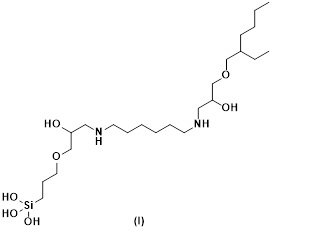
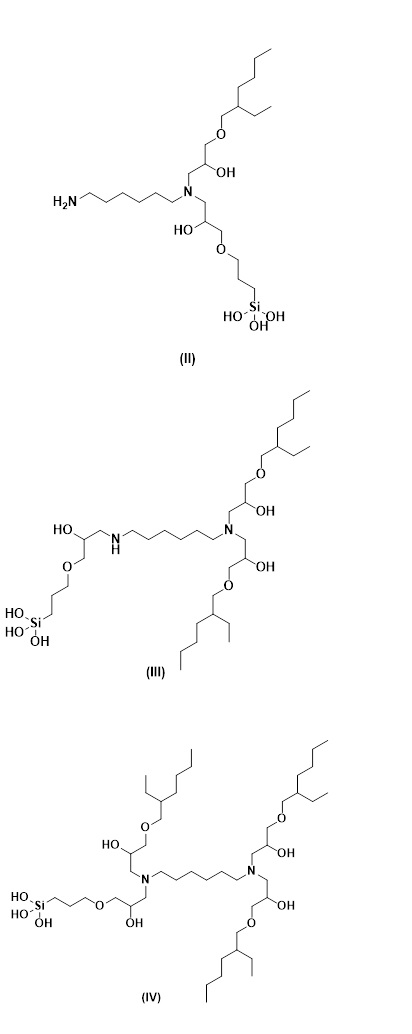
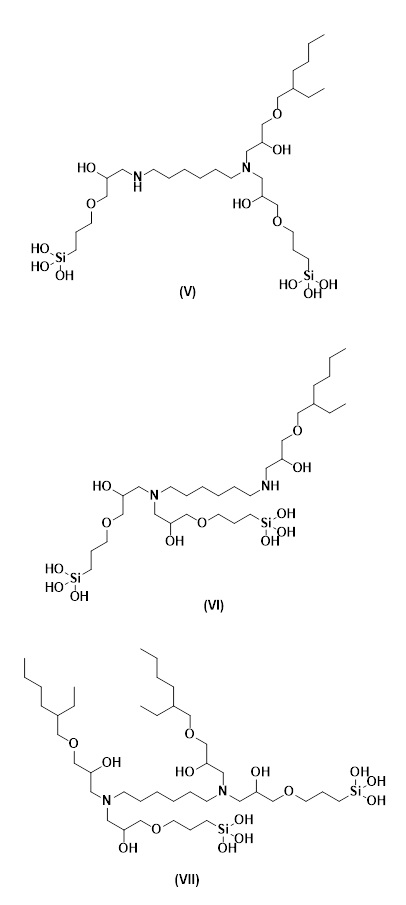
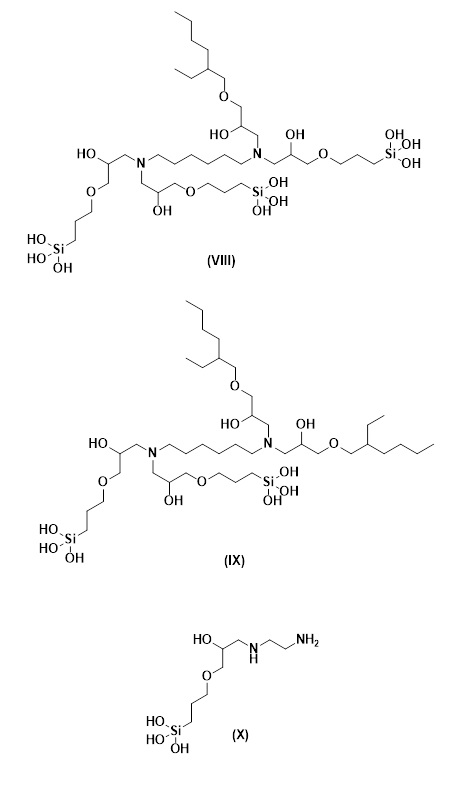
1. A method for the reduction of aluminosilicate containing scale in a Bayer process comprising the step of:
adding to the Bayer process stream an aluminosilicate scale inhibiting amount of a composition comprising at least one small molecule
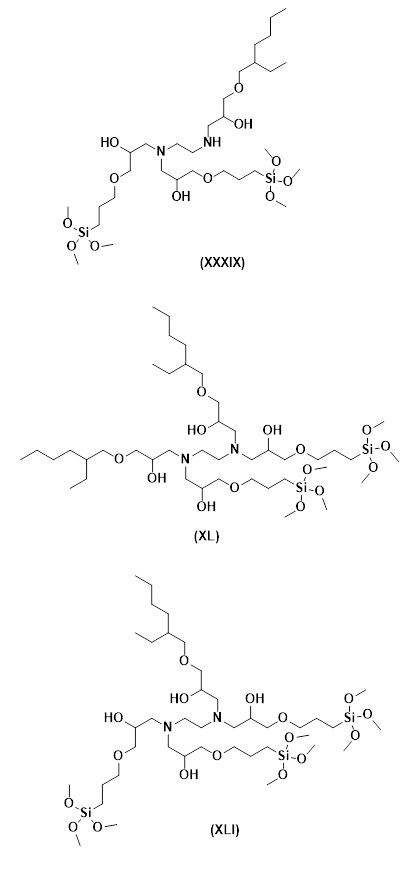
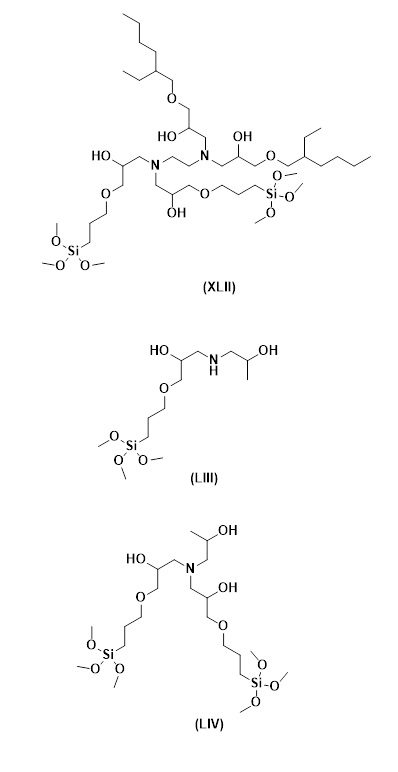
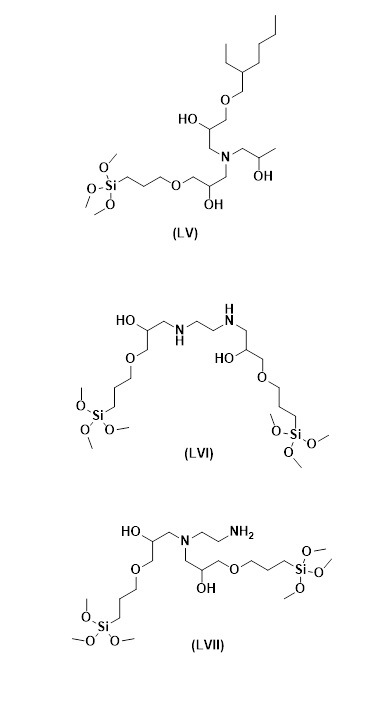
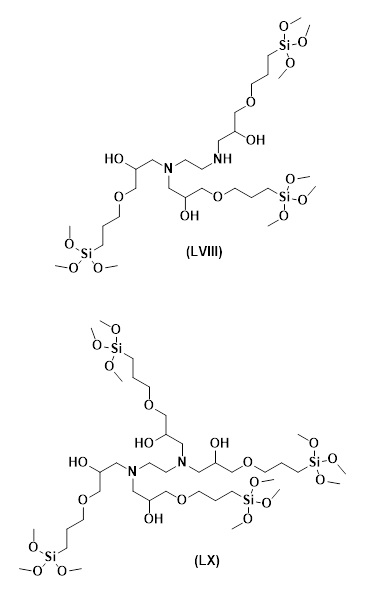
selected from the group consisting of compounds (I) through (XIII), (XV) through (XXX), (XXXII) through (XLVII), (LIII) through (LVIII) and (LX) within a product mixture formed from the reaction of a) hexane diamine, ethylene diamine or 1-amino-2-propanol; b) 3-glycidoxypropyltrimethoxysilane; and c) 2-ethylhexyl glycidyl ether:
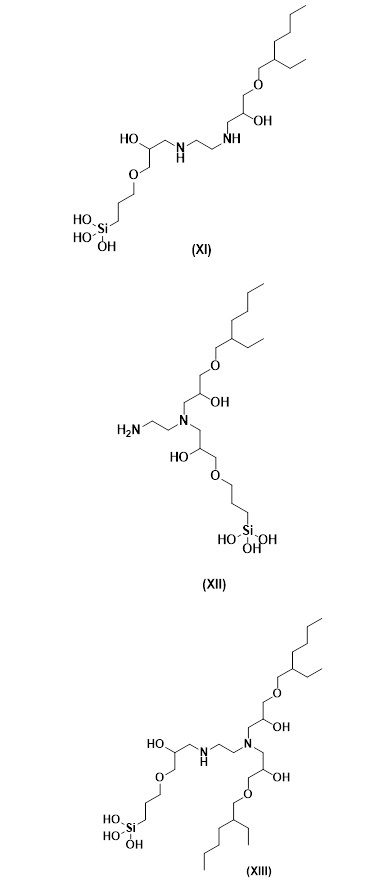
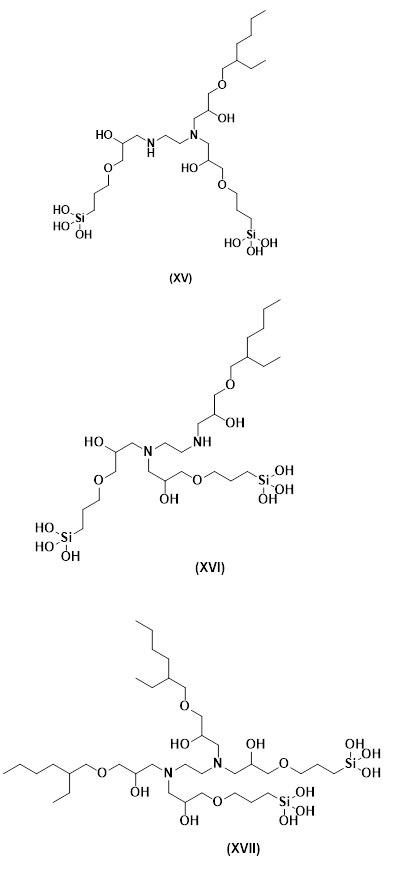
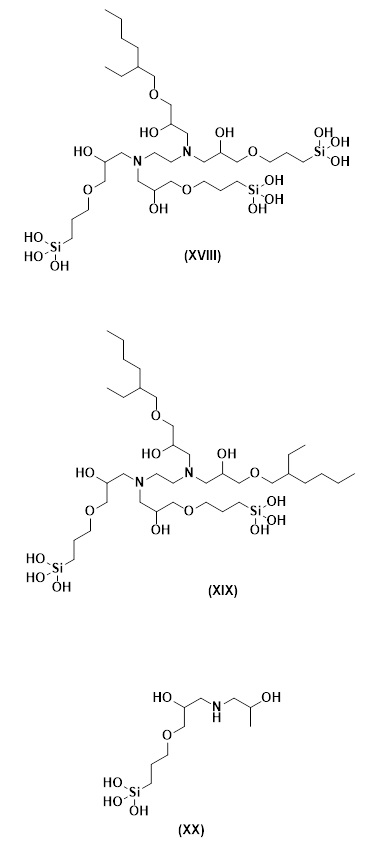
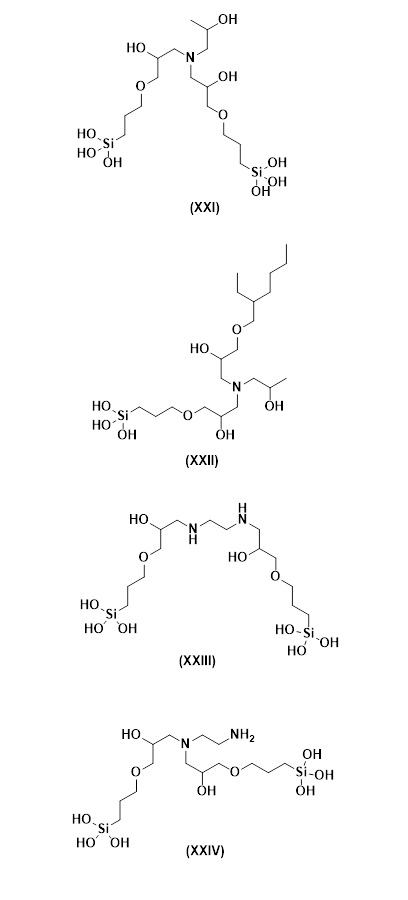
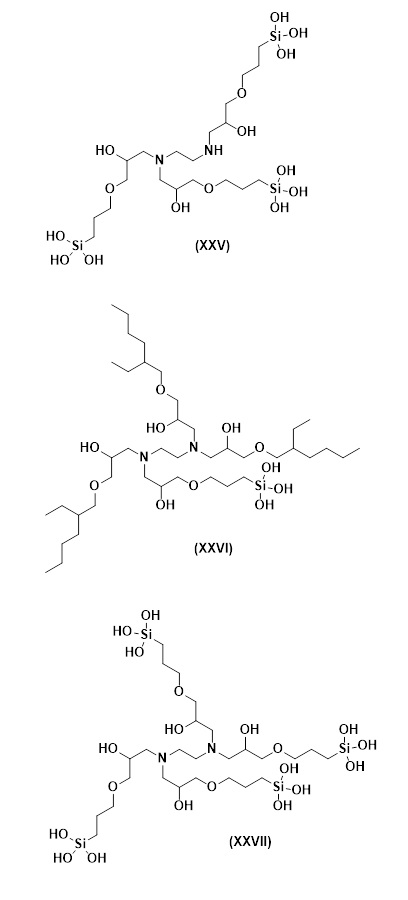
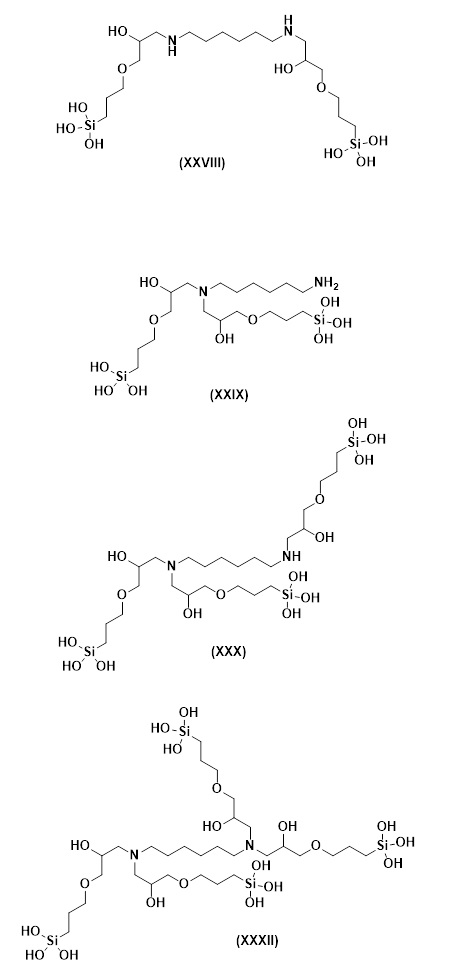
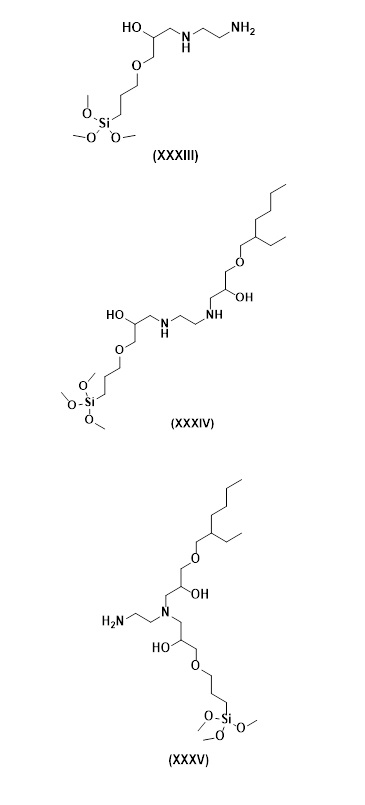
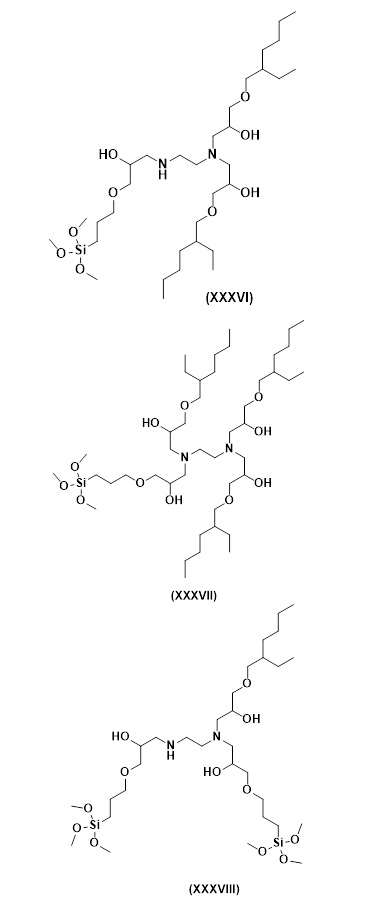
2. A method according to claim 1, wherein the small molecule is selected from the group consisting of compounds (I) through (XIII), (XV) through (XXX) and (XXXII) through (XLII).
3. A method according to claim 1, wherein the small molecule is selected from the group consisting of compounds (LIII) through (LVIII).
4. A method according to claim 1, wherein the small molecule is selected from the group consisting of compounds (LIII), (LIV) and (LV).
5. A method according to claim 1, wherein the small molecule is selected from the group consisting of compounds (I) through (IX).
6. A method according to claim 1, wherein the small molecule is selected from the group consisting of compounds (X) through (XIII) and (XV) through (XIX).
7. A method according to claim 1, wherein the small molecule is selected from the group consisting of compounds (XX) through (XXII).
8. A method according to claim 1, wherein the small molecule is selected from the group consisting of compounds (XXIII) through (XXIX).
9. A method according to claim 1, wherein the small molecule is selected from the group consisting of compounds (XXX) and (XXXII).
10. A method according to claim 1, wherein the small molecule is selected from the group consisting of compounds (XXXIII) though (XLII).
11. A method according to claim 1, wherein the small molecule is selected from the group consisting of compounds (LVI) through (LVIII) and (LX).
12. A method according to claim 1, wherein the small molecule is present in a solution in an amount ranging from about 0.01 to about 100 wt%.
13. A method according to claim 1, wherein the composition further comprises an item selected from the list consisting of: amines, activators, antifoaming agents, co-absorbents, corrosion inhibitors, coloring agents, and any combination thereof.
14. A method according to claim 1, wherein the composition comprises a solvent, the solvent is selected from the group consisting of: water, alcohols, polyols, other industrial solvents, organic solvents, and any combination thereof.
15. A method according to claim 1, wherein the composition is isolated from a synthesis reaction in the form of a solid, precipitate, gel, salt and/or crystalline material in pHs ranging from 0 to 14.
16. A method according to claim 1, wherein the composition is hydrolyzed prior to being added to the Bayer process.
BURLEY J:
1. INTRODUCTION
1 Nalco Company is the applicant for a patent entitled “Reducing aluminosilicate scale in the Bayer process” which is Australian Patent Application No. 2012220990 (990 application). It seeks leave by interlocutory application filed on 29 March 2019 to amend the 990 application pursuant to s 105(1A) of the Patents Act 1990 (Cth).
2 The main proceedings consist of an appeal brought by Cytec Industries Inc. from the decision of a delegate of the Commissioner of Patents concerning its opposition to the grant of the 990 application; see Cytec Industries Inc. v Nalco Company [2019] APO 2 (opposition decision). In broad terms, the opposition was favourable to Cytec insofar as it concerned lack of novelty and various objections taken having regard to the terms of s 40 of the Patents Act, but unfavourable to it insofar as it concerned the identification of priority date applicable to the claims and the question of absence of inventive step. Nalco has in turn brought a cross appeal challenging those parts of the opposition decision that were determined against it. However, without conceding the correctness of the decision, Nalco brings the present amendment application in advance of consideration of Cytec’s appeal, in order to narrow the issues between the parties.
3 Cytec does not oppose the amendments and did not seek to participate in the hearing of the amendment application save to make submissions as to costs. Furthermore, Nalco has corresponded with the Commissioner in relation to the proposed amendments and she has indicated in writing that she does not wish to be heard on the amendment application and has given her opinion that the proposed amendments satisfy the requirements of s 102 of the Patents Act.
4 In support of its application, Nalco relies on affidavits affirmed on 29 March 2019 and 16 October 2019 by Katrina Crooks, principal of Shelston IP Lawyers, who acts on behalf of Nalco.
5 For the reasons set out below, I am satisfied that the amendment of the patent as requested should be directed. In so doing I have relied on the evidentiary materials and the succinct written and oral submissions made on behalf of Nalco by Mr Julian Cooke, who appeared with Ms Angela McDonald, of counsel. I note, however, that as my decision to allow the amendments has been made without the benefit of a contradictor, and as the main proceedings will now involve an appeal from the opposition to the amended form of the patent application, it is appropriate that my reasons be brief insofar as they concern substantive matters of law, including the construction of the patent application.
2. BACKGROUND
6 The 990 application was filed on 7 February 2012 (application as filed). A request for examination was made on 21 August 2013. As a consequence, the relevant form of the Patents Act is that which includes the amendments brought about by the Intellectual Property Laws Amendment (Raising the Bar) Act 2012 (Cth).
7 On 1 May 2015 the application was amended at the request of Nalco in response to the Commissioner’s first examination report. It was this form of the 990 application that was accepted by the Commissioner in accordance with s 49 of the Patents Act (application as accepted). The application as filed and the application as accepted, together with a mark-up showing the differences between the two, were in evidence.
8 On 21 August 2015 Cytec filed a notice of opposition to the grant of the 990 application pursuant to s 59 of the Patents Act. On 25 May 2016, Nalco filed a request to amend the application as accepted pursuant to s 104 of the Patents Act. That amendment was opposed and on 16 January 2018 a delegate of the Commissioner refused to allow the amendments: Cytec Industries Inc. v Nalco Company [2018] APO 4 (amendment decision).
9 Nalco sought leave to amend the application as accepted again on 10 August 2018, in advance of the inter partes hearing of the opposition proceeding which was listed for 10 October 2018. That course was opposed, with the result that the opposition proceeded on the basis of the form of the patent application as it was at acceptance.
10 In the opposition decision the delegate concluded that certain claims lacked clarity, that the description did not provide a clear enough and complete enough disclosure of the claimed invention and that the claims were not supported and certain claims lacked novelty. At the conclusion of his decision, at [145], the delegate said:
It is usual for the Commissioner to give the Applicant an opportunity to amend after a successful opposition where there is scope to overcome the existing grounds. In the current case the Applicant filed amendments with their summary of submissions for this hearing. I will note that these amendments appear to overcome ground of s 59(c) in relation to s 40. However, the proposed amendments include claims to the use of reaction products yielded from the reaction of 1,6- Hexanediamine, 3-glycidoxypropyltrimethoxysilane and 2-Ethylhexylglycidyl ether (see claim 1 pages 52-55). It seems likely that the applicant will need further amendments in order to avoid the disclosure of WO ‘873 which discloses this reaction. I will allow the applicant time to file further amendments.
11 On 17 January 2019 Nalco filed a further request for leave to amend the application as accepted, proposing the same amendments referred to by the delegate as overcoming the s 40 grounds of opposition, together with further amendments that addressed the delegate’s finding of lack of novelty by deleting those aspects of the claims that were found to lack novelty. However, on 4 February 2019 Cytec filed its Notice of Appeal to this Court. That had the consequence mandated by s 112A of the Patents Act that the amendment could only be made in accordance with s 105(1A) of the Patents Act.
12 By letter dated 15 May 2019 from IP Australia to the solicitors for Nalco, the Commissioner advised that the amendment application was to be advertised in the Official Journal on 23 May 2019 and that the Commissioner did not intend to appear in the proceeding. On 24 June 2019, the Commissioner notified Nalco’s solicitors that she had not received any notification of an intention to oppose the amendment application.
3. THE PATENT APPLICATION
13 The delegate in the opposition decision considered the form of the application as accepted and summarised the Field of the Invention and the Background to the Invention as follows (footnotes omitted):
The Field of the Invention
12. The Opposed Application begins by outlining the field of the invention as:
“This invention relates to compositions of matter and methods of using them to treat scale in various industrial process streams, in particular certain silane based small molecules that have been found to be particularly effective in treating aluminosilicate in a Bayer process stream.”
13. The invention clearly involves industrial process streams, such as the Bayer process stream, and in the above paragraph a problem with them is mentioned: scale and in particular aluminosilicate. These are treated with silane based small molecules.
14. Following the Field of the Invention, the specification provides a section entitled “Background of the Invention” where prior art as well as problems with it is discussed.
Background of the Invention
15. The Background begins with a description of the Bayer process and the specification incorporates US 6,814,873 in its entirety. The Bayer process is described as the treatment of Bauxite ore with a caustic solution where alumina is solubilised in a caustic solution and insoluble waste material is removed. The alumina in the process stream is then precipitated out as solid alumina trihydrate and collected. The remaining caustic solution (liquor) is recycled back to treat fresh Bauxite ore in a fluid circuit.
16. The specification then notes that Bauxite can contain different forms of silica and some forms (such as clay) are reactive to the caustic conditions of the Bayer process and are dissolved in the liquor. These increase in concentrations as the liquor is recycled and eventually react with the aluminium and soda to form aluminosilicate particles. The specification refers to them as the desilication product or “DSP”. DSP has inverse solubility (precipitates at higher temperatures and dissolves at lower temperatures) and forms fine scales that accumulate in the Bayer process equipment.
17. The specification then goes onto discuss typical ways of managing scale. These include descaling regimes-where the equipment is taken offline and cleaned - or adding a desilication step to the process (where the DSP is precipitated in an extra step).
18. The specification then discusses the use of polymers which have three alkyoxy groups bonded to one silicon atom and can be added to the process. However, these are said to be problematic with the following statement:
“Manufacturing and use of these trialkoxysilane-grafted polymers however can involve unwanted degrees of viscosity, making handling and dispersion of the polymer through the Bayer process liquor problematic.”
19. The objective of the current application is then set out:
“It is an object of the present invention to overcome or ameliorate at least one of the disadvantages of the prior art, or to provide a useful alternative.
Thus while a range of methods are available to Bayer process operators to manage and control DSP scale formation, there is clear need for, and utility in, an improved method of preventing or reducing DSP scale formation on Bayer process equipment.”
14 The delegate identified the invention described in the specification as follows:
The Invention Described in the Specification
28. The specification provides three aspects of the invention under the Summary of the Invention on page 4. These all relate to:
“a method for the reduction of aluminosilicate containing scale in a Bayer process comprising the steps of:
adding to the Bayer process stream an aluminosilicate scale inhibiting amount of a composition comprising at least one small molecule”
29. The at least one small molecule is defined in each of these three aspects with a more limited scope each time. It is drawn out as a Markush structure at line 1 of page 4 and again at line 5 of page 4c as being a tertiary amine, i.e. R1NR2R3. The groups attached to the amine (the R groups) are defined in these embodiments. One R group will have a glycylalkylsilane, one will have a glycylalkylester and one will be an alkylamine. This provides the broad disclosure of the small molecule.
30. The specification then lists “at least one embodiment of the invention”, followed by another embodiment. The at least one embodiment is as follows:
“At least one embodiment is directed towards a method for reducing siliceous scale in a Bayer process comprising the step of adding to a Bayer liquor an aluminosilicate scale inhibiting amount of reaction product between an amine-containing molecule and an amine-reactive molecule containing at least one amine-reactive group per molecule and at least one – Si(OR)n group per molecule, where n = 1, 2, or 3, and R = H, C1-C12 Alkyl, Aryl, Na, K, Li, or NH4, or a mixture of such reaction products.”
31. The “another embodiment” adds to the Bayer process an efficacious amount of reaction product of three components. I note that these 3 components appear to describe the amine formula of R1NR2R3, with one R group being the silane, one R group being a non-polymeric amine and the other R group being an amine reactive hydrophobic hydrocarbon.
32. The detailed description of the invention follows from page 4e to the examples on page 34 with pages 9-32 showing structures of individual small molecules I-LXV. Example 1 is provided on page 34. In this example three components (A e.g. hexane diamine), G (e.g. 3-glycidoxypropyltrimethoxysilane) and E (e.g. ethyl hexyl glycidyl ether) are reacted. The product may be isolated or can be hydrolysed. The embodiment goes on to discuss the reaction being carried out in a batch, batch on batch or semi-batch manner. This semi-batch method involves the addition of constituent G in the form of a slow feed. The semi-batch method is said to give a reaction mixture that has lower viscosity and less methanol produced.
33. Five reaction mixtures are then produced using different amines (component A) and their crude reaction mixture is tested for its ability to remove scale.
34. The specification ends with 22 claims with claim 1, 19 and 21 being the independent claims.
15 Claim 1 in the application as accepted was in the following form:
1. A method for the reduction of aluminosilicate containing scale in a Bayer process comprising the steps of:
adding to the Bayer process stream an aluminosilicate scale inhibiting amount of a composition comprising at least one small molecule, the at least one small molecule comprising at least three components, one being an R1 component, one being an R2 component and one being an R3 component, the components within the small molecule arranged according to the general formula:
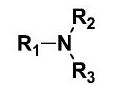
wherein the small molecule may be at least one of: carbonates, bicarbonates, carbamates, ureas, amides and salts thereof and:
R1 is selected from the group consisting of: H, alkyl, amine, structure (A) and structure (B);
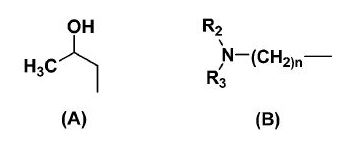
each R2 is G, and each R3 is independently selected from the group consisting of H, alkyl, amine, G and E,
wherein each G is one item independently selected from the group consisting of: 3-glycidoxypropyltrimethoxysilane, 3-glycidoxytrialkyloxysilane, 3-glycidoxypropylalkyldialkoxysilane, 3-glycidoxypropyldialkylmonoalkoxysilane, 3-isocyanatopropyltrialkoxysilane, 3-isocyanatopropylalkyldialkoxysilane, 3-isocyanatopropyldialkylmonoalkoxysilane, 3-chloropropyltrialkoxysilane, 3-chloropropylalkyldialkoxysilane, and 3-chloropropyldialkylmonoalkoxysilane and wherein G is optionally hydrolysed;
each E is independently selected from the group consisting of 2-ethylhexyl glycidyl ether, C3-C22 glycidyl ether, C3-C22 isocyanate, C3-C22 chloride, C3-C22 bromide, C3-C22 iodide, C3-C22 sulfate ester, C3-C22 phenolglycidyl ether, and any combination thereof, and n is an integer from 2 to 6.
16 The diagram of R1NR2R3 is a Markush style diagram indicating a general formula for a tertiary amine.
17 Claims 2 and 3 are for a method according to claim 1 refined by identifying characteristics of R1 and R2 respectively.
18 Claims 4 – 13 are for a method according to claim 1, refined by identifying whether G is hydrolysed or not hydrolysed, and where the small molecule is selected variously from identified (and drawn) small molecules numbered from (I) – (LXV) (or combinations thereof).
19 Claims 14 – 18 are for a method according to claim 1 and refined by reference to other characteristics of the composition.
20 Claims 19 – 22 are not presently relevant as it is proposed that by the amendments they be deleted.
4. THE PROPOSED AMENDMENTS
21 The proposed amendments are to the claims alone. The complete form of the amended claims is set out in the Orders made in this application. For present purposes it is sufficient to describe the amendments as follows.
22 The proposed amendment to claim 1 involves two aspect. First, deletion of the Markush formula NR1R2R3 and its associated definition, which (the delegate found) provided for thousands of small molecules within its scope – and instead, inclusion of 47 small molecules, defined according to their respective structural formulae, from the accepted claims 4 – 7, 8 (in part), 9, 11 and 12 (in part) – each of which was previously dependent on claim 1. Secondly, the amendment involves defining the 47 small molecules such that each is now claimed “within a product mixture formed from the reaction of (a) hexane diamine, ethylene diamine or 1-amino-2-propanol; (b) 3-glycidoxypropyltrimethoxysilane; and (c) 2-ethylhexyl glycidyl ether”.
23 Proposed amended claim 1 takes the following form:
1 A method for the reduction of aluminosilicate containing scale in a Bayer process comprising the steps of:
adding to the Bayer process stream an aluminosilicate scale inhibiting amount of a composition comprising at least one small molecule selected from the group consisting of compounds (I) through (XIII), (XV) through (XXX), (XXXII) through (XLVII), (LIII) through (LVIII) and (LX) within a product mixture formed from the reaction of a) hexane diamine, ethylene diamine or 1-amino-2-propanol; b) 3-glycidoxypropyltrimethoxysilane; and c) 2-ethylhexyl glycidyl ether:
[the 47 small molecules are then drawn and identified by reference to numbers (I) through (XIII), (XV) through (XXX), (XXXII) through (XLVII), (LIII) through (LVIII) and (LX)]
24 Claims 2 – 12 as accepted have been deleted. Proposed amended claims 2 – 11 identify methods according to claim 1 wherein the small molecule is selected from particular compounds from the 47 small molecules identified in claim 1. Proposed amended claims 12 – 16 are dependent on claim 1, but otherwise not amended and take the form of claims 14 – 18 in the application as accepted. The balance of the claims in the accepted application have been deleted.
25 In its submissions, Nalco explains that the first aspect of the amendment is to overcome the delegate’s finding that the Markush formula in claim 1 led to a lack of clarity pursuant to s 40(3) of the Patents Act because it included non-silane compounds such as “carbonates, bicarbonates, carbamates, ureas, amides and salts thereof” which were incongruent with the general formula R1NR2R3 in the claim (at [47] – [50] of the opposition decision). For the same reason, the delegate also found that the claim was not a clear and complete enough disclosure of the invention as claimed for it to be performed by a person skilled in the art pursuant to s 40(2)(a) and the claims were not supported by the specification pursuant to s 40(3) (at [66] of the opposition decision). Nalco seeks to avoid any debate about the correctness of this aspect of the decision by deleting the Markush formula in claim 1, replacing it with the 47 small molecules, and claiming certain subsets of those 47 molecules in new dependent claims 2 – 11.
26 Nalco explains in relation to the second aspect of the amendment that the claims in their accepted form did not specify whether the small molecules were isolated or as part of a mixture, and therefore covered both possibilities. The delegates in both the amendment decision and the opposition decision held that the specification did not provide a clear and complete enough disclosure of the small molecules in isolated form for the invention to be performed by a person skilled in the art in the relevant art pursuant to s 40(2)(a) (see amendment decision at [99] – [102] and opposition decision at [62] – [65]). The respective delegates also found that they were not supported by matter disclosed in the specification, in accordance with s 40(3) (see amendment decision at [125] – [126] and opposition decision at [72]). Nalco seeks to avoid these issues by proposing that claim 1 be amended so as only to claim the small molecules within a product mixture formed from the reaction of (a) hexane diamine, ethylene diamine or 1-amino-2-propanol; (b) 3-glycidoxypropyltrimethoxysilane; and (c) 2-ethylhexyl glycidyl ether.
27 The third aspect of the proposed amendments is to exclude, by deletion, any trimethoxysilane (that is, non-hydrolysed) small molecules derived from the reaction of 1,6-hexanediamine, 3-glycidozypropyltrimethoxysilane and 2-ethyhexylglycidyl ether from the small molecule compounds within the claims in order overcome the lack of novelty findings made by the delegate. This involved deletion of compounds (XLIII) to (LII) and (LXI) to (LXV).
28 The fourth and final aspect of the proposed amendments is to delete the structural formulae corresponding to small molecules (LIX), (XXXI) and (XIV) which were duplicates in the accepted form of the claims.
5. THE RELEVANT LAW
29 Section 105(1A) of the Patents Act provides that:
(1A) If an appeal is made to the Federal Court against a decision or direction of the Commissioner in relation to a patent application, the Federal Court may, on the application of the applicant for the patent, by order direct the amendment of the patent request or the complete specification in the manner specified in the order.
30 Section 105(4) provides:
(4) A court is not to direct an amendment that is not allowable under section 102.
31 As the word “may” in s 105(1A) indicates, the Court has a discretion as to whether or not to allow an amendment, provided first that the precondition of satisfaction of the requirements of s 102 are met. Accordingly, the two matters for consideration are whether the amendment is allowable under s 102 of the Patents Act and whether to exercise the discretion under s 105(1A) in favour of the amendment.
32 In relation to the first, section 102(1) provides:
(1) An amendment of a complete specification is not allowable if, as a result of the amendment, the specification would claim or disclose matter that extends beyond that disclosed in the following documents taken together:
(a) the complete specification as filed;
(b) other prescribed documents (if any).
33 No relevant documents fall within s 102(1)(b). The question is whether as a result of the amendment the specification would claim or disclose matter extending beyond that disclosed in the application as filed.
34 Section 102(2) provides:
(2) An amendment of a complete specification is not allowable after the relevant time if, as a result of the amendment:
(a) a claim of the specification would not in substance fall within the scope of the claims of the specification before amendment; or
(b) the specification would not comply with subsection 40(2) or (3).
35 The “relevant time” is defined in s 102(2A)(a) to mean the specification as accepted, which here is the application as accepted.
36 Section 40(2) and (3) provide:
(2) A complete specification must:
(a) disclose the invention in a manner which is clear enough and complete enough for the invention to be performed by a person skilled in the relevant art; and
(aa) disclose the best method known to the applicant of performing the invention; and
(b) where it relates to an application for a standard patent – end with a claim or claims defining the invention; and
(c) where it relates to an application for an innovation patent – end with at least one and no more than 5 claims defining the invention.
(3) The claim or claims must be clear and succinct and supported by matter disclosed in the specification.
37 Section 40(2)(a) concerns the statutory test often referred to as “enablement” that was introduced by the Raising the Bar amendments to the Patents Act. The latter words of section 40(3) raise, in lieu of the requirement for fair basing under the previous form of the section, a requirement that the claims be “supported” by matter disclosed in the specification.
38 Mr Cooke submitted that the new tests for enablement and support under s 40(2) and (3) had not been the subject of any decision in the Federal Court, and suggested that the subject may be addressed in the present application. However, in the absence of any contradictor, the better view is that such tempting bait should let to lie in wait of a more suitable occasion. For the reasons set out below, it is not necessary to consider the tests in any detail.
39 The second consideration concerns the exercise of the discretion tied up in the word “may” in s 105(1A) of the Patents Act. The nature and scope of the Court’s powers under s 105(1A) falls to be determined by construing the statutory grant of power in its context and historical setting. On appeal from a decision of a delegate of the Commissioner, the Court is exercising powers under s 60(4) of the Patents Act by, in effect, standing in the position of the Commissioner.
40 Sub-section 105(1A) was introduced by the Raising the Bar amendments to address the problem that, in an appeal from the decision of the Commissioner, the Court was confined to considering the very same subject matter that was before the Commissioner. This limitation on the exercise of the Court’s original jurisdiction to hear such appeals added complexity to the appeals process and to the resolution of the opposed patent applications. Section 105(1A) addresses this problem by giving the Court the power to consider and decide upon any amendment proposed by the patent applicant while the appeal is on foot: Garford Pty Ltd v Dywidag-Systems International Pty Ltd [2014] FCA 1039 (Yates J) at [5].
41 In this context it is instructive to note that under s 104(1) of the Patents Act, the applicant for a patent or a patentee may ask the Commissioner for leave to amend for any purpose including for removing a lawful ground of objection, whether that objection is raised in the course of an examination or re-examination or otherwise. But for the commencement of the appeal in this Court, the Commissioner would have considered the amendment application under s 104; see s 112A. Although the present appeal is not brought from a decision of the Commissioner under s 104(7), the section provides some statutory context relevant to the Court’s consideration of an application to amend under s 105(1A) and indicates that it is permissible for a patent applicant to seek to amend an application for the purpose of removing a lawful ground of objection. This is no doubt in appropriate cases to be balanced against other considerations, such as delay and the stage at which the amendment is introduced in the proceedings. It may perhaps be doubted that the same discretionary considerations applicable to the grant of leave to amend a granted patent, where the rationale underlying the Court’s discretion to refuse permission to amend is that it is the duty of the Court to protect the public from abuse of the monopoly conferred, apply to an application to amend a patent application, although I agree with the reasoning of Yates J in Electronic Tax-Free Shopping Ltd v Fexco Merchant Services (No 3) [2017] FCA 569 at [54] that it is not necessary or appropriate in the present application to embark on an analysis of the likely or possible differences between the exercise of power under s105(1A) and s 105(1).
42 In any event, it is not necessary to reflect further upon the scope of these considerations in the present case, because none were raised by Commissioner or Cytec and none is apparent from the materials before the Court. Having regard to the content of the evidence of Ms Crooks and considered in the context of the opposition decision and the amendment decision, I am satisfied that the amendments are sought for the purpose of removing lawful grounds of objection to the patent application, and that it is an appropriate exercise of the discretion under s 105(1A) to grant leave for the amendments to be made.
43 Nalco submitted that in circumstances where, as here, there is no opposition to an amendment application, and where the Commissioner has provided an opinion that the proposed amendment satisfies the requirements of s 102 of the Patents Act, it is unnecessary for the Court separately to consider whether or not to allow the amendment. To the extent that this submission suggests that in such circumstances the Court may “rubber stamp” the amendments, I disagree. In each case it is for the Court to be satisfied that the requirements of s 105(1A) are met. Certainly it is the case that the absence of opposition and consent of the Commissioner tends strongly in favour of the grant of the leave sought, but I do not understand either of the decisions in Electronic Tax-Free Shopping or Technological Resources Pty Limited v Tettman [2018] FCA 1770 (Middleton J) at [31] to suggest otherwise.
6. CONSIDERATION
44 I am satisfied that the proposed amendments comply with s 102(1) of the Patents Act. The application as filed discloses each of the 47 small molecules the subject of amended claim 1 (see pages 9 – 30). It also describes a product mixture formed from the reaction of (a) hexane diamine, ethylene diamine or 1-amino-2-propanol; (b) 3-glycidoxypropyltrimethoxysilane; and (c) 2-ethylhexyl glycidyl ether which may be seen from the description in Example 1 (“Example of a synthesis Reaction A, E and G”) at page 34, lines 8- 17, and pages 35 – 36. This was the view of the delegate in the amendment decision, where he said:
66 In view of the above I consider that the specification discloses to the skilled person that the compound mixtures produced by the semi-batch or sequential or continuous reaction between;
1) an amine containing small molecule (such as the amines designated “A” in Table II of the specification) and,
2) an amine reactive small molecule containing an amine reactive group and a alkoxysilane group (such as glycidoxypropyltrimethoxysilane used in Table II of the specification) and,
3) a non-polymeric amine reactive hydrophobic hydrocarbon (such as 2-Ethylhexyl glycidyl ether used in Table II of the specification),
are useful compositions for effectively reducing or inhibiting DSP scale build up in Bayer process liquor.
(elsewhere in his reasons, the delegate makes clear that the reference in 2) to glycidoxypropyltrimethoxysilane in Table II should have been to the 3-isomer of that compound, as identified in proposed amended claim 1).
45 I am also satisfied that the requirements of s 102(2)(a) are met. By deleting the Markush diagram in claim 1 and replacing it with specific reference to the 47 identified small molecules and also by specifying the product mixture, the claim is narrowed in a manner that falls within the scope of the specification as accepted.
46 The several requirements of s 40(2) and (3), which arise for consideration by s 102(2)(b), may be addressed in short compass. A major focus of the opposition decision was whether or not the specification as accepted complied with s 40: see [35] – [79]. The delegate found that it did not, but then explicitly considered the current proposed amendments and concluded that they met the deficiencies identified in [145] of his reasons, which is quoted at [11] above. Having regard to the submissions advanced by Nalco, the reasoning of the delegate, and my own consideration of the specification as filed, I see no error in the conclusion so expressed by the delegate.
47 For these reasons in my view the requirements of s 102 of the Patents Act are met in the proposed amendments. As I have identified in [41] and [42] above, in my view it is appropriate to exercise the discretion under s 105(1A) in favour of the grant of leave.
7. COSTS AND DISPOSITION
48 Nalco submits that each party should bear its own costs of the amendment application. It submits that costs are in the discretion of the Court and that, having elected not to oppose the amendments, Cytec’s decision to incur costs relating to the amendments was of its own volition for which Nalco should not be held responsible. Cytec submits that Nalco should pay its costs.
49 Section 105(2) of the Patents Act provides that an order under s 105(1A) may be made subject to such terms (if any) as to costs, advertisements or otherwise as the court thinks fit. That provision is in addition to the general discretion that the Court has to award costs in proceedings before it: see Idenix Pharmaceuticals LLC v Gilead Sciences Pty Ltd (No 2) [2018] FCAFC 7 (Nicholas, Beach and Burley JJ) at [5] – [6]. In the present case Nalco chose to file and pursue its amendment application following the commencement of these proceedings. By taking this course it was seeking an indulgence in the form of the exercise of discretion in its favour. Cytec has a very real interest in the amendment application, the outcome of which will affect the scope of the appeal from the opposition. No doubt for good reason, Cytec formed the view that it should not oppose the grant of the leave sought, but that is not to say that its interest in the amendment ceased upon making that decision. During the course of the application evidence may have been lead that was contrary to its interests or the application may have been varied in a manner adverse to its interests. It was entitled to consider the relevant evidence and attend the hearing.
50 In my view it is appropriate that Nalco bear costs properly and reasonably incurred by Cytec in relation to the amendment application. This was the approach taken by Yates J in similar circumstances (albeit in relation to an application to amend a granted patent) in Bristol-Myers Squibb Company v Apotex Pty Ltd (No 2) [2010] FCA 901, with which I respectfully agree.
51 Accordingly, the appropriate orders are:
(1) pursuant to s 105(1A) of the Patents Act 1990 (Cth), Australian Patent Application No. 2012220990 be amended to take the form indicated in Annexure A to the orders;
(2) the respondent pay the appellant’s costs of the respondent’s interlocutory application filed on 29 March 2019; and
(3) the proceedings be listed for case management on 21 November 2019.
I certify that the preceding fifty-one (51) numbered paragraphs are a true copy of the Reasons for Judgment herein of the Honourable Justice Burley. |
Associate:
Dated: 4 November 2019


