

Pilkin v Sony Australia Limited (No 2) [2019] FCA 980
ORDERS
Applicant | ||
AND: | First Respondent SONY INTERACTIVE ENTERTAINMENT LLC Second Respondent SONY INTERACTIVE ENTERTAINMENT EUROPE LIMITED (and others named in the Schedule) Third Respondent | |
DATE OF ORDER: |
THE COURT ORDERS THAT:
1. The proceeding be dismissed summarily under s 31A of the Federal Court of Australia Act 1976 (Cth).
2. The applicant pay the first and fifth respondents’ costs.
3. The time within which the applicant may seek leave to appeal from these orders be extended to 21 days after the publication of the written reasons given orally today.
Note: Entry of orders is dealt with in Rule 39.32 of the Federal Court Rules 2011.
(REVISED FROM THE TRANSCRIPT)
RARES J:
1 These are two interlocutory applications by, first, the applicant, Vitaly Pilkin, to serve three respondents outside Australia under r 10.43 of the Federal Court Rules 2011 and, secondly, by the first and fifth respondents, Sony Australia Limited and Sony Interactive Entertainment Australia Pty Ltd (the Sony parties), seeking orders that the proceeding be summarily dismissed pursuant to s 31A(2) of the Federal Court of Australia Act 1976 (Cth) (the Federal Court Act) or that many paragraphs in the further amended statement of claim and, the corresponding prayers for relief in the amended originating application, be struck out. I heard the interlocutory applications together today, substantively on the same material.
Background
2 Mr Pilkin claims in the proceeding that the Sony parties, together with their related companies, the second respondent, Sony Interactive Entertainment LLC (Sony LLC), a company incorporated in the United States of America in about April 2016, the third respondent, Sony Interactive Entertainment Europe Limited, a company incorporated in the United Kingdom, and the fourth respondent, Sony Interactive Entertainment Network Europe Limited, also incorporated in the United Kingdom, infringed innovation patent AU2010101517B4 in which Mr Pilkin and his deceased co-patentee, Vladimir Miroshnichenko, were named as patentees. On 16 November 2018, I ordered that, upon Mr Miroshnichenko’s decease, the whole of his interest in the patent passed to Mr Pilkin. The patent had a term of 8 years commencing on 7 September 2010.
3 Essentially, the Sony parties argued that the only causes of action that Mr Pilkin alleged against Sony LLC and Sony Network, in pars 16 and 20 of the statement of claim, were so deficient that they should be struck out, and that once that occurred, there will be no cause of action against either of those companies to justify an order for service outside the jurisdiction. The Sony parties contended that, even though those paragraphs made no claim against them, the proceeding should not be burdened by leaving those allegations on foot, in the event that I were otherwise against the Sony parties’ claim for relief under s 31A(2) of the Federal Court Act. The Sony parties accepted, in the event that I refused the relief they sought in their interlocutory application, that they could not otherwise resist Mr Pilkin’s application for leave to serve Sony Europe, although they did not act for it.
4 Mr Pilkin alleges that all of the respondents infringed the patent by offering for sale, and selling, in Australia, the PS Vita or PlayStation 3 console and PlayStation 4 console (collectively, the console), used in Sony’s well-known popular device, marketed under the Sony PlayStation brand. The first time that the Sony parties offered a version of the console for sale, or sold it in Australia, was on 22 February 2012 and they continued to offer to sell, and sold, the console for the balance of the term of the patent up to 7 September 2018.
5 It was common ground that the console matched the description in claim 1 of the patent; namely that it is an electronic device comprising a body that has a front side and a rear side, a touchpad that is arranged on the rear side, a visual display that is arranged on the front side and a joyWstick. The visual display on the electronic device is a touchscreen that enables a user of the device, by manipulating the touchpad itself or using the joystick controls, to control at least one visual symbol that is displayed on the visual display. In other words, the ability to manipulate the touchpad or joystick of the console allows the user to play the game appearing on the visual display.
6 Mr Pilkin also alleges that, in contravention of s 117 of the Patents Act 1990 (Cth), Sony Network infringed his patent by offering to sell, or selling, games to play on the console.
The legislative context
7 The Patents Act provided relevantly:
102 What amendments are not allowable?
Amendment of complete specification not allowable if amended specification claims or discloses matter extending beyond that disclosed in certain documents
(1) An amendment of a complete specification is not allowable if, as a result of the amendment, the specification would claim or disclose matter that extends beyond that disclosed in the following documents taken together:
(a) the complete specification as filed;
(b) other prescribed documents (if any).
114 Priority date of claims of certain amended specifications
(1) This section applies if:
(a) a complete specification has been amended; and
(b) the amendment was not allowable under subsection 102(1); and
(c) as a result of the amendment, a claim of the amended specification claims an invention that:
(i) was not disclosed by the complete specification as filed in a manner that was clear enough and complete enough for the invention to be performed by a person skilled in the relevant art; but
(ii) is disclosed in that manner by the amended specification.
(2) If this section applies, the priority date of the claim must be determined under the regulations.
117 Infringement by supply of products
(1) If the use of a product by a person would infringe a patent, the supply of that product by one person to another is an infringement of the patent by the supplier unless the supplier is the patentee or licensee of the patent.
(2) A reference in subsection (1) to the use of a product by a person is a reference to:
(a) if the product is capable of only one reasonable use, having regard to its nature or design—that use; or
(b) if the product is not a staple commercial product—any use of the product, if the supplier had reason to believe that the person would put it to that use; or
(c) in any case—the use of the product in accordance with any instructions for the use of the product, or any inducement to use the product, given to the person by the supplier or contained in an advertisement published by or with the authority of the supplier.
(emphasis added)
8 Regulation 3.14 of the Patents Regulations 1991 (Cth) provided:
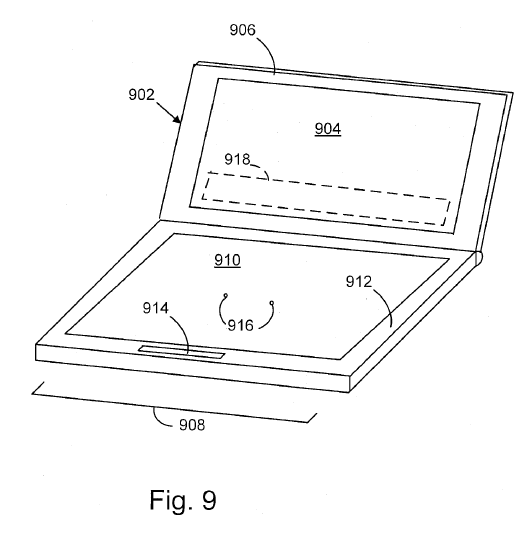
3.14 Priority dates: certain amended claims
If section 114 of the Act applies to a claim of a specification, the priority date of the claim is:
(a) in the case of an amendment to which subsection 29A(3) of the Act applies—the date on which the amendment is taken to have been made under that subsection; and
(b) in any other case—the date of filing of the statement of proposed amendments that resulted in the disclosure referred to in subparagraph 114(1)(c)(ii) of the Act.
(emphasis added)
9 And, s 31A(2) of the Federal Court Act provided:
31A Summary judgment
[…]
(2) The Court may give judgment for one party against another in relation to the whole or any part of a proceeding if:
(a) the first party is defending the proceeding or that part of the proceeding; and
(b) the Court is satisfied that the other party has no reasonable prospect of successfully prosecuting the proceeding or that part of the proceeding.
The patent’s history
10 The present claim is complicated because the present form of the patent results, to some extent, from, first, a narrowing, and, secondly, a different expression (which the Sony parties argue is substantive) of the contents of a PCT international application based on an application that the then patentees (Messrs Pilkin and Miroshnichenko) originally lodged on 5 October 2009 in the Russian Federation and asked to be recognised through the international system.
11 On 7 September 2010, the patentees lodged the PCT application in Australia. The PCT application contained, in its complete specification, a much fuller description of what the patentees claimed to be the invention that relevantly was the subject of nine claims. However, the patent is disarmingly simple in comparison to the PCT application.
12 The patent now asserts only a single claim as follows:
1. An electronic device comprising: a body having a front side and a rear side, a touchpad arranged on the rear side, a visual display arranged on the front side, and a joystick, wherein a visual display is a touch screen display, wherein a user of the electronic device through manipulations with the touchpad or with the joystick controls at least one virtual symbol displayed on said visual display.
13 It is common ground that all of the terms used in both the PCT application and patent are ordinary English words and require no expert evidence from a person skilled in the art to explain any aspect of either document.
The PCT application
14 Relevantly, the PCT application claimed two inventions. It is common ground that only the first of those inventions is relevant for present purposes. The PCT application was entitled “Touchpad Visual Display and Joystick Arrangement in an Electronic Device” and made nine claims in relation to the first invention. The patentees did not include any abstract in the PCT application. However, after the PCT application was filed, officers of the World Intellectual Property Organization appear to have prepared an abstract for it that (as is also common ground) is not part of the PCT application for present purposes. The field of the invention that the PCT application disclosed was that it related to electronic devices that were “designed for arrangement of a touch pad and/or a visual display and/or a joystick in electronic devices” (emphasis added).
15 The PCT application described the disadvantages of the current art, relevantly noting that:
nearest embodiment to the invention described herein is the method of arrangement of a touchpad inside the body of an electronic device (e.g. a mobile phone) …
The disadvantage of the above mentioned method is that the touchpad is arranged on the lateral side of the body of the electronic device, which prevents the user from performing manipulations on this touchpad by the hand, which holds the device.
16 The PCT application described the objective and description of the invention as being:
…aimed at a user-friendly arrangement of a touchpad or a joystick in an electronic device, wherein: 1) at least one touchpad or at least one part (sector) of a touchpad or at least one joystick or a part of it is arranged on the rear side of the electronic device body to function in said arrangement, or 2) a touchpad or a part (sector) of a touchpad or a joystick is arranged partially on the rear side of the electronic device body, or 3) a touchpad or a part (sector) of a touchpad is arranged at once on the lateral side and the rear side of the electronic device body, and a touchpad itself has at least one bending, or 4) a touchpad or a part (sector) of a touchpad is arranged at once on the front side, lateral side and rear side of the electronic device body, or 5) a joystick is arranged on the lateral side of the electronic device body, or 6) a touchpad or a part (sector) of a touchpad or a joystick are made so as to move along the electronic device body, or 7) at least one sector is created on a touchpad or on one part of a touchpad or on a touch screen display, and/or a) a touchpad or a part (sector) of a touchpad has partially or completely convex shape and/or b) a touchpad or a part of it (sector) or a joystick is protected with a cover and/or c) a touchpad or a part (sector) of it or a joystick replaces the protective cover of a camera lens and/or camcorder lens or is placed on the protective cover of a camera lens and/or on the protective cover of a camcorder lens.
(emphasis added)
17 The PCT application contained definitions for each of “virtual symbol control”, “touchpad”, “touch screen display”, “joystick” and “electronic device”. Importantly, the PCT application linked the functions of each of the relevant terms to the control of a virtual symbol, being for example a cursor on a screen.
18 After describing the definitions, the PCT application stated that “The above mentioned technical result is achieved as follows” and then set out a consistory clause largely corresponding to both the objective and description in [16] above and claim 1 of the patent:
1. At least one touchpad or at least one part (sector) of a touchpad or at least one joystick or a part of it is placed on the rear side of an electronic device body to function in the said arrangement, and the user of the electronic device through manipulations with the touchpad or a part (sector) of the touchpad or with the joystick or a part of the joystick controls at least one virtual symbol displayed at least on one visual display, placed on the front side of the electronic device body, or a touchpad or a part (sector) of a touchpad or a joystick is partially placed on the rear side of an electronic device body or a touchpad or a part (sector) of a touchpad is arranged at once on both, i.e. on the lateral side and on the rear side of an electronic device body, herewith the touchpad itself has at least one bending, or a touchpad or a part (sector) of a touchpad is arranged at once on the front side, lateral side and on the rear side of an electronic device body, or a joystick is placed on the lateral side of an electronic device body, or a touchpad or a part (sector) of a touchpad or a joystick are made so as to move along the electronic device body, or at least one sector is created on a touchpad or on one part of a touchpad or on a touch screen display, herewith through said sector at least one virtual symbol displayed at least of one visual display screen placed on the front side of the electronic device body is controlled, and/or a touchpad or a part (sector) of a touchpad has partially or completely convex shape and/or a touchpad or a part (sector) of a touchpad or a joystick is protected with a cover and/or a touchpad or a part (sector) of a touchpad or a joystick replaces the protective cover of a camera lens and/or a camcorder lens or is placed on the protective cover of a camera lens and/or on the protective cover of a camcorder lens.
[…]
(emphasis added)
19 The PCT application, under the heading “Embodiment of the Invention”, restated that, relevantly, the invention described in it was feasible and could be realised “due to application of prior technical art solutions and technology”. It described the “Applications of the Invention” as being “for a user-friendly arrangement of a touchpad and/or touch screen display and/or joystick in electronic devices”.
20 Claim 1 of the PCT application was as follows:
1. Arrangement of a touchpad, a visual display and a joystick in an electronic device, herewith said arrangement comprises a touchpad or a touch screen display or a joystick, characterized in that: 1) at least one touchpad or at least one part (sector) of a touchpad or at least one joystick or a part of it is arranged on the rear side of the electronic device body to function in said arrangement, and the user of the electronic device through manipulations with the touchpad or a part (sector) of the touchpad or with the joystick or a part of the joystick controls at least one virtual symbol displayed at least on one visual display placed on the front side of the electronic device body, or 2) a touchpad or a part (sector) of a touchpad or a joystick is arranged partially on the rear side of the electronic device body, or 3) a touchpad or a part (sector) of a touchpad is arranged at once on the lateral side and on the rear side of the electronic device body, and a touchpad itself has at least one bending, or 4) a touchpad or a part (sector) of a touchpad is located at once on the front side, lateral side and on the rear side of the electronic device body, or 5) a joystick is located on the lateral side surface of the electronic device body, or 6) a touchpad or a part (sector) of a touchpad or a joystick are made so as to move along the electronic device body, or 7) at least one sector is created on a touchpad or on part of a touchpad or on a touch screen display, herewith through said sector at least one virtual symbol displayed at least on one visual display placed on the front side of the device is controlled, and/or a) a touchpad or a part (sector) of a touchpad has partially or completely convex shape and/or b) a touchpad or a part of it (sector) or a joystick is protected with a cover and/or c) a touchpad or a part (sector) of it or a joystick replaces the protective cover of a camera lens and/or camcorder lens or is placed on the protective cover of a camera lens and/or on the protective cover of a camcorder lens.
(emphasis added)
The patent
21 As I have said, the patent was much simpler than, no doubt because it deleted much of the detail of, the PCT application. Crucially those deletions resulted in the removal of all references to a specified location for the joystick that the PCT application had contained. Thus, the patent described the field of the invention as:
[0002] The invention relates to electronic device comprising a touchpad, a joystick and a visual display which is arranged on the front side of the body of the electronic device for controlling virtual symbols displaced on the visual display.
22 While both the PCT application and the patent referred to joysticks as being a known part of the art, the section headed “Background of the Invention” in each document did not refer to the use of a joystick to provide an opportunity to control an active element displayed on the visual display through manipulations of either the joystick or the touchpad and the joystick together.
23 In contrast to the objective and description of the invention in the PCT application (set out at [16] above), those in the patent were:
[0004] The object and the technical result of the declared invention is to expand functional capabilities of the electronic device comprising a touchpad, a joystick and a visual display which is arranged on the front side of the body of the electronic device for controlling virtual symbols displayed on the visual display.
(emphasis added)
24 Next, [0005] of the patent said that for the proper understanding and interpretation of the text of the claims, it used the term “joystick” as being “an input device consisting of a stick that pivots on a base and reports its angle or direction to the device it is controlling”. The patent explained the technical result of the claimed invention in the consistory clause in [0007] that mirrored the only claim (set out at [12] above). The balance of the descriptions in the patent again rehearsed, without describing (in stark contrast to the PCT application), any location for the joystick or the potential use of a joystick in connection with the newly claimed arrangement.
25 The patent described its preferred embodiments and application of the invention as follows:
[0015] The electronic device comprising a touchpad, a joystick and a visual display which is arranged on the front side of the body of the electronic device and described herein is technically feasible since it may be implemented through the use of technical solutions, software and hardware known from the prior art. The above configuration of the touchpad, joystick, and visual display of the electronic device could be realized by the above descriptions in view of the above prior art and the above closest comparative art in the specification.
[…]
[0016] The declared invention is aimed to expand functional capabilities of the electronic device comprising a touchpad, a joystick and a visual display which is arranged on the front side of the body of the electronic device for controlling virtual symbols displayed on the virtual display.
(emphasis added)
The Sony parties’ case under s 31A(2) of the Federal Court Act
26 There is no issue for the purposes of the present argument that, relevantly, the console has all the features claimed in the sole claim of the patent. First, the Sony parties argued that the effect of the patentees’ broadening of the complete specification and the claims from what was in the PCT application to what was in the patent as granted, resulted in the patent having a deferred priority date that was later than the introduction of the console into the Australian market on 22 February 2012. They contended that the deferred priority date was 11 July 2014, being the date on which the patentees applied for the conversion of their Australian application for a standard patent, based on the PCT application, to an application for an innovation patent, as it came to be granted. They relied on ss 114 and 102(1) of the Act and reg 3.14 of the Regulations in support of their argument that the amendments were not allowable under s 102 of the Act because they disclosed matter that extended beyond that disclosed in the complete specification in the PCT application as filed. They submitted that, by force of reg 3.14(b), the date of filing of the statement of proposed amendments, namely 11 July 2014, became the deferred priority date and, as a result, Mr Pilkin could not successfully make out a case for infringement.
27 Secondly, the Sony parties argued that the invention claimed in the patent was not novel because of the publication, on 27 August 2009, of a United States patent application by Charlie W. Case Jr for a portable electronic device touchpad input controller: US 20090213081A1 (the Case application).
28 Mr Pilkin has represented himself, if I may say, very ably and with a commendable grasp of many aspects of the law, not limited to patent law. He has presented his case with admirable clarity and initiative. He has been assisted by an interpreter in the Russian language throughout the course of the hearing today, but has demonstrated a substantial fluency in English as he has made clear in the presentation of his argument that he gave to me, himself, in English.
Summary dismissal – principles
29 The principles for the application of s 31A(2) of the Federal Court Act, on which the Sony parties move, require the Court to be satisfied Mr Pilkin has no reasonable prospect of successfully prosecuting the proceeding, or part of it. The power to dismiss a proceeding on this basis must not be lightly exercised. However, the test under s 31A is not as stringent as the test at common law or under r 26.01 of the Federal Court Rules 2011 as Kiefel CJ, Bell, Keane, Nettle and Gordon JJ explained in Trkulja v Google LLC (2018) 263 CLR 149 at 157-158 [22]-[23]. As they said, a provision analogous to s 31A (at 158 [23]):
permits of the possibility of cases in which, although the plaintiff’s case is not “hopeless” or “bound to fail”, it does not have a real prospect of succeeding.
(footnote omitted)
30 In Sigma Pharmaceuticals (Australia) Pty Ltd v Wyeth (2011) 119 IPR 194 at 208-209 [63]-[66], Bennett J, with whom Yates J agreed at 231 [183] (and see too at 225-226 [152]-[155] per Nicholas J and 233-234 [198], 240 [246], [249] per Yates J) explained the principles on which an assessment is made as to whether a complete specification provides a fair basis for a claim, either in the patent of which the claim forms part or for a later amendment of those claims, as follows:
[63] A patent, conventionally drafted, records the background to the invention, generally describing a problem in the art, realised or unrealised by others. It explains how the inventor solved the problem and what he, she or they found. It then sets out the extent of the monopoly claimed for the invention described. It is necessary to read the whole of the patent to understand what the invention is. In order to gain the monopoly sought, the patent must satisfy the statutory tests in the Act. Some tests are directed to the way in which the patent is drafted, others to the right of the patentee to the claimed monopoly. A patent that satisfies the drafting requirements, for example where claims are fairly based on the description in the body of the specification, may still be liable for revocation, for example for want of novelty, lack of utility, the absence of an inventive step in “the journey” to the invention as outlined in the patent, or lack of sufficient description of the invention.
[64] Section 40(3) of the Act provides that the claims of a patent must be fairly based on the matter described in the specification. The test for determining whether a claim is fairly based is determined by the application of the principles set out in Lockwood (No 1) [(2004) 217 CLR 274] at [69]. Section 40(3) requires a ‘real and reasonably clear disclosure’ of what is claimed. The invention must be broadly described in the body of the specification and not travel beyond the matter disclosed. As the High Court emphasised in Lockwood (No 1), s 40(3) does not involve an analysis of the inventor’s rights to the invention but whether, as a matter of drafting, the claims can be said to reflect what is disclosed or stated in the body of the specification.
[65] The same principles apply to a determination of external fair basis (Inverness Medical Switzerland GmbH v MDS Diagnostics Pty Ltd (2010) 85 IPR 525; [2010] FCA 108 at [142]); the claims must be fairly based on matter disclosed in a parent patent or a priority document. If the patentee asserts an earlier priority date than the filing date of the patent, by reason of the filing of an earlier patent or document in Australia or overseas, the claims of the patent must be supported by the description of the invention in the earlier patent or document. If the patentee changes the claims, the priority date of the claims may be deferred to the date that those changes were made.
[66] In essence, even if an amended patent itself complies with the drafting rules, for example by amendments to add information to the specification to provide support for amended claims, a patentee cannot set forth one basis for and description of the invention to obtain an early priority date and then change the basis and the characterisation and description of the invention while keeping the same earlier priority date.
(italic emphasis in original; bold emphasis added)
(a) Deferred priority date
Mr Pilkin’s submissions on deferred priority date
31 Mr Pilkin argued that all that the patentees had done in filing the amendments on 11 July 2014, to convert the application for a standard patent, based on their PCT application, to one for an innovation patent, was to remove irrelevant words from the text of the PCT application. He said that those amendments had not added anything to the text of the PCT application as filed in Australia. Rather, he contended, the patentees had only deleted words and, thus, had retained in the amended complete specification everything disclosed in the original. He asserted that the patentees had used the word “or” in both versions to connect a number of variants in the potential configurations for the arrangement, the subject of the claimed invention. He said that, in the 11 July 2014 amendments, the patentees had narrowed the protection claimed for the inventions by deleting alternatives, and had not expanded the disclosure or (what became the sole) claim in any way. He argued that the amendments added no new integers to the description or claims included in the PCT application. But, he noted, the PCT application had provided for two alternatives, one where there was a touchpad on the rear of the device and the other where the joystick was on the rear of the device. He submitted that, in substance, the location of the joystick was not an essential integer in any part of the PCT application and, accordingly, the deletion in the innovation patent of all references to the location of a joystick was not something that fell within the meaning, in ss 102(1) and 114(1), of a specification that “disclose matter that extended beyond that disclosed in the…complete specification” in the PCT application as filed.
Consideration – deferred priority date
32 The only use or function of a joystick that the PCT application described was on the rear, or lateral or side of the device, or of a joystick that either moved along the device’s body or was protected with or replaced a cover. The PCT application contained no description of a joystick on the front side of the device in any arrangement, or any functionality for the placement of a joystick there. The PCT application always described a joystick as being in a particular location (as opposed to describing one as able to be located anywhere) on the electronic device.
33 The essential description of the arrangement in the complete specification for the PCT application (at p 1.10), excluding claims 1 to 9, is of “a user friendly arrangement of a touchpad or joystick in an electronic device” to enable the user to utilise that touchpad or joystick, as so arranged, in various specifically described locations, all of which the PCT application described in positions other than on the front of the device.
34 The PCT application stated (at p 2.10) that the “above mentioned technical result is achieved as follows” and then described in consistory clauses for claims 1 to 9 (inclusive), the same elements, again, without disclosure of any necessary function, in the described arrangement, that involved a joystick located on the front side of the device. The PCT application stated that the first invention (p 4.10) “may be applied for [sic] a user friendly arrangement of a touch pad and/or touch screen display and/or a joystick in electronic devices” (emphasis added).
35 Thus, a joystick was not an essential integer of the invention of the arrangement as described in the PCT application, except when it was located at positions other than the front of the device. Hence, claim 1 in the PCT application began with a description of the role of each of the three elements, or possible elements, in an arrangement by using the disjunctive “or” between “touch screen” and “joystick”. That form of expression had the function, read in light of the complete specification as a whole, of limiting the use of those elements, so far as they described the location of a joystick in the arrangement, to a location described in the relevant particularised applications that included a joystick given in claim 1.
36 In my opinion, the proper construction of claim 1 of the PCT application, reading the complete specification as a whole is that, so far as the joystick had importance or significance in the claimed invention consisting of an arrangement, the actual location of the joystick at a specified position (other than the front of the device) or on a cover constituted its essential place in the claimed invention.
37 In other words, a person skilled in the art, reading the complete specification as a whole, as well as claims 1 to 9 in the PCT application separately, would understand claims 1 to 9 to be limiting the invention to require that any joystick that was to be included as part of the arrangement claimed, would be in a specific location, usually somewhere other than on the front of the device or on a cover. A person skilled in the art (and, indeed, the ordinary reasonable person), reading the PCT application as a whole, would have understood the multiple references, in the complete specification, and claims 1 to 9, to a joystick located on the rear, lateral or side of the device or on a cover or made so as to move along the device’s body to signify that the joystick had a role in the invention elsewhere than simply on the front of the device.
38 The natural and ordinary meaning of the complete specification of the PCT application, describes an invention comprising arrangements of three elements, being a touchpad, a touch screen display and, where it included one, a joystick that was described as being in particular configurations and locations. The disclosure of the invention in the specification concerning the possible locations of a joystick was set out before the claims for a monopoly. Throughout the part of the complete specification of the PCT application that preceded the claims, wherever it described the joystick being used in the arrangements comprising the invention, it did so in terms that, relevantly, required the joystick to be deployed on a cover or on locations other than the front of the device.
39 I am of opinion that the natural and ordinary meaning of the complete specification of the PCT application, as filed, is that the arrangements the subject of the claims were limited to uses of the joystick in specified locations other than the front of the device or on a cover, so that an unlimited or unqualified use of a joystick on the front of the device (or at any location) was not the subject of any disclosure to support (or base) a claim for a monopoly for such a use: Welch Perrin & Co Pty Limited v Worrel (1961) 106 CLR 588 at 609-610 per Dixon CJ, Kitto and Windeyer JJ. Nor do any of claims 1 to 9 in the PCT application refer to any use of a joystick on the front of the device or dissociated from a specific location, such as a cover.
40 It follows that the sole claim in the patent in suit travels beyond matter that was disclosed in the complete specification as filed with the PCT application. That is because the claim permits a joystick to be used, without any limitation, at any place on the electronic device, the subject of the claimed arrangement, including the front. In contrast, the complete specification as filed with the PCT application attributed the uniqueness of the claimed invention of an arrangement to one in which, when a joystick was employed, that integer would be used in specified locations other than on the front of the electronic device or used on a cover.
41 It follows that none of the claims of infringement of the patent in the statement of claim would have any reasonable prospect of succeeding. That is because the complete specification in the patent in suit discloses matter (being that a joystick can be located anywhere, including on the front of a device without being on a cover) that was not disclosed in the PCT application as filed. As a result, the sole claim in the patent must have a deferred priority date of 11 July 2014. That claim extended the scope of the monopoly beyond matter disclosed in the complete specification of the PCT application as filed (see s 102(1)(a) of the Patents Act).
(b) Novelty – Introduction
42 In the event that I am wrong in that conclusion, it is necessary to look at the novelty case. The Case application contained 14 figures, being illustrations, as examples, of possible embodiments of the claimed invention. One figure was of an electronic device that was hand-held and had a display on its facing side with a touchpad on the non-facing, bottom, or rear surface. However, as illustrated and explained in the complete specification’s detailed description of preferred embodiments in the Case application, that device did not include a joystick. Other preferred embodiments and figures in the Case application comprised computers, including a laptop computer, that, as Mr Pilkin explained, comprised four faces, two of which were on the top section of a device that could be opened to face the user, and the other two faces were on the bottom section of the device that would open to allow the user to see the screen facing him or her from the top section while using the keyboard and touchpad on the upper part of the bottom section. Thus, the user would enter data on the lower section of the device by using his or her hand while the display was in a screen on the opened top section of the device. It follows that a laptop computer itself could not meet the description in the claim made in the patent in suit.
43 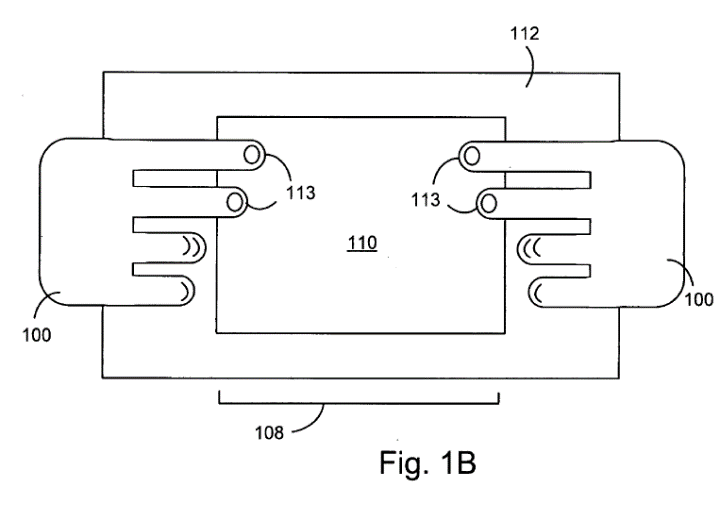
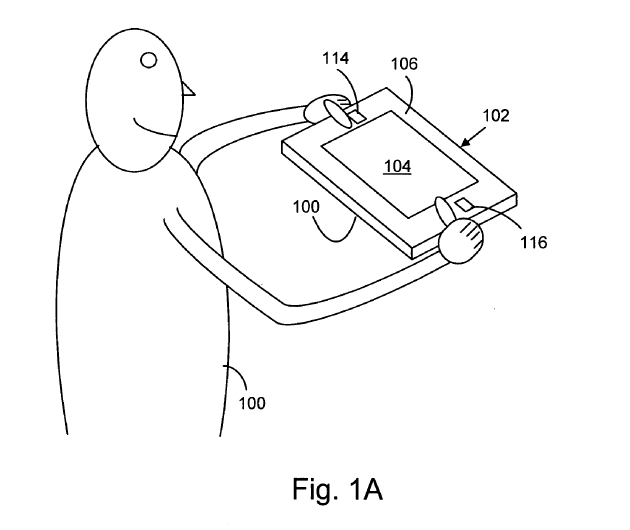 However, as usually occurs in patent wording, the Case application recorded that all of the embodiments that it contained were descriptive and not definitional. It also described (in [0061]) the display of the laptop computer as one that faced a user when the device was in use and the touch pad of the laptop was positioned opposite the display also on a facing surface. The Case application also described the underside of figures 1A, 1B and 9 (reproduced below) in as being a non-facing surface ([0020] and [0065]).
44 Relevantly, [0067] and [0069] in the Case application provided:
[0067] In any of the implementations of the invention, the display may also be touch sensitive to provide input [of] more modes and flexibility. As described throughout, the touchpad may correspond to a full keyboard. A joystick or thumb controller may also be added to provide free motion cursor operation.
[…]
[0069] The front facing side of this display could also include a touchpad in addition to the touchpad or touchpads on the reverse side to provide additional usage flexibility, including the ability to grab a graphical object from either side of the device.
(emphasis added)
45 Importantly, as the Case application made clear in [0067], a joystick could be added to provide free motion cursor operation, being the very operation which the joystick and touchpad in the patent in suit claimed. And [0069] said that, through the use of a touchpad, the invention described could provide the ability to grab a graphical object from either side of the device. In [0072] the inventor claimed, before detailing the 29 claims, that:
… In view of the many possible embodiments to which the principles of our invention may be applied, it should be recognized that the detailed embodiments are illustrative only and should not be taken as limiting the scope of our invention. Rather, I claim as my invention all such embodiments as may come within the scope and spirit of the following claims and equivalents thereto.
(emphasis added)
46 The complete specification of the Case application disclosed that there could be an arrangement of the electronic device, comprising a touchpad on its rear side, a visual display arranged on its front side, and a joystick, in which a user of the electronic device, by manipulating the touchpad and/or the joystick could control at least one virtual symbol displayed on the visual display of the device. Importantly, the Case application did not specify that the joystick should be in any particular location on the electronic device.
Mr Pilkin’s submissions on novelty
47 Mr Pilkin argued that the electronic device or devices that the Case application described did not sufficiently anticipate the invention claimed in the patent in suit. He said that there was no explicit indication that any of the figures of preferred embodiments or the descriptive part of the complete specification of the Case application identified precisely what the patent in suit claimed, being control over one virtual symbol using a touchpad or joystick.
Consideration – Novelty
48 Aickin J held in Meyers Taylor Pty Limited v Vicarr Industries Limited (1997) 137 CLR 228 at 235 that:
The basic test for anticipation or want of novelty is the same as that for infringement and generally one can properly ask oneself whether the alleged anticipation would, if the patent were valid, constitute an infringement…
49 Importantly, an anticipation must be precise and give clear and unmistakable directions to do what the patentee claims to have invented. Signposts along the road to the patentee’s invention do not suffice to make out an anticipation of an invention. The position is as I explained in Apotex Pty Ltd v Les Laboratoires Servier [2013] FCA 1426 at [70]-[73] (see also Damorgold Pty Limited v Blindware Pty Limited (2017) 130 IPR 1 at 30 [142]-[145] per Middleton J):
It is necessary that the prior art (here one or both earlier patents) disclose an invention that, if performed, would necessarily infringe the patent in suit: H Lundbeck A/S v Alphapharm Pty Ltd (2009) 177 FCR 151 at 194 [189] per Bennett J, with whom Middleton J agreed. Her Honour added (at 194 [189]-[190]):
“Once the very subject matter of the invention has been disclosed, the person skilled in the art is assumed to be willing to make trial and error experiments to get it to work ... where the prior publication is of the subsequently claimed invention, that is sufficient. Where the prior disclosure falls short of a complete disclosure, the question of the sufficiency of that disclosure arises. It is there that consideration must be given to the quality of a disclosure to the skilled addressee armed with common general knowledge … the Court, armed with the evidence of the skilled addressee as to terms of art and the nature and extent of the disclosure in the prior art document, must determine whether the prior disclosure is sufficient to enable the skilled addressee to perceive, understand and, where appropriate, apply the prior disclosure necessarily to obtain the invention.” (emphasis added)
The invention will be disclosed to a skilled addressee by the prior art provided that any trial and error experimentation needed is a standard or ordinary procedure or something that is part of common general knowledge as a practical means of performing the invention: Lundbeck 177 FCR at 190 [173]. However, if all the prior art does is to describe the earlier invention without disclosing the effective means by which it could be produced, it will not anticipate a subsequent invention: Olin Corporation v Super Cartridge Co Pty Ltd (1977) 180 CLR 236 at 261 per Stephen and Mason JJ, Barwick CJ agreeing on this point at 239. For an anticipation of a subsequent discovery, the prior art, coupled if need be with common general knowledge, must disclose to the skilled addressee “a practicable mode of producing the result which is the effect of the subsequent discovery”: Olin Corporation 180 CLR at 261. And as Bennett J observed in Lundbeck 177 FCR at 192 [181]:
“If the prior art discloses some but not all integers of a claimed patent to a product, such as a combination, there is anticipation if the skilled addressee would add the missing information as a matter of course and without the application of inventive ingenuity or undue experimentation (Nicaro [Holdings Pty Ltd v Martin Engineering Co (1990)] 91 ALR [513] at 530-531).”
In ICI Chemicals & Polymers Ltd v The Lubrizol Corporation Inc (2000) 106 FCR 173 at 230 [51] Lee, Heerey and Lehane JJ applied the “flag metaphor” used by Sachs, Buckley and Orr LJJ in General Tire & Rubber Co v Firestone Tyre & Rubber Co Ltd [1972] RPC 457 at 485-486 to illustrate the concept of anticipation. Their Lordships said:
“To anticipate the patentee’s claim the prior publication must contain clear and unmistakable directions to do what the patentee claims to have invented: Flour Oxidizing Co Ltd v Carr & Co. Ltd. (1908) 25 RPC 428 at 457, line 34, approved in BTH Co Ltd v Metropolitan Vickers Electrical Co Ltd (1928) 45 RPC 1 at 24, line 1). A signpost, however clear, upon the road to the patentee’s invention will not suffice. The prior inventor must be clearly shown to have planted his flag at the precise destination before the patentee.”
The Full Court in Lubrizol 106 FCR at 230 [51] added that anticipation was not proved if the skilled addressee had to rummage through the prior inventor’s flag locker to find a flag there that could have been (but was not) planted.
(emphasis in original)
50 In my opinion, the Case application disclosed all of the integers of the invention in the claim made in the patent in suit. That is because the Case application disclosed the use of a touch screen device having a front and rear face or side, that was an electronic device in an arrangement with a joystick. Thus, the Case application disclosed the entire subject matter of the invention that is claimed in the patent in suit. A person skilled in the art, who was willing to make trial and error experiments, to get it to work, would have been able to produce from that disclosure an article the subject of the sole claim on which Mr Pilkin relies.
51 Indeed, the arrangement that the patent in suit claimed involved elements that were well-known to persons in the art, as the definitional provisions in the PCT application confirmed. The real substance of the claimed invention consisted of what was already disclosed in the Case application, namely, an arrangement that allowed the ability to integrate, in one electronic device, a screen that faced the user and, on the non-facing side of the device, a touch screen, or touchpad, together with an optional arrangement incorporating, at any location, a joystick that could control at least one virtual symbol or graphical object on the display. Accordingly, the Case application disclosed the essential integers that are the same as those in the claim subsequently made by the patent in suit.
52 It follows that Mr Pilkin has no reasonable prospect of successfully prosecuting a claim for infringement against any respondent, within the meaning of s 31A(2) of the Federal Court Act, because his patent would be found invalid for lack of novelty in light of the prior disclosure, on 27 August 2009, in the Case application that preceded the filing on 5 October 2009 of the Russian application, the basis of the later PCT application.
53 Alternatively, the console had all of the features of the accused product and, as Mr Pilkin alleges, it went on public sale in Australia from 22 February 2012. Therefore, its sale after the priority date of 11 July 2014 could not have infringed the patent because all of its features were in the public domain and had been exploited for over 2 years before then.
54 For those reasons, the whole of Mr Pilkin’s case does not have any reasonable prospect of succeeding and therefore, the proceeding must be dismissed under s 31A(2) of the Federal Court Act.
(c) Service out of the jurisdiction
55 In the event that my findings under s 31A(2) of the Federal Court Act are wrong, I would have refused Mr Pilkin leave to serve Sony LLC out of the jurisdiction because I am not satisfied that he has demonstrated a prima facie case for relief against it on any basis in accordance with r 10.43(4)(c) of the Federal Court Rules. In Ho v Akai Pty Limited (in liq) (2006) 247 FCR 205 at 208 [10], Finn, Weinberg and Rares JJ said of the test under the analogous rule in O 8 r 2(2)(c) of the Federal Court Rules 1979:
As has been observed on many occasions, the prima facie case requirement has to be met at the outset, usually on an ex parte basis, and without the advantage of discovery and other procedural aids to the making out of a case: see e.g. Merpro Montassa Ltd v Conoco Specialty Products Inc (1991) 28 FCR 387 at 390. It “should not call for a substantial inquiry”: WSGAL Pty Ltd v Trade Practices Commission (1992) 39 FCR 472 at 476; see also Sydbank Soenderjylland A/S v Bannerton Holdings Pty Ltd (1996) 68 FCR 539 at 549. For present purposes it is sufficient to say that a prima facie case for relief is made out if, on the material before the court, inferences are open which, if translated into findings of fact, would support the relief claimed: Western Australia v Vetter Trittler Pty Ltd (in liq) (1991) 30 FCR 102 at 110. Or, to put the matter more prosaically as Lee J did in Century Insurance Ltd (in prov liq) v New Zealand Guardian Trust [1996] FCA 376:
What the Court must determine is whether the case made out on the material presented shows that a controversy exists between the parties that warrants the use of the Court’s processes to resolve it and whether causing a proposed respondent to be involved in litigation in the Court in Australia is justified.
56 The statement of claim alleged in par 16 that, although Sony LLC was incorporated only in 2016, it had infringed the patent by selling the console in Australia from 22 February 2012. That allegation must fail. First, Sony LLC did not exist until about April 2016 and so could not have infringed the patent before it existed. Secondly, the evidence on which Mr Pilkin relied to establish a prima facie liability of Sony LLC did not succeed in doing so. He relied on a press release issued by Sony Computer Entertainment and Sony Network Entertainment, to announce the formation of Sony LLC that would begin business worldwide on 1 April 2016. The press release stated that Sony Computer Entertainment Inc, that is now named Sony Interactive Entertainment Inc (SIE Inc), manufactured, distributed, developed and marketed the PlayStation models, including the PS Vita portable entertainment system (which incorporated the accused product, being the console).
57 The evidence before me established that, as at March 2019, SIE Inc owned the trademark for the PlayStation Vita and the copyright in the user guide and other documents for it, all of which tended to suggest that SIE Inc, and not Sony LLC, continued to manufacture the accused product. Mr Pilkin argued that because Sony LLC had been formed with the objectives stated in the press release, it had become both the assignee of all the rights and liabilities of SIE Inc, and the manufacturer of the PlayStation models, including the console.
58 That argument has no basis. In my opinion, the press release can only reasonably be understood as announcing that the formation of Sony LLC would effect a corporate reorganisation that would impose Sony LLC as the company controlling, in one location, or through one head office, the worldwide operations of a variety of related companies within the Sony group and, in that position, Sony LLC would coordinate the other companies’ manufacture, sales and marketing of the PlayStation products. There is no textual basis for supposing, in the absence of any other evidence, that SIE Inc had ceased to manufacture the accused product, particularly having regard to SIE Inc’s retention of ownership of the trademark for the subsequent three years after the introduction of Sony LLC.
59 Accordingly, I am not satisfied that Mr Pilkin has established a prima facie case warranting service out of the jurisdiction under r 10.43(4)(c). That is because the material before me does not supply a sufficient basis on which it would be reasonable to infer that, first, Sony LLC is, or has become, the manufacturer of the accused product or, secondly, it has somehow assumed obligations for SIE Inc’s alleged infringement that arose from sales prior to Sony LLC’s incorporation.
60 The claim that Mr Pilkin wishes to make in par 20 of the statement of claim against Sony Network is somewhat more refined. He claims that, because Sony Network manufactured games for use on the console, it infringed s 117 of the Act. Mr Pilkin argued that all of the respondents acted in concert to bring about an infringement of s 117, and that Sony Network did so because its games could only ever be played using the console.
61 Assuming that at a trial that fact would be found, it may have been possible for Mr Pilkin to argue that the use of a product, being one of the games, had infringed the patent within the meaning of s 117(2)(a) or (b) because the games could only be used and played on the accused product. However, it is not necessary for me to decide that question because of my findings that the other bases of the relief sought in the amended originating application cannot be sustained.
Conclusion
62 For these reasons, I am of opinion that the appropriate order is that the proceeding must be dismissed summarily under s 31A(2) of the Federal Court Act and that Mr Pilkin must pay the Sony parties’ costs.
I certify that the preceding sixty-two (62) numbered paragraphs are a true copy of the Reasons for Judgment herein of the Honourable Justice Rares. |
Associate:
NSD 214 of 2018 | |
SONY INTERACTIVE NETWORK EUROPE LIMITED | |
Fifth Respondent: | SONY INTERACTIVE ENTERTAINMENT AUSTRALIA PTY LIMITED |


