

FEDERAL COURT OF AUSTRALIA
Sensis Pty Ltd v Senses Direct Mail and Fulfillment Pty Ltd [2019] FCA 719
ORDERS
DATE OF ORDER: |
THE COURT ORDERS THAT:
1. The parties are to provide orders giving effect to these reasons by 7 June 2019.
Note: Entry of orders is dealt with in Rule 39.32 of the Federal Court Rules 2011.
DAVIES J:
INTRODUCTION
1 Sensis Pty Ltd (“the applicant”) carries on a direct marketing and data processing business in Australia and, by assignment from Telstra Corporation Limited, is the registered owner of the “SENSIS” trade marks (“the SENSIS marks”). The registrations include:
(a) trade mark no. 878625 for the plain word SENSIS (registered 8 June 2001) in respect of services in Class 35 that include: advertising services; marketing, merchandising, retail and wholesale distribution services (excluding transport); business advisory services; business planning and analysis services; collection, preparation, compilation, storage, processing, retrieval and provision of business information; and business information services; and
(b) trade mark no. 1418010 for the plain word SENSIS (registered 4 April 2011) in respect of services in Classes 35 and 42 that include: advertising services; marketing, merchandising, retail and wholesale distribution services (excluding transport); business advisory services; business planning and analysis services; collection, preparation, compilation, storage, processing, retrieval and provision of business information; data security services; extraction and retrieval of information and data mining by means of computer networks.
2 The SENSIS marks were assigned to the applicant with effect from 28 February 2014, together with all accrued rights to take action and obtain relief involving the trade marks, including in respect of infringements occurring prior to that date. The assignment was entered on the Register on 11 March 2014.
3 Senses Direct Mail and Fulfillment Pty Ltd (“the respondent”) carries on a business in Australia providing direct mail services under or by reference to the following marks used either as plain words or in association with devices:
(a) SENSES DIRECT; and
(b) SENSES DATA
(together, “the SENSES marks”).
4 The SENSES marks with devices are shown below:
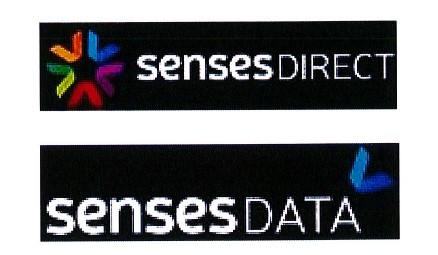
5 On 2 February 2016, the respondent applied to register the SENSES devices as trade marks in respect of marketing services and business marketing consulting in Class 35. The application is yet to be accepted for registration.
6 The applicant has alleged that the SENSES marks are deceptively similar to the SENSIS marks within the meaning of s 10 of the Trade Marks Act 1995 (Cth) (“the Act”) and, by using the SENSES marks in relation to services in respect of which the SENSIS marks are registered, the respondent has infringed the SENSIS marks under s 120(1) of the Act.
7 The respondent accepts that it has used the SENSES DIRECT mark in relation to certain “advertising services” and “marketing… distribution services (excluding transport)” but it has denied the infringement claim. At the commencement of the hearing, the respondent informed the Court that it would not contest the claims relating to the trade mark SENSES DATA used by the respondent.
8 The respondent has cross-claimed against the applicant for the removal of certain services from the particulars on the Register for the SENSIS marks pursuant to s 92(4)(b) of the Act for alleged non-use.
9 The parties agreed on the following list of issues for determination:
On the applicant’s claim:
(1) Whether the respondent’s mark SENSES DIRECT is deceptively similarly to the applicant’s mark SENSIS.
(2) If yes to (1), whether the defence under s 122(1)(fa) of the Act is available to the respondent. This issue raises the sub-issues of:
(a) whether the defence under s 122(1)(fa) is to be assessed at the time the respondent’s infringing conduct commenced, the date on which the respondent’s fast track response was filed, or the date of the hearing;
(b) whether, as at the date referred to in (a), there had been honest concurrent use of the SENSES DIRECT mark for the purposes of s 44(3)(a) of the Act;
(c) if yes to (b) whether, because of the reputation of the SENSIS marks as at that date, the use of the SENSES DIRECT mark would be likely to cause confusion for the purposes of s 60 of the Act; and
(d) if yes to (c) whether, as the result, the respondent would not be able to obtain registration of the SENSES DIRECT mark if it were to apply for it.
On the respondent’s cross-claim:
(3) Whether the applicant used the SENSIS marks in the period between 11 July 2013 and 11 July 2016 in relation to the alleged “non-use services”.
(4) If no to (3) in respect of any of the alleged non-use services, whether it is reasonable not to remove those services from the registrations pursuant to s 101(3) of the Act and, if so, on what terms should the discretion not to remove those services be exercised.
(5) If no to (4) and the Court is otherwise satisfied that the respondent has infringed the SENSIS trade marks, whether upon the removal of the non-use services the respondent will still infringe the SENSIS trade marks under s 120(1) or s 120(2) of the Act.
10 Pursuant to an order made on 28 November 2016, the question of the quantum of pecuniary relief has been reserved for later hearing, if necessary.
ISSUE (1): Whether the respondent’s mark SENSES DIRECT is deceptively similarly to the applicant’s mark SENSIS
11 Section 120(1) of the Act provides that a person infringes a registered trade mark:
… if the person uses as a trade mark a sign that is substantially identical with, or deceptively similar to, the trade mark in relation to goods or services in respect of which the trade mark is registered.
12 The respondent admitted that the direct mail services it offers under the SENSES DIRECT mark come within the categories of “advertising services” and “marketing… distribution services (excluding transport)” in respect of which the mark SENSIS is registered. In issue in this case is whether the SENSES DIRECT mark is deceptively similar to the SENSIS mark. By s 10 of the Act, a trade mark:
… is taken to be deceptively similar to another trade mark if it so nearly resembles that other trade mark that it is likely to deceive or cause confusion.
13 The principles to apply in determining whether the SENSES DIRECT marks are deceptively similar to the SENSIS marks are well-established. Whether a mark is “deceptively similar” is not determined by a side-by-side comparison, but is a question of the impression that persons of ordinary intelligence and memory would have of the mark SENSES DIRECT based on their recollection of the applicant’s mark SENSIS: Shell Company of Australia Ltd v Esso Standard Oil (Australia) Ltd (1963) 109 CLR 407; [1963] HCA 66 at 415 (“Shell”) (Windeyer J). The reason, as explained in Shell at 415, is that marks are remembered rather by general impressions or by some significant detail than by any photographic recollection. The question of whether a mark so nearly resembles another trade mark that there is likelihood of deception or confusion occurring involves an assessment as to whether people would be caused to wonder whether the respondent’s services are from the same source as the services provided by the applicant, allowing for a person’s imperfect recollection of the SENSIS mark: Southern Cross Refrigerating Company v Toowoomba Foundry Pty Ltd (1954) 91 CLR 592; [1954] HCA 82 at 594–595 (Kitto J) (“Southern Cross”); Registrar of Trade Marks v Woolworths (1999) 93 FCR 365; [1999] FCA 1020 at [50] (French J); Telstra Corporation Ltd v Phone Directories Company Pty Ltd (2015) 237 FCR 388; [2015] FCAFC 156 at 434 (Besanko, Jagot and Edelman JJ). The test for deceptive similarity does not require actual deception or confusion to be shown, though, if shown, it is a matter of considerable weight: Australian Woollen Mills Ltd v F.S. Walton and Company Ltd (1937) 58 CLR 641; [1937] HCA 51 at 658 (Dixon and McTiernan JJ). However, the risk of deception or confusion occurring must be more than a mere possibility. The Court must be satisfied of a real tangible danger of deception or confusion occurring: Southern Cross at 594–595 (Kitto J). Although the likelihood of deceptive similarity is to be judged by comparing the similarities of the marks in issue, it is well-established that the likelihood of deception is not judged by the degree of similarity alone but by the effect of that similarity in the circumstances of the usages in the particular trade: Shell at 410, 416 (Windeyer J); C A Henschke & Co v Rosemount Estates Pty Ltd (2000) 52 IPR 42; [2000] FCA 1539 at [42].
14 A threshold matter raised by the respondent was that the deceptive similarity analysis in the context of trade mark infringement pursuant to s 120(1) can only be undertaken by reference to actual instances of use of SENSES DIRECT by the respondent. It was submitted that the Court (and the respondent) were in an unsatisfactory position in respect of the analysis required by s 120(1) by reason of the applicant’s failure to identify which instances of infringement the applicant relies on. The submission disregards that it was an admitted fact that since at least 2013 the respondent has supplied certain “advertising and marketing services” and the respondent did not dispute that it has supplied those services under or by reference to the SENSES DIRECT marks on its websites, in advertising and promotional material (including in brochures, editorials and newsletters), in relation to the sponsorship of events, on signage, and on promotional items such as pens, calendars, piggy banks and water bottles. The circumstances of the respondent’s usages in respect of advertising and marketing services provide the relevant context for the s 120(1) analysis.
15 In my view the SENSES DIRECT mark so closely resembles the SENSIS mark it is likely to cause confusion with the SENSIS mark.
16 First, I think there is, as a matter of impression, considerable visual and aural similarity between the words “SENSIS” and “SENSES”. The words look very similar – the only difference is the vowel in the second syllable – and are both very close in how they sound. When assessing aural similarity, “[l]ittle assistance… [is to be had] from a meticulous comparison of the two words, letter by letter and syllable by syllable, pronounced with the clarity to be expected from a teacher of elocution”: Crazy Ron’s Communications Pty Ltd v Mobileworld Communications Pty Ltd (2004) 209 ALR 1; [2004] FCAFC 196 at [77] (Moore, Sackville and Emmett JJ), citing Aristoc Ltd v Rysta Ltd [1945] AC 68. The aural difference is slight and, contrary to the respondent’s submission, I do not think that the different endings “ES” and “IS” make the words sound substantially different.
17 The evidence of the many misspellings of SENSES DIRECT as Sensis Direct underscores the visual and aural similarity of SENSIS and SENSES. The evidence showed examples of customers referring to the respondent as Sensis and Sensis Direct, even after receiving emails or correspondence from the respondent or actually visiting the respondent’s premises. Such evidence is a powerful indication of the potential for confusion to arise. Contrary to the submissions of the respondent, the misspellings cannot be characterised merely as “typographical errors”. The letters “e” and “i” are not proximate on a keyboard and the errors do not involve an invented word (SENSIS) being written in the form of a real word (SENSES). To the contrary, they involve a real word (SENSES) being written in the form of an invented word (SENSIS). Given the visual and aural similarity of the two words, I also reject the respondent’s submission that there is not a real tangible danger of confusion because “SENSES”, in contrast to “SENSIS”, is an English word with an established meaning.
18 Secondly, whilst the mark SENSES DIRECT must be considered in its entirety when being compared with SENSIS: Food Channel Network Pty Ltd v Television Food Network GP (2010) 185 FCR 9; [2010] FCAFC 58 at [92] (Keane CJ, Stone & Jagot JJ), I do not think that the appearance of the word “DIRECT”, either with or without the device, sufficiently distinguishes that mark so as to mitigate the close resemblance between the marks. Although argued by the respondent that SENSES DIRECT is “a distinctive (indeed striking) coined and ungrammatical composite phrase that alludes to the ability of the respondent’s (direct) mail services to appeal directly to the senses”, the addition of the word “DIRECT” is merely descriptive, and does not add a distinctiveness to the mark taken as a whole.
19 In Polo Textile Industries Pty Ltd v Domestic Textile Corp Pty Ltd (1993) 42 FCR 227; [1993] FCA 265, Burchett J held that the mark POLO CLUB was deceptively similar to the registered mark POLO, reasoning at 232 that:
…it is plain that the word “Polo” must be an essential feature of the applicants’ mark, since it is the whole of the mark… “Polo” is also a quite distinctive word, and the taking of it is bound to cause confusion which the mere addition of the word “Club” will not dissolve. Bearing in mind that the test requires consideration of the customer with an imperfect recollection of the mark, it is important that the distinctive impact of the word “Polo” is likely to affect the mind although the presence or absence of the blander word “Club” may escape notice. At the same time, some persons may be quite aware that one mark contains the added word, and the other does not, but may yet think of “Polo Club” bed linen as a particular style of “Polo” bed linen.
See also: Edwards v Liquid Engineering 2003 Pty Ltd (2008) 77 IPR 115; [2008] FCA 970 at [23] (Gordon J). So too, when comparing the marks as a whole, and bearing in mind that allowance must be made for imperfect recollection, the appearance of the word “DIRECT” in “SENSES DIRECT” does not make that mark sufficiently distinguishable to diminish the likelihood of confusion with the word “SENSIS”.
20 Thirdly, although it was contended that direct mail services providers are a “very distinct type of business” within the wider marketing industry and offer only “one specific aspect” of a broader category of advertising service, I am not persuaded on the evidence that confusion between the two marks would be unlikely having regard to the nature of, and market for, the respondent’s services. In forming that view I have taken account of the detailed evidence about the respondent’s business given by Mr Mark Mina, the respondent’s managing director, and by Ms Katherine Mina, a sales consultant and accounts manager for the respondent. It is unnecessary to go into detail about that evidence as it was not controversial. It suffices for present purposes to set out the key aspects of that evidence relevant to the deceptive similarity analysis, which can be succinctly stated.
21 Mr Mina explained that the “vast majority” of the respondent’s services are direct mail services, which are a form of marketing in which carefully targeted prospects (chosen by customers based on various factors that may include things like age, income, location, profession, buying patterns, etc.) are sent custom tailored offers for goods and/or services. The offers are sent in the form of physical mail pieces intended to capture the attention and interest of the recipient.
22 The respondent’s customer base was said to be exclusively businesses and charities which use the respondent’s services as part of their business operations. Ms Mina deposed that physical mail is costly compared to digital alternatives and due to the per unit costs, a customer “usually has to be of a certain size to be in the market for [direct mail]”. Typically a job will involve the preparation and sending of 5,000 to 60,000 mail pieces. Ms Mina also deposed that customers of the respondent’s services include print and advertising agencies, constituting about 60% of the respondent’s current existing customers. The respondent’s other customers are retail businesses (20%), charities (10%), and hospitality businesses (10%). The evidence also was that there is an extended sales process of telephone calls, emails and face to face meetings with the prospective customer to ascertain their specific requirements, preparation of a detailed quote and, in some cases, visits to the respondent’s premises. Ms Mina deposed that usually she will be dealing with managing directors or marketing directors or members of the marketing departments of companies, depending on their size and needs.
23 The respondent additionally relied on expert evidence from Professor Pascale Quester, an expert in marketing studies. Professor Quester gave evidence that in the context of the provision of business-to-business services, customers make more deliberate, economically rational and evaluated decisions dictated by their business, not “emotional content”. The other point made by the respondent was that those interacting with the respondent’s business and its services are relatively sophisticated business clients, likely to be operating in a high information environment and likely to be paying close attention to their purchase and the party with whom they are interacting. Further, it was submitted, given the nature of the services, the interaction will necessarily occur over an extended period of time before that person engages the services of the respondent.
24 I accept that the provision of direct mail services is a particular type of marketing. I also accept that prospective customers of the respondent will have both a degree of sophistication and a high level of involvement in the services that the respondent is engaged to provide. However, the evidence showed that the SENSES DIRECT mark is used by the respondent as a trade mark to promote a broader range of advertising and marketing services than just direct mail services. The broader use of SENSES DIRECT as a trade mark is supported by the following evidence.
25 In evidence were screenshots of the respondent’s SENSES DIRECT branded websites. On one of the website pages, under the heading “Creative Solutions”, was the following statement:
Senses Direct is able to offer you expert creative solutions within the areas of graphic design and copyrighting that will assist you with your next DM [direct marketing] campaign.
26 Another page of the respondent’s website provided more detail as follows:
Graphic Design
At Senses Direct we believe that eye-catching graphic design is vital to the effectiveness of a Direct Marketing Campaign.
From conception to completion, we have graphic designers that can give your campaign the legs it needs to run the distance and beat your competitors to the finish line every time.
With preferred access to some of the most experienced graphic designers in the Direct Mail business we can offer you a well of creativity and visual communication skills. These designers boast an in-depth knowledge in boutique design and are well versed in printing and mailing processes. They will manage the entire creative process from concept to design, proofing to prepress.
…
Copywriting
Anyone can string together a sentence but not everyone can string together a sentence that has the power to make the reader act almost immediately.
Copywriters are trained professionals, well-versed in the art of crafting effective, engaging, and informative copy.
…
27 The evidence showed that this offer had been published since the respondent’s webpage went live in around August or September 2014 and continued to be published at the date of trial. This was confirmed by the evidence of Ms Mina, who deposed:
[The respondent’s] website talks about the importance of both [graphic design and copywriting] of a Direct Mail campaign and encourages customers and potential customers to ensure that getting and keeping these elements in good order is key. To that end, on the website we encourage customers and potential customers to approach us if they consider work on either element is required.
28 There was evidence that the majority of customers come to the respondent with designed and settled advertising campaigns. There was also evidence that the respondent does not itself provide copywriting services but instead refers customers to third party suppliers. Nonetheless, the significance of this content on the website is that it shows the use of the SENSES DIRECT mark as a trade mark for graphic design and copyrighting services, being services of the nature of advertising and marketing services. The offering or advertisement of those services under or by reference to the SENSES DIRECT mark is sufficient to constitute use of the mark as a trade mark in respect of those services: Shell at 422 (Kitto J); Moorgate Tobacco Co Ltd v Phillip Morris Ltd (No 2) (1984) 156 CLR 414; [1984] HCA 73 at 433 (Deane J).
29 The website also showed that the respondent markets the following other services under the heading “Multi-Channel Campaigns”:
Multi-channel campaigns perfectly complement traditional direct mailing campaigns.
…
There are many multi-channel platforms available for message delivery. The two core services that Senses Direct offers are:
• Electronic Direct Mail (EDM)
• Mobile Messaging (SMS)
Through our specially developed software we can manage a seamless multi-channel output optimised for best view to the following devices:
• Direct Mail Letter
• Smartphone
• Tablet
• Web
Want to know more about multi-channel campaigns? Call us on… or get in touch here…
30 Mr Mina in his second affidavit deposed to the respondent having actually provided multi-channel campaigns, albeit on less than ten occasions. He stated in his affidavit that if he was redesigning the website today he doubted he would include references to these types of services at all. However, notwithstanding that evidence, the offer of those services remained on the respondent’s website at the time of trial and an updated webpage extract showed that the text of the relevant page has also been updated.
31 Another piece of evidence relied on by the applicant was the respondent’s half page advertisement in the December 2015 edition of CEO Magazine, which claims a readership of 250,000. The respondent’s marketing manager, Ms Paula Lewis, deposed that this advertisement was “[an] example of what we regard to be a sophisticated targeted marketing opportunity”. That advertisement read as follows:
ARE YOU GAINING MAXIMUM EXPOSURE FROM YOUR DIRECT MARKETING?
If not, then engage one or all of Senses Direct’s five core services to enhance your direct marketing campaigns and maximise your return on investment.
PRINT, MAIL AND FULFILLMENT
MULTI-CHANNEL CAMPAIGNS
CREATIVE SOLUTIONS
DATA SOLUTIONS
DIRECT MARKETING SOLUTIONS
The footer of the advertisement displayed the SENSES DIRECT mark.
32 Professor Quester and the applicant’s expert marketing witness, Dr Constantino Stavros, were in agreement that it is fair to conclude that a reader who had never heard of the respondent before would understand that advertisement as an advertisement under the Senses Direct brand to provide creative services such as graphic design and copywriting, and multi-channel campaigns.
33 The applicant also relied on an interview with the Business Resource & Lifestyle Magazine published in 2015. In that article, Mr Mina is recorded as having explained the respondent’s services as follows:
Along with a genuine interest in seeing our customers prosper and get their products and services to the consumer, we pride ourselves on being able to do it all.
Mr Mina referred to the graphic design arm of the process, digital and off-set printing, web design and hosting and stylising the message through the use of skilled copywriters. Mr Mina was also recorded as having further explained in his interview that his focus was on:
delivering a comprehensive package to his customers, being there at the beginning of the journey in consultation and message shaping, graphic design, through to the print run and the final delivery direct to the potential customer whose business is being sought.
He stated this was “an advantage over traditional advertising channels” and that:
anyone who comes to Senses Direct is not blandly handed a price list and told to wait outside and mull it over. We give advice on how they can best market their product or service. That involves drafting a crisp, refined message, tailored and personalised.
Prominently displayed in the article is the SENSES DIRECT mark with logo and throughout the article there are other references to Senses Direct. I accept that both the display and the references to Senses Direct in the article constituted trade mark use of the SENSES DIRECT mark: Dick Smith Investments Pty Ltd v Ramsey (2016) 120 IPR 270; [2016] FCA 939 at [157] (Katzmann J). The significance of this use is its use in relation to marketing services more generally.
34 The broader use of the mark is reflected also in the respondent’s own trade mark application filed on 2 February 2016 (and re-filed on 6 December 2017) for registration of SENSES DIRECT for:
Product marketing, planning of marketing strategies, promotional marketing, direct mail advertising, business marketing consulting on marketing strategies associated with direct to consumer marketing and educating consumers on products, market trends.
35 In cross-examination Mr Mina agreed that the respondent intended to use the SENSES DIRECT marks in respect of all those services.
36 This evidence demonstrates that the respondent uses its SENSES DIRECT marks in respect of a variety of different marketing services and advertising services, not just for direct mail services. Such use bears upon the question of deceptive similarity. Although the respondent’s customers may be classed as sophisticated and are likely to be paying close attention to the party with whom they are interacting, the use of the SENSES DIRECT mark as a trade mark in respect of advertising and marketing services more generally heightens the likelihood of confusion with the SENSIS mark.
37 Further, although direct mail marketing is a particular type of advertising and marketing, it is a well-established principle of trade mark law that a mark may be deceptively similar to another mark “even if its use might not result in any deception or confusion that induces a sale or persists until the moment of sale”: Vivo International Corporation Pty Ltd v Tivo Inc (2012) 294 ALR 661; [2012] FCAFC 159 at [115] (Nicholas J) and [104] (Dowsett J agreeing), citing Southern Cross at 595 (Kitto J). Accordingly, there is no distinction in trade mark law between “an initial confusion which may or may not be quickly dispelled and one which continues up to and enters into an actual sale”: Southern Cross at 596 (Kitto J). Rather, the question of confusion is to be assessed having regard to the first impression of a customer who has an imperfect recollection of one mark and who does not know of the other: Tivo Inc v Vivo International Corporation Pty Ltd [2012] FCA 252 at [178] (Dodds-Streeton J) (“Tivo Inc”). In this case, Professor Quester agreed that confusion can arise from the similarities in the phonetics of the two words “SENSIS” and “SENSES” and accepted that if the customer was familiar with the SENSIS mark, then there was potential for confusion to occur at the point of time before the purchase process based on the aural similarity between the marks. The potential for confusion was underscored by the respondent’s evidence about the importance of word-of-mouth referrals to the respondent and the frequency with which customer contact occurs by telephone, with Ms Mina estimating that the respondent receives one or two calls every day from new customers.
38 The respondent, in support of its case, submitted that it was “striking” that despite the length of time the respondent has been trading (some five years at the time of hearing), the applicant had not been able to point to any examples of relevant deception or confusion, apart from examples of misspellings of Senses as Sensis by people who were well aware with whom they were dealing. This submission misses the point that the many instances of the respondent’s own customers referring to the respondent as Sensis and Sensis Direct illustrate the close resemblance of the SENSES DIRECT mark with the applicant’s SENSIS mark and it is significant and relevant, in my opinion, that such customers include customers in the printing and advertising industries and customers with a history of dealing with the respondent, supporting the conclusion of a tangible and real potential for confusion occurring between the marks and causing people to wonder whether the services have a common source.
39 Further, there was evidence of actual confusion between the applicant and the respondent. That evidence appeared in an affidavit sworn by Mr Lee Foxon, a marketing manager at one of the respondent’s customers. He gave evidence that when an employee at his company first suggested to him that the company use “Senses Direct” as a prospective provider of direct mail services, his response was to query whether “Sensis” was “a bit big for us”, and that “from memory I do not recall them offering traditional [direct mail] solutions”.
40 Although Mr Foxon went on in his evidence to state that it appeared unlikely to him that Sensis was involved in direct mail marketing and to explain why he thought it unlikely, the significance of his evidence was that he had “cause to wonder” whether the respondent’s services were provided by the applicant. It was not until he inspected the respondent’s website that it was “clear to [him]… that Senses Direct was in no way related to [Sensis]”. Mr Foxon’s evidence was an example of a customer who heard the name “Senses Direct” and believed it referred to the applicant. Although Mr Foxon was not “caused to wonder” at a common trade source by any use of the respondent’s marks by the respondent, his evidence is a clear example of a customer who heard the name “Senses Direct” and believed it referred to the applicant. This evidence fortifies my view that the SENSES DIRECT mark is deceptively similar to the applicant’s registered SENSIS mark.
41 I am accordingly satisfied that the SENSES DIRECT mark is deceptively similar to the applicant’s registered SENSIS mark.
ISSUE (2): Defence to infringement under s 122(1)(fa)
42 Section 122(1)(fa) of the Act provides a defence to infringement where the Court “is of the opinion that [the infringer] would obtain registration of the … deceptively similar trade mark in his or her name if the person were to apply for it”.
43 The competing submissions of the parties have raised the legal question as to when the defence is to be assessed. The respondent argued that the defence under s 122(1)(fa) should be assessed as at the date of the filing of its actual application for registration (which was 2 February 2016). If that contention is not accepted, it was alternatively argued that the date at which the defence is to be assessed is either the date on which the respondent filed its defence (which was on 11 August 2016) or as at the date of the hearing (April/May 2018). The applicant on the other hand relied on Anchorage Capital Partners Pty Ltd v ACPA Pty Ltd (2018) 259 FCR 514; [2018] FCAFC 6 (“Anchorage”) at [212]–[214] (Nicholas, Yates and Beach JJ) to argue that the defence is to be assessed as at May 2013, when the first infringing conduct occurred. The time at which the defence is to be assessed is relevant in the present case because the respondent submitted that if it is to be assessed as at the time of the first infringing conduct (ie May 2013), it would not be able to rely on s 44(3) of the Act because its first use of the SENSES DIRECT mark constituted the infringing conduct. Section 44(3)(a) permits registration of a deceptively similar trade mark if the Registrar is satisfied that “there has been honest concurrent use of the two trade marks”.
44 In Anchorage, the Full Court considered the operation of s 122(1)(fa) and (in obiter) observed that s 122(1)(fa) is concerned with “the state of affairs in existence as at the date the alleged infringing conduct occurs”. The Full Court reasoned as follows at [210]–[217]:
Section 122(1)(f) refers to “the trade mark” which indicates that it is concerned with situations in which the respondent to the infringement proceeding has an entitlement to have the trade mark that is alleged to have been infringed registered in his or her name. On the other hand, s 122(1)(fa) extends to marks that are substantially identical or deceptively similar to the trade mark which the respondent is alleged to have infringed. Subparagraph (fa) was first introduced into the Act by amendments made in 2001.
Both subparas (f) and (fa) posit a hypothetical trade mark application by the respondent, but do not provide any express indication as to the time at which the hypothetical application is taken to have been made. At what date is the registrability of the trade mark referred to in s 122(1)(f) and the trade mark referred to in s 122(1)(fa)(ii) taken to be made? This question was referred to by Yates J in Optical 88 Ltd v Optical 88 Pty Ltd (No 2) (2010) 275 ALR 526 at [173]–[176] who did not decide the point.
In answering this question it should be recalled that s 122(1) creates a number of other defences to a claim for trade mark infringement. These include s 122(1)(e) which provides that a person does not infringe a trade mark when “the person exercises a right to use a trade mark given to the person under this Act.” This includes, but is not limited to, a right conferred by the Act on the registered owner of a mark.
Section 122(1)(e) ensures that a registered owner of a trade mark cannot be held liable for infringement of another registered trade mark if he or she does no more than exercise a right conferred on him or her as the registered owner. As previously explained, this includes the exclusive right to use the registered mark in relation to goods or services in respect of which it is registered. It suggests to us that s 122(1)(f) and (fa) are also concerned with the state of affairs in existence as at the date the alleged infringing conduct occurs.
We think it is clear that s 122(1)(e) is directed to the state of affairs in existence as at the date the allegedly infringing conduct occurs. It is only if the respondent has a right to use a registered trade mark given to him or her under the Act at that point in time that s 122(1)(e) could ever provide a defence. This provides some important context which assists in answering the question under consideration.
If subparas (f) and (fa) were understood to refer to a hypothetical trade mark application made prior to the date of the alleged infringement (eg the date of the respondent’s first use), it would lead to the rather odd result that the respondent would have the benefit of a defence under those provisions that was broader than that which it would have had under subpara (e) if the respondent had actually applied for and obtained registration of the same trade mark prior to engaging in the alleged infringing conduct.
If on their proper construction, subparas (f) and (fa) were concerned with a hypothetical trade mark application made as at the date the respondent first used the relevant mark, it would leave open the possibility that the respondent could rely on the defence under subpara (f) or (fa) even if it was clear that as at the date the alleged infringement occurred (perhaps many years after the respondents’ first use) any application for registration could have been successfully opposed on the grounds provided for in s 43, s 44(2) or s 60 of the Act. It would also undercut the requirements of s 124 of the Act which provides a defence based on prior continuous use.
In the present case Mr Darke SC submitted that the question of registrability is to be assessed as at the date of the hearing. We do not think that that is correct, but nor do we think that registrability should be assessed as at the date of the second respondent’s first use. In our view the application of s 122(1)(f) and (fa) is to be assessed as at the date of the alleged infringing conduct. If the court is not satisfied that the respondent would obtain registration of the relevant trade mark with effect from that date, then the defence fails.
45 The respondent contended that the decision was wrong on this point and should not be followed. It argued further that the reasoning in Anchorage was particular to its facts. In support of its contention that Anchorage should not be followed, it was submitted that the decision was inconsistent with earlier authorities of this Court. It was submitted that in at least three earlier decisions, the Court considered s 122(1)(fa) applied on a date other than the date when the respondent began to use its trade mark. In none of those cases, however, was the time at which the defence is to be determined an issue which required determination.
46 Reference was first made to Insight Radiology v Insight Clinical Imaging (2016) 122 IPR 232; [2016] FCA 1406 (“Insight Radiology”). In that case, the Court stated at [88] that:
…it is implicit from the terms of the section that the availability of the defence falls to be considered on the basis of a hypothetical application made now.
Whilst the Full Court on appeal held that the primary judge had correctly rejected the defence under s 122(1)(fa): Pham Global Pty Ltd v Insight Clinical Imaging Pty Ltd (2017) 251 FCR 379; [2017] FCAFC 83 at [107] (Greenwood, Jagot and Beach JJ), the Full Court did not address the question of the relevant time at which to assess the defence and it appears that the question was not the subject of argument either at first instance or on appeal.
47 The second authority referred to by the respondent was Optical 88 Ltd v Optical 88 Pty Ltd (No 2) (2010) 275 ALR 526; [2010] FCA 1380 (“Optical 88”). In that case, the respondents had submitted that the date that the respondent had lodged its trade mark application for registration of its mark as a trade mark was the relevant date for considering the application of the defence. At [174], Yates J noted that the applicant did not dispute that proposition, nor did it debate it. His Honour observed at [175]:
There is much to be said for the view that, if an actual trade mark application has been made, the defence should be considered as at the date of making that application. However, s 122(1)(fa), in terms, poses the question hypothetically, indicating that consideration of the application of the defence should be made as at some other date, presumably the date when the defence is first raised.
His Honour did not, however, determine the question, noting that in that case it would make little difference on the evidence whether the application of the defence was considered as at the date of the trade mark application or as at the time the respondents first filed their defences. On appeal, the Full Court upheld the primary judge’s conclusion on the availability of the defence but again, it is clear from the decision that the question as to when registrability was to be assessed was not raised as an issue for determination in that case: Optical 88 Ltd v Optical 88 Pty Ltd (2011) 197 FCR 67; [2011] FCAFC 130 at [72] (Cowdroy, Middleton and Jagot JJ).
48 The third decision relied on by the respondent is Frito-Lay Trading Company GmbH v Aldi Stores Ltd Partnership (2001) 52 IPR 410; [2001] FCA 969 (Gyles J). In that case the primary judge considered the application of the defence provided by s 122(1)(f), namely that a person does not infringe a registered trade mark when the Court “is of the opinion that the person would obtain registration of the trade mark in his or her name if the person were to apply for it”. In determining that the parliamentary intention was to pick up the circumstances referred to in s 44(3) of the Act, his Honour concluded that it was unnecessary to pursue that issue further as “any application now made by the respondent for registration of the mark ‘Cheezy Twists’ would be doomed to failure” because the words were entirely descriptive, they were deceptively similar to the registered mark and on no view could a defence of honest concurrent use be established. On appeal, the Full Court held that the mark was not deceptively similar and there was no infringement: Aldi Stores Ltd Partnership v Frito-Lay Trading Company GmbH (2001) 190 ALR 185; [2001] FCAFC 1874 (Hill, Lindgren and Conti JJ). Again, the time at which to assess the defence was not raised as an issue for determination in the proceedings and there appears to have been no argument addressing that point.
49 Thus, in each case the views expressed were obiter, as the time at which the defence is to be assessed was not an issue requiring determination and, moreover, were made without the benefit of argument from the parties.
50 The respondent also submitted that there were a number of textual and contextual arguments against a construction of s 122(1)(fa) that the defence is to be assessed at the date of the first infringing conduct.
51 First, it was submitted, in order to give the honest concurrent use criterion in s 44(3)(a) meaningful operation in the context of s 122(1)(fa), s 122(1)(fa) must be assessed at a date later than the respondent’s first use of its mark, otherwise that criterion could not be satisfied as “inevitably one cannot show concurrent use on the date of first use”. It was submitted that s 122(1)(fa) was “plainly drafted with the likelihood that the infringing mark would come up against s 44(1) or (2)”.
52 Secondly, it was submitted, where the Act intends to import a temporal requirement, the Act clearly states so, such as in s 44(1) and (2), s 44(4), s 58A(2), s 124(1) and s 230(2), and, the argument went, the absence of a temporal requirement in s 122(1)(fa) supports a construction that the defence is not assessed at the time of the first infringing conduct.
53 Thirdly, the respondent challenged the reasoning of the Full Court in Anchorage on the basis that “the Full Court’s primary concern appeared to be to clearly demarcate s 122(1)(e), s 122(1)(fa) and s 124, giving each defence a distinct sphere of operation”. It was submitted that this reasoning was unsound as:
There is no logical basis why those defences should be so demarcated “temporally or otherwise”. On their face, overlap is unavoidable. There is no reason why a respondent cannot obtain the benefit of more than one defence in any of ss 122-124.
54 Fourthly, the respondent also challenged the Full Court’s reasoning that s 122(1)(e) provides “important context”. It was submitted that it does not follow from a consideration of s 122(1)(e) that s 122(1)(fa) is to be assessed at the date when a respondent began to use its trade mark. It was submitted that there is “simply no textual or logical link” between s 122(1)(e) and s 122(1)(fa), and to the extent the two defences may contain any temporal requirement, they are different requirements, not a common requirement.
55 Fifthly, it was argued, subject to defences, each use by a respondent of a trade mark that meets the requirements of s 120 is a discrete infringement and, that being so, if a defence could reasonably apply to some of the respondent’s uses, the Court should not deny the respondent the benefit of the defence in respect of those uses, merely because the defence does not apply to the respondent’s first use.
56 In further support, the respondent relied on the “historical context” of s 122(1)(fa), noting that the Full Court in Anchorage did not consider the legislative history. That context was said to be as follows:
(a) under the Trade Marks Act 1955 (Cth) (repealed) (“the 1955 Act”), there was no defence equivalent to ss 122(1)(f) and 122(1)(fa) based on a hypothetical trade mark application. The defence that did exist under the former s 64(1)(e) was similar to the current s 122(1)(e) in that it required the defendant to have a registered trade mark. However, the Court had a discretion to stay an action for infringement or stay the effect of its orders while the defendant’s trade mark application proceeded in the Trade Marks Office in order to determine whether the former s 64(1)(e) defence would be made out;
(b) in July 1992, the Commonwealth Working Party to Review the Trade Marks Legislation (“Working Party”) published a report entitled “Recommended Changes to the Australian Trade Marks Legislation” (“Working Party’s Report”). The Working Party’s Recommendation 22D(8) – upon which s 122(1)(f) was based – expressed the proposed defence in the present tense:
D. A registered trade mark is not infringed by:
…
(8) the use of the trade mark, in exercise of the right to the use of that trade mark given by registration as provided by the Act, or where the court is of the opinion that the mark is entitled to such a registration.
However, s 122(1)(f) as enacted reads:
(1) In spite of s 120, a person does not infringe a registered trade mark when:
…
(f) the court is of the opinion that the person would obtain registration of the trade mark in his or her name if the person were to apply for it.
It was submitted that the change from the present tense and indicative mood to the conditional tense and subjunctive mood in s 122(1)(f) suggested that s 122(1)(fa) extends to a hypothetical trade mark application and, in that respect, ss 122(1)(f) and 122(1)(fa) are broader than the former s 64(1)(e); and
(c) it was also noted that subsequently some doubt arose as to whether the phrase “the trade mark” in s 122(1)(f) referred to the applicant’s registered trade mark or the respondent’s (unregistered) trade mark, which may not be identical with the registered mark. That doubt was said to be clarified by the Trade Marks and Other Legislation Amendment Act 2001 (Cth), which inserted s 122(1)(fa) into the Act which, as the Explanatory Memorandum to the Bill to that Act stated, was intended to “extend… [the s 122(1)(f)] defence to apply to a trade mark that is … deceptively similar to, the registered trade mark”.
57 It was submitted that the historical background supports the conclusion that s 122(1)(fa) should be assessed as at:
(a) where the respondent has actually filed a trade mark application for its mark – the filing date of that application;
(b) alternatively, the date on which the respondent filed its defence or the date of the hearing.
58 I am not persuaded by the respondent’s submissions to depart from the view expressed by the Full Court in Anchorage as to the date at which the s 122(1)(fa) defence should be assessed. In my view, the Full Court’s consideration that the s 122(1)(fa) defence is to be assessed as at the date of the alleged infringing use is both amply supported by the text and context of s 122(1)(fa) and its correctness is not doubted by the legislative history to which the Court was referred.
59 The starting point is the text of s 122(1)(fa), which, by the language “if the person were to apply for it”, requires the hypothesis of an application for registration of the deceptively similar mark. The hypothetical application is posited for the purposes of the Court determining whether, in its opinion, the respondent would obtain registration of the deceptively similar mark if such an application was made. That assessment is done by reference to a hypothetical application, not by reference to an actual application, so that the time at which an actual application is made has no bearing upon the time at which the defence is to be determined.
60 In my view, Yates J in Optical 88 was correct in doubting that the date that the respondent had lodged its trade mark application for registration of its mark as a trade mark was the relevant date for considering the application of the defence.
61 The date of the hearing can also be readily discounted as the relevant time for the assessment of the defence under s 122(1)(fa), given that the defence must be available to the respondent on the facts and evidence at the time it is raised, without which the defence must fail.
62 Contextual considerations make it clear in my view that the relevant date at which the defence is to be assessed is as at the date of the alleged infringing use.
63 First, I agree with the Full Court for the reasons given that s 122(1)(e) provides “important context” for construing ss 122(1)(f) and 122(1)(fa). I do not doubt the correctness of their Honours’ reasoning that s 122(1)(e) is directed to the state of affairs in existence as at the date the allegedly infringing conduct occurs. In that context, the defences under ss 122(1)(f) and 122(1)(fa) should have an operation that is conformable with the defence under s 122(1)(e), namely to provide a defence to infringement where a mark, albeit not registered, qualifies for registration. I do not accept the respondent’s submission that there is no textual or logical link between s 122(1)(e) and ss 122(1)(f) and 122(1)(fa). A conformable operation gives a cohesiveness and consistency to uses not constituting infringing conduct.
64 Secondly, s 122(1) must be read with s 120(1) which specifies what constitutes infringement and it is s 120(1) which imports the temporal requirement for determination of the defence. Relevantly, by s 120(1) a person “infringes” a registered trade mark if the person “uses” a mark as a trade mark that is deceptively similar to the trade mark in relation to goods or services in respect of which the trade mark is registered. Relevantly, “in spite of s 120(1)”, the use of a mark deceptively similar to the trade mark in relation to goods or services in respect of which the trade mark is registered is not infringement where the Court is of the opinion that the respondent “would obtain” registration of the deceptively similar mark if such an application were made. The purpose of the hypothesised application under s 122(1)(fa) is to examine whether the deceptively similar mark satisfies the requirements for registration. If so, the use of the mark is not an infringing use. As a matter of contextual analysis, s 122(1)(fa) is concerned with the “use” which, but for that provision, infringes a registered trade mark. When read with s 120(1), it is readily apparent, in my view, that ss 122(1)(f) and 122(1)(fa) are also concerned with the state of affairs in existence as at the date the alleged infringing conduct occurs. This construction applies conformably with the identification of that which constitutes infringing conduct under s 120. It is clear from the legislative history that the defences under ss 122(1)(f) and (fa) were intended to broaden the categories of uses that do not constitute infringement but there is nothing in the legislative history which signifies that the relevant time at which to assess those defences is other than at the time of the alleged infringing use.
65 The respondent’s submission that the reasoning in Anchorage was particular to its facts also does not advance its case. In Anchorage the respondent’s use of its mark predated the applicant’s application for registration of its trade mark whereas, it was said, the situation is the reverse here as the respondent’s use of the SENSES marks post-dates the filing date of the applicant’s trade mark applications for the SENSIS mark. Thus, the argument went, the “concerns” raised by the Full Court at [215] and [216] about “rather odd result[s]” and the “undercut[ting]” of other defences simply do not arise in this case. It was further submitted that in order to give s 44(3)(a) any meaningful operation in this case, s 122(1)(fa) must be assessed at a date later than the respondent’s first use of its mark. But that submission is a bootstraps argument as it assumes the correctness of the respondent’s argument that the Full Court in Anchorage was wrong in concluding that the defence under s 122(1)(fa) is to be assessed as at the time of the infringing use. For the reasons given I do not accept that proposition. It does mean that the defence must fail in this case because the respondent cannot show honest concurrent use for the purposes of s 44(3)(a) because its first use of its mark constituted the infringing use. However, the question of construction is not resolved by whether s 44(3)(a) is available to be relied on by the respondent as a defence to this particular infringement claim.
Honest concurrent use under section 44(3)
66 In case I am wrong with respect to the date at which the s 122(1)(fa) defence is to be assessed, I should deal with the question of honest concurrent use. Section 44 relevantly provides:
(2) Subject to subsections (3) and (4), an application for the registration of a trade mark (applicant’s trade mark) in respect of services (applicant’s services) must be rejected if:
(a) it is substantially identical with, or deceptively similar to:
(i) a trade mark registered by another person in respect of similar services or closely related goods; or
(ii) a trade mark whose registration in respect of similar services or closely related goods is being sought by another person; and
(b) the priority date for the registration of the applicant’s trade mark in respect of the applicant’s services is not earlier than the priority date for the registration of the other trade mark in respect of the similar services or closely related goods.
…
(3) If the Registrar in either case is satisfied:
(a) that there has been honest concurrent use of the 2 trade marks; or
(b) that, because of other circumstances, it is proper to dos;
the Registrar may accept the application for the registration of the applicant’s trade mark subject to any conditions or limitations that the Registrar thinks fit to impose. If the applicant’s trade mark has been used only in a particular area, the limitations may include that the use of the trade mark is to be restricted to that particular area.
67 On the assumption I am wrong on with respect to the date at which the s 122(1)(fa) defence is to be assessed, given that the respondent did file a trade mark application (on 2 February 2016), the date for the purposes of s 44(3)(a) should be the date of that application, not the later date at which the applicant raised the s 122(1)(fa) defence (on 11 August 2016). But as these reasons show, in the present case, whether the relevant date be 2 February 2016 or 11 August 2016 makes no difference.
68 Section 44(2) provides that subject to sub-ss (3) and (4), an application for registration of a trade mark in respect of services must be rejected if the applicant’s trade mark is deceptively similar to a trade mark registered in respect of similar services. Section 44(3) contains a discretion to permit registration where there has been honest concurrent use of the two marks. In Tivo Inc at [246], Dodds-Streeton J summarized the relevant principles to apply as follows:
Honesty in this context has been held to mean “commercial honesty”. Relevant authorities have taken into account a number of factors in determining whether the applicant adopted the trade mark without knowing of the earlier mark or in the honest belief that no confusion would arise or business be diverted by use of the name. They include:
(a) whether the words which make up the trade mark are common, everyday words. If they are, it is more likely that the use will be found to be honest than would be the case if the words are “invented” or are not such as to be obviously attractive to other traders;
(b) the subsequent conduct of the applicant;
(c) the likelihood of confusion;
(d) the applicant’s knowledge of the opponent’s mark; and
(e) whether the adoption of the mark, and the continued use of it, was surreptitious.
69 Mr Mina’s evidence addressed how he came up with the name Senses Direct. In his first affidavit he deposed at [36]–[43] as follows:
To understand how I came up with the name SENSES DIRECT, it is first important to understand what direct mail is. Direct mail is a method of marketing in which carefully targeted prospects (chosen by customers based on various factors that may include things like age, income, location, profession, buying patterns, etc) are sent custom tailored offers for goods and/or services.
The offers are sent in the form of physical mail pieces. The content of those physical mail pieces is intended to capture the attention and interest of the recipient.
In applying that background to a business in the direct mail space, I believed that the difference between direct mail and many other forms of marketing is that it involves a physical product or a physical thing, so it can appeal to one or more of the senses. Other forms of mail, such as electronic mail (eg. email, text messaging) don't have the ability to do the same. The rationale is that appealing to a recipient's senses makes it likely to, at the very least, capture his/her attention. Accordingly, the services my business offers, is to assist customers with preparation, packaging and processing of physical mail pieces that they have designed for directly marketing a product or service to the senses of each of a defined recipient audience.
The concept and creation of the name SENSES DIRECT followed naturally for me from the notion that direct mail should have the ability to excite the senses. As human beings, it is generally accepted that we have five senses. Some people might argue that we have six or seven, but in essence we have five, which are:
(a) Hearing;
(b) Sight;
(c) Smell;
(d) Taste; and
(e) Touch
As I have explained above, the fact that direct mail has the ability to appeal to the senses was very much already ingrained in me from when I started AP Mail Management [Mr Mina’s prior business].
By the time I started the new business in 2013, it was clear in my mind that combining the words SENSES and DIRECT was a meaningful way to reflect the service offerings.
…
In this context, the word ‘direct’ has at least two implications; on the one hand, it is a reference to the area of physical mail in which the company would focus, and on the other hand, it is a reference to the fact that the kind of physical mail in which we deal has an unequivocal and unhindered path to appeal to the senses. In short, a physical mail piece engages directly with the senses.
70 He also gave evidence that in or around March 2013, prior to incorporating the respondent, he undertook Google searches for SENSES and SENSES DIRECT and did not find any competing businesses. Though he said that he did find some other businesses that had made reference to the word SENSES in their names, from his memory those businesses were usually related to food services, cafes and the like. He deposed there were also some businesses which incorporated FIVE SENSES into their names but, again, they were unrelated businesses and he was not concerned by those results.
71 Mr Mina also conducted a company and business name search on the ASIC website and found that the name Senses Direct Mail and Fulfillment was available. He deposed that at that time he wanted to include “Mail and Fulfillment” within the company name to capitalise on the growth in fulfilment of online orders as well as to represent the company as a key player in the direct mail industry. Around the same time he also conducted a domain name search and found that the domain name sensesdirect.com.au was available.
72 The respondent was incorporated on 28 May 2013 and the same day the business name “Senses Direct” was registered. Also in May 2013 the domain name for sensesdirect.com.au was registered.
73 Mr Mina deposed that he probably was aware of the brand Sensis before he founded the respondent but he did not recall that his awareness of the brand related to its use in connection with the White Pages and Yellow Pages directories. He also deposed that SENSIS did not appear as a result of any of the searches that he conducted and that Sensis never came into his thought process when he was developing the brand. He deposed that he did not at the time, and still does not, consider the applicant to be a competitor of the respondent.
74 Mr Mina was not challenged on any of this evidence, and I accept that evidence. However, the applicant pointed to a number of factors which, it was submitted, were against a finding of honest concurrent use.
75 The first such factor was a claim of a lack of diligence and reasonable care in carrying out adequate searches before the mark was adopted. Whether a person does take steps that an honest and reasonable person would take to ascertain the ability to use a trade mark is a consideration: Tivo Inc at [293]; Insight Radiology at [25], but here the evidence was that Mr Mina undertook various searches before adopting the mark and “Sensis” did not appear in the searches that he conducted. Moreover, it was not suggested, and the evidence did not support a finding, that Sensis would have appeared if the searches had been done competently: cf Insight Radiology. I also take into account that when the respondent did make an application for registration of its marks, the IP Australia examiner did not identify the applicant’s mark as a prior conflicting mark when the application was examined. It is reasonable to assume that had the respondent engaged an IP professional to search the Register before adopting the mark, an IP professional may also not have identified the SENSIS mark.
76 Secondly, the applicant pointed to the evidence which showed that from at least April 2014, within 12 months of the respondent starting its business, the respondent’s customers and suppliers in their communications with the respondent, including large customers who dealt with the respondent repeatedly, referred to the respondent as Sensis Direct or often just “Sensis”. However, I accept that the respondent adopted its marks honestly and there is nothing in the evidence to suggest that the respondent was using its marks to attract the applicant’s customers. The potential for real confusion between the SENSES marks and the SENSIS marks perhaps should have been apparent to Mr Mina but I do not think that means that the respondent’s use of its marks ceased to be honest.
77 However, a finding of honesty does not necessarily mean that registration would be granted as s 44(3)(a) is a discretionary provision. In this context, it is also relevant to take into account the extent of the respondent’s use of its marks, the degree of confusion likely to ensue between the marks in question and the relative inconvenience to each of the parties if registration was to occur.
78 In the present case, the applicant’s marks had been registered for some two years before the respondent adopted its marks and some five years before the respondent applied for registration of its marks. Moreover, the respondent’s use of its marks has been for a substantially shorter period of time relative to the applicant’s use of its marks, which, on the evidence, is some ten years prior to the respondent adopting its marks in 2013. On the evidence, over that period the applicant has also invested millions of dollars on its advertising and promotion in connection with a wide variety of advertising and marketing services. I also take into account that the potential for confusion is very high given the numerous examples shown by the evidence where the respondent’s business has been referred to as Sensis Direct and Sensis by the respondent’s “sophisticated” clients and the incident of confusion demonstrated by the evidence of Mr Foxon, who also could properly be described as a “sophisticated” consumer. Another relevant consideration is that the parties do not operate in totally different markets. True it is that the respondent’s primary business is the provision of direct mail services, but both parties use their marks in respect of a range of advertising and marketing services and both parties have used their marks as trade marks with respect to “multi-channel” direct marketing services. The respondent submitted that it was telling that the applicant did not bring these infringement proceedings until July 2016, more than three years after the respondent began to use the SENSES marks. It was submitted that the delay suggests that there has been little impact on the applicant’s business arising from the respondent’s use of the SENSES marks. However, I do not take any significance from the time taken to commence proceedings as there may be a number of reasons to explain why the infringement proceedings were not commenced earlier. It is undoubted on the evidence, and I accept, that the respondent would be greatly inconvenienced if it did not obtain registration of its marks but taking all these factors into consideration I am not persuaded that there would be an exercise of discretion in favour of the respondent.
Other circumstances: section 44(3)
79 The respondent alternatively argued that even if it could not establish that it would obtain registration under s 44(3)(a) because the s 122(1)(fa) defence is to be established as at the date of the infringing conduct and it would be unable to establish “use” of its marks at that time, nonetheless “because of other circumstances” the Court should find that “it would be proper” for the respondent to obtain registration of its marks. As the respondent relied in support on the same submissions it made in its s 44(3)(a) argument, it follows that I also reject this claim.
Opposition under section 60
80 I should also deal with the applicant’s contention that even if I found honest concurrent use, the respondent would not obtain registration by reason of s 60 of the Act. Section 60 provides:
The registration of a trade mark in respect of particular goods or services may be opposed on the ground that:
(a) another trade mark had, before the priority date for the registration of the first-mentioned trade mark in respect of those goods or services, acquired a reputation in Australia; and
(b) because of the reputation of that other trade mark, the use of the first-mentioned trade mark would be likely to deceive or cause confusion.
81 For s 60 to apply three elements must be shown. First, that the opponent has acquired a “reputation in Australia” in a trade mark before the priority date for registration of the application mark: s 60(a). In ordinary meaning, the word “in”, used as a preposition, simply means “within” and “reputation” in the context of s 60 is “the recognition of the [trade mark] by the public generally”: McCormick & Company Inc v McCormick (2000) 51 IPR 102; [2000] FCA 1335 at [81] (Kenny J) (“McCormick”). Secondly, the words “because of” in s 60(b) require a causal connection between the reputation in the opponent’s mark and the likelihood that the use of the application mark will cause deception or confusion. Thirdly, the likelihood of deception or confusion must be real and tangible: Southern Cross at 594–595 (Kitto J). As the cases illustrate, a mark would be likely to deceive or cause confusion if people would have cause to wonder whether the services provided in association with the use of the application mark were being provided by the same person as the owner of the reputation mark: Coca-Cola Company v All-Fect Distributors Ltd (1999) 96 FCR 107; [1999] FCA 1721 (Black CJ, Sundberg and Finkelstein JJ), citing Pioneer Hi-Bred Corn Co v Hy-Line Chicks Pty Ltd [1978] 2 NZLR 50; [1979] RPC 410 at 423 (Richardson J).
82 A threshold question for determination is whether s 60 is subject to s 44(3). In McCormick, Kenny J held that s 60 is not subject to s 44(3). Her Honour reasoned as follows at [90]–[96]:
90 The ultimate question is whether s 60 is subject to s 44(3) of the Act. The delegate decided that it was upon the basis that ss 44(3) and 60 were the equivalent of ss 34(1) and 28 of the 1955 Act respectively. Sections 28 and 34 of the 1955 Act, which were separate and distinct provisions, were both contained in Part IV, entitled “registrable trade marks”. Section 28 read:
A mark –
(a) the use of which would be likely to deceive or cause confusion;
(b) the use of which would be contrary to law;
(c) which comprises or contains scandalous matter; or
(d) which would otherwise be not entitled to protection in a court of justice;
shall not be registered as a trade mark.
Subsection 34(1) provided:
In case of honest concurrent use or of other special circumstances which, in the opinion of the Registrar, make it proper so to do, the Registrar may permit the registration of trade marks which are substantially identical or deceptively similar, or, but for the honest concurrent use or other special circumstances would be deceptively similar, for the same goods or services or other goods or services, by more than 1 proprietor subject to such conditions and limitations (if any) as the Registrar imposes.
Opposition to registration formed the subject of Part VI of the 1955 Act; Part VI proposed no grounds of opposition additional to those in Part IV.
91 Section 28 was held to be subject to s 34 of the 1955 Act, which was the honest concurrent use provision, in New South Wales Dairy Corporation v Murray Goulburn Co-Operative Company Ltd (1990) 171 CLR 363 (“NSW Dairy”) at 384 per Mason CJ, 390 per Brennan J, 405–406 per Dawson and Toohey JJ with whom Gaudron J agreed at 414. At 405–406, Dawson and Toohey JJ wrote:
At common law the right to a trade mark was an adjunct of the goodwill in a business and incapable of an existence separate from it. If, however, the goodwill of a business was divided, the need to recognize more than one user of a trade mark arose, despite the possibility of confusion. For each proprietor to have been able to seek an injunction against the other would have been to undermine ownership. In addition, the increase in the ease of communications during the nineteenth century meant that goods displaying deceptively similar marks, which previously had been restricted to a particular locality, might be offered to a wider set of purchasers, thus producing a greater likelihood of confusion through simultaneous use. The doctrine of honest concurrent user, now embodied in the legislation, developed at common law as a response to this. It prevented one owner of a trade mark from bringing an action of infringement against the proprietor of a substantially identical or deceptively similar mark, but permitted either owner to obtain an injunction to restrain the use of the mark by a usurper … .
The doctrine of honest concurrent user meant that a degree of confusion had to be tolerated within the system. The mere fact that the use of a mark would be likely to deceive or cause confusion was not necessarily sufficient to support an injunction restraining that use. That, Lord Diplock explained [in General Electric Co v General Electric Co Ltd [1972] 1 WLR 729 at 745, 748; [1972] 2 All ER 507 at 521, 524], was how s 11 [of the Trade Marks Act 1938 (UK)] and its predecessors came to be interpreted in such a way that something more than mere deception or confusion was required to disentitle a trade mark to protection in a court of justice.
The doctrine of honest concurrent user is also an explanation of the form of s 114 of the Trade Marks Act 1905 (Cth) and if, as we think is the case, s 28 was not intended to effect any relevant change in meaning, it is an explanation of the use of the word ‘otherwise’ in s 28(d). It is a reference back to s 28(a). Section 28(a) must be read together with s 28(d) so that the reference in s 28(a) to a ‘use … which would be likely to deceive or cause confusion’ is a reference to a use which would not only be likely to deceive or cause confusion but would be not entitled to protection in a court of justice. The word ‘otherwise’ in s 28(d) is thus given some work to do. …
This view of s 28 is, we think, supported by the scheme of the Act. Not only is it consonant with s 34 which permits the registration of trade marks which are substantially identical or deceptively similar in the case of honest concurrent user, but any other construction would allow a person who ‘assiduously infringed’ a trade mark to exploit the infringement by producing a situation in which the use of the registered mark would be likely to deceive or cause confusion … .
92. As Mason CJ recognised, to read s 28(a) as though it were governed by s 28(d) was a difficult exercise, noting at 384:
It may be sufficient to say that in the context of the entire statutory scheme a trade mark is only liable to be expunged under s 28(a) if the use of it becomes likely to deceive or cause confusion and that likelihood is due to the fault or blameworthy conduct of the registered proprietor. However, for the purpose of this appeal, I am content to accept that the fault or blameworthy conduct must be such as to disentitle the mark to protection in a court of justice.
See also Nettlefold at 504–506. Brennan J did not rest his view on s 28(d), noting that “the Act does not make the avoidance of deception or confusion absolute, even in the case of an application for original registration: see, e.g., s 34”.
93. As counsel for McCormick & Co observes, the structure of the Act and the provisions with which this appeal is concerned differ markedly from the 1955 Act. Parts 4 and 5 of the Act relate to separate stages in the registration process. The reasoning that led Mason CJ, Dawson, Toohey and Gaudron JJ to hold that s 28 was subject to s 34 of the 1955 Act does not apply under the new Act. Within Division 2 of Part 4, s 44(1) provides for a ground for rejecting an application before acceptance by the Registrar. Subsection 44(1) expressly states that it is subject to s 44(3), the honest concurrent user provision. The whole of s 44 is expressed as an interlocking series of subsections. Section 60, which is part of a Division specifically setting out the grounds for opposing registration, is directed to the position after acceptance. Section 60 is not expressed to be subject to s 44(3), any analogous limitation, or even the Act generally: contrast s 89(1). On its face, it is a stand-alone provision. Furthermore, s 60 is apparently intended to afford a ground of opposition that is additional to the grounds set out in Part 4. Section 57 expressly states that the grounds of opposition may be “any of the grounds on which an application for the registration of a trade mark may be rejected under Division 2 of Part 4” (which includes s 44). Sections 58 to 62 add further grounds for opposition. On its face, there is no honest concurrent user exception to s 60.
94. Further, there are pertinent differences between s 44(1) and s 60. Subsection 44(1) requires a comparison of the applicant’s mark with the mark of another person and the goods to which they both apply. If the Registrar concludes the marks are deceptively similar and the goods to which they apply are goods of the same description (and par 44(1)(b) is satisfied), then the registration application must be rejected; that is, of course, unless, in an exercise of discretion under s 44(3), the Registrar determines to permit the registration. Section 60 also requires a comparison, this time between the accepted mark and a mark that, before the relevant date, had acquired a reputation in Australia. If the marks are deceptively similar, then the question is whether the use of the mark, which has been accepted, would be likely to deceive or cause confusion, because of that reputation. Under s 60, the new inquiry centres on the reputation of the earlier mark. That reputation is critical to the opposition under s 60: contrast s 28 of the 1955 Act and see Carnival Cruise Lines Inc v Sitmar Cruises Ltd (1994) 120 ALR 495 at 504 per Gummow J.
95. These differences may reflect the different stages of the registration process at which the questions of deceptive similarity and confusion arise. In this connection the observations of Branson J in Woolworths at 389–390 are apposite. Her Honour said:
The broad provision contained in s 28(a) of the 1955 Act is now reflected in two separate sections of the Act: ss 43 and 60. Section 43, which is a ground for the rejection of an application for registration of a trade mark, looks to the inherent qualities of the trade mark of which registration is sought for the purpose of identifying whether the use of the trade mark would be likely to deceive or cause confusion. Section 60, which is a ground of opposition to registration, is concerned with whether the use of the trade mark of which registration is sought would be likely to deceive or cause confusion by reason of the reputation in Australia of another trade mark.
The fact that s 43 is found in Pt 4, Div 2 of the Act, whilst s 60 is found in Pt 5, Div 2, reflects, in my view, an appreciation of the practical reality that before the acceptance for registration and advertising of an application for registration of a trade mark, the information available to the Registrar touching on issues of likely deception and confusion will be limited. The Registrar will be in a position to assess the extent to which the trade mark for which registration is sought resembles a registered trade mark. He or she will also be in a position to appreciate the proper uses which may be made of the registered trade mark on the one hand, and of the trade mark for which registration is sought, should it be registered, on the other. However, the Registrar cannot reasonably be expected to be cognisant of the reputation of registered and unregistered trade marks generally or, indeed, of the extent, for example, to which all Australians, whose circumstances and geographic locations are diverse, may be assumed to be familiar with particular words. As French J has pointed out, the acceptance stage is not the time for detailed adversarial examination of an application.
The position will change following the filing of a notice of opposition to registration. An opponent is entitled to rely on evidence in support of the opposition and the applicant for registration may rely on evidence in answer to the opposition. By this means, material which could not ordinarily be expected to be available to the Registrar for the purpose of determining whether an application for registration of a trade mark should be accepted, may become available to him or her for the purpose of determining whether the trade mark should be registered.
The provisions of Part 8, especially s 88(2) and s 89, concerning amendment and cancellation of registration perhaps confirm her Honour’s analysis, by showing the new legislative response to the situation considered in NSW Dairy. See also Janice Luck, “Distinctiveness, Deceptive and Confusing Marks under the Trade Marks Act 1995” (1996) 7 Australian Intellectual Property Journal 97 at 100–101.
96. Whilst I accept, as counsel for Mary McCormick contends, that the doctrine of honest concurrent user is derived from the common law and pre-dates trade mark legislation, I am of the view that s 44(3) of the Act does not provide an exception to s 60. Accordingly, I would order that the appeal pursuant to s 56 of the Act be allowed and the cross appeal be dismissed. I would set aside the delegate’s decision and in lieu refuse registration. I would hear the parties on the question of costs once they have had an opportunity to consider these reasons.
Her Honour’s conclusion has been approved and followed in a number of subsequent decisions: Optical 88 at [185]–[187]; Hills Industries Ltd v Bitek Pty Ltd (2011) 214 FCR 396; [2011] FCA 94 at [211]–[216] (Lander J); Tivo Inc at [239]; Flexopack SA Plastics Industry v Flexopack Australia Pty Ltd (2016) 118 IPR 239; [2016] FCA 235 at [185] (Beach J).
83 The respondent, however, contended that McCormick was incorrect on this issue. The respondent submitted that its correctness was questioned in Millennium & Copthorne International Ltd v Kingsgate Hotel Group Pty Ltd (2012) 97 IPR 183; [2012] FCA 1022 where at [149]–[150] Jacobson J stated:
In McCormick at [93]-[94], Kenny J pointed to the differences in structure between the 1955 Act and the relevant provisions of the present Act. However, it seems to me that, notwithstanding the provisions of s 60 of the Act, to which I will refer later, the proper construction of s 44(3) is to confer a discretion to permit registration in the case of honest concurrent use, and the likelihood of deception or confusion is merely a factor that affects the exercise of the discretion: see, eg PB Foods at [47]; Shanahan’s Australian Law of Trade Marks and Passing Off (4th Ed) and [40.1520], p 320.
In my opinion, the rationale for the honest concurrent use provision to which Bowen CJ referred in Riv-Oland suggests that, in a global market, the expansion of the market from different parts of the world into Australia ought, in an appropriate case, to be accommodated under s 44(3) of the Act. That seems to me to be an important factor in the present case to be weighed in MCIL’s favour in the exercise of the discretion.
The view expressed was obiter as the Court was not satisfied there was a real risk of confusion under s 60 and it was not necessary to distinguish or decline to follow McCormick.
84 The respondent also submitted that the conclusion of Kenny J in McCormick that s 44(3) does not act as an exception to s 60 was contrary to the position under the 1955 Act established by New South Wales Dairy Corporation v Murray Goulburn Co-Operative Company Ltd (1990) 171 CLR 363; [1990] HCA 60 and the observation of the High Court in Campomar Sociedad, Limitada v Nike International Ltd (2000) 202 CLR 45; [2000] HCA 12 (“Campomar”) at [51] that it “[is] ‘inherent in the system established’ by [the 1955 Act] that there was ‘some degree of deception and confusion’”. It was submitted that the same must apply to the Act as it now is, as the same structure has been maintained.
85 It was also submitted that nothing in the current Act or in the extrinsic materials leading up to its enactment indicated that the redrafting of the legislation was intended to change that position and, it was argued, such a change would be contrary to the legislative intent as expressed in the Working Party’s Report. Reference was made to Recommendation 8A(6) upon which s 60 is based. Recommendation 8A(6) was said to be framed by two other recommendations both of which were expressed to be subject to honest concurrent use and both of which were subsequently introduced into the Act as follows:
Recommendation 8A | TM Act |
Any person may oppose the registration of a trade mark but only on grounds involving one or more of the following: | s 52(4): The registration of a trade mark may be opposed on any of the grounds specified in this Act and on no other grounds. |
(2) proprietorship of the trade mark in Australia, subject to conditions of honest concurrent use as appropriate; | s 58: The registration of a trade mark may be opposed on the ground that the applicant is not the owner of the trade mark. |
(4) the opponent can establish that its use of the mark or of a substantially identical or deceptively similar mark predates both the use by the applicant and the priority date of the application, subject to conditions of honest concurrent use as appropriate; | s 58A(2): The registration of the section 44 trade mark may be opposed on the ground that the owner of the substantially identical or deceptively similar trade mark (similar trade mark) … |
(a) first used the similar trade mark in respect of: (i) similar goods or closely related services; or (ii) similar services or closely related goods; before the owner of the section 44 trade mark … first used the section 44 trade mark; and before the owner of the section 44 trade mark or the predecessor in title in relation to the section 44 trade mark first used the section 44 trade mark; and (b) has continuously used the similar trade mark in respect of those goods or services since that first use. | |
(6) a prior reputation in Australia whereby use by the applicant of the trade mark would likely lead to deception or confusion as at the priority date; | s 60: The registration of a trade mark in respect of particular goods or services may be opposed on the ground that: (a) another trade mark had, before the priority date for the registration of the first-mentioned trade mark in respect of those goods or services, acquired a reputation in Australia; and (b) because of the reputation of that other trade mark, the use of the first-mentioned trade mark would be likely to deceive or cause confusion. |
86 In addition, it was noted that Recommendation 8A(6) was preceded by Recommendation 7A which stated “Provisions similar to section 34 [of the 1955] Act should be retained”.
87 I should follow McCormick unless I am satisfied that the decision was plainly wrong: BHP Billiton Iron Ore Pty Ltd v The National Competition Council (2007) 162 FCR 234; [2007] FCAFC 157. Far from being satisfied that McCormick is plainly wrong on this point, it seems to me to be correct for the reasons expressed. Her Honour’s careful and considered analysis took into account the differences between the 1955 Act and the current Act in language and structure in reaching the conclusion that s 60 is not qualified by s 44(3). Although her Honour did not refer to Campomar, that case was solely concerned with the operation of the 1955 Act and said nothing about the current Act. Nor does reference to Recommendation 8A of the Working Party’s Report dictate a different construction. To the contrary, whilst Recommendation 8A(2) and 8A(4) were both expressed to be subject to honest concurrent use, it is noteworthy that Recommendation 8A(6) did not express that same qualification. Nor do I take anything from Recommendation 7A. The current Act must be considered on its terms, not by reference to some legislative intent sought to be imputed from the Working Party’s Report.
88 A great deal of evidence was adduced about the reputation of the SENSIS marks through Mr Harvy, the former General Manager of Operations of the applicant. Mr Harvy’s evidence was as follows.
89 By 2000, Pacific Access, the company that became Sensis, was evolving from a purely directories business into a broader advertising and content services company. That year Pacific Access launched the GOeureka online site, an internet search engine specialising in localised Australian content. In 2001 it introduced Pacific Access Webworks, a customised website creation tool that enabled customers to develop and maintain a professional website and, in early 2002, Pacific Access acquired BMC Media’s online advertising business (which was subsequently incorporated into an online advertising business called Sensis Media Smart) and the online city guide, CitySearch. Mr Harvy deposed that these acquisitions:
… placed Pacific Access within the top two online advertising companies in Australia, and cemented its transition into a diversified information, advertising and directories business with products encompassing directories advertising (through the Yellow Pages and White Pages directories), non-directories advertising (through such sites as City Search and GOeureka and services such as Webworks and Media Smart) and business services (such as location-based services through the Whereis platform).
90 In August 2002, the applicant rebranded from Pacific Access to Sensis. Mr Harvy stated that:
The Sensis brand was positioned as an umbrella brand (or corporate brand) which was designed to sit above the specific product brands for the various Sensis businesses, such as Yellow Pages, White Pages, Whereis and CitySearch and provide an overarching corporate identity that reflected the essence of the business – keeping people in touch – and the role of the brand in connecting people, businesses and places.
91 As part of the rebrand the Sensis name and logo was adopted and used in all forms of communication with new and existing customers. To announce the rebrand the applicant wrote directly to 650,000 customers, key stakeholders and suppliers with information relating to the rebrand. In conjunction, the applicant launched a website located at the domain name www.sensis.com.au, which set out information about the new brand and the various products and services it offered, as well as links to the sites of its products such as White Pages and Yellow Pages online. Throughout 2002 and early 2003, the applicant also included a flyer announcing the rebrand with every copy of the Yellow Pages and White Pages directories, featuring the Sensis brand on the cover or spine and a page of information about Sensis at the front of the directory and delivered to businesses and households throughout Australia.
92 After the rebrand the company “continued its evolution from a directories business to a broader advertising and content services company”. In March 2004, Sensis acquired the classified advertising business Trading Post and began to develop an integrated search platform which would enable consumers to perform a single search across multiple channels including the content available on the White Pages, Yellow Pages, CitySearch and Whereis databases. Mr Harvy deposed that to that point the Sensis brand had been primarily promoted to the applicant’s advertiser customers rather than to consumers who were the end users of its products and, in June 2004, the applicant commenced a multi-million dollar national advertising campaign designed to raise the profile of the Sensis brand amongst consumers. The campaign was conducted in two stages. The first stage was a general campaign in relation to the Sensis brand which, Mr Harvy said, was “designed to introduce the brand to consumers and position Sensis as the place for consumers to find what they were looking for in a world full of information”. This was followed by specific campaigns in relation to products that were to be launched under the Sensis brand to take advantage of the new multi-platform search facility. In mid-2004, the applicant changed its website at sensis.com.au from a company website to a search engine website and the second phase commenced with the launch of that search engine and an operator assisted concierge service, sensis1234. These campaigns continued throughout 2004 and 2005. Mr Harvy deposed that, by June 2005, the usage base of the sensis.com.au search engine had grown to the point where it was used by more than 790,000 Australians. By June 2006 the applicant had introduced a mobile version of the Sensis search engine and the average use had increased to more than one million users per month.
93 Mr Harvy’s evidence was that, over the following five years, the applicant consolidated its position as a leading Australian advertising and information business and continued to search for new ways to maximise the exposure and value of the advertising undertaken on behalf of its business customers, particularly in the digital environment. Mr Harvy gave as examples the rebranding in November 2010 of the applicant’s online advertising business, Sensis Media Smart, as Sensis Digital Media to reflect its enhanced focus on digital products and, in January 2011, the applicant’s entrance into a strategic agreement with Google to become an authorised reseller of Google’s AdWords search engine marketing program.
94 In 2011, as part of a long term strategy to focus on digital marketing products and solutions, the applicant launched a range of “digital marketing solutions” developed specifically for the needs of Australian small businesses, which included:
(a) SiteSmart, a website creation and management service where customers could either choose a pre-existing design template or engage Sensis to design a customised site;
(b) Yellow Pages Offers, a group buying site where customers could offer discounts and special deals to the site’s visitors and mail list subscribers; and
(c) Sensis Click Manager, a search engine marketing (“SEM”) service where customers could purchase sponsored search engine results on Google, Bing and Yahoo.
95 Over the next three years, the applicant implemented this strategy by enhancing the range of digital directory advertising options available to customers and expanding its range of products and services to include website creation, search engine marketing, social media marketing, coupons and offers and enhanced tracking and reports. At the same time it continued to distribute its traditional print directories and seek out opportunities to complement its business through acquisitions. Mr Harvy gave the example that, in January 2013, the applicant acquired the business review and rating site TrueLocal.
96 In January 2014, the applicant became independent from Telstra. Mr Harvy deposed that by that stage, the applicant was one of the top two digital media companies in Australia with more than 300,000 customers and the majority of its business deriving from digital assets, although print continued to form an important part of the revenues of the business.
97 In August 2014, the applicant decided to update the visual identity of the Sensis brand “to reflect the key focus of the business on its digital growth strategy and its desire to position itself as the number one marketing services company in Australia”. Mr Harvy deposed that since that time the applicant engaged in an extensive campaign of further advertising and promotion in relation to the Sensis brand, including television, radio, outdoor, press and online advertising as well as a detailed program of sponsorships, promotions and events.
98 Mr Harvy gave the following overview of the Sensis business as at the time of trial:
Today, [the applicant] is a broad based marketing services company with a suite of products designed to deliver engaged consumers to Australian businesses. It provides advertising and marketing solutions across print and digital and offers its customers expert advice and end-to-end service tailored to the needs of individual businesses. …
The products offered by [the applicant] include:
(a) Print directories such as the White Pages directories, the Yellow Pages directories, and the Yellow Pages 'In the Car' directories;
(b) Digital directories such as White Pages online, Yellow Pages online, the True Local online business directory and Whereis online street directory;
(c) Digital marketing services such as search engine marketing (purchasing sponsored search engine results), search engine optimisation (improving the placement of a website in organic search engine results), digital display advertising (banner advertising on third party websites) and social media advertising (advertising on sites such as Facebook); and
(d) Platforms and data products like custom-built websites, quoting and invoicing software (Bridge), ordering and payment software (Skip), directory search and location tools (Sensis and Whereis API), and data cleaning, validation and enrichment services (through Sensis Data Solutions…).
…
[The applicant] also offers tailored marketing and advertising services through its in-house digital advertising agency Found, with a focus on developing integrated, multi-channel solutions using strategic insights and innovative technology…
Although it is increasingly focussed on its digital marketing services, [the applicant] continues to deliver approximately 9.5 million White Pages and Yellow Pages directories annually across Australia and its White Pages and Yellow Pages online sites continue to be among the most visited online resources in Australia with more than 6.7 million visits per month to the Yellow Pages site and more than 3 million visits to the White Pages site.
99 Mr Harvy deposed that, as at March 2017, the applicant had 350,000 customers across Australia and “continue[d] to be one of Australia’s largest advertising and marketing businesses”.
100 Evidence was also given by Ms Rebecca Ballantyne, a former Marketing Operations Manager for the applicant. Ms Ballantyne commenced that role in 2014. Her evidence addressed the applicant’s rebrand in 2014 and some of the advertising and promotion undertaken in relation to the Sensis brand from 2014 to the time of trial.
101 Ms Ballantyne explained that the rebranding project commenced in 2013 as part of the applicant’s “ongoing transformation from a business focussed primarily on its hard copy White Pages and Yellow Pages directories to a more broad-based, digitally oriented marketing organisation”. On her understanding, one of the factors leading to the rebrand in 2014 was that Sensis was previously the corporate or “umbrella” brand for a host of well-known consumer brands such as Yellow Pages, White Pages, TrueLocal and Whereis. In cross-examination, Ms Ballantyne agreed with the proposition that, back then, Sensis was “much more in the Procter and Gamble/ Unilever style of umbrella brand rather than the Apple style”, in that from a consumer perspective, the umbrella brand was relatively unknown compared to its consumer product brands. On Ms Ballantyne’s understanding, the rebranding was done to reposition Sensis as a business-to-business brand with its own brand identity.
102 The rebrand was launched in August 2014. Ms Ballantyne’s evidence was that with the launch, the applicant used a number of forms of advertising to promote the Sensis brand, including:
(a) “above the line” advertising, where mass media is used to promote brands to a mass audience rather than to individuals (eg through television, radio and print);
(b) digital display advertising, a type of online advertising that includes banner ads and online video, relying on elements such as images, audio and video to communicate an advertising message across website mobile apps and social media platforms;
(c) content marketing, a type of marketing that involves the creation and sharing of material, typically online (such as videos, blogs and social media posts) that does not explicitly promote a brand but is intended to stimulate interest in its products or services;
(d) SEM, a form of internet marketing that involves the promotion of websites by increasing their visibility in search engine results pages (such as Google) primarily through paid advertising;
(e) direct marketing, which Ms Ballantyne characterised as a form of marketing in which communications are sent directly to individual customers, such as telemarketing, email marketing or mail marketing rather than broadcast to consumers at large; and
(f) sponsorships and events, a form of marketing aimed at raising the profile of a brand, building and cementing key customer relationships, and generating word of mouth by associating it with other activities, competitions or brands.
103 In her affidavit Ms Ballantyne set out in detail some of the different types of campaigns undertaken.
104 The respondent did not cavil that the applicant established it acquired a reputation in the SENSIS mark with respect to its directory services prior to the respondent commencing the use of its mark. However, the respondent contended that the evidence showed that up to mid-2015, to the extent that the applicant had acquired a reputation in the SENSIS marks, its reputation “at best” was limited to the applicant’s existing business customers and only in relation to directory products. For the period after mid-2015, the respondent accepted that “there might be slightly greater awareness of the SENSIS marks (ie, greater than zero) among prospective business customers” but, it was submitted, that “nascent reputation would still be strongly associated with the Yellow Pages and White Pages directories”. The respondent referred to Ms Ballantyne’s evidence in cross-examination that whilst the applicant had become a more broad-based digitally oriented marketing organisation, there had not been “a lot done in regards to marketing those products” and the purpose of the rebrand was “to help position those digital products”.
105 In cross-examination Ms Ballantyne was also asked about the applicant’s engagement of Ogilvy, an advertising agency, in early 2015 to put forward suggestions to the applicant on how to communicate the “rebrand” to the market. Two of the messages Ogilvy put forward for focus group testing were:
THE MOST WELL KNOWN COMPANY YOU’VE NEVER HEARD OF
… for many small businesses they’ve simply never heard of Sensis. …
SO MUCH MORE THAN THE BOOK PEOPLE
… some [small businesses] simply don’t think Sensis is qualified to help them navigate the digital space – after all, they’re just the Yellow Pages people. …
106 The focus groups comprised the applicant’s existing business customers and prospective business customers. In May 2015, Ogilvy reported the results of the focus group testing to the applicant. In reporting the results of the focus groups, Ogilvy wrote:
COMPANY (BRAND)
Key Takeouts:
• Sensis not very well known and understood
• Still associated with Yellow and White
• Low/no awareness of digital offering from Sensis …
107 In cross-examination, Ms Ballantyne agreed there were perception problems. The following exchanges occurred:
MR COBDEN:… And [the statement “the most well-known company you’ve never heard of”] resonated with you, didn’t it, that while the brands were very well-know[n], the umbrella brand was not known or not well-known among a large… of the people?
MS BALLANTYNE: There [were] definitely perceptions problems. There – the – in the focus groups, those that had been Sensis customers knew our brand; those who hadn’t, there [were] definitely awareness problems, and also misconceptions around Yellow Pages and White Pages.
MR COBDEN: … And those who knew the brands, of course, to the brand as – umbrella brand, knew it, as you understood it, primarily as an umbrella brand for directories; correct?
MS BALLANTYNE: Yes. That was the perception problem.
….
MR COBDEN:… And they report that Sensis is not very well-known and understood and you accepted that?
MS BALLANTYNE: From the combination of the people that were in those focus groups, the ones that had been a Sensis customer – or Yellow Pages customer knew of Sensis. For those that were businesses that hadn’t been a customer at any time, yes, there were brand awareness issues.
…
All I said was that yes, there’s definitely a perception problem from existing customers that were in that focus groups – did not understand the offering.
…
They still thought of us at Yellow Pages and White Pages offering. They didn’t understand our full digital capabilities.
MR COBDEN: And yes, I think you … observation, and that applied as much to the existing customers as to the potential new customers?
MS BALLANTYNE: Correct.
108 It was submitted that it was clear from this evidence that up to mid-2015 the SENSIS mark:
(a) was not well-known among prospective business customers who did not know of the SENSIS mark or the applicant’s digital marketing services; and
(b) was known amongst the applicant’s existing business customers, but only in relation to the directory products and not in relation to digital marketing services.
109 Reference was also made to the promotional and advertising activities detailed in Ms Ballantyne’s affidavit which, it was submitted, show that the majority promoted the applicant’s print and online directory products, including:
(a) the “Marketing Made Simple” campaign (November 2014 to September 2015), which promoted advertising in the Yellow Pages online directory;
(b) a ‘bus wrap’ advertisement on buses in Darwin and the Gold Coast which contained the promotional message that “a third of the Gold Coast us[es] [the] Yellow Pages online [directory] regularly to find businesses”;
(c) the “Tiffin Pyramid campaign” which ran in Melbourne from August to December 2015. Ms Ballantyne described this campaign as the “launch campaign [the applicant] went to market with … after the rebrand” yet, it was submitted, no products or services were shown;
(d) the “Marketing Authority” campaign (from September to December 2015), which was another campaign to promote advertising in Yellow Pages directories;
(e) digital advertisements promoting advertising in the Yellow Pages, which employed the colour yellow as a visual clue of the services offered;
(f) the applicant’s search engine results, which produced results prominently featuring the applicant’s directory products; and
(g) as at March 2017, the applicant’s sensis.com.au website, which gave its directory products more prominence that its digital services. The respondent looked in support to screen shots from the applicant’s website at the time of trial. On clicking on “almost any of the products offered”, the person was taken to the Yellow Pages website with prominent Yellow Pages branding – that is, the colour yellow and the words “Yellow Pages”.
110 It was also submitted with respect to the applicant’s evidence of its customer numbers in each of the years from 2002 to 2016 that, whilst those numbers at first blush appeared to be large, more than half of the “total paid customers” were customers who had purchased a “listing enhancement” in the White Pages directory (for example, bold, double bold or colour listing) and, as for the “total free entry customers”, all telephone account holders would receive a free listing in a White Pages directory unless they specifically opted out. Thus, it was said, the overwhelming majority of the customer relationships related to directory products, almost certainly by reference to the Yellow Pages and White Pages marks, and some of them only existed because an account holder did not take positive steps to opt out. It was submitted there was certainly no basis to infer from those figures that a large number of people were aware of the applicant’s marks.
111 It was further submitted that figures as to the visits to the applicant’s website can be discounted, first, because the witness who put such figures into evidence, Mr Harvy, did not prepare that evidence and did not understand what the figures meant and, secondly, because for much of the relevant period of time the search engine services were tools to promote the search engine, not web results generally. It was submitted that reputation accruing from such a search engine would have little relevance to the likelihood of confusion for the purposes of a s 60 opposition.
112 The issue here is not whether the applicant has established a reputation in the SENSIS mark (which was not disputed and I accept it has). It is plain on the evidence that the applicant had acquired a considerable reputation in the SENSIS mark in respect of its directory services before the respondent commenced using its mark in May 2013. The issue in the present case is whether that reputation extended beyond the applicant’s directory services and whether, because of that reputation, the use of the SENSES DIRECT mark would be likely to cause confusion.
113 I am not satisfied on the evidence that the applicant has shown it had acquired a substantial reputation in the SENSIS mark as at May 2013 more broadly than with respect to its directory services. On the available evidence the whole point of the rebrand in 2014 and the significant advertising and promotional activities launching the rebrand was because the perception was at the time that the public did not have an awareness of the applicant as a broad-based marketing and advertising services business.
114 In case I am wrong with respect to the date at which the defence is to be assessed, I should also consider whether the applicant established a reputation in the SENSIS mark as at 2016 (or at the date of hearing) more broadly than with respect to its directory services. The evidence showed that as at May 2015 the rebrand and campaign had been unsuccessful in establishing the applicant’s reputation amongst the general public with respect to advertising and marketing services more generally, rather than just directory services. Although the campaign continued beyond May 2015, there was no direct evidence showing or from which it may be concluded that the campaign was ultimately successful in achieving its object. In view of the absence of such evidence, I am not prepared to infer that as at 2016 (or at any later time) the applicant had extended its reputation in the SENSIS mark in relation to advertising and marketing services more broadly. Nor am I prepared to draw such an inference based simply on the nature of the promotional and advertising activities conducted after May 2015, as such activities appear to have been directed primarily at promoting the applicant’s print and online directory services. Nor am I prepared to draw such an inference just from the evidence about the applicant’s customer numbers and website traffic given by Mr Harvy or the website visits given by Ms Ballantyne. That evidence of itself does not demonstrate that the applicant as at 2016 or to date must have acquired a broader reputation amongst the general public with respect to advertising and marketing services more generally, in the absence of any empirical evidence showing some consumer appreciation of the applicant’s mark with respect to advertising and marketing services more broadly.
115 In the circumstances I find that s 60 would not apply to preclude registration of the respondent’s SENSES DIRECT mark.
Conclusion on infringement
116 Although I do not think that s 60 would apply to preclude registration of the respondent’s SENSES DIRECT marks, I have found that the respondent’s SENSES DIRECT mark is deceptively similar to the applicant’s SENSIS mark and the defence under s 122(1)(fa) must be established at the time of the first infringing use with the consequence that the claim of honest concurrent use is not available to the respondent. I accordingly find that the respondent infringed the applicant’s registered trade marks by its use of the SENSES DIRECT marks.
ISSUE (3): Whether the applicant used the SENSIS marks in the period between 11 July 2013 and 11 July 2016 in relation to the alleged “non-use services”
117 The respondent relies on s 92(4)(b) of the Act. Section 92(4)(b) provides that a non-use application may be made on the ground that:
(b) … the trade mark has remained registered for a continuous period of 3 years ending one month before the day on which the non-use application is filed, and, at no time during that period, the person who was then the registered owner:
(i) used the trade mark in Australia; or
(ii) used the trade mark in good faith in Australia;
in relation to the goods and/or services to which the application relates.
118 The applicant has both the legal and evidentiary onus to prove use in the non-use period: s 100(1)(c); Austin, Nichols & Co Inc v Lodestar Anstalt (No 1) (2012) 202 FCR 490; [2012] FCAFC 8 at [44] (Jacobson, Yates and Katzmann JJ) (“Lodestar”).
119 In respect of both of the applicant’s registered marks, the respondent seeks to excise from their registration services in the following terms:
none of the aforesaid services in Class 35 including the planning, preparation and distribution of direct mail marketing materials through parcel and mail delivery services; and also not including the following services provided as part of the delivery of the planning, preparation and distribution of direct mail marketing materials through parcel and mail delivery services: mail delivery (electronically and with Australia Post); mail fulfilment; digital printing, folding and plastic wrapping of mail materials, intelligent inserting of mail into envelopes, targeting mailing lists, compilation of mailing lists, related SMS messaging; related electronic mail messaging.”
(“Proposed amended excluded services”)
120 It was submitted that the amendments make clear that services such as “compilation of mailing lists” and “targeted mailing lists” are only provided “as part of the delivery of the planning, preparation and distribution of direct mail marketing materials”.
121 The applicant contended that the evidence established that throughout the non-use period, the applicant used the SENSIS marks in respect of services which facilitate the sending of direct mail marketing services through data validation and deduplication services known as MacroMatch offered by Sensis Data Solutions (which is a division of the applicant). The evidence was that this service is designed to assist customers who are interested in sending direct mail to improve the quality and accuracy of their mailing lists in order to ensure that their direct mail materials are sent to the right customers. Mr Paul Orfanos, the National Sales Manager of Sensis Data Solutions, explained that MacroMatch:
… is a service which enables businesses to clean, validate and enhance their customer contact data by comparing that data to the data held by [the applicant]. [Sensis Data Solutions] will check, correct and add to the data to ensure the data is as up-to-date and comprehensive as possible.
As the publisher of the White Pages and Yellow Pages directories and Whereis street directory, Sensis has exclusive access to the data from these directories, which are Australia's largest and most up-to-date source of residential and business contact details, with eight million listings and fifty thousand daily updates. This data is combined with information from external organisations like Australia Post and the Australian Business Register, as well as the national Do Not Call and Do Not Mail registers, to enable customer data to be enriched with a variety of trustworthy information.
As well as address validation, MacroMatch can provide an end-to-end contact check that includes other contact details such as email, phone number, and geographic location, and can also enhance customer data by adding additional contact information, geographical data or even demographic information, as well as flagging and removing suspected duplicates.
122 The evidence was that the applicant has offered such services under the SENSIS marks since those marks were first adopted in 2002. Also in evidence was advertising material for the MacroMatch services promoting that service as helping to maximise return on investment in “direct mail campaigns”, “email campaigns” and “SMS campaigns” and “to deliver relevant marketing communications to the right targets”. The evidence showed they continued to be offered until at least the time of trial and were promoted through the Sensis and Sensis Data websites, attendance at and sponsorship of industry events, as well as email, phone and social media campaigns.
123 In its written closing submissions, the respondent accepted that there are examples of the use of the applicant’s marks as trade marks in respect of the MacroMatch service. However it was submitted that this did not mean it has provided the proposed amended excluded services. The respondent made the following written submission:
195. MacroMatch is necessarily agnostic as [to] the type or format of data it is washing, and the use to which it might be put. The data could be used for “customer service and support”, “telemarketing campaigns”, “customer data projects” and “CRM Programs” as well as direct mail marketing. Further, the applicant does not use the data after it has been “cleansed”; it returns it to the customer and swiftly deletes it. Therefore, the applicant never makes use of the data to any particular end, it merely provides a service to cleanse data. It is up to the customer to then use the data itself, or go to a third party provider to use the data.
196. That is very different to the services offered by the respondent falling within the Proposed Amended Excluded Services. While the respondent may undertake data washing, it undertakes that data washing as an adjunct to the substantive service it is providing to its customers, namely the “planning, preparation and distribution of direct mail marketing materials through parcel and mail delivery services”. In contrast, the applicant provides data washing services per se; and, indeed, not otherwise.
…
199. In this case the data cleansing services offered by the respondent take their character from the overall services provided by the respondent, being direct mail services, which are not the same as the data cleaning services offered by the applicant. They are provided for their own sake, not as part of any provision of further services… to the extent that it did, the respondent no longer provides data services for their own sake.
124 The respondent relied on MID Sydney Pty Ltd v Australian Tourism Co Ltd (1998) 90 FCR 236; [1998] FCAFC 1616 (Burchett, Sackville and Lehane JJ) (“MID”) to argue that the data cleansing services offered by the applicant are not properly described as services of the same description as that of the proposed amended excluded services. In that case, the appellant registered the mark “THE CHIFLEY TOWER” in respect of “property management services”. The respondent sought to use the word “CHIFLEY” in respect of hotel management-related services. The appellant argued that as individual services provided as part of property management were similar to that which would be undertaken by the manager of a hotel, the management of a hotel would fall within the scope of “property management services”. In a passage relied on by the respondent, the Full Court rejected this submission, stating at 243:
…where, in this case, services are performed which are incidental to the conduct of the hotel business, it is not correct, in our view, to conclude that Touraust is using the word “Chifley” (or a sign incorporating it) in relation to property management services. If Touraust arranges tenancies for retail shops within an hotel and collects rent, it does not thereby provide property management services: those activities are not to be characterised as the provision of a separate service in relation to the property but simply as an integral, if relatively minor, part of operating the hotel. Nor, we think, does it help to identify a number of discrete aspects of the hotel business which, if carried on in other circumstances, might be characterised as the provision of property management services. In this context, each will take its character from the overall nature of the business which Touraust intends to conduct.
The Court went on to consider whether such services were services of the same description for the purposes of s 120(2), holding that they were not. The Court said at 244:
For reasons that have already been given, the services involved in managing an hotel have different characteristics than property management services. If, as we have held, particular incidental services take their character from the whole, the position is not altered by the fact that managing an hotel may involve the performance of incidental services akin to those carried out by property managers.
125 MID is authority that, when comparing services, the focus is primarily on a comparison of the totality of the two services rather than the individual aspects of those services. The analysis is not to be conducted at such a granular level that the essential nature of the services is overlooked. The question is whether the applicant is providing services that may properly be described as “the planning, preparation and distribution of direct mail marketing materials through parcel and mail delivery services” or “targeted mailing lists” and “compilation of mailing lists”. In the present case, the same types of services are offered by both parties for the purposes of direct marketing activities. However, whereas the data processing services that the respondent offers are part of the direct mail services that the respondent provides, the data processing services that the applicant offers are not merely incidental to the provision of the other business activities it conducts but are a separate standalone service it offers to customers to assist them to engage in their own direct marketing activities. I do not think that is a relevant distinction for the purposes of the non-use claim in view of the following evidence:
(a) the expert evidence of Dr Stavros that, from the customer’s perspective, the differences are immaterial because both services involve the provision of data processing services that enable the customer to undertake their marketing activities. Dr Stavros also considered that, from a marketing perspective, the activities are the same;
(b) Mr Mina also gave evidence that data processing services have become increasingly necessary to the preparation of direct mail jobs;
(c) the respondent has advertised itself on the Senses Direct website as providing “a full range of mail house data services from address validation to deduplication” as part of its direct mail services; and
(d) Mr Orfanos gave unchallenged evidence that those services compete directly with the MacroMatch services offered by Senses Data Solutions. His evidence was that they are directed to the same customers and utilise many of the same sources, such as the Australia Post National Change of Address List and the national Do Not Mail Register.
126 I accordingly accept that there was use of the SENSIS marks in respect of the proposed amended excluded services in the non-use period.
127 Although in the respondent’s closing written submissions the respondent accepted that there was evidence of the use of the applicant’s SENSIS mark in respect of the MacroMatch service in the non-use period, in oral closing submissions senior counsel for the respondent raised that the use was of the logo marks and the Court should not simply accept, without argument, that use of the logo marks constituted use of the registered trade mark “SENSIS”. It is most unsatisfactory that it was not brought to the attention of the Court at the time argued that this concession had been made in the closing written submissions. Furthermore, the point was raised without taking the Court to the marks in question or addressing why the use of the logo marks was not use of the registered word trade mark. In the circumstances, the Court has not had the benefit of argument, apart from senior counsel for the applicant referring the Court to Anheuser-Busch, Inc v Budějovicky Budvar, Národní Podnik & Ors (2002) 56 IPR 182; [2002] FCA 390 (Allsop J) (but without identifying the relevant parts). If, and to the extent that, there is actually a real live issue concerning whether trade mark use has been shown, I would find that there has been. There appear to have been two different logo marks used in advertising the MacroMatch services:


128 It seems to me that, in either instance, the addition of the device to the registered mark SENSIS did not substantially affect the identity of the registered word trade mark and so there was nonetheless trade mark use of the registered mark SENSIS: E & J Gallo Winery v Lion Nathan Australia Pty Ltd (2010) 241 CLR 144; [2010] HCA 15 at [69] (French CJ, Gummow, Crennan and Bell JJ); Accor Australia & New Zealand Hospitality Pty Ltd v Liv Pty Ltd (2017) 345 ALR 205; [2017] FCAFC 56 a [213] (Greenwood, Besanko and Katzmann JJ) (“Accor”).
ISSUE (4): The section 101(3) discretion
129 I should deal with this issue in case I am wrong on issue 3. Sections 101(3) and (4) provide:
(3) If satisfied that it is reasonable to do so, the Registrar or the court may decide that the trade mark should not be removed from the Register even if the grounds on which the application was made have been established.
(4) Without limiting the matters the Registrar may take into account in deciding under subsection (3) not to remove a trade mark from the Register, the Registrar may take into account whether the trade mark has been used by its registered owner in respect of:
(a) similar goods or closely related services; or
(b) similar services or closely related goods;
to which the application relates.
130 The discretion under s 101(3) is broad: Lodestar at [35]. The relevant question is whether it is reasonable not to remove the trade mark from the Register, although the trade mark has not been used during the statutory period: Lodestar at [28]. A relevant factor is whether the removal of the mark would lead to deception or confusion as a result of fragmented ownership of the same, or a very similar mark in respect of very similar goods or services: Tivo Inc at [498], citing McHattan v Australian Specialised Vehicle Systems Pty Ltd (1996) 34 IPR 537 at 544 (Drummond J).
131 The applicant relies on the following matters in support of its contention that the discretion should be exercised not to remove the proposed amended excluded services.
132 First it was submitted that the applicant has engaged in various other forms of direct mail marketing services both before and after the non-use period, including data processing services, email marketing services and catalogue marketing services.
133 In this context, the applicant relies on the use of the trade mark SENSIS in relation to the MacroMatch services (on the assumption that use of the SENSIS trade mark in relation to such services did not constitute use of the trade mark in respect of services within the scope of the proposed amended excluded services).
134 Reference was also made to a product known as ZeroIn, which the applicant offered its customers between 2008 and 2010. ZeroIn was described as a web-based email marketing tool from the applicant that enabled customers to create and distribute electronic direct mail messages and to manage their own email marketing campaigns. It was said that ZeroIn was designed to interact with the customer’s existing website and to enable customers to manage their electronic direct mail campaigns in-house rather than having to engage an external provider and, accordingly, it was directly equivalent to the “electronic mail delivery” and “related electronic mail messaging” covered by the proposed excluded services.
135 The applicant also referred to evidence that between 2011 and 2014 it offered its customers the ability to promote their products and services via a group buying site operated by the applicant known as Yellow Pages Offers. This was a website that consumers could visit to find discounts and special offers from Yellow Pages advertisers. They could also subscribe to receive regular emails containing the offers available on the site. As such, it was argued, this service too involved “electronic mail delivery” and “related electronic mail messaging”.
136 The applicant also referred to the evidence that in July 2017 it commenced trialling a catalogue product to be delivered directly to households every second month containing offers from local businesses. The evidence was that the product is designed to enable small and medium businesses to take advantage of letterbox advertising without having to prepare their own catalogues and provide advertisers with another means of promoting their product in addition to the one-off advertising that appears in the Yellow Pages directory.
137 Use of the trade mark before and after the non-use period and the applicant’s intention to use the SENSIS marks with respect to services within the scope of the proposed amended excluded services are matters which can be taken into account in the exercise of the discretion under s 101(3): Lodestar at [41]. The respondent’s first argument was that there was no evidence of the applicant’s SENSIS marks being used with respect to the three services relied on by the applicant, but I do note that the applicant’s SENSIS device marks appear with respect to such services. Nonetheless, I am not inclined to afford much weight to such use, assuming use of the SENSIS device marks constitutes trade mark use of the SENSIS marks. The passage of time since the marks were registered in 2001 in which to use the SENSIS marks in respect of direct mail marketing services is material. Albeit that the applicant has a history of product innovation and the capacity to offer direct mail services in the future, the offer of such services has been limited. Relevantly, the ZeroIn product has not been offered since 2010, the Yellow Pages offers were for the limited period between 2011 and 2014, and it does not appear from the evidence that the catalogue product went beyond trialling. Further, both the Yellow Pages Offers and the two catalogues were only very peripherally identified by reference to the SENSIS device mark, with the applicant’s Yellow Pages marks being the dominant identifiable marks. The evidence does not satisfy me that the applicant intends to use the SENSIS marks in respect of such services in the future.
138 The applicant further argued that it is relevant to the exercise of the discretion that it has also used the SENSIS marks in relation to a wide variety of other advertising and marketing services, which include printed directory advertising, online directory advertising, website and digital display advertising, social media advertising and website design and development. The applicant submitted that such services are of the same description as direct mail marketing services in that:
(a) the nature and characteristics of the services are analogous in kind;
(b) their uses and functions involve substantially the same essential activity; and
(c) all of the relevant services are supplied through the same trade channels.
139 By s 101(4), the Court may take into account whether the trade mark has been used by its registered owner in respect of similar services in deciding under s 101(3) not to remove a trade mark from the Register. Section 14(1) of the Act provides that services are “similar” if they are the same as, or if they are of the same description as, the other services. In Southern Cross, the High Court said at 606–607:
The fact that examination of the nature of the applicant’s goods may, by itself, induce an observer to conclude that they are different in character from those of an opponent, and designed to serve different purposes, is by no means conclusive. Nor is the fact that the applicant’s goods are not specified by the regulations as being within the same class of goods: see In re The Australian Wine Importers Ltd and Reckitt & Colman (Australia) Ltd. v. Boden per Latham C.J. There may be many matters to be considered apart from the inherent character of the goods in respect of which the application is made and some indication of what matters are relevant to this inquiry was given by Romer J. in In re Jellinek’s Application. Romer J. thought it necessary to look beyond the nature of the goods in question and to compare not only their respective uses but also to examine the trade channels through which the commodities in question were bought and sold… No single consideration is conclusive in itself … Much the same considerations are evident in the observation of Dixon J. (as he then was) in Reckitt & Colman (Australia) Ltd. v. Boden when he said: “What forms the same description of goods must be discovered from a consideration of the course of trade or business. One factor is the use to which the two sets of goods are put. Another is whether they are commonly dealt with in the same course of trade or business.
(Footnotes omitted.)
After reference to Southern Cross and Reckitt & Colman (Australia) Ltd v Boden (1945) 70 CLR 84; [1945] HCA 12, the Full Court in Accor stated at [337] that determining whether services are services of the same description as the registered service involves examining the essential character of each. At [339], the Full Court stated that the features to be considered in determining whether “particular impugned” services are of the same description as services for which a trade mark is registered are likely to include these considerations:
(1) The inherent character of each of the services for which the trade mark is registered. That may emerge as a function of language but it is likely to be the subject of evidence...
(2) To whom are the services offered?
(3) How are they provided?
(4) How are they used?
(5) What is their purpose?
(6) Are they bundled together with other services?
(7) Are they differentiated by the functional level at which they are provided: wholesale or retail?
(8) Where do they originate?
(9) What is the method of their communication to the relevant target audience: is it predominantly by electronic means, domain names, websites, Twitter, Facebook or other means such as other trade brochures and journals?
(10) How closely contestable are the services in substance: are they in the same market or trade?
(11) How might consumers of the services perceive the services[?]
140 The relevant time at which to assess these matters is at the time the discretion is to be exercised: Lodestar at [41].
141 The respondent accepted that the applicant had proved that it offers directory advertising services, data services and various specific services in the general field of digital marketing by reference to the applicant’s SENSIS marks. However it was submitted that such services “could not sensibly be considered” to be “direct marketing services” or “direct mail services” properly understood. The “short point” made by the respondent was that a person wanting to be provided the proposed amended excluded services could not get them from the applicant and, equally, a person could not get the directory, digital and data services offered by the applicant from the respondent. But that is not the test. Whether services are of the same description is a wider notion than the principle of “true equivalence”: Accor at [332].
142 Applying the principles in Accor, I accept the applicant’s submissions that its services are in the field of digital marketing and are services “of the same description” as the respondent’s proposed amended excluded services.
143 First, as the evidence showed, direct mail marketing services encompass electronic forms of communication such as email or SMS messaging as well as physical mail, as reflected in the proposed amended excluded services which include “related SMS messaging” and “related electronic mail messaging”.
144 Secondly, Dr Stavros’ evidence, with which Professor Quester was in general agreement, was that the applicant’s services and the proposed amended excluded services all involve the same essential activity: namely the design, development and delivery of advertising or other promotional material, whether in hard copy or digitally, as part of the broad process known as “integrated marketing communications”. Moreover, both Dr Stavros and Professor Quester were in general agreement that direct mail is a subset of direct marketing and both fit within those integrated marketing communication activities. Professor Quester added that direct mailing can be something that occurs independently from a direct marketing exchange, but she agreed that there is a fair amount of overlap and she was in agreement with Dr Stavros that both parties are operating in the wider direct marketing business.
145 Thirdly, as Dr Stavros explained, the relevant services serve the same essential purpose: to inform, persuade or remind customers about the products or services of the advertiser and thereby facilitate the process of exchange. It was put to Dr Stavros in cross-examination that a material difference between the applicant’s data processing services and the respondent’s data processing services is that the cleansing of the data by the direct mail business is only offered as part of a service of providing direct mail and the customer must buy the direct mail services as well for the particular job, whereas the applicant does not handle the data for the purpose of using it to send anything to anyone. Dr Stavros said it was a functional difference but, from a marketing perspective, they were doing “one and the same”. The key difference between Professor Quester and Dr Stavros, as articulated by Professor Quester, was that the respondent specialises in the physical element of direct mailing. She regarded the respondent as being “very much in that business, competing in that business with a peripheral activity of database management that was derived from the need to deliver a piece of physical communication to the consumers” whereas, she said, Dr Stavros “saw less of a focus in [the respondent’s] operation”. That difference does not, in my view, gainsay the same fundamental nature of the data processing services provided in each case, about which the experts were in agreement.
146 Fourthly, the experts were also agreed that all the relevant services are supplied through the same trade channels, that is, within the broader advertising and marketing industry. As Dr Stavros explained, while a direct mail marketing provider may once have been regarded as a distinct type of business within the advertising and marketing industry, over the past decade providers of such services have had to diversify their businesses by expanding the range of services they supply and becoming more channel-neutral in their approach to communications delivery. As a result, they have come to offer a broader range of services such as creative services, consultancy services and campaign management in order to present themselves as integrated providers of advertising and marketing solutions. They have also sought to diversify into a wide variety of digital marketing services and to complement their direct mail services with additional communication channels such as email, SMS and social media, and creative services such as brand development, copywriting, concept design and website development as well as data services. Examples of such companies given in the evidence were Sema, MMW3degrees, Future Source and Cheque-Mates, each of which provide services within the proposed amended excluded services and also provide broader advertising and marketing services which remain covered by the applicant’s trade mark registrations. Professor Quester said it was still conducting the same business of delivering messages to a customer base, but doing so through multiple technological platforms.
147 Fifthly, the respondent has itself expanded its business to provide a broader suite of direct marketing services, including creative solutions, data solutions and multi-channel campaigns. It has also sought to present itself as a provider of integrated marketing solutions through a direct marketing campaign “from conception to completion” and sought to diversify from the ordinary data processing services associated with direct marketing into the more sophisticated data analysis services which it offered under SENSES DATA.
148 I find therefore that the applicant’s other directory advertising services, data services and services in the general field of digital marketing are properly regarded as “services of the same description” as the respondent’s services.
149 The applicant submitted that the public interest favoured the exercise of the discretion not to remove the proposed amended excluded services from the specifications for the SENSIS marks. I agree.
150 First, for the reasons earlier given I have found that as at 2016 the applicant had acquired a reputation in the SENSIS marks amongst the public more generally with respect to advertising and marketing services than just for directory services.
151 Secondly, whilst I am not satisfied that the applicant has an intention to use the SENSIS marks within the scope of the proposed amended excluded services (assuming I am wrong that there has been use), I consider that the likelihood of confusion between the marks is heightened by the changes that have occurred in the market for advertising and marketing services over the past decade, with companies including the respondent extending their direct marketing services to provide a wider variety of advertising and marketing services than just direct mail marketing. On the basis of the expert evidence I accept that consumers will have come to know, and expect, that businesses supplying direct mail marketing services are also likely to provide broader types of direct marketing services, both digital and creative. In Pioneer Computers Australia Pty Ltd v Pioneer KK (2009) 176 FCR 300; [2009] FCA 13, Bennett J took such a factor into account as supporting the exercise of the discretion in favour of maintaining non-use services (albeit with respect to a different industry).
152 Thirdly, the instances of the misspellings of SENSES DIRECT as Sensis or Sensis Direct and the evidence of confusion lends further weight to the likelihood of confusion arising from removal of the proposed amended excluded services from the registrations of the applicant’s SENSIS marks.
153 The applicant also relied in support of non-removal on its claim that the respondent had failed to investigate properly whether it had the right to use SENSES DIRECT. In view of my conclusion it is unnecessary to consider this further point but, had it been necessary, the claim would not have advanced the applicant’s case in view of my earlier finding rejecting the submission that there was a failure to investigate properly.
ISSUE (5): Whether upon the removal of the proposed amended excluded services the respondent would still infringe the SENSIS trade marks under s 120(1) or s 120(2)
154 This issue would only arise for consideration if I am wrong in concluding that the discretion should not be exercised in favour of non-removal. In view of my reasons for concluding that the discretion should be exercised in the applicant’s favour, I do not express any view as to whether, on the assumption that the proposed amended excluded services are removed from the applicant’s trade mark registrations, the future use by the respondent of the SENSES DIRECT marks would not be likely to deceive or cause confusion.
CONCLUSION
155 In conclusion:
(a) I consider that the SENSES DIRECT marks are deceptively similar to the SENSIS marks;
(b) the defence under s 122(1)(fa) is to be established at the date of the alleged infringing conduct;
(c) the applicant has not established it had a reputation in its marks more broadly than with respect to directory services as at 2013 and thus has not established that s 60 would apply to preclude registration of the respondent’s marks;
(d) however, s 44(3) is not available to the respondent as a defence because it did not use its marks prior to the date of the first infringing use;
(e) the applicant has therefore established infringement under s 120(1); and
(f) the applicant has established use of the SENSIS marks in the non-use period (July 2013 to July 2016) in respect of services within the scope of the proposed amended excluded services.
156 The parties are directed to provide proposed minutes of order within fourteen days giving effect to these reasons.
I certify that the preceding one hundred and fifty-six (156) numbered paragraphs are a true copy of the Reasons for Judgment herein of the Honourable Justice Davies. |
Associate:


