

FEDERAL COURT OF AUSTRALIA
Deputy Commissioner of Taxation v Ziolkowski (No 3) [2019] FCA 443
ORDERS
DEPUTY COMMISSIONER OF TAXATION Applicant | ||
AND: | Respondent | |
DATE OF ORDER: |
THE COURT ORDERS THAT:
1. The writ for levy of property annexed to these orders and marked “A” be issued against the respondent.
Note: Entry of orders is dealt with in Rule 39.32 of the Federal Court Rules 2011.
“A”
Form 66 (version 2)
Civil Procedure Act 2005 (NSW) s 106(1)(a), UCPR 39.1
WRIT FOR LEVY OF PROPERTY
COURT DETAILS | |
Court | The Federal Court of Australia |
Division | General |
National Practice Area | Taxation |
Registry | New South Wales |
Case number | NSD1399/2017 |
TITLE OF PROCEEDINGS | |
Applicant | DEPUTY COMMISSIONER OF TAXATION |
Respondent | THOMAS ZIOLKOWSKI |
JUDGMENT DETAILS | |
Judgment creditor | Deputy Commissioner of Taxation, Applicant |
Judgment debtor | Thomas Ziolkowski, Respondent |
Date judgment took effect | 2 May 2018 |
TO THE SHERIFF OF NEW SOUTH WALES AND ALL SHERIFF'S OFFICERS | |
Location of property | 806/1A Tusculum Street, Potts Point NSW 2011 |
Amount of unpaid judgment debt | $1,600,975.20 |
Enforcement costs | |
Interest | $1,706,902.74 as at 20 March 2019 |
Total amount to be levied | $1,706,902.74 plus interest to the date of payment, and costs of execution or attempted execution of this Writ. |
Levy on the property of the judgment debtor to the amount referred to above together with any additional costs incurred in executing this writ and interest accruing on the judgment under section 101 of the Civil Procedure Act 2005 (NSW) after the issue of this writ.
This writ is enforceable against any property of the judgment debtor situated in New South Wales. The judgment creditor has nominated the above location at which the judgment debtor is believed to have property.
This writ authorises the execution of the writ at other locations nominated by the judgment creditor on payment of further fees for execution.
This writ does not authorise the Sheriff or Sheriff's officers to sell the land if the amount outstanding under the judgment is less than $10,000.
Interest is not payable under section 101 if the amount of the judgment is paid in full within 28 days after the judgment takes effect.
ISSUING DETAILS |
This writ continues to be in force for 12 months from the date of issue or such further time as is permitted under r 39.20 of the Uniform Civil Procedure Rules 2005 (NSW).
Writ issued on | 1 April 2019 |
Issued at | Sydney |
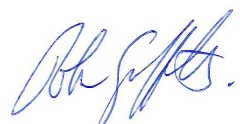
Signature |
|
Capacity | Justice of the Federal Court of Australia |
Date writ received by Sheriff |
JUDGMENT CREDITOR’S DETAILS | ||||
Name | Deputy Commissioner of Taxation | |||
Address for service | Level 21 | |||
227 | Elizabeth Street | |||
SYDNEY | NSW 2000 | |||
Telephone | (02) 8268 4000 | |||
#Fax | (02) 8268 4001 | |||
scampos@craddock.com.au | ||||
#Note: Interest is not applicable in relation to a judgment debt for unpaid Local Government rates under section 566(5) of the Local Government Act 1993 (NSW).
GRIFFITHS J:
Introduction
1 These proceedings have a long history. On 2 May 2018 the Court made orders in which the applicant obtained judgment against the respondent for income tax liabilities, administrative penalties, short fall interest charges and general interest charges in the total amount of approximately $1.6m. The judgment is reported as Deputy Commissioner of Taxation v Ziolkowski [2018] FCA 616. By an interlocutory application filed on 24 October 2018, the applicant sought the issue of a writ for levy of property against the respondent in respect of that judgment. By an interlocutory application filed on 14 January 2019, the respondent sought a stay of the judgment entered on 2 May 2018 until the determination of proceedings in the Administrative Appeals Tribunal in which the respondent sought a review of the applicant’s decision dated 14 November 2018 which disallowed an objection dated 4 March 2016 concerning assessments of income tax, administrative penalties and short fall interest charges for the financial years ended 30 June 2006 and 2007 respectively.
2 Various case management hearings have been conducted in respect of these matters. On 19 March 2019, by consent, the respondent’s interlocutory application for a stay was dismissed, with costs reserved. By consent, the applicant’s interlocutory application for the issue of a writ for levy of property was adjourned to Chambers for consideration on the papers and without an oral hearing. The respondent’s solicitor confirmed at the 19 March 2019 case management hearing that the respondent did not wish to provide any evidence or submissions in respect of that interlocutory application.
Determination of the applicant’s interlocutory application
3 The applicant relied on two affidavits, the first by Susi Campos affirmed on 10 May 2018, and the second by George Khouri sworn on 17 October 2018 to establish that
(a) a copy of the orders and reasons for judgment dated 2 May 2018 was served on the respondent on 10 May 2018; and
(b) the whole of the judgment remains outstanding.
4 I accept the applicant’s uncontroverted evidence on both of those matters.
5 Section 53 of the Federal Court of Australia Act 1976 (Cth) (FCAA Act) provides that a judgment can be enforced in this Court in the same manner as the Supreme Court of the State or Territory where the judgment was given.
6 Rule 41.10 of the Federal Court Rules 2011 (Cth) (2011 FCRs), allows a party who seeks to enforce a judgment or order of this Court to apply to the Court to, inter alia, issue a writ as if the judgment or order was a judgment or order of the Supreme Court of the State or Territory in which the judgment was made.
7 Pursuant to s 53, a judgment given by the Federal Court which is to be enforced in New South Wales can be enforced by means of the same remedies, by execution or otherwise, as are allowed to judgment creditors in like cases by the laws of New South Wales: Uganda Telecom Ltd v Hi-Tech Telecom Pty Ltd (No 2) [2011] FCA 206; 277 ALR 441 at [15].
8 The effect of the opening words of s 53(1), namely “[s]ubject to the Rules of Court”, was explained in Woodlands v Permanent Trustee Co Ltd (1996) 68 FCR 213, by Wilcox, Burchett and Olney JJ at 244:
…the intention of the Parliament was to make the rule set out in s 53(1) subservient to any relevant Rule of Court. To the extent that there is no relevant rule, the section continues to apply.
9 Rule 41.10 enables the Commissioner to apply to the Federal Court to take any step that can be taken in the Supreme Court of New South Wales, as if the judgment obtained by the Commissioner against the respondent was a judgment of the Supreme Court of New South Wales. So much was held by Spender J in Guthrie v Robertson (1987) 13 FCR 336 at 337-338 (Guthrie) in relation to r 41.10’s predecessor provision in the Federal Court Rules 1979 (Cth).
10 In Linke v TT Builders Pty Ltd (No 2) [2015] FCA 704, which concerned s 53 of the FCA Act and r 41.10 of the 2011 FCRs, White J, by reference to Spender J’s comments in Guthrie, said at [11]:
It is in the public interest that the Court’s orders are respected and obeyed. Accordingly, it is appropriate for the Court to assist judgment creditors to enforce their entitlements. Respect for the law will be undermined if judgment debtors can readily frustrate enforcements of judgments against them. Spender J referred to these considerations in Guthrie v Robertson (1987) 13 FCR 336 at 337-8.
11 Consistently with the approach adopted by White J, the applicant’s entitlement to the writ for levy of property will be determined as if the application was before the Supreme Court of New South Wales in enforcement of a judgment of that Court.
12 The relevant provisions for enforcement of a judgment debt in the Supreme Court of NSW are s 106 of the Civil Procedure Act 2005 (NSW) (CP Act) and r 39.2 of the Uniform Civil Procedure Rules 2005 (NSW) (UCPRs).
13 Section 106 of the CP Act provides that a judgment debt may be enforced by means of, inter alia, a writ for the levy of property.
14 Subject to the requirements of the CP Act and the UCPRs, the writ for levy of property provides sufficient authority for the Sheriff to inter alia seize and sell goods, seize money belonging to the judgment debtor, seize and realise cheques, and enter into possession of, and sell land that the debtor is entitled to in law or equity (s 106(2) of the CP Act).
15 Rule 39.2 of the UCPRs provides that an application for a writ of execution in respect of a judgment is to be made by way of notice of motion, which may be dealt with in the absence of the parties and need not be served, absent an order of the court. Any such application must indicate the extent (if any) to which the judgment debt has been satisfied under any writ of execution, garnishee order or charging order issued by the court (r 39.3 of the UCPRs).
16 Rule 39.3 of the UCPRs provides that unless the court orders otherwise, an applicant for a writ of execution must file an affidavit in support of the application sworn not more than 14 days prior to filing.
17 An affidavit in support of a writ for levy of property, pursuant to r 39.3 must also state:
(a) the amount payable under the judgment, together with any costs and interest payable in relation to the judgment, as at the date of swearing of the affidavit, and
(b) the address or addresses at which property belonging to the judgment debtor may be located.
18 Where leave is not required, nothing in the wording of s 53 of the FCA Act, s 106 of the CP Act or r 41.10 of the 2011 FCRs indicates that the issue of a writ for levy of property involves the exercise of a discretion in circumstances where the formal requirements have been met.
19 The affidavit sworn by George Khouri on 17 October 2018 in support of the interlocutory application has been filed in accordance with r 39.3 of the UCPRs. The affidavit verifies:
(a) the judgment entered on 2 May 2018 remains wholly unsatisfied and interest to 16 October 2018 has accrued in the amount of $54,937.57 (UCPRs, r 39.3(4)(a));
(b) the applicant believes that property of the respondent is located at 806/1A Tusculum Street, Potts Point NSW 2011 (UCPRs r 39.3(4)(b)); and
(c) the Judgment has not been stayed by any order of this Court.
20 The form of the writ for levy of property is prescribed as Form 66 of the Approved Civil Forms.
Conclusion
21 Pursuant to s 106 of the CP Act and r 39.2 of the UCPRs, as applied by s 53 of FCA Act and r 41.10 of the 2011 FCRs, I am satisfied that the writ for levy of property sought in the interlocutory application ought to be issued.
I certify that the preceding twenty-one (21) numbered paragraphs are a true copy of the Reasons for Judgment herein of the Honourable Justice Griffiths. |
Associate:


