

FEDERAL COURT OF AUSTRALIA
Warner (Trustee), in the matter of Barnes and Barnes [2018] FCA 1784
ORDERS
ANTHONY JOHN WARNER IN HIS CAPACITY AS TRUSTEE OF THE BANKRUPT ESTATES OF JOHN ERIC BARNES AND JUDITH ANGELA BARNES Applicant | ||
DATE OF ORDER: |
THE COURT ORDERS THAT:
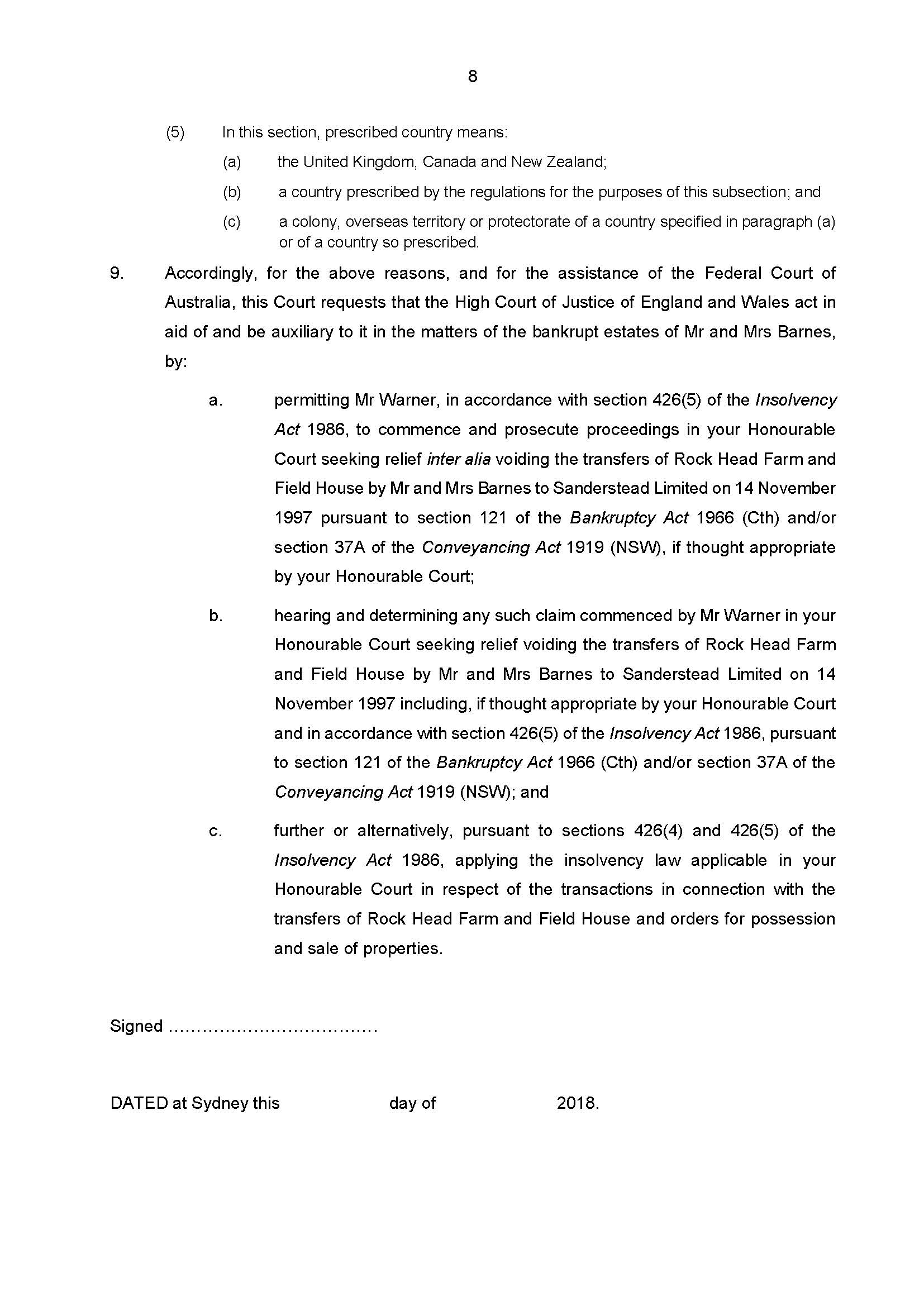
1. Pursuant to s 29(4) of the Bankruptcy Act 1966 (Cth), a Letter of Request be issued to the High Court of Justice of England and Wales in the form of Annexure “A” to these orders.
2. The costs of the application be costs in the bankrupt estates of John Eric Barnes and Judith Angela Barnes.
Note: Entry of orders is dealt with in Rule 39.32 of the Federal Court Rules 2011.
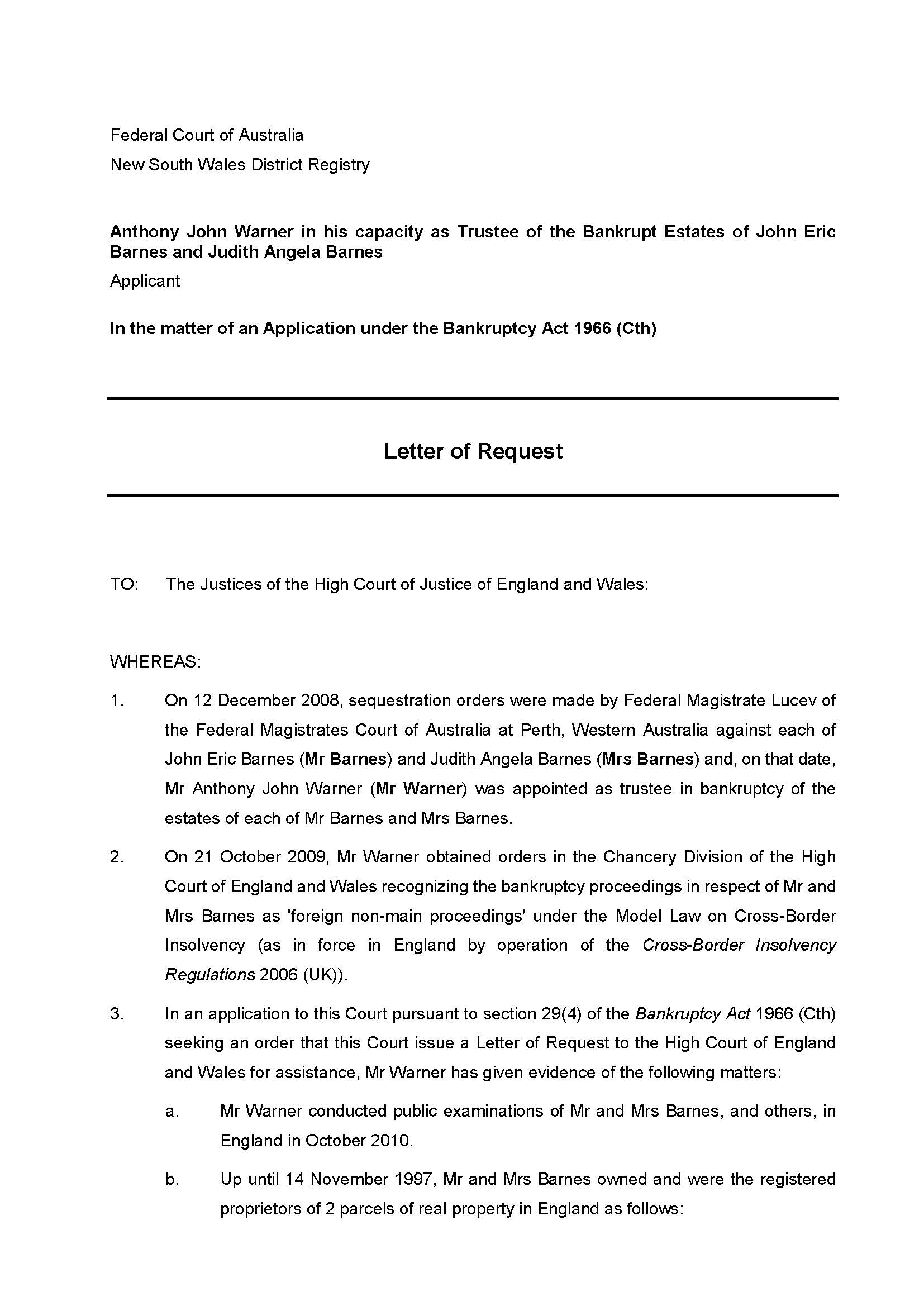
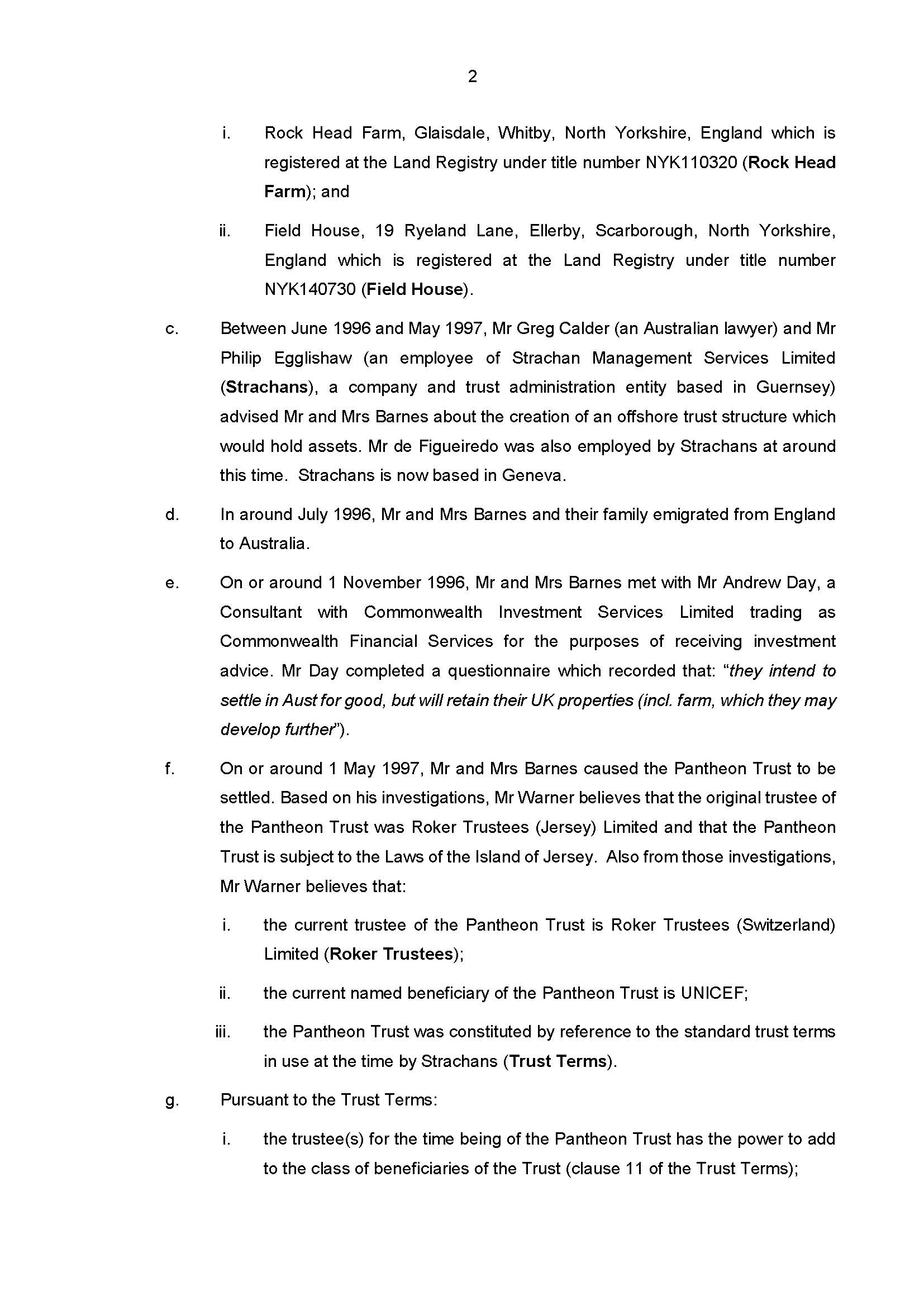
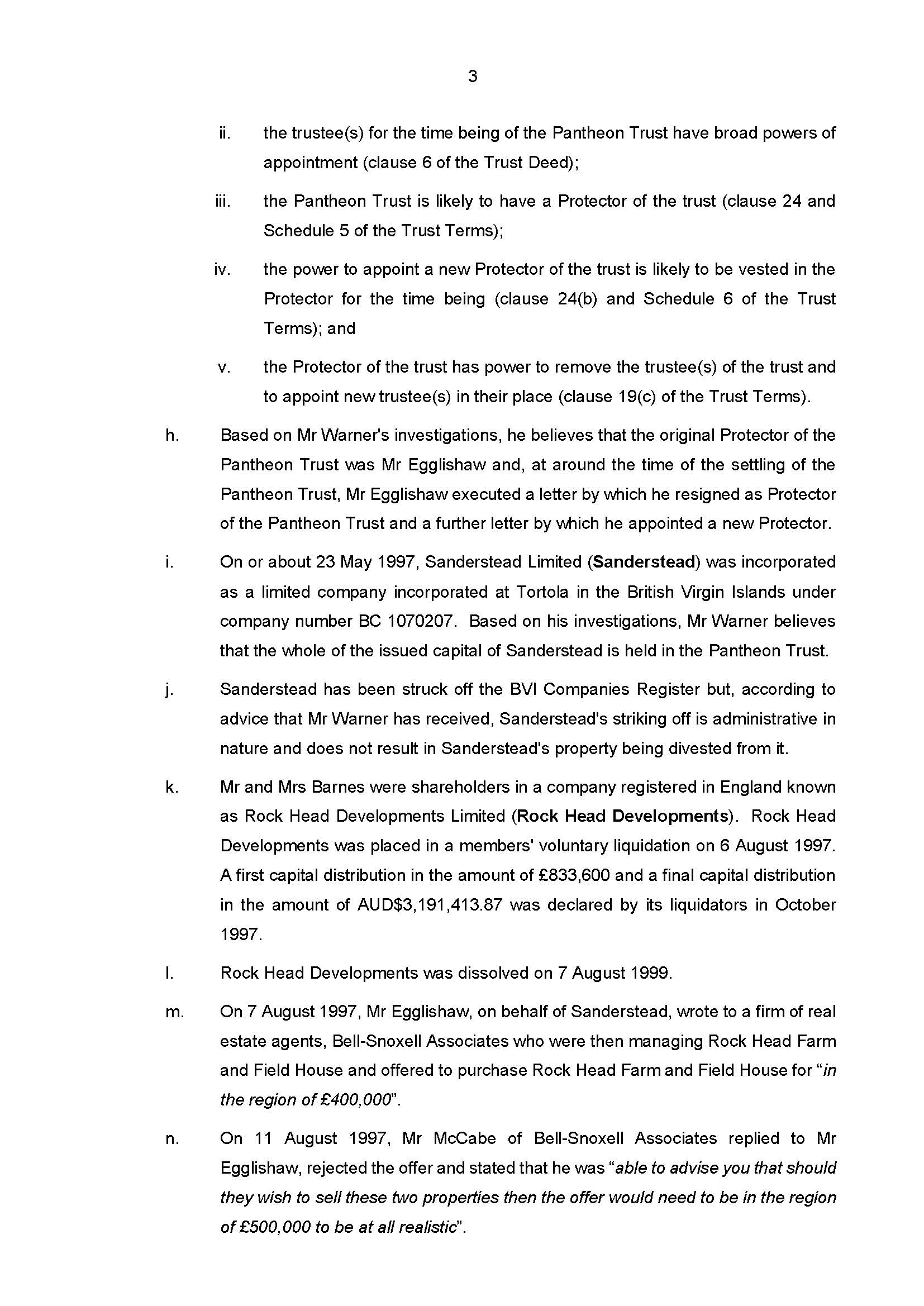
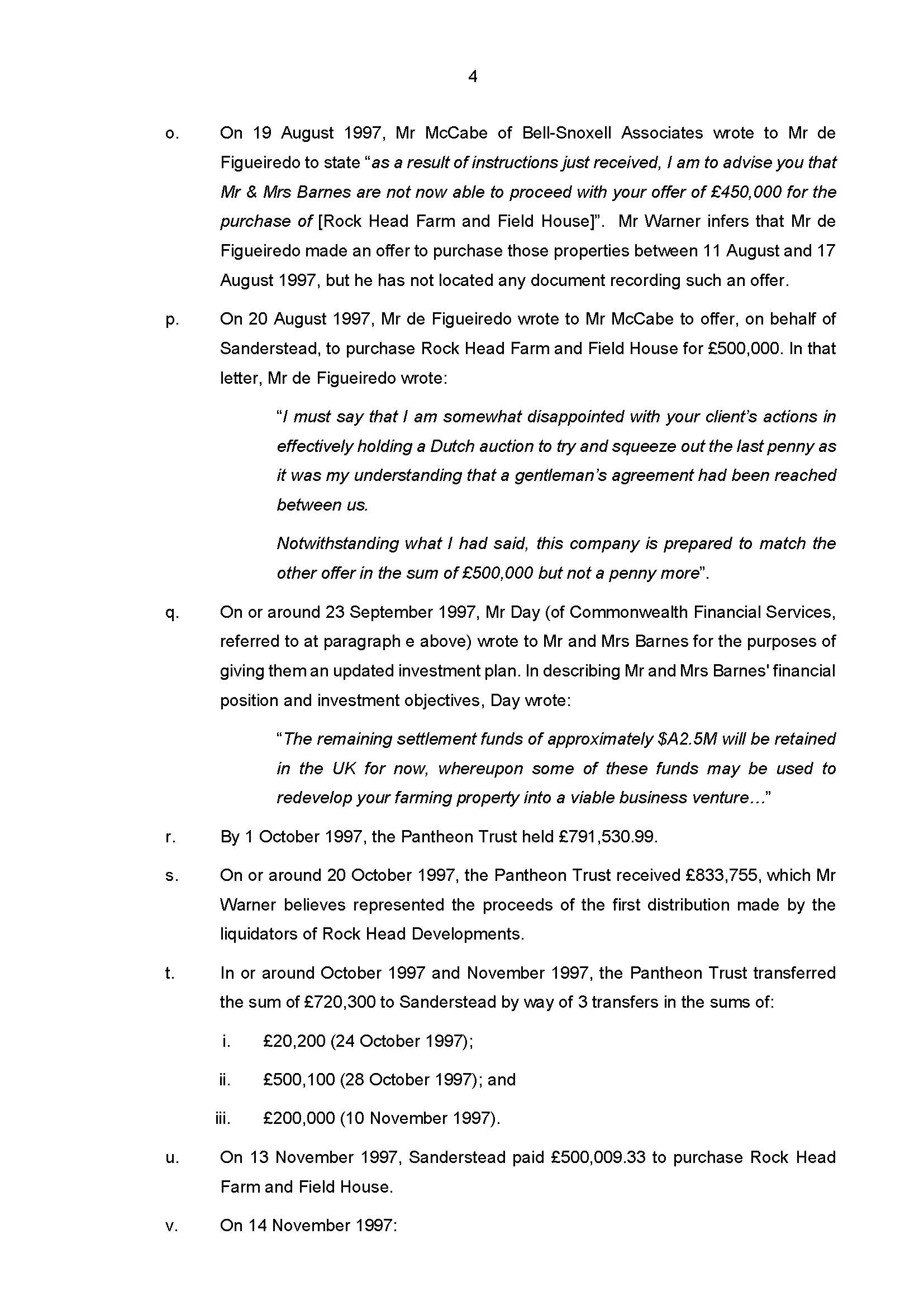
Annexure “A”
YATES J:
Introduction
1 The applicant, Mr Warner, is the trustee of the bankrupt estates of John Eric Barnes and his wife Angela Judith Barnes. He applies for an order, pursuant to s 29(4) of the Bankruptcy Act 1966 (Cth) (the Bankruptcy Act), that the Court issue a Letter of Request to the High Court of Justice of England and Wales (the High Court) requesting it to act in aid of and be auxiliary to this Court in relation to certain identified matters concerning the two bankruptcies. Mr Warner has made two affidavits in support of his application (10 August 2018 and 5 November 2018).
2 In around July 1996, Mr and Mrs Barnes and their family emigrated to Australia. They returned to England in around February 2007. On 12 December 2008, sequestration orders were made against their respective estates on the application of the Deputy Commissioner of Taxation. On 22 October 2009, orders were made by the High Court recognising the bankruptcies in England and Wales as foreign non-main proceedings in accordance with the UNCITRAL Model Law on Cross-Border Insolvency as set out in Schedule 1 to the Cross-Border Insolvency Regulations 2006 (UK). In October 2010, Mr Warner carried out public examinations of Mr and Mrs Barnes in England.
3 On 5 February 2013, Mr Warner submitted objections to Mr and Mrs Barnes’ discharge from bankruptcy, with the result that the bankruptcies were extended to 10 August 2018. The dates of their discharge from bankruptcy have since been further extended by reason of further objections submitted by Mr Warner on 9 August 2018.
4 Since filing the present application, Mr Warner has received information that Mr Barnes passed away in September 2018. Because of the extension of Mr Barnes’ bankruptcy, the proceedings in bankruptcy continue, so far as they are capable of being continued, as if he were alive: s 63 of the Bankruptcy Act.
Background
5 Mr Warner wishes to commence proceedings in the High Court to set aside two pre-bankruptcy transactions that were entered into by Mr and Mrs Barnes in 1997 in relation to two properties:
(a) Rock Head Farm, Glaisdale, Whitby, North Yorkshire, England, registered at H.M. Land Registry under title number NYK110320 (Rock Head Farm); and
(b) Field House, 19 Ryeland Lane, Ellerby, Scarborough, North Yorkshire, England, registered at H.M. Land Registry under title number NYK140730 (Field House).
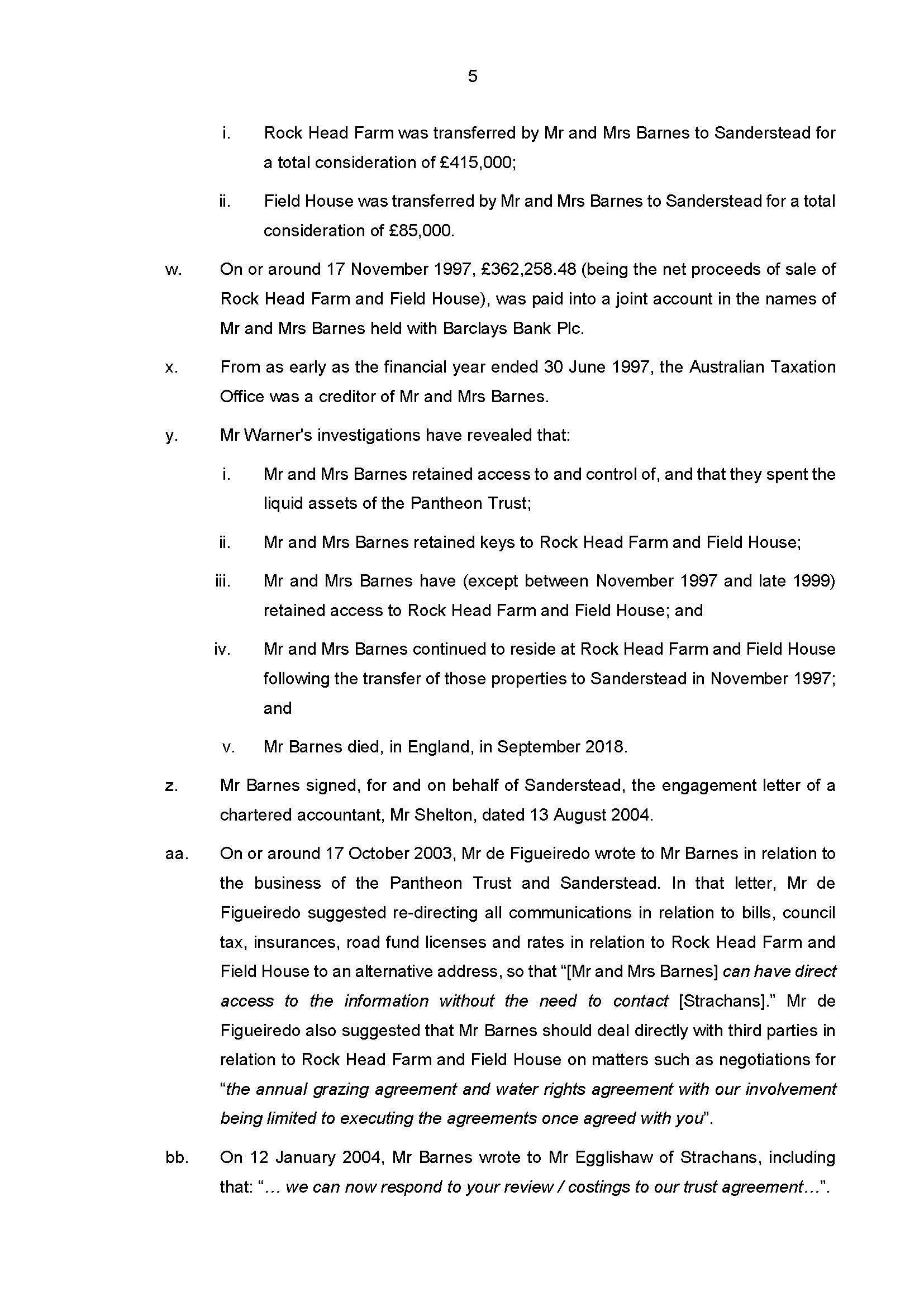
6 Up until 14 November 1997, Mr and Mrs Barnes were the registered proprietors of the two properties. Mr Warner’s investigations have led him to conclude that Mr and Mrs Barnes purposefully took steps to divest themselves of the two properties while continuing to remain in full control of them. In summary, on 14 November 1997, Mr and Mrs Barnes transferred their interests in Rock Head Farm and Field House to Sanderstead Limited (Sanderstead). Sanderstead is a company incorporated at Tortola in the British Virgin Islands on about 23 May 1997. The whole of its issued capital is an asset of the Pantheon Trust. The Pantheon Trust was created by Mr and Mrs Barnes by means of a Declaration of Trust dated 1 May 1997. The trustee is Roker Trustees (Switzerland) Limited. The beneficiary of the trust is stated to be UNICEF. In his examination, Mr Barnes stated his belief that the beneficiaries of the trust were his and Mrs Barnes’ three sons. Whilst UNICEF is identified as the beneficiary under the trust, cl 11(a) of the Declaration of Trust provides that the trustee has the power, in its absolute discretion, to add one or more persons to the class of beneficiaries. Moreover, under cl 5(a), the trustee has the power to apply the whole or part of the capital or income of the trust for the benefit of one or more beneficiaries to the exclusion of other beneficiaries.
7 The sale of Rock Head Farm to Sanderstead was for a stated consideration of £415,000. The sale of Field House was for a stated consideration of £85,000. The evidence suggests that Sanderstead was put in funds by the Pantheon Trust in order to make the purchases and that the Pantheon Trust received its funds from a members’ voluntary liquidation of a company called Rock Head Development Limited (Rock Head Development). Mr and Mrs Barnes were the members of Rock Head Development.
8 The evidence suggests that all these arrangements—the incorporation of Sanderstead, the establishment of the Pantheon Trust, and the transfer of the two properties to Sanderstead—were put in place on the advice of Strachan Management Services Ltd (Strachan), a company providing company and trust administration services. At the time of these events, Strachan was located in Guernsey. One of its employees was Mr Egglishaw, who was also appointed as the Protector of the Pantheon Trust, an office created under the terms of the Declaration of Trust. Under cl 25 of the Declaration of Trust, certain powers of the trustee can only be exercised with the consent of the Protector. These include the power to apply income and capital under cl 5, and the power of addition under cl 11, to which I have referred. The Protector can also remove a trustee and appoint a new trustee, as well as appoint a new Protector. Mr Egglishaw has executed, but left undated, a letter resigning as Protector. He has also executed, but left undated, a letter appointing a new Protector. The name of the new Protector has been left blank.
9 Another employee of Strachan was Mr de Figueiredo. Mr Egglishaw and Mr de Figueiredo were signatories to letters sent by Sanderstead as part of the transaction for the purchase by Sanderstead of Rock Head Farm and Field House.
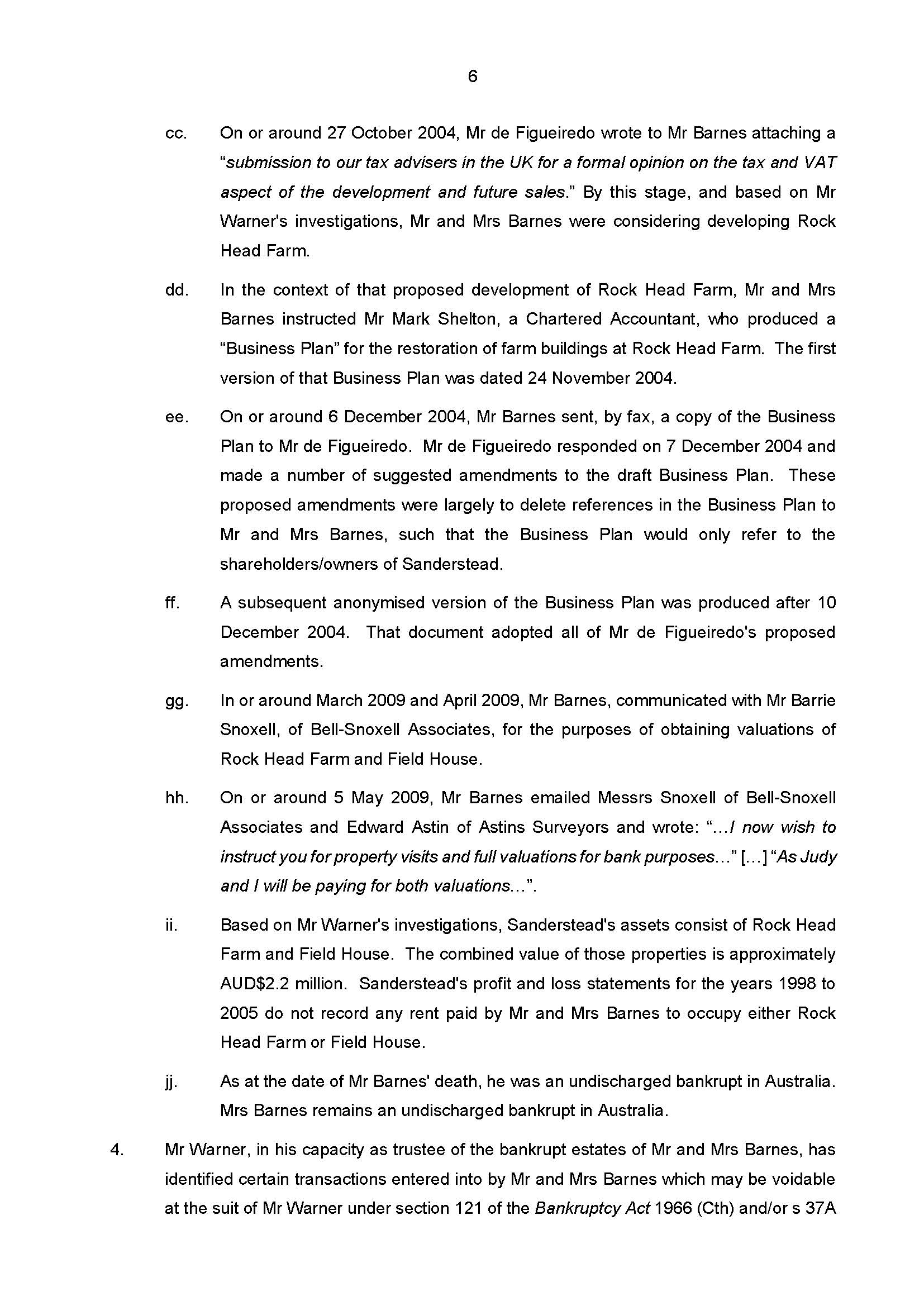
10 Further, at the time of the transfers, the Australian Taxation Office was a creditor of Mr Barnes and of Mrs Barnes, albeit for relatively modest sums. After this time, Mr Barnes’ and Mrs Barnes’ Australian tax liabilities increased significantly. The Australian Tax Office is now the major creditor in each bankruptcy, with a proof of debt in Mr Barnes’ bankruptcy for $2,208,298.83 and a proof of debt in Mrs Barnes’ bankruptcy for $1,474,148.63. The other creditor in each estate is the Commonwealth Bank of Australia which has lodged a proof of debt for $38,642.90 in Mr Barnes’ bankruptcy and a proof of debt for $7,864.81 in Mrs Barnes’ bankruptcy.
11 Mr Warner believes that the transfers of the two properties are susceptible to challenge in Mr and Mrs Barnes’ bankruptcies. He contends that the transfers were intended to give the appearance that the transfers were arms’ length transfers to third parties, when in truth and substance they were not.
12 Mr Warner’s investigations indicate that, despite them selling Rock Head Farm and Field House to Sanderstead, Mr and Mrs Barnes retained the keys to both properties and continued to reside at them at various times (it seems with one or more of their sons), outside their time in Australia. Mr and Mrs Barnes continued to receive communications in respect of both properties. Indeed, on 17 October 2003, Mr Figueiredo recommended that Strachan should re-direct all communications and invoices in relation to water rates, council tax, insurances, road fund licences and so on, to Rock Head Farm so that Mr and Mrs Barnes would have direct access to that information without the need to contact Strachan (note, not Sanderstead). Mr de Figueiredo also recommended that Mr and Mrs Barnes could then send the cash book for the Rock Head Farm account, together with supporting documents, to Strachan for accounting purposes on a quarterly basis. He further suggested that Mr and Mrs Barnes could deal directly on matters such as negotiations for the annual grazing agreement and water rights agreement, with Strachan’s involvement being limited to executing the agreements once that they had been agreed by Mr and Mrs Barnes. In early 2004, Mr Barnes wrote to Mr Egglishaw raising concerns about the operating costs of the trust structure, which he found to be “surprising” given that he and Mrs Barnes had taken over much of the administrative procedures.
13 Mr Warner’s investigations also indicate that, in early 2004, Mr Barnes made enquiries to redevelop Rock Head Farm into a health and leisure complex. He engaged a chartered accountant, Mr Shelton, to provide accountancy and related services, including the compilation of a business plan for the proposed redevelopment, and the completion and submission of a grant application under the Rural Enterprise Scheme. On 1 September 2004, Mr Barnes executed a letter of engagement with Mr Shelton (dated 13 August 2004) in which he described himself as a director of Sanderstead, acting for and on behalf of the Board. Mr Shelton prepared a draft business plan in which he described Sanderstead as a company whose shares were held in trust for the Barnes family. This was later amended by Mr de Figueiredo because “We [Strachan] would delete any reference as to who owns Sanderstead”.
14 In March and April 2009, Mr Barnes instructed a valuer to provide valuations of Rock Head Farm and Field House for bank lending purposes. On 18 May 2009, valuations were provided. They were formally addressed to “The Manager, Sanderstead Ltd”, but plainly intended for Mr and Mrs Barnes. The freehold market value of Rock Head Farm was assessed at £850,000. In relation to Field House, the valuer suggested a market value in the region of £350,000. He said that, if the property were to go on the market, he would recommend a “guide price” of £375,000.
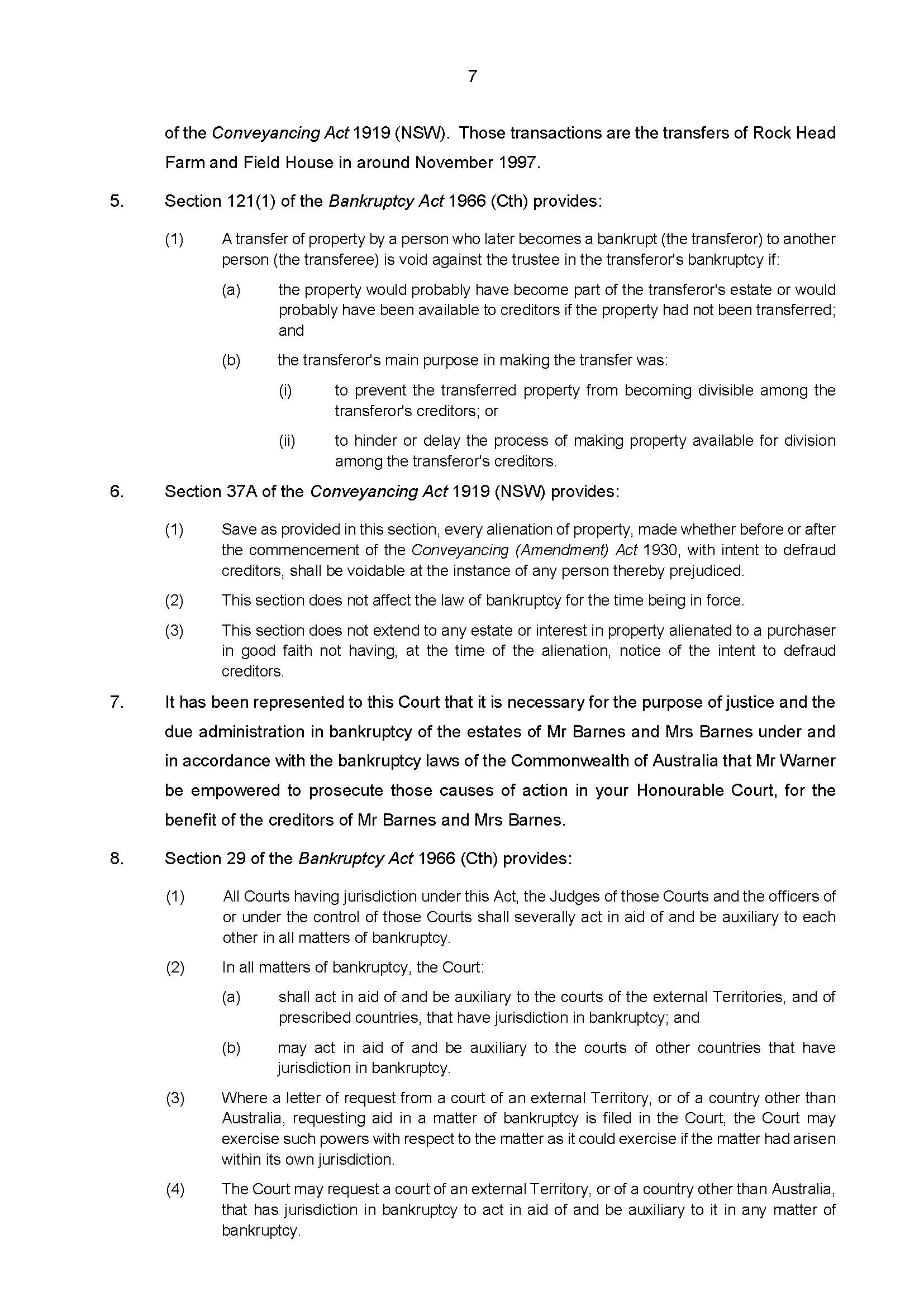
15 Although the Australian bankruptcy proceedings have been recognised as foreign non-main proceedings by the High Court, Mr Warner informs me that he does not have standing to commence proceedings in the High Court to challenge the transfers of Rock Head Farm and Field House to Sanderstead under s 423 of the Insolvency Act 1986 (UK) (the Insolvency Act (UK)) as transactions defrauding creditors because the transactions occurred before 5 April 2006. If possible, he wishes to challenge the transfers under s 121 of the Bankruptcy Act and/or s 37A of the Conveyancing Act 1919 (NSW) (the Conveyancing Act (NSW)).
16 Section 121(1) of the Bankruptcy Act provides:
(1) A transfer of property by a person who later becomes a bankrupt (the transferor) to another person (the transferee) is void against the trustee in the transferor's bankruptcy if:
(a) the property would probably have become part of the transferor's estate or would probably have been available to creditors if the property had not been transferred; and
(b) the transferor's main purpose in making the transfer was:
(i) to prevent the transferred property from becoming divisible among the transferor's creditors; or
(ii) to hinder or delay the process of making property available for division among the transferor's creditors.
17 Section 37A of the Conveyancing Act (NSW) provides:
(1) Save as provided in this section, every alienation of property, made whether before or after the commencement of the Conveyancing (Amendment) Act 1930, with intent to defraud creditors, shall be voidable at the instance of any person thereby prejudiced.
(2) This section does not affect the law of bankruptcy for the time being in force.
(3) This section does not extend to any estate or interest in property alienated to a purchaser in good faith not having, at the time of the alienation, notice of the intent to defraud creditors.
Consideration
18 Section 29(4) of the Bankruptcy Act confers power on this Court to request a foreign court that has jurisdiction in bankruptcy to act in aid of and be auxiliary to it in any matter of bankruptcy. In Re Clunies-Ross; Ex parte Totterdell (1988) 82 ALR 475 (Clunies-Ross) at 483, French J identified three issues that arise for determination in such an application.
19 First, the Court must have power to issue the letter of request. In this connection, the power conferred by s 29(4) is conditioned on the requirement that the foreign court, as receiving court, has jurisdiction in bankruptcy. That requirement is satisfied in the present case because s 96(1) of the Bankruptcy Act 1914 (UK) confers that jurisdiction on the High Court.
20 Secondly, the foreign court, as receiving court, must have power to act on the proposed letter of request. This requirement is satisfied in the present case because s 426(4) of the Insolvency Act (UK) provides that the courts having jurisdiction in relation to insolvency law in any part of the United Kingdom shall assist the courts having the corresponding jurisdiction in “any relevant country or territory”. As defined in s 426(11), “any relevant country or territory” includes any country or territory designated for the purposes of the section by the Secretary of State by order made by statutory instrument. Australia is such a country or territory: The Co-operation of Insolvency Courts (Designation of Relevant Countries and Territories) Order 1986. Further, the draft Letter of Request sought by Mr Warner includes a request that the High Court render assistance by applying Australian insolvency law, specifically s 121 of the Bankruptcy Act and/or s 37A of the Conveyancing Act (NSW). Section 426(5) of the Insolvency Act (UK) provides that a request made to a court in any part of the United Kingdom by a court in a relevant country or territory is authority for the court (here, the High Court) to apply, in relation to any matters specified in the request, the insolvency law which is applicable by either court in relation to comparable matters falling within its jurisdiction. Thus, in the present case, s 426(5) contemplates that the High Court can apply (if it chooses to do so) s 121 of the Bankruptcy Act and/or s 37A of the Conveyancing Act (NSW).
21 Thirdly, the power under s 29(4) of the Bankruptcy Act is a discretionary power. In Clunies-Ross, French J said that the discretion will be exercised with regard to considerations of utility and comity. It is not entirely clear to me what his Honour meant by his reference to “comity”. On appeal (Clunies-Ross v Totterdell (1988) 20 FCR 358), the Full Court said that it is not necessary for an applicant under s 29(4) to demonstrate that it is probable that the foreign court, as receiving court, will honour the request. Indeed, the Full Court stressed that, when a request to a foreign court is involved, it would be quite inappropriate to examine that question in advance.
22 In the present case, I am satisfied that, on the evidence before me, the order that is sought under s 29(4) will have utility. In saying that, I do not presume to forecast whether the High Court will, in fact, act in aid of, and be auxiliary to, this Court. But there does appear to be a case to be made (I say no more than that) to set aside the two transfers for the benefit of the creditors who have lodged proofs of debt in each bankruptcy, and the High Court would appear to have the jurisdiction and power to do so. In all the circumstances, I am prepared to grant the application, subject to the draft Letter of Request being amended in certain minor respects, including in a way that reformulates the request so that it is more specific.
23 Finally, I record that at the commencement of the hearing of the present application I raised the question whether notice of the making of the application should be given to the bankrupts. There is an immediate difficulty in relation to Mr Barnes, given notice of his passing. So far as Mr Warner knows from searches conducted on his behalf, no application for, or grant of, Probate or Letters of Administration has been made in respect of the deceased estate (at least as at 3 October 2018). In addition, Mrs Barnes is not present within Australia, although that of itself is not a significant impediment to notice being given to her of the bringing of this application, if such notice be necessary.
24 In Re Lyons [2000] FCA 1428; (2000) 104 FCR 486 (Lyons), Tamberlin J was of the view that notice should be given to the bankrupt of an application that had been made to the Court under s 29(4). His Honour noted that the bankrupt was in Australia. His Honour also noted that the draft Letter of Request filed in the application requested the High Court of New Zealand to vest the bankrupt’s real and personal property in New Zealand in the Official Trustee in Bankruptcy (in Australia) as trustee of the bankrupt’s estate, with liberty to sell and lease the same, receive the proceeds and take such steps and do such acts as may be necessary for those purposes. The High Court of New Zealand was also requested to grant the Official Trustee the power of investigation for the purpose of investigating in New Zealand the property of the bankrupt and any offences which he may have committed. His Honour said that the Letter of Request that was sought could have a significant effect on the bankrupt’s interests in New Zealand, making it appropriate that he be informed of the application.
25 I think the present case is distinguishable. The order that is sought is limited to making a request to the High Court that it lend its aid by entertaining proceedings that are foreshadowed but not yet commenced. The rights and liabilities of the defendant parties to the foreshadowed proceedings are not directly affected by the present application. In particular, their interests in the subject matter of those proceedings, if and when commenced, are unaffected and preserved. The nature, extent and terms of the aid that is sought will remain a matter for the discretion of the High Court which, no doubt, will invoke its own procedures including, if considered appropriate, the giving of notice to Mrs Barnes and to Mr Barnes’ representative (if one be then appointed). The practice in this Court, when a similar request is made to it by a foreign (issuing) court, is to require notice of the letter of request to be served on the bankrupt: Re Ayres; Ex parte Evans (1981) 51 FLR 395. Implicit in that practice is the recognition that no notice of the proceeding in the issuing court has been given, or is likely to have been given, to the bankrupt.
Disposition
26 Orders, substantially as sought, should be made.
I certify that the preceding twenty-six (26) numbered paragraphs are a true copy of the Reasons for Judgment herein of the Honourable Justice Yates. |
Associate:


