

FEDERAL COURT OF AUSTRALIA
Technological Resources Pty Limited v Tettman [2018] FCA 1770
ORDERS
TECHNOLOGICAL RESOURCES PTY LIMITED (ACN 002 183 557) Appellant | ||
AND: | Respondent | |
DATE OF ORDER: |
THE COURT ORDERS THAT:
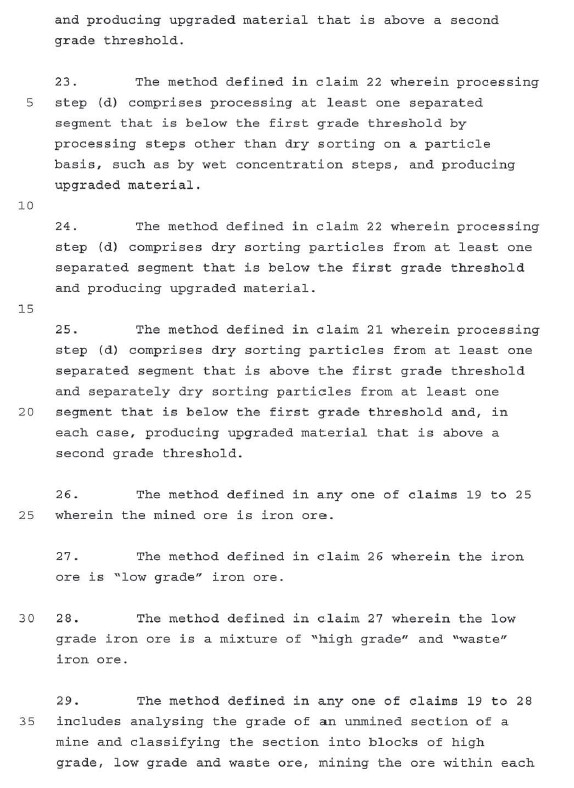
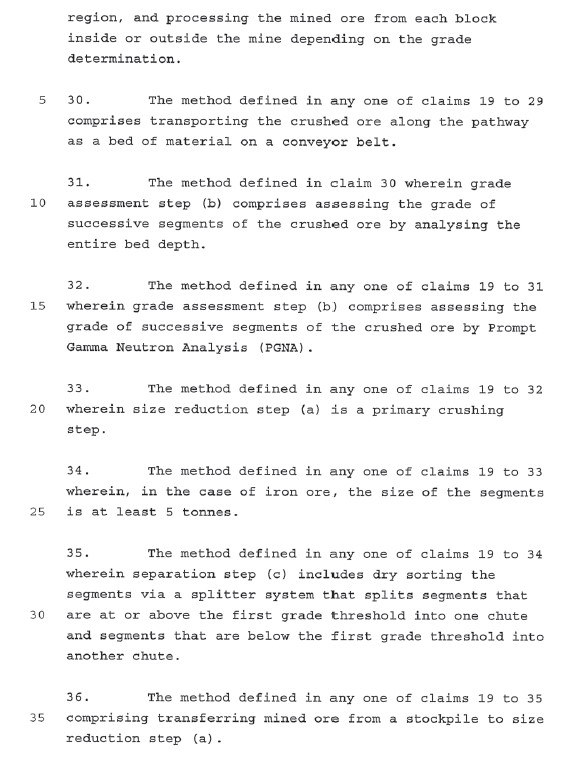
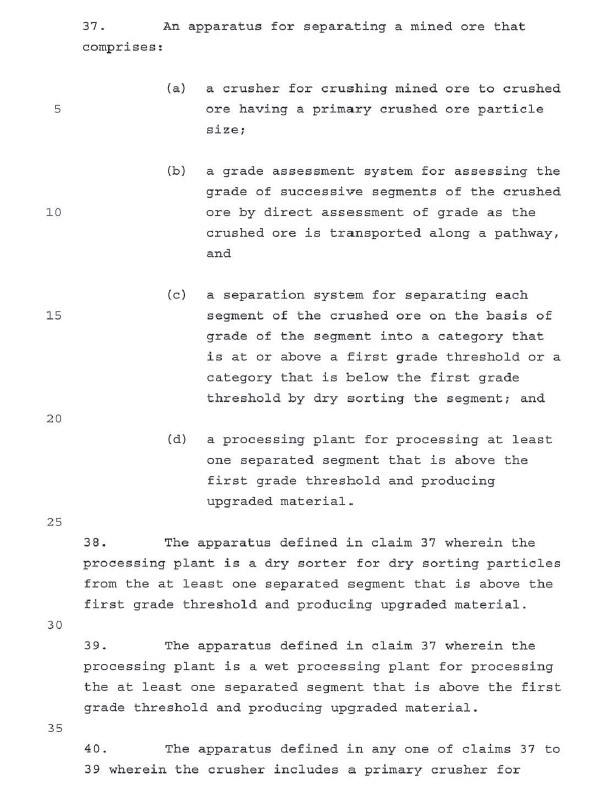
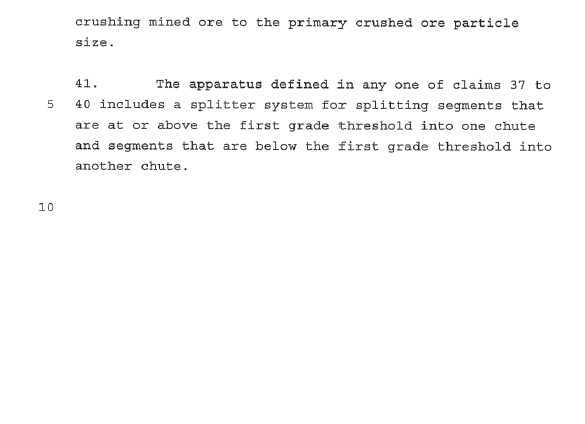
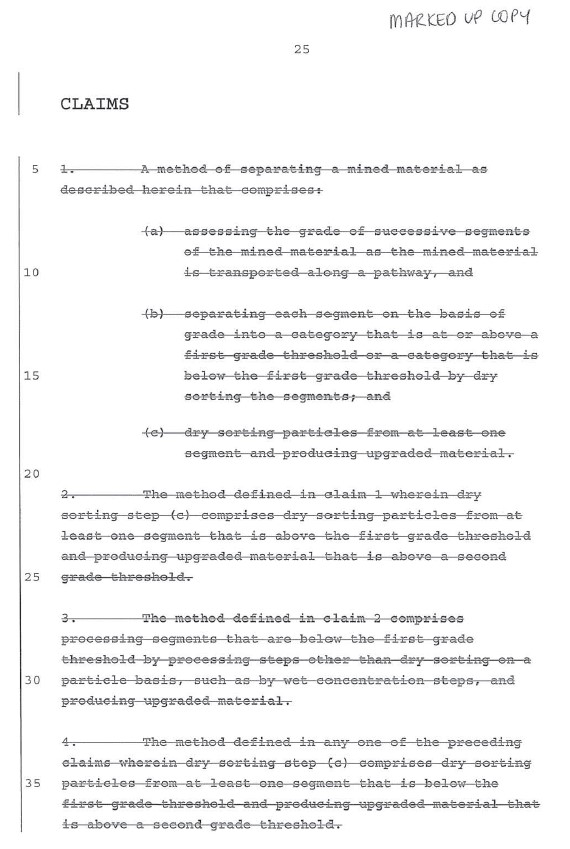
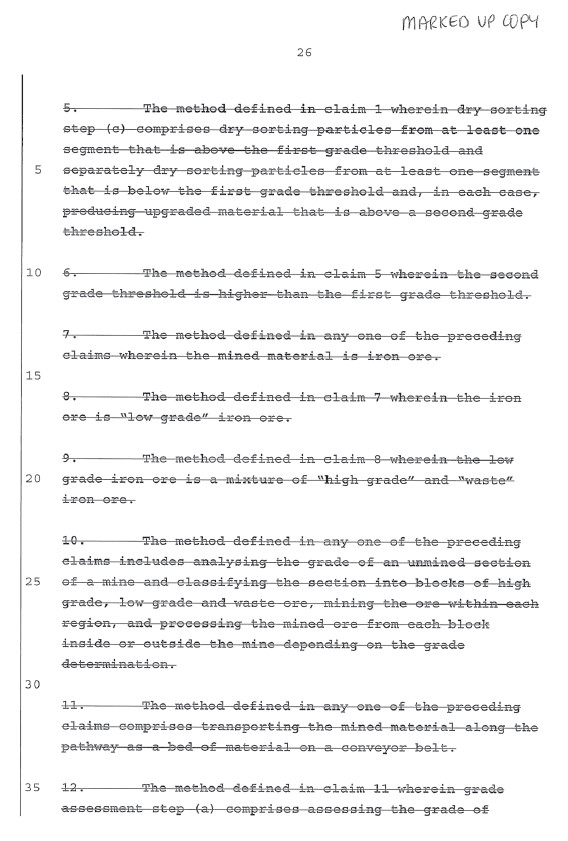
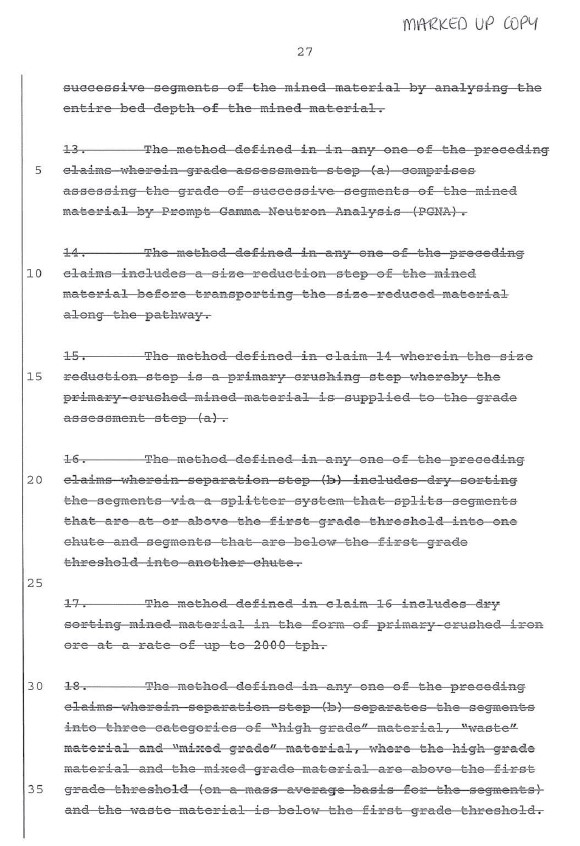
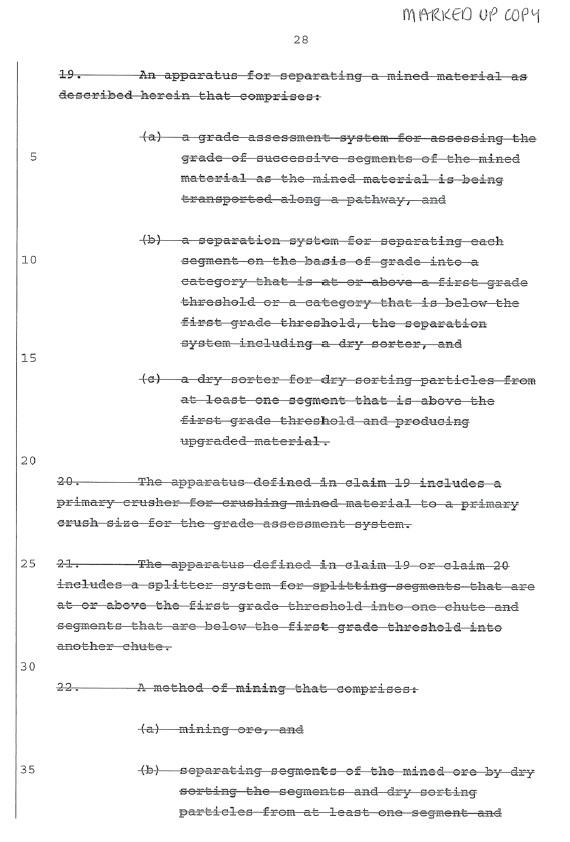
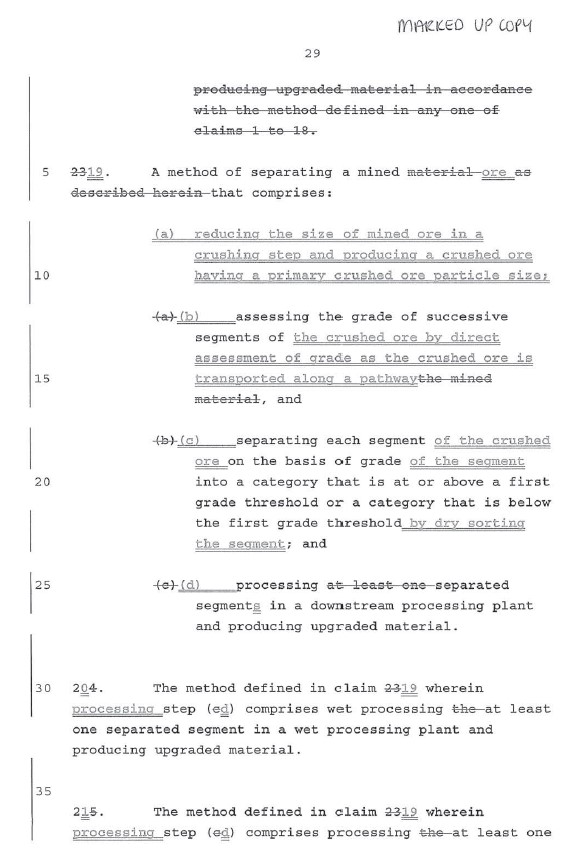
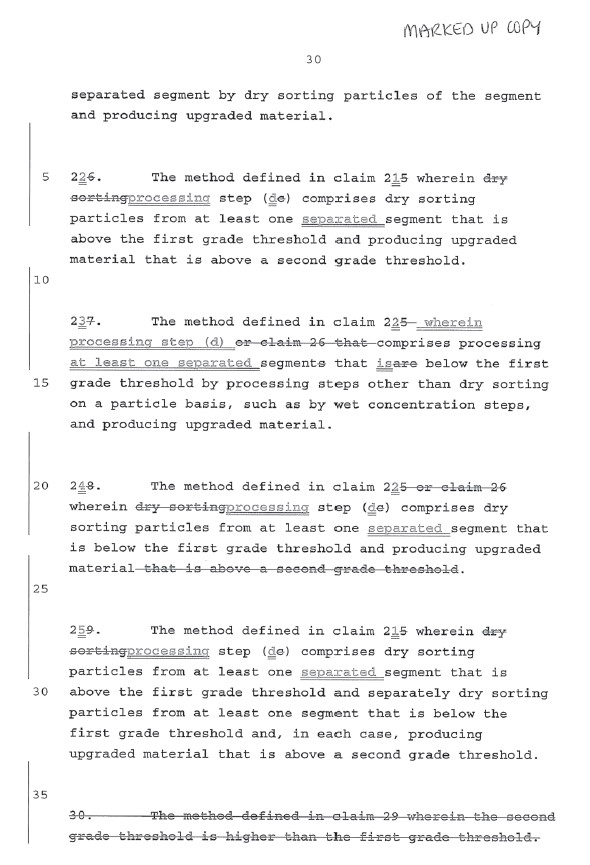
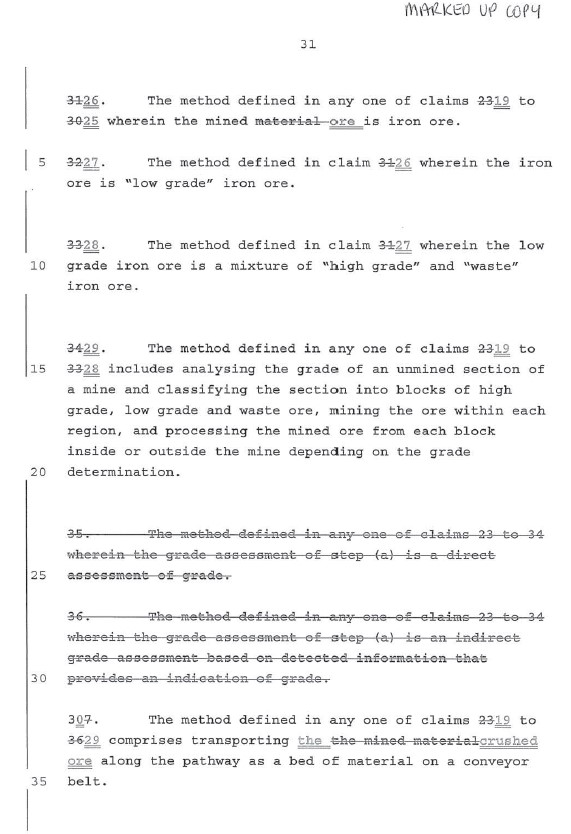
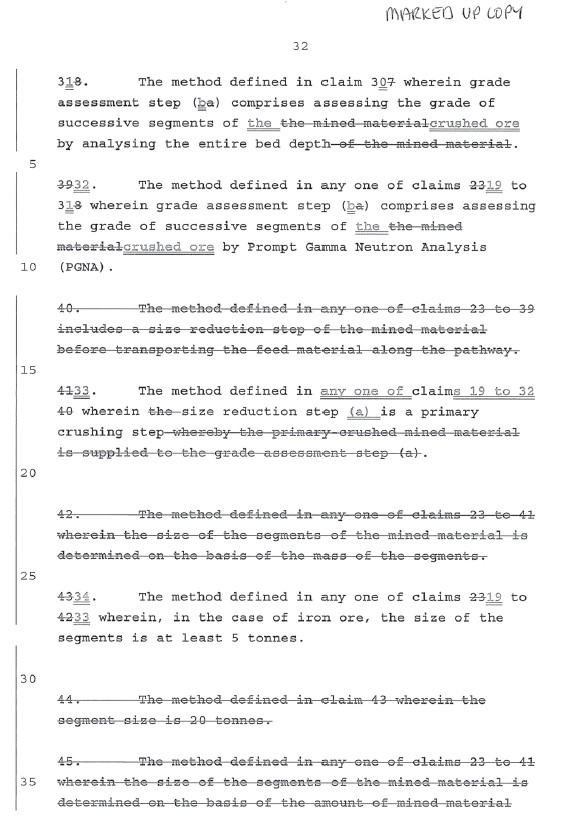
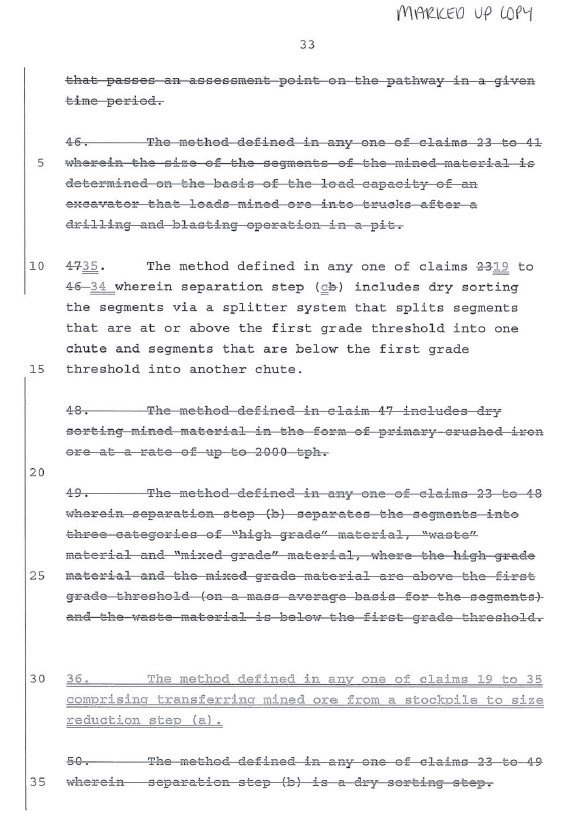
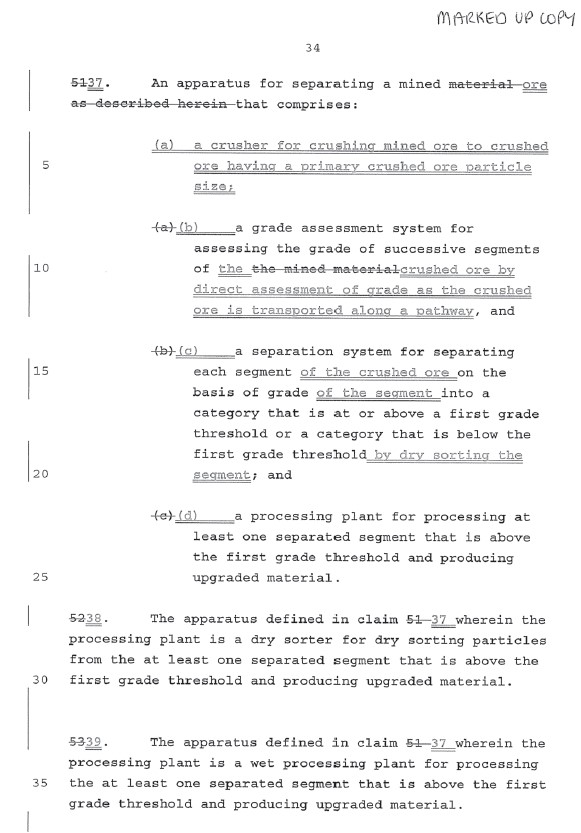
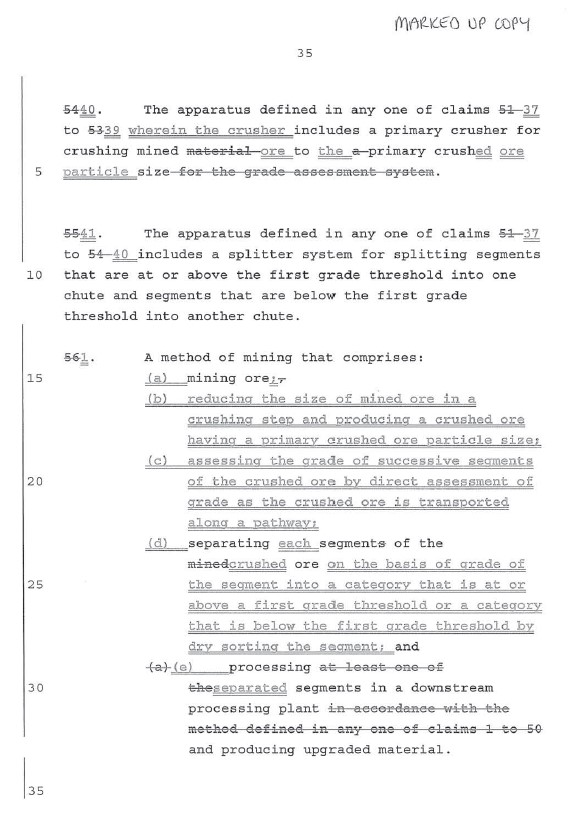
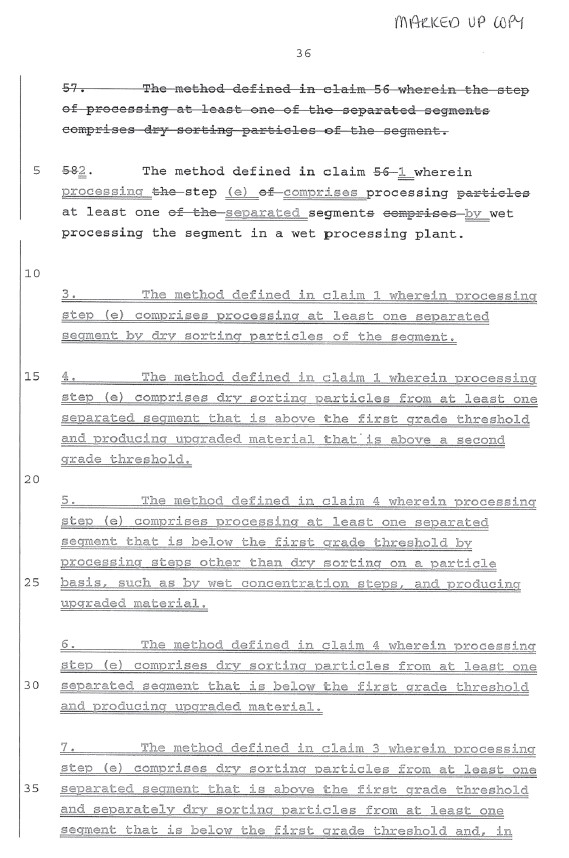
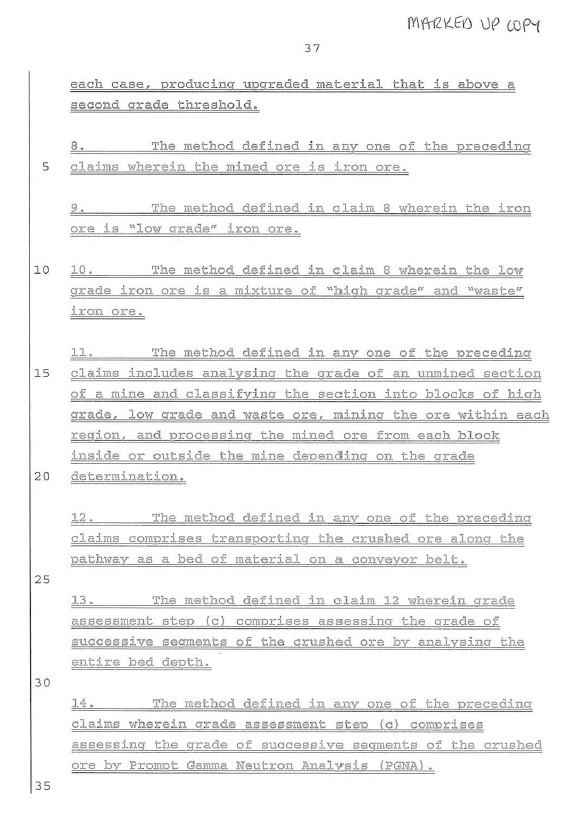
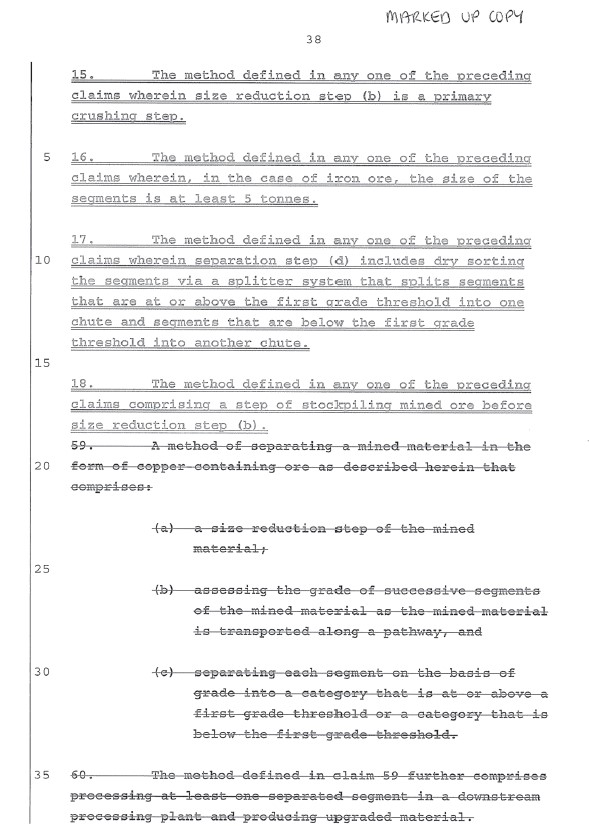
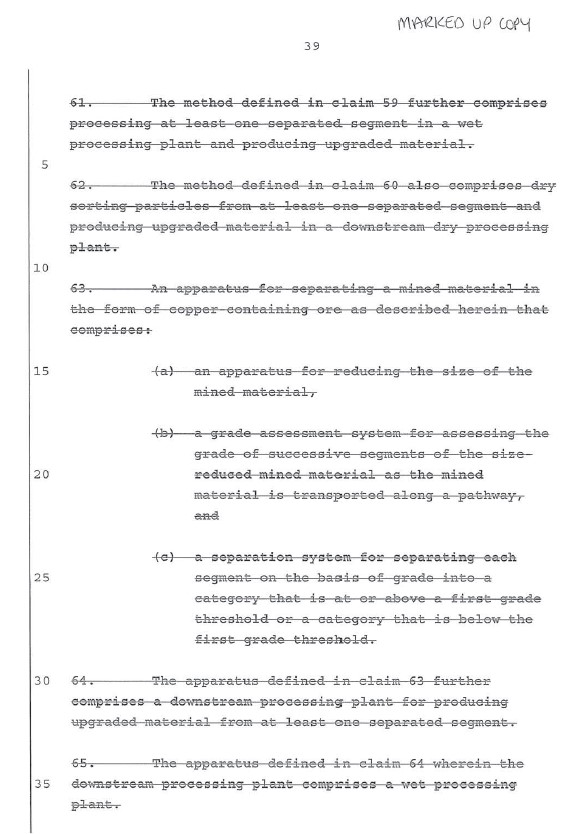
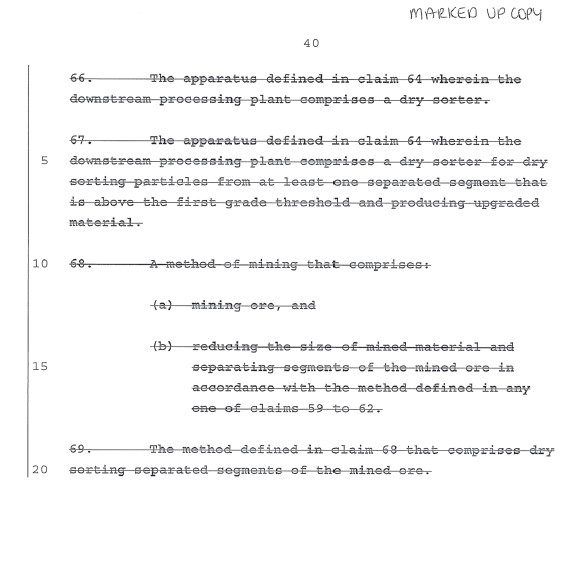
1. Pursuant to section 105(1A) of the Patents Act 1990 (Cth), the claims of Australian Patent Application No. 2011261171 (the ‘Patent Application’) be amended in the form indicated in ‘Annexure A’ to these orders.
2. By Monday 10 December 2018, the Respondent file and serve a statement of the grounds and particulars of his opposition to the grant of a patent on the Patent Application.
3. By Friday 1 March 2019, the Respondent file and serve his evidence in chief.
4. By Friday 31 May 2019, the Appellant file and serve its evidence in answer.
5. The proceedings be listed for further case management hearing at 10.15am on 7 June 2019.
Note: Entry of orders is dealt with in Rule 39.32 of the Federal Court Rules 2011.
Annexure ‘A’
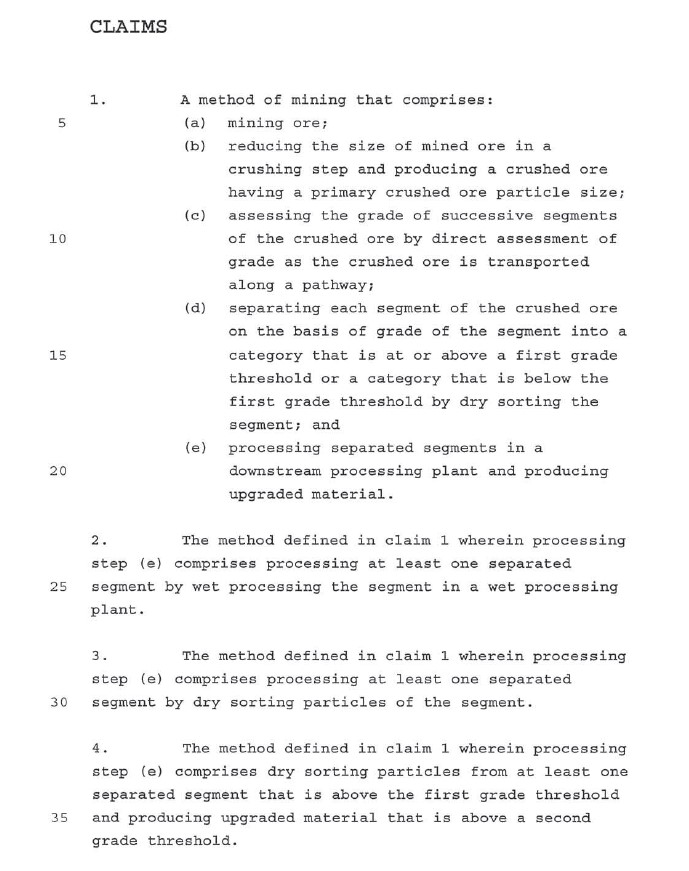
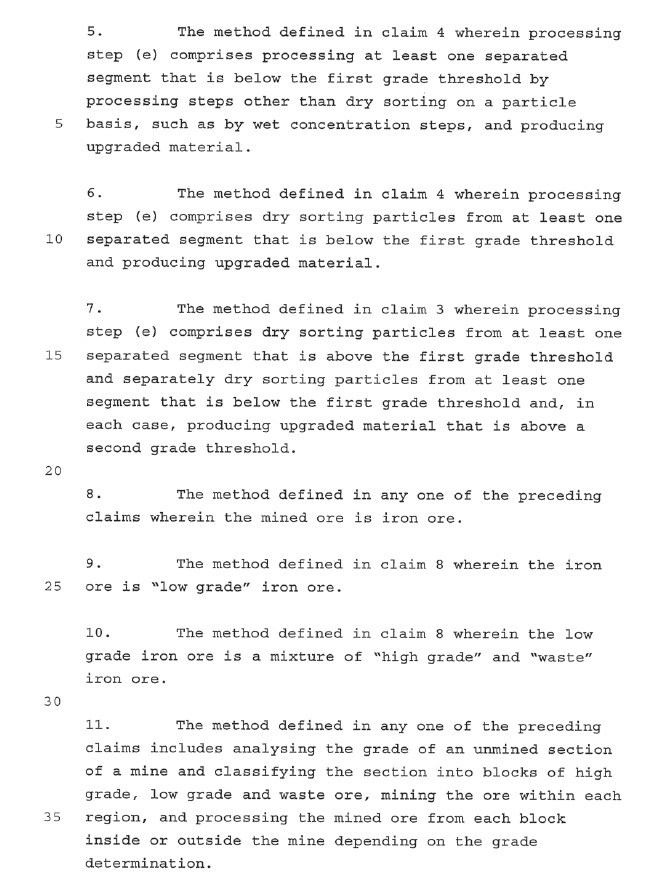
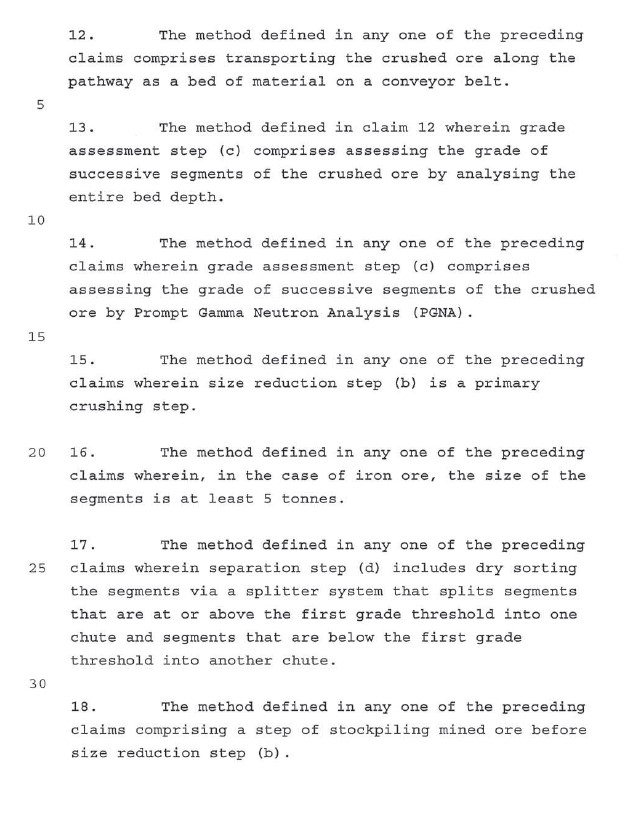
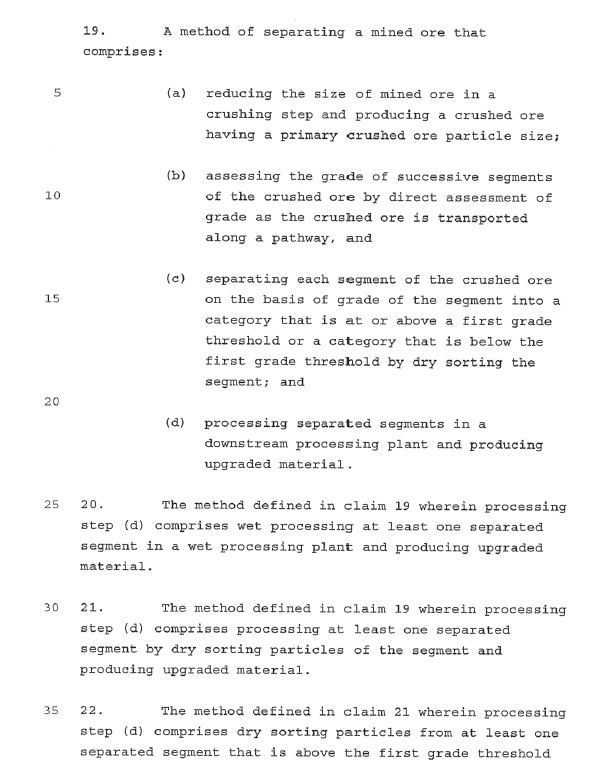
MIDDLETON J:
Introduction
1 On 13 November 2018 and on the motion of the Appellant who is the patent applicant in this proceeding, I ordered that pursuant to s 105(1A) of the Patents Act 1990 (Cth) (the ‘Act’), the claims of Australian Patent Application No. 2011261171 (‘171 Application’) be amended in the form indicated in ‘Annexure A’ of the orders. These are my reasons for making that order.
2 The contest before me arose as a result of an objection raised by the Commissioner of Patents (the ‘Commissioner’) in relation to whether the Appellant’s application to amend its 171 Application is allowable pursuant to s 102 of the Act.
3 I have had the benefit of written submissions prepared by counsel for the Appellant, Mr Dimitriadis SC and Mr Cooke, and in preparing these reasons I have substantially adopted those submissions.
Relevant background
4 On 7 September 2015, the 171 Application was accepted by IP Australia.
5 On 24 December 2015, Mr Tettman, the Respondent in this proceeding, filed a Notice of Opposition opposing the grant of the 171 Application (‘Opposition’). A delegate of the Commissioner (the ‘Delegate’) decided the Opposition in Tettman v Technological Resources Pty Limited [2018] APO 22. On 17 April 2018, the Appellant filed a Notice of Appeal in this Court appealing the whole of the Delegate’s decision.
6 A separate opposition was also brought by the Commonwealth Scientific and Industrial Research Organisation (‘CSIRO’). The Appellant’s appeal from the Delegate’s decision in the CSIRO’s opposition was allowed by orders of the Court made on 19 June 2018 in proceeding VID 434 of 2018.
7 Pursuant orders made by consent in this proceeding on 7 June 2018, the Appellant filed an interlocutory application to amend the claims of the 171 Application (‘Amendment Application’) on 6 July 2018 and a supporting affidavit of Robert Kelvin Cooper sworn on the same date (‘Cooper Affidavit’). The Amendment Application was made pursuant to s 105(1A) of the Act.
8 The Respondent indicated that it did not oppose the Amendment Application.
9 The amendments were advertised by IP Australia in the Australian Official Journal of Patents on 23 August 2018. No person opposed the Amendment Application in response to that advertisement.
Nature of the proposed amendments
10 The Appellant explained that, as set out in the Cooper Affidavit, the Amendment Application sought to narrow the issues in dispute by narrowing the scope of the claims of the 171 Application by reference to, among other things, a feature defined in existing claim 35 (namely, “wherein the grade assessment [in the method] is a direct assessment of the grade”), which was found by the Delegate to be novel.
11 The proposed amendments were annexed to the Amendment Application. They included the deletion of various claims, the incorporation of various limiting features into the remaining claims, the introduction of further dependent claims, and some renumbering and restructuring of claims for future ease of reference.
Disputed proposed amendments
12 Relevantly, the amendments also included a change to existing claim 23 (which becomes independent claim 19 following the renumbering proposed in the Amendment Application) which was proposed to be amended as follows:
A method of separating a mined material ore as described herein that comprises:
(a) reducing the size of mined ore in a crushing step and producing a crushed ore having a primary crushed ore particle size;
(b) assessing the grade of successive segments of the crushed ore by direct assessment of grade as the crushed ore is transported along a pathway the mined material, and
(c) separating each segment of the crushed ore on the basis of grade of the segment into a category that is at or above a first grade threshold or a category that is below the first grade threshold by dry sorting the segment; and
(d) processing at least one separated segments in a downstream processing plant and producing upgraded material.
13 The Appellant submitted that these amendments served to narrow the scope of the claim by reference to matter in substance disclosed in the body of the specification of the 171 Application, and otherwise complied with the requirements of s 102 of the Act as applicable to the 171 Application.
14 On 1 August 2018 the Appellant wrote to the Commissioner notifying her of the proposed amendments. The Commissioner by letter dated 15 August 2018, stated:
In the decision which is the subject of the present appeal, the delegate of the Commissioner stated (at [52]) that the phrase ‘‘as described herein comprising’ indicates that the scope of the claim does not extend to any manner in which the integers following this phase can be construed, but only to the extent allowable by the specification. It is also permissible that the scope of the claim may include additional integers which are not claimed, but are present in the specification.’ It follows that deletion of this phrase prima facie broadens the scope of the claims, rendering the amendment not allowable pursuant to section 102(2)(a). However, the final determination of this point relies on the construction of the claims before and after amendment, and should the Court decide, contrary to the delegate’s decision, that this phrase imposes no meaningful limitation on the claims, the Commissioner considers that the claims otherwise comply with section 102.
15 Accordingly, the Commissioner considered that the proposed amendments are allowable pursuant to s 102 of the Act, except for the removal of the phrase “as described herein”. This is the subject of the present application.
16 For the reasons discussed below, the removal of the phrase “as described herein” is allowable pursuant to s 102(2)(a) of the Act.
Legal principles
17 As the Appellant filed its request for examination of the 171 Application on 3 April 2013 (before 15 April 2013), the changes brought about by the Intellectual Property Laws Amendment (Raising the Bar) Act 2012 (Cth) (the ‘Amending Act’) do not apply. The version of s 102 of the Act prior to the Amending Act applies.
18 Pursuant to s 102(2)(a) of the Act (as then in force), “an amendment of a complete specification is not allowable if, as a result of the amendment, a claim of the specification would not in substance fall within the scope of the claims of the specification before amendment”.
19 In Bristol-Myers Squibb Co v Apotex Pty Ltd (2010) 87 IPR 516, Yates J usefully summarised the applicable principles at [39]–[40] as follows:
As to the notion “in substance disclosed”, the Full Court in ICI Chemicals & Polymers Ltd v The Lubrizol Corp Inc (2000) 106 FCR 214 at [118] referred to the close relationship between that notion and the test for fair basis, saying that it would be a rare case where a claim which claims matter in substance disclosed in the specification as filed is not, equally, fairly based on the matter described in the specification: see also Gambro Pty Ltd v Fresenius Medical Care South East Asia Pty Ltd (2009) 49 IPR 321 at [18] where the two requirements were said to be “very similar”. In Ethyl Corporation’s Patent [1972] RPC 169 at 195, Lord Denning MR said that the requirements were “virtually the same”, although in Lubrizol the Full Court thought it unnecessary to go that far. It is thus expedient to test whether matter is “in substance disclosed” in the specification as filed by asking whether there is a “real and reasonably clear disclosure” of that matter.
Consideration of the prohibition in s 102(2)(a) requires a comparison between the proposed new claims and the claims of the specification immediately before amendment. Once again, the prohibition is conditioned on a state of affairs existing as a result of the amendment, namely that a claim would not in substance fall within the scope of the claims before amendment. Thus the identification of the amendment is, once again, an important first step. Moreover, the reference to “within the scope of the claims” before amendment is significant. The comparison is not between a particular amended claim and that claim before amendment. The expression “within the scope of the claims” directs attention to all the claims. For this reason a practical test is to ask whether an amendment makes anything an infringement which would not have been an infringement before the amendment. If the answer is “yes”, the amendment is proscribed by s 102(2)(a) of the Act: AMP Incorporated v Commissioner of Patents (1974) 3 ALR 283 at 289-290; Fina Research SA v Halliburton Energy Services Inc (No 2) (2003) 127 FCR 561 at [29]; W J Voit Rubber Corp’s Application, Re (1965) AOJP 1752 at 1754-1755.
Narrowing amendment of “mined material as described herein” to “mined ore”
20 In its letter dated 15 August 2018, the Commissioner suggested that the removal of the phrase “as described herein” prima facie broadens the scope of the claims because these words operate to restrict the scope of the method or apparatus claimed, to the extent allowable by the specification. In this regard, it appears that the Commissioner considered that the phrase “as described herein” pertains to the defined method or apparatus.
21 I disagree with the Commissioner’s construction of the claims as accepted. The phrase “as described herein” in the claims as accepted pertains to the phrase “mined material” (as defined in the specification), not the method or apparatus defined in the claims. The reasons for this are those outlined below.
22 First, a plain reading of the claims supports the Appellant’s construction. The phrase “as described herein” immediately follows the words “mined material”. The Commissioner’s construction would only make sense as a matter of ordinary English if the phrase “as described herein” immediately followed the words “a method” or “an apparatus”.
23 Secondly, the use of the phrase “as described herein” in the claims reflects the fact that the specification provides a definition of “mined material” at page 1, line 18-23:
The term “mined material” is understood herein to include (a) material that is mined and thereafter transferred to be processed in accordance with the invention and (b) material that has been mined and then stockpiled and thereafter transferred to be processed in accordance with the invention.
24 Thirdly, the Commissioner’s construction suggests that the phrase “as described herein” should be understood as effectively making the claims omnibus claims. Omnibus claims are not typically in this form. Rather, they typically define the method or apparatus of the claims by specific reference to sections of the specification, such as the drawings or examples disclosed in the specification. Further, it is unusual for omnibus claims to spell out, in the words of the claim, the individual integers of the invention as claimed (as the claims here do). Rather, in the typical form of omnibus claim, that function is performed by the reference in the claim to specific sections of the specification, such as the drawings or examples.
Change from “mined material” to “mined ore”
25 As noted above at [12], the Appellant also proposed to amend the claims by narrowing the phrase “mined material” to “mined ore” and, for that reason, proposed to delete the phrase “as described herein” because it is no longer referable to the definition of “mined material”.
26 Both the Appellant and the Commissioner were of the opinion that narrowing the phrase “mined material” to “mined ore” is allowable pursuant to s 102 of the Act.
27 As explained above at [23], the phrase “mined material” is broadly defined in the specification as being any “material that is mined” and any “material that has been mined”. In contrast, the specification makes clear that “mined ore” is a type of “mined material”.
28 The specification discloses that there are “mined materials” which do not fall within the scope of the term “mined ore”. For example, coal is an example of a “mined material” that is not a “mined ore”. This is made clear in the following parts of the specification in which coal is distinguished from “mined ore” (for example, iron ore and copper ore) and in which the term ore is absent from the description of coal, for example at page 1, lines 13 to 16:
The mined material may be metalliferous or non-metalliferous material. Iron-containing and copper-containing ores are examples of metalliferous materials. Coal is an example of a non-metalliferous material.
And at page 12, lines 7 to 10:
The mined material may be any suitable type of material. For example, the mined material may be iron ore or a copper-containing ore. The mined material may also be a non-metalliferous material such as coal.
29 Furthermore, the specification is replete with references to mined ore or types thereof. For example, page 1, line 31 to page 3, line 33; page 8, line 31; page 9, lines 5 to 6; page 9, line 15; page 9, lines 22 to 23; page 9, lines 27 to 34; page 12, lines 7 to 10; page 14, lines 1 to 12; page 15, lines 5 to 10; page 16, lines 24 to 28; page 17, line 25 to page 18, line 29; page 19, line 4; page 19, lines 15 to 21; page 19, line 32 to page 20, line 10; page 20, line 23; page 21, lines 21 to 31; and page 23, lines 18 to 23.
30 In the circumstances, the proposed amendments in substance fall within the scope of the claims before amendment. The proposed amendments would not capture an infringement that the unamended claims would not. That is, both the unamended claims and proposed amended claims capture particular methods and apparatuses that concern mined ore. The unamended claims are broader than the proposed amended claims because they capture “mined material” which is not “mined ore” (for example mined coal).
Conclusion
31 In light of the above, I find that the proposed amendments are allowable pursuant to s 102(2)(a) of the Act. In those circumstances, and given the Commissioner’s position and the fact that the Amendment Application has not been opposed, the Amendment Application is allowed pursuant to s 105(1A) of the Act.
I certify that the preceding thirty-one (31) numbered paragraphs are a true copy of the Reasons for Judgment herein of the Honourable Justice Middleton. |


