FEDERAL COURT OF AUSTRALIA
Commonwealth of Australia v Jones [2018] FCA 1008
ORDERS
Applicant | ||
AND: | Respondent | |
DATE OF ORDER: |
THE COURT DECLARES THAT:
1. In the period September 2014 to December 2014 the respondent contravened s 125 of the National Vocational Education and Training Regulator Act 2011 (Cth) (NVETR Act) on three occasions because he created three fabricated qualifications concerning “Engineering – Fabrication Trade” in the names of Mr Pollard, Mr Larson and Mr Moore respectively and provided them to each of those individuals for a fee falsely representing to each of those individuals that the qualification bearing their name was a legitimate vocational education and training qualification issued to them by a registered training organisation.
THE COURT ORDERS THAT:
2. The respondent is to pay the applicant a pecuniary penalty of $31,400 pursuant to s 137 of the NVETR Act for the contraventions of s 125 of the NVETR Act described above.
3. The respondent is to pay the applicant’s costs in the amount of $55,000.
Note: Entry of orders is dealt with in Rule 39.32 of the Federal Court Rules 2011.
MARKOVIC J:
1 This proceeding was commenced on 30 May 2017 by the Commonwealth of Australia (Commonwealth) by the filing of an originating application and a statement of claim. The respondent to the proceeding is Scott Andrew Jones.
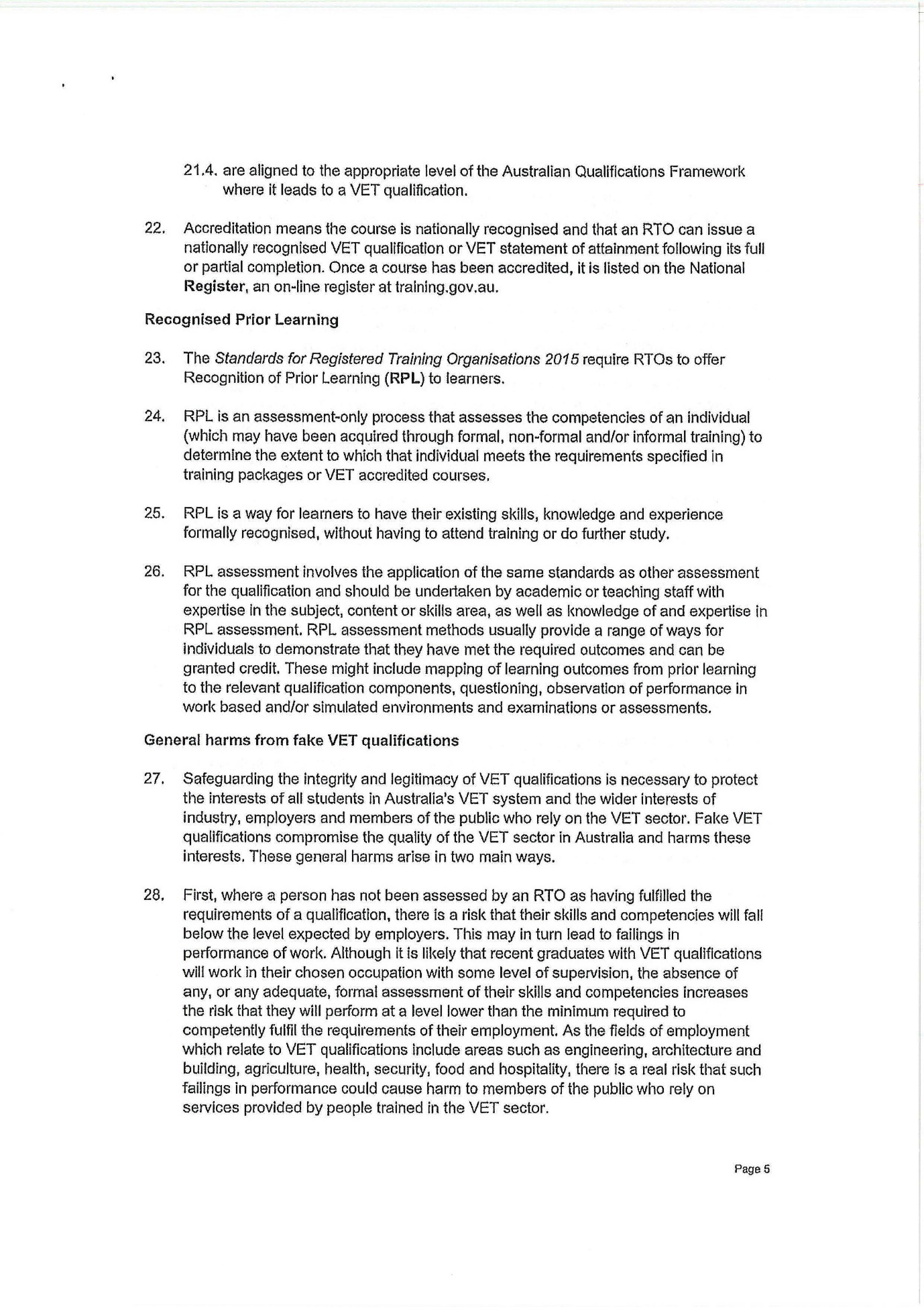
2 The Commonwealth seeks a declaration that in the period from September 2014 to December 2014 Mr Jones contravened s 125 of the National Vocational Education and Training Regulator Act 2011 (Cth) (NVETR Act) and orders that Mr Jones pay to the Commonwealth a pecuniary penalty pursuant to s 137 of the NVETR Act for each of those contraventions.
3 In summary the Commonwealth alleges that Mr Jones created three qualifications concerning “Engineering – Fabrication Trade” in the names of three different people, Darren Pollard, Brett Larson and Paul Moore; that he provided the qualification to each of those persons for a fee; and that he falsely represented to them that the qualification was a legitimate vocational education and training (VET) qualification issued by a registered training organisation (RTO).
4 Mr Jones has filed a defence in which he admits each of the contraventions of the NVETR Act alleged against him.
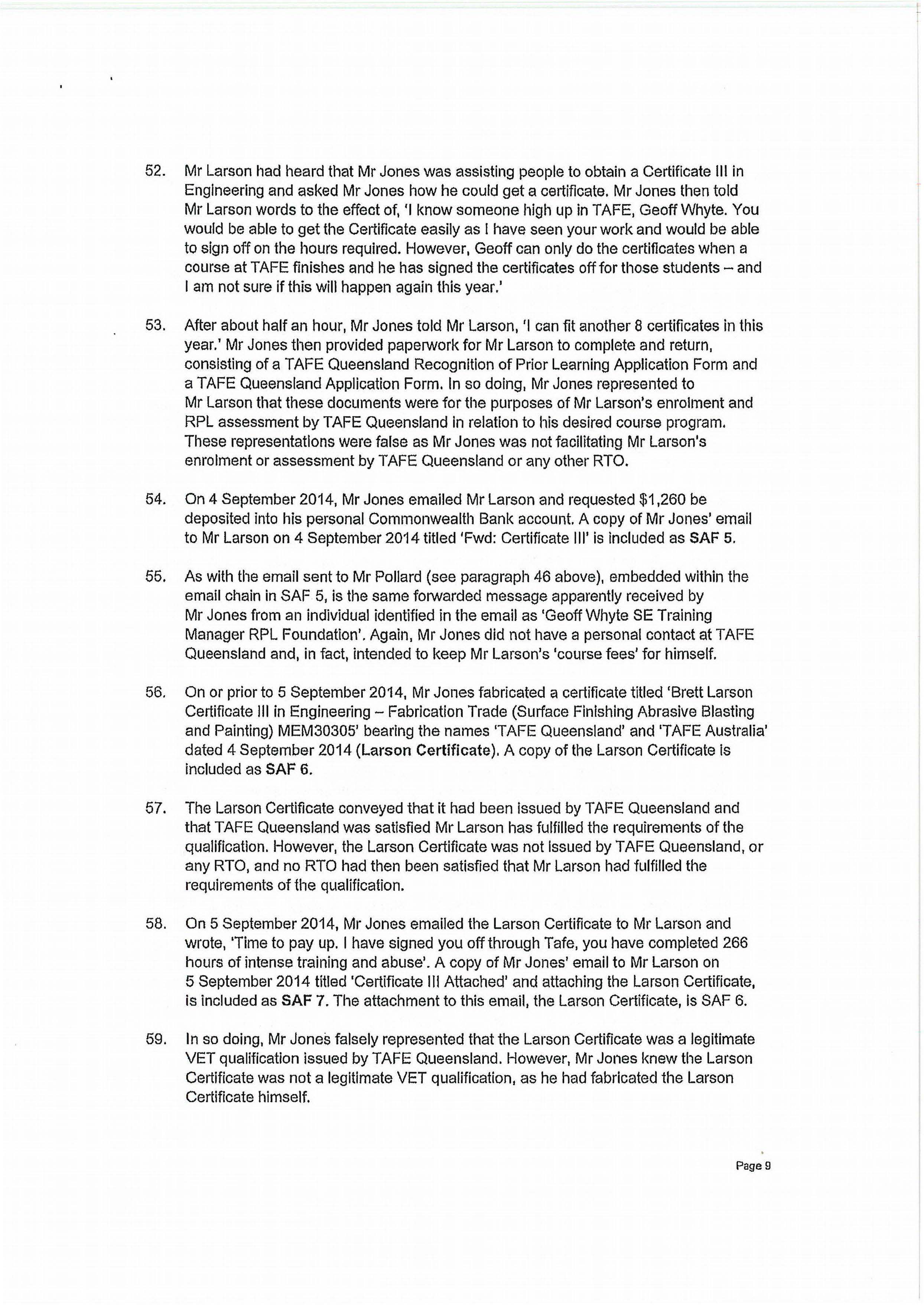
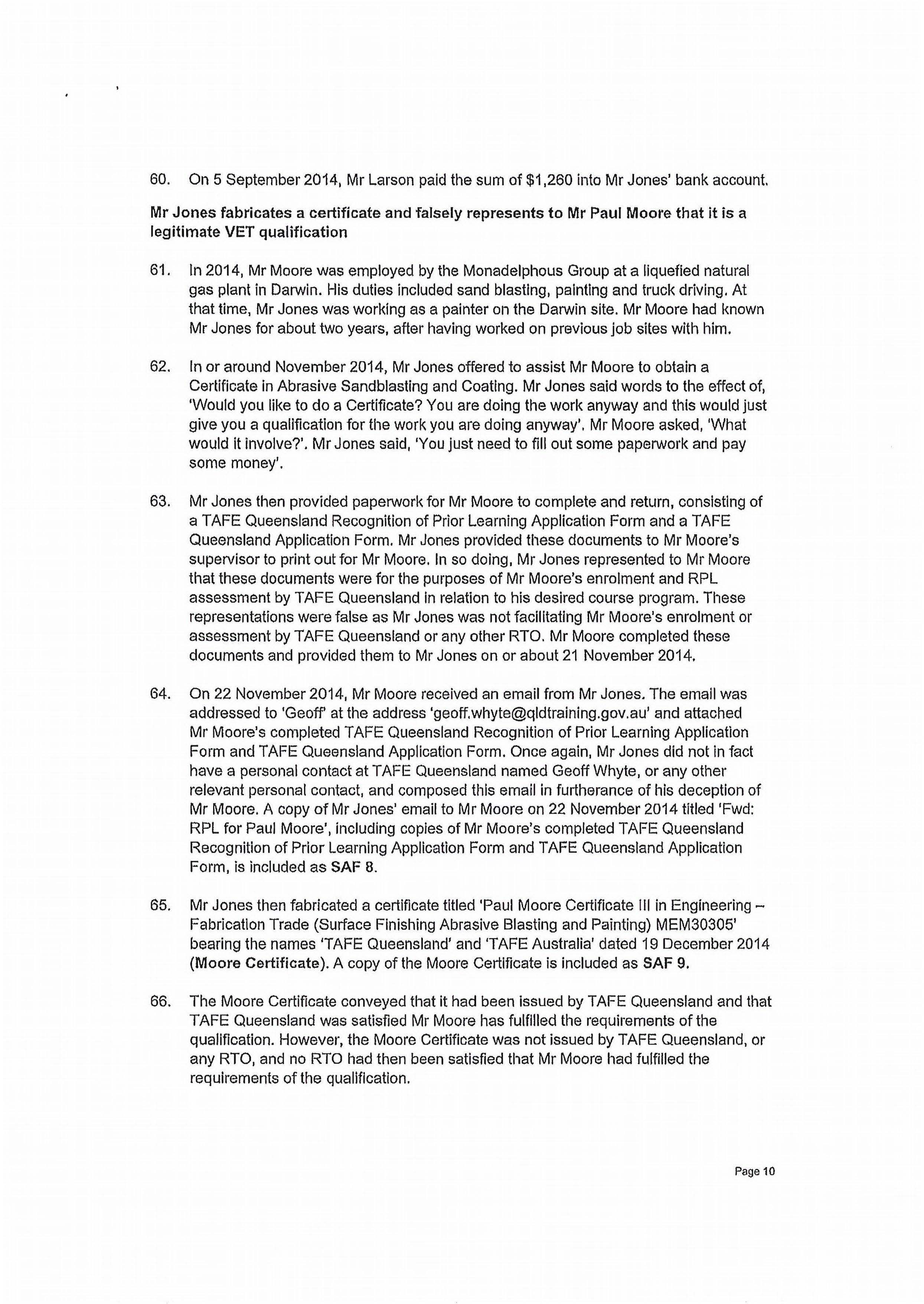
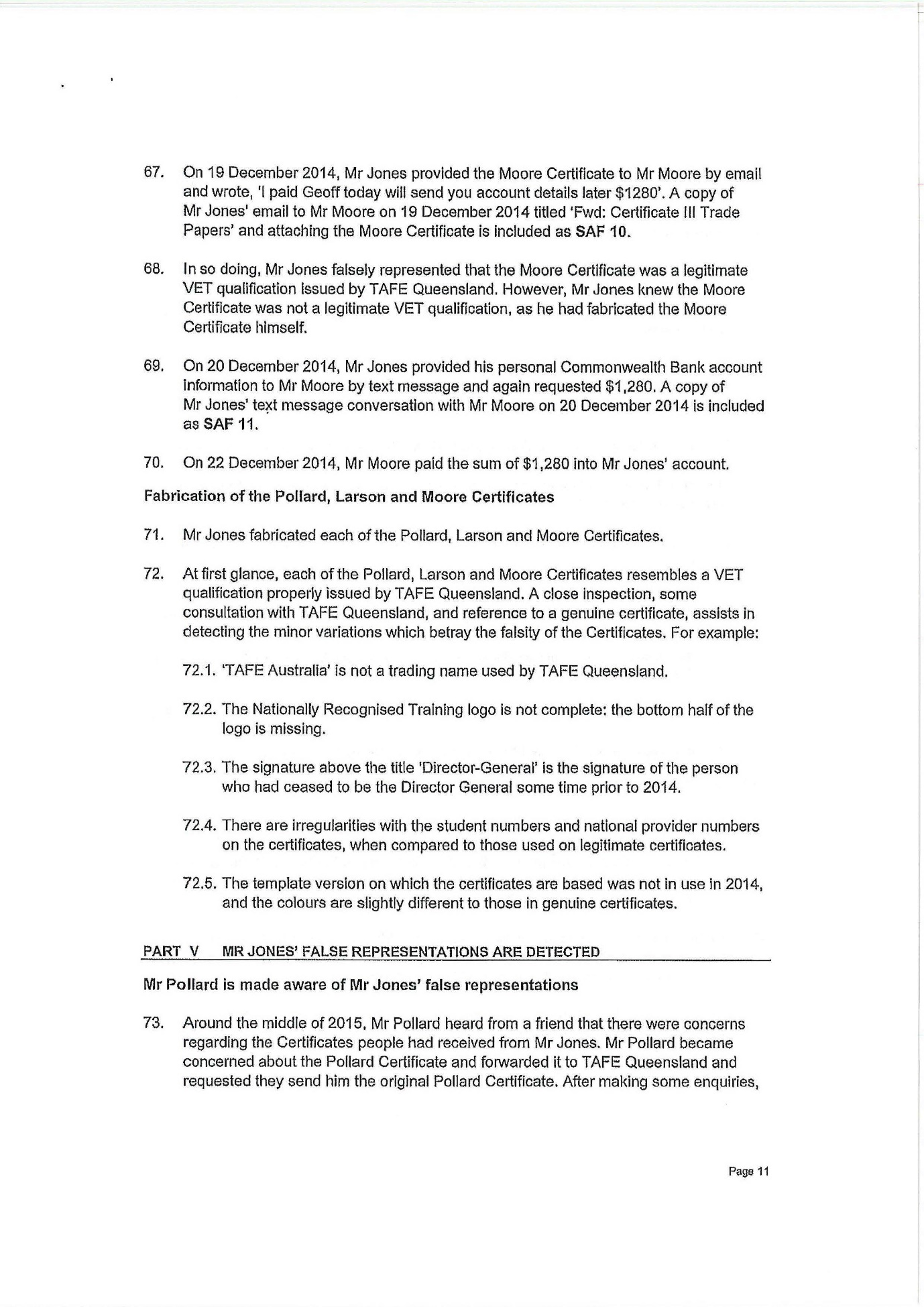
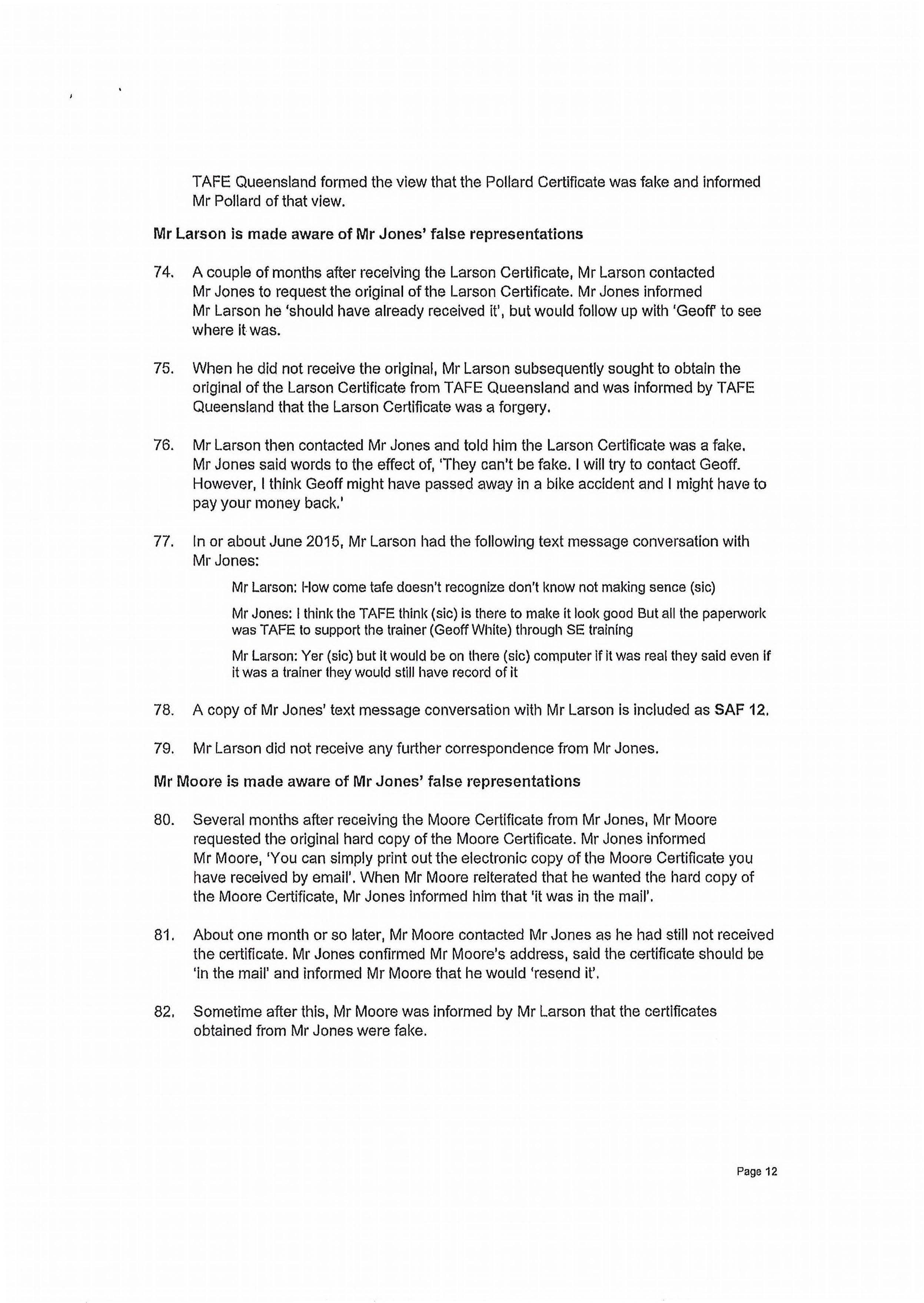
5 The Commonwealth and Mr Jones have agreed on certain facts for the purpose of this proceeding as set out in a statement of agreed facts signed on behalf of the Commonwealth and Mr Jones and filed on 21 December 2017. A copy of the statement of agreed facts, without its annexures, is Annexure A to these reasons. The Commonwealth and Mr Jones have also provided the Court with joint submissions filed on 23 March 2018 in which they jointly propose the relief to be granted by the Court in relation to the breaches of the NVETR Act by Mr Jones, including proposed penalties.
A summary of the relevant facts
6 The relevant facts are set out in detail in the statement of agreed facts which is Annexure A to these reasons. Accordingly, what follows is a summary only.
The VET regulatory framework
The Australian Education System
7 Australia’s education system is divided into a number of different sectors, including early childhood and childcare, primary and secondary schooling, higher education and VET. The VET sector is primarily regulated by the NVETR Act, the Australian Qualifications Framework (AQF) and the VET Quality Framework.
8 The AQF is the national policy for regulated qualifications in Australian education and training. It is a nationally consistent framework of credentials offered in post compulsory education and training covering 10 levels of qualifications from Certificate I through to a doctoral degree. Each of these levels have defined learning outcomes which reflect the relative complexity, depth of achievement and the autonomy required of graduates to demonstrate that level of achievement. Education, training and employment ministers of commonwealth, state and territories are collectively responsible for the AQF.
The VET sector
9 VET enables students to gain qualifications and skills for many types of employment and is provided through a network of eight state and territory governments and the Australian government, along with industry, public and private training providers.
10 The object of the VET sector is to provide Australians with vocationally oriented, post school qualifications. These qualifications serve three purposes: to provide entry or progression into the labour market; to move to higher level studies; and to contribute to social inclusion and social mobility.
11 Figures from the National Centre for Vocational Education Research provide the following snapshot of the sector in 2016:
4.2 million students were enrolled in the VET system in Australia;
almost ¼ of all 15 to 64 year olds living in Australia were undertaking accredited training in the VET sector;
of the students enrolled in the VET system, 46.5% were female, 4% were indigenous and 4.3% were students with a disability. In addition, 4% of students were international students;
there were 4,279 Australian training providers made up of 4,036 registered training organisations and 243 non-registered training organisations such as community education providers in schools;
there were about 17 million subject enrolments in private providers. Approximately 32% of those enrolments were funded by commonwealth or state funds and approximately 68% were funded by private tuition fees; and
there were also about 8.5 million subject enrolments at TAFE institutes. Approximately 72% of those enrolments were funded by commonwealth or state funds.
The role of RTOs in accrediting and issuing VET qualifications
12 The Australian Skills Quality Authority (ASQA), the National VET Regulator established under s 155 of the NVETR Act (see [31] below), and state government authorities in Victoria and Western Australia are responsible for accrediting AQF qualifications and for authorising RTOs to issue AQF qualifications for VET.
13 All RTOs registered with ASQA must comply with the VET Quality Framework which is comprised of intergovernmental agreements and legislative requirements and is intended to achieve greater national consistency in the way RTOs are registered and monitored and in the way in which the standards in the VET sector are enforced. The VET Quality Framework includes the Standards for Registered Training Organisations 2015 and the relevant requirements of the AQF.
14 The Standards for Registered Training Organisations 2015 guide nationally consistent, high quality training and assessment services in the VET sector by setting out the requirements that an organisation must meet in order to be registered as an RTO and to maintain that registration. Those standards are complemented by the Standards for VET Accredited Courses 2012. Accreditation means the course is nationally recognised and that an RTO can issue a nationally recognised VET qualification or VET statement of attainment following its full or partial completion. Once a course has been accredited it is listed on the national register, an online register at training.gov.au.
15 The Standards for Registered Training Organisations 2015 require RTOs to offer Recognition of Prior Learning (RPL) to learners. RPL is an assessment only process that assesses the competencies of an individual, which may have been acquired through formal, non-formal and/or informal training, to determine the extent to which that individual meets the requirements specified in training packages or VET accredited courses. RPL assessment involves the application of the same standards as other assessment for the qualification and should be undertaken by academic or teaching staff with expertise in the subject, content or skills area, as well as knowledge of and expertise in RPL assessment.
General harms from fake VET qualifications
16 Fake VET qualifications compromise the quality of the VET sector in Australia in two principal ways. First, where a person has not been assessed by an RTO as having fulfilled the requirements of a qualification, there is a risk that their skills and competencies will fall below the level expected by employers which in turn may lead to failings in performance of their work. Given the fields of employment relating to VET qualifications, including areas such as health, security, food and hospitality, there is a real risk that such failings in performance could result in harm to members of the public. Secondly, an incompetent person operating under a fake VET qualification can have a negative impact on the perception of the value of that qualification.
Detection of non-compliance by ASQA
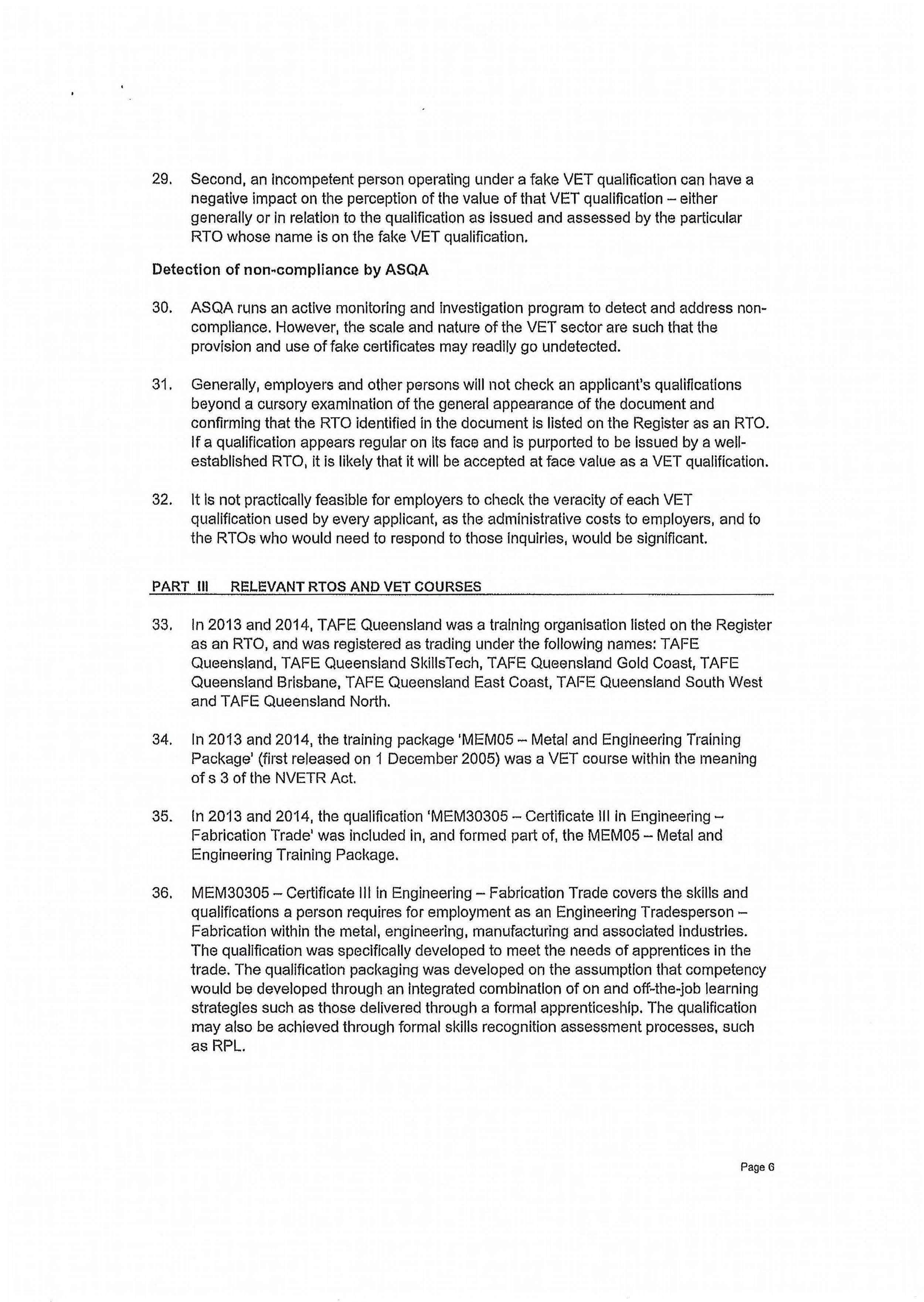
17 ASQA runs an active monitoring and investigation program to detect and address non-compliance. However, the scale and nature of the VET sector is such that the provision and use of fake certificates may readily go undetected.
18 Generally, employers and other persons will not check an applicant’s qualifications beyond a cursory examination of the general appearance of the document and confirmation that the RTO identified in the document is listed on the national register as an RTO. If a qualification appears regular on its face and is purported to be issued by an established RTO, it is likely that it will be accepted at face value as a VET qualification. It is not practically feasible for employers to check the veracity of each VET qualification. To do so would result in significant administrative costs to employers and the RTOs.
Mr Jones’ conduct
19 In 2013 and 2014 TAFE Queensland was a training organisation listed on the national register as an RTO. Its training package MEM05 – Metal and Engineering Training Package (Training Package) was a VET course within the meaning of s 3 of the NVETR Act and the qualification MEM30305 – Certificate III Engineering – Fabrication Trade was included in and formed part of the Training Package. The Certificate III covers the skills required for employment as an engineering tradesperson – fabrication within the metal, engineering, manufacturing and associated industries and was specifically developed to meet the needs of apprentices in the industry.
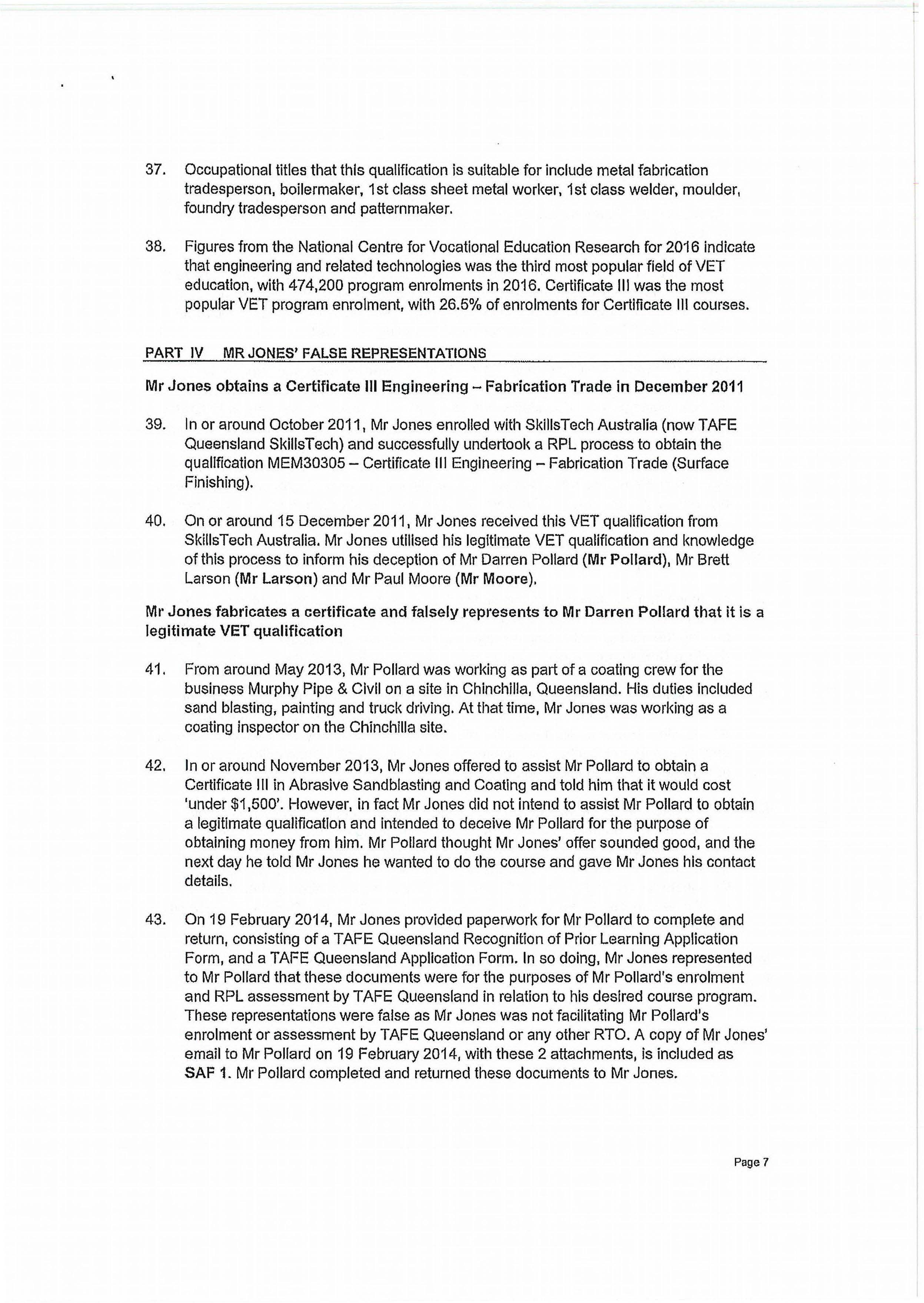
20 In or around October 2011 Mr Jones enrolled with SkillsTech Australia (now TAFE Queensland SkillsTech) and successfully undertook a RPL process to obtain a Certificate III Engineering – Fabrication Trade (Surface Finishing). On or about 15 December 2011 Mr Jones received the qualification from SkillsTech Australia. It was this legitimate qualification that Mr Jones used to inform his subsequent deception.
21 In each case Mr Jones fabricated a certificate and falsely represented to Messrs Pollard, Larson and Moore that it was a legitimate qualification. The process undertaken by Mr Jones to deceive Messrs Pollard, Larson and Moore was similar.
22 For example, in the case of Mr Pollard:
(1) from about May 2013 Mr Pollard was working as part of a coating crew for Murphy Pipe & Civil on a site in Chinchilla, Queensland and at the same time Mr Jones was working as a coating inspector at that site;
(2) in about November 2013 Mr Jones offered to assist Mr Pollard to obtain a Certificate III in Abrasive Sandblasting and Coating and told him it would cost under $1,500. Mr Pollard took up Mr Jones’ offer;
(3) on 19 February 2014 Mr Jones provided paperwork for Mr Pollard to complete and return, consisting of a TAFE Queensland RPL application form and a TAFE Queensland application form. In doing so, Mr Jones falsely represented to Mr Pollard that the documents were for the purpose of his enrolment and RPL assessment by TAFE Queensland in relation to the desired course;
(4) Mr Pollard completed the documents and returned them to Mr Jones. He did not hear anything further about the certificate until September 2014. Mr Pollard expected this as he understood he would attain the certificate on the next contract which he was moving to with his current crew, including Mr Jones;
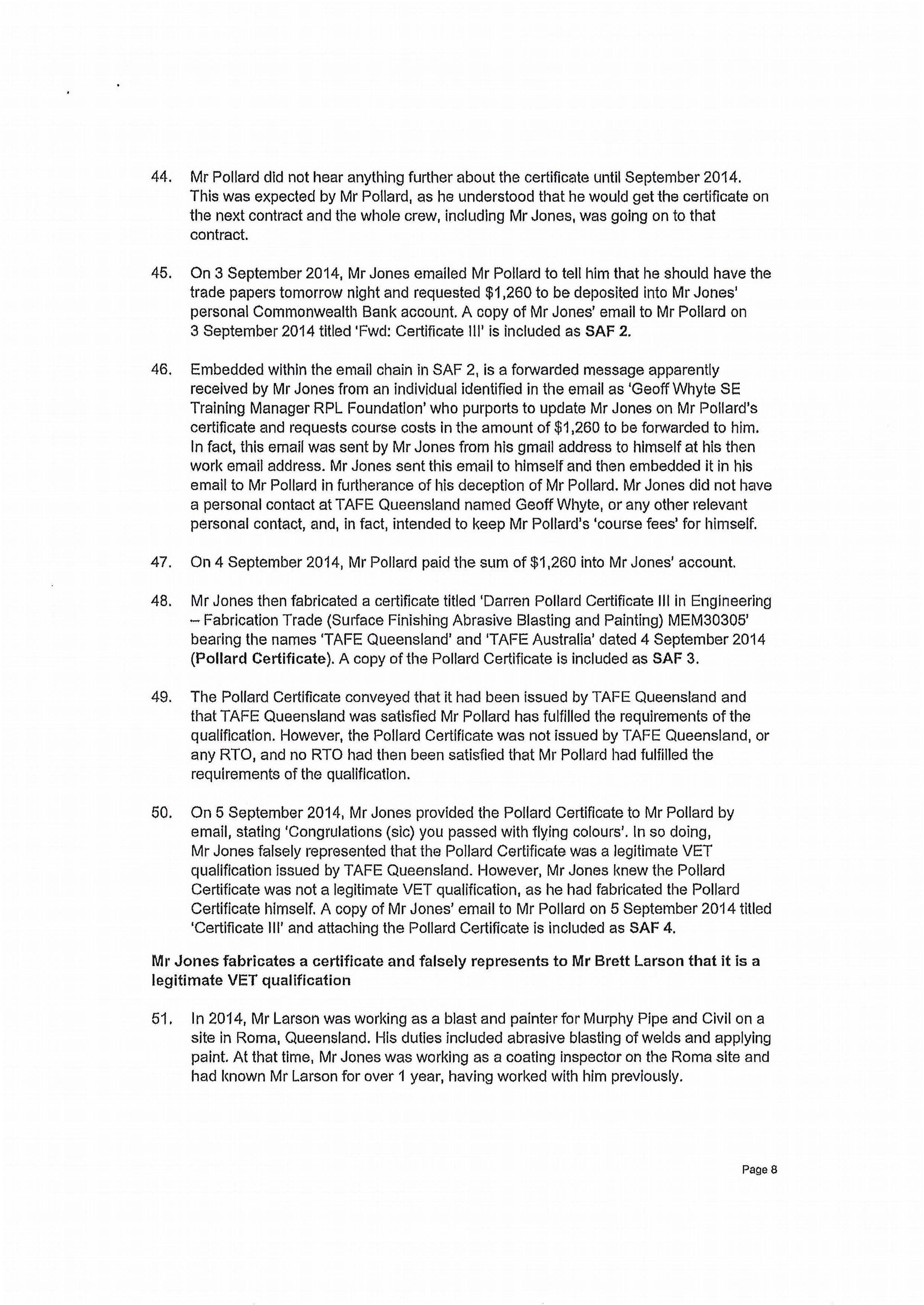
(5) on 3 September 2014 Mr Jones sent an email to Mr Pollard informing him that he should have the trade papers the following night and requesting that $1,260 be deposited into his personal account at the Commonwealth Bank of Australia (Commonwealth Bank). The email providing this update had embedded in it an email from “Geoff Whyte”, a “SE Training Manager RPL Foundation” who purported to update Mr Jones on Mr Pollard’s certificate and requested that the course costs be provided to him. There was no person called Geoff Whyte. He was a fabrication. Mr Jones sent this email from his gmail address to his work email address;
(6) on 4 September 2014 Mr Pollard paid $1,260 into Mr Jones’ account;
(7) Mr Jones then fabricated a certificate dated 4 September 2014, bearing the names “TAFE Queensland” and “TAFE Australia”, which said that Darren Pollard had fulfilled the requirements for a “Certificate III in Engineering – Fabrication Trade (Surface Finishing Abrasive Blasting & Painting) MEM30305” (Pollard Certificate). The Pollard Certificate falsely conveyed that it had been issued by TAFE Queensland and/or TAFE Australia and that TAFE Queensland and/or TAFE Australia was satisfied that Mr Pollard had fulfilled the requirements of the qualification;
(8) on 5 September 2014 Mr Jones provided the Pollard Certificate to Mr Pollard by email. In doing so, Mr Jones falsely represented that the Pollard Certificate was a legitimate VET qualification issued by TAFE Queensland even though he knew it was not legitimate because he had fabricated it himself.
23 Mr Jones undertook a similar process in respect of Messrs Larson and Moore. Mr Jones’ conduct vis-à-vis those gentlemen was no less serious. In both cases:
(1) Mr Jones was working on sites with each of them;
(2) Mr Jones represented that he could assist them in obtaining a certificate relevant to their skills and provided paperwork for them to complete;
(3) Mr Jones requested they provide payment, in the case of Mr Larson for $,1260 and in the case of Mr Moore $1,280, to pay for the qualification and that those monies be deposited into his personal account held at the Commonwealth Bank;
(4) Mr Jones fabricated a certificate representing that Mr Larson and Mr Moore had obtained a Certificate III in Engineering – Fabrication Trade (Surface Finishing Abrasive Blasting and Painting) issued by TAFE Queensland and/or TAFE Australia;
(5) Mr Jones falsely represented that each certificate was a legitimate VET qualification issued by TAFE Queensland and/or TAFE Australia when he knew that in each case it was not; and
(6) Mr Larson and Mr Moore paid the amounts requested by Mr Jones into his personal bank account.
24 Messrs Pollard, Larson and Moore subsequently became aware that the certificates issued to them were fake. The following occurred:
(1) in about mid 2015 Mr Pollard heard from a friend that there were concerns about the certificates people had received from Mr Jones. He forwarded the Pollard Certificate to TAFE Queensland requesting that they send him the original of it. TAFE Queensland formed the view that the Pollard Certificate was fake and informed Mr Pollard accordingly;
(2) after receipt of his certificate Mr Larson contacted Mr Jones requesting that he provide the original. Mr Jones informed Mr Larson that he should have already received it but would follow up its whereabouts with “Geoff”, his contact at TAFE Queensland. When he did not receive the original Mr Larson sought to obtain it directly from TAFE Queensland and was informed by them that the certificate was a forgery. Mr Larson contacted Mr Jones to inform him of what he had learnt from TAFE Queensland. Mr Jones, in response to Mr Larson, said words to the effect of:
They can’t be fake. I will try to contact Geoff. However I think Geoff might have passed away in a bike accident and I might have to pay your money back.
Mr Larson and Mr Jones subsequently exchanged texts during 2015 after which Mr Larson heard nothing further from Mr Jones; and
(3) several months after receiving his certificate from Mr Jones, Mr Moore requested the original hard copy of it from Mr Jones. Mr Jones informed Mr Moore that he could simply print out a copy of the certificate that he had received by email but Mr Moore pressed him for the hard copy. Upon doing so Mr Jones informed him that it was “in the mail”. About a month later Mr Moore had still not received the certificate so he contacted Mr Jones again who said that it should be in the mail but that he would resend it. Sometime later Mr Moore was informed by Mr Larson that the certificates obtained from Mr Jones were fake.
Other relevant matters
Harm caused by the contraventions
25 Contrary to their expectations, Messrs Pollard, Larson and Moore did not receive legitimate VET qualifications from Mr Jones.
26 Mr Pollard suffered significant embarrassment and stress as a result of his reliance on the Pollard Certificate because after its receipt he listed it on his resume and submitted it to a number of employers, including his employer at the time. Upon learning that it was a forgery he was required to inform his employer about that fact. But for his previous work experience with that employer, Mr Pollard considers that this incident may have had a detrimental impact on his job. In addition, had he applied for a job in the oil and gas or mining industries and had a prospective employer tried to verify the qualification and found it was fake, he was concerned that he would not have been considered for the position and may have had trouble obtaining positions in those industries in the future.
27 Mr Larson was unable to use the certificate in job applications at the time and had to invest further time and money to validly complete a Certificate III through an RTO in December 2015.
Acknowledgement of wrongdoing
28 Mr Jones accepts that he deliberately and dishonestly made false representations to Messrs Pollard, Larson and Moore which resulted in him receiving a financial advantage of $3,800.
29 On 18 December 2017 Mr Jones offered to repay the amounts he received from each of Messrs Pollard, Larson and Moore in respect of the fake certificates. As at the date of the hearing Mr Jones had in fact repaid to Messrs Pollard, Larson and Moore the monies he received from them in respect of the fabricated VET qualifications.
Cooperation
30 Mr Jones did not provide any assistance to ASQA in the course of its investigation and did not respond to any of the communications he received from them. However, following the commencement of this proceeding, Mr Jones has cooperated by filing a defence admitting the alleged contraventions in the statement of claim and agreeing to jointly present evidence by way of a statement of agreed facts. If Mr Jones had not cooperated in these ways and had contested the proceeding, the time and cost involved in the proceeding would have been significantly greater.
legislative framework
31 The objects of the NVETR Act, as set out in s 2A, are as follows:
…
(a) to provide for national consistency in the regulation of vocational education and training (VET); and
(b) to regulate VET using:
(i) a standards‑based quality framework; and
(ii) risk assessments, where appropriate; and
(c) to protect and enhance:
(i) quality, flexibility and innovation in VET; and
(ii) Australia’s reputation for VET nationally and internationally; and
(d) to provide a regulatory framework that encourages and promotes a VET system that is appropriate to meet Australia’s social and economic needs for a highly educated and skilled population; and
(e) to protect students undertaking, or proposing to undertake, Australian VET by ensuring the provision of quality VET; and
(f) to facilitate access to accurate information relating to the quality of VET.
32 The terms National VET Regulator, VET course, VET qualification and VET Regulator are defined in s 3 as follows:
…
National VET Regulator means the body established by section 155.
…
VET course means:
(a) the units of competency of a training package that is endorsed by the Ministerial Council; or
(b) the modules of a VET accredited course; or
(c) the modules of a course accredited by a VET Regulator of a non‑referring State.
…
VET qualification means a testamur, relating to a VET course, given to a person confirming that the person has achieved learning outcomes and competencies that satisfy the requirements of a qualification.
…
VET Regulator means:
(a) the National VET Regulator; and
(b) a body of a non‑referring State that is responsible for the kinds of matters dealt with by this Act.
33 Parts 2 and 3 of the NVETR Act establish a framework for the registration of RTOs and for the accreditation of VET courses to facilitate compliance with the VET quality framework and, more broadly, the AQF.
34 Section 155 of the NVETR Act, which is included in Pt 7 of the Act, establishes the National VET Regulator, known as ASQA. Section 157 of the NVETR Act set out the functions of ASQA. Without setting out those functions in full, it is apparent that ASQA is charged with responsibility for administering the regulatory framework established by the NVETR Act to support the achievement of the objectives of that Act.
35 Parts 5 and 6 of the NVETR Act provide ASQA with a number of investigative and enforcement tools, including the authority to seek civil penalties on behalf of the Commonwealth in cases where civil penalty provisions have been contravened. Relevantly, for the purpose of this proceeding, s 125 of the NVETR Act provides:
125 Civil penalty—making false or misleading representation relating to VET course or VET qualification
A person contravenes this section if:
(a) the person makes a representation that relates to:
(i) all or part of a VET course; or
(ii) a course that is held out as being a VET course; or
(iii) part of a course that is held out as being part of a VET course; or
(iv) a VET qualification; or
(v) a qualification that is held out as being a VET qualification; and
(b) the representation is false or misleading in a material particular.
Civil penalty: 120 penalty units.
36 Section 137 of the NVETR Act gives the Federal Circuit Court of Australia or this Court power to impose a pecuniary penalty for contravention of a civil penalty provision. It relevantly provides:
Application for order
(1) Within 6 years of a person (the wrongdoer) contravening a civil penalty provision, the National VET Regulator may apply on behalf of the Commonwealth to the Federal Court or the Federal Circuit Court for an order that the wrongdoer pay the Commonwealth a pecuniary penalty.
Court may order wrongdoer to pay pecuniary penalty
(2) If the Federal Court or the Federal Circuit Court is satisfied that the wrongdoer has contravened the civil penalty provision, the court may order the wrongdoer to pay to the Commonwealth for each contravention the pecuniary penalty that the court determines is appropriate (but not more than the amount specified for the provision).
Determining amount of pecuniary penalty
(3) In determining the pecuniary penalty, the Federal Court or the Federal Circuit Court must have regard to all relevant matters, including:
(a) the nature and extent of the contravention; and
(b) the nature and extent of any loss or damage suffered as a result of the contravention; and
(c) the circumstances in which the contravention took place; and
(d) whether the person has previously been found to have engaged in any similar conduct by the court in proceedings under this Act.
…
consideration
Declaration
37 The parties jointly submitted that I should make a declaration in the form sought in the originating application subject to the deletion of the words “or otherwise obtained” to reflect relevant admissions that Mr Jones has made since the commencement of this proceeding.
38 The Court has a broad discretionary power to make declarations under s 21 of the Federal Court of Australia Act 1976 (Cth): see Forster v Jododex Aust Pty Ltd (1972) 127 CLR 421 at 437-438. In Ainsworth v Criminal Justice Commission (1992) 175 CLR 564 at 581-582 the High Court identified the following considerations relevant to the making of declarations:
(1) the declaration sought must be directed to determining a legal controversy and not to answering abstract or hypothetical questions;
(2) the person seeking relief must have a real interest in the matter; and
(3) it is appropriate for the Court to make the declaration because there will be consequences flowing from the making of it.
39 In my opinion it is appropriate that I make the declaration in the form sought for the following reasons. First, the proposed declaration determines the controversy between the parties. That is, whether Mr Jones contravened the NVETR Act. Secondly, the application for the declaration is made by the National VET Regulator, ASQA, on behalf of the Commonwealth alleging breaches of the legislation it is charged with enforcing. ASQA has a real interest in seeking the proposed declaration and Mr Jones is a proper contradictor in that he has a true interest in opposing the declaration sought: see Australian Competition and Consumer Commission v MSY Technology Pty Ltd (2012) 201 FCR 378 at [14], [16] and [30]. Thirdly, the declaration sought will have consequences. It explains how and why Mr Jones’ conduct contravenes the NVETR Act, establishes that there were three separate contraventions found for Mr Jones’ conduct, records the Court’s disapproval of Mr Jones’ conduct and assists ASQA to carry out the duties conferred on it by the NVETR Act.
Pecuniary penalties
40 Recognising that the decision remains at the discretion of the Court, the parties submitted that the Court should order that Mr Jones pay a total pecuniary penalty in the range of $24,500 to $31,400, an amount made up as follows for the three contraventions:
(1) Mr Jones’ contravention in respect of Mr Pollard (Pollard Contravention) – a penalty in the range of $9,000-$11,200;
(2) Mr Jones’ contravention in respect of Mr Larson (Larson Contravention) – a penalty in the range of $9,000-$11,200; and
(3) Mr Jones’ contravention in respect of Mr Moore (Moore Contravention) – a penalty in the range of $6,500-$9,000.
Some relevant principles
41 In Trade Practices Commission v CSR Ltd (1991) ATPR 41-076; [1990] FCA 762 (Trade Practices Commission v CSR Ltd), in considering the imposition of a pecuniary penalty under the then Trade Practices Act 1974 (Cth), French J (as his Honour then was) said at 52,152-52,153:
Punishment for breaches of the criminal law traditionally involves three elements: deterrence, both general and individual, retribution and rehabilitation. Neither retribution nor rehabilitation, within the sense of the Old and New Testament moralities that imbue much of our criminal law, have any part to play in economic regulation of the kind contemplated by Pt. IV. Nor, if it be necessary to say so, is there any compensatory element in the penalty fixing process - Trade Practices Commission v. Mobil Oil Australia Ltd (1984) 4 FCR 296 at 298 (Toohey J.). The principal, and I think probably the only, object of the penalties imposed by s. 76 is to attempt to put a price on contravention that is sufficiently high to deter repetition by the contravenor and by others who might be tempted to contravene the Act.
…
The assessment of a penalty of appropriate deterrent value will have regard to a number of factors which have been canvassed in the cases. These include the following:
1. The nature and extent of the contravening conduct.
2. The amount of loss or damage caused.
3. The circumstances in which the conduct took place.
4. The size of the contravening company.
5. The degree of power it has, as evidenced by its market share and ease of entry into the market.
6. The deliberateness of the contravention and the period over which it extended.
7. Whether the contravention arose out of the conduct of senior management or at a lower level.
8. Whether the company has a corporate culture conducive to compliance with the Act, as evidenced by educational programs and disciplinary or other corrective measures in response to an acknowledged contravention.
9. Whether the company has shown a disposition to co-operate with the authorities responsible for the enforcement of the Act in relation to the contravention.
…
42 In Commonwealth of Australia v Director, Fair Work Building Industry Inspectorate (2015) 258 CLR 482 French CJ, Kiefel, Bell, Nettle and Gordon JJ at [23]-[24] observed the following about civil penalty provisions generally:
23 Since 1974, the Commonwealth has enacted a considerable number of civil penalty provisions. Some of those provisions are contained in legislation which provides for both civil penalties and criminal penalties, as in the Conciliation and Arbitration Act and the Trade Practices Act previously referred to, while, in other cases, of which the BCII Act was an instance, the legislation provides only for civil penalties. In each case, however, the form of the civil penalty provisions is essentially similar.
24 In essence, civil penalty provisions are included as part of a statutory regime involving a specialist industry or activity regulator or a department or Minister of State of the Commonwealth (the regulator) with the statutory function of securing compliance with provisions of the regime that have the statutory purpose of protecting or advancing particular aspects of the public interest. Typically, the legislation provides for a range of enforcement mechanisms, including injunctions, compensation orders, disqualification orders and civil penalties, with or, as in the BCII Act, without criminal offences. That necessitates the regulator choosing the enforcement mechanism or mechanisms which the regulator considers to be most conducive to securing compliance with the regulatory regime. In turn, that requires the regulator to balance the competing considerations of compensation, prevention and deterrence. And, finally, it requires the regulator, having made those choices, to pursue the chosen option or options as a civil litigant in civil proceedings.
(footnotes omitted)
43 At [46] their Honours said:
… Middleton J and McKerracher J were correct in their view that there is an important public policy involved in promoting predictability of outcome in civil penalty proceedings and that the practice of receiving and, if appropriate, accepting agreed penalty submissions increases the predictability of outcome for regulators and wrongdoers. As was recognised in Allied Mills and authoritatively determined in NW Frozen Foods, such predictability of outcome encourages corporations to acknowledge contraventions, which, in turn, assists in avoiding lengthy and complex litigation and thus tends to free the courts to deal with other matters and to free investigating officers to turn to other areas of investigation that await their attention.
44 At [55] their Honours endorsed the comments of French J in Trade Practices Commission v CSR Ltd at 52,152 (see [41] above) and his Honour’s emphasis on the purpose of a civil penalty proceeding being primarily, if not wholly, protective in promoting the public interest in compliance. At [59] their Honours observed that once it was understood that civil penalties are not retributive but essentially deterrent or compensatory and therefore protective, there is nothing exceptional about a court approving an agreed settlement of a civil proceeding which involves the public interest provided that the court is persuaded that the settlement is appropriate.
45 In considering the imposition of a civil penalty the approach to be taken to the consideration and assessment of relevant factors in relation to each contravention is the “instinctive synthesis” approach. In Clean Energy Regulator v MT Solar Pty Ltd [2013] FCA 205 (MT Solar) at [72] Foster J relevantly said that that process has the following attributes:
(a) There must be a weighing of all relevant factors, rather than starting from a predetermined figure and making incremental additions or subtractions for each separate factor (Markarian, at 373–375 [36]–[39] (per Gleeson CJ, Gummow, Hayne and Callinan JJ) and at 385–387 [69]–[73] (per McHugh J); and
(b) It is critical that the reasoning process involved in synthesising the penalty be transparent (Markarian at 373–375 [36]–[39] (per the plurality) and at 390 [84] (per McHugh J).
46 In circumstances where penalties for multiple contraventions are imposed, another relevant consideration is the totality principle which operates as a final check to ensure that the penalties to be imposed on a wrongdoer, when considered as a whole, are “just and appropriate”: see MT Solar at [81]. In MT Solar at [82] Foster J said:
Consideration of the totality principle will not necessarily result in a reduction from the penalty considered appropriate prior to the application of that principle. However, in cases where the Court considers that the total penalties to be imposed are inappropriate, the Court should alter the final penalties to ensure that they are “just and appropriate”. It is now recognised in the civil penalty context that the proper approach when applying the totality principle is to start by ascertaining the penalty which would be appropriate for each individual contravention and then to reduce the total of the amounts derived in this fashion for reasons of totality. It is undesirable to start with a single global total penalty and then to divide it among the individual contraventions in order to derive separate penalties.
47 To the extent that similar contraventions may be relevant to the determination of the applicable penalty in this case, I was informed by the parties that this was only the second civil penalty proceeding brought under the NVETR Act. The first such proceeding is the subject of the decision in Commonwealth of Australia v Restar [2016] FCA 657 (Restar). In that matter the Commonwealth claimed that Ms Restar had contravened s 125 and s 131 of the NVETR Act on 14 occasions. Ms Restar filed a defence admitting each of the allegations made against her. The Commonwealth sought declaratory relief and an order for the payment of pecuniary penalties. At [11]-[13] Flick J said:
11 The social context in which 2011 Act operates is of considerable importance. Its importance is only underscored by the degree of co-operation between the Commonwealth and the States and Territories.
12 The object of the legislation is to provide “vocationally-oriented, post-school qualifications”.
13 As at 2014 there were 4,601 Australian providers made up of 3,815 registered training organisations and 786 non-registered training organisations. As at 2014, there were 3.9 million students enrolled in the scheme. Forty five per cent (45%) of the funding for those enrolled came from the Commonwealth and States; 55% came from private tuition fees.
48 The facts established that Ms Restar had fabricated 13 bogus qualifications to advance her own financial interest. In that context, Flick J turned to consider the appropriate penalty, noting that the Commonwealth sought a penalty in the range of $95,000 to $120,000. His Honour concluded that a penalty of $120,000 should be imposed. In considering general deterrence his Honour said at [40]:
Applied to the circumstances of the present case, and with reference to the need to fix an appropriate penalty to act as a general deterrent, it must be recognised that:
• the scale and nature of the industry means it is partly self-regulating, with limited resources available to the Regulator to conduct audits of each registered trading organisation; and
• there is a need to ensure confidence in the integrity of the industry – including the confidence of other entities involved in providing services, the students who seek out the qualifications, and those members of the public who depend upon receiving qualified assistance from those students once they have completed their courses.
The necessity to take such fundamental considerations into account follows from the mandate imposed by s 137(3) of the 2011 Act to have regard to “all relevant matters” – namely those matters which best promote the objects and purposes of the Act: cf. Pagasa.
What penalties should be imposed?
49 I will fix the pecuniary penalty to be paid by Mr Jones having regard to the need for general and specific deterrence, the factors in s 137(3) and any other relevant matters.
50 Before turning to consider each of those factors I note in my opinion the facts clearly establish that Mr Jones has committed three separate, legally distinct contraventions of the NVETR Act as:
(1) the contraventions involved three different individuals who were each separately harmed by Mr Jones’ conduct;
(2) the contraventions occurred at different times across three different worksites;
(3) on each occasion Mr Jones made a choice to engage in conduct which contravened the NVETR Act; and
(4) while each contravention is similar in nature, each has distinguishing characteristics.
General deterrence
51 In my opinion, for the reasons that follow, the need for general deterrence is a matter to which I would give significant weight in arriving at the appropriate penalty.
52 First, penalties for relevant contraventions are necessary to protect the integrity of the AQF and to protect the interests of those who rely on the VET sector. That is, the creation and dissemination of fabricated VET qualifications to individuals who are not qualified to hold them has the potential to undermine public confidence in the value of those qualifications and the particular RTO who is purported to have assessed and issued the qualification. In that regard, the comments of Flick J in Restar at [40] apply equally here (see [48] above).
53 Secondly, there will always be people who might be tempted to create and sell fabricated VET qualifications for financial gain. The temptation is likely to be strongest in situations where, as was the case here, the financial benefits are significant and the risk of being caught is perceived to be low. The factors that are present which may make people think that the benefits outweigh the risk include that generally, employers accept genuine looking VET qualifications at face value; the availability of RPL means learners can be easily misled into thinking they have satisfied the requirements of the VET qualification without having to attend formal training; and the scale and nature of the VET sector is such that non-compliance may go undetected by ASQA.
54 Thirdly, VET standards, including the VET Quality Framework, set the minimum standards for the quality of training and assessment provided to students and failure to comply with them may result in a real risk of harm to members of the public who rely on services provided by those students.
55 Fourthly, the nature of the deterrent message required corresponds in part to the determination of the would-be contravener to flout the law. That is, a lesser penalty may be sufficient to deter non-compliance of an isolated or careless kind while a stronger message is required to deter those who would be minded to contravene in a calculated, concerted and dishonest way. This case is an example of the latter. Mr Jones persisted with his creation and sale of fabricated VET certificates over a considerable period of time, deceiving work colleagues who trusted him.
Specific deterrence
56 Specific deterrence is also an important factor where, as here, Mr Jones’ contraventions involved deliberate and calculated wrongdoing. However, the Commonwealth does not contend that a penalty greater than that necessary to secure general deterrence is required as the aims of specific deterrence will be adequately met by the imposition of the penalties proposed for reasons of general deterrence.
57 The facts clearly establish that Mr Jones took advantage of his work colleagues for his own financial benefit without regard to the impact that his conduct might have on their reputations. Further, Mr Jones maintained his deception until the commencement of this proceeding. Notably, even when Mr Larson approached Mr Jones about the legitimacy of his VET qualification, he did not seek to acknowledge or remedy his wrongdoing. Rather, Mr Jones suggested to Mr Larson that Mr Whyte, the person with whom he was allegedly dealing at TAFE Queensland, might have passed away.
58 But, in light of the fact that Mr Jones has cooperated significantly since the commencement of the proceeding and has reimbursed Messrs Pollard, Larson and Moore for the amounts he received for the fabricated VET qualifications, the Commonwealth took the position, which I accept, that no additional amount should be added to the penalty to achieve specific deterrence.
The factors in s 137(4) of the NVETR Act
59 The factors listed in s 137(3) of the NVETR Act are set out at [36] above.
60 I consider each of those factors in turn below.
61 The nature and extent of Mr Jones’ contravening conduct in respect of each of the three contraventions was broadly similar. That is, in each case, there was a single contravention of s 125 of the NVETR Act involving the provision of a single fabricated certificate to a single individual. However, the contraventions were undertaken at different times, in relation to different individuals and involving different decisions to fabricate the certificates. Each contravention was deliberate, planned, dishonest and financially motivated. The parties submitted, and I accept, that Mr Jones’ contraventions are properly regarded as serious, warranting substantial penalties.
62 In terms of loss and damage suffered as a result of the contraventions, Messrs Pollard, Larson and Moore all paid for their fabricated certificates. It was only after the commencement of this proceeding that Mr Jones reimbursed those gentlemen for the amount each of them paid. In addition to financial loss, Mr Larson was unable to use the fabricated VET certificate in job applications and had to invest further money in enrolling and completing a Certificate III and, in the case of Mr Pollard, the fabricated certificate caused him significant professional embarrassment and stress as described at [26] above, an aggravating factor in respect of the Pollard Contravention.
63 Each of the contraventions also gave rise to the risk of broader harms to the integrity of the VET sector referred to at [52] above.
64 The circumstances in which the contraventions took place are described in the statement of agreed facts and summarised at [21]-[24] above. Clearly, Mr Jones was motivated by his own commercial interests which he deliberately and dishonestly pursued to the detriment of others. Mr Jones went so far as to create a fake personal contact at TAFE Queensland, “Geoff Whyte”; fabricated emails purportedly from Mr Whyte to convince Messrs Pollard, Larson and Moore of the legitimacy of the VET qualifications he was providing; and provided those gentlemen with relevant application forms reinforcing his deception about the involvement of TAFE Queensland.
65 In the case of Mr Larson, Mr Jones took further steps in his attempt to cover up his deceptive conduct. He suggested that Mr Whyte had passed away when Mr Larson made inquiries with him about the veracity of the certificate with which he had been issued and continued to maintain that it was genuine. This conduct was an aggravating factor in the case of the Larson Contravention.
66 As for prior contraventions, Mr Jones has not previously been found by a court to have contravened the NVETR Act.
Other matters
67 Mr Jones has not raised any circumstances particular to him which might be relevant in considering the penalty to be imposed. There is no evidence that Mr Jones would not be able to pay penalties and the amounts sought. In any event, that is a matter to which the court would only give limited weight: see Restar at [43]-[45].
68 Since the commencement of this proceeding Mr Jones has cooperated with ASQA by making admissions in his defence, joining with the Commonwealth on the statement of agreed facts, making joint submissions and jointly proposing an appropriate penalty to the Court. Mr Jones’ cooperation has greatly reduced the time and cost involved in prosecuting the proceeding. ASQA submitted that he should be given a discount for his cooperation although not the fullest discount given he only cooperated after the commencement of the proceeding and in circumstances where the case against him was strong and supported by documentary records. I agree that there should be a discount applied to the otherwise appropriate penalty for Mr Jones’ cooperation and that ASQA’s proposal for a 30% discount is appropriate in this case.
Quantification of the penalties
69 The maximum penalty prescribed by s 125 of the NVETR Act is 120 penalty units for a single contravention by an individual. The parties submitted that between 28 December 2012 and 30 July 2015, which covers the period that Mr Jones engaged in the contravening conduct, the value of a penalty unit was $170: see NVETR Act s 3 and Crimes Act 1914 (Cth) s 4AA. Accordingly, the maximum penalty for each of Mr Jones’ contraventions of s 125 of the NVETR Act is $20,400.
70 In Markarian v The Queen (2005) 228 CLR 357 the High Court considered the importance of maximum penalties. At [31] Gleeson CJ, Gummow, Hayne and Callinan JJ said:
It follows that careful attention to maximum penalties will almost always be required, first because the legislature has legislated for them; secondly, because they invite comparison between the worst possible case and the case before the court at the time; and thirdly, because in that regard they do provide, taken and balanced with all of the other relevant factors, a yardstick.
71 These remarks by the High Court have been regularly applied in the context of civil penalties: see MT Solar at [67]-[68].
72 The parties submitted that an appropriate starting penalty range for each of the three contraventions is:
(1) $12,500-$16,000 for both the Pollard and Larson Contraventions, representing approximately 60–80% of the statutory maximum for each contravention; and
(2) $10,000-$13,000 for the Moore Contravention, representing approximately 50-65% of the statutory maximum for this contravention.
73 After applying a suggested discount in the order of 30% for Mr Jones’ cooperation the parties jointly submitted that an appropriate total penalty range for all three of Mr Jones’ contraventions would be in the range of $24,500-$31,400 comprised of the penalty amounts set out at [40] above.
74 The parties submitted that the penalty sought in this case is broadly consistent with that sought by the Commonwealth and ordered in Restar where the Commonwealth sought a penalty for two fabricated certificates in the range of $15,000-$20,000. The parties submitted that it could be inferred from the final penalty amount ordered which included all the contraventions that, in relation to Ms Restar’s fabrication of two certificates, the Court imposed a penalty at the higher end of the proposed range of $20,000.
75 Having regard to the factors considered above, in my opinion, a pecuniary penalty of $31,400 should be imposed on Mr Jones comprising the following penalty amounts in respect of each contravention:
(1) $11,200 for the Pollard Contravention;
(2) $11,200 for the Larson Contravention; and
(3) $9,000 for the Moore Contravention.
76 The parties submitted that given the small number of contraventions and the fact that any commonality between them has been taken into account in reaching these amounts, no totality discount is necessary or appropriate. I accept that submission.
77 The penalty imposed is at the upper end of the range proposed by the parties. However, in my opinion it reflects the objectives of both general and specific deterrence and the seriousness of the conduct engaged in by Mr Jones.
COSTs
78 The parties submitted that consistent with the usual practice costs should follow the event and Mr Jones should be ordered to pay the Commonwealth’s costs of this proceeding. Since hearing the matter the parties have provided me with a draft consent order in which Mr Jones agrees to pay the Commonwealth’s costs fixed in the sum of $55,000. I will make an order in those terms.
Conclusion
79 I will make a declaration and orders in accordance with these reasons.
I certify that the preceding seventy-nine (79) numbered paragraphs are a true copy of the Reasons for Judgment herein of the Honourable Justice Markovic. |
Annexure A
Statement of Agreed Facts