

FEDERAL COURT OF AUSTRALIA
BLD15 v Minister for Immigration and Border Protection (No 2) [2018] FCA 790
ORDERS
Appellant | ||
AND: | MINISTER FOR IMMIGRATION AND BORDER PROTECTION First Respondent ADMINISTRATIVE APPEALS TRIBUNAL Second Respondent | |
DATE OF ORDER: |
THE COURT ORDERS THAT:
1. Grounds 1 and 2 of the amended notice of appeal be dismissed with costs.
2. The hearing of ground 3 be adjourned until the disposition by the High Court of the appeals from the judgments in SZMTA v Minister for Immigration and Border Protection [2017] FCA 1055; Minister for Immigration and Border Protection v CQZ15 [2017] FCAFC 194; and BEG15 v Minister for Immigration and Border Protection [2017] FCAFC 198.
Note: Entry of orders is dealt with in Rule 39.32 of the Federal Court Rules 2011.
1 The appellant is a Rwandan national. He arrived in Australia in June 2011 on a student visa in order to study for a Master’s degree. In February 2013 he applied to the Minister for a protection visa, claiming to have a well-founded fear of persecution because of his support for, and active involvement in, the Rwanda National Congress (RNC), an exiled party in opposition to the then (and current) ruling party, the Rwandan Patriotic Front (RPF), for which he formerly worked but with which he claimed to have fallen out. His application was initially considered by a delegate of the Minister who refused to grant him a visa because he was not satisfied that the appellant met the necessary criteria. The appellant applied for review of that decision to the Refugee Review Tribunal (the functions of which are now performed by the Administrative Appeals Tribunal) but the Tribunal affirmed the delegate’s decision. The appellant then applied to the Federal Circuit Court for constitutional writs to quash the Tribunal’s decision and require it to reconsider his application, but the court was not persuaded that the Tribunal’s decision was affected by jurisdictional error and dismissed his application with costs. This is an appeal from those orders.
2 By an amended notice of appeal filed on 7 February 2017, the appellant alleges that the primary judge erred in the following respects:
(1) in failing to find that the Tribunal denied him procedural fairness “by failing to afford him the benefit of proper interpreting service in his hearing before the Tribunal” (ground 1);
(2) in allowing the application for judicial review to proceed with no or inadequate evidence as to whether the Tribunal had conducted its hearing according to law (ground 2); and
(3) in failing to find that the Tribunal denied him procedural fairness by not disclosing to him that it had in its possession two certificates issued under s 438(1) of the Migration Act 1958 (Cth) (ground 3).
The Tribunal hearing
3 By letter dated 12 December 2014 the Tribunal informed the appellant that it had considered the material before it but was unable to make a favourable decision on the basis of that information alone. Accordingly, and consistent with its obligations under s 425 of the Migration Act, it invited the appellant to appear before it to give evidence and present arguments relating to the issues arising in his case. The letter, which also notified the appellant of the time and place of the hearing, asked him to “advise immediately” if an interpreter was required. In his formal response to that invitation, signed by Michaela Byers, his migration agent (and a solicitor), he advised the Tribunal that he did not require an interpreter, and the hearing was conducted in English. Ms Byers was present throughout the hearing and assisted the appellant from time to time, sometimes at the invitation of the Tribunal, at other times unsolicited.
The Tribunal’s decision
4 The Tribunal accepted that the appellant was a Rwandan national, that he had worked for the government in Rwanda and had previously been involved with the RPF there, and that he was involved with the RNC in Australia. But the Tribunal did not accept as credible or reliable the appellant’s claims that he was involved with the RNC before he came to Australia. The Tribunal expressed numerous concerns about his account. Indeed, it went so far as to conclude that the appellant had fabricated evidence to support his claims and that he had become involved with the RNC in Australia for the sole purpose of bolstering his claims.
5 The Tribunal’s concerns, which informed its opinion about the appellant’s credibility and reliability, related to the following matters.
6 First, the Tribunal was concerned about the inconsistencies in the appellant’s evidence about the time he first became involved with the RNC and the contradiction between the appellant’s account of his involvement with the RNC in Rwanda (in 2008 or 2009) and independent information about the formation of the RNC (in the United States in December 2010), which the appellant did not dispute.
7 Second, the Tribunal was particularly concerned about evidence the appellant submitted in support of his claim that he had been a member of the RNC. It referred to an affidavit from Dr Theogene Rudasingwa in which he stated that the RNC was founded in the United States in December 2010, and a copy of an RNC membership card dated 12 March 2012 upon which the appellant’s name was handwritten (the original was produced at the Tribunal hearing). Despite the fact that the appellant claimed that the purpose of the affidavit was to confirm his RNC membership, it did not mention him. While he insisted he had had the membership card in his pocket at the interview with the delegate, he did not produce it to the delegate. The appellant’s explanation was that he did not realise the card was important, he had not been asked to provide proof of membership, had not received migration or legal advice before the interview, and was under stress at the time. Given that he had provided the Department with Dr Rudasingwa’s affidavit and taking into account his education and work history, the Tribunal considered the appellant’s explanation implausible. Further, since the appellant’s claim to have been involved with the RNC in Rwanda was “a key issue” (the delegate having rejected it), the Tribunal had difficulty understanding why (if it were true) he had not obtained corroboration from the RNC, especially since he had been represented by a registered migration agent for several months.
8 Third, the Tribunal considered that the appellant’s claims to have been put under surveillance, detained, tortured, and ambushed with the object of killing him were difficult to reconcile with his evidence that he maintained a relatively senior position with the Ministry of Finance and Economic Planning until December 2010 and his evidence of travelling on multiple occasions in 2010 to Uganda and Kenya, and to Tanzania in January 2011, returning to Rwanda each time. The Tribunal could not understand why the appellant would not have attempted to go to a third country from any of the other countries if he genuinely had the fears he claimed to have had.
9 Fourth, the Tribunal found the appellant’s claim that he had survived two attempted ambushes designed to kill him difficult to believe and noted that at the hearing he only referred to one and, when reminded of his earlier account, said he had forgotten to mention the other.
10 Fifth, the Tribunal found it “even more difficult to reconcile” evidence the appellant gave for the first time at the hearing that he had been operating a business in regional Rwanda with contracts to supply services to the Rwandan government, with his evidence that government agents had tortured him and so forth and were trying to kill him. It also found his explanation (that the ruling party was bound by the terms of the contract and would not have wanted to default) difficult to accept if his account of the attempts on his life were true.
11 Sixth, the Tribunal considered that the appellant had given inconsistent evidence about his activities during the 2008 election campaign. During the hearing the appellant claimed that, three weeks before the election, he attended a meeting at which he had been criticised for speaking out and was taken away by military officers to a camp, where he was detained overnight and tortured. The Tribunal considered that this evidence was at odds with his written statement and his earlier oral evidence that he had avoided going to meetings and participating in political activities during the 2008 campaign period because he had been warned to stay at home. Given his detailed written statement, the Tribunal found it difficult to believe the appellant’s explanation that he had previously forgotten to mention this incident and that it took place before he was warned to stay at home.
12 Seventh, the Tribunal had trouble accepting the appellant’s account for the delay between his arrival in Australia and his application for a protection visa.
13 Eighth, the Tribunal considered that the appellant’s claims to have been a committed and genuine member of the RNC for over six years (with the level of involvement he purported to have) were inconsistent with his failure to mention RNC executive committee elections in May 2014 in response to direct questioning about “developments with the RNC” in 2014.
14 Ninth, the Tribunal found the appellant’s contention that it was initially difficult to join the RNC in Australia inconsistent with the information on the RNC website.
15 Tenth, the Tribunal said that it was difficult to accept that, if, as the appellant claimed, he had had a meeting in Australia with Dr David Himbara, a leading RNC figure, he did not ask Dr Himbara for a letter confirming the meeting because he feared for the safety of other RNC members. The Tribunal also had trouble believing the appellant’s claim that he had been informed by “a friend with ‘RPF contacts’” that the RPF had monitored his meeting with Dr Himbara in Sydney and was monitoring the phone calls of his family members.
16 Then, at [129]–[130] of its reasons the Tribunal said (without alteration):
Considered cumulatively the concerns the Tribunal holds about the applicant’s credibility on these matters lead it to find that he was not a reliable witness and that the account of events on which his protection claims are based are not true. As discussed above, his evidence about significant aspects of his claims was inconsistent over time and contrary to independent information, and, in a number of respects, his claims were implausible and he appeared willing to adjust and adapt his evidence to reconcile otherwise inconsistent statements. In addition, his claim that he had a RNC membership in his pocket at his interview with the delegate but did not show it to the delegate, and his explanations for why he did not show it, was, in the circumstances, implausible and further undermined his reliability as a witness. Moreover, at times he was confused and uncertain in the answers he gave to questions which, if the events claimed had taken place, the Tribunal would have expected clearer answers, and, at other times, he was hesitant in giving responses and often did not provide clear or direct answers, but gave vague and general responses.
In making these findings, the Tribunal has allowed for the possibility of discrepancies arising because of genuine lapses of memory, nervousness and the manner in which responses can differ depending on the nature and manner of which a question is asked, and has also taken into account the effect of the passage of time on his ability to recount his experiences from as far back as 2008. It is also sensitive to the various cultural differences that can impact on an applicant’s responses to questioning, as discussed in the Tribunal’s ‘Guidance on the Assessment of Credibility’. However, the Tribunal does not accept that any of these factors explain or excuse the concerns which, cumulatively, have led it to find that his evidence on these matters was unreliable.
The proceeding in the Federal Circuit Court
17 The application was made on six grounds, only three of which were pressed (1, 4 and 6).
18 In an ex tempore decision, the primary judge dismissed all three grounds. His Honour’s comments in relation to grounds 1 and 4 are not relevant to the appeal. Matters raised pursuant to ground 6 are relevant to grounds 1 and 2 of the amended notice of appeal, which in substance raise grievances flowing from the Tribunal’s decision to conduct the hearing without an interpreter.
19 Ground 6 was in the following terms:
Failure to apply section 425 of the Migration Act.
Particulars
The Applicant was denied an opportunity to give evidence and present arguments in circumstances he was denied an interpreter in languages he was fluent in and where undertakings to confine the hearing to matters of generality were not complied with.
20 As these reasons demonstrate the appellant was not denied an interpreter in either Kinyarwanda or French; he did not ask for one and he agreed to proceed without one. Nor did the Tribunal give any undertaking to confine the hearing to matters of generality.
21 In dismissing ground 6, the primary judge observed that the issue of the interpreter was raised by the Tribunal member with the appellant as well as his advisor, and it was the appellant who decided to proceed in English. His Honour acknowledged that there were “many obvious transcription deficiencies”. In the absence of any affidavit evidence in support of the ground, his Honour relied on the transcript (which was prepared privately, not by Auscript). Based on the transcript and despite its many “deficiencies”, he concluded that the appellant had had “a genuine hearing and a proper opportunity to give evidence and present arguments and that there was no failure to comply with s.425 by the Tribunal”. His Honour said that the transcript did not reveal any difficulty on the appellant’s part in understanding the Tribunal member, or in his ability to give evidence and present arguments. His Honour also noted that the Tribunal had “expressed sensitivity to the various cultural differences that can impact on the [appellant’s] responses to questioning”.
The issues in the appeal
22 In broad terms three issues arise in the appeal:
(1) Is the Tribunal’s decision affected by jurisdictional error because it conducted the hearing in English and failed to require the appellant to give evidence through an interpreter (the subject of ground 1);
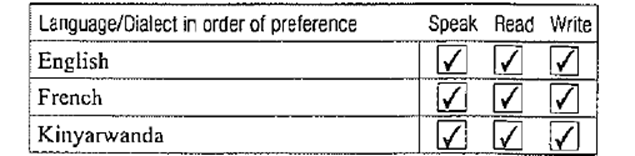
(2) Did the primary judge fall into error because he proceeded to hear the application in the absence of evidence that the Tribunal hearing had been conducted according to law and without requiring the audio recording to be tendered (ground 2); and
(3) Is the Tribunal’s decision affected by jurisdictional error because it relied on a s 438 certificate without disclosing the fact to the appellant (ground 3)?
23 The third issue was not raised in the court below. By consent, it was not agitated at the hearing and will be determined only if the appellant fails to succeed on one of the other issues, and then not until the High Court has published its judgments in a number of pending appeals which are likely to affect the resolution of the third issue.
24 Before going any further, it should be noted that the general law principles of procedural fairness are modified by the Migration Act. Section 422B(1) provides (and provided at all relevant times) that Division 4 of Part 7, which consists of ss 422B to 429A inclusive, and which deals with the conduct of a review by the Tribunal, “is taken to be an exhaustive statement of the requirements of the natural justice hearing rule in relation to the matters it deals with”. Section 422B was introduced by the Migration Legislation Amendment (Procedural Fairness) Act 2002 (Cth). It was intended to overcome the decision in Re Minister for Immigration and Multicultural Affairs; Ex parte Miah (2001) 206 CLR 57. In that case the High Court held by majority that, in the absence of a clear legislative intention, the “code of procedure for dealing fairly, efficiently and quickly with visa applications” did not exclude common law natural justice requirements. The purpose of s 422B was to supply a clear legislative statement that it did: WAID v Minister for Immigration & Multicultural & Indigenous Affairs [2003] FCA 220 at [37], [57] (French J).
25 As the Full Court explained in Minister for Immigration and Citizenship v SZMOK (2009) 247 FCR 404 (Emmett, Kenny, and Jacobson JJ) at [9] “the matters that Div 4 deals with are to be identified by reference to its particular provisions and not by reference to its general subject matter”. It is true that s 422B(3) requires the Tribunal, when exercising its powers and performing its duties described in Division 4, to act in a way that is fair and just. But that provision does not create a procedural requirement over and above what is expressly provided for in Division 4: SZMOK at [15]; see also Minister for Immigration and Multicultural Affairs v Eshetu (1999) 197 CLR 611 at [158]. Section 422B(3) was not intended to qualify s 422B(1); no other requirement of fairness is to be implied: SZMOK at [17]. In SZRMQ v Minister for Immigration and Border Protection (2013) 219 FCR 212 at [74] Robertson J adverted to a difference in approach where errors of translation are assessed for procedural fairness under the general law (with which that case was concerned) rather than where “the blunter question” posed by s 425 is involved. See also SZUYU v Minister for Immigration and Border Protection [2018] FCA 786 at [71]–[73] (Wigney J).
26 It follows that authorities on procedural fairness in different contexts must be treated with caution. In particular, the authorities in criminal cases (upon which the appellant relied) are unhelpful. An applicant who is invited to give evidence and present arguments before the Tribunal is not in an analogous position to an accused person in a criminal trial. The purpose of s 425 is to give a visa applicant an opportunity to be heard when the Tribunal is not satisfied on the papers of his or her claim to protection.
27 It is both logical and convenient to deal with ground 2 of the appeal first.
Did the primary judge err in proceeding to hear the application?
28 Ground 2 reads:
The primary judge erred in law in allowing the Appellant’s application for judicial review of the decision of the Tribunal, to proceed before him, with no or inadequate evidence as to whether the Tribunal had conducted its hearing according to law.
29 Ground 2 was particularised as follows:
Because the Appellant had not been afforded proper interpreting services by the Tribunal, the transcript of the proceedings before the Tribunal, which the primary judge had before him, was, as to significant portions thereof, not transcribed, and otherwise was impenetrable and inadequate for its purposes.
30 This statement is a non sequitur. For all we know, a similarly poor transcript might have been produced even if “proper interpreting services” had been provided. Still, the transcript was an inadequate basis for the primary judge’s affirmative conclusion that the appellant had had “a genuine hearing and a proper opportunity to give evidence and present arguments and that there was no failure to comply with s.425 by the Tribunal”. In my respectful opinion, that conclusion was not reasonably open. The transcript was punctuated by so many “indistinct” references that many parts of it are unintelligible. Be that as it may, ground 2 must be dismissed.
31 Notwithstanding the way in which ground 2 was particularised, the appellant’s principal argument was that the primary judge erred in proceeding to hear the application on the basis of “an unintelligible transcript” and “without the benefit of an audio recording”. The appellant maintained that, despite the way in which the application was presented, the primary judge was obliged to insist that the audio recording be tendered. I reject the argument. The primary judge was not obliged to require the tender of the recording or to adjourn or stay the hearing until the recording was available.
32 The fundamental problem for the appellant is this. The hearing before the primary judge was adversarial. The appellant was represented by solicitor and counsel who did not seek to put the audio recording before the court or, on the assumption that they did not have the recording, apply for an adjournment to enable them to do so. It was the appellant who bore the onus of establishing jurisdictional error; it “fell to [him] to establish a basis for drawing the inference necessary to make out the alleged jurisdictional error”: Minister for Immigration and Citizenship v SZGUR (2011) 241 CLR 594 at [67] (Gummow J, Heydon and Crennan JJ agreeing at [91] and [92] respectively). If there was no or inadequate evidence as to whether the Tribunal had conducted its hearing according to law or if the transcript was an inadequate basis upon which to conclude otherwise, then the appellant did not discharge his onus. Thus, while the primary judge’s reasons for dismissing ground 6 of the application are affected by error, the decision itself is not.
Did the Tribunal fall into jurisdictional error by failing to require the appellant to give evidence through an interpreter?
33 This is the substance of ground 1 of the amended notice of appeal. It was particularised in this way:
(a) In failing to afford the Appellant proper interpreting services the Tribunal failed to fulfil its statutory obligations pursuant to ss 425(1) and 427(7) of the Migration Act 1958 (Cth); and
(b) The Tribunal’s failure to afford the Appellant proper interpreting services lacked an evident and intelligible justification and thus amounted to legal unreasonableness.
34 Subject to the exceptions contained in subs (2), which are presently irrelevant, s 425(1) imposes an obligation on the Tribunal to “invite the applicant to appear before the Tribunal to give evidence and present arguments relating to the issues arising in relation to the decision under review”. The invitation must be “a real and meaningful” one: Minister for Immigration and Multicultural and Indigenous Affairs v SCAR (2003) 128 FCR 553 at [37] (Gray, Cooper, and Selway JJ). It may readily be accepted that it would contravene s 425 to deny an interpreter to an applicant, who cannot speak English or is not proficient in English, and invite him or her to give evidence and present arguments at a hearing in English. Such an invitation would not be “a real and meaningful” one.
35 Section 427(7) relevantly provides that:
If a person appearing before the Tribunal to give evidence is not proficient in English, the Tribunal may direct that communication with that person during his or her appearance proceed through an interpreter.
36 The effect of this provision is that, if a person appearing before the Tribunal is not proficient in English, the Tribunal has both the power and the obligation to direct that the communication proceed through an interpreter: Perera v Minister for Immigration and Multicultural Affairs (1999) 92 FCR 6 at [20]–[21] (Kenny J); VWFY v Minister for Immigration and Multicultural and Indigenous Affairs [2005] FCA 1723 at [8] (Finkelstein J); Singh v Minister for Immigration and Multicultural Affairs (2001) 115 FCR 1 at [27] (Tamberlin, Mansfield and Emmett JJ). The governing provision, however, is s 425. In Perera Kenny J observed at [37]:
Naturally enough, the Tribunal must decide, in the first instance, whether an interpreter is called for … The Tribunal’s opinion on the matter cannot be conclusive, however, because, as we have seen, whether or not the applicant was afforded an opportunity to give evidence as s 425 of the Act required is a fact on which the jurisdiction of the Tribunal depended.
37 In other words, the existence of the opportunity to give evidence contemplated by s 425 is a jurisdictional fact. The Full Court affirmed as much in SCAR at [38]. A decision reached in the absence of that opportunity is a decision tainted by jurisdictional error.
38 In his written submissions Mr Kline said that the primary issue was:
whether procedural fairness was denied to the Appellant by the [Tribunal] when he was required to give evidence before the Tribunal without the benefit of an interpreter. English was his third language, and as a result misunderstandings arose between the Tribunal and the appellant.
39 He said that the second issue, which was not directly raised by the pleading, was:
whether the Tribunal could cure what would otherwise be a denial of procedural fairness by obtaining the Appellant’s consent to proceed with the hearing without an interpreter, despite the Tribunal’s obligations under ss 425(1) and 427(7) of the Migration Act 1958 (Cth).
40 I will deal with both of these matters. It was common ground, however, that the question for the Court was whether the appellant’s proficiency in English was sufficient to enable him to give evidence and present arguments in English in order to communicate the substance of his case and respond to the issues raised. More correctly, since the burden of proof is on the appellant, it must be whether the appellant’s proficiency in English was not sufficient for this purpose. For the following reasons I am not persuaded it was not sufficient.
41 The appellant’s case rested upon a number of propositions. Some of them were soundly based; some were not.
42 First, the assertion that the appellant was “required” to give evidence before the Tribunal without the benefit of an interpreter is at least dubious. As I have already mentioned, the appellant was sent an invitation to attend a hearing. In that letter he was asked to inform the Tribunal whether he needed an interpreter. He replied in the negative. At the hearing itself the Tribunal repeatedly offered the appellant the opportunity to give evidence through an interpreter. He declined. Ultimately the decision to proceed in English was the appellant’s. It was not a decision forced on him by the Tribunal.
43 The transcript records that, before inviting the appellant to give evidence, the Tribunal member noted that the appellant had not requested an interpreter and, on that basis, told the appellant that he assumed he was “competent in English” and that he could understand the member “clearly”. The appellant confirmed that that was so. At this point, the member asked him what his first language was. The appellant replied “Kinyarwanda”. The member said that he had listened to the recording of the interview with the delegate and that, having done so, it seemed to him that the appellant was “proficient in English”. On this basis, he added, he was “happy to proceed” with the hearing in English. He then invited Ms Byers to comment. She equivocated. The transcript then reads:
ADVISOR: Well, he (indistinct) through a briefing last night that day, and I just had slight concerns in talking about different political concepts that …
MEMBER: Hmmm.
ADVISOR: ... he’s response ... his range of responses were quite limited and I think that was his English, and I should really considered considering maybe a French interpreter, which is his second language ...
MEMBER: Hmmm.
ADVISOR: ... - might have been beneficial, and that’s something that really came to me last night ...
MEMBER: Hmmm.
ADVISOR: ... which was a bit too late I think to submit that
MEMBER: Sure.
ADVISOR: We need a French interpreter. We’ve always ... I take my instructions for him in English ... quite proficient, but when it comes to discussing great detail ...
MEMBER: Hmmm.
ADVISOR: ... he’s English language (indistinct) may be somewhat limited and I ... I'm concerned that you may consider that he’s been (indistinct) or generalising ...
MEMBER: Hmmm.
ADVISOR: ... in giving those answers in his third language.
MEMBER: Hmmm. Well, that ... that’s a good point.
ADVISOR: Okay. So, we'll ... we'll see how we go, and if I think we aren't really doing ... giving him a kind of best opportunities ...
MEMBER: Hmmm.
ADVISOR: ... to express those concepts or beliefs ...
MEMBER: Hmmm.
ADVISOR: ... (indistinct) bits about his political opinion, I mean may need to (indistinct).
MEMBER: Alright.
ADVISOR: Okay?
MEMBER: Alright. Well, it presents a difficult situation [BLD15], because I ... I don't want to conduct a hearing with you in English, if it then ... we then realise that your understanding of what I'm saying and my understanding of what happened to you and what you ... what your opinions on matters are ... isn't entirely correct and accurate.· If English is your third language, which I'm prepared to accept it is, it may not be the best way for you to give evidence in your application by giving that in English. You ... you understand what I'm saying?
APPLICANT: Yeah.
ADVISOR: I think he will ... he’ll understand a question, I'm just a bit worried about the range of his response may be limited.
MEMBER: Well, that’s right Well, but as I said, I ... I don't want to conduct a hearing with you for three or four hours, and then have a submission put, or for me to not feel entirely comfortable that you haven’t been able to fully participate in the hearing and the evidence you’ve given.
APPLICANT: It’s really not that much limited and I would be hearing the questions you …
MEMBER: Yes.
APPLICANT: ... are all putting forward to me, and when they appear somehow a bit harder, complicated and then I ask you to ask ...
MEMBER: Hmmm.
APPLICANT: ... the question in another way (indistinct).
MEMBER: Well, my ... I ... as I said, I’ve listened to your ... the recording of your interview the Delegate, and I'm comfortable in your proficiency in English, but ...
APPLICANT: Yeah.
MEMBER: … if it is your third language, I ... might not be the best way for your to communicate your claims. But it’s really your choice. If you elect and want to have the hearing in English, that’s up to you. But if you think that would be better for you to present your claims in your first or second language, you can do that.
APPLICANT: I am (indistinct) proceed ...
MEMBER: Yes?
APPLICANT: ... you can proceed (indistinct).
MEMBER: Alright.
ADVISOR: But he ... it (Indistinct) becomes difficult for (indistinct).
APPLICANT: Yeah.
ADVISOR: I won't say straight away ...
APPLICANT: Yeah, yeah.
ADVISOR: ... if it is the point (indistinct) for you, I think it’s going to be you being able to express your opinion (indistinct).
APPLICANT: Yeah.
MEMBER: Well, that (indistinct) the evidence of the case really, so ...
ADVISOR: Yes, that’s fine, that’s (indistinct).
MEMBER: Anyway, well, look we'll ... we'll go through ... we'll get going with the hearing, and we’ll see how we go, and if it seems that you aren’t able to effectively communicate your claims …
APPLICANT: Hmmm.
MEMBER: … we’ll consider the issue then. Alright?
APPLICANT: Yeah.
44 Secondly, assuming that the Tribunal did in fact require the appellant to give evidence without an interpreter, the assertion that this resulted in misunderstandings between the Tribunal and the appellant, at least enduring misunderstandings or misunderstandings of any consequence, finds no support in the evidence.
45 Thirdly, it was not the appellant but Ms Byers who told the Tribunal that English was the appellant’s third language. It is not clear what she meant by that. If it is to be inferred that she meant that English was the third language the appellant learned, that may or may not be so. If it is to be inferred she meant that English was the language in which he was least proficient, then the inference is not supported by any direct evidence. Indeed, it is arguably inconsistent with the only direct evidence on the subject.
46 In his application for a protection visa, the appellant nominated English as his preferred language. Question 11 of the application form was in the following terms:
Which languages do you speak, read or write (including English)?
Beneath it was a box listing the appellant’s languages in order of preference:
47 While it is conceivable that the appellant got the order wrong, it was not suggested that this was a mistake and the representation was consistent with the appellant’s response to the invitation to attend the hearing in which he declined an interpreter.
48 Fourth, Mr Kline also submitted that Ms Byers told the Tribunal that she had concerns about the appellant’s “ability to satisfactorily deal with questions and give responses without proper interpreting services from his native language (Kinyarwanda) into English”. That is not what Ms Byers said.
49 Fifth, Mr Kline told the Court that it was not in dispute that the appellant had “difficulty with English”. The Minister made no such concession. What he said (through his solicitor) was that he considered the gaps in the transcript to be attributable to the appellant’s “accent and manner of speaking”. That is quite a different matter.
50 Sixth, Mr Kline submitted that, “when required to discuss and elaborate on the complex social and political situations necessary to establish his refugee status”, the appellant was at “an intolerable disadvantage”. Compared to whom he did not say but presumably the comparator was a native English speaker. It is important to understand what is meant by “proficient” in this context. In Singh the Full Court explained at [28] that:
[T]he proficiency in English contemplated by s 427(7) is the proficiency necessary to enable an applicant to give evidence and present arguments in English in order to communicate the substance of his or her case and to respond to issues raised. It does not require any greater expertise in English. If the applicant can comprehend and articulate English sufficiently well to enable him or her, in a real sense, to give evidence and present arguments in English to the Tribunal, the requirements of s 425(1) will have been satisfied. On the other hand, if an applicant does not have such proficiency, s 425(1) may well not be satisfied in the absence of a direction under s 427(1) …
51 Seventh, Mr Kline argued that “the need for [an interpreter] was made manifest by the information provided by [Ms Byers], and then by the tortuous nature of the interview itself”. I have already referred to the information provided by Ms Byers. It is an exaggeration, at least, to say that Ms Byers made the need for an interpreter “manifest” when she herself suggested that the matter proceed without one. Moreover, the Tribunal’s “interview” was far from tortuous. The questioning was gentle and uncomplicated. It was also polite and respectful.
52 In the court below the appellant relied only on the transcript. He did not proffer any evidence of his own to support his submission that he did not understand what was put to him or that he was confused at any point in time or to show that he had any difficulty expressing himself in English or to support an inference that the Tribunal misunderstood what he said. Nor did he submit, let alone give evidence to suggest, that the detailed summary of his evidence contained in the Tribunal’s decision record was defective in any way, that something was wrongly attributed to him, or that anything he said had been misconstrued.
53 On the material before the primary judge there was no reason to believe that the appellant was not sufficiently proficient in English so as to warrant, let alone require, the making of a direction under s 427(7). Moreover, there is nothing to indicate that either the appellant or Ms Byers perceived that he was having difficulties communicating in English. Nevertheless, the transcript is poor. For a start, it is replete with omissions denoted by the repeated use of the word “indistinct”. I was told that there were some 989 instances where the word “indistinct” appears. Not all of these references, however, occur in the transcription of the appellant’s evidence.
54 The poor quality of the transcript, however, proves nothing. A poor quality transcript might be caused by any one or more of a number of factors. It might be due, for example, to the quality of the recording or to the transcriber’s lack of experience, competence, diligence, care or attention, or even hearing deficits.
55 By consent, on the appeal the appellant tendered the audio recording. The Court was invited to listen to one particular portion of the recording (from 2:13:50 to 2:18:07) and also to any other part at random. The submission the appellant made was that “almost any selection will yield a similar result”. What result the appellant did not say. He merely asked rhetorically: “if the transcriber were, (as the Court will be) so frequently unable to make out words, phrases, whole sentences and even whole passages”, then “how could the Tribunal do so to a degree necessary to discharge its statutory functions?”
56 There is an obvious answer to this question. Unlike the transcriber, the appellant’s counsel or this Court, the Tribunal member had the benefit of seeing the appellant and hearing from him at close range. Just because a recording might not adequately convey what is being said does not mean that those in the room were confused or could not understand one another. Moreover, the Tribunal had also listened to the recording of the interview with the delegate, read the appellant’s statements, the other documents he had submitted to the Tribunal, and independent country information. The Tribunal was in a much better position than the transcriber or, for that matter, the Court to follow what the appellant was saying.
57 I have listened to the portion of the recording to which I was referred. I chose not to listen to the recording at random but to listen to it all. I listened closely. I did so with the transcript in front of me. Having done so, I cannot accept the appellant’s submissions.
58 At times, the appellant’s answers are difficult to understand because of a background echo. At other times words are not discernible because the appellant drops his voice, mumbles, or speaks very quickly. On some of these occasions he appears to be thinking aloud before he formulates an answer or he is speaking to Ms Byers. On some of these and other occasions he appears not to be speaking into the microphone. Often the transcriber has just missed what he said. At one point there is a problem with the recording.
59 For the most part, however, I could make out the words the transcriber found indistinct.
60 Sometimes the words the transcriber could not discern were proper nouns — place names like Camp Kami, the Congo, occasionally even Kigali, the Rwandan capital; acronyms like NSS (the National Security Service), RNC or RPF (which, either because of the appellant’s accent or because he tended to use a variant of the acronym, often sounded like “RFP”), all of which are mentioned in the Tribunal’s decision; concepts like Umuganda (the name the appellant said was given to “communal work” and to which he referred in his visa application); or the names of individuals, like Patrick Karegeya, David Himbara, Theogene Rudasingwa, Theophile Habarimana, and Kayumba Nyamwasa, each of whom is mentioned in the Tribunal’s decision. The absence of these matters from the transcript does not reflect any misunderstanding or confusion on the part of the appellant or the Tribunal. In all likelihood, every one of these omissions (and many others beside) could have been rectified if the transcriber had been given copies of the Tribunal’s decision and the appellant’s statements.
61 The appellant drew attention to one portion of the transcript on p 53 from lines 36 to 52. This passage is unique. The recording cuts in and out at this point. Both the words of the Tribunal member, which are usually very clear, and those of the appellant are largely indecipherable. This is plainly an instance where the transcriber’s difficulties are attributable to the quality of the recording.
62 I emphatically reject Mr Kline’s submissions that the appellant does not “speak English at all” and that his English is “horrible”. While he speaks with an accent and while his English expression is certainly not perfect, he can be and was understood. His answers were responsive to the questions asked of him and reflected the case he had set out in the documents he submitted to the Tribunal. The mere fact that some of what he said is inaudible tells us nothing of his capacity to communicate in English. Moreover, there is no reason to think the Tribunal was unable to follow the appellant’s evidence or arguments. Indeed, the Tribunal member can frequently be heard signifying his understanding.
63 There are numerous examples I can offer to illustrate my conclusions. The following will suffice. Where I was able to make out the words the transcriber was not, those words are emphasised and “(indistinct)” struck through. Other errors in the transcript are also corrected in the same way. It should be noted that the ellipses in the transcript do not reflect omissions in the record.
64 It is convenient to start with the passage of the recording to which I was invited to listen (from 2:13:50 to 2:18:07). The transcript is at pp 54–55. It follows the defective recording at p 53:
Q. Why would the (indistinct) it offend democratic norms, for you to provide a list (indistinct) of district supporters?
A. APPLICANT: Because they wanted me (indistinct) in stating staging that some kind of (indistinct) has ...
Q. Say that again.
A. APPLICANT: Stating Staging that sort of (indistinct) road blocks.
Q. Sorry, I don't understand.
A. APPLICANT: Road block.
Q. Road block?
A. APPLICANT: Yes.
Q. Hmmm.
A. APPLICANT: Sorry for my English.
Q. That’s alright.
A. APPLICANT: And then, such road blocks ...
Q. Hmmm.
A. APPLICANT: ... for stopping other workers voters from the opposition to come ...
Q. So you mean they were going to prevent people from attending (indistinct) the voting ...
A. APPLICANT: Yes, yes. Voting. Those, especially (indistinct) ones the supporters of the opposition.
Q. Alright. And you refused to be involved in that?
A. APPLICANT: In that yes. And then (indistinct) already (indistinct) to be the enemy for the country ...
Q. Hmmm.
A. APPLICANT: ... and there is nothing I can help the party, (indistinct) they shouldn’t be in the (indistinct) condition they are. When he said if anything comes up, if anything is known about what we’ve been talking here, you'll ... you'll be beheaded, that’s the term he used.
Q. Did you think that was a serious threat, or was that just a (indistinct) phrase that they used?
A. APPLICANT: Most of they say is (indistinct) as a party, when I ... during the (indistinct) older days when they are ... they are still fighting ...
Q. Hmmm.
A. APPLICANT: You had it ... to swear, when you become ... you're becoming a member of (indistinct) RPF, you swear that if I do (indistinct) commit treason against (indistinct) the RPF...
Q. Hmmm.
A. APPLICANT: ... (indistinct) then I should be beheaded and some people, they ... they (indistinct) prison to (indistinct) commit treason against the RPF they are beheaded, yeah, I knew that ... that was matter of serious.
Q. So it’s a possibility?
A. APPLICANT: I knew they that was serious and they (indistinct).
Q. Now in your written statement, you said after that incident ...
A. APPLICANT: Hmmm.
Q. ... you then began to have secret meetings with the (indistinct) and (indistinct) RNC in Kigali and elsewhere.
A. APPLICANT: Hmmm. Yeah.
Q. And that, that incident was in August 2008.
A. APPLICANT: Yes. I said (Indistinct) some of the, actually that’s ... that’s the period when (indistinct) I was feeling completely tired of the RPF’s tendencies and practices from the number of incidents that I talked about in the previous sections.
Q. Yes.
A. APPLICANT: And I was feeling very disappointed where I knew somebody who can console my soul, and had paint another picture, which took different from what they did (indistinct). I joined the RPF when I was really young.
Q. Hmmm.
A. APPLICANT: I said to (indistinct) started in the organisation as a cadre when I was in secondary school, that is back in 19891 ...
Q. Yes.
A. APPLICANT: ... in this (indistinct) school. And this member of the (indistinct) RPF from the party at the time ...
Q. Hmmm.
A. APPLICANT: ... other time were refugees (indistinct) all in Uganda ...
Q. Hmmm.
A. APPLICANT: ... and that’s where I (indistinct) started in my school, and (indistinct) I think that political criticism is very important ...
Q. Hmmm.
A. APPLICANT: ... (indistinct) fight against corruption is very important, (indistinct) fight against any malpractices in (indistinct) elections and (indistinct) rigging ...
Q. Hmmm.
A. APPLICANT: Democratic (indistinct) rules are very important.
Q. Hmmm.
A. APPLICANT: ... and I was seeing totally a different picture ...
Q. Hmmm.
A. APPLICANT: ... something, (indistinct) I mean, the party totally being hijacked.
Q. Hmmm.
A. APPLICANT: They say (indistinct) really I need somebody to console consult, that’s when we started contacting these number of different people who especially cadres, (indistinct) old cadres, that’s when they had these contacts with one guy who was in opposition, but he was ... he was my colleague, (indistinct) a cadre in RPF called Mr (indistinct), and I never remember I went down to (indistinct) party have a talk with him.
Q. Hmmm.
A. APPLICANT: ... (indistinct) he had defected to the ruling party in the country. I said, tell me, can you ... can you help me (indistinct) from the understanding of what (indistinct) RPF is going on today?
Q. Hmmm.
A. APPLICANT: ... at least when you have (indistinct) some time, you went away (indistinct) ... joined another party…
Q. Hmmm.
A. APPLICANT: ... but I’m completely (indistinct). That’s when I started different contacts with different people.
65 The following extract (transcribed at pp 23–24) is illustrative of the appellant’s capacity to convey to the Tribunal what he wanted to say:
Q. Hmmm.
A. APPLICANT: ... when we were fighting against the ... the former government ...
Q. Hmmm.
A. APPLICANT: ... we were saying that we are fighting against corruption and malpractices in the system and we are starting run, don't you think that’s weird? And then some of my friends talks to the authorities, to the connectors conductors of the seminars, and then I was, (indistinct) anyway, went back to the, after the break, went back to the lecture room, then they ... they mentioned it that some of us trainees are breeding (indistinct) bringing up resentments against the idea of (indistinct) RPF.
Q. And what happened to you?
A. APPLICANT: In that time, I stood up and said, yeah, that ... that was me who said it and that I say that was my first time to ... to do the elections and actually I ... I didn't know that the (indistinct) involve, even (indistinct) rigging such of things.
Q. And did you suffer any mistreatment as a result of that?
A. APPLICANT: They (indistinct) always said say that I'm becoming subversive but that was it.
Q. Alright. And so, when did you first have a particular problem, where you were mistreated, or threatened or something?
A. APPLICANT: l was hurting the first in 2006 when I was the used youth chair.
Q. So when you say “the used youth chair”, do you mean the ...
A. APPLICANT: (Indistinct) I was President, yes.
Q. ... of the National Youth Council?
A. APPLICANT: Yes. And that … that was in November when the political (indistinct) bureau of the ... of the ruling party ...
Q. Hmmm.
A. APPLICANT: ... and they (indistinct) laid the caution about the government and the ruling party not assisting (indistinct) the youth...
Q. Hmmm.
A. APPLICANT: ... in development ...
Q. Hmmm.
A. APPLICANT: … in helping them having like (indistinct) come to vetting income generating activities (indistinct) profit (indistinct) that would support them … they are a very fundamental part of the corporation population that help this people in the government (indistinct) to strive and develop ...
Q. Hmmm.
A. APPLICANT: ... and then that’s when the ... the commissioner of the ruling party stood up and said I am starting to be subversive and bringing negative ideas that the government’s doing nothing ...
Q. Hmmm.
A. APPLICANT: ... to the youth, and then this was he was kind of abusive (indistinct) of in the meeting accusing me.
Q. But you felt it was a fair point to raise, did you, that the government wasn't devoting
A. APPLICANT: Yes.
Q. ... adequate services to the younger people?
A. APPLICANT: Yes, I felt it was, well that’s my (indistinct) platform that was what I was stand ... standing for ...
Q. Hmmm.
66 So, too, is the following exchange (see pp 39–40 of the transcript):
Q. Alright. So you were attacked by (indistinct).
A. APPLICANT: Yeah.
Q. ... some sort of tunnel.
A. APPLICANT: Yeah. And then ...
Q. Hmmm.
A. APPLICANT: ... yeah, after and then every morning, I was ... they were bringing me up for torture, for questioning and things like that, using that (indistinct) pulley system and the trolley they (indistinct) took me out when ... when I was injured during one of the torturing sessions ...
Q. Right.
A. APPLICANT: ... but (indistinct) following that, (indistinct) following, and I was injured on the arm, and that’s ... that’s when they let me ... they put me in the cell, now in the house.
Q. So you were ... how many days ...
A. APPLICANT: (Indistinct). In the ... in the trench, five days.
Q. Five days in a trench, and then ...
A. APPLICANT: Yes.
Q. And twelve days?
A. APPLICANT: Hmmm.
Q. And where were you kept for the other seven days?
A. APPLICANT: I was kept in ... in a shed. Actually until my ... one of my cousins was (indistinct) who was a police officer came to visit me.
Q. (Indistinct).
A. APPLICANT: Yeah.
Q. Did you have visitors in the military camp?
A. APPLICANT: (Indistinct) Kami that detention facility, it’s ... it’s really not (indistinct) any more a military camp, it’s like it’s (indistinct) now a detention facility where they do all sorts of torture and things like that. So ...
Q. Are they allowed ... it seems a bit odd that if it’s a camp where they torture people, in underground tunnels that they would allow visitors.
A. APPLICANT: For example, police officer, who because, these (indistinct) agents cooperate. tThat (indistinct) police officer worked in the (indistinct) CID, which is ... which is (indistinct) also the investigation (indistinct) department of the police and so they co-operateing militants in many things...
Q. Hmmm.
A. APPLICANT: And they all (indistinct) work, it’s like a (indistinct) three sides working together. Then there’s the (indistinct) military part, there’s the police part, the (indistinct) CID, and then there was the (indistinct) RPF part. They all worked together, they are really connected (indistinct) all along.
Q. Alright. And so he came ...
A. APPLICANT: He (indistinct) came and visited me.
Q. And what happened?
A. APPLICANT: Afterwards he went and then I was ... I was released.
Q. Were you charged with any offences?
A. APPLICANT: No (indistinct) not one that was really officially written, they only (indistinct) accused me of those things I told you, which about (indistinct) linking to all the ...
Q. Hmmm.
A. APPLICANT: to the militias (indistinct) opposition parties of ... of (indistinct).
Q. Hmmm.
A. APPLICANT: ... (indistinct) linking with Patrick Karegeya.
67 The first-mentioned of the Tribunal’s concerns related to apparent inconsistencies in the appellant’s evidence about the first time he became involved with the RNC in 2008 or 2009 and independent information about the formation of the RNC in the United States in December 2010, which the appellant did not dispute. The next example is an extract from the evidence touching on this matter (and transcribed at pp 57–59).
Q. So how do you ... how do you explain that?
A. APPLICANT: That’s true, what you are saying was is totally true, but looking (indistinct) with the affidavit statement which is there, I (indistinct) official (indistinct) before a party is officially launched, normally there are some individual and (indistinct) informal consultations ...
Q. Yes.
A. APPLICANT: ... to come up with the information of the (indistinct) parts...
Q. (Indistinct).
A. APPLICANT: ... or an organisation, and through that information, the (indistinct) maturity of the information ...
Q. Hmmm.
A. APPLICANT: ... makes the members then from (indistinct) formalise it and then (indistinct) register it. The party was formally registered and launched on that date, which is in ... in ... in 2010 – December ...
Q. Yes.
A. APPLICANT: ... but the activities had started (indistinct) early before (indistinct) with different individuals contacting the (indistinct) individuals informally, for the purpose of (indistinct).
Q. Hmmm.
A. APPLICANT: (Indistinct).
Q. (Indistinct) I mean, of course, I accept that before a party formally comes into existence, there would be activities that occur before that particular date ...
A. APPLICANT: Yeah, especially looking for members.
Q. Yes, but in your statement, you refer to and you're quite specific, and again you’ve said it today and you’ve said it to the Delegate, that you were meeting with RNC people ...
A. APPLICANT: Hmmm.
Q. ... at these times of the period more than two years before it formally came into existence ...
A. APPLICANT: Hmmm.
Q. Now according to Human Rights Watch ...
A. APPLICANT: Hmmm.
Q. ... what happened in relation to the led lead up to the formation of the RNC was that – and forgive my pronunciation – but General, is it (indistinct) Nyamwasa?
A. APPLICANT: Yeah, (indistinct) Nyamwasa, yeah.
Q. Yes. So he ... he was a former general in Rwanda ...
A. APPLICANT: Hmmm.
Q. Now he had a been marginalised in the government in Kaigali, and he'd been sent to be an ambassador in India ...
A. APPLICANT: Yes.
Q. ... he returned to Rwanda in February 2010 ...
A. APPLICANT: Yeah.
Q. He was there for a very brief time, and he fled to South Africa in fear ...
A. APPLICANT: Yeah.
Q. ... and he sought asylum there ...
A. APPLICANT: Hmmm.
Q. ... and then after that ...
A. APPLICANT: Hmmm.
Q. ... together with several other former senior RPF officials ...
A. APPLICANT: Yeah.
Q. ... he formed in exile ...
A. APPLICANT: Hmmm.
Q. ... the RNC.
A. APPLICANT: Yeah.
Q. Now, (indistinct) one view of that information is that the RNC did not even begin to exist, or its formation wasn't being considered until after his return to Rwanda in February 2010, and that was after that when he fled to South Africa, that he and former other ... former senior RPF members came up with the idea.
A. APPLICANT: Hmmm.
Q. So that’s a bit different to what you're saying.
A. APPLICANT: They ... they ... by then they didn't ... they didn't ... they didn't come (indistinct) together, the (indistinct) is idea was existing. That’s why there are informal consultations between members who might be defecting from (indistinct) RPF, such that they will make up that party.
Q. Well, I accept that there are ... that there probably had been ever since he was first elected ...
A. APPLICANT: Hmmm.
Q. ... back in 1994 or 5 ...
A. APPLICANT: Hmmm.
Q. ... opponents to the President ...
A. APPLICANT:
Q. ... and that over different periods of time there had been different opposition groups and people involved in opposition politics ...
A. APPLICANT: Yeah.
Q. ... there’s no doubt that ... about that ...
A. APPLICANT: Hmmm.
Q. But, you were quite specific about referring to having meetings with RNC people ...
A. APPLICANT: Hmmm.
Q. ... and RNC members ...
A. APPLICANT: Hmmm.
Q. ... more than two years before the organisation actually came into existence.
A. APPLICANT: Yeah. Actually, probably that ... that ... that (indistinct) it’s ... it’s (indistinct), I was here as a member of RNC, that I (indistinct) very much, but the people I contacted, what were they told by some of the people ... by the people we are meeting, they are telling us ...
Q. Hmmm.
A. APPLICANT: ... we would have to form this party, which actually they started announcing names, then (indistinct) we were doing those mobilisation of individuals to come and join us. They're announcing the names ...
Q. Hmmm.
A. APPLICANT: ... as RNC Rwanda, (indistinct) National Congress...
Q. Hmmm.
A. APPLICANT: ... such names were being announced (indistinct) anywhere (indistinct) this over and over when we were doing these individual consultations, (indistinct) to avoid the ... the incidents of (indistinct).
Q. (Indistinct) you're saying the name RNC existed well before the organisation formally came into existence?
A. APPLICANT: Exactly. (Indistinct) People used to talk about it, and used to say (indistinct) about that it’s really, (indistinct) that really has ... I can give you another example ...
68 From this point onwards the appellant is careful to refer to preparatory discussions rather than actual RNC meetings.
69 Another of the Tribunal’s concerns was that, although the appellant had claimed to have met Dr Himbara, a leading RNC figure, he did not ask him for a letter confirming the meeting (see pp 90–91 of the transcript):
Q. Alright. I just wanted to ask you, in the statement, you're your statutory declaration that you’ve just given me, you said that you met with Mr (indistinct) Himbara...
A. APPLICANT: Hmmm.
Q. ... former Principal Secretary of the RNC in Sydney.
A. APPLICANT: Hmmm.
Q. Now you’ve said that ... you say you could get a letter from him about the meeting, but you fear for the safety of your fellow members.
A. APPLICANT: Hmmm.
Q. What do you mean by that?
A. APPLICANT: Fellow members (indistinct) will link him and others because if ... if I get ... if I get, asking (indistinct) and they're like (indistinct) that he may pass ask him to give me like a letter, an affidavit that he met us...
Q. Yes.
A. APPLICANT: ... him as well, he doesn't ... he ... he ... he can't easily give it to you. That’s why.
Q. Where is he ... does he ... does he live in Rwanda?
A. APPLICANT: No. He lives in Canada. He was living in South Africa. When ... when they killed (indistinct) Karegeya...
Q. Hmmm.
A. APPLICANT: ... then he (indistinct) left South Africa and he was actually teaching in one of the universities in South Africa.
Q. So why would him ... I just don't understand what that means about how you could ask him for a letter or a statement but ...
A. APPLICANT: Hmmm.
Q. ... to do so would, I ... I assume from what you're writing, you fear for the safety, so that might jeopardise fellow members. What do you mean? How would that jeopardise fellow members?
A. APPLICANT: Because members ... members of ... of ... of R ... RNC, in fact the members (indistinct) towards him, and when ... when we were detained, and (indistinct) such a letter, might be probably bad English, but all I wanted ... all I meant was that seeking such a letter from ... from him ...
Q. Hmmm.
A. APPLICANT: ... (indistinct) made he might easily give you the letter by the fact that that’s how Patrick (indistinct) Karegeya died, by trying to trust everybody because he was ... he was (indistinct) killed through a friend. A friend who invited him to … (indistinct) and then he came in and eventually though that friend, the government (indistinct) him and they suspected assassinated him.
Q. Sure. By how would he writing a letter about having met with you in Sydney ...
A. APPLICANT: Hmmm.
Q. ... I'm just not quite ... I don't understand how that’s going to put anyone at risk.
A. APPLICANT: Putting him at risk is that he doesn't ... he’s not sure if maybe I will use the letter for genuine things, or if (indistinct) I probably send that letter back home, to the government, and then (indistinct) jeopardise the life of his and other members he met.
Q. Alright. But he ... he met with you in Sydney. So you'd assume that he trusted you enough to meet with you and other members here.
A. APPLICANT: Yeah. He ... he does, but as I said, as I'm ... as I'm sceptical about which other members (indistinct) are coming to our meeting, after the (indistinct) death of ... of ... (indistinct) Karegeya, the ... people become sceptical of (indistinct) even most of the members that they might not be genuine, or they might not be ... be ... they ... they might be sending such ... such reports, maybe somewhere else.
70 The Tribunal also had concerns about the evidence on which the appellant relied to prove his membership of the RNC, and in particular his failure to disclose his RNC membership card to the delegate. The next extract (at pp 17–20 of the transcript) deals with this subject:
Q. Is there any reason why you haven't provided any evidence in the form of a letter from the RNC in the United States about your involvement with the RNC?
A. APPLICANT: No reason actually. When I asked for any letter, that’s when they sent me the ... the ... that affidavit.
Q. But the affidavit doesn't actually refer to you.
A. APPLICANT: Doesn't apply refer to me, yeah.
Q. So you asked the RNC to give you a letter and that’s what they gave you?
A. APPLICANT: Yes, they say if I want a letter, I can contact the National (indistinct) or RNC here in Australia who knows (indistinct) really what we are doing here. And then that’s when they said if (indistinct) I can contact them to give me the letter.
Q. That seems a bit odd, that you contacted them and asked them to give you some supporting evidence ...
A. APPLICANT: Yeah.
Q. ... and Dr Rudaswingwa signed a statement on the 24th of June 2013 in Maryland ...
A. APPLICANT: Hmmm.
Q. ... which discusses his background, but it doesn't refer to you, it doesn't mention anything about you being involved in the RNC.
A. APPLICANT: Yeah, at that time the (indistinct) evidence I wanted was to show the existence of (indistinct) RNC. When we talked ... when we talked about the particularity of myself, that’s when they said I should apply to the National ... to the co-ordinator of RNC in Australia.
Q. And who’s the co-ordinator of the RNC in Australia?
A. APPLICANT: He’s called (indistinct) Theophile.
Q. Who?
A. APPLICANT: (Indistinct) Theophile.
Q. Can you spell that for me?
A. APPLICANT: T – H –
Q. T – H
A. APPLICANT: ... T – H – E – O – P – H – I ...
Q. Hmmm.
A. APPLICANT: ... L ... L like lima
Q. L – L – E?
A. APPLICANT: (Indistinct).
Q. (Indistinct).
A. APPLICANT: Yeah.
Q. (Indistinct) Theophile.
A. APPLICANT: Yes.
Q. And where is he?
A. APPLICANT: He lives in the Western Australia.
Q. Is there any reason you haven't asked him to give evidence in support of your application?
A. APPLICANT: No reason at all and I just wanted to ask if that ... that’s (indistinct) and then I can't ask him to (indistinct).
Q. Well, it’s up to you to provide the evidence you wish for me to consider.
A. APPLICANT: Yeah.
Q. And as you're aware the Delegate refused your application, partly on the basis that he didn't believe you were a member of or ... involved with the RNC. So it seems to be a live, relevant issue. So I'm surprised you haven't done anything about that.
A. APPLICANT: Yeah. That’s ... that’s why I ... I remembered about that card and for the letter maybe I can provide it just in next week?
Q. So you say this card you’ve shown me today ...
A. APPLICANT: Hmmm.
Q. You say you had that on you at the time you were interviewed by the Delegate?
A. APPLICANT: Yes.
Q. And why did you not give it or show it to the Delegate?
A. APPLICANT: ... because I was not asked any evidence for that (indistinct) whether I am a member of the RNC at the time.
Q. Well, it was something you were asked questions about, wasn't it?
A. APPLICANT: Sorry?
Q. It was something you were questioned about.
A. APPLICANT: Yeah, I was questioned about my involvement, back home and here, …
Q. Yes.
A. APPLICANT: But I wasn't asked about any evidence for that from whether I am a member.
Q. So you didn't think it was important to produce it to show the Delegate, as evidence of your involvement or membership?
A. APPLICANT: Maybe I thought the ... the affidavit was ... was enough.
Q. But the affidavit doesn't refer to you.
A. APPLICANT: Yeah, it doesn't but there’s a process (indistinct) is ... that’s a letter that is signed and then ...
Q. Hmm.
A. APPLICANT: ... approved by the public notary of ... of where (indistinct) Theogene lives in ... in the US, and I thought that was enough to prove my involvement in the RNC.
Q. So you didn't think having a card with your name on it ...
A. APPLICANT: Yeah.
Q. ... might have helped, it might have been relevant to show the Delegate and had it in your pocket, you say.
A. APPLICANT: That’s right, I had it in my pocket. At that time really I wasn't ... probably I didn't worry much about these process hearings and what everything that is required and what evidence until probably (indistinct) I was asked to provide certain evidences. (Indistinct) I think that one particular story point is that when you come to lodge the ... the application for the ... for protection, (indistinct) and you always come obviously with this anxiety of ...
Q. Hmmm.
A. APPLICANT: ... submission of ... of (indistinct) pride and feeling threatened about or ... or security back home and all sorts of thing, and in your mind you think that (indistinct) probably and whatever (indistinct) you know and what you are going to say… is good enough (indistinct) to convince anybody.
Q. I can appreciate that anxiety you might feel making a claim for protection and the issues about what you might need to demonstrate to support the claims you’ve made ...
A. APPLICANT: Hmmm.
Q. ... but again it seems difficult to understand that if you had this in your possession at the interview, you would not have produced it to the Delegate.
A. APPLICANT: That’s true, I had it in my pocket and that ... I think it’s very important again that probably for the first time if we are entering into this process ...
Q. Hmmm.
A. APPLICANT: ... we get to (indistinct) legal advice of what exactly we’vere told to submit, but in my case, I had no (indistinct) advice from anybody, and I didn't get the kind of support from anybody when you're I was doing my application. (Indistinct) I was very ...
Q. Alright. Well, I ... I accept you were unrepresented at that time ...
A. APPLICANT: Yeah.
Q. And that you're not a lawyer, you don't have any legal training ...
A. APPLICANT: Yes.
Q. But it seems to be a fairly ... a matter of common sense one might think ...
A. APPLICANT: Yes.
Q. ... that if you're making a claim to have been a member of a particular organisation ...
A. APPLICANT: Yeah.
Q. ... that it would be relevant to provide independent evidence of that claim, and I don't think not having a migration agent or lawyer help you ...
A. APPLICANT: Hmmm.
Q. ... provides a reasonable excuse for why you did not consider the relevance of such documents as a RNC membership card.
A. APPLICANT: Yeah. Really that the other was the only reason that they ... I ... I wasn't askeding ... if I had asked to provide one, l would have provided it. I had it in my ... in my pocket, it’s like as we you are now talking to me, me and you, for sure, if ... if ... for example, they particularly ask me about such a question like, where is your evidence of membership and things like that, then I (indistinct) the question but I had my pocket in my pocket.
Q. Sure. Alright, well I’ll ...
A. APPLICANT: And another point is that, the date that is on that ... that is on the card, (indistinct) is really back in ... in ... in March, and really that’s ... that’s when I got my cab card and that’s when I had it since then.
Q. Hmmm. So you're saying ... sorry, just so I understand what you're saying. You're saying that you were a member before this date ...
A. APPLICANT: Yeah ...
Q. ... but the date of the card is when it was issued.
A. APPLICANT: Yeah, that’s when it was issued.
71 Occasionally, the Tribunal member did not catch something the appellant said. On those occasions he sought and obtained clarification. One example appears in the extract above at [64]. Another appears on pp 35–36 of the transcript:
Q. ... then you worked up until December 2010 with the Ministry. What happened in that period of time?
A. APPLICANT: In that period of time, one (indistinct) was that because I was feeling disappointed with the ruling party, that’s when I started the consultations, as I said, in January 2009, was the RNC, then I started slowly by slowly meeting with members of RNC (indistinct) on an individual basis, and (indistinct) obviously, then I kept home doing that and there were a number of incidents that happened to me, (indistinct) the NSS used to call me to safe houses, like in the match March, and (indistinct) I had one in March 2010 ...
Q. Sorry, the NSS ...
A. APPLICANT: Yes.
Q. ... called you to a safe house.
A. APPLICANT: Yeah, he called me to a safe house.
Q. When you say a safe house, what do you mean?
A. APPLICANT: Like the houses where (indistinct), you know, you come for interrogation in such houses, and then they imprison you, they ... they ... they put you in ... in ... in ... in not the normal procedures of ... of gaoling or imprisoning.
72 The next example is illustrative of the same process. The appellant repeatedly mispronounced “rigging” as “ridging”. No doubt this accounts for the transcriber’s inability to decipher it. In the following example (taken from p 23 of the transcript) she settled on “reaching”, which makes no sense at all. But the Tribunal member sought and obtained immediate clarification.
Q. So ... so what problem did you have then?
A. APPLICANT: Then they I ... when we were in ... in the seminar they taught told us that (indistinct) it being your first time for the elections, then you have to ... they will we have to do our best and win the election ...
Q. Hmmm.
A. APPLICANT: ... in that they say that if it between me will mean we can cheating or reaching [rigging] the votes, we have to do it ...
Q. Rigging. Do you mean rigging?
A. APPLICANT: Yes. And then when we talk to the (indistinct) went out to the break, that’s when I said to my (indistinct) colleague that it was really dangerous that when we were ...
73 Doubtless the Tribunal was guided by the appellant’s written statements, including his application for a protection visa, in which he referred to vote rigging.
74 It is common ground that, despite the Tribunal’s invitation to do so, at no time during the hearing did the appellant or Ms Byers indicate to the Tribunal that he was having any difficulty expressing himself or understanding the Tribunal member. Furthermore, with one exception, Mr Kline did not point to any instance where he alleged that this had occurred.
75 The exception relates to a passage transcribed between p 48 line 47 and p 52 line 12. At that point in the hearing the Tribunal was raising with the appellant certain “anomalies” in his evidence. The first concerned his activities in the lead up to the 2008 parliamentary elections. During the exchange the appellant volunteered that he had gone to “this meeting of … it’s called not meeting actually, it’s a communal work”, known as “Umuganda”, but later told the Tribunal that he had gone to a meeting “after the communal work”.
76 Mr Kline submitted that:
[T]he Appellant is trying to tell the Tribunal that in a particular period he attended, as a district government employee, compulsory Saturday work meetings. But because his English is poor he cannot find the word or phrase for ‘district’/‘of the district’/‘local’ so he wittingly or unwittingly uses the French near equivalent ‘communal’ (French being his second language). He says: “First we go for communal working, and then the meeting happens after the communal work”. But the Tribunal misinterprets what the Appellant is saying, and thinks that the Appellant is talking about, and has been attending ‘community’ meetings. If this were true (which it is not) it would be in direct conflict with something the Appellant had said in an earlier interview about avoiding all extra-curricular activity during the period in question. As a result of this linguistic misunderstanding, the Tribunal draws an adverse inference against the Appellant’s credit.
77 Mr Kline referred to Harrap’s Unabridged French/English Dictionary Vol 2 (2007) in which he said, without contradiction, that “communal” is defined to mean “of the urban/rural district” or “local” or “village”.
78 There are several problems with this submission.
79 First, it is based on two factual assumptions unsupported by evidence.
80 The first assumption is that the appellant does not know the word for “district” or “local”. Not only is this assumption not supported by evidence, it is actually contradicted by it.
81 During the course of the hearing the Tribunal questioned the appellant about a project he said he had run before he left and which his brother had taken over. The transcript reference starts at p 75. The Tribunal began by asking the appellant what the project was. The appellant replied:
Was … I used to have … I had won a tender. It was (indistinct) one of the districts in the west. The tender for supplying fire wood for a period of time, and then I had also I (indistinct) forests of people and those of the government, for carting such trees and taking the firewood to the … to district institutions like the prison, prisons and …
82 The appellant proceeded to explain that he had a contract with the government to supply timber at the same time as he was working for the government.
83 A little later the following exchange takes place:
Q. It seems difficult to understand why if the government had such an adverse interest in you, that they would send intelligence people to follow you outside the country ...
A. APPLICANT: Hmmm.
Q. ... that they would detain you ...
A. APPLICANT: Hmmm.
Q. ... try to assassinate you ...
A. APPLICANT: Hmmm.
Q. ... yet they would allow you to continue to work for the Ministry up until December 2010 ...
A. APPLICANT: Hmmm.
Q. ... and then to operate a business, in which you supplied services to the government, up until you left. That seems difficult to understand to me.
A. APPLICANT: (Indistinct) The point of the project, which I was running, (indistinct) that one I had a contract (indistinct) with the district.
Q. But it’s still the government, isn't it?
A. APPLICANT: (Indistinct).
Q. Under the total control of the RPF?
A. APPLICANT: Yes, because the district ... the ... the ... they (indistinct) there is the central government and the local government that’s how the administration is in Rwanda. And the districts are independent. They have the district councils, district councils are the ones that decides on behalf of the district. Getting a contract in their those districts, it’s really, sometimes not (indistinct) hard.
84 The submission that the appellant uses the word “communal” because he does not know the English words “district” or “local” is untenable.
85 The second assumption is that the appellant uses the word “communal” because his English is poor, drawing on his expertise in French. In the absence of evidence from the appellant, this is just speculation.
86 Secondly, I invited Mr Kline to point to anything in the Tribunal’s reasons to support his submission that the Tribunal drew an adverse inference from the appellant’s evidence in this regard, but he declined to do so. After the hearing of the appeal, however, the appellant referred the Court to [54] and [121] of the Tribunal’s reasons.
87 While summarising the appellant’s evidence, the Tribunal explained (at [54] of its reasons) that it had sought clarification from the appellant about the apparent anomaly:
After a break, the Tribunal noted that it wanted to discuss some anomalies in his evidence over time. It noted that in his application for the visa, he said he that after he received the calls during the 2008 election campaign, and was told to stay at home for the duration of the campaign, he began staying at the homes of friends and relatives and changed his car and used public transport; that suggested that he went into hiding. In response, he said he was still going to work and went to council meetings. The Tribunal asked him to confirm he went to meetings during that period. He said that it was a meeting of people at the lowest level, and it was a community meeting. The person at the meeting told the crowd to avoid people like him (the applicant) and he referred to the applicant by name. The Tribunal asked him to confirm that he went to this meeting after he was warned not to go to meetings during the campaign. He said people asked him to go there. He had to go to meetings as it was compulsory, even if there was ban on you, you still had to go.
88 If there had been a misunderstanding, it seems to have been temporary and not to have made a contribution to the Tribunal’s conclusions. The Tribunal appears to have accepted that attendance at these meetings was compulsory, for it does not refer to the matter again. In particular, it is not one of the Tribunal’s credibility concerns. The concerns expressed by the Tribunal at [121] were related to attendance at one particular meeting three weeks before the election after which he said he was taken away and tortured. This is what the Tribunal said:
Further, he also gave inconsistent evidence about the period of the 2008 election campaign. In his written statement, he said that in the period of the September 2008 election campaign, he was warned by the RPF security to stay at home during the campaign, so he avoided meetings and political activities and began to stay at the homes of friends and relatives and changed his car and used public transport. He repeated this claim at the hearing. However, he subsequently said, for the first time, that he had forgotten to mention that he went to a meeting three weeks before the election, at which he had 'spoken out'. He claimed he was criticised by others at the meeting, and was called outside and taken away by military officers to a camp, where he was detained overnight and tortured, and that the President's Chief of Staff asked him if he was working with a group outside the country. He claimed this meeting occurred before he had received the warnings to stay away from the election campaign. In light of the high degree of detail he provided in his written evidence, it was difficult to believe that he would simply forget to mention that he had attended a meeting before the election and that he had been arrested at the meeting and taken away and tortured.
89 As I have already noted, the Tribunal had before it evidence of the appellant’s capacity to communicate in English. Nevertheless it gave the appellant an opportunity to postpone the hearing and have an interpreter present if he wished. The appellant chose to proceed without an interpreter and to give evidence and present arguments in English, one of the three languages he professed to be able to speak, write and read and the one he nominated as his preferred spoken and written language. In the circumstances of this case, the Tribunal was not required to insist on the use of a Kinyarwanda (or, for that matter, a French) interpreter because English was not the appellant’s “first” language. I well accept that the mere fact that a person can communicate in English to perform routine tasks, socialise or even conduct business does not necessarily mean that he or she can do so effectively when subjected to the stresses attendant upon appearing before a court or tribunal, particularly when there is much at stake: Perera at [34]–[36], Singh at [23]. Nevertheless, I do not accept that the Tribunal was obliged to override the appellant’s preference, particularly when the interview with the delegate had been conducted in English, the appellant did not suggest that there had been any problems communicating with the delegate, and the Tribunal had listened to the recording of the interview and was satisfied that the appellant was proficient in English.
90 In Singh, as in the present case, the appellant contended that the Tribunal breached s 425(1) of the Act by failing to direct that communication with him at the hearing proceed through an interpreter. At first instance Kiefel J, as her Honour then was, found otherwise: Singh v Minister for Immigration and Multicultural Affairs [2000] FCA 1858.
91 The Full Court agreed with the primary judge. The Full Court observed at [25] that the transcript indicated that the appellant gave responsive answers to the Tribunal’s questions; the answers were “generally coherent”; and that they were consistent with his written statements. The Court also said that there was no indication of confusion on the part of either the appellant or the Tribunal or that the appellant lacked confidence in his ability to participate in the hearing in English. The same can be said here.
92 The appellant contended that the Tribunal could not “cure” what would otherwise be a denial of procedural fairness by obtaining the appellant’s consent to proceed to a hearing without an interpreter.
93 There are a number of difficulties with this contention, not least that it proceeds from the assumption that there was a denial of procedural fairness. Certainly, the notion that, where an applicant’s native language is not English, but he has shown himself to be proficient in English a hearing in the Tribunal must be conducted through an interpreter — regardless of the appellant’s own wishes — finds no support in the statute or in the authorities. Indeed, none of the authorities upon which the appellant relied concerned hearings in the Tribunal.
94 Mr Kline also submitted that, while the appellant did agree to proceed without an interpreter, “he was in an ‘unequal bargaining position’, under pressure from the Tribunal, in a formal and frightening situation, and was trying to negotiate, in his third language, the very question of whether he should proceed to have the interview in his third language” (emphasis in original). This was little more than empty rhetoric. As the extract from the transcript at [43] above demonstrates, the appellant was under no pressure from the Tribunal to dispense with an interpreter. Nor did it discourage the appellant from using one. It was he who decided not to. Regardless of whether English was the appellant’s “third language”, he lived and was educated for over 13 years in Uganda where (with Swahili) the official language is and was English and, as I have said, he had expressed a preference to communicate in English. One can only infer that he considered he had a better chance of persuading the Tribunal of the merits of his case if he were to do so in his own voice and in English. The Tribunal is not bound to override such a decision where, as here, the Tribunal is satisfied on reasonable grounds that the applicant is proficient in English, capable of giving evidence, presenting arguments, and of understanding its questions.
95 As the Full Court (Keane CJ, Emmett and Perram JJ) made clear in Minister for Immigration and Citizenship v SZNVW (2010) 183 FCR 575, the focus of the inquiry must be on the quality of the invitation issued under s 425. See especially [75]–[80] (Perram J). The question is whether the invitation to give evidence was a real and meaningful one in the circumstances of the case. Was the appellant given a reasonable opportunity to give evidence and present arguments? It would be one thing if the appellant were coerced or pressured into agreeing to give evidence in English against his own desire to use an interpreter or if there were evidence that he was not proficient in English. But that is not this case. A foreign-born asylum seeker is not denied a reasonable opportunity to give evidence and present arguments because the hearing is conducted in English when he states that he can speak, read and write in English, he has nominated a preference for English, he twice declines an interpreter (both before and at the hearing), and he has proved himself proficient in English, including for the purpose of communicating his claims to the Minister (through his delegate).
96 At first instance in Singh ([2000] FCA 1858) at [23], Kiefel J, whose decision was upheld in the Full Court made the following observations:
The absence of an interpreter will not always constitute error. The question is whether there is a connexion between the absence and the expression of rights protected by s 425, and whether those rights have been significantly impeded. In this case, there is nothing to suggest that language difficulties prevented Mr Singh comprehending the full significance of the member’s questions, and communicating arguments in response. The transcript is proof that the verbal exchange was disjointed, but not to an extent that communication could be said to have been compromised. Mr Singh’s answers are responsive to the Tribunal member’s questions, generally coherent, and consistent with the written claims contained in his application and with additional evidence sent to the Tribunal ... There is no suggestion that either the applicant or the Tribunal member became confused in the course of proceedings, or that the applicant lacked confidence in his ability to participate in the proceedings by use of English. He declined an offer of assistance with interpretation made by the member at the commencement of the proceedings. These factors were identified in Perera [41] as relevant to the effectiveness of the interpretation, and are relevant here in establishing that the opportunity given to the applicant to appear and present arguments was adequate.
97 If one were to substitute “recording of the hearing” for “transcript”, these observations apply equally to the present case.
98 There is nothing in the material before the Court (including the transcript, the audio recording, and the Tribunal’s reasons) to suggest that the appellant was denied procedural fairness or that the Tribunal was in breach of s 425 because he was not provided with an interpreter in either Kinyarwanda or French.
99 Consequently, the first particular of ground 1 is not made out. For the following reasons, neither is the second.
100 It is beyond doubt that a discretionary power conferred by statute must be exercised reasonably. It is presumed that this was Parliament’s intention. See, for example, Minister for Immigration and Citizenship v Li (2013) 249 CLR 332 at [26] and [29] (French CJ), [63] (Hayne, Kiefel and Bell JJ) and [88]–[91] (Gageler J).
101 But the Tribunal’s decision to proceed without an interpreter could not be described as unreasonable. The appellant identified English as his preferred language of communication. He considered himself competent to give evidence in English and he had established proficiency in English, sufficient not only to secure an AusAID scholarship but also to study and complete a Master’s degree at Sydney University. He did not ask for an interpreter or ask for the hearing to be adjourned to obtain one. The Tribunal invited him more than once to reconsider and give his evidence through an interpreter. He declined. His migration agent informed the Tribunal that she took instructions from the appellant in English. Although she voiced a concern that, when discussing matters in “great detail”, his English “may be somewhat limited”, the appellant, himself, considered that he could manage. The record indicates that he did. It certainly does not show that he did not. The Tribunal accepted the migration agent’s suggestion that they proceed in English but reconsider if the appellant could not effectively communicate his case. No one suggested at any point that the appellant was in difficulty.
Conclusion
102 Grounds 1 and 2 should both be dismissed. The appellant was not denied procedural fairness because the hearing in the Tribunal was conducted in English. The Tribunal did not contravene s 425 by conducting the hearing without an interpreter. Nor was its decision legally unreasonable. While the transcript afforded an inadequate basis for the primary judge’s conclusion that the appellant had “a genuine hearing”, the transcript was insufficient to prove the opposite or to establish a breach of s 425. On the further evidence tendered on the appeal, however, there is no error in that conclusion.
103 Costs should follow the event. In other words, the appellant should pay the Minister’s costs relating to these two grounds, regardless of whether he succeeds on the third.
I certify that the preceding one hundred and three (103) numbered paragraphs are a true copy of the Reasons for Judgment herein of the Honourable Justice Katzmann. |


