

FEDERAL COURT OF AUSTRALIA
Janssen Sciences Ireland UC v Alphapharm Pty Ltd [2017] FCA 1399
ORDERS
Applicant | ||
AND: | ALPHAPHARM PTY LTD (ACN 002 359 739) (TRADING AS MYLAN AUSTRALIA) Respondent | |
DATE OF ORDER: |
In this order, the Mylan products means any product containing darunavir including those having the following registrations on the Australian Register of Therapeutic Goods (ARTG):
(a) ARTG registration No. 271132 entitled “DARUNAVIR MYLAN darunavir 600 mg tablet bottle” which was registered on the ARTG on 26 May 2017.
(b) ARTG registration No. 271133 entitled “DARUNAVIR MYLAN darunavir 800 mg tablet bottle” which was registered on the ARTG on 26 May 2017.
UPON THE APPLICANT AND JOHNSON & JOHNSON PTY LTD ACN 000 023 709 JOINTLY AND SEVERALLY UNDERTAKING TO THE COURT BY THEIR COUNSEL TO:
(a) submit to such order (if any) as the Court considers to be just for the payment of compensation, to be assessed by the Court or as it may direct, to any person, whether or not a party, adversely affected by the operation of these orders or any continuation (with or without variation) thereof; and
(b) pay the compensation referred to in (a) to the person or persons there referred to.
THE COURT ORDERS THAT:
1. Pending the determination of this proceeding or further order, the respondent, whether by itself, its directors, officers, servants, agents, related bodies corporate or otherwise, be restrained from engaging in any of the following acts within Australia, without the licence or authority of the applicant:
(a) making or importing any of the Mylan products;
(b) selling, supplying or otherwise disposing of any of the Mylan products;
(c) offering to sell, supply or otherwise dispose of any of the Mylan products;
(d) using or otherwise exploiting any of the Mylan products;
(e) keeping any of the Mylan products for the purpose of doing any of the acts referred to in sub-paragraphs (b) to (d) above;
(f) authorising any other person to do any act referred to in sub-paragraphs (a) to (e) above;
(g) procuring or inducing or joining in a common design with any other person to do any act referred to in sub-paragraphs (a) to (e) above; and
(h) continuing to provide any assurance of supply in relation to the Mylan products for the purpose of obtaining listing pursuant to the Pharmaceutical Benefits Scheme (PBS) maintained under the National Health Act 1953 (Cth).
2. The respondent forthwith notify the Department of Health (Director of the PBS Price Changes Section, Pricing and Policy Branch of the Technology Assessment and Access Division) and the Minister for Health:
(a) of the granting of the interim injunction in Order 1, and of its terms; and that
(b) for the purposes of seeking listing of the Mylan products on the PBS, the respondent is no longer able to continue to provide the assurance of supply it has given, pending the determination of this proceeding or further order of the Court.
3. The costs of and incidental to the applicant’s interlocutory application for interim injunctive relief be the applicant’s costs in the cause.
THE COURT NOTES THE FOLLOWING FURTHER UNDERTAKINGS:
4. The applicant undertakes to prosecute its claim for final relief as set out in its Amended Originating Application dated 23 October 2017 (or in any subsequently amended pleading) expeditiously.
5. The applicant undertakes to give 30 days’ written notice to the respondent prior to the applicant or any person authorised by the applicant making an application to obtain listing under the PBS of a pharmaceutical product which includes darunavir as the active ingredient and which would cause Janssen-Cilag Pty Ltd’s PREZISTA products to move from the F1 formulary to the F2 formulary.
6. The applicant undertakes that, should it be informed or become aware of any person other than Janssen-Cilag Pty Ltd seeking to exploit in Australia a pharmaceutical product which includes darunavir as the active ingredient, and which it believes infringes its patent rights, it will notify the respondent of that fact and take all reasonable steps to prevent that exploitation, including if necessary commencing proceedings seeking interim injunctive relief restraining that exploitation.
Note: Entry of orders is dealt with in Rule 39.32 of the Federal Court Rules 2011.
YATES J:
Introduction
1 The applicant, Janssen Sciences Ireland UC, seeks, amongst other relief, an interim injunction, pending the hearing and final determination of the principal proceeding, restraining the respondent, Alphapharm Pty Ltd, from infringing or threatening to infringe claims 14 and 15 of Patent No. 2007316562 (the 562 patent), the complete specification of which is entitled “Methods for the preparation of hexahydrofuro[2, 3-b]furan-3-ol (the specification). Hexahydrofuro [2, 3-b] furan-3-ol is an important precursor in the synthesis of the human immunodeficiency virus (HIV) protease inhibitor called darunavir. The applicant is registered as the owner of the 562 patent.
2 The applicant controls the worldwide manufacture of products called PREZISTA and PREZCOBIX, both of which contain darunavir as an active pharmaceutical ingredient (API). These products are used to treat HIV infection.
3 HIV is a retrovirus: its genetic information is encoded in a single strand of RNA. In order to replicate in humans, the HIV retrovirus:
binds to and enters a CD4 cell (a type of white blood cell (lymphocyte) sometimes called a T-helper cell or T-cell);
transcribes its single strand of RNA into double-stranded DNA;
integrates its DNA into the cell’s DNA where it acts as a template for more HIV RNA;
uses the cell to replicate more HIV RNA and HIV-specific proteins; and
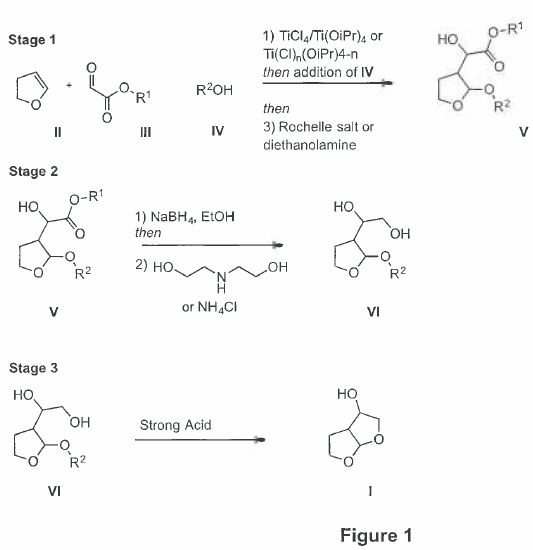
assembles the HIV RNA and proteins into more HIV particles, which are then released back into the body.
4 HIV replication may be inhibited at one or more stages of the replication cycle. One way is to inhibit the assembly and release of new HIV particles by preventing the correct processing of HIV proteins required for the assembly of the particles. This is achieved by protease inhibitors such as darunavir.
5 Darunavir must be taken with a pharmacokinetic (PK) enhancer. With PREZISTA, the PK enhancer is taken as a separate tablet. With PREZCOBIX, the PK enhancer is incorporated into the PREZCOBIX tablet thereby decreasing the number of tablets the patient must take. The PK enhancer in PREZCOBIX is cobicistat.
6 PREZISTA and PREZCOBIX are prescribed by general practitioners, sexual health specialists, infectious disease specialists and Registrars in hospitals. They are referred to as single agent medications because they contain one API (darunavir), notwithstanding that PREZCOBIX includes a PK enhancer.
7 Janssen-Cilag Pty Ltd (Janssen-Cilag) has been exclusively licensed by the applicant to import, sell, supply and market PREZISTA and PREZCOBIX products in Australia. Janssen-Cilag is not, however, an “exclusive licensee” for the purposes of the Patents Act 1990 (Cth) (the Act). The applicant and Janssen-Cilag are members of the Johnson & Johnson group of companies.
8 Janssen-Cilag is the sponsor of a number of PREZISTA products, and one PREZCOBIX product, that have been entered in the Australian Register of Therapeutic Goods (ARTG). Janssen-Cilag is also the sponsor of a number of PREZISTA products, and one PREZCOBIX product, that have been listed on the Pharmaceutical Benefits Scheme (PBS) Schedule for public and private hospital use.
9 Given the specialised nature of darunavir, it is predominantly supplied to patients through public hospital pharmacies and, to a lesser extent, retail pharmacies. Based on data supplied by IMS Health Australia Pty Ltd, approximately 77% of the market for PREZISTA comprises public hospital pharmacies, with the remaining 23% comprising retail pharmacies.
10 The respondent carries on business under the name Mylan Australia. On 26 May 2017, the respondent, as sponsor, obtained ARTG registration of two darunavir products (the Mylan products). The applicant requested certain undertakings from the respondent in relation to its commercial intentions with respect to the Mylan products, including its intentions with respect to PBS listing. The respondent has not given these undertakings. It intends to launch the Mylan products in Australia on the date of their PBS listing—1 December 2017. The products are bioequivalent with PREZISTA.
11 The evidence reveals that from 21 April 2016 the applicant has been seeking information from the respondent concerning the timing of its launch of the Mylan products in Australia and the methods used to manufacture those products in relation to a number of patents, including the 562 patent. No information was provided by the respondent at that time. The applicant renewed its request on 6 June 2017 after becoming aware of the ARTG registrations for the Mylan products. On 16 August 2017, following agreement in relation to confidentiality, the respondent provided a description of the manufacturing process, and an elucidation of the structure and other characteristics, of the Mylan products. Further confidential information in relation to certain “starting material” was provided by the respondent on 4 September 2017. The applicant is of the view that the Mylan products are manufactured using the process of claims 14 and 15 of the 562 patent.
12 I note that, up to October 2017, the applicant was asserting that the respondent’s threatened conduct may infringe the claims of six patents (129 claims in total). On 3 October 2017, the applicant sent a letter of demand directed to the respondent that identified the alleged threatened infringement of claims 14 and 15 of the 562 patent.
13 The present application has been brought on as a matter of relative urgency given the likely listing of the Mylan products on the PBS on 1 December 2017 which, on the applicant’s case, will cause it irreparable damage in the sense discussed in the cases dealing with the grant of interim injunctive relief.
The evidence
14 The applicant read the following affidavits:
David P. Geelan, affirmed 6 October 2017
Kerri-Ann Arnott, affirmed 10 October 2017;
Susanne Monica Hantos, affirmed 10 October 2017 and 10 November 2017;
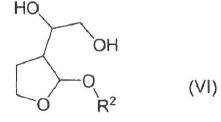
Bradley Mitchell Yager, affirmed 10 October 2017 and 10 November 2017;
Brandon Rhodri Jones, affirmed 10 October 2017 and 10 November 2017;
Paul Alexander Dewar, affirmed 12 October 2017; and
Paul J. Reider, affirmed 9 November 2017.
15 The respondent read the following affidavits:
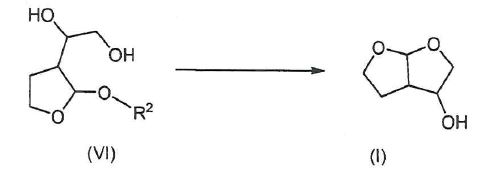
David William Lupton, affirmed 1 November 2017 and 15 November 2017;
Jonathan Leigh Kelp, sworn 3 November 2017; and
Mohit Gupta, affirmed 3 November 2017 and 15 November 2017.
16 On 16 November 2017 orders were made preserving the confidentiality of certain annexures to the affidavits, as well as the confidentiality of the written outlines of submissions relied on by the parties, until further order. This order was amended on 20 November 2017.
17 An electronic Court Book has been filed which contains the affidavits read, and the written submissions made, at the hearing. The documents in the electronic Court Book have been redacted so as to preserve the confidentiality of the material identified in Annexure A to the orders made on 20 November 2017.
interlocutory injunctive relief
18 In Otsuka Pharmaceutical Co., Ltd v Generic Health Pty Ltd [2012] FCA 239; (2012) 291 ALR 763 at [78]-[82], I summarised some of the principles relating to the granting of interim injunctive relief:
78 The principles relating to the grant of interlocutory injunctive relief have been recently discussed in Samsung Electronics Co Limited v Apple Inc [2011] FCAFC 156. It is not necessary to recite those principles in detail. It is sufficient to note that, when considering an application for an interlocutory injunction, the Court must address itself to two main inquiries, namely whether the applicant for relief has established a prima facie case in the sense explained in Beecham Group Ltd v Bristol Laboratories Pty Ltd (1968) 118 CLR 618 at 622-623, and whether the balance of convenience and justice favours the grant of an injunction or the refusal of that relief.
79 In Australian Broadcasting Corporation v O’Neill (2006) 227 CLR 57 Gummow and Hayne JJ observed that the phrase “prima facie case” does not mean that the applicant for relief must show that it is more probable than not that at trial it will succeed. It is sufficient if the applicant shows a sufficient likelihood of success to justify, in the circumstances, the preservation of the status quo pending trial. How strong that probability needs to be depends upon the nature of the rights that are being asserted and the practical consequences likely to flow from the order that is sought.
80 In Samsung the Full Court (at [61]) discussed the requirement that, in order to obtain an interlocutory injunction, the applicant must demonstrate that, if no injunction is granted, it will suffer irreparable injury for which damages will not be adequate compensation: see in that regard Castlemaine Tooheys Ltd v South Australia (1986) 161 CLR 148 at 153. The Full Court went on to observe that, regardless of whether “irreparable harm” is properly to be considered as a matter to be addressed in the Court’s consideration of the balance of convenience and justice, rather than as a distinct and antecedent consideration, the assessment of prejudice or harm to the applicant, if there is no injunction, and the assessment of prejudice or harm to the defendant, if an injunction is granted, is at the heart of the basket of discretionary considerations which must be addressed and weighed.
81 It is to be borne in mind that, in this discourse, “irreparable harm” does not mean harm that cannot be repaired but harm for which damages would not be adequate compensation: McCarty v The Council of the Municipality of North Sydney (1918) 18 SR (NSW) 210 at 215; R v MacFarlane; Ex Parte O’Flanagan and O’Kelly (1923) 32 CLR 518 at 550. In Samsung the Full Court (at [62]) said that the question of whether damages will be an adequate remedy for the alleged infringement of the applicant’s rights involves an assessment by the Court as to whether, absent an injunction, the applicant would, in all material respects, be in as good a position if confined to a remedy in damages.
82 It is well recognised that the issue of whether the applicant has made out a prima facie case, and the question of the balance of convenience and justice, are related inquiries: Sigma Pharmaceuticals (Australia) Pty Ltd v Wyeth (2009) 81 IPR 339 at [15]; Samsung at [67]. In short, the apparent strength of the parties’ substantive cases will often be an important consideration to be weighed in the balance: Tidy Tea Ltd & Lyons Tetley Ltd v Unilever Australia Ltd (1995) 32 IPR 405 at 416; Aktiebolaget Hassle v Biochemie Australia Pty Ltd (2003) 57 IPR 1 at [31]; Hexal Australia Pty Ltd v Roche Therapeutics Inc (2005) 66 IPR 325 at [18].
19 In Australian Broadcasting Corporation v Lenah Game Meats Pty Limited [2001] HCA 63; (2001) 208 CLR 199, a majority in the High Court stressed the need for an applicant for interim relief of the kind now sought to show sufficient colour of right to the final relief in aid of which the interim relief is sought.
20 At [15], Gleeson CJ said:
…If the [applicant for interlocutory relief] cannot show a sufficient colour of right of the kind sought to be vindicated by final relief, the foundation of the claim for interlocutory relief disappears.
21 At [91], Gummow and Hayne JJ said:
…where interlocutory injunctive relief is sought in a Judicature system court, it is necessary to identify the legal…or equitable rights which are to be determined at trial and in respect of which there is sought final relief which may or may not be injunctive in nature…
22 At [58], Gaudron J agreed with the judgment of Gummow and Hayne JJ. At [60], her Honour also said:
…an injunction is a curial remedy. Because it is a remedy, it is axiomatic that it can only issue to protect an equitable or legal right or, which is often the same thing, to prevent an equitable or legal wrong. So to say, is simply to emphasise that the function of courts is to do justice according to law.
23 I mention this matter because, in its originating application, the applicant seeks final relief to restrain the respondent from:
…applying for, or taking any step to obtain, the listing of the any of the Mylan Generic Products on the Schedule of Pharmaceutical Benefits under the Pharmaceutical Benefits Scheme maintained by the Commonwealth Government under the National Health Act 1953 (Cth) … during the term of the 562 Patent.
24 The originating application also seeks interim injunctive relief in the following terms:
An order that the Respondent immediately take all steps necessary to withdraw any application for listing of any of the Mylan Products on the PBS and that, within two days of that order, the Respondent file and serve on the Applicant an affidavit made by a proper officer of the Respondent verifying the Respondent’s compliance with that order and identifying the steps that have been taken.
25 In Warner-Lambert Company LLC v Apotex Pty Limited [2017] FCAFC 58; (2017) 123 IPR 455, the Full Court upheld the conclusion of the primary judge that an application to obtain the listing of a product on the PBS, where the exploitation of the product would infringe a patent, does not itself involve an act of exploitation, and hence an infringement, of rights granted under the Act with respect to that patent.
26 On the basis of this legal conclusion, I do not see how, assuming it can establish an infringement of claims 14 or 15 at a final hearing, the applicant can obtain final relief to restrain the respondent from seeking to obtain PBS listing for the Mylan products. That conduct is not an infringement of the patent rights it asserts. It has no legal or equitable rights in that regard. It follows, in my view, that it has no entitlement to such relief on an interim basis.
27 In oral submissions, the applicant argued that such interim relief could be granted because it is properly characterised as ancillary relief that preserves the status quo. I doubt that the provisional conclusion I have expressed immediately above can be avoided by that argument. But, as events have transpired, it has not been necessary for the applicant to pursue interim relief in that form.
The specification
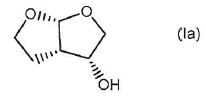
28 The specification states that the invention relates to methods for the preparation of hexahydrofuro[2,3-b]furan-3-ol (described in the specification as “the compound of formula (I)”) and especially its enantiomer (3R,3aS,6aR) hexahydrofuro[2,3-b]furan-3-ol (described in the specification as an enantiomer of formula (Ia)) (the (3R, 3aS, 6aR) enantiomer), as well as certain novel intermediates.
29 In the description (3R,3aS,6aR), the references 3, 3a and 6a correspond to a ring numbering system used in the specification. The letters S (“sinister” for “left”) and R (“rectus” for “right”) indicate the particular three-dimensional arrangement of the four different groups attached to each of the three respective carbon atoms referenced as 3, 3a and 6a.
30 The specification teaches that the compound of formula (I) is an important precursor in the synthesis of darunavir and that the (3R,3aS,6aR) enantiomer is particularly useful for that purpose.
31 The specification gives the following structural formula (identified as formula (A)) for darunavir:
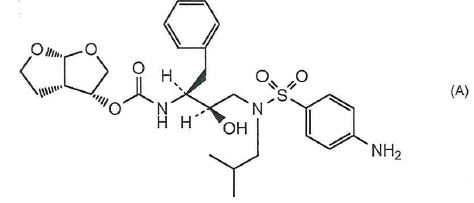
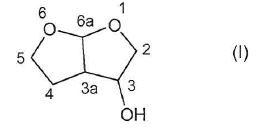
32 The specification gives the following structural formula for the compound of formula (I):
33 The specification gives the following structural formula for the enantiomer of formula (Ia):
34 The parties referred to hexahydrofuro[2,3-b]furan-3-ol, or the compound of formula (I), as the Hydroxy Compound. I will adopt that designation.
35 The specification teaches that, theoretically, the Hydroxy Compound has eight stereoisomers, although only four are deemed to exist:
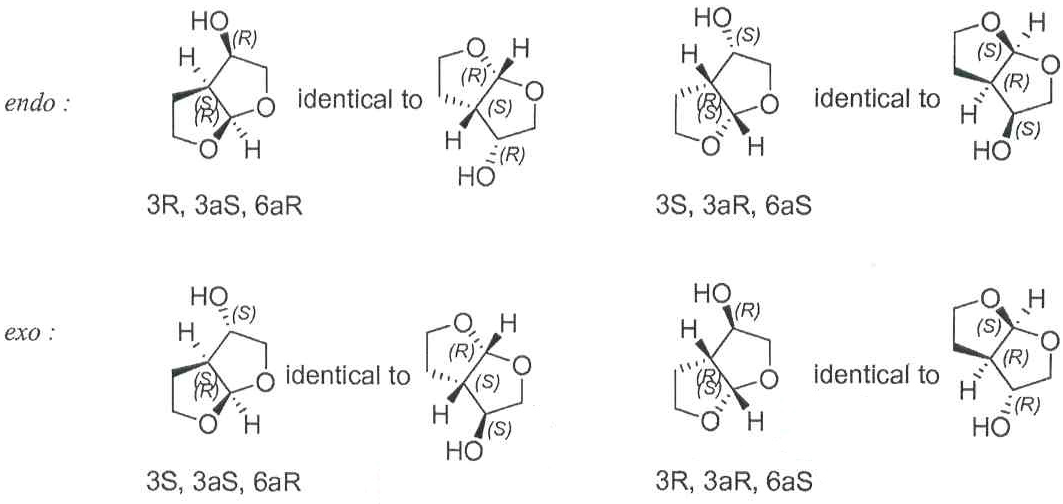
36 The specification discloses that there have been numerous “proposals” in the literature for methods of preparing the Hydroxy Compound and the (3R,3aS,6aR) enantiomer. The specification teaches that these methods have identified disadvantages. One of these proposals is in Ghosh et al, Tetrahedron Letters 40 (1999) 1083-1086 (Ghosh 1999). I will refer this proposal as the Ghosh 1999 process.
37 It is in this context that the specification states (at page 4, lines 5-6):
It is an object of the present invention to overcome or ameliorate at least one of the disadvantages of the prior art, or to provide a useful alternative.
38 The specification also states (at page 4, lines 8-17):
The present invention relates to a new and improved synthesis for the production of [the Hydroxy Compound]. The invention also relates to a synthesis which employs readily available and economic starting materials and uses reaction conditions which are readily achievable on an industrial scale. The present invention also relates to a convenient method for the production of 3-(β-carboethoxy-α-hydroxymethyl)-2-substituted tetrahydofuran derivatives and analogs thereof. The invention further relates to the provision of new and useful intermediates useful in the synthesis of hexahydrofuro [2,3-b] furan-3-ol. The invention also relates to a new and improved synthesis of (3R,3aS,6aR) hexahydrofuro[2,3-b]furan-3-ol useful in the production of antiretroviral protease inhibitors.
39 The specification continues (at page 4, lines 19-34):
It has been found that the use of certain titanium salts other than the titanium tetrachloride salt used by Ghosh et al in the process described above provides certain advantages as discussed below. We have also found that the purification of the crude 3-(β-carboethoxy-α-hydroxymethyl)-2-substituted tetrahydofuran product can be improved by the use of certain agents, i.e. water-soluble complexing agents (e.g. Rochelle salt or diethanolamine) to quench the reaction and to remove titanium species which may be deleterious in subsequent stages. Thus the use of water soluble complexing agents instead of sodium hydrogen carbonate described by Ghosh et al results in significant improvements in the quality of the resulting product.
The use of the above process and the subsequent conversion of the resulting 3-(β-carboethoxy-α-hydroxymethyl)-2-substituted tetrahydofuran product provides a useful synthetic route to hexahydrofuro [2,3-b]furan-3-ol and its (3R,3aS,6aR) enantiomer in a relatively small number of stages in comparison with prior art processes and using economic starting materials and reactions conditions which provide the final product and intermediates in good yield and purity.
40 Associate Professor Lupton said that the specification describes a three-stage process for making the Hydroxy Compound, which he illustrated as follows:
41 In the specification, the designations II, III, and IV are to substances that are used to produce an intermediate compound described as “the compound of formula (V)”. The ester group in the compound of formula (V) is reduced to form another intermediate, which is described in the specification as “the compound of formula (VI)”. The compound of formula (VI) is then cyclised to produce the Hydroxy Compound.
42 Although described in the specification as “the compound of formula (V)” and “the compound of formula (VI)”, these descriptions are not used uniformly throughout. It is tolerably clear that, in each case, the description is of a group of compounds. It is convenient to refer to them as such.
43 Claim 1, and claims 2-7 which are expressed to be dependent either directly or indirectly on claim 1, are each directed to a process for preparing the compounds of formula (V). This is the first stage referred to by Associate Professor Lupton. The consistory statement for this form of the invention is set out at pages 4a-5 of the specification. Pages 5-8 describe this process in more detail, including its advantages.
44 The specification teaches that two of the improvements to the method in Ghosh 1999 occur at this stage. These are:
the use of particular titanium salts (other than titanium tetrachloride (TiCl4) used in the Ghosh 1999 process) to facilitate the production of the compound of formula (V); and
the use of water-soluble complexing agents to quench the reaction and remove the titanium species.
45 The use of the particular titanium salts is said to be advantageous because they are:
readily separated in the aqueous phase;
significantly more convenient to handle;
able to be used in less than stoichiometric amounts; and
can be formed in situ in the reaction mixture.
46 Associate Professor Lupton said that the use of water-soluble complexing agents significantly improve work-up, with less titanium compound by-products in the resulting compound of formula (V). The specification teaches that if residual amounts of the titanium by-products are not kept low, the later stages of the process might not be operable or the yields might be very low.
47 The specification teaches that a further improvement in the new process is the ability to conduct the first stage of the synthesis at more convenient temperatures compared to the Ghosh 1999 process.
48 At page 8, lines 23-25 the specification states:
The resulting compound formula (V) obtained in the above process can be used in the next stage of the synthesis of hexahydrofuro[2,3-b]furan-3-ol without the need to separate or isolate its stereoisomers.
49 At page 9, lines 9-10 the specification states:
The compounds of formula (V) are thus useful as intermediates in the preparation of compounds of formula (I).
50 These passages of the specification, read in the context of the immediately preceding process description, might be taken as suggesting that the compounds of formula (V) are characterised not merely by a structural formula, but by the process by which they are produced. On the other hand, the specification teaches that certain compounds of formula (V) are novel and constitute, in and of themselves, a separate feature of the invention. These compounds are described as compounds of formula (Va). They are claimed in claim 8:
Compounds of formula (Va):
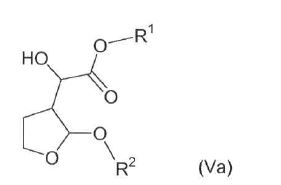
and the stereoisomeric forms and racemic mixtures thereof, in which R1 is alkyl or arylalkyl and R2 is alkyl or arylalkyl, providing that when R2 is methyl R1 is not methyl or ethyl.
51 Claim 9 claims one of these compounds—ethyl hydroxy-(2-isopropoxytetrahydro-3-furanyl)acetate—which the specification says is “an especially useful compound of formula (V)”.
52 Generally speaking, where an inventor has synthesised a novel compound, the patentee can claim the compound as such, without being limited to the inventor’s process for obtaining that compound. To illustrate this point, claims 8 and 9 can be compared with claim 18 which is, in fact, limited to the compounds of formula (V) prepared by the process of any one of claims 1 to 7—the first stage in Associate Professor Lupton’s analysis—which would secure the advantages described in the specification that are said to arise from improvements to the Ghosh 1999 process. The significance of this observation is that, for the purposes of construing the specification, the claim set recognises that the compounds of formula (V) are not limited to compounds prepared by the processes described in the specification, except where that is said to be the case.
53 Claim 10 and dependent claim 11 are each directed to a process for the preparation of compounds of formula (VI), which comprises reducing a compound of formula (V) to form a compound of formula (VI). The consistory statement for this form of the invention is set out on page 9 of the specification. Pages 9 to 10 describe this process in more detail, including its advantages.
54 At page 10, lines 18-20 the specification states:
… The resulting compound of formula (VI) is obtained as a mixture of stereoisomeric forms and can be used as such for the next stage in the synthesis of hexahydrofuro[2,3-b]furan-3-ol.
55 At page 11, lines 1-2 the specification states:
The compounds of formula (VI) are thus useful as intermediates in the synthesis of compounds of formulae (I) and (Ia).
56 Once again, these passages of the specification, read in the context of the immediately preceding process description, might be taken as suggesting that the compounds of formula (VI) are characterised not merely by a structural formula but also by the process by which they are produced. However, the specification teaches that all the compounds of formula (VI) are novel compounds. The specification makes clear that these compounds are, in and of themselves, a separate feature of the invention.
57 These compounds are claimed in claim 12:
Compounds of formula (VI):
in which R2 is defined in claim 1.
58 Claim 13 claims one of these compounds—1-(2-iso-propoxytetrahydro-3-furanyl)-1,2-ethanediol—which the specification describes as “(a)n especially preferred novel compound of formula (VI)”.
59 Claims 12 and 13 can be compared with claim 19, which claims a compound of formula (VI) obtained from the process of claim 10 or claim 11—the second stage in Associate Professor Lupton’s analysis. The significance of this observation is that, once again, the claim set recognises that the compounds of formula (VI) are not limited to compounds prepared by the processes described in the specification, except where that is said to be the case.
60 Claims 14 and 15 are of particular significance to the present application.
61 Claim 14 is:
A process for the preparation of a compound of formula (I) which comprises cyclising a compound of formula (VI) to form a compound of formula (I):
wherein R2 is alkyl or arylalkyl.
62 Claim 15 is:
A process as claimed in claim 14 in which the cyclisation of the compound of formula (VI) is effected by treatment with a strong protic acid.
63 The specification goes on to describe steps to prepare the (3R,3aS,6aR) enantiomer, and the preparation of antiviral drugs, in particular darunavir, from this enantiomer.
64 The specification provides two comparative examples (Comparative Example A and Comparative Example B) and six working examples (Examples 1 – 6) which provide variations on the process of preparing a compound of formula (V) using different titanium salts. Example 7 provides two examples of reducing the compound of formula (V) to the compound of formula (VI). In Example 7(a), a reaction mixture was produced containing the compound of formula (VI) as a solution in ethylacetate. The specification says that “(t)he mixture was used directly in the next step”. This signifies that the particular compound of formula (VI) in this example was not isolated before being used in the next reaction—namely, the cyclisation step. In Example 7(b), the compound of formula (VI) was isolated, purified and analysed. I will return to discuss the significance of this observation.
Technical matters
65 This is not the occasion to embark on a detailed discussion of technical matters. I will, however, refer to some technical matters to assist in understanding the processes and compounds of the invention to the extent necessary for the present application.
66 Reduction is a chemical reaction which involves the addition of an electron, pair of electrons or a hydride (which is two electrons from a hydrogen atom). Reduction is commonly achieved using a reducing agent, which donates (and therefore loses) electron(s) or hydride(s) as part of the process.
67 Cyclisation is the general process of converting a linear precursor to a cyclic molecule. Professor Reider referred to it as “the formation of a ring”.
68 An intermediate is a compound that forms within a multi-step reaction sequence. Professor Reider observed that the term “intermediate” is used to describe such a compound irrespective of whether that compound is purified, isolated or analysed.
69 Associate Professor Lupton said that a telescoped process or telescoping is a single stage of a multi-step reaction sequence in which the intermediate(s) formed by one reaction are not purified, isolated and analysed before acting as reagent(s) in a further reaction. He referred to this as a “one pot synthesis”. He also provided the following definition from the Royal Society of Chemistry:
Telescoping is the procedure whereby the product of a chemical reaction is not isolated but is used directly in the next stage of synthesis, often as a solution of the product.
70 Professor Reider commented that Associate Professor Lupton’s explanation of telescoping was not entirely correct in an industrial synthetic context. He said that, in that context, telescoping a process is where the chemist:
first fully understands and controls the chemistry of that synthesis; and then
collapses the multi-step process into a smaller number of operations by eliminating the isolation of intermediates.
71 He said that the key point of difference is that it cannot be assumed that, because a reaction is drawn as having been telescoped, the intermediates formed in the reaction have not previously been purified, isolated and analysed prior to that synthesis being telescoped.
72 There were other differences between Professor Reider and Associate Professor Lupton on technical matters. It is not necessary for me to discuss or resolve those differences because they do not have a bearing on the conclusions to which I have come for the purposes of this application.
The Construction of claim 14
73 Associate Professor Lupton posited three possible interpretations of claim 14:
a process in which a compound of formula (VI) is the starting material which is then cyclised to form the Hydroxy Compound via the oxonium ion (Interpretation 1);
a process which includes using a compound of formula (V) as the starting material, whereby a compound of formula (VI) is formed (by reducing a compound of formula (V)) but is not purified, isolated or analysed before it is cyclised to form the Hydroxy Compound (Interpretation 2); or
a process in which a compound other than a compound of formula (V) is the starting material, whereby a compound of formula (VI) is formed but is not purified, isolated or analysed before it is cyclised to form the Hydroxy Compound (Interpretation 3).
74 Interpretation 1 implies that a compound of formula (VI) is the starting material in a purified and isolated form.
75 Interpretation 2 accommodates Example 7(a), which discloses that a reaction mixture produced by reducing a compound of formula (V) to a compound of formula (VI) was “used directly in the next step”.
76 Interpretation 3 covers any telescoped process that involves the cyclisation of a compound of formula (VI)—however obtained—to produce the Hydroxy Compound. Interpretation 3 appears to be sufficiently broad to include a process which does not include the advantages of obtaining a compound of formula (V) using the particular titanium salts and water-soluble complexing agents that are said to provide an improvement to the Ghosh 1999 process.
77 Associate Professor Lupton said that he considered Interpretation 1 or Interpretation 2 to be correct, but not Interpretation 3.
78 The respondent supported this interpretation by reference to the specification’s emphasis on certain process steps that would overcome disadvantages in the Ghosh 1999 process. The respondent placed particular reliance on the following passage appearing at page 5, line 29 to page 6, line 4 of the specification:
The use of the above titanium compounds has been found to be particularly advantageous over the titanium tetrachloride salt used by Ghosh et al as the latter salt is an unstable corrosive liquid whereas the titanium compounds used in the process according to the invention are generally stable solids and are therefore significantly more convenient to handle in an industrial process. Moreover the use of titanium tetrachloride as describe by Ghosh et al has been found to lead to unacceptably high residual amounts of titanium by-products in the reaction mixture which may result in later stages of the synthesis of hexahydrofuro[2,3-b]furan-3-ol being inoperable or having very low yields.
79 The respondent submitted that each subsequent stage in the three stage process identified by Associate Professor Lupton is dependent on each immediately preceding stage having been carried out. Therefore, although one seeking to put the invention into practice could stop at the second stage of the process without proceeding to the third, in order to carry out the invention to the second stage it is necessary to have carried out the first stage.
80 Ms Hantos and Professor Reider disagreed with each interpretation advanced by Associate Professor Lupton.
81 Given the nature of the present application, I do not propose to summarise all the arguments in the debate between the experts. It is sufficient for me to record the applicant’s submissions based on that evidence.
82 As to Interpretation 1, the applicant submitted that claim 14 does not require the synthesis to occur using the oxonium ion. The applicant submitted that the only reference in the specification to the use of the oxonium ion is in the discussion of the Ghosh 1999 process. The applicant submitted further that claim 14 does not require that a compound of formula (VI) be the starting material let alone the starting material in a pure and isolated form.
83 As to Interpretation 2, the applicant submitted that claim 14 does not require that the compound of formula (VI) be formed from a compound of formula (V) or, indeed, any other precursor. In support of its position, the applicant pointed to claims 12 and 13 which, it said, claimed compounds of formula (VI) independently of how those compounds might be synthesised.
84 The applicant submitted that Interpretation 3 is incorrect, although it is difficult to discern how Interpretation 3 differs from the interpretation the applicant placed on claim 14, which is that “the claim means what it says”. To explain, the applicant submitted that the claimed process is one that includes (consistently with the definition of “comprise” at page 4a, lines 1-4 of the specification) cyclising a compound of formula (VI) to form the Hydroxy Compound. The applicant submitted that there is no limitation in claim 14 that the compound of formula (VI) be isolated and pure prior to the cyclisation, or that a compound of formula (VI) be the first compound employed in the synthesis, or that any particular precursor be employed (Interpretation 4). Based on this interpretation, claim 14 includes a process starting with an isolated compound of formula (VI) as well as a process beginning with a different starting material and proceeding via a compound of formula (VI), whether isolated or not. In this latter regard, the applicant pointed to Examples 7(a) and (b), noted at [64] above.
85 Claim 15 is dependent on claim 14 and is caught up in the same debate.
the evidence on infringement
86 Ms Hantos reviewed a flowchart provided by the respondent representing the route of synthesis of the Hydroxy Compound used in the preparation of the Mylan products (the Mylan process). Ms Hantos identified the last step in the flowchart as one that includes the processes of claim 14 and claim 15 of the 562 patent.
87 It is not necessary for me to descend to the detail of that process—which is confidential—because the respondent accepted, based on Associate Professor Lupton’s evidence, the likelihood, for present purposes, that, in the Mylan process, a compound of formula (VI) is cyclised to form the Hydroxy Compound. The respondent argued, however, that the process is not one according to Interpretation 1 or Interpretation 2.
88 Therefore, for present purposes, the debate is not a factual one. It is a debate concerning the proper construction of claims 14 and 15. The applicant submitted that it had a strong prima facie case of threatened infringement of those claims. The respondent submitted that the applicant had not established a prima facie case; if it had, that case was only a weak one.
analysis and conclusion
89 Given the nature of the present application, I do not propose to decide finally the question of the proper construction of claims 14 and 15. The proper construction of these claims will be an important question for the hearing for final relief. The answer to that question will be informed by all the evidence called at that time.
90 That said, it seems to me that Interpretation 4 (if it differs from Interpretation 3) is plainly arguable and can be advanced on cogent bases. If the evidence remains as it is, there is a real probability that at the hearing for final relief, the applicant will be found to be entitled to the injunctive relief it seeks restraining the respondent from supplying the Mylan products and, if need be, from engaging in other acts of exploitation for which the Act provides.
91 For that reason, I am satisfied that the applicant has established a prima facie case of threatened infringement of claims 14 and 15. Having regard to the specification’s description of the invention and its various aspects, and taking into account the claim set, I do not accept the respondent’s submission that the applicant’s case is a weak one. I acknowledge, however, that Interpretation 1 and Interpretation 2 are arguable.
the respondent’s challenge on validity
Introduction
92 For the purposes of the present application, the respondent has raised three asserted grounds of invalidity.
93 The first is that the invention claimed in claims 14 and 15 is not novel in light of the publication of Ghosh et al, “A Stereoselective Anti-Aldol Route to (3R,3aS,6aR)-Hexahydrofuro[2,3-b] furan-3-ol: A Key Ligand for a New Generation of HIV Protease Inhibitors”, which was published on or about 2 August 2006 in the Journal “SYNTHESIS (No. 18)” (Ghosh 2006).
94 The second is that the invention as claimed in claims 14 and 15 is not fairly based on the matter described in the specification. The respondent has particularised this ground as follows:
Particulars
(a) Claims 14 and 15 of the 562 Patent travel beyond the matter described in the specification.
(b) There is no real and reasonably clear disclosure in the specification of any process for the preparation of a compound of formula (I) that does not involve the anterior process steps of:
(i) reacting 2,3-dihydrofuran of formula (II) with a glyoxylate derivative of formula (III) in the presence of a titanium salt of formula Ti(Hal)n(OR)4-n in which Hal is a halogen radical, n is 0, 1, 2 or 3 and R is alkyl or arylalkyl, and subsequently reacting the resulting reaction product with an alcohol of formula (IV) to form a compound of formula (V); and
(ii) further or alternatively, reducing the compound of formula (V) to form a compound of formula (VI).
95 The third is that the invention claimed in claims 14 and 15 is not useful. The respondent has particularised this ground as follows:
Particulars
(a) The alleged invention promises to provide a more efficient and effective process for obtaining hexahydrofuro[2,3-b] furan-3-ol and its enantiomer (3R, 3aS, 6aR) compared with prior art processes by:
(i) using certain titanium salts other than the titanium tetrachloride salt used in the method proposed by Ghosh et al in Tetrahedron Letters 40 (1999) 1083-1086 (Gosh 1996); and /or
(ii) purifying the crude 3-(B-carboethoxy-a-hydroxymethyl-2-substituted tetrahydrofuran product using water soluble complexing agents (e.g. Rochelle salt or diethanolamine) to quench the reaction and to remove titanium species.
See, for example, the 562 Patent at:
(A) p 4, lines 5-34;
(B) p 5, lines 23 to p 6, lines 1-4;
(C) p 6, lines 22-28; and
(D) p 6, lines 33 to p 7, lines 1-11.
(b) To the extent that claims 14 and 15 include processes that do not involve the anterior step of obtaining compound (V) by a process using the features identified in sub-paragraph (a)(i) and/or (a)(ii) above, they include within their scope processes that will not fulfil the promise of the alleged invention.
96 It is necessary to note the role played by these allegations, which are raised positively and defensively to the applicant’s claim for interim relief. The position is explained by Jessup J in Interpharma Pty Ltd v Commissioner of Patents [2008] FCA 1498; (2008) 79 IPR 261 at [17]:
17 Another layer of complication is added to the deliberative exercise in cases in which the respondent (that is the non-moving party) goes further than a denial of the applicant's case for relief, and pleads a positive point of defence. In such a situation, it will not be enough to ask whether the applicant has shown a serious question, or a probability of success, on his or her own case. While the answer to that question may be in the affirmative, it will then be necessary to consider whether that answer should be qualified by the apparent strength of the defence. In a patent case, the fact of registration constitutes prima facie evidence of validity: AB Hassle v Pharmacia (Australia) Pty Ltd (1995) 33 IPR 63, 69-70 (AB Hassle); GenRx Pty Ltd v Sanofi-Aventis (2007) 73 IPR 502, 503-504. It has been said that it is for the respondent to show that want of validity is a triable question: AB Hassle 33 IPR at 69. This seems clear enough, but, in my opinion, the analysis needs to be taken a step further. Is it sufficient that the respondent does show a triable question on validity? In my view, if that is as far as the respondent goes, then, assuming always that the applicant has shown a triable issue on infringement, absent questions of validity, the conclusion would remain that the latter had a triable question. That is to say, as a matter of analysis, unless the case for invalidity is sufficiently strong (at the provisional level) to qualify the conclusion that, overall, the applicant has a serious question, or a probability of success, the court should move to consider the adequacy of damages, the balance of convenience and other discretionary matters. It is the applicant's title to interlocutory relief which is under consideration, and the bottom-line question, as it were, is whether the applicant has a serious question, or a probability of success, not whether the respondent does in relation to some point of defence raised or foreshadowed.
Lack of novelty
97 Ghosh 2006 describes the stereoselective synthesis of the Hydroxy Compound (represented as 3 in Scheme 2 reproduced below) in which the last stage involves a conversion of a diene (represented as compound 11 in Scheme 2) to the Hydroxy Compound.
98 Scheme 2 is:
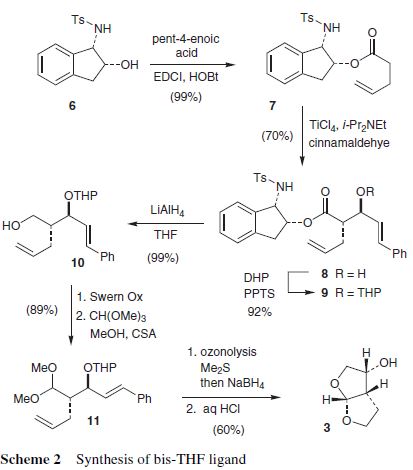
99 Associate Professor Lupton said that this is a telescoped process “that most likely involves the compound of formula (VI) being cyclised to form the Hydroxy Compound via the oxonium ion”.
100 Associate Professor Lupton schematically represented the full chemical process he recognised as occurring in the final stage of Scheme 2. It is complex. The process involves four pathways (Pathways A1 and A2, and Pathways B1 and B2), with two overarching pathways (Pathway A and Pathway B). Associate Professor Lupton said that each of the four pathways will necessarily occur to some extent in the reaction that is disclosed, but more of the Hydroxy Compound will be formed by Pathways A1 and A2 relative to Pathways B1 and B2.
101 According to Associate Professor Lupton, the presence of a protective group, referred to in Ghosh 2006 as the “THP” group, which is retained until after cyclisation has occurred, means that a compound of formula (VI) is not formed during Pathway B. As to Pathway A, Associate Professor Lupton said that the formation of a compound of formula (VI) is involved only in Pathway A1. Associate Professor Lupton said that Pathways A1 and A2 will happen to relatively the same degree, but to a greater extent than Pathways B1 and B2.
102 Associate Professor Lupton opined that Ghosh 2006 discloses:
…a telescoped process in which an appreciable amount of the Hydroxy Compound is necessarily formed by cyclising a compound of formula (VI) via the oxonium ion. In my opinion, based on the differences in kinetics [described in his affidavit], the amount of Hydroxy Compound formed by cyclising the compound of formula (VI) via the oxonium ion is likely to be approximately 30 to 50% of the total amount of Hydroxy Compound obtained. It would be necessary to conduct experiments to confirm the above analysis is correct.
103 Importantly, Associate Professor Lupton said that, in Ghosh 2006, the precursor for the compound of formula (VI) in the telescoped process is not a compound of formula (V). The consequence of this finding is that claims 14 and 15 would only be anticipated, on Associate Professor Lupton’s reasoning, if Interpretation 3, or it would seem Interpretation 4, were to be adopted.
104 The respondent’s case, here, is not based on an explicit or implicit disclosure that anticipates claims 14 and 15. Rather, its case is based on “inevitable result”, meaning that Ghosh 2006 contains directions that, if followed, would inevitably result in the process of claims 14 and 15 being carried out. As the Court of Appeal explained in The General Tire & Company v The Firestone Tyre & Rubber Company Limited [1972] R.P.C. 457 at 485-486:
… If the prior inventor’s publication contains a clear description of, or clear instructions to do or make, something that would infringe the patentee’s claim if carried out after the grant of the patentee’s patent, the patentee’s claim will have been shown to lack the necessary novelty, that is to say, it will have been anticipated. The prior inventor, however, and the patentee may have approached the same device from different starting points and may for this reason, or it may be for other reasons, have so described their devices that it cannot be immediately discerned from a reading of the language which they have respectively used that they have discovered in truth the same device; but if carrying out the directions contained in the prior inventor’s publication will inevitably result in something being made or done which, if the patentee’s patent were valid, would constitute an infringement of the patentee’s claim, this circumstance demonstrates that the patentee’s claim has in fact been anticipated.
If, on the other hand, the prior publication contains a direction which is capable of being carried out in a manner which would infringe the patentee’s claim, but would be at least as likely to be carried out in a way which would not do so, the patentee’s claim will not have been anticipated, although it may fail on the grounds of obviousness. To anticipate the patentee’s claim the prior publication must contain clear and unmistakeable directions to do what the patentee claims to have invented: Flour Oxidizing Co. Ltd. v. Carr & Co. Ltd. ((1908) 25 R.P.C. 428 at 457, line 34, approved in B.T.H. Co. Ltd. V. Metropolitan Vickers Electrical Co. Ltd. (1928) 45 R.P.C. 1 at 24, line 1). A signpost, however clear, upon the road to the patentee’s invention will not suffice. The prior inventor must be clearly shown to have planted his flag at the precise destination before the patentee.
105 Professor Reider disagreed with Associate Professor Lupton’s analysis of Ghosh 2006. In summary, he said that:
a compound of formula (VI) will not be formed under the conditions described in Ghosh 2006; and
cyclisation may or may not proceed via the oxonium ion, but will not exist under the conditions described in Ghosh 2006.
106 Contrary to Associate Professor Lupton’s analysis, Professor Reider said that, in following the directions of Ghosh 2006, different intermediates will be formed. He reproduced Associate Professor Lupton’s schematic showing where he departed from Associate Professor Lupton’s views. Professor Reider said:
When drawn correctly, in my opinion, none of the proposed mechanistic pathways go through [a] compound of formula (VI) as R2 is not alkyl or arylalkyl. Whether the THP group is cleaved before or after cyclisation (i.e. whether the mechanism proceeds through Pathway A, or B or both) does not alter the fact that the compound of formula (VI) is never formed, and thus never cyclised to form [the Hydroxy Compound].
107 Professor Reider also disagreed with Associate Professor Lupton’s view that the cyclisation reaction to form the bis-THF compound described in Ghosh 2006 proceeds through the oxonium ion. Professor Reider said that, under the acidic aqueous conditions described in Ghosh 2006, the oxonium ion would not exist.
108 Associate Professor Lupton replied to Professor Reider. He contradicted Professor Reider’s reasoning on the basis that it was informed by the theoretical pathway that the authors of Ghosh 2006 intended to investigate rather than the synthesis they actually carried out and reported on. Associate Professor Lupton disputed Professor Reider’s view that a certain intermediate (referred to as “Ghosh 4”) would be formed, arguing that the pathways depicted in Professor Reider’s schematic were “highly unlikely to occur”. Associate Professor Lupton challenged other aspects of Professor Reider’s analysis, although he accepted certain corrections.
109 The difficulty confronting the respondent is that, on the present evidence, and as Associate Professor Lupton properly acknowledged, whether a compound of formula (VI) is necessarily produced in following the directions of Ghosh 2006 is really a matter for experimental proof. At the present time, I only have before me opposing theoretical analyses which tell me that a compound of formula (VI) may or may not be produced, if Ghosh 2006 is followed. This state of affairs does not advance the respondent’s challenge to the validity of claims 14 and 15 on the ground of lack of novelty. Accordingly, the respondent’s challenge to validity based on Ghosh 2006 does not qualify my conclusion that the applicant has established a prima facie case of threatened infringement.
Lack of fair basis and lack of utility
110 The respondent dealt with these grounds together. Its submissions were based on its construction of the specification.
111 With respect to the question of utility, the respondent submitted that the promise of the invention is a “new and improved” synthesis pathway to the Hydroxy Compound: specification page 4, lines 8-34. The respondent submitted that by “improved”, the pathway must provide the final product and intermediates in good yield and purity: specification page 4, lines 29-34. The respondent submitted that Interpretation 4 of claims 14 and 15 could cover embodiments that will not achieve this promise of the specification. For example, claims 14 and 15 would cover a synthetic pathway that included the tetrachloride salt disclosed in Ghosh 1999 in Associate Professor Lupton’s first stage (the synthesis of a compound of formula (V)).
112 The respondent also argued that even if the “promise” of the specification was construed so that the invention provided a useful, if not improved, process, claims 14 and 15 would still lack utility because a “useful” process would be one that required, at least, acceptable yield and purity.
113 With respect to the question of fair basis, the respondent submitted that there is no real and reasonably clear disclosure in the specification of any synthesis pathway that involves Associate Professor Lupton’s third stage occurring in combination with anterior stages that are not Associate Professor Lupton’s first stage and second stage.
114 The reasoning that underlies these submissions proceeds on an acceptance that the process of claims 14 and 15 is necessarily dependent on the earlier processes described in the specification, in particular the process for preparing a compound of formula (V), even though those claims are not, in terms, expressed to have that dependency.
115 The applicant submitted that the specification does contain a real and reasonably clear disclosure of the process claimed in claims 14 and 15. It pointed to various passages in the specification that provide that support, including Example 8 which, it submitted, provides an embodiment of claims 14 and 15 (methanesulfonic acid is a strong protic acid).
116 The applicant submitted that, absent specific promises in the specification, s 18(1)(c) of the Act does not require that an invention be useful or practicable in a commercial sense, or preferable to other products or processes. A claim may have utility even if a promised advantage cannot be achieved in all cases or with the same degree of success. In this connection, the applicant relied on the statements of principle summarised by Nicholas J in Apotex Pty Ltd v Warner-Lambert Co LLC [2016] FCA 1238; (2016) 122 IPR 17 at [165]-[166] and [170].
117 The applicant argued that there is nothing in the specification which requires the described improvements to the Ghosh 1999 process to be attained in every embodiment of the invention. Further, it argued that the disadvantages identified with respect to the Ghosh 1999 process are merely some of the prior art disadvantages that the specification discusses. In this connection, the applicant listed a number of disadvantages identified in the specification as related to the prior art, but which are not said to be referable to the Ghosh 1999 process. These include processes that involve a relatively large number of steps; processes that lead to the formation of a nitromethyl intermediate, requiring the use of nitromethane which is a hazardous reagent; and the use of processes that require cyclisation in the presence of irradiated light, which are unsuitable for practice on an industrial scale. The applicant also pointed to the specification’s promise that the invention includes new intermediates that are useful in the synthesis of the Hydroxy Compound, and its related disclosure that the compounds of formula (VI) are novel compounds that have that use.
118 The applicant called in aid Professor Reider’s evidence that the processes claimed in claims 14 and 15, according to Interpretation 4, provide a straightforward and reliable method to form the bicyclic structure of the Hydroxy Compound and allow the reproducible preparation of the compound at any scale.
119 Finally, the applicant submitted that the respondent has not adduced evidence that the invention claimed in claims 14 and 15, according to Interpretation 4, is not useful.
120 It can be seen that much of this debate focuses on how the specification is to be construed. It is intimately connected with how claims 14 and 15 in particular are to be construed. Assuming Interpretation 4 to be correct then, at a final hearing, the respondent’s present fair basis argument would likely fall away. I think the same is true of its present utility argument. What the specification “promises”, and how claims 14 and 15 are to be construed, appear to proceed from a common question of construction.
121 I have concluded that Interpretation 4 is arguable on cogent bases. This casts the respondent’s present challenge on lack of fair basis and lack of utility in a particular light. Whilst I would certainly not conclude that these challenges are without foundation or are not arguable, I am not persuaded that, on the present material, they are so persuasive as to alter my conclusion that the applicant has established a prima facie case of threatened infringement.
the balance of convenience
The applicant’s evidence and submissions
122 On this aspect of the application, the applicant’s submissions were based principally on the evidence given by Mr Yager, Mr Jones and Mr Geelan.
123 The applicant submitted that listing the Mylan products on the PBS Schedule and launching them in Australia would cause extensive, irreversible damage to the applicant and Janssen-Cilag. It contended that this damage would be difficult to quantify and attribute. It said that this loss will be manifested in, principally, a loss of sales value and a loss of market share for the PREZISTA and PREZCOBIX products.
124 With respect to loss of sales value, the applicant submitted, firstly, that the price at which Janssen-Cilag would be able to sell PREZISTA will be immediately reduced by 16% and the price at which it would be able to sell PREZCOBIX will be immediately reduced by 11%. This is a consequence of the operation of the PBS which lists medicines according to one of two formularies. Formulary – F1 comprises single branded medicines that are not interchangeable with other branded medicines at the patient level. Formulary – F2 comprises multi-branded medicines that are interchangeable at the patient level due to their bioequivalence (or bio-similarity). PREZISTA and PREZCOBIX are currently listed in the F1 formulary. If a medicine moves from F1 to F2, an immediate statutory minimum 16% reduction is applied to the “Approved Ex-Manufacturer Price” (AEMP). In the case of PREZCOBIX, this reduction would be approximately 11% because the price reduction would be applied to the component of the AEMP attributable to darunavir. The applicant’s evidence was that this reduction would be, for practical purposes, irreversible. Mr Yager said that he is not aware of any case in which the price of a product listed on the PBS has been restored to its previous levels after the withdrawal of a competing generic product. Whilst noting that the Minister does have a discretion under s 85AD(1) of the National Health Act 1953 (Cth) (the NHA) to enter into new price agreements in such circumstances, Mr Gupta also acknowledged that he is not aware of any case in which the price of a product has been restored to its previous levels after the withdrawal of a competing generic product from the PBS.
125 Janssen-Cilag has another relevant HIV medication in its commercialisation pipeline for possible future distribution and sale in Australia (the new product). Should this product be brought to market, it would also be subject to a percentage reduction calculated by reference to its darunavir component.
126 If the statutory price reduction were to be implemented, Janssen-Cilag could impose a brand price premium for its products but, as explained by Mr Jones, it would be commercially unviable for it to do so because the premium (which in the case of PREZISTA and PREZCOBIX would be very substantial in order to be meaningful commercially) would have to be borne by the consumer.
127 Secondly, the applicant submitted that the price at which Janssen-Cilag would be able to sell PREZISTA and PREZCOBIX will likely be further reduced substantially over time because of a number of market factors. There is evidence that suppliers of generic pharmaceuticals, like the respondent, typically offer very substantial discounts (including rebates) to pharmacists on their generic products as part of a sales strategy. The applicant argued that the respondent would be able to sell the Mylan products more cheaply than Janssen-Cilag’s PREZISTA and still make a profit due to the much lower cost base for those products.
128 Thirdly, the applicant submitted that should the respondent enter the market, it is very likely that other generic suppliers will quickly follow suit. It submitted that the entry into the market of additional generic suppliers in respect of the same product would cause rapid and substantial further price erosion as the generic products and the PREZISTA and PREZCOBIX products compete with each other in (what Mr Yager described as) a “downward price spiral”. I note, in this connection, the respondent’s acceptance, through Mr Gupta’s evidence, that the darunavir market is of sufficient overall value, especially in the context of PBS-listed products, to be attractive to other generic pharmaceutical suppliers.
129 Fourthly, the applicant submitted that the PBS mandatory price disclosure mechanism will further drive down the maximum price at which all darunavir products in the market may be sold. To explain, under the NHA the sponsors of drugs listed under the F2 formulary must disclose to the Department of Health’s Price Disclosure Data Administrator certain data in relation to the products sold to wholesalers, community pharmacies and private hospital pharmacies. This data is then used to determine the “weighted average disclosed price” (WADP) of the listed items. The calculation takes into account the actual ex-manufacturer price or net selling price of all relevant brands and the disclosed revenue generated by those brands in relation to sales to wholesalers, community pharmacies and private hospital pharmacies. There are two variables that influence the calculation: the market share of generic and originator products, and the level of incentives provided by the generic and originator suppliers to their customers. If the WADP is at least 10% less than the AEMP in a given period, then the AEMP will be adjusted downwardly, thereby effecting a further reduction in price for the listed products. In this equation, the greater the market shares of the generic products, and the greater the rebates or discounts given in respect of those products, then the greater the reduction in the WADP and therefore the greater the reduction in the AEMP. The first potential price-disclosure related price reduction day for a drug listed on 1 December 2017 would be 1 April 2019. Following that, price reductions could occur every six months, depending on whether the WADP threshold is reached.
130 Mr Gupta pointed out that the WADP does not include sales made to public hospitals. Mr Jones responded that, while this is so, it does not follow, as Mr Gupta argued, that the price disclosure cuts in the present case are likely to remain lower than for other drugs sold primarily to wholesalers, community pharmacies and/or private hospitals, and significantly closer to the current PBS price for PREZISTA. This is because all sales and discounts to retail pharmacies, wholesalers and private hospital pharmacies are included in the calculations of the WADP and are the only market segment used for this purpose. The fact that public hospitals are excluded from the WADP calculation is not to the point because, if the WADP calculation results in a price disclosure based price cut, that price cut applies to all PBS listed darunavir products, including those sold to public hospitals.
131 I should record that, as a result of amendments to the NHA in 2015, and further impending changes, drugs that remain on the F1 formulary are subject, in any event, to periodic mandatory price reductions depending on the time they remain on the PBS. PREZISTA and PREZCOBIX were subjected to a price reduction of 5% on 1 April 2016. They will be subjected to a further price reduction of 10% on 1 June 2018, if they remain on the F1 formulary (if, for example, the Mylan products are not listed on the PBS on 1 December 2017).
132 With respect to loss of market share, the market can be divided between the hospital market segment and the retail pharmacy segment (as I noted at [9] above). The entry of a generic darunavir product will likely cause loss of market share for Janssen-Cilag in both segments, with consequential loss to the applicant.
133 In the hospital segment, hospitals will pay the PBS list price for a product that has exclusivity. When a generic competitor enters the market, and the exclusivity for an innovator product is lost, tenders are called by the State or Territory authorities that have responsibility for the supply of medicines to public hospitals in their respective jurisdictions. The applicant submitted that if the Mylan products enter the market, it is likely that the seven State and Territory hospital tendering authorities will call for tenders in relation to PREZISTA within months. In that event, the purchasing decision of each authority is likely to be based on price, and nothing else. If, for example, the respondent were able to secure the contracts for supply in New South Wales and Victoria with the Mylan products (because of substantial price discounting) then that would represent a very substantial loss in market share for Janssen-Cilag, with consequential loss to the applicant. To avoid this consequence, it would be necessary for Janssen-Cilag to engage in significant discounting from its current price, in order to be price competitive. The position would be exacerbated by further generic entry which could result in further tenders being called to take account of the availability of increased price competition from the new entrant(s). Mr Yager expressed the opinion that such tenders were likely to be called as soon as a second generic supplier comes to the market, which could be early 2018. Mr Gupta disagreed: see below at [155]-[156].
134 In the retail pharmacy segment, there is evidence that a substantial percentage of privately-owned pharmacies are likely to conduct an “unofficial tender” process in relation to PREZISTA shortly after the entry of a generic equivalent product. Once again, it seems likely that, in such a process, price will be the determining factor.
135 The applicant also submitted that Janssen-Cilag will suffer market share loss in respect of the PREZCOBIX product because, even though the respondent is not bringing a generic PREZCOBIX product to market, the volume of PREZCOBIX sales is likely to be affected in the hospital segment because hospitals are likely to be motivated to prescribe the cheaper Mylan products with a separate PK booster tablet, rather than pay a higher price for PREZCOBIX. There is evidence that 80% of Janssen-Cilag’s sales of PREZCOBIX are in hospitals.
136 In previous paragraphs, I have referred to the loss to Janssen-Cilag, with consequential loss to the applicant. There is confidential evidence before me concerning the commercial relationship between the two companies, particularly in relation to profit-sharing on the sales of PREZISTA and PREZCOBIX in Australia. Based on that evidence, I am satisfied that the applicant would suffer substantial loss of profit should the Mylan products come into the Australian market.
137 Janssen-Cilag would also suffer loss in this regard, which would be significant to its business. Based on its current business model, the effect in relation to Janssen-Cilag would be a need to reduce marketing expenditure and medical support expenditure, including by cutting staffing levels. Mr Yager gave evidence that such reductions would adversely affect the goodwill that Janssen-Cilag enjoys among medical practitioners, customers and other participants in the Australian pharmaceutical market, particularly in the HIV medication market. He also said that these reductions would inevitably reduce the scope and scale of the marketing and pipeline commercialisation measures which Janssen-Cilag could undertake in Australia.
138 In this latter regard, the applicant led evidence about the new product. Mr Yager said that, if the Mylan products were to be listed on the PBS and enter the Australian market, the viability of commercialising the new product would be “severely compromised”. On the basis of the confidential evidence before me, I am satisfied that this consequence would be a real likelihood. The likely impact would extend beyond the applicant and Janssen-Cilag, to the Australian public.
139 Finally, the applicant submitted that the respondent has proceeded with its eyes wide open and, because the principal proceeding was commenced before mid-November 2017, could have chosen not to proceed with its PBS listing.
The respondent’s submissions
140 On this aspect of the application, the respondent’s submissions were based principally on Mr Gupta’s evidence.
141 The respondent accepted that the launch of a first generic product to compete with an established originator product is likely to immediately affect both volume and price for the originator product. It also accepted that the first generic entrant will generally quickly secure a substantial market share and, in relation to later generic entrants, a substantial profit advantage. It was on this basis that the respondent relied on the so-called “first mover advantage” enjoyed by the first generic entrant—an advantage which Mr Gupta described as a “lasting and unique commercial advantage”.
142 The respondent argued that, if it were to be restrained from supplying the Mylan products now, it would not only lose significant sales but also lose the first mover advantage either because:
Janssen-Cilag would move to appropriate that advantage itself by launching its own generic darunavir product to compete with PREZISTA which, on Mr Gupta’s evidence, would be a rational business strategy (as to which, see [149] below); or
at a later time, when the principal proceeding has been heard and determined, it is likely that other generic suppliers will be ready to launch their own brands of darunavir.
143 The respondent submitted that, if it were to be restrained from supplying the Mylan products, particularly in circumstances where it would lose the first mover advantage, there will be significant uncertainty in determining what its loss would be should it later succeed at the final hearing, because there is no real data that can be used to inform the Court on an inquiry as to damages about:
the volume of the market that the respondent would in fact have obtained;
the price at which the respondent would have been able to sell the Mylan products throughout the period;
the respondent’s cost of goods sold throughout the period; and
the effect which an unknown number of other generic suppliers, entering at unknown times, might be taken to have had on the market during the relevant period, or the respondent’s market response thereto.
144 The respondent submitted that it would be put to the task of constructing a hypothetical market for darunavir products, which would be an exceedingly complex task, rife with uncertainty.
145 The respondent contrasted its own position in this regard with the applicant’s position in seeking damages for patent infringement at a later time. The respondent submitted that, when assessing the applicant’s damages, it would be possible to identify the sales volume achieved by the Mylan products from the respondent’s own financial records, which it is required to keep as part of the PBS price disclosure mechanism, as well as the level of the respondent’s price discounting. The respondent submitted that any sale of darunavir by the respondent could be taken as a sale of PREZISTA by Janssen-Cilag at a known price, had there been no generic competition.
146 The respondent submitted that, if it were to lose the first mover advantage but succeed at the final hearing:
it would never recover the specific sales it would have made in the interim;
it would have to further reduce its price to compete with additional generic suppliers who might be ready to enter the market at the same time;
it would likely have a lower market share than it would otherwise have obtained, thereby increasing its costs per unit of product and reducing its profit margin per unit; and
it would suffer reputational damage, arising from the fact that it would not be able to proceed with its proposed launch, as publicised.
147 In relation to the loss that the applicant will suffer if an interim injunction is not granted, the respondent submitted that the mandatory 10% price reduction scheduled to occur in relation to PREZISTA and PREZCOBIX on 1 June 2018 (see [131] above]) will not occur if the respondent is permitted to bring the Mylan products to market now. This is because, in that event, PREZISTA and PREZCOBIX will be removed from the F1 formulary. The respondent submitted that, when comparing the position if the respondent is not restrained, with the position if it is, post-1 June 2018 the mandatory price reduction is effectively 6% (not 16%) for PREZISTA and 1% (not 11%) for PREZCOBIX. The respondent made a similar submission in relation to the new product, if and when launched.
148 The respondent also pointed to an imminent change to the statutory price reduction regime that is forecast to commence on 1 October 2018 and last until at least 30 June 2022— namely, that the price reduction for a drug moving from the F1 formulary to the F2 formulary will be 25%, not 16%.
149 In this connection, Mr Gupta argued that it would be commercially and economically rational for the applicant to block the respondent from supplying the Mylan products and for Janssen-Cilag to list its own generic version of darunavir on the PBS in the first half of 2018. In this way:
Janssen-Cilag would appropriate the first mover advantage from the respondent;
Janssen-Cilag’s darunavir products would move from the F1 formulary to the F2 formulary, thereby incurring a certain (maximum) 16% price reduction but avoiding a certain (maximum) 10% price reduction on 1 June 2018 and then a possible further 16% or 25% price reduction should a generic supplier secure PBS listing for a generic darunavir product and enter the market between 1 June and 1 October 2018, or between 1 October 2018 and 30 June 2022.
150 The applicant’s immediate answer to this scenario is that Janssen-Cilag has no present intention to launch a generic darunavir product in Australia, and has taken no preparatory steps to do so.
151 Further, Mr Yager suggested that Mr Gupta’s arguments concerning loss of the first mover advantage are illusory in the context of the hospital segment, the largest market segment relevant to the products in question.
152 In this connection, Mr Yager said that tenders are likely to be called every time there is a material change to the market, such as the introduction of the new competitor: see [131] above. He argued that, if the respondent is not restrained from supplying the Mylan products now, there would be, in the near future, a tender based on price competition between Janssen-Cilag and the respondent. But if a second generic supplier were to enter the market, the likelihood is that there would be a further tender where, assuming the respondent to have been successful in the first tender, the respondent would be required to face price competition from Janssen-Cilag and the second generic supplier.
153 If, on the other hand, the respondent is restrained now from supplying the Mylan products, but later succeeds at the final hearing, there would then likely follow a tender process in which the respondent would be required to compete on price with Janssen-Cilag and any other generic supplier seeking to enter the market at that time.
154 Thus, Mr Yager argued, if restrained now, the only thing that the respondent will have lost is the period of time when it could compete only with Janssen-Cilag, which would be relatively short in the scheme of things; there would be no loss of a first mover advantage in the sense of a “lasting and unique commercial advantage” described by Mr Gupta.
155 Mr Gupta responded by saying that the likelihood of a further tender being called soon after a second generic product enters the market would vary depending on the purchasing authority concerned, taking into account:
the time that has elapsed since the first generic product entered the market;
the extent of discounting that has arisen in the market following the entry of the first generic product;
the authority’s impression of the likely level of discounting to be offered by the supplier of the second generic product; and
the speed with which the authority typically responds to changes in market conditions, which can vary substantially from jurisdiction to jurisdiction.
156 The significance of Mr Gupta’s response appears to be that, if the respondent is not restrained now, the period of price competition in the hospital segment of the market between the respondent and Janssen-Cilag could be longer than Mr Yager suggested, and not necessarily immediately interrupted by the presence of a second or later generic supplier in the market.
157 The respondent also suggested that it is possible that Janssen-Cilag is currently actively promoting PREZCOBIX in preference to PREZISTA, with which the Mylan products would directly compete. Mr Gupta said that, once a patient has been switched from PREZISTA to PREZCOBIX, there is a low prospect of the patient being switched back. The respondent submitted that, if restrained now, it would lose forever the opportunity to supply the Mylan products to patients who had been switched to PREZCOBIX. In response, Mr Yager did not directly engage with the proposition that Janssen-Cilag is actively promoting PREZCOBIX in preference to PREZISTA. He did argue, however, that, for a patient that has been switched from PREZISTA to PREZCOBIX, the prospect of shifting the patient back to PREZISTA would be dependent on the price differential between PREZCOBIX and PREZISTA.
158 So far as Janssen-Cilag is concerned, the respondent submitted that no weight should be given to any loss it might suffer because it is neither an exclusive licensee under the patent nor a party to the proceeding. Perhaps somewhat paradoxically, the respondent nevertheless relied on the loss to third parties should it be restrained from selling the Mylan products now. In particular, the respondent referred to the loss that the Commonwealth would suffer through the maintenance of a higher price for PREZISTA and PREZCOBIX on the PBS during the period of the restraint.
159 So far as the applicant is concerned, the respondent submitted that there is no evidence that any loss it might suffer would require any adjustment to its business.
160 Finally, the respondent submitted that it has not proceeded with its eyes wide open, given that, for the greater part of the period that the parties have been corresponding, the applicant was broadly asserting 129 claims over six patents without indicating until 3 October 2017 that claims 14 and 15 of the 562 patent were in issue.
Other matters
161 In the course of oral submissions, the parties presented me with schedules illustrating the financial consequences of either granting or refusing interim injunctive relief. I have had regard to those schedules. I will not attempt to summarise their contents in these reasons, not least because the information in them is undeniably confidential. What these tables do demonstrate is that each party has been able to provide an estimate, in money terms, of the loss that would be suffered if an interim injunction is or is not made.
analysis and conclusion
162 My analysis begins with the obvious proposition that, if an interim injunction is not granted against the respondent, and the applicant succeeds at a final hearing in establishing infringement of claims 14 and 15, it will undoubtedly have suffered loss and damage which would entitle it to a remedy in damages. On the other hand, if an interim injunction is granted against the respondent restraining it from selling the Mylan products now, and it succeeds at a final hearing, it will also, undoubtedly, have suffered loss and damage which would entitle it to call on the undertaking as to damages which the applicant would be required to give as a condition of interim relief being granted.
163 The question, in each scenario, is: how difficult will it be to calculate the damages that are claimed? Taken at one level, there is attraction in the respondent’s argument that the task confronting the applicant in proving its loss and damage would be relatively straightforward, whereas the respondent’s task would be difficult because it would have to construct a hypothetical market. However, the simplicity of that proposition is deceptive. Even though the respondent relies on the matters summarised at [143] above as creating uncertainty, its own experience as a supplier of generic pharmaceutical products, as well as its own business plans for the Mylan products, must surely inform it of the likely volume of the market it should attain; the price at which it should sell the Mylan products to best achieve that volume; and the costs it would likely incur in achieving that object, absent the intervention of further generic competition in the market. I accept that this necessarily involves a degree of uncertainty, but business decisions are nevertheless made and implemented in such circumstances on informed estimation. Routinely, damages are calculated on the same basis.
164 The confounding problem is the impact that future generic competition might have on the market. Although there is no evidence of any other darunavir product that is presently ready to enter the market, the evidence and submissions of both parties accept the real possibility that further generic competition will arise if the respondent is permitted to enter the market with the Mylan products. In advancing the complexity of its own task in calculating damages, the respondent called in aid the complications that would arise from taking account of the effect which an unknown number of generic suppliers, entering at unknown times, might be taken to have had on the market. What the respondent’s central argument ignores is that similar considerations may well confound the applicant’s calculation of damages, should an interim injunction not be granted.
165 Assuming the real possibility of further generic competition, as both sides do, the applicant might well be faced with the difficult and uncertain task of proving the existence and quantum of the loss and damage it has suffered that is attributable to the respondent as opposed to one or more other generic suppliers. I accept that this understanding of the position proceeds on the assumption that any such other competition would involve infringing conduct that is not restrained because the respondent’s own conduct is not restrained. But it serves to illustrate that the applicant’s case in damages is not free of its own potential complexity and uncertainty. Indeed, when one has regard to the complexity of the arguments and counterarguments already raised in the evidence and submissions, one can readily appreciate that the calculation of damages, whether at the applicant’s suit or the respondent’s suit, is likely to be complex and difficult. Further in this connection, I do not leave out of consideration the obvious fact that, in proving its loss and damage, the applicant may well be faced with complex arguments to the effect that it could and should have taken steps to mitigate its loss and damage in the face of generic competition. The evidence and submissions presage the possibility for such arguments to be raised.
166 I accept that, if the respondent is restrained now, there is a real likelihood that it would lose a first mover advantage. However, in the particular circumstances of this case, I do not think that, for the reasons advanced by the applicant, the possible loss of the first mover advantage has the significance it might have in other cases.
167 I also accept that the absence of price competition will adversely affect the interests of third parties, including the Commonwealth in funding PREZISTA and PREZCOBIX on the PBS.
168 On the other hand, if the respondent is not restrained now, its conduct will inevitably put in train a series of events which the applicant cannot control, and which would be very damaging to it. Apart from anything else, the important and legitimate market position enjoyed by the PREZISTA and PREZCOBIX products, with the price benefits that that position entails, will be lost in circumstances where, on the present evidence, the applicant has shown that there is a real possibility that it will be entitled to final relief restraining the conduct in question. Thus, the loss and damage in question can be avoided at the outset by granting the interim injunctive relief that is sought. Leaving the applicant with the burden of prosecuting a damages claim that is likely to be complex and difficult—in circumstances where it has demonstrated, on cogent bases, a prima facie case for injunctive relief—is a poor alternative. In other words, damages will not be an adequate remedy.
169 The likely events to which I have referred would also be damaging to Janssen-Cilag, whose interests should also be taken into account: Samsung Electronics Co Limited v Apple Inc [2011] FCAFC 156 at [68]. That said, I would accept that the likely damage to the applicant is significantly greater than the likely damage to Janssen-Cilag.
170 Having weighed up the evidence and arguments pressed on me by both sides, and taking into account the apparent strength of the applicant’s case on infringement on the presently available material, I am persuaded that the balance of convenience favours the grant of interim injunctive relief.
171 However, in coming to that conclusion, I am also persuaded that, as a condition of that relief being granted, the applicant should be required to give certain undertakings in addition to the usual undertaking as to damages.
172 First, I am persuaded that the applicant should be required to give 30 days’ written notice to the respondent prior to the applicant or any person authorised by the applicant making an application to obtain listing under the PBS of a pharmaceutical product which includes darunavir as an API and which would cause PREZISTA to move from the F1 formulary to the F2 formulary.
173 I made an order to similar effect in Novartis AG v Hospira Pty Ltd (No 2) [2012] FCA 1113; (2012) 98 IPR 214 (Novartis). In that case, the question was whether one of the applicants for relief would introduce another zoledronic acid product to the market. As I recorded at [8] of the reasons in that case, a significant fact advanced by the applicants in their case on the balance of convenience was that there was no present intention to seek or to pursue such an application. I accepted the fact that introducing such a product would likely represent changed circumstances that might entitle the respondent in that case to seek a variation or, indeed, a vacation of one or more of the orders I then made. It seemed to me that, should there be a departure from what the applicants represented would be the likely state of the market if an interim injunction were to be granted, the respondent should have advance notice of that fact so that it could consider its position afresh in light of the new market circumstances.
174 The same considerations and reasoning apply to the present case. Although, in the present case, the applicant initially resisted giving such an undertaking, it volunteered in submissions that it would be prepared to do so and, at the conclusion of the hearing, confirmed its position in that regard.
175 I note that the respondent sought 45 days’ prior notice. I think 30 days’ notice is reasonable.
176 I also note that the respondent sought an undertaking in this regard that is not qualified by the requirement that the application cause PREZISTA to move from the F1 formulary to the F2 formulary. I think, however, that the qualification is appropriate. The Mylan products are intended to compete directly with PREZISTA and it is the listing of those products that would cause the move from F1 to F2. That is the consequence that the applicant seeks to avoid and that is the basis on which it has said that there is no present intention or proposal in the applicant’s camp to take steps that would bring about that consequence. The required undertaking should be conditioned accordingly.
177 Secondly, I am persuaded that the applicant should give an undertaking that, if it is informed or becomes aware of any person other than Janssen-Cilag seeking to exploit in Australia a pharmaceutical product that includes darunavir as an API, and which it believes infringes its patent rights, it will inform the respondent of that fact and take all reasonable steps to prevent that exploitation, including, if necessary, commencing proceedings seeking interim injunctive relief restraining that exploitation. An undertaking to similar effect was offered and accepted in Novartis. The benefit of such an undertaking is that it assists in maintaining the status quo brought about by the granting of interim injunctive relief in the case before the Court. The respondent sought a more extensive undertaking which required the applicant to report to the respondent on the steps the applicant intended to take in the event that it did receive such notice. In my view, the degree of superintendence afforded to the respondent by such an undertaking is not warranted.
178 Thirdly, I note that the applicant is prepared to give an undertaking to prosecute its claims for final relief expeditiously.
disposition
179 There should be an order restraining the respondent, until further order, from exploiting the Mylan products or authorising any other person to do so, without the licence or authority of the applicant. Subject to one matter, the parties have reached substantial agreement on the form of such an order and the identity of the persons who should give the requisite cross-undertaking as to damages.
180 The matter in contest is whether the respondent should be restrained from providing any assurance of supply in relation to the Mylan products for the purpose of obtaining listing on the PBS, and, further, whether it should be ordered to immediately withdraw the assurance of supply it has already given.
181 The respondent argued that, for the same reason that it could not be restrained from making a PBS application (see [26] above), it should not be ordered to withdraw an assurance of supply that it has given. In short, the respondent submitted that providing an assurance of supply is not, relevantly, an offer to supply and, therefore, not an act of exploitation for the purposes of the Act. It argued that if it could not be restrained from giving an assurance of supply, it should not be ordered to withdraw such an assurance.
182 The form of the interim injunction proposed—particularly, paras (a) to (e) thereof—plainly means that the respondent can no longer continue to provide the assurance of supply it has given to the Department to support the PBS listing of the Mylan products on 1 December 2017. I do not see how the respondent can have any legitimate reason for not advising the Department of that fact.
183 Therefore, without deciding questions that are not necessary to be decided in order to deal with the present application, I propose to order that the respondent notify the Department and relevant Minister forthwith in writing that, for the purposes of seeking listing of the Mylan products on the PBS list, it is no longer able to continue to provide the assurance of supply it has given, pending the determination of the proceeding or further order of the Court. Such an order is properly ancillary to the making of the interim injunction already proposed.
184 Finally, the applicant seeks an order for costs. The respondent seeks an order that costs be reserved.
185 There is no reason why costs should not be ordered now. The applicant has been successful in obtaining interim injunctive relief over the respondent’s resistance to such relief being granted. However, the appropriate order is that the costs of the interlocutory application be the applicant’s costs in the cause.
I certify that the preceding one hundred and eighty-five (185) numbered paragraphs are a true copy of the Reasons for Judgment herein of the Honourable Justice Yates. |


