

FEDERAL COURT OF AUSTRALIA
Australian Competition and Consumer Commission v Snowdale Holdings Pty Ltd (No 2) [2017] FCA 834
Table of Corrections | |
In paragraph 158, after the words “I have found,” add the words “I find”. |
ORDERS
AUSTRALIAN COMPETITION AND CONSUMER COMMISSION Applicant | ||
AND: | SNOWDALE HOLDINGS PTY LTD (ACN 009 372 534) Respondent | |
DATE OF ORDER: |
THE COURT DECLARES THAT:
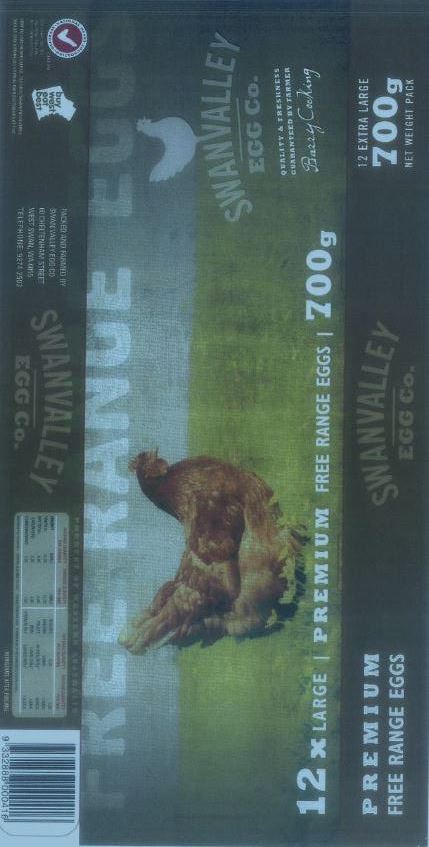
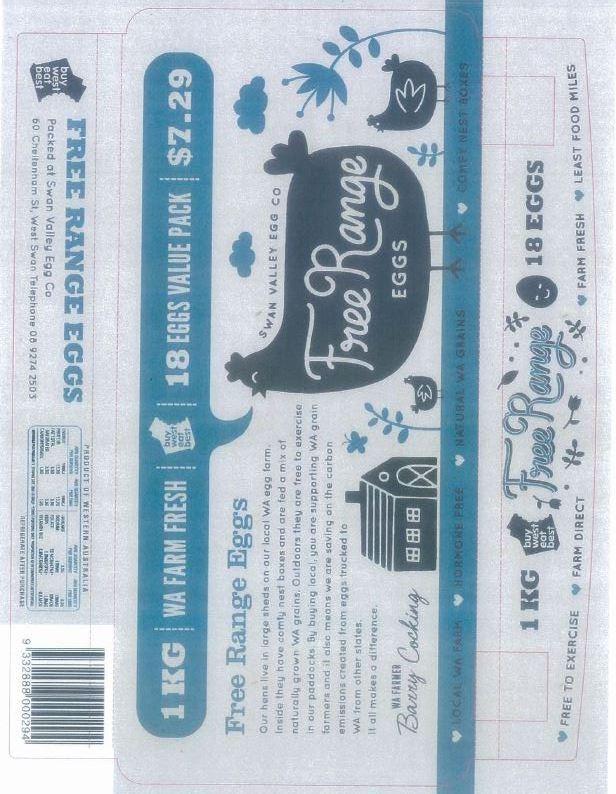
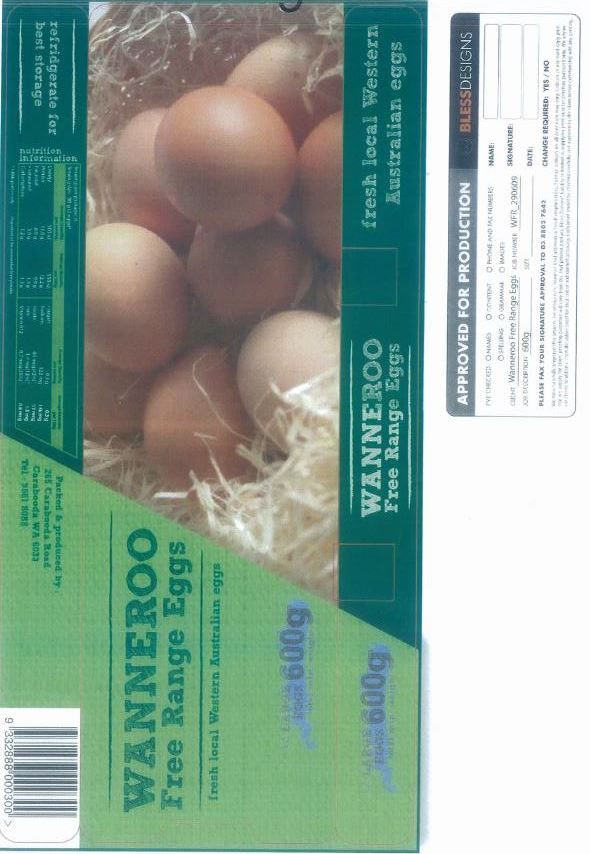
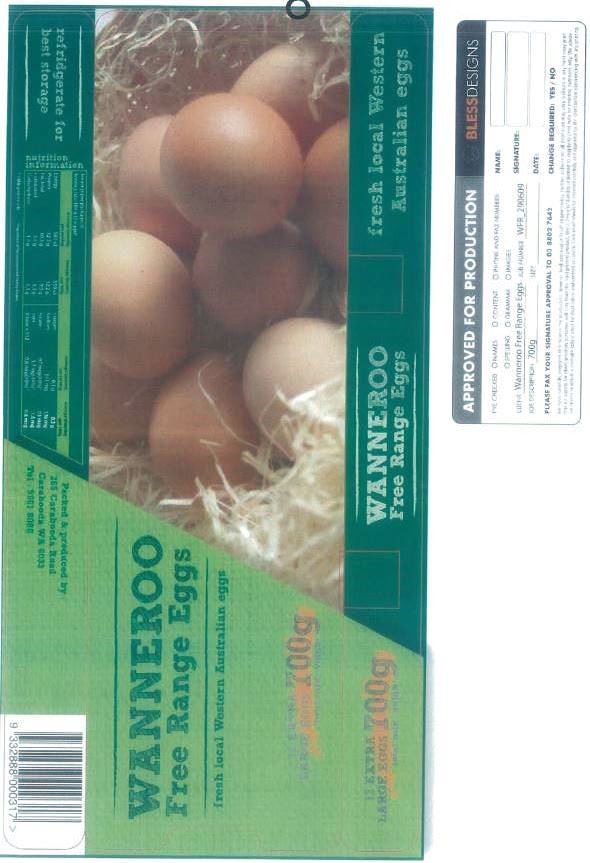
(a) from 8 April 2011 to 9 December 2013, by supplying for sale or causing to be supplied for sale, eggs produced by laying hens and packaged in egg cartons in the form depicted in Annexure 1 (Free Range Egg Cartons); and
(b) by advertising and promoting the eggs sold in some of the Free Range Egg Cartons by publishing or causing to be published:
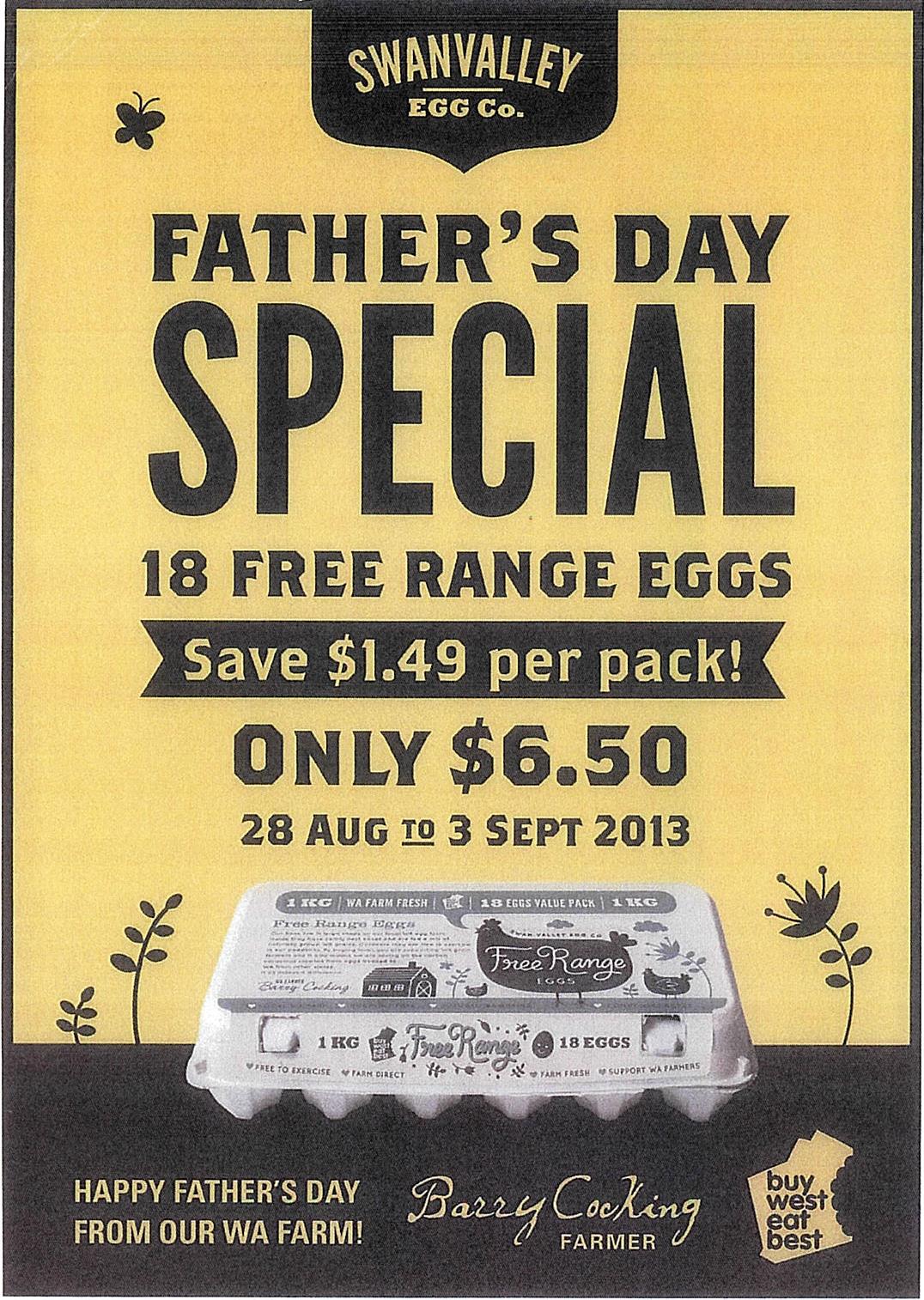
(i) the Snowdale Poster depicted in Annexure 2; and
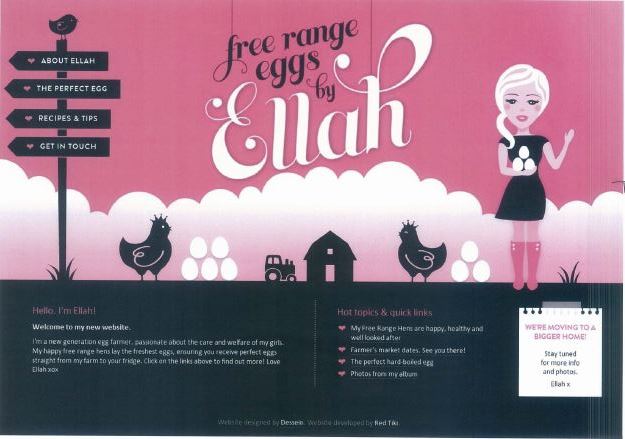
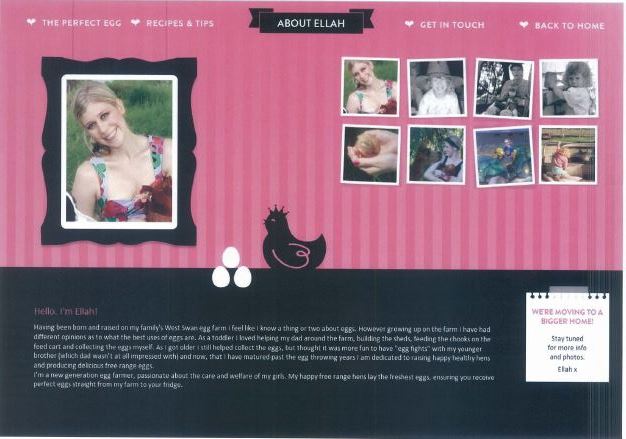
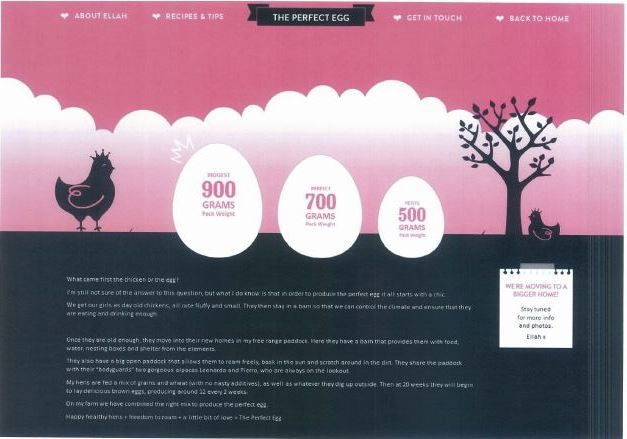
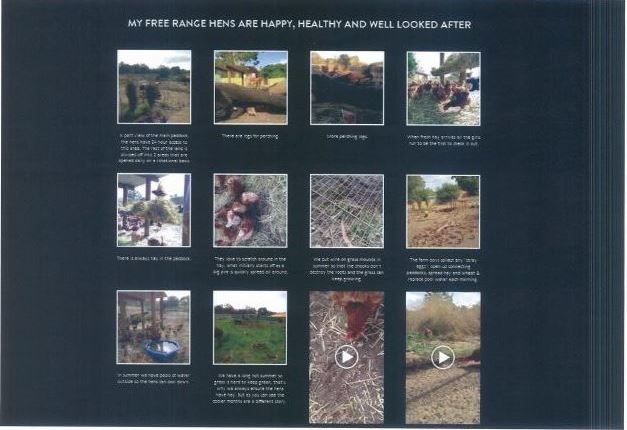
(ii) the Eggs by Ellah Website depicted in Annexure 3,
in each instance, represented to consumers that the eggs contained in those Free Range Egg Cartons were produced:
(c) by laying hens that were farmed in conditions so that the laying hens were able to move around freely on an open range on an ordinary day; and
(d) by laying hens most of which moved about freely on an open range on most days,
when that was not the case, and the Respondent thereby in trade or commerce:
(e) engaged in conduct that was misleading or deceptive or likely to mislead or deceive, in contravention of section 18 of the Australian Consumer Law (ACL) (Schedule 2 of the Competition and Consumer Act 2010); and
(f) in connection with the supply or possible supply of eggs, and the promotion of the supply of the eggs, made false or misleading representations that the eggs were of a particular quality, or have had a particular history in contravention of section 29(1)(a) of the ACL; and
(g) engaged in conduct that is liable to mislead the public as to the nature or characteristics of the eggs, in contravention of section 33 of the ACL.
THE COURT ORDERS THAT:
2. The Respondent be restrained, whether by itself, its servants, agents or howsoever otherwise, for a period of 3 years from the date of this order or until the date of commencement of an information standard relating to the labelling of free range eggs and made under section 134 of the Australian Consumer Law, whichever is the earlier, in connection with the supply of packaged eggs from making any representation, including by using the words “Free Range”, on any packaging, website or other promotional material that the eggs it sells are produced:
(a) by laying hens that are farmed in conditions so that they are able to move around freely on an open range on an ordinary day; and/or
(b) by laying hens most of which move about freely on an open range on most days,
when that is not the case.
3. The Respondent pay to the Commonwealth of Australia a pecuniary penalty in the amount of $750,000 pursuant to section 224 of the ACL. That pecuniary penalty is to be paid, commencing the month immediately following the issue of this order, in twenty four equal instalments each due by the final day of each month. If any monthly instalment is not paid by the due date, the full balance of the pecuniary penalty is immediately due and payable to the Commonwealth of Australia.
4. The Respondent, at its own expense:
(a) within 14 days of the date of this order, and for a period of 90 days, publish on the Eggs by Ellah Website homepage, accessible at the URL http://eggsbyellah.com.au/, and on each of the internal webpages, a notice in the terms and form of Annexure 4 to this Application (Eggs by Ellah Website Notice) and ensure that:
(i) the Eggs by Ellah Website Notice shall be viewable through the Eggs by Ellah Website homepage and each of the internal webpages via a ‘click-through’ icon;
(ii) the ‘click-through’ icon must contain the words “click here – False and Misleading Conduct by Snowdale – Notice Ordered by the Federal Court of Australia’ and be in a text which is:
(A) no less than 15-point in Arial font;
(B) black typeface on a white background;
(C) centred unless otherwise stated;
(D) in bold; and
(E) at the top of the Eggs by Ellah Website homepage and internal webpages; and
(iii) the Eggs by Ellah Website Notice shall occupy the entire webpage that is accessible via the ‘click through’ icon;
(b) within 21 days of the date of the order, ensure that a corrective advertisement, in the form of Annexure 5 to these Orders, be placed in The West Australian newspaper, and further, to ensure that the advertisement shall:
(i) occupy a half page of the newspaper;
(ii) be in a text which is Arial font and which is:
(A) for the headline, no less than 18-point and bolded; and
(B) for the remaining text, not less than 12-point, and
(iii) be placed within the first 10 pages of the newspaper.
5. The Respondent, at its own expense:
(a) within 3 months of the date of this order, establish a Consumer Law Compliance Program which meets the requirements set out in Annexure 6; and
(b) maintain and administer the Consumer Law Compliance Program for a period of 3 years from the date on which it was established.
6 The Respondent pay the Applicant’s costs of the proceeding fixed in the sum of $300,000 commencing the month immediately following the issue of this order, in twelve instalments of $25,000 each due by the final day of each month. If any monthly instalment is not paid by the due date the full balance of the costs is immediately due and payable to the Commonwealth of Australia.
7 The reasons for judgment with the seal of the Court affixed thereon be retained, on the Court file for the purposes of section 137H of the Act.
Note: Entry of orders is dealt with in Rule 39.32 of the Federal Court Rules 2011.
Annexure 1
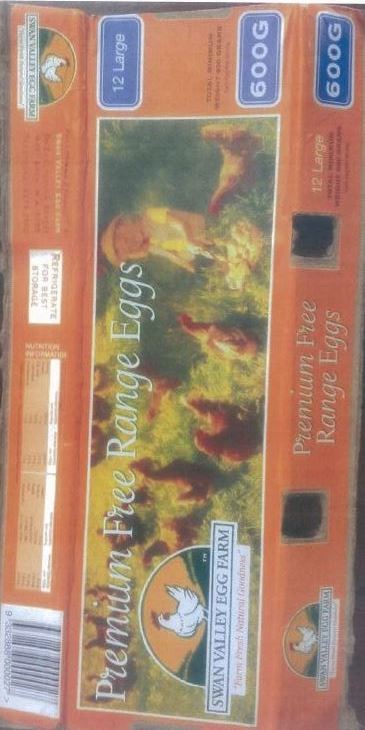
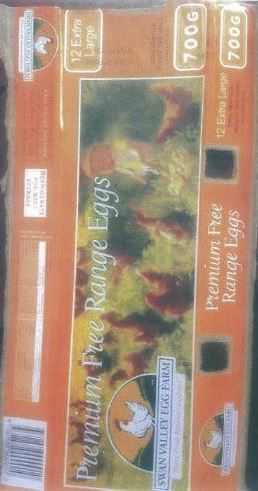
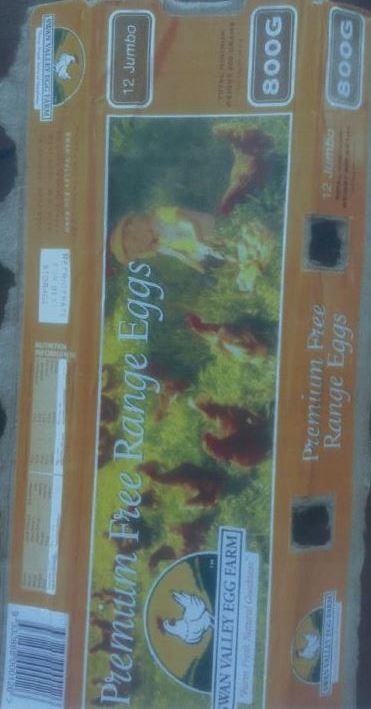
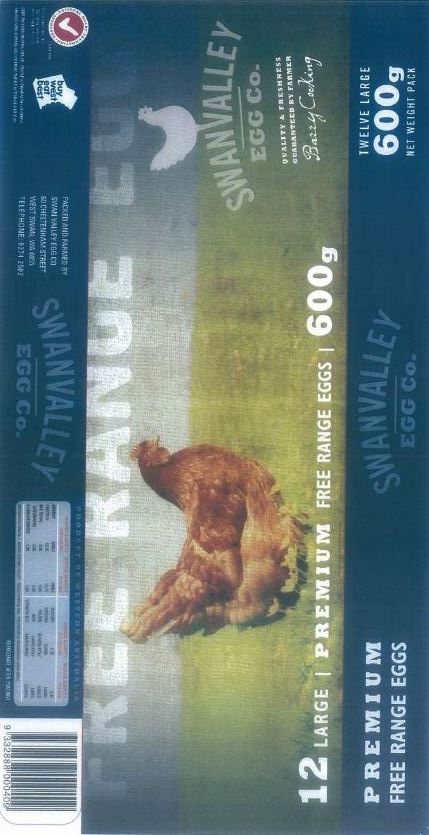

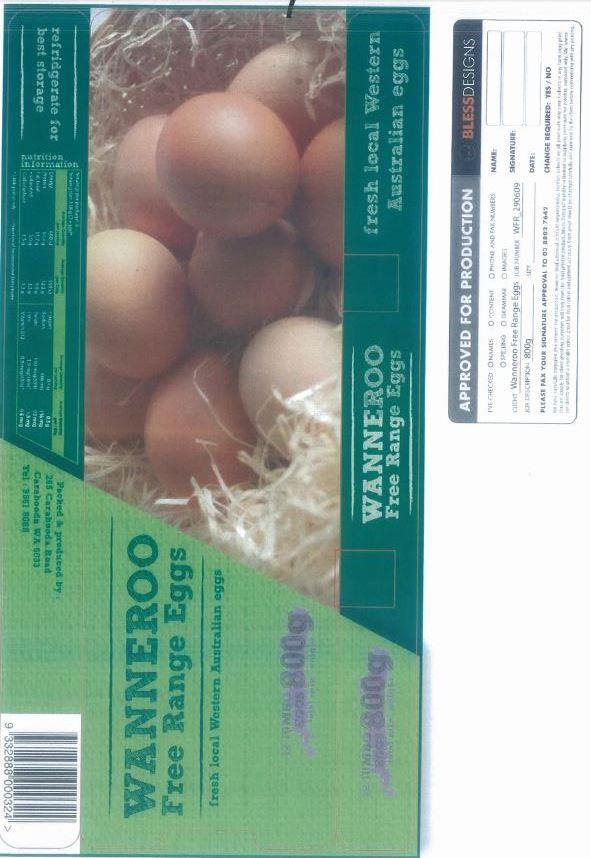

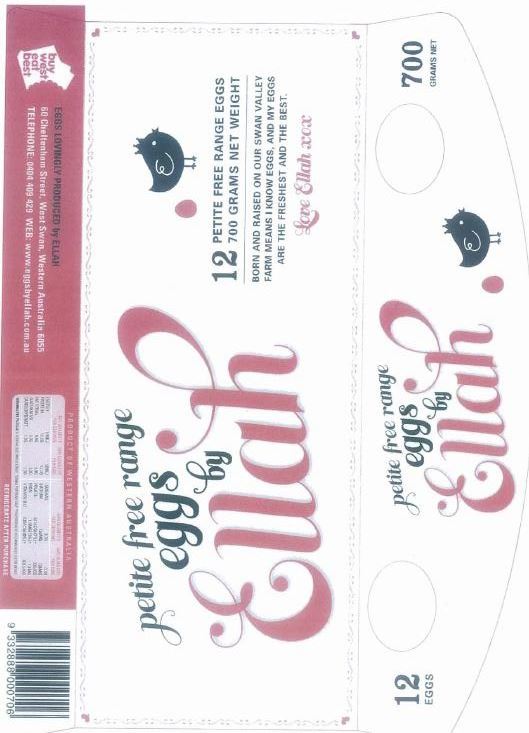

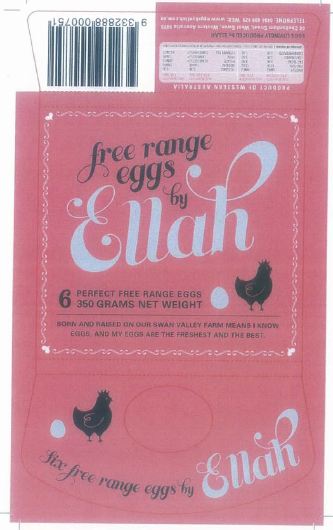
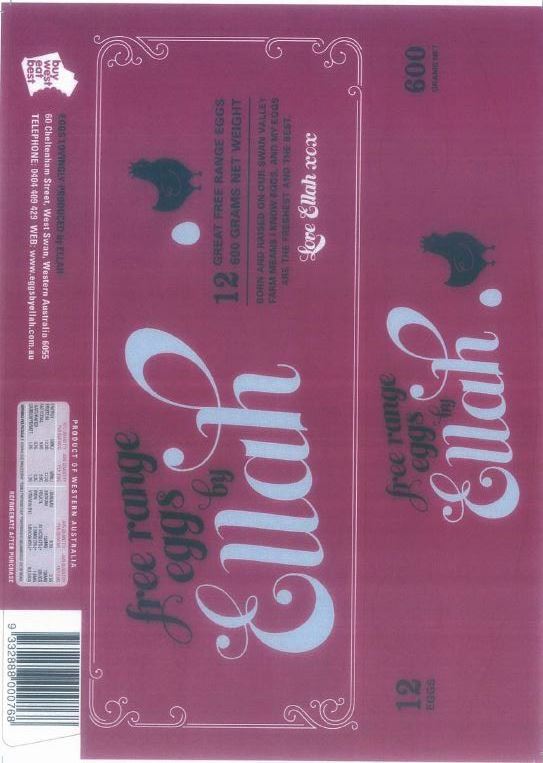
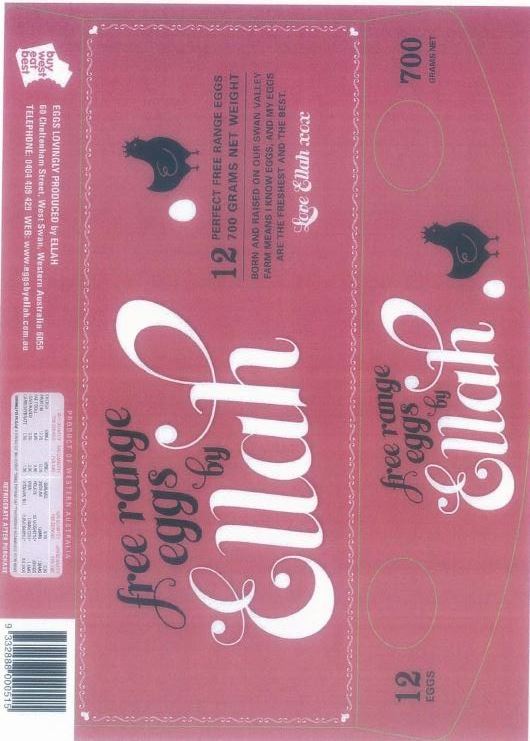
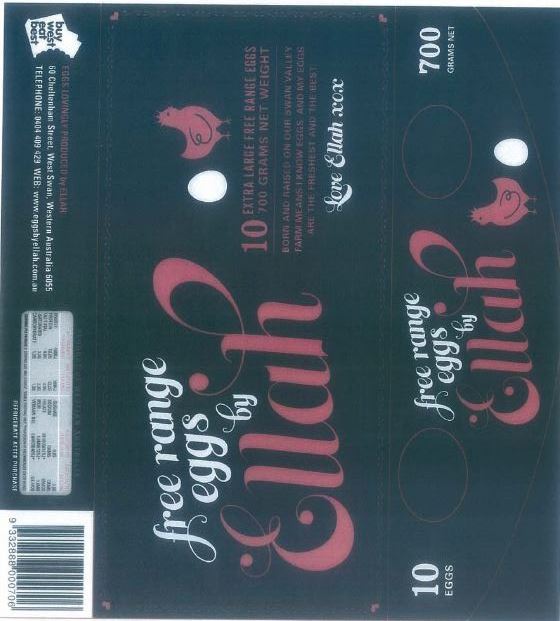
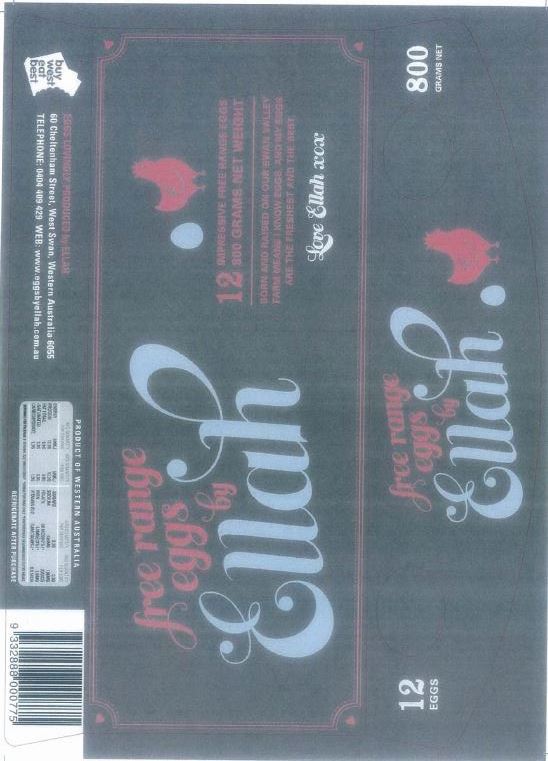
Annexure 2
Annexure 3
Annexure 4

Corrective Notice ordered by the Federal Court of Australia
Swan Valley Eggs, Eggs by Ellah & Others
False, misleading and deceptive conduct by Snowdale Holdings Pty Ltd
Snowdale Holdings Pty Ltd (Snowdale) sells eggs under brand names including Swan Valley Free Range Eggs, Eggs by Ellah, Wanneroo Free Range Eggs, Carabooda “Lovingly Hand Packed” Free Range Eggs, and Mega Free Range Eggs.
Following action by the Australian Competition and Consumer Commission (ACCC), the Federal Court of Australia declared that during the period 8 April 2011 to 9 December 2013 Snowdale contravened the Australian Consumer Law (ACL).
The Court declared that Snowdale made false, misleading or deceptive representations on its egg cartons, on a poster and on its Eggs by Ellah website that the eggs supplied in its free range lines were produced:
• by hens that were farmed in conditions so that the hens were able to move about freely on an open range on an ordinary day; and
• by hens, most of which moved about freely on an open range on most days.
The Court found that the eggs were in fact produced by hens most of which were not able to move about freely on an open range on an ordinary day because of the combination of the following four farming conditions:
• the number of physical openings to the outdoor range (known as “pop holes”);
• the number of hens per metre of pop hole;
• flock size; and
• the size of the sheds,
and also that the eggs were produced by hens most of which did not in fact move about freely on an open range on most days.
As part of its orders, the Court:
• required Snowdale to pay a pecuniary penalty in the amount of $750,000 together with the ACCC’s costs of the proceeding; and
• required Snowdale to publish this corrective notice and to implement a Consumer Law Compliance Program.
Annexure 5

Corrective Notice ordered by the Federal Court of Australia
Swan Valley Eggs, Eggs by Ellah & Others
False, misleading and deceptive conduct by Snowdale Holdings Pty Ltd
Snowdale Holdings Pty Ltd (Snowdale) sells eggs under brand names including Swan Valley Free Range Eggs, Eggs by Ellah, Wanneroo Free Range Eggs, Carabooda “Lovingly Hand Packed” Free Range Eggs, and Mega Free Range Eggs.
Following action by the Australian Competition and Consumer Commission (ACCC), the Federal Court of Australia declared that during the period 8 April 2011 to 9 December 2013 Snowdale contravened the Australian Consumer Law (ACL).
The Court declared that Snowdale made false, misleading or deceptive representations on its egg cartons, on a poster and on its Eggs by Ellah website that the eggs supplied in its free range lines were produced:
• by hens that were farmed in conditions so that the hens were able to move about freely on an open range on an ordinary day; and
• by hens, most of which moved about freely on an open range on most days.
The Court found that the eggs were in fact produced by hens most of which were not able to move about freely on an open range on an ordinary day because of the combination of the following four farming conditions:
• the number of physical openings to the outdoor range (known as “pop holes”);
• the number of hens per metre of pop hole;
• flock size; and
• the size of the sheds,
and also that the eggs were produced by hens most of which did not in fact move about freely on an open range on most days.
As part of its orders, the Court:
• required Snowdale to pay a pecuniary penalty in the amount of $750,000 together with the ACCC’s costs of the proceeding; and
• required Snowdale to publish this corrective notice and to implement a Consumer Law Compliance Program.
Annexure 6
CONSUMER LAW COMPLIANCE PROGRAM
Interpretation
1. In this Annexure:
(a) “ACCC” means the Australian Competition and Consumer Commission;
(b) “ACL” means the Australian Consumer Law, comprising Schedule 2 to the CCA;
(c) “CCA” means the Competition and Consumer Act 2010 (Cth);
(d) “Compliance Officer” means the person appointed under paragraph 2 below;
(e) “Compliance Program” means the Consumer Law Compliance Program in this Annexure;
(f) “Compliance Report” means the report defined in paragraph 8;
(g) “Material Failure” means a failure, that is non-trivial and which is ongoing or continued for a significant period of time, to:
(i) incorporate a requirement of the Order of Court in the design of the Compliance Program, for example if a Complaints Handling System did not provide any mechanism for responding to complaints; or
(ii) comply with a fundamental obligation in the implementation of the Compliance Program, for example, if no Staff Training has been conducted within the Annual Review period
(h) “Order of the Court” means the relevant order(s) of the Federal Court of Australia made in these proceedings;
(i) “Relevant Provisions” means Part 2-1 and Division 1 of Part 3-1 of the ACL;
(j) “Review” means the review defined by paragraph 7;
(k) “Reviewer” is defined in paragraph 7 below;
(l) “Snowdale Holdings” means Snowdale Holdings Pty Ltd (ACN 009 372 534); and
(m) “Staff Training” means the training required by paragraph 5 below.
Compliance Officer
2. Within one month of the date of the Order of the Court, Snowdale Holdings will appoint a director or a senior manager of the business to be responsible for the development, implementation and maintenance of the Compliance Program (Compliance Officer).
Compliance Officer Training
3. Within two months of the date of the Order of the Court, Snowdale Holdings will ensure that the Compliance Officer attends practical training focusing on the Relevant Provisions.
4. Snowdale Holdings will ensure that the training is administered by a suitably qualified compliance professional or legal practitioner with expertise in competition and consumer law.
Staff Training
5. Snowdale Holdings will cause all employees of Snowdale Holdings whose duties could result in them being concerned with conduct that may contravene the Relevant Provisions to receive regular (at least once a year) training administered by the Compliance Officer (once trained) or a qualified compliance professional or legal practitioner with expertise in competition and consumer law, that focuses on the Relevant Provisions.
Reports to Director(s)
6. Snowdale Holdings will ensure that the Compliance Officer generates a written report every six months on the continuing effectiveness of the Compliance Program. Where the Compliance Officer is not a director of Snowdale Holdings, the Compliance Officer will provide that report to Snowdale Holdings’ director(s).
Compliance Review
7. Snowdale Holdings will, at its own expense, cause an annual review of the Compliance Program (Review) to be carried out in accordance with each of the following requirements:
(a) Scope of Review – the Review should be broad and rigorous enough to provide Snowdale Holdings and the ACCC with:
(i) verification that Snowdale Holdings has in place a Compliance Program that complies with the requirements of the Order of the Court and is suitable for the size and structure of Snowdale Holdings;
(ii) the Compliance Reports detailed at paragraph 8 below.
(b) Independent Reviewer – Snowdale Holdings will ensure that each Review is carried out by a suitably qualified, independent compliance professional with expertise in competition and consumer law (Reviewer). The Reviewer will qualify as independent on the basis that he or she:
(i) did not design or implement the Compliance Program;
(ii) is not a present or past staff member or director of Snowdale Holdings;
(iii) has not acted and does not act for, and does not consult and has not consulted to, Snowdale Holdings in any competition or consumer law related matters, other than performing Reviews under the Order of the Court, and
(iv) has no significant shareholding or other interests in Snowdale Holdings.
(c) Evidence - Snowdale Holdings will use its best endeavours to ensure that each Review is conducted on the basis that the Reviewer has access to all relevant sources of information in Snowdale Holdings’ possession or control, including without limitation:
(i) the ability to make enquiries of any officers, employees, representatives, and agents of Snowdale Holdings;
(ii) documents relating to Snowdale Holdings’ Compliance Program, including documents relevant to Snowdale Holdings’ Staff Training;
(iii) any reports made by the Compliance Officer to Snowdale Holdings’ director(s) regarding Snowdale Holdings’ Compliance Program.
(iv) Snowdale Holdings will ensure that a Review is completed within one year of the date of the Order of the Court and that a subsequent review is completed within each year for three years.
Compliance Reports
8. Snowdale Holdings will use its best endeavours to ensure that within 14 days of a Review, the Reviewer includes the following findings of the Review in a report to Snowdale Holdings (Compliance Report):
(a) whether the Compliance Program of Snowdale Holdings includes all the elements detailed in paragraphs 2-6 above, and if not, what elements need to be included or further developed;
(b) whether the Staff Training is effective, and if not, what aspects need to be further developed;
(c) whether there are any material deficiencies in Snowdale Holdings’ Compliance Program, or whether there are or have been instances of material non-compliance with the Compliance Program (Material Failure), and if so, recommendations for rectifying the Material Failure/s.
Snowdale Holdings Response to Compliance Reports
9. Snowdale Holdings will ensure that the Compliance Officer, within 14 days of receiving the Compliance Report:
(a) provides the Compliance Report to the director(s) of Snowdale Holdings;
(b) where a Material Failure has been identified by the Reviewer in the Compliance Report, provides a report to Snowdale Holdings’ director(s) identifying how Snowdale Holdings can implement any recommendations made by the Reviewer in the Compliance Report to rectify the Material Failure.
10. Snowdale Holdings will implement promptly and with due diligence any recommendations made by the Reviewer in the Compliance Report to address a Material Failure.
Reporting Material Failures to the ACCC
11. Where a Material Failure has been identified by the Reviewer in the Compliance Report, Snowdale Holdings will:
(a) provide a copy of that Compliance Report to the ACCC within 14 days of Snowdale Holdings’ director(s) receiving the Compliance Report; and
(b) inform the ACCC of any steps that have been taken to implement the recommendations made by the Reviewer in the Compliance Report; or
(c) otherwise outline the steps Snowdale Holdings proposes to take to implement the recommendations and will then inform the ACCC once those steps have been implemented.
Provision of Compliance Program documents to the ACCC
12. Snowdale Holdings will maintain a record of and store all documents relating to and constituting the Compliance Program for a period not less than five years.
13. If requested by the ACCC during the period of five years Snowdale Holdings will, at its own expense, cause to be produced and provided to the ACCC copies of all documents constituting the Compliance Program, including:
(a) Staff Training materials;
(b) all Compliance Reports that have been completed at the time of the request; and
(c) copies of the reports to the director(s) referred to in paragraph 6 and paragraph 9.
ACCC Recommendations
14. Snowdale Holdings will implement promptly and with due diligence any recommendations that the ACCC may make that the ACCC deems reasonably necessary to ensure that Snowdale Holdings maintains and continues to implement the Compliance Program in accordance with the requirements of the Order of the Court.
SIOPIS J:
1 On 18 May 2016, the Court delivered reasons in Australian Competition and Consumer Commission v Snowdale Holdings Pty Ltd [2016] FCA 541. In summary, the Court found that during the period 8 April 2011 to 9 December 2013 (the relevant period), the respondent, Snowdale Holdings Pty Ltd (Snowdale), had contravened ss 18(1), 29(1)(a) and 33 of the Australian Consumer Law (the ACL) in that it had supplied eggs for sale to consumers in cartons which described the eggs contained therein as “free range” eggs, when that description was false; and had falsely advertised eggs that it sold as “free range” eggs when they were not. Further, the Court found that Snowdale had engaged in misleading or deceptive conduct by making false statements on Snowdale’s website in describing the eggs it sold to consumers under the brand name of “Eggs by Ellah” as “free range” eggs when they were not.
2 In short, the Court found that during the relevant period, Snowdale had falsely represented that the eggs which it sold as “free range” eggs had been laid by hens which were farmed in conditions such that most of the hens were able to, and did, leave the sheds in which they were housed, and were able to, and did, access the adjacent open ranges on most days, when that was not true.
3 On 18 May 2016, the Court adjourned the further hearing of that aspect of the application which dealt with the relief attendant upon the Court’s findings on liability. This was done to permit each of the parties to prepare submissions and, if necessary, prepare further evidence, in respect of the relief sought by the Australian Competition and Consumer Commission (the ACCC).
4 As it transpired, following consultation, the ACCC and Snowdale agreed a number of facts for the purposes of the Court imposing a pecuniary penalty and making other orders consequent upon the Court having found that Snowdale had contravened the ACL. On 11 July 2016, the parties filed a statement of agreed facts and admissions by reference to s 191 of the Evidence Act 1995 (Cth).
5 On 29 July 2016, the parties filed a minute of jointly proposed orders and joint written submissions in which both parties contended that the Court should make the declarations and the orders contained in the minute of proposed orders.
6 By the minute of proposed orders, the parties proposed that the Court make declarations of contraventions by Snowdale, grant an injunction restraining Snowdale from making misleading representations, make orders for corrective advertising and the establishment of a compliance program, and order that Snowdale pay the Commonwealth of Australia a pecuniary penalty in the amount of $500,000 by 11 monthly instalments of $41,000 each and a final payment of $49,000. The orders also proposed that Snowdale pay the ACCC’s costs of this proceeding in the sum of $300,000.
7 On 3 August 2016, the parties filed a supplementary statement of agreed facts and admissions.
8 At a hearing on 10 August 2016, I advised the parties that the agreed facts appeared to be deficient in that the statement did not contain information as to the additional revenue which Snowdale had earned during the relevant period by charging its customers a premium for the eggs it sold as “free range” eggs. The premium was the difference between the amount Snowdale charged for the eggs it sold as “free range” eggs, and the amount it charged for eggs sold as “barn laid” or “cage free” eggs, being the accurate description of the eggs which Snowdale sold as “free range” eggs.
9 On 20 September 2016, the parties filed a further supplementary statement of agreed facts and admissions which addressed the question of the premium Snowdale charged in respect of “free range” eggs compared to eggs sold as “barn laid” or “cage free” eggs. In addition, the parties, on the same day, filed further joint submissions continuing to argue for the imposition of the $500,000 pecuniary penalty they had previously agreed, notwithstanding the further information which was contained in the further supplementary statement of agreed facts.
10 On 16 December 2016, a Full Court of this Court in Australian Competition and Consumer Commission v Reckitt Benckiser (Australia) Pty Ltd (2016) 340 ALR 25 (Reckitt Benckiser) allowed an appeal on penalty by the ACCC from a decision of the primary judge who had ordered that the respondent contravening corporation, Reckitt Benckiser, pay a pecuniary penalty of $1.7 million. The misleading conduct arose from the fact that Reckitt Benckiser had labelled, marketed and sold a pain relief product under the brand name of “Nurofen”, and had also labelled, marketed and sold four other purportedly different Nurofen pain relief products. Reckitt Benckiser represented that each of these pain relief products was “targeted” to treat a different type of pain, namely, “migraine pain”, “tension headache”, “period pain” and “back pain” respectively.
11 In fact, each of these four products was materially the same product as standard Nurofen and each such product did not target the specifically identified pain as represented. However, Reckitt Benckiser charged a premium price for each of the four products it marketed as targeting specific pain. The Full Court proceeded on the basis that because of the premium Reckitt Benckiser had charged for the four specific pain products, consumers in Australia had, during the relevant period, paid approximately $25 million more than they would have paid if they had bought the equivalent product in the standard Nurofen packaging.
12 The Full Court found at [98] that the primary judge had erred, inter alia, in the way in which he had treated the loss to consumers as a relevant consideration in imposing the pecuniary penalty. The Full Court imposed a pecuniary penalty of $6 million.
13 On 5 April 2017, the High Court dismissed Reckitt Benckiser’s application for special leave to appeal from the Full Court decision.
14 On 11 May 2017, this application was relisted for a mention hearing. At that hearing, I advised the parties that in light of the decision of the Full Court in Reckitt Benckiser and, in particular, the emphasis which the Full Court placed on the loss to consumers as a relevant consideration in assessing an appropriate penalty, it was my tentative view that a pecuniary penalty of $500,000 which the parties had proposed was too low a figure to constitute an appropriate penalty. I invited the parties to give further consideration to this question.
15 Thereafter, the parties conferred further, and on 26 June 2017, the parties jointly filed a further minute of proposed orders which proposed that the Court impose a pecuniary penalty on Snowdale of $750,000 payable in 24 monthly instalments. Also, on that date, the ACCC filed submissions in support of the Court imposing a pecuniary penalty of $750,000 on Snowdale. On 3 July 2017, Snowdale made further written submissions and on 6 July 2017, the ACCC responded to those submissions.
16 I will deal first with the proposed orders for the making of the declarations, injunction and corrective advertising. The making of the orders for the pecuniary penalty require more detailed consideration and I will deal with that question later.
Declarations
17 In my view, it is appropriate that the proposed declarations be made.
18 The circumstances of this case are somewhat different to the circumstances which can sometimes arise where a regulator and a contravenor propose consent orders which include declarations founded upon a statement of agreed facts and admissions where there has not been a trial. In this case, there was a fiercely contested trial in which Snowdale opposed the claims made by the ACCC and the Court made findings of fact and law to the effect that Snowdale had contravened the ACL in the manner alleged by the ACCC.
19 It is, therefore, appropriate that the Court makes declarations which vindicate the claims made by the ACCC in respect of Snowdale’s contravening conduct.
20 As to the terms of the proposed declarations, I have had regard to the helpful observations made by Flick J in Australian Competition and Consumer Commission v Pirovic Enterprises Pty Ltd (No 2) [2014] FCA 1028 (Pirovic (No 2)) at [20]-[21] in relation to the proper formulation of the declarations.
21 I am satisfied that the terms of the declarations proposed in this case sufficiently identify the basis on which Snowdale has failed to comply with the ACL.
22 The Court will, accordingly, make declarations in the terms sought.
Injunction
23 The injunction proposed by the parties seeks to enjoin Snowdale from representing that the eggs it sells are produced:
(a) by laying hens that are farmed in conditions so that they are able to move around freely on an open range on an ordinary day; and/or
(b) by laying hens most of which move about freely on an open range on most days,
when that is not the case.
24 That proposed injunction is to operate for a period of three years from the date of the order or until the date of commencement of an information standard relating to the labelling of free range eggs and made under s 134 of the ACL, whichever is the earlier.
25 The same considerations to which I have referred in relation to the making of the declarations apply in relation to the making of the proposed injunction. The grant of the injunction serves a public interest because it reinforces the need for corporations and persons who deal with consumers to refrain from engaging in misleading or deceptive conduct or conduct which is likely to mislead or deceive consumers.
26 Accordingly, the Court will make orders for an injunction in the terms which the parties propose.
Publication of corrective advertising
27 The parties have also proposed that the Court make an order that Snowdale, at its own expense, within 14 days of the date of this order, and for a period of 90 days thereafter, publish on the “Eggs by Ellah” website homepage, and on each of the internal webpages, a notice headed, “Corrective Notice ordered by the Federal Court of Australia”; and that, within 21 days of the date of this order, it publish a similar notice in The West Australian newspaper.
28 The terms of the corrective notice are set out in the orders made herein and state, in effect, that the Court has declared that during the relevant period, Snowdale engaged in the contravening conduct referred to in the principal judgment and summarised above.
29 In my view, it is appropriate that the proposed order be made and I will order thus.
COMPLIANCE ORDER
30 Further, the parties have proposed that the Court make an order that, within three months from the date of the order, Snowdale, at its own expense, establish a Consumer Law Compliance program which complies with the requirements which are set out in Annexure 6 of the orders made herein; and maintain and operate the compliance program for a period of three years from the date on which it is established.
31 It is, in my view, appropriate that such an order be made and I will order thus.
Pecuniary penalty
32 I now deal with the question of the appropriate pecuniary penalty. It is this element of the proposed orders which has been of most concern to the parties and the Court.
33 As mentioned, the parties initially jointly proposed that the Court impose an agreed pecuniary penalty of $500,000 payable in instalments, but have now jointly proposed that the Court impose an agreed penalty of $750,000 payable by instalments.
34 The approach which a court is to take to a joint proposal by the regulator and the contravenor as to an agreed pecuniary penalty in a civil penalty proceeding, has recently been considered by the High Court in Commonwealth v Director, Fair Work Building Industry Inspectorate (2015) 90 ALJR 113 (Director, FWBII).
35 At [46], the plurality (French CJ, Kiefel, Bell, Gageler, Keane, Nettle and Gordon JJ) observed as follows:
[T]here is an important public policy involved in promoting predictability of outcome in civil penalty proceedings and that the practice of receiving and, if appropriate, accepting agreed penalty submissions increases the predictability of outcome for regulators and wrongdoers. As was recognised in Allied Mills and authoritatively determined in NW Frozen Foods, such predictability of outcome encourages corporations to acknowledge contraventions, which, in turn, assists in avoiding lengthy and complex litigation and thus tends to free the courts to deal with other matters and to free investigating officers to turn to other areas of investigation that await their attention.
36 At [58], the plurality also observed as follows:
Subject to the court being sufficiently persuaded of the accuracy of the parties’ agreement as to facts and consequences, and that the penalty which the parties propose is an appropriate remedy in the circumstances thus revealed, it is consistent with principle and, for the reasons identified in Allied Mills, highly desirable in practice for the court to accept the parties’ proposal and therefore impose the proposed penalty.
(Original Emphasis. Footnote omitted.)
37 Notwithstanding, that the High Court observed it was “highly desirable” for a court to accept an agreed penalty proposed by a regulator and a contravenor, the High Court also observed that a court was not obliged to do so.
38 At [48], the plurality observed as follows:
NW Frozen Foods and Mobil Oil do not suggest that the task of a judge faced with an agreed civil penalty submission is to determine whether the submitted penalty is “wholly outside” the “range of penalties reasonably available” or that the court is “bound to impose [an agreed] penalty irrespective of whether it is considered appropriate”. To the contrary, as was emphasised in Mobil Oil, those cases make plain that the court is not bound by the figure suggested by the parties. The court asks “whether their proposal can be accepted as fixing an appropriate amount” and for that purpose the court must satisfy itself that the submitted penalty is appropriate.
(Original emphasis. Footnotes omitted.)
39 It is necessary, therefore, for the Court to be satisfied that the pecuniary penalty proposed by the parties is an appropriate penalty. In this regard, it is important to bear in mind that the purpose for the imposition of a civil penalty is deterrence as a means of promoting compliance with the law. In Director, FWBII at [55], the plurality cited with approval the following observations of French J (as his Honour then was) in Trade Practices Commission v CSR Ltd [1991] ATPR 41-076 at 52,152:
[W]hereas criminal penalties import notions of retribution and rehabilitation, the purpose of a civil penalty, as French J explained in Trade Practices Commission v CSR Ltd, is primarily if not wholly protective in promoting the public interest in compliance:
Punishment for breaches of the criminal law traditionally involves three elements: deterrence, both general and individual, retribution and rehabilitation. Neither retribution nor rehabilitation, within the sense of the Old and New Testament moralities that imbue much of our criminal law, have any part to play in economic regulation of the kind contemplated by Pt IV [of the Trade Practices Act]…The principal, and I think probably the only, object of the penalties imposed by s 76 is to attempt to put a price on contravention that is sufficiently high to deter repetition by the contravenor and by others who might be tempted to contravene the Act.
(Footnotes omitted.)
40 There are other general principles or considerations to which, depending upon the circumstances, regard may also be had by a court in determining an appropriate penalty.
41 One such consideration is the maximum penalty which the legislature has provided for in relation to the contravention in question. The rationale for having regard to the maximum penalty is that it may be presumed that the legislature has reserved the maximum penalty for contraventions which have occurred in the most egregious of circumstances. The maximum penalty for a contravention by a corporation of a provision of Pt 3-1 of the ACL (which includes s 29(1) and s 33) is $1.1 million.
42 In deference to this consideration, the parties have agreed, and jointly submitted, that Snowdale’s contravening conduct should be regarded as a single course of conduct on the basis that the conduct comprised making the same representation over a sustained period in relation to a single product, namely, “free range” eggs. However, the parties contended that even if the Court characterised the contravening conduct as a single course of conduct, the Court should not treat this circumstance as limiting the maximum possible penalty to $1.1 million, but rather as a means of framing the analysis of an appropriate penalty.
43 In my view, this approach, which uses the course of conduct principle and the maximum penalty as considerations in assessing the adequacy of the penalty, serves no utility in the circumstances of this case. The contravening conduct occurred over a period of two years and eight months. Each contravening carton of eggs distributed by Snowdale contained the false “free range” representation. Accordingly, the distribution of each carton would have constituted a single contravention of the ACL. About five million of these cartons were sold and distributed by Snowdale during the relevant period. Strictly speaking, the maximum penalty in respect of the whole of Snowdale’s contravening conduct over the relevant period would amount to trillions of dollars.
44 This question was considered by the Full Court in Reckitt Benckiser. The Full Court found that the primary judge had erred in treating the course of conduct principle as a limitation on the extent of the pecuniary penalty which the Court could impose. The Full Court explained that the course of conduct principle was not an appropriate principle to circumscribe the maximum penalty which could be imposed in that case. The Full Court held that the circumstances of that case were not appropriate for the primary judge to have placed the significance which he placed on the principle. The Full Court observed at [157]:
In this case, the theoretical maximum was in the trillions of dollars (some 5.9 million contraventions at $1.1 million per contravention)…It follows that the assessment of the appropriate range for penalty in the circumstances of this case is best assessed by reference to other factors, as there is no meaningful overall maximum penalty given the very large number of contraventions over such a long period of time.
45 The Full Court went on to say at [158]:
Overall, in the particular circumstances of this case we consider that one useful guide to the appropriate penalty range is loss to consumers. In this case, this loss may be assessed by reference to the extra amount paid by consumers as against a product that did not suffer from any of the impugned representations, such as ordinary Nurofen. This best approximates the impact on consumers, and thus the potential gains to Reckitt Benckiser. This gives a starting point of around $25 million and, on any view, more than $20 million (the price of the impugned products being about double that of standard Nurofen and the total revenue being $45 million).
46 In my view, there are similarities between the circumstances of this case and the circumstances in Reckitt Benckiser, and in my view, the loss to consumers and the gain to Snowdale also provide a useful guide to an appropriate penalty.
47 There are other principles to which a court should have regard in assessing whether the proposed penalty is an appropriate penalty. These are the parity principle, the proportionality principle and the totality principle. However, these principles only have a limited role to play in the circumstances of this case.
48 Further, there are other specific considerations to which regard is to be had - some of these factors have been expressly referred to in s 224(2) of the ACL, and others have been developed in the case law.
49 I now turn to the relevant factors.
50 First, s 224(2) of the ACL provides that in determining the appropriate pecuniary penalty, the Court must have regard to all relevant matters including:
(a) the nature and extent of the act or omission and of any loss or damage suffered as a result of the act or omission;
(b) the circumstances in which the act or omission took place; and
(c) whether the person has previously been found by a court in proceedings under Ch 4 or this Part to have engaged in any similar conduct.
51 In addition, the cases, for example, Australian Competition and Consumer Commission v Singtel Optus Pty Ltd (No 4) (2011) 282 ALR 246 have identified other factors which may, depending upon the circumstances, also provide guidance in determining the appropriate penalty. In this case, these circumstance are:
(a) the size of the contravening company;
(b) the deliberateness of the contravention and the period over which it extended;
(c) whether the contravention arose out of the conduct of senior management of the contravenor or at some lower level;
(d) whether the contravenor has a corporate culture conducive to compliance with the Competition and Consumer Act 2010 (Cth) as evidenced by educational programs and disciplinary or other corrective measures in response to an acknowledged contravention;
(e) whether the contravenor has shown a disposition to cooperate with the authorities responsible for the enforcement of the Competition and Consumer Act in relation to the contravention;
(f) whether the contravenor has engaged in similar conduct in the past;
(g) the financial position of the contravenor.
Statutory factors
52 I deal first with the factors expressly referred to in s 224(2) of the ACL.
The nature and extent of the contravening conduct
53 The parties have agreed a number of facts in relation to the extent of the production, sale and distribution by Snowdale of eggs during the relevant period. I set out some of the pertinent facts below.
54 During the relevant period, Snowdale supplied eggs labelled as “free range” to retailers, various grocery stores and butchers and also supplied consumers through other avenues such as its Swan Valley farm store, farmers’ markets and grocery home delivery services. The eggs sold as “free range” eggs were supplied throughout Western Australia but not in any other state or territory.
55 During the relevant period, Snowdale sold 117,731,304 eggs in total. 60,369,528 of those eggs (comprising about 51% of the total number of eggs sold) were sold as “free range” eggs. Of that volume, 48,723,720 eggs were sold to retailers as “free range” eggs. I infer, therefore, that, during the relevant period, in addition to selling eggs labelled as “free range” eggs to retailers, Snowdale itself sold 11,645,808 eggs labelled as “free range” eggs directly to the public through, for example, its farm store at the Swan Valley farm and also farmers’ markets and grocery home delivery services.
56 Snowdale’s retail customers included large supermarket retailers such as Woolworths, Coles and IGA. Woolworths was, during the relevant period, Snowdale’s largest retail customer for eggs sold as “free range” eggs. During that period, Snowdale supplied Woolworths stores in the greater Perth region with a total of 23,861,544 eggs that were labelled as “free range”. This was approximately 49% of all eggs sold by Snowdale to retailers as “free range” eggs during the relevant period.
57 Another important retail customer of Snowdale was Coles. Between 18 March 2013 and 9 December 2013, which was a period of approximately nine months, Snowdale sold to Coles stores located in the greater Perth region 4,435,200 eggs as “free range” eggs.
58 When measured by the volume of eggs sold, Snowdale was one of the largest suppliers of eggs labelled as “free range” sold on a retail basis in Western Australia.
59 It was also an agreed fact that from March 2013, Snowdale started selling eggs labelled as “barn laid” eggs. It was agreed that during the relevant period, Snowdale sold in total 57,361,776 eggs either as “barn laid” or “cage laid” eggs. Of that volume, 50,032,272 eggs were sold to retailers either as “barn laid” or as “cage laid” eggs. I infer, therefore, that during the relevant period, Snowdale sold 7,329,504 eggs to consumers directly as “barn laid” or “cage laid” eggs. I also infer that during the relevant period, from 8 April 2011 to March 2013, Snowdale sold its eggs as either “free range” eggs or “cage laid” eggs, and that after March 2013, Snowdale sold its eggs variously as “free range” eggs, “barn laid” eggs or “cage laid” eggs.
Loss or damage suffered as a result of the contravening conduct
60 Section 224(1) of the ACL requires the Court to have regard to “any loss or damage” suffered by the contravening conduct. In the circumstances of this case, the Court is to have regard to any loss or damage suffered by consumers and, also, by competitors of Snowdale.
61 It was accepted that consumers paid a premium price for “free range” eggs, when compared to “barn laid” or “cage free” eggs. The consequence was that consumers paid a premium price for a product which they did not receive, and which they could have purchased for a lower price. I place no weight on Snowdale’s submission that because, as the Court found, some hens did exit the sheds and enter the open ranges, to that extent, there would have been some isolated eggs in some of the cartons which would have been laid by “free range” hens.
62 The statement of agreed facts stated that the loss to consumers cannot be quantified. It may be the case that such loss may not be able to be precisely quantified. However, this is a case where, as in Reckitt Benckiser, the contravening conduct induced consumers to pay a premium price for a product which could have been purchased for a cheaper price had the true character of the product been revealed. It is apparent from the Full Court’s decision in Reckitt Benckiser at [96]-[98], that, even if it is not possible for the Court to make an accurate assessment of the loss to consumers, the Court should seek to deal with that issue by drawing inferences on the evidence available to it.
63 The statement of agreed facts does contain some information on this issue. The statement states that the price premium paid by consumers in Western Australia to retailers, for eggs produced by Snowdale as “free range” eggs, varied over time. It was stated that, by way of example, in July 2013, the difference in price paid by consumers for “Eggs by Ellah” 800g free range eggs and Swan Valley barn laid eggs was $1.70 per dozen. Also, it was stated that, in May 2014 (which is outside the relevant period), the difference between Swan Valley 18 pack free range eggs and Swan Valley 18 pack barn laid eggs was $1.49. Thus, the premium per dozen for the Swan Valley free range eggs was about $1.00 per dozen.
64 Those figures, albeit that they are separated in time and relate to different brand names, are sufficient to give some indication of the additional monies paid by consumers during the relevant period for a product they did not receive.
65 As mentioned (see [55] above), during the relevant period, Snowdale sold about 60 million eggs, or approximately five million dozen Snowdale eggs, as “free range” eggs. It follows that if one applies a premium of $1.70 per dozen (being the only information as to the premium applied during the relevant period) to the number of “free range” eggs sold, one can infer that Western Australian consumers were induced to spend about $8.5 million during the period of two years and eight months in purchasing Snowdale “free range” eggs, than they would otherwise have spent to purchase what were in fact “barn laid” eggs. If the lesser premium of $1.00 per dozen is applied, then the additional amount paid by Western Australian consumers would be $5 million.
66 Section 224(2) of the ACL, requires the Court to take into account the loss or damage caused by the contravening conduct. It does not refer expressly to the gain derived by the contravening conduct. It is the case, of course, that the conduct may cause loss to consumers or competitors whilst not necessarily resulting in a gain to the contravenor, but any gain made by a contravenor will also be relevant, particularly, to the question of deterrence.
67 In Reckitt Benckiser, the Full Court did not make separate findings as to the loss to the consumers and the increased revenue derived by Reckitt Benckiser by reason of its contravening conduct. Rather, the Full Court appeared to treat the extent of the loss to consumers as being reflective of the increased revenue derived by Reckitt Benckiser from the contravening conduct.
68 In this case, however, the parties, on 20 September 2016, filed a further supplementary statement of agreed facts and admissions. That statement was filed in response to a request by the Court that there be material before the Court to take into account the benefit which Snowdale derived from the sale of eggs sold at a premium as “free range” eggs during the relevant period. This was because the existing statement of agreed facts only dealt with the premium which was paid by consumers, which was assessed on the retail price paid by consumers. There was, at that time, no material before the Court such as to permit it to have some regard to the benefit which Snowdale would have derived from selling eggs as “free range” eggs, rather than as “barn laid” or “cage free” eggs.
69 The further supplementary statement of agreed facts, filed on 20 September 2016, stated that, from about June 2013, Snowdale sold eggs in cartons labelled as “free range” eggs to retailers at a higher price per egg than eggs sold to retailers in cartons labelled as “barn laid” or “cage free” eggs.
70 That statement said that it was not possible to ascertain the precise figure for the price premium because carton sizes and the weight of the eggs in the cartons made it difficult to make appropriate price comparisons. However, the parties agreed that on average the premium from June 2013 to December 2013 was approximately 3.5 cents to 4 cents per egg, which equals between 42 cents to 48 cents per dozen eggs.
71 That statement went on to say that Snowdale incurred additional costs in respect of the production of eggs labelled “free range”, but it was not possible to quantify the amount or verify particular cost items. In the absence of the identification of the particular additional cost items, I place little weight on this agreed fact. Snowdale’s contravening conduct comprised selling eggs under the misdescription of “free range” eggs. Had Snowdale marketed and sold the eggs in cartons labelled as “cage free” or “barn laid” eggs, there would have been no contravention of the ACL. In my view, the taking of this step would not have resulted in any significant difference in cost to Snowdale.
72 As previously mentioned, the agreed facts show that during the relevant period, Snowdale sold in total 60,369,528 eggs as “free range” eggs, and that 48,723,720 of those eggs were sold to retailers as “free range” eggs.
73 Accordingly, if the premium of between 3.5 cents to 4 cents is applied to the 48,723,720 eggs sold by Snowdale as “free range” eggs to retailers during the relevant period, the increased gross revenue obtained by Snowdale would have been as follows:
(i) on a premium of 3.5 cents per egg - $1,705,330.20;
(ii) on a premium of 4 cents per egg - $1,948,948.80.
74 However, the agreed facts also state that, in addition, Snowdale sold during the relevant period, approximately 11 million eggs as “free range” eggs to persons other than retailers.
75 There was evidence at the trial that Snowdale also sold eggs directly to consumers through its farm store at the Swan Valley farm and at farmers’ markets. There is a reference to the sale of eggs at farmers’ markets and grocery home delivery services in the agreed facts, but not to the sale of eggs from the Swan Valley farm store. The agreed facts do not disclose the premium that Snowdale charged consumers for “free range” eggs over “barn laid” or “cage free” eggs. However, on the assumption that Snowdale charged consumers a retail premium for eggs sold as “free range”, as did other retailers, Snowdale would also have derived additional revenue through its contravening conduct from this source. If the retail premium was in the region of the $1.00 to $1.70 per dozen charged by retailers, the additional gross revenue to Snowdale could have been in general terms, between $1 million and $1.5 million.
76 Further, in considering the loss caused by Snowdale’s contravening conduct, the Court should also take into account the loss of opportunity by the competitors of Snowdale, who were complying with the law, to gain market share.
77 As to the loss caused to competitors by Snowdale’s contravening conduct, the parties agreed in the statement of agreed facts, that competitors of Snowdale who produced free range eggs that were laid by hens farmed in conditions so that most of those hens moved around freely on an open range on most days, may have lost the opportunity to expand their business to capture a greater share of the market for free range eggs. It was also agreed that the loss to competitors could not be quantified.
78 The agreed facts stated that in the changed farming conditions which have subsequently been adopted by Snowdale and are referred to in detail in [124] below, Snowdale has continued to sell eggs as “free range” eggs under the brand names which were the subject of this proceeding and that the volumes of eggs sold as “free range” have significantly increased compared to the volumes that were sold during the relevant period, being at least double the volume of those sales.
79 One can infer from the agreed facts and the matters referred to at [85]-[90] below, that during the relevant period, Snowdale’s contravening conduct permitted it to build market share in the market for free range eggs in Western Australia, to the detriment of its competitors; and that Snowdale has subsequently been able to consolidate and increase that share.
The circumstances in which the contravening conduct took place
80 The circumstances in which the contravening conduct took place are set out in detail in the reasons of the principal judgment on liability. It is not necessary to add anything further in that respect.
Previous court findings
81 It was an agreed fact that Snowdale had not previously been found by a court to have contravened any provision of the ACL or to have engaged in similar conduct to that described in the principal reasons for judgment.
82 I now deal with other relevant considerations.
The size and financial position of Snowdale
83 Snowdale is, and was at all material times, a private company.
84 The agreed facts state the following information about the financial position of Snowdale.
85 In the financial year ended 30 June 2012, Snowdale had gross sales of eggs of $8,214,303 of which $5,915,686 (approximately 72% of revenues from the sale of eggs) was attributable to the sale of eggs labelled as “free range” eggs. Snowdale’s gross trading profit from the sale of eggs in that year was $4,035,678.
86 In the financial year ended 30 June 2013, Snowdale had gross revenue from the sale of eggs of $11,225,693 of which $7,991,656 (being approximately 71% of revenue from the sale of eggs) was attributable to the sale of eggs labelled as “free range” eggs. Snowdale’s gross trading profit from the sale of eggs in that year was $4,249,740.
87 In the financial year ended 30 June 2014, Snowdale had gross sales of eggs of $16,543,026 of which $11,897,668 (being approximately 72% of all revenue from egg sales) was attributable to the sale of eggs labelled as “free range” eggs. In that year, Snowdale’s gross trading profit from the sale of eggs was $5,102,902.
88 In the financial year ended 30 June 2015, Snowdale had gross sales of eggs of $19,381,321 with $13,286,718 (being approximately 69% of Snowdale’s egg sales revenue) being revenue from the sale of eggs labelled as “free range” eggs. In that year, Snowdale’s gross trading profit derived from the sale of eggs was $7,445,767.
89 It follows that Snowdale’s total gross trading profit from the sale of eggs during the four-year period from 2012 to 2015 was $20,838,087. During that four year period, the total gross revenue earned by Snowdale from the sale of eggs as “free range” was $39,091,728. The gross revenue from the sale of “free range” eggs comprised about 70% of the total gross revenue which Snowdale earned during the four years in question. The relevant period extends from 8 April 2011 to 9 December 2013, and so spanned about three months of the 2011 financial year, the financial years 2012, 2013 and just short of one half of 2014.
90 For the financial years 2012 to 2014, Snowdale’s annual gross revenue from the sale of eggs as “free range” eggs grew from about $5.9 million to about $11.9 million.
91 The agreed facts show that Snowdale is, and was, during the relevant period, a private company which operated a large scale and profitable business producing and selling eggs, and that this continues to be the position.
The involvement of senior management
92 The business operations of Snowdale, during the relevant period, were controlled by Mr Barry Cocking. As mentioned, he is, and was, at all material times, the managing director and controlling mind of Snowdale. It was admitted that during the relevant period Mr Cocking was ultimately responsible for ensuring that Snowdale’s marketing material complied with the ACL.
93 Snowdale also admitted that the content, layout and presentation of the egg cartons which contained the “free range” representations, and the content of the Snowdale website, was approved by Mr Cocking.
94 Further, during the relevant period, Mr Cocking assigned his daughter, Ms Ellah Cocking, some management responsibility in relation to the production of eggs at the Swan Valley farm. It was admitted that during that period, Ms Ellah Cocking approved the content, layout and presentation of the cartons in which “free range” eggs were sold under the brand name of “Eggs by Ellah”, as well as approving the contents of the representations made about “Eggs by Ellah” on the Snowdale website.
Compliance program
95 Snowdale admitted in the statement of agreed facts that it did not have a compliance program to assist it and its employees to meet its obligations under the ACL.
96 Further, Snowdale admitted that, during the relevant period, it did not provide or make available any training or education for its directors and staff about the legal obligations imposed on Snowdale and its directors and staff by the ACL.
Cooperation with the ACCC
97 In considering an appropriate penalty, a contravening company is entitled to credit when it has cooperated with the ACCC during the investigation of the contravening conduct or during the litigation arising from the investigation.
98 The rationale is that the cooperation of the contravening company will save the ACCC from having to expend resources and costs in engaging in contested litigation, as well as freeing the resources of the ACCC, as well as the Court, to deal with other matters. Accordingly, the earlier in the process that the contravening company makes any admissions in the course of its cooperation with the ACCC, the greater the extent of the benefit to the ACCC, and also, to the Court.
99 On 28 March 2013, the ACCC first forwarded a substantiation notice to Snowdale under s 219(2) of the ACL. There were subsequent dealings between the ACCC and Snowdale which did not lead to any admissions by Snowdale.
100 On 9 December 2013, the ACCC commenced this proceeding. Snowdale vigorously defended the proceeding. The trial of the proceeding took place over 12 days. Snowdale led evidence from 35 witnesses. The ACCC led evidence from 10 witnesses including expert evidence from Dr Raf Freire.
101 After the decision of the Court on liability was handed down in May 2016, Snowdale has cooperated with the ACCC in agreeing facts and making joint submissions in support of an agreed penalty.
102 In this case, the cooperation came late in the day. The extent of the credit to which Snowdale is entitled, by reason of its cooperation in relation to penalty is, to that extent, therefore, substantially diminished. Accordingly, Snowdale is entitled to a limited amount of credit to reflect only its cooperation in the assessment of penalty.
Deliberateness of the conduct
103 A finding that the contravention was deliberate will be an aggravating circumstance in assessing an appropriate penalty.
104 In Reckitt Benckiser, the Full Court recognised that there was a spectrum of conduct which might fall within the rubric of deliberate conduct in respect of a contravention. At [129], the Full Court observed:
[H]is Honour treated the deliberateness of the conduct as involving three possibilities, knowing contravention, recklessness or innocent contravention, rather than as a spectrum where, depending on the facts, the characterisation of kinds of conduct might involve more nuanced considerations than are capable of being conveyed by the limited concepts of knowing, reckless or innocent contraventions.
105 In Reckitt Benckiser, the ACCC contended that Reckitt Benckiser had by its conduct “courted the risk” that the relevant representations were misleading and, therefore, in contravention of the ACL.
106 In this case, the ACCC contended that Snowdale’s contravening conduct was deliberate in the sense that:
(a) the conduct was intentional in that Snowdale made a conscious choice to make the free range representation with knowledge of the farming conditions that rendered the free range representation false and misleading; and
(b) it was conduct committed wilfully in the knowledge, or reckless to the fact, that it amounted to a contravention of the law.
107 Snowdale made no submissions to the contrary.
108 At the trial, Snowdale disputed that the term “free range” eggs carried the meaning contended for by the ACCC. Snowdale contended that the term “free range” eggs applied to eggs that were produced by hens which were housed in sheds from which there was a means of access to an open range, whether or not, the hens were able to, or did actually, access the open range. Snowdale contended that this meaning of “free range” eggs was consistent with the definition in the Code of Practice for Poultry in Western Australia (Department of Local Government and Regional Development, March 2003).
109 However, at [194]-[200] of the principal judgment, I found that Snowdale had made representations which reflected the meaning of the expression “free range” eggs which was pleaded by the ACCC.
110 At [195]-[196] and [199]-[200], I said:
195 A further indication that the meaning of “free range eggs” as pleaded by the ACCC, is a meaning which might reasonably be drawn by a significant number of relevant consumers, is found in the images and get up which Snowdale, itself, has chosen to use on its egg carton labels. Thus, the images and get up which Snowdale has used on its egg carton labels, portray the very same image or notion of a “free range” hen, which underlies the meaning of “free range eggs”, which I have held might reasonably be drawn by a significant number of relevant consumers, namely, a hen roaming freely in a spacious outdoor environment in which the hen is able to express her natural behavioural traits.
196 Thus, for example, the stylised images used on the Swan Valley Egg Co Value Pack (Annexure 3) show three hens in a spacious outdoor environment. The style of the images suggest a bucolic, small scale farming environment, with a single American prairie style barn as the hen house and the happy hens roaming outside in a spacious environment. The tone of the get up is one of a happy and benign outdoors environment, there are a few clouds floating by, there is a butterfly, there is a smiling egg, and there are love hearts, evocative of contented hens which happily spend their time on an outdoor range, engaging in their natural behavioural traits, and of a caring attitude by the named farmer, Barry Cocking, to his hens.
…
199 There is no suggestion in the images and get up used on any of the Snowdale egg carton labels that the laying hens are, in fact, housed in steel industrial style sheds about 100 m long and that the hens in those sheds would have to compete with another 12,000 or 17,000 other hens, as the case may be, before the hen could even exit the shed to enter an open range.
200 It is apparent, therefore, that Snowdale, in fact, recognises the words “free range eggs” may be understood by consumers to carry the meaning pleaded by the ACCC, and which I have held might reasonably be drawn by a significant number of relevant consumers; and that Snowdale has in its labelling sought to adopt and foster that meaning in order to induce the consumer to believe that the eggs marketed by Snowdale as “free range eggs” are produced in the conditions reflected in that meaning.
111 As previously mentioned, Mr Cocking, the managing director and controlling mind of Snowdale, knew of, and authorised, the design, layout and content of the cartons in which the eggs were sold as “free range” eggs; and also the content of the advertising statements made on the Snowdale website.
112 It is an agreed fact that, during the relevant period, Mr Cocking and Ms Ellah Cocking “knew or at least ought to have known that most of the laying hens remained indoors on most days”. I find, for the following reasons, that Mr Cocking, as the controlling mind of Snowdale, knew that the hens were housed in conditions such that most hens were not able to, and did not, exit the sheds and enter the outdoor ranges, on most days.
113 First, Mr Cocking was directly involved in the conduct of Snowdale’s egg production business and visited and inspected the Swan Valley and Carabooda farms regularly during the relevant period. He would, therefore, have known of the conditions in which the hens were housed and the fact, as I have found in the principal judgment, that most hens did not exit the sheds and enter the open ranges on most days.
114 Secondly, I found in the principal judgment, that in April 2013, which was two years into the relevant period, Mr Cocking admitted to officers from the City of Wanneroo that:
The hens don’t go outside because they have been grown in the shed, so when they are offered an outside range they don’t go out.
115 It was an agreed fact that Snowdale believed the farming conditions at the Swan Valley and Carabooda farms, during the relevant period, were generally consistent with most other producers that sold and promoted for sale eggs as “free range” eggs.
116 I find, however, that, from at the latest 28 March 2013, Snowdale courted the risk that by selling the eggs that Snowdale produced as “free range” eggs, it was making representations that were false or misleading and, therefore, unlawful.
117 Before the ACCC commenced this proceeding, the ACCC had on 28 March 2013, issued a substantiation notice to Snowdale in relation to its farming practices in respect of its “free range” egg production, and in August 2013, the ACCC followed up by issuing a notice under s 155(1)(b) of the Competition and Consumer Act requiring Snowdale to produce documents.
118 Accordingly, from at the latest 28 March 2013, Snowdale was on notice that the ACCC was concerned about Snowdale’s conduct in selling eggs laid by hens kept in the conditions that prevailed at the Snowdale farms, as “free range” eggs. Snowdale, therefore, knew that there was a risk that by continuing after March 2013 to market and sell eggs laid by hens housed in the conditions at Carabooda and Swan Valley as “free range” eggs, Snowdale would be making false or misleading representations about the eggs, and so contravening the law.
119 On 30 September 2013, Snowdale closed the “free range” farming operations at the Swan Valley farm.
120 On 9 December 2013, the ACCC commenced this proceeding. Certainly, after the ACCC commenced this proceeding, Snowdale would have been in no doubt as to the risk that it was engaging in unlawful conduct. However, even after the commencement of the proceeding, Snowdale continued to market and sell the eggs produced by hens in the “free range” sheds 5, 6, 7 and 8 at the Carabooda farm as “free range” eggs until December 2014, which is for a period of about a year after the ACCC had commenced this proceeding.
121 Further, at [237] of the principal judgment, I made a finding that on the day after the visit to the Carabooda farm by the officers from the City of Wanneroo, referred to at [114] above, Mr Groot sent Mr Cocking an email in the following terms:
The meeting with the City of Wanneroo seemed to go well although got a bit hairy when they asked to see the gates that let the birds out of the sheds. The sooner Cataby is up and running and Carabooda becomes cage free the better I think. All doubts gone.
122 Rather than resolve the “doubt” referred to by Mr Groot in the email in favour of selling the Carabooda farm eggs as “barn laid” or “cage free” eggs, Snowdale continued to sell and market the eggs as “free range” eggs for another 18 months.
123 I find, therefore, that from March 2013 at the latest, Snowdale’s conduct in relation to the contraventions was deliberate, in the sense that Snowdale courted the risk that its impugned conduct contravened the ACL. In other words, Snowdale was, from March 2013 at the latest, objectively reckless as to whether or not its impugned conduct contravened the ACL.
Deterrence
124 The statement of agreed facts describes the changes Snowdale has made to its farming conditions “so as to reduce the risk of future contraventions”. These changes are set out at paras 25-32 of the statement in the following terms:
25 Snowdale has taken steps to change its farming conditions so as to reduce the risk of future contraventions of the ACL of the type alleged in this proceeding. The steps Snowdale has taken have included:
(a) by no later than 9 July 2014, Snowdale began selling eggs produced from laying hens at a newly constructed farm in Gingin, Western Australia (Gingin Farm).
(b) by no later than 9 December 2014, Snowdale ceased selling eggs produced by hens at the Carabooda Farm as “free range”.
26 Six (6) sheds have progressively been constructed at the Gingin Farm and house chickens which produce eggs sold as “free range”. Each shed:
(a) has a floor area for laying hens of 1,827.04m2 and raised slat area of 278.4m2, providing a total of 2,105.44 m2 in useable floor space;
(b) is divided internally so that it contains four separate smaller flocks of approximately 7,500 hens per flock;
(c) has 24 pop holes (12 on each side), measuring 4 metres wide x approximately 49.5cm high and totalling 96m of pop hole width in total per shed (24m of pop hole width per flock) and pop holes are spaced 4 metres apart (however, due to the internal dividing as set out in paragraph 26(b) above, the hens in each flock have 6 pop holes through which to exit the sheds on to the range but have 24 pop holes through which to re-enter the sheds from the range); and
(d) has a ramp for each pop hole leading from the shed to the ground, from a height of 600mm sloping to ground level.
27 The size of each of the ranges for each shed are:
(a) Shed 1 has a range areas [sic] around the shed measuring approximately 20 hectares; and
(b) Sheds 2 to 6 each have two ranges. The first range is located around the shed and measures approximately 10 hectares. The second range is located adjacent to the first range and measures approximately 10.3 hectares. The first and second ranges are joined by two tunnels which run under a gravel road.
28 Each outdoor range has a total of 20 shade structures providing in total approximately 258m2 of shade.
29 Each outdoor range has a transportable pod (approximately 12.2m long x 7.3m wide) that provides additional nesting boxes, food and water.
30 Each outdoor range is reticulated.
31 The outdoor ranges have been planted with approximately 300 semi-mature trees.
32 Snowdale has installed CCTV cameras to Shed 4 to allow Snowdale a means of verifying movement of laying hens to the adjacent outdoor range.
125 Snowdale contended in its submissions of 3 July 2017, that these facts are relevant to specific deterrence. Snowdale submitted that it had “reacted to the contraventions by restructuring its operations entirely”. I accept that there has been a restructuring of its egg farming operations as set out above. However, I am unable to find that this restructuring was in response to the contraventions, at least, not to the Court’s findings of the contraventions. There is no agreed fact to that effect. Further, the evidence at the trial referred to in [121] above, showed that the establishment of a new farm was being contemplated by Mr Cocking and Mr Groot in April 2013, and that in December 2014, even before the trial started, Snowdale had ceased selling eggs produced from sheds 5, 6, 7 and 8 at the Carabooda farm as “free range” eggs and commenced selling them as “barn laid” or “cage free” eggs.
126 Nevertheless, the fact that Snowdale has restructured its farming operations and the parties have agreed that steps were taken so as to reduce the risk of future contraventions of the ACL of the type alleged in this proceeding, does operate to an extent in favour of Snowdale, in relation to the question of specific deterrence.
127 However, in my view, it is still necessary for the pecuniary penalty to reflect an element of specific deterrence in relation to Snowdale, because of the findings I have made in relation to the deliberateness of the contraventions.
128 Further, of course, it is necessary for the penalty to be sufficiently high to operate as a general deterrent to other participants in the poultry industry. In Singtel Optus Pty Ltd v Australian Competition and Consumer Commission (2012) 287 ALR 249 (Singtel Optus) at [62]-[63], the Full Court observed:
[62] There may be room for debate as to the proper place of deterrence in the punishment of some kinds of offences, such as crimes of passion; but in relation to offences of calculation by a corporation where the only punishment is a fine, the punishment must be fixed with a view to ensuring that the penalty is not such as to be regarded by that offender or others as an acceptable cost of doing business. The primary judge was right to proceed on the basis that the claims of deterrence in this case were so strong as to warrant a penalty that would upset any calculations of profitability…While one cannot isolate the profits attributable to the campaign, it is necessary and desirable to impose a penalty which is apt to affect in a substantial way the profitability of Optus’s misconduct.
[63] Generally speaking, those engaged in trade and commerce must be deterred from the cynical calculation involved in weighing up the risk of penalty against the profits to be made from contravention.
is the revised agreed penalty an appropriate penalty?
129 The question is whether the revised agreed penalty of $750,000 is an appropriate penalty.
130 In approaching this question, I am mindful of the observations of the High Court in Director, FWBII (see [36] above), that it is “highly desirable” for a court to give effect to an agreed penalty in support of the public interest in contravenors and regulators being able to introduce an element of certainty into the resolution of litigation.
131 Nevertheless, the Court must be satisfied that the agreed penalty is an appropriate penalty. This does not mean that the amount of the penalty is necessarily to be the amount which the Court would have imposed had the parties not proposed an agreed joint penalty. In other words, there are a range of penalties which may be regarded as appropriate.
132 In considering an appropriate pecuniary penalty, the Court adopts an instinctive synthesis which takes into account all the relevant considerations, particularly, deterrence.
133 In this case, the contravening conduct was particularly serious. This is because the contravening conduct comprised the making of misleading statements about a staple food product purchased by a very large number of consumers. The fact that during the relevant period, Snowdale sold more than 60 million eggs as “free range” eggs is testimony to the extent to which Snowdale’s contravening conduct affected consumers. Further, the affected consumers depended upon the integrity of Snowdale’s conduct in representing the eggs as “free range” eggs because, practically speaking, consumers were not able to verify the truth of Snowdale’s representations.
134 Further, the extent of the effect of Snowdale’s contravening conduct on consumers is reflected in the fact that consumers in Western Australia, during the relevant period, paid a premium of between $5 million to $8.5 million for a product which they did not receive.
135 Not all of the premium paid by consumers, however, was paid to Snowdale. As mentioned, the increase in gross revenue which Snowdale derived from its contravening conduct, during the relevant period, was between $1.7 million and $1.9 million. The increase in Snowdale’s gross revenue was probably even higher, but the agreed facts only refer to the premium derived from the sale of eggs as “free range” eggs to retailers, and do not expressly refer to the benefit which Snowdale may have derived by selling eggs as “free range” eggs directly to consumers.
136 In addition, it is necessary to have regard to the loss of opportunity which Snowdale by its contravening conduct has caused to its competitors by building up its market share in the free range egg market in Western Australia during the relevant period, which Snowdale now appears to have consolidated by more than doubling the volume of eggs it sells as “free range” eggs.
137 I have also found as an aggravating factor that from at least 28 March 2013, when the ACCC issued the substantiation notice, Snowdale was aware that its farming practices in relation to the production of eggs it sold as “free range” eggs, were subject to scrutiny by the ACCC, but it courted the risk that its conduct in describing the eggs it sold as “free range” eggs, was unlawful; and, in that sense, and, from that time, Snowdale’s contraventions were deliberate.
138 Further, I have found that Snowdale’s contraventions occurred with the knowledge and at the instance of senior management in Snowdale and that Snowdale did not operate a compliance program whether before, during, or after, the relevant period.
139 On the other hand, in Snowdale’s favour, I take into account the agreed fact that Snowdale believed the farming conditions at the Swan Valley farm and the Carabooda farm, during the relevant period, were generally consistent with the practices of most other producers that sold and promoted for sale eggs as “free range” eggs. However, as I have mentioned, that fact must be modified by my findings that after March 2013 Snowdale courted the risk that its conduct in selling its eggs as “free range” eggs, was unlawful.
140 Another mitigating factor is that Snowdale has not been found to have contravened consumer legislation in the past.
141 In addition, Snowdale cooperated with the ACCC in relation to the question of penalties. However, as I have said, that cooperation came very late in the day and only a small amount of credit can inure to Snowdale’s benefit in this regard. However, it is also the fact that Snowdale’s failure to cooperate at an earlier stage has meant that in addition to its own legal costs in relation to this proceeding, Snowdale has also incurred a liability to pay $300,000 to the ACCC in respect of its legal costs.
142 Further, Snowdale is a private company which does business only in Western Australia, and does not have the resources of a public company. However, that fact must be considered in the context of the fact that its business operations are extensive in the Western Australian market and that Snowdale is a profitable company.
143 In deference to the parity principle, the parties referred me to nine different judgments in this Court during the period 2010 to 2016 in civil penalty proceedings brought by the ACCC in relation to the use of the term “free range” to describe either poultry meat products or eggs sold to consumers. The number of cases illustrate the extent to which, since 2010, this issue has been of concern to, and has been pursued by, the ACCC.
144 In most of these cases, the contravenor and the ACCC proposed an agreed penalty and the Court imposed that penalty as being an appropriate penalty in the circumstances. The amount of the agreed penalties imposed on the contravening corporations varied from $100,000 in Australian Competition and Consumer Commission v Turi Foods Pty Ltd (No 2) [2012] FCA 19, at the lowest, to $375,000 in Australian Competition and Consumer Commission v Pepe’s Ducks Ltd [2013] FCA 570, at the highest. The highest penalty imposed, however, was not an agreed penalty. In Australian Competition and Consumer Commission v Turi Foods Pty Ltd (No 5) [2013] FCA 1109, Tracey J imposed a penalty of $400,000. All three of the cases mentioned above, involved a “free range” representation in relation to the sale of either chicken meat or duck meat products.
145 In relation to “free range” representations made in connection with the sale of eggs, I was referred to three cases in which penalties were imposed upon contravening corporations. In each of these cases, an agreed penalty was proposed by the contravenor and the ACCC and imposed by the Court. These cases were Pirovic (No 2), Australian Competition and Consumer Commission v RL Adams [2015] FCA 1016 and Australian Competition and Consumer Commission v Derodi Pty Ltd [2016] FCA 365. The agreed penalties imposed in those cases were $300,000, $250,000 and $300,000 respectively.
146 In support of its contention that the revised agreed penalty was an appropriate penalty, the ACCC contended that the penalty would be at the lowest end of the range of appropriate penalties. The ACCC went on to say that this case was the last in a number of cases which the ACCC had brought in relation to the use of the term “free range” by producers of poultry meat products and egg farmers.
147 The ACCC said that a “thread” in those cases was that the respondents had perceived themselves to be acting in accordance with the standards and practices which were common to many of their competitors. The ACCC said that something of an industry “norm” as to the meaning of “free range” had apparently been established, but this had now been dispelled by widespread compliance action taken by the ACCC.
148 The ACCC, correctly, accepted that for the purpose of determining an appropriate penalty, there were serious limitations in comparing penalties imposed in each of the “free range” cases to which the parties had referred. However, said the ACCC, the consistency question arose, in this case, in the context of the ACCC having taken regulatory action against similar businesses operating in a similar market. Those cases, said the ACCC, were run, and penalties agreed, having regard to a range of regulatory priorities and enforcement considerations which attended those cases. In those circumstances, the ACCC said that it was concerned that as a public regulator and model litigant, it did not press for penalties of an amount and in a way which may be viewed as inappropriately inconsistent. The ACCC pointed out that the revised agreed penalty was nearly double the previous highest “free range” representation penalty, and many times greater than the lowest penalty.
149 In support of the contention that the penalty at $750,000 was sufficiently high to satisfy the deterrence requirement, the ACCC submitted that as far as general deterrence was concerned, that was to be assessed in the context of a significant industry wide message about “free range” representations having been sent through the decisions, penalties and sanctions to which I have referred. Further, said the ACCC, it did not have any pending cases against participants in the poultry industry which involved “free range” representations. The revised agreed penalty in the amount of $750,000 would, said the ACCC, have the appropriate deterrent effect on participants in the poultry industry.
150 Insofar as specific deterrence was concerned, the ACCC contended that it was unlikely that Snowdale would contravene again as it was now operating in a market in which misconceived industry “norms” had been addressed through compliance action. Further, the ACCC contended that whilst the revised agreed penalty was less than Snowdale’s increased revenue, it represented a sufficient proportion of that revenue as would deter Snowdale from further contravention.
151 The High Court in Director, FWBII at [60], acknowledged that one of the reasons why a regulator should be entitled to make submissions on penalty in a civil penalty proceeding was that it was expected that the regulator would be “in a position to offer informed submissions as to the effects of contravention on the industry and the level of penalty necessary to achieve compliance”. It is, therefore, in my view, relevant to have regard to the matters referred to by the ACCC in its submissions in assessing an appropriate penalty.
152 In my view, the most troubling aspects of determining whether the amount of $750,000 is an appropriate penalty are the facts that by Snowdale’s contravening conduct, consumers were induced to pay between $5 million to $8.5 million more, during the relevant period, for a product which they did not receive and that Snowdale’s gross revenues was increased by between $1.7 million to $1.9 million and probably even more.
153 In Reckitt Benckiser at [174], the Full Court put the position in this way:
Giving effect to the requirements of specific and general deterrence, one of the challenges of this appeal is to ascertain what relationship, if any, should exist between that amount of additional revenue, and therefore additional cost to consumers, and the pecuniary penalty that Reckitt Benckiser should be ordered to pay.
154 As mentioned in Reckitt Benckiser, these considerations are dealt with in the context of specific and general deterrence. As the Full Court observed in Singtel Optus (see [128] above), the penalty must be set at a sufficiently high level that it is not such as to be regarded as an “acceptable cost of doing business”.
155 Further, when as in this case, the contravenor has benefited financially from the contravening conduct, the penalty must be such as “to affect in a substantial way” the profitability of the contravenor’s misconduct.
156 Whilst there is room for argument as to the boundaries of the range of penalties which would be regarded as affecting the profitability associated with Snowdale’s additional gross revenue of at least between $1.7 million to $1.9 million and probably even more, I am prepared to accept the ACCC’s submissions that the sum of $750,000 would fall within the boundaries, at the lowest end of that range, notwithstanding, that a penalty in that amount would still leave Snowdale as having benefited financially by reason of its contravening conduct. Further, I am of the view that the payment of that sum would not be regarded as an “acceptable cost of doing business”.
157 I am persuaded, therefore, that, in the context of the other considerations referred to in the ACCC’s submissions, a penalty of $750,000 would fulfil the requirement for specific and general deterrence.
158 Therefore, even though I would have imposed a penalty at a higher amount to reflect the extent of the loss caused to consumers and the attendant financial benefit derived by Snowdale’s contravening conduct, as well as the element of deliberateness I have found, I find that the revised agreed penalty of $750,000 is an appropriate penalty.
159 I will, therefore, order that:
(a) Snowdale pay to the Commonwealth of Australia a pecuniary penalty in the amount of $750,000 pursuant to s 224 of the ACL. That pecuniary penalty is to be paid, commencing the month immediately following the issue of this order, in 24 equal instalments each due by the final day of each month. If any monthly instalment is not paid by the due date, the full balance of the pecuniary penalty is immediately due and payable to the Commonwealth of Australia.
(b) Snowdale pay the ACCC’s costs of the proceeding fixed in the sum of $300,000 commencing the month immediately following the issue of this order, in 12 instalments of $25,000 each due by the final day of each month. If any monthly instalment is not paid by the due date the full balance of the costs is immediately due and payable to the Commonwealth of Australia.
I certify that the preceding one hundred and fifty-nine (159) numbered paragraphs are a true copy of the Reasons for Judgment herein of the Honourable Justice Siopis. |
Associate:


