

FEDERAL COURT OF AUSTRALIA
Homart Pharmaceuticals Pty Ltd v Careline Australia Pty Ltd [2017] FCA 403
ORDERS
DATE OF ORDER: |
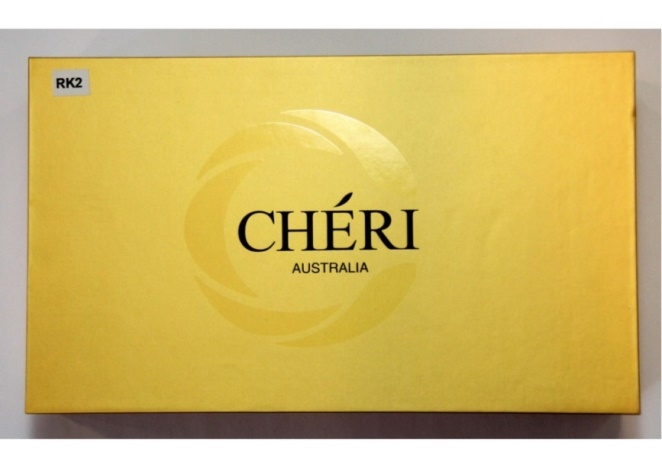
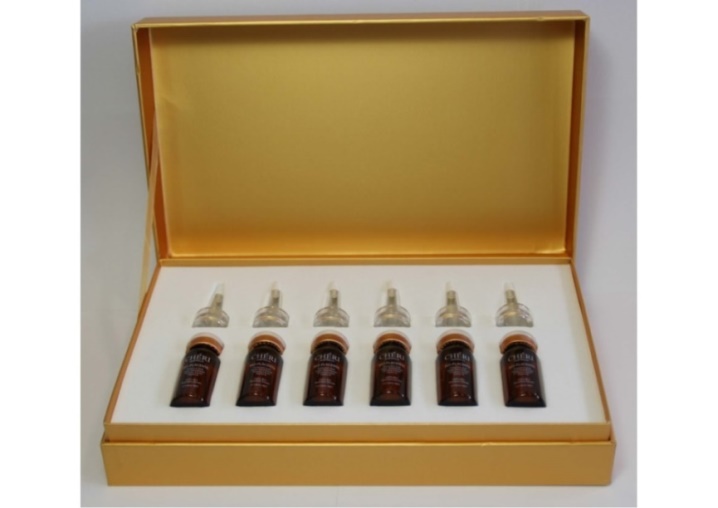
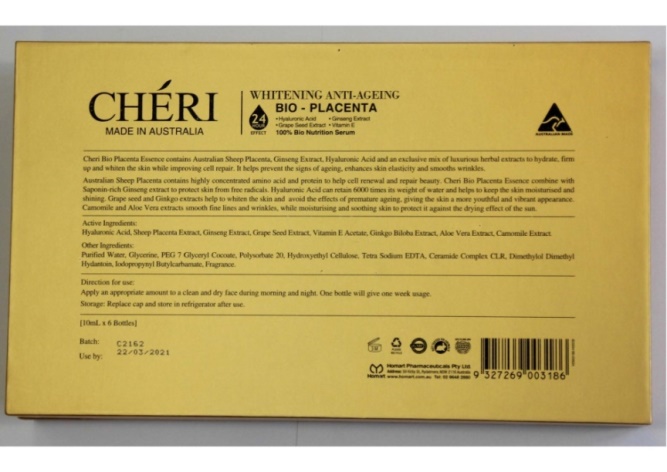
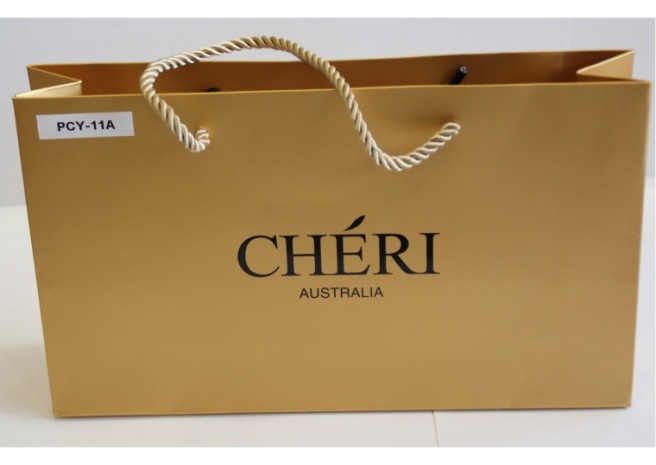
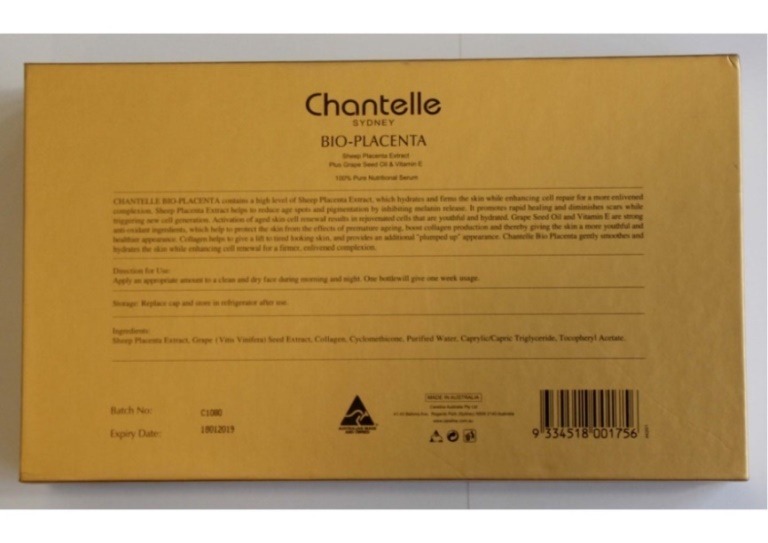
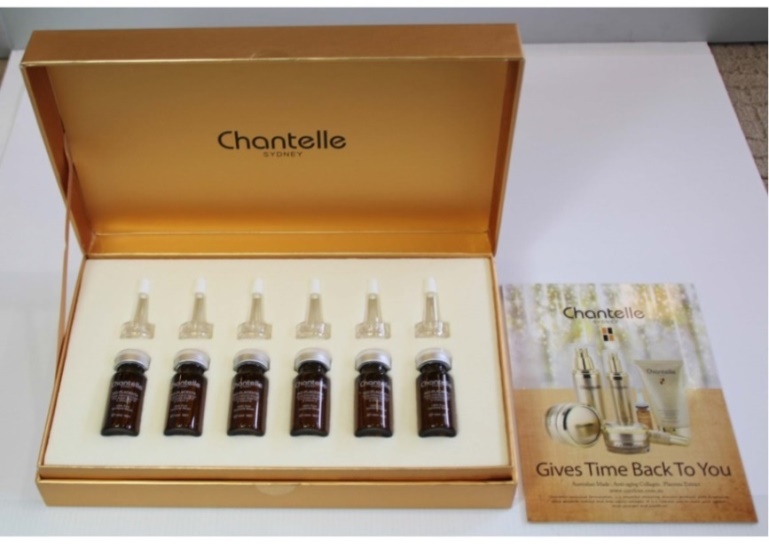
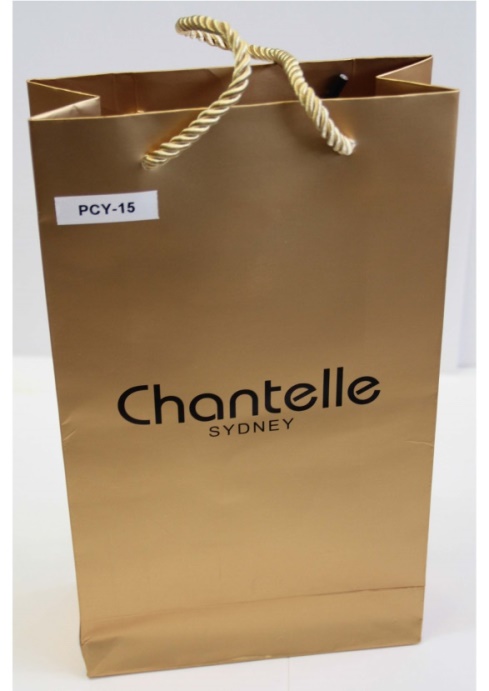
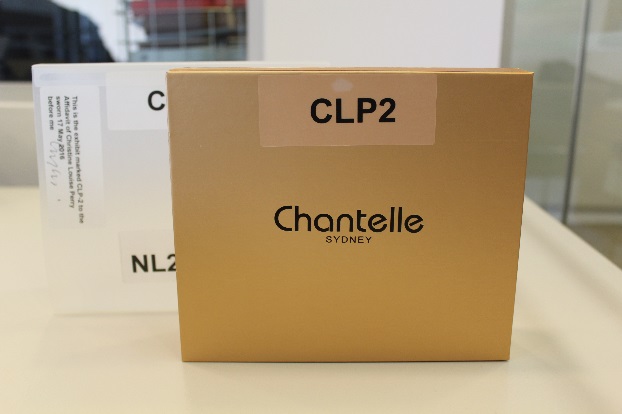
1. By offering for sale, advertising and promoting in Australia bio-placenta skin product in its present packaging and get up, images of which are depicted in Annexure A hereto, Homart Pharmaceuticals Pty Ltd (Homart) has engaged in conduct that is misleading or deceptive or likely to mislead or deceive and thereby contravened section 18 of Schedule 2 to the Competition and Consumer Act 2010 (Cth).
THE COURT ORDERS THAT:
2. Homart by itself, its servants and agents be restrained from selling, offering for sale, distributing, promoting and/or marketing in Australia any bio-placenta oil skin care product in the packaging and get up depicted in Annexure A hereto, or any packaging or get up that is deceptively similar to the packaging or get up of the Careline Australia Pty Ltd (Careline) bio-placenta skincare products depicted in Annexure B hereto.
3. Order 2 be stayed for 14 days.
4. Homart’s amended application be dismissed.
5. Homart pay the respondents’ costs of its claim and the costs of Careline’s cross-claim.
6. The parties confer and take steps within 14 days to relist the proceeding for a case management conference to determine directions appropriate to prepare for a hearing to determine the quantity of any damages which Homart may be liable to pay.
ANNEXURE A
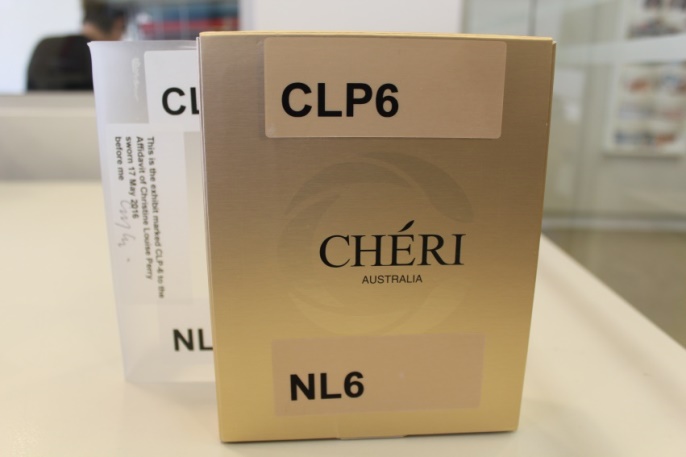
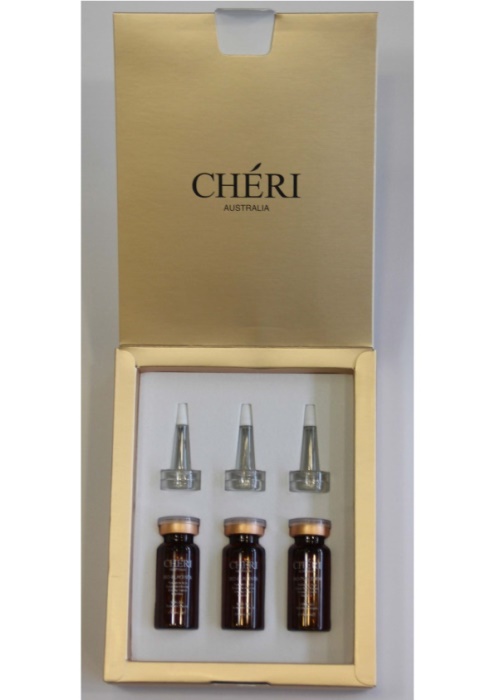
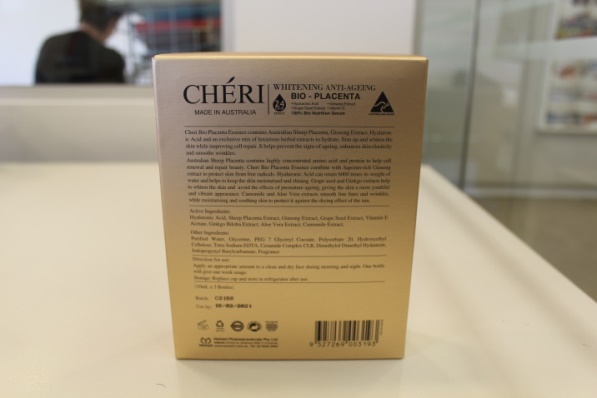
ANNEXURE B
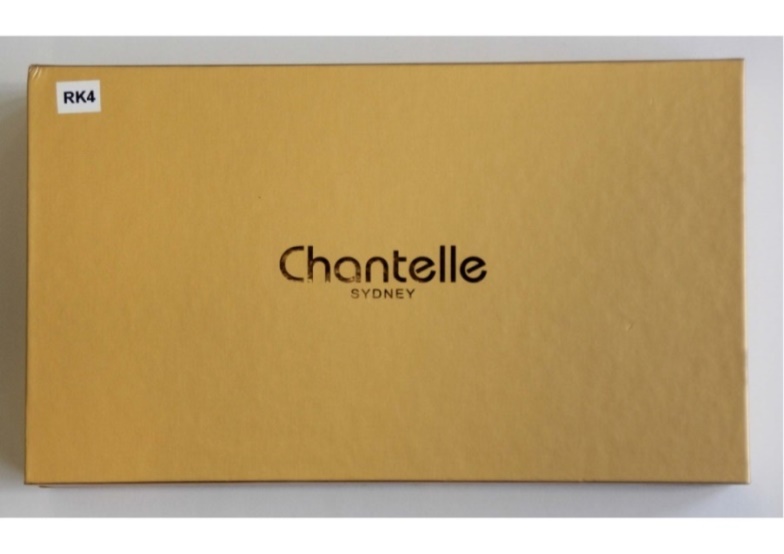
Note: Entry of orders is dealt with in Rule 39.32 of the Federal Court Rules 2011.
[1] | |
[7] | |
[9] | |
[20] | |
[36] | |
[38] | |
[39] | |
[56] | |
5.3 Findings in relation to relevant consumers and market conditions | [68] |
[80] | |
[81] | |
6.2 Comparison between the CHÉRI and CHANTELLE bio-placenta products | [84] |
[85] | |
[87] | |
[88] | |
[88] | |
[92] | |
[105] | |
7.4 Consideration of reputation and distinctiveness of the CHANTELLE bio-placenta product | [124] |
[137] | |
[137] | |
[140] | |
[161] | |
9 RELEVANT REPUTATION RESIDING IN HOMART’S CHÉRI AND CHÉRI AUSTRALIA PRODUCTS AND BRANDS | [168] |
[168] | |
[170] | |
[174] | |
[179] | |
11 CONCLUSION IN RELATION TO CARELINE’S CROSS-CLAIM FOR MISLEADING AND DECEPTIVE CONDUCT | [188] |
[205] | |
[207] | |
14 THE ONLINE COMPARATIVE EFFECTIVENESS REPRESENTATIONS ALLEGED | [210] |
14.1 The sources of the online comparative effectiveness representations | [216] |
[223] | |
[241] | |
[243] | |
15.2 Consideration of the Pure Legal effectiveness representations | [247] |
[266] | |
[276] | |
[281] |
BURLEY J:
1 The applicant, Homart Pharmaceuticals Pty Ltd (Homart) and the first respondent, Careline Australia Pty Ltd (Careline) are competitors in the manufacture, distribution and sale of cosmetic products in Australia. Careline has since about 2008 manufactured and sold a cosmetic product which is said, amongst other things, to hydrate and firm the skin while enhancing skin repair for more enlightened complexion. A prominently advertised component of the product is referred to as “bio-placenta”, which is a sheep placenta extract. Since late 2014 this product has been sold in 3 and 6-ampoule containers under the name “CHANTELLE Sydney” and in the particular form depicted in [10] below (CHANTELLE bio-placenta product). Early in 2016, Homart launched a cosmetic product which is said, amongst other things, to hydrate, firm up and whiten the skin while improving skin repair. A prominently advertised component of the Homart product is also bio-placenta containing sheep placenta. The Homart product is sold in 3 and 6-ampoule containers under the name “CHÉRI Australia” and is depicted in [13] below (CHÉRI bio-placenta product). It is not in dispute that the primary target market for these products is people of ethnic Chinese origin.
2 Careline claims in its cross-claim that Homart is engaging in misleading and deceptive conduct by launching and selling the CHÉRI bio-placenta product. It contends that the packaging of the bio-placenta product in boxes amounts to a misrepresentation to consumers that the CHÉRI bio-placenta product is the CHANTELLE bio-placenta product or is made, imported or sold with the sponsorship or approval of Careline, or that the CHÉRI bio-placenta product is otherwise associated with the makers of the Careline product. In essence, the Careline case is a “get-up” case, namely, that despite the use of different trade marks on the packaging, the packaging of the CHÉRI bio-placenta product is misleading.
3 Irate at Homart’s use of similarities in the get-up and composition of the CHÉRI bio-placenta product, in May 2016 Careline’s solicitors sent letters to Homart, some of Homart’s customers and certain media outlets complaining about the CHÉRI bio-placenta product. Employees of Careline also posted messages on WeChat. In its claim, Homart contends that these communications involve conduct which is misleading or deceptive in breach of s 18 of Schedule 2 to the Competition and Consumer Act 2010 (Cth) (Australian Consumer Law or ACL).
4 The proceedings were commenced urgently on 13 May 2016 by Homart, seeking interlocutory relief to restrain Careline and its affiliated company, the second respondent, Dragon Show Australia Pty Ltd (Dragon Show) from repeating the representations contained in the solicitor’s letter and the WeChat posts. An interim regime was agreed between the parties. Careline filed its cross-claim on 17 May 2016. The matter was set down for an early final hearing in lieu of an interlocutory hearing. Pleadings were exchanged and, in a short time, a large number of affidavits were filed. On 26 May 2016, I ordered that quantum and liability be separated such that issues concerning the liability for non-pecuniary relief are to be heard separately and before issues of pecuniary relief. This judgment addresses the question of liability.
5 At trial, affidavits of 21 witnesses were read, most of whom were cross-examined. Many of those witnesses preferred to give their oral evidence with the assistance of an interpreter who could translate English to a Chinese language (either Mandarin or Cantonese) and vice versa. Many of the documents in evidence were written using Chinese characters.
6 In the reasons that follow, it is convenient first to address Careline’s claims in its cross-claim and then to consider Homart’s claims as set out in its statement of claim. This was the order adopted by the parties in their closing submissions.
7 For the reasons that I have set out in Part A of these reasons, I have concluded that Careline has made out its cross-claim brought pursuant to s 18 of the ACL for misleading and deceptive conduct arising from the similarities in get-up between the CHÉRI bio-placenta product and the CHANTELLE bio-placenta product.
8 In Part B of these reasons I have concluded that Homart has failed to make out the claim made in its statement of claim that, by reason of the contents of the solicitor’s letter and the WeChat postings, Careline has made representations that fall foul of s 18 of the ACL.
9 Careline alleges in its cross-claim that since 2008 it has formulated, manufactured, packaged, distributed, marketed and sold in Australia and elsewhere a range of products under the CHANTELLE name which includes its bio-placenta product. The bio-placenta product is marketed to people of Chinese origin or ethnicity. It contends that at all material times its bio-placenta product has been advertised and sold in a form as depicted in the schedules to the cross-claim. The cross-claim emphasises the five features of the packaging set out below, but relies upon all of the features of the packaging in support of its claim for misleading and deceptive conduct:
(1) A gold-coloured rectangular carry bag with gold-coloured cord handles and the words “CHANTELLE SYDNEY”;
(2) a gold-coloured rectangular cardboard case that slides into a transparent rectangular plastic sheath (or sleeve), with the words “CHANTELLE SYDNEY” on the case, a lid that is affixed to the bottom of the case and that sits inside the CHANTELLE gold carry bag;
(3) 10 ml brown-coloured glass ampoules with alloy tear-off covering, clear plastic caps, the words “CHANTELLE SYDNEY”, “Bio Placenta” and “100% Pure Nutrition Serum” and mounted inside the gold case in a cream-coloured foam mould in a horizontal row;
(4) transparent plastic applicators with white plastic caps mounted inside the gold case in a horizontal row directly above the bio-placenta bottles in the cream-coloured foam mould; and
(5) a gold-coloured ribbon attached to the left-hand side of the lid and left-hand side of the bottom of the gold case.
10 Examples of the packaging features, taken from the evidence, are set out below:
(a) Gold roped bag:
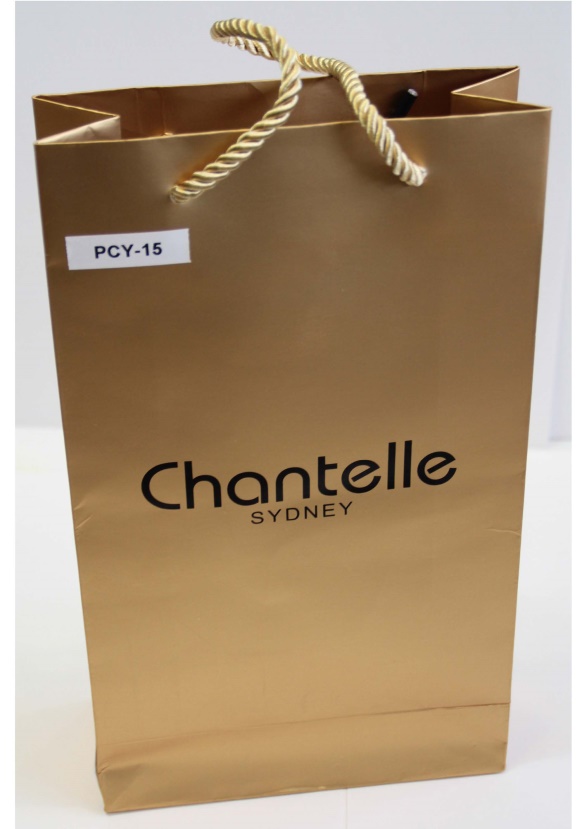
(b) 6-ampoule container (sheath omitted):
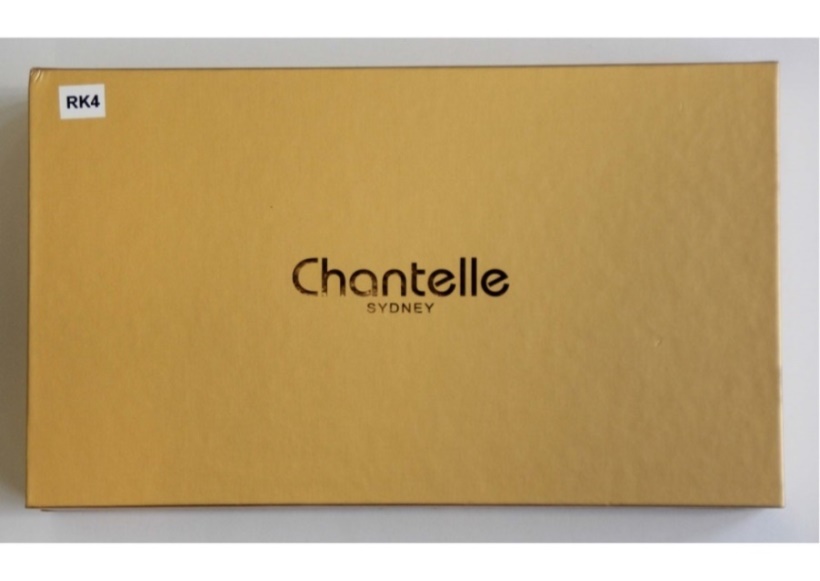
(c) Base of container:
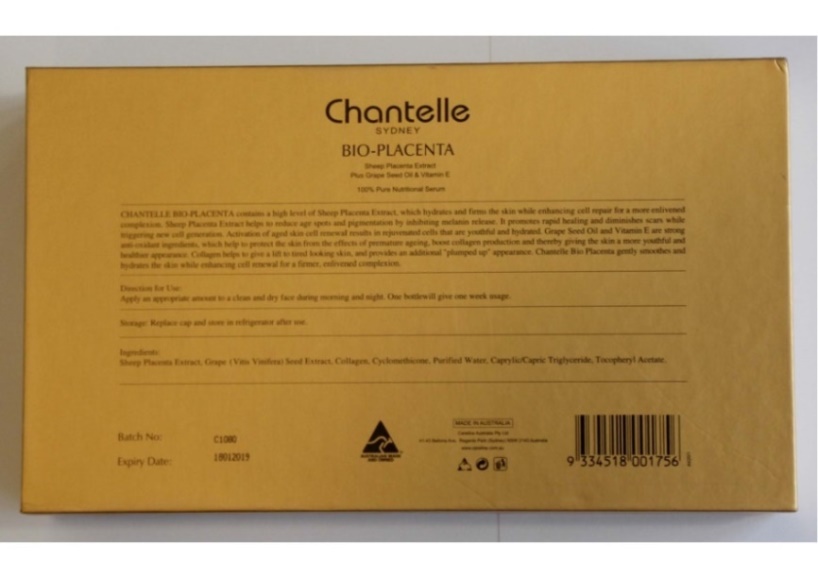
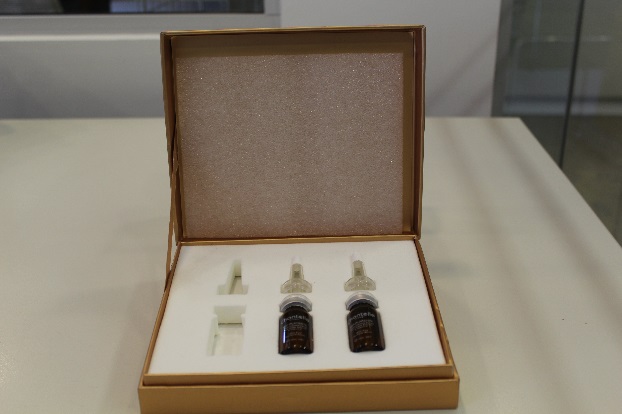
(d) Container in open configuration with brochure:
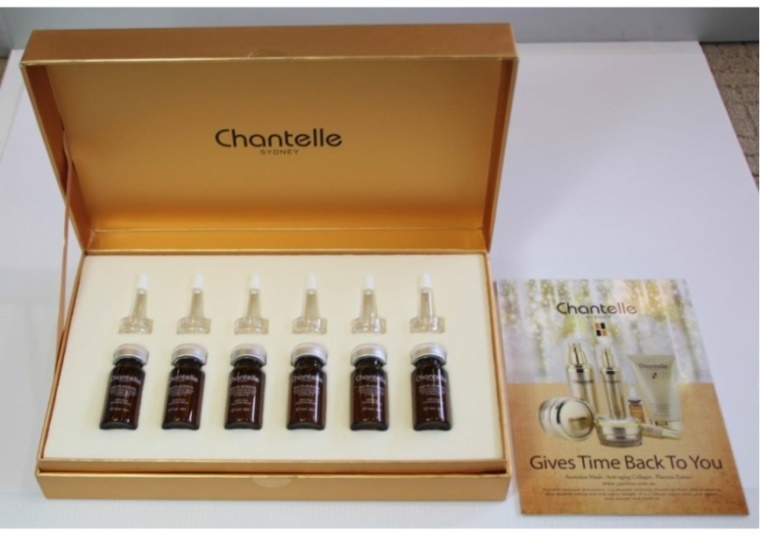
(The evidence indicates that the words “CHANTELLE Sydney” first appeared on the inside of the lid in about August 2015.)
3-ampoule container and sheath:
11 Careline contends that since 2008 it has distributed, promoted and sold its product in packaging that is in “the same or (substantially the same)” form as that depicted above. The evidence did not entirely support that contention, as prior to November 2014, the CHANTELLE bio-placenta product was sold using the name CHANTELLE SYDNEY, but in somewhat different packaging, an example of which may be seen below (initial CHANTELLE packaging):
Previous packaging used by Careline:
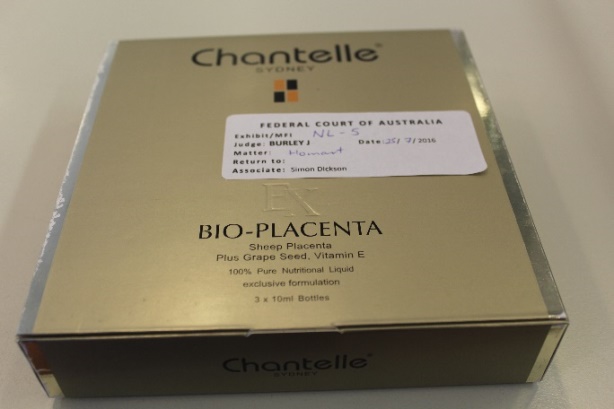
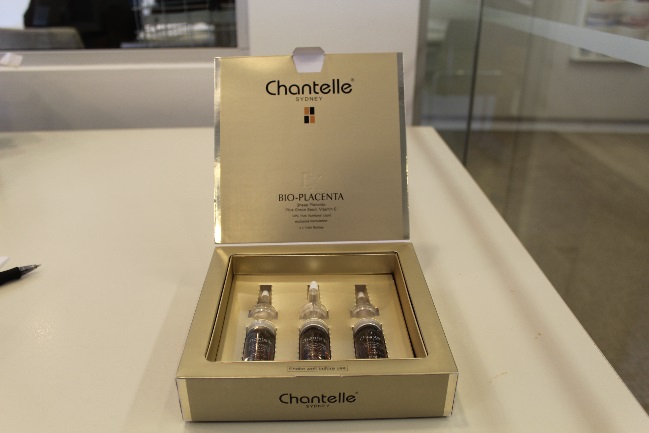
12 Ultimately, Careline did not rely on the get-up of its products prior to November 2014 in support of its claim to reputation.
13 Careline contends in its cross-claim that in approximately April 2016, Homart distributed, marketed and sold in Australia the CHÉRI bio-placenta product in 3 and 6-ampoule variants which possess each of the visual features (1) – (5) identified in [9] above. Examples of the packaging features of the CHÉRI bio-placenta product are depicted below:
(a) CHÉRI bio-placenta product (6-ampoule packaging (sheath omitted)):
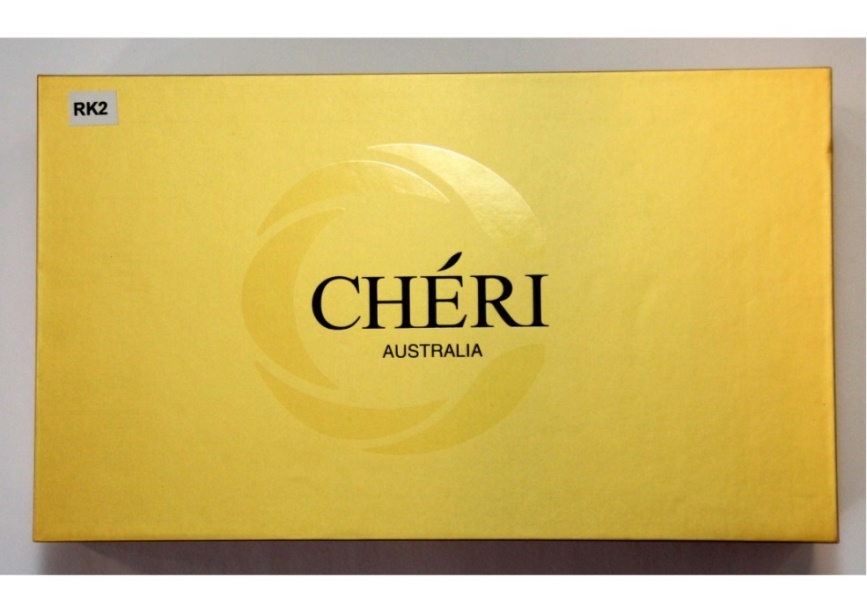
(b) CHÉRI bio-placenta product in open configuration:
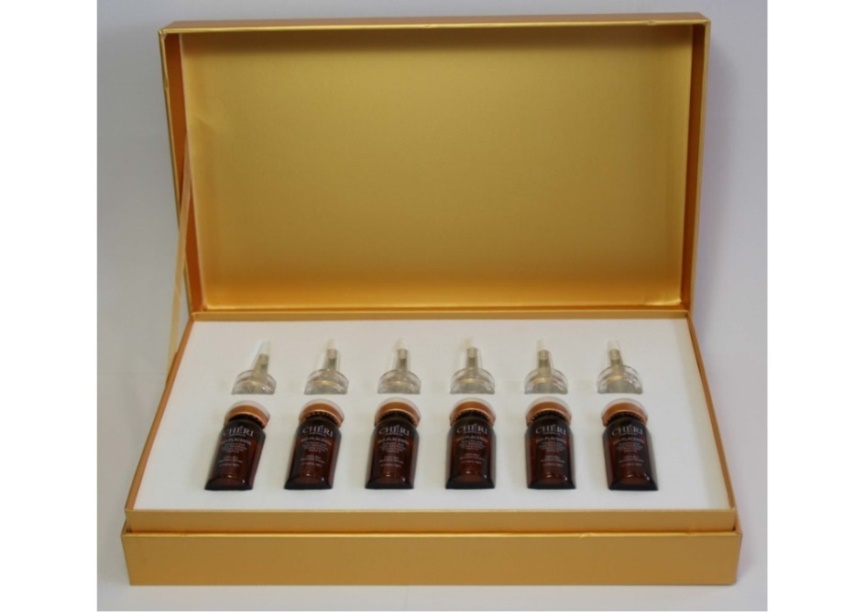
(c) Base:
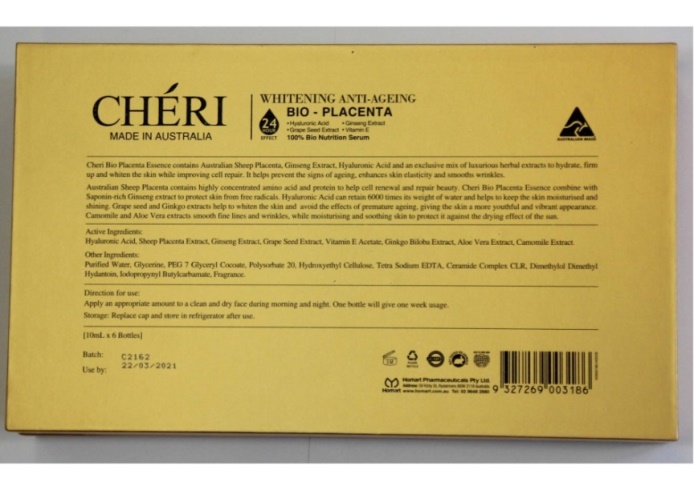
(d) CHÉRI bio-placenta product (3-ampoule packaging (and sheath)):
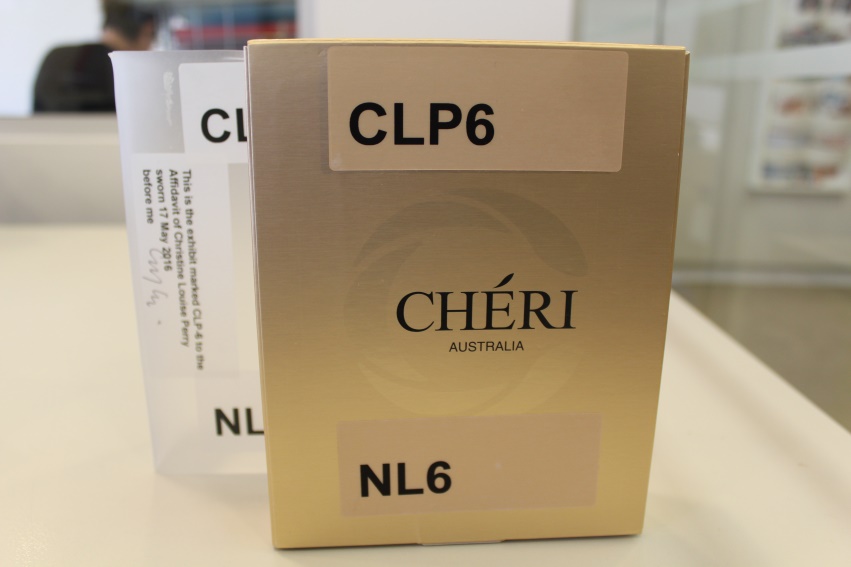
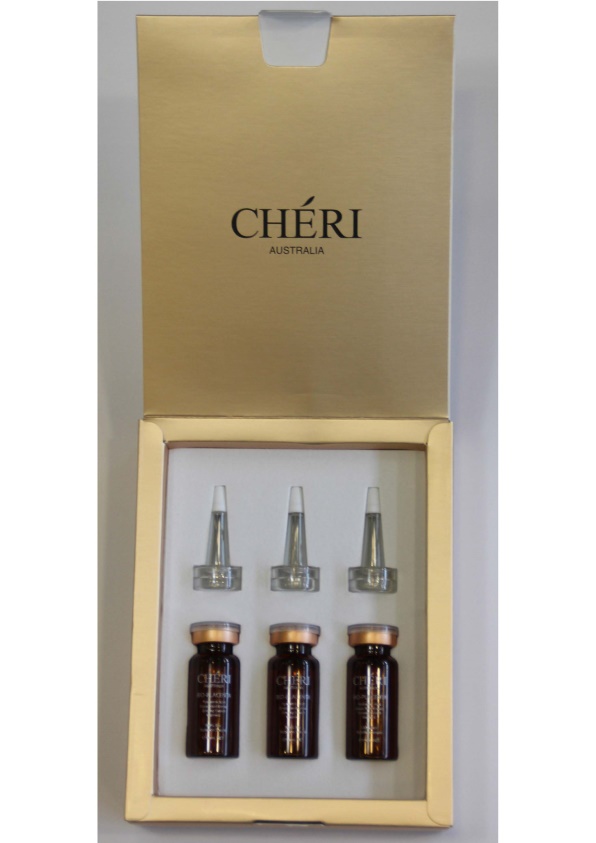
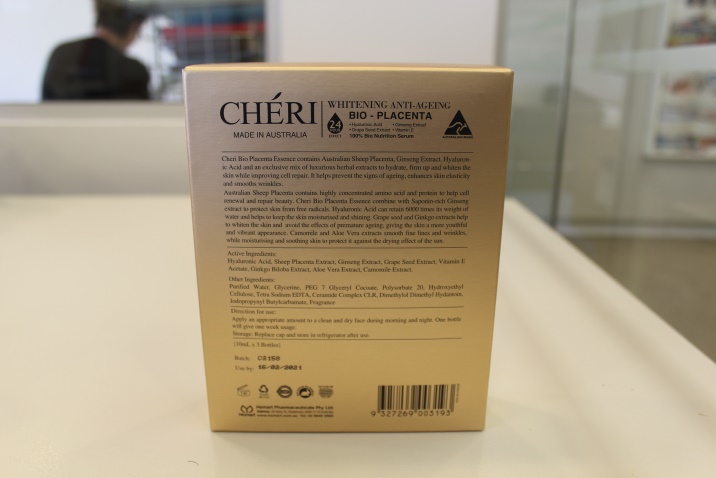
(e) CHÉRI gold-roped bag:
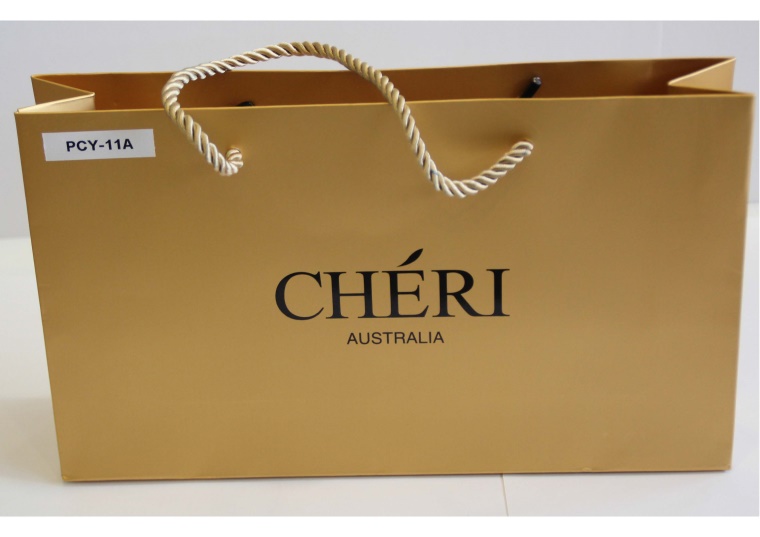
14 The cross-claim contends that the packaging of the CHÉRI bio-placenta product closely resembles that of the CHANTELLE bio-placenta product in almost all of its significant and distinctive features. Careline claims; that Homart intentionally adopted the visual features of its packaging knowing that those features closely resemble the design of the CHANTELLE bio-placenta packaging; and that by selling the CHÉRI bio-placenta product in its current packaging, Homart has represented to consumers in Australia that its product is in fact the CHANTELLE bio-placenta product, is made, imported or sold with the sponsorship or approval of the makers of the CHANTELLE bio-placenta product, and is otherwise associated with the CHANTELLE bio-placenta product or the makers thereof.
15 The cross-claim initially also contended that Homart has represented to consumers that the CHÉRI bio-placenta product has all of the same properties and performance characteristics and would perform in the same way as the Careline product, however, these contentions were not pressed.
16 Careline’s cross-claim also alleged that the conduct pleaded amounted to passing-off but that ground was also not pressed.
17 In its notice of cross-claim, Careline seeks declarations and orders restraining the sale of the CHÉRI bio-placenta product, corrective advertising, damages, interest and costs.
18 In its defence to cross-claim (Defence), Homart largely put Careline to proof on all aspects of its claim. Homart accepted that ovine placenta protein is used in health and cosmetic products (which includes bio-placenta products) and is sold and specifically marketed to people of Chinese origin or ethnicity, but does not admit that such people represent the entire market. Homart also admits that it began selling the 3-ampoule variety of its bio-placenta product in February 2016 and the 6-ampoule variety in March 2016. Homart disputes that Careline has a substantial and valuable reputation in the CHANTELLE bio-placenta product or the CHANTELLE SYDNEY brand, denies that any goodwill attaches to the packaging of those products as opposed to the separate goodwill that might attach to the brand or product, contends that the name CHÉRI AUSTRALIA is sufficient to distinguish the two products, and identifies other aspects of the respective products that are different.
19 Homart in its Defence also denies that it intentionally adopted the visual features of the CHANTELLE bio-placenta product. In [30] of the Defence, Homart makes some factual admissions relevant to the allegation of intentional copying:
30. In relation to the allegation in paragraph 30, Homart:
a. Admits that it was aware of and considered other manufacturers’ designs, including the Chantelle design, at the time of the design of the Chéri products.
b. Says that it made design decisions on the basis of considerations which include the following:
i. adopted design styling elements common to the luxury/cosmetic trade.
ii. cost considerations.
iii. customer preferences and cultural preferences.
iv. the use of an established brand already owned and trademarked by Homart (since 2004), namely “Chéri”.
v. reflected choices already made elsewhere in the Chéri range.
vi. functional choices.
c. Admits that it adopted and/or was inspired by the following features from the Chantelle packaging design:
i. in relation to the 6-ampule box alone, the dimensions and structure of the 6-ampule box.
ii. the use of a clear plastic sleeve for the 3-ampule box and the 6-ampule box.
iii. limited generic text on the back of the packaging.
d. Denies that the features in (b) or (c) is distinctive of the Chantelle 6-ampule product, or 3-ampule product:
i. considered together or separately; or
ii. considered separately from the “Chantelle Sydney” brand name.
e. Says that Homart took steps to identify and distinguish the Chéri product (the ampules and/or the packaging) from other products (including from the Chantelle product).
f. Denies that Homart ever intended to:
i. mislead or confuse consumers; or
ii. take advantage of the goodwill inhering (if any) in the Chantelle product and/or packaging.
…
20 Subsection 18(1) of the ACL provides:
(1) A person must not, in trade or commerce, engage in conduct that is misleading or deceptive or is likely to mislead or deceive.
21 Some general principles relevant to the present controversy are set out below.
22 In a get-up case an applicant must establish that it has acquired the relevant reputation in the name or get-up such that the name or get-up has become distinctive of the applicant’s business or products; S & I Publishing Pty Ltd v Australian Surf Life Saver Pty Ltd [1998] FCA 1463; (1998) 88 FCR 354 at 362-3 (S & I Publishing) per Hill, R D Nicholson and Emmett JJ.
23 A trader may establish a reputation in trade indicia other than names and logos which may be protected without registration as a trade mark; Cadbury Schweppes Pty Ltd v Darrell Lea Chocolate Shops Pty Ltd [2007] FCAFC 70; (2007) 159 FCR 397 (Cadbury Schweppes) at [97]. If particular branding elements used by a trader have been identified in a special way with that trader in the minds of members of the public, there may be misleading or deceptive conduct by reason of the appropriation of those particular branding elements by another trader; Cadbury Schweppes at [97].
24 The relevant date for assessing the reputation of the applicant for the purpose of s 18 of the ACL is the date that the impugned conduct commenced; Thai World Import & Export Co Ltd v Shuey Shing Pty Ltd [1989] FCA 735; (1989) 17 IPR 289 at 302 (per Gummow J); Taco Co of Australia Inc v Taco Bell Pty Ltd [1982] FCA 170; (1982) 42 ALR 177 (Taco Co) at 182 (Franki J), 195, 196, 204 (Deane and Fitzgerald JJ); Optical 88 Ltd v Optical 88 Pty Ltd (No 2) [2010] FCA 1380; (2010) 89 IPR 457at [334] (Yates J).
25 In many cases it will be necessary to consider the class of persons to whom the representation was directed; S & I Publishing at 362-3.
26 Where the persons in question are members of a class to which the conduct in question was directed in a general sense, it is necessary to isolate by some criterion a representative member of that class. The inquiry is thus to be made with respect to this hypothetical individual why the misconception complained of has arisen or is likely to arise if no injunctive relief is granted. Where the effect contemplated of is on a class of consumers (as in the present case), the effect of the conduct (here, the get-up) on reasonable members of the class is to be considered; Campomar Sociedad, Limitada v Nike International Limited [2000] HCA 12; (2000) 202 CLR 45 at [103] (Campomar) (Gleeson CJ, Gaudron, McHugh, Gummow, Kirby, Hayne and Callinan JJ).
27 The inquiry is whether a “not insignificant number” of the relevant class is likely to be misled or deceived; Peter Bodum A/S v DKSH Australia Pty Ltd [2011] FCAFC 98; (2011) 92 IPR 222 (Peter Bodum) at [209] (Greenwood J, Tracey J agreeing).
28 When, in a case concerning s 18 of the ACL, the focus is upon the misleading of others, it becomes of particular importance to identify the respect in which there is said to be any misleading or deception. For instance, where the name of the claimant consists of descriptive words, the fact that confusion arises may not be attributed to misleading or deceptive conduct, but because of the descriptiveness of the name. For that reason it is necessary to inquire why any misconception has arisen in the minds of consumers; Hornsby Building Information Centre Pty Ltd v Sydney Building Information Centre Ltd [1978] HCA 11; (1978) 140 CLR 216 at 228, 229 (Stephen J, Barwick CJ, Jacobs and Aickin JJ agreeing).
29 In assessing the character of the conduct in question, against the background of all of the contextual circumstances, conduct which misleads a consumer such that she or he opens negotiations or invites approaches under some mistaken impression of a trader’s connection or affiliation with another, may be engaging in misleading or deceptive conduct, even if the true position emerges before the transaction is concluded; Peter Bodum at [210] (Greenwood J, Tracey J agreeing). Whether an impression of a trader’s connection or affiliation, which does not linger until point of sale, is sufficient to amount to misleading or deceptive conduct depends on the circumstances of each case. In Stuart Alexander & Co (Interstate) Pty Ltd v Blenders Pty Ltd [1981] FCA 169; (1981) 37 ALR 161 (Stuart Alexander) at 169, Lockhart J declined to find misleading or deceptive conduct because, despite similarities in the get-up of the containers, he found that the trade name (“Moccona” as against “Andronicus”) was sufficient to distinguish the goods. In the Taco Co case, Deane and Fitzgerald JJ (at 199) declined to make a finding of general principle that point of sale confusion was required.
30 These points were reinforced by the High Court when it observed in Australian Competition and Consumer Commission v TPG Internet Pty Ltd [2013] HCA 54; (2013) 250 CLR 640 at [50] (French CJ, Crennan, Bell and Keane JJ) that actionable misleading or deceptive conduct is not limited to conduct which induces or is likely to induce entry into a transaction. Conduct which misleads a consumer so that, under some mistaken impression of a trader’s connection or affiliation, he or she opens negotiations or invites approaches may be misleading or deceptive even if the true position emerges before the transaction is concluded. See also SAP Australia Pty Ltd v Sapient Australia Pty Ltd [1999] FCA 1821; (1999) 48 IPR 593 (SAP Australia) at [51]; Verrocchi v Direct Chemist Outlet Pty Ltd [2016] FCAFC 104 (Verrocchi, Full Court) at [68].
31 It is not necessary for consumers to assume that the services are from the same source. It is sufficient if consumers believe that there is some connection or association between the services, or the persons who provide them; Verrocchi v Direct Chemist Outlet Pty Ltd [2015] FCA 234; (2015) 112 IPR 200 at [78] (Verrocchi, first instance) (Middleton J).
32 Evidence from individual consumers that they have been misled by the impugned conduct is of limited utility. It has no statistical significance and the Court cannot draw inferences from it that any section or fraction of the population will have similar reactions; but if the inference is open, independently of such testimonial evidence, that the conduct is misleading or deceptive or likely to mislead or deceive, then it may be that the evidence of consumers that they have been misled can strengthen that inference; Verrocchi v Direct Chemist Outlet Pty Ltd [2015] FCA 234; (2015) 112 IPR 200 (Verrocchi, first instance) at [94]; State Government Insurance Corporation v Government Insurance Office of New South Wales (1991) 28 FCR 511 at 529 (French J, as he was then).
33 Conversely, the absence of evidence of confusion may also be significant, for instance in cases where the impugned conduct has been going on for a considerable period of time, the applicant was aware of the need for obtaining evidence to support its case and no such evidence was forthcoming; Cadbury Schweppes Pty Ltd v Darrell Lea Chocolate Shops Pty Ltd (No 4) [2006] FCA 446; (2006) 69 IPR 23 at [81].
34 Where the Court has made a finding of intention to deceive, it may more readily infer that the intention has been, or in all probability will be, effective. However, even an imitation of one product by another does not necessarily bespeak of an intention to deceive purchasers; Campomar at [33]. Evidence of intentional copying of a rival trader’s get-up may give rise to such an inference, but the role of intention should not be overstated. It is “simply one piece of evidence to be assessed with such other evidence as may be adduced on the issue”; Windsor Smith Pty Ltd v Dr Martens Australia Pty Ltd [2000] FCA 756; (2000) 49 IPR 286 at [33], [34] (Sundberg, Emmett and Hely JJ). See also Playcorp Group of Companies Pty Ltd v Peter Bodum A/S [2010] FCA 23; (2010) 84 IPR 542 at [149], Middleton J at first instance (not the subject of the appeal) said:
I approach the question of intention in the way expressed by Dixon and McTiernan JJ in Australian Woollen Mills Limited v FS Walton & Co Limited (1937) 58 CLR 641, at 657 (Australian Woollen Mills):
The rule that if a mark or get-up for goods is adopted for the purpose of appropriating part of the trade or reputation of a rival, it should be presumed to be fitted for the purpose and therefore likely to deceive or confuse, no doubt, is as just in principle as it is wholesome in tendency. In a question how possible or prospective buyers will be impressed by a given picture, word or appearance, the instinct and judgment of traders is not to be lightly rejected, and when a dishonest trader fashions an implement or weapon for the purpose of misleading potential customers he at least provides a reliable and expert opinion on the question whether what he has done is in fact likely to deceive.
35 In considering whether consumers are likely to be misled or deceived, it is necessary to consider what has been done against all the surrounding circumstances, including:
(1) the strength of the applicant’s reputation, and the extent of distribution of its products;
(2) the strength of the respondent’s reputation, and the extent to which the respondent has undertaken any advertising of its product;
(3) the nature and extent of the differences between the products, including whether the products are directly competing;
(4) the circumstances in which the products are offered to the public; and
(5) whether the respondent has copied the applicant’s product or has intentionally adopted prominent features and characteristics of the applicant’s product;
Verrocchi, first instance at [62]; cited by Verrocchi, Full Court at [69] (Nicholas, Murphy and Beach JJ).
4. THE ISSUES FOR DETERMINATION
36 The relevant date for assessing misleading and deceptive conduct is the date upon which the conduct alleged commenced. In the present case, it is not in dispute that Homart’s 3-ampoule bio placenta product was first sold in February 2016 and its 6-ampoule product in March 2016. I accept that these are the relevant months. The evidence does not present a more precise identification of the date. Where I make a finding of fact in relation to the cross-claim, unless otherwise stated, it is a finding as at these dates.
37 The authorities identified above, taken in the context of the particular facts of this case, indicate that the following issues require determination:
(1) Consideration of the evidence in relation to the relevant consumers of the bio-placenta products in issue, including their ethnicity and the trade channels through which acquisitions of such products are likely to be made. This includes the manner in which the products are displayed in-store as well as other aspects going to their promotion.
(2) Consideration of a comparison of the similarities and differences between the packaging of the CHANTELLE and CHÉRI bio-placenta products.
(3) Consideration of whether Homart has intentionally adopted prominent features and characteristics of the CHANTELLE bio-placenta product.
(4) Consideration of the reputation developed by Careline in the CHANTELLE bio-placenta product. This involves consideration of evidence of sales, promotion and packaging by Careline of its products. A significant aspect of this issue involves addressing the detailed evidence of competing products available in the market place that are alleged by Homart to have rendered the CHANTELLE bio-placenta product features “commonplace”.
(5) Consideration of the strength of Homart’s reputation in the name CHÉRI prior to the commencement of sales of its bio-placenta products.
(6) Consideration of any evidence of confusion.
(7) Conclusion as to whether, in light of all of the relevant matters, the misrepresentation case is made out and what relief should be granted.
38 Careline called 11 witnesses in the proceedings and Homart called 10. Many were cross-examined. Most of the evidence concerned Careline’s cross-claim, though some evidence, including expert evidence, was called in relation to Homart’s claim. Given the nature of the proceedings, a surprising number of the witnesses were challenged in cross-examination as to their credit. In general, I find that the witnesses were helpful and endeavoured to assist the Court conscientiously. On occasion, some factual discrepancies were picked up in cross-examination. For the main part, I consider that these discrepancies arose from genuine mistakes possibly caused by the fact that the witnesses did not speak English as their first language or the speed with which the affidavits were required to be filed. In the section that follows I provide a short summary of the witnesses’ evidence in relation to Careline’s claims. It is not intended to be comprehensive. Where necessary I later discuss aspects of the evidence in further detail. Taking into account differences in personal experience and observations that arise from witness to witness, I broadly accept the evidence given by these witnesses as to their own observations.
39 Tao (Norman) Li is the director of Careline. Mr Li holds a Bachelor of Economics degree. His wife is the director of Dragon Show, which holds the trade marks and business licences used by Careline but otherwise does not actively trade. Mr Li was born in China and his first language is Mandarin. He arrived in Australia as a student to study English and later studied accounting. Careline was established in 1999, but Mr Li became involved in skin care products in around 1996. Careline sells what he termed “Chinese and Asian style products” which have particular appeal to Chinese and other Asian consumers. He gave three affidavits in the proceedings. In his first he gives evidence about the history of Careline, the CHANTELLE brand, the design and packaging of the CHANTELLE bio-placenta product and his perceptions concerning the launch of the CHÉRI bio-placenta product. In his second affidavit he gives evidence relevant to the Homart claim, and in his third affidavit he provides responses to evidence filed on behalf of Careline, including about aspects of the get-up of the CHANTELLE bio-placenta product that are said to be commonplace. I return to the detail of Mr Li’s evidence below.
40 Jianping (Rocky) Zou is the Sales Manager at Careline and works in the Sydney metropolitan area where he is responsible for 40 regular customers who have shops. He has been employed by Careline since about February 2012. He is of Chinese origin and his first language is Mandarin. He gave evidence that he could speak, write and read English, but on a “very limited” basis. He travels regularly to each shop and concentrates his sales efforts in geographical areas where there are large numbers of Chinese residents such as Hurstville and Chatswood. He gave evidence about in-store displays of products within Careline’s CHANTELLE range of products, and the CHANTELLE bio-placenta product. He also addresses the reputation of the CHANTELLE bio-placenta product, customer buying habits and aspects of the product that are said to be commonplace in the market.
41 For the larger stores that stock the CHANTELLE range, he personally arranges the display of the product which, he says, includes displaying the product in its closed box, sometimes stacked on top of each other, and also in its open configuration. He also tries to arrange for posters of the product to be displayed in windows of the stores where this product is sold. These posters include an image of the CHANTELLE bio-placenta product in the open configuration. In Mr Zou’s experience, prior to the launch of the CHÉRI bio-placenta product in about April 2016, he had never seen another bio-placenta oil product marketed in gold packaging and glass bottles with applicators similar to those used in the CHANTELLE bio-placenta product. When selling the CHANTELLE bio-placenta product, he did so by referring to it as the “golden box” and in his experience retailers and customers ordered the product by reference to the words “golden box”. Mr Zou exhibited photographs of typical in-store displays of the CHANTELLE bio-placenta product. In his view, all of the stores at which he promoted and sold the CHANTELLE bio-placenta product target Chinese customers, including both Australian residents and Chinese tourists visiting Australia. I accept Mr Zou’s evidence of these matters.
42 Sha (Marsha) Ma is a customer services officer employed by Careline in 2016. Her first language is Mandarin but she is fluent in English. She gave four affidavits. In the first she gives evidence about the launch of the CHÉRI bio-placenta product and confusion between the Careline and the Homart products. I address the question of consumer confusion later in these reasons. In her second affidavit she translates a number of WeChat communications from Mandarin into English. In the fourth she gives evidence that she assisted certain other witnesses by translating their affidavits for them.
43 In her third affidavit, Ms Ma gives evidence concerning the availability of other gold boxed placenta products on the market.
44 Jordon Wang is the Director of Bingo Wholesale Pty Ltd (Bingo) which is a retailer, wholesaler and exporter of beauty and skin care products. Mr Wang is Chinese and speaks Mandarin as his mother tongue and a certain amount of English. He gave evidence with the assistance of an interpreter. He gave evidence about the manner in which the CHANTELLE bio-placenta product is sold, his perception of consumer behaviour and the types of consumers. Mr Wang gave evidence that he sold no placenta oil product in gold boxes other than the Careline product. He was challenged on this evidence in cross-examination and the “Monica” Intensive Resilient Placenta Ampoule and Intensive Placenta Eye Serum Set were put to him as also being placenta products sold in gold boxes in his stores. Mr Wang accepted that they were sold in his stores, which led to a vigorous challenge to Mr Wang’s credit on the basis that he had given misleading evidence about the availability of other “gold” products in his stores. However, I do not consider that this challenge was made out. I am satisfied with Mr Wang’s evidence that he did not regard these other products as being in “gold boxes”. He explained that they were boxes which were “complicated” by other features. I accept Mr Wang’s explanation. His oral evidence explained that by his reference “gold boxes” in his affidavit meant “plain gold” or otherwise generally unadorned except with a name. None of the other products put to him matched that description. A credit challenge was also made on the basis that Mr Wang had a personal interest in the outcome of the proceedings which he had not disclosed. I do not consider that Mr Wang’s evidence was coloured or should otherwise be disregarded on the basis of these matters.
45 Mr Wang’s evidence describes sheep placenta products as skin care products that are based on Chinese traditional medicines (along with propolis, squalene, grapeseed and ginseng). Bingo exports products to Hong Kong and China and conducts its retail operations from premises in Greenacre, Sydney. It has three shops in Sydney located in Hurstville, Hornsby and The Rocks. Mr Wang gave evidence about the market for selling the CHANTELLE bio-placenta product over the last two years at both the retail and wholesale levels. The retail price for the 6-ampoule product is $50 and the 3-ampoule product is $40. His wholesale sales, which include the CHANTELLE bio-placenta product, are to approximately 35 stores in the Sydney metropolitan area. Most of these stores are Chinese gift shops and skin care, health and complementary medicine and food supplement retailers. At his wholesale premises he displays a large Careline poster in the window displaying the full CHANTELLE range, including the bio-placenta 6-ampule product.
46 Mr Wang’s evidence is that all of the Bingo retail stores stock the CHANTELLE bio-placenta product and each displays it on the shelf in stacked boxes. Upon purchase, they are placed in the gold CHANTELLE bags.
47 Mr Wang spends time in each of the Bingo stores between two and three times a week. He gave evidence that he frequently oversees operations there and speaks to customers. He also gave evidence that he has observed many customers buying the CHANTELLE bio-placenta product, especially in the 6-ampoule box. Sometimes customers approach staff and say (in Mandarin) that they want to purchase “the gold boxes of sheep placenta oil”. Some show staff a very small photograph on the bio-placenta oil in the gold box on their phone and ask for the product. I accept these observations as likely to reflect the typical behaviour of some customers.
48 From time to time Mr Wang monitors the advertising of Chinese skin care products on WeChat. In or about March 2016, he noticed a WeChat post of a photo of what he first thought to be the CHANTELLE bio-placenta product, but upon enlarging the image, found it to be what he described as an identical product bearing the name “CHÉRI Australia”. He then alerted Careline.
49 Bin (Peter) Zhang is the owner and manager of the Careyan store located in Cronulla Street, Carlton, Sydney. Mr Zhang speaks Mandarin and gave his evidence through an interpreter. He gave evidence about his understanding of consumer behaviour in relation to the purchase of bio-placenta products, and the perception of the get-up of the CHANTELLE bio-placenta product. Mr Zhang noted that most of his customers speak Chinese to him and gave evidence that some customers purchasing the product referred to it, in Mandarin, as “the gold box of placenta oil”, referring to the CHANTELLE bio-placenta product. He displays the CHANTELLE bio-placenta product box in the store stacked on shelves one on top of the other and also has a display box (the 6-ampoule box) open for customers to see the product. Upon purchase the gold carry bags are provided. He observed that customers do not take long in making their purchase of the CHANTELLE bio-placenta product. He understands that more than half of the CHANTELLE bio-placenta products that he sells are sent to China. He gave evidence that his understanding is that the colour gold is attractive to Chinese people and represents luxury and wealth. Some customers show him a photograph of a gold box and ask to buy the product depicted. He regards it as very rare for customers to actually refer to the brand name “CHANTELLE” when purchasing the CHANTELLE bio-placenta product. He noticed in April and May 2016 a sharp decline in sales of the CHANTELLE bio-placenta product. He has not experienced such a sharp and sudden drop of this product at any other time in the previous two years, even accounting for the usual seasonal variations in sales numbers.
50 Georgia Hardcastle, is a student who was retained by the solicitors for Careline to visit four locations in Sydney. She was instructed to locate “gift stores, pharmacies and vitamin/health stores” in the main streets of Chinatown, Burwood and Cabramatta, to ascertain whether they stocked either the CHANTELLE or CHÉRI bio-placenta product, photograph the in-store displays and make certain other observations. Ms Hardcastle also visited a Mr Vitamins store in Chatswood. In Chinatown she visited eight stores matching the description. In most stores all of the sheep placenta products were in the same section and were not sorted by brand. In Cabramatta she visited 15 stores where again she found the products were assorted by products rather than brands. About half of the stores that she visited in Cabramatta had either the CHANTELLE bio-placenta product or the CHÉRI bio-placenta product. In Burwood she visited ten shops matching the description of her instructions, and found that all stocked the CHANTELLE bio-placenta product. Most of the products in these shops were arranged by product category rather than brand. Her observation at these three localities was overwhelmingly that the 6-ampoule product was sold rather than the 3-ampoule product. In each of these areas she found that the staff in the stores and, to her observation, the customers, were of Asian appearance who were conversing in a non-English language. In a number of stores she found it difficult to converse with the staff in English.
51 Romy Johnson is a student studying teaching at Newcastle University. She was asked by the solicitors for Careline to conduct a similar exercise to Ms Hardcastle, being to travel to Chatswood, Hurstville and Eastwood to take various photographs and locate gift stores, pharmacies and vitamin/health stores to determine what 3 or 6-ampoule boxes of placenta oil were available. She took photographs during her visit and gave evidence of her observations. In Hurstville, she found what she described as 20 Asian gift shops, pharmacies and vitamin stores to visit, of which six stocked the CHANTELLE bio-placenta product and none the CHÉRI bio-placenta product. In Eastwood, she found 15 such shops of which three stocked the CHANTELLE bio-placenta product and one the CHÉRI bio-placenta product. In Chatswood, she found ten relevant shops of which two stocked the CHANTELLE bio-placenta product. In general, Ms Johnson observed that some shops stocked products by reference to brands but most stocked the placenta-based products in one section, and overwhelmingly, the majority of the products were the 6-ampoule boxes rather than the 3-ampoule boxes, with the price range of the 6-ampoule boxes ranging from $41 – $55. Ms Johnson did not find any of the bio-placenta products identified by Ms Tu (which were gold-coloured placenta products other than those in issue). Ms Johnson made similar observations as Ms Hardcastle in relation to the language spoken.
52 Adrienne Cahalan is a solicitor who was retained by the solicitors for Careline to conduct some investigations which might challenge the evidence of Mr Yeh and Ms Tu as to the availability of other placenta oil based products being available in Sydney and which utilised gold packaging. Ms Cahalan was unable to locate the shop referred to as ‘Nature Healthy’, supposedly located in The Rocks, and found the store ‘Wei’s International’ to be closed. Of the four stores Ms Cahalan was able to access, she purchased a total of eight different placenta oil based products, some with gold colouring on their packaging, and others with different colours, or a combination thereof. Ms Cahalan also observed the CHANTELLE and CHÉRI bio-placenta product for sale “nearby” to one another at one store, and directly next to one another at a different store.
53 Christine Perry is the solicitor for Careline. She gave two affidavits. The first sets out the background to the Careline business and was largely superseded by the evidence given by other witnesses with first-hand knowledge of that subject. In the second she gives evidence about her attempts to acquire products referred to in the affidavit evidence of Ms Tu which were said to contain common get-up features to those of the CHANTELLE bio-placenta product.
54 Fang Zheng is a telecommunications engineer. He was born in Shandong Province in China and came to Australia in 2007. Mandarin is his mother tongue and he gave evidence with the assistance of an interpreter. He gave evidence about consumer behaviour and, most particularly, about confusion caused by the get-up of the CHÉRI bio-placenta product which I address in section 10 below.
55 Richard John Edward Williams was an expert called by Careline in relation to the Homart Claim, to which I refer later in these reasons.
56 Jeffrey Chien-Hong Yeh is one of the directors of Homart and its Operations Director. He gave three affidavits. The first addressed the consequences of the WeChat communications relevant to Homart’s claim. The second refers to the absence of complaints and competing placenta products currently on the market. He refers to visiting seven retail stores across Sydney on 23 May 2016 and identifying a series of competing, gold-coloured products. He refers to evidence taken from the “wayback machine” website about prior versions of particular websites. He also refers to and exhibits details of a WeChat news article posted by Careline on 19 September 2014 promoting the change from the initial CHANTELLE packaging to the CHANTELLE bio-placenta product packaging. He observes that a WeChat news article posted on 24 August 2015 showed an amendment to the CHANTELLE bio-placenta product to include in the underside of the front cover the words “CHANTELLE Sydney”. His third affidavit (24 July 2016) responds to Norman Li’s evidence concerning an export licence. I refer to Mr Yeh’s evidence further below when addressing Homart’s reputation in the CHÉRI line of products.
57 Ying (Penny) Tu is a sales manager and the New South Wales Sales Team leader for Homart. She was born in China and is a native and fluent speaker of Mandarin. She deals with around 220 active Homart accounts in New South Wales, about 90% of which are retail stores. Two affidavits of Ms Tu were read. In her first she gives evidence relevant to both the Careline cross-claim and the Homart claim. She recalls that the Homart 3-ampoule bio-placenta product came onto the market first in February 2016 and the 6-ampoule product in March 2016, and gives evidence about the effect of Careline’s WeChat communications. In the second she gives evidence about her perceived absence of confusion between the CHANTELLE and CHÉRI bio-placenta product, the use of gold boxes by other product manufacturers, and consumer behaviour.
58 In her second affidavit, Ms Tu observes that a change in Careline’s packaging from a prior version, to the current form of its CHANTELLE bio-placenta product, was publicised on WeChat in December 2014. She exhibits photographs taken from WeChat of the CHANTELLE bio-placenta product in open and closed configuration and its accompanying bag. She understands that the CHÉRI bio-placenta product is typically purchased by people who are ethnically Chinese, either born locally or overseas, and also by non-Chinese Asian customers, such as Vietnamese people. Her opinion is that in retail stores products are grouped together by brand rather than function, such that all of the CHÉRI bio-placenta product would be grouped together on adjoining shelves and all of the products in the CHANTELLE range, including the CHANTELLE bio-placenta product, would be separately grouped.
59 Ms Tu also gives evidence that many products which target the Chinese ethnic community have gold colouring, including the CHÉRI range, which since at least 2011 has had gold colouring on it. Ms Tu exhibits photographs of other cosmetic and placenta products which have gold colouring on their packaging. She considers that customers carefully inspect the bio-placenta product before they purchase it.
60 Pei-Ching Yeh has since November 2014 been the Marketing Manager/Skin Care Product Developer and head of the design team at Homart. She reports to the head of the company, Mr Yeh. She came to Australia from Taiwan at the age of 13. Her mother tongue is Mandarin and she utilised the assistance of an interpreter from time to time in her oral evidence. She studied fashion design at TAFE and was responsible for the design and formulation decisions made in relation to the CHÉRI bio-placenta product. Ms Yeh gave two affidavits, the first one on 14 July 2016 was lengthy and was directed mainly to her explanation for the design of the CHÉRI bio-placenta product. The second was short and made some corrections to the first. Ms Yeh was cross-examined at length. I refer to her evidence further in section Error! Reference source not found. below concerning the development of the CHÉRI bio-placenta product.
61 Xiaoxing (Amy) Wang works for a firm called “Multicultural Marketing and Management”. She has a Master’s Degree in International Studies and a Master’s Degree in Interpreting and Translation. She speaks fluent English and Mandarin. She was given instructions by the solicitors for Homart to visit 15 stores which they had selected and to observe a number of things, including whether the stores sold cosmetic, beauty or health products in gold boxes and/or ampules, whether the stores sold placenta extract products in gold or gold embellished packaging, whether the stores sold the CHANTELLE or CHÉRI bio-placenta products and the store displays generally. She was asked to take photographs which she then exhibited. Ms Wang was not cross-examined. In broad terms, of the 15 stores (which I observe, were not randomly selected but were nominated by Homart) visited, she observed that eight had and displayed the CHANTELLE bio-placenta product and four the CHÉRI bio-placenta product. The photographs that she exhibits indicate that in the case of both products, some appeared in the window displays and others were displayed with the large cover face directed towards the customer on the shelves of the stores. In both cases, it appears to me that this display of the boxes had a high visual impact. Ms Wang’s affidavit exhibits photographs of a fairly large number of other products which are packaged in gold. Many are not placenta-based products. An issue arose, which was the subject of responsive evidence from Ms Hardcastle, Mr Johnson and Ms Cahalan, as to whether many of these products were in fact available for sale. The debate concerning this subject arises in the context of Homart’s argument that the get-up features of the CHANTELLE bio-placenta product were “commonplace”, which I address below.
62 Hui Zhang is the director of a company which operates “Ian’s Health Lounge” in George Street, Sydney, a store which specialises in Australian and New Zealand products targeted mainly at the ethnic Chinese market. Ms Zhang gave evidence about the consumers of the relevant products and their display in-store. She gave evidence that 90% of her customers are Chinese. She has sold the CHANTELLE bio-placenta product in the 6-ampoule box since about July 2015. She has one such box on display. She has never been aware of the Gold CHANTELLE carry bag. She sells the Careline 6-ampoule box at $52.00 and the CHÉRI bio-placenta product 6-ampoule box at $49.00. She understands that her customer base for placenta skin care products is divided between individuals purchasing the products for their own use and resellers or “daigou” buyers (persons who make money by purchasing products in Australia for export to customers in China). She informs customers that CHANTELLE is a “big brand” and that the Homart CHÉRI product is “something new”.
63 Jian Quin Chen is the Manager of the “Keeping Health” store located in Hurstville, Sydney. Like Ms Zhang, she gave evidence about the manner in which her store operated and the consumers who acquired the CHANTELLE and CHÉRI bio-placenta products. Her evidence was that most of her customers are Chinese and most of her products are aimed at Chinese people. She and all her staff speak Mandarin and Cantonese as their first languages. Ms Chen understands that half of her customers shop for items themselves, and specifically for cosmetics, while the other half purchase the products for shipping overseas. She sold the CHANTELLE bio-placenta product in her store until October 2015. Since June 2016, she began to sell the CHÉRI bio-placenta product for $45.00 for the 6-ampoule box and around $23.00 for the 3-ampoule box. Most products are bought by locals, tourists and those shipping the product overseas.
64 To Yip is the store owner and Manager of two shops, both of which are located in the Chinatown area (Dixon Street, Haymarket) in Sydney. Mr Yip’s first language is Mandarin, and his staff spoke either Mandarin or Cantonese. The store specialises in Australian made gifts, jewellery, quality skin care products, souvenirs and food, and targets both locals and tourists. Mr Yip also gave evidence about consumer behaviour in relation to the acquisition of the CHANTELLE and CHÉRI bio-placenta products. He sells the CHÉRI bio-placenta product (6-ampoule) for around $60.00 and the CHANTELLE bio-placenta product for around $65.00. He gave evidence that the CHANTELLE bio-placenta product was mainly acquired by ethnic Chinese from mainland China living in Australia. Often the products are purchased over the internet. He receives an email from the customer, describing a product and brand name and attaching a photo. These customers also come to the store to collect products, and are professional buyers. Mr Yip estimates that approximately 70% of his buyers are “daigou”.
65 Peng (Livia) Wang was called by Homart to give evidence concerning the buying habits and thought processes of “ethnic-Chinese consumers”. Much of her evidence was not admitted into evidence. To the extent that it was received, it was about the perceived consumer behaviour of ethnic-Chinese purchasers and expressed at such a level of generality that I found it to be of little assistance.
66 Dr Natasha Cook holds a Bachelor of Medicine/Bachelor of Surgery degree and is a Fellow of the Australasian College of Dermatologists. She gave evidence relevant to Homart’s claim, which I address later in these reasons.
67 Rita Khodeir is the solicitor for Homart. She gave three affidavits in the proceedings. The first gives evidence relevant to Homart’s claim, and on the development and promotion of the CHÉRI brand and product range. The second affidavit also gives evidence relevant to Homart’s claim, and in particular an undertaking provided by Careline to Homart on or about 12 May 2016 and information concerning the posting of information on WeChat by both Homart and Careline. The third affidavit annexes a report from the Australian Bureau of Statistics titled “4228.0 Programme for the International Assessment of Adult Competencies, Australia, 2011-2012”, which addresses literary proficiency based on surveys completed by persons residing in Australia. For the reasons set out in [197] below, I have rejected that evidence as inadmissible.
5.3 Findings in relation to relevant consumers and market conditions
68 I make the following specific findings based on my review of the whole of the evidence. These findings are as to matters of fact as they stood at the date when the CHÉRI bio-placenta products were first introduced.
69 First, the CHANTELLE and CHÉRI bio-placenta products are predominantly sold in stores which market their wares substantially or exclusively to persons of ethnic-Chinese origin, where a substantial proportion of customers speak a Chinese language and where products considered attractive to persons of Chinese ethnicity are sold. This finding is not the subject of substantial dispute between the parties. To the extent that sales are made to non-Chinese persons of Asian origin (such as Vietnamese people, as Homart contended) the evidence suggests that this is in the small minority.
70 Secondly, the CHANTELLE and CHÉRI bio-placenta products compete directly for customers.
71 Thirdly, the consumers are likely to consist predominantly of local Australian-Chinese people, tourists and “daigou”, although the evidence did not provide any reliable indication of the breakdown or proportions of the three. I do find, however, that a reasonably significant minority of purchasers are likely to acquire the product for others as a gift and a proportion of purchasers are tourists from China. Some evidence was led by Careline going to “spill-over reputation” of the CHANTELLE bio-placenta product in China, although this was not emphasised in closing submissions.
72 Fourthly, “daigous”, who are persons who make money by purchasing products in Australia for export to customers in China, represent a proportion of customers, but it is not possible to estimate the volume of sales to them on the basis of the evidence. No daigou gave evidence. I am unable to conclude that a daigou had any particular or different characteristic to other purchasers of the products, although a daigou will be likely to be acting on the instructions of another in purchasing the product. The evidence of Mr Fang Zheng (considered below in section 10) demonstrates the errors that may arise from those giving instructions.
73 Fifthly, the evidence indicates that the products in suit are sold in shops where they are placed on display. Both products are each specifically bio-placenta oils, which the evidence indicates occupies a niche within the broader range of cosmetics available to the relevant consumers. The evidence discloses that often the two competing products are not displayed side-by-side, depending on whether the storekeeper chooses to stock the shelves by reference to products or brands. The evidence discloses that this varies from store to store. Based on the totality of the evidence, it appears to me that frequently one or other of the products will be available in-store but not both.
74 Sixthly, the evidence discloses no systematic manner in which the CHANTELLE and CHÉRI bio-placenta products are displayed or sold. The evidence suggests that in-store the boxes may be displayed stacked on top of each other or flat or side-by-side. When they are stacked on top of each other, the only visible writing is on the top. Frequently, the in-store posters or display will include a box in open configuration with the ampoules on view. When displayed in that form the words “CHÉRI Australia” are not seen on the Homart box. For the CHANTELLE bio-placenta product (since about 2015), the words “CHANTELLE Sydney” have appeared inside the open lid. Often, the stores are small and, from my review of the photographic evidence, appear to be quite crowded. In this context the 6-ampoule boxes are conspicuous and tend to stand out.
75 Seventhly, the CHANTELLE bio-placenta products sell for prices within the range of $48 to $95 for the 6-ampoule pack. The evidence suggests that the CHÉRI 6-ampoule product is sold for prices within that range, although possibly at a slightly lower price than the CHANTELLE product at between $49 and $68. The overlapping price ranges indicate that price is not a reliable differentiator between the products. The evidence indicates a similar position for the 3-ampoule products.
76 Eighthly, there was diverse evidence as to the perceived habits of shoppers. Much of it revealed no more than what one might expect as a matter of common sense. The bio-placenta products are cosmetics, and one would expect that, as products which are applied to the skin, some care is taken in selection. The evidence also indicates that these are products intended for daily, or if not daily, fairly frequent use. Consumers would be expected to make fairly regular purchases of the product (the underside of the CHÉRI bio-placenta product states that one ampoule will give one week worth of usage). Regular consumers are perhaps likely to take relatively less time and care in their selection of a familiar product than first time users. The evidence given of observed consumer behaviour suggests that, at least as far as a reasonable body of consumers is concerned, this is so. First time consumers purchasing for themselves no doubt take longer. Some consumers may research products online. A reasonable proportion of purchasers acquire products for others, either as gifts or commercially (in the case of daigous). These people are likely to be following instructions when acquiring the goods.
77 The submissions of each party sought to attribute greater or lesser degrees of pre-purchase deliberation on the part of consumers, each in favour of what they perceive to be the interests of their clients. In my view, the evidence does not permit such relative assessments to be made.
78 Ninthly, the products are also sold on-line, with consumers selecting products which are often displayed in photography. Often it seems that consumers would consult a small image of the product on their phone when making an in-store purchase. This would lend to diminish the visual effect of a name on the box.
79 Tenthly, to the extent that products are referred to by name, some consumers identify the CHANTELLE bio-placenta product by reference to “the gold box” or something similar.
80 Set out below is a comparison of the get-up of the two products in issue. I first address the features that are apparent to the eye in the CHANTELLE bio-placenta product, and then compare those features with the CHÉRI bio-placenta product. Later, it is necessary to make findings as to the distinctiveness of these features. That analysis is conducted having regard, inter alia, to the get-up of other similar products available on the market before the launch of the CHÉRI bio-placenta product and the promotional efforts of Careline.
6.1 The CHANTELLE bio-placenta product
81 The CHANTELLE bio-placenta product is described below by reference to the six ampoule packaging. The three ampoule product adopts the same features in scaled down form. Photographs of the packages described are at [10] above.
82 The following features may be observed of the Careline 6-ampoule variant:
(1) The rectangular box is of a notably solid, chest-like construction. It is made of cardboard, but has a solid feel as if made of wood. Its dimensions are about 26.9 cm in length, by 6.4 cm in height, by 15.9 cm in width. The lid is affixed to the base along a rear hinge and by a ribbon on the left hand side (as it opens).
(2) The box is inserted into a translucent rectangular matte plastic sheath.
(3) The lid of the box closes onto the base by enveloping the upraised lip of a tray. As noted below, the lip and tray arrangement is physically distinctive.
(4) The tray is fixed to the box and is filled with a foam insert into which are twelve cut-outs arranged in two parallel lines of six, the lower of which are shaped to contain ampoules containing the product, the upper six hold clear plastic applicators with white lids.
(5) Sitting loose above the tray is a white foam sheet and a brochure of the Chantelle product range.
(6) The six ampoules are brown and bear writing including the words “Chantelle SYDNEY” and product information.
(7) The colour of the box has been described in the evidence of Ms Yeh in a product comparison as “bronze golden”. It is a deep rich gold. That colour “saturates” all visible surfaces of the box, inside and out with the exception of surfaces where there is black writing.
(8) The exterior four sides of the box contain no writing.
(9) The top of the box bears the words, centred, “CHANTELLE SYDNEY”. The same words have since about August 2015 appeared on the inside of the lid.
(10) The base of the box is a golden base divided by and five horizontal lines. At the top are the words “Chantelle SYDNEY”, “BIO PLACENTA” and some product information. Additional information is then set out beneath, arranged between the horizontal lines.
(11) After sale, the product may be supplied by vendors in a rectangular carry bag which has a gold rope handle and bears the words, centred, “Chantelle SYDNEY” rendered in the same font as on the box. The bag is also saturated with the bronze gold colour. The dimensions of the bag are about 16.2 cm in length, by 27.4 cm in height, by 7.0 cm in width with the handle and opening at one of the ends.
83 The 3-ampoule Careline bio-placenta product packaging has smaller dimensions of about 18.4 cm in length, by 4.6 cm in height, by 15.2 cm in width, but otherwise has generally the same features as the 6-ampoule version (albeit the foam insert fixed into the internal tray has six cut-outs, with the upper three cut outs for the applicators, and the lower three cut-outs for the ampoules).
6.2 Comparison between the CHÉRI and CHANTELLE bio-placenta products
84 A comparison between the respective products reveals that they are strikingly similar. I set out below, by reference to the equivalent numbering in the previous section, details of the similarities and differences between the products.
6.2.1 The CHÉRI 6-ampoule bio-placenta product
85 In relation to the packaging of the 6-ampoule variant of the CHÉRI bio-placenta product:
(1) The rectangular box is relevantly of the same dimensions, weight, size and appearance. It has the same solid chest-like construction.
(2) The box is also inserted into a matte plastic sheath.
(3) The lid of the box closes onto the same type of lip of the tray.
(4) The tray of the CHÉRI bio-placenta product is also filled with a foam inlay with the same arrangement of cut outs for the applicators and ampoules. The ampoules also have white lids. The colour of the foam inlay is white. The colour of the Careline foam is cream or off-white.
(5) Sitting loose above the tray is also a white foam sheet, although no brochure accompanies the Homart product.
(6) The ampoules are brown, and of the same size, but have a bronze rather than a silver top to them. The writing on the ampoules includes “CHÉRI AUSTRALIA” followed with the word “BIO-PLACENTA”, and several lines of product information. The arrangement of the words on the bottle is very similar, a point that is reinforced by the same rendering in upper case of the word BIO-PLACENTA and very similar final three lines of text on the ampoules.
(7) The colour of the box has been described by Ms Yeh as “gold golden”. However, to my eye, even when placed side by side, the colour of the two products is so close as to be almost indistinguishable. Any distinction in colour is reduced by the plastic sheath.
(8) The exterior four sides of the box bear no writing.
(9) The top of the box bears only the words, centred, “CHÉRI AUSTRALIA”. The words are set in a “wreath” that is described by Ms Yeh as a “UV printing pattern”. Unlike the Careline product, the same words do not appear on the inside of the lid. In relation to the two trademarks, the following observations may be made:
(a) There is (naturally enough) a difference between “CHANTELLE SYDNEY” and “CHÉRI AUSTRALIA”;
(b) Even so, each word commences with the phonetically and visually similar “CH” and each concludes with a common “Australian” geographical name;
(c) The capitalisation of “CHÉRI” as opposed to lower case “Chanetelle” is a minor point of difference.
(d) The absence of writing on the interior of the lid of the Homart product might be considered to increase, rather than diminish, the likelihood of confusion between the products. The same might be said of the absence of any brochure.
(e) The UV wreath is faint and barely discernible in some lights.
(10) The base of the box of the Homart product is substantially the same layout. It is marked by the colour gold with four (as opposed to five) horizontal lines atop which appear “CHÉRI made in Australia” (which is left-aligned, rather than centred), the bolded word “BIO-PLACENTA” and some product information. As with the CHANTELLE bio-placenta product, additional information is then set out beneath, arranged between horizontal lines. The language of the “Directions for Use” and “Storage” parts is the same.
(11) The rectangular carry bag has a gold rope handle and bears the words “CHÉRI AUSTRALIA” rendered in the same font as on the box. It has the same dimensions as the Gold CHANTELLE carry bag although its handle and opening is on the larger one of the sides (that is, it is oriented in a ‘landscape’, rather than a ‘portrait’ configuration).
86 Overall, the CHÉRI 6-ampoule bio-placenta packaging is remarkably similar to the CHANTELLE equivalent.
6.2.2 The Homart 3-ampoule variant
87 In relation to the packaging of Homart 3-ampoule variant, the following additional observations may be noted (referring to the same numbering) as above:
(1) The rectangular box is smaller and does not have a solid, chest-like construction. It is made of thin cardboard that is of a light construction.
(2) The box is also inserted into a rectangular matte plastic sheath.
(3) The lid of the box closes onto the top of the box, it does not close onto the lip of any tray and is sealed by a tongue and groove arrangement.
(4) There is no visible tray and the three ampoules are set in foam in the base of the box. The ampoules are arranged in the box with the applicators and ampoules in parallel. The colour of the foam inlay is white. The colour of the Careline foam is cream or off-white.
(5) Sitting loose above the tray there is no white foam sheet, and no brochure accompanies the Homart product.
(6) The ampoules are the same as those in the Homart 6-ampoule box.
(7) The colour of the box has been described by Ms Yeh as “Champion golden”. To my eye, when placed side by side the gold of the Homart container is more silvery and less rich than the Careline gold or the gold of the Homart 6-ampoule container.
(8) The exterior four sides of the box contain no writing.
(9) The top of the box bears the same features identified in point 9 in relation to the CHÉRI 6-ampoule variant.
(10) The same CHÉRI trade mark appears on the 3-ampoule box as the 6-ampoule box.
(11) The base of the box of the CHÉRI 3-ampoule product is of a similar layout, allowing for size differences, as the CHÉRI 6-ampoule version.
7. Reputation of the CHANTELLE bio-placenta products
88 In Careline’s closing submissions it submits that in Australia, Careline had developed a reputation in the current design of its product. It emphasises the sales of the product, substantially in its current packaging, since late 2014, the fact that it is supplied to more than 280 retail outlets across Australia, that in a period from 1 July 2015 to 15 May 2016 it had sold 75,599 units of the CHANTELLE bio-placenta product consisting of 67,410 units of the 6-ampoule products, 4,490 units of the 3-ampoule product, and 3,699 units of the single-ampoule product. Total domestic sales revenue for that period was $1,955,740.33. It submits that substantial monies have been spent on advertising the product range within Australia, that the CHANTELLE bio-placenta product is the largest selling item in the CHANTELLE range, and that the advertising produced focuses on the product and images of the CHANTELLE bio-placenta product and its packaging. It also submits that the evidence indicates that the CHANTELLE bio-placenta product had become synonymous with the “gold box” or “placenta oil in the gold box” amongst some retailers and purchasers.
89 Careline relies on the features of the get-up of its boxes and submits that taken together they convey to consumers information as to the trade origins of the product, separately to the “Chantelle SYDNEY” brand name.
90 In answer, Homart emphasises the recent design (in 2014) of the current Careline packaging and submits that Careline has not demonstrated the requisite reputation. It does not substantively challenge the Careline evidence going to reputation, but submits that any reputation in the product is attributable to the “Chantelle SYDNEY” brand name, and not the Chantelle bio-placenta product’s get-up. Homart also submits that other products were available in the relevant market which used the same or similar packaging features as those emphasised by Careline.
91 In the following section, I first address the evidence and make findings relevant to the sales and promotion of the CHANTELLE bio-placenta product. I then address the Homart case concerning the other products available in the market before finally turning to making findings as to the reputation and distinctiveness to consumers of the CHANTELLE bio-placenta product.
7.2 Sales and promotion of CHANTELLE bio-placenta product
92 Careline was registered as a corporation on 24 August 1999. Mr Tao (Norman) Li has since 2 June 2000 been the Director and Secretary of Careline and holds 60% of its shares. He is responsible for managing and overseeing Careline’s operations. Mr Li gave evidence going, inter alia, to the development of the CHANTELLE bio-placenta product packaging, its promotion and the volume of its sales. Mr Li’s affidavits were not precise about the dates and times when events which are significant to the consideration of the development of reputation occurred. This is unfortunate, as it obscured and to some extent impaired the ability to make findings of fact about relevant issues. Nevertheless, I am able to make the following findings based on his and other evidence.
93 Dragonshow became the registered owner of trade mark no. 1149322 on 29 November 2006 for CHANTELLE Sydney. On 10 August 2008, Dragonshow licensed Careline to use that trade mark. Prior to that date, in 2006, Careline launched two ranges of skin care products under the trade marks CHANTELLE and ELLA. In 2008, Careline launched CHANTELLE bio-placenta oil as part of its CHANTELLE range of beauty products.
94 The initial form of packaging for the predecessor product was exhibited and is depicted at [11] above. The boxes bore the words “CHANTELLE Sydney” on the front cover together with a small black and orange checkerboard style logo. They also had the words “Bio-Placenta” on the front cover together with, in smaller text, the words “Sheep Placenta Plus Grape Seed, Vitamin E, 100% Pure Nutritional Liquid exclusive formulation 6 x 10ml bottles” (or 3 x 10ml ampoules for the smaller container). With the exception of the written elements, the packaging was entirely of a silvery gold colour save that the exterior vertical edges of the box were of a reflective shiny silver colour (initial CHANTELLE packaging). The underside of the box included repetition of the CHANTELLE Sydney and Bio-Placenta names together with more detailed product information, directions for use and ingredients.
95 In late 2014, Careline made changes to the initial CHANTELLE packaging to bring it to its current form (as noted, the words “CHANTELLE Sydney” were added to the inside lid in about August 2015). Mr Li suggested in his affidavit that the packaging remained “largely the same” after the change. However, there were some significant changes. Most particularly, the colour of the gold CHANTELLE bio-placenta product packaging is more richly yellow-gold, the box is larger and of a more sturdy construction and the gold CHANTELLE bio-placenta product packaging is notable for the complete absence of writing on any of the exterior surfaces with the exception that the CHANTELLE Sydney name appears on the front cover and the product information appears on the underside of the box.
96 Counsel for Careline, Mr Furlan, eschewed any significant reliance on the initial CHANTELLE packaging as forming the basis for his client’s reputation, acknowledging that the sales of the product in the initial packaging had been very low. Given the differences in the packaging and the modest sales, in my view, the key period for considering the reputation of the CHANTELLE bio-placenta product is from the launch of that product in late 2014 until the commencement of the sale of the CHÉRI bio-placenta product in early 2016.
97 The CHANTELLE bio-placenta product is part of a CHANTELLE range which also includes facial treatments, lanolin cream, eye treatment film, facial cleanser, soap, hydrating serum, breast enlargement cream, and fade out cream (CHANTELLE range).
98 Evidence of the sales volumes of the initial CHANTELLE product and the CHANTELLE bio-placenta product was adduced at trial. A summary of the sales, the contents of which were helpfully agreed to be accurate by counsel for the parties, is set out below. I note that the sales figures are by reference to financial years and that the underlying figures indicate the sales for 2016 up until May:
Export Qty Amount | Domestic Qty Amount | Total Qty Amount | ||||
2007 – 08 | 0 | $0.00 | 101 | $3,010.91 | 101 | $3,010.91 |
2008 – 09 | 0 | $0.00 | 1,795 | $25,953.26 | 1,795 | $25,953.26 |
2009 – 10 | 6,066 | $32,814.00 | 3,435 | $46,801.64 | 9,501 | $79,615.64 |
2010 – 11 | 5,690 | $30,202.00 | 2,279 | $40,009.65 | 7,969 | $70,211.65 |
2011 – 12 | 6,326 | $39,984.00 | 1,970 | $38,432.71 | 8,296 | $78,416.71 |
2012 – 13 | 5,412 | $11,136.00 | 1,758 | $30,210.58 | 7,170 | $41,346.58 |
2013 – 14 | 0 | $0.00 | 2,584 | $60,862.65 | 2,584 | $60,862.65 |
2014 – 15 | 0 | $0.00 | 17,155 | $528,812.15 | 17,155 | $528,812.15 |
2015 – 16 | 10,672 | $232,990.00 | 64,927 | $1,955,740.33 | 75,599 | $2,188,730.33 |
34,166 | $347,126.00 | 96,004 | $2,729,833.88 | 130,170 | $3,076,959.88 | |
99 It may be seen that the sales figures are relatively modest from 2008 to 2013, but increased significantly from June 2014 until May 2016. Mr Li’s evidence is that the increase coincided with two events. First, the change from the initial CHANTELLE packaging to the CHANTELLE bio-placenta packaging. Secondly, as a result of a consequential upgrade in Careline’s manufacturing capacity by tenfold, which Mr Li considers was necessary as a result of increased demand attributable to the use of the new packaging. In any event, it is apparent that after the launch of the CHANTELLE bio-placenta product there was a dramatic increase of sales so that in 18 months from launch, about 80,000 units sold domestically compared to about 4,000 domestic sales in the previous two years.
100 Mr Li gave evidence that the CHANTELLE bio-placenta product is sold in more than 280 retail outlets in Australia. No direct evidence was given of the location of these outlets or when the outlets opened. The Careline website, pages of which were exhibited, nominates sales outlets in Perth, Adelaide, Cairns, Brisbane, the ACT and Sydney and its surrounds. From the available materials, I infer that the CHANTELLE bio-placenta product has been available for sale at outlets in these locations since late 2014 or the beginning of 2015.
101 In relation to promotional activities by Careline, I am able to make the following findings, relevant to the question of reputation, based on Mr Li’s evidence:
(1) The Careline website has been operating since 2008 and has promoted the initial CHANTELLE product and the CHANTELLE bio-placenta product on it. No historical records of the Careline website were exhibited. A version of the website that post-dated the commencement of the impugned conduct indicates that a coloured photograph of the 3 and 6-ampoule CHANTELLE bio-placenta product is depicted on the website. These products are promoted together with photographs of other products in the CHANTELLE range. I infer that shortly after the CHANTELLE bio-placenta products became available for sale, the website promoted them in the manner depicted. This is also consistent with the evidence of promotion by Careline of the CHANTELLE bio-placenta product packaging on other media such as WeChat. Ms Tu, for instance, identifies that the CHANTELLE bio-placenta product was promoted on WeChat in December 2014.
(2) In 2014 Careline promoted all of its then available products on a very large poster at the arrivals terminal of Sydney International Airport. A poor reproduction of the poster is exhibited by Mr Li. It is not possible to see whether the CHANTELLE bio-placenta product is displayed. However, it is relevant to note that beneath the CHANTELLE trade mark, there is writing in Chinese characters, indicating that a target market for the range is Chinese speaking tourists.
(3) Since about 2014 Careline has advertised the CHANTELLE bio-placenta product on Facebook, including by reference to colour photographs of the physical features of the packaging, including images of the CHANTELLE bio-placenta product (6-ampoule) in open and closed box configuration.
(4) Since about 2013, Careline has promoted its CHANTELLE range on WeChat, using Chinese characters and since its launch, images of the CHANTELLE bio-placenta product and its contents. Evidence adduced at trial indicated that the WeChat conversation hosted by Careline promoted the launch of the CHANTELLE bio-placenta products (by reference to photographs) in September 2014 and thereafter.
(5) Since “about” 2011 Careline has provided to customers at the time of purchase of any CHANTELLE branded products a glossy brochure which depicts the whole CHANTELLE range. The version of the brochure that was exhibited to Mr Li’s evidence includes the current CHANTELLE bio-placenta product packaging.
(6) From about 2010 Careline continuously advertised the initial CHANTELLE product and then the CHANTELLE bio-placenta product in two Chinese language newspapers that are sold in Australia, being “World News Weekly” and “Oz Weekly”.
(7) Since about 2015 Careline has engaged an Australian model by the name of “Sophie” to be the brand representative for CHANTELLE. Many of the posters and other advertisements include an image of her holding open a 6-ampoule box of the CHANTELLE bio-placenta product. An example of the poster is depicted below.
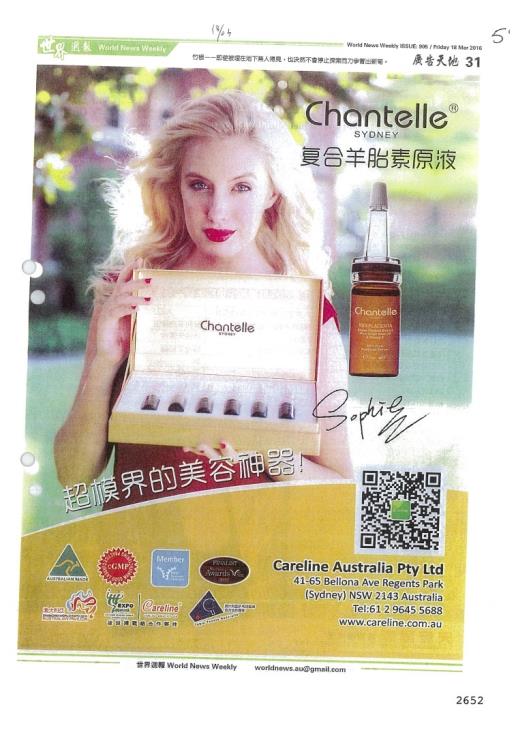
(8) The CHANTELLE bio-placenta product and its packaging was prominently displayed at Sydney trade fairs and some publicity was given to it at a world trade fair conducted in August 2015 in the “World News Weekly”.
(9) Various online sales outlets such as eBay, Natonic, MyShopping and Amazon have since 2009 promoted the initial CHANTELLE product and then the CHANTELLE bio-placenta product. The evidence of posts made by these outlets depicts examples which include the use of colour photographs of the packaging of the product. Despite the fact that none of the advertisements exhibited to Mr Li’s affidavit include posts that could be dated prior to the launch of the Homart product, I am prepared to infer that since the launch of the CHANTELLE bio-placenta product, images of this type were made. This accords with the demonstrated evidence of typical online sales techniques.
(10) Careline has promoted and sold the CHANTELLE bio-placenta product through a number of other websites including VeryMoney, Shenzhen Fuxiangql Trading Co Ltd, BeautyOne Thailand, Yahoo, Mapu Shop in Vietnam, and others. Sample pages of these websites indicate that, again, the product is promoted online by reference to colour photographs of the product itself and the product packaging.
102 Careline sought to rely on affidavit evidence made by Mr Li which referred, in broad terms, to the amount of money that had been spent on advertising. However, I am unable to give this evidence significant weight, because there was no evidence correlating the purported spend with any particular form of advertising. The affidavit evidence in this respect did not distinguish between amounts spent in relation to other products in the CHANTELLE range generally and the CHANTELLE bio-placenta product in particular. In the circumstances, my conclusions in relation to reputation do not rely on global amounts of advertising money said to have been expended.
103 A challenge was made in closing submissions to Mr Li’s credit on the basis of several inaccuracies in his evidence. I accept that in some respects his evidence could have been more precise. One example is his failure to describe the changes from the initial CHANTELLE packaging to the CHANTELLE bio-placenta product packaging. Another concerns the date when Careline commenced operations. However, these and other aspects that were criticised do not lead me to the view that his evidence is not to be believed.
104 It was submitted that Mr Li gave a “brazen and knowing lie” when he attributed the drop in sales of the CHANTELLE bio-placenta products to the launch of the Homart products. Mr Li gave evidence, supported by figures, that sales of the CHANTELLE bio-placenta product in April 2016 were $239,603 and in May $35,380. He attributed a causal connection to the launch of the CHÉRI bio-placenta product. Counsel for Homart, Mr Maltz submitted that Mr Li should have taken into account seasonal pricing and regulatory changes in considering this drop, which it demonstrated by reference to several years of sales figures. He also submitted that the sales of CHÉRI bio-placenta product were not sufficient to account for this drop. In my view, Homart’s submissions in this respect are sufficient to cast doubt over the proposition that the launch of the CHÉRI bio-placenta product was the cause of the sales drop such that I have set that evidence to one side. However, in my view, Mr Li’s observation that the dramatic drop coincided with the launch of the CHÉRI bio-placenta product was accurate. The challenge was to his statement that he was not aware of any other event that could have caused or contributed to this fall in sales other than the launch of the CHÉRI bio-placenta product. In my view, Mr Li had not turned his mind to additional matters which counsel put to him in cross-examination. I am not satisfied that he deliberately concealed these matters from the Court, although he was a little careless in expressing his unqualified opinion. I accept that other factors are likely to have played a role and that in this sense Mr Li might have exaggerated the cause of the fall. I treat this unqualified statement with caution.
7.3 Other products in the relevant market
105 In section 6 (Product Comparison) I have listed 11 points of comparison between the Careline and CHÉRI bio-placenta products. In many respects the products are identical.
106 A significant aspect of Homart’s defence lies in its contentions; first, that the colour gold is not unique to products in the Chinese market; there were many products available in stores where the CHANTELLE bio-placenta product was sold that were gold. Secondly, that the get-up of numerous products available in these stores demonstrated that the “features” of the get-up of the CHANTELLE bio-placenta product “have been in the general luxury market for cosmetics for some time”. Homart relied on the opinion evidence of Ms Yeh that rectangular boxes, ribbons, plastic sleeves, use of ampules, simple undecorated design, branding with a central name and location, and roped bags were all “common”. Homart sought to buttress this argument with evidence of sales of some 36 different products in support of this proposition. Thirdly, Homart contended that the evidence of Ms Yeh, Mr Yeh, Mr Yip, Ms Xiaoxing Wang, Ms Zhang and Ms Tu about the products available from 15 stores in which the bio-placenta product is also available, support this proposition. This, Homart contends, demonstrated how commonplace these features are.
107 In answer, Careline submits that in cross examination Ms Yeh conceded that the Homart 6-ampoule product resembled the Careline equivalent more than “any other product on the Australian market”. It contends that it is important to have regard to the overall design, colour and appearance of the products in evidence and the CHANTELLE bio-placenta product. None of the products identified by Homart have that combination. Further, Careline submits that the evidence of availability of the different products identified by the Homart witnesses (before the launch of the CHÉRI bio-placenta product) was “limited and piecemeal” and there was no evidence of reputation in those products amongst consumers. Careline criticised the detail of Homart’s evidence and referred to the evidence of Ms Hardcastle, Ms Johnson, Ms Cahalan and Ms Perry to demonstrate that only some of the 36 products, but not all, were currently available in the stores identified. It submitted that the evidence does not diminish Careline’s reputation in the get up of its bio-placenta product and that the Homart product looks far more like the Careline product than any other in evidence.
108 The question of fact in relation to this evidence is whether third party usage of the identified features of get-up can relevantly be said to discount or diminish the force of the representation conveyed to consumers by reason of the get-up of the product in suit; Cadbury Schweppes Pty Ltd v Darrell Lea Chocolate Shops Pty Ltd (No 8) [2008] FCA 470; (2008) 75 IPR 557 (Cadbury Schweppes (No 8)) at [57] (Heerey J). In this regard I find that none of the 36 or so products that Homart seeks to rely upon has the same or even a materially similar combination of features to those of the CHANTELLE bio-placenta product. Homart’s case in this regard tended to focus upon disconnected individual aspects of packaging that it had selected, rather than the visual impression produced by the whole ensemble. For the purpose addressing Homart’s submissions I have selected examples of the 36 or so products relied upon by Homart to demonstrate the relevant differences. To my eye, none of the other products relied upon bore a closer resemblance to the CHANTELLE bio-placenta product.
109 One significant area of dispute in closing submissions was the extent to which the Court could accept that any of the competing products identified were available for sale in Australia before the relevant date; the date of commencement of the sale of the CHÉRI bio-placenta product, being February 2016 for the 3-ampoule and March 2016 for the 6-ampoule products. It is not, in my view, strictly necessary to resolve this particular aspect of the controversy. The conclusion that I have reached, having regard to all of the evidence, is that the evidence tends to confirm, rather than dispel, the conclusion that indeed the get-up of the CHANTELLE bio-placenta product was distinctive. No other product available for sale has a substantially similar get-up to that of the CHANTELLE bio-placenta product. Indeed, most, if not all, are distinctly different in one or more respects to the points identified above in section 6 (Product Comparison). However, I accept Careline’s submission that there is insufficient evidence of third party usage of these products to found a conclusion that they played a role in consumer perception of the CHANTELLE bio-placenta product.
110 In relation to these conclusions I make the following additional observations.
111 First, Ms Yeh, the designer of the CHÉRI bio-placenta product, gave evidence of 6 samples (other than the CHANTELLE bio-placenta product) to which she paid particular regard as the inspiration of the CHÉRI bio-placenta 6-ampoule product. None of those products (being the NC-24, Dr Johns, Shelano, Rosanna and two Carlmark products) have the same combination of features or even a similar combination of features to the CHANTELLE bio-placenta product. This is a telling point. Ms Yeh’s evidence as to what she did provides a reliable indication of what a person with knowledge of the field would consider were relevant products from which to draw inspiration; Australian Woollen Mills at 657. Homart’s attempt (through the evidence of Mr Yip, Mr Yeh, Ms Yeh, Ms Xiaoxing Wang, Ms Zhang and others) to draw upon a broader range for products than those to which Ms Yeh’s evidence indicates that she did, must be seen in that light and diminished.
112 Secondly, Ms Yeh and Homart placed reliance on a product called “Laviena Ultra Radiance Skin Care Complex” made by STN International Pty Ltd (Laviena product). As noted below (at [163]), no evidence proved that this product was available before the launch of the CHÉRI bio-placenta product, still less was there any evidence that it was known to relevant consumers in the market. Ms Yeh did not refer to it during her design exercise. Of all of the products identified by Homart, it is the product that might be said to have the substantial dimensions or chest-like appearance and feel of the CHANTELLE bio-placenta product. The Laviena product is 26 cm long x 17 cm wide x 8 cm high and is of similar chest-like construction. However, it is in many respects visually different. Although the box is saturated with a gold colour, the gold is visually distinct being a shiny bright yellow colour and is quite reflective of light rather than matte. The edges of the box are in reflective gold, as is an embossed Australian emblem and the prominent words, rendered in shiny gold, “ULTRA RADIANCE SKIN CARE COMPLEX” together with a Laviena logo. The box contains no black writing on it. There is no sheath or sleeve. The interior of the box includes a presentation tray but that tray is in a different gold colour. There is a white ribbon which prevents the lid from lifting beyond 90˚. The contents of the box are not ampoules of bio-placenta oil but three jars of quite different dimensions, as depicted below:
|
|
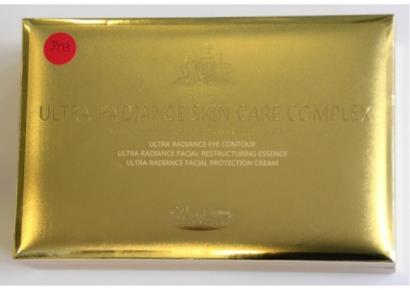
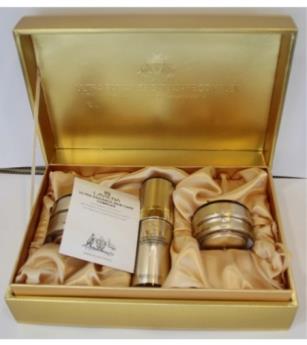
113 Thirdly, the balance of the boxes relied upon by Homart are considerably smaller than either the 3 or 6-ampoule CHANTELLE bio-placenta product and are of a significantly more flimsy, soft cardboard construction. In this context, the following examples may be used.
114 The SY SKIN CARE PLACENTA LIQUID (Exhibit TY-1, depicted below) is of the dimensions 17.5 cm x 17.5 cm x 3.5 cm:
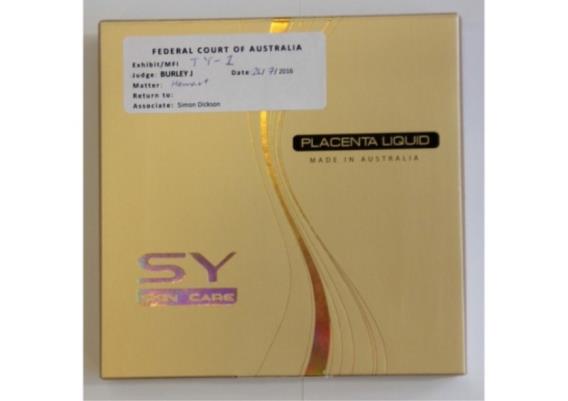
115 The NEWBEAUTY “All In One High Potency 100% Placenta & Vitamin C Serum” (exhibit JY-7, depicted below) is 16 cm x 15.3 cm x 3.5 cm.
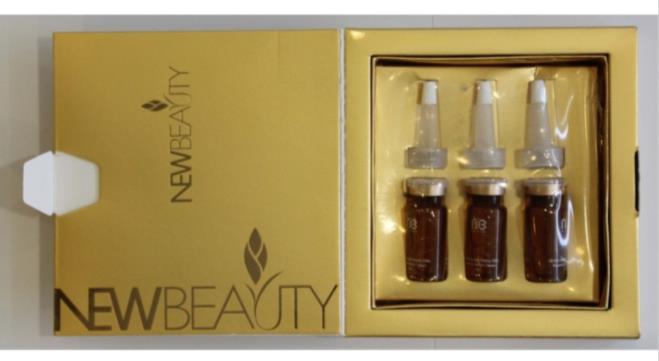
116 The CHARIS “All in one High Potency 100% Revitalising Perfect Placenta Serum with Vitamin C” product (exhibit JY-8, depicted below) is 16 cm x 15.2 cm x 3.3 cm.
|
|
| |
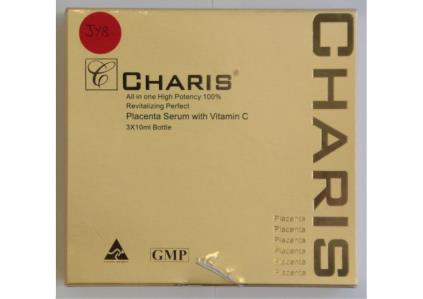
117 The CARLMARK “Bio-nano Concentrated Collagen Liquid” (exhibit JY-11, depicted below) is 14.8 cm x 17.3 cm x 3.7 cm.
|
|
| |
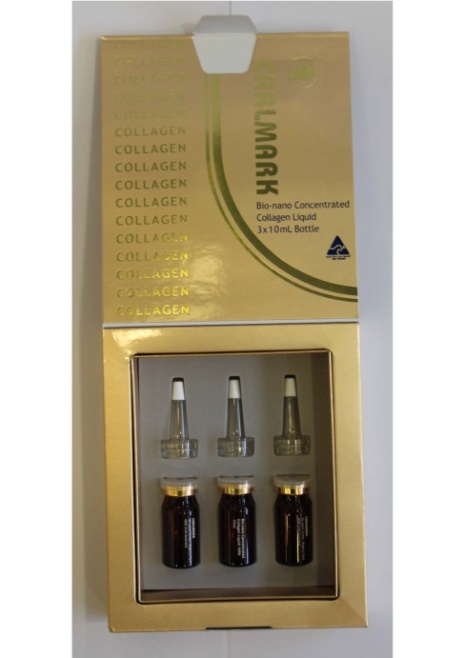
118 The packaging for the few 6-ampoule products that were exhibited is also of substantially lesser size than the equivalent 3 or 6-ampoule CHANTELLE bio-placenta product. Each product (other than the Laviena product) was significantly smaller, and was constructed using thin cardboard often folded upon itself in order to create a box shape and did not use the internal tray and lip arrangement of the CHANTELLE bio-placenta product.
119 Fourthly, I accept that in general terms the colour gold is of significance to the relevant consumers, being largely persons of ethnic Chinese origin. However, the fact that gold is a colour of significance is neutral or negative to Homart’s submissions. It suggests that these consumers would be well used to goods of gold appearance and would be familiar with different hues and textures of the colour gold. No other product identified by Homart utilised the same matte bronze-gold colour with minimalist additions in the form of a centred black name on the top surface, and otherwise no adornment or writing on the visible surfaces. The product most closely resembling the rich yellow-gold colouring of the CHANTELLE bio-placenta product was the SHELANO product. To my eye it has a similar bronze-gold colour to that of the CHANTELLE bio-placenta product. However, this product had across the entirety of its upper-most surface embossed words LIGHTENING SKIN repeated and in raised gold shiny lettering a logo, and the words SHELANO AUSTRALIA beneath which was a black and white label identifying the product within a rectangular golden frame. The sides of the box had writing on them, including SHELANO AUSTRALIA and the words in black, SKIN LIGHTENING PROGRAM. The lay-out of the base of the box was quite different. In addition, the SHELANO box was of a completely different construction to the CHANTELLE box as depicted below.
|
|
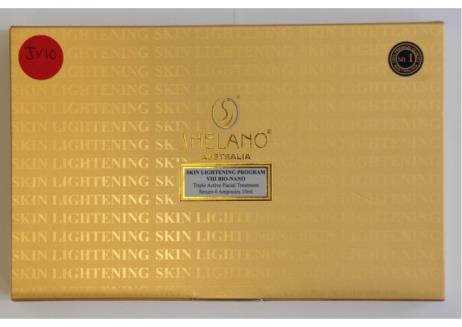
120 Fifthly, the evidence disclosed no box, other than the Laviena product, that utilised an internal tray or a ribbon.
121 Sixthly, no product identified by Homart utilised a matte plastic sheath around the exterior of a large rectangular box.
122 Seventhly, there was no evidence that, before the launch of the CHÉRI bio-placenta product, any manufacturer supplied a carry bag for a placenta product with a saturated bronze gold colour and matching rope handle.
123 Finally, in the main part the evidence was not directed to whether the raft of products exhibited and relied upon by Homart was available before February 2016, or the extent to which it was so available. This was because most of the witnesses gave evidence in the present tense about products available, and the evidence of witnesses who conducted surveys of products available reflected the position as at the date of the affidavit, which was, naturally enough, after the date of the commencement of the proceedings. The relevant date is February or March 2016. The evidence was prepared shortly afterwards, in the period from May to July 2016. I accept Careline’s submission that it is not possible to draw conclusions from the evidence as to the reputation of these products or the degree to which such consumers might consider particular features to be “common place”. In my view the evidence relied upon by Homart did not demonstrate that third party usage of the features of the CHANTELLE bio-placenta product, either in isolation or collectively, diminish the force of the representation conveyed by the get-up of CHANTELLE bio-placenta product.
7.4 Consideration of reputation and distinctiveness of the CHANTELLE bio-placenta product
124 Evidence of sales and advertising may be sufficient to establish reputation despite the absence of any direct evidence of consumer appreciation of the mark, as opposed to the product. In this context “public awareness of and regard for a mark tends to correlate with appreciation of the products with which that mark is associated, as evidenced by sales volume, amongst other things”; McCormick & Company Inc v McCormick [2000] FCA 1335; (2000) 51 IPR 102 per Kenny J at [81] – [88]. Such factors may also establish the reputation necessary to found a case for passing-off and contravention of s 18 of the ACL; see, for example, Pacific Publications Pty Limited v Next Publishing Pty Limited [2005] FCA 625; (2005) 65 IPR 58 (Pacific Publications) (per Tamberlin J) at [12] – [14].
125 The reputation which must be proved in a case such as the present is that the get-up, packaging, shape or trade dress relied upon is associated by consumers with Careline’s product. It takes a strong case to establish a reputation of this nature; Interlego AG v Croner Trading Pty Ltd [1992] FCA 992; (1992) 39 FCR 348 at 386 (Gummow J with whom Black CJ and Lockhart J agreed). This is because customers will not necessarily associate a get-up with the applicant’s product; Collins Debden Pty Ltd v Cumberland Stationery Co Pty Ltd (No 2) [2005] FCA 1398 at [33] – [34] (per Lindgren J).
126 The requisite reputation will, however, be more readily found where the get-up is unique or striking rather than descriptive, mundane, merely functional, or in common use; Natural Waters (per Bennett J) at [59]. In the present case, reputation is to be considered in the context of the relevant “niche” of the market, being the community of consumers with an interest in bio-placenta based cosmetics. This is not the Australian community at large.
127 The critical question is the extent of the reputation as at the date of the launch of the CHÉRI bio-placenta product. I make the following findings.
128 First, the evidence given by store owners and shoppers confirms that the CHANTELLE bio-placenta product is displayed, and often displayed prominently, in stores, and often the stores are relatively small. In a sense, the 6-ampoule product itself is a significant marketing tool. It is large and striking in colour and bulk. Located on a shelf in a cosmetic section of a store it has significant visual impact. The evidence indicates that often it is displayed in the open configuration and/or with its large upper face (bearing the words “Chantelle SYDNEY”) visible to the shopper. I find that the CHANTELLE bio-placenta product in its 3 and 6- ampoule sizes has been available for sale since about September 2014 and that soon after it became available it was displayed in relevant outlets. I am prepared to find, as common sense suggests, that stores stocking this product made it available for display and that it had a high level of visual impact on consumers. I also find that at, or soon after, the CHANTELLE bio-placenta product became available, it was promoted in conjunction with in-store posters that contained images of the packaging and its interior. I am fortified in this view by the fact that the evidence of display in sales came from witnesses called both by Homart and Careline. Indeed, there appeared to be no serious factual contest that the products were made available and sold in this way.
129 Secondly, the evidence indicates a dramatic jump in sales following the launch of the CHANTELLE bio-placenta products. In the 12 months to 1 July 2014, Careline sold 2,584 units of bio-placenta oil in the CHANTELLE packaging (see [98] above). After the launch, between December 2014 and July 2015, Careline sold 15,056 units of the CHANTELLE bio-placenta product consisting of 11,893 units of the 6-ampoule product and 3,163 of the 3-ampoule products. About 67,400 units of the 6-ampoule product and 4,400 units of the 3-ampoule product were sold in period from 1 July 2015 to 15 May 2016. This increase suggests that the new packaging had a degree of impact on consumers. I accept Mr Li’s opinion that a cause for the significant increase was the change in packaging.
130 Thirdly, Careline promoted its CHANTELLE range on its website, WeChat, Facebook and other social media. The promotions included images of the CHANTELLE bio-placenta product. In addition, other online suppliers promoted the product. There is sufficient evidence of the type of online promotions utilised to provide confidence that these online promotions utilised coloured photographic images of the CHANTELLE bio-placenta product as a significant means by which the product was identified and promoted.
131 Fourthly, the evidence of Mr Zou was that he concentrated his sales efforts on regions within Sydney which had a high proportion of ethnically Chinese people. Other evidence, from witnesses from both sides, supported that evidence. Indeed, almost every shop about which witnesses gave direct evidence that placenta-based products appeared to have been sold was one in which Mandarin or Cantonese appeared to be spoken as prominent languages. In this context I find that for a “niche” market, reputation is relatively easier to establish when compared with general consumer products.
132 Fifthly, I am not persuaded that the evidence of third party use by the manufacturers of cosmetics of gold colouring in their packaging is such that, as Homart submits, the packaging features relied upon by Careline are “common place”. The legal proposition upon which Homart relies is that knowledge of third party usage can impact upon the likelihood or otherwise of consumers being misled or deceived. The hypothetical reasonable consumer might see a packaging feature (for instance, the use of gold colouring) and perceive it to be a general use of colouring rather than being indicative of a particular manufacturer: Cadbury Schweppes (No 8) at [57] (per Heerey J at first instance).
133 The extensive evidence upon which Homart relied to make good this submission did not, however, rise to the level required. The evidence of sales of gold coloured cosmetic products does not demonstrate that the combination of packaging elements used by Careline in the CHANTELLE bio-placenta product is in fact used by any other manufacturer.
134 Ultimately, I am satisfied by reason of the combined effect of sales, promotions and display of the CHANTELLE bio-placenta product, Careline has established a reputation in not only the brand name Chantelle SYDNEY, but also (and separately) in the get-up of the product. This is such that consumers familiar with the CHANTELLE bio-placenta product who observe the packaging but not the name, would nonetheless recognise it to be a product originating from the manufacture of the CHANTELLE bio-placenta product. In my view, taken together, the 11 features identified in section 6 are distinctive of the CHANTELLE bio-placenta product. Taken collectively and as a matter of overall impression, in my view they convey a representation that the product originates from a particular source. I have noted above that I am satisfied by reason of the combined effect of sales, promotions and display of the CHANTELLE bio-placenta product, Careline has established a reputation in not only the brand name Chantelle SYDNEY, but also in the get-up of the product. This is such that consumers familiar with the CHANTELLE bio-placenta product who observe the packaging but not the name, would nonetheless recognise it to be a product originating from the manufacture of the CHANTELLE bio-placenta product.
135 In my view the evidence of the competing products enables me to draw the conclusion that to the relevant consumers the particular get-up of the CHANTELLE bio-placenta product is unique.
136 I am satisfied that the CHANTELLE bio-placenta product has sufficient reputation in its get-up amongst the relevant consumers by the time of the launch of the Homart product to found an action for contravention of s 18 of the ACL. As at February 2016, the reputation would extend to the overall impression created from the shape and form of the box, the colouring, the internal arrangement, the sleeve and the Gold CHANTELLE carry bag.
8. THE DEVELOPMENT OF THE CHÉRI BIO-PLACENTA PRODUCT
137 It is relevant to consider the design process adopted by Homart in the creation of the CHÉRI bio-placenta product. Ms Yeh was the person responsible for that design. She gave affidavit evidence and was cross-examined.
138 Careline submitted that the evidence of Ms Yeh, taken as a whole, reflected an intention on the part of Homart to copy the entirety of the packaging of the CHANTELLE bio-placenta product, save for minor elements and the name. It submitted that the Court should infer that Homart intended to appropriate at least part, if not all, of Careline’s reputation in its packaging and that this finding can be treated as reliable expert evidence that the Homart packaging for its 6-ampoule product is in fact likely to deceive consumers, citing Sydneywide Distributors Pty Ltd v Red Bull Australia Pty Ltd [2002] FCAFC 157; (2002) 234 FCR 549; (Red Bull) at [117] – [121] and Australian Woollen Mills Limited v F. S. Walton & Company Limited [1937] HCA 51; (1937) 58 CLR 641 (Australian Woollen Mills) at 657.
139 Homart contended in answer that by branding its bio-placenta product CHÉRI AUSTRALIA and by incorporating other branding differences it had sufficiently distinguished the two products. It submitted that it is perfectly acceptable and common for new entrants to a market to adopt features used in other products so long as customers are not deceived. Mere proof that a defendant was aware that it was using similar marking features will not justify an inference of an intention to deceive, citing Natural Waters of Viti Ltd v Dayals (Fiji) Artesian Waters Ltd [2007] FCA 200; (2007) 71 IPR 571 (Natural Waters) at [62] – [81], and Nutrientwater at [122].
140 Ms Yeh’s evidence addressed her decision, on behalf of Homart, in 2014 to launch a serum essence product with a placenta-based formulation. In late 2014 or early 2015, she purchased some existing products available on the market. Those products that she was able to identify in her affidavit were “samples” to which she had reference in her design process. They were:
(a) the NC-24 Nature’s Care “Bio-Nano Pure Placenta” (NC-24 product);
(b) the CHANTELLE bio-placenta 6-ampoule product;
(c) Dr Johns “Placenta Ampoule (Anti-Wrinkle + Whitening)” product (Dr Johns product);
(d) Rosanna “Radiance Concentrate Serum” (Rosanna product);
(e) Shelano Australia “Skin Lightening Program” (Shelano product);
(f) Carlmark BTX Argireline & Adenosine product and the Carlmark “Bio-nano Concentrated Placenta Liquid” (Carlmark products).
141 Of these products, the Rossanna, CHANTELLE bio-placenta product, NC-24, Dr Johns and the Carlmark “Bio-nano Contentrated Placenta Liquid” products contain placenta or sheep placenta ingredients. Ms Yeh retained the samples of each of the six listed products and exhibited each of those in evidence. It is convenient to set out below two images of the collected products which she annexed to her affidavit:
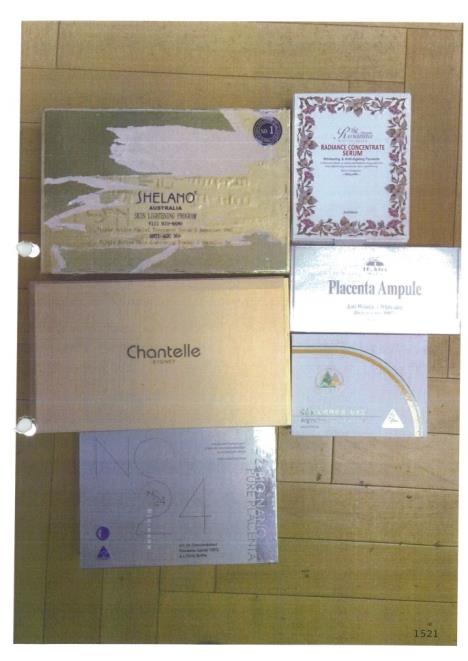
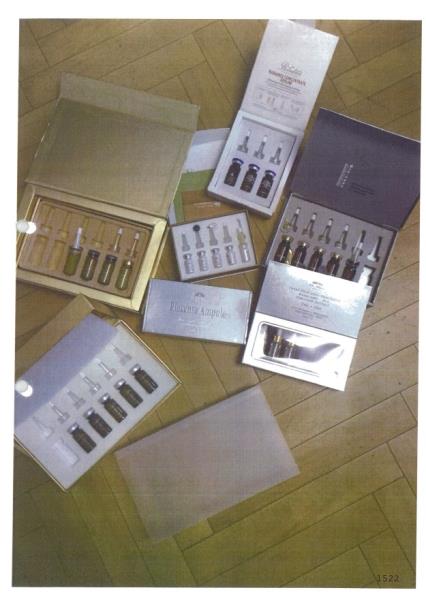
142 Ms Yeh’s evidence is that in late 2014 or early 2015, she turned her mind to thinking about the design of a bio-placenta product having regard to these products, her personal knowledge and understanding of Chinese culture and her own knowledge of design matters (I note that this was after the launch of the CHANTELLE bio-placenta product).
143 With these factors in mind, she decided on what she refers to as “design principles and choices” which she proposed to apply to the CHÉRI bio-placenta product which involved; the use of a rectangular cardboard box to hold the six ampoules intended for the Homart product; the choice of a gold colour which, she said, was significant in Chinese culture; the use of 10 ml ampoules; the use of a protective mould housed inside a protective cardboard box to hold the ampoules; and the use of “simple undecorated design”.
144 Ms Yeh explained that she initially decided to use the base of the Shelano product as her template, and produced a mock up for display in Hong Kong at an exhibition held in November 2014 based on that packaging. However, after the Hong Kong show she changed her mind and decided to use the CHANTELLE bio-placenta 6-ampoule box as her template. Ms Yeh said:
53. Of the samples I had in my hands, which used and could hold a foam inlay, the Chantelle packaging box size and structure seemed to be the right compromise for the 6-ampule box, because it was:
(a) not too big, so that it would be inexpensive to ship; nor
(b) [not] too small, so that it would be big enough to give as a proper gift among Asian people; and
(c) a solid box structure, with a narrow edge around the inner foam inlay.
54. ln addition, the gold colour of the Chantelle box was the same as the original internal and external gold colour of the Shelano box, which was the box I originally chose as my favourite.
55. I had already decided to use a gold box with an internal foam inlay, and undecorated design, and I decided to choose the dimensions and structure of the Chantelle box, because:
(a) it balanced the considerations above;
(b) it was a common type of box; and
(c) I would not have to waste time instructing a manufacturer how to make it, I could simply send the Chantelle sample to the manufacturer to get started.
145 In about July 2015, Ms Yeh sent a sample of the CHANTELLE box (including the plastic sleeve), as well as the CHANTELLE bag, to a manufacturer in China and asked for it to be reproduced.
146 Ms Yeh was at pains to submit that “this structure (i.e. a cardboard box, with internal raised ‘lip’, and left-hand-side ribbon and inlaid sponge-based inlay) is very common” in the market. In this context, she drew attention to the Laviena product, which had an accompanying gold-rope handled gold bag. However, the reference to the Laviena product should not be misunderstood. Nowhere did Ms Yeh say that she had regard to this product when designing the CHÉRI bio-placenta product. Rather, the Laviena product was advanced by way of a submission by Ms Yeh for the purpose of the present proceedings, in support of the proposition that the Laviena box “has the same key features as the Chantelle and Chéri boxes”, and accordingly, that she was entitled to take the features of the CHANTELLE box and use them for the Homart product under design. Homart submits that the evidence indicates that “something similar” to the Laviena product was on the market prior to 2016, but this submission should be rejected. First, because the words something “very similar” provide no assistance as to what the differences were. Secondly, the evidence as to “something similar” was in Ms Yeh’s affidavit and referred to a product called “LARIENA” not “LAVIENA”. Thirdly, because the evidence does not support evidence of such sales.
147 Ms Yeh also gave an explanation that “undecorated boxes are common in the luxury cosmetics trade” and exhibited photographs of products (such as, “Chanel Paris” and “Fendi Roma”) which adopt such a branding technique. None of those examples were drawn from a range of products which had bio-placenta as an ingredient or from products, so far as the evidence reveals, that were on display or available at the shops where purchasers acquired either the CHANTELLE or CHÉRI bio-placenta products. In this regard, I note that the evidence of Ms Hardcastle, Ms Johnson, Ms Cahalan, Mr Yip and Ms Xiaoxing Wang collectively referred to and often exhibited photographs concerning over 99 stores. I find Ms Yeh’s explanation to be somewhat self-serving, and more in the nature of a submission than of evidence of her thought processes at the time that she designed the CHÉRI bio-placenta product. Contrary to the tenor of Ms Yeh’s evidence, I find that the most likely source or inspiration for Ms Yeh’s choice of a largely “undecorated” box and the use of a gold-rope handled gold carry bag to be the CHANTELLE bio-placenta product, a sample of which she had in her possession.
148 Ms Yeh asserted in her affidavit that the use of external sleeves around boxes is “common in the industry when the packaging of a product needs to be protected from scratches and dents”. She exhibited photographs of some sleeves, none of which were products of the type in the present case. Ms Yeh did not explain why the present packaging particularly “needed” to be protected. She displayed a photo of the underside of some packaging that she had designed which was said to have used a plastic sleeve, but that was for an apparently unrelated fragrance called “Glasshouse”. Ms Yeh presented no other bio-placenta product, other than the CHANTELLE bio-placenta products, that used a plastic or matte plastic sleeve, nor were any in evidence.
149 Ms Yeh also asserted that when boxes in which a product is held are large, it is “common” for the people in the cosmetics/luxury trade “to give a roped-handled paper bag”. She referred in this context to the Laviena product and to others in support of this proposition, which I take to be another self-serving submission. Ms Yeh accepted that she had in her possession the Careline CHANTELLE carry bag, but in describing her instructions for production of the Homart product directed the suppliers to “get a carry bag made (but turn it differently to the Chantelle bag, in that I wanted a horizontal bag rather than a vertical bag)”. I find that Ms Yeh deliberately copied the CHANTELLE carry bag.
150 In relation to the ampoules used in the Homart product, Ms Yeh’s evidence was that the basic design of the bottles, used with applicator nozzles, had been known to her since 2004-2005. Examples were given. I accept that the basic shape of the bottles used by Homart in its bio-placenta product were probably commonplace by early 2016. However, in relation to the text on the ampoules, Ms Yeh’s evidence was that she used the sample text from the bottles contained within the CHANTELLE bio-placenta product but ultimately changed the content of the text as well as the colour of the cap which was altered from silver to gold. I find that the layout of text on the ampoules was a copy, slightly amended, of that used on the CHANTELLE ampoules.
151 Ms Yeh also gave evidence as to her decision to use the brand name “CHÉRI Australia” for the CHÉRI bio-placenta product. The CHÉRI brand had been applied to a range of Homart products since 2004 and included a “rejuvenation serum” which had a placenta ingredient. An image of that product is depicted below.
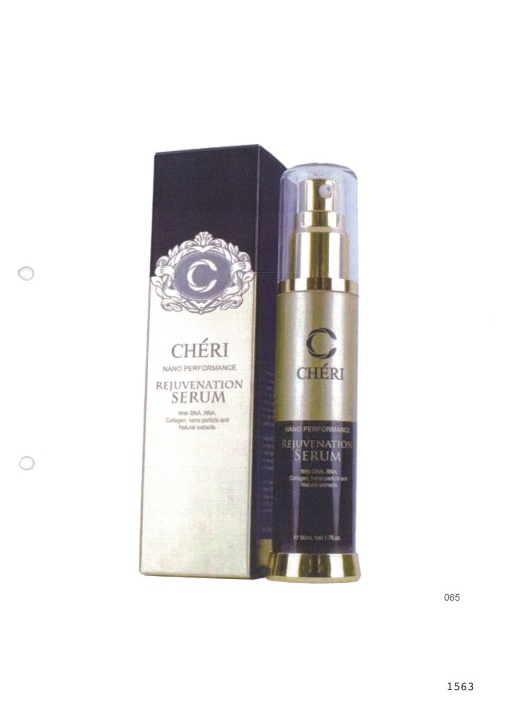
152 Ms Yeh explained that the gold colour used for the rejuvenation serum was “retained” for the new bio-placenta product “because the gold colour had become a dominant colour in the beauty portion of the Chéri brand range, as shown on the rejuvenation product itself”. Ms Yeh exhibited samples of separate Chéri products that fell within that range. However, consistent with the rejuvenation serum product which is depicted above, the other Chéri products adopt a two-toned colouring in which a substantial proportion of the packaging is coloured in the alternative colour (in the above example, black, but in other examples, pink or silver) and use a distinctive wreath shape on the packaging. The CHÉRI bio-placenta product utilises what Ms Yeh’s evidence described as a wreath in a “UV printing pattern” which surrounds the brand name, but that wreath is extremely subtle to the eye and in some lights is barely visible.
153 It appears that the decision to move away from the two-toned colour scheme used for other products in the CHÉRI range was unique to the design of the CHÉRI bio-placenta products. This was an oddity that was not explained by Ms Yeh, save for the suggestion that for this product Ms Yeh desired to move to an undecorated box of the type which is “common in the luxury cosmetics trade”. The decision to abandon previously used features of the CHÉRI range is, in my view, inconsistent with an intention on the part of Homart to draw on the reputation of that range in the sale of its new bio-placenta product. I consider that this move, and the adoption of other packaging features described above, reflects an intention on the part of Ms Yeh to create packaging of a style that closely imitates the packaging of the CHANTELLE bio-placenta product. That intention is further reflected in the design of the gold carry bag for the CHÉRI bio-placenta product. As I have noted, the CHANTELLE carry bag was supplied to the manufacturer as a template. The Homart bag is absent the UV wreath.
154 Ms Yeh’s evidence in her first affidavit concluded with statements to the effect that she had no intention to mislead or confuse consumers. She asserted that the “design concept” was in her head before she adopted the box dimensions and structure of the CHANTELLE bio-placenta 6-ampoule product. In this context, she said at [116] of her affidavit:
I believed that the design work we had done, distinguished the Cheri product from all other products, including the Chantelle product, because of the:
(a) wreath;
(b) our different and famous brand;
(c) different logo; different formulation (e.g. the Hyaluronic acid ingredient and other ingredients such as ginseng);
(d) different product name (that is, “whitening anti-ageing”);
(e) different product description on the box.
155 In section 6 above, I have conducted a comparison of the products. In my view, the distinctions upon which Ms Yeh relies on in (d) (product name), (e) (product description) and (c) (logo and formulation) have no real visual impact. The wreath can be seen in certain lights, but faintly and is absent on the bag. The only material point of distinction was the brand name. In section 9 below I consider the reputation of Homart in that brand.
156 Ms Yeh gave evidence that in relation to the Homart design of its 3-ampoule box, it supplied its manufacturers with no sample based on the CHANTELLE bio-placenta equivalent 3-ampoule container.
157 In cross-examination, Ms Yeh gave the following evidence:
And isn’t it important to that task to know whether the product packaging of your competitors is liked or appealing to customers?---Yes. Yes. And – yes.
And you were embarking upon a process of adopting – to use your words – some of the features of the Careline Chantelle packaging, weren’t you?---Yes, I adopt the structure and the size. Yes.
And you say that, knowing that was your plan, you have no idea whether customers liked or disliked the Chantelle packaging. Is that your evidence?---Yes. As I explained earlier, before I have all these samples with me. At the time, I choose Shelano size – not Chantelle – so that’s – later on I moved to Chantelle. So at the beginning I don’t even think of Chantelle.
And do you say to his Honour that you made the decision to adopt features of the Chantelle packaging with absolutely no idea of whether customers liked or disliked that packaging?---No idea. Definitely no idea.
Now, from beginning to end in the design process – so when you set about designing the packaging for Cheri to when you reached the end point and had a finished product – your objective was to capture for Homart – to take for Homart – the largest share of the market for this type of product – placenta serum – that you possibly could; wasn’t it?---Yes. I – yes. Of course want everything I decided I launch – I want to have a good sale. Of course.
And didn’t that objective guide every decision you made at every step of the process of designing the Cheri Bio-Placenta packaging?---Yes.
And the way you intended to achieve that objective was by selecting packaging elements – design elements – that you thought would have the greatest consumer appeal possible; wasn’t it?---Yes.
Now, you accept, don’t you, that, when you were making decisions about what the design of the Cheri product should look like, you copied many of the design features of the Chantelle packaging; didn’t you?---No.
You accept that you copied some features of the Chantelle packaging design, don’t you?---As my documents say, only the structure and the dimension. Yes.
So let’s just be clear about that. You say that the only decision you made to copy Chantelle was the structure – and what were the rest of your words?---The – the – the box structure.
Yes?---And also the – the box structure; also the sleeve. The sleeve that we – inspired by them.
158 The above passage reflects a frank admission on the part of Ms Yeh that she intended to copy some, but not all features of the CHANTELLE bio-placenta product. However, in my view Ms Yeh’s admissions do not go far enough or reflect the reality of the situation. In my view, her intention in creating the Homart design was to adopt the colour, shape, arrangement and style of the Careline 6-ampoule box and its contents for its bio-placenta product, including its internal arrangement, for the purpose of maximising its impact on the market and to benefit from the reputation developed by Careline in its product. At the time of making the design she had the CHANTELLE bio-placenta product firmly in mind.
159 In her oral evidence at one point she appeared to deny that she turned her mind to whether or not the CHÉRI bio-placenta product sufficiently distinguished the CHANTELLE bio-placenta product. However, I find that Ms Yeh did intend to replicate the features of the CHANTELLE bio-placenta packaging, with the exception of its name, with the understanding that the likely consequence would be that the similarities of that packaging would be influential to consumers in their choice of product.
160 In this context, whilst Ms Yeh was responsible for placing the brand name “CHÉRI Australia” on the packaging, I consider that she nevertheless intended that the packaging of the new CHÉRI bio-placenta product would import a reference to the CHANTELLE bio-placenta product by the similarities of the packaging design and general get-up. Indeed, in my view, the objective similarities between the packaging of the Homart and Careline products defy a conclusion that Ms Yeh was not aware that they would have an impact on consumers.
8.3 Consideration of Homart’s intention
161 In Red Bull, the Full Court (Weinberg and Dowsett JJ, Branson J agreeing) said as follows regarding intention:
117 Without wishing to labour the point unduly, we again point out that where a trader, having knowledge of a particular market, borrows aspects of a competitor’s get-up, it is a reasonable inference that he or she believes that there will be a market benefit in so doing. Often, the obvious benefit will be the attraction of custom which would otherwise have gone to the competitor. It is an available inference from those propositions that the trader, with knowledge of the market, considered that such borrowing was “fitted for the purpose and therefore likely to deceive or confuse…”. Of course, the trader may explain his or conduct in such a way as to undermine the availability of that inference. Obviously, this reasoning will only apply where there are similarities in get-up which suggest borrowing.
162 I have set out above a summary of the evidence of Ms Yeh and some of my findings in that regard. In my view, that evidence supports a finding that Homart did intend, by adopting Careline’s packaging for its 6-ampoule bio-placenta product, to gain a market advantage at the expense of Careline from the adoption of its packaging. In this context, the intention of Ms Yeh as the employee wholly responsible for the design and development of the new bio-placenta product is, in effect, the intention of Homart.
163 A number of factors weigh in favour of this inference:
(1) The very close commonality of the dimensions, shape and colour, interior and exterior, between the Careline 6-ampoule bio-placenta product container and the Homart equivalent. This extends not only to colour, but also the interior ribbon, the choice of foam, the layout of the ampoules and the arrangement of writing on the rear of the boxes.
(2) The choice of Homart to utilise a similarly coloured gold carry bag with gold-rope handle which differs only in respect of the name and orientation of the bag.
(3) The decision to use a matte clear plastic sleeve to surround the boxes.
(4) Insofar as Ms Yeh gave an explanation for her design choices that deviated from her acceptance that she had copied the CHANTELLE bio-placenta product, I found them unconvincing. In her affidavit and oral evidence she repeated the thesis that the features that she selected for the CHÉRI bio-placenta product were in “common use” in the luxury cosmetics market. However, no product to which Ms Yeh had regard at the time of her design possessed the combination of elements used by Careline. Even so, leaving aside the name, the Homart product had them all (bronze-gold saturation, box shape and dimensions, writing style, gold-rope handled bag, matte plastic sleeve, foam inlay, ampoules and so on).
(5) When considered collectively, in my view, it took deliberate action of the part of Homart to bring each feature used by Careline in its product into its competing product. This reflects an intent to do so for the purpose of bringing the two products in close similarity to each other. To the extent that Ms Yeh gave evidence that denied this intention, I reject that evidence.
(6) Homart chose to abandon the use of its two-tone get-up used for other products in the CHÉRI line for this one bio-placenta product. One might have expected that if Homart intended to build on its existing brand name CHÉRI for its latest product, then it would have adopted similar get-up features to those apparent in its existing line. However, the CHÉRI bio-placenta product represents a noticeable departure from the other products in the CHÉRI line. Ms Yeh gave no adequate explanation for this departure.
(7) Ms Yeh’s reference to the Laviena product as a justification for some aspects of these features appears to have been an afterthought on her part as, I find, were her references to “common” features. The Laviena product packaging was ultimately not proved to have been available on the market before February 2016 and Ms Yeh gave no evidence that she had regard to it when she did her designs.
(8) Whilst I do accept that Ms Yeh genuinely held the belief that she was entitled to “borrow” the features of the CHANTELLE bio-placenta product packaging, I do not accept that the choices made by Ms Yeh were naïve to the benefits of adopting all of these features as a means to swiftly gain market share by benefitting from the reputation inuring to Careline in its bio-placenta products.
164 The above matters weigh in favour of a finding that there was intentional copying. However, Homart makes a forceful submission that the choice to use the branding CHÉRI Australia on the products serves to distinguish the brand and reflects a clear intention not to mislead.
165 The get-up of a product may contain within it a misrepresentation as to origin even where the name on the product is different to the original which is said to have been replicated. In each case it will be a question of fact and degree; see Peter Bodum at [244] (Greenwood J, Tracey J agreeing at [267]); Red Bull at [133]; compare with Koninklijke Philips Electronics NV v Remington Products Australia Pty Ltd [2000] FCA 876; (2000) 100 FCR 90; Dr Martens Australia Pty Ltd v Rivers (Australia) Pty Ltd [1999] FCA 1655; (1999) 95 FCR 136.
166 A weak or non-distinctive trade mark may not be sufficient to distinguish the rival product from the distinctive product sought to be copied; Peter Bodum at [244]. Ultimately the question of whether there is misleading or deceptive conduct or passing-off is a matter for the Court. I do not accept that the mere presence of the CHÉRI Australia name is per se sufficient to dispel the suggestion of an intention to copy.
167 In the present case, for the reasons given above I find that Ms Yeh (and accordingly Homart) did have the requisite intention. Accordingly, this is one factor to weigh in considering whether misleading or deceptive conduct is made out. Whether the words “CHÉRI Australia” is sufficient to distinguish the products is a question that I consider when arriving at my conclusions in relation to the cross-claim further below.
9. RELEVANT REPUTATION RESIDING IN HOMART’S CHÉRI AND CHÉRI AUSTRALIA PRODUCTS AND BRANDS
168 Homart submits that the CHÉRI Australia brand name is prominent and would be perceived by consumers in the relevant market as a “primary brand”, something like “BMW” as compared with “Mercedes”.
169 Careline challenges this conclusion, and contends that the CHÉRI bio-placenta products adopted a new get-up under a new name CHÉRI Australia which moved away from the CHÉRI brands. It submits that prior to the launch of the CHÉRI bio-placenta product, Homart sold a small amount of products under the CHÉRI brand.
170 Homart has sold a range of body lotions and creams in Australia since about 2004 by reference to products that bear the trade mark CHÉRI. Originally, the packaging was in gold and white, and the word CHÉRI was depicted with a stylised “C” with lower case for the balance of the word. A prominent butterfly logo accompanied the name. In 2012, Homart redesigned the packaging for its CHÉRI products and the original CHÉRI “Rejuvenation Serum” was sold in a new bottle and packaging which used gold and black colours with an ornate wreath surrounding a stylised, gold “C”, the word CHÉRI was rendered in capitals in black and the packaging was entirely black on the two sides and top of the box (with the stylised “C” on the top) and 25% black and 75% gold on the front and rear. Following 2012, it appears that Homart progressively launched other CHÉRI products in variants of the new packaging, in October 2013 for hand creams and 2015 for emu oil, tea tree oil and tea tree ointments. Set out below are photographs of examples of the range:
|
|
|
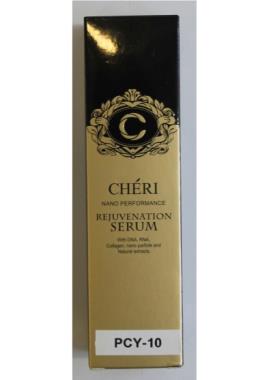
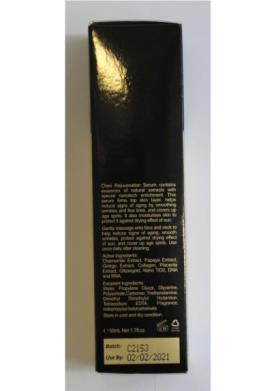
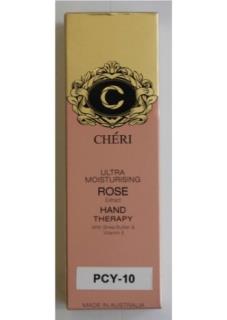
|
|
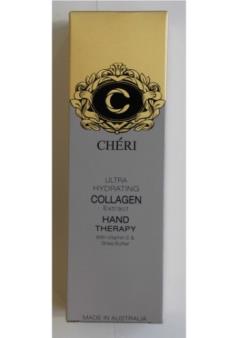
171 The CHÉRI bio-placenta product was the first bio-placenta product sold by Homart. The images of that product indicate, when compared with the other products in the CHÉRI range, that it is of a significantly different appearance. In this regard, Careline, in its submissions, draws attention to the use of the word “AUSTRALIA” within the CHÉRI bio-placenta product packaging, the absence of the stylised “C” and wreath and the use of the uncluttered, gold-saturated arrangements. According to the evidence in the proceeding, none of the prior CHÉRI product range was promoted in the solid, chest-like box of the 6-ampoule CHÉRI bio-placenta product.
172 The evidence of sales of the CHÉRI products prior to the launch of the CHÉRI bio-placenta product indicates sales, in a range of 2,000 to 4,000 units per annum, were achieved across the entire range in the years between 2006 and 2013. Sales increased somewhat to 8,135 in the year to 30 June 2014, 18,191 to 30 June 2015 and (excluding sales of the CHÉRI bio-placenta product) 21,295 in the year ending 30 June 2016.
173 Mr Jeffrey Yeh, the Operations Director of Homart, gave evidence concerning the promotion of the CHÉRI products. He referred to:
(1) Various awards and certificates of appreciation received by Homart, none of which demonstrated the use of the CHÉRI trade mark or get-up;
(2) Various exhibitions at which Homart’s logos and promotional material were displayed, however, the evidence did not reveal any significant promotion of any of the CHÉRI brands prior to March 2016;
(3) The fact that Homart had sponsored the “Australian Olympic Athletics” and “Australian Elite Athletics” and numerous charitable events conducted in both Australia and China including, for example, in 2015 a Jackie Chan charity event hosted in China;
(4) Homart hosting “many” trade missions from overseas such as China, Taiwan, and Hong Kong;
(5) Homart being a sponsor of a television programme known as “The Voice of China” and being involved in a number of entertainment events both locally and in China, such as the Australian Film Festival hosted in China and a number of concerts conducted in Australia;
(6) Homart regularly advertising its products and company news in various Chinese, Korean, Vietnamese and English newspapers and magazines including Sing Tao Newspaper, A China Media, Queensland Daily and Australian Made Magazine.
(7) Homart promoting its Homart and CHÉRI brands via online WeChat advertising;
(8) Homart also promoting its Homart and CHÉRI brands through in-store promotional material. The in-store material exhibited consisted of the CHÉRI bio-placenta product, which was, obviously enough, a product launched from March 2016;
(9) Homart having, at the time Mr Yeh’s affidavit of 1 July 2016 was sworn, on display at Sydney airport two large promotional billboards promoting its products which were in place since approximately May 2015. The images of the posters are of poor quality but I accept that the CHÉRI range was depicted in the poster (amongst other Homart products). Visible on the poster is also Chinese writing.
174 Homart’s submissions concerning its own reputation arise as part of its defence to Careline’s get-up case. They rely on the proposition that the words “CHÉRI Australia” serve to distinguish its bio-placenta products from the CHANTELLE bio-placenta products and that this differentiation is rendered more likely because consumers will be familiar with the name CHÉRI and recognise that it connotes a different trade source to CHANTELLE (or Careline).
175 In my view, the evidence does not provide strong support for Homart’s submission for two reasons.
176 First, the evidence of the promotion and sale of CHÉRI branded products is weak. The evidence of Mr Yeh does not provide details that suggest that CHÉRI products were widely or prominently displayed in stores, or that they have been featured extensively in advertising before the relevant date.
177 Secondly, and more importantly, for largely unexplained reasons there has been a drift in style and name from the CHÉRI products to Homart’s bio-placenta products. The get-up of the CHÉRI products is notably different to Homart’s new bio-placenta product branding, and Homart has added “Australia” to CHÉRI.
178 These factors lead me to the conclusion that Homart’s “Mercedes” and “BMW” analogy is inapt. This is not a case where two companies with very strong brand names have each adopted similar get-ups (c.f. “Moccona” and “Andronicus” in Stuart Alexander).
179 Homart submits that there was no evidence of actual confusion or that such instances as Homart relies upon are to be accorded no weight. It contends that the absence of confusion tells in favour of its case. By contrast, Careline submits that the evidence of Mr Fang Zheng demonstrated relevant confusion.
180 On or about 25 April 2016, Mr Zheng had a telephone conversation with a female colleague in China with whom he had previously worked:
I want an Australian skincare product called bio placenta oil. I have seen photos from a daigo. Could you buy for me as I know you will not add anything on to the cost. It is very simple to find this. There is only one Australian golden pack like this in Australia with 6 bottles in it of bio placenta oil. It looks like a gift pack. …
181 Based on this description he went to a shop in Eastwood called “Golden Kangaroo”. The staff were speaking Mandarin. He saw a product matching his colleague’s description and purchased three boxes of it. He went to another store in Bankstown to package and send it to China. A shop assistant packaged the product for him. In completing a written description for the package, Mr Zheng forgot the name of the product that he had purchased and recalls asking the shop assistant what it was called. The reply he received was:
We sell this product too but it is sold out but next week the new products will arrive in our shop. It is called Chantelle.
182 Subsequently, his colleague in China complained that he had purchased the incorrect product; what he had sent her was the CHÉRI bio-placenta product not the CHANTELLE product. Stung by the criticism, Mr Zheng subsequently returned to the Bankstown shop and saw the CHANTELLE bio-placenta product. He said, “[i]t was so similar to the product I had bought I was confused. I had not seen this happen in Australia before where there are 2 products the same”.
183 Mr Zheng was not an experienced shopper for cosmetics and prior to the events which he had described he had never purchased any skin care products.
184 Both parties relied on Mr Zheng’s evidence in support of their case. Homart submitted that it supported the contention that upon seeing the product the colleague in China immediately knew that it was not a CHANTELLE bio-placenta product. No confusion has ensued. Careline submitted that the evidence demonstrated reputation of the CHANTELLE bio-placenta product packaging because it was described purely by reference to the three descriptors; gold packaging, six ampoules of bio-placenta oil and being a “gift pack”. Further, Careline submitted that because the Bankstown shop assistant had confused the product being wrapped for the Careline product, and because of Mr Zheng’s opinion as to the similarities, the evidence demonstrated two instances of confusion.
185 In my view, Mr Zheng’s evidence supports propositions that the products in issue are directed predominantly to Chinese-speaking purchasers, that they may be purchased as gifts for others and that the CHANTELLE bio-placenta product has some reputation in relation to the gold-packaged “gift pack” and get-up. However, the evidence of confusion deserves little weight. The evidence as to the reaction of the Bankstown shop assistant was second-hand. Mr Zheng’s evidence of confusion rises little above submission.
186 In addition to the evidence of Mr Zheng, Mr Li gave evidence that when he first saw the CHÉRI and CHANTELLE bio-placenta products displayed side by side he first thought that they were the same product. Mr Zou and Ms Ma each also gave evidence that when they first saw the CHÉRI bio-placenta product, they at first thought it was the CHANTELLE bio-placenta product. Of course each of these witnesses was very familiar with the Careline product and none were misled. Their reactions were, however, perfectly natural. For the reasons that I have indicated, the get-up of the products is remarkably similar.
187 Ultimately, I give the evidence going to confusion or the absence of confusion little weight. The matter is to be decided having regard to the other considerations to which I have referred above.
11. CONCLUSION IN RELATION TO CARELINE’S CROSS-CLAIM FOR MISLEADING AND DECEPTIVE CONDUCT
188 In section 7 I have concluded that the get-up of the Careline bio-placenta product is sufficient to found Careline’s action under s 18 of the ACL. I find that the get-up is striking and unique and was, at the time of the launch of Homart’s product, distinctive of Careline’s bio-placenta product. In deciding whether there has been a misrepresentation, it is important to take into account the “general impression” left by offending material or statements of conduct. In this process, it is often be necessary to consider the individual elements of the offending material and their similarity to other material and the circumstances of the applicant. However, because the focus is on the overall impression, it is erroneous and artificial to take an unduly analytical approach to the consideration of the question of misrepresentation.
189 In the present case, the overall impression arises from the combination of features that I have earlier identified and, in particular, the size, shape and internal arrangement of the box and lid, the bronze-gold colour utilised in a “saturated” form and unadorned (save for the brand name) and the additional use of the sleeve and gold CHANTELLE carry bag. I am fortified as to my view concerning the reputation of these branding elements by the evidence of a number of the witnesses that consumers sometimes refer to the CHANTELLE bio-placenta product as “the gold box”, without reference to the brand name.
190 The question then arises as to whether, by advertising and selling the CHÉRI bio-placenta product, Homart has engaged in conduct in breach of s 18 of the ACL. In my view, it has for the 6-ampoule variant. The CHÉRI 3-ampoule variant is less similar to the CHANTELLE packaging and I consider that product separately below.
191 I am aware that the test requires consideration of the effect of the get-up on persons including “the shrewd and the ingenuous, the educated and the uneducated and the experienced and the inexperienced” within the relevant class; CRW Pty Ltd v Sneddon (1972) AR (NSW) 17 at 28 (NSWSC Sheldon, Sheppard JJ); Pacific Publications at [28].
192 As I have noted, with the exception of the name CHÉRI Australia, Homart has appropriated all of the features of the get-up of the CHANTELLE bio-placenta product. In this regard, I refer to section 6 above. I am mindful of the fact that in a get-up case, a difference in the name of a product can be compelling. In most cases, it is likely to be. However, in my view the present case falls comfortably within the exception for the following reasons (many of which I have explained in more detail above).
193 In the context of a case such as the present, the relevant misrepresentation is implicit. It is that a bio-placenta product with the get-up of the Homart product is the same as, or associated with, the manufacturer of the CHANTELLE bio-placenta product. In such a case, the “rapier of suggestion” may well be subtle, and designed to influence prospective customers in favour of Homart’s product upon the basis of an underlying assumption. In the present case, that assumption is that two products of the same distinctive get-up are from the same source; Pacific Dunlop Limited v Hogan (1989) 23 FCR 553 at [586].
194 The unique combination of features making up the get-up of the CHANTELLE bio-placenta product are eye-catching. They extend to the packaging in open or closed configuration and provide strong visual cues by which a consumer would note and remember the product. From this combination, quite separately to the name, the consumer is informed of the origin, quality and type of goods being purchased. Homart has taken all of those cues.
195 The suggestion conveyed by the get-up is not, in my view, dispelled sufficiently by the use of the CHÉRI Australia brand name. The name CHÉRI Australia is a relatively weak mark for distinguishing otherwise identical products because;
(a) such reputation as Homart has in the mark CHÉRI is weak and has been significantly dissipated by reason of Homart’s choice to use it in packaging distinctly different to the products in the balance of the CHÉRI range (see section 9 above);
(b) the phonetic and visual similarities between the first letters of both the CHÉRI and CHANTELLE marks diminish the effect of the use of different words (see [85] above). In this context both Chantelle and Chéri are French sounding names. Both commence with “Ch…”. To persons not familiar with French, they are likely to be weak means of distinguishing otherwise identical products (unlike “Andronicus” and “Moccona” in Stuart Alexander). They are likely to be perceived as words that convey little or no meaning (I make this observation without particular regard to the level of English literacy of the target market and assuming it to be roughly on par within native English speakers); and
(c) the addition of the reference to “Australia” has a similar local geographical connotation to “Sydney” as used in the CHANTELLE bio-placenta product.
196 Careline submits that the name CHÉRI Australia is also not sufficient to distinguish the CHANTELLE bio-placenta product for the additional reason that consumers of the relevant class are persons whose first or preferred language is not English and who are likely to have limited English reading ability. It contends that this further diminishes the capacity of the brand names to distinguish. Homart hotly disputes this proposition. On balance (leaving aside the likelihood that CHANTELLE and CHÉRI would be regarded as French, not English words), I am not prepared to accept Careline’s submission. The evidence of products in the stores where the bio-placenta products in issue were sold indicates that most, if not all of the products sold there, bore brand names rendered in the Roman alphabet. I infer that consumers who frequent those stores (that is, consumers relevant to the present products) are no less able to distinguish brand names than native English speakers. No evidence tendered by Careline suggested otherwise.
197 In this connection I note that Homart, during the course of the trial, sought to tender evidence prepared by the Australian Bureau of Statistics going to literary levels of ethnic-Chinese in Australia (which was annexed to the affidavit of Ms Khodeir). The tender was opposed and I reserved on the question of its admissibility. In light of my findings, it is not necessary to decide the point. However, against the prospect that I am wrong, I would reject the tender on the basis that s 144(1) of the Evidence Act 1995 (Cth) does not apply. I would not, in the present circumstances, apply s 190 of the Evidence Act 1995 (Cth) to admit this evidence.
198 Further, the trade circumstances to which I have referred in section 5 above demonstrate that often the display of the bio-placenta products in stores may not clearly show the trade mark, for instance, when the products are stacked one on top of the other. In those circumstances consumers are likely to use the visual cues provided by the get-up of the packaging to indicate the product which they seek rather than the names.
199 In my view, it is likely that a not insubstantial number of persons within the relevant class, who are aware of the CHANTELLE bio-placenta product, would be diverted from a search for that product by the get-up of the Homart product. They may note that something seems different about the brand name, but be convinced by the other similarities in the get-up that her or his recollection as to the brand name was mistaken. A consumer familiar with the CHANTELLE bio-placenta product may well recall its get-up, but have no or an imperfect recollection of its name and acquire the CHÉRI bio-placenta product believing it to be the CHANTELLE bio-placenta product. This would be especially likely in circumstances where the store does not stock both brands. The rapier of suggestion caused by the similarity in get-up will in those circumstances result in a sale for Homart.
200 Further, the findings that I have expressed in section 8 above (Development of the CHÉRI bio-placenta product) as to Homart’s intention, lead to the application of Australian Woollen Mills. That authority was applied by the Full Court in Red Bull at [117] (Weinberg and Dowsett JJ, Branson J agreeing) who said:
Without wishing to labour the point unduly, we again point out that where a trader, having knowledge of a particular market, borrows aspects of a competitor’s get-up, it is a reasonable inference that he or she believes that there will be a market benefit in so doing. Often, the obvious benefit will be the attraction of custom which would otherwise have gone to the competitor. It is an available inference from those propositions that the trader, with knowledge of the market, considered that such borrowing was “fitted for the purpose and therefore likely to deceive or confuse…”. Of course, the trader may explain his or her conduct in such a way as to undermine the availability of that inference. Obviously, this reasoning will only apply where there are similarities in get-up which suggest borrowing.
201 In the present case, I am satisfied that this was the intention of Homart. As noted in Red Bull at first instance (Conti J) at [64], the difference between the brand names is not necessarily decisive of an absence of the requisite intention. Nor, as I have noted above by reference to the Full Court decision in Peter Bodum, is the presence of a brand name determinative of an absence of misleading conduct. In the present case, in any action under s 18 of the ACL, one must look at the totality of conduct of the alleged deceiver.
202 I have found that Homart intentionally adopted a get-up for its product for the purpose of appropriating part of the trade or reputation of Careline. The choice of the CHÉRI Australia brand name was not, in the particular circumstances of this case, sufficient.
203 I turn now to address the 3-ampoule variant of the CHÉRI bio-placenta product. As I have noted in section 6.2.2 above, there are some aspects of the get-up of the 3-ampoule product that are different to the 3-ampoule CHÉRI bio-placenta product. This makes, as Careline accepted, its case pursuant to s 18 of the ACL more difficult. In particular, the box of the 3-ampoule CHÉRI bio-placenta product is smaller and less bulky, the lid closes in a different way, there is no display tray and the colour gold is a little more silvery than bronze. On the other hand, the saturated colouring effect, the similarities in the writing on the base of the box and on the ampoules themselves and the absence of writing on the sides of the box are adopted on the 3-ampoule CHÉRI bio-placenta product. The evidence reveals, as one would expect as a matter of course, that the 3-ampoule and 6-ampoule CHÉRI bio-placenta products are sold side by side. These matters lead me to the view that one cannot meaningfully distinguish the effect of the representations conveyed by the more visually obvious 6-ampoule get-up and those of the 3-ampoule variant.
204 Accordingly, I find that by selling the CHÉRI bio-placenta products, Homart has engaged, in trade and commerce, in conduct that is misleading or deceptive or is likely to mislead or deceive.
12. RELIEF ON CARELINE’S CROSS-CLAIM
205 In light of my conclusions it is appropriate that there be an injunction restraining Homart, its servants and agents from selling, offering for sale, distributing and/or marketing in Australia any ovine placenta product in the packaging or get-up that I have identified in paragraph [13] or that is otherwise deceptively similar to Careline’s CHANTELLE bio-placenta product. I am also satisfied that it is appropriate to grant a declaratory order. The contraventions which Careline alleged, and which have now been found, were matters that were strenuously contested during the hearing. Proceedings under the ACL have a special character involving the protection of the public and the protection of consumers. This special feature is not diminished simply because the proceedings for contravention are brought by a competitor whose primary objective may be the protection of its own private commercial interests; Dynamic Supplies Pty Limited v Tonnex International Pty Limited (No 2) [2011] FCA 675 at [22].
206 I am not satisfied, however, that it is appropriate for Homart to undertake corrective advertising.
B. HOMART’S CROSS-CLAIM FOR MISLEADING OR DECEPTIVE CONDUCT
207 Homart alleges in its statement of claim that in posts made in an online chat service called WeChat made by or on behalf of the respondents (I refer to Careline and Dragonshow collectively below as “Careline”), and in a letter sent by Careline’s solicitors, Pure Legal, to 14 retail and media outlets on 6 May 2016 (Pure Legal Letter), a series of misrepresentations were made by Careline in breach of s 18 of the ACL.
208 The pleading of Homart’s claim is complex and warrants some explanation in order to identify the issues. Broadly speaking, the misrepresentations are said to arise from conduct that falls into the following categories; first, from certain WeChat communications, which are said to address the comparative effectiveness of the CHANTELLE bio-placenta product as against the CHÉRI bio-placenta product (online comparative effectiveness representations); secondly, from the Pule Legal Letter, which is said to also make comparative effectiveness representations (Pure Legal effectiveness representations); thirdly, also from the Pure Legal Letter, which is said wrongfully to have made threats to commence legal proceedings against the 14 recipients of the Pure Legal Letter (threat to sue representations); and fourthly, in both the Pure Legal Letter and further WeChat communications which are said to have made misrepresentations as to unlawful conduct about the conduct of Homart (unlawful conduct representations).
209 In respect of each, it is necessary to identify; the statement made by or on behalf of Careline, the representation alleged, whether or not the alleged representation would be regarded by the relevant class of readers to have been made and whether or not such a representation is actionable within s 18 of the ACL.
14. THE ONLINE COMPARATIVE EFFECTIVENESS REPRESENTATIONS ALLEGED
210 The statement of claim relevantly commences by, at [12], setting out as a significant contextual matter some six claims that Careline makes in its product packaging and promotional materials which are defined and referred to later in the pleading as “Performance Claims”. They are that the CHANTELLE bio-placenta product:
(a) Hydrates and firms the skin while enhancing cell repair for a more enlivened complexion (Hydration and Cell Repair Claim).
(b) Helps reduce age spots and pigmentation by inhibiting melanin release (Melanin Release Claim).
(c) Promotes rapid healing and diminishes scars while triggering new cell generation (Rapid Healing Claim).
(d) Activation of aged skin cell renewal results in rejuvenated cells which appear to be more youthful and hydrated (Activation of Cell Renewal Claim).
(e) Grape Seed Oil and Vitamin E help to protect the skin from the effects of premature ageing, boost collagen production, and thereby give the skin a more youthful and healthier appearance; and collagen also helps to give a lift to tired looking skin, and provides an additional “plumped up” appearance (Skin Lifting and Plumping Claim).
(f) It both smooths and hydrates the skin, while enhancing cell renewal, with the result of a firmer, enlivened complexion (Smoothing, Skin Hydration Claim and Cell Renewal Claim).
211 It is not in dispute that these Performance Claims are to be found in the small print located on the base of the boxes of each of the 3 and 6-ampoule CHANTELLE bio-placenta products.
212 The statement of claim then alleges that in certain WeChat posts made by or on behalf of Careline, Careline had represented that the CHÉRI bio-placenta product range was inferior to the CHANTELLE bio-placenta product range. The source of the alleged representations was identified by reference to a 47 page annexure to the statement of claim. Helpfully, counsel for Homart reduced the breadth of its case in closing submissions to particular statements identified in a schedule containing significantly fewer materials (mapping schedule).
213 The statement of claim pleads that the identified postings conveyed, “in the context of the Performance Claims” that the CHÉRI bio-placenta range would be less effective than the CHANTELLE bio-placenta range in achieving the Performance Claims, that this representation was as to a future matter within s 4 of the ACL, and that understood in the context of the Performance Claims, the postings also conveyed the implied representation that Careline had reasonable grounds for making this comparison.
214 In terms of breach of the ACL, the statement of claim alleges that at the time of making representations that the CHÉRI product is inferior to the CHANTELLE product, Careline did not have reasonable grounds for doing so in that it did not have sufficient reliable:
(e) scientific or medical studies; or
(f) other evidence;
which:
(g) compared the effectiveness of the Cheri Placenta Range and Chantelle Placenta Range;
(h) at performing in the manner described in the Performance Claims .
215 As a consequence, the statement of claim asserts in [49] that the posting of the WeChat posts was conduct, by the respondents, which was misleading or deceptive within the meaning of s 18 of the ACL.
14.1 The sources of the online comparative effectiveness representations
216 Four sources of the online representations were ultimately relied upon in closing submissions by Homart.
217 The first was in a WeChat article dated 15 March 2016 and posted in Chinese characters immediately beneath an image of an ampoule of the CHANTELLE bio-placenta product set against a rich, gold-coloured background. The text, translated into English, is as follows (emphasis added):
The popular trend in the current market, whatever is hot then people copy/counterfeit! Especially for skincare products, when the major brand launches, some money-focusing companies then quickly launch huge amount of counterfeit (knock-off) products, with varying degree of quality and the workmanship, and some sellers, even using words such as authentic, using counterfeit products as the real products, making people confused. Some change the packaging, some even just put a different label while copying everything else! This series of hateful counterfeit products, not only making a headache for the buyers/consumers, but also making a difficult battle for some companies owning the product patent to crackdown on the counterfeit products.
218 The second was posted on WeChat on the same day:
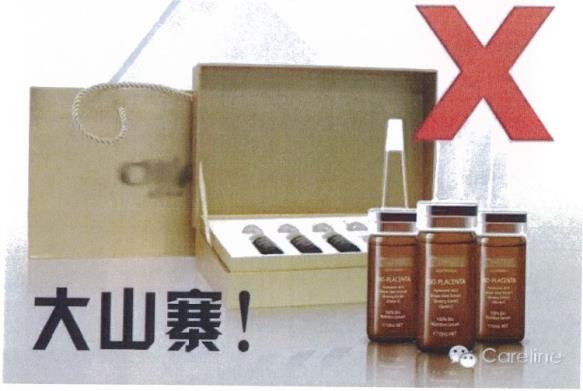
219 The text that appears below the photograph is translated as follows (emphasis added):
The bottle and cap are all identical, even copy (counterfeit) should have some creativity! The gold box is even totally copied, even the box inner ribbon is the same! The only change is the carrying bag changed to horizontal direction, you just change the cover and I could not tell you are the counterfeit ? !! Such no-thinking, low-quality copy, I really need to have retailers selling this product a huge POOR RATING!
220 The third source of the representation case in this respect was a WeChat post dated 8 April 2016 which appeared immediately above a photograph of a letter from Careline’s former solicitors dated 1 April 2016. A translation of the relevant text is as follows (emphasis added):
We have officially send out a legal letter to the company that maliciously copy (counterfeit), we will take all actions to prevent Chantelle Bio Placenta’s legal rights ! We also ask all the consumers and retailers to support Chantelle Complex Sheep Placenta Serum, recognise clearly the authentic product, and recommend the real good quality to everyone !
221 The final WeChat representation relied upon appears as a result of two posts, the first of which was posted at 9.37 pm on 7 May 2016 from an otherwise unidentified source referred to as XS as follows:
I have a very personal opinion, hope don’t remove me from this WeChat group. Careline is a large company, it doesn’t need to say the other side’s product is fake. It looks quite stingy if it is diametrically opposed to the other side. … Homart has been doing business in Australia for a long time, though they launch a product using a similar packaging design as Chantelle is not very good (isn’t it good to use a black box) but maybe they have realised their weaknesses in marketing. Thinking about why there are no hot selling products, it may be out of touch of the current market. It is a good thing for such a historical company to review their strategy. Careline as the new player should be proud of and should show some generous for taking the lead. The prosperity of the Australian products should be from many companies, it is not possible for only one company to achieve that.
222 In apparent response to this post, an author identified as “Tao” (it was not in dispute that Tao was Mr Norman Li, the Operations Director of Careline), at 9.49 pm, seven WeChat posts later, said “XS, your opinions have some reasonable point. It is my understanding that companies have competitions is unavoidable. But such a disgusting behaviour cannot be tolerated, especially this is the first time breaching the laws. …”.
223 Homart’s pleaded case concerning implied representations as to product effectiveness is essentially that when the particular WeChat communication is considered in the context of the Performance Claims made on the packaging of the CHANTELLE bio-placenta product (and other marketing materials), a reasonable consumer would understand it to convey an implied representation that the CHÉRI bio-placenta product was less effective than the CHANTELLE bio-placenta product. Yet Careline had no reasonable basis for making such a claim.
224 It is necessary to consider the class of persons to whom the representations may be directed and who are likely to be affected by the alleged conduct, having regard to the fact that although it may include the gullible as well is the inexperienced, s 18 of the ACL contemplates the effect of the conduct on reasonable members of the public; Parkdale Custom Built Furniture Pty Ltd v Puxu Pty Ltd [1982] HCA 44; (1982) 149 CLR 191 (Parkdale) at 199 per Gibbs CJ. The conduct is to be viewed as a whole. Where the conduct complained of consists of words, it would not be right to select some words only and to ignore others which gave meaning to the particular words; Parkdale at 199.
225 I commence consideration of the online posts by considering their context. WeChat is described by Mr Yeh as a popular communication service for the global Chinese-speaking community which has the functionality of a combination of instant online messaging, Facebook-like social networking, online news publishing and an online bulletin board.
226 The first three of the four WeChat communications in suit are WeChat news articles published on Careline’s WeChat account between 15 March 2016 and 8 April 2016 (Careline Posts). Such posts appear to be ephemeral in the sense that, like Facebook messages, the most recent post made is the most visible. A user would need to scroll backwards to find articles posted earlier in time. Depending on the number of posts put up, after a short amount of time one post becomes superseded by a more recent and so on. In my view it is doubtful that users of a commercial WeChat account would have much occasion to look at historical posts, by which I mean posts that have been put up by a company that are more than a day or so old. The evidence suggests that Careline was a regular user of its WeChat account and that accordingly its postings were in this sense relatively ephemeral.
227 The fourth WeChat communication consists of two posts contained in a set of exchanges between participants in a WeChat group called “OzCare”, with approximately 485 members. Unlike the Careline Posts, these two are within a private chat-room setting. The first post is a text-style message posted by a person identified only as “XS” at 9:37 pm on 7 May 2016. The second is a response from Mr Li, which was posted at 9:49 pm on the same day. In between these two posts were several others, from at least three other members of the group. This form of post is, in my view, even more ephemeral than the Careline Posts. It is in the form of a relatively rapid-fire conversation between numerous individuals, each responding to earlier messages. Some of the messages amount to no more than a single emoji, such as a smiley face. As messages accumulate, earlier ones are pushed further down the screen. If anyone wanted to look at historical messages, they would have to scroll down to find it. Having regard to the content of the messages, it is highly doubtful that they would desire to do so.
228 In context, it is apparent to me that the three criticised Careline Posts were part of a concerted reaction on the part of Careline to what it perceived to be an improper replication by Homart of the CHANTELLE bio-placenta product packaging. In his affidavit evidence, Mr Li says that he felt it necessary to alert consumers to the fact that there was a replica in the market. In my view, it is likely that readers of the Careline Posts were aware of the CHANTELLE bio-placenta products. It is, however, unlikely that at the time of the first and second posts (15 March 2016) that a significant number would have been aware of the CHÉRI bio-placenta product, which had only been launched a matter of days earlier.
229 In broad terms, I consider it likely that consumers who read the WeChat posts identified above will be people who are interested in acquiring one or more of the goods offered for sale by Careline, a subset of which are the CHANTELLE bio-placenta products. They are likely to be people who are of ethnic Chinese background who, as the language of the posts indicates, speak a Chinese language, most likely Mandarin.
230 On 30 June 2016 Mr Li deposed that all of the postings about which Homart had complained had by then been removed from Careline’s public page.
231 I now turn to consider whether these posts are likely to convey the implied representations alleged.
232 The first Careline Post does not directly refer to Homart or the CHÉRI bio-placenta product. It is dated 15 March 2016. The evidence of Ms Tu is that the 3-ampoule version of the CHÉRI bio-placenta product was launched in February 2016 and the 6-ampoule version in March 2016. Mr Li first noticed the CHÉRI bio-placenta product in March 2016. As a director of a major competitor of Homart, I infer that the CHÉRI bio-placenta product would fairly swiftly have come to his attention after it reached the market, and ahead of many consumers of that product. These matters lead me to the view that most consumers reading the first and second Careline posts on or about 15 March 2016 would be unaware of the CHÉRI bio-placenta product, but would be aware of the CHANTELLE bio-placenta products.
233 Turning to the text of the first post, Homart alleges that a not insignificant number of reasonable persons would understand it to convey the representation that the CHÉRI bio-placenta product was less effective than the CHANTELLE bio-placenta product. I do not accept that the post conveys such a representation, either expressly or implicitly. Rather, it refers to counterfeit or knockoff products in a generalised sense, and asserts, again in a general manner, that they have “varying degree[s] of quality”. I do not accept that the readership would at the time have understood this to be a reference to Homart’s bio-placenta product.
234 Further, I do not consider that the post would have expressly or impliedly conveyed that the CHÉRI bio-placenta product was less effective. Even if a link was drawn between the two products, it is not apparent to me that the language upon which Homart relies, and in particular the words “varying degree[s] of quality” lead to the conclusion that this is a claim on the part of Careline to superior product qualities.
235 Finally, I do not consider that a reader of the first Careline Post would have considered that it was making the specific representation pleaded by Homart, namely that the CHÉRI bio-placenta product failed to meet up to the Performance Claims set out in the promotional material for the CHANTELLE bio-placenta product.
236 The second Careline Post was on the same day. For similar reasons to those that I have stated above, I do not accept that a not insignificant number of readers of the post would connect Homart or the CHÉRI bio-placenta product with the images or text. The name on the packaging has been obscured. In any event, the text of the post is, in my view, even less likely to lead a not insignificant number of readers to the view that Careline was making a product comparison or implying that the CHÉRI bio-placenta product is less effective than the CHANTELLE bio-placenta product. I consider that the words “such no-thinking low-quality copy” are to be understood to be a reference to the characteristics of the product packaging that are said in the preceding sentences to have been copied (box, bottle, cap, ribbon) and the carry bag. The statement contains a general criticism of the unidentified product, but it strains the language and context to regard it to be a quality comparison of the products themselves. It follows that I also find it highly unlikely that readers would understand the communication to convey the pleaded representation that the CHÉRI bio-placenta product failed to meet up to the Performance Claims set out in the promotional material for the CHANTELLE bio-placenta product.
237 The third Careline Post was dated 8 April 2016 and includes Chinese text and a copy of a letter from Yau & Wang Lawyers, Careline’s then solicitors, dated 1 April 2016. The name of the addressee of the letter is obscured and no specific complaint is made by Homart concerning the letter’s contents. I accept that by 1 April 2016 a number of readers of the Careline post are more likely to have become aware of the CHÉRI bio-placenta product, not least as a result of the cumulative effect of various posts made by Careline up until that date. Even so, the language in the context of the third Careline Post does not lead me to the conclusion that the pleaded representation has been made.
238 In this respect, the content of the post gives little assistance to the implication sought by Homart. After referring to the unnamed recipient of the letter as having maliciously copied the CHANTELLE bio-placenta product, the text asks consumers and retailers to support the CHANTELLE product and “recommend the real good quality to everyone!”. In my view, these words do not convey, expressly or implicitly, a representation as to the effectiveness of the CHÉRI bio-placenta product, but rather an exhortation to buy the Careline product and a boast as to its quality. I consider it to be a remote prospect that a consumer would regard this post to represent a deprecating product comparison, and even less likely that consumers would consider that the CHÉRI bio-placenta product failed to meet up to the Performance Claims set out in the promotional material for the CHANTELLE bio-placenta product.
239 The fourth WeChat Communication relied upon arises from the exchange between XS and Mr Li. I do not accept, having regard to the context and content of those communications, that the alleged representation arises.
240 The above analysis leads me to the conclusion that Homart has not made out its pleaded case that the identified communications contain the representations pleaded and defined in the statement of claim as the Online Implied Effectiveness Representations and the Online Implied Reasonable Grounds Representations. In light of these findings, it is not necessary to consider, whether the alleged representations were reasonably based or justified.
15. THE PURE LEGAL EFFECTIVENESS REPRESENTATIONS
241 In substance, two forms of comparison are said by Homart to arise from the Pure Legal Letter. The first is that in the context of the letter as a whole, and in the context of the Performance Claims set out on the packaging of the CHANTELLE bio-placenta product (see [12] of the statement of claim quoted above), the implied representation arises that the CHÉRI bio-placenta product would be less effective than the CHANTELLE bio-placenta product in achieving the Performance Claims. This is said to be a representation as to a future matter. It is also contended that the letter conveys the implied representation that Careline had reasonable grounds for making it. Homart contends that at the time that these representations were made, Careline did not have reasonable grounds to do so, in that they did not have sufficient reliable scientific or medical studies or other evidence which compared the effectiveness of the CHÉRI and CHANTELLE bio-placenta products at performing in the manner described in the Performance Claims. I refer to this below as the first effectiveness representation.
242 The second is identified in the statement of claim as the “Oil Representation”, to the effect that the oil in the CHÉRI bio-placenta product was of inferior quality to that in the CHANTELLE bio-placenta product because it is (a) not readily absorbed by the skin, and (b) remains on the surface of the skin. This is said to be a representation as to a future matter. It is pleaded that an implication arises that at the time the representation was made, Careline had reasonable grounds for making it. Homart contends that at the time of making these representations, Careline did not have reasonable grounds to do so, in that they did not have sufficient reliable scientific or medical studies or other evidence which compared the effectiveness of the CHÉRI and CHANTELLE bio-placenta products in the manner described in terms of the performance of the liquids used in the CHÉRI and CHANTELLE bio-placenta products. I refer to this below as the second effectiveness representation.
243 In early May 2016 the Pure Legal Letter was sent to 14 different recipients consisting of owners of pharmacies, health food stores, online retailers and news outlets such as Sydney Today, Chinese Newspaper Group and Sing Tao Weekly Australia. The letter was from the solicitors representing Careline, and indicated that they were instructed that their clients had; invested significant funds in the formulation, manufacture, promotion and distribution of CHANTELLE bio-placenta products, enclosing photographs of the product packaging and indicating that the product has a significant Chinese market and presence. The letter drew attention to similarities between the packaging of the CHANTELLE bio-placenta product and the CHÉRI bio-placenta product and asserted that Homart under the name “Cheri” has been replicating Careline’s products in an identical form right down to the ribbon on the bags, external gold bags, identical size and material of plastic covers, colour and size of boxes, foam inlays, bottles and the use of the word “Bio Placenta”.
244 Relevantly, the letter also stated, in what formed the basis for what was defined in the statement of claim as the “Inferiority Representation”, that the solicitors were instructed that:
6. The replicated products are of an inferior quality with the oil not being readily absorbable and sitting on the surface of the skin.
245 The letter went on to assert, again “upon instructions”, that the recipient of the letter has been marketing the CHÉRI bio-placenta product, that Careline had started to receive customer complaints from members of the public and that not only did Careline consider the conduct of Homart in producing, packaging, selling and offering for sale the products to be unlawful in circumstances where there has been no approval or affiliation between Careline and Homart but also “the inferior product is damaging the market and goodwill built [by Careline] in relation to the Chantelle Bio Placenta market”.
246 The letter proceeded to state that Careline considers the conduct of the recipient of the letter in advertising, selling and offering for sale of the unauthorised CHÉRI bio-placenta products may constitute (either on its own or as an accessory) misleading and deceptive conduct in breach of s 18 of the ACL, or passing-off. The letter states ‘[m]ore particularly’ that in relation to the ACL breaches, the solicitors clients’ concerns arose because the sale by the letter recipient of the CHÉRI bio-placenta oil ampules: does, or is likely to falsely represent by reason of the similarity of packaging, product wording and design, that the CHÉRI product produced by Homart is in fact produced by Careline; that there is a false representation of an association between Homart and Careline; and that there is a false representation that the sale or resale of these products is with the knowledge and consent of Careline. The letter goes on to say that if Careline and Dragonshow were to commence legal proceedings against the recipient of the letter it would be entitled to seek interim and permanent injunctions to restrain it from advertising, displaying, stocking and selling CHÉRI bio-placenta products. Demands that the recipient of the letter cease-and-desist concluded the letter.
15.2 Consideration of the Pure Legal effectiveness representations
247 I turn first to consider the context and recipients of the Pure Legal Letter.
248 As noted, the letter was sent to 14 different organisations. The recipients are not the persons whom I have identified earlier in these reasons as the normal consumers of the bio-placenta products, but rather retail traders and news outlets. Each letter is in formal, legal terms and threatens the commencement of legal proceedings. It may be inferred that recipients are the owners or senior executives or employees of the organisations who receive them and lawyers advising them. There is no evidence that such people would have any particular knowledge, beyond the content of the letter, of the CHANTELLE bio-placenta product.
249 In my view, the evidence does not permit the inference that the recipients of the letter would be aware of the Performance Claims on the packaging of the CHANTELLE bio-placenta product. I accept Careline’s submission in respect of the first effectiveness representation that the difficulty for Homart’s case is that the pleaded representation requires imputed knowledge on the part of the reader of the letter of the Performance Claims. I am not, in the context of the Pure Legal Letter, prepared to infer such knowledge and the evidence does not suggest that to do otherwise is appropriate. Nor would I assume from the language of the sentence at point 6 of the Pure Legal Letter (quoted above) that a generalised product comparison was being invited. To the contrary, the sentence is specific as to the comparison and concerns only the absorption quality of the oil when it comes into contact with the skin.
250 The second effectiveness representation is more directly related to the contents of the letter. Homart’s allegations have the following three components; that it conveyed the representation that the CHÉRI bio-placenta product was of inferior quality to the CHANTELLE bio-placenta product because of the performance of the oil; that it was a representation as to a future matter within s 4 of the ACL; and/or that it carries the implied representation that Careline had reasonable grounds for making it.
251 The text of the Pure Legal Letter supports the first contention. In my view the recipient of the letter would understand it to mean that Careline had instructed Pure Legal that the CHÉRI bio-placenta product failed to have the same absorption qualities as the CHANTELLE bio-placenta product and were inferior in so far as they were not readily absorbable into the skin. I consider that the reasonable reader of the class identified above would understand the statement to mean that some sort of test had been done using the CHÉRI bio-placenta product.
252 The second component of Homart’s allegation is that the representation is as to a future matter. Subsection 4(1) of the ACL provides that if a person makes a representation with respect to any future matter and the person does not have reasonable grounds for making the representation, the representation is taken to be misleading. Homart contends that the representation quoted at point 6 of the Pure Legal Letter was a representation as to a future matter. However, I do not think that the language of that sentence of the letter conveys that representation. The relevant sentence of the letter addresses only past performance. Accordingly, the statutory deeming effect of s 4 of the ACL, as that section was considered by the Full Court North East Equity Pty Ltd v Proud Nominees Pty Ltd [2010] FCAFC 60; (2010) 269 ALR 262 at [29] – [35], does not arise.
253 The third component is that the sentence relied upon by Homart in the Pure Legal Letter carries the implied representation that the respondents had reasonable grounds for making the “Oil Representation”.
254 Careline contends that the statement in the letter conveys Careline’s opinion that the CHÉRI bio-placenta product was of an inferior quality because it was not readily absorbable and sat on the skin. It submits that at most the statement represented an opinion that was honestly held arising from observations made by Mr Li. It is not a statement of fact. Further, Careline contends that Mr Li, as a matter of fact, had reasonable grounds for giving his opinion, as his evidence discloses.
255 The law regarding representations that may be regarded to be either of opinion or statements of fact is well settled; see Global Sportsman Pty Ltd v Mirror Newspapers Pty Ltd [1984] FCA 167; (1984) 2 FCR 82 at 88 (Bowen CJ, Lockhart and Fitzgerald JJ).
256 The line between statements of fact and statements of opinion is often difficult to draw. In Tobacco Institute of Australia Ltd v Australian Federation of Consumer Organisations Inc [1992] FCA 962; (1992) 38 FCR 1 at 46 – 7 Hill J (with whom Foster J agreed on this point) said:
No case will afford a guide to any other case, since it must essentially be a question of fact whether a particular formulation of words expresses merely an opinion or a statement of fact. However, two observations may be made. First, the subjective purpose or motivation of the maker of the statement will not be of much significance. It is the readers’ perception of the maker’s intention which will ordinarily be the significant matter. The question will generally be resolved by looking to the persons to whom the statement was directed and asking whether any members of that class of persons would reasonably understand the statement to be one of fact or opinion.
Where, as here, the statement is directed to the public at large, it must be borne in mind that the class of persons will include the intelligent and the less intelligent, the informed and the less informed. The fact that some members of the class may perceive the statement as one of opinion will not avail a respondent if a not insignificant class of persons could reasonably be expected to perceive it as a statement of fact.
Secondly, a statement will most usually be seen as a statement of fact if it is one which can be measured against an objective criterion. Thus, generally, where no objective criterion exists, so that of necessity what is said must depend upon judgement or opinion, the statement will be seen not as a statement of fact but as one of opinion.
257 As noted above, the relevant statement in point 6 of the Pure Legal Letter is:
6. The replicated products are of an inferior quality with the oil not being readily absorbable and sitting on the surface of the skin.
258 In my view the statement as to “inferior quality” is a statement of opinion. The basis for the opinion is expressed in the terms set out, namely that the inferiority arises because the oil is not readily absorbable on the skin. The statement as to how readily the oil is absorbed into the skin is also an opinion. In my view, a recipient of the letter is likely to understand the opinion as being one made on the basis of some testing performed by Careline, namely by having regard to how oil is, in comparative terms, absorbed into the skin over time.
259 Homart does not plead that the representation is false, but rather that at the time that the representation was made the respondents did not have reasonable grounds for making it in that it did not have sufficient reliable scientific or medical studies or other evidence which compared the effectiveness of the two products in terms of the performance of the liquids.
260 In this regard Homart pointed to evidence given by Mr Li to the effect that in mid-March 2016 he had tested the CHÉRI bio-placenta product on his own hand, he claimed that it sat on the surface of his skin for over a minute and that, in contrast to the CHANTELLE bio-placenta product, it was necessary to rub it in, rather than letting it absorb into the skin by itself. Mr Li gave the opinion that based on his experience in the manufacture and formulation of the CHANTELLE bio-placenta product, lesser skin penetration meant lesser performance, and that the greater the skin penetration of the product, the more likely it is that the whole of the skin to which it is applied will receive the benefits of the product.
261 Homart submitted that as Mr Li had no chemistry or dermatology tertiary qualifications, and the only basis for his opinion was his experience from the process of formulating the CHANTELLE bio-placenta product, the “test” performed by Mr Li was not a reasonable basis for making the representation.
262 Homart also pointed to an expert report that was prepared by Dr Natasha Cook, an independent expert dermatologist with experience in the formulation of “cosmeceuticals”. Dr Cook gave evidence that disagreed with the observations and conclusions drawn by Mr Li. In answer, Careline called the evidence of a chemistry expert, Mr Richard Williams. Mr Williams’ evidence was that the CHANTELLE bio-placenta product disbursed and spread on his skin immediately and took between 10 and 12 seconds to completely absorb. In contrast, the CHÉRI bio-placenta product remained in droplet form on the skin, required mechanical action to spread the liquid in the desired area, and took 35-40 seconds to completely absorb.
263 In my opinion, the evidence of Dr Cook and Mr Williams is not particularly material to the present debate. On the basis of Homart’s pleaded case, the relevant question is whether the opinion as stated was based on reasonable grounds.
264 I have briefly summarised the effect of Mr Li’s evidence in the context of setting out Homart’s submission. Mr Li performed his basic test prior to the sending of the Pure Legal Letter. Whilst not a sophisticated test, the representation itself simply refers to the physical absorption of the CHÉRI bio-placenta oil. It is likely that a reader of the letter, if he or she paused to consider it, would anticipate that a practical test such as that would have formed the basis for the opinion expressed. Indeed, Homart’s dermatology expert gave evidence that she sampled the product on her own skin and reported her observations as the basis for her conclusions, although she emphasised that this form of testing could not, in her opinion, provide a reliable basis for determining inferiority of one product over another.
265 I accept that Mr Li conducted the test prior to the sending of the Pure Legal Letter, and that the basis for the representation contained in the Pure Legal Letter was instructions that Mr Li gave. Whilst it is apparent from the evidence of Dr Cook and Mr Williams that expert opinions on the subject may differ, in my view Homart has not demonstrated that Mr Li did not genuinely believe that he had a basis for making the representation or that (to the extent that it is relevant) Careline had no reasonable grounds for making the representation.
16. THE THREAT TO SUE REPRESENTATIONS
266 Homart also alleges that the Pure Legal Letter conveyed the further representation that Pure Legal held instructions to the effect that unless the respondents received an undertaking in a form specified in the letter from the relevant recipient by 16 May 2016, the respondents would immediately commence proceedings against each recipient, without further notice (referred to in the statement of claim as “the Express Immediate Commencement Representation”).
267 Homart contended that the allegations of infringement were allegations of fact which were false, that they were made in trade or commerce and they expressly or impliedly conveyed that the respondents would immediately commence proceedings against the recipient without notice unless the undertaking sought was given.
268 The Pure Legal Letter was dated 6 May 2016 and required a response by 16 May 2016. It is not in dispute that the pleaded representations were made. However, Careline submits that the letter contained only statements of opinion and that the opinion was reasonably held. Furthermore, Careline refers to evidence to indicate that the Director of Careline, Mr Li, intended at the time that the letter was sent to commence proceedings.
269 Homart submitted that the Pure Legal Letter went beyond a statement of opinion and amounted to a statement of fact that it intended to sue which was expressed in terms designed to force the recipients to comply with the demands, citing Wanem Pty Ltd v John Tekiela [1990] FCA 527; (1990) 19 IPR 435 at 444 (per Gummow J) and SWF Hoists and Industrial Equipment Pty Ltd v Statement Government Insurance Commission (1990) ATPR 41-045. It submitted that the allegations of infringement and threats to commence proceedings amounted to false statements of fact which were actionable.
270 In my view, when taken in context and read as a whole, the Pure Legal Letter contained a statement of opinion to the effect that the recipients of the letter were engaging in conduct in breach of the ACL and passing-off. After reciting the conduct of which Careline complained, the letter stated, in terms set out in bold face, that:
… our client considers that the conduct of [recipient of letter] in advertising, selling and offering for sale the unauthorised Cheri products may constitute either on its own part or as an accessory [breach of the ACL or passing-off]”
(emphasis added)
The letter provides 10 days for the requested undertakings to be provided.
271 Like many such letters, it presents the facts as known to the solicitors on the instructions of the client and invites a change of conduct from the recipient of the letter, backed up by threat of legal proceedings. It was open to the recipients to respond and reject the contentions, ignore them and see if they were sued, compromise with the sender, or change their conduct.
272 Between the date of the letter and the deadline of 16 May 2016, certain posts on WeChat, which were date stamped 7 May 2016 and 12 May 2016, suggest that the letter had yielded a reaction which diminished the need on the part of Careline to carry out its threat. On 7 May 2016 Mr Li posted on WeChat a message that Careline is taking action after consulting its solicitors. It states that “it is believed that Australian judge will give everyone a fair judgement”. On 12 May 2016 Mr Li posted a further message to the effect that by that time all major retail channels had removed their products and that the majority of retailers “have the sense of righteousness, and are doing business legally and reasonably”.
273 Against this background one turns to the evidence of Mr Li, which was to the effect that he instructed Pure Legal to send the letters and that at the time that the letters were sent he intended for Careline to sue the recipients of those letters if they did not comply with its demands.
274 Homart submitted that Mr Li’s evidence in this regard should be rejected. It repeated its general challenge to Mr Li’s credit and submitted that his evidence should be disbelieved. It contended that the Court should conclude that it made no commercial sense for Careline to sue third parties for a number of reasons, including because it might have business relationships with them, and therefore it was improbable that Careline ever intended to do so.
275 I am unable to accept Homart’s submissions in this regard. I do not accept that the Pure Legal Letter contained a statement of fact rather than a statement of opinion. The opinion was that the recipients may be engaging in conduct that infringed Careline’s rights. It contained a threat to the effect that if the recipient did not cease and desist, legal proceedings would be commenced. In my view no misrepresentation was involved. Taking into account the evidence of Mr Li together with the contemporaneous WeChat posts to which I have referred above, in my view there is ample support for the proposition that at the time that the letter was sent Careline intended to sue one or more of the recipients of the letters. I am fortified in this view by the fact that Pure Legal, as the solicitors acting for Careline, wrote in the letter the words “[u]nless we receive such an undertaking by no later than 9 am on Monday, 16 May 2016, we hold our clients’ instructions in relation to immediately commencing proceedings in the Federal Court of Australia… to protect our clients’ rights without further notice”. There is no suggestion that this letter was not sent on instructions. Ms Perry, Careline’s solicitor, gave an affidavit in the proceedings but was not cross-examined. Those instructions form a further basis upon which to reject Homart’s contention.
17. THE UNLAWFUL CONDUCT REPRESENTATIONS
276 Homart alleged in [28] of the statement of claim that in certain WeChat posts, considered in context, Careline, Mr Li and Mr Zou represented expressly and/or by implication that:
b. The selling of the Cheri Placenta Range involves an infringement of Australian law, due to the alleged similarities between the packaging of the Cheri Placenta Range and of the Chantelle Placenta Range (Online Unlawful Conduct Representations).
277 In closing submissions Homart identified eight relevant WeChat posts in the mapping schedule.
278 Homart also alleged that the Pure Legal Letter conveyed the representation that Homart and the recipients of the letters were engaging in unlawful conduct by selling the CHÉRI bio-placenta product for the reason that they were engaging in passing-off and/or misleading conduct under the ACL.
279 In [56] of the statement of claim, Homart alleged that:
56. In the event that Careline’s cross-claim does not succeed, the Unlawful Conduct Representation, and the Online Unlawful Conduct Representations, were misleading or deceptive, within the meaning of s.18 ACL.
280 In the event, I have found above that Careline’s cross-claim for misleading and deceptive conduct does succeed. As a result, it is not necessary for me to consider this aspect of Homart’s case.
281 In view of my conclusions, Homart’s claim should be dismissed with costs.
282 I have found that Careline’s cross-claim succeeds and that a declaration should be made and an injunction given. I will order that the injunction be stayed for a period of 14 days to enable Homart time to give effect to it. Homart should pay Careline’s costs of the cross-claim.
283 I have noted earlier in my reasons that the issue of the quantum of any pecuniary remedy was separated from liability for non-pecuniary remedies during the interlocutory phase of these proceedings. The parties should confer and determine appropriate interlocutory steps to be taken to prepare for a hearing as to the liability of Homart to pay damages, if any, to Careline.
I certify that the preceding two hundred and eighty-three (283) numbered paragraphs are a true copy of the Reasons for Judgment herein of the Honourable Justice Burley. |
Associate:


