FEDERAL COURT OF AUSTRALIA
Australian Competition and Consumer Commission v Snowdale Holdings Pty Ltd [2016] FCA 541
ORDERS
AUSTRALIAN COMPETITION AND CONSUMER COMMISSION Applicant | ||
AND: | SNOWDALE HOLDINGS PTY LTD (ACN 009 372 534) Respondent | |
DATE OF ORDER: |
THE COURT ORDERS THAT:
1. The application is adjourned to a date to be fixed for the making of orders and fixing of penalties attendant upon the findings made in these reasons for judgment.
Note: Entry of orders is dealt with in Rule 39.32 of the Federal Court Rules 2011.
SIOPIS J:
1 Snowdale Holdings Pty Ltd (Snowdale), the respondent, carries on, and during the period 8 April 2011 to 9 December 2013 carried on, the business in Western Australia of producing eggs from laying hens on a very large scale.
2 At various times during the period 8 April 2011 to 9 December 2013 (the relevant period), Snowdale packed eggs that it produced at two of its egg production farms into cartons containing labels which used the term “free range eggs” to describe the eggs contained in the cartons. Snowdale sold those cartons of eggs to retailers for sale to their customers under the brand names: Swan Valley Egg Farm, Swan Valley Egg Co, Carabooda Lovingly Hand Packed free range eggs, free range eggs by Ellah, Wanneroo Free Range Eggs and Mega Free Range Eggs. Free range eggs are sold at a premium price.
3 The retailers included well-known supermarket chains, such as Woolworths and Coles. The retailers placed the cartons of eggs supplied by Snowdale on their supermarket shelves and in that way the labels on the cartons became visible to consumers. In addition to the words “free range eggs”, many of the labels contained other words and some also contained pictures. I will refer in detail to the labels used on and in the cartons which are the subject of complaint in this case later in these reasons.
4 At times during the relevant period, Snowdale also operated a website which it used to market and advertise the eggs under the brand name “free range eggs by Ellah”. Snowdale also published a poster during the relevant period which advertised its Swan Valley Egg Co eggs as free range eggs.
5 The eggs which Snowdale sold and promoted as free range eggs during the relevant period came from laying hens that were housed in four industrial sized structures which were referred to during the proceeding as “barns” or “sheds” located on a property at Carabooda (referred to during the proceeding as the “Carabooda farm”); and, for a significant part of that period, also from a shed located on a property in the Swan Valley (referred to as the “Swan Valley farm”).
6 Each of the four sheds at the Carabooda farm was 96.4 m long and 13.6 m wide. The shed at the Swan Valley farm was 82.8 m long and 11 m wide.
7 Each of the sheds at Carabooda had the capacity to house about 18,000 laying hens, whilst the shed at the Swan Valley farm had the capacity to house about 12,740 laying hens. Adjacent to each of the sheds was a vacant area of land which was fenced. There were openings on one side, and later, at Carabooda, on both sides, of the sheds which gave the hens a means of access to the vacant areas of land adjacent to each of the sheds. These openings were, and are, called “pop holes” and the purpose of the pop holes was to permit hens to use the pop holes as a means of exiting the shed to access the adjacent area of land, called the “range” or the “open range”. The number of pop holes at the sheds at Carabooda increased during the period in question. I will deal with the farming conditions in more detail later in the reasons.
8 The Australian Competition and Consumer Commission (ACCC), the applicant, claims that in, during the relevant period, selling, marketing and advertising the eggs produced under the farming conditions which prevailed in relation to the five sheds referred to above, as “free range eggs”, Snowdale engaged in conduct which was misleading or deceptive, or likely to mislead or deceive, and so contravened the Australian Consumer Law (the ACL) in Sch 2 of the Competition and Consumer Act 2010 (Cth).
9 In short, the ACCC alleged that, during the relevant period, the impugned farming conditions were such as to restrict the ability and propensity of the hens to leave the sheds and access the open ranges, so that, in respect of each shed, most hens did not actually leave the shed on most days. In those circumstances, said the ACCC, it amounted to misleading or deceptive conduct to represent that the eggs produced in those farming conditions were “free range eggs”.
10 The respondent denies the claim.
11 I set out below a number of background facts.
background
12 Mr Barry Cocking is, and was, at all material times, a director of Snowdale. Mr Cocking was, during the relevant period, responsible for the operation of the egg production business carried on by Snowdale. During the relevant period, Snowdale sold approximately 71% of the eggs it produced as free range eggs, and charged a higher price for those eggs than if they had been sold as “barn laid” or “cage free” eggs. Until November 2011, when they moved to Guildford, Mr Barry Cocking and his wife, Mrs Chimene Cocking, lived in a house located at the Swan Valley farm.
13 Ms Ellah Cocking is the daughter of Mr and Mrs Cocking. Ms Ellah Cocking was assigned some management responsibility in respect of the free range eggs production business carried on at the Swan Valley farm from sometime in early 2011. As I will discuss in greater detail later in these reasons, Ms Ellah Cocking featured strongly in Snowdale’s strategy to market its “free range eggs by Ellah” brand of eggs. The “Ellah” referred to in the brand name “free range eggs by Ellah” is a reference to Ms Ellah Cocking.
14 The process used to produce the eggs sold as free range eggs in the sheds on the two farms referred to above was, in outline, as follows.
15 The birds which ultimately became the laying hens housed in the relevant sheds at Carabooda and Swan Valley were bought by Snowdale as day old chicks. From November 2011, Snowdale bought the day old chicks from the Altona Hatchery, which delivered them to the Carabooda farm. Mr Dennis Green was the person at Altona Hatchery who, at Mr Cocking’s request, dealt with Mr Cocking in relation to the sale of the day old chicks.
16 The day old chicks were then raised in two rearing sheds at Carabooda for about 16 weeks. A flock of the birds was then transferred to one of the free range sheds at Swan Valley and Carabooda, where they were trained for a further period of four to five weeks. The training included conditioning the hens to use the food, water and nesting facilities within each shed. The nesting facilities were provided by a nesting box which was part of a continuous structure which ran down the middle of the shed for almost the entire length of the shed. The hens would lay the eggs in the nesting boxes and the eggs would then be conveyed to a collection point. The floor of each of the sheds which housed the hens was slatted so that the manure produced by the hens would pass through the slats on to a conveyor belt beneath the slatted floor. The food for the hens was provided in the shed using a feeding system which Mr Cocking described as a “chain feeding” system, which was essentially a chain of small pans in which the food was placed and then circulated around the shed. There was also within the shed a system which provided drinking water for the hens, referred to as water lines, which comprised pipes hung from the roof stretching horizontally throughout the length of the shed. Attached to these pipes at regular intervals were further downward pipes at the end of which was an opening referred to as a “nipple”, which the birds would access in order to drink the water. The shed was temperature controlled. It had cooling fans and foggers which produced a fine mist of water through the shed to cool it down.
17 When the flock of laying hens in a shed had reached the end of their laying lives, they were “euthanized”. The sheds were then cleaned out, and a new flock of young birds was taken from the rearing sheds and placed in the shed to replace the previous flock.
18 During the relevant period, there was in operation the Code of Practice for Poultry in Western Australia (Department of Local Government and Regional Development, March 2003) (the Model Code). The Model Code states:
2.1.1 Egg production
The three basic housing systems for egg production are defined below. It is recognised that individual marketing definitions for table eggs may require more specific descriptions for the housing systems.
2.1.1.1 Cage systems
Birds in cage systems are continuously housed in cages within a shed.
2.1.1.2 Barn Systems (Non-cage Systems)
Birds in barn systems are free to roam within a shed which may have more than one level. The floor may be based on litter and/or other material such as slats or wire mesh.
2.1.1.3 Free-Range Systems (Non-cage Systems)
Birds in free-range systems are housed in sheds and have access to an outdoor range.
19 That Model Code included specifications in relation to farming practices including guidelines for stocking densities and pop hole availability for free range systems as defined by the Model Code. Thus, the Model Code provided for a stocking density inside the sheds of up to 30 kg per square metre of stocking space. On the basis that an adult laying hen weighed about 2.1 kg, that resulted in a density of just under 15 birds per square metre. The Model Code also provided for a standard of 500 hens in a shed per metre of pop hole.
20 In April 2011, at the beginning of the relevant period, Snowdale was producing eggs sold and marketed as free range eggs from sheds 5, 6, 7 and 8 at Carabooda. There were other sheds on the farm, but they were not used for the production of eggs marketed as free range eggs. As mentioned, each of the sheds 5, 6, 7 and 8 was 96.4 m long and 13.6 m wide and had the capacity to house 18,000 laying hens each. Until July 2013, there were pop holes located along the south side of each of sheds 5, 6, 7 and 8 but, after July 2013, the number of pop holes at those sheds increased. I will deal with the farming conditions at those sheds in greater detail later in these reasons.
21 In April 2011, the Swan Valley farm shed was 82.8 m long and 11 m wide, having an internal area of approximately 910 m². This shed was referred to as shed 1 at the Swan Valley farm. At that time, there were 10 pop holes located in the northern side of the shed. Also, in April 2011, there was a large undivided area of land immediately adjacent to the north of that shed which had not been divided into separate areas by fencing. The pop holes in shed 1 at Swan Valley were immediately adjacent to this large undivided area of land. Subsequently, fences were installed and three ranges were created, referred to as range A, range B and range C. In April 2011, the shed was empty and undergoing renovations. The shed was used later in the year to house hens whose eggs were sold as free range eggs. I will deal with the farming conditions in relation to the Swan Valley shed in greater detail later in these reasons.
22 At some time in 2011, Snowdale commenced aggregating at the Swan Valley farm, eggs which were produced at the four sheds at Carabooda and shed 1 at the Swan Valley farm. The eggs were packed into cartons. Snowdale sold those cartons of eggs at a premium price to retailers for sale to their customers under the brand names: Swan Valley Egg Farm, Swan Valley Egg Co, Carabooda Lovingly Hand Packed free range eggs, free range eggs by Ellah, Wanneroo Free Range Eggs and Mega Free Range Eggs. Free range eggs were sold at a premium price by retailers to their customers.
23 In packing the eggs into the cartons, Snowdale did not have regard to the origin of the eggs. Thus, for example, eggs from hens housed in the Carabooda sheds were included among the eggs packed in the cartons labelled “free range eggs by Ellah”.
24 In September 2011, two environmental health officers, from the City of Wanneroo, Mr Phillip Wesley and Mr Wayne Harris visited the Carabooda farm as a consequence of an odour complaint from market gardeners. The two officers had a conversation with a person they understood to be the manager of the farm about the propensity of the hens to exit the sheds at Carabooda and enter the open ranges adjacent to the sheds. I will deal with this conversation later in these reasons.
25 On 28 February 2012, Mr Cocking sent an email to councillors of the City of Swan in support of an application for retrospective approval to increase the number of hens that Snowdale would be permitted to keep for egg production at the Swan Valley farm from 24,000 to 80,000 hens. In the email, Mr Cocking advised that the Swan Valley farm had been operating at full capacity of 80,000 hens.
26 In July 2012, Mr Peter Groot became the farm manager at Carabooda. His employment ended in February 2015. During his tenure as farm manager at Carabooda, Mr Groot provided weekly reports by email to Mr Cocking. These reports included progress reports on the chicks in the rearing sheds and egg production reports in respect of the production sheds, including sheds 5, 6, 7 and 8. Mr Groot also made observations in those reports about other developments at the Carabooda farm.
27 On 28 March 2013, a substantiation notice to give information and produce documents was issued by the ACCC to Snowdale under s 219(2) of the ACL. The substantiation notice asked a number of specific questions about the farming conditions relating to the production of the eggs which Snowdale sold as free range eggs. Among the questions asked was a question about stocking density in the free range sheds. The question, and the answer given by Mr Cocking on behalf of Snowdale in its response dated 10 May 2013, was as follows:
b. In relation to each of the free range chicken sheds and associated yard areas identified in response to questions 3.a. above state:
i. the highest internal stocking densities since 1 January 2013 and describe how those density figures have been calculated, including the number and average weight of adult hens housing each shed at that time.
Response
14 birds per square metre
Density calculated using floor area and bird weight (approx 2 kg per bird)
28 The calculation method for the highest internal stocking density used by Mr Cocking in the response to the substantiation notice, therefore, indicated that the highest internal stocking density since January 2013 for each of sheds 5, 6, 7 and 8 was calculated on the basis of a flock size of approximately 18,000 hens.
29 Snowdale’s response also stated that the internal area of each of the sheds 5, 6 and 7 was 1,311 m². However, the internal area of shed 8 was said to be 1,088 m². I observe, however, that the ACCC subsequently pleaded, and Snowdale subsequently admitted, that the internal area of shed 8 was also 1,311 m².
30 Snowdale’s response also reported that the indoor area of shed 1 at Swan Valley was said to be 910 m², and, consequently, that the highest internal stocking density since January 2013 for Swan Valley, was calculated on the basis of a flock size of about 12,740 hens in that shed.
31 There was also annexed to the Snowdale response a diagram of the relevant sheds at Carabooda and Swan Valley. In respect of each of the sheds at Carabooda the diagram stated there were “approximately 18,000” hens. In respect of the shed at Swan Valley the diagram stated that there were “approximately 12,750” hens.
32 In addition, Snowdale’s response to the substantiation notice indicated that the dimensions of the outside access areas for each shed were as follows:
Response
The outside areas for each respective free range shed have been estimated for the purposes of replying to the ACCC’s notice.
Carabooda Shed 4 – 2,000m²
Carabooda Shed 5 – 3,500m²
Carabooda Shed 6 – 2,300m²
Carabooda Shed 7 – 2,500m²
Carabooda Shed 8 – 2,600m²
Swan Valley Shed 1 – 13,000m²
33 At the trial, Mr Cocking also admitted in cross-examination, that the size of the outdoor access areas which he had provided in the response were inflated. In fact, the areas of the outdoor ranges reported by Mr Cocking were inflated by between 22% to 37% in respect of each outdoor range at Carabooda and about 50% in respect of Swan Valley.
34 Mr Cocking also explained in evidence, that his reference in the response to shed 4 at Carabooda being a free range shed was a mistake. He said that at the time that he provided the response, he only intended in the future to use shed 4 for the production of free range eggs.
35 On 18 April 2013, Mr Wesley and Ms Catherine Fleming, also an environmental health officer from the City of Wanneroo, visited the Carabooda farm in response to an application made by Snowdale to undertake the production of caged eggs. They had a conversation with Mr Cocking and Mr Groot, the farm manager, about the extent to which the hens in the free range sheds exited the sheds. I will deal with that conversation later in these reasons.
36 On 21 April 2013, three days after the visit from the environmental health officers, Mr Groot in his weekly report to Mr Cocking made the following comment:
The meeting with the City of Wanneroo seemed to go well although got a bit hairy when they asked to see the gates that let the birds out of the sheds. The sooner Cataby is up and running and Carabooda becomes cage free the better I think. All doubts gone.
37 In May 2013 at the latest, Snowdale published material on its website, which promoted the sale of eggs sold and marketed as “free range eggs by Ellah” packaged in the cartons which carried the labels referred to at [73] to [82] below. The website address was www.eggsbyellah.com.au. I will refer in more detail to the published material on the website below.
38 In late June or early July 2013, Snowdale entered into a lease with the Department of Conservation and Land Management for the lease of an area of Crown land of about 75 ha which was adjacent to the Carabooda location. Thereafter, Mr Cocking authorised the construction of fenced runs from each of sheds 5, 6, 7 and 8 to this open tract of land.
39 In July 2013, the number of pop holes at each of the four Carabooda sheds was increased. Thereafter, there were five pop holes on the northern side of each shed - which until then had no pop holes – and five pop holes on the southern side of each shed.
40 Further, following the addition of the five pop holes to the northern side of each shed, there was a reconfiguration of the range areas available for access by the hens which were adjacent to each shed. A new range was also established adjacent to the northern side of shed 8. I will deal in more detail with the question of the outdoor ranges later in these reasons.
41 On 14 August 2013, the ACCC issued a notice under s 155(1)(b) of the Competition and Consumer Act 2010 (Cth) (the s 155 notice) requiring Snowdale to provide information and furnish documents about, among other things, the conditions in which it produced the eggs which it marketed and sold as free range eggs.
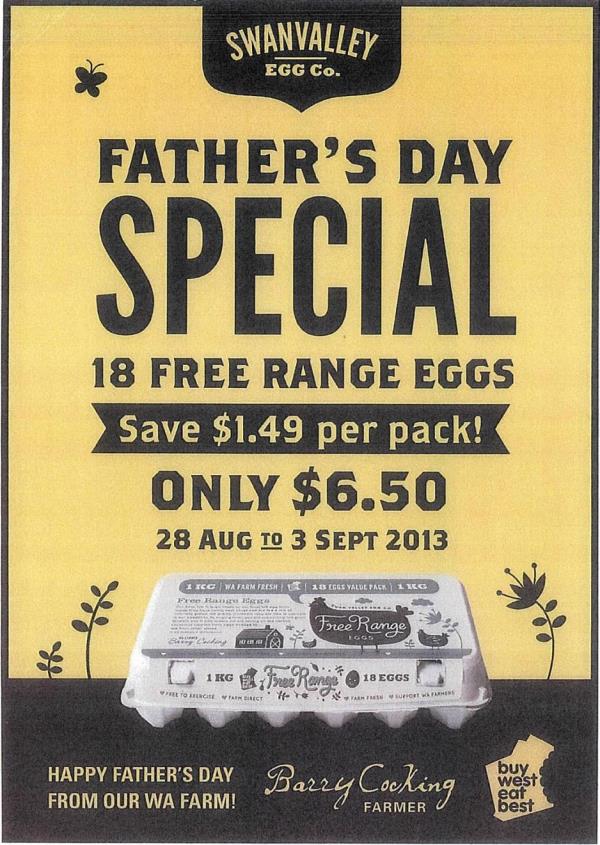
42 In August and September 2013, Snowdale published the poster advertising the Swan Valley Egg Co Value Pack of free range eggs for Father’s day. That poster is described in more detail below.
43 By 1 September 2013, the fencing for the runs linking each of sheds 5, 6, 7 and 8 at the Carabooda farm to the newly leased 75 ha tract of land had been completed. There was an issue at trial about the extent to which the hens actually used the 75 ha area of land, and I will deal with this later in these reasons.
44 On 30 September 2013, Snowdale closed the free range farming operation at the Swan Valley location.
45 By notices dated 11 October 2013 and 24 October 2013, Snowdale responded in writing to the s 155 notice issued by the ACCC to Snowdale.
46 From about October 2013 to December 2013, the number of pop holes were increased again at each of the sheds at Carabooda.
47 On 24 October 2013, at approximately 11:00 am, two officers from the ACCC attended at a property adjoining the Carabooda farm and observed the Carabooda farm from that property. Those officers were Mr Martin Howard and Ms Brenda Banister-Jones.
48 On the next day, Mr Howard in the company of Ms Alicia Le’Roy, also an officer of the ACCC, returned to the property adjoining the Carabooda farm at approximately 9:20 am, and observed the sheds on the Carabooda farm from that property. Ms Le’Roy took photographs and a video recording of sheds 5, 6, 7 and 8 at the Carabooda farm.
49 On 25 October 2013 and 28 October 2013, Mr Cocking attended the offices of the ACCC and was asked questions about the farming conditions at the free range sheds at Carabooda and Swan Valley at an examination pursuant to s 155(1)(c) of the Competition and Consumer Act (the s 155 examination).
50 On 28 October 2013, Mr Howard and Mr Adrian Bettella attended the property adjoining the Carabooda farm at approximately 1:20 pm.
51 On 1 November 2013 at about 3:50 pm, Ms Banister-Jones and Mr Howard attended the property adjoining the Carabooda farm and observed sheds 5, 6, 7 and 8. Ms Banister-Jones took photographs and made a video recording.
52 On 9 December 2013, the ACCC commenced this proceeding. Some time prior to the trial of this matter, Snowdale ceased carrying on egg production from sheds 5, 6, 7 and 8 at Carabooda.
53 To the extent that the foregoing paragraphs contain statements of fact, I make findings of fact to that effect.
THE claim made BY THE ACCC
54 The ACCC alleged that during the period 8 April 2011 to 9 December 2013, Snowdale by supplying, or causing to be supplied, eggs in the free range egg cartons referred to at [65] to [82] below, and by publishing, or causing to be published, the Snowdale website and the Snowdale poster, represented that the eggs supplied in the free range egg cartons were produced:
(a) by laying hens that were farmed in conditions so that the laying hens were able to move around freely on an open range on an ordinary day; and/or
(b) by laying hens most of which moved about freely on an open range on most days.
Particulars
An “ordinary day” is every day other than a day when on the open ranges weather conditions endangered the safety of the laying hens or predators were present or the laying hens were being medicated.
55 The ACCC alleged that by making the representation (which it referred to as “the free range representation”), Snowdale engaged in misleading or deceptive conduct, or conduct likely to mislead or deceive, because the eggs contained in the free range egg cartons were produced by hens:
(a) that were farmed in conditions so that the laying hens were unable to move around freely on an open range on an ordinary day; and/or
(b) most of which did not in fact move about freely on an open range on most days.
56 In support of the allegation referred to in [55] above, the ACCC alleged that the cumulative effect of the flock sizes, the dimensions and interior contents of the sheds, the size, placement and use of the pop holes, the presence of physical obstacles in the sheds, and the size and condition of the outdoor ranges, during the relevant period, reduced the ability and propensity of the hens, during that period, to exit sheds 5, 6, 7 and 8 at Carabooda and shed 1 at Swan Valley and move around freely on the open ranges; so that most hens did not, in fact, move about freely on an open range on most days.
57 The ACCC alleged that Snowdale’s conduct contravened s 18(1) of the ACL, as well as s 29(1)(a) of the ACL and s 33 of the ACL.
58 Section 18(1) of the ACL provides that:
A person must not, in trade or commence, engage in conduct that is misleading or deceptive or is likely to mislead or deceive.
59 Section 29(1)(a) of the ACL provides that:
A person must not, in trade or commerce, in connection with the supply or possible supply of goods or services or in connection with the promotion by any means of the supply or use of goods or services:
(a) make a false or misleading representation that goods are of a particular standard, quality, value, grade, composition, style or model or have had a particular history or particular previous use.
60 Section 33 of the ACL provides that:
A person must not, in trade or commerce, engage in conduct that is liable to mislead the public as to the nature, the manufacturing process, the characteristics, the suitability for their purpose or the quantity of any goods.
61 The ACCC alleged that, in addition to contravening s 18 of the ACL, Snowdale also contravened s 29(1)(a) because the representation that it made was a false or misleading representation as to the quality of the eggs which it had sold as free range eggs; and, also, that those eggs had a particular history.
62 Further, the ACCC alleged that Snowdale contravened s 33 of the ACL because the representation that it made was liable to mislead the public as to the nature or characteristics of the eggs which it sold as free range eggs.
snowdale’s impugned publications
63 As mentioned, the ACCC have relied upon three categories of publications produced by Snowdale as giving rise to the alleged free range representation. These publications comprised eight types of labels which were affixed to the cartons of eggs, the contents of Snowdale’s website and a poster. It is common cause that the publications were made.
The egg carton labels
64 There are eight different types of carton labels which are the subject of the proceeding. All eight of the impugned printed labels contain the words “free range eggs” and six of the eight carton labels contain additional words and images. I will refer below to each of the labels.
Swan Valley Egg Farm cartons
65 The labels in the first category of labels have an orange background. The label comprises a photograph of a young girl in a field with several hens. There is also a logo of a white hen standing outside on a banner which states: “Swan Valley Egg Farm”. The label also prominently contains the words across the top of the picture “Premium Free Range Eggs”. These labels were attached to the cartons which contained large (600 g), extra large (700 g) and jumbo (800 g) sized eggs. These labels were used during the whole of the relevant period. A copy of the label is Annexure 1 to these reasons for judgment.
Swan Valley Egg Co cartons
66 The labels in the second category of labels have a photograph of a single hen standing alone in a grassy open field. Beneath the picture of the single hen are the words: “premium free range eggs”. The picture also contains a logo of a hen in silhouette adjacent to the words: “Swan Valley Egg Co”. Beneath those words are the words: “Quality & Freshness Guaranteed by Farmer” and then a signature: “Barry Cocking”. These labels were attached to cartons which contained large (600 g) and extra large (700 g) sized eggs. These labels were used from May 2011 to September 2013. A copy of the label is Annexure 2 to these reasons for judgment.
Swan Valley Egg Co Value Pack cartons
67 The labels in the third category of labels have a blue and white background. This label was attached to the top of the carton of 18 eggs (1 kg). The label features stylised illustrations of three hens outside an American prairie style barn with sprigs of greenery, a butterfly and a flower and clouds. The largest of the three hens is very prominent. The words “Free Range Eggs” in stylised font are printed on this hen; and the words “Swan Valley Egg Co” are adjacent to that hen. Adjacent to the stylised illustrations is a paragraph of words under the heading: “Free Range Eggs”. The words are:
Our hens live in large sheds on our local WA egg farm. Inside they have comfy nest boxes and are fed a mix of naturally grown WA grains. Outdoors they are free to exercise in our paddocks…WA FARMER Barry Cocking [In the form of a signature.]
68 Below the stylised picture, the following phrases appear in a line, each of which is adjacent to a stylised picture of a love heart: “local WA farm”, “hormone free”, “natural WA grains”, and “comfy nest boxes”.
69 The label on the front of the carton bears the words “free range” in stylised print with a picture of a smiling egg, with the following phrases, each of which is also adjacent to a stylised picture of a love heart: “free to exercise”, “farm direct”, “farm fresh” and “least food miles”. This label was used from April 2013 to December 2013. A copy of the label is Annexure 3 to these reasons for judgment.
Carabooda Lovingly Hand Packed cartons
70 The labels in the fourth category of labels contains the words: “12 lovingly hand packed free range eggs direct from our farm” which dominate the label. The label has on the left side a stylised illustration of a hen under a smiling sun and cloud; and on the right side a picture of three smiling eggs and three love hearts with a speech bubble stating: “assorted sizes”. At the bottom of the label are the following words: “Our delicious free range eggs are hand packed just as they are - straight from the hen house to you” and “Enjoy the goodness of free range eggs at their freshest and most natural state”, separated by a small stylised illustration of the front of an American prairie style barn. This label was used during the whole of the relevant period. A copy of the label is Annexure 4 to these reasons for judgment.
Wanneroo Free Range Egg cartons
71 The labels in the fifth category of labels are half light green and half dark green. The light green side contains the words: “Wanneroo Free Range Eggs”, and beneath those words are the words: “fresh local Western Australian eggs”. The dark green side comprises a photograph of nine eggs in a group nestled in straw. The cartons come in large (600 g), extra large (700 g) and jumbo (800 g) sizes. The label was attached to the cartons containing those eggs. These labels were used during the whole of the relevant period. A copy of the label is Annexure 5 to these reasons for judgment.
Mega Free Range Eggs cartons
72 The layout of the labels in the sixth category of labels is very simple. The label has a white background which contains the words: “Mega Free Range Eggs” written in green. The eggs come in a “XXXL” (900 g) size and the label was attached to the cartons containing those eggs. This label was used during the whole of the relevant period. A copy of the label is Annexure 6 to these reasons for judgment.
Petite free range eggs by Ellah cartons
73 The labels in the seventh category of labels are white and pink and were used on cartons containing 700 g eggs. The label on the outside of the carton contains the words: “petite free range eggs by Ellah”, with “Ellah” written in large pink script. These words, particularly, the word, “Ellah”, dominate the label. Adjacent to the words is a stylised picture of a hen and an egg. Beneath that picture, the words: “12 petite free range eggs” appear; and beneath those words are the words: “Born and raised on our Swan Valley farm means I know eggs, and my eggs are the freshest and best. Love Ellah xox”. On the side of the carton are the words: “Eggs lovingly produced by Ellah” and the address of the Swan Valley farm.
74 On the inside carton cover is a predominantly pink label which bears a photograph of Ms Ellah Cocking with a single hen and a dog in a grassy outdoor area. Beneath that photograph are the words:
I now have my own free range hens that lay the freshest eggs. I am usually at the farmers markets so come and say hello.
75 The label (the new generation farmer label) also bears three other photographs of Ms Cocking as a child, and the following text:
I’m a new generation farmer, passionate about the care and welfare of my girls. To find out more go to www.eggsbyellah.com.au Love Ellah xox
76 This label was used from May 2011 to December 2013. A copy of the label and the new generation farmer label is Annexure 7 Pts 1 and 2 to these reasons for judgment
Free range eggs by Ellah cartons
77 The labels in the eighth category of labels were used on cartons of eggs sold as “free range eggs by Ellah” containing the following sizes and varieties of eggs: 350 g, 600 g, 700 g, “Ellah’s extra large 700 grams” and “Ellah’s 800 grams”. The labels used for the different sizes and varieties bear the following unique features.
78 In respect of 350 g eggs, the label has a pink background and bears a stylised silhouette of two black hens and two white eggs as well as the words: “6 perfect free range eggs 350 grams net weight”. Beneath those words are the following words: “Born and raised on our Swan Valley farm means I know eggs, and my eggs are the freshest and the best. Love Ellah xox”. Below one of the hens are the words: “Six perfect free range eggs by Ellah”. On the inside cover of the carton is the new generation farmer label. These labels were used from April 2013 to December 2013.
79 The label for the 600 g eggs, has a purple background and bears the words: “free range eggs by Ellah”, a silhouette of a black hen and a white egg as well as the words: “12 great free range eggs 600 grams net weight”, and beneath those words are the words: “Born and raised on our Swan Valley farm means I know eggs, and my eggs are the freshest and the best. Love Ellah xox”. On the inside cover of the carton is the new generation farmer label. These labels were used from April 2013 to December 2013.
80 The label for the 700 g eggs has a pink background and bears a stylised silhouette of a black hen and a white egg as well as the words: “12 perfect free range eggs 700 grams net weight”, “Born and raised on our Swan Valley farm means I know eggs, and my eggs are the freshest and the best. Love Ellah xox”. On the inside cover of the carton is the new generation farmer label. These labels were used from May 2011 to December 2013.
81 The label for the extra large 700 g eggs has a dark blue background and bears a stylised silhouette of a pink hen and a white egg as well as the words: “10 extra large free range eggs 700 grams net weight”. Beneath those words are the words: “Born and raised on our Swan Valley farm means I know eggs, and my eggs are the freshest and the best. Love Ellah xox”. On the inside cover of the carton is the new generation farmer label. These labels were used from May 2011 to December 2013.
82 The label for the 800 g eggs has a dark blue background and has the words: “free range eggs by Ellah”. Adjacent to those words is a silhouette of a pink hen and a white egg and the words: “12 impressive free range eggs 800 grams net weight”; and below those words are the words: “Born and raised on our Swan Valley farm means I know eggs, and my eggs are the freshest and the best. Love Ellah xox”. On the inside cover of the carton is the new generation farmer label. These labels were used from April 2013 to December 2013. A copy of the label and the new generation farmer label is Annexure 8 Pts 1 and 2 to these reasons for judgment.
The Website
83 As mentioned, from May 2013, Snowdale advertised the eggs which it sold and marketed as “free range eggs by Ellah”, on its website.
84 The style of the website was in the form of a written message from Ms Ellah Cocking to the reader. The following words appeared on the opening page of the website:
Hello. I’m Ellah!
Welcome to my new website.
I’m a new generation egg farmer, passionate about the care and welfare of my girls. My happy free range hens lay the freshest eggs, ensuring you receive perfect eggs straight from my farm to your fridge. Click on the links above to find out more! Love Ellah xox
85 The pages of the website contained text and stylised drawings of an American prairie style barn and a single tractor and some hens on an open range. The website also contained photographs of Ms Ellah Cocking as an adult and also photographs of her as a child, and photographs and video recordings of hens on the open range adjoining shed 1 at the Swan Valley farm. The ACCC referred in its statement of claim, specifically, to the following text on the website:
(i) I am dedicated to raising happy healthy hens and producing delicious free range eggs;
(ii) My happy free range hens lay the freshest eggs, ensuring you receive perfect eggs straight from my farm to your fridge;
(iii) We get our girls as day old chickens, all cute fluffy and small. They then stay in the barn so that we can control the climate and ensure that they are eating and drinking enough. Once they are old enough, they move into their new homes in my free range paddock. Here they have a barn that provides them with food, water, nesting boxes and shelter from the elements. They also have a big open paddock that allows them to roam freely, bask in the sun and scratch around in the dirt;
(iv) My hens are fed a mix of grains and wheat (with no nasty additives), as well as whatever they dig up outside;
(v) Happy healthy hens + freedom to roam + a little bit of love = The Perfect Egg; and
(vi) My free range hens are happy, healthy and well looked after.
86 In addition, the webpage contained the following statements:
(i) On my farm we have combined the right mix to produce the perfect eggs; and
(ii) They share the paddock with their “bodyguards” two gorgeous alpacas Leonardo and Pierro who are always on the lookout.
87 The reference to the alpacas was a reference to the alpacas at the Swan Valley farm. After April 2014, the contents of the website was amended and the statements referred to at [85] at (ii) and (vi) above were removed.
88 The ACCC also referred to images and video recordings on the website of laying hens on an open range. A cached copy of the relevant website pages is Annexure 9 Pts 1, 2, 3 and 4 to these reasons for judgment.
The Poster
89 During the period August to September 2013, Snowdale published a poster which advertised the eggs which it sold in its Swan Valley Egg Co Value Pack (referred to at [67] above). The poster contained the words: “Father’s day special 18 Free Range Eggs”. Beneath those words was a picture of the Swan Valley Egg Co Value Pack. A copy of the poster is Annexure 10 to these reasons for judgment.
the issues
90 The claim made by the ACCC raises the following main issues:
(a) Did Snowdale’s publications give rise to the free range representation alleged by the ACCC?
(b) If so, was the free range representation false? That question gives rise to the following questions.
(c) What were the farming conditions during the relevant period at each of sheds 5, 6, 7 and 8 at the Carabooda farm and shed 1 at the Swan Valley farm?
(d) What was the cumulative effect of the farming conditions on the ability and propensity of the hens to exit the sheds and move around freely on the open ranges?
(e) Did most of the hens move about freely on the open ranges on most days?
THE WITNESSES
91 The ACCC called evidence from Mr Wayne Leslie Harris, Mr Phillip Ross Wesley, Ms Catherine Fleming, Mr Martin Wyndham Howard, Ms Brenda Arlene Banister-Jones, Mr Anthony Gerard Hilton, Ms Alicia Margaret Le’Roy, Mr Adrian Joseph Bettella and Mrs Rosa Tricoli. Each was cross-examined. The ACCC also called an expert witness, Dr Raf Freire.
Mr Wayne Leslie Harris
92 Mr Harris is a coordinator of health services with the City of Wanneroo. Mr Harris visited the Carabooda farm with his colleague, Mr Phillip Wesley, on 14 September 2011, to investigate an odour complaint. Mr Harris was a satisfactory witness and I accept his evidence.
Mr Phillip Ross Wesley
93 Mr Wesley is a senior environmental health officer with the City of Wanneroo who attended at Carabooda farm on two occasions – once with Mr Harris and then with Ms Fleming. Mr Wesley gave evidence and was cross-examined. Mr Wesley was a good witness. I accept his evidence.
Ms Catherine Fleming
94 Ms Fleming is and was, at the relevant time, an environmental health officer with the City of Wanneroo. Ms Fleming gave evidence and was cross-examined. Ms Fleming visited the Carabooda farm on 18 April 2013 in the company of Mr Wesley. Ms Fleming was a somewhat nervous witness who gave evidence to the best of her ability. I accept Ms Fleming’s evidence.
Mr Martin Wyndham Howard
95 Mr Howard gave evidence and was cross-examined. He was in late October and early November 2013, an assistant director in the enforcement operations WA branch of the ACCC. Mr Howard visited the neighbouring property to the Carabooda farm with other colleagues on four occasions, namely, 24, 25, 28 October 2013 and 1 November 2013. Mr Howard annexed to his affidavit a disc which included about 70 photographs which he had taken on one of these visits. Mr Howard was a satisfactory witness, who was prepared to make reasonable concessions about the extent of his recollection. I accept Mr Howard’s evidence.
Ms Brenda Arlene Banister-Jones
96 Ms Banister-Jones is an investigation officer with the ACCC in the enforcement operations WA branch. Ms Banister-Jones observed the Carabooda farm from the neighbouring property on two occasions, namely, 24 October 2013 and 1 November 2013. On 1 November 2013, Ms Banister-Jones took photographs and made a video recording of her observations of the Carabooda farm. Ms Banister-Jones gave evidence and was cross-examined. Ms Banister-Jones was a satisfactory witness and I accept Ms Banister-Jones’ evidence.
97 Ms Banister-Jones also deposed to an affidavit which exhibited aerial images of the Swan Valley farm and Carabooda farm at different times which had been obtained from a website, www.Nearmap.com.au. Ms Banister-Jones was not cross-examined on this affidavit.
Mr Anthony Gerard Hilton
98 Mr Hilton is a director of the ACCC, who gave evidence and was cross-examined. Mr Hilton made two affidavits which were uncontroversial and which annexed, among other things, the notices issued to Snowdale and Mr Cocking by the ACCC and the responses thereto, the impugned publications and the transcript of Mr Cocking’s s 155 examination by the ACCC. Mr Hilton was cross-examined about an investigation in 2011 of Snowdale which the ACCC had commenced and then terminated. Mr Hilton was a satisfactory witness and I accept his evidence.
Ms Alicia Margaret Le’Roy
99 Ms Le’Roy gave evidence and was cross-examined. On 25 October 2013, Ms Le’Roy was a senior investigator employed by the ACCC, and she, along with Mr Howard, visited the neighbouring property to the Carabooda farm. Ms Le’Roy took photographs and made a video recording of her observations of the Carabooda farm. The video recording was played in Court and the video recording showed images of sheds 5, 6, 7 and 8 and the adjacent outdoor ranges. Ms Le’Roy was a satisfactory witness and I accept her evidence.
Mr Adrian Joseph Bettella
100 Mr Bettella gave evidence and was cross-examined. He was in October 2013, an assistant director in the enforcement operations WA branch of the ACCC. He observed the Carabooda farm on one occasion, namely, on 28 October 2013. He gave evidence to the best of his ability. However, the weight to be given to his evidence is questionable because, on his evidence, he did not walk sufficiently far along the border of the neighbouring property to have a good view of the free range sheds on the Carabooda farm.
Mrs Rosa Tricoli
101 Mrs Tricoli is the owner of a property which is on the northern boundary of the Swan Valley farm. Mrs Tricoli gave evidence and was cross-examined. Mrs Tricoli said that from about August 2011, she observed the Swan Valley farm on almost a daily basis by standing on milk crates and looking over the fence into the adjacent yard which was the yard adjacent to shed 1 - the free range shed at Swan Valley.
102 Mrs Tricoli was cross-examined. Mrs Tricoli was not cross-examined on her evidence of the observations that she made. Rather, an attack was made on her evidence on the basis that she was biased against Mr and Mrs Cocking. Mrs Tricoli said that she had at one time been very friendly with Mr and Mrs Cocking and was the godmother of one of their daughters. However, the relationship had subsequently broken down. Mrs Tricoli said that she had opposed the application which Snowdale had made to the State Administrative Tribunal for a retrospective grant of a licence to keep a large number of chickens on the property. Mrs Tricoli said that she had opposed the application because of the stench which the farm had created in the vicinity. Mrs Tricoli said in cross-examination, that she had told Mr and Mrs Cocking that she objected to the smell of the chicken farming operations and that she had suggested to Mr and Mrs Cocking that they move the chicken farming operations out of the Swan Valley, but she denied she had said she wanted them out of the Swan Valley so that she could subdivide her land as a means of providing money for her grandchildren.
103 Mrs Tricoli was a forthright witness and gave her evidence to the best of her ability. However, in the end, I did not find Mrs Tricoli’s evidence to be of assistance.
Mr Peter Groot
104 Mr Peter Groot was the farm manager at Carabooda farm. He was originally on the list of persons due to give evidence as part of Snowdale’s case. However, Mr Groot was not available when called. The ACCC then tendered Mr Groot’s affidavit of 15 December 2014.
Dr Raf Freire
105 I deal at some length with the evidence of Dr Freire and Snowdale’s criticisms of that evidence later in these reasons. I find that Dr Freire was an impressive witness, and I have accepted his evidence.
SNOWDALE’S WITNESSES
106 There were 35 persons who gave evidence as part of Snowdale’s case. Not all of the witnesses were cross-examined. The main witnesses, however, were Mr Barry Cocking, Ms Ellah Cocking and Mr Dennis Green.
107 Snowdale called as witnesses a number of Mr Barry Cocking’s relatives. These persons were:
(1) Mr Barry Barton, his father-in-law;
(2) Mrs Maureen Barton, his mother-in-law;
(3) Mr Alexander Cocking, his son;
(4) Mrs Chimene Cocking, his wife and director of Snowdale;
(5) Ms Ellah Cocking, his daughter;
(6) Ms Emilia Cocking, his daughter;
(7) Mr Jeremy Fischer, employee of Snowdale at the Swan Valley farm and Ms Ellah Cocking’s husband;
(8) Ms Emma Slavin, the sister-in-law of Ms Chimene Cocking;
(9) Mr Paul Grogan, who is Mr Cocking’s nephew and who was employed by Snowdale at the Carabooda farm.
108 Mr Wayde Knight, an insurance broker for Snowdale also gave evidence. Mr Knight is the fiancé of Mr Barry Cocking’s niece.
109 Mr Benjamin Whelan, a former part-time delivery driver for Snowdale, who worked at the Swan Valley farm, also gave evidence. Mr Whelan was at the time of the trial, in a relationship with Mr Cocking’s daughter, Ms Emilia Cocking.
110 In addition, Snowdale adduced evidence from the following persons who had worked on, or visited, either one or both of the Carabooda farm and the Swan Valley farm during the relevant period:
(1) Ms Lisa Jackson, a shop assistant at the shop at the Swan Valley farm;
(2) Ms Michaela Wolpers, a family friend of Mr and Mrs Cocking and daughter of Ms Paula Christensen;
(3) Ms Paula Christensen, a family friend of Mr and Mrs Cocking;
(4) Mr Kimberley Holmes, an agribusiness manager employed by Rural Bank;
(5) Mr Allister Milne, a former employee of Snowdale at the Swan Valley farm;
(6) Mr Max Babe, a truck driver in Mr Roger Susac’s business, who collected chicken manure from the Swan Valley and Carabooda farms;
(7) Mr Christopher Anthony, an electrician, who was the principal of the business, Beechboro Electrical, Refrigeration & Air-conditioning Services, who performed electrical work at the Swan Valley and Carabooda farms;
(8) Mr Peter Berryman, a finance broker who, between March 1996 and December 2013, worked as a finance broker for Westminster National and who provided finance broking services to Snowdale during that period;
(9) Mr Steven Guest, a delivery driver employed by Snowdale, who collected eggs from the Swan Valley and Carabooda farms;
(10) Mr Justin Anthony, an electrician employed in his father’s business, Beechboro Electrical, Refrigeration & Air-conditioning Services, who performed electrical work at the Swan Valley and Carabooda farms;
(11) Mr Brian Miles, a valuer, who visited and provided valuations of the Swan Valley farm in November 2009 and November 2012;
(12) Mr Roger Susac, the owner of a trucking and heavy machinery business, who collected chicken manure from the Swan Valley and Carabooda farms;
(13) Ms Jenny Pinto, a freelance bookkeeper, who was employed by Snowdale on a part-time basis;
(14) Mr Darren Deveraux, an employee of Snowdale at the Swan Valley farm since September 2013, who on multiple occasions between April 2011 and September 2013, visited the Swan Valley farm for social reasons;
(15) Mr Trevor Gellatly, a shearer that visited the Swan Valley farm once in October 2011 and once in October 2012 to shear the two alpacas;
(16) Mr Kim Siow, a director of Agri Enterprises, who visited Swan Valley farm;
(17) Mr Carl Knapp, an employee of a packaging supplier, who had visited both the Swan Valley and Carabooda farms on one occasion each to discuss Snowdale’s packaging needs;
(18) Mr Kevin Cousins, a former employee of Snowdale, who worked at the Swan Valley and Carabooda farms from November 2001 until January 2013;
(19) Mr Chau Vo, an egg distributor, who visited the Swan Valley and Carabooda farms to collect eggs for distribution;
(20) Mr Eric Vo, brother and employee of Mr Chau Vo, who visited the Swan Valley and Carabooda farms to collect eggs for distribution;
(21) Mr Evo Slots, a director of B&M Slots Pty Ltd, a company that supplied and installed poultry equipment at the Carabooda Farm;
(22) Mr Rodney Nowell, a sub-contractor, who lived at the Carabooda farm for approximately four weeks in 2011 while installing a nesting box system and egg conveyor at the Carabooda farm.
111 The witnesses who were not cross-examined were: Ms Slavin, Mr Whelan, Ms Jackson, Mr Babe, Mr Guest, Mr Susac, Ms Pinto, Mr Deveraux, Mr Gellatly, Mr Knapp.
112 The vast majority of these witnesses were called by Snowdale to give evidence of the number of hens which each person saw on the outside range areas at sheds 5, 6, 7 and 8 at the Carabooda farm, and at shed 1 at the Swan Valley farm.
113 I deal with the evidence of these witnesses later in these reasons.
Mr Barry Cocking
114 As mentioned, Mr Cocking is a director of Snowdale and was, during the relevant period, responsible for, and actively involved, in the management of the egg production business of Snowdale.
115 Mr Cocking gave evidence and was cross-examined. Mr Cocking was an unimpressive witness. I have found his evidence to be unreliable.
116 One manifestation of Mr Cocking’s unreliability emerged from the disparity between the pre-trial statements which Mr Cocking, on behalf of Snowdale, made in Snowdale’s responses to the ACCC’s substantiation notice and the s 155 notice, and the facts that subsequently emerged. Thus, it emerged that Snowdale’s response to the substantiation notice exaggerated the size of the outdoor range area at Swan Valley by about 50%. Mr Cocking, on behalf of Snowdale, said that the free range yard at Swan Valley was approximately 13,000 m². However, at the trial, nearmap photographs established that the free range yard was 6,489 m². Likewise, it emerged that Snowdale’s substantiation notice response exaggerated the size of the outdoor ranges at Carabooda by on average 30%.
117 Further, in Snowdale’s response to the substantiation notice, Mr Cocking also included shed 4 at Carabooda as a free range shed. Later, he said that he had been mistaken and shed 4 had never housed hens, which laid eggs that were sold as free range eggs.
118 Also, in Snowdale’s response dated 18 October 2013, to the s 155 notice, Mr Cocking had said that there was a policy of one pop hole being kept open 24 hours per day at both Carabooda and Swan Valley. Mr Groot’s evidence was that the pop holes were all closed at night at Carabooda. During his cross-examination, Mr Cocking said that at the time he gave his answer, that was his understanding, but he subsequently found out that at Carabooda, the farm manager changed the policy and did not leave a single pop hole open 24 hours per day.
119 There were also disparities in the information given by Mr Cocking in Snowdale’s response to the substantiation notice and his evidence about the number of pop holes at Carabooda. I refer to that evidence later in these reasons.
120 Also, whilst giving evidence, Mr Cocking sought in an obvious way to tailor his evidence in a manner which he thought would assist Snowdale’s case. Mr Cocking refused to make concessions which he thought would damage Snowdale’s case, even when the requirement to make concessions was obvious.
121 An example of this occurred when Mr Cocking was being cross-examined about the number of hens that were placed in shed 1 at Swan Valley. It was suggested to Mr Cocking that he had in February 2012, advised the councillors of the City of Swan that he had been operating the Swan Valley farm at its full capacity of 80,000 hens since June 2007.
122 Mr Cocking was taken to his email of 28 February 2012 to the councillors of the City of Swan which contained statements to that effect. Mr Cocking obstinately refused to accept the objective evidence as disclosed by the terms of the email that he wrote, and insisted that he was not referring to the number of hens actually in the sheds at Swan Valley since June 2007, but rather to the capacity of the sheds. I deal in greater detail with this email later in these reasons.
123 Another instance of Mr Cocking refusing to acknowledge the obvious, because he perceived the answer would harm Snowdale’s case, was when Mr Cocking denied in cross-examination, that the purpose of installing the additional five pop holes was to ease access for the hens to the free range yards. Mr Cocking insisted that they were put in to effectuate what he referred to as a “paddock redistribution”.
124 The unreliability of Mr Cocking’s evidence was further revealed when he was cross-examined in relation to the extent of Snowdale’s discovery of documents.
125 Snowdale gave discovery of a number of documents authored by Mr Groot. In the discovery affidavit, the documents were described as “untitled documents”. In fact, the documents were weekly reports by Mr Groot referring to significant events that occurred at the Carabooda farm, including the progress of the birds in the rearing sheds, egg production performance and impending tasks on the farm. Discovery and inspection was given of the Groot reports as stand-alone single documents, and not as annexures to emails.
126 Shortly prior to trial, the ACCC’s solicitors sought, by a letter, discovery specifically of egg production records for the free range sheds for the purpose of estimating the number of hens in each shed; and also discovery of email communications between Mr Cocking and the farm managers at the Carabooda and Swan Valley farms. No such discovery was given by Snowdale.
127 During cross-examination, Mr Cocking admitted that the Groot reports had been emailed to him and that he would have replied to Mr Groot by email.
128 Senior Counsel for the ACCC then asked Mr Cocking to bring to Court the following day copies of the email responses that he had made to Mr Groot in response to his emailed reports. Senior Counsel also asked Mr Cocking to explain why the Groot reports had been discovered and produced for inspection in a form which did not disclose that each of the reports was part of an email communication to him by Mr Groot. Mr Cocking replied that he would have forwarded the emails from Mr Groot on to Snowdale’s solicitors and he would not have himself separately printed the reports attached to Mr Groot’s emails.
129 When asked in Court on the following day to produce the email responses he had made to Mr Groot’s emails, Mr Cocking said that he had not looked for them at his home on the previous day. However, later in the day in Court, counsel for Snowdale said that the only documents that his instructing solicitors had been given were the documents which had been discovered and produced for inspection, namely, the single pages comprising the Groot reports without any accompanying documents.
130 During an adjournment, Mr Cocking and Snowdale’s solicitors conducted a search of Mr Cocking’s computer. That search produced four emails from Mr Groot to Mr Cocking and the documents were produced to the Court. Those emails attached a Groot report for the week in question as well as a detailed spreadsheet report containing a daily record of the eggs which had been produced in each of the sheds at Carabooda in the relevant week. However, there were no emails in respect of any of the other 31 Groot reports. Nor was any email produced comprising a response by Mr Cocking to any of Mr Groot’s emails attaching his report and egg production spreadsheet.
131 During subsequent cross-examination, Mr Cocking ultimately admitted that, contrary to his previous evidence, he had not produced to Snowdale’s solicitors the emails which Mr Groot had regularly sent him containing the reports and egg production spreadsheets. He also admitted that, contrary to his previous evidence, he had printed the Groot reports as a separate document, and he had given the printed Groot reports to Snowdale’s solicitors in a file for the purpose of discovery and inspection.
132 This episode not only undermined the reliability of Mr Cocking’s evidence as to the material he gave to Snowdale’s solicitors for the purpose of giving discovery, but it also illustrated that Mr Cocking had taken deliberate steps to conceal the existence of the spreadsheets that identified details of egg production by separating them for the Groot reports before providing those reports to Snowdale’s solicitors.
133 The emergence of the egg production spreadsheets during the trial gave rise to Mr Cocking giving more unsatisfactory evidence.
134 Prior to trial, the ACCC’s solicitors, in an attempt to agree facts, invited Snowdale to provide an estimate of the hen numbers in each shed based upon the egg production numbers for each shed. Snowdale declined to do so. At the trial, Mr Cocking gave evidence that he did not know the size of the flocks in the sheds, and that, save for the limited flock sizes, pleaded in relation to sheds 5, 6, 7 and 8 at Carabooda, Snowdale did not keep records of the flock sizes.
135 However, during cross-examination, Mr Cocking was asked whether, based on the spreadsheet for the egg production of 98,418 eggs for the week ending 30 September 2012, it would be possible to estimate the flock size of the hens in the sheds at Carabooda. It was put to Mr Cocking that a total of 98,418 eggs in one week would “tell you that there were 16,400 hens, approximately”. Mr Cocking agreed that it was possible to estimate the number of hens based upon egg production.
136 The following cross-examination then took place:
Mr Cocking, 98,418 eggs in one week would tell you that there were 16,400 hens, approximately. Would you agree with that?---I don’t have a calculator with me, no, but could be, yes.
It’s a simple calculation though, isn’t it? If you’re saying, as you said last week, approximately one hen is going to lay six eggs a week, it’s pretty easy to work out from a total number of eggs how many hens were likely to have been in that shed in that week, isn’t it?---Mmm.
Do you agree?---Yes, but as I say, I don’t have a calculator to divide it out exactly.
So - - -?---But if you’re assuming – if you’re assuming 16,000 – okay. Yes.
All right. And you’ve chosen not do that exercise in relation to the records that you have to establish the flock sizes?---I’m missing the point. I don’t understand the question.
Well, we’ve just done an exercise with one Excel spreadsheet that tells us that in the week ending 23 September 2012 there are approximately 16,400 hens in shed 5?---Approximately. I – possibly, yes.
And you have elected not to do that exercise in relation to other Excel spreadsheets of this type in order to be able to assist the court about the flock sizes in those barns during the relevant period; correct?---I – I – I’ve never done an exercise like that, no.
137 Later in the cross examination, the following exchange occurred:
You told us earlier that you never tried to do a calculation of flock sizes based on the number of eggs that were laid by chickens in a barn; is that correct?---Can you give me the question again, thank you?
Well, I showed you the Excel spreadsheets with the egg numbers and I put to you that the respondent had chosen not do a calculation from egg numbers to be able to tell the court what the flock sizes were throughout the period, correct?---Because in those flocks in those sheds we didn’t know what the birds were in the shed. So we couldn’t – we didn’t have the bird number to do the calculation.
But you can work out the bird number from the number of eggs, can’t you?---No. It’s not precise. It’s a pointless exercise.
But you can estimate it, can’t you?---It’s a pointless exercise. We’ve never done that. As you see in Peter Groot’s – there he said it’s up two per cent; up two per cent on what? Up two per cent on last week is the information that we needed to know.
138 Mr Cocking was then taken to a paragraph of his affidavit which had been deleted in which Mr Cocking had undertaken an exercise in calculating the number of hens in the Swan Valley shed by reference to egg production numbers in order to show that there were only 8,000 hens in the shed at Swan Valley. Then the following exchange occurred:
So you did that exercise for Swan Valley. Correct?---Yes.
When the answer suited you. Correct?---No.
But you’ve made no effort to do that exercise in relation to Carabooda barns, have you?---No.
And your evidence before, about never having done that exercise, was false. Correct?---Yes. I didn’t remember doing this.
139 Because of the unreliability of Mr Cocking’s evidence, I have approached Mr Cocking’s evidence with considerable caution.
Ms Ellah Cocking
140 Ms Ellah Cocking gave evidence and was cross-examined. Ms Cocking was also an unsatisfactory witness.
141 Ms Cocking was cross-examined about her participation in Snowdale’s marketing strategy to promote the sale of eggs under the brand name “free range eggs by Ellah”. It emerged during that cross-examination, that Ms Cocking was content to provide consumers with misleading information as part of that marketing strategy in order to promote Snowdale’s business interests.
142 Ms Cocking was taken to statements on Snowdale’s website which, said the ACCC, sought to create the impression that she had a farm, that she looked after, and was concerned about the welfare of, the hens on her farm which she referred to as “her girls”, that the eggs in the “free range eggs by Ellah” cartons were laid by those hens, and that the farm was the Swan Valley farm. Among the statements on the Snowdale website, to which the ACCC referred, were:
I’m a new generation farmer, passionate about the care and welfare of my girls. My happy free range hens lay the freshest eggs, ensuring you receive perfect eggs straight from my farm to your fridge.
…
Once they are old enough they move to their new homes in my free range paddock.
143 Ms Cocking was also taken to publications in August 2011, November 2011 and March 2012 referring to interviews that Ms Cocking had given to journalists in which Ms Cocking made statements which created the impression that the eggs sold under the label “free range eggs by Ellah”, were the product of hens on “her farm”.
144 Ms Cocking accepted that the references to “her farm” in the publications were references to the Swan Valley farm.
145 However, in fact, as mentioned, after the middle of 2011, when the eggs from Carabooda and Swan Valley were aggregated at Swan Valley, the “free range eggs by Ellah” cartons were filled with eggs indiscriminately without regard to their origin, with the consequence that those cartons comprised mostly eggs from the Carabooda farm.
146 The following exchange occurred during cross-examination:
Okay. Now, when you spoke to the reporter, you described the farm in such a way as to communicate to consumers what those chickens that laid those eggs – what their environment was; correct?---Yes.
And you knew that that was important to some consumers, didn’t you?---I do.
And you knew that people are very interested in the extent to which chickens are actually going outside?---Yes.
And you wanted to show them a nice yard that had hens roaming around in it; correct?---Yes.
And all of the marketing was focused on you and your farm; correct?---Yes.
But the eggs that were in Ellah cartons also came from Carabooda hens, didn’t they?---Yes. They did.
…
147 Later in the cross examination, the following exchange occurred:
When you put on your website - - -?---Yes.
- - - all of the stuff about your farm and photos and videos that you did later on
- - -?---Yes. Yes.
- - - at the time you put the photos and videos up, on 23 February - - -?---Yes.
- - - 2013, by that time most of the eggs came from Carabooda; correct?---Yes. That’s correct.
148 Ms Cocking was indifferent about having created the misleading impression that the eggs sold as “free range eggs by Ellah” were laid by the hens on her farm, which she called “my girls”, and for whose welfare she was concerned, when in fact most of those eggs had been laid by other hens. During cross-examination, the following exchange occurred:
The eggs in here more probably, if we do it by the numbers, came from Carabooda?---Not necessarily in the beginning because I wasn’t supplying hardly anywhere.
Yes. But when you were supplying there were four, five, six, seven, eight – four sheds at Carabooda?---Yes.
With between 14 and 18,000 chickens in it?---Mmm.
And your shed - - -?---Yes.
- - - that had between 8 and twelve, the probability is most of these eggs would have been from Carabooda; correct?---Yes. Some of them would have come from Carabooda.
Most of them?---If the numbers say that.
Well, do the numbers not say that?---I’m not sure. You’re - - -
Did you have as many free range hens as your father did at Carabooda?---No.
Not by a long shot?---No. But they’re still the free range hens.
149 And later, the following cross-examination occurred:
But when you’re talking about my girls - - -? Mmm.
- - - and a little bit of love - - -?---Yes.
- - - you were communicating to consumers - - -?---Mmm.
- - - that they came from your chickens, weren’t you?---The entire farm is a family business, so I would say that they’re all our chickens.
150 Further, Ms Cocking tailored her evidence to support Snowdale’s case. There were occasions when Ms Cocking was obstinate and refused to give a straight answer to a question when the answer was obvious, but she thought the answer would harm Snowdale’s case.
151 One example of this was when Ms Cocking refused initially to accept in cross-examination, that her reasons for installing ramps at the pop holes in shed 1 at Swan Valley was to make it easier for the hens to get in and out of the shed. The following exchange occurred during cross-examination:
…And why did you have them put in?---I don’t know if there was anything behind it, but it was just an idea of mine to ramp it out a bit. There was no real reasoning behind it.
But you must have had some purpose for doing it, because it would have involved somebody doing some work?---Yes, I just wanted to try it out I think. It was my paddock and I was trying different things.
But why would you try that? What did you think it might do?---I couldn’t tell you. I just did it. There was no real reasoning behind it.
152 A further example of Ms Cocking declining to give an answer, when the answer was obvious, occurred at 256 of the transcript when she was being cross-examined on her evidence that ranges A, B and C had been used throughout the relevant period as outdoor range areas. Ms Cocking was taken to a close up of a nearmap aerial photograph of the area, comprising what was referred to as ranges A, B and C, which was adjacent to shed 1 at the Swan Valley farm. That photograph clearly showed that there was a gap between the edge of the shed and the end of a fence which only partially extended along the southern border of range C and the end of the shed. An acknowledgment of the existence of a gap would have been adverse to Ms Cocking’s evidence that range C had been used at that time as an outdoor range area.
153 The following cross-examination took place:
Actually, to orient you, I will start you at 123. The next one is a close-up. So starting at 123?---Yes.
This is 23 January 2012. If we go over the page now, we get a closer-up?---Yes.
And this gives you a very good view of the gap between the fence at the south of range C and the end of the barn, doesn’t it?---It does.
And there’s nothing there, is there?---It’s – I couldn’t tell you.
I beg your pardon?---I’m not sure.
You’re not sure?---No.
154 Likewise, Ms Cocking was, at 274 and 275 of the transcript, taken to another nearmap aerial photograph which was taken on 14 May 2013 – about 6-7 weeks after the issue of the substantiation notice. That photograph showed the presence for the first time of hens on the area known as range B. The photograph also showed that the vegetation in the range B area had been substantially denuded save for some vegetation on the right-hand side of the range B area. This was in contrast to earlier nearmap aerial photographs of the range B area which showed fairly lush vegetation in that area, which would indicate the absence of hens. The following exchange occurred:
And again this is obviously still after the substantiation notice, and we see a lot of chickens; is that right?---That’s correct.
And if you look at the photograph that is not a close-up, can you now see a fence between Range B and Range C?---Yes. I can.
And can you now see that Range B is almost as denuded as Range A?---No. That wouldn’t be the case.
Well, look at the photograph?---I am looking at the photographs. I see a lot of vegetation running up the right-hand side and then I can’t see the rest of the other side because of all of the shade from the trees and the house.
Okay. What about the area that is not in shade to the north of that?---You - - -
Do you agree that that looks as denuded as the Range A area?---No. Range A is completely flat. There is no - - -
I’m asking you about the area to the north of the shade?---Yes.
Do you agree with me that that looks - - -?---No. I don’t. Range A, like I was saying, is completely – the land is completely flat because it’s barren whereas range B, there’s shapes, I guess I would say, that appear to be vegetation.
155 Ms Cocking refused in cross-examination to acknowledge the obvious.
156 In my view, Ms Cocking’s refusal to answer questions was because she perceived that a truthful answer would harm the interests of Snowdale.
157 I find that Ms Cocking tailored her evidence to promote what she thought would advance Snowdale’s case.
158 I have approached the evidence of Ms Cocking with considerable caution.
Mr Dennis Green
159 Mr Green presented an expert report. For the reasons which I discuss later in these reasons, I place no weight on the expert report of Mr Green, and approach his evidence generally with considerable caution.
DID SNOWDALE MAKE THE REPRESENTATION IN THE TERMS ALLEGED?
160 I now deal with the question of whether the publications referred to by the ACCC conveyed the free range representation pleaded by the ACCC. As mentioned, that representation was that during the period 8 April 2011 to 9 December 2013, Snowdale by supplying or causing to be supplied eggs in the free range egg cartons referred to above, and by publishing, or causing to be published, the Snowdale website and the Snowdale poster, represented that the eggs supplied in the free range egg cartons were produced:
(a) by laying hens that were farmed in conditions so that the laying hens were able to move around freely on an open range on an ordinary day; and/or
(b) by laying hens most of which moved about freely on an open range on most days.
Particulars
An “ordinary day” is every day other than a day when on the open ranges weather conditions endangered the safety of the laying hens or predators were present or the laying hens were being medicated.
161 The onus is on the ACCC to establish the representation which it pleaded. If it fails to establish that the representation was made, the ACCC’s case fails. Somewhat unusually, and unnecessarily, for a respondent, Snowdale, at para 43 of its defence, pleaded an alternative representation, namely that by its conduct it had represented that the laying hens were farmed in conditions whereby they had access to an open range. This is a meaning consistent with the meaning of “free range” farming adopted by the Model Code.
162 This presumably reflects Mr Cocking’s view as to the meaning of “free range eggs”. In cross-examination, Mr Cocking said that “free range” farming meant “[b]irds not in a cage. Inside a barn. Free access inside the barn. Access outside.”
163 I will deal with Snowdale’s submissions in detail in due course.
164 However, it is apparent that the difference in the pleaded positions of the parties was the following. The ACCC contended that the expression “free range eggs” meant that the hens were farmed in conditions such that the hens were able to access and most actually did access, and move around freely on, an outdoor range on most days. Conversely, Snowdale’s pleaded position was that it was sufficient if the hens were housed in sheds which had a means of access to an outdoor range, regardless, as to the extent the hens actually used that access to go outside on to the outdoor range.
165 In considering whether the Snowdale publications gave rise to the representation the ACCC pleaded, it is necessary to apply the principles which the courts have developed to determine whether impugned conduct is misleading or deceptive, or is likely to mislead or deceive, under the ACL and its predecessor, the Trade Practices Act 1974 (Cth). I now set out below a summary of the relevant principles.
166 In assessing whether conduct is misleading or deceptive or likely to mislead or deceive, the impugned conduct must be identified and considered as a whole, and regard must be had to the full factual context in which that impugned conduct occurred (Google Inc v Australian Competition and Consumer Commission (2013) 249 CLR 435 (Google Inc) at [89] and [102]).
167 For the conduct to be misleading or deceptive, or likely to mislead or deceive, the impugned conduct must have the tendency to lead the consumer into error.
168 Where, as in this case, it is alleged that the impugned conduct comprises the making of a representation to the public at large, the conduct must be judged by the effect of the conduct upon ordinary or reasonable members from the class of consumers to whom the representation was addressed (Google Inc at [118]). This will require the Court to identify the class of consumers to whom the representation was addressed and then consider objectively how ordinary or reasonable members of the class would understand the representation (Campomar Sociedad Limitada v Nike International Limited (2000) 202 CLR 45 at [105]).
169 In some instances, the words and images comprising a representation may be capable of conveying different meanings to different people. The question then is whether the meaning contended for is reasonably open and might be drawn by a significant number of persons to whom the representation was addressed.
170 The following observations of Weinberg J in CPA Australia Ltd v Dunn (2007) 74 IPR 495 at [28], are germane:
Statements that are capable of more than one meaning may be misleading or deceptive provided that the meaning for which the applicant contends is one that would be reasonably open, and might be drawn by a significant number of those to whom the representation is made. In the same way, a statement may contain a representation that is implied, rather than express. That is why a statement that is literally true can be misleading or deceptive.
171 Also, in Australian Competition and Consumer Commission v Coles Supermarkets Australia Pty Ltd (2014) 317 ALR 73 (Coles) at [46], Allsop CJ approved the following observations by Hill J in Tobacco Institute of Australia Limited v Australian Federation of Consumer Organisations Inc (1992) 38 FCR 1 at 50:
Where, as in the present case, the advertisement is capable of more than one meaning, the question of whether the conduct of placing the advertisement in a newspaper is misleading or deceptive conduct must be tested against each meaning which is reasonably open. This is perhaps but another way of saying that the advertisement will be misleading or likely to mislead or deceive if any reasonable interpretation of it would lead a member of the class who can be expected to read it into error…
172 Allsop CJ then went on to observe in relation to those observations at [47]:
These comments are of particular importance in assessing the evidence in this case. Where advertising material uses simple phrases and words evoking attractive notions, but without necessarily precise meaning, ambiguity or reasonably available different meanings may well arise. Context and the "dominant message" will be important. If one or more of the reasonably available different meanings is misleading, the conduct may well be misleading or deceptive, or false and misleading.
173 The phrases to which Allsop CJ referred in Coles were: “Baked Today, Sold Today”, “Freshly Baked”, “Baked Fresh”, “Freshly Baked In Store” and “Coles Bakery”, and these phrases were used in advertisements by Coles to advertise bread for sale in its stores.
174 In the case of Australian Competition and Consumer Commission v Turi Foods Pty Ltd (No 4) [2013] FCA 665 (Turi Foods (No 4)), the ACCC claimed that the respondent had engaged in misleading or deceptive conduct by representing that chickens housed by the respondent in large sheds were “free to roam”. The ACCC contended that the representation was that the chickens had “substantial space available allowing them to roam around freely”. Tracey J observed at [94]:
A number of preliminary observations should be made. The first is that the central question, in each case, is whether the meaning, contended for by the ACCC might reasonably be drawn by a significant number of the persons to whom the representation was directed. This formulation admits the possibility that more than one meaning might reasonably be open. So long as one of those meanings is the one contended for by the ACCC it will have made good this part of its case.
Snowdale’s submissions
175 Snowdale submitted that the expression “free range eggs” was not an expression which had a fixed meaning in the minds of an ordinary or reasonable consumer, and was one which would mean different things to different people. Snowdale contended that, in effect, the free range representation pleaded by the ACCC comprised three separate, but related representations, namely, that the eggs were produced by laying hens:
(1) that were farmed in conditions where they are able to move around freely on an open range on an ordinary day, and that most of the hens did so on most days,
(2) that were farmed in conditions where they were able to move around freely on an open range on an ordinary day,
(3) most of which moved around freely on an open range on most days.
176 Snowdale contended that the Court should reject the meaning contended for by the ACCC on a number of grounds.
177 First, contended Snowdale, the relevant class of persons to whom the free range representation was addressed were retail purchasers of eggs. This class of persons, said Snowdale, would be drawn from all walks of life and would not have any particular attribute that distinguished them from the general public. Snowdale contended that the meaning to be attributed to the free range representation had to be considered in this context.
178 Snowdale also said that an ordinary or reasonable member of that class of consumers, when choosing eggs to purchase, would come across cartons of eggs from other suppliers stacked alongside the Snowdale cartons on the shelves of the supermarket and would be unlikely to be influenced by the prominence of the words “free range eggs” on the egg cartons.
179 Snowdale went on to say that in that context the ordinary or reasonable consumer would form an impressionistic view of the words “free range eggs” rather than engage in the “relatively complex semantic manoeuvring” inherent in the meaning pleaded by the ACCC. Rather than conclude the words “free range eggs” meant what the ACCC had pleaded, said Snowdale, it was more likely that the ordinary or reasonable consumer would conclude that the words meant that “hens are not kept in cages” or “the hens have access to the outdoors” or that “the hens can go outdoors if they want” or “a not insignificant number of hens go outside” or “a not insignificant number of hens choose to go outside”.
180 Further, Snowdale submitted that the ACCC had contended, in an undifferentiated way, that each of the egg cartons, website and poster gave rise to the same representation. Snowdale said that there was a significant difference in the images, get up, and written content of each of the materials referred to by the ACCC. Thus, for example, there was no additional language or pictures on the “Mega Free Range Eggs” carton (Annexure 6); whereas, for example, in addition to the words “free range eggs” on the Swan Valley Egg Co Value Pack carton (Annexure 3) there were pictures and other words which included the following words:
(a) Our hens live in large sheds on our local WA egg farm; and
(b) Outdoors they are free to exercise in our paddocks.
181 Snowdale contended that the presence of these additional words “plainly do not convey the meaning that eggs supplied in the free range egg cartons were produced by laying hens most of which moved freely about on an open range on most days”. Snowdale said that the representation pleaded by the ACCC ignored the fact that Snowdale expressly stated that the “hens live in large sheds”. It appeared, said Snowdale, that the representation pleaded by the ACCC was the product of the conflation of all the words and images on all the cartons, the website and the poster. Snowdale submitted that this was an erroneous approach. The proper approach, said Snowdale, was to consider each of the cartons, the website and the poster separately in order to determine whether the pleaded representation was made. In that regard, said Snowdale, outside of the meaning that the ACCC attributed to the words “free range eggs”, the words and images on the website did not support the representation pleaded by the ACCC.
182 Next, Snowdale contended that the “convoluted” language of each of the forms of the representation pleaded by the ACCC showed that the representation did not arise from the natural or ordinary meaning of “free”, “range” or “free range” and the Court should reject the ACCC’s contention that an ordinary or reasonable consumer would understand the representation in the manner contended for by the ACCC, because the ACCC had not introduced any survey or other evidence which showed that the representation was understood in that way.
183 Then Snowdale contended that against that “evidentiary void”, the Model Code’s definition of free range could not be ignored. That definition is “[b]irds in free-range systems are housed in sheds and have access to an outdoor range”.
184 Further, Snowdale contended that the use of the concept “most days” in the representations pleaded by the ACCC, meant the meaning contended for by the ACCC was unacceptably uncertain. Snowdale rhetorically asked whether the concept of “most days” referred to four days in a week, 16 days in a month or 183 days in a year. Snowdale contended that on the ACCC’s case, it would be engaging in misleading or deceptive conduct if the hens did not go outside on “most days”, even if it meant that going outside would endanger their health and safety. There can be no sensible meaning attributed to the words “free range” that would convey to a consumer the notion that hens must go outside in conditions that would endanger their health. Snowdale contended that it did not follow that, because the concept of a free range focuses on hens being outdoors, that a significant number of consumers were likely to expect that “most hens would go outside on most days”. Snowdale contended that what was significantly more probable was that consumers understand that the expression “free range” conveys the meaning that laying hens can choose to go outside and that not insignificant numbers of them do.
185 Snowdale said it be would be an “absurd result” if, on one scenario, 4,001 hens in a flock of 8,000 hens went outside on six days in a 10 day period, equating to 24,006 visits to the range; while, on another scenario, the same number of total visits to the range could be made by 2,400.6 hens visiting the range on each of the 10 days. Thus, if the ACCC’s submission was accepted, the total visits in each scenario would be identical, but there would be misleading or deceptive conduct only in relation to the second scenario.
186 Snowdale also contended that the ambiguity in the use of the concept of “most days” was dangerous because the ACCC has sought an injunction precluding Snowdale from using the words “free range” in respect of eggs that were not produced by laying hens, most of which move freely on an open range on most days. Snowdale contended that the ambiguity would leave unclear the form of conduct which would expose Snowdale to the consequence of a breach of the Court’s order.
Consideration
187 In my view, the class of consumers to whom the representations on the cartons, website and poster were addressed were purchasers and potential purchasers of eggs from retail stores and supermarkets. I find that the members of that class would be drawn from all sections of the community and would include a significant number of persons who were concerned about the welfare of laying hens and the conditions in which they were kept, and who would be motivated by that concern to seek out eggs labelled as “free range eggs” and would be prepared to pay more to buy those eggs.
188 I also find the following to be the relevant context in which the impugned conduct is to be considered. The Snowdale egg cartons with the impugned labels are placed on the shelves in a store or supermarket in a manner visible to consumers. The statement on the Snowdale egg carton labels that the eggs are “free range eggs” is there to differentiate those eggs from the other categories of eggs which are also available for sale to consumers. These categories would include eggs laid by uncaged hens and sold as “cage free” or as “barn laid”. This differentiation between the categories of eggs also finds expression in the premium price that is charged by retailers for free range eggs. Contrary to Snowdale’s submissions, I find that, in that context, an ordinary or reasonable consumer would have regard to the term “free range eggs” on the egg cartons, when making a decision whether to purchase eggs labelled as “free range eggs”, rather than the other available categories of eggs.
189 There is, as Snowdale contended, a substantial difference in the content of the published material which the ACCC relied upon as giving rise to the representation it pleaded. Thus, for example, the “Mega Free Range Eggs” label contains no illustrations, whereas there are other labels, as well as the poster, that contain writing and also illustrations; and the website, of course, contains words and photographs. However, in my view, although there are very substantial differences in the get up and content of each of the publications referred to by the ACCC, each of the publications has a common feature. That common feature is the use of the words “free range eggs”. In other words, notwithstanding that the ACCC has pleaded the influential effect of the other words and images in the Snowdale publications in conveying the pleaded representation, I understand the ACCC to contend that Snowdale’s use of the words “free range eggs” in each label, on the website, and in the poster, is, in itself, sufficient to give rise to the representation the ACCC has pleaded. I will proceed on that basis.
190 It is the case that there is some awkwardness in the manner in which the ACCC has pleaded the representation upon which it relies and which it refers to as the “free range representation”. This is because each of the two composite elements of the free range representation alleged are pleaded as separate representations, and then in combination as a third representation. However, despite the awkwardness of the pleading, and contrary to Snowdale’s contention, I am of the view that the ACCC has pleaded a representation which was open to be entertained by a significant number of consumers to whom it was addressed.
191 It is, in my view, clear enough that the ACCC has alleged that the representation made by Snowdale by using the words “free range eggs” is that the eggs were laid by hens which are farmed in conditions such that the hens were able to, and most hens actually did, go outdoors and roam freely on an open range on most days.
192 For the following reasons, I am of the view that the meaning of the term “free range eggs” pleaded by the ACCC is reasonably open and might reasonably be drawn by a significant number of the class of consumers to whom the representation is directed. I refer to these consumers as the “relevant consumers”. That is not to say that there are not other possible meanings of the expression “free range eggs”. Rather, as Tracey J said in Turi Foods (No 4) at [94]:
So long as one of those meanings is the one contended for by the ACCC it will have made good this part of its case.
193 In my view, a significant number of relevant consumers might reasonably understand the term “free range eggs” to mean eggs laid by “free range” hens. Likewise, in my view, the term “free range” hens, might reasonably evoke in the minds of that significant number of consumers, the predominant image or notion of hens roaming freely in a spacious outdoors environment, in which each hen is able to give expression to her natural behavioural traits.
194 In other words, a significant number of relevant consumers, might reasonably understand the essential or defining characteristic of a “free range” hen (or, to put it another way, of a hen that lays “free range eggs”) to be that the hen regularly spends time roaming outdoors in a spacious environment in which the hen is able to express her natural behavioural traits. That understanding or meaning is, in my view, sufficiently reflected in the ACCC’s pleaded representation, namely, that free range eggs are eggs laid by hens farmed in such conditions that most of the hens are able to, and do actually, roam freely on an outdoor range on most days. Therefore, in my view, the meaning of “free range eggs” as pleaded by the ACCC, is reasonably open and might reasonably be drawn by a significant number of relevant consumers.
195 A further indication that the meaning of “free range eggs” as pleaded by the ACCC, is a meaning which might reasonably be drawn by a significant number of relevant consumers, is found in the images and get up which Snowdale, itself, has chosen to use on its egg carton labels. Thus, the images and get up which Snowdale has used on its egg carton labels, portray the very same image or notion of a “free range” hen, which underlies the meaning of “free range eggs”, which I have held might reasonably be drawn by a significant number of relevant consumers, namely, a hen roaming freely in a spacious outdoor environment in which the hen is able to express her natural behavioural traits.
196 Thus, for example, the stylised images used on the Swan Valley Egg Co Value Pack (Annexure 3) show three hens in a spacious outdoor environment. The style of the images suggest a bucolic, small scale farming environment, with a single American prairie style barn as the hen house and the happy hens roaming outside in a spacious environment. The tone of the get up is one of a happy and benign outdoors environment, there are a few clouds floating by, there is a butterfly, there is a smiling egg, and there are love hearts, evocative of contented hens which happily spend their time on an outdoor range, engaging in their natural behavioural traits, and of a caring attitude by the named farmer, Barry Cocking, to his hens.
197 Likewise, the same impression and tone is conveyed by the images and get up that Snowdale has chosen to use on its label for the “12 lovingly hand packed free range eggs” brand name (Annexure 4). On this label, there is one hen roaming outdoors, there is a benign smiling sun looking down on the hen as a cloud floats by. Again, there is a single American prairie style barn which conjures up images of the open spaces of the American prairies. Again, there are love hearts and smiling eggs, conveying the message to consumers that the eggs were laid by contented hens which happily spend their time on an outdoor range, engaging in their natural behavioural traits.
198 The label chosen by Snowdale for the Swan Valley Egg Co carton (Annexure 2), also, reflects a hen roaming freely in a spacious and benign outdoors environment. There is on that label the picture of a single hen roaming in a spacious and luxuriant green field stretching all the way to the horizon, with no other object in sight.
199 There is no suggestion in the images and get up used on any of the Snowdale egg carton labels that the laying hens are, in fact, housed in steel industrial style sheds about 100 m long and that the hens in those sheds would have to compete with another 12,000 or 17,000 other hens, as the case may be, before the hen could even exit the shed to enter an open range.
200 It is apparent, therefore, that Snowdale, in fact, recognises the words “free range eggs” may be understood by consumers to carry the meaning pleaded by the ACCC, and which I have held might reasonably be drawn by a significant number of relevant consumers; and that Snowdale has in its labelling sought to adopt and foster that meaning in order to induce the consumer to believe that the eggs marketed by Snowdale as “free range eggs” are produced in the conditions reflected in that meaning. It is somewhat incongruous, therefore, for Snowdale now to seek to deny the meaning of “free range eggs” which it has itself, in its promotional material, adopted and propagated in order to induce consumers to purchase those eggs at a premium price.
201 In my view, the words “our hens live in large sheds on our local WA egg farm” or “outdoors they are free to exercise”, which appear on the Swan Valley Egg Co Value Pack cartons (Annexure 3), do not assist Snowdale. The use of the words “large sheds” is not sufficiently specific to engender in the mind of an ordinary or reasonable consumer reading the label, the industrial sized sheds in which the hens are actually housed. This is particularly so in circumstances where the actual image on the Swan Valley Egg Co Value Pack shows a much more benign single American prairie style barn, and contains the other words and images to which I have referred in [196] above, which are calculated to induce in the mind of the consumer a very different image of the farming conditions in which the laying hens are kept. Likewise, the words “outdoors they are free to exercise” would not in the mind of an ordinary or reasonable consumer, reflect the fact that most of the hens might never, in fact, get outdoors on most days because of the large number of other hens competing for the opportunity to do so. Rather, the words would suggest to an ordinary or reasonable consumer that most of the hens do get outdoors on most days where they are free to exercise.
202 In my view, contrary to Snowdale’s submissions, it was not necessary for the ACCC to have adduced survey evidence or evidence from any person who deposed to understand the expression “free range eggs” to have the meaning pleaded by the ACCC. An argument similar to that made by Snowdale was made by Coles in Coles. Allsop CJ rejected Coles’ argument. At [45], Allsop CJ observed as follows:
Evidence that someone was actually misled or deceived may be given weight. The presence or absence of such evidence is relevant to an evaluation of all the circumstances relating to the impugned conduct. Where the conduct and representations are to the public generally and concern a body of simple direct advertising, the absence of individuals saying they were misled may not be of great significance. There was no such evidence here. The ACCC was criticised for that. That criticism is unfounded. The objective assessment of advertising using ordinary English words in an attempt to persuade can be undertaken without the lengthening of a trial by the bringing of witnesses of indeterminate numbers. Language, especially advertising, seeking to raise intuitive senses and associations, can have its ambiguities and subtleties. The task of evaluating the objective character and meaning of the language in the minds of reasonable members of the public is not necessarily one that will be assisted in any cost-effective manner by calling members of the public. The question is one for the Court: Taco Company of Australia v Taco Bell Pty Ltd (1982) 42 ALR 177 at 202.
203 In my view, the observations of Allsop CJ apply equally in this case. In any event, as I have already said, the images and get up associated with “free range eggs” used by Snowdale in its labels and advertising, in itself, provided evidence that Snowdale, itself, appreciated that a significant number of relevant consumers might reasonably understand the term “free range eggs” to have the meaning pleaded by the ACCC.
204 Snowdale’s contention that the definition in the Model Code “cannot simply be ignored” was founded on the premise that there was an evidentiary void as to the meaning of “free range eggs” which precluded the Court finding that the expression had the meaning pleaded by the ACCC. The observations of Allsop CJ in Coles, referred to in [202] above, demonstrate that Snowdale’s premise is fatally flawed.
205 In any event, as I have previously said, even if it could be said that the meaning of “free range” farming used in the Model Code might reasonably be entertained by a substantial number of relevant consumers as applying to the expression “free range eggs” (which I do not accept), this would not be of assistance to Snowdale because of my finding that the meaning of “free range eggs” pleaded by the ACCC might also reasonably be drawn by a substantial number of relevant consumers. It is, as Tracey J observed in Turi Foods (No 4) sufficient that the meaning pleaded by the ACCC was one of several meanings that is reasonably open, and might reasonably be drawn by, a significant number of the class of consumers to whom the representation is directed (see [174] above).
206 I also do not accept Snowdale’s arguments as to the alleged difficulties and “absurdity” attendant upon the use of the word “most” in the ACCC’s pleaded representation. These arguments fall into the category of complex semantic manoeuvring deprecated by Allsop CJ in Coles at [45].
207 Further, if an injunction were to be issued, and Snowdale was in doubt as to whether most hens were moving about freely on the open ranges on most days, the answer would be for Snowdale to cease marketing the eggs laid by hens found in those conditions as “free range eggs”.
was the free range representation false?
208 The next question is whether the free range representation, which I have found that Snowdale has made, was false. This question depends upon the farming conditions and whether most of the hens in sheds 5, 6, 7 and 8 at Carabooda, and shed 1 at Swan Valley, moved around freely on an open range on most days.
THE farming conditions
209 The ACCC pleaded a number of facts in relation to the farming conditions at each of Carabooda and Swan Valley in support of its overall contention that the cumulative effect of the farming conditions reduced the ability and propensity of the hens to exit the sheds and move around freely on an open range on an ordinary day, so that most of the hens did not in fact move around freely on an open range on most days.
210 At trial, the ACCC relied upon the expert evidence of Dr Freire to make good its allegations as to the cumulative effect of the farming conditions.
211 However, because this was an issue between the parties, it is necessary first to make findings as to the farming conditions which prevailed at sheds 5, 6, 7 and 8 at the Carabooda farm and shed 1 at the Swan Valley farm.
The farming conditions at Carabooda
212 I deal first with the farming conditions at sheds 5, 6, 7 and 8 at Carabooda.
The flock sizes
213 The ACCC pleaded that, during the relevant period, the number of hens housed in each shed, or, as it was referred to at the trial, “the flock size” in each shed, was as follows:
(a) between 11,795 and 18,000 hens in shed 5;
(b) between 14,477 and 18,000 hens in shed 6;
(c) 18,000 hens in shed 7; and
(d) between 16,852 and 18,000 hens in shed 8.
214 Snowdale denied the allegation and claimed that each of the sheds 5, 6, 7 and 8 had a capacity to house 18,000 hens and then pleaded that:
(a) at 15 July 2013, there were 12,040 hens in shed 5 which reduced to 11,819 hens on 9 December 2013;
(b) at 12 November 2012, there were 17,000 hens in shed 6 which reduced to 14,447 hens on 9 December 2013; and
(c) at 4 February 2013, there were 17,500 hens in shed 8 which reduced to 16,855 hens on 9 December 2013.
215 One would have thought that the number, or at least the approximate number, of hens that were placed in each of the sheds would have been a matter of historical record and would have been the subject of an agreed statement of facts. However, as I have mentioned, one particularly surprising aspect of this case was that Mr Cocking claimed that Snowdale did not keep any records which recorded the number of hens in the sheds, other than in relation to the restocking of sheds 6, 8 and 5 which took place in November 2012, February 2013 and July 2013 respectively.
216 I make the following findings in relation to the flock sizes at Carabooda during the relevant period. It was common cause that each of sheds 5, 6, 7 and 8 at Carabooda had the capacity to house 18,000 hens. I find that, save for the restocking of shed 5 on 21 July 2013, each of the sheds that was restocked during the relevant period was restocked with no fewer than 17,000 hens.
217 I base that finding on the following factors.
218 First, in his evidence at the s 155 examination, Mr Cocking said that as a rule he stocked the sheds at or near maximum stocking densities.
219 During cross-examination, before he appreciated that he had given that evidence at his s 155 examination before the ACCC, Mr Cocking sought to deny that proposition. However, he was then taken to that evidence, and he then conceded that his answer to the s 155 examination was truthful. I find that, as a general rule, Mr Cocking did seek to operate the egg production business at maximum stocking densities, and that he, therefore, restocked the sheds at or close to the capacity of the sheds.
220 Secondly, the records recording the number of hens used to restock the sheds at Carabooda that were produced, were for the period 23 September 2012 to 1 September 2013. The records comprised the Groot reports and checklist records. Those records show that three sheds were restocked during that 12 month period. The order of the restocking during that 12 month period, was shed 6, shed 8 and shed 5. The inference is that shed 7 was restocked shortly before September 2012 - the commencement of that 12 month period; and that shed 5 had been restocked shortly before shed 7. The egg production records for the week ending 7 October 2012 which were produced by Mr Cocking during the trial (see [130] above) show that egg production during that week in shed 5 and shed 7 was about the same - at a level of between 95,000 to 97,000 eggs each per week. Within a month or so after the date of that record, shed 6 was restocked. This shed was restocked near to capacity with 17,000 hens. About three months thereafter, in February 2013, shed 8 was restocked. This shed was also restocked near to capacity with 17,500 hens.
221 I infer from the combination of Mr Cocking’s evidence that, as a general rule, the sheds were stocked close to capacity and the fact that the records of the restocking of sheds 6 and 8 are consistent with that practice, that shortly before September 2012, when shed 7 was restocked, Mr Cocking had acted consistently with his general practice and restocked shed 7 close to capacity. I infer further, from the fact that in October 2012, both shed 5 and shed 7 were producing about the same number of eggs, each of shed 5 and shed 7 had been stocked with a similar number of hens. Accordingly, I infer that prior to September 2012, each of shed 5 and shed 7 had been restocked at or near capacity.
222 I also infer from the foregoing, that the flock size of any other flock that was put into any of the four sheds at Carabooda during the period April 2011 to July 2013 was at, or close to, capacity.
223 As to the restocking of shed 5 in July 2013, the Groot reports and the checklist records produced by Snowdale show that on 21 July 2013, shed 5 was restocked with 12,040 hens. The ACCC contended that this stocking number should be accepted. The ACCC contended that the fact that shed 5 was stocked at a number significantly below the capacity of the shed was to be explained by the fact shed 5 was the only shed that was restocked after the issue of the substantiation notice; and that this was one of a number of responses which Mr Cocking made to the farming conditions once he realised that he was under investigation by the ACCC. I accept the submission of the ACCC. This would be consistent with the other steps Mr Cocking took around that time such as adding more pop holes to sheds 5, 6, 7 and 8 at Carabooda and the leasing of the additional land at Carabooda.
224 I find, therefore, that, save in respect of the restocking of shed 5 in July 2013, each of sheds 5, 6, 7 and 8 had been, during the period April 2011 to December 2013, restocked with hens to a capacity of no less than 17,000 hens.
The pop holes
225 The ACCC pleaded that from 8 April 2011 to about July 2013, there were, at the most, five pop holes in each of sheds 5, 6, 7 and 8 at Carabooda and that the pop holes varied in width between 1.5 m and 1.9 m and were of an approximate height of 50 cm. The open range for each shed was adjacent to the south side of the shed. In its defence, Snowdale pleaded that there were five pop holes in each of the four sheds during that period.
226 In its closing submissions, the ACCC submitted that the Court should find that there were fewer than five pop holes at the four Carabooda sheds prior to July 2013.
227 The ACCC relied on the evidence of Mr Wesley, Mr Harris and Ms Fleming about conversations they had with Mr Cocking and others on their visits to Carabooda prior to July 2013, as evidence of admissions made by Snowdale as to the number of pop holes.
228 The first admission relied on was said to have been made during a conversation between Mr Harris and Mr Wesley and a person, they assumed to be the farm manager, in September 2011. Mr Harris’ evidence is that during the conversation, the assumed farm manager pointed to a shed and said that it was a free range shed, Mr Harris or Mr Wesley asked if the chickens could get out of the shed, and in response, the assumed farm manager said: “There is an exit half way down the shed, but the chickens prefer to stay inside.” I find the conversation in those terms occurred. However, in light of the uncertainty as to the identity of the person to whom Mr Harris and Mr Wesley spoke in September 2011, I am not prepared to regard his statement as an admission which is admissible against Snowdale.
229 The second admission relied on is said to have been made during a conversation of 18 April 2013 between Mr Wesley, Ms Fleming, Mr Cocking and Mr Groot, when Mr Cocking said:
Those are free range sheds. There are two openings per length of shed which allowed them to get into the yards.
230 Mr Wesley deposed that he attended the Carabooda farm on 18 April 2013 at approximately 2:00 pm or 3:00 pm and the weather was fine. Mr Wesley said that he and Ms Fleming met Mr Cocking and “his new farm manager”, who I have found was Mr Groot. Mr Wesley said that the four of them walked down the east border of the property past a number of sheds, and he heard a conversation to the following effect between Ms Fleming, Mr Groot and Mr Cocking:
Catherine Fleming: Are they all in cages?
[Mr Groot]: No we have free-to-range.
[Mr Cocking]: Those are free range sheds. There are two openings per length of shed which allow them to get into the yards.
231 Mr Wesley went on to say that he had a clear and unobstructed view of the “yards” between the sheds and he did not see any hens in the outside areas.
232 Mr Wesley said that at some time during the visit Mr Cocking had said:
The hens don’t go outside because they have been grown in the shed, so when they are offered an outside range they don’t go out.
233 Mr Wesley also said that, unlike other free range farms he had previously visited, the yard areas were overgrown with a lot of weed growth and bush growth.
234 Ms Fleming said that she visited the Carabooda farm on 18 April 2013 with Mr Wesley. The weather was mild with a slight breeze. Ms Fleming said that on arrival they were met by Mr Cocking and the farm manager, who as I have said, was Mr Groot. Ms Fleming said that they walked down the side of the property and that when walking around the farm she had a clear and unobstructed view of the yard areas adjacent to the sheds but did not see any hens outside. Ms Fleming recalls a conversation during which either Mr Cocking or Mr Groot said words to the effect of:
These hens are free to range. They do not go outside because they are too frightened to go out because of predators. There are gaps in the barn wall for the hens to go out if the hens want to go out.
235 Ms Fleming said she remembered the conversation because she had never previously given any thought to hens outside being attacked by predators; and she had not previously heard of the expression “free to range”.
236 Snowdale contended that I should accord the evidence of Mr Wesley and Ms Fleming no weight because there were inconsistencies between the accounts given by each of the witnesses in question. I do not accept that submission. The inconsistencies to which Snowdale referred were minor and would be expected in an account given by two different people of the same event which had occurred some time ago.
237 In any event, the fact that such a conversation occurred in relation to the propensity of the hens to go outdoors is supported by Mr Groot’s email report to Mr Cocking which was written within three days of the visit by Mr Wesley and Ms Fleming. As mentioned, that report stated:
The meeting with the City of Wanneroo seemed to go well although got a bit hairy when they asked to see the gates that let the birds out of the sheds. The sooner Cataby is up and running and Carabooda becomes cage free the better I think. All doubts gone.
238 Mr Cocking did not address the conversation with Mr Wesley and Ms Fleming in his affidavit. In cross-examination, Mr Cocking said that he did not remember the conversation.
239 I accept the evidence of Mr Wesley and Ms Fleming as to the events which occurred at Carabooda farm on 18 April 2013.
240 I find that the conversation with Mr Cocking and Mr Groot in the terms deposed to by Mr Wesley and Ms Fleming occurred. I find that the statements made by, and in the presence of, Mr Cocking, being the director of Snowdale and the driving force behind Snowdale, who had overall responsibility for the business operations of Snowdale, are admissible as admissions by Snowdale.
241 In cross-examination, the ACCC challenged Mr Cocking’s evidence that prior to July 2013, there were five pop holes on the south side of each of sheds 5, 6, 7 and 8 as being a recent invention, because Snowdale’s solicitors had on 22 December 2014 advised the ACCC’s solicitors, that their instructions were that their client had no present recollection of the number and dimension of the pop holes at Carabooda for the period 8 April 2011 to about July 2013. Mr Cocking strongly denied the proposition that his answer was a recent invention.
242 The other evidence as to the number of pop holes prior to July 2013 is confusing. Snowdale’s response in May 2013 to the substantiation notice referred to six pop holes down the length of one side of the sheds. There was also a plan which accompanied that notice which showed the location of each pop hole. Also, in the s 155 examination in 28 October 2013, Mr Cocking again referred to six pop holes running down just one side of the sheds. Then, in December 2014, Mr Cocking instructed Snowdale’s solicitors that he had no recollection of the number of pop holes in the sheds. Finally, in cross-examination, Mr Cocking said that prior to July 2013 there were five pop holes down one side of the sheds. There is also the evidence of Mr Grogan that in 2011, 2012 and 2013, there were at least eight pop holes running down each side of the sheds at the Carabooda farm. However, although I have in other respects accepted the evidence of Mr Grogan, I place no weight on this evidence because no one else deposed to, or even suggested, that before July 2013 there were that many pop holes, or that the pop holes were on both sides of the sheds. Mr Grogan must have been confused about the dates to which he was referring.
243 As mentioned, the evidence as to the number of pop holes prior to July 2013 is not satisfactory. However, I find that the evidence of Mr Cocking’s admission to Mr Wesley and Ms Fleming is likely to have been the most reliable. That evidence was given in circumstances where the two environmental health officers were at the Carabooda farm and it would have been possible for the two officers to verify, there and then, if Mr Cocking’s statements were accurate. In those circumstances, it was more likely that Mr Cocking would have reported accurately on the number of pop holes in each of the sheds.
244 Further, evidence of there being some anxiety on the part of Mr Cocking and Mr Groot during that conversation is provided by the email report which Mr Groot sent to Mr Cocking, referred to at [237] above, where Mr Groot refers to things getting “a bit hairy”.
245 I find, therefore, that based on the evidence of Mr Cocking’s admission in the conversation with Mr Wesley and Ms Fleming on 18 April 2013, that there were two pop holes down the southern side of each shed until July 2013 and the pop holes varied in width between 1.5 m and 1.9 m and were of an approximate height of 50 cm.
246 The ACCC pleaded, and Snowdale admitted that, from about July 2013 to October 2013, there were 10 pop holes, being five pop holes along both the southern and northern sides of each of the sheds, and the pop holes were of the same dimensions as mentioned above. I find accordingly.
247 The parties agreed, and I find accordingly, that in October 2013, more pop holes were added, with the consequence that, for the last two months or so of the relevant period, there were the following number of pop holes of the following dimensions:
From about October 2013 until 9 December 2013, the Carabooda barns had the following pop hole openings:
(a) 16 pop holes, 8 on each long side of the rectangular barn, each measuring between 371cm and 452cm wide and between 72cm and 75cm high (Barn 5);
(b) 29 pop holes, 14 on the south side and 15 on the north side of the barn, each measuring between 340cm and 409cm wide and between 72cm and 75cm high (Barn 6);
(c) 27 pop holes, 14 on the south side and 13 on the north side of the barn, each measuring between 314cm and 574cm wide and between 71cm and 78cm high (Barn 7); and
(d) 34 pop holes, 16 on the south side and 18 on the north side of the barn, each measuring between 157cm and 335cm wide and between 71cm and 79cm high (Barn 8).
248 From 8 April 2011 to 9 December 2013, the pop holes at shed 5 and shed 7 were approximately 40 cm above ground level. From 8 April 2011 to May 2012, the pop holes at shed 6 were approximately 40 cm above ground level, with that distance being increased to approximately 80 cm to 84 cm after May 2012. From 8 April 2011 to January 2013, the pop holes at shed 8 were approximately 40 cm above ground level, with that distance increasing to between approximately 64 cm and 100 cm after January 2013.
The internal structures
249 I also find that throughout the relevant period, there was, stretching down the centre of each of the four sheds, a continuous nesting box structure. There was a gap between the end of the nesting box structure and the wall of the shed at only one end of the shed. The ACCC led no evidence-in-chief as to the width of that gap. There was inconsistent evidence adduced in cross-examination of Snowdale’s witnesses as to the size of the gap, which varied between roughly “two metres” from Mr Grogan to “probably six metres” from Mr Cocking. I prefer the evidence of Mr Grogan who was the farm manager at Carabooda and, therefore, the person whose testimony is likely to be more reliable.
250 The nest boxes had smooth sloping roofs. There was also conflicting evidence about the height of the nest boxes. This evidence varied from Mr Cocking who estimated that the nest boxes were 600 mm in height to Mr Green who estimated that they were 1.2 m in height. I again accept Mr Grogan’s evidence who estimated that they were between 600 mm to 700 mm in height.
The open ranges
251 During the period 8 April 2011 to July 2013, the area of land adjacent to each shed which would have been accessible to hens which exited the sheds via the pop holes was 2,205.59 m² (shed 5), 1,789.58 m² (shed 6), 1,677.12 m² (shed 7) and 1,778.12 m² (shed 8). I observe that these figures are derived from the nearmap images which were adduced in evidence. As I have previously mentioned, the figures for the outdoor ranges given by Snowdale in its substantiation notice response had overstated the size of these outdoor ranges by an average of 30%.
252 Following the addition of the five pop holes to the northern side of each shed in July 2013, a restructure of the open ranges occurred. In short, this entailed dividing each of the open ranges between sheds 5 and 6, 6 and 7, and 7 and 8 approximately in half horizontally and adding an additional range adjacent to the newly installed pop holes on the northern side of shed 8. As a consequence of the reconfiguration, the areas immediately adjacent to each shed and accessible to the hens were:
Shed 5 - 1,919.03 m²;
Shed 6 - 1,692.08 m²,
Shed 7 - 1,923.17 m², and
Shed 8 - 2,361.37 m².
253 There was no dispute between the position finally pleaded by the parties in relation to the facts as to the size of the open ranges referred to in [251] and [252] above, and I find accordingly.
254 Also, as mentioned, in about July 2013, Snowdale leased the 75 ha area of land adjacent to sheds 5, 6, 7 and 8 at Carabooda, and runs were erected from each of those sheds to the vacant area of land. The runs extended for about 100 m from each shed to the open 75 ha range. However, there was no fencing within the 75 ha area to keep the flocks in each of the four sheds separate once the hens emerged from the run from each shed.
255 The ACCC contended that Mr Cocking did not have an expectation that the hens would use the 75 ha area as an open range in which to roam, and that the land was only leased for show so as to make it look like the hens would roam around on it.
256 During cross-examination, Mr Cocking denied that the leased area was “just for show” and that the purpose of leasing the leased area and erecting the fences was to make the area look like hens could run around in it. Mr Cocking said that the purpose of the leased area was so that the hens could have access to that area.
257 Further, during cross-examination, it also was put to Mr Cocking that hens would not range as far as the 100 m or so that the leased area was from the sheds. Mr Cocking denied that proposition. Mr Cocking was then taken to the evidence he gave at his s 155 examination on 28 October 2013, when he said that chickens “don’t seem to range that much”.
258 In response, Mr Cocking said that his opinion had subsequently changed because of the feedback that he had received about hens having been seen in the leased area, and articles he had read.
259 I do not accept that the explanation Mr Cocking gave in cross-examination supports his claim that, at the time he leased the area of land, he had an expectation that the hens would use that land as an open range. This is because the events Mr Cocking relied upon post-date July 2013, when he leased the land.
260 Further, during cross-examination, Mr Cocking was not able to offer a convincing explanation as to why no fencing had been installed in the 75 ha area, which would keep the flocks from each of the sheds apart, when he had previously given evidence that the flocks were always kept apart.
261 Further, Mr Cocking’s evidence as to his purpose for leasing the land is not reflected in the contemporary objective evidence comprising the following observation made by Mr Groot in a report he made to Mr Cocking on 3 June 2013:
A thought with the government land at the end of the property would be by the time you spend 20-40 K clearing so it looks like poultry could run around on it and the 10-20 K on fencing to make woolies or greenies happy with it chicken wise the government will say “Oh it’s cleared now we can use it again. Thank you and bye.”
262 Accordingly, I find that Mr Cocking’s purpose in leasing the 75 ha area of land, and in undertaking the fencing of the runs from the sheds and other works, was to make it look as if it was a range in which the hens could roam. I find that Mr Cocking did not expect that the area of land would actually be used by large numbers of hens on a regular basis as an open range within which to roam.
263 I find that there were trees growing in the open ranges adjacent to sheds 5, 6, 7 and 8, other than the range constructed to the north of shed 8 as part of the restructure of the ranges that occurred in July 2013. I find that, save for that range to the north of shed 8, the open ranges would have been attractive to the hens.
The farming conditions at Swan Valley
264 I now deal with the farming conditions at Swan Valley.
The flock size
265 The first question is the flock size of the hens in the Swan Valley shed during the relevant period.
266 In its statement of claim, the ACCC alleged that there were between approximately 8,000 and 12,740 laying hens in the Swan Valley shed between 8 April 2011 and 30 September 2013.
267 In its defence, Snowdale pleaded that the Swan Valley shed as at 2 July 2012 housed approximately 8,500 laying hens and, in August 2013, it housed approximately 8,000 laying hens. Mr Cocking gave evidence to that effect.
268 There was some confusion in the evidence about when the laying hens were first moved into shed 1 at the Swan Valley farm. Ms Ellah Cocking gave evidence that the hens were not moved into the Swan Valley shed until after the establishment of range A. The nearmap aerial photographs taken of the Swan Valley farm showed that clearing work for the establishment of range A was still underway in the week commencing 12 July 2011, but no fencing establishing range A was in place. However, a photograph which appeared in a newspaper article dated 19 August 2011, showed the man-made shade shelter which Ms Cocking had erected in range A, was in place on that date.
269 I, accordingly, find that the establishment of range A was completed and that the first flock of hens were moved into shed 1 at Swan Valley sometime between 12 July 2011 and 19 August 2011.
270 Mr Cocking said that he did not keep records of the number of birds placed in the sheds and to his knowledge no other person kept these records at the Swan Valley farm. Mr Cocking deposed in his affidavit that there were three flocks which had been in shed 1 at Swan Valley during the period from July 2011 to 30 September 2013. The first flock was comprised of hens who had been raised from day old chicks bought from Inghams, which had been an aggressive flock. The second flock which went into shed 1, said Mr Cocking, numbered, to the best of his belief, about 8,500 hens and the third flock numbered about 8,000 hens.
271 Mr Cocking said that, based on shed records he had seen, he believed that the second flock of hens in shed 1 were 33 weeks old on 2 July 2012. On the basis of the evidence that the hens were usually transferred from the rearing sheds to the production sheds when they were 16 weeks old, I find that the second flock of hens were moved into shed 1 in late February-early March 2012. Mr Cocking said that the second flock were cleared out shortly after 3 June 2013 and a third flock was placed in the shed on about 26 July 2013. I find accordingly.
272 I find that shed 1 during the relevant period, was stocked with three different flocks and that on each occasion the shed was stocked with hens at capacity, or near to capacity, and that each new flock was no less than 12,000 hens.
273 I have come to that conclusion for the following reasons.
274 First, as I have previously mentioned, Mr Cocking gave evidence during the s 155 examination on 28 October 2013 that, paraphrasing, as a general rule he sought to operate at the maximum stocking densities.
275 Further evidence that it was Mr Cocking’s commercial objective to operate at capacity or close to full capacity, is to be found in the email letter, dated 28 February 2012, which he had sent to councillors for the City of Swan. The circumstances surrounding the writing of the letter were that Snowdale had previously obtained approval for 24,000 birds to be housed at the Swan Valley farm, Snowdale had exceeded that limit, and Mr Cocking was now, on behalf of Snowdale, seeking retrospective approval from the City of Swan for 80,000 birds to be housed at that farm. Mr Cocking sent the email to the councillors prior to the council meeting at which a retrospective application to operate the Swan Valley farm at a capacity of 80,000 birds was to be considered. The alternative was that Snowdale would be required to revert to operating at a capacity of 24,000 birds.
276 During cross-examination, Mr Cocking was taken to the email. Mr Cocking admitted that at the date of the email, the full capacity of the Swan Valley farm, including shed 1, was 80,000 birds.
277 At para 3 of the email, Mr Cocking wrote:
I believe this is proven by the City of Swan complaints register as I was operating with 80,000 birds for 25 months (just over 2 years) during which time the Council received no complaints.
278 Later on in the email, Mr Cocking said:
I’m currently operating with 80,000 birds and dropping to 24,000 birds will not relocate my farm any quicker.
279 Further, at point 28 of that email, Mr Cocking said:
My farm has been operating at full bird capacity (80,000 birds) since June 2007.
280 During cross-examination, Mr Cocking said that the email did not convey the message that he was and had been operating the Swan Valley farm at full capacity. He said that the email stated no more than that the capacity of Swan Valley was 80,000 hens.
281 I reject that explanation as the email speaks for itself. I find that Mr Cocking had operated the egg production operations at Swan Valley at full capacity since 2007. That would include operating the free range shed, being shed 1, at full capacity.
282 I observe that the email was written after shed 1 had been stocked in July/August 2011.
283 In cross-examination, Mr Cocking accepted that the first flock in shed 1 had been about 12,000 hens.
284 Also during cross-examination, Ms Ellah Cocking was taken to a newspaper article in the Australian newspaper published on 19 August 2011, the opening sentence of which states:
If you hear Ellah Cocking talk about “the girls” on the family farm, she is referring to 12,000 egg laying hens, not to her mother and younger sister.
285 Ms Cocking said that the statements she had made to the journalist from the Australian newspaper were correct and that there were about 12,000 birds which were placed in shed 1 at Swan Valley. I find, therefore, that shed 1 was stocked at or near to capacity when the first flock was placed in the shed.
286 As to the size of the second flock, Mr Cocking’s 28 February 2012 email to the City of Swan councillors was written at the same time that the second flock was being moved into shed 1. I find that, consistent with Mr Cocking’s practice, for 4½ years up to that date, he would also have restocked that shed with hens up to or close to capacity.
287 In his affidavit in support of his claim that the size of the third flock moved into shed 1 in July 2013 was about 8,000 hens, Mr Cocking referred to a written report he had received from the Department of Agriculture and Food headed: “Report on Case Investigation”. The report refers to a visit undertaken on 15 August 2013 of shed 1 at Swan Valley by Mr Tom Hollingsworth. The report refers to “8,000 [hens] housed in a barn” on plastic slats.
288 Mr Cocking referred to this report in the context of giving evidence that he could not remember the number of hens that were housed in the Swan Valley shed, but this report served to remind him of that number. I place no weight on that report. The report does not disclose the basis upon which Mr Hollingsworth concluded that there were 8,000 hens in the shed, and does constitute evidence that Mr Hollingsworth engaged in an independent counting exercise himself.
289 Rather, I prefer to place weight on the evidence that Mr Cocking’s policy was, as a general rule, to operate the Swan Valley and Carabooda farms at full capacity or close to full capacity.
290 This conclusion is also supported by reports made by Mr Groot to Mr Cocking in July 2013. In his report of 14 July 2013, Mr Groot asked Mr Cocking how many hens he wanted delivered to shed 1 at Swan Valley. This was at a time that shed 1 at Swan Valley was empty in anticipation of a new flock being moved into the shed. There is no evidence of Mr Cocking’s reply to that email from Mr Groot. However, in his report the following week, namely, 21 July 2013, Mr Groot advised Mr Cocking that the staff at Swan Valley should be ready to receive birds into shed 1 that weekend. He then stated: “There should be about 12,500 birds to come down in 5½ truck loads.” I find, accordingly, that shed 1 was restocked in July 2013 with no less than 12,000 hens.
291 I find that during the period that the free range operations were undertaken on the Swan Valley farm, shed 1 was stocked with hens at or close to full capacity.
The pop holes
292 As to the number of pop holes at the Swan Valley shed, in its response to the substantiation notice, Snowdale had said that there were 10 pop holes in shed 1 at Swan Valley. Eight of the pop holes opened on to range A and the other two pop holes opened on to range C. During cross-examination, Ms Cocking and Mr Cocking agreed that the pop holes opening on to range C were never opened. The eight pop holes which opened on to range A had ramps which the hens could use to access the open ranges. The end of these ramps were about 40 cm from ground level.
293 I find, therefore, that throughout the time, during the relevant period, that there were hens in shed 1, there were eight pop holes which led on to range A, and a further two pop holes that led on to range C, which were never opened. Further, it was common cause that the width of each pop hole was 1.8 m, the height of each pop hole was 50 cm, and that there were ramps from each of the eight pop holes ending about 40 cm from the ground. I find accordingly.
The internal structures
294 My findings in relation to the existence of the central nesting box structures in sheds 5, 6, 7 and 8 at Carabooda, also apply to shed 1 at the Swan Valley farm. Mr Cocking said that the nest box structures were the same at Carabooda and Swan Valley.
The open range
295 In her evidence-in-chief, Ms Ellah Cocking said that she managed the free range hens and the free range paddock from the time the first flock was placed in shed 1 until the free range operations at the Swan Valley farm stopped in September 2013. Ms Cocking was assisted by Mr Allister Milne and others.
296 Ms Cocking stated in her affidavit that the large tract of land which was adjacent to shed 1 was divided into three separate open ranges, which she referred to as range A, range B and range C. Range A was the first area which was fenced and a fence was subsequently installed to designate a boundary between range B and range C. After the fencing was complete, range A was an open range area of approximately 1,006.76 m², range B was an open range area of approximately 1,517.11 m² and range C was an open range area of approximately 3,954.09 m².
297 I find that range A was the area of land which abutted shed 1 and was accessed by the eight pop holes that were opened. During the period leading up to the placing of the first flock into shed 1, Ms Cocking and others created range A by removing big bushes and pig melons and bringing in grass from other areas in order to get grass growing in the paddock. Ms Cocking also procured the building of a shade shelter within the boundary of range A.
298 There was a difference between the parties as to when the fencing of range B and range C was completed, and whether, and in what numbers, the hens accessed range B and range C.
299 Ms Cocking’s evidence-in-chief about the extent to which the hens accessed range B and range C was at a high level of generality, saying no more than that she operated an unspecified rotational plan, and that in addition to accessing range A, the hens also accessed the open ranges in range B and range C during the whole period that she managed the free range operation at Swan Valley.
300 I do not accept the evidence of Ms Cocking. I prefer the objective evidence comprising the nearmap aerial photographs of the Swan Valley farm which span a period from August 2011 to May 2013. These photographs were put to Ms Cocking during cross-examination.
301 These photographs show that before November 2012 there was no fence which separated the ranges which Ms Cocking referred to as range B and range C. The nearmap photograph for November 2012 shows for the first time that there is a clearing for the erection of a fence dividing the then undivided tract of land into the separate outdoor ranges referred to as range B and range C.
302 Further, the nearmap photographs prior to 14 May 2013 displayed an unfenced gap between the eastern side of shed 1 and a fence which stretched a part of the way along the southern border of the range referred to as range C. The first nearmap photograph that showed the fencing up to the eastern edge of the shed had been completed and the unfenced gap eliminated, was taken in the week of 14 May 2013. This indicates that until 14 May 2013, there was a gap in the fence on the southern border area of range C.
303 Accordingly, I find that before May 2013 it was possible for hens, had they been permitted to roam in range C, to have passed through the gap. Further, until a fence was installed between range B and range C, hens released into range B would have been free to roam into an area without a properly fenced border. In light of Ms Cocking’s evidence that hens were not permitted to roam in an unfenced area, I find that range B and range C would not have been used by Ms Cocking as a rotational area in which hens roamed in an unspecific rotation referred to by Ms Cocking in her evidence-in-chief.
304 Further, and significantly, the first of the nearmap photographs which clearly showed the presence of hens in range B is the nearmap photograph taken in the week of 14 May 2013.
305 The aerial photographs which were taken at times prior to May 2013, showed that range A was substantially devoid of vegetation, but the vegetation in the adjoining range B and range C was relatively lush. During her cross-examination, Ms Cocking had also said that hens were capable of destroying vegetation within 48 hours.
306 It was put to Ms Cocking that the contrast between the relatively lush vegetation in the land comprising range B and range C, and the substantially denuded range A, in the earlier aerial photographs, indicated that, contrary to her evidence, the hens had not, prior to May 2013, roamed rotationally in range B and range C, but had only been roaming in range A.
307 Ms Cocking rejected that proposition, and stated that the difference between the state of the vegetation in range A and the rest of ranges B and C was to be explained by reason that the hens did not like the vegetation in ranges B and C.
308 I reject Ms Cocking’s evidence. That evidence is inconsistent with the objective evidence provided by the nearmap photograph taken in the week of 14 May 2013. That nearmap photograph shows, for the first time, hens clearly in the area of range B and that range B has been substantially denuded of vegetation so as to resemble range A in appearance.
309 Accordingly, I find that prior to March 2013 and, therefore, before the substantiation notice was issued, Snowdale did not use the areas referred to as ranges B and C to permit the hens to roam, but that the hens were restricted to roaming within range A. This finding is also consistent with the evidence of the witnesses who gave evidence about seeing hens at Swan Valley. The vast majority of witnesses saw hens on range A and nowhere else.
310 I also find that range A was unattractive in appearance. The area of land was sparsely vegetated, with few trees naturally growing in the range. It was the resulting absence of natural shade that led Ms Cocking to construct the shade shelter. Further, it was also necessary for Ms Cocking to introduce plastic garden pools into the range A area and to put wheat and hay out in the area to attract the hens outside.
the effect of farming conditions
311 In order to prove the falsity of the free range representation, the ACCC relied upon the evidence of Dr Freire. Dr Freire provided an expert report dated 16 February 2015 and a supplementary report dated 6 April 2015.
Dr Freire’s evidence
312 In summary, it was Dr Freire’s opinion that it was reasonable to expect that during the relevant period, about 8% to 20% of the hens in shed 1 at the Swan Valley farm and sheds 5, 6, 7 and 8 at the Carabooda farm would have moved about freely on the open range on an ordinary day, but that the percentage would have been slightly higher at Carabooda after October 2013 when more pop holes were introduced. Dr Freire was briefed with the pleading, which included the definition of “ordinary day” referred to by the ACCC. Dr Freire uses the term “ordinary day” in his opinion. Dr Freire has used that term in the sense used by the ACCC in its statement of claim.
313 Dr Freire concluded that it was extremely unlikely that most of the laying hens in sheds 5, 6, 7 and 8 at the Carabooda farm and shed 1 at the Swan Valley farm during the relevant period, would have moved about freely on an open range on an ordinary day.
314 Dr Freire is an expert in poultry behaviour, and holds the position of a senior lecturer at Charles Sturt University, Wagga Wagga, New South Wales in the School of Animal and Veterinary Sciences. Dr Freire has a doctorate from Edinburgh University in pre-laying behaviour of laying hens. He has spent time working as a post-doctorate researcher at Bristol University, United Kingdom, and also at the United States of America Department of Agriculture at Purdue University. He has observed the behaviour of chickens in groups as part of his applied research.
315 Dr Freire’s opinion was directed towards opining upon the ability and propensity of the laying hens to access and move about the open ranges in the physical farming conditions that existed at Carabooda and Swan Valley during the relevant period.
316 In his report, Dr Freire first identified in a general sense the major factors which affected the hens’ ability and propensity to exit the sheds and move around freely on the open range. These factors were the flock size, the shed size, number of pop holes, and the number of birds per metre of pop hole.
317 Dr Freire said that flock size significantly affected the ability and propensity of the hens to exit a shed. He said that in barns with thousands of laying hens, the hens would have to move past unfamiliar hens and would find that behaviour “aversive”. He referred to an experimental study in support of this proposition. Dr Freire went on to say that because of this trait many hens would refrain from moving towards the pop holes in sheds with large flock sizes. Dr Freire referred to four studies which he said supported that proposition. Dr Freire referred to his own research on hens tagged with electronic identification transponders in large flocks and found that some hens restrict their movement around a large shed as a means of avoiding interaction with the other hens. Dr Freire also referred to other studies which he said supported that proposition. Among those studies was a study undertaken by Gilani AM, Knowles TG and Nichol CJ, “Factors affecting ranging behaviour in young and adult laying hens”, 55 British Poultry Science, Issue 2, 2014, 127-135 (Gilani study), which was a large study of free range flocks in the United Kingdom, which reported that the percentage of hens on a range was significantly affected by flock size and was found to decrease with an increasing flock size. Dr Freire also referred to a German study which said that in commercial conditions as few as approximately 4% of hens had been reported on a range in a flock of 16,000 hens.
318 Dr Freire said that the size of the shed and the arrangement of the interior content of the shed that increased the distance that the hens would have to travel to the pop holes, and so increase the number of unfamiliar hens that the hens would have to pass, would also adversely affect the number of hens that would get to the pop holes. In support of this opinion, Dr Freire referred to the experimental study referred to above, and his own research on hens tagged with electronic identification transponders which showed that in large sheds some hens restricted their movement to small sub-areas of the shed. Dr Freire also referred to a recent study on commercial free range farms which showed that reduced distance and ease of manoeuvre to access the pop holes helped increase access of the hens to the open range.
319 Dr Freire said that the number of hens per metre of pop hole was one of the most significant factors affecting the ability and propensity of hens to exit the shed. In support of this proposition, Dr Freire referred to the Gilani study showing that in 33 flocks on commercial farms the percentage of birds on the range decreased with decreasing pop hole availability. In that study, a statistical model was developed to estimate the percentage of flocks on the range. Dr Freire said that that model predicted that the percentage of hens on the range would decline when pop hole availability exceeded 200 birds per metre of pop hole. Dr Freire also said that pop hole availability was important for another reason and that was that hens found pop holes attractive and may perch on the pop holes for extended periods of time, so deterring other hens from moving through the pop holes.
320 Dr Freire also said that the attractiveness of the outdoor ranges, and the amount of space that each hen had on the outdoor ranges would affect the propensity of the hens to exit the shed and to use the outdoor ranges to engage in natural behaviour.
321 Dr Freire also said that stock density per se was not a factor which would inhibit hens from exiting the open ranges. Dr Freire referred to his visit to Paddock Eggs Farm in Holbrook which used small portable sheds on a free range farm. The portable sheds housed 500 hens and, therefore, had a high stocking density. However, said Dr Freire, he had observed that nearly all of the hens were out on the outside range. Dr Freire believed that the ability and propensity of hens to exit the sheds are more accurately affected by factors correlated with stocking density such as the size of the sheds and the size of the flocks, but not stocking density per se.
322 Dr Freire then dealt specifically in his report with the farming conditions at sheds 5, 6 and 7 and 8 at Carabooda and shed 1 at Swan Valley which he had been asked to assume. Dr Freire addressed, by reference to those farming conditions, the extent to which each of stocking density, flock sizes, size and internal contents of the sheds, the number, size and distribution of pop holes, the size and physical appearance of the outdoor ranges, the physical obstacles in accessing the open ranges, and the manner in which laying hens were trained, affected the ability and propensity of laying hens to exit the sheds and move around freely on an open range.
323 Dr Freire was then asked the following question:
Question 28: If any two or more of the Farming Factors in combination would have affected the ability of hens to exit the barn and move freely on an open range on an ordinary day, what would have been the likely combined effect of those factors in each barn.
324 Dr Freire set out the factual assumptions he relied on in answering that question in the following chart:
Farm | Barn | Dates | Number of pop-holes | Flock size (number of birds) | Internal useable area (m²) | Birds/mean metre of Pop-hole |
Carabooda | 5 | 8/4/11-7/13 | 5 | 11795-18000 | 1311 | 1387-2117 |
5 | 7/13-10/13 | 10 | 693-1058 | |||
5 | 10/13-9/12/13 | 16 | 179-273 | |||
6 | 8/4/11-5/12 | 5 | 14477-18000 | 1311 | 1703-2117 | |
6 | 5/12-7/13 | 5 | 1703-2117 | |||
6 | 7/13-10/13 | 10 | 851-1058 | |||
6 | 10/13-9/12/13 | 29 | 133-165 | |||
7 | 8/4/11-7/13 | 5 | 11795-18000 | 1311 | 1387-2117 | |
7 | 7/13-10/13 | 10 | 693-1058 | |||
7 | 10/13-9/12/13 | 27 | 98-150 | |||
8 | 8/4/11-1/13 | 5 | 16852-18000 | 1311 | 1982-2117 | |
8 | 1/13-7/13 | 5 | 1982-2117 | |||
8 | 7/13-10/13 | 10 | 991-1058 | |||
8 | 10/13-9/12/13 | 34 | 201-215 | |||
Swan Valley * | 1 | 8/4/11-30/9/13 | 5-10 | 8000-12740 | 910 | 444-1415 |
…*According to Annexure F of the Assumptions, there were various scenarios which would result in between 5 and 10 pop-holes providing access to the range.
325 I interpose to observe that, earlier in his report, Dr Freire in dealing with the impact of the number of hens per metre of pop hole, had referred to the fact that the Model Code and the EU Laying Hen Directive referred to a standard of 500 birds per metre of pop hole. Dr Freire said that, on the factual assumptions he had made about pop hole availability at Swan Valley and Carabooda, the standards referred to in the Model Code had been substantially exceeded, save in relation to the period after October 2013 when the pop holes at sheds 5, 6, 7 and 8 at Carabooda were substantially increased.
326 Dr Freire opined that the number of pop holes, the number of birds per metre of pop hole, flock size and shed size in sheds 5, 6, 7 and 8 at the Carabooda farm from April 2011 to October 2013, and shed 1 at Swan Valley during the relevant period, irrespective of whether there were between five or 10 pop holes accessible to the hens, combined to impair “significantly” the ability of “a high percentage of hens” from exiting the sheds and moving around freely on an open range on an ordinary day.
327 This is because Dr Freire considered that in combination, the four factors he mentioned exerted social pressure on the hens which reduced their ability to exit the sheds. Dr Freire referred to the studies he had previously mentioned which supported his conclusion. He said the studies showed that hens exhibited this behaviour in large groups and in a wide variety of situations and settings.
328 Dr Freire said that, between October 2013 and December 2013, the pop hole availability at Carabooda sheds 5, 6, 7 and 8 significantly improved and would have resulted in the hens experiencing less social pressure than the hens encountered before these dates, but other factors such as flock size and shed size would still have affected the ability and propensity of the hens to exit the sheds.
329 Dr Freire was then asked to opine on whether, taking into account his previous answer, the laying hens in each of the sheds would have been able to move around freely on an open range on an ordinary day (Question 29).
330 Dr Freire said that in his opinion, a small percentage of hens in sheds 5, 6, 7 and 8 at the Carabooda farm, between 8 April 2011 and October 2013, and the Swan Valley farm shed, between 8 April 2011 and 30 September 2013, would have been able to move around freely on an open range on an ordinary day. This was because, for the reasons given in relation to the previous answer, many hens would not have been able to exit the sheds during that period. Also, said Dr Freire, the stocking density of the ranges would have added further pressure on the hens not to access the ranges.
331 Dr Freire said that he considered that during the dates in question, the percentage of hens in sheds 5, 6, 7 and 8 at Carabooda and shed 1 at Swan Valley that would have been out on the range at any one time may have been around 4% of the flock. Dr Freire footnoted the German study referred to at [317] above, for this view.
332 Then referring to a Scottish study, Dr Freire said that if individual hens were able to access the ranges without restriction, they “may spend around 50% of their time on the range”. The Scottish study was a study of the behaviour of a small number of hens on an island off the coast of Scotland. However, Dr Freire said that there was only one study that reported the amount of actual time per day that a laying hen spent on an open range. This was a study of 200 hens in Germany. The study reported the hens spent approximately 20% of their time on an open range.
333 Dr Freire then combined the studies to derive, in effect, a multiplier of between two and five, and so, opined that it was reasonable to expect that in a flock where 4% of the hens are on the range at any one time, 8% to 20% of the overall percentage of hens would have accessed the range on that day.
334 However, Dr Freire said that a slightly higher percentage of hens, could be expected to have moved around freely on an open range on an ordinary day in sheds 5, 6, 7 and 8 at the Carabooda farm, between October 2013 and 9 December 2013. Dr Freire said that he had based that estimate on the application of a model developed in the Gilani study, to the farming conditions in sheds 5, 6, 7 and 8 that prevailed during that two month period.
335 Assuming a flock size of 11,795 (the lowest of the Carabooda flock sizes pleaded by Snowdale), Dr Freire predicted that 4.6% of the flock would be outside at any one time. Dr Freire noted that, in fact, that estimate also had to be considered by reference to the fact that the assumed flock size numbers in some of the Carabooda sheds was larger, and that the distances between the pop holes and the ground, insofar as they exceeded 500 mm, were likely to have further reduced the ability of the hens to exit the sheds.
336 I also observe that during cross examination, Dr Freire said that he had also applied the Gilani model to the farming conditions at Carabooda prior to the number of pop holes being increased in October 2013. Dr Freire said that the Gilani model produced a result which predicted that no hens would go out on the range. Dr Freire said that he regarded that result as unreasonable and made an estimate of about 4% by reference to his own experience, and the German study.
337 The final question (Question 30) which Dr Freire was asked was the following:
Taking into account your answers to the preceding questions, your opinion on the likelihood that most of the laying hens in each barn would have moved around freely on an open range on an ordinary day.
338 Dr Freire said:
In my opinion, it is extremely unlikely that most laying hens in Barns 5, 6, 7 and 8 at Carabooda Farm between the 8/4/11 and the 9/12/13 and Swan Valley Barn between the 8/4/11 and the 30/9/13 would have moved around freely on an open range on an ordinary day.
339 Dr Freire said that he had taken “most” to be synonymous with a majority, that is more than 50% of the hens.
340 Dr Freire referred to his previous answer to question 29 in support of that opinion (see [329] to [335] above).
341 In providing his answer, Dr Freire also referred to a recent study on the use of open ranges by individual hens tagged with electronic identification transponders. Dr Freire said that the study showed that in flocks of 12,000 to 18,000 hens more than 40% of the hens did not leave the shed and use the range over a period of at least 21 days. The study also showed that some hens used the range rarely and on average, hens used the range on about 50% of the days. Dr Freire said that both results, in combination, suggested that 30% of the flock may use the range on any one day. Dr Freire said the study also provided him with confidence in expressing his opinion that it was extremely unlikely that most hens housed in sheds 5, 6, 7 and 8 at Carabooda and shed 1 at Swan Valley would during the relevant period have used the range on an ordinary day.
342 Snowdale criticised Dr Freire’s expert report on the basis that it was not founded upon Dr Freire having examined the farming conditions at the Swan Valley farm and the Carabooda farm. Rather, said Snowdale’s counsel, the expert report was a “desktop study” based on academic articles which reported experimental studies, and on studies undertaken overseas in different conditions to those prevailing at Carabooda and Swan Valley. Snowdale’s criticism was directed, in particular, to the use made by Dr Freire of overseas studies in support of his opinion that the farming conditions at Carabooda and Swan Valley prior to October 2013, were such that it was reasonable to expect that about 8% to 20% of the flock would move freely on the outdoor ranges on an ordinary day; and that slightly more would do so in the conditions that prevailed at Carabooda after October 2013.
343 In this respect, counsel for Snowdale criticised Dr Freire’s use of the German study to which Dr Freire referred in expressing an opinion that the percentage of the flock on the open range at any one time, may have been expected to be about 4%. Counsel for Snowdale said that the study was in German and that Dr Freire had not read the report nor verified the underlying data, and had only come to know of the study because it was referred to in another study by two writers in English.
344 Counsel for Snowdale went on to criticise the use made by Dr Freire of the Scottish study of the natural behaviour of a small number of hens left on a Scottish island and the study of 200 hens in Germany, as the basis for Dr Freire selecting a multiplier of between two and five for the assessment of how many hens of the total flock would go out on to the range on an ordinary day.
345 Counsel for Snowdale contended that the use made by Dr Freire of the studies was unscientific and no weight should be placed on Dr Freire’s evidence.
346 In response to criticism of the deployment of the German study, during cross-examination, Dr Freire denied that his reference to the German study was unscientific. First, Dr Freire said that it was not unscientific to rely upon a study without having to verify for oneself the underlying data, and it was sufficient to rely upon the study, because it had been cited by the second study. Dr Freire also said that he undertook the exercise of estimating how many hens may be expected to go out on to the open range at any one time by first using the model developed in the Gilani study. However, said Dr Freire, the Gilani model produced a result which, in his view, was unreasonable and that an adjustment had to be applied, and so he had turned to the scientific literature and the only paper that he could find which was close to the farming conditions at Carabooda and Swan Valley farms was the German study. He said that in providing an opinion, he wanted, at least, to provide a reference to a figure which was “out there…in the real world”.
347 In response to the criticism that he had acted unscientifically in combining the results of the Scottish study and the German 200 hens study, Dr Freire said, in cross-examination, that the scientific process was to develop a “hypothesis” or “thesis”. Dr Freire said that he thought that his reasoning to reach his hypothesis or his estimate was sound. He said that he had drawn on a couple of papers, but his hypothesis was also supported by his own experience of what hens did in large groups. He said he was not seeking to give a definitive answer of “what’s happening”. Rather, in this case, said Dr Freire, he was seeking to give an estimate. Earlier, in cross-examination, Dr Freire said:
What we’re trying to do is estimate what’s likely to happen. So I’ve taken information and applied it in how I think is relevant to try and estimate what has happened at Carabooda and Swan Valley farms, in the best of my ability. It would be wrong to say that that’s a conclusion and a definitive answer. I guess from my side, I’m viewing it very much as this is a hypothesis. This is our best estimate of what we think is happening and as a scientist, the next step would be to then go out and test that.
348 Further, when the Court asked Dr Freire whether it was consistent with scientific methodology to use studies from different countries to extrapolate on the behaviour of chickens, Dr Freire said that it was, and that he had used the information from different countries with care and with being conscious of the limitations.
349 Snowdale led no evidence from an expert in poultry behaviour on the question of whether the deployment by Dr Freire of the studies in giving his opinion, was unscientific. Certainly, there was no suggestion to that effect in the evidence of Mr Green.
350 In the absence of any evidence to the contrary, I accept the evidence of Dr Freire in relation to the validity of the methodology which he deployed in expressing his opinion.
351 In his closing submissions, counsel for Snowdale also criticised the use by Dr Freire of the Gilani model. Counsel said that the model was unproved and depended entirely upon the variables which were identified by the authors who derived the Gilani model. He also suggested that the Gilani model was self-evidently flawed because it produced a zero percentage for the Swan Valley and Carabooda farms prior to October 2013. Again, in the absence of any evidence which impugned the approach of Dr Freire to his use of the Gilani model, I do not accept the criticism made by Snowdale. In any event, it is apparent that Dr Freire applied the Gilani model with discrimination and in the context of his own experience and other scientific literature.
352 As I have already said, Dr Freire was an impressive witness. He was diligent, thoughtful and made concessions when they were called for. It follows, that I accept the evidence of Dr Freire and I find that it is highly unlikely that most of the hens in sheds 5, 6, 7 and 8 at Carabooda and shed 1 at Swan Valley, during the relevant period, exited the sheds and moved around freely on an open range on an ordinary day. I also find that this circumstance arose from the fact that the combination of the farming conditions identified by Dr Freire impeded the ability of the hens to exit the sheds and to roam freely on the outdoor ranges.
353 I observe that Dr Freire’s opinion applied even in the circumstance where the flock sizes were at the lowest number pleaded by Snowdale in its defence. The same is true in relation to the other variables in respect of which there was disagreement between the ACCC and Snowdale in relation to the farming conditions.
Mr Green’s evidence
354 Mr Dennis Green gave evidence and produced an expert report. Before his retirement in July 2014, Mr Green had been employed as the operations-livestock manager with Altona Hatchery. Mr Green had commenced employment with Altona Hatchery in October 2000. Prior to that period, Mr Green had more than 20 years experience in managing broiler breeder farms. From 2009 until 2011, Mr Green served on a number of consultative committees for quality assurance programmes for the Australian Egg Corporation Limited, which is an industry body for egg producers.
355 Altona Hatchery supplied the majority of day old commercial laying stock in Western Australia. In his role as operations-livestock manager at Altona Hatchery, Mr Green visited egg production farms all over Western Australia. He said that when he was at Altona Hatchery, he visited eleven free range farms - 10 in Western Australia and one in South Australia.
356 From November 2011, Snowdale was one of Altona Hatchery’s biggest customers. Mr Cocking had stipulated that Mr Green was to be the person he dealt with as a condition for buying chicks from Altona Hatchery. In that capacity, Mr Green visited the Swan Valley and Carabooda farms on a number of occasions during November 2011 to December 2013.
357 In his affidavit, Mr Green said that he had visited the Swan Valley farm on about 12 occasions between November 2011 and December 2013. Mr Green said that on about six of his visits to the Swan Valley farm, he just visited the office which was in the front of the property to discuss the planning of orders and any industry news. The other six visits he looked inside the “various sheds” on the property to see how things were running. He did not recall ever going to or seeing much of the area outside of the free range shed. He said from inside of the free range shed, he saw chickens were going to the outside area through the pop holes. He said that he could see they were able to leave the shed and come back in freely. He said that he could not say how many chickens were in the outside area. However, he said that if he had to estimate, he would say about 40% to 50% of the several thousand chickens were outside.
358 Mr Green said that, in his experience, chickens go inside or outside the shed depending upon the weather. He said that if it was raining, chickens, like humans, tended to stay indoors.
359 Mr Green said that he visited the Carabooda farm about 20 to 30 times during the period November 2011 to December 2013. Mr Green went to the Carabooda farm when the day old chicks were delivered there. Mr Green said that on his first three or four visits to the Carabooda farm, Mr Cocking had two sheds on the property for the rearing of the day old chicks. Mr Green said that during his visits he would often walk down the left-hand side of the property to see how things were going and, on occasions, Mr Groot would ask him to check the sheds and chickens. Mr Green said he never saw chickens confined to sheds in the free range production sheds. The chickens were always wandering outside and going in and out of the sheds through the pop holes. He said they were outside picking at the ground and doing what he called “dust bathing” which is rubbing around in the dust. The sheds’ pop holes were always open.
360 Mr Green said that for the purposes of preparing the report he inspected the Carabooda farm on 9 February 2015 between 7:30 am and 12 noon, but by then free range operations had ceased at the Carabooda farm.
361 In his report, Mr Green addressed eight questions.
362 The first question was, what influence, if any, did the manner and conditions in which laying hens were reared and trained at both Carabooda and Swan Valley have in a:
(a) behavioural sense; and
(b) physical sense
on the likelihood of laying hens exiting the barns and moving around freely on the adjacent range.
363 Mr Green said that, in his opinion, the keeping of pullets in the rearing sheds at the Carabooda farm until the ages of 14 weeks to 17 weeks and their transfer to the laying sheds where they were kept inside for a further four weeks to six weeks, would not have affected the likelihood of them, once the pop holes were open, exiting the shed and moving about on the ranges. He said that the conditions of being raised in a shed would not have influenced their natural curiosity.
364 The second question was about the influence of the stocking densities inside the sheds at both Carabooda and Swan Valley on the matters mentioned at (a) and (b) in the first question (which I will refer to as the “prescribed questions”). Mr Green was asked to assume that the sheds had been stocked in accordance with the stocking density provided for in the Model Code.
365 Mr Green said that, in his opinion, sheds that have stocking densities in accordance with the non-caged system requirements of the Model Code did not adversely affect the behaviour or physical ability of laying hens to exit those sheds.
366 Mr Green said that the Model Code provided for a stocking density which equated to approximately 15.4 hens per square metre for fully matured laying hens (being approximately 40 weeks of age). Mr Green went on to say that based on his observations, during approximately 13 years working in the commercial egg industry, a density of approximately 15 laying hens per square metre provided sufficient space for laying hens freedom of movement within the shed and freedom to move their wings. Freedom of movement, said Mr Green, within the shed allows a hen to locate and move to a pop hole. Mr Green said that from his own observations of the sheds at Carabooda and the shed at Swan Valley, there was more than sufficient room for the laying hens to move about the sheds.
367 Mr Green said that overstocking, namely, in excess of the Model Code standard, can result in increased competition for food and water and result in uneven body weight throughout the flock. He said that in his observations, at the shed at Swan Valley and the sheds at Carabooda, he did not see this characteristic. He also said that the stocking densities he was instructed to assume would not influence the “natural curiosity of the laying hens”. He stated that the number of hens he observed outside at Swan Valley, and his observations of hens using the pop holes at Carabooda, supported his view.
368 Mr Green was asked a third question which substituted the flock size for stocking density in relation to the prescribed questions. Mr Green was asked to assume that the flock sizes were the sizes pleaded by Snowdale in its defence, and, otherwise, that the flock sizes satisfied the stocking densities standard in the Model Code.
369 Mr Green said that based on his observations of laying hens exiting the laying sheds at both Swan Valley and Carabooda, he did not believe that flock size caused any adverse behavioural or physical effect on the ability of the hens to exit the laying sheds.
370 Mr Green said that his view was supported by his own observations on a free range farm located at Roseworthy Road, Roseworthy in South Australia. Mr Green said that he visited the Roseworthy farm approximately six times over a period of two years. He said that the sheds “were similar in many important aspects to the barns at Carabooda”. Mr Green said that during this time he was able to observe firsthand that the hens of the farm were able and willing to exit the sheds. Mr Green said he observed what he estimated to be “between 70% and 90% of laying hens exiting the sheds regularly”.
371 Question four related to the influence of the dimensions and interior contents of the sheds at Swan Valley and Carabooda, including the depth of the sheds, the distance the hens had to cover to exit the sheds, and the placement of the nest boxes and egg collection infrastructure had on the prescribed questions.
372 Mr Green said that at Carabooda and Swan Valley he observed that the laying sheds had, during the relevant period, conventional layouts which consisted of a single level nest system running along the centre of the sheds. Mr Green said that he was instructed that at Carabooda for the period when the pop holes were located on only one side of the sheds, and that there was a gap of approximately 7.2 m between the nest boxes and the end of the sheds. Mr Green said that, to the best of his recollection, there were gaps at each end of the Swan Valley shed which he believed were wider than the gaps at Carabooda. I add, in passing, that Snowdale never made good the assumption as to the size of the gap at Carabooda, referred to by Mr Green, nor his recollection in respect of the gaps at each end of the nest box structure at Swan Valley.
373 Mr Green said that the dimensions of the laying sheds and the nest box structures did not affect the physical capability of the hens or their willingness to exit a shed. However, the effect of having pop holes at only one side of the laying sheds would, he believed, have slowed the progress of hens exiting the sheds “to a degree which he was unable to quantify”. He went on to say:
I have observed free range conventional barns at Sunrange Free Range Farm, Warbrook Road, Bullsbrook 6084, Bullsbrook Free Range Farm, Raphael Road, Bullsbrook, 6084 and Muchea Free Range Farm, Great Northern Highway, Muchea 6051, with pop holes only on one side of the barn, at which I have observed laying hens in large numbers exiting the barns.
Both the Sunrange Farm and the Muchea farm had gaps at the end of each shed for the birds to walk around. The Bullsbrook farm, to the best of my recollection, had approximately 4 ramps going over the nest boxes from the side where there were no pop holes to the other side.
374 Mr Green said that on past visits to the Carabooda farm, he observed hens in the range areas between sheds 5, 6, 7 and 8 on several occasions.
375 Mr Green said that, in his time in the poultry industry, he had observed hens going from one side of the shed to the other by going over the top of the nest boxes. He also said that he could not independently remember when the extra pop holes were put into the Carabooda sheds, but, to the best of his recollection, the number of hens he had seen on each visit was generally consistent.
376 The fifth and sixth questions related to the effect of the size, placement and use of physical openings to the open range on the prescribed questions.
377 The assumptions Mr Green was asked to make included the number and dimensions of the pop holes and the height from the ground that Snowdale had pleaded in its defence.
378 Mr Green said that the size of the pop holes and the distance to the ground at all times was adequate to allow free range of movement of laying hens to exit the sheds. He said that he based his opinion on his observations of the hens exiting the sheds at Carabooda and watching hens at the Roseworthy farm exiting the sheds. He said the hens at the Roseworthy farm exited with ease where the distance of the pop holes from the ground was about 900 mm.
379 The sixth question related to the influence of the distance between the pop holes and the ground on the prescribed questions. Mr Green referred to his previous answer.
380 The seventh question Mr Green was asked was what influence the requirement for the hens to “jump up” to access the pop holes, in order to get to the outdoor ranges, would have on the prescribed questions. Mr Green said that there was no need for the hens to “jump up” to access the outdoor ranges, as all of the pop holes were at floor level.
381 Question 8 asked what influence the physical appearance and condition of the outdoor range would have on the prescribed questions. Mr Green said that, from his observations and experience in the industry, chickens liked to scratch and dust bathe. Mr Green said that he had observed the laying hens engaging in those activities at Carabooda. He said he did not see them do that at Swan Valley because he did not go into, or spend time observing, the outdoor range. He also said that, from his experience, chickens liked to congregate near trees and shrubs in the shade. He said that, in his experience, heavy rain and excessive heat caused most laying hens to return inside the shed. He said that the outdoor ranges between sheds 5, 6, 7 and 8 at Carabooda were well shaded. He said the exception was the range at the north side of shed 8, which did not have trees or shrubs. He said that based on those matters, he concluded that the effect, if any, of the outdoor ranges was such that they were generally attractive to the laying hens.
382 During the cross-examination of Mr Dennis Green, senior counsel for the ACCC called for drafts of Mr Green’s expert report. The drafts were produced. The documents which were produced showed that on Wednesday, 11 February 2015, Mr Green emailed to Snowdale’s solicitors a first draft of an expert report for the purposes of discussion. The substance of that report was three and a half pages in length.
383 Mr Green sent a second draft report he had drafted on Thursday, 12 February 2015 at ll:22 am. The substance of that report was also about three and a half pages in length.
384 Then on 13 February 2015, a draft document which had been generated by Snowdale’s solicitors, was sent to Mr Green. The substance of that document ran to almost nine pages. Thereafter, there were a further seven iterations of the draft report based on the draft report produced by Snowdale’s solicitors until the final report was produced and filed.
385 The ACCC contended that an examination of the progression of drafts towards the production of the final report showed that Mr Green was amenable to making amendments which assisted Snowdale’s case; and this undermined his claim to be an independent expert. Accordingly, the ACCC contended that Mr Green’s evidence should be accorded no weight and that Mr Green acted as an advocate for Snowdale.
386 I accept that no weight should be given to Mr Green’s expert report.
387 An examination of progression of the various draft reports shows that Mr Green made, or acquiesced in the making of, amendments to his report which excised material which could be perceived as adverse to, or imply criticism of, Snowdale’s case, or included material which could be perceived to assist Snowdale’s case.
388 One example of such an ameliorating amendment related to the statement in Mr Green’s final report in relation to the number of hens which went outside on to the open ranges.
389 In his final report, Mr Green said that he observed at the Roseworthy farm, what he estimated to be, “between 70% and 90% of laying hens exiting the barns regularly”.
390 However, in the first draft of the report, being the report he had drafted, Mr Green had said:
After the opening of the pop holes to let the birds access the range area for the first time it will take a few days to see the maximum number of hens go outside. I have never seen 100% of a flock outside of a barn. Typically the numbers are between 40 and 80%. (Emphasis added.)
391 Then, in the first version of the draft report prepared by Snowdale’s solicitors, there was included, for the first time, a reference to Mr Green having observed free range hens exiting barns at Roseworthy farm. In this version of the draft report, Mr Green said he regularly observed what he estimated to be “between 40% and 80% of laying hens exiting the barns” at Roseworthy farm. However, in a subsequent draft of the report prepared later that day, Mr Green changed his estimate from “between 40% and 80%” to “between 70% and 90%”. This change found its way into the final report.
392 The following cross-examination occurred:
Do you see immediately above question 4, again talking about Roseworthy, on this occasion you say:
I regularly observed what I estimate to be between 40 per cent and 80 per cent of laying hens exiting the barns regularly.
Do you see that?---I do see that in the last paragraph.
Would you agree with me that it is a significant change to go from between 40 and 80 per cent to 70 and 90 per cent?---Yes, it would be.
Well, not would be, was?---It is, yes.
Were you told that whether or not more than 50 per cent of chickens went outside was of critical importance in these proceedings?---No, not at all. That’s a mistake on my part.
Do you agree that your report now, your final report now, is talking about figures more than 50 per cent?---In Roseworthy, yes.
Whereas your original report is talking about 40 and 80?---Yes.
…
Was that change made in order to get your estimation above the 50 per cent line?---Definitely not.
Who made that change?---I did.
You’re talking about your assertions about what you had observed between 2010 and 2012?---Mm.
Yes?---Yes.
393 I do not accept Mr Green’s explanation that the subsequent ameliorating amendment occurred because of his “mistake”. Mr Green was reporting on observations he made a number of years earlier. No explanation was given by Mr Green for why his recollection of past events had changed so significantly in such a short space of time. I find that Mr Green made, or acquiesced in the making of, the ameliorating amendment because he perceived it would assist Snowdale’s case.
394 Another example of such an ameliorating amendment related to Mr Green’s initial comments in relation to the hens negotiating access and egress to and from the sheds when the pop holes were at some distance from the ground at Carabooda. The evidence was that the pop holes at Carabooda were up to a metre from the ground. In his first draft report, Mr Green had said that the height of the pop holes at Carabooda ranged from 50 cm to 100 cm, with an average around 75 cm, and then he said: “Ramps would be ideal.” There were, in fact, no ramps at Carabooda. By the time Mr Green produced his final report, the words: “Ramps would be ideal” had been deleted. In cross-examination, Mr Green said that he could not remember why the change had been made and he could not really say who had made the change.
395 A further example of the amelioration of the language from the initial draft reports, which Mr Green had written, to the final report, occurred in relation to his observations as to the effect of having pop holes on only one side of a shed on the ability of the hens to exit the shed. It was the case, of course, that for a considerable period of the relevant period there were pop holes on only one side of each of the sheds at Carabooda, and for the whole period of the relevant period at Swan Valley. In the second draft of the report written by Mr Green, he said:
The use of the physical openings being only on one side of the shed would have slowed the ability for hens to exit the shed.
396 In the subsequent version of the draft report, which was prepared by Snowdale’s solicitors, those words had been modified to read:
However, the effect of having pop holes on only one side of the laying barn would, I believe, have slowed the ability for hens to exit it to a degree, which I am unable to quantify.
397 That language remained the same in the subsequent drafts of the report, and appeared in the final report. The following cross-examination took place about that amendment:
Can you see that?---Yes.
And do you agree that that has been watered down from what – the opinion that you previously expressed?---Yes.
And if you go to page 14, back in the bundle, further back in the bundle, we can see that this report was attached to an email from Mr Dobson to you?---Yes.
Who watered it down?---I can’t honestly say.
Why was it watered down?---I don’t know.
398 A further example of an ameliorating amendment was in relation to Mr Green’s opinion as to the effect of a central nest box structure on the ability of the hens to reach pop holes on the opposite side of the central nest box structure.
399 As to the effect of there being a central nest box structure in the sheds at Carabooda and Swan Valley, Mr Green said in his final report that he had observed conventional free range barns at three locations, Sunrange, Muchea and Bullsbrook, with pop holes on only one side of the barn where laying hens had exited the barns in large numbers. In that report, Mr Green said there were gaps at the end of the nest box structures at two locations and ramps over the nest box structure at one of the locations. There is no reference in the final report to there being gaps in the central nest box modules at those locations.
400 However, in an early draft of the report drafted by Mr Green himself, he said:
I have observed free range conventional barns with pop holes only on one side of the shed. These barns had gaps between the centre nest modules for the hens to freely move across the shed.
401 In a later version of the document, drafted by Snowdale’s solicitors, the wording changed to:
I have observed free range conventional barns at [NAME THEM] with pop holes on only one side of the shed, at which I observed laying hens in large numbers exiting the barns. These barns had gaps of approximately x metres approximately half-way along the centre nest modules for the hens to move across the shed.
402 However, as mentioned, in the final report, there was no reference to there being gaps between the centre nest box modules in the sheds at the three locations to which he referred. Mr Green’s previous reference to those gaps had been removed.
403 In cross-examination, Mr Green said that his reference in the first draft of the report to his having observed “free range conventional barns” which had gaps between the centre nest box modules, had not been a reference to his observations of the “free range conventional barns” at the three farms which he subsequently named in the final report.
404 The following cross-examination then occurred:
Do you agree that gaps in the middle of nest boxes would make it considerably easier for chickens on the blindside of a shed to get to a pophole?---Yes.
Was that change made so that you were watering down how good the conditions were at these other farms?---I – well, if it was, it wasn’t intentionally.
Who made that change?---I honestly can [sic] recall.
405 I do not accept Mr Green’s evidence that, in his first draft report, he had been referring to free range conventional barns, other than the barns at the three farms he subsequently named in the final report, as an explanation for there being no reference in the final report to there being gaps in the centre nest box modules. This is because, although in his first draft, Mr Green had not named the locations of the barns, when he was asked by Snowdale’s solicitors in a later draft (see [401] above) to name the barns he had observed, Mr Green then included the names of the three farms. Mr Green’s evidence is simply implausible. I find that Mr Green deleted, or acquiesced in deleting, the reference to the gaps in the centre nest box modules in the final report because he perceived that it would assist Snowdale’s case.
406 The ACCC referred to a further deletion from an earlier draft report prepared by Mr Green about flock sizes. In an early draft report, which was written by Mr Green himself, Mr Green answered question 3 about the impact of flock sizes as follows:
There may be behavioural problems if is [sic] flock sizes excessive and if there was not enough openings in the barn for the hens to exit to the range area. These conditions could put stress on the hens may cause some overcrowding around the pop holes.
I can say I never observed any of the described conditions at Carabooda and Swan Valley. A measure of a flock is in its performance figures. Rate of lay, mortality, first grade recovery rate, egg size to age, shell quality, these are just a few indicators that tell you a flock has the right conditions are correct management [sic].
407 As is evident from [368] to [370] above, Mr Green answered question 3 in the final report in a very different manner, and the two paragraphs in the preceding paragraph, did not find their way into the final report.
408 It is also relevant to mention at this stage, as I have previously mentioned, that Snowdale declined prior to trial to discover documents relating to egg production nor to provide an estimate of flock sizes based on egg production. Also, as I have previously mentioned, Mr Cocking, before the commencement of this trial, and at trial, stated that Snowdale did not maintain records of flock sizes, save to the limited extent pleaded.
409 Mr Green was cross-examined about the extent of the information given to him by Snowdale which he used to form the opinion he had expressed about the performance of the flock. The cross-examination was as follows:
And you say in this early draft you never observed any of those conditions at Carabooda and Swan Valley. Were you – or did you at any time check the measures of the flock that you refer to in that draft report, such as rate of lay, mortality, recovery rate, and so on?---Yes.
And you checked those?---Every time I went to the farm, we discussed performance production - - -
Okay?--- - - - how things were going.
And you were provided with information about, for example, flock sizes - - -?---Yes.
- - - and how many eggs were being laid?---Yes.
Right throughout the entire period you were attending?---More often than not we would always talk about rates of lay and production. First grade eggs.
Throughout the period?---Throughout the period.
HIS HONOUR: What period are you talking about there?---Well, I’m assuming it’s the period after 2011 to 2013.
410 The following cross-examination occurred as to the absence of the two paragraphs, referred to at [406] above, from the final report:
Who deleted those bits?---Well, it was a – well, what happened was, because I was not used to writing reports to this extent, Phillip Dobson said we should review the whole thing, and – over the phone, which took several hours. We – he would ask me the questions, and I would tell him what I thought, and then we would put the answers together that way.
But you’ve already told Hotchkin Hanly a measure of flock is in its performance figures. Rates of lay, mortality, first grade recovery rate?---Yes.
You’ve already told him that, and was that truthful?---That’s truthful.
How did it come to be deleted from the next version?---I don’t know. Cannot remember.
And - - -?---I think probably we thought it was irrelevant at the time.
And you also deleted – sorry, you – someone deleted if there were not enough openings in the barn for the hens to exit the range area, that was deleted?---Yes.
And conditions that could put stress on the hens, which may cause crowding around pop holes, that was also deleted?---Yes.
411 In my view, Mr Green was unable to provide persuasive explanations for the ameliorating amendments and deletions which he had made, or to which he was party, over the course of the evolution of the production of his final expert report.
412 Accordingly, I find that Mr Green did not act as an independent expert. In my view, Mr Green did not approach his role as an expert witness from the position of a person who owed a paramount duty to the Court to express an independent opinion. Rather, I find that Mr Green was prepared to participate in a cooperative venture with Snowdale and its solicitors whereby he was prepared to mould his views, or acquiesce in the moulding of his views, into a form which would, to the best extent possible, assist the case of the party that had retained him. In my view, the manner in which Mr Green approached his role is reflected in the following email that Mr Green sent to Snowdale’s solicitors on Monday, 16 February 2015:
Phillip,
This is the report. Courier will be hear [sic] in 15 minutes.
Is there anything we can change before he arrives.
Dennis
413 I, accordingly, place no weight on the report produced by Mr Green and otherwise approach his evidence with considerable caution.
414 There are also other reasons for making this finding.
415 During cross-examination, Mr Green said his visits to Carabooda were usually between 11:00 am and 12 noon. The following cross-examination occurred:
And did you always see chickens outside when you were on your way to visit Peter Groot and on your way back?---In that period of time, yes.
Were there ever any occasions when didn’t see chickens?---Not that I can recall.
416 Later in cross-examination, it was put to Mr Green that he had not seen chickens outside in the mornings on his way to visit Mr Groot or on his way back. Mr Green said that he had always seen chickens. Mr Green’s insistence that he had always seen chickens, notwithstanding that he visited Mr Groot between 11:00 am and 12 noon, was at odds with the evidence of Mr Groot that the pop holes were not open before 12 noon at Carabooda.
417 Further, Mr Green said, during cross-examination, that he had seen chickens outside at Swan Valley in October, November and December 2013. This was after the date that the free range chicken operations had ceased at Swan Valley.
The number of hens that went outside at Carabooda – the eye witnesses
418 In support of its contention that most hens did not go on to the outdoor ranges on most days, the ACCC relied on the evidence of a number of eye witnesses, as well as the evidence of Dr Freire.
419 I also observe, in passing, that the ACCC contended that, in any event, the evidence of the majority of eye witnesses whom Snowdale called was consistent with the estimates and predictions which Dr Freire made in his expert report as to the number of hens that would actually go on to and move freely around, the open ranges in light of the prevailing farming conditions at Carabooda and Swan Valley.
420 I deal first with the evidence of the environmental health officers from the City of Wanneroo.
The visit on 14 September 2011
421 As mentioned, on 14 September 2011, Mr Harris and Mr Wesley attended the Carabooda farm as a consequence of an odour complaint made to the City of Wanneroo.
422 Mr Harris said that at about midday they drove around the Carabooda farm in a loop passing on both sides of the open range areas of sheds 5, 6, 7 and 8 and occasionally stopping and walking around. Mr Harris said the weather was fine with no rain, that he had a clear view of the yard areas adjacent to the sheds but he could not recall seeing any live hens outside.
423 Mr Wesley said that he attended the Carabooda farm with Mr Harris on 14 September 2011 and drove in a complete loop around the farm, that the weather was fine and that he did not see any live chickens on any outside area of the farm at any time.
424 I accept the evidence of Mr Harris and Mr Wesley in respect of their visit to the Carabooda farm. Accordingly, I find that at the time of their visit in the early afternoon of 14 September 2011, there were no hens that were on the open ranges adjacent to sheds 5, 6, 7 and 8 at Carabooda.
425 I reject Snowdale’s contention that no weight should be placed on the absence of hens on the open ranges because it was Mr Groot’s practice not to open the pop holes until midday. This is because this visit predated the commencement of Mr Groot’s employment as farm manager and there was no evidence of the actual time that pop holes were opened before Mr Groot’s employment.
426 Further, the person to whom Mr Harris and Mr Wesley spoke, whom they assumed to be the farm manager, did not explain the absence of hens on the ranges by reference to the “exit half way down the shed” being closed (see [228] above).
The visit on 18 April 2013
427 As mentioned, on 18 April 2013, Mr Wesley attended the Carabooda farm with Ms Fleming at about 2:00 pm to 3:00 pm. The weather was fine with a slight breeze.
428 As mentioned above, each of Mr Wesley and Ms Fleming had an opportunity to observe the outdoor ranges. Neither of them saw any hens outside on the ranges.
429 I also find that there were no hens outside on the open ranges adjacent to shed 5, 6, 7 and 8 at Carabooda on the afternoon of 18 April 2013 at the time of the visit of Mr Wesley and Ms Fleming.
The observations of Carabooda made by officers of the ACCC
430 The ACCC also relied upon the observations of the Carabooda farm made by officers of the ACCC.
431 In relation to the evidence of the ACCC officers, Snowdale contended that their evidence should be discounted because some of the visits occurred in the morning when, on the evidence of Mr Groot, the pop holes were not open and, further, the officers’ vision of the free range sheds on the Carabooda farm would have been partially obscured.
432 I have, in assessing the evidence of the ACCC officers, taken into account Mr Groot’s evidence that he did not open the pop holes until about midday. However, in relation to the submission that the vision of the officers was partially obscured, the officers acknowledged that to be the case. Nevertheless, it is apparent from the photographs taken by the officers that it was still possible to observe the outdoor ranges in respect of each of the sheds, notwithstanding the partial obstruction to which the officers referred. Further, the photographs themselves confirmed the evidence of the officers as to the state of the vegetation in the outdoor ranges.
433 On 24 October 2013, Mr Howard and Ms Banister-Jones observed the Carabooda farm from locations in the neighbouring property where sheds 5, 6, 7 and 8 were visible. The observations occurred at about 11:00 am, when, on Mr Groot’s evidence, the pop holes would not yet have been opened. Neither Mr Howard nor Ms Banister-Jones observed any hens on the outdoor ranges. However, no weight can be accorded to that evidence in light of the time of the observations. However, Mr Howard’s evidence was that the outdoor grassed areas between the sheds comprised knee high grass. Ms Banister-Jones said that the outdoor areas between the sheds were “very overgrown with long vegetation” and had trees in the yards, except for, what she referred to as, “the last yard” at the northern side of the last shed on the farm. I find that this yard was the northern yard adjacent to shed 8.
434 I accept the evidence of Mr Howard and Ms Banister-Jones as to the condition of the outdoor range areas between the sheds at the northern end of the Carabooda farm, which I find are sheds 5, 6, 7 and 8. This description of the state of the outdoor ranges is supported by the video recording made by Ms Le’Roy when she observed the Carabooda farm from the same neighbouring property on the following day.
435 On 25 October 2013, Mr Howard and Ms Le’Roy observed the Carabooda farm from about 9:30 am for about 40 minutes. Ms Le’Roy made a video recording of the outdoor ranges adjacent to sheds 5, 6, 7 and 8. The video recording was played to the Court and Ms Le’Roy was not cross-examined on the video recording. The video recording confirmed the aforementioned evidence of Mr Howard and Ms Banister-Jones as to the state of the vegetation in the outdoor ranges adjacent to sheds 5, 6, 7 and 8.
436 On 28 October 2013, at approximately 1:20 pm, Mr Howard observed the Carabooda farm again from a neighbouring property with his colleague, Mr Adrian Bettella. Mr Howard said he did not observe any chickens on that occasion. However, no weight is placed on that evidence because of Mr Bettella’s evidence that he did not walk far enough north in the adjoining property to see sheds 5, 6, 7 and 8.
437 On 1 November 2013, Mr Howard and Ms Bannister-Jones observed the Carabooda farm from a neighbouring property in the afternoon. They arrived shortly before 4:00 pm. Mr Howard said it was a clear, dry day with a light breeze. Ms Banister-Jones said it was a fine day of approximately 25ºC, there was a light to moderate south-westerly wind blowing. Ms Banister-Jones and Mr Howard observed the Carabooda farm for about an hour. They observed sheds 5, 6, 7 and 8. Ms Banister-Jones took photographs and a video recording of the free range sheds and range areas. Ms Banister-Jones said that she observed only five chickens, all of which were in one outdoor range area, adjacent to a shed, which I find to be shed 8. Mr Howard did not observe any hens in the outdoor range areas adjacent to sheds 5, 6, 7 and 8.
438 The video recording which Ms Banister-Jones made on that occasion was about 10 minutes in duration. The video recording is almost entirely devoted to recording the outdoor range adjacent to the south-side of shed 8. It is possible to discern a small number of hens, less than 10, in that range in the video recording. Both sides agreed that it was not necessary to play the video recording in Court. However, Ms Banister-Jones was cross-examined about the weather conditions prevailing at the time that she made the video recording. The video recording had some intermittent noise interruptions from the sound of wind and also showed the vegetation moving in the wind. Ms Banister-Jones denied that there was “quite a strong wind” on that day.
439 Counsel for Snowdale made closing submissions that the noise which could be heard on the video recording indicated that the day was a windy day.
440 I accept the evidence of Mr Howard and Ms Banister-Jones and I find that on 1 November 2013, the vegetation in the outdoor ranges adjacent to sheds 5, 6, 7 and 8 was overgrown. I also find that at the time of their visit of 1 November 2013, there were no hens in the outdoor ranges, other than the small number of hens in the range adjacent to shed 8 apparent in the video recording. I also find that there was a light to moderate south-westerly wind blowing.
Mr Cocking’s evidence
441 Mr Cocking said all the open ranges immediately next to the free range sheds at Carabooda were well shaded, particularly those with trees in them. Mr Cocking said that on many occasions he saw chickens perched in the trees in the free range yards.
442 Mr Cocking said that he had never counted the number of birds outside on the ranges at the Carabooda farm. Mr Cocking said his experience was that he had seen no birds outside the sheds at times and at other times he had seen thousands of birds outside the sheds at Carabooda. In his experience, both in relation to Swan Valley and Carabooda, Mr Cocking said the birds tended to go outside later in the day; and on hot days, the birds did not go outside much and those birds that did go outside remained under the eaves of the sheds.
443 I have already stated that Mr Cocking’s evidence is to be approached with considerable caution. I do not accept his evidence that on occasions he had seen thousands of chickens outside the sheds at Carabooda. This would be inconsistent with his statements to Mr Wesley and Ms Fleming in April 2013 that the hens were offered the outside range but did not go outside (see [229] to [235] above). It would also be inconsistent with the evidence of Mr Grogan, whose evidence I have accepted, for the reasons I set out below, as to the number of hens that were outside at any one time at Carabooda, and also inconsistent with the majority of other eye witnesses called by Snowdale on this issue.
The other witnesses called by Snowdale
444 The other witnesses called by Snowdale who gave estimates of the number of hens that they had seen on the open ranges adjacent to sheds 5, 6, 7 and 8 at Carabooda were: Mr Alexander Cocking, Ms Emilia Cocking, Mr Grogan, Ms Pinto, Mr Berryman, Mr Guest, Mr Susac, Mr Babe, Mr Barton, Mr Holmes, Ms Wolpers, Mr Christopher Anthony, Mr Knight, Mr Slots, Ms Slavin, Mr Nowell, Mrs Cocking, Mr Cousins, Mr Fischer, Mr Justin Anthony, Mr Chao Vo, Mr Eric Vo and Ms Christensen.
445 There was a very substantial difference in the estimates of hens which these witnesses said he or she saw in the outside ranges at Carabooda. The estimates varied from 20 to 300 hens which Mr Grogan said he saw in each range, to 2,000 to 5,000 which Ms Christensen claims to have seen in each range.
446 I have placed little weight on the evidence of many of these witnesses. This is because none of them professed to have any expertise in counting chickens and also because of the very substantial divergence between the estimates made by the different witnesses. Further, the evidence, generally speaking, was at a high level of generality. Some of the witnesses made estimates by reference to the total number of hens they saw at the Carabooda farm, and other witnesses referred to the number of hens they saw in each of the range areas between the sheds at the Carabooda farm.
447 I have, however, placed weight on the estimates made by Mr Grogan because he lived and worked on the Carabooda farm during the whole of the relevant period. Mr Grogan worked in the rearing sheds on a daily basis and also worked in sheds 5, 6, 7 and 8 at least two or three times a week. Further, in his evidence, Mr Grogan’s estimates took account of the difference that the weather conditions made to the propensity of the hens to exit the sheds. Mr Grogan said that the fewest chickens that he saw in the free range areas was during summer when he had seen between 20 to 30 chickens. His estimate for the fewest chickens that he saw in the winter months was between 50 to 100 chickens. Mr Grogan said that the largest number of chickens he had seen on an open range was in the winter months when he would have seen up to about 300 hens on the open ranges. I observe that Mr Grogan also referred in his affidavit to seeing predators at Carabooda such as foxes, snakes and hawks. I have, therefore, inferred that the numbers of hens to which Mr Grogan referred, were observed by him on days when the behaviour of the hens was unaffected by the presence of predators.
448 I observe that a number of eye witnesses who gave evidence as part of Snowdale’s case, gave evidence that they had seen in each outdoor range area either “hundreds” of hens or a number of hens falling within a specific numerical range up to a thousand hens. For example, Mr Guest’s estimate was between 250-500 hens in each range and Mr Christopher Anthony’s estimate was between 50 to 1000 hens. These witnesses were Mr Alexander Cocking, Ms Emilia Cocking, Mr Grogan, Ms Pinto, Mr Guest and Mr Christopher Anthony.
449 There were other witnesses who gave evidence by reference to the total number of hens they had seen in all the ranges. If these estimates are divided by four to average the number by reference to the number of sheds, the number of hens seen in each range would be in the hundreds. These witnesses were, Mr Babe (400 to 750 hens on a normal day), Mr Barton (400 to 750 hens), Mr Susac (at least 500 hens) and Ms Wolpers (500 to 750 hens). Mr Berryman said that he had seen “hundreds” of hens in total - which even assuming he was referring to a total number of 900 hens, would number about 225 hens per range area.
450 On the assumption that there were approximately 17,000 chickens in each of the sheds at Carabooda, the estimates which the abovementioned eye witnesses gave as to the number of chickens which they saw, would generally be consistent with the number of hens which Dr Freire predicted would be out on the ranges adjacent to a shed at any one time. Dr Freire’s estimate of 4% to 4.6% of the flock that would be out on a range at any one time, translates into 680 to 782 hens.
451 There were, however, a number of eye witnesses who gave estimates which were substantially higher than the other eye witnesses. I deal with each of these witnesses.
452 Mr Slots estimated that he saw a total of between 2,000 to 8,000 hens in all the ranges – which would, therefore, be between 500 to 2,000 hens in respect of each of the sheds. Mr Slots is a director of a company which supplied and installed the nest boxes, feeders, drinkers and egg conveyors in the sheds at Carabooda. Mr Slots said that he had overseen the operations and had visited Carabooda between 12 to 20 times during the period April 2011 to December 2013. He said that it was impossible to put a precise number of birds outside, but on each visit, he said that he estimated that he saw in total between 2,000 to 8,000 birds. Mr Slots said in cross-examination, that when you see a “sea of chickens” it is very difficult to ascertain whether you are looking at 5,000 chickens or 20,000 chickens. In my view, the extent of the latitude in the estimate as well as the fact that Mr Slots did not profess to having any experience in counting hens, or hen farming, renders Mr Slots’ evidence unreliable. I prefer the evidence of Mr Grogan.
453 Mr Nowell’s evidence was that in 2011, he worked at the Carabooda farm for four weeks installing a nesting system and an egg conveyor. Mr Nowell said that he saw chickens in all the free range areas. He said that he did not count them but his best guess was that there were consistently thousands of chickens outside, up to 10,000 chickens. Mr Nowell’s evidence is unreliable because it is at a high level of generality and he did not profess to any experience in counting chickens, or working with chickens. His evidence is inconsistent to a very considerable extent with the evidence of Mr Grogan. I prefer Mr Grogan’s evidence.
454 Mrs Chimene Cocking said that she did not have much to do with the running of the Carabooda farm between 8 April 2011 and 9 December 2013. Mrs Cocking said that, up to December 2013, she and Mr Cocking had visited her nephew, Mr Grogan, about six times a year after he moved to the Carabooda farm to become one of the farm managers. Mrs Cocking said that on each of the visits she saw chickens everywhere which she would estimate between 1,000 to 2,000 in each yard. Mrs Cocking made the same estimate as to the number of chickens she saw when she visited the Carabooda farm in 2011 on her way to Moore River.
455 I do not regard Mrs Cocking’s evidence as a reliable estimate. I prefer the estimate of Mr Grogan, who worked every day with chickens and whose evidence was that the most chickens he ever saw in any of the outside areas was about 300 chickens.
456 Ms Slavin said in either mid to late 2011 or 2012, she visited the Carabooda farm on one occasion and went for a walk on the farm. Ms Slavin said that she saw “hundreds, maybe even thousands” of hens between the last two sheds on the farm – which I infer to be shed 7 and shed 8. It is apparent from the imprecision of the evidence, both as to when Ms Slavin’s visits occurred and the extent of the difference in the range of the numbers in the estimate of hens that Ms Slavin claimed to have seen, that no weight can be placed on this evidence. For the reasons I have mentioned, I prefer the evidence of Mr Grogan.
457 Mr Cousins gave evidence that he estimated that he saw 1,000 to 2,000 chickens in the yard between sheds 4 and 5. Mr Cousins was employed by Snowdale between November 2001 and January 2013. Mr Cousins said that during April 2011 to December 2013, he went to Carabooda but he never went further north of the shed which was two sheds removed from sheds 5, 6, 7 and 8. However, Mr Cousins, nevertheless, said that he saw chickens in the area which was the outdoor range to the south of shed 5. He said that he never counted the chickens but he thought that there were at least 1,000 to 2,000 chickens in total walking around on each occasion.
458 Mr Cousins’ evidence is in stark contrast to Mr Grogan’s evidence, who actually worked with the hens in sheds 5, 6, 7 and 8. For the reasons I have mentioned, I prefer Mr Grogan’s evidence. Further, Mr Cousins’ evidence is also not reliable for other reasons. First, in cross examination, Mr Cousins claimed to have seen chickens in the free range paddock at Swan Valley in April 2011, when it is common cause that there were no chickens in that paddock at that time. Secondly, he claimed to have seen chickens at Carabooda at all times of the day, including in the morning, even after Mr Groot had been appointed as farm manager. As mentioned, it was Mr Groot’s evidence that he did not open the pop holes until midday.
459 Mr Fischer, who is Ms Ellah Cocking’s husband, has been employed by Snowdale since October 2011. Mr Fischer’s role involved dealing with customers about egg orders, egg quantities and supply. Mr Fischer said that he went to the Carabooda farm about four times during the period 2011 to December 2013. In his affidavit, Mr Fischer said that each time he went to Carabooda, there were at least 4,000 hens in each of the free range paddocks. In cross-examination, he varied his evidence to say that on two occasions he saw 4,000 birds, on another occasion he saw 6,000 birds and on a further occasion he saw 7,000 birds. Further, in cross-examination, Mr Fischer did not demonstrate a clear recollection of the events and was unable to say what time of the year or even what seasons he had visited Carabooda. Further, Mr Fischer also admitted that he did not know a lot about chicken farming, nor did he profess any expertise in chicken counting. I place no weight on the evidence of Mr Fischer. The extent of his departure from his estimate of at least 4,000 hens in his evidence-in-chief to 7,000 hens, in respect of one of his visits, in his cross-examination, demonstrates the unreliability of his evidence. Further, Mr Fischer claimed to have seen these very large numbers of birds outside at midday. However, as mentioned, the evidence is that after Mr Groot became farm manager, the pop holes were not opened until midday, and it is extremely unlikely that such a large number of hens would have been able to exit the sheds in such a short time. For the reasons given, I prefer the evidence of Mr Grogan.
460 Mr Justin Anthony is an electrician, and has worked in his father’s business since about 1977. Mr Anthony said that he had visited Carabooda 18 times during the period April 2011 to September 2011 and twice in June 2012. Mr Anthony said that each time he visited Carabooda, there were at least 1,000 chickens and up to 5,000 chickens in each of the open range areas. I find that Mr Anthony’s evidence is unreliable. Mr Anthony professed no expertise or experience in dealing with, or counting, chickens. I prefer the evidence of Mr Grogan. Also, on 14 of the 20 occasions Mr Justin Anthony said he was at Carabooda, his father, Mr Christopher Anthony, was with him. However, his father’s estimate as to the number of chickens he saw was substantially different. Mr Christopher Anthony estimated that he saw between 50 and 1,000 chickens in each of the open range areas.
461 Mr Holmes said he visited the Carabooda farm in his capacity as an agribusiness adviser, about nine times between April 2011 and December 2013. Mr Holmes said that his best estimate was that he saw thousands of hens in total outside on the range areas. Mr Holmes expressed no expertise in chicken farming, or in counting chickens. For the reasons I have given, I prefer the evidence of Mr Grogan.
462 Ms Christensen is a teacher and a friend of Mrs Cocking. Ms Christensen gave evidence that she visited the Carabooda farm between June 2011 and Easter 2012 on three occasions. Ms Christensen said that, on two of the three times she visited Carabooda, Mr Cocking drove her slowly around the track; and from the car she saw a large number of chickens in the paddocks between sheds 4, 5, 6, 7 and 8. She estimated that there were between 3,000 to 5,000 chickens in each of the four paddocks.
463 Ms Christensen said that the third time that she visited Carabooda, she was with her daughter Ms Michaela Wolpers. Ms Christensen said that on that occasion, she and her daughter spent two hours at the Carabooda farm whilst her daughter filmed the chickens as part of her year 12 school assignment on the topic of free range chickens. Ms Christensen said that she estimated that there were again between 3,000 to 5,000 chickens in each of the paddocks.
464 I place no weight on the evidence of Ms Christensen. She did not profess to any experience in chicken farming or in counting chickens. Further, the extent of the difference in the range of the number of chickens she estimated is indicative of the imprecision and unreliability of her evidence. Also, the estimate is substantially in excess of the estimate made by her daughter, Ms Wolpers, who was with Ms Christensen on the third visit. Further, Ms Christensen only visited the Carabooda farm on three occasions. For the reasons I have already given, I prefer the evidence of Mr Grogan.
465 Mr Chao Vo gave evidence as to the number of hens he saw at Carabooda. Mr Vo’s business was to distribute Snowdale’s eggs. His brother, Mr Eric Vo, also participated in the business. Mr Chao Vo said that he went to Swan Valley four times a week and to Carabooda twice a week to collect eggs for distribution. It was apparent from the evidence that Snowdale was one of the major clients of Mr Vo’s business. Mr Chao Vo said that he saw thousands of chickens in each of the open ranges between the sheds.
466 I place no weight on Mr Vo’s evidence. It was apparent from his cross-examination, that Mr Vo had no rational basis for the estimate he proffered in his evidence:
How many chickens did you see? Thousands.
Thousands? Yes.
And how many thousands? Must I guess, you know, thousands.
But do you mean 2000 or do you mean 10,000, or do you mean 20,000? Don’t know.
You don’t know? Don’t know.
467 Mr Eric Vo, also, said that he had seen thousands of hens in each of the ranges between the sheds, but in cross-examination, like his brother, he was not able to elaborate on the foundation for the making of those estimates. No weight can be placed on Mr Eric Vo’s evidence, either. For the reasons I have given, I prefer the evidence of Mr Grogan to the evidence of each of Mr Chao Vo and Mr Eric Vo.
468 I find that Mr Grogan’s estimate is also more in keeping with the admission made by Mr Cocking to Mr Wesley and Ms Fleming on 18 April 2013 that the hens did not go out much, than the claims of the witnesses who saw thousands of chickens on each range.
469 I find that Mr Grogan’s estimate is also more consistent with:
(a) the evidence of Mr Harris and Mr Wesley and the evidence of Ms Fleming and Mr Wesley, who did not see any hens on the open ranges when they visited Carabooda in September 2011 and April 2013 respectively;
(b) the evidence of Ms Banister-Jones, who on 1 November 2013, saw only about five hens outside shed 8 at Carabooda;
(c) the evidence of Mr Wesley, that, unlike other free range farms he had visited, the vegetation on the outdoor ranges in April 2013 was overgrown; and
(d) the photographic evidence from officers of the ACCC of the overgrown vegetation on the open ranges in October 2013.
470 It follows that, I find that during the relevant period, the number of hens that actually exited each of sheds 5, 6, 7 and 8 at the Carabooda farm and moved freely on an open range, at any one time, varied. The number of hens that exited the sheds and moved about on the open range varied, depending on the seasons, the weather conditions, and the threat of predators. I find that on an ordinary day (as defined by the ACCC in its statement of claim) when the behaviour of the hens was not affected by the presence of, or fear of, predators, the number of hens on an open range for each of sheds 5, 6, 7 and 8 varied between about 20 to 30 hens (which occurred during the summer months) to a maximum of about 300 hens (which occurred during the winter months).
The number of hens that went outside at Swan Valley – eye witnesses
Mr Cocking
471 Mr Cocking did not depose to any specific estimate of the number of hens that he saw in the open range adjacent to shed 1 at the Swan Valley farm. He said that to the best of his recollection there were always hens on the open range during daylight hours and that even on really hot days in the summer there would be a small number that would go outside but they would just hang around under the eaves of the shed.
Other eye witnesses
472 Twenty-eight persons, other than Mr Cocking, gave eye witness evidence of having seen hens in the outdoor range adjacent to shed 1 at Swan Valley. One of those witnesses, Mrs Tricoli, was called by the ACCC, and the remaining 27 witnesses were called by Snowdale. These witnesses and the estimated number of hens each saw, were:
Deponent | Number of hens estimated |
B Barton | Thousands |
ME Barton | Thousands |
PA Berryman | Hundreds |
PG Christensen | 1,000-3,000 |
AJB Cocking | 500-1,000 |
CE Cocking | 50 – thousands |
E Cocking | 1,000-5,000 |
EK Cocking | 1,000-2,000 |
KC Cousins | 2,000-3,000 |
DC Devereaux | 500-1,000 |
JV Fischer | Thousands |
TA Gellatly | Hundreds |
D Green | 40-50% flock |
SE Guest | < 250-500 |
KR Holmes | At least 1,000 |
L Jackson | 100-300 |
CR Knapp | Hundreds |
WD Knight | Thousands |
BA Miles | 500-2,000 |
AW Milne | 50-600 |
J Pinto | 200-400 |
K Siow | Hundreds |
EJ Slavin | Hundreds |
RJ Susac | At least 100-200 |
R Tricoli | 20-300 |
CH Vo | Thousands |
E Vo | Thousands |
BJ Whelan | Hundreds |
MT Wolpers | 1,000-2,000 |
473 Mr Barton was the only witness who stated that he had seen hens in range A and range B in making his estimate. No other witness referred to seeing hens in range B.
474 As with the eye witnesses who gave evidence in relation to the number of hens that they had seen at Carabooda, I place very little weight on the estimates given by many of the eye witnesses who were called.
475 I do, however, place weight upon the estimates made by Mr Milne, who worked part-time at the Swan Valley farm for Snowdale for 11 years, including during the period April 2011 to September 2013. Mr Milne worked on a daily basis at shed 1. His work included inspecting the hens in shed 1 at least three times per day. Mr Milne said that the hens generally did not walk too far from the sides of the sheds. He said that at most, the hens generally went only about 20 m from the side of the shed. Mr Milne said that about twice a week he saw Snowdales’ employees spreading straw in range A, which he referred to as the free range yard. Mr Milne said that this drew the hens out of the shed.
476 In giving his estimate of the number of hens that went outside, Mr Milne distinguished between the number of hens that went out during the mornings and the afternoons and the effect that the prevailing weather conditions had on the number of hens that went outside on to the free range yard.
477 Mr Milne estimated between 200 to 300 hens were outside at any one time in the free range yard in the mornings, and between 500 to 600 hens were there in the afternoons. Mr Milne said that fewer hens were out in the free range yard when it was hot, namely, about 35ºC. Mr Milne estimated that between 50 to 100 hens were out on those mornings and about 100 to 150 hens on hot afternoons. Also, on wet days, said Mr Milne, fewer hens went outside. On those occasions, Mr Milne estimated about 50 to 150 chickens were outside. Mr Milne also referred to the fact that, at times, crows and hawks scared the chickens and caused them to run back into the shed. I infer that the numbers of hens that Mr Milne referred to in his evidence were references to the numbers of hens that were outside on ordinary days (as pleaded by the ACCC) when their behaviour was not affected by predators.
478 A number of other witnesses gave evidence as to the estimated number of hens they saw by reference to a specific numerical range, which was largely consistent with Mr Milne’s estimate. These witnesses were, Mr Guest, who was a delivery driver who went to the Swan Valley farm every day to collect eggs for delivery, Ms Jackson, who worked at the Swan Valley farm for five days a fortnight during the relevant period, Mr Susac, a truck driver who visited the Swan Valley farm about twice a week during the relevant period, and Ms Pinto, who was a part-time bookkeeper employed by Snowdale.
479 There were also witnesses who estimated seeing “hundreds” or between 500 to 1,000 hens. The witnesses who fell into this category were, Mr Berryman, a finance broker; Mr Alexander Cocking; Mr Deveraux, a contractor; Mr Gellatly, a shearer, who visited the Swan Valley farm once a year to shear the alpacas; Mr Knapp, who visited the Swan Valley for two hours on 23 March 2012; Mr Whelan, who worked for Snowdale as a part-time delivery driver and in the shop selling eggs; and Mr Siow, who supplied egg packaging and machinery to Snowdale. Also, in this category was Ms Slavin, who was Mrs Cocking’s sister-in-law and who, during the relevant period, visited the Swan Valley farm about twice a month to visit Mr and Mrs Cocking and, thereafter, Mr and Mrs Barton.
480 The estimates of the number of hens seen by these witnesses is not inconsistent with Mr Milne’s evidence. The estimates of all of these witnesses also approximate the predictions and estimates made by Dr Freire as to the number of hens that would go out on the outdoor range at any one time.
481 There were, however, a number of eye witnesses who estimated that they saw one or more thousand hens in the Swan Valley farm free range area.
482 Among those witnesses were, Ms Christensen, Mr Cousins, Mrs Cocking, Mr Fischer, Mr Holmes, Mr Chao Vo and Mr Eric Vo. Each gave evidence that each saw, what he or she estimated to be, thousands of chickens in the free range yard adjacent to shed 1 at the Swan Valley farm. I have already stated, when dealing with the estimates of the hens seen outdoors at Carabooda, that I find the estimates made by these witnesses to be unreliable. I, therefore, prefer the evidence of Mr Milne to the evidence of each of these witnesses.
483 Each of Mr and Mrs Barton said that they saw thousands of chickens in the open range. Mr and Mrs Barton, are the parents of Mrs Cocking. Mr and Mrs Barton lived in the house formerly occupied by Mr and Mrs Cocking on the Swan Valley farm.
484 Neither of Mr Barton or Mrs Barton deposed to having expertise or experience in chicken farming or counting chickens. I prefer the evidence of Mr Milne.
485 Ms Ellah Cocking gave evidence that she had seen between 1,000 to 5,000 chickens in the free range yard. I have already found that Ms Ellah Cocking’s evidence should be approached with considerable caution. I prefer the evidence of Mr Milne.
486 In his affidavit, Mr Miles estimated that he saw about 500 to 1,000 chickens in the free range yard. In cross-examination, he changed his estimate to between 500 to 2,000 chickens. Mr Miles is a valuer, who attended the Swan Valley farm to conduct a valuation in November 2012. Mr Miles did not depose to having any experience in chicken farming or in counting chickens. In fact, Mr Miles admitted in cross-examination, that he was not very good at counting chickens. Further, his evidence is also unconvincing because he said that on the occasion of his visit, he only went into shed 1 to take photographs and had not actually gone into the free range yard. He said he could only see part of the free range yard. I prefer the evidence of Mr Milne.
487 Mr Knight, who is an insurance broker, and also Mr Cocking’s niece’s fiancée, said that he had seen what he estimated to be thousands of hens in the open range. Mr Knight did not profess to having any expertise in chicken farming or in counting chickens. I find his estimates to be unreliable. There is another reason for rejecting Mr Knight’s evidence. Mr Knight said he had seen thousands of chickens on each of his three visits to the Swan Valley farm. Mr Knight said that he visited in 2011, 2012 and 2013 to arrange insurance coverage for Snowdale. In cross-examination, Mr Knight said that he visited the farm in mid-April 2011 and saw hens outside at that time. It was common ground that there were no hens in the open range adjacent to shed 1 at that time. I prefer the evidence of Mr Milne.
488 Ms Emilia Cocking said that in 2011, after the hens were put into shed 1, she would look out into the free range yard in the mornings. She said the hens gathered around a little shaded area that had been built for them in the free range yard. Further, Ms Emilia Cocking said that she estimated seeing 1,000 to 2,000 hens outside on each and every occasion that she was at shed 1 during the period January 2012 to December 2012. She said that during that time she and her sister, Ms Ellah Cocking, went into the free range yard once a week until June 2012. Ms Emilia Cocking said that she saw the same number of hens on the free range yard when she was at the Swan Valley farm during the period January 2013 to September 2013.
489 Ms Emilia Cocking said that when she and her sister scattered wheat around on the free range paddock, lots of chickens would run to them and stand at their feet and peck at the wheat they had thrown on the ground. There was attached to Ms Emilia Cocking’s affidavit, a photograph (EKC-2) showing Ms Ellah Cocking standing in range A in March 2013 with a number of chickens around her. Ms Emilia Cocking said that she estimated that there were between 1,000 to 2,000 chickens outside each time they fed the chickens in 2013. Ms Emilia Cocking said in cross-examination, that the photograph represented a fair representation of the number of chickens that were in the free range area when she and her sister fed the chickens. While the photograph does not reflect the whole of the range A area, it reflects a substantial part of the range area and includes the area where Ms Emilia Cocking said that the hens gathered. The number of hens in that photograph is very substantially less than a thousand hens. I prefer the evidence of Mr Milne to the evidence of Ms Emilia Cocking.
490 Mr Holmes gave evidence that he saw at least a thousand hens in total wandering in the free range yard at Swan Valley. I place no weight on this evidence. Mr Holmes does not identify how many visits he made to the Swan Valley farm and when those visits occurred.
491 Mr Green, in his evidence, stated that he observed what he estimated to be between 40% to 50% of the flock outdoors at the Swan Valley. This would, in a flock of 12,000 hens, amount to between 4,800 to 6,000 hens being outside at any one time. I have already stated I would approach the evidence of Mr Green, for the reasons given, with considerable caution. I, therefore, prefer the evidence of Milne.
492 Ms Wolpers gave evidence that in June 2011, while filming for a school project, she saw 1,000 chickens in the free range yard at Swan Valley. Ms Wolpers said that between 19 December 2011 and 7 January 2012, she and her mother stayed at Mr and Mrs Cockings’ house on the farm, and she walked around the Swan Valley farm and each time she looked in the free range yard she estimated that there were about “1,000 and 2,000 chickens” in that yard. She also said that in about June 2011, she filmed Ms Ellah Cocking at the Swan Valley farm talking about free range eggs. Ms Wolpers said that Ms Cocking was standing in the free range paddock and the chickens were in the background. Ms Wolpers said, on that occasion, she thought she saw 1,000 chickens. Under cross-examination, Ms Wolpers stated that she had seen chickens outside at Swan Valley in April 2011. As mentioned, it is common cause that there were no free range chickens at Swan Valley in April 2011, nor indeed were there free range chickens in the Swan Valley yard in June 2011, when Ms Wolpers said she had filmed Ms Ellah Cocking with the chickens. I prefer the evidence of Mr Milne.
493 It follows that I find that the maximum number of hens that went outside shed 1 at the Swan Valley and moved about freely on the open range, during the relevant period, was, on an ordinary day (within the meaning pleaded by the ACCC), 600 hens, being the estimate provided by Mr Milne.
conclusion
Section 18(1) of the ACL
494 I now consider whether, based on the findings I have made, Snowdale in the relevant period engaged in misleading or deceptive conduct or conduct which is likely to mislead or deceive, in contravention of s 18(1) of the ACL.
495 I should preface my findings by saying that because this is a proceeding in which the ACCC seeks declarations, injunctions and penalties, the consequences for Snowdale are serious. I have, therefore, approached the factual findings that I have made on the basis that s 140 of the Evidence Act 1995 (Cth) applies. Applying that approach, I observe that the evidential foundation for the factual findings I have made has enabled me to be comfortably satisfied, or to put it another way, to feel “an actual persuasion”, as to the factual findings made. (See, Briginshaw v Briginshaw (1938) 60 CLR 336 at 361-362.)
496 First, as I found above Snowdale made the free range representation.
497 Secondly, it is plain that Snowdale’s conduct in making the free range representation was conduct in trade or commerce. No one contended to the contrary.
498 Thirdly, I find that the free range representation made by Snowdale was false. This is because the ACCC has established, on a balance of probabilities, that most of the hens in each of sheds 5, 6, 7 and 8 at Carabooda and shed 1 at Swan Valley did not, during the relevant period, move around freely on an open range on most days; and that this circumstance arose because the ability of the hens to move around freely on an open range was significantly inhibited by the combination of the four farming conditions, namely, the number of pop holes, the number of birds per metre of pop hole, flock size and shed size, identified by Dr Freire in [326] above.
499 There are two bases which are interrelated for coming to this view, namely, the evidence of Dr Freire, and the evidence of a number of the eye witnesses.
500 As I have said, I accept the evidence of Dr Freire that a combination of the farming conditions which he identified meant that it was highly unlikely that most of the hens in shed 1 at Swan Valley, and in sheds 5, 6, 7 and 8 at Carabooda, whether before, or after October 2013, would have gone out of the sheds and moved around freely on the open range on an ordinary day. I have also accepted the estimate made by Dr Freire that, by reason of the farming conditions, about 4% of the flock may have been expected to be on the open range at any one time and that an appropriate multiplier to apply in determining the percentage of the hens which were likely to roam around freely on an open range on an ordinary day, was between two and five.
501 I deal first with the position at Carabooda.
502 On the application of the estimates made by Dr Freire the following circumstances arise.
503 In respect of the relevant period, up to October 2013, and assuming a flock size of 17,000 hens, the number of hens to be expected to be outside on an open range at any one time would be about 680 hens, and this would lead to an estimate of between 1,360 to 3,400 hens exiting the shed and roaming freely on an open range on an ordinary day. In respect of shed 5, which I have found was restocked in July 2013 with 12,040 hens, the estimate would be approximately 480 hens on an open range at any one time, leading to an estimate of between 960 to 2,400 hens exiting the shed and roaming freely on an open range on an ordinary day.
504 In respect of the period after October 2013, the position would have been slightly different with an increase in Dr Freire’s estimate to about 4.6% of the flock that may be expected to be on an open range at any one time on an ordinary day. On the application of that estimate, and the multiplier, to a flock of 17,000 hens, between about 1,560 to 3,900 hens would have been expected to have exited the sheds and moved freely on an open range on an ordinary day. In respect of a flock of 11,819 hens, being the lowest flock size pleaded by Snowdale, the number of hens expected to have exited the sheds and roamed freely on an outdoor range on an ordinary day would be between about 1,090 to 2,720 hens.
505 The consequence is that on the application of the estimates made by Dr Freire that the farming conditions in combination were such that most of the hens were not able to and did not move around freely on an open range on most days.
506 Mr Grogan, whose evidence I have accepted, estimated that the maximum number of hens that he saw outside at any one time would have been about 300. If one then applies the multiplier to Mr Grogan’s estimate, the maximum number of hens that may have been expected to have roamed freely on an outdoor range on an ordinary day, would have been between 600 and 1,500. That number of hens is substantially less than half of even the smallest flock size pleaded by Snowdale, namely, 11,819 hens in shed 5 on the last day of the relevant period.
507 I also observe that a substantial number of the witnesses who saw hens on the outdoor ranges at Carabooda, gave evidence which would be consistent with Dr Freire’s estimate of the number of hens which would have been expected to have roamed freely on an open range at any one time on an ordinary day.
508 I find, accordingly, that most of the hens in each of sheds 5, 6, 7 and 8 at Carabooda did not move around freely on an open range on most days.
509 I now deal with the farming conditions at shed 1 at Swan Valley. I have found that, throughout the relevant period, shed 1 was stocked with a minimum of 12,000 hens.
510 In applying Dr Freire’s estimate and multiplier the following circumstances arise. About 480 hens would have been expected to exit the shed and move around freely on the open range at any one time on an ordinary day, and about 960 to 2,400 hens would have been expected to roam freely on the open range on an ordinary day.
511 The consequence is that on the application of the estimates made by Dr Freire that the farming conditions in combination were such that most of the hens were not able to and did not move around freely on an open range on most days.
512 In respect of the eye witness evidence, I have accepted the evidence of Mr Milne as being the most reliable estimate. On the application of the multiplier to 600 hens, being the maximum number of hens which Mr Milne estimated as having seen outside shed 1 at any one time, the number of hens that may be expected to have exited shed 1 and to have roamed freely on the open range on an ordinary day is between 1,200 and 3,000 hens. This number of hens is also substantially less than half of the flock size of 12,000 hens housed in shed 1.
513 Accordingly, I find that most hens did not exit shed 1 at Swan Valley and roam freely on an open range on most days.
514 I also find on the basis of the evidence of Dr Freire, that the circumstance referred to at [508] and [513] above, occurred by reason of the combination of farming conditions referred to by Dr Freire at [326] above, which significantly inhibited the ability of the hens to exit sheds 5, 6, 7 and 8 at Carabooda and shed 1 at Swan Valley, and roam around freely on an open range on an ordinary day. For the avoidance of doubt, my reference to on an “ordinary day”, is a reference to the term as pleaded by the ACCC.
515 It follows that I find that the free range representation made by Snowdale was false and, therefore, was misleading or deceptive or likely to mislead or deceive.
516 I also find that there is a direct nexus between the falsity of the free range representation and the error induced in the minds of a substantial number of consumers to whom the free range representation was addressed.
517 Accordingly, I find that by supplying, and causing to be supplied, eggs in cartons containing the labels referred to in [65] to [82] above, by publishing the website referred to at [83] and [84] above and publishing the poster referred to at [89] above, Snowdale, during the relevant period, contravened s 18(1) of the ACL.
Section 29(1)(a) of the ACL
518 Section 18(1) of the ACL proscribes a person from engaging in conduct which is misleading or deceptive or likely to mislead or deceive. Section 29(1)(a) of the ACL proscribes a person from making, in connection with the supply, or promotion of the supply of goods, a “false or misleading representation” that, relevantly, the goods are of a particular quality or have had a particular history. There is no relevant distinction between the words “misleading or deceptive” or “likely to mislead or deceive” or a “false or misleading representation”. (See, Coles at [40].) This is particularly so, in this case, where the contravention of s 18 alleged by the ACCC, is the making by Snowdale of a false or misleading representation.
519 Accordingly, the reasoning, and the conclusions to which I have come, in considering whether Snowdale contravened s 18(1) of the ACL also applies mutatis mutandis to the question of whether, within the meaning of s 29(1)(a) of the ACL, Snowdale made a false or misleading representation when it made the free range representation.
520 There are two further questions which need to be considered in relation to determining whether the free range representation made by Snowdale contravened s 29(1)(a) of the ACL.
521 The first question, is whether the free range representation made by Snowdale, is to be classified as a representation that the eggs supplied in the free range egg cartons were of a particular quality. In the case of Australian Competition and Consumer Commission v C.I. & Co Pty Ltd [2010] FCA 1511 (C.I. & Co Pty Ltd) at [16], North J observed, in relation to s 53(a) of the Trade Practices Act, the predecessor section to s 29(1)(a) of the ACL:
In relation to s 53(a) of the Act, the question arises whether the free range label constitutes a representation that the eggs were of a particular standard or quality. I agree that the free range representation is a representation as to quality. The representation suggests that the eggs are produced by a more humane environment for the laying hens and that consumers might regard free range eggs as having a different quality, that is to say, a different circumstance of production.
522 In my view, North J’s observations are applicable to this case. Further, Snowdale made no submission to the effect that the free range representation, if proved, would not be a representation that the eggs supplied in the free range egg cartons were of a particular quality.
523 I find that the free range representation was a representation as to quality within the meaning of s 29(1)(a) of the ACL.
524 The second question, is whether the free range representation is to be classified as a representation that the eggs supplied by Snowdale in the free range egg cartons, have a “particular history”. In my view, the free range representation is to be so classified because the representation is to the effect that the eggs in the cartons are eggs which have been laid by hens that have been raised in particular farming conditions; namely, conditions such that most hens roam freely on an open range on most days.
525 It follows, therefore, that I find that, in making the free range representation in the circumstances which I have found above, Snowdale also contravened s 29(1)(a) of the ACL.
Section 33 of the ACL
526 Section 33 proscribes a person from engaging in conduct that is “liable to mislead the public” as to, relevantly, the nature and characteristics of the goods supplied.
527 There is a difference between the language used in s 18 and the language used in s 33 of the ACL, in that s 33 proscribes a person from engaging in conduct that is “liable to mislead the public”, whereas s 18 proscribes a person from engaging in conduct which is misleading or deceptive or likely to mislead or deceive. In Coles at [44], Allsop CJ observed that the difference was that s 33 applied to a narrower range of conduct than the conduct referred to in s 18, and what was required under s 33, was that there be an “actual probability that the public would be misled”.
528 Snowdale contended that s 33 had no application to the circumstances of this case because the free range representation, if proved, was not liable to mislead the public as to the nature or characteristics of the eggs supplied by Snowdale in the free range egg cartons. Snowdale relied upon the observations of Tracey J in Turi Foods (No 4) at [124] to [129]. In that case, Tracey J was dealing with s 55 of the Trade Practices Act, the predecessor section to s 33 of the ACL. Snowdale relied particularly upon the following observations of Tracey J at [127] and [128]:
127 In the context of s 55 the nature and characteristics of goods are to be identified by reference to their internal constitution or utility rather than the manner of their creation. Section 55 will thus be contravened, for example, if it is represented that 35% of liquid in a container is fruit juice when the truth is that juice comprised only 17% of the contents: cf Trade Practices Commission v Glo Juice Company Pty Ltd (1987) 73 ALR 407. Similarly, a contravention will occur if a manufacturer advertises that children’s car seats conform in their structure with a particular Australian standard: cf Temperley v Playground Supplies Pty Ltd (1980) 3 TPR 506. A contravention will also occur if a false representation is made about the operational capacity of goods. Thus, in Australian Competition and Consumer Commission v Apple Pty Ltd [2012] FCA 646, it was conceded that s 33 of the ACL had been contravened when the manufacturer of an iPad advertised that its product could be connected to the 4G network in Australia when the contrary was true.
128 The “free to roam” representations did not relate to the inherent qualities of the chickens. They related to the circumstances in which the chickens were raised. There was, as the respondents submitted, no evidence to link those circumstances with any inherent quality such as taste or fat content of any processed chickens which were marketed by producers or processors.
529 Tracey J, therefore, found that there had been no contravention of s 55 of the Trade Practices Act.
530 Snowdale submitted that the free range representation did not go to the “internal constitution” of the eggs sold by Snowdale and, therefore, s 33 had no application in this case.
531 The ACCC, however, contended that there was a difference in the authorities on the meaning to be given to the word “characteristics” in the context of the application of s 33 to representations about eggs. The ACCC relied upon the following observations of North J in C.I. & Co Pty Ltd at [17]:
The agreed facts also establish that the first respondent’s conduct was in breach of s 55 of the Act. One issue addressed by the applicant in its submissions is the question whether the representation that the eggs were free range eggs was conduct liable to mislead the public as to the nature or characteristics of the eggs within the terms of s 55. The representation concerns the method of the production of the eggs, or the environment in which the eggs were produced. These matters describe the characteristics of the eggs, namely, the circumstances in which they were produced. I prefer the view that the representation was liable to mislead as to the characteristics rather than the nature of the eggs.
532 The ACCC also relied upon the observations of Lander J in Australian Competition and Consumer Commission v Bruhn [2012] FCA 959 (Bruhn) which were to similar effect as the observations of North J in C.I. & Co Pty Ltd. In Bruhn, the misleading conduct was that the respondent had described caged eggs as “free range” eggs.
533 Further, the ACCC referred to the decision of Flick J in Australian Competition and Consumer Commission v Pirovic Enterprises Pty Ltd (No 2) [2014] FCA 1028. This was a case, where, as in C.I. & Co Pty Ltd and Bruhn, there were agreed sets of facts, and the respondent had admitted that in advertising and selling its eggs as free range eggs when they were not, it had engaged in conduct that was liable to mislead the public as to the nature or characteristics of the eggs in contravention of s 33 of the ACL. Flick J observed that the admissions had been properly made.
534 It is apparent that the balance of authority favours a wider meaning of the word “characteristics” of goods in s 33, at least when applied to eggs, than that favoured by Tracey J in Turi Foods (No 4). It is to be observed that each of the cases to which Tracey J referred in [127] in support of the narrower construction, referred to a man-made product, namely, fruit juice, a child’s seat and a tablet computer.
535 In my respectful view, the ambit of the word “characteristics” when applied to goods in s 33 is flexible and can, in certain circumstances, be given a wider meaning than the meaning of “internal constitution” or “utility”, referred to by Tracey J. Thus, in respect of a natural product such as an egg, where there is a differentiation in the market place by reference to the conditions in which the hens that laid the eggs were kept, the word “characteristics”, can have a meaning other than the “internal constitution” or “utility” of the egg. For that reason, I prefer to follow the weight of the authority on this question.
536 Accordingly, I find that the free range representation was a representation which related to the characteristics of the eggs which Snowdale sold in the free range egg cartons.
537 I also find that the free range representation was made in the context where there was an actual probability that the parties, being a substantial number of consumers, would be misled. This is because the product is a staple food and is available for purchase from a wide range of retailers. Otherwise, the findings that I have made in considering whether there was a contravention of s 18(1) of the ACL, mutatis mutandis, apply.
538 I, accordingly, find that by making the free range representation in the circumstances alleged by the ACCC, Snowdale contravened s 33 of the ACL.
539 I will hear the parties at a date to be fixed in relation to the appropriate orders and penalties attendant upon the findings made in these reasons for judgment.
I certify that the preceding five hundred and thirty-nine (539) numbered paragraphs are a true copy of the Reasons for Judgment herein of the Honourable Justice Siopis. |
Associate:
Annexure 1
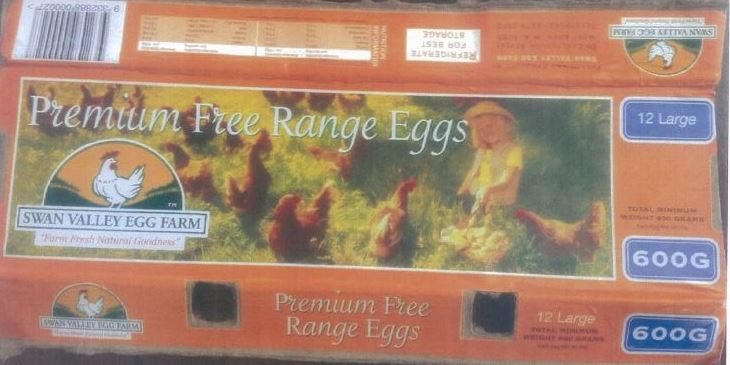
Annexure 2
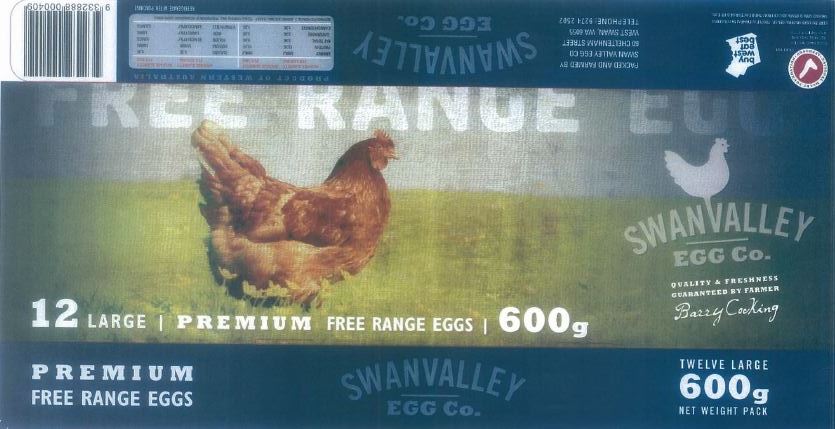
Annexure 3
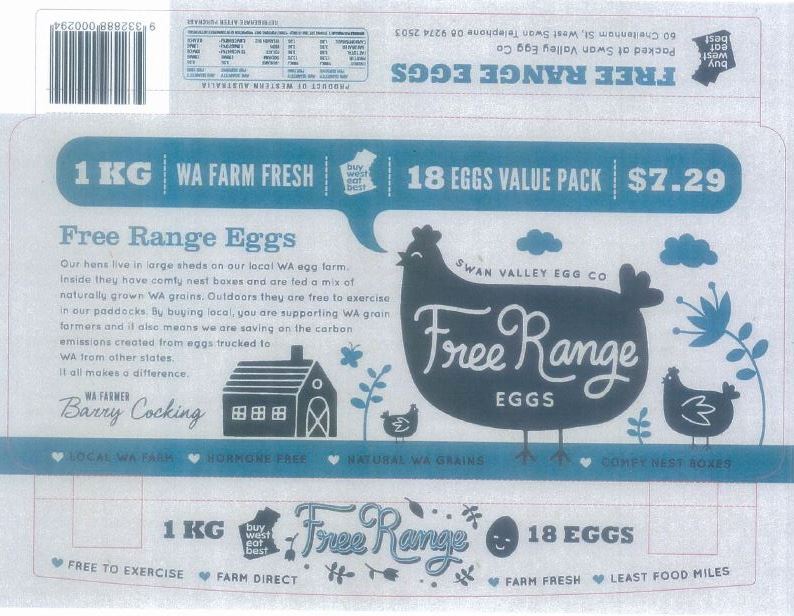
Annexure 4
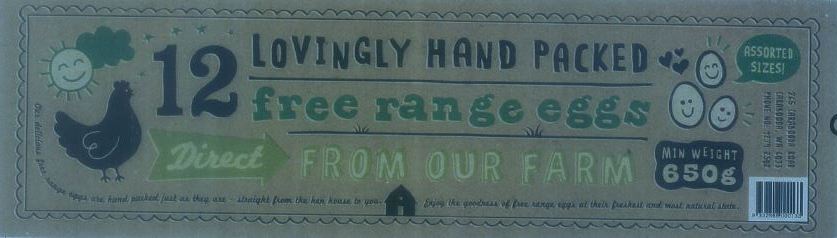
Annexure 5
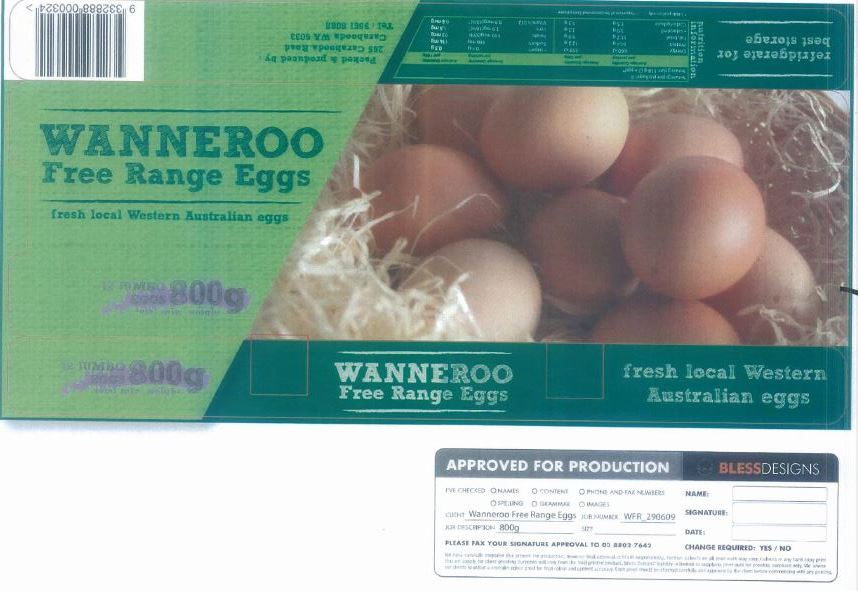
Annexure 6
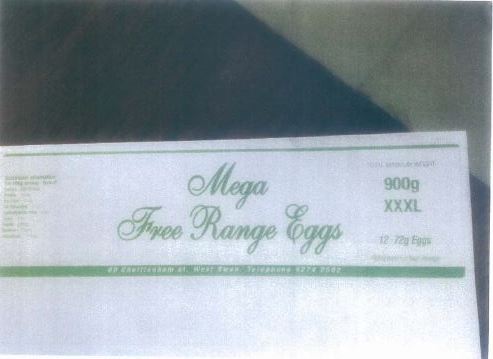
Annexure 7 Part 1
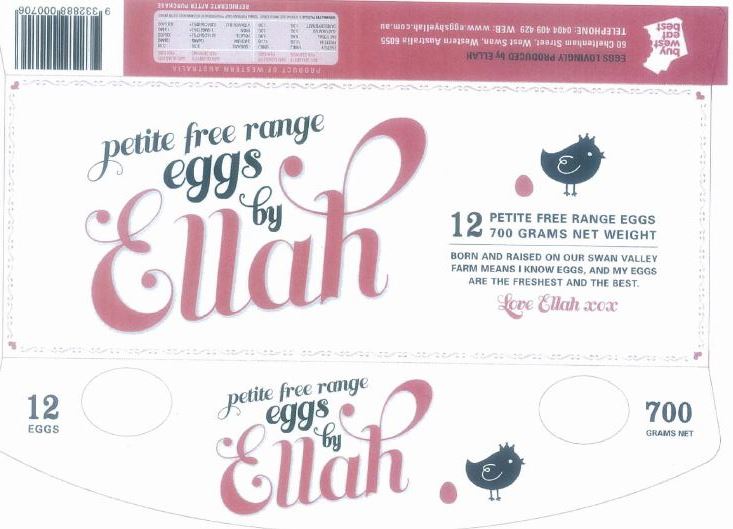
Annexure 7 Part 2
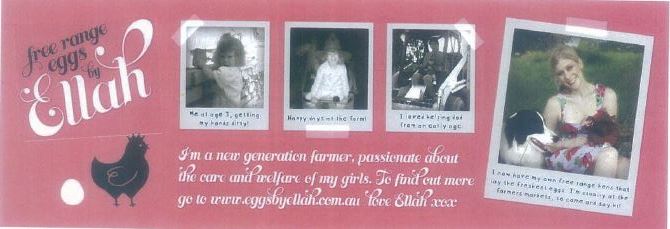
Annexure 8 Part 1
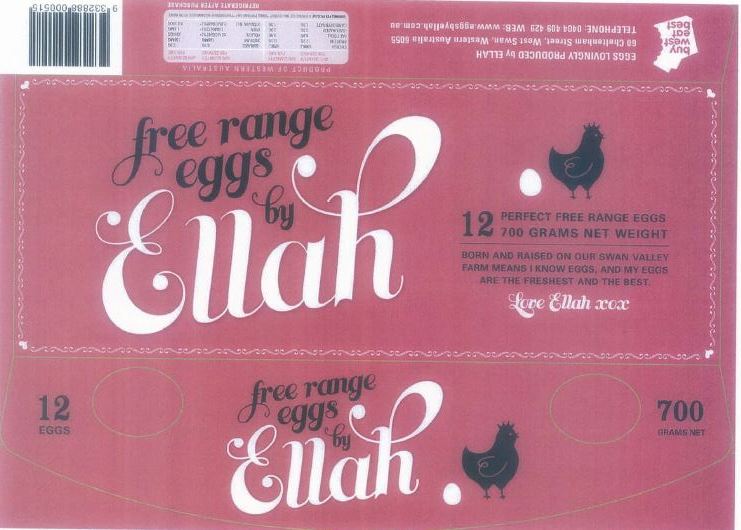
Annexure 8 Part 2
Annexure 9 Part 1
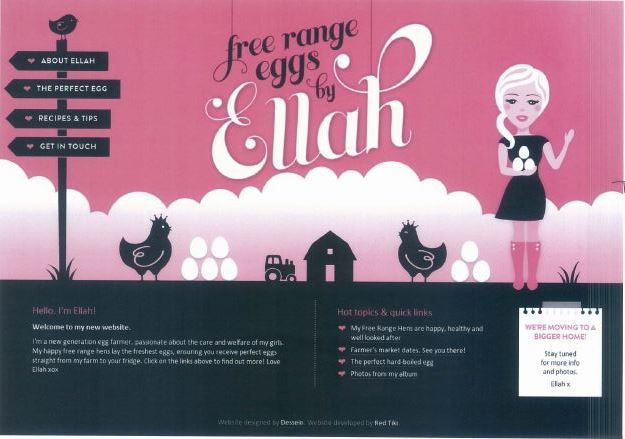
Annexure 9 Part 2
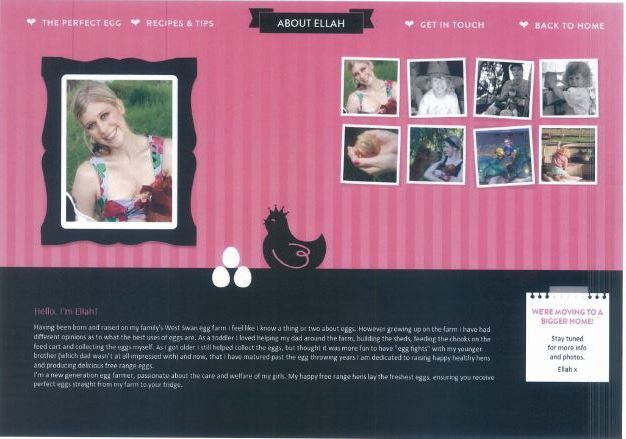
Annexure 9 Part 3
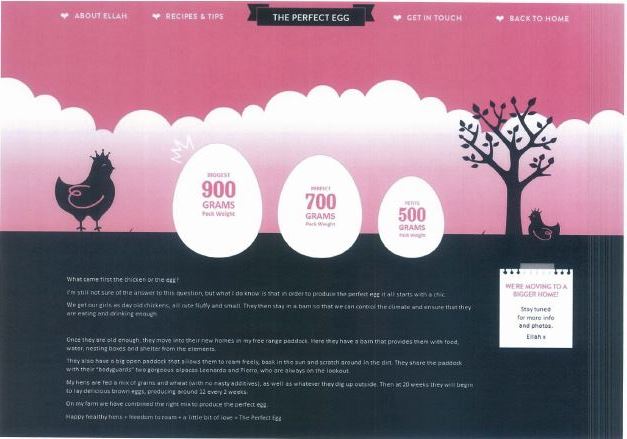
Annexure 9 Part 4
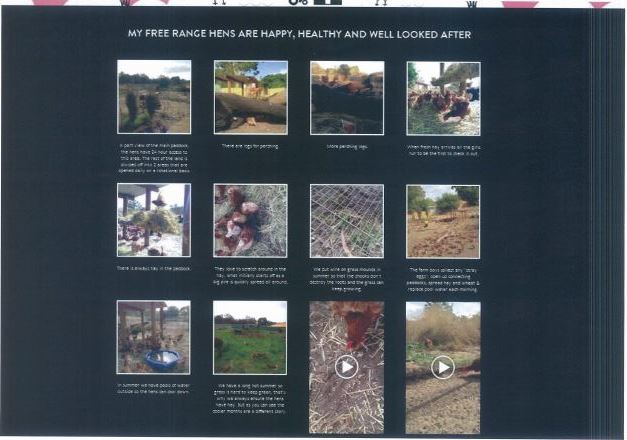
Annexure 10