

FEDERAL COURT OF AUSTRALIA
Biomax Technologies Pte Ltd v Jabiru Agribusiness (Aust) Pty Ltd [2016] FCA 505
ORDERS
DATE OF ORDER: |
THE COURT ORDERS THAT:
Upon admissions which the first and second respondents are taken to have made, consequent upon non-compliance with orders of the Court, it be declared that:
1. The first and second respondents pay the applicant, damages including additional damages under s 115(4) of the Copyright Act 1968 (Cth), such damages to be assessed at a further hearing.
2. The first and second respondents pay the applicant’s costs of the proceeding on an indemnity basis.
3. During the period between 7 August 2012 and 16 January 2013:
(a) the first respondent breached cll 7.1, 7.4, 7.5, 10.1, 10.2, 10.3, and 10.4 of the agency agreement entered into in or about May 2011 between the applicant and the first respondent (agency agreement);
(b) the second respondent was a party to, or knowingly concerned in, or induced the first respondent's breaches of cll 7.1, 7.4, 7.5, 10.1, 10.2, 10.3, and 10.4 the agency agreement;
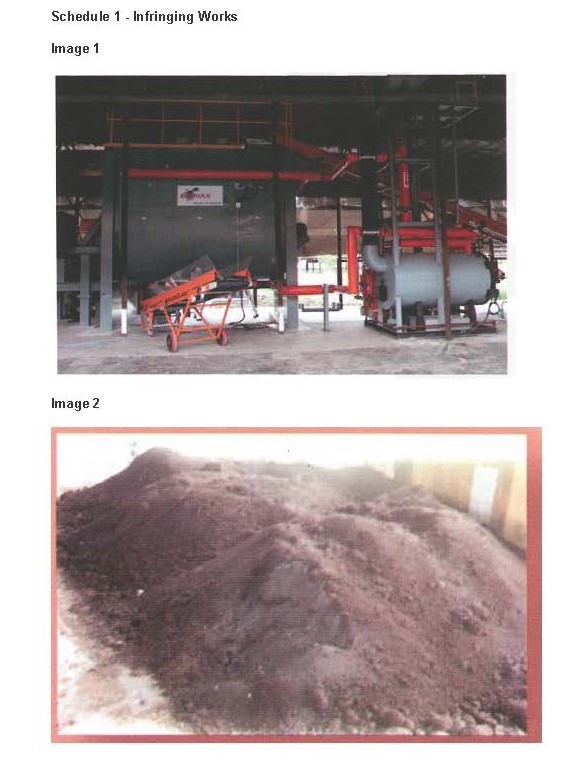
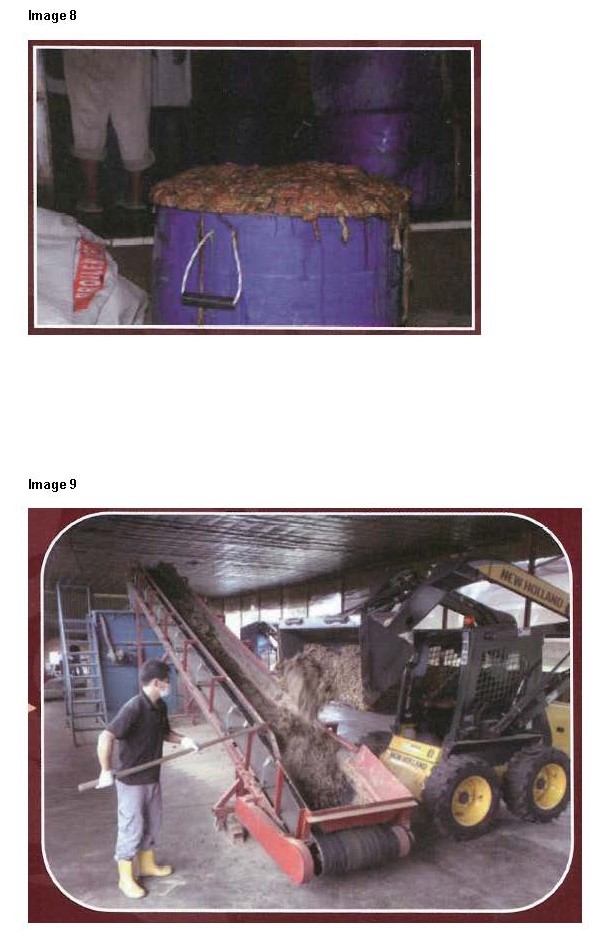
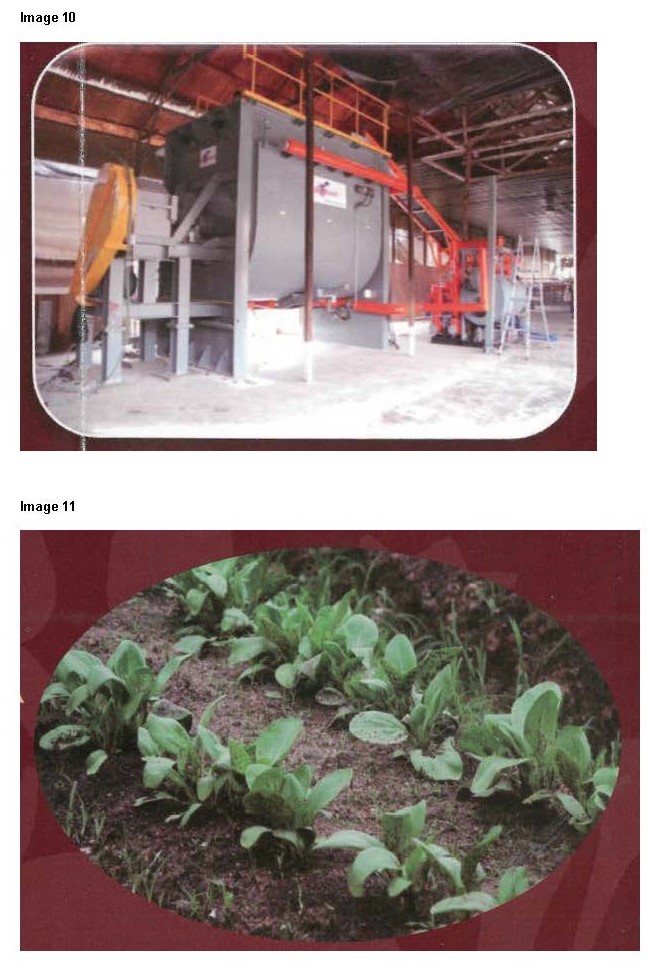
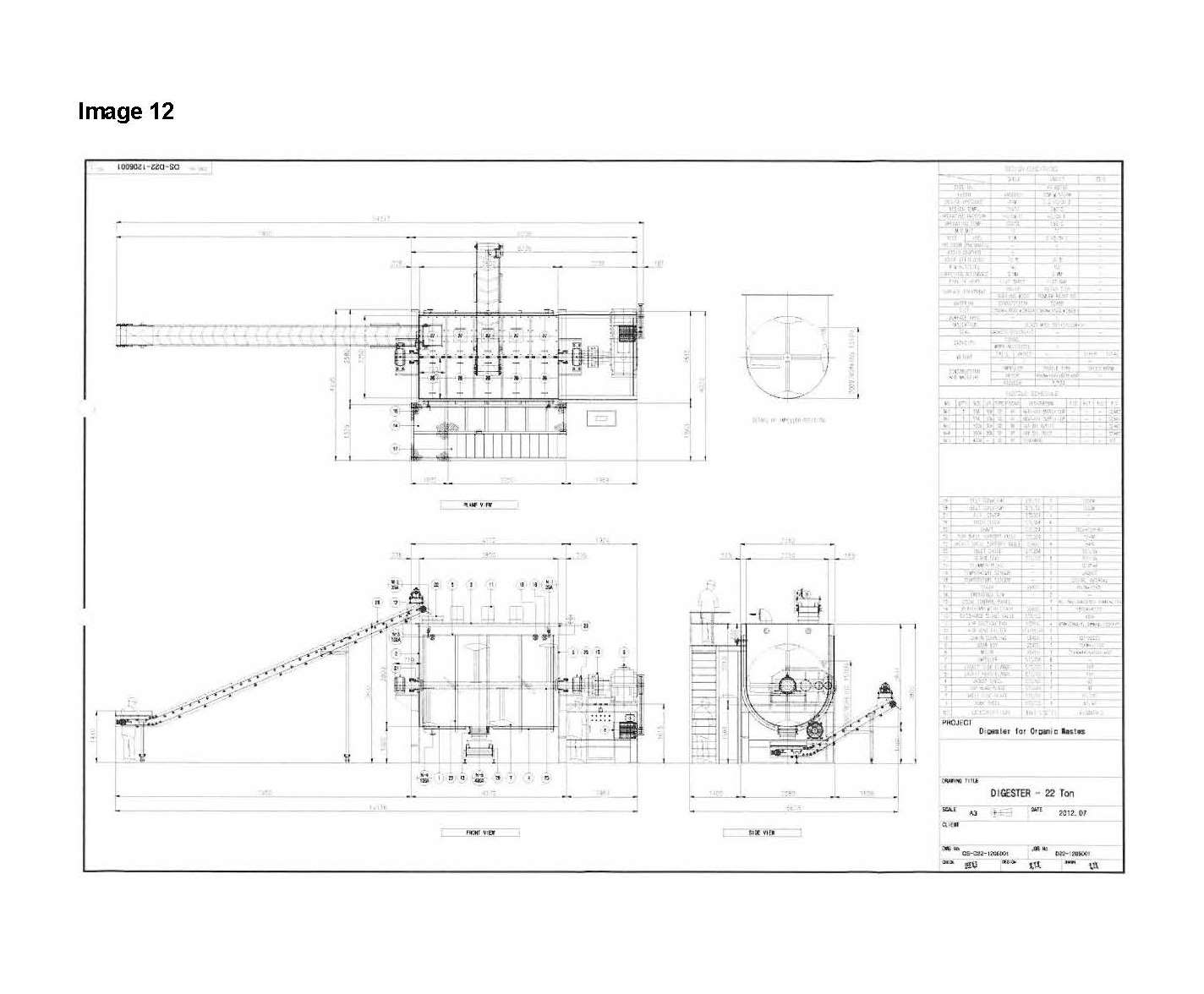
(c) by authorising the reproduction in material form, publication and communication, to the public on the website <biocomplete.com.au>, of the applicant’s copyright works identified in Schedule 1 of these orders (or a substantial part thereof) without the licence or authority of the applicant, the second respondent infringed the applicant’s copyright that subsists in the applicant’s copyright works.
Note: Entry of orders is dealt with in Rule 39.32 of the Federal Court Rules 2011.
(REVISED FROM THE TRANSCRIPT)
RARES J:
1 Biomax Technologies Pte Ltd commenced these proceedings on 15 May 2015 against three respondents, Jabiru Agribusiness (Aust) Pty Limited, its sole director, Raymond Beazleigh, and Ironside Management (Services) Pty Limited. Biomax has applied for default judgment against Jabiru and Mr Beazleigh.
Procedural background
2 For some time, Jabiru and Mr Beazleigh have been in default for the purposes of r 5.23 of the Federal Court Rules 2011 (Cth). That is because, each of them had failed, for among other reasons, first, to comply with an order that each give discovery in accordance with the Rules by 18 September 2015, that I made on 14 August 2015, secondly, by an order again made on 10 December 2015, that each give discovery by noon on 17 December 2015, and thirdly, on 18 December 2015, I struck out their defences for being in default of their discovery obligations.
3 On 10 December 2015, I also granted Biomax leave to file and serve on 17 December 2015 an amended interlocutory application seeking default judgment against Jabiru and Mr Beazleigh to be returnable on 18 December 2015 if they had failed to comply with the order that they give discovery.
4 Mr Beazleigh appeared by telephone from Queensland on 18 December 2015. He argued in support of my dispensing with the requirement of r 4.01 that Jabiru, as a corporation, had to appear by a solicitor. I refused that application. I made the order striking out the defence, having regard to the significant defaults that had occurred in the way in which Jabiru and Mr Beazleigh had failed to give discovery. I made the proceedings returnable today with a view to making orders giving judgment against Jabiru and Mr Beazleigh under r 5.23, unless on or before 15 January 2016 each had showed cause why judgment should not be entered against them for default based on the fact that by then, first, each had filed an interlocutory application seeking leave to file a defence and, secondly, each had given discovery and inspection. I ordered that Biomax could file and serve any amended interlocutory application and evidence in support of an application for default judgment on or before 8 January 2016.
5 In the event, Biomax only filed its further amended interlocutory application on 18 January 2015 together with an affidavit by its operations director, Anton Wibowo. On 18 January 2016, Biomax served Jabiru and Mr Beazleigh by email with the further amended interlocutory application and Mr Wibowo’s affidavit as appears from the affidavit of service of Grant Wilburn sworn 27 January 2016.
6 Yesterday, Mr Beazleigh’s wife, Sue Beazleigh, who had appeared, or sought to appear for both her husband and Jabiru, at earlier directions hearings, sent an email to my associate stating that neither Jabiru nor Mr Beazleigh would be appearing either in person or by telephone today and that due to financial constraints neither of them could afford legal representation. They have not appeared today.
Factual background
7 In about May 2011, Biomax, as principal, entered into an agency agreement with Jabiru as agent. Relevantly, the agency agreement set sales targets for Jabiru to achieve as Biomax’ agent in the sale and exploitation of Biomax’ rapid thermophilic digestion technology and machines. Biomax marketed rapid thermophilic digestion machines that were capable of processing waste product from agricultural activities and converting that to material that could be used to provide nutrients and other substances to assist in agricultural and farming activities. Clause 4.1 of the agency agreement set a sales target for the 2012 year of USD3 million.
8 Biomax could terminate the agency agreement by giving Jabiru seven days written notice if Jabiru had failed to achieve an annual agreed sales target (cl 6.1.3). Clause 6.2 required Jabiru to return promptly to Biomax all property belonging to it in accordance with its directions and to cease to promote, market, advertise or sell Biomax’ goods, to maintain its confidentiality undertaking in cl 11, and to continue to provide an indemnity under cl 17.
9 The agency agreement also provided in cl 7.1 that, during its term, Jabiru had to act in the interests of Biomax, not allow Jabiru’s interests to conflict with the duties that it owed to Biomax and to act towards Biomax dutifully and in good faith. During the term of the agreement and for one year after its termination, Jabiru agreed not to directly or indirectly sell, offer to sell, negotiate the sale or be concerned with or interested in, relevantly, the promotion or marketing of any goods that were similar to Biomax’ goods or which competed with it, without first obtaining Biomax’ consent (cl 7.4). Jabiru also agreed not to represent or sell products similar to those presently manufactured by Biomax or to financially support, directly or indirectly, any competitive organisation (cl 7.5). Jabiru was not authorised to enter into any compromise or agreement with any of Biomax’ customers (cl 7.9).
10 The agreement also placed constraints on Jabiru’s ability to use Biomax’ intellectual property rights and literature except in the course of its pursuit of the agency on behalf of Biomax. In particular, Jabiru agreed that it was allowed to use the trademarks, copyright and designs in respect of Biomax’ goods (which were defined as “intellectual property”), together with literature provided by Biomax in connection with those goods, only as expressly authorised by Biomax (cl 10.1). Jabiru acknowledged that it had no rights to the defined intellectual property and promised not to do, or omit to do, anything by which the goodwill and reputation associated with that intellectual property might be diminished or jeopardised (cl 10.2). Jabiru also acknowledged that Biomax’ property included its design of the machines and the formulation of its bacterial enzyme mixes and Jabiru was prohibited from copying the machines or any parts of them or the bacterial enzyme mixes without seeking and obtaining Biomax’ permission (cl 10.3). In addition, Jabiru promised promptly and fully to notify Biomax of any actual, threatened, or suspected infringement in Australia of any intellectual property, as defined, that had come to Jabiru’s notice (cl 10.4).
11 The amended statement of claim alleged that on 21 November 2011, Ironside purchased a machine from Biomax. Indeed, in its defence Ironside admitted that allegation, as had Jabiru and Mr Beazleigh both in their defence that I struck out and by reason that they now have no defence.
12 On 7 August 2012, the Australian Securities and Investments Commission registered BioComplete Australia Pty Ltd as a company. It was deregistered two years later. Mr and Mrs Beazleigh held 100 shares, or half of its issued capital, and, two companies, Vital Resource Management Pty Ltd and Ironside Management Services Pty Ltd, successively held the balance of 100 shares. Mr Beazleigh was a director of BioComplete from 7 August 2012 to 26 August 2013.
13 On 16 January 2013, Biomax wrote to Jabiru, to Mr Beazleigh’s attention, referring to the sales target of USD3 million for the 2012 year and cl 4.1 of the agency agreement, and exercised its right of termination. The letter gave notice to Jabiru of the latter’s obligations on termination under cl 6.2.
14 Biomax seeks declarations that in the period between the incorporation of BioComplete and the termination of the agency agreement on 16 January 2013, Jabiru had breached that agreement and that Mr Beazleigh was a party to, knowingly concerned in, or had induced those breaches by Jabiru.
15 I am satisfied by Mr Wibowo’s evidence that Biomax owned the copyright in a number of photographs being images 1, 2, 8, 9, 10 and 11 together with a diagram of a machine that is image 12 set out in schedule 1 to the orders that I will make today. Based on Mr Wibowo’s evidence I find that each of the images had been created by persons acting for, and the copyright in them became the property of, Biomax at times that preceded the termination of the agency agreement on 16 January 2013.
16 The amended statement of claim alleged that, from about 7 August 2012, BioComplete had infringed Biomax’ copyright in the images by reproducing, in a material form, the whole, or a substantial part, of them on BioComplete’s website at www.biocomplete.com.au, communicating the whole, or a substantial part, of those copyright works to the public using that website and in reproducing, in a material form, the whole, or a substantial part, of those copyright works in BioComplete’s marketing material for its competing products.
17 Mr Wibowo accessed BioComplete’s webpage on 28 May 2013 and created screen shots of what then appeared on it. The screen shots include each of the images and also substantial parts of some of those images. One instance that demonstrated the flagrancy of BioComplete’s infringement of Biomax’ copyright in the images was BioComplete’s reproduction on its webpages of images 1 and 10 where Biomax’ logo appeared, albeit more clearly in image 1. Image 1 was completely reproduced in the middle of BioComplete’s webpage headed “Process and Features” including, albeit indistinctly, Biomax’ logo, without the editing that had occurred that appears on other screen shots of webpages involving that infringement. In another reproduction of image 1 BioComplete manipulated that photograph on its webpage (which is image 15 in the screen shot exhibit in evidence), that depicted BioComplete’s logo appearing in lieu of Biomax’ logo.
Principles for default judgment
18 I set out the principles applicable to the Court’s approach to the grant of default judgment under r 5.23 in Searson v Salmon [2014] FCA 748 at [6]-[9], as follows:
6 A plaintiff or applicant who seeks relief in proceedings started by an originating application supported by a statement of claim is entitled upon a default by a defendant or respondent, under r 5.23, to seek judgment based on the statement of claim without needing to rely on evidence supporting that claim. The Court may give judgment in the party’s favour provided that the pleading, on its face, makes that claim and the claim falls within the jurisdiction of the Court: Australian Competition and Consumer Commission v dataline.net.au Pty Ltd (2006) 236 ALR 665 at 677-678 [45] per Kiefel J; Yeo v Damos Earthmoving Pty Ltd; in the matter of Beachwood Developments Pty Ltd (in liq) [2011] FCA 1129 at [9] per Gordon J; Sanko Steamship Co Ltd v Australia Gloria Energy Group Pty Ltd [2012] FCA 798 at [6] per myself.
7 However, as Kiefel J noted in Dataline 236 ALR at 678-679 [49]-[51], the Court could permit the applicant to lead some evidence in relation to the relief sought. That is because r 5.23 operates on the premise that the defaulting party has admitted the facts of the claims as pleaded and the Court then considers whether those facts establish an entitlement to the relief claimed. Her Honour held that the analogue of the rule required that the face of the statement of claim must show a right to some form of relief (236 ALR at 679-680 [53]).
8 Kiefel J held that the matters alleged in the statement of claim must permit the conclusion that some relief may be granted, even if its grant were subject to other considerations. Such a conclusion is at least possible in cases where a declaration and an injunction are sought. An applicant may establish some right or legal interest or legal conclusion capable of resolving a controversy that might properly be expressed in the form of a declaration or establish the infringement of a right or a standard set by a statute.
9 Subject to considerations that might weigh against the grant of relief of those kinds, the applicant may be said to have an “entitlement”. It does not have to be absolute for the purposes of the rule, which is discretionary in nature in any event. Her Honour suggested that, in an appropriate case, such as one brought by a regulator in respect of protecting the public interest, the court might make a qualified declaration, notwithstanding the traditional restraint exercised by courts in making binding declarations without having held a contested hearing of the disputed facts (236 ALR at 680-681 [54]-[59]). She suggested that, in a default judgment context, such declarations might be prefaced by a statement (236 ALR at 681 [59]):
“Upon admissions which [the respondent in question] is taken to have made, consequent upon non-compliance with orders of the court.”
Consideration
19 The further evidence relied on by Biomax together with the allegations in the amended statement of claim satisfy me that it is appropriate to make declarations that, in the period between 7 August 2012 and 16 January 2013, Jabiru breached cll 7.1, 7.4, 7.5 and 10.1-10.4 of the agency agreement and that Mr Beazleigh was party to, knowingly concerned in, or induced, those breaches.
20 I am also satisfied that it is appropriate to make a declaration, that by authorising the reproduction, publication and communication, in a material form, of the whole, or a substantial part of the images in that period on the biocomplete.com.au website without Biomax’ licence or authority, Mr Beazleigh infringed Biomax’ copyright in the images. That is because, in my opinion, it is reasonable for me to infer, for the purposes of s 36(1A) of the Copyright Act 1968 (Cth), that Mr Beazleigh authorised the inclusion of the infringing material on BioComplete’s website without Biomax’ licence. It was within his power to prevent that occurring, while he was a director of Jabiru and the agency agreement continued, having regard to his co-extensive directorship of BioComplete and shareholding interest in it.
21 On the material before me, BioComplete’s misuse of Biomax’ copyright in the images appears to be flagrant, so far as Mr Beazleigh and Jabiru are concerned. Indeed, the reproduction on BioComplete’s website of the unaltered image 1, to which I have referred to, demonstrates that, as does the substantive reproduction of each of the other images.
22 In my opinion, it is also appropriate to make an order that damages, including additional damages under s 115(4) of the Copyright Act, be assessed against Jabiru and Mr Beazleigh.
23 Notwithstanding the sale of a machine in November 2011 by Biomax, through the agency Jabiru, to Ironside, I am not satisfied that the evidence on the present interlocutory application or the pleading is sufficient to establish any breach of cl 7.9 by Jabiru. There is no material to suggest that Jabiru – as distinct from Mr Beazleigh – entered into the agreement with Ironside to incorporate or pursue the business of BioComplete. I do not propose to accede to Biomax’ application for default judgment based on a breach of cl 7.9.
24 Biomax also sought injunctions to restrain Jabiru and Mr Beazleigh from further infringing Biomax’ copyright in the images. However, Mr Wibowo gave evidence that, in around July 2014, when he next visited the BioComplete website, that website was no longer available. There is no other evidence presently before me to suggest that, after 28 May 2013, any of Biomax’ images have been misused, or used at all by, Jabiru or Mr Beazleigh. Accordingly, I am not prepared to grant an injunction under s 115 (2) of the Copyright Act restraining Jabiru or Mr Beazleigh from further infringing, because there is no apparent threat that they will do so.
25 Having regard to the substantive defaults of Jabiru and Mr Beazleigh and their protraction of the proceedings, in circumstances where, on the material before me, they had no substantive defence, it is appropriate to make an order that Jabiru and Mr Beazleigh pay Biomax’ costs and those costs be payable on an indemnity basis. They committed several substantive defaults in failing to comply with orders that they give discovery and in failing to assist in preparing to have the case made ready for a hearing on the real issues as required by Pt VB of the Federal Court of Australia Act 1976 (Cth). One example of this conduct occurred on 10 December 2015. Jabiru and Mr Beazleigh had been on notice since 12 November 2015 when I made orders that provided for a hearing when Biomax would seek the orders for discovery and default judgment against them on 10 December 2015. There was no appearance by Jabiru or Mr Beazleigh on that occasion and I made the orders referred to at [2] and [3] above.
26 On 13 December 2015, Mrs Beazleigh sent an email to my associate stating that her husband could not comply with the orders to give discovery because he was away delivering a vehicle to someone interstate. They had made no substantive effort to provide proper discovery by 18 December 2015 or otherwise explain their position to the Court. This unreasonable and persistent conduct of Jabiru and Mr Beazleigh caused Biomax to incur unnecessary costs, substantively for the duration of the proceedings, so far as they have involved Jabiru and Mr Beazleigh.
I certify that the preceding twenty-six (26) numbered paragraphs are a true copy of the Reasons for Judgment herein of the Honourable Justice Rares. |
Associate:


