FEDERAL COURT OF AUSTRALIA
Australian Competition and Consumer Commission v Safety Compliance Pty Ltd (in liq) (No 2) [2015] FCA 1469
IN THE FEDERAL COURT OF AUSTRALIA | |
DATE OF ORDER: | |
WHERE MADE: |
THE COURT ORDERS THAT:
1. Each of the second respondent (“Mr King”), the third respondent (“Mr Black”) and the fourth respondent (“Ms Schimmel”) be restrained, for a period of 5 years from the date of these orders, by himself or herself or by authorising or instructing another, from representing in trade or commerce in connection with the supply or possible supply of goods:
(a) that workplace health and safety laws require businesses to maintain information and/or materials relating to workplace safety of the same nature as the information and/or materials offered for sale by that person unless in fact such laws do so require;
(b) that the person is affiliated with the relevant workplace health and safety agency, unless in fact that is the case;
(c) that the person is a relevant workplace health and safety agency, unless in fact that is the case.
Disqualification Orders
2. Pursuant to s 248(1) of the Australian Consumer Law (“ACL”) (which is Schedule 2 to the Competition and Consumer Act 2010 (Cth)):
(a) Mr King be disqualified from managing corporations for a period of 8 years from the date of this order;
(b) Mr Black be disqualified from managing corporations for a period of 30 months from the date of this order; and
(c) Ms Schimmel be disqualified from managing corporations for a period of 18 months from the date of this order.
Pecuniary penalty
3. The first respondent (“Safety Compliance”) pay the Commonwealth of Australia pecuniary penalties totalling $515,000 in respect of the contravention of ss 53(a), 53(d) and 53(f) of the Trade Practices Act 1974 (Cth) (“TPA”) and ss 29(1)(a), 29(1)(d), 29(1)(h) and 29(1)(l) of the ACL.
4. Mr King pay the Commonwealth of Australia by 1 March 2016 a pecuniary penalty of $125,000 in respect of his involvement in contravention of ss 29(1)(a), 29(1)(h) and 29(1)(l) of the ACL by Safety Compliance.
5. Mr Black pay the Commonwealth of Australia a pecuniary penalty of $30,000 in respect of his involvement in the contraventions of ss 53(a), 53(d) and 53(f) of the TPA and ss 29(1)(a), 29(1)(h) and 29(1)(l) of the ACL by Safety Compliance, with liberty to pay the penalty in six instalments of $5,000 each at intervals of six months, the first instalment to be paid on or before 1 March 2016 but if Mr Black defaults in payment of any six monthly instalment, the remaining balance will become immediately due and payable.
6. Ms Schimmel pay the Commonwealth of Australia a pecuniary penalty of $10,000 in respect of her involvement in contraventions of ss 29(1)(a), 29(1)(h) and 29(1)(l) of the ACL by Safety Compliance, with liberty to pay the penalty in ten instalments of $1,000 each at intervals of six months, the first instalment to be paid on or before 1 March 2016 but if Ms Schimmel defaults in payment of any six monthly instalment, the remaining balance will become immediately due and payable.
Costs
7. The respondents, jointly and severally, pay to the applicant a contribution toward its costs of $315,000.
Note: Entry of orders is dealt with in Rule 39.32 of the Federal Court Rules 2011.
NEW SOUTH WALES DISTRICT REGISTRY | |
GENERAL DIVISION | NSD 547 of 2012 |
BETWEEN: | AUSTRALIAN COMPETITION AND CONSUMER COMMISSION Applicant |
AND: | SAFETY COMPLIANCE PTY LTD (IN LIQ) ACN 144 638 826 First Respondent DEAN JAMES KING Second Respondent SHANE JOHN BLACK Third Respondent FIONA ELLEN SCHIMMEL Fourth Respondent |
JUDGE: | FARRELL J |
DATE: | 22 December 2015 |
PLACE: | SYDNEY |
REASONS FOR JUDGMENT
Introduction
1 The applicant (“ACCC”) brought proceedings against the first respondent (“Safety Compliance”), the second respondent (“Mr King”), the third respondent (“Mr Black”) and the fourth respondent (“Ms Schimmel”) in respect of the manner in which Safety Compliance conducted a telesales marketing business which supplied or offered for supply to small business owners and managers “Workplace Safety and Emergency Procedures Wall Charts” or information or materials of that nature (“Wall Charts”) and first aid kits during periods from June 2010 until at least May 2012. On 13 March 2015, the Court delivered reasons for judgment in relation to liability issues and made declarations of contravention in relation to each of the respondents: Australian Competition and Consumer Commission v Safety Compliance Pty Ltd (in liq) [2015] FCA 211 (“liability judgment”).
2 The Court made findings and declarations that Safety Compliance contravened:
(1) ss 52 and 53(f) of the Trade Practices Act 1974 (Cth) (“TPA”) and ss 18 and 29(1)(l) of the Australian Consumer Law (“ACL”) which is set out in Schedule 2 of the Competition and Consumer Act 2010 (Cth) (“CCA”) in the period from June 2010 to at least May 2012 by making representations to prospective customers that workplace health and safety laws required businesses to maintain Wall Charts of the kind sold by Safety Compliance, or information and materials of the same nature as the Wall Charts, when in fact such laws did not so require (“Wall Charts Representation”);
(2) ss 52 and 53(f) of the TPA and ss 18 and 29(1)(l) of the ACL for the period from about December 2010 to at least May 2012, by making representations to prospective customers that workplace health and safety laws required businesses to maintain a first aid kit of the same nature as the first aid kits offered for sale by Safety Compliance when in fact such laws, other than in New South Wales, did not so require (“First Aid Kits Representation”);
(3) ss 52 and 53(d) of the TPA and ss 18 and 29(1)(h) of the ACL in the period from about June 2010 to at least May 2012 by making representations to prospective customers in connection with the supply or possible supply of workplace safety materials, that Safety Compliance was affiliated with the relevant workplace health and safety agency when in fact it was not (“Affiliation Representation”);
(4) ss 52 and 53(a) of the TPA and ss 18 and 29(1)(a) of the ACL in the period from about June 2010 to at least May 2012, by making representations to prospective customers in connection with the supply or possible supply of the workplace safety materials, that Safety Compliance was a relevant workplace health and safety agency, when in fact it was not (“Government Representation”); and
(5) ss 18 and 29(1)(d) of the ACL in or about November 2011 by making representations to a number of Paterson Group Video Ezy stores in Western Australia that Ms Karen Cleverly of the Paterson Group Video Ezy Head Office, or another person at Paterson Group Video Ezy, had agreed to acquire workplace safety materials offered for supply by Safety Compliance when in fact no relevant person at Paterson Group Video Ezy had in fact agreed (“Video Ezy Representation”).
3 The Court also made findings and declarations that Messrs King and Black and Ms Schimmel (whom I will refer to collectively as the “Active Respondents”) were involved in Safety Compliance’s contraventions by reason of the Wall Charts Representations, the Affiliation Representations and the Government Representations, in Mr King’s case for the period from mid-April 2011 to at least 15 February 2012, in Mr Black’s case in the period from June 2010 up to at least 23 August 2011 and in Ms Schimmel’s case in the period from March 2011 to at least May 2012.
4 The ACCC alleged, but the Court was not satisfied, that Safety Compliance’s conduct amounted to coercion under the TPA or ACL or that any of the Active Respondents were involved in Safety Compliance’s contraventions in respect of the First Aid Kits Representation. The ACCC did not allege that the Active Respondents were involved in the contraventions by reason of the Video Ezy Representation.
5 Having regard to the Court’s findings on liability, the ACCC now seeks the following relief:
(1) Injunctions under s 232 of the ACL restraining the Active Respondents from making (or authorising or instructing another to make) certain representations in connection with the supply or offering to supply workplace health and safety materials for a period of five years. No injunction is sought to restrain activity by Safety Compliance as it ceased to conduct business in September 2012 when it went into liquidation;
(2) Orders under s 76E of the TPA for conduct (or involvement in conduct) contravening ss 53(a), 53(d) and 53(f) of the TPA prior to 1 January 2011 and under s 224 of the ACL for conduct (or involvement in conduct) contravening ss 29(1)(a), 29(1)(h) and 29(1)(l) of the ACL on and from 1 January 2011 for the imposition of pecuniary penalties on each of the respondents;
(3) An order under s 224 of the ACL for conduct contravening s 29(1)(d) in November 2011 for the imposition of a pecuniary penalty on Safety Compliance;
(4) Orders under s 248 of the ACL disqualifying the Active Respondents from managing corporations for a period determined by the Court; and
(5) An order under s 43 of the Federal Court of Australia Act 1976 (Cth) (“Federal Court Act”) requiring each of the respondents jointly and severally to pay a contribution to the ACCC’s costs fixed in the amount of $315,000.
6 The ACCC was represented at the hearing in relation to the relief which it now claims and provided extensive written submissions. As Safety Compliance is in liquidation, it was not represented at the hearing and no submissions were made on its behalf. The Active Respondents were represented by their solicitor, Mr Delaney, who also provided brief written submissions.
Injunctions
7 Annexure A to the ACCC’s written submissions filed on 17 September 2015 sets out the proposed form of the injunctions which it seeks against each of Messrs King and Black and Ms Schimmel. The proposed period of the injunctions is five years. The Active Respondents have each consented to the injunctions being made.
8 I respectfully adopt the approach taken by Middleton J in Australian Competition and Consumer Commission v Chopra [2015] FCA 539 (“Chopra”) at [25]-[29] in relation to the exercise of the Court’s powers under s 232 of the ACL:
[25] Section 232(1)(a) of the ACL relevantly empowers the court to grant an injunction, in such terms as it considers appropriate, if the court is satisfied that a person has engaged, or is proposing to engage, in conduct that constitutes, or would constitute, a contravention of a provision of Ch 2 (which includes s 18) or Ch 3 (which includes ss 29 and 36) of the ACL.
[26] Pursuant to s 232(4)(a) of the ACL, the Court may grant an injunction whether or not it appears to the Court that there is a likelihood of the conduct being repeated or continued.
[27] The terms of s 232 are relevantly identical to those in s 80 of the TPA: see Australian Competition and Consumer Commission v SMS Global Pty Ltd [2011] FCA 855 (‘SMS Global’) at [59] per Murphy J. The authorities on s 80 of the TPA therefore provide some guidance on the construction of s 232 of the ACL: Australian Competition and Consumer Commission v Willesee Healthcare Pty Ltd [2011] FCA 301 at [38].
[28] In discussing s 80 of the TPA, Lockhart J, with whom French J (as he then was) agreed, said in ICI Australia Operations v Trade Practices Commission (1992) 38 FCR 248 at 256 (applied in Foster v Australian Competition and Consumer Commission (2006) 149 FCR 135):
In my opinion, subss (4) and (5) are designed to ensure that once the condition precedent to the exercise of injunctive relief has been satisfied (ie contraventions or proposed contraventions of Pt IV or V of the Act), the court should be given the widest possible injunctive powers, devoid of traditional constraints, though the power must be exercised judicially and sensibly.
[29] Justice French (as he then was) noted in OD Transport Pty Ltd v Western Australian Government Railways Commission (1987) 13 FCR 500 at 508 (which was applied in Foster v Australian Competition and Consumer Commission (2006) 149 FCR 135) that the court’s discretion in formulating the terms in which an injunction may be granted under s 80 of the TPA “is as wide as the phrase ‘as the court determines appropriate’”.
[30] The court’s power is, however, subject to at least three limitations (see Australian Competition and Consumer Commission v Z-Tek Computer Pty Ltd (1997) 78 FCR 197 at 203–4 and SMS Global at [59]):
(a) the relief should be designed to prevent a repetition of the contravening conduct;
(b) there must be a sufficient nexus or relationship between the contravention and the injunction; and
(c) the injunction must relate to the case or controversy.
9 The nature and extent of the involvement of the Active Respondents in Safety Compliance’s conduct comprised in the Wall Charts, Affiliation and Government Representations is set out in full in the liability judgment. Having regard to those findings and matters addressed elsewhere in these reasons, I am satisfied that Safety Compliance’s conduct in which the Active Respondents were involved was serious, systematic and extended for periods between June 2010 and May 2012 (see [2] and [3] above).
10 The Active Respondents say that until the publication of the liability judgment, they “strongly believed” that they had not been involved in contravention of the TPA or ACL by Safety Compliance as alleged. This asserted belief would indicate a lack of insight of each of the Active Respondents which would warrant injunctions by way of specific deterrence in view of: (1) the volume of complaints received by Safety Compliance which Mr Black and Ms Schimmel managed; (2) the content of notices issued by the ACCC to Safety Compliance and each of the Active Respondents in the course of investigating Safety Compliance’s conduct which pointed out that Safety Compliance was making representations in connection with the supply of Wall Charts to small businesses that workplace health and safety laws required small businesses to purchase Wall Charts, and that WorkCover NSW or another government body would conduct inspections for failure to have a Wall Chart and that Safety Compliance was affiliated with WorkCover NSW or any similar government body, when those things were not true; (3) the nature of the inquiries made by the ACCC in examinations conducted with each of the Active Respondents; and (4) the nature of the submissions made at the hearing in relation to the Wall Charts, Affiliation and Government Representations at which the Active Respondents were present.
11 The proposed injunctions would also serve the purpose of general deterrence in relation to the conduct of telemarketing businesses and businesses engaged in marketing aids to comply with workplace health and safety laws in Australia, especially where the target audience is small business employees and owners. The form of the proposed restraint is the same in relation to each of the Active Respondents: it is narrowly cast; it is sufficiently clear to identify the conduct which is to be restrained for a defined period of five years; and it is framed to reflect the findings as to contravening conduct made in the liability judgment.
12 I am satisfied that it is appropriate that the consequence of any repetition of the contravening conduct by the Active Respondents should not only be the penalties and remedies prescribed by the ACL but also the penalty of contempt of court should any of the Active Respondents elect to engage in that conduct acting in his or her own right or through others. I will therefore make the restraining orders substantially in the form proposed by the ACCC.
Submissions on penalty
13 Although submissions made by the ACCC on 17 September 2015 suggested periods of disqualification which the ACCC regarded as appropriate in relation to each of the Active Respondents, the ACCC did not suggest amounts of pecuniary penalties which it regarded as appropriate. The ACCC had regard to the finding of the Full Court in Director, Fair Work Building Industry Inspectorate v Construction, Forestry, Mining and Energy Union (2015) 229 FCR 331; [2015] FCAFC 59 (“CFMEU”) that a regulator’s submissions as to civil pecuniary penalties were constrained in the same way as a prosecutor’s submissions to a sentencing judge in criminal proceedings having regard to the decision of the High Court in Barbaro v The Queen (2014) 253 CLR 58 (“Barbaro”). On 9 December 2015, the High Court delivered its reasons in Commonwealth of Australia v Director, Fair Work Building Industry Inspectorate [2015] HCA 46 (“Commonwealth v Director, FWBII”) in which the Court unanimously allowed an appeal from the decision of the Full Court in CFMEU.
14 Following the High Court’s decision, the parties in this proceeding were given the opportunity to make further submissions as to penalty.
15 The ACCC’s supplementary submissions made on 11 December 2015 noted that in Commonwealth v Director, FWBII the High Court held that separate submissions as to quantum of pecuniary penalty can be received from parties in contested civil penalty proceedings and that:
(1) It is to be expected that the regulator will be in a position to offer informed submissions as to the effects of contraventions on the industry and the level of penalty necessary to achieve compliance;
(2) It is consistent with the purposes of civil penalty regimes, and the public interest, that the regulator take an active role in attempting to achieve the penalty it considers appropriate; and
(3) The submissions of the regulator will be considered on their merits in the same way as the submissions of a respondent and subject to being supported by findings of fact based upon evidence, agreement or concessions.
See Commonwealth v Director, FWBII at [1], [60], [61] and [64] per French CJ, Kiefel, Bell, Nettle and Gordon JJ, Gageler J agreeing at [68] and Keane J agreeing at [79].
16 The ACCC relied also on the finding of the Full Court in Minister for Industry, Tourism and Resources v Mobil Oil Australia Pty Ltd (2004) ATPR ¶41-993; [2004] FCAFC 72 at [51] for the proposition that the view of the regulator, as a specialist body, is a relevant, but not determinative consideration on the question of penalty. In particular, the views of the regulator on matters within its expertise (such as the ACCC’s views as to the deterrent effect of a proposed penalty in a given market) will usually be given greater weight than its views on more “subjective” matters.
17 I accept these submissions but also accept the guidance given in NW Frozen Foods Pty Ltd v Australian Competition and Consumer Commission (1996) 71 FCR 285 (“NW Frozen Foods”) at 298, which was endorsed in the joint judgment in Commonwealth v Director, FWBII at [61], that:
Courts have learned to be suspicious of claims of secret knowledge; and justice should be done in the light, with the relevant facts exposed to view. It is the Court which bears the responsibility.
Principles relating to pecuniary penalties
18 Section 224 of the ACL applies where the Court is satisfied that there has been contravention of Pt 3-1 of the ACL, in which s 29 appears. If the contravention occurred before 1 January 2011, s 76E of the TPA applies where the Court is satisfied that there has been a contravention of certain provisions of Div 1 of Pt V of the TPA, in which s 53 appeared. The maximum penalty for each act or omission in contravention of s 29 of the ACL/s 53 of the TPA of the kind under consideration in these reasons is $1.1 million (for a corporation) and $220,000 (for an individual).
19 A person is not liable to more than one pecuniary penalty in respect of the same conduct even if that conduct contravenes more than one provision. Of course, pecuniary penalties are not available for contraventions of s 18 ACL/s 52 TPA.
20 Section 224(2) requires that in determining the appropriate pecuniary penalty, the Court must have regard to all relevant matters including:
(1) The nature and extent of the act or omission and of any loss or damage suffered as a result of the act or omission; and
(2) The circumstances in which the act or omission took place; and
(3) Whether the person has previously been found by a court to have engaged in similar conduct.
21 Other matters which have been taken into account in determining pecuniary penalties under s 76E TPA are also appropriate to be taken into account in determining penalties under s 224 ACL unless the context of the contravention makes it plain that that cannot be so. Relevantly to this case, those matters include:
The size of the contravening company;
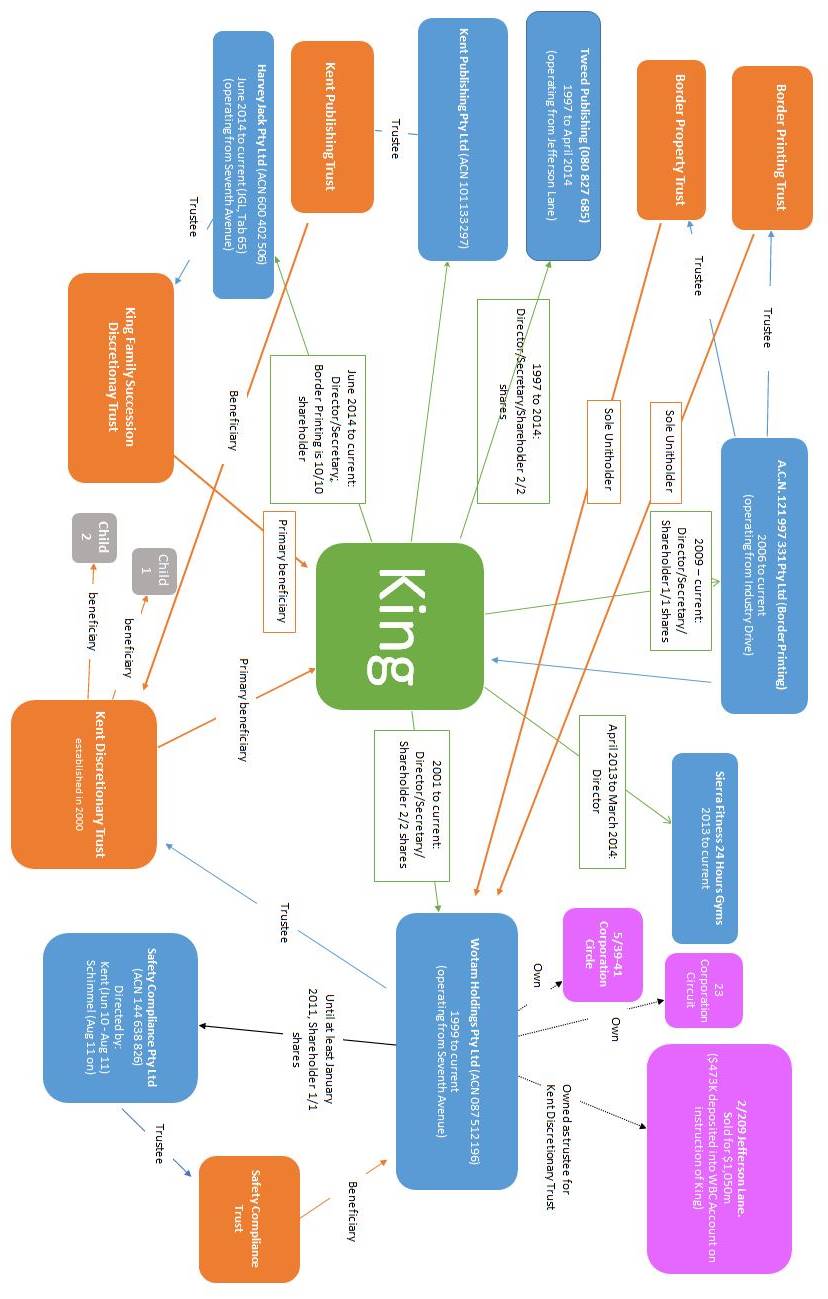
The deliberateness of the contravention and the period over which it extended;
Whether the contravention arose out of the conduct of senior management of the contravener or at a lower level;
Whether the contravener has a corporate culture conducive to compliance with the relevant legislation, as evidenced by educational programs and disciplinary or other corrective measures in response to an acknowledged contravention;
Whether the contravener has shown a disposition to cooperate with authorities;
The financial position of the contravener; and
Whether the contravening conduct was systematic, deliberate or covert.
See: Trade Practices Commission v CSR Limited (1991) ATPR ¶41-076 at 52,152-3 per French J; NW Frozen Foods at 292 per Burchett, Carr and Kiefel JJ; Australian Competition and Consumer Commission v Safe Breast Imaging Pty Ltd (No 2) [2014] FCA 998 (“Safe Breast Imaging”) at [38] per Barker J; Australian Competition and Consumer Commission v South East Melbourne Cleaning Pty Ltd (in liq) (formerly known as Coverall Cleaning Concepts South East Melbourne Pty Ltd) (No 2) [2015] FCA 257 at [8] per Murphy J.
22 These factors do not necessarily exhaust potentially relevant considerations nor do they regiment the discretionary sentencing function: Australian Competition and Consumer Commission v Coles Supermarkets Australia Pty Limited [2015] FCA 330 (“Coles Supermarkets”) at [9] per Allsop CJ. The significance of each factor to the appropriate penalty depends on the facts of the case. The Court must fix a penalty that is proportionate to the gravity of the contravening conduct in all the circumstances of the case: Australian Competition and Consumer Commission v Renegade Gas Pty Ltd (trading as Supagas NSW) [2014] FCA 1135 (“Renegade Gas”) at [83] per Gordon J.
23 The process of arriving at the appropriate sentence for a criminal offence involves an intuitive or instinctive synthesis of all relevant factors: Markarian v The Queen (2005) 228 CLR 357; [2005] HCA 25 (“Markarian”). The approach set out by the High Court in Markarian has been taken to be applicable to civil penalty proceedings of this nature: TPG Internet Pty Ltd v Australian Competition and Consumer Commission (2012) 210 FCR 277; [2012] FCAFC 190 at 294 [145]. There is nothing in the High Court’s decision in Commonwealth v Director, FWBII, which dealt with agreed penalties, that would suggest that this approach should not continue to apply, at least in contested penalty cases. The setting of the penalty is a discretionary judgment that does not involve assessing with any precision the “range” within which the conduct falls or by applying incremental deductions from the maximum penalty. Nonetheless, due regard must be given to the maximum penalty because it is an expression of the legislature’s policy concerning the seriousness of the proscribed conduct. It also permits comparison between the worst possible case and the case the court is being asked to address and thus provides a yardstick: Markarian at 372 [31]; see Coles Supermarkets at [6].
24 Mr Delaney, the solicitor for the Active Respondents, submitted that the penalty imposed on the Active Respondents should generally be no more than in the order of 20% of any penalty imposed on Safety Compliance in relation to the same conduct. I note that this ratio reflects the difference in the maximum penalty available under the TPA and ACL in relation to monetary penalties. However, I do not accept that submission. Each case must be considered against its own facts and a distinguishing factor, which exists in this case, may be that a corporation has not previously been engaged in conduct involving misleading or deceptive conduct in contravention of the ACL or similar laws whereas the individual has previously been found to have engaged in that conduct. In considering comparable cases, the consistency which the Court seeks to achieve is one of principle; that is not synonymous with numerical equivalence and it is incapable of mathematical expression: see R v Pham [2015] HCA 39 at [28] per French CJ, Keane and Nettle JJ.
25 In the context of the consumer protection provisions of the TPA and ACL, specific and general deterrence must play a “primary role” in assessing an appropriate penalty where commercial profit is the driver of the contravening conduct: Australian Competition and Consumer Commission v TPG Internet Pty Ltd (2013) 250 CLR 640 at [65] per French CJ, Crennan, Bell and Keane JJ.
26 The penalty must recognise the seriousness of the contraventions and disincline the person on whom it is imposed to repeat the contravention but it must not be greater than is necessary to achieve the object of deterrence. The penalty should not be so low that the risk of penalty might be regarded as an acceptable cost of doing business nor should it be so high as to be oppressive or “crushing” to the person on whom it is imposed. Capacity to pay must be weighed against the need to impose a sum which members of the public will recognise as significant and proportionate to the seriousness of the contravention: Australian Competition and Consumer Commission v Leahy Petroleum Pty Ltd (No 3) (2005) 215 ALR 301; [2005] FCA 265 at [39] per Goldberg J. In the context of cartel conduct in the petroleum industry and the imposition of a pecuniary penalty on a corporation, it has been said that a penalty which is no greater than is necessary to achieve the object of general deterrence will not be oppressive: Australian Competition and Consumer Commission v Leahy Petroleum Pty Ltd (No 2) (2005) 215 ALR 281; [2005] FCA 254 at [9] per Merkel J. In the context of contravention of the resale price maintenance provisions of the TPA the Full Court has said that in some cases the penalty may be so high that the offender will become insolvent. That possibility must not prevent the Court from doing its duty for otherwise the important object of general deterrence will be undermined: Australian Competition and Consumer Commission v High Adventure Pty Limited [2005] FCAFC 247 at [11] per Heerey, Finkelstein and Allsop JJ.
27 In determining the appropriate penalty to be applied in a particular case, the Court must also have regard to the “course of conduct principle” and to the “totality principle”. The “course of conduct principle” recognises that the same conduct should not be punished twice where there is an interrelationship between the legal and factual elements of two or more contraventions; the general objective is to reflect fairly the substance of the offending conduct. A course of conduct contravention is to be treated more seriously than a single contravention. The “totality principle” requires the Court to consider whether the total or aggregate penalty is “just and appropriate” and not out of proportion to the entire contravening conduct involved. See Registrar of Aboriginal and Torres Strait Islander Corporations v Matcham (No 2) (2014) 97 ACSR 412; [2014] FCA 27 (“Matcham”) at [128], [199]-[201], [274], and [292]-[293] per Jacobson J.
28 In the context of the Corporations Act 2001 (Cth) (“Corporations Act”), the courts have said that where it is proposed to make a disqualification order the decision to impose a pecuniary penalty, and if so in what amount, attracts the principle of “totality”: see Australian Securities and Investments Commission v Healey (No 2) (2011) 196 FCR 430; [2011] FCA 1003 (“Healey (No 2)”) at [119] per Middleton J. This approach was followed by Gordon J in Renegade Gas at [97].
29 There is one curiosity. There is no equivalent of s 248(4) ACL in the Corporations Act even though ss 206C and 206E authorise a Court to make a disqualification order and s 1349 of the Corporations Act is the equivalent of s 249 ACL which abrogates the impact of the decision in Rich v Australian Securities and Investments Commission (2004) 220 CLR 129; [2004] HCA 42 (“Rich”) insofar as it might otherwise apply in proceedings where a disqualification order is sought. Section 248(4) provides that:
For the purposes of this Schedule (other than this section or section 249), an order under this section is not a penalty.
30 Section 248(4) is to the same effect as s 86E(3B) of the TPA; s 86E authorised disqualification orders only in relation to contravention of Part IV of the TPA in respect of restrictive trade practices and cartel conduct. Neither subsection appears to have been the subject of judicial comment.
31 Sections 86E(3B) and 86F of the TPA were introduced into the TPA by the Trade Practices Amendment (Cartel Conduct and Other Measures) Act 2009 (Cth), which also introduced penalties of up to $10 million for cartel conduct. The Explanatory Memorandum did not explain the introduction of ss 86E(3B) and 86F (which is to the same effect as s 249 of the ACL). While the same policy justification would exist for s 86F (and s 249 of the ACL) as was adopted in 2007 for the introduction of s 1349 into the Corporations Act to overcome the impact of the decision in Rich, it is difficult to see the necessity for s 86E(3B) TPA/s 248(4) ACL to achieve that purpose alone. Section 248(4) raises the question of whether disqualification orders need not be taken into account in “totality” considerations in the event that the Court determines to order a pecuniary penalty as well. That is a consequence which might be envisaged for cartel conduct which can have such substantial effects on a market for goods and services, the context in which s 86(3B) came to be introduced. The policy justification for that approach would be less clear in the context of the ACL. This issue was not the subject of argument. In any event, it would be necessary for the Court, in deciding whether to impose a pecuniary penalty to consider all relevant circumstances, which would generally include the impact of a disqualification order on the respondent’s capacity to pay the penalty.
Principles relating to disqualification orders
32 Section 248 of the ACL relevantly provides:
248 Order disqualifying a person from managing corporations
(1) A court may, on application of the regulator, make an order disqualifying a person from managing corporations for a period that the court considers appropriate if:
(a) the court is satisfied that the person has contravened, has attempted to contravene or has been involved in contravention of any of the following provisions:
…
(ii) a provision of Part 3-1 (which is about unfair practices);
… ; and
(b) the court is satisfied that the disqualification is justified.
(2) In determining under subsection (1) whether the disqualification is justified, the court may have regard to:
(a) the person’s conduct in relation to the management, business or property of any corporation; and
(b) any other matters the court considers appropriate.
…
(4) For the purposes of this Schedule (other than this section or section 249), an order under this section is not a penalty.
33 As mentioned previously, in considering whether to make a disqualification order under s 86E TPA/s 248 ACL, the courts have drawn on the body of case law that has developed in relation to the banning of officers under ss 206C and 206E of the Corporations Act. The classic summary of the purposes to be achieved by making a disqualification order and the discretionary considerations commonly taken into account by courts in determining whether to make an order and the periods for which disqualification should inure having regard to relevant factors was set out by Santow J in Australian Securities and Investments Commission v Adler (2002) 42 ACSR 80; [2002] NSWSC 483 (“ASIC v Adler”) at [56]. Santow J’s 15 propositions, a summary of which appears in Australian Securities and Investments Commission v Lindberg (2012) 91 ACSR 640; [2012] VSC 332 at [78] (“Lindberg”) per Robson J, were:
(i) Disqualification orders are designed to protect the public.
(ii) The banning order is designed to protect the public by seeking to safeguard the public interest in the transparency and accountability of companies and in the suitability of directors to hold office.
(iii) Protection of the public includes protection of individuals that deal with companies, including consumers, creditors, shareholders and investors.
(iv) The banning order is protective against present and future misuse of the corporate structure.
(v) The order has a motive of personal deterrence, though it is not punitive.
(vi) The objects of general deterrence are also sought to be achieved.
(vii) In assessing the fitness of an individual to manage a company, it is necessary that they have an understanding of the proper role of the company director and the duty of due diligence that is owed to the company.
(viii) Longer periods of disqualification are reserved for cases where contraventions have been of a serious nature such as those involving dishonesty.
(ix) In assessing an appropriate length of prohibition, consideration has been given to the degree of seriousness of the contraventions, the propensity that the defendant may engage in similar conduct in the future and the likely harm that may be caused to the public.
(x) It is necessary to balance the personal hardship to the defendant against the public interest and the need for protection of the public from any repeat of the conduct.
(xi) A mitigating factor in considering a period of disqualification is the likelihood of the defendant reforming.
(xii) The following criteria need to be assessed:
• Character of the offender;
• Nature of the breaches;
• Structure of the companies and the nature of their businesses;
• Interests of shareholders, creditors and employees;
• Risks to others from the continuation of offenders as company directors;
• Honesty and competence of offenders;
• Hardship to offenders and their personal and commercial interests;
• Offenders’ appreciation that future breaches could result in future proceedings.
(xiii) Factors which lead to the imposition of the longest periods of disqualification (25 years or more) include:
• large financial losses;
• high propensity to contravene again;
• lack of contrition or remorse;
• disregard for the law;
• dishonesty and intent to defraud; and
• previous convictions and contraventions for similar activities.
(xiv) In cases in which the period of disqualification ranged from seven to twelve years, the factors evident included:
• serious incompetence and irresponsibility;
• substantial loss;
• engaging in deliberate courses of conduct to enrich the defendants;
• wilful contraventions of the law and disregard for legal obligations;
• lack of contrition or acceptance of responsibility.
(xv) In cases in which the period of disqualifications ranged up to three years, the factors evident include:
• the defendants had endeavoured to repay the amounts owed;
• the defendants had no future intention to hold a position as manager of a corporation; and
• the defendant had expressed remorse and contrition, acted on advice of professionals and had not contested the proceedings.
34 In Rich, Gleeson CJ, Gummow, Hayne, Callinan and Heydon JJ with McHugh J concurring found that a disqualification order made on the basis of a contravention of the law is a penalty; it is not possible to make a useful distinction between “punitive” and “protective” proceedings and characterising proceedings as “protective” invited error because it assumed that “punitive” and “protective” are mutually exclusive. Whether or not the proceedings exposed a person to a penalty did not depend on ASIC’s purpose in seeking relief, or the effect of the relief sought on persons other than the defendant; what is relevant is the penal nature of the orders sought: see [30]-[38] and [41]. It is therefore clear that item (v) of Santow J’s list must be read so as to reflect a disqualification order’s punitive effect even where its purpose is deterrence.
35 Since the High Court’s decision in Rich, a number of Courts have relied on it for the view that disqualification orders may not only have protective effect but that they may be imposed for the objective of punishment as well as deterrence: see Australian Competition and Consumer Commission v South East Melbourne Cleaning Pty Ltd (in liq) (formerly known as Coverall Cleaning Concepts South East Melbourne Pty Ltd) [2015] FCA 25 (“South East Melbourne Cleaning”) at [149] per Murphy J; Renegade Gas at [90]-[91] per Gordon J; Gillfillan v Australian Securities and Investments Commission (2012) 92 ACSR 460; [2012] NSWCA 370 at [181] per Sackville AJA (Beazley and Barrett JJA agreeing); Safe Breast Imaging at [88] per Barker J; Healey (No 2) at [109] per Middleton J; Lindberg at [81] per Robson J; Australian Securities and Investments Commission v Vizard (2005) 145 FCR 57 at [35] per Finkelstein J.
36 That position and some of the reasoning of McHugh J in Rich at [53]-[56] may need to be reconsidered in light of statements made by the High Court in Commonwealth v Director, FWBII. At [102] Keane J said that (citations omitted):
The Full Court [in CFMEU] declined to ascribe any significance to the legislative descriptor “civil” in relation to penalty, save to accept a suggestion that it is apt to mislead by concealing or misrepresenting the punitive purpose for which a civil penalty may be imposed. But it is well settled that proceedings for the recovery of a civil penalty are civil proceedings even though “[t]he purposes of those proceedings include purposes of deterrence, and the consequences can be large and punishing.”
37 French CJ, Kiefel, Bell, Nettle and Gordon JJ also recognised the punitive effect of pecuniary penalty orders but stressed at [55] and [59] that (citations omitted):
… whereas criminal penalties import notions of retribution and rehabilitation, the purpose of a civil penalty, as French J explained in Trade Practices Commission v CSR Ltd, is primarily if not wholly protective in promoting the public interest in compliance:
“Punishment for breaches of the criminal law traditionally involves three elements: deterrence, both general and individual, retribution and rehabilitation. Neither retribution nor rehabilitation, within the sense of the Old and New Testament moralities that imbue much of our criminal law, have any part to play in economic regulation of the kind contemplated by Pt IV [of the Trade Practices Act]. ... The principal, and I think probably the only, object of the penalties imposed by s 76 is to attempt to put a price on contravention that is sufficiently high to deter repetition by the contravenor and by others who might be tempted to contravene the Act.”
… civil penalties are not retributive, but like most other civil remedies essentially deterrent or compensatory and therefore protective
38 The principles summarised by Santow J are guidelines only, each case turning on its own considerations and there will inevitably be cases where the appropriate period of disqualification will fall outside the periods considered in ASIC v Adler at [56]: In the matter of Idylic Solutions Pty Ltd; Australian Securities and Investments Commission v Hobbs [2013] NSWSC 106 (“Re Idylic Solutions”) at [55] per Ward JA; Australian Securities and Investments Commission v Forge [2007] NSWSC 1489 at [106] per White J; Australian Competition and Consumer Commission v Excite Mobile Pty Ltd (No 2) [2013] FCA 1267 (“Excite Mobile”) at [166]-[169] per Mansfield J.
39 Relevantly to this case, I will proceed on the bases that disqualification orders are primarily designed to:
(1) protect the public from harmful use of the corporate structure or from use that is contrary to proper commercial standards;
(2) promote deterrence of conduct which contravenes Part 3-1 of the ACL both by the individual respondent and generally; and
(3) remove from office persons who are not suitable to hold office as a director. In assessing the fitness of an individual to manage a company the Court will have regard to the extent to which the person exhibits an understanding of the proper role of a company director and the duties owed to a company. This serves the public interest in protecting those who deal with companies including consumers, creditors and shareholders.
40 In assessing the appropriate length of prohibition, it is necessary to take account of the nature and seriousness of the contravention, remorse or contrition shown by the person including by compensation to those affected by the contravention, the propensity that the person may have to engage in similar conduct in the future having regard to his or her honesty, competence and any statement of future intention, the likely harm that may be caused to the public if the person is able to manage a corporation, and specific deterrence of the respondent and deterrence of others who may contemplate engaging in similar conduct. It is necessary to consider the balance between hardship to the person disqualified and his or her financial and business interests and the public’s interest in protection from any repeat of contravening conduct. A mitigating factor is the likelihood of the person reforming.
41 In the context of the Corporations Act, the courts have taken the position that the question of any disqualification order is to be decided before deciding on the imposition of a pecuniary penalty: see Australian Securities and Investments Commission v Australian Property Custodian Holdings Limited (Receivers and Managers appointed) (in liquidation) (Controllers appointed) [2014] FCA 1308 at [79] per Murphy J and the cases there cited and in particular Rich at [45]-[46] per McHugh J; see Re Idylic Solutions at [52]-[53] per Ward JA. That has not been the universal practice of this Court in proceedings under the TPA or ACL, even though in other respects the Court has accepted that the body of case law that has developed in relation to disqualification of officers under ss 206C and 206E of the Corporations Act should apply to consideration of applications to disqualify officers under s 86E TPA/s 248 ACL: see Excite Mobile at [167] per Mansfield J.
42 I will follow the approach of considering whether individuals should be disqualified from management before considering whether any pecuniary penalty should be imposed on them, but it is convenient to deal first with the issue of whether the Court should impose a pecuniary penalty on Safety Compliance.
Safety Compliance
43 Under orders previously made by the Court having regard to the fact that Safety Compliance has been in liquidation since September 2012, the ACCC is not entitled to enforce any pecuniary penalty order made against Safety Compliance without leave of the Court.
44 The ACCC advised the Court that it would not make an application for leave to enforce any penalty imposed and submitted that the Court should make an order imposing the penalty for its general deterrent effect. I accept that submission and note that that course has been taken on a number of occasions by this Court where the corporate contravener has been unable to pay, was in liquidation or where the consequence might be that a corporate contravener would become insolvent as a result of the imposition of the penalty. This is justified on the basis that it clearly and unambiguously signifies to companies or traders in an industry that a penalty of a particular magnitude was appropriate: see Australian Competition and Consumer Commission v ACN 135 183 372 Pty Ltd (in liq) (formerly known as Energy Watch Pty Ltd) (2012) ATPR ¶42-405; [2012] FCA 749; Australian Competition and Consumer Commission v Dataline.Net.Au Pty Ltd (in liq) (2007) 161 FCR 513; [2007] FCAFC 146 and Global One Mobile Entertainment Pty Ltd v Australian Competition and Consumer Commission (2012) ATPR ¶42-419; [2012] FCAFC 134. I will therefore now consider the factors relevant to the imposition of a pecuniary penalty in relation to Safety Compliance.
Satisfaction as to contravention
45 As indicated in the liability judgment and by reason of the declarations I made on 13 March 2015, I am satisfied that Safety Compliance has contravened s 53 of the TPA and s 29 of the ACL as set out at [2] above in relation to the Wall Charts, First Aid Kits, Government, Affiliation and Video Ezy Representations.
Size of company and financial capacity
46 Safety Compliance has never been a substantial company; it had few employees, it leased its premises and it had no assets at the time of its liquidation.
Prior conduct
47 There is no evidence that any court has previously found Safety Compliance to have contravened the TPA, ACL, CCA or any other consumer protection legislation.
Nature and extent of conduct (other than Video Ezy Representation)
48 The ACCC concedes that it has no complaint about the Wall Charts and first aid kits sold by Safety Compliance as such; it was that the representations made about them by telemarketers in accordance with Safety Compliance’s business model were misleading. While that is true, the fact that the advice contained in the Wall Charts appears to have been innocuous owed more to good luck than good management since none of the Active Respondents sought qualified professional advice in relation to the content of Safety Compliance’s products or their fitness for purpose having regard to the requirements of occupational health and safety laws. It was not sufficient diligence for Mr Black to consult a person who was “becoming an OHS officer” in relation to emergency procedures or for Ms Schimmel to get some information from WorkCover New South Wales in relation to first aid kits having regard to the nature of the products and the claims which Safety Compliance would make in marketing the product in Australia outside New South Wales.
49 While it is true that in the period before January 2012, the first aid kits may have assisted some small business owners to comply with occupational health and safety laws in New South Wales and promoting workplace health and safety is a laudable aim, at heart Safety Compliance’s business was a scam.
50 Safety Compliance’s business model relied on contravening conduct, that is, conveying the misleading impression to vulnerable owners or employees of small businesses by way of telemarketers (using the Wall Charts Spiel) and documents (the First Aid Kit Order Confirmation Form and Wall Charts confirmation faxes) supplied to customers that workplace health and safety laws required them to have a Wall Chart or first aid kit of the kind supplied by Safety Compliance. The language used by telemarketers derived from the Wall Chart Spiel and in documents such as the First Aid Kit Order Confirmation Form provided to customers was officious, with references to “requirements” to “display” Wall Charts, to “legal requirements” and “new laws”. Inaccurate warnings of the threat of inspections by workplace health and safety agencies and exposure to fines were also employed. By virtue of this language and the impression conveyed by Safety Compliance’s name, Safety Compliance gave the impression to the target audience that Safety Compliance was, or was affiliated with, a workplace health and safety authority. This amplified and underpinned the compelling nature of the officious language.
51 Conduct occurred over an extensive period: between June 2010 and at least May 2012 in relation to Wall Charts and from December 2010 until at least May 2012 in relation to first aid kits; the Government/Affiliation Representations occurred throughout. The evidence of the ACCC’s witnesses and of complaints received by the ACCC indicates that the conduct occurred in a number of States including New South Wales, Victoria, Queensland and Western Australia. Safety Compliance did not cease its conduct when the ACCC’s investigation alerted Safety Compliance in March 2011 to the fact that workplace health and safety laws did not require Wall Charts of the kind sold by Safety Compliance; the conduct continued until at least May 2012.
52 The ACCC adduced evidence in the proceedings from employees or owners of six small businesses (other than Paterson Video Ezy or its franchisees) who were contacted by Safety Compliance’s telemarketers. Of the six, one business (Bringelly Quality Meats) bought a Wall Chart which typically costs between roughly $49.95 and $65.95 and another (Ms Pollard) bought a Wall Chart, first aid kit and fire blanket for $171. The other five owners or employees either complained to relevant agencies or returned Wall Charts packages to Safety Compliance so that they did not pay anything to Safety Compliance. In submissions, the ACCC notes that first aid kits sold for between $108 and $207.90. While it may be that some consumers may have obtained multiple Wall Charts or first aid kits, the amount of loss to an individual consumer is unlikely to have been a material amount.
53 Although the purchase price of an individual Wall Chart or first aid kit was relatively small, the target audience for the Representations was numerous and in a position of disadvantage. The targets of the Representations were employees or owners of small businesses who were not in a position to know the detail of complex workplace health and safety laws; they were therefore susceptible to suggestions that Safety Compliance was, or was affiliated with, a workplace health and safety agency and the failure to have and display a Wall Chart or to acquire a first aid kit exposed them to inspections by workplace health and safety agencies and fines.
54 That conduct warrants a substantial penalty.
Extent of loss or damage to consumers (except for Video Ezy Representations)
55 The ACCC acknowledged that the absence of material loss or damage to consumers would usually attract a less severe penalty than if substantial harm had been inflicted on consumers: Singtel Optus Pty Ltd v Australian Competition and Consumer Commission [2012] FCAFC 20 at [58]. This mitigating factor may not apply where loss or damage is established but the extent of it cannot be identified accurately: Australian Competition and Consumer Commission v Global One Mobile Entertainment Limited [2011] FCA 393 at [135] per Bennett J (an appeal from her Honour’s judgment was dismissed). In this case, although the products sold to customers did not generally meet the purpose for which they were acquired the loss to individual consumers was likely small. This factor would warrant a lower penalty.
56 The ACCC pointed out that, based on Safety Compliance’s bank statements for the period 19 July 2010 to 7 February 2012, Safety Compliance’s revenue was $823,000 and that amount was not contested by the Active Respondents. The ACCC says it is not possible to determine whether Safety Compliance made any profit and that the $823,000 of revenue should be taken to be the amount of the consumers’ loss. I accept that a significant proportion of Safety Compliance’s revenue resulted from contravening conduct, even though some sales of first aid kits in New South Wales before January 2012 should not be treated as being in contravention. I have no basis for knowing exactly the break down, but some allowance should be made for this factor. An aggregate loss to consumers of several hundreds of thousands of dollars would warrant a higher penalty than that which might be imposed if the relatively small amount lost by individual consumers alone were taken into account.
Video Ezy Representation
57 The Video Ezy Representation was made by a telemarketing employee of Safety Compliance without the knowledge or authority of its management during a confined period in November 2011. Safety Compliance’s systems did nothing to give pause to an employee who made the deliberately false and misleading Video Ezy Representations in aggressive pursuit of sales against the background of a remuneration regime designed to incentivise telemarketers to make sales.
58 The action taken by the telemarketing employee involved attempts to mislead at least five employees of Paterson Video Ezy head office or franchised stores to believe that Ms Karen Cleverly had authorised the purchase of Wall Charts when she had not.
59 Although some of the Video Ezy employees were actually misled, it appears that because of steps taken by Ms Cleverly, Safety Compliance did not receive any payment for a Wall Chart.
Involvement of senior management and corporate culture
60 There is no basis on which Safety Compliance might claim that any penalty should be mitigated by reason of the existence of a corporate culture of compliance or in reliance on the existence of a compliance program; such things are inimical to a scam. Safety Compliance’s senior management was directly involved in all but the Video Ezy Representations.
61 Safety Compliance did not have a compliance culture or program. Neither Mr Black (who performed the role of general manager between June 2010 and August 2011) nor Ms Schimmel (who supervised telemarketing staff from March 2011 and became the sole director of Safety Compliance in August 2011) took necessary or adequate steps to ensure that the Wall Charts or First Aid Kits Representations were not misleading despite their awareness of continuing complaints. They did not have the knowledge necessary to ensure the appropriateness of the content of the Wall Charts or first aid kits nor did they seek qualified professional advice about workplace health and safety laws or consumer laws. Such steps as they did take lacked competence, sufficient care or diligence.
62 Both Mr Black and Ms Schimmel had a role in drafting and approving the Wall Charts Spiel used by telemarketers. Ms Schimmel admitted that she knew of no legislative requirement for a Wall Chart of the kind sold by Safety Compliance and (for the reasons set out at [186] of the liability judgment) I am also satisfied that Mr Black knew that there was no such requirement.
63 Training of telemarketing staff was minimal and confined to sales techniques. The incentive payment regime referred to in the liability judgment at [57b.] was designed to encourage aggressive sales behaviour. To ensure that aggressive sales behaviour remained appropriate it would be necessary to supervise telemarketing staff closely and train them concerning the legal limits of their conduct. That does not appear to have occurred, although Ms Schimmel appears to have been more diligent than Mr Black.
64 Minimal “compliance” arrangements appear to have been adopted after the ACCC’s first s 155 notice issued to Safety Compliance in March 2011 but they were directed only to preventing Government and Affiliation Representations. This was done by means of Cubicle Signs and an “Official Warning” document given to telemarketers in their induction training. Ms Schimmel attributed these actions to Mr Kent and Mr Black, but it is not clear who was responsible for these initiatives. The “Official Warning” advised telemarketers that Safety Compliance was not the government or WorkCover and they were not to say otherwise; it was at some point amended to threaten immediate dismissal. Wall Charts were also amended to state on the last page that Safety Compliance was a “non-government business” and a similar statement was made on Safety Compliance’s website. Ms Schimmel introduced “telecheck” and “wall chart confirmation” faxes in relation to some sales. She made calls to customers who complained but that did not address the needs of customers who did not complain. Only one employee was given an Official Warning following a complaint. Wall Charts were sent to customers following contact with telemarketers, so that the warning on the back page of a Wall Chart did not mitigate the misleading nature of the Representations made by telemarketers. The website was not a sales channel.
65 Accordingly, none of these arrangements was adequate to prevent or minimise significantly the Affiliation and Government Representations, although they do appear to have prevented express statements by telemarketers that Safety Compliance was, or was affiliated with, a government agency. Rather than reflect on the causes of complaints, Mr Black and Ms Schimmel appear to have blamed the customers for the mistaken assumption that Safety Compliance was or was affiliated with a workplace health and safety agency. They did nothing to address the misleading nature of the Wall Charts Spiel or the First Aid Kits Order Confirmation Form.
66 I found that none of Mr King, Mr Black or Ms Schimmel bore accessorial liability for Safety Compliance’s contravention by reason of the First Aid Kits Representation because I was not satisfied that they knew of its falsity. Ms Schimmel and Mr Black relied on material obtained from the relevant agency in New South Wales (which did have some requirements with respect to first aid kits) when laws in other States and Territories were not the same. Nonetheless, Safety Compliance’s senior management instigated the conduct which was not accidental but rather part of its business without sufficient care or diligence to establish the requirements of law. In contrast, none of Messrs King and Black or Ms Schimmel instigated the conduct which resulted in the Video Ezy Representations.
Co-operation and contrition
67 Safety Compliance did not co-operate with the ACCC’s investigation before it went into liquidation, although it appears to have provided documents to the ACCC in response to notices. There is no indication that Safety Compliance ever made any admission of wrongdoing and its response to allegations of wrongdoing in the Fast Track Application was that it did “not admit” the allegations. The only steps taken by Safety Compliance to facilitate justice occurred following the appointment of the liquidators who did not take part in the proceedings and did not oppose the application by the ACCC. In the circumstances, there was no co-operation or demonstration of contrition by or on behalf of Safety Compliance which would merit a discount.
Courses of conduct
68 The ACCC accepts that the Affiliation and Government Representations should be treated as a single course of conduct. I accept that submission; in many cases exactly the same conduct was susceptible as being interpreted as either that Safety Compliance was a workplace health and safety agency of government or that it was associated with such an agency. The ACCC says that the Wall Charts Representations and First Aid Kits Representations should be treated as courses of conduct separate from the Affiliation and Government Representations. I do not accept that submission. The Affiliation and Government Representations do have conceptual differences from the Wall Charts Representations and the First Aid Kits Representations, however, the Government and Affiliation Representations had no stand-alone purpose; the same conduct gave rise to all of those Representations and the Wall Charts Representations and the First Aid Kits Representations were underpinned and amplified by the Government and Affiliation Representations.
69 As the Wall Charts and first aid kits were separate products with some different marketing materials (although they were sometimes sold together) I am satisfied that the Wall Charts Representation and the First Aid Kit Representation should be treated as separate courses of conduct which were in each case aggravated by the Affiliation and Government Representations. Following the High Court’s decision in Commonwealth v Director, FWBII, the ACCC made submissions as to appropriate pecuniary penalties to be imposed on the respondents on the basis of four courses of conduct but submitted in each case that the aggregate penalty would be appropriate on a totality basis even if the Court found that the Affiliation and Government Representation aggravated the Wall Charts and First Aid Kits Representations.
70 It is plain that the Video Ezy Representation is a discrete course of conduct.
ACCC’s submissions as to penalty
71 The ACCC submitted that the Court should impose pecuniary penalties on Safety Compliance of in aggregate $460,000 comprising:
(1) $150,000 in respect of contravention of s 53(f) TPA/s 29(1)(l) ACL relating to the Wall Charts Representation;
(2) $130,000 in respect of contravention of s 53(f) TPA/ s 29(1)(l) ACL relating to the First Aid Kits Representation;
(3) $120,000 in respect of contravention of ss 53(a) and (d) TPA/ss 29(1)(a) and (h) ACL relating to the Affiliation and Government Representations; and
(4) $60,000 in respect of contravention of s 29(1)(d) of the ACL in relation to the Video Ezy Representation.
Disposition
72 There is no question in my mind that Safety Compliance’s contraventions require the imposition of substantial penalties. As Safety Compliance is in liquidation, the primary purpose of the penalty is general deterrence of similar scams in telemarketing businesses.
73 I have found that there are three courses of conduct; the aggregate possible pecuniary penalty is $3.3 million. Recognising that there can be no science to determination of penalty but having regard to the factors previously identified, it is my view that each of the courses of conduct is deserving of a penalty as follows:
(1) The Wall Charts Representations: $270,000;
(2) The First Aid Kits Representations: $200,000; and
(3) The Video Ezy Representations: $45,000.
74 The aggregate of these penalties is $515,000. Although this aggregate figure is about one tenth higher than that proposed by the ACCC and it is arrived at by a different breakdown of penalties as between Representations, it is the figure I arrived at before receiving the ACCC’s submissions and I am not persuaded that it should change.
75 Safety Compliance’s business model was based on misleading small business owners and employees to the impression that they were compelled to have Wall Charts and first aid kits of the kind sold by Safety Compliance. Although the First Aid Kit Representations were of a similar nature to the Wall Chart Representation, they were made during a shorter period and declarations of contravening conduct did not cover conduct in New South Wales and therefore a lower penalty should be incurred than for the Wall Charts Representations. Even though the Wall Charts and first aid kits themselves may have been innocuous and payments were relatively small and “one off” with no ongoing commitments, the conduct was serious because the First Aid Kit and Wall Chart Representations were misleading as to the requirements of law with respect to occupational health and safety, they appeared to be made by an authoritative source, being a government agency or an affiliate of such an agency and this was the intended impression given to a deliberately selected target audience who were susceptible to those Representations. This was a systematic and deliberate scam targeted at potentially large numbers of people in small businesses across Australia. A significant penalty is required to deter this kind of conduct and to signify the Court’s disapproval of such scams.
76 Although the Video Ezy Representations were deliberately false and misleading, part of a calculated plan of action by an employee of Safety Compliance who targeted a number of people in Paterson Video Ezy’s head office and its franchised operations and Safety Compliance did not have systems designed to prevent such conduct, I am not satisfied that the ACCC’s proposed penalty is appropriate. In contrast to the other Representations, the Video Ezy Representations were not authorised, they affected only one group, they persisted for a month, the conduct does not appear to have reoccurred and no damage was incurred by the targeted group thanks to Ms Cleverly’s prompt action. The Video Ezy Representations would not have occurred so readily had Safety Compliance’s business model not been designed to achieve the other Representations as part of a scam and for that reason I consider that the composition of penalties which lead to the aggregate penalty I will impose better reflects the totality of Safety Compliance’s contravening conduct.
Active Respondents
77 I am satisfied that each of the Active Respondents was involved in Safety Compliance’s contraventions of s 29(1)(a), (h) and (l) of the ACL and that Mr Black was also involved in Safety Compliance’s contraventions of s 53(a), (d) and (f) of the TPA in relation to the Wall Charts, Government and Affiliation Representations as signified by the declarations which I made on 13 March 2015 and for the reasons I then gave.
78 The Active Respondents provided no written submissions before the hearing in relation to whether disqualification orders should be made but Mr Delaney did make submissions at the hearing.
79 Mr Delaney submitted that all of the Active Respondents oppose disqualification orders and pecuniary penalties as the Active Respondents “were not directly officers at the commencement and the time of the substantive contraventions of the first respondent company”. He submitted that ultimate responsibility should rest with the appointed director of the company, Mr King’s brother, Mr Christopher Kent. I reject the basis of this submission.
80 While it is true that in most cases questions of whether disqualification orders should be made or pecuniary penalties imposed arise in the context of contravening conduct by officers of a company, it is not a necessary precondition to a court making an order under either s 224(1) or s 248(1) that the person be an officer of the company. Section 248(2) permits the Court to have regard not only to the person’s conduct in relation to a company’s management, but also to its business or property and to “any other matters that the court considers appropriate”. Section 224(1) extends to a person involved in a contravention of Part 3-1 and in imposing the penalty the Court must have regard to all relevant matters including those specifically addressed in s 224(2), none of which addresses the issue of whether a person is an officer of a contravening company. In any event, in this case, Mr Black was the general manager of Safety Compliance between June 2010 and August 2011 and Ms Schimmel was a director from August 2011; they were therefore both directly involved in the management of Safety Compliance in the relevant period. I am also satisfied that the circumstances described below in relation to Mr King make it appropriate to consider whether a disqualification order or an order to pay a pecuniary penalty should be made in relation to him, whatever action might be appropriate in relation to other people. Mr Kent was not a respondent in these proceedings and the Active Respondents did not establish that he played an active role in Safety Compliance’s business or that he had a function other than to obscure Mr King’s involvement.
81 Mr Delaney then submitted that it would be a double penalty to make both a disqualification order and pecuniary penalty order in relation to the same respondent. I reject this submission. It has been clear since the proposed introduction of civil pecuniary penalties into the Corporations Law in 1992 that pecuniary penalties should be an available remedy for sufficiently serious conduct even if a disqualification order has been made: see Rich at [45]. I have set out at [41] above that courts have adopted the practice of considering the imposition of disqualification orders before considering whether to impose a pecuniary penalty. Disqualification orders and pecuniary penalties were made in relation to the same respondent in proceedings under the TPA and ACL in Excite Mobile, Australian Competition and Consumer Commission v Artorios Ink Co Pty Ltd (No 2) [2013] FCA 1292, Australian Competition and Consumer Commission v Halkalia Pty Ltd (No 2) [2012] FCA 535, Safe Breast Imaging and South East Melbourne Cleaning.
82 Mr Delaney submitted that neither a disqualification order nor a pecuniary penalty was made in Australian Competition and Consumer Commission v Dateline Imports Pty Ltd (No 2) (2014) 320 ALR 535; [2014] FCA 1222 against the managing director who was found to have been involved in the company’s contravention while the company was ordered to pay a pecuniary penalty. While that is true, the individual in that case was found to have been knowingly concerned in a breach of s 52 of the TPA. Neither a disqualification order nor a pecuniary penalty was available in relation to that breach. The appeal in Australian Competition and Consumer Commission v Dateline Imports Pty Ltd [2015] FCAFC 114 was not relevant to that issue. The company was found by the primary judge to have also contravened s 53(a) and s 53(c) of the TPA in relation to other conduct for which the pecuniary penalty was available but there was no finding that the managing director was involved in that conduct.
83 Since Safety Compliance is in liquidation, there would be no relevant impact on its customers or creditors were I to make an order disqualifying any of the Active Respondents from managing corporations.
84 Mr Delaney also submitted that the financial position of each of the Active Respondents would not allow them to pay significant pecuniary penalties or contribute significantly to satisfying an adverse costs order. Mr Delaney submitted that if a disqualification order were to be made, it should be restricted as to the nature of the company. I will deal with this issue below. Mr Delaney further submitted that it would be oppressive to the Active Respondents if the Court imposed a pecuniary penalty in addition to a disqualification order because it would prevent them from engaging in a commercial enterprise of any description. This is an issue which must be considered separately in relation to each of the Active Respondents and I deal with that issue below.
Mr King
85 Mr King was the architect of Safety Compliance’s contravening conduct on the basis of materials left behind by Australian Workplace Services (“AWS”) at premises owned by Wotam Holdings Pty Limited (“Wotam”). Mr King was the sole director and shareholder of Wotam and Wotam is trustee of the Kent Discretionary Trust of which Mr King and his children are the beneficiaries. Mr King provided the AWS materials to Mr Black and he knew that Safety Compliance would and did conduct its business in accordance with the AWS “pitch”. The AWS materials included the document which formed the basis of the Wall Charts Spiel in all material respects; that Spiel had a central role in relation to the Wall Charts, Government and Affiliation Representations.
86 Mr King was aware of Safety Compliance’s activities through giving advice to Mr Black on telemarketing strategies, commenting on Mr Black’s thoughts concerning Wall Charts, at least monthly discussing Safety Compliance’s financial performance and assisting Mr Black to obtain legal advice when the ACCC’s notice came in March 2011. While Mr King sought to characterise this assistance as avuncular conduct towards Mr Black I found that that was not credible and Mr King was Safety Compliance’s guiding mind. Further, Mr King provided the AWS materials to Mr Black and Mr Kent on the basis that the business developed from them would be operated from the premises owned by Wotam at double the rent that Wotam had received from an arms-length tenant thus ensuring that he derived benefit from the conduct of the business whether or not it made a profit. In response to a query by the Court, the ACCC advised (and Mr King does not contest) that although Safety Compliance’s bank records indicate that payments of at least $51,395 were made to Mr King in the period to February 2012, they were on account of rent payable toWotam. At the end of the day, Mr King benefited from these payments.
87 Mr King’s conduct involved a high degree of recklessness and indifference as to whether Safety Compliance’s materials developed from the AWS materials complied with laws including laws dealing with consumer protection and the requirements of occupational health and safety laws in relation to the products sold by Safety Compliance; this is so even though he recommended someone who was “becoming an OH&S officer” to Mr Black for advice in relation to emergency procedures. In my view Mr King recognised that the AWS materials were not just a business opportunity but that they were the basis of a scam; his promotion of a business based on these materials was therefore not honest. Mr King knew that Safety Compliance was not a government agency and that it was not affiliated with one. By March 2011 when the ACCC issued its notice to Safety Compliance, he also knew from an authoritative source that there was no requirement for a small business to hold or display a Wall Chart of the kind sold by Safety Compliance. Even though Mr King was Safety Compliance’s guiding mind and he admits to accompanying Mr Black to see a lawyer about the ACCC’s notice, there is no evidence that Mr King took any steps to address the issues raised by the ACCC in any remedial way during the period between at least March 2011 to February 2012 in which I found that he was involved in contravention of the ACL by reason of the Wall Charts, Government and Affiliation Representations.
88 Further, Mr King took deliberate steps to obscure his involvement with Safety Compliance by the appointment of Mr Kent as sole director of Safety Compliance upon its incorporation, with Mr Black acting as general manager between July 2010 and August 2011. Nonetheless, Wotam was the sole shareholder of Safety Compliance and it is a company owned and controlled by Mr King; he was therefore in a position to determine who would be a director of Safety Compliance. Wotam is trustee of a trust for the benefit of Mr King’s family. Mr King (through Wotam and the Safety Compliance Trust) controlled the distribution of any profit Safety Compliance might make at least up to February 2012 when Wotam transferred its share to Ms Schimmel. Albeit that this structure may have been put in place by Mr King’s accountant, I am satisfied that Mr King fully understood and intended its impact.
89 As indicated in the liability judgment at [276] and [281], I am satisfied that a motive for Mr King to obscure his role in Safety Compliance was the fact that on 11 June 2008 the Supreme Court of New South Wales entered a consent order in the matter of Commissioner for Fair Trading v Kent Publishing Pty Ltd and Dean James King. Kent Publishing Pty Ltd is now deregistered; Mr King was a director and shareholder. In the consent order: (1) Kent Publishing agreed that it had engaged in misleading or deceptive conduct and that it had falsely asserted a right to payment in connection with solicitation of advertising from small business owners through a telemarketing operation; and (2) Mr King agreed that he had aided, abetted, counselled or procured, induced and was directly or indirectly knowingly concerned in and party to Kent Publishing’s conduct. Mr King agreed to restraints in relation to the manner in which Kent Publishing solicited advertising or listings in its publications or asserted a right to payment.
90 Mr King was not deterred from engaging in misleading or deceptive conduct directed at small businesses as a result of the Kent Publishing consent orders although he appears to have learned that future conduct in breach of consumer protection laws might lead to future proceedings because Mr King sought to obscure his involvement in another scam to be conducted by Safety Compliance. Safety Compliance derived revenue of at least $823,000 from its contravening conduct, a substantial sum, even though the loss to individual customers may have been relatively small.
91 Mr King has used the corporate form in the conduct of a number of businesses. Some of those companies have operated as trustees for trusts of which Mr King is or was a beneficiary; these include Wotam and ACN 121 997 331 Pty Limited (formerly known as Border Printing, which is how I will refer to it). Mr King concedes the accuracy of the diagram prepared by the ACCC set out in Annexure A to these reasons.
92 A personal name search in relation to Mr King obtained by the ACCC from ASIC on 20 March 2015, updated by organisational searches on 8 July 2015 in relation to Border Printing, Harvey Jack Pty Ltd, Sierra Fitness 24 Hour Gyms Pty Ltd and Tweed Publishing Pty Ltd, indicates that Mr King is or has been an officer or shareholder (directly or indirectly) of the following companies:
(1) Border Printing, director and secretary from 15 April 2009 continuing; Mr King holds the only share;
(2) Wotam, director and secretary from 3 August 2001 continuing; Mr King holds the only two shares;
(3) Harvey Jack Pty Limited, director and secretary from 27 June 2014 continuing; Border Printing holds the only 10 shares;
(4) Sierra Fitness 24 Hours Gyms Pty Ltd, director from 19 April 2013 to 14 March 2014. Mr King has ceased to hold 1 share which now appears to be held by Harvey Jack Pty Limited and another share is now held by Sierra Fitness Pty Limited (which appears to be associated with Mr Fredrick K Azzarello, the continuing director who was appointed at the same time as Mr King);
(5) Ferncent Pty Ltd (now deregistered), director from 27 August 1993 to 4 November 1997; Mr King held 1 share;
(6) Harlily Pty Ltd (now deregistered), director from 22 September 2005 to 20 September 2006; Mr King held 1 share;
(7) Kent Publishing Pty Ltd (now deregistered), director and secretary from 27 June 2002 to 9 September 2010; Mr King held 1 share;
(8) Management Group Services Qld Pty Ltd (now externally administered), director and secretary from 10 August 2010 to 1 February 2011; Mr King held 25 shares;
(9) Promo Direct Pty Ltd (now deregistered), director and secretary from 9 May 2008 to 9 August 2012;
(10) Rapid Staffing Pty Ltd (now deregistered), director and secretary from 17 March 2010 to 12 August 2012; Mr King held 1 share;
(11) Sungaz Pty Ltd (now deregistered), director and secretary from 9 October 2006 to 12 November 2008; Mr King held 1 share;
(12) Tweed Publishing Pty Ltd (now deregistered), director and secretary from 21 November 1997 to 18 April 2014; Mr King held 2 shares.
93 Eight of the 12 companies with which Mr King is recorded as having been associated are now deregistered or in external administration. There is no evidence as to why those companies were deregistered or are now in external administration, although it is possible that the Office of Fair Trading’s intervention affected the fate of Kent Publishing.
94 In response to an order of the Court to file and serve evidence in relation to his employment, income, assets worth over $5,000, bank accounts and financial liabilities in the past three years, Mr King filed an affidavit sworn on 1 July 2015. Mr King’s evidence was that he was a director and shareholder of only two companies in the 2014 financial year: Wotam and Border Printing, each of which holds no assets in its own right. The information on which the ACCC relies indicates that Mr King was also a director of Harvey Jack Pty Limited and through it to have an ongoing interest in Sierra Fitness 24 Hours Gyms Pty Ltd, at least as at 8 July 2015.
95 It is to be inferred from Mr King’s affidavit that he does not own or have an interest in real estate, including a residence. Mr King says that he is paid $500 per week from Border Printing’s business but he did not generate income in the 2014 financial year and does not have a personal bank account. As at 30 April 2015, Border Printing’s bank balances were $1,830.93 and $7,592.38; these accounts appear to have balances varying in this range over the period from mid-2013. Mr King says that he is entitled to a distribution of $15,921 from the Border Printing Trust but that trust has made no profit in 2014 or to 30 April 2015. Draft balance sheets for the 2013 year indicate that both the Border Printing Trust and the Kent Discretionary Trust have liabilities greater than their assets. It is not clear from these documents to whom liabilities are owed. It is also not clear from the bank statements produced for these trusts for whose benefit cash withdrawals were made.
96 Mr King’s evidence is that the debit balances of his credit card varied between $8,896.16 (as at 28 July 2013), down to $61.02 (on 26 August 2014) from a high of $38,231.69 (on 27 July 2014) with a current balance of $20,930.45. Mr King did not explain by what means significant amounts have been paid down on the credit card during the period if he had only $500 per week to live on. He says he owes the Kent Discretionary Trust $866,720.86 and this is supported by a draft balance sheet for the Trust as of 30 June 2013.
97 Mr King presented evidence of liabilities to the Australian Taxation Office of $2,713,619.98 as at 17 June 2015. Comprised in this amount are administrative penalties in respect of the 2003-2007 financial years for which Mr King was assessed on 7 May 2014. The assessment notice indicates that the administrative penalties were levied as a result of audit or investigation on the basis of which the view was formed that Mr King or his tax agent had understated his income. Also comprised in the amount are interest charges, a penalty for failure to lodge his 2013 and 2014 tax returns and other tax charges. Mr King did not indicate whether he was contesting these assessments. This liability might be taken to suggest that Mr King has also been indifferent to the requirements of taxation laws or at least that his affairs are in substantial disarray.
98 The ACCC submitted that Mr King had not been forthcoming because he failed to disclose in his affidavit his role with Harvey Jack or Wotam’s assets or dealings with property as trustee of the Kent Discretionary Trust of which Mr King is a beneficiary including:
(1) the sale of property in Jefferson Lane, Palm Beach, Queensland on 2 July 2014 from which Wotam realised $473,840.95;
(2) any dealings in the Premises from which Safety Compliance conducted its business which had been owned by Wotam;
(3) its ownership as at 8 July 2015 of 5/39-41 Corporation Circuit at Tweed Heads South in New South Wales.
99 Mr King offered no response to these factual matters raised by the ACCC or the discrepancy between his evidence and information revealed by the searches made at ASIC by the ACCC.
100 Mr King’s conduct has been unsatisfactory in many respects in relation to the ACCC’s investigation of Safety Compliance and in these proceedings: he has not demonstrated any willing co-operation with the ACCC; his responses to the ACCC’s questions and his evidence to the Court have been deliberately obfuscating and unreliable; and he took no remedial action in relation to the issues raised by the ACCC. Mr King was very slow to provide information ordered by the Court in relation to the penalty phase of these proceedings. It is difficult to conclude that Mr King has been completely forthcoming in relation to his assets or companies in which he has an interest. None of this is conduct of a kind expected of an honest and competent company director or manager.
Disqualification order
101 For the foregoing reasons, I am satisfied that Mr King is not a suitable person to hold a management position in a corporation.
102 Mr King’s major creditors appear to the Australian Taxation Office and the Kent Discretionary Trust. The Kent Discretionary Trust is apparently run primarily for Mr King’s benefit and I do not consider that there would be any relevant prejudice to the ATO from an order disqualifying Mr King from managing corporations.
103 Mr King has provided no evidence as to any family members or other person dependent on him. I infer from the fact that he says he draws $500 per week derived from Border Printing “as my means to live” that that should be regarded as a factor going to hardship which might be worked on him if such an order is made. The ACCC suggests that Mr King has other sources of money, for instance, he may benefit from the proceeds of sale of property held by Wotam. While that may be true, there is no evidence as to the value of the property held by Wotam and it appears that Mr King has pressing calls on any money available to him, such as the liabilities to the ATO. Having said that, Mr King has made no submission contradicting the position put by the ACCC.
104 Mr King has not said in what capacity he receives money from Border Printing, whether for services as a director or as a loan or trust distribution and he has not been forthcoming in relation to the assets of the trusts of which he is a beneficiary. Mr Delaney’s submissions of 19 December 2015 indicate that the Active Respondents’ capacity to earn a living would be significantly impaired if they were disqualified from management because they could not engage in commercial enterprises. Mr King might continue to make drawings from the trust if another person is willing to act as director of Border Printing independently of Mr King who could have no role in management. I infer that there would also be employees of Border Printing who might be affected if another person is not willing to step in and act as director independently of Mr King but I have no evidence as to the nature and extent of that impact.
105 I have concluded that I am justified in making a disqualification order. I do not think that hardship thereby imposed on Mr King or any employee of Border Printing would outweigh the need to protect the public from the manner in which Mr King uses the corporate form and the continuing disregard for compliance with law which he has shown over a long period.
106 In summary Mr King has twice demonstrated willingness to profit through companies and trusts controlled by him from systematic and deliberate misleading or deceptive representations at the expense of small business owners without remorse or contrition. Mr King was the architect of the scam involving Safety Compliance and this occurred after Mr King entered into consent orders for breach of fair trading laws in New South Wales for similar misleading conduct also conducted through a company he owned and controlled. While no consumer suffered material loss from Safety Compliance’s conduct, Mr King profited personally from Safety Compliance’s contravening conduct in an amount of at least $51,395 (through Wotam) and Safety Compliance raised substantial revenue ($823,000) from systematic activities intended to mislead or deceive small business owners as to a legal requirement to have the product sold by Safety Compliance amplified by the misrepresentation that Safety Compliance was or was affiliated with a workplace health and safety agency of government. He encouraged Mr Black, who is his nephew, who is not well educated and who looked up to him for his business achievements, to be engaged in the business which was essentially a scam. Mr King has shown a strong propensity to disregard the law and to reoffend rather than to reform.
107 I conclude that Mr King’s conduct falls into the second category identified by Santow J for which a period of disqualification between seven and 12 years would be appropriate. I see no basis for confining the order to companies of a specific nature as suggested by Mr Delaney. The ACCC submitted that it would be appropriate to disqualify Mr King for a period of five years, and acknowledged that the Court is not bound by that submission. I am not satisfied that that period is sufficient for specific deterrence of Mr King or to protect consumers, especially small business owners, from Mr King’s repeated conduct through companies owned or controlled by him or to signify to others the inappropriateness of Mr King’s conduct and so provide general deterrence to those who may be tempted to behave in the same way lured by the prospect of easy profits.
108 I will order that Mr King be disqualified from managing corporations for a period of eight years.
Pecuniary penalty
109 The ACCC submitted that a pecuniary penalty of $85,000 should be imposed on Mr King in relation to the Wall Charts Representations and $58,000 in relation to the Affiliation and Government Representations leading to an aggregate penalty of $143,000 which would be appropriate on a totality basis. The ACCC suggested that these penalties should be imposed under relevant paragraphs of both s 53 TPA and s 29 ACL, however, Mr King’s was found to have been involved in Safety Compliance’s conduct only on or after mid April 2011 to February 2012 so that he was found to have contravened the ACL alone. As mentioned previously, I will treat the Wall Charts Representations, aggravated by the Government and Affiliation Representations, as a single course of conduct in which Mr King was involved for the purposes of determining penalty.
110 I accept that it is appropriate to impose a substantial pecuniary penalty on Mr King for the purpose of specific and general deterrence of conduct of the kind summarised at [106]. The requirements of deterrence are such that an appropriate penalty should be at least equal to if not greater than the amount of the benefit Mr King obtained from Safety Compliance’s conduct: see Matcham at [270]; Australian Competition and Consumer Commission v Roche Vitamins Australia Pty Ltd (2001) ATPR ¶41-809; [2001] FCA 150 at [43]. Mr King, through Wotam, obtained at least $51,395 from Safety Compliance. I note that Wotam ostensibly received these payments as rent, but the payments were double the amount paid by an arms-length lessee. I note that slightly more than $50,000 would approach Mr Delaney’s suggested 20% of the penalty imposed on Safety Compliance in relation to the Wall Charts Representation contravention aggravated by the Affiliation and Government Representations.
111 The penalty proposed by the ACCC is approximately three times the benefit which it has established that Mr King (through Wotam) received. Mr King was the architect of systematic and deliberate misleading or deceptive conduct from which consumers received little or no benefit, certainly not the benefit they thought they would obtain. Because Mr King was the architect and Safety Compliance was merely the mechanism by which the contravening conduct was effected, I am satisfied that opprobrium should be directed at Mr King and the ratio of penalty suggested by Mr Delaney is not appropriate. For conduct of this kind, and involving a course of conduct, a penalty in the order of two to three times the benefit obtained would be appropriate.
112 Having said that, the amount of money involved for any consumer was relatively small and this is a distinguishing factor from more serious scams. While small business owners were susceptible to the Wall Charts, Affiliation and Government Representations, they were not vulnerable due to physical or mental infirmity or because of difficulties of language or culture, which would be more serious. In my view a penalty higher than double the benefit received by Mr King (through Wotam) would be appropriate, and I consider that a pecuniary penalty at $125,000 is necessary to reflect the totality of his contravening conduct.
113 I do not consider that such a penalty would be crushing to Mr King, even though he will be subject to a disqualification order and an order for the ACCC’s costs in these proceedings. If he has been truly forthcoming in his evidence as to the assets available to him and his liabilities, he would appear to be insolvent and this penalty will not change that position. The penalty would serve the purpose of general deterrence of others engaged in the telemarketing activities from deliberately engaging in misleading or deceptive conduct amounting to a scam. On the other hand, if the ACCC is correct (and I find that there are grounds to believe that Mr King has not been completely forthcoming), then (despite his submissions) he has not put the Court in a position to assess his capacity to pay a penalty and the penalty will serve the purpose of specific deterrence. I do not consider that this penalty should be decreased by reference to the disqualification order I will also make in relation to Mr King.
114 I will order that Mr King pay a pecuniary penalty of $125,000 by 1 March 2016.
Mr Black
115 Mr Black was involved in the Wall Charts, Affiliation and Government Representations in contravention of s 53(a), (d) and (f) TPA/s 29(1)(a), (h) and (l) ACL between at least June 2010 to at least 23 August 2011 and that involvement was direct. Mr Black benefited from the involvement by the payment of at least $5,000 personally and $35,868.46 in payments to Executive Marketing Solutions Pty Limited, a company which he controlled. Payments to Executive Marketing Solutions included payments for the supply of support services: see the liability judgment at [52]. Safety Compliance’s bank accounts indicate cash withdrawals while Mr Black was general manager; there is no evidence as to whether he benefited from those payments.
116 Mr Black was involved in the establishment of Safety Compliance. As Mr Black did not have money to contribute to the establishment of Safety Compliance, he agreed to do all of the running around and I found that he acted as general manager of Safety Compliance between June 2010 and 23 August 2011.
117 Mr Black employed and supervised telemarketing staff until at least March 2011 and thereafter had management responsibility for staff supervised by Ms Schimmel until 23 August 2011. Mr Black and Ms Schimmel revised the Wall Charts Spiel to remove provision for upfront credit card payment and the list of items contained in the Wall Charts and authorised it for use by telemarketers. He drafted some of the documents comprising the Wall Charts based on research undertaken on the internet. In all of these things he was reckless; he took no professional advice from a qualified person as to the requirements of laws dealing with occupational health and safety across Australia or procedures which would serve those ends and he was oblivious to the requirements of laws designed to protect consumers. He did know that there was no requirement for small businesses to have Wall Charts of the kind sold by Safety Compliance and that Safety Compliance was not, nor was it affiliated with, a workplace health and safety agency. Thus, even accepting that Mr Black genuinely believed that the Wall Charts sold by Safety Compliance would serve the ends of better workplace health and safety, he knew that they were not required; he therefore knew that the basis of Safety Compliance’s business model relied on conduct which was misleading or deceptive of small business owners.
118 Mr Black was aware of complaints received by Safety Compliance that consumers had understood that they were being contacted by an agency of government or an affiliate of such an agency; he thought the rate of complaint was normal and blamed consumers for their belief. As indicated above, the measures taken by Safety Compliance in March 2011 to address the Affiliation and Government Representations following the ACCC’s notice were inadequate to prevent those Representations and he did nothing to prevent the Wall Charts Representation being made. As general manager in this time, he bore primary responsibility for Safety Compliance’s failure to implement adequate compliance arrangements. He instigated the false collection agency letter and threat to credit ratings of consumers by means of threats to report them to Baycorp Advantage when Safety Compliance was not involved with Baycorp Advantage. While I found that these measures were not coercive, they were misleading and aggravated contraventions by reason of the Wall Charts, Government and Affiliation Representations.
119 There is no evidence that Mr Black has previously contravened, or been involved in contravention of, the TPA, ACL or CCA. Mr Black claims that it was he who amended the Wall Charts Spiel to remove the requirement for a consumer to provide credit card details during the course of the call if they were interested in a Wall Chart. I found that it was likely that the consent order in relation to Kent Publishing had some bearing on Mr Black’s decision to remove the requirement to obtain credit card details: see liability judgment at [248]. This indicates that Mr Black was willing to learn from the consent order and it lessened the impact of Safety Compliance’s misleading conduct because a consumer was only asked to pay for a Wall Chart once he or she had received it. Having said that, Mr Black did not significantly co-operate with the ACCC’s investigation although he did respond to notices which required Safety Compliance to supply documents and for him to attend and participate in an interview. He took no steps to shorten the proceedings.
120 Mr Black is not well educated and I am willing to accept that Mr Black was to some extent a dupe of his uncles, Mr King and Mr Kent, whom he looked up to as successful businessmen and Mr Black saw Safety Compliance as an opportunity to prove himself in business. The ACCC submitted that Mr Black did not demonstrate a propensity to reoffend. I am willing to accept that Mr Black has capacity to reform but as to propensity to reoffend, I am concerned about continuing influence from Mr King. Further, Mr Black demonstrated limited capacity to recognise that Safety Compliance’s business model was a scam, reckless disregard as to the requirements of law and concerning lack of insight in relation to the implications of complaints received from consumers and the skills required to give advice in relation to workplace health and safety procedures. Any disqualification or pecuniary penalty imposed on Mr Black should act as a deterrent to him from engaging in the future in any scheme which involves misleading or deceptive conduct whether that scheme is instigated by Mr King or anyone else.
Disqualification order
121 Although Mr King instigated Safety Compliance’s business model, Mr Black’s recklessness as to the requirements of law and his willingness to implement that business model which relied on contravening conduct is serious and indicates that some period of disqualification from management is appropriate.
122 The ACCC submitted that Mr Black should be disqualified from management for a period of 2 or 3 years. While there is no evidence that either Executive Marketing Solutions or SS Black Holdings Pty Ltd, companies of which Mr Black is a director and shareholder, have engaged in contravening conduct, the ACCC submitted that that period of disqualification would be sufficient to ensure that Mr Black did not implement a similar scheme to that conducted by Safety Compliance either alone or in conjunction with Mr King or some other person and by way of specific deterrence.
123 Mr Black filed an affidavit sworn on 2 July 2015. Mr Black says that he has no real or personal assets of a value exceeding $5,000. He says he tried to save $20 per week and his personal savings account bears this out and has a balance less than $1,000. His other personal bank account appears to have had credit and debit charges in the order of more than $9,000 since 2013; those credits and debits fell to around $8,000 in April 2015. Mr Black did not provide complete statements for the other personal account; it is therefore unclear as to what the transactions on that account relate.
124 Mr Black says that Executive Marketing Solutions has struggled since the publicity surrounding Safety Compliance. Mr Black supplied bank statements in relation to Executive Marketing Solutions which indicate that the amounts deposited each month are generally substantially withdrawn by the end of the month and that the amounts deposited have decreased substantially since 2013 from in the order of $46,000 in July/August 2013 to around $7,000 per month to less than $1,000 in April/May 2015. The statements were also incomplete and did not show details of transactions so it is not possible to know whether any member of Mr Black’s family benefited from payments from this account. Executive Marketing Solutions has a tax liability of $7,350.22 as at 26 April 2015. Mr Black has given no evidence of anyone dependent on him or the continued operation of companies of which he is a director if he is disqualified and no other person is willing to step into a management role.
125 As at 27 May 2015 SS Black Holdings Pty Ltd had a bank balance of $5,881.28, having commenced operations with a loan of $18,000. I infer that that loan was from his wife as Mr Black says that SS Black Holdings Pty Ltd holds the lease to operate the Round House Tavern at Murwillumbah and he plans to “sign that business over to the lender (my estranged wife, Selena Black)”. It is not clear why he proposes to do that. There is no evidence as to the value of the leaseor why it should not be taken into account; indeed I have no evidence as to the value of the assets held by SS Black Holdings Pty Ltd.
126 Given his evidence as to the current activities of Executive Marketing Solutions and his apparent intention to transfer the major asset of SS Black Holdings to his wife, I am not satisfied that a disqualification order would impose significant hardship on Mr Black even though it would prevent him from managing those companies. Further, I am satisfied that there is a public interest in disqualifying Mr Black from managing a corporation for a period as specific and general deterrence and to protect the public from a person who has demonstrated such recklessness as to the requirements of law and willingness to be involved in a business which relied on contravening conduct.
127 I will order that Mr Black be disqualified from managing a corporation for a period of 2 years and 6 months from the date of the order.
Pecuniary penalty
128 The ACCC submitted that the Court should impose on Mr Black a pecuniary penalty of $40,000 in respect of the Wall Charts Representations and $24,000 in respect of the Affiliation and Government Representations.
129 I am satisfied that the imposition of a pecuniary penalty is appropriate. Even though Mr Black had day to day responsibility for Safety Compliance, I am satisfied that he acted significantly under the influence of and with a desire to imitate his uncle and in an attempt to advance himself. There is need for specific deterrence to discourage him and general deterrence of others from taking the path of conducting scams.
130 A penalty in the order of $64,000 in respect of the Wall Charts Representation, aggravated by the Affiliation and Government Representations would be appropriate having regard to the totality of Mr Black’s involvement in Safety Compliance’s conduct for which I have found him to have been in contravention of s 53 TPA/s 29 ACL. While I am not satisfied that Mr Black has been completely forthcoming about assets available to him, this penalty may be crushing in combination with the disqualification order and the costs order that I will make.
131 Having regard to the need for specific and general deterrence, I will order that Mr Black pay a pecuniary penalty of $30,000 with liberty to pay the penalty in six instalments of $5,000 each at intervals of six months, the first instalment to be paid on or before 1 March 2016 but if Mr Black defaults in payment of any six monthly instalment, the remaining balance will become immediately due and payable.
Ms Schimmel
132 Mr Schimmel was involved directly in the Wall Charts, Affiliation and Government Representation contraventions of s 29(1)(a), (h) and (l) of the ACL by Safety Compliance.
133 Ms Schimmel was employed by Mr Black in June 2010 to act as a telemarketer; she became supervisor of the telemarketers in March 2011. She became the sole director of Safety Compliance on 23 August 2011 and remained in that position until Safety Compliance went into liquidation in September 2012 and she became the sole shareholder in February 2012. Safety Compliance’s banking records indicate that Ms Schimmel was paid $5,702.50 in the period in which she was a telemarketer without any supervisory responsibility. Strangely, the records do not show any payment to Ms Schimmel in the period between March 2011 and August 2011. They show payments of $12,400 in the period after August 2011. The submissions of the Active Respondents indicate that these amounts are accurate as reflecting part wages due to Ms Schimmel. I do not accept that this reflects the totality of payments made to Ms Schimmel who admits to working at Safety Compliance throughout the period and note that in the period cash drawings were made although I cannot determine what, if any, payments were made to Ms Schimmel.
134 Although Ms Schimmel had no role in establishing Safety Compliance, her conduct is nonetheless serious because she played a direct role in advancing its business involving contravening conduct. As mentioned previously, Ms Schimmel was involved in drafting the Wall Charts Spiel and approved it, she supervised telemarketers and knew of the volume and nature of complaints regarding the Affiliation and Wall Charts Representations which she managed. Ms Schimmel took more seriously than Mr Black the need to supervise telesales staff and address complaints. As a result she introduced “telechecks” and a “wall chart confirmation fax” in respect of some sales. At the latest, in August 2011 she became aware from the ACCC’s notice that it held the view that the Wall Charts, Affiliation and Government Representations were misleading or deceptive. I found the steps she took to address complaints to be inadequate to prevent those Representations. Despite the position taken by the ACCC in its notice to her, she took no steps to prevent the Wall Charts Representation even though she knew that no law required a small business to have a Wall Chart of the kind sold by Safety Compliance and she knew that it was neither a government agency nor associated with such an agency. Like Mr Black, she blamed consumers for the mistaken belief that Safety Compliance was or was affiliated with a government agency.
135 Ms Schimmel has not previously been found to have contravened the TPA, ACL or the CCA. She co-operated with the ACCC to the extent of responding to notices and participating in an interview in compliance with a notice and she made admissions both in the interview and at trial which were relevant to narrowing the issues. She appeared to lack some insight in relation to the nature of the scam being perpetrated. Ms Schimmel persisted at the trial in the assertion that the products sold by Safety Compliance were beneficial in assisting small businesses to maintain better workplace health and safety. At that level she demonstrated no contrition despite her admissions.
136 The ACCC submitted that there is no evidence of Ms Schimmel’s propensity to engage in similar conduct in the future but evidence given in support of the ACCC’s case indicates that Ms Schimmel registered in her own name the business name “Safety Compliance Workplace Products” on 1 October 2012, after Safety Compliance went into liquidation and well after the ACCC commenced these proceedings which might demonstrate some readiness to persist at that time. However, there is no evidence that she has used the name since it was registered. Her involvement in any such business would be addressed by the injunction.
137 Ms Schimmel says that since Safety Compliance went into liquidation she worked in a property office in Brisbane and is now a casual cleaner at a caravan park. She says she has no assets of value more than $5,000 and having been ill in the past year, her total earnings for the 2014/2015 year were $4,463.09. I accept that evidence. The ACCC accepts that Ms Schimmel’s capacity to pay a fine would be limited.
Disqualification order
138 The ACCC acknowledged that Ms Schimmel has a lower likelihood than either of Mr King or Mr Black to cause damage to the public as a director if she is not disqualified. It noted that her company, Laurel Solutions Pty Ltd, is currently in the process of being struck off. It submitted that an appropriate period of disqualification from management would be eighteen months to two years.
139 It is unlikely that a period of disqualification from managing a company will impede Ms Schimmel’s capacity to earn a living, given the nature of her current work. I do not find Ms Schimmel to be a deliberately dishonest person, but she demonstrated limited capacity to recognise that Safety Compliance’s business model was a scam. In those circumstances, some period of disqualification is appropriate both as a specific deterrent to Ms Schimmel and as a general deterrent in that it is necessary that those who agree to take a role in management (indeed, in any role) to take care that the conduct in which they participate does not advance a business which is, at heart, a scam designed to mislead or deceive consumers.
140 Taking into account the matters set out above, I will order that Ms Schimmel be disqualified from management for a period of eighteen months.
Pecuniary penalty
141 Somewhat oddly, in light of its submission concerning the appropriate period of disqualification for Ms Schimmel and its rationale for that submission in contrast to those made in relation to Messrs King and Black, the ACCC submitted that the appropriate pecuniary penalty for Ms Schimmel’s involvement in contraventions of s 29(1)(a), (h) and (l) of the ACL in the period from March 2011 to May 2012 should be $10,000 higher than that for Mr Black in the period June 2010 to August 2011. The ACCC submitted that the appropriate penalty would be $48,000 in respect of Ms Schimmel’s involvement in the Wall Charts Representation contravention and $26,000 in relation to the Affiliation and Government Representation contravention, being an aggregate penalty of $74,000.
142 To reflect the totality of Ms Schimmel’s involvement in Safety Compliance’s contravening conduct, it would be appropriate to impose on her a penalty of $40,000, taking into account the fact that there is no evidence that she has previously been involved in conduct which is misleading or deceptive, she did not instigate the scam or appear to appreciate that it was a scam, the admissions which she made both to the ACCC and in relation to these proceedings, and (albeit that they were inadequate) the efforts she made to address the Affiliation and Government Representations. I accept that Ms Schimmel has very limited capacity to pay a penalty in that amount and that it may be crushing to her. Having regard to the need for specific and general deterrence, I will order that Ms Schimmel pay a penalty of $10,000 with liberty to pay the penalty in ten instalments of $1,000 each at intervals of six months, the first instalment to be paid on or before 1 March 2016 but if Ms Schimmel defaults in payment of any six monthly instalment, the remaining balance will become immediately due and payable.
Costs
143 The ACCC seeks costs in a lump sum amount of $315,000, comprising slightly less than 60% of the Australian Government Solicitor’s professional fees to 30 September 2015 and 100% of disbursements (including the ACCC’s counsel’s unbilled work in progress). The ACCC relied upon an affidavit of Jacqueline Ibrahim, a solicitor at Australian Government Solicitor (who act for the ACCC in these proceedings), sworn on 1 October 2015 in support of this submission.
144 Mr Delaney submitted that the ACCC was successful in its claims of involvement in Safety Compliance’s contraventions by the Active Respondents in relation to one half of the contraventions alleged against Safety Compliance and in each case for a shorter period than that alleged by the ACCC. Mr Delaney submitted that that should be reflected in the costs order made and that any order against his clients should be fixed in an amount of $120,000.
145 As noted at the commencement of these reasons, the ACCC succeeded against Safety Compliance in relation to each of the five pleaded Representations but did not make out the claim of coercion. The ACCC succeeded against each of the Active Respondents in the allegation that they were involved in the Wall Charts, Affiliation and Government Representations but not the claims that they were involved in the First Aid Kits Representation or coercion. However, the acts relevant to the pleaded coercion were found to be aggravating of the Wall Charts, Affiliation and Government Representations.
146 In all of the circumstances, I am satisfied that the ACCC is entitled to costs on the usual basis and that it is not appropriate to make a costs order on the basis suggested by Mr Delaney. I will order that the respondents pay the ACCC’s costs in a lump sum amount of $315,000.
I certify that the preceding one hundred and forty-six (146) numbered paragraphs are a true copy of the Reasons for Judgment herein of the Honourable Justice Farrell. |
Associate:
Annexure: Diagram of Mr King’s Directorship and Trust Arrangements