

FEDERAL COURT OF AUSTRALIA
Truong Giang Corporation v Quach [2015] FCA 1097
IN THE FEDERAL COURT OF AUSTRALIA | |
Applicant | |
AND: | TUNG MAU QUACH (ALSO KNOWN AS "JOHN QUACH") First Respondent NEW LEAF TEA CO PTY LTD (ACN 143 572 909) Second Respondent CHRISTODOULOS ALEXANDROU Third Respondent |
DATE OF ORDER: | 15 october 2015 |
WHERE MADE: |
In these orders:
(a) 3 Ballerinas Mark means Australian registered trade mark no. 720951 for the following device:

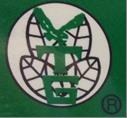
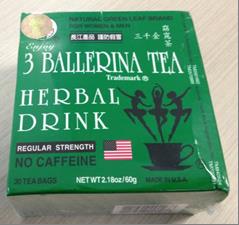
(b) 3 Ballerinas Get Up means the packaging features of the applicant’s genuine 3 Ballerina Tea set out in Annexure 1 to these orders; and
(c) TG Corp Name means TRUONG GIANG CORP.
THE COURT DECLARES THAT:
1. Between about February 2011 and January 2014, by their distribution, promotion, offering for sale and sale of the tea product depicted in Annexure 2 to these orders (which was not manufactured by or under the licence or authority of the applicant), the respondents and each of them infringed the 3 Ballerinas Mark.
2. Between about February 2011 and January 2014, by their distribution, promotion, offering for sale and sale of the tea product depicted in Annexure 2 to these orders (which was not manufactured by or under the licence or authority of the applicant), the first and third respondents each:
(a) falsely represented the items of tea distributed, promoted, offered for sale and sold by them bore the TG Corp Name, the 3 Ballerinas Mark and the 3 Ballerinas Get Up with the licence or authority of TG Corp;
(b) falsely represented that the items of tea distributed, promoted, offered for sale and sold by them had the sponsorship or approval of TG Corp; and
(c) falsely represented that they (and/or the business operated by them) had the sponsorship or approval of, or an affiliation with, TG Corp,
and have thereby contravened:
(d) s 18 of the Australian Consumer Law (NSW) (ACL (NSW)); and
(e) s 29(1)(g) and (h) of the ACL (NSW).
3. Between about February 2011 and January 2014, by its distribution, promotion, offering for sale and sale of the tea product depicted in Annexure 2 to these orders (which was not manufactured by or under the licence or authority of the applicant), the second respondent:
(a) falsely represented the items of tea distributed, promoted, offered for sale and sold by it bore the TG Corp Name, the 3 Ballerinas Mark and the 3 Ballerinas Get Up with the licence or authority of TG Corp;
(b) falsely represented that the items of tea distributed, promoted, offered for sale and sold by it had the sponsorship or approval of TG Corp; and
(c) falsely represented that it had the sponsorship or approval of, or an affiliation with, TG Corp,
and has thereby contravened:
(d) s 18 of the Australian Consumer Law (Cth) (ACL); and
(e) s 29(1)(g) and (h) of the ACL.
4. Between about February 2011 and January 2014, by their distribution, promotion, offering for sale and sale of the tea product depicted in Annexure 2 to these orders (which was not manufactured by or under the licence or authority of the applicant), the first and third respondents each:
(a) passed off the items of tea distributed, promoted, offered for sale and sold by them as products which bore the TG Corp Name, the 3 Ballerinas Mark and/or the 3 Ballerinas Get Up with the licence or authority of the applicant;
(b) passed off the items of tea distributed, promoted, offered for sale and sold by them as products which had the sponsorship or approval of the applicant; and
(c) passed off themselves (and/or the businesses operated by them) as having had the sponsorship or approval of, or an affiliation with, the applicant.
5. Between about February 2011 and January 2014, by its distribution, promotion, offering for sale and sale of the tea product depicted in Annexure 2 to these orders (which was not manufactured by or under the license or authority of the applicant), the second respondent:
(a) passed off the items of tea distributed, promoted, offered for sale and sold by it as products which bore the TG Corp Name, the 3 Ballerinas Mark and/or the 3 Ballerinas Get Up with the license or authority of the applicant;
(b) passed off the items of tea distributed, promoted, offered for sale and sold by it as products which had the sponsorship or approval of the applicant; and
(c) passed off itself as a company which had the sponsorship or approval of, or an affiliation with, the applicant.
6. By his direction and control of the conduct of the second respondent, the first respondent engaged in the acts of trade mark infringement by the second respondent referred to in declaration 1 as a joint tortfeasor with the second respondent.
7. By his direction and control of the conduct of the second respondent, the first respondent:
(a) aided, abetted, counselled or procured the second respondent’s contraventions of the ACL referred to in declaration 3;
(b) induced the second respondent’s contraventions of the ACL referred to in declaration 3;
(c) was directly or indirectly knowingly concerned in or a party to the second respondent’s contraventions of the ACL referred to in declaration 3.
8. By his direction and control of the conduct of the second respondent, the first respondent engaged in the acts of passing off by the second respondent referred to in declaration 5 as a joint tortfeasor with the second respondent.
THE COURT ORDERS THAT:
Trade mark infringement
9. The respondents be permanently restrained whether by themselves, its officers (in the case of the second respondent), their employees or agents or otherwise howsoever, from infringing the 3 Ballerinas Mark and in particular from using the 3 Ballerinas Mark or any name, mark, sign or device which is substantially identical with or deceptively similar to the 3 Ballerinas Mark on or in relation to:
(a) any of the goods in respect of which the 3 Ballerinas Mark is registered (registered goods);
(b) any goods of the same description as any of the registered goods; or
(c) any services that are closely related to any of the registered goods,
not manufactured or provided by or under the licence or authority of the applicant or by any other means whatsoever, or otherwise procuring or inducing any other person to do any of the acts specified in this order.
10. The first respondent be permanently restrained, whether by himself, his employees or agents or otherwise howsoever from:
(a) aiding, abetting, counselling or procuring the second respondent or any other person to infringe the 3 Ballerinas Mark;
(b) inducing the second respondent or any other person to infringe the 3 Ballerinas Mark;
(c) being directly or indirectly knowingly concerned in or party to the infringement of the 3 Ballerinas Mark by the second respondent or any other person.
Australian Consumer Law
11. The first and third respondents be permanently restrained, whether by themselves, their employees or agents or otherwise howsoever from representing that:
(a) tea not manufactured with the licence or authority of the applicant bears the TG Corp Name, the 3 Ballerinas Mark and/or the 3 Ballerinas Get Up with the licence or authority of the applicant;
(b) tea not manufactured with the licence or authority of the applicant has the sponsorship or approval of the applicant;
(c) they (and/or the businesses operated by them) have the sponsorship or approval of, or an affiliation with, the applicant.
12. The second respondent be permanently restrained, whether by itself, its officers, employees or agents or otherwise howsoever from representing that:
(a) tea not manufactured with the license or authority of the applicant bears the TG Corp Name, the 3 Ballerinas Mark and/or the 3 Ballerinas Get Up with the license or authority of the applicant;
(b) tea not manufactured with the license or authority of the applicant has the sponsorship or approval of the applicant;
(c) it has the sponsorship or approval of, or an affiliation with, the applicant.
13. The first respondent be permanently restrained, whether by himself, his employees or agents or otherwise howsoever from:
(a) aiding, abetting, counselling or procuring the second respondent or any other party to engage in conduct of the type restrained by order 12;
(b) inducing the second respondent or any other person to engage in conduct of the type restrained by order 12;
(c) being directly or indirectly knowingly concerned in or a party to the second respondent or any other party engaging in conduct of the type restrained by order 12.
Passing off
14. The first and third respondents be permanently restrained, whether by themselves, their employees or agents or otherwise howsoever from passing off:
(a) tea distributed, promoted, offered for sale and sold by them but which was not manufactured with the licence or authority of the applicant as a product which bears the TG Corp Name, the 3 Ballerinas Mark and/or the 3 Ballerinas Get Up with the licence or authority of the applicant;
(b) tea distributed, promoted, offered for sale and sold by them but which was not manufactured with the licence or authority of the applicant as a product which has the sponsorship or approval of the applicant;
(c) themselves (and/or the businesses operated by them) as having the sponsorship or approval of, or an affiliation with, the applicant.
15. The second respondent be permanently restrained, whether by itself, its officers, employees or agents or otherwise howsoever from passing off:
(a) tea distributed, promoted, offered for sale and sold by it but which was not manufactured with the license or authority of the applicant as a product which bears the TG Corp Name, the 3 Ballerinas Mark and/or the 3 Ballerinas Get Up with the license or authority of the applicant;
(b) tea distributed, promoted, offered for sale and sold by it but which was not manufactured with the license or authority of the applicant as a product which has the sponsorship or approval of the applicant;
(c) itself as having the sponsorship or approval of, or an affiliation with, the applicant.
16. The first respondent be permanently restrained, whether by himself, his employees or agents or otherwise howsoever from:
(a) aiding, abetting, counselling or procuring the second respondent or any other party to engage in conduct of the type restrained by order 15;
(b) inducing the second respondent or any other person to engage in conduct of the type restrained by order 15;
(c) being directly or indirectly knowingly concerned in or a party to the second respondent or any other party engaging in conduct of the type restrained by order 15.
General
17. The respondents deliver up on oath to the applicant (or its nominated agent) for destruction under supervision (at the cost of the respondents) all products in the possession, power, custody or control of the respondents, its officers (in the case of the second respondent), their employees or agents or otherwise howsoever, which bear the TG Corp Name (or any name which is misleadingly, deceptively or confusingly similar to the TG Corp Name), the 3 Ballerinas Mark (or any name, mark, sign or device which is substantially identical with or deceptively similar to the 3 Ballerinas Mark) and/or the 3 Ballerinas Get Up (or elements which are misleadingly, deceptively or confusingly similar to that get up), without the licence or authority of the applicant.
18. The respondents deliver up on oath to the applicant (or its nominated agent) for destruction under supervision (at the cost of the respondents) all packaging, stickers, signs, posters, branding, promotional and advertising material, catalogues, price lists, brochures and other documents and materials in the possession, power, custody or control of the respondents, its officers (in the case of the second respondent), their employees or agents or otherwise howsoever, which bear the TG Corp Name (or any name which is misleadingly, deceptively or confusingly similar to the applicant’s name), the 3 Ballerinas Mark (or any name, mark, sign or device which is substantially identical with or deceptively similar to the 3 Ballerinas Mark) and/or the 3 Ballerinas Get Up (or elements which are misleadingly, deceptively or confusingly similar to that get up), without the licence or authority of the applicant.
Damages
19. The first and second respondents (as joint tortfeasors) jointly pay the applicant:
(a) damages assessed in the sum of $3,000;
(b) additional damages under s 126(2) of the Trade Marks Act 1995 (Cth) assessed in the sum of $50,000.
20. The third respondent pay the applicant:
(a) damages assessed in the sum of $500;
(b) additional damages under s 126(2) of the Trade Marks Act 1995 (Cth) assessed in the sum of $20,000.
Costs
21. The first and second respondents pay two-thirds of the applicant’s costs as agreed or assessed.
22. The third respondent pay one-third of the applicant’s costs as agreed or assessed.
Annexure 1 – 3 Ballerinas Get Up
The 3 Ballerinas Get Up comprises:
1. a dark green background colour;
2. the following logo:
3. the words in English: NATURAL GREEN LEAF BRAND FOR MEN AND WOMEN;
4. the following Chinese characters:
|
|
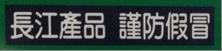
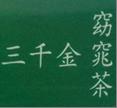
which mean, in English, “Product of Truong Giang, beware of counterfeit” and “3 ballerina beauty tea”; and
5. the words in English: HERBAL DRINK REGULAR STRENGTH, arranged as follows:
Annexure 2 – Respondents’ product
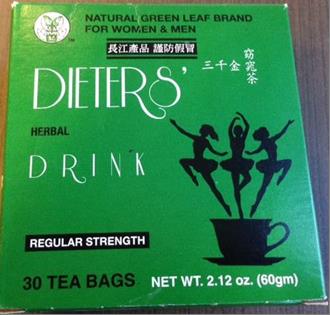
Note: Entry of orders is dealt with in Rule 39.32 of the Federal Court Rules 2011.
NEW SOUTH WALES DISTRICT REGISTRY | |
GENERAL DIVISION | VID 41 of 2014 |
BETWEEN: | TRUONG GIANG CORPORATION Applicant |
AND: | TUNG MAU QUACH (ALSO KNOWN AS "JOHN QUACH") First Respondent NEW LEAF TEA CO PTY LTD (ACN 143 572 909) Second Respondent CHRISTODOULOS ALEXANDROU Third Respondent |
JUDGE: | WIGNEY J |
DATE: | 15 october 2015 |
PLACE: | SYDNEY |
REASONS FOR JUDGMENT
1 This case concerns allegations of trade mark infringement, passing off, misleading or deceptive conduct, and false or misleading representations arising from the supply of counterfeit cartons of an apparently well-known brand of green leaf herbal tea.
2 The applicant, Truong Giang Corporation (TG Corp) is a Californian company that produces a green leaf herbal tea product which it sells under the name “3 Ballerina Tea”. It has sold that product in the United States since 1991, and in Australia since 1994, in distinctive dark green packaging which, amongst other things, features a prominent device or mark. That mark, which was registered by TG Corp as a registered trade mark in Australia on 1 November 1996, features (perhaps not surprisingly) an image of three ballerinas performing a pirouette or similar such ballet move atop a tea cup. Since 2006, TG Corp has sold substantial quantities of 3 Ballerina Tea in Australia through an exclusive distributor, Champ Firm Trading Pty Ltd (Champ Trading), or its sub-distributors.
3 Mr Tung Mau Quach is a merchant who distributes and sells tea, coffee, nuts and other products. He has, at various times, traded under the business name Bellow & Lee Co (Bellow & Lee). He has also, at various times, conducted his business through a company, New Leaf Tea Co Pty Ltd (New Leaf). Mr Quach and New Leaf are respectively the first and second respondents.
4 One of Mr Quach’s suppliers was another food merchant by the name of Mr Christodoulos Alexandrou. Over the years, Mr Alexandrou has traded using the business name C & V Distributors, or other similar names. Mr Alexandrou is the third respondent.
5 TG Corp claims that Mr Quach, New Leaf and Mr Alexandrou were involved in selling relatively large quantities of a tea product which was packaged in a deceptively similar way to the genuine 3 Ballerina Tea. The packaging of the product supplied by Mr Quach, New Leaf and Mr Alexandrou featured a prominent mark identical to the registered trade mark owned by TG Corp. TG Corp alleges that this product was not genuine 3 Ballerina Tea and that it did not authorise anyone to use its trade mark on or in association with it.
6 There does not appear to be any real dispute, or any basis to doubt, that Mr Quach, New Leaf and Mr Alexandrou were involved in selling some of the allegedly counterfeit 3 Ballerina Tea in October 2013. At issue, however, is the circumstance in which those sales occurred, whether Mr Quach and Mr Alexandrou knew that the tea they were selling was counterfeit, and whether Mr Quach and New Leaf were involved in selling larger quantities of that tea product from as early as 2011 and 2012. TG Corp claims that they were and seeks various forms of relief against Mr Quach, New Leaf and Mr Alexandrou, including declaratory relief, injunctions and damages for trade mark infringement, passing off and contravention of ss 18 and 29(1)(g) and (h) of the Australian Consumer Law (ACL) (Schedule 2 to the Competition and Consumer Act 2010 (Cth)) and also as applied in New South Wales by the Fair Trading (Australian Consumer Law) Amendment Act 2010 (NSW) (ACL (NSW)).
Facts and EVidence
7 In support of its claims, TG Corp relied on affidavit evidence from a number of witnesses, together with documentary exhibits to the affidavits. Mr Quach and Mr Alexandrou were originally legally represented, though they appeared unrepresented at the final hearing. Mr Quach was granted leave to appear for New Leaf. Neither Mr Quach nor Mr Alexandrou cross-examined any of the deponents of the affidavits relied on by TG Corp, though it was apparent that they disputed some of that evidence. Both Mr Quach and Mr Alexandrou swore and relied on affidavits in their defence. Both were cross-examined.
3 Ballerina Tea — Reputation, trade mark and get up
8 Mr Quach, New Leaf and Mr Alexandrou ultimately did not dispute that TG Corp was the owner of a trade mark, being an image of three ballerinas atop a tea cup, registered in Australia in respect of “[t]ea as included in this class [class 30], including ginseng tea, green tea, ginseng/guava tea” (the 3 Ballerinas Mark). The 3 Ballerinas Mark was registered in Australia on 1 November 1996 (No 720951). There was also evidence that TG Corp had been using the same mark in connection with its 3 Ballerina Tea product in the United States since about 1991.
9 Nor did Mr Quach, New Leaf and Mr Alexandrou contest any of the evidence that showed that TG Corp had a substantial and valuable reputation in Australia in respect of the 3 Ballerinas Mark and the distinctive packaging in which its 3 Ballerina Tea is and has been sold (3 Ballerinas Get Up). The 3 Ballerinas Get Up includes a dark green box featuring a prominent image of the 3 Ballerinas Mark, a logo which has the letters “TG” in a circle superimposed over an image of a lotus flower, the words “natural green leaf brand for men and women” and “herbal drink regular strength”, and Chinese characters which mean, in English, “Product of Truong Giang, beware of counterfeit” and “3 ballerina beauty tea”. The packaging also bears the name Truong Giang Corp and an address in California.
10 TG Corp has been using the 3 Ballerinas Mark, and selling its product in the 3 Ballerinas Get Up, in the United States since 1991. It has been selling 3 Ballerina Tea, in packaging bearing the 3 Ballerinas Mark and featuring the 3 Ballerinas Get Up, in Australia since 1999. Since 2005, TG Corp’s exclusive distributor of the 3 Ballerina Tea in Australia has been Champ Trading. Since 2006, Champ Trading has sold substantial quantities of 3 Ballerina Tea throughout Australia, mainly through Asian supermarkets and health food stores. The product is sold in boxes containing 12, 18 or 30 tea bags. The product in question in these proceedings is the 30 tea bag boxes. Since 2006, sales of 30 tea bag boxes of 3 Ballerina Tea per calendar year have ranged from about 55,000 to more than 90,000 boxes. Champ Trading’s approximate turnover from the sale of 3 Ballerina Tea (all varieties) has ranged from approximately $350,000 to $625,000 per calendar year.
11 The evidence clearly established that TG Corp had acquired a substantial reputation in relation to the genuine 3 Ballerina Tea using the 3 Ballerinas Mark and the 3 Ballerinas Get Up in Australia since at least 2006.
The Counterfeit Product
12 It would seem to be tolerably clear that, since about 2011, a counterfeit 3 Ballerina Tea product (the Counterfeit Product) has been sold in Australia. The Counterfeit Product is called “Dieters’ Drink” or “Dieters’ Herbal Drink”, not 3 Ballerina Tea. It is, however, packaged in boxes (containing 30 tea bags), which employ a get up which is unquestionably deceptively similar to the genuine 3 Ballerinas Get Up. The 3 Ballerinas Mark features prominently on the Counterfeit Product packaging which, like the genuine 3 Ballerinas Get Up, is dark green and includes the TG logo, and substantially the same English words and Chinese characters. A senior officer of TG Corp deposed to the fact that the Counterfeit Product does not originate from TG Corp, is not a TG Corp product, and that TG Corp has not authorised or given permission for the use of the 3 Ballerinas Mark on the Counterfeit Product.
13 The origins of the Counterfeit Product are unknown. There is no evidence concerning the manufacture or importation of the Counterfeit Product. It is clear, however, that the Counterfeit Product was intended to be passed off as the genuine 3 Ballerina Tea produced by TG Corp, even though it does not bear the 3 Ballerina name.
The “trap” purchases
14 In early October 2013, a private inquiry agent, Mr Kenneth Taylor, and his assistant, Ms Tra My Nguyen, contacted Mr Quach about purchasing some tea. Mr Taylor was retained by or on behalf of TG Corp. Following that initial contact with Mr Quach, Ms Nguyen’s evidence is that, on 4 October 2013, she visited Mr Quach’s warehouse in South Granville, a suburb of Sydney, and asked Mr Quach if he sold 3 Ballerina Tea. Mr Quach said that he did, but that he did not have any in stock. In answer to a question from Ms Nguyen concerning Mr Quach’s best-selling teas, Mr Quach said he sold eight different types of tea, with 3 Ballerina and Nutri-Slim tea being his best-selling teas.
15 A few days later, Ms Nguyen telephoned Mr Quach. She asked if he had any 3 Ballerina Tea in stock. He replied that he would have it in stock the next day. Ms Nguyen then ordered two cartons of 3 Ballerina Tea. Each carton contained 24 boxes of tea, with each box containing 30 tea bags. Mr Quach said that the order would cost $120 and that it could be picked up a few days later.
16 On 11 October 2013, Mr Taylor attended Mr Quach’s warehouse to collect the order placed by Ms Nguyen. Mr Taylor observed, and photographed, about 10 cartons of the Counterfeit Product on a pallet in the warehouse. Mr Taylor had a conversation with Mr Quach during which Mr Quach said, amongst other things, that he was selling the tea for a cheap price and that it was “[e]xactly the same tea, just different packet.” Mr Quach provided Mr Taylor with a handwritten invoice which described the supplier as “Bellow & Lee Co” with an Australian Business Number (ABN) 87 091 489 714. There was evidence that this was a false or fictitious ABN.
17 Mr Taylor returned to Mr Quach’s warehouse on 24 and 25 October 2013 and observed, through a window into the warehouse, approximately 32 cartons of the Counterfeit Product on a pallet. He took a photograph of what he observed.
18 Mr Taylor and Ms Nguyen were not cross-examined. Nonetheless, Mr Quach disputed their version of the conversations they had with him. Mr Quach claimed that their evidence of these conversations were fabrications. For reasons explained further below, Mr Taylor’s and Ms Nguyen’s evidence is to be preferred to Mr Quach’s evidence. Statements made by Mr Quach during his conversation with Mr Taylor support the inference that Mr Quach knew that the Counterfeit Product was not genuine 3 Ballerina Tea.
19 Mr Quach did not deny that he sold two cartons of the Counterfeit Product to Mr Taylor or Ms Nguyen. Aside from disputing the evidence of Mr Taylor and Ms Nguyen concerning the conversations between them, Mr Quach’s evidence was to the effect that he did not ordinarily offer 3 Ballerina Tea for sale, but because Mr Taylor and Ms Nguyen insisted on that brand, he bought two cartons from a “retail outlet” or “local distributor” for onsale to them. He maintained that he had not sold tea bearing the 3 Ballerinas Mark at any time other than on this occasion. For the reasons given later, Mr Quach’s denial that he had previously dealt with the Counterfeit Product is unreliable and is rejected.
20 The “retail outlet” or “local distributor” referred to by Mr Quach turned out to be Mr Alexandrou. Oddly enough, however, the only direct evidence of Mr Alexandrou’s involvement in the matter ultimately came from Mr Alexandrou himself.
21 Mr Alexandrou’s version of events was strange indeed. It was inconsistent with Mr Quach’s version of events in important respects.
22 In short terms, Mr Alexandrou’s evidence was that, in March 2013, he was in Cabramatta purchasing some groceries when he was approached in a car park by an Asian man who introduced himself as “Chan”. Chan offered to sell Mr Alexandrou some herbal tea. After some discussion and negotiation, Mr Alexandrou agreed to buy 30 cartons of tea for a total price of $1,260. Mr Alexandrou paid $260 in cash, put the tea in his van, and told Chan his address so Chan could come and collect the balance owing the next day. The following day, Chan visited Mr Alexandrou’s house and Mr Alexandrou paid him the outstanding balance of $1,000. Chan gave Mr Alexandrou an invoice. The invoice was made out in hand to C & V Distributors, a trading name used by Mr Alexandrou, and bore a stamp imprint naming the supplier as Champ Firm Trading Pty Ltd.
23 It should be noted, in this context, that there was evidence that, despite the fact that the invoice provided by Chan suggested that the tea he sold to Mr Alexandrou was supplied by Champ Trading, Champ Trading did not in fact supply that tea or provide the invoice. The manager of Champ Trading gave unchallenged affidavit evidence that Champ Trading always issues computer-generated invoices, not handwritten invoices of the sort provided by Chan. Champ Trading had no record of any sales to Mr Alexandrou or C & V Distributors.
24 Mr Alexandrou’s evidence was that, between March and October 2013, he tried to sell the tea he had bought from Chan but it was a “slow seller”. It would seem that Mr Alexandrou kept the tea in his van, because his evidence was that, at some stage, when Mr Alexandrou was visiting Mr Quach’s warehouse to buy some tea, Mr Quach saw the cartons of tea in Mr Alexandrou’s van and had a conversation with Mr Alexandrou about it. Then, sometime early in October 2013, Mr Quach telephoned Mr Alexandrou and asked to buy two cartons of the tea he had seen in Mr Alexandrou’s van. Despite the fact that Mr Quach only ordered two cartons of the tea, Mr Alexandrou delivered 20 cartons of the tea to Mr Quach’s warehouse. He asked Mr Quach to sell the extra 18 cartons on consignment for him, supposedly because his van was broken down. Mr Quach apparently agreed.
25 Later that month, presumably after he had repaired his van, Mr Alexandrou visited Mr Quach again and took back the extra 18 cartons of the tea. Mr Quach paid Mr Alexandrou $96 for the two cartons of tea he had purchased. Mr Alexandrou produced handwritten invoices supposedly evidencing these transactions. The two cartons of tea Mr Alexandrou sold to Mr Quach were, on this version of events, the two cartons of the Counterfeit Product that Mr Quach sold to Mr Taylor and Ms Nguyen. To this extent, at least, Mr Alexandrou’s evidence was consistent with Mr Quach’s evidence.
26 According to Mr Alexandrou, that was not the last of his dealings with the Counterfeit Product. In late January 2014, Mr Quach asked for another two cartons of the tea. Mr Alexandrou supplied them to him, again for $96.00. On 31 January 2014, Chan called Mr Alexandrou again and then visited Mr Alexandrou’s home. Despite the fact that the tea that Mr Alexandrou had previously purchased from Chan had apparently been a “slow seller” for Mr Alexandrou, he nonetheless purchased another 20 cartons of the tea from Chan. It is implicit in Mr Alexandrou’s evidence that this tea was again the Counterfeit Product.
27 During cross-examination, Mr Alexandrou said that he sold nine cartons of the initial 30 cartons of the Counterfeit Product that he had purchased from Chan to a shop he identified as “Primo International Foods”. Aside from the two cartons he sold to Mr Quach, Mr Alexandrou said he sold the balance of the cartons to Euro Foods in Wollongong and to a lady who lived in Lightning Ridge who he knew only as “Zoki”. Mr Alexandrou did not produce any invoices in respect of these sales.
28 The evidence of both Mr Quach and Mr Alexandrou in relation to both the “trap” sale and their dealings with the Counterfeit Product will be addressed in some more detail later. Before that, however, some consideration needs to be given to the evidence relied on by TG Corp to prove that, contrary to Mr Quach’s evidence, Mr Quach had been involved in earlier sales of the Counterfeit Product.
Other sales of the Counterfeit Product
29 Whilst there is no direct evidence that Mr Quach was involved in any other dealings with the Counterfeit Product beyond the “trap” sale, there is a strong circumstantial case that he was. The starting point is that, in late September 2013, Mr Taylor purchased a box of the Counterfeit Product from a supermarket in Liverpool called “Sam’s Country Growers”. Subsequent investigations revealed that about a month before this, Sam’s Country Growers had been supplied with 24 boxes of the Counterfeit Product by a wholesale food distributor, Basfoods (Aust) Pty Ltd (Basfoods).
30 Inquiries with Basfoods then revealed that Mr Quach, trading as Bellow & Lee, or New Leaf had supplied the Counterfeit Product to Basfoods. TG Corp led detailed evidence from an operations manager at Basfoods, Mr Tony Tracas. The evidence of Mr Tracas established that Basfoods maintained a database that recorded all its purchases and supplies. Basfoods also retained copies of invoices. Using the database and copies of invoices, Mr Tracas was able to depose to the fact that Bellow & Lee and New Leaf supplied Basfoods with a product called “Dieters’ Herbal Drink”. That name coincides with the name on the cartons of the Counterfeit Product. The invoices supplied to Basfoods by Bellow & Lee and New Leaf in respect of the questioned supplies describe the product variously as “Herbal Drinks”, “Herbal Tea”, and “Herbal Drinks Tea”. The invoices also record that Bellow & Lee and New Leaf supplied other brands of tea to Basfoods. Mr Tracas knew Mr Quach and was aware that orders from New Leaf were placed by Mr Quach. Importantly, Mr Tracas’ evidence also established that Basfoods supplied the “Dieters’ Herbal Drink” it obtained from New Leaf to Sam’s Country Growers. Thus, there is a strong circumstantial link between Mr Quach and New Leaf and the cartons of the Counterfeit Product that Sam’s Country Growers sold to Mr Taylor in September 2013.
31 A warehouse manager of Basfoods, Mr Halil Okan, also identified the “Dieters’ Herbal Drink” product supplied by New Leaf as being the Counterfeit Product. Mr Okan was also able to recall that two deliveries of the “Dieters’ Herbal Drink” that he accepted at Basfoods’ warehouse were delivered personally by Mr Quach. The documentary evidence, together with the evidence of Mr Tracas and Mr Okan, established that Bellow & Lee and New Leaf made the following supplies of the Counterfeit Product to Basfoods:
1,536 boxes (64 cartons) supplied by Bellow & Lee on 7/10 February 2011;
720 boxes (30 cartons) supplied by New Leaf on 17 September 2012;
1,200 boxes (50 cartons) supplied by New Leaf on 4 December 2012;
1,536 boxes (64 cartons) supplied by New Leaf on 29 April 2013;
816 boxes (34 cartons) supplied by New Leaf on 1 October 2013; and
480 boxes (20 cartons) supplied by New Leaf on 8 January 2014.
32 As already indicated, Mr Quach denied that he or New Leaf supplied the Counterfeit Product to anybody other than the two cartons he supplied to Mr Taylor or Ms Nguyen. Mr Quach’s evidence was that he had supplied tea to Basfoods since about 2011, but he claimed that those supplies were of his own tea brands, not the Counterfeit Product.
33 It is, to say the least, difficult to accept Mr Quach’s denials in the face of the compelling circumstantial and documentary case just referred to. For the reasons that follow, Mr Quach’s denials must be rejected.
34 It should also be noted in this context that, at the time of all but the last of the supplies to Basfoods, Mr Quach was the sole director, secretary and shareholder of New Leaf. On 18 November 2013, for reasons that remain largely unexplained, Mr Quach’s wife replaced him as the sole director, secretary and shareholder of New Leaf. In any event, the evidence clearly established that, at all times, Mr Quach was the directing mind and will of New Leaf. There was no suggestion that his wife had any involvement whatsoever in the management or business of New Leaf. There was no evidence that New Leaf had any other employees.
The evidence of Mr Quach and Mr Alexandrou
35 Both Mr Quach and Mr Alexandrou were cross-examined at length about their versions of events and their dealings with the Counterfeit Product. Neither of them presented as honest or reliable witnesses. Mr Quach, in particular, was at times argumentative and evasive, and often failed to directly respond to questioning. Mr Alexandrou appeared at times to feign ignorance and to pretend that he did not understand what was going on. For the most part, the evidence of both Mr Quach and Mr Alexandrou was implausible, replete with inconsistencies and, quite frankly, manifestly unbelievable. The clear impression they gave was of two witnesses who were willing to give untruthful evidence concerning their knowledge of the true origins of the Counterfeit Product and the level of their involvement with it. Their evidence was unsupported by any credible documentary records beyond isolated handwritten documents the provenance of which was, at best, highly questionable.
36 It is unnecessary to detail all of the unsatisfactory aspects of the evidence of Mr Quach and Mr Alexandrou. A few examples will suffice.
37 In relation to Mr Quach, the invoice Mr Quach supplied to Mr Taylor in respect of the two cartons of Counterfeit Product included the name Bellow & Lee and an ABN number. The registration of the business name Bellow & Lee was cancelled in 1996 and the ABN was false or fictitious. If that was not bad enough, Mr Quach’s explanations for both those matters, which involved Mr Quach supposedly relying on two friends who had apparently since returned to China and Taiwan, were nothing short of fanciful.
38 Perhaps more significantly, Mr Quach’s explanation for the generic descriptions “Herbal Drinks”, “Herbal Tea” or “Herbal Drinks Tea” on the invoices he supplied to Basfoods was implausible and unsatisfactory. When New Leaf brands were supplied, the invoices generally described the product supplied by reference to their particular brand names, other than one particular brand which was described as “green tea”. Mr Quach was not, however, able to say which brands were supposedly supplied when the invoices described the relevant product as “Herbal Drinks”, “Herbal Tea” or “Herbal Drinks Tea”. His explanation for the use of these generic descriptions and his inability to say what product was supplied was difficult to understand. It had something to do with using general descriptions on the invoices because people often changed their orders when they arrived at his warehouse. That explanation defied credulity.
39 The obvious inference from the invoices and Mr Quach’s inability to give a credible explanation for them was that the generic descriptions were used to conceal the supply of the Counterfeit Product. This, in turn, supports the inference that Mr Quach well knew that the Counterfeit Product he was supplying was, indeed, counterfeit.
40 As for Mr Quach’s response to the evidence of Mr Taylor and Ms Nguyen, putting aside the fact that Mr Quach did not seek to cross-examine either of those witnesses, his evidence about his dealings with them rose no higher than bald assertions that they had falsified their evidence. He gave no alternative version of the interactions or conversations he had with them. Likewise, Mr Quach simply baldly asserted that Mr Okan’s evidence about Mr Quach delivering the Counterfeit Product was a fabrication.
41 As for Mr Alexandrou, he too had difficulty explaining how he came to be trading under a business name the registration of which was cancelled in 2005. He attempted to deflect responsibility for this onto some unnamed accountant. That explanation, however, lacked plausibility.
42 Perhaps more significantly, his evidence concerning the circumstances in which he came to purchase more than $1,200 worth of tea in a car park was, to say the least, fanciful. He was unable to provide a plausible explanation for exactly why he would purchase a brand of tea hitherto unknown to him, and untested by him, as a result of an approach in a car park by a man not previously known to him and identified only as “Chan”. His story about his sales of the tea that he purchased from Chan was equally bizarre, involving as it did, large supplies to an elderly woman in Lightning Ridge known only as “Zoki”. Important also is that, despite having been required by notice to produce all documents relating to his sales of the Counterfeit Product, Mr Alexandrou produced no documentary records of his sales of the Counterfeit Product, other than questionable handwritten documents supposedly evidencing his sales to Mr Quach.
43 On the whole, the evidence of both Mr Quach and Mr Alexandrou was unsatisfactory and unreliable. Both their demeanour and the content of their evidence revealed them to be unreliable and dishonest witnesses. Their explanations and versions of events relating to their dealings with the Counterfeit Product, other than those that were against interest, are rejected as untruthful.
44 The evidence, considered as a whole, supports the inference that both Mr Quach and Mr Alexandrou well knew that the Counterfeit Product supplied by them was counterfeit 3 Ballerina Tea. Particularly significant in this regard is the use by both of them of cancelled business names and false ABNs, the implausible versions of events given in relation to the impugned sales, and the unwillingness of both Mr Quach and Mr Alexandrou to reveal the true source of the Counterfeit Product and the true extent of their dealings with it. In the case of Mr Quach, the inference that he well knew that the Counterfeit Product he supplied to Mr Taylor and Ms Nguyen was indeed counterfeit is plainly available from the statements he made to Mr Taylor.
Summary of factual findings
45 In summary, the following findings of fact, relevant to the causes of action pleaded by TG Corp, are made from the whole of the evidence:
TG Corp is the owner of the Australian registered trade mark for the 3 Ballerinas Mark.
TG Corp has a reputation in Australia in relation to the 3 Ballerinas Mark and the distinctive 3 Ballerinas Get Up.
The Counterfeit Product used as a trade mark a sign or mark that was identical to the registered 3 Ballerinas Mark.
The Counterfeit Product used packaging and get up deceptively similar to the 3 Ballerinas Get Up.
The Counterfeit Product was plainly intended to be passed off as genuine TG Corp 3 Ballerina Tea, despite not bearing the name 3 Ballerina Tea.
Between February 2011 and January 2014, New Leaf, and on one occasion, Mr Quach, using the business name Bellow & Lee, supplied a total of 6,288 boxes (262 cartons) of the Counterfeit Product to Basfoods.
Mr Quach was the directing mind and will of New Leaf, and was directly and personally involved in procuring and effecting the supplies of the Counterfeit Product by New Leaf to Basfoods.
On 11 October 2013, Mr Quach supplied two cartons of the Counterfeit Product to Mr Taylor or Ms Nguyen.
On 18 October 2013, Mr Alexandrou sold two cartons of the Counterfeit Product to Mr Quach.
On 30 January 2014, Mr Alexandrou sold two cartons of the Counterfeit Product to Mr Quach.
On various occasions from about March 2013, Mr Alexandrou supplied 1,104 boxes (46 cartons) of the Counterfeit Product to various unknown purchasers.
Both Mr Quach and Mr Alexandrou well knew that the Counterfeit Product that they supplied was counterfeit and bore the 3 Ballerinas Mark. They knew that the 3 Ballerinas Mark was used on the Counterfeit Product without the permission or authority of its owner.
Both Mr Quach and Mr Alexandrou knew and intended to pass off the Counterfeit Product as genuine TG Corp 3 Ballerina Tea.
Trade Mark infringement
46 Section 120(1) of the Trade Marks Act 1995 (Cth) (TM Act) provides as follows:
A person infringes a registered trade mark if the person uses as a trade mark a sign that is substantially identical with, or deceptively similar to, the trade mark in relation to goods or services in respect of which the trade mark is registered.
47 Subsection 7(4) of the TM Act provides that use of a trade mark in relation to goods means use of the trade mark upon, or in physical or other relation to, the goods. Section 9(1)(b)(i) of the TM Act provides, relevantly, that a trade mark is taken to be applied in relation to goods if it is applied in relation to any “covering … in or with which the goods are, or are intended to be, dealt with or provided in the course of trade”. Section 9(2) of the TM Act defines “covering” as including packaging.
48 Section 17 of the TM Act defines “trade mark” in the following terms:
A trade mark is a sign used, or intended to be used, to distinguish goods or services dealt with or provided in the course of trade by a person from goods or services so dealt with or provided by any other person.
49 The sign or device which appeared on the packaging of the Counterfeit Product was identical to the registered 3 Ballerinas Mark. None of Mr Quach, New Leaf or Mr Alexandrou suggested otherwise. The sign was applied to the packaging of the Counterfeit Product. It was accordingly, by reason of ss 7(4) and 9(1)(b)(i) of the TM Act, relevantly used in relation to the goods, being the Counterfeit Product.
50 The only question, then, is whether, by selling the Counterfeit Product, Mr Quach, New Leaf and Mr Alexandrou used the sign (the 3 Ballerinas Mark) “as a trade mark”? By reason of s 17 of the TM Act, that question turns on whether the sign was used, or intended to be used, by Mr Quach, New Leaf and Mr Alexandrou, to distinguish the Counterfeit Product which they were selling from goods dealt with or provided by others. In short, did they use or intend to use the imitation 3 Ballerinas Mark to indicate the origin of the product and thereby distinguish it from other branded herbal teas?
51 The evidence, considered in context, clearly supports the conclusion that Mr Quach, New Leaf and Mr Alexandrou did use the relevant sign as a trade mark in that sense. In offering for sale and selling the Counterfeit Product with the offending sign or mark, the three respondents used or intended to use that mark as a badge of origin of the goods. In so doing, they infringed TG Corp’s registered trade mark contrary to s 120 of the TM Act.
52 Perhaps not surprisingly, none of Mr Quach, New Leaf, or Mr Alexandrou made any submissions that specifically addressed whether their conduct amounted to an infringement of TG Corp’s trade mark. Whilst represented, however, each of Mr Quach, New Leaf and Mr Alexandrou raised, in their respective responses to TG Corp’s application, the contention that the mark on the Counterfeit Product was applied with the consent of TG Corp. They contended that TG Corp’s consent could be implied or inferred from the fact that the Counterfeit Product was allegedly supplied to Mr Alexandrou by Champ Trading, the exclusive Australian distributor of TG Corp’s products.
53 This contention, although not specifically raised by any of the respondents at the hearing, raises a potential defence under s 123 of the TM Act.
54 Section 123(1) of the TM Act provides as follows:
In spite of section 120, a person who uses a registered trade mark in relation to goods that are similar to goods in respect of which the trade mark is registered does not infringe the trade mark if the trade mark has been applied to, or in relation to, the goods by, or with the consent of, the registered owner of the trade mark.
55 The difficulty for the respondents is that there was unchallenged evidence that the trade mark on the Counterfeit Product was not applied with the consent of TG Corp. That was the evidence of Ms Pauline Ly, the current Vice President of Operations of TG Corp. Ms Ly was not cross-examined. There was also unchallenged evidence from Mr Clarence Tsang of Champ Trading that the Counterfeit Product was not sourced from Champ Trading, and that the invoice supposedly supplied to Mr Alexandrou was not a genuine Champ Trading invoice.
56 There is, therefore, no basis for concluding that the Counterfeit Product was in fact supplied by TG Corp’s exclusive Australian distributor, and therefore no basis for concluding that the infringing trade mark was applied with the consent, express or implied, of TG Corp. It follows that, to the extent that the respondents properly raised a defence under s 123 of the TM Act, that defence is rejected.
57 It also follows that TG Corp has made out its case of trade mark infringement against each of Mr Quach, New Leaf and Mr Alexandrou.
58 Mr Quach’s infringements are those where he personally sold the Counterfeit Product, using the business name Bellow & Lee. Likewise, the infringements by New Leaf and Mr Alexandrou flow from their respective sales of the Counterfeit Product.
59 In the case of New Leaf’s supplies of the Counterfeit Product, however, for the reasons given below in the context of the passing off cause of action, Mr Quach can and should be considered as a joint tortfeasor in respect of New Leaf’s sales of the Counterfeit Product. For the same reasons, he may equally be held personally liable in respect of New Leaf’s trade mark infringements.
Misleading conduct and Representations
60 Section 18(1) of the ACL provides as follows:
A person must not, in trade or commerce, engage in conduct that is misleading or deceptive or is likely to mislead or deceive.
61 Relevantly, s 29(1)(g) and (h) of the ACL provide:
A person must not, in trade or commerce, in connection with the supply or possible supply of goods or services or in connection with the promotion by any means of the supply or use of goods or services:
…
(g) make a false or misleading representation that goods or services have sponsorship, approval, performance characteristics, accessories, uses or benefits; or
(h) make a false or misleading representation that the person making the representation has a sponsorship, approval or affiliation
62 TG Corp claimed that each of Mr Quach, New Leaf and Mr Alexandrou, by promoting and selling the Counterfeit Product, which included the TG Corp name, the 3 Ballerinas Mark and the 3 Ballerinas Get Up, made the following representations:
The Counterfeit Product bore the TG Corp name, the 3 Ballerinas Mark and the 3 Ballerinas Get Up with the consent, licence or authority of TG Corp.
The Counterfeit Product had the sponsorship or approval of TG Corp.
Mr Quach, New Leaf, Mr Alexandrou, and their respective businesses, were sponsored, approved or affiliated by or with TG Corp.
63 TG Corp claims that these representations were false or misleading because:
The Counterfeit Product in fact had no connection with TG Corp.
The use of the TG Corp name, the 3 Ballerinas Mark and the 3 Ballerinas Get Up on the Counterfeit Product was not consented to, approved or authorised by TG Corp.
TG Corp had established a substantial reputation in Australia in relation to its herbal tea product bearing the 3 Ballerinas Mark and the 3 Ballerinas Get Up.
None of Mr Quach, New Leaf or Mr Alexandrou, or their respective businesses, had the sponsorship or approval of TG Corp.
The Counterfeit Product did not have the sponsorship or approval of TG Corp.
64 The principles applicable to determining whether conduct or representations of this sort contravene ss 18(1) and 29(1) of the ACL, are well established: see generally Equity Access Pty Ltd v Westpac Banking Corporation (1989) 16 IPR 431 at 440-442; S & I Publishing Pty Ltd v Australian Surf Life Saver Pty Ltd (1998) 88 FCR 354 (S & I Publishing) at 361-363; Nutrientwater Pty Ltd v Baco Pty Ltd (2010) 265 ALR 140; 84 IPR 452 (Nutrientwater) at [84]-[90]. Where, as here, the alleged misleading or deceptive conduct, or false or misleading representations, are said to arise from the sale of counterfeit goods, the principles particularly applicable include the following:
Whether or not a representation arising from dealings in relation to counterfeit goods is misleading or deceptive, or likely to mislead or deceive, is a question of fact, which must be determined by the court, having regard to all the relevant circumstances, including the history of the claimant’s product, the circumstances in which the respondent’s get up was adopted and the circumstances prevailing in the market at the relevant time: Nutrientwater at [85].
Conduct may be found to be misleading or deceptive, or likely to mislead or deceive, notwithstanding that the respondent acted honestly and reasonably, and did not intend to mislead or deceive: S & I Publishing at 362.
Where, however, the court finds that the respondent did intend to mislead or deceive, the court may more readily find that the conduct was in fact misleading and deceptive: S & I Publishing at 362; Nutrientwater at [85].
In determining whether a misleading or deceptive representation has been made, the court must consider the effect of the impugned conduct on the “ordinary” or “reasonable” member of the class to whom the conduct is directed, rejecting reactions which are extreme, fanciful or capricious: Nutrientwater at [88].
To establish misleading or deceptive conduct, or false or misleading representations flowing from the supply of counterfeit goods, the claimant must establish that it had acquired a reputation in the relevant trade mark and get up which has become distinctive of its business or products: S & I Publishing at 362; Nutrientwater at [90]. It is “the reputation in those features which is the springboard for the argument that consumers are deceived by a particular imitation”: Mars Australia Pty Ltd v Sweet Rewards Pty Ltd (2009) 81 IPR 354 (Sweet Rewards) at [22].
65 For the reasons already given, TG Corp has established that it had acquired a reputation in respect of 3 Ballerina Tea bearing the 3 Ballerinas Mark and 3 Ballerinas Get Up. The packaging and get up of the Counterfeit Product was unquestionably deceptively similar to the 3 Ballerina Tea product. The 3 Ballerinas Mark featured prominently, as did the TG logo. The packaging of both products was dark green and bore substantially the same English words and Chinese characters. The Counterfeit Product also included the name TG Corp. It was plainly intended to deceive consumers into believing that the Counterfeit Product was genuine 3 Ballerina Tea produced by TG Corp, or was a product sponsored or approved by TG Corp, despite the absence of the name 3 Ballerina Tea on the packaging of the Counterfeit Product.
66 Importantly also, it may be inferred from all the evidence that Mr Quach (and New Leaf) and Mr Alexandrou well knew that the Counterfeit Product was not genuine 3 Ballerina Tea produced by TG Corp. It can equally be inferred that when they sold the Counterfeit Product, they intended to pass the product off as genuine TG Corp 3 Ballerina Tea.
67 In those circumstances, and having regard to the whole of the evidence, TG Corp has made out its case of contravention of ss 18(1) and 29(1) of the ACL by each of Mr Quach, New Leaf and Mr Alexandrou. In the case of Mr Quach and Mr Alexandrou, the contraventions are of the ACL (NSW) as they are individuals not corporations. Each of them engaged in the alleged misleading and deceptive conduct, and made the alleged false or misleading representations when they promoted and sold the Counterfeit Product with the intention of passing it off as genuine TG Corp 3 Ballerina Tea. The question of Mr Quach’s involvement in the contraventions by New Leaf of ss 18(1) and 29(1) of the ACL is addressed later in the context of the relief available to TG Corp.
Passing off
68 Despite their different origins and purposes, there is, in these sorts of cases, an overlap between the cause of action for contravention of ss 18(1) and 29(1) of the ACL and the tort of passing off. A misrepresentation as to the source of a trader’s goods is not only an element in the tort of passing off, it can also be conduct that is misleading or deceptive, or likely to mislead or deceive, for the purposes of s 18(1) of the ACL: Nutrientwater at [83] citing Sweet Rewards at [20]-[24]. It can also amount to a false or misleading representation for the purposes of s 29(1) of the ACL: Nutrientwater at [83].
69 The principles governing passing off are well settled. In Nutrientwater, Kenny J described passing off in the following terms (at [78]):
The principles governing passing off are generally well settled. The tort gives effect to the notion that a trader must not pass off the trader’s goods or services as the goods or services of another. That is, a trader is not permitted to use names, marks, get-up, or other characteristics of another trader’s goods so as to induce purchasers to believe that the goods that the trader is selling are the goods of the other. The tort is designed to protect a trader’s intangible property rights in the trader’s business, goodwill or reputation, which is likely to be injured by the misrepresentation involved in a passing-off: see Hornsby Building Information Centre Pty Ltd v Sydney Building Information Centre Ltd (1978) 140 CLR 216 at 226-7; 18 ALR 639 at 647-8; 1B IPR 818 at 825-6.
70 In the circumstances of this matter, it is unnecessary to identify all the “nooks and crannies” of the action of passing off: cf. ConAgra Inc v McCain Foods (Aust) Pty Ltd (1992) 33 FCR 302 at 356 (per Gummow J). It suffices to say (adopting Kenny J’s formulation of the essential elements of passing off in Nutrientwater at [79]) that TG Corp must establish the following matters:
At the time of the sales of the Counterfeit Product by the respondents, TG Corp had a reputation in Australia in relation to the 3 Ballerinas Mark and the 3 Ballerinas Get Up.
By promoting and selling the Counterfeit Product, which included the 3 Ballerinas Mark and deceptively similar get up to the 3 Ballerinas Get Up, the respondents misrepresented to the public that the Counterfeit Product was produced, sponsored or approved by TG Corp, or was or had the same source or origins as the genuine 3 Ballerina Tea.
TG Corp has suffered, or is likely to suffer, damage as a result of those misrepresentations.
71 It is unnecessary for TG Corp to prove that consumers were actually deceived. It is also unnecessary to prove any actual, subjective intention to mislead: Nutrientwater at [81]. Proof that the get up of the Counterfeit Product was intended to effectively appropriate TG Corp’s 3 Ballerinas Get Up is, however, likely to support an inference that the get up was likely to deceive or confuse: Nutrientwater at [82]. It remains, however, for the Court to decide whether in fact there was a misrepresentation likely to lead the public astray as to the source of the goods.
72 The first two elements of the tort of passing off have effectively already been addressed in the context of the ACL contraventions. TG Corp has established that it had acquired the relevant reputation and that by promoting and selling the Counterfeit Product, Mr Quach, New Leaf and Mr Alexandrou made the relevant misrepresentations about the source and origins of the Counterfeit Product and its connection with TG Corp.
73 As for damage, the respondents have sold thousands of boxes of the Counterfeit Product. Given that the Counterfeit Product was passed off or misrepresented as genuine 3 Ballerina Tea, it may safely be inferred that at least some of those sales were at the cost of sales of the genuine product. The quantum of the damage suffered by TG Corp is considered later. At this stage, it is sufficient to say that it can and should be inferred that TG Corp suffered some damage because it lost sales of 3 Ballerina Tea as a result of the respondents’ conduct.
74 TG Corp has accordingly established each of the elements of the tort of passing off as against each of Mr Quach, New Leaf and Mr Alexandrou.
Were New Leaf and Mr Quach joint tortfeasors?
75 In those instances where New Leaf sold the Counterfeit Product, and therefore was responsible for the relevant passing off, TG Corp claims that Mr Quach was a joint tortfeasor with New Leaf.
76 The circumstances in which a director of a company can be regarded as a joint tortfeasor in respect of a tort of the company has been the subject of some debate in the authorities. It is unnecessary to definitively resolve that debate here.
77 In Cooper v Universal Music Australia Pty Ltd (2006) 156 FCR 380, Kenny J (with whom French J relevantly agreed) expressed agreement with the approach taken by Finkelstein J in Root Quality Pty Ltd v Root Control Technologies Pty Ltd (2000) 177 ALR 231, where his Honour put the test in the following terms (at [146]):
The director’s conduct must be such that it can be said of him that he was so personally involved in the commission of the unlawful act that it is just that he should be rendered liable.
78 In Keller v LED Technologies Pty Ltd (2010) 185 FCR 449 (Keller), Emmett J said (at [83]-[84]):
A company cannot act other than through a natural person. In considering whether a natural person is a joint tortfeasor with a company, it is necessary to show something more than that the company acted through that person. Where a person is acting in the capacity of a director, the person will not be liable for the act of the company unless it can be shown that, in so acting, the director was doing something more than acting as a director. The person must do something that makes him or her, in addition to the company, an invader of the victim’s rights (see O’Brien v Dawson (1942) 66 CLR 18 at 32-33). The mere fact that a company is small and that the director has control over its affairs is not, of itself, sufficient to make the director a joint tortfeasor with the company (see C Evans & Sons Ltd v Spriteband Ltd [1985] 1 WLR 317 at 329).
Infringement by a principal actor, of course, is an objective matter. For a director of a company to be held to be invading the rights of a victim of the company, by reason of the actions committed in the capacity of a director, there must be some mental element involved. Thus, in circumstances where a director can be shown to be making use of a corporation or company as an instrument whereby infringement is perpetrated, such that the director can be seen to be hiding behind the corporate veil, it may be thought that that director is going beyond actions performed merely in the capacity as director. If a company is merely the alter ego of a director, such that there is no real difference between the mind of the officer and the mind of the company, there may well be circumstances where it will be appropriate to conclude that the officer is invading the rights of a victim of the company.
79 Also in Keller, Besanko J said (at [291]) that a “close personal involvement in the infringing acts by the director must be shown before he or she will be held liable” as a joint tortfeasor with the company. Jessup J, on the other hand, emphasised (at [405]) that, for a director to be a joint tortfeasor, the director should “make the tort his or her own” and act in his or her own personal capacity, as opposed to acting for and in the service of the company.
80 Whatever test may ultimately prove to be the correct test, here the evidence clearly reveals that Mr Quach was solely responsible for all of the acts that amount to wrongdoing by New Leaf. He had a close personal involvement in and knowledge of the acts that constituted the passing off. He effectively made the tort his own in the sense that he was doing something more than acting as a director. He was, rather, using New Leaf as an instrument for his wrongdoing. In that sense, at least, he was himself invading TG Corp’s rights. He was, therefore, a joint tortfeasor with New Leaf.
81 For effectively the same reasons, Mr Quach should also be held personally liable in respect of the trade mark infringements by New Leaf, and should be regarded as having been relevantly involved in the contraventions of ss 18(1) and 29(1) of the ACL by New Leaf.
Relief
82 In respect of each of the trade mark infringements, the contraventions of the ACL and the tort of passing off, TG Corp has sought relief, including declaratory relief, injunctions, damages, (including additional or exemplary damages) and ancillary relief relating to the delivery-up of offending material.
Declarations
83 Perhaps not surprisingly, given that they were unrepresented, the respondents made no meaningful submissions in opposition to the grant of declaratory relief if the infringements and contraventions were made good.
84 The Court has a wide discretionary power to make declarations under s 21 of the Federal Court of Australia Act 1976 (Cth): Forster v Jododex Australia Pty Limited (1972) 127 CLR 421 (Forster) at 437; Tobacco Institute of Australia Limited v Australian Federation of Consumer Organisations Inc (No 2) (1993) 41 FCR 89 at 99.
85 Before making a declaration, the Court should be satisfied that the question is real, not hypothetical or theoretical, that the applicant has a real interest in raising the issue and that there is a proper contradictor: Forster at 437-438 (Gibbs J citing Russian Commercial and Industrial Bank v British Bank for Foreign Trade Limited [1921] 2 AC 438 at 448).
86 Each of those requirements is satisfied here. The issues concerning the various trade mark infringements, contraventions of the ACL, and passing off by the respondents is a real, not a hypothetical or theoretical, issue. TG Corp, as a party whose rights were relevantly infringed, has a real interest in raising this issue and the respondents, as the relevant contraveners or offenders, are appropriate contradictors: Australian Competition and Consumer Commission v MSY Technology Pty Ltd (2012) 201 FCR 378.
87 Declarations relating to contraventions of legislative provisions are likely to be appropriate where they serve to record the Court's disapproval of the contravening conduct and vindicate the applicant's claim that the respondent contravened the provisions. That is the case here.
88 In all the circumstances, the declarations sought by TG Corp are of utility. It would be an appropriate exercise of the Court’s discretion to make declarations along the lines sought by TG Corp.
89 In its application and in its written submissions provided to the Court in closing, TG Corp provided draft declarations which it submitted were appropriate. Save for one matter, the draft declarations are appropriate and contain sufficient particulars of how and why the respondents’ conduct amount to trade mark infringements, contravention of the ACL and passing off. The additional particular that should be added is the date or dates that each of the respondents sold or otherwise dealt with the Counterfeit Product. Those are the dates of the relevant infringements and contraventions. The declarations to be made should include those dates.
Injunctions
90 Section 126 of the TM Act provides that the Court may grant an injunction for an infringement of a registered trade mark. Permanent injunctions are a conventional remedy in cases involving infringement of intellectual property rights: Nokia Corporation v Truong (2005) 66 IPR 511 (Nokia Corporation) at [46]; QS Holdings Sarl v Paul’s Retail Pty Ltd (No 2) [2011] FCA 1038 at [6]. Nevertheless, injunctive relief is discretionary and should only be granted in an appropriate case.
91 Under s 232 of the ACL, the Court also has the power to grant injunctions if the Court is satisfied that a person has contravened, inter alia, a provision in Chapter 2 and 3 of the ACL, which includes ss 18 and 29. The Court also has a power to grant an injunction restraining conduct that would aid, abet, counsel or procure another person to contravene such provisions.
92 As for passing off, the Court’s power to grant an injunction is to be found in ss 22 and 23 of the Federal Court of Australia Act. The relief is discretionary and will depend on the nature of the contravention and all the circumstances of the case.
93 The granting of injunctions against each of the respondents is appropriate in the circumstances of this case for a number of reasons.
94 First, each of the respondents defended the proceedings and, at least initially, declined to give any, or any meaningful, undertakings not to infringe TG Corp’s trade mark or act in a misleading or deceptive way in relation to it. The undertaking eventually proffered by the respondents was inadequate and unsatisfactory.
95 Second, the infringements and contraventions were relevantly deliberate or intentional and flagrant. The respondents knew that the Counterfeit Product was counterfeit and offered it for sale notwithstanding. They knew that the 3 Ballerinas Mark had been applied to the Counterfeit Product without the consent or authority of its owner. They knew that the Counterfeit Product was intended to be passed off as genuine TG Corp 3 Ballerina Tea.
96 Third, for the reasons already given, the evidence of both Mr Quach and Mr Alexandrou in relation to their dealings with the Counterfeit Product was in most respects untruthful and unreliable. Both Mr Quach (and New Leaf) and Mr Alexandrou remained, throughout the proceedings, recalcitrant. Their production of documents pursuant to discovery obligations and pursuant to notices to produce was deficient and, at best, revealed an absence of proper business systems and records.
97 In all the circumstances, there remains a sufficient risk of future infringing and contravening conduct to warrant the grant of injunctions. The injunctions should be permanent. Amongst other things, permanent injunctions will avoid multiplicity of proceedings: Nokia Corporation at [46].
98 As for the appropriate form of the injunctions, the injunctions granted should bear upon the case that has been made out and indicate the conduct to be enjoined in such a way as to enable the party enjoined to know what conduct might contravene the injunction: Melway Publishing Pty Limited v Robert Hicks Pty Limited (2001) 205 CLR 1; Australian Competition and Consumer Commission v Dateline.Net.Au Pty Ltd (2007) 161 FCR 513. The form of the injunctions that has been proposed by TG Corp is not too broad and contains sufficient particulars to properly inform the respondents. Injunctions in the form proposed by TG Corp should be made.
Damages
99 TG Corp has elected, pursuant to s 126(1)(b) of the TM Act, to seek damages rather than an account of profits, in respect of the trade mark infringements. In addition, TG Corp seeks additional damages under s 126(2) of the TM Act.
100 TG Corp also seeks damages pursuant to s 236 of the ACL in respect of the ACL contraventions and damages in respect of the passing off. TG Corp seeks exemplary damages in respect of the passing off.
Compensatory damages
101 The first step is to consider the availability and assessment of compensatory damages.
102 Damages for the infringement of a registered trade mark are (putting to one side the availability of additional damages under s 126(2) of the TM Act) compensatory only. The burden of proof lies on the applicant, but damages are to be assessed liberally: Paramount Pictures Corporation v Hasluck (2006) 70 IPR 293 (Paramount Pictures) at [34]. If the applicant fails to discharge its onus, nominal damages may be awarded.
103 TG Corp submits that in the circumstances of this case it can be inferred or concluded that the Counterfeit Product was sold in direct competition with the genuine 3 Ballerina Tea sold by TG Corp through Champ Trading. It has proved that the respondents were responsible for large sales of the Counterfeit Product. In those circumstances, TG Corp submits that the best, or most appropriate, measure of damages is loss of profit from lost sales.
104 In Elwood Clothing Pty Ltd v Cotton On Clothing Pty Ltd (2009) 81 IPR 378 (Elwood), Gordon J said that where the applicant and the respondent are in actual or potential competition, the appropriate measure of damage was as described by Finkelstein J in TS & B Retail Systems Pty Ltd v 3Fold Resources Pty Ltd (No 3) (2007) 158 FCR 444, where his Honour said (at [207]):
Then lost profit is usually the best measure of damage. The plaintiff must show that he has lost sales to the defendant as a result of the infringement and quantify the loss suffered. This requires the court to explore the counterfactual hypothesis of the contracts the plaintiff would have obtained absent the infringement and the costs associated with them. Necessarily the process will involve a degree of speculation, but that is no bar to recovery. The claim is not for loss of revenue but for loss of profits. The profits to be calculated are the lost net profits. By net profits I mean revenue less all costs including variable and indirect costs, but not including income tax. Care must be taken to ensure that costs savings are brought to account. If a plaintiff sells less of his products he will have less costs and that should be treated as a gain to be offset against the lost revenue which forms the basis of the computation of lost profits. The plaintiff is also entitled to recover indirect losses (such as damage to goodwill) as long as the cause is the infringement, the loss is foreseeable and is not unduly speculative. It will often be impossible to be precise in the calculation of lost profit. If needs be, the calculation can be rough and ready, with the benefit of any doubt favouring the plaintiff.
105 In Elwood, Gordon J adopted a “lost profits” method of calculating damages that had earlier been adopted by Greenwood J in Norm Engineering Pty Ltd v Digga Australia Pty Ltd (2007) 162 FCR 1 (Norm Engineering). That method involves the following six steps: first, examine the number of sales made by the respondent; second, assume that the respondent was trying to capture sales from the applicant; third, assume that the number of sales made by the respondent is equal to the number of sales lost by the applicant; fourth, discount the number in the third step to reflect that not all the sales made by the respondent can be considered sales lost by the applicant; and fifth, apply any further discount necessary in the circumstances of the case. Once a final figure for lost sales is arrived at by this method, the sixth step is to multiply the figure for lost sales by the net profit the applicant derived from sales of each unit of the relevant product.
106 A few observations should be made concerning this method of calculation of damages in the context of this case.
107 First, both Norm Engineering and Elwood were cases involving breach of copyright. Nevertheless, this method would appear to be an available and appropriate method of calculating damages in a trade mark infringement case, so as long as there is a proper evidentiary basis for it. The minimum evidentiary requirements are that there be at least some evidence that sales of the infringing product either did or would have been likely to reduce the applicant’s sales, and some evidence of the applicant’s profit margin.
108 Second, difficulty in estimating damages, or the need to speculate to a certain extent, does not relieve the Court of the responsibility of undertaking the exercise: Aristocrat Technologies Australia Pty Ltd v DAP Services (Kempsey) Pty Ltd (in liq) (2007) 157 FCR 564 at [35]; Norm Engineering at [295]; Elwood at [24]. Speculation, and even guesswork, may have a role to play where the relevant evidence is inaccessible to the applicant, particularly so where the inadequacy of the evidence is caused by a recalcitrant or uncooperative respondent, or one who has kept no adequate records of relevant dealings: Paramount Pictures at [42].
109 TG Corp has led sufficient evidence to both warrant the adoption of the lost profits method of calculating compensatory damages and to allow the Court to assess damages on that basis.
110 There is some evidence to support the inference that sales of the Counterfeit Product adversely affected TG Corp’s sales of 3 Ballerina Tea in Australia. The offending sales by Mr Quach and New Leaf commenced in 2011 and continued up to early 2014. Mr Alexandrou’s sales of the Counterfeit Product occurred throughout 2013. Sales figures in respect of TG Corp’s sales of 3 Ballerina Tea to Champ Trading reveal that its sales dropped sharply in 2011. Whilst the sales recovered to a degree in 2012 and 2013, the sales figures were well below the sales figures for 2010. TG Corp’s profit figures in respect of its sales to Champ Trading also reveal that its profits in 2011 and 2013 were lower than in previous years. Profit was up in 2012, but that appeared to be a result of increased sales of a different product.
111 Applying the evidence to the steps in the Elwood method produces the following results.
112 In relation to step one, the evidence reveals that Mr Quach and New Leaf, as joint tortfeasors or infringers, were responsible for selling 274 cartons of the Counterfeit Product to the public (plus two cartons to Mr Taylor). This figure includes the 32 cartons seen by Mr Taylor in Mr Quach’s warehouse in late 2013, reduced by 20 to avoid double counting (on the basis that the 20 cartons sold to Basfoods in January 2014 most likely included some of that stock). Mr Alexandrou was responsible for sales of 48 cartons to the public (two cartons also having been sold to Mr Quach and then on to Mr Taylor).
113 Steps two and three involve the making of assumptions and do not require any further consideration or elaboration. The making of those assumptions in this case is supported by the evidence.
114 In relation to step four, the discount to be applied involves some speculation and some general impressions able to be gleaned from the nature of the product and the relevant market. TG Corp submitted that a 40 percent discount should be applied. It is, however, doubtful that 60 percent of the offending sales would otherwise have been filled by sales by TG Corp. Doing the best that can be done on the limited material, a discount of 50 percent should be applied. No further discount is required by step five.
115 After applying the 50 percent discount, it can be concluded that the conduct of Mr Quach and New Leaf was responsible for the loss of sales by TG Corp of 137 cartons of genuine 3 Ballerina Tea. Mr Alexandrou was responsible for a loss of sales by TG Corp of 24 cartons.
116 TG Corp has led confidential evidence of its profit per carton. If the average and rounded profit figure per carton is applied to sales by the respondents, it results in the following: Mr Quach and New Leaf were responsible for lost profits by TG Corp of just over US$1,700. Mr Alexandrou was responsible for lost profits of just over US$300. Given that there was approximate parity between the United States and Australian dollar during 2013, it may accordingly be concluded that TG Corp suffered losses in the order of $1,700 arising from the conduct of Mr Quach and New Leaf, and losses in the order of $300 arising from the conduct of Mr Alexandrou.
117 These figures are slightly less than the proposed damages calculation put forward by TG Corp (a total figure of US$2,700). That difference is largely the product of the slightly greater discount applied at stage four of the Elwood method. TG Corp proposed that a 40 percent discount should be applied.
118 TG Corp submitted, however, that because the respondents were uncooperative and recalcitrant, the damages figure should be increased to $50,000, as against Mr Quach and New Leaf, and $30,000 as against Mr Alexandrou. The apparent basis of that submission was that, given the inadequate discovery and unsatisfactory evidence given by Mr Quach and Mr Alexandrou, the Court should speculate, guess or estimate that they in fact made much larger sales of the Counterfeit Product.
119 Whilst it may be accepted that Paramount Pictures suggests that some element of speculation, or even guesswork, may be employed in the assessment of damages in such circumstances, the figures proposed by TG Corp cannot be properly supported by the evidence in this matter. Even accepting that the evidence of Mr Quach and Mr Alexandrou was unsatisfactory and that their discovery was inadequate, it does not follow that the Court can or should speculate that they in fact made significantly larger sales than those disclosed in TG Corp’s evidence.
120 The evidence, such as it was, suggested that both Mr Quach and Mr Alexandrou were relatively small-time merchants. Mr Quach’s evidence was that the combined annual turnover of Bellow & Lee and New Leaf was in the order of $200,000, though the invoice books that Mr Quach eventually produced suggested that the figure may in fact have been somewhat higher than that. There was essentially no financial evidence concerning the scale of Mr Alexandrou’s business.
121 It cannot be inferred that any of Mr Quach, New Leaf or Mr Alexandrou were responsible for producing or importing the Counterfeit Product. At most, it seems that they were middle men. It also cannot be inferred that the Counterfeit Product formed a major or significant part of their business. Mr Quach and New Leaf had a number of other brands of tea and also traded in other products. There was no evidence that the sales of tea were a major part of Mr Alexandrou’s business.
122 Whilst it is no doubt true that the few documents eventually produced by Mr Quach, New Leaf and Mr Alexandrou did not provide much of a basis for interrogation, counsel for TG Corp had the opportunity to cross-examine both Mr Quach and Mr Alexandrou in relation to their dealings with the Counterfeit Product. He did not squarely put to either of them that they in fact sold much greater quantities of the Counterfeit Product than that revealed in TG Corp’s evidence. Counsel did not interrogate either Mr Quach or Mr Alexandrou about other sales of the Counterfeit Product to purchasers other than those revealed in the evidence. It follows that no proper evidentiary foundation was laid to support the submission that the Court should speculate or infer that significantly larger sales of the Counterfeit Product in fact occurred.
123 There is, therefore, no proper basis to infer, or even speculate, that either Mr Quach and New Leaf or Mr Alexandrou made additional sales of the Counterfeit Product which were sufficiently large to support the high figures for compensatory damages ultimately proposed by TG Corp.
124 Nonetheless, there is some basis to infer that each of Mr Quach, New Leaf and Mr Alexandrou made some additional sales of the Counterfeit Product. The invoice books eventually produced by Mr Quach had been tampered with. Almost a third of the pages had been torn out. Mr Quach’s explanation for this was difficult to comprehend, at best implausible and most likely false. It may be inferred that pages were torn out to conceal additional sales of the Counterfeit Product to different customers. Mr Alexandrou’s explanation for his failure to produce invoices or any other documentary records relating to his sales of the Counterfeit Product (other than his sales to Mr Quach) was also unsatisfactory. It may also be inferred that in failing to comply with his discovery and production obligations, Mr Alexandrou was seeking to conceal some additional sales of the Counterfeit Product. The inference that each of Mr Quach, New Leaf and Mr Alexandrou made at least some additional sales is also more easily drawn given the unreliability of much of their evidence and their lack of credibility as witnesses generally.
125 It is, however, doubtful that the additional sales made by Mr Quach, New Leaf and Mr Alexandrou amounted to much. Doing the best that can be done given the paucity of evidence, it may be inferred that the additional sales made by each of them were roughly the same as the sales directly disclosed by the evidence. That is, in addition to their sales to Basfoods, New Leaf and Mr Quach were responsible for selling about another 100 cartons. In addition to the sales revealed by him in his evidence, Mr Alexandrou was also responsible for selling about another 20 cartons. Employing the same 50 percent discount and the same average net profit figure as employed earlier, it may therefore be concluded that TG Corp’s lost profit as a result of the infringing conduct of Mr Quach and New Leaf was in the order of $3,000 and the lost profit arising from the infringing conduct of Mr Alexandrou was in the order of $500. Compensatory damages are assessed accordingly.
126 This assessment of compensatory damages is also applicable to the damages in respect of the ACL contraventions and passing off. There is no reason or basis for assessing damages differently for those causes of action.
127 It should also be noted that the respondents’ recalcitrance and lack of cooperation, including in relation to the production of documents, is a relevant consideration in relation to the award of additional or exemplary damages.
Additional damages — s 126(2) of the TM Act
128 Section 126(2) of the TM Act provides as follows:
(2) A court may include an additional amount in an assessment of damages for an infringement of a registered trade mark, if the court considers it appropriate to do so having regard to:
(a) the flagrancy of the infringement; and
(b) the need to deter similar infringements of registered trade marks; and
(c) the conduct of the party that infringed the registered trade mark that occurred:
(i) after the act constituting the infringement; or
(ii) after that party was informed that it had allegedly infringed the registered trade mark; and
(d) any benefit shown to have accrued to that party because of the infringement; and
(e) all other relevant matters.
129 Section 126(2) was inserted into the TM Act by the Intellectual Property Laws Amendment (Raising the Bar) Act 2012 (Cth) (the Amending Act). It is in very similar terms to s 115(4) of the Copyright Act 1968 (Cth), s 122(1A) of the Patents Act 1990 (Cth) and s 75(3) of the Designs Act 2003 (Cth). The apparent purpose of the insertion of s 126(2) was to bring the TM Act into line with those other intellectual property laws. That purpose was specifically adverted to in the second reading speech in relation to the Amending Act.
130 The Explanatory Memorandum that accompanied the Amending Act indicated, amongst other things, that s 126(2) was intended to provide a means by which the Court could provide an effective deterrent. The Explanatory Memorandum included the following passage:
Additionally, stakeholders have submitted that many counterfeiters do not maintain sufficient business records to enable a satisfactory calculation of ordinary damages or an account of profits: purely nominal damages may be regarded by counterfeiters as merely the ‘cost of doing business’, rather than an effective deterrent. The absence of additional damages under the Trade Marks Act limits the ability of a court to provide an effective deterrent to intentional counterfeiting.
(Footnotes omitted.)
131 That passage is particularly apposite to the circumstances of this case.
132 Whilst there is little authority concerning s 126(2) of the TM Act, given its similarity to s 115(4) of the Copyright Act, it is relevant to consider the following principles that have been applied to that section.
133 First, it is not necessary that any amount of additional damages be proportionate to any award of compensatory damages: Futuretronics.com.au Pty Ltd v Graphix Labels Pty Ltd (No 2) (2008) 76 IPR 763 (Futuretronics) at [17].
134 Second, an award of additional damages involves an element of penalty: Facton Ltd v Rifai Fashions Pty Ltd (2012) 199 FCR 569 (Facton) at [33], [89].
135 Third, part of the function of an award of additional damages is to mark the Court’s disapproval or opprobrium of the infringing conduct: Facton at [36].
136 Fourth, the matters set out in s 126(2)(a)-(d) of the TM Act are not preconditions to an award of additional damages: Futuretronics at [17].
137 Fifth, conduct which may properly be seen as flagrant includes conduct which involves a deliberate and calculated infringement, a calculated disregard of the applicant’s rights, or a cynical pursuit of benefit: Futuretronics at [19]; Facton at [92].
138 Sixth, post-infringement conduct within s 126(2)(c) of the TM Act is unlikely to include the respondent’s conduct of the infringement proceedings. Such conduct is more relevant to the appropriate order as to costs: Futuretronics at [17]; Flags 2000 Pty Ltd v Smith (2003) 59 IPR 191 at [31]-[34]. That said, it is difficult to see why some aspects of the conduct, by a respondent, in defence of infringement proceedings, might not be relevant to the award of additional damages: cf. Facton at [44], [69]. Conduct of the proceedings which involved high-handedness, dishonesty, recalcitrance, or flagrant disregard of, or deficiencies in compliance with, discovery orders or notices to produce, might, at the very least, suggest a greater need for an award of additional damages that would deter future infringing conduct by the respondent.
139 Seventh, an award of additional damages can encompass damages which, at common law, would be aggravated or exemplary damages: Futuretronics at [17]. The matters specified in s 126(2) of the TM Act are of a kind which are taken into account in determining whether a party is entitled to aggravated or exemplary damages at common law, but in the end result the damages to be awarded are not aggravated or exemplary damages, but additional damages, being of a type sui generis: Facton at [33]-[36], [91].
140 In Halal Certification Authority Pty Ltd v Scadilone Pty Ltd (2014) 107 IPR 23 at [111], Perram J considered that if additional damages are appropriate, the damages to be awarded must operate as a sufficient deterrent to ensure that the conduct will not occur again.
141 This is an appropriate case for the award of additional damages against each of the respondents. For the reasons already given, the infringements by each of the respondents was flagrant. They well knew that the Counterfeit Product was counterfeit and infringed the 3 Ballerinas Mark. By selling the Counterfeit Product they deliberately infringed TG Corp’s registered trade mark and disregarded TG Corp’s rights in pursuit of a benefit for themselves. They used business names the registration of which had been cancelled and, it may be inferred, otherwise acted to conceal their involvement in any infringing activity. The explanations they have given for their conduct were dishonest. They have either maintained insufficient business records, or failed to produce any such records so as to enable the satisfactory assessment of compensatory damages. Additional damages should be awarded to mark the Court’s opprobrium attached to the respondents’ conduct and to provide an effective deterrent.
142 In setting the appropriate amount of additional damages, some regard must be had to the size and nature of the respondents’ operations and the scale of the infringing conduct. A broad evaluative judgment is required, taking into account all the circumstances and the objective of deterrence.
143 TG Corp submits that it would be appropriate to order Mr Quach and New Leaf to pay additional damages of $180,000 jointly, and that it would be appropriate to order Mr Alexandrou to pay additional damages of $75,000. In all the circumstances, however, those amounts would appear to be excessive. As already indicated, the evidence suggests that Mr Quach (and New Leaf) and Mr Alexandrou were fairly small-time operators. The scale of the infringing conduct, whilst not insignificant, was not particularly large in the scheme of things. The quantum of the additional damages proposed by TG Corp is out of proportion to the scale and nature of the contravening conduct.
144 In all the circumstances, appropriate awards of additional damages would be $50,000 (jointly) in the case of Mr Quach and New Leaf, and $20,000 in the case of Mr Alexandrou. These amounts take into account the nature and scale of the contravening conduct, an element of penalty, the Court’s disapproval of the contravening conduct, the flagrancy of the contravening conduct, the recalcitrance and lack of cooperation of Mr Quach, New Leaf and Mr Alexandrou, and the lack of any contrition. These amounts are necessary and sufficient to act as a deterrent and mark the Court’s disapproval of the infringing conduct. They also involve an adequate punitive element.
145 TG Corp also submitted that it was entitled to exemplary damages in respect of the respondents’ passing off. It is unnecessary to deal with that submission separately. Any exemplary damages in respect of passing off would be the same as the additional damages assessed as payable in respect of the trade mark infringements. TG Corp did not suggest otherwise.
Delivery-up
146 TG Corp seeks orders the effect of which would require the respondents to deliver up any remaining Counterfeit Product or any associated materials. The evidence of both Mr Quach and Mr Alexandrou was to the effect that they have no such material. Nevertheless, given the unreliability of much of their evidence, delivery-up orders are appropriate.
Conclusion and orders
147 TG Corp has succeeded in proving that each of Mr Quach, New Leaf and Mr Alexandrou, in offering for sale, selling or otherwise dealing in the Counterfeit Product in trade or commerce on various dates in the period from 2011 to 2014, infringed TG Corp’s registered trade mark, contravened ss 18(1) and 29(1) of the ACL, and committed the tort of passing off.
148 Mr Quach was a joint tortfeasor in respect of New Leaf’s infringements and contraventions.
149 It is appropriate to grant declaratory relief in relation to those infringements and contraventions.
150 It is appropriate to grant permanent injunctions restraining each of Mr Quach, New Leaf and Mr Alexandrou from committing any further infringements and contraventions against TG Corp.
151 It is appropriate to make an order requiring Mr Quach, Mr Alexandrou, and their respective businesses to deliver up any remaining offending product.
152 Mr Quach and New Leaf should be jointly ordered to pay TG Corp damages assessed in the sum of $3,000 and additional damages assessed in the sum of $50,000.
153 Mr Alexandrou should be ordered to pay TG Corp damages assessed in the sum of $500 and additional damages assessed in the sum of $20,000.
154 The respondents should also be ordered to pay TG Corp’s costs. Given the proportion of the evidence and the time spent dealing with TG Corp’s claims against Mr Quach and New Leaf, on the one hand, and Mr Alexandrou, on the other, it would be appropriate to order Mr Quach and New Leaf to pay two-thirds, and Mr Alexandrou one-third, of TG Corp’s costs as agreed or assessed.
I certify that the preceding one hundred and fifty-four (154) numbered paragraphs are a true copy of the Reasons for Judgment herein of the Honourable Justice Wigney. |


