

FEDERAL COURT OF AUSTRALIA
RPR Maintenance Pty Ltd v Marmax Investments Pty Ltd [2014] FCA 409
|
FEDERAL COURT OF AUSTRALIA CORRIGENDUM 1. In paragraph 273, replace the reference to “Spanline’s” with “Marmax’s” and replace the reference to “Spanline” on line 4 with “Marmax”.
Associate: Dated: 22 May 2014 IN THE FEDERAL COURT OF AUSTRALIA | |
|
RPR MAINTENANCE PTY LTD ACN 003 610 231 Applicant | |
|
AND: |
MARMAX INVESTMENTS PTY LTD ACN 001 147 511 First Respondent SPANLINE WEATHERSTRONG BUILDING SYSTEMS PTY LTD ACN 002 968 087 Second Respondent |
|
DATE OF ORDER: |
|
|
WHERE MADE: |
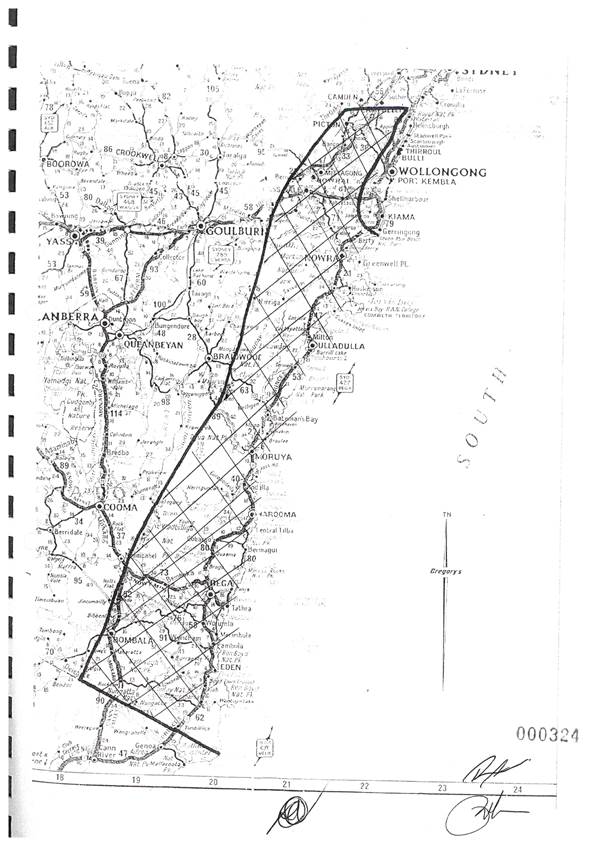
THE COURT ORDERS THAT:
1. The parties are to seek to agree final orders which give effect to these reasons, including as to costs, within 14 days hereof.
2. If the parties are unable to reach agreement within 14 days hereof they should each file and serve within that time a written outline of submissions of no more than 8 pages in length setting out their proposed orders and supporting submissions. The parties are to indicate in their outline whether a further oral hearing is required before final orders can be made or whether they can be made on the papers.
Note: Entry of orders is dealt with in Rule 39.32 of the Federal Court Rules 2011.
|
NEW SOUTH WALES DISTRICT REGISTRY |
|
|
GENERAL DIVISION |
NSD 804 of 2012 |
|
BETWEEN: |
RPR MAINTENANCE PTY LTD ACN 003 610 231 Applicant |
|
AND: |
MARMAX INVESTMENTS PTY LTD ACN 001 147 511 First Respondent SPANLINE WEATHERSTRONG BUILDING SYSTEMS PTY LTD ACN 002 968 087 Second Respondent |
|
JUDGE: |
GRIFFITHS J |
|
DATE: |
29 APRIL 2014 |
|
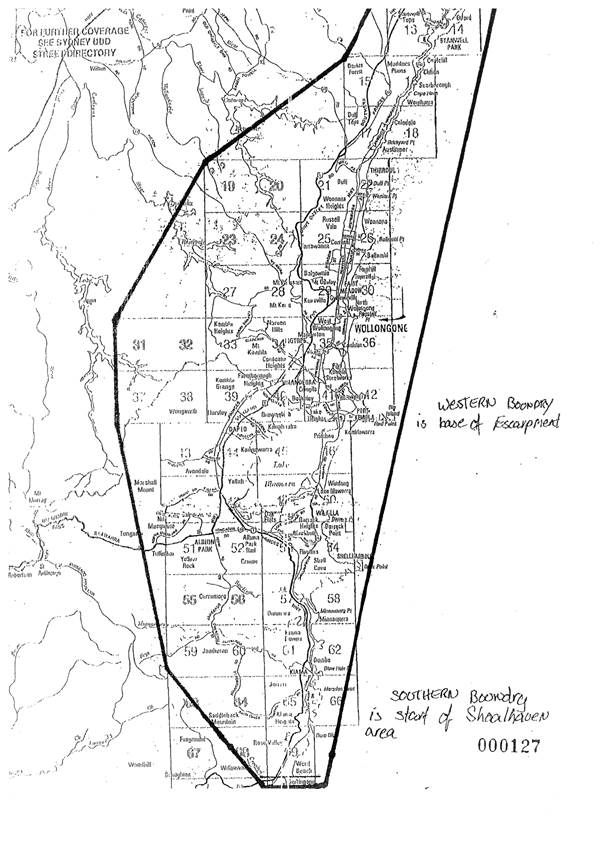
PLACE: |
SYDNEY |
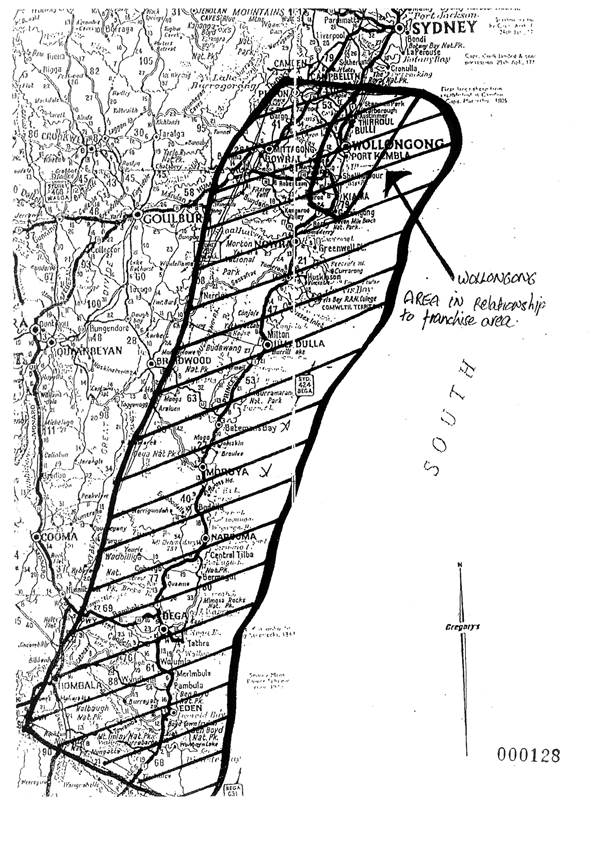
Table of Contents
|
[1] | |
|
[6] | |
|
[7] | |
|
[26] | |
|
(b) Sub-franchise agreement between RPR, Spanline and Marmax |
[35] |
|
[48] | |
|
(d) Transfer of Business and Loan Agreement between RPR and Marmax |
[49] |
|
[62] | |
|
[63] | |
|
[74] | |
|
[79] | |
|
[109] | |
|
[120] | |
|
[123] | |
|
[140] | |
|
[153] | |
|
[156] | |
|
[158] | |
|
[160] | |
|
[163] | |
|
[166] | |
|
[171] | |
|
[175] | |
|
[176] | |
|
[202] | |
|
(c) Did Spanline perform its contractual obligations to RPR in respect of its exclusive franchise territory? |
[216] |
|
[224] | |
|
[228] | |
|
[243] | |
|
(g) Was the second RPR franchise agreement validly terminated? |
[249] |
|
(h) The proposed transfer to the Smiths and the reasonableness of Spanline’s conduct |
[251] |
|
[255] | |
|
[261] | |
|
[262] | |
|
[275] | |
|
[289] | |
|
[311] | |
|
[317] | |
|
[320] |
REASONS FOR JUDGMENT
1 These proceedings relate to a long running dispute involving the applicant (RPR), who since 2001 has been a franchisee of the second respondent (Spanline), Spanline and another Spanline franchisee (Marmax). RPR seeks relief against both Spanline and Marmax. Through a national network of franchises and sub-franchises, Spanline designs, manufactures and sells home extensions or additions to both homebuilders and professional builders. These extensions or additions include patios, roof awnings or covered verandas, glass and screened enclosures and carports.
2 The core of the dispute relates to RPR’s claims that Marmax has sold and installed Spanline products to customers who are located within RPR’s franchise territory and not Marmax’s. RPR also complains that Spanline has breached their franchise agreement – in particular the provisions relating to the exclusivity of its franchise territory – by not taking appropriate action against Marmax to protect RPR’s exclusivity. RPR separately claims that Spanline induced Marmax to breach a sale of business agreement between Marmax and RPR. There are additional issues between RPR and Spanline relating to RPR’s purported exercise of an option to renew its franchise agreement with Spanline, Spanline’s actions in purporting to terminate that franchise agreement and Spanline’s response to RPR’s attempt to transfer its franchise. RPR also alleges misleading or deceptive conduct by Spanline under s 52 of the Trade Practices Act 1974 (Cth) (the TPA) and s 18 of the Australian Consumer Law (the ACL).
3 RPR separately alleges that Marmax’s conduct has breached agreements between those two parties.
4 Marmax has filed a cross-claim against RPR which alleges that RPR has encroached upon Marmax’s exclusive franchise area by selling and installing Spanline products to customers within its territory.
5 RPR relies on various causes of action, including breaches of various contracts, misleading or deceptive conduct, and unconscionability. It seeks damages, declaratory relief and specific performance. RPR argues that it has taken reasonable steps to mitigate its losses. Marmax seeks damages in respect of its cross-claim against RPR.
Summary of contractual agreements
6 In view of the large number of contractual agreements which figure in the proceeding, it is convenient to summarise them at the outset and to set out the key relevant provisions. One of the central issues in the proceeding is the identification of the particular activities which are covered by the exclusivity provisions of the various agreements. That issue ultimately turns on the proper construction of relevant provisions of the agreements. The relevant agreements, which I will shortly deal with in turn, are:
(a) the first and second RPR franchise agreements with Spanline;
(b) the sub-franchise agreement between RPR, Marmax and Spanline;
(c) the Transfer of Business and Loan Agreement between RPR and Marmax; and
(d) the Marmax franchise agreements with Spanline.
(a) The first and second RPR franchise agreements
7 In January 2001, RPR entered into a franchise agreement with Spanline covering the South Coast of New South Wales; a subsequent franchise agreement was entered into by those parties in August 2009 (the first and second RPR franchise agreements respectively). Both agreements were accompanied by disclosure documents. It is common ground between RPR and Spanline that the disclosure documents form part of the relevant franchise agreements respectively. There are many similarities between the first and second RPR franchise agreements and their disclosure documents, but there are also some differences. To avoid duplication, I will focus primarily on the second RPR franchise agreement and will note any relevant differences between it and the first RPR franchise agreement.
8 In March 2009, Spanline sent RPR a proposed new franchise agreement for execution, together with a disclosure document (as required by the Trade Practices (Industry Codes-Franchising) Regulations 1998 (Cth) (the Regulations)). The disclosure document described the franchised business as “the building of additions and improvements to residential and commercial buildings”. RPR relies on this description as reinforcing its contention that it was not the sale of Spanline products alone but also in combination with their installation which formed part of the Spanline franchise. Clause 8 of the disclosure document stated in part:
The franchise is exclusive for the franchised territory. No other Spanline franchisee may operate a business that is substantially the same as the franchised business in that territory. The Franchisor or an associate of the Franchisor may not operate a business nor establish other franchises that are substantially the same as the franchise in that territory.
The Franchisee may not operate a business that is substantially the same as the franchised business outside the territory.
The Franchisor may not change the territory without the consent of the Franchisee. …
9 Clause 10 of the disclosure document dealt with the supply of goods or services by a franchisee. Clause 10 (a) relevantly stated:
(a) Restrictions on the goods or services that the Franchisee may supply.
The Spanline products sold and installed by a Franchisee to a customer must be made and installed by the Franchisee in accordance with the Spanline manuals and comply with the Spanline Mastalink Codes. This enables the Franchisee to give a Spanline warranty for the products.
10 Clause 11 of the disclosure document dealt with sites or territories. It stated:
SITES OR TERRITORIES
The choice of the site for the retail franchised business made by the Franchisee must be in a prominent location for retailing business within the territory. The Franchisee may have separate manufacturing premises. The Franchisor will provide assistance and advice based on its experience.
11 Clause 15 of the disclosure document stated that the franchisor’s obligations were set out in the attached proposed franchise agreement and added that:
… The Franchisor’s obligations include the granting to the Franchisee of an exclusive franchise to conduct the franchised business in the territory…
12 Clause 17 of the disclosure document summarised other conditions which were set out in the proposed second RPR franchise agreement. Clause 17(a), which Spanline says is also relevant in identifying the activities which are the subject of RPR’s asserted exclusivity, stated:
(a) The Spanline Retail Franchise Agreement provides for conduct of the business of retail sale and the installation of the Products to existing residential dwellings for consumers by the Franchisee under this Agreement. The wholesale of the Products are (sic) prohibited without the prior written approval of the Franchisor: see clauses 2.1 and 6.4 Franchise Agreement. The Franchisee agrees that Franchisor may grant a commercial or industrial franchise for the Territory.
13 With one qualification, the proposed franchise agreement which was attached to the disclosure document was in substantially the same terms as the second RPR franchise agreement which was ultimately executed by the parties in August 2009 (although dated 23 March 2009). The qualification relates to the duration of the agreement and the related issue as to whether or not there was an option, matters which I will deal with below.
14 Clause 2.1 of the second RPR franchise agreement is an important provision. It relevantly stated:
The Franchisor grants to the Franchisee an exclusive Franchise to conduct the Franchised Business within the granted Spanline Franchise area and also provides the rights to manufacture and wholesale and/or supply of (sic) Spanline patented products to other Spanline Franchises throughout New South Wales...
15 The phrase “granted Spanline Franchise area” was not defined. However, the “Territory” was defined in cl 1.23 to mean the territory specified in Item 6 of the First Schedule. That item defined the Territory as “South Coast Area as per attached hatched map”. The attached map was as follows:
16 As might be expected, having regard to Marmax’s franchise area in the Illawarra as at 2009, that map excised that territory (understandably, the position is different with the first RPR franchise agreement which was granted prior to Marmax becoming a sub-franchisee of RPR in respect of the Illawarra area).
17 Importantly, the phrase “Franchised Business” was defined in cl 1.8 of the second RPR franchise agreement as meaning “the business of retail sale and the installation of the Products to existing residential dwellings for consumers conducted by the Franchisee under this Agreement in the Territory”. “Products” was defined as meaning “the Spanline Home Addition Products specified in Manuals, Spanline Mastalink Codes and Spanline Warranty” (cl 1.16).
18 RPR contends that this means that it can only sell Spanline products (as defined) to retail customers where the product is also being installed within its exclusive territory. Furthermore, it contends that a similar constraint applies to Marmax under the Marmax franchise agreement.
19 It might also be noted that the first RPR franchise agreement contained a differently worded cl 2.1, a differently worded definition of “Franchised Business” and, for the reason given in [16] above, a different map showing RPR’s franchise territory. Clause 2.1 of that agreement stated:
The Franchisor grants to the Franchisee an exclusive Franchise to conduct the Franchised Business in the Territory for the Term in consideration of payment by the Franchisee to the Franchisor the Franchise Fee and the other Payments on the terms of this Agreement.
20 And in cl 1.7 of the first RPR franchise agreement, “Franchised Business” was defined as meaning “the business of retail sale, installation and trade wholesales conducted by the Franchisee under this Agreement”.
21 Clauses 2.2 and 2.3 of the second RPR franchise agreement were in the following terms:
The Franchise will commence on the Commencement Date and terminate on the Termination Date or earlier termination under clause 13. The Franchisee must not conduct the Franchised Business until this Agreement has been duly signed by all parties and the Franchisee has paid to the Franchisor the Franchise Fee and any other payments due on the commencement of this Agreement.
On the expiration of the Term and provided that the Franchisee is not in breach nor default of any provision of this Agreement, the Term will be automatically renewed for a period as the Franchisor and Franchisee may agree and provided that the parties enter into a new franchise agreement in the form and with the terms and conditions used by the Franchisor at the time of renewal except with the same terms and details in the First Schedule to this Agreement.
22 The phrases “Term” and “Termination Date” were defined in cll 1.21 and 1.22 of the second RPR franchise agreement as the term of years and date respectively specified in Item 7 of the First Schedule which is set out in [28] below.
23 Clause 5 of the second RPR franchise agreement dealt with the business premises from which RPR is obliged to conduct the Franchised Business. Spanline contends that this clause is relevant to the central issue of construction concerning the scope of RPR’s asserted exclusivity. Clause 5 stated:
5 Business Premises
5.1 The Franchisee must conduct the Franchised Business from the Business Premises and must not relocate the Franchised Business to other or additional premises without the prior written consent of the Franchisor.
5.2 The Franchisee must establish and maintain a display centre at the Franchised Business Premises or at another location within the Territory approved by the Franchisor based on its experience.
5.3 The Franchisee must maintain the Franchised Business Premises in a clean and good business like state and condition and may not allow any pets or animals in the premises or centre.
5.4 The Franchisee must perform all its obligations under the lease of the Franchised Business Premises and display centre and must notify the Franchisor in writing of any claim or demand by the Lessor to take possession, terminate the lease or sue for unpaid rent or other moneys. The Franchisee must obtain and give to the Franchisor a written landlord waiver in relation to any property of the Franchisor located at the Business Premises.
5.5 The Franchisee must maintain the Franchised Business Premises and display centre as required by the Spanline Mastalink Codes in consultation with the Franchisor.
24 It is convenient at this point to set out several other clauses in the second RPR franchise agreement which Spanline contends are also relevant to the central issue of construction:
6 Franchisee’s Obligations
6. The Franchisee must:
…
6.14 not trade the Franchised Business or any similar business outside the Territory nor trade any similar business within the Territory;
…
6.16 keep open the Franchised Business Premises for such business hours as are necessary to successfully conduct the business as determined and agreed with the Franchisor and observe and perform all relevant legal requirements in respect of the Franchised Business Premises;
6.17 ensure that the Manager is in physical daily control and management of the Franchised Business, annual holidays and normal leave excepted;
…
6.20.2 ensure that all displays are to be developed in keeping with the Corporate Image Guidelines set by the Franchisor. All plans and drawings of proposed displays are to be submitted for prior approval by the Franchisor. Layouts and colour schemes must not be altered without prior permission;
…
25 Clause 16 dealt with the transfer of the franchise. It is relevant to RPR’s claim that Spanline has unreasonably withheld its consent to RPR transferring its franchise. Clause 16 relevantly stated:
16 Transfer
16.1 The franchisee must not transfer, assign, Sub-Franchise, sell, mortgage nor charge the whole or any part of the Franchised Business nor the benefit of this Agreement without the prior written consent of the Franchisor which consent shall not be unreasonably withheld.
…
16.3 The Franchisor will not unreasonably withhold its consent to a proposed transfer, sale or Sub-Franchise if the following conditions are met to the Franchisor’s satisfaction:
…
16.3.2 the proposed transferee or Sub-Franchisee is shown to be financially and business wise capable of performing its obligations under this or a similar franchise agreement and complies with the Franchisor’s requirement for a franchisee,
…
(Emphasis in original).
26 On 7 July 2009, RPR’s solicitors wrote to Spanline regarding the then proposed second RPR franchise agreement and raised various matters, which included the following observations concerning an option to renew the agreement:
Clause 2.3 The provision does not specify the option period. Our client seeks to have a five (5) year term inserted.
27 On 8 July 2009, Spanline replied:
Clause 2.3 Clause 2.3 remains unchanged in text but it is acceptable by the Franchisor to include for an option of five (5) years and so has been amended in the First Schedule Item 7 The Term to read 5 years plus option 5 years.
28 Spanline supplied a replacement First Schedule to the proposed second RPR franchise agreement as follows (change underlined):
|
ITEM 7 |
THE TERM COMMENCEMENT DATE TERMINATION DATE |
5 years plus option 5 years 23 March 2009 22 March 2014 |
29 On 14 August 2009, RPR’s solicitors sent Spanline an executed franchise agreement, with the new First Schedule inserted as instructed.
30 Marmax objected to the admissibility of the letters dated 7 and 8 July 2009 on the basis that they offend the parol evidence rule. I deal with that objection in [245] below.
31 RPR contends that the second RPR franchise agreement, as amended by Spanline, contains an impossible inconsistency because:
(a) by cl 2.1 of the agreement, Spanline granted RPR a franchise “for the Term”, now defined as “5 years plus option 5 years”; but
(b) cl 2.2 provided that the franchise would commence on the Commencement Date and “terminate on the Termination Date”, being 22 March 2014.
32 RPR submits that the second RPR franchise agreement had an initial term of 5 years commencing on 23 March 2009 and ending on 22 March 2014 with an option for a further term of 5 years commencing on 23 March 2014 and ending on 22 March 2019.
33 Alternatively, it says that cl 2.3 provided that the franchise agreement would automatically renew “for a period as the Franchisor and Franchisee may agree”. By the exchange of correspondence between RPR’s solicitors and Spanline described in [26] and [27] above, RPR and Spanline did in fact agree to the 5 year option. RPR adds that the agreement that the option would be 5 years was consistent with the requirement that any new franchise agreement would contain the same terms and details in the First Schedule in any event (which referred to a Term of 5 years).
34 Spanline submits that cl 2.3 does not contain an option because the terms are uncertain. It further contends that there is no collateral agreement granting an option.
(b) Sub-franchise agreement between RPR, Spanline and Marmax
35 In 2003, RPR obtained Spanline’s consent to sell part of its franchised territory, being the Illawarra territory, to Marmax. The principals of Marmax were, at that time, Anthony and David Gualdi. Negotiations with the Gualdis were protracted.
36 On 9 October 2003, RPR, Spanline and Marmax entered into a sub-franchise agreement relating to the Illawarra territory while negotiations continued for the sale of the business in that territory to Marmax (the sub-franchise agreement). The sub-franchise agreement contained the following relevant definitions (emphasis in original):
“Franchised Business” means the business of retail sale, installation and trade wholesales conducted by the Franchisee under this Agreement (cl 1.8);
“Manuals” include the operation manuals specified in the Second Schedule and the Spanline Weatherstrong Building Systems and related knowhow, manuals, specifications, designs, products and systems as changed from time to time and all copies (cl 1.12);
“Products” means the products specified in Manuals and Spanline Warranty (cl 1.15);
“Term” means the term of years specified in Item 6 of the First Schedule (cl 1.18);
“Termination Date” means the date specified in Item 6 of the First Schedule (cl 1.19); and
“Territory” means the Territory specified in Item 5 of the First Schedule (cl 1.20).
37 It is to be noted that the definition of “Franchised Business” was expressed differently in the second RPR franchise agreement (see [17] above) and the sub-franchise agreement, the significance of which will be discussed below.
38 Item 5 of the First Schedule of the sub-franchise agreement defined “The Territory” as: “ILLAWARRA AREA AS PER ATTACHED HATCHED MAP”. In fact, two maps were attached to the sub-franchise agreement. The first, which is not hatched, was as follows:
39 The handwriting on the right-hand side of the map is that of Mr Richard Marron. Marmax does not dispute that those words appeared on the map in the sub-franchise agreement when it was executed. Mr Marron is a director of RPR. The other director is his wife, Ms Paula Marron.
40 The second attached map, which is hatched, was as follows:
41 Although there was no direct evidence that the handwriting on this map is also that of Mr Marron, Marmax did not contest the proposition that this appears to be the case, nor did it contest the proposition that the handwriting appeared on the second map when the sub-franchise agreement was executed.
42 Item 6 of the First Schedule of the sub-franchise agreement was as follows:
|
ITEM 6 |
THE TERM COMMENCEMENT TERMINATION DATE |
5 years September 2003 September 2008 |
43 Clauses 2.1 and 2.2 of the sub-franchise agreement stated (emphasis added):
The Franchisor [RPR] grants to the Franchisee [Marmax] an exclusive sub-franchise to conduct the Franchised Business in the Territory [Illawarra] for the Term [5 years] in consideration of payment by the Franchisee to the Franchisor of the Franchise Fee [nil] and the other Payments on the terms of this Agreement.
The sub-franchise will commence on the Commencement Date and terminate on the Termination Date or earlier termination under clause 13.
44 Clause 6.5 stated that Marmax must:
not sell by retail sale the Products separately but only as part of a service to install the Products
45 This clause may need to be taken into account in giving effect to the definition of “Franchised Business”, which is set out in [36] above. RPR contends that Marmax was only entitled to sell and install Spanline products as defined within the Illawarra territory.
46 Clause 6.12 stated that Marmax must:
not trade the Franchised Business or any similar business outside the Territory (emphasis added).
47 As will emerge below, the parties are not agreed on the construction of the word “trade” in this clause, which is part of their broader dispute concerning the nature of the activities covered by the relevant exclusivity provisions.
(c) Sale of RPR’s Illawarra business to Marmax
48 On a date on or after 18 November 2004, Marmax, RPR, the Gualdis and Mr Marron entered into a Deed of Termination which:
(a) terminated all previous draft agreements for the sale of part of “Spanline South Coast” to Marmax;
(b) obliged Marmax and the Gualdis to enter into a Transfer of Business and Loan Agreement and Deed of Guarantee with RPR and Mr Marron within 7 days of receiving the executed Deed of Termination; and
(c) affirmed the sub-franchise agreement.
(d) Transfer of Business and Loan Agreement between RPR and Marmax
49 Soon afterwards, RPR and Marmax entered into a Transfer of Business and Loan Agreement under which RPR sold the Business to Marmax for $296,367.41 (the TBLA). What was sold was not the Illawarra franchise, but the “Spanline-Illawarra” business, including its business name, landline, fax, mobile numbers, email address, domain name and equipment. One of the issues in the proceeding is whether the sub-franchise agreement remained on foot and continued to operate in conjunction with the subsequently executed Marmax franchise agreement, see [278]-[280] below.
50 The TBLA contained restraint obligations on both RPR as vendor and Marmax as purchaser. Clause 3.8 stated:
3.8 Vendor’s Restraint obligations
Except as permitted by clause 3.10, the Vendor must not, and must ensure that each of its Affiliates does not, during each restraint period in the Illawarra Franchise Area:
(a) promote, participate in, finance, operate or engage in (whether on its own account or in partnership or by joint-venture); or
(b) be concerned or interested (directly or indirectly, or through any interposed body corporate, trust, principal, agent, shareholder, beneficiary, or as an independent contractor, consultant or in any other capacity) in,
any of the Restrained Businesses.
51 Clause 3.9 of the TBLA contained a restraint clause on Marmax in the following terms:
Except as permitted by 3.10, the Purchaser must not, and must ensure that each of its affiliates does not, during each restraint period in the South Coast Franchise Area:
(a) promote, participate in, finance, operate or engage in (whether on its own account or in partnership or by joint-venture); or
(b) be concerned or interested (directly or indirectly, or through any interposed body corporate, trust, principal, agent, shareholder, beneficiary, or as an independent contractor, consultant or in any other capacity) in,
any of the Restrained Businesses.
52 In construing both those restraint provisions, it is relevant to note that cl 1(1) defined “Restrained Business” to mean a business or operation:
(i) similar to the Spanline franchise business such as the Business; or
(ii) competitive with the Spanline franchise business such as the Business; or
(iii) supplying similar products and services to the Spanline franchise businesses such as the Business.
53 “Business” was then defined in cl 1(1) of the TBLA as meaning “the business of the Vendor set out in Schedule 1, which the Purchaser has had possession of since the Adjustment Date”. The “Adjustment Date” was defined in cl 1(1) as 1 July 2003. Schedule 1 provided particulars of the sale of business and included such matters as the business name (“Spanline-Illawarra”), premises, contact numbers and described the type of business as “Spanline Illawarra Home Additions”.
54 The definition clause in the TBLA (cl 1(1)) defined “Restraint Period” to mean each of the following separate periods:
(i) 10 years from the Adjustment Date;
(ii) 5 years from the Adjustment Date;
(iii) 2 years from the Adjustment Date;
(iv) 1 year from the Adjustment Date.
55 Thus the periods within which the restraints were to operate were a series of cascading dates within the range of 10 years to 1 year. The evident intention of providing cascading dates was to cover the contingency of longer periods being found to be void as in restraint of trade.
56 Clause 3.10 described an exception to the restraint obligations imposed by cll 3.8 and 3.9 in the following terms:
3.10 Permitted involvement
Clauses 3.8 and 3.9 do not prevent either party, together with any of its Affiliates, being the holders in aggregate of less than five per cent (5%) of the issued shares or units of a body corporate or unit trust listed on a stock market of Australian Stock Exchange Limited.
57 A separate restraint was imposed on RPR by cl 3.11, which dealt specifically with soliciting RPR’s existing customers within the Illawarra territory and which Marmax says is relevant to the central issue of construction. Clause 3.11(a) stated:
3.11 Vendor’s Non-interference
On and from the Completion Date, the Vendor must not, and must ensure that each of its affiliates does not, during each restraint period:
(a) solicit, canvas or secure the custom of a person who is at the Completion Date, or was within 1 year before the Adjustment Date, a customer of the Business or the Vendor in connection with the Business;
…
58 Clause 3.13 dealt with the topic of “Reasonableness of restraint” and was in the following terms:
The Vendor agrees that each of the restraint obligations imposed by clauses 3.8 and 3.11 are reasonable in its extent (sic) (as to all of duration, geographical area and restrained conduct) having regard to the interests of each party to this Agreement and extends no further (in any respect) that is (sic) reasonably necessary and is solely to protect the Purchaser as Purchaser of the Business in respect of the goodwill of the Business.
59 There was no equivalent provision in the TBLA which recorded Marmax’s agreement to the reasonableness of the restraint obligation imposed on it by cl 3.9, a matter which it emphasises in seeking to have this provision declared void as a restraint of trade.
60 RPR contends that Marmax’s obligation to RPR to only conduct the Spanline franchise in the Illawarra territory was not restricted to the restraint imposed by cl 3.9. It contends that Marmax’s obligations under franchise agreements with RPR or Spanline also form part of its obligations to RPR. Hence it contends that:
(a) the TBLA referred to RPR’s franchise agreement with Spanline, and RPR’s sub-franchise agreement with Marmax;
(b) a franchise agreement was said to have been attached to the TBLA;
(c) cl 11 of the TBLA provided (emphasis added):
[RPR] agrees that [Marmax] may enter into a Franchise Agreement with Spanline for the Illawarra Franchise Area without the consent of [RPR] and:
(a) if required by [Marmax], [RPR] shall agree in writing to terminate the Sub Franchise Agreement …; and
(b) if required by [Marmax], [RPR] shall confirm in writing that it relinquishes any rights or entitlements it held under the Spanline franchise and arising from any agreement with Spanline in respect of the Illawarra Franchise Area.
(d) the parties expected that Marmax would enter into a franchise agreement with Spanline directly which would impose territorial restrictions on Marmax’s activities.
61 RPR submits that it was a term of the TBLA that Marmax would operate the Spanline franchise in the Illawarra territory in accordance with Marmax’s obligations under its franchise agreements with RPR or Spanline and, in particular, that it would not conduct the Spanline franchise outside the Illawarra territory.
(e) The Byrnes buy into Marmax
62 Shortly after entry into these agreements, the Gualdis experienced financial difficulties. Marmax’s construction manager at the time was Glenn Byrne. In February 2005, Mr Byrne’s wife Margaret purchased Anthony Gualdi’s shares (50%) in Marmax. Mr and Mrs Byrne met with Mr Anthony Way, who was and remains the managing director of Spanline, who said that he wanted to have a franchise agreement directly between Spanline and Marmax.
(f) Marmax franchise agreement with Spanline
63 On 19 February 2005, Spanline, Marmax, David Gualdi and Mrs Byrne entered into a franchise agreement for the Illawarra territory (the Marmax franchise agreement). The terms were substantially similar to the sub-franchise agreement (including cll 2.1 and 2.2). Clause 6 specified Marmax’s obligations as franchisee. Clause 6.4 (which is broadly equivalent to cl 6.5 in the sub-franchise agreement) stated that Marmax must:
not wholesale any Spanline Products, nor market, sell, supply or construct Spanline Products to non retail or wholesale customers without the prior written discretionary approval of [Spanline]
64 Clause 6.8 stated that Marmax must:
not sell by retail sale or wholesale the Products separately but only as part of a service to install the Products
65 It is also notable that the definition in cl 1.9 of the Marmax franchise agreement of “Franchised Business” (which is in identical terms to cl 1.9 of the second RPR franchise agreement) is different from the comparable definition in the sub-franchise agreement, being (with changes marked to show the differences in the Marmax franchise agreement):
the business of retail sale, and the installation of the Products to existing residential dwellings for consumers and trade wholesales conducted by the Franchisee under this Agreement in the Territory
66 Clause 6.15 of the Marmax franchise agreement stated that Marmax must:
not trade the Franchised Business or any similar business outside the Territory nor trade any similar business within the Territory.
67 “Products” was defined to mean “the Spanline Home Addition Products specified in Manuals, Spanline Mastalink Codes and Spanline Warranty” (cl 1.17). “Territory” was defined as the territory specified in Item 5 of the First Schedule. Item 5 then defined Territory as: “ILLAWARRA AREA AS PER ATTACHED HATCHED MAP”. As with the sub-franchise agreement, there were two maps which were attached. They were also the same two maps as were attached to the sub-franchise agreement (as set out in [38] and [40] above), except that in the Marmax franchise agreement:
(a) the maps were in reverse order to how they appeared in the sub-franchise agreement; and
(b) although Mr Marron’s handwriting appears on the non-hatched map, the handwriting which appears on the hatched map set out in [40] above does not appear on the otherwise identical map which was attached to the Marmax franchise agreement.
68 Having regard to these matters, RPR contends that the Marmax franchise agreement made it clearer that Marmax was only entitled to sell and install Spanline products within the Illawarra territory.
69 In April 2006, Mrs Byrne acquired David Gualdi’s remaining 50% share in Marmax. On 11 April 2006, Spanline entered into another franchise agreement with Marmax and Mrs Byrne (as guarantor). Its terms were relevantly identical to the previous Marmax franchise agreement dated February 2005.
70 Marmax entered into two subsequent franchise agreements with Spanline in February 2007 and March 2012 respectively. Although there are some differences between these agreements, Marmax does not suggest that the differences have any material bearing on the proceeding. It is convenient therefore to continue to refer to the Marmax franchise agreement as defined above.
71 By late 2007, Marmax began doing jobs for customers who lived in RPR’s territory. In the 12 month period from September 2007 to September 2008, Marmax made sales of $55,515 to customers in RPR’s territory. RPR contends that these sales were in breach of Marmax’s obligations to RPR under both the sub-franchise agreement and the TBLA.
72 RPR and Marmax dispute when the sub-franchise agreement came to an end. RPR says that this occurred in September 2008 in accordance with the express terms of the agreement. Clause 2.2 of the sub-franchise agreement provided that the sub-franchise would terminate on the Termination Date (September 2008) “or earlier termination under clause 13”. Clause 13 provided for termination by either party on notice or in the event of breach. RPR says that neither party sought to terminate at any earlier point in time under cl 13.
73 Marmax contends that the sub-franchise agreement came to an end earlier, in February 2005, when Marmax entered into the Marmax franchise agreement directly with Spanline.
The facts surrounding the alleged breaches of contract
74 As noted above, both RPR and Marmax accuse each other of having engaged in activities which were in breach of the other’s exclusive franchise territory. RPR also alleges that Spanline breached its franchise agreements with RPR by not taking appropriate steps in response to RPR’s complaints concerning Marmax’s extra-territorial activities and, in particular, its claims that Marmax was doing jobs for customers who lived in RPR’s exclusive territory. A central question in the proceeding is whether, assuming that the alleged activities are found to have occurred, they constituted conduct which was covered by the exclusivity provisions in the relevant agreements.
75 It is convenient to summarise the background facts which underpin the complaints of breach of contract raised by both RPR and Marmax against each other (and by RPR against Spanline) by reference to events which occurred in 2009, 2010, 2011 and 2012. These facts are substantially based on contemporaneous business records, but it is also necessary to make findings of fact based on the evidence given by various witnesses in the proceeding. Putting to one side for the moment the parties’ expert evidence, which all related to damages, the lay evidence was given by the following witnesses.
76 RPR adduced evidence from Ms Paula Marron. No point was taken arising from the fact that Mr Marron did not give evidence because of some personal health issues. Ms Marron was cross-examined. RPR also called Mr Peter Smith who, together with his wife, are prospective purchasers of RPR. Mr Smith was cross-examined.
77 Marmax relied upon evidence given by Mr and Mrs Byrne. Mr Byrne was cross-examined, but Mrs Byrne was not required for cross-examination. It also relied upon the evidence given by various customers. Some, but not all, of the customers were cross-examined. I ruled that, having regard to r 29.09(3) of the Federal Court Rules 2011 (Cth), Marmax could not rely on various affidavits of other customers who were required for cross-examination but did not present themselves at Court.
78 Spanline relied on the evidence of two of its most senior executives, namely Mr Anthony Way (the managing director) and Ms Lisa Oakley (the general manager). Both were cross-examined.
79 In early June 2009, Mr David Gualdi (who previously worked for Marmax and had by then recently transferred to RPR) told RPR that Marmax was doing jobs in RPR’s territory. By letter dated 1 June 2009, Mr Marron wrote to Mr Way at Spanline and drew his attention to what he had been told by Mr Gualdi. It appears that this was the first time RPR complained to Spanline about Marmax’s activities. Mr Marron made the following points in his letter:
(a) business leads for RPR were dramatically down;
(b) he believed that Marmax was mainly selling to customers in Gerroa and in the Southern Highlands;
(c) it was difficult for RPR to prove Marmax’s actions;
(d) RPR was losing work and money as a result of Marmax’s actions and it wanted to “sort this out without the need for a trip to court”;
(e) he believed that Marmax’s actions were in breach of the contractual regime; and
(f) RPR’s territorial rights were an extremely valuable part of its business.
80 By a letter dated 10 June 2009, Ms Marron wrote separately to Mr Way and complained that Marmax was selling to customers in RPR’s franchise area, including to customers who lived in the Southern Highlands. Ms Marron identified 5 jobs which she alleged Marmax had undertaken in RPR’s exclusive franchise area and she provided photocopies of 5 contracts relating to those jobs. She also complained about other jobs being done in RPR’s territory by Marmax where RPR had received no “courtesy call” from Marmax. I accept that this was a reference to an undocumented practice regarding referrals which is described in more detail in [95] below. Ms Marron asserted that RPR had sent all leads to Spanline Illawarra involving customers from that territory who approached RPR in Nowra. Ms Marron also enclosed a photograph of a Spanline Illawarra sign which she said was displayed outside a job being done by Marmax at a residence in Mittagong. She claimed that Mr Gualdi had told her that, while he was working for Marmax, the owners of Marmax instructed him that if anyone came into Marmax’s Albion Park showroom who lived within RPR’s franchise territory, Marmax could do their job. Ms Marron wrote:
There has been a definite breach of Franchise Agreement (sic) and the sales agreement…. [T]here needs to be an outcome.In effect they have stolen from us and I believe compensation is due They have also denied work for our builders (sic).
81 By letter dated 25 June 2009, Mr Way replied to RPR’s complaints. He expressed his disappointment upon reading the allegation that Marmax had infringed its agreement with RPR and he referred to “possible breaches” of the Marmax franchise agreement. Mr Way gave an express assurance to RPR “that we will fully investigate the matter” and he advised that Spanline’s general manager, Ms Lisa Oakley, would be responsible for managing the investigation process. Mr Way also recommended that, as an interim measure, RPR should use the 1300 number in advertising to ensure that potential inquiries were directed to the Nowra/South Coast area.
82 In a letter dated 7 July 2009, RPR’s solicitors wrote to Spanline requiring that it “take immediate action to cause Marmax Pty Ltd to cease carrying out work within [RPR’s] territory and cease doing any acts whereby they accept work orders for the area within [RPR’s] territory”. The letter also requested that Spanline carry out an immediate audit of Marmax’s work to determine the extent to which it was in breach of its franchise agreement and to pass that information onto RPR. On the same day, RPR’s solicitors wrote to Marmax demanding that it immediately desist from carrying out any work within RPR’s franchise territory and requiring Marmax to provide details of all the work Marmax had done in RPR’s territory.
83 By a letter dated 8 July 2009, Ms Oakley wrote to Marmax advising of Ms Marron’s complaint and enclosing the material she had provided to Spanline in support of the complaint. Ms Oakley stated that the alleged breaches were seen by Spanline as “a serious matter” and that Spanline, as franchisor, would undertake any process and/or action that was deemed appropriate to determine whether there had been any franchise territory breaches and, if so, their extent. Marmax was instructed immediately to cease any breaches of franchise territory agreements and it was asked to provide a response to the complaint within 14 days.
84 In a letter dated 13 July 2009, Ms Oakley explained to RPR’s solicitors that, while RPR’s complaint was being investigated, Spanline did not consider an audit of Marmax to be appropriate. Mr Way also gave evidence under cross-examination as to why he did not think that an audit was appropriate. He said that Spanline would not look at Marmax’s business records until it had information from the Byrnes about the allegations.
85 Some of Marmax’s business information was stored on a database called SMARTS, which was kept by Spanline. The SMARTS database stored information about sales which was entered into the database by Spanline’s franchisees. Franchisees apparently used the SMARTS database as a convenient sales recording system. Mr Way gave evidence to the effect that franchisees were only expected to enter into the SMARTS database jobs which involved Spanline products. Mr Byrne and Ms Marron also gave some evidence about the SMARTS database, which I will deal with below.
86 Mr Way said that, around this time, he arranged for one of his staff to do a search of the SMARTS database but “nothing that we could see at that stage looked suspicious”. In my view this is an unsatisfactory and unreasonable assessment of the position, in circumstances where the database indicated that Marmax had done 13 jobs in RPR’s territory at that time, the majority of which were unknown to RPR (it is evident that while a franchisee can access the SMARTS database in respect of its own data, it cannot access data relating to other franchisees). In contrast, Spanline had full access to all the data in the SMARTS database.
87 An important meeting took place in mid-July 2009 between Mr Way and the Byrnes. The purpose of the meeting was to discuss RPR’s complaints about Marmax’s activities. Mr Way accepted the Byrnes’ response to those complaints which, in broad terms, was to the effect that the jobs in question either involved no Spanline products; were referrals from friends, employees or past customers; or involved customers who had called into Marmax’s Albion Park showroom and were unwilling to travel to RPR’s showroom in Nowra. During that meeting, the Byrnes complained to Mr Way about RPR doing jobs in Marmax’s territory. I will deal with this complaint, together with other matters raised by Marmax against RPR, in the section below dealing with the cross-claim.
88 In his evidence in the proceeding, Mr Way acknowledged in cross-examination that “the complete extent” of Spanline’s investigation of RPR’s complaints up to this point was simply to ask the Byrnes for an explanation. As noted above, Mr Way also says that he initially caused a search to be carried out of Marmax’s data on the SMARTS database, but he did nothing about the information revealed by that search, notwithstanding that he said that he was aware of the information. That information suggested that Marmax may have undertaken many more jobs in RPR’s territory about which RPR was presumably unaware. Mr Way also acknowledged that he did not discuss these other possible breaches with the Byrnes.
89 Mr Way also acknowledged in cross-examination that, during the course of his meeting with the Byrnes, he gave them what he described as “conditional permission” for Marmax to do work outside the Marmax franchise territory and within RPR’s franchise territory. He described that permission as requiring Marmax to first tell a customer who approached Marmax about doing a job in RPR’s territory that the customer lived outside Marmax’s franchise territory, to then broadly describe the franchise territories to the customer, and if the customer then said that they were unwilling to drive to Nowra or have RPR do their job, Marmax had Spanline’s permission to service the lead. Mr Way acknowledged that he did not require the Byrnes to notify RPR of any lead they received from a customer from RPR’s territory. He said that he viewed that as “a matter between franchisees”. Mr Byrne agreed under cross-examination that the permission did not require him to tell customers that Marmax could pass on their details to Nowra.
90 RPR contends that a finding should be made that it was unlikely that Mr Way attached any conditions to his permission. Although it is true that there is no reference to any such conditions in subsequent correspondence between Marmax and Spanline and that the customers who gave evidence make no reference to being told the significance of them coming from outside Marmax’s territory, I am not prepared to disbelieve this aspect of Mr Way’s evidence. I found some aspects of his evidence to be troubling, not the least being his views concerning the adequacy of Spanline’s investigation of RPR’s complaints and his initial reluctance to accept that the permission he gave to Marmax must have had the potential to have an adverse effect on RPR’s business. At times he also gave unresponsive answers to questions which he perceived to be harmful to Spanline’s case. For example, on several occasions during his cross-examination Mr Way sought to deflect or deny the proposition that the permission which he had granted to the Byrnes would have a detrimental impact upon RPR because it meant that Marmax would carry out work in RPR’s franchise territory. I accept RPR’s submission that, although Mr Way ultimately accepted the proposition, which I consider to be irrefutable, he did so begrudgingly.
91 I was also left with an abiding impression that, while Mr Way genuinely hoped to resolve the differences between RPR and Marmax, he had a seriously inadequate appreciation of RPR’s contractual rights and Spanline’s legal obligations. Generally, however, I found him to be a truthful witness.
92 Mr Way accepted in cross-examination that he never informed RPR at the time that he had granted Marmax permission to carry out jobs in RPR’s franchise territory. In my view this constituted a serious lapse of judgment on his part. Nor did he set up any procedures to monitor Marmax’s activities by reference to the details of jobs they were doing which they entered into the SMARTS database. This omission, together with other aspects of his interaction with the Byrnes and the Marrons over the relevant periods, demonstrates to my satisfaction that Mr Way’s management of the dispute strongly favoured the interests of the Byrnes at the expense of the Marrons.
93 It may comfortably be inferred that Mr Way’s reason for favouring the Byrnes was because he considered that this was in Spanline’s best commercial interests. When it was squarely put to Mr Way that he gave the permission because he wanted to ensure that Spanline secured as many sales as it could, he responded by saying that that was “partly right”. In my view, that was the primary, if not the only, reason why he gave the permission. Moreover, it is clear that Mr Way allowed this consideration of maximising Spanline’s revenue to outweigh the need for Spanline to honour its contractual and legal obligations to RPR and to enforce the Marmax franchise agreement.
94 By letter dated 17 July 2009, which was apparently sent after their meeting with Mr Way, the Byrnes wrote to him and set out their formal response to each of the 5 jobs the subject of Ms Marron’s complaint (which they had also discussed with Mr Way at the meeting). Their explanation was along the lines of what they had told Mr Way during that meeting. And although they made no direct response to the complaint about the Marmax sign in Mittagong, the Byrnes denied any breach of advertising in the South Coast area. They said that they advertised with WIN television but they had no control over the fact that its television coverage extended to the South Coast.
95 By letter dated 17 September 2009, Mr Way advised RPR of the results of Spanline’s investigation of its complaint. After describing his perception of what he viewed as an historically poor personal relationship between the Marrons and the Byrnes, Mr Way advised that he had personally visited the Byrnes to discuss the complaint. He enclosed a copy of the Byrnes’ letter dated 17 July 2009 responding to the complaint. Mr Way suggested that RPR should “bury the hatchet” with the Byrnes. Mr Way’s letter also contained the following paragraph:
I have given warnings to the Byrnes that we will not tolerate this type of behaviour, stealing from neighbours and I extend to the Marrons the same warning regarding infringement of known territories. I do however condone activity that relates to referrals from customers whom (sic) have friends, family or business associates in other franchise areas. The accepted procedure if a lead is generated through a referral I expect that the local incumbent franchise would be contacted and a request is made to service the lead on the proviso that the franchisee is happy for a design assessor to service the lead using the appropriate pricing sheet and contract pad and hand it over to the franchise who will make the appropriate arrangements to pay the commissions.
(Emphasis added).
96 It is to be noted that Mr Way’s description of the “accepted procedure” for referrals addresses a narrower category of leads than was covered by the permission he gave the Byrnes in mid-July 2009. And neither in his letter or otherwise did Mr Way inform RPR of the additional jobs which Marmax had apparently done in RPR’s territory according to the information stored on the SMARTS database.
97 By letter dated 18 September 2009 to Mr Way, Ms Marron expressed her extreme disappointment at Mr Way’s response and commented that he seemed “to have made this personal”. She said that she was driven not by any “vendetta with the Byrnes”, but rather by a concern to enforce RPR’s legal rights. I see no reason to doubt the truth of those statements. I found Ms Marron to be a truthful witness. On the same day, Ms Marron sent an email to Ms Oakley notifying her of another job which she believed was also done by Marmax in RPR’s territory.
98 Mr Way wrote a letter dated 29 September 2009 to the Marrons. The letter commenced with the following paragraph:
It never ceases to amaze me the expression of hurt and personal indignation that arises when someone does not want to accept the responsibility or facts surrounding any breakdown of business or human relationships.
99 The letter also contained the following statement:
I have a written guarantee [from the Byrnes] that no further projects will be entered into within the exclusive boundaries of your agreement, which is exactly what you asked for!… I have issued the [Byrnes] with a warning regardless of the response to the five contracts investigated which formed the allegation of the breech (sic) of exclusive boundaries.
100 In fact, no such written guarantee was obtained. And, as RPR pointed out in the proceeding, the remarks were misleading because Mr Way had in fact given permission to the Byrnes to do certain projects in RPR’s territory and he kept RPR in the dark about that permission.
101 Mr Way wrote to Marmax on 30 September 2009 seeking its response to further complaints made by RPR in respect of 4 jobs and adding that, as he said he had told the Marrons:
… I will not tolerate any further breeches (sic) in territory. I understand the issues that exist with the Southern Highlands and in a perfect world I know what solution would be in the best interest of the customers. However, the Marrons wisely purchased the area when the opportunity arose and unfortunately at this stage I can’t do anything about it other than warn you off contracting in that area.
102 Mr Way confirmed in cross-examination that his reference in the letter to “in a perfect world” was a reference to his desire that RPR set up a showroom in the Southern Highlands and have a local telephone number for that area. He also acknowledged that RPR was under no legal obligation to take these steps. Mr Way’s “warning” to the Byrnes was at odds with the permission he had given in mid-July. Unsurprisingly, Mr Byrne contacted him about the inconsistency and then followed that up with a letter dated 8 October 2009 to Mr Way.
103 In that letter, the Byrnes provided comments on the 4 jobs identified in Spanline’s letter dated 30 September 2009. The Byrnes wrote (emphasis added):
We are fully aware that the Southern Highlands area belongs to Spanline South Coast.
Back in July when we had previous allegations made by Spanline South Coast, you gave us permission to service clients that walk into our Showroom from the Southern Highlands area, as they would not travel another hour to Nowra.
As I mentioned in our phone call on the 30th September this leaves us now in a predicament, has (sic) we have a project in Council waiting approval. Could you please advise us where we stand on this issue now?
104 It is clear from this letter that the Byrnes were troubled by what they regarded as the inconsistency between the “permission” which Mr Way had granted them during the course of their meeting in mid-July 2009, and the contents of his letter dated 30 September 2009. It is also notable that there is no reference in the letter to any understanding on the part of the Byrnes that they were to contact RPR about leads arising from customers from the Southern Highlands who walk into their showroom. That is consistent with their understanding that there was no such requirement. I find that in fact there was no such requirement.
105 There is another aspect of the Byrnes’ letter dated 8 October 2009 which has some significance to the question of which franchise territory the town of Gerroa falls into. Ultimately the resolution of that issue turns on the proper construction of the relevant franchise agreements (see [176] below), but it is notable that in their letter the Byrnes assured Mr Way that “we will forward any leads for the Gerroa area to Spanline South Coast”. Plainly, for what it is worth, at least at the time the letter was written, the Byrnes regarded Gerroa as being within RPR’s territory. In cross-examination Mr Byrne denied that this letter reflected his belief that Gerroa was in RPR’s territory. I do not accept this evidence.
106 Mr Way gave evidence to the effect that he believed that Gerroa was part of RPR’s territory. This accords with Ms Marron’s evidence that Gerroa is on the letterbox drop list which RPR receives from Spanline’s head office.
107 In a letter dated 27 November 2009, Mr Way wrote to Mr Byrne in which he referred to his visit the previous week and the “unwillingness of the Marrons to take the issues raised over recent months any further”. He also told Mr Byrne that “the threat of legal action is over”.
108 Marmax continued to do jobs for customers who came into its showroom but lived in RPR’s territory. Mr Byrne gave evidence, which I accept, that he considered that if he abided by the permission given by Mr Way at their July meeting, he was unlikely to have any difficulties with Spanline.
109 In early February 2010 there was an exchange of correspondence between RPR and Marmax regarding another job which Ms Marron claimed Marmax had done in RPR’s franchise area in August 2009. Ms Marron asked the Byrnes to provide a list of all jobs done in the RPR franchise area since 2005.
110 By letter dated 11 May 2010, Mr Marron wrote to Mr Way complaining that Marmax was continuing to service RPR’s franchise area. He asked Spanline to take “a more formal and disciplined (sic) based response”. He also stated that Marmax was servicing telephone leads and not merely leads from customers who visited its showroom. Mr Marron’s letter contained the following paragraph:
Unfortunately, I cannot take legal action against Spanline Illawarra for this breach; this is the responsibility of Spanline Australia as the franchisor. As we have been down this road before I believe it is the duty of Spanline Australia to take whatever action is needed to rectify this continuing breach of boundaries, and to put in place a system/protocol that severely penalises breaches up to the point that you could lose the right to trade as a Spanline franchise outlet if continued breaches are made. I believe there should be as a deterrent (sic) to breach of boundaries some sort of enforceable protocol put in place by Spanline Australia; if there is no deterrent or protocol, there will be no reason to stop the practice. Every Franchise should be bound to pass on leads to the correct Franchise.
111 As RPR points out in the proceeding, Mr Way took no steps to check whether Marmax was servicing telephone leads notwithstanding that he acknowledged in cross-examination that it was “pretty important” to find out whether or not the allegation was true. Mr Way acknowledged that he did not raise this allegation with the Byrnes one way or the other. He further admitted that he did not look at the SMARTS database to see if Marmax had been doing more jobs outside its territory, even though he accepted that that would have been easy to do. Mr Way accepted in cross-examination that he “had done a side deal with Illawarra to allow them to service Southern Highlands customers [in certain circumstances]”.
112 Mr Way responded to Mr Marron’s 11 May 2010 correspondence by a letter dated 7 June 2010, in which Mr Way stated that he was:
absolutely furious to hear your allegation that Spanline Illawarra have been in breech (sic) of the Franchise Agreement by servicing leads in the Southern Highland (sic). I was of the opinion that we had solved the issue of poaching from adjoining Franchise Territories but obviously we need to take positive action to resolve this issue once and for all!
113 In cross-examination, Mr Way sought to explain the reference in his letter to “poaching” as simply meaning touting for business. I do not accept that explanation. It is clear from the immediately preceding sentence in the letter that Mr Way was referring to RPR’s allegation that Marmax was taking its customers, which went far beyond touting. Mr Way gave an assurance to RPR that Spanline would deal with the issues “using the appropriate disciplinary actions”. He declared that it “was necessary for us to take action through our Solicitor”. It is also evident that, at least at this time, Mr Way was proceeding on the basis that there was an issue if Marmax was servicing customers from RPR’s territory even if it had not established a physical business presence there.
114 In fact, however, Mr Way did not arrange for Spanline’s solicitors to send such a letter, nor did he inform RPR of his change of mind. In cross-examination he repeated his acceptance of the proposition that he considered that he had the matter in hand because he had done “a side deal” with Marmax. Mr Way failed to appreciate the ramifications of that “side deal” for RPR’s legal rights and interests.
115 On 2 July 2010, Mr Way emailed Mr Marron stating that Spanline was “seriously contemplating our options with the issues raised with Spanline Illawarra and would like to discuss with you the issues and our possible form of action”, but as he confirmed in cross-examination he did not check the SMARTS database and he had no recollection of speaking with the Byrnes.
116 In mid-September 2010, a further complaint was made by RPR to Spanline, both by telephone and in writing, regarding a suspected encroachment by Marmax into its territory. The complaint related to a fortuitous encounter between Ms Marron and a utility loaded with Spanline roof products which had pulled into a service station where she happened also to be. Ms Marron asked the occupants where they came from and she said that they responded by saying “Illawarra”. She took their registration number and passed it on to Ms Oakley for investigation. As will emerge below, Ms Oakley did nothing to investigate the complaint.
117 In her oral evidence, Ms Marron confirmed what is evident from the correspondence, namely that she was concerned to have Spanline and Marmax provide full disclosure so that RPR could have a full appreciation of the nature and extent of any breaches. As she correctly pointed out, RPR was limited in its ability to access relevant information, certainly by comparison with both those other companies. I accept her evidence. Mr Way did little or nothing to investigate the complaints except to seek an explanation from the Byrnes, which was invariably accepted at face value.
118 I accept RPR’s submission in the proceeding that Mr Way sought to justify his inaction on the basis that he did not see Spanline’s obligation as franchisor to do anything more than it in fact did in response to the complaints. Mr Way saw the matter essentially as a dispute between two franchisees. In my view he singularly failed to grasp the franchisor’s role and legal responsibilities in the matter.
119 Mr Way met with the Marrons towards the end of 2010 and it is evident that they discussed allegations by the Marrons that the Byrnes were selling outside their territory. On 13 December 2010, Mr Way wrote to the Marrons and expressed a degree of resignation about Marmax’s activities, advising RPR that although Mr Byrne, “has given me his word that they are not breeching (sic) their Franchise Agreement however, I have been there before”. Mr Way said that he expected that the Marrons would advise him of any contravening conduct.
120 Throughout 2011, RPR continued to provide Spanline with evidence of Marmax’s incursions into the South Coast territory, including photographs, details appearing on Marmax’s website and documentary evidence. RPR also complained that it appeared that leads were not always being entered by Marmax into the SMARTS database and that RPR was frustrated because it was likely that there were far more transgressions than those which came to its attention. In a letter dated 22 February 2011, Mr Marron asked Mr Way to advise on his proposed course of action, referring to the fact that Mr Way had previously indicated that a warning letter was being sent to Marmax by Spanline’s solicitor and that this was to be the “last warning”.
121 In April 2011, Mr Marron emailed Ms Oakley and stated that, as franchisor, Mr Way needed “to be seen as proactive or what is the relevance of the Franchise agreement”. It is evident that, by this time, Spanline was suggesting a mediation between the parties to be held in Sydney. Both RPR and Marmax were asked by Spanline to provide a list of relevant jobs which could be dealt with at the proposed mediation. There was some delay in the timing of the mediation, largely because of Mr Marron’s health issues and the time it took for RPR to collate the necessary information for the proposed mediation.
122 On 2 and 3 May 2011, Mr Marron informed Ms Oakley of other suspected breaches by Marmax. On 13 May 2011, Mr Marron again inquired as to what Spanline had done since Mr Way’s assurances of 7 June 2010.
The mediation/meeting in December 2011
123 Mr Marron wrote a letter dated 20 August 2011 to Ms Oakley in which he attached a document which purported to provide evidence of continuing breaches by Marmax. He said that Spanline was now in a position to terminate the Marmax franchise and he drew attention to relevant provisions in the RPR franchise agreement in support of his contention that it was Spanline’s responsibility to RPR to ensure that its exclusivity was honoured.
124 By letters dated 25 August 2011, Ms Oakley wrote separately to both the Marrons and the Byrnes in relation to the matters raised by Mr Marron in his 20 August 2011 letter. She invited the Marrons to provide all additional evidence of any other breaches and indicated that she considered that the new matters could suitably be dealt with at the proposed mediation. She gave a broad outline of the proposed mediation, including the role of an independent mediator. In her separate letter to the Byrnes, Ms Oakley recorded that the Marrons had asked Spanline to take action against Marmax. She invited their response to the Marrons’ latest complaint and also asked the Byrnes to provide her with details of territory breaches alleged by them against the Marrons. Ms Oakley also outlined the proposed mediation to the Byrnes.
125 In a letter dated 1 September 2011, Mr Marron replied to Ms Oakley and expressed his extreme disappointment at her response. As to the request that RPR provide any additional evidence, he said that each breach had been fully investigated by RPR and had taken valuable time and effort. He said that Spanline had more than enough evidence to proceed to terminate the Marmax franchise. He also criticised the proposed mediation as reflecting a misunderstanding by Spanline of the situation and possibly amounting to “an example of the abrogation of your responsibility to us in ensuring that we have exclusive rights to our franchise area”. He said that it was a matter for Spanline if it wished to have a mediation with Marmax regarding their breaches of the Marmax franchise agreement. Mr Marron included the following paragraph in his letter:
It is very unfortunate that you see fit to characterise our attitude has (sic) “being bent on taking the road on the way to court action”, when all we are asking is that you do what you contracted to do and take immediate steps to ensure that we have exclusive rights to our franchise area. In these circumstances where the only apparent action taken by yourselves amounts to no more than an admonishment of Spanline Illawarra, the only court action we are contemplating is not against Spanline Illawarra but against Spanline Australia if you continue to fail to honour your obligations to us under the franchise agreement.
126 The Byrnes responded to Ms Oakley’s letter dated 25 August 2011 in a letter dated 26 September 2011 in which they provided comments on the 6 jobs complained of by RPR. It is apparent that, by this time, Ms Marron had advised Ms Oakley that RPR had reconsidered its decision not to participate in a mediation with the Byrnes and, on that basis, Ms Oakley forwarded to Ms Marron a copy of the Byrnes’ response dated 26 September 2011. Ms Marron gave evidence in the proceeding, which I accept, that she decided to go to the meeting because she “actually wanted to go and hear what they had to say”. In late October 2011, Ms Marron emailed Ms Oakley advising that Marmax was also following up on telephone leads because Ms Marron had arranged for one of RPR’s staff to call and pretend to be a customer from the Southern Highlands.
127 In October 2011, Spanline decided to alter the proposed mediation. Ms Oakley advised the Marrons and the Byrnes separately in letters dated 18 October 2011 and that, based on legal advice, rather than proceed to mediation at that point in time, the “two conflicting parties” [i.e. RPR and Marmax] were to participate in a meeting, together with Mr Way who, after listening to the detailed complaints and explanations, would then adjudicate as the managing director of the franchisor.
128 That meeting eventually took place on 1 December 2011. Mr Way presided. Ms Oakley was also present. Marmax was represented by both Mr and Mrs Byrnes. RPR was represented by Ms Marron alone. Mr Marron was unable to attend because he was hospitalised. Ms Marron asked Spanline before the meeting whether she could be accompanied by her construction manager but that request was denied (apparently because the Byrnes objected to his attendance). Spanline then approved a request that she be accompanied at the meeting by her daughter. When her daughter became unavailable because of a conflicting work commitment, Ms Marron then asked whether she could be accompanied by her 72-year-old uncle, but Spanline refused.
129 Spanline did not examine the SMARTS database before the meeting to ascertain the extent of Marmax’s intrusion into RPR’s territory. If it had, it would have found that there appeared to be 34 jobs in that category, far more than the jobs known to RPR and which were raised by Ms Marron at the meeting.
130 Mr Byrne took detailed notes of the meeting. I accept Ms Marron’s evidence that the notes were never sent to RPR and that she had seen them for the first time only recently when they were produced on discovery by Marmax. I do not regard the notes as an accurate or comprehensive record of the meeting. Some parts of the notes purport to be a transcript of what was said. I have difficulty in accepting that Mr Byrne would have been able to have taken an accurate transcription in circumstances when he was an active participant throughout the meeting. I also consider that his notes reflect his partisan perspective of matters. I accept, however, that there was a discussion at the meeting about a process or protocol being agreed which would allow each franchisee to process leads in accordance with the permission which Mr Way had granted to Marmax alone back in mid-July 2009. Ms Marron was not told about that permission at the meeting or that Marmax had been acting in accordance with it for more than two years. As Mr Way candidly acknowledged, that permission was the product of a “side deal” he had done with Marmax and RPR was never told about it.
131 There is a disagreement between the parties as to whether any agreement was reached at the meeting about the protocol going forward. Ms Marron accepted in cross-examination that the topic was discussed for a short time but she was adamant that she did not agree at the meeting to accept the protocol. I accept that evidence. It accords with what Mr Byrne candidly said in his first affidavit that no agreement was reached at that meeting. In his oral evidence in the proceeding, Mr Byrne claimed that an agreement had been reached and that the statement to the contrary in his first affidavit is a reference to there being no “signed” agreement. I do not accept that explanation. I did not find Mr Byrne to be an impressive witness. His evidence was often self-serving. He was also frequently unresponsive to questions, particular those which he considered required him to give answers which might harm his case. I am reluctant to accept his evidence unless it is corroborated by independent objective documentation or another witness’ evidence. Ultimately, Mr Byrne accepted in cross-examination that it was his understanding at the end of the meeting that Ms Marron was going to speak to her husband about the proposed process for handling leads and he acknowledged that her request to do so was perfectly reasonable. Mr Way also gave evidence to similar effect regarding his understanding that the Marrons needed to speak to each other after the meeting.
132 After the meeting, on 5 December 2011 Ms Oakley circulated a document headed “Agreement”, which purported to reflect the “matters agreed by all parties on 01st December 2011”, and requested that the agreement be signed and returned to Spanline. The “Agreement” was expressed to be between RPR and Marmax (with provision also for Mr Way’s signature although Spanline was not expressly stated to be a party to the “Agreement”) and it was in the following terms:
1. The process between both parties for handling the leads from the others’(sic) territory is as follows:
i. Phone call – must be referred on;
ii. Display – customer choice, advise other territory only, but retain lead;
iii. Referral – advise other territory only, but retain lead;
iv. Past client – advise other territory only, but retain lead; and
that the above retained leads advice must be provided in writing to the other franchise, in a reasonable amount of time.
2. No “badgering” of a customer should occur in circumstances where territories are crossed, but that both parties will provide in writing details of the circumstances to the other as to why the customer lead has become theirs.
3. That no deliberate action with intent will be undertaken by either party to poach leads from others territory (sic).
4. That, in principle, (full detailed proposal is to be submitted for approval) Spanline Weatherstrong Building Systems Pty Ltd ACN 002 968 087 t/as Spanline Australia (Spanline Australia) has approved the proposal by SpHA South Coast to establish a display centre in the Highlands area and Spanline Australia seeks that this proposal be submitted for approval as soon as possible.
5. That, the matter of projects completed by both parties in the others’ (sic) territory as at the 01st December 2011 is resolved to the satisfaction of all parties.
133 The “Agreement” was signed by the Byrnes but the Marrons declined to do so. On 14 December 2011, Ms Marron telephoned Spanline and advised that RPR would not sign the document. After that telephone conversation, Ms Marron wrote a letter dated 19 December 2011 in which she set out the reasons for not signing the agreement, which included the Marrons’ belief that they had exclusive territory rights under the second RPR franchise agreement which should be adhered to. She said that they saw the new agreement as amending the existing franchise arrangement and that it was open to “too many interpretations and dishonest conduct”.
134 Ms Oakley informed Mrs Byrne on 14 December 2011 that the Marrons had refused to sign the document and that there were additional jobs about which they wished to complain. Mrs Byrne sent a reply email expressing her disappointment that matters could not be moved forward and she asked:
Where do we stand now with customers from the Highlands, coming into our showroom in the mean time?
135 In an email dated 14 December 2011 which was headed “Franchise in Confidence”, Ms Oakley responded to Mrs Byrne’s inquiry. She described the process for attending to leads for prospects outside Marmax’s territory in the following terms:
(a) Referrals – advise other territory of details as soon as possible, but you may retain the lead;
(b) Past client – advise other territory of details as soon as possible, but you may retain the lead;
(c) Display – advise prospects of alternative territory allowing prospect to make an informed decision on who they prefer to deal with; if prospect expresses preference for your franchise due to proximity to their location, advise other territory of details as soon as possible, but you may retain the lead;
(d) Phone call – all prospects must be referred on to other territory.
136 In a letter dated 19 December 2011, Ms Oakley notified the Marrons of Spanline’s “request” that, pending the expected resolution of the dispute after the Christmas break, RPR and Marmax abide by the described process for attending to leads, which was in similar terms to her earlier email to Mrs Byrne. In that letter she also asked that RPR reduce its complaints to writing about further alleged breaches by Marmax.
137 RPR submits that these steps to impose a process for dealing with leads amounted to an attempt to amend the second RPR franchise agreement without RPR’s consent. RPR further contends that in permitting Marmax to sell to customers in RPR’s territory, Spanline breached its contract with RPR and is liable to RPR for profits lost as a result.
138 RPR also points out that, without its knowledge or consent, this process for dealing with leads was subject to further changes by Spanline and Marmax. First, Marmax obtained Spanline’s approval to Marmax not informing RPR of any referrals or leads. This was because, as Mr Byrne ultimately accepted in cross-examination, Marmax did not want RPR to contact the customers directly as there was a risk that if they did the business might go to RPR and not Marmax. Mr Byrne also confirmed that Spanline always gave its permission for Marmax to pursue the leads or referrals.
139 Secondly, the process was extended to permit Marmax to retain leads which came its way by telephone and not just by customers who visited its showroom at Albion Park.
140 In 2012, RPR continued to complain to Spanline about Marmax’s sales to customers in RPR’s territory. In one instance, Spanline investigated the complaint but excused Marmax on the basis that they had been asked by a builder to do the job. Ms Oakley accepted what Marmax had done because, in her words, Marmax had not committed “a premeditated breach of the ‘South Coast’ franchise territory but merely a normal business reaction by you to a request from a builder to erect a 1.5 m by 4 metre Spanline awning and it just so happened that it was in ‘Spanline South Coast Territory’”. This was an extraordinary response.
141 Mr Way was cross-examined about Ms Oakley’s letter. He denied that it made a mockery of the franchise agreements. The cross-examination included the following questions and answers:
And the efficacy of franchisee agreements depends upon the franchisees observing the restrictions imposed upon them by their franchise agreement, does it not?---Yes.
And failing that it depends upon the franchisor stepping in and enforcing those restrictions on a franchisee. Do you agree?---Yes.
And here we have a situation in which one of the franchisees, Marmax, is clearly and repeatedly selling to customers in RPRs territory, correct?---Yes.
Marmax is not restricting itself to its franchised territory at this point in time do you agree?---Yes.
And so it really then falls to you as the franchisor, doesn’t it, to take steps to make sure that Marmax does abide by those restrictions, doesn’t it?---Yes.
And what, in fact, happened here is that you reached an agreement with Marmax that permitted them in your eyes to sell outside their territory in the circumstances which you described in December 2011, correct?---Yes.
… Well, you, in fact, were prepared to let them do what they were doing so long as it was within the confines of the procedure that you set out, is that right?---Yes.
And that procedure was not anticipated by the franchise agreements which were then in place, correct?---Yes.
142 On 1 March 2012, Spanline and Marmax entered into another franchise agreement for a 5 year term.
143 On 6 March 2012, Spanline informed RPR that, contrary to what RPR believed to be earlier indications to the contrary, it would not be taking legal action against Marmax.
144 On 8 March 2012, Ms Oakley wrote to the Marrons advising them that Spanline accepted the Byrnes’ explanation of the job they had done in RPR’s territory for the builder, described at [140] above. The letter reaffirmed that Spanline would not be taking any legal action against Marmax and concluded by saying:
Until both parties are prepared to co-operate with each other and exchange information as to clientele in a frank and open manner with good faith prevailing at all times, this matter will never go away.
145 By an email dated 12 March 2012, the Marrons informed Ms Oakley that they would “be proceeding with further action through legal channels”.
146 On 26 March 2012, RPR issued a breach notice to Spanline and a letter of demand to Marmax, and then commenced this proceeding in June 2012.
147 On 16 May 2012, and after RPR had raised yet further complaints about Marmax’s ongoing activities, Marmax gave an undertaking to RPR not to do any more jobs in RPR’s territory. But after another customer came into its showroom on 31 May 2012 who wanted to use Marmax, the undertaking was withdrawn. Mr Byrne acknowledged in cross-examination that he withdrew the undertaking because it was apparent to him that it prevented him from doing such jobs. Although Mr Byrne sought to explain his actions as being “purely customer related”, he also accepted, albeit somewhat reluctantly, that he was that motivated by a desire for his business to make money. Plainly, that was the case.
148 In RPR Maintenance Pty Ltd v Marmax Investments Pty Ltd [2012] FCA 681 Yates J dismissed RPR’s application for interlocutory injunctive relief against Marmax. That decision was delivered on 29 June 2012.
149 In cross-examination, Mr Byrne acknowledged that he considered that Marmax was at liberty to sell to customers in RPR’s territory as long as Marmax followed Spanline’s process. He further agreed that, after RPR had failed to obtain interlocutory relief, over the ensuing 20 month period, Marmax had done jobs in RPR’s territory to the value of approximately $200,000, which equated to approximately $10,000 a month. Mr Byrne accepted that Marmax took a calculated risk that RPR’s legal action would fail.
150 Marmax admits that it has carried out work and supplied products to customers in RPR's franchise area in respect of approximately 50 jobs, but it contends that cl 3.9 of the TBLA is void as being in restraint of trade. I will outline its arguments in support of that contention below.
151 Both Spanline and Marmax also contend that the activities complained of by RPR are not caught in any event by the provisions relied upon in the TBLA, the sub-franchise agreement or the second RPR franchise agreement. I will elaborate upon their arguments below. It is sufficient to note at this stage that the issue turns on the central question of construction as to whether the doing of ad hoc jobs in RPR’s territory amounts to a breach of any of the relevant agreements in circumstances where Marmax took no steps to establish a physical presence in that territory or actively promote its business to customers within RPR’s territory.
152 The maximum restraint period of 10 years under the TBLA came to an end on 1 July 2013.
153 On 3 September 2013, RPR served a “Notice Exercising Option” on Spanline for a further 5 year term.
154 On 5 September 2013, Spanline’s solicitors replied and asserted that the notice was invalid:
Under clause 2.3 of the Franchise Agreement, on the expiration of the Term of the Franchise Agreement the Term of the Franchise Agreement will be automatically renewed for a period “as the Franchisor and the Franchisee may agree”.
Spanline does not agree to renew the Term of the Franchise Agreement with RPR.
155 An agreement was reached in August 2009 as to the period of the option. RPR seeks declaratory relief in respect of its exercise of the option.
Purported termination of the second RPR franchise agreement
156 By a solicitor’s letter dated 17 September 2013, Spanline purported to terminate the second RPR franchise agreement. Any such right of termination must arise under cl 13 of that agreement. RPR contends that none of the circumstances specified therein had arisen and that Spanline had no right to terminate the agreement. RPR seeks declaratory relief in respect of the purported termination.
157 On 10 December 2013, and with the parties’ consent, an interlocutory injunction was granted restraining Spanline from acting upon its notice of termination pending the hearing and determination of the proceeding.
RPR’s proposed sale of its business
158 On 13 March 2014, RPR wrote to Spanline and notified it of a proposed sale of RPR’s franchised business to its employee Peter Smith and his wife for $220,000 plus stock. Spanline is obliged to act reasonably in providing its consent to a sale or transfer of a franchise: cll 16.1 and 16.3. Spanline declined to approve the proposed sale. Mr Way confirmed in his oral evidence that Spanline is not prepared to consider such a sale until the proceedings are finalised. RPR seeks orders in respect of Spanline’s refusal, which I will deal with below.
159 I will defer summarising the relevant parties’ respective arguments on this topic, see [251]-[254] below.
Misleading or deceptive conduct
160 RPR devoted little time in its written or oral argument in respect of this cause of action and Ms Rees SC (who appeared for RPR) made no reference to it in the otherwise comprehensive written “List of Issues” for determination which she handed up in Court.
161 In broad terms RPR complains that representations allegedly made by Spanline concerning the exclusivity of its franchise and the steps which Spanline would take to protect that exclusivity were misleading or deceptive within the meaning of relevant provisions of the TPA or the ACL.
162 I will defer summarising Spanline’s response to those allegations.
163 As its case was ultimately presented, RPR contends that Spanline’s conduct amounts to unconscionable conduct contrary to ss 51AC(1) and 51AD of the TPA and s 20 of the ACL. In particular, it claims that:
(a) Spanline failed to protect RPR’s rights under their franchise agreements, in particular, in respect of its exclusive territory. Spanline has not taken appropriate steps to prevent Marmax from continuing to sell to customers in RPR's territory, such as by commencing proceedings against Marmax or filing a cross-claim in these proceedings against Marmax. Indeed, when RPR filed an interlocutory application to restrain Marmax from performing any further work in RPR's territory, Spanline opposed the interlocutory injunction on the basis that Spanline would lose revenue;
(b) Spanline gave Marmax permission to sell to customers in RPR’s territory, never informed RPR of this permission and misled RPR into thinking that Spanline would take action against Marmax when it never intended to do so and never did; and
(c) Spanline has also frustrated RPR’s attempts to sell its franchise with Spanline. It has disputed RPR’s exercise of the option, purported to terminate the second RPR franchise agreement and has failed to approve the sale of RPR’s business.
164 In broad terms, RPR contends that this “accumulation of incidents” discloses a case of unreasonable and unfair behaviour that amounts to unconscionable conduct, citing Sundberg J in Australian Competition and Consumer Commission v Simply No-Knead (Franchising) Ltd (2000) 104 FCR 253; [2000] FCA 1365 (ACCC v Simply No-Knead) at [51]. RPR also relies on Video Ezy International Pty Ltd v Sedema Pty Ltd [2014] NSWSC 143, where it was held on appeal, that the franchisor had failed to establish any error of law in a magistrate’s finding that the franchisor had engaged in unconscionable conduct in failing to prevent encroachment of a franchisee’s territorial rights.
165 I will defer outlining Spanline’s case on unconscionability: see [255] below.
166 RPR alleges that Marmax has undertaken 49 jobs (i.e. about 8 jobs a year) in RPR’s territory, for which Marmax received approximately $700,000 (excluding GST). It says that it could have, and would have, done all these jobs in circumstances where:
(a) an additional 8 jobs a year would not have required it to increase its fixed costs or overheads;
(b) according to RPR’s accountant, Mr Moore, RPR’s average gross profit over this period of time was 33.75%;
(c) goods and services which RPR and Marmax were selling were relevantly identical;
(d) the two companies were charging comparable prices and, in several instances, RPR was cheaper;
(e) customers would not be inconvenienced by RPR servicing a lead;
(f) customers who gave evidence or attended for cross-examination did not support the respondents’ claims that the customers would not have used RPR if Marmax had not done their job. The single exception relates to Mr John Thomas who said that he would have looked to use a local business in the Illawarra (and not RPR) if Marmax had not done his job near Robertson. RPR says that the Court could make a small discount in the light of this evidence.
167 RPR also seeks damages against Spanline for inducing Marmax to breach the TBLA by giving permission for Marmax to service customers from RPR’s territory and for authorising that to occur.
168 RPR denies the respondents’ claim that it failed to mitigate its losses. It says that it took reasonable steps to mitigate its loss by bringing these proceedings to prevent Marmax’s activities and it is entitled to be reimbursed its legal costs for doing so from Spanline. It says that it also mitigated its losses by increasing its print media advertising in the Southern Highlands, television advertising on Prime TV and engaging in other marketing activities, such as letterbox drops and “pop up shops” in the Southern Highlands.
169 RPR accepts that it is not entitled to an account of profits for breach of contract in circumstances where Australia has not accepted the position as stated by the House of Lords in Attorney General v Blake [2001] 1 AC 268 (see Hospitality Group Pty Ltd v Australian Rugby Union Limited (2001) 110 FCR 157).
170 I will defer outlining the arguments of Spanline and Marmax on issues concerning relief, including the calculation of any damages to which RPR may be entitled.
171 As noted above, Marmax seeks damages in respect of 17 jobs which it claims were done by RPR in its territory. Little was said by Marmax, either orally or in writing, in support of its cross-claim. As pleaded, Marmax alleges that the doing of those jobs by RPR was in breach of various provisions in both the sub-franchise agreement (cl 2.1) and the TBLA (cll 1(1) and 3.8), which gave it exclusivity within the Illawarra territory.
172 RPR submitted that most of the jobs about which Marmax complains were not Spanline jobs at all, but rather involved sales by a related company called Marron Industries Australia Pty Ltd of a product which that company distributed called “Loc-It”.
173 In relation to one job which RPR concedes it undertook in Marmax’s territory, being a job for people called Shepherd, it says that the documents suggest that the job resulted from a referral, being for a friend of an RPR salesman (Mr David Ellis). It says that, based on Ms Marron’s evidence, the doing of this job was consistent with the referral system which was being observed at the time by the parties.
174 In respect of two jobs undertaken by RPR for the Kay family, RPR says that Mr Byrne gave his consent for the first job to be done by RPR (which was not disputed by Mr Byrne) and that the second job did not contain any Spanline product.
175 I propose to deal with the matters requiring consideration and determination in the following order:
(a) the central issue of construction regarding the nature and extent of the exclusivity provisions in the relevant agreements;
(b) whether there are implied obligations of good faith and fair dealing, as well as to provide the other party with the benefit of the agreement, in any relevant agreement and, if so, have such obligations been breached;
(c) did Spanline perform its obligations under the first or second RPR franchise agreement to provide RPR with an exclusive franchise territory;
(d) was Spanline entitled to give permission to Marmax or RPR to sell and install Spanline products in each other’s territories;
(e) did Spanline induce Marmax to breach the TBLA;
(f) does RPR have an option for a further 5 year term of the second RPR franchise agreement which it has validly exercised;
(g) was the second RPR franchise agreement validly terminated;
(h) has Spanline performed its contractual obligations under the second RPR franchise agreement to act reasonably in relation to RPR’s request for consent to the proposed sale of its franchise to the Smiths;
(i) has Spanline engaged in unconscionable conduct;
(j) did Spanline engage in misleading or deceptive conduct;
(k) what, if any, relief is RPR entitled to against Spanline;
(l) in respect of the sub-franchise agreement:
• what restrictions were imposed on Marmax and RPR doing Spanline projects for customers who reside in each other’s territory;
• did the sub-franchise agreement terminate when Marmax entered into a franchise agreement with Spanline;
• if not, did Marmax or RPR breach the sub-franchise agreement by doing Spanline projects for customers in each other’s territory (which includes determining in whose franchise territory Gerroa fell, a similar issue arises elsewhere as to the hamlet of Tongarra);
(m) in respect of the TBLA:
• is the restraint imposed on Marmax by cl 3.9 void as being in restraint of trade;
• if not, has Marmax breached the restraint;
• was it a term of the agreement that Marmax would conduct the Spanline franchise in the Illawarra territory in accordance with its obligations under its franchise agreements with RPR and Spanline;
• what restrictions are imposed on Marmax by its franchise agreements with Spanline to do Spanline projects for customers who reside in RPR’s territory, including where a customer so requests;
• has Marmax breached restrictions imposed by its franchise agreements with Spanline;
• has RPR breached the restraint imposed on it by cl 3.8 by doing Spanline projects for customers in Marmax’s territory;
(n) what, if any, remedies are RPR and Marmax entitled to from each other; and
(o) how are damages to be assessed?
(a) The central issue of construction
176 The issue relates to the proper construction of the relevant agreements to determine the nature and extent of the franchises granted to both RPR and Marmax. Before addressing relevant provisions in the agreements, it is convenient to summarise some general principles of contractual construction, noting that the parties were in substantial agreement in relation to them.
177 First, it is uncontroversial that the task of construction is objective and not subjective. As the High Court stated in Toll (FGCT) Pty Ltd v Alphapharm Pty Ltd (2004) 219 CLR 165 at [40] (citations omitted):
It is not the subjective beliefs or understandings of the parties about their rights and liabilities that govern their contractual relations. What matters is what each party by words and conduct would have led a reasonable person in the position of the other party to believe. References to the common intention of the parties to a contract are to be understood as referring to what a reasonable person would understand by the language in which the parties have expressed their agreement. The meaning of the terms of a contractual document is to be determined by what a reasonable person would have understood them to mean. That, normally, requires consideration not only of the text, but also of the surrounding circumstances known to the parties, and the purpose and object of the transaction.
178 Secondly, clauses in commercial contracts should be given their ordinary commercial or business like meaning, in a manner which promotes “business common sense” and should be construed fairly and broadly without being too astute or subtle in finding defects (see, for example, Australian Broadcasting Commission v Australasian Performing Right Association Ltd (1973) 129 CLR 99 at 109-110 per Gibbs J; Franklins Pty Ltd v Metcash Trading Pty Ltd (2009) 264 ALR 15 at [19]-[23] per Allsop P and Miwa Pty Ltd v Siantan Properties Pte Ltd [2011] NSWCA 297 at [13]-[14] per Basten JA (McColl and Campbell JJA agreeing)).
179 With these general principles in mind, it is convenient to deal with RPR’s allegation that Spanline breached cl 2.1 of the second RPR franchise agreement (the terms of cl 2.1 are set out in [14] above) and cll 8 and 15 of the disclosure document, as incorporated into the second RPR franchise agreement (the terms of those provisions are set out in [8] and [11] above) by not ensuring that the RPR franchise was in fact exclusive for the South Coast territory. Spanline contends that, on their proper construction, the exclusivity provisions in these documents (as well as the comparable provisions in the Marmax franchise agreement) are concerned only with excluding other businesses from operating in the same territory, in the sense of establishing business operations there, and not with restricting customers from choosing where they go to purchase Spanline products. For the following reasons, I reject that contention.
180 Spanline promised to grant RPR (and Marmax) an “exclusive” territory. As RPR submitted, there is surprisingly little authority on the meaning of that term in the context of franchise law. According to the Macquarie Dictionary (5th edition), its primary ordinary meaning is “not admitting of something else; incompatible”. The same flavour is evident in the definition given in Stroud’s Judicial Dictionary of Words and Phrases (5th edition), which is:
The “exclusive right” to supply goods is equivalent to a negative covenant but no other person shall be the supplier: Catt v Tourle, 4 Ch 654 applied in Metropolitan Electric Supply Co v Ginger [1901] 2 Ch 799…”.
181 In Haviv Holdings Pty Ltd v Howards Storage World Pty Ltd (2009) 254 ALR 273; [2009] FCA 242 (Haviv), Jagot J described the value of the right of exclusivity under a franchise arrangement at [45]:
It can readily be inferred that one of the primary purposes of the grant of an exclusive franchise territory is to regularise competition between [franchisees]. Exclusivity of territory is a valuable right for a franchisee. Decrease in sales revenue (and thus the potential for net profits) is precisely the type of loss that would be expected from breach of the promise of an exclusive franchise territory.
182 That is not to say, however, that the grant of an exclusive territory under a franchise agreement necessarily brings with it exclusivity of customers. That issue turns on the proper construction of all relevant contractual provisions. The point is well illustrated by Haviv itself. Significantly, cl 1C of the franchise agreement there described the relevant exclusivity in the following terms, which are significantly different from the relevant provisions in the agreements between Spanline and RPR:
1C TERRITORY
The Franchisee acknowledges that they are granted an exclusive franchise territory. However it is also acknowledged by the Franchisee that there is no exclusivity of customers and customers or potential customers may openly choose to deal with any “Howards Storage World” business whether it is operated by a franchisee or the franchisor.
(Emphasis added).
183 Under cl 2.1 of the second RPR franchise agreement (see [14] above), Spanline granted RPR an exclusive franchise to conduct inter alia the Franchised Business within the granted Spanline Franchise area in circumstances where “Franchised Business” was defined in cl 1.8 to mean “the business of retail sale and the installation of the Products to existing residential dwellings for consumers conducted by the Franchisee under this Agreement in the Territory”.
184 I accept RPR’s submission that the effect of these provisions, at least insofar as the retail sale of Spanline products is concerned, was to grant RPR the exclusive right to sell and install Spanline products to consumers whose residential dwellings are located within its franchise territory and to constrain it from selling and installing those products to customers whose dwellings are located outside its territory. In my opinion, the same right and constraint apply to Marmax under the Marmax franchise agreement (see further below).
185 This right and the correlative constraint which is implicit in the notion of “exclusivity” is reinforced by cl 6.14 of the second RPR franchise agreement. Under that clause, RPR is obliged not to “trade” the Franchised Business or any similar business outside its South Coast territory. I reject Spanline’s contention that this provision (along with cll 6.16, 6.17 and 6.20.2, the terms of which are set out in [24] above), support its construction.
186 The term “trade” has many meanings but it is generally regarded as having a broad meaning. According to the Macquarie Dictionary (5th edition), the primary relevant meanings of the term when used as a verb are “to give in return; exchange; barter”. Its primary meanings as a noun are “the buying and selling, or exchanging, of commodities, either by wholesale or by retail, in a country or between countries” and “a purchase, sale, or exchange”. Ultimately, the particular meaning will depend on the context in which the term is used (see, for example, National Association of Local Government Officers v Bolton Corporation [1943] AC 166 at 184-185 per Lord Wright). In my view, the term “trade” in cl 6.14 should be given a broad meaning which includes the selling and installation of Spanline Products outside RPR’s franchise area. I reject Spanline’s contention that it simply means not selling or transferring the RPR South Coast franchise or business as a whole outside RPR’s franchise area. That construction would leave cl 16, which deals specifically with the transfer or sale of the whole or any part of the Franchised Business, largely otiose.
187 For the following additional reasons, I reject the construction advanced by both Spanline and Marmax which, if accepted, would not have these provisions applying to the activity of selling and installing Spanline products, but would confine them to an exclusive right to conduct, operate or carry on a franchise business within the boundaries of the franchise territory and exclude another Spanline franchisee from setting up and operating a competing business within that territory. On that construction, there is no breach if another Spanline franchisee sells and installs a Spanline product to a customer whose dwelling is located within RPR’s territory, as long as the other franchisee does not “conduct” or “operate” a relevant business in RPR’s territory, in the sense of physically establishing a business within that territory.
188 Both Spanline and Marmax rely on the well-known judgment of Mason J in Hope v Bathurst City Council (1979) 144 CLR 1 at 8-9 (Hope) where, in considering what constitutes “carrying on the business of grazing” for the purpose of municipal rates under s 118 of the Local Government Act 1919 (NSW), his Honour said that it “denotes grazing activities undertaken as a commercial enterprise in the nature of a going concern, that is, activities engaged in for the purpose of profit on a continuous and repetitive basis”. Spanline and Marmax submit that similar criteria apply to the phrases “operate a business” (which appears, for example, in cl 8 of the disclosure document) and “conduct the Franchised Business” (which appears, for example, in cll 2.1 and 2.2 of the second RPR franchise agreement). Accordingly, they say that, even though Marmax has sold and installed Spanline products in RPR’s territory, it has done so only on an ad hoc and infrequent basis and there is no evidence that it has operated, conducted or carried on a business in RPR’s territory. They emphasise that Marmax has not established a showroom in that territory, nor has it been involved in marketing itself by way of advertising or pamphlet drops outside its own franchise territory (Marmax says that its television advertising inadvertently extends beyond its territory but it has no control over that coverage, which I accept). Both Spanline and Marmax emphasise that Marmax has simply responded to approaches made directly to it from customers who happen to live in RPR’s territory.
189 Even if all these factual assertions were accepted, they are in my view predicated on the wrong construction of the relevant exclusivity provisions. I do not consider that Mason J’s observations in Hope have any application in the circumstances here. Those observations were directed to the concept of “carrying on the business of grazing” for the purposes of municipal rating legislation and in the context of statutory construction, which is readily distinguishable. In circumstances where the exclusive franchise relates to the right to sell and install Spanline products within the franchise territory, in my view it makes no sense to import into this context concepts from revenue law, which include asking whether the activities are engaged in for the purpose of profit on a continuous and repetitive basis. In my opinion, it is not determinative whether Marmax sought to achieve a profit when it carried out work within RPR’s territory (although one can reasonably assume that it did, as Mr Byrne eventually accepted). Likewise, I do not consider that it is determinative that Marmax only carried out such work on an ad hoc and infrequent basis. On the contrary, I consider that it is sufficient to establish a breach to demonstrate that Marmax has done only a single job, involving the sale and installation of Spanline’s products in RPR’s exclusive territory (and vice versa). The only exception relates to where such a job is done as a referral and is covered by the practice which has been adopted by Spanline, Marmax and RPR in relation to such matters (see [95] above).
190 The term “business” is protean. As Lord Diplock said in Town Investments Ltd v Department of Environment [1978] AC 359 at 383:
The word “business” is an etymological chameleon; it suits its meaning to the context in which it is found. It is not a term of legal art and its dictionary meanings… embrace “almost anything which is an occupation, as distinguished from a pleasure - anything which is an occupational or duty which requires attention is a business”.
(Citations omitted).
191 In my view, the activity of selling and installing a Spanline product is captured by the relevant phrases and it is not necessary to demonstrate that those activities were accompanied by such physical actions as establishing a showroom in the relevant territory or actively advertising for work within the territory. No doubt such physical actions may also be captured by the relevant phrases but that does not mean that they have to be present before a finding can be made that there has been a breach of the exclusivity provisions by another Spanline franchisee selling and installing Spanline products in another Spanline franchise’s territory.
192 When consideration is given to both the text of the relevant contractual provisions relating to exclusivity and to the subject matter, being a franchise arrangement at the core of which there is a right conferred upon the franchisee to sell and install Spanline products within an exclusive franchise territory, I have no hesitation in strongly preferring the construction which I have set out above. The position may have been different if the relevant agreements contained a provision along the lines of cl 1C of the franchise agreement in Haviv, which made it abundantly clear that the grant of exclusivity did not displace customer choice, but that is not the case here.
193 Furthermore, I consider that the construction advanced by Spanline and Marmax, if accepted, would seriously erode the value of the right of exclusivity in a way which does not make business sense. I respectfully agree with the observations of Jagot J in Haviv on the importance of that right for a franchisee, which are applicable to Spanline’s franchisees. That is particularly so having regard to the subject matter of Spanline’s franchises. As noted above, the exclusivity relates to the sale and installation of Spanline products in the nature of home additions to dwellings which are located within the franchise territory. Different considerations may arise in respect of other goods or services the subject of other franchise arrangements. Much depends, of course, on the terms of the relevant franchise agreement.
194 The preferred construction is also supported by relevant provisions of the disclosure document and, in particular, cll 8, 10 and 17 (the terms of which are set out respectively in [8], [9] and [12] above). Clause 8 expressly states that no other Spanline franchisee may operate a business that is substantially the same as the franchised business in RPR’s exclusive territory and that the franchisee may not operate a business that is substantially the same as the franchise business outside its territory. Both cll 10 and 17 reinforce the fact that the franchise agreement relates to the franchisee selling and installing Spanline products.
195 I do not accept Spanline’s submission that cl 17(a) of the disclosure document (as set out in [12] above) supports its construction. I consider its effect to be neutral. It begs the question as to what is meant by “conduct of the business of retail sale and the installation of the Products…”.
196 I have explained above why I do not accept the relevance of Hope in construing the relevant provisions in the relevant agreements. Similar comments apply to Spanline’s reliance on cl 5 of the second RPR franchise agreement, which was supported by Marmax, that RPR’s exclusivity is only breached if Marmax physically established business premises within RPR’s territory.
197 As noted above, there are some differences in the wording of the first and second RPR franchise agreements. I do not consider that any of those differences warrants a different construction of the relevant provisions relating to exclusivity in the first RPR franchise agreement. In particular, I do not accept Marmax’s contention that particular significance attaches to the different definition of the “Franchised Business” in cl 1.7 of the first RPR franchise agreement (the terms of which are set out in [20] above). The text of that provision does not indicate that sales and installations were separate activities. In addition, cl 6.5 expressly stated that the franchisee must not sell by retail sale the Spanline Products as defined, but only as part of the service to install them.
198 Marmax further submits that its preferred construction of the relevant exclusivity provisions in the franchise agreements should also apply to the relevant provisions of the sub-franchise agreement and the TBLA. I disagree. The definition in cl 1.8 of the sub-franchise agreement of the “Franchised Business”, which was in identical terms to the definition in cl 1.7 of the first RPR franchise agreement, takes the matter no further. In my view, there is nothing in the text of the sub-franchise agreement which suggests that there are any significant relevant differences.
199 As to the TBLA, Marmax contends that the restraint imposed on it by cl 3.9 not to “operate or engage in a business or operation similar to or competitive to a Spanline Franchise business” has a narrow scope and is confined to preventing it from carrying on a business in RPR’s territory within the meaning of that phrase as established in Hope. In other words, it submits that the only activity which is prohibited is the establishment of a physical presence in the RPR territory in the nature of Marmax’s business in the Illawarra. I reject that contention for similar reasons to those given above.
200 Marmax further contends that cll 3.10 and 3.11 of the TBLA support its construction (see [56] and [57] above). I disagree. Merely because an express exception to the restraint was made in respect of Marmax holding up to 5% of the issued shares in a publicly listed company does not assist in the relevant task of construction. Nor in my view does any particular relevant significance attach to the fact that cl 3.11 specifically restrained Marmax from soliciting or securing the custom of an existing RPR customer. I do not accept the argument that this suggests that the activities covered by cl 3.8 were different from those contemplated by cl 3.11. Rather, cl 3.11 imposes a particular and targeted restraint in respect of people who were RPR’s customers within one year of the Adjustment Date (i.e. 1 July 2003). It operates to prevent RPR from seeking to maintain a relationship with the existing customers of the business it sold to Marmax.
201 For completeness, I should also state that the construction set out above of the exclusivity provisions in the first and second RPR franchise agreements also applies to the comparable provisions in the Marmax franchise agreement.
(b) Implied terms and alleged breaches
202 RPR contends that, in addition to the express terms of the contracts, both Marmax and Spanline were under an obligation to act in good faith and deal fairly with RPR. It also claims that there was an implied term that the parties would do all things necessary on their part to enable the other party to have the benefit of the contract and not do anything that would derogate from the benefit of the contract. It may well be that, in the circumstances of this case, this additional alleged implied term adds little to the implied terms of good faith and fair dealing.
203 As Dodds-Streeton J observed in Meridian Retail Pty Ltd v Australian Unity Retail Network Pty Ltd [2006] VSC 223 at [211]:
Relevant authorities indicate… that the implication of an obligation of good faith may be particularly appropriate in the context of a franchise relationship, doubtless because it frequently embodies a significant disparity of bargaining power.
204 Her Honour concluded that such a term precluded the franchisor from exercising a power under the franchise agreement for a purpose extraneous to that for which the power was conferred, and which would subvert the original purpose for which the franchisee agreement was made at [212].
205 Likewise in Far Horizons Pty Ltd v McDonalds Australia Ltd [2000] VSC 310, Byrne J held at [120]:
I do not see myself as at liberty to depart from the considerable body of authority in this country which has followed the decision of the New South Wales Court of Appeal in Renard Construction (ME) Pty Ltd v Minister for Public Works. I proceed, therefore, on the basis that there is to be implied in a franchise agreement a term of good faith and fair dealing which obliges each party to exercise the powers conferred upon it by the agreement in good faith and reasonably, and not capriciously or for some extraneous purpose. Such a term is a legal incident of such a contract.
206 His Honour also referred to the general obligation imposed on a party to a contract “to do all the things as are necessary on his part to enable the other party to have the benefit of the contract” and not to do anything which will derogate from the benefit of the contract. At [129], Byrne J said:
In the present case, two parties to a contract have interests which are in conflict in the circumstances which have arisen. One party wishes to perform an act which the law ordinarily would permit it to do – to open a new store. This may have an adverse effect upon the other party. The right to perform that act is not conferred by the contract but by the ordinary freedom of a commercial enterprise to pursue a commercial opportunity. The act is not, in terms, prohibited by the contract. The question is not, as in Renard Construction (ME) Pty Ltd v Minister for Public Works, whether the right conferred by the contract is fettered by the terms of the contract; rather it is whether the contract between the parties impliedly prohibits or limits the right of one of them to perform an otherwise lawful act. In such a case the contract will operate to prohibit or limit the performance of that act by a party to a contract only where this prohibition or limitation is necessary for the performance by that party of its obligations under the contract.
207 To similar effect, in Lockhart v GM Holden Ltd [2008] QSC 257, Douglas J stated at [62]:
The nature of a franchising relationship as one “akin in some respects to a partnership requiring cooperation and good faith to work effectively” was also emphasised by GMH, as was the possibility that it was the type of commercial contract where mutual obligations of good faith might be implied.
208 Spanline accepts that, having regard to the case law such as Burger King Corporation v Hungry Jack’s Pty Ltd (2001) 69 NSWLR 558 (Burger King) and Video Ezy International Pty Ltd v Sedema Pty Ltd [2014] NSWSC 143, there is an implied term as a matter of law in the first and second RPR franchise agreements which obliges each party to exercise the powers conferred on it under those agreements in good faith and reasonably, and not capriciously or for some extraneous purpose. It further accepted that there was an obligation on both the franchisor and the franchisee to cooperate to achieve contractual objectives (citing Burger King at [163]-[171]). In my opinion, those concessions by Spanline were aptly made.
209 Spanline also submits, however, that it did not breach these implied terms because there is no evidence that Marmax in fact operated a franchise business at any time in RPR’s territory. I disagree. For reasons given above, I do not accept that such conduct needs to be established for there to be a breach of the relevant franchise agreements. It is sufficient if it is demonstrated that Marmax has carried out work in RPR’s territory by selling and installing Spanline products there (while noting that any jobs done in accordance with the accepted arrangement concerning referrals fit into a different category). I will identify below the jobs carried out by Marmax which I consider were done in breach of its contractual obligations.
210 I consider that by not taking reasonable and available steps which were open to it to ensure that RPR’s territory remained exclusive (see further below), Spanline breached its contractual obligations to RPR under the first and second RPR franchise agreements. I also consider that Spanline breached the implied terms of those agreements relating to good faith, fair dealing and providing the other party with the benefit of the agreements. It did so by not taking reasonable and available steps to protect RPR’s exclusively and by impermissibly and clandestinely giving permission to Marmax to do work within RPR’s territory (see further below).
211 Marmax contends that an implied term involving a mutual duty of good faith should not be read into either the sub-franchise agreement or the TBLA. It says that neither agreement contains any obligation of co-operation and it further contends that such an implied term is neither obvious nor necessary to give business efficacy to those agreements. In any event, it says that it did not act otherwise than in good faith towards RPR.
212 In my view, implied terms of good faith, fair dealing and providing the other party with the benefit of the agreement ought to be read into the sub-franchise agreement. I see no reason to draw a distinction in this context between franchise and sub-franchise arrangements. Furthermore, and contrary to Marmax’s contention, there were provisions in the sub-franchise agreement which required or envisaged cooperation, not the least being its obligation under cl 8.2 to allow a representative of either RPR or Spanline to inspect its accounting and business records. And there were detailed provisions in cl 12 dealing with minimum annual sales which required Marmax to consult with RPR and implement all reasonable changes and directions to it by either RPR or Spanline with a view to increasing sales.
213 Different considerations arise in respect of the TBLA, which is essentially a sale of business agreement. I accept that the TBLA cannot be viewed as a stand-alone agreement. It has a strong connection with the sub-franchise agreement in particular. However, I am not satisfied that RPR has established that the alleged implied terms of good faith and fair dealing should be read into the TBLA. As Marmax points out, the TBLA was in substance a parting of the ways between the parties and did not involve any ongoing business arrangements between them, other than the repayment of the vendor finance. I do not consider that these alleged implied terms are essential to give business efficacy to the TBLA. And, while it can be accepted that by implication the parties to the TBLA agreed to do all things necessary to enable the other party to have the benefit of the contract (consistently with Mackay v Dick (1881) App Cas 251 at 263), I do not believe that this implied term provides a basis for any relief to which RPR is not otherwise entitled.
214 I am satisfied, however, that by doing jobs in RPR’s territory (which were not the product of referrals), Marmax breached the obligations it owed to RPR under the express and implied terms of the sub-franchise agreement (for the period up to September 2008).
215 I deal below with the claim that Marmax’s activities were also in breach of the explicit restraint provisions in the TBLA.
(c) Did Spanline perform its contractual obligations to RPR in respect of its exclusive franchise territory?
216 I accept RPR’s submission that Spanline promised to give RPR a franchise which was exclusive for the franchised territory and which prohibited any other Spanline franchisee from operating a business that was substantially the same as RPR’s franchised business in the sense described above. These promises carried with them a representation that Spanline would do all things which were necessary and reasonable on its part to enable RPR to have the benefit of that exclusivity.
217 In my view, Spanline did not fulfil this obligation. Although it purported to investigate RPR’s complaints in the manner described above, those investigations involved little more than hearing what the Byrnes had to say about the complaints and Spanline invariably accepting their explanation notwithstanding that, having regard to the proper construction of the relevant contractual provisions, most of those complaints ought to have been pursued by Spanline in accordance with its obligations relating to the exclusivity of RPR’s territory. In the case of one particular complaint by RPR, Spanline did absolutely nothing in response. This was the complaint raised by Ms Marron both orally and in writing in respect of the utility from Illawarra which she came across in RPR’s territory and which was carrying Spanline products with the apparent intention of doing a job within RPR’s territory. Although Ms Marron passed on to Ms Oakley the registration number of that vehicle, Ms Oakley candidly admitted that she did nothing to follow up the complaint. Her explanation, that she did not want to make an already tense situation worse, reveals a seriously distorted appreciation of Spanline’s role and obligations as franchisor.
218 It is true that Spanline purported to investigate most of the complaints it received from RPR about Marmax’s activities. In my view, however, those investigations were seriously deficient. Spanline seemed to take the view that it was incumbent upon the Marrons to adduce the necessary evidence to establish a breach and that Spanline should not conduct its own independent inquiries other than to ask the Byrnes to respond to each individual complaint. It was plainly open to Spanline to search the SMARTS database and also conduct an audit of Marmax’s relevant business records. A search of the SMARTS database would have revealed jobs entered in that database by Marmax in respect of customers who lived in RPR’s territory including, but not limited to, particular jobs which were known to RPR and about which it complained. Spanline had access to that relevant information – RPR did not. The SMARTS database was searched by a Spanline employee at Mr Way’s request in mid-2009 following receipt of the initial complaints from RPR. That search revealed that Marmax had done 13 jobs in RPR’s territory up to that time, which was more than the number of jobs complained of by RPR at that point. Yet Mr Way did nothing with that information, primarily because he believed that he could not see anything that “looked suspicious” at that stage. As I indicated in [86] above, this was an unsatisfactory and unreasonable assessment in the circumstances. And despite the numerous subsequent complaints by RPR it appears that Spanline made no further effort to search the SMARTS database for relevant material. Nor did it conduct an audit of Marmax’s business records which presumably would have revealed relevant information and placed Spanline in an informed position to determine what further action it, as franchisor, should take against Marmax.
219 It would also have been an easy and appropriate step for Spanline to demand that Marmax give full disclosure of all the work it had done in RPR’s territory, as the Marrons repeatedly requested it to do. Instead, Spanline was content to ask the Byrnes to respond to the particular complaints raised by RPR notwithstanding that the Marrons also repeatedly emphasised that they were not detectives, that the information they had to hand was limited and that they suspected that Marmax had done many more jobs in their territory about which they had no knowledge or information (and no readily available means of obtaining such information).
220 As I have observed above, despite the repeated calls by RPR for Spanline to fulfil its obligations as franchisor, Mr Way saw the matter as simply involving a dispute between two of Spanline’s franchisees. He saw Spanline’s role as essentially one which required it to adjudicate the dispute based on the information provided by the respective franchisees and without Spanline conducting any independent inquiries or using its powers as franchisor to gather relevant information, as I consider it should have done consistently with its legal obligations as franchisor. Mr Way’s perception of Spanline’s limited role in what he viewed as an inter partes dispute between RPR and Marmax is reflected not only in the nature of the investigations conducted by Spanline but perhaps most tellingly of all in the meeting which was held on 1 December 2011 (as well as the proposed mediation, which never took place).
221 Mr Way approached the complaints made by Marmax against RPR in a similar fashion but that does not excuse the serious deficiencies in Spanline’s investigation of RPR’s complaints.
222 I am satisfied on the basis of the evidence that Mr Way favoured the Byrnes at the expense of the Marrons in investigating their respective complaints against each other. It is particularly telling that, early in the history of the matter, Mr Way gave conditional permission to the Byrnes to perform work in RPR’s territory. He admitted in cross-examination that he had done a “side deal” with them which was not authorised by the relevant franchise agreements. It is also incontrovertible that he never informed the Marrons about this “side deal”, notwithstanding that they continued to complain frequently about Marmax’s incursions into their territory. He was content to keep the Marrons in the dark about the permission he had given to the Byrnes even though he must have been aware that some of the jobs being undertaken by the Byrnes in RPR’s territory were being done consistently with the terms of the secret permission he gave them in mid-July 2009.
223 I am satisfied that Mr Way’s conduct in this respect was driven by a desire to maximise Spanline’s revenue because he had more confidence in the Byrnes than in the Marrons. Mr Way candidly acknowledged in cross-examination that he was concerned to avoid Spanline losing work to its competitors because some customers who lived in RPR’s territory were unwilling for whatever reasons to use RPR to acquire Spanline’s products. He therefore gave permission to the Byrnes to do such work rather than potentially lose such jobs to Spanline’s competitors. Whether Mr Way’s greater confidence in the Byrnes was well-placed or not is beside the point. Mr Way allowed his desire to maximise Spanline’s revenue to trump the legal rights and obligations of RPR and Spanline under their franchise agreements.
(d) Lawfulness of Spanline’s ‘side deal’ with Marmax
224 In my opinion, Mr Way was correct when he acknowledged in cross-examination that the permission he granted to the Byrnes in mid-July 2009 was not anticipated by the franchise agreements which were then in place. The terms of that permission are set out in [89] above. The effect of the permission was to vary and derogate from RPR’s rights of exclusivity under the first and second RPR franchise agreements. RPR never consented to that variation. Indeed, it was totally unaware that the variation had been made unilaterally by Mr Way. And Mr Way never notified RPR of the fact that he had granted the permission to the Byrnes to do certain work in RPR’s franchise territory notwithstanding that he had numerous opportunities to do so, not the least in the context of his investigations of RPR’s ongoing complaints regarding Marmax’s activities.
225 Accordingly, I find that the permission was unlawful because it was not authorised by the terms of the first RPR franchise agreement (which is the agreement which was in place at the time the permission was granted). Nor was it subsequently regularised by the parties entering into the second RPR franchise agreement in August 2009 in circumstances where that agreement is silent as to the existence of the permission and RPR was totally unaware that it had been granted.
226 RPR was made aware of the amended “permission” which was set out in correspondence dated 14 December 2011 and 19 December 2011, which Spanline sent to Marmax and RPR respectively (see [135] and [136] above). In that correspondence Spanline described the process for attending to leads which came from customers residing outside a particular Spanline franchise area. In the letter to the Marrons, the process for dealing with leads is described as a “request”. In my view, and subject to one qualification, there is nothing in the second RPR franchise agreement which obliged RPR to accede to that request and Spanline had no power unilaterally to impose that process on RPR.
227 That qualification relates to that aspect of the process dealing with referrals. For referrals, the process described in the December 2011 correspondence required the franchisee who received a referral from a customer residing in the other franchisee’s territory advising that franchisee of the details as soon as possible, but being able to retain the lead. As noted above, there was an established practice, which was apparently accepted by both RPR and Marmax, that referrals should be dealt with in the manner described by Mr Way in his letter dated 17 September 2009 (see [95] above). Accordingly, to the extent that the letter dated 19 December 2011 simply reflected that arrangement in relation to referrals, RPR cannot legitimately complain. It is notable, however, that this letter makes no reference to some of the conditions set out in the description of the referral process in Mr Way’s letter dated 17 September 2009, including the obligation on the franchisee servicing the referral to remit the appropriate commission to the design assessor to whom the referral was made. I consider that RPR was not obliged to accede to that part of the request in December 2011 relating to referrals which departed from the previously agreed arrangement relating to such matters. Nor did Spanline have the power to impose a revised arrangement on RPR relating to referrals without its consent.
(e) Did Spanline induce Marmax to breach the TBLA?
228 RPR alleges that, by granting the permission to Marmax to service customers from RPR’s franchise territory who entered Marmax’s showroom at Albion Park, Spanline induced Marmax to breach the TBLA. In particular, RPR complains that Spanline induced Marmax to breach terms of the TBLA which had the effect of requiring Marmax to conduct the Spanline franchise for the Illawarra territory in accordance with Marmax’s obligations under both the sub-franchise agreement it had with RPR and the franchise agreement it had with Spanline. It is significant to note that RPR did not plead that Spanline induced Marmax to breach any other agreement apart from the TBLA.
229 Spanline resisted those claims on several grounds. First, it says that its undertaking of work for customers who come to its showroom of their own accord and choose to purchase Spanline Products from it and not RPR is not a breach of any franchise agreement because those agreements do not constrain customer choice. It adds that none of the franchise agreements deal explicitly with this subject. In effect, Spanline relies on its preferred construction of the exclusivity provisions in the relevant agreements. For reasons given above, I do not accept that that is the correct construction. Apart from referrals, which are the subject of the agreed process described above, I consider that Marmax was not entitled to sell and install Spanline products to customers whose dwellings were located in RPR’s territory, irrespective of how the lead came to Marmax’s attention.
230 Secondly, Spanline says that in every instance where Ms Oakley answered a query from Marmax as to whether it could provide its service to a particular customer from outside its territory, Ms Oakley made it clear that it was ultimately a matter for the customer to decide whether to deal with Marmax. For reasons given above, I consider that this attitude reflects an incorrect construction of the exclusivity provisions in the relevant agreements and I reject it.
231 Thirdly, Spanline says that to make good its claim of inducing a breach of contract, RPR must prove that Spanline intended to bring about a breach of contract (citing Allstate Life Insurance Co v ANZ Banking Group Ltd (1995) 58 FCR 26 at 42-5 (Allstate) and Hospitality Group Pty Ltd v Australian Rugby Union Ltd (2001) 110 FCR 157). It submits that there is no evidence that Ms Oakley “intended to cause Marmax to breach its franchise agreement (assuming it breached it)”.
232 There are a number of points to make about Spanline’s submission on this cause of action.
233 First, as noted above, the only agreement pleaded by RPR which is the subject of this alleged tort is the TBLA. Accordingly, it is a little difficult to understand the relevance of Spanline’s submission that there was no evidence that Ms Oakley intended to cause Marmax to breach its franchise agreement (i.e. with Spanline). I appreciate that RPR argues that the TBLA, the sub-franchise agreement and the Marmax franchise agreement are to be read together for certain purposes (and there is a reference to exclusivity provisions in both the second RPR franchise agreement and the Marmax franchise agreement in [46] of RPR’s latest pleading, but the only agreement which RPR alleges Spanline induced a breach of is the TBLA (see [47] of the fourth further amended statement of claim)).
234 Secondly, for reasons given above, I reject Spanline’s primary argument concerning the proper construction of the exclusivity provisions, including those in the TBLA, as being limited to restraining it from physically establishing a business in RPR’s territory.
235 Thirdly, I consider that Spanline’s submission focuses too narrowly on Ms Oakley’s conduct alone and not on the permission which Mr Way granted to Marmax in mid-July 2009, which is the central focus of the alleged tort.
236 Fourthly, I accept that “intention” is an important element of the tort. Some relevant principles applying to this requirement, and the related concept of “knowledge” on the part of the tortfeasor, are discussed in the Full Court’s decision in Allstate. Lindgren J (with whom Lockhart and Tamberlin JJ agreed) stated at 44-45:
But where, as in the present case, the particular contractual provision breached is “known” (in the sense to which I have earlier referred) to the alleged tortfeasor, this kind of question does not arise. There is no reason why the requirement of intention should not be applied with full force in the light of the pleading that the Banks “well knew” of the prohibition in the Indenture. The words of Jenkins LJ in D C Thomson & Co Ltd v Deakin (at 694) are apposite:
… there seems to be no doubt that if a third party, with knowledge of a contract between the contract breaker and another, has dealings with the contract breaker which the third-party knows to be inconsistent with the contract, he has committed an actionable interference. [Emphasis supplied.]
In my opinion, if an alleged tortfeasor knows of the particular provision which is in fact breached but does not “know” or “intend” (signifying the same thing) that the contract into which he enters with the contract breaker constitutes a breach of that provision, no tort is committed.
237 Justice Lindgren’s reference to the earlier discussion of whether breach of a particular contractual provision is “known” to the tortfeasor appears to be a reference back to his Honour’s earlier discussion of the principles in Allstate at 43-44, which include the following relevant passages (citations omitted):
In my opinion, the authorities establish conclusively that the gravamen of the tort is intention. Although the requirement of knowledge of the contract is sometimes discussed as if it was a separate ingredient of the tort, it is in fact an aspect of intention. The requirement that the alleged tortfeasor have “sufficient knowledge of the contract” is a requirement he have sufficient knowledge to ground an intention to interfere with contractual rights.
…
Although an alleged tortfeasor must have “a fairly good idea” that the contract benefits another in the relevant respect, knowledge of the contract may be sufficient for the purpose of grounding the necessary intention to interfere with contractual rights although the precise term breached is not known.
238 And after referring to the High Court’s decision in Northern Territory v Mengel (1995) 185 CLR 307, where reference was made to “the recent trend of legal development…to the effect that liability in tort depends on either the intentional or the negligent infliction of harm”, Lindgren J said at 45:
Illustrating this “description of the general trend” by reference to the class of tortious conduct with which we are presently concerned, their Honours [in Mengel] concluded…
“… it is still accurate to describe the tort as one that depends on an intention to harm for that is necessarily involved if a person knowingly interferes with the enjoyment by another of a positive legal right, whether such knowledge [of the terms of the contract] is actual or constructive.” [Emphasis supplied.]
(Citations omitted).
239 Applying those principles here, I am satisfied that, although Spanline was not a party to the TBLA, it can be inferred that when Mr Way granted permission to the Byrnes in mid-July 2009 to undertake jobs in RPR’s territory he must have been aware that that permission was inconsistent with the provisions in the TBLA which transferred the business relating to the Illawarra territory from RPR to Marmax. In my view, that inference can comfortably be drawn in the circumstances here because:
(a) Spanline was a party to the sub-franchise agreement, which had been entered into in late 2003, and it contained exclusivity provisions which constrained both Marmax (such as cll 6.5 and 6.11) and RPR (see cl 2.1);
(b) as franchisor, whose consent was required for the sub-franchise, Spanline must have been aware that negotiations to transfer the business relating to the Illawarra territory were protracted but that ultimately the parties did finalise a sale of business agreement which was consistent with the sub-franchise agreement, including its exclusivity provisions;
(c) indeed, in his letter dated 1 June 2009 to Mr Way, Mr Marron explicitly complained that Marmax’s activities in doing jobs within RPR’s territory showed that Marmax had “absolutely no regard for the Spanline Australia Franchise agreement and also the sale of area agreement from RPR Maintenance to Marmax which clearly stipulates the selling of projects in each other’s territory” (emphasis added). He added that RPR’s territory “forms the base of our saleable business and is an extremely valuable part of our agreement”;
(d) obviously, because Spanline was a party to both the first RPR franchise agreement (which had been executed in early 2001) and the Marmax franchise agreement (which was executed in February 2005), Mr Way was well aware of the exclusivity provisions in those agreements and he must have expected that the TBLA would be broadly consistent with those agreements;
(e) Mr Way must have had these matters in mind when he granted the permission to the Byrnes which he did in mid-July 2009. It is also relevant to note again Mr Way’s acceptance in cross-examination that his permission “was not anticipated by the franchise agreements which were then in place” (see [141] above); and
(f) as indicated above, I am comfortably satisfied that, in granting the permission, Mr Way intended to favour the Byrnes at the expense of the Marrons and their contractual entitlements.
240 It is evident from the letters dated 5 and 14 December 2011 respectively, which Spanline sent to Marmax, that the terms of the mid-July 2009 permission were varied (without RPR’s consent) but these variations do not derogate from the inducement to breach the relevant provisions relating to exclusivity constituted by the mid-July 2009 permission.
241 I find that, through the grant of Mr Way’s permission to Marmax, Spanline intended to induce a breach of the provisions in the TBLA restraining Marmax from selling and installing Spanline products in RPR’s territory. However, for reasons given below, I consider that the restraint imposed by cl 3.9 only applied up until September 2008 (see [303]-[306] below). Accordingly, I find that Marmax was not constrained by cl 3.9 of the TBLA beyond that period and, in those circumstances, Mr Way cannot have induced a breach of that agreement during that period. Furthermore, although RPR complains that Marmax did 7 jobs in its territory prior to September 2008, there is no evidence that those jobs were done with Mr Way’s permission. He gave that permission to Marmax in mid-July 2009.
242 For these reasons, I reject RPR’s cause of action relating to the alleged inducement by Spanline for Marmax to breach the TBLA.
243 The next issue for determination is whether RPR had an option to be granted a new franchise agreement and, if so, whether it is entitled to an order of specific performance in relation to that option. RPR puts its claim in the following two ways. First, it says that the second RPR franchise agreement contains an option agreement to grant it a new franchise agreement upon termination of the current agreement on 22 March 2014. Secondly, it says that on 8 July 2009, it and Spanline agreed to the option in a separate or collateral agreement.
244 The first way in which RPR puts its claim turns on a proper construction of the second RPR franchise agreement. As noted above, following the insertion of a replacement First Schedule to the then proposed franchise agreement (see [28]-[30] above), which describes the term of the proposed agreement as “5 years plus option 5 years”, there was a fundamental internal inconsistency in the agreement. That was because cl 2.1 stated that Spanline granted RPR franchise for “the Term”, which was identified in the replacement First Schedule as “five years plus option 5 years”, whereas cl 2.2 stated that the franchise would commence on the Commencement Date and terminate on the “Termination Date”, which was defined as 22 March 2014.
245 In my opinion, this inconsistency, which can reasonably be described as a patent ambiguity, permits reference being made to the correspondence between the solicitors on 7 and 8 July 2009 regarding the option, as set out in [26] and [27] above (see Codelfa Construction Pty Ltd v State Rail Authority of New South Wales (1982) 149 CLR 337 at 352-353 per Mason J. These circumstances give rise to a well-established exception to the parol evidence rule and I reject Spanline’s objection to the admissibility of that correspondence.
246 When that correspondence is taken into account, there can be no doubt that RPR was granted an option to renew the franchise agreement for a further five-year period commencing on 23 March 2014 and ending on 22 March 2019.
247 There is no reason why an order of specific performance should not issue to enforce that option.
248 Strictly speaking it is therefore unnecessary to determine the alternative way in which RPR puts its option case. In my view, however, if I am wrong in accepting the first way in which RPR puts its case RPR is also entitled to succeed under its alternative argument. I do not accept Spanline’s contention that there was no collateral agreement in respect of the option because there is an absence of certainty of terms. Clause 2.3 of the second RPR franchise agreement stated that the agreement would automatically renew “for a period as the Franchisor and Franchisee may agree”. The exchange of correspondence between the solicitors referred to above establishes that such an agreement was reached, which was to the effect that the option would be for 5 years. The correspondence is admissible to establish the existence of the collateral agreement (see LG Thorne & Co Ltd v Thomas Borthwick & Funds (Australasia) Ltd (1955) SR (NSW) 81 at 89,96).
(g) Was the second RPR franchise agreement validly terminated?
249 As noted above, the circumstances in which the second RPR franchise agreement could be terminated are set out in cl 13. Spanline purported to terminate the agreement in its solicitor’s letter dated 17 September 2013. This letter was written against the background of RPR seeking to exercise its option, which Spanline said was invalid. In what was said to be “abundant caution” and after indicating that Spanline would not be renewing the current agreement when it terminated on 22 March 2014, Spanline served a notice of termination pursuant to cl 20A of the Regulations (which deals with end of term arrangements). No reason was given for the termination decision and no reference was made to any aspect of cl 13 of the second RPR franchise agreement, including any alleged breach by RPR, which justified that decision.
250 I am satisfied that RPR is entitled to declaratory relief in respect of the invalid termination of the agreement. The interlocutory injunction granted by consent on 10 December 2013 should be discharged and final injunctive relief granted against Spanline, restraining it from acting upon the notice of termination contained in its solicitor’s letter dated 17 September 2013.
(h) The proposed transfer to the Smiths and the reasonableness of Spanline’s conduct
251 The circumstances relating to this issue are broadly set out in [158] above. On 13 March 2014, RPR’s solicitor wrote to Spanline’s solicitor and advised that RPR had a prospective purchaser to purchase the franchised business. Spanline was asked to provide the necessary application form for the prospective purchasers to complete for submission to Spanline. It was also asked to advise on any other information it required to consider the new prospective franchisee. It is significant to note that this letter does not purport to be a formal application for consent under cl 16 of the second RPR franchise agreement. It was a step before that.
252 By letter dated 18 March 2014, Spanline’s solicitor replied to the request and stated that Spanline could not provide the necessary application form and did not consider it appropriate to approve the sale of the business having regard to the pending trial. The letter added that Spanline did not consider it appropriate to progress the matter, given the fact that it disputed the existence of any option and that this was a live issue in the proceeding. Accordingly, RPR was informed that it was Spanline’s view that the parties should put the proposed transfer in abeyance pending the outcome of the proceeding.
253 Having regard to these matters, I am not prepared to find that Spanline acted unreasonably within the meaning of cl 16.3. First, I do not consider the letter dated 13 March 2014 is a formal request for consent to transfer, not the least because no information was provided at that time to enable Spanline to consider and determine for the purposes of cl 16.3.2 whether the Smiths were “shown to be financially and business wise capable of performing [their] obligations” under a franchise agreement. Secondly, I do not think that it was unreasonable of Spanline to take the position that it did as set out in its solicitor’s letter, that consideration and determination of any proposed transfer be deferred pending the outcome of the proceeding.
254 Once final orders have been made in this proceeding, it will be a matter for RPR to determine whether it wishes to pursue the proposed transfer under cl 16.
255 RPR’s claims against Spanline relating to unconscionability are outlined in [163]-[164] above. RPR relies on the relevant provisions of the TPA and the ACL, which reflects the fact that the conduct complained of straddles both pieces of legislation. It is sufficient to deal with the claims by reference to the relevant provisions of the ACL. It is to be noted that no claim is made under s 21 of the ACL (or the broadly equivalent provision in s 51AB of the TPA).
256 Section 20 of the ACL relevantly provides that a “person must not, in trade or commerce, engage in conduct that is unconscionable, within the meaning of the unwritten law from time to time”.
257 Caselaw establishes that it is relevant in a case of alleged unconscionability whether a party to a transaction is at a “special disadvantage” in dealing with the other party (see, for example, Blomley v Ryan (1956) 99 CLR 362 at 415 per Kitto J and Commercial Bank of Australia Ltd v Amadio (1983) 151 CLR 447 at 474 per Deane J). I am willing to accept that RPR was in a position of special disadvantage vis a vis Spanline. That is because of the peculiar features of an exclusive franchisee dealing with a franchisor who is not only in a much stronger bargaining position but, perhaps even more significantly, also has access to information from other Spanline franchisees which may affect the franchisee’s exclusive right and that information is not readily available to the franchisee. The sui generis nature of franchising relationships is reflected in the fact that they are governed not only by contract law, but also by the Regulations and the Franchising Code of Conduct.
258 It is also established, however, that for conduct to be regarded as unconscionable a high level of moral obloquy must be demonstrated. In Hurley v McDonalds Australia Ltd (2000) ATPR 41-741; [1999] FCA 1728 at [22] and [31], the Full Court said:
[22] For conduct to be regarded as unconscionable, serious misconduct or something clearly unfair or unreasonable, must be demonstrated - Cameron v Qantas Airways Ltd… Whatever “unconscionable” means in s51AB and s51AC, the term carries the meaning given by the Shorter Oxford English Dictionary, namely, actions showing no regard for conscience, or that are irreconcilable with what is right or reasonable – Qantas Airways Ltd v Cameron… The various synonyms used in relation to the term “unconscionable” import a pejorative moral judgment – Qantas Airways Ltd v Cameron…
[31] Before s51AA, s51AB or s51AC will be applicable, there must be some circumstance other than the mere terms of the contract itself that would render reliance on the terms of the contract “unfair” or “unreasonable” or “immoral” or “wrong”.
(Citations omitted; emphasis in original).
259 Allsop P (as his Honour then was) summed up the position as follows in Tonto Home Loans Australia Pty Ltd v Tavares (2011) 15 BPR 29,699; [2011] NSWCA 389 at [291]:
Aspects of the content of the word “unconscionable” include the following: the conduct must demonstrate a high level of moral obloquy on the part of the person said to have acted unconscionably: Attorney-General of New South Wales v World Best Holdings Ltd; the conduct must be irreconcilable with what is right or reasonable: Australian Securities and Investments Commission v National Exchange Pty Ltd; Australian Competition and Consumer Commission v Samton Holdings Pty Ltd; Qantas Airways Ltd v Cameron; factors similar to those that are relevant to the CRA are relevant: Spina v Permanent Custodians Ltd; the concept of unconscionable in this context is wider than the general law and the provisions are intended to build on and not be constrained by cases at general law and equity: National Exchange at [30]; the statutory provisions focus on the conduct of the person said to have acted unconscionably: National Exchange at [44]. It is neither possible nor desirable to provide a comprehensive definition. The range of conduct is wide and can include bullying and thuggish behaviour, undue pressure and unfair tactics, taking advantage of vulnerability or lack of understanding, trickery or misleading conduct. A finding requires an examination of all the circumstances.
(Citations omitted).
260 As I have indicated above, I have found many aspects of Spanline’s conduct in purporting to investigate RPR’s complaints and in not taking reasonable steps to protect and enforce its exclusive right to be wanting, in some instances seriously so. However, I do not consider that these deficiencies are of such a serious and reprehensible character as to warrant a finding of unconscionability. In my opinion, the relevant conduct falls short of that which caused Sundberg J in ACCC v Simply No-Knead at [51] to describe the conduct of the franchisor there as presenting “an overwhelming case of unreasonable, unfair, bullying and thuggish behaviour in relation to each franchisee that amounts to unconscionable conduct… for the purposes of s 51AC(1)”. I do not mean to suggest that such conduct as described by Sundberg J is essential for there to be a finding of unconscionability but the expressions used by his Honour highlight that conduct needs to be at a high level of seriousness for it to be unconscionable. I do not consider that Spanline’s conduct reached that high threshold.
(j) Misleading or deceptive conduct
261 As Mr Cleary pointed out in his closing address for Spanline, RPR did not make any submissions in support of this cause of action in either its written or closing addresses. In my view, it adds nothing of significance to RPR’s claims in contract against Spanline. I propose to treat it as not having been pressed by RPR.
(k) RPR’s remedies against Spanline
262 For the reasons given above, I consider that RPR has established that:
(a) Spanline breached the relevant terms of the first and second RPR franchise agreements by not ensuring that RPR’s franchise was in fact exclusive for its territory and by not taking reasonable and available steps to ensure that Marmax did not service customers who lived in RPR’s territory;
(b) it has validly exercised its option to continue as a Spanline franchisee for a further 5 year term; and
(c) Spanline did not validly terminate the second RPR franchise agreement.
263 As indicated above, I consider that an order of specific performance should be made in respect of the option and declaratory relief should be granted in respect of the invalid termination of the second RPR franchise agreement.
264 In order to assess RPR’s damages for breach of contract, it is necessary to identify the jobs done by Marmax in breach of RPR’s exclusivity. For the reasons which follow, I consider that 40 of the 49 jobs raised by RPR were done in breach of its right to exclusivity.
265 First, having regard to the agreed arrangement relating to referrals, I do not consider that there was any breach in relation to the jobs carried out by Marmax for the Harveys, Starks, Greg Lynch, the Simpsons, the Mants, the Kulcsars, Theresa Smith and Jo Morgan. All those jobs resulted from referrals.
266 Secondly, I exclude the job carried out by Marmax in May 2012 at a property located on the Illawarra Highway, Tongarra. RPR has not satisfied me that this property is located within its exclusive territory. The boundary line drawn on the map which is attached to the TBLA showing the Spanline Illawarra Franchise Area is drawn through the hamlet of Tongarra. And although there is no handwriting on that map to the effect that the western boundary is the base of the escarpment (as, in contrast, appears in the unhatched map which is attached to the sub-franchise agreement), it seems to me plain that the parties intended that that topographical feature should demarcate the boundary. It is true that the boundary line on the map only generally traces that feature, but that is entirely understandable having regard to the scale of the map and the difficulties of faithfully tracing the jagged escarpment. It is clear that the property in question is to the east of the escarpment and is therefore within Marmax’s exclusive territory.
267 Thirdly, there are several jobs complained of by RPR which Mr Byrne says contained no Spanline product. They relate to work done for Trevor Brignull in August 2009, the Bultitudes in August 2008, Paul Mitchell in October and November 2010 and for the Haertch’s in May 2012, at their property on the Illawarra Highway Tongarra, which I have found was located within Marmax’s territory. I do not accept Mr Byrne’s evidence, which was uncorroborated. Mr Way gave evidence to the effect that the only projects entered into the SMARTS database were projects using Spanline products. I accept that evidence. Some individual franchisees may not abide by that expectation and Mr Way said that Spanline did not control the entries. But it was evident from his evidence in cross-examination that Mr Byrne had no knowledge of which jobs done by Marmax were entered into the SMARTS database or not. He said that that task was left to another Marmax employee and that he did not get involved. He candidly accepted that he had no knowledge of the relevant process or systems. In those circumstances I reject his evidence that Spanline product was not involved in some of the jobs about which RPR complains.
268 In the case of the job done for Trevor Brignull in August 2009, Ms Marron also gave evidence that, having reviewed the relevant working papers relating to it, she considered that it did include some Spanline products. She explained that this was based upon the description in those papers of the job as using “full aluminium perimeter beams and all necessary support beams”, which were Spanline products. I accept that evidence.
269 Mr Rickard, who appeared for Marmax, submits that I should apply the same approach for RPR as to Marmax regarding the significance to be attached to the fact that a particular job is entered into the SMARTS database. In other words, if the job is so entered, it should be inferred that it included Spanline product. I do not accept that submission for the following reasons. First, Ms Marron gave evidence that all RPR’s jobs are entered into the SMARTS database but that a note is made in the entry if no Spanline product is involved. I have no reason to doubt that evidence. As noted above, I found Ms Marron to be a truthful witness. Secondly, the only print-out of the data contained in the SMARTS database which was adduced in evidence related exclusively to Marmax’s jobs, and it contains no comparable notes in relation to jobs with no Spanline product. No witness gave evidence to the effect that Marmax had a similar “noting practice” to that described by Ms Marron.
270 In those circumstances, I consider that the jobs done for: Bultitudes in 2008, Trevor Brignull in August 2009 and Paul Mitchell in October and November 2010 should be included in the list of jobs done by Marmax in breach of RPR’s exclusivity, along with the other jobs about which RPR complains apart from the exceptions described above at [265] and [266].
271 I am also satisfied that RPR suffered losses in respect of all the relevant jobs done by Marmax in its territory. I accept Ms Marron’s evidence that RPR was able to undertake that work without increasing its fixed costs or overheads. I also consider that there is a strong likelihood, with the exception of the jobs done for Mr Thomas and the Cockburns, that RPR would have secured the work for all the jobs done by Marmax in its territory in breach of its exclusivity or if its opportunities had not been taken by Marmax. I accept RPR’s submissions on this topic as outlined in [166] above.
272 I do not accept Spanline’s contention that RPR failed to mitigate its loss. As is only too apparent from the history of the matter set out above, RPR repeatedly raised with both Marmax and Spanline the fact that its right to exclusivity was being denied by Marmax’s activities. In light of the frustrating responses it received from both those parties, it eventually brought this proceeding to enforce its rights in respect of this and other matters. I also accept Ms Marron’s evidence regarding the additional marketing steps taken by RPR during the relevant period (see [168] above).
273 I am also satisfied that RPR’s losses include the costs and expenses of it having to bring the proceeding to establish Spanline’s breach. Accordingly, to the extent that any order for costs in its favour does not cover all its legal costs of and incidental to it prosecuting its claim successfully against Spanline, it should recover that amount as part of its claim for damages against Spanline.
274 I will deal below with the assessment of RPR’s damages.
(l) Issues relating to the sub-franchise agreement
275 The first issue concerns the restrictions imposed upon both Marmax and RPR under this agreement and whether they included a constraint upon each selling and installing Spanline Products to customers who resided in the other’s territory.
276 The relevant provisions are set out in [36]-[47] above.
277 For the reasons I have given above in the section dealing with the central issue of construction, I find that Marmax was constrained by the exclusivity provisions from selling and installing Spanline products to customers whose dwellings were situated in RPR’s franchise territory. The equivalent constraint bound RPR.
278 The second issue concerns the question whether the sub-franchise agreement terminated when Marmax entered into the Marmax franchise agreement in February 2005 (in which case the exclusivity provisions would have ceased to operate well before the conduct of Marmax about which RPR complains) or whether the agreement terminated in September 2008 in accordance with its terms. The relevance of the issue lies in the fact that RPR claims that in the period from 4 September 2007 to September 2008, Marmax did 7 jobs in RPR’s territory. It may be that RPR is also able to rely upon the restraint provisions in the TBLA in respect of these jobs, but that will ultimately turn on whether those provisions are valid and enforceable or are void as being in restraint of trade (see below).
279 Marmax contends that the sub-franchise agreement must have terminated in February 2005, principally because the Marmax franchise agreement which was then executed must have superseded the sub-franchise agreement because two parties cannot franchise the same territory at once. This contention appears to have some superficial force, but it takes no account of the express provisions of the TBLA and, in particular, cl 11.1, which stated:
[RPR] agrees that [Marmax] may enter into a Franchise Agreement with Spanline for the Illawarra Franchise Area without the consent of [RPR] and:
(a) if required by [Marmax], [RPR] shall agree in writing to terminate the Sub Franchise Agreement dated 9 October 2003 between [RPR], [Marmax], Spanline and the Guarantors [Anthony and David Gualdi]; and
(b) if required by [Marmax], [RPR] shall confirm in writing that it relinquishes any rights or entitlements it held under the Spanline franchise and arising from any agreement with Spanline in respect of the Illawarra Franchise Area.
280 RPR emphasises that at no time in the period ending in September 2008 was it required by Marmax to agree in writing to terminate the sub-franchise agreement. Accordingly, it says that that agreement continued until its termination date. I accept that argument. The difficulty with Marmax’s position is that it renders cl 11.1(a) virtually otiose.
281 The final issue is whether either Marmax or RPR breached the sub-franchise agreement by selling and installing Spanline products to customers in the other’s territory. For the reasons I have given above I find that Marmax was in breach in respect of 5 jobs it did during the period from 4 September 2007 until 31 July 2008 in RPR’s territory. Those jobs involved the sale and installation of Spanline products by Marmax for Mr Bill Williams (2 separate jobs), Gerroa Fisherman’s Club (see further immediately below), Gerroa Boat Club (see further immediately below) and the Hebberds. Although RPR also claimed that a job done by Marmax for the Harveys in Robertson in late July 2008 was also in breach, the lead sheet for this job states that it was generated by a client referral and RPR did not dispute that it was covered by the agreed arrangement. Accordingly, I exclude it from the list of jobs which were done in breach of RPR’s contractual rights.
282 It might also be noted that 2 of the jobs done by Marmax during this period related to the Gerroa Fisherman’s Club and the Gerroa Boat Club respectively, which requires a determination as to whether or not Gerroa was within RPR’s territory. In my view it plainly was, having regard to the boundary lines drawn on the hatched map which was attached to the sub-franchise agreement. Although the boundary line is thick and the scale of the matter is relatively small, it appears to be drawn south of the town of Gerringong and north of Gerroa. For what it is worth, it might also be noted that both the Byrnes and Mr Way plainly believed that Gerroa was outside Marmax’s territory (see [105]-[106] above).
283 In my view the unhatched map which is also attached to the sub-franchise agreement supports this construction. It shows more clearly that the boundary line is immediately below Gerringong and above Gerroa. Marmax sought to attach some significance to the handwritten words which appear on that map, namely “SOUTHERN Boundary is start of Shoalhaven area”. It contends that this must be a reference to the Shoalhaven local government area and that Gerroa is not in that area, but is in the Kiama municipality. I see no warrant for giving these words such a particular and narrow meaning. The words are capable of bearing a more general meaning which is not specifically related to any defined local government area. Such a construction is also consistent with the handwritten remarks which appeared on the other map which was attached to sub-franchise agreement, which said “WOLLONGONG AREA” in relationship to franchise area and referred to an area which was wider than the Wollongong local government area (by including Kiama). A more general meaning is also consistent with the location of the boundary lines which are drawn on both maps.
284 I will deal below with the question of whether Tongarra is located in RPR’s franchise territory or Marmax’s.
285 Of the 17 jobs raised by Marmax in its cross-claim, 10 are alleged to have taken place during the currency of the sub-franchise agreement (i.e. from September 2003 to September 2008, noting also my finding in [306] below that the period of restraint imposed by cl 3.8 of TBLA should reflect the term of the sub-franchise agreement). Of these, 4 were located in Gerroa and, consistently with the finding of fact above, fell within RPR’s territory and cannot give rise to any breach by RPR under either the sub-franchise agreement or the TBLA. These 4 jobs were for customers called Bultitude (2 separate jobs), Nile and Douglas.
286 Of the remaining 6 jobs complained of during this period, I accept Ms Marron’s evidence that 5 of them did not involve any Spanline product and resulted from sales by a related company, Marron Industries Australia Pty Ltd, of a product called “Loc-it”. Accordingly, there was no breach under either the sub-franchise agreement or the TBLA in relation to these jobs, which were done for customers called Edwards Constructions (2 jobs), Brownlow, Moore and Turner.
287 That leaves 1 job about which Marmax complains during this period, which was done for the Shepherds. I set out in [173] above Ms Marron’s evidence in respect of that job. I accept her evidence that the job appears to be a referral and is evidently covered by the agreed arrangement relating to such matters.
288 I will deal below with Marmax’s claim that by doing these and other jobs in its territory, RPR was in breach of the restraint imposed on it by cl 3.8 of the TBLA.
(m) Issues relating to the TBLA
289 The first issue is whether the restraint imposed on Marmax by cl 3.9 of the TBLA (see [51] above) is void as being in restraint of trade. A similar issue arises in respect of the restraint imposed on RPR by cl 3.8 (see [50] above), upon which Marmax relies on its cross-claim.
290 There was general – but not complete – agreement between the parties as to the relevant legal principles (noting that reliance was placed only on the common law and not also on the Restraint of Trade Act 1976 (NSW)). The relevant principles may be summarised as follows:
• at common law, a restraint clause is void as against public policy unless it is shown to be reasonable in the interests of the parties and with reference to the public interest (Nordenfelt v Maxim Nordenfelt Guns and Ammunition Co Ltd [1894] AC 535 at 565);
• the onus of establishing the reasonableness of such a clause rests on the party seeking to enforce the restriction (Buckley v Tutty (1971) 125 CLR 353; McHugh v Australian Jockey Club Limited [2014] FCAFC 45 at [4] (McHugh)); and
• the reasonableness of such a clause is to be determined as at the date of its creation (Lindner v Murdock’s Garage (1950) 83 CLR 628 at 653; McHugh at [4]).
291 There are two issues upon which the parties do not agree. First, Marmax contends that a seller can never impose a restraint on the buyer to protect another of the seller’s business, citing Giblin v Murdoch 1979 SLT (Sh Ct) 5 (Giblin v Murdoch) and J D Heydon, The Restraint of Trade Doctrine, 3rd edition, at 200 (Heydon). Secondly, it contends that, to obtain the benefit of the restraint clause, the covenantee must have paid to the covenantor some consideration for the restrictive promise otherwise that clause is per se void, citing Creamoata v Rice Equalization Association Ltd (1953) 89 CLR 286 at 318 (Creamoata).
292 RPR disputes both these contentions. As to the first, while it accepts that, in the context of the sale of a business, restraint of trade clauses generally restrain the vendor and not the purchaser, there is no general principle to the effect that a restraint of trade clause in a sale of business agreement will only be valid where it restrains the vendor and not the purchaser. I accept that submission. It is supported by the following statement in Stilton, Sale of Shares and Businesses: Law, Practice and Agreements, (3rd edition, 2011) at 372:
The seller, meanwhile, if it is continuing to operate in related businesses, may seek covenants from the buyer against competing with any business retained by the seller.
293 In my view, Giblin v Murdoch is distinguishable. The passage relied on by Marmax was directed to the situation where a vendor sought to impose a restraint in order to protect another of its businesses. That is not the case here. The object of cl 3.9 is to protect RPR’s franchise business in its reduced franchise area and not another unrelated business.
294 As to the second disputed principle, RPR acknowledges that Fullagar J did say in Creamoata at 318 that “there must be some consideration for the restrictive promise”, but it also draws attention to Gibbs J’s subsequent observations in Amoco Australia Pty Ltd v Rocca Bros Motor Engineering Co Pty Ltd (1973) 133 CLR 288 at 316 that the relevance of the provision or absence of consideration by the covenantee relates to the reasonableness of the covenant. RPR further contends that consideration need not involve a monetary payment and can take other forms. It says that consideration was provided by RPR to Marmax in exchange for such matters as the promise made in cl 3.9 and that that consideration included the transfer of the business to Marmax and all the promises made by RPR to Marmax under the TBLA. Those promises included RPR’s obligations under cl 3.8, which imposed restraints on it in identical terms to those in cl 3.9. I accept those submissions.
295 It is necessary to now determine whether RPR has discharged its onus of establishing the reasonableness of the restraint at the time that it was imposed (similar considerations apply to Marmax’s reliance on cl 3.8 in support of its cross-claim). In considering this question, I consider that a distinction should be drawn between restraint provisions in contracts of employment and restraint provisions in agreements relating to the sale of a business. In the latter context, there generally will not be the inequality of bargaining power which is likely to be present in an employment context. The courts have generally taken a more restrained approach in assessing the reasonableness of a restraint in a sale of business context. For example, in North Western Salt Co Ltd v Electrolytic Alkali Co Ltd [1914] AC 461 at 471, Lord Haldane observed:
… when the question is one of the validity of a commercial agreement for regulating their trade relations, entered into between two firms or companies, the law adopts a somewhat different attitude - it still looks carefully to the interest of the public, but it regards the parties as the best judges of what is reasonable as between themselves.
296 Applying that general approach here, it is to be noted that both parties to the TBLA were legally represented (as recorded in Schedule 1 to the agreement) and there is no issue of any inequality in bargaining power.
297 In assessing the reasonableness of cll 3.8 and 3.9, I also consider that it is important to view the clauses in the context of the franchising relationship between the parties. It is that context which provides the interests which the clauses seek to protect. I respectfully agree with Austin J’s statement in KA & C Smith Pty Ltd v Ward (1998) 45 NSWLR 702 at 722 that to “assess the reasonableness of the restraint clause, it is necessary to identify the legitimate interests which the clause seeks to protect”.
298 In my view, the legitimate interests relate to the exclusivity of the rights which RPR enjoyed under the first RPR franchise agreement. As has been emphasised above, RPR had an exclusive Spanline franchise for the South Coast territory and, at the time the TBLA was executed, it intended to continue that franchise albeit covering a reduced area to reflect the sub-franchise, which was also exclusive in the Illawarra territory, to Marmax.
299 The restraint of trade clauses in cll 3.8 and 3.9 of the TBLA are in mirror terms and created mutual obligations. In the case of the former, it reflected and protected Marmax’s right to an exclusive Spanline franchise in the Illawarra territory. In the case of the latter, it reflected and protected RPR’s right to an exclusive franchise in the South Coast territory (with Illawarra excised post execution of the sub-franchise agreement). I accept RPR’s submission that these restraint revisions do no more and no less than require the parties to comply with their obligations under the exclusive franchising arrangements. And as RPR further points out, there is no challenge in the proceeding to the reasonableness or validity of the parties’ rights of exclusivity under those arrangements.
300 In my view, cl 3.9 protects a legitimate business interest of RPR, being its interest in the continued preservation and success of its exclusive Spanline franchise for the South Coast territory. Clause 3.8 protects a similar business interest of Marmax vis a vis its exclusive Spanline franchise for the Illawarra territory.
301 It is well-established that in determining whether a restraint of trade clause is reasonable at common law, it is relevant under the rubric of the interest of the parties to consider the scope of trade restrained, the geographical territory covered and the duration of the restraint. As to the first, the restraint imposed by cl 3.9, when read with the definition of “Restrained Businesses” in cl 1(1), restrains Marmax in the South Coast Franchise Area (as defined in cl 1(1)) from engaging in any business or operation similar to, competitive with or supplying similar products and services to, Spanline franchise businesses, such as the business which RPR was selling to Marmax. I accept RPR’s submission that this effectively restrains Marmax from engaging inter alia in a Spanline franchise business in the South Coast territory. I consider that this restraint reasonably refers to RPR’s legitimate business interest in the continued preservation and success of its exclusive Spanline franchise in the South Coast territory. It does so by preventing Marmax from engaging in such activities as selling and installing Spanline Products in RPR’s exclusive territory. Similar observations can be made in respect of cl 3.8.
302 As to the second criterion, namely the reasonableness of the geographical territory covered, it is relevant to note that the territory affected by the restraint is no more extensive than that of the business in question (see British Reinforced Concrete Engineering Co Ltd v Schelff [1921] 2 Ch 563). Marmax complains that it is unreasonable that customers who live within RPR’s South Coast franchise territory but whose houses are closer to Marmax’s business at Albion Park, are not able to use Marmax and must travel further to Nowra. I cannot accept that submission. It assumes that all customers physically visit a Spanline showroom before they enter into a contract for a Spanline home addition. That assumption overlooks the fact that the evidence suggests that only approximately 10% of jobs involving Spanline Products result from a customer visiting a Spanline showroom. In any event, as RPR points out, any inconvenience which is involved is the inevitable consequence of an exclusive franchise arrangement which impacts upon customer choice, as is the case here.
303 As to the third criterion, namely the duration of the restraint, RPR relies on a series of cases which stand for the proposition that, if a restraint is to territory is considered to be reasonable, it is seldom the case (at least where goodwill is concerned) for the restraint to founder because of its duration. It cited cases such as Connors Brothers Ltd v Connors [1940] All ER 179 at 194 and IRAF Pty Ltd v Graham [1982] 1 NSWLR 419 at 429. In the latter case, the Court indicated that considerable weight should attach to the duration selected by the parties themselves.
304 In Schedule 1 of the TBLA, the “Restraint time” is defined as:
Ten (10) Years from the Adjustment date (sic) (Clauses 3.8, 3.9 and 3.11).
305 As noted above, the Adjustment Date is defined as 1 July 2003. The references in the definition of “Restraint time” to the specific clauses imposing restraints is important. Those clauses (which are set out in [50], [51] and [56] above respectively), refer to “each restraint period”. Although those phrases are expressed in uppercase, they plainly pick up the definition of “Restraint Period” in cl 1(1) (see [54] above). Those periods vary from 10 years to 1 year. I do not accept Marmax’s contention that the drafting of this definition and the provision of a series of cascading periods indicates that it was considered that the maximum of 10 years was excessive. Such drafting is not unusual in commercial agreements and is plainly intended to anticipate the possibility that a court might reject as unreasonable longer periods of restraint.
306 RPR contends that the maximum 10 year period here is not excessive or unreasonable because it reflects the parties’ rights and obligations under the franchising arrangements. Marmax disagrees and says that a reasonable period is only 5 years at most, to reflect the period within which RPR and Marmax were in a franchise relationship with each other. I accept that submission which I consider to be consistent with the mutual legitimate business interests of the parties to the TBLA, both of whom were understandably concerned to protect their individual exclusivity during the period of the sub-franchise agreement. I do not consider that it is reasonable in the circumstances for the restraint period within which cll 3.8 and 3.9 operated to extend beyond the life of the sub-franchise agreement. There was no certainty that Spanline would renew the first RPR franchise agreement or enter into the Marmax franchise agreement, even though it was contemplated at the time the sub-franchise agreement was executed that the latter might occur. Accordingly, I consider that the relevant restraints only operated during the term of the sub-franchise agreement (i.e. until September 2008) and were invalid and unenforceable beyond that time.
307 All of the 17 jobs done by RPR within Marmax’s territory about which it complains in its cross-claim were done after 17 January 2006. As noted above in the section dealing with the sub-franchise agreement, several of those jobs cannot be breaches because the work was carried out by a related company of RPR’s and involved the use of a different product. Likewise, jobs carried out by RPR in Gerroa were not in breach because that is in RPR’s territory. In respect of the two jobs done for the Kay family in 2010 by RPR, I accept Ms Marron’s evidence that Marmax gave its consent to the former and that the latter involved no Spanline product.
308 I should also state that I consider that the restraints imposed by either cll 3.8 or 3.9 for any period beyond the 5 year term of the sub-franchise agreement would be unreasonable as being against the public interest. It would be contrary to the public interest to accept as reasonable a restraint on trade which extended beyond the term of the parties’ franchise relationship as reflected in the sub-franchise agreement.
309 As noted in [61] above, RPR submits that Marmax was restricted to conducting the Spanline franchise not only by cl 3.9 of the TBLA but by that agreement more generally because that agreement effectively incorporated the sub-franchise agreement between RPR and Marmax and any future franchise agreement between Spanline and Marmax. I do not accept that submission. Insofar as the sub-franchise agreement is concerned, to the extent it was incorporated into the TBLA, that would have to be on the basis of its own express terms, including the termination date of September 2008. And although the TBLA anticipated that Marmax might enter into a franchise agreement there was no certainty that it would or, if it did, that it would necessarily be on the same terms and conditions as those set out in the franchise agreement which was said to be attached to the TBLA (it might also be noted in this context that none of the copies of the TBLA which were tendered in evidence had any such agreement attached). The terms are simply too uncertain.
310 Turning to the cross-claim, which is based on an allegation that RPR breached the restraint imposed on it by cl 3.8 by doing 17 jobs in Marmax’s territory, by similar reasoning I find that a reasonable period for that restraint is one which expired in September 2008, which coincides with the stated termination date for the sub-franchise agreement. Some – but not all – of the jobs done by RPR about which Marmax complains were done prior to that date. I consider, however, that the matter needs to be taken no further because, for reasons given above in [285]-[287], I do not consider that any of the jobs which were done by RPR prior to September 2008 breached cl 3.8 of the TBLA. Accordingly, the cross-claim should be dismissed.
(n) RPR’s remedies against Marmax
311 RPR has established that:
(a) the sub-franchise agreement did not terminate in 2005 and continued to the end of its stated term in September 2008; and
(b) Marmax breached the sub-franchise agreement by doing 5 jobs in RPR’s territory during the period 4 September 2007 to 31 July 2008.
312 For similar reasons to those given above, I consider that RPR has established that it suffered a loss because it could have, and most probably would have, done these jobs if the opportunity had arisen. I also reject Marmax’s claim that RPR failed to mitigate its losses, for similar reasons to those given above in respect of the comparable argument by Spanline.
313 I also consider that RPR is entitled to draw upon the indemnity in cl 20.2 of the sub-franchise agreement in respect of its costs and expenses relating to the bringing of this proceeding for Marmax’s breach of the sub-franchise agreement.
314 For completeness, I should also say that I do not consider that RPR’s entitlement to damages should reflect only the Spanline component of any job done by Marmax in its territory. Of course, for a particular job to constitute a breach there has to be some Spanline product involved, but I do not see why RPR should not receive damages which reflect its entire loss in having been deprived of the opportunity to do the relevant work, even if completion of a job would involve the use of some non-Spanline product. Mr Rickard pointed out that the particulars of damage set out in the fourth amended statement of claim only specified loss of profits from the sale of Spanline products, but he did not point to any prejudice to Marmax if the claim was expanded. Nor in its defence to the fourth further amended statement of claim did Marmax plead to RPR’s allegation concerning its loss. Ms Rees SC also pointed out that, as a matter of logic and principle, RPR is entitled to damages in respect of the entirety of a job done in breach of its exclusivity. I agree.
315 On the issue of quantifying damages, it might also be noted that Mr Byrne purported to give evidence in one of his affidavits differentiating between the value of Spanline and non-Spanline products in the jobs complained of by RPR. His figures were unsubstantiated in his affidavit. On the penultimate day of the trial I rejected the belated tender of costing sheets which were said to relate to his calculations. My reasons for rejecting that tender are set out at Transcript 480, lines 6-24, 27 March, 2014. Ms Marron annexed to one of her affidavits copies of the various contracts and variations thereof for the 49 jobs complained of, including the contract price. These figures provide a basis for calculating RPR’s damages.
316 I will deal with the assessment of RPR’s damages below.
(o) How are damages to be assessed?
317 Each of the parties called an expert witness to give evidence on accounting matters which bear upon the assessment of RPR’s damages and, in particular, its claims regarding the gross profit margin which it contends should be applied to the jobs it lost to Marmax. Following a Court-ordered conclave, the experts produced a joint report in which they identified areas of agreement and disagreement between them. One important area of disagreement relates to the different view expressed by the expert called by Marmax (Mr Balding) and the experts called by RPR (Mr Moore) and Spanline (Ms Jones) as to the relevance of a particular Accounting Standard (AASB 111). This accounting standard applies to construction contracts carried out by particular reporting entities as identified in the Corporations Act 2001 (Cth). It describes the accounting treatment of revenue and costs associated with construction contracts and specifies in paragraph 16 that contract costs comprise costs that relate directly to a specific contract, costs that are attributable to contract activity in general and can be allocated to the specific contract and such other costs as are specifically chargeable to the customer under the terms of the contract. Mr Moore, gave evidence, which I accept, that by applying AASB 111, Mr Balding assigned more costs of a fixed nature than would be the case if the standard were not applied. I am not willing to accept Mr Balding’s methodology which, I consider, has no application to the circumstances here.
318 There was also initially a dispute between Mr Moore and Ms Jones concerning the accounting treatment of various wages paid to various RPR employees. It is not necessary to set out the nature of that dispute because RPR indicated in closing address that it would accept Ms Jones’ approach, which was reflected in a two-page document marked Exhibit 20. Lest there be any doubt, I should also indicate that I do not accept Marmax’s submission that this document should be varied to reflect Mr Balding’s views on the need to bring to account additional fixed costs in the nature of factory overheads, such as rent and depreciation. As I have already indicated, I reject Mr Balding’s evidence to the extent that it relied upon AASB 111. Nor do I consider that the figures need further adjustment in respect of Mr Marron’s wages and superannuation, in circumstances where the evidence demonstrated that Mr Marron only took over his current role in the factory in January 2013, which postdates the period in which the relevant jobs were done.
319 The parties were agreed that they should be given an opportunity to quantify damages in the light of the Court’s reasons and to seek to agree final orders. I propose to take that course.
320 As requested by the parties, I will provide them with an opportunity to seek to agree final orders which give effect to these reasons, including as to costs. If they are unable to reach agreement within 14 days hereof they should each file and serve within that time a written outline of submissions of no more than 8 pages in length setting out their proposed orders and supporting submissions. They should also indicate whether a further oral hearing is required before final orders can be made or whether they can be made on the papers.
|
I certify that the preceding three hundred and twenty (320) numbered paragraphs are a true copy of the Reasons for Judgment herein of the Honourable Justice Griffiths. |
Associate:


