

FEDERAL COURT OF AUSTRALIA
CI JI Family Pty Limited v National Australian Nappies (NAN) Pty Limited [2014] FCA 79
|
IN THE FEDERAL COURT OF AUSTRALIA |
|
|
First Applicant LUONG HUYNH NGO Second Applicant | |
|
AND: |
NATIONAL AUSTRALIAN NAPPIES (NAN) PTY LIMITED First Respondent NHUT THANG HO Second Respondent |
|
DATE OF ORDER: |
|
|
WHERE MADE: |
THE COURT ORDERS THAT:
1. The parties are to bring in Short Minutes of Orders to give effect to these reasons within seven days.
Note: Entry of orders is dealt with in Rule 39.32 of the Federal Court Rules 2011.
|
NEW SOUTH WALES DISTRICT REGISTRY |
|
|
GENERAL DIVISION |
NSD 2338 of 2013 |
|
BETWEEN: |
CI JI FAMILY PTY LIMITED First Applicant LUONG HUYNH NGO Second Applicant |
|
AND: |
NATIONAL AUSTRALIAN NAPPIES (NAN) PTY LIMITED First Respondent NHUT THANG HO Second Respondent |
|
JUDGE: |
FLICK J |
|
DATE: |
14 FEBRUARY 2014 |
|
PLACE: |
SYDNEY |
REASONS FOR JUDGMENT
1 On 14 November 2013 the First Applicant, CI JI Family Pty Limited (“CI JI Family”) filed in this Court an Originating Application and a Statement of Claim. An Amended Originating Application and an Amended Statement of Claim were filed on 25 November 2013. A Further Amended Statement of Claim was filed at the outset of the hearing. In the amended documents, Mr Luong Huynh Ngo was added as the Second Applicant. He is the sole director of CI JI Family. He is known to his business associates and friends, and was referred to during the course of the proceeding, as “Russell”.
2 The Respondents to the proceeding are National Australian Nappies (NAN) Pty Limited (“National Australian Nappies”) and Mr Nhut Thang Ho. Mr Ho is the sole director of National Australian Nappies. The Respondents filed a Further Amended Defence during the course of the proceeding. Mr Ho is known to his friends and business associates, and was referred to during the course of the proceeding, as “Martin”.
3 Mr Ngo is the brother of Mr Ho’s wife’s sister in law.
4 The Applicants presently carry on business in New South Wales using the business name “Nappyland”.
5 The principal issue to be resolved in the present proceeding is whether the Applicants can restrain the Respondents from using in New South Wales the name “Nappy Land” or a variant of that name. A distinction was drawn throughout the proceeding between the word “Nappyland” and the words, separated by a space, “Nappy Land”.
6 In seeking injunctive relief, the Applicants rely upon:
an agreement said to have been entered into about June 1999 whereby Mr Ho agreed not to use the name “Nappy Land” or any similar name in New South Wales;
section 18 of the Australian Consumer Law (Schedule 2 to the Competition and Consumer Act 2010 (Cth)), namely the prohibition against misleading or deceptive conduct; and
the tort of passing off.
Any relief in the form of an account of profits was abandoned. Damages, however, are sought.
7 The case is somewhat unusual in that National Australian Nappies is the owner of a composite trade mark incorporating the words “Nappy Land” and a depiction of three babies on a hopscotch court. Since July 2006, National Australian Nappies has also been the owner of the registered business name “Nappy Land”. It is also the registered owner of the domain name “www.nappyland.com.au”. The Respondents make no claim in the present proceeding alleging any infringement of the trade mark. Notwithstanding the manner in which the Amended Originating Application is expressed, relief was however sought by the Applicants restraining the use by the Respondents of the trade mark in New South Wales
8 The proceeding initially came before the Court on 18 and 21 November 2013. Interlocutory relief was then sought. Rather than resolving the matter on an interlocutory basis, the proceeding was readied for an early final hearing commencing on 3 December 2013. No doubt due to the limited time between the commencement of the proceeding and the final hearing, the evidence relied upon by the parties was vague. But, as submitted on behalf of the Respondents, it was the Applicants who had acceded to an early hearing.
9 The Applicants, it is concluded, have been successful in relation to their reliance upon s 18 of the Australian Consumer Law and the tort of passing off. They have also been successful in proving that loss or damage has occurred. An injunction should also be granted.
The background facts
10 The background facts for present purposes may be traced back to April 1996. It was then that Powerware Consultants Pty Ltd (“Powerware”) was incorporated. The shareholders were Mr Ho and his wife. Mr Ho was also a director.
11 Powerware and Mr Ngo entered into a partnership in about 1997.
12 In about July 1997, Powerware and Mr Ngo registered in New South Wales the business name “Nappy Land”.
13 In March 1997, National Australian Nappies was incorporated.
14 The partnership between Powerware and Mr Ngo was dissolved in 1999 due to “disagreements”. No written document records the terms upon which the partnership came to an end. And there is disagreement as to the terms upon which the parties parted ways. The different accounts given by Mr Ngo and Mr Ho as to the terms of such an agreement can be presently left to one side.
15 After the dissolution of the partnership, Mr Ngo continued to carry on business primarily in New South Wales. That business was the sale of commercial quantities of nappies, paper products, disposable gloves and baby wipes, chiefly to childcare centres.
16 After the dissolution of the partnership, Mr Ho continued to carry on business nationally, including in New South Wales. He traded under the company name “National Australian Nappies”, accompanied by the registered trade mark. In carrying on their trading activities, the Respondents do not advertise in the New South Wales Yellow Pages Directory. They do, however, peruse the Yellow Pages and internet directories for relevant advertisement profiles of potential target customers. If an e-mail address is found, price list brochures will be forwarded to potential customers. Those wishing to place an order may then telephone the Respondents.
17 With respect to the business name “Nappy Land” registered in July 1997 in New South Wales by Powerware and Mr Ngo, Mr Ho maintains that he took no action after the dissolution of the partnership in 1999 to remove the name of Powerware from the register. He assumed that after the dissolution of the partnership, Mr Ngo procured the removal of the name Powerware and the registration of Mr Ngo’s wife.
18 Whatever the explanation, after the 1999 agreement, the registered owners of the business name “Nappy Land” in New South Wales became Mr Ngo and his wife. The name of Powerware was removed.
19 In October 2000, National Australian Nappies registered the business name “Nappy Land” in Victoria pursuant to the Business Names Act 1962 (Vic). It also registered the same business name in Queensland and South Australia.
20 From at least mid-2013, National Australian Nappies has occupied part of a warehouse in Smithfield in the State of New South Wales. The Applicants maintain that the Respondents are now seeking to sell and promote their products in New South Wales. Whatever may have been the extent of the activities of National Australian Nappies in that State previously, the Applicants maintain that the current promotion of the Respondents’ business in New South Wales is causing confusion amongst its customers.
21 The evidence relied upon by the Applicants to demonstrate the confusion caused to its customers, however, was less than satisfactory. Much of the evidence sought to be adduced by Mr Ngo as to what his customers were alleged to have said to him as to their dealings with the Respondents was rejected. There remained, however, evidence that in 2013 a number of the Applicants’ customers had received price lists of products being supplied by the Respondents. Those price lists set forth the name “National Australian Nappies P/L” and the domain name “www.nappyland.com.au”. An analysis of those businesses that had received the Respondents’ price list exposed – perhaps not surprisingly given the nature of the goods being supplied – a significant number of the Applicants’ customers. There was also evidence adduced by the Applicants that “several regular and long-standing customers of the Applicant have not been placing orders…”.
The June 1999 agreement
22 Placed at the forefront of the Applicants’ case was their submission that an agreement had been reached in June 1999 whereby it was agreed that the Applicants could continue carrying on business in New South Wales and that the Respondents would not trade in that State.
23 The agreement as pleaded in the Further Amended Statement of Claim set forth in summary form an agreement that:
Mr Ngo would pay Mr Ho and Powerware $16,000 plus a sum for stock, equipment and capital resources, being a total sum of $40,000-50,000
in exchange for:
the transfer to Mr Ngo of Mr Ho’s and/or Powerware’s share in the pre-1999 business;
Mr Ngo being permitted to operate the pre-1999 business in New South Wales using the name “Nappy Land”; and
Mr Ho agreeing not to carry on business or trade in New South Wales using the name “Nappy Land” or any deceptively similar name.
24 Both Mr Ngo and Mr Ho gave evidence as to the exchange between them which is said to give rise to the agreement. Their accounts were similar in some respects but diverged in other – but important – respects.
25 Mr Ngo’s initial account of the agreement was that set forth as follows in his first of four affidavits, namely:
11. When we ceased our business arrangement together in 1999, my wife and I (my wife’s name is Ngoc Dep Huynh) purchased Martin’s (or Powerware’s) share in the business. I paid Martin $16,000 cash. There was no written agreement for this transaction.
12. When we purchased Martin’s share in the business, the business name “Nappy Land” became registered to my wife as well as myself and Powerware was removed from the registration.
13. At the time of the cessation of our partnership, Martin was also trading in Melbourne, via the first respondent.
In a subsequent affidavit, Mr Ngo recounts the following conversation:
Mr Ho: I want $16,000 for goodwill.
Mr Ngo: Are you sure that’s enough?
Mr Ho: Yes.
Mr Ngo then states that he “made a separate payment for trading stock and equipment, which included a van, computers and table and chairs”. Although he could not recall the exact amount, he said he thought it was about $40,000 – 50,000.
26 Mr Ho’s account of the agreement was somewhat different. His account of the agreement as set forth in his first affidavit was rejected but leave was given to call further oral evidence. His oral evidence-in-chief was as follows:
Mr Ho, can you recall what was said between yourself and the gentleman you know as Russell in 1999 at the time that the partnership came to an end or was dissolved? --- Yes. I had sold the other half of the business to Russell and then clearly I got my Nappyland registered well beforehand, and I want no confusion, so I did ask Russell to look for other alternative means to stop the confusion today.
An application was made to have the answer “struck-out” on the basis that it was not responsive to the question. But the answer was partly responsive and it remains as part of the evidence. With respect to Mr Ngo’s account of the monies paid, Mr Ho maintained that he could not remember the precise amount paid but that it “represented approximately half of the market value of my share in the partnership”. The reason was, apparently, that he “respected our familial connection but more importantly because I needed Russell to continue purchasing his supplies from me”. Mr Ho also gave evidence that “in or about 1999” he had a conversation with Mr Ngo to the following effect:
Mr Ho: You cannot continue trading as Nappy Land – you know that I am already trading as Nappy Land nationally. If you really want to use Nappy Land, you can use something like Russell Nappy Land.
Mr Ngo did not respond “but simply nodded”. It is assumed that this exchange took place after the conversation that constituted the agreement.
27 For either of two reasons it is concluded that the agreement as pleaded in the Further Amended Statement of Claim has not been made out.
28 First, if consideration is confined to the account of the agreement as set forth by Mr Ngo, that account falls short of making out the agreement as pleaded in the Further Amended Statement of Claim.
29 Nothing is there expressly said as to either Mr Ngo being permitted to operate the pre-1999 business using the name “Nappy Land” or Mr Ho agreeing not to carry on business or trade in New South Wales. Even if some inference may be drawn from the payment of monies by Mr Ngo to Mr Ho in respect to “goodwill”, it does not necessarily follow that the “goodwill” which was being purchased was the ability to carry on business in New South Wales free from competition. And the removal in 1999 of the name of Powerware as a registered owner of the business name “Nappy Land” in New South Wales such that Mr Ngo and his wife became the registered owners does not assist. This may be consistent with Mr Ngo continuing to carry on business in New South Wales but says nothing necessarily as to the right of Mr Ho to also carry on business in that State.
30 Second, if attention is focussed upon the two accounts given of the agreement, an assessment as to the credit of Mr Ngo potentially becomes necessary. Difficulties were experienced both by Mr Ngo and Mr Ho in giving evidence and by Counsel in cross-examining witnesses whose first language was not English. Both Counsel submitted that the account of their own respective clients was to be preferred, with Counsel for Mr Ngo expressly submitting that Mr Ho was not telling the truth in respect to some of the answers being given. Taking such difficulties as were experienced by both the witnesses and by Counsel into account, it is sufficient for present purposes to simply note that some reservation would have been expressed in unequivocally accepting the account given by Mr Ngo in preference to that given by Mr Ho. However such reservations may have been ultimately resolved, the oral evidence of Mr Ngo provided no more satisfactory foundation for his account of the agreement than his affidavit evidence.
31 The Applicants have not discharged their onus of proof in respect to the June 1999 agreement. Any reliance by the Applicants in seeking relief founded upon such an agreement is thus rejected.
32 But the rejection of the Applicants’ reliance upon the June 1999 agreement leaves unresolved their reliance upon:
misleading or deceptive conduct; and
passing off.
It also leaves unresolved the reliance placed by the Respondents upon the registration of their trade mark.
The trade mark – no licence to mislead or pass off
33 However the argument was sought to be advanced on behalf of the Applicants, Counsel for the Respondents contended that they were entitled to trade in New South Wales by reason of their registered trade mark. The registration of the trade mark in favour of National Australian Nappies was a complete answer, it was submitted, to any reliance by the Applicants upon any agreement, the statutory proscription against misleading or deceptive conduct or for any remedy founded upon the common law tort of passing off.
34 The argument so broadly expressed is rejected.
35 It was not in dispute that in December 2002 there was accepted for registration under the Trade Marks Act 1995 (Cth) (“Trade Marks Act”) the following trade mark:
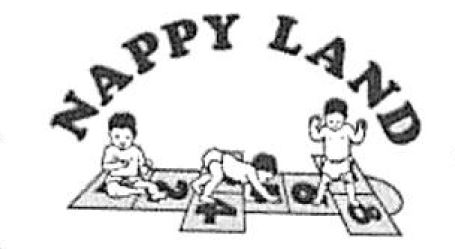
The registered owner is National Australian Nappies. Subject to Part 3 of the Trade Marks Act, s 20(1)(a) confers upon the registered owner of a trade mark “the exclusive rights to use the trade mark…”.
36 The Applicants, it should also be noted, used in the business they carried on in New South Wales the following logo:
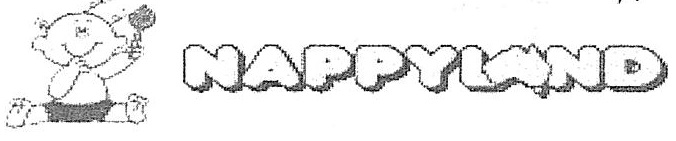
No argument was sought to be raised that the Applicants’ logo was an infringement of the Respondents’ trade mark.
37 The reliance sought to be placed by the Respondents upon their trade mark is misplaced.
38 The rights conferred upon the registered owner of a trade mark do not extend to a licence to engage in conduct which is misleading or deceptive or to engage in conduct which constitutes a passing off: cf. Mass Nutrition, Inc v Mass Nutrition Pty Ltd (Administrative Panel Decision) (WIPO Arbitration and Mediation Center, Case No DAU 2010-0002, 15 March 2010)
39 The preservation of the rights of a claimant to maintain an action for passing off as against the registered owner of a trade mark is made unambiguously clear by s 230 of the Trade Marks Act which provides as follows:
Passing off actions
(1) Except as provided in subsection (2), this Act does not affect the law relating to passing off.
(2) In an action for passing off arising out of the use by the defendant of a registered trade mark:
(a) of which he or she is the registered owner or an authorised user; and
(b) that is substantially identical with, or deceptively similar to, the trade mark of the plaintiff;
damages may not be awarded against the defendant if the defendant satisfies the court:
(c) that, at the time when the defendant began to use the trade mark, he or she was unaware, and had no reasonable means of finding out, that the trade mark of the plaintiff was in use; and
(d) that, when the defendant became aware of the existence and nature of the plaintiff's trade mark, he or she immediately ceased to use the trade mark in relation to the goods or services in relation to which it was used by the plaintiff.
40 Possession of a registered trade mark is, accordingly, no defence to an action for passing off where the elements of that tort are present: Arthur Martin (Sales) Ltd v Electra Mechanics (1975) Ltd (1986) 13 IPR 122. In New South Wales Dairy Corporation v Murray Goulburn Co-Operative Co Ltd (No 1) (1989) 86 ALR 549 at 570, Gummow J thus observed:
Nor does the existence of a registration protect the registered proprietor from a passing off suit brought by one who maintains the use by the registered proprietor to be an invasion of his common law rights…
This decision was affirmed on appeal: New South Wales Dairy Corporation v Murray Goulburn Co-operative Co Ltd (1990) 171 CLR 363.
41 Similarly, the registration of a trade mark does not affect the operation and reach of s 18 of the Australian Consumer Law: cf. Mass Nutrition, Inc, supra. There is nothing in the Trade Marks Act which expressly or implicitly seeks to confine the general application of s 18.
42 The registration of a trade mark, accordingly, confers no licence upon the registered owner of the trade mark to use that mark in a manner which is misleading or deceptive, or in a manner which passes off the goods of the registered owner as the goods of another.
Misleading or deceptive conduct & passing off
43 The rejection of the Applicants’ reliance upon the 1999 agreement as a basis for relief and the rejection of the generally expressed defence of the Respondents, nevertheless leaves open for resolution whether the Applicants have made out their claims founded upon either or both:
section 18 of the of the Australian Consumer Law; or
the common law tort of passing off.
Section 18, it is considered, presents the Applicants with a more certain foundation for the relief to be granted, particularly relief in the form of an injunction.
44 It is unnecessary for present purposes to discuss in any great detail the elements of the statutory cause of action for misleading or deceptive conduct or the common law tort of passing off. But some reference to general principles is nevertheless prudent. There is an overlap between these two causes of action.
45 Section 18 of the Australian Consumer Law, it is useful to recall, provides in relevant part as follows:
Misleading or deceptive conduct
(1) A person must not, in trade or commerce, engage in conduct that is misleading or deceptive or is likely to mislead or deceive.
….
Section 52 of the Trade Practices Act 1974 (Cth) (“Trade Practices Act”) (the predecessor provision of s 18 of the Australian Consumer Law) also employed the phrase “conduct that is misleading or deceptive or is likely to mislead or deceive”.
46 Conduct will be “misleading or deceptive” if it induces or is capable of inducing error.
47 The statutory proscription is not confined to conduct which is intended to mislead of deceive: Parkdale Custom Built Furniture Pty Ltd v Puxu Pty Ltd (1982) 149 CLR 191 at 197. When addressing the terms of the Trade Practices Act, Gibbs CJ there observed:
The words of s. 52 have been said to be clear and unambiguous … Nevertheless they are productive of considerable difficulty when it becomes necessary to apply them to the facts of particular cases. Like most general precepts framed in abstract terms, the section affords little practical guidance to those who seek to arrange their activities so that they will not offend against its provisions. It has been held that the section is not confined to conduct that is intended to mislead or deceive … There is nothing in the section that would confine it to conduct which was engaged in as a result of a failure to take reasonable care. A corporation which has acted honestly and reasonably may therefore nevertheless be rendered liable to be restrained by injunction, and to pay damages, if its conduct has in fact misled or deceived or is likely to mislead or deceive. The liability imposed by s. 52, in conjunction with ss. 80 and 82, is thus quite unrelated to fault and it need not involve any infringement of a right to a trade name, trade mark, copyright or design…
Similarly, in Yorke v Lucas (1985) 158 CLR 661 at 666, Mason ACJ, Wilson, Deane and Dawson JJ observed:
… It is, of course, established that contravention of that section does not require an intent to mislead or deceive and even though a corporation acts honestly and reasonably, it may nonetheless engage in conduct that is misleading or deceptive or is likely to mislead or deceive…
48 When addressing the phrase “likely to mislead or deceive”, Bowen CJ, Lockhart and Fitzgerald JJ in Global Sportsman Pty Ltd v Mirror Newspapers Pty Ltd (1984) 2 FCR 82 at 87 said:
… A contravention of s. 52(1) is established by conduct which is misleading or deceptive or which is likely to mislead or deceive. Conduct is likely to mislead or deceive if that is a "real or not remote chance or possibility regardless of whether it is less or more than fifty per cent": cf. Tillmanns Butcheries Pty Ltd v. Australasian Meat Industry Employees' Union (1979) 42 F.L.R. 331 at 346, per Deane J.; Sheen v. Fields Pty Ltd (1984) 58 A.L.J.R. 93. Evidence that an erroneous conclusion has been formed by reference to conduct is admissible to establish that the conduct was misleading or deceptive or likely to mislead or deceive; such evidence may be persuasive but it is not essential. Evidence of acts or omissions resulting from the erroneous belief may also be admissible but again is not essential. Section 52(1) is concerned with the effect or likely effect of conduct upon the minds of those by reference to whom the question of whether the conduct is or is likely to be misleading or deceptive falls to be tested. The test is objective and the court must determine the question for itself...
49 But the phrase, it has also been said, adds little to the section: Parkdale, supra, (1982) 149 CLR 191 at 198. Gibbs CJ there summarily stated the position as follows:
The words "likely to mislead or deceive", which were inserted by amendment in 1977, add little to the section; at most they make it clear that it is unnecessary to prove that the conduct in question actually deceived or misled anyone.
50 In contrast to the statutory proscription against “misleading or deceptive conduct”, the essence of the common law action in passing off is the protection of a claimant’s goodwill attaching to a business or commercial venture: Campomar Sociedad Limitada v Nike International Limited [2000] HCA 12 at [108], 202 CLR 45 at 88. Gleeson CJ, Gaudron, McHugh, Gummow, Kirby, Hayne and Callinan JJ there observed that “… passing-off, at least so far as concerns equitable relief, protects against injury to the goodwill built up by the activities of the plaintiff”. For present purposes it may be accepted that the elements of the modern law of passing off were summarised in Erven Warnink BV v J Townend & Sons (Hull) Ltd [1979] AC 731 at 742 by Diplock LJ as follows:
My Lords, AG Spalding & Bros v AW Gamage Ltd (1915) 84 LJ Ch 449; 32 RPC 273 and the later cases make it possible to identify five characteristics which must be present in order to create a valid cause of action for passing off: (1) a misrepresentation (2) made by a trader in the course of trade, (3) to prospective customers of his or ultimate consumers of goods or services supplied by him, (4) which is calculated to injure the business or goodwill of another trader (in the sense that this is a reasonably foreseeable consequence) and (5) which causes actual damage to a business or goodwill of the trader by whom the action is brought or (in a quia timet action) will probably do so.
His Lordship continued:
In seeking to formulate general propositions of English law, however, one must be particularly careful to beware of the logical fallacy of the undistributed middle. It does not follow that because all passing off actions can be shown to present these characteristics, all factual situations which present these characteristics give rise to a cause of action for passing off. True it is that their presence indicates what a moral code would censure as dishonest trading, based as it is upon deception of customers and consumers of a trader’s wares but in an economic system which has relied on competition to keep down prices and to improve products there may be practical reasons why it should have been the policy of the common law not to run the risk of hampering competition by providing civil remedies to every one competing in the market who has suffered damage to his business or goodwill in consequence of inaccurate statements of whatever kind that may be made by rival traders about their own wares. The market in which the action for passing off originated was no place for the mealy mouthed: advertisements are not on affidavit; exaggerated claims by a trader about the quality of his wares, assertions that they are better than those of his rivals even though he knows this to be untrue, have been permitted by the common law as venial “puffing” which gives no cause of action to a competitor even though he can show that he has suffered actual damage in his business as a result.
51 Lord Fraser of Tullybelton expressed perhaps a narrower statement of the cause of action: [1979] AC at 755–6. Lord Diplock’s statement as to the five “characteristics” of the cause of action for passing off has been adopted in Australia: Moorgate Tobacco Co Limited v Philip Morris Limited (No 2) (1984) 156 CLR 414 at 443–4 per Deane J; ConAgra Inc v McCain Foods (Aust) Pty Ltd (1992) 33 FCR 302 at 308–9 per Lockhart J; Osgaig Pty Ltd v Ajisen (Melbourne) Pty Ltd (2004) 213 ALR 153 at [83]–[85], per Weinberg J; Ward Group Pty Ltd v Brodie & Stone plc [2005] FCA 471 at [29]-[30], (2005) 143 FCR 479 at 487, per Merkel J. The “declarations of principle” of Diplock and Fraser LLJ were also accepted by the Privy Council on appeal from the Supreme Court of New South Wales in Cadbury Schweppes Pty Ltd v Pub Squash Co Pty Ltd (1980) 32 ALR 387 at 391-392; [1981] 1 All ER 213 at 217 as being of “general application”.
52 In summary form, there is a need to establish goodwill or reputation attaching to the relevant goods in the mind of the purchasing public, misrepresentation and damage or a likelihood of damage: Betta Foods Australia Pty Ltd v Betta Fruit Bars Pty Ltd (1998) 41 IPR 347 at 356–7 per Goldberg J. The misrepresentation relied upon need only be likely to lead the public to believe that the goods are those of the claimant – proof of actual deception is not required: Osgaig, supra at [85] per Weinberg J. There need not be any deliberate fraud or any intention on the part of a defendant to deceive: ConAgra, (1992) 33 FCR 302 at 344 per Lockhart J; Select Personnel Pty Ltd v Morgan & Banks Pty Ltd (1988) 12 IPR 167 at 170–171 per McLelland J. There is no requirement that a respondent has been fraudulent, malicious or negligent: R & C Products Pty Limited v S C Johnson & Sons Pty Limited (1993) 42 FCR 188 at 192 per Davies J. But the presence or lack of any conscious intent can be relevant as a matter of evidence in establishing whether there has been any unlawful passing off: Pacific Publications Pty Ltd v Next Publishing Pty Ltd [2005] FCA 625 at [88], per Tamberlin J.
53 The remedy for the tort of passing off is designed to compensate for damage caused by the invasion of a right of property in the business or goodwill of the claimant: Star Industrial Company Ltd v Yap Kwee Kor [1976] FSR 256 at 269; Pacific Publications, supra, at [25] per Tamberlin J. It is not a remedy for the invasion of a right of property in a mark, name or get-up which has been improperly used. Nor is it, unlike s 18 of the Australian Consumer Law, designed to protect consumers.
54 Registration of a domain name, it should be noted, may constitute misleading or deceptive conduct: eg CSR Ltd v Resource Capital Australia Pty Ltd [2003] FCA 279, 128 FCR 408; Macquarie Bank Ltd v Seagle [2008] FCA 1417, 79 IPR 72. And it is not uncommon in intellectual property cases for a plaintiff to contend that the conduct of a respondent in using a domain name or a business name constitutes, not only, misleading or deceptive conduct or the tort of passing off, but also a contravention of the Trade Marks Act: Bing! Software Pty Ltd v Bing Technologies Pty Ltd (No 1) [2008] FCA 1760, 79 IPR 454; SAP Australia Pty Ltd v Sapient Australia Pty Ltd [1999] FCA 1821, 169 ALR 1. See also: AMI Australia Holdings Pty Ltd v Bade Medical Institute (Aust) Pty Ltd (No 2) [2009] FCA 1437 at [65], 262 ALR 458 at 472. It was, presumably for this reason, that the Respondents in the present proceeding placed little (if any) reliance upon the mere fact of registration of their business names or their domain name.
55 No application was made by the Applicants seeking to challenge the registration of the trade mark, the business name or the domain name. Nor was any application made seeking, for example, any finding that those names were held on behalf of the Applicants. No argument was advanced that there had been an assignment to the Applicants of any right or entitlement to use the trade mark.
Nappyland v Nappy Land – the potential to mislead
56 The factual framework within which the Applicants sought relief pursuant to s 18 and that within which the Respondents opposed relief was vague.
57 The onus, of course, remained upon the Applicants: Trade Practices Commission v Vaponordic (Aust) Pty Ltd (1975) 6 ALR 248 at 251 per Spicer CJ (Joske and Evatt JJ agreeing).
58 Little hesitation, however, is expressed in concluding that the Applicants have discharged that onus and that the conduct of the Respondents in both their use of:
the phrase “Nappy Land”; and
their use of the domain name
has both:
the potential to mislead persons; and has
in fact misled persons.
59 The potential for consumers to be misled, it is considered, is “real [and] not remote”: Global Sportsman, supra. The conclusion does not require or depend upon any finding of any intention on the part of the Respondents to mislead or deceive: Parkdale, supra; Yorke v Lucas, supra. That conclusion is founded upon a number of facts.
60 First, any objective consideration of the phrase in written form “Nappy Land” and the single term of “Nappyland” is such that the two are sufficiently similar so as to be susceptible of causing confusion and likely to mislead or deceive. The fact that the Respondents employed two words, namely “Nappy” and “Land”, and the fact that the Applicants substituted a map of the Australian continent for the letter “a” in “land” is not sufficient to avoid the prospect of people being misled.
61 Second, there is some evidence – albeit limited – of some of the customers of the Applicants in fact being misled. There is also the evidence adduced by the Respondents that some potential customers who had received an e-mail copy of the price list brochure asking whether the Respondents are the “same business as Russell?”. Mr Ho maintained that such inquiries, however, were “very few”.
62 Third, the potential for people to be misled is only increased when attention is focused – not upon the written form of words but – upon any potential distinction that may be drawn when the terms “Nappy Land” and “Nappyland” are used in oral communications.
63 Fourth, the manner in which the Respondents responded to telephone inquiries was also not as clear cut as Mr Ho initially presented in his affidavit evidence. That evidence (at para [28] of his affidavit of 28 November 2013) was that he had trained his customer relations officers “to answer telephone calls by saying ‘National Australian Nappies’, as opposed to ‘Nappy Land’…”. But when taken to his affidavit evidence, the following exchange occurred with his cross-examiner:
A moment ago you told – a minute ago you told his Honour that the reason you told your customer relations officers to say that was because you knew that people would be confused and think that your business was Russell’s business. That’s your evidence, isn’t it?---Yes.
Yes. I want to suggest to you, Mr Ho, that in fact you never said that to your customer relations staff and indeed, they still say when they answer the phone “Hello. This is Nappyland and Australian Continence”?---Yes.
That’s what they say?---Yes. Because we train in Victoria for – we have 15 outlet use – we usually have 15 outlet. And we always trading as Nappyland and Australian [Continence] all over Victoria and region too, so they – when they pick up the phone they will say, they don’t know where the phone call come from.
I see. So if people ring up your 1800 number - - -?---Yes.
--- the person who’s on the other end of the phone will answer “Hello” or something like this “Hello. Australian” – sorry – “Nappyland and Australian Continence”?---Yes.
Thank you. Well, given what you’ve just said to his Honour, the evidence in paragraph 28 is wrong, isn’t it?---We do instruct them to say National Australia Nappy but they always keep saying Nappyland.
So your staff do something else, do they? You tell them what to say and they do something different?---We got used to it in last 16 year.
Given the national nature of the Respondents’ business and an inability to know the source of any particular incoming telephone inquiry, and given the long-established manner in which the Respondents’ staff had previously answered telephone inquiries, such evidence was hardly surprising. Whatever subtlety or difference that may be discernible when the two words “Nappy Land” may be written as opposed to the single word “Nappyland”, any such subtlety evaporates when the expression is used in speech.
64 Finally, the potential for people to be misled is only increased when consideration is given to the nature of the products being supplied by both the Applicants and the Respondents. It was hardly surprising that those potential customers of the two businesses overlapped to a considerable extent.
65 Notwithstanding the vague nature of the Applicants’ evidence, it is concluded that they have discharged the onus of establishing that the conduct of the Respondents is either “misleading” or “likely to mislead” for the purposes of s 18 of the Australian Consumer Law. Notwithstanding Mr Ho’s evidence that “very few” persons made the inquiries as to whether the Respondents’ business was the same as that of the Applicants, it is concluded that the potential for the conduct to mislead or deceive cannot be so confined: cf. The Change Group International PLC v City Exchange Mart Pty Ltd [2013] FCA 1048 at [194] per Edmonds J.
Passing off – the goodwill of the Applicants
66 Given the conclusion that the Applicants have established that the conduct of the Respondents falls within the reach of s 18 of the Australian Consumer Law, it is unnecessary to reach any firm conclusion as to whether or not they would also have been successful in their reliance upon the common law tort of passing off.
67 It is nevertheless prudent to set forth, albeit in summary form, some conclusions of fact as to why reliance upon that cause of action would also have been successful.
68 Had it been necessary to do so, it would have been further concluded that the Applicants had made out the elements of the tort of passing off. Using the list of elements identified by Diplock LJ in Erven Warnink, supra, it would have been concluded that:
the manner in which the Respondents targeted potential customers in their “proactive marketing process” constituted a representation that the business was aligned with that of the Applicants and hence constituted a misrepresentation;
the misrepresentation was made in the course of trade;
the misrepresentation was made to prospective customers of the Applicants;
a reasonably foreseeable consequence of the misrepresentation was injury to the business of the Applicants; and
the misrepresentation would probably cause damage to the business of the Applicants.
Although it is concluded that the Applicants have to-date suffered some limited loss or damage to their business, little hesitation is expressed in further concluding that greater damage will in all probability be suffered unless the conduct of the Respondents is restrained.
Loss or damage – the onus on a claimant and the limitations upon guesswork
69 As a matter of general principle, it is the party who claims relief in the form of damages who bears the onus of proof on the balance of probabilities in respect to both the fact that damage has been suffered and the quantum of that damage: cf. The Commonwealth of Australia v Amann Aviation Pty Limited (1991) 174 CLR 64 at 80 per Mason CJ and Dawson J; Placer (Granny Smith) Pty Ltd v Thiess Contractors Pty Ltd [2003] HCA 10 at [37], 196 ALR 257 at 266 per Hayne J.
70 And the manner in which that onus is discharged necessarily has to recognise that different fact situations may give rise to different difficulties. But a claimant must do the best it can to place the relevant facts before a Court such that the process of quantifying damages remains an exercise of judicial – rather than arbitrary – power. The onus forever remains on the party claiming damages to prove the quantum of damages “with as much precision as the subject matter reasonably permitted”: Placer (Granny Smith), supra, [2003]. Hayne J there relevantly summarised the position as follows:
[37] Placer undoubtedly bore the burden of proving not only that it had suffered damage as a result of Thiess Contractors’ breach of contract, but also the amount of the loss it had sustained. It goes without saying that it had to prove these matters on the balance of probabilities and with as much precision as the subject matter reasonably permitted.
[38] It may be that, in at least some cases, it is necessary or desirable to distinguish between a case where a plaintiff cannot adduce precise evidence of what has been lost and a case where, although apparently able to do so, the plaintiff has not adduced such evidence. In the former kind of case it may be that estimation, if not guesswork, may be necessary in assessing the damages to be allowed. References to mere difficulty in estimating damages not relieving a court from the responsibility of estimating them as best it can, may find their most apt application in cases of the former rather than the latter kind. …
71 Difficulty in quantifying loss or damage does not preclude an order for the payment of monies: The Commonwealth of Australia v Amann Aviation Pty Limited (1991) 174 CLR 64 at 83 per Mason CJ and Dawson J. In the context of addressing difficulties in quantifying damages for breach of contract, Gaudron J there observed that a “contracting party who is unable to establish the precise measure of his or her loss is not thereby deprived of his or her right to recover damages”: (1991) 174 CLR at 153. Her Honour went on to observe that in “some cases a court will make the best estimate it can”. The Court can, in an appropriate case, engage in a process of “guess work” in quantifying loss or damage: Enzed Holdings Ltd v Wynthea Pty Ltd (1984) 57 ALR 167 at 183. Sheppard, Morling and Wilcox JJ there observed:
… The principle is clear. If the court finds damage has occurred it must do its best to quantify the loss even if a degree of speculation and guess work is involved. Furthermore, if actual damage is suffered, the award must be for more than nominal damages. We should add that we can see no reason why this principle should not apply in cases under the Trade Practices Act as well as in cases at common law. We emphasize, however, that the principle applies only when the court finds that loss or damage has occurred. It is not enough for a plaintiff merely to show wrongful conduct by the defendant.
See also: FAI General Insurance Co Limited v RAIA Insurance Brokers Limited (1992) 108 ALR 479 at 508-509 per Foster J.
72 But the latitude which permits an element of “guess work” in the quantification of damages does not extend so far as to permit “an exercise in imagination”: Air Express Limited v Ansett Transport Industries (Operations) Pty Ltd (1981) 146 CLR 249 at 284 per Aickin J. After having referred (inter alia) to the decision of Goldberg J in Adidas-Salomon AG v Turner [2003] FCA 421, 58 IPR 66 and the decision in Enzed, French J (as his Honour then was) in Paramount Pictures Corporation v Hasluck [2006] FCA 1431, 70 IPR 293 at 302 similarly noted:
[42] I do not consider that it is a consequence of the principle enunciated in Adidas or Enzed that, where a basis for quantification of loss is entirely within the knowledge of the applicant and no evidence is adduced as to the quantum, the court should make its own uninformed assessment of a royalty or licence fee that the applicant might have foregone by reason of loss of sales. Speculation and even guesswork may have a role to play where the relevant evidence is inaccessible to the applicant. That is particularly so where the inadequacy of the evidence is caused by a recalcitrant or uncooperative respondent or one who has kept no adequate records of dealings. In saying so, of course, it must be recognised that an applicant may apply to the court for an order for the examination of the respondent in aid of the assessment of damages…
Damages – the facts
73 The evidence as to the loss or damage suffered by the Applicants by reason of the conduct of the Respondents was less than satisfactory. The evidence was such that a conclusion could satisfactorily be reached that the Applicants have to-date suffered limited loss or damage by reason of the conduct of the Respondents; but considerable difficulty has been experienced in quantifying that loss or damage. No deficiency in the evidence as to quantum of damages in the present case can be laid at the feet of the Respondents.
74 The conclusion that some limited loss or damage has been occasioned by the conduct of the Respondents has been reached by reference to:
the nature and character of the conduct pursued by the Respondents – that conduct necessarily involving the use of names which proved, even during the course of the hearing, difficult to distinguish; and
the fact that there was some evidence as customers being misled.
75 The difficulty presented in respect to the quantification of that loss or damage is that the Applicants have, with respect, failed to place before the Court any reliable factual material upon which any certain – or relatively certain – process of quantification can proceed. And the present case is not one which presented the Applicants with any peculiar difficulties of proof. Some difficulties may have been experienced when the hearing was listed at a date earlier than may otherwise have been anticipated by the Applicants. But no application was then made to have any hearing as to liability heard in advance of any hearing as to the quantum of damages. Nor at the conclusion of the hearing when attention was focussed upon the dearth of evidence as to the quantum of damages was any application then made to re-open. It may well be that the primary focus of the Applicants throughout the proceeding was upon obtaining injunctive relief. Whatever the explanation, the Applicants were at all times content to have any award of damages assessed by reference to the limited evidence that was adduced.
76 The primary manner in which the Applicants sought to quantify their damages may be raised to be rejected. Relying upon a Profit & Loss Statement for CI JI Family for the 2011-2012 financial year disclosing a net profit of approximately $208,201.45, the written Supplementary Submissions filed on behalf of the Applicants sought:
$624,000 – in the event that no injunctive relief was granted, that sum being triple the amount of the net profit and intended to compensate the Applicants “for the likely erosion over a long period of their longstanding business”; or
$208,000 – in the event that injunctive relief was granted, that sum being said “to compensate the applicants for the erosion of the business thus far and the ongoing impact of that erosion…”.
Neither of these quantifications, however, is considered to be satisfactory. Reliance upon the net profit of CI JI Family for the 2011-2012 financial year is, it is considered, misplaced in that:
it was the profit for the wrong year – the conduct primarily complained of commencing in late 2013, not 2011-2012; and
any quantification of net profit does not necessarily provide any reliable guide as to the quantum of loss or damage.
77 An alternative source of evidence as to the quantum of damages suffered may, however, be potentially found in invoices of transactions as between the Respondents and customers of the Applicants. The inference sought to be drawn, presumably, was that it was the misleading or deceptive nature of the conduct of the Respondents, or their conduct in passing off their goods as those of the Applicants, that caused each of these customers to mistakenly deal with the Respondents. But why that inference should be drawn in some or all cases remained unexplained. It was necessary for the Applicants to prove what proportion of their customers were misled by the conduct of the Respondents. A Court is not entitled to assume, for example, that every one of the sales secured by the Respondents was due to the wrongful conduct of the Respondents: cf. Draper v Trist [1939] 3 All ER 513 at 520-521 per Sir Wilfrid Greene MR. Although it may be safe to assume that at least some of those transactions were caused by the conduct of the Respondents, the following difficulties remain in the path of the Applicants in too readily drawing an inference as to quantum:
the absence of any evidence as to (for example) whether the particular features or quality or suitability of the Respondents’ products made them preferable to the products of the Applicants and the absence of any evidence as to any inherent superiority of the product of one supplier as opposed to another; and
the absence of any evidence as to whether there was substitutability of the products of the Applicants and the Respondents, or the products of other competitors, such that customers chose for their own idiosyncratic reasons different products from different suppliers.
78 Notwithstanding the difficulties presented, being largely difficulties of the Applicants’ own making, it is concluded that an award of damages in the sum of $25,000 is appropriate. Such an amount, it is concluded, remains within the bounds of accepted “guess work” rather than an exercise in “imagination” as to what damages could have been proved had the Applicants pursued a different forensic course. The sum of $25,000 represents the outer limit of where “guess work” ends; any sum greater than that would involve a considerable voyage into the “imagination” of what may have been susceptible of proof had further evidence been adduced.
79 The Applicants have failed to discharge the onus of establishing that any greater award is appropriate. A party who fails to adduce evidence supporting any greater quantification of damages cannot ask the Court to make “approximations” more favourable to itself and to the prejudice of an opponent: cf. Murrihy v Betezy.com.au Pty Ltd [2013] FCA 908 at [81] per Jessup J.
Conclusions
80 The Applicants have established that the use by the Respondents in New South Wales in respect to the sale of nappies and related products of:
the words “Nappy Land”; and
their domain name www.nappyland.com.au
constitutes:
misleading or deceptive conduct; and
the common law tort of passing off.
The Applicants have also established that the conduct of the Respondents has caused loss or damage to their business. An appropriately crafted injunction should also be granted.
81 The parties are to bring in Short Minutes of Orders to give effect to these reasons within seven days. There is no reason why those orders should not include an order that the Respondents are to pay the costs of the Applicants.
THE ORDERS OF THE COURT ARE:
1. The parties are to bring in Short Minutes of Orders to give effect to these reasons within seven days.
|
I certify that the preceding eighty one (81) numbered paragraphs are a true copy of the Reasons for Judgment herein of the Honourable Justice Flick. |
Associate:
Dated: 14 February 2014


