

FEDERAL COURT OF AUSTRALIA
Reckitt Benckiser Healthcare (UK) Ltd v GlaxoSmithKline Australia Pty Ltd
[2013] FCA 583
| IN THE FEDERAL COURT OF AUSTRALIA | |
| DATE OF ORDER: | |
| WHERE MADE: |
THE COURT ORDERS THAT:
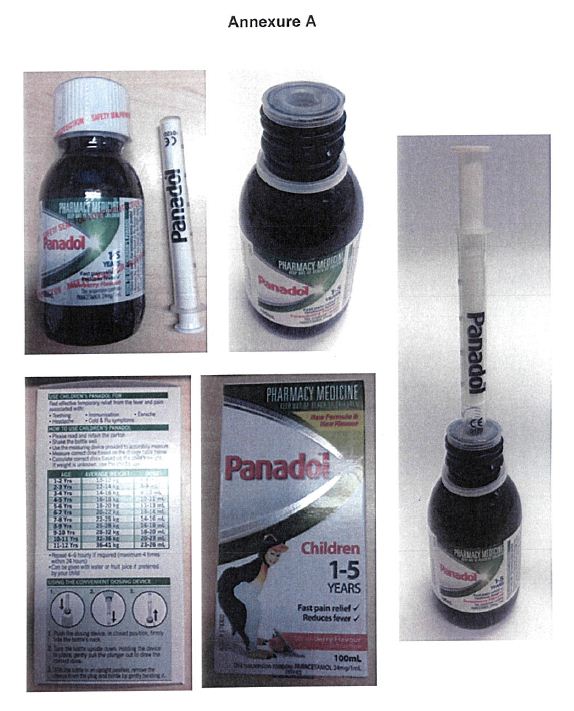
In these orders, Product means Children’s Panadol 1-5 years (of any flavour or size) incorporating a liquid dispensing apparatus, comprising a bottle, a bottle neck liner and a flat-nosed syringe as depicted in Annexure A and in Exhibit SMW-14.
UPON the applicants by their counsel undertaking:
(a) to submit to such order (if any) as the Court may consider to be just for the payment of compensation, to be assessed by the Court or as it may direct, to any person, whether or not a party, adversely affected by the operation of the interlocutory order or undertaking or any continuation (with or without variation) thereof; and
(b) to pay the compensation referred to in (a) to the person there referred to.
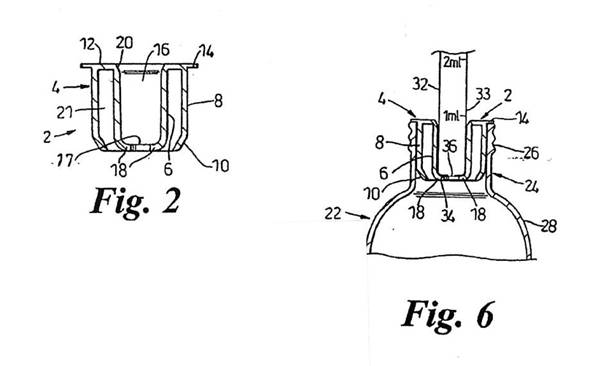
1. Pending the determination of the proceeding or further order, the Respondent be restrained, whether by itself, its directors, officers, servants or agents or otherwise, from engaging in the following acts within the patent area (as defined in Schedule 1 to the Patents Act 1990 (Cth)), without the licence or authority of the Applicants or either of them:
(a) making, hiring, selling or otherwise disposing of, or offering to make, sell, hire or otherwise dispose of, use or import or keep for the purpose of doing any of the foregoing, the Product.
2. The costs of the interlocutory application filed on 2 May 2013 be reserved.
3. The proceedings stand over for directions on 14 June 2013 at 9:30am.
Note: Entry of orders is dealt with in Rule 39.32 of the Federal Court Rules 2011.
| NEW SOUTH WALES DISTRICT REGISTRY | |
| GENERAL DIVISION | NSD 734 of 2013 |
| BETWEEN: | RECKITT BENCKISER HEALTHCARE (UK) LIMITED First Applicant RECKITT BENCKISER (AUSTRALIA) PTY LIMITED ABN 17 003 2274 655 Second Applicant |
| AND: | GLAXOSMITHKLINE AUSTRALIA PTY LTD ABN 47 100 162 481 Respondent |
| JUDGE: | RARES J |
| DATE: | 28 MAY 2013 |
| PLACE: | SYDNEY |
REASONS FOR JUDGMENT
(REVISED FROM THE TRANSCRIPT)
1 Reckitt Benckiser Healthcare (UK) Limited is the registered owner of Australian patent 2003283537, and its Australian related body corporate, Reckitt Benckiser (Australia) Pty Limited, is the exclusive licensee of the patent (collectively Reckitt). The patent claims a monopoly for a liquid dispensing apparatus comprising three key parts: a bottle, a bottle neck liner, and a flat-nosed syringe. Since about 2004, Reckitt has deployed the patent in producing a convenient dosing system for the administration of over-the-counter pain and fever relieving medicine for children, the active ingredient in which is ibuprofen. That medicine is marketed under the brand name “Nurofen for Children”, in three age ranges of: Baby 3+ months, 1-5 years, 5-12 years.
2 GlaxoSmithKline Australia Pty Ltd markets the leading selling brand of over-the-counter pain and fever relieving medicine in Australia under the brand name of Panadol. Its active ingredient is paracetamol. Panadol has been available in Australia since 1954. In March 2013, Glaxo began selling a new range of Panadol for children. That range included the product called “Panadol for children 1-5 years”, which included a convenient dosing system that Reckitt alleges infringes the patent.
3 Glaxo intends to launch a marketing campaign for the new Panadol for children 1 to 5 years with the new dosing system on 3 June 2013. Reckitt seek an interlocutory injunction to restrain Glaxo from doing so in a way that they allege infringes the patent.
The issues
4 Glaxo denies that its dosing system does infringe the patent, however Glaxo also argues that the patent is invalid on a number of bases under s 138(3) of the Patents Act 1990 (Cth). Relevantly, on the present application Glaxo contends that the patent is invalid because, first, Reckitt UK is not entitled to the patent, and, secondly, the invention lacks novelty.
5 On 27 May 2013, I refused to allow Glaxo to rely, for the purposes of this application, on an argument that the patent was invalid because it lacked an inventive step. That was because Glaxo first sought to rely on this argument only when it served its written submissions on Friday 24 May 2013. Glaxo had not previously identified that ground as a basis for its opposition to the grant of interlocutory relief. I considered that, first, Reckitt was prejudiced by the late raising of this ground and, secondly, Glaxo had had a proper opportunity to identify the grounds on which it would contest the present interlocutory application and should not now be permitted to depart from them, having regard to the overarching purpose in s 37M of the Federal Court of Australia Act 1976 (Cth), and Aon Risk Services Australia Limited v Australian National University (2009) 239 CLR 175 at 213 [97]-[98], 214-215 [102]-[103] and 217-218 [111]-[114] per Gummow, Hayne, Crennan, Kiefel and Bell JJ.
The statutory scheme
6 Relevantly, following amendments that came into force on 15 April 2013, which the parties agree apply here, the Act provides as follows:
“22A Validity not affected by who patent is granted to
A patent is not invalid merely because:
(a) the patent, or a share in the patent, was granted to a person who was not entitled to it; or
(b) the patent, or a share in the patent, was not granted to a person who was entitled to it.
…
40 Specifications
(2) A complete specification must:
(a) disclose the invention in a manner which is clear enough and complete enough for the invention to be performed by a person skilled in the relevant art; and
(aa) disclose the best method known to the applicant of performing the invention; and
(b) where it relates to an application for a standard patent—end with a claim or claims defining the invention; and
(c) where it relates to an application for an innovation patent—end with at least one and no more than 5 claims defining the invention.
(3) The claim or claims must be clear and succinct and supported by matter disclosed in the specification.
…
116 Interpretation of amended specifications
The Commissioner or a court may, in interpreting a complete specification as amended, refer to the specification without amendment.
…
121 Counter-claim for revocation of patent
(1) A defendant in infringement proceedings may apply by way of counter-claim in the proceedings for the revocation of the patent.
(2) The provisions of this Act relating to proceedings for the revocation of a patent apply, with the necessary changes, to a counter-claim.
...
138 Revocation of patents in other circumstances
(3) After hearing the application, the court may, by order, revoke the patent, either wholly or so far as it relates to a claim, on one or more of the following grounds, but on no other ground:
(a) that the patentee is not entitled to the patent;
(b) that the invention is not a patentable invention;
...
(f) that the specification does not comply with subsection 40(2) or (3).
(4) A court must not make an order under subsection (3) on the ground that the patentee is not entitled to the patent unless the court is satisfied that, in all the circumstances, it is just and equitable to do so.”
The patent
7 The priority date disclosed in the patent was 12 November 2002. The patent application was filed on 10 October 2003 and published on 3 June 2004. The specification discussed the desirability of developing a liquid dispensing apparatus that employed a flat-nosed syringe to deliver a liquid contained in a bottle and that minimised mess, potential contamination, and spillage as well as allowing a user to pour contents from the bottle as an alternative to using the syringe.
8 The summary of the invention included definitions of the expressions “syringe”, “flat-nosed syringe” and “sealingly”. The latter expression was said to mean that under conditions of normal use, liquid could not flow or leak between the respective parts, that is, between, first, the bottle neck and the bottle neck liner, and, secondly, the bore in the bottle neck liner and a syringe barrel that was inserted in it. The summary then described the preferred embodiment of the invention, and explained the role of what was said to be the “flared portion”.
9 In broad terms, the way in which the specification explained that the invention worked is as follows: A flat-nosed syringe, that is one without a needle or any other protrusion at the end in which liquid is received into its barrel, is inserted into a plastic liner that fits on top of a bottle containing liquid. The syringe, when inserted, creates in effect, a sealed arrangement so that when the plunger inside the barrel is drawn upwards, liquid will enter into the barrel of syringe. The amount of the liquid drawn up can be seen by the reference to measurements on the outside of the barrel. The bottle neck liner is, in effect, an insert that fits inside the open end of the bottle. The liner has a protruding top that runs around the upper surface rim of the bottle opening. Within that insert is another recessed bore or barrel into which the syringe fits neatly. The syringe meets an aperture, called an “inward step” in the patent, through which liquid can either be drawn into the syringe or, if no syringe is used simply poured out of the bottle.
10 Robert Tiller, an industrial design consultant, gave unchallenged expert evidence. He described the aperture through which the syringe is inserted as a radius, being a bevelled or rounded portion on the upper surface of the bottle neck liner through which the syringe enters. This radius has a slightly wider actual radius than the syringe itself. This enables the syringe to be fitted more easily into the top of the aperture on its insertion than if that upper part of the aperture was the exact same size as its lower part. That lower part is intended to produce a tight fit for the syringe and so create a seal between the two. The radius is either itself, or part of, what the patent called the “flared portion”. In the descriptive part of the specification the inventors say:
“The flared portion provides a lead-in into the through-bore in order to aid engagement of the syringe barrel into the through-bore.”
11 The other part of the bottle neck liner, which is important in this arrangement, is the inward step. This is the part which is slightly below the top of the bottle at which the syringe will be stopped from going further into the bottle, and through which, first, a seal is created between the syringe and the liquid in the bottle and, secondly, liquid will pass either when the bottle is used to pour the liquid, or when the syringe is used to draw it out of the bottle. The specification also discussed a preferred embodiment of the invention which had a taper from, effectively, the radius to lead into the bottle neck liner. Figures 2 and 6 of the drawings shown below, that form part of the specification, show the way in which the flared portion and insertion of the syringe can be understood to work.
12 The item marked 20 in figure 2 is the left-hand side of the flared portion or radius. The specification described the flared portion in the drawings as follows: “At its upper end, the sleeve is inwardly bevelled at 20.” Figure 6 shows, in cross-section, the bottle neck liner fitted on the bottle neck and the syringe inserted and sealed against the inward step.
13 Critically, claim 1 in the patent is as follows:
“A liquid dispensing apparatus comprising a bottle, a bottle neck liner and a flat-nosed syringe having a plunger and a barrel, the barrel terminating at its distal end in a generally flat face having a diameter corresponding to the diameter of the syringe barrel and being perpendicular to the longitudinal axis of the barrel, the bottle having a bottle neck in which is located the bottle neck liner having a cylindrical body sealingly engaged inside the bottle neck such that liquid cannot flow between the bottle neck liner and the bottle neck, the bottle neck liner comprising a sleeve comprising at its lower end an inward step located within the bottle neck, an aperture being defined inwardly of the inward step, wherein the cylindrical body and the sleeve are connected together with a web of material only at the upper end of the cylindrical body and of the sleeve, wherein the sleeve is formed with a flared portion at its upper end into which the distal end of the syringe barrel passes; wherein when the syringe barrel is inserted into the sleeve the inward step prevents the syringe barrel from protruding past the step and liquid cannot flow between the sleeve and the barrel, but can leave the bottle only via the aperture and thence the syringe.”
Background
14 Most of the evidence was either documentary or given on information and belief. Accordingly, the findings that I make in these reasons have been made on materials that may well change or develop significantly by the time of final hearing. The parties are members of large multinational pharmaceutical groups well resourced and experienced in the importance of patent and intellectual property rights in the conduct of their businesses.
15 In 1992, Belgian a company called Hubert De Backer NV (HDB) prepared a design for an open plug (the 1992 plug). That appears to show a slight flare at the top end of the plug and, what Glaxo asserted, was an inner step. Glaxo contended that this design anticipated the design was the subject of the patent. However, the evidence of a drawing of this open plug and what Glaxo asserted was a series of three photographs that record either the embodiment of HDB’s 1992 plug’s design or a further development by HDB do not clearly show that there was an inner step or otherwise identify where this was. There was no evidence that this open plug or design was ever used or shown to anyone outside HDB or about what its precise purpose was.
16 Mr Tiller opined that the 1992 plug was a bottle cap and not a bottle neck insert. That was because the photographs depicted the plug engaging on the outside of the bottle. He said, and I find, that it is fundamentally different in design to the bottle neck liner in the patent. First, the patented invention envisages that the bottle neck liner will be placed inside the neck to seal the bottle. The 1992 plug has smooth sides that run down the outside of the top of the bottle for some distance, unlike the bottle neck liner in the patent, which is secured to the neck by a plastic barrel that fits inside the top of the bottle and has a flange that runs around the rim of the lip of the bottle. Mr Tiller also opined that the 1992 plug, as shown in the photographs, did not appear to have an inward step or bottom at the end of the bottle cap, but rather the barrel appeared to be a bore of constant diameter. That appears to be the case.
17 Glaxo obtained the evidence of the 1992 plug and a number of other documents from HDB during the course of the preparation of its evidence. However, around 14 May 2013, HDB ceased co-operating with Glaxo. I infer that was because Reckitt drew HDB’s attention to the agreement HDB had made with Boots Healthcare International Limited on 22 March 2006 (the Boots agreement). Boots assigned the patent to its new parent on 27 March 2006, when it was taken over by Reckitt.
18 The Boots agreement is significant. It provided in its recitals that:
Boots and HDB had worked together to produce a dispensing system for Boots’ product, Nurofen for Children, in oral liquid form (Recital A);
Boots desired that the dispensing system consist of a plug and a flat-nosed syringe (Recital B);
HDB already had a plug design for use with flat-nosed oral dosing syringes (Recital C). (However, that particular design, which formed an attachment to the Boots agreement, showed that the plug was of a different kind to the one in the patent.);
Boots had determined that HDB’s existing plug design was not fully suitable for its purpose and had proposed modifications to design a plug that was less prone to the collection of liquid medicine. Those modifications were the provision of, first, a connecting wall between the upper ends of the outer wall and the inner sleeve of the plug and, secondly, a flared profile to the upper region of the inner sleeve with (Recital D);
Boots had filed a patent application to protect its modified plug that had been published in the United States of America, Europe and Australia (in the original patent application here) (Recital E);
HDB had not realised that Boots’ plug was protectable or that Boots was in fact seeking patent protection and that, acting in good faith, HDB had developed further plugs different in design from Boots’ plug, but using similar principles (Recital G).
19 Clauses 1.1, 1.2 and 1.5 provided:
“1. Patent Applications
1.1 [Boots] may progress the Patent Applications provided that the claims thereof are limited to the specific invention made by employees of [Boots].
1.2 [Boots] will revise the claims thereof to cover only embodiments of plug having a connection between the outer wall and the inner sleeve at their upper ends, and with the inner sleeve having a flared upper region. Revised claim 1 will have the wording of Attachment 7, or wording of equivalent meaning, or narrower wording, if required by a Patent Office. No other claim in any of the Patent Application will have any broader meaning.
…
1.5 HBD will not contest the ownership, validity, inventorship or any other issues relating to the [Boots] Patent Applications or any patents granted therefrom.”
20 The Boots agreement also provided that HDB promised not to supply the Boots’ plug to any other customer for any purpose, but that HDB was able to exploit its further developed plugs and any other product outside the field of paediatric analgesics (cll 2.1, 2.2, 2.5). The Boots agreement was signed by two of the three personnel whom Glaxo alleged were the inventors of the invention the subject of the patent, namely, Jan De Backer senior and Jan De Backer junior. Attachment 2 to the agreement recorded a design that was, in substance, that used for the bottle neck liner in the development of the invention.
21 In the late 1990s, Boots had embarked on a project called “Project Valencia” to produce a more efficient dosage system for children’s medicine. The inventors named in the patent were Anne Dallison and her assistant, Shaun Harrison. At that time, they were employed by Boots in its research and development department. Ms Dallison’s evidence, on information and belief, was that she and Mr Harrison made the invention in the course of their carrying out their duties as Boots’ employees. She had a Diploma in Packaging and over 20 years experience in packaging development, and was in charge of the project. She had been briefed by the Boots’ marketing team that they did not want a traditional syringe with a nozzle. That was because children associated such syringes with injections. Hence her brief sought to develop a dosing system that used a flat-nosed syringe and a bottle neck insert. The evidence is that she came into contact with HDB in 1999 as a potential supplier of the dispensing apparatus to be developed under Project Valencia. That was after HDB had been identified as a manufacturer of flat-nosed syringes with the necessary CE approvals to manufacture the syringe and bottleneck insert.
22 According to the evidence on information and belief from Ms Dallison, she and Mr Harrison came up with various ideas. These included having a plug insert that could be fitted into the neck of a bottle with a flared portion at the upper end of the bottle neck insert that could be used in combination with the features of the dispensing apparatus as described in the patent. She said that HDB worked closely with her and Mr Harrison to make the new apparatus according to instructions provided by her and Mr Harrison for use in the Nurofen for Children range of products. The project took about 24 months to complete and required a significant input from a number of business divisions within Boots including its marketing, packaging and research, and development divisions.
23 Ms Dallison and Mr Harrison each signed inventors’ acknowledgements in late October 2003 in support of the patent application. Subsequently on 10 May 2005, they each signed a declaration and power of attorney in support of the patent application declaring that they were the original first and joint inventors of the invention the subject of the patent.
24 Paul Leung, a senior executive of a related company of Glaxo, collected evidence on information and belief from HDB’s employees immediately prior to HDB ceasing to co-operate. Mr Leung said that Mr De Backer senior believed that he was the HDB employee involved in the design process with Boots. Mr De Backer did not understand Ms Dallison to be a technical person on the project team. He said that HDB had engaged an agent in England, Gareth Pearce, to represent it in its dealings with Boots. Mr Leung collected a number of items of correspondence and drawings from HDB which illustrate the development of the project. Those items include customer visit reports prepared by Mr Pearce.
25 In my opinion, those documents do not demonstrate one way or the other that any particular person had any identifiable role in the creation of the invention, other than that both parties were involved in its development. It is not necessary to analyse those documents in any detail. The fact is that the Boots agreement is prima facie evidence of what it identified and stated. The other material is ambiguous and does not lead to any clear identification of who may or may not have been the true inventor. I accept that that material will leave open to Glaxo the opportunity, at the trial, to seek to prove, on properly admissible evidence, that the acknowledgement by HDB in the Boots agreement that Boots was entitled to the intellectual property rights in the invention is wrong because one or other of Mr De Backer senior or junior, or Mr Pearce, was the true inventor. But even on the present evidence on information of belief, none of those persons said that he was, or they were, the inventor(s).
26 Given the commercial importance to HDB, and the potential for it to oppose Boots’ attempt to patent the invention, the Boots agreement appears to be telling evidence against Glaxo. I am satisfied that Reckitt has established a sufficiently strong prima facie case, for the purposes of interlocutory relief, that its (or Boots’) employees, Ms Dallison and Mr Harrison, were the inventors. Corporations do not usually give away intellectual property rights of this kind lightly, particularly where, as was the case here, HDB had been in one way or another apparently exploiting rights in relation to the invention that Boots asserted were its.
27 On the other hand, the Boots agreement clearly had a further commercial purpose. That was to protect HDB from any claim that Boots might seek to assert of intellectual property rights of the kind in the more broad-brush claims made in the original wording of its patent application. Rather, the Boots agreement recorded the parties’ agreement that the rights that Boots was entitled to assert in its patent were to be limited to those that are now the subject of claim 1. The drafting of the present wording of claim 1 was broadly taken from attachment 7 to the Boots agreement. That formulation was narrower than the original wording of the claims in the patent.
28 In about 2001, Glaxo had begun investigating its own options for new dosing devices. By September 2002, Glaxo had launched in Australia a new baby Panadol preparation that had a syringe and bottle neck-plug dosing device. As events transpired, that dosing system had a defect. That was because the bottle neck insert system used to connect the syringe to the bottle constituted a potential choking hazard. In between June and July 2003, Glaxo withdrew that product from the market.
29 By 2004, Reckitt or its predecessor had begun marketing Nurofen for Children with the patented dosing system. In August 2004 Glaxo made a decision to develop a new range of Panadol with new flavours and new dosing devices including an easy-dose syringe, a dropper and a cup. It began investigating potential suppliers, and by 2006 had identified HDB as a potential supplier for the syringe and plug. Subsequently, Glaxo located an Italian company called, Bormioli Rocco SpA, as the supplier of a bottle neck liner or plug. Bormioli had obtained a patent for a locking lip design that was attractive to Glaxo as a means of preventing the bottle neck liner detaching from the bottle. In this design, that lip fitted over the top of the bottle’s sides to attach the bottle neck liner more securely to the bottle.
30 Market research prior to 2013 showed that users of the Panadol and Nurofen products for one to five year olds were satisfied with their respective different dosing systems. However, when users were familiar with both Panadol’s and Nurofen’s dosing systems, the latter was greatly preferred. This gave Reckitt a real advantage among the particular group of users who were familiar with both products for children in the one to five years age group. The two products were competitors and were largely substitutable, unless a child had an intolerance to an active, or other, ingredient used in one. Glaxo set out to address this issue with its new product the subject of the present claim for interlocutory relief.
31 Mr Tiller gave evidence about the state of the prior art and the understanding of a person familiar with it at the time of the application for the patent. Mr Tiller’s evidence was uncontested, however, Glaxo argued that it was not relevant to the issue of infringement for reasons that I will explain shortly. He referred to the concept of a flared portion which provided a lead-in for the syringe, described on page six of the patent. He also referred to the description of the outer surface taper on page eight of the patent, to which I have referred above. He said that in light of those descriptions in the patent it was clear to him what each of the features of claim 1 meant when also read with the definitions of syringe, flat-nosed syringe and sealingly.
32 Mr Tiller said that he had closely examined the product samples of the Panadol dispenser dosing system and that of the Nurofen system. He prepared a set of photographs on which he noted his observations and a chart in which he described his conclusions as to whether the features in claim 1 were present in the Panadol for children one to five years dosing system. Mr Tiller concluded that the features of claim 1 were all present in the Panadol dosing system. In arriving at that conclusion, he again relied on the context of the specification’s discussion of what “flared portion” was intended to convey in claim 1, albeit that it was not a term defined elsewhere in the specification. In the photographs and his table, Mr Tiller noted that the Panadol bottle neck liner had both a radius, in the sense that this was a bevelled entry into the bore into which the syringe would be introduced, and a sidewall that extended from that radius some distance into the bore before it narrowed so as to fit sealingly around the introduced syringe. He said that those features expanded the diameter of the sleeve and provided lead-in for the syringe. In his opinion both the radius and the wider side wall, either separately or in combination, constituted a flared portion. He said that those conclusions were consistent with his examination of the Panadol dosing system because, when he inserted the syringe into the opening in the bottle neck liner, it fell with relative ease into the desired position as a result of the radius (on the expanded portion of the sleeve wall) before engaging and reaching the inward step.
33 Both sides led evidence as to the balance of convenience, were the first element necessary to establish Reckitt’s entitlement to injunctive relief established, namely, that there was a sufficient prima facie case. Karyn Tomkins, a Glaxo marketing director for Australia and New Zealand, gave evidence of the difficulties Glaxo would experience if an interlocutory injunction were granted. She identified the importance of children’s Panadol for one to five year olds as a component of Glaxo’s range of three Panadol products for children. The range comprised Panadol products for children aged between, first, one and 12 months, secondly, one to five years, and, thirdly, five to 12 year olds.
34 Importantly, both the Panadol products for one to five year olds and five to 12 year olds, each contain dosing tables for all the ages between one to 12 years. However, the strengths in the respective preparations are different, so that the doses for younger children who had to use the five to 12 year old product would be smaller.
35 Ms Tomkins said that Glaxo had last manufactured its earlier version of the one to five year old Panadol products between October 2012 and January 2013, and that it had subsequently changed its manufacturing lines as it no longer intended to manufacture those products. She asserted that it was not commercially feasible to return to the old manufacturing lines, and that Glaxo held limited stocks of those superceded products which, as at 16 May 2013, she estimated to be about one month’s supply. She said that until notified by a letter from Reckitt’s solicitors dated and received on 22 April 2013, she was unaware that Reckitt claimed any patent over the dosage system.
36 Glaxo had a global patent consumer healthcare section that utilised patent attorneys and lawyers in the course of its operations. Those patent attorneys and lawyers ordinarily could engage in searches and research to ascertain whether a proposed new product, including its dosage system, might infringe patents. However, no such searches were ever done in respect of this dosage system. Rather, Glaxo appears to have relied on the suppliers of the components of the new dosage system to advise it of any potential patent infringement issues. Thus, HDB was the supplier of the flat-nosed syringe that comes with the Panadol children one to five years product and Bormioli was the supplier of the bottle, bottle neck liner and cap. Each of those suppliers appears to have informed Glaxo’s personnel dealing with them that it had the patent or intellectual property rights in its products. Glaxo appears to have acted on that basis and, accordingly, did not investigate the actual position with respect to whatever patents Reckitt had for its dosage system, which Glaxo’s product appears to have substantially replicated.
37 Ms Tomkins said that if an interlocutory injunction were granted, it would not be possible to remove the dosing devices from the large volume of packaged stock that Glaxo currently held of the new Panadol for children one to five. She said that the Therapeutic Goods Administration (TGA) had approved and registered the redesigned products in the Australian Register of Therapeutic Goods and it would be necessary to obtain the TGA’s approval to sell those products without the syringe and the neck plug. However, Reckitt does not seek to enjoin the sale of the syringe with the Panadol product. Reckitt’s concern is only with the bottle neck liner.
38 Ms Tomkins said that even if new TGA approvals could be obtained, it would not be feasible to remove the dosing devices and repackage the existing stock for sale in Australia. That was because it would be expensive, difficult and time consuming to remove the bottle neck plug and that process could both cause damage to the bottles, and also result in contamination of the contents with micro-organisms. She said that she did not know how long it would take Glaxo to replace the children one to five years product within the Panadol range, and that TGA approval would be required to sell the product either without the syringe and neck plug or for any revised dosing system. She asserted that it would take between one month and two years to obtain such an approval, depending on the significance of the changes proposed.
39 In my opinion, if an injunction were granted, the only necessary change that Glaxo would need to make would be not to use the bottle neck liner in future packaging. That would be a minor matter which, on the evidence of Stuart Witherby, who is a category manager employed by Reckitt Australia, relatively simple to achieve. There may also need to be some minor revisions to the packaging for the Panadol for children one to five years to remove references to placing the syringe in the bottle’s neck, since there would be no bottle neck liner or inward step to stop its descent into the liquid, but that would appear to be all that would be needed. The other materials used in the approved bottle for the new product would all be available to be used without the bottle neck liner with no apparent difficulty.
40 Ms Tomkins also said that if Glaxo had to return to the already approved, but now discontinued, Panadol product for children one to five years as an alternative to repackaging the new version of Panadol, Glaxo would have to reorder glass bottles in which that discontinued product was packed and reconfigure its production lines, which would be time-consuming and expensive.
41 Glaxo also pointed to the significant marketing disadvantage which an injunction would create. That would involve it having to withdraw the new product and substitute the old product. It argued that, given that its entire range of children’s Panadol had been reformulated, a significant gap would be created that would require it to explain to customers why the old one to five formula was being used instead of the new formula in use for the other two versions. I accept that this would create some difficulty in the marketing of such products, and in the orderly and convenient promotion of the new formula and branding for the Panadol children’s range.
42 Both parties pointed to the potential impact of the countervailing positions on their marketing for the children’s winter cold and flu epidemics that are likely to be experienced shortly, and which would be the target of Glaxo’s marketing campaign due to be launched for the Panadol range on 3 June 2013. Glaxo, however, called no evidence of any contingency plan that it had put in place, since receiving the letter notifying it of the claim for patent infringement. The evidence is that it managed to cope with the recall of the product in 2003 that I have described within a reasonably short time and without a significant impact on its brands.
Consideration - Principles
43 The principles for the grant of injunctive relief in such cases are not in doubt. The organising principles were collected by Gummow and Hayne JJ, with whom Gleeson CJ and Crennan J agreed, in Australian Broadcasting Corporation v O’Neill (2006) 227 CLR 57 at 81-84 [65]-[72]. First, the plaintiff or applicant must make out a prima facie case, in the sense that if the evidence remains as it is, there is a probability that at the trial of the action, the plaintiff or applicant will be held entitled to relief, and, secondly, the Court must then consider the inconvenience or injury which the plaintiff or applicant would be likely to suffer if an application were refused, and whether this outweighed or is outweighed by the injury which the defendant or respondent would suffer if an injunction were granted, as explained in Beecham Group Limited v Bristol Laboratories Pty Limited (1968) 118 CLR 618 at 622-623 per Kitto, Taylor, Menzies and Owen JJ.
44 For reasons that seem to be embedded in the conduct of patent litigation, but generally unjustified, both parties spent considerable time seeking to re-till the barren ground of what is necessary to construe a patent. The principles have been settled since the High Court decided Welch Perrin & Co Pty Limited v Worrel (1961) 106 CLR 588. Those principles have been repeatedly applied in decisions both in the High Court, such as Kimberly-Clark Australia Pty Limited v Arico Trading International Pty Limited (2001) 207 CLR 1 at 19 [34] per Gleeson CJ, McHugh, Gummow, Hayne and Callinan JJ, and by this Court in cases too numerable to mention. Recently, Jagot J summarised the principles in Apotex Pty Ltd v AstraZeneca AB (No. 4) [2013] FCA 162 at [230]-[235].
45 In my opinion, a claim must identify with clarity the monopoly which the patentee asserts, so that others will know what is and is not permissible for the purposes of conducting their own affairs in ordinary life. However, a patent, like any other document, has a context provided by its own terms. Dixon CJ, Kitto and Windeyer JJ in Welch Perrin 106 CLR at 610-617 undertook an analysis of the whole of the specification, including the claims, for the purposes of construing how the claims in the patent there in suit identified the relevant monopoly. Of course, as their Honours pointed out, the patent is a public document, not an instrument operating inter partes, and so it must define a monopoly in its claims in such a way that is not reasonably capable of being misunderstood (106 CLR at 610). But they added:
“Nevertheless, it is to be remembered that any purely verbal or grammatical question that can be resolved according to ordinary rules for the construction of written documents, does not, once it has been resolved, leave uncertain the ambit of the monopoly claimed (see Kauzal v Lee [(1936) 58 CLR 670 at 685]). The specification must be read as a whole. But it is a whole made up of several parts, and those parts have different functions. Courts have often insisted that it is not legitimate to narrow or expand the boundaries of monopoly as fixed by the words of a claim by adding to those words glosses drawn from other parts of the specification. Similarly, if a claim be clear it is not to be made obscure simply because obscurities can be found in particular sentences in other parts of the document.”
46 Their Honours read the specification as a whole, identifying the essence of the invention from it (106 CLR 616-617) and then added (at 617):
“Some of the phrases used in these claims were subjected to much careful criticism. But once the nature of the invention has been appreciated it is not to be demolished by finding that particular phrases used could, out of any context, or in other contexts, be ambiguous.”
47 In Kimberly-Clark 207 CLR at 18 [28]-[29], the High Court noted that s 116 of the Act allowed the Court, in interpreting a complete specification, as amended, to refer to the specification without amendment. That, again, demonstrates that the task that the Court is engaged in is interpreting a written instrument having regard to its function as a public statement of a person’s monopoly, as well as in a way that makes the patent work intelligibly as a whole.
Consideration - Infringement
48 Glaxo argued that the Panadol bottle neck liner did not infringe the patent for two reasons, namely:
(1) its design was different from that in the patent, by reason of the elongated side wall that was wider than the lower portion of the aperture leading to the inward step;
(2) it is impermissible to have regard to the other parts of the patent specification for the purposes of construing the meaning of “flared portion” in claim 1 and that the ordinary English meaning of “flared” was, in effect, to swell or bulge out gradually, or spread out gradually outwards, and that its bottle neck liner did not do so.
49 Glaxo argued that it was not permissible for the Court or, indeed, for Mr Tiller to seek to construe the reference to a “flared portion” in claim 1 other than by resort to the ordinary English meaning of that expression. It contended that Mr Tiller was not entitled to have regard to the balance of the specification so as to explain his understanding, as a person skilled in the art, of what the patent was claiming as its monopoly in claim 1.
50 I reject those arguments. For the purposes of determining whether or not there is a prima facie case of infringement, obviously this is not the place to come to a final or definitive conclusion as to the construction of the patent. The views I must form are necessarily both provisional and need to be formed in the urgent context that the parties need certainty as to whether or not Glaxo can go ahead with its planned launch 3 June 2013 or must make other arrangements. Nothing I say should be taken as indicating that I have formed any final or concluded view as to the proper construction of the patent or the facts in issue. Glaxo has foreshadowed that it will rely on additional defences at the trial. Of course, as I have said the present evidence has not been fully investigated at a trial and may well be very different from that currently able to be deployed. But, for the purposes of forming a view as to the strength of the prima facie case and the balance of convenience, I have reached the following views.
51 In my opinion, the use of the expression “flared portion” in claim 1 would be understood by anyone reading the patent in a sensible way as referring to the entry point of the syringe into the aperture in the bottle neck liner at the top, as broadly depicted in the illustrative figures 2 and 6, and as described on pages 6 and 8 of the specification. It would be artificial to treat the expression “flared portion” in claim 1 as if it was somehow disembodied from, and disconnected to, the specification as a whole in all of these circumstances. As Mr Tiller said, a person skilled in the art would be looking for those indications within the text of the specification. Mr Tiller’s evidence establishes that there is a relatively strong prima facie case that the Panadol one to five years bottle neck liner will be found at trial to infringe the patent.
Consideration - Novelty
52 Glaxo’s argument as to novelty can be disposed of relatively quickly. It accepted that there was no evidence of any prior publication of the drawing of the 1992 plug that it had obtained from HDB. Therefore, I am not satisfied any suggestion of anticipation can be made on the present evidence. Moreover, I accept Mr Tiller’s evidence that the 1992 plug’s drawings and the photographs of what Glaxo asserted was either that design or a development of it, appeared to be significantly different to the invention in the patent. I am not satisfied that Glaxo has established a sufficiently strong argument based on its attack on novelty of the invention to suggest that it would succeed at trial on the material presently available, so as to warrant any displacement of Reckitt’s prima facie case of infringement.
Consideration - Entitlement
53 I am of opinion that Glaxo’s argument concerning the entitlement of Ms Dallison and Mr Harrison to assert that they were inventors and therefore entitled to convey their rights to Reckitt’s predecessor, Boots, so as to feed the chain of title to Reckitt is weak on the present material. Even if Glaxo were able to establish, as I do not think it has at a prima facie level, that there was a sufficient doubt as to the assertions made by Ms Dallison and Mr Harrison that they were the inventors, s 22A of the Act provides that a patent is not invalid merely because it was granted to a person who was not entitled to it. Moreover, s 138(4) of the Act provides that the Court cannot make an order that a patent be revoked on the ground that patentee is not entitled to it unless the Court is satisfied in all the circumstances that it is just and equitable to do so. That requirement must be construed in the context of the circumstances here.
54 In this case, the two parties who, on Glaxo’s argument, have an interest in asserting rights to patent the invention, Reckitt, as successor in title to Boots, and HDB, agreed in 2006, when the issue of ownership of the intellectual property rights was squarely an issue between them that, first, Reckitt could proceed with an amended patent application that is now reflected in claim 1, and, secondly, HDB would not contest that amended patent. In my opinion, the likelihood is that if the matter of entitlement were tried on the present material, the Court would be very likely to find that HDB had effectively treated Boots as either the person entitled to the benefit of the invention, or an assignee of it, even though the Boots agreement itself is not a formal assignment.
55 There can be little doubt, on the present evidence, that justice and equity would regard the position that the two parties with an interest in the invention had arrived at in their agreement in 2006 should not be disturbed at the suit of a third party (Glaxo). Glaxo’s only interest is to displace the property right that, if nothing else, the Boots agreement appears to have conferred on Boots and now Reckitt, as its assignee. In my opinion, Glaxo’s defence of lack of entitlement, on a prima facie level, appears to be weak.
56 For these reasons, I am satisfied that Reckitt has established a prima facie case in the sense that there is a probability that at the trial it will be held entitled to relief.
Consideration – Balance of convenience
57 However, the balance of convenience in this case is a matter of some nicety. I think that each side clearly established that whatever the outcome of the present application, there will be difficulties for each of them quantifying, with any degree of reliability, the damage suffered, either if an injunction is granted and later discharged or is not granted. That is a difficulty inherent in this type of litigation. Thus, the issue of the calculation of damages is by no means easy.
58 Glaxo appears to have acted without any notice of the existence of the patent. Accordingly, its conduct can only be criticised for its failure to make proper investigations. But, Glaxo has only itself to blame in this situation. That is because it did not conduct searches which, as an active competitor in this field it ought to have for the purposes of determining whether Reckitt had a patent over the dosing system. Glaxo was seeking to use a dosing system that it knew for many years had been used by Reckitt. In effect, Glaxo’s argument here is similar to that considered by Jessup J in Interpharma Pty Ltd v Commissioner of Patents (2008) 79 IPR 261 at 282 [78]. There, his Honour said that he was not disposed to allow an alleged infringer to rely on its own ignorance so as to create a situation in which it would not be commercially inconvenienced by an interlocutory injunction being granted to restrain the asserted infringement. In my opinion, that is the position here.
59 I am of opinion that it would be relatively easy for Glaxo to make arrangements to market its new range of Panadol for children one to five by removing the bottle neck liner, but otherwise continue with slight amendments to its packaging. Glaxo will be able to use the currently available formula and approvals in plastic bottles that do not have the bottle neck liner. If any further approval is needed from the TGA, it would be relatively simple for Glaxo to obtain it. Significantly, Glaxo has led no evidence of what contingency plans it has made. Rather, it has advanced evidence as to the difficulties it would face were an injunction granted.
60 Having regard to the relative apparent strength of Reckitt’s case of infringement, on the evidence and material presently available, and the apparent weakness, on that same evidence and material, of the presently proffered two grounds of invalidity, I am satisfied that the balance of convenience weighs in favour of granting Reckitt interlocutory relief.
Conclusion
61 For these reasons, I am of opinion that Reckitt is entitled to interlocutory relief to restrain Glaxo using the bottle neck liner in its current dosing system.
| I certify that the preceding sixty-one (61) numbered paragraphs are a true copy of the Reasons for Judgment herein of the Honourable Justice Rares. |
Associate:


