

FEDERAL COURT OF AUSTRALIA
Gram Engineering Pty Ltd v Bluescope Steel Ltd [2013] FCA 508
|
IN THE FEDERAL COURT OF AUSTRALIA |
|
|
GRAM ENGINEERING PTY LTD ACN 002 193 311 Applicant | |
|
AND: |
BLUESCOPE STEEL LIMITED ACN 000 011 058 Respondent |
|
DATE OF ORDER: |
31 MAY 2013 |
|
WHERE MADE: |
THE COURT ORDERS THAT:
1. The parties are to bring in short minutes of order.
Note: Entry of orders is dealt with in Rule 39.32 of the Federal Court Rules 2011.
|
NEW SOUTH WALES DISTRICT REGISTRY |
|
|
GENERAL DIVISION |
NSD 474 of 2011 |
|
BETWEEN: |
GRAM ENGINEERING PTY LTD ACN 002 193 311 Applicant |
|
AND: |
BLUESCOPE STEEL LIMITED ACN 000 011 058 Respondent |
|
JUDGE: |
JACOBSON J |
|
DATE: |
31 MAY 2013 |
|
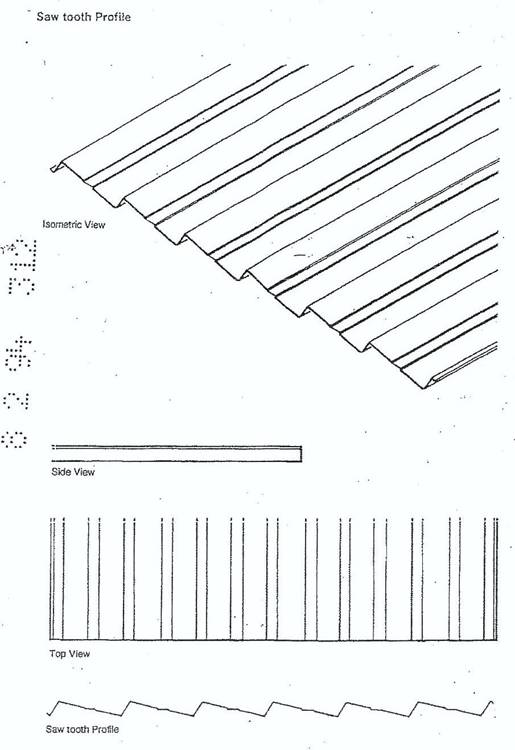
PLACE: |
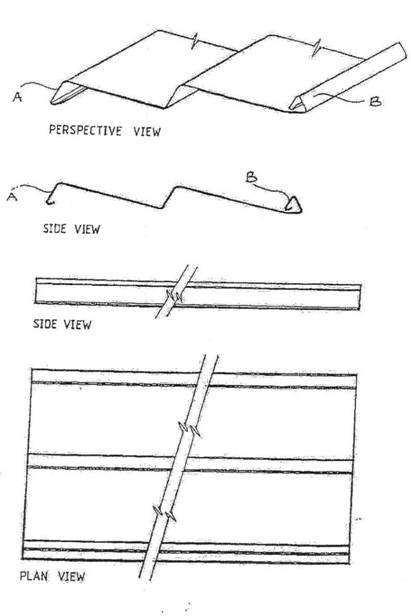
SYDNEY |
|
[1] | |
|
[35] | |
|
[35] | |
|
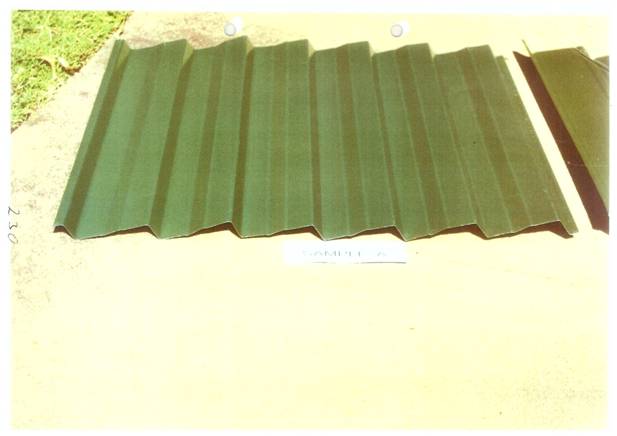
[46] | |
|
[52] | |
|
[63] | |
|
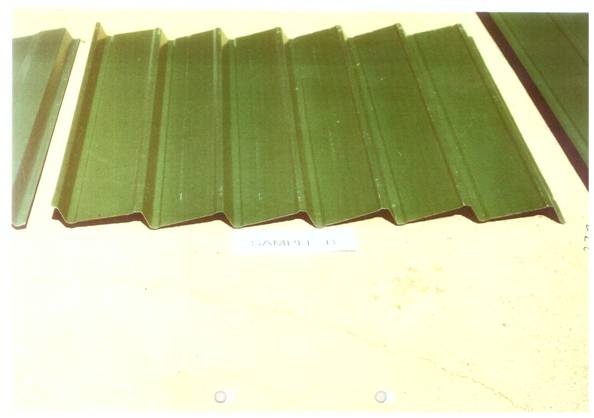
[84] | |
|
[84] | |
|
B Bluescope's first symmetrical fence project: August 1995 to February 1996 |
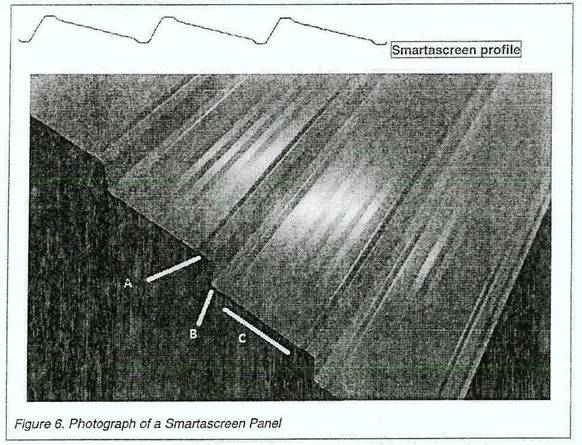
[96] |
|
[100] | |
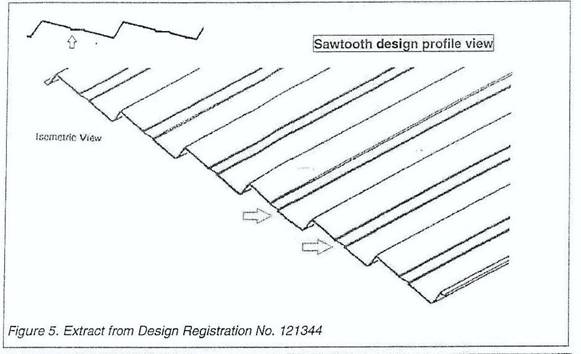
|
[103] | |
|
E Commencement of the third planning stage: Early 2000 to October 2000 |
[120] |
|
[136] | |
|
[171] | |
|
[196] | |
|
[200] | |
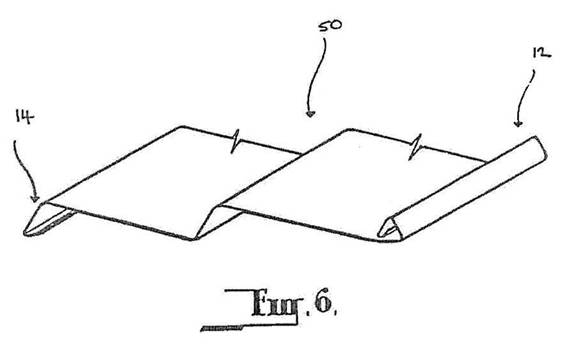
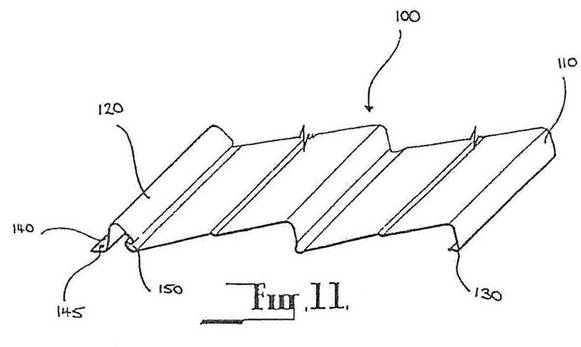
|
[200] | |
|
[223] | |
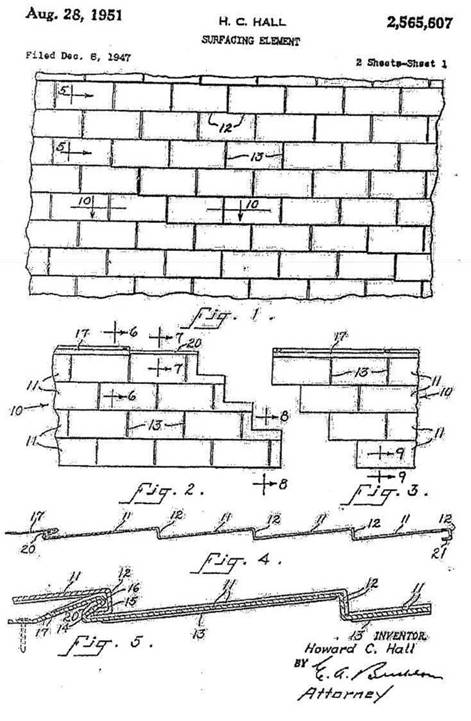
|
[241] | |
|
[260] | |
|
[279] | |
|
[289] | |
|
[307] | |
|
[307] | |
|
[316] | |
|
[341] | |
|
[391] | |
|
[408] |
REASONS FOR JUDGMENT
1 The respondent, Bluescope Steel Limited (Bluescope) is a well known manufacturer of flat steel products in Australia. It was formerly a division of BHP Billiton Limited, operating under the name John Lysaght (Australia) Pty Ltd (Lysaght) and was spun off as a separate company, known initially as BHP Steel, and subsequently as Bluescope, in about 2002 or 2003.
2 The applicant, Gram Engineering Pty Ltd (Gram) produces and sells steel fencing panel sheets which are used primarily for backyard privacy fencing in homes throughout Australia. Gram sells its fencing panel sheets in competition with Bluescope.
3 In the 1970s Lysaght began manufacturing and selling steel privacy fencing sheets using an existing single sided, painted, roll formed roofing metal sheet called "Trimdek". The Trimdek sheet had five ribs protruding from one side of the panel sheet with four pans between each pair of ribs.
4 Although the Trimdek product was commercially successful, it appears that end customers for the fencing sheets preferred to have the side of the infill with the five protruding ribs installed facing their own properties because this was considered to be the "good side". This was apparently referred to between neighbours as the "good side, bad side" issue.
5 In about 1993, Mr Robert Leslie Mann, the Managing Director and principal of Gram, came up with a solution to the "good side, bad side" problem by designing a fencing infill sheet which looked the same from both sides.
6 Mr Mann's design was a sawtooth or zig-zag profile with six pans or units.
7 On 8 February 1994 Gram filed four applications with IP Australia for the registration of designs under the Designs Act 1906 (Cth) (the Act) for a fencing panel sheet consisting in each instance, of Mr Mann's six pan sawtooth or zig-zag profile. Each of the designs was registered on 26 August 1994.
8 One of the designs, namely registration AU 121344S (the Design) was for a Sawtooth Profile. The three other designs were described respectively as the Peak profile, the Gable profile and the Ridge profile. Each of these designs consisted of a six pan sawtooth representation but with small variations, in each instance, in the shape of the swage of the profile.
9 The first sale of a fence panel sheet manufactured by Gram in, or substantially in accordance with the design occurred on or about 12 September 1995. The product was sold under the name GramLine which is the name under which Gram sells its products.
10 The GramLine fencing sheet was very successful commercially. By 2002 the GramLine range held approximately 35% to 40% of the Australian market for fencing panel sheets. Between 1995 and 2005 Gram purchased almost all of its steel requirements for the GramLine sheet and assorted products from Bluescope and its predecessor.
11 In about the middle of 2002 Bluescope launched its own symmetrical sawtooth or zig-zag fencing panel sheet under the brand name "Smartascreen". There is no escape from the proposition that the Smartascreen fencing panel sheet is very similar in appearance to the GramLine product. In particular, the Smartascreen sheet consists of a six pan sawtooth profile of very similar shape and configuration to the GramLine product, and to Gram's Design.
12 It is also plain that Mr Mann was aware of the similarity at or about the time when the Smartascreen product was launched. Nevertheless, Gram did not institute proceedings against Bluescope until 2011 when the present application and the initial version of the Statement of Claim were filed.
13 Gram claims that the Smartascreen product infringes the Design. It claims under s 30(1)(a) of the Act that Bluescope has infringed Gram's monopoly in the Design by applying a "fraudulent" or "obvious imitation" of it to the Smartascreen product. Gram also relies on s 30(1)(c)(i) which addresses the sale of an article to which a fraudulent or obvious imitation of a design has been applied.
14 The type of statutory fraud involved in fraudulent imitation under s 30(1)(a) of the Act is different from common law fraud. It does not require evidence of deliberate intention to steal the design; it requires knowledge of the existence of the registration, absence of consent of the owner and an imitation which is based on or derived from the registered design: Polyaire Pty Ltd v K-Aire Pty Ltd (2005) 221 CLR 287 at [17], [19] and [35].
15 An obvious imitation is something which is very close to the original design so that the resemblance to it is immediately apparent to the eye: Polyaire at [19] citing Farwell J in Dunlop Rubber Co Ltd v Golf Ball Developments Ltd (1931) 48 RPC 268 at 279.
16 The question which arises on the issue of obvious imitation is one of substance and is to be determined by comparing the visual features of the design; appearance to the eye is the critical issue: Wanem Pty Ltd v Tekiela (1990) 19 IPR 435 at 440 (Gummow J), cited with approval by a Full Court in Foggin v Lacey (2003) 57 IPR 225 at [13].
17 Bluescope denies obvious imitation, pointing to several differences in the shape and configuration of the Smartascreen product which are said to be sufficiently apparent to the eye.
18 In particular, Bluescope submits that, considered as a whole and against the relevant prior art, there are two features of the Smartascreen design that distinguish it visually from the Design. These are features which were described by the parties as the ridge/valley feature and the micro fluting feature. I will describe these features in more detail later.
19 In addition, Bluescope denies copying the Design. It submits that the Smartascreen product was created independently of the GramLine product. Bluescope relies heavily on the history of the development of the Smartascreen product which it traces through three development stages. Bluescope called seven witnesses who gave evidence of the evolution of the design of the Smartascreen product.
20 The three stages of development were from about August 1995 to about February 1996, mid 1999 to about 30 November 1999 in a project known as the Millennium Project and, finally from mid or late 2000 to about July 2001.
21 The Bluescope personnel engaged in the development process were employed in the Research and Development (R&D) Division and the Marketing Division. There was a good deal of evidence of concept drawings prepared by draftsmen in R&D, in particular, Mr Campbell Seccombe who was the head of that division, and Mr Rod Gallaty.
22 When the project was initiated or resumed in 2000 the Marketing Division briefed R&D which was effectively the client of marketing to develop a symmetrical fencing profile that matched or bettered Bluescope's competitors' products in terms of visual attractiveness.
23 Ms Emma Marlin, who was the Business Development manager in the Marketing Division of Bluescope, was heavily involved in the instructions that were given to R&D from late 2000 to late April 2001 when she took maternity leave.
24 Gram places particular emphasis in the infringement claim upon a number of documents in which Ms Marlin appears to have adopted the expression "Gramline style", or words to the same effect, to describe the instructions given to R&D.
25 Perhaps the high point for Gram in relation to this issue is Ms Marlin's Market Justification Discussion Paper dated 26 April 2001 which she provided to the Marketing Division of Bluescope at the time of her handover of the project on taking maternity leave. The Discussion Paper includes a statement that the Cascade 2000, which ultimately became the Smartascreen:-
…has a similar appearance to Gramline (sawtooth style profile) and hence it is felt that the product would be readily accepted in the market….
26 An important issue in the case is whether an inference of copying is to be drawn from the use of this expression in contemporaneous documents. The witnesses who addressed this question said that the expression was merely shorthand for the description of a generic sawtooth style. A difficulty which arises in dealing with the evidence of the witnesses is the passage of time that has elapsed since the release of the Smartascreen product in 2002.
27 Bluescope cross-claims against Gram for invalidity of the Design under s 17 of the Act.
28 Under that provision, a design was not to be registered unless it was a new or original design. A question of construction arises as to whether subsections 17(1)(a) and 17(1)(b), which state particular bars to registration, are merely subsets or particular examples of the overarching test of novelty or originality stated in the "chapeau" to s 17(1).
29 Questions of infringement and novelty or originality are connected. Both are questions of fact for the Court to determine by the eye alone but the Court may be assisted by expert evidence, in particular in understanding and interpreting the prior art: see Dart Industries Inc v DÉcor Corporation Pty Ltd (1989) 15 IPR 403 at 408-409 (Lockhart J).
30 Bluescope relies on a large number of items of prior art to interpret and understand the Design and in considering the questions of novelty and originality. Initially, Bluescope relied on 27 items of prior art but ultimately this was reduced to 10 which were referred to by the parties as Design 2, Design 4, Design 5, Design 6, Design 8, Design 12, Design 16, Design 18, Design 19 and Design 23.
31 Mr Allan Clifford Wightley gave expert evidence for Gram. Mr Alexander Stewart Richardson gave expert evidence for Bluescope.
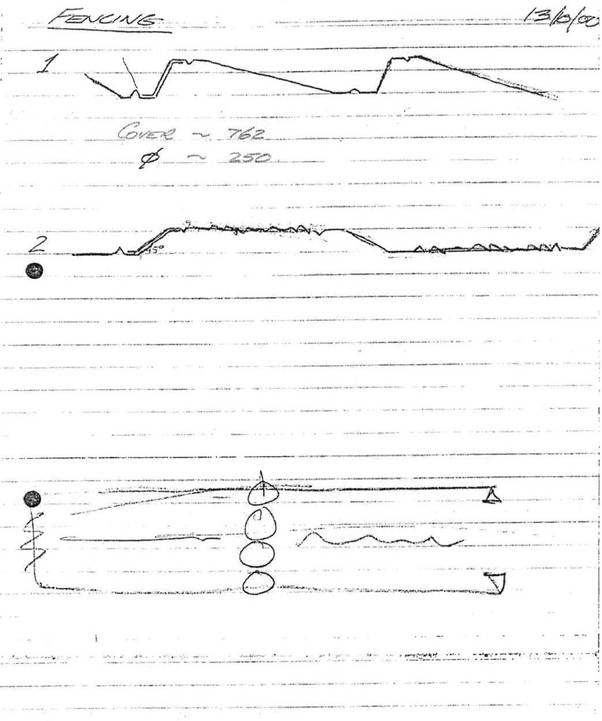
32 In its Statement of Claim, and in opening the case, Gram claimed that the Smartascreen product infringed the Design and the three other Gram designs referred to above. However, shortly before its closing address, Gram limited its claim to infringement of the Design.
33 Bluescope maintained the symmetry of the proceeding by limiting its claim of invalidity to that of the Design. It did not pursue the claim made in the cross-claim that the three other designs were invalid.
34 The claim of invalidity and the claim for infringement both fall to be considered under the Act rather than under the Designs Act 2003 (Cth) (New Act): see New Act ss 150, 151(3) and 156(3).
II The Design and the Alleged Infringing Article
35 The Design for which Gram applied on 8 February 1994 was registered on 26 August 1994 and expired 16 years later on 8 February 2010.
36 The article for which the Design was registered was a "fencing panel sheet". I will refer later to the industry practice which applies to the width of the posts and rails to which fencing panel sheets are installed.
37 The Design contained a statement of monopoly "in the features of shape and/or configuration of a fencing panel sheet as illustrated in the accompanying representations". It also stated that "in considering the extent of the monopoly protection, the longitudinal extent of the article is to be disregarded".
38 The Design representations which accompanied the registration were as follows:-
39 Mr Mann was the author of the Design but Gram was the applicant for registration and was registered as the owner.
40 Gram contends that the primary feature of shape and configuration of the Design is the sawtooth shape consisting of six uniform, sawtooth pans or modules that extend vertically down the whole face of the sheet in the particular proportions and angles depicted in the representations set out above.
41 There are two secondary features of the Design which are also relevant to the issues of validity and infringement.
42 The first was described as the "sawtooth within a sawtooth". Mr Richardson points out that this element of the Design is more difficult to notice in the profile view than in the isometric and top views where it appears in lines that represent folds that are visually strong.
43 Mr Mann explains the functional purpose of this aspect of the Design as a "stiffener" which prevents "oil canning". That is a term which describes the process of deformation of a sheet due to buckling in the course of manufacture or installation.
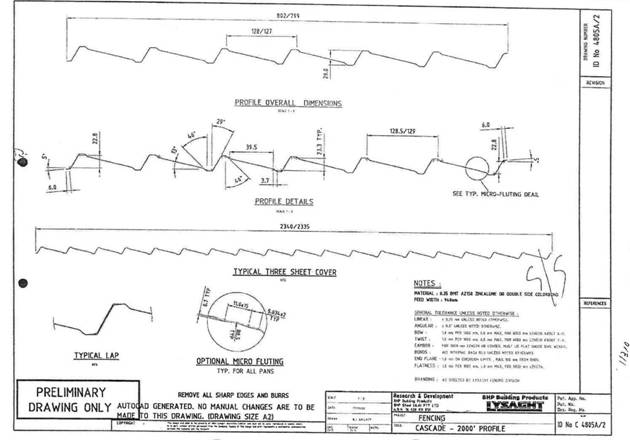
44 There is a debate between the parties as to the significance of the visual effects of the stiffener. Gram accepts that it is subordinate to the primary features of shape and configuration of the six sawtooth pans and the proportions and angles of the Design. However, Gram points out that the stiffener is part of the symmetry of the Design.
45 The other secondary feature depicted in the design is the flange at each end of the panel. This performs the function of a "lap joint" which enables the panel to be joined together with other panels during installation.
46 A physical sample of the GramLine sheet was in evidence as Ex C. It was referred to in the evidence as Sample A.
47 A photograph of Sample A was also tendered. It was Ex ACW-10 to Mr Wightley's affidavit and is as follows:-
48 There is a dispute between the experts as to whether the GramLine sheet was manufactured precisely in accordance with the design. Mr Richardson contends that, in the photograph, the GramLine sheet is substantially similar to the design but he identifies three slight differences.
49 The first difference identified by Mr Richardson is that the sawtooth swage within the larger swage appears larger in size in the photograph than in the Design.
50 The second difference is that the sawtooth within the sawtooth is oriented in the opposite direction in the photograph from its direction in the Design.
51 The third difference identified by Mr Richardson is that the internal angles of the sawtooth or Z-shape of each pan appears to be more open or obtuse in the GramLine sheet (that is to say, greater than 90) than in the Design which appears to have a slightly less open angle.
52 A physical sample of the Smartascreen sheet was in evidence as Ex D. It was referred to as Sample B.
53 A photograph of Sample B was tendered as Ex ACW-11 to Mr Wightley's first affidavit and it is reproduced below:-
54 Mr Wightley's evidence emphasised the similarity between the visual appearance of the Smartascreen sheet and the Design. He referred in particular to the overall appearance created by the six sawtooth profile with its uniform and repeating pattern in six modules of equal amplitude. That is to say, the height of the sawtooth modules is consistent across each profile and both the Design and Sample B look identical when viewed from both sides.
55 Mr Wightley also drew attention to the physical similarity between the GramLine product in Sample A and the Smartascreen product in Sample B. He noticed this when he was first retained by Gram's solicitors because the Smartascreen sheet "nested" almost perfectly with the GramLine sheet when he collected the physical samples from the solicitors.
56 Although Mr Wightley acknowledged the points of difference between the Design and Sample B, that is to say the ridges and valleys in Sample B as well as the micro-fluting, he did not consider that the differences detracted from the overall visual similarity created by the repeating six pan sawtooth profile.
57 By contrast, Mr Richardson considered the most visually dominant design feature of the Smartascreen panel to be the ridge and valley which are present on the smaller or vertical plane of the Z-shape of each sawtooth element. In his opinion this design feature significantly affects the overall impression of the Smartascreen sheet because he considers it to be very striking, visually, and noticeable at all viewing angles.
58 Mr Richardson also considers the micro-fluting to be a visually attractive and distinctive feature of the Smartascreen panel, although he accepts that it is a subtle design feature.
59 Both the experts addressed the question of the impact on the viewer of the effect of the lighting conditions, the viewing angle on the ridge/valley and micro-fluting features of the Smartascreen panel. There was considerable debate between them on this issue.
60 Figure 6 of Mr Richardson's second affidavit illustrates the ridge/valley and micro-fluting features of the Smartascreen panel. He contrasted these features with an isometric view of the Design which he set out in figure 5.
61 I reproduce below those two figures from Mr Richardsons' affidavit:-
62 The arrows in figure 5 indicate the sawtooth within the sawtooth in the Design. The letters A & B in figure 6 represent the ridge and valley. The letter C represents the micro-fluting.
63 In its challenge to the validity of the Designs and in considering the question of infringement, Bluescope relies heavily on the prior art. It submits that, when considered against the prior art corpus, the design is not novel or original and, in any event, the Smartascreen panel does not infringe.
64 Bluescope divided the items of prior art into two separate categories to reflect the differences between ss 17(1)(a) and 17(1)(b) of the Act.
65 Section 17(1)(a) prohibits the registration of a design which differs only in immaterial details from a previously registered design in respect of "the same article". By contrast, s 17(1)(b) prohibits the registration of a design that is "an obvious adaptation" of a registered design in respect of "any other article".
66 As to s 17(1)(a), Bluescope relied on the designs that were described in the proceedings as Design 2, 6, 8, 16 and 23.
67 A question arises as to whether any of these designs are in respect of the same article as the Design. This is because the article for which the Design was registered was a fencing panel sheet whereas the articles for which Designs 2, 6, 8, 16 and 23 were registered are described in terms which are, for the most part, referable to other types of article.
68 The article for which Design 2 was registered is "sheet metal, roofing, building materials, analogous articles".
69 Design 6 was also registered for "structural members and more particularly [for] … construction material for siding, roofing or the like".
70 Design 8 was registered for "a building panel which … simulates normal wood siding construction" and which "may be manufactured easily from sheet metal employing building or rolling processes".
71 Design 16 was registered for a "siding panel with a cover sheet of hardboard…." and "construction materials for buildings and more particularly… siding panels for buildings".
72 Design 23 was registered for a "cladding system" with "particular application to the roofing of buildings... but can have wider application". The registered design went on to state that it had been:-
… devised particularly as a roof sheet, but it may have other applications such as a wall or fence sheeting.
73 It is not necessary to reproduce the illustrations of each of the abovementioned designs. However, it does seem to me to be useful to reproduce figures 6 and 11, which accompanied Design 23 because they are said to have possible application to fence sheeting.
74 Figure 6 is as follows:
75 Figure 11 is as follows:
76 The designs upon which Bluescope relies to support its contention of invalidity under s 17(1)(b) are those which were described as Designs 4, 5, 12, 18 and 19.
77 Design 4 was registered for surfacing elements covering sheets of metal intended primarily for use as roofing material, but which could be used as siding.
78 The "invention" stated in Design 4 was intended to be used as a substitute for shingle roofing or siding as can be seen from the representation of Design 4 which I will set out below:
79 Figures 1, 2 and 3 represent sections of the sheet from which the simulation of shingles can be seen. Figures 4 and 5 represent an end view and a vertical section which appear to have some degree of similarity to the Design which is in suit in this proceeding.
80 Design 5 was registered for metal siding members for application to the exterior wall surfaces of houses and, in particular, for clapboard-simulating siding.
81 Design 12 was registered for wall siding panels having vertical edge portions adapted to overlap and resemble clapboard finishing.
82 Design 18 was registered for roofing panels. Monopoly was claimed in the shape and configuration of a roofing panel depicted in representations forming part of the design. The representations are similar to those which form part of Design 19 which I will reproduce below. I will therefore not reproduce the representations of Design 18.
83 The representations of Design 19, which was registered for a roofing panel, were as follows:
A The period before August 1995
84 As I said in the introduction, Lysaght began manufacturing and selling steel privacy fences in the early 1970s. The fences consisted of a single side, painted and roll formed metal sheet. The metal sheet consisted of roofing material called "Trimdek". The system consisted of three sheets of Trimdek roll formed sheet held between two posts and an upper and lower rail.
85 Bluescope contends that the Trimdek fences consisted of six pans. However, Mr Mann's evidence was that the Trimdek sheet had five ribs protruding from one side of the panel sheet with four pans between each pair of ribs. The brochures referred to in evidence seem to support Mr Mann's evidence rather the six pan contention asserted by Bluescope.
86 The brochures on which Bluescope relied contain illustrations of roof and wall panels installed vertically and horizontally. The brochures are promotional material. They suggest the possibility of horizontal installation, but at best they indicate that horizontal fences were a secondary form of fencing with vertical fencing being the norm.
87 The evidence tendered by Bluescope does support its submission that from at least the 1970s fencing profile designs were used interchangeably with roof and wall panel designs.
88 The evidence also supports Bluescope's submission that, from at least the same time, symmetrical profiles were used for fencing and roof and wall panels. It also supports a finding that repeating uniform pans were used on fencing products. However, the symmetrical profiles that were used before 1995 did not look the same from both sides.
89 In 1993, Mr Seccombe's design department at Lysaght came up with a design for a roofing product that was released under the names Multiline 600 and Multiline 900. A design drawing for this product was in evidence. The drawing is dated 15 December 1993. It has six repeating uniform panels with a Z-shaped profile. It also has an obtuse angle between the main plane and the pitch.
90 The Multiline range of roofing material was launched by Lysaght in about 1995.
91 Mr Seccombe's evidence was that he had been interested in symmetrical fence designs, that is to say, fences that would look the same from both sides of the panel, since the mid-1990s. He said that his team at Lysaght designed several symmetrical profiles at around this time. He exhibited to his affidavit some concept drawings for a symmetrical fence profile that were drawn by Mr Seccombe or his team. The drawings are dated 2 June 1994.
92 The concept drawings to which Mr Seccombe referred depict a paling-style fence rather than a sawtooth profile. They do indicate micro-fluting on the face of the panels.
93 At around the same time, on 26 August 1994 Gram's designs, including the Design the subject of this proceeding, were registered. As I said above, Gram's applications for each of the designs were filed earlier, on 8 February 1994.
94 The minor differences between the features of each of Gram's registered designs are no longer relevant to this proceeding.
95 Bluescope asserted that the Design was published on 22 September 1994 but no formal record was tendered to prove that fact.
B Bluescope's first symmetrical fence project: August 1995 to February 1996
96 Mr Seccombe's evidence was that his team at Lysaght worked on a symmetrical fence project between August 1995 and February 1996. There was no real dispute about this part of Mr Seccombe's evidence.
97 Mr Seccombe described the concept design for the project as a "symmetrical fence profile" which was designed to look similar to the old wooden paling fence. It appears that the project did not progress to the production of a formal prototype.
98 Mr Seccombe's description of the concept design is borne out by the design drawings and work orders which he exhibited to his affidavit. Each concept design is in the style of a paling fence. Some of the drawings have a ridge/valley feature, and stiffener similar to the micro-fluting used in the Smartascreen.
99 At least one of the drawings has six pans, but one dated 6 February 1996, which is contended by Gram to be the last drawing in the batch, has five pans. The drawing was apparently prepared by Mr Peter Field, a draftsman who worked alongside Mr Gallaty at Chester Hill.
C Bluescope's knowledge of the GramLine product
100 Gram launched the GramLine Fence product in September 1995 and made its first sale of the product at about that time.
101 Mr Seccombe and his colleagues in the R&D Department of Lysaght were aware of the Gram product by April 1996.
102 Neither Mr Seccombe nor Mr Gallaty could remember whether Lysaght had a sample of the Gram sheet at Lysaght's Chester Hill premises in 1996. However, a memo from Mr Stephen Healey to Mr Seccombe dated 9 July 1996 seems to me to support a finding that Lysaght then had a sample of the Gram posts, rails and infill sheet.
103 During 1999, Lysaght's R&D Division, in conjunction with its Marketing Division, commenced work on a symmetrical fencing profile in a project which was given the name, the "Millennium Project".
104 The precise commencement date of the Millennium Project is not clear, but by October 1999, communications between R&D and marketing referred to the proposed panel design by that name.
105 The catalyst for the establishment of the Millennium Project seems to me to have come from marketing, in particular from Ms Emma Marlin. She referred to her trips around Australia, in her previous capacity as Business Development Manager in which her customers spoke to her about a desire for Lysaght to offer a fencing product with a symmetrical profile.
106 Also, Mr Askie, to whom Ms Marlin reported, acknowledged that by 1999 Lysaght's standard fencing profiles were becoming a bit "stale" and its competitors, including Gram, were heavily promoting the advantages of symmetrical fencing products.
107 It is clear that there were competitive pressures on Lysaght to produce a symmetrical profile. The competition was not limited to Gram but appears, from the evidence of Mr Askie, to have included companies known as Metroll and Stratco. The documentary material from April 1999 indicates that one customer said he needed a fence panel to compete with GramLine.
108 The persons who worked on the Millennium Project in R&D included Mr Seccombe, Ms Sarah Fathinia, Mr Steven Halpin and Mr Gallaty. Ms Fathinia went on maternity leave in 1999 and Mr Halpin took over her management role for a period of about six weeks.
109 Mr Gallaty was responsible for drawing most of the designs which formed part of the Millennium Project.
110 On 11 October 1999 Mr Gallaty sent a facsimile message to Mr Askie under the heading "Millennium Panel". The fax attached a large number of drawings for Mr Askie's consideration.
111 One of the drawings that Mr Gallaty sent to Mr Askie, type 15 on page 898 of the Court Book, was a sawtooth design. It is the closest of the batch to the Gram design but there are a number of differences. In particular it depicts only four pans and the short sloping surface is in the form of a wave. The wavelength of the sawtooth is shown as 171 mm but the wavelength of the GramLine product is 127 mm.
112 I accept Gram's submission that Mr Gallaty's drawings indicate that it would have been possible to draw many different symmetrical profiles. However, as Bluescope submits, they were merely concept designs, as drawn, which may not have been able to be manufactured. This is borne out by Mr Gallaty's statement in the fax that the drawing would have to be refined and 3D images produced.
113 Mr Gallaty's evidence under cross-examination at T 314 lines 30 to 35 was to the same effect.
114 Bluescope submitted that one of Mr Gallaty's drawings, number 16A on page 899 of the Court Book, was based on an earlier drawing made by Mr Field in 1995. Mr Field's drawings were in evidence as Exhibits 7 and 9 and were dated 16 December 1995. Mr Gallaty's evidence was that the 1995 and 1999 drawings are similar but I do not consider that his evidence supports a finding that the later drawing was derived from the earlier one.
115 On 3 November 1999 Mr Gallaty sent Mr Askie a number of other drawings to "mull over". Mr Gallaty stated in his covering fax "I like No 27B". This drawing was one of three sawtooth profiles in the attachment to the fax. Each of the profiles was quite different having different wavelengths and different numbers of pans. Drawing 27B had three pans and a wavelength of 162.8 mm. It has a double corrugation of the short sloping surface with an amplitude of 25.28 mm.
116 As was the case in relation to the October drawings, the drawings sent by Mr Gallaty on 3 November 1999 were concept drawings, which were not necessarily capable of manufacture to fit within existing post and rail systems.
117 On 12 November 1999 Mr Gallaty sent some more drawing to Mr Askie to "ponder over". Mr Askie recalls writing to Mr Gallaty to advise him that he (Mr Askie) preferred drawings numbered 17A, 18 and 20. Prototypes of these profiles were apparently made some time later.
118 None of the drawings of 12 November 1999 show a sawtooth profile. Drawing 17A is a paling style fence profile. Type 18 and type 20 appear to be variations of a paling profile.
119 On or about 30 November 1999 the Millennium Project was put "on hold". This evidence is supported by a handwritten note bearing that date and made by Mr Halpin during the period when he was acting as a manager in R&D in place of Ms Fathinia. The note states that the project "doesn't fall within the expectations of fencings (sic) new budget".
E Commencement of the third planning stage: Early 2000 to October 2000
120 Bluescope's symmetrical fence profile project was formally recommenced in about late 2000. The precise date is not entirely clear because there were ongoing discussions between the marketing and R&D teams from at least the early part of 2000 about the idea of a symmetrical profile before the project was formally established.
121 Communication between the various employees goes back to at least 6 April 2000 when Mr Askie sent a facsimile to Mr Lothar Ploss, an employee in the Equipment Division in Melbourne, attaching three profiles selected from drawings made by Mr Gallaty. The selected profiles were different from those which had been chosen for prototyping in November 1999.
122 Mr Askie's fax to Mr Ploss was then forwarded to Ms Marlin by Ms Fathinia on 10 May 2000. It would appear from this that Ms Marlin was involved in the discussion from at least that time.
123 Ms Marlin's notes entitled "New Fencing Profile - Notes for R&D briefing" seem to record the establishment of the third stage of the project but the notes are undated. Gram contends that the notes were made before January or March 2000 but Bluescope contends they were made a year later. The notes include as a minimum requirement that the new fencing profile "match or better competitor's product offer in terms of visual attractiveness".
124 The written records from this period include handwritten notes dated 31 August 2000 headed "Emma." The notes were not made by Ms Marlin but were apparently sent to her. They included the statement "Competitor Testing Fencing". The notes also state, under the subheading "Millennium Profiles":-
… put in internal mail photocopied with lines drawn in.
125 Ms Marlin's evidence was that she could not recall the notes being sent to her but that she was not good at reading technical drawings and recalled asking for three-dimensional drawings to be done so that she could see what the designs would look like.
126 The "competitor testing" referred to in the handwritten notes was carried out before 14 September 2000 as appears from a report made by Ms Fathinia on that date. The report outlines tests carried out on various competitor's fencing systems including Gram's GramLine fence and other fences produced by Metroll and Sratco.
127 I accept Bluescope's submission that Ms Fathinia's document proves no more than that the tests were conducted for the purpose of supporting BHP's advertising claim that Neetascreen was a stronger fence than its competitors. This can be seen in the fourth and fifth paragraphs of Ms Fathinia's report.
128 However, as Gram pointed out, the attachments to the report do show that by this date (14 September 2000) Bluescope was aware of Gram's Australian Registered Design, the details of which appear in the document, and that Bluescope had measured the wavelength and amplitude of the GramLine panels.
129 In cross-examination, Mr Gallaty accepted that R&D had a library of competitor's products but he said he was not aware of the Gram product being in the library in 2000.
130 On 13 October 2000 Mr Seccombe prepared some concept drawings for a new symmetrical fence profile. The drawing is an important one because Gram contends the design marked "1" in the drawing was derived from the GramLine product. Bluescope disputes this contention.
131 Mr Seccombe's concept drawing was as follows:
An enlarged copy of the drawing was in evidence as Ex F.
132 In his evidence, Mr Seccombe described the design marked "1" as a shiplap style shape and the design marked "2" as a paling style shape, similar to the design first developed by his team in the mid 1990s.
133 He did not concede in cross-examination that the concept drawing was made in response to an initiative that had come from marketing. Rather, he suggested that the drawing may have been done as part of work that was being considered for the possible barrel forming of panels.
134 In re-examination, Senior Counsel for Bluescope asked Mr Seccombe whether he could see any similarity between the concept drawing of 13 October 2000 (Ex F) and the drawing on page 1233, which was Mr Field's drawing of 6 February 1996. Mr Seccombe said that the "second drawing" (that is to say, the panel profile) in Ex F was similar to the drawing on page 1233.
135 However, he was then asked (without objection) about similarities with the "first drawing" to which he replied that it was similar:
… - in that the first drawing is - the shiplap - is a shiplap version of a symmetrical profile… .
F Continuation of the third planning stage
136 On 1 November 2000 Mr Keiran Mathieu, a member of the Marketing Division, sent a fax to Ms Marlin attaching a Lysaght fence maintenance guide and some drawings of "some Millennium Panels". The attached drawings did not include a sawtooth profile.
137 On 13 November 2000 Mr Mathieu sent a fax to Ms Marlin attaching some profiles of "Grams (sic) like" that Mr Gallaty drew. He also attached one that was "wave like".
138 The drawings which Mr Mathieu attached consisted of a number of drawings prepared by Mr Gallaty in 1999, including drawing 27B, which Mr Gallaty referred to in his fax of 3 November 1999, and drawing no 15. All of the documents which were attached were sawtooth, although drawing 15 is, in part, a wave formation.
139 Gram submits that Mr Mathieu's attachments to the fax of 13 November 2000 establish that Ms Marlin asked him to look for "Gram like" options from the symmetrical drawings that were done in 1999. It seems to me, from other evidence to which I will refer later, that the expression "Gram like" was used as shorthand to refer to sawtooth or Z-shape designs. The expression does not, by itself, in my opinion, connote an intention to deliberately copy Gram's Design.
140 On 15 November 2000 Mr Field prepared a memorandum to Ms Marlin headed "Evaluation of Alternative Fencing Infill Panels". The memorandum was faxed to Ms Marlin on 17 November 2000. The memo sets out the results of R&D's investigation of Spandek, HR 29 and K & T panels.
141 Mr Field's memo concluded with the following recommendation:-
Taking into account the availability of the infill sheets, modifications needed for the rail and the costs involved as well as logistic issues with any changes to the existing standard rail, we recommend modifying the old style rail to suit Spandek infills. We would also recommend that the posts be spaced for 4 panels which provides a more efficient fence system, and still has enough capacity for the majority of Australia.
We are currently in the process of designing a Gram look alike and paling type for barrel roll forming as we discussed at our previous meeting. We will send you product drawings of these early next week.
142 Ms Marlin conceded in cross-examination that the "previous meeting" referred to in the memorandum was held by her with Mr Field, and probably also Ms Fathinia. Mr Field was not available to give evidence but Ms Marlin and Ms Fathinia were cross-examined by Senior Counsel for Gram about the use of the expression "Gram look alike". Both maintained that the expression was merely shorthand for a sawtooth or Z-shape design.
143 On about 17 November 2000 Mr Gallaty prepared two profile styles which became known as the "Paling - 2000 Profile" and the "Cascade - 2000 Profile". The drawing of the Cascade profile depicted a sawtooth design. Mr Gallaty's evidence was that he was guided in the preparation of each of the profiles by Mr Seccombe's concept drawings of 13 October 2000.
144 Gram submits that, if Mr Gallaty was guided by Mr Seccombe's drawing, this amounted to indirect copying of the Gram Design by Mr Gallaty through Mr Seccombe. Gram also submits that the drawing made by Mr Gallaty constitutes fraudulent and obvious imitation of the Design in relation to any fencing panel sheet made in accordance with it.
145 In view of the importance of the Cascade drawing of 17 November 2000 I will reproduce it in full:-
146 Mr Gallaty's evidence under cross-examination was that when he prepared the Cascade 2000 profile he was not aware of the Gram product and he did not discuss it with his colleagues.
147 He also said that the drawing provided to him by Mr Seccombe was typical of the kind of drawing he received from Mr Seccombe in his (Mr Seccombe's) capacity as a manager and that he knew that Mr Seccombe wanted a symmetrical design. Mr Gallaty said he tried to make Mr Seccombe's drawing work within the constraints of existing post and rail parameters.
148 The constraints to which Mr Gallaty referred were the width of the rail which had to fit in the length between the post centres of 2350 mm. He explained Mr Seccombe's reference to a "cover" of 762 mm on the concept design in relation to the typical size of the manufactured sheet which may be in the order of 820 mm.
149 Mr Gallaty pointed out in cross-examination that Mr Seccombe's sketch had no dimensions and that there was accordingly some guesswork involved in the number of sheets and panels which might make up a length of fencing material. A lot of alterations would be involved because any alterations of angles or radiuses would have to be fitted into the post and rail constraints. Also, the sheets would have to meet and fit tightly.
150 Mr Gallaty did not recall a conversation to the effect that Mr Seccombe told him that six pans were required because Gram's GramLine product had that number of pans. I took his "non-recall" to be as statement that he did not believe that Mr Seccombe made that request.
151 Ms Marlin's evidence was also to the effect that she did not instruct Mr Gallaty to copy the Gram product.
152 Mr Gallaty made it clear that he would not have put a ruler on Mr Seccombe's concept drawing and that Mr Seccombe did not direct him to produce a design for a particular number of repeated pans.
153 Mr Seccombe's evidence was to the same effect. He said the concept design was prepared for a product to be manufactured by the barrel formed method.
154 Mr Gallaty was not sure whether there were any design drawings on the CAD system during the period between 13 October 2000 and 17 November 2000. No such drawings were in evidence and it therefore seems reasonable for me to proceed on the basis that Mr Gallaty's drawings of 17 November 2000 were the first complete CAD drawings of the Cascade 2000 profile, which became the Smartascreen product.
155 On 19 December 2000 Ms Fathinia prepared notes of a Product Development Fencing Review meeting held that day between herself and Ms Marlin. The notes record that the formal commencement of the project meetings were held monthly and the notes were updated after the meetings.
156 Ms Fathinia prepared a project initiation sheet on 12 January 2001. The following appeared under the heading "Business Objectives":-
1. Justify the development and subsequent commercialisation of a new Fence infill profile(s) to:
a) significantly improve our market share in the national fencing market
b) regain a superior competitive position in the market to cease a forecast share decline (particular in the mature Colorbond fencing markets - eg: Sydney)
c) match or better competitor's product offer (product must look the same from both sides)
2. Develop product design (in line with attached product scope) and prove viability of proceeding to commercialisation.
157 The project initiation sheet also stated under "Suggested Method":-
"Conduct market and technical assessments for two options (GramLine style and paling style)…"
158 Gram's submissions emphasised the reference to "GramLine style" in the abovementioned passage as well as the business objective set out above of matching or bettering "competitor's product".
159 Gram also drew attention to a later draft of the project initiation sheet dated 24 January 2001. This was in similar terms to the document dated 12 January 2001. However, when referring to the suggested method it used the description "GramLine lookalike" instead of "GramLine style".
160 Ms Fathinia conceded in cross-examination that the Bluescope product was intended to look: -
"(s)omething like it, as in, the same from both sides, and the GramLine meaning the sawtooth look".
161 Ms Marlin said that "GramLine style" was a descriptor and that she could not recall giving instructions to Ms Fathinia to design a "GramLine lookalike".
162 On 14 March 2001 Ms Fathinia met with Ms Marlin for a product briefing. She made handwritten notes on a typewritten document headed "New Fencing Infill Profile - Notes for R&D briefing" but believes that the typed document was prepared some months earlier, in January.
163 The typewritten notes contained the following under the heading "minimum requirements":
- Match or better competitor's product offer in terms of visual attractiveness
- Look the same from both sides (symmetrical)
- Well defined vertical lines
- Snug, tight lap (no unsightly gaps or lines) - aim for 'invisible lap'
- No oil canning
- Stackable - able to be packaged in bundles
- No installation difficulties - must be easy to install as other standard Colorbond fence systems
- No product safety concerns (ie: no legal ramifications)
- Doesn't infringe any of our competitor's Design Registrations etc
- COGS must be similar or better than Neetascreen
164 Ms Fathinia wrote the words "Talk to Gennaro, send proposal" opposite the non-infringement requirement. This was a reference to Mr Gennaro Simmonetta, a patent attorney with Griffith Hack who was on secondment to Bluescope.
165 In cross-examination Ms Fathinia accepted that she would have assumed that Gram had registered designs for its profiles but she said it was Mr Simonetta's responsibility to make sure. She also accepted that copies of Gram's design registrations were in the project file which she maintained.
166 On 15 March 2001 Ms Fathinia sent an email to Mr Simonetta attaching the proposed fencing profiles. Mr Simonetta sent the profiles to Mr Greg Munt of Griffith Hack. He requested sign off regarding infringement of Australian registered designs including a design search. He had stated that the prior art on the Cascade profile included Gram's designs numbered 121341 to 121344. The last mentioned number is the Design in suit in this proceeding.
167 The prior art referred to in the email was identified by Mr Simonetta, not Ms Fathinia. This was part of Bluescope's standard process of obtaining IP clearance for new products.
168 Ms Fathinia received confirmation from Mr Simonetta that the design proposals did not infringe any registered design. The advice appears to have been given orally but was referred to in an R&D Project update report for March 2001.
169 On 19 March 2001, as part of Bluescope's normal process of carrying out technical testing of shortlisted designs, prototypes of the cascade and panel style profiles were ordered. The process involved manual pressing of the sheet metal. The process is known as break pressing. The work orders for break pressing were prepared by Mr Gallaty and authorised by Ms Fathinia.
170 As a part of the Project, Mr Gallaty developed a number of variations of the Cascade and Paling designs. A note on one of the drawings for the Paling design dated 20 March 2001 emphasises the need to stretch out the radii for the Paling design to get 3 panels within the required 2350 mm. The amendments for this design and for the Cascade design were made to facilitate barrel forming. They were rejected because they did not have sharp clear lines.
G The Project proceeds to sign-off: April to July 2001
171 Prototypes of the Cascade 2000 and Paling 2000 Panel were produced and shown to management in April 2001. They were also shown to customers to get their feedback.
172 Shortly afterward, based on the customer feedback as well as feedback from Bluescope employees, the Cascade 2000 and Paling 2000 were shortlisted for further consideration.
173 Bluescope submits that the short listing of both designs tells against an intention to copy Gram's product. If it did so intend, why produce the profile for the Paling 2000, and why shortlist it?
174 The next stage after short listing was pre-commercialisation. This involved obtaining quotes to make the roll former machine for the profile. Ms Fathinia requested quotes from Mr Ploss' team on 9 April 2001, 19 and 20 July 2001. She attached drawings prepared by Mr Gallaty.
175 On 26 April 2001 Ms Marlin prepared her "Market Justification for New Fence Infill Profile Discussion Paper." She prepared the paper shortly before she went on maternity leave as part of the handover of the project for the period of her absence from work. Mr Askie signed off with Ms Marlin on the Discussion Paper.
176 The Discussion Paper commences with an overview which stated that BHP Building products was assessing the viability of introducing a new infill profile in order to significantly improve market share, regain a superior competitive market position and:-
…match or better our competitor's product offer (product must look the same from both sides… .
177 At pages 2 and 3 of the Discussion Paper, Ms Marlin described the current Neetascreen product which had been released in 1983. She said it was generally acknowledged that there had been little real product innovation by BHP because the fence system was still predominantly based on a roofing profile, namely Trimdek.
178 Ms Marlin went on to describe competition in the fencing market. She stated that Gram was a formidable competitor with a share of approximately 35% nationally and at least 50% in New South Wales. She referred to two other competitors, Metroll and Stramit.
179 Metroll was said to have a paling profile which had so far failed to make inroads into Gram's share in NSW but their product was said to be more attractive than Gram's and competitive threat in the longer term.
180 Stramit was said to have exited the market five years earlier but was thought to be about to re-enter with a symmetrical sheet which could prove a threat to the Victorian business.
181 Ms Marlin described the assessment process for the new profile which she said commenced in January. She referred to the selection of two final design options, namely the Cascade 2000 and the Paling 2000. She also referred to the product alternatives which had been rejected and to the fact that approximately 40 concept designs had been developed by R&D. She said:
The rejected profiles were ruled out predominantly on aesthetic grounds.
182 Ms Marlin also said that a number of concept designs were assessed for barrel formation which was cheaper than roll forming but:
... the [barrel forming] option was rejected due to the inability to achieve well defined vertical lines (previous consumer research findings highlighted this as a critical success factor).
183 The Cascade 2000 and Paling 2000 design options were said to have been selected as the preferred options for the following reasons:
- rated as being more visually attractive than other Colorbond fence profiles currently available (subjective opinion!)
- satisfy the minimum aesthetic & performance requirements
- utilise existing Neetascreen posts and rails to complete the fence system (hence, no additional capital costs or stockholdings)
- utilise the same feed as Neetascreen (hence, no foreseeable increase to coil stock)
- don't infringe other manufacturers' Design Registrations (confirmed by BHP Intellectual Property Group)
- feature microfluting in the pans which is a new innovation in Colorbond fencing - this creates a feeling of depth and texture and has the added benefit of reducing possible oil canning (previous market research has highlighted that consumers perceive Colorbond fences as looking 'industrial' and lacking texture)
- Cascade 2000 has a similar appearance to Gramline (sawtooth style profile) and hence it is felt that the product will be readily accepted in the market remembering that the fencing market is traditionally slow to accept new profiles). It is likely the profile will be considered an acceptable substitute in new housing developments currently dominated by Gramline
- Paling 2000 has a similar appearance to a paling fence (the dominant material in the Australian fencing market) and strong vertical lines. It is considered to be visually striking and many feel it is a significant step forward in Colorbond fence design. However, it is probable that the market acceptance would be slower than that of Cascade 2000
184 The Discussion Paper concluded with the following recommendation:-
It is widely regarded that BHP Building Products has lost its reputation as being the market leader in the national Colorbond fencing market due to improvements in our competitors' product offers. Other Colorbond fencing products are now perceived as being superior or at the very least, equivalent. With this in mind, it is recommended urgent approval be given to pursue Option 3 in the 'Cascade 2000' profile (Gramline substitute) to enable us to defend our market position and prepare for further growth. This is the cheaper of the available options and should be regarded as a 'quick fix' to our current predicament.
However, it is highly recommended that ultimately we release both profiles (as per Option 5), as an innovative new product program is regarded as critical to achieving our full potential in the national fencing market.
185 Ms Marlin was cross-examined on the Discussion Paper, and in particular on her statement that the market would readily accept the Cascade 2000 because of its similar appearance to the GramLine product. The following exchange took place at T 422:-
Thank you. Then just in relation to the phrase you've got "something that would be accepted within the market", one of the reasons you later, in 2001, chose the Cascade 2000 as that it would be readily accepted within the market? --- Yes.
And the reason you thought it would be readily accepted in the market was that it had
a similar appearance to GramLine and GramLine's sawtooth profile? --- Yes.
That's why you thought it would be accepted in the market? --- Yes. I thought that the market is very, very slow to accept new products. I think that has been shown time and time again in the fencing market. I did have, in my affidavit, a confidential annexure which I'm happy to talk about, but there is obviously some commercial sensitivities in that.
But I think you were accepting from me that what you thought was, at the time when you chose Cascade in 2001, that it would be readily accepted because it had a similar appearance to GramLine? --- Yes.
And what do you take - when you agree with that, what are you agreeing with - the phrase "similar appearance", what do you take that to mean? --- Well it does have a zigzag profile. There's no doubt about that. That's not to say it's the same at all, but this market is very, very slow to accept new products. Our Neetascreen product, to this day, is still our biggest and most popular selling product because it's very widely accepted in the market. You know, it is difficult to make inroads with new products.
And that similarity of appearance was something you were aware of when, in April, you recommended the selection of Cascade 2000? --- Not so much that. It was just that we knew it would be accepted. Our customers would accept it - that they felt that they would have a product that they could compete with.
Because it conveyed a similar impression of shape? --- It had a - yes - zigzag shape.
Well, it also had similar proportions, didn't it? --- I don't know that that came into my thinking.
186 On or about May 2001 Gram published a newsletter, a copy of which was discovered by Bluescope. Item 4 of the newsletter described the Gram Design as a "unique registered design [which] will make it easy to identify as a Gram rail." The handwritten name "Gennaro" appears alongside the words in the copy of the newsletter that that was discovered by Bluescope.
187 In May 2001 Ms Marlin went on maternity leave. At about that time, the role of Mr Anthony Jamieson, who was then a business development and marketing manager in the Marketing Division, was expanded to encompass the marketing aspects of Bluescope's fencing portfolio. One of the projects he inherited from Ms Marlin was the symmetrical fencing profile.
188 Mr Jamieson took over that role with Mr Geoff Manzi.
189 Mr Jamieson was responsible for the marketing side while Mr Manzi focussed on the business management side of the project. Mr Jamieson recalls seeing a copy of Ms Marlin's discussion paper when he was being briefed to take over her role in the project.
190 Mr Jamieson's role when he took over from Ms Marlin was to determine which of the profiles that had been developed by R&D should be chosen. By that time, the profiles had been narrowed down to three. One was the profile which eventually became the Smartascreen. Mr Jameson described this as a "shiplap shaped profile".
191 The two other profiles in the shortlist were a paling profile and Bluescope's "custom orb profile". However, the last mentioned profile did not fully match the Project brief. Mr Jamieson's understanding was that each of the designs being considered had received intellectual property clearance.
192 Mr Jameson and Ms Fathinia conducted informal focus group meetings on the three shortlisted profiles. They ran the focus group meetings with Bluescope's "Fencing Product Champions", that is to say, sales people within Bluescope who specifically targeted the fencing market and sold to distributors. Mr Jamieson and Ms Fathinia sent the profiles to the Fencing Product Champions in each State and requested them to obtain feedback as to which profile would be the most successful. Feedback was provided orally and was to the effect that the Smartascreen profile was preferred.
193 On 20 July 2001 there was an email exchange between Mr Jamieson, Ms Fathinia, Mr Askie and others indicating that the Cascade 2000 profile had been selected as the design which would be commercialised. The effect of the evidence of Mr Askie and Mr Jamieson is that the decision to select the Cascade 2000 profile rather than the Paling profile was made as a result of the feedback from the focus groups.
194 In late August and early September Mr Manzi and various other management personnel signed off on a project expenditure authority for the launch of the Smartascreen panel. The authorisation document states that full justification was supplied by Mr Jamieson. It also refers to "Rejected Alternatives" which are said to be attached to Mr Jamieson's report. The rejected alternatives includes:-
Do nothing, result in market share loss.
195 In cross-examination Mr Jamieson said that he did not believe Ms Marlin's Discussion Paper was attached to his report but he accepted that the Discussion Paper "may have formed part of it [the report]."
H Launch of the Smartascreen panel
196 A drawing which appears to be the final drawing of the Cascade 2000 panel was in evidence as part of Ex G. It was dated 19 October 2001 and was apparently drawn by Mr Gallaty. The drawing was signed off by Ms Fathinia and Mr Field as a drawing which they had checked. The drawing shows dimensions of 128 mm to 128.5 mm for the pitch and an amplitude of 27.75 mm to 28 mm. It also contains detail of micro-fluting. The drawing is similar to Mr Gallaty's drawing of 17 November 2000.
197 At some time prior to the launch of the Cascade 2000 panel the name of the product was changed to Smartascreen. It was launched under that name around mid-2002.
198 Gram was well aware of the similarity between the Gramline panel and the Smartascreen Panel before the launch of that product. Indeed, Mr Mann acknowledged that when he first became aware of rumours about Bluescope's intentions he "badgered" two senior Bluescope employees about the issue for a period of about 12 months.
199 One of Bluescope's employees eventually showed Mr Mann a sample of the panel. Mr Mann expressed his disappointment to the employee about Bluescope's plans to launch the product. His immediate reaction when the panel was shown to him was to say:-
"You must be joking. This is a copy of our product."
200 The principles which apply to the construction of a design are well established. A design, as defined in s 4 of the Act, is the mental picture of the shape, configuration, pattern or ornamentation of the article to which the design has been applied. Its meaning is for the Court to determine, assisted by such expert evidence as the Court finds helpful: Dart v DÉcor at 408-409 and the authorities cited including Firmagroup Australia Pty Ltd v Byrne & Davidson Doors (Vic) Pty Ltd (1986) 11 FCR 415; 67 ALR 29 at 37-38.
201 In Firmagroup at 38, Lockhart J cited with approval the following observations of Lloyd-Jacob J in RB Watson & Co Ltd v Smith Bros (Wirewares) Ltd [1963] RPC 147 at 151:-
…the eye which the court applies in these cases must be an instructed eye, that is to say, the court must be made aware of the characteristics of the article to which the design is applied, the manner in which such articles would normally be found in trade, commerce and in use… .
202 In my opinion, an "instructed eye" reading the Design in the present case would understand that the Design is for a vertical infill sheet which is to fit vertically in a frame with posts and rails.
203 It is true, as Mr Cobden SC for Bluescope emphasised, that the description of the article in the Design as a "fencing panel sheet" and the representations of it do not tell a reader in express terms whether the orientation of the sheet is vertical or horizontal. Mr Wightley accepted that proposition in cross-examination. But he went on to say that when he pictured the Design in his mind's eye he concluded that the alignment must be vertical.
204 Mr Cobden submitted that the considerations which Mr Wightley took into account were based upon the utility of the Design. Considerations of utility, whilst relevant to a patent suit have no relevance to the proper construction of the Design: see Moody v Tree (1892) 9 RPC 333 at 335.
205 In my opinion Mr Wightley's evidence on this issue was not based upon matters which concerned the utility of the Design. It seems to me that his evidence was merely that of an expert assisting the court to judge the Design with an instructed eye, having regard to the characteristics of the article to which the Design was to be applied: Firmagroup at 38.
206 This is clear in my view from Mr Wightley's evidence at T 200-201 that he pictured the panels in a vertical orientation meeting or overlapping in a neat way to form a continuous fence fitted together at the edges between posts and rails.
207 To approach the matter as was urged upon me by Mr Cobden seems to me to involve the error identified by Fullagar J in LJ Fisher and Company Ltd v Fabtile Industries Pty Ltd (1978) 1A IPR 565 at 572. His Honour there said that it is wrong to instance, as the addressee of a design, a layman who has never seen or examined an article of the kind in question or any relevant prior art.
208 Of course, as Fullager J went on to say in LJ Fisher at 572, I would not accept an expert's evidence if I could not follow and accept the logic of the deductions put to me. But in my opinion, the deductions which Mr Wightley drew from the representation in the Design are those which I would draw myself on a proper understanding of it.
209 Indeed, that was the understanding of one of Bluescope's own witnesses, Mr Halpin, he acknowledged in cross-examination at T 377 that, based on his experience as a structural engineer and his time working at Bluescope, he read the representations in the Design as depicting pans running vertically. This is because the end forms are designed to overlap the adjoining sheets within the posts and rails. Also, as Mr Wightley said at T 199 and T 229, the panel sheet would be likely to buckle or deform if it were installed horizontally. It seems to me to be somewhat artificial to exclude that consideration.
210 I therefore reject the submission made on behalf of Bluescope that the orientation of the panels can play no part in the issue of validity or infringement of the Design. There was no express mention of vertical orientation of the panels but a proper reading of the Design indicates that orientation: Turbo Tek Enterprises Inc v Sperling Enterprises Pty Ltd (1989) 23 FCR 331 at 338.
211 It seems to me that the sawtooth pattern is the primary feature of the Design because it has the most striking visual impact. Although the representations in the Design are 2-dimensional, when a mental picture is made of how the panel will look when applied to a fencing panel sheet, it is the repeating sawtooth pattern which creates the dominant effect.
212 Whilst there are no dimensions shown in the Design, it can be seen that the sawtooth profile is uniform and repeating across the width of the panel. The wavelength of each saw tooth module is the same, as is the amplitude of each module and the width and angles of each sawtooth. Each sawtooth pan has a short sloping surface falling away from the sawtooth area and a long sloping surface rising from the valley to the next crest. These features create a sense of depth in the 3-dimensional visual picture of the Design as it would be applied to the finished article.
213 That was the effect of Mr Wightley's evidence in his first affidavit of 29 March 2012 at paragraphs 19 and 23. I do not understand Mr Richardson to have taken issue with this description of the features of the Design when he replied to Mr Wightley in his affidavit of 15 June 2012 at paragraph 50 and following. Mr Richardson also seemed to accept the importance of the repeating sawtooth pattern as a visual element of the Design when he was cross-examined at T 292.
214 Mr Richardson took issue with Mr Wightley's evidence that an important feature of the shape or configuration of the Design, as depicted in the representations, is that it consists of 6 modules across the width of the panel. In Mr Richardson's opinion, the number of units or modules depicted in the representations is not an important component of the Design. However, as he conceded in cross-examination at T 287, the "six pan module" is an important factor when the Design is compared with the prior art. He also acknowledged at T 306 that a sawtooth profile with two pans across a fencing panel sheet will look quite different from a six panel module across the same width of panel sheet.
215 I therefore accept Mr Wightley's evidence that the six modules are an important visual feature of the Design.
216 It was common ground between the parties that the Z-shape or sawtooth profile is symmetrical in the sense that it looks the same from both sides of the fence. Whilst this is not immediately apparent from the 2-dimensional representations in the Design, it is apparent from the mental picture of the Design as it would be applied to the finished article. This can be seen quite clearly in the actual sample of the article which was Mr Wightley's Sample A.
217 The stiffener, or zig-zag within the zig-zag, may be seen, although not so prominently, in the profile view of the representations. It is more pronounced in the isometric view.
218 Ultimately I do not think that there was a real difference between the experts as to the importance of the stiffener as a feature of the design. Mr Wightley regarded it as a secondary feature which had less visual impact than the sawtooth shape. Mr Richardson said that the stiffener was barely noticeable in the profile view of the representation of the Design, although he said he was "not implying it was not there". He pointed out that the lines in the isometric view are pronounced but he considered that his 3D models (that is to say the mental picture) indicated that the dominance of the visual effect of the stiffener was eliminated.
219 It seems to me therefore, from my own examination of the representations of the Design, assisted by the expert evidence, that the stiffener is a secondary feature.
220 Another visual feature of the representations of the Design is the flanges at each end of the panel. These can be seen most clearly in the isometric view and the profile view. For reasons set out above, the flanges tell the instructed reader that the pans are vertically oriented. They will not be visible or disrupt the symmetry of the Design when it is applied to a fencing panel sheet because the flanges overlap at each end with the flanges of adjacent panels.
221 Subject to two exceptions, the sawtooth shape depicted in the Design is embodied in the GramLine product. The first exception is that in the GramLine product, the stiffener occupies a larger proportion of the elements of the product than in the representation drawings. Mr Richardson said that the stiffener in the GramLine panel appears to take up approximately one third of the larger plane, whereas in the representations of the Design it occupies approximately one fifth of the larger plane.
222 The second exception is that in the GramLine panel, the sawtooth within the sawtooth in the longer plane is oriented in the opposite direction to the sawtooth depicted in the representation of the Design.
B Novelty or originality: the principles
223 There was a debate between the parties as to the proper construction of s 17(1) of the Act which deals with the issue of novelty or originality.
224 Mr Cobden submitted that s 17(1) has three working parts, namely the chapeau and each of the provisions of paras (a) and (b). The effect of his submission was that s 17(1)(a) and (b) are not exhaustive but are particular examples of the overarching requirement of novelty or originality stated in the chapeau. See Ullrich at [38] per Young J (with whom Tamberlin and Finkelstein JJ agreed), citing a Full Court (Burchett, Lindgren and Lehane JJ) in Conrol Pty Ltd v Meco McCallum Pty Ltd (1997) 80 FCR 264 at 273.
225 It is true, as Gram pointed out, that in Ullrich, the Full Court referred only to the two limbs of s 17(1)(a) and that it did not address its remarks to each of s 17(1)(a) and (b). Nevertheless, it seems to me that Mr Cobden's submission is correct, although ultimately I do not think that anything turns on it.
226 This is because counsel for Gram accepted without reservation the proposition that, in order to obtain protection under the Act, the Design must be new or original. They cited the authority of Macrae Knitting Mills Ltd v Lowes Ltd (1936) 55 CLR 725 in support of the proposition that novelty or originality was required and as to the meaning of that phrase.
227 As Dixon J said in Macrae at 729, the Act shows a "marked economy" in the statement of its principles, but the case law affords some guidance in the application "of this rather peculiar Act". One of the cases to which his Honour referred at 730 is Dover Ltd v NÜrnberger Celluloidwaren Fabrik GebrÜder Wolff [1910] 2 Ch 25 at 29, 30 in which Buckley LJ explained the meaning of the words "new or original" as involving:-
…the idea of novelty either in the pattern, shape, or ornament itself or in the way in which an old pattern, shape, or ornament is to be applied to some special subject matter.
228 Section 17 of the Act, as in force before 1981, did not contain the express prohibitions on registration stated in s 17(1)(a) and (b). The "new" s 17 was introduced into the Act by the Designs Amendment Act 1981 (Cth) as part of a number of amendments which abolished registration according to classes of articles in a prescribed classification system: see the explanation of Jacobs J of the Supreme Court of South Australia in Monier Ltd v Metalwork Tiling Co of Australia Ltd (1984) 73 FLR 105 at 107.
229 In Monier at 107-108 Jacobs J expressed the view that the amended s 17 did no more that spell out, in statutory form, the criteria or tests which the courts had already evolved for determining whether a design was new or original.
230 Whether or not that is so, very little turns on it in the present case. As I have said, Gram accepts the overarching requirement of novelty and in any event, Bluescope ultimately reduced its attack on the validity of the Design to one which invoked a number of items of prior art which it particularised in its closing submissions by reference to either s 17(1)(a) or s 17(1)(b).
231 The overarching requirement of novelty or originality is reinforced by the statement of principles in Dart v DÉcor at 408-409 and by Lockhart J's recitation of the principles in his judgment at first instance in Conrol Pty Ltd v Meco McCallum Pty Ltd (1996) 34 IPR 517 at 527-530. Both of those authorities were decided after the 1981 amendments to the Act.
232 The principles stated in those authorities may be summarised briefly, as set out below.
233 First, to qualify for registration under the Act, a design must be new or original. There must be something special or distinctive about the appearance which captures and appeals to the eye.
234 Second, there must be not mere novelty, but a substantial novelty in the design having regard to the nature of the article to which the design is to be applied. Nevertheless, it is not necessary that there be "some startling novelty or originality": see D Sebel & Co Ltd v National Art Metal Co Pty Ltd (1965) 10 FLR 224 at 226 (Jacobs J).
235 Third, determining whether a design is new or original involves a comparison between the design and the prior art. This may be seen in the observation of Buckley LJ in Dover to which I referred above and in the adoption of those observations by Dixon J in Macrae.
236 Fourth, it is not possible to define with any degree of precision how much a design must differ from the prior art in order to be regarded as new or original. It will be a question of fact in each case.
237 Fifth, in determining whether the design and the earlier designs are substantially the same, the designs must be looked at as a whole. The test is whether an article made in accordance with the design would be substantially similar in appearance to an article made according to the previous design.
238 Sixth, the question of whether a design is novel or original is to be decided by the eye alone, although as I said earlier, expert evidence is admissible to enable the Court's eye to be an "instructed eye". It is not to be determined by mathematical measurement.
239 This summation of the principles seems to me to be in accordance with those stated in Ullrich at [23] and Malleys Ltd v JW Tomlin Pty Ltd (1961) 180 CLR 120 at 123.
240 The only other issue of principle which was raised by the parties was as to the meaning of the phrase, "an obvious adaptation" in s 17(1)(b). I will deal with that when I address the contentions of the parties in relation to s 17(1)(b).
C Novelty or originality: visual appearance
241 In its opening submissions on invalidity, Bluescope challenged the novelty or originality of the Design by reference to the 10 items of prior art which, in its closing submission, it categorised separately to reflect the differences between paras (a) and (b) of s 17(1). The 10 items of prior art were designs 2, 4, 5, 6, 8, 12, 18, 19 and 23.
242 As I understand the gravamen of Bluescope's submissions, it maintains its attack on the novelty or originality of the Design as a separate ground of challenge. This seems to follow from Mr Cobden's emphasis on the chapeau to s 17(1), although ultimately, his classification of the relevant items of prior art under s 17(1)(a) and s 17(1)(b) suggests that those two paragraphs represent the focus of his attack.
243 Nevertheless, I will deal with the question of novelty or originality by comparing the Design with the 10 items of prior art, considering each as a whole, before turning to s 17(1)(a) and (b).
244 In my opinion, if each of the items of prior art were applied to a fencing panel sheet, they would have a different appearance from the Design. There are a number of reasons for this.
245 First, the Design is, as I said earlier, to be construed as one in which the sawtooth pans extend vertically down the face of the sheet. This has a substantial effect on the three-dimensional appearance of a sheet when made in accordance with the Design. In particular it gives the sheet its symmetrical appearance, causing it to look the same from both sides.
246 By contrast, each of the items of prior art that were relied upon, namely designs 2, 4, 5, 6, 8, 12, 16 18, 19 and 23, have pans that run horizontally across the width of the article.
247 This can be seen in each instance, either from the representations or the descriptions, or the statements of monopoly. It seems to me, from an examination of the items of prior art, that they may be described collectively as simulated weatherboard. The idea of weatherboard is to shed water. Mr Richardson acknowledged this at T 302 and T 309.
248 It is no answer to this to say that it is a simple matter to rotate the items of prior art through 90 to create a vertical panel. Bluescope sought to do this, with particular reference to Design 2, at page 9 of its written opening.
249 But the short answer to this seems to me to be that even if products such as Lysaght's Trimdek may be thought to have utilised rotated faux-weatherboard, they did not have the distinctive symmetrical appearance of Gram's design.
250 Second, as Mr Wightley said at paragraph 11 of his third affidavit sworn on 21 August 2012, the visual appearance of any given saw-tooth design will be substantially affected by the combination of amplitude, wavelength and angles, together with the number of modules. These variables affect the sense of three-dimensional shape that will be presented to the eye.
251 Save for his evidence at paragraph 24 of his first affidavit that the number of modules is not an important consideration, Mr Richardson's evidence at paragraphs 29-31 of the affidavit is to the same effect as that of Mr Wightley.
252 Mr Richardson eventually conceded in cross-examination at T 306 that the number of modules will have a significant effect on the appearance of a design.
253 He also said the following in cross-examination at T 295:-
…another, would you agree, significant element when we're looking at a sawtooth like this is the angle of the sawtooth or the angle at which the two planes meet? --- Yes.
I think in your first affidavit you illustrated that by one of the more extreme designs at page 472? --- Yes
And as we go though the various items of prior art, some of them have acute angles, although not necessarily that acute, and some of them have, as you illustrate at the top of page 473, quite obtuse angles? --- Yes.
254 Although Mr Richardson initially characterised all the relevant items of prior art as possessing the same major form consisting of the general Z-shape, it seems to me that, in the evidence to which I referred above, he accepted the proposition advanced by Gram.
255 Importantly, none of the items of prior art relied upon by Bluescope has the same combination of six pans with the proportions and angles shown in the representations of the Design. Accordingly, the following observations of Jacobs J in Sebel at 227 are apt:-
…it seems to me that when one is dealing with furniture design, with the obvious limitations that exist in the addition of new features, one should not be astute to deny novelty upon the ground that there is not some wholly new feature of design incorporated. Design in such a field is a subtle thing and, provided it is distinctive to the trained eye, I think that registration should not be denied in view of the element of subtlety which is involved in the combination of old features in a particular way and the manner in which they are combined.
256 Third, the various items of prior art have features, not found in the Design, which are intended to perform specified purposes for the articles to which those designs related, that is to say, cladding, siding and roofing.
257 For example, Design 4 has faux-shingles. Even if the shingles are notionally stripped off as appears in Figures 4 and 5, the angles are not obtuse but are right angles to permit the modules to engage each other and enable waterproofing.
258 Other examples or features applicable to cladding, siding or roofing may be seen in the prominent interlocking clips that are intended to perform the role of weather proofing as depicted in Design 6, Designs 18 and 19 and Design 23.
259 Fourth, the items of prior art do not have the secondary feature of a sawtooth within a sawtooth. It is true that this is a subtle feature of the Design but, consistently with the observations of Jacobs J in Sebel, there are limitations imposed by the nature of fencing panel sheets and the secondary feature of the design seems to me to be one that should be recognised as a new feature.
260 By a Further Amended Cross-Claim filed pursuant to leave granted on 1 February 2013, Bluescope contends that the Design was not new or original because it differed in immaterial details, or in features commonly used in the relevant trade, from Designs 2, 6, 8, 16 and 23.
261 Bluescope accordingly sought to invoke s 17(1)(a) and to rely on both limbs of that subsection to support its contention that the Design ought not to have been registered.
262 It seems to me that Bluescope's contention based on s 17(1)(a) should be rejected for a number of reasons.
263 First, in my opinion, s 17(1)(a) is concerned with designs in respect of articles where the design differs in immaterial details or common trade features from a design in respect of "the same article". In my opinion those words are intended to distinguish s 17(1)(a) from s 17(1)(b) which deals with "any other article". It follows that where the comparison is to be made of items of prior art that are not "the same article", they fall to be considered under s 17(1)(b).
264 Of the five items of prior art relied upon by Bluescope, only Design 23 makes any reference to fence sheeting. It does so indirectly by stating that the invention has been devised particularly as a roof sheet:-
…but it may have other applications such as a wall or fence sheeting.
265 In my opinion, when read as a whole, Design 23 does not amount to a publication in respect of an article of fencing panel sheet. I do not consider that this approach to the description of the article takes an artificial or unduly narrow view of the description of the article in the Design as a fencing panel sheet. Nor do I consider that it amounts to an incorrect approach to the scope of Design 23 which, apart from the reference to fence sheeting set out above, focuses entirely upon roofing. The same comments apply to Design 6 which refers to "siding, roofing or the like".
266 Second, in my opinion the Design does not differ from the prior art, only in immaterial details "or features commonly used" in the trade. Each of the four matters to which I referred in dealing with the overarching requirement of novelty or originality demonstrates that the Design has a special or distinctive appearance when it is applied to the article for which it was registered.
267 It is true that repeating uniform pans are a feature commonly used in the trade. Thus, for example, as Mr Mann conceded at T 128, earlier versions of Gram's product which were in use before the registration of the Design, as well as the Trimdek product, had repeating uniform pans, albeit for a five rib product.
268 But it does not follow, in my view, that Gram's six pan Design is not special or distinctive. It seems to me that the shape, configuration or pattern of the Design is one that captures or appeals to the eye. The large measure of commercial success achieved by Gram after it introduced the GramLine sheet in 1995 is testament to that conclusion.
269 Third, the fact that individual features of the Design, such as the presence of obtuse angles or sawtooth shaped pans of varying numbers, can be found in some of the items of prior art, is not sufficient to demonstrate the Design differed in immaterial details or contained features commonly used in the trade.
270 Bluescope pointed to concessions made by Mr Mann at T 128 and Mr Wightley at T 243, T 245 and T 248 as to the presence of these features.
271 But it is well established that a design made up entirely of features found in the prior art may be new or original provided that those features have been combined so as to produce a design that has a sufficiently distinctive appearance: see Ullrich at [42] citing inter alia Sebel at 227 and Macrae at 730-731; see also Ullrich at [64].
272 For reasons stated above in my opinion the Design satisfies that test.
273 Fourth, I am not satisfied that the evidence established that Gram's design differs from the prior art only in features commonly used in the relevant trade.
274 What constitutes a variant commonly used in the trade is, as Lockhart J said in Conrol at 530, a question of fact. It must be one commonly known and used in connection with a particular article or class of article: see also Ullrich at [53].
275 It seems to me to follow from this that the relevant trade in the present case is fencing panel sheets. The amendments to the Act in 1981 removed the reference to classes and I do not consider there is any room for the argument that cladding or roofing falls within the same class as fencing panel sheet.
276 There was no evidence that the prior art was used on fencing panel sheets before the priority date of the Designs. The only evidence on that matters was an assertion by Mr Seccombe at T 344 that he was aware that there were metal products with a shiplap shape on the market in the last 20 years.
277 When pressed on that in cross-examination by Mr Catterns he was unable to provide any specific answer in relation to fencing or any other product pre-dating the priority date. The only product he was able to identify was Lysaght's multiline which post-dated Gram's priority date.
278 It seems to me to follow from Mr Seccombe's inability to identify any relevant shiplap metal sheeting made by Lysaght or any other company that there were no such products.
E Section 17(1)(b): the principles
279 There was a debate between the parties as to whether patent law concepts are imported into the Act by the term "obvious adaptation" in s 17(1)(b).
280 Counsel for Gram referred to a statement made by the Designs Law Review Committee, Report on the Law Relating to Designs (First Term of Reference, 1973) at [68], in support of a submission that the patent law concept of "obviousness" was introduced by s 17(1)(b). The report is usually referred to as the Franki Committee Report. It led to the amendments to the Act introduced in 1981.
281 Bluescope submits that the better view of the Franki Committee Report is that it did not intend to introduce the patent law concept of obviousness. Counsel for Bluescope submit that the intention of the Franki Committee Report was that the phrase "obvious adaptation" should have its ordinary English meaning. They submit this is the meaning to be given to the phrase in s 17(1)(b). They call in aid the test stated by McLelland CJ in Equity at first instance in Malleys: see JW Tomlin Pty Ltd v Malleys Ltd (1960) 2 FLR 142 at 147 which was referred to with approval by the Franki Committee.
282 The test stated by his Honour was that a claim of novelty or originality may fail either because (i) the shape has already been applied to the article, or (ii) because the shape has already been applied to an article of "analogous character". That test conforms, in proposition (ii), with the test stated many years ago by Chitty J in In re Read & Greswell's Design (1889) 42 Ch D 260 at 262 as follows:-
It [the article] cannot be said to be new and original if it is already being applied to articles of an analogous character.
283 The test writers take a divergent view of the question. The views were referred to as the "Lahore" test and the "Ricketson" test by Allsop J in Mining Equipment Pty Ltd v Mining Supplies Australia Pty Ltd (2001) 52 IPR 513 at [51] and [58]-[59]: see Lahore J, Lindgren K and Rothnie WA, Copyright and Designs (LexisNexis Butterworths, 2004) at [66.200] and Ricketson S and Creswell C, The Law of Intellectual Property: Copyright, Designs and Confidential Information (Thomson Reuters, 2012) at [21.90] - [21.95].
284 As Allsop J observed, under the Ricketson test the relevant question is whether the adaptation would be obvious to a skilled but unimaginative craftsman possessed of the common general knowledge in the field and faced with the task of conceiving a design to apply to a particular article. This is drawn from principle stated in Minnesota Mining and Manufacturing Co & 3M Australia Pty Ltd v Beiersdorf (Australia) Ltd (1980) 144 CLR 253 at 293 (Aickin J).
285 That test eschews hindsight. As Aickin J said in 3M at 293, in words drawn from earlier authorities:-
The opening of a safe is easy when the combination has already been provided.
286 The Lahore test is, as Allsop J pointed out in Mining Equipment, a visual test and functional skill in applying an old design to a new article is not relevant without visual significance.
287 Allsop J did not determine which of the tests is correct because he did not consider it essential to do so in the Mining Equipment case. Rather, his Honour determined that on either of the tests the design did not fail the obvious adaptation barrier.
288 It seems to me therefore that I should proceed on the same basis as Allsop J, namely that the question has not been authoritatively determined. I will therefore consider both tests.
F Section 17(1)(b): not obvious adaption
289 If patent law concepts are incorporated it is open to me to take into account, as secondary evidence, questions of commercial success, the existence of a long felt want and the failure of competitors to solve the problem: Lockwood Security Products Pty Ltd v Doric Products Pty Ltd (No 2) (2007) 235 CLR 173 at [118]-[119]; Olin Corporation v Super Cartridge Co Pty Ltd (1977) 180 CLR 236 at 262-263.
290 In the present case there is no evidence that any person working in the field of fencing panel sheets applied any of the prior art to a fencing panel sheet before the priority date of Gram's Design.
291 Indeed, it took 81 years from 1913, when Design 2 was registered, until Gram applied to register the Design and, shortly thereafter, to apply the Design to produce the sawtooth shape fencing panel sheet known as GramLine.
292 It is true that from at least the 1970s, and probably earlier, designs such as that exemplified in the Trimdek product were used on roofs, cladding and fencing. I accept that there was evidence of this in cross-examination of Mr Mann at T 152 and Mr Wightley at T 236. But I do not think this provides an answer favourable to Bluescope on either the Lahore or the Ricketson test. There are a number of reasons for this.
293 First, applying the patent approach, the evidence did not establish that there was any designer in the field, interested in the area of fencing panel sheets, who had any knowledge of the sawtooth shaped Design before its priority date.
294 The highest the evidence rose on this topic was Mr Seccombe's evidence that he had been interested in symmetrical fence designs since the mid 1990s. However, the concept drawings to which he referred did not depict a sawtooth profile.
295 The fact that Trimdek was not a sawtooth design seems to me to provide a complete answer to Bluescope's proposition that fencing, cladding and roofing were used interchangeably for many years. In particular, the sawtooth profile contained in the Design looks fundamentally different from the Trimdek product and other corrugated iron fences.
296 None of the prior art designs relied on by Bluescope have the same combination of features as the Design. In my opinion, the submission that the Design was an obvious adaptation can only be reached with hindsight which, for reasons stated above, must be avoided.
297 Applying the visual test does not produce a different result. This is because even if any of the items of prior art were to be applied to a fencing panel sheet, the resulting design would have had a different visual appearance from that which is the subject of the Design.
298 The distinctive shape or configuration of Gram's sawtooth profile provides a complete answer to the claim that it was an obvious adaptation. It also provides an answer to the attack which was made on Mr Mann in cross-examination about the registration of Gram's patent in the United States. In any event, it seems to me that the attack fails.
299 Gram's US Patent, filed on 12 September 2011 states that the panel is suitable, although not exclusively, for use as a fence infill panel. It continues as follows:-
The panel may also be used for other applications, such as wall cladding and roofing.
300 Gram had previously made application on 26 November 2009 to the Australian Patent Office for an innovation patent in similar terms to the application which it later made in the United States.
301 Mr Mann was cross-examined by Mr Cobden at T 154 to T 157 about inconsistencies between the abovementioned statement and the statement he made in paragraph 23 of his first affidavit sworn 16 April 2012 that the Design is not suitable for roofing.
302 Mr Cobden obtained some forensic advantage from the apparent inconsistency. In particular, at T 155, Mr Mann accepted that the invention described in the US Patent is suitable for roofing. However, when pressed the following exchange took place at T 156:-
Thank you. But the point that we're getting at is that it's suitable for roofing? --- I don't think it's suitable for roofing, but that's your - that's your statement. The lapping on the system is not suitable for roofing, you would a lot more leakage. If this was used for roofing you would design it to lap better so that you actually didn't have any capillary problems. The GramLine would need to be redesigned to do roofing or lose one of the pans to stop capillary action, and that would make it an - what's the word - give it a non-competitive disadvantage. I hope I've answered that as best I could.
303 It seems to me that this was a truthful answer, notwithstanding Mr Mann's earlier statement that the panel could be used for roofing.
304 Indeed, Mr Mann's evidence at T 156 is supported by the following statement commencing in column 4 at line 45 in the US patent:-
In other embodiments the formations meet at each trough and one or more of the troughs has a flatted section between formations. Screws or other fasteners can be inserted through the flattened section. The flattened section is useful if the panel is to be used for roofing applications.
305 The statement was not put to Mr Mann in cross-examination but it was taken up in re-examination at T 174-175.
306 In my view the submission that Mr Mann's evidence was false must be rejected.
A Infringement: the principles
307 The effect of s 30(1) of the Act is that a registered design is deemed to have been infringed if the Court reaches any one of the three findings, namely that the design which has been applied to an article is:-
(a) the registered design itself; or
(b) an obvious imitation of the registered design; or
(c) a fraudulent imitation of the registered design.
308 An obvious imitation is one which is not the same as the registered design but is a copy that is apparent to the eye notwithstanding slight differences. The question is one of substance and is looked at by examining the essential features of the design: Dart v DÉcor at 410; see also Wanem Pty Ltd v Tekiela (1990) 19 IPR 435 at 440 (Gummow J).
309 A closer correspondence between the registered design and the allegedly infringing design is necessary to satisfy the test of obvious imitation than is required to establish fraudulent imitation: Dart v DÉcor at 411; Wanem at 440.
310 Section 30 is intended to ensure that persons other than those entitled to the benefit of a registered design cannot produce or market articles which are derived by imitation, whether obvious or fraudulent and which are likely to be regarded by others who may acquire them as those of the registered owner: Dart v DÉcor at 412.
311 The visual comparison that is to be applied to determine whether infringement has occurred is important, because one of the objects of s 30 is to prevent confusion between articles bearing the registered design and infringing articles. Mathematical comparisons or measurement of ratios, which form no part of the mental picture of the shape or configuration of the design are not to be applied to determine the question of infringement; appearance to the eye is the critical issue: Dart v DÉcor at 412.
312 Questions of infringement are not to be determined by a narrow or overly technical approach when comparing the registered design and the allegedly offending article. To do so would tend to deprive the registered owner of its statutory protection: Dart v DÉcor at 412; Wanem at 440.
313 Fraudulent imitation differs from obvious imitation in three respects. First, as previously stated, the degree of correspondence between the impugned design and the registered design need not be as close as in obvious imitation: see Polyaire Pty Ltd v K-Aire Pty Ltd at [19].
314 The second difference is that fraudulent imitation requires that the application of the design be made with knowledge of the existence of the registered design, or with reason to suspect it: see Polyaire v K-Aire at [17], [19].
315 The third difference is that a fraudulent imitation must be deliberately based upon the registered design. It is not necessary that changes between the impugned design and the registered design be made for the purpose of disguising copying. The essential questions were stated in Polyaire v K-Aire at [36], citing Koninklijke Philips Electronics NV v Remington Products Australia Pty Ltd (1999) 91 FCR 167 at 200 (Lehane J):-
… whether the allegedly infringing design is based on or derived from the registered design and then, whether the differences are so substantial that the result is not to be described as imitation.
316 The question of whether the Smartascreen sheet is an obvious imitation of the Design turns largely upon whether I accept the evidence of Mr Wightley or that of Mr Richardson as to the visual appearance of the Smartascreen product.
317 Mr Wightley's evidence was that the dominant feature of shape visible to the eye is the six sawtooth profile. That was his evidence in chief in paragraph 39 of his first affidavit sworn 29 March 2012.
318 By contrast, Mr Richardson said in his affidavit of 15 June 2012 that the most visually dominant design feature of the Smartascreen panel is the ridge and valley which are present at the rake (that is to say, the smaller or vertical plane of the Z-shape) of each sawtooth element.
319 He went on to say in his affidavit that he considered the ridge/valley design feature significantly affects the overall impression of the Smartascreen panel because it is visually very striking, attracts the viewer's attention and is noticeable from all viewing angles. He qualified this in his oral evidence in chief by stating in effect that it is visually striking when viewed from:-
"… mainly front or installed as a fence".
320 Mr Richardson explained this by saying that the visual impression of the pan with the micro-fluting compared with the visual impression of the ridge and valley are very strong contrasting forms and:-
"when looking at the panel, you can clearly see the repetition of those two forms across the sheet".
321 Mr Wightley did not agree with Mr Richardson's approach. He accepted that the ridge and valley are noticeable features of the Smartascreen panel but he did not consider them to be the most visually dominant feature. Rather, he said in his affidavit of 21 August 2012, that when he viewed the Smartascreen panel, the first thing that attracted his eye was the sawtooth profile formed by the combination of amplitude, wavelength and angles and the six modules. He said he considered the sawtooth profile to be the primary visual feature of the Smartascreen panel and that the flattening of the ridges and valleys does not cause it to have a different overall visual appearance from the Design.
322 Mr Wightley also said in his August affidavit that he considered the visual appearance of any given sawtooth design will be substantially affected by the combination of amplitude, wavelength and angles together with the number of modules. He said that the Smartascreen panel has substantially the same wavelength, amplitude, angles and number of modules per sheet as the Design. He said this produces the same sawtooth profile as the Design and the GramLine product and therefore the same overall appearance. In addition, he said the Smartascreen panel is so similar in shape and configuration to the GramLine sheet that it is "nestable". I will explain that term later.
323 Mr Wightley adhered substantially to his evidence under cross-examination and I prefer his view to that of Mr Richardson. In saying this I should emphasise that both were honest and professional witnesses. However, as Mr Richardson properly conceded in cross-examination, how one views the Smartascreen panel is "in the eye of the beholder".
324 In my opinion, when the Smartascreen panel is viewed as a whole the dominant visual feature is the repeating sawtooth profile consisting of six pans or modules, and the amplitude, wavelength and angles. These features give it a striking physical similarity to the Design and the GramLine product. This is so notwithstanding the difference in the Smartascreen panel consisting of the ridge/valley effect and the micro-fluting. In my opinion those features are comparatively slight and are not sufficient to detract from the overall visual picture of the Design and the GramLine product which I have described above. There are a number of reasons for this.
325 First, Mr Richardson's opinion as to the importance of the ridge/valley and the micro-fluting depended, to a significant extent, upon the way in which he read or viewed the design of the Smartascreen panel. He said that this design could be read in two different ways, either as an overall zig-zag shape, or alternatively, as two distinct units which are repeated in sequence. If the design for the Smartascreen panel is read in the alternative way suggested by Mr Richardson then, in his opinion, it breaks up the overall impact of the zig-zag and gives the ridge/valley feature a defining presence.
326 The effect of paragraphs 15 to 18 of Mr Richardson's affidavit of 15 June 2012 is that either of these two alternatives is open but that he preferred the second alternative. He illustrated his approach with a photograph and drawings. But it is implicit in his evidence at those paragraphs that the other view is also open. The other view, that is to say the overall zig-zag shape, is consistent with that of Mr Wightley and coincides with the view I have reached after examining the Smartascreen panel.
327 The same comments apply to the micro-fluting. Mr Richardson accepted at T 295 that this is a decorative pattern rather than a design feature. But the significance of micro-fluting can be disposed of quite shortly.
328 As Mr Richardson conceded in cross-examination at T 296-297, at some angles, and in some light conditions, the micro-fluting is either barely visible or not visible at all.
329 Bluescope emphasised an answer given by Mr Richardson in cross-examination at T 292 that:-
"…the visual impression of the pan with the micro-fluting compared to the visual impression of the ridge and the valley are very strong contrasting forms, and when looking at the panel, you can clearly see the repetition of those two forms across the sheet."
330 However, this answer must be read subject to the qualification set out above, namely that it depends upon viewing the design of the Smartascreen as two separate units which are repeated in sequence. For reasons set out above, I do not accept that as the proper approach.
331 Second, although there was some force in the attack on Mr Wightley's methodology, I do not think that it detracts from his conclusion as to the dominant feature of the shape of the Smartascreen.
332 It is true that Mr Wightley made a sketch of the GramLine product, Sample A, and a sketch of the Smartascreen panel, Sample B, including measurements. The sketches were not to scale and exaggerated features which Mr Wightley considered to be important.
333 But ultimately the effect of his evidence in cross-examination was, as he said at T 211-213, that he did not rely on first impressions of what he saw when he collected the samples at the solicitors' offices. Rather, he took them home and made a close examination, including measurements, sketches and photographs. It was then that he noticed the ridges and valleys. Indeed, he thought they were so "un-striking" that he did not notice them until he took the samples home.
334 Also as to the issue of "nesting", he conceded that they did not nest perfectly. By this he meant the samples could not be stacked one on top of the other without damaging them, for the purposes of transport. But as he pointed out at T 213, if they nested perfectly a worker would not be able to prise them apart because the air pressure would squeeze them together.
335 In any event what seems to me to be important is the fact that the samples could be nested, albeit not perfectly, because this emphasises the close correspondence between the Smartascreen panel and the GramLine panel.
336 The "nesting" issue is based upon a comparison of the physical samples rather than with the Design. There are differences between the Design and the GramLine panels, in particular those which were indentified by Mr Richardson and referred to at [49]-[51] above. However, I do not think those differences are sufficient to avoid the conclusion that the Smartascreen product is an obvious imitation of the Design.
337 Third, Bluescope's commercial justification for developing and launching the Smartascreen panel was to compete with Gram. In particular, it was the need to produce an infill sheet that looked the same from both sides that underlay the project.
338 I do not consider the Smartascreen panel to be a fraudulent imitation of the Design. However, the circumstances to which I refer in dealing with that issue show that the emphasis was upon producing a product that looked the same from both sides.
339 Ms Marlin's Discussion Paper of 26 April 2001 stated that the GramLine sheet was widely perceived to be the best available on the market. The attraction of the Cascade 2000 sheet was that it had a similar appearance to the GramLine sawtooth profile and would gain ready market acceptance.
340 The coincidence of market and design pressures in the appearance of the Smartascreen panel point in favour of a finding of obvious imitation.
341 Since I have come to the view that the design of the Smartascreen is an obvious imitation of Gram's Design it is unnecessary to deal with the claim of fraudulent imitation. However, I will do so as briefly as possible.
342 The authorities to which I referred earlier establish that fraudulent imitation under s 30(1) of the Act requires proof that the infringing design was deliberately based or derived from the registered design. It does not require proof of dishonesty but is closer to, though not entirely analogous with, equitable fraud: Polyaire v K-Aire at [21], [35].
343 It seems to me to follow from what was said in Polyaire v K-Aire, and the earlier authorities to which the Court referred, that the claim is a serious one. It must be proved on the balance of probabilities taking into account the matters referred to in s 140(2) of the Evidence Act 1995 (NSW).
344 What troubles me in the present case is Gram's delay in bringing the proceeding. This has affected the memory of essential witnesses called by Bluescope. Worse still it has prevented a critical witness, Mr Field, from being able to give evidence. He is now very old and in ill health.
345 I am therefore left to decide the question of fraudulent imitation upon the basis of inferences to be drawn from documents and my impressions of the Bluescope witnesses, in particular Ms Marlin, Mr Seccombe, Mr Gallaty and Ms Fathinia, but as I have said, without Mr Field's evidence.
346 Gram submits that as a matter of objective fact it seems inconceivable that the designer of the Smartascreen sheet could have produced a sawtooth sheet which nests, albeit not perfectly, with the GramLine, which has the same number of pans and combination of amplitude, wavelength and angles without copying their GramLine product, which itself substantially embodies the Design.
347 Gram also points, with some force, to the commercial justification given by Bluescope for developing the design and to the many documentary references to the need for a "Gram lookalike" or similar terminology.
348 The essential difficulty that arises is that I must be satisfied that some person or persons on behalf of Bluescope deliberately copied the Design, or based the design on the Smartascreen product or the Design.
349 This requires proof of the requisite degree of knowledge of the Design itself and what amounts to proof of copying. The case is not a straightforward one because it ultimately depends upon the proposition that the combined pressures and instructions communicated by Ms Marlin to the R&D Department brought about a copy of the design.
350 The difficulty is not so much in proof of knowledge, but rather in proof of who (if anyone) actually copied Gram's Design.
351 The critical design period was October to November 2000. It was during that period that Mr Seccombe produced his concept design of 13 October 2000 and Mr Gallaty produced his drawing of 17 November 2000: see [128] and [141] above.
352 I am satisfied that Mr Seccombe was aware of the existence of the Gram product when he prepared his concept drawing. His evidence seems to me to support a finding that he knew of the basic elements of the Gram Design at the time. Notably, drawing number 1 in his 13 October 2000 concept drawings was in a shiplap or sawtooth profile.
353 The effect of Mr Seccombe's affidavit evidence at paras 20, 21 and 23 is that he produced the drawing in response to a briefing or briefings from marketing at about that time to prepare a concept drawing for a new symmetrical fence profile.
354 Mr Seccombe appeared to retreat from this evidence at T 348 but in my opinion the objective probabilities are that the briefing came from Ms Marlin in the terms suggested in Mr Seccombe's affidavit.
355 Ms Marlin was aware of the existence of the Gram product by at least September 2000. She accepted this in cross-examination at T 402. Also, her knowledge of the existence of the product is clear from the notes that were sent to her in late August 2000: see [122] above.
356 Indeed, it seems to me that Ms Marlin, as a senior executive in the Marketing Division, must have been well aware of the existence of the GramLine even earlier than September 2000. In my opinion, her notes for the R&D briefing referred to at [121] above reflect the results of the feedback she received from her travels around the country referred to in paragraph 19 of her affidavit. What was needed in order to meet the serious competition from Gram was to "match or better competitor's product" in terms of visual attractiveness: see [123] above.
357 Whether or not the notes were prepared before the September 2000 briefing, the commercial reality was that Ms Marlin wanted such a product. That was the effect of her evidence at T 408-409. In my view she gave instructions to Mr Seccombe and Ms Fathinia in terms which indicated that the product should be visually attractive and readily saleable in the market.
358 This conclusion is consistent with the evidence of Ms Fathinia. She was aware of the existence of the Gram Design and accepted that the Bluescope product was intended to look something like the Gram product, that is to say, the GramLine or sawtooth style which looked the same from both sides.
359 Although Ms Marlin did not accept that she instructed R&D to design a sawtooth profile or one that looked like Gram's product, in my view that was the effect of her instructions, and that was the way in which Mr Seccombe understood the brief. This is evidenced by the similarity between his shiplap drawing and the GramLine sheet.
360 Mr Seccombe accepted the similarity in cross-examination at T 357-358. However he denied that it was intended to look like the Gram product. He insisted that there are only so many ways in which such a profile can be drawn even though the panel size, shape and angle of his drawing look like the Gram product.
361 The proposition that the similarity is a mere coincidence, brought about by the constraints of existing post and rail lengths, is a difficult one to accept. Nevertheless, with some reservations, I have come to the view that Mr Seccombe's shiplap drawing was not deliberately copied from Gram's Design.
362 The reason I have come to this conclusion is that I have taken into account the gravity of the allegation. Although the objective facts, including the commercial reality and the close similarity of Mr Seccombe's drawing to Gram's Design suggest that it was drawn with an eye to the Gram product, I am not persuaded that he deliberately copied the Design.
363 There is an alternative explanation, namely that Mr Seccombe's shiplap drawing was based upon concepts that were developed at an earlier stage of Bluescope's design project. In particular, Mr Field prepared a profile in February 1996 which was in evidence as part of Ex CJS-3 at page 1233 of the Court Book. Mr Seccombe was taken to this in re-examination at T 362. He did not overtly embrace the proposition that his shiplap drawing was based on Mr Field's profile.
364 However, there are similarities between that drawing and, in the absence of Mr Field who was part of the design team, I am reluctant to dismiss as a real possibility any connection between the drawings. I therefore accept, although again with some reluctance, that there is a plausible explanation for the similarity other than that of copying.
365 It is clear in my view that Mr Gallaty was guided by Mr Seccombe's concept drawing of the shiplap design when he prepared his sawtooth drawing of 17 November 2000. That was the effect of his affidavit evidence at paragraph 24. He acknowledged that Mr Seccombe's drawing was typical of the kind he received from Mr Seccombe. Mr Gallaty's job was to make the profile work within the constraints of the existing post and rail dimensions: see T 316.
366 Mr Gallaty's evidence was that he was unaware of the Gram product when he prepared his drawings: T 333-334; T 335-338. Gram submits that this is a surprising assertion and that it should not be accepted.
367 I do not think that Mr Gallaty was a dishonest witness. Mr Catterns submitted that he was obstructive but in my opinion Mr Gallaty was doing his best to answer the questions that were put to him. His difficulty in answering was due to the passage of time and he was not prepared to make concessions unless he had a clear recollection of the matter.
368 In my opinion Mr Gallaty was aware of the existence of the Gram product when he prepared his drawing. That is not to say that he deliberately copied it but the objective facts and the findings I have made about the brief that was given to R&D, suggest that he was told that the product was to look something like Gram's, in particular that it was to be a sawtooth profile that looked the same from both sides.
369 This is borne out in particular by Mr Field's memo to Ms Marlin and Ms Fathinia of 15 November 2000. The memo concludes with the statement that "we" are in the process of designing a "Gram look alike" and a paling type profile for barrel forming as discussed at "our previous meeting".
370 Mr Gallaty could not recall seeing Mr Field's memo. He accepted that he had attended meetings with Mr Seccombe and Ms Fathinia as well as Mr Field. However, he did not recall Mr Field being present at the "previous meeting" referred to in the memo of 15 November 2000: see T 333-334 and T 338.
371 Mr Gallaty is not to be criticised for his lack of detailed recollection of the meetings. The essential question is whether I accept his evidence at T 338 that he was not directed to prepare a profile that was the same as Gram's.
372 The difficulty is determining what Mr Field meant in his statement that "we" are in the process of designing a Gram lookalike. It seems to me that I must find on the balance of probabilities that he discussed that design process with Mr Gallaty. He and Mr Gallaty had adjoining desks at Chester Hill. They were both involved in the design process. Mr Field was Mr Gallaty's senior draftsman. The concluding words of the memo of 15 November 2000 that "we will send you product drawings" of the designs for the Gram lookalike and the paling type product were references to the drawings which Mr Gallaty prepared on 17 November 2000.
373 But the expression "a Gram look alike" does not necessarily connote that it was to be copied from Gram's Design or based on or derived from it. Whilst I accept that Mr Gallaty's drawing was prepared with an eye to the Gram product, a further step seems to me to be involved in making a finding of fraudulent imitation. In order to be so satisfied it seems to me to be necessary to find that it was deliberately copied from the Gram product.
374 Gram points with some force to the similar proportions, dimensions, angles and amplitude of Mr Gallaty's drawings to the GramLine Product. The similarities are striking.
375 Mr Gallaty sought to explain the similarities by constraints imposed by the posts and rails. However, it seems to me that the constraints which dictated the similarity of proportions, amplitude and geometrical appearance came about as a result of the decision to prepare the design drawings with six pans. Once this choice was made, the constraints imposed by the coverage of a 760 mm sheet would necessarily result in a shape or configuration which would closely resembled the GramLine product.
376 Notably, Mr Seccombe's drawing of 13 October 2000, whilst not containing dimensions, made reference to "cover - 762". Mr Gallaty accepted the relationship between this amount of cover and the typical size of a section of manufactured sheet of about 820 mm.
377 It is not possible to base the relationship between Mr Gallaty's sawtooth drawing of 17 November 2000 to the Millennium drawings. As I said at [113] the profiles, including profile 27B which Mr Gallaty liked, had different profiles and different numbers of pans. What those drawings show is that it would have been possible to draw a zig-zag profile without a close similarity to Gram's configuration, proportions and angles, provided, that a six pan configuration was not selected.
378 Bluescope sought to meet this difficulty by submitting that there was nothing novel in six repeating uniform repeating pans in fencing products. Bluescope pointed to the fact that the Multiline 900 had six uniform Z-shaped pans. But this was a roofing product and neither Mr Seccombe nor Mr Gallaty said that the Multiline formed the basis for the Cascade 2000 or for their drawings of 13 October 2000 and 17 November 2000.
379 The same comments apply to Bluescope's attempts to link the choice of six repeating Z-shaped pans to the drawings prepared by Mr Seccombe and his team during the period from 1994-1995. This is illustrated by Mr Cobden's cross-examination of Mr Wightley about a drawing that was prepared by Mr Seccombe's team in December 1995. The drawing, which became Ex 7, has six pans and depicts micro-fluting.
380 However, whilst it is possible by a process of reverse engineering to point to similarities between Mr Gallaty's drawing of 17 November 2000 and earlier drawings prepared during previous stages of Bluescope's design project, neither Mr Seccombe nor Mr Gallaty sought to make that connection to their drawings.
381 Nevertheless, having regard to the same matters I took into account when addressing Mr Seccombe's drawing, I am not persuaded that Mr Gallaty's sawtooth drawing of 17 November 2000 was deliberately copied from, or derived from or based upon Gram's Design.
382 It is a conclusion which I have reached with some reservation because the striking similarities to which I referred above were not satisfactorily explained in Bluescope's evidence. I have no doubt that the drawing of 17 November 2000 was designed to look something like the Gram product. It was, as Gram submitted, designed with an eye to the GramLine sheet. However, it is plain that Mr Field was involved in the process. This appears from the concluding remarks of his memo of 15 November 2000. Ultimately, it is his absence from the witness box which precludes me from reaching the view that the process of designing a Gram lookalike was one which entailed copying the Gram design.
383 I should add that I do not consider that anything turns on Mr Field's statement in the 15 November 2000 memo that the design process was being undertaken for the purpose of manufacturing the panels by the barrel formation method. That method was eventually discarded because it did not produce the necessary sharp lines that were required for a sawtooth design that looked like Gram's product. It was the desire for the sharp Z-shaped or sawtooth lines which underlay the design process undertaken by Mr Gallaty in which Mr Field was also involved.
384 The events which followed from November 2000 to sign-off in about mid-2001 do not lead to a different conclusion.
385 The high point of Gram's case is the point in Ms Marlin's Discussion Paper on 26 April 2001. The document describes in graphic detail the competitive pressures on Bluescope to produce a symmetrical infill sheet that looked like Gram's product.
386 The GramLine was said to be widely perceived to be the best sheet currently available on the market.
387 The Discussion Paper stated that two preferred options had been selected. But what is critical is that the Cascade 2000 was said to have a similar appearance to the GramLine sawtooth style and would therefore be readily accepted in the market. It was the cheaper alternative and was regarded as a "quick fix" to Bluescope's commercial predicament.
388 The statements made by Ms Marlin in her Discussion paper coupled with the striking similarity between the Smartascreen panel and the GramLine panel are capable of giving rise to an inference of deliberate copying. However, for reasons stated above when addressing the drawings of 13 October 2000 and 17 November 2000, I am not persuaded that I should draw that inference.
389 I should add that, apart from providing further evidence of Bluescope's awareness of Gram's design, nothing turns on the intellectual property clearance that was given by Mr Munt of Griffith Hack. This is because Mr Munt was not provided with any details of Bluescope's objectives as set out in Ms Marlin's Discussion Paper. Thus, if I were prepared to draw an inference of deliberate copying, Mr Munt's clearance would not have provided an answer to the claim of fraudulent imitation.
390 Nor does Mr Munt's conclusion provide an answer to the finding of obvious imitation. That finding is one which is to be made by the Court on a visual comparison. I have explained my reasons for coming to the view that the design of the Smartascreen product is an obvious imitation of Gram's Design.
D Gram's entitlement to the Design
391 The question of entitlement turns upon the application of s 19 and s 20 of the Act to the facts of the case.
392 Section 19(1) provides that, subject to that section, the author of a design is the owner of the design. The remaining subsections of s 19 contain certain exceptions to that rule.
393 The first exception is contained in s 19(2). it provides, relevantly, that where, in accordance with an agreement made for valuable consideration between a person and another person, the other person makes a design for the first mentioned person, the first mentioned person is the owner of the design.
394 The second exception is found in s 19(3). It provides relevantly that, where a design is made by a person in the course of the person's employment with an employer, the employer is the owner of the design.
395 The third exception is contained in s 19(4). It applies where a person becomes the owner of a design by an assignment in writing. It has no relevance to the present case.
396 Section 19(2) does not set out any requirement as to the form or content of the agreement between the parties.
397 The effect of ss 19(2) and 19(3) in the present case are that Gram was the owner of the Design if:-
the Design was made by Mr Mann in accordance with an agreement for valuable consideration made between Mr Mann and Gram; or
the Design was made by Mr Mann in the course of his employment with Gram.
398 Section 20(1) provides that the owner of a design is entitled to make application for the registration of that design.
399 Mr Mann's unchallenged evidence is that he is the managing director of Gram and, in that capacity he had been responsible for the day to day conduct of Gram's business since 1981. In particular, he has been responsible for all product design and development and has designed a number of Gram's products including the GramLine.
400 There is no employment or other written contract between Gram and Mr Mann with respect to the provision of his services. However, he has been paid a salary in regular weekly or monthly instalments since at least 1987 for providing services of the nature described in his affidavit.
401 Mr Mann said in paragraph 6 of his affidavit of 27 September 2012 that it has at all times been agreed between Gram and himself that he would be paid a salary for providing these services. Unsurprisingly, the agreement was made informally in a "small discussion with myself". He acknowledged in cross-examination that Gram is, in effect a one-person company controlled by him.
402 It follows in my view that the effect of s 19 of the Act is that Gram is the owner of the Design. This is because the Design was made by Mr Mann in accordance with an agreement between him and Gram that he would receive a regular salary in return for providing services to Gram including the services of product design and development. The provisions of s 19(2) are therefore engaged.
403 Alternatively s 19(3) is engaged because Mr Mann made the Design in the course of his employment with Gram. That is, Gram is the owner of the Design under the exception to the general rule stated in s 19(1).
404 Gram was therefore entitled in accordance with s 20(1) to make application for the registration of the Design.
405 This finding accords with the approach taken by Falconer J in Gardex Limited v Sorata Limited [1986] RPC 623 at 641. In that case, the managing director made the design in the course of his employment as managing director of the company under a contract of service with the company. Falconer J therefore held that copyright in the drawings of the design belonged to the company.
406 It may be that the onus was on Bluescope to negative the assertion of ownership made by Gram in its application for registration of the Design: see Sigma Pharmaceuticals (Australia) Pty Ltd v Wyeth [2011] FCAFC 132 at [287], [291] (Yates J).
407 But quite apart from any question of where the onus lies, I am satisfied for the reasons set out above that Gram is the owner of the design.
408 I propose to make a declaration that in applying an obvious imitation of the Design to the Smartascreen panel, and by selling and offering for sale fencing panel sheets in the form of the Smartascreen panel, Bluescope has infringed Gram's Design.
409 The parties are to bring in short minutes of order which address the form of the declaration and the question of whether Gram seeks an enquiry as to damages or an account of profits.
410 My present intention is to refer the enquiry or account to a referee to be selected by the parties.
411 Bluescope should pay the costs of the application to date.
|
I certify that the preceding four hundred and eleven (411) numbered paragraphs are a true copy of the Reasons for Judgment herein of the Honourable Justice Jacobson. |
Associate:


