

FEDERAL COURT OF AUSTRALIA
Tamawood Limited v Habitare Developments Pty Ltd (Administrators Appointed) (Receivers and Managers Appointed) (No 3) [2013] FCA 410
IN THE FEDERAL COURT OF AUSTRALIA | |
DATE OF ORDER: | |
WHERE MADE: |
THE COURT DIRECTS THAT:
1. At a date to be fixed, Counsel bring in signed minutes of orders to give effect to the reasons in this judgment.
THE COURT ORDERS THAT:
2. Costs be reserved.
3. There be liberty to apply on three days’ notice.
Note: Entry of orders is dealt with in Rule 39.32 of the Federal Court Rules 2011.
QUEENSLAND DISTRICT REGISTRY | |
GENERAL DIVISION | NSD 2504 of 2007 |
BETWEEN: | TAMAWOOD LIMITED (ACN 010 954 499) Applicant
|
AND: | HABITARE DEVELOPMENTS PTY LTD (ADMINISTRATORS APPOINTED) (RECEIVERS AND MANAGERS APPOINTED) (ACN 122 935 497) First Respondent BLOOMER CONSTRUCTIONS (QLD) PTY LTD (ACN 071 344 100) Second Respondent PETER FREDERICK O'MARA Third Respondent DAVID GAVIN JOHNSON Fourth Respondent WAYNE NORMAN BLOOMER Fifth Respondent HABITARE PTY LTD (ACN 098 209 495) Sixth Respondent EIGHT MARCH PTY LTD (ACN 099 315 787) (AS TRUSTEE OF THE EIGHT MARCH DISCRETIONARY TRUST) Seventh Respondent FIRST PRIORITY DEVELOPMENTS PTY LTD (ACN 098 329 465) (AS TRUSTEE OF THE FIRST PRIORITY DISCRETIONARY TRUST) Eighth Respondent MONDO ARCHITECTS PTY LTD (ACN 085 992 990) Ninth Respondent
|
JUDGE: | COLLIER J |
DATE: | 7 MAY 2013 |
PLACE: | BRISBANE |
REASONS FOR JUDGMENT
1 These proceedings, constituting a primary application as well as several cross-claims, involve multiple parties and a great deal of material. Largely as a result of the efficient manner in which the respective claims were presented by the parties’ legal representatives during the course of the trial, including the filing of a Joint Statement of Issues in dispute, the facts and the issues for decision in this case are relatively clear.
2 In summary, the applicant Tamawood Ltd (“Tamawood”) seeks relief for breach of copyright of its designs for project homes, against a developer (Habitare Developments Pty Ltd and Habitare Pty Ltd), a builder (Bloomer Constructions (Qld) Pty Ltd (“Bloomer Constructions”)), and an architectural firm (Mondo Architects Pty Ltd (“Mondo”)). Mondo has filed two cross-claims (one against Tamawood and one against Habitare).
3 On 13 September 2011 judgment was entered against the first respondent Habitare Developments Pty Ltd as a consequence of its failure to file a defence and evidence in accordance with self-executing orders made by the Court. It does not appear to be in dispute that, in light of the judgment entered against the first respondent, issues in contention concerning Habitare for which Tamawood seeks relief relate only to the sixth respondent Habitare Pty Ltd (cf transcript 24 October 2011, p 294 l 45-p 295 l 16). For convenience I will refer to the sixth respondent as “Habitare”.
4 At the conclusion of the trial I indicated to the parties that I would make relevant findings in light of the respective claims, and then invite submissions as to appropriate remedies (including, if necessary, issues of quantum).
5 Before turning to issues at stake in these proceedings, it is useful to summarise the background facts.
BACKGROUND FACTS
6 Tamawood is a company which produces plans for low-cost project housing in Australia. There is evidence before the Court that it has published approximately 2000 designs for dwellings on its website.
7 At all material times Habitare was involved in the construction of low-cost, intensive housing projects in Brisbane. The third respondent, Mr O’Mara, is a director of Habitare and the fourth respondent, Mr Johnson, is an alternate director.
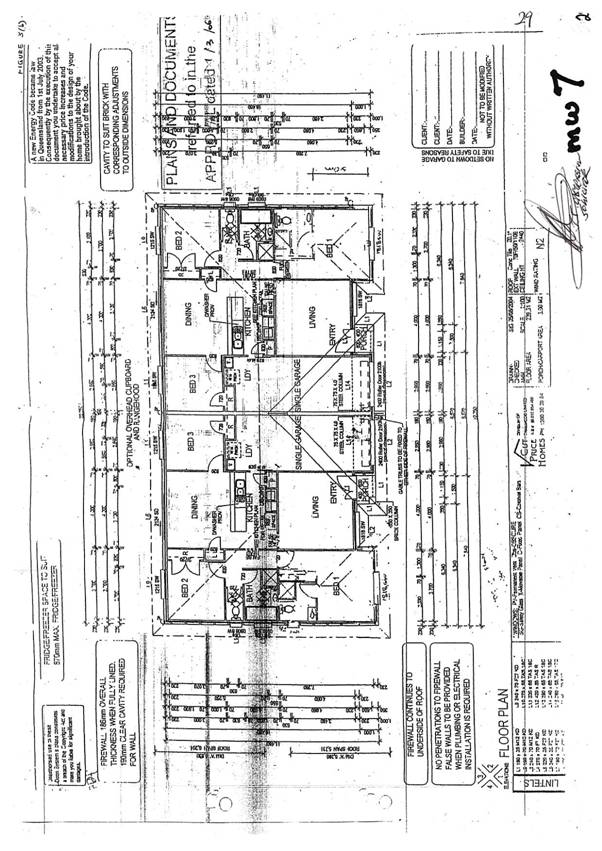
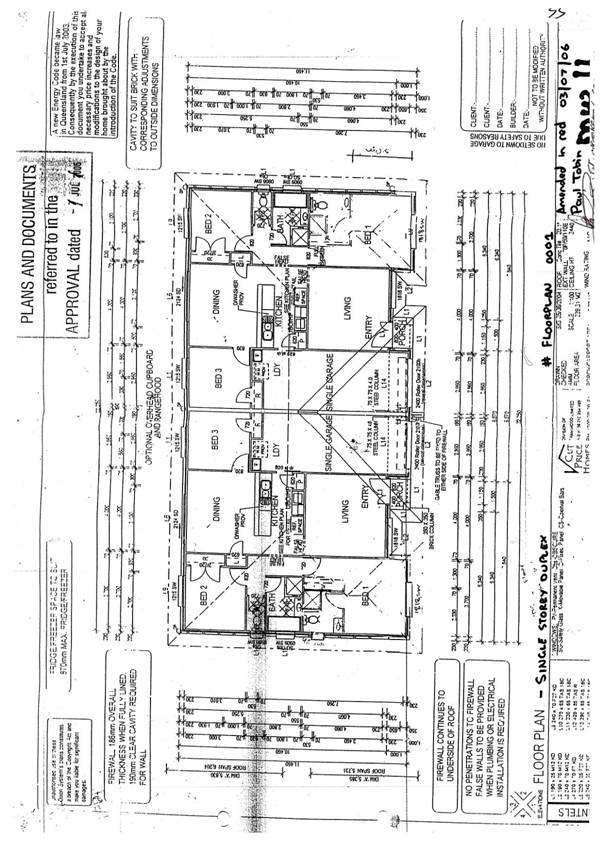
8 Some time in 2005 Habitare engaged in discussions with Tamawood with a view to Tamawood producing plans to suit Habitare sites owned by the seventh respondent, Eight March, and the eighth respondent, First Priority Developments. The sites were at Hamish Street, Calamvale in Queensland, and Gawler Street/Norris Road, Brackenridge in Queensland. Plans relating to the sites were produced by Tamawood.
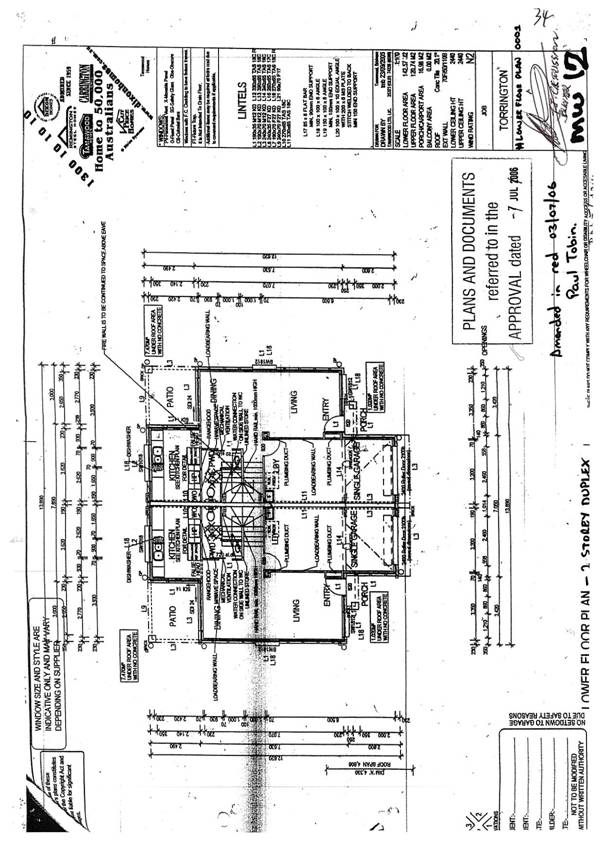
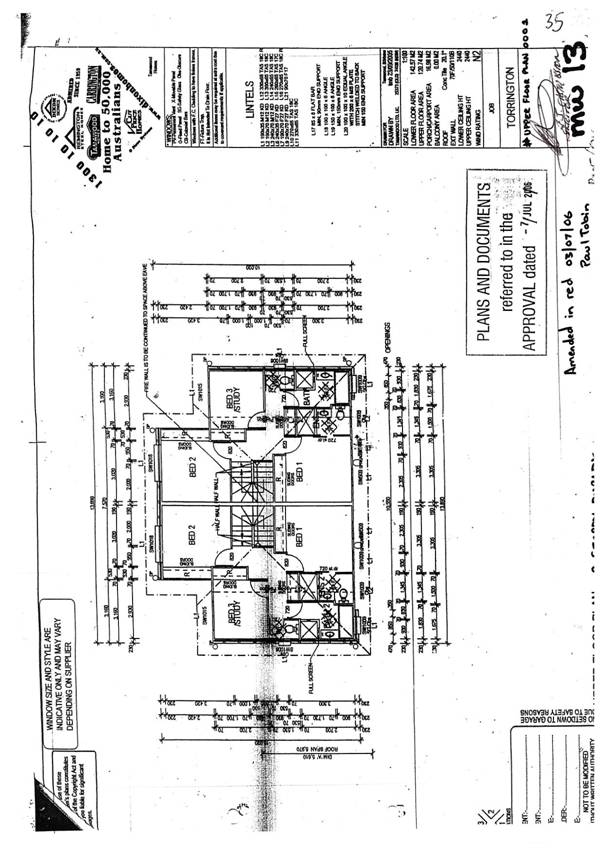
9 Habitare sought and obtained development approval from the Brisbane City Council in respect of those sites using the plans produced by Tamawood. The plans in relation to which the Brisbane City Council granted development approval are in evidence before the Court, exhibited to the affidavit of Mr Marcel Weyland sworn 11 March 2011. They are as follows:
MW7:
MW11:
MW12:
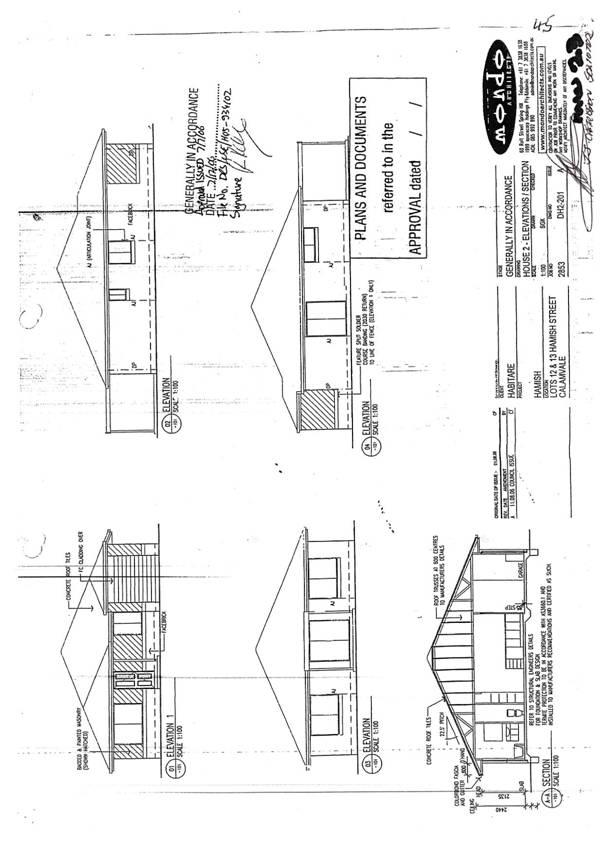
MW13:
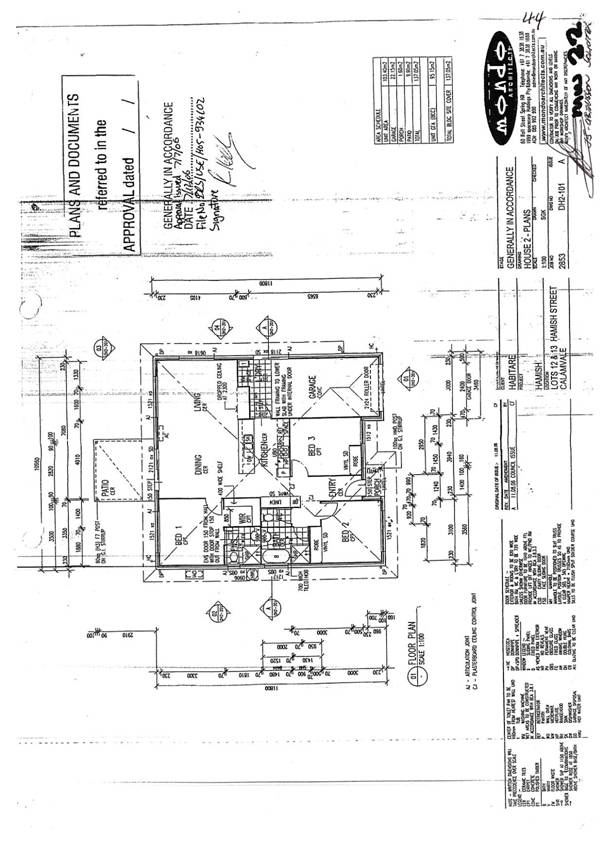
MW8:
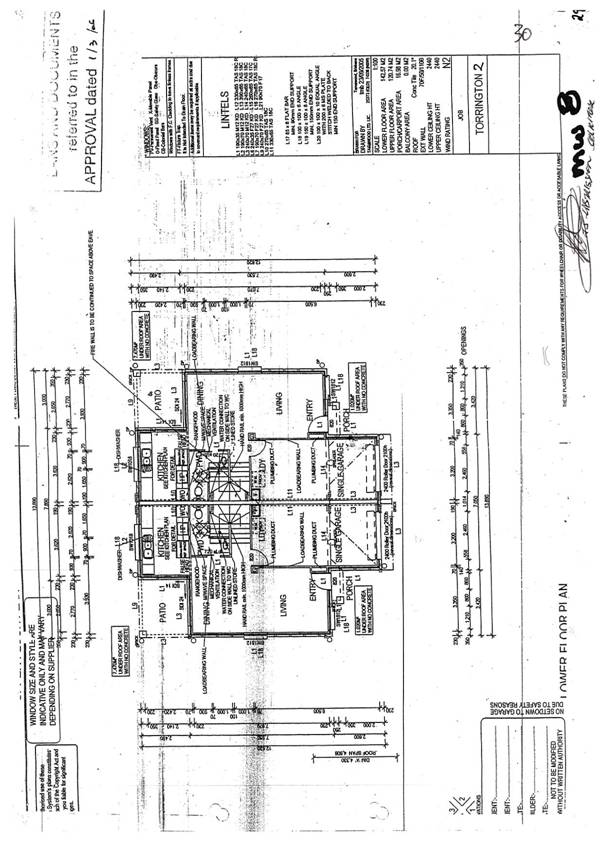
MW9:
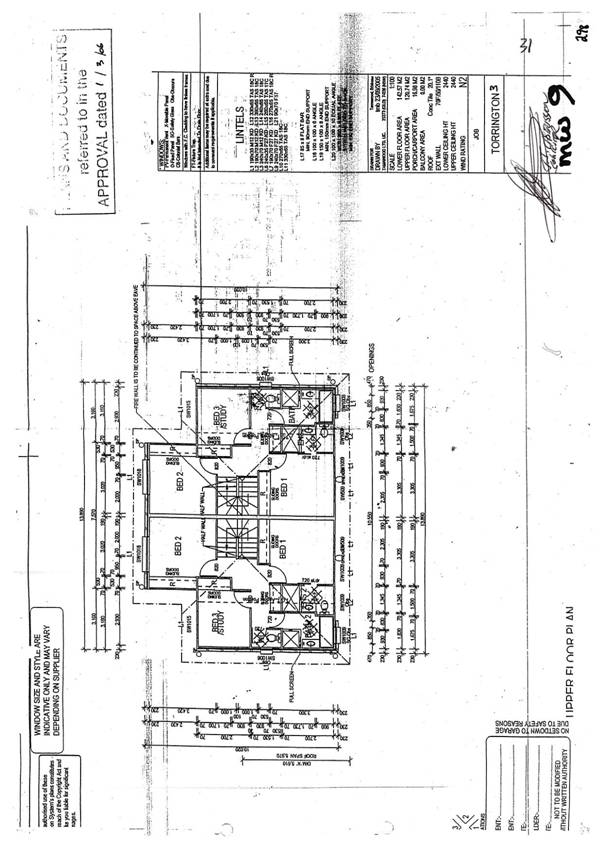
MW14:
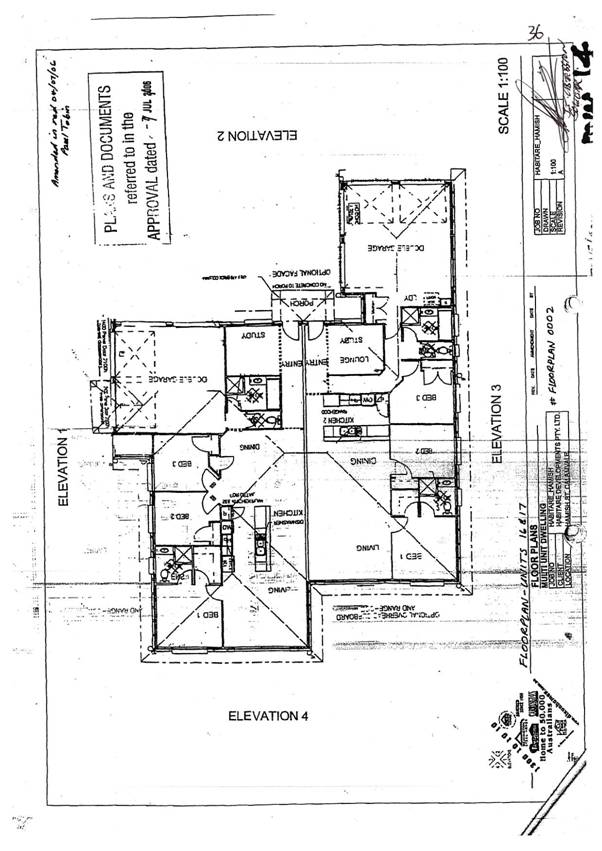
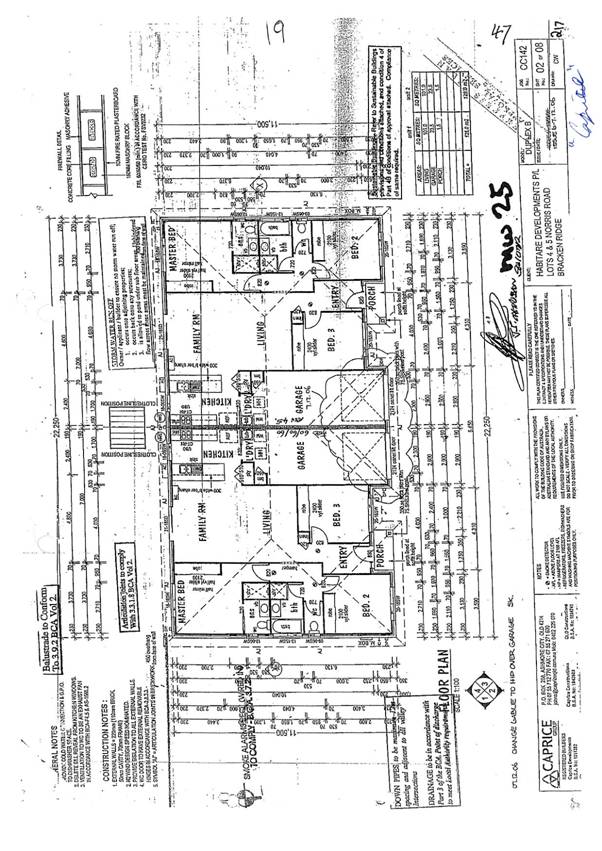
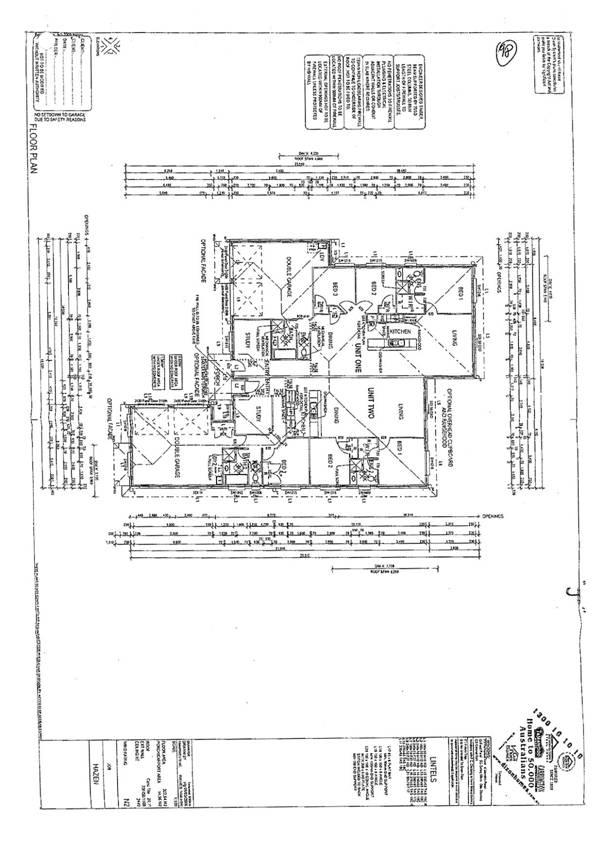
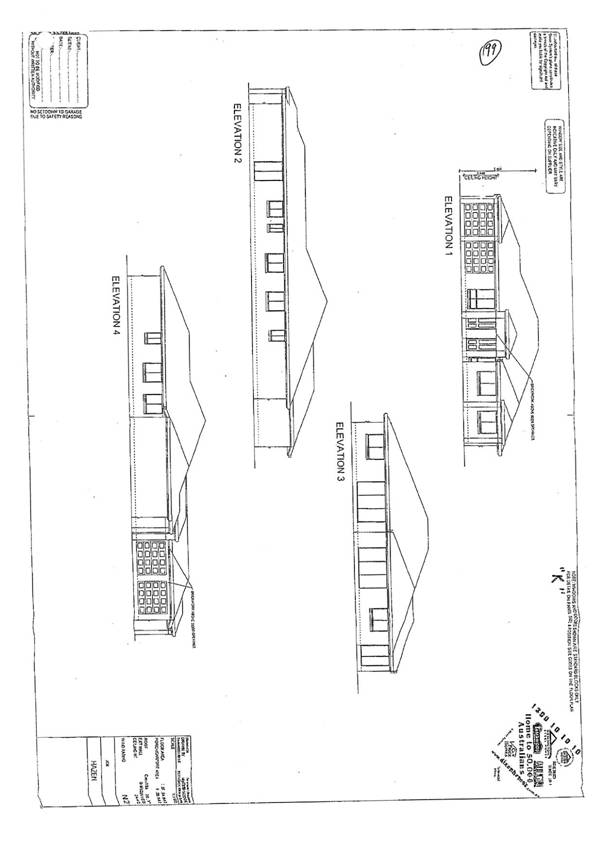
10 Subsequently however Habitare opted not to use the plans for which it had received development approval. Notwithstanding this decision, it is not in dispute that Habitare did not wish to commence fresh development approval applications with the Brisbane City Council in respect of dwellings to be constructed on those sites. It appears that Habitare then decided to proceed with the development projects in respect of plans which were “generally in accordance with” the plans which had received development approval, and approached the ninth respondent, Mondo, for assistance to develop new plans for which building certification could be obtained. At all material times Mr Raymond Sweeney was the director of Mondo.
11 On 11 October 2006 the Brisbane City Council accepted that Mondo’s drawings for the Calamvale site were “generally in accordance with” the development approval dated 7 July 2006, and these plans were so stamped on 7 December 2006.
12 On 6 December 2006 construction drawings prepared by Mondo in respect of the Brackenridge site were approved by the certifier, Express Plan Approvals Pty Ltd.
13 Construction drawings prepared by Mondo in respect of the Calamvale site were approved by the certifier, Certis Pty Ltd, on 17 August 2007.
14 The fifth respondent, Mr Wayne Bloomer, was a builder approached by Habitare to construct the relevant housing structures, and is a director of the second respondent Bloomer Constructions. It is not in dispute that dwellings were built at both sites in accordance with the certified plans.
15 In substance, Tamawood seeks relief in respect of alleged breach of copyright of housing plans of which it is the owner, against Habitare, the owners of the Calamvale and Brackenridge sites (Eight March and First Priority Developments), the builder of the Habitare housing projects (Mr Bloomer and Bloomer Constructions), and Mondo. In respect of Mr Peter O’Mara and Mr David Johnson, Tamawood presses a claim only for accessorial liability rather than primary infringement of copyright.
16 As I noted earlier, Mondo is the applicant in the two cross-claims currently before the Court. Mondo seeks relief:
in its first cross-claim filed 29 July 2011 – against Tamawood in respect of Tamawood’s alleged breach of Mondo’s copyright in respect of its plans; and
in its second cross-claim filed 15 August 2011 – against Habitare, for involving Mondo in Habitare’s alleged breach of Tamawood’s copyright in Tamawood plans.
17 A third cross-claim filed by Habitare on 5 August 2011 against Tamawood and Mondo was dismissed with costs on 26 September 2011 and is no longer in issue.
PRINCIPAL PROCEEDING – CLAIMS OF TAMAWOOD
18 In a further amended application filed 26 October 2010, Tamawood claims that it is the owner of the copyright in architectural drawings and plans and that the respondents have infringed its copyright. Tamawood states that the proceedings have been brought under s 115 of the Copyright Act 1968 (Cth) (“Copyright Act”). Tamawood also claims that the respondents have engaged in conduct in contravention of s 52 and s 53 of the Trade Practices Act 1974 (Cth) (“Trade Practices Act”) or been persons involved in such contraventions within the meaning of s 75B of that Act. On the grounds stated in Tamawood’s Third Further Amended Statement of Claim (“3rd FASC”) filed on 5 August 2011, Tamawood claims:
1. a declaration that the respondents have infringed the applicant’s copyright in the architectural drawings and plans known as Arcadia, Conondale, Torrington, Dunkeld, Armstrong and Hazen
2. damages
3. additional damages pursuant to section 115 of the Copyright Act
4. an account of profits
5. an order restraining the first, second, sixth, seventh, eighth and ninth respondents from further infringing the applicant’s copyright in those plans
6. damages pursuant to section 82 of the Trade Practices Act
7. interest pursuant to section 51A of the Federal Court of Australia Act 1976 (Cth) (“Federal Court Act”)
8. costs
9. such further or other orders as the Court deems just
19 Specifically, Tamawood claims that it owns the copyright which subsists in relation to a number of drawings, being drawings of floor plans and elevations, and drawings or illustrations of three dimensional projections. Those drawings (“Tamawood drawings”) are:
(a) of a dwelling entitled “Torrington” (“Torrington drawings”);
(b) of a dwelling entitled “Conondale” (“Conondale drawings”);
(c) of a dwelling entitled “Dunkeld” (“Dunkeld drawings”);
(d) of a dwelling entitled “Arcadia” (“Arcadia drawings”);
(e) of a dwelling entitled “Armstrong” (“Armstrong drawings”);
(f) of a dwelling entitled “Hazen” (“Hazen drawings”).
20 The only infringement of copyright in the Arcadia and Armstrong drawings claimed by Tamawood relates to the use by Habitare of those drawings in the application for development approval.
21 It follows that the focus of both submissions and evidence was on the Torrington, Conondale, Dunkeld and Hazen drawings. In relation to the Hazen plans, Tamawood only presses its claim for infringement of copyright against Habitare up to the development approval phase. To that extent it also follows that Tamawood does not press its claims concerning the Hazen drawings against respondents other than Habitare.
22 In relation to the Torrington drawings, Tamawood claims, in summary, as follows:
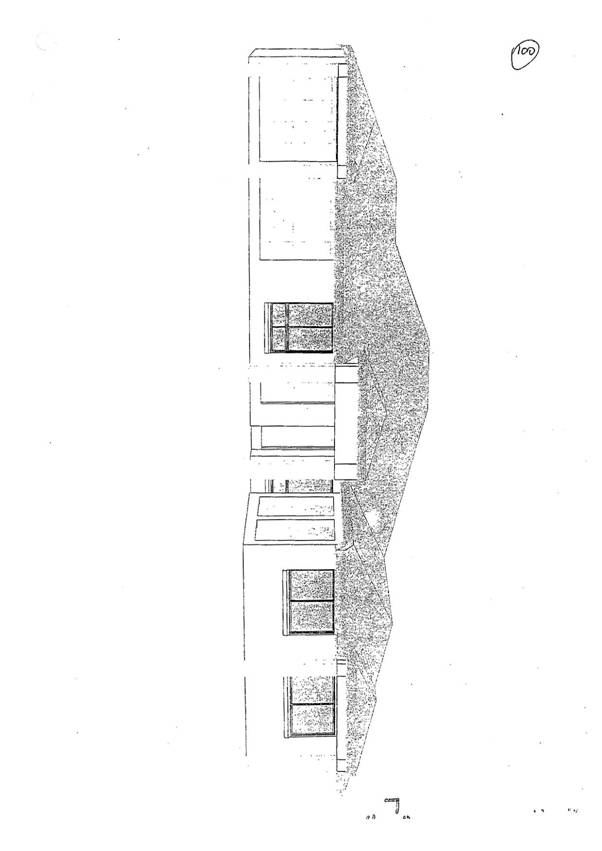
1. The Torrington plan is of a two storey duplex. Each home has three upstairs bedrooms (including a private ensuite to the master bedroom).
2. Drawings of the floor plans of the Torrington are as follows:
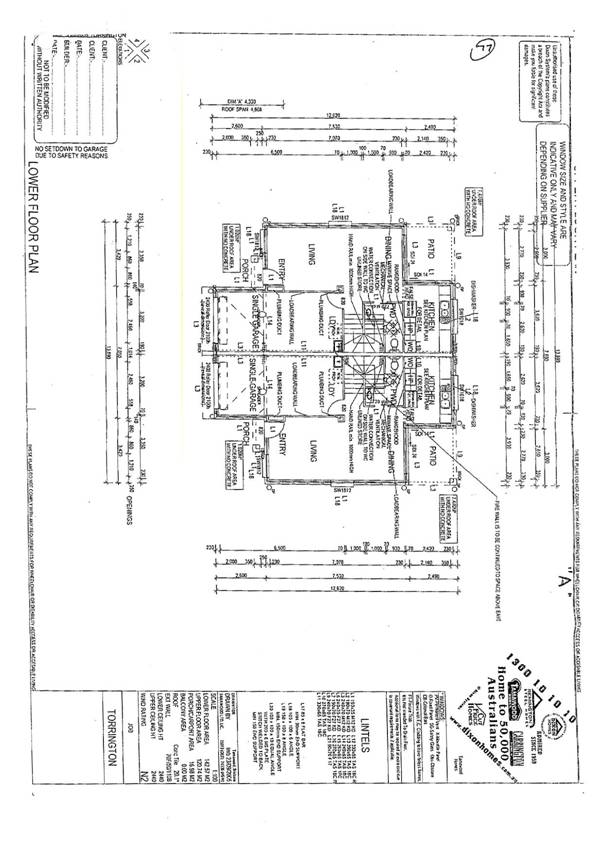
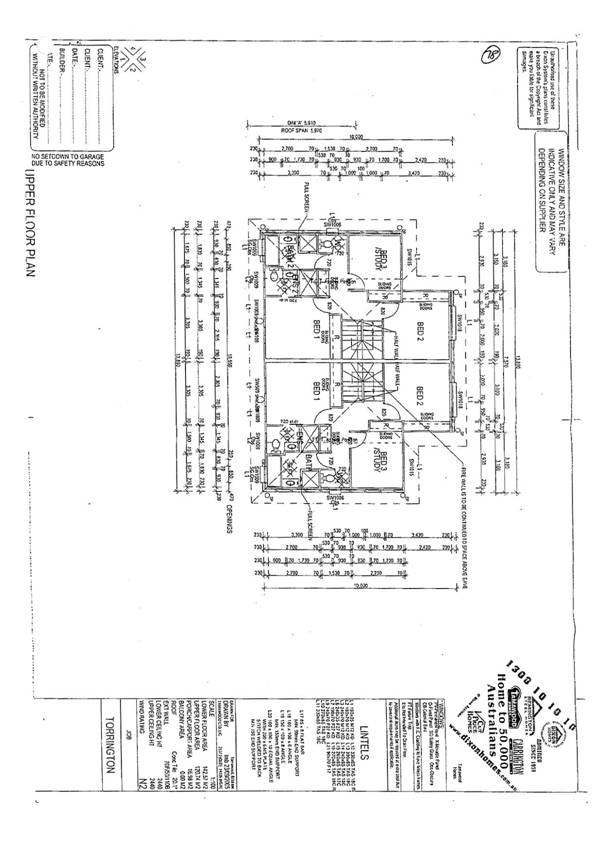
3. A drawing of the elevations of the Torrington is as follows:
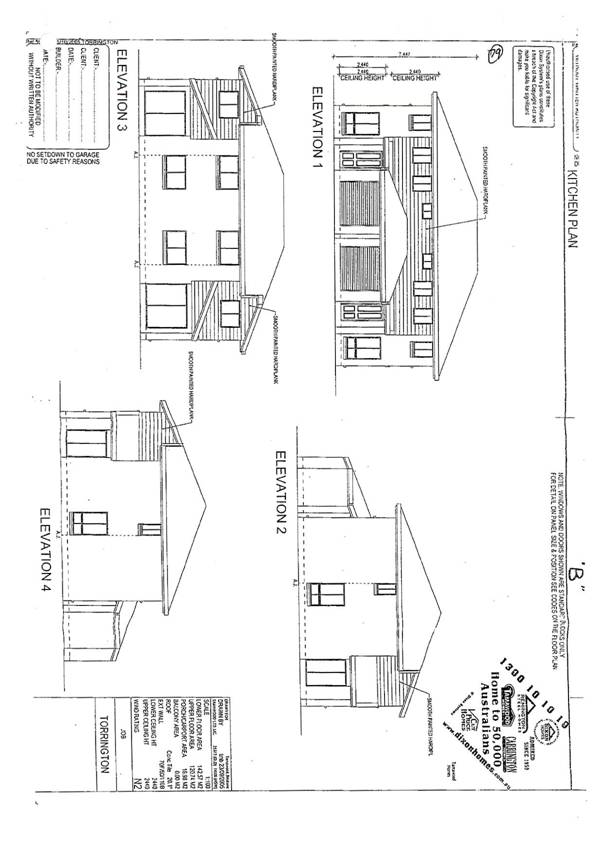
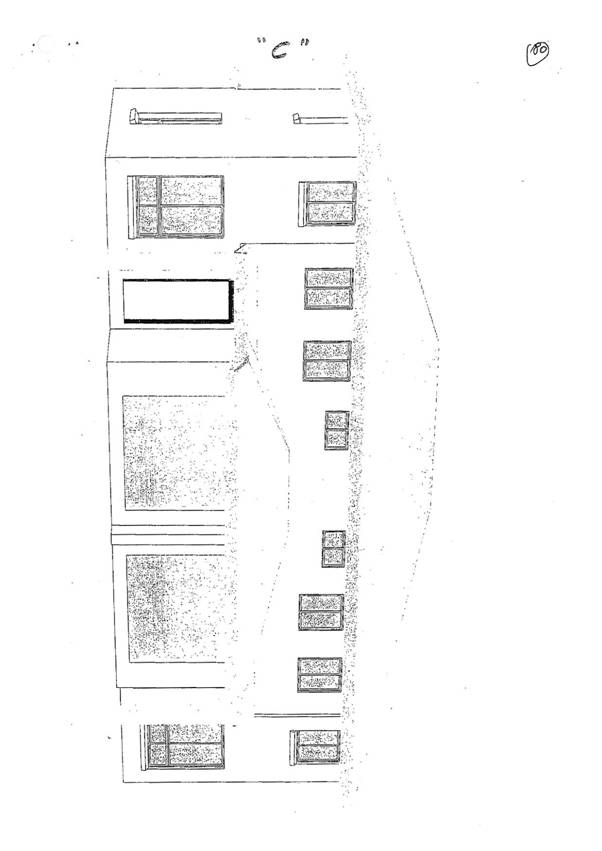
4. A drawing of a three dimensional projection of the Torrington is as follows:
5. The Torrington drawings were made by Mr Lev Mizikovsky in the course of his employment with Tamawood or an associated company on or about 21 September 2005. Copyright subsists in the Torrington drawings and Tamawood owns that copyright.
6. At some time in 2006 Habitare, Eight March and First Priority Developments retained Mondo to review and effect insubstantial changes to the Torrington, Dunkeld, Armstrong and/or Hazen drawings to be used in the project developments.
7. New designs in keeping with the same parameters as the Tamawood plans were prepared by Mondo.
8. Bloomer Constructions built dwellings for Habitare, Eight March and First Priority Developments at the Calamvale and Brackenridge sites in accordance with Mondo designs.
9. At all material times the respondents knew that copyright subsisted in the Torrington drawings and that Tamawood, being the copyright owner, did not consent to the reproduction of a substantial part of the Torrington drawings. Alternatively the respondents were recklessly indifferent to these circumstances. In relation to the second, third, fourth, fifth and ninth respondents, Tamawood claims that they were recklessly indifferent because (inter alia) they knew that Tamawood was a well-known builder in the Brisbane area, but did not make inquiries of Tamawood as to whether it permitted its drawings to be substantially reproduced or used for the building of the dwellings at Calamvale and Brackenridge.
10. Habitare, Eight March and First Priority Developments have, without the licence of Tamawood:
(a) used Tamawood’s drawings of the Torrington in submissions to the Brisbane City Council for approval of developments at Calamvale and Brackenridge (that is – in the form identified as MW12 and MW13 to the affidavit of Mr Weyland); and
(b) made or procured (from Mondo) the makings of drawings which are reproductions of a substantial part of the Torrington drawings (being floor plans, elevations and drawings or illustrations of three dimensional projections) although referred to as “Duplex A” (at Brackenridge) and “Duplex 2” (at Calamvale), subsequent to which duplexes were constructed by Bloomer Constructions in accordance with the Mondo plans.
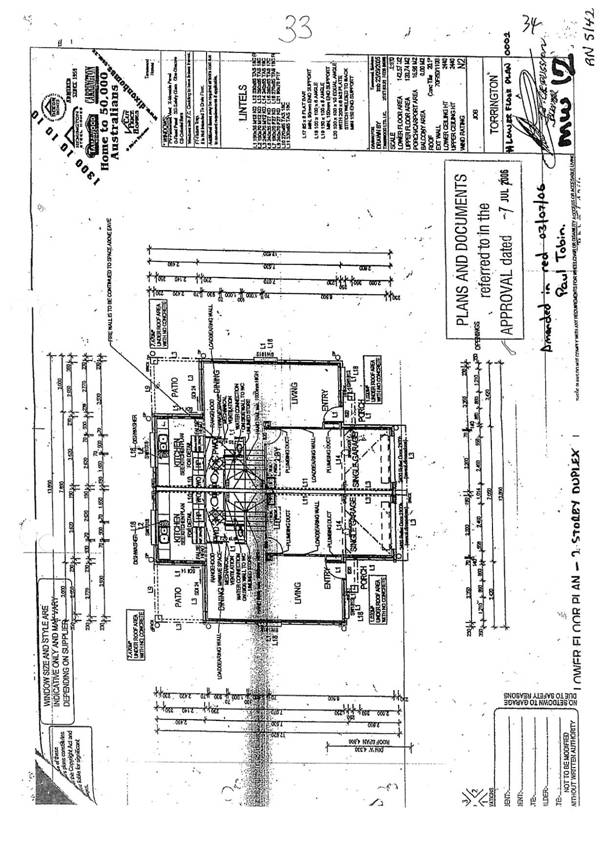
11. Exhibit MW12 to Mr Weyland’s affidavit is as follows:
12. Exhibit MW13 to Mr Weyland’s affidavit is as follows:
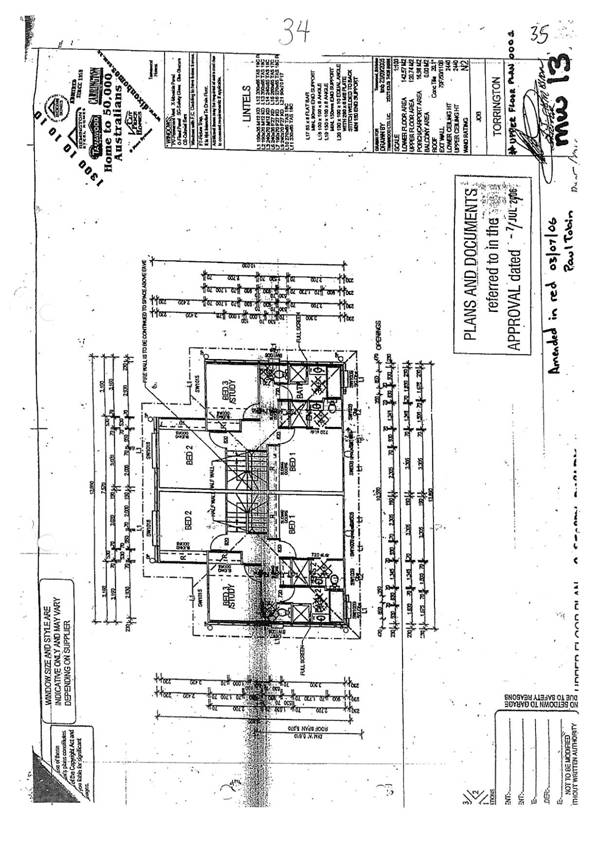
13. A drawing of the floor plans of the Duplex A is as follows:
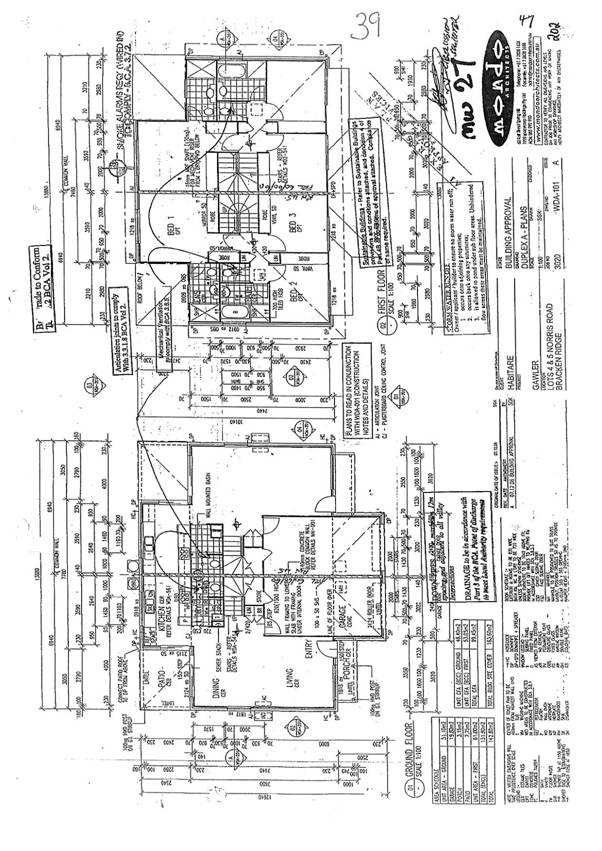
14. A drawing of the elevations of the Duplex A is as follows:
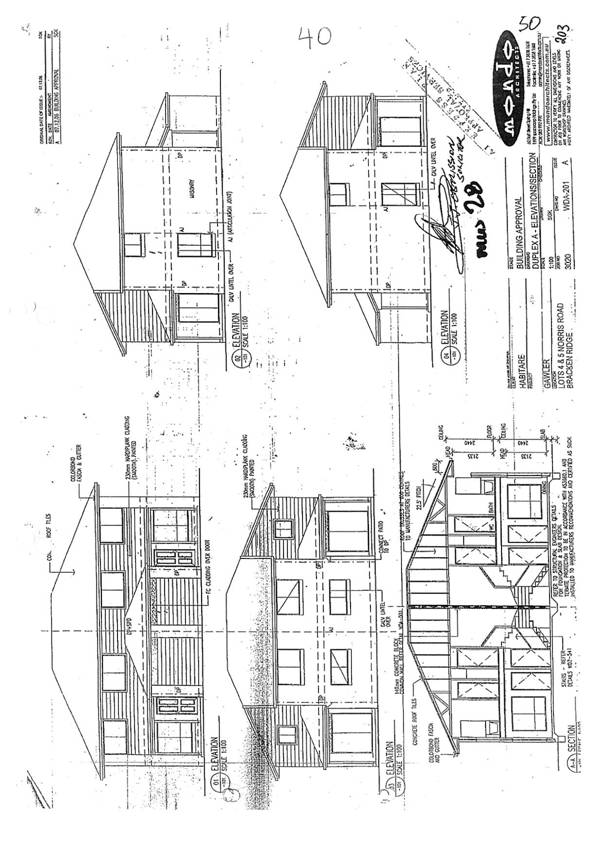
15. A drawing of the floor plans of the Duplex 2 is as follows:
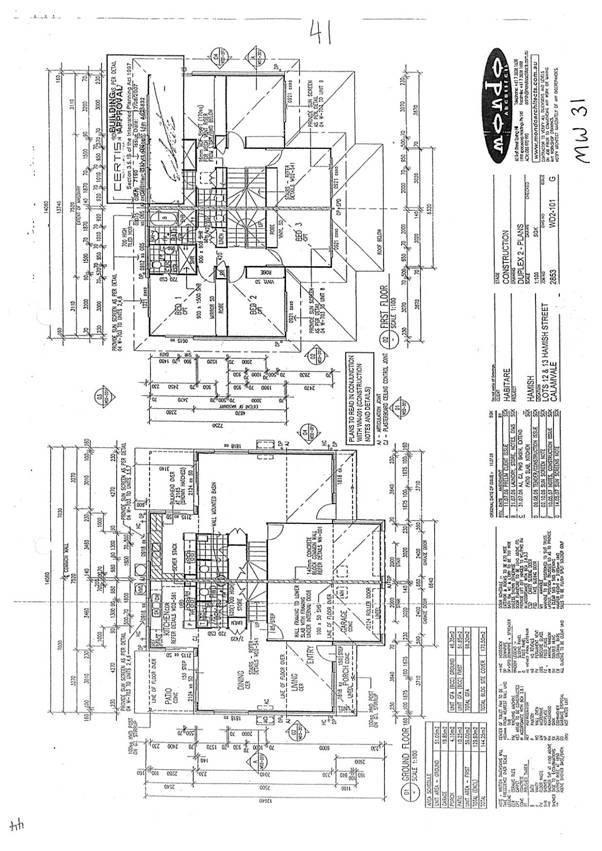
16. A drawing of the elevations of the Duplex 2 is as follows:
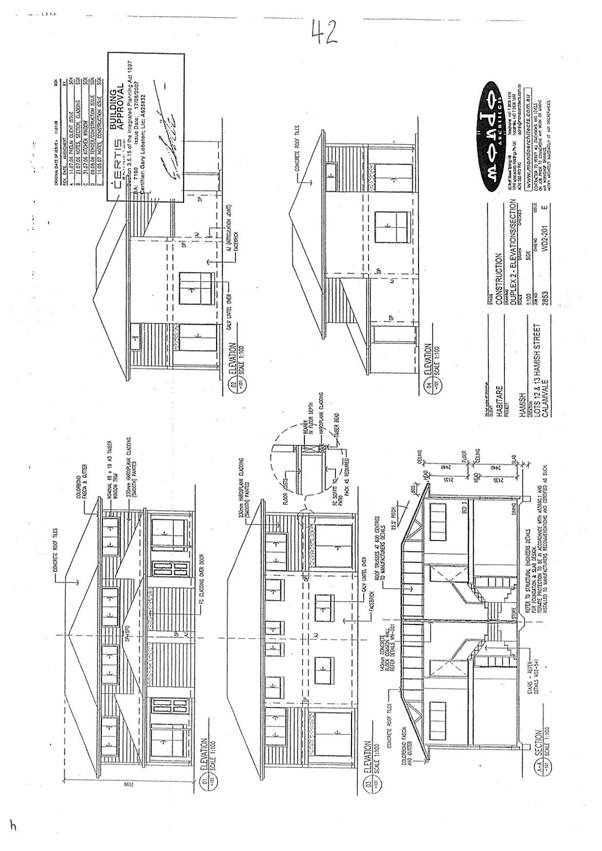
17. Habitare, Bloomer Constructions, Eight March and First Priority Developments have, without the licence of Tamawood, used Tamawood’s Torrington drawings to build dwellings in accordance with that design or in accordance with Duplex 2 and Duplex A drawings.
18. Mondo made drawings (without the licence of Tamawood) which are reproductions of a substantial part of the Torrington drawings (that is Duplex 2 and Duplex A).
19. Conduct of Habitare in respect of the drawings was authorised by Mr O’Mara and Mr Johnson.
20. Habitare, Bloomer Constructions, Eight March, First Priority Developments and Mondo acted in concert pursuant to a common design to infringe Tamawood’s copyright in the Torrington drawings.
23 Further to these claims, in its Reply filed 28 September 2011 Tamawood contested the existence of any licence in Habitare in respect of use of Tamawood drawings as submitted by the respondents. This is because, inter alia:
In his affidavit sworn 9 August 2011, Mr Peter Souter-Robertson, a salesman employed by Tamawood, deposed that he had made it clear in conversations with Mr O’Mara and Mr Peter Speer of Habitare that Tamawood would permit use of its plans by lodgment of the plans with the Brisbane City Council for development approval, on the basis that Tamawood was to build the houses in the proposed developments, and not otherwise.
Since Tamawood was not so retained, there was no licence to use the Tamawood plans for development consent or thereafter.
There was no consideration from any of the respondents to support the claimed licence.
24 Similar claims were made in relation to the Conondale, Dunkeld and Hazen plans produced by Tamawood.
25 The Conondale and Dunkeld drawings are alike, being plans for a single storey duplex, each home having three bedrooms. There is some evidence that the Dunkeld was an “evolved” version of the earlier Conondale design (I note in particular evidence of Mr Weyland in his affidavit sworn 11 March 2011 (cf transcript 21 October 2011, pp 244-246)). The key difference between the Conondale and the Dunkeld designs is that a version of the Conondale plan did not offer a separate ensuite bathroom for Bedroom 1, whereas the Dunkeld design had that feature.
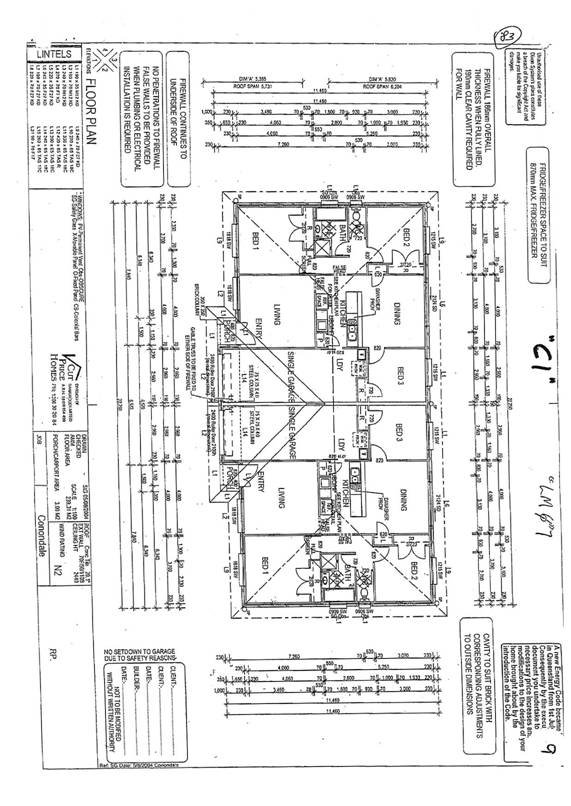
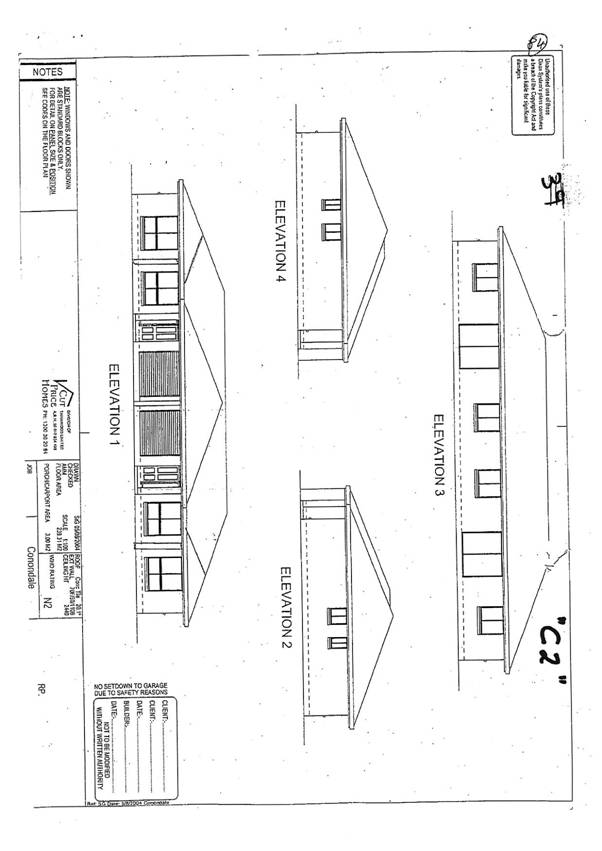
26 The relevant Conondale drawings were as follows:
the floor plan of the Conondale:
the elevations of the Conondale:
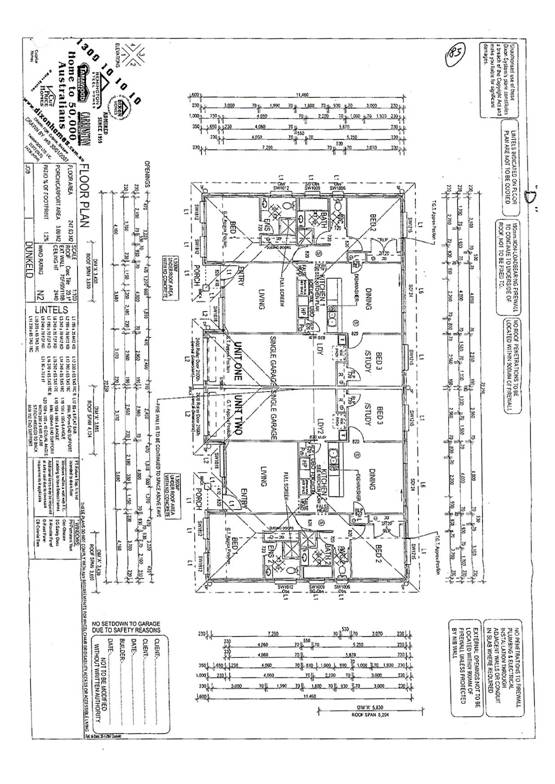
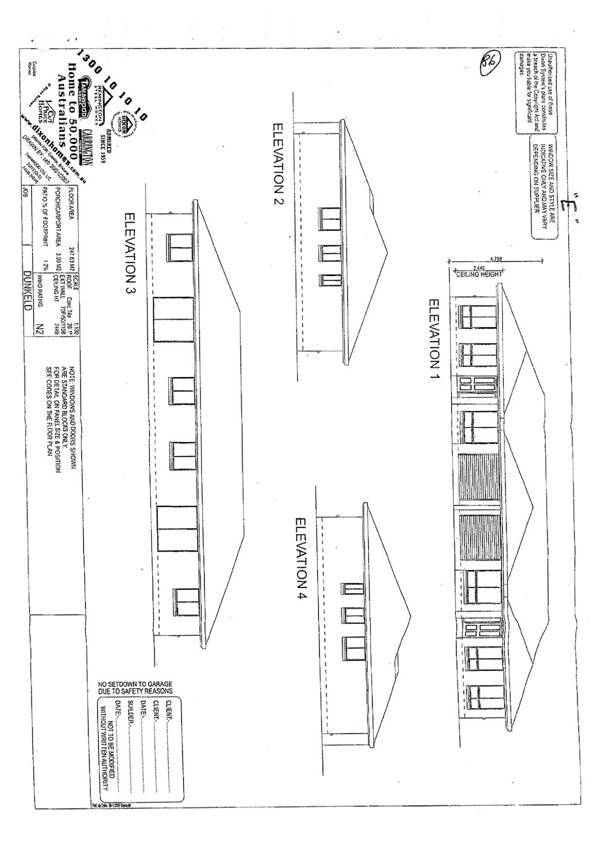
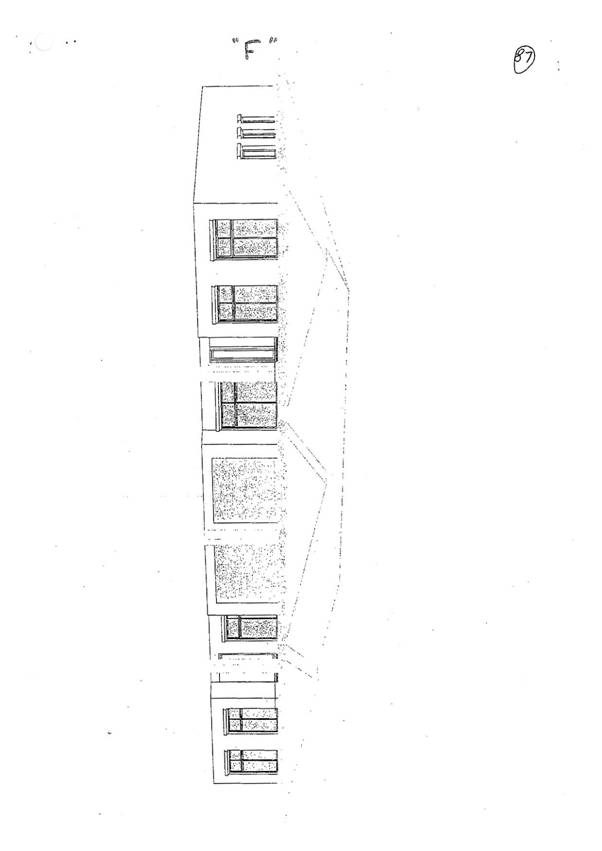
27 The relevant Dunkeld drawings were as follows:
the floor plan of the Dunkeld:
the elevations of the Dunkeld:
a three dimensional projection of the Dunkeld:
28 Tamawood claims in summary that:
the Conondale drawings were made by Mr Alejandro Cohn and/or Mr Scott Gerchow in the course of their employment with Tamawood or an associated company in or about March 2004;
the Dunkeld drawings were made by Mr Lev Mizikovsky in or about November 2005 in the course of his employment with Tamawood or an associated company; and
copyright subsists in both the Conondale drawings and the Dunkeld drawings, and Tamawood owns that copyright.
29 Tamawood claims further that without the licence of Tamawood, the Conondale and/or Dunkeld drawings were used by Habitare, Eight March and First Priority Developments in submissions to the Brisbane City Council for approval of developments at Calamvale and Brackenridge. The plans which were submitted to the Brisbane City Council for development approval are exhibited to the affidavit of Mr Weyland sworn 11 March 2011 as MW7 (in relation to the Brackenridge site) and MW11 (in relation to the Calamvale site). Tamawood claims that these plans were, essentially, the Conondale drawings.
30 The drawing at exhibit MW7 was as follows:
31 The drawing at exhibit MW11 was as follows:
32 The Brisbane City Council gave conditional development consent or approval to those developments on the basis of those drawings.
33 Tamawood further claims (in summary) that Habitare, Eight March and First Priority Developments made or procured (from Mondo) the makings of drawings “generally in accordance” with the Conondale/Dunkeld plans which were submitted to the Brisbane City Council. Both duplex plans and single dwelling plans were prepared by Mondo, “generally in accordance with” the plans which had received development approval. The duplex plan designed by Mondo was “Duplex 1” (at the Calamvale site). The single dwelling plan designed by Mondo, for the Calamvale site, was “House Plan 2” (without private ensuite to Bedroom 1) and “House Plan 1” (with private ensuite).
34 The Duplex B design, which was used by Habitare for construction of duplexes at the Brackenridge site, is similar in a number of ways to Mondo’s Duplex 1. It appears however that the Duplex B design was produced by another architectural company, Caprice Group. Evidence before the Court concerning Habitare’s relationship with Caprice Group is scanty, and supports inferences that Habitare had had discussions of some kind with Caprice Group in 2006, that Caprice Group had commenced building duplexes at Brackenridge in or about July 2006, but that Caprice Group had become insolvent. Caprice Group is not a party to these proceedings, nor are any facts associated with Caprice Group the subject of pleadings.
35 Plans prepared by Mondo which received approval from the Brisbane City Council as being “generally in accordance with” the plans already approved were exhibited to the affidavit of Mr Weyland sworn 11 March 2011 as MW16 and MW17, and as a single dwelling version MW22 and MW23. These plans are as follows:
the floor plan of Duplex 1:
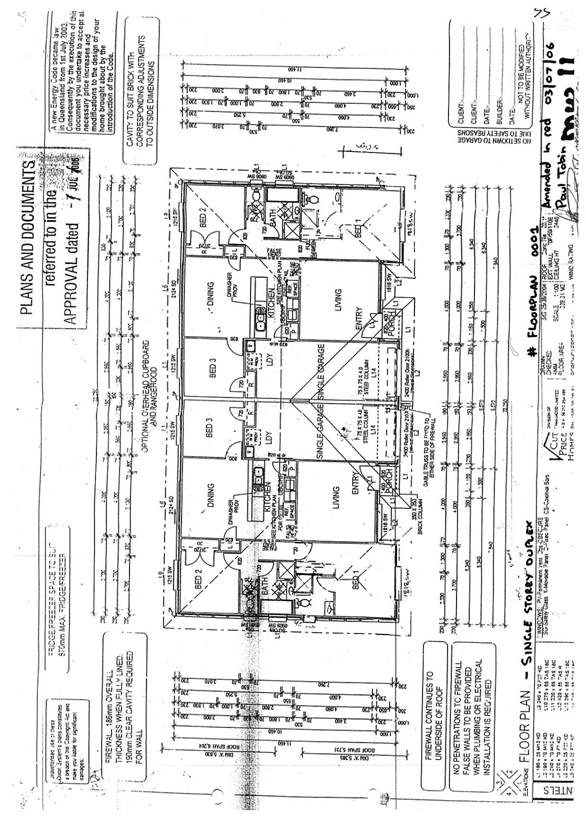
the elevations of Duplex 1:
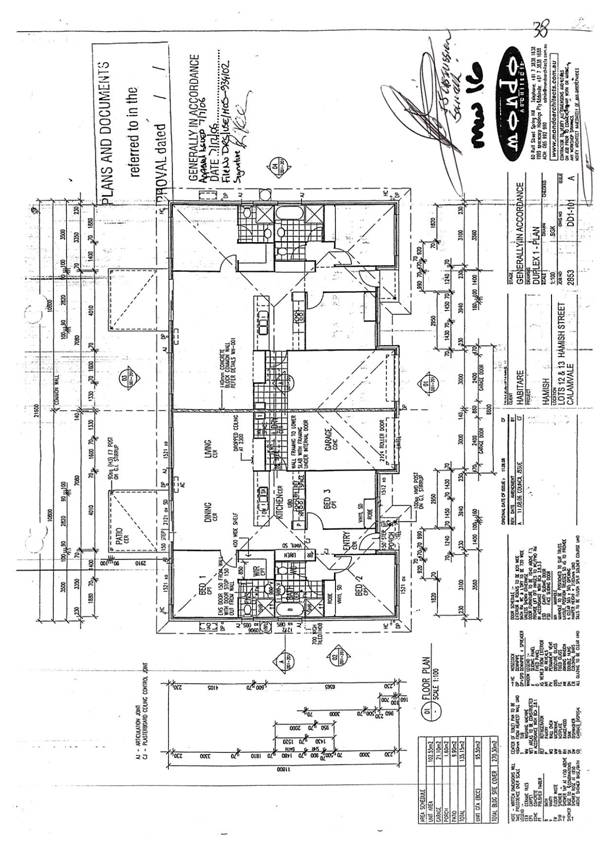
the floor plan of House Plan 2:
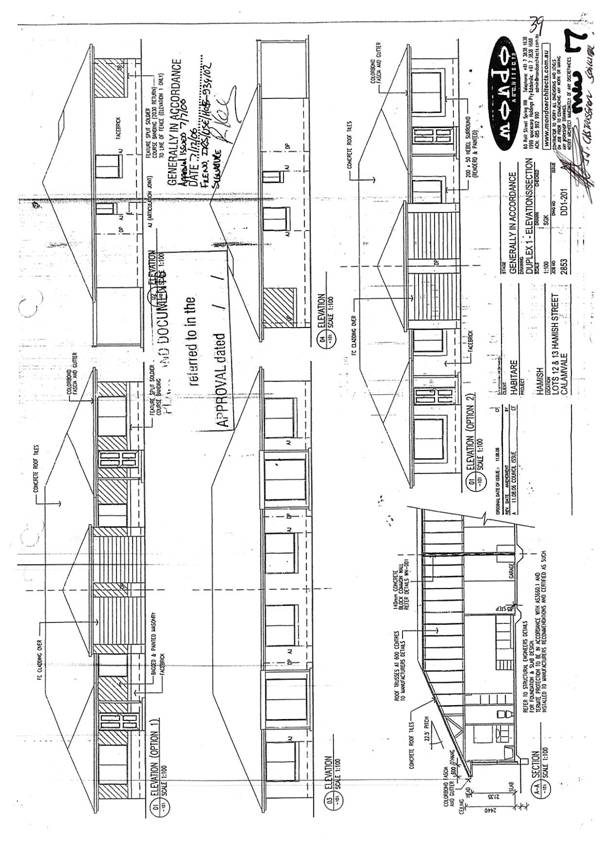
the elevations of House Plan 2:
36 The Duplex B design prepared originally by Caprice Group is as follows:
37 Tamawood also claims (in summary) that dwellings in accordance with these plans were constructed by Bloomer Constructions.
38 In relation to the Hazen drawings, Tamawood repeats claims similar to those made in relation to the Torrington, Conondale and Dunkeld drawings concerning use by Habitare of the Hazen drawings in seeking development approval from the Brisbane City Council for construction of dwellings at the Calamvale site. Specifically, Tamawood claims that the Hazen drawings were included in Habitare’s application, depicting some of the dwellings that were proposed to be constructed at the Calamvale site. The Hazen plans are of a single story duplex, each home with three bedrooms, a study and a double garage.
39 A drawing of the floor plan of the Hazen is as follows:
40 A drawing of the elevations of the Hazen is as follows:
41 A drawing of a three dimensional projection of the Hazen is as follows:
42 Tamawood claims that the Hazen drawings were made by Mr Lev Mizikovsky and or Ms Rachel Prestidge on or about 4 February 2004, and that copyright in those drawings subsists in Tamawood.
43 As I have already noted, Tamawood also claims that its copyright in the Arcadia and Armstrong drawings was infringed by Habitare using those drawings, without the licence of Tamawood, in Habitare’s application to the Brisbane City Council for development approval.
44 Finally, Tamawood claims, inter alia, that Habitare, Bloomer Constructions, Eight March and First Priority Developments impliedly represented that they owned all rights and privileges in any copyright in the plans for the dwellings built and sold at the Brackenridge and Calamvale sites, and that such representations were misleading and deceptive contrary to s 52 of the Trade Practices Act. Tamawood further claims (in summary) that this conduct was aided, abetted or procured by Mr O’Mara, Mr Johnson and Mr Bloomer.
45 The principal proceedings were strongly defended by all respondents.
PRINCIPAL PROCEEDINGS - DEFENCES
46 Habitare, Mr O’Mara, Mr Johnson, Eight March and First Priority Developments concede a number of important points claimed by Tamawood. In particular, they concede that:
Habitare submitted an application for development approval with the Brisbane City Council in respect of the Calamvale site which included the Hazen, Dunkeld, Torrington and Armstrong plans.
Eight March submitted an application for development approval with the Brisbane City Council in respect of the Brackenridge site which included the Dunkeld, Armstrong and Torrington plans.
Subsequent to negotiations between representatives of Tamawood and Habitare, negotiations broke down between the parties and Tamawood was not retained to construct any of the dwellings on the Calamvale or Brackenridge sites.
Habitare procured Mondo to make drawings.
Dwellings were constructed in accordance with drawings prepared by Mondo.
47 Otherwise they oppose Tamawood’s claims on grounds including:
Eight March and First Priority Developments did not retain Mondo.
Although Habitare retained Mondo, it was not to review and effect insubstantial changes to the Tamawood drawings. Further, it was an express term of the Mondo contract that Mondo prepare plans and drawings which did not infringe any copyright in respect of the plans and drawings already lodged with the Brisbane City Council.
In any event, during negotiations between Habitare representatives and Tamawood representatives (in particular Mr Lev Mizikovsky and Mr Peter Souter-Robertson), Tamawood advised Habitare that the plans provided by Tamawood could be used for the purpose of seeking development approval from the Brisbane City Council. To that extent, Tamawood granted Habitare an express licence to use the plans to seek development approval. That licence extended to anyone involved in the developments.
It was an implied term of the licence that the Tamawood plans could be amended to the extent reasonably required in seeking development approval.
It was an implied term of the licence that the Tamawood plans could be reproduced or substantially reproduced by or on behalf of Habitare in carrying out the developments.
Eight March and First Priority Developments had no relationship with Bloomer Constructions.
Although Mondo made drawings other than under licence from Tamawood, those drawings were not reproductions or substantial reproductions of Tamawood plans.
48 Bloomer Constructions and Mr Bloomer similarly deny Tamawood’s claims. In particular, they deny liability for the further damages claimed on the basis that (in summary) at the time of the alleged infringements they had no reasonable grounds for suspecting that the acts alleged to constitute infringement of copyright were infringements of copyright because the drawings provided to them for the purpose of construction made no reference to Tamawood. They further deny that they have engaged in misleading and deceptive conduct, because at all material times from the time of entry into the agreement to build the dwellings the second respondent relied on a contractual warranty as to the developer’s right to all relevant intellectual property, including as to relevant drawings.
49 In its Amended Defence dated 19 August 2011 Mondo claims, in summary, as follows:
In relation to the Torrington drawings:
Mondo denies that any copyright subsisted in Tamawood, because there were notations on the drawings indicating that any copyright subsisted in “Dixon Systems”, which is a legal entity separate from Tamawood;
they are not original artistic works of Tamawood because, inter alia, they depict familiar ideas and are similar to other designs for dwellings;
in fact, they are copies of Mondo’s drawings for the Duplex A and Duplex 2;
in any event, by providing the Torrington drawings for the purposes of development approval from the Brisbane City Council, Tamawood represented to any person or entity viewing the development approval that the owner of the copyright in those drawings:
consented to a substantial reproduction of the drawings by the preparation of construction drawings based on those drawings the subject of the development approval; and
gave the respondents a licence to use the Torrington drawings to carry into effect the development approval by preparing construction drawings, constructing the dwellings shown in the Torrington drawings and marketing those dwellings to the public;
in or about June 2006 Mr Speer on behalf of Habitare and Mr Sweeney on behalf of Mondo had a conversation in which, inter alia, Mr Speer assured Mr Sweeney that there were no outstanding issues or problems between Tamawood and Habitare.
In relation to the Conondale, Dunkeld and Hazen drawings:
Mondo denies that any copyright subsisted in Tamawood, because there were notations on the Dunkeld and Hazen drawings indicating that any copyright subsisted in “Dixon Systems”, which is a legal entity separate from Tamawood;
they are not original artistic works of Tamawood because, inter alia, they depict familiar ideas and are similar to other designs for dwellings;
Mondo denies that it knew that copyright subsisted in these drawings or that the copyright owner did not consent to the reproduction of a part or a substantial part of these drawings;
further, if copyright did subsist in those drawings, Tamawood had made representations in relation to their use similar to those representations made in respect of the Torrington drawings;
Mondo understood that it was entitled to use the drawings in light of the conversation in or about June 2006 between Mr Speer and Mr Sweeney;
Mondo denies that it created or was retained for the purpose of creating substantial reproductions of any copyright works.
CROSS-CLAIM: MONDO V TAMAWOOD
50 By cross-claim filed on 29 July 2011 against Tamawood, Mondo claimed, in substance, that:
Between 1996 and 2001 Mr Raymond Sweeney had authored drawings in the course of his employment with Primal Pty Ltd, which drawings were subsequently reduced to computer generated versions using the computer aided design (CAD) program by employees of Mondotecture Pty Ltd (a wholly owned subsidiary of Primal Pty Ltd (“the Mondo drawings”).
Copyright subsisted in the Mondo drawings, and by deed dated 22 July 2011 Primal Pty Ltd and Mondotecture Pty Ltd assigned all interest in copyright in that work to Mondo.
Tamawood carried on the business of the design and construction of dwellings of the type shown in the Mondo drawings.
Tamawood has infringed copyright in the Mondo drawings by reproducing them in a material form as, in summary, the Torrington drawings, and in turn providing them in late 2004 or early 2005 to the Habitare parties.
Tamawood continues to use the infringing drawings in developments throughout Australia.
51 Mondo seeks:
a declaration that it is the owner of the copyright subsisting in the Mondo drawings;
an injunction to restrain Tamawood from infringing its copyright;
damages for infringement of copyright, including additional damages pursuant to s 115(4) of the Copyright Act;
alternatively, an account of profits;
alternatively, damages pursuant to s 116 of the Copyright Act for wrongful conversion and/or detention of infringing copies of the Mondo drawings;
interest upon any such damages;
delivery up to Mondo of all infringing materials; and
costs.
52 Tamawood disputes the cross-claim.
CROSS-CLAIM: MONDO V HABITARE, MR SPEER AND MR O’MARA
53 By cross-claim filed on 15 August 2011 Mondo claimed, in substance, that should Tamawood succeed in the main action against Mondo, Mondo was entitled to damages or an indemnity in respect of any money it was ordered to pay, the costs of defence to the main action, and the costs of these proceedings against Habitare, Mr Peter Speer and Mr Shane O’Mara. The basis of this claim was, in summary:
In or about June 2006 Mr Speer and Mr O’Mara had a conversation with Mr Sweeney during which:
Mr Speer showed Mr Sweeney a copy of drawings attached to the Hamish Street development application;
Mr Sweeney commented unfavourably on the quality of those drawings;
Mr Sweeney asked whether there were “any outstanding issues between Tamawood and Habitare” and whether “everything [was] resolved with Tamawood” to permit Habitare to continue with the development approval process with the Brisbane City Council;
Mr Speer and Mr O’Mara informed Mr Sweeney that “everything is fine” and “there is no problem”;
Mr Sweeney advised Mr Speer that Mondo could provide architectural drawings for the purpose of the Hamish Street development, and that because plans attached to the development approval application were incomplete Mondo would use Mondo drawings for the development.
Habitare and Mondo entered into a contract in respect of the provision of architectural drawings.
Terms of the contract were:
Habitare warranted that there were no outstanding issues between Tamawood and Habitare;
Habitare warranted that it was entitled to use the Tamawood plans submitted to the Brisbane City Council for the purpose of obtaining the building approval;
Habitare warranted that the Tamawood plans could be used to create construction drawings for the Hamish Street development and that doing so would not constitute an infringement of Tamawood copyright because all outstanding issues had been settled between Tamawood and Habitare.
In fact Habitare had not obtained the consent of Tamawood to use the Tamawood plans in relation to the Hamish Street development, and it was not entitled to use those plans for that purpose.
Notwithstanding the representations by Mr Speer and Mr O’Mara, there clearly were outstanding issues between Tamawood and Habitare, namely Tamawood’s existing claim in respect of copyright over the plans the subject matter of the development approval. This constituted a representation to Mondo within the meaning of s 52 of the Trade Practices Act.
Mr Speer and Mr O’Mara knew of or were involved in the making of the representations by Habitare, and were knowingly concerned in the conduct of Habitare.
54 In defences filed 26 September 2011, Habitare, Mr Speer and Mr O’Mara deny the allegations in Mondo’s cross-claim. In particular, in paragraph 8 of each Defence to the Cross-Claim, they plead as follows:
a) after development approval for the Hamish Street site was received, Shane O’Mara and Peter Speer met with Ray Sweeney of Mondo Architects at Mr Sweeney’s office in Brisbane;
b) Speer explained to Sweeney that Tamawood’s plans formed part of the development approval for Hamish Street which he showed him;
c) Sweeney stated that the plans were very similar to his plans;
d) Speer said to Sweeney that Habitare did not want to have to go through the development approval process again as it would take too long. Habitare could not use the Tamawood plans for copyright reasons, so new plans were needed that would not cause copyright problems but would allow Habitare to get approval on the basis that the plans were substantially in accordance with the development application. He asked Sweeney if he could fix the problem;
e) Sweeney replied that he would re-do the plans using his designs, and there would be no problem.
LEGISLATIVE PROVISIONS RELEVANT TO ENTITLEMENT TO RELIEF
55 While basic provisions of the Copyright Act upon which Tamawood relies concerning the establishment of its copyright in the particular drawings, and infringement thereof, are not specifically pleaded, legislation relevant in this context was neatly summarised by Wilcox and Lindgren JJ in circumstances involving a similar claim (in Tamawood Limited v Henley Arch Pty Ltd (2004) 61 IPR 378; [2004] FCAFC 78) as follows:
[14] For the purposes of the Act, unless the contrary intention appears, copyright, in relation to a work, is the exclusive right, in the case of an artistic work, inter alia, ‘to reproduce the work in a material form’: s 31(1)(b)(i). Such reproduction is referred to in the Act as one of the ‘acts’ comprised in copyright (see, for example, ss 13(1), 31(1)(b)(i), 36(1)). Plans for a house, being ‘drawings’, are an artistic work, as is a ‘building’: s 10(1) (‘artistic work’).
[15] Copyright in an artistic work is infringed by a person who, not being the owner of the copyright, and without the licence of the owner, does in Australia, or authorises the doing in Australia, of any act comprised in the copyright: s 36(1). A reference in the Act to an act comprised in the copyright in a work, is to be read as a reference to any act that, under the Act, the owner of the copyright has the exclusive right to do: s 13(1).
[16] Subsections 14(1) and 21(3) of the Act provide as follows:
‘14(1) In this Act, unless the contrary intention appears:
(a) a reference to the doing of an act in relation to a work or other subject-matter shall be read as including a reference to the doing of that act in relation to a substantial part of the work or other subject-matter; and
(b) a reference to a reproduction, adaptation or copy of a work shall be read as including a reference to a reproduction, adaptation or copy of a substantial part of the work, as the case may be.’
‘21(3) For the purposes of this Act, an artistic work shall be deemed to have been reproduced:
(a) in the case of a work in a two-dimensional form – if a version of the work is produced in a three-dimensional form; or
(b) in the case of a work in a three-dimensional form – if a version of the work is produced in a two-dimensional form;
and the version of the work so produced shall be deemed to be a reproduction of the work.’
56 In my view the same provisions of the Copyright Act are applicable in this case.
57 Further, in the principal proceeding Tamawood relies for relief primarily on s 115 of the Copyright Act and s 52 and s 82 of the Trade Practices Act (as then in force).
58 So far as relevant, s 115 provides as follows:
115 Actions for infringement
(1) Subject to this Act, the owner of a copyright may bring an action for an infringement of the copyright.
(2) Subject to this Act, the relief that a court may grant in an action for an infringement of copyright includes an injunction (subject to such terms, if any, as the court thinks fit) and either damages or an account of profits.
(3) Where, in an action for infringement of copyright, it is established that an infringement was committed but it is also established that, at the time of the infringement, the defendant was not aware, and had no reasonable grounds for suspecting, that the act constituting the infringement was an infringement of the copyright, the plaintiff is not entitled under this section to any damages against the defendant in respect of the infringement, but is entitled to an account of profits in respect of the infringement whether any other relief is granted under this section or not.
(4) Where, in an action under this section:
(a) an infringement of copyright is established; and
(b) the court is satisfied that it is proper to do so, having regard to:
(i) the flagrancy of the infringement; and
(ia) the need to deter similar infringements of copyright; and
(ib) the conduct of the defendant after the act constituting the infringement or, if relevant, after the defendant was informed that the defendant had allegedly infringed the plaintiff’s copyright; and
(ii) whether the infringement involved the conversion of a work or other subject matter from hardcopy or analog form into a digital or other electronic machine readable form; and
(iii) any benefit shown to have accrued to the defendant by reason of the infringement; and
(iv) all other relevant matters;
the court may, in assessing damages for the infringement, award such additional damages as it considers appropriate in the circumstances.
59 Section 52 of the Trade Practices Act (in force at relevant times) provides:
52 Misleading or deceptive conduct
(1) A corporation shall not, in trade or commerce, engage in conduct that is misleading or deceptive or is likely to mislead or deceive.
(2) Nothing in the succeeding provisions of this Division shall be taken as limiting by implication the generality of subsection (1).
60 Section 82 of the Trade Practices Act (in force at relevant times) provides:
82 Actions for damages
(1) Subject to subsection (1AAA), a person who suffers loss or damage by conduct of another person that was done in contravention of a provision of Part IV, IVA, IVB or V or section 51AC may recover the amount of the loss or damage by action against that other person or against any person involved in the contravention.
(1AAA) A person who suffers loss or damage by conduct of another person may not recover the amount of the loss or damage by an action under subsection (1) to the extent to which:
(a) the action would be based on the conduct contravening a provision of Division 1 of Part V; and
(b) the loss or damage is, or results from, death or personal injury; and
(c) the death or personal injury does not result from smoking or other use of tobacco products.
(1AAB) Divisions 2 and 7 of Part VIB apply to an action under subsection (1) for loss or damage a person suffers by conduct of another person to the extent to which:
(a) the action is based on the conduct contravening a provision of Division 1 of Part V; and
(b) the loss or damage is, or results from, death or personal injury; and
(c) the death or personal injury results from smoking or other use of tobacco products;
as if the action were a proceeding to which Part VIB applies.
Note 1: Division 2 of Part VIB deals with the limitation periods that apply for claims for damages or compensation for death or personal injury and, to the extent to which that Division is applied to the action by this subsection, it overrides subsection (2) of this section.
Note 2: Division 7 of Part VIB deals with structured settlements for claims for damages or compensation for death or personal injury.
(1AA) Subsection (1) has effect subject to section 87AB.
Note: Section 87AB may limit the amount that the person may recover for a contravention of section 52 (Misleading or deceptive conduct) from the other person or from another person involved in the contravention.
(1B) Despite subsection (1), if:
(a) a person (the claimant) makes a claim under subsection (1) in relation to:
(i) economic loss; or
(ii) damage to property;
caused by conduct of another person (the defendant) that was done in contravention of section 52; and
(b) the claimant suffered the loss or damage:
(i) as a result partly of the claimant’s failure to take reasonable care; and
(ii) as a result partly of the conduct referred to in paragraph (a); and
(c) the defendant:
(i) did not intend to cause the loss or damage; and
(ii) did not fraudulently cause the loss or damage;
the damages that the claimant may recover in relation to the loss or damage are to be reduced to the extent to which the court thinks just and equitable having regard to the claimant’s share in the responsibility for the loss or damage.
Note: Part VIA also applies proportionate liability to a claim for damages under this section for a contravention of section 52.
(2) An action under subsection (1) may be commenced at any time within 6 years after the day on which the cause of action that relates to the conduct accrued.
Note: Part VIB restricts awards of compensation for death or personal injury, and sets out time limits for commencing actions for damages for death or personal injury.
(3) In this section:
smoking has the same meaning as in the Tobacco Advertising Prohibition Act 1992.
tobacco product has the same meaning as in the Tobacco Advertising Prohibition Act 1992.
61 I will now turn to the issues identified by the parties for decision in these proceedings. For convenience, in considering these issues I will adopt the numbering agreed by the parties in the Joint Statement of Issues, tendered at the hearing as exhibit 69(M).
IDENTIFICATION OF THE APPLICANT’S WORKS IN SUIT (THAT IS, THE TAMAWOOD DRAWINGS), WHETHER THE TAMAWOOD DRAWINGS ARE ORIGINAL ARTISTIC WORKS, AND WHETHER COPYRIGHT SUBSISTS IN THE TAMAWOOD DRAWINGS (ISSUES 1, 2 AND 3)
62 In summary, Tamawood claims that the author of the Tamawood drawings was principally Mr Lev Mizikovsky, who was at all material times the managing director of Tamawood. Tamawood claims further that others in its employ contributed to the authorship of relevant plans – for example Mr Peter Souter-Robertson in relation to the Torrington drawings, and Mr Alejandro Cohn and/or Mr Scott Gerchow in relation to the Conondale drawings.
63 This claim is supported by the detailed affidavit of Mr Mizikovsky sworn 28 July 2011. Mr Mizikovsky’s affidavit explains the practices in Tamawood relating to the development of the Tamawood drawings, including extensive evidence of the work undertaken by himself and other employees of Tamawood in creating the Tamawood drawings.
64 Mr Mizikovsky also deposes that he had always understood that, at all material times, he, and the other Tamawood architects and draftsmen who developed the Tamawood drawings, were employees of Tamawood.
65 To that extent, the case of Tamawood is that it is the owner in the copyright in the Tamawood drawings in light of s 35(6) of the Copyright Act, which provides (inter alia) that where an artistic work is made by the author in pursuance of the terms of his or her employment, the employer is the owner of any copyright subsisting in the work.
66 There is evidence before the Court however that Tamawood Services Pty Ltd (“TSPL”), a wholly owned subsidiary of Tamawood, was the corporate vehicle which paid all employees of Tamawood and associated entities, and accordingly it is possible that Mr Mizikovsky and the other relevant Tamawood architects and draftsmen were employees of TSPL. Mr Mizikovsky deposes that, by deed dated 8 December 2010, TSPL assigned all its right, title and interest in the Tamawood drawings to Tamawood pursuant to s 196 of the Copyright Act (para 51 and exhibit “LM35” of Mr Mizikovsky’s affidavit).
67 There appears to be no dispute by the first to eighth respondents that copyright subsists in the Tamawood drawings in Tamawood. However Mondo does dispute the existence of copyright in Tamawood in the Tamawood drawings so far as concerns the Torrington drawings. In particular, Mondo claims that it is the owner of copyright in the Torrington drawings and that the Torrington drawings are an infringement of the Mondo Duplex 2/Duplex A precursors (which drawings were independently created by Mondo and are the subject of the cross-claim filed by Mondo against Tamawood on 29 July 2011). The precursors to the Mondo Duplex 2/Duplex A drawings appear to commence (sequentially) with the drawing identified in the proceedings as “MD1” and include a drawing I later refer to in this judgment as one of the “Mondo Wynnum Duplex 2 drawings”.
68 As these issues overlap significantly with the cross-claim brought by Mondo against Tamawood, it is appropriate to also consider the cross-claim at this point.
Does Mondo own the copyright in the Torrington drawings?
69 Mondo claims, in summary, that Habitare provided access to Mondo drawings to Mr Souter-Robertson in 2005, and that Tamawood based its Torrington drawings on those Mondo drawings. The apparent sequence of events, as taken from the Souter-Robertson 9/8/2011 affidavit, affidavits of Mr Sweeney sworn 22 August 2011 (“Sweeney 22/8/2011 affidavit”) and 1 September 2011 (“Sweeney 1/9/2011 affidavit”), the affidavit of Mr Darren Jarvis sworn 7 October 2011, and the affidavit of Mr Timothy Copley sworn 26 August 2011, may be summarised as follows:
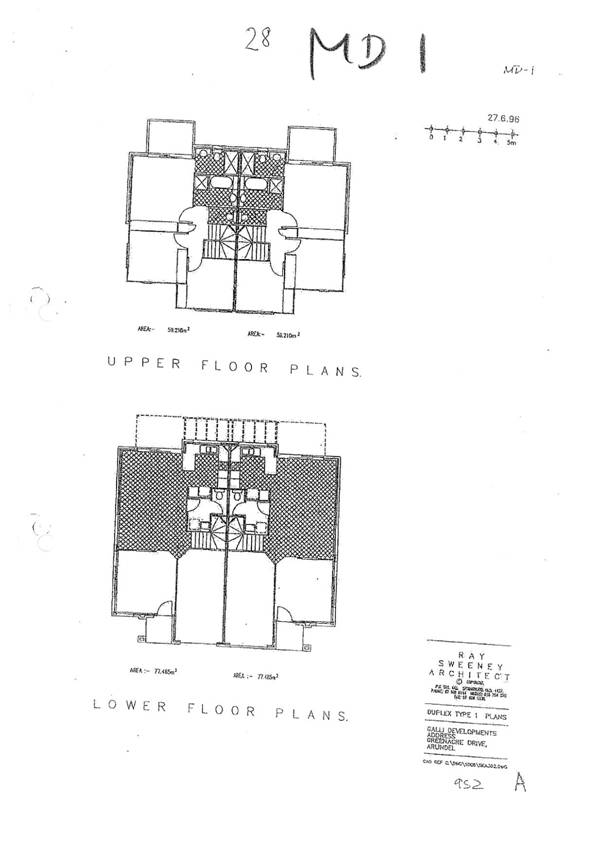
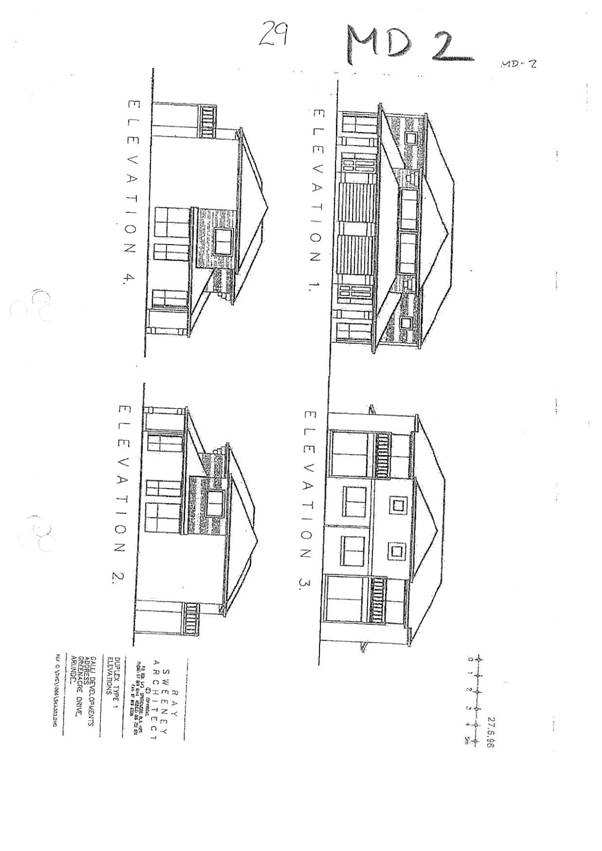
On 2 February 1996 Mr Sweeney was retained by an unrelated entity to prepare designs for a townhouse development at Arundel in Brisbane. He created drawings of plans of two-storey duplexes in computer-aided design (CAD) – in particular on 27 June 1996 he created a drawing of a duplex plan showing the upper and lower floor plans (referred to as “MD1” in the cross-claim) and elevations of that duplex (referred to as “MD2” in the cross-claim). MD1 is as follows:
MD2 is as follows:
Mr Sweeney subsequently produced drawings based on MD1 and MD2, which are referred to by Mr Sweeney in his affidavit of 22 August 2011 as MD3 through to MD18. In particular during the hearing Mondo relied on MD7, MD14 and MD15.
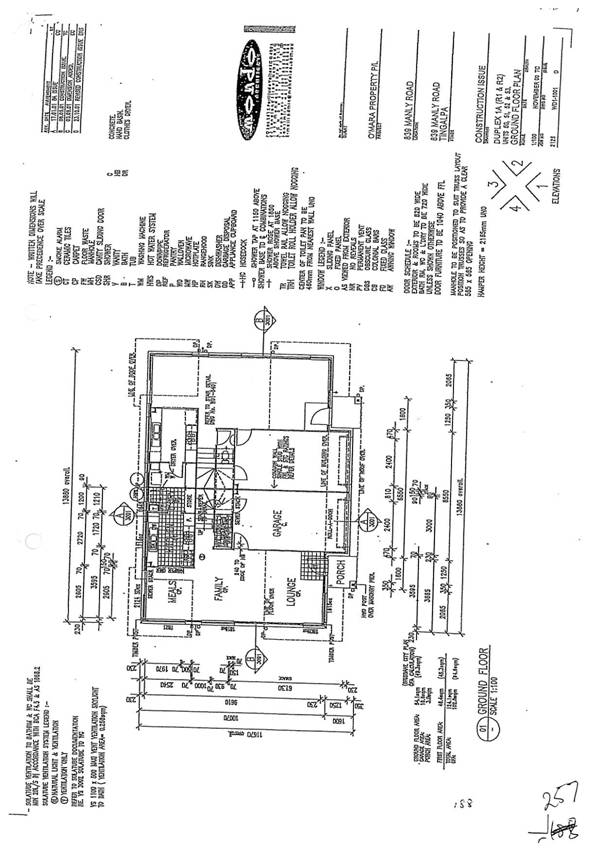
Mr Sweeney identified MD7 as a drawing for a property which he created on or about 23 October 2001. It appears to be the ground floor of a duplex dwelling, and is as follows:
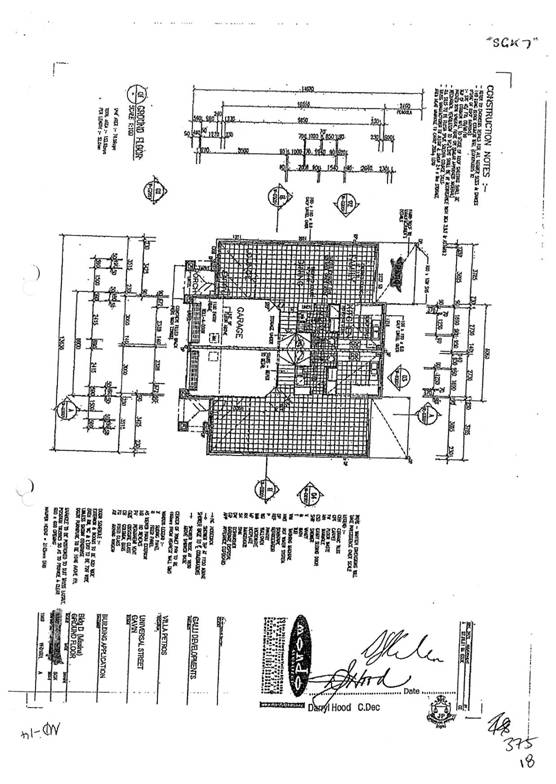
Mr Sweeney identified MD14 and MD15 as respectively the ground floor drawing and upper floor drawing of a duplex dwelling he created on or about 7 September 2001. MD14 is as follows:
MD15 is as follows:
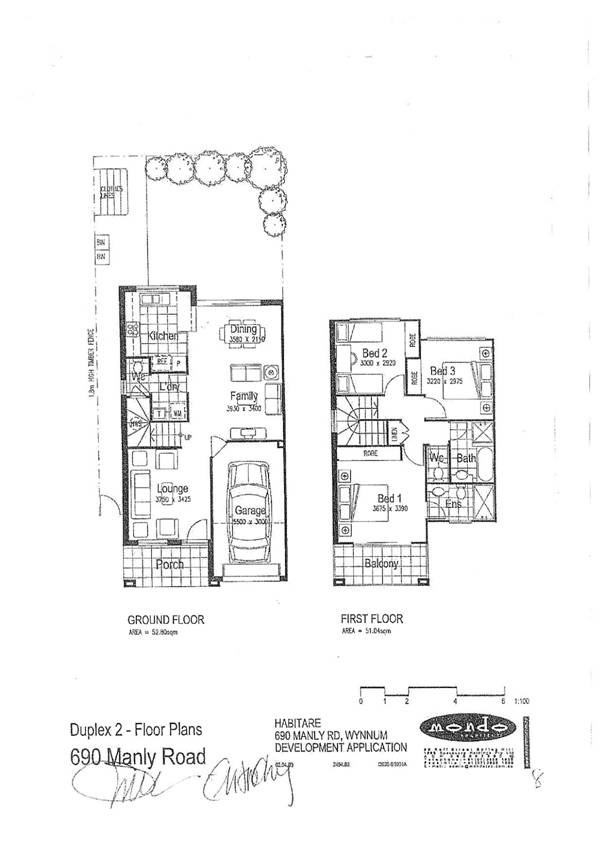
In late 2002 Mondo was approached by Mr Peter Speer to prepare designs for a development application concerning a site at 690 Manly Road, Wynnum (“Wynnum site”). The evidence in relation to the entity on whose behalf Mr Speer sought the designs is slightly confusing, however it appears that, fundamentally, Mr Speer was acting on behalf of Habitare (Sweeney 1/9/11 affidavit paras 3 and 10).
The designs were of two-storey duplex dwellings. Mondo prepared those designs, which were finalised in 2003.
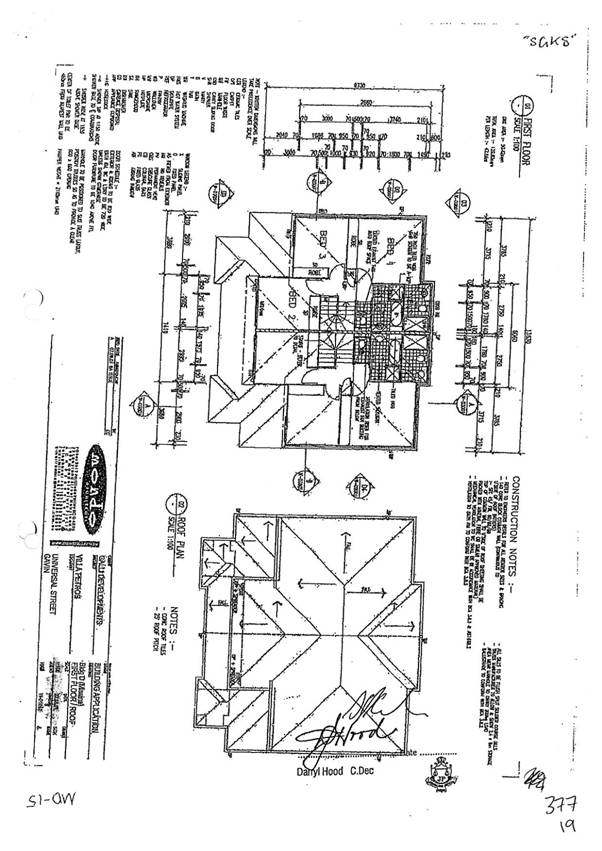
The floor plan design for the duplex (“Mondo Wynnum Duplex 2”) is annexed to the Sweeney 1/9/2011 affidavit and is as follows:
The Mondo Wynnum Duplex 2 elevations were as follows:
Development approval was issued by the Brisbane City Council in September 2003 in relation to the Wynnum site.
Habitare then retained Modini+Smith architects (rather than Mondo) to prepare the construction drawings for the development of the Wynnum site.
At material times Mr Jarvis was employed by Habitare. Mr Jarvis deposed in his affidavit that, in the course of Habitare retaining Modini+Smith in relation to the Wynnum site, in June or July 2004 he provided to Mr Kevin Smith of Modini+Smith copies of drawings prepared by Mondo in relation to the Wynnum site. The Court is asked to infer that those drawings were the Mondo Wynnum Duplex 2 drawings or a version of those drawings.
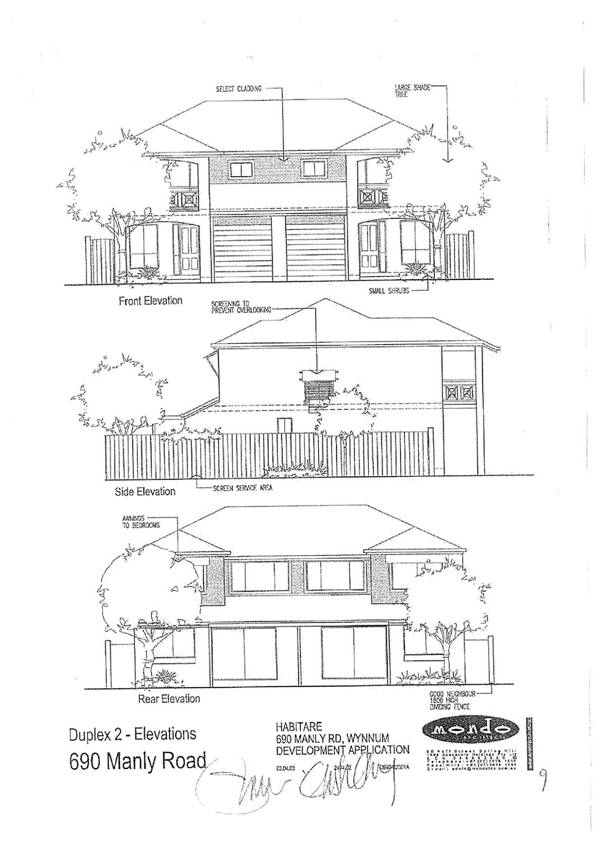
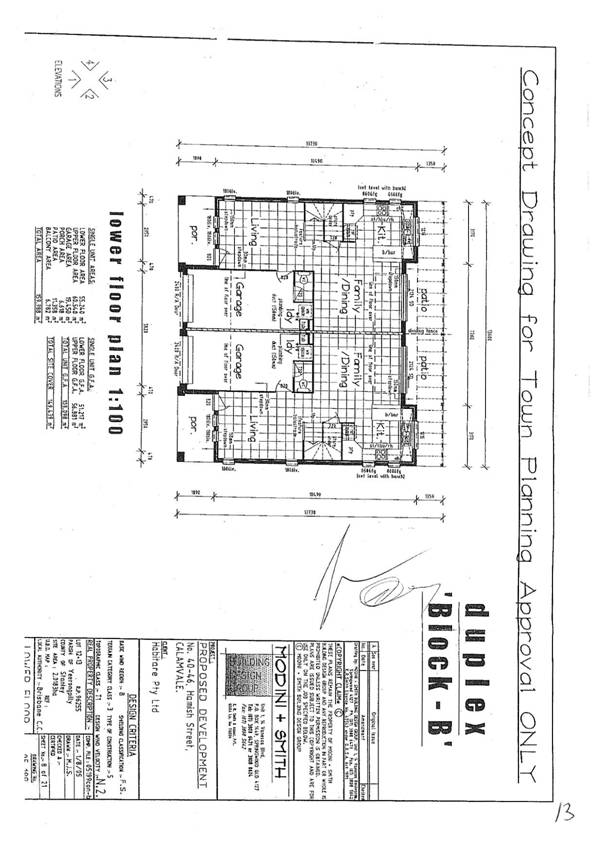
In 2005, Habitare approached Modini+Smith to create drawings for the Hamish Street development. Drawings for a three-bedroom two storey duplex dwelling prepared by Modini+Smith are annexed to Mr Copley’s affidavit and identified as “duplex ‘Block-B’”. The lower floor plan for this duplex is as follows:
The upper floor plan for this duplex is as follows:
Mr Sweeney’s evidence is that the Modini+Smith drawings for the Hamish Street development were direct copies of Mondo drawings.
In or about July or August 2005 Mr Souter-Robertson had a discussion with Mr Peter Speer and Mr Shane O’Mara. Mr Speer informed Mr Souter-Robertson that the costs associated with the Modini+Smith drawings were too high for use by Habitare, and that Habitare was interested in Tamawood designs, and showed Mr Souter-Robertson the Modini+Smith drawings. Mr Souter-Robertson printed out Tamawood’s standard duplex plans, including the Conondale drawings, for Mr Speer and Mr O’Mara.
Mr Timothy Copley, a project manager employed by Habitare, with whom Mr Souter-Robertson was acquainted, deposed that sometime shortly after July 2005 he provided Mr Souter-Robertson with the Modini+Smith drawings in order for Tamawood to estimate how much it would cost Tamawood to prepare construction drawings and to construct the dwellings. Mr Copley also deposed that he provided the drawings to Mr Souter-Robertson either in person or by email.
70 There appears to be no dispute that Mr Souter-Robertson was shown Modini+Smith drawings by persons associated with Habitare. Key disputes between Tamawood and Mondo concern the manner in which Tamawood dealt with the Modini+Smith drawings shown to Mr Souter-Robertson, and whether Tamawood substantially reproduced those drawings in the form of the Torrington drawings.
71 In summary, Tamawood’s case is that its employees had little if any regard to the Modini+Smith drawings, whereas Mondo’s case is that Mr Souter-Robertson was provided with copies of the Modini+Smith drawings (which essentially reproduced the Mondo Wynnum Duplex 2 drawings) and that those drawings were reproduced in the Torrington drawings.
72 It is not in dispute that the Copyright Act places emphasis on originality in, inter alia, artistic works: I note, for example, Pt III Div 1 of the Copyright Act, and observations of Mason CJ, Brennan and Deane JJ in Autodesk Inc. v. Dyason (1992) 173 CLR 330 at 335-336. However as further observed by Gleeson CJ, McHugh, Gummow and Hayne JJ in Data Access Corporation v Powerflex Services (1999) 202 CLR 1 at [22]:
… [T]he requirement in copyright law that a work be “original” is to be distinguished from the requirements that an alleged invention be novel and that it not be obvious [Their Honours cited here Sands & McDougall Pty Ltd v Robinson (1917) 23 CLR 49 at 53]. The question for copyright law is whether “the work emanates from the person claiming to be its author, in the sense that he has originated it or brought it into existence and has not copied it from another”. If so, the work does not lack originality because of the anterior independent work of another, although, in such circumstances, an invention might lack novelty.
(Footnotes omitted.)
73 These sentiments were echoed by Wilson J in SW Hart & Co Pty Ltd v Edwards Hot Water Systems (1985) 159 CLR 466 at 482-484 where his Honour explained:
Counsel for the respondent argues that the drawings in the present case lack any real degree of originality because the ideas expressed had been portrayed in earlier literature on the subject, and furthermore the content of the drawings was dictated to an extent by the known function which the product was to perform. I am not persuaded that this submission is established by the evidence. The trial judge was justified in his conclusion that the existing literature could not have provided the information necessary to the construction of the respondent's product. His Honour found that the only explanation of the completed form of that product was the deliberate copying of the appellant’s drawings. In any event, novelty or originality of the ideas expressed in an artistic work is not an essential prerequisite to copyright in the work. In L.B. (Plastics) Limited v. Swish Products Limited (1979) RPC 551, at p 567, Whitford J. said:
... no originality of thought is needed to sustain a claim to copyright. Under copyright ideas are not protected, only the skill and labour needed to give any given idea some particular material form, for it is the form in which the work is presented that is protected by copyright. That need only be original in the sense that it is all the author's own work.
In my opinion, there is ample originality in the authorship of the drawings by the appellant. The proposition that the protection afforded by copyright is somehow greater where the artistic work embodies a novel or inventive idea than where it represents a commonplace object or theme was recently rejected by Buckley L.J. in the Court of Appeal in Catnic Components Limited v. Hill and Smith Limited (1982) RPC 183. His Lordship said, at p 223, in a passage cited by Franki J. in the Federal Court:
... what is protected is the plaintiffs’ ‘artistic work’ as such, not any information which it may be designed to convey. If it is said that a substantial part of it has been reproduced, whether that part can properly be described as substantial may depend upon how important that part is to the recognition and appreciation of the ‘artistic work’. If an ‘artistic work’ is designed to convey information, the importance of some part of it may fall to be judged by how far it contributes to conveying that information, but not, in my opinion, by how important the information may be which it conveys or helps to convey. What is protected is the skill and labour devoted to making the ‘artistic work’ itself, not the skill and labour devoted to developing some idea or invention communicated or depicted by the ‘artistic work’.
Counsel appealed to the older authorities for support, beginning with the decision of the House of Lords in Hanfstaengl v. Baines & Co. Ltd. (1895) AC 20 where Lord Watson said, at p 28:
But in cases where copyright is claimed for pictures or drawings which treat an old and common subject, such as love-making beside a stile, the privilege of the author must, in my opinion, be strictly confined to the particular design which he has chosen.
But this passage merely serves to emphasize the fundamental principle that copyright rests not in the idea, however romantic or important that idea may be, but in the particular form in which the idea finds expression in the work.
74 I note further similar comments of Gummow J in Interlego AG v Croner Trading Pty Ltd (1992) 39 FCR 348 at 379 and Conti J in Sheldon & Hammond Pty Ltd v Metrokane Inc (2004) 135 FCR 34 at [43].
75 In my view the evidence before the Court supports the finding that the Tamawood drawings including the Torrington drawings are original artistic works, that copyright subsists in Tamawood in relation to them, and that the Torrington drawings are not substantial reproductions of drawings authored by Mr Sweeney or in respect of which copyright may repose in Mondo. I so find for the following reasons.
76 First, as is deposed by Mr Sweeney in his affidavit sworn 22 August 2011, there is significant consistency in his drawings of duplex plans. In my view there is little material difference between the Mondo Wynnum Duplex 2 drawings, and those represented in the duplex plans and elevations identified in MD1-18, in particular MD7, MD14 and MD15 which appeared to be the subject of particular reliance by Mondo.
77 Second, the only evidence of substance before the Court of transmittal of Mondo drawings to Tamawood relates to the meeting in June 2006 at which it appears Mr Souter-Robertson was shown Modini+Smith drawings, which Mondo alleges were reproductions of the Mondo Wynnum Duplex 2 drawings (based in turn upon evidence of Mr Jarvis that he had provided Modini+Smith with those drawings some time in June or July 2004). (Mr Copley also deposes that he provided Mr Souter-Robertson with the Modini+Smith drawings, but he could not recall exactly when or whether he had provided them in person or by email.) To that extent, Mondo’s case – at its highest – appears to be that the Torrington drawings are reproductions of the Modini+Smith drawings, which in turn reproduced the Mondo Wynnum Duplex 2 drawings.
78 Specifically Mr Souter-Robertson’s evidence was that he was shown Modini+Smith plans in person, and that he glanced at the plans for less than a minute. Mr Souter-Robertson also deposed that he ascertained from that brief glance that those plans would be too complex and costly for Tamawood to build, and included features which were not standard for Tamawood (para 3(d) of Mr Souter-Robertson’s affidavit sworn 4 October 2011 (“Souter-Robertson 4/10/2011 affidavit”), supported by his oral evidence at transcript 19 October 2011 p 130 l 39 – p 131 l 17). He also deposed that he was not asked to price the Modini+Smith plans (para 3(e)).
79 In contrast, Mr Copley’s evidence was that he provided the Modini+Smith drawings to Mr Souter-Robertson by hard copy or email, and that Mr Souter-Robertson costed the Modini-Smith plans. Mr Copley reiterated this evidence under cross-examination (transcript 27 October 2011 p 650 ll 26-46). However, there is no evidence that Mr Souter-Robertson actually did cost the Modini+Smith plans, and certainly no email has been produced in evidence whereby the Modini+Smith drawings were sent to Mr Souter-Robertson for costing.
80 Further, I note that Mr Speer’s evidence was that he could not recall whether he had the Modini+Smith drawings with him at the meeting with Mr Souter-Robertson, although he thought it was probable that he did (for example, transcript 24 October 2011 p 320 ll 12-19 and p 321 ll 6-8). Mr O’Mara’s evidence was similar to that of Mr Speer (for example, transcript 25 October 2011 p 403 l 45 – p 404 l 2).
81 A difficulty for Mondo in this case is that the Court is required to draw an inference as to which Modini+Smith drawings were shown or otherwise communicated to Mr Souter-Robertson. There is no direct evidence as to which drawings he saw in or about July or August 2005. Mondo’s case, at its highest, is that the plans shown to Mr Souter-Robertson were those described as “duplex ‘Block-B’”.
82 I accept Mr Souter-Robertson’s version of events relating to his access to the Modini+Smith drawings as being credible in the circumstances. In particular, I accept Mr Souter-Robertson’s evidence that he looked at the Modini+Smith drawings but quickly concluded that they were unsuitable for Tamawood’s purposes.
83 I also prefer the evidence of Mr Souter-Robertson to that of Mr Copley in relation to whether Mr Souter-Robertson performed costings on the Modini+Smith drawings. In my view it is likely that Mr Souter-Robertson was more interested in developing plans for Habitare which fit Tamawood standard models and practices. There is certainly no material evidence before the Court to contradict his assertion that he did not perform any such costings, other than a recollection of Mr Copley (which is not substantiated).
84 Finally in relation to this point, there is no evidence that Mr Mizikovsky had seen any Mondo drawings or Modini+Smith drawings at any time relevant to the creation of the Torrington drawings. Indeed, Mr Mizikovsky deposes in his affidavit sworn 7 October 2011 that he had not, and this evidence was not challenged.
85 Third, and in any event, while the Torrington drawings, the Mondo Wynnum Duplex 2 drawings, and the Modini+Smith drawings described as “duplex ‘Block-B’” may represent three-bedroom duplex dwellings, as I have already observed it is clear from cases including Data Access, SW Hart, Interlego AG and Sheldon & Hammond Pty Ltd that novelty of design (or the absence thereof) in itself is not decisive in a consideration of the existence and ownership of copyright. This point was emphasised in relation to project dwellings of the kind designed by Mondo and Tamawood by Wilcox and Lindgren JJ in Tamawood Limited:
[38] The application of the law of copyright to project home plans gives rise to special difficulty. All modern homes have certain features in common. In the case of project homes competing for the same number of dollars, there are pressures towards sameness. Of course, the size, number of rooms and facilities will vary according to the price range. Commonly, however, those in the same price range will be found:
(a) to be designed to fit blocks of approximately similar shape and dimensions;
(b) to provide for vehicular access and accommodation; and
(c) to include features demanded by the market in question, such as, a certain number of bedrooms, a laundry, a kitchen, a family or rumpus room, an ensuite and a walk-in wardrobe (‘WIR’) in association with the main bedroom, built-in wardrobes in the other bedrooms, at least one bathroom in proximity to the other bedrooms, and certain facilities in the kitchen such as a sink, bench, dishwasher, stove, hot plate and microwave oven.
[39] The idea-form distinction, often elusive, is particularly so in the case of project homes. Yet the originality threshold for copyright protection is low…
86 It follows that no inference can be drawn of infringement of copyright by Tamawood in relation to the Torrington drawings by reference to the Mondo drawings merely because they exhibit a number of common features, including single garage, kitchen, lounge room, entry foyer, and dining area on the lower level with stairs to an upper floor (with three bedrooms, a bathroom and an ensuite to the main bedroom).
87 Fourth, and in any event, in comparing the Mondo Wynnum Duplex 2 drawings with the Torrington drawings, despite some features in common there are also significant differences between the drawings. Placing to one side as unnecessary a comparison between the Torrington drawings and the Modini+Smith drawings described as “duplex ‘Block-B’” (in respect of which no action lies by Mondo), distinctions between the Torrington drawings and the Mondo Wynnum Duplex 2 drawings include:
The Mondo Wynnum Duplex 2 drawings represent a dwelling with a lounge room, a family room and a dining area. The dwelling represented by the Torrington drawings has only a living and dining area.
The Mondo Wynnum Duplex 2 drawings contemplate a laundry area with a toilet on the left side of the dwelling. The Torrington drawings do not provide for a separate laundry – there is provision for a washing machine in the single garage.
The Torrington drawings provide for an outside area for an outdoor setting under the roof line. No such provision is made in the Mondo Wynnum Duplex 2 drawings.
The Mondo Wynnum Duplex 2 drawings provide for a balcony adjacent to Bedroom 1 on the upper level. No such provision is made for a balcony in the Torrington drawings.
The rooms on both the lower and upper levels of the Mondo Wynnum Duplex 2 are arranged differently to those in the Torrington. So, for example:
On the lower level in the Mondo Wynnum Duplex 2 drawings the family and dining areas are on the right side of the drawings, between the garage and the back of the dwelling. Between the garage and the back of the dwelling on the lower level in the Torrington drawings are the stairs, a toilet room and the kitchen.
On the lower level in the Mondo Wynnum Duplex 2 drawings the lounge room, stairs, laundry and kitchen are on the left side of the drawings. The kitchen in the Mondo Wynnum Duplex 2 drawings is relatively square in shape. The only features on the left side of the lower level in the Torrington drawings are a living and dining area and an outdoor eating area.
On the upper level in the Mondo Wynnum Duplex 2 drawings the rooms are arranged such that Bedroom 1 is separated from the other two bedrooms by stairs and an area at the top of the stairs. In the Torrington drawings the three bedrooms are grouped around the stairs.
Further, in the Mondo Wynnum Duplex 2 drawings the bathroom areas are on the right side of the drawings, contrasted with the Torrington drawings where the bathroom areas are located on the left side of the drawings.
88 These differences also carry over to a comparison between the Torrington drawings and subsequent Mondo drawings including MD1, MD7, MD14 and MD15.
89 In Tamawood Limited Wilcox and Lindgren JJ observed:
[43] In the well known passage from the judgment of Gibbs CJ (with whom Mason and Brennan JJ agreed) in S W Hart at 472 (referred to by his Honour – see [21] above), the Chief Justice said:
The notion of reproduction, for the purposes of copyright law, involves two elements – resemblance to, and actual use of, the copyright work, or, to adopt the words which appear in the judgment of Willmer LJ in Francis Day & Hunter Ltd v Bron [1963] Ch 587 at 614, “a sufficient degree of objective similarity between the two works” and “some causal connection between the plaintiffs’ and the defendants’ work”.
(followed in Australia in, for example, Dixon Investments Pty Ltd v Hall (1990) 18 IPR 490 (‘Dixon Investments 2’) at 495; LED Builders Pty Ltd v Eagle Homes Pty Ltd (1996) 35 IPR 215 (‘LED’) at 218; Eagle Homes Pty Ltd v Austec Homes Pty Ltd (1999) 87 FCR 415 (‘Eagle’) at [17]).
90 In my view there is not a sufficient degree of objective similarity between the two works to support a finding of reproduction of the Mondo Wynnum Duplex 2 drawings (or later Mondo drawings including MD1, MD7, MD 14 and MD15) in the Torrington drawings.
91 Finally, as I have already noted, there is evidence before the Court concerning the processes in Tamawood for the development of drawings, and the exercise of skill, judgment and labour in their creation by architects employed by Tamawood, including in creation of the Torrington drawings. I note in particular:
Evidence of Mr Mizikovsky at paragraphs 29-32 of his affidavit sworn 28 July 2011 (“Mizikovsky 28/7/2011 affidavit”) and of Mr Souter-Robertson at paragraph 7 of his affidavit sworn 9 August 2011 (“Souter-Robertson 9/8/2011 affidavit”) where they detail the genesis of the Torrington drawings in 2005.
Oral evidence of Mr Mizikovsky and Mr Souter-Robertson at the hearing where they explained the exhibits LM28 and PSR2A to their respective affidavits. Specifically, those exhibits were sketches, representing floor plans of the duplex design which would become the Torrington, amended by thick felt pen and the subject of consultative amendment.
Oral evidence of Mr Speer that “over a period of time” following the initial discussion between Mr Speer, Mr O’Mara and Mr Souter-Robertson, Mr Souter-Robertson produced drawings which were eventually suitable for Habitare’s requirements (for example, transcript 24 October 2011 p 320 ll 21-25, p 321 ll 16-19).
Conclusion
92 I am not persuaded that there is “some causal connection” between the work of Mondo and the work of Tamawood to support a finding that, through the Torrington drawings, Tamawood has infringed copyright in Mondo’s work. Further, I am not persuaded that the Torrington drawings constitute a substantial reproduction of drawings authored by Mr Sweeney.
93 In my view, the Tamawood drawings are original artistic works, and copyright in the Tamawood drawings subsists in Tamawood.
94 It also follows that the cross-claim filed by Mondo against Tamawood on 29 July 2011 fails.
THE SCOPE OF THE LICENCE GRANTED BY TAMAWOOD TO HABITARE AND THE THIRD, FOURTH, SEVENTH AND/OR EIGHTH RESPONDENTS IN RELATION TO THE TAMAWOOD DRAWINGS (ISSUES 4 AND 5)
95 One of the infringing acts alleged by Tamawood against Habitare and the third, fourth, seventh and eighth respondents in the 3rd FASC is that Habitare used Tamawood drawings for the purpose of seeking development approval from the Brisbane City Council. In relation to the question whether Tamawood granted a licence for the use of the Tamawood drawings for purposes associated with the Brackenridge and Calamvale sites, the case has been argued before the Court on the basis of a coincidence of interest between Habitare and the third, fourth, seventh and eighth respondents. To that extent I will consider the issue of the licence on the basis that it was, or was not, granted to these respondents by Tamawood.
96 There does not appear to be a dispute that a licence in some form was granted by Tamawood to Habitare and other respondents in relation to the use of the Tamawood drawings. Indeed, Tamawood accepts that it granted a licence at some point in 2005 to Habitare to reproduce the Tamawood plans for development consent from the Brisbane City Council (transcript 18 October 2011 p 19 ll 18-21).
97 The real issue for determination concerns the scope of that licence. The question has also arisen as to whether the licence was a bare licence, or a contractual licence.
98 Tamawood’s case is that, in summary, the licence was subject to the clear condition that the use of the Tamawood drawings in connection with the Calamvale and Brackenridge sites was dependent upon Habitare having the intention of using Tamawood as the builder in relation to the developments at those sites. Accordingly, and notwithstanding that Tamawood had provided Habitare with the Tamawood drawings, until Habitare decided to proceed with the developments at Calamvale and Brackenridge using the Tamawood drawings, with Tamawood as the builder, it was not licensed to reproduce copies of the Tamawood drawings for the purposes of development applications to the Brisbane City Council or for any other purpose. Similarly, if having formed that intention Habitare then decided not to proceed in those terms, any licence terminated.
99 It is clear that this particular aspect of the case of Tamawood relates to both:
the initial use of the Tamawood drawings (in seeking development approval from the Brisbane City Council); and
its claims concerning later use of the Tamawood drawings, including in relation to the preparation of the drawings prepared by Mondo for the Calamvale site (which drawings on 11 October 2006 the Brisbane City Council accepted were “generally in accordance with” the development approval dated 7 July 2006) and the Brackenridge site (which drawings were approved by the certifier on 6 December 2006), and the subsequent construction of dwellings at those sites.
100 In their defences, Habitare and Mondo plead that Tamawood granted a contractual licence to use the Tamawood drawings for the purpose of obtaining development consent from the Brisbane City Council in relation to the Calamvale and Brackenridge sites. They claim further that once the plans were used for development approval, the licence contemplated use of the plans for purposes derived from the development approval, namely the construction of houses based upon the plans contained in the development approval. In particular, Mondo submits that it could hardly be contended that the term of the licence was to the effect that upon revocation Habitare would have no alternative but to commence the process of development approval again.
The facts
101 Direct evidence relating to the scope of the licence granted by Tamawood to Habitare is slight.
102 In his affidavit sworn 9 August 2011 Mr Souter-Robertson deposed (relevantly):
6(a) A meeting was then held in Tamawood’s head office at 1821 Ipswich Road, Rocklea in September, 2005, and Lev, myself, Peter and Shane were all present. During the meeting we had a conversation of or to the following effect:
Peter Speers said:
“We want Tamawood to build a lot of duplexes for us on various sites in Brisbane. What designs are available for such sites. We have seen your brochures advertising many different plans and want to know what you have on offer.”
I then showed to the said Habitare representatives the duplex designs on the Tamawood website, “www.tamawoodhomes.com.au”. These included the Conondale, Hazen and various other designs which did not interest them as those other designs had high gross floor averages.
(b) Peter or Shane then said:
“We like your standard low-set duplex plan called the “Conondale” because it has the size and shape requirements that we are after.”
Peter then said words to the effect:
“This design is great. However, we really need an ensuite to the main bedroom of the Conondale design.”
Lev then said:
“We can bring bedroom one forward to create more space to allow for an ensuite provision. And we can also move the front door towards bedroom one to satisfy your request.”
(c) I said:
“We are happy to form a relationship where we will invest our drafting time and our money on the understanding that we be appointed as the builders and we will then work together.”
Peter said:
“I am more than happy with that. So go ahead and prepare the plans for the two projects.”
(d) I then made a hand drawn changes [sic] to the said plan incorporating the changes which Peter had requested and showed it to Peter and Shane one of whom said words to the effect: “That OK [sic]”. Annexed hereto and marked “PSR 1” is a copy of the said hand-drawn modified Conondale elevation plan. In November, 2005 that modified Conondale plan was renamed the “Denmark”. The Denmark underwent further changes in October, 2006 and was then renamed as the “Dunkeld”. Annexed hereto and marked “PSR2” is a copy of the Dunkeld design floor plan.
(e) In the same meeting Shane said words to the effect:
“How much is it going to cost to get these plans from you so that we can pass them to our town planner who is going to do the application to Council. Our town planner will be Harvey Property Consultants.”
I said words to the effect:
“We know Harvey Property Consultants. We don’t charge for you using our plans to get the development approval from Council as long as we build the duplexes as soon as the plans are approved and the civil works are underway.”
Shane said:
“Of course Tamawood will be the builder”.
103 At paragraphs 8, 10, 15 and 16 of his affidavit Mr Souter-Robertson gave evidence concerning conversations he alleged occurred at various times in 2005 and 2006 between himself and Mr Copley, the Habitare in-house lawyer Ms Bernadette Dixon, Mr Speer, and Mr Shane O’Mara, in which each of those Habitare staff indicated that Tamawood would be the builder of the dwellings in accordance with the Tamawood drawings provided to Habitare.
104 Under cross-examination, Mr Souter-Robertson also said that Tamawood does not “sell” designs – rather Tamawood builds houses for customers in accordance with its designs. In particular, Mr Souter-Robertson said:
All right. Thank you?---So to answer your question, normally we don’t just do plans that sell. If someone comes in and goes, “I like your plan,” we don’t go, “Well, here it is. Off you go.” It’s for us to build. They choose an inclusion range. They choose if they want roof tile or Colorbond. So they get involved, and - - -
Right. So normally – sorry, Mr Dearn, I just want to clarify this in my own mind. So normally you have a customer come in and they won’t say, “I would like to buy the plan,” and walk off?---No.
They will say, “I like your designs. Will you build me that house?”?---Correct.
And therefore you enter into an arrangement with that person to build the house on the land?---Correct.
But that’s not what was happening here, was it? Or was it?---It was the – it was the early – you couldn’t enter into an arrangement because the land was not developed. They were going to use our plans to get DA approval so we could build the homes once they have got the DA approval. Once - we couldn’t sign the contract because we needed to know if there were conditions, if we had to meet the conditions. If they put extra things in there, we needed to find that out.
(transcript 19 October 2012 p 122 ll 24-43)
105 At paragraph 43 of his affidavit sworn 28 July 2011 Mr Mizikovsky deposed:
I also recall a conversation with Peter Speer, Peter O’Mara and Peter Souter-Robertson in which Peter Souter-Robertson said words to the effect that they could use Tamawood’s plans in the application to council “on the basis that Tamawood will build the houses”.
106 In cross-examination Mr Mizikovsky said that Tamawood drawings are available on the Tamawood website, and can be printed from that website, however the drawings are there “for a specific purpose for someone to look at them and purchase a home” (transcript 20 October 2010 p 199 ll 24-25). Importantly, under cross-examination by Mr Musgrave for Mondo the following exchange took place:
You don’t put anything on your website to say, well, you can only print this off if you’re going to bring it to us and ask us to price it for you or ask – if you’re going to come to one of our salesmen and ask them to build this plan for you”; that’s nowhere – that doesn’t appear anywhere on your website, does it?---I understand but nor does any other website, so I think it’s an understood position that we provide advertising. The sole purpose, as I said, with advertising for people to use it to purchase product from us. That’s my view, but again, I’m not a lawyer, so you’re asking me questions that are really not my area of competence.
(transcript 20 October 2010 p 199 ll 33-40)
107 In his affidavit sworn 20 September 2011 Mr Speer said that he met with Mr Souter-Robertson approximately 8 or 9 times during 2005 and 2006, and that during that time Tamawood developed plans Mr Speer believed would work for the Calamvale and Brackenridge sites. He denied having a conversation with Mr Souter-Robertson and Mr Mizikovsky in the terms alleged in paragraphs 6(a), (c) and (e) of Mr Souter-Robertson’s affidavit, and could not recall a conversation in the terms alleged in paragraph 6(c) of that affidavit.
108 Materially, Mr Speer recalled a conversation where Mr Peter O’Mara, the director of Habitare, said words to the effect:
There are still a few contractual issues that we will have to work through.
109 Mr Speer recalled Mr Mizikovsky responding:
We’ll find a way.
110 Under cross-examination, Mr Speer said as follows:
MR COBDEN: Now I will ask you to focus on your actual dealings with Tamawood on behalf of Habitare, and take you back to your own mental state and expectations when you began to deal with them. You would not have – you did not expect, did you, that Tamawood would permit you to use plans of its to build houses without some sort of price or terms attaching to it?---Tamawood never gave us – we never used Tamawood’s plans to build houses.
And you wouldn’t have expected that they would let you, would you?---Well, they gave us the plans to use for the DA. When the deal wasn’t going ahead, we went elsewhere to get new plans done.
Thank you. And you did not have an expectation at any time in 2005 and 2006 that Tamawood would let you build homes according to their plans without any remuneration to them, did you?---It was never ever mentioned. Remuneration was never mentioned by them.
But I’m just asking you a question which I think, with great respect, I think you can answer yes or no. Did you have any expectation during 2005 and 2006 that Tamawood would let Habitare build homes to their plans without any remuneration?---It wasn’t even discussed. We had – we were trying to do a deal with Tamawood, and there were – as I mentioned earlier, there were three major problems that became evident early in the discussions. Without those being met, there was no way the deal could proceed.
(transcript 24 October 2011 p 340 ll 18-40)
111 Under later cross-examination by Mr Cobden SC, Mr Speer said:
Now, I suggest that you were clear in your mind that the basis on which Tamawood was dealing with Habitare was that Tamawood would be the builder of the development?---That was the intention.
And you got some prices – indicative prices from Tamawood, correct?---Yes, we did.
And I think went back and explored the question of what the extras might cost?---Yes. Tamawood were used to building a lock-up product. We needed to have included carpets, light fittings, drapes, landscaping, extras.
(transcript 24 October 2011 p 342 ll 1-9)
112 In his affidavit affirmed 20 September 2011 Mr Shane O’Mara deposed at paragraph 32 that he was never told by Mr Souter-Robertson, or anyone else at Tamawood, that Habitare had to return the designs that Tamawood had provided for the development applications, or that Habitare could not use those designs. Further, Mr O’Mara denied that Mr Souter-Robertson had ever said in his presence words to the effect that Habitare could use Tamawood’s plans in the application to the Brisbane City Council on the basis that Tamawood would build the relevant dwellings. However under cross-examination by Mr Cobden SC Mr O’Mara said:
No. And you, indeed, had an expectation to the contrary, that if somebody was going to let you use their plans, that would be on the basis that they got something out of the deal. That’s what you would expect?---Yes. We were expecting Tamawood to be the builder. Yes.
Thank you. And did you – you raised the question, did you not, with Mr Souter-Robertson in one or other of these meetings as to whether there would be any cost in simply using the plans for the DA aspect?---No, never.
Thank you. But you certainly assured Mr Souter-Robertson on a number of occasion [sic] that you were dealing with Tamawood on the basis that it would be the builder?---I don’t believe I ever assured him. I think we all just took it for granted that that’s the process that we were going down.
It all began, didn’t it, by you coming in and saying, “We want some low cost houses. We want you to give us some plans, and we want you to build the houses”?---Yes.
Thank you. Is your evidence to the effect that once having said at the beginning, you didn't need to raise it again. It was understood?---Well, it was, yes.
It was certainly understood by you?---I think by all parties, yes.
(transcript 25 October 2011 p 438 ll 39-46, p 439 ll 1-12)
113 There were numerous meetings between Mr Souter-Robertson, Mr Speer and Mr Shane O’Mara in which they sought to work out suitable plans to be produced by Tamawood for the Calamvale and Brackenridge sites. It appears that the primary reason that the relationship between Tamawood and Habitare came to an end was because of the different positions adopted by the parties concerning payments to be made by Habitare for construction of the dwellings. Relevantly, evidence of Mr Speer was as follows:
MR MUSGRAVE: That relationship came to an end and the reason for that is that you couldn’t agree a schedule of payments for Tamawood?---There was [sic] three outstanding issues. There was the – they wanted a – an – a separate contract for each building, which would have been impossible for us to administer. They wanted progress payments in the same way that a normal housing job, where they got so much for a slab, so much for a frame, so much for a roof, so much for a lock up and then the final payment. Our bankers wouldn’t work that way. The banks would only work on the basis where they would send in a valuer once a month and say, “Okay, they’ve done $1 million worth of work. We will pay them $1 million”. And the third issue was that they’re – they – the length of time that they wanted for building and – and the – was just all too – stack their way. It just wasn’t going to work for us.
(transcript 24 October 2011 p 321 ll 37-47)
Consideration
114 In my view the facts of this case demonstrate that the licence granted by Tamawood to Habitare in relation to use of the Tamawood drawings was a bare licence, revocable at will. I consider that the licence was limited in scope to circumstances where Habitare had the intention of using Tamawood as the builder of dwellings at the Calamvale and Brackenridge sites in accordance with the Tamawood drawings.
115 In any event, if I am wrong in so characterising the licence, and the licence is in fact contractual, in my view the scope of the licence was such that use by Habitare of the Tamawood drawings was conditional upon Habitare’s agreement to build the duplexes represented by the drawings.
116 I form these views for the following reasons.
Copyright Act
117 The Copyright Act contemplates the owner of copyright in a work granting a licence (exclusive as well as non-exclusive) to a third party, authorising the doing in Australia of any act comprised in the copyright: for example ss 13(1), 15 and 36(1) of the Act. In this case no specific licence agreement was entered between Tamawood and Habitare to reproduce or otherwise use the Tamawood drawings in any form. Accordingly, the only possible licence in existence would be implied, although the existence of an implied licence is not in dispute.
Bare or contractual licence
118 Whether the licence in this case was a bare or a contractual licence is relevant not only to the terms of the licence, but to the right of Tamawood to revoke the licence, and remedies flowing from acts outside that licence.
119 It is well-settled that a licence, coupled with no grant of interest in any ascertainable property, is no more than a bare permission to do that which otherwise would be a trespass, and is revocable at will (Taplin v Florence (1851) 10 CB 744; (1851) 138 ER 294; Dixon J in Cowell v Rosehill Racecourse Co Ltd (1937) 56 CLR 605 at 630-631; Barwick CJ in Banks v Transport Regulation Board (Vic) (1968) 119 CLR 222 at 230; Murray (Inspector of Taxes) v Imperial Chemical Industries Ltd [1967] Ch 1038 at 1051; Computermate Products (Aust) Pty Ltd v Ozi-Soft Pty Ltd (1988) 20 FCR 46 at 49; Trumpet Software Pty Ltd v Ozemail Pty Ltd (1996) 34 IPR 481; [1996] FCA 560 at 498; Motor Group Australia Pty Ltd v Owners Corporation Strata Plan 64622 [2004] NSWSC 633 at [80]) or possibly on the grant of reasonable notice to the licensee (Computermate Products (Aust) at 49; Trumpet Software at 498).
120 Two cases where this Court found that an owner of copyright granted a bare licence in relation to relevant work include:
Computermate Products (Aust), where the appellant imported into Australia diskettes manufactured in the United Kingdom. The diskettes embodied computer programs, the copyright in which was owned by the respondents. The respondents had consented to the sale of the diskettes in the United Kingdom and had imposed no restriction on the appellant as purchaser as to the manner in which it dealt with the programs. The appellant sold the diskettes in Australia. The appellant claimed no more than a bare licence in relation to the diskettes. The Court found that the while a bare consent or permission might constitute a licence for the purposes of s 37 of the Copyright Act, the facts did not support a finding that the copyright owner had given consent or permission to the importation of the diskettes into Australia for the purpose of sale.
Trumpet Software, where the applicants owned copyright in a computer software program called Trumpet Winsock, which had been distributed by the applicant as “shareware”. The respondents produced a magazine featuring articles on computers and information technology, and, without the permission of the applicant, distributed diskettes embodying copies of Trumpet Winsock (without a timelock) with copies of the magazine. It was not in dispute that there was no contractual arrangement between the parties and that no consideration flowed from the respondents to the applicants. The Court found that any licence reposing in the respondents was a bare licence, which had been specifically revoked by the applicants prior to the distribution of the diskettes.
121 An example of circumstances where the Court found that a contractual licence existed in relation to the copyright in a relevant work is Acohs Pty Ltd v RA Bashford Consulting Pty Ltd (1997) 144 ALR 528. In that case the respondents owned copyright in material safety data sheets (MSDSs) which were the basis of computer-based systems for the storage and dissemination of information about hazardous substances and other chemicals. The Court observed, inter alia, that the MSDSs were prepared pursuant to terms of engagement by manufacturers and importers, with the intention that they be used for a particular purpose, and that the law implied a licence in relation to the use of the MSDSs to carry out that purpose.
122 Even where the licence is contractual there is authority that it may nonetheless be revoked. As Dixon J observed in Cowell at 631:
Further, a licence is revocable at law notwithstanding an express contract not to revoke it. By revoking it, the licensor commits a breach of contract exposing him to an action of damages ex contractu. But the licensee cannot further avail himself of the licence and the licensor is not precluded in an action of tort from relying upon the termination of the licence (Wood v. Leadbitter; Taplin v. Florence).
(footnotes omitted.)
123 More recently, principles relevant to the implication of licences by a copyright owner to use architectural drawings the subject of copyright were discussed in detail by the High Court in Concrete Pty Ltd v Parramatta Design and Developments Pty Ltd (2006) 229 CLR 577. As there are elements of the current proceeding which are comparable with the facts of Concrete, it is useful to examine that decision in some detail.
124 In Concrete the sole director and shareholder of a company providing architectural and design services (“Parramatta Design”) became one of two shareholders in a property development company, Landmark Building Developments Pty Ltd (“Landmark”). The shareholders of Landmark were interested in developing a site, and entered into a joint venture arrangement with an unrelated company, Toyama Pty Ltd (“Toyama”). No written agreement recording the terms of the joint venture was ever made. Landmark and Toyama purchased the site. The parties agreed that Parramatta Design would perform the architectural services for the joint venture. No written agreement for the provision of these services was drawn up, however Parramatta Design prepared plans and drawings for development of the site. Landmark and Toyama paid $27,000 to Parramatta Design for the plans and drawings. Planning approval for the development was sought from the relevant municipal council, and obtained. Subsequent plans, for 14 units on the site (being a higher intensity of unit occupancy on the site) were then developed by Parramatta Design free of charge to the joint venture. These plans were submitted to the same municipal council, and again development approval was obtained.
125 The development did not proceed because of a falling out between the joint venturers. The site was advertised for sale. Subsequently, the Supreme Court of New South Wales ordered the appointment of trustees for the sale of the site pursuant to s 66G of the Conveyancing Act 1919 (NSW). At that point Parramatta Design put the trustees on notice that it was the designer and owner of the copyright in plans in respect of which development approval had been granted, and it would not grant a licence for the use of those plans. The site was subsequently sold to the appellant to the appeal before the High Court.
126 The appellant claimed that it was entitled to use the plans for the site designed by Parramatta Design in respect of which development approval had been granted, by virtue of an implied licence to do so.
127 Kirby and Crennan JJ summarised (at [40]) the bases advanced by the appellant at trial to support its claim of an implied licence to use the drawings:
(i) as a legal incident of the engagement of the architect (or Parramatta Design) to prepare the drawings for use in applying for the development consent which runs with the land;
(ii) by reference to the circumstance that an implied licence “typically arises” between an architect and client; and
(iii) by reference to the five year duration of the development consent giving rise to the contention that the architect (or Parramatta Design) implicitly licensed the owners (or any successor in title) to use the drawings for the purpose of utilising or giving effect to the development consent.
128 The appellant was successful at first instance, but an appeal by Parramatta Design was successful in the Full Court of the Federal Court of Australia (Parramatta Design & Developments Pty Ltd v Concrete Pty Ltd (2005) 144 FCR 264). In summary, the Full Court found:
It appeared that Parramatta Design had agreed to prepare the 14 unit development plans and drawings for no fee because it wanted to keep Toyama in the joint venture.
Toyama’s agreement to remain in the joint venture might have been sufficient consideration to support the contract, but the agreement could not be characterised as the payment of a full fee for Parramatta Design’s services.
It could be accepted that Parramatta Design granted a licence to the joint venture partners themselves to construct a 14 unit development in accordance with the plans and drawings if planning approval were obtained.
There was no reason to imply a term that this licence could be assigned to a purchaser of the site.
A sensible purchaser would not expect to be permitted to use an architectural drawing without having made any payment for the privilege, either to the architect or to the vendor by way of reimbursement.
129 The High Court allowed the appeal. As explained by Kirby and Crennan JJ (with whom Gummow ACJ agreed) at [56]:
… The reason for that is to be found in established principle, the relevant legislation and in the specific facts and circumstances of the case. The specific circumstances were that the owners of the land, which included Mr Fares, the architect, had him prepare the plans and drawings for certain purposes, which included the purposes for which Concrete now seeks to use them, having purchased the land with the benefit of a development consent. The owners of the land, including the architect, did not oppose the sale of the land with the benefit of the development consent.
130 In the course of delivering judgment, their Honours discussed, in detail, principles relevant to the implication of a licence to use architectural drawings and plans. In particular they observed:
[59] The principles established by a series of cases concerning implied licences to use architectural drawings and plans were not in contest. Problems have frequently arisen in circumstances where the commissioner of architectural drawings and plans, a property owner (or a successor in title), wishes to assert an implied licence to use them in the absence of any express permission to do so. A non-exclusive licence to use architectural plans and drawings may be oral or implied by conduct, or may be implied, by law, to a particular class of contracts, reflecting a concern that otherwise rights conferred under such contracts may be undermined, or may be implied, more narrowly, as necessary to give business efficacy to a specific agreement between the parties. A term which might ordinarily be implied, by law, to a particular class of contracts may be excluded by express provision or if it is inconsistent with the terms of the contract. In some instances more than one of the bases for implication may apply.
…
[61] By reference to the reasons of Jacobs J in Beck v Montana Constructions Pty Ltd and the reasoning of the English Court of Appeal in Blair v Osborne & Tomkins, the parties agreed that where an architect is engaged to prepare plans and drawings which are the subject of copyright, and is paid a professional fee to do so, if the fee would normally be taken to cover the use of the plans and drawings for the purpose of constructing a building in substantial accordance with them, the commissioner of the plans and drawings (or a successor in title) will have an implied licence to use the plans and drawings for that purpose.
[62] It has been recognised, at least since Blair v Osborne & Tomkins, that the preparation of plans and drawings as part of an application for a development consent by a local council is part of a progressive process governed by legislation. If a development application is successful it will form the basis of more detailed plans and drawings leading to final plans and drawings in accordance with which a building, as approved, will be built.
(footnotes omitted.)
131 Their Honours also considered the decision of Jacobs J in Beck v Montana Constructions Pty Ltd [1964-5] NSWR 229 and that of the Court of Appeal of England in Blair v Osborne & Tomkins [1971] 2 QB 78, and said:
[71] In Beck v Montana, a firm of architects contracted under a then standard form contract to produce plans for a block of units on particular land. When the owners sold the land they gave the purchaser the plans, and the purchaser decided to build in accordance with the plans but not to retain the architect. The rationale for finding an implied licence in favour of the purchaser to use the plans was explained by Jacobs J as follows:
[T]he engagement for reward of a person to produce material of a nature which is capable of being the subject of copyright implies a permission, or consent, or licence in the person giving the engagement to use the material in the manner and for the purpose in which and for which it was contemplated between the parties that it would be used at the time of the engagement.
There was no reference in Beck v Montana to any development consent or planning permission.
[72] In Blair v Osborne & Tomkins an architect was retained by land owners to prepare drawings for the purpose of obtaining a planning permission and his clients subsequently sold the land with the benefit of the planning permission and gave the purchaser the architect's drawings. Before approving Beck v Montana in Blair v Osborne & Tomkins, Lord Denning MR (with whom Widgery and Megaw LJJ agreed) said:
... when the owner of a building plot employs an architect to prepare plans for a house on that site, the architect impliedly promises that, in return for his fee, he will give a licence to the owner to use the plans for the building on that site. The copyright remains in the architect, so that he can stop anyone else copying his plans, or making a house from them; but he cannot stop the owner who employed him, from doing work on that very site in accordance with the plans. If the owner employs a builder or another architect, the implied licence extends so as to enable them to make copies of the plans and to use them for that very building on that site: but for no other purpose. If the owner should sell the site, the implied licence extends so as to avail the purchaser also.
[73] The position may be otherwise if the architect has charged a nominal fee only to prepare drawings for the limited purpose of obtaining a planning permission. Beck v Montana and Blair v Osborne & Tomkins have been followed or recognised on many occasions in Australia and elsewhere. In those two cases and in Stovin-Bradford v Volpoint Properties Ltd the architects were utilising standard contract conditions and scales of professional fees determined by their professional institutes and the rationale for implying a consent or licence in all of them depended on the architect's reward or fee.
(footnotes omitted.)
132 Kirby and Crennan JJ noted that:
Where any contract is silent on whether a licence to use drawings can be implied when there has been no payment for the drawings the existence of an implication will depend on construing the relevant contract (at [74]).
There is some authority to support the proposition that a bare licence to use drawings which are the subject of copyright, that is one given without consideration, is revocable at any time (at [75]). Their Honours referred to Ng v Clyde Securities Ltd [1976] 1 NSWLR 443 where the Court rejected as unreasonable the argument that any licence to use architectural plans for a development was subject to an implied term that the licence could be revoked for non-payment of the architect’s fees.
In the case before the Court, Parramatta Design had not argued that it was entitled to revoke any implied licence on the basis of non-payment of any fee. Rather, its case was that no licence was implied.
133 Their Honours observed however:
[79] The fact that no fees were paid for the preparation of the architectural drawings falls to be assessed by reference to the broad purposes of the joint venture which were clear and not in contest, and the purposes for which, and circumstances in which, the joint venture commissioned the drawings.
134 In that case the architectural plans and drawings were contemplated to be used by the owners to develop the site from the stage of obtaining development consent, through to achieving profits from the sale of any development built in accordance with that development consent. Their Honours considered that those purposes “must encompass and include a sale of the land with the benefit of the development consent, by the owners, after the development consent has been obtained and before completion of the development” (at [82]).
135 On this point, Kirby and Crennan JJ concluded:
[84] The principle which applies to these facts is this: in the absence of an agreement to the contrary, an express contract or an express reservation of copyright, an owner (or a co-owner) of land who is an architect, who himself prepares plans or drawings, free of charge, for himself (or for himself and other co-owners) impliedly consents to himself as owner (or co-owner) using the plans and drawings for the purposes for which they have been prepared. The “reward” to the architect in such circumstances is not the “fee” which accompanies an orthodox retainer between an architect and client. The reward is so much of the net profits expected to eventually flow at the conclusion of the joint venture in respect of which he is both “architect to the joint venture” and a “joint venturer”, which are referrable to the fact that the joint venture partners did not have to incur a disbursement for architect’s fees. The fact that an architect might be prepared to share that part of the net profit with his co-venturers does not detract from the foregoing analysis. For this reason, the argument that there is no consideration in these circumstances must be rejected. It follows that such circumstances are distinguishable from those cases in which there is a bare licence, revocable at will.
(footnotes omitted.)
136 On the facts, their Honours concluded that the purchaser of the site was entitled to the benefit of that licence.
These proceedings
137 Tamawood and Habitare were unrelated parties, operating in a commercial environment. As is clear from the evidence, the parties had engaged in extensive discussions, in the course of which Tamawood produced drawings for Habitare designed for the Calamvale and Brackenridge sites, and in respect of which copyright reposed in Tamawood. However the factors which, in my view, demonstrate that any licence Habitare had in relation to those drawings was a bare licence rather than a contractual licence are as follows:
1. There is no evidence before the Court that the parties reached a contractually binding agreement. Rather, it appears that representatives of Tamawood (in particular Mr Souter-Robertson) and Habitare (in particular Mr Speer and Mr Shane O’Mara) met on numerous occasions, discussing proposals and designs, and that designs were prepared by Tamawood in light of those discussions. As evidence of Mr Speer demonstrated, the parties were attempting to “work through … a few contractual issues”, but could not resolve them. Indeed, as is also clear from evidence of Mr Speer, the reason that the relationship between Tamawood and Habitare broke down was that they could not agree on a schedule of payments to finalise the contract.
2. This finding is supported by the inference which, in my view, can be drawn, that had Habitare simply decided not to proceed with the project for construction of the duplexes, there was no contract between the parties such that Tamawood could have sought a remedy of any kind (including payment) against Habitare.
3. The evidence in this case clearly demonstrates that Tamawood produces architectural drawings for the purposes of its building business. Evidence from Mr Mizikovsky (both affidavit and oral) was that irrespective of how minor the changes to a plan that had been offered to the public were, a modified plan of a dwelling offered for sale to the public would be given a new name by Tamawood. It is also clear that, in this case, no fee was charged by Tamawood for the drawings produced by it for Habitare. This does not appear to be in dispute. The evidence of both Mr Souter-Robertson and Mr Mizikovsky is that Tamawood absorbs architectural design costs into the costs of building. I accept the evidence of Mr Mizikovsky and Mr Souter-Robertson that Tamawood is a building company, not an architectural design company. To that extent, the Tamawood drawings were prepared in the context of a broader proposal that Tamawood build the duplexes at the Calamvale and Brackenridge sites.
4. No consideration flowed to Tamawood in relation to the preparation of the Tamawood drawings (cf Trumpet Software).
5. While in both this proceeding and in Concrete the relevant designs were given development approval by the municipal council, the facts in this proceeding are otherwise distinguishable from those in Concrete. In particular, the purposes for which, and circumstances in which, the drawings were developed in Concrete and in these proceedings were totally different. The architect in Concrete was a stakeholder in the relevant development, and (as was found by the High Court) impliedly consented to itself as owner (or co-owner) using the plans and drawings for the purposes for which they had been prepared. The reward for the architect in Concrete was the net profits expected to eventually flow at the conclusion of the joint venture. In this proceeding Tamawood had no stake in the Calamvale and Brackenridge developments other than the prospect of reward under a future contract with Habitare. While it may have invested staff time in development of the Tamawood drawings in anticipation of a contract being agreed with Habitare, until such time as the contract was agreed the prospect of reward was illusory, and indeed so it turned out to be.
6. In my view the licence granted by Tamawood to Habitare could have become a contractual licence once it was supported by consideration. In this case, however, the events did not progress to the stage where consideration of any kind flowed.
Scope of licence
138 In Trumpet Software at 499-500, Heerey J made the following observation, equally applicable in the proceeding before me:
The juristic basis for any terms to be included in a licence for the use of software might be better founded in the analogous doctrine of implied contractual terms as expounded by the Privy Council in BP Refinery (Westernport) Pty Ltd v Shire of Hastings (1977) 180 CLR 266 at 283; 16 ALR 363 at 376. Such doctrine applies by analogy rather than directly because, as already mentioned, the licence under consideration was not a contractual one. But it must have some terms and conditions. In my opinion the most rational approach is to apply the BP Westernport criteria. And the contractual analogy is a close one because the shareware licence would mature into a contract if a user were to effect registration — rather like goods taken on a sale or return basis. The evidence of computer experts I find of assistance, not as direct evidence of trade custom in the legal sense but as indicating how this particular trade operates and providing an informed background against which the BP Westernport criteria can be applied.
In particular two criteria are apposite, namely (i) whether the supposed condition is necessary to give business efficacy, in the light of the fundamental purpose of shareware, which is that of evaluation, and (ii) whether it is so obvious that it “goes without saying”.
139 The facts demonstrate a relatively casual approach by both Tamawood and Habitare concerning their approach to the retention of the Tamawood drawings by Habitare, and their use by Habitare, at least until the second half of 2006 when the relationship between the parties broke down over the contractual negotiations. However Tamawood, through its agents Mr Souter-Robertson and Mr Mizikovsky, had made it plain to the agents of Habitare (Mr Speer and Mr Shane O’Mara) that Habitare’s use of the Tamawood drawings for any purposes was contingent on the appointment of Tamawood as the builder of the dwellings at the Calamvale and Brackenridge sites. To that extent, Tamawood had reserved to itself the right to the use of the plans being in conjunction only with the prospect of Tamawood being engaged as the builder (cf Beck at 234). The licence granted to Habitare was, accordingly, limited in that manner (cf discussion in Sainsbury M, “Databases and Copyright – Finding the Match” (2001) 3(1) Digital Technology Law Journal 3). There is no evidence to support a finding that Habitare understood the position to be otherwise, or that Habitare did not accept that this was the basis upon which it was entitled to use the Tamawood drawings.
140 Tamawood contends, however, that the licence in favour of Habitare would only come into existence once Habitare had reached a firm decision to proceed with Tamawood as the builder (transcript 18 October 2011 p 19). In my view the facts do not support such a finding. Rather, the facts demonstrate that Mr Souter-Robertson was aware that Habitare had sought development approval from the Brisbane City Council in respect of the Tamawood drawings, notwithstanding that no contract had been concluded between the parties. In this respect I note the evidence of Mr Souter-Robertson in his affidavit of 9 August 2011, in particular his acknowledgment of the process in the first half of 2006 wherein he and Mr Shane O’Mara discussed the role of Habitare’s town planner and the development application. Mr Souter-Robertson gave evidence that he had obtained copies of the Brisbane City Council development approvals for Habitare for the Calamvale site, dated 7 July 2006, although he was unable to obtain copies of the approvals for the Brackenridge site, and that during this period he was in regular contact with Mr Shane O’Mara (Souter-Robertson 9/8/2011 affidavit paras 14-15). That this was the position of Tamawood is further indicated by the evidence of Mr Mizikovsky at paragraph 43 of his affidavit of 28 July 2011.
141 It is plain from the evidence before the Court that both Tamawood and Habitare (including their respective agents) had, until that time, proceeded on the assumption that Tamawood would build the duplexes, in accordance with the Tamawood drawings, at the Calamvale and Brackenridge sites. On the evidence of Mr Souter-Robertson it appeared to be no surprise that Habitare had made an application for development approval to the Brisbane City Council using the Tamawood drawings – indeed this was contemplated by the parties in the circumstances at the time.
142 It is clear that problems emerged in the contractual negotiations between Tamawood and Habitare in early 2006 concerning the payment schedule for the Calamvale and Brackenridge projects. Notwithstanding these problems, the evidence indicates that:
Mr Souter-Robertson and Mr Shane O’Mara were in frequent contact during at least the first half of 2006 (Souter-Robertson 9/8/2011 affidavit para 15).
the parties were in contractual negotiations during the period that the applications for development approval were being prepared, and at the time that they were lodged with the Brisbane City Council (Souter-Robertson 9/8/2011 affidavit para 16). These negotiations included discussions concerning “extras” that Habitare wanted included in the construction price for both sites (Speer affidavit sworn 20 September 2011 para 19).
Mr Souter-Robertson was working at putting together a final price for the construction of dwellings at both sites, after the applications for development approval had been lodged, and Mr Speer had believed that Tamawood’s pricing would be acceptable (Speer affidavit sworn 20 September 2011 para 19).
In or about March or April 2006 Mr Shane O’Mara told Mr Speer that he had spoken with Mr Souter-Robertson concerning the pricing schedule and that Tamawood was unable to alter its construction time or the manner in which it contracted with developers (Speer affidavit sworn 20 September 2011 para 29).
It was not until late 2006 that communications between Mr Souter-Robertson and Mr Shane O’Mara ceased (Souter-Robertson 4/10/2011 affidavit para 8(m)).
143 I note in particular evidence of Mr Shane O’Mara (in his affidavit sworn 20 September 2011) in relation to the discussions that took place between himself and Mr Speer “between September 2005 and approximately May 2006”.
144 In relation to Tamawood’s assertion that Habitare had briefed Mondo to commence preparing plans for the Calamvale and Brackenridge sites in early 2006, I note the evidence of Mr Sweeney in his affidavit of 22 August 2011 (“Sweeney 22/8/2011 affidavit”) that:
Mondo had had an ongoing working relationship with Mr Shane O’Mara and his family since around 1995, and with Mr Speer since 2001, although Mr Sweeney ceased accepting retainers from Habitare by 30 June 2004.
he was approached by Mr Peter O’Mara in late February or early March 2006 to provide consulting services for Habitare to improve and streamline their acquisition and due diligence processes, and, following meetings with Habitare staff, issued written reports on the Habitare processes and management on 26 April 2006 and 29 May 2006.
as the relationship with Habitare was re-engaged, Mondo began accepting retainers for property developments with Habitare in 2006.
On 21 June 2006 he was approached by Mr Shane O’Mara, Mr Speer and Mr Copley to perform architectural services for the Calamvale site.
he was not retained to perform any work associated with obtaining development approval for the Calamvale site, which development approval had been sought prior to Mondo’s involvement.
145 I found Mr Sweeney a credible witness, and in my view this evidence should be accepted.
146 Tamawood submits that Habitare had resolved not to use Tamawood as the builder in about early 2006, and nominates 1 March 2006 as the date by when Habitare had reached this decision (and a fortiori, as the date at which the licence in favour of Habitare terminated). I do not accept that this is the case. It is likely that the time at which Habitare was applying for development approval coincided with the time at which problems in contractual negotiations were emerging, but I am not satisfied that, as at the date of the application for development approval concerning the Calamvale and Brackenridge sites, Habitare had decided not to proceed with its relationship with Tamawood or that Tamawood would not be the builder at the Calamvale and Brackenridge sites.
147 To that extent, I consider that during 2005 and at least until the time the application for development approval was lodged with the Brisbane City Council, when the evidence shows that Habitare intended to engage Tamawood as the builder of the duplexes and that this was also the understanding of Tamawood, a licence existed in favour of Habitare for Habitare to use the Tamawood drawings in the application to the Brisbane City Council for development approval. To that extent, Habitare did not act outside the scope of its licence from Tamawood in doing so.
148 However in my view this does not derogate from the limitations on the licence which I consider were evident.
149 Indeed, while Mondo submits that “it could hardly be contended that the terms of the licence were to the effect that upon revocation Habitare would have no alternative but to commence the process of development approval again”, in my view that was precisely the outcome contemplated. The process by which the Tamawood drawings were produced was clearly but an incident of the prospective agreement between Tamawood and Habitare for the building of the duplexes by Tamawood at the Calamvale and Brackenridge sites. This case is not analogous with that, for example, in Beck, where Jacobs J concluded that “payment for the sketch plans include[d] a permission or consent to use those sketch plans for the purpose for which they were brought into existence, namely, for the purpose of building a building in substantial accordance with them and for the purpose of preparing any necessary drawings as part of the task of building the building” ([1964-5] NSWR 229 at 235). Whether as a matter of law the licence granted to Habitare terminated, or the licence did not contemplate Habitare continuing to use the Tamawood drawings in relation to the sites is, practically, not material. On either outcome, once Habitare resolved that it would not engage Tamawood to build those dwellings and took steps to engage someone else, Habitare was no longer entitled to use the Tamawood drawings in relation to the Calamvale and Brackenridge sites.
150 As I noted earlier, if I am in error and the licence granted to Habitare to use the Tamawood drawings was a contractual licence, I consider that the contractual licence would be subject to a similar term.
WHETHER ANY OF THE RESPONDENTS REPRODUCED THE TORRINGTON AND CONONDALE/DUNKELD DRAWINGS IN WHOLE OR IN A SUBSTANTIAL PART IN THE DRAWINGS PREPARED BY MONDO FOR THE CALAMVALE AND BRACKENRIDGE SITES OR IN CONSTRUCTING THE RELEVANT DWELLINGS, AND WHETHER SUCH ACTIONS INFRINGED COPYRIGHT SUBSISTING IN TAMAWOOD IN THE TORRINGTON AND CONONDALE/DUNKELD DRAWINGS (ISSUES 6, 7, 8, 9 AND 10)
151 A key aspect of Tamawood’s case against all respondents is the reproduction, without licence, of Tamawood drawings.
152 In particular, Tamawood alleges:
1. Precise copying by Habitare and Mondo of the Tamawood drawings during or after the development approval process when Habitare had decided not to use Tamawood as the builder.
2. Whole or substantial reproduction of the Tamawood drawings in the design process undertaken by Mondo. Tamawood presses this aspect of the case only in relation to the Torrington drawings (which it claims were reproduced as Duplex 2 at the Calamvale site and Duplex A at the Brackenridge site) and the Conondale/Dunkeld drawings (which it claims were reproduced as Duplex 1 at the Calamvale site and Duplex B at the Brackenridge site).
3. Infringement by building according to the Mondo drawings. This claim of infringement is referable to conduct of Habitare, Mr Bloomer and Bloomer Constructions, and the third, fourth, seventh and eighth respondents, and again is limited to infringement of the Torrington and Conondale/Dunkeld drawings.
153 I will examine each of these claims in turn.
1. Precise copying
154 Tamawood alleges that Habitare and Mondo engaged in primary infringement of Tamawood’s copyright in the Tamawood drawings in that:
Habitare supplied copies of the development approval and Tamawood drawings to Mondo and Caprice Group; and
Mondo made copies of Tamawood plans, including downloading them from the internet in late June or early July 2006.
155 In my view Habitare infringed Tamawood’s copyright in the Tamawood drawings by supplying Mondo and Caprice Group with copies of the development approval obtained from the Brisbane City Council in respect of the Calamvale and Brackenridge sites.
156 Drawings done for development approval are capable of attracting copyright protection (Concrete). Making copies of such documents by, for example, photocopying them can constitute infringement of the copyright of the copyright owner (University of New South Wales v Moorhouse (1975) 133 CLR 1).
157 In this case the grant of development approval by the Brisbane City Council was a right conferred on Habitare in relation to the development of the relevant sites, referable to the Tamawood drawings. In light of my findings concerning the licence granted by Tamawood to Habitare, I am satisfied that the copying of the development approvals (including the relevant Tamawood drawings) for the purpose of procuring new plans from Caprice Group, and later Mondo, and to obtain the agreement of third parties to assume the role of builder in respect of dwellings at the Calamvale and Brackenridge sites, was outside the scope of that licence.
158 However the position of Mondo in downloading copies of Tamawood plans from the internet raises different issues. Mondo does not dispute that its employees downloaded the Torrington drawings and the Conondale drawings from the Tamawood website in or about July 2006 (transcript 27 October 2011 p 615 ll 45-46 and p 616 ll 1-5). Mr Sweeney’s evidence, however, is that he downloaded the Torrington drawings because he believed that they were a copy of his designs (transcript 27 October 2011 p 616 ll 28-30).
159 I am not persuaded that, in simply downloading copies of Tamawood plans from the internet, actions of Mondo infringed copyright of Tamawood subsisting in those plans. It is not in dispute that the relevant plans were on the Tamawood website, available for anyone to download, print and peruse. To that extent, Tamawood conferred on any person viewing its website an implied licence to look at, download, and print any plan on the website (cf the discussion in Trumpet Software). In my view, any precise copying or downloading of material on the Tamawood website by Mondo was not, of itself, infringement of Tamawood copyright in material on that website, irrespective of any purpose Mondo may have had in doing so.
2. Whole or substantial reproduction of the Tamawood drawings
160 In Ron Englehart Pty Ltd v Enterprise Constructions (Aust) Pty Ltd (2012) 95 IPR 64; [2012] FCAFC 4 principles relevant to reproduction of work, in whole or substantially, were discussed at length by Jacobson, Nicholas and Yates JJ. It is useful to reproduce the following comments of their Honours, which in my view are applicable in this case:
[46] Whether or not there has been a reproduction of a work or substantial part of a work raises two discrete but often overlapping issues. First, it must be shown that the copyright work and the putative infringement have a “sufficient degree of objective similarity”. Second, it must be shown that this objective similarity is the result of copying. In SW Hart & Co Pty Ltd v Edwards Hot Water Systems (1985) 159 CLR 466, Gibbs CJ (with whom Mason and Brennan JJ agreed) said at 472:
The notion of reproduction, for the purposes of copyright law, involves two elements – resemblance to, and actual use of, the copyright work, or, to adopt the words which appear in the judgment of Willmer L.J. in Francis Day & Hunter Ltd. v. Bron [[1963] Ch. 587, at p. 614], “a sufficient degree of objective similarity between the two works” and “some causal connection between the plaintiffs’ and the defendants’ work”. Lord Reid said in Ladbroke (Football) Ltd. v. William Hill (Football) Ltd [[1964] 1 W.L.R. 273, at p. 276; [1964] 1 All E.R. 465, at p. 469]:
Broadly, reproduction means copying, and does not include cases where an author or compiler produces a substantially similar result by independent work without copying. And, if he does copy, the question whether he has copied a substantial part depends much more on the quality than on the quantity of what he has taken.
(See also [1964] 1 W.L.R., at pp. 283, 288 and 293; [1964] 1 All E.R., at pp. 473, 477 and 481.) In the same case, Lord Evershed said [[1964] 1 W.L.R., at p. 283; [1964] 1 All E.R., at p. 473], “that what amounts in any case to substantial reproduction ... cannot be defined in precise terms but must be a matter of fact and degree”.
[47] For the purpose of establishing reproduction, it is not necessary to show that there has been direct copying. Indirect copying will suffice. For example, the copyright in a two-dimensional drawing may be infringed if the putative infringement has been copied from a three-dimensional reproduction of the copyright work. Similarly, copyright may be infringed where a person who has access to the copyright work conveys information derived therefrom to another person who does not have such access. Whether there has been copying is a question of fact.
[48] Inferences are often drawn from established facts to show that the putative infringement has been copied from the copyright work in relation to which the exclusive right of reproduction is said to have been infringed. But in all such cases it is necessary for the copyright owner to establish a basis for drawing such an inference. As Dixon CJ said in relation to the drawing of inferences: “The facts proved must form a reasonable basis for a definite conclusion affirmatively drawn of the truth of which the tribunal of fact may reasonably be satisfied.”: Jones v Dunkel (1959) 101 CLR 298 at 305.
[49] It has been said that if the similarities between the putative infringement and the copyright work are sufficiently great and it is established that the alleged infringer had the opportunity of obtaining access to the copyright work, then the court will infer that access was obtained unless the inference is displaced by other evidence. In this context it has also been said that there is an onus on the putative infringer to explain the similarities between the putative infringement and the copyright work: see, for example, Vawdrey Australia Pty Ltd v Krueger Transport Equipment Pty Ltd (2009) 261 ALR 269 per Moore and Bennett JJ at [25] and per Lindgren J at [71], citing Pacific Gaming Pty Ltd v Aristocrat Leisure Industries Pty Ltd (2001) 116 FCR 448 per Sackville, Finn and Kenny JJ at [19].
[50] The passages in Vawdrey and Pacific Gaming to which we have referred are concerned with what is commonly referred to as the evidentiary onus or evidentiary burden as opposed to the legal onus or legal burden. In a proceeding for copyright infringement, the legal onus is always on the copyright owner to prove the essential elements of the cause of action, including that the putative infringer reproduced or authorised the reproduction of the copyright work in the relevant sense. No matter how strong the evidence of objective similarity, the legal burden of proving the necessary causal connection is always on the copyright owner.
[51] In Pacific Gaming the Full Court referred with approval at para [19] to the following passage in the judgment of Jacob J in Ibcos Computers Ltd v Barclays Mercantile Highland Finance Ltd [1994] FSR 275 at 296-297 in which his Lordship said:
It may then be possible for the defendant to rebut the inference – to explain the similarities in some other way. For instance he may be able to show both parties derived the similar bits from some third party or material in the public domain. Or he may be able to show that the similarities arise out of a functional necessity – that anyone doing this particular job would be likely to come up with similar bits ... The concept of sufficient similarities shifting the onus onto the defendant to prove non-copying is well recognised in copyright law. Thus Lord Wilberforce in LB (Plastics) Ltd v Swish Products [1979] RPC 611 at 621 asked whether the inference of copying:
could be displaced by evidence from the respondents showing how in fact they had arrived at their design and that they had not done so by copying?
Actually I think the proposition is not so much one of law as of plain rational thought.
We respectfully agree with his Lordship’s observations. In particular, we agree that the “shifting onus” discussed in the cases to which we have referred is not so much a rule of law as a process of reasoning which recognises that proven or admitted facts, if left unexplained by other evidence, may justify the drawing of a particular inference.
[52] Whether the court will make a finding of copying where there is evidence of close similarity but no direct evidence of copying having occurred will depend on the nature of the copyright work and the nature and extent of the similarity. There may be some similarities that point strongly in favour of finding that access has been obtained and that copying has occurred. Whether the similarities justify that conclusion is often a matter of impression and degree. If the similarities consist of unusual or distinctive features or details that are not likely to be the product of independent effort by the putative infringer, then a judge may have no difficulty inferring that there has been copying. However, the position may be otherwise where that which is said to have been copied is neither unusual nor distinctive but routine or commonplace.
161 Two questions arise for determination in considering this aspect of the case.
162 The first question is whether, in whole or substantially, the Torrington drawings were reproduced in the Duplex 2/Duplex A drawings and the Conondale/Dunkeld drawings were reproduced in the Duplex 1/Duplex B drawings. As the Full Court explained in Ron Englehart, “reproduction” raises the question whether there is a “sufficient degree of objective similarity” between the respective works.
163 If the answer to the first question is in the affirmative, the second question is whether there has been an infringement of Tamawood’s copyright by the respondents in so reproducing the Tamawood drawings – that is, is there a causal connection between the respective works.
1. Is there a sufficient degree of objective similarity between the Tamawood and the Mondo drawings?
164 As Weinberg J explained in Inform Design and Construction Pty Ltd v Boutique Homes Melbourne Pty Ltd (2008) 77 IPR 523; [2008] FCA 912 at [72] reproduction of a “substantial part” can be constituted by the arrangement of rooms in a design, as well as by matters such as traffic flow throughout a house (cf also Eagle Homes Pty Ltd v Austec Homes Pty Ltd (1999) 87 FCR 415 at [74]). Further, although questions of “substantiality” and “reproduction” are ultimately for the Court to determine, it is permissible and of assistance to have regard to expert opinion to resolve those questions (Weinberg J in Inform Design and Construction at [72] citing Ancher, Mortlock, Murray & Woolley Pty Ltd v Hooker Homes Pty Ltd [1971] 2 NSWLR 278 at 286 and Barrett Property Group v Metricon Homes (2007) 74 IPR 52; [2007] FCA 1509 at [28]).
165 What amounts in any case to substantial reproduction cannot be defined in precise terms but must be a matter of fact and degree (Lord Evershed in Ladbroke (Football) Ltd v William Hill (Football) Ltd [1964] 1 WLR 273 at 283, Gibbs CJ in SW Hart at 472) and depends much more on the quality than on the quantity of similarity (Ladbroke (Football) Ltd per Lord Reid at 276, Lord Pearce at 293, and SW Hart per Gibbs CJ at 472 and 474, Wilson J at 481 and 482, Deane J at 503).
166 Expert evidence in this case was given by Mr Marcel Weyland (for Tamawood) and Mr Bryan Miller (for Mondo), and a joint statement was prepared by these experts. Further, I note that Mr Scott Richards, a town planning expert, gave evidence for Mondo, and a joint town planning expert report was prepared by Mr Weyland and Mr Richards.
167 Further, while it appears that Caprice Group was the author of the Duplex B design rather than Mondo, for convenience I will consider the Duplex B in the same context as Duplex 1 (copyright in which was owned by Mondo) in relation to the question of sufficient degree of objective similarity with the Conondale/Dunkeld drawings, because:
It does not appear to be in dispute that there are strong similarities between Duplex B and Duplex 1; and
In effect, Duplex B and Duplex 1 were the equivalent designs substituted for the Conondale/Dunkeld drawings in the Habitare project at the Brackenridge site.
a. Torrington and Duplex 2/Duplex A
168 The Torrington, Duplex 2 and Duplex A designs contemplate three bedroom, 2.5 bathroom, two storey duplex dwellings.
169 Interestingly, the expert witnesses agree that the Tamawood Torrington is the same as the Mondo Duplex 2.
170 Examining each drawing, it is clear that the ground floor plan of each design is identical, save that in the Torrington the laundry is located in the garage, whereas in Duplex 2 and Duplex A the laundry is located in an area adjacent to the downstairs toilet between the kitchen and the stairwell.
171 The layout of the first floor of each of the three designs is however different, in that, although each plan is characterised by stairs adjacent to the common wall with the neighbouring dwelling, three upstairs bedrooms, an ensuite to Bedroom 1 and a separate bathroom:
In the Torrington, Bedroom 1 and both bathrooms are at the front of each dwelling, with the relevant bathroom areas being at the outside front corners of each dwelling.
In Duplex A, Bedroom 1 is at the back of each dwelling, Bedrooms 2 and 3 are both at the front of the dwelling, and the relevant bathroom areas are adjacent to Bedroom 2 and opposite the stairwell.
In Duplex 2, Bedroom 3 is at the front of the dwelling, Bedroom 2 is opposite the stairwell, and Bedroom 1 is at the back outside corner of the dwelling with the bathroom areas at the rear of the dwelling abutting the common wall.
172 I do not agree with the view of the experts that the Torrington drawing is the same as the Duplex 2. Accordingly, I am not persuaded that there is a case to be met that the Duplex 2 drawings are a reproduction of the whole of the artistic work, being the Torrington drawings.
173 However, I note:
the substantive duplication of the ground floor plans in each design;
the fact that, although there is some variation in the arrangement of rooms in the first floor, the Torrington, Duplex 2 and Duplex A drawings have very similar content.
174 On balance, I consider that there is a sufficient degree of objective similarity between the designs to support a finding of substantial reproduction of the Torrington in the Duplex 2 and Duplex A drawings.
b. Conondale/Dunkeld and Duplex 1/Duplex B
175 The Conondale/Dunkeld and Duplex1/Duplex B drawings represent a single storey duplex, each dwelling characterised by three bedrooms and a single garage.
176 The expert witnesses agree that the Conondale is the same as the Dunkeld. Indeed in my view the Conondale and the Dunkeld are substantially identical, with the only distinctions of substance being:
the entry to the Conondale is located at the opposite end of the Living room to where it is positioned on the Dunkeld drawing;
the Dunkeld drawing includes an ensuite bathroom for Bedroom 1, whereas the Conondale drawing does not; and
the wall of Bedroom 1 in the Dunkeld is forward that of the Living area, compared with the Conondale where the front wall of Bedroom 1 is level with the front wall of the Living area.
177 Duplex 1 (designed by Mondo) is similar to Duplex B (designed by Caprice Group) in relation to the positioning of the garage and the entry, and the positioning of the bedrooms and the bathroom areas, however there are also significant differences in particular the positioning of the kitchen, dining and living areas, and the provision of an outside patio in the Duplex 1 design.
178 So far as concerns the question of infringement of copyright by Mondo, the important comparison is between the Conondale/Dunkeld and Duplex 1 as designed by Mondo. Significantly, the experts disagree on the question whether the Tamawood Dunkeld is the same as the Mondo Duplex 1 (specifically, Mr Weyland considers that they are substantially the same, and Mr Miller does not).
179 I note that Mondo contends that, for the purposes of these proceedings, the Court ought not have regard to the Dunkeld drawings because of the timing associated with the creating of those drawings. For convenience however I will have regard to the Dunkeld as well as the Conondale drawings in comparing them with Duplex 1.
180 The Conondale/Dunkeld drawings are similar to the Duplex 1, in that each building is a rectangular building featuring a common wall between the dwellings, with the kitchen located in the middle of each dwelling. An important point of similarity between the Dunkeld and the Duplex 1 drawings is the fact that both designs have a recessed entry abutting a porch, compared with the line of the front of the building in relation to Bedroom 2 and the garage. Tamawood submits, in summary, that:
the overall level of resemblance between the Conondale/Dunkeld and Duplex 1/Duplex B drawings far outweigh the differences; and
one can look at the Duplex 1/Duplex B drawings and see the Conondale/Dunkeld “embedded” in the design.
181 In particular, Tamawood relies on evidence of its expert witness, Mr Marcel Weyland, who opines that both the Mondo Duplex 1 and the Caprice Duplex B plans substantially reproduce the original Dunkeld designs (affidavit of Marcel Weyland sworn 11 March 2011).
182 In my view important differences between the Conondale/Dunkeld and Duplex 1 designs are:
In the Conondale/Dunkeld the entry opens immediately into a living area. In Duplex 1 the entry opens into a hallway, which allows access to Bedrooms 2 and 3 and the bathroom, and leads to the kitchen.
In the Conondale/Dunkeld, Bedroom 3 is at the back of the dwelling, accessed through the Dining room. In Duplex 1 Bedroom 3 is at the front of the dwelling, abutting the garage.
In the Conondale/Dunkeld, the positioning of Bedroom 1 (with its ensuite) and Bedroom 2 are reversed compared with the positioning of those rooms in Duplex 1.
In the Conondale/Dunkeld access to Bedrooms 1 and 2 and the bathroom is from a hallway accessed from the kitchen. In the Duplex 1, access to Bedroom 1 is from the Dining room.
In the Conondale/Dunkeld, the Living and Dining rooms are separated by the Kitchen. In Duplex 1, the Dining and Living rooms are one open space, at the rear of the dwelling.
In Duplex 1 an outside patio is accessed from the Dining room. No such patio exists on the Conondale/Dunkeld drawings.
183 I note that Mondo relies upon the opinion of its expert witness, Mr Miller, who opines that the differences between the Conondale/Dunkeld and the Duplex 1 are significant (affidavit of Bryan Miller sworn 12 September 2011).
184 Both experts were credible, and well qualified. However on this issue I prefer the evidence of Mr Miller. In my view, the quality of the differences between the Conondale/Dunkeld and the Duplex 1 means that, for all intents and purposes, the designs represent quite dissimilar dwellings.
185 I take the same view when comparing the Conondale/Dunkeld drawings with the Duplex B drawing. While the overall shape of the duplex building is very similar in all three designs (in particular the Dunkeld and Duplex B):
The Conondale does not feature an ensuite to Bedroom 1, whereas the Duplex B has that feature.
The Duplex B features Bedrooms 2 and 3 at the front of the dwelling, unlike the Conondale/Dunkeld.
Bedroom 1 and the ensuite in Duplex B are at the back of the dwelling, unlike in the Conondale/Dunkeld drawings.
The Kitchen in Duplex B is not in the middle of the dwelling unlike the Conondale/Dunkeld design, but abutting the common wall, and the Laundry is accessed through the Kitchen.
The middle of the dwelling in the Duplex B is dominated by a Family/Living space, unlike the Conondale/Dunkeld design.
186 Again, looking at the quality of the plans, in my view they represent significantly different dwellings.
187 Accordingly, not only is there no reproduction in whole of the Conondale/Dunkeld in the Duplex 1 or in Duplex B, but it cannot be said that there is reproduction of a substantial part of those designs.
188 It follows that, in my view, Tamawood’s claims involving infringement of its copyright in Conondale/Dunkeld drawings cannot be substantiated.
189 In the interests of completeness, however, I turn now to the issue of causal connection in respect of the development of Duplex 2, Duplex A, as well as the Duplex 1 drawings of Mondo.
2. Is there a causal connection between the work of Tamawood and work of the respondents, such that “copying” has occurred?
190 I have already noted observations of Wilcox and Lindgren JJ in Tamawood Limited to the effect that plans for project housing commonly exhibit similar design features (cf similar remarks of Weinberg J in Inform Design and Construction at [132]-[134]). Both expert witnesses in this proceeding, Mr Miller and Mr Weyland, gave evidence consistent with these views. In the expert report annexed to his affidavit sworn 12 September 2011, Mr Miller wrote as follows:
[80] Throughout Australia project town house builders are catering for the same type of client with similar expectations and budgets. While there are some variations the floor plans for most town house developments are all remarkably similar. In both the single storey and double storey versions of a typical town house there will be:
Two or three bedrooms.
An ensuite attached to the main bedroom.
A separate walk-in robe or dressing room attached to the main bedroom.
All other bedrooms have wardrobes on one wall.
Bedrooms arranged adjacent to a common bathroom.
The bathroom will contain the bath, separate shower, basin and WC.
Sometimes the WC is in a separate room but it is more common to find all three fittings in the one space.
The kitchen will be an “open plan” with direct access to the adjoining living and dining rooms.
Kitchen layouts can vary but are generally “u” shaped or a “gallery” plan with island bench.
The main entry will normally open directly into the living space but sometimes there is a short corridor leading to the living space.
The garage will be at the front of the plan adjacent to the main entry.
Internal access from the garage to the residence is considered a desirable feature.
Laundries are located next to the kitchen (for economy of plumbing).
In two storey plans the laundry is normally at ground level adjacent to the stair.
For two storey plans the bedrooms are always on level one with kitchen, laundry, living and dining at ground level.
Two storey townhouses will include a powder room with basin and WC at ground level. This is often located adjacent to the laundry but with its own separate space.
Outdoor spaces (covered or open) are commonly included as part of the plan.
[81 Overall areas for each residence depend on the number of bedrooms offered but most townhouse designs in this part of the market appear to have an overall built area of between 120M2 and 140M2. When the garage space (at 20M2 for single car space and 38M2 for a double garage) is deducted the useable floor space reduces accordingly.
[82] Faced with a combination of:
Competition from other providers;
Greater restrictions by planning authorities;
The increasing affluence and demands of the potential customer;
The expectations of investors;
The changing trends in the way we live;
from my observations the current designs offered by project town house builders have similar floor plans.
[83] In my opinion there is little, if any, unique design elements in the various town house designs I have reviewed as part of my continued interest in the project housing sector. Rather there appears to be a tendency for project house designers to make minor changes in some part of the layout and/or in the selection of materials and finishes in an attempt to make the overall “package” to appear to be different and, hopefully, more acceptable to the potential customer.
(cf Mr Weyland at transcript 21 October 2011 pp 258-259).
191 It is clear that Habitare requested Mondo to prepare drawings for Habitare in relation to the Calamvale and Brackenridge sites. Indeed Mr Speer gave evidence that he had assumed that, in light of Habitare’s decision not to use Tamawood as the builder of the duplexes at Calamvale and Brackenridge, Habitare would need to find a new builder and procure new building plans (Speer 20/9/2011 affidavit), and further deposed as to a conversation with Mr Ray Sweeney in 2006 where he had said that Habitare needed new plans.
192 Second, it is clear that the plans Habitare wanted Mondo to prepare for the Calamvale and Brackenridge sites needed to be “generally in accordance” with the plans for which the Brisbane City Council had already given development approval (that is, the Tamawood drawings). This is not in dispute (as is clear, for example, from the evidence of Mr Speer: transcript 24 October 2011 p 371 ll 22-39).
193 Similarly, Mr Sweeney gave evidence that he met with Mr Peter Speer and Mr Shane O’Mara on 21 June 2006 and at that meeting Mr Speer:
informed Mr Sweeney of the projects and Habitare’s decision not to use Tamawood as the builder for the projects; and
asked whether Mondo could prepare construction drawings based on the development approvals drawings in order to obtain a building approval (affidavit of Raymond Sweeney sworn 20 September 2011 paras 3-8 (Sweeney 20/9/2011 affidavit)).
194 Third, it is clear that, in or around June 2006, key personnel of both Habitare and Mondo were concerned about copyright issues in connection with Mondo preparing drawings “generally in accordance with” the plans for which Habitare had received development approval by the Brisbane City Council:
from Habitare’s perspective, this is clear from evidence given by Mr Speer under cross-examination (for example, transcript 24 October 2011 p 315 ll 33-35) and from paragraph 32 of his affidavit sworn 20 September 2011, namely that he had taken the view that:
… copyright meant Habitare would not be able to use the house designs that had been prepared by Tamawood, and which formed part of the development applications lodged with the Brisbane City Council for Hamish Street and Norris Road, for the next stages of the project.
Further, Mr Sweeney gave evidence that, at a meeting with Mr Speer and Mr Shane O’Mara on 21 June 2006, he had asked Mr Speer whether Tamawood would be concerned about Habitare proceeding with the development approval given in relation to the Tamawood plans, notwithstanding that Habitare would not engage Tamawood as the builder in relation to the Calamvale and Brackenridge sites (Sweeney 20/9/2011 affidavit paras 19-22). I note that, under cross-examination, Mr Speer conceded that Mr Sweeney may well have asked Mr Speer questions to this effect (transcript 24 October 2011 p 371 ll 14-20), but that:
… as far as I was concerned at that point in time, there were no outstanding issues with Tamawood.
(transcript 24 October 2011 p 315 ll 14-16)
Mr Shane O’Mara gave evidence under cross-examination that he recalled the conversation which took place at that meeting, in particular as follows:
And he also may have said, “Is everything resolved with Tamawood so that you are okay to go ahead and use the DA?” Do you recall that?---Yes.
All right. And in fact, Mr Speer replied, “No, everything is fine, and there is no problem”?---Yes.
(transcript 25 October 2011 p 421 ll 16-20)
195 Drawing upon the principles explained by the Full Court in Ron Englehart, the fact that plans were produced by Mondo for Habitare for the purposes of the Calamvale and Brackenridge sites, after Mondo had been shown the Tamawood drawings, and with the intention that the new Mondo plans be “generally in accordance” with the approved Tamawood drawings, prompts an inference that plans produced by Mondo for that purpose were “copied” from the Tamawood designs.
196 Tamawood argues strongly that “copying” by Mondo has been established.
a. Torrington and Duplex 2/Duplex A
197 In summary, in relation to the Torrington drawings Tamawood submits:
The Duplex 2/Duplex A plans were not drawn by Mondo employee Mr Shane Keiler until after he had seen the Torrington drawings.
The plans for Duplex 2/Duplex A are far closer to the Torrington drawings than they are to the plans described as MD1 to MD18 (in particular MD7, MD14 and MD15), which Mondo claims are the precursors to the Duplex 2/Duplex A plans. The obvious explanation is that in the circumstances of the pressure of time, the “generally in accordance with” requirement, and the need for Habitare to stick with a plan that they knew they could build cheaply, Mondo and Habitare have not shaken off the influence of the Torrington.
198 In this proceeding I am satisfied that the Duplex 2/Duplex A drawings were the result of copying, whether intentional or otherwise, of the Torrington drawings. I form this view the following reasons.
199 First, earlier in this judgment I examined, in some detail, the similarities and distinctions between precursor Mondo designs (including, for example, MD7, MD14 and MD15) and Tamawood’s Torrington drawing, and concluded that the Torrington design was significantly different in many respects from those Mondo designs. However, as I have also already observed, this is not the case when comparing the Duplex 2/Duplex A with the Torrington drawing. Indeed, the Duplex 2/Duplex A drawings represent some departure from earlier versions of two-storey duplex designs created by Mondo. No real explanation has been given by Mondo for this departure, other than its claim that the Torrington drawings actually infringe Mondo’s copyright subsisting in its own drawings (a claim which, in my view, cannot be sustained).
200 Second, it is not in dispute that the Duplex 2/Duplex A designs were created by Mondo to satisfy Habitare’s need for plans “generally in accordance with” the Tamawood plans. In the expert report annexed to his affidavit sworn 19 September 2011, Mr Scott Richards gives evidence as to the meaning of the term “generally in accordance with” for the purposes of the Integrated Planning Act 1997 (Qld). In particular, Mr Richards opines that amendments which can be considered as “generally in accordance with” an approved development relate to less substantial matters that have no bearing on town planning generally, and no impact on town planning criteria or development assessment matters (para 4.2.14). Materially, Mr Richards opines further that such amendments can include amendments to internal layouts, such as removal of walls and rearrangement of rooms, but that more substantial amendments proposed to an approved development would require lodgement of a new development application (para 4.2.14 and para 4.2.27).
201 Notwithstanding Mondo’s concerns regarding potential problems which could arise in relation to the plans already prepared by Tamawood, it is clear that having accepted the retainer from Habitare, Mondo was under some pressure to produce documents which “generally accorded” with the plans which had already received development approval. Mr Speer, for example, gave evidence that he had said to Mr Sweeney words to the effect (Speer 20/9/2011 affidavit para 35):
We don’t want to have to go through the development approval process again as it will take too long. We can’t use the Tamawood plans for copyright reasons, so we need new plans that won’t cause copyright problems but will allow us to get approval on the basis that they are ‘substantially in accordance with’. Can you fix the problem?
202 Mr Speer also gave evidence that, in the circumstances:
we had already settled the land. It was – interest was ticking away, it was costing us a lot of money.
(transcript 24 October 2011 p 315 ll 42-43)
203 I note in particular Mr Keiler’s evidence that, inter alia, the Mondo designs would have to fit the “footprint” of the development approval (affidavit of Shane Gregory Keiler sworn 16 September 2011 para 41).
204 Third, while I accept that, to paraphrase Jacob J in Ibcos Computers Ltd v Barclays Mercantile Highland Finance Ltd [1994] FSR 275 at 296-297, the similarities in project housing arise out of functional necessity such that independently-created designs may indeed bear similar features, the direct similarities between the Torrington drawing and the Duplex 2/Duplex A are significant. It is also clear from Mr Keiler’s evidence that the Duplex 2 design was created by him:
shortly after Tamawood brochure drawings (including the Torrington) were printed by Mondo from the Tamawood website and reviewed by him;
either contemporaneously with or shortly after he had received copies of the development approvals from Habitare (affidavit of Shane Gregory Keiler sworn 16 September 2011 paras 29-31, 59-66); and
contemporaneously with his discussions with Habitare personnel in order to discuss their requirements.
205 While the brief to Mondo was to produce plans “generally in accordance with” the Tamawood plans, this is a circumstance where the objective similarities between the Torrington and Duplex 2/Duplex A designs are sufficiently great, and the prior access by Mondo to Tamawood’s work sufficiently clear, such that the Court should draw the inference of copying: Pacific Gaming Pty Ltd v Aristocrat Leisure Industries Pty Ltd (2001) 116 FCR 448 at 454.
b. Conondale/Dunkeld and Duplex 1/Duplex B
206 In relation to the Conondale/Dunkeld drawings and the question of copying by Mondo, Tamawood submits in summary:
Notwithstanding the claims of Mondo that its designers Mr Sweeney and Mr Keiler had created the Duplex 1 independently, based on previous Mondo designs, the evidence demonstrates that previous Mondo plans were different to the Duplex 1.
The designs up to but not including February 2006 rise no higher than the following:
various design elements, almost always including at least 2 (but usually 3) bedrooms, an ensuite and another bathroom; a laundry; a garage; a lounge area; a dining area; and a kitchen; and sometimes a veranda or patio, need to be accommodated;
the arrangements are able to be read in “columns” and various of the above elements can appear in any column, although usually there will be a bedroom behind the garage (or up from the garage in the column);
there was occasionally among prior Mondo designs a column with some resemblance to a column, usually the garage column, of Duplex 1;
in no case was there an arrangement that ultimately appeared as the Duplex 1.
Discovery of emails by Mondo late in the proceedings showed that Mondo had arranged for drawings similar to Duplex 1 to be costed in February 2006 for Habitare. This suggests that there was far more extensive interaction between Mr Speer and Mr Shane O’Mara and Mondo than appears from the affidavit evidence:
unlike earlier Mondo drawings, Duplex 1 drawings prepared in February 2006 resemble the Conondale/Dunkeld plans to a startling degree;
the evidence supports the inference that Mr Keiler had prepared the Duplex 1 drawings in light of instructions from Mr Speer and/or Mr Shane O’Mara to make the design, in substance, more like the Conondale/Dunkeld (transcript 28 October 2011 p 729 ll 17-25).
207 The Mondo drawing of February 2006, which appears at exhibit RJS13-3 to the affidavit of Mr Sweeney sworn 20 September 2011, is as follows:
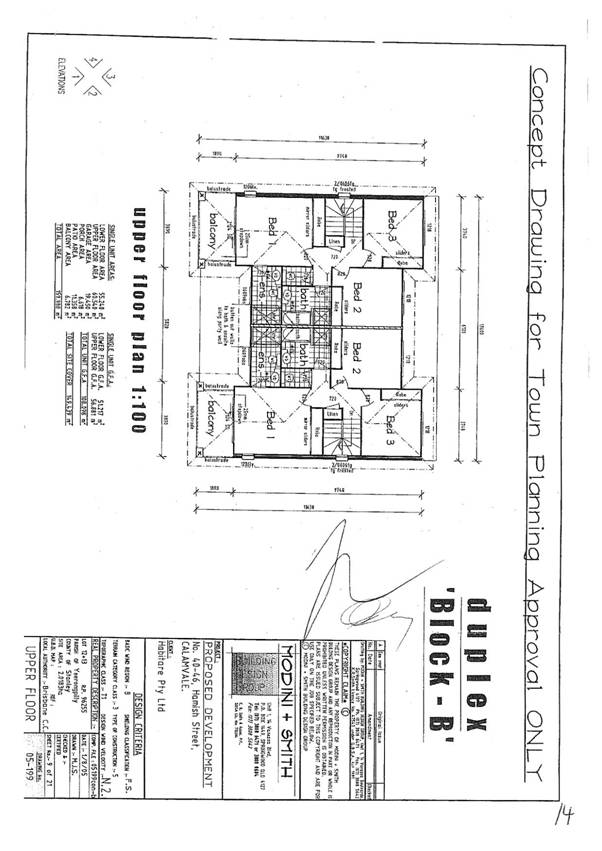
208 In relation to the Duplex 1, I have already found that the Duplex 1 (and Duplex B) are not substantial reproductions of the Conondale/Dunkeld drawings. In the absence of reproduction, I am satisfied that there is no causal connectivity between those Tamawood drawings and the Mondo Duplex 1.
209 In relation to exhibit RJS13-3 produced by Mondo in February 2006, while in my view there are strong similarities between this design and the Dunkeld, this Mondo plan was not used by Mondo or Habitare as a design “generally in accordance” with the development approval. Duplex 1 was the design so used. I am not persuaded that any inference of relevance should be drawn from the existence of RJS13-3, other than the possibility of this design representing progressive internal experimentation in designs by Mondo including by reference to the work of competitors (but evidently, in relation to this design, not used).
210 Finally for completeness I note that no evidence of causal connectivity was produced as between the Conondale/Dunkeld drawings, and the Duplex B drawings produced by Caprice Group.
3. Infringement by building according to the Mondo drawings
211 Section 21(3) of the Copyright Act provides that an artistic work shall be deemed to have been reproduced if, inter alia, a two-dimensional work is reproduced in three-dimensional form.
212 It does not appear to be in dispute that duplexes were constructed in accordance with the relevant Mondo drawings at the Calamvale and Brackenridge sites by Bloomer Constructions at the instruction of Habitare. Evidence to this effect was given, for example, by Mr Bryan Miller in his expert report.
213 In light of my earlier findings concerning the Conondale/Dunkeld drawings, construction in accordance with Duplex 1/Duplex B does not infringe any copyright subsisting in Tamawood.
214 However construction of duplexes in accordance with Mondo’s Duplex 2/Duplex A designs does infringe Tamawood’s copyright in the Torrington drawings. Primary liability in respect of this infringement rests with Bloomer Constructions and the Habitare corporate respondents.
AUTHORISATION AND ACCESSORIAL LIABILITy (ISSUES 11 AND 12)
215 In light of my earlier findings concerning the licence granted by Tamawood to Habitare, no authorisation or accessorial liability for alleged infringement of copyright arises in relation to the lodgement of the Arcadia, Armstrong, Hazen, Torrington and Conondale/Dunkeld drawings for development approval.
216 Limited authorisation and accessorial liability issues arise in relation to the infringement of copyright in the Conondale/Dunkeld drawings in light of my findings concerning the precise copying of those plans by Habitare.
217 Authorisation and accessorial liability is, however, relevantly pleaded by Tamawood in relation to the acts of third parties infringing its copyright in the Torrington drawings.
218 In particular, Tamawood seeks relief against the following respondents for “secondary” liability under the principles of authorisation of infringement of copyright:
Mr Peter O’Mara for authorising the infringements of the sixth, seventh and eighth respondents;
Mr Johnson for authorising the infringements of the sixth, seventh and eighth respondents;
Mr Peter O’Mara for procuring the infringements of the sixth, seventh and eighth respondents;
Mr Johnson for procuring the infringements of the sixth, seventh and eighth respondents;
Habitare, Mr Peter O’Mara and Mr Johnson for authorising the infringements of Mondo;
All of the corporate respondents acting pursuant to a common design to infringe Tamawood’s copyright;
Habitare, Mr Peter O’Mara and Mr Johnson for procuring the infringements of Mondo;
Mr Bloomer for authorising the infringements of Bloomer Constructions;
Mr Bloomer for procuring the infringements of Bloomer Constructions;
Habitare, the seventh and eighth respondents and Mondo (or a combination of these respondents) acting pursuant to a common design to infringe Tamawood’s copyright (I note that, in their written submissions in reply, Tamawood was content not to press a claim of common design against Mr Peter O’Mara and Mr Johnson).
219 I now turn to these claims.
Authorisation and procurement: Mr Peter O’Mara, Mr Johnson, Habitare and Mr Bloomer
220 Authorisation of any act comprised in copyright is a primary infringement pursuant to s 36 of the Copyright Act. Materially, s 36 provides:
Infringement by doing acts comprised in the copyright
(1) Subject to this Act, the copyright in a literary, dramatic, musical or artistic work is infringed by a person who, not being the owner of the copyright, and without the licence of the owner of the copyright, does in Australia, or authorizes the doing in Australia of, any act comprised in the copyright.
(1A) In determining, for the purposes of subsection (1), whether or not a person has authorised the doing in Australia of any act comprised in the copyright in a work, without the licence of the owner of the copyright, the matters that must be taken into account include the following:
(a) the extent (if any) of the person's power to prevent the doing of the act concerned;
(b) the nature of any relationship existing between the person and the person who did the act concerned;
(c) whether the person took any reasonable steps to prevent or avoid the doing of the act, including whether the person complied with any relevant industry codes of practice.
(2) …
221 Section 36 of the Copyright Act in its then form was considered by the High Court in Moorhouse, and indeed the factors now listed in s 36(1A)(a), (b) and (c) appear taken from the decision of their Honours in that case. In Moorhouse the respondent had commenced an action for breach of copyright against the University because, in summary, the University had provided photocopying machines for use by students, which photocopiers could be used to copy literary works in such a manner as to infringe the copyright of the owner. To that extent, remedies were sought against the University for authorising any such breach of copyright.
222 The High Court found, so far as relevant, that the University had reasonable grounds to suspect that some infringements would be made if adequate precautions were not taken, and it had the power to control both the use of the books and the use of the machines. Accordingly if a person in the library used a University photocopier to copy a book in such a manner that copyright of the owner was infringed, it could be inferred that the University authorised the person to do so, unless the University had taken reasonable steps to prevent an infringing copy of that kind from being made.
223 At 12-13 Gibbs J said:
The word “authorize”, in legislation of similar intendment to s. 36 of the Act, has been held judicially to have its dictionary meaning of “sanction, approve, countenance”… It can also mean “permit”, and in Adelaide Corporation v. Australasian Performing Right Association Ltd. (1928) 40 CLR 481 “authorize” and “permit” appear to have been treated as synonymous. A person cannot be said to authorize an infringement of copyright unless he has some power to prevent it... Express or formal permission or sanction, or active conduct indicating approval, is not essential to constitute an authorization; “Inactivity or ‘indifference, exhibited by acts of commission or omission, may reach a degree from which an authorization or permission may be inferred’”: Adelaide Corporation v. Australasian Performing Right Association Ltd. (1928) 40 CLR, at p 504 . However, the word "authorize" connotes a mental element and it could not be inferred that a person had, by mere inactivity, authorized something to be done if he neither knew nor had reason to suspect that the act might be done. … It seems to me to follow from these statements of principle that a person who has under his control the means by which an infringement of copyright may be committed - such as a photocopying machine - and who makes it available to other persons, knowing, or having reason to suspect, that it is likely to be used for the purpose of committing an infringement, and omitting to take reasonable steps to limit its use to legitimate purposes, would authorize any infringement that resulted from its use…
224 At 20-21 Jacobs J (McTiernan ACJ agreeing) observed:
It is established that the word is not limited to the authorizing of an agent by a principal. Where there is such an authority the act of the agent is the act of the principal and thus the principal himself may be said to do the act comprised in the copyright. But authorization is wider than authority. It has, in relation to a similar use in previous copyright legislation, been given the meaning, taken from the Oxford Dictionary, of “sanction, approve, countenance”... I have no doubt that the word is used in the same sense in s. 36 (1). It is a wide meaning which in cases of permission or invitation is apt to apply both where an express permission or invitation is extended to do the act comprised in the copyright and where such a permission or invitation may be implied. Where a general permission or invitation may be implied it is clearly unnecessary that the authorizing party have knowledge that a particular act comprised in the copyright will be done.
The acts and omissions of the alleged authorizing party must be looked at in the circumstances in which the act comprised in the copyright is done. The circumstances will include the likelihood that such an act will be done. “. . . [t]he Court may infer an authorization or permission from acts which fall short of being direct and positive; . . . indifference, exhibited by acts of commission or omission, may reach a degree from which authorization or permission may be inferred. It is a question of fact in each case what is the true inference to be drawn from the conduct of the person who is said to have authorized . . .” (per Bankes L.J. in Performing Right Society Ltd. v. Ciryl Theatrical Syndicate Ltd. (1924) 1 KB 1, at p. 9).
225 That the concept of “authorisation” in the legislation has its own independent operation from what one might call primary infringement, does not exclude the general law principles dealing with joint tortfeasors from operation upon primary infringement: Gummow J in WEA International Inc v Hanimex Corporation Ltd (1987) 17 FCR 274 at 284.
226 It is clear from both the terms of s 36 and the discussion in Moorhouse that the question of control is implicit in the concept of authorization: Louis Vuitton Malletier SA v Toea Pty Ltd (2006) 156 FCR 158 at [167].
227 In relation to questions of procurement of copyright infringement by Mr Peter O’Mara, Mr Johnson and Mr Bloomer, Tamawood submits in summary:
The actions of a director may result in personal liability independently of the Copyright Act.
The attribution of personal liability to a director for the conduct of the company is not dependent upon proof of knowledge that the conduct of the corporation is tortious.
The degree of involvement required to render a director personally liable for the tort of the company may not be very great. Active participation in the day to day affairs of the company may suffice: Polaroid Corporation v Sole N Pty Ltd [1981] 1 NSWLR 491.
Mr Peter O’Mara and Mr David Johnson
228 Tamawood’s claims of authorisation and procurement are similar in relation to Mr Peter O’Mara and Mr Johnson. In summary, Tamawood claims:
Mr O’Mara has been a director of the sixth respondent since 19 December 2001, the seventh respondent since 3 October 2001 and the eighth respondent since 18 January 2002. Mr Johnson was the company secretary of the sixth, seventh and eighth respondents for over five years until December 2007, and has been an alternate director of each company since April 2008.
Evidence of Mr Speer during cross-examination demonstrated that Mr O’Mara held the most senior position at Habitare, made final decisions on which projects would be picked up and which would not, and could properly be described as “the boss”. To that extent, Mr O’Mara was the controlling mind of the Habitare companies.
Evidence of Mr Shane O’Mara during cross-examination included that Mr Johnson was aware of negotiations with Tamawood and the lodgement of the application for development consent, was taking a close interest in matters such as the pricing of the homes, was involved in making the final decision to proceed with the developments, and was aware of the breakdown of the relationship between Habitare and Tamawood and the need to engage Mondo.
Both Mr Peter O’Mara and Mr Johnson were responsible for the structuring of the business, in particular financial arrangements involving the Habitare business.
The evidence before the Court was that Habitare had only approximately 12 employees in the 2005-2006 period, which reinforces the likely knowledge Mr Peter O’Mara and Mr Johnson would have had of the affairs and activities of the Habitare companies.
In 2005-2006 the Calamvale and Brackenridge projects were two of the four main projects on Habitare’s agenda, necessitating a high degree of attention from Habitare executives.
Both Mr O’Mara and Mr Johnson had power and authority to prevent infringement by the Habitare companies.
It is significant that neither Mr O’Mara nor Mr Johnson gave evidence at the trial.
229 Tamawood’s claims are rejected by Mr O’Mara and Mr Johnson on the basis that, in summary:
Neither Mr Peter O’Mara nor Mr Johnson were engaged in the day to day management of either the Calamvale or the Brackenridge projects. The evidence demonstrates that Mr Speer and Mr Shane O’Mara were directly responsible for both projects.
The principal activities of Mr Peter O’Mara and Mr Johnson were on the financial side of the business, including raising funds for projects and marketing.
Tamawood is asking the Court to take some generalities and infer knowledge at particular times of particular acts, which Tamawood does not identify.
There is nothing which demonstrates that Mr Johnson or Mr Peter O’Mara were aware of an act of copying at some time after Mr Speer had made a decision not to employ Tamawood as the builder. In light of the engagement by Habitare of Mondo, the most likely state of their knowledge was that any potential breach of Tamawood’s copyright would be avoided by the employment of Mondo.
230 In my view neither Mr Peter O’Mara nor Mr Johnson authorised any act comprised in Tamawood’s copyright in the Tamawood drawings, nor procured any such act. I form this view for the following reasons.
Authorisation
231 The executive roles of Mr Peter O’Mara and Mr Johnson clearly gave them significant authority in the affairs of the sixth, seventh and eighth respondents. There is authority supporting a general inference which can be drawn that persons who manage the affairs of a company will of necessity have authorised acts of that company which infringe copyright. I note, for example the following observations of de Jersey J (as his Honour then was) in Australasian Performing Right Association v Tolbush Pty Limited [1986] 2 Qd R 146 at 149, commenting on the interpretation of s 36(1) of the Copyright Act:
If I enjoin the first defendant, I consider that I should also enjoin the second and third defendants, who are directors of the first defendant. The third defendant is also its secretary. Under s. 36(1), those who ‘authorise’ infringements of copyright are liable for the infringement. The material before me suggests that the second and third defendants control and operate the first defendant. I consider that I should infer that they effectively run it. That being so, I consider that I should take the view that they, as the natural operatives of the first defendant, have authorised any infringement of copyright of which the first defendant has been guilty. My approach is similar to that of Thomas J. in Kalamazoo ...
232 These comments have been adopted in numerous decisions of this Court, including Australasian Performing Right Association Limited v Jain (1990) 26 FCR 53 at [60], and Microsoft Corporation v PC Club Australia Pty Ltd (2005) 148 FCR 310 at [147].
233 However it clearly does not follow that either s 36(1) of the Copyright Act or cases in which this section has been considered justify an automatic conclusion in all circumstances that a director of a company, even a managing director or company secretary, has “authorised” an act committed by the company infringing copyright of a third party. This is not a novel observation – as observed by Lord Salmon in Wah Tat Bank Limited v Chan Cheng Kum [1975] AC 507 at 514:
A tort may be committed through an officer or servant of a company without the chairman or managing director being in any way implicated. There are many such cases reported in the books.
(cf Martin Engineering Company v Nicaro Holdings Pty Limited (1991) 100 ALR 358 at 359).
234 Principles relevant to the duties and obligations of company directors under the Corporations Act 2001 (Cth) (“Corporations Act”) have evolved over time, such that the position is burdened with onerous obligations, and belief in particular circumstances may provide no defence to a claim that those obligations have been breached. A stark example is the irrelevance of a belief of a director in the solvency of a company at such time as a reasonable person in a like position in a company in the company’s circumstances would have been aware that the company was actually insolvent: s 588G Corporations Act. However, it is clear that the terms of s 36(1) of the Copyright Act do not, for example, contemplate an approach deeming a director to have authorised an act of the company infringing copyright, merely by virtue of the position of that director. The mental element required by s 36(1) must, in my view, contemplate some level of sanction or endorsement by the director of the act by the company infringing the copyright of the third party. That this is so is clear, in my view, from observations of their Honours in Moorhouse.
235 In this case the evidence before the Court shows no direct involvement by Mr Peter O’Mara or Mr Johnson in the active management of the Calamvale and Brackenridge project developments, or of any relationship with Mondo. While both Mr Peter O’Mara and Mr Johnson may have been apprised in general terms of the events relevant to the development of the Calamvale and Brackenridge sites, it is clear that Mr Speer and Mr Shane O’Mara were the persons responsible for making critical decisions pertinent to this project as project managers consulting to Habitare. Those critical decisions included determinations of the identity of the builder (initially Tamawood, subsequently (to a limited degree) Caprice Group, and then Bloomer Constructions) and the identity of the architect in relation to the projects (initially Tamawood, subsequently (to a limited degree) Caprice Group and then Mondo). In my view, to the extent relevant in this case, Mr Peter O’Mara and Mr Johnson “authorised” Mr Speer and Mr Shane O’Mara to make decisions on these projects – it cannot be said, however, that expressly or impliedly Mr Peter O’Mara and Mr Johnson authorised the commission of acts by the sixth, seventh or eighth respondents to infringe the copyright of third parties.
236 Section 36(1A) of the Copyright Act specifies certain criteria which must be taken into account in determining whether a person has “authorised” an act infringing copyright. In this case while Mr Peter O’Mara and Mr Johnson may have had the power to prevent Mr Shane O’Mara and Mr Speer committing the sixth, seventh and eighth respondents to the infringing acts, s 36(1A)(b) requires examination of their relationships with Mr Speer and Mr Shane O’Mara. In this case it does not appear to be in dispute that:
Mr Peter O’Mara and Mr Johnson were involved in the financial side of the Habitare business rather than its property development aspects.
Mr Shane O’Mara is Mr Peter O’Mara’s son. To that extent, the Court can draw an inference on the facts that their relationship was such that Mr Peter O’Mara entrusted some degree of responsibility and autonomy of decision-making to Mr Shane O’Mara in respect of the Calamvale and Brackenridge projects.
Mr Speer appears to have had a working relationship with Mr Peter O’Mara since 1998, and like Mr Shane O’Mara appeared to have extensive property project management experience.
237 Finally, in my view it is reasonable for the Court to infer that the engagement of Mondo as new architects in relation to the Calamvale and Brackenridge sites by Habitare (following the decision of Mr Speer and Mr Shane O’Mara) would lead Mr Peter O’Mara and Mr Johnson to the conclusion that the possibility of any infringement of Tamawood’s copyright by the sixth, seventh and eighth respondents had been averted. Considered in that light, a reasonable inference to draw is that Mr Peter O’Mara and Mr Johnson had no knowledge or reason to suspect that any infringement of Tamawood’s copyright might occur (cf remarks by the Full Court in Cooper v Universal Music Australia Pty Ltd (2006) 156 FCR 380 at [145]). It also follows that Mr Peter O’Mara and Mr Johnson cannot be said to have authorised any infringements of Tamawood’s copyright by Mondo.
238 In any event, to the extent that Mr Peter O’Mara and Mr Johnson can be said to have “authorised” the engagement by Habitare of Mondo as architects, I consider that this act constituted “reasonable steps to prevent or avoid the doing of the act” within the meaning of s 36(1A)(c) of the Copyright Act, because a clear purpose of engaging a new architect was for the architect to create new plans, and for Habitare to build dwellings in accordance with those new plans (rather than the Tamawood drawings).
Procurement
239 While there appears to be some conflict of authority, it appears that, in order for a director to be personally liable in tort for conduct of the company, the director must have expressly or impliedly “directed or procured” the relevant tortious conduct: Microsoft Corporation v Auschina Polaris Pty Ltd (1996) 71 FCR 231 at 246, Performing Right Society Ltd v Ciryl Theatrical Syndicate Ltd [1924] 1 KB 1 at 15, Wah Tat Bank at 514-515, Kalamazoo (Aust) Pty Ltd v Compact Business Systems Pty Ltd [1990] 1 Qd R 231 at 258, Sydneywide Distributors Pty Ltd v Red Bull Australia Pty Ltd (2002) 55 IPR 354; [2002] FCAFC 157.
240 In my view the evidence does not support a finding that either Mr Peter O’Mara or Mr Johnson directed or procured acts by the sixth, seventh and eighth respondents infringing Tamawood’s copyright. As I have already observed, they appeared to have no active engagement in events related to the Calamvale and Brackenridge projects.
Habitare, for authorising the infringements of Mondo and Bloomer Constructions
241 Tamawood submits that:
Habitare’s requirements as to the single storey duplex and the double storey duplex as conveyed to Mondo brought about the infringing drawings, and thus Habitare authorised the infringements of Mondo; and
In requiring the houses to be build in accordance with infringing drawings, Habitare authorised the infringements of Bloomer Constructions.
242 I note that Habitare accepts that, if Habitare is taken not to have been licensed and Mondo is found not to have created original drawings, handing over the plans to Bloomer Constructions for use in the building phase would amount either to an infringement or authorisation of an infringement.
243 In relation to Mondo, it is clear that Habitare procured the services of Mondo to prepare plans according to Habitare’s requirements, and that in the course of doing so there was a substantial reproduction by Mondo of the Torrington plans.
244 In my view both claims of Habitare in relation to the infringements of Mondo and Bloomer Constructions (limited to the Duplex 2/Duplex A drawings) are substantiated.
Mr Bloomer
245 It is not in dispute that Mr Bloomer is the director of Bloomer Constructions, and that he is the directing mind and will of Bloomer Constructions such that all decisions relating to the conduct of the business of Bloomer Constructions are made by him.
246 In my view Tamawood has substantiated its case that any infringements of its copyright by Bloomer Constructions were authorised by Mr Bloomer.
Common design: Habitare, the seventh and eighth respondents, and Mondo; and Habitare, and the seventh and eighth respondents
247 Principles relevant to pursuance of tortious conduct in common design were discussed by Dowsett J in Louis Vuitton. In that case the applicant, a corporation which manufactured luggage, hand bags and other accessories, brought an application against the landlord of and the party responsible for operating, supervising and controlling a market at which goods infringing the applicant’s trademark were sold. The applicant claimed, inter alia, that the infringing conduct was undertaken by the stallholders at the market with the concurrence of the respondents and pursuant to their common design.
248 Dowsett J observed that a leading case in this context was The Koursk [1924] P 140, and continued:
[148] I have previously referred to the applicant’s reliance on the decision of the Court of Appeal in The Koursk … However I suspect that it has misconceived that decision. The case arose out of a collision at sea involving the Clan Chisholm, The Koursk and the Itria, leading to the loss of the Itria. The owners of the Itria sued the owners of the other vessels, alleging separate and independent acts of negligence against each of them. The question was whether judgment recovered against the owners of the Clan Chisholm barred a further action by the owners of the “Itria” against the owners of The Koursk. This depended upon whether the two ship owners (of the Clan Chisholm and The Koursk) were joint or several tortfeasors. Bankes LJ adopted the following proposition from Clerk and Lindsell on Torts (7th ed) at p 59:
Persons are said to be joint tortfeasors when their respective shares in the commission of the tort are done in furtherance of a common design.
[149] Scrutton LJ said (The Koursk [1924] P at 155):
The substantial question in the present case is: What is meant by “joint tortfeasors”? and one way of answering it is: “Is the cause of action against them the same?” Certain classes of persons seem clearly to be “joint tortfeasors”: The agent who commits a tort within the scope of his employment for his principal and the principal; the servant who commits a tort in the course of his employment, and his master; two persons who agree on common action, in the course of, and to further which, one of them commits a tort. These seem clearly joint tortfeasor; there is one tort committed by one of them on behalf of, or in concert with another.
[150] The applicant fastens on the proposition concerning two persons who agree on common action in the course of which one commits a tort, submitting that the present case fits that description. However that observation by Scrutton LJ must be read in the context of his Lordship’s later remarks (The Koursk [1924] P at 156) where he referred with approval to the statement in Clerk and Lindsall (to which Bankes LJ had referred), that:
“Persons are said to be joint tortfeasors when their respective shares in the commission of the tort are done in furtherance of a common design” ... “But mere similarity of design on the part of independent actors, causing independent damage, is not enough; there must be concerted action to a common end.” Still more so when there is not even similarity of design, but independent negligence accidentally resulting in one damage.
[151] At 159 Sargant LJ adopted the same passage.
249 His Honour referred to Thompson v Australian Capital Television Pty Ltd (1996) 186 CLR 574, in particular comments of the majority (Brennan CJ, Dawson and Toohey JJ) at 580-581:
The difference between joint tortfeasors and several tortfeasors is that the former are responsible for the same tort whereas the latter are responsible only for the same damage ... . As was said in The “Koursk” ..., for there to be joint tortfeasors “there must be a concurrence in the act or acts causing damage, not merely a co-incidence of separate acts which by their conjoined effect cause damage”. Principal and agent may be joint tortfeasors where the agent commits a tort on behalf of the principal, as master and servant may be where the servant commits a tort in the course of employment. Persons who breach a joint duty may also be joint tortfeasors. Otherwise, to constitute joint tortfeasors two or more persons must act in concert in committing the tort.
250 Materially, Dowsett J concluded in summary that:
control does not, itself, imply a common purpose, but may be relevant in determining whether a common purpose existed at the relevant time;
in Louis Vuitton:
the respondents did not act in common with any of the stallholders in the actions which constituted infringement of the applicant’s copyrights;
such infringements were not committed in the execution of any common purpose shared with the respondents;
the respondents’ purpose was to conduct an efficient and profitable market and the purpose of each stallholder was the successful conduct of his or her stall. There was no common purpose.
251 In this case Tamawood submits in summary that:
all the Habitare parties and Mondo participated with reckless indifference to Tamawood’s copyright.
Despite notice of Tamawood’s previous involvement, Mondo never contacted Tamawood to ascertain whether its plans could be used or whether there were any “issues” between Habitare and Tamawood.
Habitare never informed Tamawood of the development consents, or the appointments of Caprice Group, Mondo or Bloomer Constructions.
Habitare never approached Tamawood to ascertain what it could or could not do in relation to the use of Tamawood’s plans.
The essential element in relation to the question of joint tortfeasor circumstances is control. Mondo had the opportunity either not to licence, or to terminate its licence of, the infringing plans at any time. It therefore controlled their use.
(I understand that Tamawood does not claim that Bloomer Constructions was party to any common design with the other corporate respondents relating to infringement of Tamawood’s copyright, and, as I noted earlier, Tamawood does not press this claim against Mr Peter O’Mara and Mr Johnson.)
252 The material before the Court supports a finding that the sixth, seventh and eighth respondents, despite being separate corporate entities, are related corporations in light of their common shareholdings and directorships. It is also apparent that the seventh and eighth respondents acquiesced to the management of the Calamvale and Brackenridge projects by Habitare, including all acts which constituted infringement of copyright. The primary engagement of the seventh and eighth respondents appears to have been execution of various contracts in furtherance of the development of the Calamvale and Brackenridge sites.
253 The purpose of the seventh and eighth respondents as the owners of the Calamvale and Brackenridge development sites appeared to be the same as those of Habitare – in summary the successful and profitable development of those sites by the construction of duplexes in accordance with architecturally drawn plans for which development approval was given by the Brisbane City Council, and the subsequent sale of those duplexes. To that extent I am persuaded that acts of Habitare and the seventh and eighth respondents were done in furtherance of a common design.
254 I am not persuaded, however, that acts of Mondo were performed in furtherance of a common design with Habitare or the seventh or eighth respondents. In particular:
I am not persuaded that the failure of Mondo to make enquiries of Tamawood to ascertain whether there were any outstanding issues from Tamawood’s perspective in relation to the development of the Calamvale and Brackenridge sites supports a finding of common design. Rather, I accept Mondo’s submission that Mondo and Tamawood were in competition, and any approach between competitors would potentially have created new legal problems.
Mondo was not under the control of any of Habitare parties, nor were they under Mondo’s control.
I do not consider that Mondo’s purpose was the same as those of the Habitare or the seventh or eighth respondents. I consider that Mondo’s primary purpose was to produce architectural plans in conformance with the needs of its client, Habitare. Clearly, this was far removed from the purpose of the Habitare parties in relation to the successful and profitable development of the Calamvale and Brackenridge sites.
At best in this context, the Court can draw an inference of co-incidence of separate acts by Mondo and Habitare which by their conjoined effect caused damage. As was explained in Thompson such co-incidence does not warrant a finding of common design.
INNOCENT INFRINGEMENT PURSUANT TO SECTION 115(3) OF THE COPYRIGHT ACT (ISSUE 13)
255 It does not appear to be in dispute that Bloomer Constructions has pleaded the defence of innocent infringement of Tamawood’s copyright under s 115(3). As I have already noted, in constructing the buildings in accordance with the Duplex 2/Duplex A drawings, Bloomer Constructions infringed Tamawood’s copyright in the Torrington drawings. A key issue is whether Bloomer Constructions can substantiate a defence of innocent infringement under s 115(3) of the Copyright Act. Tamawood submits that Bloomer Constructions has not done so.
256 In relation to Mondo, questions arise whether Mondo has similarly pleaded s 115(3) and, if it has, whether that defence has been substantiated. Tamawood submits that the answer to both questions is in the negative.
Section 115(3)
257 Section 115(3) of the Copyright Act provides:
(3) Where, in an action for infringement of copyright, it is established that an infringement was committed but it is also established that, at the time of the infringement, the defendant was not aware, and had no reasonable grounds for suspecting, that the act constituting the infringement was an infringement of the copyright, the plaintiff is not entitled under this section to any damages against the defendant in respect of the infringement, but is entitled to an account of profits in respect of the infringement whether any other relief is granted under this section or not.
258 Section 115(3) provides for relief in the form of an account of profits only in circumstances of innocent infringement. It has been the subject of considerable previous judicial analysis (I note in particular the list of cases identified by Gordon J in Krueger Transport Equipment Pty Ltd v Glen Cameron Storage & Distribution Pty Ltd (No 2) [2008] FCA 1493 at [10]).
259 In Milwell Pty Ltd v Olympic Amusements Pty Ltd (1999) 85 FCR 436 the Full Court of the Federal Court observed at [52] that:
To obtain the protection of s 115(3) a defendant must establish (i) an active subjective lack of awareness that the act constituting the infringement was an infringement of the copyright, and (ii) that, objectively considered, he or she had no reasonable grounds for suspecting that the act constituted an infringement.
260 Similarly in Golden Editions Pty Ltd v Polygram Pty Ltd (1996) 61 FCR 479 Burchett and Tamberlin JJ said at 480:
But in general the question is not whether the defendant knew the identity of the owner of the copyright, but whether the defendant has established a lack of awareness, and of reasonable grounds for suspecting, that the relevant act was an infringement of the copyright which was infringed, in whomsoever that copyright might be vested.
(Emphasis added.)
261 A deliberate choice not to inquire, in such circumstances, may enable a further finding, since it may suggest a mind in which real suspicion resided: Golden Editions at 488.
Bloomer Constructions
262 Tamawood submits that Bloomer Constructions has not made out a defence under s 115(3) of the Copyright Act because, in summary:
Bloomer Constructions had clear grounds for suspecting that copyright in Tamawood drawings was being infringed in connection with the construction of duplexes at the Calamvale and Brackenridge sites, in that it had access to the development approvals which recorded the house plans on which the approvals were based (namely, Tamawood drawings).
It is not in dispute that the terms of the development approvals required that the documents containing conditions of approval and all plans forming part of the approval needed to be kept on site at all times and given to all contractors. This means that Bloomer Constructions should have been given those documents and in turn provided the documents to its own contractors.
263 In my view, however, Bloomer Constructions has substantiated its defence of innocent infringement of copyright under s 115(3) in respect of the Tamawood drawings. I so find because:
Bloomer Constructions had no involvement in the original process whereby development approval was obtained in relation to the Calamvale and Brackenridge sites.
I am satisfied that Bloomer Constructions (and in particular Mr Bloomer) was unaware of any potential infringement of Tamawood’s copyright in relation to the plans prepared by Mondo (or Caprice Group) and which were the basis of the construction of dwellings at the Calamvale and Brackenridge sites.
There was no reference to Tamawood on the Mondo (or Caprice Group) plans relating to the Calamvale and Brackenridge sites.
While it is clear from the development approvals that Habitare had engaged Tamawood earlier in the development process, this does not, of itself, create grounds for suspicion in a builder that subsequent plans drawn by reputable firms (Caprice Group and Mondo) had infringed copyright in Tamawood plans. The Court is able, in my view, to draw the inference that the engagement of successive architects during a development process is not in itself unusual or controversial. Certainly in cross-examination Mr Sweeney commented on situations where clients, who had already consulted other architects, sought to consult him (Sweeney 20/9/2011 affidavit paras 25-26). Similarly, creation by third parties of designs “generally in accordance” with already approved plans prepared by someone else was not cause for comment as unusual by any expert in these proceedings.
Indeed, at the time of engagement of Bloomer Constructions it appears that civil work had already been undertaken at the Brackenridge site by Caprice Group. In my view a reasonable inference capable of being drawn from this fact by Mr Bloomer and Bloomer Constructions was that Caprice Group, if not the original architect in relation to at least some of the plans, had provided new plans to Habitare for development purposes superseding plans originally provided by Tamawood.
Mondo
264 In its written submissions Mondo submits that issues relevant to the claim against Mondo raise the question of innocent infringement by Mondo.
265 Tamawood submits that Mondo has not pleaded this defence. In my view this submission is correct. I can identify no aspect of Mondo’s second further amended defence which raises innocent infringement in accordance with s 115(3) of the Copyright Act. It follows that I do not accept Mondo’s submission that the question of innocent infringement is relevant in relation to Mondo’s defence against claims by Tamawood.
WHETHER CIRCUMSTANCES ATTRACTED THE OPERATION OF SECTION 115(4) OF THE COPYRIGHT ACT (ISSUE 14)
266 In this case Tamawood has sought an indication as to whether threshold conditions for the operation of s 115(4) have been achieved in respect of one or more respondents.
267 Section 115(4) of the Copyright Act provides as follows:
(4) Where, in an action under this section:
(a) an infringement of copyright is established; and
(b) the court is satisfied that it is proper to do so, having regard to:
(i) the flagrancy of the infringement; and
(ia) the need to deter similar infringements of copyright; and
(ib) the conduct of the defendant after the act constituting the infringement or, if relevant, after the defendant was informed that the defendant had allegedly infringed the plaintiff’s copyright; and
(ii) whether the infringement involved the conversion of a work or other subject matter from hardcopy or analog form into a digital or other electronic machine readable form; and
(iii) any benefit shown to have accrued to the defendant by reason of the infringement; and
(iv) all other relevant matters;
the court may, in assessing damages for the infringement, award such additional damages as it considers appropriate in the circumstances.
268 The section entitles the copyright owner to damages for “flagrant” infringement. In considering s 115(4) in Futuretronics.com.au Pty Limited v Graphix Labels Pty Ltd (No 2) (2008) 76 IPR 763; [2008] FCA 746, Besanko J observed:
[19] The meaning of “the flagrancy of the infringement” has been described in various ways. In Ravenscroft v Herbert and New English Library Limited [1980] RPC 193 Brightman J referred to it as “scandalous conduct, deceit and such like; it includes deliberate and calculated copyright infringement”; in Prior v Lansdowne Press Pty Ltd [1977] VR 65 at 70, Gowans J (at 70) referred to it as a “calculated disregard of the plaintiff’s rights, or cynical pursuit of benefit”; and in Raben Footwear Pty Ltd v Polygram Records Inc (1997) 75 FCR 88 at 103 flagrancy was said to connote conduct which could probably be described as “glaring, notorious, scandalous” or “blatant”. In Polygram at 461-462 Lockhart J said that flagrancy did not include mere mistakes or carelessness and that if the infringer mistakenly believed that he or she owned the relevant copyright , or acted in the bona fide belief that no copyright subsisted in the plaintiff’s work then the conduct was not flagrant.
269 In summary, Tamawood submits:
In relation to Habitare:
Habitare sought to “cut corners” in relation to the development of the Calamvale and Brackenridge sites because it was under financial pressure to progress the developments;
in the words of Mr Cobden SC for Tamawood, Habitare sought “the fig leaf of Mondo’s suggestions that they will be able to redraw everything in a clean room environment”.
In relation to Mondo:
Mondo plainly failed to take sufficient steps to satisfy itself in relation to the copyright in the Tamawood plans and whether Habitare had extricated itself from any arrangement with Tamawood;
Mondo stubbornly clung to a view, in particular concerning Tamawood’s copyright in the Torrington drawings, and persisted with its engagement in the projects.
270 Mr Cobden SC conceded that Tamawood’s case for additional damages against Bloomer Constructions was weaker than against the other respondents.
271 In my view a case for additional damages has not been made out as against Habitare, Mondo or Bloomer Constructions.
272 In relation to Habitare, I accept Mr Musgrave’s submission that the Habitare executives, in particular Mr Speer, having perceived there to be a copyright issue concerning the Tamawood drawings, sought to address that issue by arranging for new plans to be drawn. While there is also evidence that Habitare had indicated to Mondo that Habitare had resolved any outstanding issues with Tamawood concerning the Tamawood drawings and the project sites (when in fact such resolution had not occurred), I am not persuaded that the facts support a finding of flagrant infringement of copyright.
273 In relation to Mondo, I consider its actions were predicated upon at least two false assumptions, namely:
its belief that Tamawood had in fact used Mondo’s plans (particularly in relation to the Torrington drawings); and
its belief that Habitare had resolved outstanding issues with Tamawood.
274 While these issues could possibly have been, in turn, resolved by actions and inquiries from Mondo, such a conclusion is speculative. I am not persuaded that the events involving Mondo are supportive of a finding of a calculated disregard of Tamawood’s rights by Mondo, or scandalous or deceitful conduct.
275 Finally, in light of my finding that Bloomer Constructions has substantiated a defence of innocent infringement under s 115(4) of the Copyright Act, there is no scope for Tamawood’s claim of additional damages against Bloomer Constructions.
CLAIM UNDER THE TRADE PRACTICES ACT 1974 (CTH) (ISSUES 15, 16, 17, 18 AND 19)
276 At all material times s 52 of the Trade Practices Act 1974 (Cth) then in force provided as follows:
52 Misleading or deceptive conduct
(1) A corporation shall not, in trade or commerce, engage in conduct that is misleading or deceptive or is likely to mislead or deceive.
(2) Nothing in the succeeding provisions of this Division shall be taken as limiting by implication the generality of subsection (1).
277 In summary, Tamawood claims that:
the conduct of Bloomer Constructions, Habitare, Eight March and First Priority Developments was misleading and deceptive within the meaning of s 52;
Habitare, Eight March and/or First Priority impliedly represented to the market that they were entitled to exploit the copyright in the plans from which dwellings were built by offering the dwellings at Calamvale and Brackenridge for sale;
if the Court finds that its copyright has been infringed by the building of the houses then it will follow that the implied representation was misleading and deceptive or likely to mislead or deceive in contravention of s 52; and
Mr Peter O’Mara, Mr Johnson and Mr Bloomer, or any of them, held the necessary state of mind to be liable under s 75B of the Trade Practices Act for any such contravention.
278 Tamawood seeks damages pursuant to s 82 of the Trade Practices Act.
279 At all material times s 75B provided that a reference to a person being involved in a contravention of, inter alia, s 52 included circumstances where a person:
(a) has aided, abetted, counselled or procured the contravention;
(b) has induced, whether by threats or promises or otherwise, the contravention;
(c) has been in any way, directly or indirectly, knowingly concerned in, or party to, the contravention; or
(d) has conspired with others to effect the contravention.
280 Tamawood does not submit that Mr Bloomer had sufficient knowledge to establish accessorial liability pursuant to the Trade Practices Act.
281 In my view Tamawood’s claims relating to contravention of the Trade Practices Act have not been substantiated.
282 First, as observed by Gibbs CJ in Parkdale Custom Built Furniture Proprietary Limited v Puxu Proprietary Limited (1982) 149 CLR 191 at 197 the liability imposed by s 52 in conjunction with s 82 need not involve any infringement of copyright. A finding of infringement of copyright in relation to Tamawood drawings by the corporate respondents to these proceedings does not, as the applicant seems to submit, automatically lead to a finding of misleading representation by those respondents in contravention of s 52.
283 Second, and more pertinently, I am not persuaded that, in offering the dwellings at Calamvale and Brackenridge for sale to the public, Bloomer Constructions, Habitare, Eight March and First Priority Developments impliedly represented that they owned all rights and privileges in any copyright in the house plans used to build the houses. I form this view because:
Evidence before the Court is limited in relation to the manner in which Habitare developed the Calamvale and Brackenridge sites. However it appears that the sites were envisaged as housing estates from inception (before Tamawood was asked to produce plans), with duplexes intended to be constructed on the sites to maximise the dwelling occupancy of those sites. Mr Speer gave evidence in cross-examination of his early discussions with town planner Mr Ernie Harvey in the following terms:
All right. Now, let’s just think about site plans for a moment. Can you just explain to her Honour the difference between a site plan and a floor plan, if I can put it that way? Sorry, a site plan is the overall block of land, and which if we were doing 40 or 47 townhouses, we would position these townhouses throughout the block, and that’s the site plan. Whereas the floor plan is the individual floor plans for the individual units.
(Transcript 24 October 2011 p 307 ll 25-30)
284 And later:
MR FERRETT: Did you – can you tell us about occasions on which you observed Mr Harvey’s work, as opposed to what you understand, for example, from what Mr Harvey told you?---Yes. We had a meeting in Ernie’s office one morning where he had put together – pasted a floor – a site plan utilising Tamawood’s plans.
All right. So just can you give her Honour a bit of detail about what that pasted-up plan involved?---Well, it involved taking a scale drawing of the site, and it involved taking – and if there were 40 - 40 scale drawings of the little houses, and pasting those all over the site, with the roads drawn in, and whatever other facilities were included. That’s how it was presented to us initially, and it seemed to work, and from there it was drawn up more exactly.
(Transcript 24 October 2011 p 308 ll 4-13)
285 Site plans for both the Calamvale and Brackenridge sites developed by Mr Harvey for Habitare are in evidence before the Court:
It is clear that site plans were lodged with the Brisbane City Council in the application for development approval (cf evidence of Mr Shane O’Mara transcript 25 October 2011 p 398 ll 4-13).
Similarly in evidence before the Court is the “generally in accordance with” site plan for Calamvale developed by Mondo, which features, inter alia, representations of duplex dwellings, common property, and roads through the housing estate.
To that extent it is clear that Habitare decided which dwellings were to be constructed on the Calamvale and Brackenridge sites by Bloomer Constructions, rather than individual customers of Habitare (cf evidence of Mr Shane O’Mara transcript 25 October 2011 p 426 ll 35-42).
It is not in dispute that Habitare, Eight March and First Priority Developments were in the business of property development. It is not controversial to infer that, in developing the Calamvale and Brackenridge projects, Habitare, Eight March and First Priority Developments intended to sell dwellings at those sites, to purchasers, for financial gain.
286 I accept the submissions of Mr Ferrett for Habitare that it does not flow naturally from the act of selling a dwelling that the vendor represents that it owns the copyright in the design of the dwelling, and that something more is required to raise an implied representation of that nature. There is no evidence before me as to whether Habitare sold completed dwellings or dwellings at varying stages of construction, however it appears that these were projects whereby dwellings were being built according to the approved drawings and marketed in that manner. These were not projects whereby Habitare consulted prospective purchasers to gain input into the design of individual dwellings, to customise the dwelling to the purchaser’s particular needs. (In this respect, the process appears distinguishable from circumstances where a particular customer may come to a developer with specific needs in mind, and the developer produces plans to suit that customer. Indeed, Mr Mizikovsky gave evidence that customers sometimes seek modifications of Tamawood designs to suit themselves, and that Tamawood can accommodate such requirements to amend the design (transcript 20 October 2011 p 158 ll 11-21).) Accordingly, it follows that the dwellings were being sold to purchasers by the Habitare corporate respondents, and that any representations as to ownership related to ownership of the dwellings, not copyright in the designs of the dwellings.
287 Third, s 82 requires, inter alia, that the claimant for damages has suffered loss or damage by conduct of another person that was done in contravention of s 52 of that Act. In Wardley Australia Ltd v State of Western Australia (1992) 175 CLR 514 at 525 the plurality observed that s 82 contemplates (materially):
misrepresentation in contravention of s 52 of the Trade Practices Act;
acts done by the representee in reliance upon the misrepresentation, such that the element of causation is satisfied;
loss resulting from those acts.
288 I accept the submission of Mr Ferrett for Habitare, Eight March and First Priority Developments that no evidence of “loss” has been adduced by Tamawood within the meaning of s 82 of the Trade Practices Act, in relation to any alleged misrepresentation made by those respondents concerning copyright in the plans of houses constructed at the Calamvale and Brackenridge sites.
289 It also follows that no liability can be attributed to Mr O’Mara, Mr Johnson or Mr Bloomer in relation to contravention of the Trade Practices Act as alleged.
CROSS-CLAIMS
290 I have already stated that the first cross-claim filed on 29 July 2011 by Mondo against Tamawood was not substantiated.
291 In contrast, I am satisfied that the cross-claim filed on 15 August 2011 by Mondo against Habitare, Mr Speer and Mr Shane O’Mara has been substantiated.
292 Mondo’s cross-claim against Habitare is in contract and for contravention of s 52 of the Trade Practices Act, and against Mr Speer and Mr Shane O’Mara for being knowingly concerned in the contravention of the Trade Practices Act. It revolves around the contract of retainer between Mondo and Habitare entered into on or about 21 June 2006.
293 It is clear that, in discussing the engagement of Mondo proposed by Habitare on 21 June 2006, Mr Sweeney was concerned that Habitare had resolved all matters with Tamawood concerning Habitare proceeding with the Calamvale and Brackenridge projects using new architects and builders. Mr Speer and Mr Shane O’Mara had clearly informed Mr Sweeney that Tamawood had earlier prepared plans for those sites. Mr Sweeney was insistent, both in his affidavit evidence and in cross examination, that he had specifically asked Mr Speer and Mr O’Mara about Mondo preparing plans “generally in accordance” with the plans already approved. In cross-examination Mr Speer and Mr O’Mara conceded that Mr Sweeney had raised this issue with them, and that they had assured him that there was no problem.
294 Habitare submits that it is inherently unlikely that Mr Sweeney, knowing Mr Mizikovsky’s reputation for “litigiousness” (cf transcript 26 October 2011 p 537 ll 21-30), would have blindly accepted Habitare’s assurances that there was “no problem” with Habitare. However I do not accept this. Indeed, I consider that there was every reason for Mr Sweeney to accept Habitare’s assurances. In particular:
It is clear that, inter alia, Mr Sweeney, Mr Mizikovsky, Mr Speer, Mr Shane O’Mara and Mr Souter-Robertson had all known each other for some time, and had sometimes worked in different combinations on various projects. I consider it reasonable to infer that, in the course of their business relationship, Mr Sweeney would be prepared to accept the assurances of Mr Speer and Mr Shane O’Mara concerning Habitare’s relationship with Tamawood.
Mr Sweeney deposed that Mr Speer had said that Habitare had several other jobs with Tamawood at the relevant time. A reasonable inference for Mr Sweeney to draw was that, from a commercial perspective and as compensation to Tamawood for not proceeding with Tamawood in relation to the Calamvale and Brackenridge projects, Habitare had made alternative building arrangements with Tamawood. In that light, it followed that it would have been reasonable for Mr Sweeney to accept that Tamawood would not object to Habitare engaging other contractors to progress development of the Calamvale and Brackenridge sites notwithstanding that the development approval of those sites had been sought and obtained on the basis of Tamawood plans.
295 Mr Sweeney plainly sought to avoid infringing the copyright subsisting in Tamawood in relation to the drawings which had received development approval. I have already found that Mondo was only partly successful in this regard, and that Mondo’s Duplex 2/Duplex A drawings do infringe Tamawood’s Torrington drawings. However I am also satisfied that Mondo would never have entered a contract with Habitare to produce drawings for the developments of the Calamvale and Brackenridge sites had Mr Speer and Mr O’Mara, on behalf of Habitare, not assured Mr Sweeney that there were no outstanding issues with Tamawood.
296 In Parkdale at page 198 Gibbs CJ explained the meaning of “misleading and deceptive” for the purposes of s 52 of the Trade Practices Act as follows:
The words of s. 52 require the Court to consider the nature of the conduct of the corporation against which proceedings are brought and to decide whether that conduct was, within the meaning of that section, misleading or deceptive or likely to mislead or deceive. Those words are on any view tautologous. One meaning which the words “mislead” and “deceive” share in common is “to lead into error”. If the word “deceptive” in s. 52 stood alone, it would be a question whether it was used in a bad sense, with a connotation of craft or overreaching, but “misleading” carries no such flavour, and the use of that word appears to render “deceptive” redundant. The words “likely to mislead or deceive”, which were inserted by amendment in 1977, add little to the section; at most they make it clear that it is unnecessary to prove that the conduct in question actually deceived or misled anyone.
297 I am satisfied that, in informing Mr Sweeney on 21 June 2006 that there were no outstanding issues between Habitare and Tamawood concerning the use of the Tamawood drawings, that this was a representation which was misleading and deceptive within the meaning of s 52.
298 I am also satisfied that Mondo’s case has been made out against Mr Speer and Mr Shane O’Mara. I am not persuaded that Mr Speer and Mr Shane O’Mara did not appreciate the misleading nature of the representation they had made to Mr Sweeney on 21 June 2006. While Mr Speer claimed that, in his view, there actually were no outstanding issues between Tamawood and Habitare on 21 June 2006 when the meeting with Mr Sweeney took place, in my view this claim was based on an optimistic (and baseless) appraisal of the facts existing at that time rather than a realistic assessment of the history of negotiations between Tamawood and Habitare. Certainly there was no evidence from Mr Souter-Robertson or Mr Mizikovsky to support an inference that any copyright subsisting in Tamawood in respect of the drawings the subject of development approval had been, for example, waived, and certainly no foundation upon which Mr Speer or Mr Shane O’Mara could reach such a conclusion. In my view, Mr Speer and Mr Shane O’Mara were persons who knew of or were involved in the making of the representations by Habitare, or alternatively were persons knowingly concerned in the conduct of Habitare within the meaning of s 75B of the Trade Practices Act.
299 Finally, I am satisfied that Mondo will sustain loss as a result of these proceedings, and my findings concerning the infringement of Tamawood’s copyright by Mondo.
300 In relation to the question whether Habitare acted in breach of its contract of retainer with Mondo, entered on or about 21 June 2006, I am also satisfied that:
Mondo agreed to prepare drawings which were generally in accordance with the development approval, and to substitute its own drawings for the Tamawood drawings in relation to that development approval;
Mondo would not have entered into the contract with Habitare had Mr Sweeney not been assured by Habitare personnel that there were no outstanding issues between Tamawood and Habitare;
There clearly remained outstanding issues between Tamawood and Habitare in relation to the work undertaken by Tamawood prior to that date in connection with the preparation and use of Tamawood drawings for the Calamvale and Brackenridge sites; and
To that extent, Habitare misrepresented the position concerning its relationship with Tamawood to Mondo, and Mondo was induced to enter a contract with Habitare on that basis.
301 Accordingly, I consider that Mondo’s claim of breach of contract by Habitare has been substantiated.
Orders
302 I will direct that, at a date to be fixed, Counsel bring in signed minutes of orders to give effect to the foregoing reasons. The orders should include declarations as to my findings on liability and appropriate directions for the next stage of the proceedings.
303 At this stage I order costs to be reserved, and that there be liberty to apply on three days’ notice.
I certify that the preceding three hundred and three (303) numbered paragraphs are a true copy of the Reasons for Judgment herein of the Honourable Justice Collier. |
Associate:


